Home Blog Page 840

Character versus Reputation- My Perspective

Dr. Ifeyinwa Nwakwesi

How does one explain the decadence in our society where people are Bible and Quran readers and are always praying.

Character is the true qualities an individual exhibits and reputation is the perceptions and beliefs people have of others.

I think people should be more focused on developing themselves into people that live spirit-filled lives in which case they will be living mostly in the spirit and less in the flesh.

The fruits of the spirit are very evident and include Charity, joy, peace, patience, kindness, goodness, generosity, gentleness, faithfulness, modesty, self-control, and chastity.

The fruits of the spirit are time-tested principle-centered values which help to build our Character.

Many people think that character is largely dependent on genetics upbringing and education.

They contribute to moulding people’s behavior and character but they do not determine the final outcome of peoples behavior.

The most important thing that determines who we are and become are the decisions and choices we make in our lives.

Your past does not equal your future.

You can decide to rewrite the history of your life and turn your life into a powerful story of empowering life and character.

Many studies have proven that character is mostly an acquired trait so you can do a self-evaluation and commit to working on any weak areas and gradually turn them into strengths.

I often hear people complain about others and their behavior. The sad thing is that we judge people by their external looks.

Once we see a beautiful and handsome face we assume the person should be a good person.

We now become entangled with interpersonal conflicts because we do not understand the person’s behavior and character.

Your character reflects your inner being not your face. Many people that do not have good character are in inner states of disharmony. They are usually not content, no peace of mind.

They do not love themselves so they can’t give love to someone else. They are mostly agitated so they are very aggressive and often in a fighting mood.

They lack spiritual fulfillment so they are suffering from spiritual emptiness.

They are looking to fill their inner void by making money at all costs sometimes stealing public money, kidnapping, and armed robbery. The quest for filling the inner emptiness leads them to have multiple sexual partners and they are never satisfied so they keep moving from one partner to the other.

Lack of good character is at the root cause of most of our life and societal challenges.

We have leaders that do not have the character of true Leaders. They are not compassionate, empathic, content, happy, peaceful, kind, humble, passionate, and impactful.

You can’t give what you don’t have. An apple cannot give an orange, neither can an orange give an apple.

Out of the abundance of the heart, the mouth speaks. The character of a person is s reflection of their consistent words and actions.

Every character and behavior have a mindset. Your beliefs, thoughts, feelings, and decisions give rise to your habits.

If you live with negative mindsets most of your actions, behavior and character will not be empowering.

This means that we ought to teach people starting from early childhood how to live true Christian and Muslim lives, be intentional about their mindsets so they dwell more in positive mindsets, and develop positive mental attitudes which will help build a great character that will give them a good reputation if people are being honest with their evaluation of the person.

We need to be careful how we allow ourselves to worry about what people think about us.
The truth is that many people are on battlefields in their lives and they are quick to criticize others and will hardly see any good in others.

Some people are full of envy and they are ready to tear others down.

Be more concerned about building yourself into a determined, committed, focused, hardworking, compassionate, empathic, kind, humble, passionate, and impactful person. Be true to yourself, be content and grateful to your God, your parents, your teachers, your pastors, imams, family friends, associates, and focus on continuous and consistent personal development- adopt the integrative lifestyle and become the masterpiece that God has ordained for you.

Dr. Ifeyinwa Nwakwesi
Integrative Health & Lifestyle specialist
CEO Healthy living services & Moodcalls
President Women Alliance Group / Life Foundation,
Chair Enugwu- Ukwu Daughters Community Development Initiative

‘Abuja: From capital to national darkness’

MARTINS OLOJA

Inside Stuff With Martins Oloja

I was in our nation’s capital, Abuja last week and I wept over that beautiful city because it is fast becoming John Milton’s classic description of another paradise (being) lost. Our remarkable capital where I have practised journalism for thirty-four years is very dark at the moment. I drove in the night from District to District, from Area to Area, and I was shocked that the capital of the federation where the two major political parties are holding their conventions at the moment has become another Joseph Conrad’s ‘Heart of Darkness’.

Even the Eagle Square precinct where the ruling party, APC convention is taking place now is in partial darkness. And curiously, no one is raising questions about the strange darkness in Abuja city . All the streetlights all over the place are gone and no one to replace them.

Sadly, no one within the three arms of government located in the capital has drawn the attention of the Governor and Deputy Governor of Abuja to the darkness that has entombed Nigeria’s barely 45-year-old capital. It is sad that no one within the federal bureaucracy in the same capital is confronting the authorities in Abuja to rise up to the challenge of maintaining the capital of our already challenged federation.

No one within the security and defence community in Abuja has drawn the attention of the commander-in-chief to the nexus between darkness in Abuja and growing insecurity in and around the capital. It is also shameful that even the two Federal Capital Territory Committees in the National Assembly cannot tour Abuja to ask the Minister of the Federal Capital Territory (FCT), the Executive Secretary of the Federal Capital Development Authority (FCDA) the Permanent Secretary of the FCTA why our nation’s capital is in darkness. We need to know why the authorities in Abuja cannot maintain street and sometimes traffic lights in the Federal Capital Territory.

Doubtless, it has never been so bad. There are other infrastructure challenges in the city but when darkness descends on a city, there is a cause for alarm.
It is important at this time to draw attention to what may be termed an inconvenient truth: Abuja, is one of the most important capitals in Africa and indeed the black race. It is our pearl we should not cast before a swine.

What this ancient word implies is that Abuja isn’t a portfolio to be given to anyone who isn’t a competent technocrat. It is like Lagos you don’t just give to any Dick and Harry. You can see that people who have run Lagos are the ones aspiring to run Nigeria. One of the former Governors of Lagos State, now a front-runner on the ruling party’s platform, is running for president. Two of them who were earlier speculated to be interested chickened out of the tight race. It is like New York, their New York City. Anyone who can win the NYC Mayoral election can contest to be President of the United States. Michael Bloomberg, a successful businessman, a media entrepreneur and former Mayor of New York City has contested U.S presidential election more than once. Lest we forget, Rudolph William Louis Giuliani, (Rudy Giuliani) 107th Mayor of NYC has aspired to be U.S President more than once too. So, it should be with the Minister of FCT. The current Minister of FCT who has been there for seven years needs to answer some questions about his stewardship. But specifically, he needs to wake up to light up the city. It isn’t about the competence of Abuja Electricity Distribution Company. It isn’t about electricity supply to residents of the city centre and territory. It is about urban renewal and city management. Illumination is part of security of even the rural areas. The founding fathers of FCT have tried their best. Controversial as it was in the beginning, the FCT has been accepted nationwide as Nigeria’s capital. Since the constitution provides in Sections 299-304 that the President and the Vice President shall be regarded as the Governor and Deputy Governor of the Federal Capital Territory as a State, it behoves the President the same constitution empowers to appoint a Minister if he so wishes, to consider a person who is as technically competent as Malam Nasir el-Rufai who is still more remembered as FCT Minister than as Governor of Kaduna State.

This discussion point on our nation’s capital is coming at a time of constitution review and election politics. President Buhari should note in his handover papers that the FCT Minister he appointed in 2015 has been a disservice to the nation.

The Minister waited for more than two and half years before he could form his cabinet. The Minister was without a cabinet, (Mandate Secretaries) I complained about for two years. The President approved the cabinet only on November 22, 2021. And no one asked any questions about this kind of docility, nurtured by gross procrastination in public office. Two years wasted in a four year mandate for Mandate Secretaries who should act as Commissioners in Nigeria’s Capital. As I have written several times, the rains of mediocrity will continue to beat us in Abuja as long as the FCT administration remains undemocratic. It will be recalled that a former Minister of FCT, Senator Bala Mohammed, (now Governor of Bauchi State) was appointed FCT Minister by the then President Jonathan because he (Bala) pushed the registration paper of Senators who then supported a strange ‘Doctrine of Necessity’, which paved the way for the then Vice President Jonathan to act as President while his principal, President Umaru Yar’Adua was on medical vacation in Saudi Arabia.

When Jonathan assumed office as President, he rewarded Senator Bala Mohammed with the FCT portfolio – for the way he diligently manipulated the Senate Paper on ‘Doctrine of Necessity’ at the Senate. Here is the thing, the President in any dispensation can always appoint anyone he likes (even if incompetent) as FCT Minister. What is worse, the Federal Capital Territory has no Legislature. The Constitution empowers the National Assembly to assume that responsibility. That is why the Constitution should be amended to ensure that a Mayor of Abuja is elected during a general election.

Let’s return to the brass tacks, darkness should not be tolerated in any discussions. Darkness connotes danger, evil and whatever is negative. That is why evil people such as terrorists choose forest darkness to perpetrate evil.

That is also why even Joseph Conrad’s novel, ‘Heart of Darkness’ is overtly metaphorical and political, demonstrating how colonialism destroys the hearts and souls of all human beings.

Here, “heart of darkness” is a short-hand for European stereotypes of Africa, which Conrad’s novel did its part to reinforce. There is a review of it, which plays on racist anxieties about immigration: the idea that certain places and peoples are primitive, exotic and dangerous.

Darkness has therefore become a symbol of hatred, fear and symbol of the power of evil. A reviewer of Conrad’s classic begins his story believing that these elements exist within the jungle, then with the natives and finally makes the realisation that ‘darkness’ lives within the heart of each man.
Mita Ramani, a young writer in Chicago, while dissecting the struggle between darkness and light notes that the universal struggle between darkness and light, good and evil, is one that has plagued mankind for ages. The human race seeks daylight and yet paradoxically cannot survive without the night.

Traditionally, darkness is associated with emptiness, ignorance, and evil. Shadows hide in the darkness, but without a black night one would never be able to see the stars that light up the sky. Light is often a symbol of knowledge and truth, values that will never disappear from humanity. Humans are seekers of light, as they are drawn towards trying to learn what lies beyond our basic understanding of the world.
Literature and art typically portray darkness as an absence of morality and truth, and ‘The Name of the Rose’ by Umberto Eco follows the common interpretation perfectly. In the novel, ‘Jorge de Burgos’, the elderly blind monk of the abbey, embodies the qualities of darkness ranging from wickedness to ignorance. His physical disability leaves him to live without light, which compels him to perform drastic measures in order to ensure the other monks live in intellectual darkness or ignorance. The fear of widespread knowledge drives Jorge to commit the grave sin of murder at night and hide in the shadows of darkness. His character and actions are a reflection that ignorance and evil fester in darkness. The obscurity or absence of knowledge is the epitome of darkness in the novel. Ultimately, Jorge’s crimes are only revealed with the light of understanding, knowledge, and religion, just as light is the only quality that can combat blindness and ignorance in the material world.

The darkness over the city of power and Nigeria’s capital should not be taken for granted. It is both physical and spiritual. There has been too much darkness over so many fundamental issues in our country. There is darkness over even the status of the Federal Capital Territory 45 years after. There is still darkness over the terminal date of the Buhari administration. It isn’t clear whether insecurity will end for elections to hold so that we have a president-elect next year. It wasn’t clear at press time whether the APC primary will be peacefully held, after all. There is also strange darkness over why a former President Goodluck Jonathan would like to return to Aso Presidential Villa on the platform of the Party that disgraced him out of office in 2015. There is so much darkness in Abuja over why so many presidential candidates have curiously emerged from the South West where there has always been a major candidate who is generally believed to have capacity and war chest to prosecute the #project-2023 (presidential election). It is indeed dark over why Governor Yahaya Bello’s presidential election campaign has suddenly become the most remarkable so far in a survey by our own Channels Television. In the same vein, there is still darkness over the reasons zoning arrangement and policy of the two political parties suddenly collapsed like a pack of cards before the primaries.

In the main, the darkness in Nigeria’s capital may have symbolised darkness over the future of democracy in Nigeria, our Nigeria. It wasn’t clear yet at press time despite declarations of assurances whether some light will drive away darkness over the 2023 hand-over that a Senior Advocate of Nigeria (SAN), Robert Clark has declared could be affected by consequences of insecurity that isn’t abating. Oh Darkness, why is thy sting resident in Nigeria’s Capital?

Peter Obi as “The Guardian”

By Sonnie Ekwowusi

Devoid of character, the words “politics” and “politicians” are synonymous with deceit and fraud. In the words of Federic Bastiat, French political economist, and philosopher, political activities are nothing but legalized plunder. Put differently, democracy bereft of democratic ideals can kill in the same way a military despotism kills. According to Peter Kreeft, “if we think we are automatically free from the danger of ignorant prejudice and tyranny simply because we are a democracy, we should reflect on the fact that it was a democracy that killed Socrates. A democracy can be as ignorant, as prejudiced (especially by fashion and popularity) and as tyrannical as a monarch. There is no automatic connection between numbers (how many rules) and wisdom or virtue, between quantity and quality…”

As some political analysts have stated, democracy rests on many assumptions. One of those assumptions is that men have enough wisdom and virtue to pursue the end of democracy-promotion of the welfare of the people. But viewed against the backdrop of history, men do not have enough wisdom and virtue to pursue the end of democracy. Democracy is challenged from within by sheer greed and the pursuit of personal interests at the expense of the common good and welfare of the people. Lest we forget, totalitarianism is present in a constitutional democracy as much as it is present in tyrannical militarism. Simply put, constitutional democracy is not a guarantee of progress and human flourishing in a country. In fact, if constitutional democracy must lead to true human flourishing it must transcend political experiment. I remember now that unique Conference I attended in Michigan, United States about seven years ago. Most of the Conference speakers did not mince words in drawing our attention to the fact that democracy is more than a political experiment: that it is also a moral enterprise with a national character that defines democracy and establishes the parameters and moral high ground in which democracy should operate in order to promote the wellbeing of the people. One speaker, in particular, focused on the work of the French historian and diplomat, Alexis De Tocqueville who actually travelled to the United States to study the American democracy and later commented in his often-cited classic work, Democracy in America, that democracy bereft of equality of conditions is bound to gravitate towards despotism. In the last days of that Conference, I came across at the bookstand a small booklet authored by Prof Rocco Buttiglione with the alluring title The Moral mandate for Freedom. In this small booklet, Prof Buttiglione shared the views of James Madison and Alexis De Tocqueville to the effect that democracy not run by highly-principled political leaders is bound to be catastrophic. But it was ancient philosopher Plato who, in my view, set out the parameter for gauging good democracy. Plato, as you are well aware, was hostile to democracy because he feared that the democratic powers and institutions would be imperiled under the watch of men of unruly passions and creatures of appetite. In his classic work, The Republic, Plato wants politics and democracy to be run by those he calls the experts, the enlightened, and the “guardian”. To Plato, politics is not for the unruly populace and creatures of appetite. Politics is for men and women of high ethical principles.

Plato wanted those he termed the “guardians” to be the governors of the States. Plato suggests that the guardians should be educated in these four cardinal virtues: wisdom, courage, justice, and temperance. Of the aforesaid virtues, justice is the most important. The guardians ought to engage in just activity even when it doesn’t seem to confer an immediate advantage to them. Though the appetite lusts after many things, the guardians must not be “money-loving,” politicians. Plato likens the guardians to dogs for their strength, loyalty, intelligence and courage. The guardians need strength in order to defend their territory and fight for it when it is needed. They also need loyalty to make fair judgments; intelligence to make wise decisions and courage to pursue goals. The guardians should possess these virtues to enable them to establish justice in society and take care of the interest of the State as dogs serve their owners’ with loyalty and protect their interest. Therefore, defending their fellow citizens with high spirit and philosophical dispositions should be the only concern of the guardians. At the end of Book V of his work, Plato describes the way of life of the guardians thus: “Then let us consider what will be their way of life if they are to realize our idea of them. In the first place, none of them should have any property of his own beyond what is absolutely necessary; neither should they have a private house or store closed against anyone who has a mind to enter; their provisions should be only such as are required by trained warriors, who are men of temperance and courage; they should agree to receive from the citizens a fixed rate of pay, enough to meet the expenses of the year and no more; and they will go and live together like soldiers in a camp. Gold and silver we will tell them that they have from God; the diviner metal is within them, and they have therefore no need of the dross which is current among men, and ought not to pollute the divine by any such earthly admixture; for that commoner metal has been the source of many unholy deeds, but their own is undefiled. And they alone of all the citizens may not touch or handle silver or gold, or be under the same roof with them, or wear them, or drink from them. And this will be their salvation, and they will be the saviours of the State…”.

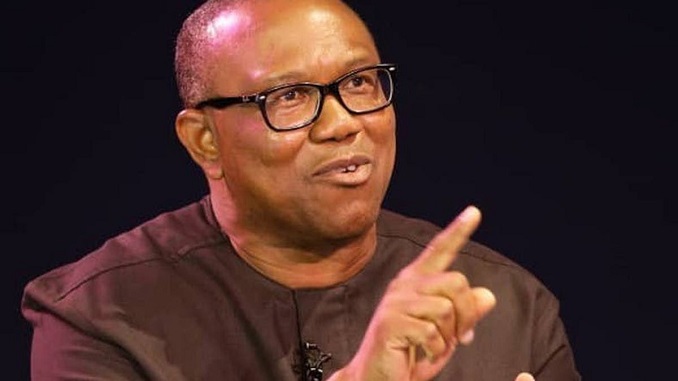
Prominent Presidential aspirant Peter Obi easily fits into the mold of Plato’s guardian. Obi is distinguished for having governed Anambra on such a high moral ground of temperance and courage to the extent that, unlike Willie Obiano, his immediate successor, he (Peter Obi) left behind a gargantuan sum of N75 billion in the government purse before leaving office. He says that he left the PDP without bitterness because the values espoused in the party are at variance with his own political principles. He says he does not share money freely to people as some Nigerian politicians do. He says that the greatest undoing of Nigeria today is consumption without production. He regrets that despite the enormous human and natural resources at her disposal, Nigeria cannot feed herself today. He prides himself as being a trader and a wealth creator, who, if elected as President of Nigeria, can create a visible and measurable wealth within his first 100 days in office that will bring Nigeria out of the present doldrums of inefficiency and cluelessness in which she presently finds herself. Peter Obi is very humble, civil and respectful. He always calls himself a trader. He has a sense of distributive justice. He doesn’t return insult for insult. Like Plato’s Philosopher-King, Obi espouses wisdom. He is down to earth. He says that what he needs to get along in this passing life is little money to meet up his expenses and no more. He refused to participate or acquiesce in the bribery and corruption in the People’s Democratic Party (PDP) in the build-up to the party’s Presidential Primary. Peter Obi teaches that there is a convergence between politics and morality. Instead of giving bribes to party delegates against his conscience in order to win the Presidential Primary, Peter Obi preferred to quit the PDP and pitch a tent with the Labour Party. In doing this, he said: “I will rather lose doing the right thing than win doing the wrong thing. In other words, Obi believes that a politician cannot do wrong so that good may come out of it.

Unfortunately, the Nigerian democracy is severely challenged from within by corruption, ignorance, apathy, and pursuit of selfish interests. If democracy is said to liberate all men, it is on the assumption that there are political leaders with high moral principles ready to navigate democracy to a safe harbor. Unfortunately, most democracies including the Nigerian democracy are not run by men with high ethical principles. Most democracies unfortunately are in the hands of men of unruly passions and creatures of appetite. For instance, the separation of culture from politics or from public life in Nigeria has led to a palpable moral bankruptcy in Nigerian politics. This is why in the last twenty-five years or so we have been witnessing a steady and progressive deterioration of those cherished values which form the superstructures for the building of our national ethos. We say that Nigeria is a democracy yet we have been steadily excluding from our policy those cherished values that make democracy thick or lead to human flourishing.

Machiavellianism, unfortunately, rules Nigerian politics. A Nigerian politician, for example, can commit murder as in Shakespeare’s Macbeth, in order to satisfy his vaulting ambition and feel justified with the words of Lady Macbeth: “a little water cleans us of this deed”. A Nigerian politician, for instance, can bribe party delegates in order to win a Presidential Primary and afterward feels justified that he has attained his life’s ambition. Machiavellianism teaches that there is no intersection between politics and morality. Machiavellianism exalts pragmatism over exercise of moral virtues in politics. “The fact is that a man who wants to act virtuously in every way necessarily comes to grief among so many who are not virtuous. Therefore if a prince wants to maintain his rule he must learn how not to be virtuous, and to make use of this or not according to need” (The Prince, 61).

In contrast, Plato and Aristotle exalt moral virtues over pragmatism. To Aristotle, the proper aim of politics is moral virtue: “politics takes the greatest care in making the citizens to be of a certain sort, namely good and capable of noble actions.” (Aristotle). I cannot agree less. It is not true that politics and morality are strange bedfellows. Political strategy doesn’t obviate the need to cultivate moral discipline. Contrary to Machiavellianism, the end does not justify the means. A politician cannot do evil that good may come out of it. He cannot, for instance, murder a fellow politician to grab political power in order to improve the welfare of the people. He cannot, for instance, worship the juju shrine in order to break the backbones of his political godfathers. According to Plato “…neither cities nor States nor individuals will ever attain perfection until the small class of philosophers whom we termed useless but not corrupt are providentially compelled, whether they will or not, to take care of the State..”.

Considering the monumental ruin that has overtaken Nigeria in the last seven years, we must vote wisely in the 2023 Nigerian Presidential election. We must vote for Plato’s philosopher-King or the guardian to become the President of Nigeria in 2023. We are tired of the reign of misfit. Therefore beyond social media idle gossip and arm-chair politicking, let us arm ourselves with our respective PVCs and get ready to vote in 2023.

There is no doubt that we need a national character, a national character that defines democracy and establishes the parameters and moral high ground in which democracy should operate in order to promote the wellbeing of the people. No democracy in which wrongs and social injustices are intentionally committed and perpetuated can lead to true human flourishing. No democracy in which the political leaders intentionally commit wrongs against the people can save the people.

The Supreme Court should not be for all cases- Onoja, SAN

“With only 15 Justices and mountains of cases, the Supreme Court will continue to be overworked,” remarked Chief Ogwu James Onoja while urging that vacancies at the apex court should be filled immediately.

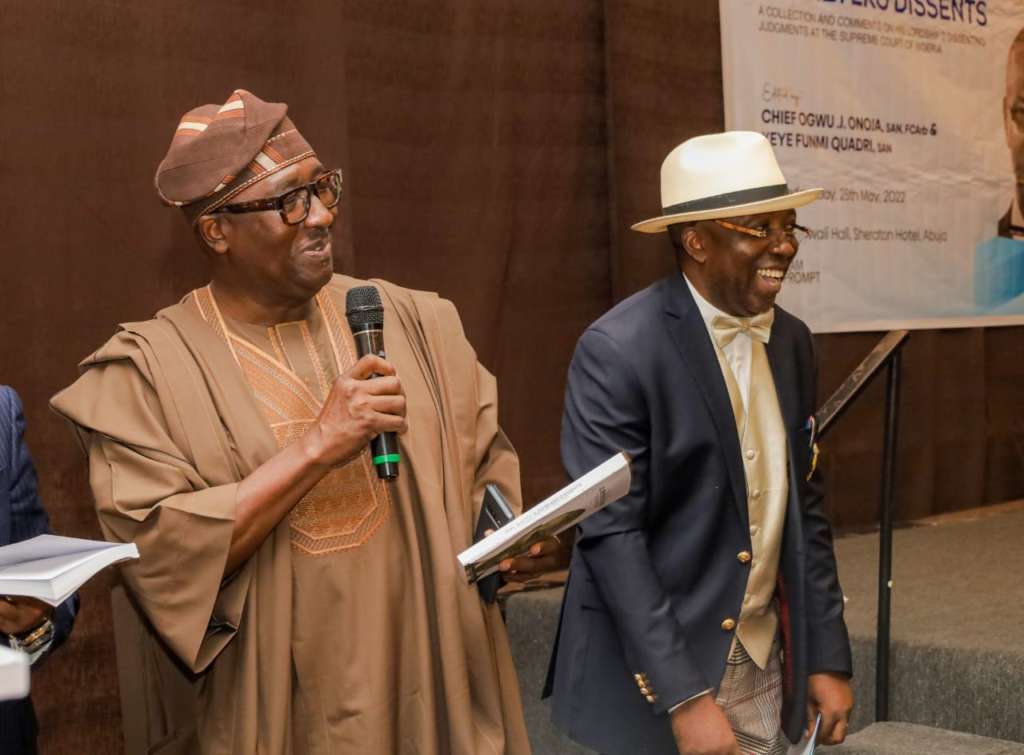
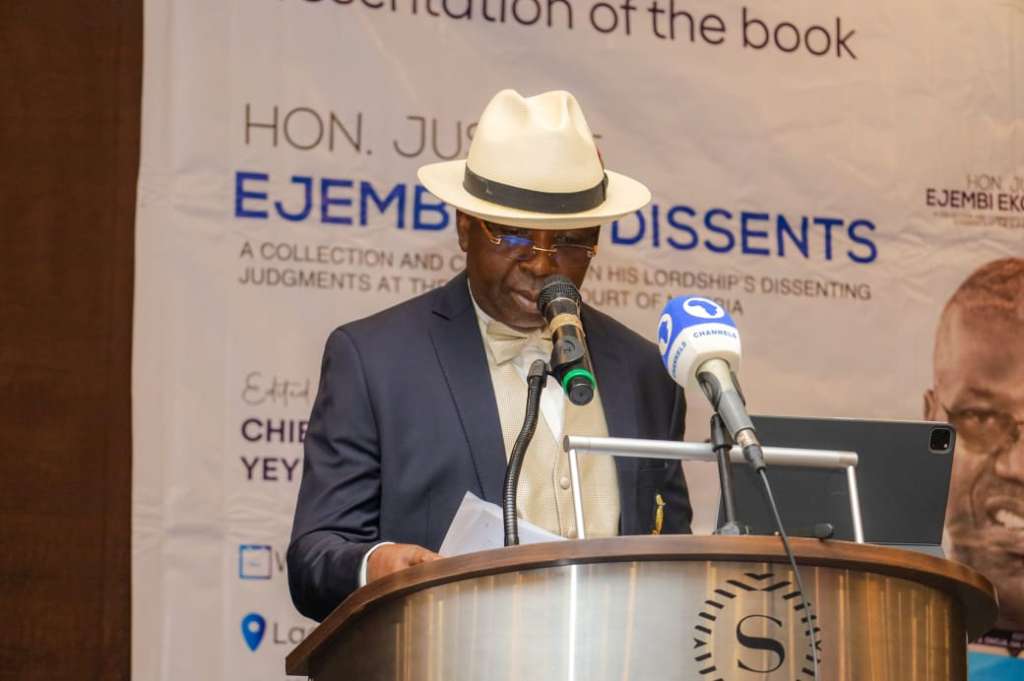
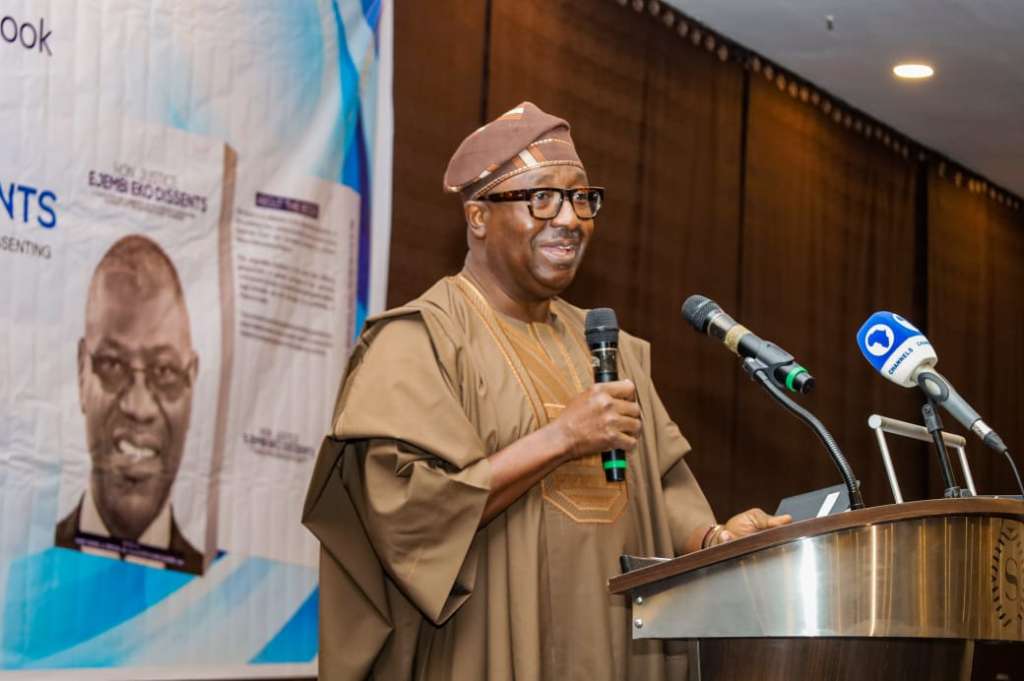
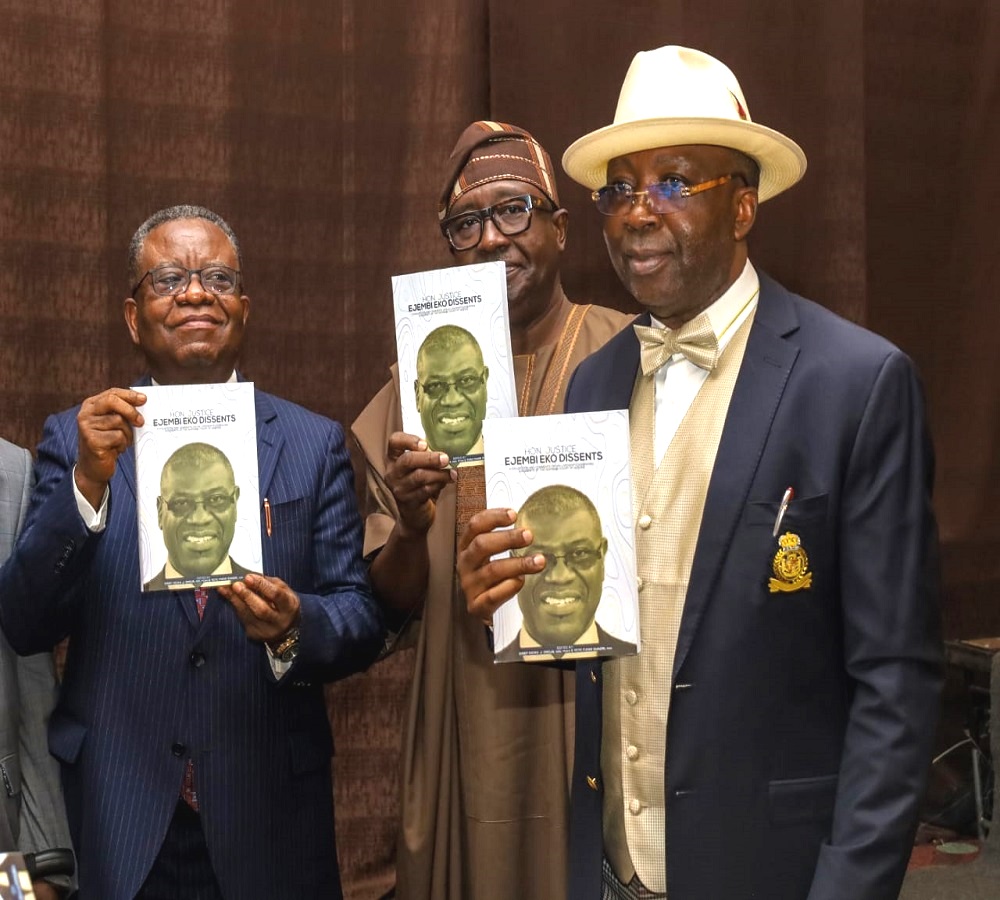
Speaking at a recent book presentation at Abuja, in honour of the recently retired Justice Ejembi Eko, JSC, Onoja expressed concern that “cases in the Supreme Court as presently constituted last for more than ten years. That is one of the reasons why parties are changed along the lines due to deaths and incapacitations.”

Calling for special a limitation in the manner of cases that go to the Supreme Court, Onoja said: “At the moment, all manners of cases such as marriages, land, and employment matters are finding their ways into the only Supreme Court in the land. This trend is unnecessary because it is affecting the quality of justice delivery in the country. Therefore, the Supreme Court should not be for all cases.”

“Nigeria’s Supreme Court justices are the most overworked Justices of any Supreme Court in the world and so the best way to reduce the burden on the Justices is by restricting the manner of appeals that go to the court.”

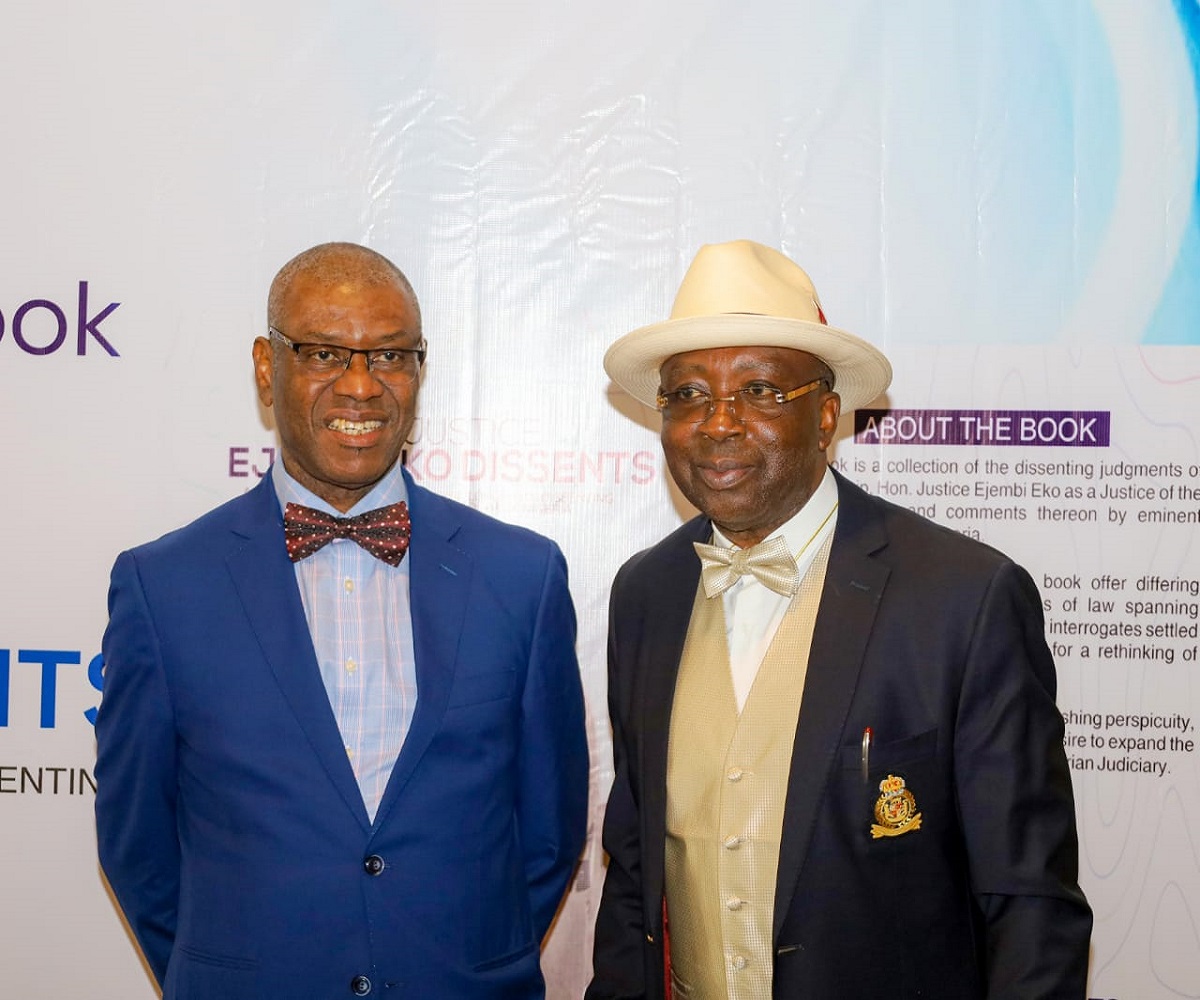
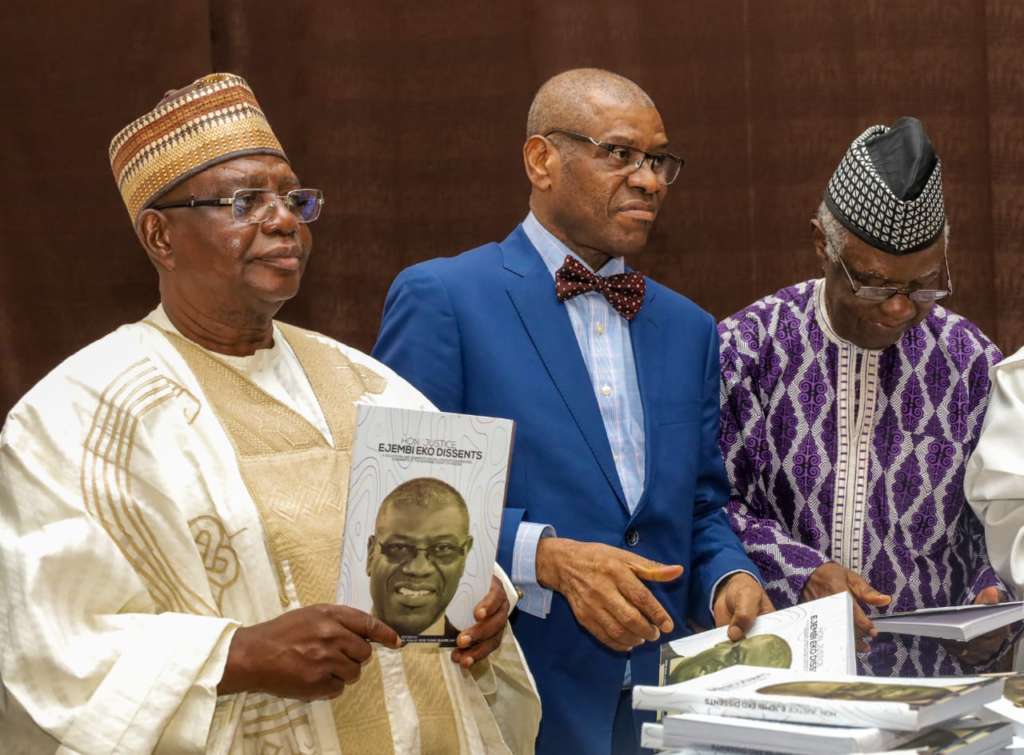
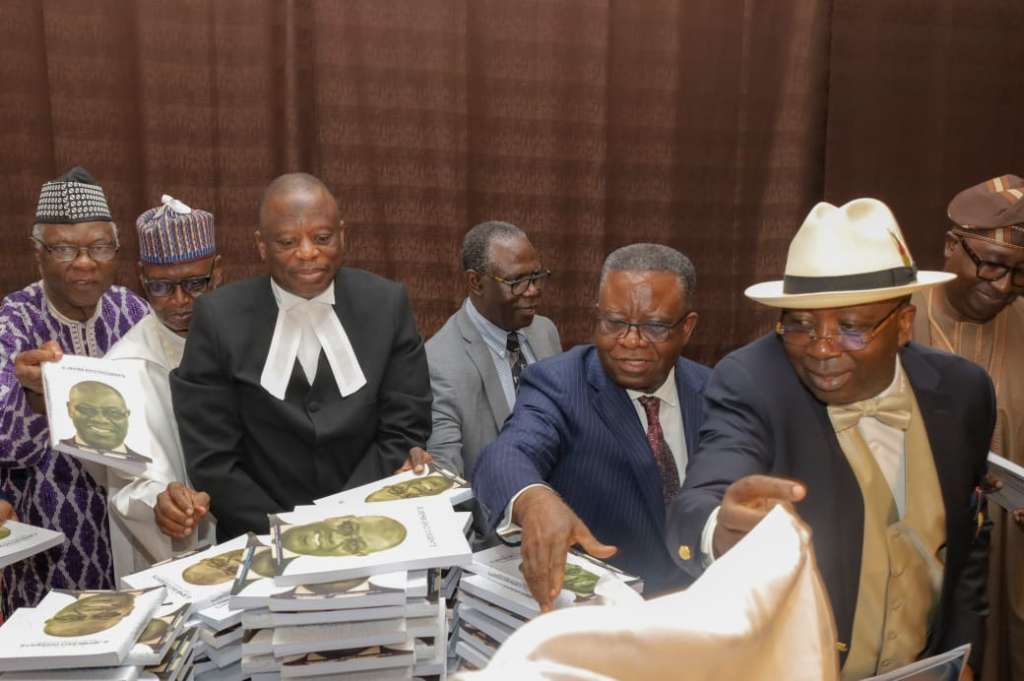
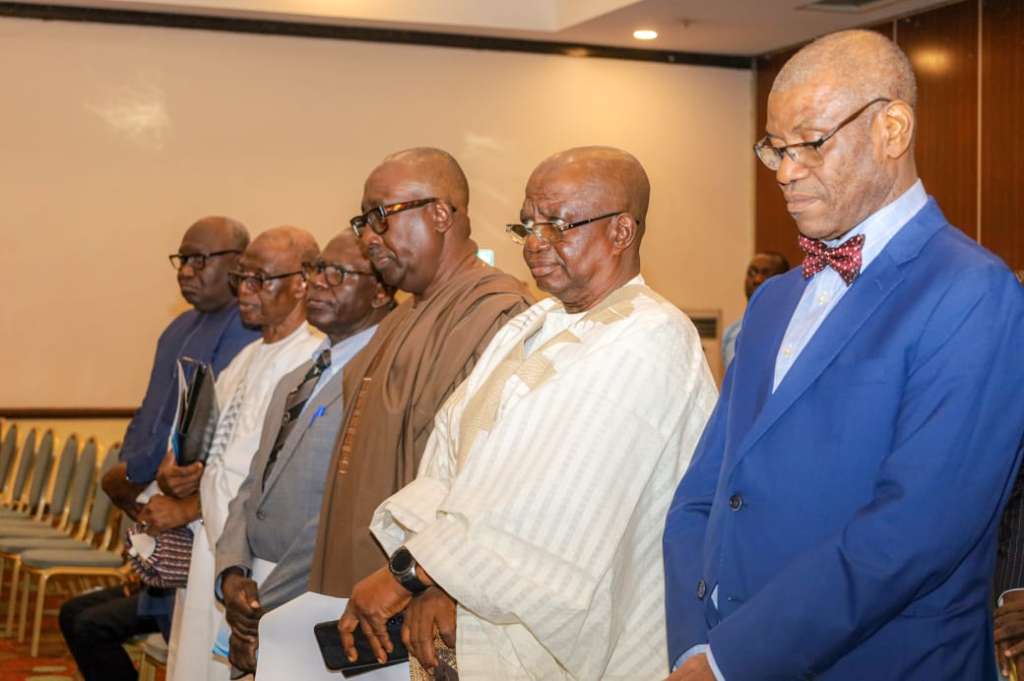
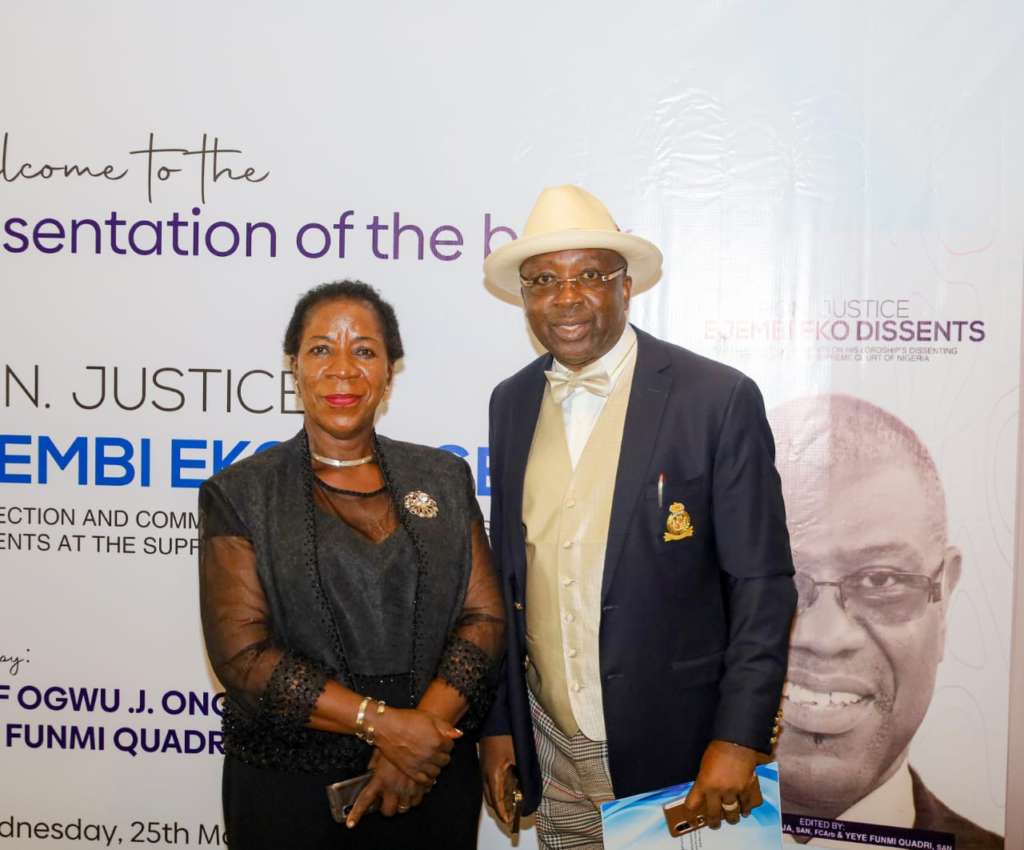
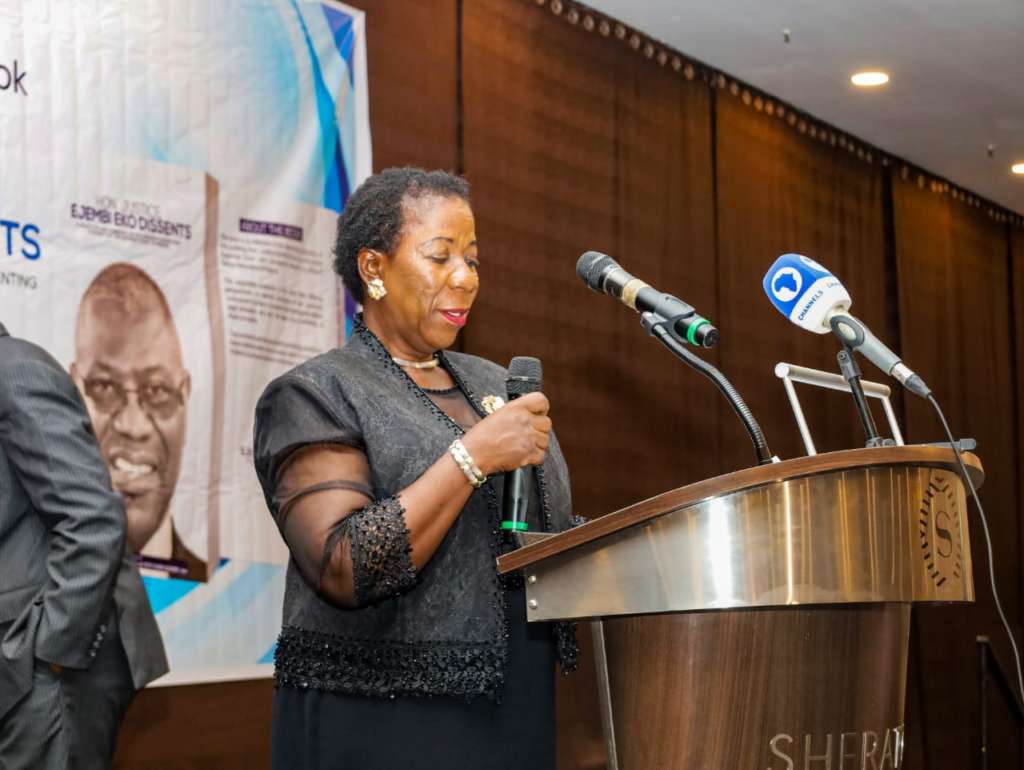
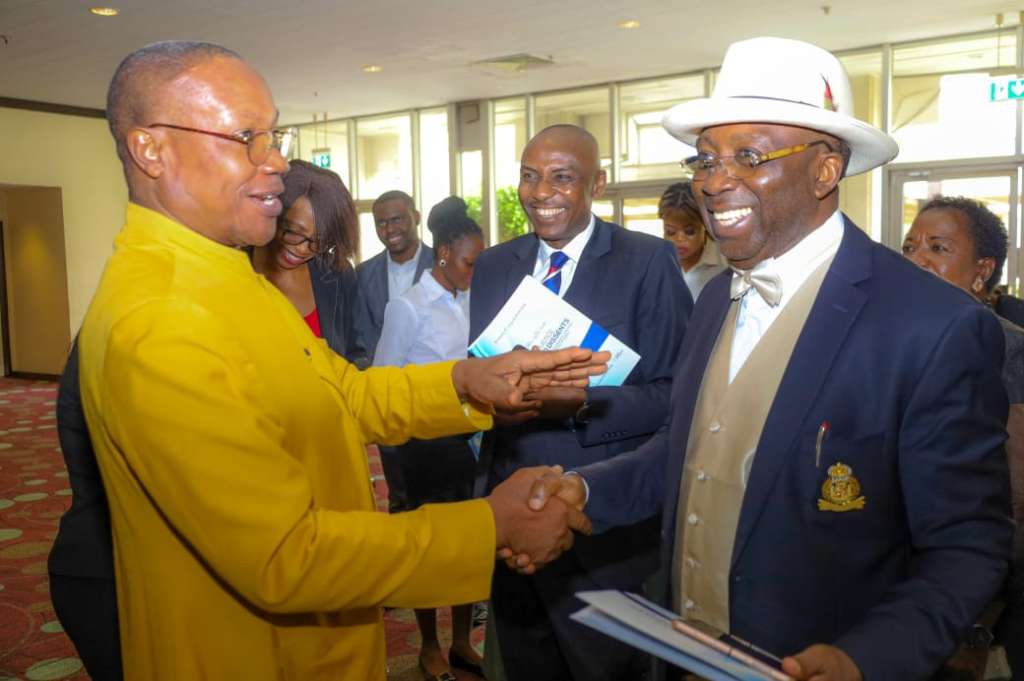
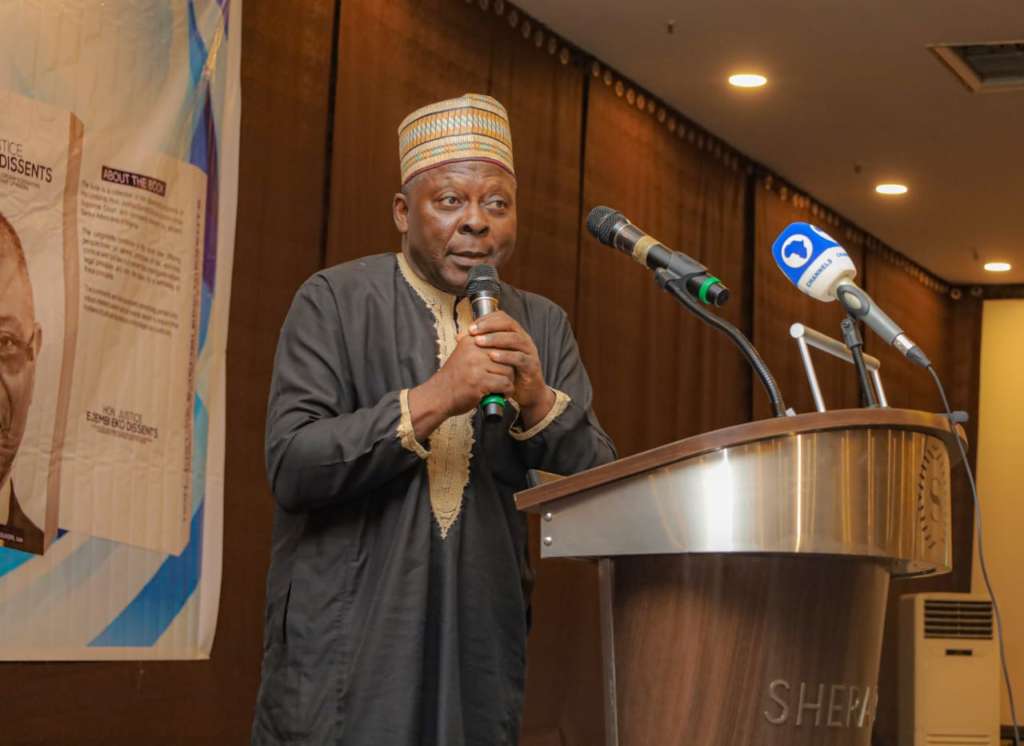
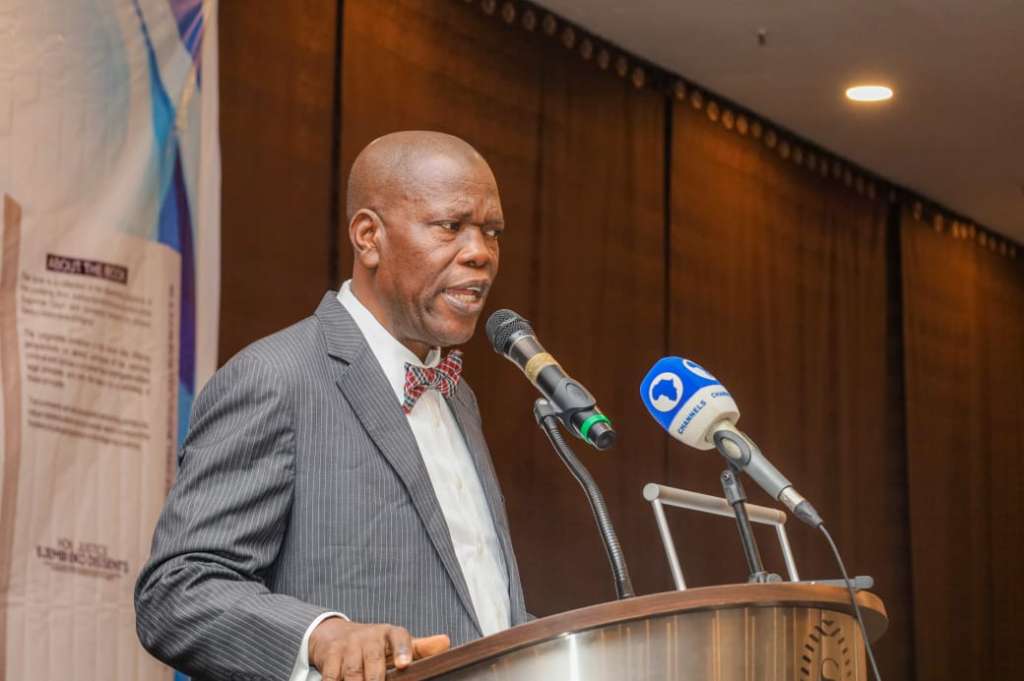
Below are some photos of the event.

R-L: Hon. Justice James Ogebe, JSC (Rtd.), Eko, and another Appellate court judge
Chairman of the occasion, Chief Bayo Ojo, SAN, and Onoja, SAN
L-R: Ogebe, JSC (Rtd.) Mahmud Mogaji, SAN, Hon. Justice Kumai Bayang Akaahs, JSC (Rtd.), Hon. Justice John Inyang Okoro, JSC, Onoja, SAN and Bayo Ojo, SAN
Yeye Funmi Quadri, SAN and Onoja, SAN
Onoja, SAN
Yeye Funmi Quadri, SAN
L-R: Chukwuma Machuku Ume, SAN, Chairman NBA Unity Bar, Abuja, Moses Ebute, SAN, and Onoja, SAN
Book Reviewer, Dr. Suleiman Nchi, Faculty of Law, Nasarawa State University, Keffi
Event Chair, Bayo Ojo, SAN
Master of Ceremonies, A.T. Kehinde, SAN

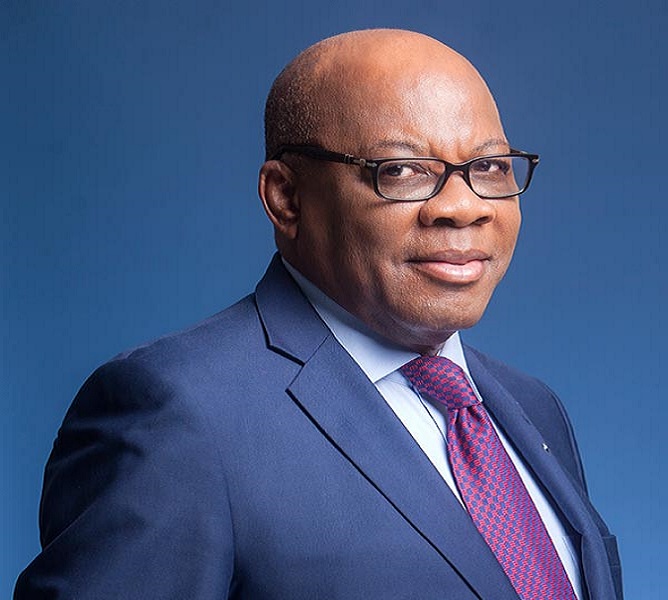
For Olisa Agbakoba – Before the Onset of Autumn

By Chidi Anselm Odinkalu

As Nigeria’s military ruler, Olusegun Obasanjo, who retired from the army as Head of State and a four-star General on the last day of September 1979, established what he later described to the New York Times over one decade later as “a farm settlement…., which aimed at the increase of food production.” It was located in an island in the Atlantic Ocean called Ita-Oko, some 100 kilometres off the coast of Lagos. Curiously for a farm settlement, Ita-Oko, in the words of the General, “aimed at decriminalizing people – Nigerians and non-Nigerians – who refused to work, even though work was available.”

For a project reportedly intended to alleviate hunger, hardly any food was produced in Ita-Oko. An island some 10 km2 in size was a most unlikely food basket for a country of over 923,000 km2.

The secret of Ita-Oko was well hidden from public view during the reign of General Obasanjo. Nearly ten years after its establishment, in 1987, acting on a tip-off from a source in police intelligence, a young lawyer recruited a few friends into a boat on a journey to locate this place.

The lawyer who led that mission was Olisa Agbakoba and that journey marked a breakthrough moment in the emergence of Nigeria’s contemporary human rights and pro-democracy communities. It was the journey that founded the Civil Liberties Organisation (CLO), the organization that germinated Nigeria’s contest against resilient military mis-rule.

The people who accompanied Olisa on that journey included Ama Ogan, then editor of The Guardian in Lagos; Abdul Oroh, her political correspondent; Richard Akinola, then a pioneering judicial correspondent with the Vanguard newspaper also in Lagos; as well as Emmanuel Erakpotobor and Clement Nwankwo, young associates in the law firm then known as Olisa Agbakoba and Associates.

Ita-Oko turned out to have been an island prison. In a letter to the editors of the New York Times in October 1989, two years after Olisa and his friends had returned from the journey to Ita-Oko, Obasanjo declaimed thus: “If the Ita-Oko Island farm settlement was turned into a prison camp by subsequent administrations in Nigeria, you should not involve my person and Government with such an ugly act.”

In a country with a median age of 17 and life expectancy south of 55, a majority of the people will not have any memory of what the world was like in 1987. Globally, the Cold War still raged. In Africa, it was the age of military coups. That was the year in which Pierre Buyoya overthrew Jean-Baptiste Bagaza in Burundi; Blaise Compaore killed Thomas Sankara in Burkina Faso, and, even in Apartheid South Africa, 32 year-old Major-General Bantu Holomisa overthrew Stella Sigcau in the South African Bantustan of Transkei.

In 1987, Ibrahima Babangida, Nigeria’s military ruler, turned 47, having been in power for three years and in government for over twenty. Millennials and their successors in Generation-Z, accustomed to resolving their issues with tweets and emojis, will not know what courage it took in those days to confront the military, or the creativity required to foray into that vocation.

Olisa Agbakoba’s life is not unaccustomed to that rarefied form of courage and nous. He was born in Jos, Plateau State, the second son of Godfrey Ubaka Agbakoba, a spindly lawyer and blue-blood from Onitsha, in Anambra State, and his wife Phina. Godfrey, a member of a pioneering generation of lawyers from south-east Nigeria, had established his legal practice in Jos, where Olisa began his education. On the foothills of the onset of Nigeria’s post-colonial troubles, Godfrey Agbakoba relocated to the then Eastern Region in 1965, where he became a judge and humanitarian of considerable repute.

Interrupted by the Nigerian civil war, Olisa’s somewhat peripatetic high school sojourn ended at the Christ the King College (CKC) in Onitsha, where he also earned a reputation as a competitive footballer, with the nick-name, “Abana”, after one of the more famous exponents of the round leather game in Nigerian history, Kenneth Abana. In 1978, he was admitted to the Nigerian Bar, after concluding his under-graduate education at the University of Nigeria and undertaking the mandatory vocational course at the Nigerian Law School. For graduate school, he went to the London School of Economics and Political Science (LSE).

When he founded the CLO in 1987, Olisa was only nine years old at the Nigerian Bar and a mere three in private legal practice. For many, it was an act of folly, but he had the foresight to divine what most could not see – that military rule was shortly to become unfashionable. To establish the CLO brand, Olisa went after precisely those abuses that defined the military, especially the abuse of powers of administrative detention in the State Security (Detention of Persons) Decree, number 2 of 1984.

In 1989, Decree 2 was probably the defining issue in Nigerian politics. Ibrahim Babangida had launched his interminable transition to nowhere and was busy banning, un-banning and re-banning politicians whom he pleased from participating in it. For those who resisted his ban and even those who merely criticized him, Decree 2 became the tool to shut them up and Ita-Oko a convenient place where they could be disappeared.

These abuses defined the annual conference of the Nigerian Bar Association (NBA) in 1989. The NBA then was led by the inimitable Alao Aka Basorun, arguably its greatest ever president. The opening session of the conference at the Nigerian Law School premises in Victoria Island turned into a spell-binding debate between Itsejuwa Sagay, then the fire-brand former Dean of Law at the University of Benin, whom the military were desperate to be rid of; and then Attorney-General of the Federation and Minister of Justice, Bola Ajibola, himself a former president of the NBA.

Sagay was as withering in his take-down of military abuses as Ajibola was unmovable in his defence of the instruments of military dictatorship. Aka Basorun was forceful in his leadership of the Bar. Olisa, the campaigner against Decree 2 had been instrumental in crafting the moment.

As the opening adjourned, Tunde Fagbohunlu and I approached Olisa and Aka Basorun on Adeola Hopewell as they walked to the then NBA secretariat adjoining the Nigerian Law School premises. It was our first encounter in what would become a lifelong relationship. Tunde, a Senior Advocate of Nigeria (SAN) since 2008, cut his professional teeth under Olisa. I worked with him to establish the CLO’s legal advocacy in the courts. Olisa always had an eye for talent, and a way with nurturing it.

Beyond the CLO, Olisa crafted broad-based civic coalitions which made possible the end of military rule in Nigeria, including the Campaign for Democracy (CD) and the United Action for Democracy (UAD). For that, he suffered not a small number of privations. Detained many times by the military, they also repeatedly sought to preclude and frustrate his international advocacy. In April 1992, the military seized his passport yet again. His contest against that arbitrariness produced the seminal case in Nigerian law on the right to a passport.

March 1998 was the height of General Abacha’s campaign of terror to transmute himself into Nigeria’s elected dictator. The politicians had caved in, with many of them joining publicly in the campaign led by Daniel Kanu’s Youths Earnestly Ask for Abacha (YEAA) to beg Abacha to rule Nigeria forever.

Olisa refused to indulge the civic graveyard that Abacha enforced. On 3 March, 1998, he called out the country in Lagos to a “5 million Man March” against the Abacha dictatorship and led from the front. For his courage, the security services assaulted him, nearly blinding him before taking him away into detention. Abacha died three months later in June 1998 and the politicians who campaigned for him to rule forever suddenly emerged from the woodworks to become advertised as those who saved Nigeria for democracy.

In September 1998, Olisa became a SAN. Beside his work in civic advocacy, he had quietly emerged as the most prolific public law advocate in the country on the back of strategic courtroom advocacy that developed an influential body of case law by the Nigerian Supreme Court on the human rights of detainees and prisoners on death row.

While his vocation has been public law and human rights advocacy, Olisa’s professional expertise was built in maritime law and arbitration. He was the founding president of the Nigerian Chamber of Shipping and led the reform of arbitration law in Nigeria.

When the Nigerian Bar Association (NBA) sought a leader after its elected president abandoned ship in 2005 to join the Obasanjo government in advancing Third Term, they turned to Olisa, who returned credibility to the presidency of the Association. Under him in 2008, the NBA established the practice Section on Public Interest and Development Law (SPIDEL).

On Olisa’s 46th birthday in 1999, Nigeria returned to elective government. It was a fitting testament to the work of a man who managed to earn leadership without ever seeking office. As the politicians converge around the country to enjoy the perks of the democracy made possible by the sacrifices of his youth, Olisa will turn 69 on 29 May, 2022. He’ll be stepping into life’s autumn with one hell of an innings.

A lawyer and a teacher, Odinkalu can be reached at [email protected]

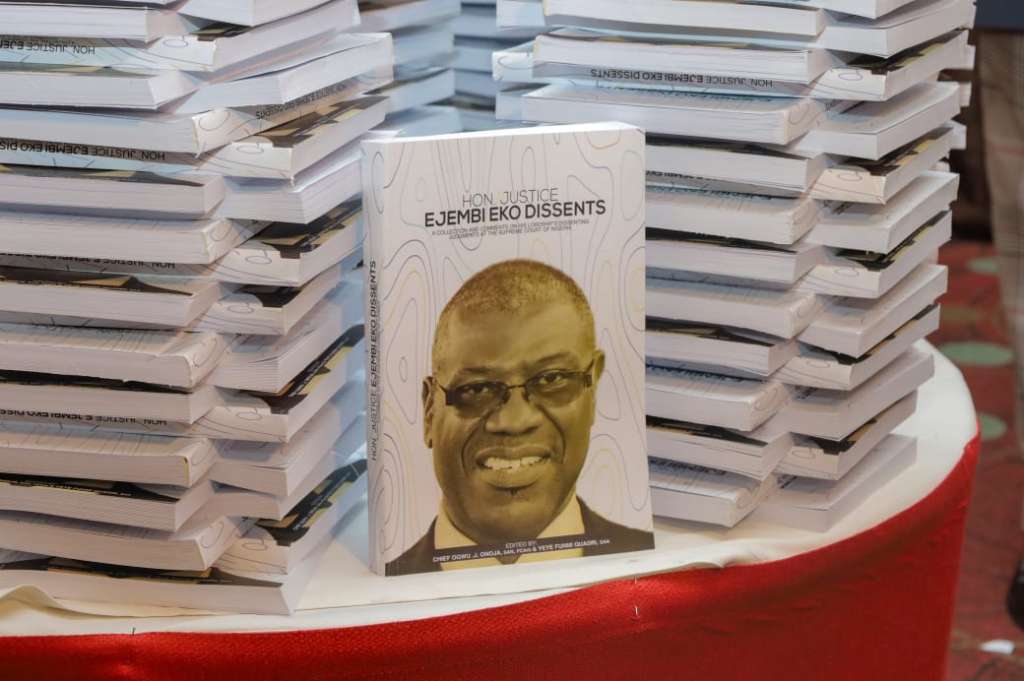
Hon. Justice Ejembi Eko Dissents: A Collection and Comments on His Lordship’s Dissenting Judgments at the Supreme Court of Nigeria

Book Review by Dr. Suleiman Nchi

The book titled HON. JUSTICE EJEMBI EKO DISSENTS: A COLLECTION AND COMMENTS ON HIS LORDSHIP’S DISSENTING JUDGMENTS AT THE SUPREME COURT OF NIGERIA is a book written in honour of His Lordship, Hon. Justice Ejembi Eko, JSC.

The book is edited by Chief Ogwu James Onoja SAN and Yeye Funmi Quadri, SAN with contributions and analysis by 27 eminent Senior Advocates of Nigeria namely —

Professor Tahir Mamman, SAN, Chief (Mrs.) Victoria O. Awomolo, SAN, Asiwaju Adegboyega Solomon Awomolo, SAN, Chief Titus Olasupo Ashaolu, SAN, Yeye Funmi Quadri, SAN, Mr. J. S Okutepa, SAN, Dr. Garba Usman Tetengi, SAN, Chief Mamman Mike Osuman, SAN, Dr. Mike Ozekhome, SAN, Mr. S. K Ajibade, SAN, Mr. Mahmud A. Magaji, SAN, Dr. Ahmed Raji, SAN, Mr. Chris Uche, SAN, Mr. A.U Mustapha, SAN, Dr. Yusuf Ali, SAN, Mr. Awa Kalu, SAN, Mr. Ikechukwu Ezechukwu, SAN, Mr. Kunle Ogunba, SAN, Mr. Oba Maduabuchi, SAN, Mr. Tawo E. Tawo, SAN, Mr. Moses Ebute, SAN, Professor Yemi Akinseye-George, SAN, Mr. Tanimu M. Inuwa, SAN, Chief Ogwu James Onoja, SAN, Chief Godwin Obla, SAN, Mr. Eko Ejembi, Jnr. SAN, and Dr. Alex Izinyon, SAN. It is this bright constellation of legal minds drawn from both the public and private sectors whose incisive and illuminating commentaries combine to give this book its uniquely rich intellectual stature.

The concept of the book revolves around an examination of the dissenting judgments delivered by Hon. Justice Ejembi Eko JSC by the 27 aforementioned Senior Advocates of Nigeria. Apart from the preliminary pages, the book is divided into eleven chapters. The various comments which precede the judgments are like appetizers whetting one’s appetite in preparation for the feast of law and jurisprudence served by my lord in his judgments. There are eleven dissenting judgments consisting of six judgments on criminal matters and five judgments on civil matters contained in the book namely:

  1. Olatunde Abimbola v. The State
  2. Daniel Jiya v. The State
  3. Ndubuisi v. The State
  4. Felix Orishadipe v. The State
  5. Muyideen v. The State
  6. Orakul Resources Limited & 1Ors v. Nigerian Communications Commission & 4Ors
  7. Skypower Express Airways Limited v. United Bank for Africa Plc & 1Ors
  8. Vital Investment Limited v. Chemical and Allied Product Plc
  9. Ozo Nne Iloputaife & 4Ors v. Benedict Orji &17Ors
  10. Eyitayo Jegede & 1Or v. INEC & 3Ors
  11. Alfred Elijah v. The State.

Dissenting judgments are by their very nature judgments which take a different perspective and thus arrive at a different conclusion from that taken by the majority decision. It is interesting to note – as many of the contributors did in their various analyses – that dissenting judgments have a constitutional basis. Section 294(2) and (3) provides: 

“Each Justice of the Supreme Court or the Court of Appeal shall express and deliver his opinion in writing or may state in writing that he adopts the opinion of any other justice who delivers a written opinion.

(3) A decision of a court consisting of more than one Judge shall be determined by the opinion of the majority of its members.”

This is obviously the reason why the number of justices on the bench of the appellate courts are in odd numbers of 3, 5, and 7.

Having thus established this basis, we now delve into a chapter-by-chapter synopsis of the book with a selection of the comments of some of the contributors on each dissenting judgment.

Chapter One contains the judgment of my lord in the case of Olatunde Abimbola v. The State. The crux of my Lord’s judgment centred on the issue of self-defence. In examining the dissenting decision of my Lord, Professor Tahir Mamman, SAN was of the view that self defence being a legal defence under our criminal jurisprudence permits a defendant to invoke the defence of self-defence in appropriate circumstances and that in the instant case His Lordship was right in exonerating the defendant on the basis of his plea of self-defence as same was not rebutted by the prosecution.

Chief (Mrs.) Victoria O. Awomolo, SAN supported His Lordship’s view that the extrajudicial statement of the defendant which the lower court misconstrued as an admission of guilt did not satisfy the legal requirements of a confessional statement since the defendant raised the defence of self-defence as a justification for the killing of the deceased. The learned Silk pointed out that His Lordship showed in his judgment that a successful plea of self-defence negates the existence of murder and excuses the accused from guilt.

Chapter Two contains the judgment of my Lord in Daniel Jiya v. The State. In that case, the Appellant was convicted by the majority decision under section 1(2) of the Robbery and Firearms Act for robbing two women.  In his comments Asiwaju Adegboyega Solomon Awomolo, SAN examined the constitutional basis for dissenting judgments and that the dissenting judgment of his Lordship was a demonstration of the age-long principle that it is better for one hundred accused persons to go free than for one innocent person to be punished for an offence he did not commit or which was not proved by the prosecution as required by law as his Lordship was of the view that the accusation that the defendant robbed the women with a gun was not proved beyond reasonable doubt by the prosecution.

Chief Titus Olasupo SAN took the view that his Lordship’s analysis of the case in focus clearly shows that his Lordship did not only shape the law but made sure that justice is done to all the parties and that motivated by the desire to do justice, his Lordship was willing to jettison the age-long principle that the Supreme Court should not interfere with the concurrent judgment of the lower court.

Yeye Funmi Quadri, SAN observed that judges and justices battle with the age-long conflict between law and justice and that the way a judge resolves this tension depends on the view which he has formed of his judicial office. To this end, she commended his Lordship for being bold and courageous in giving sound judgment according to the dictates of law with the aim of upholding justice.

Chapter Three contains the interesting case of Ndubuisi Dike v. The State wherein the Appellant was accused of killing his own brother having confessed to his mother of committing the heinous crime. His conviction was overturned by the majority decision. In examining the dissenting decision of His Lordship, Mr. J. S Okutepa, SAN, opined that His Lordship’s decision was founded on substantial justice as against technicalities and quoted an English Philosopher Walter Savage Landor who wrote that “when law becomes a science and system it ceases to be justice”.

Dr. Garba Usman Tetengi, SAN, x-rayed his Lordship’s decision and came to the same conclusion with J. S Okutepa, SAN that his Lordship’s judgment is motivated by his stance against injustice rather than by looking at the form or the technicality of a case.

Chapter Four contains his Lordship’s dissenting judgment in Felix Orishadipe v. The State, another interesting criminal case where the Appellant was accused of shooting and killing his neighbour. The Appellant conceded to the shooting but pleaded accident on the ground that he was under a mistaken belief that the deceased- his neighbour- was a deer. In his comments, Mike Mamman Osuman, SAN, posited that the four noble justices who allowed the appeal took a compassionate view of the Appellant’s predicament while Justice Ejembi Eko JSC as a dissenter judiciously and judicially restricted himself to the arid facts and applicable laws and convicted the Appellant.

Chapter Five contains the case of Muyideen v. The State. Mike Ozekhome SAN’s comments are framed around a critical analysis of the mens rea for murder and aptly so because in the case under review the Appellant accused of murder pleaded the defence of self-defence having struck the deceased with firewood in self-defence against attack by six persons which included the deceased.

Mr. A. K Ajibade, SAN stated that rather than looking at the statement of the Appellant as a confession, His Lordship examined its content to pick out two defences and as such demonstrated that the role of judges and justices is not to hastily convict but to get to the nitty-gritty of the crime in a manner that will do substantial justice.

Mahmud A. Magaji, SAN reasoned that his Lordship has a handsome number of dissenting judgments and that my Lord does not dissent just for the sake of it as his seemingly controversial judgments are always guided by two major considerations:

  1. Decisions of some of the earliest justices of the Supreme Court
  2. Sound philosophical/legal reasoning

Mr. Ahmed Raji SAN found the dissenting judgment of His Lordship to be faultless and full of erudition as His Lordship’s decision hinged on the fact that in criminal trials, the onus rests on the prosecution to prove by credible evidence, that the guilt of the accused person beyond reasonable doubt and that in this case, the prosecution failed to discharge the onus of proof.

Chapter Six contains His Lordship’s judgment in Orakul Resources Limited & 1Ors v. Nigerian Communications Commission & 4Ors (reported in 2022 6 NWLR (Pt.1827) 539. The main issue in contention was pre-action notices vis-à-vis the constitutional right of access to court. Mr. Chris Uche, SAN stated that while unanimous judgments are desirable, sometimes the occasion demands courage and conviction, juristic independence, and jurisprudential proactivity to disagree with the majority as was done by His Lordship in the above-mentioned case where His Lordship saw beyond ouster clauses and made pronouncements which emphasise the need for a new order where the supremacy of the Constitution and the efficacy of the rule of law must prevail.

A.U Mustapha, SAN on the other hand submitted that even though the dispute has been decided based on the majority decision, my Lord’s dissenting view has stirred up questions and inspired deep intellectual discourse which provides the necessary foundation for balancing pre-action notices and procedures with constitutional rights of access to justice and fair hearing.

Chapter Seven contains the interesting case of Skypower Express Airways Limited v. United Bank for Africa Plc & 1Or (reported as 2022 LPELR-56590) where once again the question of endorsement by a law firm on an originating process was in focus. Dr. Yusuf Ali, SAN in commending his Lordship for showing great courage and diligence, stated that his Lordship went beyond relying on statutes and local judicial pronouncements to show that an endorsement on a writ of summons was not the same as the writ of summons itself and that a defect in the endorsement does not nullify the writ.

Ikechukwu Ezechukwu, SAN interrogated the apex court’s avowed preference for doing substantial justice over technical justice in the light of the dissenting judgment of Hon. Justice Ejembi Eko JSC. He took the view that His Lordship’s position that what initiates an action is the writ issued by the appropriate officer and not necessarily the endorsement by a plaintiff or his counsel was correct as it accords with the need to do substantial justice. 

Chapter Eight contains his Lordship’s judgment in Vital Investment Limited v. Chemical and Allied Product Plc. The case examined the issue of privity of contract where the Appellant sued the Respondent for making it incur debt to third party financiers owing to the tardiness of the Respondent in making payment according to the contract between it and the Appellant. According to Oba Maduabuchi SAN, His Lordship’s dissenting judgment accords with the law and common sense in that a party who performs a contract negligently can be sued by all those who suffer losses or incur obligations as a result of the losses occasioned by the action of the Respondent.

Chapter Nine contains the judgment in Ozo Nne Iloputaife & 4Ors v. Benedict Orji &17Ors which centres on the issue of fair hearing. In his comments, Professor Yemi Akinseye George, SAN, examined the facts of the case and stated that the judgment of his Lordship is a robust exposition of the principle of fair hearing in judicial proceedings and he agreed with His Lordship’s view that the customary court committed a grave blunder in summarily dismissing the counter-claim of the Appellants without hearing.

Chapter ten contains the dissenting judgment of His Lordship in Eyitayo Jegede & 1Or v. INEC & 3Ors where the pith of the matter was the legal implication of the Executive Governor of Yobe State Mai Mala Buni’s act of presiding over the nomination and sponsorship of Gov. Rotimi Akerodolu in the Ondo State Gubernatorial election of 10th October 2020. The majority decision was to the effect that even though the Executive Governor of Yobe State acted contrary to the Constitution since he was not joined as a party to the suit, the election could not be nullified. In his analysis, Chief Ogwu James Onoja, SAN supported his Lordship’s dissenting judgment in upholding the supremacy of the Constitution and that his Lordship’s view that since the APC had been joined in the suit, it was needless joining the Executive Governor of Yobe State since as a Governor he was covered by immunity as provided in section 308 of the Constitution.

Chapter Eleven contains the case of Alfred Elijah v. State wherein the Appellant was charged with an offence under section 1(2)(a) of the Robbery and Firearms (Special Provisions) Act. In his comments Dr. Alex Izinyon, SAN after a thorough examination of the facts of the case opined that there has been a decline of dissenting judgments in our corpus of laws and that there is a need for dissenting judgment to be sustained in our jurisprudence whenever it becomes imperative because dissenting judgments act as pathfinders and provide the basis for a rethinking on settled legal principles with the possibility of legislative intervention when necessary.

On the whole, the book is a delightful and refreshing insight into the mind of one of the eminent justices of the Supreme Court in contemporary times and will no doubt constitute the basis for a re-examination and reformulation of certain legal principles.

Dr. Suleiman Nchi

Faculty of Law

Nasarawa State University

Keffi, Nasarawa State.

Federalism, rotational presidency or secession? Whither way Nigeria?

By Lillian okenwa

“Another solution to Nigeria is fiscal federalism. Till today, I have not been explained to or known, why oil in my Local Government in Ughelli South of Delta State is being carted away to Abuja or shared among the Nigerian States.” – Othniel A. Ikpibako, Esq.

[The] unity of Nigeria has a price tag. It is not something imposed from the top through executive fiat. You cannot be saying that the unity of Nigeria is not negotiable while at the same time putting obstacles to that unity…” said Sonnie Ekwowusi, lawyer and public affairs analyst in his article Rotational Presidency and Nigeria’s Survival.

On and on, the debate goes about the future of Nigeria— secession, rotational presidency, and true federalism. Nigerian Law School Lecturer, Sylvester Udemezue believes “the various peoples of Nigeria have gone too far together, to be in a hurry to consider outright dismemberment of the country.” He however adds: “Those who are saying referendum or dismemberment is illegal are grossly economical with the truth, and saying so to nourish egoistic considerations and parochial interests falling outside truth, law, and reality. I do not support dismemberment. But my reason for not supporting dismemberment is because credible, workable alternatives exist to resolve the major challenges threatening the nation and to put the nation on the path of sanity, peace, unity, and progress, all of which are at present complete absent because we, as Shakespeare’s like Macbeth after he murdered sleep, are as if tied to a stake, and thus stagnant, unable to move forward.

“Nigeria’s major problems are easily solvable without any need for the dismemberment of the polity. So, why not explore other options, instead of dismemberment. The reason we are still grappling with them is because most of us are too clannish myopic, parochial, and jingoistic to see beyond our nose. Only pragmatic, sagacious, altruistic leaders, thinkers, and citizens can help take us out of the doldrums.”

A Lagos lawyer Othniel A. Ikpibako, Esq., suggests: “One of the options that can help Nigeria is rotational president between North and South of a single term of 5 years,” suggests “We should not forget we are not one people but over 250 different ethnic groups. Hence, one group or region ruling continuously for more than 5 years is capable of creating discontent and chaos. Boko Haram was formed, amongst others when a Christian, Chief Olusegun Obasanjo was a president. Boko Haram turned terrorists because a Southerner, Goodluck Ebele Jonathan won in 2011 (I will not forget so soon how National Youth Service Corps, NYSC, members were massacred in the North on the eve of that victory).

“Killer herdsmen and bandits were deliberately created, in case Goodluck Ebele Jonathan won a second term. IPOB arose because of the 95:5 policy against the South. Odua People’s Republic agitations arose because of the same 95:5 policy. Hence, the immediate solution, since our election is not issue-based, but based on ethnicity and religion, is to rotate the office of the president between the North and South, for a single term of 5 years. The two-term in the constitution should be amended to a single term of 5 years and make the same provision further unamendable.

“Another solution to Nigeria is fiscal federalism. Till today, I have not been explained to or known, why oil in my Local Government in Ughelli South of Delta State is being carted away to Abuja or shared among the Nigerian States. I had predicted in my LL.M. Thesis (Permanent Sovereignty over Natural Resources: A Case for Oil Bearing Communities of Nigeria) that if the injustice of oppressively wresting away oil of the oil-bearing communities is not addressed, groups more determined than all the militant groups in the Niger Delta would arise and would be unstoppable. Because I have not seen injustice last forever; it can only tarry awhile. One Nigeria is great, built and based on justice!”

But Sonnie Ekwowusi, insists that in the interest of the nation, “the Presidency should be zoned to the Southeast.”

“As the delegates of the different political parties, especially the two dominant political parties, the APC and PDP, jostle to elect their respective Presidential candidates for the 2023 Presidential election, the delegates should understand that the principle of Zoning and rotational Presidency between the North and the South have not only become sacrosanct but are indeed the fulcrums upon which the Federal Republic of Nigeria has been revolving since her independence in 1960.”  

“Therefore any conspiratorial plot to derogate from this time-honored principle of Rotation of Presidency between the North and South is a big threat to the existence and survival of Nigeria. In other words, Nigeria as a corporate entity stands on rotational Presidency between the North and the South and falls without it.”

Until these suggestions are explored, nobody can tell whether the solution to Nigeria’s multifarious problems lies therein. As former First Vice President of the Nigerian Bar Association, (NBA) Ikeazor Akaraiwe, SAN suggested in his article, A major trouble with Nigeria’s Federalism, the people benefitting from Nigeria’s pains might not be in a hurry to ease the pains.

“Nigeria’s Federalism is majorly in trouble because the States are too small and have become the personal fiefdoms of significant persons. I will explain. These persons have an attitude of entitlement to the resources of the State, such that for a Governor to know peace, he has to distribute State resources to these significant persons. There is no accountability. Indeed, the masses of the people are too impoverished and generally insufficiently educated to challenge these excesses, especially when these ‘rent collectors’ spread some of the largesse across their fawning adulators.

“Besides, for the most part, the people are culturally socialised to the sycophantic adulation of leaders. If the governor does not readily distribute State resources to ‘the owners of the State’, he will be badly troubled throughout his regime with plots, plans, and ploys to undermine him, sponsored bad press, and sundry acts of sabotage, to say the very least.

“To have 38 Civil Services including that of the Federal Government, and Commissioners, Special Assistants and Advisers and Rent Collectors replicated across 38 Federating Units, whereas the 1st Republic had 5 Federating Units including the centre, with better governance delivered, is self-explanatory of the conundrum Nigeria has boxed itself into.”

World Menstrual Hygiene Day: Embracing the Girl Child Initiative takes campaign to the markets  

The importance of World Menstrual Hygiene Day has again been brought to the fore with the awareness campaign organised by Embracing the Girl Child Initiative.

To mark the Menstrual Hygiene Day 2022, Embracing the Girl Child Initiative, a Non-Governmental Organisation (NGO)  in partnership with “The Young and Called Forum” went on a street outreach/awareness at the popular  Dutse market in the Federal Capital Territory (FCT) , Abuja.

A recipient

World Menstrual Hygiene Day which is celebrated on the 28 of May annually is a chance to highlight the importance of menstrual care and raise awareness about the issues faced by those who don’t have access to sanitary products.

The day is observed on 28 May because menstrual cycles average 28 days in length and women/girls menstruate an average of five days each month. (May is the fifth month of the year).

Another happy recipient

In a statement issued by the organisation, Founder/National Co-ordinator of the Initiative, Nneamaka Onyema, a legal practitioner remarked:  “The significance of this celebration is to break taboos surrounding menstruation, raise awareness about the importance of good menstrual hygiene management worldwide.”

Distribution continues

She further explained that: “Embracing the Girl Child” is an initiative of “LinkedLegal Attorneys” aimed at providing legal representation, counseling, and rehabilitation of victims of sexual abuse and domestic violence, sensitizing the girl child at the secondary school level on career choices, puberty, sex education, menstrual hygiene, etc and the free distribution of sanitary towels.

Distribution of sanitary pads

“’ Young and Called Forum’ is an online gathering of young persons from different parts of the world where issues peculiar to the modern-day youths are discussed; marriage, relationships,  personality traits, career, spirituality, etc., and proffer possible structural solutions and support systems to each other.

At Dutse market

“We thank the Young and Called especially Fr. Nnadozie Okoro crs; who is the Spiritual Director of the forum for their massive support.”

Still at Dutse market
The Embracing the Girl Child Initiative team

#WorldMenstrualHygieneDay

#EmbracingTheGirlChild

#YoungAndCalledForum

#LinkedLegalAttorneys

#StreetOutreach

#FreeSanitaryTowels

#PeriodProtection

#EndPeriodPoverty

#Kotex

#FadaDozie

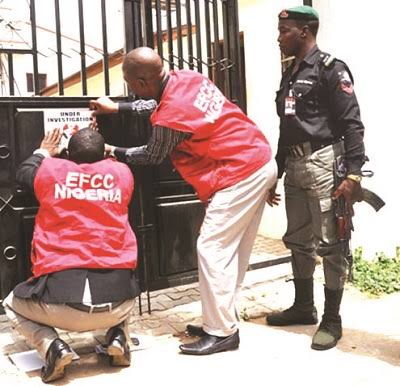
EFCC & Police Can Break and Damage Any House to Search and Arrest Suspects Even Without Warrants.

By Onyekachi Umah,Esq.

EFCC & Police Can Break/Damage Any House to Search and Arrest Suspects Even Without Warrants.

The EFCC, Police and other law enforcement agencies have the right to break any door or window in a house/place in order gain entrance, search and arrest a suspect with or without a warrant of arrest (so far as there is an authority to arrest).

The option to break and forcefully gain entrance becomes necessary after the law enforcement agents are denied access to a house/place, even after they have introduced themselves, their authority and purpose.

Hence, forceful entry by law enforcement agents is allowed where access to house/place cannot be obtained from the owner or occupier of the house/place that a suspect entered into it or stays.

Please note that there are about twelve (12) situations were an arrest can be made with or without a warrant of arrest. Hence, forceful entry can also be applied by a law enforcement agent with or without a warrant of arrest, so far as there is a refusal/failure to grant access to the law enforcement agent. Here is a link to the work (Situations Where Police Can Arrest Without Warrant);/https://sabilaw.org/12-situations-where-police-officers-can-arrest-without-warrant/

This work was earlier published as “The Right Of Police To Break/Damage Any House In Search Of Suspects Even Without Warrant To Search”.

References;

Sections 12, 494 and 495 of the Administration of Criminal Justice Act, 2015 and other similar laws across States in Nigeria.

Credit: SabiLaw

The trial of faith, the Nigerian, the Christian

(AP Photo/Jerome Delay)

By Namani J Nharrel

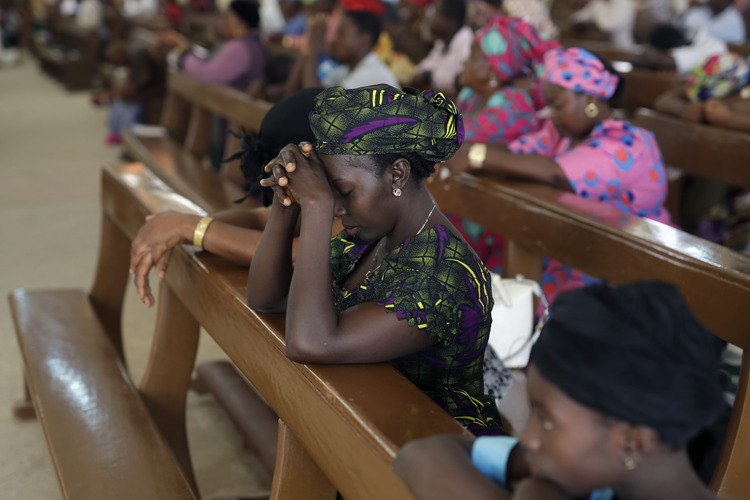
Let us be clear, faith here talks of Christian principles and practices taught by Jesus and His apostles, while trial is the opposition of these teachings by pain and suffering inflicted on Christians. Another form of trial is by questioning the teachings of the Bible in the face of trouble.

Whether by adversity from foes or by doubtful questions from Christians, the Christian Faith is put on trial. The trial of faith in this piece dwells on questioning clear biblical answers to vexing situations Christian face today. That is, questioning the validity or relevance of these answers in view of trial by adversity.

Tasking Issues 

It is becoming difficult to be a Christian because of the painful trial of faith by adversities. This is making some ask if the New Testament’s recommended responses in the face of adversities like persecution, maltreatment, and killing of Christians are enough for today’s Christians, shouldn’t Christians go extrabiblical to respond appropriately? They ask.

New definitions 

The trial of faith by questioning its teachings, wants us to redefine Christianity in Nigeria. This is not as a result of new theological discovery, but immediate circumstances. Circumstances are making some Christians look at Christianity differently from Scriptural presentation. This is not because the Bible has changed or its teachings abrogated, but because people are changing their theology, and as a result of changing their God. Popular redefinitions want Christianity to be more physically militant, retaliatory, reactionary, and hostile to match those of its unbelieving environment. It wants Christianity to match fire for fire and vile for vile.

Why?

The attempt at redefining Christianity is due to several considerations linked to self-preservation.

1. The need to balance the  Christian’s dual citizenship. Being Nigerians, for example, with every right enshrined in the constitution; and at the same time being a citizen of heaven living on earth, the two cultures sometimes contradict themselves. Christians have to continually make deliberate choices, regarding which of the cultural principles to guide their lives.

2. The need to balance between the reality of survival and obedience to absolute commands of the Bible Some think and preach the ideals of the Bible are unrealistic, unreasonable, and untenable in the face of life-threatening persecutions.

3. The need to balance being politically correct and identifying with a faith that gives no room for compromise as it touches Biblical absolutes.

4. The need to balance between trust, accepting God’s way of doing things, and using carnal means and man’s reasoning and efforts to protect or defend himself. Many think employing both is necessary whether their specifics are in harmony or not.

In view of these considerations and the natural inclination to self-preservation, many Christians have inadvertently put their faith on trial.

The Charges

The charges in this trial of faith are the questions:
▪ If the Bible really meant that Christians should not retaliate  when pushed to the wall;
▪ If the Bible’s recommended ways of responding to adversity are applicable and relevant for today’s realities;
▪ If as citizens of their country, Christians are not entitled to fair treatment;
▪ If there shouldn’t be a time Christians should say enough is enough to their persecutors and fight back with physical weapons.
▪ If it is right to strictly adhere to the teachings of the Bible in the face of contrary realities.

From the foregoing, therefore, Christianity and its teachings stand on trial; to be or not to be, the faith, that was once delivered to the saint (Jude 3).

The accusers here are Christians and the judges are the Christians. Only they can free Christianity from false charges.

Current Reality

That the Christian faith is under threat is no news. The increasing intense opposition, from the enemies of Christ, are current realities. Then there are other troubles that come to every man. In all these, the Bible urges Christians to rejoice (James1:2). These realities are unavoidable. Christians are by nature wired to suffer adversities (2 Timothy 3:12).

The Concern

The concern here is the Christian’s response to these current realities. Many rather than appeal to God’s faithful promises, to keep from danger, want to use physical weapons and human reasoning. Consequently, they ask questions they should not. They make wrong choices, deny outrightly, plain biblical truths, and insist their ideas, opinions, and judgements should define what constitutes the true practice of the faith.Thus they accuse and charge the faith guilty by their actions and utterances.

Great Danger

There is danger in re-examining and re-defining Christianity to fit the Christian’s chosen course of action or reaction to adversity.

They bring doubts that make the Christian unsteady. He doubts the Bible and goes astray. Doubts begin by asking: How can? How come?  How long? Why not?

From doubting, the Christian goes to denying clear biblical stand on certain issues. He denies it couldn’t be. He denies biblical ways of confronting hardship. He denies his faith while holding to its form. He denies doubting and denying biblical truths. Finally, he denies Christ in words and deeds. Then comes disobedience to God and his word.

A doubting, denying, and disobeying Christian is a great threat to himself and Christianity.

The Verdict

In re-examining his faith, in re-defining his faith, in doubting, denying, and disobeying the teaching of his faith, he passes a verdict that Christianity is not what it claims to be.  This is not a true and fair verdict. It is unacceptable to the Lord of the Church, Jesus Christ, and all his faithful followers.

Conclusion

The basic reason Christianity is put on trial by Christians is the desire to fit God and His ways into their own thinking, instead of adjusting their own thinking into God’s ways and plans.

It is nobody’s fault that God’s ways of doing things sometimes appear unreasonable and foolish to man. However, we have to accept that all men and their ways are not trustworthy: and that only God and His ways can be trusted. If we need to remain true followers of Christ, we need to accept that, “This so-called “foolish” plan of God is far wiser than the wisest plan of the wisest man, and God in his weakness—Christ dying on the cross—is far stronger than any man” (1 Corinthians 1:25 The Living Bible).

Nharrel, a Christian worker, is based in southern Kaduna, and reactions to this material should be sent by WhatsApp or Telegram to 08022198060; or by e-mail to [email protected]

TIPS