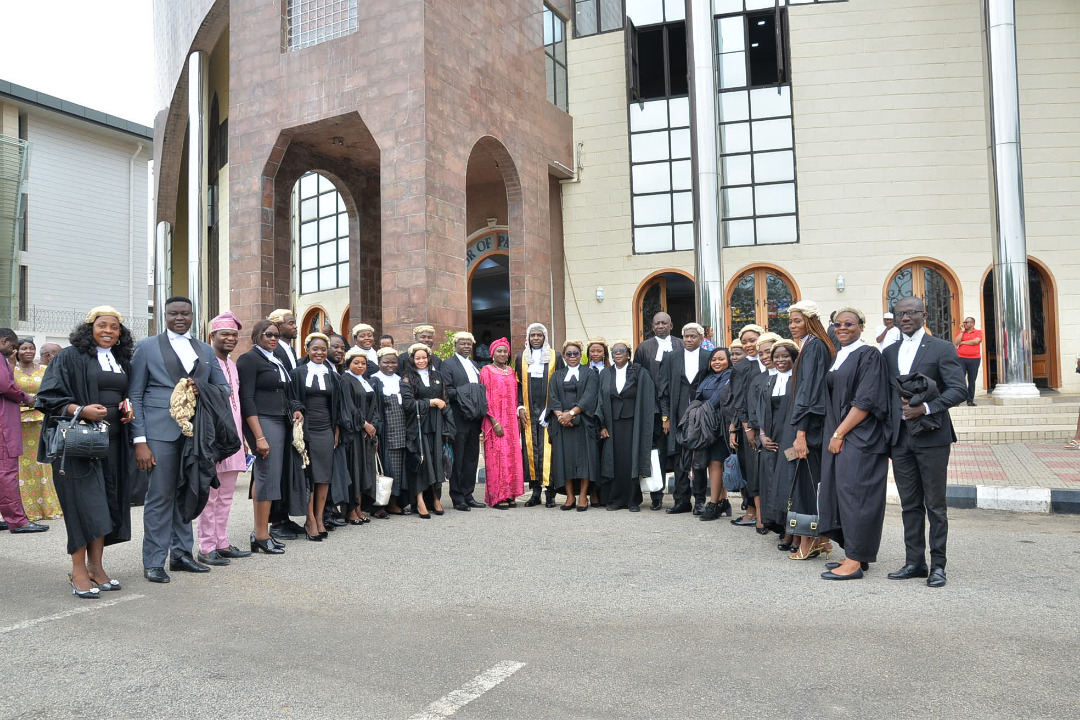
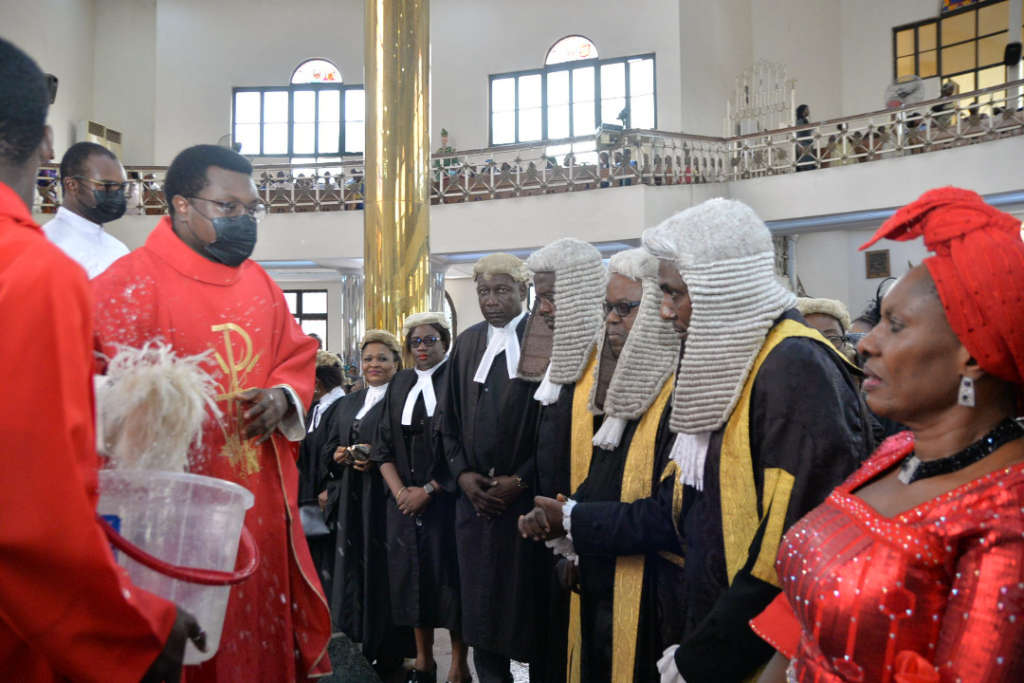
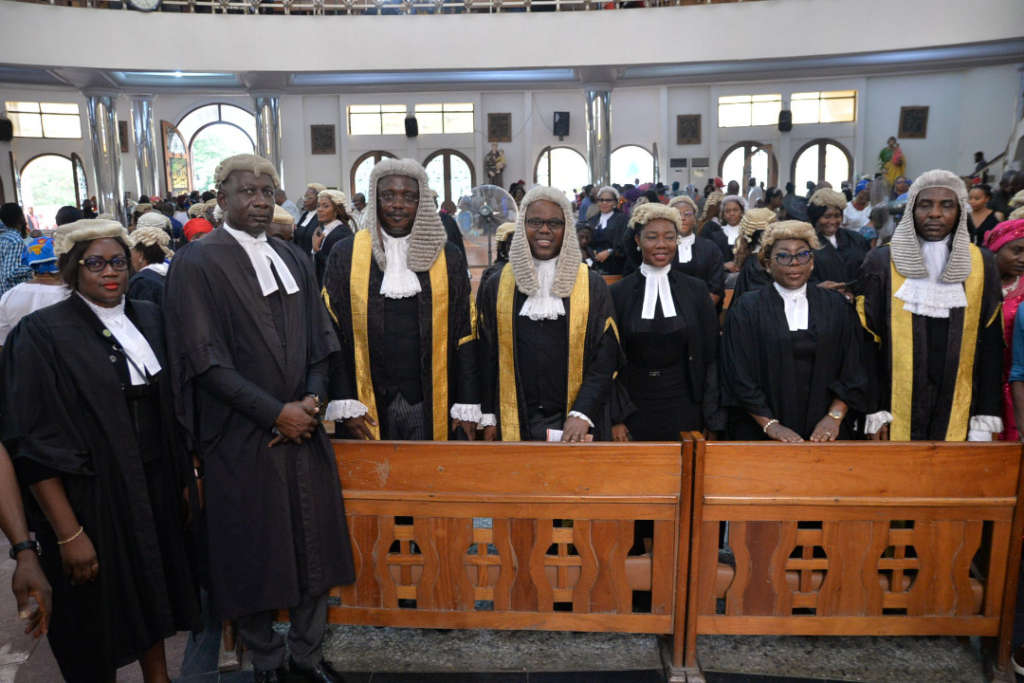
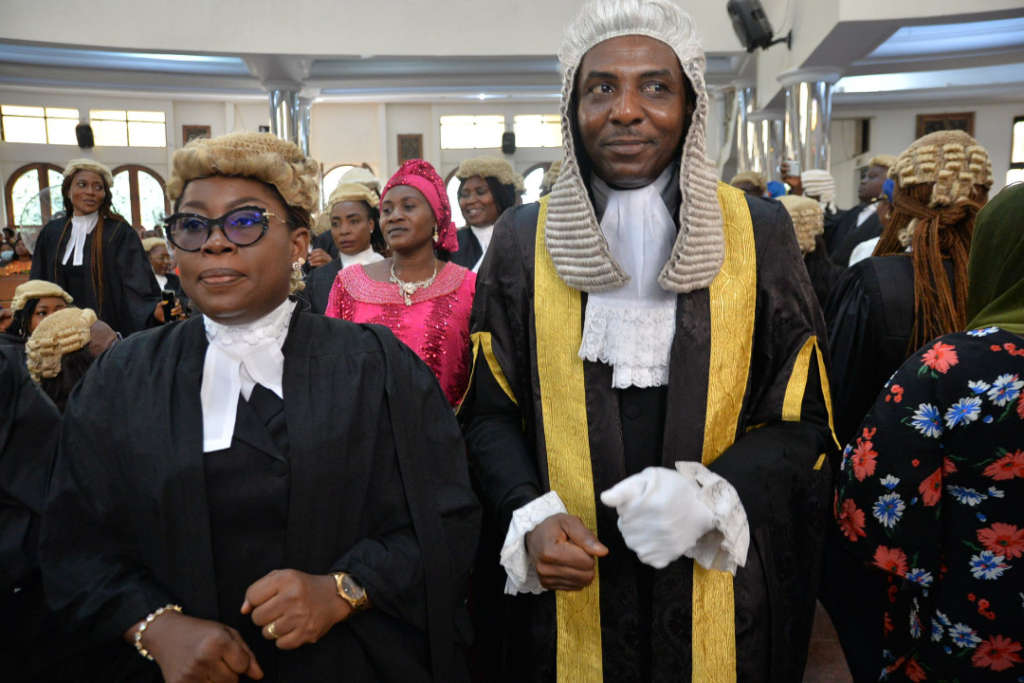
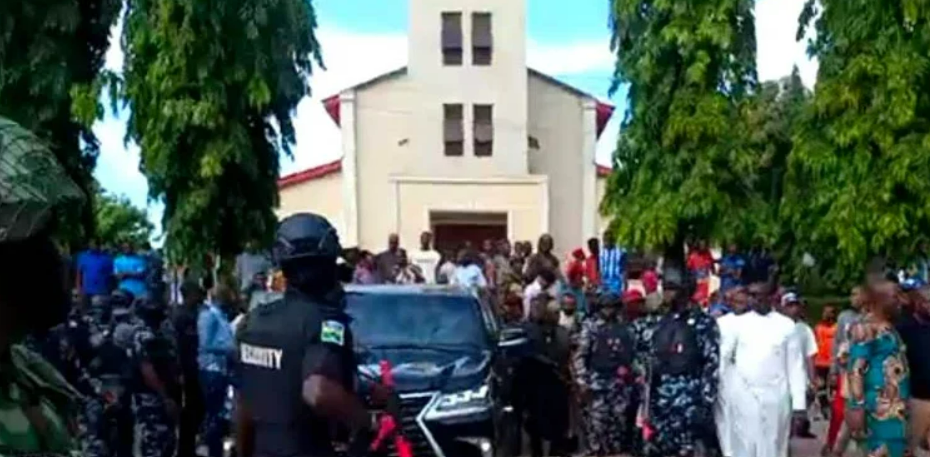
Along with other Nigerians and people from the world over, the International Federation of Women Lawyers (FIDA) has joined in condemning the horrific massacre of hapless worshipers at St. Francis Catholic Church Owo in Ondo Staten Nigeria.
FIDA in a statement signed by its Country Vice President/National President, Mrs. Amina Suzanah Agbaje said “Government, its agencies and officials cannot continue to pay lip service to the terrible plight of Nigerian citizens when they are sworn to protect and defend.”
Excerpts
Another bloody weekend in Nigeria where yet again innocent citizens, this time worshipers in church on a Sunday are in broad daylight gunned down by unknown gunmen for no just cause, resulting in the great loss of many lives while leaving several others wounded, not to mention the wanton destruction of property and breach of peace at a place of supposed sanctuary and refuge where worshipers assemble
The government, its agencies, and officials cannot continue to pay lip service to the terrible plight of Nigerian citizens when they are sworn to protect and defend them. We are tired of hearing the government’s excuses and condemnation of the evil activities of criminals. We demand decisive action from them
The International Federation of Women Lawyers (FIDA) Nigeria continues to strongly condemn the inhumane treatment of Nigerian citizens who now live in abundant fear and cannot freely move around the country
The dastardly act of the sporadic shooting at the congregation of St. Francis Catholic Church, Owa-luwa Street, Owo Kingdom, in Ondo State is a shame on the government who have once again failed her citizens
FIDA Nigeria is greatly saddened by the high rate of ongoing killings due to religious intolerance in many parts of the country. This is a major threat to the basic human rights of Nigerians, consequently government must put an end to this menace
Nigerians being entitled to freedom of thought, conscience and religion as well as the right to freedom from discrimination on grounds of religion must be protected from such attacks steered at depriving them from the enjoyment of their rights as enshrined in the Nigerian Constitution
Government must similarly live up to the expectations of defending and protecting her citizens especially as the recent security situation in Nigeria has continued to grossly deteriorate, leaving confusion, disorder, breach of peace and security as the new order of the day.
This is intolerable as Citizens are entitled to enjoy their right to life and property. We must appreciate that without peace and social order, there cannot be stability, growth and development. As such, our people cannot reach their full potential, and this is a great loss and a tremendous disservice to the nation.
FIDA Nigeria condemns this attack (on the worshipers and the church) which is one too many in Nigeria and demands that the culprits be arrested and made to face the full wrath of the law.
FIDA stands resolutely behind justice and speaks out strongly against all forms of evil perpetuated in the society against vulnerable citizens
FIDA Nigeria commiserates with the families of the deceased and the good people of Owo, Ondo State, we urge the Federal Government and the State Government to spare no effort in bringing those responsible for these heinous crimes to justice
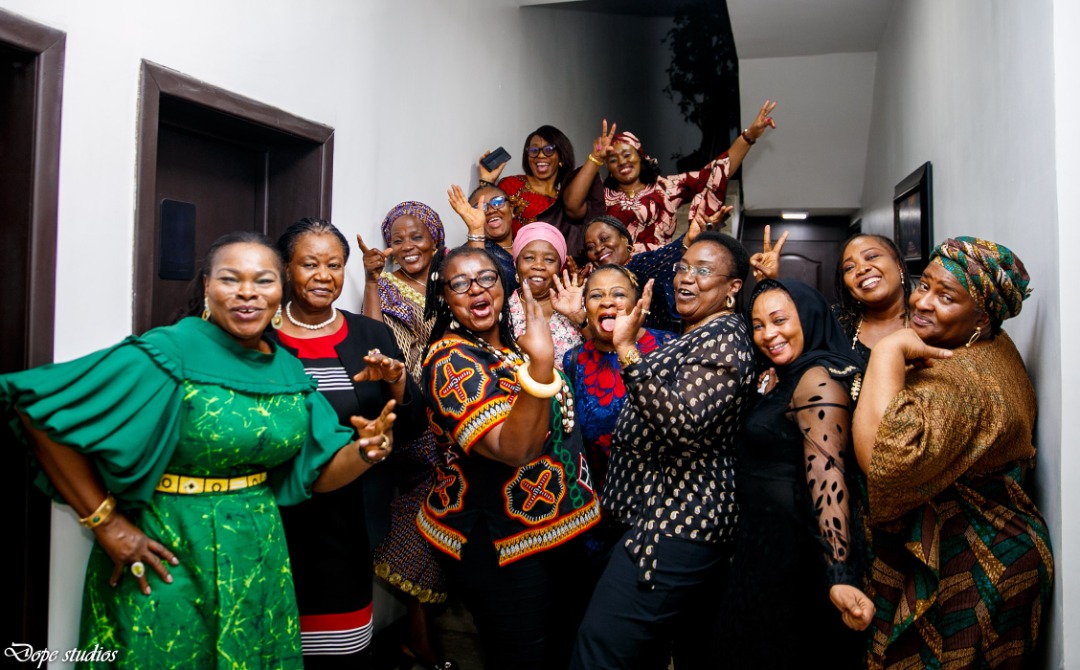
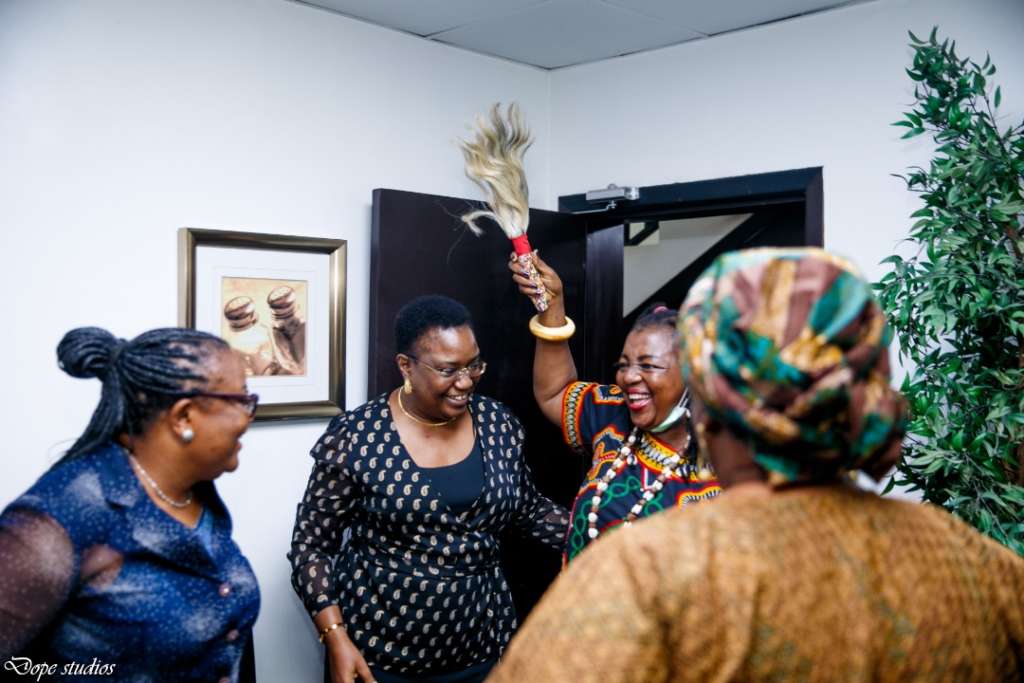
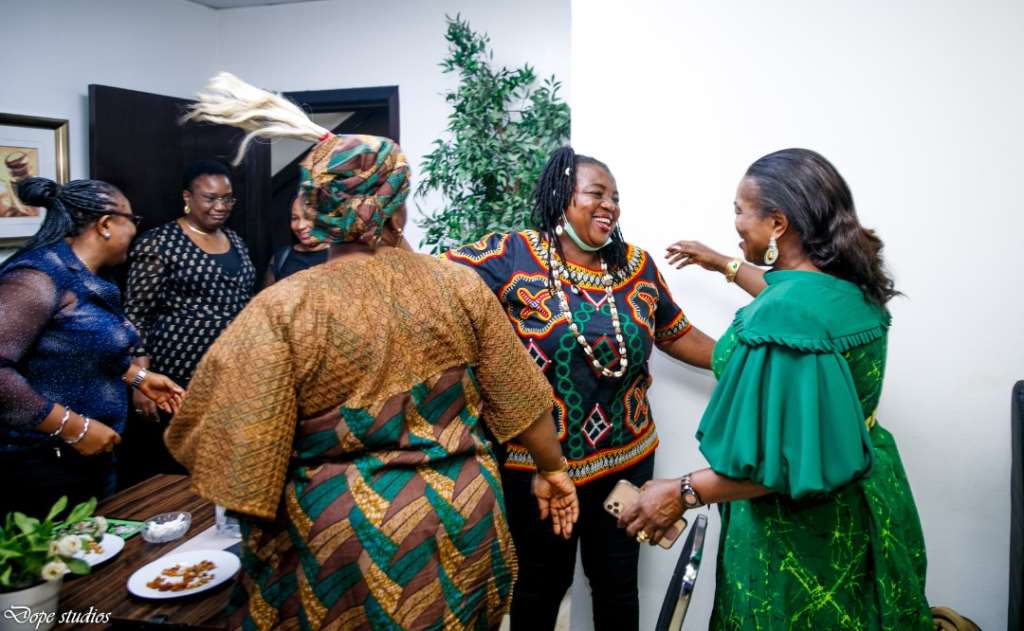
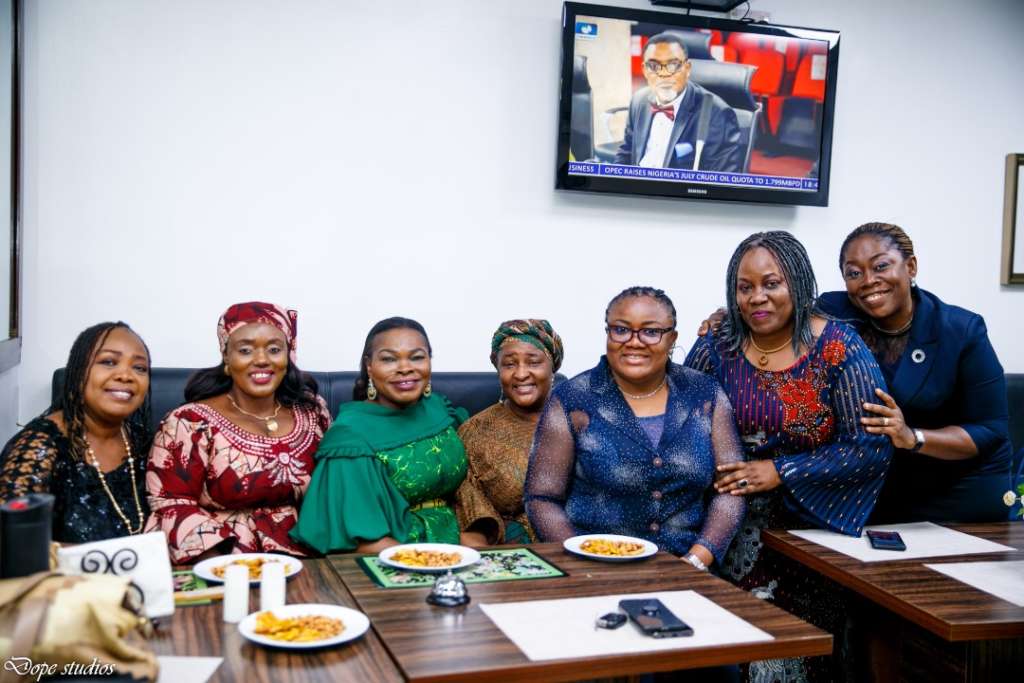
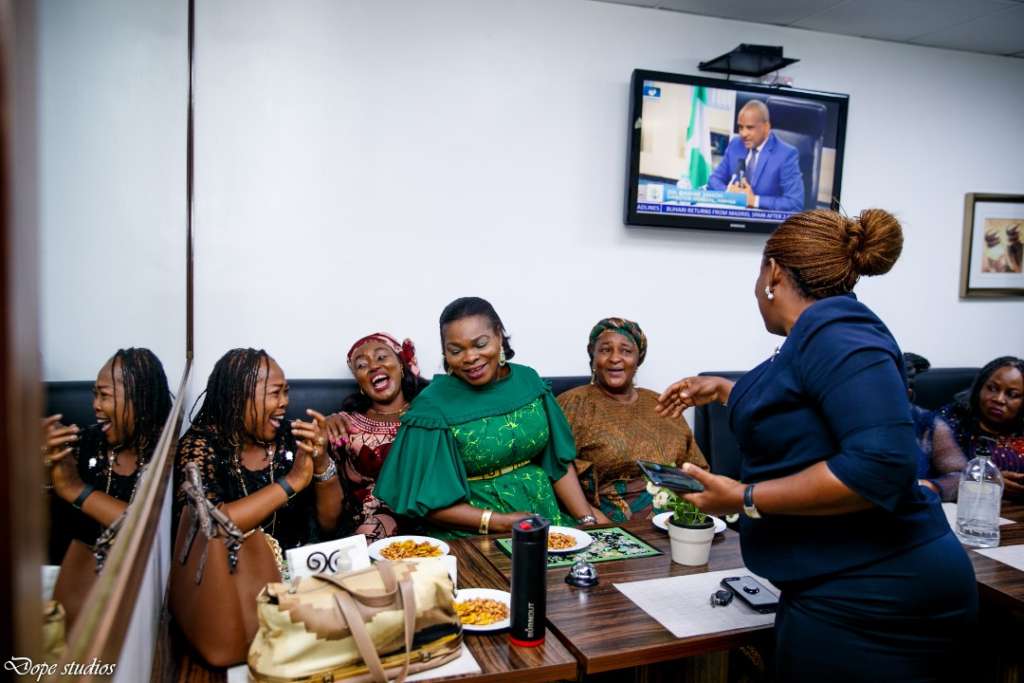
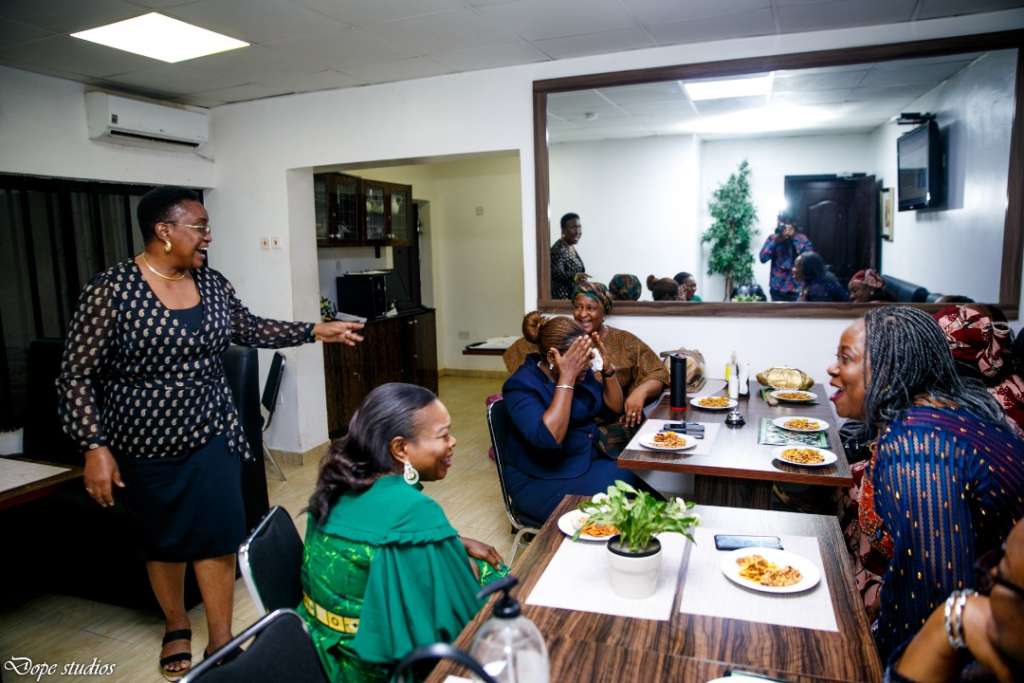
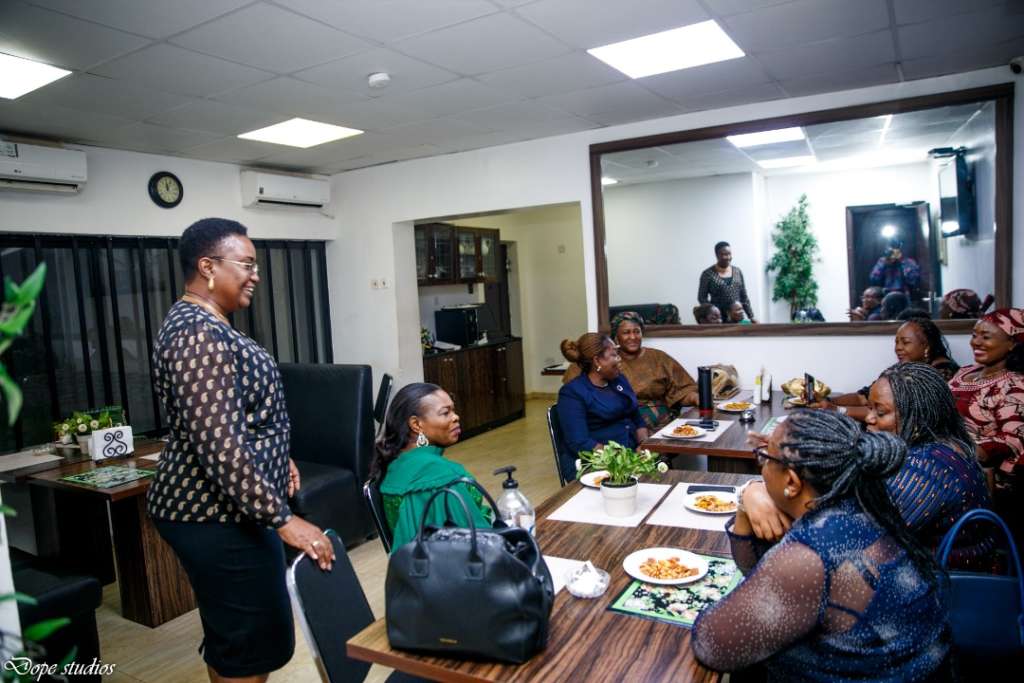
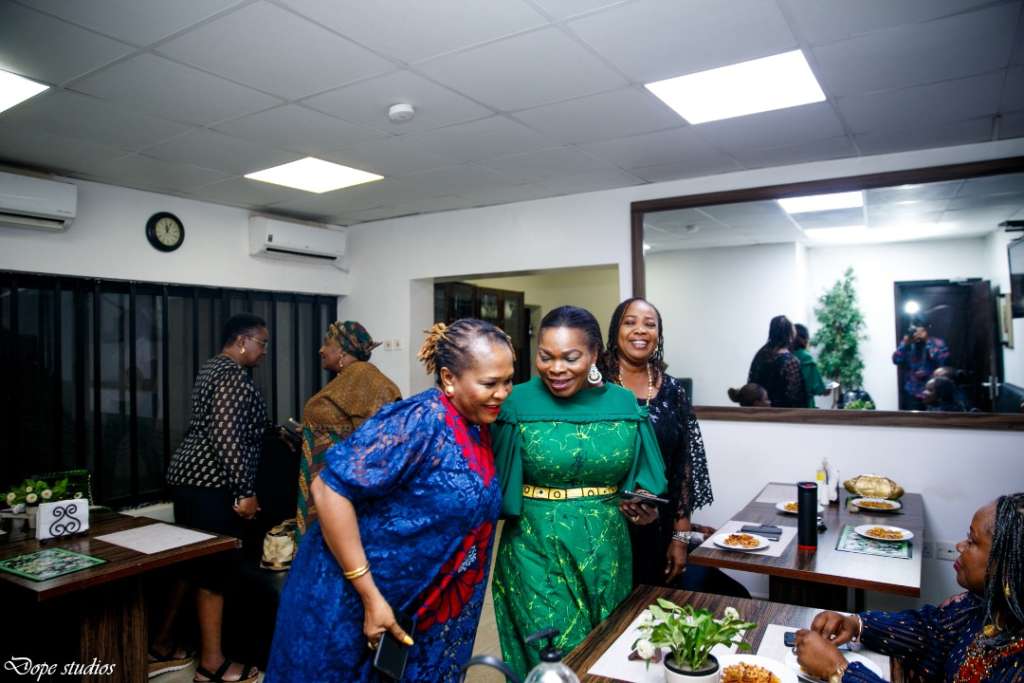
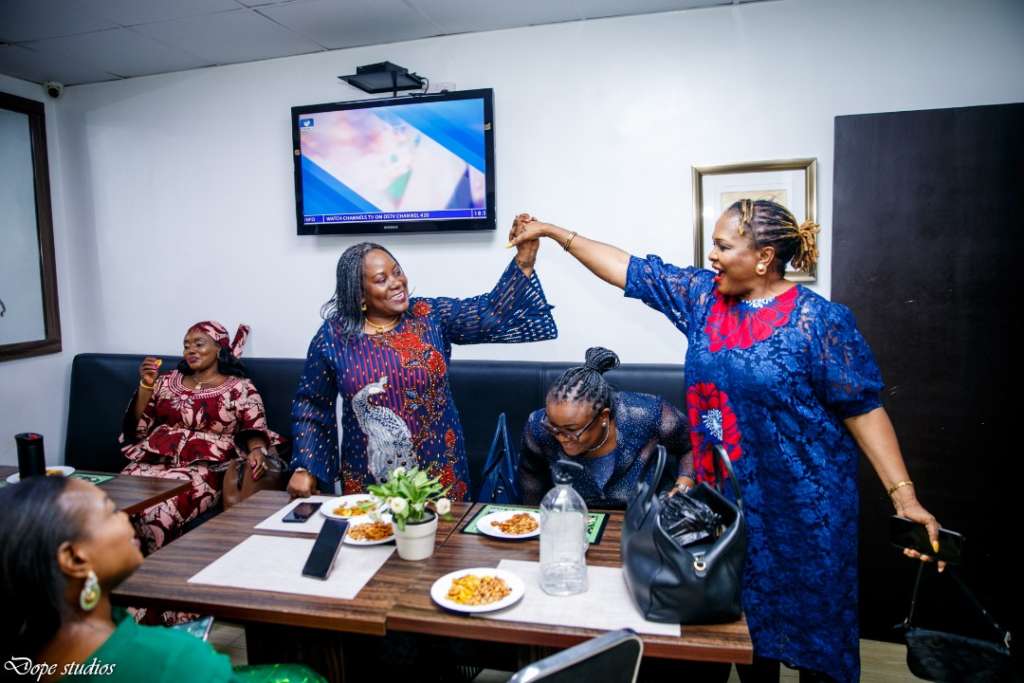
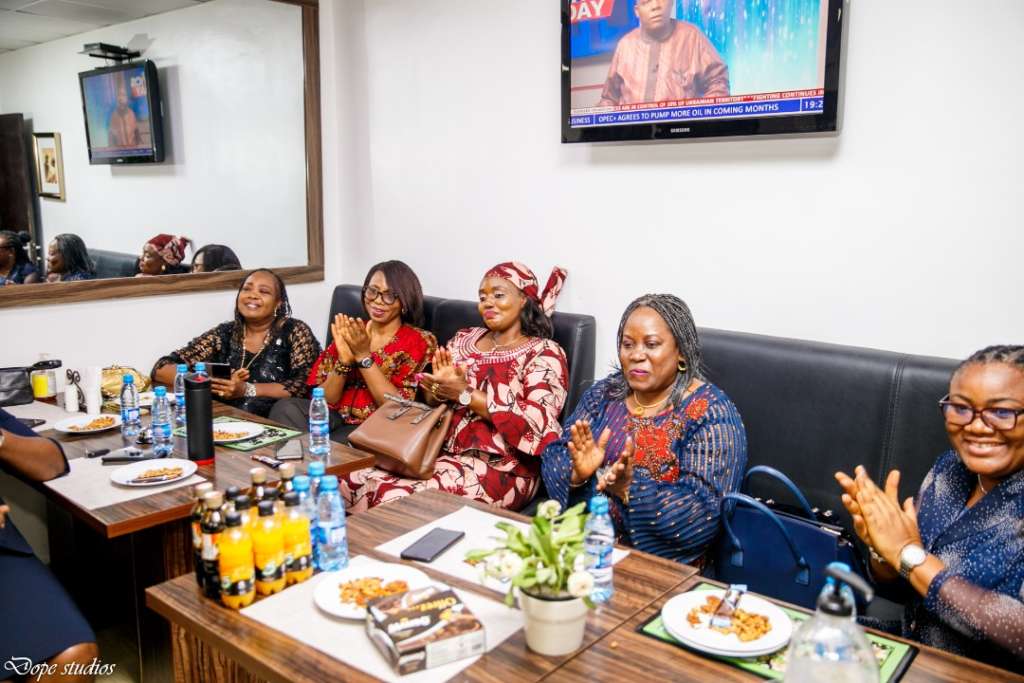
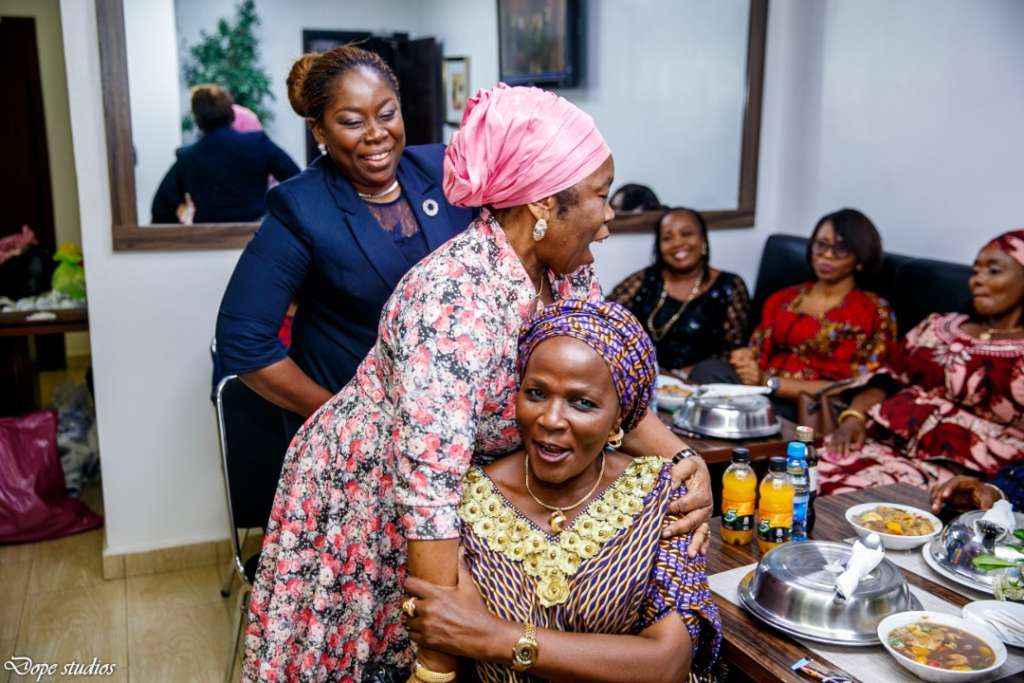
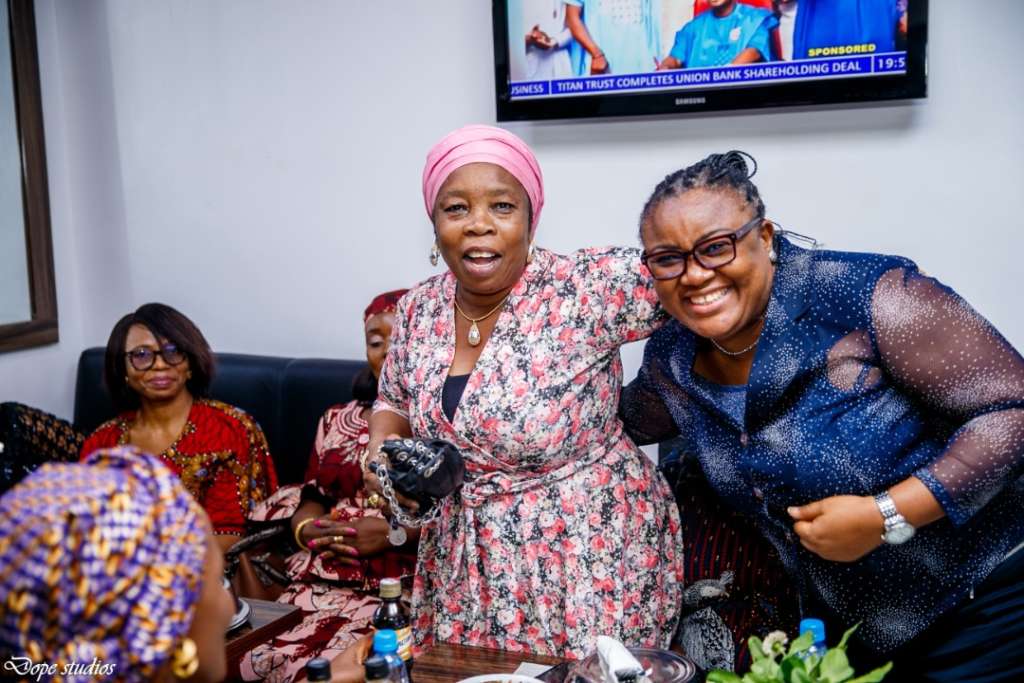
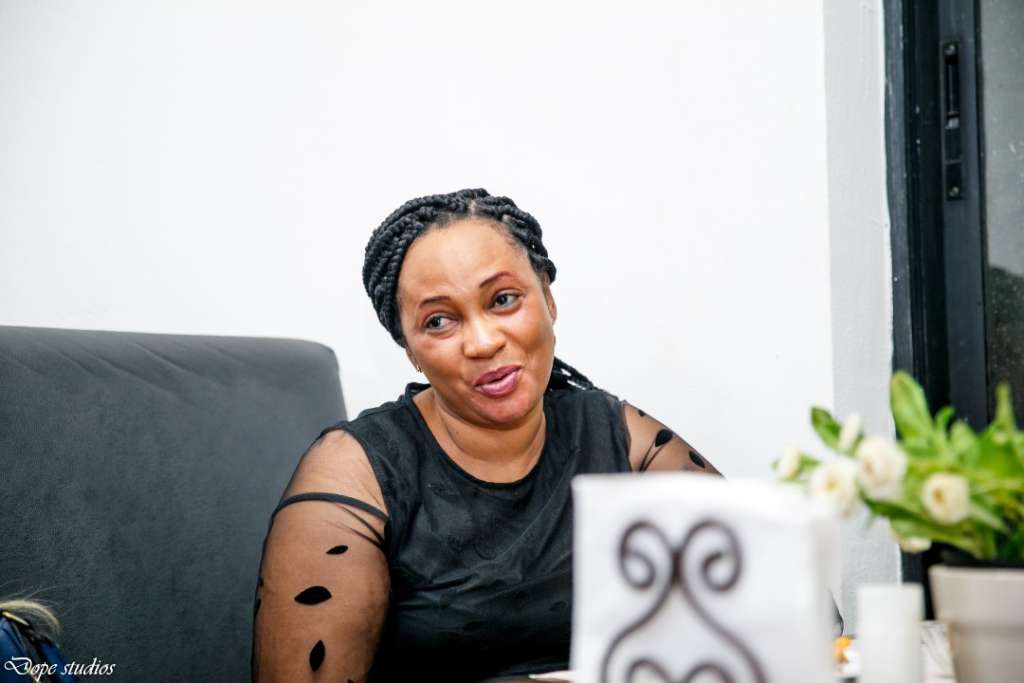
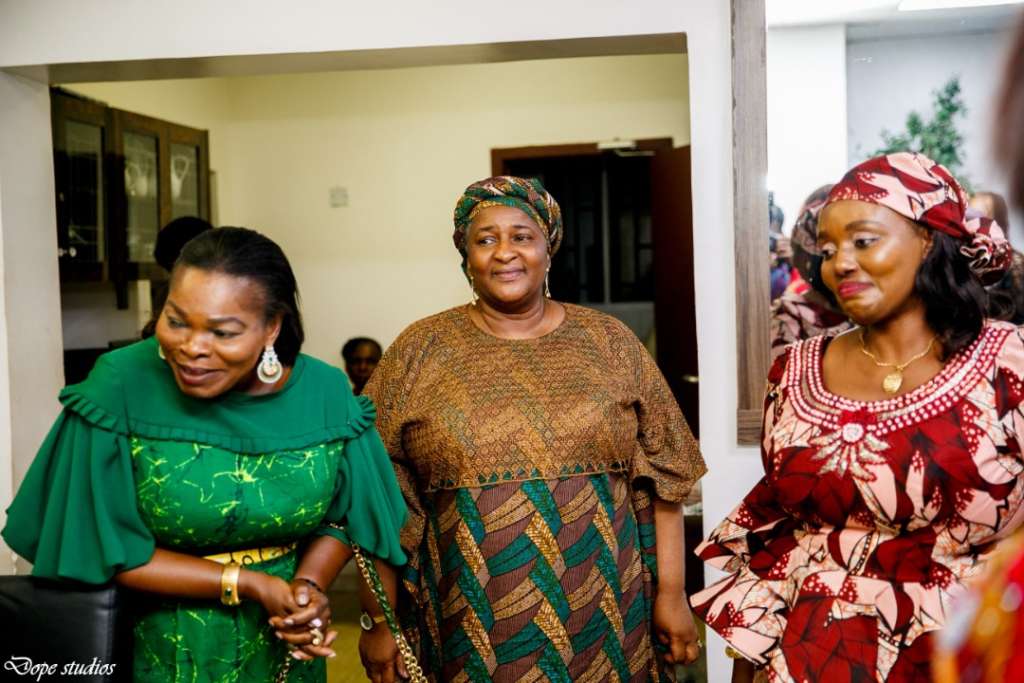
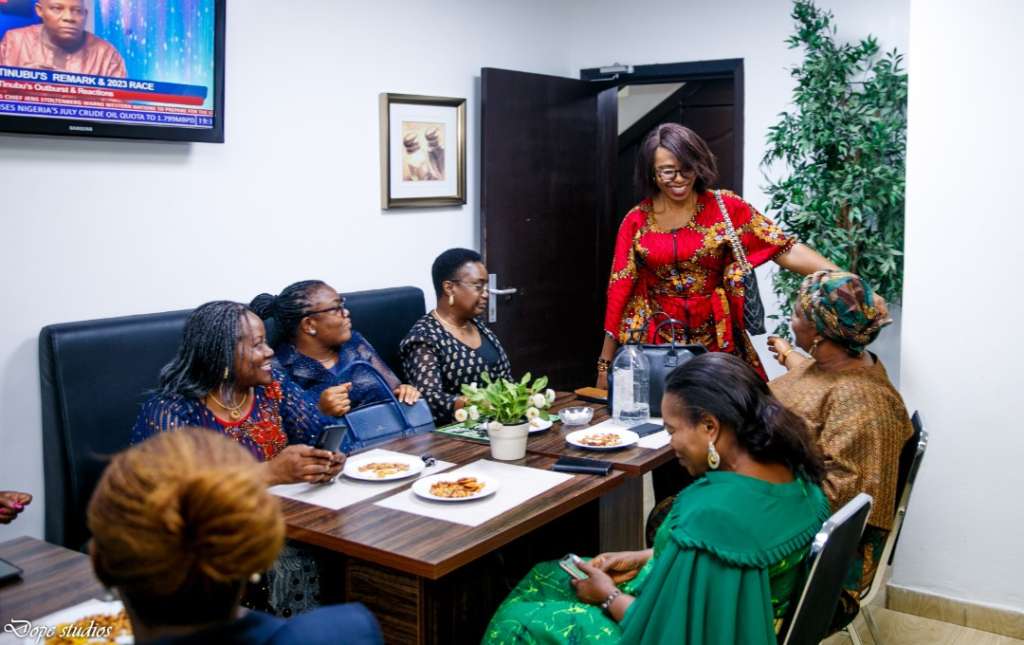
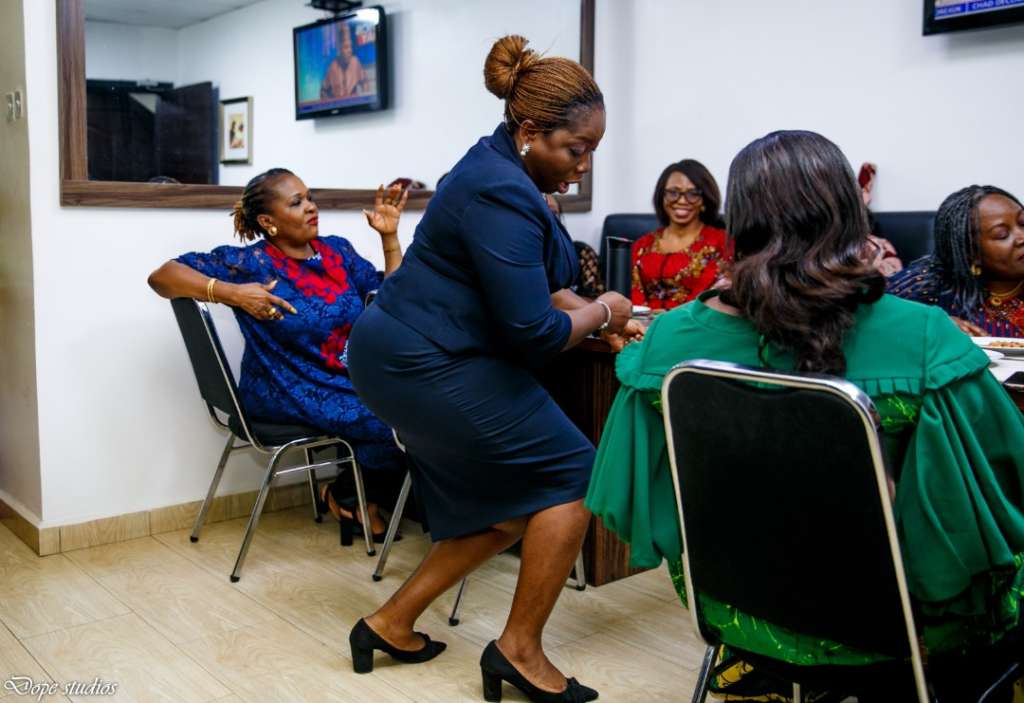
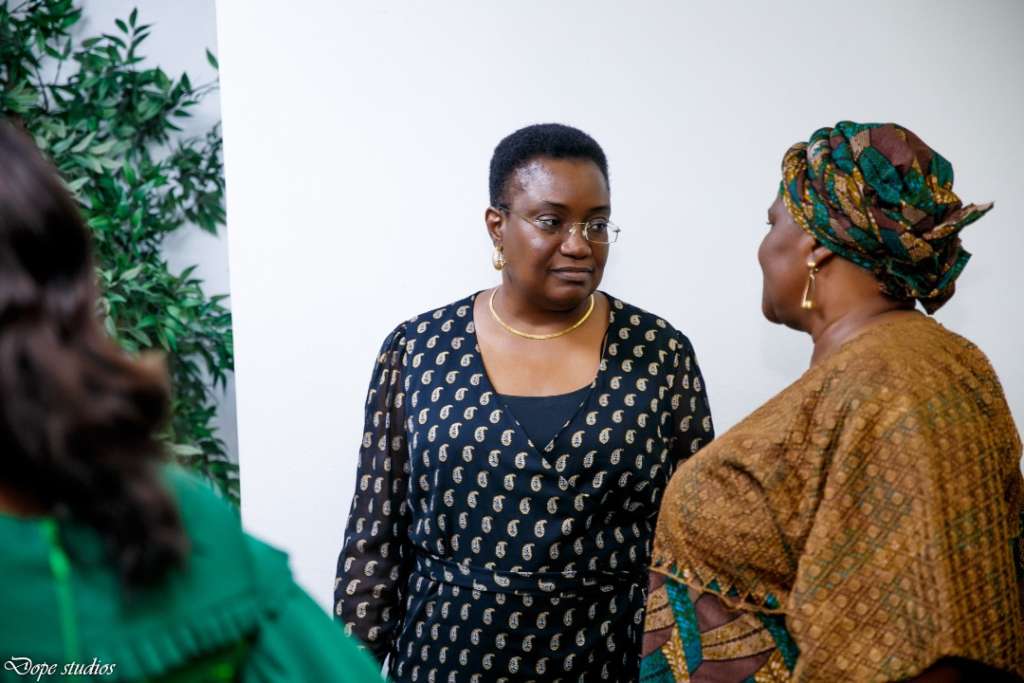
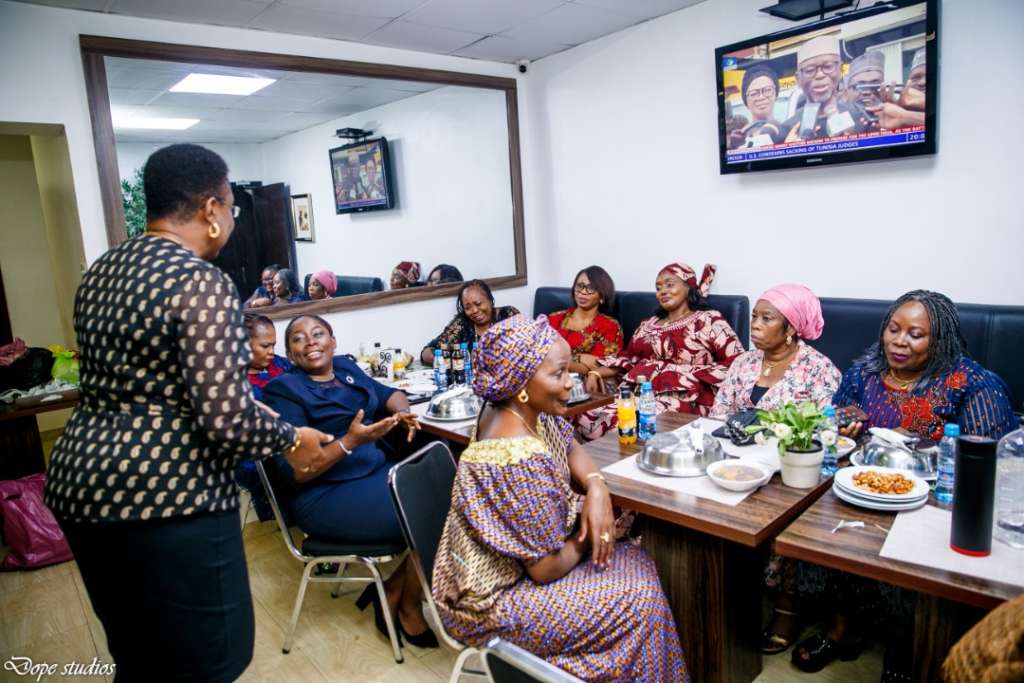
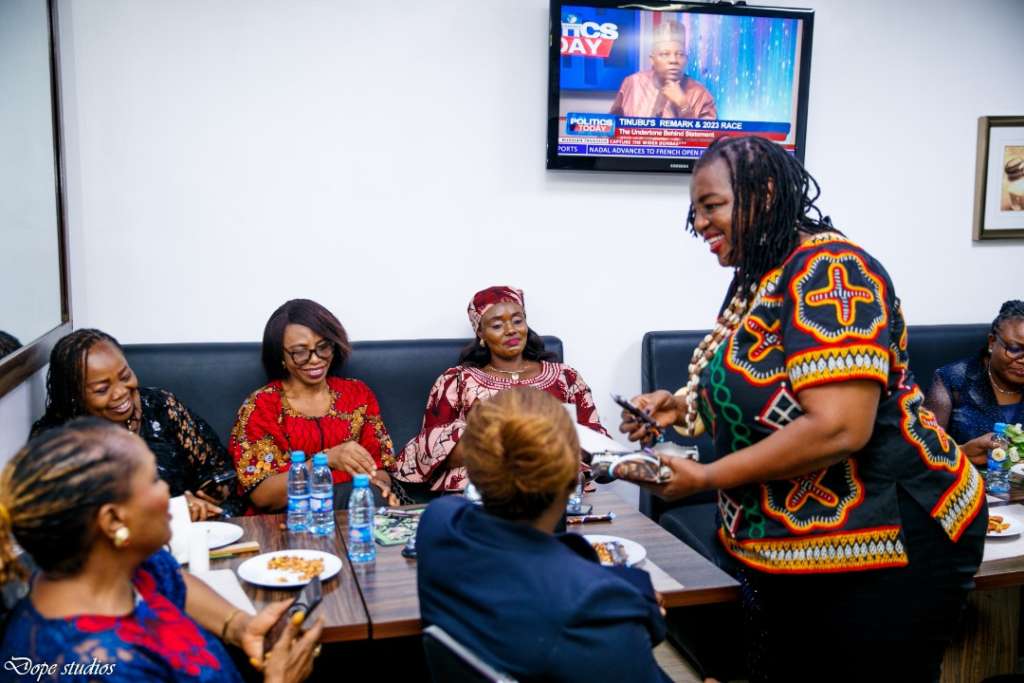
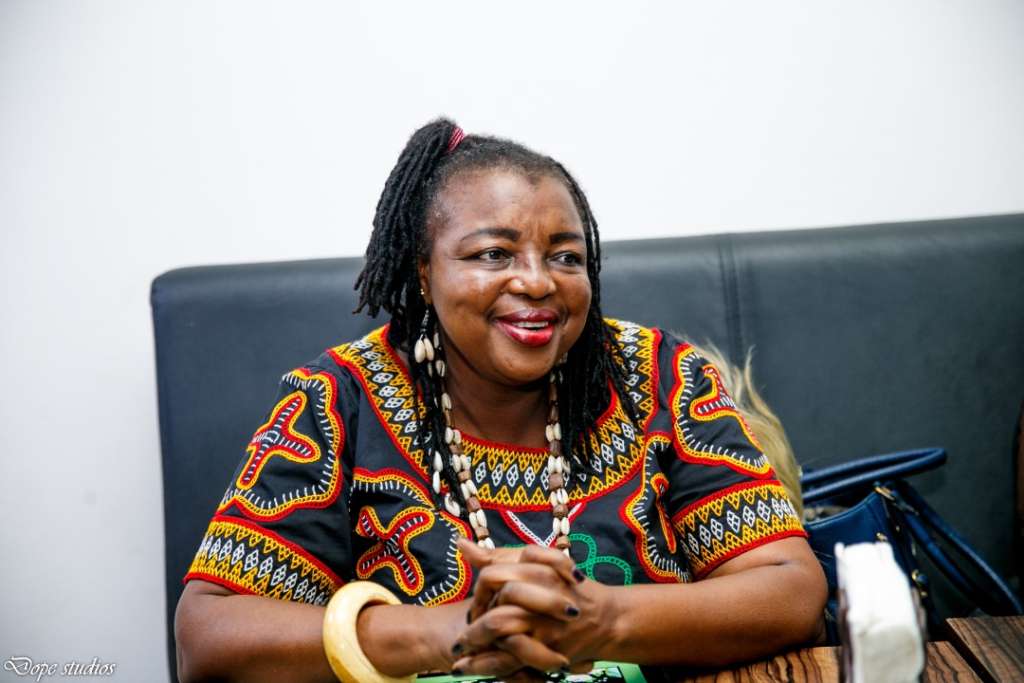
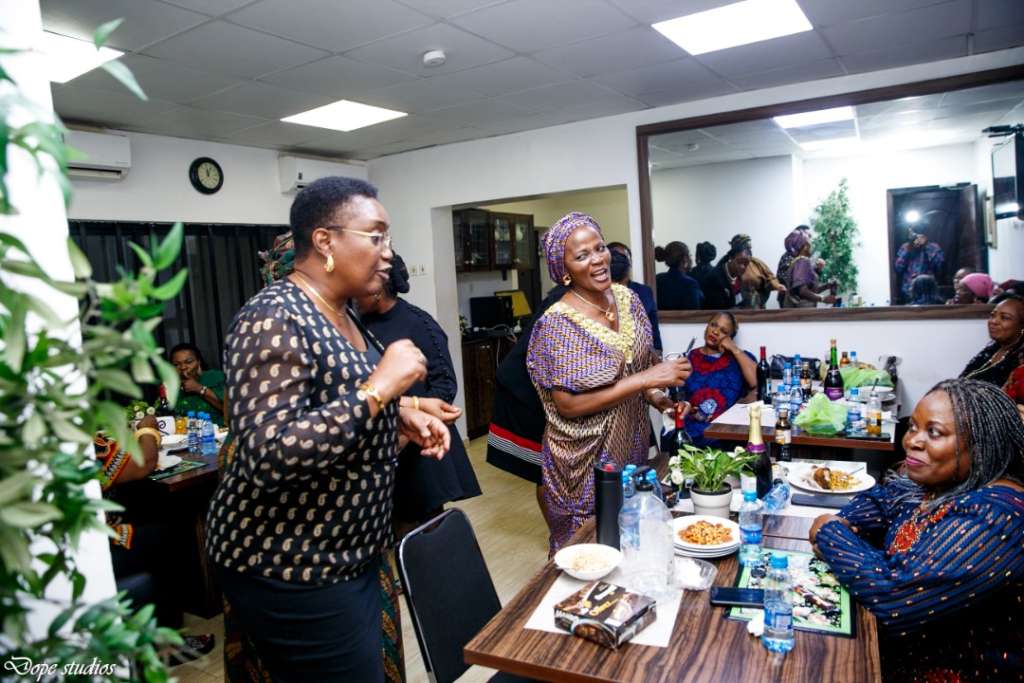
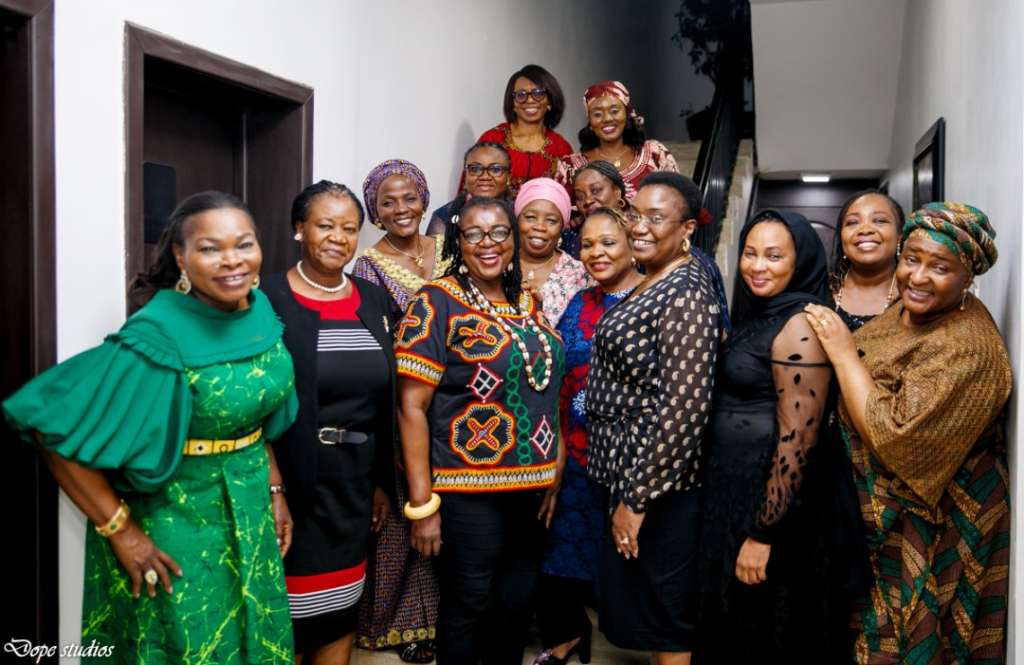
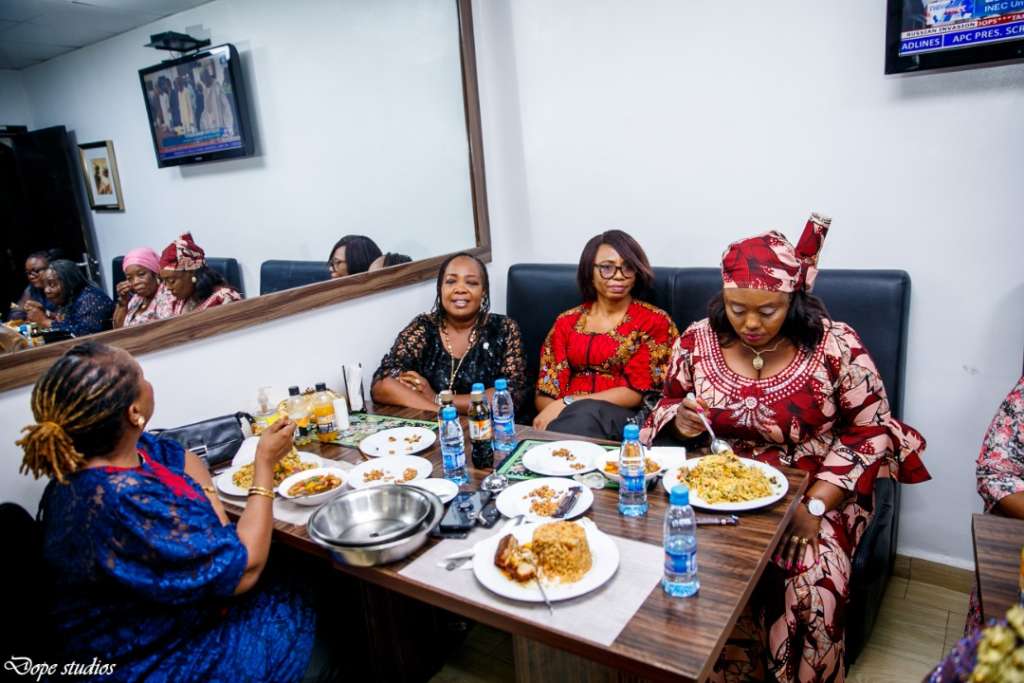
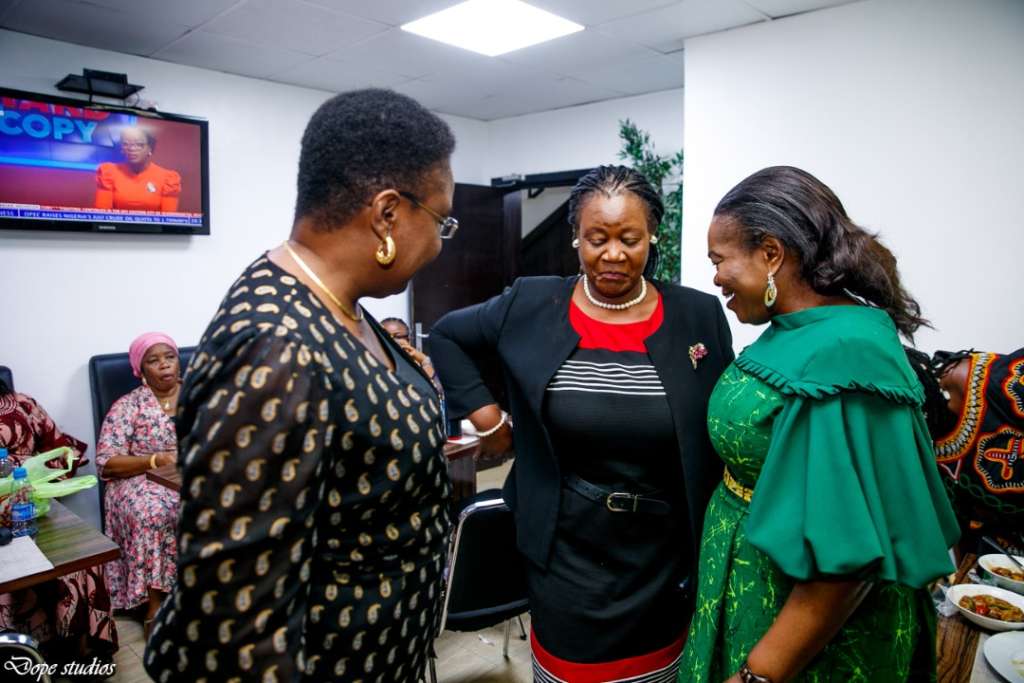
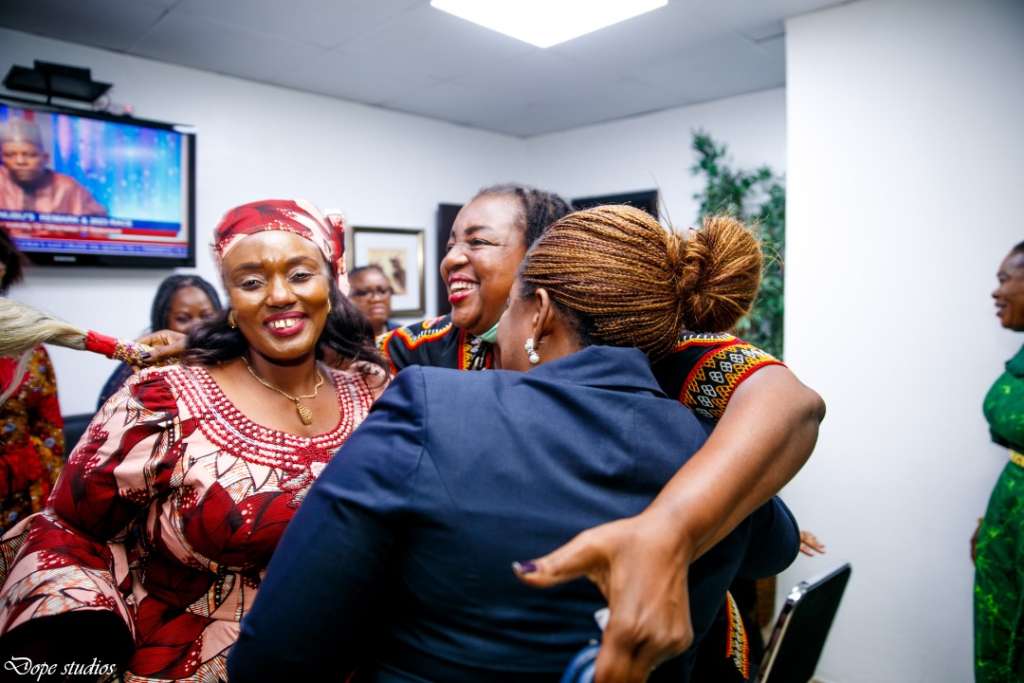
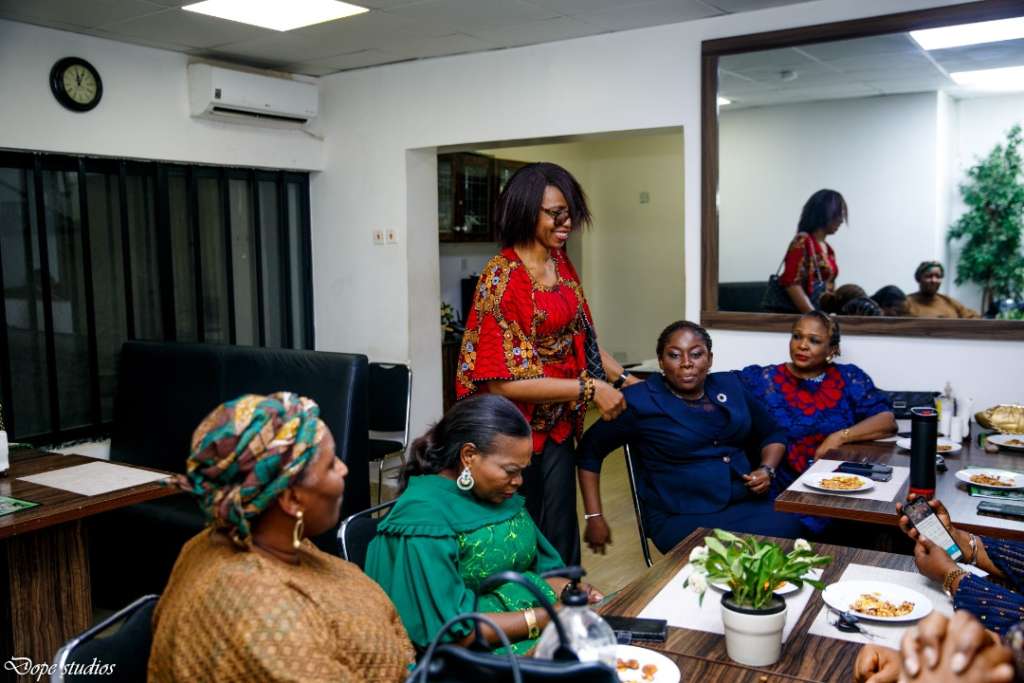
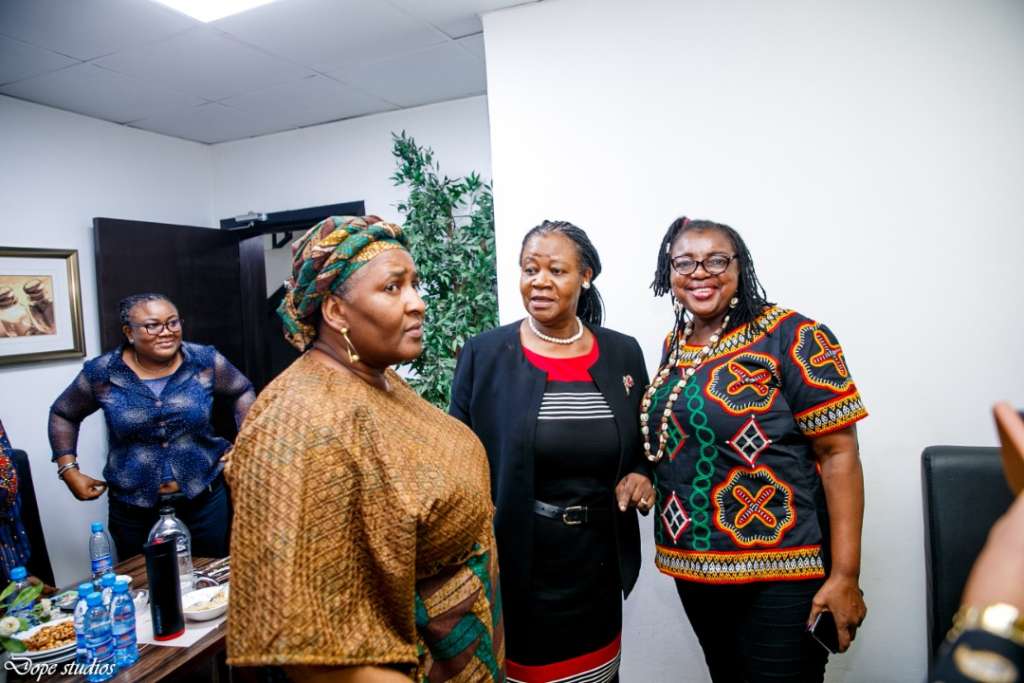
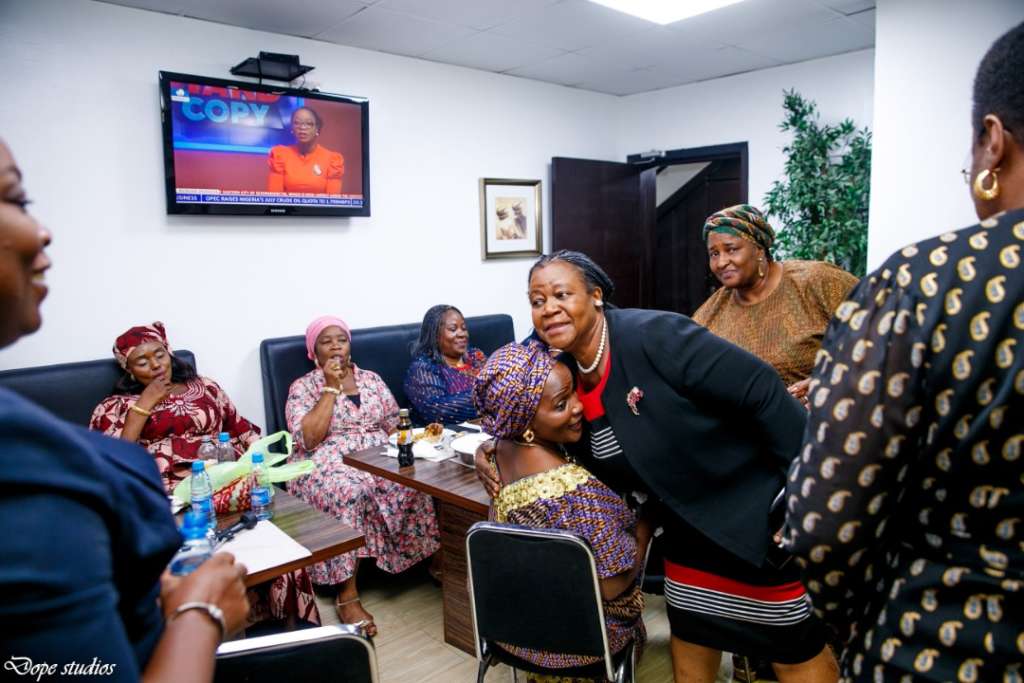
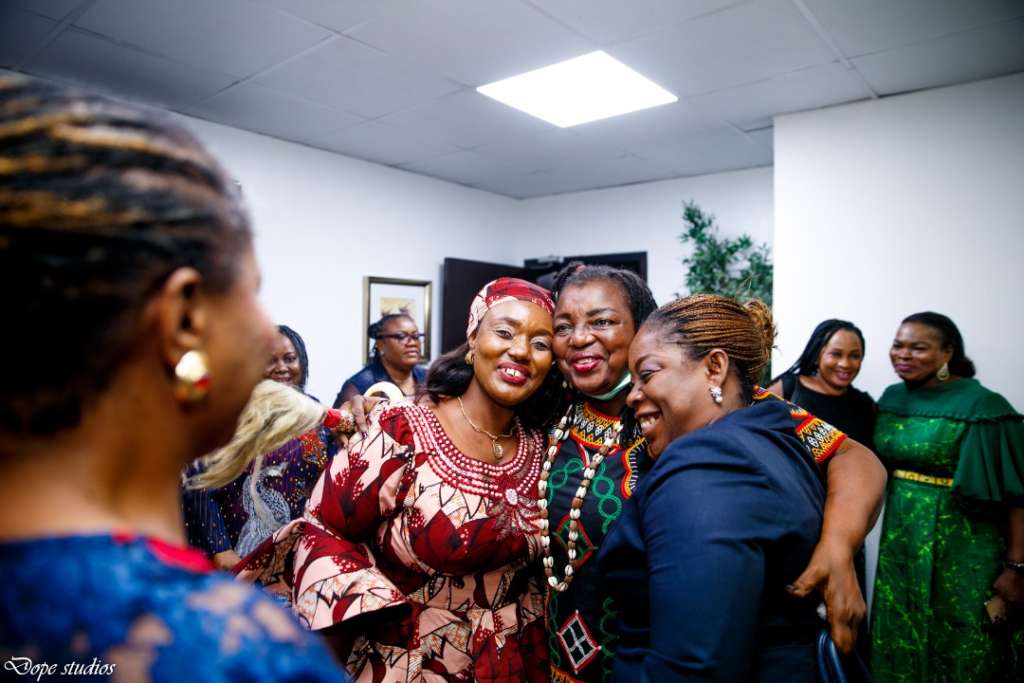
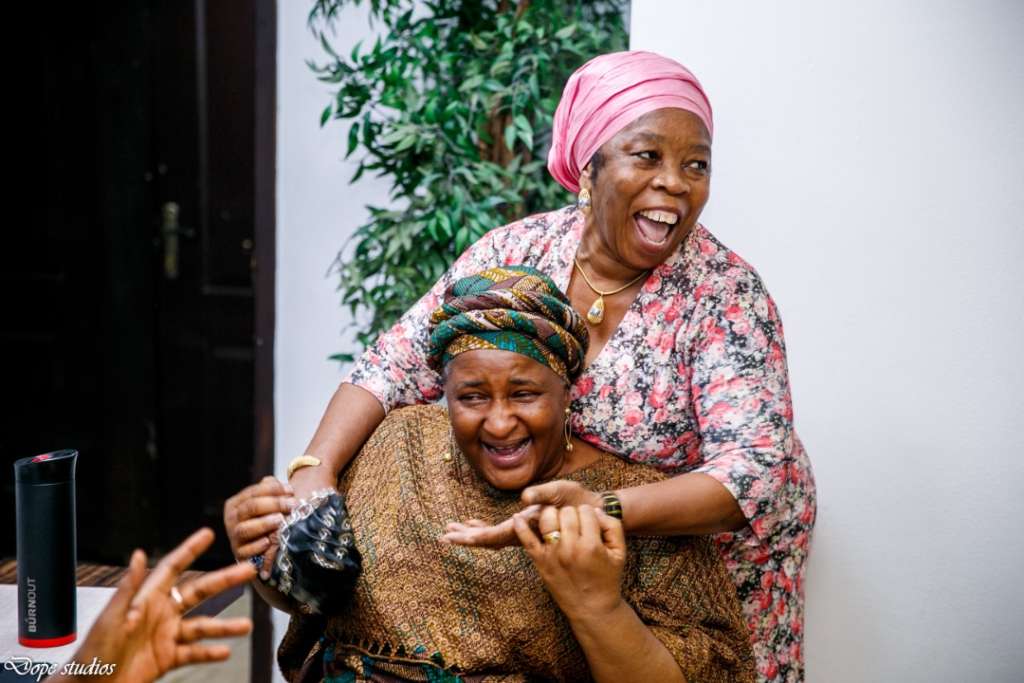
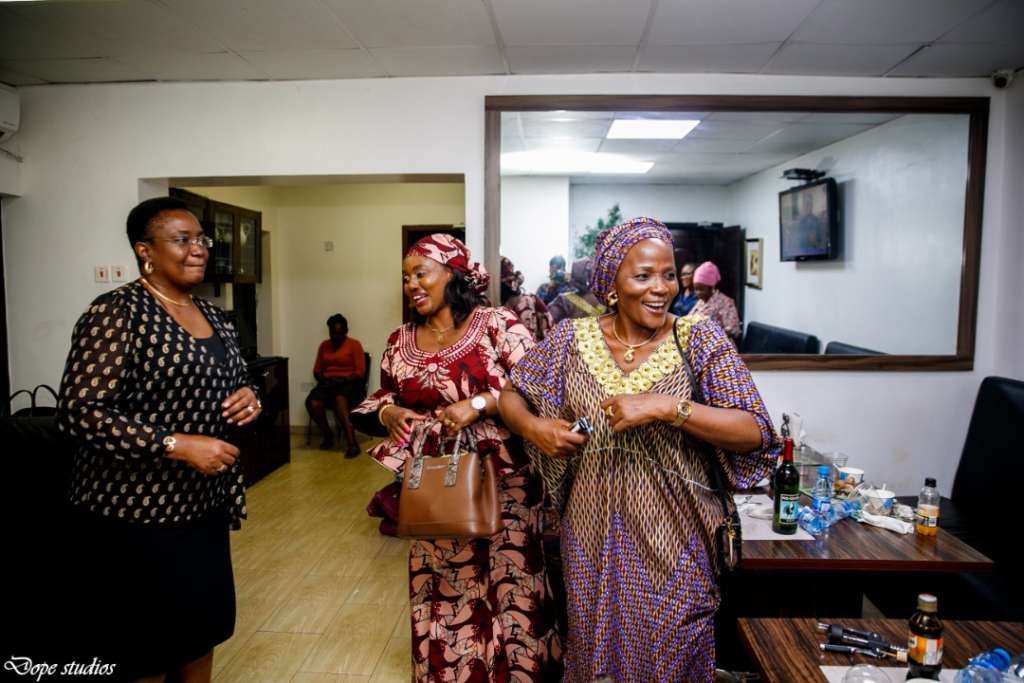
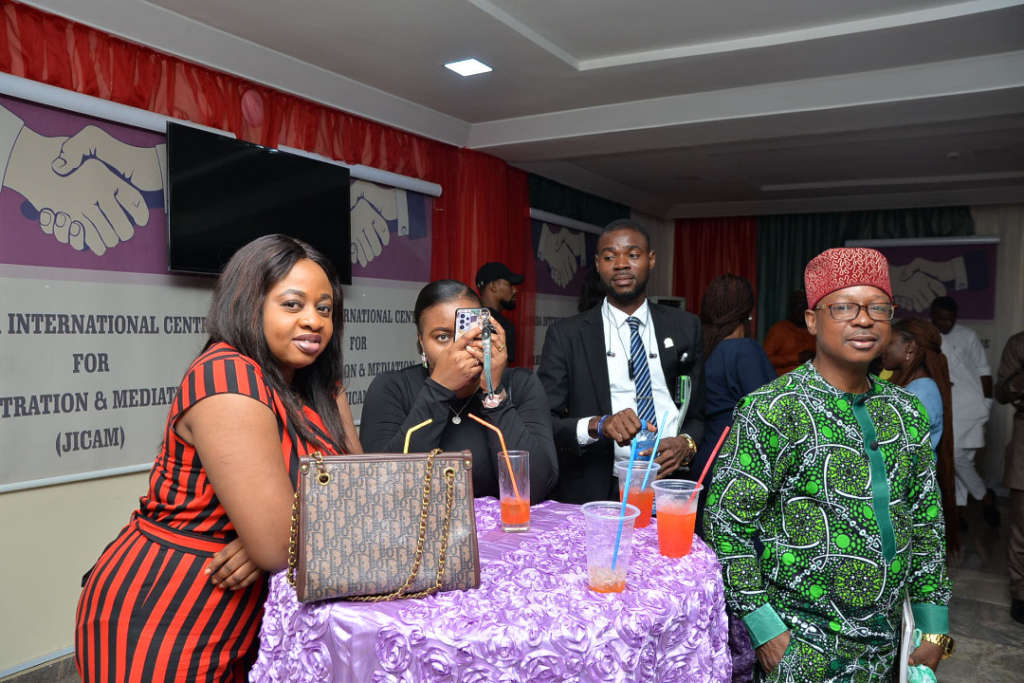
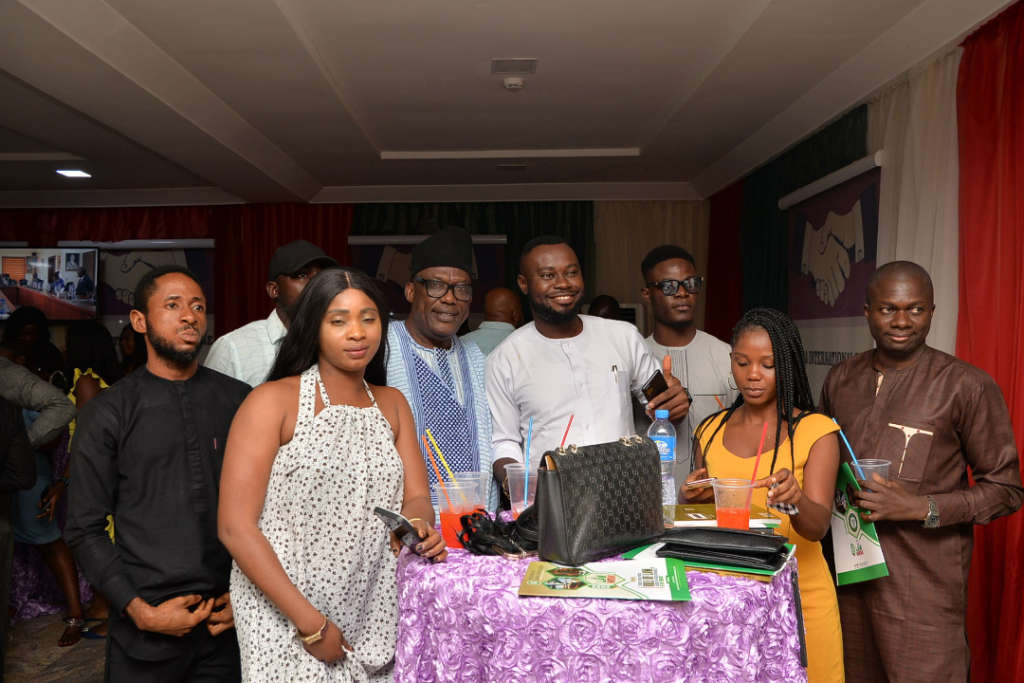
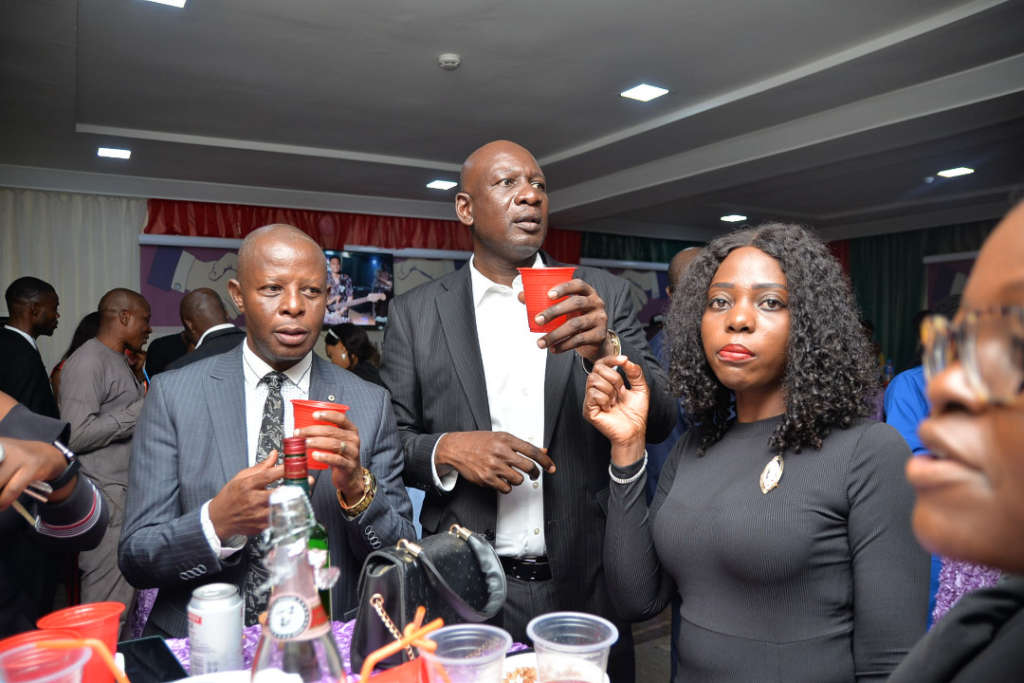
The International Secretariat of the International Federation of Women Lawyers (FIDA) led by its International Director, Ezinwa Okoroafor recently hosted a night out with FIDA International Historian and Country Vice President (CVP) of FIDA Cameroon, Gladys Mbuya in Abuja. Gladys was accompanied by Ramatu Abdu, Coordinator of the Association for the Welfare of Women and Indigenous People of ASOWWIP Cameroon.
The fun-filled evening was graced by past Regional Country Vice Presidents of FIDA, Chief Mrs. Victoria Awomolo, SAN, and Barr. Mrs. Oby Nwosu., the CVP of FIDA Nigeria, Mrs. Amina Suzanah Agbaje, CVP Emeritus Rhoda Prevail Tyoden, past FIDA Nigeria Financial Secretary, Ijeoma Agwu, Chair of FIDA Abuja, Chibuzo Maureen Nwosu, past FIDA Abuja Branch Chairs Ngozi Ikenga and Rekia Rachael Adejo-Andrew, past branch Vice-Chair, Ozioma Izuora, Past PRO Chioma Onyenucheya-Uko, other members of the branch, Roseline Tasha and Lillian Okenwa, Editor-in-Chief, Law & Society Magazine.
Gladys Mbuya being welcomed by FIDA International Director, Ezinwa Okoroafrer (middle), CVP of FIDA Nigeria, Mrs. Amina Suzanah Agbaje (backing the camera), Chair of FIDA Abuja, Chibuzo Maureen Nwosu(extreme left) and others as she arrives at the reception venueGladys arrivingPast FIDA Nigeria Financial Secretary, Ijeoma Agwu, Past FIDA Abuja Branch Chair, Rekia Rachael Adejo-Andrew. Past FIDA Regional Vice President, Chief Mrs. Victoria Awomolo, SAN, CVP of FIDA Nigeria, Mrs. Amina Suzanah Agbaje, Chair of FIDA Abuja, Chibuzo Maureen Nwosu, Ms. Roseline Tasha, and Past PRO Chioma Onyenucheya-UkoPast FIDA Abuja VP, Mrs. Ozioma Izuora, and Chief Mrs. Awomolo. SAN enjoying a tete-a-tete L-R: Ijeoma Agwu, Lillian Okenwa, Rekia Rachael Adejo-Andrew, Roseline Tasha,and Chibuzo Maureen NwosuL-R: Chioma, Ikenga, and Rhoda Tyoden (Sitting)Ngozi Ikenga and Chibuzo Nwosu (standing) having a good timeRamatu Abdu, Coordinator of the Association for the Welfare of Women and Indigenous People of ASOWWIP CameroonChioma Onyenucheya-Uko showing off her dancing skillsGladys MbuyaL-R: Ezinwa Okoroafor, Barr. Mrs. Rose Oby Nwosu and Chief Mrs. Awomolo, SANBarr. Mrs. Nwosu hugging CVP Emeritus Rhoda Prevail Tyoden
The state of the nation, where are the lawyers has one connotation for me, the role of lawyers in governance. It represents the active role lawyers play in promoting the rule of law in Nigeria. It signifies the position of lawyers in preserving the integrity of the civic space.
Having due regards to state of the Nigerian Nation today, it begs the question again, where are the lawyers? Or we might want to ask:”What role have lawyers played in changing, or safeguarding, the Nigerian democratic society?
However, we must not forget historical moments such as that of August 2018, at one of Nigeria’s largest annual legal gathering, NBA 2018 National Conference, when the President of the Federal Republic of Nigeria, President MuhammaduBuhariwas quoted as he declared to a body of lawyers, “…the Rule of Law must be subjected to the supremacy of the nation’s security and national interest…There’s no doubt that National Security is important but what was notable about that moment for Nigeria was that lawyers didn’t rise to the occasion to counter Mr. President’s assertion and set the records straight that the President, who had taken oath to lead a democratic nation, is bound to promote and preserve the Rule of law, which must always be the supreme consideration over and above the national interest, and that due legal process must never be sacrificed in a bid to protect the nation’s security.
Interestingly, despite the increase in impunity from that moment till date, the security infrastructure in Nigeria has worsened. On a daily basis there are pathetic stories of the operations of Terrorists, Bandits, Unknown gunmen, Kidnappers, Killer Herdsmen – from train bombings along Kaduna rail line[1], to bomb blast claimed by the Islamic State in West Africa Province (ISWAP) for the attack at an annual festival in the Idoji area of Okene, Kogi State on Thrursday 2nd of June[2], to even yesterday, the bombing of Christian worshippers in a Catholic Church in Ondo State[3]. These points to the fact that the suppression of the rule of law has not achieved clarity or progress but would rather continue to expose the flaws in the democratic reality of the country.
The role of the rule of law in preserving democracy cannot be overemphasized. In fact, both should be considered as conjoined twins. In a recent paper delivered by Dr. Solomon Arase, the former Inspector General of Police, at the NBA Abuja Branch Law Week Opening event on the 5th of June 2022,in expatiating what he termed as the nexus between the rule of law, electoral process, governance and good governance, he stated that:
“The rule of law provides the general framework for democratic rule, electoral process, governance and good governance which in turn is the destination of both democracy and the rule of law”
THE STATE OF THE NATION VIS-À-VIS THE SHRUNKEN CIVIC SPACE
Apart from the fact that in Africa, we are witnessing an alarming increase in the shrinking of civic space, it gets even more frightening when a nation like Nigeria decides to join the fray of countries that attack the right to freedom of expression, assembly, and association.
The civic space is a dynamic environment that exists to promote accountability, transparency, and in general help to put governments on their toes. It defends citizens’ rights to information, expression and resolve for good governance. Its key components are the rights to freedom of assembly, association, and expression. In the modern age, one of the unparalleled innovations for promoting these three terms has been the internet and the social media, being a component of that evolution, demonstrating an unprecedented ability for the politically engaged to bypass and influence traditional information flows. The world today is a global village which affords citizens to acquire knowledge on governance on day to day basis from other countries and also inform them on how to make the necessary changes in their own countries. In other words, the internet age allows citizens to make comparative studies for better governance and citizens’ engagement. Citizens need to engage their governments and this is what the civic space promotes. Where the civic space is suppressed or repressed, this will be to the detriment of citizens as governments and its institutions will drastically reduce their response to citizens’ requests.
“If space exists for civil society to engage, there is a greater likelihood that all rights will be better protected. Conversely, the closing of civil society space, and threats and reprisals against civil society activists, are early warning signs of instability. Over time, policies that delegitimize, isolate and repress people calling for different approaches or legitimately claiming their rights can exacerbate frustrations and lead to instability or even conflict.”
Thus, good governance in a democracy is predicated on the principles of accountability and transparency. This cannot be achieved if information that is essential for the public interest should be prevented or suspended through actions like shutting down the internet which has become the life blood of the society in the digital age.
In Nigeria, I have watched helplessly as a majority of Nigeria’s senior lawyers have kept quiet while the country’s Minister of Information have, under the excuse of not wanting the government to be embarrassed, have curtailed and in fact boldly suppressed the media[4] and asked it to only publish censored information, while consistently declaring war on the media through the Nigeria’s law making processes-this is witnessed in the increase in the number of repressive bills sponsored to criminalize criticism of the government both in traditional and social media, which culminated in the suspension of twitter for 222 days, which resulted in economic losses of about N546.5 Billion[5]. Prior to this, there had been a successful attack on Citizen’s right to lawful protest against police brutality in Nigeria[6]where Nigerians again only saw the usual suspects, Femi Falana SAN, Ebun-OluAdegboruwa SAN, InibeheEffiong, and some other young vibrant lawyers, speaking out against the ills of the government. Yet, Nigerian lawyers have not been speaking with one voice. Another example is the brazen shut down of telecommunications in some States in Nigeria, such as in Zamfara, Katsina, Kaduna, Sokoto, Gombe, etc, under the guise of protecting the national security, without recourse to the due process of law that requires judicial oversight.
THE ROLE OF LAWYERS IN PRESERVING THE STATE OF THE NATION
There is therefore, the need to ask, where are the lawyers? In a country of over 190,000 men and women called to the Nigerian bar[7], you would think that that we would be obligated to shape Nigerian law in favor of individual rights[8] and open government considering that democracy is relatively a young concept in Nigeria.
I believe that Lawyers are the catalysts for progressive reforms in the legal and social structures of a nation[9] and consistent with our obligations to represent client interests, is to further democratic values. Democratic values can range from specific rights, such as free access to the ballot, equality, and freedom of speech and of the press, to broader notions such as the promotion of autonomy and liberty.[10]
Apart from causing social change through litigations, especially public interest litigations, I believe its high time lawyers took more active role in protecting the civic space such as have been witnessed in places like Hong Kong when lawyers took to the streets to march against political prosecutions;[11]Or as Tunisian magistrates and lawyers staged a demonstrationprotesting the announcement by the nation’s president when he intended to dissolve the national judiciary body;[12]Or the way Malawian lawyers protested against government’s decision to force the country’s Chief Justice to go on leave pending his retirement;[13]Or a situation where lawyers in Cameroon abandoned their wigs and gown and declared an indefinite strike to protest what they called government’s interference in their profession.[14] And there are countless situations like this when lawyers took the bulls by the horn to shape their country in conformity with the rule of law and supremacy of its Constitution. And of course, yes Nigerians have the right to freedom of expression, association and assembly, but this shouldn’t be an abstract concept hindered by the provisions of Section 45 of the 1999 Constitution in the contemporary society or that which onlycomes up for the usual talks on paper when government successfully infringe them, but rather public discourse involving lawyers should reveal that lawyers are working together to preserve the rule of law and our democracy. That is speaking with one voice rather than being influenced by greed.
Evidently, Nigeria has weak institutions which is majorly responsible for poor governance[15] and the result of this, if we allow it to fester is that lawyers will be the target of societal frustration. This was what Andrei Yakovlev, Anton Kazun, DaniilSitkevich sought to unravel in their paper[16], The Role Of Lawyers In Social Changes In DevelopingCountries: Evidence From Russia. Excerpt:
An analysis of these experiences shows that the actions of legal associations, which were initially aimed at maintaining their professional interests, often became the triggers of mass protests for the entire civil society. This is because the professional interests of lawyers in many contexts are connected with the interests of the entire society (Andersen and Oldham, 2003)
We wouldn’t want a nation that will decline to the extent where the public will come after us, being the ones defending and filing suits that are been considered as anti-people. For instance it was published how Sri Lankan mob demanding a political overhaul went on rampage killing politicians[17]From the way the society has continued to function and how the present government came in attacking the judiciary, it’s a matter of time before lawyers become victims of such misguided conducts as we continue to lose the trust of the ordinary man on the street.Therefore, Nigerian lawyers cannot remain on the sideline continuing to watch the nation’s descent into anarchy. We need to put on the cloak of aluta to deliver our nation from autocratic and plutocratic ideologies that is evident in the nationand unite to bring back legal sanity. Under the military government, it seemed that Nigerian lawyers were in sync when foremost human rights advocate, GaniFawehinmi of blessed memory, who will always be remembered for his persistent fight against tyranny, autocracy and corruption was vocal and active in fighting for the protection of human rights. He was a lawyer who was fondly referred to as “the people’s lawyer” and “Senior Advocate of the Masses”, because he used his legal training and resources in securingjustice for the Nigerian people.While using our legal resources to fight for the rights of Nigerians, we must remember that the members of our families are also the masses requiring our protection.
CONCLUSION
Lawyers’ role in nation building has gone past public interest litigations. Though important, we are realizing that the structures within the judiciary that should ordinarily encourage the important roles of lawyers have become the hangman’s noose which is literarily to frustrate societal change through the courtrooms. Thus, lawyers will only get the public on their side again when we boldly take issues not only to media houses but gather under our umbrella, in the streets to oppose every form of undemocratic actions of government. Maybe this will be us preserving the nation for posterity.
BRIEF PROFILE
Mojirayo Ogunlana-Nkanga is a Legal Practitioner and the Principal Counsel for M.O.N. Legal, a law firm base in Abuja, Nigeria, and a co-founder of the Centre for Impact Advocacy (CiA), a nongovernmental and public interest driven organisation established to promote good governance, defend human rights, and uphold democratic principles in Nigeria. She is a Legal expert on digital rights, particularly on freedom of expression, association and assembly. Solicitor and Attorneyin good standingwith more than 10 years of experience in active legal practice, human rights, gender equality, press freedom and Media Rights advocacy. Track record of achieving exceptional results in advocacy in public interest and human rights litigation, public speaker, training facilitator and public engagement, and a lawyer who is passionate about everything human rights, justice and peace.
She is a member of the Nigerian Internet Governance Forum, a member of the Internet Society and a Co-chair of the Legal and Digital Rights working group of the Internet Society Nigeria Chapter. She belongs to the Media Defence Strategic Litigation Network and the rapid response team of the Media Rights Agenda on protecting the freedom of information and is the public Relations Officer of The West Africa Media Lawyers Association (WAMELA). She is a Member of the Chartered Institute of Arbitrators (UK) and its Nigerian branch, a Fellow of the Institute of Chartered Mediators and Conciliators, Member of the Panel of Neutrals of the Dispute Resolution Centre of the Abuja Chamber of Commerce and Industry, a certified ADR Registrar/ Secretary of the Dispute Resolution Centre of Abuja Chamber of Commerce and Industry. She is a member of the Nigerian Bar Association, a life member of the International Federation of Women Lawyers (FIDA) International and Nigeria. She is presently the Secretary of FIDA (Nigeria) Abuja Branch.
[9]The Lawyer’s Role in a Contemporary Democracy, Promoting Social Change and Political Values, True Confessions About the Role of Lawyers in a Democracyby Fred C. Zacharias (Fordham Law Review, Vol 77, Issue 4, Article 16). Ibid –Arguably, lawyers have skills useful for producing social change even outside the litigation realm. See Susan D. Carle, Debunking the Myth of Civil Rights Liberalism: Visions of Racial Justice in the Thought of T. Thomas Fortune, 1880-1890, 77 FORDHAM L. REV. 1479 (2009) (describing admiringly the work of T. Thomas Fortune in striving for racial equality through litigation and other means); James E. Moliterno, The Lawyer as Catalyst of Social Change, 77 FORDHAM L. REV. 1559, 1566-68 (2009) (arguing that lawyers are suited to serving as “social change agents”); AscanioPiomelli, The Challenge of Democratic Lawyering, 77 FORDHAM L. REV. 1383, 1386-87 (2009) (describing the importance of lawyers who engage in “democratic lawyering” other than litigation); cfOkechukwuOko, Lawyers in Fragile Democracies and the Challenges of Democratic Consolidation: The Nigerian Experience, 77 FORDHAM L. REV. 1295, 1295 (2009) (arguing that, in developing African democracies, “[b]ecause of their status, special skills, and training, lawyers have the opportunity and indeed the obligation to help attain the nation’s political imperative of consolidating democracy”).
[10]The Lawyer’s Role in a Contemporary Democracy, Promoting Social Change and Political Values, True Confessions About the Role of Lawyers in a Democracy by Fred C. Zacharias (Fordham Law Review, Vol 77, Issue 4, Article 16)
Mojirayo Ogunlana-Nkanga, LL.B(Hons)CIArb (UK)| FICMC| FNSIG| Digital, Media, Gender and Human Rights Advocate | Principal M.O.N. Legal, delivered this paper at the NIGERIAN BAR ASSOCIATION (NBA) BWARI BRANCH, 2022 LAW WEEK PROGRAMME ON THE 6TH DAY OF JUNE 2022 AT ABUJA
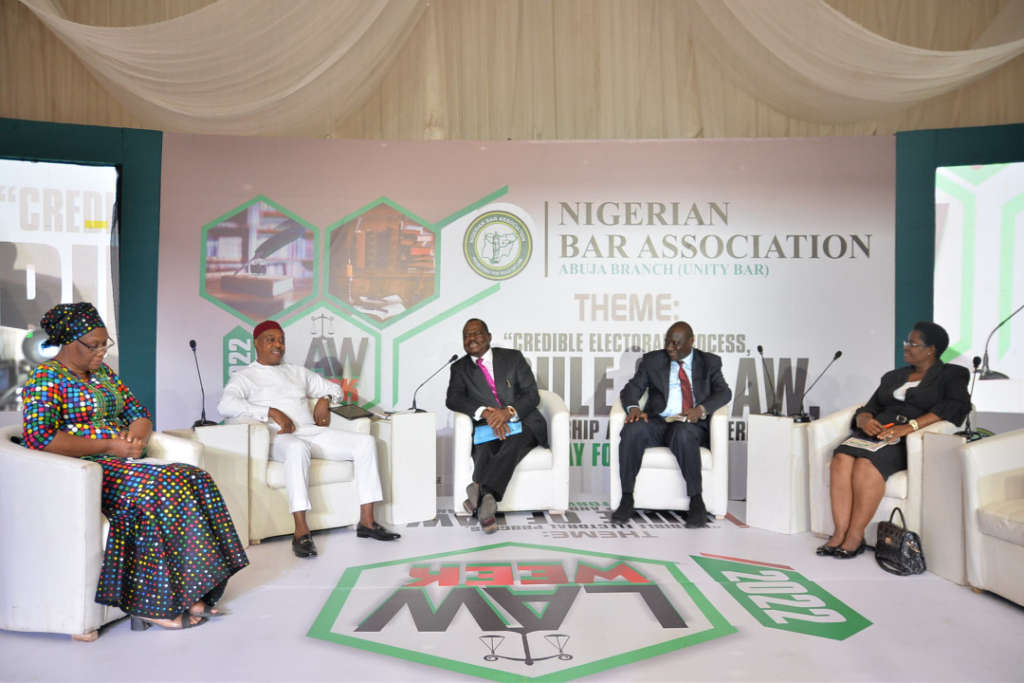
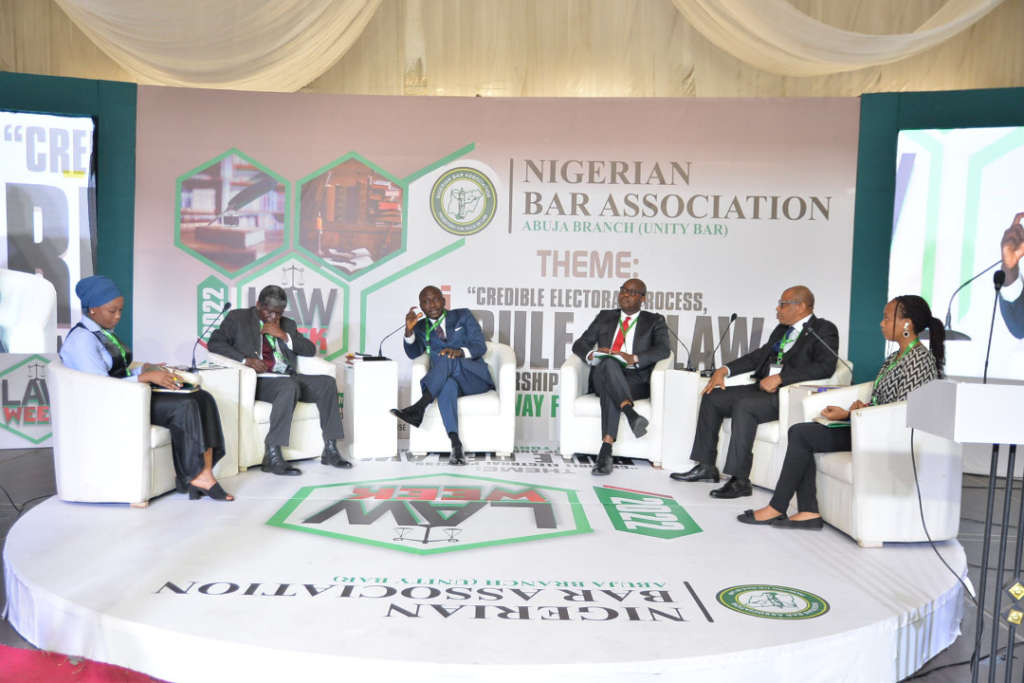
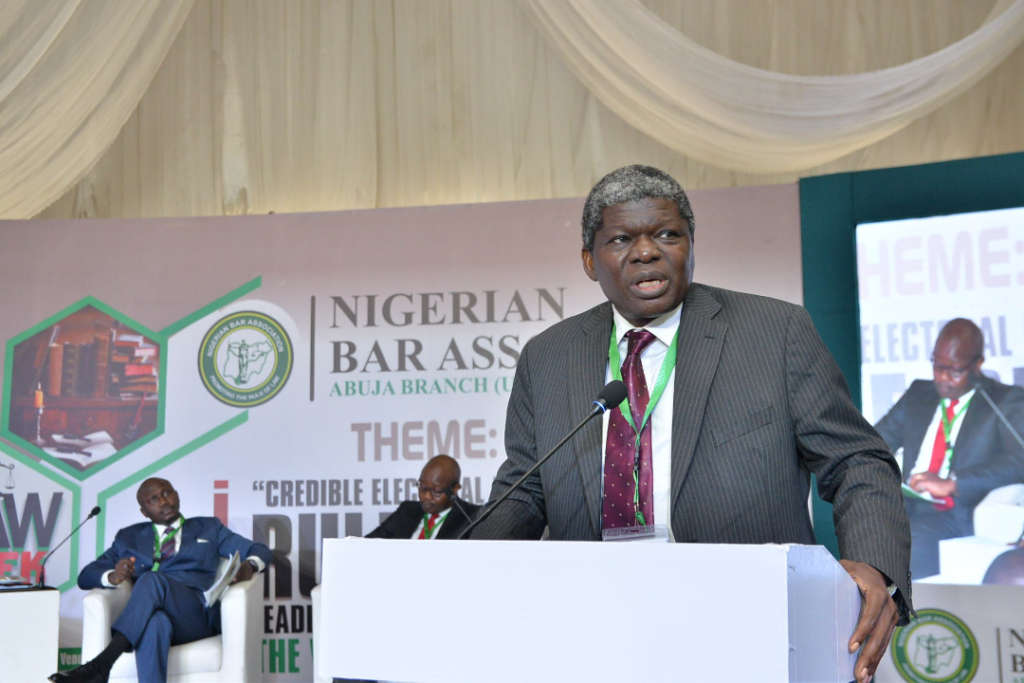
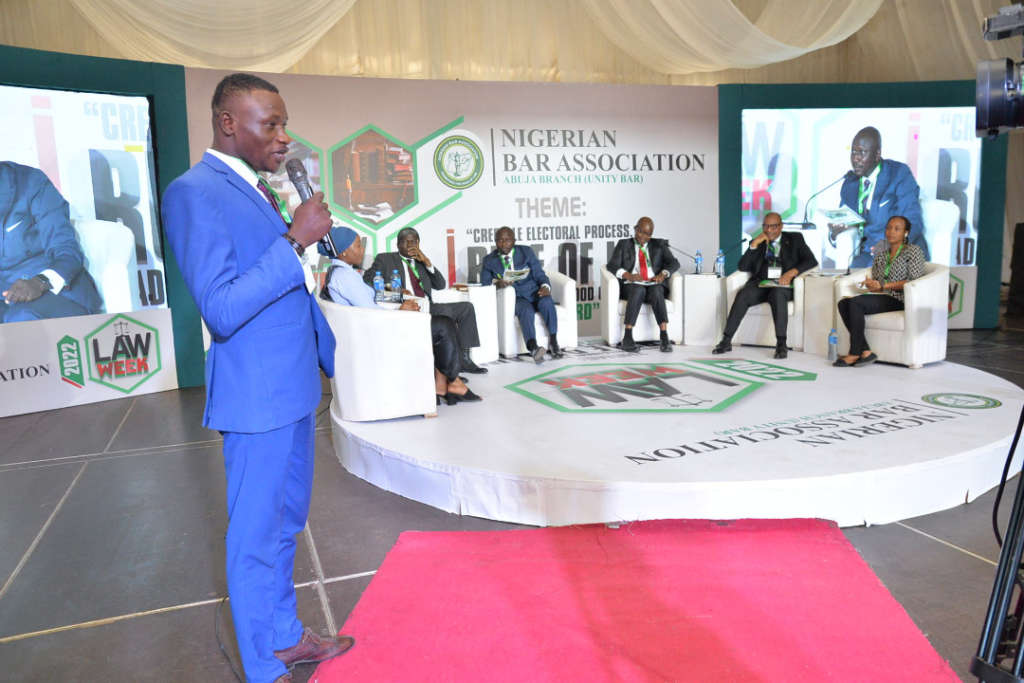
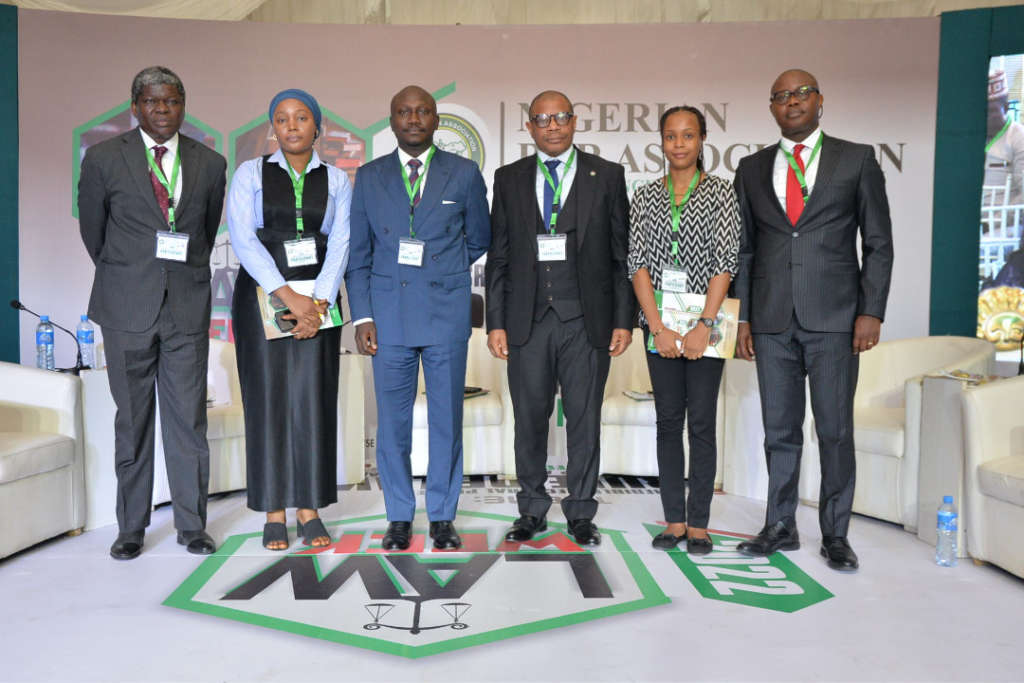
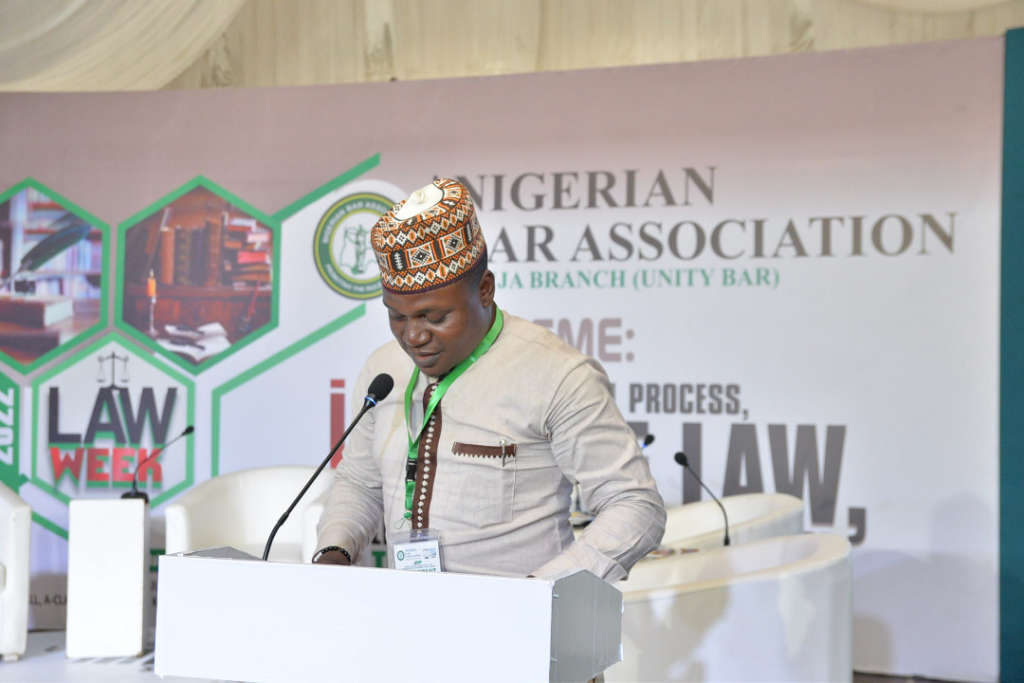
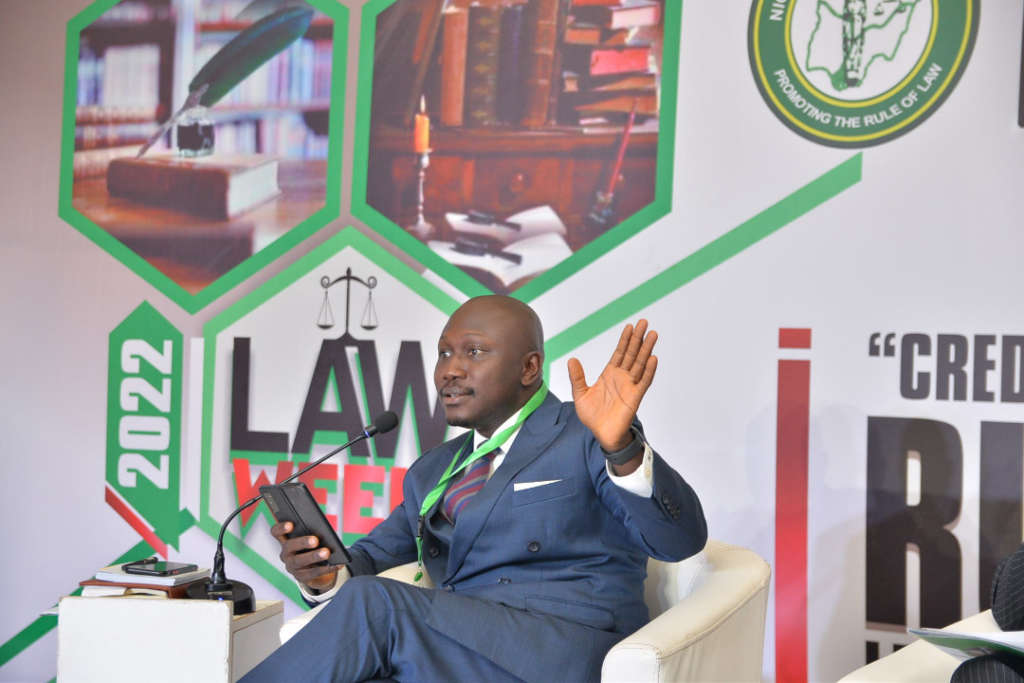
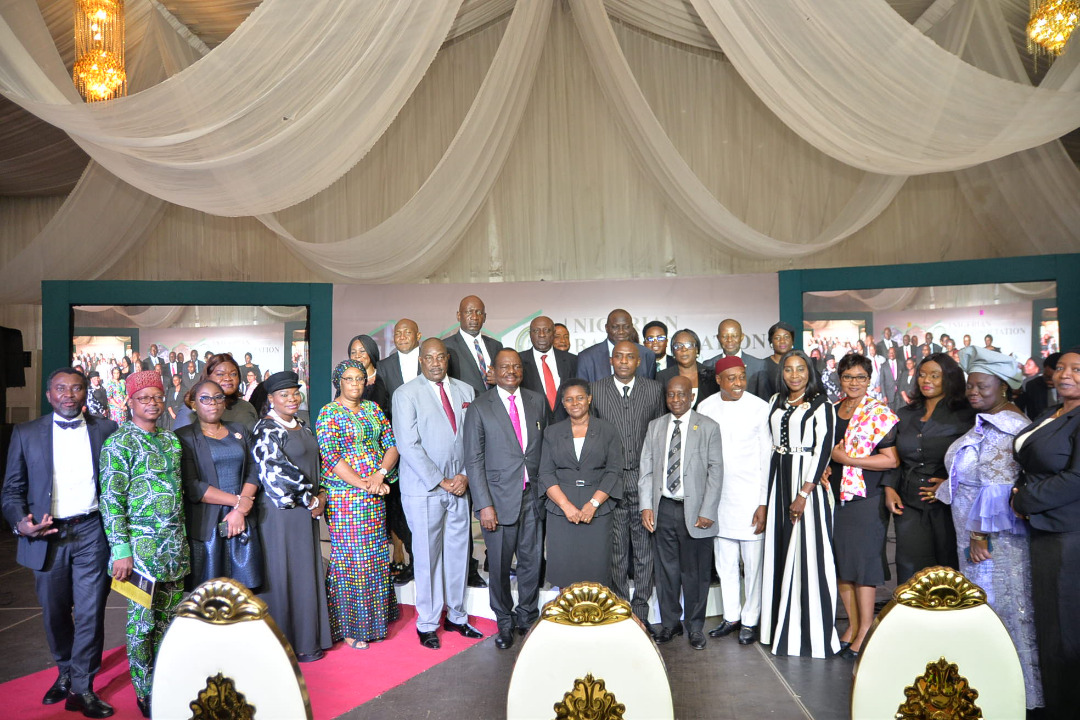
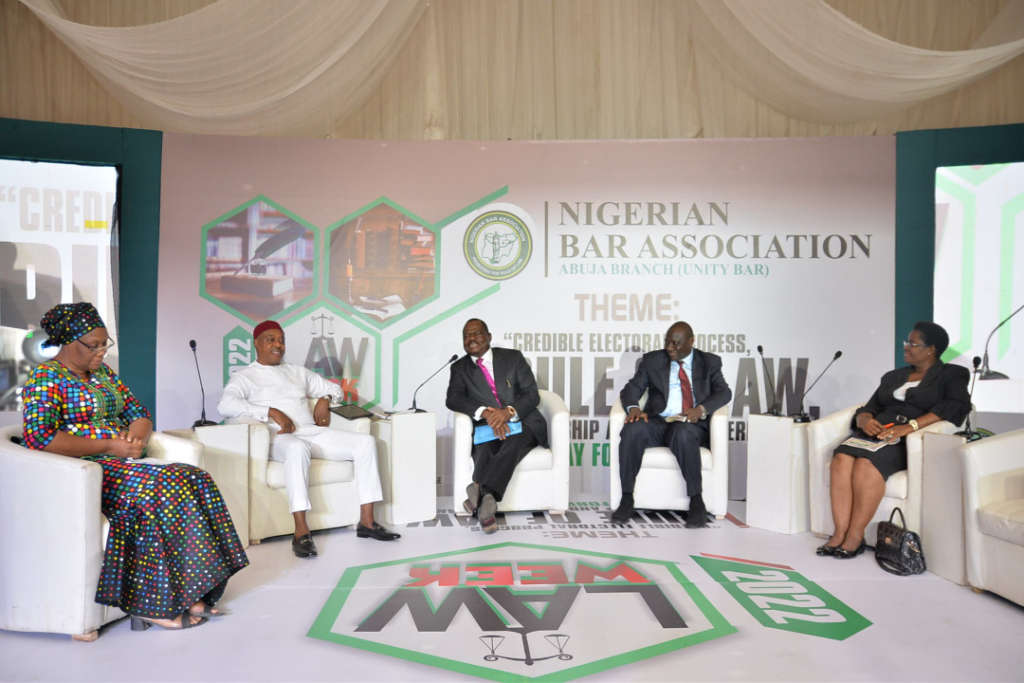
The conference with the theme — Credible Electoral Process, Rule of Law, Leadership and Good Governance: The Way Forward had the former Inspector General of Police, Dr. Solomon Arase, as keynote speaker.
The ex-police IG amongst several other suggestions recommended that “The judiciary, police and other institutions must be ruthlessly purged of corrupt officials, and then be given independence from the political class to perform the technical functions for which they were employed.”
Arase who expressed concern over the under-representation by women in governance, said: “They (women) should be encouraged and supported so that they can also contribute maximally in the governance of the nation. In fact, there is need for a realistic implementation of the United Nations Convention on Elimination of all Forms of Discrimination against Women (CEDAW) as well as Nigerian laws to engender fairness and equity in governance and public spheres in the nation.”
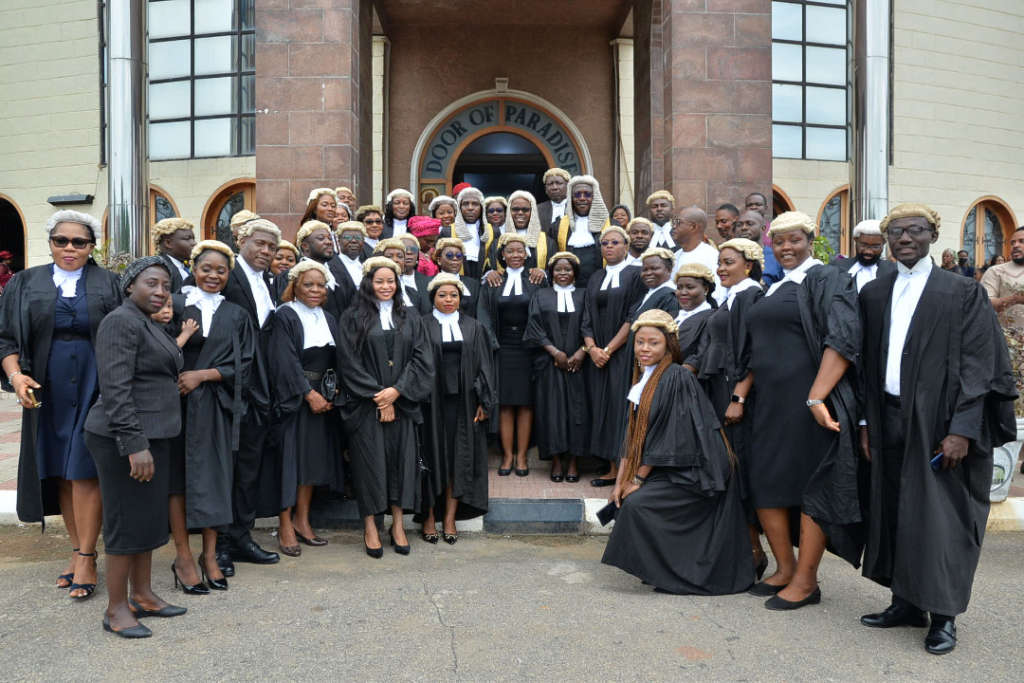
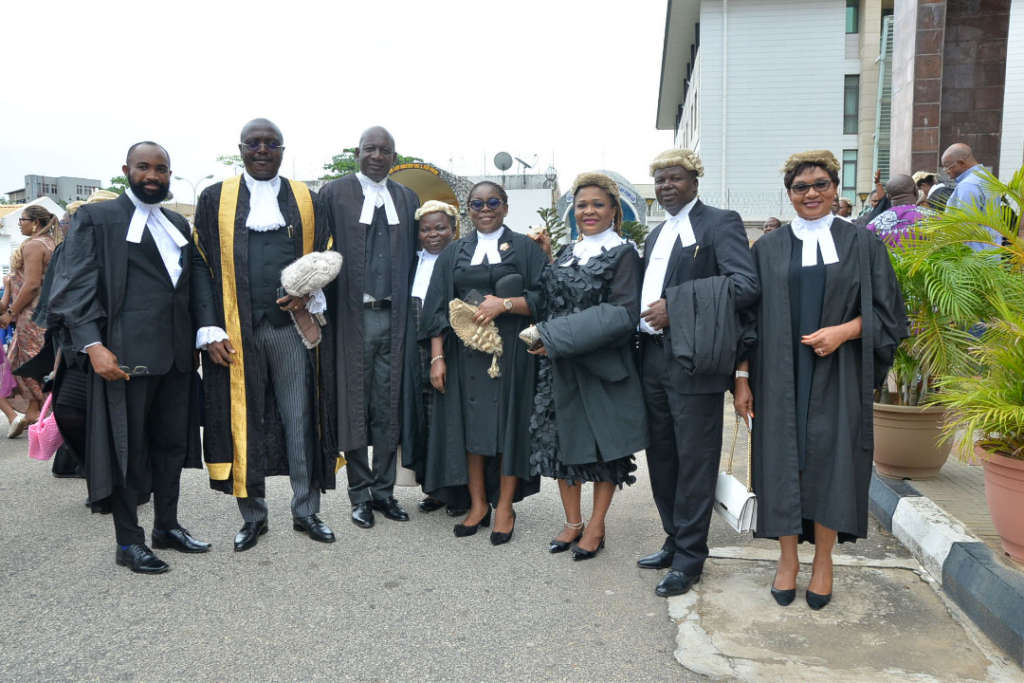
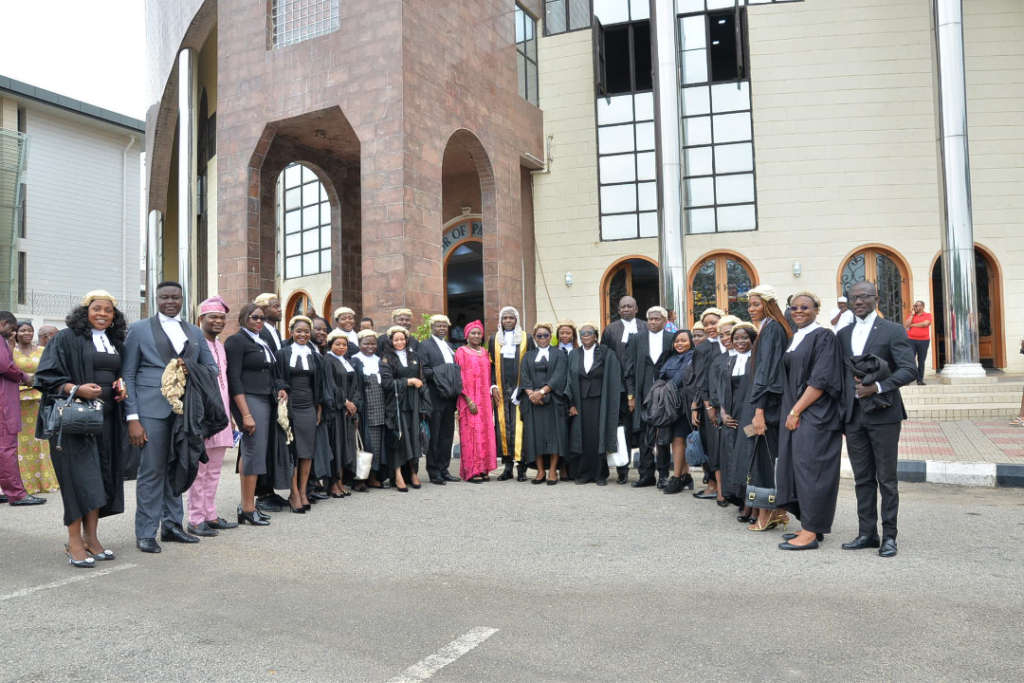
Thanksgiving service at Holy Trinity Catholic Church, Matama, Abuja
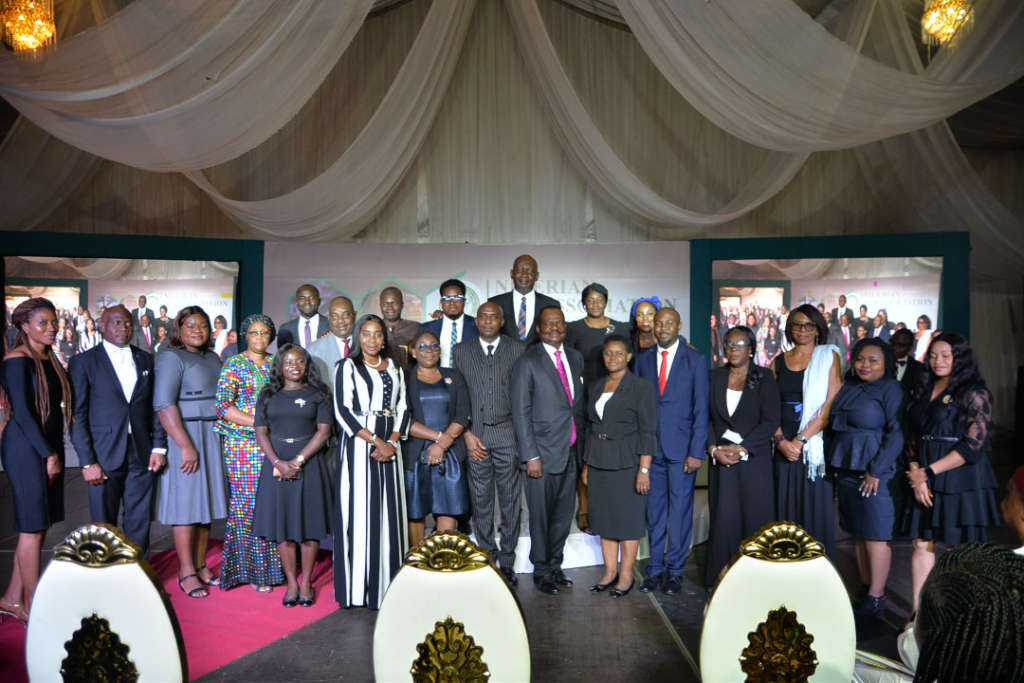
Thanksgiving serviceVice-Chair Chioma Onyenucheya-Uko and Chairman Moses Alfred Ebute, SANGroup photo after the church service
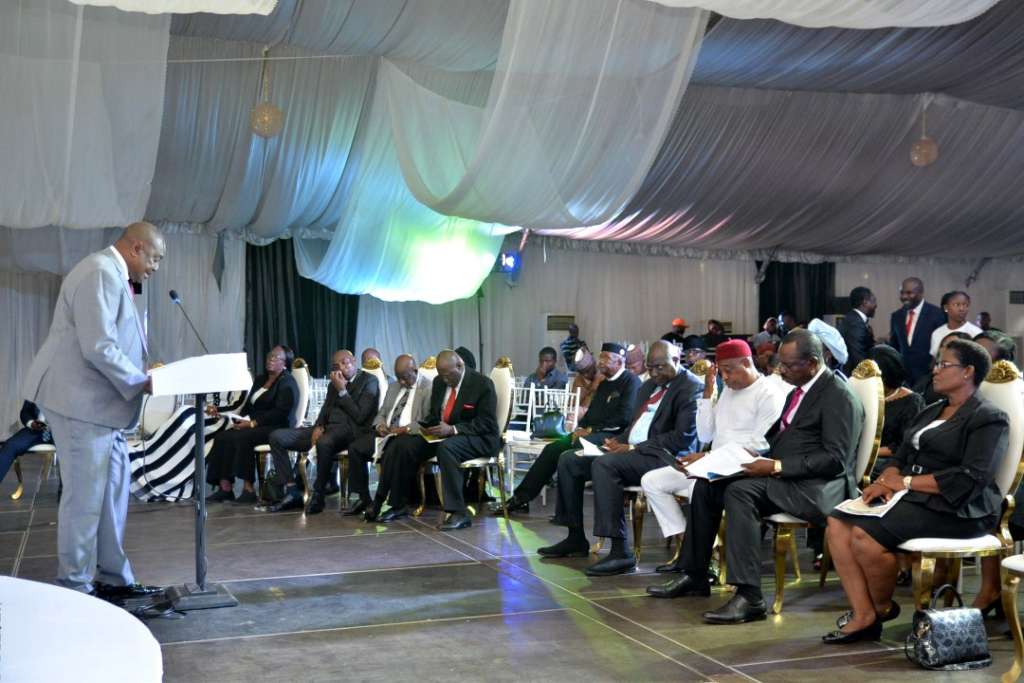
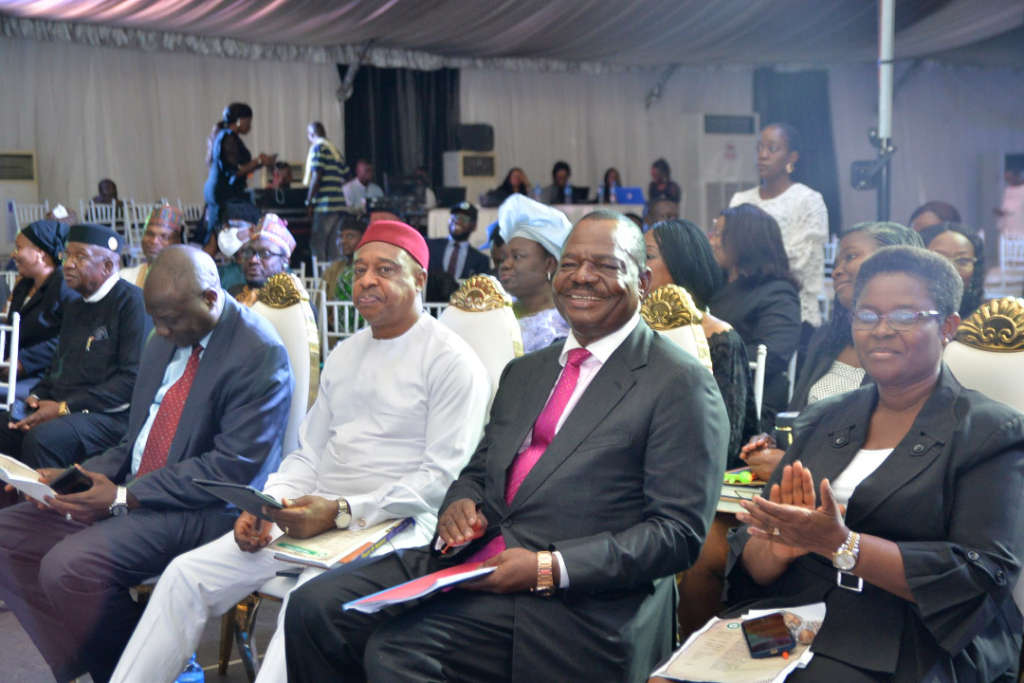
The Opening ceremony
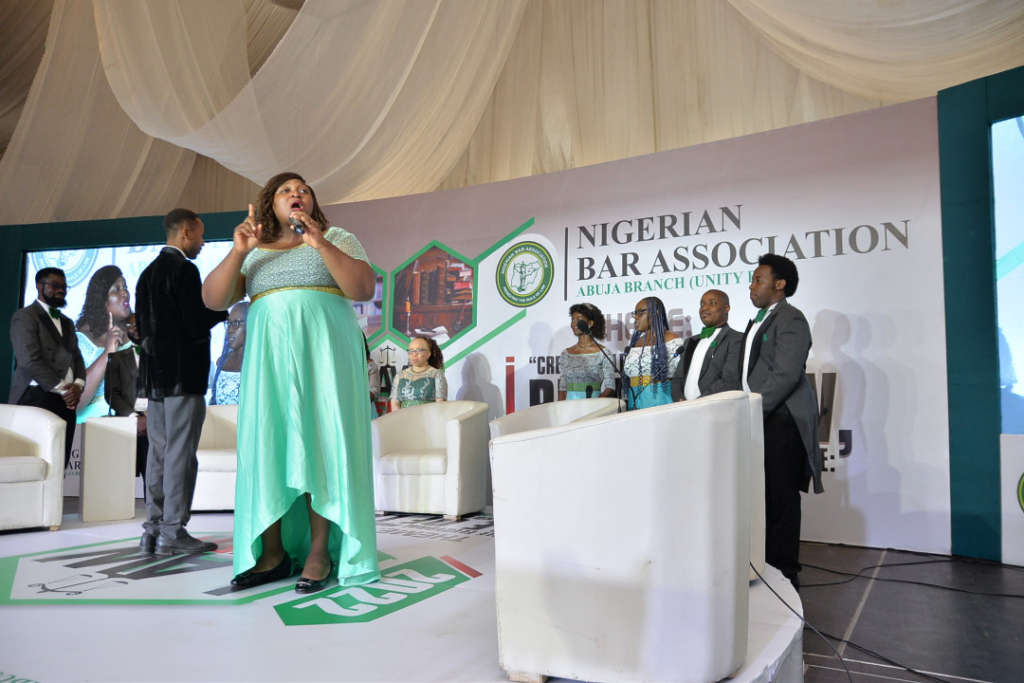
Anamosa opera singers performing
The Cocktail
Day Two had a number of sessions including an interactive session titled: Advocating for Women and Children’s Rights in a multisectoral Approach, In partnership with the National Human Rights Commission, National Agency for the Prohibition of Trafficking in Persons, and FIDA. Chief Mrs. Victoria Awomolo, SAN Chaired the session.
Urges that trade unions, student unions and professional bodies should make up the electoral commission
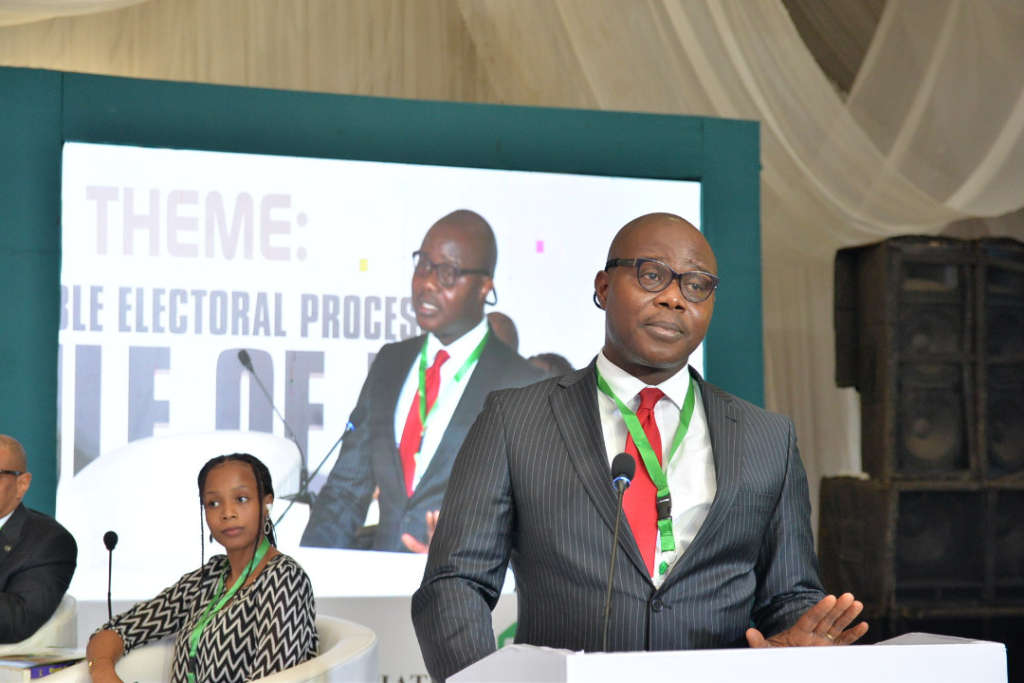
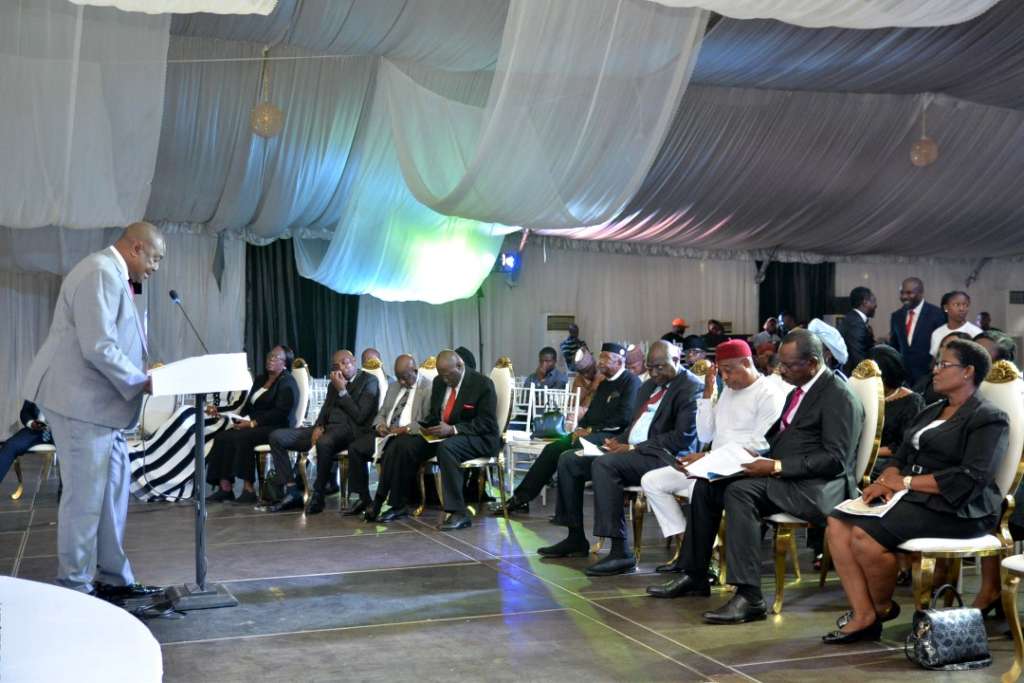
Former Inspector General of Police, Dr. Solomon Ehigiator Arase was Keynote Speaker at the ongoing Lawweek of the Nigerian Bar Association, NBA (Unity Bar) Abuja with the theme, Credible Electoral Process, Rule of Law, Leadership and Good Governance: The Way Forward.
Arase who stressed that Nigerians “must stand up for their rights and say no to the deceit of the power elite” expressed concern about many burning issues. Below are excerpts from the paper.
By the theory of liberal democracy which is adopted by the Nigerian Constitution, the people are expected to elect and control their leaders and demand accountability from them. Rule of law principles enshrined in the Constitution reinforce this practice. Credible elections are therefore a sine qua non for good governance and development.
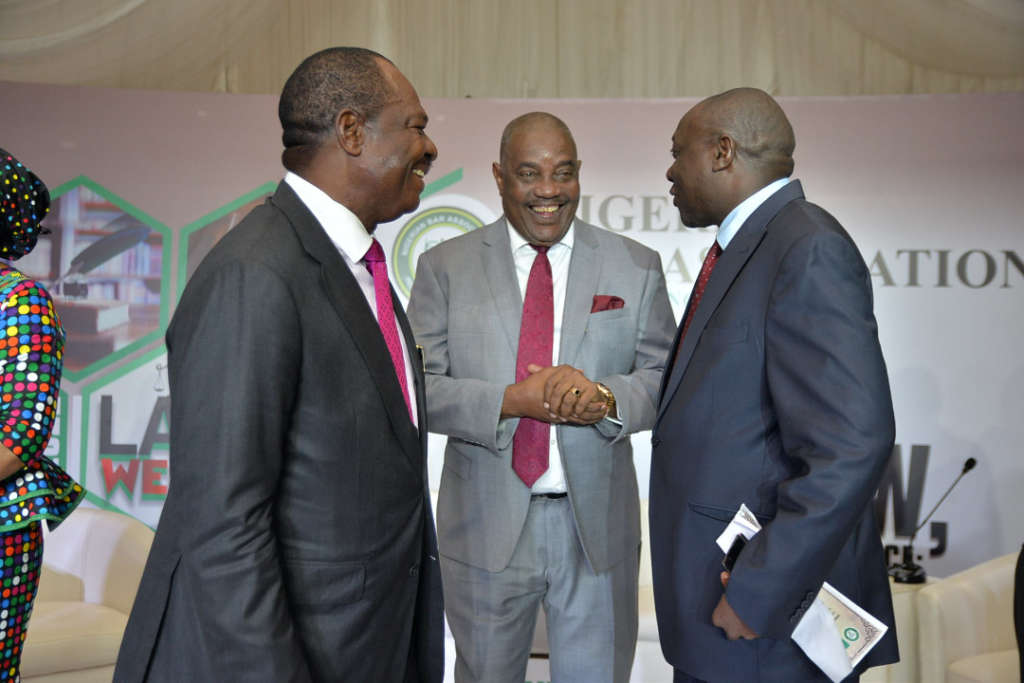
L-R: Chairman of the Ocassion, Alex Izinyon, SAN Dr. Arase and Abdul Ibrahim, SAN, a former Chair of the branch
Quoting D, Workin[1], the court in Amechi v INEC[2] stated that “true democracy is not just statistical democracy in which anything, a majority or plurality wants is legitimate for that reason, but communal democracy in which majority decision is legitimate only when it is a majority decision within a community of equals…”
Electoral process, as a component of the rule of law, is an expression that leaders who emerge from this process should engage with rational legal regulations[3]. The essence of election and electoral process is to afford opportunity to the citizens to participate in the choice of their leaders. Such leadership is not, ipso facto, to subvert the electoral integrity of the country, but to abide by rational legal regulations and procedures that are key to democracy and good governance with multiplier effects on development. While it is true that democracy does not guarantee Eldorado or good governance[4], a leadership with the political will to actualise laws will trigger off positive responses from subordinates and the governed leading them to associate more closely with the goals of a society[5].
There are prospects of credible elections in Nigeria, however, the emerging challenges must be surmounted to create, at all times, a culture of upholding standards for such credible elections that will usher leadership that will engender good governance and development of the country.
(b) The Way Forward
1. Politicians should desist from conducting politics as a warfare/do-or-die affair, as these make citizens who are supposed to benefit from good governance scapegoats of the democratic process.
2. Elections should be conducted on a free and fair basis, upholding the tenets of the rule of law such that Nigerian citizens are given the fair opportunity to choose their representatives and also to contribute in the policy making process.
3. Corruption fighting institutions (e.g. EFCC, ICPC) should be strengthened and given the necessary support to bring to book all past political leaders in Nigeria who used state apparatus while in government to accumulate wealth so as to always buy their ways into political offices.
4. Politicians who have ascended into governance must know that they owe the electorates explanations for their current acts. They should see themselves as servants of the people and not the other way round. As such, they should contribute to the stable growth of the economy and the actualization of the needs and aspirations of the citizenry programmes.
5. Lack of continuity and shift in approach by successive governments trailed socio-economic development programmes in Nigeria as each administration comes in with different ideas.
6. In addition, there is need to improve the process of voter education and political sensitization especially for the young people as they will greatly influence the success of the elections.
7. To reform the conduct of elections and electoral process in Nigeria, something of a radical departure is also required. A legislative framework must be created to make transparency and good governance a necessity. The goals of that radical departure must include:
(a) The completion of the Nigerian independence project by making the country truly united, invisible and indissoluble and for the purpose of promoting good a government and welfare of all persons in the country.
(b) The subordination of the Nigerian state, the ruling class in general and the political class in particular to the will and sovereignty of the Nigerian people.
(c) The creation of a new political class whose defining values will support both democracy and development in Nigeria.
(d) The creation of a politics that is value-driven and therefore truly competitive; that enables the separation between interest groups and their political platforms on the basis of their defining ideologies and hence programmes.
8. There is also the need for political elite to imbibe democratic political culture and conduct their campaigns for public offices at all levels on issues that affect the life of the people, rather than engaging in calumny and self-aggrandizing pursuit.
9. Effort must be made to strengthen voters education, such that the electorate can cultivate the right attitude and be more participative in the democratic process.
10. Political parties must develop a mass based approach. Politics is the struggle for power; and power in democracy belongs to the people.
11. There has to be unity of command in the party leadership. Disciplinary actions must be taken in consonance with party laws.
12. The leadership of the party must be involved in policy articulation, policy-making and implementation in order to keep its government at various levels with the objectives of the party.
13. Members of political parties must learn to develop the spirit of sportsmanship in politics. The game of politics should not be regarded as “do-or-die” battle.
14. A vigilant, articulate, vibrant and well mobilized public should be established. Democracy is nowhere won on a platter of gold. It must be fought for and sometimes won at enormous cost. But in the final analysis, the freedom and liberty of the people gain by determining who governs them could be more precious than the price paid. The people must stand up for their rights and say no to the deceit of the power elite in Africa[6].
15. There should be institutional synergy. The ‘trinity’ of the civil society, security agents and electoral bodies working for common purpose of public good can ensure that elections are free, fair and credible and accord legitimacy to the government of the day.
16. Candidates for office must submit asset declaration forms which will be checked by national and international forensic accountants, with expertise in tracing assets.
17. The judiciary, policy and other institutions must be ruthlessly purged of corrupt officials, and then be given independence from the political class to perform the technical functions for which they were employed.
18. What Nigeria needs at this critical period of her development is really a new culture of governance, sustained by transparency and accountability.
19. On electoral bodies
(a) The INEC should be empowered to live up to its name by being truly independent. This can be achieved by proper funding, early release of funds and amendment to the mode of appointment of the chairman and its national commissioners.
(b) The policy of sending horde of civil servants to compromise the integrity of that commission needs re-examination. INEC must distance itself from all political parties, in order to avoid undue influences; it must set the rules by which all politicians must play the game while it ensures compliance. It should not be seen as a collaborator with the executive of an incumbent government.
(c) INEC must specify the rules prior to an election including modalities for vote count; it must ensure that there is an update of voters register and that its own representatives are available at polling booths. Nigerians should be properly educated on these rules, regulations and procedures.
(d) There should be improvement on the current technology being employed by INEC and adoption of new technological strategies including electronic voting and transmission of election results.
20. There is also the need for attitudinal change by Nigerians. No matter what beautiful laws are put in place, if the people are not willing to obey them, INEC will still fail in the future. The stakeholders in the Nigeria project: politicians and their agents, INEC, security agents, the civil society and the general electorate must decide to be honest and do what is right during elections and report those planning to perpetrate fraud; otherwise the achievement of a free and fair election in Nigeria may be a mirage.
21. The country should ensure access to justice for all as we are in a democratic dispensation.
22. Judiciary should be granted full and actual financial autonomy. The letter and spirit of section 162(9) of the Constitution and by virtue of the Fourth Amendment which came into effect on 7th May, 2018, section 121(3) should be given effect to grant autonomy to the judiciary and the House of Assembly of the State.
23. Minimising electoral violence is a major way forward. Electoral violence persists partly because the prosecution of suspects is hardly completed. Electoral violence may be attenuated on the basis of adoption of the following policies, among others:
Decentralisation of the policing system such that there is not only state-controlled police but also local government-controlled police on the condition that the police institution is subjected to a system of democratic control by community-based security committees comprising representatives of communities, representatives of sectional groups in each community such as student unions, trade unions, central labour organisations and relevant professional bodies such as the Nigeria Bar Association (NBA). There should be a full exercise of trade union rights by members of the Nigeria Police Force, so that trade union pressure may be brought to bear on the definition of lawful orders that may be carried out.
There should be a change in the mode of appointing the Inspector-General of Police (IGP). Election of the police bosses such as the I.G.P. and the Commissioners by the rank and file of the police has been suggested. A method of appointment which makes the IGP to be independent of too much control by the appointor or his agents is also another suggestion.
Insistence on the prosecution of violent-prone behavior/individuals in order to show in practice that there are no sacred cows and that every person is equal before the law.
24. Economic empowerment of ordinary people and judicial officers should be carried out relentlessly.
25. Judges who handle elections petitions should be well remunerated.
26. Use of Rate of Remuneration payable to political office holders and lack of access to contract awards as disincentives for electoral fraud and violence should be enshrined in the electoral laws. A policy ought to be developed to ensure that preparedness for selfless service rather than the likelihood of material benefit is the primary motivation for contesting elections. The remuneration of elected public officials should therefore be within the salary structure for public sector workers. Similarly, legislation should be made banning office holders, their friends, relations and agents, from taking government contracts.
These measures are similar to what obtains in Germany where as Walecki points out, German cabinet members are prohibited from earning anything other than their salaries[7]. Walecki also shows what happened to cabinet members who violated similar policy in Japan: Kimitaka Kuze, head of Japanese Financial Reconstruction Commission, was forced to step down in July 2000 following revelations that he had received nearly US$2. I m from Mitsubishi Trust and Banking corporation between 1989 and 1994. Even in Africa, Nyerere’s TANU adopted similar policies in Tanzania.
Adopting and enforcing similar measures as stated above in Nigeria would go a long way in reducing, not only electoral violence and fraud, but also the tendency for corruption in public office.
27. Multiplicity of political platforms as a way of ensuring free and fair election should be encouraged. One of the sources of tension at election periods is limited choice made available to the electorate. Though the Supreme Court had to compel INEC to register as many political parties that satisfied the Constitutional conditions for registration during the 2003 elections, it must be realised that some of the constitutional conditions are illiberal. For example, Section 221 of the Constitution bars associations other than political parties registered under Sections 222 and 223 from canvassing for votes or sponsoring candidates for elective positions. This also implies a ban on independent candidacy. In the same vein, Section 222(1) requires that the National Headquarters of registered political parties must be established in the Federal Capital Territory, Abuja, while Section 223 (b) requires that members of the National Executive Committee (NEC) of a party to be registered must come from two thirds of the states of the Federation. The import of these requirements is that to function, a party must have national character. The Constitution does not provide room for issue-based parties, which could be restricted to just an electoral ward or local government. The above constitutional requirements tend to overstretch small parties and Put unnecessary burden on them to the extent that they are usually unable to have agents to monitor elections at booths!
28. Mode of composition of INEC commissioners should be reformed. Under Section 154(1) of the 1999 Constitution, the President, subject to confirmation by the Senate, appoints the Chairman and members of Federal Executive Bodies, which include 1NEC Chairman and the other 12 Commissioners. However, the President appoints the Resident Electoral Commissioners for each of the states of the Federation without recourse to any arm of the National Assembly[8]. The Secretary to INEC was usually formerly transferred from the office of the Presidency, but the present one has been a core staff of the Commission. This policy should be sustained.
The existing Constitutional provisions for appointing umpires for elections cannot guarantee free and fair elections. Rather, representatives of all political parties and nationally recognised mass organisations, such as trade unions, student unions and professional bodies should compose the electoral commission.
Alternatively, a system of electing such bodies should be worked out, in order to ensure the independence of INEC in both name and practice. The existing mode of appointing INEC Commissioners has made it possible for the emergence of characters who lack a track record of independent- mindedness and standing for principles.
29. Political parties should be sanctioned and continue to be sanctioned for failure to meet constitutional and legislative provisions as well as INEC guidelines, for example, failure to field any candidate during general elections; failure to win at least 5% of votes at any general elections; failure to maintain and operate at least an office in the Capital Territory (FCT) and that there should be a time limit ‘within which Registration of Political Parties can be commenced and concluded’ contrary to constitutional provision which places no time limit[9]. Deregistration of parties should be the sanction for the above-listed ‘failures’ of parties.
30. Systematic and continuous updates of voters register should be undertaken. The sampling frame for elections is the voter’s register. Without a credible voters register, there can be no credible elections. This is why the Constitution in the Third Schedule, Part 1, Item 15(e) empowers INEC to ‘arrange and conduct the registration of persons qualified to vote and prepare, maintain and revise the register of voters for the purpose of any election under this Constitution. But this Constitutional mandate is never carried out regularly. INEC itself had once admitted the disenfranchisement of millions of persons eligible to vote simply because it lacked the funds to carry out the voters registration exercise comprehensively.
In this age of Internet, voters list should be made widely available on the net in order to remove possibilities of manipulations at different levels. Without public access to the voters register, elections could be liable to being manipulated.
31. Candidate at an election whose victory is being challenged in court should not be sworn in until the court determines the case. Such a provision will minimise pressure on the judiciary by a President-elect or Governor-elect and their political parties; once they are allowed to settle down and stabilise, it becomes much more difficult. Such a judge or panel of judges who declares the election of a sitting Governor or President invalid may in turn be declared state security risk.
32. Enforcement of legal provisions concerning elections including those on party/candidate funding and limits to election expenses should be strictly and regularly carried.
33. The under-representation by women in governance should be discouraged. They (women) should be encouraged and supported so that they can also contribute maximally in governance of the nation. In fact, there is need for a realistic implementation of the United Nation Convention on Elimination of all forms of Discrimination against Women (CEDAW) as well as Nigerian laws to engender fairness and equity in governance and public spheres in the nation.
[1] Workin, R. D. “Bill of Rights for Britain, 1990, pp. 36.
[3] Zack-Wiliams, T. “African Leadership, Nation State and the Weberian Project”, The Constitution, vol. 8, No. 1, March 2008, p. 20 where the view was expressed that African leaders fail to have this kind of engagement.
[4] Uhunmwhangho, A., “Electoral Fraud and Other Malpractices in Nigeria The Way Out”, The Constitution vol. 8, No. 1, March, 2008, p. 31.
[6] Suberu R., “Can Nigeria’s New Democracy survive”? Current History: A Journal of Contemporary World Affairs, May, 2001-2007.
[7]Walecki, M., “Political Money and Political Corruption: Considerations for Nigeria. Paper delivered at the INEC-Civil Society Forum Seminar, 27-28 November 2003, p. 2.
[9] INEC: suggested Issues for Reform. Paper delivered on behalf of INEC by Prof. Maurice Iwu at the INEC-Civil Society Forum Seminar, 27-28 November 2003.
I am still in shock to hear that suspected terrorists reportedly blown-up St. Francis Catholic Church in Owo, the Headquarters of Owo Local Government Area of Ondo State.
Reports suggest that many worshippers have died and several others have been left injured following the explosion at the church which is situated close to the palace of the Olowo of Owo
I shed tears when I saw the videos. Can there be any greater provocation than this? How do we respond to such barbarity, viciousness, and utter sacrilege?
Kudos to the Governor of Ondo State, Arakunrin Oluwarotimi Akeredolu for his swift reaction to this dastardly act. However, more needs to be done to ensure the safety of our people and also their lives and properties.
Ondo State cannot overnight turn to bedlam for “man’s inhumanity to man”, we believe in the sanctity of life and as well place a high premium on peaceful coexistence. There is no justification for this mindless and satanic act. These criminals must be smoked-out and arrested and justice must be accordingly served.
My condolences to the affected families, members of the church, and the good people of Owo and Ondo State as a whole. May God heal our country.”
Emmanuel Ajibulu is the Publisher of veracitydesk.com.ng, an infopreneur, and a social media influencer
Nigeria’s security agencies are now known for employing cruel and outdated tactics in the course of law enforcement. Their repertoire includes harassment, extortion of Nigerians, illegal arrests, detention, and extra-judicial killings.
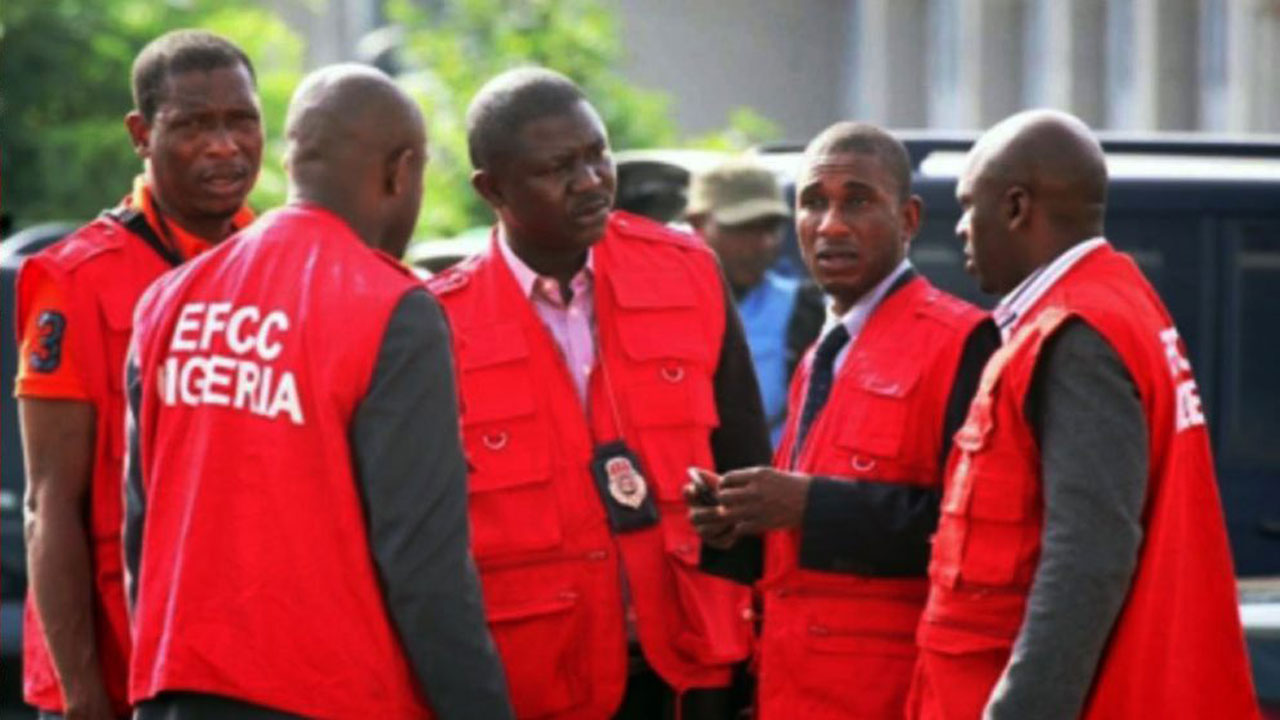
Instead of refraining from such hubbub, it seems the Economic and Financial Crimes Commission (EFCC) has joined in this crude show of force with its operatives’ engaging in Gestapo-style arrest, interrogation, investigation, etc. Law enforcement is a given in society, but the manner in which the EFCC goes about it seems to be lacking in tact, very unconventional, and utterly embarrassing.
For a struggling economy, one that is also desirous of diversifying its revenue base away from crude oil, this is an antithesis, to say the least. Sadly, innocent Nigerians will be wary of venturing into investing in the economy bearing in mind that they are vulnerable to unwarranted humiliation, arrest, and detention. Similarly, it creates a negative business environment for foreign direct investment, etc.
EFCC should stop adding to the misery of the law-abiding Nigerians. The anti-graft agency should resist the temptation of violating the rights of Nigerian citizens. It should enforce the law with civility, not like a gangster organisation, and stop harassing innocent, law-abiding, and hardworking Nigerians, especially when EFCC has no facts or evidence to prove its case. Relevant stakeholders must rise to the occasion and stem the tide and give our country the good name and image it deserves, the world is watching us. Nigeria isn’t a banana republic, therefore it should be stripped of being seen as a laughing stock, deservingly so. May God bless and prosper Nigeria.
Emmanuel Ajibulu is the Publisher of veracitydesk.com.ng, an infopreneur, and a social media influencer
A couple of weeks ago, a young boy suspected to be an internet fraudster aka yahoo boy died at a hotel in Aba, Abia State.
The 16-year-old teenager, Chinecherem Promise Albert, reportedly died early that morning while making incantations with his elder brother, 19-year-old Chimezie Joshua Albert.
Chimezie was said to have invited his younger brother, Promise to Eunice hotel at Milverton Avenue in Aba, for money-making rituals. Sadly, the 16-year-old died in the process of chanting incantations. The PPRO Abia State command, SP Geoffrey Ogbonna confirmed the incident.
Giving vent to anger, a social media user by the BRATISLAVA wrote: If it were a girl who died in a hotel room, you would see pages of insults about ladies (sorry, bitches and hoes) who want quick riches and aren’t ready to build with… and how the society has been destroyed by the daughters of Eve whose sexy videos they love to watch …, and how they never want to have girls as children… Nobody will write pages on the scourge of ill-bred Yahoo boys and their confederates who are murdering their way into 2010 Mercedes Benzes and parties ten years later.”
In the meantime, a video making the rounds online showed the moment a 15-year-old boy was confronted by a concerned adult after trying to lodge in a hotel with two adolescent girls. The youngsters — three boys and two girls, were trying to book a room when the man confronted them and inquired about their age. A 15-year-old who appeared to be the leader of the group said the room is not “actually for him.” When the adult went further to interrogate the young girls, quickly walked away while hiding their faces from the camera.
Not long ago, a hotel was uncovered in Ogun where underage girls sleep with men for between N500 and N1, 000. Two men were subsequently arrested alongside 14 underage girls who claimed to have been lured to the facility by friends from their respective villages. The girls said they pay their boss N1,000 daily for the accommodation, and they are forced to sleep with a minimum of four men daily at a fee ranging between N500 and N1,000 per client to achieve this. Besides sleeping with clients for money, it was also learnt that the men also slept with them any time they want. Those arrested at the hotel include its owner Gbenga Olayinka, his nephew Adekunle Oshineye, 28, and others. The hotel owner however denied knowing some of the girls were underage.
But, Nigerians are beginning to call for stiffer measures to check the growing trend of underage persons being allowed access to hotels, alcohol, and drugs. Chijioke Nwokonko, a lecturer in Ogun State, told the News Agency of Nigeria (NAN) that “government should implement a policy that mandates the checking of ID cards before entry into a pub, club or a hotel. The ID card should be checked to be sure that such a person has attained the required age limit to enable them to visit such an environment. But, there are instances where these underage children already have strong influences. They can call the manager to gain access and make the security man asking for an ID card look useless.”
Nwonkoko added that to ameliorate this problem, the government should create a law enforcement agency directly under the executive arm that would serve as the watchdog. “Such agencies should visit hotels and clubs at random in disguise and once they see anyone perceived as underage, their ID cards should be requested and if found wanting, both the management and the underage children should face the law.”
Mr. Oluomo Talabi, the President of, Lagos Hoteliers Association, said there had been measures to check underage persons from gaining access to hotels as the association strongly condemns the act. “The measures have been on from time, it’s just that this issue of immorality on the part of our children is just coming up now, no thanks to social media but notwithstanding, it is not something we condone as individuals and as an organisation.”
Following the rise in the abuse and exploitation of underage persons in hotels, the Commissioner for Justice and Attorney-General of Ekiti State, Mr. Olawale Fapohunda SAN has restated his warning to Hotel owners in the State, stressing the duty of care they owe minors. The Senior Advocate of Nigeria in a Facebook post to mark Children’s Day wrote: “On this occasion of Children’s day, my office is concerned about the increase in complaints about sexual exploitation of minors/school children in our Hotels.
“I have previously issued an advisory to hotel owners that they owe a duty of care to protect children on their property from sexual abuse. Their operations cannot simply be about making profits. Where a hotel staff has direct knowledge of the age of a child who is obviously in the hotel for the purpose of abuse, the hotelier will be criminally liable.
“My advisory urged hoteliers to pay special attention to young guests, both girls, and boys. Boys are also victims of sexual abuse, under the age of 18 who are taken into hotel rooms by one or more adults and who are verifiably not family members.
“I followed up this advisory with a number of meetings to further affirm the Fayemi administration’s Zero Tolerance Policy for sexual exploitation of minors.
“Yesterday, we commenced the prosecution of the owners and staff of the first of the four hotels we have identified, whose facilities are being used for the sexual exploitation and abuse of minors. This criminal prosecution is without prejudice to the civil suits my office will further initiate on behalf of the child victims.
“While the State Government is committed to removing all obstacles to doing business in Ekiti State, this cannot be at the expense of the welfare of our children. I wish all the Children in Ekiti State a Happy Children’s Day.”
Jon Johnson in Medical News Today wrote: “Toxic masculinity is a term often used to describe the negative aspects of exaggerated masculine traits.” He noted that the term has evolved over time and has a place both in academia and everyday speech.
Again a study reported in the Journal of School of Psychology used the following definition to explain toxic masculinity: “the constellation of socially regressive [masculine] traits that serve to foster domination, the devaluation of women, homophobia, and wanton violence.” Meanwhile, people in modern society repeatedly use the term toxic masculinity to describe overstated masculine traits that many cultures have widely recognized or glorified.
But a trainee teacher in the Ashanti Region of Ghana has recently shown masculinity and fruitfulness could be interpreted in different ways. The young man who is on his way to the Guinness of Records has just impregnated 29 women – Headmasters, four teachers, and 24 students about the same time! They’re all pregnant for him currently.
To foster the smooth running of schools, the Ghana Education Service and Ghana Tertiary Education Commission, GTEC rules on Teaching Practice, do not condone inappropriate behaviours from student-teachers.
As a result, manuals like the Supported Teaching in Schools, National Teaching Council Teacher Engagement, National Teaching Standards, etc., were developed to guide their Practice.
The teacher trainee in one of the Basic Schools in the Asokore Mampong Municipality is said to be a level 400 student-teacher from a popular College of Education in the Western Region.
Voltawebpage.com report said the report of the sexual-escapade of the trainee reached a crescendo when community members got wind of his amorous relationship with the headmistress. The Asokore Mampong Municipal Police Command were said to have arrested the said trainee after a report was made to them.
But did he commit any crime? You tell us, dear readers.
One last thing. Can promiscuity threaten your longevity? Yes. Having a large number of sexual partners has been linked to poor sexual health and decreased longevity. Although promiscuity may carry high prestige for men, promiscuous women are generally scorned.
Plus… a man who sleeps around is called a womanizer but a woman who does the same is said to be promiscuous; a loose woman… And so for the pregnant women….
It does appear that the accidental Enugu natural gas find has a history writes Ikenna Emewu. Sometime last week, the people of Enugu State were rattled by a wildfire at Amaoji Nike in Enugu.
This location is not far from the capital city of Enugu where a wildfire burned briskly and defied the concerted efforts of the relevant agencies to put it off.
After some days of fruitless battle against the fire in the forest, the spokesman of the Civil Defence, Enugu Command, CSP Emmanuel Iwuchukwu spoke through a short video on what happened.
He explained that the efforts to put off the fire also attracted the Nigerian National Petroleum Company Limited (NNPC) that confirmed it has no oil pipeline route in the area. This was on the suspicion that it could be fire from ruptured gas or oil pipeline.
That revelation by the NNPC started raising questions on what should have caused the fire that could not be put off from deep inside the earth.
In the meantime, the security agencies cleared all vegetation around the huge flame so that it doesn’t escalate into burning homes and property
Through questions from the Caritas University Enugu that alerted the authorities about the fire, the government authorities found out that it emanated from deep inside the belly of the earth.
Caritas University had engaged a water borehole drilling company to get water for the use of the institution.
It was while the company hit a depth of some 100 feet that they encountered some liquid which proved not to be the water they needed.
On examination, they noticed that what they accidentally uncovered was natural gas and an admixture of crude oil.
While discussion was still on about what to do, fire started emanating from the deep hole. It possibly would have been ignited by solar heat in the daytime.
Like a joke, and through this accident turning serendipity, natural gas that is the lifeblood of today’s economy seems to have been discovered in Enugu especially as the flame is exactly the same with those from gas flaring in the Niger Delta.
History
In March 2010, I toured the five states of the southeast to document a report on oil finds in the region the government has abandoned to go searching for non-existent oil in the Lake Chad region.
My report exposed oil finds in Edda, in present Ebonyi State with a test well at the premises of Orienta Primary School, Ezi Edda. That was the first oil find in Nigeria by Shell BP way back in 1928, 94 years ago.
I also visited Anam in Anambra State to see another Shell oil well at Umueze Anam just by a road that was later named after Shell as a result of the oil find in 1972. The capped test well has a date of April 1972 on it and the locals call the road – Ezi ndi Shell (Shell Road)
The locals also told me about some other oil wells by Shell also at a place they call Akpu Nnunnu, another at Oroma, Umuikwu, Mmiata, and all parts of Anam in Anambra East LGA.
My next visit was to the National Archives Enugu where I found documents to support oil finds in Awgu and Ehalumona in Nsukka, all in Enugu State today
The oil find document about Awgu is one of the oldest after Edda.
The archival documents have details that the Ehalumona find is about 90 percent natural gas. Experts say that beneath any natural gas find at the deeper level is the presence of crude oil.
So, with the way geologic formations exist, it’s little surprise to informed people that natural gas and possibly crude oil was accidentally found in Nike last week, which is in the same vicinity as Awgu.
The good accident has opened our eyes to a wealth hidden under our feet we never knew about.
The challenge is now to the federal government that enacted laws to appropriate all mineral deposits in Nigeria as their personal belonging.
We challenge the NNPC to do the needful and go for a proper and detailed seismic survey of the area, take samples from the hole and deploy resources to tap natural gas in Enugu State, and also commence similar surveys in Edda and the environs for exploration and development.
It should also revisit the Anam oil deposits which had attracted so much attention over 20 years ago with Orient Oil Company promising to build a petrochemical plant to refine oil around there.
Our site uses cookies. By clicking “Accept All Cookies”, you direct Law and Society Magazine to store cookies on your device and disclose information in accordance with our Cookie Statement: cookie policyACCEPTREJECT
Privacy & Cookies Policy
Privacy Overview
This website uses cookies to improve your experience while you navigate through the website. Out of these cookies, the cookies that are categorized as necessary are stored on your browser as they are essential for the working of basic functionalities of the website. We also use third-party cookies that help us analyze and understand how you use this website. These cookies will be stored in your browser only with your consent. You also have the option to opt-out of these cookies. But opting out of some of these cookies may have an effect on your browsing experience.
Necessary cookies are absolutely essential for the website to function properly. This category only includes cookies that ensures basic functionalities and security features of the website. These cookies do not store any personal information.
Any cookies that may not be particularly necessary for the website to function and is used specifically to collect user personal data via analytics, ads, other embedded contents are termed as non-necessary cookies. It is mandatory to procure user consent prior to running these cookies on your website.