Home Blog Page 838

Reps call for emergency in Ondo forest reserves as Womanifesto demands end in wanton killings

It seems that Nigeria has become a killing field, as insecurity and terror reign from one end to the other, and there seems to be no end in sight at present…It is evident that Nigeria has practically become a failed state; a country fails when it is no longer able to protect its citizens from harm and secure their welfare. A country fails when instead of reassuring its citizens by actions and policies that the future is secured, it becomes a state most people are planning to flee to other climes where their governments are truly functioning.” – Cardinal Anthony Okogie, Emeritus Archbishop of the Catholic Archdiocese of Lagos.

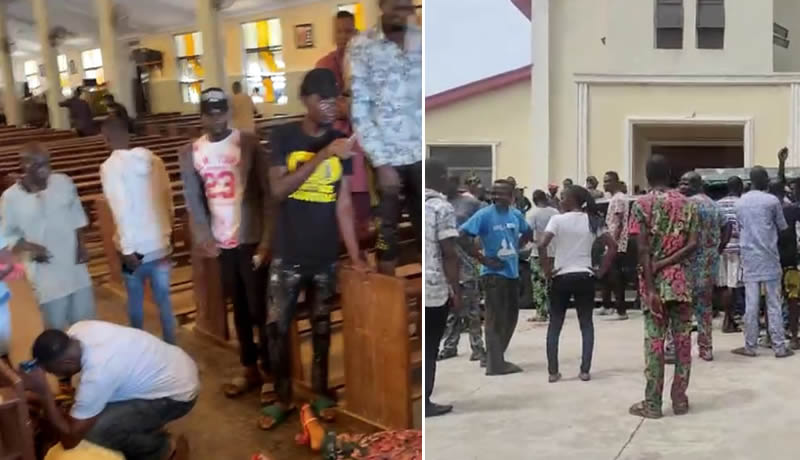
Words fail to describe the numbing feelings of Nigerians over the nation’s state, and the Owo massacre only took it a few notches higher. But a women rights group, Womanifesto has again pressed home its demands calling for a thorough investigation, transparent security budget report, and publication of the identities of victims of the terror attack at St. Francis Catholic Church, Owo, Ondo state, among others.

The National Coordinator of the Womanifesto, Dr. Abiola Akiyode-Afolabi who presented the women’s demands to Governor Oluwarotimi Akeredolu urged him to make the women’s demands known to President Muhammadu Buhari.

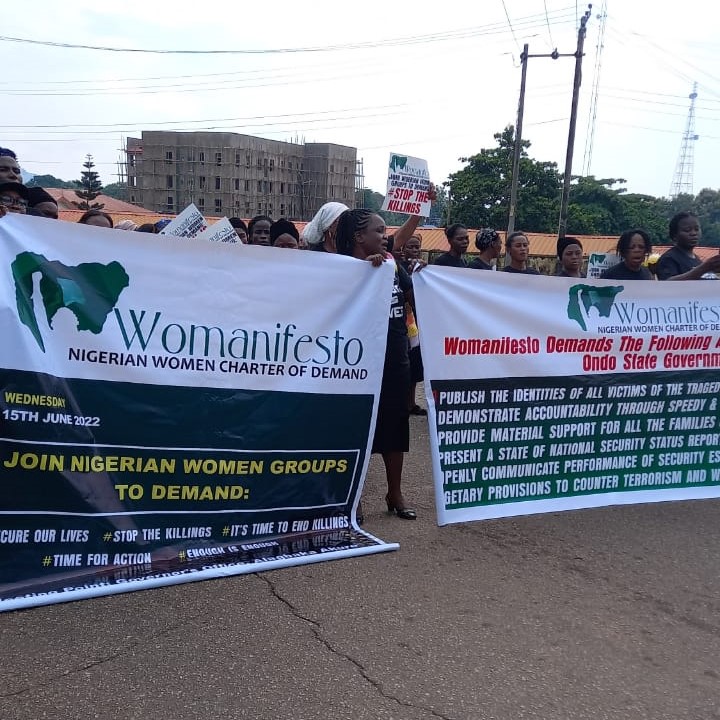
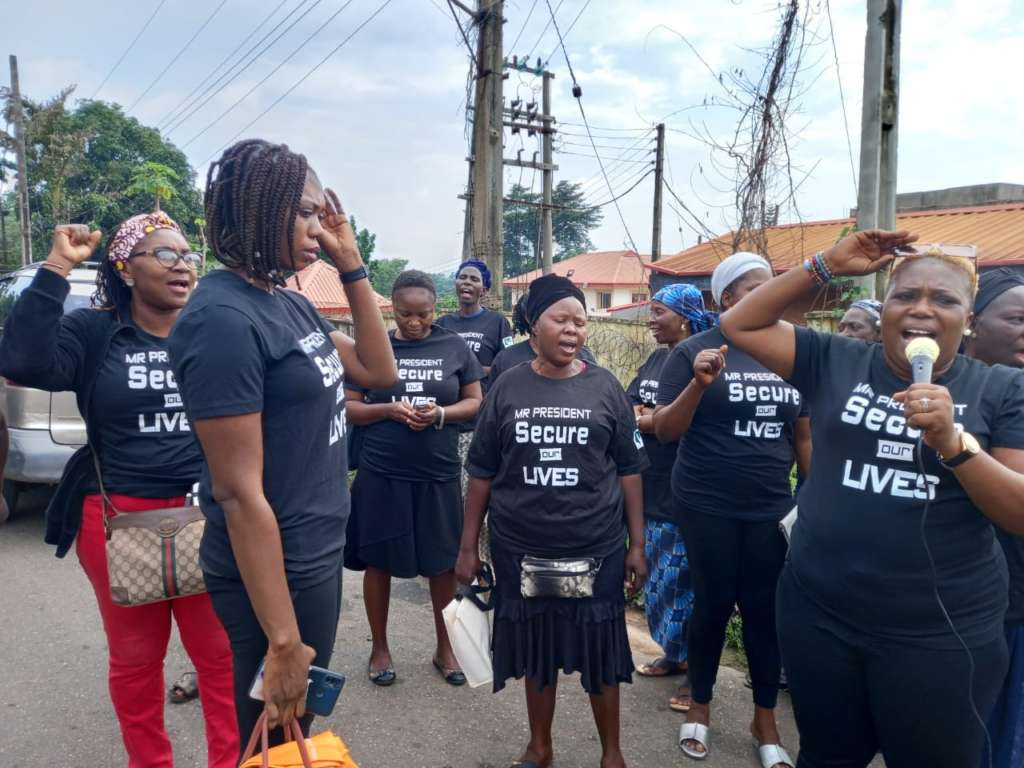
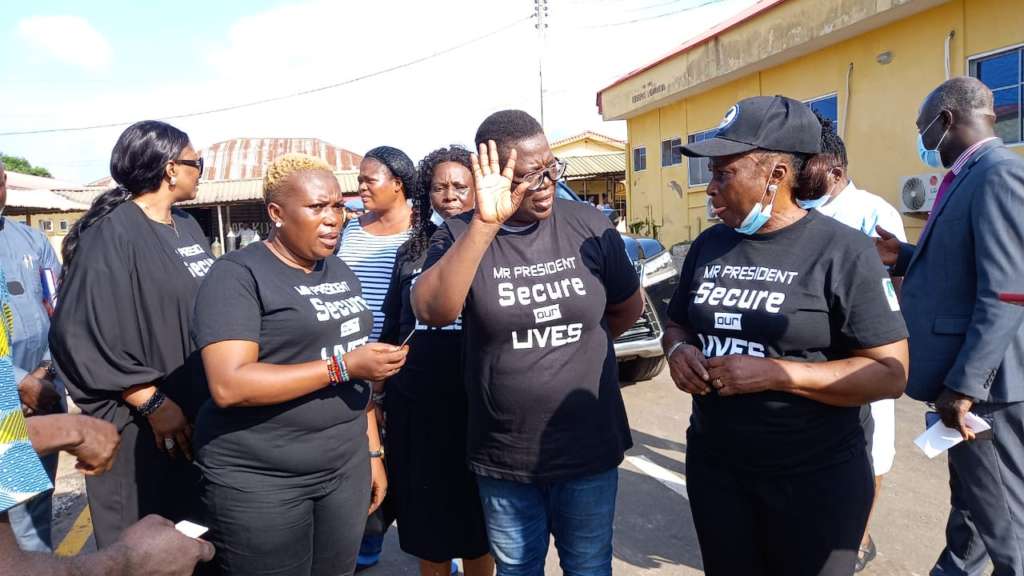
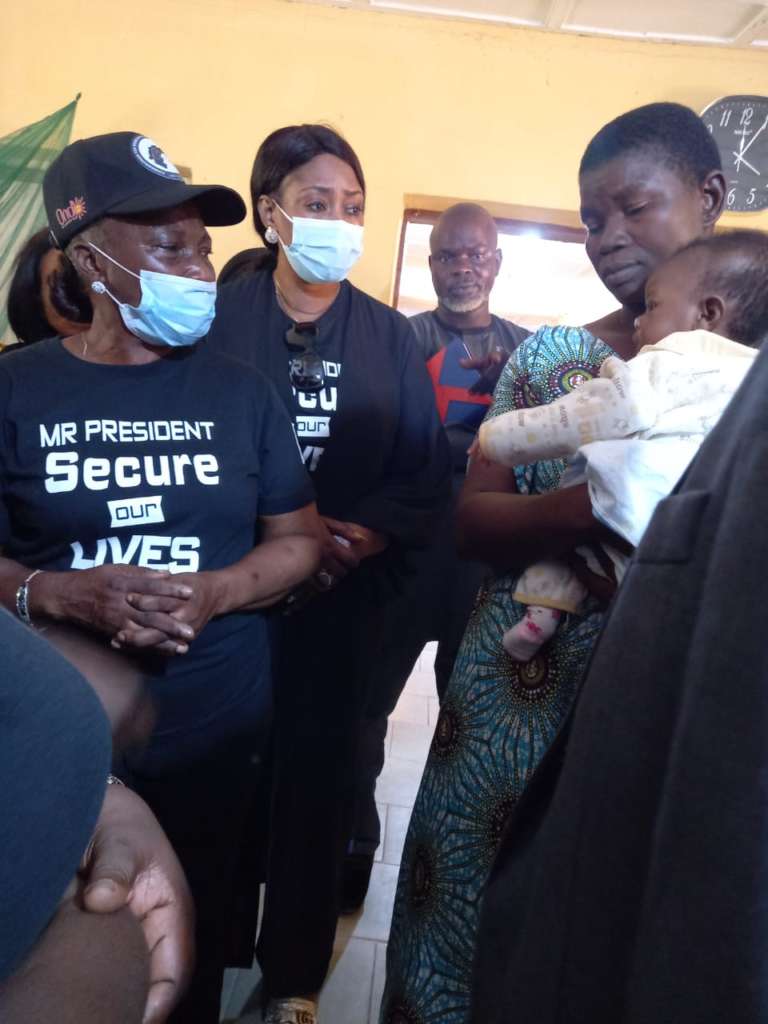
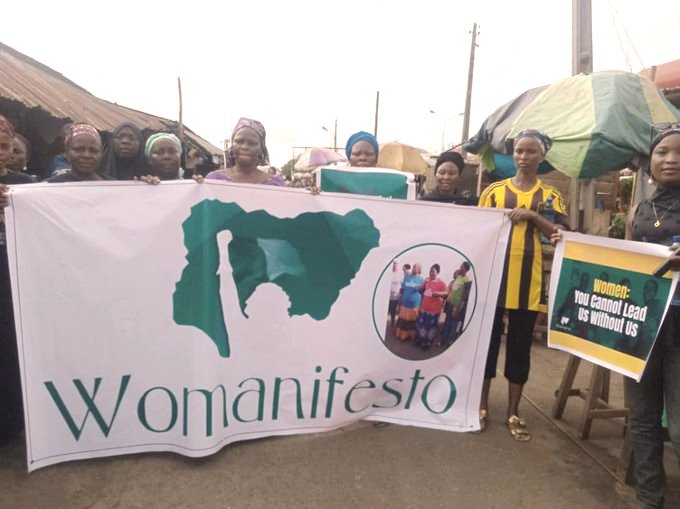
Thereafter, Womanifesto in collaboration with the Ondo State Ministry of Women Affairs and the office of the wife of the governor staged a protest in Akure the Ondo State capital demanding a stop to incessant killings across Nigeria. The women led by the governor’s wife, Mrs. Betty Anyanwu Akeredolu, and Dr.  Akiyode all dressed in black carried placards with the inscriptions – ” Mr. President Secure our lives”, #stop the killings.

The women took the protest to the governor’s office in Alagbaka where they met with Governor Oluwarotimi Akeredolu and members of his cabinet. Receiving the women’s group, Governor Akeredolu insisted that restructuring and adopting state police were the viable option for getting the country out of the threats of insecurity.

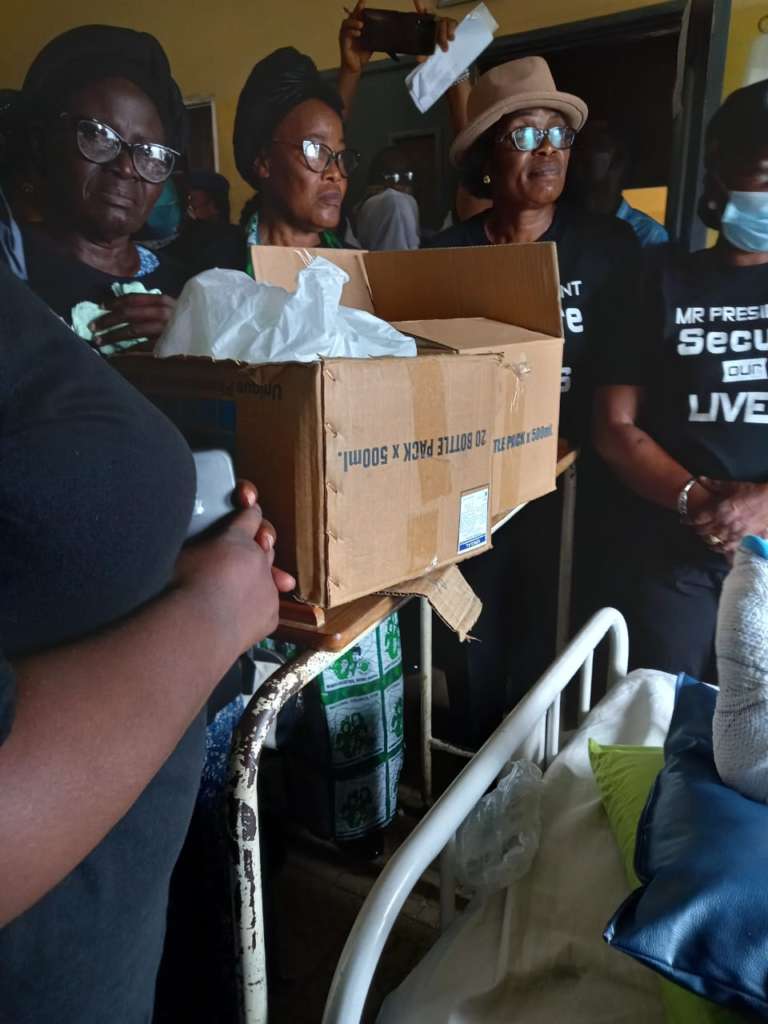
The women later proceeded to Owo town where the Womanifesto group made some donations to the hospitals where the survivors were receiving treatment.

Meanwhile, the House of Representatives has urged the federal government to declare a state of emergency in the various forest reserves in Owo/Ose Federal Constituency, Ondo State in order to comb and fish out criminals perpetrating crimes.

Below are photos of the protest match and presentation of demands.

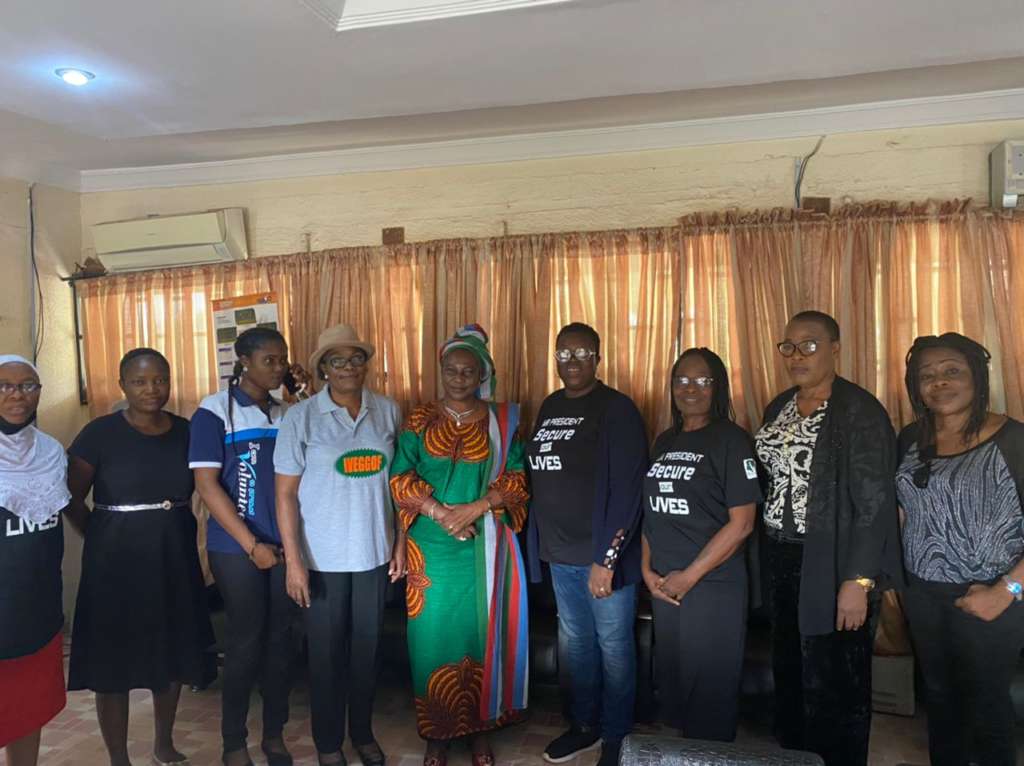
At the Commissioner of Women Affairs office in Akure, Ondo state with Womanifesto members on the state of insecurity in Nigeria ahead of the meeting with the governor. In attendance were representatives of the National Association of Journalists for Reproductive Rights, GECORN, WIPF, 100 Women Lobby Group, CSOs in Ondo, NCWS amongst others.
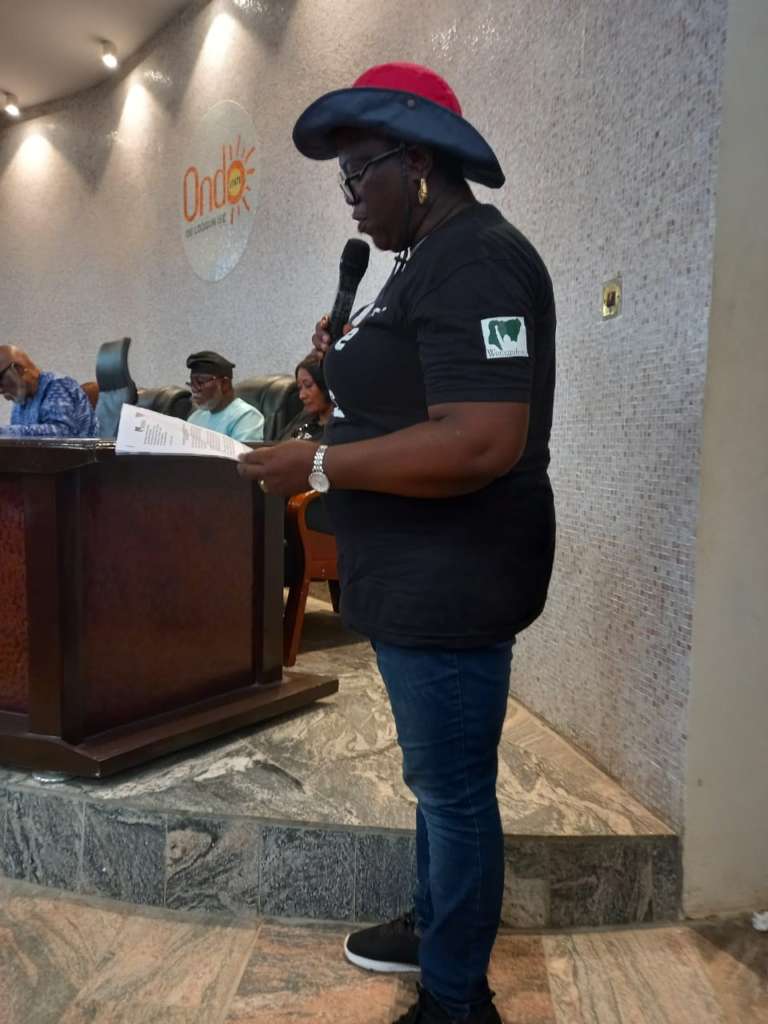
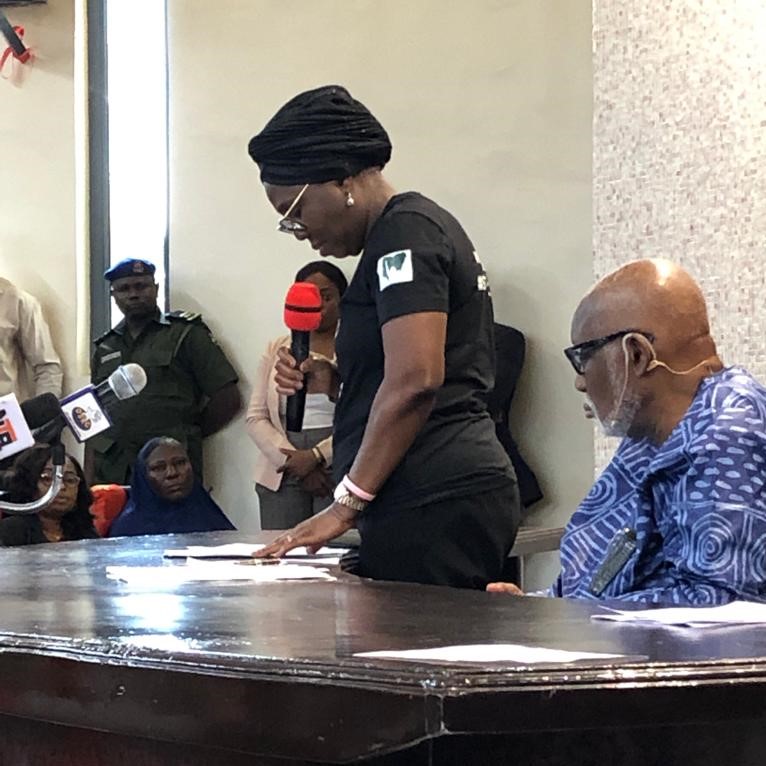
Akiode-Afolabi delivering Womanifesto’s message to the Governor
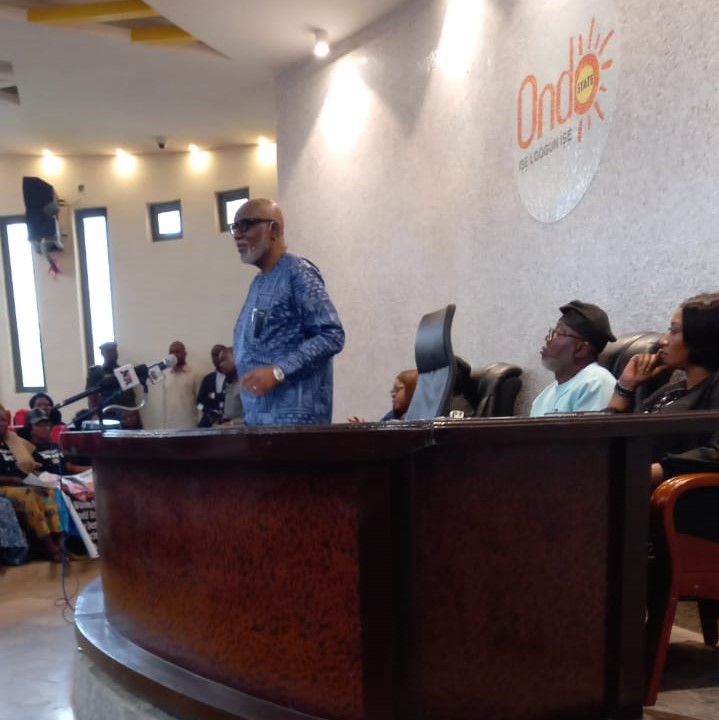
Gov. Akeredolu addressing the women
Mrs. Betty Akeredolu wearing a Womanifesto T-shirt. She marched with the women to the Governor’s office.
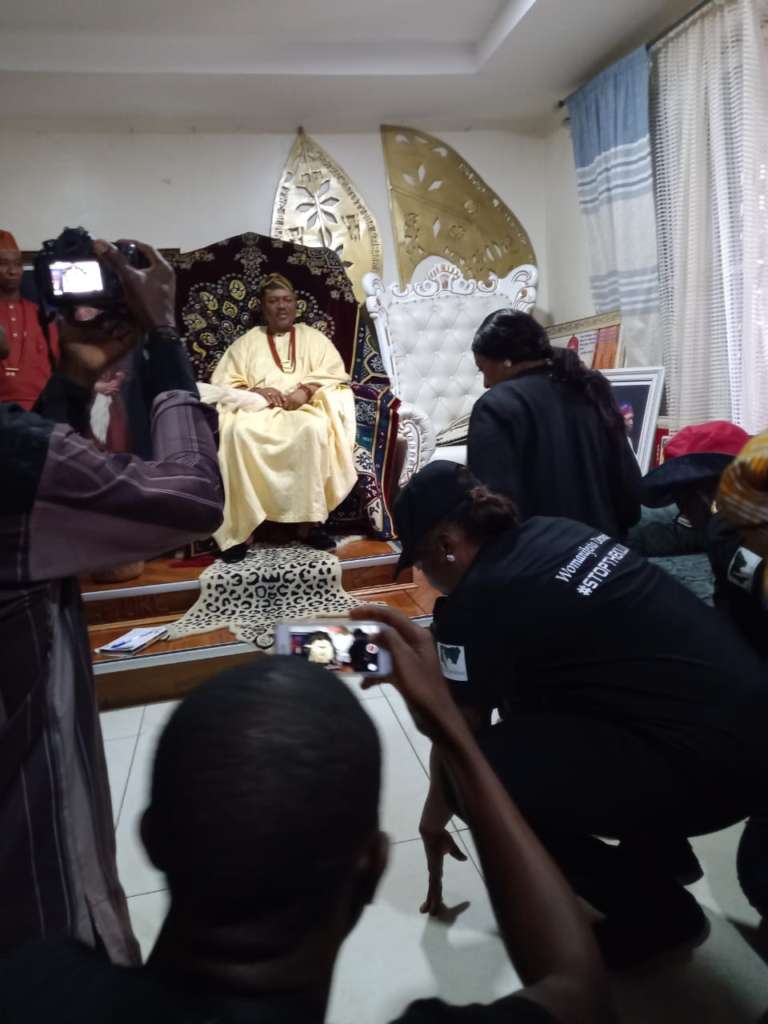
With the traditional ruler of Owo, the Olowo
At Federal Medical Centre, Owo to visist victims
The Youngest victim is 3 months old; his mother died, dad in ICU, brother with a gunshot wound in the same ward. He is being cared for by his mom’s sister

Military, Lawyers and Security Challenges

By Sonnie Ekwowusi

For the first time probably since the Cold War, millions of people across the world are not just uncertain about their future or concerned about their children’s future, they are deeply worried about their safety and the safety of their property. If anything, the ongoing Russia-Ukraine war has heightened this anxiety. What President Putin of Russia had on 24th February 2022 dubbed a simple “military operation” which in his view, would last for only three or four days, has continued to drag on and runs the risk of snowballing into a Third World War. One of the tragic consequences of a civilization geared for war, banditry, terrorism and so forth; a civilization failing to work to create a climate of peace; a civilization squandering its treasure on the worthless dross of gun-running and bloodletting rather than building a climate of peace is the rapid increase in insecurity of lives and property.

Sonnie Ekwowusi, Esq.

Most African countries, unfortunately, are at the crossroads at the moment. Instead of peace, what we find in many African countries today is a caricature of peace or a complete turmoil. Most countries on the continent are either engulfed in one war or one terrorism or conflict or armed struggle or another. To be sure, the struggle to create a climate of peace on the African continent is crucial to the future of Africa and by extension to the global human society and its people and governments. Pursuant to a Report on the economic costs of violent extremism in Africa organized by the United Nations Development Programme (UNDP) and the Institute for Economics and Peace (IEP) in 2020 in Addis Ababa, a causality exists between the violence in the various theatres of conflict in Africa and its effect on the peoples of the continent. In their Report titled “Measuring the Economic Impact of Violent Extremism Leading to Terrorism in Africa”, the UNDP and IEOP estimate that 16 of the 18 African countries – Congo Democratic Republic, Uganda, Chad, Niger, Nigeria, Tanzania, Central African Republic, Niger, Uganda, Kenya, Ethiopia, Senegal, Mali, Burkina Faso, Chad, Cameroon, Tunisia, Morocco, Mauritania and Libya – had lost an average $97 billion per year in informal economic activity since 2007. This is just informal economic activities alone and suggests other losses within the formal sector that are equally staggering.

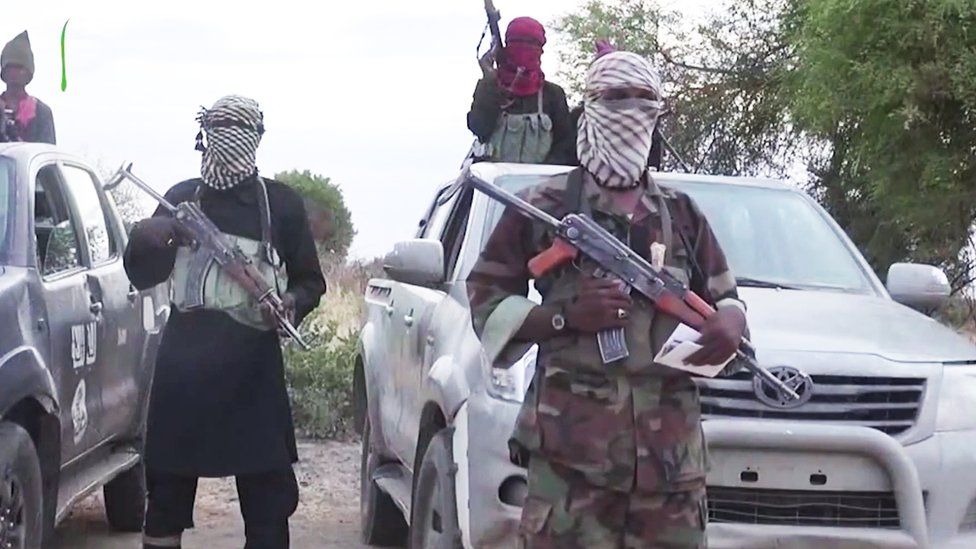
In Nigeria alone, a damning UNDP Report says that over 350,000 people have been killed directly and indirectly in the North East of Nigeria alone in the last 12 years. About 70% of the victims are women and children. At the moment, virtually all parts of Nigeria are either under the siege or in danger of being under of siege of terrorists’ bombings and massacres. For example, on June 5 2022 the Islamic State in West Africa Province (ISWAP), a splinter of Boko Haram, launched a premeditated terrorist attack on St. Francis Xavier Catholic Church in Owo local government area, Ondo State, Nigeria, leaving in its wake the death of about 50 worshippers and many injured worshippers. The problem is that in most cases, the responses of African governments to the aforesaid calamities and tragedies have been simply nonchalant or sometimes have been tepid as political considerations and intrigues are allowed to trump security initiatives. And sometimes, these responses have ended up aggravating the insecurity as gross violations of human rights by state actions indirectly help in providing violent non-state actors with new recruits.

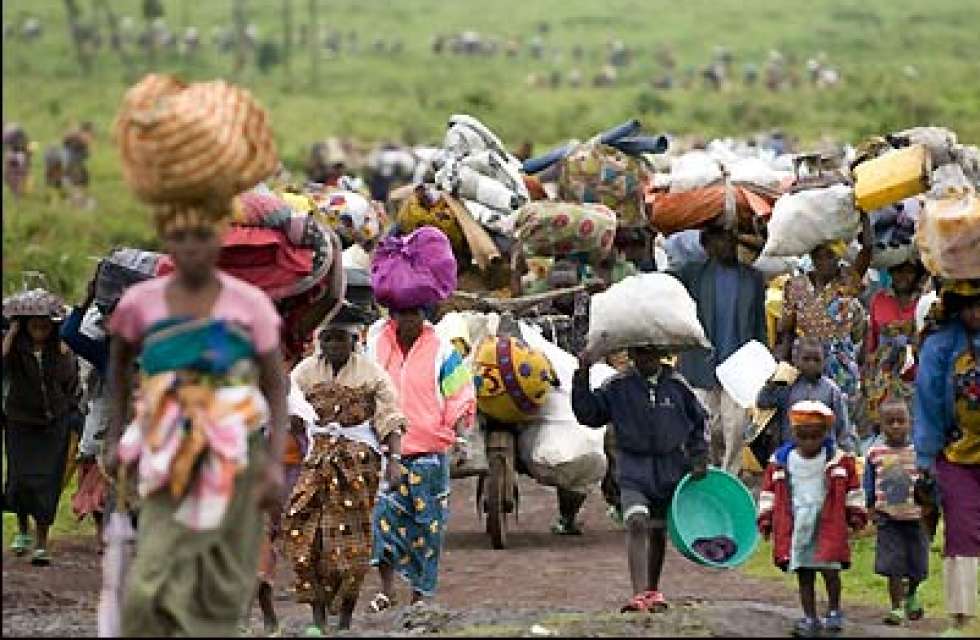
Photo Credit: BBC

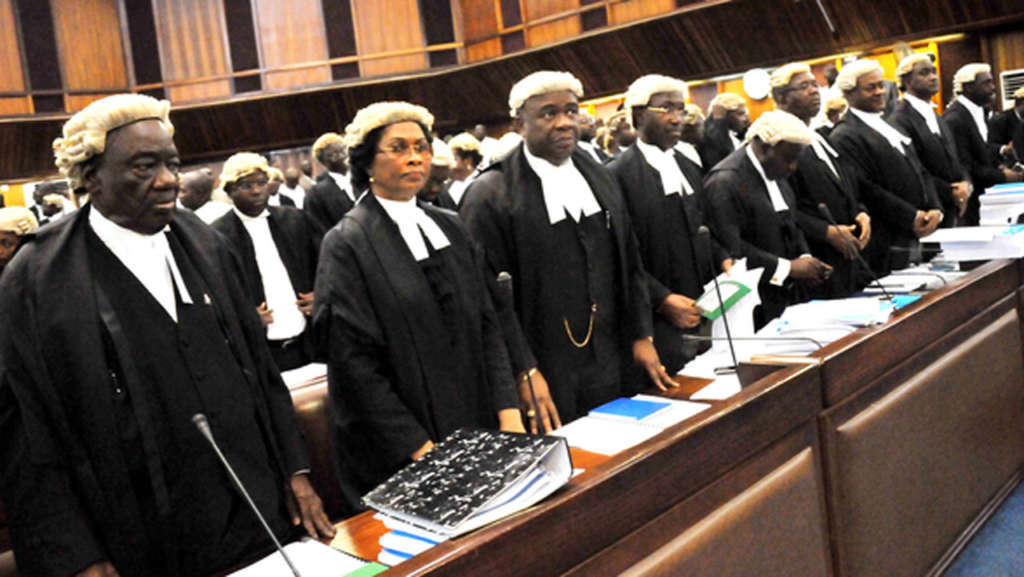
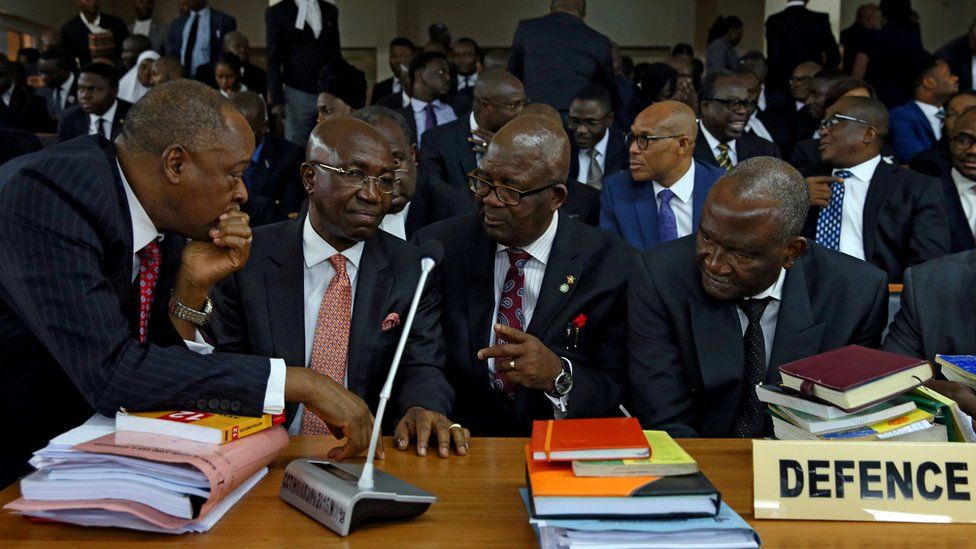
Peeved by the foregoing, the African Bar Association (AFBA) in collaboration with the Defence Headquarters, Federal Republic of Nigeria, organized a 3-day Conference last week at the Nigerian Air-Force Conference Centre, Kado, Abuja. Let me quickly say that the AFBA has been responsible for an enormous amount of social change in Africa, because being a lawyer is not just a way of basking in the euphoria of self-contentment or self-aggrandizement: being a lawyer is a calling to nip tyranny in its bud through the instrumentality of the law. Being a lawyer is a vocation to restore the rule of law to its enviable Olympian height. Any society bereft of the rule of law is heading for anarchy if not extinction. Why? Because recourse to the rule of law is the bedrock upon which the society lays its claim to civilization. Therefore African lawyers shall negotiate for freedom and justice, sacrifice for freedom and justice; they shall not surrender for freedom; they shall not surrender for justice-now or ever. Why? Because justice is the ultimate safeguard of civilized conduct. Fiat justicia ruat coelum (Let justice be done though the heaven may fall). Ancient philosopher Aristotle so praises justice that he says, “Neither the morning star nor the evening star are as glorious as justice”. To Cicero, “the brightness of virtues shines above all in justice”. In the immortal words of Hon. Justice Chukwudifu Oputa (of the blessed memory), “Injustice breeds intolerance, violence and social disorder in the same way justice brings along with it the blessings of peace and mutual understanding. There will be no peace in a society where justice is denied or defeated. Where there is wrong it is only natural that justice is evoked to remedy the wrong and thus restore the necessary balance”.

Anyway, the theme of the 3-day AFBA Conference was: “Enhancing the operational capacities of African Armed Forces and Security Agencies: Law as a vital instrument”. It is important to state that the Conference was the first of its kind in Africa. The Conference was actually a training workshop that essentially focused on building operational capacities for both military and civilian lawyers, senior military officers holding command and administrative positions. military officers and personnel in charge of human rights and humanitarian issues, officers involved in military-civilian Affairs, officers involved in Military Justice System, and their counterparts in the Security Agencies such as the Police, the Immigration Service, Customs Service, and Drug Law Enforcement Agencies. The Conference was also organized for practicing lawyers, academics, human rights organizations, anti-corruption agencies, Judges, Magistrates, Judicial Staff, and the public. The Conference speakers, resource persons, and participants came from 22 countries including the United States of America, France, Bolivia, Nigeria, Brazil, Guinea-Bissau, Ghana, Burundi, Liberia, Zambia, Mozambique, Cape Verde Burkina Faso. The Chief of Defence Staff, Defence Headquarters, Federal Republic of Nigeria, General Leo Irabor, was the Conference’s Special Guest of Honour. The Chief of Naval Staff, Chief of Air Staff, and Chief of Army Staff attended the Conference. The Director of Army Legal Services and chairman, Armed Forces and other Security Agencies Committee, African Bar Association, Major-General Yusuf Shalangwa played a pivotal role in ensuring that the Conference was successful. Of course, the President of the AFBA Hannibal Uwaifo Esquire and Conference Administrator Professor Edoba Bright Omoregie, SAN distinguished themselves in clearly setting out and directing the course of the Conference. Because there were many French-speaking participants at the Conference, Lt. Col Desire Hakorimana, General-Military Prosecutor, Burundi Defence Force and Vice-President and Advisor Council of African Military Law Forum did a masterful and excellent simultaneous translation from English to French throughout the duration of the Conference.

Conference Key-Note Speaker Dr. Miguel A. Moreno SAN Juan, Defence, and Security Consultant U.S.A and the General Secretary Euro-America Corporation of Security (CEAS) stressed, inter alia, that it is legitimate for military officers to refuse to obey hierarchical commands or orders issued to them in the course of their duties if such commands and orders are at variance with the rule of law. All the Conference Speakers, discussants, and commentators unanimously regretted that Africa at the moment is buffeted from head to toe by terrorism, banditry, social unrest, civil conflicts, and corruption. They also unanimously agreed that counter-terrorism operations must be governed by the rule of law; that amid the increasing insecurity across Africa there should be synergy between the military and civil society in order to share information and successfully respond to terrorism. There is an urgent need to build the capacity of the security agencies involved in combatting terrorism, banditry, kidnapping and so forth so as to help them to perform their duties diligently.

We are tired of hearing about the lapses and inefficiency of the Police. Therefore the Police in Africa should be re-invented so that it can perform its duty diligently. There should be compulsory regular training and continuing education for the military, Police, lawyers, and officers involved in prosecution of cases, crime detection, intelligence gathering, and so forth to guard against incompetence, laziness, and ignorance. Combatting terrorism, banditry, etc. is not only the work of the security agencies but the collaborative efforts of both the security agencies and the civilian populace. It is the primary duty of Police, not the military, to routinely maintain peace and order in society. Policing is the job of the Police, not the military. The military only plays a complementary role in peacekeeping in society. In his presentation, Professor Omoregie SAN stated that section 217(2)(c)(d) of the 1999 Nigerian Constitution has in no unmistakable terms spelt out the circumstances and conditions under which the military can be invited to intervene in quell terrorism or combat banditry. There are: (i) for the defence of Nigeria from external aggression. (ii) for the maintenance of the territorial integrity and securing the borders of Nigeria from violation on land, sea and air, (iii) for suppressing insurrection and acting in aid of civil authorities to restore order when called upon to do so by the President; subject to such conditions as may be prescribed by an Act of the National Assembly. In other words, while the President of Nigeria can freely deploy our military to defend our country against aggression and to maintain our territorial integrity, he cannot freely do so against insurrection and other internal armed conflicts without “such conditions as may be prescribed by an Act of National Assembly.

On his part, the President of the AFBA Hannibal Uwaifo Esquire regretted that the complex nature of conflicts aggravated by bad governance and religious extremism, sabotage from within, inadequate intelligence gathering, lack of synergy among securities agencies are the key factors for the security lapses in many African countries. Professor Steven Haines, Professor of Public International Law, University of Greenwich, stated that war and civil conflicts have a devastating effect on a nation, and, therefore it is very important to protect schools during terrorist activities and civil conflicts because schools are the key infrastructures in nation-building. To Professor Ernest Kofi Abotsi who is a Professor of law as well as the Dean, UPSA Law School, Ghana, there should be no compromise in fighting insecurity in Africa. In his paper, Professor Agbo J Madaki regretted, inter alia, that lack or paucity of evidence oftentimes aborts the prosecution of suspected terrorists.

The Conference ended on a good note as Ghana willingly accepted to host the Conference in 2023.

FIDA insists on adequate social protection measures to end Child Labour in Nigeria

Amina Agbaje and others occupy NASS

“Child labour and poverty are inevitably bound together and if you continue to use the labour of children as the treatment for the social disease of poverty, you will have both poverty and child labour to the end of time” – Grace Abbott, 20th-century American social worker

The International Federation of Women Lawyers, (FIDA) Nigeria has called for suitable and adequate social protection measures to terminate Child Labour or at least strategically reduce it in our communities.

Demanding increased access and support to ensure children attend and stay in well-equipped schools, FIDA in a statement commemorating the 2022 World Day Against Child Labour, also expressed concern that the minimum age for work in the Labour Act does not apply to children who are self-employed or working in the informal economy.

The FIDA Country Vice President/National President, Mrs. Amina Suzanah Agbaje in the statement remarked that “with the grave security challenges all around the country, children are forced out of their burnt/ destroyed homes and communities; displaced such that they must take refuge in an IDP camp where as young as 8 years of age, a child ends up as head of his home forced to fend to provide for their surviving families.”

Excerpts from the statement read:

The resultant effects of heightened poverty in our communities on already vulnerable children and their families is inextricably linked with rising levels of homelessness, inadequate nutrition and food insecurity, inadequate childcare, lack of access to health care, unsafe neighbourhoods, and under-resourced schools which form a basis of child labour.

Although the Nigerian Government has in the past made moderate advancements in efforts to eliminate child labour, it has not been effective enough, even with the hiring by Government of over 400 new labour inspectors and with the enactment of the National Social Behavioural Change Communication Strategy for Elimination of Child Labour in Nigeria (2020–2023).

Children in Nigeria are therefore subjected to the worst forms of child labour which we must collectively aggressively work to stop.

STOP

  • Children hawking on the streets rather than being in school
  • Children forced to work as farm hands, housemaids, quarrying granite, artisanal mining, commercial sexual exploitation, slavery, or similar practices
  • Child trafficking in all ramifications whether for drug production and sale or other illegal acts, including debt bondage
  • Forced recruitment into armed conflict
  • Hazardous work that can cause injury or moral corruption.

FIDA calls for suitable and adequate Social Protection measures to therefore be put in place to end Child Labour or indeed strategically reduce child labour in our communities such as:

Increased access and support to ensure children can attend and stay in well-equipped schools.

  • Well laid out and properly implemented plans to improve economic growth in communities, particularly at the grassroots levels
  • Improved and impactful social support measures to aid the vulnerable, accessible   directly by them without too many technicalities
  • Low-cost housing accommodation built for the vulnerable in communities to   provide shelter at minimal rates
  • Government-owned safe spaces/homes for vulnerable children should be increased and made very conducive for the children
  • Working diligently to achieve the Sustainable Development Goals
  • All key Stakeholders must take their legal and social responsibilities seriously; government must effectively guard the system and promptly punish defaulters to serve as a deterrent

If the above is effectively implemented, it will ensure a protective and conducive environment for the best development of the child.

Furthermore, the Child’s Right Act has been adopted by only 25 out of Nigeria’s 36 States, leaving the remaining 11 states in northern Nigeria with legal statutes that do not meet international standards for the prohibition of child trafficking, commercial sexual exploitation, and illicit activities. It is important that all states address issues concerning their laws and legal framework

It is additionally worrisome and pertinent to note that the minimum age for work in the Labour Act does not apply to children who are self-employed or working in the informal economy. This calls for an urgent action to be taken to address some of the real challenges faced and the gaps in the system which enable child labour

With the grave security challenges all around the country, children are forced out of their burnt/ destroyed homes and communities; displaced such that they must take refuge in an IDP camp where as young as 8 years of age, a child ends up as head of his home forced to fend to provide for their surviving families. This trend must STOP!

As we mark the World Day Against Child Labour 2022, we stress that the battle to protect that child concerns everyone because children are the leaders of tomorrow, we must deliberately shield and protect, educate and empower our children to be the best they can be.  

Signed, Mrs. Amina Suzanah Agbaje, FIDA Country Vice President/National President,

Meanwhile, as a large majority of Nigerian kids grapple with child labour and poverty, a Chinese boy reportedly went to the police station recently, to file a complaint against his father for taking away his smartphone and asking him to help with house chores. Believing the punishment to be unfair, the boy sneaked out of the house to make the report.

Confused officers on duty detailed an officer to accompany him home to get a grasp of the situation. When the boy’s father was told what his son had accused him of, the astonished dad proceeded to explain what had happened— that he simply took the boy’s phone away and made him help in the house. Under Chinese law, housework is not considered child labour so the father escaped trouble. The police officers however advised that the boy be disciplined adding that taking his smartphone away for a while was a good idea.

Video: Uwais, Electoral reform and 2023 Elections

By Lillian Okenwa

As the build-up towards 2023 general elections edges near a feverish pitch with politicians and political parties jostling for superiority, Nigerians can only hope for free, fair, and credible elections.

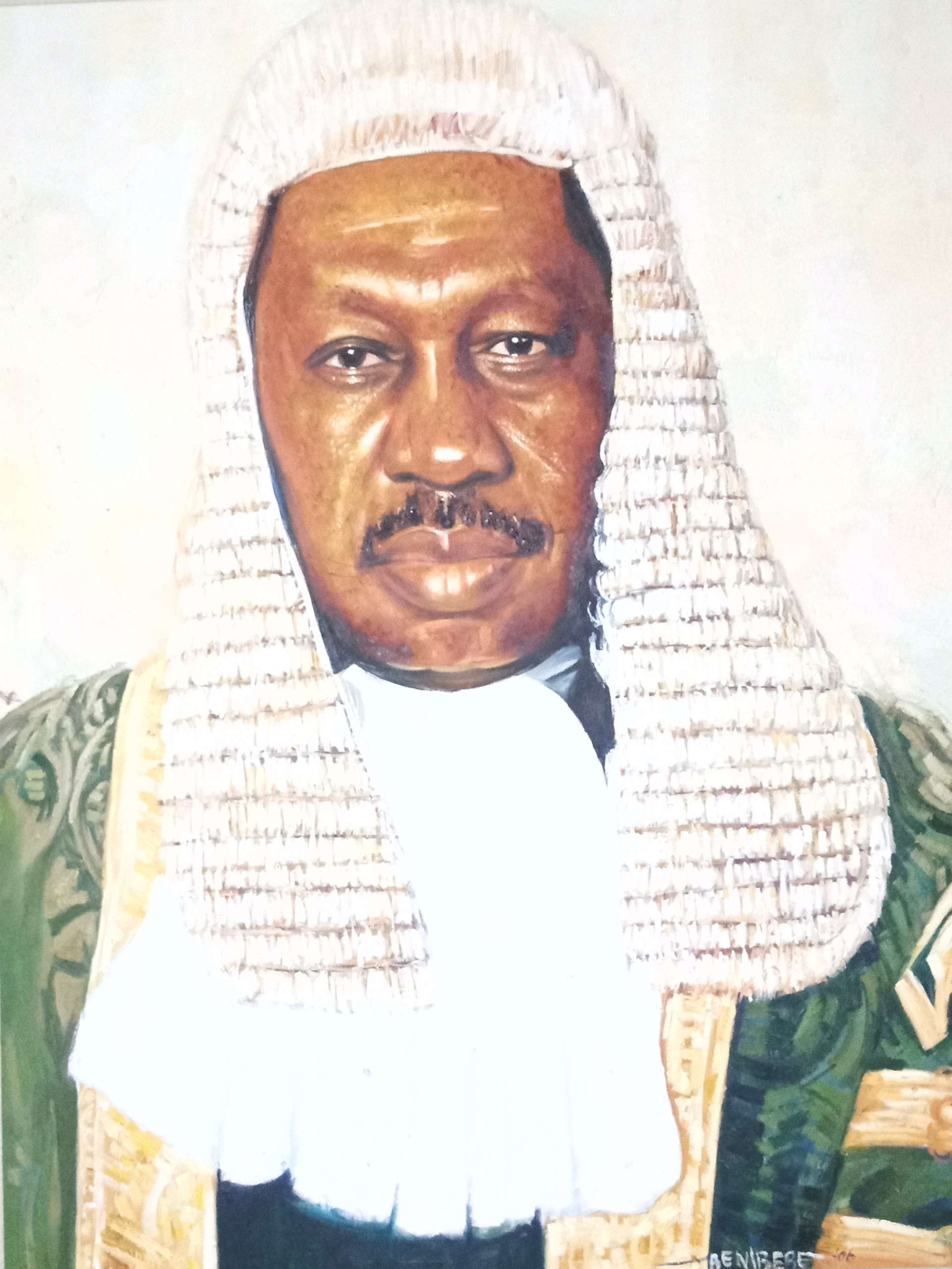
On August 28, 2007, the late President Umaru Yar’Adua] appointed a 22-member Electoral Reform Committee chaired by the former Chief Justice of Nigeria, Hon. Justice Muhammadu Lawal Uwais. The recommendations were widely considered as both apt and a roadmap for the conduct of credible elections that will meet every standard and value. CLEEN Foundation reported that: “Appropriate recommendations… [were] made to change the election mindsets of Nigerians in order to minimize the spate of violence and rigging in elections and build lasting democratic institutions and culture.” Rather than implement it, the government in power at the time passed the buck to the National Assembly, which totally rejected the report and threw it overboard. 

In his article — The Uwais report and the high cost of indifference, veteran journalist Dan Agbese wrote that Yar’Adua “gave the committee twelve months to submit its report to him. It took slightly longer until December 2008.  Sadly, by the time the committee submitted its report, the reform-minded president was too ill to do much or anything about it. Yar’Adua’s successor, President Goodluck Jonathan, did not feel sufficiently concerned about electoral reforms and so, he ignored the report…

“President Muhammadu Buhari has not yet publicly expressed his views on the electoral system and the conduct of our elections. It is difficult to know if he approves of the system that merely helps us to muddle through each election circle. Maybe, it is not always politically expedient to wake up the sleeping dog, right? And so, the report, you guessed it, is gathering dust on a government shelf. And we are doing our best to convince ourselves that it does not even exist.

“[H]aving sauntered through the report, I am saddened by the fact that it is willfully neglected by a nation anxious to clean up its electoral system and enhance the integrity of its elections. Nigeria is, perhaps, the only country in the world that makes a remarkable virtue of want and waste. We want solutions to identified problems and we go to great lengths in expenses in search of those solutions only for us to waste them with hardly a thought for the human and material resources wasted…

“In dealing with the problems that bedevil our general elections, the committee identified five fundamental problems. These are, ‘the Nigerian state as the arena of electoral contests, weak democratic institutions, negative political culture, weak constitution/legal framework and lack of independence and capacity of the electoral management bodies.’ The main work of the committee was centred on or around these five fundamental problems in the electoral system.

“The first thing that struck me here is the fact that these problems have been with us for so long they even look normal. We have known nothing much better and so we are unwilling to think that comprehensive electoral reforms could cure these ills and set our elections on the path of credibility and integrity.”

Aside from that widely acclaimed electoral reform committee, Justice Uwais who turned 86 on June 12, 2022, has played his part in numerous ways for the advancement of Nigeria. Whether this generation will adopt or learn from his many contributions is another story.

And as Roland Otaru, SAN said in a lecture delivered at a capacity-building workshop in Ilorin, Kwara state, “the reward for having done something well is having done it. There are many paths to the top of the mountain, but only one view… If we are able to obey the rules and regulations relating to the conduct of elections in our country, we shall always reap the reward for having done something well and when we get to the top of the mountain, it is from only one view, the Electorate can see what has been done transparently by the Electoral umpire…”

Below is a video tribute by many notables on Justice Uwais’ 85th birthday and we have elected to republish it in his honour.

As Buhari Gaslights Nigeria

By Chidi Anselm Odinkalu

When Nigeria goes to vote in presidential elections on 25 February 2023, it will be the first presidential election in 20 years in which Muhammadu Buhari will not be on the ballot. He will be term-limited having served the constitutionally permissible two terms following upon three previous unsuccessful attempts from 2003 to 2011.

The nomination conventions of Nigeria’s leading political parties have now concluded with clarity as to who will compete to become Nigeria’s 16th Head of State in succession to Muhammadu Buhari. Against former Vice-President, Atiku Abubakar, of the Peoples’ Democratic Party (PDP), the ruling All Progressives Congress (APC) will field former Governor of Lagos State, Bola Ahmed Tinubu. They will be the two leading candidates.

Azubike Ishiekwene has described the story of the choice of the candidate of the APC as a chronicle in Muhammadu Buhari’s mastery of “strategic ambivalence.” There is little evidence to support the existence of any such strategic wizardry.

The day before the scheduled beginning of the convention, 11 governors of states in northern Nigeria all on the platform of the APC issued a common position affirming that “the search for a successor as the APC’s presidential candidate be limited to our compatriots from the southern states”. In the same statement, they appealed to “all aspirants from the northern states to withdraw in the national interest and allow only the aspirants from the south to proceed to the primaries.” This was a big deal because the governors collectively determine who wins the party’s nomination for the presidency through their control of the delegates from their various states.

Of the 23 aspirants seeking the nomination of the ruling party for the position of president, only Abubakar Badaru (Jigawa); Yahaya Bello (Kogi); Ahmad Lawan (Yobe); and Sani Yerima (Zamfara) were from the north.

Moments after this statement was issued, reports filtered out that President Buhari had also endorsed the position of the northern Governors. This seemed a logical next step after the president informed his party the previous week that he desired to be accorded the privilege of designating his successor to lead the party into next year’s polls. There was one important point of difference between the northern governors’ position and that of the president: while the governors urged all northern aspirants to abandon their ambitions and step down, the president chose to be silent on that.

Rather bizarrely, after informing the party of his desire to anoint a candidate to succeed him, President Buhari hopped on the presidential jet and promptly flew off to Ibiza for three days. Returning from Spain a mere three days before the Convention, the president jetted off again to Ghana. He could not spare the time or attention needed to bring about the outcome he desired. There was no strategic genius in that. Rather he stoked political vacuum which the northern governors were only too happy to seize.

Contemporaneously with his reported endorsement of the rotation of power to the south, the Vanguard newspaper reported a claim by senior northern politician and former Nigerian foreign minister, Sule Lamido, that President Buhari was privy to a scheme that would lead to the emergence of Senate President, Ahmad Lawan and former Transportation Minister, Rotimi Amaechi as the presidential ticket of the APC. This seemed odd because Lawan, contrary to this position, is from the North.

On the same day, Dr. Lawan paid a high profile visit to another of the APC’s presidential aspirants and Ebonyi State Governor, David Umahi, after which they were reported to have struck a mutual support deal in the race for the party’s ticket. At this time, in the light of the announcement by the northern governors, Dr. Lawan should have been tendering his withdrawal from the race not picking up endorsements from fellow contestants.

It should have been evident that in politics there is no coincidence.

Early afternoon the following day, on Monday, 6 June, party chairman, Adamu Abdullahi, reportedly announced to a stunned National Working Committee (NWC) of the APC that their consensus presidential candidate will be Dr. Lawan and all hell seemed to break loose.

First, the 11 northern governors swiftly pushed back against this announcement, reaffirming their position about the ticket shifting to the south. Next, a significant membership of the NWC disowned the announcement, saying it did not come from them. Quickly, on the president’s behalf, a statement was scrambled to say that he had no preferred candidate and claiming that he was determined to see that there was no imposition of any candidate on the party.

Notably, Garba Shehu, the spare presidential spokesperson who issued this statement, was not present at the frenzied consultations among party leaders on the subject matter. The statement also explicitly contradicted the position, first announced by the president in a high profile interview in January 2022, that he had a preferred successor.

It was difficult to know what to believe – the statement issued on behalf of the president or the very words that he uttered himself. In the end, the world waited in vain for Buhari to unveil his successor or to marshall his plan behind such a person.

None of this reveals any mastery of strategic ambivalence. Instead, the journey to the APC Convention produced the kind of orchestrated confusion that has characterized the past seven years of this second Buhari misadventure. Not for the first time in Nigeria’s contemporary history of political transition, a president with military provenance appeared to lose his nerve when he needed to keep it.

It seems inconceivable that Abdullahi Adamu, a veteran politician who had served eight years as state governor and two terms in the Senate before becoming party chairman this year installed single-handedly at the say so of Mr. president, would have gone rogue to all by himself designate a “consensus” nominee without the knowledge or approval or the president. Indeed, the mere suggestion of the idea that he did not know damages Buhari much more than an acknowledgement that he did.

It seems more plausible that what happened was that the president, having authorized or requested Mr. Adamu to issue the announcement, promptly threw him under the bus when it became evident that he had probably under-estimated the blow-back that followed.

Such a scheme would be entirely in keeping with the narrow, nepotic outlook that has defined the Buhari years. A look at the underlying fundamentals of the Nigerian trajectory makes clear the logics that may feed a reluctance on the part of the North in the APC to yield up power.

Violence has destroyed social capital, enterprise and innovation in the region that has produced most of Nigeria’s leadership, to the point where its elite see their own survival only in terms of seizing power at the centre from where they can redistribute revenue obtained mostly from the south in order to buy off or postpone more violence from an impoverished underclass. But to sustain this would require an internal colonial arrangement that could imperil the Nigerian enterprise beyond a point of no return.

The alternative to gaslighting the country in this way was to gaslight the party.

The consequence was a nasty demolition derby of a party primary whose outcome was settled in favour of the only bidder who could afford the bullion vans to buy the entire delegate value chain from political factory through wholesale and logistics to retail. As the ruling party Convention began in Abuja, all foreign currency notes in the federal capital dried up in both the banks and the Bureaux de change, ending up in the hotel rooms and wallets of the party managers and delegates.

The competitors included “a sitting Vice-President, a serving senate president, five current governors, five ex-governors, an-ex senate president,” and four ex-ministers. In the event, Buhari was forced by his own cynical ineptitude to become a spectator in the theatre of his own succession within the party. He did not evince a legacy worth fighting for.

The result was a hostile take over of the party by a co-founder driven to extreme distraction at his own exclusion from the fortunes of the party he built.

There will be time to assess the landscape of the ensuing contest but what emerges is clear. The two biggest parties have split along regional lines with the emergence of Rabiu Kwankwaso’s New Nigeria Peoples Party (NNPP) in the north-west and Peter Obi’s Labour Party (LP) platform in the south-east. They could become kingmakers.

This line up guarantees that General Buhari, the man who promised improved security and coexistence in 2015, will be leading Nigeria into perhaps its first centrifugal elections since Independence. It is a sad commentary on this Buhari misadventure that the contest to replace him may become one in which the country will be voting on whether or not to stay together.

A lawyer and a teacher, Odinkalu can be reached at [email protected]

El-Rufai’s coup, Aisha Buhari the ‘Star Girl’, Abeokuta outburst — how Tinubu secured his landslide victory

As projected by TheCable, Bola Ahmed Tinubu, former governor of Lagos state, defeated all comers to win the presidential ticket of the All Progressives Congress (APC) at the Eagle Square, Abuja, on Wednesday.

He polled 1,271 votes to defeat 13 other presidential hopefuls, with Rotimi Amaechi, former minister of transportation, coming a very distant second after scoring 316. Vice-President Yemi Osinbajo got 235 while Senate President Ahmad Lawan, the “consensus candidate” of Abdullahi Adamu, APC national chairman, polled 152.

How did Tinubu pull such a convincing victory — far beyond what the most generous pundits predicted? A common retort on social media is the role played by money, but, as TheCable reveals below, there was more to the landslide than that.

1. THE ABEOKUTA OUTBURST

In a fire-spitting address to south-west delegates five days to the APC convention, Tinubu recounted how he helped President Muhammadu Buhari win in 2015. He said Buhari had given up and cried on national TV after failing thrice in his quest to be elected president. Tinubu recounted: “But I went to his home in Kaduna. I told him ‘you would contest and win, but you won’t joke with the matter of the Yoruba’…” He insisted in Abeokuta that it is the turn of Yoruba to produce the president and in Yorubaland, “it is my turn”.

The outburst enraged his opponents and some in Buhari’s inner circle. Even Adamu, the party chairman, said his utterances would have consequences — a subtle threat to disqualify him. But Buhari did not buy into the negative reactions reportedly because everything Tinubu said was true. Although Garba Shehu, presidential spokesman, later issued a statement saying it was “millions of Nigerians” and not Tinubu that made Buhari president, the president himself is said to have assured Tinubu when both of them met briefly on Saturday night that he would not interfere in the primary. This was after the president’s meeting with aspirants.

2. THE COUP BY EL-RUFAI

While Buhari was conferring with presidential aspirants, Nasir el-Rufai, the governor of Kaduna state, quickly convened a meeting of 11 northern APC governors to counter an underground move by some of the party’s stalwarts to retain power in the north.  The meeting persuaded Abubakar Badaru, the governor of Jigawa state, to withdraw from the race and decided to meet with Buhari to inform him they had resolved that power must shift to the south in the national interest.

However, TheCable understands that they were afraid they might be blocked or delayed from having audience with Buhari, so the outcome of the meeting was quickly leaked to the press and the attendance register was attached to make it look like a communique. The message gained immediate mileage in the media. Badaru later said decisions taken at the meeting, including his withdrawal, were to be presented to Buhari for his consent and that he was against the leak. It was rather too late — other APC governors fell in line, apart from Yahaya Bello of Kogi state who remained adamant. Most of the APC northern governors thereafter felt free to work for Tinubu.

3. ‘SCARE THE USELESS PEOPLE AROUND BUHARI’

Aisha Buhari, the president’s highly political spouse, was the “Star Girl”: she played an important role in Tinubu’s victory. After Tinubu’s Abeokuta outburst, there were fears that his ambition might have been jeopardised. Although he spoke in Yoruba, it was translated into English in a way that made it look like he was disparaging and ridiculing the president. Buhari was initially upset, according to insiders who spoke with TheCable. Adamu wanted Buhari to “cage” Tinubu because of his utterances. Tinubu also issued a somewhat apologetic statement saying he did not intend to disrespect the president.

However, TheCable was informed that the first lady insisted Tinubu did not say anything wrong and should keep up the heat to scare the “useless people” around the president who were working against the realisation of Tinubu’s presidential ambition. The president’s wife’s position, TheCable learnt, was that a promise was made to Tinubu before the 2015 presidential election and Buhari was duty-bound to honour his word as “a man of integrity”. Even if he would not endorse Tinubu, he should not stand in his way or succumb to pressure to support Lawan. She clapped in excitement as Kayode Fayemi, the Ekiti state governor, announced that he was stepping down for Tinubu at the convention ground.

On the day of the convention, Aisha prevented some politicians from having access to her husband at the presidential residence so that he would not be persuaded to change his position on not imposing any aspirant. Femi Adesina, presidential spokesman, had issued a statement that Buhari would not interfere. Aisha distributed the statement through all her social media handles. A picture was circulated on social media appearing to show her wearing a dress with Tinubu’s emblem.

4. WITHDRAWALS AND ENDORSEMENTS

After several failed attempts to get the south-west to present a candidate, with Vice-President Yemi Osinbajo in no mood to step down for his former boss, there were fears that the region’s votes would be split and this could inadvertently hand over victory to someone else. Many people knew Tinubu was going to win if the contest was not manipulated, but there were still fears that northern governors could be working secretly for Lawan in order to retain power in the region, especially as the Peoples Democratic Party (PDP) had already given its ticket to Abubakar Atiku, former vice-president.

However, Tinubu’s hand was further strengthened when candidates from different regions started endorsing him. Godswill Akpabio, from the south-south, led the way. Badaru made the biggest statement when he stepped down and endorsed Tinubu. There was a feeling of “game over” as it became clear that the APC northern governors, bar Bello, meant business. Ibikunle Amosun, senator from Ogun state, also stepped down for Tinubu. They were previously arch rivals. From then on, it was a spate of withdrawals and endorsements — seven in all for Tinubu. The direction of the voting was no doubt enhanced there and then.

5. FORMIDABLE POLITICAL MACHINERY

With the exception of MKO Abiola and former president Olusegun Obasanjo, no Yoruba politician has made more in-road into the north than Tinubu, who has been building and oiling his political machinery and relationships for two decades. It was payback time. He had a solid strategy ahead of the APC presidential primary: focusing his energies and resources on states with the highest number of delegates: Kano, Katsina, Oyo, Akwa Ibom, Osun, Borno, Jigawa, Niger, and Delta. With Lagos, Kaduna, Kwara and a number of others also in his corner, a landslide victory was inevitable.

So strong was Tinubu’s political network that all efforts by Hope Uzodinma, governor of Imo state, and Adamu to neutralise him fell flat. “Uzodinma worked actively for Lawan and was already fancying himself as the vice-presidential candidate,” a party official told TheCable, adding that there were last-minute attempts to change the delegate list in the south-west and put those who would vote for Lawan but it ended up not having any impact on the final outcome.

Credit:TheCable

Don’t Suppress Igbo intending voters by Sam Amadi

I am told that in just a few weeks after Peter Obi switched to Labour Party to put himself on the ballot as a presidential candidate, more than 700,000 new voters have been registered in the South-East. This is good news for democracy in Nigeria. One of the failures of democracy is low voter turnout. It is not democracy if only 10-15% of citizens elect leaders. Advanced democracies battle this scourge through many means, including redesigning electoral process and making registering to vote and voting as easy and fun as possible. Oftentimes, the entry of charismatic and credible politicians boosts the population of voters.

The bad news is that these intending new voters are being restrained and even intimidated not to register. Some national dailies have reported series of intimidation and thwarting of these enthusiastic intending voters, especially in some parts of Lagos State. The reports suggest this is not a one-off incident. It is assuming a dangerous pattern that suggests it is targeted at new registrants because of their ethnicity and assumptions about who they will vote for in what is shaping up to be a very competitive presidential election in 2023.

Nigeria suffers acute voter apathy, especially in the South-East where a mercantilist mentality would respond in a more rational manner to the losses caused by a flawed electoral system. Enterprising people are more likely to walk away from valueless engagements, like staying in the sun to cast a vote that will likely not count. Now that there are significant improvements in the process of elections to guarantee their credibility and a candidate with a promise to turn votes into better life for hardworking Nigerians has arrived, there is a resurgence of faith in democracy and commitment to the electoral process. This could lead to an uptick in voter turnout in 2023.

A large voter turnout is a boost to political legitimacy of a new government. Political legitimacy is important because it often outlasts legal legitimacy. A government elected in an election that most of the adult population participated is politically more legitimate than one elected by an insignificant number of adult citizens. And political legitimacy becomes a valuable currency for a government in terms of crises as we have often had and will continue to have in the near future. So, it is in the strategic interest of state institutions to foster the growth of political legitimacy. And one important way to do that is to encourage the participation of more citizens in the election of political leaders. And that begins with registering to vote.

INEC has been bewailing the lack of enthusiasm of young Nigerians to register to vote. It has carried out some enlightenment programmes to redress this social pathology. But the results have been meagre. Now things are changing because perception and expectation have changed. We need to encourage these dynamics and not discourage them. For a start, INEC should prime up its internal resource to meet the increased demand of this period. National media reports of hundreds filing out at different centres across the country to register to vote. Oftentimes, the story is that INEC staff are unavailable or lackadaisical. Some INEC senior officials have blamed the people who refused to come out to register earlier in the year when INEC opened for new registration. That is true. But INEC should be overjoyed that somehow the people are coming out to register. INEC should be worried that it conducts elections in which only about 20% of the voting age population elects the President. That is a poor scorecard for INEC, more so since it has statutory responsibility for voter education. So, INEC should rise up to the challenge and make personnel and logic more available to meet the increased demand for voter registration.

Another dampener, and a more dangerous one, is the deliberate discouragement of people willing to register to vote. There are reports that some intending Igbo voters in some parts of Lagos are being chased away from registration or intimidated by locals, sometimes with the connivance of INEC officials. This is really dangerous as it is costly for democracy in Nigeria. The ethnicization of the voting process will be a regrettable regression to the destabilization of the 1960s politics. We cannot in 2022 use such nefarious and violent method to gain political advantage in a needlessly renewed ethnic competition for power. In the previous electoral cycles, we did not have such relapse to crude ethnic politics. This is the most inappropriate time for a relapse to those old habits and tactics. The relevant authorities should rise up to end the spectre of ethnic violence and suppression of denial of democratic rights of Nigerian citizens anywhere.

It is important to make the 2023 presidential election a national struggle for democracy and development. Politicians and social commentators will help a lot in this guise. We have a slate of leading presidential aspirants that seems to revive the ethnic configuration of the 1960, with PDP having a north-eastern Fulani, the APC having a south-western Yoruba, NNPP having a north-western Fulani and Labour Party having a South-eastern Igbo. This could create the sense of a throwback to the 1960s. But we can erase that imagination by focusing on the differing visions of a future Nigeria that these candidates bring to the national discourse. It will not be easy to chase away the dogs of ethnic war. But, in doing so lies our survival as a country.

We have to pull together to keep the expected competitive 2023 presidential election on the path of national democratic struggle. The minimum condition for that is that we get more adults registered as voters and do not segregate against them by our acts and omissions into ethnic voters. Intimidating or discouraging Igbo late bloomers from registering to vote is a great disservice to democracy and a deliberate stoking of ethnic wildfires.

Surely, a participatory and free and fair 2023 election will not magically reset Nigeria. But it will provide a strong framework for conflict avoidance and resolution. And as Adams Przeworski rightly observes, democracy’s chief merit is that it helps us avoid conflicts and settle disputes about power and benefits. That’s enough today. We need to bolster this utility by encouraging these Igbo adults to register and vote.

Dr Sam Amadi, a lawyer and former Chairman of Nigerian Electricity Regulatory Commission (NERC), is the coordinator of Abuja School of Social and political thought

Owo massacre and nationwide killings, how soon will the government act?

By Lillian Okenwa

How were they able to eat that food? They actually had the appetite to eat? How can we ever comprehend the fact that on a day several families in Nigeria are mourning the loss of their loved ones viciously mowed down in their place of worship, President Mohammadu Buhari, his Vice, Prof. Yemi Osinbajo, SAN, and party stalwarts of the Progressives Congress (APC) APC chieftains had the desire and appetite to sit at a fancy dinner table in Abuja?

Hours after terrorists struck St. Francis Catholic Church, Owo, Ondo state leading to the death of about 50 men, but mostly women and children, the President and his men had a sumptuous dinner at the State House Banquet Hall on the evening of Sunday, June 4, 2022. Perhaps the news hadn’t reached them at the time of the dinner? While the Ondo State governor, Rotimi Akeredolu whose hometown—Owo — was dealt the deadly blow and who had been in Abuja for the dinner ahead of their party’s national convention hurried back to his state, the dinner went on as if nothing happened.

Then the federal government through the Minister of Interior, Ogbeni Rauf Aregbesola announced that the killing was carried out by the militant group, the Islamic State of West African Province (ISWAP). How swift! How was the probe that brought about this revelation carried out? Even Governor Akeredolu who spoke during a virtual interaction with a Swiss-based Christian human rights Organisation, Christian Solidarity International (CSI) insists that the Federal Government was too hasty in reaching conclusion about the persons behind the lethal occurrence. “The statement is too hasty. I take their conclusion with a pinch of salt. ISWAP don’t hide their attacks. If they have done it, they would have owned up. We are yet to know their identity and our security people are still on their trail,” Akeredolu said.

And while incessant killings are going on, men, women, and children being kidnapped and enslaved Nigerian politicians are more concerned about 20223, making promises they are not sure of delivering. Well… Civil Society Organisations, (CSOs) under the aegis of Womanifesto, have called on President Buhari to take charge and go beyond condemning barbaric killings of innocent Nigerians across the country. The coalition of over 500 women organisations presented a five-point demand for the government to swing into action and address the menace of killings in Nigeria. Co-Convener, Womenifesto, and Executive Director of Women Advocates Research and Documentation Centre (WARDC), Dr. Abiola Akiyode-Afolabi, raised these issues in a statement on behalf of the 500 groups titled, “Womanifesto condemns the killing, gives Nigerian government four weeks ultimatum to address the incessant killings.”  Among the 500 groups included Action Aid Nigeria, Bring Back Our Girls, 100 Women Lobby Group, Yiaga Africa, Dr. Oby Ezekwesili, Christian Women in Nigerian Politics, International Federation of Women Lawyers, HEIR Women Development, Nigeria Labour Congress (Women Committee), Women’s Rights Advancement and Protection Alternative, Nigerian Women Trust Fund, Media & Teens Network, and Nigeria Association of Women Journalists (NAWOJ).

Womanifesto quoted a report by Nigeria Security Tracker that “over 3, 515 people have died as a result of violent attacks between January and June 2022, with 1, 214 deaths in March, ranking higher than the 996 deaths recorded in January.” The organisation cited another report that “at least 14, 641 people have been killed across the six regions in Nigeria in the past three years, and in just the first five months of this year, about 3,173 have been killed and more than 2,293 abducted in similar circumstances.”

The statement reads — In the immediate term, however, we demand the following actions by the Federal and Ondo State governments:

  • Publish the identities of all the victims of the Owo tragedy including those that died as well as the injured.
  • Demonstrate accountability and carry out a speedy investigation that is conclusive – leads to arrests, successful judicial prosecution and sentencing of the killers.
  • Make immediate contact, provide constant updates, and appropriate succour for all the families of victims of the tragedy by the Federal and Ondo state governments.
  • Present as a matter of urgency, a state of national security status report to Nigerians in fulfillment of the constitutional duty of the President and the security agencies
  • Transparently communicate the performance of the security establishments in light of the huge budgetary provisions allocated annually to the counter-terrorism war.
  • Unfortunately, the failure of the government to properly investigate or take tangible actions to ensure justice or deter future occurrences continues to exacerbate the crises. Since its insurgence in 2009, the herdsmen and banditry attacks have risen exponentially as the government has failed to demonstrate the capacity to address the insecurity plaguing the country.
  • The Owo massacre in which citizens in their place of worship were killed, again raises the question of governance failure considering that our 1999 constitution asserts security and welfare of citizens as a primary responsibility of the government. The same constitution centralizes the command and control of security establishments in the Federal Government through the President of Nigeria as Commander-In-Chief of the Nigeria Armed Forces.
  • We, therefore, call on President Mohammadu Buhari, the Federal Government, the Nigeria Police, and all other relevant federal law enforcement agencies to take immediate measures beyond condemning this barbaric act- to end the insecurity in the country.
  • Womanifesto demands in the medium term, a comprehensive restructure of Nigeria’s security architecture through a national conversation on a new constitution to replace the problematic 1999 constitution.
  • Womanifesto finds the current fixation of Nigeria’s public officials and other politicians with the 2023 elections in a country which has many evident signs of being on the brink of collapse, and unconscionable, unkind, and cynical diversion of energy that should be focused on securing anxiety-numbed citizens.
  • We are shocked that our political leaders are continuing to ignore and downplay the rising trend of daily killings of Nigerians in states across the country at a dangerous time like this and instead giving priority to their personal quest for power. This is utterly condemnable.
  • We want our President, Governors, and lawmakers across Nigeria to immediately cease from continuing to “major in the minors” and reprioritize the safety and security of citizens to the top of our national agenda. We demand that they focus on the existential threats bedeviling Nigeria and Nigerians now.
  • Finally, we shall be monitoring the response of President Muhammadu Buhari, the Federal and Ondo State Governments to our demands. If by July 5th, 2022, we do not see any strong signs of progress on our five demands, Nigerian women will take every step necessary to stand for the preservation of the lives of our citizens. We emphatically declare that Enough is Enough!

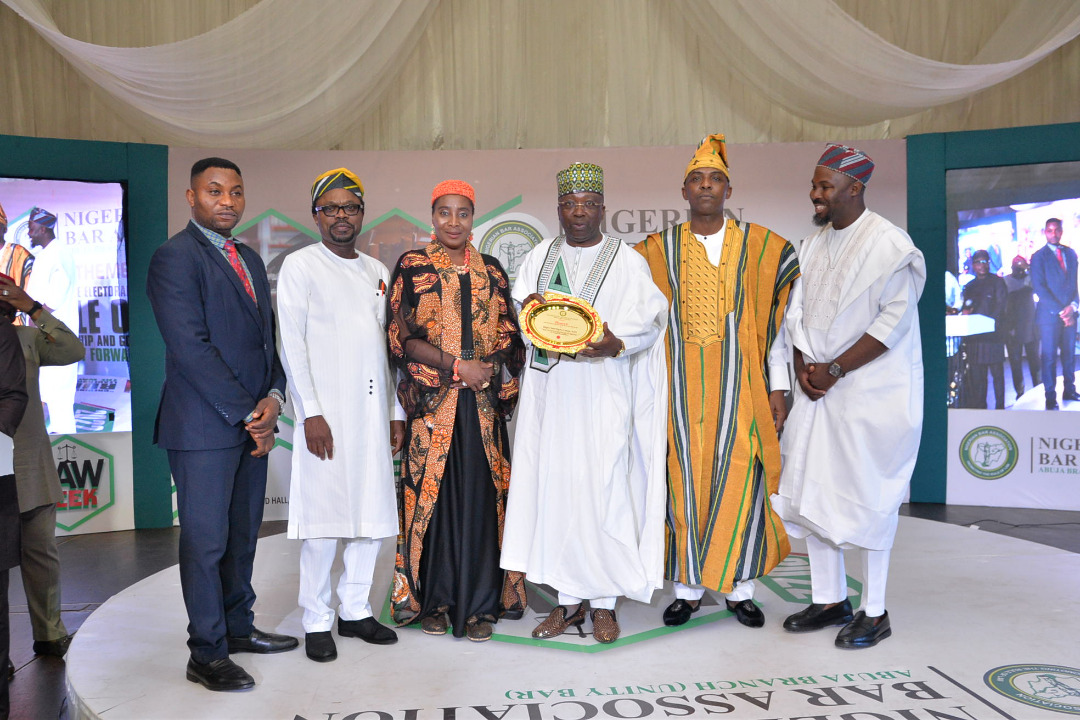
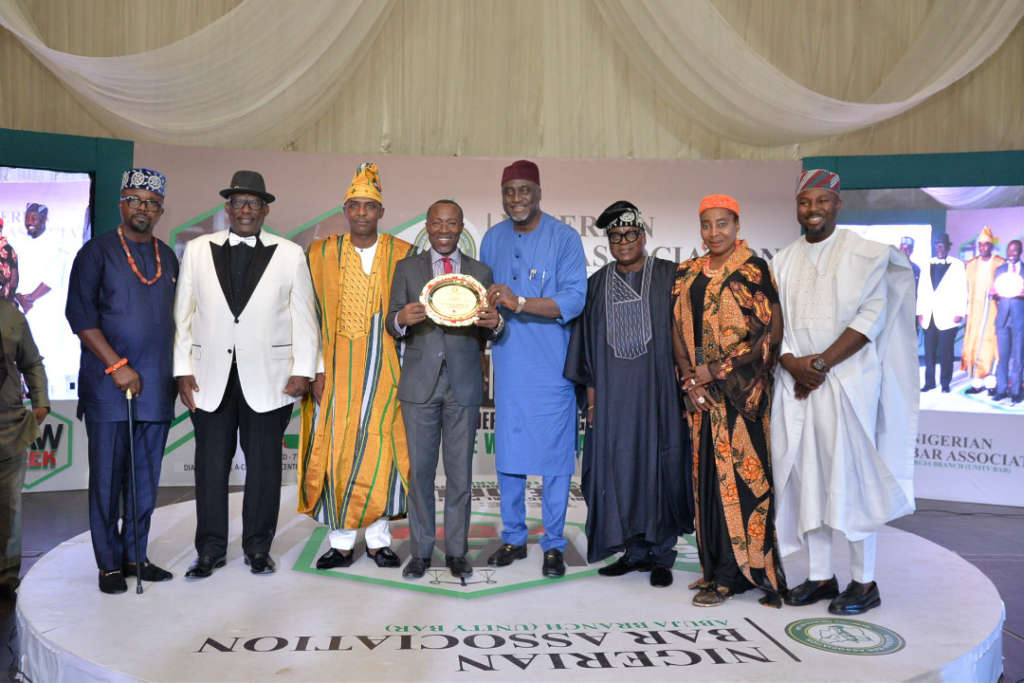
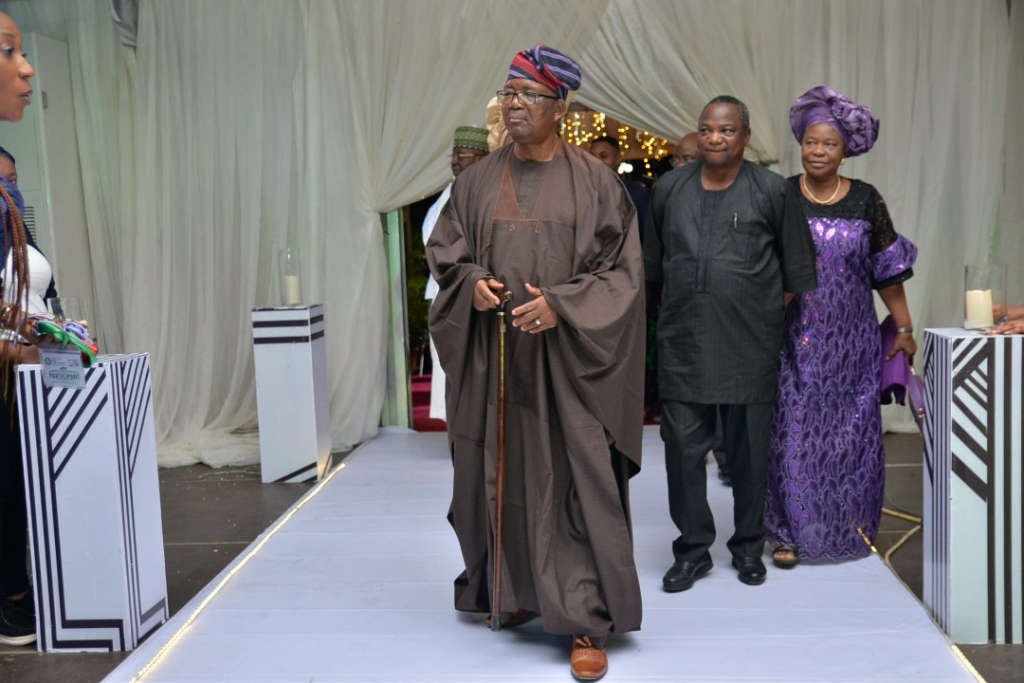
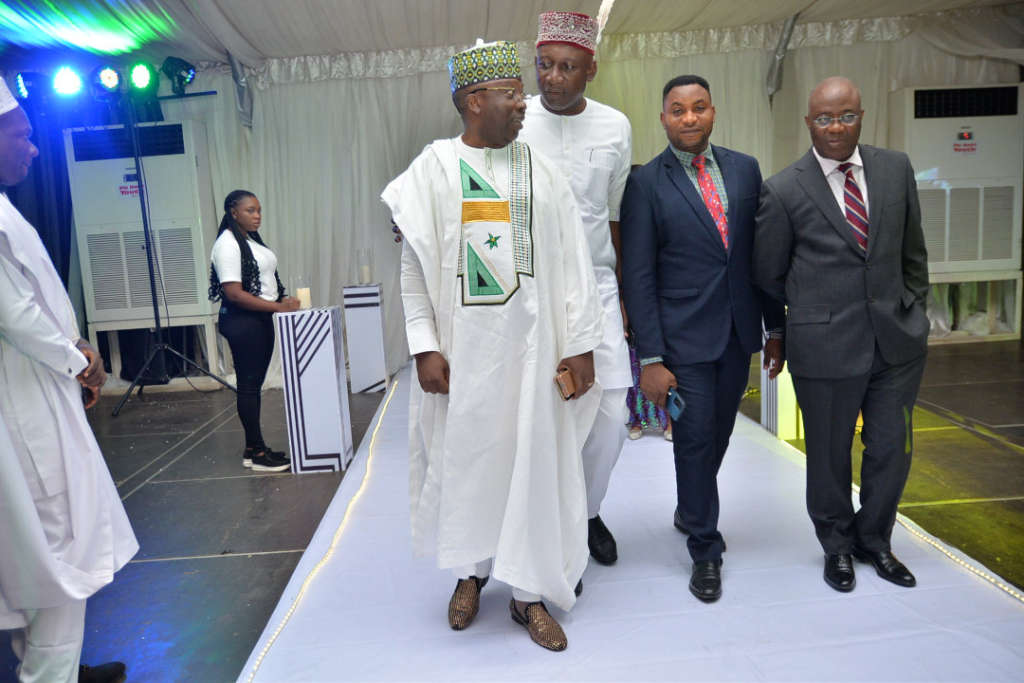
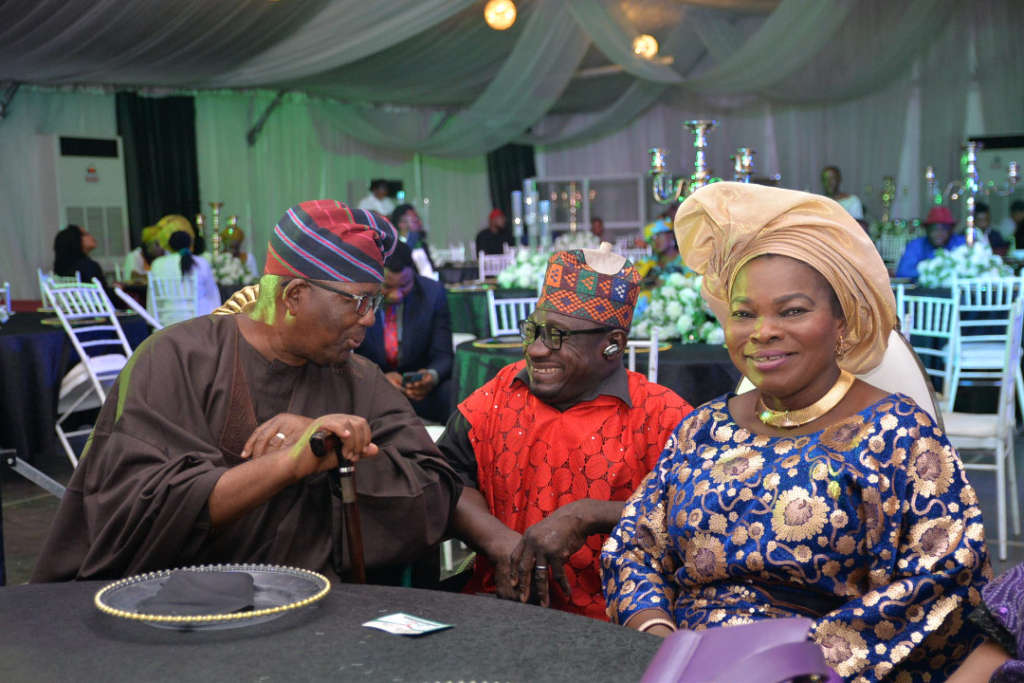
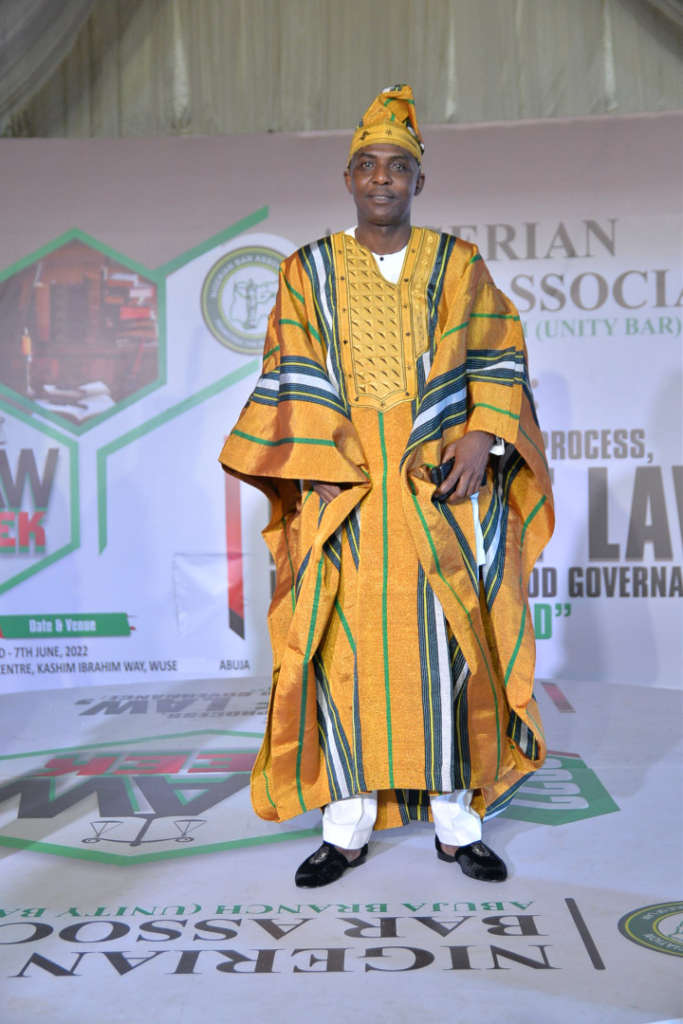
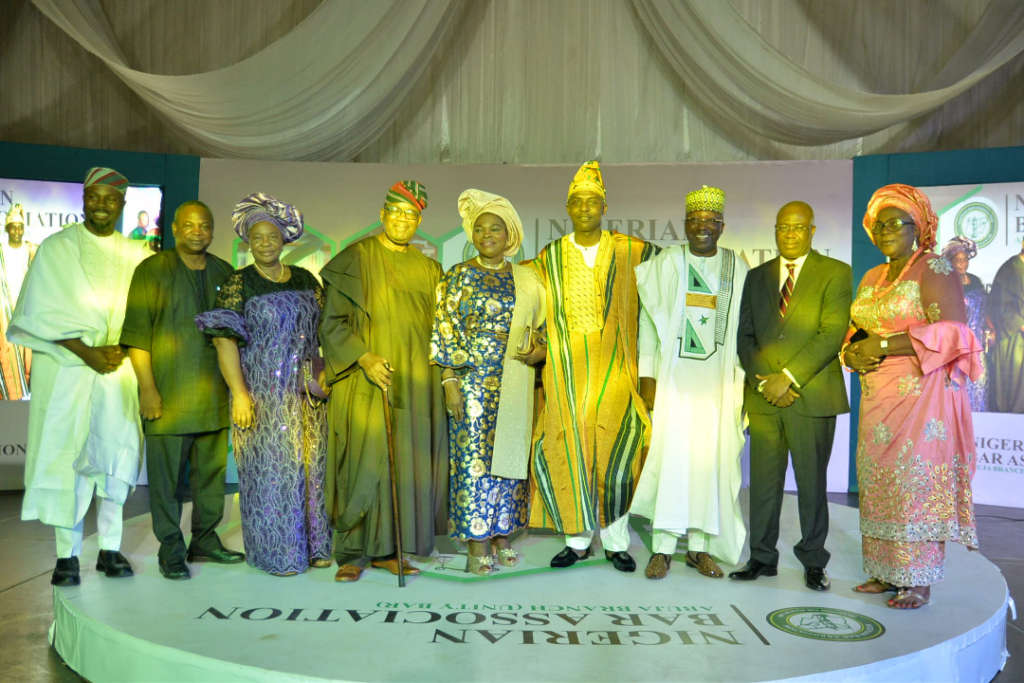
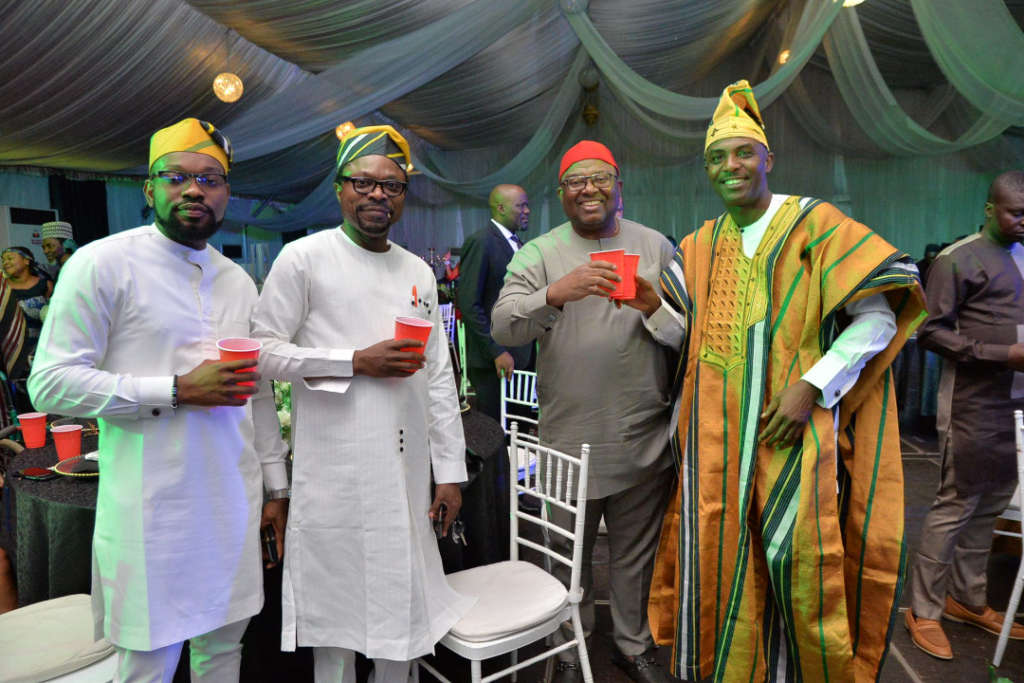
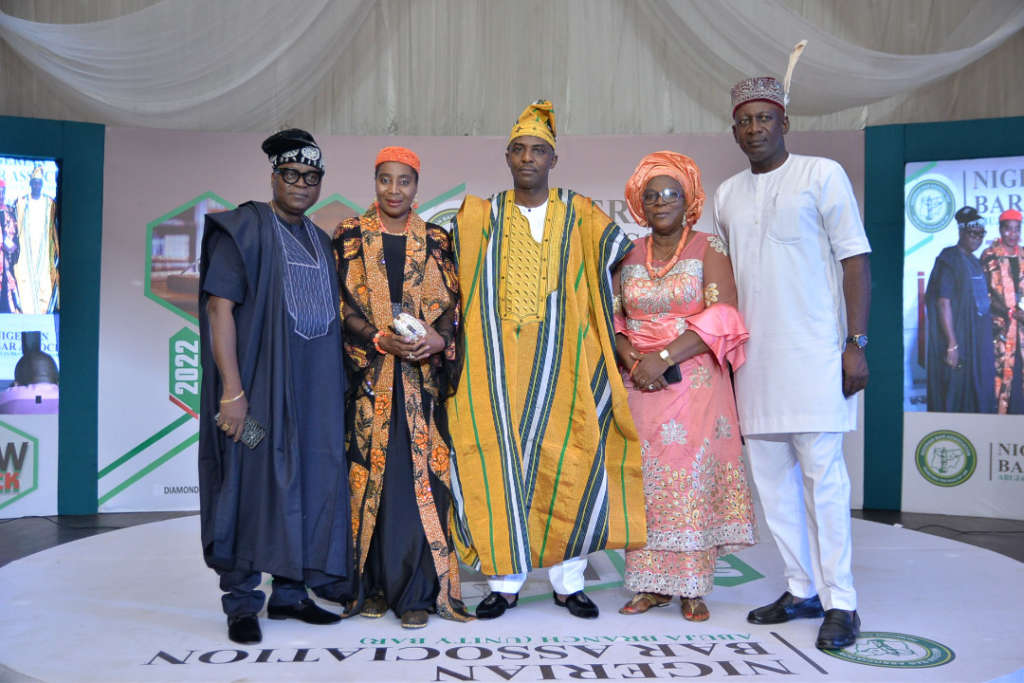
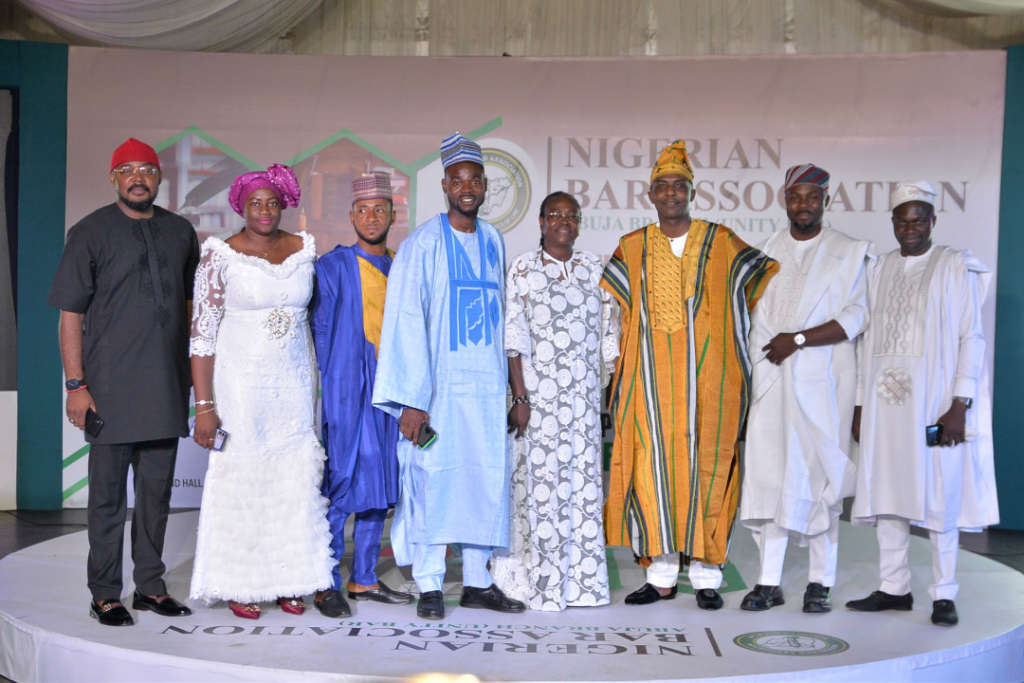
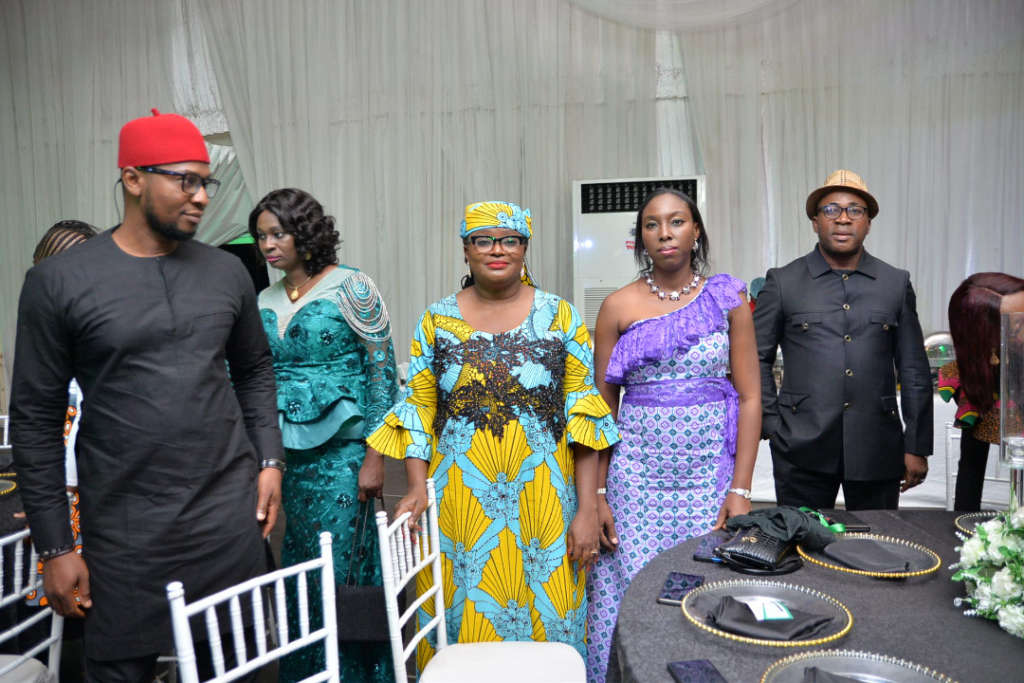
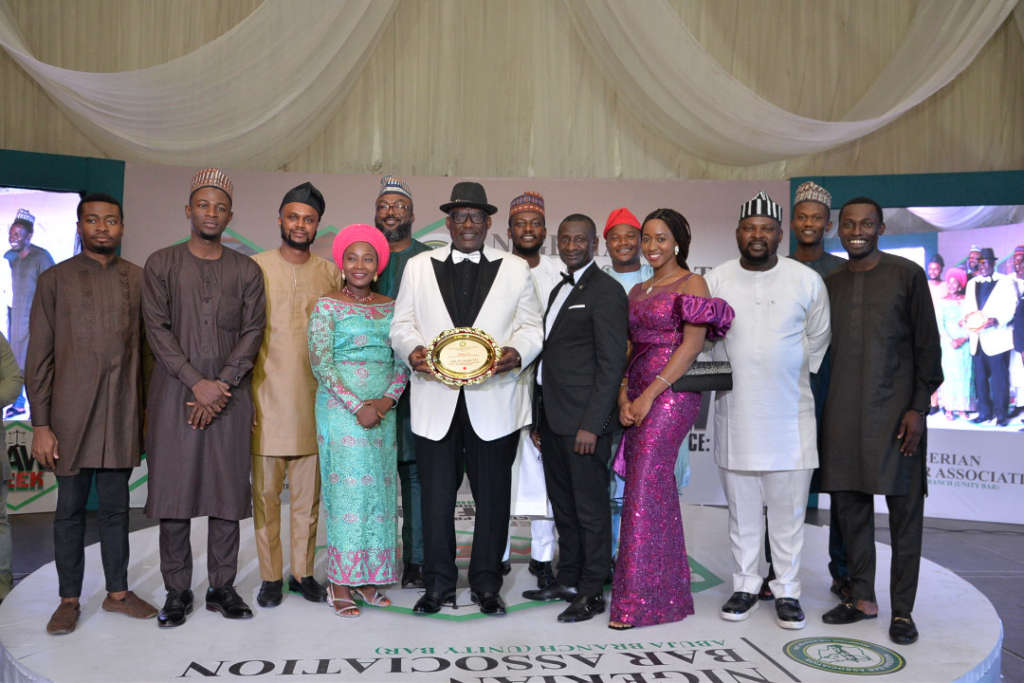
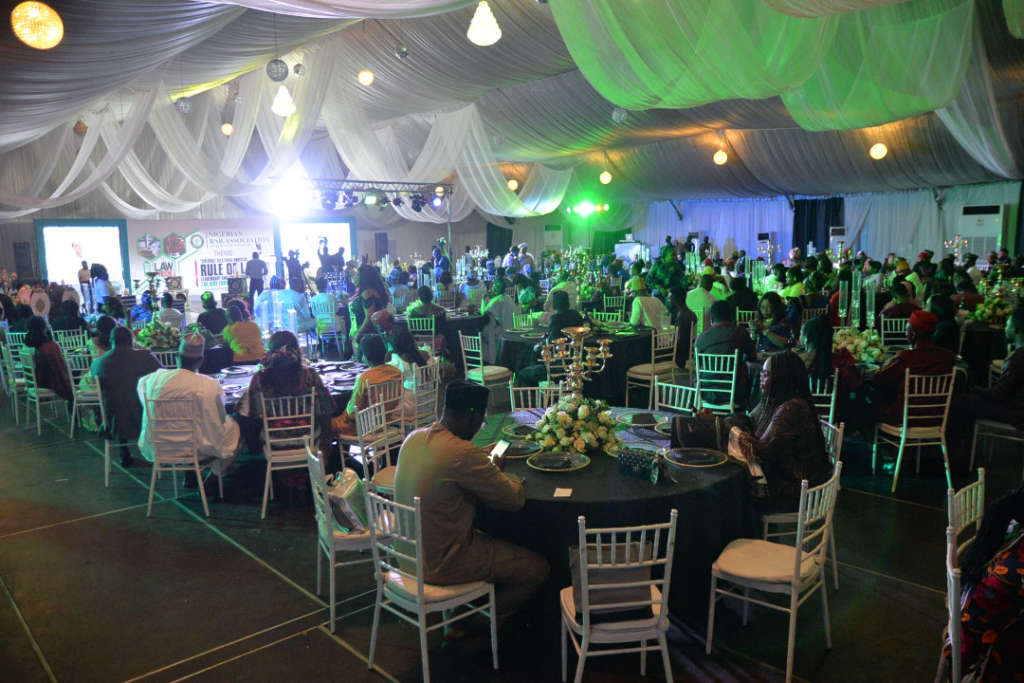
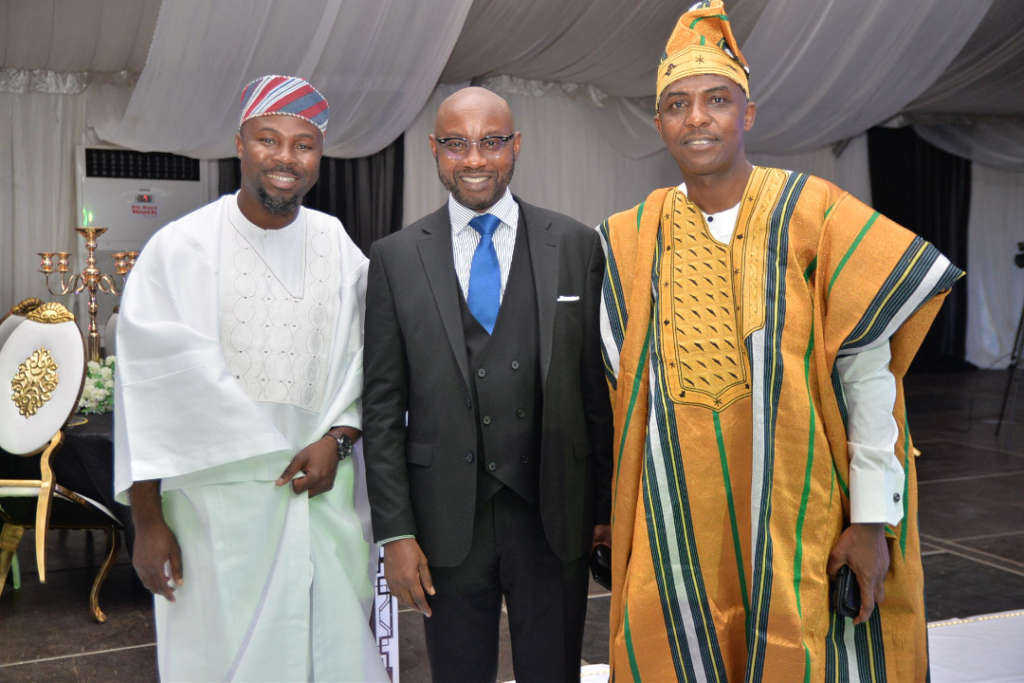
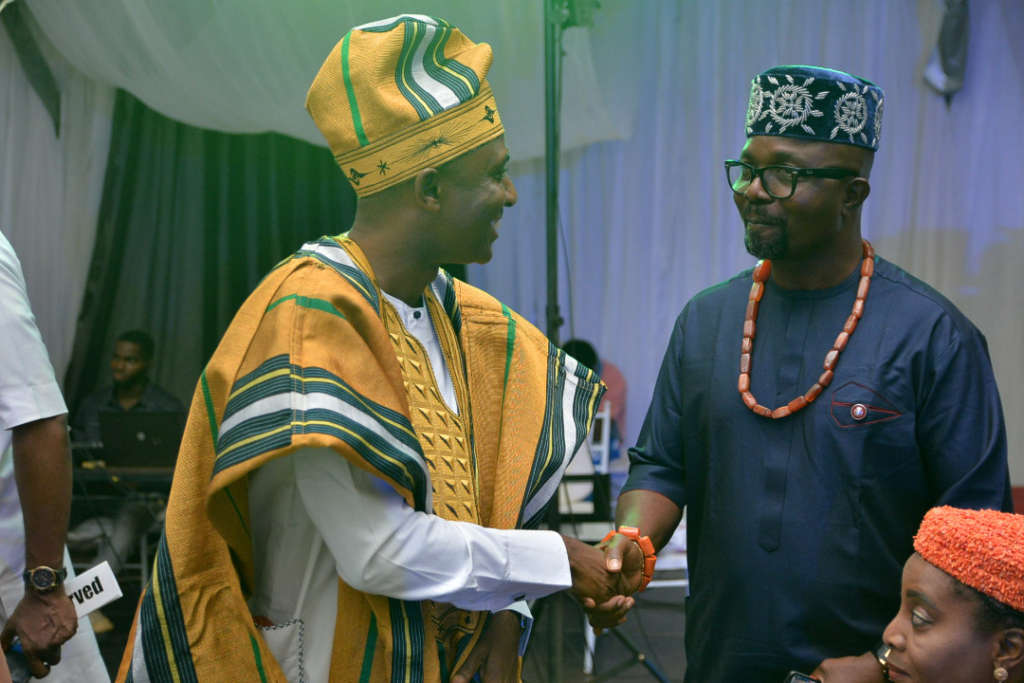
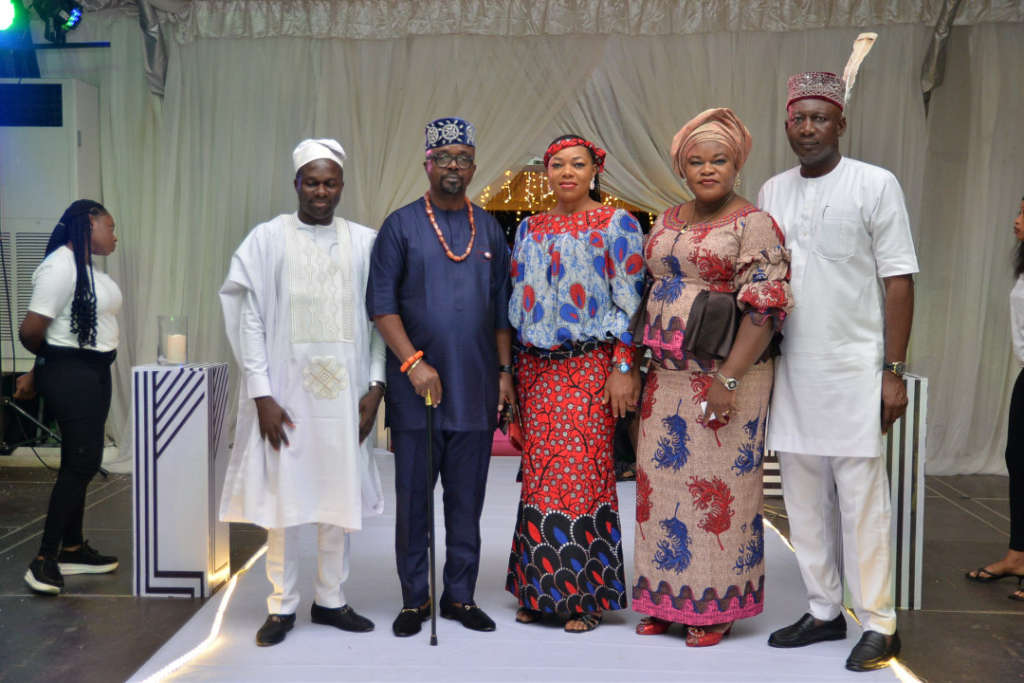
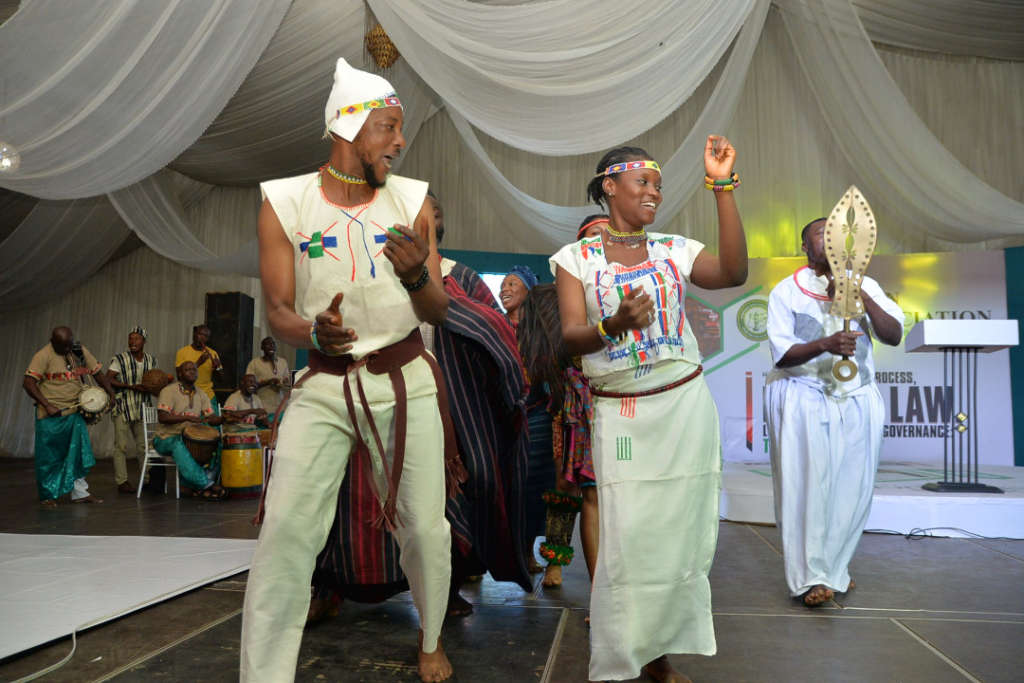
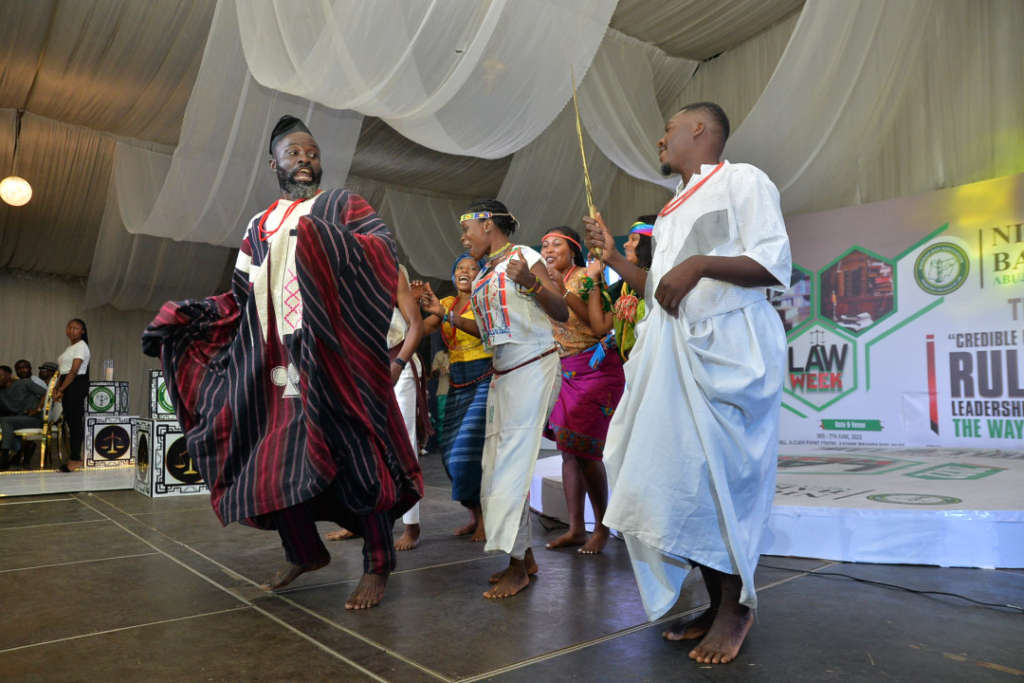
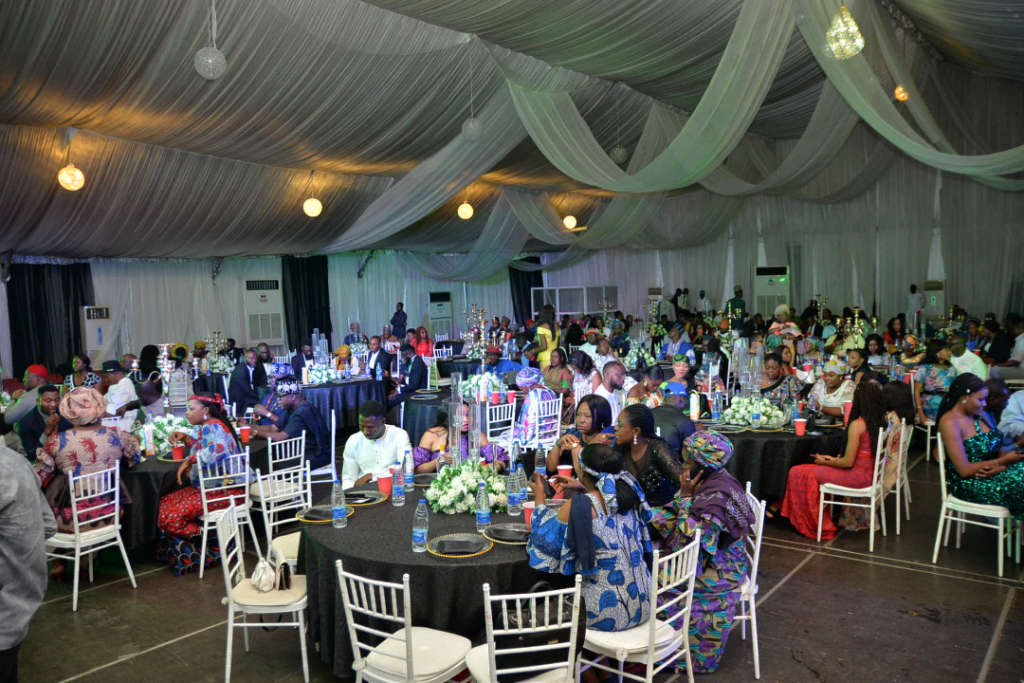
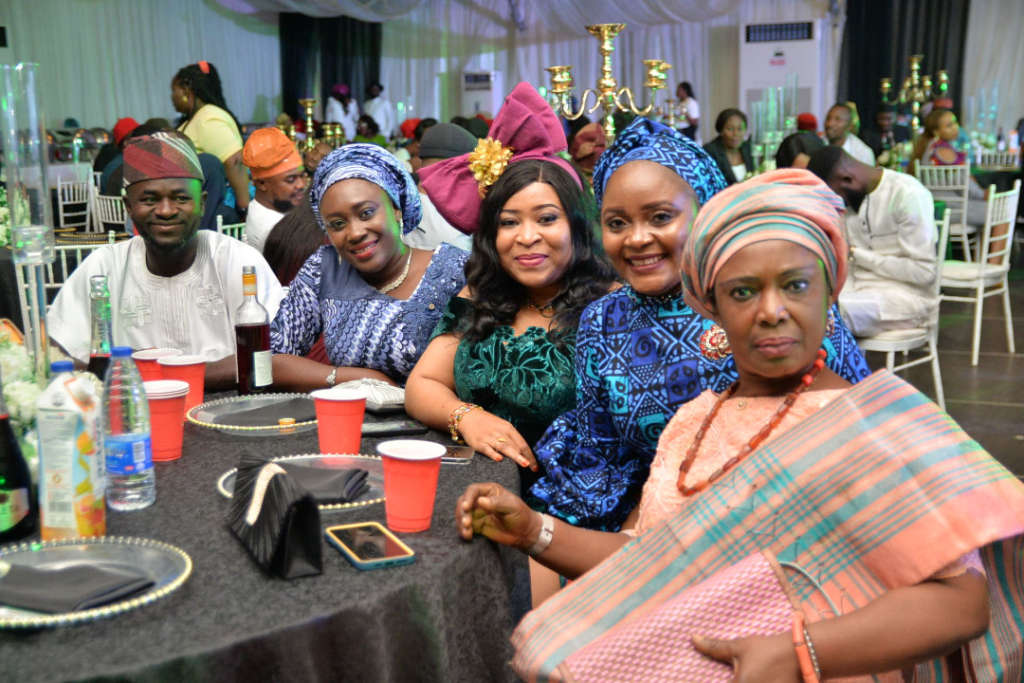
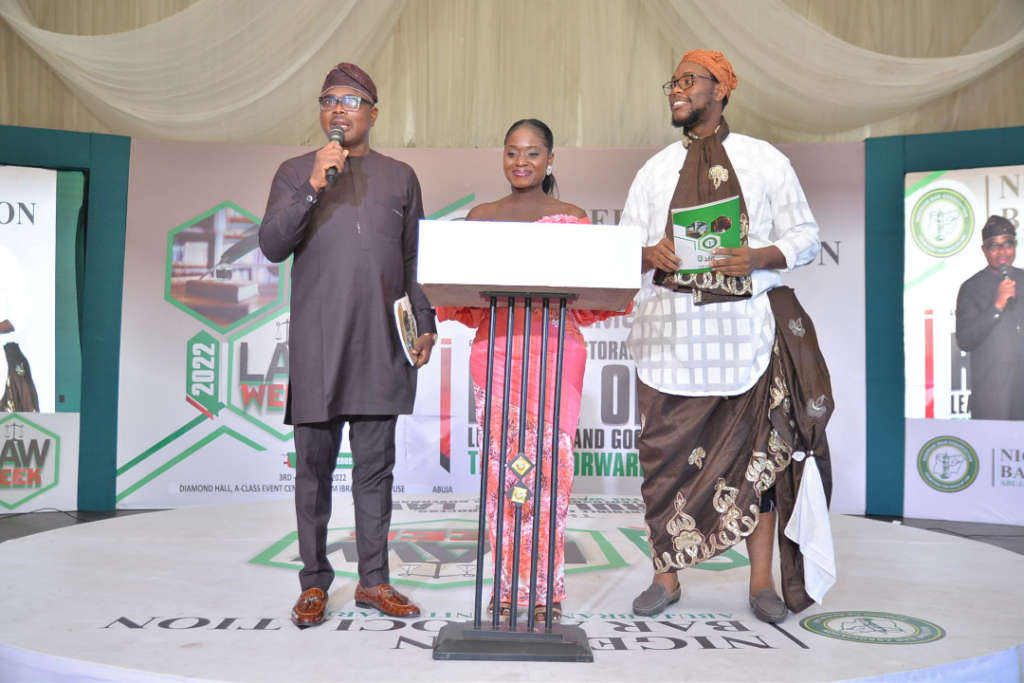
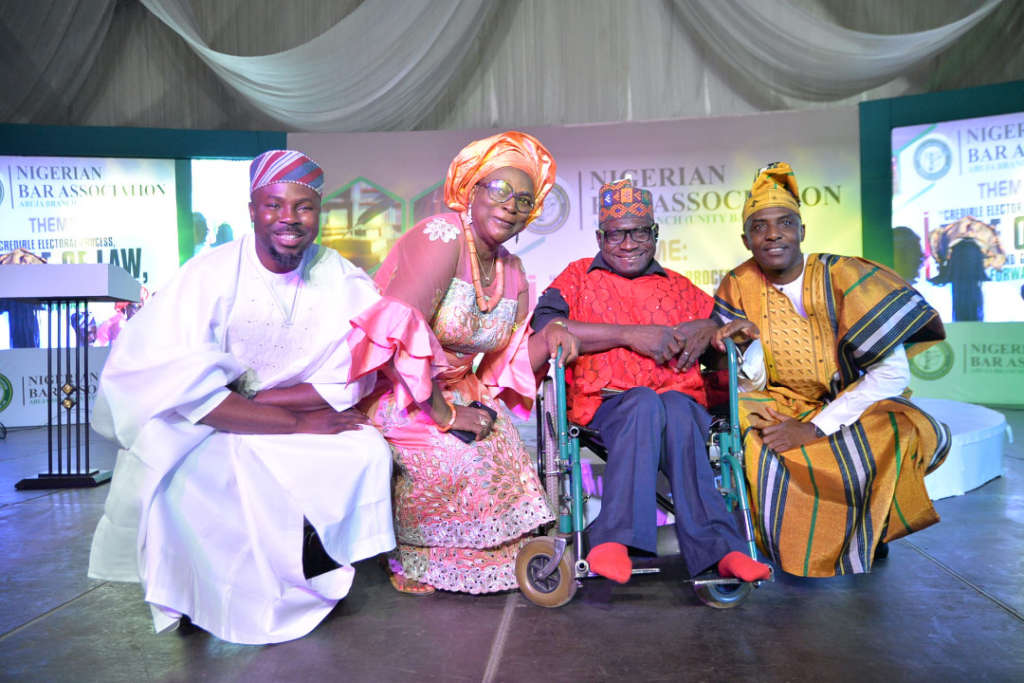
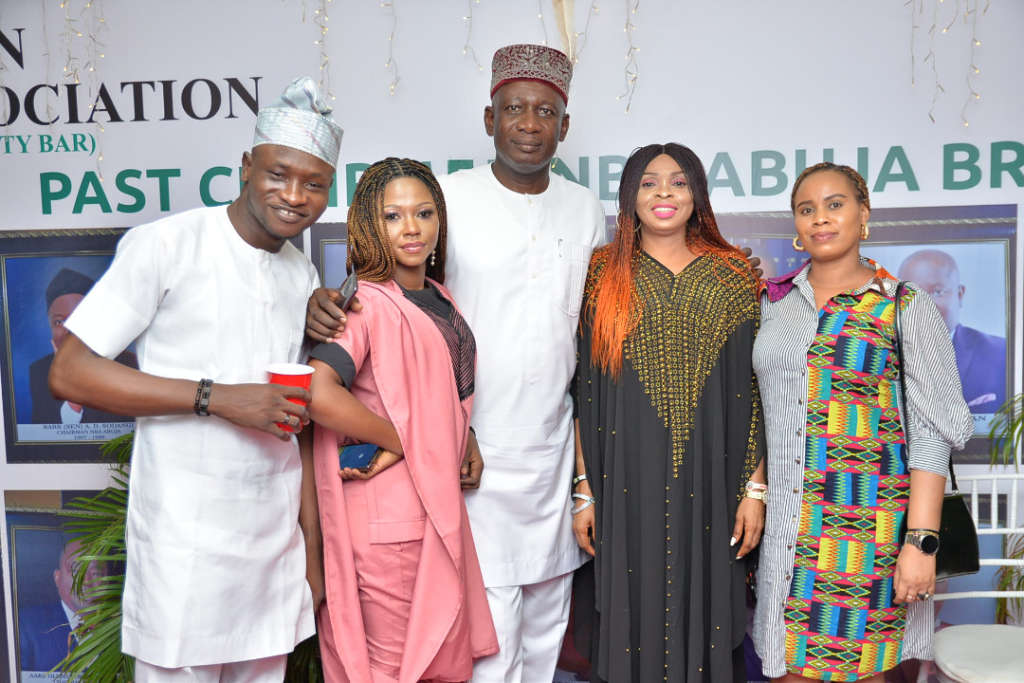
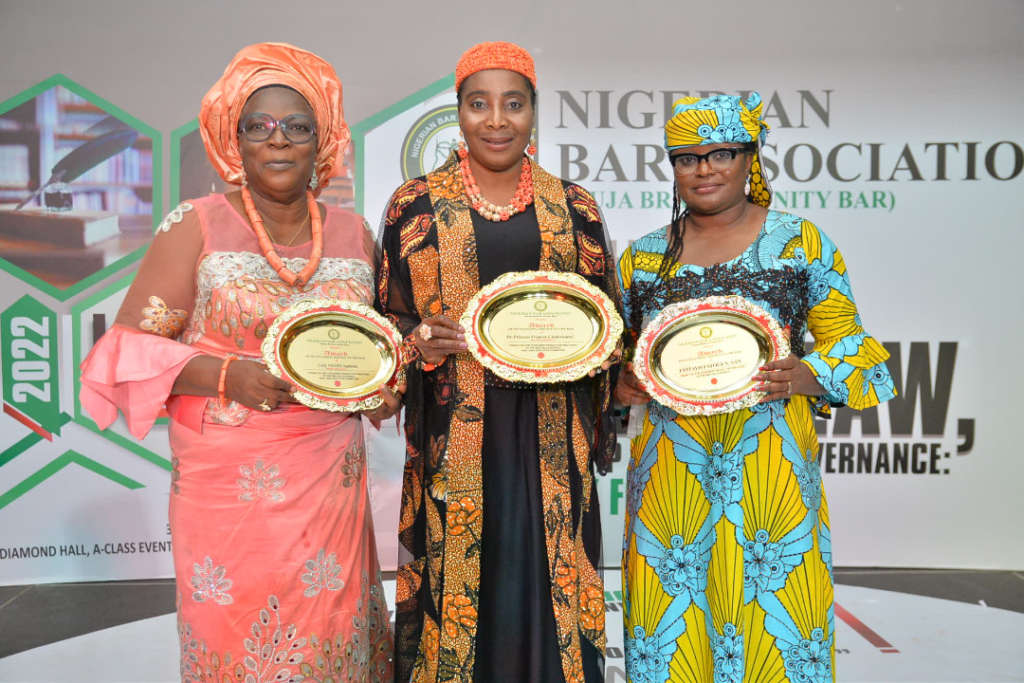
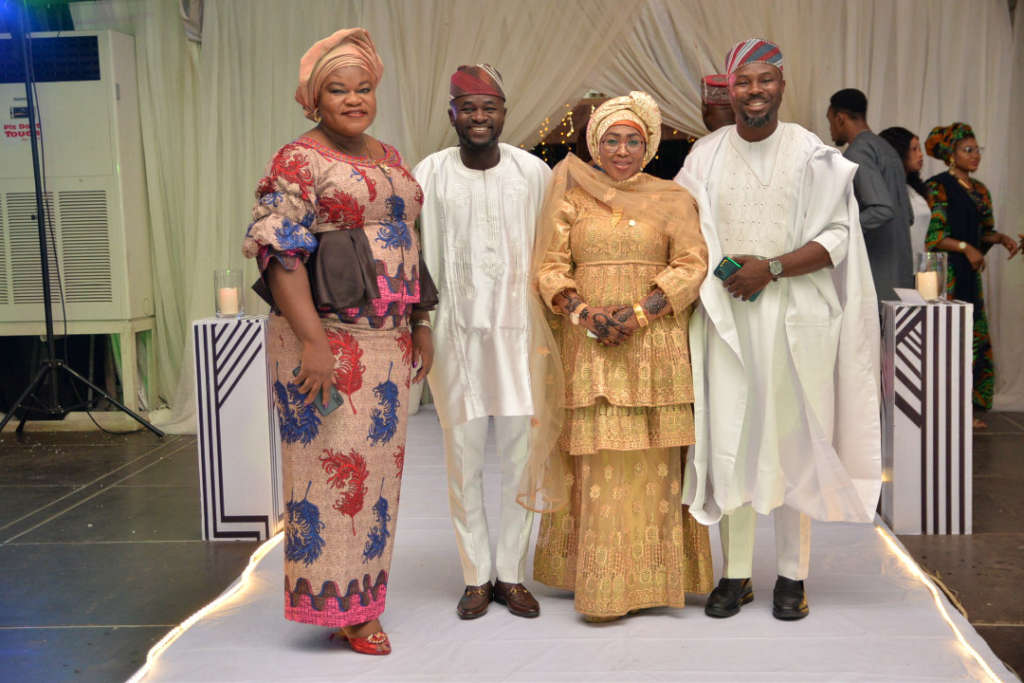
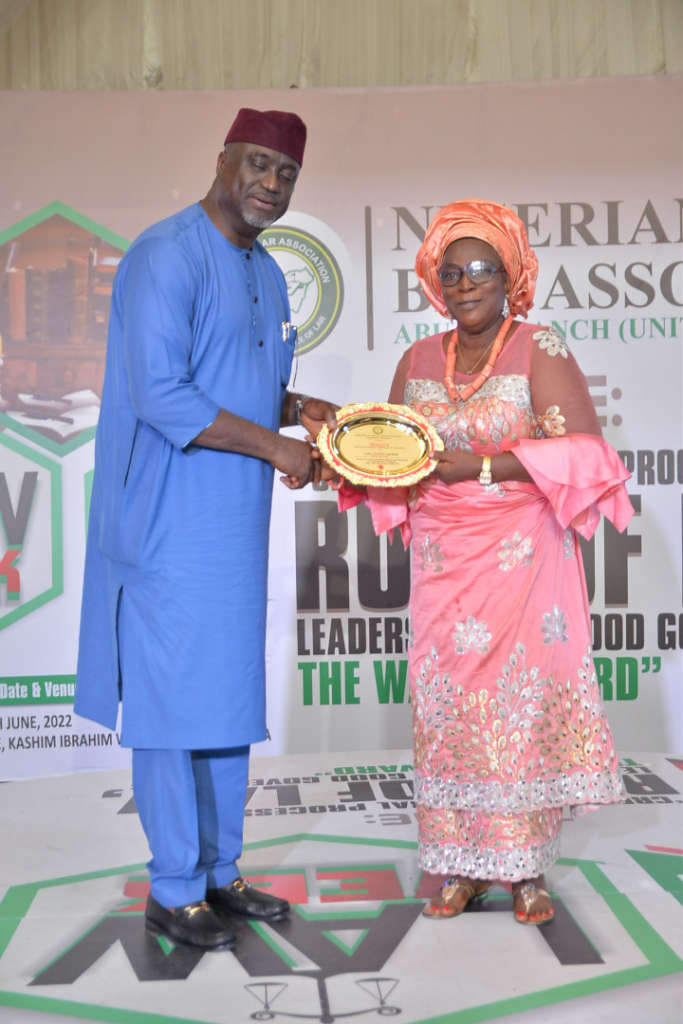
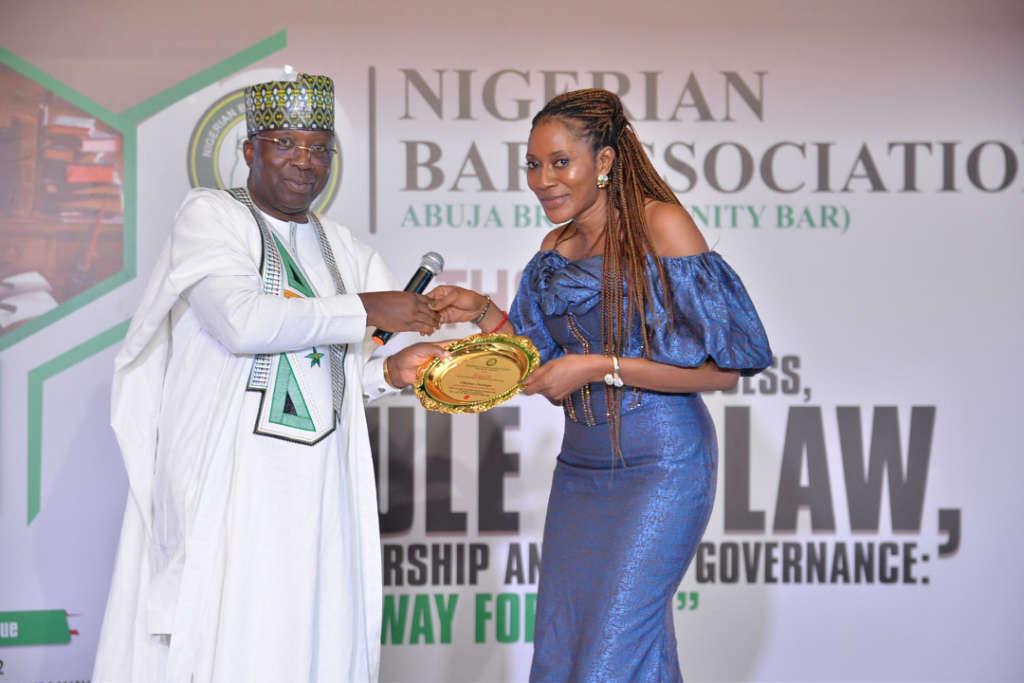
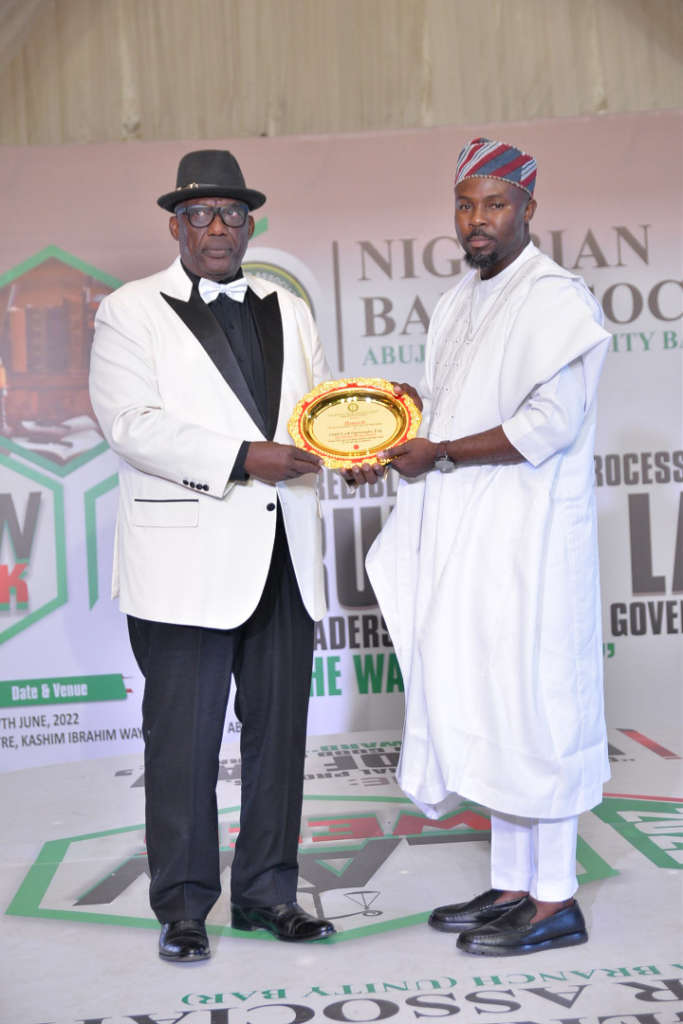
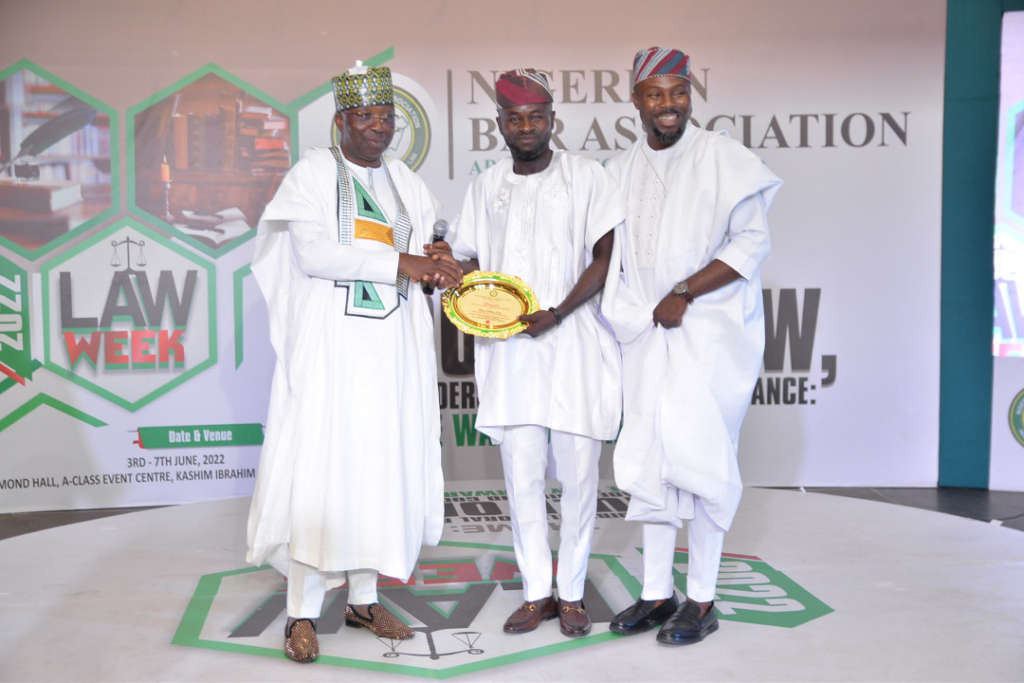
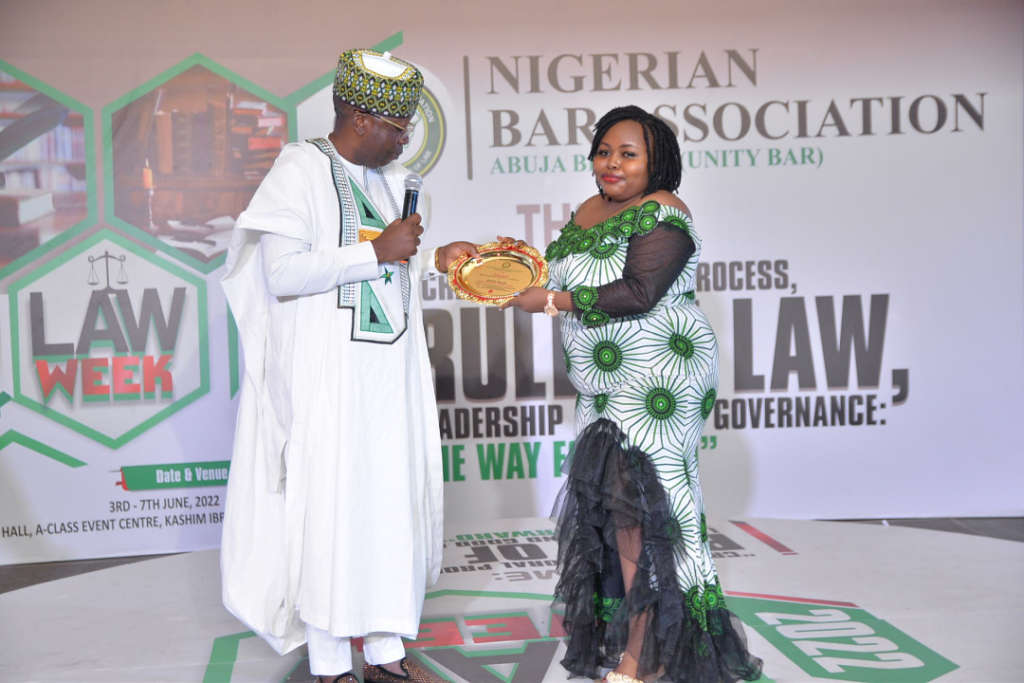
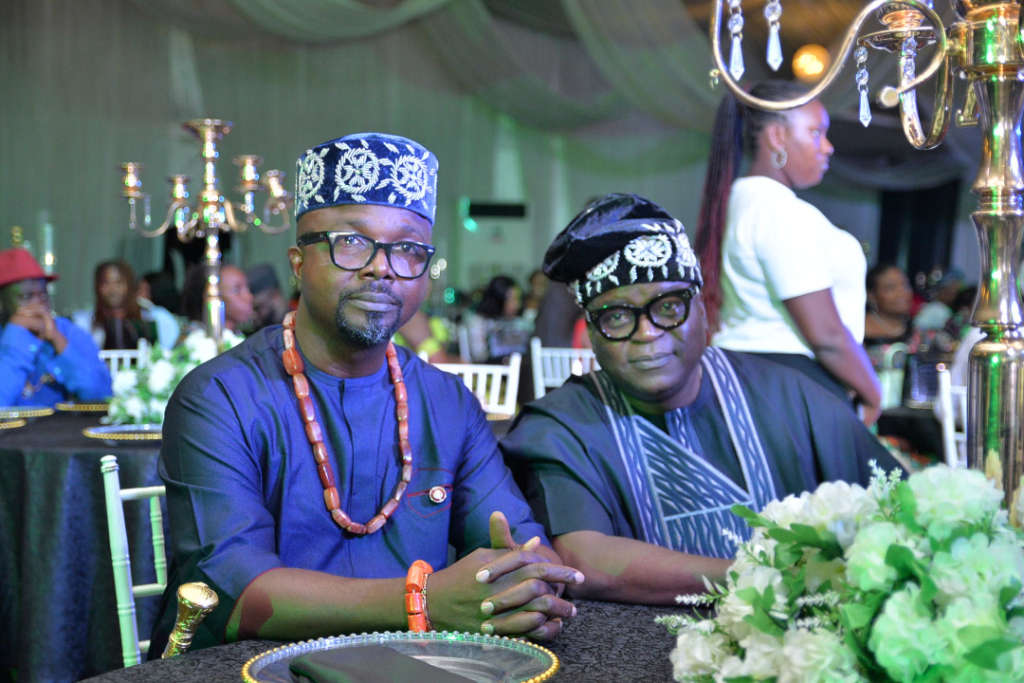
Faces at NBA Abuja (Unity Bar) Dinner and Awards

Outgoing Chair, NBA Abuja, Moses A. Ebute, SAN
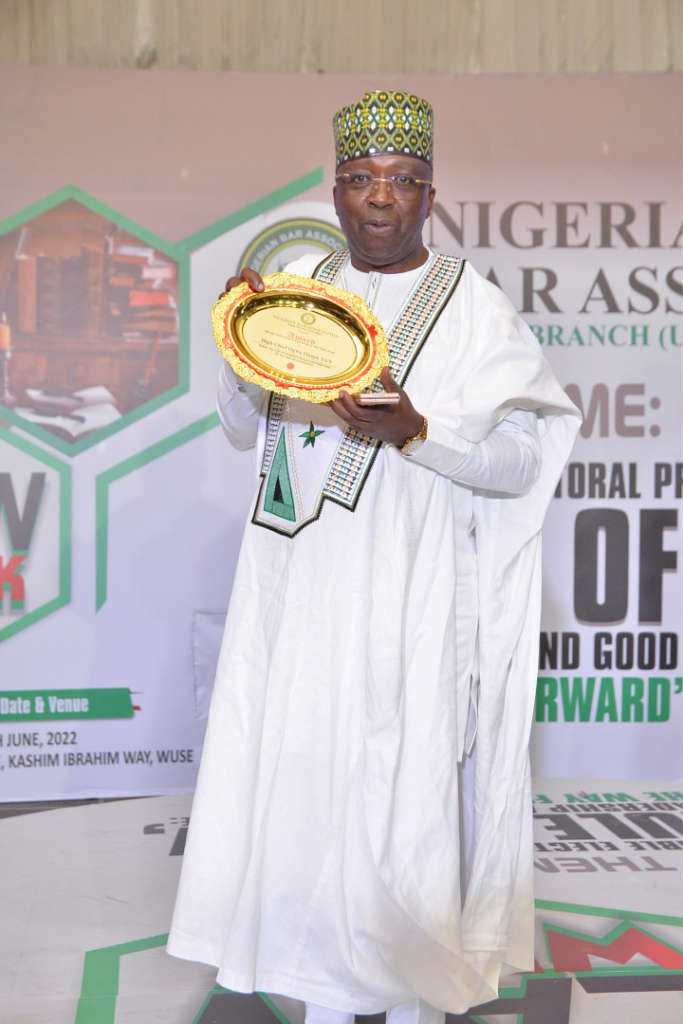
Chief Ogwu James Onoja, SAN displaying his award

Nigeria’s Iron Rules of Power Divination

By Chidi Anselm Odinkalu

On 29 May 1999, Olusegun Obasanjo, for the second time in two decades, took the oath to assume office as Nigeria’s head of state, this time with an electoral mandate. His predecessor was Abdulsalami Abubakar, another four-star General who had mid-wifed an 11-month long transition following the death of General Sani Abacha on 8 June, 1998.

It was the second time in as many decades that that Abdulsalami and Obasanjo would be principal actors in the final hours of a generational transition. On 1 October 1979, Obasanjo, a four-star army General, stood down as head of state, handing over to an elected civilian successor, Shehu Aliyu Shagari. On the same day he also retired from the military. On that day in 1979, “Abdulsalami Abubakar, then a lieutenant colonel, was also there, as the commander of the inauguration parade”. In 1979, Abdulsalami pulled Obasanjo out of service. In 1999, he pulled him back into service.

23 years after that repeat relay between Obasanjo and Abdulsalami (Generals both) returned to elective government, the country is again looking for a chief executive and party primaries designed to winnow the search are about to come to an end. So much has changed in the past quarter century in Nigeria’s politics yet so much remains the same.

As the party primary season winds to a conclusion, the country has seen a growth industry in the vocation of fortune tellers seeking to outdo one another in predicting the destination of the presidential chalice when the elections come to take place in February 2023. Despite the best efforts of the fortune-telling industry, however, Nigeria’s rules of presidential succession are actually quite constant. They have not much changed since they were first deployed.

Azubike Ishiekwene summarized the highlights of these rules in a much-underrated column on 28 April, 2022. The first – you can always take this to the bank – is that Nigeria’s presidency has never gone to the highest bidder for, as Azu points out, “there is something in the DNA of the power brokers that resents big political spenders.” In Nigeria, separation of powers means that in order to guarantee the spoils of power, big money and political power at the highest levels are never concentrated in the same person. When Moshood Abiola threatened this rule 30 years ago, Ibrahim Babangida nullified his election.

There is another rule just as constant as the first and no less important. It is that in Nigeria, the presidency is not for trainees. Since after the first post-colonial leaders, the job of leading Nigeria has always gone to someone who knew his (they have all been men) way around the halls of power. Intimate propinquity to power in Nigeria has always been an essential requirement for attaining it.

This cyclic, even circular passing of the baton has characterized presidential transitions in post-colonial Nigeria since its earliest days. Aguiyi-Ironsi, the first post-colonial ruler of Nigeria to unify the jobs of head of state and head of government was the General Officer Commanding (GOC) of the Nigerian Army, as the head of the army was then known. After he was killed around 29 July 1966, his position went to Yakubu Gowon, until then Aguiyi-Ironsi’s second-in-command as the Chief-of-Staff, Supreme Headquarters.

The Principal of Barewa College, (the High School in Zaria, Kaduna State famous for producing Nigeria’s rulers), who had duty at the end of July 1975 of announcing to his students that one of their illustrious old boys had been ousted as Head of State, could blunt the solemnity of his message with the assurance that the successor was, like the ousted ruler, also a former Barewa Head Boy. Murtala Mohammed, whom Gowon had himself appointed as his Minister for Communications in 1974, was not just any old boy of Barewa College. Like Gowon who preceded him to the school, Murtala was also a Barewa Head Boy. Before becoming Head of State, he had also served as a member of Gowon’s Supreme Ruling Council and Aide-de-Camp to Moses Majekoudunmi, the presidency physician and Minister whom Prime Minister, Abubakar Tafawa Balewa, later appointed Administrator of the Western Region during the emergency.

Following the assassination of Murtala Mohammed on the eve of Saint Valentine’s Day, 1976, Olusegun Obasanjo, his second-in-command, moved up to become head of state.

The rule of succession by propinquity to power has held good for both military and civilian rule in Nigeria. Shehu Shagari, who took over from Obasanjo as elected civilian ruler in 1979, had served in every government (except Aguiyi-Ironsi’s) until then. When Obafemi Awolowo resigned as the finance minister and as the effective Vice-Chair of the Cabinet in 1971, Shagari replaced him in both roles. It meant that Obasanjo, whose destiny it was to manage that transition, knew Shagari well, having joined Gowon’s cabinet in 1974 as Minister for Public Works and worked with him as a colleague in the Cabinet after Awolowo left. Those who worked hard to install Shagari in 1979 as elected civilian president were confident not merely of his networks around power but also of his history of proximity to it.

Muhammadu Buhari, whom the military power-brokers settled on to take over when they toppled Shagari on the last day of 1983, was no stranger to Nigeria’s power palaces. One of the leaders of the 1975 coup that usurped Yakubu Gowon, Buhari ran General Shehu Musa Yar’Adua close in February 1976 for the role of military second-in-command to Olusegun Obasanjo. Before becoming military head of state, he was military governor, member of the Supreme Military Council, Petroleum Minister, and General Officer Commanding (GOC) in the Nigerian Army.

Buhari’s nemesis in August 1985 was his Chief of Army Staff and contemporary, Ibrahim Babangida, who, like Buhari, and as told by his biographer, Dan Agbese, had logged a long record of active service in government and in military coups.

Ernest Sonekan, whom Ibrahim Babangida appointed to succeed him in leading the Interim National Government (ING), was no stranger himself to power. Unknown to most people, Sonekan had, from the beginning of the Babangida regime in August 1985, “also moonlighted as Chair of an informal, nine-person Advisory Council to the Babangida regime.” He knew the neighbourhood of power well and all who navigated within it.

Sani Abacha, who retired Sonekan and his ING, had also announced the installation as well as the retirement of the two regimes before Sonekan. He was not just an active dealer in the enterprise of propinquity to power in Nigeria; he owned it. At his death in June 1998, Abacha had been at the centre of the rise and fall of every regime in the country for one decade and a half.

Abdulsalami Abubakar, Abacha’s successor, was the officer in the senior-most professional role and a senior member in the ruling military council from the Babangida years.

Obasanjo’s installation as elected ruler in 1999 crystallised a long history of dressing up a martial game of musical chairs in civilian lip-stick, from which both the soldiers and civilians involved (for themselves and for the benefit of their descendants) have always made good.

Umaru Musa Yar’Adua, who succeeded Obasanjo, was the younger brother of Obasanjo’s military second-in-command and the son of the first Minister of Lagos Affairs in post-Independence Nigeria. When he died in May, 2010, his vice-resident, Goodluck Jonathan, took over the mantle.

When he was elected in 2015 as Nigeria’s president, General Muhammadu Buhari, was the longest active politician alive in Nigeria. He had been active in military coups and government for an unbroken half century.

It is not too difficult to hazard a stipulation as to who will not be Nigeria’s president in 2023. The person specification for the job says “trainees are not welcome”. Already, the opposition Peoples’ Democratic Party (PDP) have nominated former Vice-President, Atiku Abubakar, as their flag-bearer, who has been in active pursuit of the office for three decades. President Buhari has informed the ruling All Progressives Congress (APC) that he will be designating his own successor, making it all but certain that the convention for the APC presidential primary will be a ratification not an elective one.

It may be up to the people of Nigeria to decide whom they wish to hire as their leader in 2023 but one thing is assured: the rule of intimate propinquity to power as a determinant of presidential succession will hold strong.

A lawyer and a teacher, Odinkalu can be reached at [email protected]

TIPS