Home Blog Page 837

When the State Condones Torture

By Chidi Anselm Odinkalu

When I first met Elechi Larry Igwe early in 1991, he was safely ensconced in the bowels of a mortuary in Lagos. Elechi, a resident of the United States of America, had flown into the Murtala Mohammed International Airport for the Christmas and New Year holidays in 1990 into 1991 on his way to his village in Abiriba, now in Abia State in south-east Nigeria. He never made it home nor did he return to the USA. His journey ended in the Surulere Police Station. On his way from the airport to his hotel layover, some police men waylaid Elechi, abducted him to the police station and, having tortured him to their hearts’ content, mercifully put a bullet to his mouth shattering his mandibles, his facial structure and the lives that depended on him.

Elechi was one of a multitude of victims whose ordeals at the hands of the Nigeria Police Force and the security services defined my early life as a legal professional in Nigeria. All of them were either survivors of torture or relatives of victims of torture and extra-judicial killings.

The advocacy group, Access to Justice, describes the practice of torture in Nigeria’s security services as “institutional and routine”, while Amnesty International complains that “police and military personnel routinely use torture and other ill-treatment to extract information and ‘confessions’, and to punish and exhaust detainees.”

The methods and means of torture in the practice of policing Nigeria, for instance, are infinite. In many cases, security and law enforcement agents built their careers on torture and third degree policing. Indeed, the prevalence of torture, inhumane treatment, and even extrajudicial killings by law enforcement officers is rampant and very well documented, to the point of being the cause of a national uprising in October 2020 under the nomenclature of #EndSARS.

A report jointly issued in 2010, the Open Society Justice Initiative and Network on Police Reform in Nigeria (NOPRIN) alleged that “torture facilities and personnel, including dedicated torture chambers, instruments, and an officer known as ‘O/C (officer in charge of) Torture’ exist in every major police station. In most cases, the O/C Torture has a workshop or torture chamber entirely of his own, and a seemingly limitless number of options for dispensing suffering and eliciting the confessions that are the principal means of police investigation in Nigeria. Some of them achieve near-legendary status.”

One of such officers whose legend was built on his skill in the dreadful art of torture was Sunday Maicibi, who headed the anti-robbery section in the State Criminal Investigation Department, SCID, in Enugu, in south-east Nigeria at the beginning of the millennium. The torture chamber that he ran was known as “the theatre”. It was infamous for its dexterity in dismantling even the most hardened of suspects and detainees. One of the assets under his command was “a police officer called “Okpontu”—meaning “the Nailer” in Igbo language—after he reportedly drove a nail through the palm of a detainee in 2006.”

Torture in Nigeria is a resilient atrocity, with deep origins in the institutional foundations of the police, army and security institutions in the country from the middle of the 19th century when blacks were not considered human beings. By the time the country became independent in 1960, these attitudes and practices had crystallized into institutional doctrine after a century of white supremacism, under which those institutions were established.

Torture is the crime that prospers despite the being prohibited the world over. The constitutional prohibition of torture is as old as post-colonial Nigeria. It was contained in section 18 of the 1960 Constitution and section 31 of the 1979 constitution as well as in section 34 of the 1999 Constitution. Quite apart from these, Article 5 of the African Charter on Human and Peoples’ Rights which is law in Nigeria also prohibits torture.

There were two problems, however, with this prohibition. First, none of these constitutions ever defined torture. Second, torture was not a crime in Nigeria until 2017.

While it was not a crime to torture human beings in Nigeria until 2017, it was criminal in many parts of the country to torture animals. For instance, s. 394(1)(a) of the Criminal Law of Lagos State, 2011, makes it a crime for any person to “cruelly beat, kick, ill-treat, over-ride, over-drive, over-load, torture, infuriate, or terrify any animal, or cause or procure, or, being the owner, permit any animal to be so used.” Impressively, the same law did not criminalize torture of humans.

The Anti-Torture Act (ATA) of 2017 set out to rectify these anomalies in Nigeria through six steps. First, for the first time in Nigerian law, the Act defines torture which can be physical or psychological. The former includes “such cruel, inhuman or degrading treatment which causes pain, exhaustion, disability or dysfunction of one or more parts of the body”, while the latter covers “such cruel, inhuman or degrading treatment calculated to affect or confuse the mind or undermine a person’s dignity and morale.”

Second, the Act prescribes a state-actor requirement as inherent in the definition of torture. Thus, section 2(1) prescribes that for an act to constitute torture, it must be done “by or at the instigation of or with the consent or acquiescence of a public official or other person acting in an official capacity provided that it does not include pain or suffering in compliance with lawful sanctions.” This requirement of state actor extends to abuses by militias or civilian task-forces maintained by governments and politicians.

Third, there are no defences or exceptions to torture under the Act. For the avoidance of doubt, the ATA provides that “[n]o exceptional circumstances whatsoever, whether a state of war or a threat of war. Internal political instability or any other public emergency, may be invoked as a justification for torture.” It is no defence that we are fighting an insurgency or liquidating some people whom we do not like.

Fourth, the Act makes torture a crime punishable on conviction with a minimum of 25 years in jail under section 9(1) of the Act. Section 9(2) provides that “[t]orture resulting in the loss of life of a person is considered as murder and shall be tried and punished under the relevant laws.”

Fifth, with reference to possibilities for redress, the National Human Rights Commission and NGOs may help victims file complaints concerning violations of the ATA and the Attorney-General may make rules and regulations for the implementation of the Act respectively under sections 6 and 12.

Sixth, the ATA is a federal piece of legislation enacted by the National Assembly in exercise of its powers to implement the Fundamental Rights under the Constitution. Being an exercise of powers exclusive to the National Assembly, the Act is applicable to all states of Nigeria and does not require any further act or acts by the states to make it applicable in their respective jurisdictions for purposes of enforcement.

Citing the ATA, Attorney-General of the Federation, Abubakar Malami, a Senior Advocate of Nigeria (SAN), claimed before a meeting in Abuja on 21 June 2022, that Nigeria does not condone torture. However, five years after the passage of the ATA, the same Attorney-General cannot point to a single case prosecuted by him under the Act. Indeed, the National Committee against Torture established since 2009 continues to function as an appendage under his office, lacking independence or authority to fight the scourge.

When it met with the United Nations in Geneva in November 2021, the National Committee toed the same line as the Attorney-General but got smacked down by the United Nations officials who told them pointedly that while “it was good to pass laws, but it was better to act on them. The legal framework of Nigeria was not called into question; rather, the questions raised had been more about the implementation of those laws.”

Contrary to the protestations of the Attorney-General of the Federation, therefore, and to the express provisions of the Nigerian constitution, it seems clear that Nigeria does condone torture.

On Sunday, 26 June 2022, the world marks the International Day in Support of Victims of Torture. The International Day was instituted by the United Nations General Assembly Resolution 52/149 of 12 December 1997, “with a view to the total eradication of torture and the effective functioning of the Convention against Torture and Other Cruel, Inhuman or Degrading Treatment or Punishment, which entered into force on 26 June 1987.” If Attorney-General Malami wants to be taken seriously in his protestations about torture in Nigeria, he can choose this day to announce how he will make the ATA work. That will be an auspicious start.

A lawyer and a teacher, Odinkalu can be reached at [email protected]

“Switching Merchants” of the Legal Profession: How Wole Olanipekun & Co. allegedly wooed a multinational for brief

To attract briefs, law firms around the world activate legitimate strategic systems to achieve this objective. This is particularly the case for law firms operating within jurisdictions that place considerable restrictions on advertising like Nigeria.

However, wooing a prospective client for briefs could be risky sometimes, especially in view of Rule 28 (5)(a) of the Rules of Professional Conduct for Legal Practitioners, 2007 which provides that “…a lawyer shall not: (a) communicate, cause another to communicate, on the subject of the representation with party he knows to be represented by a lawyer in that matter unless he has prior consent of the lawyer representing such party or is authorized by law to do so.” 

In other words, where there is a matter pending in court and the parties are represented by their respective counsel, no lawyer is permitted to communicate with any of the parties in the case regarding the matter. 

Recently, Adekunbi Ogunde, a legal practitioner and the Partner leading the oil & gas practice area in Wole Olanipekun & Co., appeared to have found it fashionable to breach aforementioned provisions. The Learned Counsel sought to woo a multinational company, Saipem Nigeria, a subsidiary of Saipem S.P.A. From the email correspondence making the rounds, Adekunbi Ogunde requested that her law firm, Wole Olanipekun & Co. should be briefed by Saipem with respect to the ongoing  USD130 Million case at the Rivers State High Court brought by the Rivers State Government against the company.

The reasons adduced by the Learned Counsel in support of this illegitimate request to be briefed are quite interesting. According to the Counsel, Saipem should consider the need for:

1. a more influential lawyer/law firm such as Wole Olanipekun & Co. to prevent a potential huge payout to the Rivers State Government;

2. Wole Olanipekun & Co. is the leading litigation firm that has helped other multinationals in sensitive, highly political matters;

3. Wole Olanipekun & Co. has also helped other multinationals, such as in the famous cases of  MTN tax dispute, Shell Petroleum,  Equinor (former Statoil) dispute etc. avoid huge payouts in more complex and politically  sensitive matters.

In addition, and more importantly, the Learned Counsel also laid out what she felt was a compelling “selling point” for the Firm in alluding to the fact that her Firm was a “switching merchant” in the legal profession. According to the Counsel:

…The presence of our lead partner, Chief Olanipekun SAN, OFR,in the matter will significantly switch things in favour of SAIPEM. Chief Olanipekun SAN, OFR is currently the Chairman of the Body of Benchers, which is the highest ruling body in the Nigerian legal profession, made  up of Supreme Court Judges, Presiding Justices of the Court of Appeal and Chief Judges of all State High Courts, including the Rivers State High Court. In order words, Chief Olanipekun SAN, OFR, is the head of the entire legal profession in Nigeria.

In other words, considering the pedigree of their Lead Partner as the “head of the entire legal profession in Nigeria”, “everything and anything” is possible as the highly revered Learned Senior Counsel seems to possibly have his hands on the switches in the administration of (in)justice. 

But what could have inspired Adekunbi Ogunde, a fine lawyer with an outstanding profile, to embark on this distasteful journey? Perhaps, the pressure to bring in briefs, or the feeling of overconfidence? The possibility that this could be a common approach which often turns out successful may not be entirely ruled out.

Notably, the Learned Counsel never asked that the Counsel on record for Saipem, Ajumogobia & Okeke, should be disengaged. Rather, according to the Counsel, “We are aware that another law firm is currently in the matter but you will agree that highly-sensitive and political matters require more influence. We are happy to work with the current lawyers to achieve the desired results.”  

Thus, the Counsel was requesting that Wole Olanipekun & Co. should be brought in as “mercenaries” to switch things in favour of Saipem. Clearly, no matter how it is construed, this approach is equally against the Rules of Professional Conduct in Nigeria.

Indeed, Wole Olanipekun & Co., is a leading law firm in Nigeria. Chief Wole Olanipekun SAN is arguably one of the finest advocates in the history of Nigeria. The Firm has produced a significant number of lawyers who have attained various heights both at the Bar and at the Bench. The contribution of the Firm in the advancement of law in Nigeria is unrivaled.

Wole Olanipekun & Co. as a firm has denounced, but not denied, the correspondence by Adekunbi Ogunde, a Partner in the Firm. According to the Firm, the offending correspondence by their Partner was unauthorized and unapproved. Expectedly, the Firm condemned the correspondence in strong terms. 

Notwithstanding, the Body of Benchers and the gatekeepers of the legal profession in Nigeria are currently faced with a test case. How it is handled will definitely set the pace for the kind of precedent that will be archived in the history of the legal profession in Nigeria. What would have been the approach if it were a young lawyer/firm that was involved in this scandalous situation?

Whatever the case, a starting point might be for the current holder of the office of the Chairman of the Body of Benchers to step aside.

“SWITCHING MERCHANTS” OF THE LEGAL PROFESSION: HOW WOLE OLANIPEKUN & CO. ALLEGEDLY WOOED A MULTINATIONAL FOR BRIEF was originally published on June 26, 2022, by Stephen Azubuike on https://stephenlegal.ng/switching-merchants-of-the-legal-profession-how-wole-olanipekun-co-allegedly-wooed-a-multinational-for-brief/

Stephen Azubuike is a lawyer with expertise in Commercial Dispute Resolution and Technology Law practice. He is a Partner at Infusion Lawyers. He has successfully argued cases from the High Courts of various jurisdictions to the Appellate Courts on behalf of financial institutions, other corporate bodies, and multinationals. He has worked with a number of startup tech companies. He tweets @siazubuike.

Cyber Security Laws In Nigeria In The Era Of Internet Scams

Examination Of The Cyber Security Laws In Nigeria In The Era Of Internet Scams.

By Ogham Stanley Chukwubueze

Abstract 

Internet hoodlums have ravaged the cyber world of today, and at the same time threatened the cyber security environment. Individuals, organizations, institutions, government and economy are vulnerable for an intrusions and unauthorized network breach in this modern environs. This era of internet scams has continuously posed a global unbecoming and a serious threat on humanity and their rights to privacy.

In the light of this, this article magnetizes the entailments of Cyber security, cyber security and cyber crime statute in Nigeria, cyber crimes, data breach and sanctions.

Introduction.

The emergence of internet scams has gradually altered the cyber platform and it’s confidence and trust, increasing the security risk therein.

The information and communication technology (I.C.T.) has transformed the way in which individuals conduct business, purchase goods and services, send and receive money, communication, share information, interact with people and cultivate relationships with others. Cyber security protects the computer system and network from information disclosure theft, or damage to the hardware, software or electronic data.

In harmony to the Oxford Dictionary; Cyber security is the state of being protected against the criminal or unauthorized use of electronic data.

Also, cyber security consists largely of defensive methods used to detect and thwart would-be Intruders. (kemmerer, 2003).

Cyber security entails the safeguarding of computer networks and the information they contain from penetration and from malicious damage or disruption. (Lewis, 2006).

Cyber security is the ability or defend the use of cyber space from cyber attacks. (CNSS, 2010).

The viewpoint of all these definitions is centered on protection of information against attackers or Intruders.

Cyber security and cyber crime statutes in Nigeria.

The Nigerian law making body is not silent on the issue of cyber crime. In other to promote cyber security and to protect information of the people and organizations; Cyber Crime (Prevention, prohibition, e t.c.) Act in 2015 was enacted to battle the issues plaguing the society, by perpetrators who use the internet or computer systems for crimes.

The Act also seek to ensure the protection of critical and vital information and to encourage cyber security through the protection of computer apparatus and networks, electronic communications, data and computer programs, intellectual property and privacy.

Issues like cyber squatting, cyber bullying, yahoo boys, economic sabotages, intellectual property violation and cyber terrorism can be tackled in the Act and it also prescribes punishment for specific actors.

Another law that deals with cyber crime is the Economic Financial Crimes Commission (EFCC). It was inaugurated in 2003, it was installed as a law enforcement agency to look into or investigate crimes relating to finance which includes fee fraud and money laundering. The EFCC investigates people in all sectors who are living above their means and it is has the jurisdiction to investigate and prosecute Money laundering and other criminal activities relating to finances. 

Also, the Independent Corruption Practices (ICPC) was established and inaugurated on 29th September, 2000. It’s aim is to receive and investigate reports of corruption, prosecute the offenders. They work together with the EFCC to prosecute an individual relating to cyber crimes.

Cyber crimes is an offence with a universal nature. Some countries are actively engaged in the need to tackle it using the weapons of the law. For example, Australia passed it’s cyber crimes Act in 2001, Jamaica re-enacted it’s Cyber Crime Act of 2010 in 2015, The U.S. Cyber crimes Act was complied in 2006, Philippians passed it’s cyber crimes prevention Act in 2012, amongst others.

Cyber Crimes and data breaches

Cyber Crime can be perpetrated by Individuals, groups business and nation state. while these actors may use similar tactics and attack similar targets.

According to Black Law Dictionary, it entails cyber crimes as involving the use of computer such as sabotaging or stealing electronically stored data.

In trendmicro. com, cyber crime was defined as an incidental data breach, where information is stolen or taken from a system without the knowledge or authorization of the system’s owner.

A small company or large organization may suffer a data breach. Stolen data may involve sensitive, proprietary or confidential information, such as credit card numbers or matters of security e.t.c.

Internet scams have become a new normal of the day, they intrudes into people’s and organizations security territories and act criminal or malicious activities that will cripple an individual or organization assets. It has also taken a dangerous tolls on the cyber globe. If this issue is not apprehended or addressed, it can cause a tremendous mayhem to Nigeria and to the World at large.

For a reputable law firm to produce an information, it is one of it’s most valuable assets. The repercussions of a cyber security breach or a cyber crime could be, loss in finances, reputational harm, breach of contract, breach of professional rules and standard amongst others.

In the society today, there have been reported data breaches, between 2013 and 2014, yahoo Email lost 3,000,000,000 records. In 2012, LinkedIn records of 200,000,000 were stolen. Between May and July 2017, Equifax information and solutions company records of 145, 500 were stolen. Between 17th to 19th April, 2011, Sony play stadium Network electronic firm records of 102,000,000 were stolen.

Sanctions relating to cyber crimes

In other to reduce the furtherance of cyber crime and breach. Sanctions on violators are very vital to serve as deterrence to others. 

In narrowing down the hints to the Cyber Crime (prevention, prohibition e t.c.) Act 2015. It prescribes punishments to the violators.

In part III of the Act enumerates the offences and the penalties.

Section 5, prescribes a sentence of imprisonment of not more than 10years without option of fine for person who with intent commit any offence against any critical national information infrastructure. Where such offences results in grievous bodily harm to any person, the offender shall be liable on conviction to imprisonment of a term not more than 15years without option of fine.

The Act also prescribes in section 6 for a person who intentionally intrudes without authorization into a computer system or network in whole or part. Such offence is punishable upon conviction with imprisonment of not more than 5years or a fine of not more than N5,000,000 or both. Where the offence is committed with the intent of obtaining computer data, security access to any program, commercial or Individual secret or classified information, the punishment shall be imprisonment for not more than 7 years or a fine of not more than N7,000.00.

Offences relating electronic or online fraud using a cyber café is punishable with a term of three years imprisonment or a fine of one million naira or both under section 2.

Section 8 provides that where any person who without lawful authority or for fraudulent purposes does any act which interferes with the functioning of a computer system commits an offence which is punishable with a term of imprisonment of not more than 2 years or a fine of not more than 5,000,000 or both.

Offences relating to intercepting electronic messages is punishable under section 9, 14 years imprisonment.

Offences relating to computer related forgery is punishable under section 13 with a sentence of not more than 5 years imprisonment or a fine of not less than N7,000,000 or both. 

Offences related to computer related fraud is punishable under section 14 of the Act, it prescribes a sentence of not more than 5 years or fine of not more than N7,000,000.

Section 25 criminalizes cybersquatting, an intentional and unauthorized use of a name, business name or trademark or domain name owned or in use by another person or body.

Under section 26, offences related to racist and xenophobic is punishable with imprisonment of not more than 5 years or to a fine of N10,000,000 or both.

Part VI states method or procedures for arrest, search and prosecution under the Act.

Conclusion

The society at large is rapidly emerging to e-society, where everything is done electronically. The society is increasing relying on the internet platforms and this is vulnerable or unprotected for cyber Intruders and attackers.

Certain precautionary measures should be taken by citizens while using the internet, such as to make sure that your system and network are patched and updated to prevent attackers from exploiting vulnerabilities in unpatched or outdated software. Inform your employee about threats, train them to watch out for social engineering tactics. 

Secure all your devices such as laptops, mobile devices and wearables. Ensure that they are protected by security software that is always updated. Use strong passwords which combines random strings of upper and lower case letters, numbers and symbols. Don’t  use passwords that are easy to guess, like family names or birthdays. Close accounts you don’t  use rather than leaving them dormant and back up your files.

All hands must be on deck to eradicate cyber attackers, Intruders and to strengthen our cyber security for an easy e-society.

REFERENCES 

AO Kaspersky lab @2022

@2016 Rolf H. Weber/Evelyne student. Published by Elesvier Ltd

Law society of Scotland; consequences of a cyber security breach.

Cyber Crimes (Prohibition, prevention, E.t.c.) Act 2015

Economic Financial Crimes Commission Act (EFCC) 2003

Independent Corruption Practices commission (ICPC) Act 2000

Data breach; trend macro

Mr. Kalyan Rao Peddi Reddit B. com (Hons)

W.W.W.thisdaylive.com

Cyber crimes: Dr Chidimma Odaghara

Oxford Dictionary

Black Law Dictionary

W.W.W.wikipedia.org

Cyber security article; Israel Adekunle Adeniyi. University of Ilorin

The Evolution of Cyber security… by Florence Bola – Balogun.

W.W.W.trendmicro.com.

credit:SabiLaw

The Two (2) Rights Of Any Person Whose Local Or International Flight Is Cancelled In Nigeria

The Two (2) Rights of any Person whose Local or International Flight is Cancelled in Nigeria.
By Onyekachi Umah,Esq.
(Tip 236)

Where any flight (including both local and international) is cancelled by the airline operating company, it’s passengers are entitled some rights whether or not such flight was re-routed.  The Two (2) Rights of any Person whose Local or International Flight is Cancelled in Nigeria are Right To Monetary Compensation and Right to Care which beget the following;

(a.) Immediate payment of compensation of 25% of the fares or ticket price for local flight and 30% for international flight. Such is payable in cash/bank transfer, bank cheque and with agreement of passenger, also payable in travel voucher.

(b.) Refreshments, meals, hotel accommodation, transportation between hotel and airport, free 2 phone calls and SMS/email, where passengers are offered a re-routing alternative flight. This particular benefit will not apply to local flights where notice of cancellation was communicated within at least 24 hours before scheduled time of departure and in respect of international flight within 7 days.

Airlines are to give reasons for cancellation of flight and offer possible alternative transport. Where a flight is cancelled due to unavoidable extraordinary circumstances, the airline will not pay compensation and it is the duty of airline to prove so.

My authorities are

Sections 19.1, 19.2, 19.7, 19.8, 19.9, 19.10, 19.13, 19.14, 19.16 and 19.20 of the Consumer Protection Regulations of the Nigeria Civil Aviation Regulations, 2015.

Credit:SabiLaw

Nigerian Law School: Why “Ordinary” Dinner may be a Hurdle

By Stephen Azubuike

In line with the laws that govern legal education in Nigeria, before a person can be qualified to practice law, he or she must have acquired a Law Degree (LLB) from a duly accredited university and in addition, pass through the Nigerian Law School for a one year (or more, in the case of students from foreign universities) intensive training and thereafter, called to the Nigerian Bar by the Body of Benchers. 

To be successful at the Nigerian Law School (and to be ultimately called to the Nigerian Bar) goes beyond passing the Bar exams. The Council of Legal Education must certify that the student is fit and proper to be called. 

Generally, as explained by a South African Professor of Law, Magda Slabbert, in his article:

It is commonly accepted that in order to be “fit and proper” a person must show integrity, reliability and honesty, as these are the characteristics which could affect the relationship between a lawyer and a client or a lawyer and the public.

Thus, the fit and proper requirement is not for law students alone. All legal practitioners must always maintain the fit and proper status to remain in the legal profession. The status demands much more than integrity, reliability and honesty. It includes competence, diligence, and comportment, among other things. 

Clearly, there is a myriad of factors that define what constitutes fit and proper. For instance, failure of law school students to meet the class attendance requirement of 75% (or failure to attend certain mandatory classes), absence at law dinners, dress code violation, fighting, exam malpractice, lateness, violating hostel rules, misconduct during lectures, disobedience, etc are all conducts that may make a student to fail the “Fit and Proper” test. Therefore, students of the Nigerian Law School usually put up their best behaviour in order to avoid being found wanting on any ground.

The bottle of water saga

From the news making the rounds, a student of the Nigerian Law School, Lagos Campus, apparently dared the authorities by allegedly misconducting himself/herself at one of the law dinners.

In the inelegantly drafted query addressed to the student, the allegation was that during one of the Law Dinners, the student was found “putting a bottle of water in [his or her mouth] when a glass cup was on [the] table”. 

The student was asked to explain why disciplinary action should not be taken against the student for violating Rule 6(29) of the Code of Conduct for Students of the Nigerian Law School on dinner etiquette and manners.

You may wonder, why will a student be in trouble for drinking water straight from the water bottle instead of making use of the glass cup made available?

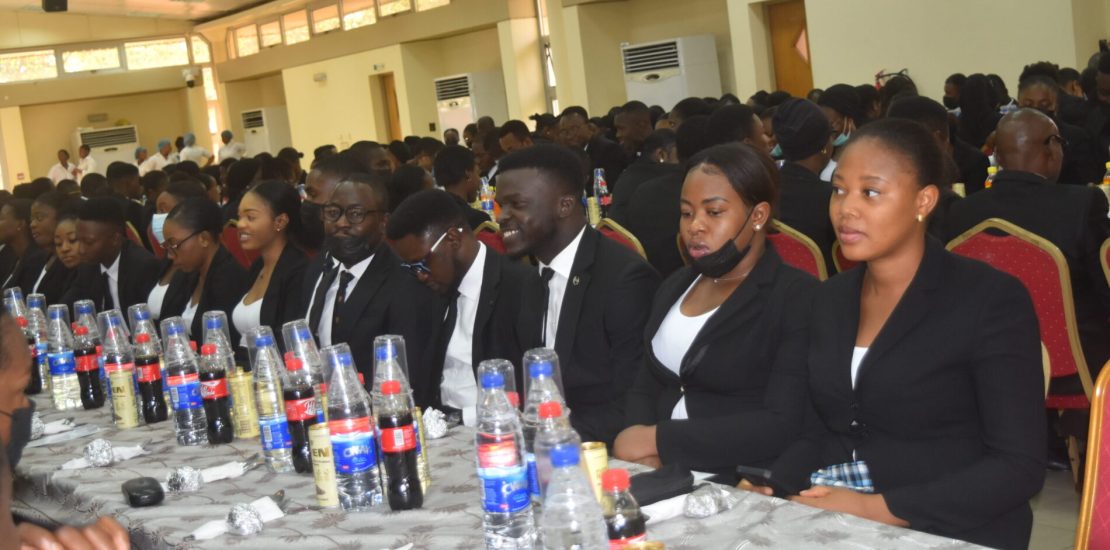
Apart from the conduct being a violation of the rule on dinner etiquette and manners, the Nigerian Law School lecturers spend quality time teaching the students acceptable dinner etiquette and manners before the dinner. These include ensuring appropriate dress code for the dinner. The students must go on everything dark except for the white shirts/tops. That is, dark suits, dark tie, dark shoes and socks. The ladies must avoid make-up (may be mild) and their hair must be natural and neatly packed, with no dangling earrings. In other words, no form of appearance resembling night club attendance is tolerated.

Naturally, failure or refusal to abide by the teachings would attract sanctions. Law is a noble profession and lawyers are trained to be noble, and this nobility must be displayed at all places including at dining  halls.

In all, there are three dinners a Law School student must attend. The students usually dine with some senior members of the Bar mostly from the Body of Benchers who file in into the dining hall by procession. 

The purpose of dining is not basically to deal with hunger or starvation. Rather, it is to train the students on how to imbibe the right etiquette during dining.

The first two dinners will be at different Law School campuses while the third will be on the day of call to Bar at the Federal Capital Territory, Abuja with all the successful students at the Bar exams in attendance.

It is usually at the time of this third dinner that relatives, friends and well-wishers in attendance on the day of call are asked to exit the hall of the call to Bar ceremony to enable the aspirants to the Bar to have their last dinner as is customary. This has been the reason some persons with misguided information peddle the rumour that the law students are being initiated into some form of cult.

Back to the query

Meanwhile, regarding the query, the kind of response given by the embattled student would determine whether there would be a hearing and subsequently, the severity of the punishment to be administered. The ultimate punishment is disqualification from being called to the Bar until perhaps on a later date. 

Although drinking water straight from the water bottle instead of using a glass cup is unacceptable, it is not clear whether “putting a bottle of water in the mouth” is the same as drinking water directly from the water bottle. Except the student can prove that “putting the bottle of water in the mouth” was for an entirely different purpose, the conduct is disallowed. However, it may not be safe to push this line of argument. 

Nonetheless, though the Nigerian Law School is strict in enforcing its rules, the institution exercises discretion favourably and may be lenient in deserving cases. 

Nigerian Law School: Why “Ordinary” Dinner may be a Hurdle was originally on 23 June 2022 by https://stephenlegal.ng/nigerian-law-school-why-ordinary-dinner-may-be-a-hurdle/

The author Stephen Azubuike is a lawyer with expertise in Commercial Dispute Resolution and Technology Law practice. He is a Partner at Infusion Lawyers. He has successfully argued cases from the High Courts of various jurisdictions to the Appellate Courts on behalf of financial institutions, other corporate bodies and multinationals. He has worked with a number of startup tech companies. He tweets @siazubuike.

Treatment of Victims of Gunshot Wounds

By Onyekachi Umah

What does the law provides when it comes to the treatment of victims of gunshot wounds either in private and public hospitals in Nigeria? The video provides the answer.

Credit:SabiLaw

Cause of Cervical Cancer, Risk factors, Symptoms, Prevention

By Dr. Njideka Kalu

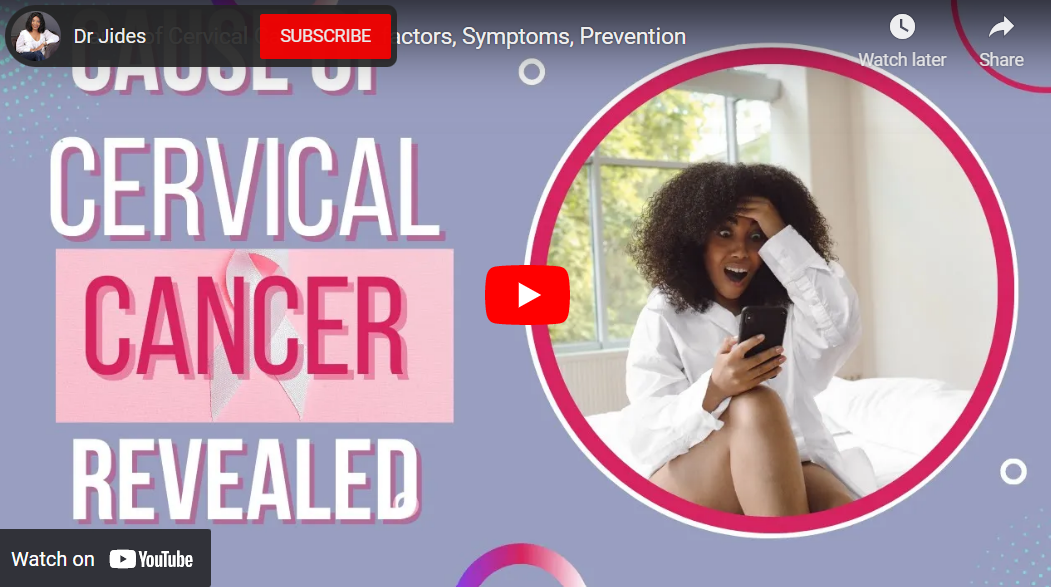
Cancer of the cervix is easily the most preventable cancer in women, and it can be completely cured when detected early. This video is both informative and insightful.

Nothing stops Auditor-General’s office, ICPC, other investigatory agencies from opening the books of the judiciary – Justice Eko, as Agbakoba, Olanipekun, Izinyon, Ozekhome, Odinkalu speak

By Lillian Okenwa

“I canvassed financial autonomy for the Judiciary and I won two cases on the point that the Judiciary is self-funding and not subject to executive control. If the NJC implemented these decisions the Supreme Court will not be in the sorry and unenviable state it has unfortunately declined to.” Agbakoba, SAN

  • We are talking to the parties concerned – Olanipekun, SAN
  • Public confidence must not be eroded because of internal wrangling – Izinyon, SAN
  • If you treat Judges so shabbily, then we must be ready to go and invite our Lord and Savior, Jesus Christ, who is sinless, to come and sit over judgment in Nigeria –  Ozekhome, SAN
  • Lawyers cannot complain too much. We have been part of procuring the problem. Odinkalu

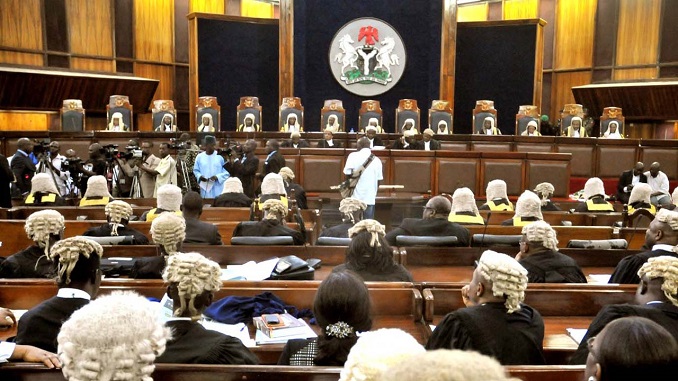
The faceoff between Justices of Nigeria’s Supreme Court and the Chief Justice of Nigeria (CJN) came as a shock to many but some others saw it coming as a recently retired Justice of the Supreme Court stopped short of indicting the CJN in his valedictory speech.

Hon. Justice Ejembi Eko who disclosed that: “The Heads of Court in the Federation have enormous budgetary resources from which they can improve the welfare of serving Judges” equally noted that: Nothing stops the office of the Auditor-General of the Federation, the Independent Corrupt Practices Commission (ICPC) and other investigatory agencies from ‘opening the books of the judiciary’ to expose the corruption in the management of their budgetary resources.”

Weighing into the conversation in the meantime, a former President of the Nigerian Bar Association (NBA), Mr. Olisa Agbakoba, SAN remarked that “it’s not pleasant to see the revered institution of the Judiciary, the very sepulchre of administration of Justice in Nigeria, at such a low ebb. I regret that the Supreme Court is not at peace and it is very sad that this has to do with the financial conditions of service. This is an issue I have long canvassed and if the National Judicial Council (NJC) was proactive this was wholly avoidable. I canvassed financial autonomy for the Judiciary and I won two cases on the point that the Judiciary is self-funding and not subject to executive control. If the NJC implemented these decisions the Supreme Court will not be in the sorry and unenviable state it has unfortunately declined to.”

Hon. Justice Ejembi Eko in his speech observed that for years the “issue of non-review of remuneration of judicial officers kept appearing in the resolutions of the communiqués, conferences and yet no action has been taken to remedy it.” The implication of this according to His lordship “is that it behoves the CJN, after every conference, to see to the implementation of the resolutions contained in the communiqué, and report to all concerned.”

Justice Eko further stated that: “By virtue of Section 84 of the extant 1999 Constitution there shall be paid to judicial officers of the superior courts of law, etc., ‘such salaries and allowances as may be prescribed by the National Assembly but not exceeding the amount as shall have been determined by the Revenue and Mobilisation Allocation and Fiscal Commission’, and these remuneration, salaries, and allowances are ‘a charge upon the Consolidated Revenue Fund of the Federation.’ The pertinent question is: who is in dereliction of the constitutional duty to review the remuneration, salaries, and allowances of judicial officers since 2007? The NJC and the Federal Judicial Service Commission as well as the Revenue Mobilisation Allocation and Fiscal Commission (RMAFC) should synergise and introspect, and tell the world why the dereliction since 2007.

“We have been holding conferences of All Nigeria Judges for some time now.  This issue of non-review of remuneration of judicial officers kept appearing in the resolutions of the communiqués, conferences and yet no action has been taken to remedy it. Elsewhere, particularly India, this All Judges Conference is called the Chief Justice’s Conference. The implication of this is that it behoves the CJN, after every conference, to see to the implementation of the resolutions contained in the communiqué, and report to all concerned. The plight of judicial officers, who retired from the various State High Court, Sharia Court of Appeal, and Customary Court of Appeal, is an embarrassment to the entire judiciary in the Federation.

“By virtue of Sections 6(3) & (5) and 84 of the Constitution their gratuities and pensions, being a recurrent expenditure should be borne and payable to them by the NJC and not the State Governments. I said so in the suit No. SC/CV/655/2020. The unanimous decision of this Court was that the remuneration and salaries of judicial officers of the superior courts of record, under Section 6(3) and (5) of the Constitution, being a recurrent expenditure, are a charge on the Consolidated Revenue Fund of the Federation. It was only in respect of the capital expenditure of those courts that the majority opinion, holding a contrary view, dismissed the suit of the States. I still hold the view that the gratuities and pensions of Judges in the State’s superior courts of record are a  charge on the Consolidated Revenue Fund of the Federation and that NJC is obligated, under paragraph 21 (e) of the Third Schedule to the Constitution, to pay gratuities and pensions of those retired judicial officers across the  States and not the  State Governments.

“[T]he Heads of Court in the Federation have enormous budgetary resources from which they can improve the welfare of serving Judges. As it is, presently, and as the Director of Budget in the Federal Ministry of Finance disclosed recently at the memorial lecture in honour of the late Abdullahi Ibrahim, SAN, at the Shehu Yar’Adua Centre, it is baffling that the welfare of Judges remains in the abject state in spite of the increase of the budgetary allocation to the Judiciary under this regime. Why? The said Director of Budget suggested that the panacea to the often touted underfunding of the Judiciary would be for ‘the judiciary to allow its books to be opened’ by the relevant authorities.

“This clearly is an allusion, albeit an indictment, pointing to the internal fraud attending to the management of the budgetary resources of the Judiciary.  Nothing stops the office of the Auditor-General of the Federation, the Independent Corrupt Practices Commission (ICPC), and other investigatory agencies from ‘opening the books of the judiciary’ to expose the corruption in the management of their budgetary resources. That does not compromise the Independence of the Judiciary. Rather, it promotes accountability.”

Dr. Alex Izinyon, SAN said “it’s very unfortunate that this is happening. I expected more efforts internally for issues to be resolved by a more expanded body after the spirited efforts of my lord Sidi Bage, JSC retired, the Emir of Lafia, like the body of past CJNs, and even the bar. After all, we are the same family so that all the issues for both sides should be addressed. If the fault is from the Federal Government for the non-release of funds they can step in or if it is the fault of the CJN, it should be addressed too. Now that the bubble has burst, it’s in the public domain. It portends a very damning public perception. All is not lost yet if both sides are brought together to present their points to the body of past CJNs, past Justices of the Supreme Court, the President of the NBA, selected elders of the inner and outer bar, the Honourable Attorney General of the Federation, Abubakar Malami, SAN, some members of Body of Benchers and Body of Senior Advocates of Nigeria.

“All the above mentioned as a matter of urgency should wade into this issue and resolve it. It must be allowed to snowball or swept under the carpet. Meanwhile, both sides should sheathe their swords and allow this body to wade in. The judiciary is the last hope of the common as well as the rich man. Public confidence must not be eroded because of internal wrangling.”

In a statement titled “Supreme Court Justices Deserve More” Chief Mike Ozekhome, SAN lent his voice.  

“If you starve Judges and Justices, and you make them believe that they don’t matter and will never have a house to retire to, and some justices of the Supreme Court, in spite of the danger inherent in their job are renting houses inside towns, living amongst people, some of whom have been tried and jailed by these same Judges and Justices, then you are begging corruption to embrace them. You are not even giving them enough protection and security.

“The society must not appear to be telling the Justices to either take it or leave it; to either kow-tow and agree with their present perilous, impoverished, sorry situation, or they resign. It should never be like that… [T]he CJN must go ahead and take up their grievances and fight it through with the executive arm of government that is holding on to more than 70 percent of our national resources, with the legislature holding on to the rest.

“Have you not heard how much senators receive every month? Some receive between N10 million and N14 million every month. Compare that with Justices’ salaries and those of Judges of High Courts, where Judges are receiving salaries of about N500, 000 per month, a sum that is not everyone even enough for local government chairmen to fuel their fleet of cars… If you treat Judges so shabbily, then we must be ready to go and invite our Lord and Savior, Jesus Christ, who is sinless, to come and sit over judgment in Nigeria…”

Responding to what this imbroglio portends for the justice sector, Ex-Chairman of National Human Rights Commission (NHRC) Prof. Chidi Odinkalu said: “I really don’t know what it portends for the judiciary. Rather it seems to me this tawdry tale is a true reflection of the state of the judiciary in Nigeria at this time. The Supreme Court is supposed to be the pinnacle of high judicial office for the most elevated and rarefied of figures who cast long shadows irrespective of where they come from. We have been blessed with such species in the past from all parts of the country: Onyeama, Irikefe, Nnamani, Aniagolu, Eso, Idigbe, Udo-Udoma, Mohammed Bello, Oputa, Craig, Bashir Wali, and many others. The politicians have decided to artisanalise and banalise the judiciary and this thing reflects the tyranny of artisanalisation that has taken over our judicial system. Lawyers cannot complain too much. We have been part of procuring the problem.”

In the now-famous letter from 14 Supreme Court Justices to the Chief Justice of Nigeria, Tanko Abdullahi (CJN), titled: “The State of Affairs in the Supreme Court of Nigeria and Demand by Justices of the Court,” the Justices amongst other complaints revealed they could no longer travel out of the country for training either but that the CJN travels with his own “spouse, children and personal staff.”  Other allegations include the state of health care in the Court.

“The state of health care in the Court has deteriorated; the Supreme Court clinic has become a mere consulting clinic. Drugs are not available to treat minor ailments. There is general lack of concern for Justices who require immediate or emergency medical intervention. Your Lordship has not addressed the issue of our rules Court. The Rules of Court are the immediate tools employed by Justices to dispense Justice to Court users. Your Lordship has kept the amended Rules of Court for almost three years now, awaiting your signature. We strongly believe the new rules will aid speedy dispensation of Justice. “We demand to know what has become of our training funds, have they been diverted, or is it a plain denial? Your Lordship may also remember that the National Assembly has increased the budgetary allocation of the Judiciary. We find it strange that in spite of the upward review of our budgetary allocation, the Court cannot cater for our legitimate entitlements. This is unacceptable!”

However, the Chairman, Body of Benchers, Wole Olanipekun, SAN told Law & Society Magazine that a committee has been set up to settle the rift. The Senior Advocate who said “we are talking to the parties concerned, individually and collectively” added that “the immediate objective of the committee is to resolve the impasse while the ultimate objective is to work out an acceptable package for judicial officers all over the country.

Beyond Banning Pornography

By Sonnie Ekwowusi

In a rather dramatic twist last week, the Federal government gave online interactive platforms such as Twitter, WhatsApp, Facebook, Instagram, TikTok and others 24 hours deadline to remove, pull down or disable, block access to all pornography on their platforms which include full or partial nudity, sexual acts or content that exposed a person’s private parts targeted to corrupt, harass, intimidate or to bring others into disrepute. These platforms were also asked to exercise due diligence in order to ensure that henceforth no pornographic material or any such offensive materials is uploaded to their platforms. The Code of Practice containing the prohibition of pornographic materials was developed by the National Information Technology Development Agency (NITDA) in collaboration with the Nigerian Communication Commission (NCC) and the National Broadcasting Commission (NBC) with inputs from Twitter, Facebook, WhatsApp, Instagram, Google and TikTok.

This is praiseworthy. I remember attending a stakeholders’ meeting at the NCC headquarters in Abuja three years ago to deliberate on the offensive materials uploaded on the Internet. In that meeting, the NCC assured all of us attendees that it was poised to eliminate pornography on the Internet and social media spaces in Nigeria. Also I remember having a meeting with the NBC Monitoring Team at the NBC headquarters in Abuja last year for the same purpose. Also in that meeting, the NBC Monitoring Team did not mince words in assuring me that the NBC was working hard to rid the TV in Nigeria of sexual and pornographic materials. It is gladdening that both the NCC and NBC are finally living up to their promises and now tackling porn and eroticism on the Internet and social media.

Pornography is a bilion dollar business. Movies, musical videos, Twitter, WhatsApp, Facebook, Instagram, TikTok are fraught with erotic and sleazy scenes and immoral sexual cues. Nudity is promoted and dished out in spades. The minds of the younger generation are gradually becoming attuned to thinking that a woman’s body is an object that has no other value except sexual value. Explicit commercial pornography, which appeals to the prurient interest in sex and eroticism, damages a country’s moral ecology in an analogous way in which oil pollutant damages a country’s ecology and environment. A report recently released in the US says that adult pornography contributes to child sexual exploitation. The report also shows that men act out with child prostitutes what they view in internet adult pornography and that pimps use internet adult pornography to instruct child prostitutes.

In case you don’t know, porn has destroyed many marriages. A husband or wife who is a porn addict is unlikely to be faithful to his or her spouse in marriage. You may be aware that the TV Reality Show BBNaija is classified as porn. In December 2007 the NBC slammed a gargantuan fine of N10 million on Multi-choice Nigeria for airing BBNaija containing pornographic scenes (If you are in doubt of this, just google “Multi-choice fined for showing BBNaija porn in 2007”). Earlier, Multichoice had been dragged before the House of Representatives Committee for Information and National Orientation. After deliberating on the pornographic content of BBNaija, members of the Committee unanimously agreed to punish Multichoice for violating the NBC laws. Officials of Multichoice pleaded for leniency. The then MNET tendered an apology to Nigerians for showing pornography. Heads rolled at MNET. Some MNET staffers have been fired. MNET’s operation director, Mr. Joseph Hunda, was quoted as saying that he regretted the pornography because MNET is supposed to be protecting the image of Nigeria.

The most frightening aspect of porn addiction is that the greater majority of viewers and recipients of porn debauchery are children. Times have changed. We have lost the control of our children. We are experiencing online child terrorism. Most Nigerian children now watch porn online or on their mobile phones. With their eyes glued to their smartphones, many children nowadays can hardly tell the difference between truth and illusion. They can hardly differentiate between the real-world and imaginary world of the internet and social media. The high incidence of rape and child sexual molestation in Nigeria are traceable to pornography. As I earlier said, times have changed. Parenting is failing or has failed in Nigeria. Workism-the adoption of professional work as one’s highest value-is taking a big toll on Nigerian families. Engrossed in the hustle and bustle of urban life in order to earn enough money to pay school fees and fend for their children, most parents in urban areas have little or no time to look after their children. The consequences of this neglect have been devastating. One major consequence of this shirking of parental responsibility is the increase in child pornography. Armed with their respective mobile phones, most children are now porn addicts. Aside from child porn, child LGTB culture is gaining ground in Nigeria. Disney and other morally-bankrupt agents of the West are now promoting gay movies, gay cartoons and LGTB ideology among under-6 children in Africa (Nigeria inclusive) in order to damage the character of these kids before they grow up. Is this not criminal? Of course, it is. I remember travelling to Abuja and getting the National Film and Video Census Board (NFVCB) to stop a gay film which had been advertised and scheduled to be shown at a popular Abuja Cinema Hall.

So the latest initiative of the authorities to ban porn on Twitter, Facebook, WhatsApp, Instagram, Google and Tik Tok, as I earlier said, is praiseworthy. But beyond placing a mere paper ban porn on Twitter, Facebook, WhatsApp, Instagram, Google and Tik Tok, the authorities should figure out effective ways of getting Twitter, Facebook, WhatsApp, Instagram, Google and Tik Tok to remove or pull down porn from their platforms. Nigeria’s problem is not paucity of laws: it is enforcement of the existing laws or obedience to the existing laws. For example, the 24 hours given to Twitter, Facebook, WhtsApp, Instagram, Google and Tik Tok to yank off the porn on their respective platforms had since last week elapsed and no compliance yet from Twitter, Facebook, WhatsApp, Instagram, Google and Tik Tok. The BBNaija porn was banned in Nigeria as far back as 2007 yet the porn is still being aired today on almost all the media and platforms in Nigeria including Nigerian TV. Nigeria remains one of the few countries in the world whose soil serves as a dumping ground for all sorts of fakeries and hazardous things. The Nigerian market is littered with adulterated drugs, pesticides, obsolete computers, hazardous already-used UK mobile phones, fake batteries, fake tyres, fake biros, fake building materials, fake “pure” water and so forth. I have given the NCC the following advice in the past and I feel obliged today to give them the same advice if they would listen to me. Borrowing the Internet Censorship practices in the United Kingdom, Russia, India, China and other countries, the NCC should commence the Internet Protocol (IP) blocking, Domain Name Servers (DNS) filtering and redirection, Uniform Resource Locator (URL) filtering, Packet filtering, Man-in-the middle attack, Transmission Control Protocol (TCP) reset in Nigeria. As done abroad, the NCC should create censorship watchdogs. Such watchdogs, comprising, maybe NGOs or members of civil society, shall be responsible for alerting the NCC when porn or any other objectionable content is intercepted. The watch dogs should be in charge of preparing a comprehensive list of IP addresses to be blocked or blacklisted for non-compliance with NCC directives. As practiced in most countries now, the NCC should get the ISPs to filter away porn from the internet as well as information on the Internet promoting unlawful conducts such as economic fraud or encouraging children to commit suicide or acts endangering their lives or information inciting ethnic violence, or incitement political secession or promoting drug addiction, bestiality, homosexual and lesbian lifestyles or information promoting terrorism or banditry or kidnapping. The citizens should be encouraged to send grievances and complaints to the NCC on the aforesaid crimes.

In essence, the NCC should adopt the internet filtering methods practised in other countries. For example, former British Prime Minister David Cameron had marked out concrete ways to block access to online pornography in the United Kingdom. Cameron had repeatedly warned the British public that internet pornography is capable of “corroding childhood”. “In a really big step forward, all the Internet Service Providers (ISPs) have re-wired their technology so that once your filters are installed, they cover any device connected to your home internet account”, said Cameron. In copying the good example of the United Kingdom in this matter, all Nigeria ISPs should be made to rewire their technology so that once filters are installed, it will cover any device connected to home internet accounts. Kamlesh Vaswani, the lawyer who pushed for the ban on internet sites hosting pornography in India, said that online pornography has a direct co-relation with crimes against children and women. According to him, “watching porn itself puts the country’s security in danger, encourages violent acts, unacceptable behaviour in society, exploitation of children and lowers the dignity of women”. China’s internet filtering methods are very wide and more extensive than in other countries. They include Internet Protocol (IP) blocking, Domain Name Servers (DNS) filtering and redirection, Uniform Resource Locator (URL) filtering, Packet filtering, Man-in-the middle attack, Transmission Control Protocol (TCP). In Russia, an internet user does not browse anything. Russia has what is called the blacklist laws. For example, in July 2012 the State of Duma enacted a law that calls for blacklisting of certain internet sites especially sites that promote drug addiction, porn addiction, suicide advocacy or sites with harmful contents against children.

Many lawsuits relating to colossal damage done to children online have arisen in the United States in recent years. One of such lawsuits is the famous case involving a teenager from California called Justin Berry. At 13, Justin Berry thought the internet was the best place for him to make friends but he ended up becoming a drug addict and sex addict that led to the ruin of his life. Testifying before members of the Congressional Panel, Justin said that they were many kids like him in the US who unknown to their parents had been ruined by online drug and sex addiction. That is why in many States in the US today it is illegal to post or text suggestive or sexually explicit images to minors. In fact, child pornography charges are being brought against internet users in the U.S. Also charges are brought against people in the U.S. for luring children into the online activity known as “sexting”. It is said that 1 out of every 5 children in the US has had sexual solicitation from the internet chat room. This explains why most U.S. parents are now being encouraged to be proactive in supervising how their children use the Internet.

I believe Nigeria can take the same safety measure as the U.S. It is sad that despite the fact that child pornography is outlawed in Nigeria, Nigerian minors are still having unimpeded access to pornography. This should stop. Nigerian parents are in a hurry to purchase mobile phones for their kids including kids in junior secondary school forgetting that they are exposing their kids to potential dangers. Nigerian parents should complement the work of NCC by supervising that their children stay away from browsing pornography on their phones.

Who Will End Foreign Money in Nigerian Elections?

By Chidi Anselm Odinkalu

Three days before Nigeria voted in the presidential election in 2019, on Wednesday, 20 February, a little known official from Saudi Arabia dropped into Abuja to visit Nigeria’s President, Muhammadu Buhari, who was running for re-election. His name was Ahmed Qattan, described as the “Minister of State for African Affairs” in the Kingdom of Saudi Arabia. His arrival was as unheralded as it was suspicious. He lingered long enough for the bowels of his corpulent aircraft to be emptied. The bulletin from the Presidency on the day merely said that Sheikh Qattan visited to deliver an anodyne “letter” to the Nigerian president from King Salman Bin Abdulaziz of Saudi Arabia.

Something about that visit screamed anything but anodyne. The Independent National Electoral Commission (INEC) had postponed the vote in the presidential election in 2019 from 16 to 23 February. If the vote had occurred on the original date, it is unlikely that the president would have been available to receive Sheikh Qattan on the date that he eventually visited. The wait for results and their aftermath would have accounted for that. The candidates and parties, stretched by INEC’s limitations, would not have had spare bandwidth to entertain him unless it was for a quite substantial purpose that could not await the conduct of the vote. Unraveling the kind of purpose that would have met this criterion does not exactly task the imagination.

If they noticed it, the opposition Peoples’ Democratic Party (PDP) did not venture an acknowledgement of the suggestive visit of Sheikh Qattan. They may themselves have had an interest in not calling attention to the subject matter and opening themselves up to close scrutiny on such an issue so close to the election.

The day after he received Sheikh Oattan, President Buhari “expressed astonishment at the huge amount of foreign currency flooding the country intended to influence the outcome of the general elections beginning on Saturday.”

As president, all the agencies with powers to address illicit financial flows into and out of Nigeria report to General Buhari. As a condition for assuming office, he swore to an oath to defend the sovereignty and independence of Nigeria. Yet, faced with what he acknowledged was evidence of a peril to that sovereignty in the form of possible foreign money to influence the destination of Nigeria’s presidency, General Buhari chose to become an advocacy NGO rather than live up to his oath of office.

The suggestive visit of Sheikh Qattan on the eve of Nigeria’s 2019 elections touches upon the greyest of grey zones in the governance of Nigeria’s elections – the role of foreign money. This is an area in which the INEC has failed miserably and the institutional infrastructure for addressing illicit financial flows in the country, including the Central Bank of Nigeria (CBN), the Economic and Financial Crimes Commission (EFCC), the National Financial Intelligence Unit (NFIU) and the Office of National Security Adviser (ONSA) – act both complicit and suborned.

Two dimensions to this matter deserve attention. One is the geometric escalation in the cost of access to a competitive presidential ticket in Nigeria. The Financial Times estimates the cost of Nigeria’s presidential elections at about two billion Dollars or one trillion Naira. According to Africa Report, “the funds needed to win a Presidential election surpasses (sic) the N305bn ($733m) budget set aside by the INEC to conduct the elections across the 176,846 polling units in the 774 local governments in the country.” The same report estimates that at least $300 million is needed to mount a minimally competitive race.

Yet, under Section 88(2) of the Electoral Act, 2022, the ceiling on election expenses permitted for candidates running for the presidency in Nigeria is five billion Naira (approximately $10 million).

In a country in which over 95.1% million or over 40% live below the poverty line, these are staggering sums of money which would be difficult for even the most well-heeled billionaires to fork out. In an economy in which politics is the quickest and most assured route to wealth and comfort, the sources from which to fund these sums are few and predictable. One is the to plunder the state. The other is foreign money. Both would ordinarily be crimes under regular law. In Nigeria, however, the latter is not necessarily so.

This leads to the second issue. The law on foreign funding of and influence in elections is neither black nor white. It is very grey. Section 225(3)(b) of Nigeria’s 1999 Constitution says that no political party shall “be entitled to retain any funds or assets remitted or sent to it from outside Nigeria.” The focus of this prohibition is not the nationality of the source of the money but the geography from which the money is sent. So, a Nigerian citizen living outside Nigeria may not send money to support or finance elections in his or her country but a foreigner living in Nigeria can provide funds to finance elections in Nigeria. If a political party violates this, it commits a crime and may be liable under section 85(b) of the Electoral Act, to a fine not exceeding five million Naira.

By the way, the money does not need to be sent to the political party. It can merely be spent on its behalf on purposes that advance its goals

According to former presidency spokesperson, Doyin Okupe, “there is no Nigerian President who has through his sheer wealth alone put himself in office.…if people believe in you, they will give you money.” The kind of people who issue the cheques for the kind of money needed to run for the presidency do not run charities. They have interests to advance or protect. When these political donors are foreigners, whether within or outside the country, it cannot be assumed that they share the same interests as the country.

The recently concluded presidential primaries were a bazaar for money from all sorts. Straw groups from nowhere and without bank accounts sprouted all over the country with bags of magical money to spare for political filigree. The hitherto unknown Rice Farmers Association of Nigeria (RIFAN), splashed N100 million to buy party political nomination forms for the Governor of the Central Bank of Nigeria. Not to be outdone, a collective of cattle herders and Almajiri materialized from nowhere to reportedly buy the same forms for the same fee for former President, Goodluck Jonathan. There were unconfirmed rumours that artisanal refiners of petroleum products in the Niger Delta were also sources of money for an ultimately unsuccessful aspiration for the ticket of the PDP.

It appears the Grave-Diggers Association and the Sex Workers Collective struggled to match the generosity of these associations, which looked like fronts for laundering political financing, whether local or foreign.

But there were also high profile allegations of quite substantial foreign financial backers of some aspirants. The Chinese Embassy in Abuja was forced to issue a denial that its government or interests backed a leading contender for the presidential ticket of the ruling All Progressives Congress (APC).  Many within the party were not persuaded by this denial. There were also unconfirmed reports of similar interests from sources from the Middle East, including Israel and Lebanon.

The upshot from all this is far-reaching. First, never mind #NotTooYoungToRun, the reality is that the cost of entry into the market of political competition is now priced beyond the reach of citizens living on legitimate earnings.

Second, although Article 21(2) of the Universal Declaration of Human Rights promises that “everyone has the right of equal access to public service in his country”, and Chapter III of Nigeria’s Constitution guarantees equality of citizenship, this prohibitive cost of entry creates and sustains two categories of citizens: one who can vote and another who alone can be voted for. While all adults may be eligible to vote, not all qualified adults can expect to have access to be voted for. What the law grants, the politicians have conspired to expropriate.

Third, this has turned Nigerian politics into a plutocracy in which only the fattest and their dependants and descendants, fed mostly by illicit money, have access to office and public service.

To reverse this trend, the indifference and complicity of Nigeria’s institutions of financial integrity and intelligence must end. At the end of the primaries season, the NFIU and the ONSA should issue a joint report on foreign money. This is not possible if politicians who seek office in Nigeria cannot stand against foreign funding of Nigeria’s politics. Unless we end this, elective government in Nigeria will continue to be a government of people by some people for a few people.

A lawyer and a teacher, Odinkalu can be reached at [email protected]

TIPS