Home Blog Page 836

When Stomach Infrastructure Arrived the Supreme Court

By Chidi Anselm Odinkalu

“The want of bread is terrible” – Arthur Young, (1789)

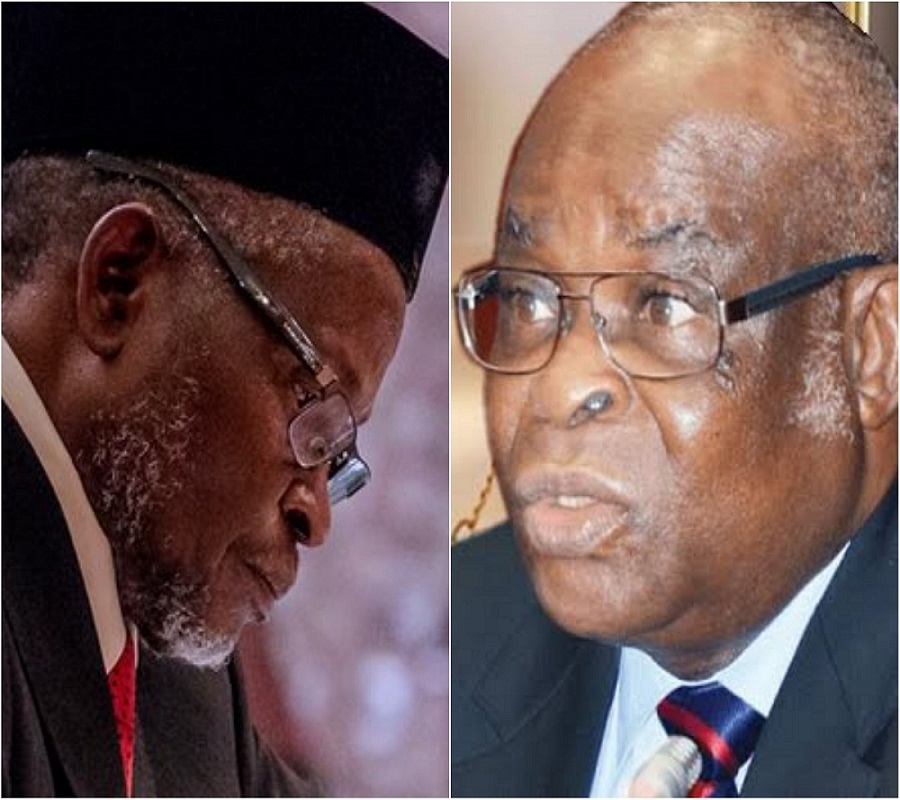
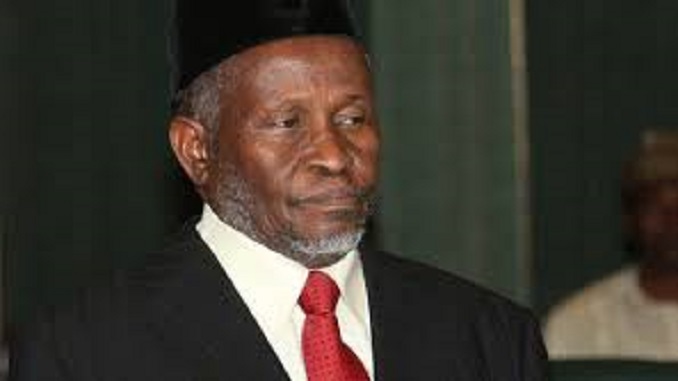
On Monday, 27 June 2022, General Muhammadu Buhari swore in Olukayode Ariwoola as Nigeria’s third Chief Justice in as many years, the fourth of his seven-year-old tenure as president with electoral legitimacy. Ariwoola’spredecessor, Tanko Muhammad, departed from office earlier on the same day, the second successive Chief Justice of Nigeria (CJN) to be forcibly “resigned” from office.

The official reason given for the unceremonious resignation of CJN Tanko Muhammad was ill-health. This was true only as a metaphor for the state of the judiciary that he claimed to lead. In any other sense, ill-health was only a convenient cover for the un-mourned departure from office of a man who was uniquely unsuited for high judicial office and who would have struggled to make the office of a Magistrate in a different season even in Nigeria. His presence in the office of Chief Justice emblematized every affliction that has come to define the third branch of government in Nigeria.

Last Monday was not the first time claims of serious ill-health had swirled around CJN Tanko Muhammad. In December 2020, he missed the ceremonial opening of the judicial year and was unavailable to perform the swearing-in of the new Senior Advocates of Nigeria (SANs), traditionally the flagship in the annual diary of the Chief Justice.

One newspaper reported on 15 December 2020 that “the CJN had inaugurated eight justices of the Supreme Court on November 6 but since then, there are conflicting details on when he was last seen in public”, a duration of 40 days. On the same day, another medium reported that Chief Justice Tanko had “been flown to Dubai for emergency treatment after suddenly contracting coronavirus in what appears to indicate that he may be suffering from other ailments.” The following day, a different publication said that the Chief Justice was “enduring a torrid battle with dementia and heart disease complications”, claiming that his “illness, ….has been kept under wraps since he assumed office as Nigeria’s top jurist in 2019.”

The reports and rumours about the ill-health of Chief Justice Tanko appeared to suggest that they were linked to advanced age. Under Nigeria’s constitution, a Chief Justice must vacate office at 70. The problem with Chief Justice Tanko was that a good deal about his background was shrouded in opacity or worse.

In May 2019, the Federal High Court in Abuja terminated a case instituted against Acting Chief Justice, Tanko Muhammad, which accused him of having falsified his date of birth to 31 December 1953. Avoiding the issue, the court held that the claimant lacked the standing to initiate the case and levied him with punitive costs of N10 million.

Chief Justice Tanko paraded impressive academic certificates, including a first degree, Masters, and Doctorate degrees in Islamic Law from the Ahmadu Bello University, Zaria but could not quite account for his primary school education, claiming in an affidavit sworn to while he was a Justice of the Court of Appeal in Jos in 1998 that “vicious termites destroyed his primary school certificate.”

In one of those miracles for which Nigeria is very famous, Tanko Muhammad was appointed a judge in spite of these and went on to thrive in judicial office, becoming the fourth out of the past seven Chief Justices of Nigeria to depart office in a blaze of scandal.

On 29 August 2011, Chief Justice Aloysius Katsina-Alu retired from office, a mere 11 days after the National Judicial Council (NJC), which he chaired purported to suspend then president of the Court of Appeal, Ayo Salami. Salami had accused Katsina-Alu of instructing the corruption of the judicial process by the Court of Appeal in an election petition involving the contest in the 2007 election for the office of the Governor of Sokoto State.

For this sin, the Federal Judicial Service Commission (FJSC), chaired like the NJC by the CJN, sought to pack off the President of the Court of Appeal to the Supreme Court, presenting it as a promotion. When he resisted, the NJC entered the fray turning the matter into a disciplinary encounter.

To investigate the allegations, the NJC constituted a fact-finding committee chaired by Umaru Abdullahi, a former President of the Court of Appeal. The report of the Umaru Abdullahi fact-finding committee ran into 23,952 words. It has never been officially published.

Before the Umaru Abdullahi Committee, a set of judicial elders led by former Supreme Court Justice, Bolarinwa Babalakin, had waded into the matter, portraying as an inter-personal kerfuffle, allegations that went to the foundations of the judicial enterprise. After Umaru Abdullahi’s committee, the NJC empanelled another chaired by then Chief Judge of the Federal High Court, Ibrahim Auta, to determine punishment. The end appeared pre-determined.

Dahiru Musdapher, who was in line to succeed Katsina-Alu as CJN, testified on behalf of Katsina-Alu before the Umaru Abdullahi Committee but declined to do so on oath, infamously claiming that in lieu of an oath he had done his ablutions.

When this was all done, the reputations of the outgoing Chief Justice, his assured successor, and the president of the Court of Appeal were in ruins. None recovered. An even worse fate befell the public standing of the judiciary. The tragic appearance crystallized that Nigerian judges could be bought and sold at the highest levels in a political marché ouverte.

The tenures of Aloma Mukhtar and Mahmud Mohammed as CJNs were mercifully devoid of scandal, which quickly returned when the tenure of Chief Justice Walter Onnoghen suffered the Guillotine at the hands of an ex parte order procured at night from the Code of Conduct Tribunal in January 2019.

When he took office in succession to Walter Onnoghen in 2019, not much was expected of Tanko Muhammad as Chief Justice. At the termination of his office last Monday, it was said that “the move to get Muhammad out of his seat was planned long ago and was spearheaded by a senior cabinet official and head of a security establishment.” The same report also explained that “the ex-CJN was forced to resign on two grounds – the letter collectively written against him by 14 Supreme Court justices, and ‘certain issues of financial impropriety.”

Among the allegations, a medium reported that a “son (of the ex-Chief Justice) was said to have accepted a $10 million bribe from (a) former Governor…. after promising to procure judgement for him on an election matter that didn’t later materialize.”

The fact that these allegations were so repeatedly made and credibly too during the tenure of Chief Justice Tanko is more important than whether in fact they are verified to a criminal standard of proof. With the CJN as the head of the NJC, little could be done to prove these allegations while the accused was in office.

The now infamous letter by the Justices of the Supreme Court mercifully administered the coup de grace on a judicial tenure that always appeared programmed to end in calamity.

Chief Justice Tanko possessed unique limitations that were well suited to magnifying the rot in Nigeria’s judiciary. It is easy to make him a scapegoat but that would be both lazy and convenient.

The most significant thing about the letter by the Justices was that it had nothing to do with disagreements of principle or about the public standing of the judiciary. Rather it focused most on subsistence issues such as lack of accommodation through diesel rationing to WiFi hunger. It all affirmed Martin Luther King’s famous line that “a riot is the language of the unheard”. Tanko’s signal contribution to the degeneration of high judicial office in Nigeria is that he impoverished the Supreme Court to the point of making its Justice advocates for stomach infrastructure.

The letter itself is evidence of how far Nigeria’s judicial branch has traveled from what should be its primary purpose. The responsibility at the Supreme Court for this must be collective.

At the heart of this crisis is the fact that over the past quarter-century, the CJN has become more than merely a first among equals. In addition to being CJN, s/he also heads the NJC, the FJSC, the Legal Practitioners Privileges Committee, and the board of the National Judicial Institute (NJI), all of these statutory or constitutional bodies. These accretions have brought with them powers, budgets, and prerogatives that transformed the occupant of the office of CJN from a judicial figure into a biological portal for contracts, preferments, and patronage. Rather than being treated as peer, the CJN is a principality who must be worshipped and glorified by colleagues for basic entitlements.

Perhaps the most astonishing passage in the letter by the Justices is the fact that they did not meet throughout the COVID crisis. This reveals a failure of pastoral and human care that verged on criminal. The letter easily enables us to understand how two Justices of the Supreme Court tragically died in the three years that Muhammad Tanko was Chief Justice.

For Acting Chief Justice, Ariwoola, the things that need to change are obvious. The fate of his predecessor must be both object lesson and inspiration.

A lawyer and a teacher, Odinkalu can be reached at [email protected]

The Role of Centralized Crypto Exchanges in Sanitizing the Crypto Market: Lessons For Nigeria

Stephen Azubuike, Partner

Introduction

Fraudsters, money launderers, financiers of terrorism and other criminals are some of the weeds capable of becoming pests within the cryptocurrency space, if they are not adequately curtailed and eradicated. This accounts for the reason some countries of the world such as China, Egypt, Colombia, Indonesia, etc. are yet to fully adopt crypto within their financial systems.

On 9 March 2022, the US President issued an Executive Order on Ensuring Responsible Development of Digital Assets. One of the policy objectives stated was that the US “must mitigate the illicit finance and national security risks posed by misuse of digital assets.  Digital assets may pose significant illicit finance risks, including money laundering, cybercrime and ransomware, narcotics and human trafficking, and terrorism and proliferation financing.”

In Nigeria, on 5 February 2021, the Central Bank of Nigeria (CBN) restricted banks and other financial institutions from any form of dealings in cryptocurrency, and directed them to close all accounts associated with crypto. According to the CBN Governor, Godwin Emefiele“Cryptocurrency is used to describe the activities of traders in an electronic dark world where transactions are extremely opaque, not visible and not transparent. These are people who deal in transactions that do not want to be trailed.” 

Conceptually, the CBN Governor seemingly fails to realize that transparency is one of the hallmarks of the blockchain technology powering cryptocurrency. This is notwithstanding that cryptocurrencies run on cryptographic algorithms for security purposes. Aside from transparencyenhanced security, and immutability (of transaction records), other virtues of this innovation, amongst others, are decentralizationtraceability, speed and efficiency. Invariably, the CBN Governor was clearly alluding to the activities of criminals who try to leverage on crypto in advancing illegal motives, but veered off track when he seemed to have relied on this position to define the whole body of players within the crypto industry.

Ironically, as at 2017, the CBN appeared to have acknowledged that indeed the activities of criminal elements within the crypto industry do not define the entire industry. This was as contained in the Circular of 12 January 2017 wherein the CBN also rightly acknowledged that “the emergence of virtual currencies has attracted investments in payments infrastructure that provides new methods for transmitting value over the Internet.” However, the apex Bank clearly warned that cryptocurrencies are largely untraceable and anonymous and that they are susceptible to abuse by criminals, especially in money laundering and financing of terrorism. In view of this, the CBN at the time directed banks and other financial institutions in Nigeria not to use, hold, trade, and/or transact in any way in virtual currencies. In showing leadership in the fight to curtail the activities of criminals using crypto, the CBN directed banks and other financial institutions to ensure that existing customers who are virtual currency exchangers have effective anti-money laundering/combating the financing of terrorism (AML/CFT) controls that enable them comply with customer identification, verification, and transaction-monitoring requirements; ensure that in the absence of required controls, they are to discontinue customer relationship immediately; and ensure that they immediately report any suspicious transactions by customers to the Nigeria Financial Intelligence Unit (NFIU). 

However, with the Circular of 5 February 2021, the CBN went on full restriction mode, which has had its toll, to some extent, on Nigeria’s crypto market (considered the largest in Africa). But its observations as contained in the 2017 Circular remains instructive. As we shall see in this piece, deploying AML/CFT controls including Know Your Customer (KYC) protocol are effective ways centralized crypto exchanges are leading the way in sanitizing the crypto market globally.

Centralized Crypto Exchanges

There are hundreds of crypto exchanges around the world. Taylor Tepper and John Schmidt of Forbes defined a crypto exchange as:

A marketplace where you can buy and sell cryptocurrencies, like Bitcoin, Ether or Dogecoin. Cryptocurrency exchanges work a lot like other trading platforms that you may be familiar with. They provide you with accounts where you can create different order types to buy, sell and speculate in the crypto market.

Broadly, we have centralized crypto exchanges (CEX) and decentralized crypto exchanges (DEX). As distinguished from centralized exchanges, decentralized exchanges demonstrate one of the core attributes (decentralization) of the blockchain technology powering cryptocurrency. Thus, decentralized exchanges do not involve third-party intermediaries as crypto traders can transact directly (dealing strictly on crypto as there is no room for trading fiat for crypto and vice versa) and the entire transaction is settled on the blockchain. With decentralization comes accountability, transparency and more security. Uniswap and Sushiswap — which run on the Ethereum blockchain are arguably the most prominent decentralized exchanges.

Given that anonymity is guaranteed at decentralized exchange marketplace, this underscores one of the reasons cryptocurrency trading is considered by persons like the CBN Governor, Mr. Emefiele, as an activity by traders in an electronic dark world. But the existence of centralized exchanges makes a major difference. Examples of centralized exchanges with presence in Nigeria are Luno, Binance, Bundle, NaijaCrypto, etc. Centralized exchanges have become useful intermediaries in crypto transactions, connecting crypto traders. At this centralized marketplace, trading fiat (like Naira) for crypto and vice versa is possible. In acting as an intermediary, a centralized exchange takes control of the crypto temporarily as the transaction goes on until concluded. Centralized exchanges are not there for any gratuitous service, rather, these exchanges are in business, earning trading, withdrawal fees and other charges from traders.

It is worthy of mention that to confidently continue to play in the Nigerian market, centralized exchanges need to pay close attention (and seek legal clarifications) to the new regulatory regime introduced by the Securities and Exchange Commission (SEC) which sought to capture what the SEC called Digital Assets Exchanges (DAX). Other entities captured are Digital Assets Offering Platforms (DAOPs), Digital Assets Custodians (DACs) and Virtual Assets Service Providers (VASPs).

How Centralized Exchanges are Sanitizing the Crypto Market and Lessons for Nigeria

According to the Chainalysis Crypto Crime Report 2022, about $8.6bn worth of cryptocurrency were laundered in 2021, which means a 30% increase from the 2020 report. See a preview of the report published on 6 January 2022 and also BBC‘s report.

As we observed in the introductory paragraphs, KYC, AML/CFT controls are some of the effective ways centralized exchanges are combating fraud and other criminal activities like money laundering, terrorism financing, scams, ransomware, etc. To set up adequate rules and protocols, centralized exchanges often rely on the services of data analytics experts (including legal experts) to ensure that where and when necessary, there is due compliance with the law and relevant rules and regulations in operation within a given jurisdiction as well as international standards and practices. 

KYC

Know your customer (KYC) requirement for users of the platforms owned by centralized crypto exchanges is similar to what you find in banks and other financial institutions. This involves obtaining a user’s personal information and identity verification documents such as a valid means of identification (driver’s license, international passport, voter’s card, etc.), utility bills (showing the user’s address), bank verification number (BVN), etc. Beyond user identity verification parameters, centralized exchanges may conduct further due diligence on a user (customer due diligence and ongoing due diligence with respect to transactions) to elicit more information regarding the user’s background which will also aid risk assessment. To effectively achieve this, centralized exchanges engage the services of some data-analytics firms such to enhance their KYC capabilities. 

Most times, only users who comply with and complete the KYC process may have full access to all the features in a centralized exchange.

AML/CFT

Most centralized exchanges stand against money laundering activities and are on the frontline in combating terrorism financing. These exchanges set up processes and connect to a network that enable them to discourage the use of crypto trading as a means of advancing criminal objectives. KYC processes also form part of the AML/CFT regulatory arrangements put together to curb money laundering and terrorism financing. Terrorism thrives in today’s world because of huge financial backing from multiple sources. Financiers of terrorists activities and money launderers have found cryptocurrency as a faster means of injecting the funds needed to advance the course of terror and clean up proceeds of illicit activities.

Centralized exchanges adopt enhanced due diligence, consistent transaction monitoring, transaction record keeping, and transaction reporting (to relevant authorities) in deserving cases. Centralized exchanges do conduct additional AML/CFT measures with respect to politically exposed persons (persons in service of the public) and their family, close relatives and associates.

Furthermore, we mentioned above that centralized exchanges also connect to certain networks to strengthen their processes. These networks are blockchain analysis networks such as Chainalysis, Elliptic, CipherTrace, etc., which assist with enhancing compliance, investigation, and risk management.

Importantly, centralized exchanges also rely on some inter-governmental organizations that work for the prevention of money laundering and terrorism financing such as  Financial Action Task Force (FATF) by adopting set rules and established global standards. Luno, for example, is generally known to take AML/CFT compliance seriously, and is one of the few crypto exchanges in Nigeria that not only submit suspicious-transaction reports to the Nigerian Financial Intelligence Unit (NFIU) but also voluntarily complied with the National Workstream (on VASPs) when a National Risk Assessment was conducted in Nigeria in the first quarter of the year. Also, in April 2022, Binance announced the appointment of former FATF Executive Secretary, Rick McDonell, and former Head of the Canadian delegation to the FATF, Josée Nadeau, as new compliance and regulatory advisors to Binance. McDonell and Nadeau are expected to provide high-level guidance on Binance’s global compliance and regulatory strategies. Binance and other centralized exchanges are also known to assemble high-profile cyber forensics teams.

More so, in Nigeria, some centralized exchanges operating within the Nigerian market collaborate with self-regulatory organizations such as the Stakeholders in Blockchain Association of Nigeria (SiBAN). A number of local and foreign crypto exchanges, including AAX, Bitmama, Bundle, Kumo, LocalTrade, NaijaCrypto, WhaleFin, TradeFada, are corporate members of SiBAN. On 3 June 2022, SiBAN introduced a Code of Conduct for Virtual Assets Service Providers in Nigeria for its members and nonmembers who voluntarily adopt the Code. Binance, Luno, and Paxful are some of the leading crypto exchanges that have partnered with SiBAN in Nigeria’s virtual assets sector.

Nonetheless, one issue that cannot be overlooked is the allegation flying over the space that some crypto exchanges are conduit pipes for money laundering and other fraudulent activities. For instance, Binance recently revealed that the company has been at the tail end of such allegations. In an email exchange with Reuters which was made public by Binance on 6 June 2022, Reuters reached out to Binance alleging that “from an examination of blockchain data, court records and statements by law enforcement, Reuters has calculated that Binance processed transactions totaling at least $2.4 billion stemming from hacks, investment frauds and online illegal drug sales between 2017 and 2022.” For a balanced reportage, Reuters sought some answers which Binance provided, detailing its efforts and achievements in the battle against using its platform for fraudulent and criminal activities. For instance, Binance cited how in the past weeks, it assisted the US Drug Enforcement Administration (DEA) in identifying and seizing about 130 accounts linked to suspected drug money laundering in Mexico. Whether Reuters considered the answers satisfactory and convincing is a different ball game. 

On 6 January 2022, Forbes reported how Coinbase foiled an attempt to steal funds in a bank account belonging to an elderly man of North Carolina, using bitcoin as a conduit pipe. It was reported that Coinbase (the crypto exchange sought to be used by the fraudsters) was able to flag the transaction as potential “elder fraud”, froze the account and called in the authorities, thereby saving the man from losing over half a million of his life savings. We learnt from the report that there is a high rate of wire fraud targeting the elderly. 

Conclusion 

While the CBN is still being awaited to complement the current regulatory posture of the SEC in Nigeria, centralized exchanges should be encouraged in their active objective to sanitize the market. In an interview published by The Cable on 15 February 2022, a centralized exchange, Luno, had expressed its willingness to work with the CBN on crypto regulation.

In making a strong case for centralized exchanges, Senator Ihenyen had explained that there is “the need for regulators to adopt a regulatory approach that requires VASPs to implement adequate KYC/AML/CFT procedures rather than drive them underground. Regulators must consciously avoid any regulatory action that drives persons or entities involved in cryptocurrencies away from self-regulated centralized exchanges (CEXs) and decentralized exchanges (DEXs) that have adequate KYC/AML/CFT procedures to peer-to-peer (P2P) cryptocurrency markets that are relatively difficult or near impossible to regulate. Such markets include smart contract-based P2P decentralized exchanges (SC P2P DEXs) with no intermediating entities and instant messaging-based platforms, including Telegram and WhatsApp… Therefore, as the gateway to the crypto and digital assets world, CEXs should be the regulators strongest ally or partner. Rather than deny CEXs access to banking and financial services in Nigeria, CEXs should be recognized as Virtual Assets Service Providers (VASP) and be required to comply with KYC/AML/CFT regulations in Nigeria” and, of course, global standards.

This is undeniably the only way to go. 

Credit:infusionlawyers.com

When the Apex Court Rumbles, Quivers and Quakes

By Chief Mike Ozekhome, SAN, OFR, Ph.D

It is not usual or commonplace to see the bastion of justice and the highest court of the land quaking, trembling and quivering. Remember the “Rumble in the Jungle” of the Mohammed Ali vs. George Foreman in the epic heavy weight boxing Championship in Kinshasha, Zaire, in 1974? The Supreme Court had more than that. Ali was stinging like a bee, using the rope-a-dope tactic. The apex court Justices doe just that.

How did this happen? A slumbering country had woken up on Monday, 27th June, 2022, to the shocking news of the resignation of the former Chief Justice of Nigeria (CJN), Justice Tanko Mohammad. The Jurist said he was doing so on health grounds. The resignation came about 18 months ahead of his official retirement date of December 31, 2023. Tongues wagged. Because the resignation, though predicated on health grounds, came in just barely two weeks after fourteen (14) serving Justices of the Supreme Court had frontally confronted the CJN over the abysmally poor welfare of Justices of the Supreme Court. He had denied the allegations through Ahuraka Isah, his spokesperson. Irrespective of Justice Tanko’s reason (s) for suddenly throwing in towel prematurely, let me state here that the step he took constituted a reinvigorating breath of fresh air that blew across the dark crevices of the nation’s judicial landscape and democratic space.

The 14 Justices in their “Book of Lamentations”, had insisted that no past administration since the birth of democracy in 1999 had ever treated Justices as shabbily as the then Chief Justice of Nigeria did. This apparent vote of no confidence on Justice Tanko is the first time that such would occur in 58 years of the history of the Supreme Court. Is it that they were crying wolf? Had they tried, but failed, in using inbuilt internal conflict-resolution mechanism in settling the matter? I do not know. Or, do you?

MY EARLIER INTERVENTION ON THIS BROUHAHA

I had earlier written in support of the Justice’s cause,course and protest. Interalia, I had said (http://mikeozekhomeschambers.com/supreme-court-justices-deserve-more/; https://www.blueprint.ng/supreme-court-ozekhome-okays-justices-protest-over-poor-pay/ <%22>):

“What I expected the CJN to have done is to have balmed their oozing bruises; bandaged their bleeding economic sores and say ‘’Ok, I have heard you loud and clear. I am going to take up your complaints and champion your cause before the executive and legislative arms of government, arms that have turned themselves into rampaging bulldogs. As the head of the Judiciary which is the third arm of the government, I will make sure that you have more allocation, your welfare enhanced and your life made better.’’ Sikena.

“It was Alexander Hamilton in his Federalist paper number 78, who once said the Judiciary is the weakest of the three arms of government; and that it has neither purse, nor sword to enforce its judgments.

“Are we going to say that the Judiciary should remain forever in doldrums, trampled upon by the two other arms of government? I think not. When I read about the entire annual allocation of the Judiciary, I wept. My heart bled. The entire allocation is like what some governors in this country simply pocket as security votes and walk away as if nothing has happened. The allocation is less than ¼ of what some ministries have in this country; and we have more than 30 ministries in Nigeria. Yet, we are talking about the head of the whole third arm of government – the Supreme Court. Yet we expect these Justices to be aliens from another planet, maybe from Saturn, Mars, Uranius, Neptune, Pluto, Mercury, Venus, or Jupiter, so that they won’t be corrupt. We expect them to act like Archangel Michael or Angel Gabriel, who must not touch money with a ten-foot pole, even when they are hungry and starved.

“So, when we are crying that some Judges are corrupt, we also have to look at it from the angle of the rotten milieu within which they operate. Whilst not advocating for corruption (God forbid; very far from it, because I believe that any corrupt element within the judiciary should be kicked out and dismissed after proper investigation and trial), I also believe that we must not allow a system where corruption becomes so attractive as to form a clear and present danger and become a fundamental objective and directive principle of state policy. We have a proverb in my language, which translates to say that you must keep away the white cloth from the palm oil, just the same way you must keep the palm oil away from the cloth. If you bring an insect-infected piece of firewood into your house, you have requested for a visitation of a colony of lizards. So, you must not complain when you see a colony of lizards descend on you because you asked for it.

“If you starve Judges and Justices, and you make them believe that they don’t matter and will never have a house to retire to, and some justices of the Supreme Court, in spite of the danger inherent in their job are renting houses inside towns, living amongst people, some of whom have been tried and jailed by these same Judges and Justices, then you are begging corruption to embrace them. You are not even giving them enough protection and security.

“The society must not appear to be telling the Justices to either take it or leave it; to either kow-tow and agree with their present perilous, impoverished, sorry situation, or they resign. It should never be like that. I expect the CJN to engage them more and pacify them. I want to believe that before they wrote that letter, they must have complained severally, and serially quietly in secret, in the underground, without being heard, or their complaints being remedied. That must have been why they went so formal by writing that historic letter.”

IS THE JUDICIARY NOW NAKED?

No. the Judiciary has not been left naked, because the next most senior Justice of the Supreme Court, Justice Olukayode Ayoola, has since been sworn in as the Acting Chief Justice of Nigeria in line with section 231(4) of the 1999 Constitution. He will act for three months pending when, cateris paribus,he will be made the substantive CJN, in accordance with section 230(1) thereof.

JUSTICE TANKO MOHAMMAD DID THE RIGHT THING BY RESIGNING

Whatever reasons Justice Tanko Mohammad had for resigning (whether due to poor health as he said, or due to the ricocheting effect of the protest letter by 14 Justices of the Supreme Court which greatly embarrassed the Judiciary and country), the important thing is that he must be praised for his courage, masculinity and wise counsel in honourably resigning. Resignation from office is a very scarce commodity in this part of the world, where public officials hold on to office no matter the odious perception by the Nigerian people. Justice Mohammad will therefore be remembered in history as a CJN who walked away from his lucrative office, whilst the ovation was loudest, albeit, being subjected to gradual muffling. He has entered the pantheon of the few historical figures who threw in the towel whilst in office.

A PEEP INTO HISTORY

As an historian and Archivist, I love situating my discourse in historical perspectives. It helps to open up the topic under discussion.Let us therefore take a look at history to see some instances of Justices and government officials who had stepped down from office for the greater good of the people.
In 1795, John Jay, a foremost Federalist, resigned as the US Chief Justice, to become the Governor of New York.
In 1800, Oliver Ellsworth, US Chief Justice, had to resign on grounds of illness and unpopularity, after negotiating the Convention of 1800.
In 1913, Woodrow Wilson resigned as the Governor of New Jersey to become the US President.

In 1955, Winston Churchill, the Second World War hero, resigned as the Prime Minister of the UK due to poor health, but remained in the House of Commons.
In 1963, Harold MacMillan resigned as Prime Minister of UK, after the profumo scandal (the third consecutive resignation of a Prime Minister under the watch of the present Queen Elizabeth II).

In 1967, Gamal Abdal Nassar of Egypt resigned as President, UAR. However, he later retracted his resignation. Sweet power, always an aphrodisiac and intoxicating liquor!!.
In 1969, Charles De Gaulle of France resigned following a defeat in the French referendum.

In 1974, Richard Nixon resigned as President after the infamous watergate scandal that rocked US history.
In 1981, Hussein Onn resigned as Prime Minister of Malaysia due to poor health.
In 1984, Pierre Trudeau, the then Prime Minister of Canada, retired from politics due to unpopularity.

Bill Clinton in 1992, resigned as the Governor of Arkansas to become the United States President.

Sylvio Berlusconi resigned as the Prime Minister of Italy in 1995.

In 1997, Zhan Videnor resigned with his entire government as Prime Minister of Bulgaria.

John Major as Prime Minister of the UK in 1997 resigned as leader of the conservative party.

Tony Blair, as Prime Minister of the UK, stepped down in 2007 as leader of the labour party.

It was the turn of President Hosni Mubarak of Egypt in 2011 when he threw in the towel resigned due to the Egyptian revolution.

In 2016, David Cameron resigned as the UK Prime Minister and leader of the Conservative Party due to the Brexit vote which allowed the United Kingdom to leave the European Union.

THE HUGE TASK BEFORE JUSTICE OLUKAYODE ARIWOOLA

Justice Ariwoola was one of the 14 Justices who had protested to Justice Tanko Mohammed about the sorry state of Supreme Court Justices. He therefore obviously knows where the shoe pinches, and where the roof leaks. He has now been given the opporunity to become the change agent he can decide to be. Therefore, the task ahead of the learned Justice is mountainous, but not unconquerable. He has to distinguish himself from past Supreme Court administrations, the last of which he joined other Justices to frown at. He has to give Nigerians something refreshing different and new, which they will be happy about, amidst the failures of the present government. He must change the narrative of modern-day Nigerian leaders who only think for them, themselves and theirs alone. Yes, leaders whose principles of life centre on I, me and myself.

Justice Ariwoola must understand that public confidence in the Judiciary has waned tremendously.It has hit rock-bottom. The Judiciary has almost lost its significance and relevance as the third arm of government, without which the country cannot course forward. Consequently, there is the need for urgent reforms and rebuilding of public confidence in battered and tattered house of justice. The surgical operation is the urgency of yesterday. Not one of today or tomorrow.

The first task is for Justice Ariwoola to demand for an urgent review of Justices and Judges’ salaries,emoluments and welfare packages. This is crucial because the impartiality and fairness of the justice system begins with the Judges themselves. A positive review of their salaries and welfare packages would significantly curb perceived situations of bribery, corruption and cases of selling justice to the highest bidder.

The next task for the cerebral grey- boarded Justice is to ensure total independence of the Judiciary. The judiciary needs its independence, not in words, but in deed; to be able to freely exert itself on matters, both national and grassroots, without fear or favour. The judiciary must never be a mere toothless bulldog and appendage of the Executive. Though often regarded as the weakest the three arms of government, this was never the intention for the law makers. The judiciary must advocate and insist on its own budget and complete control of its own financial affairs, without interference from the Executive or Legislative arms of government.

There should also be an oversight in the manner in which the Judges dispense justice. Aside from the overwhelming backlog of cases due to gross shortage of Judges, manual handling of cases and the numerous suits being filed daily, the issue of forum-shopping, judge-shopping and refusal by Judges to hear urgent cases for political reasons further add to the slow dispensation of justice. Therefore, there ought to be supervisory oversight in the way and manner Judges handle their cases. The notion of Judges being the lord and master of their courts should be cast into the garbage heap of history where it rightly belongs. A new era of checks and balances of Judges by a review and supervisory committee should be ushered in immediately. The Supreme Court and other superior courts should allow a situation where their judgments are subjected to rigorous public scrutiny, incisive academic review and fair criticism by intellectuals,the academia and members of the public. This will keep them on their toes.

Of course, it follows from this recommendation, that there is also the need to strengthen the recruitment process by which Judges are appointed. There must be provision of incentives to encourage applications from high-heeled private legal practitioners, including SANs, for positions on the Bench. Justices Augustin Nnamani, Chukwudifu Oputa and Teslim Olawole Elias, are such examples. They emerged as some of the best Jurists ever on the Nigerian Bench. Public confidence in a free, fair and impartial judiciary can only be promoted when the when the recruitment process itself is fair and transparent. This process must be subjected to the time-tested principles of transparency, accountability and public scrutiny.

It is now common knowledge that some staff of the Supreme Court registry deliberately sits on cases they do not want heard, while fast-tracking other preferred ones. This trend must be halted immediately. The new acting CJN should call for all existing files, and he will be shocked as to how some old political cases have been shelved away to gather dust, while some fresh ones are being given accelerated hearing. I am a victim of this unwholesome practice, where I have been forced to write reminder letters for a mere assignment (for hearing) of a sensitive political case filed nearly 3 years ago. Yet,some new ones filed over a year later had since been heard and disposed of. There is the perception that huge money is involved in this unwholesome practice. Perception is reality. Justice Ariwoola should timeously act to stop this administrative rot.

If these few recommendations are put in place by Justice Ariwoola, the Judiciary will surely take a turn for the better. I do appreciate that Rome was not built in a day, and that the reforms in the Judiciary cannot happen overnight. However, proactive and prompt steps in ensuring quick dispensation of justice would quicken such reforms and drive the Judiciary towards the right direction. This, would definitely make Justice Ariwoola’s legacy one not to be forgotten in a hurry. Justice is rooted in confidence. And when that evaporates, then we will experience a recession into the Hobbesian state of nature where life was short, brutish, solitary and nasty, occurs. May God forbid.

Poetic Justice for Justice Tanko Re Justice Onnoghen

By Emmanuel Ogebe

– NJC should investigate fraudulent imposition

Outgone Chief Justice Tanko Muhammad left office more disgracefully than the man he schemed out. While popular opinion was that Justice Onnoghen CJN was framed and unfairly forced out, in his case public consensus is that Justice Tanko deserves to be outed and ousted.

It is therefore ironic that while Gen. Buhari showered encomiums and conferred a national honor on the disgraced outgone Chief Justice Tanko, Buhari had rained false accusations in a long tirade against Onnoghen to justify his ouster.

But the Nigerian people who heard Gen Buhari say recently that they were better off today than when he came into office seven years ago, know full well that he is mentally on vacation from objective reality. Only Buhari has fared better in seven years but certainly not the suffering people of Nigeria. Tragically that is painfully obviously to all except himself.

The very fact that all fourteen Supreme Court Justices signed a protest letter against the outgone Chief Justice alone should have foreclosed any question of a national award. Seven justices comprise a constitutional sitting panel of the court so 14 justices’ signatures amount to two constitutional panels of the court unanimously adopting the same position with no dissensions or exceptions. Buhari completely ignored the opinions and concerns of the entire Supreme Court to honor his dishonorable quisling.

In another ironic and karmic twist, Justice Tanko’s exit was on par with that of Justice Onnoghen’s – they’re both the only Chief Justices to resign prematurely or be pushed out of office.

A long-standing judicial convention is to hold a valedictory court session for retiring justices where tributes and speeches are presented on their legacy and in their honor.

In recent history, only three Chief Justices of Nigeria have retired without receiving this ultimate honor amongst peers and the profession.

The late Justice Katsina Alu CJN was the first not to have a valedictory session. His Lordship after a scandalous tenure and surreptitiously appointing SANs outside of due process, hurriedly fled from the country prior to his day of retirement when a valedictory session would have been due. A valedictory would have been suicidal given his tortured and notorious legacy of infamy.

Justice Onnoghen CJN had no opportunity to have a valedictory given the manner in which he was precipitately forced out of office. It is unfortunate because despite the controversy, His Lordship made some epic contributions to the legal system in terms of Technological innovations for the bar that could have been heralded in his legacy.

The third and final Chief Justice not to receive a valedictory session in their honor is Justice Tanko Muhammad.

Therefore ironically the very honor which he deprived his predecessor Onnoghen of, he deprived himself of.

Yet history will hold that Buhari gave him a valedictory tribute, albeit a false one but his peers amounting to two constitutional panels of the Supreme Court gave him a true and damning one in their leaked disenchantment memo. Indeed if one counts the damning valedictory speech of Hon. Justice Ejembi Eko, that amounts to 15 justices comprising three standard panels of the Supreme Court uniformly against Justice Tanko.

That the worst president in Nigeria celebrated the worst Chief Justice in Nigerian history should brook no surprise. If deep calls to deep, dust also calls to dust. It was nothing more than a mutual adoration felicitation of failures.

But Justice Tanko’s disastrous tenure didn’t need to be so. In the epilogue of Hon. Justice J.O. Ogebe JSC rtd’s “Justice Under The Shelter of the Almighty – autobiography of a distinguished jurist,” he recounted an encounter we had with Justice Tanko on the fateful day he displaced and replaced Justice Onnoghen. Below is the bombshell revelation:

“I will conclude by sharing an incident which I think aptly illustrates the crossroads where we find ourselves. One day, last year, I felt an urge to visit the Chief Justice of Nigeria, the Hon. Justice Walter Onnoghen.

The job of a judge is a friendless one; so, as one of the few retired jurists who remained in the capital city, I visit on occasions to encourage them.

 From the last CJN with whom I served to the present, every CJN in the last decade has been my classmate or junior except for the Hon. Justice Aloma Mukhtar, Nigeria’s first and only female CJN…

Justice Onnoghen had served under me when I was a Presiding Justice at the Court of Appeal, so he was one of several of my junior colleagues at the bench who became my senior at the Supreme Court—thanks to federal character.

That Friday he was the one who encouraged me saying that sometimes things meant for evil could turn around for good.

As my son and I went downstairs to depart, a vehicle pulled up to the judge’s entrance and Justice Tanko Muhammad excitedly emerged and greeted me:  “My leader, I was just in the house and I said let me come to the office and see what is going on.” As he clasped my hand, I said, “Don’t let anyone rubbish the judiciary.”

Tanko Muhammad, like Onnoghen, had also served under me when I was a Presiding Justice at the Court of Appeal. Incidentally, the two of them were my only colleagues at the Supreme Court who were still in school when I was already a high court judge. They were literally of another generation of judges who succeeded fellow Nigerian judges and not those of us who succeeded the British.

He said nothing as we departed the Supreme Court premises. A short while later, I was watching the news and saw him being sworn in as Acting Chief Justice of Nigeria by Major General Buhari at the Presidential Villa—while Justice Onnoghen was still at the Supreme Court working his heart away.

We have received the torch and passed it on to another generation, which can either fan the flame of liberty and justice to burn brighter or extinguish it—returning us to darkness and gloom.”

Apparently, neither this early warning and sage counsel nor the imprecations of his brother justices or seniors persuaded Justice Tanko to do well. Indeed I specifically called judicial welfare prioritization at a valedictory last year for late Justice Onu https://www.independent.ng/ogebe-demands-life-benefits-for-retired-justices/

Incidentally, today is the 54th anniversary of the Class of 1968 of Nigerian Law School which to date is the greatest in the history of the  nation’s judiciary.

As narrated in the autobiography referenced above:

“The 1968 Set of the Nigerian Law School was comprised of 126 aspiring lawyers…

Eight of them were elevated to the court of appeal: Justices Umaru Abdulahi and Salami who became Presidents of the Court of Appeal (PCA) and Sulu Gambari (current Emir of Ilorin) and Justice Rowland.

Moreover, myself and Justice Adekeye (a female)became Justices of the Supreme Court (JSC) while Justices Katsina Alu and Dahiru Musdapher became Chief Justices of Nigeria (CJN) – the pinnacle of the judicial hierarchy of the land. So out of these eight, four rose to the Supreme Court:  Justices Alu, Musdapher, Ogebe, and Adekeye…

More than half of the ‘68 Set have preceded us to the great beyond including both CJNs.

The set has contributed brilliantly to the development of Nigeria in all sectors especially the judiciary… It’s the only set that has produced two CJNs and two PCAs—both concurrently.

The only dent on their performance is the disagreement between Alu CJN and Salami PCA over a governorship appeal in Sokoto state which landed in court and escalated into a national issue. They sued each other in court and appeared before investigation panels headed by another ‘68 Set member wherein another ‘68 Set member testified as a witness…

All the ‘68 Set have now exited the bench…They were arguably the most impactful class of the NLS on our judicial system and the country at large by their 50 years post-call.

While appreciating them for their positive contributions to Nigeria, we pray that new generations will arise to achieve even greater heights for the cause of justice and the rule of law in the land and for humanity.”

Unfortunately this was not to be as Hon. Justice Abba Aji who was in the same class as Justice Tanko (she was also the best law student) had the misfortune of being a victim of his mismanagement when she was eminently qualified to do a better job as CJN. So in addition to personal legacy, he betrayed corporate legacy and his history as the first sharia judge to occupy that position. But for primordial interests, a brilliant jurist like Hon Justice Abba Ajji should not be under the likes of a Justice Tanko but sadly this is the story of Nigeria at all levels where mediocrity reigns over meritocracy.

Justice Tanko Muhammad has now become another glaring example of Buhari’s mega failed administration. He promoted a man beyond his physical and intellectual capacity to perform with disastrous consequences for the nation just like the service chiefs and numerous other square pegs in round holes, presently and impending.

As I stated in my sworn petition to the National Judicial Council against Buhari’s judicial coup:

“ The Buhari administration perpetrated a hoax on the nation and our democracy and profession by executing a fake judgment to wit:

– The president executed the judgment of a court that did not sit;

– enforcing a prayer on a motion never moved;

– implementing a relief of suspension that was never ordered

– on a party who was never served said order…

Nothing can be based on such an obvious fraud and everyone involved by commission or omission, complicity or complacency, aiding and abetting, before and after the fact must be held to account.” The NJC did not address my petition and I call upon them once again to inquire into this monumentally disastrous fraud against our collective intelligence.

In the US, citizens are protesting against the decision of the Supreme Court justices but in Nigeria, Supreme Court Justices were protesting against the indecision of the Chief Justice. Every single objection was an indictment and testament to Buhari’s failure. Tanko’s failure fairly and squarely belongs to his overlord Buhari.

But although Justice Tanko was uncouth and barbaric to call the highest body of jurists naked dancers in the market square, he at least had the residual decency to resign after he was shown the writing on the wall. This is a minimal level of dignity and decency his imposer does not possess.

Some are born great, some become great and some have greatness forced upon them. Justice Tanko forced greatness upon himself and disgrace upon himself and therein lies the karmic limit to unjust justices.

Emmanuel Ogebe, Esq an International Human Rights lawyer and Nigerian judiciary expert writes from Washington

Placing “Place Holders” Placeless

By Chief Mike A.A. Ozekhome, SAN, OFR, FCIArb, Ph.D., LL.D

INTRODUCTION

The APC political contraption never ceases to amaze and confound me. It intrigues me to no end. This is a party ( is it really one, going by the textbook definition of a political in political Science ?) that rose from its often predicted imminent disintegration into smithereens, like a phoenix from its ashes, in a groggy, fumbling, wobbling, dawdling and near crumbling manner, to holding its first-ever National Convention in March 2022. At this swordy Convention, daggers were drawn and former two-time PDP Governor and Senator, Abdullahi Adamu, was virtually crudely shoved down the already parched throats of majority of the APC members who had preferred former Nassarawa State Governor, Umaru Tanko Al-Makura as National Chairman. It was simply a triumph of a powerful minority cabal over a silent helpless majority. I had predicted this when I vigorously kicked against consensus as a substitute for direct primaries in the new Electoral Act of 2022.

THE TINUBU ABRACADABRA

The APC unsurprisingly harvested a turbulent National Primaries Convention on 9th June 2022, where Asiwaju Bola Ahmed Tinubu valiantly shrugged off sustained attempts to muzzle him out of the presidential race through unorthodox means by a cabal believed to be working for President Muhammadu Buhari. Indeed, the “palace coup” executed by this faceless cabal headed by newly selected Adamu (they called it “election by consensus”), had told the whole world that the Senate President, Ahmed Lawan, had been anointed as the “consensus candidate”.

Tinubu, a political maestro, reached for his talismanic bag of “politricks”, fished out an abracadabra magical charm in a deft political move that led to some presidential aspirants stepping down for him right at the very venue of the Convention.

This was after the Northern APC Governors had unanimously and roundly rejected Adamu’s flown kite of “consensus” for Lawan. The NWC of the APC later completed the rejection of the Lawan farce. Tinubu later trounced Ahmed Lawan who garnered a miserable 152 votes (coming 4th position) with 1,271 winning votes. Tinubu also dusted Rotimi Amaechi (316 votes) to second position; while cerebral lawyer, Prof Yemi Osibanjo (whom many had thought taciturn and inscrutinable president Buhari would naturally hand over to, having served him with total loyalty and fidelity for 7 years), came sprawling on his belly to the third position, with a miserly 235 votes. In Nigeria, politics is politricks. It defies logic and sense.

“PLACE HOLDER” ZOOMS IN

So, APC continues to taunt us. From highfalutin and unfulfilled promises of 2015 and 2019 (robust economy; defeating Boko haram and insecurity; killing corruption), the APC has now drawn us into a new era where it has introduced a new political terminology into our political lexicon and vocabulary. It is called “place holder”. Editor of Thisday Lawyer pages, daringly courageous, fecund, cerebral and intellectually-grounded writer, social critic, and upscale layer, Onikepo Braithwaite (her mother is chief (Mrs) Priscilla Kuye, former NBA President; a fruit does not fall far away from the mother tree), provided us with a most apt title: “RUNNING MATE; DUMMY MATE!! This is one of the best titles I have ever seen as a journalist and writer myself. Thank you, Onikepo, for standing firm and nationalistic.

WHAT IS PLACE HOLDER?

The Free Dictionary defines “placeholder” as “One who holds an office or place, especially as a deputy, proxy, or appointed government official”.

Princeton’s Word Net sees placeholder “As a proxy, procurator; a person authorized to act for another.

Dictionary.com defines it as “something that makes or temporarily fills a place”.

A “Dummy candidate”, says Wikipedia, on the other hand (another terminology for placeholder), is a candidate who stands for election, usually with no intention or realistic chance of winning. Wikipedia is more exhaustive. It says

“a dummy candidate can serve any of the following purposes:

“In instant-runoff voting, a dummy candidate may direct preferences to other candidates in order to increase the serious candidate’s share of the vote.

“A dummy candidate may be used by a serious candidate to overcome limits on advertising or campaign financing. In India, for example, there have been cases of serious candidates fielding multiple dummy candidates to distribute their poll expenses. The expenses are directed towards the campaign of the serious candidate but shown to the election commission under the dummy candidates’ names.

“Dummy candidates with names similar to that of a more established candidate may be fielded by political parties to confuse the voters and cut that candidate’s vote share. The dummy candidate’s name also may be deceptively similar to that of a retiring incumbent”.

THE PRESIDENT AND VP AS SIAMESE TWINS

The office of the President is an office that demands two good heads, having regard to the premium placed on the office. The Vice-President is not a substitute for the president: he is an ever-present partner, help, and associate. While a person cannot occupy the office of the President in perpetuity, the office of the president remains perpetual. Every President must have a Vice-Present. The relation is like that of Siamese twins, tied together by the same umbilical cord. This is why some people have erroneously regarded a VP as a “spare tyre”. No, he is not! Can a “placeholder” substitute for this?

The relationship between the President and the VP actually starts before the conduct of any election. As a matter of fact, Section 142 of the Constitution of the Federal Republic of Nigeria, 1999 (as amended) (1999 Constitution) provides that:

“… a candidate for an election to the office of President shall not be deemed to be validly nominated unless he nominates another candidate as his associate from the same political party for his running for the office of President, who is to occupy the office of Vice-President and that candidate shall be deemed to have been duly elected to the office of Vice-President if the candidate for election to the office of President who nominated him as such associate is duly elected as president. …”

There are at least five principles embedded in the provision above. First, every President must have a VP. Second, the validity of the nomination of a candidate for the office of the President is predicated solely on him nominating another candidate who shall serve as the VP. Third, if the nomination of a candidate to the office of the VP is provisional, the nomination of a candidate for the office of the President is provisional as well. Fourth, anything that invalidates the nomination of a candidate to the office of the VP equally affects the candidate for the office of the President. Fifth, the candidate for the office of the President nominates the candidate for the office of the VP and is deemed to have acquiesced and agreed to be bound by any danger inherent his nominee. Sixth, the nominee and the nominator must belong to the same political party.

The nomination of a candidate for the office of the President and that of the VP is therefore joint.  If the nomination of the candidate for the office of the VP is provisional, that of the President is equally provisional. It is inchoate. What is good for the goose is good for the gander. This is the first legal implication of taking a dangerous step such as this.

The intermediate court dilated on this relationship in quite an extensive manner in Atiku Abubakar v. Attorney-General, Fed. (2007) 3 NWLR (Pt 1022) 601 at 642. The Court held, Per Abdullahi, PCA, as follows:

The President and the Vice President of the Federal Republic of Nigeria are jointly elected at a general election and the relationship between them is not that of a master and servant. In other words, the vice president is not an employee of the President or of the political party on whose platform they are both elected. In the instant case, the plaintiff not being an employee of the President or the political party on whose platform he was elected, he cannot be impliedly or constructively removed by either of them. “The Vice president, not being an employee cannot be impliedly or constructively removed. Assuming he qualifies as an employee, without, for a moment so deciding, his employer would most manifestly be the people of Nigeria, who elected him to the office, acting through their representatives in the national assembly but certainly not the President of the Federal Republic of Nigeria nor the sponsoring political party. This assumption is based on the cliche that the power to hire is the power to fire embedded in Section 11 of the Interpretation Act. See Longe v. First Bank of Nigeria Plc (2005) ALL FWLR (Pt. 260) 65. In other words, this matter is a matter that falls squarely within the contemplation of Section 143 of the Constitution which expressly provides for the removal of the President and Vice President from office.”

THE LEGAL IMPLICATIONS OF PLACING A PLACEHOLDER

At this stage, it is important, I clarify that a “candidate” for an election is different from the holder of the office of a VP. Section 152 of the Electoral Act, 2022, defines a candidate as a person who has secured the nomination of a political party to contest an election for any elective office. It is only the winning of an election that changes or translates a candidate to a VP. However, one need not be a candidate for an election before he can become a VP. This is because a VP is automatically selected as a running mate by a presidential candidate.

A political party bears the consequences of not submitting at all or submitting an invalid candidate for an election. This is because, by section 131(c) of the Constitution, a candidate for an election to the office of President must be sponsored by a political party. Section 84 (1) of the Electoral Act, 2022, states that a political party seeking to nominate candidates for elections shall organise primaries for the aspirants under the supervision of the Independent National Electoral Commission. Section 29(1) of the Electoral Act mandates every political party to submit to INEC, not later than 180 days before the date appointed for the general election, the candidates it is sponsoring in that general election. The submission of candidate to INEC constitutes a definite and unambiguous statement of the intent of the political party to have that candidate only as its representative in the election. The nomination of a candidate and submission of his name by that political party to INEC, therefore, seals the sponsorship of a candidate for an election. Once the window of nomination closes, all parties become functus officio.

CAN THERE BE A SURROGATE RUNNING MATE?

Who then is a placeholder in relation to a candidate? A placeholder is not a candidate for an election. He is an unknown person who has the seal of a political party to occupy the position of an unknown person; a mere faceless surrogate. His position creates uncertainty in a political party as his presence can mar or invalidate the nomination of his principal. This person is clearly unknown to law and the political party that submits such an unknown person to INEC is deemed to be aware of its wrongdoing and must ready to face the consequences of its gamble.

The APC Presidential candidate, Bola Tinubu, had nominated Ibrahim Masari, a Katsina politician, as the party’s placeholder or dummy candidate, for his yet-to-be-named running mate, so as to beat the INEC deadline.

Masari had served the APC as its National Welfare Secretary under the Adams Oshiomhole – led, National Working Committee (NWC). It is believed that the issue of Tinubu having a Muslim-Muslim ticket (Prof Babangida Zulum of Borno State is said to be the preferred one) is tearing the party apart. Can they repeat the Abiola-Babagana “Hope 93” successful Muslim-Muslim joint ticket with the present state of the nation where religion is tearing apart? Only time will tell.

Similarly, the Labour party’s Presidential candidate, Peter Obi, is reported to have also opted to submit the name of his campaign Director-General, Doyin Okupe, as his dummy/place-holding running mate.

Whereas section 29(1) of the 2022 Electoral Act, as amended, provides that political parties shall submit names of their candidates, not later than 180 days before the date appointed for the general election, Section 31 of the Act also gives the political parties an opportunity to withdraw and substitute their candidates, not later than 90 days before the election

Section 31 states that “A candidate may withdraw his candidature by notice in writing signed by the candidate to the political party that nominated him for such election and the political party shall covey such withdrawal to the Commission not later than 90 days to the election”.

The Commission had as part of its administrative arrangements given up till 6 pm of Friday, June 17, 2022, as deadline for the submission of names of candidates for the Presidential and National Assembly election; and 15th July 2022, for the Governors and State Assembly candidates.

In fulfillment of Section 31 of the Electoral Act, the Commission gave July 15, 2022, as the last day for withdrawal by candidates and replacement of withdrawn candidates by the political parties.

Similarly, the Commission also gave the parties up to August 12 for the withdrawal and replacement of withdrawn candidates by the political parties.

This means that the parties who are still facing crises over the choice of running mates still have until the July 15, 2022, to substitute the names being forwarded at the moment, with respect to the Presidential candidates.

Section 31 of the Electoral Act provides that a candidate may withdraw his or her candidature by notice in writing signed by him and delivered personally by that candidate to the political party that nominated him for the election and the Political party shall convey the withdrawal to INEC not later than 90 days before the election. “Candidate” under the Electoral Act, 2022, has a fixed meaning. The law did not say a candidate “includes”. It says it means. The question that calls for dispassionate determination is whether a placeholder qualifies as a candidate who has secured the nomination of his political party to contest an election? The answer can only be answered in the negative. Its identity speaks for itself. If a placeholder is not a candidate, then he is not a person known to law and envisaged by the law. Its nomination and the subsequent submission of this non-existent being to INEC is not a misnormal that can be remedied by replacement or withdrawal under Section 31. Its nomination and submission to INEC seals the fate of the political party that submitted its name.

ANY ESCAPE ROUTE?

The political parties have already submitted names of candidates. Section 142(1) of the 1999 Constitution of the Federal Republic of Nigeria (as amended)(the Constitution) clearly provides that the Presidential candidate must nominate his running mate from the same political party. While Chapter VIII of the PDP Constitution provides for the nomination of candidates for election into public office; Article 20 of the APC Constitution provides for elections into elective positions and appointments. These are clear enough. 

Having established that the existence of a placeholder is unknown to law, can this non-existent entity be replaced or substituted by a candidate? Some principles of law might be of help to us here. In the case of ANEGE & ORS v. ALANEME & ORS (2020) LPELR-50445(CA), Per Muhammed Lawal Shuaibu, JCA, considered at pages 19 – 22 whether the court can grant an amendment for the substitution of a non juristic person with a juristic person.  He held thus:

“… I have right from the onset stated that after filing the notice of preliminary objection by the defendant at the lower Court, the claimants thereafter filed a motion on notice to substitute the unregistered “Ideato Welfare Association” with “The Registered Trustees of Ideato Cultural and Welfare Association, Calabar” or to amend the status of the 1st and 3rd defendants to show that they are principal officers of the Registered Trustees of Ideato Cultural and Welfare Association, Calabar. A misnomer when associated with issues of juristic personality and mis-description of names of parties simply means the “wrong use of a name or a mistake in naming a person, place or thing, especially in a legal instrument which should ordinarily not lead to a nullification of the proceedings. In other word, a misnomer in the context of litigation occurs where the entity suing or intended to be sued exists, but a wrong name is used to describe that entity…………. The Supreme Court had recently restated the legal position in APGA Vs Ubah &amp; Ors (2019) LPELR – 48132 (SC) held that if the entity intended to be sued exist but a wrong name is used to describe it, that is a misnomer………. The Supreme Court has inter alia held that naming a non-juristic person as a party is not a misnomer and amending same to substitute a juristic person is out of it. This is so because there cannot be a valid amendment of the title of a suit since there never was a legal person who was brought before the Court by the action. And since to be competent a suit must be instituted between legally juristic persons, failing which it is incompetent and a juristic party cannot subsequently be amended to take the place of a non-juristic party originally sued. The correction made by the lower Court by replacing a non-juristic person with one with legal capacity was done without jurisdiction….” 

Was a shadowing, ghost and non recognized “placeholder” or “dummy mate” ever contemplated by the Electoral Act of 2022, as a juristic person? I think not. Mr Sheriff Machina has already introduced this dangerous step through his “Deus ex Machina”, by bluntly refusing to step down for Senate President, Ahmed Lawan. Supposing Kabiru Masari, Ahmed Tinubu’s “dummy mate” proves stubborn and refuses to kowtow? What happens? Assuming Dr Doyin Okupe, Peter Obi’s D-G and place holder refuses to yield? What is INEC’s position on these? I see some legal fireworks in the offing in the next few days and weeks ahead. Politrics and Politricians!!! 

I. T. Muhammad CJN Resigns: Why Sudden Resignation Met Sudden Jubilation

By Stephen Azubuike

How I. T. Muhammad CJN (Rtd) emerged as CJN

In 2019, the Federal Government of Nigeria preferred Charge No. CCT/ABJ/01/19 against the former Chief Justice of Nigeria (CJN), Honourable Justice Walter Samuel Nkanu Onnoghen (CJN) for offences bordering on breach of code of conduct for public officers – non-disclosure of assets – at the Code of Conduct Tribunal (CCT). At the time, relying on an unprecedented ex parte Order of the CCT, the President of the Federal Republic of Nigeria, Muhammadu Buhari, illegally suspended Hon. Justice Onnoghen as the CJN. Subsequently, the ex-CJN reportedly resigned following the recommendation of the National Judicial Council (NJC) for his compulsory retirement.

Cross River State challenged the exit of Hon. Justice Onnoghen CJN at the Supreme Court on grounds of constitutional breaches but the matter met an abrupt unsuccessful end.

On the 17th of July 2019, the Senate confirmed the appointment of Hon. Justice Ibrahim Tanko Muhammad, JSC (as he then was) by the President as the CJN based on the recommendation of the NJC.

Sudden resignation

On 27 June 2022, Hon. Justice I. T. Muhammad CJN (Rtd) reportedly resigned as the CJN. The sudden news of his resignation was allegedly based on health grounds. Hon. Justice Olukayode Ariwoola, JSC (as he then was) was immediately sworn in as CJN but in acting capacity.

Why the sudden jubilation?

The sudden resignation of Hon. Justice I. T. Muhammad CJN (Rtd) was greeted by a sudden jubilation across the country including the legal community. Many saw it as a welcome development. The reasons are not far-fetched. 

Hon. Justice I. T. Muhammad CJN (Rtd) was seen as a betrayer of the former CJN, Hon. Justice Onnoghen CJN (Rtd). Prior to the unceremonious retirement of Hon. Justice Onnoghen, Hon. Justice Muhammad was aware of a similar incident in Abia State and how the NJC treated the matter in 2018. The NJC had recommended the compulsory retirement of Hon. Justice Obisike Orji for allowing himself to be sworn in, following his illegal appointment by Governor Okezie Ikpeazu as Acting Chief Judge of the State. Hon. Justice Orji was appointed to take over from Hon. Justice Theresa Uzokwe who was unconstitutionally suspended as Chief Judge by the Governor based on the recommendation of the State House of Assembly on grounds of judicial misconduct but without referring the matter to the NJC for action. More so, Hon. Justice Orji was not recommended by the NJC for appointment.

Hon. Justice Muhammad was said to be a critical member of the NJC that dealt with the case. The NJC subsequently considered the allegations and recommended the compulsory retirement of Hon. Justice Uzokwe. 

Furthermore, during the Senate session where Hon. Justice Muhammad was eventually confirmed as CJN, his Lordship misfired a question put to him on the floor of the Senate which touches on technicality in the administration of justice. Not only that his Lordship, respectfully, went off-track with his answer, a couple of grammatical errors seemed to have rendered his outing not too impressive.

Doubting his competence, some were of the view that a more competent Jurist ought to have been appointed especially when the idea of appointing the most senior of the Justices of the Supreme Court as the CJN is merely conventional and not a constitutional requirement.

Meanwhile, this development at the time did not entirely do away with the fact that the Learned Justice has many outstanding judgments to his credit in the Supreme Court such as the case of Shalla v. State [2007] 18 NWLR (Pt.1066) 240 S.C. where the Learned Justice condemned the extra-judicial killing of any person on grounds of blasphemy. In Darlington Eze v. Federal Republic of Nigeria, Hon. Justice Muhammad held that a counsel whose fees have not been settled can lawfully refuse service of a process on him.

The main trouble

It however appears that the main issue which heralded the exit of Hon. Justice Muhammad was the unprecedented explosive memo by other Justices of the Supreme Court which leveled strong allegations against the ex-CJN for his Lordship’s alleged disregard for the welfare of Justices of the Supreme Court during his tenure. Before his exit, the ex-CJN had responded to the letter stating ongoing efforts but also noting that “the Supreme Court definitely does not exist outside its environment, it is also affected by the economic and socio-political climate prevailing in the country.”

Conclusion

It is believed that the current Acting CJN will reposition the judiciary on the path of dignity and excellence. In the words of the President of the Nigerian Bar Association, Mr. Olumide Akpata:

There is now more than ever the need for urgent reforms in the judiciary and to rebuild the almost dissipated confidence that Nigerians have in the judiciary and the wider legal profession in Nigeria.

I. T. Muhammad CJN Resigns: Why sudden resignation met sudden jubilation was originally posted by Stephen Azubuike on June 28, 2022, see https://stephenlegal.ng/i-t-muhammad-cjn-resigns-why-sudden-resignation-met-sudden-jubilation/

The author, Stephen Azubuike is a lawyer with expertise in Commercial Dispute Resolution and Technology Law practice. He is a Partner at Infusion Lawyers. He has successfully argued cases from the High Courts of various jurisdictions to the Appellate Courts on behalf of financial institutions, other corporate bodies, and multinationals. He has worked with a number of startup tech companies. He tweets @siazubuike.

In Defence of Chief Justice Tanko

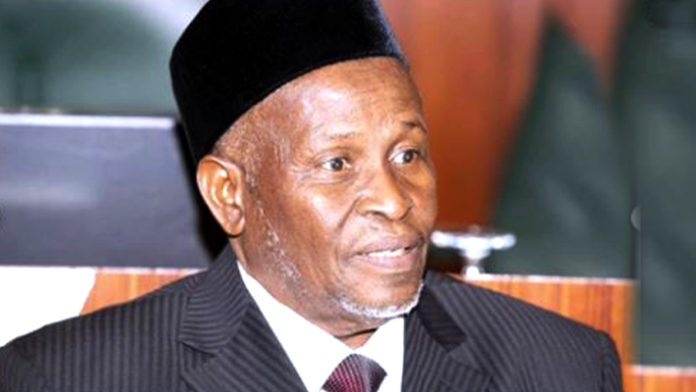
Chief Justice of Nigeria Ibrahim Tanko Muhammad (Credit: Punch Newspapers)

By Sonnie Ekwowusi

Below is a satire penned down shortly after Tanko boggled his Senate screening exercise. Were Tanko nominated as CJ in foreign jurisdictions, he probably would not have emerged as the CJ. But everything goes in Nigeria. I can’t understand this generation of Nigerian lawyers. We keep quiet in the face of palpable moral oddities. For example, once we were in one of those tiny suffocating cubicles of the Federal High Court, Lagos. We were literally suffocating to death. All including the presiding judge were fanning themselves. The air-conditioner was out of order, and, the windows and the door of the court were firmly shut. We were really suffering and really suffocating to death. My first shock was that all the lawyers in court including respectable old colleagues kept mum.

When I could no longer tolerate the heat, I got up and told the presiding judge that I was contemplating removing my wig and gown or pack my books and walk out of the court. Apparently, he saw the fire in my eyes and granted my request. I quickly removed my wig and gown. But surprisingly, the other lawyers in court, even very old lawyers, did not remove theirs. Instead of removing their wigs and gowns and save themselves from imminent stroke, they sat where they sat mopping at me after I had removed my wig and gown and be freed from the suffocating heat. Why am I retelling this incident today? Because this generation of Nigerian lawyers are too complacent for my liking. Why keep quiet amid moral crises, even crises threatening our soul?

Critics of lawyer Malcolm are cowards. In the face of the complacency of lawyers, Malcolm did what he did to come to terms with the pangs of his conscience.

What have you done to salvage the judiciary from the doldrums of corruption and inefficiency? Sit down and entertain yourself with rat and lizard social media tidbits?

In Defence of Chief Justice Tanko

For weeks now, the Chief Justice of Nigeria (CJN) Hon Justice Tanko Mohammed has been under the sledgehammer of the public. In their unanimous judgment the people are saying that Justice Tanko is not a fit and proper person to be appointed the CJN. Mind you, Justice Tanko has been cleared by the Senate. He has even been sworn in by President Buhari as the CJN. Yet some troublemakers in Nigeria will not allow him to rest. They keep on saying that he is a complete dunce who lacks the qualities of a CJN. Some people are even making a mockery of Justice Tanko on their WhatsApp platforms, Twitter, Facebook and on other social media platforms. They are saying that because President Buhari is a never-do-well he has appointed a never-do-well Justice Tanko and other never-do-wells as his Ministers.

Let me quickly say from the onset that I hate name-calling and calumny against the good name of others. Our siddon-look critics must learn to be emotionally detached from issues that do not concern them. They should avoid attacking any person created by God. I agree with ex-President Olusegun Obasanjo that every human being created by God is good. Therefore Chief Justice Tanko Mohammed is good. So let all these self-styled and self-appointed critics desist from calumniating the person of Tanko Mohammed. Why are they even making a mockery of Justice Tanko? Because they claim that he does not know the meaning of the legal term “technicality”. Asked by the Senate Minority Leader Enyinnaya Abaribe whether substantial justice can be sacrificed on the altar of legal technicalities, Chief Justice Tanko answered, “Permit me, distinguished senators, to ask what a technicality is, it is something that is not usual and may sometimes defy all norms known to a normal thing. Now we have technicalities in our laws we have inherited from the British. If something which is technical comes before the court what we do in trial court is to ask people who are experts in that field to come and testify. We rely on their testimony because they are experts in that field. Ask me anything about an aeroplane, I don’t know. Ask me to drive an aeroplane, I am sure if you a passenger and they told you that the flight is going to be driven by Honourable Justice Tanko, I am sure you will get out of the plane because it is something that requires technicality and if I have any technicality, my technicality will only be limited to law”

What a brilliant answer from a brilliant judge! Justice Tanko is my man of the year. In fact, Justice Tanko’s critics should be blaming themselves for not understanding the complex legalistic response of Justice Tanko. They forget that Tanko is not on the same level with them. They forget that Justice Tanko has climbed up to the next level. They forget that he possesses a Ph.D. in law. More importantly, Justice Tanko has been in the Supreme Court for twelve years. Therefore it is not every Tom, Dick, and Harry that can understand his oratorical deliveries. Judges are wordsmiths. Judges are the masters of the English language. Tanko’s critics should re-read part of what he said. He said: “If something which is technical comes before the court what we do in trial court is to ask people who are experts in that field to come and testify”. In essence, his Lordship is saying that any day that technical comes to court the judge should call an expert in that field to come and testify before the court. Why? Because “technicality” is a trouble maker that can cause trouble in court any day he comes to court. That is why an expert was brought to the court to testify and deal with “technicality”. To buttress his argument, Justice Tanko even gave an example. He said that as a Justice of the Supreme Court of Nigeria it is a “technical use” for him to begin to drive an aeroplane instead of sitting as a Justice of the Supreme Court. He said that any passenger who hears that he (Justice Tanko) is driving an aeroplane he or she will immediately run out of the plane because it is something that pertains to “technicality”, which he (Justice Tanko) does not possess because his “technicality” is limited to the realm of law. In other words, Justice Tanko said that as a Supreme Court Justice he cannot be seen to be driving an aeroplane because it pertains to “technicality”.

In any case, Justice Tanko does not owe his critics any apology. It was not even necessary for him to appear before the Senate for any screening or confirmation. President Buhari has chosen him as the Chief Justice of Nigeria. Full stop. Lest we forget, public legitimacy or approbation does not make a judge in Nigeria in the same way a hood does not make a monk. Knowledge of the law has ceased to be a pre-requisite for the appointment of judges in Nigeria. Buhari is the sole appointer judges. That is why any Justice of the Supreme Court considered by Buhari to be corrupt is immediately smoked out of his house in the middle of the night. In our presidential democracy power resides only in President Buhari not in the people. President Buhari is the sole appointer of the INEC Chairman. He is the sole appointer of the Chief Justice of Nigeria. I hope I am communicating? Small wonder Justice Tanko has decided not to join issues with his critics. Silence is the best answer to a fool.

Justice Tanko’s critics are also grumbling that he is only a Sharia judge and not a normal civil law judge. And so what? Is Nigeria not already a Sharia country? Did Mohammadu Buhari not promise prior to his election in 2015 that he would shariarise, fulanise and ruganise Nigeria if elected President of Nigeria? Did many of these South Westerners who are now complaining about the Fulani herdsmen murderers not vote for candidate Buhari in the 2015 presidential election as well as in the 2019 presidential election? So, why this hypocrisy? Why this double standard? You see, many Nigerians are cowards. Instead of challenging President Buhari or Asiwaju Bola Tinubu with their frustrations they are challenging innocent Justice Tanko. Is Justice Tanko the person destroying the Nigerian judiciary at the moment? Is he the person that has recently obtained a court order to proscribe the Shiites’ organization while refusing to proscribe the murderous Fulani herdsmen killers and Miyetti Allah?

Justice Tanko is also accused of falsifying his age. This is a liar. Wa laii, if Justice Tanko catches any of these people spreading this liar he would jail them. Anyway, one question has been bothering me: Why is it that whenever a public figure from Northern Nigeria makes a public statement the public will start viewing the statement with microscopic eyes to see if there is a grammatical error in it?. Remember Alhaji Barkin Zuwo (sentenced to 300 years by army dictator Mohammadu Buhari), the Governor of Kano State during the Second Republic of President Alhaji Shehu Shagari? The public was always picking holes in his public statements. Asked if Kano State had any minerals apart from natural resources, Zuwo answered,, ”kai … mineral berekete for Kano…akwoi Fanta, akwoi Coke, akwoi…” Instead of applauding Zuwo for answering the question correctly the illterate Nigerian public chose to calumnate him. Barkin Zuwo was called all sorts of unprintable names. They said that he was an illiterate; that he did not go to school. Now people are saying that Justice Tanko is the Barkin Zuwo of our time. I disagree. Justice Tanko is our intellectual. He is a brilliant judge most qualified to be appointed the Chief Justice of Nigeria

When Male Security Officers can Search Females

When Male Security Officers can Search Females.

By Onyekachi Umah,Esq.
Daily Law Tips (Tip 240)

When Male Security Officers can Search Females.

Above all, all searches must be conducted decently. By law, a person can be physically searched by a police officer (or any law enforcement officer) of same sex. However, where there is an urgent situation or in the interest of justice it is impossible for same sex police officer to conduct physical search, a police officer of opposite sex can search a person of opposite sex.

Hence, a male police officer can search a female suspect in such circumstances in any part of Nigeria. This extends to any officer of any law enforcement agency in Nigeria created by Act of National Assembly, like EFCC, DSS, NSA, NDLEA, ICPC, Customs, NAPTIP, Prisons and Civil Defence. However, this excludes all the private security companies and their officers.

This work was earlier published with the title: “Situations where a Male Security Officer can search Females in Nigeria”.

References:

1. Sections 9(3) and 494 of the Administration of Criminal Justice Act, 2015 and similar laws across the states in Nigeria.

Credit: SabiLaw

Onnoghen’s Ghost

By Sam Omatseye

I wonder what Walter Onnoghen is thinking now. The former chief justice could not duck. He was docked and dumped. His charge was simple. Twice he fell foul of the law. The executive branch did not want him. They rustled a ruse within the rules to nail him. His guilt was in breach of not declaring his account. It was without excuse.

The government did not pursue the matter with sense of justice, but out of vendetta. A kangaroo affair to defeat a guilty man. They had justice in their hands, but chose the gangster path. A desperation of injustice. He was wrong, though he was wronged. Many believed he was a victim of a cabal. He created the excuse for the ruse, and they found a way within the rule of law to flush him out of the temple of justice.

How do you excuse a sinner even if he was sent to perdition the wrong way? That was the story of Onnoghen, the chief man of law who fell because the law bit him the wrong way.

Now we have a different story of the same skein. The new chief justice of Nigeria, Tanko Muhammad, who benefited from the intrigues to oust Onnoghen, is in the eye of a storm. He does not see it that way. But is he feeling more than a little aplomb? What is he relying on to be so smug?

Fourteen justices, men and women, who are supposed to be models of justice in the land, are accusing Muhammad of funny games with the pocketbook. They say Muhammad is living with two standards, one for himself, and the other with the other justices. He flies abroad, in luxury and retinue, for vacation. The others are supposed to abide here in obodo Naija, sulking and developing arthritic hands writing long, interminable judgments. He gives them Tokunbo cars while his own SUV purrs with new engines. They have to ration diesel for the big temple of justice to operate, or else there will be no hearing, or no work. The justices cannot go out for courses. They cannot enjoy diesel at home, et al. The justices have been turned into a new version of aluta, old men and women screaming their own versions of “we shall overcome” in the silence of their chambers.

Rather than allow the matter to simmer and die, it has become a public ridicule, a cause celebre. The CJN has no apology. Rather, he issued a warning. He was teaching his fellow men on the bench to maintain decorum, and not expose the squalor of the temple to the sunlight of ignominy. It is a serious matter. I have spoken with three senior advocates of Nigeria since last week over the matter, and two of them said they were part of the top lawyers seeking solutions to the quagmire. They described the scandal as a mess. They did not see an easy way out of the matter.

The chief justice was rationing material for the others and splurging on himself. It reminds one of what Greek playwright Sophocles wrote, “Thou shall not ration justice.”

When the CJN said the justices should not have made the matter public, he spoke ex cathedra. But the cathedral was already broken. It is a sort of murder in the cathedral.

Before the fourteen rose to a joint statement, all other avenues must have failed. The CJN must have acted with monarchical disdain to them. He must have treated them like serfs, like little boys and girls who ought to be happy with what they are getting.

In my interview with Professor Itse Sagay, (the fourth SAN I spoke with), for TVC breakfast show, a new dimension was unearthed. He saw the CJN’s sense of entitled contempt. He also saw that even the fourteen are not all that innocent. He noted that our house of justice has become filth central. He drew my attention to some of the stories making the rounds of justices on the take for judgment. He even noted, like a disappointed father, that some of the justices are his former students, and they had voted for corruption by not even picking his calls because his stance against the evil into which they have turned the temple of justice.

I also worry, as I indicated to Prof. Sagay, that the CJN may take advantage of this to expose his fellow benchers and blackmail may meet blackmail to unveil the rot of the system. Tanko may now be the cobra with the back on the wall and striking back with venoms of rage. The fourteen may find out they might have kept quiet and sulked in silence. But maybe this turn of events is the dialectical inevitability to bringing the house of justice to justice.

But what is intriguing is that we are not seeing any of the Onnoghen intrigue playing out from the executive branch. The Attorney General and Minister of Justice, Abubakar Malami hinted that the can of worms awaited any audit of the NJC. For now, it is all empty rhetoric. As Prof Sagay noted, it is within his power as the chief law officer to overhaul the judiciary. Yet, a big mess has overtaken the hall of justice, and the man steeped in the filth is still a specimen of swagger. Blaise Paschal once wrote, “Justice without force is powerless; force without justice is tyrannical.” We saw the latter in the case of Onnoghen. We expect the former in the case of Tanko Muhammad.

Or else, we shall have a bipolar eye for justice in the land. So, what is bad for Onnoghen is not bad for Tanko. It will be a bad precedent. The offence of Onnoghen is that he did not declare his own money. The offence of Muhammad, as the fourteen justices are claiming, is that he has not declared the people’s money. One is personal fraud; the other is collective fraud. One wronged the country by wronging himself. The other is wronging the country by allegedly defrauding the court.

This issue has brought to the fore the need to separate the chief justice from the National Judicial Council (NJC). Justices should not be involved with finances. They should focus on judiciary, not fiduciary. Sagay asserted that English law that we imitate has such distinction.

The Supreme Court is the top tier of appeal. In one of Achebe’s novels, No Longer At Ease, a truck inscribed, “God’s case, no appeal.” The Supreme Court owns that here on earth. But if correction, to paraphrase Shakespeare, lies in the hand that committed wrong, to whom shall we complain?

Malami and his men played such a pivotal role in unseating Onnoghen. Is he going to look the other way as Tanko huffs and puffs? Is it one justice for Onnoghen and another justice to Tanko. It may not, in the end, just be a Tanko and Onnoghen issue, it is a cry for Nigerian justice.

Technicality in Law – CJN’s Misfire and the need to Reload.

By Stephen Azubuike

Introduction

On the 17th of July, 2019, Hon. Justice Ibrahim Tanko Muhammad was confirmed by the Senate as the Chief Justice of Nigeria (CJN). During the proceedings at the Senate, Justice Muhammad, CJN was confronted with a question by Senator Enyinnaya Abaribe [Senator representing Abia-South Senatorial District, Abia State under the platform of Peoples Democratic Party (PDP)]. The question borders on the Supreme Court’s policy (philosophy) on technicality and substantial justice in the determination of cases. The Senator cited one decision of the Supreme Court (Abraham v. Akeredolu) confirming the policy of the apex Court that the courts will not allow technicality to thrive. He also referred to the recent case of Osun State gubernatorial election involving Mr. Adegboyega Oyetola of All Progressives Congress (APC) and Mr. Ademola Adeleke of PDP. In that case, the Judgment of the Election Tribunal (nullifying the victory of Mr. Oyetola at the polls) was struck down by the Supreme Court, upholding the decision of the Court of Appeal.  The apex Court faulted the Majority Judgment of the Tribunal delivered by Justice Peter Obiora principally because Justice Obiora was found to be absent during one of the trial proceedings which took place on 6th of February, 2019. The Supreme Court held that this was a fundamental flaw.

Thereafter, Senator Abaribe urged the CJN to confirm what Nigerians should expect under his Lordship’s leadership of the Judiciary and what precisely the policy of the Supreme Court would be as regards technicalities in justice delivery.

In a wise attempt to answer the all-important question, the CJN moved to explain the meaning of “technicality”. This explanation became necessary for the benefit of the wider audience and the entire country. However, with the greatest respect, the explanation supplied by the CJN as to the meaning of “technicality” was largely unhelpful and less than satisfactory. This piece aims only to attempt a clarification of the point and to address a few related issues.

CJN’s answer on Technicality

We shall attempt quoting in full the answer of the CJN.

“…The question by distinguished Senator Abaribe centres on technicalities and perhaps the difficulties we are facing on technicalities. Permit me, distinguished President and the Senators to say that, what is a technicality? Something which is technical, in my definition, it is something that is not usual. That may sometimes defy all the norms known to a normal thing. It may be technical. Now, we have technicalities in our laws. And this is because these laws that we have inherited, we inherited them from the British and the British people have for quite centuries ago, introduced what is known as technicalities in their laws. Now, if something is technical, it is in a way, giving a leeway for double interpretation. It may be interpreted this way by Mr. A, or it may be interpreted this way by Mr. B. Now, if something is technical comes before the law or before the courts, what we normally do at the trial courts is that we ask people who are experts in that field to come and testify. We rely on their testimony because they are experts in that field. Ask me anything on aeroplane. I don’t know. Ask me to drive an aeroplane, I am sure if you are a passenger and they told you that that flight is going to be driven by Hon. Justice Ibrahim Tanko, I am sure you will get out of the plane. Because, it is something that requires technicality and if I have any technicality, my technicality will only be limited to law. Therefore, it is something that has to do with the perception of the way you think you will be able to achieve the goals of what you want to achieve. Several of our laws are dependent on technicalities. But remember, when we come, we have what is known as rules of interpretation. We resort to rules of interpretation. There are several rules of interpretation. Those of us who are lawyers here know we have several rules of interpretation. So, we resort to that one. And it is through that we resolve the problem that is technically raised. So, that is the answer.”

Breaking down the CJN’s answer

From the above quoted statement, my Lord, the Honourable CJN, clearly gave us the meaning of “technicality” in a context or contexts totally different from the context of the question tabled by Senator Abaribe.

His Lordship explained “technicality” in the context of “something that is not usual. That may sometimes defy all the norms known to a normal thing.”

His Lordship thereafter gave a historic angle to the concept of technicality by alluding to the Britain as the originators of technicality and from which we inherited the technicalities in our laws. According to his Lordship, “Now, we have technicalities in our laws. And this is because these laws that we have inherited, we inherited them from the British and the British people have for quite centuries ago, introduced what is known as technicalities in their laws.”

In another perspective, the CJN saw technicality from the angle of ambiguity and/or difference in opinions. To his Lordship, “Now, if something is technical, it is in a way giving a leeway for double interpretation. It may be interpreted this way by Mr. A, or it may be interpreted this way by Mr. B.”

Going forward, his Lordship viewed technicality from the prism of expertise required in some specialised fields of endeavor. According to his Lordship, “Now, if something is technical comes before the law or before the courts, what we normally do at the trial courts is that we ask people who are experts in that field to come and testify.”

Subtly, Muhammad CJN appears to see technicality from the angle of one’s philosophy, perception or mode of operation. His Lordship stated that, “Therefore, it is something that has to do with the perception of the way you think you will be able to achieve the goals of what you want to achieve.”

Finally, His Lordship confirms that we have technicality in our laws and noted one of the solutions in dealing with it, which is by resorting to rules of interpretation. His Lordship stated: “Several of our laws are dependent on technicalities. But remember, when we come, we have what is known as rules of interpretation. We resort to rules of interpretation.”

While we appreciate his Lordship’s thoughts and further insights as to the meaning of technicality in his Lordship’s views, it is important to note that the meaning of technicality in the context of Senator Abaribe’s clear question is quite different.

Meaning of Technicality in the context

Although a perfect definition of technicality is largely unavailable, in the context of hearing and determination of cases by our courts, judgment based on technicality is often differentiated from judgment based on substance or merits of a case, otherwise known as substantial justice. It is in this context that we shall now proceed below.

Technicality refers to any point not precisely touching on the merits of a case. Sometimes, it may be considered as something trivial or inconsequential. By this, it is the sharp antonym of substance; i.e., something not so material. Technicality largely involves an attempt to take advantage of any loophole in the laws or any mistake by a party (or counsel) in the presentation of one’s case; or strict reliance on procedural Rules of Court to defeat the substance of a particular case and win on that ground. When this happens, it is commonly said that a case was won on mere technicalities. Technicality may also involve pinpointing a narrow (but important) issue of law (not necessarily trivial). Here, the brightest of lawyers show their talents by their critical appraisal of the issue(s). In fact, such exercise has aided the development of law by genuine expansion of the frontiers of our jurisprudence.

Illustration 

Judicial process is governed by laid down procedures that aid the business of the courts – Flowing from the procedure for filing court papers (court processes), presentation of cases, to composition of Judges, as well as other related matters. These processes themselves are purely different from the main case itself, being the real reason parties (litigants) are in court. So, if Mr. A sues Mr. B for breach of contract, the contract and the issue of breach is the main reason parties are in court for the Judge to determine whether or not there was a breach. Now, the lawyer who filed the contract case may inadvertently fail to pay the exact filing fees at the court registry. The opposing lawyer may rely on that in asking the court to strike out the case. This argument on filing fees has absolutely nothing to do with whether or not there was a breach of contract between the parties. The opposing lawyer can be said to be relying on technicality to defeat the case. In a criminal case, an accused person may be charged to court for rape but based on a wrong law. However, the main issue is whether the accused committed the offence. The accused person arguing the point that the charge was filed (preferred) based on a wrong law amounts to reliance on technicality. It has nothing to do with whether the accused person actually committed the offence.

The Supreme Court, per Niki Tobi, JSC (of blessed memory), in the case of Yusuf v. Adegoke (2007) 4 S.C. (Pt.1) 126 had this to say about “technicality”:

“What is technicality? In Adedeji v. The State (1992) 4 NWLR (Pt.234) 248, I said at page 265: “I realize that courts of law seem to be using the word technicality out of tune or out of turn, vis-a-vis the larger concept of justice. In most cases, it has become a vogue that once a court is inclined to doing substantial justice by deflecting from the rules, it quickly draws a distinction between justice and technicality so much that it has become not only a cliche but an enigma in our jurisprudence. In most cases when the courts invoke the substantial justice principle, they have at the back of their minds the desire to put to naught technicalities which the adverse party relies upon to drum drown an otherwise meritorious case. We seem to be overstretching the technicality concept. We should try to narrow down the already onerous and amorphous concept in our judicial process. A technicality in a matter could arise if a party is relying on abstract or inordinate legalism to becloud or drown the merits of a case. A technicality arises if a party quickly takes an immediately available opportunity, however infinitesimal it may be, to work against the merits of the opponent’s case. In other words, he holds and relies tenaciously unto the rules of court with little or no regard to the justice of the matter. As far as he is concerned the rules must be followed to the last sentences, the last words and the last letters without much ado, and with little or not regard to the injustice that will be caused the opponent.”

Supreme Court’s policy on Technicality

The Nigerian Supreme Court has unequivocally stated in myriads of cases that the days of justice based on technicality are over, and that we are in the era of substantial justice. In the case of Amaechi v. I.N.E.C. (No.3) [2007] 18 NWLR (Pt. 1065), the Supreme Court held that:

“The sum total of the recent decisions of this Court is that the court must move away from the era when adjudicatory power of the court was hindered by a constraining adherence to technicalities.”

In Joseph Afolabi & Ors v. John Adekunle & Anor [1983] 8 SC. 98 at 119 Aniagolu, JSC (as he then was) said:

“While recognising that the Rules of Court should be followed by parties to a suit, it is perhaps necessary to emphasise that justice is not a fencing game in which parties engage themselves in an exercise of out-smarting each other in a whirligig of technicalities to the detriment of the determination of the substantive issues between them.”

Thus, there is no confusion as to the express position of the Supreme Court on technicality. The lower courts have followed suit. However, it must be noted that there are some positions based on technicality which the courts hold dear. For instance, the Supreme Court held in Okafor v. Nweke [2007] 10 NWLR (Pt. 1043) 521 (upheld in FBN v. Maiwada [2013] 5 NWLR (Pt. 1348) 444)  that if a court process meant to be signed by a named legal practitioner (Christian Ahmed Esq.) is rather signed in the name of his law firm (e.g., Christian Ahmed and Co.), the case filed in that style would be struck out. This is one technicality the courts have vowed to uphold in spite of all its absurdities and in the face of possible remedial steps. There are other technical issues of law that the courts consider sacred. While there are many others the courts will not allow to see the light of day. In fact, upholding certain technical arguments does not always signify injustice. For instance, some technical issues based on jurisdiction of court are taken quite seriously by the courts. Beyond the need to do justice, the courts are also interested in preserving the authority of the court system and preserving orderliness in judicial proceedings.

Therefore, technicalities will continue to live with us. The drive of the Supreme Court (and that of other courts following suit) is to limit those incidences where technicality thrives, leading to injustice and to allow more room for substantial justice. Indeed, it is only when justice is served on the merits of a case that the society can truly feel the impact of the law.

Is Senator Abaribe’s question genuine? 🙂

You never can tell with smart politicians like Senator Abaribe. His “technical” question appears to be more of a subtle protest against the decision of the Supreme Court upholding the election of Mr. Oyetola of Osun State. The CJN cannot be reasonably expected to attempt a review of the Supreme Court’s position in that case on the floor of the Senate in whatever guise. It is enough to mention that what the Supreme Court did in that case perhaps falls into the category of such technical positions the courts consider sacred. Interestingly, this is without prejudice to the logical arguments presented before the Court, persuading it to hold otherwise.

Should the CJN be crucified?

No. The CJN might have misfired in his attempt to answer the question posed. No one is beyond this, notwithstanding our expectations from the exalted Office. As lawyers, we are privileged to assist the court always as ministers in the temple of justice. If our leading Oracle of the Law misfires, our job is to help his Lordship reload.

Featured Image Credit: Daily Post NG

Technicality in Law – CJN’s Misfire and the need to Reload was originally published on 19 July 2019 by Stephen Azubuike on https://stephenlegal.ng/technicality-in-law-cjns-misfire-and-the-need-to-reload/


Stephen Azubuike is a lawyer with expertise in Commercial Dispute Resolution and Technology Law practice. He is a Partner at Infusion Lawyers. He has successfully argued cases from the High Courts of various jurisdictions to the Appellate Courts on behalf of financial institutions, other corporate bodies and multinationals. He has worked with a number of startup tech companies. He tweets @siazubuike.

TIPS