Home Blog Page 835

A Female too, Can be Guilty of Rape in Nigeria

A Female too, Can be Guilty of Rape in Nigeria. Daily Law Tips (Tip 248)

By Onyekachi Umah,Esq.

Before now, rape was considered in Nigeria as penetration of vagina with penis without consent, thereby making it an offence for Males only. That has changed.
Now, RAPE is where there is an intentional but unauthorised penetration of vagina, anus or mouth of another person with any part of the body or anything else. Hence, males like females can sue for rape and also rape can be of anal/mouth too.

References;

Sections 1, 47 and 48 of the Violence Against Persons (Prohibition) Act, 2015 and other similar laws in states of the federation.

Credit:sabilaw

The Root Causes And Consequences Of Farmers-Herders Crisis And Its Implication On Women And Girls In North Central Nigeria

By Mojirayo Ogunlana-Nkanga

INTRODUCTION

The driving force of the clashes is the competition for available resources, especially grazing land. It seems that the government has abandoned the grazing reserve system created by the Northern region government in 1965. Then, the government created over 417 grazing reserves in the north. Under the grazing reserve system, government provided space, water and vaccinations for the livestock while the herdsmen paid taxes to the government in return. However, the discovery of oil and subsequent exploration and export made Nigeria an oil economy, particularly in the 1970s and 1980s. Subsequently, the grazing reserve system was abandoned due to the neglect of the agricultural sector as the mainstay of the country’s economy.”

However, several causes have been identified and highlighted by numerous researchers, who discovered that there was no one major cause but several factors arising at different times in history, some of which include encroachment on farmers’ lands, destruction of crops, disintegration of grazing routes,cattle rustling, lack of grazing areas, etc. Nevertheless, the genesis of this conflict in North Central Nigeria has been traced back to 1999[2] where it was reported that its emergence and development was as a result of socio-economic, religious and political factors.

Often times when discussing the issues surrounding the farmers-herders conflict, discussants and observers unconsciously or ignorantly leave out its impact on women and children, particularly girls, both aged and young.In fact, some of them almost completely forget to account for women victims in their narratives. In reviewing the book, ‘The root cause of farmers-herders crisis in North Central Nigeria’ by Plangshak Musa Suchi, and Sallek Yaks Musa, this gender perspective to the crisis exposes the social impact, economic impact and the political impact on women and girls, the effects of the continued and unabated crises on women and girls and the legal implications. Thus, this paper highlights the consequences of the farmers-herders clashes on women and girls.

BACKGROUND

Historically, farmers and herders have enjoyed peaceful co-existence in the North central region of Nigeria for years. It has been reported that farmers and herders have lived harmoniously from generations to generations and that there existed an understanding as to the responsibility of both divides, in ensuring that there is mutual respect and prevention of rancor. However, this mutual relationship began to dissipate and take on a negative outlook in the North central region of Nigeria in recent years, particularly since 1999 when it was reported that the problem began to intensify and gained recognition by the government and the media[3]. For instance, it was recorded that between 2012and2016, over2,500peoplewerekilled in the farmers-herders clashes.[4]While the media continued to report the deathly relationship between the farmers and cattle herders, it was recorded that not less than 150 women were victims of the clashes between 2014-2020[5] and amongst these where reports of a pregnant woman slaughtered with her husband in Takende Village, Guma Local Government Area (LGA) of Benue State in 2020, 13 women in Mkovur Buruku LGA of Benue State shot in 2017, over 20 women killed in Riyom LGA of Plateau State in 2015, over 15 women shot in Awe, Keana, Obi, and Doma LGA of Nasarawa State in 2018, over 15 women killed in Jandeikyula village in Wukari LGA in Taraba State, etc .The resulting bloodshed becomes not only a burden to the immediate society but also to the country as a whole. These clashes continue to pose security challenges in Nigeria and particularly for the North Central Region, which seemed to be the center stage, considering that it consists of one of the most fertile farming grounds in Nigeria, Benue State, known as the food basket of the nation.

THE CONFLICT AND CONSEQUENCES

In the States of Benue, Nasarawa and Plateau, different accounts were taken from traditional heads, local chiefs,both male and female representatives of the communities. They recounted different perspectives of the cause of the crises, raising issues and allegations, backed by witnesses’ accounts, in which the farming community claimed that herdsmen allow their cows to destroy farm produce and refuse to take responsibility for the destruction, while the herders claimed that the absence of grazing routes have been mainly responsible for the problem of crop destruction and that if grazing routes were provided for their cattle, crop destruction will not arise. Some herders have also claimed that farmers conspire to steal their cattle which provoke them to attack these communities. In circumstances where encroachment arose and the farmers took action to protect their produce, either by beating up the perpetrators or by seizing the cattle, the herders usually resisted and fought, which then degenerates to  situations like revenge attack, where vulnerable women farmers, or wives and children of the farmers are attacked. Some women were raped, kidnapped, tortured and killed.[6]There was also a report of a long established war between the Fulani herdsmen and the Tiv ethnic community of Benue and Nasarawa States[7] arising from crop destruction and retaliatory attacks. In order words, the conflict results in meaningless killings and loss of lives, insecurity of innocent lives and properties, loss of agricultural produce, displacement and threats to national security.

GENDER IMPLICATIONS

In all of these accounts, the perpetrators of these heinous crimes are usually male Fulani herders and mostly male farmers and at the center of it all are women and children, who become widowed, displaced, and orphaned. Women and children are categorized as vulnerable groups during crisis, and their frailty or vulnerability are usually exploited. For instance the researchers[8] pointed out the testimonies of Chief of Usha, in the community of Agatu LGA, Benue State (KII with the Chief of Usha, Usha, 21/10/2020), that women were killed by Fulani herdsmen and they ran off. There have also been reports of rape, kidnapping, etc. All point to the fact that women continue to experience highest levels of gender violence and inequality. As these criminal events continue to unfold and remain unabated, there is not a doubt that women and girls are at a disadvantage in the confrontations, mostly because they are unarmed and dependents of the male farmers who lose their lives in the conflict. Apart from the use of arms, women and children cannot match the physical strength of these male violators, who do not hesitate to plunder and destroy with pleasure. Thus women and girls have to survive different forms of violence from the moment of the crises till afterwards when the perpetrators have moved on. This is because generally, women and girls are categorized as vulnerable and so ordinarily, odds are stacked against them in different societies were there’s relatively peace.

A review of ‘the root cause of farmers-herders crisis in North Central Nigeria’ by Plangshak Musa Suchi, and Sallek Yaks Musa and some few other papers referenced here, expose the consequences of the confrontations between the two factions on women and children in the following subheadings:

  1. Sexual Violence: Sexual violence encompasses sexual abuse, sexual assault, sexual harassment and sexual intimidation. Graphically, this means that herders/farmers compel, force or threatens and in fact overpower women and girls to forcefully have sexual intercourse with them without consent. The Violence Against Persons Prohibition (VAPP) Act 2015 defines sexual violence as follows:
  2. “sexual abuse” means any conduct which violates, humiliates or degrades the sexual integrity of any person;
  3. “sexual assault” means the intentional and unlawful touching, striking or causing of bodily harm to an individual in a sexual manner without his or her consent;
  • “sexual exploitation” occurs where a perpetrator, for financial or other reward, favour or compensation invites, persuades, engages or induces the services of a victim, or offers or performs such services to any other person;
  1. “sexual harassment” means unwanted conduct of a sexual nature or other conduct based on sex or gender which is persistent or serious and demeans, humiliates or creates a hostile or intimidating environment and this may include physical, verbal or non-verbal conduct.

These elements are experienced by women and girls at different stages of the conflict. First women and girls get raped on the farm[9] and it was further reported that conflicts occur on the farm where cutlasses, machetes, and guns are involved and women farmers are raped.[10]The attendant outcome is one of shame; stigma and some women are rejected by the family and the community. Where a woman has undergone rape or loss of their breadwinner, they move away from that community and in a lot of cases into Internally Displaced Persons’ (IDP) camps, where it has been sufficiently reported that women and girls continue to experience all manner of abuses from the male occupants in the IDP camps and men outside these camps. It has been reported that teenage and underage girls are daily abused and exploited in IDP camps[11] but rarely will they speak out about it in order to protect their dignity. Furthermore, the Legal Defence and Assistance Project (LEDAP) reported that ‘women and girls are randomly raped in exchange for food and water and that the incidences occurred mostly in the host communities and the Internally Displaced Persons, IDPs camps located in Borno, Adamawa, Yobe states and Abuja, the Federal Capital Territory.’[12] It was also reported that these attacks have targeted women and girls travelling to displaced persons camps or to towns, leaving the relative protection of those locations to collect firewood, water or other items, and taking these goods to market to sell in exchange for necessary family items.’[13]These outlandish situations not only leave women and girls to suffer physically but also compel them to suffer emotional and psychological violence without access to therapy or psychosocial support. In a lot of cases, these survivors do not seek mental health support and in reality, such support services are rare in the country. The ripple effect of silence is later experienced by the society should the survivors continue to live through repeated trauma, through revictimization or repeated exposure to abuse.[14]

According to a United States report by the Rape, Abuse & Incest National Network (RAINN)[15], after conducting several investigations, ‘sexual violence can have long term effects on victims and manifest in the forms of post-traumatic stress disorder (PTSD) during the two weeks following the rape, symptoms of PTSD 9 months after the rape, contemplation of suicide, attempt of suicide, and it stated that approximately 70% of rape or sexual assault victims experience moderate to severe distress, a larger percentage than for any other violent crime. It also stated that people who have been sexually assaulted are more likely to use drugs than the general public, sexual violence also affects victims’ relationships with their family, friends, and co-workers; Victims are at risk of pregnancy and sexually transmitted infections (STIs).’

  1. Socio-Economic Impact: The conflict situation deprives women of their livelihood and in this case women and girls are forced to experience economic violence, which is defined under the Violence Against Persons Prohibition (VAPP) Act 2015 to include: “…the unreasonable deprivation of economic or financial resources to which any person is entitled or which any person requires out of necessity and the unreasonable disposal or destruction of household effects or other property in which any person has an interest…” Women and children in crisis infested areas are deprived of their economic sustenance. In fact, due to manifest insecurity in their communities, they flee their farms and are unable to access the farms afterwards to harvest their crops, which may have produced or in other cases these become spoilt or are destroyed by cattle or harvested by other people. In addition, the hardships women experience during and after violent confrontations negatively impact their significant role of sustaining communal cohesion and social capital, in that, the loss of family members, disruption of the family structure, and breakdown of intergroup relations along ethnic and religious lines directly threaten women’s capacity to  sustain the societal bond and togetherness.[17]

According to the reports of Plangshak Musa Suchi, and Sallek Yaks Musa[18], due to the farmers-herders clashes, a lot of people have been displaced in the North Central Nigeria and they reported that there are four large IDP camps in Benue which reveals the intensity of farmers-herders crisis. The International Crisis Group in 2018 reported that in 2018 alone, about 300,000 people were displaced in communities in Plateau, Nasarawa, Benue, Adamawa and Taraba States in the violence and reprisal attacks flowing from the farmers-herders clashes. The situation is so dire that it was reported that a 70 hectares farmland cultivated to help internally displaced victims of Fulani attacks was reportedly destroyed by Fulani herders using over 300 cattle in a strategically planned overnight attack in Rotsu village of Miango District in Bassa Local Government Area of Plateau State[19] Amongst the displaced persons are women and girls who then find it hard to make ends meet, moreso where they have lost their husbands or forced to separate from men who usually provide for them. There are also situations where the clashes result in permanent injuries on the women, making it impossible to provide their basic needs. In addition, most of these women are uneducated and the community is unable to support them because in most cases, the community as a whole is also affected.

  1. Widowhood: Generally in Africa, this serves as a significant change of living condition in women’s lives. African widows, irrespective of ethnic groups, are amongst the most vulnerable and destitute in the region.[20]Widowhood entails the observance of certain rites by women and these rites differ culturally in Nigeria. It is commonly regarded as a test of the woman’s fidelity to her late husband and a cleansing ritual to free the woman from curses attached to his death. Various tribes and cultures in Nigeria have diverse ways of practicing rites pertaining to burial which usually is hard on women. The loss of the spouse, usually the main provider for the family, results in the loss of social status and reduction or complete loss of economic status. In violent clashes that result in the death of the male provider, this generates a lot of stress for the woman because in most cases, she is forced into unpleasant cultural widowhood practices in the community. A lot of widows in the North central region are forced to experience discrimination of varying degrees whether under the traditions or religion they practice. Widowhood forces women, apart from being direct victims themselves, into carrying the burden of care giving and household responsibilities without adequate family, societal and governmental support.For instance in Idoma land, Benue State, the widow mourns in sack clothes for at least one year. She then performs the cleansing ceremony assisted by her age grade before she is allowed to re-marry within or outside her dead husband’s family. Under this custom, only a man’s brothers inherit him and not his wife.[21] In Ilorin, Kwara State, where indigenes are mainly Muslims and the major ethnic groups are Yoruba, Fulani, Hausa and Nupe, widows are prevented from going to the farm and market during the mourning period. In fact, she is prevented from performing household chores and some are prevented from eating certain kinds of food, or changing clothes during the mourning period.[22]Ultimately, these practices force women into isolation as she no longer fits into that society. Some women even decide to flee to cities or other parts of the country while some remain indoors to avoid further violence. In order words, a widow and her children will have to suffer both the loss of her husband and the discriminatory practices from the society in which she resides.
  1. Health: Health involves the ability to function physically, mentally, emotionally and spiritually. In the aftermath of the violent conflicts between farmers and herders, women and girls encounter different health challenges. A lot of these women and girls suffer physical injuries due to gun shots, hours of migration and relocation or injuries sustained during flight from the herdsmen, hunger and malnutrition and psychological disturbances such as nightmares and trauma.[23]For those who are forced to perform widowhood rites, they experience physical hardship due to the constraint compelled on them, emotional instability, and psychological trauma.[24]For some young girls, going back to school becomes a huge struggle because of the fear of abduction and sexual harassment. For women and girls who suffer sexual violence, they are faced with certain health threats due to their biological makeup. This could be in the forms of sexually transmitted diseases; unwanted pregnancies and forced childbirth;complications arising from unsafe abortions; vaginal traumas such as vesico-vaginal fistula, mutilation, and scarring; uterine problems; loss of sexual urge or pleasure, etc.[25]Then there is the issue of stigma and suffering in silence which could result in depression and insanity and so many other physical and mental health issues.
  1. Singlehood:As the men go into conflicts, everything in the household and community is left in the hands of women. Women immediately take up the roles of solely fending for the family. When their men are killed in the conflict, it becomes clear that they are the heads of the family. In most African society, once a woman or girl is single and without a male protector, she becomes a prey for violence. Where women farmers lose their sustenance or the male provider and are forced to take up different odd jobs to make ends meet, they become a target of perverse male desires. In most cases they are prevented from owning lands and this forces them to look for different means of providing for their households. In cases where the lands are available for cultivation, there’s always still the threat of farming on the same land, the subject of the crisis which led to the loss of their men. Most times for fear of their lives and the trauma associated with the land, they avoid venturing into the same farms. Apart from these, they experience different forms of discrimination, such as they lose protection and freedom of movement, they are exposed to violence and abuse, they are forced into marriages, forced to be pregnant, forced to have abortions, forced into trafficking, etc.

RESPONSES AND SOLUTION

According to Plangshak Musa Suchi, and Sallek Yaks Musa, the Nigerian government’s responses to the farmers-herders crisis have been “…the deployment of security forces especially the army, the police and Civil Defence to restore and maintain peace in the affected communities and…is widely adjudged by the affected communities as reactionary and grossly ineffective in most cases”. In fact, there have been allegations by research participants that security agencies are complicit. This was also reported by Amnesty International in its 2018 report, “Harvest of Death: Three Years of Bloody Clashes Between Farmers and Herders”, which recorded facts documenting clashes between farmers and herders from January 2016. According to its country Director, Osai Ojigho, “The Nigerian government has displayed what can only be described as gross incompetence and has failed in its duty to protect the lives of its population and end the intensifying conflict between herders and farmers. The authorities’ lethargy has allowed impunity to flourish and the killings to spread to many parts of the country, inflicting greater suffering on communities who already live in constant fear of the next attack…our research shows that these attacks were well planned and coordinated, with the use of weapons like machine guns and AK-47 rifles. Yet, little has been done by the authorities in terms of prevention, arrests and prosecutions, even when information about the suspected perpetrators was available.” Some of the research participants in these North Central States also believe that the government’s actions over the years have contributed largely to the conflict. Some cited “…government policies allocating land to rich individual farmers at the expense of herders; violent activities of farmer- allied vigilante groups known as yan sa kai (volunteer guards) and herder- allied militias known as yan-bindinga (gun owners); complicity of community members and politicians; and state authorities’ negligence/lack of leadership in dealing with the crisis”.[26] In addition, “Eye witnesses, victims, local officials and others that were independently interviewed have recounted several incidents where police and soldiers have either ignored credible warnings of impending attacks and/or abandoned people during or just before deadly attacks by heavily armed groups, suspected to be members of herder or farmer communities”[27]

This obviously reveals that the people do not have faith in their government and that can also continue to serve as a huge problem for the region because people will still choose to resort to self-help rather than put their lives and properties in the care of the government that they believe has not protected them in the past. Ultimately, this is a critical problem for women and girls in those States, who are forced into harsh circumstances that can easily be avoided if the government shows commitment to resolving the root causes by taking responsibility for the role it played and still plays and identifying and punishing its complicit state forces.

Although it needs to be on record that the government has deployed strategic responses to the conflict in the past, such as the Creation of Grazing Reserves in 1965, Establishment of the National Commission for Nomadic Education (NCNE) in 1989, The Use of the Armed Forces to Curb Internal Security,The Great Green Wall Agency of the Federal Government, Establishment of the National Grazing Reserve Bill 2016, Cattle Ranching System 2018, Legislation Prohibiting Open Grazing;it seems that these have been unproductive as the conflict persists.

CONCLUSION AND RECOMMENDATIONS

At this stage in the crisis between the farmers and herders, there can’t be a one way solution to the problem. The government will have to adopt a multi stakeholder approach to finding a lasting solution.

Intervention Strategies for women and girls

Firstly, the farmers-herders clashes have been particularly onerous on women and children considering that the kinds of victim hood they experience are driven by the simple fact that they are weak and can’t truly defend themselves.This paper has addressed in details how women suffer different forms of violence from the inception of the crisis and continuously after all have been destroyed and displaced. At the forefront of all discussions to resolve the crisis should be the protection of women and girls who are survivors of the unaddressed carnage. Government need to set up 24hrs free psycho social support centers with toll free hotlines to encourage access for women who have undergone these traumatic experiences. The government needs to also work in hand with the Women Affairs Ministry and Commissions and women based civil society organizations operating in the North Central region to empower women and girls survivors. This is because the acquisition of skills can cushion the effects of the abrupt loss of their means of livelihood. Furthermore, the federal government needs to collaborate with the State and Local governments to set up local factories that will give women and girls job opportunities. These factories should be subjected to the oversight supervision of states, national and international civil society organizations for accountability and transparency.

The government can also establish small and medium scale businesses for women by providing capitals and also put in place mechanisms for ensuring the proper management of those businesses by employing monitoring business staff that will supervise and act as business counselors for the women. These staff strength could be drawn from successful entrepreneurs with proven achievements or graduates with more than five years’ experience in practical business administration.

Young girls and teenagers should be compelled to attend tuition free schools, with government sponsoring all their educational necessities such as uniforms, books, feeding and transportation. For transportation, the government can provide school buses with designated drivers, whose qualifications and backgrounds have been properly scrutinized. This is to ensure that the drivers do not become easily influenced by corrupt state forces who would want to lure them into their nefarious activities.

Security and Peace building

Security must continue to be the first priority of the government. Security should be improved for both herders and farmers to prevent further break down of law and order. In fact, the government needs to put in place structures that will guarantee proactive responses to the crisis. Then the government has to carry out arrests and punish offenders. This is one step to rebuilding trust in the government.

Another security measure which has strong merits is community policing. Government needs to encourage existing structures within the community such as vigilante groups, to provide information that would assist security personnel in arresting culprits. Such groups also need the protection of government enforcement agencies and this should be provided with adequate mechanisms for checking the activities of the latter to ensure compliance and efficiency.

On peace building, women and girls should not be underestimated and tossed aside. They shouldn’t only be seen as victims of the conflict but included in the conflict prevention efforts, post-conflict transition and reconstruction processes. The government must ensure that women are consulted during the peace negotiations in order to put into perspective their experiences and obtain firsthand information on ways to address and resolve the problems.

Social and Economic infrastructures

The government also needs to be committed to providing standard social and economic infrastructures in IDP Camps. Those communities need to be a priority for the government who should provide top notch security that will protect women from post trauma abuses.

Lasting Solution

The government must find a way to train, sensitize and educate herders through their traditional and religious leaders to embrace the ranching system that has proven to work in other climes. They should be trained to understand that business models in the 21st century have progressed beyond the nomad system. Society as we know it today can no longer support open grazing and this should be the stance of any progressive nation. Cattle rearing must be seen as what it is, a business and every business owner needs to take adequate steps to acquiring all that is necessary for that business to thrive. This includes the purchase of available land, fencing of the land in order to prevent encroachment and the purchase of all tools and materials that would allow that business to be self-sufficient and Herders should not be exceptions to this model.

References:

The root cause of farmers-herders crisis in North Central Nigeria’ by Plangshak Musa Suchi, and Sallek Yaks Musa (2021)

Gbamwuan, Asor. (2022). FARMER- HERDER CONFLICTS AND THE SOCIO-ECONOMIC PREDICAMENTS OF WOMEN IN NORTH CENTRAL NIGERIA. Advances in Social Sciences Research Journal. 9. 90-105. 10.14738/assrj.96.11318.

Harvest of Death: Three Years of Bloody Clashes Between Farmers and Herders-AmnestyInternational,2018

Premium Times (2018): How Nigerian govt’s failures fuel farmers, herders conflict causing nearly 4,000 deaths – Amnesty International.

Journal, IERJ. “CAUSES AND CONSEQUENCES OF HERDERS-FARMERS CONFLICT AND ITS GENDER IMPLICATION IN PLATEAU STATE.” International Education and Research Journal (2018): n. pag. Print.

Women Suffer Disproportionately During And After War, Security Council Told During Day-Long Debate On Women, Peace And SecurityUN  Press ReleaseSC/7908https://www.un.org/press/en/2003/sc7908.doc.htm

UN Security Council Resolutions on women, peace and security: https://www.ohchr.org/en/women/womens-human-rights-and-gender-related-concerns-situations-conflict-and-instability

[1]Understanding the Herder-Farmer Conflict in NigeriaBy Ugwumba Egbutahttps://www.accord.org.za/conflict-trends/understanding-the-herder-farmer-conflict-in-nigeria/

[2]Gbamwuan, Asor. (2022). FARMER- HERDER CONFLICTS AND THE SOCIO-ECONOMIC PREDICAMENTS OF WOMEN IN NORTH CENTRAL NIGERIA. Advances in Social Sciences Research Journal. 9. 90-105. 10.14738/assrj.96.11318.https://bit.ly/3RcodCa (accessed 29th June 2022)

[3]Ibid and https://www.premiumtimesng.com/news/headlines/301429-how-nigerian-govts-failures-fuel-farmers-herders-conflict-causing-nearly-4000-deaths-amnesty-international.html(accessed 1st July 2022)

[4]Amnesty International, 2018

[5]https://bit.ly/3RcodCa (accessed 29th June 2022)

[6]Journal, IERJ. “CAUSES AND CONSEQUENCES OF HERDERS-FARMERS CONFLICT AND ITS GENDER IMPLICATION IN PLATEAU STATE.” International Education and Research Journal (2018): n. pag. Print.https://www.academia.edu/45296733/CAUSES_AND_CONSEQUENCES_OF_HERDERS_FARMERS_CONFLICT_AND_ITS_GENDER_IMPLICATION_IN_PLATEAU_STATE (accessed 29th June 2022)

[7]‘The root cause of farmers-herders crisis in North Central Nigeria’ by Plangshak Musa Suchi, and Sallek Yaks Musa (2021)

[8]Ibid

[9] See testimony of the leader of the farmers’ association in Mbawa communityin Guma LGA of Benue State(KII with Leader of the Farming community in Mbawa, Daudu, 20/10/2020)

[10]KII with Women Leader, Keana LGA of Nasarawa State, 24/10/2020

[11]https://guardian.ng/opinion/abuse-of-women-in-idps/https://www.premiumtimesng.com/news/headlines/407902-special-report-how-boko-haram-displaced-women-girls-are-sexually-abused-at-idp-camps-1.html ; https://www.researchgate.net/publication/352645942_Coverage_of_Gender-Based_Violence_in_IDP_Camps_A_critical_Analysis_of_select_Nigerian_Newspapers/downloadand https://www.researchgate.net/publication/262229579_The_Prevalence_of_Sexual_Violence_among_Female_Refugees_in_Complex_Humanitarian_Emergencies_a_Systematic_Review_and_Meta-analysis(accessed 1st July 2022)

[12]https://www.vanguardngr.com/2021/03/boko-haram-women-girls-randomly-raped-in-idps-camps-in-exchange-for-food-water-ledap/

[13]https://guardian.ng/opinion/abuse-of-women-in-idps/

[14]https://www.healthline.com/health/revictimization#the-effects

[15] A US based anti-sexual violence organization that carries out programs to prevent sexual violence, help survivors, and ensure that perpetrators are brought to justice.https://www.rainn.org/about-rainn

[16]https://www.rainn.org/statistics/victims-sexual-violence(accessed 29th June 2022)

[17]https://www.sfcg.org/wp-content/uploads/2018/07/Policy_Brief_on_the_Impact_of_Farmer_Herder_Conflict_on_Women_in_Adamawa_Gombe_and_Plateau_States_of_Nigeria.pdf

[18]The root cause of farmers-herders crisis in North Central Nigeria (2021)

[19]Gyang, 2020).ibid pg 6

[20]https://www.un.org/womenwatch/daw/public/wom_Dec%2001%20single%20pg.pdf (accessed 3rd July 2022)

[21]Widowhood: Between a rock and a hard place (1): https://bit.ly/3Ia5O4y(accessed 3rd July 2022)

[22]Practice and Correlates of Widowhood Rites in A City in North Central Nigeria: https://www.academia.edu/40479147/Practice_and_Correlates_of_Widowhood_Rites_in_A_City_in_North_Central_Nigeria(accessed 3rd July 2022)

[23] IMPACT OF FARMERS-HERDSMEN CONFLICT ON THE HEALTH AND WELL-BEING OF GIRLS AND WOMEN IN BENUE STATE, NIGERIA Ruth Ochanya Adio-Mosesa and Tajudeen A. Akanjia a University of Ibadan, Nigeria Statement of the problem. (accessed 28th June 2022)

[24]Widowhood in African Society and its effects on Women’s Health: https://www.ncbi.nlm.nih.gov/pmc/articles/PMC1831944/(accessed 28th June 2022)

[25] Violent Traditional Gender Practices And Implications For Nation Building Process In Nigeria: https://iiste.org/Journals/index.php/PPAR/article/viewFile/2935/2973

[26]Crisis Group Africa Report, 2020

[27]‘The root cause of farmers-herders crisis in North Central Nigeria’ by Plangshak Musa Suchi, and Sallek Yaks Musa (2021)

Credit:barristerng

Week 27 of July 4, 2022 – July 10, a week like no other

By Henry Ewunonu

Beginning innocuously, the week began like others, surreal, but a certain atmosphere of uncertainty hung around. People were apprehensive but unsure of what will go wrong.

Tuesday evening punctured the inflated hot balloon of disaster and shame, bursting to discharge its contents of the untold epiphany of woes that were to characterise week 27. The convoy of Pres. Muhammadu Buhari’s advance party to Daura was attacked by gunmen who again outnumbered and outclassed our gallant troupes due to the sophistry of the firing death machines, perhaps not better training or experience. Two senior security agents were killed and a few others sustained grievous injuries.

Same night of Tuesday shattered the peace of Nigeria as gunmen said to be numbering over 200 bombed and shot their way into the Kuje Medium security Correctional Centre located about 44.5KM or 46 minutes drive from the Aso Villa seat of Nigeria’s government.

The assailants released over 1000 inmates among whom are about 150 terrorists held on charges linked to several heinous crimes against humanity, some already condemned to death but still being fed by the marasmic public treasury due to the existence of lily-livered men in power who lack the will to implement the letters of the law and fulfill the mandates of their Oath of office.

Residents of the immediate vicinity were said to have said their last prayers as the frightful rain of bullets and soul-melting sounds of dynamites shattered the peace of a town forgotten by development.

Many Nigerian leaders have paid the traditional sympathy visits where revelations that ought to have sent more than seven senior officers of state back to their villagers were made.

No one has been advised to resign or asked to go on compulsory leave to pave way for investigations as we read.
Whereas the escaped detainees are on the prowl perfecting their escape from the law and others plotting to deal with whoever contributed to their arrest, prosecution, and conviction, the nation anxiously awaits where next, what next, and how next in the unfolding series of weekly disturbing occurrences in the polity.

The Conservative people of Great Britain were ruffled on Thursday when the BOJO man Boris Johnson who clearly hired on nothing as he witnessed as the carpet was being pulled off his feet finally succumbed to pressure and resigned as the Leader of the Conservative party while retaining his position as the Prime Minister.

Mr. Johnson’s sins are many. It centres around Executive recklessness and utter disregard for public opinion and damming of the consequences of his misdeeds. He broke the very Regulations he signed into place. He surrounded himself with friends that neither respected the hallowed offices of state nor appeared to realise the gravity of disappointing one’s benevolent spirits.
Johnson was an accident that was predicted and happened. Political sophistry has proved again to disappoint even as intelligence alone isn’t all that matters in governance.

Friday was next. Its dawn ushered in the pathetic news of a lone assassin who on suspicion of remote involvement of Mr. Shinzo Abe the immediate Prime Minister of Japan in a religious group which was suspected to have misled his mother into misappropriating the family funds which adversely affected him, took time to make his own double-barreled high caliber gun and shot out the life of a man attested by the world to have done his best to serve Japan as a leader.

News has it that there was intelligence on an impending attack on Mr. Abe as he campaigned in Nara South Japan; policemen were attached to him for protection, yet a former martial arts self defence personnel shot Mr. Abe point-blank in the glare of everyone. Despite the Abenomics that kept Japan afloat, especially during the recession at the turn of the millennium, a man harboured so much grudges against Abe and served him cold justice- a phenomenon that will confound scholars for a long time to come.

Saturday capped it. The Sri Lankans took up the responsibility to take back power from the pretenders who slept as power, fuel, medicines, and food became very rare or scarce commodities.
They despite the thick deterring layers of security barriers, matched their way into Mr. Rajapaska the Prime Minister’s official residence.

The mob after cooling off at the palace’s swimming pool and cozy air-conditioned living rooms and perhaps, helping themselves with the sumptuous delicacies inside Mrs. Rajapaska’s kitchen, set the villa on fire.

What a week indeed!
Time and space will not allow me to dissect the events in detail, especially with the view to deriving lessons that can help humanity.
However, scratches at them will reveal a heightened conspiracy involving state and non-state actors especially those considered rag-tag organisations and high offices of state.
It reveals further how the state apparatus could be made dysfunctional in order to achieve a determined end. Abuja streets at night for a few weeks now have been without the usual presence of armed security men at designated checkpoints.
Some insist that the Army checkpoint close to Kuje Prison was dismantled a few days before the attack. Many believe these are parts of the plot to exchange some for some.

Would someone like Boris Johnson happen again to the UK? Did karma visit him to serve him its justice on its usual cold plate? Would the UK go forward with Brexit or back off?

Japan may not remain the same after Mr. Abe’s assassination. The Japanese police have been indicted as many believe that the lone wolf 41-year-old Tetsuya Yamagami may not have acted alone. Japan has once more “consoled” many in Nigeria who are afraid that our country would soon have another alias of “headquarters of failed intelligence” in addition to being the Poverty and open defecation capital of the world.

Mr. Mahinda Rajapaksa former Prime Minister of Sri Lanka must have been taught a lesson by the ordinary man on the street including Buddist monks in their red robes. The combination of spiritual power, raw physical energies of the young whose future the politicians toyed with, fired up the anger of committed patriots who couldn’t stand aside to watch as their country crumbled due to the crass ineptitude and cluelessness of the ruling class, and God whose spirit departed from the leaders have opened another page in the annals of that Latin American nation. Rajapaksa’s exit could sink or rescue Sri Lanka.

Where are we in Nigeria?
Week 27 of 2022; what a week in the history of the world. Would another week resemble it?
Henry Ewunonu
Abuja; July 2022.

Aloysius Katsina-Alu: A Chief Justice and his Toxic Legacy

By Chidi Anselm Odinkalu

Aloysius Iyorgher Katsina-Alu didn’t set out to be a lawyer or a judge. His first love was soldiering. From April to October, 1962, he was enrolled at the Nigerian Military Training School (NMTC). The month after graduating from the NMTC, in November 1962, he left for the officer training programme at the Mons Military Training College in Aldershot, England. In January 1963, he returned to Nigeria from military training to enroll for a law degree at the Ahmadu Bello University. He returned to the United Kingdom the following year where he graduated from the University of London in 1967 before enrolling as a lawyer in Nigeria in 1968.

43 years later, when Katsina-Alu retired as the Chief Justice of Nigeria (CJN) on 29 August, 2011, one newspaper described his legacy as “leaving the judiciary in turmoil.” 11 days earlier, the National Judicial Council (NJC), which he chaired in his capacity as the CJN, suspended Isa Salami from office as the President of the Court of Appeal (PCA). Few would have predicted, however, that the NJC would choose to achieve this result by refusing service of court processes in proceedings questioning the exercise of its powers.

Not even the soldiers did that in the worst days of military rule. Katsina-Alu may have left soldiering for law but the military vocation never left him.

Much of Katsina-Alu’s tenure as CJN was dominated by allegations and counter-allegations surrounding the disintegration of fraternal relations between him and Salami. The wilful bungling of this case by Nigeria’s senior-most judges and the toxic aftermath continues to afflict the judiciary over one decade later.

Unless otherwise disclosed, all the quotes below are from the 23,952 word report of the Fact-Finding Committee headed by former PCA, Umaru Abdullahi, established by the NJC into these allegations.

This story turned on what happened at the encounter between the CJN and the PCA on 8 February 2010 in the CJN’s Chambers at the Supreme Court. Dahiru Musdapher, then the second senior-most Justice of the Supreme Court and likely successor to the retiring CJN, also attended the meeting. The subject matter was the pending judgment in the petition before the Court of Appeal concerning the Sokoto State Governorship election in 2007. The details of what was in fact discussed became the subject of bitter dis-agreement between Nigeria’s three senior-most judicial figures. At least one or more of them lied.

To find out what transpired, the NJC, a high constitutional and statutory council of supposedly the most solemn judicial figures in Nigeria, established three successive panels at the end of which the consequences did not bear any resemblance to the facts.

The PCA claimed that at the meeting, the CJN asked him to “instruct the Justices to dismiss the appeal”, saying that he – predictably – rejected this out of hand.

The CJN had a somewhat different recollection, claiming that he had called in the PCA to advise him that the judgment in the Sokoto governorship election appeal having leaked, “the only way to maintain the integrity of the Court was to reconstitute the panel.” The CJN says the PCA left him with the impression that “he would disband the panel having admitted that the judgment had leaked.” However, after waiting impatiently for over 10 days to hear from the PCA on the next steps, on 19 February 2010, the CJN “wrote letter No. NJCICAfDMlIV/48 that the judgment that was to be delivered in the Sokoto Gubernatorial Election Petition Appeal ‘be put on hold’ pending the investigation of the petitions I had received.”

The PCA retorted that at no time during this encounter was the issue of “leaked” judgment raised.

The recollection of the only other person present at this meeting, Dahiru Musdapher, tallied only somewhat with that of the CJN. However, he disclosed in his unsworn testimony to the Umaru Abdullahi panel that during this meeting, “the CJN (had) said there was going to be a security breach” (if the judgment was delivered by the Court of Appeal). It is not clear when or how it became the business of judges to worry that a judgment would cause a “security breach”?

That Nigeria’s three senior-most judges could render such conflicting accounts of a brief meeting must inspire considerable sympathy for the average litigant or court user.

When this matter first came to the attention of the NJC in February 2010, they constituted an “elders Committee from members of the NJC to look into the matter”, led by Bolarinwa Babalakin, then long retired from the Supreme Court and comprising three other retired Supreme Court Justices and a retired PCA.

As it turned out, no one was quite sure what the mission of the Elders Committee actually was. To four members of the Committee at least, theirs was a fact-finding and reconciliation mission. To the Umaru Abdullahi Committee, the Elders Committee had a narrow mandate to “reconcile” the CJN and the PCA. One person, a former Supreme Court Justice, sat on both the Elders Committee and the Umaru Abdullahi Committee. The Elders Committee reported on 8 March 2010, concluding among other things that they “found no misconduct made against the PCA” and  “the Hon. CJN as Chairman of NJC has no power to interfere with any proceeding in any Court as was done in this case.”

In his testimony to the Umaru Abdullahi Committee, Bolarinwa Babalakin reported that “both parties appeared satisfied with what the Committee of elders did in the discharge of their mandate.”

It turns out they may not have been quite satisfied after all. A new chapter in this scandal opened at the end of 2010 when the Federal Judicial Service Commission, also chaired by the CJN, sought to recommend the PCA for appointment to the Supreme Court. He rejected this recommendation out of hand and sued to stop it. In doing so, he deposed under oath to claims that the proposal to appoint him to the Supreme Court was reprisal by CJN Katsina-Alu stemming from the allegations in the Sokoto case.

On 9 March 2011, the NJC established a five-person “fact-finding panel” to examine these petitions, claims and counter-claims. Curiously, neither the CJN nor the PCA testified before the panel. However, the PCA personally cross-examined some of the witnesses.

The Panel heard witnesses who did not testify under oath. Concerning the directive of the CJN suspending the delivery of the judgment of the Court of Appeal, the Panel concluded that it “had no difficulty in holding the view that under the Constitution and the laws of the land, no apparent power has been bestowed on the NJC of which the CJN is the Chairman to interfere in any proceedings of the (sic) legally constituted Court. The Panel however finds no semblance of ill-motive, selfishness of an individual or sectional interest being used to subvert the Constitution in the steps taken by the CJN, Chairman of the NJC. In view of the surrounding circumstances, the Panel finds that the CJN was motivated by an apparent urge to protect the administration of justice and avoid breach of peace. The Panel finds that the CJN acted in good faith to have taken the steps he took.”

Concerning the “issue of instructions allegedly given by the CJN to the PCA in the presence of Hon. Justice Dahiru Musdapher to dismiss the appellant’s appeal; the CJN emphatically denied this allegation and the clear evidence of Hon. Justice Musdapher confirmed the CJN’s position. The matter needs no further discussion.”

Thereafter, the NJC constituted yet another panel, headed this time by Chief Judge of the Federal High Court, Ibrahim Auta, to determine what to do. On 10 August, a release on behalf of the NJC by one Soji Oye declared that the NJC had concluded, contrary to the findings of the earlier panels that the allegation made by the PCA that the CJN “instructed him to direct the Sokoto Gubernatorial Appeal to dismiss the appeal by the Democratic People’s Party (PDP) of Nigeria is not true”, concluding that this “is a misconduct contrary to Rule 1(1) of the Code of Conduct for Judicial Officer of the Federal Republic of Nigeria”. The NJC, therefore, “decided that the PCA should be warned for such unethical conduct which eroded the public confidence in the integrity and impartiality of the Judiciary; and apologise in writing” to both the CJN and the NJC within a week from 10 August.

Two days later the PCA returned to court to set aside these decisions of the NJC. The NJC declined to be served with the court processes but leading members of the NJC who defendants in this case accepted service were also. While this suit was pending and after they had accepted service, they nevertheless, sat in the NJC to suspend the PCA.

Back at the Federal High Court, the case filed by the PCA awaited to be assigned by one Ibrahim Auta, the Chief Judge who wielded the Guillotine for at the behest of CJN Katsina-Alu. Thereafter, if there were to be an appeal, it would have gone to the Court of appeal presided over by the PCA himself. It could possibly even have ended up before a Supreme Court presided over by Dahiru Musdapher as imminent CJN.

It was impossible to persuade a scandalized public that these senior judicial figures were doing anything more than using the judicial process to settle personal scores. Surely, the NJC was created to be more serious business than a kiss-and-make-up club or an I-love-you-too rendez-vous. If a fraction of this happened on the Stock Exchange, serious charges of Insider Dealing would have been justified.  

Over one decade ago, therefore, it was clear that the NJC as constituted was unsustainable. It was equally clear that the ubiquitous role of the CJN in the complex web of judicial governance in Nigeria did not serve the person, the office or the institutions of the judiciary well. Katsina-Alu and, more recently, Tanko Muhammad showed how the NJC could be suborned by a venal CJN. Court users and honest judges in Nigeria deserve better.

A lawyer and a teacher, Odinkalu can be reached at [email protected]

Book Review: Construction Law in Nigeria, by Mrs. Ewuwuni Onnoghen-Theophilus

Reviewed by Prof. Andrew I. Chukwuemerie, SAN, FCIArb (UK), FICIArb

This book, Construction Law in Nigeria is, to the best of my knowledge, obviously the first book on construction law in the country; an area not yet dwelt on any other author in the country. It is an 11 chapter book. By way of introduction, I found while reading through the book that it is written in very readable language.  

The book has the traditional commencement pages that deal with a Preface, Dedication, Acknowledgement, Table of Statues and Table of Abbreviations. In the dummy used to do this review, these pages are all numbered together with the main copies of the book but one believes the final copy of the book will have Roman figure numbering.  

Chapter One is on the Brief History of Construction Law and an Overview of the Nigerian Construction Industry. This begins at page 21 with a tracing of the development of construction law to Babylon. The development of the law was traced from the Codes of Hammurabi which were 282, from 228 to 233. These codes were developments on the primitive times when man dwelt in caves “cut through the bush on beaten tracks and walked across rivers on wooden logs placed on riverbanks”.

The author states that the organized construction industry started in Nigeria in the 1940s with a few foreign companies. It experienced a boom in the 1970s when the government was able to undertake several projects thereby enhancing the growth and relevance of the construction industry. Same was the case in about 1991 when the Federal Capital territory was established and the several construction projects which the Federal Government embarked upon as a result. The construction industry in Nigeria can be divided into three sections namely, Construction of buildings by building contractors; Heavy and civil engineering construction contractors and Specialty trade contractors who operate in such areas as carpentry, plumbing etc. In these three categories five characteristics can be seen as stated in pages 24 – 25 of the book.

The challenges facing the industry are outlined and discussed at page 25 and the institutions that regulate different aspects of the sector are listed and discussed at pp. 25 – 26.

Chapter Two deals with the Sources of Construction Law in Nigeria and deals with Nigerian Legislation, Case Law and the received English law as the three sources of law. Clearly legislation constitutes the greatest source of construction law in the country with such prime sources as the 1999 Constitution as amended; the Land Use Act, Cap L5, LFN, 2004; the Nigerian Urban and Regional Planning Act, 1992; the establishment Acts of such professional bodies as the Engineers (Registration, etc) Act and the Architects (Registration, etc) Act; the National Environmental Standards and Regulations Enforcement Agency (NESREA) Act, 2007; Environmental Impact Assessment Act, 1992; the Infrastructure Concession Regulatory Commission (Establishment, etc) Act, 2005; the Public Procurement Act, 2007 and Bills the enactment of which are being awaited such as the Nigerian Construction Industry Content Development Bill and the National Building Code, 2006.

Reading through the chapter and in deed through the book affords a reader a very useful knowledge and understanding of those statutes. The reader will see, for instance, that the Nigerian Urban and Regional Planning Act, 1992 was aimed at introducing a sustainable utilization of the country’s land mass for the insurance and preservation of physical development of every part of Nigeria. Whether or not that has been achieved remains largely debatable. The reader will see, for instance, that the National Building Code “applies to and controls all matters concerning the design and specification, costing, construction, alteration, addition to, moving. Demolition, location, repair and use of any building, structure, or proposed building works in Nigeria”. If this is so and there still occurs in Nigeria the series of collapsed buildings, then one cannot but wonder what the matter is. Are the provisions of the Code not being observed? Put in another way, are they observed in breach? Are the provisions being enforced at all? The fact that the National Building Code (Enforcement) Bill, 2008 has been in the works eversince its preparation can only attest to the slow pace of legislative interventions (or indeed inaction) in areas of critical need in national life. At pp. 36 37 the book discusses the very important provisions which the country has not been able to utilize since the Bills has not been passed.  

Chapter Three is on the Context of a Construction Project. It makes a very good reading indeed of the context of a construction project. It starts with a definition of “building operations” as contained in s. 88 of the Factories Act and s. 105 of UK’s Housing Grants, Construction and Regeneration Act, 1996. It treats the life cycle of a construction project, the nine main stages of a construction project and the eight stages into which the UK RIBA Plan of Work Overview, 2020 divides it. The nine stages in the lifecycle of a construction project (Conception of the Project Idea; Feasibility Studies; Brief; Scheme Design; Production Information; Tendering; Construction; Post-Construction Stage and End of Life) are examined in detail at pp. 123 to 134. The roles of key players in a construction project like the employer, land surveyor, the architect, the contractor, the project manager, the quantity surveyor, the clerk of Works, the BIM Manager and the Subcontractors and suppliers are examined in very helpful detail with the help of statutory and case law authorities.    

A consideration of that which attracts lawyers, on of payment, follows; an examination of clause 18.1 of the GCC. This immediately involves UK Part II, HGCRA. 1996 and Part 8 of the Local Democratic, Economic Development and Construction Act, 2009 (LDEDC) Act because of a non-existent of a similar payment terms in Nigeria. Clause 2.4.of the 2017 FIDIC Red Book are examined and then Advance Payments, Retention, Adjustment of the Contract Price, Bonuses, Late Payment and the ever present contention in the Courts on payment on interest when that arises are equally treated. The cases of Diamond Bank Ltd v. PIC Ltd (2009) 18 NWLR (Pt. 1172) 67, 96H – 97B follow with legal rule that interest is not payable on a debt or a laon in the absence of express agreement or some course of dealing or custom to that effect which was modified by the Supreme Court in NPA v. Aminu Ibrahim & Co (2018) 12 NWLR (Pt. 1632) 62, 87F – 88D that even when an express agreement is not in existence but such interest naturally flows from the failure or refusal to pay the amount involved over a long period of time thereby depriving a party from the use of and, or enjoyment of the sum. See also Adeyemi v. Lan and Baker Nig. Ltd (2007) 7 NWLR (Pt. 663) 33, 48D – E. A contractor being owed under the SFBCN, 1990 can, therefore proceed under the rule formulated quite clearly in NPA v. Aminu Ibrahim & Coclaim interest for such sum being paid later.  

Such other things of interest like the Architect who is referred to as an engineer in some standard form contract is considered in an appreciable detail with Nigerian Supreme Court decisions and those of other countries. In fact, the detailed treatment of the identified sub-topics and issues make the readership of the level an indisputable necessity for anyone who wants to make or continue a career in the construction industry in Nigeria and beyond.    

Chapter 4 deals with the main subject of the book, Construction Contracts in Nigeria. In stressing the fact that the relationship of the players in the industry is mainly one of contract, the chapter opens with the assertion, amongst others, that “construction contract” is more comprehensive than “building contract”. The chapter examines the types of contract (written or parol), ingredients or elements (agreement, contractual intention, consideration and the capacity to make the contract) and the remedies open to an aggrieved party in the event of a breach are properly examined with commendable thoroughness. In dealing with damages, for instance, the notorious judicial formulations in cases like Prime Merchant Bank v. Man-Mountain Co (2000) 6 NWLR (Pt. 661) 524, 530, Omonuwa v. Wahabi (1976) 10 NSCC 233, 237 as well as the views of other notable authors like Hudson’s Building and Engineering Contracts 9th ed., 450 and Keating, Law and Practice of Building Contracts, 3rd ed., 158 – 159 were referred to relied on.       

The fact that there are two types of Forms of Construction Contract, a contract for works and a contract for the provision of consultancy services was ably examined. Then the types of construction contracts: lump sum contract for a fixed price no matter what happens later in the market; cost reimbursement contract; cost-plus with a guarantee maximum price; measurement contract and Framework Agreements (FA). Then the beauty of standard form contracts, which is very well respected in the construction industry worldwide. The danger of making non-thorough or well thought modifications were sufficiently indicated. Such was the case in Balfour Beatty Regional Construction Ltd v. Grove Developments Ltd (2016) EWCA Civ. 890. The law applies its principle of contra proferentem when interpreting such modifications or changes to the standard form contract against the modifier.

The different kinds of standard form contracts used in the industry were now discussed in detail from pp. 256 – 289. The General Conditions of Contract for the Procurement of Works, 2011 (the GCC) was treated between pp. 256 – 257; the Standard Form of Building Contract in Nigeria, 1990 (SFBCN) was treated with its 35 clauses (clause 35 on Arbitration) and three Appendixes between pp. 258 – 259; the JCT Standard Form of Contract (with Quantities), 2016 Edition (the JCT 16 SBC/Q) pp. 259 – 261; the Federal Ministry of Works Standard Conditions of Contract (Roadworks), 1999 (FMOWC) pp. 261 – 263; the popular FIDIC Conditions of Contract for Construction for Building and Engineering Works Designed by the Employer, 2017 Edition (the 2017 FIDIC Red Book) with its 21 clauses and one Appendix framed by the International Federation of Consulting Engineers).

The different construction contract documents are discussed as from page 266 of the book. The Supreme Court has admirably put a seal on the issue in Compt. Comm. & Ind. Ltd v. OGSWC (2002) 9 NWLR (Pt. 773) 629, 656H by stating in a judgement that upheld the High Court and the Court of Appeal judgements which all upheld the award made earlier in the matter, that “when a contract is reduced to the form of documents, the documents incorporated cease to be extrinsic to the main document but fall to be construed as part of it”. The importance of the letters of intent and the status of letters of award in the industry are also treated with some admiration. The author finds upon a review of Nigerian and foreign cases that letters of intent at the end of the day tend to create binding contracts as they are seen as commercial agreements upon which a presumption can be based that they envince an intention to create legal relations. Thus in Ebla Construction Ltd v. Costain (West Africa) Plc (2011) 6 NWLR (Pt. 1242) 110; Tesco Stores Ltd v. Costain Construction Ltd (2003) EWHC 1487 (TCC) the Courts held without any equivocation that there were binding contracts in the clear facts of those cases without clear award letters. Several other cases and analysis are also contained in that part of the chapter. A reading is advised for those involved in or willing to attempt a career in the building industry or to resolve dispute therein.

Chapter Six deals with the Law of Torts and the Construction Process. It makes a good reading for the interesting intersection of the law of contract and the law of torts, which even a general practitioner and much more a specialist in this area must not only read but keep as a reference book. It treats preliminary issues with such cases as Makwe v. Nwufor (2001) 14 NWLR (Pt. 733) 356, 373A – B and the Limitation Act. It then addresses the tort of Negligence, Tort of Inducing Breach of Contract, Nuisance and Remedies for Tort – Injunction and Damages.

Chapter Seven deals with Digital Construction and the Law in Nigeria. The beauty and necessity of information technology in life generally and in the construction industry is stressed in this chapter. It continues with the Technological Advantages in the Industry. It enumerates the advantages which are so obvious now in the society that there is no need to reproduce them here.  The chapter continues with Building Information Modelling (BIM) a more strange thing than the conventional things that are known amongst the uninitiate. BIM is described by the author as “a graphical and digital representation of the structure to be construted.”

The chapter continues with BIM Terminologies, BIM Execution Plan, the Construction Industry Council (CIC) BIM Protocol, Second Edition, 2018 (the CIC BIM Protocol). The Protocol is a standard for use in projects using BIM. The chapter treats other important things around the BIM such as the Legal considerations on the use of BIM in the construction process, Smart Contracts and Blockchain Technology in the Construction industry etc. These things need to be known and the only way to know them is to buy a copy of the book. It runs from p. 430 – 575.

Chapter Eight is on Claims in the Nigerian Construction Industry and Legal Issues that Arise Therefrom. It treats Claims, Delay and Disruption Claims. It specifically treats Loss and Expense Claims, Claim for Loss of Profit, Global Claims, Claims for Liquidated and Ascertained Damages (LADs), Claims for Defects.

Other aspects of the law connected with these things can claims in the construction industry are treated with admirable ease and details.

Chapter Nine is titled Insurance and the Use of Warranties, Bonds, and Guarantees in Construction Projects. In this chapter the treats the relevance of insurance to the construction industry treating such cases as British India Gen. Insurance (Nig) Ltd v. Thawardas (1978) 3 SC 143.  Insurance in Construction Projects, the Use of Warranties in the Nigerian Construction Industry, the Use of Bonds and Guarantees in the Nigerian Construction Industry etc. 

Termination of Construction Contracts is the title of Chapter 10 of the book. This is done under the common law and under the contract. The chapter reviews the different kinds of circumstances in which a construction contract may be terminated. The different consequences, especially by way of claims, the different defences that may be put forward by a Defendant to such a Suit or claim and, generally, how the Courts have dealt with such claims are closely examined. The chapter adds to the need which every litigation lawyer, nay a dispute resolution practitioner or arbitrator, will have of this book. 

Chapter 11 of the book is beautifully positioned at the end of the book. It is on Dispute Resolution in the Nigerian Construction Industry. It considers the Nature of Disputes that Arise in the Industry, Current Dispute Resolution Methods in the Industry etc. It looks at the different for a of dispute resolution which obtain in the industry. Members of the Institute of Construction Industry Arbitrators will find this chapter even more interesting and necessary than others. We say this knowing that every chapter of this book will be found interesting and important.

Shortfalls of the Book

Like all other products of the human brain and enterprise, this book has some shortfalls. Though this reviewer was not able to read every single line of the book, due to challenges already expressed, he can say that the shortfall are mainly on matters of style and not directly on the scholarship or legal content.

1. The citation of sections of statutes leaves much to be desired. For instance, on page 38 there is this citation “Section 19 (1) (a) of the BRA, 1989”. The creation of gaps and spaces in the citation is not easy to understand or justify. What was leant some 10 to 20years back and what is seen in standard text books is like “Section 19(1)(a) of the BRA, 1989”. This does not leave any pace for any unwanted insertion or any such thing. Incidentally and sadly, this citation is now gaining ground in the country simply by copying without any questioning or by “copying and pasting” in the process of writing, even in writing judgements!

2. Where emphasis has been supplied by the author she simply writes “Underlining supplied” instead of stating in brackets like (Underlining supplied). See p. 43.

3. Some Acts are still cited as Decrees. See, for instance, the Arbitration and Conciliation Act, cap A18, LFN 2004 is still cited as Arbitration and Conciliation Decree, 1988 Cap A18, LFN 2004 at p. 113

On the whole, the book highly recommends itself to lawyers in any sector in which lawyers operate, dispute resolution practitioners and general knowledge and information seekers. I highly recommend it as well.

I find in the author a budding author of great potentials and worth, if she keeps the effort and industry up. Her patience and persistence being a lady, a young mother of her obvious age. The effort she put into ensuring that I do this review is commendable. I had not known her before today, but she probably found me by whatever means and kept on asking and reminding me like somebody who would not take no for an answer. The fact that my knowledge of her father helped to decide me in favour of doing the review, notwithstanding, the persistence which she employed is comforting indeed. The fact that she was awake to read a text message which I sent her by 23.35pm last night and promptly replied indicated to me, which indication I have heard others confirm today concerning her industry and perseverance, can only be commended as a way to live in hard work and to make indelible landmarks on the sands of time.

A sage of all times, Thomas Morell, had stated to his world and ours about a determined achiever that we should,

 “See, the conquering hero comes!

Sound the flutes and beat the drums.”

Why, because as Henry Wordsworth Longfellow stated in one of the greatest poems ever written, A Psalm of Life,

“Lives of great men all remind us

We can make our lives sublime and

Departing, leave behind us

Foot prints on the sand of time

Greatness is a virtue admired and cherished by many

But attained and preserved by a few

For only the daring can take what it takes to be truly great.

The height by great men reached and kept

Were not attained by sudden flight

But they, while companions slept,

Were toiling upward in the night.”

May I also add, in the words of BC Forbes, that,  

No man can fight his way to the top and stay at the top without exercising the fullest measure of grit, courage, determination, resolution.  Every man who gets anywhere does so because he has 1st firmly resolved to progress in the world and then has enough stick-to-it-tiveness to transform his resolution into reality.  Without resolution, no man can win any worthwhile place among his fellow men.    –    B.C Forbes

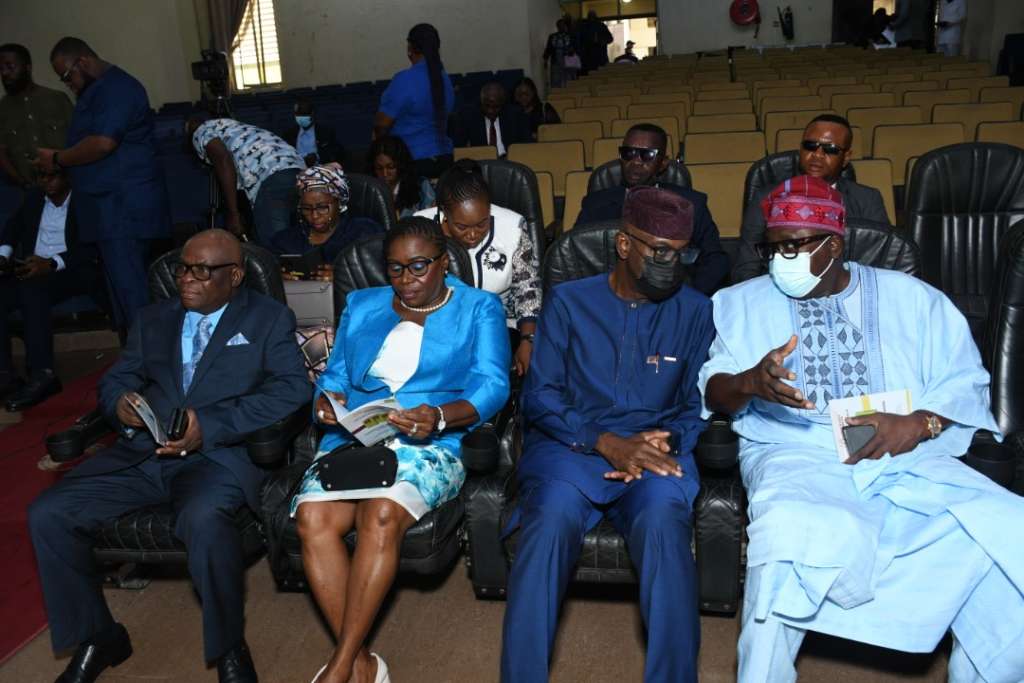
Below are some photos of the event.

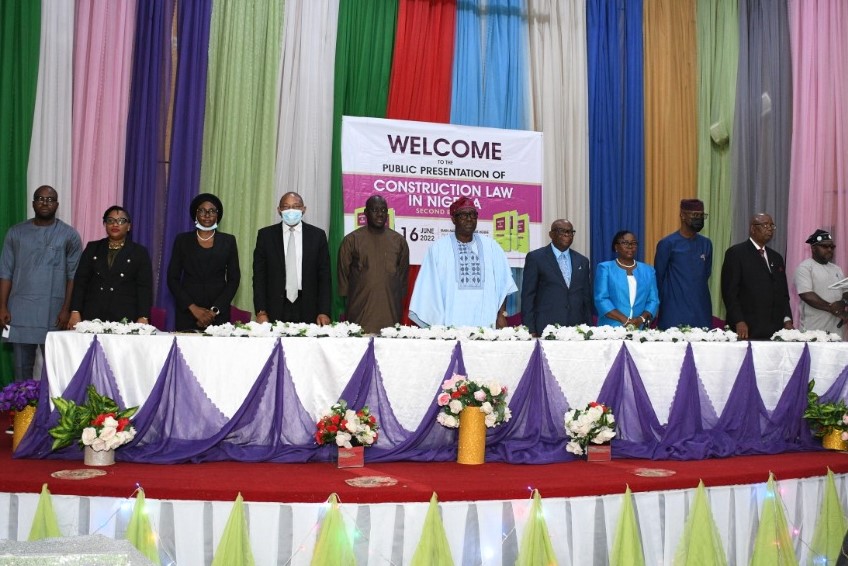
L-R : Hon. Justice W.SN. Onnoghen, GCON, CJN (Retired), Etieka (Mrs) Nkoyo W. N. Onnoghen, Sen. Liyel Imoke & Chief Bayo Ojo, SAN, CON (Distinguished Chairman of the event)
Sen. Liyel Imoke (former Governor, Cross River State, Father of the day
Chief Bayo Ojo, SAN, CON, Chairman of the event
L-R: Mrs Ewuwuni Onnoghen-Theophilus & Hon. Justice Maryam Anenih (who represented the Hon. Chief Judge of the High Court of the FCT)

The burden of insensitive, tepid and selfishly partisan legislature

By Henry Ewunonu

Today, the leader of the Tory Party and Prime Minister of Britain Mr. Boris Johnson finally resigned as the Leader of the party and consequently, as the Head of Government over sundry accusations some of which include flagrant violation of the lockdown measures he prescribed for the whole country, mishandling of criminal accusations of friends and partners and shabby implementation of the BREXIT project.

Those that resigned said that they are no longer comfortable with the Prime Minister’s handling of the affairs of government. Shame, as it is said, belongs to the relations of vagrant psychotic, and not the sufferer.

This however did not come quite easy. Despite suffocating opposition, Mr. Johnson managed to escape humiliating disgrace from his colleagues severally. Two weeks ago, he survived a no-confidence vote in the House of Commons.

But that was not to last long as the agitations for his ouster stimulated an unprecedented wave of resignations by cabinet ministers- men of conscience who valued self-image and love for country higher and better than immediate political gains.

As at this morning, the BBC revealed that about 50 members of cabinet have resigned because their leader was not performing well.

What does that tell us concerning the way many of our own legislators in Nigeria and strong men around government have sold their souls in their attempt at defending the indefensible brazen low performance of the present administration, especially at the Federal level? Many of them would do anything human to defend the administration despite obvious evidence of colossal failure. Yet, the nation drifts closer daily to tipping over.

The highest burden of the present-day setting is the leadership of the National Assembly which without asking confessed its unfailing love for the President and vowed that even with the threat of a gun to their heads, they will pass every and anything sent to them by the President.

Their usual oversight functions died unnaturally as did the distracting parliamentary probes that led to nowhere except in providing our disillusioned citizens sessions of comic relief since they say that laughter is the best medicine. Democracy is what it is because of the people’s voices. Because the 200 million citizens cannot become legislators and sit in sessions, this is why we have elected representatives as senators and honorable members. Our voices got lost in them because of the “Kings bread and wine”.

The highest gift to a person in power is constructive criticism. Even when considered unduly antagonistic, the principals in power should take in the message and ignore the unbecoming posturing of the messengers or the mode of delivering the messages.

It has proved almost difficult for humans in governance to internalise this counsel.

Those that listened and changed the narrative live to tell a different story.

Just a few days ago, another ugly scenario played out at the highest shrine of justice in Nigeria the Supreme Court where the Chief Justice was also forced by the now born again 14 other Justices of the Court to throw in the towel. How come issues get to the bursting point before being addressed or redressed and save the country increasing number of very embarrassing situations?

The value of open rebuke is immeasurable. It deters further wrongdoing as it provides a gauge for future actions.

Those who would prefer being “advised” inside their bedrooms and shut out opportunities and benefit from public opinions, always end with regrets as power is only transient.

In the health sector, many in leadership positions of health facilities are severely allergic to criticisms. Yes, criticisms as there’s no better word to substitute it. It’s said that those who are intolerant to heat sensations should stay very far from the kitchen. These new Lords of the manor lose their close friends and colleagues while in office as they prefer praise singers who are more junior colleagues better and above those who can look straight into their eyes to say “nay, you should have done it better this way”.

The system suffers because of the ego of men. In the health sector, people die because of ego and mismanagement. The superman self-absorbed egomaniac suddenly replaces the hitherto ideas collector and synthesiser, and the end result is predictable.

Pre-2015, many hailed Sai Baba but today, few now, if at all, murmur it with a time of melancholy. Oh, what a way to squander the public goodwill. The voices of such notorious choir members who shouted hosanna are now shouting crucify him. The voices that suffer a form of Stockholm syndrome are getting drowned out on daily basis by the crushing poverty and worsening insecurity in the land. After following the price of a loan of bread from N250 In 2015 to N900 today, they needed no teacher to learn a new song. Learn from him and them.

As the nation embarks on another frenzy to elect her leaders in 2023, let’s look well and critically examine the anatomy, physiology, and psychology of the contenders.

Let’s not blame God again for punishing us with wicked rulers who look aside as the country burns.

Let’s select those that will have the courage to do what men do- accept responsibility for both achievements a day failings and throw in the towel when public opinion suggests so.

Let’s elect those who have shame in them as the late Chief Abraham Adesanya prescribed as the number one quality of a leader. That a man has kept on parading himself as a leader when there is no more country to govern is pitiable. As a leader in your right, do you notice when the voices of praise singers are diminishing by the growing dissatisfaction occasioned by your fast diminishing performance ratings?

Have you noticed that your true friends are reducing and are in fact no more as you fence-wall yourself and badly managed government?

Look deep and you’ll see who your true friends are.

Henry Ewunonu , a Health Rights Activist and Public Commentator,  wrote from Abuja

The coming anarchy

Anarchy Photo Credit: Idoma Voice

By Dr. Sam Amadi 

It happened in Owerri. Armed terrorists stormed a prison facility and released criminals. Today, Imo is under the terror of unknown Gunmen.

Last night, it happened in Abuja. Terrorists stormed Kuje prison, housing captured terrorists and other high-profile criminals. About 600 prisoners are reportedly unaccounted.

Yesterday, terrorists attacked President Buhari’s advance convoy in his home state and killed two police officers.

About 45 military personnel were killed when terrorists ambushed a contingent in Niger State, last week.

Everyday, the Nigerian state is bloodied by terrorists who have been nurtured and cuddled by those currently in political offices.

In 2014, Jonathan was described as clueless by a propaganda machine, mostly organized by Ahmed Bola Tinubu and he was voted out of office for paltry administrative failings.

Now, President Buhari is about to succeed to lose a country.

Doesn’t President Buhari have competent aides who can take over actual governance from him whilst keeping him in position in de jure form, until May 29, 2023? Presidents hire aides for that purpose. The Chief of Staff, if competent, can step in and cover this tragic incompetence. Otherwise he should hire competent aides who can govern while he signs off decisions until May 29, 2023. That is the privilege of being a president.

Must we allow the country to be completely lost?

Dr. Sam Amadi, an Associate Professor of Law at Baze University Abuja, was a former Chairman of Nigerian Electricity Regulatory Commission (NERC)

Linda Rose Bala, a woman of passion, resilience and more

It was Dwight Eisenhower who said: “The qualities of a great man are ‘vision, integrity, courage, understanding, the power of articulation, and profundity of character.’  As Linda Rose Bala seeks the position of 1st Vice President in the forthcoming national elections of the Nigerian Bar Association (NBA), electing her into that office will further raise the bar for the NBA particularly as she epitomises the words of that statesman who served as the 34th president of the United States.

Mrs. Linda Rose Bala known for her dexterity, and well-remembered for her unimpeachable handling of the bar’s finances as a former Treasurer, was born on 5th December 1958. She hails from Kagoro in Kaura Local Government Area of Kaduna state.

Bala attended the College of Advanced Studies, Zaria, and became the Vice President of the Students’ Union under the Presidency of Hon. Justice Ishaq Bello (Rtd), who went on to become the Chief Judge of the Federal Capital Territory. Linda Rose Bala holds a Diploma in Accounting from Ahmadu Bello University, Zaria, and was also a University parliamentarian. In 1992, she obtained her LL. B (Hons) from  ABU, Zaria and was called to the bar on the 15th day of December 1993. At the law school, she was appointed as one of the Group leaders by the Director of the NLS Lagos who at the time was Mr. Emmanuel Babatunde Abiodun Ibironke, SAN (of blessed memory), and was saddled with the responsibilities of distributing the synopsis and dissemination of information among others.

Upon admission to the Bar, she registered as an active member of the Bauchi branch of the NBA. Her passion for the Bar got her co-opted into the Committee of Chairmen & secretaries who were saddled with the responsibility of traveling around Nigeria to ensure that the lingering issues arising from the 1992 NBA crisis were resolved and the NBA national election was successfully held in 1998. As a member of this Committee, she was a tireless and committed worker and with other members of the team, worked zealously to convince members of the Bar on all divides to come back to the table, reunite and revive the NBA. For her commitment, while the Committee worked, Mrs. Linda Bala was nicknamed the “Bridge builder”. The Committee’s work was successful as all aggrieved parties agreed to put all differences aside to organize elections for the Bar.

In 1997 Mrs. Linda Bala relocated to Zaria and timeously sensitized the Branch on the activities of the committee of Chairmen & secretaries and the resolve of members to hold elections. Indeed, elections were organized in 1998 and new national executives emerged to lead the revived NBA. NBA Zaria Branch effectively participated in the 1998 elections. In 1998, Mrs. Bala was elected the Vice Chairman of the NBA, Zaria Branch.

In 2002, she filed her nomination forms preparatory to contesting for the office of the National Treasurer and was to run against her senior, Richard Ogbeche Esq., but was impressed upon to step aside for him and as a consummate Barman, she gladly did. Immediately after Senior Richard Ogbeche served out his term as Treasurer, in 2004, she was returned unopposed as National Treasurer, an office she held from 2004-2006. She has been a member of the National Executive Committee (now Council) of the NBA from 2000 to date. She was a Council of Legal Education member from 2008 to 2010. She also served as a member of the Disciplinary Committee of the NBA (North West) from 2010 to 2012. Mrs. Bala was a council member of the NBA Women Forum (NBAWF) from 2010 to 2012. She has been a member of the NBA election working group and has served as a prosecutor with the Disciplinary Committee by making several positive inputs. She was the ELCOM Chairperson for the FIDA Elections in her branch Zaria in December 2021.

A full-time Legal Practitioner, Mrs. Bala is the Principal Partner of Linda R. Bala & Co., situated at No.7 Park Road, Zaria. She once had a branch office in Jos but had to close it down because of the incessant crises and for the safety of her staff. She has several judgements to her credit. She is a member of the Int’l Bar Association (IBA) and has attended several conferences in Nigeria & abroad.

A woman full of energy and verve, Mrs. Bala who has concluded many pro bono human rights cases is passionate about Human Rights Protection. From her antecedents, promoting the human rights of members of the bar and Nigerian citizens is her priority.

She is happily married to Prof. E. J. Bala and blessed with three children.

It is a Crime to Fail in Child Immunization

It is a Crime to Fail in Child Immunization.  Daily Law Tips (Tip 243)

By Onyekachi Umah,Esq.

Every parent/guardian with custody of a child in Nigeria, irrespective of tribe, religion and wealth must provide full immunisation for such child under the age of 2 years.
Failure to do so, is an offence punishable with a fine not exceeding #5, 000 Naira for first time offenders but imprisonment for not more than 1 month for second time or more offenders and also an order that such child be immunised.

References:

Sections 4, 5, and 278 of Child’s Rights Act, 2003.

Credit:Sabilaw

Legalization of Abortion in Lagos State

By Sonnie Ekwowusi

The abortion directives issued last week by the Lagos State Governor Mr. Babajide Sanwo-Olu to the effect that Lagosians can now “safely” kill their unborn babies without any qualms are illegal and therefore null and void. Frankly speaking I don’t know why Mr. Sanwo-Olu has allowed himself to be drafted into the simmering, highly-sensitive political, cultural, religious, moral and contentious issue of abortion. I don’t know any Nigerian politician who had promoted abortion without his or her political career being completely ruined. So why is Governor Sanwo-Olu toying with his political career?. Already the Sanwo-Olu’s abortion directives have sparked off demonstrations in Lagos and Abuja. The Governor’s abortion directives fragrantly violate sections 145, 146, 147 and 201 of the Criminal Laws of Lagos State (as amended in 2011); sections 228, 229,230, 297, 309, 328, of the Criminal Code Act CAP C38 (and their equivalent provisions in the Penal Code); sections 3,4, and 17 of the Child Rights Act 2003; Child’s Right Law of Lagos State 2015: sections 17 and 33 of the 1999 Nigerian Constitution; Articles, 3, 4 and 5 of the African Charter on Human and Peoples’ Rights; Preamble to the 1990 Convention on the Rights of the Child (CRC) (ratified and adopted by Nigeria). Therefore, as earlier stated, the aforesaid abortion directives issued last week by the Lagos State Governor are illegal and therefore null and void.

Therefore the Lagos State Governor is humbly advised to withdraw the abortion directives. Why? Because the abortion directives or policies cannot be enforced or obeyed in Lagos State. It is trite law that directives or policies that are ultra vires the existing laws of the land or do not fall within the ambit of the laws of the land or are in violation of the laws of the land cannot be enforced or obeyed in the State. Only enacted laws or Acts can be enforced or obeyed. Governor’s Directives that are in flagrant violation of the laws of the land cannot be enforced. The combined effects of sections 145, 146, 147, 201 of the Criminal Laws of Lagos State (as amended in 2011) and sections 228, 229,230, 297, 309, 328, of the Criminal Code Act CAP C38 (and their equivalent provisions in the Penal Code) is that anybody who, with an intent to procure the miscarriage of a woman or intents to abort or kill her baby in the woman by unlawfully administering on her any noxious substance or contraceptives or pills or drugs or instruments or by inserting instruments into the womb of the woman and crushing her baby to pieces in order to achieve the aforesaid purpose is guilty of a felony punishable under the various sections of the Criminal Code of Lagos or the Criminal Act of the Federation. In fact, section 328 of the Criminal Act prescribes life imprisonment for killing an unborn child. The section stipulates: “Any person who when a woman is about to be delivered of a child prevents the child from being born alive by any act or omission of such a nature, that, if the child had been born alive and had then died, he would be deemed to have unlawfully killed the child, is guilty of a felony, and is liable to imprisonment for life”. Section 17(1) of the Child’s Right Act 2003 clearly provides for the right of the unborn child. It states: “A child may bring an action for damages against a person for harm or injury caused to the child willfully, recklessly, negligently or through neglect before, during or after the birth of that child”. In similar fashion, section 16(1) of the Child’s Law of Lagos State 2015 clearly provides for the right of the unborn child. It states thus: . “Right of the unborn child to protection against harm, etc. (1) A child may bring an action for damages against a person for harm or injury caused to the child willfully, recklessly, negligently or through neglect before, during or after the birth of that child”. The preamble to the CRC states: “Bearing in mind that, as indicated in the Declaration of the Rights of the Child, “the child, by reason of his physical and mental immaturity, needs special safeguards and care, including appropriate legal protection, before as well as after birth”.

The deduction from the forgoing is that abortion is outlawed under our laws. In fact, both sections 16(1) of the Child’s Law of Lagos State 2015 and 17(1) of the Child’s Right Act 2003 clearly provide that an unborn child can bring a legal suit, of course via locus parentis or guardian ad lite, against any person for damages for harm or injury willfully or negligently inflicted on the child before its birth, during its birth and after its birth. So, you can see that the unborn child enjoys enormous the right to life under our laws. Therefore unless the aforesaid laws are amended to permit the killing of unborn babies, the Lagos State Governor has no right to issue directives approving the killing of the unborn babies in Lagos State. It is instructive to note that section 201 of the Criminal law of Lagos State erroneously relied upon by abortionists to argue that medical abortions are permissible in Lagos State to “save the life and protect the physical health of the woman” does not by any stretch of imagination prescribe abortion. Section 201 merely states that a person or a medical doctor is not criminally liable for any surgical operation performed in good faith and with due diligence on any person for his benefit, or upon an unborn child for the preservation of the mother’s life. Therefore section 201 is not an exception allowing the procurement of abortion in Lagos State. Equally section 297 of the Criminal Act is worded exactly like section 201 of the Lagos State Criminal law. Again section 297 is not an exception allowing procurement of abortion. The Dublin Declaration on Maternal Health 2012 and other declarations unequivocally state that abortion is not medically necessary even to save the life of a pregnant woman. So why are these abortionists misinforming the Lagos populace? In any case, assuming section 201 of the Criminal law of Lagos State permits medical abortion in Lagos State, it would be inconsistent with the provisions of the Criminal Act and other federal laws, and, to the extent of that inconsistency would be null and void. By virtue of the doctrine of covering the field, the Criminal Act and other federal law have outlawed abortion in Nigeria.

Therefore Sanwo-Olu’s directives or any Lagos Law “legalizing” abortion in Lagos State, would, to the extent of their express or implied inconsistency with the Criminal Act or other Federal laws, be held null and void and no effect whatsoever. In other words, in the event of any inconsistency between the Lagos law on abortion and the Criminal Act and other federal laws on abortion, the latter will prevail to the extent of the inconsistency. Those who pretend or feign ignorance of the right of the unborn child forget that in the U.K, and, I think in other criminal jurisdiction, any person who kills a pregnant woman is charged for double murder, that is, he is first charged for the murder of the pregnant woman, and, then separately charged for killing the unborn child in the woman’s womb. If the fetus in the womb is not a human being, why is the murderer of a pregnant woman charged for double murder or homicide?

What is most unacceptable about the Governor’s abortion directives is that the critical stakeholders such as the Churches, Mosques, traditional rulers, purveyors of Nigeria’s cultural heritage, security agents, anti-abortion legal practitioners, anti-abortion medical practitioners were not consulted or invited in the fashioning out of the 40-page abortion directives. The Catholic Archbishop of Lagos Most Rev. Alfred Adewale Martins has just issued a press statement condemning the legalization of abortion in Lagos State and stating that the Catholic Archdiocese of Lagos was never invited or consulted in the making of the abortion directives. Neither were Muslims in Lagos invited or consulted. The Pentecostals were not consulted either. Only abortionists, pro-choicers and pro-abortion institutions, namely, Marie Stopes abortion clinics, the Federal Ministry of Health, Society for Obstetricians and Gynecologists of Nigeria (SOGON), Population Reference Bureau (PRB), Ministry of Health, Lagos, Prof. Innocent Ujah, Prof. Ayodele Atsenuwa were consulted in the making of the abortion directives. I have crossed paths with SOGON, Prof. Ujah and Prof. Atsenuwa at Conferences, and, I would tell you that they were vehemently campaigning for the legalization of abortion in those Conferences. SOGON is a notorious abortion NGO. The Federal Ministry of Health, Abuja is another dangerous abortion organization. Last week the Health Minister Dr. Osagie Ehanire said that last 1% of the Nation’s health budget is allocated for abortificients and contraceptives to facilitate abortion. You can now see what I am talking about. A country in which her citizens have no access to basic primary health care is budgeting huge amount of money for abortion. The PRB is an international abortion agency that has been promoting population control in Africa through abortion. Marie Stopes is a notorious U.K abortion clinic with abortion clinics in Nigeria.

Acting on a petition written by a concerned body about the illegal abortion activities of Marie Stopes in Lagos State two years ago, the Police raided the Marie Stopes abortion clinic in Surulere, Lagos. During the raid, the Police confiscated the abortion files and abortion instruments such as Manual Vacuum Aspirators found in the clinic. On opening the abortion files the Police discovered to its chagrin that the clinic had aborted under-aged girls below the age of 17 without the consent of their parents. The Police handcuffed Dr. Bernard, one of the abortion doctors found on duty in the clinic on that day. The police later took him and the abortion files and Manual Vacuum Aspirators to their station. The funny aspect was that as the Police tried to arrest the clinic’s security guard who was manning the clinic’s gate at the material time, the poor man knelt down and swore to high heavens that he did not know that Marie Stopes performs abortion at the clinic. He was obviously lying to avert police arrest and detention. It is scandalous that the Lagos State government is consulting Marie Stopes, the largest global abortion provider in the English-speaking world. According to the Marie Stopes website, Marie Stopes aborted over 700,000 women in 2018, meaning that it killed 700,000 Nigerian babies in 2018. Marie Stopes abortion clinics had been shut down in Niger Republic, Kenya, Uganda, Zimbabwe, Togo, Madagascar, Ethiopia, Ivory Coast and Burkina Faso. To fully understand what I am saying, just google “Marie Stopes abortion clinic”.

Now let’s examine the content of Sanwo-Olu’s abortion directives. The content of the directives is the singsong of the abortionists and pro-choicers in Nigeria over the years. They argue that legalizing abortion makes it “safe” because when abortions are legal, it become “safe” because women can seek out competent medical doctors to perform them unlike when abortions are illegal the abortions will be performed by quack medical doctors and medical personnel in “unsafe’ conditions and by doing make abortions “unsafe” for women. Therefore they argue further that abortion or termination of pregnancy should be made “safe” and “lawful” for those women. In summary, the Sanwo-Olu directives are aimed at making abortion and termination of pregnancy in Lagos State “safe” and “lawful” because according to abortionists “unsafe” abortion leads to the death of women. This is false. All abortions have serious negative impacts on women. 17% of women undergoing the so-called “safe-abortion” or legal abortion procedure experience physical complications (such as abdominal bleedings or pelvic infections) after the abortion. The percentage is likely higher with long-term physical and psychological effects of abortion such as heavy bleeding (requiring blood transfusion), nausea, abdominal cramping, heart attack, perforation of the uterus, miscarriage of future pregnancies, death (it is estimated that 20% of maternal deaths result from abortion), guilt, anger, depression, suicidal thoughts, memory repression, eating disorders and sleep disorders are considered.

The truth of the matter is that abortion is a medical procedure, and, as with any medical procedure, abortion is fraught with health risks, even if it carried out by the most competent medical practitioner and under the best medical conditions especially in Nigeria and other developing countries. Therefore prefixing or modifying abortion with “safe” is not only misleading but medically inaccurate. “Safe-abortion” is not only an oxymoron: it is a medical impossibility since every abortion is always unsafe for the unborn baby because it kills the unborn baby. The notion “unsafe-abortion” is also misleading because it implies that some abortions done by competent medical doctors are “safe” or without risks. This is a big lie. All abortions carry serious risks for the aborted woman regardless of the quality of medical care employed. The abortion kills the child. How can you say that abortion is “safe” when it claims the life of an unborn child? More importantly, abortion is a crime in Nigeria. Therefore you cannot modify abortion with the prefix “safe” in the same way you cannot modify stealing with the prefix “safe”. You cannot say “safe-stealing”

Consequently, the Lagos State Governor is humbly advised to rescind the abortion directives. The directives are coming on the heels of the recent upturning of ROE V WADE by the American Supreme Court. ROE is the famous abortion case law that hitherto had legalized abortion in America. If the U.S is rethinking and outlawing abortion, why should Lagos State be setting pace in legalizing abortion through the back door? I like this quotation recently sent to me. “Man’s laws cannot make moral what God has declared immoral. Even if a sin is legalized, it’s still a sin in the eyes of God” (Dallin H. Oaks). The killing of an unborn baby, whether euphemistically self-styled “safe-abortion” or “post-abortion care” or “termination of pregnancy” or “interruption of pregnancy” or “women’s reproductive right” or “women’s health” is a crime punishable under our laws. We must stick to our own cultural and religious values in Nigeria. It is suicidal to import foreign practices and lifestyles which are alien to Nigeria and seek to impose them as directives simply because money has exchanged hands. The consensus reached at the various United Nations Conferences, is that the law passed in every developing county including Nigeria must reflect the diverse social, economic and environmental conditions of that country, with full respect for their religious, cultural backgrounds and philosophical convictions.

Abortion is anthitectical to the religious, cultural and philosophical convictions of the Nigerian people and therefore cannot be imported into Nigeria. There is no Nigerian culture that endorses the killing of an unborn baby. Termination of pregnancy is murder simpliciter. The Bible condemns abortion or termination of pregnancy. In Islam, Quran 17: 31 stipulates: “slay not your children fearing a fall of poverty; we shall provide for them and for you, lo the slaying of them is greater sin”. Every country is interested in protecting what it holds dear or its cherished values. The West can continue killing their children. But we love children in Nigeria. Abortion is a complete break with the Nigerian cultural heritage.

TIPS