Home Blog Page 823

Alubo, Ogunwumiju, Adejuyigbe weigh in on Academics being conferred with the rank of SAN

By Lillian Okenwa

As arguments on whether Academics are deserving of being conferred with the rank of Senior Advocate of Nigeria continues, more senior lawyers share their thoughts on the issue.

While Kehinde Ogunwumiju, SAN advised that the Legal Practitioners Privileges Committee, LPPC stick to the standard indicated in its guidelines, Professor Alphonsus Okoh Alubo, SAN said there are many more issues that astute senior lawyers, must worry about.

Ogunwumiju in a WhatsApp chat pointed out that sticking to the rules as it affects academics was “the basis of the Award to Prof. Ben Nwabueze – his books on Constitutional and Administrative law, Nwadialo on Civil Procedure, Sagay on Contracts and Torts, ST Hon on Evidence, I O Smith on Land Law, Jelil Omotola on Conveyance, Abayomi on Wills.”
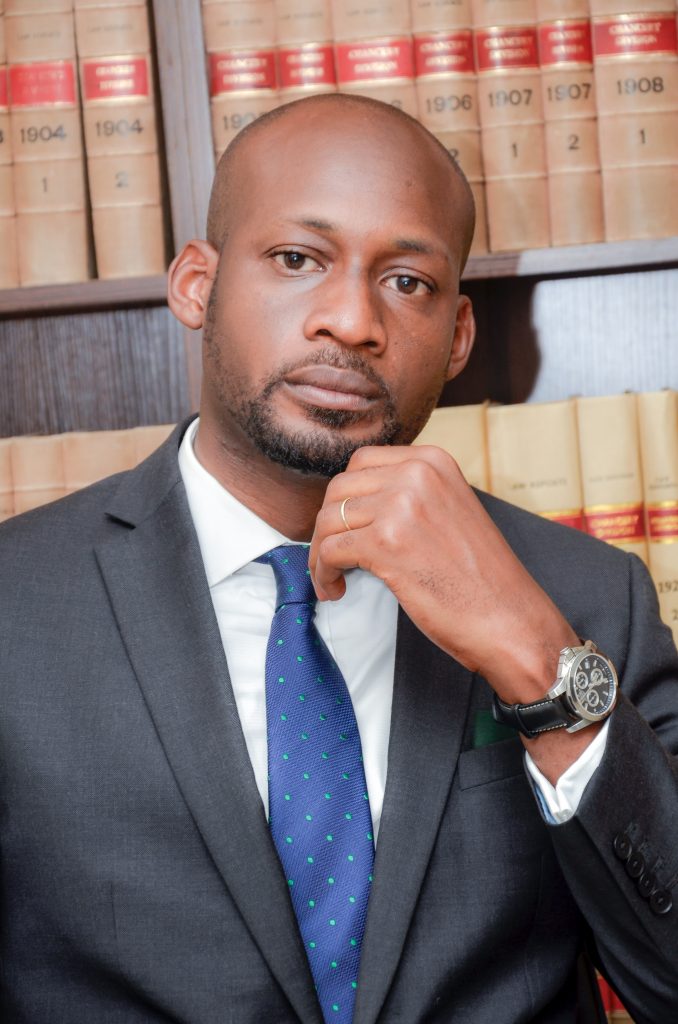
Kehinde Ogunwumiju, SAN

According to the Senior Advocate: “Truth be told, if six academics are awarded every year, how many of them can say they publish works that have the sort of impact on legal practice that these books have had? Maybe two or at most three. Now, people apply with a compilation of essays or articles written by others just because they compiled them. People apply with a digest of decisions. No attempt to analyse these decisions

“Did you know that the great Gani Fawehinmi got his rank under this category for his publication the Nigerian Weekly Law Reports, NWLR? Same with Deji Sasegbon. These men published works that no serious practitioner can do without.”

However, another Senior Advocate of Nigeria, Olatunde Adejuyigbe has expressed his disapproval of the ongoing debate. Adejuyigbe who observed that the argument is a waste of precious time noted that the application and conferment process of the rank is currently lacking in integrity and merit.
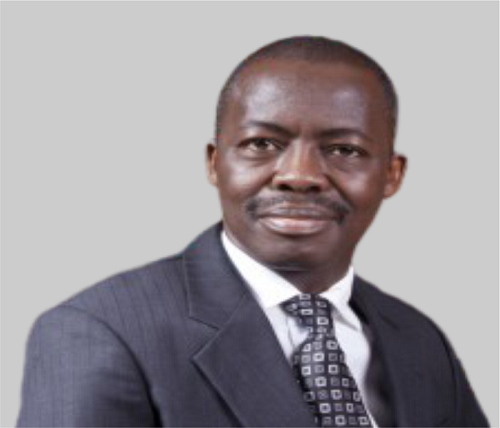
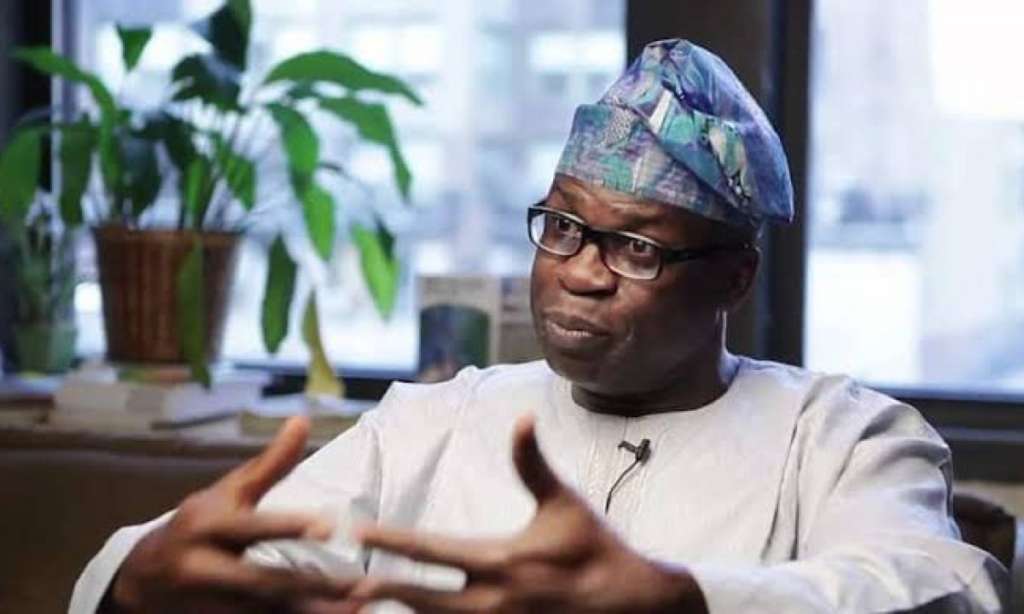
Olatunde Adejuyigbe, SAN

Adejuyigbe said: “It is bewildering that precious time and energy have been dissipated on a banal topic that leads nowhere. A cart-pusher on the streets knows that the rank of SAN is in the same league of devaluation like the Naira. In Nigeria, distinction just like beauty is in the eye of the beholder. These days anyone who is well trained in the art of Rankadede can get the rank. It’s a pity that Late Sikiru Ayinde Barrister never applied for the coveted rank.

“It is only in this our own dear native land that those who should be behind bars are celebrated as leaders of the Bar. It is an open secret that many of those who have been conferred with the rank as Advocates either snatched, borrowed or purchased cases in the Appellate Courts in the bid to meet the requirements. Many of those who took up some criminal cases pro bono before their elevation to the inner bar abandoned such cases thereafter.”

Also, he accused Senior members of the Bar of complicity in the declining status of the rank by sidestepping the guidelines for the award of the rank.

“The fault is not in the guidelines but in us. Many Advocates who have gained mastery in circumventing the guidelines are following the footprints of their seniors in the inner bar. In the days of yore, a good Maths teacher was interested in the workings that led to an answer and not just the correct answer. But that’s not what we do. Just pile up your cases, do your runs and you’ll get a boarding pass.

“When you read pleadings, written addresses, and briefs of arguments authored by some ” giants” in the inner bar you will come to terms with our prevailing Ichabod and seek solace in the Book of Lamentations.”

Insisting that priority in public discourses with legal practitioners should be on salvaging the dire condition of the judiciary and the SAN title which he maintained is currently suffering a deficit in honour, the SAN said:

“There was no issue at all when Professors of Law who are worth their weight in gold were conferred with the rank. They maintained fidelity with academia which is their first love and rebuffed the seduction of another mistress. But times have changed.

“What should be of concern to those who mean well for our nation and the legal profession is the reform of our moribund and dysfunctional justice system. The sterile discourse on the award of the rank to academics is not helpful in any way. All resources should be geared towards the attainment of a virile justice mechanism. Regardless of the route a lawyer took to the inner bar our nation is still afflicted with a system that serves anything but justice. No sane lawyer should be proud of what goes on here. Let’s stop this meaningless squabble over fish and turkey, beans and porridge. There are more serious issues which deserve urgent attention.”
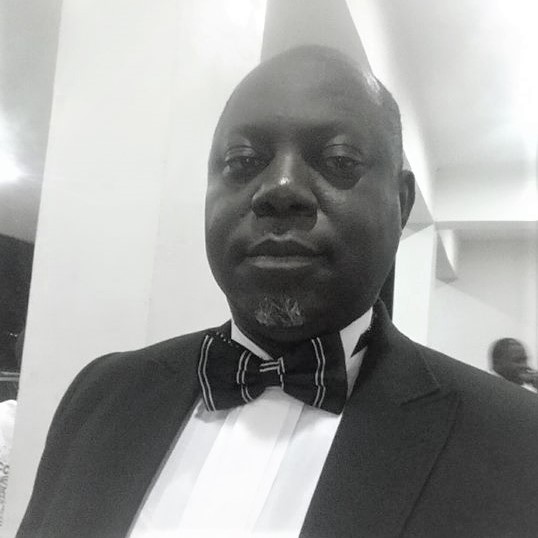
Professor Alphonsus Okoh Alubo, SAN

On his part, Professor Alphonsus Okoh Alubo, SAN said: “It is a travesty to have people destroy the ladder they used in climbing up. Needless miasma. There are so many issues that astute senior lawyers, must worry about: Administration of justice, corruption in the judiciary, how to fill the current void in the Supreme Court with the number of retirement of justices, the appointment of Senior lawyers to the Court of Appeal so the jurisprudence of the court can be enriched, etc. Only God knows what would happen in the next few years, with this acerbic clamour from relatively younger Silks.”

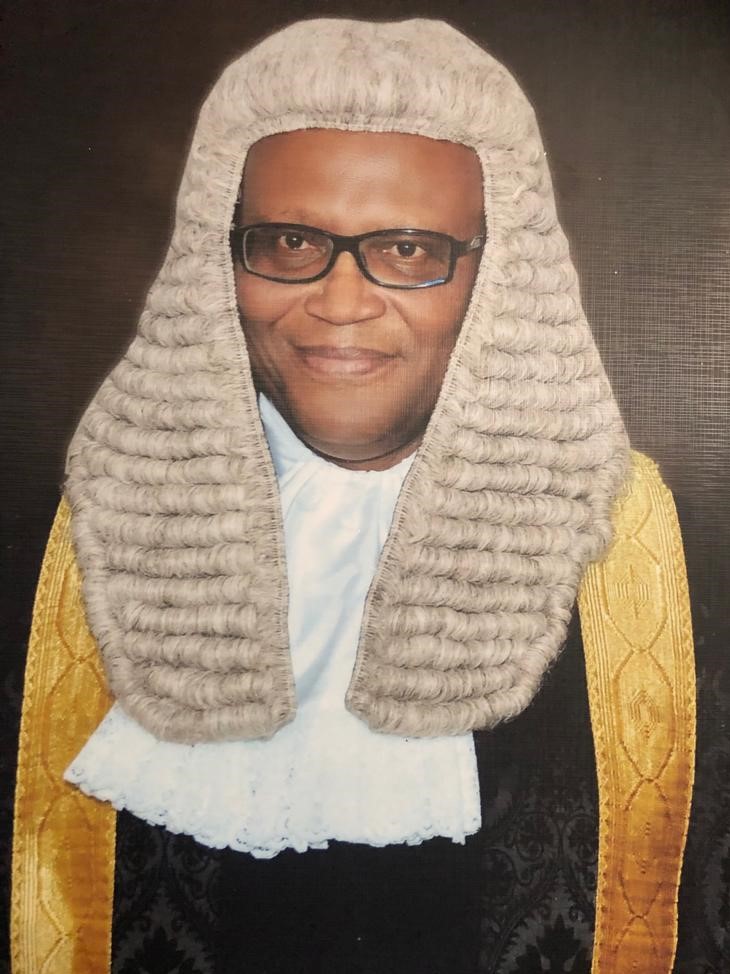
Strengthening the process leading to the rank of  Senior Advocate of Nigeria

By Ikeazor ‘Kizor’ Akaraiwe, SAN

1: The rank of Senior Advocate of Nigeria (SAN) is awarded as a mark of excellence to members of the legal profession who have

“qualified to practice as a legal practitioner in Nigeria for not less than ten years and has achieved distinction in the legal profession…” S. 5 (2) Legal Practitioners Act.

Unless you have gone through the process of taking silk or been close to any who went through it, you may not know that it is one of the most rigorous and painstaking processes for all concerned; the candidates, the Legal Practitioners Privileges Committee [LPPC], the Supreme Court Justices and Justices at all levels of the justice delivery spectrum. 

2: As one who has gone through the process, permit me to opine that it may be easier for a camel to go through the eye of a needle than for one undeserving of the privilege within each geopolitical federating zone, to obtain the rank.

3: However, man being a work in progress, there is always room for improvement. Permit me then to make suggestions for reforming with respect to both categories: Advocate SANs and Academic SANs.

4: SOME RECOMMENDATIONS WITH RESPECT TO ADVOCATE SANs:

Further permit me to take a voyage to 1978, the year I wrote my school certificate at Edo College, Benin City. For the purpose of the West Africa School Certificate Examinations, subjects were classified into groups as follows:

                a.            English Language (or other Languages) – Compulsory group.

                b.            Sciences

                c.             Humanities

                d.            Social Sciences

                e.            Fine Art / Technical Drawing

                f.             Etc.

The languages category was compulsory, while you had to choose between a minimum of six and a maximum of nine subjects from four groups.

You could not write your WAEC in your best six to nine subjects if they all were from, for instance, two or three groups. You had to drop some and add some to meet the prerequisite of six to nine subjects from a maximum of four groups. The raison d’etre for this being the need for candidates to have a broad-based education. 

5: SUGGESTIONS FOR THE ADVOCATE SAN CATEGORY

It is hereby suggested that the Legal Practitioners Privileges Committee adopt subject matter classifications in order to produce SANs who would have a broad-based distinction in as wide an array of subject matters as possible, this being a major way to justify the rank. Any SAN can of course decide to specialise thereafter, but s/he will never be found wanting in as broad as possible a spectrum of law practice, thus justifying the silk.

However, if we choose to maintain the current system wherein some SANs come in with subject matter expertise in one or two categories of law practice, it would be expedient to narrow their practice to those fields of expertise.

5: EXAMPLES:

The following examples may explain better what I am trying to say:  

                (a)          It may be desirable but unlikely for a SAN who got the rank purely as a criminal law advocate with only criminal law proceedings and judgments, for example, to refuse a juicy brief for, say, election petitions, or oil and gas which are not his areas of expertise. But this seldom happens. Who is going to bell the cat? Who is going to enforce narrowing their practice to those fields of expertise?

                (b)          Indeed, some Senior Advocates who got the rank as academics were excellent in the specialist terrain of practice and procedure, but some not quite so, thus bruising the distinction expected of the rank. This is because they got the rank premised upon their very good research skills and writings and not necessarily, their practice in court. 

6: RECOMMENDATIONS.

In order to avoid similar weaknesses which tend to undermine the rank, amidst the so many great strides the LPPC has made, the following recommendations are humbly submitted:

That for the advocate category, the following court case classifications, subject to amendment, be adopted for appeals:

(i) General Criminal Causes, 

(ii) Specialist Criminal- [EFCC / ICPC], Capital Offences, Election Criminal,

(iii) Civil – Commercial/Company,

(iv) Specialist Civil – Aviation, Maritime,

Pre-Election and Post-Election,

(v) Arbitration, 

(vi) Special Courts (Medical & Dental Practitioners, LPDC, COREN, ARCON, Military),

(vii) ETCETERA

7: FURTHER RECOMMENDED PURSUANT TO PARAGRAPHS 3 and 6 ABOVE:

That in order to qualify to apply for the rank under the Advocate Category,

(a) at the level of the Supreme Court; you will be required to have a minimum of one judgment each from a minimum of four out of the groups listed. 

(b) at the level of the Court of Appeal; you will be required to have a minimum of two judgments each from a minimum of four out of all the groups listed. 

(c) Courts of First Instance: No classifications. 

8: ACADEMIC SANs.

While the introduction of the rank to academics was good, and the first academic list SAN, foremost constitutional lawyer, Professor Nwabueze, SAN, is a man of incomparable distinction, it is recommended that two routes be created for academic list SANs.

ROUTE No. 1: Become SAN on your papers and books only and be expressly constrained from courtroom practice.

ROUTE No. 2: To be able to practice as a courtroom advocate become SAN on your papers, books, and added courtroom qualifications as admirably suggested by Ebun-Oluwa Adegboruwa, SAN thus – “Frontload at least five trials in contested cases in the High Court, three contested cases in the Court of Appeal and two contested cases in the Supreme Court” all obtained in the ten years preceding the application.

Although Route 2 requirement above is a far cry from the stringent requirements for Advocate list SANs, suggested academic Route 2 should have a salutary effect in ensuring that those professors who practice in court as SAN are advocates in the courtroom sense of it.

The academic SAN who chooses route No. 2 may even emerge as the best Senior Advocate given his humongous output in books and legal research papers in addition to the 5 – 3 – 2 case requirement suggested above.

I did give the following example in my initially circulated piece before I took the rank in 2021 that, I did witness an elderly SAN / former state attorney-general during election petitions turn around to the utter bar, asking in exasperation, “who made this man a Senior Advocate?” The focus of his angst was a Senior Advocate (academic) plodding his way through the clearly unfamiliar territory of election petitions. When the elderly SAN was told that his brother silk got the rank premised upon his academic work in corporate law and governance, he asked in further exasperation, “so, why is he here?” It was very embarrassing, to say the least.

9: AMENDMENT OF INITIAL SUGGESTION:

My initial suggestion, as hereunder restated, is therefore amended as above states.

Here is what I wrote earlier: “it  is recommended that academic list SANs be expressly restricted from practice as courtroom advocates, subject only to the following:

If academic list SANs elect to practice in the courts, they should apply to the LPPC for a special dispensation to practice, in which case, the following parameters are recommended to be established for them: 

(a) Collaboration with an advocate category Senior Advocate for a minimum of four years with certified true copies of proceedings and judgments in 

(i) five cases at court of 1st instance and 

(ii) two each at the Court of Appeal and Supreme Court, in which the academic category SAN was led by the advocate SAN, including briefs and pleadings with names appearing. 

(b) After four years, the academic SAN may then receive, upon application, a special dispensation to appear alone in courts.”

Those views stand amended aforesaid.

10: CONCLUSION

A. By way of concluding remarks, at 60 years of age, and 37 years at the bar, I have reached the legacy stage of my professional career. I am not interested in self-aggrandisement or popularity, but in leaving the profession better than I met it.

B. In this regard, in my various writings, I have made many recommendations for the improvement of the justice delivery sector. As the good Lord gives me strength, I shall neither stop nor be intimidated.

C. The article as first circulated online has generated a robust discussion among the legal luminaries which I appreciate greatly. Everyone is interested in the profession and it is not meant to attack anyone or any set of persons.

D. These suggestions, which by the way, affect both the Advocate list SANs and Academic list SANs, are made to strengthen one of the few remaining quality institutions in Nigeria, the rank of Senior Advocate of Nigeria. They are made to save the rank and the profession from denigration and demystification, and not to diminish anybody. The rank is greater than all of us. Let us protect it. 

Ikeazor ‘Kizor’ Akaraiwe, SAN

Fresh reports show that ghosts may decide 2023 elections

Last week when Prof. Chidi Anselm Odinkalu, former Chairman of the National Human Rights Commission (NHRC), wrote that ghosts may decide Nigeria’s general elections in 2023, many people sneered. However, recent reports appear to indicate that the university professor may be seeing into the future.

THISDAY reports that the Independent National Electoral Commission (INEC) may be under constraint to conduct 2023 elections in over 686 communities under the atrocious activities of armed non-state actors across the federation.


The findings also revealed that the affected communities and wards cut across 90 local government areas (LGAs) and 18 states of the federation.
President Muhammadu Buhari had directed security agencies to ensure stability before 31 December.


Concerned civil society actors conversant with the undertaking of the Inter-agency Consultative Committee on Electoral Security (ICCES) anonymously shared intelligence about the country’s election security with THISDAY at the weekend.


 INEC had expressed grave concerns over the 2023 elections. However, security agencies had played down the apprehension of the electoral umpire about the country’s unsafe territories for the conduct of the 2023 elections.


The commission had consequently been meeting the country’s security community under the auspices of the Inter-agency Consultative Committee on Election Security (ICCES) to ensure security and stability during the polls slated for February 25 and March 11, 2023.


Despite its initiative to ensure a stable security environment before the 2023 general election, investigations by THISDAY showed that the electoral commission might not be able to conduct elections in “over 686 communities across the federation.”
Concerned about the country’s worsening security conditions, the civil society actors found out that the north “is more affected when compared with the south. Of the 686 affected communities, 618 were identified in the north alone.”


By implication, the findings indicated that the north alone “accounts for 90.1 per cent of the unsafe communities.
The findings further showed that challenge “is minimal in the south,” putting the total number of the affected communities at 68.
In the entire south, the findings revealed that there “are 68 communities where candidates will not be able to campaign or where the INEC cannot conduct any election. The communities represent about 9.09 per cent.”


Of these 680 communities nationwide, according to the findings, 336 were identified in the North-west alone. Of the 336 in the North-west, 200 are in Zamfara State alone. Obviously, Zamfara is now the country’s unsafest state.


The findings said: “In the North-east, 168 communities were identified. Of this number, Gombe is the only state where no community or ward is listed as part of the unsafe territory in the North-east. In Borno State, there are about 79 wards where elections may not be held.


“In North-central, 114 wards are affected. These are mainly located in Kwara, Nasarawa, Niger and Plateau. Benue and Kogi are not included in the list of these communities. If we have 10 communities in Ondo State, there is no way Kogi will not be affected because ISWAP insurgents are from Kogi State.
“In the South-east, 55 communities have been identified as red zones. These are mainly in Abia, Anambra and Imo States. Ebonyi and Enugu states are excluded from the list of troubled communities,” the findings revealed.


In the South-west, the findings claimed that at least 10 communities are identified in Ondo State, especially in Owo LGA, Ose LGA and their environs.
The findings attributed the case of Ondo State “to its proximity to Kogi State, where ISWAP insurgents have penetrated.”


 The findings put the number of communities affected in the South-south at three, which are all located in Rivers State.
Explaining its roles in ensuring the country’s election security yesterday, the Department of State Services (DSS) acknowledged its synergy with the INEC.
The DSS, through its Public Relations Officer, Dr. Peter Afunanya, said: “It works through its ICCES domiciled in INEC to ensure adequate security and order for the elections.
“ICCES comprises security agencies and the electoral body and meets regularly, share information and proactively makes necessary interventions,” Afunanya said in a response to THISDAY’s inquiries.

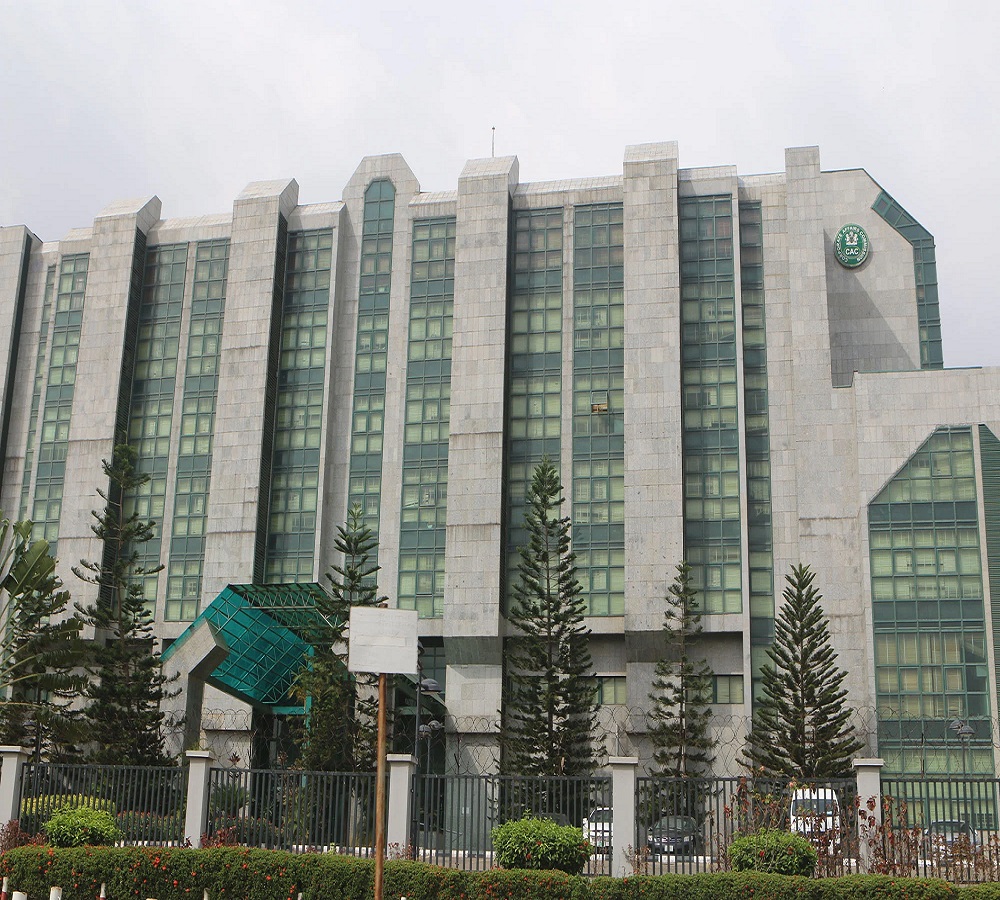
Court slams CAC, RG with N2million costs of action over unlawful suspension of Deputy Director

The National Industrial Court of Nigeria, Abuja Division has declared illegal and unlawful, the suspension of Mr. Moses Adaguusu, a Deputy Director and Head of the Corporate Affairs Commission, Taraba State by the Commission.  

The Presiding Judge, Hon Justice Edith Agbakoba, in a landmark judgment, nullified and set aside the Suspension. The Court consequently ordered the Corporate Affairs Commission and the Registrar-General of the Commission Alhaji Garba Abubakar to ensure the immediate payment of all salaries, benefits, allowances, and entitlements due and accrued to the Claimant during the period of his unlawful suspension. The Deputy Director was unlawfully suspended between March – September 2021, while Heading the Enugu Nodal Office of the CAC.

The Court ruled that Mr. Moses Adaguusu was wrongly suspended and was not given a fair hearing.

Hon. Justice Agbakoba while condemning the action of the Registrar General of Corporate Affairs Commission, said the rules of fair hearing were neither observed nor adhered to in the disciplinary procedure adopted.

The Court ordered the CAC and Alhaji Garba Abubakar, the Registrar-General of CAC to pay N2 million naira to the Claimant as the cost of the action.

Learned Counsel to Mr.  Moses Adaguusu, Barrister Terlumun Azoom from the Law Firm of Chief S. T.  Hon, SAN & Co, said the judgment would go a long way in addressing abuse of Office, official impunity, vendetta, executive lawlessness, and illegalities in public offices.

The CAC under Garba Abubakar has been inundated with Court cases before superior courts of records. In October 2021 the CAC Staff Union (AUPCTRE) won another landmark case of unlawful proscription of the Staff Union by Alhaji Garba Abubakar, with N1million damages against the Commission. Rather, than comply with the decision of the President of the National Industrial Court, Hon. Justice B.B. Kanyip, Ph.D., the Registrar-General decided to appeal the decision, at the risk of industrial unrest.

Counsel to the Corporate Affairs Commission and the Registrar-General of the Commission, Mr. Francis Ogbu while reacting to the judgment said the defendants would appeal the judgment.

Mr. Moses Adaguusu, a Deputy Director and Head of the Corporate Affairs Commission, Taraba State had approached the National Industrial Court after he was wrongfully suspended by the Registrar-General of the Corporate Affairs Commission.

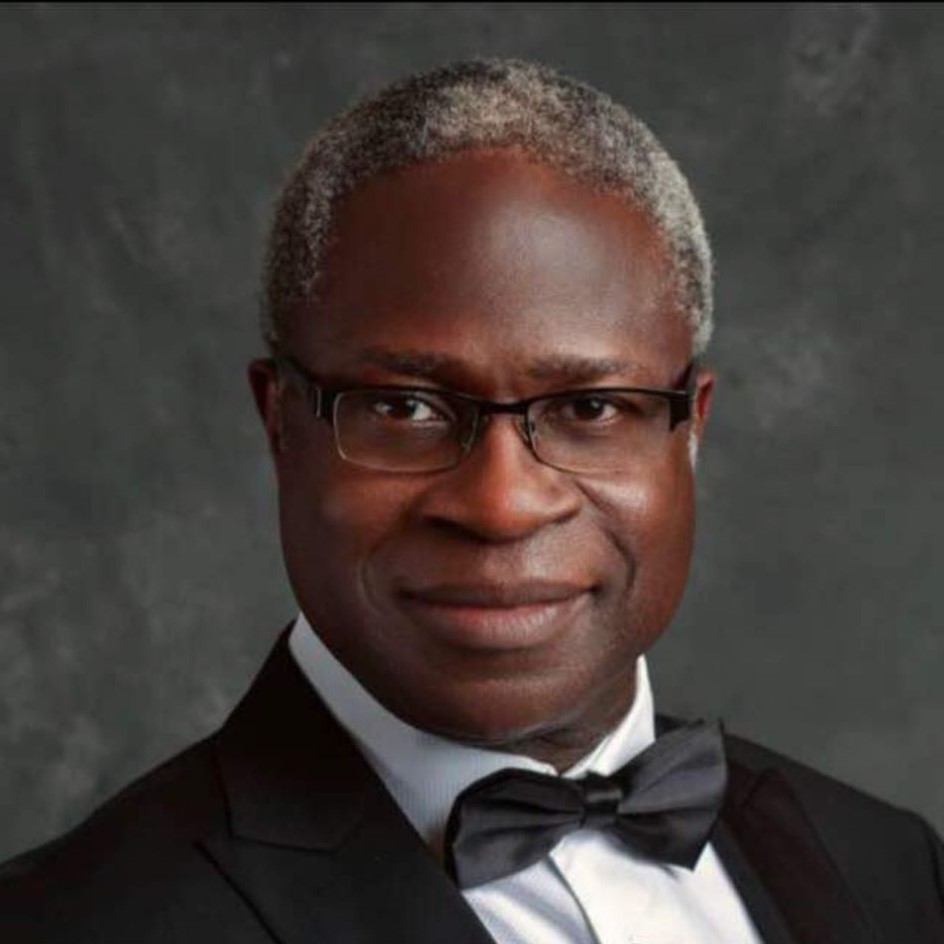
Ikeazor, SAN pays tribute to former NIMASA Executive Director, Engr Joseph Rotimi Fashakin

  • Says he was larger than life…

It is hard to speak of Rotimi Fashakin in the past tense on account of his larger-than-life presence.

Rotimi was a humorously rambunctious soul who was loyal to any course he committed to. If it is possible to be loyal to a fault, Rotimi was, as he was a good friend to have, and a bad enemy to make.

I am saddened particularly because he was only 59 and would have turned 60 this month! He had so much more to offer.

I chuckled to myself from time to time that if with an engineering degree, Rotimi was a warrior even to the point of commenting on legal issues with some authority, what was he going to be with a law degree? With a law degree from the prestigious Buckingham University in the bag this December, Rotimi was going to start a second life, having lived his first life as an engineer.

Devoted family man, Rotimi celebrated his family publicly on RoL (Rule of Law WhatsApp Group) space and elsewhere at every opportunity; birthdays, graduations, and every progress made. He wrote poems for his daughter and gleefully published her poems on his birthday.

You would be surprised to know that Rotimi and I never met physically, although he was a classmate at Ife with Obi my brother. However, we talked several times on the telephone, our conversations never lasting less than an hour!

We met on cyber space about 20 years ago, in OurCountryNigeria yahoo group, but to hear us discuss over the phone, you would think that we had known each other all our lives.

He requested my telephone number by email, and that is who Rotimi was, a lover of people, friendly, ever reaching out.  

Even though often on opposite sides of the political divide, we shared similar passions – for good governance in Nigeria. We also both had an abiding faith in the deity of our Lord and Saviour Jesus Christ, often sharing private messages of spiritual encouragement.

Forgive me for waxing spiritual … but although my blood pressure shot up and a bad headache followed when I read the message from his elder brother Dr. Emmanuel Fashakin, I am mindful of the admonition in holy scripture that we should NOT mourn as those having no hope because those who are in Christ Jesus have hope for the hereafter: and not eternal damnation (1 Thess. 4/13) And if our hope was in this world only and there was no resurrection from the dead, “we are of all men, most miserable.” (1 Cor. 15/19).

Upon these scriptures, I find peace. I pray the good Lord to grant Dr. E.F. Fashakin, and Rotimi’s beautiful family, the fortitude to bear this loss. Amen.

***

Engr Joseph Rotimi Fashakin, MNSE, a former Executive Director at NIMASA, died at Buckingham England on Saturday, September 24, 2022. He was 59 years old. He is survived by his widow, Mrs. Busola Fashakin, Asst Comptroller Immigration Nigeria, and Children, Acct James Toluwalase Fashakin, Engr. Daniel Ayomide Fashakin and Sarah Fashakin (Medical Student, Georgetown University).

Funeral arrangements will be announced by the family.

***

Prior to his passing at Buckingham England on Saturday, September 24, 2022, he made this cerebral contribution following the demise of Queen Elizabeth II.

THE CHANGING FACE OF THE BRITISH MONARCHY…

She died on Thursday, 8th September 2022.

Yesternight was her last at the Buckingham palace. The anguish and emotional outpourings were palpably understandable; the agelong edifice had been her home and official residence for more than three score and ten years!

In those 70 years, Queen Elizabeth II excitingly made the British monarchy friendlier and more amenable to the changing times. She cherished her position as the titular Head of the Commonwealth. For instance, in 1986, the leaders of the commonwealth countries met to deliberate on how best to move the condemnation of the apartheid government of South Africa from mere rhetoric to actionable political imperatives. 48 members out of the 49 present voted for sanctions against South Africa. The only opposition came from Britain headed by Mrs. Margaret Thatcher. The Queen was so incensed by Mrs. Thatcher’s government’s action that she considered boycotting one of their weekly meetings. Understandably, the Queen was concerned about the future of the Commonwealth and Britain not being on the wrong side of history.

On July 20, 1986, the New York Times published an article which stated, inter alia,

“The Queen has been described in recent press reports as worried that Mrs. Thatcher’s firm opposition to sanctions threatened to break up the 49-nation Commonwealth.  The Queen reportedly also believes that Mrs Thatcher’s Conservative Party Government lacks compassion and should be more caring toward less privileged members of the society, The Sunday Times said.”

After much loud murmurings, on Thursday, 11th February 1993, the voluntary arrangements by which the Queen and the Prince of Wales will pay income tax were revealed. What was still kept secret was the royal fortune from which the income will be taxable!

Nonetheless, eons ago, a British Monarch paying taxes would have been considered sacrilegious.

The first major impudent challenge to the monarchy was on 15th June 1215. It was on that day that the Barons served on King John the 63-paragraph writ that later came to be known as the Magna Carta. The writ was meant to checkmate the reigning king John and ensure more space for liberty, rights, and concessions.

Although the king tried to fight it but the genie was already out of the bottle. He was forced to sign the agreement with much humiliation of his person.

King James 1 was a British monarch who stoutly defended monarchical absolutism. In 1610, he wrote: “Kings derived their authority from God and could not, therefore, be held accountable for their actions by any earthly authority such as a parliament.”

After his death in 1625, his son, Charles, became the King. Charles 1 continued in the iron-fisted rule of his father. In 1629, he dissolved the parliament for 11 years.

In 1641, the parliament passed the Triennial Act (otherwise known as the Dissolution Act) which mandated the parliament to sit for at least 50 days in three years!

The culmination of the political and military conflicts between the royalists and the parliamentarians in England inexorably led to the capture and trial of Charles 1, the King of England, Scotland, and Ireland. On Saturday, 27th January 1649, the High Court of Justice had declared Charles guilty of attempting to “uphold in himself an unlimited and tyrannical power to rule according to his will, and to overthrow the rights and liberties of the people” and he was sentenced to death by beheading.

Following the glorious revolution in 1688, King James II went into exile. In 1689, the Bill of Rights 1689, an Act of Parliament was enacted. It was largely based on the political thinking of John Locke, a political theorist, and philosopher. It set constitutional limits to the monarch in terms of seeking the people’s will represented by the parliament. Succinctly put, the Bill straightened Britain to constitutional monarchy with established rights of the parliaments, free elections, and freedom of speech. By the doctrine of parliamentary Sovereignty,  the monarchical prerogatives became subordinated to the Acts of Parliament. For example, the former British Prime Minister,  Theresa May, wanted to use royal prerogative to trigger Article 50 of the EU’s Lisbon Treaty and begin Britain’s two years of talk on formal exit from the European Union. It was the European Communities Act of 1972 that legally formalised Britain’s membership of the EU. It was the reasoning of the UK Supreme Court that the Act needed to be repealed before the UK could formally be divorced from the EU. The attempt by Theresa May’s government was declared ultra vires. This ultimately led to the enactment (by parliament) of the EU Withdrawal Act 2018.

Indeed, times have changed. The subsisting doctrine of Parliamentary Sovereignty makes the triumvirate of British authority to be subject to the Monarch-in-Parliament.

Truly, the times of monarchical absolutism are over. King Charles III begins another chapter in British monarchical democracy. It is expected, as he has promised, to govern with the enviable precedents set by his mother and the help of God.

God save the king!

Engr. Rotimi Fashakin, FNSE.

Wednesday, 14th September 2022.

Judicial Independence 62 years after Nigeria’s Independence

By Chidi Anselm Odinkalu

For all the talk of judicial independence, the reality of colonial and post-colonial Nigeria has been one long story of judicial subordination into subservience. Seven years into his presidency, Muhammadu Buhari is on his fourth Chief Justice of Nigeria, with the last two having departed office in rapid succession under a cloud. The story of how judicial independence in post-colonial Nigeria got to its present pass goes back to the very idea of colonialism.

Students and graduates of law faculties and law schools all over the Commonwealth, including Nigeria, sooner or later learn to swear by the rule of law and doctrine of the independence of the judiciary. These principles, they are told, anchor the law in rationality, shielding it from descent into arbitrariness; ensuring that it applies equally to everyone and that judges are blind in dispensing it fairly to all manner of persons irrespective of station, without fear or favour, affection or ill-will.

One Rule for the White, Another for the “Natives”

Anyone who thinks closely about this would realize quickly that it is in fact founded on fable. In a decision in 1918, the Judicial Committee of the Privy Council laid it down that African “natives” were “so low in the scale of social organization that their usages and conceptions of rights and duties are not to be reconciled with the institutions or legal ideas of civilized society… Such a gulf cannot be bridged.”

Thus, colonial rule, which dispersed the Common Law traditions of the Commonwealth – including independence of the judiciary – across the British Empire and beyond, was a system of one rule for the white colonialists and another for the black and brown “natives”. This idea of inherent inequality of the “natives” was itself central to the conception of law and its administration. Far from a system of rule of law, colonial rule was a system of “rule by law” in which judges were anything but independent.

This system of inequality relied for its enforcement in the colonies not on the independence of judges but on their subservience to the colonial will. To ensure this, colonial judges could be removed at will.

On 19 June 1953, the Queen’s Bench Division of Her Majesty’s High Court in London decided a very interesting case. In 1930, Mr. Terrell was appointed a Judge of the Supreme Court of (Colonial) Malaya, in the Straits Settlements. Prior to his appointment, he had exchanged correspondence with the Colonial Office, which informed him that he would be liable to retire compulsorily on the attainment of the age of 62.

In 1942, Japan overran and occupied the Straits Settlements and the Secretary of State for the Colonies informed Mr. Terrell that they could find no suitable post for him elsewhere in the colonial service. When Mr. Terrell declined leave to retire, the Secretary of State terminated his appointment forthwith on 7 July 1942. That was 17 months before he was due to retire in February 1944.

Mr. Terrell took the case to an arbitrator and lost. So, he appealed to the High Court, arguing that under section 12 of the Supreme Court of Judicature (Consolidation) Act, 1925, which superceded the Act of Settlement (1701), judges in England held office during good behaviour and could only be removed on an address by both Houses of Parliament, none of which conditions had been fulfilled in this case.

Upholding the award of the arbitrator, Lord Chief Justice Rayner Goddard decided that the enactment relied on was “wholly inapplicable to a colonial judge” and that Mr. Terrell held office at the pleasure of the Crown. Reminded that Mr. Terrell’s contract appended the undertaking by the Colonial Office that he would not be required to retire before the age of 62, Lord Goddard decided that the undertakings did not constitute an agreement and, in any case, that even if they were, they could not take away the prerogative of the Crown to dismiss him at will or pleasure.

When they appointed Africans as judges, the colonialists did it as an act of patronage conferred on natives about whose subservience they had no doubts. Kitoyi Ajasa, one of the earliest Nigerian judges, achieved that preferment largely because of his closeness to Frederick Lugard, his support for colonial subjugation of natives, and his role as the leading Freemason in the territory as seven-time Worshipful Master of Lagos Lodge No. 1171 between 1901 and 1928.

Judicial Subservience as Virtue

The politicians who led Nigeria to Independence clearly did their pupillage well in the intricacies of retrenching judicial independence. They did not have to wait long after Independence in 1960 before showing their mastery of the subject.

In 1961 two unrelated things happened: Muhammadu Buhari was commissioned as an officer into the Nigerian Army and the then ruling political coalition in Nigeria tried Joseph Tarka unsuccessfully for treasonable felony. That was largely the last time a ruling government failed to get in substance what it wanted from the courts.

1n 1962, they would show in the treasonable felony trial of Obafemi Awolowo how well they had learnt their lessons. First, they denied him legal defence of his own choice as the constitution then allowed him. Then, they side-stepped the fiercely independent Daddy Onyeama to whom the case was to be assigned because they could not trust him to bring home a pre-determined outcome, instead ensuring that the case was assigned to Sodeinde Sowemimo, who wrote his own judicial epitaph with the words: “my hands a tied”.

With Chief Awolowo out of the way, they moved to topple his Action Group from power in the then Western Region. However, his party fought the case to the Judicial Committee of the Privy Council in London, as the then highest court in the country was called, and won. In response, the ruling coalition amended the constitution to legislate the British Crown and the Privy Council out of existence in Nigeria, converting Nigeria into a Republic.

In January 1966, the military overthrew the lot of the squabbling politicians. In 1969, the Supreme Court decided that what the military did in 1966 was not necessarily a coup for all seasons but rather a time-limited effort to save the country from collapse. The logic was that their hold on power was at the sufferance of the civilians to whom they were liable to hand back power once the emergency necessitating the change of guards was over. So, the military legislated the judiciary into subservience with the Federal Military Government (Supremacy and Enforcement of Powers) Decree, No. 28 of 1970 of 9 May 1970.

Two years later, in 1972, they summarily pensioned off then Chief Justice, Adetokunbo Ademola, replacing him with Taslim Elias, who had served as a comely Attorney-General to both civilian and military rulers of the country for a cumulative period of over one decade. Elias himself would last for barely three years in the seat, before being similarly fired by another military government after a coup in July 1975.

This game of judicial musical chairs orchestrated by the military and the politicians left the judiciary bereft of confidence, all but institutionally lobotomizing it and rendering claims of judicial independence in post-colonial Nigeria rather ostentatious. Military rule more-or-less institutionalized this in three ways.

First, following Decree No. 28 of 1970, they created a military culture of ousting the jurisdiction of the courts from all matters excluding essentially private disputes over land and inheritance. Ibrahim Babangida took this step one notch higher when in 1992, he enacted a decree that criminalized litigation.

Second, by the time Ibrahim Babangida became military ruler, the military began a practice of appointing judges mostly from the civil service. They needed people on the bench whose habit of obedience to instructions they could trust.

Third, they unitarized appointments to and benefits in the judiciary, creating the monstrosity that has now become known as the National Judicial Council (NJC).

At page 174 of his 2006 autobiography Just as I am, pioneering estate management practitioner, Chief Simon Okeke recounts his membership of the Island Club in Lagos, saying: “stories had it that the verdicts of most court cases were decided upon within the club. At that time, all Ministers and Magistrates, High Court to Supreme Court judges and famous lawyers and other top government officials were members of the club.”

SANs Are No Longer Enough

As the work of judges has become overtaken by political disputes, politicians have decided that there is no virtue in judicial independence and made a virtue of judicial subservience. Like most other things in the country, judicial appointments now are for the most part allocated to system insiders.

Around the country, therefore, politicians with any ambitions to high office are more likely than not to be armed with a judge in their back pocket or in their bedroom. It is no longer enough to have an army of Senior Advocates of Nigeria (SANs) on your side.

The last President of the Court of Appeal had her husband awarded the senatorial ticket of the ruling party in Bauchi North just as she was about to begin presiding over the administration of disputes over the 2019 election. Once her tenure was over, and her husband had served the purpose, the ruling party quickly awarded the same ticket to a scion of the then-serving Chief Justice.

62 years after Independence, Nigeria’s law students are still wondering what judicial independence was supposed to mean to begin with. The lawyers appear to have given up on it. The politicians have taken care of it. And as for what most of the judges think, it’s best left unsaid.

#2023: Remember the first republic debacle 

By Martins Oloja

Our politicians and political leaders (some of them offspring of our First Republic politicians) are on the march again. They know the story of how the First Republic fell to the Federal Republic of the Nigerian Army in 1966. They are ignoring the warnings of legends such as Bernard Shaw about the implications of ignoring classic lessons of history. They have seen the implications of the Republic of the ‘Soldiers of Fortune.’ They saw how the Second Republic came to harm through their godfathers. They have read Adewale Ademoyega’s ‘Why We Struck,’ yet they have ignored the lessons and impacts of political corruption. They knew that the Third Republic was imperiled by crass opportunism nurtured by rampaging corruption, yet they have ignored the expediency of transparency and accountability in governance system in their Fourth Republic, which began 23 years ago. They have since demonised democracy and redefined it as government of the few rich who can buy votes for the benefit of only the family of the few powerful ones. Within 23 years, they have destroyed the economy of the most populous black nation on earth.

In the last 23 years, Nigeria’s politicians have destroyed the power of the law, which can no longer rule. They are the law. They alone rule. They are above the law. They have ruined the majesty of both the law and democracy in Africa’s most populous nation. They have destroyed the notion that judiciary is the last hope of the common man. Even the judiciary is struggling to tell the people that justice is indeed blind. Yeah, our new political leaders have built their electoral justice system that can give them the democratic mandate that the people deny them. The legislators in the house our founding fathers built are being freely called ‘legis-looters’ and they cannot deny the cognomen. Those who have exercised executive powers in the last 23 years have been tagged ‘execu-thieves’: they can’t remove the emblem of shame from Google and the people’s hearts. The currency they have given us has destroyed everybody’s purchasing power. They have no answer. They are clueless and cruelly so about the strong room of governance called the civil service. They have tagged that ‘evil service.’ The current Chief Executive of the Federation and Commander-in-Chief of the Armed Forces was our Petroleum Resources Minister 46 years ago.

Incredibly as it may sound, 46 years on, he is still the Petroleum Resources Minister and President. Yet the oil sector on his watch has become the world’s most curious cesspool of corruption. The country that in January 1976 mounted a rostrum on behalf of Africa in Addis Ababa, Ethiopia and declared to the powerful G-7 leaders to ‘leave M.P.LA, Angola alone’ because ‘Africa has come of age, is no longer a strong voice even in its West African region. The military firepower that even the United Nations used to rely on to defend the flash points in Africa has lost its classic mojo. Our soldiers and police operatives and officers are being killed and humiliated by rag-tag non-state actors we call ‘terrorists.’ Tertiary education quality that once attracted students from even the United States, has become a symbol of ridicule and our political leaders ask  academic leaders and their scholars to die of hunger for crying out against rot in the system. Never in the history of governance system have a people become so helpless to change the principalities and powers that have held and let them down!

That is why as they want to begin the campaign this week, there is a responsibility to remind the political leaders that they are on the march again and the foundation of the democracy they seek to deepen is already rickety and people no longer have confidence in it. We need to remind them that the older people are beginning to notice some striking similarities between the corrupt politics that led to the fall of the First Republic and the ‘politricks’ they have entrenched. The politicians who have been abusing their opponents instead of reading and researching history books of what led us to this sorry pass should note what the spirit of good journalism and civil society is telling them, lest they will crash this Republic and there will be jubilation all over.    

https://player.adtelligent.com/prebid/iframe.html?adid=1837a4f04ccd21b1&ref=https%3A%2F%2Fguardian.ng

The politicians who are seeking to lead us from May 29, 2023 should note this contextual reporting of history of the fall of the First Republic as chronicled by credible scholars who posit that:  there are always many levels at which a complex social phenomenon can be explained and understood. To begin at the surface, the First Republic was overthrown because the people lost faith in it — not because some disaffected colonels were worried about their careers, not even because a disaffected ethnic group was worried about its position in the Federation. The former worry may have existed, and certainly the latter did. But they explain neither the success of the coup attempt nor the outpouring of joy and relief that greeted it across the country. The First Republic’s loss of popular legitimacy was a remarkably deep and broadly based — and, by the end of 1965, thorough — phenomenon. 

‘In short, the rulers used power that they held constitutionally to do unconstitutional things. In the process they destroyed themselves. Nigeria had censuses that were not censuses, elections that were not elections, and finally governments that were not governments.’ This was a Nigerian opinion in February, 1966. There are lessons here for our ‘politiricians.’

Professor Jibrin Ibrahim, a columnist, sounded a similar warning in 2015 in an article on election lessons in which he drew copious lessons from the same First Republic. He quoted a credible authority, Larry Diamond whose thought also triggered today’s intervention – the fire today’s politicians are trifling with. According to Prof. Ibrahim then: ‘The 2015 Nigerian election is turning out to be as acrimonious, bitter and a hateful play of brinkmanship that could derail our democracy as that of 1964. It has the potential of threatening the survival of our country…’ 

As the 2023 election is barely five months away, we need to reflect on what we did wrong that led to the collapse of the First Republic and subsequently the emergence of the civil war. Doubtless, a useful guide on this as Ibrahim pointed out in 2015 is Larry Diamond’s book, ‘Class, Ethnicity and Democracy in Nigeria: The Failure of the First Republic.’ It’s a good resource on the failure of the First Republic. The classic reveals layers of the dynamic interplay of class, ethnicity and regionalism that was bound to lead into only one outcome, system collapse. The print edition is available in Nigeria and the digital copy is available online. Reproduced below are excerpts and summary from the chapter on the 1964 historic election.

The author draws our attention to the fact that Nigerian politicians have a history of v and fecklessness. In fact, ‘The Daily Express’ editorial of December 28, 1964 had argued that the crisis in the country was the result of inordinate ambition of some politicians. Debating the crisis in a formal colloquium in London the same week, Nigerian students also concluded that politicians rather than the constitution had failed. Diamond argues that the failure was too easily attributed to the ethnic question. The reality, however, was that ethnicity was the construction of politicians and not the eruption of popular sentiments. He draws attention to a survey carried out in 1963-64, which demonstrated “surprising levels of inter-ethnic tolerance and acceptance among the ethnically heterogeneous work forces sampled.”

The core argument of Diamond is that the First Republic collapsed because there was no respect for the core principle of liberal democracy – free and fair competition for power through elections. For many years, regional governments were violating the spirit and increasingly the letter of this basic principle, until each region had become a virtual one-party state. He points out that the degree of overt repression, especially in the North, and the subjugation of the Action Group through a manifestly fraudulent and partisan use of Federal emergency power were fundamentally inconsistent with liberal democracy. The 1964 Federal Election erased most of what remained of the democratic character of the system. And that set the tone for the collapse of democracy and federalism two years later (in 1966).  

In other words, the ‘soldiers of fortune’ did not jump into the political arena in January 1966: they were dragged in. In 1964, southern university students, concerned that the Northern Peoples Congress (NPC) was manipulating the electoral process called for a three-month Army takeover to organise the elections. Immediately, after the elections, United Progressive Grand Alliance (UPGA) opposition leaders began talking of secession and vowed, in the aftermath of the election, not to accept the authority of any government based on its outcome. Indeed, UPGA militants felt betrayed when President Azikiwe finally conceded to Sir Abubakar’s authority. From then on, political leaders throughout the Eastern Region, and unarguably the bulk of their followers, would not recognise any NPC federal government as legitimate in its authority, though they would, for utterly pragmatic reasons, grudgingly accept it. Such alienation and cynicism were also growing in the Western Region, where ‘the Nigerian National Democratic Party (NNDP) by a mixture of persuasion, force and fraud, secured a larger number of seats but in doing so intensified popular support for the AG.

Perhaps most ominously, the election crisis drew the Army into political conflict more fully than ever before. Though the army sided with the Constitution and attempted to remain as far above the conflict as possible, it had been forced to take sides. And increasingly, the Army was being called upon to quell and contain the unrest that the politicians had generated, which meant using its coercive power and authority in support of the NPC Federal Government. More and more, the Army was coming to be seen as the only force capable of refereeing political conflict. If many politicians and opinion leaders were maintaining that only the Army could fairly and efficiently administer the elections, what were the officers themselves to think? In fact, it appears that a number of middle-ranking officers, including perhaps three Lieutenant Colonels ‘seriously discussed whether the military should intervene to resolve the crisis’ Diamond, argued in this seminal piece. 

Following the election, crisis broke out on January 1, 1965, when the contents of a speech to be delivered by President Azikiwe were revealed. The core issue was that Azikiwe vowed to prevent the Prime Minister from forming a new Government on the basis of the election results. Reviewing the repeated frustration of attempts to ensure a free and fair election, and Sir Abubakar’s rebuff of his request for postponement and UN supervision, he said they had finally agreed to allow the Federal Electoral Commission (FEC) to take ‘appropriate action.’ But when the FEC failed to postpone the election and three of its members resigned, he felt morally compelled to reject the election result (and by extension, Sir Abubakar’s entitlement to form a new government). The Prime Minister’s response was that postponement of the election had never been discussed between them; that only the FEC could call off the election and only the courts could remedy irregularities…

Before we round off the details in this history next week, let our politicians reflect on the words of a Spanish philosopher George Santayana that, ‘Those who cannot remember the past are condemned to repeat it.’ 

Can INEC conduct a free presidential election?

By Sonnie Ekwowusi

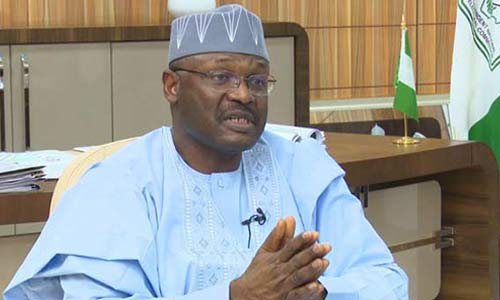
Last week the INEC Chairman Prof Mammod Yakubu publicly promised that notwithstanding the gargantuan challenges facing the commission it would conduct free and fair elections or would deliver electoral justice in 2023. “Only the votes cast by Nigerians will determine who wins and this is our commitment to the nation,” said Prof Yakubu.

Beyond mere verbal undertaking, Prof. Mahmood Yakubu led-INEC must truly and really conduct an impartial, free, fair and credible 2023 elections especially the Presidential election. Of all the elections the Presidential election is the crucial election which outcome will make or mar Nigeria. In fact guaranteeing peace, unity and stability in Nigeria in 2023 depends so much on the outcome of the 2023 Presidential election. The truth of the matter is that the people want a breakaway from the pre-existing ruinous legal order. They want total breakaway from the two political parties-APC and PDP-which are hanging on the same leprous hand. There is a time for everything under the sun. This is the time for breakaway or severance from the yolk of slavery and oppression. That is why the teeming population of young people that constitutes the bulk of the population of Nigeria has trodden the streets and alley ways across Nigeria, in reminiscent of the storming of the Bastille, to demand for a new political order where commutative justice, equity, character, competence shall flourish. Armed with their respective Permanent Voting Cards (PVCs) most young people across the geo-political zones of the country are poised to cast their votes for the Presidential candidate of their choice in the forth-coming Presidential election.

In the past, the country’s youths had displayed a somewhat nonchalant attitude towards elections and electoral processes. But today this attitude has changed for good. In fact, as we speak, the Nigerian youths are out in the streets, expressways and alleyways dancing, singing and demanding for electoral justice in the 2023 Presidential election. Apart from the Nigerian youths, other Nigerian voters from variegated bloodstream of Nigerian society are casting so much hope in the 2023 Presidential election. They perceive the election as the election which will bring positive change in Nigeria. Therefore INEC has no option but to conduct a free and fair Presidential election in February 2023. INEC must ensure that the will of the Nigerian people is reflected in the 2023 Presidential election. A very credible American election monitoring team which is based in Washington D.C that came to Nigeria in 2019 to monitor the 2019 Presidential election in Nigeria stated that candidate Atiku Abubarkar clearly won that election not candidate Muhammadu Buhari. Therefore INEC must not rig the forth-coming Presidential election in favour of the APC. The other day an APC chieftain was boasting that the APC would rule Nigeria for the next three decades. And President Buhari has said that he is eagerly looking forward to handing over power to another APC man in 2023.

If President Buhari was/is the nominator and appointer/re-appointer of INEC chair Prof. Yakubu coupled to the fact Prof.Yakubu is not financially independent of the Presidency, it is not illogical to believe that Prof Yakubu would dance to Buhari’s tune. He who pays the piper calls the tune. Isn’t it ? Think carefully about what I am saying. Mind you, this is the first time the chair of our electoral body is coming from the same ethnic group as the President of Nigeria. For example, in 1979 Chief Michael Ani who was the chair of the then Federal Electoral Commission (FEDECO) did not come from the same ethnic group as the late President Shehu Shagari. Other successive electoral body bosses such as Prof. Eme Awa, Prof. Humphrey Nwosu, Abel Guobadia, Maurice Iwu, Attahiru Jega did not come from the same ethnic group as the heads of government who appointed them. But today we have the chairman of INEC who does not only come from the same ethnic enclave as President Buhari but who was singularly handpicked and appointed the INEC Chairman by the same President Buhari. This is why the people are entertaining the fear that Prof Yakubu might manipulate the results of the Presidential election in favour of the APC. I tell people that Presidential Buhari would not want to commit a political suicide: he would not want to hand over power to a Peter Obi who, wittingly or unwittingly, would dismantle the Fulani oligarchical structures and corruption structures which he (Buhari) has been labouring to put in place in the last seven and half years.

Granted that by virtue of the Electoral Act 2022, votes cast by voters can now be electronically transmitted. The new Electoral Act has given legal backing to INEC to deploy technology to enhance the credibility of the electoral process. This has given birth to the deployment of INEC Voter Enrollment Device (IVED), Bimodal Voter Accreditation System (BVAS) and INEC Result Viewing (IReV) portal. But the aforesaid are not bulwark against election gerrymandering or manipulation. A technology operated by a fraudster can become a fraudster. So, notwithstanding the deployment of technology in the electoral process, INEC staffers can still rig the election in favour of any political party if they want.

Of all the INEC officials, the Resident Electoral Commissioners (RECs) are the most powerful and influential. The RECs are the representatives of INEC at the State level. The role of RECs is critical for the success of any election. The duties of the RECs include monitoring the activities of all INEC ad-hoc staff/RECs as well as providing for proper verification of election results. In fact, the INEC relies heavily on RECs verifications in authenticating the election results on the presupposition that RECs are people of unquestionable integrity.

The pertinent question is: what are the names of the current RECs officiating in the 2023 elections? The coalition of Civil Society Organizations (CSOs) complain that some of the 19 RECs newly appointed for INEC by President Muhammadu Buhari are either card-carrying members of the ruling party or people who have been previously indicted for corruption. On their own part, the Coalition of United Political Parties (CUPP) also complain that the current national voters’ register has been adulterated with fake and foreign names. In response to the allegation, INEC says it is presently conducting a comprehensive Automated Biometric Identification System (ABIS) clean-up of the registration data by scrutinizing every record after which it would, in line with section 19(1) of the Electoral Act 2022, appoint a period of seven days during which the register will be published for scrutiny by the public for objections and complaints”. While awaiting the publication of the register, INEC should also publish the names and designations of all the INEC’s RECs, INEC returning officers and staffers officiating in the 2023 elections to enable the public ascertain their background and antecedents. The allegation that some INEC’s RECs officiating in the 2023 elections are card-carrying members of the ruling party is a serious allegation which INEC should not just dismiss with a wave of the hand. Rather than dismiss the allegation, the onus is on INEC to rebut or counter the allegation with credible evidence, if any. INEC could even vouch for the character of the current RECs.

It is not enough for INEC to say that it is capable of organizing free, fair and credible elections in 2023”: INEC must be seen from the outside by fair-minded and informed members by the public to be manifestly organizing, through its actions, utterances and behaviour, free, fair and credible elections. The rule against bias or likelihood of bias is predicated on the perception of the fair-minded and informed members of the public. The basis for the rule is to maintain public confidence in a public institution such as INEC. Therefore INEC cannot claim to be conducting a free and fair 2023 general election if the members of the public have lost confidence in INEC or are going about beating their chests and regretting that INEC is not impartial or “independent” as its name suggests

#NigeriaDecides2023 could be decided in places where no voting can occur

By Chidi Anselm Odinkalu

When it eventually occurred on 23 February 2019, Nigeria’s presidential election was not without suspense. North-east Nigeria, home to a counter-civilizational insurgency for over a decade, was a natural location for incidents. In 2019 it did not disappoint a country in which the things that can happen in elections often defy both logic and the laws of physics.

Geidam is a settlement about 240 kilometres east of the Damaturu, the capital of Yobe State in the north-east. In 2019, the term-limited governor of the state, Ibrahim Geidam, derived his surname from the city around which he was registered to vote. On the day, however, Geidam suffered an attack from insurgents, which involved improvised explosive devices (IEDs). On the same day also, less than 30 kilometres from Damaturu, in Gujba Local Government Area (LGA), the insurgents also attacked Buni Yadi, the settlement in which they destroyed a leading public high school five years earlier and massacred an unspoken number of school children.

As a result of the attacks, multiple observers on the day reported that “voting turnout appeared to be light as authorities tried to calm panicked, skeptical residents.” The attack was so serious that “Governor Gaidam did not travel to his Bukarti ward near Gaidam town 230 kilometres away from the state capital to cast his vote.”

When the votes were in, the national turnout in 2019 was 34.75%. It would have been much worse but for places like Geidam, Yobe State, and the states of the north-east, which recorded an average regional turnout just under 42%.

Despite the insurgency and the attacks, Geidam helped Yobe State to muster a reported voter turnout of 42.9% in 2019, only marginally lower than the 43.9% in Adamawa, the home state of Atiku Abubakar, presidential candidate of the opposition Peoples’ Democratic Party (PDP), and 43.3% in Bauchi State. The turnout in Yobe was easily higher than in its more peaceful regional neighbours: Borno, 41.2%; Gombe, 41.9%; and Taraba, 41.7%. It also compared favorably with 45.6% in 2015 and 44% in 2011. Essentially, over three cycles of elections in one decade of a deepening insurgency, the turnout in Yobe State was nearly a constant.

By comparison, in the states of south-west of Nigeria, which did not have any exposure to large-scale violence like the north-east, turn out in 2019 was Ekiti, 43.7%; Lagos, 18.3%; Ogun, 25.9%; Ondo 32.4%; Osun, 43.7%; and Oyo 31.9%.

This data presents a conundrum for those interested in understanding the correlation between structural insecurity and the exercise of the right to vote or voter participation. Contrary to the intuition that an insurgency or an election day atrocity would dampen voter turnout, academic, Olalekan Adigun, who has analysed the historical turnout data from the Independent National Electoral Commission (INEC), since 1999, concludes that “there is a negative correlation between election-related pre-election violence and the turnouts in Nigeria.”

So, rising violence has not necessarily affected the number of votes declared by INEC in most elections. His study also shows that situational violence may, however, have been used as a mechanism of voter suppression in places or against communities whom powerful incumbents believed to be unfriendly. This appeared to have occurred in 2019.

Unlike in the past, however, the INEC has now acknowledged that chronic insecurity which now afflicts every geo-political zone in the country, is a major threat to the 2023 elections. The ballot will take place in 176,846 Polling Units spread across 8,809 electoral Wards, 774 Local Areas, 36 states, and the Federal Capital Territory (FCT) on 25 February 2023.

It seems clear now that there are places in Nigeria where, on current evidence, the INEC is unlikely to be able to safely deploy election workers or, indeed, organize voting.

When its suits the leaders and managers of the security sector in Nigeria, they are happy to declare that security is everyone’s responsibility. But they are usually reluctant to provide citizens with the information they need to make this responsibility count.

In connection with the 2023 elections, neither INEC nor the Inter-Agency Consultative Committee on Election Security (ICESS) has been willing to tell the voters who will be the ones paying with their lives those places where insecurity may affect the election in 2023. These are the kinds of places usually where ghosts could show up in vast numbers to vote on election day.

It is now left to citizens to figure out the lay of the land and to hold the feet of INEC to the fire if election manipulators and their enablers, many of whom inhabit the institution, are not to use insecurity as a cover for election rigging. For this purpose, it is essential to disaggregate the country into the six geo-political zones.

In the north-west, Kano and Jigawa are perhaps the only States that do not have any significant exposure to insecurity serious enough to affect ballot deployment in their territories. The same cannot be said about other states in the zone. The worst affected states in the north-west are Zamfara, Kaduna, and Katsina.

In the north East, Gombe is perhaps the only state immune from this pathology. The worst affected state is Borno. Parts of northern Adamawa and some patches in Yobe and Taraba also harbour places where it will be hard to deploy election workers safely.

In the north-central, the worst affected state is Niger State. Even Kwara State’s borders with Niger and Kebbi are not guaranteed to be unaffected and you could potentially have a contagion effect from Niger and Kaduna affecting a rim of the Federal Capital Territory (FCT). Plateau and Nasarawa may also present some locations where it could also be unsafe to deploy election workers.

In the south-east, Enugu State may be able to see elections in every ward in the state. With some luck, Ebonyi could also although the traditional antipathies between the Ezza and Ezillo cannot be guaranteed not to flare up enough to preclude balloting. Parts of Anambra South, Imo West,  and Abia Central still harbour locations where it may be impossible to organize elections safely.

In the south-south, Rivers State could present some locations where there may be challenging deployment context for election administration.

In the week after the Islamic State of West Africa, (ISWAP), announced its presence in Ondo State in the south-west, it is possible also that some locations in the state may suffer present challenges with election deployment. If this is so, then Kogi State in the North Central which shares a border with Ondo may not be entirely off the radar because it is also known to be host to an active ISWAP cell.

In summary, in somewhere between 18 to 20 states of Nigeria, there are likely to be locations where it will be impossible to voting to occur safely in 2023. It may be difficult at present to list every community likely to be affected or provide a total number of wards to be affected but anyone who has minimally tracked the metastasis of the violence in Nigeria would be able to predict or identify many of these locations with minimal difficulty. On a very rough calculation, affected communities in these three states could be above 50. From Zamfara, Kaduna and Katsina, we could be looking at multiples of that number.

The major parties know this. INEC does. And the security services certainly do. For different reasons, they are unwilling to confide in the citizens. The leading parties are hoping that they can profit from a harvest of ghost voters from insecure places. INEC’s public position is that it relies on the guidance of the security services, for whom election-related security operations, however, guarantee money even if they cannot deliver safety for the ordinary Nigerian.

Amidst this pursuit of narrow institutional interests, no one is willing to tell the Nigerian voter and election worker the truth in the detail that they need for the 2023 elections. For their part, civil society have focused for so long on PVCs, they missed the plot on how insecurity can frustrate PVCs and determine the elections.

One thing is clear though: Nigeria’s 2023 elections could well be decided in places where it may be impossible for any human being to vote. To prevent this, we must insist that INEC discloses all those places fully ahead of balloting so that everyone can verify that there will be no results from any such place.

A lawyer and a teacher, Odinkalu can be reached at [email protected]

Do we have Judicial Governors or Legislative Governors?

By Chinua Asuzu

Do we have Judicial Governors or Legislative Governors? Why do you call your governor an “Executive Governor”?  Is there any doubt that state governors belong in the executive branch of government? The Constitution says “governor”, with no intrusive adjective. Follow suit.

In its nominal usage (use as a noun), loot is a mass noun, not a count noun. Hence it has no plural form. Neither you nor the EFCC can recover “loots.” No matter how much or from how many sources, it’s loot.

In a hyphenated name, both elements are capitalized. It’s Karibi-Whyte, NOT Karibi-whyte.

Begin your application emails or letters with You, Your, or [the name of the firm], rather than I.  They want to hear about themselves first.  Say, Your law firm has distinguished itself in the Nigerian legal-services marketplace by … or Aluko & Oyebode is a leading commercial law firm with expertise in … Then segue into your own strengths and show how they would fit into the firm’s business. Say boldly, and show, that you’d be a useful addition to the firm. Match your skill set with the firm’s likely staffing needs.

Forget I hereby apply. Without the ubiquitous, if not iniquitous, word hereby, nobody would think you meant “thereby”.   

Research the firm on- and offline. Your laudatory introductory paragraph must ring true. Borrow ideas and words from the firm’s mission and vision statements, and from their website generally. Tug at their heart. Address their self-image.

But don’t be obsequious or unctuous.

In its usual sense of “a place, meeting, or medium where ideas and views on a particular issue can be exchanged” the noun forum takes the plural form forums, not “fora.” Fora works when referring to the ancient Roman “square or marketplace used for judicial and other business.” If you live to 144 years, you may never need the word fora. Some descriptivist linguists still use fora, and you’ll find it in some dictionaries. The trend, however, is that nouns of non-English origin, once fully anglicized, should be pluralized like English nouns.

IT’S “STEER CLEAR OF”, not “STAY CLEAR OF.”

The phrase “stay clear of” is unidiomatic and lacks collocation. The correct admonition is “steer clear of”. It means to take care to avoid or stay away from something or someone undesirable or harmful. The etymology is maritime.

A or An?

Use the indefinite article a before nouns beginning with a consonant sound, not necessarily a consonant spelling: a European, a happy day, a historic event, a horrendous error, a uniform code, a university professor, a US diplomat, a usurper, and a yacht.

Use the indefinite article an before nouns beginning with a vowel sound, not necessarily a vowel spelling: an honor, an NBA function, an owl, an SAN (when you sound each letter separately as opposed to treating the initialism as an acronym or a word), and an X-ray report.

TIPS