Home Blog Page 822

Appreciating the  Very Sense In Which The Nigerian Bar Association Is A Person In Law

By Sylvester Udemezue

(1). BACKGROUND:

Following the earlier case of Fawehinmi v. NBA (No 2) (1989) 2 NWLR (pt. 105) 558 at 595, Nigeria’s Supreme Court recently held (in 2019) that the Nigerian Bar Association is not a Juristic person (a person in law). In the case, Moses v. NBA (2019) LPELR-46918(SC), Onnoghen JSC declared as follows:

“The respondent is simply the Nigerian Bar Association (NBA), which by law is not a juristic person as it can neither sue nor be sued in a Court of law – see the case of Fawehinmi vs Nigerian Bar Association (NBA) (No 2) (1989) 2 NWLR (pt. 105) 558 at 595. It is for the above reasons and the more detailed reasons assigned in the lead judgment that I too find the appeal incompetent, as constituted and consequently strike same out.”

In support of Onnoghen, JSC (as he then was), His Lordship, Amina Augie JSC had this to say, in the same case:

“… the issue is whether the Appeal is competent bearing in mind that the NBA, who cannot be sued in its name, is the only Respondent, and the LPDC, who could be sued in its name, is not a Respondent. It is well settled that for an action to be properly constituted so as to vest jurisdiction in the Court to adjudicate on the matter, there must be a competent Plaintiff and a competent Defendant, and where either of them is not a legal person, the action is liable to be struck out for being incompetent.”


Based on these pronouncements, some Nigerian lawyers have argued that the Nigerian Bar Association is merely a juridical but not a juristic person. In my opinion, these learned friends are both correct and incorrect, wrong and right, at the same time. They are right only to the extent that it’s legally wrong, improper, to commence any action in court in the name of the “Nigerian Bar Association” without complying with the provisions of sections 825(1)(a) and 830(1)(c), of the Companies and Allied Matters Act (CAMA), 2020. However, and with the greatest respect, they’re wrong in making a blanket statement or declaration to the effect that the NBA as an organization, is not a legal person duly registered and having legal capacity to sue or be sued in court. The only caveat is that, by virtue of the fact that NBA is deemed to have been registered under Part F of CAMA, 2020, whenever NBA decides to institute any action in court, the NBA must comply fully with the mandatory requirements of Part F of CAMA.

Section 823(1) CAMA, 2020 provides, “Where two or more trustees are appointed by any community of persons bound together by custom, religion, kingship or nationality or by anybody or association of persons established for any religious, educational literary, scientific, social, development, cultural, sporting or charitable purpose, they may, if so authorized by the community, body or association (hereinafter in this Decree referred to as “the association”) apply to the Commission in the manner provided for registration under this Decree as a corporate body.” Section 825(1)(a) CAMA, 2020, provides that any such organization seeking to register (by extension, registered or deemed to be registered) under PART C of CAMA must state its name to begin with the words, “Incorporated Trustees of ……’” By virtue of of section 823 (2) CAMA 2020, upon the trustees of such an organization being so registered with/by the Corporate Affairs Commission (CAC), the trustees shall become a corporate body in accordance with the provisions of section 830. Section 830(1), CAMA, 2020 provides as follows:

“From the date of registration, the trustees shall become a body corporate by the name described in the certificate, and shall have – (a) perpetual succession; (b) a common seal if they so wish; (c) power to sue and be sued in its corporate name as such trustees; and (d) subject to section 836 of this Part, power to hold and acquire, and transfer, assign or dispose of any property, or interests therein belonging to, or held for the benefit of such association, in such manner and subject to such restrictions and provisions as the trustees might without incorporation, hold or acquire, transfer, assign or otherwise dispose of the same for the purposes of such community, body or association of persons”.

(2). REGISTRATION OF TRUSTEES OF THE NBA UNDER PART F OF CAMA, 2020?

It should be recalled that the NBA was duly registered through its trustees, as “Registered Trustees of NBA” under the Land (Perpetual Succession) Ordinance 1924, contained in CAP 98, Laws of the Federation and Lagos 1958. By virtue of this registration which occurred on April 08, 1983, the “Registered Trustees of NBA” became a juristic personality, a legal person with full powers. Note that CAP 98, LFN 1958 (ie, Land (Perpetual Succession) Ordinance 1924) later got incorporated into the CAMA, and thus became known as Part C of the CAMA, 1990 1990 CAP 59, LFN, 1990, (which was later known as “CAP C20, VOL III, Laws of the Federation 2004”; it is now “Part F of CAMA, 2020” ).

  • VALIDATION OF PREVIOUS REGISTRATIONS, BY CAMA 1990 AND CAMA 2020  

Section 612 of CAP C20, CAMA, 2004, provides that “All trustees duly registered as bodies corporate under the Land (Perpetual Succession) Act shall, as from   the date of coming into operation of this Act, be deemed to be registered under and in accordance with this Part of this Act and the provisions of this Part of this Act shall apply in respect of such trustees accordingly”. On its part, section 869(1) and (2) of CAMA, 2020 provides:

“Subject to the provisions of this section, the Companies and Allied Matters Act, 1990, the Companies and Allied Matters (Amendment) Act 1990, the Companies and Allied Matters (Amendment) Act, 1991, the Companies and Allied Matters (Amendment) Act, 1992 and the Companies and Allied Matters (Amendment) Act, 1998 are, on the commencement of this Act, are repealed. (2) Nothing in this Act shall affect any order, rule, regulation, appointment, conveyance, mortgage, deed or agreement, made, resolution passed, direction given, proceeding taken, instrument issued or thing done under the enactment hereby repealed; but any such order, rule, regulation, appointment, conveyance, mortgage, deed, agreement, resolution, direction, proceeding, instrument or thing if in force immediately before the commencement of this Act shall, on the commencement of this Act, continue in force, and so far as it could have been made, passed, given, taken, issued or done under this Act shall have effect as if so made, passed, given, taken, issued or done”.

Thus the NBA is deemed to be duly registered under Part F, CAMA, 2020. Besides, it’s a strict requirements the law (see section 825(1)(a) and 830(1)(c), CAMA, 2020) that if you want to register any organization under Part F of CAMA 2020, you must do so by the Trustees of such organization, which registration shall thereafter confer legal personality on the trustees who shall then become the BODY legally authorized to exercise all the powers of the organization, including the power to hold property and the power to sue and be sued. Hence, any suit by or on behalf of the organization must then be commenced in the name of the registered trustees of the organization. This is why actions by, on behalf or, or against, the NBA must be commenced in the name, “Incorporated Trustees of the Nigerian Bar Association”.Compliance with section section 825(1)(a) and 830(1)(c), CAMA 2020 is mandatory.

This being the case, I respectfully submit that it was the neglect, omission or failure by the Plaintiff/Applicant/Appellant (in each of FAWEHINMI V. NBA and MOSES V. NBA) to adhere to this compulsory requirement of the law that had led to the declaration by the Courts in each of those cases, that “NBA is not a juristic person”. Since, as shown above, it is the “Incorporated Trustees of the NBA” that was registered and upon such registration, became a body corporate with perpetual succession and a common seal, capable of suing or being sued in its corporate name, and capable of holding land or disposing of land and other priorities in its own name, in line with section 830(1) CAMA, the LAW remains that any case against or by the “Nigerian Bar Association” simplicita is incompetent and liable to be struck out on grounds of mis-joinder while a suit commenced in the name “Incorporated Trustees of the Nigerian Bar Association” is competent, being in line with extant law.

In view of the aforesaid, it is respectfully submitted with due respect, that the observation made by His Lordship, Ejembi Eko, JSC, in the latter case (Moses v. NBA, to the effect that “…if the Nigeria Bar Association (NBA) cannot be made a corporate entity either by legislation or under the Companies And Allied Matters Act (CAMA), then like the Legal Practitioners Disciplinary Committee (LPDC), the Legal Practitioners Investigating Panel (or Committee) should be clothed with juristic personality and clearly empowered as such to be also the prosecuting body on behalf of the NBA,” was made in error, albeit because information about NBA’s deemed registration with CAC (under CAMA) was not brought to the court’s attention in that case and the court processes corrected for NBA’s segment to read “Incorporated Trustees of Nigerian Bar Association” instead of just “Nigerian Bar Association”.

However, I find it hard to agree with the suggestion in some quarters that the judgement (in both Fawehinmi’s case and Moses’ case) would have been different if the attention of their lordships had been brought to the correct information regarding the registration status of the NBA. I have already submitted that, although the NBA is deemed to possess legal capacity to sue or be sued, such power is exercisable only through or by its Trustees. It is further submitted that the true construction of the combined effect of sections 823, 825 and 830 of CAMA 2020, is that all suits by or against the NBA must be commenced in the name, “Incorporated Trustees of the Nigerian Bar Association” failing which any such suits would be liable to be struck out for being in gross violation of extant law and a flagrant abuse of the process of court. Hence, the decision would have been the same even if the fact of NBA’s earlier registration was brought to the attention of the court in those cases, because the suit as constituted failed to comply with the requirements of law, as explained above. However, an amendment of the court processes may have cured the defect which was procedural since NBA was still is, in reality a legal person having been registered through its trustees.

In conclusion, it is my opinion that NBA is a legal/juristic person capable of suing and being sued in its own name, save that such right/power, in order to be deemed to be validly exercised according to law, must be exercised by/through or against the “Incorporated Trustees of the NBA” .

Thank you.

Respectfully,

Sylvester Udemezue (udems)

NBA Member

08109024556.

[email protected].

(07 October 2022)

#2023: Remember the first Republic Debacle – Part 2 

By Martins Oloja

As I was saying last week, some facts of the history of 1964 election can be part of our useful guide to us at this critical time when politicians seem to be concerned only with how to win election without considering the consequences of the 1964 election, which set the tone for the paradise we lost – federalism in 1966. Our politicians are gathering war chest and strategy to rule Nigeria at all cost. They have the resources to plunge into another do-or-die election warfare. They do not have political assistants to tell them about how we lost the majesty of democracy in our First Republic through the historic 1964 election. So, let’s continue with the reading of our history lessons of that time so that we can unlearn some of the bad political habits that got us into this reproachful valley where most of our best and brightest minds are the only ones that get visa to the First World where they now gain our brains. Embedded in the history as told by Larry Diamond are ‘grand coalition,’ ‘political competition,’ ‘federal system,’ ‘political conflict’ and ‘colonial rule.’ 

Recall this background in our lesson note last week: Following the late 1964 election, crisis broke out on January 1, 1965, when the contents of a speech to be delivered by President Nnamdi Azikiwe were revealed. The core issue was that Azikiwe vowed to prevent the Prime Minister from forming a new Government on the basis of the election results. Reviewing the repeated frustration of attempts to ensure a free and fair election, and Sir Abubakar’s rebuff of his request for postponement and UN supervision, he said they had finally agreed to allow the Federal Electoral Commission (FEC) to take ‘appropriate action.’ But when the FEC failed to postpone the election and three of its members resigned, he felt morally compelled to reject the election result (and by extension, Sir Abubakar’s entitlement to form a new government). The Prime Minister’s response was that postponement of the election had never been discussed between them; that only the FEC could call off the election and only the courts could remedy irregularities…

And so as the confrontation hardened following the election debacle, President Azikiwe made his own play for control of the armed forces. Summoning the British Army Commander, Major-General Welby-Everard, Navy Commodore Wey and Police Inspector-General Edet to the State House, Azikiwe ‘is alleged to have pointed out that they owed allegiance first to him as President of the Republic’ and Commander-in-Chief. Anticipating such a claim, the service chiefs had sought constitutional advice, which confirmed that operational command of the three services was clearly vested in the Prime Minister (in that parliamentary system of government). Consequently, Commodore Wey told the President, he could take orders only from the Prime Minister. As an expatriate, General Welby-Everard did not wish to get enmeshed in a political dispute and politely withdrew, but then circulated to all his officers an explanation of the constitutional position.

Following this failure to use the armed forces, a compromise was worked out on Sunday, January 3, with a six-point formula for resolving the deadlock. Its key provisions were: that ‘a broad-based national government…be formed on the results of the last election;’ that the legality of the election be determined in the courts and the results upheld, except where the number of voters was so small as to require another election; that arrangements be made within six months for a Commission (and then a constituent assembly) to review the Constitution and the electoral machinery; and that the Western Regional Government be dissolved ‘to enable the people of that Region to express their will as to who should govern them.’ All these were agreed to but nothing was implemented. 

There were two political formations in 1964 and Diamond argues that a superficial analysis of party alignments might suggest that historic regional cleavages had finally been bridged with the formation of the two grand alliances. In fact, the opposite was true. The year-long Federal Election struggle was essentially a confrontation between the nuclei of the two alliances, the NPC of the North and the NCNC of the East. As the conflict progressed, it increasingly polarised around these two dominant poles. While political or ideological themes were raised in the campaign, they did not cut across traditional regional, ethnic, and party cleavages as they had during the General Strike. When proponents of class-conscious, ideological themes finally aligned with one side, ideology melted into sectionalism. The regional and ethnic character of the conflict was evident throughout, from the preliminary skirmish in the Mid-West through the violence and ethnic vituperation of the campaign to the tense final weeks of crisis, rife with threats and rumours of Eastern secession. 

Diamond argues that an important feature of the conflict, foreshadowing the subsequent tragedy of secession and civil war, was the recurrent political isolation of the Igbos, who were left at critical moments to face their ethnic antagonists in the North and West without appreciable support from their party brethren and political allies in the Mid-West and West. This was demonstrated in the ethnic controversy of March 1964, when even NCNC loyalists joined the Western Region’s tirade against Igbo domination of the country. It was evidenced again in the electoral showdown, when the bulk of the Action Group leadership balked at the boycott proposal. But it was most visible in the continued ambivalence of the Mid-West NCNC, dominated by minority ethnic groups. 

The most proximate cause of the election crisis was the polarisation of conflict between the two alliances, and especially between the ruling parties of the North and East. No general rule of social action is more graphically demonstrated in this period of Nigerian history than the close connection between the degree of polarisation of conflict and the difficulty of its peaceful, constitutional resolution. The components of conflict polarisation — the gathering of forces around opposite extremes, the disappearance of moderate or mediating forces and of salient cross-cutting cleavages, the erosion of the rules of competition and of belief in the possibility of mutual benefit — had been steadily developing through the successive political conflicts since Independence. While the deterioration was not yet so complete as to obliterate any possibility of compromise, it had made political conflict extremely intense, explosive and crisis- prone…This is our sad story: More than 50 years after the 1964 election and loss of federalism and its benefits, we are still crisis-prone, political conflict is still part of our democratic culture. What is more, despite all the journal articles on the crisis of the state, seminars and political conferences on restructuring of the troubled federation, the ruling class hasn’t shown any sign of political will to fight poverty nurtured by corruption.  

In the last 23 years, we have seen the promise, rise and fall of democracy in Nigeria. Just as we saw the Second Republic gasp for breath and then collapse under the weight of unchecked political greed and rampaging malpractices in the 1983 elections. No lessons learnt by our politicians who continue to promote electoral impurities to get power they abuse. The consequence of that was military rule, which brought this country to a ruin and along the way, arrest and imprison the man elected, under its very auspices in 1993, with a broad popular mandate to fix our peculiar mess. ‘We saw that man, M.K.O. Abiola, die needlessly and almost avoidably in prison. We both then watched from outside Nigeria while the worst tyrant in Nigerian history, General Sani Abacha, took plunder and abuse of power to unimaginable depths….’as Diamond once noted in 2014.

That is why at this time of growing disaffection with the performance of Nigeria’s Fourth Republic, it is important that all of us—even young ones who have no memory of those days of dread and depravity—appreciate this lesson of their own history, and that of other countries: However, troubled the national situation may become, however, scandalous or inept may be the performance of elected government, there is no hope of reform or renewal under any military rule. Let us note that as they just took over yesterday again in Burkina Faso in West Africa. 

The trouble with Nigeria today is chronic deficit of honest and effective governance. We have learned in Nigeria, Pakistan, and Thailand, and in so many other countries around the world that there is no military shortcut to governance reform. Let those bidding to succeed Buhari and his ruling party men note that the challenge lies with the civilian institutions and actors of democracy: parties, politicians, legislators, judges, civil servants, and civil society. Like all other elements of the Nigerian state, security institutions—the military, police, intelligence—are in need of reform and modernisation, including significant investment in training and equipment for the challenges they confront. With sincerity in the purpose of the nation’s chief executive and commander-in-chief, Nigeria can make it as one of the most significant countries in the world. But it is the civilian political actors who must summon the will, the strategy, the resources, and the credibility to lead this process.

And here is the thing, our story will change significantly if we can begin to organise free and fair elections. Let’s make a brief stopover in India, a member of the Commonwealth (a former British colony too) and a member of BRICS, that is also a complex agglomeration of peoples, cultures, and languages. India is also beset with a number of challenges, and it has seen a disturbing outbreak of corruption they call ‘the enemy within’ over the last decade. Doubtless, corruption and inefficiency have slowed down economic growth and human development in India. But the country has a serious state (structure) and it has constructed an efficient apparatus for managing elections despite their huge population (of more than one billion, almost the population of Africa) and complex diversity. The result of credible electoral system there has been almost 75 years of continuous civilian rule, and a record of stable, federal democracy interrupted only briefly by Indira Gandhi’s emergency rule. This is how a stable democracy nurtured by a clean election management system can trigger development. India is today a digital technology hub and consequences of that are loud in the digital technology world. 

As we lamented everywhere yesterday the consequences of crisis of state when we celebrated our 62nd independence anniversary, politicians who are desperately scheming to rule Nigeria at all costs from May 29, 2023 should remember how their ancestors also desperately set the tone for the collapse of that beautiful First Republic. The Republic had brought about the first television station in Africa, first stadium in Africa, among other firsts. They should also remember that India has no reason now to continue to blame the colonial masters for their ‘enemy within’ because the majesty of their democracy and the rule of law have continued to trigger development in the country. Shall we blow it again in 2023?

Ahead of #NigeriaDecides2023, INEC Must Address Its Credibility Deficit

By Chidi Anselm Odinkalu

Seven days after he emerged on 26 March 2022 as the Chair of the ruling All Progressives Congress (APC), Abdullahi Adamu resigned from the Senate where he had since 2011 represented the people of Nasarawa West Senatorial Zone. Senate President, Ahmed Lawan, read his letter on the floor of the Senate on 12 April, 2022.

Senator Adamu’s resignation took effect 330 days before the date of the 2023 presidential election.

Section 76(2) of Nigeria’s 1999 Constitution empowers the Independent National Electoral Commission (INEC) to organize a by-election to fill such a vacancy within 30 to 90 days of the date of the vacancy. Yet, nearly 190 days after the resignation of Senator Adamu, the INEC has not considered it fit to organize an election for his replacement or to explain its failure or refusal to comply with this important constitutional duty.

The failure or refusal of INEC to undertake the process required to fill the vacancy created by Senator Adamu’s resignation denies the people of Nasarawa West their entitlement to be represented in the Senate of the National Assembly. They are not the only people in this position.

At the same APC Convention in March 2022, another Senator, Abubakar Kyari, representing Borno North in North-East Nigeria, was elected Senator Adamu’s deputy. Like Adamu, Kyari by a separate communication addressed to the Senate President also resigned his seat with effect from 1 April, 2022. Like Adamu’s people in Nasarawa West, Kyari’s people of Borno North have also been without representation in the National Assembly since the first day of the second quarter of 2022.

One month before the party chose Senators Adamu and Kyari to lead the APC, Hassan Muhammadu Nasiha Gusau, representing Zamfara Central also in the Senate, was sworn in on 23 February, 2022  as the state deputy governor. His seat in the Senate therefore fell vacant under section 68(1)(d) of the 1999 Constitution, which specifically requires a member of the National Assembly to “vacate his seat in the House of which he is a member…. if he becomes President, Vice-President, Governor, Deputy Governor.” The vacancy in this case of the Zamfara Central Senatorial Zone occurred exactly one year before the 2023 general elections. Since then, they have been without representation in the Senate.

22 days after Senators Adamu and Kyari resigned their seats in the Senate, on 23 April, 2022, Nse Ekpenyong, representing the Oron Federal Constituency in the House of Representatives, died.

On 1 July, 2022 Jude Ise-Idehen representing the people of Egor/Ikpoba-Okha Federal Constituency in Edo State similarly died suddenly

Like the people of Borno North, Nasarawa West, and Zamfara Central in the Senate, the people of Oron Federal Constituency in Cross-River State, and Egor/Ikpoba-Okha Federal Constituency in Edo State, both in the Niger Delta have been without representation in the House of Representatives since April and July respectively when their representatives died.

Mike Ozekhome, himself a Senior Advocate of Nigeria (SAN) from Edo State, describes the failure or refusal of the INEC to take prompt steps to fill these seats as “inexcusable, egregious, and politically unwise.” The Punch Newspaper reported that INEC spokespersons chose not to respond to inquiries addressed to them on this issue “despite initial promise to speak on the issue.”

In the absence of any explanation from the INEC, we are left to speculate as to why it has chosen to behave as if the constitution is expendable.

To excuse INEC’s refusal, Idayat Hassan, Executive Director of the Centre for Democracy and Development (CDD), a non-governmental think-tank, argues that “no doubt the forthcoming 2023 elections have preoccupied the attention of INEC.”

But on 18 June, 2022, nearly four months after the vacancy fell open for the Zamfara Central senatorial seat, INEC organized an election for the high office of Governor of Ekiti State. One month later, on 16 July, more than two weeks after the death of Jude Ise-Idehen in Edo state, it also organized the election into the office of governor of Osun State. Both of these were state-wide contests, in both cases, much more fraught than for seats into the senate or the house of representatives.

The attempt by the CDD to manufacture an excuse for INEC’s retrenchment of the constitution is evidently without support in either facts or evidence. It is, indeed, disconcerting that civil society actors whose vocation should be to hold INEC to account have chosen to put themselves in the position of self-appointed surrogates of the electoral umpire, inventing alibis for it when it decides to disregard the constitution. This clearly calls into question their capacity or readiness to function as independent or credible monitors of elections organized by the same body.

Another explanation for the failure or refusal of the INEC to organize the elections into these vacant seats as required by the constitution could be that it is reluctant for such contests to be used as barometers to measure the relative strengths of the leading parties ahead of the 2023 elections. This would be unfortunate if it were to be the case because it could encourage a suspicion that the Commission, which is supposedly independent, is in fact sympathetic to one party or another. This suspicion would rise to a near certainty if the explanation were to be offered that the partisan leaderships of the Senate or the House have failed to formally communicate the vacancies to the INEC.

The arguments for complying with the constitution here are overwhelming. First, it is intrinsically the lawful and rightful thing to do. Second, it is a mandatory constitutional requirement on which INEC actually does not have a discretion. Third, it serves a beneficial function of according the affected constituencies affected representation in these essential chambers of parliament in equality to all other parts of Nigeria.

There is also an instrumental argument: in failing to organize contests into these seats, the INEC passed up an opportunity to have evaluated the Bi-Modal Voter Accreditation System (BVAS) – its advertised magic solution to all the dysfunctions afflicting elections in Nigeria – in precisely the kinds of locations that would prove its viability, such as in Borno North and in Zamfara Central. As such, the INEC voluntarily denies itself useful field experience and intelligence which could immensely advance its preparations and readiness for the 2023 elections.

The course chosen by INEC is therefore not just unlawful, it is also equally counter-intuitive and irrational. It can hardly be argued that a vacancy that occurred in February 2022 was too close to the 2023 election due one year thereafter. The INEC struggles for credibility when it is sought on its behalf to equate that vacancy with another occurring nearly five months later in July.

In the face of these facts, it is unwarranted to regard INEC’s failure to organize these ballots for these parliamentary vacancies as a failure. Rather, it feels both willful and deliberate and carries significant credibility consequences for the Commission. The losers are not merely the people of the affected constituencies but also the people of Nigeria who have a right to trust that their electoral umpire should take seriously the public investment in its institutional credibility.

When the electoral umpire suffers this kind of credibility deficit, usually it also costs lives. The least that the INEC owes the country is an explanation on record for why it has chosen to treat the constitution as an adornment of convenience. Absent that, an INEC that can behave this way cannot expect to be treated with trust when the stakes are much higher.

A lawyer and a teacher, Odinkalu can be reached at [email protected]

In Nigeria police abuse women in custody, in Queensland, they put their p***s on female colleagues desk

Until a group, Behind Bars Human Rights Foundation, raised an alarm that officers of the Intelligence Response Team, IRT, in Owerri, Imo State, arrested a young lady and turned her into a maid in their custody, Okolie’s family members had searched for her in hospitals and mortuaries but the search yielded no positive result.

The group stated that the 21-year-old lady, Glory Okolie, sat for the 2021 Unified Tertiary Matriculation Exam on June 17, and was picked up on the same day.

It was a young man who was released from IRT custody that informed the Okolies he saw the lady washing and cooking for the officers.

Director-General of Behind Bars Human Rights Foundation, Harrison Gwamnishu Gwamnishu who said efforts of the family members to secure Glory’s bail proved abortive later revealed that she had been taken to Abuja as a member of the Indigenous People of Biafra/ Eastern Security Network.

A Federal High Court in Abuja would later award N60 million in punitive and general damages to Glory Okolie against the Nigeria Police for her 150 days detention on bogus allegations of spying for the Indigenous People of Biafra (IPOB).

The Commissioner of Police in Enugu State, Ahmed Ammani, has ordered the investigation of an Assistant Superintendent of Police (ASP) over the alleged rape of a teenager in custody. The ASP is serving at the Awgu Police Division in the state.

Mr. Ammani ordered the state Criminal Intelligence and Investigation Department to conduct a thorough investigation and submit “actionable findings” on the allegation. The victim, a 17-year-old girl was being detained at the police facility.

During a press conference held in Abuja on Thursday, May 2, 2019, seven women who were convicted by a mobile court for prostitution narrated how they were unfairly arrested, assaulted, and even raped by law enforcement officers. They all spoke anonymously with their backs turned to the press. One of them told journalists how she was arrested while attending a birthday party in a hotel and was later compelled to plead guilty of prostitution before the court.

But it does appear that there is a widespread sickening conspiracy against females by male police officers with an officer laying down his penis on a female sergeant’s desk.

In an article— ‘He placed his penis on her desk’: Avalanche of damning police behaviour exposed — Cloe Read in Brisbane Times of 5 October, 2022, tells an interesting story.

A Queensland police officer put his penis on a female sergeant’s desk, and another threatened to rape his female colleague.

A senior constable said his female boss was a “c—” and told colleagues if she did not give him the job he wanted, he would “punch her in the c—” .

Another officer was the subject of 80 allegations by female officers, including nine sexual assaults.

One male officer repeatedly harassed a female colleague by sending her unsolicited photos of his penis and a video of him masturbating, while requesting sex from her.

Ruth O’Gorman, counsel assisting, called the avalanche of incidents “concerning”.

They were shocking, lewd and damning.

And as the minutes passed, the evidence continued to pile up.

The inquiry into police responses to domestic violence – to which Commissioner Katarina Carroll was recalled to give evidence – was told on Wednesday that the Queensland Police Service received more than 1600 complaints between 2020 and 2022 about bullying and harassment, including incidents relating to misogyny, sexism and homophobic behaviour.

In submissions to the inquiry, many women said they had a deep fear of reporting the behaviour as they would be called “a dog” and their career would be ruined.

Of the officer who sent photos of his penis and the masturbation video, O’Gorman told the inquiry: “On one occasion whilst at work, he approached that female sergeant with his penis protruding out from his jeans.

“He asked if he should attend a meeting with the inspector in that way and then feigned getting his penis stuck in the drawer of a filing cabinet.

“[He] then placed it on her desk in front of her – he placed his penis on her desk.”

That matter proceeded to a disciplinary hearing and the allegations were substantiated. The officer was demoted in rank to senior constable for 12 months.

But the female officer, who did not make the complaint about what happened to her, was also disciplined by the police service.

“She now has a disciplinary history on her record because this man gets his penis out in front of her at work and subjects her to other sexual conduct, which she doesn’t complain about. I think we’ve agreed now that there are many good reasons why women might not [report such events],” O’Gorman said.

When it was suggested by O’Gorman that female officers were “damned if they do, damned if they don’t” in regard to making complaints, Carroll said it was wrong that the female officer had been reprimanded.

Throughout the hearing, Carroll condemned the behaviour of each of the numerous incidents raised.

It comes as the QPS continues to refuse to release the results of an internal survey showing the extent of its cultural problems.

At a previous appearance at the inquiry, Carroll was asked about the survey.

Brisbane Times also asked the QPS under right to information laws for the results of the survey, but it refused, partly out of concerns that officers did not know their answers would be made public.

The inquiry heard one officer also called others “towel heads” and “Osama”, sent pornographic material to colleagues, and pinned an image of a woman in swimwear on station fridges with the caption “tap and go”. That officer was promoted to another station, where he was in charge of more staff.

In another case, a detective senior sergeant – the subject of 80 allegations by 26 staff members, including nine sexual assaults and one attempted sexual assault – touched the breasts of a female colleague and followed another into a toilet and winked, saying he was in there “for a blowjob”.

Another officer threatened to break into a woman’s home and rape her after she rejected his advances.

His actions were not reported, despite the behaviour being well known by other officers.

Carroll said she was disappointed that management had not appropriately dealt with several officers, including only handling the allegations under local managerial resolutions, which could involve a basic conversation with a superior about behaviour.

She admitted that on many occasions, the female officers “should have been treated better”.

The inquiry continues this week, with police union president Ian Leavers called to give evidence.

Festival of celebrations as Olumide Akpata turns 50, weds heatthrob

It is indeed a season of celebrations for the immediate past President of the Nigerian Bar Association (NBA), Mr. Olumide Akpata who just climbed the fifth floor.

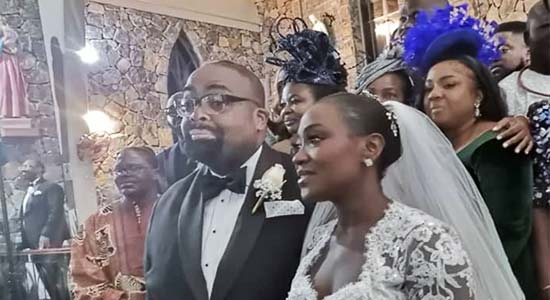
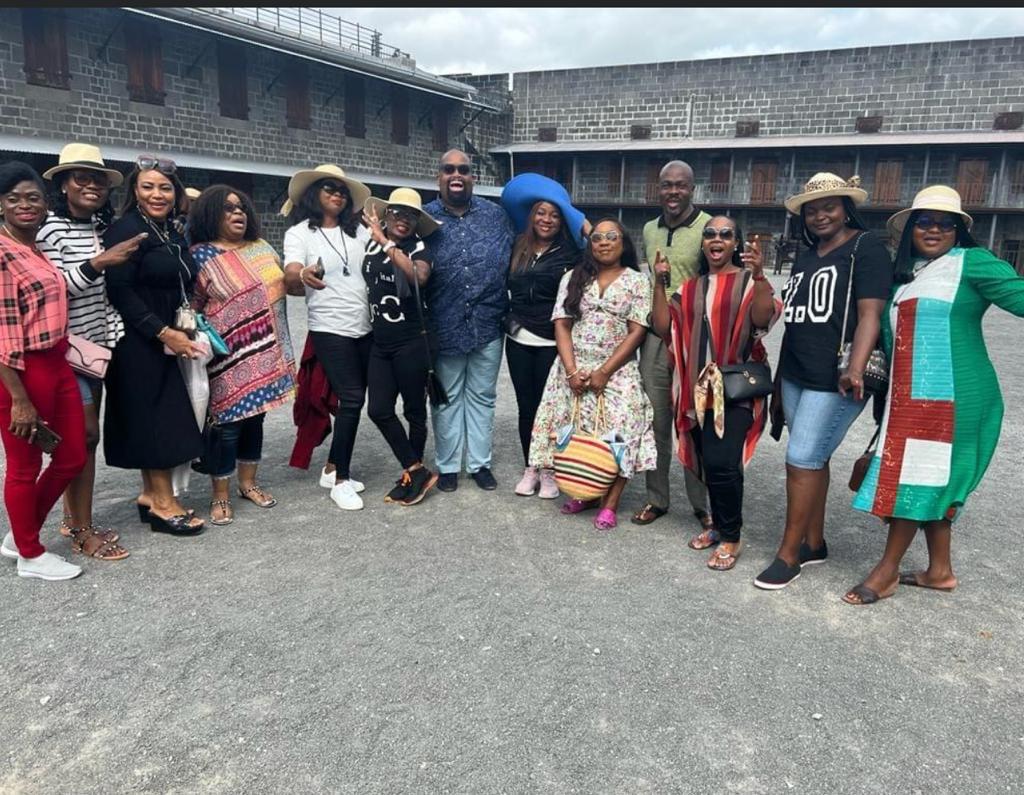
Days ago, on the faraway fabulous island of Belle Mare in Mauritius, Akpata who turned 50 years on 7 October 2022 tied the knot with his long-time sweetheart, Osayamon Michelle May Ogbebor.

The exclusive wedding was held at the Trou D’Eau Douce Catholic Church while the A-List guests were feted at the luxurious Longbeach Resort.

Born on 7 October 1972 Olumide Akpata had his early education in Warri, Delta State, and thereafter attended King’s College, Lagos from where he proceeded to study Law at the University of Benin (UNIBEN). He graduated from UNIBEN in 1992 and was admitted to the Nigerian Bar on 15 December 1993.

He joined the law firm of Dr. Mudiaga Odje & Co. in Warri, Delta State after his National Youth Service Corps (NYSC) in Kano State. There he honed his skills in legal practice under the tutelage of the late sage, Dr. Mudiaga Odje, SAN, OFR, who he describes as “the most seasoned litigator of his time.”

In 1996, he relocated to Lagos and teamed up with his cousin, Oghogho Akpata, who had in 1995 set up the law firm, TEMPLARS, after honing his skills in the firm of F. O. Akinrele & Co. under the leadership of the legendary Chief Frank Odunayo Akinrele, SAN.

In his words, “From 1996 to date (2020), I have worked with Oghogho, and our colleagues at Templars, in building and sustaining a world-class, multi-sectoral and full-service law firm which is now in the 25th year of its existence and consists of over 100 fee-earners, including two Senior Advocates of Nigeria.”

Prior to ascending the coveted NBA Presidency, Akpata was the Senior Partner and Head of Corporate & Commercial Practice Group of TEMPLARS. The Group comprises Mergers & Acquisitions; Capital Markets; Corporate Law; Labour & Employment; Immigration; Telecommunications, Media, Entertainment, and Technology; and Regulatory Compliance.

As a measure of his expansive scope, he notes that “in my over two decades at Templars, I have practised across the diverse areas in which we operate, and I have been privileged to lead or participate in some of the major groundbreaking transactions that have shaped commercial law practice in Nigeria and indeed the Nigerian economy.”

Reputed as a consummate Bar-man, Akpata began participating in NBA activities as a member of the NBA Warri Branch upon joining the law firm of Dr. Mudiaga Odje & Co. Upon relocating to Lagos in 1996, he joined NBA Lagos Branch.

He was a foundation member of the NBA Section on Business Law and worked closely with the pioneer Chairman of the Section, Mr. George Etomi, and his team to operationalise the Section after its inauguration in December 2004 by then NBA President, Chief Bayo Ojo, SAN.

His words: “I was also a member of the Planning Committee which organised the very first NBA-SBL Conference that was held in Abuja in March 2006 and which proved to be a transformational conference that set the NBA-SBL on its current trajectory.

In his 2020 NBA Manifesto, he stated that “My active participation in the NBA-SBL led to my election, in January 2012, as Secretary of the NBA-SBL Council. I was subsequently elected as Vice-Chairman in August 2014 and then as Chairman in August 2016, after which I handed over to the current Chairman, Seni Adio, SAN, in August 2018 albeit I remain a member of the Council. My two-year tenure as Chairman of the NBA-SBL was eventful and impactful.”

Akpata sits in a non-executive capacity on the Boards of a number of private companies, some of which he chairs. He is a member of several think tanks, including the Nigeria Economic Summit Group (NESG) and the United Nations Nigerian Humanitarian Fund (UN-NHF), of which he was a pioneer member.

Increasingly popular for his trademark dance steps, Akpata describes himself as “a gregarious person and when I am not advising on a transaction or attending a client meeting, I love to be in the company of my friends and family or attending social events. I also love travelling and reading biographies of distinguished personalities. I am a devout Christian and a member of the Redeemed Christian Church of God.”

His tenure as NBA President was reckoned as one of the most proactive as well as in pushing the frontiers of welfarism at the Bar.

Akpata once remarked during an interview with Law & Society Magazine that the divisions currently being witnessed in the bar might lead to splinter groups. “The way things are going we’re probably going to have splinter groups at the Bar… The major problem is that we’re divided inside. The Bar itself is divided. A house divided against itself, can’t stand. The older group feels they have an idea of where we should be going. We disagreed with them…We live in a country where there’s systemic failure and a lack of accountability. There’s an entitlement mentality. There is a Kabiyesi culture even in government. Our leaders are not humble enough to take criticisms when you tell them they’re not doing well. It’s not looking good…”

[Unbelievable]: Read the diction used by counsel in a brief – Supreme Court blows hot

By Stephen Azubuike

Legal advocacy entails a lot. A good advocate is known by a number of qualities and skills which include analytical skills, research skills, listening skills, responsiveness, sound logical and philosophical thinking mind, creativity, ability to think on one’s feet, persuasive skills, communication skills among others.

In the case of persuasive and communication skills, a good advocate relies on an excellent use of language in presenting arguments, making submissions, and above all, in praying the court for certain reliefs or urging the court to agree with counsel’s position. In this era of written advocacy where counsel is obliged to present most of his points in writing, counsel is expected to rely on good drafting skills as well.

As a learned gentleman, counsel is expected to show maximum respect to opposing counsel and to the court. Rule 26(1) of the Rules of Professional Conduct for Legal Practitioners 2007 (RPC) provides that “Lawyers shall treat one another with respect, fairness, consideration and dignity, and shall not allow any ill-feeling between opposing clients to influence their conduct and demeanor towards one another or towards the opposing clients.

In relation to the court, Rule 31(1) of the RPC provides that “A lawyer shall always treat the court with respect, dignity and honour.

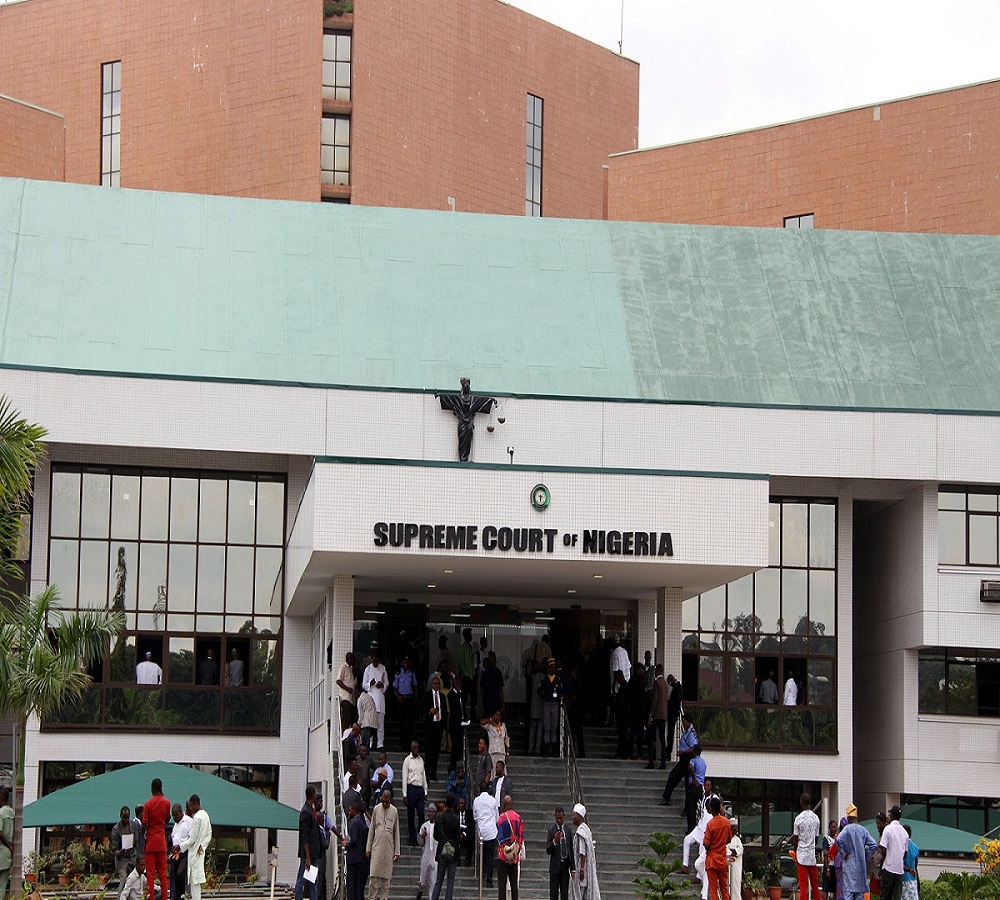
Sadly, the counsel that appeared at the Supreme Court in a recently reported case appears not to have the provisions of Rule 31(1) in his own copy of the RPC. This was in the case of Mrs. Olajumoke Siwoku & Ors v. Mr. Oladayo Fasakin & Ors [2022] 12 NWLR (Pt. 1844) 215 SC.

The counsel in question represented the Appellants in the case involving the last will and testament of one late Chief Julius Abiodun Lewis Fasakin who had died on 14 September 2000. Counsel had approached the court contending that the Appellants were entitled to a grant of probate. The trial court agreed and delivered judgment in the Appellants’ favour. The 1st Respondent appealed. His appeal was successful. Aggrieved, the Appellants further appealed to the Supreme Court. His appeal failed. The Supreme Court dismissed it on 4 June 2021. In his Brief of Argument filed on behalf of the Appellants, the Appellants’ counsel made the following remarks:

Page 12 paragraph 2 –

We submit with due respect that it is the above misinterpretation that the court below swallowed hook [line] and sinker without giving any consideration to the evidence before the trial court…

Page 18 paragraph 8 –

At this stage, it is important to look at the findings, the fulcrum, and substratum that propelled the learned Justices of the court below to come to this grievous egregious wrong conclusion that have occasions (sic) a gross miscarriage of justice.

Page 24 paragraph 2 –

With the above pronouncement, the court below did not examine the brief of argument of the Appellants at pages 254 to 271 of the records of appeal, the issues formulated thereto as well as did not examine the real evidence before the trial court but rather the court below glued at and stereotyped with the issues formulated and argued by the learned counsel to the 1st Respondent…

Okoro, JSC spotted the above offending paragraphs in the Appellants’ Counsel’s brief of argument, especially the italicized parts and had this to say:

My Lords, I am unable to gloss over the highly reprehensible diction employed by learned counsel to the Appellants in his brief of argument while referring to the learned Justices of the court below… I was taught that we lawyers are revered for our decorum. In this case, I must say that the words employed by counsel, some of which are highlighted above, are condemnable to say the least. I say no more.

Most times, what inspires improper use of language is the idea of taking a client’s matter personal and getting emotional in the course of conducting a client’s case. Counsel must remain professional at all times in the discharge of his or her duties. Rule 35(b) of the RPC provides that when appearing in court, a lawyer shall conduct himself with decency and decorum, and observe the customs, conduct and code of behavior of the Court and custom of practice at the bar with respect to appearance, dress, manners and courtesy.

This article posted on 7 October 2022 was originally published on https://stephenlegal.ng/unbelievable-read-the-diction-used-by-counsel-in-a-brief-supreme-court-blows-hot/ by Stephen Azubuike.

Stephen is a lawyer with expertise in Commercial Dispute Resolution and Technology Law practice. He is a Partner at Infusion Lawyers. He has successfully argued cases from the High Courts of various jurisdictions to the Appellate Courts on behalf of financial institutions, other corporate bodies, and multinationals. He has advised a number of both established and startup tech companies. He tweets @siazubuike.

Five in 1000 women die at childbirth in Nigeria but right to health care is not justiciable

By Lillian Okenwa

24-year-old Oluomachi Nwojo, a final year student of Michael Okpara University of Agriculture, Umudike, Abia, entered the hall of fame when she gave birth to a set of quintuplets at the Federal Medical Centre, Umuahia.

Ms. Nwojo, who gave birth to two boys and three girls on Monday, 5 October 2022 through Caesarean Section (CS) described it as a wonderful experience.

“This is my first delivery and I am grateful to God for making me a partaker of this wonderful blessing. I believe God knows the best for my children; I am feeling fine and gradually recuperating from the birth of my babies. I am calling on the government and good-spirited individuals to help me in training the babies because I cannot carry the burden alone.”

Days before, a team of doctors at the Maryam Abacha Women and Children Hospital Damaturu, in Yobe State, North-East Nigeria took delivery of two sets of triplets from different mothers also via CS. The two pregnant mothers who were brought to the hospital from different locations had undergone five weeks of intensive care before the successful procedures.

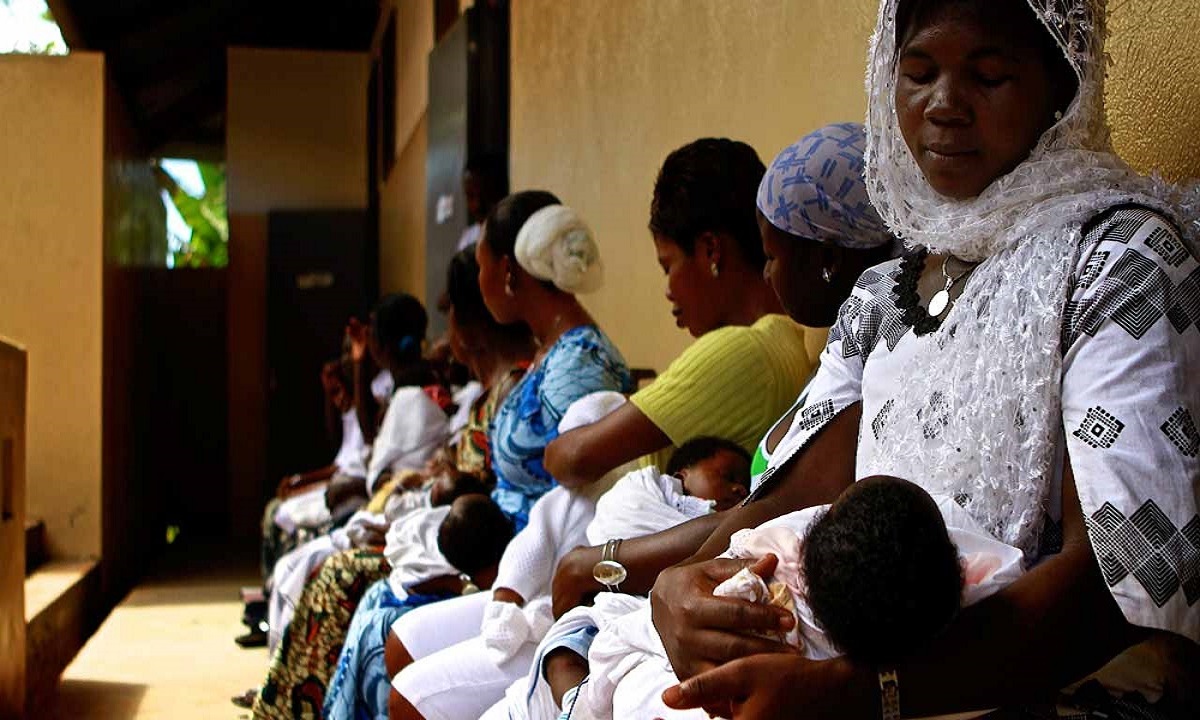
But these are exceptional cases as five of 1000 Nigerian women die while delivering their babies. Latest statistics from the World Health Organisation (WHO) revealed that Nigeria accounts for over 34 percent of global maternal deaths while the lifetime risk of dying during pregnancy, childbirth, postpartum, or after an abortion for a Nigerian woman is one in 22, compared to one in 4900 in developed countries

Sadly, Nigeria has made little effort in saving the lives of pregnant women and babies from preventable deaths during delivery.

“The cases of maternal mortality can be attributed to not being able to reach the hospital. If you add those ones who reached the hospital and are not attended to because of deposit, they are going to be between 30 to 40 percent. Nigeria has about 512 maternal mortalities per 100,000 births now. That’s about the worst in the world said Health Minister, Osagie Ehinare who ThisDay Newspaper described as making “the usual lamentation about our plight to which officials of the current administration have become renowned.”  

Maternal and infant mortality rates are even more significant in the Northern states than in other parts. The alarming rate is exemplified by the northeastern region’s high maternal death rate, three times higher than the national average. The inability to obtain high-quality health care in most Nigerian health facilities contributes significantly to this high maternal mortality rate.

The Executive Director of the National Primary Health Care Development Agency (NPHCDA), Dr. Faisal Shuaib once disclosed that nearly 2,300 children under five die daily and about 145 women die day-to-day in Nigeria from pregnancy and childbirth-related matters. He likened the 145 daily maternal deaths to having a fully loaded Boeing 737-300 airplane, with 145 women crashing every single day in Nigeria, killing everyone on board.

“Every day in Nigeria, approximately 145 women die from preventable causes related to pregnancy and childbirth, this is equivalent to having 1 Boeing 737-300 series airplane, fully loaded with 145 women crashing every single day in Nigeria, killing everyone on board.

“Every day in Nigeria, approximately 2,300 children under five years die mainly from preventable causes. Similarly, this is equivalent to having 15 Boeing 737-300 series airplanes fully loaded with 145 children under five years old, crashing every single day in Nigeria and killing all the children on board. One out of every eight Nigerian children dies before having a chance to celebrate his or her 5th birthday.”

Over the years, there has been a consistent decline in the Nigerian health sector. Rather than ameliorate the situation, government officials —governors, legislators, ministers, and others travel abroad where they can receive the best treatment. Ordinary Nigerians are left to their fate.

Worse still, is the exodus of health professionals to overseas countries. Better pay and working conditions have been cited as the main reason for the flight of Nigerian doctors, nurses, and paramedics.

Remigius N. Nwabueze in his book “The Legal Protection and Enforcement of Health Rights in Nigeria”, made the following observation: “Nigeria’s Revised National Health Policy recognizes that ‘health and access to quality and affordable health care is a human right.’ Thus, the Nigerian Constitution provides for a mix of rights to health and health care services, although such rights as articulated are not justiciable.”

A tale of two cities…

By Lillian Okenwa

Early that Wednesday morning in March 2022, bandits simultaneously invaded Guni and Kurgbaku communities, forcing the residents to flee. A few hours later. Not less than 20 people, including women and children, drowned in Niger state’s Guni-Zumba River while trying to escape bandits’ attacks on their communities.

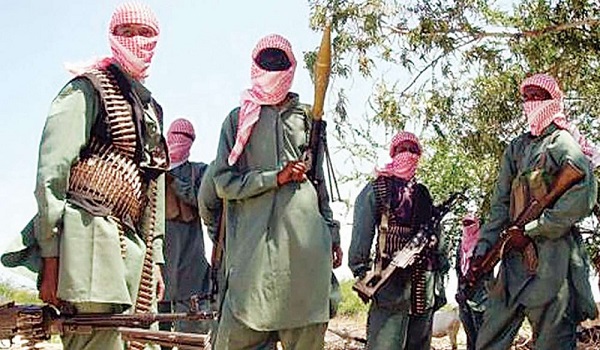
The victims were reportedly crossing the river to Zumba and Gwada internally displaced persons’ camps by boat when the small local vessel which was filled above its capacity capsized midway into their journey. Guni and Kurgbaku communities are both in Munya LGA of Niger State. Niger state as well as other northern states including President Muhammadu Buhari’s Katsina State have become playpens for bandits. They come, go and operate unhindered.

Citizens in these states have resorted to negotiations with terrorists, which include payment of huge levies, free labour and other offers to be allowed access to their farmlands.

Recently, a group of armed bandits on a ‘patrol’ on their motorcycles reportedly ‘arrested’ a scavenger, for stealing in Katsina State and handed him over to the authorities. He was reported to have specialised in uprooting metal rods and removing iron bars, from deserted buildings. In a video obtained by PRNigeria the bandit-terrorists were seen parading the scavenger and his stolen metal rods inside a cart before handing him over to a community leader in the state.

The bandits were shown saying to the scavenger, “Don’t you know that it is a criminal offence to steal? You are lucky that we are handing you over to the authorities; we could have executed for engaging in criminal activities.” The terrorists, who were wielding sophisticated weapons, told the community leader to ensure the “scavenger-thief” was dealt with according to the law to deter others from stealing.

Then weeks after the convoy of President Muhammadu Buhari was attacked in Katsina State, terrorists threatened to abduct the number one citizen. The attack on the convoy happened on the day the Islamic State in West Africa Province (ISWAP) invaded Kuje Prison in Abuja and freed over 800 inmates, including all the terrorists in detention.

A year before —on 24 August 2021 — the rampaging bandits successfully attacked the Nigerian Defence Academy (NDA), Kaduna killing two officers, and injuring one other, while Christopher Datong was abducted. Again, on the morning of 28 Mar 2022, heavily armed men attacked the airport in Kaduna, killing a security guard and temporarily halting air services. The incident delayed the take-off of a Lagos-bound flight by almost 44 minutes.

Curiously, the scenario is different in the South East where the full might of the Nigerian Army and other security operatives is openly displayed. PREMIUM TIMES reports that many unarmed residents in the South-east of Nigeria have been killed by Nigerian troops deployed to check Biafra agitation in the region. Below is the report by PREMIUM TIMES.

On 30 August, for instance, three unarmed residents were killed when troops from 82 Division and 34 Brigade of the Nigerian Army invaded Orsu-Ihiteukwa, a community in Orsu Local Government Area of Imo State, south-east Nigeria. Army spokesperson Onyema Nwachukwu would later claim that those killed were IPOB members.

Two of the victims, Ugochukwu Obianeli and Nonso Izuegbu, were killed while they were moulding cement blocks in the community, PREMIUM TIMES gathered.

One other victim, Nicholas Onwughala, an elderly man, was shot in his legs by the troops at Eke Ututu Market in the community, according to sources in the community. He died the following morning, 31 August, because of complications from gunshot injuries.

Like in other previous incidents, the troops carried out the attacks as part of an onslaught against suspected members of IPOB.

“Each time the troops come, they carry out shootings. And most times, they end up killing some innocent people, during shooting with the supposed ESN boys,” Chidi Ibekaeme, a resident of Orsu-Ihiteukwa community, told PREMIUM TIMES.

He said there had been no attack in the community until the troops began raiding suspected camps of the IPOB members in December 2021.

“I know of the three persons (killed by the troops on 31 August). Incidentally, one of them, Ugochukwu Obianeli, is my brother-in-law,” Mr. Ibekaeme, a lawyer, said.

“We are living in fear. Each time we hear information that they are coming, we run away.”

Another resident of the community, Friday Nwajuo, narrated to PREMIUM TIMES how the troops killed two of the victims and labelled them IPOB members.

“We ran when we heard the army people were coming,” Mr. Nwajuo began.

“Within 20 minutes, the soldiers came and started shooting. So, the two boys, who were labourers in a block industry, ran away for safety. All of a sudden, they stopped shooting.

“When they (the two victims) came out, they thought the soldiers had left. So, the soldiers saw them and shot them dead, thinking they were ESN members,” he narrated.

Again, on 17 September, exactly 18 days after, the Orsu-Ihiteukwa community in Orsu Council Area of Imo State and Orsumugho, another community in Ihiala Local Government Area of Anambra State, were invaded by the troops, killing two unarmed residents and razing shops. Both communities share boundaries.

The troops were said to have invaded Orsu-Ihiteukwa again at about 4 a.m., with many combatant vans, armoured tankers, and military helicopters.

Residents said the troops were firing shots and detonating bombs, while the helicopters hovered over the communities.

The shootings and bombardments were said to have disrupted a burial ceremony, causing guests to run inside bushes for safety.

PREMIUM TIMES gathered that the operation was carried out in collaboration with members of Ebubeagu, a security outfit backed by the Imo State Government.

A resident, Ifeanyichukwu Edurumba, 23, was said to have been whisked away from his house at about 12 p.m. and dragged to the market in Orsu-Ihiteukwa where he was allegedly killed by the troops.

His uncle’s wife, Ifeoma Onyebuchi, who was staying with him, narrated to PREMIUM TIMES what happened.

“We were inside the house when we heard that army people were coming to the community. So, he (Edurumba) left his poultry farm and ran inside for safety. While we were inside, some people came and knocked on our door. They were a mixture of army people and Ebubeagu members, all in their uniforms.

“They ordered us to open the door when I asked who they were. They quickly broke the door and gained entry. The boy (Edurumba) ran under the bed with some children.

“One of them told us that if we don’t bring the boy, they will kill all of us. I told them the boy is an orphan and the only son of his late parents and that he is a poultry farmer and also an iron bender. I told them he didn’t do anything wrong.

“While I was talking, they went inside the room and dragged the boy out and took him away. They checked the boy’s poultry when they heard his chickens clucking. They later took the boy to Eke-Ututu Market and killed him,” she said.

‘They killed another boy’

Another resident, who said he witnessed the troops’ invasion, spoke with PREMIUM TIMES the following day, 18 September.

“They also killed one (other) boy in Orsumoghu, a neighbouring community here. I don’t know his name yet,” he said.

The man said he came face-to-face with the troops, while he was going to the market to buy an item, but that he hid from them for fear of being killed.

“They were burning houses and stalls. They used some hammers to break shops and took whatever they liked, such as beverages, and then set the shops ablaze.

“Whenever they (troops) come, they kill whoever they see, burn houses. If you come to this village now, everybody is crying. They have reduced us to rubble,” he said.

The troops, according to him, razed over 30 shops.

He said it is disheartening that the Nigerian government would claim to be protecting lives and property, but turned around to order security agencies to kill residents and destroy their sources of livelihood.

Video clips which captured burning shops and motorcycles were circulated on different WhatsApp groups. In one of the clips, a victim, Anselem Ohaachosi, whose shop was said to have been burnt down, lamented the frequent invasion of the community by troops.

“Yesterday, 17th of September 2022, a gang of Nigerian soldiers came to Eke-Ututu, Orsu-Ihiteukwa, destroyed peoples’ shops, properties (and) lives. They set my shop ablaze,” he said.

Mr. Ohaachosi used to sell phones and phone accessories. He said all the items in the shop had been destroyed by the troops. He said he went into the sales of phones because he could not find a job after graduating from Imo State University.

“Look at how they rendered me useless in Orsu-Ihiteukwa. The cost of what they damaged here is nothing less than N10 million. How can I start life afresh?”

Mr. Ohaachosi said the troops were shouting, “Say no to IPOB” during the raid.

“Am I an IPOB member? Did they see any mark on me? I graduated from Imo State University and I am also a holder of a post-graduate diploma in education. I am an educationist. They have to pay for all these,” Mr Ohaachosi said.

Another clip showed helicopters hovering in the sky.

In another clip, apparently shot the following day, 18 September, people, whose shops were not affected during the operation, were seen hurriedly packing their goods out of the shops.

The invasion of the two South-east communities by the troops has attracted condemnations. The military did not comment on the incident.

More extrajudicial killings

A report by the International Society for Civil Liberties and Rules of Law revealed that between July and August, the military and other law enforcement agencies secretly massacred hundreds of defenceless civilians in Imo, Anambra, and Benue, and tagged them, terrorists.

In the report, released on 2 September, the group said part of their findings showed that the military has been working with armed herdsmen to terrorise the eastern part of the country and Benue State.

Human rights groups kick

Amnesty International Nigeria, like many other rights groups, has repeatedly condemned extra-judicial killings by security agencies in the Southeast.

“Instead of launching proper investigations into these killings, security and government officials are often quick to claim victims were caught up in shoot-outs or simply label them members of the ESN, the armed wing of IPOB,” Osai Ojigho, the director of Amnesty International Nigeria, said in a statement in July.

Terrified parents fret as rapists prey on minors

The shadow pandemic | UNICEF Nigeria

By Lillian Okenwa

Ebele brimmed with joy. Justice at last. She finally got justice for her daughter and niece, who were aged six and seven when they were defiled by their housekeeper, Bright Izuchukwu.

Ebele a nurse and resident of Festac Town in Lagos had employed Bright then aged 27, in December 2016 to look after the girls in her absence. Sadly, the convict used his knowledge of the location of a Close Circuit Television installed in the house to avoid being captured when he committed the crime.

“I always gave my daughter sex education, and from time to time, I asked my daughter whether anyone touched her private parts.

“On July 17 or 18, 2018, I asked her if anyone touched her private parts. She said Izuchukwu used to place her on his lap and insert his fingers into her private parts, and he subsequently inserted his manhood into her private parts.

“She said the defilement occurred in the study room in a certain area of the house. I have CCTV cameras mounted all over my home, but it is not reflected in these parts of the house,” the mother said.

Izuchukwu got a life sentence for the crime.

On June 27, 2022, the Lagos division of the Appeal Court, upheld the judgment of an Ikeja Special Offences Court which sentenced a driver, Francis Apai, to 15 years imprisonment for raping his employer’s 18-year-old daughter in Lagos.

The convict was sentenced by Justice Sherifat Solebo on June 11, 2020, after finding him guilty of one count of sexual assault by penetration.

Unhappy with the judgment, Apai went to the appellate court to challenge his conviction and sentence. But, the justices of the appellate court unanimously affirmed the judgment of the lower court and dismissed Apai’s case.

While being led in evidence by the prosecution on January 7, 2020, the complainant gave a harrowing account of how she was violently attacked and raped by Apai, who was her mother’s driver.

“My mother is a businesswoman; he (Apai) usually drives my father when my mother is not present, and he takes my younger brother and me to school,” she explained.

The complainant said on the day of the incident she was at home alone because her parents had taken her younger brother, who fell ill around 3 am that morning, to a hospital.

She told the court that while she was preparing a meal in the kitchen, the driver approached her with a knife and threatened to harm her if she refused to accede to his sexual demand.

She said when she resisted, the driver dragged her to a bedroom in her home where he punched and raped her.

The victim told the court that she ran out of the house stark naked to escape her attacker.

“When I ran out naked, my neighbour downstairs saw me and asked me to come into her house, but I refused because Francis (Apai) was with a knife and I was scared that he might come into the house and attack me.”

“I ran across the street to another neighbour, with blood streaming down my legs, and they gave me a wrapper to cover myself up. My neighbours took me to the police station and the hospital, “she added.

Child sexual abuse in Nigeria is an offence under several sections of the country’s criminal code. The age of consent is 18.

However, the mother of a 10-year-old girl identified as Aisha Hamzat was not as lucky. She is still crying out for justice. Following the alarm raised by Actor Damilola Adekoya, otherwise known as Princess, on the rape and murder of her daughter Aisha, the distraught mum has made a plea to the general public to help her get justice. 

The grieving mother

Speaking in a live video with Comedienne Princess on Instagram, the mother of the deceased begged members of the public to come to her aid and help to get justice for her daughter. She noted that her 10-year-old daughter was violated and murdered. 

The child’s mother said, ‘I want justice for my daughter. My daughter was raped and killed. I want well-meaning Nigerians to come to my aid. I want justice for my daughter’.

Narrating how the incident happened, Princess disclosed that the 10-year-old was violated and murdered in Ayobo area of Lagos State on Sunday while she was on her way to church. She added that the perpetrators dumped the body of the girl in someone’s compound after committing the wicked act. 

Following the Actor’s plea to the general public earlier today, a couple of volunteers went to the Police Station to gather more information on the matter and assist the child’s mother in getting justice. 

In the live video with Princess, one of the volunteers who went to Ayobo Police Command disclosed that the body of the victim has not yet been released to the mother. She said that she was informed that the case has been transferred to the State Criminal Investigation and Intelligence Department, Panti.  

Karen-Happuch-Akpagher

Similarly, a 14-year-old student of Premiere Academy, Lugbe, Abuja, died after a condom was found in her private parts in June 2021. Karen-Happuch Akpagher, an SS1 student was believed to have been sexually abused before she was withdrawn from school by her mother, Mrs. Vihimga Akpagher, on June 19, 2021, for treatment. Karen, however, died two days later at a hospital in the Wuse 2 area of Abuja. They are yet to get justice.

Months ago, the police command in Bauchi commenced investigations into the rape of an 18-month-old baby by a 59-year-old man. A statement by the police spokesman, SP Ahmed Wakil, said the 59-year-old has been arrested for the rape. 

According to Wakil, the baby’s mother, Nenkat Danladi told the police that she met the suspect on her bed with her daughter at about 11:30 p.m. “After about 30 minutes, the nominal complainant discovered that the private part of her daughter was oozing blood. A team of personnel led by DPO Yelwa rushed the victim to ATBU Teaching hospital Bauchi for a medical examination. The suspect was arrested, and an investigation has commenced in earnest,” he said.

The United Nations Children’s Emergency Fund reports that six out of every 10 children in Nigeria experience emotional, physical, or sexual abuse before the age of 18, with half experiencing physical violence.

Hope for GBV survivors as Ekiti launches two more sexual assault clinics

The rate of sexual and domestic violence and exploitation of women and girls across the country continues to rise in spite of various campaigns by the government and stakeholders to check the scourge.

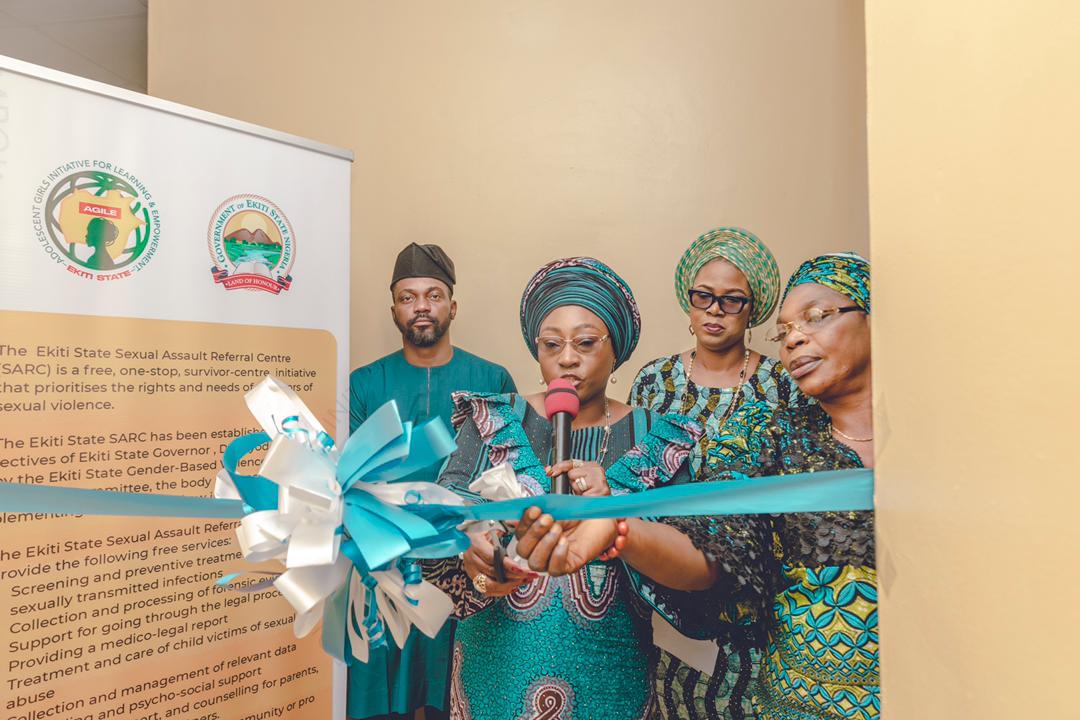
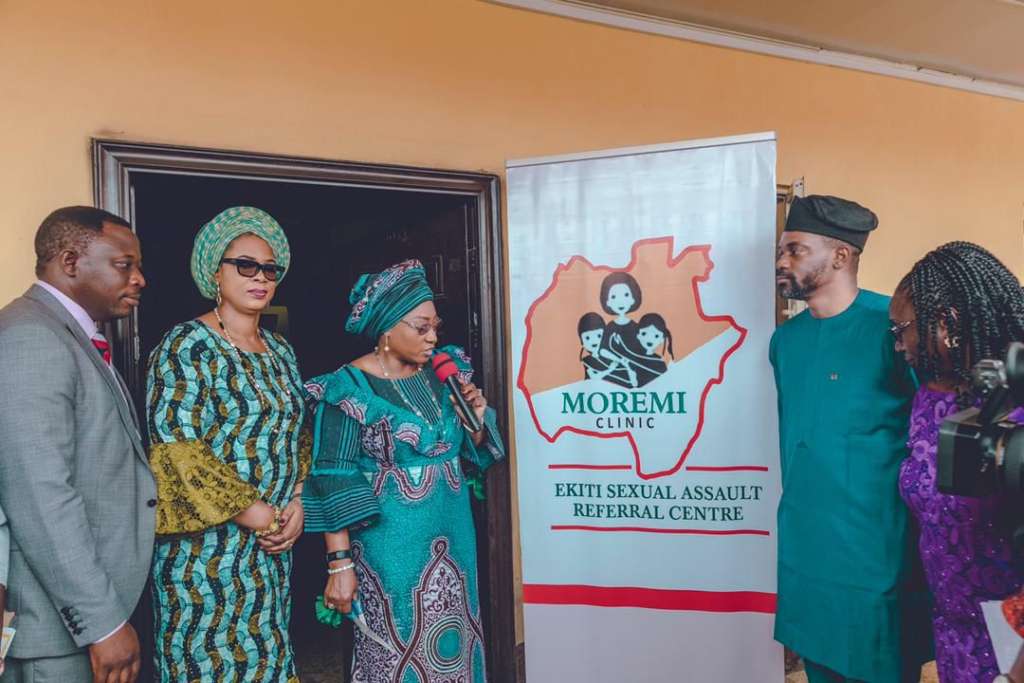
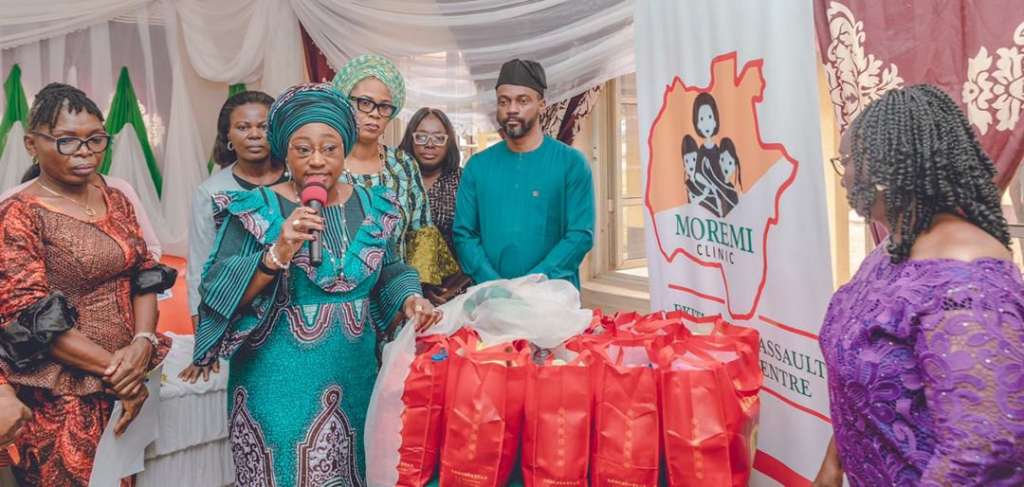
Unrelenting though, the Wife of Ekiti State Governor, Erelu Bisi Fayemi has commissioned two new satellite Sexual Assault Referral Centres (SARCs) for GBV survivors in support of the efforts being made to end GBV as well as provide care for victims.

The two satellite SARCs being an extension of Moremi Clinic located inside Ekiti State University Teaching Hospital, EKSUTH Ado-Ekiti, are located at the State Specialist Hospitals, Ikole-Ekiti, and Ikere-Ekiti.

Speaking at the events, Erelu Fayemi charged the people to desist from harbouring violators of the  Gender-Based Violence (prohibition) law no matter their position in the community but rather expose them to the appropriate authorities.

She emphasized that the Dr. Kayode Fayemi-led administration has zero tolerance for Gender-Based  Violence most especially sexual assault and assured that anyone found culpable would be severely punished.

According to the Governor’s wife, the Moremi clinics would serve as venues where sexual assault survivors’ rights and interests are protected and their dignity respected.

“The centres were established to offer free services for Gender-Based Violence survivors in the area of medical assistance, legal, psychological among others”, she stressed.

Assuring the sustainability of the clinics, the wife of Ekiti State Governor-elect, Dr. Yemi Oyebanji, reiterated her support and commitment to curbing GBV and other advocacy programs of Erelu Fayemi, noting that the incoming administration would not suspend any of the ongoing programs but rather continue and improve on them.

In their remarks, the Commissioner for Health and Human Services, Dr. Banji Filani, and his Education, Science, and Technology counterpart, Dr. Mrs. Olabimpe  Aderiye eulogised the First Lady’s multidimensional approach to solving problems, noting that the new satellite Sexual Assault and Referral Centers are established to serve not only the towns where they are located but the Senatorial Districts and their environs.

Earlier in an address, the Sexual Assault Referral Centres Coordinator in Ekiti State, Barrister Rita Ilevbare noted that the two new Centres would make the 34th  SARCs across 19 states in Nigeria. She further enjoined staff of the clinics to see their duties as calls to national service which requires due diligence, empathy, and utmost confidentiality.

The coordinator also appealed to security agencies to support the functionalities of the clinics noting that no matter how urgent the case, access to psychosocial and medical intervention is paramount.

In June 2020, Ekiti State Government announced the opening of the Ekiti State Sexual Assault Referral Centre, SARC. The Ekiti SARC, known as Moremi Clinic, is a free, one-stop, survivor-centred initiative that prioritises the rights and needs of survivors of sexual violence. 

TIPS