Home Blog Page 816

Prof. C. O Okonkwo, SAN (1934-2022)

By Sonnie Ekwowusi

The towering figure saunters toward the law lecture room. Always impeccably dressed in his somewhat dark-bluish suit with black shoes and multi-coloured necktie to match. The expressions on his face, his loud voice, the fires sparkling from his eyes, the lucidity of his thought, the fecundity of his mind, and his stoic steady steps are evocative of his great learning and his brilliance in expounding and expanding Criminal law and Company Law for decades. Among his numerous achievements, he is the first and oldest law teacher in Nigeria teaching law in the oldest law faculty in Nigeria. As he enters the lecture room, he stands momentarily at the door like a fine firmament ostensibly trying to recollect and reassure himself that he is the teachers’ teacher. Then almost instinctively, everybody in the class turns and looks at him in awe. Then silence descends and envelopes the room. No noise. No murmuring. No whispers. No shuffling of feet. Stepping forward and clearing his throat, he opens his mouth and delivers his lecture ex-tempore without occasionally glancing at any law book or law handout. All could hear him. He is the embodiment of the law, the law drops behind his fingers. He is a moving encyclopedia, a repository of Criminal Law and Company Law.

The foregoing could fit into the reflections, reminiscences, imaginations or tributes of thousands and upon thousands of lawyers, judges, political leaders, politicians, and different people from different walks of life who were former students of Emeritus Professor Cyprian Okechukwu Okonkwo, law teacher extra-ordinnaire, law author, legal icon, doyen of legal education in Nigeria and a Senior Advocate of Nigeria who quietly slipped away on 8th October 2022 aged 88. Prof. Okonkwo’s death is profoundly a sad one for the faculty of law, University of Nigeria, Enugu Campus (UNEC). Prof. Okonkwo unarguably was one of the finest first pillars of law teachers of UNEC. The faculty will mourn Prof. Okonkwo by recalling his works over so many years at UNEC, first as a diligent law teacher, a Dean of the faculty of law, and a mentor to his brother lecturers. Already a beautiful bust has been strategically erected in the Rotunda of the Law Faculty main building, UNEC. When the sad news of the demise of Prof. Okonkwo first broke. I remember sharing the news with a former Dean of the faculty of law, UNEC, Prof. Joy Ngozi Ezeilo OON, SAN. On receiving my WhatsAPP message, she wasted no time in sending to me a historical photograph of herself together with Prof. Benjamin Chukwuma Ozumba, former UNN Deputy Vice-Chancellor, and one other posing beside the bust. He was very cerebral. He was brilliance personified. He knew how to deconstruct any complex legal problem and how to effectively impart it to his students. He was the greatest teacher of all times”, she wrote in her WhatsAPP message.

I was a student of the Faculty of Law, UNEC at the time Prof. Okonkwo together with taciturn Prof. Gaius Ezejiofor (SAN), Prof. E. I. Nwogwugwu, Prof. D. I. O. Ewelukwa (SAN), Prof. B. O. Okere, Prof C.U. Ilegbune SAN, Prof (Justice) Okay Achike, Prof. G. O. S. Amadi, Prof. M.C Okany, Retired Court of Appeal Justice Chinwe Iyizoba, Sampson Owusu and others ruled the law faculty. That era could be dubbed the golden age of the Faculty of Law, UNEC. That was when students were really students, and lecturers were lecturers. “Study or perish.” was our unofficial motto. Prof Okonkwo taught us Criminal Law and Company Law. He prided himself as having been taught by Professor Laurence Cecil Bartlett Gower MBE, the renowned UK Company law expert. Prof Okonkwo was a simple man. He was approachable albeit he was very strict and demanding on students. He was in love with section 24 of the Criminal Code. Hardly would he utter two phrases in his Criminal Law class without mentioning section 24. At that time I thought Criminal law was section 24 and section 24 was Criminal law. Woe to you if Prof. Okonkwo’s roving eyes descended on you in his class. First, he would ask you a seemingly simple law question. And if you fail to answer it correctly, he would pause momentarily, take a contemptuous studied look at you, and thereafter query: “So, what have you been doing in this University?” ostensibly to remind you that you were not measuring up to the motto of the University of Nigeria (UNN): “To restore the dignity of man”.

Prof (Justice) Okay Achike was the professor’s professor. Listening to his 30-minute Contract law or Commercial Law lecture was tantamount to listening to a Princeton University Law Professor for three hours. He was erudite. He was cerebral. He stood out for his exceptional intellectual versatility. Small wonder he rose from the classroom to the Bench. He later became a Justice of the Court of Appeal from whence he was elevated to the Supreme Court. Prof. G. O. S. Amadi taught Industrial Law. Justice Chinwe Iyizoba taught Evidence. Prof. Ewelukwa taught Constitutional law. Prof. Nwogwugwu taught International Law and Family law. Prof Okany taught Commercial law, and, if I am not mistaken, law of property. Prof Ezejiofor taught Land Law. Prof. Ilegbune taught Contract law and introduction to legal system. He was an amiable man. He was kind. He was patient with students. He dressed impeccably in his black suit and black necktie to match. Prof. B. O. Okere taught Jurisprudence. He was a tall, elegant-looking man. He wore a disheveled grey hair ostensibly as a sign of his legal wisdom and legal scholarship. He was a grammarian. You could attend Prof. Okere’s one-hour-Jurisprudence lecture without assimilating anything at all because his deliveries were woven with the high-flown admixture of English and Latin grammar that was difficult to untangle.

Owusu, the Ghanaian, taught Equity. He was diminutive in size. He was always flying his shirt as if he were a protesting student. A very unassuming man, he dressed scantily. He walked like someone who would never hurt a fly. He religiously wore slippers or flapping sandals. But law students dreaded him. He was notorious for his frugality in scoring students high marks in Equity. His students hardly scored an “A” in Equity. Once upon a time a student demystified him and scored an “A” in Equity. In his reaction, Owusu almost wept in an open classroom before his students because it was a feat no student had achieved for decades. I don’t know why all sorts of apocryphal stories were woven around Owusu at that time. One of such apocryphal stories was how Owusu stopped the wife of a UNEC lecturer from graduating from the law faculty and eventually attending the Law School. This lady was a final-year law student at UNEC. She had passed all of her law courses except Equity. She needed to score just a pass in Equity to enable her to graduate from the faculty of law and proceed to the Law School. But unfortunately, she scored only 49% in Equity, that is, I% short of the pass mark of 50%. All entreaties and pleadings to sway the mind of Owusu to score this lady the 50% pass mark in Equity so that she could join her colleagues and graduate from the law faculty and head for the Law School were unsuccessful. Owusu simply refused to score the lady 50% notwithstanding that the lady’s husband was also a lecturer at UNEC at that time. In his defence, Owusu stated that he had retrieved the lady’s answer script and after re-marking and re-marking it he was unable get the additional 1% which could have given the lady the requisite 50% pass mark. To cut the long story short, I think the lady eventually re-sited the Equity exam, and, of course, lost the chance of going to the Law School that session. Another apocryphal story was how Pastor Chris Okotie encountered Owusu in the Equity exam. Pastor Okotie was not our classmate but he was our contemporary at the law faculty. He was graduating in law when we were barely being admitted into the law faculty. At that time he owed a sportish-looking red car. He was a rich student. He dressed well. Above all, he was a talented musician. He sang and sang. I can’t remember now, but I think it was in his days at UNEC that he released the number: “Carolina in mind” or “I need someone” or “Fine Mama”. But he failed Owusu’s Equity exam. Ostensibly trying to make Owusu happy, he approached one day and I offered to buy him a pair of shoes ex gratis so that he could start wearing shoes to class instead of his worn-out slippers or sandals. Infuriated by Okogie’s imprudent offer, Owusu swore that Okotie would never pass his Equity exam again.

Anyway, back to Prof. Okonkwo. As strict as he was, he inculcated in us a sense of hard work and mission in life. I last met Prof Okonkwo in 2012 or so at a Conference at Sheraton Hotels, Abuja. He was still his old self. No sooner had I introduced myself as his former student than he immediately extended out his right hand to give me a warm handshake. I noticed that even though he was still the same stern man, his sternness was commingled with charity. Our memories of Prof. Okonkwo will never fade. His death has indeed robbed the Nigerian legal system and even the world legal systems the edifice of legal wisdom. In his death, we have lost a fine gentleman, a passionate law teacher, a legal icon, and a friend. Supreme Court Justice Chukwudifu Oputa (of the blessed memory) was of the view that a proper university education transcends mere academic education and instead entails the education of the whole man. To Justice Oputa, a proper university education is such that informs characters, inspires good behavior, balanced judgment, and trains the body, the mind, the intellect, and the will.

This, arguably, was the quality of education that we received under the tutelage of Prof. Okonkwo. Within the faculty of law precinct, we were granted a vision of the ends of life that surpassed our expectations. I stand in awe at the designs of providence which gave Prof. C. O Okonkwo to our generation.

On Friday, 25th November 2022 when the casket containing the remains of Prof Okonkwo is being be wheeled out for committal to mother earth, tears of joy and sorrow shall roll down the cheeks of many upon remembering that he was a diligent and consumate law teacher. But let those tears not roll down in vain, rather let the tears give rise to a resolution to live the ideals which Prof. Okonkwo lived for and died for.


FG set to resume Abuja–Kaduna train services, will there ever be justice for the terror-attack victims?

By Lillian Okenwa

While families of the recently released Abuja–Kaduna train victims, are raising alarm over the unstable and critical mental condition of their relations who to date have not received any strategic psychological or mental health care from the government, Nigeria’s Federal Government has announced the resumption of train services on the route before the end of the year.

The agony of families whose loved ones died during the attack and that of the last victim killed while on his way to his home town in Kebbi state alongside relatives who reunited with him after over 180 days in captivity can only be imagined. The unfortunate man was shot in his head by gunmen who laid ambush on the ever-busy Funtua – Gusau road. He reportedly died a few hours after he was rushed to Tsafe General Hospital, along the same highway.

The Victim was among the over six hundred passengers on board Abuja – Kaduna train attacked by terrorists on march 28th this year in Kaduna. One of the relatives driving the vehicle was also abducted by the terrorists to an unknown destination.

The Minister of Transportation, Mu’azu Jaji Sambo, who gave the update on the resumption of train services disclosed that the federal government also planned to link up the 36 state capitals in Nigeria with a rail network in order to provide seamless means of transportation for the citizens.

Admitting the pains thrown up by the March 2022 attack on the Kaduna-Abuja train route, Sambo said that the government had learnt many lessons from the atrocity and also adopted many measures to prevent future attacks and give the users of the service a sense of security and safety.

Security experts however noted that despite several signs that the Abuja-Kaduna railway was susceptible to bandits’ attack and amid massive resources in loans and funds voted to revamp rail transportation across the country, the Federal Government failed to adequately protect passengers until the attack.

They maintain that aside from terrorists blowing up the rail track with explosives, other recent incidents along the corridor were warnings that it was only a matter of time before passengers on the Abuja-Kaduna route were attacked again, but the government failed to do the needful to provide protection for communities.

The experts also noted that as more people avoided the Abuja-Kaduna expressway, which has been a haven for kidnappers, and opted to travel by air or on the train to and from Abuja, it became clear that the bandits, who are being starved of potential abductees will try to attack travellers using airport and train commuters, but no significant security measure was known to have been taken to ensure the safety of these travellers.

Notwithstanding that Nigeria ratified the United Nations Convention on the Rights of People with Disabilities in 2007 and its Optional Protocol in 2010, recognizing the importance of mental health, the country lacks a national mental health policy.

The World Health Organization estimates that over 2 million of the country’s nearly 200 million residents suffer from depressive and anxiety disorders. Worse still, there are insufficient mental health workers in Nigeria to cater to the dispersed population, even without the burden of bandits and Boko Ha-ram-induced mental distress.

Even more worrisome is that healthcare facilities are now being attacked by bandits. Recently a group of armed bandits attacked a hospital in Niger state an official source said, a day after an attack on a health center in the same region denounced by Doctors Without Borders (MSF).

The attack against the Abdussalam-Abubakar General Hospital in Gulu, in Niger State (northwestern Nigeria), was confirmed to AFP by the state commissioner of the police chief of the state, who said he was waiting for a full report on what happened there.

According to a resident of the town contacted by AFP, the gunmen stormed the hospital around 1:30 am and “opened fire indiscriminately”, killing “two people”. The attackers also took “about 20 people hostage,” including several medical staff, presumably to “treat their injured comrades in their camps.”

In the meantime, ten mental health specialist groups in northeast Nigeria conducted 294 outreach sessions from April to June 2018 and during the outreach, 5031 individuals in selected primary health care facilities and internally displaced peoples camp health facilities in northeast Nigeria were treated for different mental illnesses.

A total of 1276 individuals had severe emotional disorders, 1229 had seizure disorders associated with psychological distress, 925 medically unexplained somatic complaints, 774 had psychotic disorders, 349 had substance use disorder and 337 had other complaints.

Adewale Olusola Adeboye in his article “Addressing the Boko Haram-Induced Mental Health Burden in Nigeria” published in Health Hum Rights on 23 June 2021 has this to say.

“In Nigeria, the Boko Haram insurgency has opened up wide-ranging discussions regarding human security and human rights. The crisis has exposed the sheer neglect and near exclusion of people under mental distress from health facilities, despite the urgent need for adequate mental health support and care for those who have experienced extreme violence. If people are unable to receive mental health care, the crisis will likely lead to further violence and other human rights abuses.

“As well as ensuring that there are mental health care services available, government leaders must address the social determinants of mental health. This includes providing legal support to ensure justice for victims; promoting community enterprises to help build communal resilience; undertaking awareness and information campaigns on the value of mental health support interventions; and encouraging people to recognize that mental health is a human right. To achieve all of these things, new legislation and dedicated funding is needed…”

And while justice does not appear to be near for victims of terrorism and banditry, many Nigerians battling all manner of mental issues triggered by multifarious woes that have befallen the country, what has happened after incriminating items were reportedly found when operatives of the Department of State Services (DSS) searched the residence of arrested bandit negotiator Mamu Tukur?

Incriminating materials including military accoutrements and large amounts of different currencies and denominations were found in his home.

Tukur, the publisher of Desert Herald, and the top negotiator for the Abuja- Kaduna train victims kidnapped in March has been accused of sponsoring terrorism within and outside Nigeria using journalism as a cover.

Introduce your quotations with informative lead-ins.

By Chinua Asuzu

Outgrow stereotyped, bare lead-ins like these:

As Oputa JSC stated, “…”

The statute provides: “…”

The Supreme Court held, “…”

According to Ben Nwabueze, “…”

Prefer informative lead-ins like these:

Oputa JSC restated the four criteria an applicant must meet for the grant of an interlocutory injunction: “…”

The statute restricts relief to contexts in which the petitioner has supplied proof of consistent use: “…”

The Supreme Court pointed out the exceptions to the no-liability-without-damage rule: “…”

Ben Nwabueze argues that Nigeria’s constitutional bill of rights incorporates freedom of private enterprise: “…”

Lead-ins like these show that you understand the authority you’re about to quote. It shows professional responsibility, diligence, and respect for the reader. It is also a smart rhetorical device.

Chinua Asuzu, Brief-Writing Masterclass (Partridge, 2017), 339–341.

Travel advisory, Buhari’s indifference: Experts insist the president’s primary responsibility is security of lives and property

By Lillian Okenwa

“The United Kingdom issued a travel advisory on your capital city and cancelled flights leaving many of your citizens stranded. Your government called the advisory reckless. You did not summon or demand a retraction from US/UK Ambassadors. Instead you went on a medical trip to the UK days later.” Wrote one Ahmad Salkida on his Facebook page.

After urging Nigerians to be calm but vigilant amidst the travel advisory, warning of possible terror attacks in the Nigerian capital, Abuja President Muhammadu Buhari, in a statement signed by his spokesperson, Garba Shehu, also advised “the nation’s security establishment and entire citizens to continue being vigilant and careful with security, saying it is important to avoid panic,” then took off to attend to his health in the United Kingdom.

The US has since suspended consular operations in Abuja and advised its staff and their families to relocate from the Nigerian capital.

Charles Okeibunor, Lawyer and workplace transformation expert, expressed concern over the president’s nonchalance to matters of grave concern.

“The primary responsibility of the President is security of lives and property. This is why he doubles as the commander in chief of the armed forces. Ordinarily the travel advisory shouldn’t stop him from going to take care of his health. What is disturbing is that this piece of intelligence is ignored and even worse still denied.

“Given the far-reaching implications of canceling all inbound flights, such action should have elicited a response from the government. The United Kingdom is a very popular destination for Nigerians. The hardship and inconvenience that such cancelation will inform is not one to ignore.

“Last month, the United Arab Emirates stopped issuance of visas to Nigerians and there is no response from the ministry of foreign affairs.  A few months ago, a successful jail break left many suspected terrorists on the run and not one of them has been apprehended.

A few days ago the President was commiserating with the South Korean President for the loss of lives in Itaewon. Yet his house is not in order. It is either the President has superior intelligence to warrant his nonchalance or that he, as usual is past caring.

“Whichever the case, his failure to communicate confidence to the hearts of Nigerians is a significant let down.” He said.

To Chidi Anselm Odinkalu, law teacher and former Chairman of Nigeria’s National Human Rights Commission “Buhari drives one into depths of expletives.”

For Kachi Okezie, lawyer and International media and management consultant “the key issue to grasp here is that a travel advisory is a serious instrument which represents the last official word on the destination or situation to which it is directed. It is the official interpretation of the state of play by the issuing authority or government.

“All responsible governments which take seriously their duty of securing their citizens would always issue travel advisories concerning destinations that are popular with their citizens. The idea is to look out for the safety, security and welfare of their citizens. It’s about the fundamental responsibility of government.

“Travel advisories have serious legal implications especially for the insurance industry, but also for international tourism. They help to determine issues of potential liability in insurance such as in claims for personal injury or loss due to a peril about which an advisory was issued. Such advisory could serve to absolve an insurer from liability and no responsible individual or corporate body would go against it, as doing so would tend to vitiate any liability for injury or loss incurred as a result of a peril about which a travel advisory had been issued.

“An advisory could also help the reinsurance industry in determining the level of risk associated with a particular destination and therefore the cost of premiums chargeable for providing travel insurance cover for that destination.

“When destinations are ranked on a table as the safest or place to visit etc, such ranking usually derives from an aggregation of travel advisories from various sources.

“Against the foregoing backdrop, it must be stated that the recent advisories issued for Abuja were no more than would be expected of responsible governments who take their duty of protecting their citizens seriously. And the primary target of such advisories would be their citizens, their own insurance industries and employers who might be contemplating sending out their employees on official assignments to those destinations, in this case Abuja, Nigeria. It’s really not about the Nigerian government or Abuja authorities. What the Nigerian government or Abuja authorities choose to do with or about the adverse security situation about which those advisories were issued, is really up to them; it has absolutely no brush on how the US or British or Canadian governments go about discharging their duty to their own citizens.

“ So, really, the whole debate, and the kerfuffle accompanying it, speaks more to the Nigerian penchant for deflecting from the issue than any supposedly sinister ploy by foreign governments to de-market its tourism prospects.”

For £40 a day, wife rents out husband

Business is hitting the roof for a mother of three after her decision to lease out her husband to other women for £40 (about N40,000 or $46) at a time.

Laura Young initially got the idea for her uncommon entreprise after listening to a podcast of a man making a living putting together flatpack furniture for other people.

After jokingly posting an ad boasting about her husband’s DIY skills, which includes painting, decorating, tiling, and carpet laying skills, James has been booked ever since.

So much so that to keep up with the influx of customers, James initially worked six days a week from 9 am to 8 pm.

However, James has since reduced his hours and works a regular 9 am-5 pm schedule.

Laura, 38, said: “I never expected it to take off as much as it has.
“We’ve only been going four months and it got to a point where there was so much work coming in that James was working six days a week.

“We’ve had to start turning jobs down and reduce our hours, so now we do Monday to Friday 9 am-5 pm.

“We had our own building plans that we’ve not even started as we’ve just been so busy.

“We booked our first job for January too.”

But if you’re late to the party, you won’t be able to book James anytime soon as ‘Rent My Handy Husband’ is now fully booked until later this month.

The couple make the perfect team, as James manages the labour while Laura runs the company’s social media and website, as well as booking appointments.

With the silly season around the corner, the two entrepreneurs have even introduced a speciality service, with James offering to install Christmas lights.

Unsurprisingly, James was forced to give up working in a warehouse to pursue ‘Rent My Husband’ full-time while looking after his three children, two of which have autism.

James, who was also diagnosed as autistic four years ago, has always had a knack for building and construction.

Laura revealed: “He’s really good at building things and doesn’t bother with the instructions.”

She added: “James doesn’t come from a trade background but his grandad was a nuclear engineer, and they think he was also on the spectrum.”

“He’s got a very methodical mind and can think outside the box. He see’s things differently.”

Laura and James offer discounts to those working in the NHS and emergency services. Discounts are extended to those over 65, disabled people, carers and people on universal credit.
The mum explained: “We know what it’s like to be parents of children with special needs and we’ve known what it’s like to struggle for money or have to save.”

Credits: Daily Mail

His wife denied him sex, he set his five sleeping stepchildren on fire

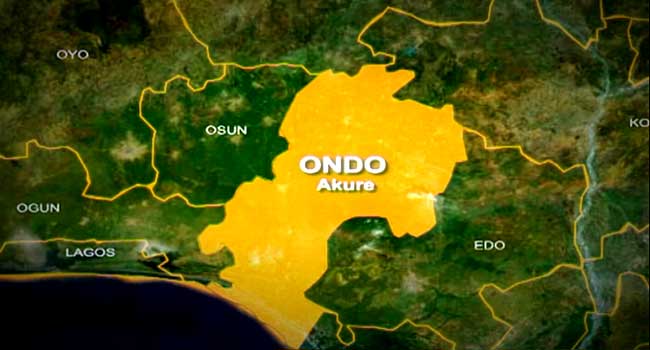
Following his wife’s refusal to have sex with him, a man in Ondo state, Nigeria sprinkled petrol in the room where his stepchildren were sleeping and started a fire.

One of the children died in the inferno while the others are struggling for their lives.

The 54-year-old has been arrested by the Police Command in Ondo State for the dreadful incident which happened in Fagun crescent area of Ondo town.

News Agency of Nigeria (NAN) reports that the Public Relations Officer (PPRO) of the command, SP Funmilayo Odunlami, confirmed the incident on Sunday in Akure.

Odunlami, who explained that the incident occurred on Saturday, said that the suspect was being investigated, while the victims were currently receiving treatment at Federal Medical Centre, Owo.

“This is a case of alleged arson and murder, and we need to investigate it to know the cause and how it happened.

“Meanwhile, the case has been transferred to our Criminal Investigations Department (CID) for proper investigation,” Odunlami said.

An eye witness who did not want his name published told NAN, that the suspect claimed that his wife, who is the mother of the victims, had offended him over a little misunderstanding.

The eyewitness further explained that the suspect executed the act because his wife denied him sex.

Weeks ago in far away United States, 38 years old Justin Fields was in Alabama charged with murder and the abuse of a corpse in the gruesome October 21 attack on his lover, Tammy Bailey, 52.

Fields stabbed his live-in girlfriend with an eight-inch survival knife, which he then used to dismember and behead her sequel to her refusal to have sex with him.

The victim’s head was found near her feet and one of her limbs had been severed, according to Blount County Sheriff Mark Moon.

The crime scene was so grisly that officers – rookie and veterans on the force – said it was one of the worst things they’ve ever ‘seen or experienced’ in their careers.

Bodycam footage reveals the suspect confessing to the gruesome murder at the crime scene. In the video, he tells deputies he had done something really bad and that the evidence was inside the house.

He also told officers he knew he would be arrested, Moon told WBRC News.

Deputies arrived at the scene around 5:30 p.m. on October 22 when a neighbor called 911. The suspect confessed to cops that he’d ‘done something bad’ and the evidence was inside the home

According to officials, Fields and his girlfriend had gone out to celebrate his birthday. They left the home they shared on Bailey Drive to head to the Springville area, approximately a half-hour away, Alabama.com reported.

When they returned, Fields wanted to have sex with his girlfriend and when she declined his advances, he stabbed her in the chest.

‘He had a drink of brandy and then went into his bedroom and was playing guitar,’ Moon said. ‘He decided he wanted to have sex, so he went into her room and propositioned her. When she refused him, it frustrated him, and he stabbed her in the chest.’

Fields told investigators he blacked out, went back to his room and went to sleep. The next day, Fields told police he thought he was having a bad dream and stabbed Bailey more than 100 times.

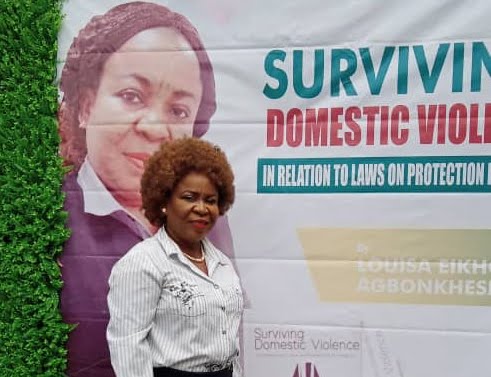
Surviving Domestic Violence in Relation to Laws on Protection in Nigeria

Book Review by Prof Yinka Omorogbe, SAN

Surviving Domestic Violence in Relation to Laws on Protection in Nigeria is a book that gives much more than it promises from its title. It has ten chapters which cover the field of domestic violence, from definitions to experience, to finally deciding to take action, to all possible effects of violence. It is not theoretical and is accompanied by case studies and hard empirical evidence, including stories of experiences suffered by the writer, Mrs. Louisa Eikhomun- Agbonkhese. From the onset, I must state that it is extremely readable, and hard to put down.

The author’s book exposes the elephant in the room in practically every society globally. Hidden in plain sight, domestic violence is a global scourge, suffered by so many people all over the world. It is also known as domestic abuse or intimate partner violence, and while the majority of victims are women and girls, it is suffered by all sexes and at all ages. It is a major focus of the United Nations and underpins Sustainable Development Goal 5, which is on Gender Equality.

Often victims suffer in silence, usually feeling that they are to blame, and where people in their communities are made aware of the abuse suffered, it is often treated as a private family matter, because the abuser is usually a family member. Louisa’s abuser was her husband. She is an abused woman who was courageous enough to escape the tyranny of intimate partner violence. She has also come out boldly to share her experiences and to call out the elephant, and so help people realise that they do not have to live in fear and bondage, with the risk of dying prematurely at the hands of their abuser.

It is not a legal book in any way although it contains primary laws dealing with domestic violence in Nigeria and Edo state as its last two chapters. In reality, it is a practical treatise on domestic violence generally, and domestic violence within Nigeria from her personal experience as a survivor of domestic violence. In that sense, it can be regarded as a handbook for persons suffering from this awful scourge who are contemplating what steps to take to cope with their present situations. It is frankly, explicitly, and experientially written. It tells of the author’s experiences at the hands of an abuser that she was married to and the effects on the children of that relationship. It also frankly delves into societal attitudes towards domestic violence, and how they support or inhibit survivors who have taken the brave step of separating from their abusers. We see the roles that societal and religious norms can play in helping victims to get back on their feet. She highlights some present unfortunate realities in Nigeria, such as the attitudes of the Nigerian Police, and the largely negative roles played by the church in some instances. This is particularly sad because the church should be a place where one draws strength and solace, which our Lord Jesus Christ gives freely. She encourages all to be attentive and to offer help where they notice signs of abuse, and she gives practical ways through which all can help.

Happily, she has also set out to provide support and refuge to victims in various ways. An important way is through the Encouragers Circle, which is the support group that she formed for victims. Another is through the Shelter which she is building to provide a refuge for victims. Her efforts are to be greatly commended and deserve our full support.

The book has 10 chapters, and the last two are reproductions of the national Violence Against Persons Prohibition Act 2015, the Lagos State Domestic Violence Law 2007, and the Edo state Violence Against Persons (Prohibition) Law 2019. These should rightly have been appendices of the book, and not chapters: one wonders why the published did not adopt this conventional style. In some places, there are a few proofreader lapses, which I believe will be corrected in future editions, which I believe will certainly be printed.

I believe that the book is a must-read for all, particularly for any person in an abusive relationship, and persons contemplating marriage. Young girls need to know that danger signals and not assume that marriage will change the young man. In fact, it will bring out hidden traits. It is also a very good read. I found it to be very fascinating and informative: it is so frankly written. I congratulate Mrs. Louisa Eikhomun- Agbonkhese and am looking forward to seeing and being part of your evolution towards becoming a leading voice in the national and global fight against domestic violence.

Congratulations!

Professor Yinka Omorogbe, SAN

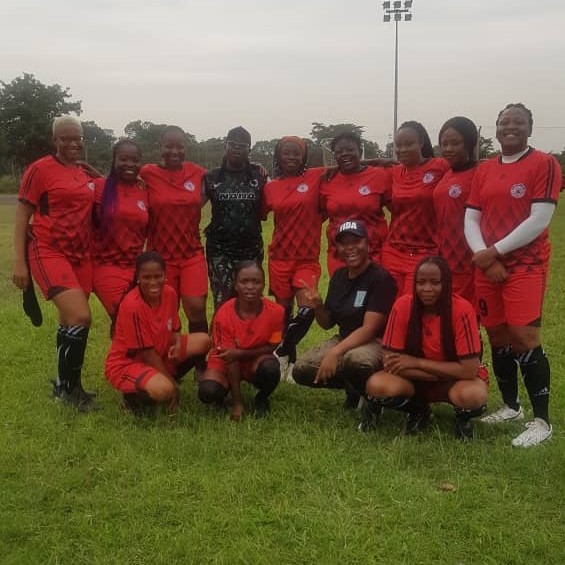
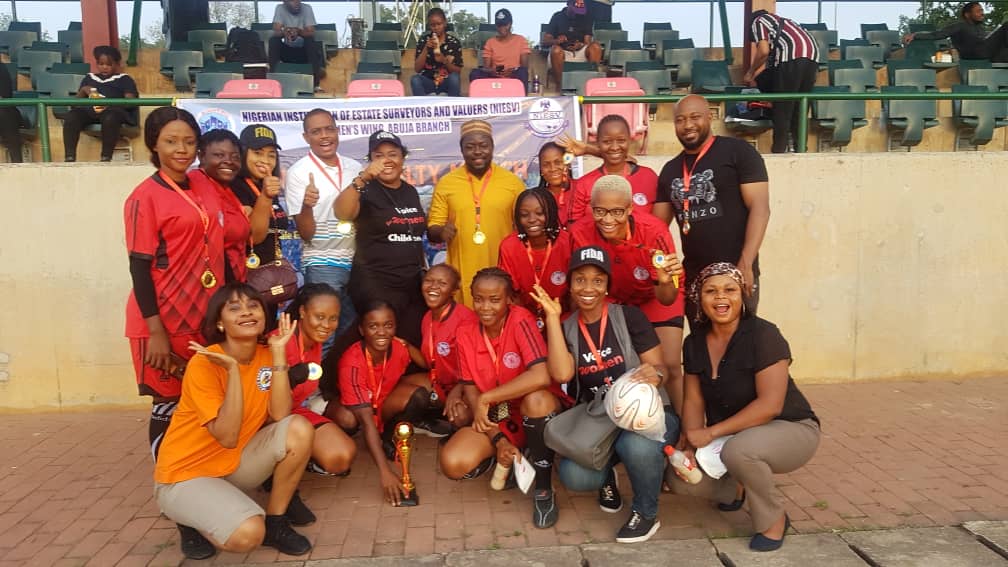
FIDA Abuja queens bring home the cup!

FIDA Abuja queens

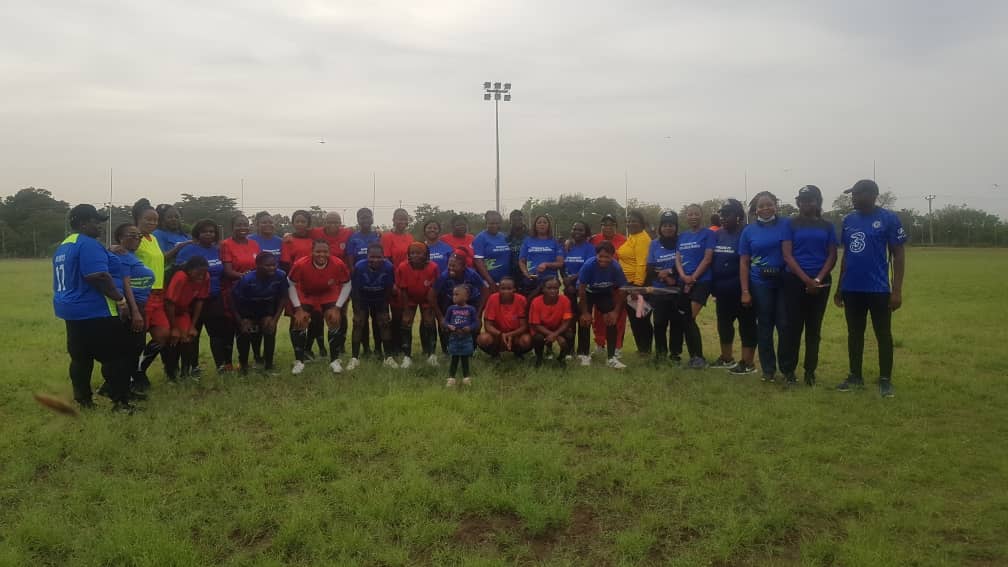
After an exciting match at weekend, FIDA QUEENS defeated the Women’s team of the Nigerian Estate Surveyors and Valuers (NIESV) in a novelty football match.

The match which started at 3:50 pm had in attendance the Abuja branch Chairperson of the International Federation of Women Lawyers (FIDA), Ms. Maureen Chibuzor Nwosu, and her EXCOs, Executives of the NIESV (women’s wing), notable men and women of the Bar and sponsors of the event including Afam Osigwe (SAN) who contributed to the team’s victory, the 2nd Vice President of the Nigerian Bar Association (NBA), Chukwuemeka Clement Ugo alias “Democrat” who sponsored the branch with 16 customized jerseys and a football, Barr. Ajuluchukwu Eze who supported the branch with a bottle of brandy and Barr. Chioma Umeh.

The NIESV women’s team struggled on the pitch as the FIDA Queens gave them a run for the cup by 1-0. And the only goal which brought home the cup was scored by Opara Georgina Onyinyechi in the second half of the match just before the match came to a close.

Below are videos and photos of the event.

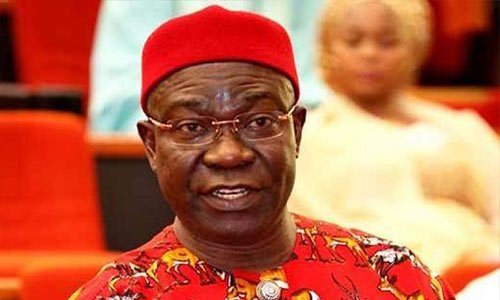
Assets forfeiture: How list of Ekweremadu’s properties was allegedly obtained

More revelations are beginning to emerge over how the federal government obtained details of plum properties belonging to the embattled former Deputy Senate President Ike Ekweremadu.

Law & Society Magazine checks gathered that a few years ago, the then Chief Judge of Enugu State Hon. Justice Innocent Umezulike was embattled, with petitions against him for receiving money from a litigant in his court during his book launch. Ekweremadu’s partner was the petitioner.

The Chief Judge accused Ekweremadu of being behind the petition. He denied it and said he had no control over his partner since he was no longer in practice.

On a certain day, there was a burglary at the Probate Division of the Enugu State High Court. Workers came in the morning to discover that the safe had been broken into and Wills scattered all over the place but nothing significant removed.

Not too long after, a senior lawyer wrote a petition against Senator Ekweremadu alleging corrupt enrichment and listing out all his properties as at 2015, asking the EFCC to investigate the source by which he acquired the properties.

These were the properties listed in Ekweremadu’s Will, some of which were not registered in his name but listed in his Will.

How did the senior lawyer/petitioner know about Ekweremadu’s property listed in Ekweremadu’s Will, if not for “the break-in” which scattered his Will among others all over the floor of probate? Did they photocopy it?

Or was Ekweremadu’s Will the focus of the break-in?

Ekweremadu accused the senior lawyer and the Chief Judge of obtaining the information from his Will and furnishing the EFCC with that information. They denied it.

The petition against Chief Judge Umezulike eventually led to his premature retirement as Chief Judge. That Chief Judge is now deceased, and the senior lawyer has been battling for his health for years now.

And the petition against Ekweremadu containing a list of all his properties as of 2015 is the source of his current woes.

An 11 April 2018 report by Kemi Busari titled: Attempt to seize my boss’ many properties ‘witch-hunt’ — Ekweremadu’s aide, published by Premium Times gives some insight into the Former Senate President’s problems.  

“The legal wrangling between the Deputy Senate President, Ike Ekweremadu, and the Special Investigation Panel on Recovery of Public Property is only a ‘smear campaign’ and an ‘unfolding sinister agenda informed by the politics of 2019 elections,’ an aide to the senator has said.

“Mr Ekweremadu is being investigated by the panel for failing to declare his asset comprising mostly of lands and buildings located in Nigeria, Dubai, London and the United States, amounting to billions of Naira.

“The federal government last month asked the Federal High Court in Abuja to freeze all undeclared assets traced to the senator.

“In order to prevent the forfeiture, Mr Ekweremadu’s lawyer, Adegboyega Awomolo, on Tuesday asked the same court to stop the government from temporarily seizing the asset.

“The Special Adviser (Media) to Mr Ekweremadu, Uche Anichukwu, said the investigation was not about ownership of properties, but a deliberate effort by the All Progressive Congress (APC) to prosecute members of the opposition ahead of the 2019 polls.

“Mr. Anichukwu in a statement on Wednesday alleged that APC lawyers constituted themselves into a panel to try his boss relying on Decree 3 of 1984, now known as the Recovery of Public Property (Special Provisions) Act, 2004.

“He said not only was the law already overtaken by the Code of Conduct Bureau and Tribunal Act, 2004, but the panel was also not gazetted in any publication in the Federal Government of Nigeria Gazette or inaugurated by the President.

“The statement quoted him as saying, ‘so, considering the Senator’s ordeals since his re-emergence as the Deputy President of the Senate in 2015, and with 2019 election fast-approaching, no one needs any soothsayer to know that the FG is up to something more sinister and diabolical of which the asset forfeiture lawsuit is a launchpad.

‘As earlier clarified by the Senator, the list contains so many fictitious and repeated properties generated by the dismissed Chief Judge of Enugu State, Justice Innocent Umezulike, who, in his capacity as the Chief Judge of the State in 2016, colluded with his lawyer, Barrister Tagbo Ike, and some politicians, to steal and doctor his will. They then churned out petitions to many government agencies.’”

Barbaric: Tunde Onakoya moves to save girls sold into marriage as “money wives” in Cross River State

By Stephen Azubuike

Cross River State is one of the States in Nigeria that has adopted the Child’s Right Act 2003 through the passing of the Child Rights Law 2009. Yet, reports from the region tend to suggest that we have failed the gild-child in some parts of the State. 

Tunde Onakoya is a popular Nigerian chess master, coach and founder of Chess in Slums Africa. He has organized a number of interventions for children across slums in Lagos State. In a series of tweets through his verified handle, Mr. Onakoya takes us to Cross River State where girls are condemned to one of the most wicked cultural practices the world has ever heard of.

Read excerpts below:

Money Wife Custom

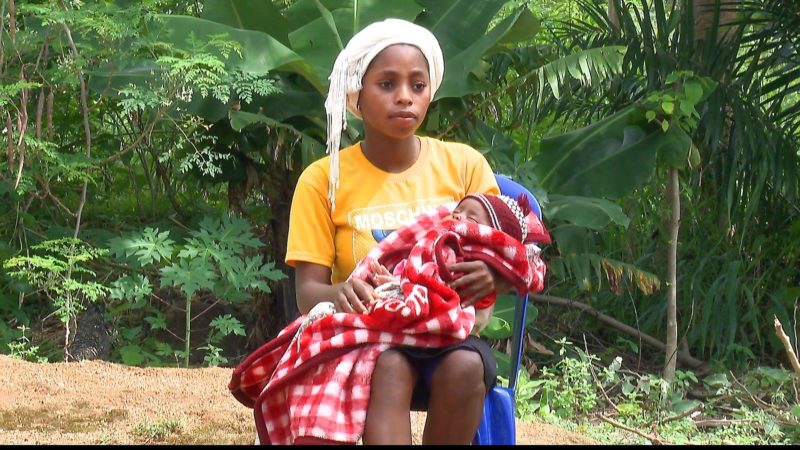
There’s a barbaric tradition known as “Money Wife” in a remote village in Cross River State called Becheve where girls as young as 10-years-old are being sold into marriage… The Becheve tribe of Obanliku LGA in Cross River State is made up of 17 villages all of which practice the Money Wife tradition. It’s located just beyond the famous Obudu hills with a population of about 100,000 people. The Money Wife is a custom in which a girl child in the community is sold out to a man by her parents as a wife in exchange for money as little as 5,000 naira (10 dollars), food items, or to pay a debt. 

How it works

How it really works is that a “rich” man in the village is approached for a loan that is to be repaid by handing over a daughter to him. In the case of the unavailability of a daughter, the lender waits till they have one. So most debts are incurred before the girl-child is born. This practice ensures that once a girl becomes a Money Wife, she is considered dead by her family and must not return irrespective of how she is treated by her husband or his relatives. It gets worse… Upon the death of the man (in most cases, the girls are married off to old men in their 60-90s), the girl is given to his next of kin as a wife. If the money wife dies without having a child, her parents are obligated by tradition to give another girl child as replacement. The girl is surrendered to the lender as a wife to use as he pleases. The girl will have no rights and her opinion is not sought in the matter as she is practically enslaved and put to work on farms which they cultivate for their husbands. She is not allowed to get an education. The men in Becheve cherish this practice as a status symbol as it earns them acclaim amongst their peers.

Consequences

According to Mr. Onakoya, “for the innocent girls, their entire childhood is stolen from them and their existence reduced to being mere sex slaves. The physical and psychological trauma that these girls have to face is something we can never fully understand… A lot of girls have lost their lives during childbirth and many currently live with obstetric and vesicovaginal fistula…”

Some of the victims

According to Mr. Onakoya, girls as young as 5-15 years old were already married or sold to men old enough to be their grandfathers. There were a lot of 14-18 year old girls who had kids already.

Faith – now a 20-years-old with 3 children. Abandoned by her husband and now left to fend for herself and children… All she ever wanted was to go to school and become a nurse.

Dorathy – now 27-years-old with 6 children and a life filled with pain and extreme suffering. She had her first child at the age of 13… She had contemplated committing suicide a few times but needed to stay alive to take care of her children.

Goodness – 9-years-old but could read and speak English fluently. She had to drop out of school recently and has been sold as a Money Wife to an old man from a neighboring village. It is only a matter of time before he comes to claim his “property”. 

Practical steps to save the girls

Mr. Onakoya observed that “ending child marriage in communities like this is a very delicate subject that could worsen the experience of the victims if you sell them false hope of saving them without considering a holistic approach to intervening…” He noted that “a few organizations, NGOs and civil societies in the past have tried to advocate for these girls, there was even a BBC documentary sometime in 2018 spotlighting this barbaric act of child abuse, but sadly very little has changed.” According to him, the barbaric culture is all rooted in poverty:

The Money Wife practice in Becheve is a cultural issue that is so deeply ingrained in poverty and can only be challenged from within the system. Outsiders attempt to intervene, but are hindered by a cultural ideology.

Below is his action plan:

1. We’re creating a Database for women between the ages of 18-40 who are money wives and already have kids. We are going to pair them up with a support system of female mentors where they can get monthly stipends to support their farming business. We are going to put out a form for people to apply to be female mentors for these women. You will have to commit time to speak to them monthly so they know they’re not alone in this world.

2. We have selected 50 girls between the ages of 5-18 who are Money Wives across all the Becheve villages and we will camp them in Ugbakoko for two weeks to teach them chess, mentor them and create a safe space where they can talk about their ordeals. We’ll also need to partner with organizations leading the advocacy to end gender based violence and early child marriage in remote communities. Please send email to: [email protected]

3. In our time in the community, we will go from house to house to educate the families about this barbaric act and do our best to eradicate this primitive mindset amongst the young men and the families selling their daughters.

4. We will partner with financial institutions to offer loans to the people of Becheve as an alternative to using their daughters as collateral. Poverty and high levels of illiteracy is the major culprit here.

5. The local school in the community is dilapidated. We will renovate it and place all the girls on educational scholarship support. We will also partner with other schools around and get as many girls as possible back to school.

6. We will host a chess tournament and community event at the end of the 2 weeks training camp so the girls can showcase their talents to the entire community. We will invite all community leaders and villagers so they can come watch the girls show intellectual prowess.

7. We will make sure all the village heads commit and sign to a law that criminalizes the Money Wife tradition in Becheve and get the police to enforce this law.

8. We will set up a permanent training Centre (Safe Space) in the community where the girls can continue to learn chess, introduce them to a world of technology and build a library where they can read new books and learn about the world beyond the confines of Becheve.

9. We will renegotiate the deals for the money wives under the age of 18 and pay back the debt their families owe to the lender.

10. We will do all of these things whilst simultaneously running a global campaign to end child marriage in Africa.

It is time to do great things from a small place

You can donate to this project here: 

0491316991 Gtbank

Chess in slums initiative.

If you’re outside Nigeria, you can donate through Go Fund Me.

This article was first published on 24 October 2022 by Stephen Legal Admin on https://stephenlegal.ng/barbaric-tunde-onakoya-moves-to-save-girls-sold-into-marriage-as-money-wives-in-cross-river-state/

TIPS