Home Blog Page 806

Great things happened in 2022

TVC News Nigeria reports that “the year 2022 has been fraught with a myriad of uncertainties. Education losses, global inflation, disruptions in supply chains, and other global challenges remind us that the effects of the COVID-19 pandemic continue to linger. In Nigeria, the Gross Domestic Product per capita was last recorded at 49, 69.22 US dollars in 2021, when adjusted by purchasing power parity (PPP).” Notwithstanding, the year 2022 had a number of positive news.

Women made history at the 2022 FIFA World Cup

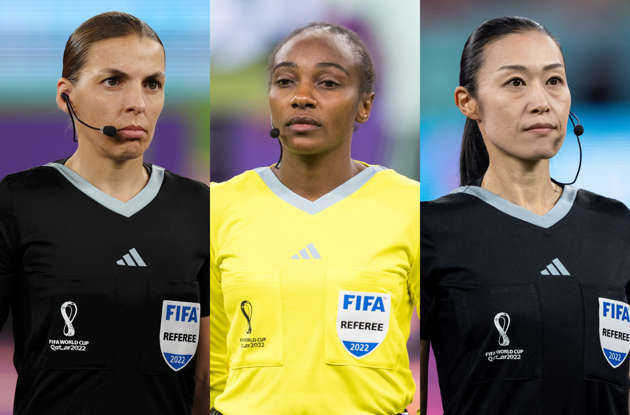
The 2022 FIFA World Cup was controversial before it even kicked off, but some progress has resulted. For the first time in the men’s tournament, three female referees were chosen to officiate the games: Stéphanie Frappart, Salima Mukansanga, and Yoshimi Yamashita.

Finland was declared the best country for media literacy

Finland is best in media literacy

In the age of fake news, it’s important that people know how to critically evaluate the information they receive. Therefore, in 2016, Finland introduced media literacy training in schools. They became Europe’s most resistant nation to fake news. And in the Media Literacy Index 2022, they ranked number one. They were closely followed by Norway, Denmark, Estonia, Sweden, and Ireland.

The world surpassed one terawatt of installed solar energy capacity
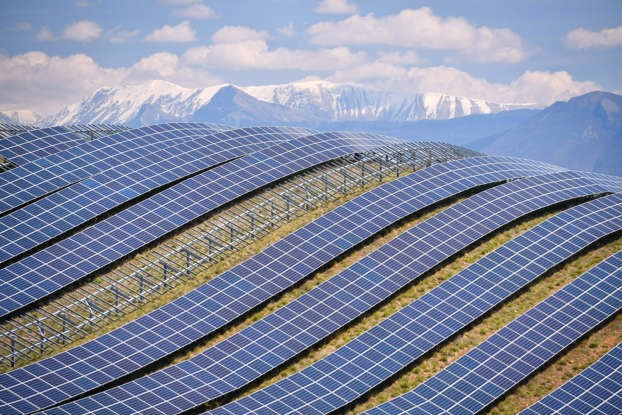
A major renewable energy milestone was achieved, one that’s enough to meet the electricity demands of nearly every country in Europe combined. How does this impact Nigeria? In no way whatsoever. It is believed that Nigeria receives approximately 5mWh of energy from the sun. This is about 4000 times the crude oil production in a day and about 13000 times natural gas production, yet 70% of Nigerians don’t have access to electricity. With unlimited access to sunlight, Nigeria should be leading the renewable energy alternatives in Africa.

This billionaire set new standards in climate philanthropy
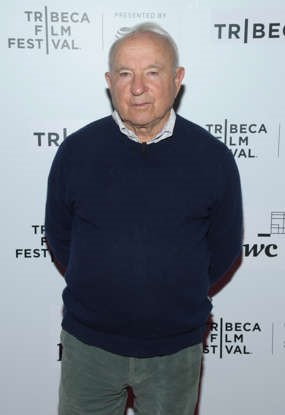
Yvon Chouinard donated company to fund climate change

Yvon Chouinard, the owner of the multi-billion-dollar clothing brand Patagonia, donated the company to help fight climate change. This means that each year, the money they make after reinvesting in the business will be distributed as a dividend to help fight the crisis.

The rich in Nigeria who are mostly politicians fleece the common man and generally use poverty as a tool to keep the people down. Public hospitals are run down so they travel abroad for medicare. Public universities are in dire straits so their kids go to foreign universities. They drive expensive cars on bad roads that could easily be fixed with the public resources they squander on personal use.

A new low-cost rail firm launched in Europe
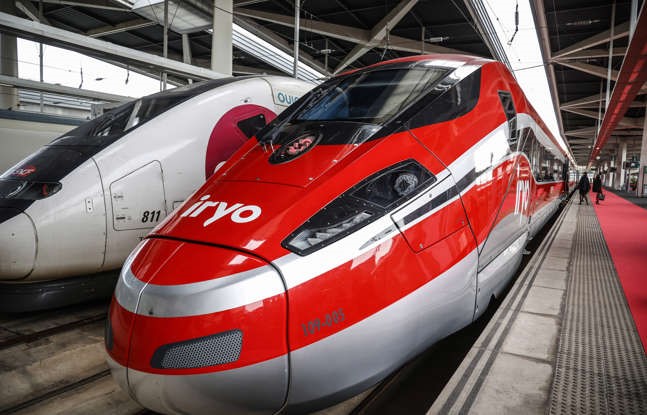
New low trains

To tempt passengers into trains instead of planes, the Spanish operator Iryo will have services between Madrid and Barcelona starting at around €18 (about US$19). Electric trains produce up to nine times less carbon dioxide than planes.

The Governor of Lagos State, Babajide Sanwo-Olu, recently visited Milwaukee in the United States to finalize the purchase of two of Talgo’s Series 8 train sets for the Red Line rail project in Lagos State. On the whole, sixty-two years after independence, Nigeria still struggles to operate part of the 3,505km of railway inherited from the British colonial masters amid failed numerous contracts. And although passenger revenue more than quadrupled in 2021 to N5.70 billion, while goods or cargo
revenue increased to N317.57 million according to the National Bureau of Statistics, insecurity, recently dealt the sector a bad blow.

In March 2022, over 900 people on board an Abuja-Kaduna train when it was attacked by terrorists along the route over were either taken captive or killed.

Germany hatched a plan to boost culture
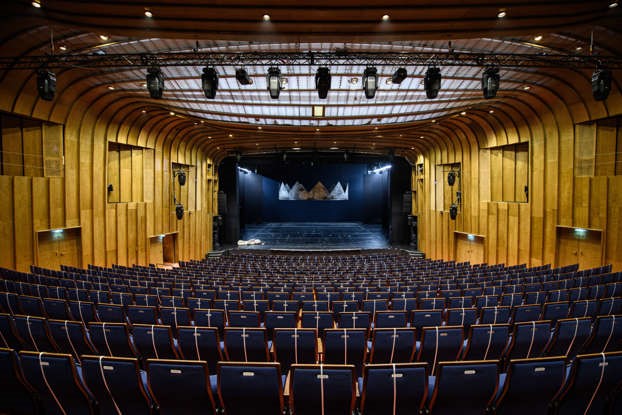
Germany boosts culture

To encourage people to spend more on concert and theater tickets, Germany will offer a €200 (US$210) voucher called the KulturPass to all those turning 18 next year. Other European countries, such as France and Italy, have similar incentives.

What happened to Nigeria’s National theatre? With over 250 ethnic groups diverse in manifold ways, the country’s immense cultural heritage often showcased through music, movies, writing, food, fashion, and dancing among other genres of arts remains an under-tapped mine that should put Nigeria’s economy on a global stage. 

The National Arts Theatre believed to be the primary centre for the performing arts in Nigeria, has since lost its glory and potential as a means of non-oil revenue generation for the country. Built in 1976 as one of the four main venues of the historic Festival of Arts and Culture (FESTAC), popularly known as ‘FESTAC 1977’, the facility like the National Stadium, Surulere, Lagos, has been turned into a meeting point for town unions of various tribes resident in Lagos State.

Did you know that Stevie Wonder stayed on in Lagos after the FESTAC ‘77 closed, and with Miriam Makeba organised a satellite link to receive his four Grammy awards for Fullfillingness’ First Finale live from the now-forgotten National Theatre? Did you know that that edifice once hosted musical extravaganzas including the late Fela Anikulapo Kuti and Roy Ayers, Skyy, Shalamar, Whispers, Third world, and Dynasty; stage events like Wole Soyinka’s adaptation of D.O Fagunwa’s Langbodo?

The world’s tallest wooden hotel opened
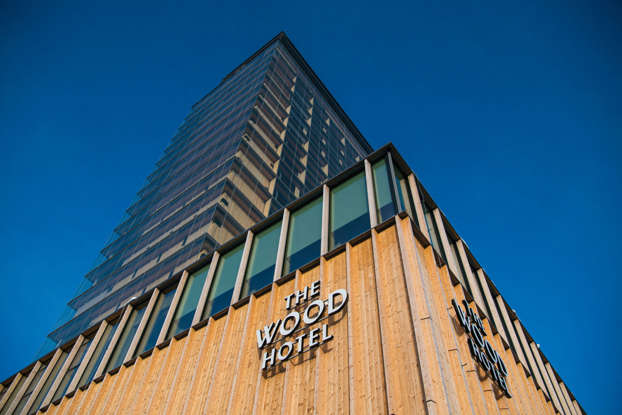
Located in Skellefteå, Sweden, the 20-story hotel is the world’s tallest wooden hotel. It has 205 rooms and is made of local spruce and pin. If sustainably sourced, wood can be good for the planet, because trees lock carbon away.

The world’s largest floating wind farm was approved to be built off the coast of the UK
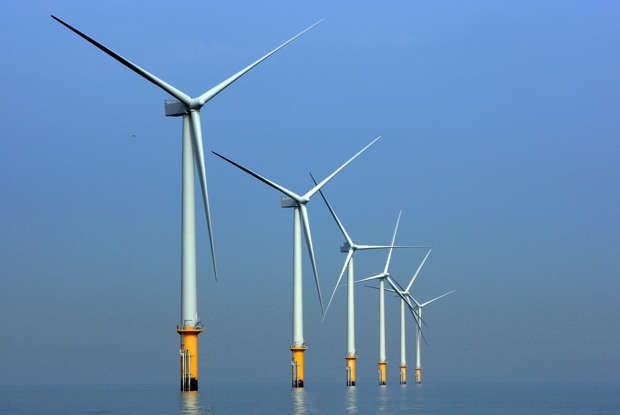
Floating wind farm in the UK

Once completed, the floating wind farm will generate around 1GW of power. That’s enough for around 927,400 homes in the UK.

Back in Nigeria, the news broke in August that major international oil companies were planning some kind of large-scale investments that would make offshore wind a serious business that would open up opportunities for the country’s vast untapped wind potential. The majors were reportedly looking to boost offshore wind development not only to provide electricity for households but also to power offshore oil and gas platforms and produce green hydrogen. Nigerians are still expectant. Days before Christmas, the Minister of Science, Technology, and Innovation, Sen. Adeleke Mamora, called for energy stakeholders’ collaborations to optimally harness the nation’s energy potentialities for development.

Credit for most of this report goes to http://The most positive news of 2022 (msn.com)

Our country needs more than platitudes and empty promises, Somber Tuesday series by Mojúbàolú Olufúnké Okome

Prof. Mojúbàolú Olufúnké Okome

#SomberTuesday! Electioneering campaigns continue as we went through the Christmas celebrations. Candidates continue to make extravagant promises to the electorate. If believed, they are the messiahs that Nigeria needs to rescue our nation from tarnation. But to believe them is to indulge in false consciousness. Our country needs more than platitudes and empty promises. It needs more than good intentions, for as the saying goes, the road to hell is lined with good intentions. Nigerian political history shows us that few promises will be fulfilled. The important issues are forgotten. I believe this includes the #EndSARS protests.

The youth protesters wanted an end to bad governance, impunity, violence & police brutality. But they were subjected to state-sponsored violence and brutally suppressed. This is not in line with what Nigerians want: a government that demonstrates deep adherence to democratic principles. The economy is frighteningly teetering over the precipice. Insecurity is rampant. Kidnappings & abductions are now banal realities. Those whose family members are in captivity deal with the great psychological trauma & huge financial burdens mostly in isolation.

The lucky ones have friends rally around to comfort and support them. There is also trauma among IDPs from insurgencies & citizens who due to unprecedented floods, have to contend with the deaths of friends, family, and acquaintances, injuries, and losses of property & livelihood. Two years on, #Nigeria should remember the massacre of peacefully demonstrating youths at #LekkiTollGate & other locations. We should determine to support the demands that: #NigerianWomenArise #EndPoliceBrutalityinNigeriaNOW #EndSars #EndSWAT #EndImpunity 

Howard Zinn’s statement remains important for us to bear in mind: “Civil disobedience, that’s not our problem. Our problem is that people are obedient all over the world in the face of poverty and starvation and stupidity, and war, and cruelty. Our problem is that people are obedient while the jails are full of petty thieves, and all the while, the grand thieves are running the country. That’s our problem.”

Like the broken record, I keep saying: Let the kleptocrats give back our stolen wealth so that we can fix our infrastructure, schools, and hospitals, and also offer worthwhile social protection to our people. Let the masses enjoy the full benefits of citizenship in Nigeria. Let the leaders and political class repent and build peace with justice. This is no time for politics as usual. The people elected should be those trusted to bring justice, equity, and human security to the entire country, not expedient, unethical, and egocentric individuals determined to dominate for self-aggrandizement or sectional gain. We don’t need oligarchs’ continued domination. We also need a government that puts the interests of majority of citizens first.

It’s “wholly Nigerian-owned company”, NOT a “wholly owned Nigerian company”

By Chinua Asuzu

WHITHER (adverb) versus WITHER (verb): “Whither” means “where” or “to which place.” It’s an archaic adverb to be avoided in modern writing, but you can inject it justifiably once a decade for poetic effect. “Wither” means “to become dry,” “to dry up,” “to shrivel.”

WARY versus WEARY (adjectives): “To be wary of something is to be on one’s guard against it: cautious, watchful, and perhaps worried …. To be weary is to be physically fatigued or, by extension, ‘sick and tired’ of something and ready for it to end.” Garner’s Modern English Usage, 4th ed., 953.

“Interment” versus “internment” (nouns)

“Interment” means burial (especially with accompanying or associated funeral rites, in a grave or tomb).

“Internment” means detention (especially of captured enemy troops in war).

“Debar” versus “disbar” (verbs)

To debar is “to (formally, legally, or officially) exclude, forbid, or preclude (someone) from doing, entering, or having (an activity; something).”

To disbar is “to expel a lawyer from the legal profession.” Etymologically and more specifically, to disbar is “to expel a barrister from the Bar.”

“Tortious”, “tortuous”, “torturous” (adjectives)

“‘Tortious’ means involving a tort. For example, ‘Plaintiffs complained about defendants’ tortious conduct.’

‘Tortuous’ means marked by repeated twists or turns. For example, ‘The court found that the defendant’s tortuous explanation of his whereabouts lacked credibility.’

‘Torturous‘ means causing torture.”

Supreme Court of Ohio, Writing Manual, 2nd ed., 120.

“Temporal” versus “temporary” (adjectives)

“Temporal” means having to do with time or this world; secular, worldly; not eternal; not spiritual; not transcendental; of or relating to earthly life.

Your “lords temporal” are judges (as well as nobles of certain secular rank, typically in English aristocracy).

(Your “lords spiritual” are bishops.)

“Temporary” means for a relatively short or limited duration; not lasting; not permanent; intended to be used for a relatively short or limited duration.

“Suit” versus “suite” (nouns)

Out-of-town lawyers wear suits to file suits, then move to their hotel suites.

A suit means one of several things: (a) a set of clothes (typically including a jacket and either pants or a skirt) of the same color and fabric, designed to be worn together; (b) a proceeding in court; (c) a petition made to a person of superior position, rank, or status; (d) courting, courtship, wooing.

A suite (pronounced ‘sweet’) is a set of rooms, usually in a hotel, apartment block, condominium, or similar facility, used or occupied by one individual or group (typically a family).

How I gave judgment against my husband’s governmentMary Peter-Odili

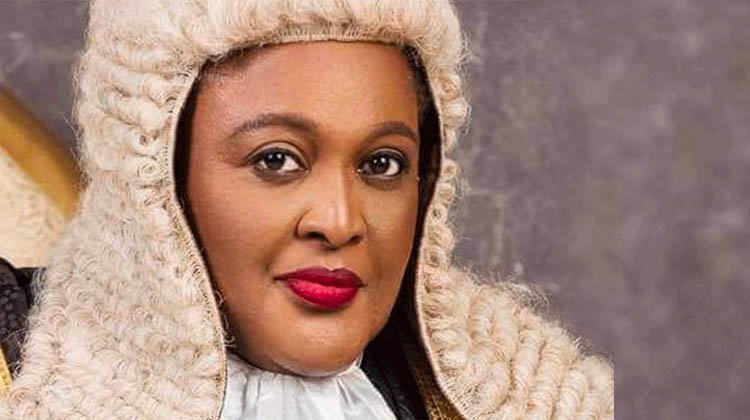
Mary Odili, JSC

By Lillian Okenwa

My father’s wig and gown attracted me to study law even though after secondary school I started having this idea of going to read Accountancy. A senior friend of mine was in IMT reading Accountancy, so I now wanted to read Accountancy. I went for the entrance exams at IMT and passed to study accountancy, but it broke my father’s heart. One night, I saw my elder sister crying. Her eyes were red, so I asked why she was crying. She said, is it not you? You’ve broken our father’s heart. He’s been weeping all day. He said all his friends had children studying law but that he is the only one not going to have a lawyer. So, I said no, no, no, and made a reversal. I went to Enugu Campus of the University of Nigeria, collected the form, and applied for law. The rest is history. He was excited.

My father died just before I was elevated to the Court of Appeal, but for him, my being a High Court judge was the height of his dream. He was a lawyer, a footballer, a politician. He had such a versatile way of life and that’s why all entreaties by his friends and some of his superiors in the legal profession to become a magistrate or judge failed. He said even his children will object because his character will not fall in line with that of judicial officers. He was very gregarious. Always on the move. He was Chairman of Enugu Rangers International and when Rangers is playing a match whether in Enugu or outside everything at home stopped. We attended all their matches physically. We were living in Enugu then.

Hon Justice Mary Odili

When my father came back from England as a lawyer, he took us to Umuahia where he started his practice. It was from there he was appointed Secretary/Legal Adviser for Nigerian Airways and we moved to Lagos. With the inception of the crisis, we moved to our home base in Mbaise. He was secretary to the Statutory Bodies Operations of Biafra. At the end of the war, he moved to Enugu, even though me and my siblings, stayed back to finish our Secondary School in Mbaise Girls. Then we joined him in Enugu and later I entered the University of Nigeria Enugu Campus. Eventually, he left Enugu to become the Local Government Chairman at Mbaise between1976/78 or thereabout.

His being a politician affected us in many ways. We had a lot of deprivations on account of his participation in politics. He ploughed most of the family resources, into the system; community affairs, and all that. Our school fees were delayed from time to time and the luxury things that children should have at the home were not always there. When we were asked to leave our classes because we couldn’t pay our fees, we went home and my mother said she would wait for him to bring the money for our school fees. We stayed away for 2 weeks until my mother produced the money and we went back to school.

That was why I didn’t encourage my husband to be a politician. He opened his hospital very early in 1980. Initially, it was a clinic, then it became a hospital group. He was very active in the University of Nigeria Alumni Association and later got to be the President of the Rivers State Chapter. Before he went to the Constituent Assembly in 1988, both of us agreed he wouldn’t go. But it turned out that the people from his constituency had heard about him and insisted that a man like him is what they needed to represent them in Abuja. Both of us discussed and our decision was that he will not take it. He will build up his hospital which had been degraded after he went for specialization in Liverpool and the man kept in charge betrayed him. When he came back, he virtually had to start from scratch. He had just stabilized when this offer for him to go to the Constituent Assembly came. Having agreed he would not take the offer, he headed for Ahoada, our local government headquarters to tell those people that he was not interested. I was expecting him to come back, but in the evening, he phoned me. I thought he was in the hospital, because each time he travelled, on coming back he would head straight to the hospital and phone to say, I’m back to town but I’m in the hospital to find out how things were. Instead, he said, I’m still in Ahoada. I said what are you still doing there, you mean, you will sleep in Ahoada? He said yes, that things happened in a way he didn’t anticipate. He said I shouldn’t argue too much, that I should look for his certificates and make photocopies. That somebody will come for them early in the morning. I said, what are you saying? He replied that he didn’t have the courage to say no and I just couldn’t imagine how Peter did not have the courage because courage is his second nature.

I was so angry. But the person I was angry with was not at home. When he came back, he said, as he got to the local government headquarters, he saw those big chiefs and traditional rulers and they said, “we’ve been waiting for you.” He said tried to argue but they said no, no, no, here is the form, just sign, we will do the rest for you. That’s how he went to the Constituents Assembly. So, I said okay, let me manage this one. They did a year. That was in 1988/89 and concluded, but before then, he came back one day and said, the way I’m looking at it, this thing is heading to politics. I told him you know I come from a political home; the family suffers. He said don’t worry, what will I do for you to support me? I said build me a house. At that time, we were in the Judicial official quarters, I said to him “you will build me a house so that I’m sure my children have shelter. Then whatever you want to do, you will have my support.” He built the house.

My mother was very hardworking and I imbibed some of her traits. She was involved in palm oil trade, which was our family tradition. My father’s family was into the old oil palm trade in the oil Rivers, Opobo and Bonny. And since my mother came into our family very early, she knew how to trade in it. She was also a textile merchant if I can say so. I imbibed those attributes. I used to make money available to her to purchase palm oil for me and even did some trading in textiles. Like I told you, I grew up in a political home. I didn’t want a situation where if my husband was financially disabled, the home crashed. So, I needed to do these small things. I didn’t sell directly. I had those who would collect from me, market, and bring me the proceeds.

I have no patience for lazy women. I was happy when I also heard these words from Maryam Babangida on an occasion when we attended the Better Life for Rural Women event at the Villa. I went with the governors’ wives then and one of the things she said was that she didn’t have patience for unserious women. That’s my attitude, because like the saying “No condition is permanent”, a husband could be prosperous today, it may not be so tomorrow. And so, when that unforeseen happens and the woman is idle and has no funds of her own, what happens to the children?

Every female should have something doing. I grew up in the village. That was before my father came back from England, and I never saw any woman no matter how old, idle. Each and every one of them had something to do, no matter how small. And they used to stroll in the sluggish way of old to the market, to market either their garden egg leaves or pepper; all that they were doing. To be this complete housewife business is something I find strange and unjustifiable. It puts too much of a load on the husband, which is not right.

As First Lady, I went around communities in Rivers State, empowering women with skills acquisition. I was very happy to do that and Peter was supportive. He made a lot of promises during his campaign. When we were about coming in, the outgoing military administrator told him there was a deficit of hundreds of millions of Naira. And so, Peter took over, froze the account of the government, and managed to use his personal resources from the hospital to keep afloat some actions of the government until things normalized. But because he had made promises of 1000 houses in 100 days, and I told him to make a broadcast and explain the situation to the people. But he said, God who made him governor, will help him to find a way to solve the problem.

He had also promised water will flow in 6 weeks. Before then, there was no water in Port Harcourt metropolis. So, I said now that you have reconfirmed the situation how are you going to do it? Again, he said God will do it, and indeed, I believe God did it. Some people phoned that they were excited about the promise of a thousand houses. He told them the government does not have money. They said if he can give them the job, they will put it up and receive payment when there is money. He was excited. Before the 100 days, one hundred units was constructed in various local governments that could provide land, and before you knew it a thousand two hundred units were standing. Some of the commissioners in old regime who had the expertise were very helpful and interestingly, some of them came from the opposition.

Peter was only interested in results.  To him, Rivers State people had the right to go to any party of their choice. When he first sent for them having heard they had the expertise to help him achieve his campaign promises, they thought he was going to lock them up. After discussing with them, they said it is doable, that they could do it in 3 weeks or so. In fact, there is this Ambassador Akawor who is now the PDP Chairman in Rivers State; he was a commissioner in the military regime, and then Hon. Okemitri, so the two of them got together and indeed in 3 weeks, people literally got their houses flooded. There hasn’t been water for years, so, many opened taps that people did not bother to close flooded their houses.

I gave judgment against my husband’s government.

I recall a judgment I gave as a High Court Judge in Rivers State when my husband was Deputy Governor. It was a land issue between Obiakpor local government and the state government. To me, the community was on the right side, so I gave them judgment. When my husband became governor, one day he as he was flipping through some documents in a file, he called out to me and said, come and see how some people want to use your name to get through a fraudulent land process. I said ah, ah, how? He said, can you imagine they brought some documents to show that there was a judgment you gave against government (laughs). When he showed me the document, I said yes, and I gave that judgment. He said, so you mean you gave that judgment when I was Deputy Governor against our government?  I told him that it is true I gave them judgment against a government he was part of. His hand was just suspended in the air as he held up the papers. And so he let go of the land to the community.

The community named one of their streets after me but Peter objected and removed the signboard. The community, however, kept putting up the signboard with my name each time it is removed so the place remained Justice Mary Odili Street.

Qatar 2022 Miscellaneous

By Chidi Anselm Odinkalu

On 2 July 2005, Argentina and Nigeria contested the finals of the FIFA World Youth (Under-20) Championships at the Galgenwaard Stadion in Utrecht, The Netherlands. Both teams had navigated a treacherous route over the 23 days of the tournament, which began on 10 June.

Argentina emerged second, behind the USA, from a group that also included Egypt and Germany, before eliminating Colombia, Spain, and Brazil in the knockout stages. Like Argentina, Nigeria also emerged second behind Brazil from their own group. In the knockout stages, they first overcame Ukraine; survived an interminable penalty shootout with hosts Netherlands; and then eliminated Morocco in the semi-finals.

Both teams had a glut of young talent. Nigeria’s captain was a leggy midfielder, John Mikel Obi. His counterpart on the Argentina team was a beguiling artist with a low centre of gravity called Lionel Messi. At the end of a hotly contested game, Argentina emerged winner (for the fifth time), edging Nigeria with a score of 2-1, with both of their goals coming from penalties scored by their captain.

These goals took his tally for the tournament to six, past Spain’s Fernando Llorente, whose five goals made him runner-up for the highest goal scorer in the tournament. Messi was also voted the best player at the event, a worthy successor to his much-decorated compatriot, Diego Maradona, who won the same prize 26 years earlier in 1979.

Mikel later reminisced that Messi may have “stolen” the Golden Ball award from him in 2005. Messi and Mikel would meet many more times subsequently as their playing careers evolved. At the 2008 Olympics in Beijing, Messi again stood between Nigeria and football gold. Four years later, in April 2012, Mikel’s Chelsea saw off Messi’s Barcelona en route to a famous victory in the Champions League semi-finals.

On 17 December 2022, Messi crowned a playing career for which superlatives had long run dry when he led Argentina to lift the men’s football World Cup, until then the only prize at any level of the sport to have eluded him. By then, however, Mikel’s career had run its course without discovering any of the promise that it held when he first went head-to-head with Messi 17 years earlier, leaving the world unsure who was better. Journalist, Ed Dove, described Mikel as “the wonderkid Messi left behind” complaining that “there remains a lingering doubt he never dazzled at the top level of football in the way he could have done.”

The difference, many would argue, was management, something Nigeria has never been good at. Perhaps the only country that competes with Nigeria here is Cameroon and its credentials in this department are not in doubt.

In 2010, it emerged that the Cameroon Football Federation, better known by its French-language acronym, FECAFOOT, had been owing its staff arrears of emoluments for nearly four years (44 months). FIFA stepped in, sending money to resolve this crisis. FECAFOOT paid only 16 months of the arrears and the rest of the money disappeared. The following year, players in the national football team, the Indomitable Lions, went on work-to-rule to protest debts of match bonuses and appearance fees owed them by FECAFOOT. As a result, international matches involving the national team had to be scratched. In 2014, Reuters fittingly described the federation as “disorganised, self-serving and greed-filled”.

In terms of talent and raw athletic ability, Cameroon was almost unquestionably the cream of the crop of the five teams from Africa at the FIFA World Cup in Qatar in 2022. Getting the best from them was a management proposition that proved, however, to be beyond the endowments of its governing federation. The team’s abilities should have enabled it to easily qualify out of a group that also had Brazil, Serbia, and Switzerland, but, with a loss against Switzerland and a draw against Serbia, they needed a good win against Brazil to stand a chance of advancing.

On the day, however, the Indomitable Lions team played with the conviction of a side grateful to be on the same pitch with the boys from Brazil, unwilling to believe that the price of Cameroon’s Makossa was every bit as competitive as Brazil’s Merengue. Their best player, Vincent Aboubakar, scored against Brazil with nearly 10 minutes left to play but rather than press home their advantage, Cameroon rather literally lost their shirts, took one of the silliest red cards ever in the game, and lost the plot.

If Cameroon’s team in Qatar had a glut of talent poorly managed, Morocco had the opposite challenge of getting the best and beyond from a team that was at best functional. In the end, they went farthest of the teams from outside the traditional regions of Europe and Latin America, for whom the World Cup was originally invented.

Where Cameroon’s under-performance owed much to inspired disorganization, Morocco’s road to the semi-final was built on superb organization, and a resolute team ethic. Manager, Walid Regragui adapted former Dutch Manager, Rinus Michels’ philosophy of “total football” into one of “total defence”. Morocco’s system was built not on outscoring the other teams but on ensuring that they conceded the least goals, often scoring just enough to accomplish what they needed. As a philosophy of management, it worked a treat.

Far from doing just enough to achieve what was needed, Qatar, the hosts of the 2022 FIFA World Cup, went over and beyond, delivering what FIFA President, Gianni Infantino, called “the best World Cup ever.”  At over $220 billion spent over 12 years, it was also “the most expensive World Cup ever”, costing more than all of its predecessors put together.

Going into the tournament, the impression, especially if you consumed your information from mostly Western media sources, was that Qatar 2022 was the death of the World Cup and of the Beautiful Game. It was as if the country committed a crime by coming out tops in a contest against more fancied Western venues, including Australia, Japan, and the United States. The region whose billions fund famous football brands, such as Arsenal, Barcelona, Manchester City, and Paris Saint-Germain, could not be relied on, however, to host the world. A potpourri of manufactured “controversy, including allegations of corruption and human rights violations” was stirred with a huge dose of prejudice against the country and its region.

Despite the controversies over sex and alcohol, Qatar 2022 is also the most profitable World Cup in history. Much of the controversy that preceded it has rightly been called out as hypocritical. Qatar is far from anyone’s idea of Nirvana but no such place exists nor has anything approaching it comes close to hosting the World Cup. Indeed, a list of hosts of previous mega-sporting events can often read like a litany of atrocity sites around the world.

For instance, fascist Benito Mussolini hosted the second World Cup in 1934, the year before he invaded Ethiopia in one of the defining acts of aggression of its age. The following year, in 1936, Adolph Hitler hosted the Olympics as his opening promenade into infamy. When he invaded Ukraine after hosting the World Cup in 2018, Vladimir Putin only reprised a familiar copybook.

Football may indeed mirror life but it is not a cure for all of the world’s problems nor is it meant to be. In 1978, the World Cup finals took place a mere 40 blocks from sites where Argentina’s military junta was orchestrating the torture and mass liquidation of its perceived enemies. As a victim of those atrocities put it: “While the goals are shouted, the screams of the tortured and murdered are muffled.” 44 years later, Qatar represents progress in increments, if not in quantum leaps.

A lawyer and a teacher, Odinkalu can be reached at [email protected]

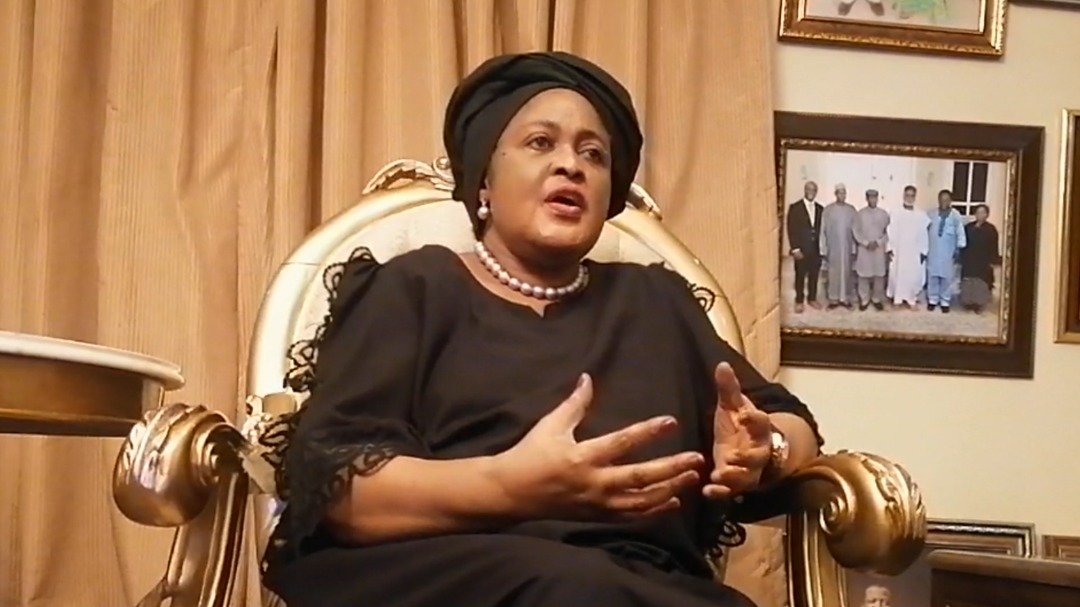
Video: I have no patience for lazy women – Mary Peter Odili, JSC

It has been said that beyond their family and kids, working women have a life that gives them a sense of self-accomplishment and fulfillment. Retired Justice of Nigeria’s Supreme Court, Hon. Justice Mary Peter Odili agrees with this notion and much more. She also told Lillian Okenwa how she narrowly missed studying accountancy.

Joe Nwankwo, what a time to say goodbye…

By Lillian Okenwa

Joe was a clown. As judicial correspondents back in the days, many of us felt he was in the wrong profession. Comedy should have been the choice we told him. There was no dull moment with Joe. Frankly, what journalism gained, the entertainment world lost Big time in Joe. Joe will say the most outrageous thing with a straight face and sometimes with gesticulations, while you’re reeling with laughter, gripping your sides at the same time lest they explode. It’s hard to imagine Joe is gone.

Joe was full of paradoxes.  Quick-tempered with a razor-sharp tongue, he never shied away from a fight but strangely, Joe is also a peacemaker.  How someone who’s quick to stir up a fight could also be a peacemaker is a puzzle but that’s Joe for you.

In 2015, he invited me to become the pioneer Law Editor of the AUTHORITY Newspaper. He was Executive Director (Publications). When we met, he already had my engagement letter waiting, but I told Joe I could only do it as a consultant. Without missing a beat, he said, Lillian, go and change the letter to suit what you want to do for us.

Joe was a loyal friend. He knew how to maintain friendships and I’ll give you one example or two. Long before the Supreme Court of Nigeria had a Director of Press, and Information, Chris Unigwe who retired as Director of Planning, Research, and Statistics was in charge of the media. And so, his office was the convergence point for Judicial journalists in Abuja. Also because Unigwe went beyond officialdom to make our coverage of the Supreme Court easy, he became our friend. Along the line, a lifetime friendship was forged between him, me (Thisday), Joe (Daily Times), and a few others but as the years rolled by the relationship between him and Joe got stronger. They saw each other nearly every day and became close family friends.

Unigwe is an outdoor man that loves hanging out with the boys and so when his wife died in February 2022, Joe knowing how lonely he was and taking into consideration that he would not be hanging out until such a time, visited him every day. Joe would go about his business during the day and then drive to Unigwe’s house in the evening where he would remain until late at night before going home.

That was their show until December 13, 2022; the day Argentina and Croatia played that epic semifinal. Until the match was over, Joe did not show up as usual. Thereafter, Unigwe called to ask why he didn’t turn up. Joe explained that he was not feeling too well but was getting better. They discussed the match and agreed to meet up the following day.  In the morning, Unigwe called to know how he was doing but he didn’t pick up the call. He called a second time, yet no response. He then decided to leave for work and call again later. On settling down in his office, Unigwe called a third time and this time a tearful female voice was heard on the other side instead of Joe’s. Joe had passed that morning and they’d been trying to reach him (Unigwe), she said. It was a surreal moment…

I was still in denial when I, journalists who had crossed paths with Joe in Abuja and Unigwe converged in front of the morgue that 14 December 2022 evening awaiting the hearse man that would convey him that night to Akwa in Anambra State. I was still in denial when the white Toyota Sienna sped in and backed up to the morgue entrance. I was still in denial when the vehicle trunk opened as if readying for some cargo to be hurled in. I was still in denial until some men emerged bearing a white body bag which they hefted into the trunk of the vehicle. I hadn’t the courage like others to go closer and get a final look at him but my two hands involuntarily flew to the top of my head for I was beholding a very bad dream….

Chief (Sir) Joseph Nwankwo who introduced himself as Ofunkpl Nri (the number 1 of Nri) was born 50 years ago in Anambra state.  Nri an ancient town in Anambra state, Nigeria is popularly credited and revered as being the cradle of Igbo civilization, culture, and religious practices.

Joe who rose through the ranks of journalism worked in several media houses including Daily Times, The Sun, and Daily Independent, before becoming one of the founding Directors of The AUTHORITY Newspaper. He was survived by a wife and three children.

National Assembly should fast track legislations that would protect taking evidence of young persons – Mary Peter Odili

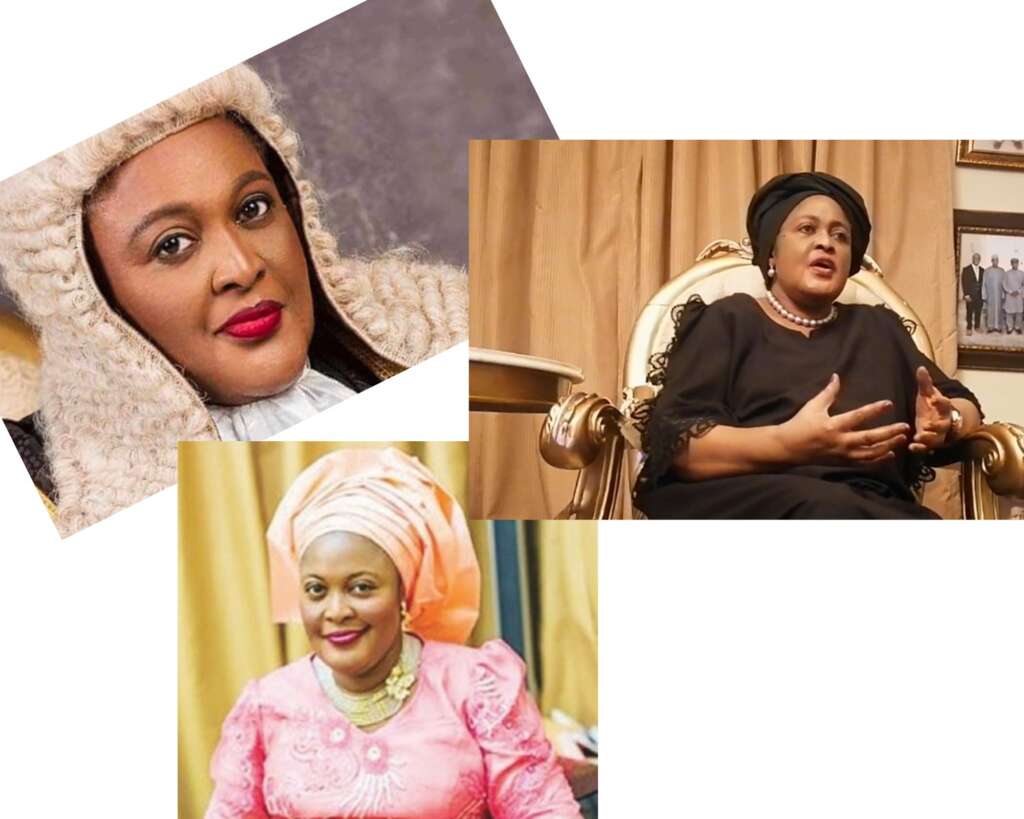
Justice Mary Odili

Born on 12 May 1952 at Amudi Obizi, Ezinihitte-Mbaise Local Government Area of Imo State, Hon. Justice Mary Ukaego Peter Odili, JSC who bowed out of the Supreme Court of Nigeria on Thursday, May 12, 2022 is the third woman to ascend the Supreme Court bench in Nigeria.

Her closing days at the apex Court were nearly marred by the attempted invasion of her Abuja residence on the night of Friday, October 29, 2021, by security operatives comprising soldiers, officers of the State Security Services (SSS), policemen, and others. It was a move the Supreme Court in a statement described as a mission to kill or maim her. She spoke with Lillian Okenwa on sundry issues.

It is not the big industries that grow nations, but the small cottage industries like we see in china and Italy with those leather shoemakers and their small workshops. China is maximizing their manpower and we need that in Nigeria like yesterday. If we follow through that all over the Federation, we won’t be where we are now. A lot of people looking for white-collar jobs will no longer bother.

During our tenure, Peter promised skills acquisition and God brought Maria Sokenu of blessed memory, the former managing director of People’s Bank. She was part of a group that came to discuss infrastructure development in the state. Peter gave them a private dinner in the government house and I found myself sitting with Maria sokenu. I had heard of her and use to see her on TV, but that was my first time of being in her presence, so, we got talking. She was talking about the Chinese, the Italians, cottage industries and the matter of training the trainers. She said that within four days, somebody could become a hairdresser. What she was talking about seemed far-fetched, but she said they’ve done it somewhere in Lagos and that all she needed was a little empowerment to go get the equipment, the people who will train our locals, and we run with it. I didn’t know my husband was listening to our conversation until I felt him pinching me. He said, don’t let this woman go.

So instead of Maria leaving the following day, she stayed back. The governor gave her the empowerment to go to Lagos to bring the various equipment and manpower and within one week right there at the Civic Centre, various activities were going on. That’s how we got the first crop of trainers. With that, we started moving local government by local government and in less than a year, we had covered all the local governments in the state. Then communities were excited and wanted to be trained.  After training, you got the equipment and a small stipend to start your small industry in your house or a shop. In my husband’s community of Ndoni, a lady from there, whom I knew was into catering became our point person., Initially, she was to start with 60 people but she came back to tell me, the hall was too small to take 60 people. Because of the enthusiasm, some of them said they would stay under the trees to learn the trade. And so by the time we were graduating them, there were hundreds of people and they were equipped. Before that happened, Ndoni was a very rural community, but within two-three years, it transformed into a city and everything you need to have done, for your weddings, burials, for whatever functions were produced within. People had begun using their skills.

And Peter was able to get the All-Season Road to the community. Previously, you couldn’t get to my husband’s place without going through a Shell contour. It was like a raft that will contain your cars or vehicles with the person, to ferry you across the Orashi River, and then you drive in. But that is for only the dry season. During the rainy season, the pontoon can no longer do anything because the road is swampy and unmotorable. During the rainy season go by boat, into the community.

When he was Deputy governor, the President then, General Ibrahim Babangida who visited the state was interested in visiting Peter’s community but was told he could only go by helicopter or by boat. At the banquet, he made a pronouncement. That was where he pronounced an all-season road to Abonema in Kalabari land. Before then, you can only access those Kalabari places by boat. That was on the same occasion, he approved the Bodo-Bonny road, but nothing happened. However, because he had pronounced and signed the instrument, it was Federal Government approved. It was the good fortune of having Peter as governor that pushed it under the Obasanjo regime and it was tackled heads on. By 2003, they now had the all-season road and you didn’t need the pontoon or go by boat. This is an oil-producing community to show you what people from the area suffer. Since they got all seasons road, movement of the indigenes in and out was no longer a problem. Peter also had the interlocking of internal roads done. All the roads in Ndoni are paved and, there’s pipe borne because he initiated the gas turbine electricity. Ndoni has 24 hours of electricity.

He actually built the Omoku Gas Turbine, but the federal government insists on distribution and then there is the Eleme gas turbine. That was a programme that was initiated before but it was not functional, so Peter resuscitated it. He now built the big Omoku gas turbine, so there’s electricity, there’s water and there is an all seasons road in Ndoni. The skills acquisition opened up the town. The whole place now became a city.

The problem the Nation has is that instead of continuing the programmes of those who had functioned before, there is a deliberate attitude to denigrate the originator or whatever or whoever was the pioneer of a programme. They want to start something new and it takes time, it takes a lot of money and the old programme is stepped down, so that you don’t put up the name of somebody else. I cannot speak about our skills acquisition training without mentioning Maria Sokenu. She brought it to us, facilitated it and then we enlarged the scope.

Like I said at my valedictory session, the Chief Executive of the Nation, or the Chief Executive in any state must be the commissioner or the minister for this skills acquisition programme, youths’ employment and empowerment. The main minister should be the President or the governor. Because of where we are now, the drive needs to be faster and more effective and only the Chief Executive can do that. The decision has to be immediate, and it is the man with the pen that gives the immediacy to propel it. But when the aide is the one in charge, there will be some lapses. The Rivers State Skills Acquisition programme, had the effect it had because Peter was very passionate and I with my team and many volunteers were interested in helping out. It was really the State government’s programme hence it entered the communities.

The way it is now, youth employment and empowerment programmes need to be driven directly by governors or the president. We’ve gone beyond restiveness. We are now in insurgency. Even children from privileged homes are now sucked into this thing, so it is not something to be done outside the main man. Let no one deceive himself that your family is shielded. No. No, one is shielded. Just like the children of the underprivileged who have no employment are easy targets for these negative tendencies, so are the children from privileged homes. Because the young are vibrant, they are never idle, and the devil they say, the Idle is the devil’s workshop.

I came in 2019 as President of the National Association of Women Judges in Nigeria (NAWJIN). Unfortunately, our tenure was affected by COVID. Fortunately, we had some associations that identified with us and felt that whatever programme we bring to the fore should not be hindered on account of the lockdown. Mrs Boma Alabi, SAN with her outfit partnered with us. We highlighted the need to have a special arrangement for Juveniles or young persons who testify in criminal matters. Or where they are victims, how the evidence concerning them or those close to them and what they have witnessed should be protected. The point was to bring to the fore that, these are children of very sensitive age whose nuances have to be protected and, in a way, shielded while getting at the vital information that will nail all perpetrators in all the various crimes that affect young persons or those close to them. The workshop involved international participators from Australia, the UK and some other international personalities.

Impact? With our communiqué at the end of it, the National Assembly said they would look at legislations that would give it the teeth it needed for taking the evidence of young persons, immediately after the incident takes place or has taken place so that the length of time of the trial will not obfuscate the content of the material. And then even in the courts; how such evidence is taken from young persons. We can only pray and hope that the National Assembly will do the needful.

As inaugural Chairperson of FIDA in Rivers State Port Harcourt, I and my EXCO took it upon ourselves to make findings about the matter of domestic violence and abuse in homes; what happens to widows and all that. We had enlightenment workshops for women, and then we started training on a small scale. We learnt a lot from Enugu FIDA which was more advanced and so these disadvantaged women had access to free legal advice, had their matters prosecuted in court when necessary and for free.

Domestic violence had always been there but it’s not in the magnitude of what we are seeing today. Incest was always there. Again, not in the magnitude we are seeing today. Previously, there was a lot of “let us not expose this relation” but what I see that has now given it a boom is because a lot of people are idle.  And because they are idle, the negatives take over. Hence, we now see these things in abominable numbers. People have to be positively engaged. It is an emergency.

Women in violent relationships should run away immediately. They must not stay a second longer than they have already stayed.

A Christmas like no other

By Sonnie Ekwowusi

Whether in plenty or on empty stomach or in foreboding forlorn or in distress or anxiety, we are electrified and enraptured in the magnificent allure and frenzy of Christmas amid the rendition of beautiful Christmas carols, festooning of public highways, public parks and personal houses; exchange of Christmas gifts, social parties and family Christmas gatherings.

This year’s Christmas ought to be celebrated with pomp and pageantry. It is the first post-COVID Christmas. The last two Christmases were marred by the COVID-19 lockdown. You will recall that families, friends, relatives and acquaintances were forcefully separated from one another during the COVID lockdown. Social, family and communal interactions and socializations were paralyzed. Even public religious worship centres were banned during the lockdown. Now that the COVID lockdown and social restrictions have been lifted, I say, happy survival! Let us make merriment and celebrate as we thank God for graciously sparing our lives at all times, especially during the ravaging COVID years.  From where I am seated at the moment and scribbling this I could hear resounding in the horizon the traditional Christmas carols in celebration of the dies natalis of Jesus Christ. I could feel the festive mood of the different people around me. I could sense the inner peace and joy encumbering the hearts of many people even though they have little or nothing to eat and drink.  

At the Nativity of Jesus Christ, we are invited to re-live and deepen our understanding of the unfathomable Christian mystery which took place on the first Christmas more than 2000 years ago. When peaceful silence lay over the surface of the earth and the night had not run its full swift course, God chose to be born in a relatively humble city of David called Bethlehem. As St. Josemaria Escriva aptly puts it: “when the fullness of time comes, no philosophical genius, no Plato or Socrates appears to fulfil the mission of redemption. Nor does a powerful conqueror, another Alexander, take over the earth. Instead, a child is born in Bethlehem. He is to redeem the world”.  Poet William Butler Yeats writes that at the appointed time God caused what he dubbed the “uncontrollable mystery on the bestial floor” to take place in the relatively obscure town of Bethlehem. You and I should marvel at the magnanimity of a God who took flesh in the ever-virgin womb of the Blessed Virgin Mary in order to be born among us. We live in a society in which anybody who by any chance has accumulated some material wealth or has lots of money in his personal bank account wants to make a big statement about it with his big car, a gorgeous dress and the quality of his shoes. Just take a studied look around you. What can you see around you? Noise-making, trumpeting thunder, grandstanding, flamboyance, colours, titles. Humility, in our clime, seems to be a vice. Self–effacement is a scarce virtue in our world. If you are doing any good work, the society expects you to boast about it in public, otherwise, you could be accused of revelling in religious obscurantism or secrecy. Our affinity for titles is unprecedented. These days some even wear badges so that the society may not lose the good opinion they have about them.

But Jesus Christ, the way, the truth and life, is humility personified. “Christ triumphed through humility”, writes St. Josemaria Escriva. Jesus is the Creator of all the alluring material things on this earth. He could have chosen to be born in the most expensive hospital on earth run by the best gynaecologist on earth. Instead, he chose to be born in a stable, a place where animals are kept. Can you imagine? Christ, the saviour of mankind, choosing to be born in a place where animals are kept. The Bible tells us that there was no place for him, his mother Mary and foster father Joseph in the inn. Reflect on this paradox; whereas there is room for the materially rich of this world; there is room for those clothed in fine apparels; there is room for every traveller who has travelled far and wide. But there is no room in the inn for the Creator of the universe.  He was laid in a manger not in a golden bed. Animals not only witnessed his birth but surrounded him after his birth. Prior to his public life, he spent a gargantuan 30 years in obscurity working as a carpenter with St. Joseph, his foster father. For our salvation, he allowed himself to be arrested and crucified on an ignominious cross.

Following the exemplary humble life of Jesus, let us learn to be humble. We should reproduce Christ’s exemplary life in our individual lives. Jesus came to serve not to be served. He allowed himself to experience suffering, want and deprivation. In assuming human nature, he bore our burdens. Seeing the sufferings and distresses and deprivations and deaths of the people around him, he felt sad. He fed the hungry. He cured the blind, leper, the deaf and dumb and the infirm. Seeing the woman of Naim in tears for losing her son, he felt sorry for her and restored her son to life. Following the exemplary social concern of Jesus the Saviour, our political officeholders should bring light to the dark land; hope to the hopeless; justice to the oppressed and integrity to the wasteland. At the moment life seems to have lost its meaning in Nigeria. There is untrammelled hunger in the land.  Our streets and alleyways are littered with many walking corpses whom we mistake as human beings. There is tension in the land. No peace in the hearts of many. We continue to live in fear; fear of our neighbours; fear of the air we breathe; fear of unknown gunmen; fear of our shadows and fear of our surroundings.  There are many Nigerians who have refused to travel to their respective country homes and villages to celebrate Christmas for fear of being kidnapped. Others will be spending Christmas at the petrol stations trying to re-fuel their cars.

Therefore President Buhari should be reminded, perhaps for the umpteenth time, that protection of lives and property of the citizenry is his primary constitutional responsibility which he cannot contract out. In fact, if there is one Christmas gift Mr President can give to Nigerians this Christmas it is to protect their lives and property. It makes no sense that President Buhari is trotting the world and telling all who care to listen to him that he has done his best for Nigeria when in fact the country is now worse than he met it. When a government has failed to protect the lives and property of the citizenry it is an indication that the government has woefully failed.

At the individual level, we need a new humanism in Nigeria. President Buhari is not the cause of all our problems. Part of our main problem is the problem of political followership. As we speak, many Nigerian voters have been bought over by many fraudulent politicians. These fraudsters want to use them to try to rig the 2023 elections. Many of us do not love our fellow human beings. Therefore we must learn to see our neigbours as human beings not mere objects to be used to satisfy our selfish interests. The self-sacrificing service of Jesus, Mary and Joseph at first Christmas is a spur to us to be less self-centered and attend to the needs of our fellow men and women.

Now that we have reached the threshold to the 2023 elections, we should get our PVCs ready to vote for competent and credible political candidates of our choice. Don’t tell me you are waiting for the miracle of God to salvage Nigeria from the doldrums of failed political leadership and failed political followership. I know that God works miracles but God needs the cooperation of you and I in order to work his miracle in Nigeria. He wants us to get our PVCs and go out to vote on Election Day. God can only work his miracle in Nigeria if we shun election rigging, PVC buying and vote buying. God can only work his miracle in Nigeria in 2023 if we refrain from voting for the incapacitated and fraudulent presidential flag-bearer simply because he comes from our tribe. Therefore this Christmas calls for a deeper reflection. We must only cast our votes for morally-upright political candidates. We can no longer vote for “419” persons, imbeciles and thieves. And if our votes must count we must wait to defend them after voting on Election Day.

Christmas underlines the importance of the family in nation-building. The Nigerian crisis is also a crisis of failed parenting. Most of the increasing societal crimes today such as rape, incest, money ritual, juvenile kidnapping and so forth are symptoms of failed families. Therefore parents should rediscover their parental responsibilities this Christmas. Jesus was born into a family of Joseph and Mary. Everything in the Holy family of Jesus, Joseph and Mary bespeak family values of concern, service, dedication and altruism. The family is the nucleus of society. The family plays a vital role in the upbringing of a person. All the things that shape the life of an adult are what he/she learned from his family or from his parents in childhood. Any wonder the family has been dubbed as “the shaper of values”. The values, which the family institution imparts into the child eventually form the superstructure around which the child’s future behaviour will revolve. And for us in Africa and Nigeria, the family viewed from the historical and cultural context essentially doubles as the provider of those “social safety nets” which a person needs to grow up to become a responsible member of the society.

Finally, Christmastime is a time to regain our laughter and optimism. Everything may be collapsing; politics and politicians may be synonymous with hypocrisy; your bank account may be empty; you may be unemployed; your landlord may be chasing you to pay your house rent; you might have lost your loved ones; your means of livelihood might have been destroyed; you or a member of your family may be struck down by a fatal illness. But nothing is gained by giving in to despair and despondency. Don’t lose hope. Although we live in a sad world, do not lose your cheerfulness and sense of humour. Let me wipe away the tears from your eyes. Jesus Christ, the Saviour of mankind, is born among us. Weep no more.

Merry Christmas

Tales my patients told me: “Doctor, I need you to verify my birth parents!”

Dr. Emmanuel Fashakin

By Emmanuel Fashakin

When you think that you have seen it all, this happens. That week in 2018, then 53-year-old Andrew (NRN) who has Diabetes Mellitus, Hypertension, and High Cholesterol came for his routine three-month check-up. Andrew is a very pleasant African American and a model patient — keeps all appointments, takes his medications, obeys all instructions, treats my staff well and he is always ever courteous. I examined him briefly, check his blood pressure again, and assured him that all is well. I ordered his blood tests, renewed his medications, and with a smile, I dismissed him. However, Andrew, with a smile, pulling out some sheets of paper from a folder, declared cheerfully: “Doc, I want you to verify my birth parents!”

My head was spinning as I took the papers from him thinking to myself: “ok, this 53-year-old bloke, born in 1964, when I was in Ebute-Ero playing beach soccer under the Carter Bridge in Lagos, wants me to verify his birth.” With the smile never leaving my face, I perused the papers. First the birth certificate. The brevity of information on that certificate was stunning, and it was issued in New York City! It had simply Date of Birth, Name of Child as “MALE SIMPSON” (not actual name written on document), and below that, Mother’s Maiden Name: MARY BROWN. That is all.

I scratched my head. The patient is registered with us as ANDREW SIMPSON. I reckoned that the birth certificate was issued prior to his naming, and that was the reason the birth certificate listed his name as MALE SIMPSON. The second paper Andrew gave me was an instruction sheet from the New York City Department of Health. The paper said that the patient’s birth date and parents needed to be verified, and listed the people who were allowed to do the verification. One of the approved verifiers is the patient’s own personal physician. I felt that the job should be fairly straightforward. Andrew enrolled in our practice in 2015, and all his insurance documents bore the name Andrew Simpson. Unfortunately, things were not as easy as I thought.

After studying the documents for a few minutes, I told Andrew cheerfully, “Andrew, this should be all right. I see that your dad is Mr. Simpson, your given first name is Andrew, and your mom’s maiden name was Mary Brown –” “No, no, no,” Andrew interrupted me, “my father is not Mr. Simpson, my father is Mr. Mark Tolliver.” “What?”, I asked Andrew “there is no Tolliver anywhere on this document!”. “Yeah, Mr. Tolliver is my dad all right, my mother told me that she was pregnant for Mr. Mark Tolliver while married to Mr. Simpson.” “What’s Mr. Simpson’s first name?” “I don’t know”, came the reply. “So you are bearing Mr. Simpson’s last name and you don’t know his first name?” “No, I don’t know his first name. I never knew the man. I lived with my mom.” “Did you know Mr. Mark Tolliver?” “No, I never knew him either, but my mom told me that was my father.” Now I knew that we have a real mess on our hands. And then an idea crossed my mind: “I think your mom is the one who can sort out this mess for you.” “No”, he replied in his sweet gentle voice, “my mother died in March this year!” I have a feeling that Andrew was asked to verify his identity when he tried to probate his mother’s estate.

I suddenly realized that I was Andrew’s last hope. The other would-be verifiers are probably all dead: the priest in his church at birth, his elementary school teacher, his uncle or aunt, etc. So I wrote Andrew a letter on the practice letterhead, reciting that Andrew had been our patient since March 12, 2015, that I last saw him in person that very day, that he was born to Ms. Mary Brown Simpson, but his real father was Mark Tolliver, on the stated date in 1964. I handed Andrew the letter. Andrew was extremely grateful, and I was grateful to God that my ordeal was over. I was almost 45 minutes behind schedule and my waiting room was filled up.

It was later at the end of the day when the last patient had left the office that I studied the instructions given in the document from the Department of Health carefully. There was a footnote that the verifying Doctor must have treated the patient within the first seven years of the patient’s life, or must have known the patient for at least 10 years. I was qualified under neither category, but I think that the Lord blinded my eye from seeing that caveat. I was Andrew’s only hope. His Doctor when he was a child would probably be dead or wouldn’t remember a thing, his mom is dead, he has no surviving uncle or aunt or other close relatives, and when I asked Andrew two days later regarding any Doctor he had seen over a 10 year period, he could not recall any. Andrew is rather slow mentally; he told me that he was attending some clinic prior to enrolling in Abbydek, but he couldn’t recall the Doctor’s name, and he had no phone numbers.

Andrew was in a bad fix and it is my hope that the Department of Health will allow him to establish his identity, 53 years after the fact, based on the non-conforming letter I gave him.

Emmanuel O. Fashakin, M.D., FMCS(Nig), FWACS, FRCS(Ed), FAAFP, Esq.
Attorney at Law & Medical Director,
Abbydek Family Medical Practice, P.C.
Web address:
http://www.abbydek.com
Cell phone: +1-347-217-6175
“Primum non nocere”

TIPS