Home Blog Page 804

Our jails are full of petty thieves, and all the while, the grand thieves are running the country,Somber Tuesday series by Mojúbàolú Olufúnké Okome

#SomberTuesday! As expected, the new year progresses relentlessly, for neither time nor tide waits for anyone. It’s still resolutions season. The quest for transformation is a never-ending one in human life. Candidates for political office & their proxies continue campaigns, each promising that they have the magic formula to transform Nigeria. However, history shows that such promises are rarely kept. Nigeria’s quest for true democracy requires collective work if there will be political, economic & social transformation.

The masses are suffering from economic, political & social stressors that are not of their making. Regardless, they must become agents of the change we all desire by embracing civic engagement as a norm. Voting is the 1st step. Tenacity & vigilance are also needed. Civil society organizations should hold government accountable & build pro-poor coalitions for change. Elected officials must be uncharacteristically selfless & work to produce the beautiful Nigeria their campaigns are promising. These are all urgent goals. Our competitive world won’t wait for us to become organized.

If Nigeria is to be transformed, all citizens must commit to working together to reach the nation’s full potential. We must curb, even end insecurity, inequality, unemployment, and underemployment. These are core demands made by the #EndSARS protesters. Our youths called for good governance, an end to impunity, violence, and police brutality. They were violently attacked by state security forces. Two years on, #Nigeria cannot afford to forget the massacre of peacefully demonstrating #EndSARS protesters at #LekkiTollGate and other locations. Together, we should declare: #NigerianWomenArise #EndPoliceBrutalityinNigeriaNOW #EndSars #EndSWAT #EndImpunity 

I am the voice in the wilderness who repetitively quotes Howard Zinn’s statement and insists on its relevance to this moment in Nigeria’s history: “Civil disobedience, that’s not our problem. Our problem is that people are obedient all over the world in the face of poverty and starvation and stupidity, and war, and cruelty. Our problem is that people are obedient while the jails are full of petty thieves, and all the while, the grand thieves are running the country. That’s our problem.” Let the kleptocrats give back our stolen wealth so that we can fix our infrastructure, schools, hospitals, and also offer worthwhile social protection to our people.

Let the masses enjoy the full benefits of citizenship in Nigeria. Let the leaders and political class repent and build peace with justice. This is no time for politics as usual. The people elected should be those trusted to bring justice, equity, and human security to the entire country, not expedient, unethical, and egocentric individuals determined to dominate for self-aggrandizement or sectional gain. We don’t need oligarchs’ continued domination. We also need a government that puts the interests of majority of citizens first.

How Abuja judge gave order for widow’s properties to be auctioned and allegedly began personally to arrange for sales

  • Widow appeals to CJN to save late husband’s properties

For allegedly abusing his judicial powers and privileges, a widow, resident in Abuja has petitioned the Chief Justice of Nigeria against the acts of an Area Court Judge, Suraj Mahdi.

In the petition dated 14 December 2022 and made available to Law & Society Magazine, the widow, Mrs Halimatu Sani claimed that the judge abused his judicial powers and privileges when he not only ordered for one of their properties to be auctioned within twelve days but began personally to arrange for the sales.

The petition alleged that the petitioner and her children were wife and children of one late Alhaji Umar Sani who died in November 2021 leaving behind several properties in Abuja. Being of the Muslim Faith, the petitioner and her children approached the Area Court for the distribution of their late husband and father’s estate in accordance with Islamic Law.

Trouble began when some corporate bodies and third persons who were not heirs to the estate brought claims that the late Alhaji Sani was owing them. One of them claimed the sum of about Four Hundred and Eighty-Five Million Naira being due under a failed contract and the other claiming the sum of Sixty-Five thousand Naira.

The petitioner alleged in one her petition that “The Area Court Judge, well aware that these were claims of debt which exceeded his jurisdiction and also well aware that this was no longer a case of distribution of estate but an action in debt went ahead to award the claims of the said claimants even though that some of the claims were contentious.”

The petition went ahead to allege that the judge immediately ordered for one of their properties to be auctioned within twelve days and began personally to arrange for the sales.

The petitioner, insisting that the Area Court, though with unlimited jurisdiction to distribute the asset s of her among his heirs did not have the jurisdiction to entertain a claim in debt more than its monetary jurisdiction. The petitioner through her counsel filed an application for order of certiorari to have the orders of the area court quashed.

The Petitioner in her petition further alleged that the moment the area court judge learnt that there was an application in the high court to quash his orders, he   quickly facilitated personally for the property to be auctioned on the 12th December 2022 which was also the day that the petitioner and her children were asked to appear before the Area Court Judge. The petitioner in her petition asserts that the scheme was so that while they were in his court in obedience to the Judge’s orders to appear to take their motion, the auction would take place without their immediate knowledge and interference and that that was exactly what happened on the said 12th December.  

It was further alleged in the petition that when the counsel for the petitioners insisted that there was an application pending in the High Court with respect to the orders, the Area Court Judge broke into a tirade and in their presence made a call to get assurances that a buyer he sent had gone to see the property.

The petitioner who is a widow is petitioning the Chief Justice of Nigeria against what she termed an abuse of judicial powers and privileges and to save her late husband’s property from wanton dissipation because of the area court judges personal interest. In the meantime, the petitioner on the 20th December of last year, published caveat emptor in respect of her late husband’s properties. An action by the Chief Justice is currently being anticipated.

Never allow your background or negative voices stall your dreams, Onoja SAN tells law students

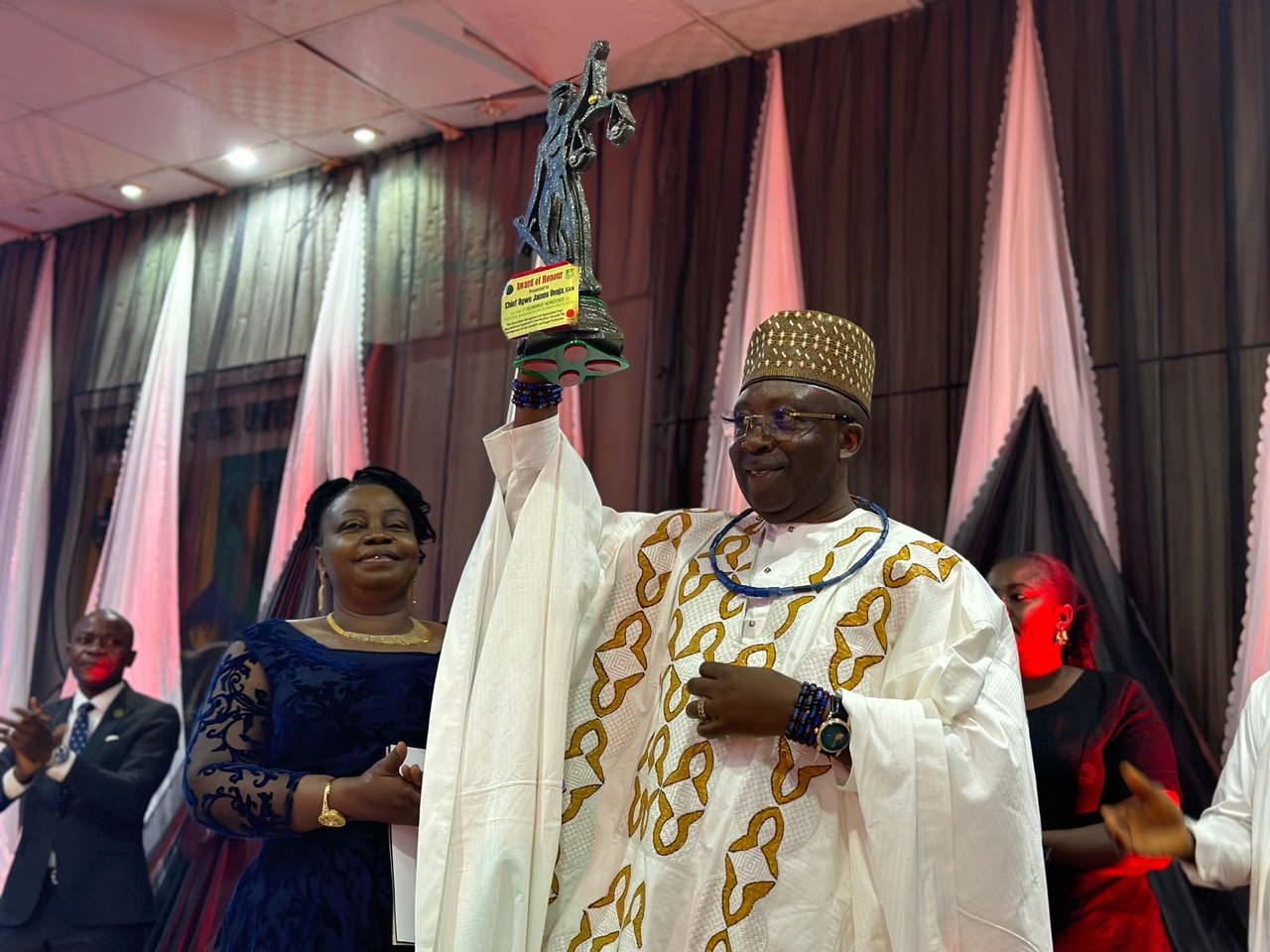
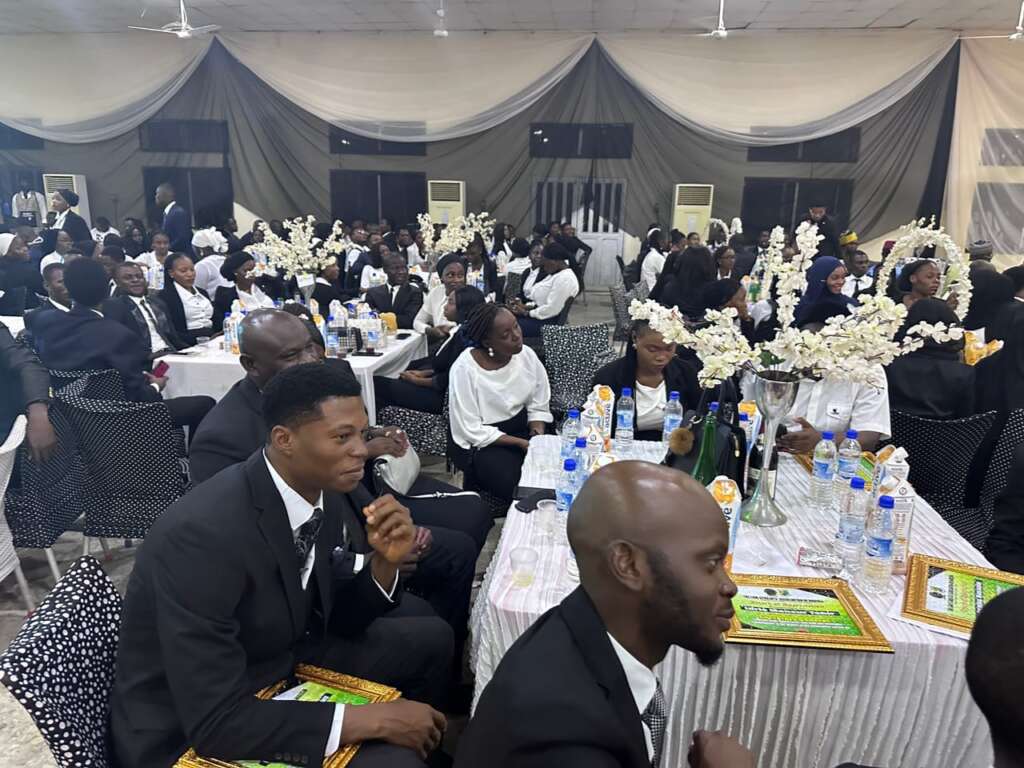
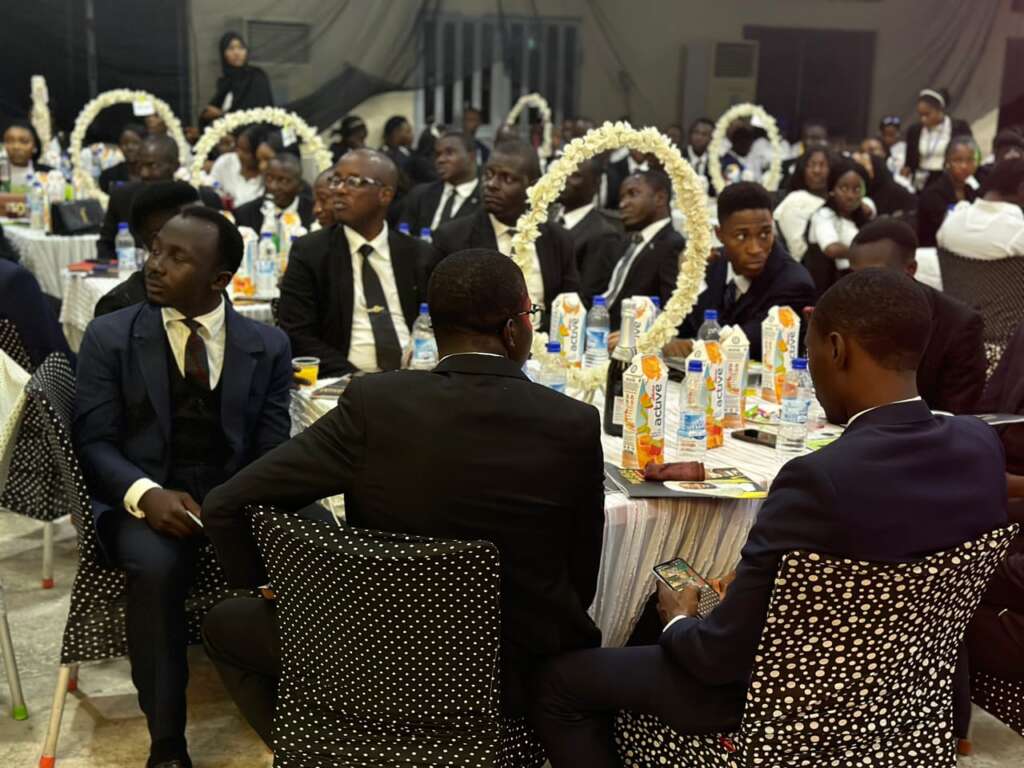
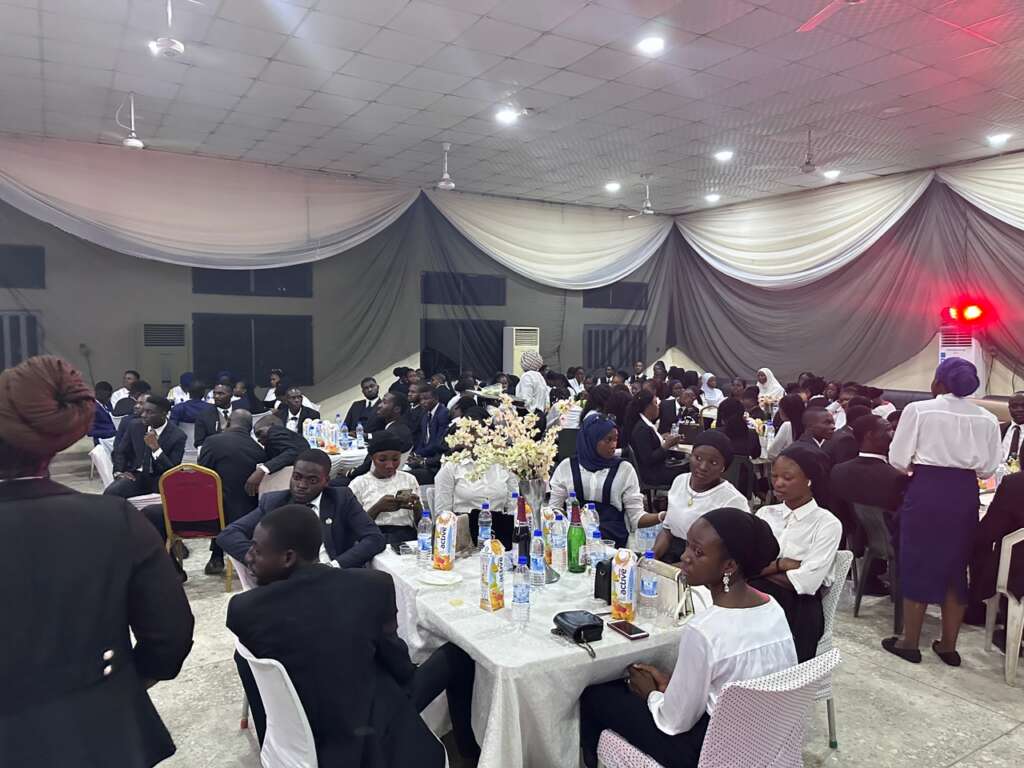
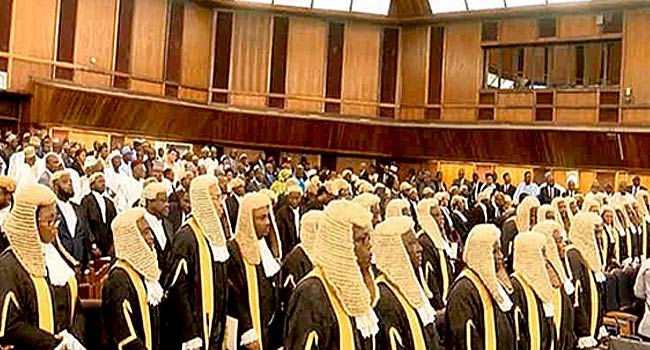
With a contingent of over 20 lawyers and numerous close associates Chief Ogwu James Onoja, SAN, Ph.D. lit up the annual dinner of Nasarawa State University Law Students’ Association of Nigeria (LAWSAN) hosted at the weekend in his honour.

The dinner organized by LAWSAN, Nasarawa State University, Keffi in conjunction with its alumni association was held in honour of Chief Onoja in recognition of his immense contribution to the university and the faculty of Law in particular.

In April 2022 the Senior Advocate of Nigeria launched a multi-million naira venture to meet the printing needs of the University and its environs. Sinking a whopping N450,000,000 (Four Hundred and fifty million naira) into the purchase of machines and construction of the building housing the university printing press, Onoja said it was part of his contribution to boosting the university community’s fortunes.

Addressing students at the dinner which rounded off their Law Week with the theme- Confronting the realities of the Legal Profession in the 21st century, Chief Onoja announced that hard work and God’s favour are all that is required for every human to succeed in life. Pointing to his humble beginnings from obscure LEA Primary School, Ofante and Ofante High School, both in Olamaboro Local Government Area of Kogi State, to the height he has attained today, Onoja urged the students to aim for the sky and never allow background or negative voices to stall their dreams and aspirations.

The learned silk who launched 50 copies of NSUK LAWSAN’s new magazine — The Legal Paradigm, with the sum of N1.5 million also donated half a million naira to the association in appreciation of how well dressed they all were for the event.

Deputy Dean of the faculty, Dr. Danjuma Shigaba, and Prof. Suleiman Nchi, former Dean and Ex Attorney General of Nasarawa State all commended Chief Onoja for his immense impact on the faculty and the university.

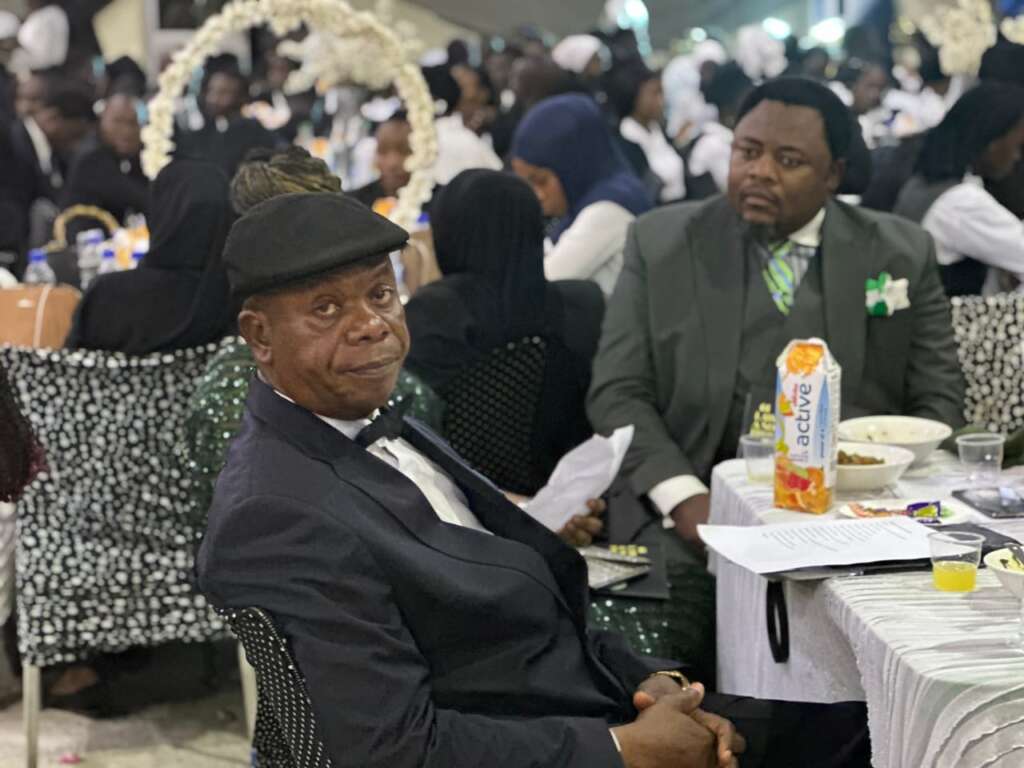
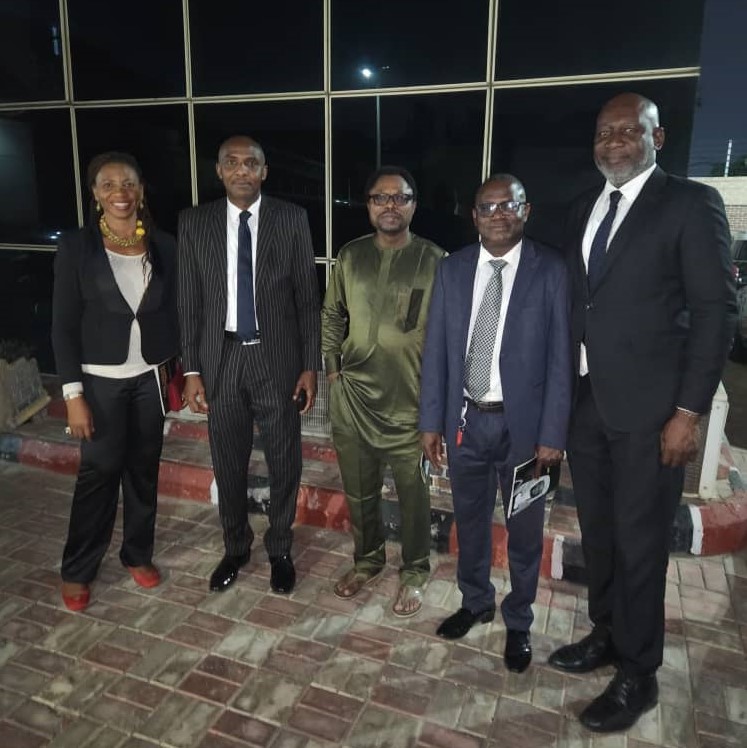
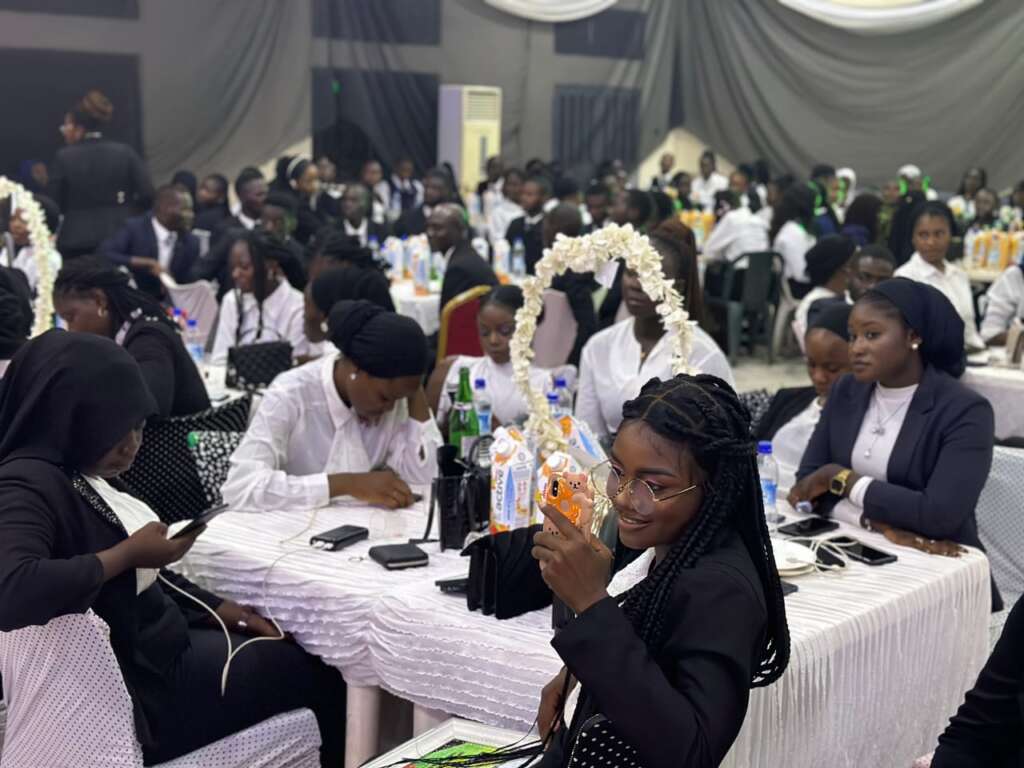
Below are some photos of the event.

Mrs. Rosemary Onoja, Chief Onoja, SAN, and Chair NBA Keffi, a pioneer student of the faculty.
Elder Peter Ideyin, Esq, and Pastor Abel Uloko
Lillian Okenwa (Lawyer & Editor-in-Chief, Law & Society Magazine), M. A. Ebute SAN (Immediate Past Chairman Nigerian Bar Association Abuja Branch), Dr. Enema Amodu (Immediate Past Chairman Nigerian Medical Association FCT Chapter), Adeola Adewara, Esq. and Afam O. Okeke, Esq. (Chairman, Nigerian Bar Association, Abuja Branch)
A cross-section of the law students

The Year of the Political Harlot and Split Tickets?

By Chidi Anselm Odinkalu

“Power without responsibility – the prerogative of the harlot through the ages.”

(Stanley Baldwin, Queen’s Hall, London, 17 March 1931)

When he took over power at the end of December 1983 after overthrowing the elected administration of President Shehu Shagari, Muhammadu Buhari, then a Major-General in the Nigerian Army, had all the trappings of a high priest of a regimental cult. His entire programme was boiled down to three letters -“War Against Indiscipline” – which went by the deliberately suggestive acronym, WAI.

To implement this, Buhari the General arrived in power armed with a hatful of decrees, nearly all of which required everyone to accomplish his diktat “with immediate effect.” On some issues, such as corruption or drug trafficking, even this impossibility was too dilatory for him.

Drug trafficking was just bubbling up the policy food chain as Nigeria was then on the foothills of emerging as a major transit point in the global drug trade. General Buhari’s answer to this was the Special Tribunal (Miscellaneous Offences) Decree Number 20 of 1984, which elevated a laundry list of 19 offences into the league of crimes punishable with death. One of those was drug trafficking.

Although promulgated eight months after he assumed office, General Buhari took such a dim view of drug trafficking, he had the decree back-dated to the end of 1983. These offences were to be tried by tribunals comprising a high court judge as chair with three other uniformed persons as members, including two soldiers and one police officer.

By an instrument issued on 28 August 1984, General Buhari constituted the Tribunals, five of them to sit respectively in Ibadan, Kaduna, Kano, Lagos, and Port Harcourt. In Lagos, he designated the urbane Justice Adebayo Desalu to head the tribunal.

After their arrest at the end of 1983, Bartholomew Owo, Bernard Ogedengbe, and Lawal Ojuolape, were arraigned as suspects on charges of drug trafficking, which was then a felony. They were 26, 29, and 30 years old, respectively. Regular courts had jurisdiction to try the offence. Decree number 20 changed all that, railroading them long after the fact to be tried before Buhari’s mongrel tribunals on charges that had become man-eating.

Convicted in March 1985, General Buhari quickly signed the death warrants, condemning these three young men to be killed. On 8 April 1985, a squad of soldiers duly obliged, shooting these three in a public execution at the Kirikiri Maximum Security Prison in Lagos in a process that “took 5 minutes to complete. The victims were loaded into rough coffins for burial at Atan cemetery in Lagos.”

Four months after this event, in August 1985, General Buhari’s Chief of Army Staff, Ibrahim Babangida, overthrew his boss and, by Decree number 22 of 1986, undid Buhari’s imposition of capital punishment for drug trafficking.

Seven years thereafter, in 1993, following an investigation into a Nigerian heroin trafficking ring that lasted nearly five years, a United States District Court in the Northern District of Illinois issued forfeiture orders for the sum of $460,000 in respect of 10 accounts held in the name of one Bola Tinubu. In 2015, 30 years after his ouster from power, Muhammadu Buhari, claiming to be a “born-again democrat”, returned to power in Nigeria as an elected president, his electoral victory made possible by a political marriage with that same Bola Tinubu.

At the beginning of June 2022, Bola Tinubu emerged as the candidate chosen by Buhari’s ruling All Progressives Congress (APC) to fly its flag in the vote for president in Nigeria’s 2023 elections. Chief spokesperson of the APC presidential campaign, Festus Keyamo, himself also a Cabinet Minister and Senior Advocate of Nigeria (SAN), explains with reference to the forfeiture orders from the District Court in Chicago 30 years ago, that his principal was “roped in the drug trafficking case of two Nigerians who once stayed in separate flats in the same building where the ex-governor stayed at a time in the US.”

Had General Buhari not back-dated the decree all those decades ago, Lawal Ojuolape could easily have been alive today. If he were, he would have been about 68 years, not much younger than the official age of the candidate whom President Buhari’s party has chosen to succeed him as the APC’s presidential candidate.

Some people will miss the irony in the fact that Buhari’s party political successor could be a man whom he would happily have had shot by firing squad in his first coming for involvement in drug dealing, preferring instead to see this turn of events as proof of his “born-again” credentials. They may even see in this evidence the kind of implicit bargains that make politics the ultimate art of the possible in pursuit of political power.

In democratic politics, these implicit bargains begin, of course, with the understandings that govern membership of political parties. In return for enjoying the platform and economies of political scale provided by the convening capabilities of the party, members with political aspirations enjoy the privilege of being advanced by the party to the electorate in order to eventuate their ambitions. The fidelity of members to their party is a central part of this bargain. It is the underlying responsibility that makes politics such a historically tribal sport.

This fidelity is often tested the world over. Hartley Shawcross, Clement Atlee’s choice as Attorney-General after Labour’s victory in the United Kingdom in 1945, so tested the loyalties of his party with his political flirtations that he acquired the sobriquet “Shortly Floorcross”. Floor crossing is supposed to be the ultimate act of rending one set of political accoutrements in favour of another. It also advertises changed political loyalties.

As Nigeria prepares to go to the polls next month, however, harlotry is emerging as a new political normal. While still in the party, some luminaries of the ruling APC, such as former Secretary to the Government of the Federation, Babachir Lawal; and former Speaker of the House of Representatives, Yakubu Dogara, for instance, have elected to work for the opposition Peoples’ Democratic Party (PDP).

In return, at least five governors of the PDP, four of whom are indeed running for office in these elections on the ticket of the party, are on the political dance-floor cavorting with the other side. Effectively, they ask their supporters to split tickets in the ballot, committing to another party for the top of the ticket and for their party down the ballot. In a general election where multiple seats are in play, this could be a recipe for confusion.

Former Minority Leader in the Senate, Enyinnaya Abaribe, who left the PDP and now flies the flag of the All Progressives Grand Alliance (APGA) in the contest for the Abia South Senatorial seat against one of Wike’s peers in the Gang of Five Governors, Dr. Okezie Ikpeazu, declaims the conduct of the governors as “without integrity”, a riposte to the Governors’ self-identification as “Integrity Group.”

Waziri Adio has recently traced the history of what appears now to be a practice by senior politicians to “openly flirt with all interested political suitors while still in a serious relationship”, concluding that “of late, Nigerian politicians are not the most faithful.” In other words, politics, supposedly an exercise in high ethics of envisioning how power is best accessed and managed for the benefit of society, has been replaced by low harlotry, complete – in typical Nigerian fashion – with Aso Ebi.

This may be the best evidence of the failure of Nigeria’s political parties of all hues to fulfill their mission of aggregating societal interest or earning public trust; the ultimate proof of failure of responsibility in the power game. The future of elective government in Nigeria may depend on whether the politicians realise that this cannot continue much longer.

A lawyer and a teacher, Odinkalu can be reached at [email protected]

“Sale” of the SAN privilege/award in Nigeria plus matter connected therewith: Questions for lawyers

By Sylvester Udemezue

In Re: “SAN Application: Controversy Over One Million Naira Application Fee By LPPC” (6 January 2023: TheNigeriaLawyer).

Section 5(2) Legal Practitioners Act CAP L11 LFN 2004: “(2)    A person shall not be conferred with the rank of Senior Advocate of Nigeria unless he has been qualified to practise as a legal practitioner in Nigeria for not less than ten years and has achieved distinction in the legal profession in such manner as the committee may from time to time determine”.

If this SAN award is about recognition of excellence and distinction in the legal profession, should people apply for it or shouldn’t it go through nomination process?

Shouldn’t excellence and distinction in the legal profession be a matter of the facts speak for themselves, leading to handwritings on the wall for all to see and judge?

Shouldn’t it be when one is nominated, that the LPPC would now request from the nominees, their CVs, cases, literary or other contributions speaking to their suggested excellence and distinction?

Thereafter, the LPPC would now do a selection process guided by the Guidelines, leading to award under the principle of many called, few chosen because not all that glitters is gold?

Is the LPPC awarding SAN or selling SAN?

How much did Prof Ben Nwabueze pay to get awarded the rank of SAN in 1978 or thereabouts?

Have we not turned the SAN rank from the “award/privilege” which its founding fathers had in mind to a trading process which its founding fathers had not in mind?

Sometimes, and I may be wrong, I compare this SAN award to the award of Professorial Chair (in the teaching profession) or the National Honours Award in Nigeria, only that no one had ever been reported to have been asked to pay any “application fee” as part of the process of award of the rank of professor or the national honours of GCFR, GCON, MON, OFR, CFR, etc.

Have we not ruined the original intentions of our forebears in instituting the rank of SAN as an award/privilege instead of a commodity to be paid for, negotiated, or traded?

Is it not inapt to make one pay for an award? Now, if he truly has distinguished himself or otherwise attained excellence in the legal profession why does he have to pay for the “award” or “privilege”?

Let’s think about these? SAN as an award or privilege to be bestowed on who reasonably merits it or a commodity to be bought by the highest bidder?

Okay, let’s leave “award” alone. let’s rather look at the SAN rank as a privilege. Should one pay to get a privilege?

Finally, does section 5 LPA envisage the making of an application, let alone the payment of a mandatory Application Fee, as a condition precedent for the award of, or the privilege of having a SAN rank?

 Do not forget it’s meant to be an honorary award/privilege to be given to persons considered by the LPPC to have attained excellence or distinction in the legal profession! Don’t forget!

Now, does the LPPC have the locus to impose any such mandatory condition as per payment of an application fee as a mandatory condition precedent? Or, is this one way for the prospective awardee to demonstrate that he has attained excellence or distinction in the legal profession as required by section 5(2) of the LPA? Or, is payment of an application fee envisaged by the expression “in such a manner ad the LPPC may from time to time, determine”?

 One more question, pardon me; I don’t want to make this too long: Does section 5 of the LPA authorise the LPPC, the CJN or anyone within the profession to unilaterally, whether through a Rule, Guideline, or other subsidiary legislation, exclude any segment of the legal profession from the award of SAN or to otherwise impose conditions aimed to frustrate or make it impossible for lawyers (bona fide members of the legal profession) from any segment of the Legal Profession, to ever be able to attain such level of excellence or distinction as may be necessary for their possible consideration for the award/privilege of SAN? For example,  does section 5 of the LPA envisage that it’s possible for any Law Teacher (other than the DG) in the Nigerian Law School (where there is currently not in existence any award of or promotion to “Professorship”) to attain such level of excellence or distinction in the legal profession as to make him/her eligible to be considered for the award/privilege of SAN? If yes, then by imposing a ban on the award of SAN to non-professors in the academic category, has the Guidelines not acted in breach of section 5 of the LPA by excluding Law School Lectures in a manner that could reasonably be seen as an unjust and unlawful discriminatory?

▪Even in the universities, are you saying until you become a professor it’s not possible to have otherwise distinction in the legal profession as a Law Teacher?

You see, there may be times oppression, suppression, and victimization may render one powerless. But let there never be a time oppression, suppression and victimization could deter one from at least raising one’s voice in protest against the oppressor. (Well, stories for another day! 😂)

Meanwhile, all I have done is to ask questions. Or, let me just adopt the trademark concluding expression of one of my ogas (names withheld): Just Asking.

Respectfully,

 Sylvester Udemezue (udems)

08109024556.

[email protected]

(January 06, 2023)

Status and powers of the Nigerian Bar Association (NBA) in the Nigerian Legal Profession

By Sylvester Udemezue

  1. STATUS OF THE NIGERIAN BAR ASSOCIATION (NBA)

The NBA was registered on April 08, 1983, under the Land (Perpetual Succession) Ordinance 1924, as “Registered Trustees of Nigerian Bar Association”,[i] by virtue of which registration, under the Companies and Allied Matters Act (CAMA),[ii] the Registered Trustees of NBA became a juristic, corporate personality,[iii] with perpetual succession, common seal, power to hold property and to sue and be sued in its corporate name.[iv] Thus, the NBA is not a creation of any specific statute, but it is severally recognized by Acts of the National Assembly and some other subsidiary legislation made pursuant to the Acts. It is respectfully submitted that in order to be a regulator, such a body as the NBA need not be specifically created by a statute. Additionally, by statute, NBA has been assigned numerous regulatory powers in/for the legal profession, especially in respect of the bar. Further, the Constitution of the NBA has been severally endorsed or recognised by statute as a subsidiary legislation or by-law[v] within the legal profession, for regulation of the conduct of legal practitioners in Nigeria[vi] Accordingly, NBA plays vital statutory regulatory roles within the legal profession. Aside from statutes, the courts[vii] have acknowledged and reemphasized NBA’s status as the only umbrella association of all lawyers in Nigeria and a prominent regulator of the Nigerian bar, an aspect of the legal profession; this affirms that NBA is both a regulator of the legal profession and a regulator in the profession. In NB.A. v. Kehinde,[viii] the Court of Appeal stated that “The Nigerian Bar Association (NBA) was established for the purpose of regulating the affairs and conduct of all legal practitioners in Nigeria and upon being called to the Nigerian bar, there is automatic membership to the NBA on a lawyer…”[ix] Continuing, the Court observed:[x]

I agree with the arguments of the appellant’s counsel to the extent that the NBA is statutorily recognized by the Legal Practitioners Act. This was why my Lord Hon. Justice Obaseki,(JSC) in the case of Chief Gani Fawehinmi v. Nigerian Bar Association & Ors (No.2) (1989) LPELR-1259( SC)PP. 92-93, paras. C-E, (1989)2 NWLR (pt.105) 558 at p.628, paras. G-H while commenting on the status of the Nigerian Bar Association stated thus: ‘The Constitution of the Nigerian Bar Association … was accorded its due superior position by the Legal Practitioners Act, 1975 in the conduct of the affairs of the Nigerian Bar Association by the General Council of the Bar’

This position was buttressed in the case of Chinwo v. Owhonda,[xi] where the Court of Appeal declared that “The appellant was not compelled to take up the profession of law and its attendant compulsory membership of the Nigerian Bar Association. However, once he made the choice to study and practice law and thereby placing his name on the roll of honour of belonging to the profession, he stands bound by the internal rules and regulations of the Association. There would therefore be no issue of a breach of the Constitution of the country if the rules demand of him, undivided loyalty”.

  • NBA AS A REGULATOR OF THE LEGAL PROFESSION IN NIGERIA

According to the Organisation for Economic Co-operation and Development (OECD) in its “Glossary of Statistical Terms”[1] the term “regulation” means “…imposition of rules by the government, backed by the use of penalties that are intended specifically to modify the economic behaviour of individuals and firms in the private sector…Not all forms of regulation have to be mandated or imposed by the government. Many professions adopt self-regulation, i.e., develop and self-enforce rules commonly arrived at for the mutual benefit of members. Self-regulation may be adopted in order to maintain professional reputation, education, and ethical standards. They may also act as a vehicle to set prices, restrict entry and ban certain practices”. As the OECD has noted, and with which this author agrees, an aspect of professional regulation may be self-regulation, that is, developing and self-enforcing rules commonly arrived at for the mutual benefit of members, mainly in order to maintain professional reputation, education, and ethical standards or as a vehicle to set prices, restrict entry and ban certain practices. Specific Regulatory Powers of the NBA for the Legal Profession include:

  1. BAR PRACTICING FEE (BPF)

The LPA[xii] provides that no legal practitioner[xiii] shall be accorded the right of audience in any court in Nigeria in any year, unless the legal practitioner has in respect of that year, paid to the Registrar of the Supreme Court of Nigeria[xiv] Bar Practicing Fees (BPF)[xv] as may be prescribed from time to time in accordance with the provision of this section. Although the Body of Benchers is listed to be responsible for prescribing/fixing the BPF “after consultation with the NBA”[xvi] it appears that in practice, the Hon Attorney-General of the Federation (AGF) fixes the BPF in consultation with the NBA.[xvii] Whichever way, there is a clear indication that the NBA is an integral part of the decision-making process regarding the prescription and fixing of the BPF. Additionally, the LPA[xviii] directs the Registrar to pay to the Nigerian Bar Association (NBA) “as soon as maybe after the end of each year a sum equal to nine-tenths (90 percent) of the aggregate amount of the bar practicing fees received by the Registrar as BPF during the year. The NBA is mandated to manage the money for the purpose of promoting its objectives as set out in the NBA Constitution.[xix]

  • Mandatory Continuing Legal Education

NBA has regulatory roles with respect to Mandatory Continuing Legal Education under the Rules of Professional Conduct for Legal Practitioners (RPC), 2007.[xx] Any lawyer in Nigeria who wishes to carry on law practice in Nigeria must participate in, and satisfy the requirements of, the mandatory Continuing Professional Development (CPD) Programme operated by the NBA. The NBA is expected to establish a Continuing Professional Development Department in its office for the operation of the programme [xxi] and to make rules for regulating the operation of the programme [xxii]

  • issuing Stamp and Seal for Law Practice

NBA has the exclusive power to prescribe stamp and seal which gives an insignia of validity to any legal document prepared by a lawyer in Nigeria.[xxiii] The RPC[xxiv] requires that a legal practitioner acting as such legal practitioner, or as a legal officer or adviser of any Government Department, ministry or any corporation, who signs or files a legal document must affix on any such document his seal and stamp approved by the NBA. The requirement of stamp and seal applies to all legal documents prepared by a lawyer. Legal documents envisaged include pleadings, affidavits, depositions, applications, instruments, agreements, deeds, letters, memoranda, reports, legal opinions or any other similar documents.[xxv] This exclusive regulatory powers of the NBA to prescribe stamp and seal has been judicially endorsed.[xxvi] The Nigerian Supreme Court has ruled that any processes filed in court by a lawyer in Nigeria without affixing the Stamp and Seal prescribed and approved by the NBA is deemed to be not properly filed.[xxvii]

  • Issuance of Bar Practicing Certificates

NBA has the exclusive statutory regulatory role of issuing bar practicing certificates to lawyers in Nigeria. The RPC[xxviii] requires the NBA, in each year to publish a list[xxix] of legal practitioners who have complied with the requirements of the Continuing Professional Development (CPD) Programme and have paid their practicing fees and are, therefore entitled to practice as legal practitioners in that year, and to issue a practicing certificate to all legal practitioners whose names are on the list, in order to certify that they have paid their practicing fee and participated in the programme for that year. Only lawyers who hold the Annual Practicing Certificate issued by the NBA, shall in that year appear in court as lawyers, or sign any legal documents or processes, or file any such legal documents as legal practitioners, legal officers, or advisers of any Government Department or Ministry or any company or corporation.[xxx]

  • Establishment and Dissolution of Law Firms in Nigeria

Under the RPC 2007,[xxxi] the NBA has the statutory regulatory role of supervising and regulating establishment and dissolution of law firms by lawyers in Nigeria. Every lawyer or lawyers who set up a private legal practice of any type shall, not later than thirty (30) days after commencement of such legal practice, deliver a notice in the prescribed form to the relevant NBA Branch[xxxii] which branch shall enter the particulars in the notice in a register or database kept for that purpose.[xxxiii] The same applies to change of name or address for legal practice.[xxxiv]

  • Role in Legal Education for Aspirants to the Bar

Apart from that the NBA is represented in the Council of Legal Education by the NBA President[xxxv] and 15 (fifteen) other lawyers of not less than ten years standing, selected or elected by the NBA,[xxxvi] the NBA President doubles as the Alternate Chairman of the Council of Legal Education (CLE). The Council of Legal Education is the body with exclusive responsibility for the legal education of persons seeking to become members of the legal profession in Nigeria.[xxxvii] The Council shall in addition to the function conferred on it by section 1 (2) of this Act have responsibility for Continuing Legal Education in Nigeria.[xxxviii]

  • Makes Rules for the Continuing Professional Development Program[xxxix]

The program shall be operated under the rules made for the purpose by the NBA.[xl]

  • Statutory Representation In Other Regulatory Bodies and In Some Government Parastatals

By requirement of extant law, the NBA is represented by members of the NBA nominated by the NBA to represent the NBA in all the other regulatory institutions and bodies in the legal profession as well as in many other statutory and government agencies, including but not limited to the following: (1) the National Judicial Institute (NJ I); (2) the Council of Legal Education (CLE);[xli] (3) the Board of the Corporate Affairs Commission (CAC);[xlii](4) the National Judicial Council (NJC);[xliii] (5) the Body of Benchers (BOB)[xliv] (6) the General Council of the Bar (GCB);[xlv] (7) the Legal Practitioners Privileges Committee (LPPC);[xlvi] (8) the Legal Practitioners Disciplinary Committee (LPDC);[xlvii] (9) the Legal Practitioners Remuneration Committee (LPRC);[xlviii] and (10) the Judicial Service Commission.[xlix] to name but a few.

  • Regulation of the General Council of the Bar (GCB)

In some way, the NBA regulates the GCB in that the NBA prescribes functions for the GCB. The LPA provides that “There shall be a body to be known as the General Council of the Bar (hereinafter in this Act referred to as “the Bar Council”) which shall be charged with the functions conferred on the Council by this Act or the Constitution of the Nigerian Bar Association (the “Association”).[l] Accordingly, the Bar Council has two categories of powers under the LPA, namely — (1) powers reserved for it under the LPA, and (2) those reserved for it in the NBA Constitution.[li] But there is a third category: powers reserved for the GCB by the RPC.[lii]

  1. Role in Appointment of Judicial Officers in Nigeria

NBA plays some statutory role in the process of appointment of judicial officers in Nigeria.[liii]

  1. OTHER DUTIES, POWERS, AND FUNCTIONS OF THE NBA

These are seen in the prescribed[liv] aims and objectives of the NBA which include: Maintenance and defence of the integrity and independence of the Bar and the Bench; Promotion of Legal Education, Continuing Legal Education, Advocacy and Jurisprudence; Improvement of administration of justice and regular law reporting; Proving Legal Aid for indigent citizens; Promotion of law reform; Maintenance of professional conduct, etiquette and discipline;  Promotion of good relations among NBA members and lawyers of other countries; Promotion of co-operation between the NBA and other National or International Law Organizations; Encouragement and protection of the right of access to justice; Encouragement of the establishment of a National Law Library; Promotion of the rule of law and fundamental human and people’s rights; Creating empowerment schemes for new members, members living with disabilities, and aged members; Promoting the welfare, security, and economic advancement of NBA members; Creating and Maintaining an Endowment Fund for the proper discharge of any of these aims and objects.

By

Sylvester Udemezue (Udems)

08109024556.

[email protected].

SOURCE:

Sylvester Udemezue, ‘Resolving Conundrums Regarding Regulation of the Legal Profession in Nigeria (The Bar)’ (SSRN, December 25, 2022). <https://ssrn.com/abstract=4313297> or <http://dx.doi.org/10.2139/ssrn.4313297> accessed 5 January 2023


[1] OECD, ‘Glossary of Statistical Terms’ ( stats.oecd.org January 3, 2002) < https://stats.oecd.org/glossary/detail.asp?ID=3295> accessed 22 December 2022


[i] under the Land (Perpetual Succession) Ordinance 1924, contained in CAP 98, LFN and Lagos 1958. By virtue of this registration on 8th of April 1983. Note that CAP 98, LFN 1958 became Part C, CAP 59, CAMA 1990 (later called CAMA, CAP C20, VOL III, Laws of the Federation 2004).

[ii] 1990, section 695 of  (later S.612, CAP C20 CAMA, LFN 2004) and 679 (1) CAMA 1990 (whicn later became S.596, CAP C20, CAMA, LFN 2004)

[iii] powers to acquire, own, dispose of property and to enter into a contract and to sue or be sued in its own name

[iv] Please note that Cap C20, LFN 2004 has now been repealed and replaced by the Companies & Allied Matters (Repeal & Reenactment) Act, 2020. The relevant sections in CAMA 2020 may be found in Part F (dealing with Incorporated Trustees); see for example sections 823, 825, 830, 836, 837, etc., of CAMA, 2020.

[v] A bylaw is a regulation made by a local authority or a corporation; a rule made by a society/body to control the actions of its members

[vi] See for example section 1, LPA, CAL L11, LFN, 2004

[vii] See the most recent decision: SuIt No. Ob/27/2020: Ben Oloko v. The Incorporated Trustees of Nigeria Bar Association, judgment was delivered On Friday, 29 July 2022, by Hon. Justice R.O. Odugu, Enugu State High Court

[viii] (2017) 11 NWLR (PT 1576) 225

[ix]  @250 -251 paras H- A, His lordship, Nimpar.JCA

[x] @246, per Tukur, JCA)

[xi] (2008) 3 NWLR (Pt. 1074) 341, at 361

[xii] Section 8(2)

[xiii] other than such a person as is mentioned in section 2(3) of the Act.

[xiv] LPA, section 24

[xv] Subscription/membership fee paid annually by lawyers in Nigeria

[xvi] LPA, section 10 (1) (d)

[xvii] By virtue of the Legal Practitioners (Amendment) Act No 31, 1999

[xviii] section 8 (3)(c)

[xix] Section 3

[xx] Rule 11. As a subsidiary legislation made pursuant to the Legal Practitioners Act, RPC is an existing law in Nigeria;

[xxi] RPC, Rule 11(5)

[xxii] Op Cit, Rule 11(6)

[xxiii] Rule 10, RPC 2007

[xxiv] Rule 10 (1)

[xxv] See Rule 10(2) RPC.

[xxvi] See All Progressive Congress (APC) v. General Bello SarkinYaki SC/722/15 (reported as Senator Bello SarkinYaki v. Senator Atiku BubakarBaguduOrs (2015) LPELR-25721 SC); ), (2015) 18 N.W.L.R (Pt. 1491) 288; ADEWALE & ANOR V. ADEOLA & ORS (2015) LPELR-25972(CA), the Court of Appeal (Per AGIM, J.C.A. (Pp. 16-17, Paras. D-A; 19-20, Paras. A- B, P 20, Para C-E)

[xxvii] See also: Josiah Cornelius Ltd and Ors v. Ezenwa (1996) LPELR-1632 (SC) and In Re: Osibakoro D. Otuedon (1995) LPELR-1506 (SC).”

[xxviii] Rule 12 (1)

[xxix] the Annual Practicing List by virtue of Rule 12, RPC

[xxx] Rule 12(2)

[xxxi] Rule 13

[xxxii] Rule 13(1)

[xxxiii] Rule 13(3)

[xxxiv] Rule 13(4)

[xxxv] Legal Education (Consolidation, etc) Act, section 2(1)(e)

[xxxvi] Op Cit., section 2(1)(f) 

[xxxvii] Op Cit., section 1(2)

[xxxviii] Section 3. Note that the NBA currently performs this role pursuant to Rule 11 of the RPC, 2007.

[xxxix] See Rule 12, RPC, 2007

[xl] Rule 12(1) RPC

[xli] Legal Education (Consolidation, etc) Act, section 2(1)(e) &(f)

[xlii] Companies and Allied Matters Act (CAMA), 2020, section 2(2)(b)(ii).

[xliii] the Constitution of the Federal Republic of Nigeria, 1999, Item 20(i) of Para I in Part 1 of the 3rd Schedule, provides: “The National Judicial Council shall comprise the following members -(i) five members of the Nigerian Bar Association who have been qualified to practice for a period of not less than fifteen years, at least one of whom shall be a Senior Advocate of Nigeria, appointed by the Chief Justice of Nigeria on the recommendation of the National Executive Committee of the Nigerian Bar Association to serve for two years and subject to re-appointment”

[xliv] By 30 lawyers nominated by the NBA. See sSection 3(1)(k), LPA.

[xlv] Section 1(1)(c) LPA

[xlvi] Section 5(3)(g)

[xlvii] Section 10(2)(c) LPA

[xlviii] Section 15(1)(c) LPA.

[xlix] the Constitution of the Federal Republic of Nigeria, 1999, para E, Item 12(e) of Para E in Part 1 of the 3rd Schedule: “The Federal Judicial Service Commission shall comprise the following members ((e) two persons, each of whom has been qualified to practice as a legal practitioner in Nigeria for a period of not less than fifteen years, from a list of not less than four persons so qualified and recommended by the Nigerian Bar Association”

[l] Section 1(1) LPA

[li] See the NBA Constitution, Section 7(2) and (3). <https://thenigerialawyer.com/wp-content/uploads/2022/01/The-NBA-Constitution-2021-Approved-by-AGM-on-29-10-2021-TheNigeriaLawyer.pdf> accessed 23 December 2022.

[lii] See, for example, Rule 7 of the RPC.

[liii] See the Revised National Judicial Council Guidelines & Procedural Rules for the Appointment of Judicial Officers, made on December 03, 2014, Rule 3(4)(iii).

[liv] See section 3 of the Constitution of the NBA, 2015.

Breast Cancer Journey: Strength in Despair

By Duchess Lizzy Awo Ejeh

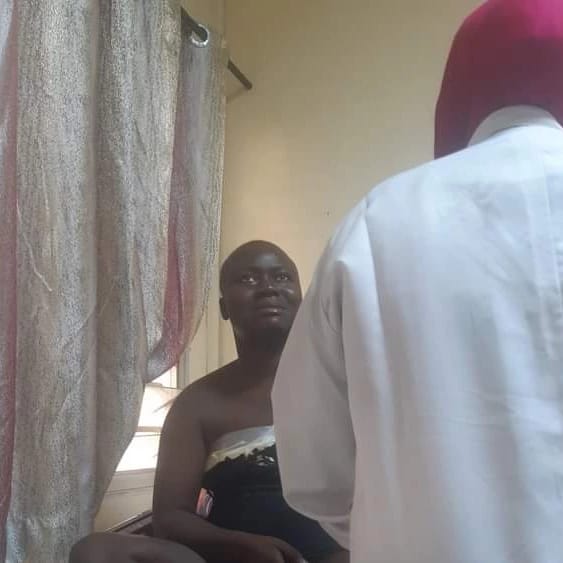
Finally talking freely about my breast cancer journey…

My name is Duchess Lizzy, 26 years old, married, and Nigerian. I was born and raised in Zamfara State, Nigeria. I am currently a final-year student, studying Broadcast Journalism at NOUN. I studied Mass Communication and Business Administration respectively, at Federal Polytechnic Kaura Namoda, and Abdul Gusau State Polytechnic Talata Mafara, Zamfara State.  I sing professionally and I am the CEO of Duchess Lizzy Salon and Spa

Lizzy Awo Ejeh before the diagnosis

Living on the brink of life is an experience that can only be imagined. The last 12 months have brought me close to my end. It left me in bewilderment, as I daily struggled with my fears and thought. “You cannot fully understand cancer until it becomes your reality”. This explains the complexities in the processes leading up to the treatment and thereon. No amount of explaining can vividly describe the brokenness that comes with the diagnosis and the excruciating procedures that follow spontaneously. You would be lucky to have a supportive and understanding spouse and family, standing by you through the process. I was.

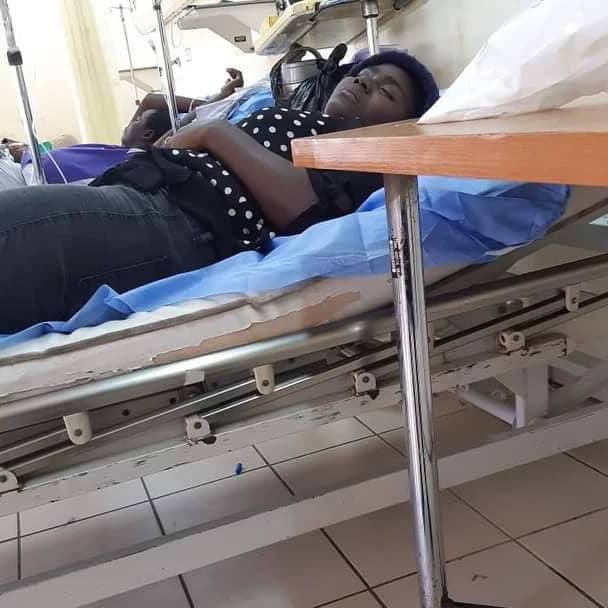
In 2022, my life changed forever. My Doctor at Asokoro Hospital told me upfront to choose between my life and my breast. I became livid and frustrated. I cried helplessly. I married only a few months ago and couldn’t face my husband with such a breaking news, I thought. I called him and couldn’t speak, he asked what was happening and I told him that the lump has been diagnosed to be cancer. He was broken but assured me he would stand with me throughout the process and nearly 12 months after, he has been my rock on this pathway. He kept his words, he lived with me in the hospitals and spent his life’s savings to get me on my feet again. It’s a journey, no one can prepare you for. It’s sad but painful reality for cancer patients.

Breast Cancer for an expectant mother is many things, but nothing funny. Many times​, I cried in broken thoughts, I lived through depression, disbelief, and accusations. I was new on this path and had no experience but had to rely on stuff I read on the internet and the information from friends. In fact, everyone became an advisor. This made it so hard with choices. My husband and I heard stuff like, there are alternative cures for cancers, even though the claims have no empirical basis. Some friends were quick to judge and pass unpleasant comments about our choice of treatment. We became frustrated and perplexed, having difficulty deciding on certain medical procedures.

This is my reality, but God has a better plan for me. Cancer is here, it’s not gone yet, but I am not done fighting the monster. I thank God, I was a bit early at stage 2, though with invasive ductal carcinoma.  I still thank God that I started the fight at 25 years, at fairly a good age to make a decision to fight and to win. Yes, this has impacted my every breath. Many times, I come under the effects of chemotherapy and other treatment procedures, and I become weak, dehydrated, disillusioned, and disorganized. I become helpless, especially because, I was healthy for most of my whole life, so I lived on big dreams about my future. Those dreams are now threatened.

From some lumps in my breast, which many told me were normal and could disappear on their own, I have had to begin a journey that is impactful all the way.

As I look back to the shocks that came on me after the biopsy, histology, and immunohistochemistry and the many months that have gone by, I am rejuvenated by my favorite scripture, Psalm 46:10, which states:“Be still, and know that I am God: I will be exalted among the heathen, I will be exalted in the Earth”.

I got mocked and constantly received unpleasant comments. Some detractors were waiting for my end, but “God pass them”.

I will be ironical and insincere to downplay the dramatic changes that followed the sequence and series of treatments, CT Scans, Full blood count, Bone Scans, full body scan, and especially the chemotherapy. Chemotherapy changed me. It drained my blood, changed my figments, cleared my hair, and affected my posture, physic, taste, memory, and sexuality. Yes, I lost one breast to surgery, but he loves me still and has provided every time.

 Surviving the 31st of December 2022 is such a huge miracle for me. I am grateful for life. I  never knew I would be here, today considering the number of times my skin was pierced.

I am grateful to my family, my parents, my in-laws, and my friends who stood by me in these trying times of my life.

This man. My husband Amb. Michael Awo Ejeh my best friend, my HERO. He is truly a saint. Not only has he put up with me with my dramatic self but he’s carried me through the darkest, hardest, and most difficult times of our lives. He is thoughtful, loving, upbeat, compassionate, honest, hard-working, funny, God-fearing, and patient (SO patient). 💕

💜He covered me in love during my cancer diagnosis.

💙 During my miscarriage episode before my cancer diagnosis, he was so caring and loving.

💛He attended EVERY SINGLE APPOINTMENT he was allowed to go to.

💕 He celebrated every successful chemotherapy session and he takes me for outings, and walk therapy.

💙He has always been positive and also reassures me to see God beyond what am going through right now.

❤He fought alongside me every step of the way and continues to do so every single day.

🥰Even when I find it hard to pray sometimes he is always there to encourage me.

Caregivers are key reasons why cancer journeys are not psychologically difficult.

Thank you for reading me. Watch out for the next episode

Happy New Year.

Project PINK BLUE

Breast cancer support group for patients and their loved ones.

Pope Benedict XVI: A Curator of Truth

By Sonnie Ekwowusi

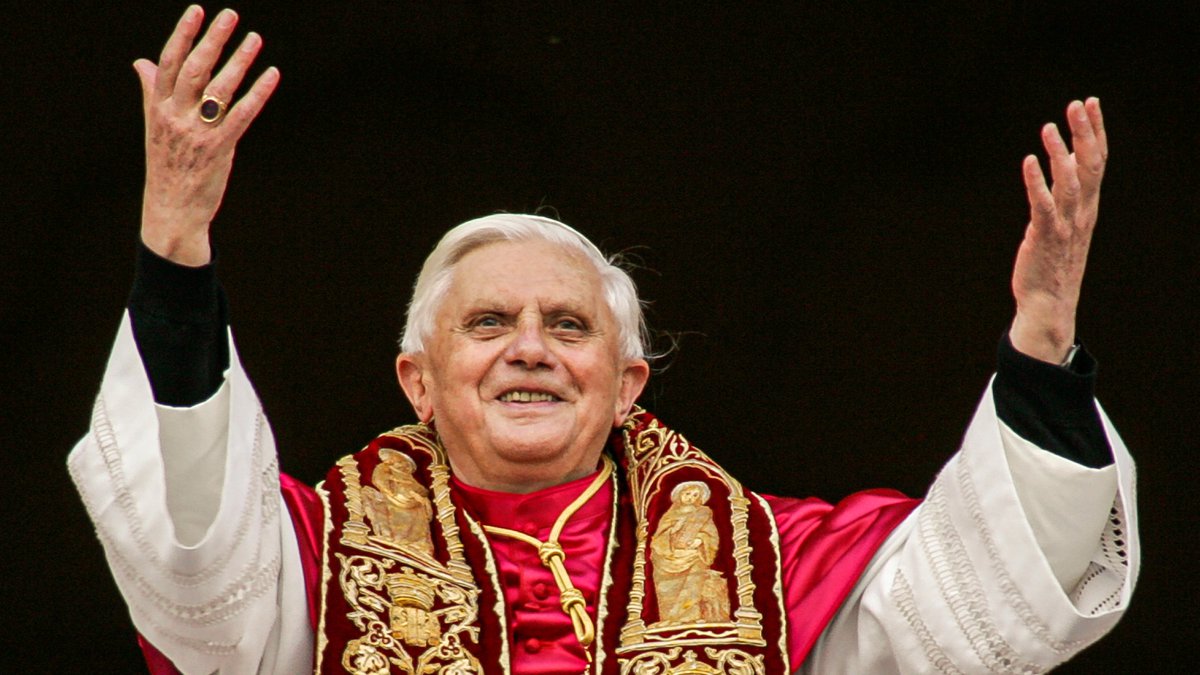
It all began on June 29 1951: Two blood brothers: Joseph Ratzinger (24), and his older brother, Georgi Ratzinger (27) are ordained to the priesthood in Freising, a university town in Bavaria, Germany. With outstretched hands the two brother priests impart their first blessing on the waiting bemused crowd, and, by extension on the 1.2 billion Catholics-one-sixth of the world’s population. April 19 2005: Joseph is elected Pope by a clear majority of 115 Cardinals. He replaces Pope Saint John Paul 11. Immediately after his election, he presents himself to the faithful on the loggia of St. Peter’s Basilica amid the spontaneous outbursts of “Habemus papam ex Germania”. The outbursts shake the pillars of St. Peter’s Basilica to their foundation. There are about 400,000 people in St. Peter’s Square, some of them radiantly waving the German flags. Joseph is the first German Pope succeeding St. Peter, the first Pope, for gargantuan 482 years. The new Pope chooses the name, Benedict XVI after Saint Benedict of Nursia, the great religious founder and educator whose motto is: ora et labora (“pray and work”). September 14 2005: the new Pope unveils and blesses a statue of St. Josemaría Escrivá, founder of Opus Dei, which is placed in a niche on the outside of St. Peter’s Basilica. February 28 2013: Pope Benedict XVI resigns citing his advanced age and declining health as the reasons for his decision. He is the first Pope to do so in over 600 years. I can go on and on reeling out the prominent events that shaped Pope Benedict XVI’s pontificate.

In his funeral homily at the funeral of Saint Pope John Paul 11, Joseph Aloysius Cardinal Ratzinger said: “This is not the time to speak of the specific content of this rich pontificate”. Likewise, this piece does not aim to cover the full extent of Pope Benedict XVI’s rich pontificate and his rich literary achievements. Instead, it serves as a way for billions of people across the world to pray for the merciful judgment of the soul of Pope Benedict XVI. We pray that the Lord Jesus will welcome him home as his humble servant and a curator of saving truth. We pray too that all those who loved and admired and inspired by him may take consolation in the following words of his homily in the solemn inaugural Mass of his pontificate at Saint Peter’s Square: “Do not be afraid of Christ. He takes nothing away, and he gives you everything..”

As John L. Allen jr. rightly noted in his book: The rise of Benedict XV1, to be elected Pope is tantamount to being sentenced to life imprisonment, meaning that the job of a Pope is not only tasking but entails gigantic self-immolation. One of the first remarkable things about Pope Benedict, in my view, is his calm recollection, self-assurance and serenity even during seemingly turbulent times. He stood out for his surpassing intelligence, calm demeanour and strong convictions.  Another remarkable thing is his towering stature and presence in the world. For short of a better expression, he was a first-class world intellectual. He could be counted among the first 10 most intelligent human beings that have lived in this world. He was known for his strong stance on issues such as the defence of traditional marriage and opposition to violence and terrorism.  He was the professors’ professor. Above all, he was a professor of dogmatic theology. He was the theologians’ theologian. Elmar Bruber, who was his student in theology at the Academy of Freising, recalls that Joseph Cardinal Ratzinger taught theology ex-tempore as if the whole body, branches and principles of theology was in his head. “His rational brilliance, inked with his verbal gifts, generated an unconditional admiration”, writes Bruber. Bruber recalls that whenever it was the turn of Joseph to preach on Sundays the cathedral was packed to the brim, and that even Ratzinger’s fellow professors attended and “listened to his words in a breathless silence”. After publishing his benchmark book: Introduction to Christianity, Pope Benedict XVI had published more than 135 solid theological works including Jesus of Nazareth; The nature and mission of Theology; Salt of the Earth: Christianity and the Catholic Church at the End of the Millennium; Values in a time of Upheaval: Meeting the Challenges of the Future; What it means to Be Christian: Three Sermons, Christianity and Crisis of Cultures;  The Ratzinger Report: An Exclusive Interview on the State and the Church.

Undoubtedly Pope Benedict XVI derived his strength in accomplishing the foregoing from prayer. I think this largely accounts for the success of his pontificate. He was rooted in the faith of his parents, in a rural, liberal-Bavarian Christian piety. As Prefect of the Congregation for the Doctrine of the Faith, Pope Benedict XVI, in collaboration with his boss, Saint Pope John Paul 11, worked indefatigably hard to ensure that the message of the Gospel might be handed down bereft of errors, untruths and falsifications. In fact, Saint Pope John Paul 11’s numerous encyclicals bear the imprint of Cardinal Ratzinger’s resolve to maintain Christian values and doctrinal purity. Small wonder Saint Pope John Paul 11 gave him the task of producing the Catechism of the Catholic Church which he successfully produced.

Perhaps Pope Benedict XVI’s most-prized achievement was his unflinching commitments to providing the right answers to the following eschatological  questions which threaten the happiness of most right-thinking persons: Who  am I? What is the meaning of human existence? What am I doing in this world? Where am I going after this life?. I think Pope Benedict appreciated that his answers to the above queries would not be readily acceptable in a highly secularized world which seeks to remove God from the public space. The world crisis is essentially a crisis of religion not much crises of intellectual conviction.  During the pontificate of Saint Pope John Paul 11, the primary challenge was communism and its suppression of human freedom. But at the election of Cardinal Ratzinger in 2005 the primary challenge had shifted and focused on confronting what he dubbed “dictatorship of relativism”. Pope Benedict’s crusade against dictatorship of relativism although rather diffused and amorphous was very effective. Allen writes that the real challenge which Pope Benedict faced was to convince the secularized world that there was a “dictatorship” to be resisted in Europe. As Cardinal Francis Stafford then aptly put it: “The tragedy of Europe is rooted in the eclipse of the Christian identity of individual Europeans and their society as a whole… Unfortunately that is being repeated in the European Union. There is a kind of Christophobia, a fear of Christ, not just a withdrawal from him…Pope Benedict will be able to bring the people of Europe a new, rediscovered sense of the dignity of what it means to be a child-to be chosen by God in Christ to be his child”

Pope Benedict knew from the onset that his pontificate would be buffeted from side to side by the different forces swelling up the secularized culture. Even the cardinals who elected him had identified secularized culture or post-Christian secular culture as the dangerous ill-winds that would attempt to rock the boat of the successor of St. Peter. He was pained by the crisis of religion. He often repeated that the Church needed a revolution of faith. That probably explains why he chose the name Benedict after St. Benedict XV the great, founder of European monasticism. According to Pope Benedict XV1, St. Benedict XV  “lived at a time when Roman Empire was collapsing, and he saw the role of the Church as to preserve the best in human culture throughout the centuries…in his footsteps, I place my ministry in the service of reconciliation and harmony between peoples”

In imitating Pope Benedict V1 who preserved the best in human culture, Pope Benedict XV1, according to German journalist, Peter Seewald, decided to run a papacy of love. This is not surprising because Pope Benedict XVI loved humanity and had always nurtured love and sympathy for the poor and needy. Perhaps not many are aware that Pope Benedict XVI freely authorized the use of his organs after his death for those who are in need of them to stay alive. According to Pope Benedict, “to offer, spontaneously, parts of one’s body for someone who needs them is an act of great love”. Although Allen and others do not think that such an offer will be accepted after Pope Benedict’s death, the offer goes to illustrate the Pope’s unwavering social concerns and his love for others. In his first encyclical letter, Deus caritas est (God is Love) he extensively treats the different aspects of love. He ends up explaining why all loves should find their root in the real Love-love of God.

Another enthralling encyclical letter of Pope Benedict XVI with masterful scholarship is Caritas in Veritate (Charity in truth). This particular encyclical, in my humble view, is a must read especially for those  involved in promoting or building human development, democratic culture and ethical standards in banking and financial institutions and others. The encyclical covers themes such as integral human development in our time, ethical considerations of the world economic crisis, notion of rights and duties in development, dignity of the human person and demand for justices and the search for lasting peace in the world. In this encyclical, Pope Benedict writes that world peace cannot be considered a product of mere agreements between governments or product of inter-diplomatic contacts, economic, technological and cultural exchanges. For these efforts to lead to lasting peace, according to Pope Benedict XVI, the voices of the people affected by injustice must be heard and their situation must be taken into consideration if their expectations are to be adequately corrected. In concluding the encyclical, the Pope states that while technology has greatly helped to transform the world, the supremacy of technology has prevented many people from recognizing the higher things which cannot be explained in terms of matters alone. He finally ends by stating that “a humanism which excludes God is an inhuman humanism”

A good thought for Pope Benedict XVI will not be complete without mentioning his unbelievable ecumenical drive.  If Saint Pope John Paul 11 provided different platforms for collaboration between Christians and Muslims, non-believers, Jews, free thinkers, atheists, agnostics and all that, Pope Benedict XVI equally did something greater in his short stint as Pope. He was excited about the growing rapprochement between the Roman Catholic Church, Anglican Communion, Orthodox Church and other churches. During his pontificate, about 4,000 traditional Anglicans comprising clergymen and laymen returned to the Catholic Church, thanks to Pope Benedict’s papal endorsement.

As the remains of Pope Emeritus Benedict XVI is reverently being carried for interment amid tears of sorrow and joy, we pray God to welcome him to eternal home, that heavenly convivium, as Richard John Neuhaus liked to put it, where fellowship, laughter, smile, love and conversation will never end. The legacy of Pope Benedict XVI will continue to be felt within the Church and beyond.

Tales my patients told me: “Doctor, my husband has turned alcoholic!”

Dr. Emmanuel Fashakin

By Emmanuel Fashakin

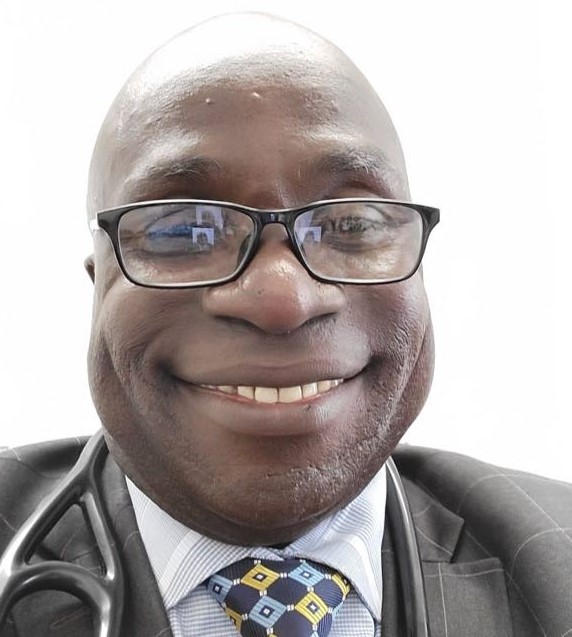
Wife, 51, normally contented and happy, came into the office this morning looking very melancholic. I noticed the difference in her appearance right away. “What’s going on, Mrs. Ram? How are you doing today?” “Not doing good, Doctor. I am having problems at home.” “What happened?,” I asked her, concern in my voice, “your husband? your children…?” “My husband” she interrupted. “He has turned completely alcoholic and apparently now wants to die. He has been drinking for a while, but has now gotten worse. For the past three weeks, he has not been eating, not taking showers, just drinking.” Mrs. Pam was called in because her diabetes was getting out of control, she has taken three weeks to respond, which is very unusual for her.

I looked at Mrs. Pam and felt really sorry for her. She and the husband were one of the first families to enroll in our Hollis branch location when it opened in August 2005. They are very good people. Cause us no problems, use their medications, and follow Doctor’s advice. Good patients. The husband is always cheerful and caused us no problems. When our Hollis branch, which was located just five minutes walk from their house, was closed in November 2014 and merged with the new office on Parsons Blvd, their family was one of those who remained steadfast and moved with us six miles away from home. The husband has not come to the office since last year despite repeated calls. I now know why.

“My husband is not paying the bills anymore. We don’t have hot water. We have to go downstairs and get hot water from neighbors to take our bath”. Things were worse with the Pams than I first thought. I told Mrs. Pam that I would like to speak with the husband. Mrs. Pam told me that they no longer have a phone at home. “What about his cell phone?” “I took the cell phone from him because all he did was call his friends and they discuss bad stuff which make our situation worse”. So I asked the wife: “so how can I reach him now?” “You cannot”, said Mrs. Pam softly, “until I get home and put the battery back in his phone and charge it up.”

I told Mrs. Pam that we need to change tactics. “You took his phone from him; he cannot speak with his friends. You left him with only one friend — his alcohol.” I continued: “I want you to stop nagging on him. Stop telling him how useless and good-for-nothing alcoholic he is, because he knows that already.” I was shocked at the guilty look that came on Mrs. Pam, and I perceived that I had hit on something. “Take a look at the floor. Someone who is down there cannot fall any further, he is down and out. Hitting him while he is down will not yield any results.” “I want you to go home and give him his phone back. Tell him that you are sorry that you have been hard on him. Tell him “Raj, you are better than this. You are a good man. You can beat this alcohol problem. It’s our family problem. We will fight it and win together. I am going to support you. We are going to win”. I told Mrs. Pam “I know that what I am asking you to do is not the natural thing to do in the circumstance, the natural thing is to nag, curse, and abuse, but if you do it, it will work for you” The look on her face encouraged me: she is willing to fight to get her man back!

I reached into my left pant pocket and brought out my private card case. “Here is my private card. It has my private cell phone number and my private email. As soon as the phone is charged, I want you guys to call me. We are going to beat this. We will win together.” My prayer is that Raj will be delivered from the scourge of alcohol abuse.

Emmanuel O. Fashakin, M.D

P.S. This piece was written as it happened in June 2018. There is a happier ending. Raj reduced his drinking drastically. Got a job. The house utility bills were being paid again. He attended the office with the wife about nine months after the article. Sober. I pray for their continued success and happiness.

Emmanuel O. Fashakin, M.D., FMCS(Nig), FWACS, FRCS(Ed), FAAFP, Esq.
Attorney at Law & Medical Director,
Abbydek Family Medical Practice, P.C.
Web address:
http://www.abbydek.com
Cell phone: +1-347-217-6175
“Primum non nocere”

Romeo and Juliet 1968 teen movie stars file $500 million lawsuit against Paramount Pictures for sexual abuse

Leonard Whiting and Olivia Hussey, stars of the 1968 movie “Romeo & Juliet” have filed an action against Paramount Pictures at Los Angeles County, alleging that the studio giant sexually abused them by filming their nude bodies without their knowledge when they were children.

Whiting, who played Romeo Montague when he was 16, and Hussey, who played Juliet Capulet when she was 15, are suing for sexual harassment, negligence, intentional tort, fraud, appropriation of name and likeness, intentional infliction of emotional distress, unfair business practices, and child sexual abuse. The lawsuit has yet to be officially filed in L.A. Superior Court.

  • Olivia Hussey, 71, and Leonard Whiting, 72, filed the lawsuit on Friday 30 December, 2022 in California
  • The complaint accuses the studio of sexual harassment, abuse, and fraud 
  • They are seeking damages ‘believed to be in excess of $500 million
  •  The film was directed by Italian filmmaker Franco Zeffirelli and released through Paramount Pictures
  • Zeffirelli, who earned an Oscar nomination for best director for it, died in 2019
  • The British actors claim they were originally told no nudity would be filmed or released.

Read more at https://www.dailymail.co.uk/news/article-11596765/Stars-1968-Romeo-Juliet-sue-Paramount-nude-scene-filmed-minors.html

TIPS