We agree that murder is not the solution. Going to the police is not the solution. Filling a lawsuit is not also a solution.
I have received a good number of DMs since afternoon about possible solutions.
It is suggested that men should draw up formal agreements with ladies they want to marry after seeing them through school
Having said that the underlying problem is how to discourage our ladies from this sort of scam that wrecks a man emotionally, financially, and psychologically.
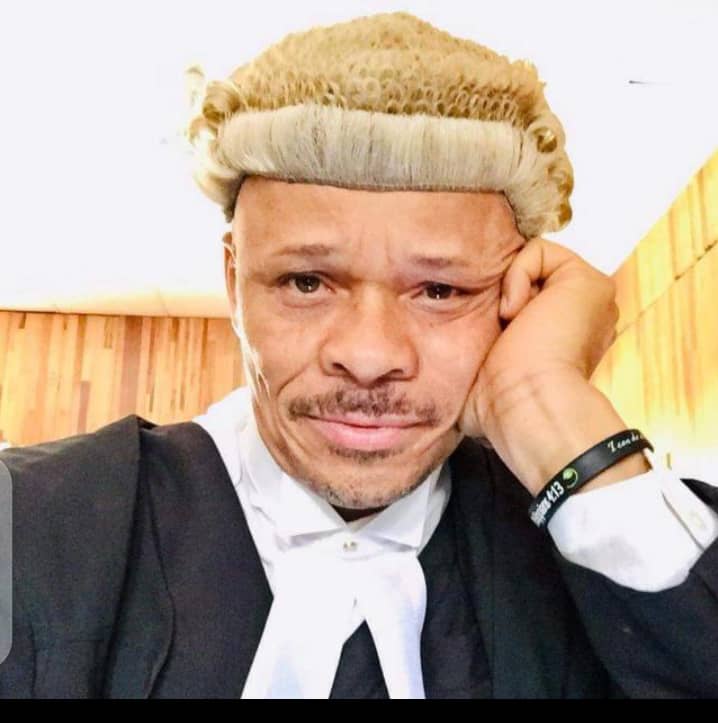
In 2012 I was defence Counsel in COP v Mutiu Akindele and Simon Lough (now SAN) and one Malik Taiwo were prosecuting before my Lord Baba Yusuf J FCT/High Court 07 (now CJ FCT). The accused was charged with Culpable homicide punishable with death over the gruesome murder of his lover (wife) from Enugu State by smashing her head with a pestle. His official defence was an alibi that he came back from work and met her in a pool of blood.
In actual fact, he had picked up the girl at Zone 4 red light district Abuja as a call girl initially but later she moved in with him. Somehow he took her off the street, opened a business for her, and “cleaned her up” with an understanding that she will marry him. When it was time to go for the marriage, the lady suddenly realized that Mutiu Akindele was a mere Vulcanizer and one Emeka who was working with one of the MDAs as a computer analyst was her preference for a life partner or hubby.
Whenever Mutiu leaves for work, Emeka will sneak in and “analyze” the lady on Mutiu’s bed. They were staying along Airport Road at a place called Jika or Cheeka whatever.
Word got to Mutiu Akindele that every day Emeka turned his bed into a computer platform where his “wife” was the “computer” subject of said analysis. Mutiu laid ambush and the rest is history
So 99 out of 100 men will let it go but they’ll always be that 1 man out of 100, who will take matters into his own hand.
In those days there used to be rampant cases of acid baths and all that but these days it seems that jilted men are mostly God-fearing or have devised sinister methods of “payback” or something
Apparently from the number of messages I have received in my DM, men are often too ashamed and embarrassed to go public about their ordeal when. My worry is that by keeping quiet and refusing to speak up, disgruntled men and women are taking matters into their own hands and I shudder to think what Cavelier or machiavellian methods those are.
Under the EFCC Act, there’s provision for prosecution of cases of this genre where Nigerians are collecting money from lovestruck foreign ladies with promises of marriage. I think the law could be applied to prosecute anyone who leads another on and later backs out from marriage in the circumstances that led to the Chinese killing his lover in Kano State
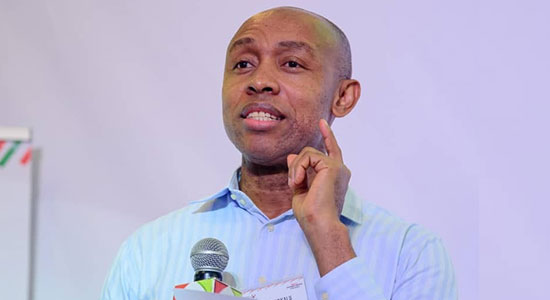
Numeracy is a Nigerian problem but electoral democracy is about counting numbers. Nigerians will vote to elect a president and national legislators on 25 February 2023. On 11 March, they will return to elect state legislators in 36 states and governors in 28. The numbers that will frame all these contests are now settled. They deserve close attention.
In all, 18 political parties, will field a total of 15,307 candidates, including 1,553 women for 1,491 offices, including the presidency; 28 governorship offices; 109 Senators; 360 in the House of Representatives; and 993 seats in state houses of assembly.
Voting will take place in 176,846 polling units nationwide located in 8,809 Wards or Registration Areas in 774 Local Government Areas. The Independent National Electoral Commission (INEC) says it has acquired at least 194,464 Bimodal Voter Accreditation System (BVAS) machines for the election to be managed by over 1.4 million ad-hoc officials.
By far the most important figure, however, is the number of registered voters. When Nigeria last voted in a general election in 2019, there were 84,004,084 voters on the electoral register. Through its Continuous Voter Registration (CVR), INEC says it captured another 12,298,944 since then. When it ran these entries through its Automatic Biometric Identification System, (ABIS), INEC discovered that 2,780,756 (22.6%) were ineligible or invalid. So, the register of voters in Nigeria has grown by 9,518,188 or 11.33% to 93,522,272 since 2019.
The names on the register notionally represent the people to ultimately decide who becomes Nigeria’s next president. This is why the register deserves attention. There is another reason the number of voters matters. Complaints about “voter apathy” in Nigeria persist. The numbers and patterns seem to bear this out. In 1999, turnout was 52.3%. Officially, it grew to 69% in 2003; and has fallen since then to 57.5% in 2007; 53.7% in 2011; 43.7% in 2015; and a historic low of 34.8% in 2019.
Nigeria has always had a problem with numbers, especially of people and of votes. To be fair, voting numbers can be problematic everywhere because they are ambulatory. People are not static: they die by the second, relocate, or migrate. The register of voters does not automatically change because a person whose name is on it has died or moved. So, every voters’ register, at best, represents a snapshot in time.
However, there are many curious things about voting numbers in Nigeria. One, they are an island entirely unto themselves, with no rational relationship to wider trends in the population. Nigeria’s pattern of supposedly precipitous collapse in voter turnout, for instance, is inversely proportional to the growth in Nigeria’s baseline population.
In 1999, Nigeria’s population was estimated to be 115,766,000. By the time the country voted in 2019, it had risen to 199,039,000, a growth of 83,273,000 or 71%. When INEC announced the number of voters on the register for the 2023 election on 11 January 2022, the population of Nigeria was estimated to be over 219,864,000. In other words, since 1999, Nigeria’s population has grown by over 104,098,000 or 89.92%.
By contrast, in 1999, Nigeria had 57 million registered voters. This rose by 5.26% or three million to 60 million in 2003 and then by 1.67% or one million to 61 million in 2007. By 2011, the number of registered voters had climbed by over 12 million to 73.53 million or 20.5%, representing an average yearly growth rate of nearly 5.12%, where previously it had grown by 1.31% in 1999-2003 and 0.42% between 2003-2007. By 2015, the population of registered voters had fallen to 68.83 million, a deficit of 4.7 million voters or 6.83%, representing an annualized rate of reversal of 1.71%. Yet, over the same period, Nigeria, a country with a median age of just under 18 years, had grown in population from an estimated 162.9 million to 181.2 million, an increase of 15.174 million or 11.23%, representing an annual growth rate of 2.8%.
In 20 years from 1999 to 2019, Nigeria’s population rose by 71% but the population of voters rose by only 50%. With the latest numbers announced by INEC, Nigeria’s register of voters has grown by 36,522,272 since 1999 or 64.07%, a deficit of 25.83% when compared with the increase in Nigeria’s population over the same period. It is possible to speculate about what may explain this significant deficit in growth patterns between the general population and register of voters. Rational factors such as internal migration; agency dysfunctions in INEC, civic inertia or failure to register, or high transaction costs may explain some of this. But there remain worrying patterns that are not easily accounted for by these factors.
This leads to a second issue: Nigeria’s register of voters has always had invalid voters. The current register of voters in Nigeria dates back to November 2010 when the Attahiru Jega-led INEC set about establishing a credible register of voters for the country. The Commission had limited time to authenticate the raw data before the 2011 general election. When the Automatic Fingerprint Identification System (AFIS) finished its work on the 2011 register nearly four years later, INEC invalidated 4.7 million entries, which reduced the number of registered voters from 73.53 in 2011 to 68.83 in 2015 but not before these invalid 4.7 were eligible to vote in 2011.
Perhaps the biggest worry of all is with dead voters. At the beginning of 2022, the INEC explained that it cannot expunge dead voters from the register because “the country does not have reliable data of births and deaths and the commission cannot engage in arbitrary removal of the names of individuals it suspects are deceased.”
The third issue, therefore, is evidently that the number of voters on the register is grossly over-stated. In the explanation of the INEC, Nigeria’s register of voters is the classic Hotel California: it is “programmed to receive” and, for anyone with their name on it, the message is that “you can check out any time you like but you can never leave.” The implications of this for electoral integrity are staggering.
Nigerian law only allows adults to vote. Over the decade between 2010 to 2020, Nigeria’s adult mortality rate has ranged between 389.09 and 357.9 per 1,000 for men; and 359.8 to 318 per 1,000 for women. In 2020, adult mortality rate in Nigeria was estimated at 34.25 per 100 of population yearly. Applied to the 2019 register and adjusted down to account for the fact that adult mortality rate is counted from 16 years, two less than the voting age, the number liable to be removed from the electoral roll would be well over six million in any election cycle.
Over three election cycles since 2011, the number liable to be expunged from Nigeria’s electoral roll could be somewhere in the region of about 20 million. Separately, at the end of 2021, the Internal Displacement Monitoring Centre, (IDMC) reported that Nigeria had at least 3.2 million in internal displacement. The United Nations High Commissioner for Refugees adds that there are at least another 343,000 Nigerian refugees outside the country. Admittedly not all of these are adults of voting age.
However, when you look at the numbers on Nigeria’s register of voters and account for the fact that the baseline data goes back to 2011, there is a high likelihood that up to about 25% of the register are dead, dud, or displaced. When folks complain about “voter apathy” they miss one important point: Nigeria guarantees the dead a right to vote. That is antecedent to any talk of “voter apathy”.
A lawyer and a teacher, Odinkalu can be reached at [email protected]
A mother’s love is a universal currency. There is hardly any culture that does not celebrate motherhood. In Yorubaland, mother is regarded as gold. That is where Ìyániwúrà comes from. In Igbo, it is Nneka. Onigegewura is certain that its equivalent exists in almost every language of the world.
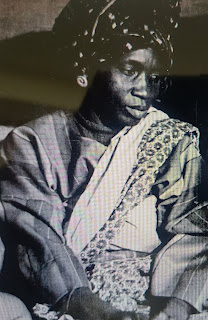
Madam Asabi Adedire Photo Credit: Onigegewura
One mother who proved the truth of this golden axiom is an illiterate mother from the ancient city of Ile-Ife. As of today, there is no monument to her memory. Her story also does not feature in History texts. Yet, when the roll is called of mothers who were prepared to pay the ultimate price for their children, the name of Asabi Adedire must certainly occupy a pride of place. It is to keep the memory of this extraordinary woman alive that Onigegewura is bringing you this story today.
The first time I heard about Asabi Adedire was from my mother. It was on the eve of my departure to College. Iya mi, Ikoyi Esho, was packing every conceivable food item into my bag. Like most teenagers, I wanted only money, and not garri and elubo with tinko [dried meat] I was being saddled with. My mother however won’t hear of it. She believed that I was going to die of starvation without rice and beans. Despite myself, I was appreciative of the motherly sacrifice and I told her. That was when she responded with: “Kini mo ti se? Asabi se ju be lo fun omo e” [What have I done? Asabi did more than that for her child.]
Which Asabi? What did she do for her son? The story you are reading is the story of Asabi Adedire. It is a story of a mother’s extraordinary sacrifice and love for her son. But, I warn you, this story may make your eyes moist before you get to the end. Let’s go back to Ile-Ife where it all started two years before the Union Jack was replaced with the Green-White-Green.
When Abraham Adewole Adedire won a scholarship to study his dream course in the United States, it was a dream come true not only for the budding scientist, but for all his extended family. The entire city of Ile-Ife erupted with rapturous joy. Onigegewura is talking about 1958 when you could count the number of university graduates on the fingers of one hand. Abraham became the golden boy of his generation.
Overnight, everyone in Ile-Ife remembered that they were related to the Adedire family through one dead ancestor or another. Abraham was born in 1939 to a father who was a farmer and a mother who was a trader. He hailed from Ita Agbon Quarters in Ile-Ife. If you are going to Modakeke from Itakogun, Ita Agbon is the last quarters before Oke Eso Bridge. You know the place?
Abraham was a son every parent would be proud of. Though of slight frame, he was gifted with massive intelligence. From his elementary school days, he had shown that he was a child of promise. Whereas most students lived in fear of mathematics, Wole, as Abraham was fondly called at home, was at his best when solving mathematical puzzles. It was therefore not a surprise when he won the Nigerian government scholarship in 1958 to study chemistry in the United States.
On arrival at Michigan State University, Abraham dove headlong into his studies. He was determined to finish his degree programme in record time. His ultimate goal was to return home with a doctorate degree. He knew that with his country – then under colonial rule – approaching independence, a postgraduate degree in Sciences would place him in good stead to contribute his own quota to the development of his motherland.
Abraham was however not your average student whose only preoccupation was studying. He was active in both curricular and extra-curricular activities on and off campus. His innate talents and abilities soon landed him a leadership role when he was elected the President of the International Club of the university. As expected, Abraham proved his mettles as a leader in his new assignment. His commitment to the Club however did not affect his studies. In 1961, the Boy from Ile-Ife graduated from the university with his Degree of Bachelor of Science in Chemistry. Among those who graduated with him in the same year were Ernest Becking, William Birch, and Robert Clark.
There is something Onigegewura did not tell you about Abraham’s achievement during his tenure as the President of the International Club. It was in the course of his duty as president that he met the young white lady who became his wife. Margaret Orvis was from Marion, Michigan. She was a second year student of Elementary Education in the university when they met. For Margaret, it was love at first. She knew immediately they met that this was the man she was going to marry.
Her father however didn’t share his daughter’s romantic ideal. Abraham was not only a black man, he had also come all the way from a strange continent called Africa. Margaret’s father, ever protective of his daughter, threatened to shoot the Boy from Ile-Ife if he didn’t desist from his love overture to his daughter. The opposition to the young lovers’ relationship was not only from Margaret’s father. Abraham’s friends and colleagues also did not find it funny that he would leave all the beautiful sisters in the International Club to date a white girl.
Well, love conquers all. Margaret’s parents soon relented and went ahead to approve the relationship between their daughter and the young man from Africa. Her father failed to keep his promise to shoot him. Instead he blessed the union of the young couple. Abraham wrote to inform his family in Nigeria that he was going to marry a white girl. They had no objection to his choice of partner.
Abraham and Margaret Adedire soon started their new life together as a couple. Within months, the couple had their first daughter. She was named Aderonke Adedire [Ronke]. A year later in 1963, Aderonke’s sister came along. She was named Adetayo Adedire [Tayo]. The joy of the family was complete. Abraham was studying for his postgraduate degree while also working on part time basis to supplement his scholarship allowance from the Federal Government of Nigeria.
The future could not have been brighter for the young family.
That was however when sadness decided that it had no other place to visit but the household of the Adedires. When Abraham began to feel tired almost on continuous basis, he put it down to his punishing schedule as a fulltime student, a part time worker and a committed head of family. Margaret advised her husband to visit the hospital for a medical check. It was at the hospital that it was discovered that his urine contained high level of protein. The doctors, professionals as they were, were shocked by this finding but they were not unduly alarmed. They prescribed him medications and he was advised to reduce his workload. The couple returned home and waited for his health to improve.
But as observed by Wole Soyinka in The Forest of A Thousand Daemons, it was the case of the proverbial seasoned witch, sooner simply gives birth to daughter after daughter, so witchbird swarms overs witchbird [kaka kí o san ni ara iya àjé, nise lo n fi gbogbo omo re bi obinrin, eye wa n yi lu eye]. Rather than improve, his health began to deteriorate. Margaret was not a medical practitioner but she realized that the prescribed pills were not the cure for her husband’s illness. Her fears were confirmed when Abraham began to lose consciousness on a regular basis. She didn’t wait a minute longer before rushing her husband back to the hospital.
Once again, Abraham was subjected to a series of tests and other medical examinations. From the grim appearance of the medical personnel who conducted the tests, Abraham knew that the prognosis must have been very bad. As a graduate of chemistry, he knew one or two things about medical tests. Perhaps afraid that he might not be able to take the news, it was his wife that the doctors informed of their findings. Her dear husband was suffering from an irreversible and progressive kidney failure. And it was not one kidney. His two kidneys were affected.
That was the good news. The bad news was that Abraham had only six more months to live!
Six months!
For a young man who was just about to start his life, it was a death sentence. When his wife broke the news to him, Abraham was as stunned as Margaret was when she first heard the tragic news. His mind went back to the hurdles he had struggled to overcome to come to the United States. He remembered his promise to his father and mother back home in Nigeria. He recalled how he had pledged to train his siblings. And then he thought of Margaret and their two young daughters, Ronke and Tayo. What would become of them?
But if the doctors had expected the young man to begin to wail, they were mistaken.
Six months!
Abraham’s mind was made up. He was not going to go down without a fight. Kidney failure had picked the wrong candidate this time around. He was going to fight it with every fibre of his being. He was not going to dance to the drum of fate. Rather he would snatch the drum and dance to his own music. For his two young daughters, he would fight. For his wife, he would not give up. And for his family back in Ile-Ife, he would be strong. Oranmiyan Akinorun would see him through. Oduduwa Atewonro would be with him. He would fight!
Initial shock over, he asked the doctors for his chances of beating the odds. Even before the doctors could respond, he knew the stakes were stacked against him. But it appeared that something could still be done to save the determined young man. It was a little ray. It was a very little ray. But it was a ray all the same. Margaret had heard of kidney transplant operation. Was it possible for her husband to have one of her kidneys? The doctors were moved by the desperation of the young lady to save her husband. They referred them to the University of Michigan Hospital where there were specialists in that field.
At the UMH, Abraham for the third time underwent a battery of tests. The prognosis had not changed. The ray of hope had however become brighter. Instead of six months, the doctors UMH opined that with the best of care Abraham could live for five years. Five years! From six months to five years! That’s a miracle! But…, yes, there was a but. They warned that the five-year lease was not guaranteed. It could in fact be anytime. Abraham had heard what he wanted to hear. He would not die. He would live.
Then another miracle occurred. The doctors prescribed drugs for him. They also placed him on a special diet. They then decided to monitor him for about three weeks. At the end of the monitoring period, all the symptoms had disappeared! Abraham could not believe it. But it was true, the symptoms had totally disappeared. He was discharged from the hospital and was advised to take things easy.
Did Onigegewura tell you that Abraham had written to inform the government of Nigeria of his medical travails? Well, as a government scholar he was obliged to keep the government informed of whatever was happening to him. The government advised him to terminate his postgraduate studies and return to Nigeria. He was also sent tickets to cover the passage of his family. Margaret was however not enthusiastic about her husband’s return to his land of birth. From the information available to her, she doubted if the country had any specialist hospital that could take care of her husband if there was a relapse.
But as you know that he who pays the piper dictates the tune, Abraham had no choice but to come back to Nigeria. If he had not come back, he would have been in breach of his scholarship bond which mandated him to come home and work for an agreed period. As a law-abiding citizen, Abraham realized the importance of keeping to his side of contract. He spent many days convincing Margaret. At the end of the day, the couple agreed that they would go back to Nigeria, work for government and save enough money to return to the United States without further obligation to Nigeria. It was an amicable compromise.
Six years after his departure from Nigeria, Abraham returned to his land of birth in June 1964. When he was leaving in 1958 he was all alone. But this time around, he was returning with his wife and two kids. In the 60s, employment was hardly an issue, especially for a graduate. He soon started working and was hoping to save enough funds to return to the US with his family.
It however appeared that the matter of his kidneys was a scorched snake which was bound to come alive again. He had hardly settled down in Nigeria when he began to feel sick again. He was rushed to University College Hospital at Oritamefa, Ibadan. He was soon stabilized but the nightmare was not yet over. As she did in Michigan, Margaret began to keep vigil at her husband’s bedside. It was in the course of the midnight vigil that she decided that it was in her husband’s best interests to return to the US for a comprehensive medical service.
It was easier said than done. Abraham’s employers were reluctant to release him without completing his bond. Margaret however was not the one to give up. She started a one-woman protest to save her husband. Her activities were not confined to Nigeria. She was sending letters after letters to the United States. There was no day that she didn’t send telegrams across the Atlantic. And all of them contained only one message: Let My Husband Return to the US.
Finally, her efforts paid off. The Nigeria government granted her prayers, but on the condition that he would return to the country after two months of his medical treatments. Two months! Half bread is better than none. Margaret did not look the gift horse in the mouth. She accepted the offer and they were soon on their way to the US.
Back in the States, his condition rapidly deteriorated. It was certain that unless a miracle occurred, his end was near. It was at this point that Margaret [who else?] raised the issue of kidney transplant again. The doctors considered her plea and it was agreed that a kidney transplant could be done. But then the question arose: whose kidney?
Messages were sent to Ile-Ife. Abraham had four sisters and a brother. They were all tested. His father and mother were also tested. From the tests, his parents and immediate younger sister were found suitable. But there was a small challenge. His father and sister had a different blood type. That left only the mother, Asabi Alagbon Obi [Asabi the owner of massive basket of kolanut].
Abiyamo ekeji omo [Mother is the closest person to her child]. Asabi did not hesitate when she was informed. She had only one question: ‘would Adewole survive? On being assured that her son would live, she did not bother to ask about her own fate. She tied her wrapper tightly around her bosom and accepted to go under the knife in order to purchase life for her first son. Like the legendary Moremi who risked her life and also sacrificed her only son, Oluorogbo to River Esinminrin in the same city of Ile-Ife in the days of the ancient, Asabi willingly accepted to sacrifice herself to redeem the life of her son.
At the time, Asabi became the symbol of motherhood. Onigegewura spoke to some elders in Ile-Ife who were old enough to know the story. They all confirmed that Iya Adewole was the heroine of the town. She became the modern day Moremi. A traditional chief Onigegewura interviewed told me that her decision polarized the whole of Yorubaland, if not the whole of Nigeria. While some were in support, others were aghast even at the thought of donating a kidney. Her sacrifice became the yardstick for measuring pristine motherhood.
A leading journalist at the time, Peter Enahoro [Peter Pan] in his weekly column wondered whether he would have demanded that his mother sacrificed one of her kidneys if he had been in Adewole’s shoes. He however was categorical that as a father he would not hesitate to give one of his kidneys to his child.
What of the woman at the centre of it all? When she was asked whether she would have donated her kidney if she had known that she wouldn’t come out alive, the brave mother responded: “I would have come to help Abraham even if I had been sure I would lose my live. What else can a mother do?”
What else can a mother do? Hummmmn! What else can a mother do!
Well, getting a kidney donor was half of the battle. The other half was how Asabi was going to get to the United States. And she was not going to go alone on account of her age and the language difficulty she might face. It was agreed that Janet, Abraham’s younger sister, who was then a teacher would accompany her mother. But where would the money for their passage come from?
Again, Margaret came to the rescue. Her colleagues where she was working to support her husband began a campaign to raise fund for Abraham. A leading newspaper company in the United States bought into the cause and accepted to publicize the story free of charge. The newspaper, Detroit Free Press, did not stop there, it also donated $1000 to the Abraham Adedire Fund. That opened the floodgate of donations.
From individuals to corporations, from churches to schools, from students to workers, the Fund began to grow. The Black community in Detroit refused to be left behind. They contributed massively to the Fund. Back home, good Nigerians also contributed their widow’s mite. Finally, enough fund was raised to cover Asabi and Janet’s passage to and from the United States.
Visa was not an issue. Based on Margaret’s petition to the government, visa requirement was waived for the two Nigerian women. It appeared that all the 301 gods of Ile-Ife were working overtime on behalf of one of their sons.
Abraham’s joy could only be imagined when he saw his mother and sister by his hospital bed in Michigan. He could not contain his emotions as he saw the woman who gave him life and who was ready once again to give him another opportunity to live a healthy life. Mother and son hugged for almost an eternity.
No further ceremony was required. Ti a ba de ibi ise, sise la n se [Work is to be started once you reach your place of work]. Both mother and son went under the knife. The whole world waited with bated breath. From Michigan to Maidguiri, from Illinois to Ile-Ife, from London to Lagos, from Jalumi to Japan, the whole world watched and waited. Prayers and supplications were going up like rockets for mother and son across the world.
After many hours in the surgery, the surgeons emerged from the theatre. World journalists who had been following the story began to bombard them with questions after questions. But the smile of satisfaction playing on the lips of the surgeons was enough for the probing media personnel. The operations were successful. Both mother and son were alive and well. The whole world became one in joyful embrace. White and black, Americans and Africans, in fact everyone in the world became united in celebrating the sacrifice of Asabi who donated one of her kidneys to save her son from certain death.
They were soon discharged from the hospital to enable them recuperate among their loved ones at home. Ronke and Tayo were excited to meet their grandmother once again. They had met in Nigeria some months before. Though they spoke different languages, granny and the youngsters enjoyed hours after hours of playtime. Margaret’s mother also joined in the fun. They were all happy that the worst had passed.
Abraham was however the happiest. The proverbial race horse would not have stumbled in his stomach [Ti won ba gun esin ninu re, ko lo ko ese]. He knew that if not for the determination of his wife and the sacrifice of his mother, he would have been long dead and buried.
A kii se ore ero ki ayo, bi o pe bi o ya, ero n re ile re bi o di ola [Friendship with a wayfarer is not to be delighted in. Sooner or later, the wayfarer will leave you and return to his base.] Weeks after her discharge, the time came for Asabi to return home. On March 30, 1964, the happy mother left the United States for Nigeria.
It was as if his mother’s kidney was divinely made for him. In a matter of days, Abraham was back on his feet. If one did not know about his peculiar history it would be difficult to associate the sprightly young man with the invalid of a few months before. He soon began to work on part time basis at the University of Michigan Hospital as a laboratory assistant.
The story of Wole Adedire did however not end there.
Five months after the successful surgery and weeks after he had started working at UMH, the final bell tolled tragically for the dogged fighter. On Friday, July 9, Abraham was readmitted to the hospital. Two days later, his condition became very critical. He fought back bravely. For hours he stared death in the face refusing to be cowed by the grim harvester. He had done it before and he was ready to do it over and over again. The Ife Boy in Michigan summoned all the willpower he could muster to live.
Finally, four days after he was admitted, the cock from heavenly vault crowed. On Tuesday, July 13, 1965, Abraham Adewole Adedire breathed his last, 7,000 miles away from the land of his birth. He was 26 years old. He had fought a good fight.
What was however shocking about his death was that the doctors confirmed that his death was not connected to his transplanted kidney which was functioning perfectly well until he died.
Abraham’s death shook the whole world. In the months leading to his surgery, he had attracted worldwide following of people who admired his courage and supported his cause. People of all races became united with grief over his death. Messages of condolences poured in from far and near.
The Governor of Western Region, Odeleye Fadahunsi, sent personal message of condolence to Asabi over the loss of her son. In the message sent by the Knight of the British Empire, the Governor said that the news of Abraham’s death came as a shock and the heart of all who knew her recent sacrifice would go out in sympathy with her.
On his own part, the Premier of the region who was also the Aare Ona Kakanfo of Yorubaland, Ladoke Akintola said that Abraham’s death was a rude shock to all his countrymen and women in Nigeria. In the words of Baba Omodele: “I extend to the parents of and the family of Abraham Adedire the very heartfelt sympathy of the Government and the people of Western Nigeria on the irreparable loss of their promising son who had been snatched away by death after a really dogged fight backed up by the best medical facilities available in the world.”
On behalf of the Action Group, Dauda Adegbenro [who was holding fort for Obafemi Awolowo who was in prison at the time] also commiserated with the grieving mother. The Ekerin Egbaland told Asabi that: “your motherly love for your son during his period of illness had made world news.”
Following his demise, his widow announced that his remains would be taken to Ile-Ife for burial. In response, the Federal Government of Nigeria through her Minister of Natural Resources and Research, Tiamiyu Alade Lamuye, a prince from Iwo, informed the family that the government would bear the total cost of flying the body from the United States to Ile-Ife for burial.
The body of Abraham was however not destined to touch Nigerian soil ever again. Hours after the initial announcement, the Ministry of External Affairs informed the world that the body would be buried in the medical centre of Michigan State University in accordance with the wishes of Adedire’s family to save them further grief and agony.
Abraham’s final resting place
In case you are wondering what became of the widow of Abraham, Onigegewura will tell you. Margaret Adedire mourned the loss of her husband and the father of her children. It was a tragic loss for someone so young and so devoted. Margaret dedicated herself to the upbringing of her two daughters, Ronke and Tayo. She later got married to Oheneba Poku-Kankam, a Ghanaian who had gone to Abraham’s alma mater to teach African Languages.
And with that we have come to the end of the story of Abraham Adewole Adedire and his courageous mother, Asabi Adedire.
The London Underground celebrated its 160-year anniversary on 10 January 2023 making it the oldest underground network in the world. On January 10 1863, the Metropolitan Railway opened its new subterranean railway between Paddington and Farringdon, ushering in a new age of transport – the London Underground.
During the Word War II, underground stations were used as makeshift bomb shelters during the Nazi ‘Blitz’ bombing campaign on London in 1940 and 1941.
After the war, expansion continued and today the Tube handles close to five million passenger journeys a day. At peak periods, there are more than 543 trains zipping around the Capital. Also, the network has expanded to 11 lines and serves 272 stations, making it one of the busiest metro systems in the world.
The Nigerian Railway Corporation took off in 1898 when the first railroad in Nigeria was constructed by the British colonial government. On October 3, 1912, the Lagos Government Railway and the Baro-Kano Railway were merged, starting nationwide rail service under the name Government Department of Railways. Nigeria operates the narrow Cape gauge railway network which is mostly in poor condition due to lack of maintenance. And while other countries are making a haul through rail transport, Nigeria’s entire transport sector continues to suffer.
To shore up performance, the country’s first ever high-speed train service opened for service in March 2016. That is the double-track, standard gauge between Abuja and Kaduna that runs at 120Km and 150 Km an hour. The project was completed by the China Civil Engineering Construction Company (CCECC). It was a very profitable venture.
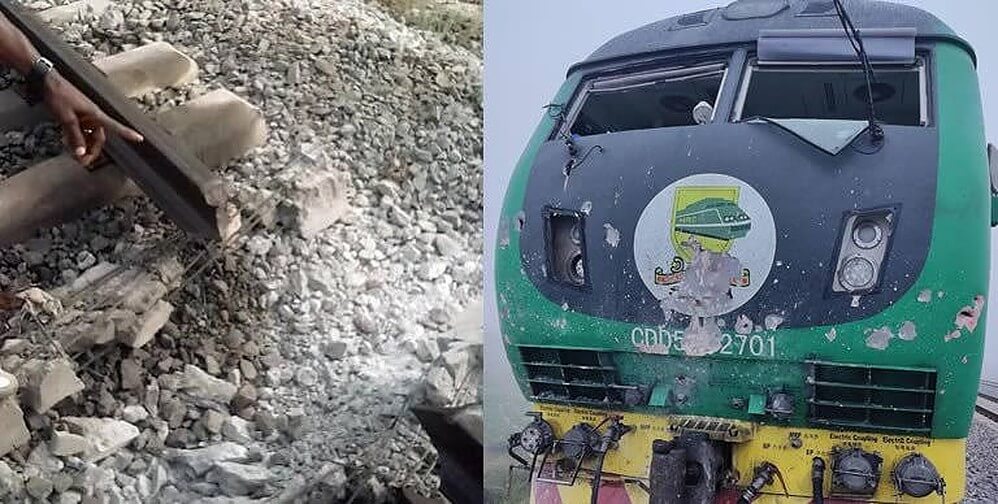
Sadly, the ease and joy provided by the Kaduna -Abuja train was snuffed out on March 28th when over six hundred passengers on board Abuja – Kaduna train were attacked by terrorists; several abducted. Most of them spent over 180 days in captivity with millions of naira paid in cash as ransom.
Security experts at the time disclosed that despite several signs that the Abuja-Kaduna railway was susceptible to bandits’ attack and amid massive resources in loans and funds voted to revamp rail transportation across the country, the Federal Government failed to adequately protect passengers until the attack.
They contended that aside from terrorists blowing up the rail track with explosives, other recent incidents along the corridor were warnings that it was only a matter of time before passengers on the Abuja-Kaduna route were attacked again, but the government failed to do the needful to provide protection for communities.
The experts also noted that as more people avoided the Abuja-Kaduna expressway, which has been a haven for kidnappers, and opted to travel by air or on the train to and from Abuja, it became clear that the bandits, who are being starved of potential abductees will try to attack travellers using airport and train commuters, but no significant security measure was known to have been taken to ensure the safety of these travellers.
Amidst all the security concerns, the Abuja-Kaduna train services resumed operations on Monday 5 December 2022 after an eight-month suspension. Then Saturday, 7 January, 2023, a month and two days after the Abuja-Kaduna train service recommenced operations, terrorists struck again. No fewer than 31 passengers and staff of the Nigerian Railway Corporation (NRC) were reportedly abducted by gunmen at the Igueben train sub-station in Edo State, with several injured. The state police command, in a statement said the kidnappers were herdsmen armed with AK-47 riffles.
Like many other public affairs analysts, Ambrose Igboke, Public Affairs Analyst, PR Consultant and Chairman Enugu State Chapter of the Guild of Public Affairs Analysts of Nigeria insists that the federal government did nothing to prevent train attacks. Speaking on the EDO Train attack on ARISE TV on 10 January, 2023, Igboke observed that the abduction of passengers and attack on the Edo train station is coming less than a year from the Abuja-Kaduna train incident.
According to him, “This is because there were no safety or security measures put in place. I had recommended the use of CCTV cameras in the train stations as well as the use of drones for security surveillance. I also advocated for the use of local youth for vigilante along the rail tracks. Nothing was done.
“Another tragedy has occurred, the government will express shock as usual and read from a ready speech template. The Government will warn the terrorists as usual or even turn religious to say that God gives life. The Shame of a Nation!”
Until days ago, when Nigeria’s embattled Central Bank Governor, Godwin Emefiele, noiselessly returned to the country, many thought he had fled the country amidst fears he would be arrested by operatives of the State Security Service (SSS) who are investigating several allegations against him, including corruption and terrorism financing.
On December 15, 2022, Hon. Gudaji Kazaure, a serving member of the Federal House of Representatives, representing the Kazaure, Roni, Gwiwa, Yankwashi Constituency of Jigawa State appeared on a special programme of Human Rights Radio and Television and made allegations of unprecedented sleaze on the part of the Central Bank Nigeria (CBN) Governor Godwin Emefiele.
Hon. Kazaure also alleged that some persons in the Presidency are intentionally denying him access to President Muhammadu Buhari to present a preliminary report of a committee he (Buhari) set up to look into the alleged stamp duty funds being withheld by the CBN. Kazaure is the secretary of the committee with Adetola Adekoya as the chairman.
Now aside from the Presidency through the Senior Special Assistant on media and publicity to President Buhari, Malam Garba Shehu, describing Kazaure’s committee as illegal in a statement, while maintaining that the committee was dissolved on the directive of Buhari, more than 2000 Civil Society Organizations, CSOs, under the auspices of Coalition of Civil Society Organizations on Good Governance, CCSGG, have castigated critics of CBN Godwin Emefiele.
The Organizations in a statement jointly signed by its president, Etuk Bassey Williams, and Secretary, Abubakar Ibrahim, observed that those speaking to some media houses to emit lies against Emefiele are those whose evil deeds of corruption are being exposed and strangled by the recent Naira Redesign and Withdrawal policy.
All said, the SSS has reportedly vowed to arrest Emefiele upon his return to the country despite a subsisting court order restraining them from doing so.
And while the drama continues to unfold, retired Supreme Court Justice Ejembi Eko lent his voice to the debate. In a chat with Law & Society Magazine, Hon. Justice Eko (rtd.) had this to say— “Hon Kazaure claims to be the secretary of a presidential committee. Who is the chairman? And it is Kazaure, the Secretary, making, but frustrated, efforts to submit the report to the president directly, without the Secretary to the Federal Government of Nigeria (SFGN)? My experience is: Commissions of Inquiry are funded from votes of the SFGN. The President has not received the report, yet Kazaure and the DSS are implementing the report. Tsoho, Chief Judge of the Federal High Court, comes under Kazaure’s severe criticism for not granting DSS application to arrest and detain Emefiele (who was part of the presidential entourage to the USA- a fact known to DSS/DIA). Why is DSS, not EFCC or ICPC, overtly involved in the investigation and prosecution of a financial crime?
“If the President is not involved in the scheme, why is the presidency very quiet over an enormous scandal that can ruin the economy and bring down the government? Already, Kazaure is indicting the Judiciary, CBN, Legislature, and even the Executive (those preventing him from submitting his report).”
“This is a clear case of a corrupt politician calling a corrupt banker a sinner, while the corrupt executive is incapacitated to clean up or judge the two because she has either soiled her hands or inept”, Christian Aniekwena a Business Development Consultant told Law & Society. “However, you can only get this kind of scenario in an environment like ours with old and morally weak leaders that have no capacity to lead.
“Emefiele is not the only problem, all our politicians created the monster corruption we are experiencing today. A few questions to ponder here:
1. Is Hon. Gudaje Kazaure just getting to know of this Mr. Adetola story?
2. Would he have spoken up if the concept of Naira redesign was not introduced by the CBN-led emefiele?
3. Is Hon Gudaje truly sincere in this quest to fight corruption in the CBN and on the side of the masses or is he fighting to stop the cashless policy so that those in power will continue the business of ‘cash money’ politics as usual, especially as the 2023 election is close?
“In conclusion, we need a true leader(s) who is/are not known with any corruption case to cleanse the corruption in our system. So help us God!” He concluded.
On a sunny Fall day in 2001, I peered through the blinds in my practice consulting room into the waiting room and saw Phulganda waiting to see me. “Good!” I said under my breath; “maybe we will make enough money today to cover our bills.”
Phulganda was one of the earliest patients when we opened this branch, our second, on Jamaica Avenue, Richmond Hill, New York about a year earlier. Money was tight. Citibank had promised us financing for the purchase of the medical practice but they pulled out and left us in the cold midway into the transaction. No reason was given. The seller had inserted into the Commercial Real Estate Contract a clause that I would forfeit my 10% deposit if I failed to close FOR ANY REASON. Inability to obtain financing was not a valid excuse. There would be no waiver of that clause. It was a terrible situation. I raised cash from getting a second mortgage on my primary residence. But it was not enough. I was still about $35,000 short. I was able to get a personal loan of $15,000 from Advanta Bank and raised the balance wherever I could find it, mainly through cash advances from credit cards. Life was rough. We were broke like a rat in the church. Every patient visit was God-sent.
It was into the situation that Phulganda walked into that fateful morning. Phulganda (yes, that’s her real name because I am not divulging any medical info, and she has the higher moral ground here), in an earlier visit, had told me that her name means “flower” in her native Guyanese language. She was a faithful patient who kept her appointments regularly. I usually looked forward to her visit.
Phulganda came into my room and my smile vanished at once when she blurted out: “Doctor, my insurance is not working and I need to see you because I have run out of medications.” “Why don’t you go and fix it?, I asked in a low voice. “I am going to do that, Doctor,” she explained, “but I want you to prescribe my medications so I could buy them.” “You should go and fix the insurance and come back because they are not going to pay us for this visit”, I insisted. I refused to prescribe her medications because I knew that if I renewed the medications then, she would not return for several months, even if her insurance was fixed, and we needed the money. As Phulganda headed for the door, she looked back at me, and she told me, with hurt in her eyes: “Doctor, I have been one of your regular loyal patients!” That was the very last time I saw Phulganda: she never returned to the practice.
Over the years, Phulganda’s words have gnawed at my heart: “Doctor, I have been one of your regular loyal patients!” Why didn’t I at least renew her medications, even if I was not going to give her a full examination? What happened to Phulganda afterward? Was her insurance renewed and was she ok? I would never know. I never saw Phulganda again, not even in the community where I run into my patients now and then.
My failure on the Phulganda matter has caused me great anguish over the years. Why didn’t I do the needful and trust the Lord to meet our finances? We started our practice at Parsons Blvd, Flushing in 1996 from zero, sandwiched between two very hostile Asian doctors’ offices. They did everything in their power to discourage us, including taking down our signs at night, etc. But we thrived. Within nine months, one of them folded up and closed the practice. The other was just limping along, while we blossomed and flourished. So why did I withhold mercy and grace from Phulganda? I decided that I would never allow same to happen again.
Now I tell my patients with chronic conditions: “if for any reason you lose your insurance coverage, don’t stay home. Come to the office and we will do our best for you”. If patients lose their insurance or are unable to pay for any reason, I ask my staff to accept whatever the patient can afford as full and final payment. And we also see them even if they have no money to pay. In a few instances, we give them money to buy essential drugs if they fall on hard times. A patient burst into tears when I pressed a $100 bill into her hands. We send their prescriptions to where they can get them at lower prices like the local Walmart, and get them enrolled at goodrx. com to get drugs at discounted prices at other pharmacies.
Phulganda has been such a great teacher that we have now made free treatment a permanent feature at Abbydek. In 2017, we started the “FREEDOM HOUR” at our Richmond Hill location: between 3 pm and 4 pm, every Saturday, we give free consultations to all patients who are unable, unwilling, or not paying for any reason. In March 2018, one patient asked me: “you people see people free of charge on Saturdays, is this part of some Government program?” I replied: “no, it’s part of God’s Program, our service to humanity.” Our patients don’t have to pay during the Freedom Hour, because someone, Phulganda, has paid for everybody.
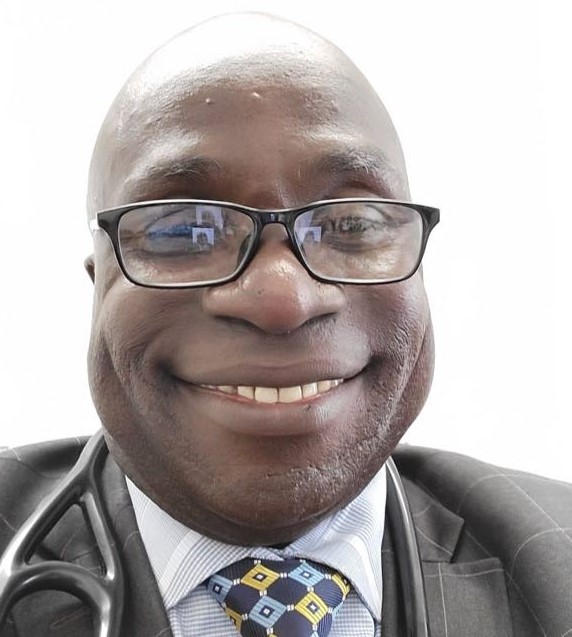
Emmanuel O. Fashakin, M.D
Emmanuel O. Fashakin, M.D., FMCS(Nig), FWACS, FRCS(Ed), FAAFP, Esq. Attorney at Law & Medical Director, Abbydek Family Medical Practice, P.C. Web address: http://www.abbydek.com Cell phone: +1-347-217-6175 “Primum non nocere”
What comes to your mind when a man tells you that he dreams of pregnant women every night? One can only imagine but that’s the case of this very active young man who finally fell for it… The dream was persistent and he just had to do something.
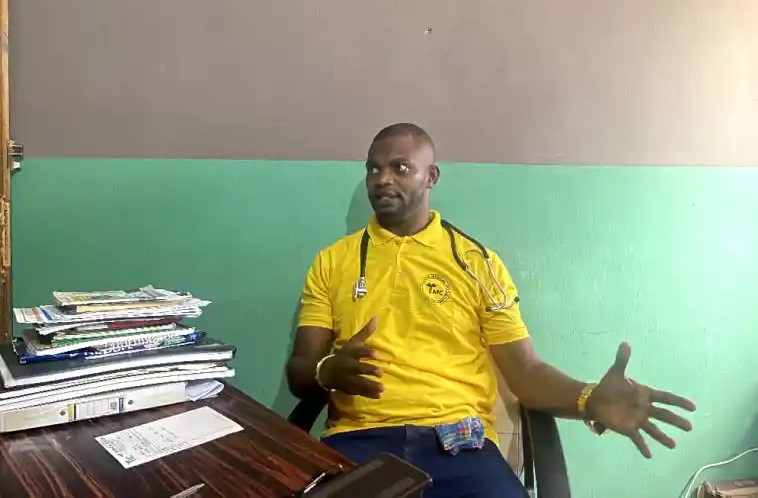
Gbolahan Nureni Sodipo popularly called Dr. Creek did his National Youth Service at Enugu State. That was the beginning of a journey that has metamorphosed into something huge.
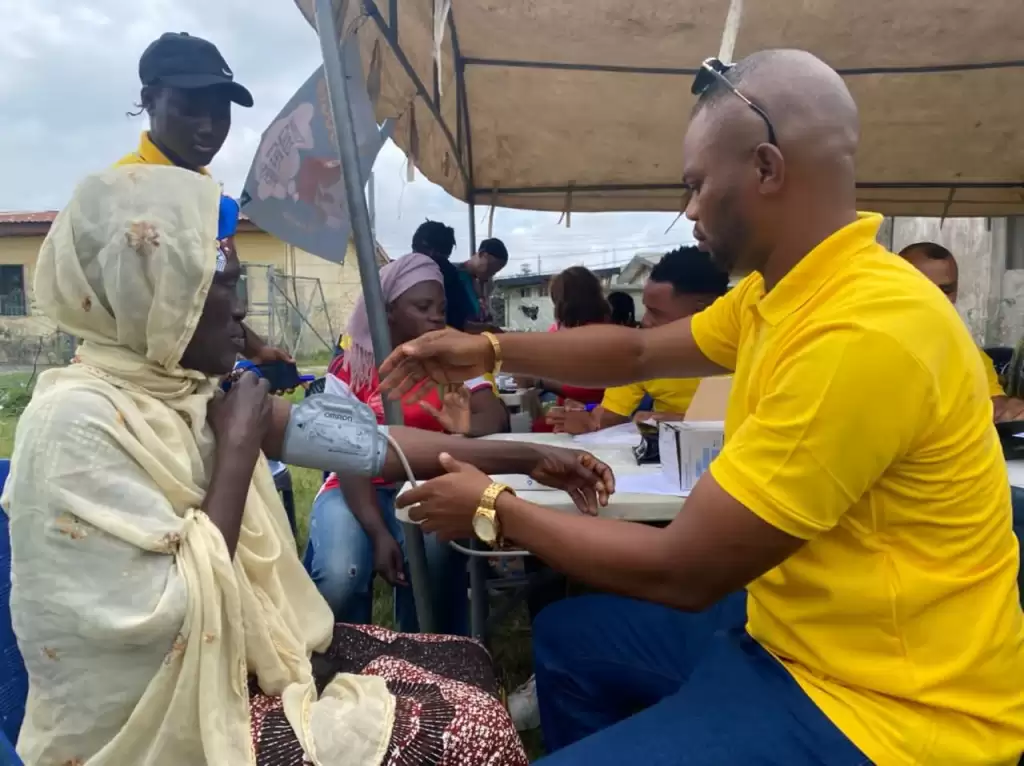
During his service year, Dr. Creek would go to Obolafor, Enugu Ezike, its environs, and many remote towns and villages in the Eastern part of Nigeria to attend to the medical needs of locals who live far from healthcare providers. He confessed to feeling fulfilled from being able to help these people who needed his services more, and who would have died without it. “That was how I developed a passion for going places ordinary doctors won’t dare go to,” he said.
After his service year, Dr. Creek came to Lagos and began working with a hospital at Ajegunle. “I noticed that most of the pregnant women coming across the water from riverine areas usually have one complication or the other. Many used to lose their children immediately after birth while some die during pregnancy. So I wanted to know more about pregnant women and see how I could be of help. I gave my personal phone number to all my pregnant patients and asked them to call me whenever they are having any issues whether during pregnancy, labour, or after delivery.
Photo Credit: The Eagle
“I gave them a promise that I will come over myself with the hospital ambulance and pick them to the hospital. It helped quite a lot of them from the riverine communities like Snake Island, Sagbokogi, Ituagan, etc., where different complications and loss of their lives and those of their children were rampant.
“One afternoon, after morning duty I set out to find out where these patients were coming from and I was surprised to find out that there was no way I could help with my ambulance. I was told I had to cross the water on a boat There were a good number of pregnant women and children but no standard hospital there to help at times of emergencies, especially at night.
“At night, when most are in labour and other health emergencies happen, the boats hardly operate. I got there one afternoon and discovered that the Health Centre serving them was shut. I was now left to wonder about the fate of these vulnerable people when it comes to healthcare. I thought of the fate of hundreds of thousands of innocent children and pregnant women living and working in these communities. I decided I had to do something, even though I just married and moved to Lagos.
“I could not remove the matter from my mind. I was dreaming about these pregnant women and their plight every night. Initially, I had wanted to travel abroad like most young doctors, make a lot of money and come back and establish a private hospital in Nigeria. But then I resigned, moved to Snake Island, and started my first hospital in a three-bedroom flat. To my utmost surprise, patients were coming, though we had no beds, wooden couches, and a standard laboratory. I and two nurses started to save lives and were help a lot of people. They were coming with their friends and neighbors and the hospital became an immediate success.
“After a month I got a visa to travel to the United Kingdom (UK) and I was confused. Do I leave the new hospital and travel to the UK? What happens to these people? What happens to my new hospital? Who takes care of these people?
These and other questions were racing through my mind. I travelled to the UK in May 2010 and returned after two months because I knew the seriousness of their plight, medics do not like going to such places, and standard, health care is completely absent over there.
“That was how relocated back to Nigeria and decided to help them. Since then, I have been doing everything I deem appropriate to help save the lives of these less privileged, innocent children and pregnant women. Today I have two private hospitals in riverine areas of Lagos and we keep doing our best for these indigent women.
Damini Ebunoluwa Ogulu, popularly known as Burna Boy, risks class action by fans and guests for his late appearance on stage at the Lagos Concert on New Year day. The concert which was organized by WonderX, held at the Eko Energy City in Victoria Island, Lagos. The show was tagged, ‘Lagos Loves Damini’, but his appearance on stage at 3 am threatens that love immensely.
The idea of commencing a legal action against an artiste and the organisers of a concert for lateness is nothing new. A couple of years ago, the Queen of Pop (Madonna), was the subject of a class action filed by a Florida man, Nate Hollander, in federal court in Miami-Dade County. The famous singer was two hours late to the show. In the suit, she was also accused of having a “long history of arriving and starting her concerts late”. Hollander sued for breach of contract and negligent misrepresentation and claimed damages.
From the reports, Burna Boy claimed to have arrived at the venue at 9 pm, hours before he eventually came on stage at about past 3 am, the next day. The arrival of an artiste at the venue of the event, and showing up on stage are two different things, especially from the standpoint of the fans and guests. For them, the most relevant time is the time the artiste appears on stage. This is understandable because the artiste’s appearance heralds his or her much expected performance. Meanwhile, between the artiste and the organisers of the event or the artiste hirers, the artiste’s time of arrival is vital.
Why are artistes late at concerts?
In Nigeria, there is what is commonly known as ‘African Time’. It means that the stipulated time for an event is never to be taken seriously. If an event is slated to commence at 4 pm, expect it to commence any time from 8 pm or even 10 pm! Thus, those who intend to keep to time make conscious efforts to announce that there will be no African Time.
A few reasons account for why artistes are often late at concerts. First, there may be travel issues such as flight delays and unexpected traffic within the city. Second, poor planning and lack of adequate communication between the organisers and the artiste are also factors. But chief among these reasons is the idea that it is fashionable to keep the crowd in high anticipation for the arrival of the artiste. This has a way of preparing the crowd for an electrifying show that is expected to follow. Admittedly, keeping the crowd in an anticipation mood is cool provided the artiste lives up to expectation and the wait doesn’t have to run into plenty of hours as witnessed at the Burna Boy’s New Year concert.
The concert was billed to run from 7 pm till 11 pm on New Year day. But Burna Boy only appeared at 3 am, the next day. The Grammy Award Winner has clarified that his late appearance on stage was neither as a result of travel issues nor the desire to create an atmosphere for great anticipation which will climax into a mind-blowing performance. Rather, he accused the organisers of poor planning as his team had to battle with the show organizers over the quality of the sound facilities. This explanation came after over 7 hours of waiting.
However, Burna Boy’s apology and explanations seem to have been ridiculed by the report that the Afrobeat star appeared to have taunted the crowd when he claimed that he would have abandoned the show entirely if not for Seyi Vibes who had held him back. Hear him in Pidgin:
If no be Seyi Vibes, I for just don dey go house. But I dey here with una after una don talk say I kill person for Cubana, after una don talk say my mama dance for Fela…
The above seems to suggest that making the fans wait for long hours might have been some form of punishment for the accusations he claimed to have suffered.
Conclusion
Undoubtedly, one of the consequences of an extremely late outing by an artiste is that it is capable of affecting the schedule and routines of ticket holders who might have other planned engagements for the next day. In order to avoid this, they might have to leave. Others may be compelled to stay back in order not to waste the money paid for the tickets. These and other reasons are likely to support a valid case. Will disgruntled fans sue Burna Boy for his lateness to the concert? Time will tell.
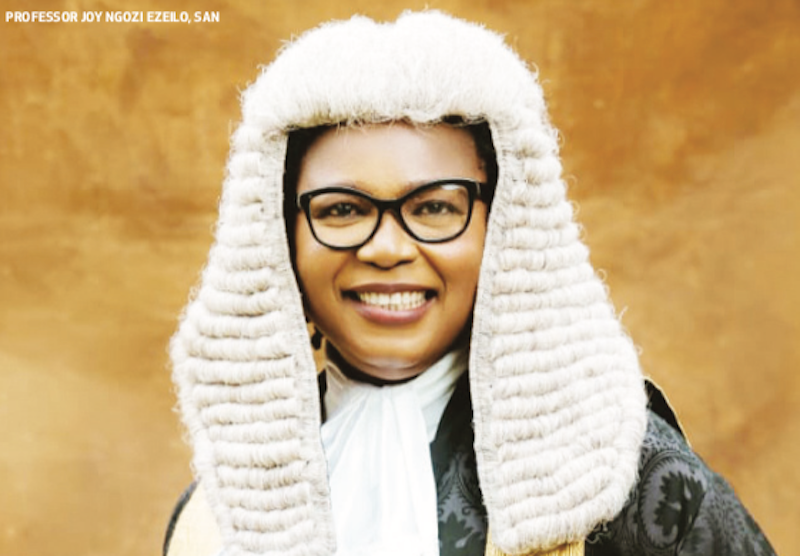
It is with respect and great unease that I’m unable to agree with Mrs. Joy Ngozi Ezeilo, SAN on the above subject.
I say so because the very Fundamental of creating the Rank of Senior Advocate of Nigeria is discarded and a time comes when lecturers will take over the inner bar and advocates shall be in minority.
If we must continue in what most senior lawyers think it’s a downward spiral in standards and a watering down of the criteria, then the entire concept of SAN should either be reconfigured and recalibrated starting from the name.
A law teacher without any background in advocacy being made a SENIOR ADVOCATE” not only stands logic on its head but doesn’t even accord with Common sense.
The very purpose of being elevated to the rank of SENIOR ADVOCATE was meant to encourage advocates in much the same way as law teachers become Professors at the Zenith of their careers
Opening an avenue for law teachers who have attained the height of becoming professors to also double as,”Advocates”, (without requisite advocacy skills) makes a mockery of the whole idea behind the scheme, besides lowering the criteria for them.
We have a problem in this country with a mad rush for titles. A professor of law is not content with merely being a professor but must add SAN OFR MON MFR MCI Arb etc, etc. For those of us who travel, we are a laughing stock outside our shores.
If the powers that be insists on continuing this obvious ludicrous and sad misadventure then let’s stop calling it SENIOR ADVOCATE OF NIGERIA, it’s illogical, ludicrous and simply doesn’t add up.
As the debate over whether Law teachers should be conferred with the rank of Senior Advocates of Nigeria continues the rage, one of the earliest dissenting voices was that of Prof. Ernest Ojukwu, SAN. The former Deputy Director-General of the Nigerian Law School, in a tweet, questioned why few SANs are angry that their teachers are being conferred with the esteemed rank.
Ojukwu wrote on his official Twitter handle @ernestojukwu, SAN: “Why are few SANs angry that their teachers are made SAN? LPA says SAN is for a lawyer who ‘has achieved distinction in the legal profession in such manner as the committee may from time to time determine. Where did we derive the argument from that it is only for litigation counsel?’”
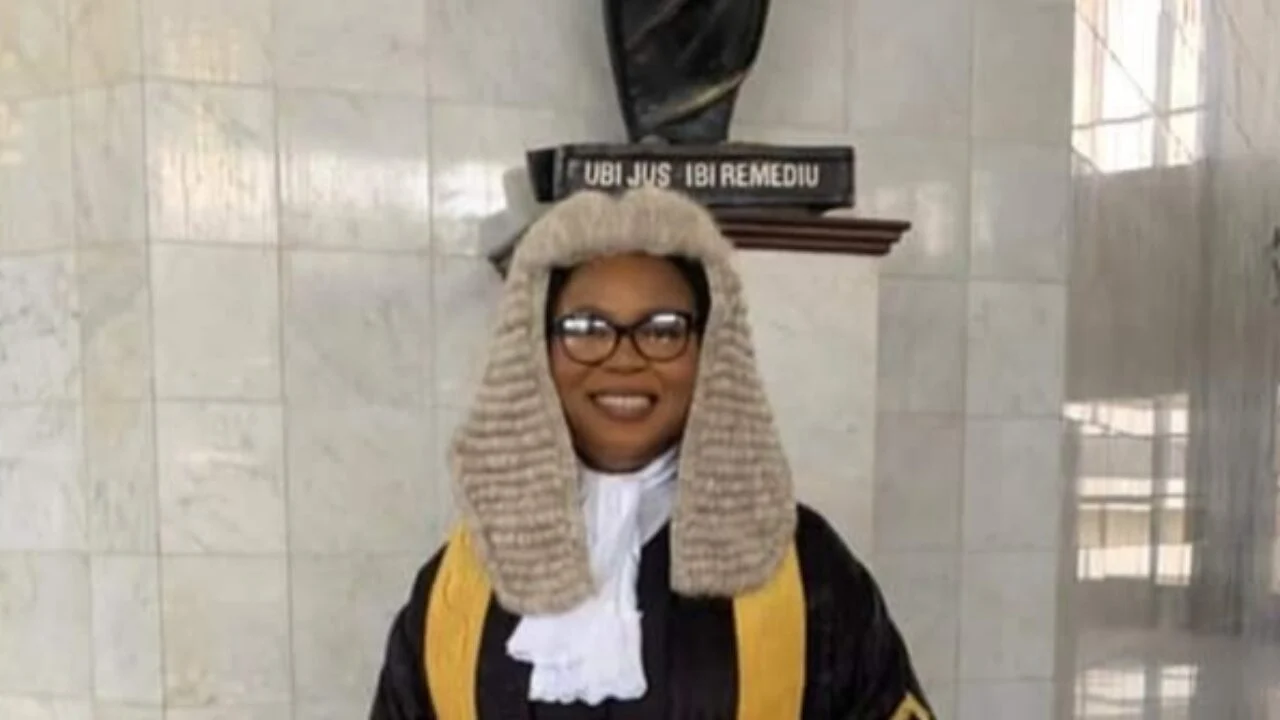
Adding to the debate in a recent interview with ThisDay Newspaper, Professor Joy Ngozi Ezeilo, SAN, Professor of Public Law, Dean Emeritus, Faculty of Law, University of Nigeria, and former United Nations Special Rapporteur on Trafficking in Persons, Especially Women and Children pointed out that without a teacher, there will be no practitioner.
The Legal Practitioners Privileges Committee recently released new requirements for the award of the rank of Senior Advocate of Nigeria, particularly the requirements for Academics. This has come with many criticisms. What is your opinion?
The changing requirements has been a constant, if you have been following the LPPC Guidelines. They’re continually reviewing, revising and tightening loose ends to enhance the process and ensure that the rank remains a coveted one.
However, this time around, it appears that some significant steps have been taken that will affect in particular, Academics applying to be considered for elevation to the rank of SAN. There has always been strong opposition to Professors taking Silk, and the current guidelines seem to have been tilted in favour of restrictive awards of SAN, whilst relaxing that of Legal Practitioners a bit.
Photo Credit: ThisDay
I have come to respect LPPC as a body of distinction, and one that is also responsive in its quest for excellence in raising the Bar. Consequently, I think the body is flexible to revising itself, if they think the changes would become problematic or discriminatory against a group. So, let’s watch and see whether this would stand the test of time. It is pertinent to point out that, Academics walk the toughest track to SANship. You would have noticed that usually one may need to have attained a professorial rank, published extensively, and still be active in NBA at State and national levels. Student’s supervision at the graduate and post-graduate levels is required, including persons the candidates have mentored. I strongly believe that Law Teachers are most deserving of being awarded the rank for their scholarship, teaching and contributions in advancing legal education in Nigeria. Who is the Practitioner, without a Teacher?
Our site uses cookies. By clicking “Accept All Cookies”, you direct Law and Society Magazine to store cookies on your device and disclose information in accordance with our Cookie Statement: cookie policyACCEPTREJECT
Privacy & Cookies Policy
Privacy Overview
This website uses cookies to improve your experience while you navigate through the website. Out of these cookies, the cookies that are categorized as necessary are stored on your browser as they are essential for the working of basic functionalities of the website. We also use third-party cookies that help us analyze and understand how you use this website. These cookies will be stored in your browser only with your consent. You also have the option to opt-out of these cookies. But opting out of some of these cookies may have an effect on your browsing experience.
Necessary cookies are absolutely essential for the website to function properly. This category only includes cookies that ensures basic functionalities and security features of the website. These cookies do not store any personal information.
Any cookies that may not be particularly necessary for the website to function and is used specifically to collect user personal data via analytics, ads, other embedded contents are termed as non-necessary cookies. It is mandatory to procure user consent prior to running these cookies on your website.