Home Blog Page 802

We seem to have accepted the political economy of kidnapping and abduction as normal, Somber Tuesday series by Mojúbàolú Olufúnké Okome

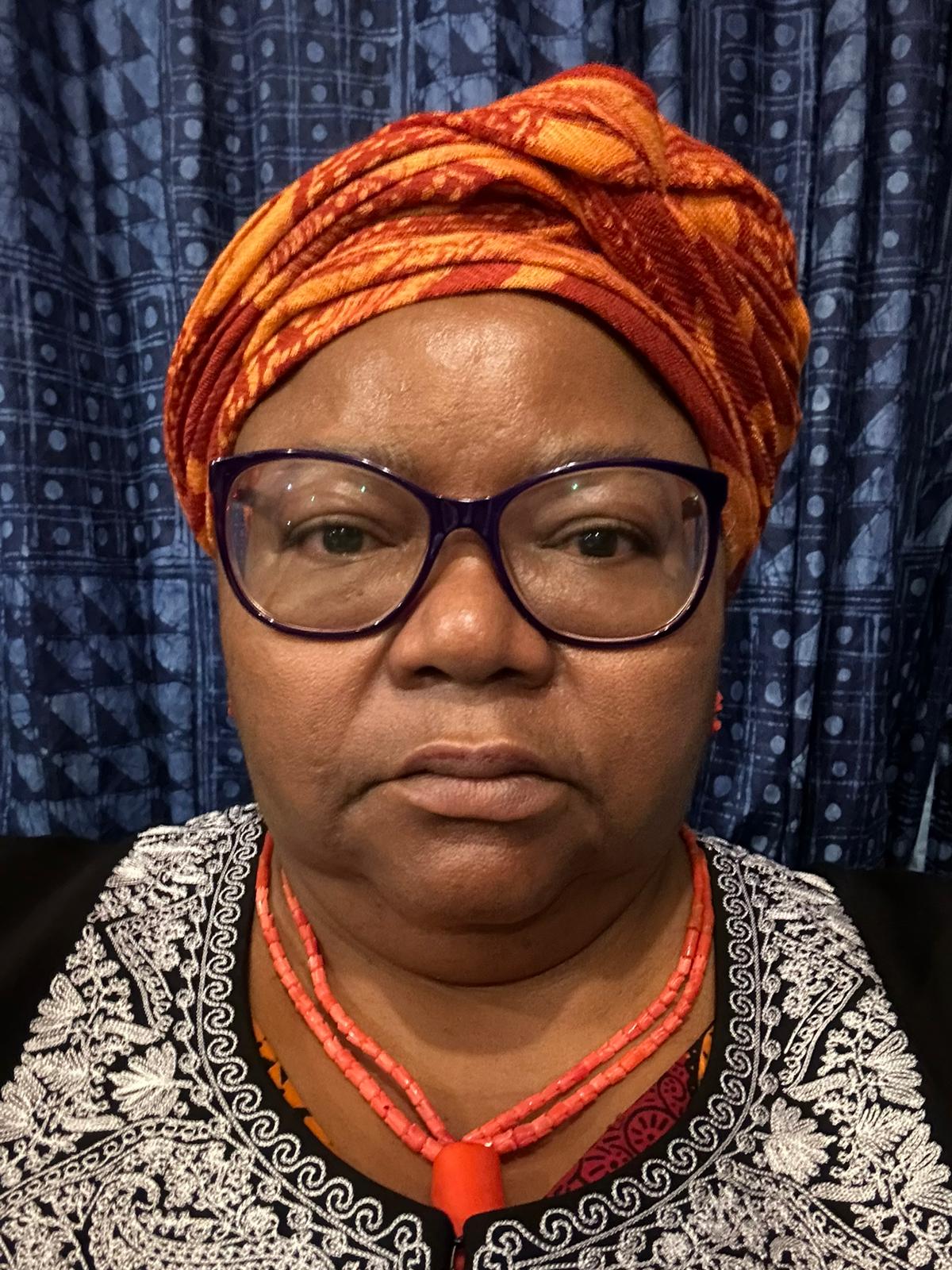
Prof. Mojúbàolú Olufúnké Okome

#SomberTuesday! The first month of the new year is almost over. The human desire for better conditions is natural. Political candidates for office and their proxies have intensified their campaigns since the elections are almost upon us. There are many grand promises that give us hope that if elected, such politicians will help Nigeria reach its full potential. But it is best to take these promises with huge bags of salt. Most politicians do not show serious commitment to fulfilling promises once they become incumbents. Citizens who vote for them have also been lax in demanding accountability.

Simply stated, politicians should strive assiduously to keep promises. Citizens must embrace civic engagement and tenaciously demand that promises are fulfilled. Accountable action by elected officials is not a luxury but a necessity. Nigeria needs true democracy as well as political, economic, and social transformation as urgent necessities. The masses are affected the most, and their needs receive the least attention. Given that politics is a struggle for resources, they must engage politics as civic actors who vote as well as engage the political system throughout the electoral cycle. This requires focused, consistent, laser-focused participation, especially by those whose interests are not given priority in the political system. Civil society organizations should be more determined to hold government accountable. Nigeria needs pro-poor coalitions that have a long-term perspective on the change we want.

The heightened level of insecurity is unacceptable. The cost of its seeming intractability is massive. We seem to have accepted the political economy of kidnapping/abduction as normal. The financial cost to families of those abducted/kidnapped is ruinous, as they must pay exorbitant ransoms to facilitate the release of their loved ones. There is also the trauma of dealing with the horrors of abduction by the victims and survivors as well as their friends and family. We have a huge population of internally displaced Nigerians who are affected by the enduring ramifications of environmental catastrophes, ethno-religious conflicts, insurgencies, and conflicts between herders and farmers. There are many other problems that would have overwhelmed less resilient populations. So, Nigerians’ capacity for optimism is commendable.

But while we should be hopeful, we also need positive action to create the world we want. We need conscientious and selfless elected officials that are committed to producing the giant of Africa that their campaigns promise. As a matter of urgent necessity, we need well-functioning institutions and good infrastructure. Nigeria exists in a competitive, dynamic world that is in constant motion. If we want to be competitive, we must become organized, focused, efficient and consistent in our approaches to solving the problems we face. For Nigeria to be transformed, all citizens must collectively strive to contribute to national development. We must prevent insecurity, inequality, unemployment, and underemployment from being perpetuated. These are part of the demands made by the EndSARS protesters. The youths challenged us to recognize the imperatives of good governance, and an end to impunity, violence, and police brutality. They were suppressed by state security forces, which inflicted violent attacks on them. Two years on, #Nigeria must remember that it is unacceptable in a democracy to massacre peacefully demonstrating protesters as done to the #EndSARS protesters at #LekkiTollGate and other locations. #NigerianWomenArise #EndPoliceBrutalityinNigeriaNOW #EndSars #EndSWAT #EndImpunity 

Like a voice in the wilderness, I repeat these words of Howard Zinn and draw attention to their importance to Nigeria’s contemporary politics: “Civil disobedience, that’s not our problem. Our problem is that people are obedient all over the world in the face of poverty and starvation and stupidity, and war, and cruelty. Our problem is that people are obedient while the jails are full of petty thieves, and all the while, the grand thieves are running the country. That’s our problem.” Let the kleptocrats give back our stolen wealth so that we can fix our infrastructure, schools, hospitals, and also offer worthwhile social protection to our people.

Let the masses enjoy the full benefits of citizenship in Nigeria. Let the leaders and political class repent and build peace with justice. This is no time for politics as usual. The people elected should be those trusted to bring justice, equity, and human security to the entire country, not expedient, unethical,l and egocentric individuals determined to dominate for self-aggrandizement or sectional gain. We don’t need oligarchs’ continued domination. We also need a government that puts the interests of majority of citizens first.

The President we all need (4)

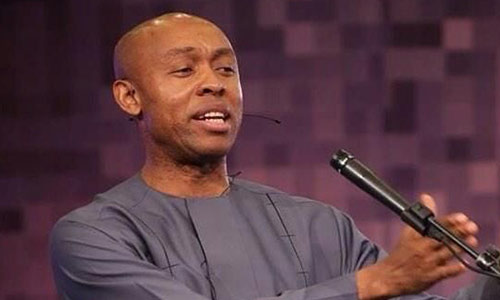
By Sonnie Ekwowusi

If Shettima has irrevocably resolved that if voted into power he and Tinubu would continue from where President Buhari stopped, it logically follows that Islamic terrorism, Boko Haram terrorism, Fulani herdsman killings, religious persecution in the North, and genocide against Northern Christians would continue unabated during the reign of Tinubu and Shettima. Therefore, voters are respectfully warned not to vote for the Tinubu/Shettima ticket on February 25th, 2023. In 2015, we were warned not to vote for Buhari, but unfortunately, some of us still naively voted for him. Now, those people are regretting their decision as they reap the negative consequences of their costly mistake. You may recall that in March 2015, American Ambassador to Germany, Richard Grenell, warned Nigeria not to elect Buhari as President because, according to him, Buhari would make a disaster President and would trigger Islamic terrorist attacks to capture Nigeria. “Buhari has often spoken sympathetically about members of Boko Haram and had cautioned against the rush to pass judgment on Boko Haram and has personally been selected by Boko Haram to lead negotiations with the Nigerian government.”, warned Grenell

Unfortunately, Grenell’s warning largely went unheeded by the Nigerian people, and today we are paying the bitter price of our failure to heed Grenell’s sincere warning. Lest we forget, in the last seven and a half years, Nigeria has become a huge killing field. While President Buhari has deployed Nigeria’s military intelligence to hunt down Nnamdi Kanu, Sunday Igboho, and other small boys, he has refused to use the same intelligence to arrest and prosecute the murderous Fulani herdsmen who, in the last seven and a half years, have freely been going about killing, maiming, and raping their victims and dispossessing them of their farm lands. In fact, over 15,500 Christians have reportedly been murdered in Nigeria since June 2015. In March 2016, the Fulani herdsmen murdered two Catholic reverend sisters and burnt about 17 houses in Abbi, Uzo Uwani Local Government Area, Enugu State. On April 25, 2016, more than 50 innocent citizens of Ukpabi-Nimbo community in Uzo-Uwani Council of Enugu State were murdered by the Fulani herdsmen. The herders also burnt many houses and sacked many communities in Uzo-Ukpabi Council and its environs. Shortly after the Ukpabi-Nimbo massacre, the Fulani herdsmen murdered a Delta State monarch and some Delta State citizens. In the same April 2016, the Vicar-General of the Otukpo Catholic Diocese Rev Fr. John Adeyi was kidnapped by some gunmen suspected to be Fulani herdsmen along Odoba Otukpa-Okwungaga road, Otukpo, Benue State. Sadly, two months thereafter, his decomposed body was found somewhere even after his kidnappers had collected N1.5 Million ransom. On June 2, 2016, a 70-year-old citizen of Imo State called lady Mrs. Bridget Agbahime was murdered in Kano for allegedly blaspheming the Koran. A Kano Magistrate had discharged all the five suspects who allegedly killed Mrs. Agbahime. Case closed. Barely 10 days after Mrs. Agbahime’s murder, a 41-year-old Christian man called Francis Emmanuel was almost stabbed to death in Kaduna for allegedly eating meat during Ramadan. On the 9th of July 2016, a mother of seven, Mrs. Eunice Elisha, who was also the wife of a Redeemed Christian Church of God (RCCG) pastor was murdered in cold blood in Abuja by Muslim fanatics while she was preaching the Gospel of Jesus Christ. Till date, no justice for Mrs. Agbahime and Elisha. Neither Tinubu nor Shettima condemned the aforesaid killings, let alone showed any compassion for the loss of human life.

On August 25, 2016, eight students at Talat Mafara Polytechnic in Zamfara State were killed and set on fire by Muslim students following a fight between two students. One of the students had allegedly committed blasphemy against Prophet Mohammed, leading to the deaths. In the same month, suspected Fulani herdsmen attacked and killed a seminarian of the Catholic Church and others at Enugu-Atakwu in Enugu State. Between 2016 and 2017, hundreds of citizens in Southern Kaduna were murdered in genocidal attacks by Fulani herdsmen. For example, in December 2016, 808 people were killed in 53 villages across four local government areas in the state. Between September 8 and October 17, 2017, the Fulani herdsmen murdered about 75 people and injured 23 others after attacking two communities in Irigwe Kingdom, Bassa Local Government Area of Plateau State. The herders also displaced 13,726 people and burnt 489 houses during their attacks. On December 8, 2017, Fulani herdsmen invaded Omala and Yagba West local government councils in Kogi State and murdered about 10 people after setting their farmlands on fire. In Omoku, Rivers State, about 17 Christian church worshippers were killed on New Year’s Eve by the same Fulani herdsmen. Some husbands were dragged out of their houses and murdered in front of their wives by the same Fulani herdsmen. Neither Tinubu nor Shettima condemned the aforesaid killings, let alone showed any compassion for the loss of human life.

On January 12, 2018, Fulani herdsmen attacked Dangaji and Ungwan Gajere villages in Kaduna State and killed 10 indigenes. In January 2018, the bodies of 80 citizens of Benue State murdered by Fulani herdsmen between January 1 and 2 were given a mass burial. The governor of Benue State said that the Fulani herdsmen had murdered no fewer than 1,878 citizens of Benue State within the last three years. On February 19, 2018, 110 schoolgirls aged 11–19 years old from the Government Girls Science and Technical College (GGSTC), Dapuchi, located in Bulabulin, Yunusari Local Government area of Yobe State were kidnapped by the Boko Haram terrorist group. Leah Sharibu, the only Christian girl among the abductees who refused to denounce her Christian faith and embrace Islam, is still missing despite the promises of the Buhari government that it would ensure that this daughter of Zion regains her freedom. On April 24, 2018, the Fulani herdsmen murdered two Catholic priests and 19 parishioners at Mbalom village in Benue state. The two murdered Catholic clerics– Rev Fr. Joseph Gor and Rev. Fr. Felix Tyolahan – and 17 parishioners were peacefully at morning Mass when the Fulani herdsmen suddenly appeared and murdered them all. Neither Tinubu nor Shettima condemned the aforesaid killings, let alone showed any compassion for the loss of human life.

On July 12, 2019, Mrs. Funke Olakunrin, the daughter of 93-year-old Pa Rueben Fasoranti and the national leader of the Pan-Yoruba socio-political group, was murdered by suspected Fulani herdsmen along the Benin/Ore Expressway. On January 8, 2020, Rev. Timothy Lawan Andimi, the then Chairman of the Christian Association of Nigeria (CAN) in the Michika area, and an ordained Christian minister at Ekklesiyar Yan’uwa a Nigeria (EYN), the Church of the Brethren in Nigeria, was shamefully beheaded by suspected Islamic terrorists. Around the same time, Michael Nnadi, a Seminarian of the Good Shepherd Seminary in Kaduna, was abducted from the seminary and brutally murdered by Islamic terrorists. On Thursday, January 2, 2020, a group of gunmen or kidnappers attacked an Abuja-bound train with ‘ballistics’ and killed some passengers, and kidnapped scores of others. On January 6, 2020, at least 32 people were killed and over 35 injured when a Boko Haram explosion occurred on a crowded bridge in Gamboru, Borno State, Nigeria. Neither Tinubu nor Shettima condemned the aforesaid killings, let alone showed any compassion for the loss of human life.

On January 7, 2020, the ISWAP militants attacked a town in Borno State killing 22 soldiers and displacing over 1,000 people. Three Sundays earlier, suspected Boko Haram fighters had set ablaze several trucks carrying passengers, killing at least 30 people in Borno State. On or around February 22, 2020, Fulani herdsmen attacked the Uwheru community in Ughelli North Local Council, Delta State, killing at least 14 people in the attack. In 2021 alone, approximately 1,192 people lost their lives due to banditry, terrorism, and violent attacks and reprisal attacks in Kaduna State. Neither Tinubu nor Shettima condemned the aforesaid killings, let alone showed any compassion for the loss of human life.

How insecurity could decide who becomes Nigeria’s next President

By Chidi Anselm Odinkalu

Nigeria first voted in presidential elections just over 43 years ago in October 1979. The introduction to this form of government was not very auspicious. Four years into the experience, in December 1983, Muhammadu Buhari, then a Major-General in the Nigerian Army, overthrew the system. Soldiers thereafter ran the barn for another 14 and a half years.

In 1979, soldiers supervised the election. To govern it, they promulgated the Electoral Decree, No. 73 of 1977, which required that the winner would be the candidate who scored the highest votes and also achieved a minimum of 25% of the votes cast in at least two-thirds of the states in Nigeria. There were 19 States then; 10 in the north and nine in the south. Two-thirds of nineteen was not a whole number.

The failure to advert to this piece of elementary arithmetic would prove consequential. By the time the voting was done, it turned out that the candidate with the highest number of votes, Shehu Shagari, of the National Party of Nigeria (NPN), scored 25% in 12 of Nigeria’s 19 states. In the 13th state, Kano, he scored about 20%. The Federal Electoral Commission (FEDECO), nevertheless, declared him the winner. Two-thirds of 19 is 12-two-thirds.

Chief Obafemi Awolowo, the Senior Advocate of Nigeria (SAN) who came second in the ballot on the ticket of the Unity Party of Nigeria (UPN), challenged the declared outcome before the election petition tribunal. If he succeeded, the country would have conducted a second round to decide the winner.

The case went all the way up to the Supreme Court of Nigeria. The military had committed to leaving power on 1 October 1979. Elections took place on 11 August and a mere 50 days separated election day from hand over day due for 1 October. It was not a lot of time.

Four days before the designated date of the military handover, on 26 September 1979, the Supreme Court announced its judgment. Six of the seven Justices reasoned that in order to arrive at two-thirds of 19, you had to work out 25% of two-thirds of the votes cast in the 13th state. By this act of judicial fission, they determined that the 20% of Kano State scored by Shehu Shagari was enough to cross the threshold and that the proclamation of a winner by the FEDECO was “in substantial compliance” with the standard prescribed by the Electoral Act.

Since 1979, therefore, the legal standard required for the announcement of results in any election in Nigeria is “substantial compliance”. This can be subjective to the point of whimsical. What it means in fact has steadily been whittled away into meaninglessness over four decades of multi-agency, electoral chicanery.

While the standard has been constant, the circumstances to which it is applied have varied. In 2007, for instance, the issue was whether an election organized without serialized ballot papers to control for the contamination of ballots nevertheless met the standard. The Supreme Court held that it did, reasoning rather bizarrely that such a scenario did not inherently favour any candidate over others but essentially created a level rigging field.

In 2023, the outcome of the presidential election will almost certainly rest on the meaning of “substantial compliance” in the context of metastatic insecurity which is likely to preclude voting in some locations in the country. Although elections in Nigeria have historically not been complete without violence, 2023 will be the first time in which the country will confront a real possibility that it may be impossible to undertake voting safely in a significant number of locations around the country.

While assuring the country and the world of the desire of the Independent National Electoral Commission (INEC) under his leadership to organize the 2023 elections to schedule, Commission chairperson, Professor Mahmood Yakubu, has increasingly become voluble about the possibility that a multiplicity of insurgent groups in different parts of the country could interfere with or preclude the exercise of the franchise to a significant scale.

Assessments by both the security services and independent monitors are even more worrisome. In December 2022, the Blair Institute for Global Change issued a report to the effect that insecurity had, in effect, put Nigeria’s democracy under threat. Providing a sense of the scale of the violence, the International Crisis Group reported also in the same month that “at least 10,000 Nigerians were killed in armed conflict and over 5,000 abducted from January to mid-December 2022. Other data indicate that at least 550 of 774 local government areas saw incidents of armed conflict between January and mid-December.”

Estimates of the number of places, units, or voters who may be affected vary. The Vanguard newspaper reported on 8 January 2023 that the conduct of elections could be precluded in hundreds of locations in up to 14 States around the country.

On 2 October 2022, Thisday newspaper reported an assessment by Nigeria’s security services indicating that insecurity could preclude the conduct of elections in 686 communities or wards located in at least “90 local government areas (LGAs) and 18 states of the federation”. This represents 7.78% of the 8,812 wards in the country. Without an idea of the voting population of each of these wards, it is impossible to make a determination as to the number of registered voters who suffer this exposure. The number would almost assuredly run into millions.

Even if voting eventually were to occur in many of these places, the violence could have such a chilling effect as to mar election administration or deplete turnout. Voters, afraid for their personal security, may choose other things to do or simply lie low in their places of abode rather than turn out and risk fatal consequences.

The potential effect of insecurity on anywhere approaching the scale reportedly estimated by the security services would be very far-reaching. Confronted with this, the country must plan for the consequences of the failure or frustration of voting on such a scale or for its impact on the outcomes. As a mathematical proposition, if the number of voters registered in the affected units or locations is cumulatively up to or more than the margin between the top two candidates, then surely, there cannot be a winner.

But there could also be a more challenging scenario where the number of affected units or voters in a state may be such as to impinge on the question of whether or not a particular candidate could or could not have made 25% of the votes cast. The question whether the elections go to a run-off or not could depend on whether insecurity precluded “substantial compliance” in a handful of states. That will be legal uncharted territory.

Whatever happens, insecurity has already recorded its first electoral casualty. On the 3rd anniversary of its decision installing the man who came fourth as the winner of the governorship election in Imo State in 2020, the Supreme Court on 13 January 2023 disqualified the candidate of the Peoples’ Democratic Party, PDP, in Imo West Senatorial Zone of the state from the contest for the Senate on 25 February holding that the primaries that produced him occurred in Owerri, the State capital, rather than Orlu, the zonal headquarters. The two locations are separated by a mere 35 kilometres. It was immaterial in the view of the court that this change in venue was forced by lethal insecurity which made the conduct of the primaries in Orlu impossible.

Substantial compliance will suffer bloody scrutiny over the next few months. It may even determine who becomes the next president.

Odinkalu teaches at the Fletcher School of Law and Diplomacy and can be reached here

How ringleader of Sex Cult got a 60-Year Sentence

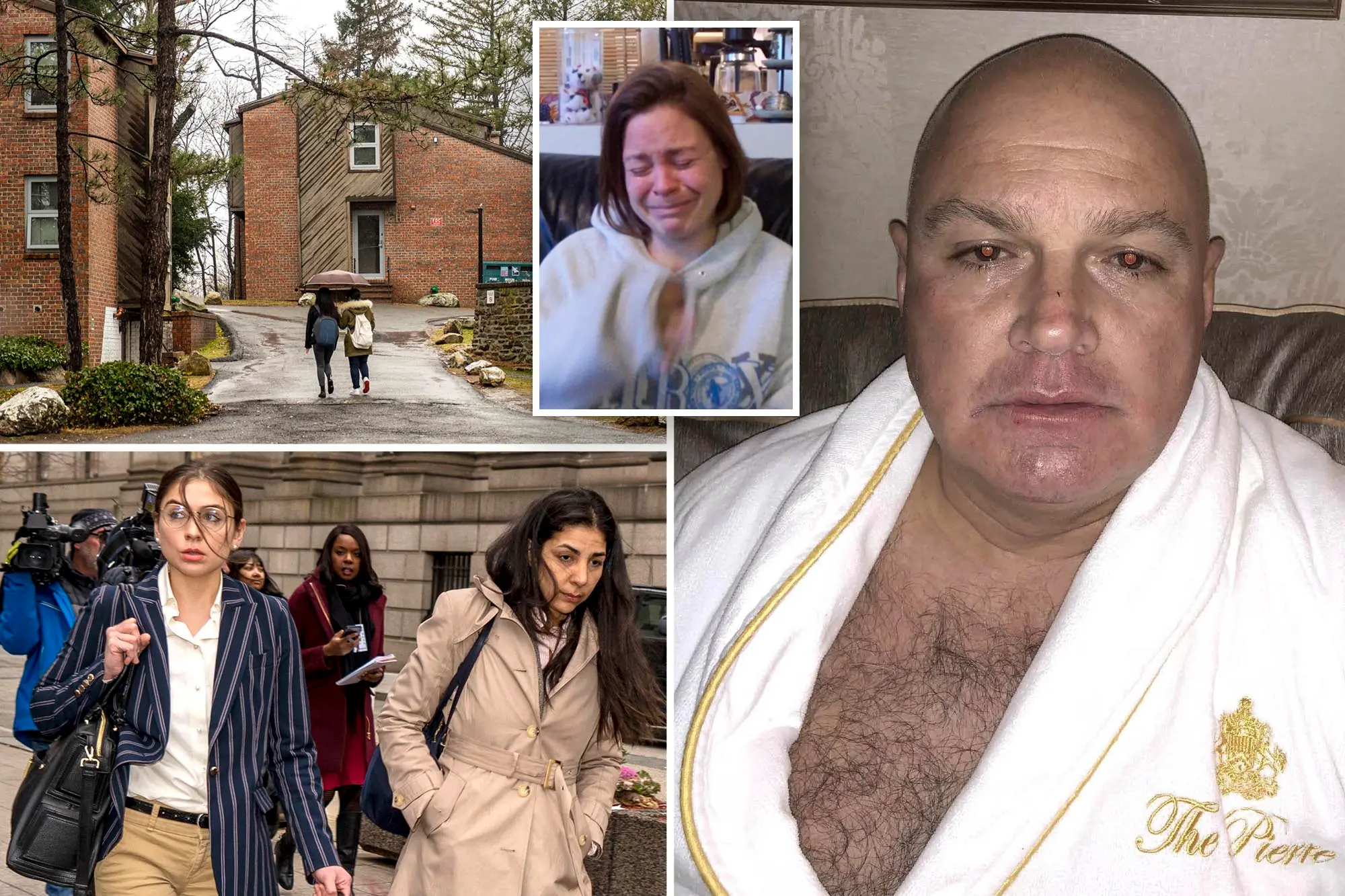
Photo credits: New York Post

Prosecutors said that Mr. Ray, who was arrested in 2020 after the publication of a New York magazine article about him, studied cults and mind control, grooming his victims and bending them to his will. Over a decade, he abused a group of young people, gaining their trust and isolating them from their parents, the prosecutors added, then coerced them into making false confessions that he used ‌as leverage ‌to extort millions of dollars.

Four of Mr. Ray’s former followers testified during his trial, describing how he had won them over. He then made them feel worthless, they said, denigrating them and directing them to have sex with each other and with strangers. One of those former followers, Claudia Drury, has said that Mr. Ray forced her into prostitution and on at least one occasion touched her sexually. Another, Felicia Rosario, testified that she at one point had a romantic relationship with Mr. Ray. The trial did not include any allegation that he had committed sexual assault.

On Friday, Judge Lewis J. Liman of the Federal District Court in Manhattan sentenced Mr. Ray to 60 years in prison …..Continue reading

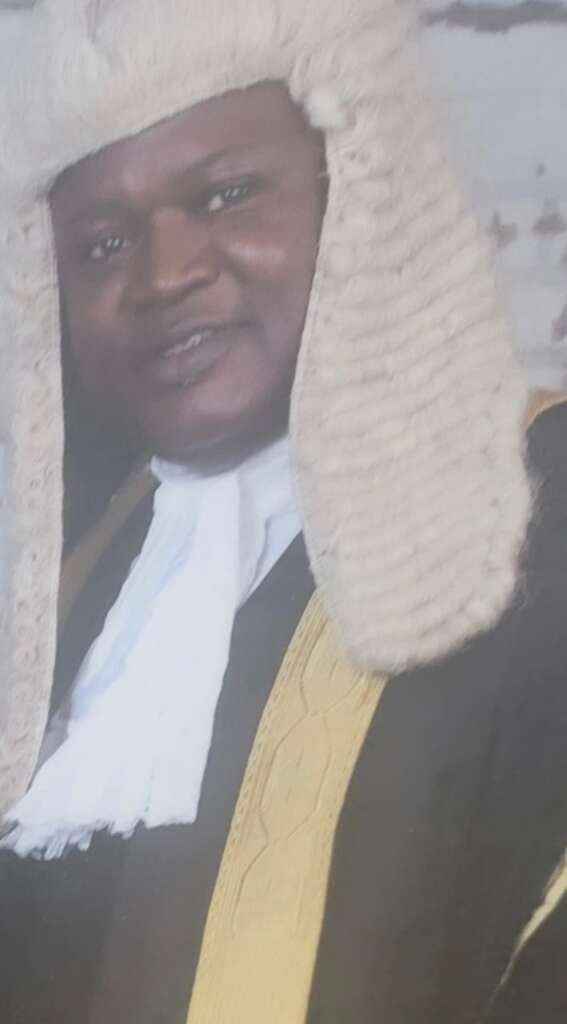
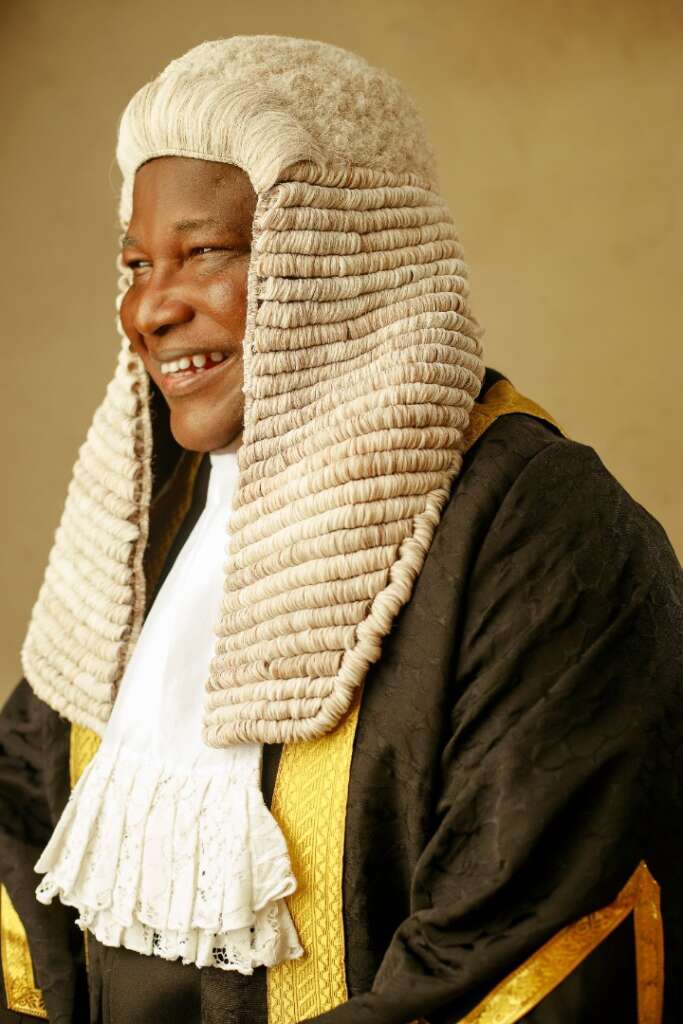
Adieu AbdulFatai Olalekan Yusuf, SAN By Wahab Shittu, SAN

This morning l woke up to the sad reality that our Olalekan AbdulFatai Yusuf, SAN is no more. It sounds unbelievable, but it is a sad reality.

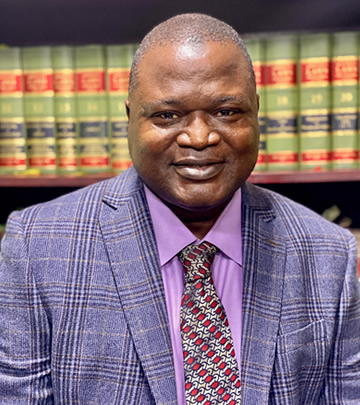
AbdulFatai Olalekan Yusuf, SAN

We were close right from our SBS (School of Basic Studies) days between 1981- 1982 where we cultivated friendship and brotherhood. It was not like we saw each other often, even if our law firms are not too far from each other. Our hearts always bonded.

A strong friendship doesn’t need daily conversations, doesn’t always need togetherness.  As long as the relationship lives in the heart, true friends will never part.

And so, it pains to know that our friend and brother is no more; at least in the land of the living.

It pains. However, every pain teaches a lesson. Every lesson changes a person.

The lesson here for me and everyone else is that as mortals, we cannot live forever. For each and every one of us, one day it will be over.

This ought to teach us all that we need to embrace good deeds and try to move closer to God, because one day for you and l, it will be over.

When that day comes, and no matter how long, how will you and l like to be remembered?

Myself and the departed Olalekan Yusuf SAN renewed contacts and togetherness as students of the Faculty of Law, University of Lagos between 1983- 86 and subsequently attended law school together in 1987.

Wahab Shittu SAN

And from that vantage point of knowledge, l now share testimonials about the departed learned silk.

The departed was married to Bimpe, a Director of the National Library. A relationship that started from Ojoku Grammar school and blossomed at SBS Ilorin. Both were inseparable and remained so till death separated them this morning.  At SBS Ilorin, both always clung to each other like Romeo and Juliet. To my knowledge,  both never cut corners. The relationship may have shown the departed as one committed to relationships.  The Learned silk was fiercely loyal. I never saw the departed learned silk in any other intimate relationship with any other woman other than Bimpe throughout his life. What a devoted man he was.

The relationship blossomed and was blessed with successful children including a surgeon and legal practitioner,  amongst others. The departed believed in quality education and gave all his children his best in terms of care and commitment to quality education.

In terms of commitment to relationships,  l reference the departed’s closeness to our colleague, our late Ade Olowomoran. Both of them forged friendships until Ade Olowomoran’s last hours, and Yusuf remained committed to his friend even after his sudden death after our service years in Kano. The departed never betrayed his friends.

One of my wife’s sisters is married to the learned silk’s elder brother.  I can confirm from the testimonial of my wife’s sister, that the departed silk was responsible for the upkeep and educational training of all his elder brother’s children up to the University level and also supported the extended family with required resources. Such was his depth of humanity. My wife’s sister remains inconsolable and in tears this morning as we called to offer our condolences.

I recall sharing the departed’s commitment to community services with the world on his last birthday. Single-handedly,  the departed impacted his native Ojoku community.  He built a befitting police post for the community which he handed over to the Nigerian police force. Such was his devotion to community service.

The late departed ran a stellar and professional legal practice. His law chambers along Allen Avenue remain a delight in terms of organisation, architecture, and library services. A delight and reference point for any professional.

Many will attest to the departed’s excellent taste and dress sense. He was always well turned out either in immaculate suits or native wears. He made such a huge impression such that the Body of Senior Advocates accorded him hosting rights in one of the body’s special functions.

Always reserved with admirable presence, the departed silk chose carefully his circle of friends. One of his closest friends that l know is Hakeem Ogunniran , the celebrated business lawyer who reigned as the CEO of one of the blue-chip companies in Nigeria.  Both remained close friends until death snatched our departed friend away this morning.

I can go on and on about the departed silk, including my last physical contact with him in his office, when he reiterated the professionalism of his practice and his determination never to pervert the course of justice by not offering bribes to any judicial officer for any favours whatsoever.

And so our AbdulFatai Olalekan Yusuf, SAN,  the expert property/ commercial lawyer and litigator is no more.

He bade Farewell to the world this morning, 19th January 2023 and we mourn.

I mourn.

May Allah receive his gentle soul peacefully in Aljannah Firdaus.

Amen.

And to Bimpe (the only woman in his life), his children, family, immediate and extended, his Ojoku community,  his in-laws in my native Offa community, his colleagues and cycle of friends including the body of Senior Advocates of Nigeria, and his retinue of clients including the estate of his rich client (Estate of renowned chief Ayodele Ayoku), l say Farewell.

Farewell, Farewell, Farewell to our brother and friend,  AbdulFatai Olalekan Yusuf SAN as his body is interred at solemn burial rites according to Muslim customs this evening.

Farewell my brother

Farewell our friend

Farewell my friend

Wahab Shittu SAN

The rich walk away after stealing billions, vulcanizer to die by hanging for stealing N57,000

By Lillian Okenwa

When President Muhammadu Buhari granted a state pardon in April 2022 to Joshua Dariye and Jolly Nyame, former governors of Plateau and Taraba states who had been convicted for stealing N1.16 billion and N1.6 billion respectively from their state treasuries while they were in office between 1999 and 2007, rights lawyer and Senior Advocate of Nigeria, Femi Falana, urged President Muhammadu Buhari to free all prisoners who have been jailed for stealing.

Falana contended that by Section 17 of the 1999 Constitution, citizens were entitled to equal rights and opportunities in which case state pardon should be extended to all prisoners who are serving jail terms for stealing.

On January 28, 2013, an Abuja High Court aroused a battery of tasteless jokes when it sentenced John Yakubu Yusufu, standing trial on charges of stealing N32.8billion in the Police Pension scam to two years imprisonment on each of three charges, and then offered him an option of N250,000 fine on each count. The former Assistant Director in the Police Pension Office simply paid the N750,000 fine and walked away. But the Economic and Financial Crimes Commission (EFCC) went on appeal.

Delivering judgment in the appeal, Hon. Justice Emmanuel Agim, JCA as he then was, made some observations. “Without the judgment expectedly stating so, the choice of punishment of 2 years imprisonment with the option to pay N250,000.00 fine for each count of offence, an amount obviously very disproportionate to the humongous amount of over 24 billion naira stolen or converted by the convict, appear to have been influenced by the consideration of tampering justice with mercy and being lenient to the convict, than consideration of correcting the convict and deterring other persons…

“The sentence does not show that it was influenced by considerations of the impact of the crime on the society or consideration of the nature of the crime… The offence committed by the respondent, by its nature, involves a grave breach of public trust, erodes public confidence in public governance, and caused retired police officers hardship and suffering…

“The hopeless, helpless and dehumanizing condition the retired officers have been put into by this offence that has become habitual and widespread amongst government officials in pensions departments of government whose duties are to custody pension funds and process the payment of gratuities, monthly pensions and other retirement benefits to retired public servants is obvious…

“The ridiculously low monetary sentence as against the mind-blowing and massive amount of over 24 billion naira stolen helps the convict to effortlessly pay the fine and avoid the pain of punishment for his crime while retaining the proceeds of his crime…”

And while the rich thieves continually get slapped on the wrist, bewildered Nigerians read days ago about the mind-boggling death sentence passed on a 32-year-old vulcaniser by an Ikeja Special Offences Court presided over by Justice Mojisola Dada for stealing N57,000. For robbing a nurse of N57,000 Justice Mojisola Dada sentenced Chidozie Onyinchiz, to death by hanging. Why are politicians and public servants who over the years impoverished and literally snuffed life out of Nigerians allowed to walk free?

Justice Dada said the convict’s attempt to wriggle out of the charges was futile. This, she said was because he had earlier confirmed to the police at Igando, Lagos, that his victim, Veronica Uwayzor sighted him and they both recognised each other at the time of the offence.

According to Justice Dada: “The defendant had stated that the complainant pointed at him as one of the boys armed with a pair of scissors and forcefully snatched her bag containing N57,000 at Akesan Bus Stop. The complainant had stated that neither the defendant nor his accomplice, Ediri Endurance, (still at large) wore masks which made it possible for her to easily recognise Onyinchiz a few hours after the robbery. The first statement of the defendant which he made at Igando Police Station confirmed that he and Ediri went to Akesan Bus Stop on the day of the robbery…

“The totality of the evidence before the court is compelling and I find the defendant guilty of the charges preferred against him. He is hereby sentenced to death by hanging and may God have mercy on his soul.”

And so the thieving vulcanizer faces a violent death by hanging while those that have impoverished Nigerians, enriched themselves through outright looting of public funds and brazenly weaponized poverty are celebrated.

Daily people are randomly arrested and hauled into overflowing prisons for ridiculous reasons while known criminals are left alone. For instance, Lawyer Alert said its data show that between April 2021 and September 2021, 700 wandering and loitering cases representing 16 percent of petty offences cases tracked nationwide were recorded. The group said young males are more regularly held for “the offences” and in the process “forced to unlock their phones for proof that they are not rogues or vagabonds.” Notably, another 10 percent of the recorded cases involved hawking, and seven percent of the cases involved commercial sex workers. This group of persons constitutes the most number of Awaiting Trial Inmates (ATIs) across the country.

Some public affairs analysts maintain that most Nigerians appear to have been wired to afflict the poor and defenceless at the least opportunity while the affluent are showered with encomiums no matter how obtuse they are. Ola a panel beater who recently regained his liberty after eight years in prison for failing to stop suspected criminals being pursued by military men in Lagos is one of those unfortunate Nigerians. In a number of tweets, Headfort Foundation a Non-Governmental Organisation (NGO) that took up his case and eventually got him out of prison told an interesting story.

Ola the panel beater who at the time was working at Alaba in Lagos State was going home on this remarkable day in May 2014. As he was walking home, some people run past him. Not long after, some soldiers whizzed passed him in hot pursuit of those persons. Almost in a blink of an eye, the soldiers who had turned back from their pursuit menacingly approached and queried why he didn’t stop the people who ran past him. The stunned Ola’s explanation to the soldiers that he didn’t know the runaways, what was happening, and could not just have stopped them from running fell on deaf ears. First, they took him to their base and later to a police station where they reported that he did prevent the escape of persons they were chasing.

The Orile Police Station cops moved him and other suspects to SARS Office in Ikeja. When he could not meet up with his bail demands, they charged him to Court for the offence of armed robbery. Ola got lucky when Headfort Foundation stepped into his matter. In late 2022, eight years after awaiting trial he was released by the Court, and the armed robbery charges against him struck out.

Back to the issue of high-profile crime; in August 2021, an anti-corruption watchdog, Socio-Economic Rights and Accountability Project (SERAP) filed an action at Federal High Court in Abuja to challenge the failure of Anti-graft Agencies to effectively check massive corruption in government which according to them has hampered government’s ability to meet the needs of citizens.

It was SERAP’s contention that had the anti-graft agencies recovered the “missing” funds, the money would have helped the government to invest in public goods and services, and improve the living condition of citizens. SERAP argued that recovering the alleged missing public funds would reduce the pressure on the Federal Government to borrow more money to fund the budget, enable the authorities to meet the country’s constitutional and international obligations, and reduce the growing level of public debts.

The organisation, therefore, blamed President Buhari “over his failure to probe allegations that N106 billion of public funds are missing from 149 Ministries, Departments and Agencies (MDAs), and to ensure the prosecution of those suspected to be responsible, and the recovery of any missing public funds.”

Likewise, the Senate at the time, also uncovered an illegal collection of N76 billion by the Independent National Electoral Commission (INEC), Nigerian Army, Office of the National Security Adviser (ONSA), and others. The funds were said to be drawn by the Agencies from the Office of the Accountant General of the Federation but were never repaid.

In December 2022, Anti-corruption group, the Human and Environmental Development Agenda, (HEDA Resource Centre), threatened to sue the Association of National Accountants of Nigeria over its failure to investigate and sanction the suspended Accountant General of the Federation, Idris Ahmed, who is being prosecuted by the Economic and Financial Crimes Commission over the allegation of N80 billion fraud.

The EFCC accused Idris of creating an avenue for stealing public funds by allegedly compromising the integrity of key Nigerian government’s public financial platforms like the Treasury Single Account (TSA) and the Integrated Payroll and Personnel information system (IPPIS). The commission added that Idris and his co-defendants (Godfrey Olusegun Akindele and Mohammed Kudu Usman, and a firm — Gezawa Commodity Market and Exchange Limited) were indicted on a 14-count charge of stealing and criminal breach of trust to the tune of N109.5 billion.

Nigerians await the conclusion of the matter and many more. In the meantime, small-time thieves are being shown the way out of our world with some of their compatriots swelling up the prisons.


Tales my patients told me: Your life or Your Chicken?

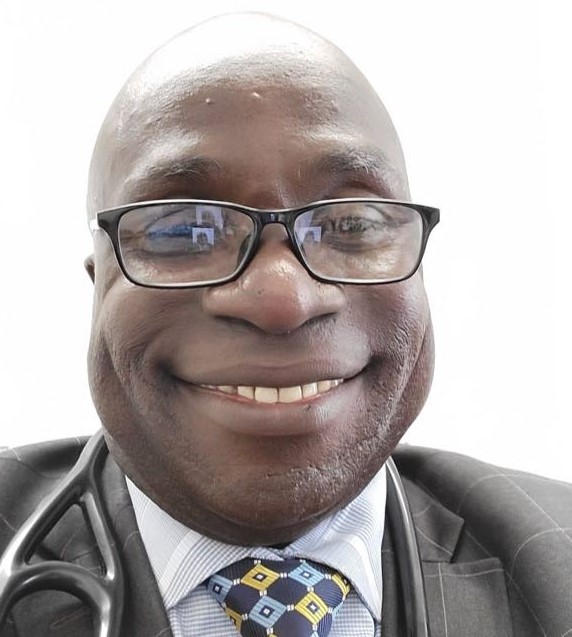
Dr. Emmanuel Fashakin

By Emmanuel Fashakin

In response to a newly bulging midriff, I resumed my morning exercise in February 2017. Due to the difficulty of squeezing in the time in the busy morning hours, I resorted to jogging on the spot while doing other stuff like brushing my teeth and shaving. Occasional accidents are inevitable, and that was what happened on a bright morning in early February 2017, which resulted in my taking a dime-sized split-thickness skin graft from my scalp, at the junction of my parietal and occipital regions, on the right side of my head. Luckily, the bleeding stopped quickly and Abraham my then 8-year-old son applied a large bandage to cover the wound.

All through the day, my patients expressed their sympathy for my head wound. Towards the end of the day, a young Afghani lady, whom I had known and treated as a child, brought her husband to see me. The Afghani lady was sitting in a chair behind me and saw the head wound. Expressing concern, she asked: “Doctor, what happened to your head? Trying to sound brave, I quickly responded: “there were six of them attacking me in a dark alley, I floored four of them with my kicks and punches, but one them slid behind me and broke a bottle on my head.” The lady, who was probably used to my jokes over the years, saw through my fib and simply smiled, but I was surprised to see the sheer terror in the husband’s eyes. “How did you escape, Doc? How did it happen? etc.” I told him to relax, that I was simply joking. Then he told me his story.

Five years ago, he arrived in New York from Pakistan, and speaking little English and finding no other work, he took up the job of manning the fried chicken store for a fellow Afghan in the fella’s Brooklyn location. Everything went well at first, but one night, a young man came to his store, announced that he was a gang member and that he needs three pieces of chicken — for free. My patient said he replied that he was not going to give him the chicken without paying. He said that the gang member threatened him, but he refused to give him the chicken. The gang member said that he was going to beat him up, and he replied: “look man, I am working now, and I am not ready for a fight. Come back at 9 p.m. when I finish my shift and I will give you a good fight.”

At nine o’clock, my patient stepped out of the store, and true enough, the gang man was there. But he wasn’t alone, he had two other guys with him. One of the men carried a switchblade, and the other seemed to have a bulge in his right pocket. “You’re ready for a fight?”, the gangman asked cheerfully. My patient said “yeah, I am ready, let’s do it”, standing his ground. The three men were completely taken aback by his bravery. One of them asked him “you wanna die?” The three men conferred among themselves, one said “let’s do it”, but they decided to leave him alone. They backed off and disappeared into the night.

The next morning he related the story to his boss. The boss almost had a stroke, and yelled: “you did what?”. My patient told the boss that “since you did not tell me to give the chicken out free, giving it out to anyone without payment under any circumstances is ‘haram’ to me.” The boss told him: “you don’t understand. People get killed in Brooklyn for stuff like that all the time. The next time a gang member comes and asks for three pieces of chicken, give him five, the chicken is not worth dying for”. He told the boss that he now understood.

Just a few days later, a man staggered into the store alone, panting and sweating. He explained that he and his boys are hungry that he needs five chicken pieces immediately and that there was no money. He gave him eight pieces and wrapped them up carefully, and the man sauntered out of the store. A few nights later on the way home, my patient ran into the gangman on the Subway Train platform. The gangman said, “ah chicken store man, thanks for the chicken the other day. I now have money to pay you.” Reaching into his pocket, he pulled out a large wad of money and thrust some at him. “here”, he said. “Your cooperation saved me from committing a murder. That night, I had a gun on me, and if you had not given me the chicken, I would have killed you!”

I know from experience with another patient that it was not an idle threat. About nine years earlier, Barak, another Afghani immigrant, was a supervisor in a chicken store when he heard commotion about someone taking chicken without paying in front of the store. As he ran towards the commotion, the man drew a knife and thrust it into his right eye. He lost the eye and almost lost his life from orbital infections. He almost died and has remained disabled till today.

So, if you come to New York City, especially Brooklyn, and someone asks you “your life or your chicken?”, please say “my life”, because pieces of chicken are not worth dying for.

Emmanuel O. Fashakin, M.D., FMCS(Nig), FWACS, FRCS(Ed), FAAFP, Esq.
Attorney at Law & Medical Director,
Abbydek Family Medical Practice, P.C.
Web address:
http://www.abbydek.com
Cell phone: +1-347-217-6175
“Primum non nocere”

That email has brutally hurt the legal profession – Maikyau again tells Body of Benchers,  insists on Olanipekun’s recusal

By Lillian Okenwa

The President of the Nigerian Bar Association, Yakubu Maikyau , Senior Advocate of Nigeria has again called for the recusal of the Chairman, Body of Benchers, Chief Wole Olanipekun, SAN while maintaining that the controversial Kunbi Ogunde email has brutally hurt the legal profession.

Maikyau had written a similar letter last year asking Olanipekun to step aside and not preside over the call to bar ceremony of the Nigerian law School scheduled for Tuesday 6 and Wednesday 7 December, 2023. He described the continuous silence by the Body of Benchers to the ‘indictable letter’ of Mrs. Adekunbi Ogunde, as ‘disgusting, and a betrayal of the confidence Nigerians have in the legal profession.’

Olanipekun however, went ahead to preside over the Call to bar.

In the 13 January 2023 letter titled “A Call to Salvage the Image, Reputation, and Integrity of the Body of Benchers and the Legal Profession in Nigeria and for the Resignation of the Chairman – Chief Wole Olanipekun, OFR, CON, SAN addressed to the Secretary, Body of Benchers and which was copied to the Chief Justice of Nigeria, Honourable Justice Olukayode Ariwoola, all Life Benchers and all Benchers, the Bar president insists that the controversial email has “made a caricature of the Nigerian Court system and brought the entire legal profession to abject disrepute.”

Part of the letter reads:

“There is no gain-saying that this email has brutally hurt the legal profession; it made a caricature of the Nigerian Court system and brought the entire legal profession to abject disrepute. It is disgusting! That this lie was told and allowed to be fed to Nigerians is the greatest assault on our collective psyche. Why then do we go to Court, if this was true? Of course, this is not who we are, but we would appear to celebrate the content of the email by our silence and the insistence by the Chairman to continue to preside over the affairs of this Body without any remorse whatsoever, over the embarrassment which the entire legal profession is subjected to on account of the content of that email.

“What is even more worrisome is the fact that, this Body did not in any way react to the email to demonstrate to Nigerians, that what was said of the Body and the entire profession was false and that the legal profession cannot be manipulated by the Chairman, or any other individual or group of persons. Interestingly, there was no denial that the said email was indeed written, and whether the content of the email was authorised or not is immaterial to the impression created by its content. The only way this Body can demonstrate that it “consists of men of the highest distinction in the legal profession” is to come out and speak boldly against that negative narrative and refuse to celebrate it in anyway under any guise.

“I am aware that the law firm of Wole Olanipekun and Co, has been excused from any liability regarding the email in issue, and I am not and will not question the correctness or otherwise of that decision. Suffice it however to say that the public reactions that trailed the emergence of that email and the decision exonerating the law firm would give a bit of insight into how this Body is presently being viewed by some members of the profession and the Nigerian public…”

Read the full text of his letter.

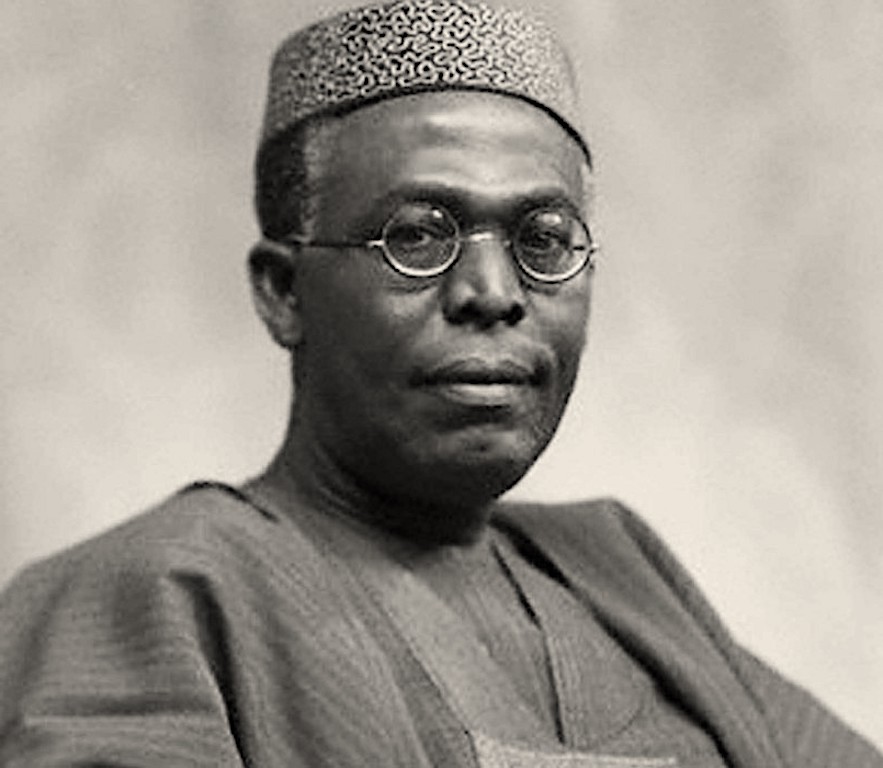
Did you know how Obafemi Awolowo got the title ‘Leader’?

Did you know? Well, the master storyteller Onigegewura scoured through books including Bola Ige, People, Politics and Politicians of Nigeria and made a discovery.

“[Following the 1952 election] There was a majority party in the House of Assembly [the Action Group], but the head of government was not a member of the Party; indeed he was the British colonial governor.

A way out was found – which Obafemi Awolowo used to great advantage. He took the name “Leader of Government Business”, in addition to the portfolio of Local Government which he held. Soon, the Sardauna [Ahmadu Bello] and Zik [ Nnamdi Azikiwe] began to bear the same appellation in the North and the East respectively.

Incidentally, it was from that appellation that the word “Leader” began to be used by his men to address Obafemi Awolowo. He has since been called so by millions, but very know how it came to be.

Some mischievous writers have insinuated that he has been called “Leader” because he was “dictatorial”. And it is downright fraudulent to say that he came to be called “Leader” after he was appointed “Leader of the Yorubas” in 1966 at a meeting of Western State leaders of thought in Ibadan.”

Source: Bola Ige, People, Politics and Politicians of Nigeria (1940-1979), Heinemann Educational Books (Nigeria) Plc, Ibadan, 1994.

TIPS