Home Blog Page 798

The President we all need (6)

By Sonnie Ekwowusi

Nigeria is now trapped in probably the worst disaster since the post-civil war. The soul of the country has since gone missing. In the seven and a half years of the Buhari government, more Nigerians have fallen into poverty and human suffering than ever before. Is this the much-vaunted end? How can a country function without its soul? There is no fuel, food, cash, or job.

The most frustrating hardship is that bank customers are no longer allowed access to their money in the banks. Most bank customers cannot even transfer money from one account holder to another. I gather that one bank customer collapsed and died on being told that he could not access the money in his bank account. You may have seen the video of a middle-aged man who stripped himself naked in a banking hall because the bank told him he could not withdraw his money. After stripping, he started sobbing uncontrollably and shouting.”  “Make una give me my money let me go. Give me my money let me go…How many years? More than 20 something years now. N520,000, and, you are telling me story. I can’t pay my house rent. My wife is about to die. You’ve frustrated me…My children, 7 years and 4 year, there at home. I can’t pay their school fees.  If una wan shoot me, shoot me make I die. Make them shoot me, make I die. Make I forget my wife. Make I forget my children. Make una shoot me, make I die…”

That was the frustration of a young man who was denied access to his money in his bank account. He stripped naked and wept profusely inside the bank. Many like him, who could not approach the banks, have silently died at home, attesting to the monumental suffering in the land. Currently, Nigeria is dotted with uncertainty and confusion. We are standing in the long, dark night of a national nightmare. For the past eight years, we have been led by individuals who view the commonwealth and public life as means to increase their private wealth. Our directionless vessel is adrift on the broken pieces of the pre-existing legal order, ruled by those who sacrifice the common good for their private interests. But don’t give in to melancholy. Be hopeful. Let me wipe away your tears. Weep no more.

Let me tell you something important: the people can still win, but only when we are united. Divisions prevent us from winning. We need to find common ground for survival, development, change, and growth. This common ground can be found in voting for Peter Obi, who believes that government should serve the common good and not just the interests of the wealthy. On February 25th, we should not just change the President, but also the direction of our country. We stand committed to a new direction and believe in Peter Obi’s leadership that will prioritize meeting the basic human needs such as food, shelter, clothing, electricity, water, hygiene, and healthcare. This is the moral challenge of our time.

We must repeatedly emphasize ad nauseam that the real crisis affecting Nigeria is not just a political leadership crisis, but a human development crisis. It is a constant challenge for our government to eliminate avoidable human suffering. Our greatest challenge in Nigeria is the challenge of being human. The government often boasts about big projects and dedicates itself to unnecessary tasks, neglecting the most important task of satisfying basic human needs. To assess the performance of any government, we must ask: can the people access food, water, shelter, electricity, fuel, basic human rights, and healthcare? If these basic needs are not met, the government reduces people to mere clever and extremely mischievous animals, lacking the humanity that makes us who we are. Lack of basic necessities, such as electricity, is crucial for a simple life, and the government must provide it to truly meet the challenge of being human.

Listening to the three leading presidential candidates, Mr. Peter Obi, Alhaji Atiku Abubakar, and Emilokan Bola Ahmed Tinubu (EBAT), it is clear that Peter Obi is the most humble, compassionate, and humane candidate, who is dedicated to the well-being of the Nigerian people. He upholds humanitarianism both as a personal attitude and as a framework for policymakers. Driven by the humanitarian crisis, Peter Obi has traveled to far-off countries affected by poverty or natural disasters to offer assistance. If he can do that for other countries, he would certainly do everything in his power as President to improve the living conditions of the Nigerian people. Peter Obi believes that no Nigerian is more or less human based on their language, status, political affiliation, age, or circumstances. He is loved by many for his commitment to ensuring a better future for our children and bridging the gap between the rich and the poor. Peter Obi teaches that our first responsibility is to create a world where everyone has a sense of common humanity based on inclusive ethical values.

Our debt burden is crushing. When this generation passes, the succeeding generations—our children, grandchildren, and great-grandchildren—will not have finished repaying Nigeria’s debt before the end of the world. The most painful aspect is that we are not borrowing for investment in capital projects or production. We are borrowing for consumption and to pay salaries. The astronomical cost of running the federal government is scandalous, as is the high cost of running the state governments. State governors have been known to boast about the large amounts of money they receive compared to senators. Salaries and emoluments of federal and state government staff should be drastically reduced, regardless of who is affected. We cannot afford to run extravagant and wasteful federal or state governments anymore. The cost of running the presidency, including maintaining a presidential fleet and constant travel, should be trimmed down. The only presidency that can make this happen is the Peter Obi presidency. For example, in the 2020 budget, about N3 billion was officially budgeted for travel allowances for the President and Vice-President alone. Why should a sitting President or Vice-President constantly travel at the expense of taxpayers? Why should a large number of government officials accompany the President on every trip abroad?

The presidency does not need to oversee 10 to 20 government agencies. Most federal agencies and commissions located in Abuja should be eliminated, merged, or consolidated into one or two agencies to reduce government bureaucracy and streamline operations. By virtue of Section 147 of the 1999 Nigerian Constitution, 36 ministers are required, not 43 or more. A minister does not need five official cars, five drivers, ten special assistants, and five personal assistants. A special assistant to a minister should not have their own special assistant. A deputy director of a government agency or ministry should not have five official cars and five drivers. A special advisor should not have their own special advisor, executive assistant, or a retinue of officials and cars. Legislators should not have idle staff members who sleep in the office every day. Given that the Nigeria Police Force, Independent Corrupt Practices and other Related Offenses Commission (ICPC), and Economic and Financial Crime Commission (EFCC) perform similar functions, is it necessary to retain all three institutions? Retaining only one of them could save costs. Slashing wasteful expenditures or extravagance of the federal government and federal legislature could make more money available for government operations and improve the welfare of the people, as Peter Obi has stated.

Therefore, my friends, I challenge you today to vote for Peter Obi and chart a gainful course for us and our children. I challenge you to be hopeful and dream big, as we stand to gain more under a Peter Obi presidency. Never in the political history of our country has a presidential candidate garnered as much phenomenal political followership as Peter Obi is currently garnering. Not even at the height of his political Risorgimento did Zik command the kind of respect that Obi commands today. Similarly, not even at the peak of his political blueprint and visionary speeches could Awo draw the massive crowds that Peter Obi is attracting today. If the presidential election were held today based on crowd-pulling ability, Peter Obi would emerge victorious. He is unstoppable, mercurial, effervescent and ubiquitous. His style is unique – politics without bitterness. That’s why he doesn’t return insults or injury for injury. Obi could multiply himself in his quest to render selfless service to the people.

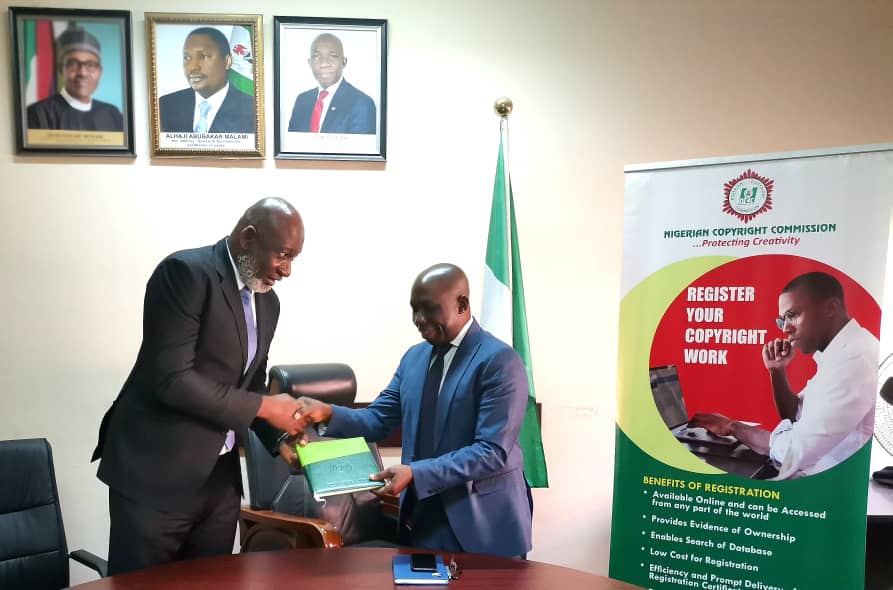
Copyright Bill scales second reading, as Nigerian Copyright Commission seeks greater collaboration with Young Lawyers Forum on IP Law

The Director General of the Nigerian Copyright Commission, Barr. John O. Asein has announced that the Copyright Bill has scaled second reading.

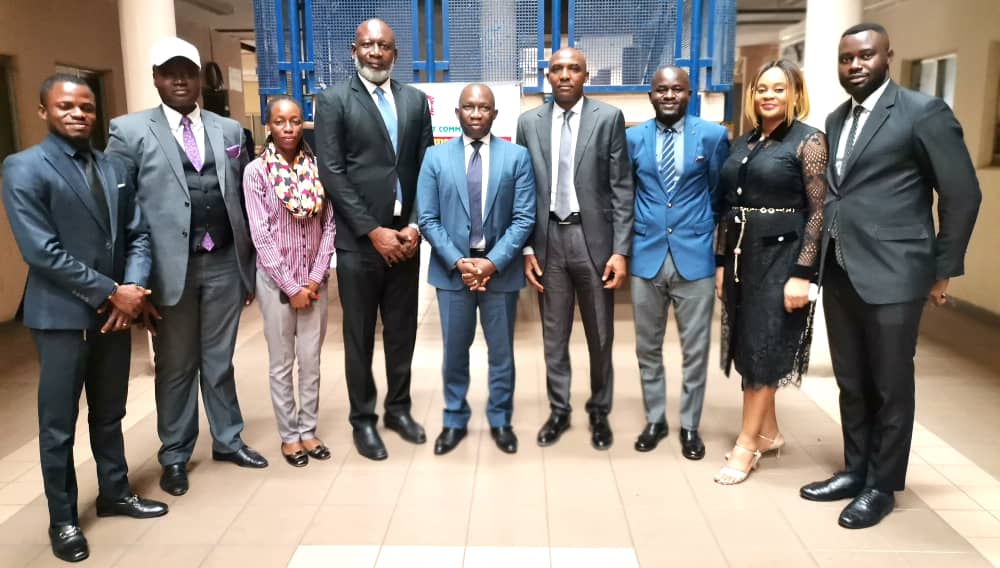
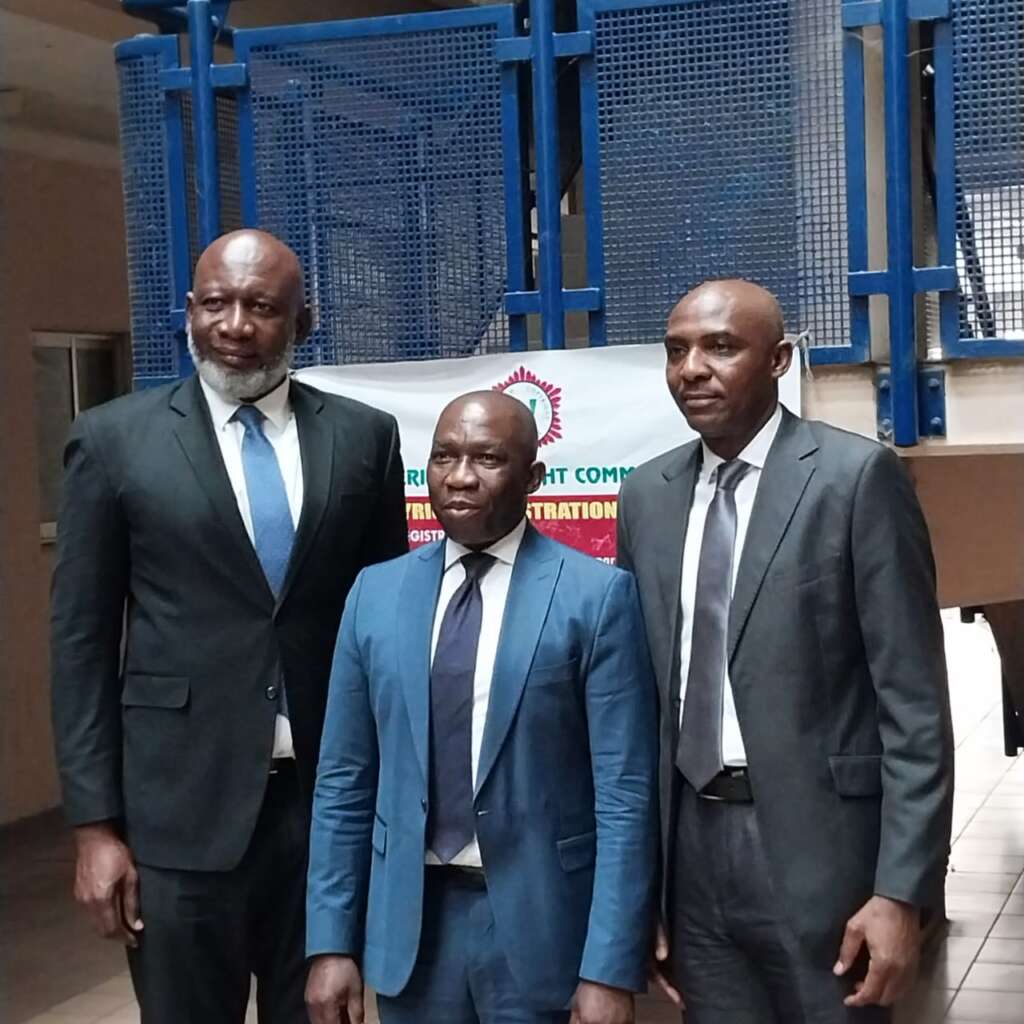
Barr. Asein who made the disclosure on Tuesday during a curtesy visit to the Commission by officials of the NBA Abuja Branch (Unity Bar) also called for a greater collaboration between the Commission and the Young Lawyers Forum on IP Law.

Chairman of the Unity Bar, Afam O. Okeke, Esq. said the visit was to identify with the Commission and seek greater partnership.

Officials of the Unity Bar, including the immediate past Chairman of the branch, Moses A. Ebute, SAN were received by the DG, and officials of the Commission.

Okeke congratulated the DG on his appointment and notified him that the curtesy visit was in solidarity with him as a member of the Bar. He further told the DG that the NBA Abuja Branch was available to support the Commission in any way possible.

Chair of Unity Bar, Afam Okeke, DG NCC, John O. Asein and immediate past Chairman of the branch, Moses A. Ebute, SAN

The Unity Bar Chair, however, expressed concern that lawyers of the Commission do not attend the branch monthly meetings. He then appealed that lawyers in the Commission be encouraged to actively participate in NBA activities for their personal benefit such as qualifications for NBA NHIS, Letters of good Standing and more.

The DG heartily received the delegation and informed them that the President’s eventual assent to    the Copyright Bill would bring greater value to the Commission’s operations.

The Emperor’s New Clothes: The illusion of ratio decidendi

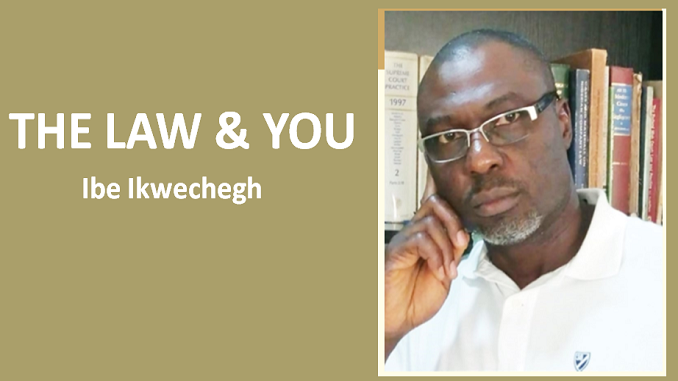
By Ibe Ikwechegh

Hans Christian Anderson’s famous story of the Emperor’s new clothes is about a vain emperor who cares about nothing except wearing and displaying clothes. The emperor had hired the services of two weavers who promised him the finest, best suit of clothes from a fabric which would only be invisible to ones unfit for their position. The weavers mimed making him a cloth and also mimed dressing him in the clothes. His ministers could not see the clothes as indeed there was none, but pretended that they could see the clothes for the fear of appearing ‘unfit for their positions’. The Emperor then marched in procession before his subjects. The townsfolk play along with the pretence, not wanting to appear unfit for their positions. Then a child in the crowd, too young to understand the desirability of keeping up the pretence, shouts out that the Emperor is wearing nothing at all and the cry is taken up by others. The Emperor cringes, suspects the assertion is true but continues the procession.

Every once in a while, the superior courts pass what we may call iconoclastic decisions.  Very recently, the Supreme Court is said to have installed a governor who was alleged not to be anywhere near winning the election. Some years ago it also reversed a decision of the Court of Appeal which said that the electoral commission had powers and authority to remove the name of any candidate that failed to meet the criteria set out by the Constitution without recourse to the Court.  Also in another ‘bombshell decision’, it had to nullify the position of an elected Governor and in his place ‘appointed’ another who did not participate in the election. In all of these celebrated cases, the public likes to find out why the court decided so.  The legal society also likes to know why. That why is what they call ‘ratio decidendi’; the reason for deciding.

But it is very possible that Hans Anderson’s amusing tale may sometimes be equally true of ratio decidendi, which we assume must cloth every superior courts’ decision, and so not finding it, we are more intent on keeping up the pretences that it is there.

Law students, working lawyers, and judges have mastered the chant that ratio decidendi is that reason given for the judgement. But is it always true that judges set out in clear terms that which is the reason that formed their opinion and or decision?

We are told that judges are asked to stand by previous decisions, which means that each time a case comes before a judge he tries, in solving the present problems, to see how those before him solved similar problems. They even have a beautiful term for it; stare-decisis. This rule of judicial precedent is almost compulsory for judges. It seems that much the same way as the world in their daily transactions want to treat like cases alike, judges too want to treat like cases alike. Hence, if a court is dealing with a case which shares material facts with a previously decided case, the court is generally bound by the previous decision and should arrive at the same conclusion.

The legal system points to very many beautiful reasons why judges must have to consult with the wisdom or even the mistakes of previous decisions. One of our great judges in the land, Justice Chukwudifu Oputa, said that ‘it fosters stability and enhances the development of a consistent and coherent body of law. In addition, it preserves continuity and manifests respect for the past. It also assures equality of treatment for litigants similarly situated. It likewise spares the judges the task of re-examining rules of law, or principles, with each succeeding case and finally, it affords the law a desirable measure of predictability.”

Another famous judge, Sir Udo Udoma said that it eliminates crystal guessing. He said, “Realising as we must do that in this imperfect world of mortal beings, certainty is but an illusion and repose is not the destiny of man, we think not the less, that in law there ought to be not only an element of certainty and consistency of construction and application”

And so we have heard it from these great minds, that consistency, stability, coherence continuity, certainty, and more are all the recondite charms in this effort to always ascertain what might have been said on any given question and why it was so said. But come to think of it, why would each individual judge amid scarce judicial time begin to travel anew each dusty highway of dispute resolution to ferret a solution, if he can take respite in other’s previous efforts?  Lord Lloyd of Hampstead says that ‘to take the same course as has been taken previously, or has usually been adopted in the past, not only confers the advantage of the accumulated experience of the past but also saves the effort of having to think out a problem anew each time it arises’

So if precedent and stare-decisis are the talismanic remedies for similar cases coming before our judges, and if any advantage could be taken of the previous decision, the later judge must understand what the previous judge was saying. They have to understand the reason for that prior decision. For instance, they have to understand why the Supreme Court ordered the fourth runner-up in an election to be sworn in as a state’s governor when dealing with a similar case. And so it means that for stare-decisis to be beneficial two things must happen; the judge in the previous case must have set out his reasoning clearly enough to have any precedential value and the subsequent judge must have ‘the eyes’ to see it. 

Since what the judge in the subsequent case is looking for is the real reason for the way the case was decided, it would mean that the manner in which the previous Judge ‘argued’ his judgment becomes irrelevant. Also, it is known that judges sometimes speculate about what their decisions would have been had the facts been different. And again lawyers say that this is irrelevant and would not bind in subsequent cases, even if such a hypothesis manifests in them. They say that at best it would persuade a subsequent judge.  

Obiter dicta as the lawyers and judges call it becomes, therefore, completely excluded from the realm of what they accept would bind the judge in a subsequent case.  And so not part of what he should look out for. All that will be cognate is the principle put forth in the previous decision and so the real challenge is to find that ratio-decidendi.; the reason for deciding.  

But modesty here is to accept that ascertaining this ‘reason for deciding’ in a decision could be an ardours task.  Judges, especially of the apex court may be more inclined to give judgment to meet what they perceive as the ends of justice and in which they may not be able to express in any form of legislative proposition what their ratio-decidendi was.

Helps have been offered on how to find these rations. There is the traditional theory that the ratio-decidendi is the legal principle formulated by the court in relation to the matter actually decided. Yet there are cases which may be decided without any enunciation of any rule at all or where it is enunciated but in very wide terms. Courts’ judgments are becoming longer and more elaborate making the rationes  lost in the web of lengthy judgment, and invariably hard to ‘find the wood for the trees’.

Some law teachers in trying to help us find these ‘reasons for deciding’, say that there should be what they call an ‘inversion test’. So what they are asking is that the later judge should invert every statement in the previous judgement and ask whether the decision would have been different were the statement omitted. But the problem with this type of method is that if the previous court gave alternative reasons to its decision, when inverted, only one ratio would survive and so alternative rationes-decidedi would be weeded out. No justification can ever be offered for regarding as obiter-dictum a reason given by a court for its decision because it has given another reason also.

Yet others say that there should be a factual analysis theory. That is to say, placing the facts in issue vis-à-vis the principle and seeing which statements in the previous decisions spoke to the facts at the time. This seems simple but very convoluted in practice.

Some judges feel simply more comfortable ‘to seek for the flip side of the coin’ which is the obiter dictum.  Hence, if they are able to sort out the obiter dictum in the previous decision, then what is left becomes clearer to them as the picture of the ratio. So all the later judge needs to do in order to disqualify the statement as a mere obter-dictum is to see that it does not speak to crucial facts in the case or is hypothetical or is illustrative or analogous or that it is nondeterminative. But this is not without its difficulties. Reasoning is like brickwork. When the judge draws an analogy from the non-determinative point, that is just the base brick, then upon it, he lays another which we consider determinative. But it is not hard to see that once you separate the later statement from the former statement from which it draws the strength of syllogism, it will cease to make meaning.

It seems that Judges and working lawyers desperate to run away from this murky waters of finding the ratio-decidendi very randomly throw in the towel and capitulate to whatever the law reports pen down as what the previous decisions held to be the authentic version of the ratio-decidendi. Of course, we know that the use of precedent depends so much on the efficiency of law reporting. But quite unfortunately, most of our law reporters merely underline legal statements made in the body of a judgment and set them out as what the court held. To this end, much of what were obiter are recited in subsequent cases as binding statements of the law. This is the kind of head note practice that has fostered malignant growth in our laws.

By and large, all formulas proffered for ascertaining the ratio-decidendi of a case including the beacon lights of crucial facts, hypothetical facts, illustrations, and determinative points are merely for guidance and admittedly, none is full proof. None of the indications and signposts erected on the road to discovering the rationes-decidendi, of courts’ decisions have proved so satisfactory and infallible.

Judges perhaps believe, much like the ‘Emperor’s new clothes’, which must be visible to anyone except those unfit for their position, that they must find or at least pretend to find the ratio of a judgment for fear or appearing ‘unfit for their station’ as judges. In his struggle, he would cull randomly, statements from a previous decision, but with no clear demonstration of the principle enunciated therein. His judgments are punctuated with several ‘see the case of this or that’ with nothing to tie them to the case at bar. At times, they embark upon the most miserable and unsatisfactory analysis of a previous decision.

Indeed, judgments may be completely naked of ratio-decidendi or contain rationes which might have been so discreetly issued or which are blurred in the web of lengthy and intricate opinion, wherefore they are rendered unascertainable. And the other truth is that there are judgments whose rationes, though present, may be difficult to articulate.

It is often advised that when a case has no discernible ratio, it is best to avoid its use altogether. In 1972, an English court once gave such advice. This avoidance saves the judicial process from unnecessary crystal guessing. It does not impact the present Judge negatively because he is unable to discern a ratio of the previous court, especially of a judge higher than he; neither does it cast aspersion on the previous judge that his ratio is not discernible. It is just what it is that the ratio could not be found and there are fluctuating good reasons why such does happen.

Chief Ibe Ikwechegh, is a Lawyer, Consultant at Indent and Law & Society Magazine Columnist

2023 Elections: Candidates want the electorate to believe they are veritable messiahs, Somber Tuesday series by Mojúbàolú Olufúnké Okome

#SomberTuesday! Electioneering campaigns continue despite the chaos and mayhem attending the currency change. Candidates and their proxies want the electorate to believe that Nigeria needs them, and that they are veritable messiahs. Historically, such empty promises are not fulfilled. The road to hell is lined with good intentions. Important issues tend to have a short lifespan. The suffering of the masses get scant attention.

Part of what the #EndSARS youth protesters wanted was an end to the normalization of catastrophes that seem to be inevitable when there is bad governance, impunity, and violence. They also decried police brutality. But they were subjected to state-sponsored violence and brutally suppressed. Most Nigerians also want a government that is committed to democratic principles. They want a thriving economy, security, and a good quality of life. They want an end to kidnappings and abductions. Those whose family members are in captivity cope with psychological trauma and huge financial burdens with help from very few friends who provide whatever material and psychological comfort that they can muster.

There is trauma among IDPs from insurgencies and citizens who suffered tremendous human and property losses during unprecedented floods, that has them contending with the deaths of friends, family, and acquaintances, injuries, and losses of livelihood. On top of all this, the shortage of new currency has created even more pressure for people who are already struggling with precarity.

Two years on, #Nigeria should remember the massacre of peacefully demonstrating youths at #LekkiTollGate & other locations. #NigerianWomenArise #EndPoliceBrutalityinNigeriaNOW #EndSars #EndSWAT #EndImpunity 

Like the voice in the wilderness, I reiterate Howard Zinn’s statement: “Civil disobedience, that’s not our problem. Our problem is that people are obedient all over the world in the face of poverty and starvation and stupidity, and war, and cruelty. Our problem is that people are obedient while the jails are full of petty thieves, and all the while, the grand thieves are running the country. That’s our problem.”

Like the broken record, I keep saying: Let the kleptocrats give back our stolen wealth so that we can fix our infrastructure, schools, hospitals, and also offer worthwhile social protection to our people. Let the masses enjoy the full benefits of citizenship in Nigeria. Let the leaders and political class repent and build peace with justice. This is no time for politics as usual. The people elected should be those trusted to bring justice, equity and human security to the entire country, not expedient, unethical and egocentric individuals determined to dominate for self aggrandizement or sectional gain. We don’t need oligarchs’ continued domination. We also need a government that puts the interests of majority of citizens first.

Prof. Mojúbàolú Olufúnké Okome is a professor of political science at Brooklyn College in New York.

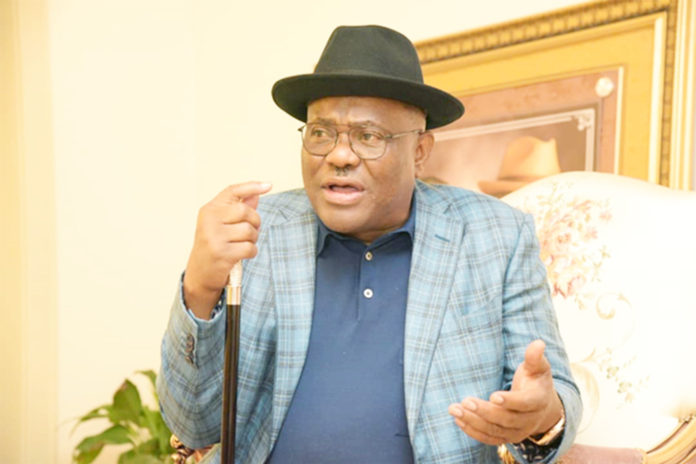
Eleven awesome signs that the ‘God of Governor Wike’ who helped a woman in labour ‘dey sweet’ the Nigerian Legal Profession pass everyone else

By Sylvester Udemezue

One may say anything about Governor Wike of Rivers State. Call him anything, as you may wish: Tyrant! Performer! Talkative! Achiever! Anything!  It’s your choice and your right to express your opinion freely, right or wrong. In the Christian Bible book of Joshua 24:2, 15, it’s reported that “…Joshua said unto all the people … choose you this day whom ye will serve; … but as for me and my house, we will serve the Lord”. In the same manner, as for me, I have chosen to refer to and remember Governor Wike of Rivers State as one whose leadership has had the greatest positive impact on Nigeria’s legal profession as a whole.

Leadership is all about impacting lives; if your leadership fails to positively impact lives, you’re not a good leader; don’t mind those telling you that you’re one — truth is, you’re not. The essence of leadership is not just in spotting the problems but in providing solutions to the problems. Besides, good leadership is synonymous with thinking out of the box. Before I paid proceed, and for the avoidance of doubts, please note that in this piece, I am talking and writing about Governor Nyesome Wike, not as a party politician nor as the Governor of Rivers State, but as a LEADER whose unique style has impacted positively and greatly on lives and the affairs of others, across Nigeria. Thus this commentary is strictly outside any assessment of Governor Wike as a politician or as a party man. What I am saying is that as the Governor of Rivers State, Mr Nyesome Wike, Life Bencher, has done what no other lawyer in a position of leadership had ever done in the history of the legal profession in Nigeria. Please check out these:

(1). Governor Nyesome Wike moved the Rivers State Government to donate to Nigeria and to the Nigerian Legal Profession a brand new Law School Campus. The Port Harcourt Campus which has been described as the “7th wonder of the world”, and a model for any future campus of the Law School, has the following facilities, among others: a 1500 capacity classroom block, 1,638 capacity hostel blocks, a 1,500 capacity multipurpose hall, 16 units of 3-bedroom flat each as staff quarters with swimming pool, gymnasium and lawn tennis court, a Library complex, a moot court complex, sick bay, a magnificent admin block, cafeteria buildings, stores, sporting facilities for students, internal roads/drains, street lights, three power generating sets of 1000kva each, a 2.5mva substation, a dedicated fire station, and a 40,000 liters water tank. All built and completed by Governor Nyesome Wike-led Rivers State and donated  to the  Nigerian Legal Profession. Reacting after inspecting facilities at the Campus (named “Nabo Graham-Douglas Campus”), the Chairman of Council of Legal Education (the parent body of the Nigerian Law School), Emeka Ngige, SAN described the Campus as the best in the country adding:

“If we say we are not shocked by the things we have seen here today, then we are lying. This is amazing. Is it the seventh wonder of the world? We laid the foundation for this project in July last year, and His Excellency promised to deliver the best law school in the country in less than a year, and behold today is 27 June 2022 and he has delivered. On behalf of the council, I am very grateful for a promise made and a promise kept”. On his part, the Director-General Nigerian Law School, Prof Isa Hayatu Chiroma, SAN, had this to say:

“Like the chairman rightly said, this is the seventh wonder of the world. On behalf of the management of Nigerian Law School, I want to say a very big thank you, Your Excellency”. Please note that the Campus has since been commissioned and full academic activities commenced therein.

(2).  Governor Nyesome Wike moved Rivers State Government to donate a steady source of revenue to the Nigerian Law School, apart from building the magnificent 7th Campus of the Law School. While presenting to the Chairman of the Council of Legal Education, a Certificate of Occupancy of some properties attached to the school, Governor Nyesom Wike advised: “Let me on behalf of the people of Rivers State sincerely thank the chairman of Council of Legal Education and his team for coming here for the final inspection of the project. I also want to use this opportunity to present the Certificate of Occupancy of some properties we added to the law school for the purpose of getting some revenues to run this school effectively”. [See: “Photos: Magnificent Port Harcourt Law School”; June 27 2022; dezmayorz.org].

(3). The Governor Nyesome Wike-led Rivers State Government took over, renovated and furnished an entire floor in the Nigerian Bar Association (NBA) House (ie., NBA headquarters) in Abuja. Work is fully concluded and handed over to the NBA.

(4). Governor Nyesome Wike has moved Rivers State to promise to erect and is currently constructing at the Yenagoa, Bayelsa State Campus of the Nigerian Law School (the jobs are nearing completion):

🅰) Two Student Hostels of 450 students each (to accommodate 900 students in all); and 

🅱). A 1,500-seater multipurpose auditorium. [See: Wike commits N5bn to infrastructure development at Law School, Yenagoa”;

05 June 2021; Guardian]

(5). Governor Wike-led Government if Rivers State has built an ultra-modern Magistrates’ Court complex for Rivers State, in Port Harcourt. Note that prior to this,  Magistrates’ Courts in Port Harcourt were squatting with the State High Court in the High Court complex. [See for yourself: https://fb.watch/iwASQg7myG/?mibextid=NnVzG8;

(6). Governor Wike-led government has completed in Port Harcourt, a judicial institute named “Justice Mary Odili Judicial Institute, to complement the National Judicial Institute”, to provide relevant training and capacity building for Rivers State Judges and magistrates to enhance their competence for effective service delivery. [See: “CJN Inaugurates Justice Mary Odili Judicial Institute”; The Nation; 22 November 222].

(7).  The Governor Wike-led government built, completed and donated to the Nigerian Federal Court of Appeal, a Court-of-Appeal Justices’ Residences and Staff Quarters in Port Harcourt. [See: “Governor Wike sets to commission Judges quarters and Appeal Court residences in Rivers (PHOTOS)” Opera News; 2 September 2020].

(8). The Governor Wike-led government  built and completed a Judges’ Quarters in Port Harcourt for Rivers State High Court judges. [See: “CJN Commissions Judges Quarters, Hands Over Apartments In Rivers” (Channels TV; 3 September 2020)]

(9). Governor Nyesom Wike of Rivers State constructed of a new law Bar Centre for the Nigerian Bar Association (NBA) in Rivers State with almost half a billion naira. The former NBA complex was built by Governor Peter Odili, a medical doctor, whose wife is now a Supreme Court justice. However, Governor Wike, a lawyer and husband of a high court judge, said he was relocating the Port Harcourt NBA from the High Court premises to give room for expansion of courts. [See: ” Wike Begins N0.5bn Law Centre for NBA”: BusinessDay; March 02, 2016].

(10).  On 24 December 2022, Rivers State Governor Nyesom Wike formally inaugurated a technology-driven Family Court at the High Court Complex in Port Harcourt.

[See: “Gov. Wike Inaugurates Nigeria’s First Digital Family Court”; 24 December 2022; DNLLEGALANDSTYLE]

(11).  On June 03, 2021, the Chief Justice of Nigeria commissioned four residential apartments built by the Government of Rivers State for the National Industrial Court of Nigeria to serve as judges’ quarters. The event which took place at the project site situated at Eleme Road, Old GRA, Port Harcourt was well attended by top government officials, Judges of the Industrial Court, Retired and Active Judges of the Rivers State Judiciary, members of the Nigerian Bar Association, guests, and the general public. [See: “Gov. Wike, Justice Kanyip in attendance as CJN Tanko commissions Industrial Court Judges’ Quarters”; 3 June 2021; nicnadr.gov.ng]. See also:  “Wike Commissions Nat’l Industrial Court Judges Quarters – YouTube” 3 June 2022; Channels TV]

I stand to be corrected, but in my respectful opinion, no lawyer or leader in the history of the Nigeria has so positively affected the Nigerian legal profession as Governor Wike of Rivers State has within his 8 years as the Governor of Rivers State. In my commentary titled “Why Governor Nyesom Wike is Among the Greatest Lovers of (Legal) Education in Nigeria”, [DNLLegalAndStyle; June 4, 2021], I had this to say about Governor Nyesome Wike’s leadership impacts on the Nigerian legal profession:

“Nothing happens untill something moves”. To move something, we must think like men of action, and act like men of thought. This is because the world can only be grasped by action, not by contemplation; the hand is the cutting edge of the mind. As Russell C. Taylor puts it, “Being willing is not enough; we must do”. These best explain Governor Wike of Rivers State. He is a colossal man of action. He is not the type who waits to believe in action before acting; he’s the one who acts as he breathes. He understands that the true test of a real leader lies in action.’

Also, in my work titled  “Nigerian Law School’s Upgraded Yenagoa And Brand-new Port Harcourt Campuses: A Trending Transfiguration From A Quintessential Quartet (an exulted law teacher’s Acclamatory Antiphon)” [July 18, 2021; TheBarAndBenchNews.com.ng],  I wrote:

‘It is wonderful what great strides can be made when there is a resolute purpose behind them. Great mother Teresa of blessed memory had said, “I alone cannot change the world, but I can cast a stone across the water to create many ripples.” Efficiency is doing thing[s] right; effectiveness is doing the right thing. One good voice can change a room… but one piece of good, impactful action can change a lot more. So the point is not to become a leader, but to become an effective leader, to use yourself completely – all your skills, gifts and energies – in order to make your vision manifest, withholding nothing. This is why John C. Maxwell had to warn that leadership was not about accumulation, possession and parading of titles, positions, or flow charts, but about one life influencing another people positively. In other words, as John Quincy Adams put it, if your actions inspire others to dream more, learn more, do more and become more, you are a leader”. Leadership is the capacity to translate vision into reality. To this end, should not we in all honesty say that Governor Nyeson Wike of River State is a leader properly so called, as in strictu sensu?”

Governor Wike’s God is a God of promise kept! How many Nigerian politicians keep their promises? Wike is a keeper of promises, a lover of the judiciary, of the legal profession. Of all leaders and lawyers in Nigeria, Governor Wike is the one who has taken the legal education, the judiciary and the legal profession the most seriously. This is my humble opinion. But the handwritings are there for everyone to see. Little wonder then, that a woman in labour reportedly began shouting “God of Governor Wike” in her bid to get help from the Almighty. A video made the rounds on social media (a few weeks ago) of how a lady was delivered of her baby after shouting ”God of Nyesom Wike” three times. Sharing the interesting story, a traditional ruler in the State said nurses in the hospital (wjre the woman in labour was brought) were discussing and then they mentioned that Governor Wike had been scheduled to visit their community (Ahoda in Rivers State) on that day January 11, 2023. The monarch explained that immediately on hearing the governor’s name, the pregnant woman began shouting ”The God of Nyesom Wike Let me deliver safely”. After shouting this three times, the woman put to bed without any hassles. [See: “VIDEO: How Rivers woman delivered baby after shouting God of Nyesom Wike” 12 January 2023; tribuneonlineng.com].

Permit me to refer to Prolific writer Lailah Gifty Akita’s words: “Hope is the assurance of the promise, the belief that the promised will be fulfilled”. Governor Nyesome Ezenwo Wike has proven again, again and again that he is true to his words; that he is an outstanding promise-keeper of this dispensation. On behalf of myself and all lovers of the legal profession, I hereby earnestly and passionately plead with His Excellency, Governor Nyesome Ezenwo Wike to do everything reasonable and possible to ensure that before he leaves office on May 29, 2023, he has completed the ongoing projects in the Yenagoa Campus of the Law School. My plea is founded on fours grounds:

(A). In this way, Governor Nyesome would have proven that he has indeed surpassed all reasonable expectations;

(B). Governor doesn’t want a dent on his impeccable records as a true leader who keeps all his words. “It takes many good deeds to build a good reputation, and only one bad one to lose it” (per Benjamin Franklin); Besides, as advised by Jim Rohn, whoever renders service to many puts himself in line for greatness – great wealth, great return, great satisfaction, great reputation, and great joy.

(C). It was Governor Nyesome Wike’s promise to start, undertake, complete and deliver the projects in the Yenagoa Campus, that had gaven rise to the idea of a Port Harcourt Campus. On June 28, 2023, I wrote that “…[the] brand-new addition, the Port Harcourt Campus, [is] borne of a ground-breaking promise made at a ground-breaking ceremony for ground-breaking projects!”  [See “Nigerian Law School’s Upgraded Yenagoa And Brand-new Port Harcourt Campuses: A Trending Transfiguration From A Quintessential Quartet (an exulted law teacher’s Acclamatory Antiphon)” (supra)]. Completion of the Yenagoa Projects is accordingly strategic, especially when one considers the next point.

(D). While receiving a delegation of the Senate Committee on Judiciary, Human Rights and Legal Matters, led by its chairman, Opeyemi Bamidele, which paid him a courtesy, on 24 November 2021, Governor Nyesome Wike deplored the terribly appalling condition of the Yenagoa Campus of the Nigerian Law School, declaring that “You’ll never allow your slave to attend the Campus in Yenagoa”   Besides,  Governor Wike continued:  “I made a special appeal to support to Council of Legal Education to rehabilitate the campus in Abuja, and the Director-General said, ‘No, we have more problems in Yenagoa [Campus], leave Abuja’”.  These two issues, in addition to Wike administration’s avowed desire “to contribute to the development of legal education in Nigeria”, Governor Wike explained, “spurred his administration to build 900-bed space hostels and 1,500 capacity auditorium for students in Yenagoa campus, and then the subsequent construction of a new campus in Port Harcourt”. [See: “Even slaves should not attend Yenagoa campus of Nigerian Law School: Wike”; NOVEMBER 24, 2021; BarristerNg]. Now with the Port Harcourt Campus is fully completed and handed over to the Nigerian Law School, all eyes are now on Governor Nyesome Ezenwo Wike to do likewise in respect of the Yenagoa Campus. Completion of the project is essential to the upgrade of the Yenagoa Campus. Happily, work is ongoing on the projects, in pursuance of Governor Wike’s promise to never leave a project uncompleted. Thank you, Governor Wike! And thank you, God of Governor Wike. I pray the  “God of Governor Wike” who I know is the Almighty God, to continue to sustain and provide for Governor Wike, his administration and the good people of Rivers State to ensure that Wike continues to keep his promises, and especially this particular promise to (before he leaves office) complete the ongoing projects in the Yenagoa Campus , so that the word “slave” would never again have cause to be used to describe the Yenagoa Campus.

I can’t stop thanking Governor Wike. Tassa Desalada said that “Good things don’t happen very fast. They need to build, little by little, over a long period of time”. But Governor Wike has shown with his strides in the legal profession, that good, beautiful things can happen and very fast too, especially when the right people come along. Thus, I pitch my tent with John Lenahan who declared that “I have found that important moments in life… happen so fast you don’t even remember them.” Further, Chris Gardner’s formula for leadership progression is simple and applies here: “Walk that walk and go forward all the time. Don’t just talk that talk, walk it and go forward. Also, the walk didn’t have to be long strides; baby steps are counted too. Go forward.”  In my opinion, Rivers State’s Governor Wike talks the talk and walks the talk too. He is talk-active leader. As opposed to “talkative” leaders (who do much of talking and less of actions), a “talk-active” leader is one who not only talks much but does so much more at the same time to matching his words with concrete actions for all to see. Thus, he walks his talk; Governor Wike is a perfect example.

✔God bless Governor Wike and bless our society with more of his type!

✔God bless Rivers State for their generosity towards the legal profession!

✔God bless the Nigerian legal profession!

✔Gid bless Nigeria!

Respectfully,

Sylvester Udemezue (Udems)

08109024556.

[email protected]

(6 February 2023)

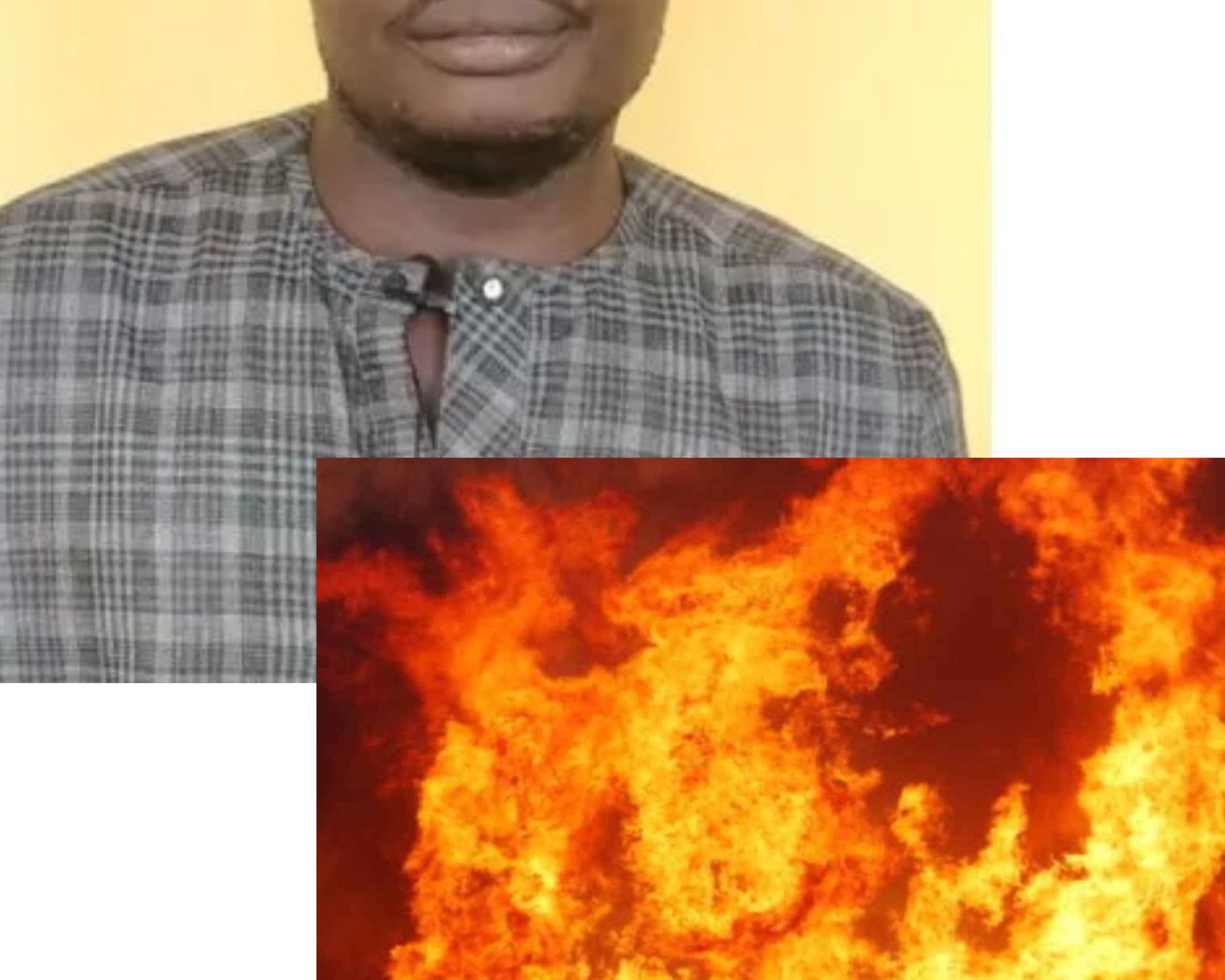
How 46-year-old Azeez Hassan set wife ablaze for failing to prepare his dinner

By Lillian Okenwa

“Gender-based violence … destroys not just the direct victims but the watching children and the society…”

“Daily Trust Saturday reports that at least 49 spouses reportedly died between January 2021 and March 2022…”

With a liquid he knew to be clearly flammable, 46-year-old man, Azeez Hassan gave his wife Olayinka Hassan an infernal bath that would last her for a lifetime.

Her offence? She did not prepare his dinner. But what really happened?

A fortnight ago, the police in Ogun State Police arrested Azeez Hassan, who poured petrol on his wife and set her ablaze for allegedly refusing to prepare his food. He has since put the blame on Satan.

Police reports that Hassan asked Olayinka to prepare food for him that night, but she did not as she was busy washing clothes. Thoroughly provoked by her alleged, refusal, because he was hungry, he doused her with petrol and set her on fire.

The Ogun state police spokesperson disclosed that when asked whose clothes his wife was washing, Hassan confessed that they were his clothes.

He was eventually arrested following a report lodged at Ibogun divisional headquarters by his wife’s father. The victim’s father reported on October 22, 2022, that his daughter, Olayinka Hassan, was set ablaze by her husband over a minor disagreement, and that the victim, a mother of one, has been rushed to a hospital in Ibadan.

Though Hassan escaped before the arrival of the Police, they remained on his trail until the 22nd of January when he was eventually apprehended.

The Ogun State Commissioner of Police, Lanre Bankole, has directed that the suspect be transferred to the homicide section of the state Criminal Investigation Department for further investigation and possible prosecution.

Olayinka Hassan was lucky. Last November in Abeokuta, Ogun state, Segun Ebenezer struck his wife Bukola Omotosho on the head with a padlock and allegedly killed her for refusing to hand over her school to him. Police investigation revealed that their incessant quarrel was premised on the fact the deceased built a private school but her husband who is a carpenter wanted to take control of the school.

Also, the body of Lindelani Nengovhela was found in a water-filled pit toilet in their yard at Mangodi Ha Sundou, Limpopo, on Saturday, January 28, 2023 days after she withdrew a domestic violence case against her husband, Livhuwani Madadzhe. Limpopo is the northernmost province of South Africa.

The couple was said to be in a very volatile relationship and Lindelani along the line filed a case of domestic violence against her husband. He was arrested.

Madadzhe, also known as comedian SABC Livhu, was out on bail and was to appear the following week in Thohoyandou Magistrate’s Court but Lindelani went to court on Friday, January 27, and withdrew the case.

According to a Limpopo police spokesperson, the 38-year-old husband, called the police on Saturday morning, stating that he could not locate his wife but was surprised to find her dead in the pit toilet in their yard.

 “A preliminary probe conducted by the police at the scene led to the arrest of the suspect on a charge of murder,” Brigadier Motlafela Mojapelo said.

Appealing to people in troubled relationships not to resort to domestic violence, Limpopo provincial commissioner, Lieutenant General Thembi Hadebe lamented that: “This is yet another incident of gender-based violence and femicide perpetrated against a vulnerable member of society. The woman obviously trusted her husband would not again physically torment her, but she is now no more. We urge community members having domestic challenges to seek help and desist from resorting to violence.”

Ikechukwu Ogbonna, a 37-year-old Lagos car dealer, is still answering questions over the death of his wife, Abimbola Martins-Ogbonna. Ikechukwu and Abimbola had been married for 16 years. They have five children.

The marriage, however, was fraught with disagreement and alleged domestic violence. At the height of their clash, the couple separated and were said to have reunited. But on October 15, 2022,  there was a fire incident at their Lekki mansion and Abimbola was caught in the inferno.

She was rushed to a hospital, where she died as a result of the injuries she sustained. Her family however suspects foul play. While demanding justice, they accused the police of cover-up, intimidation, and an attempt to force the family into an out-of-court settlement with Ogbonna and also drop charges against him.

The late Abimbola’s family also alleged that the police had changed Ogbonna’s charges from ‘manslaughter’ to ‘negligence’ so as to make it easily bailable.

A family member, Mr. Odiana Eriata, who was in court, said the issue of domestic violence ought to have been properly investigated and an appropriate charge should be preferred against the culprit.

Daily Trust Saturday reports that at least 49 spouses reportedly died between January 2021 and March 2022. The data showed that 35 women were killed by their husbands while wives killed their husbands on 14 different occasions.

Ovye Yakubu allegedly killed his wife, Esther Aya, in the Sabonpegi-Shabu community of Lafia, Nasarawa State. When he was arrested by operatives of the Nasarawa State Police Command, a witness alleged that Yakubu killed his wife when an argument ensued over hiring a carpenter to fix one of the windows in their residence.

He said, “The deceased (Esther) had engaged the service of a carpenter to fix net in their windows to prevent mosquitoes from entering the house, but her husband stopped the carpenter.”

She reportedly resisted and her husband started beating her in the process.

She was said to have died from the injuries sustained when he descended on her.

Also, in January 2022, a 57-year-old man, Muhammed Alpha, was arrested for allegedly stabbing his wife of over 20 years with a knife over the ownership of a door made from zinc, while Motunrayo Alaba also allegedly applied a hot-pressing iron on the chest of her husband, having recently returned on vacation overseas. The man also died from the injury.

Ramota Soliu also allegedly poured hot water on her husband in a case of domestic violence. Wisdom Joseph allegedly strangled his wife, Evelyn Alifiya, to death while Emmanuel Chigozie killed his pregnant wife over a minor disagreement.

To Ikeazor Akaraiwe a Senior Advocate of Nigeria, “If you don’t want your partner again, for God’s sake, separate, BUT do not hit him or her. I hate to draw attention to myself but this is my 32nd year of marriage. I have never hit my wife and vice-versa. Not because we are perfect. Far from it, but because we understand it to be a no-no; and responsible for the so-many maladjusted children we see today.”

Jude Ifesemen, Lawyer, author, and coordinator, Heart of Soji Initiative, made an interesting observation: “Scientists all over the world are searching for answers and solutions for ailments and diseases like Aids, Covid19, cancer, etc. Unfortunately, there are worse things plaguing our generation that no research seems to be focused on for a cure. Gender-based violence is worse than cancer or the Covid 19 pandemic. It destroys not just the direct victims but the watching children and society.

“Worse is there is no antidote or vaccine against GBV especially when the victim either struck by Stockholm syndrome or any other personal reason refuses to leave.”

Silkhood is a virtue

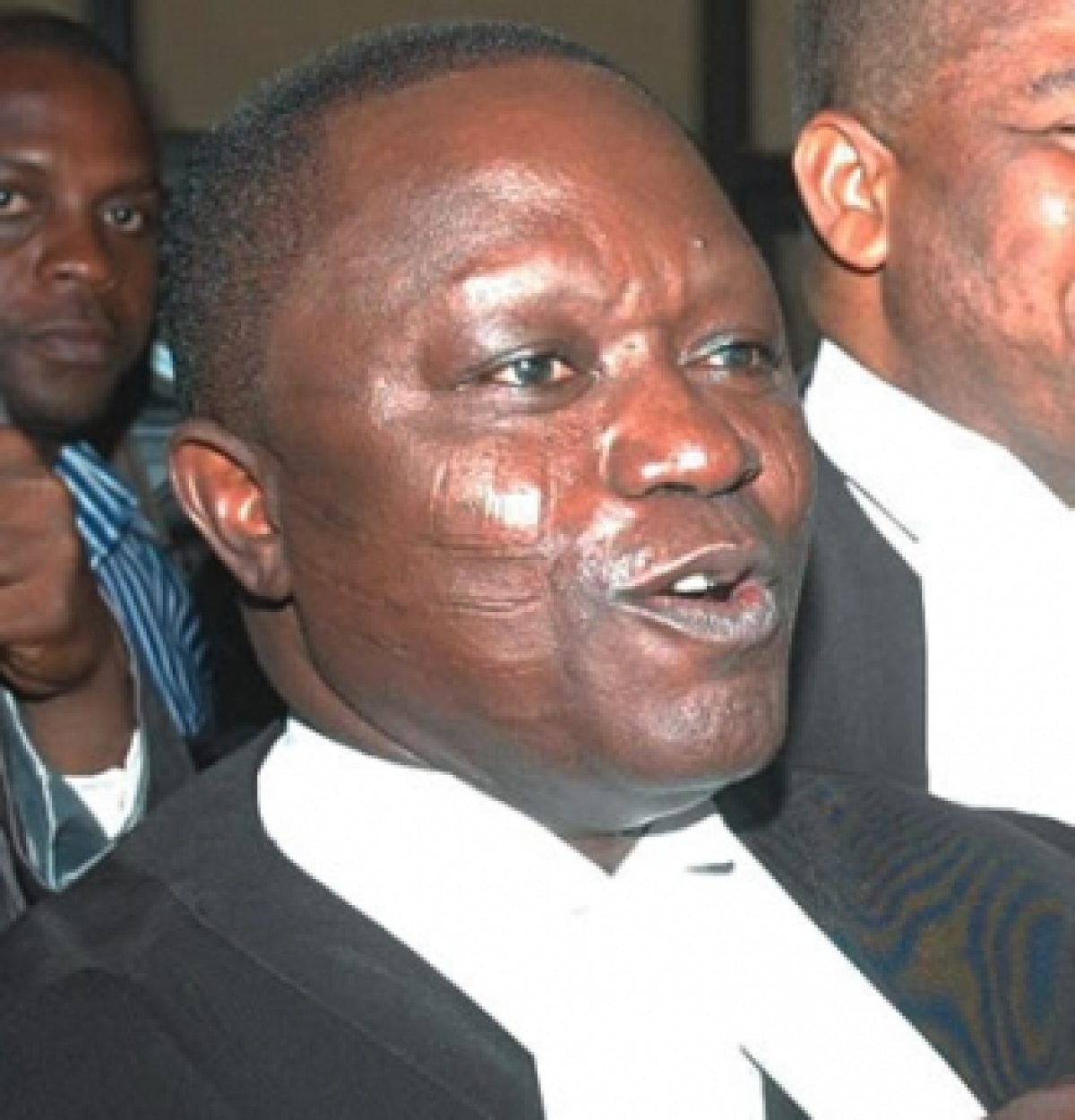
By Niyi Akintola, SAN

I was made a silk in 2001 well over two decades ago and a life Bencher 19 years ago. But I respect my seniors at the Bar so much that if I know you were called to the bar before me, I seek the permission of the judex to allow known seniors to join me in sitting at the front row in court except where we have more SANs in the court room.

I once carried a suitcase of a revered senior and leader at the bar on my head at the MMA 2, Lagos on our way to Abuja and the senior in question proudly announced this at a branch function in Ibadan.

I know many of my brother Silks who accord great respect to non-Silk seniors in and out of the Bar. It depends really on type of training and upbringing receives whilst growing up.

I was trained by many seasoned seniors some of whom though being non-SANs command so much respect in Ibadan Bar that we dare not even mention our cases before them.

We normally address the judex in this phrase “ My Lord, may I draw the attention of your Lordship with profound respect sir to the presence of our revered father and senior this morning in person of Chief XYZ. May I crave the indulgence of my noble Lord to allow our said senior the privilege of mentioning his case before mine. I am grateful for the indulgence my Lord.”

In all cases of such the prayers are granted with praises by the Judex and heartfelt prayers from the seniors affected.

Arrogating Seniority to oneself on account of status over those called to the Bar before you should not be a rule of universal application. It depends really on the type of training received by you and general upbringing.

 Chief Niyi Akintola, SAN, Life Bencher.

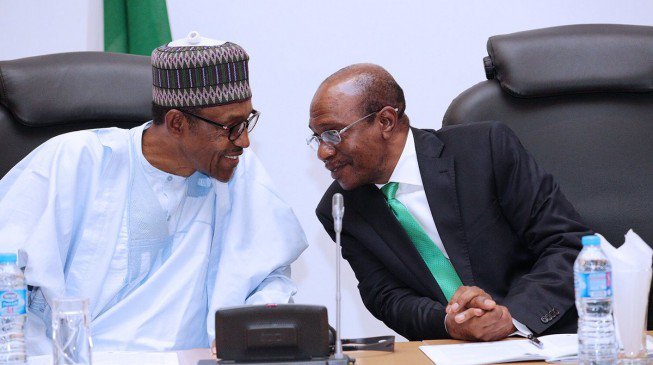
#Buhari-watch: Who is the cabal? 

By Martins Oloja

That polymorphous word, ‘cabal’ has cropped up again. And those deploying it know that there is power in that word, (cabal). They have been manipulating the word to bend minds and win hearts in this land of the gullible. They want to confuse us with the word again. Even members of the ruthless cabal are calling people cabal – just to deceive and get to regain power. For us the young ones, let’s re-examine to explain the classic called cabal.

Ordinary dictionary would define it as ‘a secret political clique or faction as in “a cabal of dissidents”. Another one would claim a cabal is ‘the contrived schemes of a group of persons secretly united in a plot (as to overturn a government) also a group engaged in such schemes : club, group.

Cabal is classically associated with a group of five ministers in the government of England’s King Charles II. The initial letters of the names or titles of those men (Clifford, Arlington, Buckingham, Ashley, and Lauderdale) spelled ‘CABAL’; and they have been collectively dubbed as the “Cabal Cabinet” or “Cabal Ministry.” But these five names are not the source of the word cabal, which was in use decades before Charles II ascended the throne. The term traces back to cabbala, the Medieval Latin name for the Kabbalah, a traditional system of esoteric Jewish mysticism. Latin borrowed Cabbala from the Hebrew qabbālāh, meaning “received or traditional lore.”.

The magical word is now associated with conspiracy, crew, gang, Mafia, mob, syndicate, ring, clique, etc. There is one classic example of its use for understanding: ‘No one can seriously believe that decisions taken by a cabal of about half a dozen machine politicians, behind closed doors, amounts to democracy’ (From the Hansard archive).

The word (cabal) is associated with even professional associations: ‘Here, too, the issue had been one of ‘publicness’, with a supposedly voluntary charity having come under the effective control of a small cabal of surgeons’: (From the Cambridge English Corpus).

Even its negative use has spread to demonisation of the media: ‘This includes treating the media entirely as a political cabal and failing to acknowledge its role in publishing truthful information that is indispensable to a free society and that allows markets to operate transparently’.—Jeff John Roberts, (Fortune, 12 Jan. 2023). ‘Not everyone is cowed by the hypocritical criticism from a cabal of press and publicists’.(—Scott Feinberg, The Hollywood Reporter, 7 Dec. 2022)

Even presidential palaces are being associated with its use: Conspiracy theories were fanned, including that voting by mail was rigged, that the Black Lives Matter movement had ties to witchcraft and that Biden was beholden to a cabal of socialists: (I—Will Weissert, Chron, 7 Mar. 2021). Flynn and Powell have both promoted theories linked to QAnon, a sprawling conspiracy movement united against a nonexistent cabal of devil-worshipping pedophilesL—Adi Robertson, ‘The Verge’, 8 Jan. 2021). The hearings cut through the lies, conspiracy theories and political theater around the Big Lie, revealing a cabal of Trump lackeys bent on stealing the 2020 presidential election.(—Lorraine Ali, ‘Los Angeles Times’, 4 Dec. 2022).

Another explainer puts it so simply: A cabal is a group of people who are united in some close design, usually to promote their private views or interests in an ideology, a state, or another community, often by intrigue and usually unknown to those who are outside their group. The use of this term usually carries negative connotations of political purpose, conspiracy and secrecy. It can also refer to a secret plot or a clique…

The term is frequently employed as an anti-Semitic dog whistle, as evidenced both by its Hebrew origin and by its evocation of centuries-old antisemitic tropes.

The term cabal is derived from Kabbalah (a word that has numerous spelling variations), the Jewish mystical and spiritual interpretation of the Hebrew scripture. In Hebrew, it means “reception” or “acceptance”, denoting the sod (secret) level of Jewish exegesis. In European culture (Christian Cabala, Hermetic Qabalah, it became associated with occult doctrine or a secret.

It came into English via the French cabale from the medieval Latin cabbala, and was known early in the 17th century through usages linked to Charles II and Oliver Cromwell. By the middle of the 17th century, it had developed further to mean some intrigue entered into by a small group and also referred to the group of people so involved, i.e. a semi-secret political clique.

Followers of the QAnon conspiracy theory use “The Cabal” to refer to what is perceived as a secret worldwide elite organisation who, according to proponents, wish to undermine democracy and freedom, and implement their own globalist agendas.

Some anti-government movements in Australia, particularly those that emerged during Canberra’s response to the pandemic, that Scott Morrison’s secret ministerial appointments were evidence of what they said was happening all along – a “secret cabal”.

And so, let there be understanding of the times by various actors that the people should not be insulted with any sophistry at this time of crisis, at this time of queues everywhere over fuel and currency crises that may boil over soon. Who wants to tell us about a cabal that the Nigeria’s vicious political class born of the two political parties has used to confound us in the last 24 years of unbroken democracy? If the presidential candidate of the ruling APC is talking of a cabal inside the Nigeria’s seat of power plotting to frustrate him on his #Project-2023, who is the cabal? Where is the cabal that the Governor of Kaduna state was also referring to inside the Villa the other day? Whose presidency has nurtured a cabal even the Nigeria’s First Lady is also supporting the Kaduna State Governor, Nasir el-Rufai about? We have always been writing about a cabal since 2015. Even an influential member of the Aso Villa cabal who once specifically declared, ‘I am the cabal’, Malam Ismaila Isa Funtua died since July 19, 2020. One of the influential members of the suspected caba, Abba Kyari, then Chief of Staff to the President had died three months before the cabal himself, Funtua died. Kyari died on April 17, 2020.

‘Inside Stuff’ had done a deconstruction of the cabal through a serial on ‘Why Buhari Is Man of the Decade (1-2)’(15 & 22 September, 2019). There may be a cabal inside the Villa but the point must be repeated that no one has elected any cabal to run this country. Whatever ‘the cabal’ is doing ‘to undermine democracy and freedom, and implement its own agenda should be attributed to the President we elected to solve our problems including the currency and energy crises of the moment.

But the point must be made to ask the governing party’s presidential candidate and the party’s campaign council: What did they do when the presidency with its cabal began to impose a culture of mediocrity and tribalism on the country? Who hasn’t tasted from the ruthlessness of the so-called cabal?

Which cabal worked against conformation of Ibrahim Magu as Acting Chairman of the EFCC from 2015 to 2021? When the same cabal helped the presidency to sustain illegality of the office of the EFCC chairman from 2015 to 2021, who cried foul from Kaduna to Lagos? Have we forgotten that the Senate of the Federal Republic of Nigeria rejected the nomination of Ibrahim Magu twice in 2017 and the President kept him in office till 2021?. The then DG DSS, Lawal Daura twice wrote to the same Senate that he (Magu) should not be confirmed. What cabal did the then DG, DSS, represent while the President was in London on medical vacation? Where were the APC members and the current presidential candidate Asiwaju Bola Tinubu then? When this same cabal went for the jugular of the then Chief Justice of the Federation, Honourable Justice Onnoghen on the eve of the 2019 election, where were the APC members who are crying foul today about the same cabal? As I have been writing here, it was curious that the then CJN’s confidential file was violated at the Code of Conduct Bureau and its content was given to a non-governmental individual (NGI) to complain about the CJN’s violation of a Code of Conduct. An institution of governance sold a lie to a national newspaper that the then CJN had a whopping $3 million in his foreign account and 55 houses to his name, all in a desperation to nail him. During the accelerated trial in an Administrative Tribunal, the allegations of $3m USD and 55 houses could not be sustained as documents from his banks and housing authorities clearly showed. Yet he was removed from office without hearing any of the four petitions in the Court of Appeal. While that travail was going on against Nigeria’s Chief Justice, where were the APC chieftains crying foul about a cabal today? What didn’t even their professors of law say about the expediency of kicking out Justice Onnoghen?

Governor el-Rufai too in September 2016, wrote a confidential memo titled, “Immediate and Medium Term Imperatives for President Muhammadu Buhari” (September 22, 2016) to the President. The memo, which was clearly diagnostic and constructive enough to help the president legacy projects for 2019 and beyond, was deliberately distorted and leaked by a cabal in the same presidency – to demonise the Governor. They got a local printer to recast the title to read: Governor Nasir el-Rufai’s Letter to President Muhammadu Buhari: “You Have Failed”. It was sold to the unsuspecting public then that el-Rufai abused the president in a memo and leaked it to the public. The Governor denied the leakage. As my brother Simon Kolawole would have said, ‘It’s all politics…’, yes politics of the office of chief of Staff then. So, who cried foul then when the cabal went for el-Rufai? So, which cabal is Governor el-Rufai referring to in 2023?

Let’s ask even some questions: When so many presidential aspirants including the CBN Governor, Godwin Emefiele and African Development Bank President, Dr, Akinwumi Adesina were being encouraged and handed N100 million naira worth of APC presidential nomination form, who in this same APC asked, which cabal was behind the encouragement for the crowd funding and crowded presidential race? What on earth do the president’s party leaders want people to do with the direct accusation that a cabal in the presidency is against the presidential aspiration of their candidate? How do we understand the intention of the First lady, Hajia Aisha Buhari who from inside the presidential palace has been accusing a cabal of undermining the efficiency and fairness of her husband, who is our President? If the First Lady is asking us to do something about a cabal inside Aso Villa, who shall we the people ask?

Between Omoseyin and the real abusers of Naira

By Ibe Ikwechegh

The news media is awash with stories of the arrest of Oluwadarasimi Omoseyin, an actress and cosmetologist for allegedly spraying and stepping on the new Naira Notes, an offence, the authorities say is contrary to Section 21 of the CBN Act 2007. It is reported on one hand that she offered the new Naira notes for sale on social media and on another note that she was arrested after the video of her spraying and stepping on the newly redesigned Naira notes at a party surfaced online. It is believed that the authorities would charge her when, supposedly, they have all their evidence down. The section 21 already referenced says that ‘a person who tampers with a ..note is guilty…’ Then the next paragraph says that the note is deemed tampered if impaired, diminished, lightened, engraved, mutilated torn, squeezed, etc. Then its paragraph 3 specifically spoke of spraying the notes or dancing or matching on it.    

In the document, A Brief On The Central Bank of Nigeria (CBN) Act, 2007, put together by the Legal Services Division of the Central Bank, it states at its paragraph 8 titled ‘Abuse of Naira’ that; ‘In order to stem the abuse that the Naira is constantly subjected to, increase the active life of the Naira notes and coins, and promote confidence in their usage as medium of exchange, refusal to accept the naira, trading in naira notes and coins, spraying of the Naira and all such abuses have been criminalized and appropriate sanction imposed.’

And so, spraying the naira notes specifically is considered an abuse of the Naira. But how so? It is not hard to understand that any government would be interested in preserving the lifespan of the money once printed. It would amount to economic sabotage if each batch of money printed would not really make much rounds and subject the printing and minting mill continually busy, unduly re-printing money with its consequential costs. But how does spraying of money abuse it so much so that it shortens its active lifespan?

To begin with, it has never been shown that monies sprayed constitute any significant ratio of monies in circulation. That is to say, a very insignificant portion of monies printed was ever sprayed. Money spraying has come to become the culture of the people of Nigeria and they will do so at wedding ceremonies where they would spray the bride and the groom. Same as burial ceremonies and other ceremonies where people are merry and would spray at the celebrant or even on one another. These activities are organized to accommodate spraying. These monies are typically sprayed on people’s bodies and not on burning furnaces.  They fall to the floor and are picked by the beneficiaries or those appointed for that purpose. It is hard to see at what point in the chain of spraying and ultimately picking that the monies suffer any type of abuse. If anything, those spraying them and those upon which they are sprayed have great interest in seeing that it retains useable form or else it would be useless to the beneficiaries. Money is an inanimate object and so unlike, for instance, a baby that one might say that the act of throwing by itself amounts to abuse, throwing monies in so far as they do not reduce their active life nor depreciate confidence in their use as medium of exchange cannot reasonably be held to have been abused.

Omoseyin’s arrest which may put section 21 of the CBN Act to test came at a time when millions of Nigerians are facing unprecedented hardship. Naira has been redesigned or put more poignantly, has been re-colored. Many have no access to the money. Most countries redesign their monies with the old ones remaining legal tender. This way, when the old notes make it to the banks they do not come out again, making the transition seamless.  But here is not the case. There is a deadline of so short a time for turning in billions which had been in circulation among more than 200 million Nigerians and yet there does not seem to be anything near enough to facilitate the exchange.  And so, it is not impossible to see how a government grappling with the difficulties in which it has plunged itself as a result of low-grade planning, would in its frustration turn to chase the ‘mice when its house is on fire’. It is not far from the blame game tradition that has for so long bedeviled governance so that accountability takes backstage and blame shifting becomes sublime. We can fancy a government spokesperson telling us how it is some among us who have frustrated the transition by spraying and dancing on the new notes thereby causing a great shortage. 

If the government in true perspicacity resolves to find why the Naira notes suffer abuse, why the notes are all too soiled sometimes with grease and oil and the monies folded many times that just one next tender touch would reap them apart, it would, by simple candor and sincerity to itself.

Depletion of the value is one very good reason why money suffers reduced active life. Money is generally printed on high-quality paper that is designed to wear well and be used for a long time. But this quality is constantly challenged where there is always a need to carry so much of it at all times. For instance, slipping a one-hundred-dollar bill in one’s wallet cannot be compared with stuffing in its equivalent of eighty thousand naira in one’s back pocket. Here is a wad of eighty notes or one hundred and sixty notes or even more depending on the denomination.  It is so easy to see how a devalued money makes it imperative to bundle in so much of it into our tight pockets and pouches. Many Nigerians no longer know what wallets look like; it is not meant for an economy such as ours.

It has been suggested that a cashless economy would address the problems of hauling so much cash wherever we go, but there is yet no infrastructure for our government’s cashless policy. What the average man understands cashless economy to mean is that Automatic Teller Machines have replaced the cashier at the bank for indeed that’s all the difference we see. We still need to take the cash out for our shopping, because the average trader there does not have POS, and those who have, find them grossly unreliable. A woman cried home because she had swiped her card to withdraw money to feed the family and the POS won’t show approved or the ATM won’t dispense and yet she would have been debited. With no access to funds, she would have to wait till the next working day to complain and then wait for another week or more or even indefinitely for the problem to be resolved. So, in the interim, what happens to her hungry children? Tales like this are commonplace. Many who are travelling have been stranded for placing faith on the so-called cashless economy. Electronic payment of money is not guaranteed. A bank teller saying, ‘Madam, we don’t have network’ is almost a familiar incantation. There is a complete system’s failure to implement, support, or sustain our cashless policy. And so, cash would continue to swelter around, enduring the worst but inevitable form of abuse.

We would leave out, for now, the fact that many, for fear of cyber theft of their monies, a crime that the government has failed to protect its citizens from, store their monies at home. This may well be in humid and damp conditions.

It is these system failures that have created an environment where overhandling of cash has become imperative.

We shall look forward to what the judge may say when Omoseyin would be hounded in before him.  A textualist judge may insist that section 21 of the CBN Act 2017, speaks of spraying money and so that by itself is an abuse and thus it would not matter if the money was gently sprayed and caught with wool gloves. Maybe a pragmatic judge would like the case to be adorned with some analysis of how Omoseyin’s spraying of money has indeed made the particular notes sprayed lose its ‘active life’ or lose ‘confidence in its usage’. I guess that may involve tendering the very notes involved in the episode and examining the abuse done to it.

We just can never be certain what outcome to anticipate if the case goes to trial, but one thing that is certain is that whichever way the case may go, the public is not unaware of the real factors that make our naira notes look so dilapidated and invariably who the real culprits are.

Chief Ibe Ikwechegh is a Lawyer, Consultant at Indent, and Law & Society Magazine Columnist.

“Naira redesignation” and Mr President Buhari’s “Give me 7 days to resolve cash crunch promise”

By Sylvester Udemezue

Thank you, Mr. President.
Let’s hope that Mr. President Buhari will resolve the problem of insufficiency of the new naira notes within the 7 days. It’s interesting to note that the 7-day promise will terminate on 10 February 2023, which happens to be the deadline for use of Old Naira Notes.

I am very hopeful Mr. President will achieve this, so that he proceeds with these beautiful policies which would have multiple long-term advantages/benefits for ordinary Nigerians.

However, where Mr. President Buhari is not able to achieve his plan to resolve naira insufficiency (I want him to succeed; these policies are very laudable), the following option would lie essentially before the government, namely: the Government may consider extending the deadline again from 10 February 2023 to a later date, perhaps shortly before the 2023 general elections (say 20 February 2023) and to allow the old Naira notes and the new Naira notes to continue to co-exist as legal tender till that date.

Note the following, which remain my position:

A). Naira Redesignation and Daily Cash Withdrawal Limit policies of Mr. President Buhari are laudable and should be supported by all Nigerians considering the huge benefits derivable therefrom. (I have already said enough on the huge benefits some of which have even begun manifesting themselves).

B). Every laudable policy of Government comes with some level of adverse side effects. What comes easy won’t last, what lasts won’t come easy. Alisha Tyler said “Nothing really worth having is easy to get. The hard-fought battles, the goals won with sacrifice, are the ones that matter”
And Shauna Niequist wrote, “Nothing good comes easily. You have to lose things you thought you loved, give up things you thought you needed. You have to get over yourself, beyond your past, out from under the weight of your future. The good stuff never comes when things are easy”. If Nigerians want a better Nigeria, we must be prepared to make some minimal reasonable sacrifice in order to realize it. If we want everything easy, we may never get to the promised land.

C). There are against smooth operation of the Naira Redesignation and Daily Cash Withdrawal Limit policies, obvious sabotage and backbiting activities, motivated by mischief, selfishness and hypocrisy on the part of people who want the policies to fail in order that they may have their way to buy votes and thwart the free will of the people in the forthcoming 2023 elections.

D). Accordingly, much of the opposition to these policies, especially by some elites, are motivated by selfishness and not by any genuine concern for the plight of ordinary Nigerians because virtually all the elites opposing the polices have never been known to be on the side of the ordinary suffering Nigerians;

E). Distinction must however be drawn between opposition by some genuinely concerned Nigerians who bear the brunt of the harsh side effects, and convenient opportunistic opposition by some selfish elites who have ulterior motives not unconnected to vote buying, and rigging during the upcoming elections.

Notwithstanding these, innocent Nigerian citizens do not deserve to suffer any further unbearable hardships on account of polices and efforts (however genuine the polices and efforts) to enthrone free and fair elections in Nigeria or to stop crimes and corruption. Although nothing good ever comes easy, meaning there can be no genuinely good and impactful policies without some level of side effects, yet while introducing such polices, the Government has an added responsibility to put measures in place to ensure that the adverse side effects do not become unbearable for the citizens or otherwise to cushion the adverse effects of such polices. To this end, the Government should have known that (just as it’s with the introduction of everything good) there would be acts of sabotage along the line, and therefore must have planned ahead on how to effectively deal with sabotage in order to ensure that such doesn’t truncate enthronement of beautiful polices and programs such as the Naira Redesignation and Daily Cash Withdrawal Limit policies. Innocent Nigerians need first to be alive and safe in order to participate in and enjoy the fruits of free and fair elections and a crime-free Nigeria . After all, those who would vote in these coming elections, judging from past experiences, may not be up to 40 million people. In 2019, not up to 30 million Nigerians voted. Nigeria has over 220 million people and the safety of the other over 180 million Nigerians who may/will not vote should not and must not be sacrificed because we want to secure free and fair elections for the about 30 to 40 million persons expected to participate in voting or being voted for..
God help Nigeria!
Amen!
Respectfully,
Sylvester Udemezue (Udems).
Presiding Pastor of
The Realist Ministry (TRM) Nigeria.
08109024556.
[email protected]
(4 February 2023)

TIPS