Home Blog Page 793

CSW: Minister counts losses on women’s exclusion from digital economy

By Ene Oshaba,

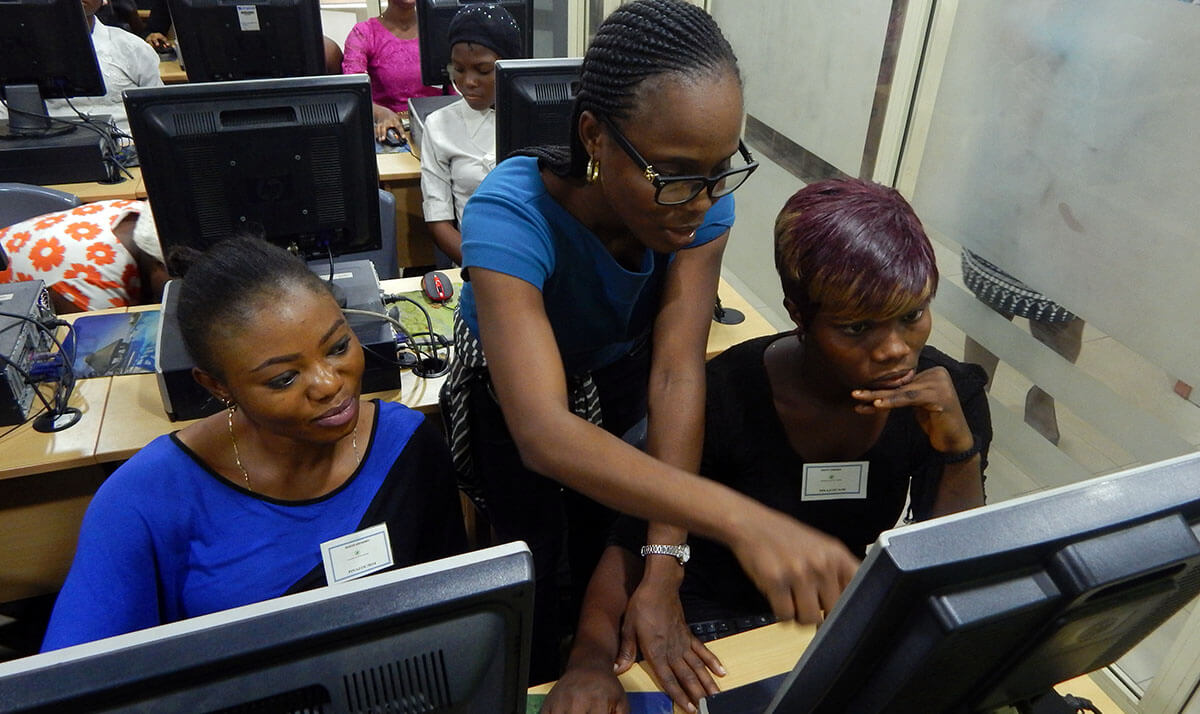
The Minister of Women Affairs, Dame Pauline Tallen, has expressed concerns on the lack of access to opportunities in digital technology and economy, noting that low and middle income countries including Nigeria has lost about 1trillion dollars to women’s exclusion with another 1.3trillion dollars loss  projected in 2025. 

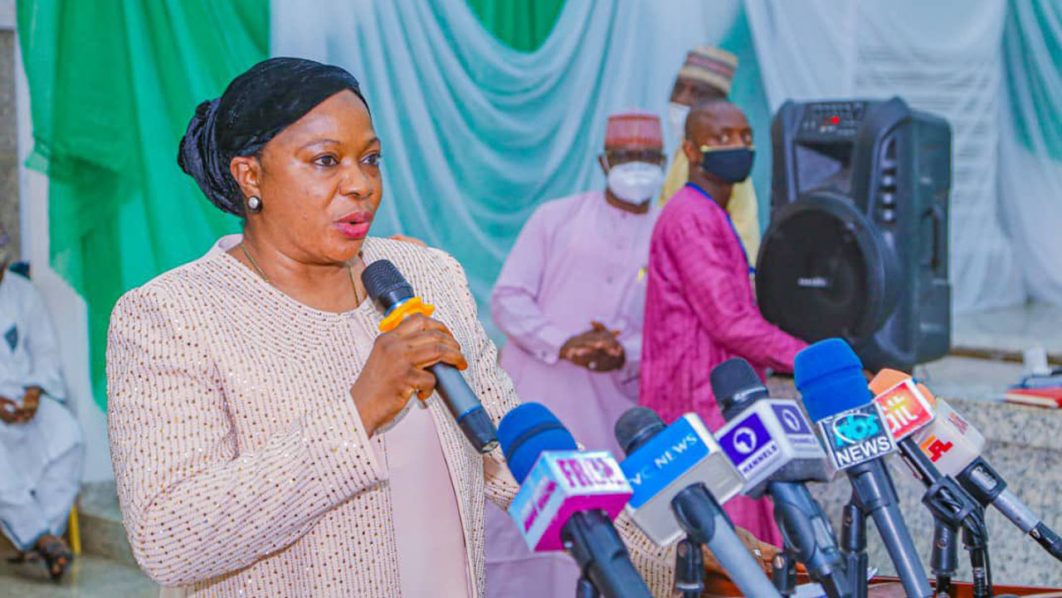
Tallen stated this in Abuja during a pre-departure meeting for the 67th session of the United Nation Commission on the Status of Women (UNCSW), organised in collaboration with Plan International, a development and humanitarian non-governmental organization that advances children’s rights and equality for girls.

Represented by the Permanent Secretary Aliyu Shinkafi Shehu, Tallen lamented the age-long gender bias in technology, stressing the need for women in underserved areas  to have access to opportunities in line with digital revolution across the world.

She said the theme of this year’s CSW Session, ‘Innovation, technological change, and education in the digital age for achieving gender equality and the empowerment of all women and girls with review theme “Challenges and opportunities in achieving gender equality and the empowerment of rural women and girls” is expected to highlight the need for inclusive and transformative technology and digital education among women and girls in all member states.

“The exclusion of women from digital economy have shelved 1trillion dollar from the gross domestic product of low and middle income countries in the last decade. A loss that will grow into 1.3trillion dollar by 2025 if no action is taken, reversing this trend according to report will mean tackling of online violence which 38% of women are personally experiencing,” she said.

According to her, it is unfortunate that the 2030 agenda for Sustainable Development Goals(SDG) on digital revolution presents a risk on existing patterns of gender inequalities, noting that it is increasingly evident that women are left behind in  access to technology.

She therefore stressed the need for transformative technology for a sustainable future, adding that gender approach innovation to technology and increased awareness of women and girls regarding their rights, civic engagement and advancement in digital technology offers great opportunity to addressinb developmental challenges.

She also noted efforts by the federal government to increase the development of women and girls in technology, stating however that many women and girls are under-represented in Science, Technology Engineering and Mathematics(STEM).

“Globally there are minority of students in STEM education as in 35percent only 3percent of women and girls are studying information and communication technology, this directly reflects the discrimination faced around the world. As a country Nigeria is not doing badly in STEM education for women and girls but could do better.

“It has been widely acknowledged that no tool is more important in development like women empowerment and gender equality  because when women participate in decision making processes and sits on an equal basis’s with men, growth and development is accelerated, death and poverty eradicated, what women do not nurture cannot be sustained,” she said.

She further reaffirmed Nigeria’s commitment to the Beijing declaration and platform for action, adding that this year is critical for the realization of SDG2023 in women empowerment and strategic inclusion, innovation, technological change and education.

In her welcome remarks the Director women department

at the ministry Funke Oladipo, said that Nigeria as a UN member state,  has represented the interest of Women, adding that globally, women should not be left behind. 

“Women in Africa remain the poor, dispossessed, landless, unemployed, worker in the informal sector as expressed in the African women gender empowerment of 2018-2028. There is the need to track the SDG 1 and 8 related to innovation and access to the economy for women to increase their income level from poverty,” Oladipo said.

“Marry her or spend 10 years in jail”- Court tells man who had sex with mentally challenged woman

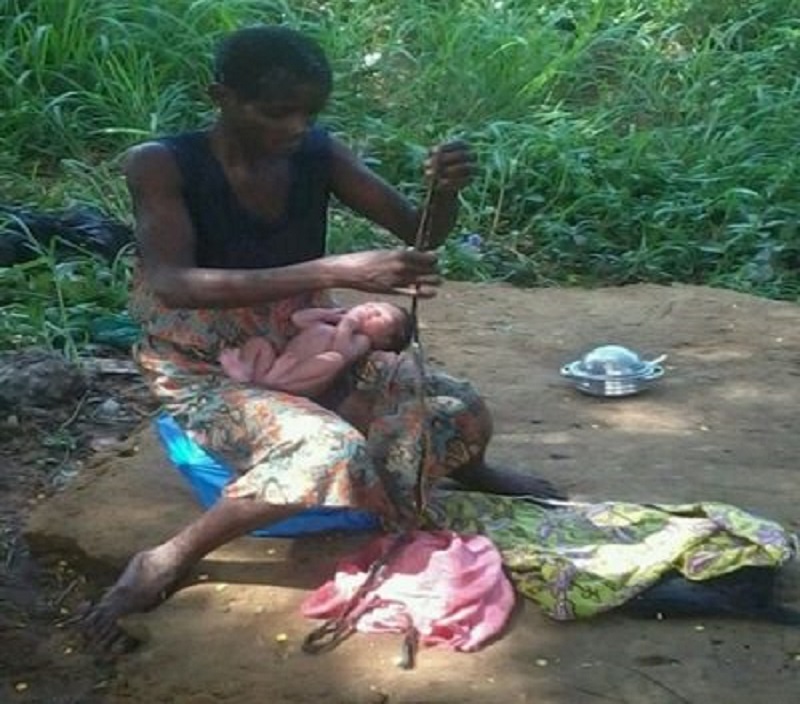
It is not unusual to see a pregnant mad woman roaming the streets in Nigeria. Over time some of these women have also been seen wandering about, eating from refuse bins and drinking water from drains with a child or two.

A netizen once said, “I always wondered who got mad women pregnant In Nigeria. Immaculate conception?”

News stories abound concerning Nigerian men of different ages and from different parts of the country who were caught while sleeping with mad women or arrested by the police for impregnating them. No prosecution or punishment has come to the light yet.

Days ago however, a Zambian court sentenced a man to 10 years imprisonment for sleeping with a mentally challenged woman four years ago.

Edwin Sakala, was arrested in March 2019 after residents exposed him for having carnal knowledge of a mentally ill woman in Masala.

Eyewitnesses had revealed that the man, who was 29 years at the time used to drag the woman into his apartment every night to have sex with her and then bring her out early in the morning.

A source told Zambian eagle; “the man has been dragging her into his apartment late at night and bringing her out early mornings.”

Sakala met his Waterloo after neighbours who had been suspecting him paid more attention to his movements, and then caught him in the act.

The Masala police arraigned him in court and after 4 years of the case lingering, a judge found him guilty and convicted Sakala.

Nevertheless, His Lordship gave Edwin Sakala an option of marrying the mentally challenged woman or spending time in jail.

FG yet to establish promised family courts as Nasarawa State sets up one, years after adoption of Child Rights Law

Hon. Justice Aisha Aliyu, Chief Judge of Nasarawa State. Photo Credit: The Guardian Nigeria

Nasarawa State has joined the list of states with family courts, even as Nigerians await the fulfillment of Federal Government’s promise to establish family courts in all states of the federation.

Ahead of the International Children’s Day celebration in 2022, the Minister of Women Affairs, Dame Pauline Tallen, announced that the Federal Government has established family courts in 16 states to ensure child-friendly justice for children, either as victims or as offenders of violence.  It is yet to be seen.

However, 17 years after the adoption of the Child Rights Law, Nasarawa has set up a Family Court. The state government disclosed that the court was created to mitigate the high rate of abuses and violations involving women and children.

Chief Judge of the state, Hon. Justice Aisha Bashir Aliyu, signed the Rules and Practice Direction 2023 on Wednesday, 10 March in Lafia, the state capital.

LEADERSHIP Friday reports that the Child Rights Act was passed by the federal government in 2003 and domesticated in Nasarawa in 2005. However, since its domestication, the laws have not been implemented due to lack of institutional framework to do so.

In 2012, the Lagos state judiciary set up the first operational family courts in the country. They operated at two levels; the high court and the magistrates’ court. The family courts have jurisdiction in all civil and criminal proceedings relating to children, or in the interest of the children

Then Chief Judge of Lagos state, Justice Adetula Alabi, said the establishment of family courts was expedient to enforce and consolidate all legislations relating to the protection and welfare of children in Lagos state and for other connected and incidental purposes, including child survival, child development, protection, and participation.

Last year, Anambra State Government set up a special family court to tackle issues of increasing domestic violence in the state.

This was following the reported high rate of domestic violence, one of which led to the suspension of the Transition Committee Chairman of Nnewi North Local Government Area, Mr. Mbazulike Iloka, as a result of the controversial circumstances trailing the death of his wife, Chidiebere.

The Yoruba And The Igbo

By Ikeazor Akaraiwe, SAN

1: At a time like this, with threats of violence and actual violence against the Igbo over electoral choices, I have said it before and will say it again, that:

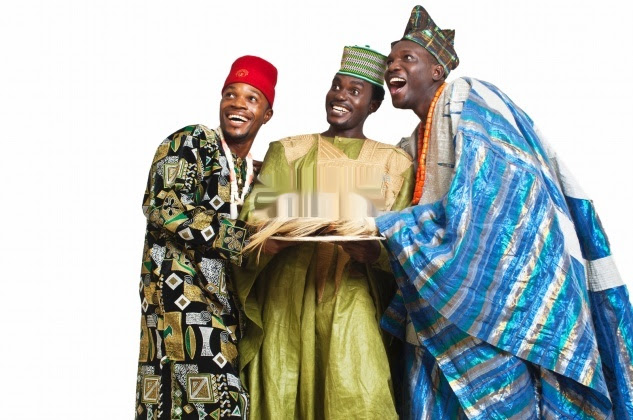
2: The Yoruba as a people are not enemies of the Igbo. And vice versa.

3: It is persons who are ignorant of history, and desperadoes who want to create a schism between the Yoruba and the Igbo, and between the Igbo and God-knows-who-else.

4: It remains an interesting reference point that during and after the civil war (1967-70), not one Igbo-owned property was confiscated by the Yoruba in the entire west under the title ‘abandoned property,’ unlike some other parts of Nigeria.

5: Stories abound of Yoruba charity during that war of which the most famous was Otunba Subomi Balogun [FCMB] who collected rent and kept an eye on the house owned by a certain young architect, Alex Ekwueme, who fled Lagos in the wake of the civil war.

6: When Ekwueme returned after the war, there was his house and his rents, collected by his conscientious neighbour, waiting for him.

7: It is also said (but I cannot confirm) that Otunba Balogun’s banking career received substantial boost in the form of a scarce banking license when that neighbour became vice-president of Nigeria, 9 years after that war.

8: This is one of several stories of Yoruba magnanimity during a very difficult time for the Igbo, and I would urge my fellow Ibos not to fall prey to a persecution complex propelled by social deviants, miscreants, and a microscopic minority of demented souls.

9: I urge all Nigerians to rather look at better examples of angelic behaviour of our neighbours, east, west, south and north, and then seek to understand one another better. As Steven Covey says in his epic work, ‘The 7 Habits of Highly Effective People,’ “Seek First To Understand and Then Be Understood.”

IA Akaraiwe, SAN
9th March, 2023.

Tales My Patients Told Me: “Doctor, I have found my Daddy!”

By Emmanuel Fashakin

This interesting edition of “Tales my patients told me” was written in July 2015. At 34 years of age, Christina has been married only once, yet she has had FOUR last names in her lifetime. When Christina was born, Carmen, her mom had no doubt about who her father was. Even though she was born under Mr. Rodriguez’s roof, Christina’s mother knew that the baby belonged to her former boyfriend, Mr. Garcia.

Carmen had been a long-time girlfriend of Mr. Garcia, and they were planning to get married — until Mr. Rodriguez got into the picture. Soon Carmen decided that she would probably have a better future being married to Mr. Rodriguez, who had never been married, than Mr. Garcia, a divorced father of two children. She dumped Mr. Garcia and moved in with Mr. Rodriguez.

Two weeks after dumping Mr. Garcia, Carmen discovered she had missed her period. She had been intimate with both Mr. Rodriguez and Mr. Garcia after her last menstrual period, and she was confused as to who the baby’s father was. Mr. Rodriguez was ecstatic about the prospects of being a father, and he gladly accepted the baby as his own. They soon got married as they awaited the birth of the baby, the first for both of them. But any nagging doubts in Carmen’s mind regarding the paternity of Christina vanished the moment the nurses cleaned the blood off Christina’s body, and they unwrapped the bundle of joy.

The clincher had nothing to do with the looks or features of the baby — the clue was in the hands. Mr. Garcia and his two children from an earlier marriage both have vestiges of extra digits in their hands — all three of them. Polydactyly is the medical term, and it is hereditary, with variable penetrance: children born to a person with polydactyly may or may not have the extra digits, but if they do, it is presumptive evidence that the biological father is the guy with the extra fingers. Christina came into the world announcing who her father was, because dangling from the inner side of both hands, besides the little fingers, were tiny extra digits.

Carmen was convinced that her baby’s father was Mr. Garcia. So she called Mr. Garcia with the happy news. “Ok, I did not marry you. I dumped you for Mr. Rodriguez. I missed my period after I left you, never got it back. I was confused about the pregnancy because I also had intimacy with my husband, Mr. Rodriguez. Now the baby is born. She looks just like you. Even the hands look like yours. This is your baby, Garcia.” Carmen instructed the hospital registry to put the name Christina Garcia on the birth certificate.

The next day, Carmen’s husband, Mr. Rodriguez came to see his wife and new baby. It was no surprise that when Mr. Rodriguez came to see his baby girl, there was a little bit of confusion. There was no Christina Rodriguez in the nursery, but Christina Garcia — because Carmen had told the hospital that the baby belonged to Mr. Garcia, and not Mr. Rodriguez.

What followed was a grand firestorm from Mr. Rodriguez, threatening court action, and if that fails, violence, and even murder, if they don’t give him “his” baby. Carmen weathered the storm for one week, after which she gave in, and had the baby’s name changed to Christina Rodriguez. She sent a message to Mr. Garcia to stay away from her family, that her earlier message was a mistake because the baby belonged to Mr. Rodriguez, and not him. That, everybody hoped, should have been the end of the matter, but it wasn’t.

When Christina turned five, the home broke down irretrievably and Carmen changed her last name, and Christina’s, to her maiden name —Perez. She felt that she had no obligation to keep Christina’s last name as Rodriguez when she had serious doubts that Mr. Rodriguez was the natural father anyway.

Thus, the lady who made her way from her native country of Ecuador to the United States in 2003 was Christina Perez, formerly Christina Rodriguez, also formerly known as Christina Garcia for one week after her birth.

In 2010, Christina got married to Mr. Torres, and she changed her name once again to her new marital name, Mrs. Christina Torres. Torres became her fourth last name, even though she had been married only once. It was this Mrs. Torres who burst into my Elmont office in May 2015, yelling at the top of her lungs: “Doctor, I have found my Daddy, I have found my Daddy!”

I had thought that maybe her father had Alzheimer’s Dementia, and had wandered away, and was then found, but, after asking her whether her father had got lost, she told me her tale.

Christina had always been confused about who her real father was. Her auntie, the mom’s junior sister, had always whispered in her ears that her dad, Mr. Rodriguez, was not her real daddy, but one Mr. Garcia, whom she had never met. Two months earlier, in March 2015, her auntie called her from Ecuador: Mr. Garcia, her suspected real father, was visiting New York City, and she wanted to know whether Christina would like to meet him. Two days later, as Christina stepped into the lobby of a downtown hotel in Manhattan, New York City, she had no doubt whom she was staring at.

The resemblance was amazing, and there were those shriveled remnants of where the pieces of extra digits had been dangling from both their hands. Within a week, DNA tests had confirmed what they both knew, confirming that Mr. Garcia produced half of her genes.

I am happy for Christina, that she now finally knows who her real daddy is, but DNA is now unearthing so many hidden secrets which were long deemed to be buried, and I don’t know whether that is good or bad.

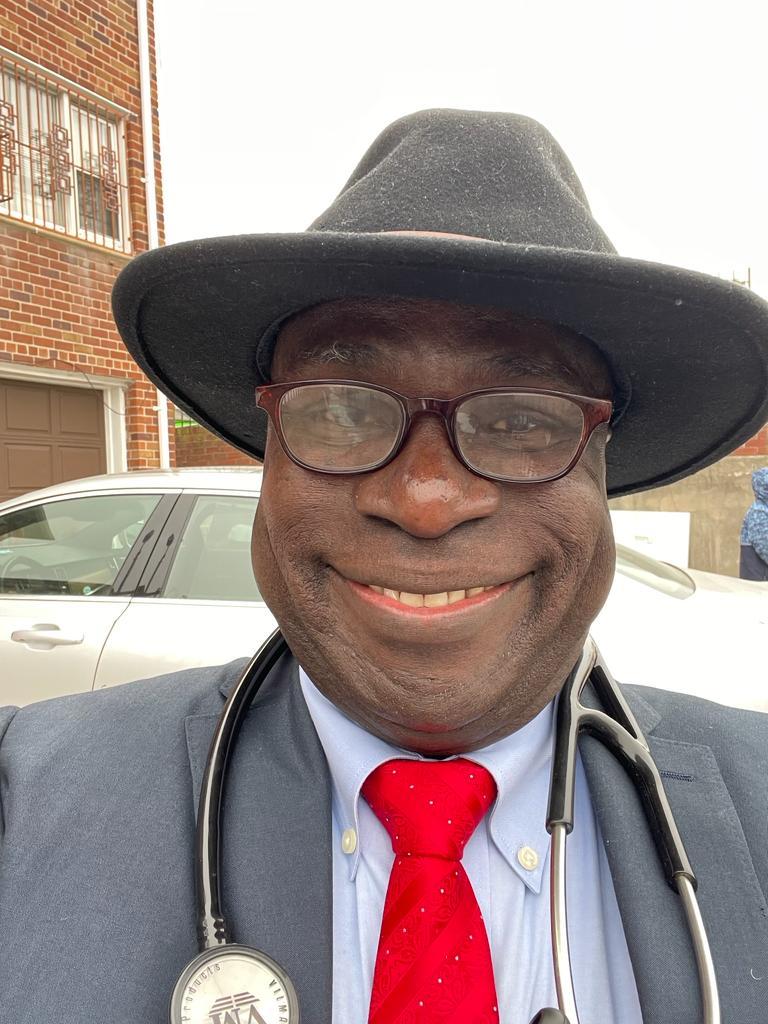
Emmanuel O. Fashakin, M.D., FMCS(Nig), FWACS, FRCS(Ed), FAAFP, Esq.
Attorney at Law & Medical Director,
Abbydek Family Medical Practice, P.C.
Web address:
http://www.abbydek.com
Cell phone: +1-347-217-6175
“Primum non nocere”

Does the NBA President really speak for all Nigerian Lawyers, always?

By Sylvester Udemezue

Section 9(5)(a)(vi) of the Constitution of the Nigerian Bar Association, 2015 provides that “The duties of the President shall include Acting as the principal spokesman of the Association”. Beside this, the position of the law in Nigeria is that when a person gets called or inducted into the Nigerian Bar (during the Call-to-the-bar Ceremony, usually held at the end of the Nigerian Law School-administered Bar training program, for aspirants to the Bar who have also satisfied the mandatory requirements for induction into the Bar), that person automatically becomes a member of the Nigerian Bar Association (NBA). The NBA President [usually elected at a biennial general election organised pursuant to the provisions of the Constitution of the Nigerian Bar Association, 2015] is the overall leader of the Nigerian Bar — the same Bar to which all lawyers in Nigeria have been called.

It is from the Nigerian Bar that a lawyer can decide to join the Bench to do the business of interpreting laws and settling disputes (although courts in Nigeria, especially of late, appear to also make, amend, repeal or revoke extant statutes and even take decisions otherwise expressly reserved for members and agencies in the executive branch of government), or gets employed in a legal education institution to teach law, or goes to court as an advocate to espouse laws, or acts as a solicitor for purposes of preparing agreements, contracts, negotiating commercial deals, registering companies, rendering other advice, etc — look, there are many things one can do from the Bar; the opportunities are virtually limitless. The NBA is therefore the umbrella association of all Lawyers in Nigeria. See, the Bar is like the body, and we all are members of the Bar by virtue of which we all are members of the NBA, just as all Christians are said to be members and partakers in the body of Christ, the Lord and Savior. Ditto with all Muslims, in Mohammed (peace be unto him).  See these court cases: NBA v. Kehinde; Chinwo v Owhonda. These cases have sealed our fate: Nigerian lawyers and the NBA are like inseparable Siamese twins, till death do us part or until the law is changed. This being the case, and as the official spokesperson for the Bar, the NBA President is deemed to speak for the Bar whenever he speaks officially; this means that, on such occasions, the Bar is said to have spoken through him or it’s said that he has spoken for the Bar (whichever way you put it; you’re right). And there should ordinarily be no debate about it. But we’re lawyers; talking is our hobby — debating is a culture, a way of life without which it’s as if something is missing.

Meanwhile, please be reminded that the Bar (speaking through its spokesperson, the NBA President) need not be right anytime or all the time; the Bar is not all-knowing, not all-seeing and not all-powerful, nor even infallible. Hence, in speaking for the Bar, the NBA President, being human, a mere mortal man who is subject (just as we all, individually and collectively) to the frailties of the humankind, could make, and indeed sometimes makes, mistakes; he could be wrong or right or he could even be (or be thought to be) speaking absolute or plain trash. This notwithstanding, this fact remains: the NBA President, however he speaks and whenever he speaks officially, provided he speaks, is deemed to speak for the Nigerian Bar. The Bar is thus deemed to have formally spoken whenever the NBA President speaks in his official capacity.

Now, an analogy, have we forgotten that a client must take his lawyer as he finds the lawyer, so much so that the lawyer’s actions and decisions, taken in his professional capacity and within the boundaries of his legal brief, binds his clien? You recall that the lawyer controls the incidents of litigation and hence reserves the right to take decisions, advance arguments, change course of action and even withdraw a pending case, on behalf of the client, even without the client’s input. Let’s repeat the bottom line: you must take your lawyer as you find him. So, if you have hired and retained a lawyer (just as we have hired and thus retained Mr Y.C. Maikyau, SAN as the NBA President for a tenure of 24 months) and for as long as the Lawyer-client relationship has not been terminated by either party or both parties, you’re bound by your lawyer’s actions, taken in the course or during the continuance of the retainership. The only option available to you when you are fed up with or are dissatisfied with your lawyer’s actions, is to sack or otherwise disengage the lawyer and hire another or otherwise proceed personally pursuant to your right guaranteed by Rule 29 RPC, 2007, and section 36(6)(c) of the Constitution of the Federal Republic of Nigeria, 1999. Until then, you are bound by all actions taken by your lawyer in his professional capacity within the scope of the brief.

At this juncture, and by way of continuing the analogy, let us have recourse to a brief discussion of the lawyer’s right to control incidents of litigation (this discussion is usually undertaken as a part of NLS’ Professional Ethics and Skills Module). Rule 24(4) of the RPC, 2007 is to the effect that, in the absence of express limitation, an instruction to a lawyer confers upon him the power to do all such things as he considers necessary within the scope of his instructions to obtain the most favourable result for the client. Thus, he can compromise a suit or withdraw an appeal without further reference to his client. He can determine what accommodations to be granted to the opposing lawyer to the exclusion of his client, provided the merits of the case are unaffected and the client is not prejudiced. Rule 24(5) RPC. The basis of the Counsel’s right to control incidents of trial is the presumption of the client’s confidence in the counsel. See Edozien v. Edozien (1993) 1.N.W.L.R. (pt 272) 678 at 693. It is a right, not a duty. See Orisharinu v. Mefun 1937 (13) NLR 187. In Adewunmi v. Plastek Nig. Ltd (1986) 2 N.S.C.C. 85, Hon Justice Kayode Eso JSC said this: –

“Counsel has authority, except he is expressly limited, to withdraw the record, to call or refuse to a call a witness, to determine the order in civil proceedings in which to call his witness, to decide what particular questions to ask a witness unless his client insists on the line of questioning in which case counsel will have a discretion to accept such· instruction or withdraw from the case. Counsel can consent to arbitration, to a compromise, to a verdict, to a reduction of damages. A lawyer can settle a client’s case out of court, he can compromise it in court or out of court. A lawyer is a professional and vis-a-vis a client, he is on contract, and his professional skill, hired by the client, is to be employed at his discretion. After all, he is employed to deal with learned men, in learned surroundings and he himself is learned, while the client, even if he is a lawyer himself is not learned for the purpose of the case”.

However, and this must be pointed out, the wide scope of the power conferred on a counsel to control incidents of trial has been limited to technical matters and not admission of facts. See: Abidogun v. Arowo-Mokun (1990) 6 N.W.L.R. (pt 158) 618 at 628; Difa v. The state (1997) N.W.L.R 224 at 226; Mosheshe General Merchants Ltd. Vs Nigeria Steel Products ltd. (1987) LN.W.L.R. Part 55 at page 110; N.N.S.C. v Sabana (1988) 2 NWLR page 23; Babajide Ali v. Aisa 1966 ALL.N.L.R. 249; Bello Akanbi & Others v. Mamudo Alao (1988) ALL.N.L.R. 242; and Alhaji Abba Gana v. Alhaji lerma & Anr. SS.C. 102/1983 (Unreported); Elike v. Nwakwoala, (1984), .A.N.L.R. 505 . In the English case of Strauss v. Francis (1866) LRI QB 379, Blackburn J. pronouncing on the authority of a counsel over a case, said:

“Few counsel, I hope, would accept a brief on the unworthy theme that he is simply to be the mouthpiece of his client. Counsel, therefore, being ordinarily retained to conduct a cause without limitation, the apparent ‘authority with which he is clothed when he appears to conduct the case is to do everything which, in the exercise of his discretion, he may think best for the interest of his client in the conduct of the cause”.

Thus, in representing a client in court, counsel need only to announce his appearance for such client and court will automatically presume that the counsel so appearing has the authority of the client he Claims to represent. Courts do not inquire into counsel’s authority to appear. Tukur v. Govt. of Gongola State (1988) 1 NWLR 39 (pt 68) or ALL. N.L.R. 42. [Please see the Handbook on Professional Ethics and Skills of the Nigerian Law School].

One more thing, this time in respect of the relationship between the NBA President and the Bar, the opinion of the bar is neither sacrosanct nor immune from error. Thus, the opinion of the NBA President, for the Bar, on behalf of or in behalf of the Bar, is liable to be either highly applauded or thoroughly celebrated or otherwise severely criticized, vehemently opposed, loudly mocked, or even outrightly attacked, including from within the Bar itself, by its disillusioned, or dissatisfied, or disenchanted or dissenting members (4DM). But that is all we can do, and the extent we can go, and it changes nothing because the fact remains unchanged, that the Bar is taken to have spoken as soon as the NBA President has finished speaking officially. As I have already said, the NBA President is the elected leader of the Bar, the official, formal head of all Nigerian lawyers, including all Benchers (starting with the Chairman of the Body of Benchers), the Hon AGF, all AG’s of the States of the Federation, all members of the LPDC, LPPC, LPRC, GCB, BOSAN, BOB, CLE, NACL, CLASFON, MULAN, EBF, EGBE AMOFIN, MIDWEST BAR, LOAN, NALT and any other and all other associations and groups, known and unknown, within the Bar, including even the ill-fated, now dead-buried-mourned-and-forgotten-because-originally-born-to-fail Law Society of Nigeria (LSN). I hope carcass of the dead LSN would never rear its head again, save as a body within and submissive to the overall leadership and authority of the NBA President who is the undisputable leader of the only Bar in Nigeria. Note the difference between THE LEADER and A LEADER. The NBA President is THE LEADER, by law!

Now, regarding the 25 February 2023  presidential elections in Nigeria [please I need to be brief, in line with the rules of Concision, Precision and Clarity] the NBA President’s official, public speech or statement (if he has made any speech at all, and in his official capacity) represents the position of the Nigerian Bar. There should have been no need for any debate about this because we had on July 12, 2022 voluntarily and overwhelmingly given him our mandate, to act ON and IN our behalf on any and all things concerning the Bar, as the Bar may lawfully engage in. We are, therefore, estopped (recall the doctrine of Equitable Estoppel) from purporting to pick and choose as to which of the official statements of the NBA President represents the voice of the Bar and which doesn’t. The House of Lord’s judgment in Central London Property Trust Ltd v High Trees House Ltd [1947] KB 130 is a famous English contract law decision in the High Court. It reaffirmed and extended the doctrine of promissory estoppel in contract law in England and Wales. That position has since been adopted, and is now applicable to Nigeria. The relationship between Nigerian lawyers on the one hand and the NBA President on the other, is contractual (a social contract) and binding, although the contract is revocable through impeachment (some will call it “removal from office”) of the NBA President. But, even if the NBA President happens to be proposed at any time (if that time should ever come) to be impeached with a view to revoking the contract, yet, pending the success of such a contract revocation through impeachment, his official speeches remain binding on the Bar. One may say this is very fortunate or very unfortunate, but the truth remains that it remains the truth, the only truth and nothing but the truth.

CONCLUSION:

Is it everything that we Lawyers must argue about? Nawaaooo!! See the interpretation of section 134(2)(b) of the Constitution of the Federal Republic of Nigeria, 1999, regarding a condition precedent to a candidate being declared winner of a presidential election in Nigeria, which interpretation and understanding of the terms used, is, I submit, (as the first step) all a matter of simple English Language grammar, and (as the second step) a prudent application of the Literal Rule of Statutory Construction, one won’t believe (you better believe ooo) that Nigerian lawyers are still on the matter, arguing upandan (up and down) and falling over one another, over what is the correct interpretation, even while the lawyers formally engaged by the contending political parties and their candidates have started smiling their way to the bank on their fat briefs, arising from the upshots of the just-concluded elections. My humble suggestion: I think this type of seasonal professional engagements/briefs should be rotated around (in order to get to people like us) in the spirit of federal character. But, Knock, Knock Knock, is anyone listening, please?

Anyway, back to the present discussion, and still on the “CONCLUDING PART” [I hope my conclusion is not too long, because, as you know, I am a man of few words], it appears naturally a traditional part of lawyers’ business to argue and disagree (virtually over everything and something over nothing). Perhaps, this is why Joyce Carol Oates , an American writer, once declared that “a lawyer is basically a mouth, like a shark is a mouth attached to a long gut. The business of lawyers is to talk, to interrupt one another and to devour [one another] if possible”. Well, if that is the case, then llet the debate continue even as the fact and the law remaineth extant!

Respectfully,

Sylvester Udemezue (Udems).

08039136749.

[email protected].

(6 March 2023)

INEC as engine of fraud

By Sonnie Ekwowusi

The February 25, 2023 presidential election is a counterfeit of the June 12, 1993, presidential election. Whereas June 12 is the freest and fairest election in Nigeria, the February 25 election is the most rigged and most robbed presidential election in Nigeria. On June 12, 1993, the freest presidential election took place in Nigerian politics, but on February 25, 2023, exactly 30 years after June 12, the most rigged presidential election in Nigerian political history took place. February 25 was a brazen and barbaric display of impunity and imbecility by INEC, which ought to be an unbiased umpire in an electoral contest.

How can INEC and its chairman, Prof. Mahmood Yakubu, descend so low as to shamelessly and flagrantly flout INEC rules, which they made to guide the February 25 election? The BVAS and IReV were successfully deployed by INEC to upload the National Assembly election results, but in the case of the presidential election result, the same INEC rendered the BVAS and IReV dysfunctional, and consequently, the presidential election result was manually collated, thus enabling the compromised INEC staffers to rig the election in favor of Emilokan Bola Tinubu.

Three days before last Saturday’s presidential election, Prof. Yakubu was still swearing to high heavens and reassuring all that INEC would deploy BVAS in electronically uploading the results of the election. For example, addressing the leaders of foreign election observers three days before the election, Prof. Yakubu told them that raw election result figures of February 25 election would not be transmitted electronically to avoid hacking. Why, then, did Yakubu connive with the APC and the devil to transmit the results manually? This is why Nigerians are particularly angry with INEC. Just take a studied look around you. What can you find? Despair, frustration, despondency, and disappointment seemingly written on the faces of many people. Nigerians are unhappy with INEC and Yakubu. I have been listening to TV and radio stations’ commentaries on the election, and I must tell you that I have not singled out any radio or TV station that is not denouncing the February 25 election as the biggest electoral fraud in Nigeria. The whole country is steeped in deep mourning over the electoral injustice foisted on Nigeria on February 25 by INEC.

The international community has made Nigeria a laughing stock. If Nigeria was a laughing stock in the past, she is now the biggest laughing stock in the world. The European Union says the election lacked transparency. The Financial Times (FT) March 2, 2023, edition said: “Nigeria’s badly flawed election fails to set an example.” The New York Times writes: “Many Nigerians had looked to the election to put the country back on track after eight years of rule by an ailing president, Muhammadu Buhari — a military dictator turned democrat. ‘Everybody was expecting a free and fair election,’ said Daniel Offor, a 21-year-old fashion stylist in Lagos, Nigeria’s largest city, who said he voted for an opposition candidate. ‘But it obviously has been rigged. What happened last time is happening again,’ he said, referring to previous elections that were tainted by allegations of vote rigging.” An Austrian newspaper allegedly writes: “Multimillionaire wins: ‘Bola Tinubu, a multimillionaire who in the past was connected to drug trafficking, has won the Presidential elections in Nigeria.’” In Poland, the alleged news headline says: “Nigeria chooses a known Drug Lord as leader.” In Canada, the alleged news headline is: “Depression, anxiety, uncertainty beclouds Nigeria’s political space as a Drug kingpin wins the election.” In their reaction to last Saturday’s election, leaders in the West African sub-region have called on INEC to comply with the provisions of the Electoral Act 2022 on the collation of results for the presidential and National Assembly elections held on February 25, 2023. Former Nigerian President Goodluck Jonathan, ex-Ghanaian President John Mahama, and other members of the West African Elders Forum (WAEF) Election Mission to Nigeria made this known in a statement on Tuesday in Abuja. The Nigerian Bar Association (NBA) regrets President Buhari and Attorney-General of the Federation (AGF) Abubakar Malami’s violation of Nigeria’s ballot secrecy principle. After voting last Saturday, the duo displayed their ballot papers in the full glare of the public so that the public and the whole world will know that they voted for the APC.

In his defense, Prof Yakubu argues that last Saturday’s election was flawless and that the aggrieved should go to court to seek a remedy. Prof Yakubu admits that the presidential election result could not be electronically transmitted because INEC turned off the BVAS. Asked by a professor and academic friend of his why INEC rendered the BVAS dysfunctional to prevent the presidential election result from being electronically transmitted, Prof. Yakubu told him that INEC switched off the BVAS because some Nigerian political parties had hired some Russian and Chinese hackers to hack the BVAS and manipulate the voting in favor of some presidential candidates. Laughable, isn’t it? Can you imagine Yakubu’s answer? China and Russia hacking the BVAS in a Nigerian election? I hope INEC will not switch off the BVAS again on Saturday under the same pretext that China and Russia hacked onto it. Asked by a party agent about the position of the law on this issue of uploading results, Yakubu answered, “The position of the law does not require that collation should be done on the basis of results transmitted but on the basis of the result carried manually to various collation centers.” The APC also argues that the use of BVAS is not a mandatory requirement.

The arguments put forth by the APC and Prof Yakubu are fundamentally flawed. By the way, why is Prof Yakubu holding brief for the APC? He is supposed to be an unbiased umpire in the election. Anyway, Section 60(5) of the Electoral Act, 2022 states: “On conclusion of voting, the presiding officer shall transfer the results, including the total number of accredited voters and the results of the ballot, in a manner prescribed by the Commission.” What is the prescribed manner by the Commission? The prescribed manner is the BVAS, which INEC introduced to ensure that the electoral process is credible. The BVAS was introduced by INEC in line with Section 148 of the Electoral Act, which gives INEC power to make guidelines and regulations to ensure the full effect of the law.

By virtue of Section 148 of the Electoral Act, INEC has been empowered to make Electoral Regulations and Guidelines for the 2023 Election. Paragraph 38 of the Regulation states: “On completion of all Polling unit voting and results procedures, the presiding officer shall: (i) Electronically transmit or transfer the result of the polling unit directly to the collation system as prescribed by the Commission (ii) Use the BVAS to upload a scanned copy of the EC8A to the INEC Result Viewing Portal (IREv), as prescribed by the Commission (iii) Take the BVAS and the original copy of each of the forms in a tamper-evident envelope to the registration area/ward collation officer, in the company of security agents. The polling agents may accompany the presiding officer to the RA/Ward Collation Centre”.

The import of the word “shall” used in Paragraph 38 is that it is mandatory (not optional) to transmit results electronically. The Rules of Interpretation require that words in the provisions of statutes, laws, and regulations, unless otherwise stated, shall always be given their natural and ordinary meaning. Accordingly, by virtue of the combined reading of section 60(5) of the Electoral Act and Paragraph 38 of INEC Electoral Regulations and Guidelines for the 2023 Election, on completion of all Polling unit voting and results procedures, the presiding officer shall electronically transmit or transfer the result of the polling unit. Failure to do so by the presiding officer who willfully contravenes Section 60 (5) commits an offense and is liable on conviction to a fine not more than N500,000 or imprisonment for a term of at least six months. Section 134 (b) of the Electoral Act states that where there is non-compliance with the Electoral Act in case of non-uploading of results to the INEC Portal, the law has been violated.

Apart from the fact that last Saturday’s presidential election violated Section 60 (5), 60(6), and Section 148 of the Electoral Act and 38 of INEC Electoral Regulations and Guidelines for the 2023 Election, the election also violated sections 25; 47(2); 60 (1), (2), (4); 62; 64(4)(a) & (b), 70; and 148 of the Electoral Act, 2022, as well as paragraphs 2.8.4; 2.9.0; and 2.9.1 of the INEC Manual for Election Officials, 2023.

If everybody had complained to Prof Yakubu after the election that the election was marred by electoral violations and malpractices, Prof Yakubu should have waited to address the aforementioned electoral violations and malpractices which strike at the root of the election and have occasioned a miscarriage of justice. However, instead of doing that, Prof Yakubu swiftly proceeded to announce Emilokan Tinubu as the winner of the presidential election, even though Tinubu did not satisfy the important requirement enshrined in sections 133 and 134(2)(b) of the 1999 Constitution. The requirement states that a candidate for an election to the office of President shall not be deemed President if he fails to secure 25% of the votes in the Federal Capital Territory (FCT).

Under what I consider to be his magnum opus entitled: “The 25% of FCT, Abuja as A Legal Conundrum,” learned silk, Prof. Mike Ozekhome SAN, has profoundly and brilliantly submitted that the word “and” in contrast to “each” used by the lawmakers in the aforementioned section 134 is meant to apply in a conjunctive sense in interpreting the section. According to Prof Ozekhome SAN, the implication of that interpretation is that no presidential candidate can be declared the winner of the presidential election if he does not win the FCT or score 25% in the FCT. Prof Ozekhome’s opus is a must-read, and it can be accessed at https://thelawyerdaily.com/the-25-of-fct-abuja-as-a-legal-conundrum/.

If a candidate must win Abuja or score 25% in Abuja to be declared the winner, coupled with the fact that the BVAS was not used to upload the presidential election result, why was Prof Yakubu in a hurry to announce Tinubu the winner and deliver his Certificate of Return? It is important to note that Prof Yakubu announced Tinubu as the winner at 4 am in the morning when most Nigerians were still asleep. Why was Prof Yakubu in a hurry to announce Tinubu as the winner and deliver a Certificate of Return to him in an election that was grossly flawed by falsification of votes at polling units, falsification of the number of accredited voters, collation of false results, mutilation of results and computational errors, swapping of results sheets, forging of results sheets, snatching and destruction of results sheets as I experienced in my polling unit last Saturday, suppression of votes, tampering with the BVAS, and refusal of compromised INEC staffers to upload results through the BVAS?

It is obvious that Prof. Yakubu rushed to announce Tinubu as the winner and also rushed to hand over the Certificate of Return to him to foist a fait accompli and a state of helplessness on the matter.

Prof. Yakubu has shown that he lacks character. He is pathologically a liar, and a disgrace to academia. He should be fired as the INEC chairman. What a disastrous country! Buhari is a disaster, the CBN is a disaster, Emefiele is a disaster, Malami is a disaster, INEC is a disaster, and now Yakubu is a disaster. However, INEC and Prof Yakubu are promising to deploy the BVAS again on Saturday. Can they be trusted this time? Well, let’s give them the benefit of the doubt. Let’s assume they will do the right thing on Saturday. Already, Labour has secured an order of Mandamus from the court compelling INEC and Prof Yakubu to use the BVAS on Saturday for the Governorship and House of Assembly elections. The court order subsists, and if Prof Yakubu dares to disobey the court order, he will be sent to jail and the entire election will be cancelled. Having woefully failed last Saturday in conducting a free and fair election, INEC must live up to its name as a real “independent” electoral body on Saturday.

It should be noted that no democratic election is 100% flawless anywhere in the world. Even in the United States, the Presidential election is also fraught with electoral malfeasances and malpractices. For instance, in his often-cited classic work, Democracy in America, French historian and diplomat Alexis De Tocqueville who travelled to America to study American democracy, writes that democracy that is bereft of equality of conditions is bound to gravitate towards despotism. When democracy is said to liberate all men, it is on the assumption that there are political leaders with high moral principles ready to navigate democracy to a safe harbor. Unfortunately, most democracies in the world are not run by Plato’s guardians and ethically principled men. Most democracies, unfortunately, are in the hands of men of unruly passions and creatures of appetites. We know all this. But what transpired in Nigeria last Saturday is not just mere electoral malpractices and irregularities. What transpired in Nigeria was that INEC, which is supposed to be an unbiased umpire in the election, brought its full weight to bear in rigging the presidential election in favor of Emilakon Bola Tinubu.

As I earlier said, having woefully failed to live up to its bidding last Saturday, INEC should redeem its image this Saturday. Prof Yakubu should repent and allow the votes to count on Saturday. The political parties should desist from sending their touts to tamper with the results of the election. Is INEC and the Buhari government aware that the APC Lagos has instructed its agents and touts assigned to each Pooling Unit that they must “deliver” the unit by all means on Saturday? So, I foresee another APC rigging on Saturday. Therefore the Buhari government is respectfully advised to dispatch 2 or 3 well-armed soldiers to each Pooling unit in Lagos to safeguard the unit from election stealing. You see, democracy becomes a sham when the electoral body conducting the periodic election is not impartial. Above all, in our representative democracy, power belongs to the people, not President Buhari, let alone INEC. Put differently, sovereignty in our presidential democracy resides with the people. The American founding fathers aptly put it when they stated that “Governments are instituted among men deriving their just Powers from the Consent of the Governed.” Therefore government simply means government with consent derived from the people. This consent flows from the radical notion of equal rights for all people. If we are all equal and sovereignty resides with the people, then the will of the people should be allowed to prevail in the 2023 general election. The Buhari government should understand that it is legally and morally bound to do everything possible to enable INEC to discharge its constitutional obligations to Nigeria and its people, as provided for in the third schedule, Part 1, Section 15(a-i) of the Constitution.

A word for Nigerian voters: You must go out and vote on Saturday, as you did last Saturday. May voter apathy and melancholy not consume you and prevent you from voting on Saturday, March 11th, 2023. Amen! The #EndSARS young boys and girls should also turn out to vote on Saturday. Permit me to tell you one small thing that you may find interesting: If you refuse to vote on Saturday, you will be giving compromised INEC staffers another opportunity to connive with the APC and manipulate the results of the election once more. So, be optimistic. Do not be afraid. Weep no more. Nothing has been lost. Let me wipe away the tears from your eyes. Do not seek to flee Nigeria. This is our country. The revolution has begun. This is our chance. Lest you forget, our greatest asset is hope. So, do not lose hope. In no time, the songs of victory shall resound in the horizon. We would arrive at the end of our democratic journey, at our homeland, where suffering shall be no more, neither shall there be mourning, nor crying, nor pain anymore.

#NigeriaDecides2023: A tragic farce

By Chidi Anselm Odinkalu

Despite recent advances in Malawi and Zambia, elective government stutters and sputters to the uncertain rhythms of pathogens and politicians across Africa. The onset of 2022 served notice that #NigeriaDecides2023 is likely to be the most complex and most watched in a brutal biennium for elective governance in the continent.

In Mali and Guinea, these uncertainties have produced military coups. In Ethiopia, they have led to a civil war. The electoral landscape in Africa over the next biennium reads like a minefield. Among the countries scheduled to vote, “Libya, Somalia, Mali, Guinea, and Chad are all tentatively scheduled to hold elections that have been delayed or disrupted by coups or conflict.” Some of these may slip. The general elections in Kenya and Angola in 2022 will also be closely watched.

In 2020, at the beginning of the COVID-19 pandemic, Steven Levitsky and Lucan Way wrote that Africa was increasingly a hotbed of “competitive authoritarianism”, which they describe as “a type of regime in which the coexistence of meaningful democratic institutions and serious incumbent abuse yields electoral competition that is real but unfair.” Nigeria is among the 21 African countries which fall into this category. The one time there was a let up in 2015, the country experienced electoral alternance.

On 27 April 2021, Nigeria’s Independent National Electoral Commission, INEC, served a 660-day notice of the date for the next general election, which will occur on 18 February 2023.

Nigerian politicians like to claim that an election is a game of numbers.  That is not actually accurate; elections are about counting and accounting. As a country, Nigeria has historically not distinguished itself in either enterprise.

You can have numbers without counting. In June 2020, Andy Uba manufactured entirely fictional numbers for a party primary that took place only in his imagination to emerge candidate of the All Progressives Congress (APC) in the governorship election that took place in November 2021. In the case of Rtd. Cpt. Ahmed Haladu Bichi & PDP v. Alhaji Ibrahim Muazzam & Others, Petition No. EPT/KNS/HR/29/07, the election petition tribunal in Kano accused INEC of indulging in institutional “abracadabra”. In Chief (Mrs.) Edith Ejezie v. Hon Ralph Okeke & Others., Petition No. EPT/AN/NAF/HR/13/2007, a separate tribunal in Anambra found INEC guilty of “generating of results for an election that did not hold.”

Competitive authoritarianism is a system that seeks to confer legitimacy on electoral abracadabra through mechanisms of incumbency, including coercion, menace and institutional forgeries. Electoral abracadabra is not an event. It is the result of a multi-system process usually set up over an election cycle. It has many actors and components, nearly all of them within the state sector. Whether Nigeria will continue with this squalid tradition in 2023 will depend on several factors. Five will be pivotal.

First, the independence of INEC itself. 2023 will put to test whether INEC has improved from its default for abracadabra. Electoral systems at the end of the day are run by human beings. When they are crooked or lacking in independence and integrity, the elections are compromised. Already there are reports of “serious concerns in INEC that preparation for the 2023 general elections may not command public confidence.”

 The ruling party APC has clearly not been wanting in intent to compromise INEC. Last July, the National Assembly reluctantly rejected the unlawful nomination for the position of INEC Commissioner of a card-carrying member of President Buhari’s ruling APC. The ruling party has used attrition to get rid of INEC’s independent commissioners. Credible sources within INEC report that during the Anambra governorship election, a state governor in south-east Nigeria repeatedly threatened an INEC Commissioner from the same region that he would be replaced if he did not comply with the need for the governor’s party to corrupt the election. His party lost the election.

That Commissioner has recently been replaced with a nominee who is himself a staff of INEC. In 2019, the regime sought to intimidate the same commissioner by deploying the State Security Service (SSS) to arrest him in the middle of the general election. His crime was that he could not be bought or sold. The Commissioner for logistics, a retired Air Vice Marshall, has also been replaced. In July and August 2022, the tenure of at least 23 Resident Electoral Commissioners (RECS) will lapse. Their replacements will have less than six months to bed in before the 2023 elections. If this trend of replacing experienced commissioners of integrity continues, INEC will not be able to salvage any credibility from the 2023 elections.

Second, technology. INEC has been quite voluble about the Bi-Modal Voter Accreditation System (BVAS) as its answer to Nigeria’s chronic problems of voter accreditation and ballot collation. This system had its first major outing in the Anambra governorship election last November. BVAS is geospatially dependent. It is also broadband dependent and needs 4G to guarantee functionality. Anambra is Nigeria’s second smallest state at 4,844 km², with a dense population, in which communities live cheek-by-jowl with one another. The next two states in which INEC will audition BVAS before the 2023 presidential election, Ekiti (6,353 km²) and Osun (9,251 km²), combine for only 15,604 km² of landmass or nearly the size of Lagos State smaller than the smallest state in northern Nigeria, Gombe State (18,768 km²). 

By contrast, Niger State, the biggest state in (northern) Nigeria at 76,363 km² is about two and a half times the size of Oyo State, which at 28,454 km² is the largest state in southern Nigeria but only the 14th in the country. In Anambra, INEC could get away with the electoral frustrations of BVAS but they are unlikely to do so in Zamfara State with 39,762 km² or in Taraba State’s 54,473 km². Despite its evident geospatial sensitivities, BVAS will only have been tested in three relatively small states of southern Nigeria before the 2023 elections but nowhere in the north. A situation in which BVAS can only be deployed in Southern Nigeria in 2023 but not in the North will rather problematic, to put it mildly. With 4-G coverage of Nigeria realistically unlikely to break 65% in the next year, the elections could be decided in Nigeria’s telecommunications blindspots.

Third, violence. 2021 recorded the worst toll in deadly violence in the country since 2015. The United States Holocaust Memorial Museum’s Early Warning Projections for 2021-22 ranks Nigeria 8th in the global list of countries at risk of mass killings. Access to illegal firearms has been democratized. At the beginning of 2022, the Auditor-General of the Federation reported “the total number of lost firearms (from the Nigeria Police Force) as reported as at December 2018 stood at 178,459 pieces. Out of this number, 88,078 were AK-47 rifles.” The numbers are likely to have grown vastly since 2018. To police the Anambra election last November, the country deployed nearly 14% of active-duty police assets, supplemented by other security agencies. There will not be this proportion of assets available in a general election. In the absence of any credible ideas for diminishing the current trajectory of violence in Nigeria, INEC will struggle to find election administrators and numbers will be manufactured from places where no voting can take place.

Fourth, judicial capture. Every election cycle in Nigeria has three seasons. The campaign season belongs to the parties, the politicians and their godfathers. This is followed by the voting season, during which the security agencies and the Independent National Electoral Commission hold sway. Thereafter, matters shift to the courts for the dispute resolution season, which belongs to the lawyers (mostly Senior Advocates of Nigeria, SANs) and judges. Invariably, the judges will cast the final votes in the 2023 elections. The politicians know this and they have been busy getting their judicial inoculations and boosters in a competitive game of judicial capture at different levels of the judicial hierarchy. As Supreme Court Justice, Centus Nweze, pointed out in March 2020, Judges can do a lot of damage by arrogating to themselves decisions that only the collective of voters in any constituency are allowed by the constitution to make. Imo State under Hope Uzodinma provides tragic proof. The judges who have accused INEC of procuring electoral abracadabra are themselves avid exponents of the dark art of judicial abracadabra. In 2023, this jurisprudence of abracadabra could cost us the country.

The final factor could be the Electoral Act. Nigeria’s current Electoral Act is in arrears. In six years in power, President Buhari has never seen an Electoral Act that he could assent to. As Owei Lakemfa has pointed out, on four occasions in that period, Buhari has, under different artifices, declined assent to the Electoral Bill passed by the National Assembly. The design seems clear: by enabling a tyranny of artisanal manipulation, he configures an electoral landscape favorable to the party that controls the official mechanisms of coercion and state violence. That is his party. If he continues on this path, Nigeria’s 2023 election could be a tragic farce with deadly consequences for the country and beyond. The stability of West Africa and beyond could depend on how much they succeed or fail in doing so.

A lawyer and teacher, Odinkalu, can be reached at [email protected] . This article was first published in January 2022 under the title “Five Factors Will Determine #NigeriaDecides2023”.

Tales My Patients Told Me: When the Taliban came calling

By Emmanuel Fashakin

This scene was in Flushing, New York. June 2013. Shazia was a regular patient in the practice for a few years, attending with her four children. She was one of the many patients from Afghanistan, very friendly and loving people.

The wars in Afghanistan, starting with the invasion by the Soviet Union in 1979, and subsequent occupation for ten years took its toll. Those who escaped the brutal repression and torture faced hunger and homelessness. Many spilled into adjoining countries as refugees. Mercifully, the United States opened her doors to admit many of the Afghanis. Many of them settled in Flushing, New York.

Shazia was a very unhappy woman. She did not talk too much. Now and then I managed to make her smile a little bit, but most times her expressions were grim and melancholic. So this day, I asked her what the problem really was. Finally, she told me her story.

Shazia had a very good life before the Taliban sect, which was ruled by fundamental Islamic principles came into power. When the Soviets invaded Afghanistan, they were resisted by fragmented groups called the Mujahideen. When the Soviets left, and the Afghan government fell, a new group backed by Pakistan was formed by the majority Pashto tribe in the South. They called the new group “Taliban”, which means “students”. The Taliban soon gained ascendancy and took over the entire country and enforced fundamental Islamic rule.

Shazia’s husband was a pilot with Lufthansa and life could not be better. Life continued as normal initially after the Taliban took over power in Afghanistan, but soon the Taliban made and enforced new draconian rules. One of the rules was that all adult men must wear beards: nobody was allowed to be clean-shaven.

As a pilot with a major western airline, Shazia’s husband spent a lot of time outside Afghanistan. He resented having to wear a long beard. On his brief visits to the country, he was cautioned that despite his job, he was required to wear a beard. Soon he was summoned officially and informed that he had to grow his beard long, in keeping with the “tenets of Islam”, or he would be severely punished. Her husband replied that he was a pilot and would rather remain clean-shaven.

Weeks passed after this confrontation and he continued his job as a pilot. One faithful day, his plane landed in Kabul and he was given a couple of days off. He was happy to be home. It was just after midnight when the Taliban came for him. There was a knock on the door. His wife told him not to open the door, but the Taliban forced their way inside.

They got him out of bed. While under restraint, an official brought out a scroll and read out his offense to him. He had committed infractions against the State and against Islam. He was informed that he had been sentenced to death.

Just like that, with two people restraining his arms behind his back, another guy came from behind him and slit his throat. Right there in his sitting room. They dumped his twitching body in front of the wife, who was on her knees pleading with them to spare her husband. The children were wailing.

That was over twenty years earlier, in the days before 9/11, and Shazia had since settled in Flushing, NY with her four children. But she had never got a good night’s sleep since her husband was slaughtered right before her eyes. Shazia said that she could never erase the horror of the Taliban midnight visit from her mind. She is dependent on multiple psychiatric medications but they have little effect. Pray for Afghanistan.

Emmanuel O. Fashakin, M.D., FMCS(Nig), FWACS, FRCS(Ed), FAAFP, Esq.
Attorney at Law & Medical Director,
Abbydek Family Medical Practice, P.C.
Web address:
http://www.abbydek.com
Cell phone: +1-347-217-6175
“Primum non nocere”

#NigeriaDecides 2023: And the debates go on about a presidential candidate who did not win the FCT

By Lillian Okenwa

Lawyers have remained unrelenting in their arguments about whether a presidential candidate who did not win the Federal Capital Territory (FCT), Abuja, can legally and constitutionally be declared winner of the just concluded presidential Election.

Senior Advocate of Nigeria and rights activist, Femi Falana had in a statement asserted that the law sees the FCT as any of the 36 states in the country. According to Falana “Section 299(1) of the Constitution provides that the provisions of the Constitution shall apply to the Federal Capital Territory as if it were one of the states of the Federation. It means that the FCT is the 37th state. 

Almost immediately, another senior advocate of Nigeria, Emeka Ozoani countered that a candidate cannot legally and constitutionally be declared the winner of the presidential election if he or she fails to win the Federal Capital Territory (FCT).

Ozoani said: “A critical analysis of Section 133(b) of the 1999 Constitution as amended on the declaration of a winner in a presidential election said “the only interpretation to be founded on Section 133 (b) of the 1999 constitution of the Federal Republic of Nigeria, as amended is to the effect that for a candidate to be qualified to the office of the president, ‘he has not less than one-quarter of the votes cast at the election in each of at least two-thirds of all states in the Federation and the Federal Capital Territory, Abuja but where the only candidates fail to be elected in accordance with this section, then there shall be fresh nominations’.

“The interpretation of AND is in issue. We submit that the word, ‘AND’ means ‘Conjunction’, ‘in addition’, ‘together with’, ‘plus’… Also, ‘AND’ means, ‘generally, a cumulative sense, requiring the fulfillment of all the conditions that it joins together, and herein, it is the antithesis of ‘OR’…

Another senior legal practitioner, Fidel Albert of Aes Triplex LP offered his opinion on a WhatsApp platform. “It’s very simple. If there’s a requirement for only four members of this group to attend an event, and the event organizers say they need 3 members and Afam Osigwe. What does that mean? What it means, to my mind, is that if 4 members from this group attend, without Afam Osigwe, the group’s representation has not met the threshold requirement.

“For Afam to be specifically mentioned, as being one of the 4 that must attend, it means any 3 members and Afam, to make the 4. 4 members without Afam, does not cut it. The Constitution was very specific. Make 25% in 24 states AND the FCT. It didn’t say “including the FCT” which would have made the FCT part of the 24. It said 25% in 1/4 AND the FCT!  

“What is so confusing about this that we cannot understand, asides from just exhibiting our Nigerianness!!”

Again, Law Lecturer with the Nigerian Law School, Sylvester Udemezue waded in. “No, dear Fidel, with due respect. That’s not what the constitution says. Section 134(2)(b) is too clear. The expression “36 States and the FCT Abuja” is used in the constitution to recognize the constituent units of Nigeria. The only applicable rule, in my opinion, is the Literal Rule, because it’s clear and unambiguous. Besides, application of the literal rules is the only option that wouldn’t result in absurdity and unreasonableness”

But Albert insists: “Section 134 deals SPECIFICALLY with the requirement for being elected President. It has nothing to do with recognizing constituent units of the federation.”

More arguments and counterarguments continue to pour in. Ultimately, the courts will have their say. Nigerians await the final answer.

TIPS