Home Blog Page 794

Prophet to spend 21 years in jail for raping 10-year-old stepdaughter, as teacher bags life for having near daily sex with 6-year-old pupil

For raping his 10-year-old stepdaughter, one Prophet, Anwana Peter Essien has been sentenced to 21 years of pedophilic break in prison.

The self-confessed prophet put the blame on the ever-ubiquitous devil while pleading that a demon pushed him in the midnight to forcefully remove the clothes of his step-daughter and have unlawful carnal knowledge of the hapless JSS One student on August 9, 2019.

The victim’s mother had brought her and her younger sister to spend the holiday with their stepfather in his residence at Itiam Street, Uyo.

According to the 37-year-old convict: “I know the victim of this case. She is my wife’s daughter. In the month of August 2019, she came to my house at Itiam Street, Uyo. I gave her food and she ate then after eating, I told her to remove her clothes but she refused. From there, I forced her and removed her clothes.

“I was the one that used my hand and removed my penis and forcefully inserted it into her vagina and had canal knowledge of her. It is true that when I tried to put my penis inside her vagina, my penis was not able to enter her vagina. When I was having sex with her, I did not use any condom.”

In his judgement, Hon. Justice Okon Okon of a High Court of Justice Akwa Ibom State, Uyo, “the confession was direct, positive and unequivocal that the randy stepfather had sexual intercourse with his stepdaughter.”

Justice Okon further held: “The parameters established for the proof of rape, have all been satisfied by the evidence of the prosecution witnesses, including the victim and the medical doctor who examined her, fortified by the confessional statement voluntarily made by the accused person himself.

“It is most despicable and depressing, that the supposed man of God overpowered and defiled an innocent child of about ten years who is incidentally, his own stepdaughter.”

His lordship also described the conduct as “bizarre and degrading” adding that “the defendant lacks any claim of moral rectitude having thrown overboard, the limits of his liberties by shamelessly stripping and polluting the dignity, chastity and sanctity of his stepdaughter’s body and  totally disregarding her underage status.”

Likewise, Hon. Justice Sedoten Ogunsanya of the Lagos State High Court in Ikeja, recently sentenced a 41-year-old teacher, Chukwu Ndubuisi, to life imprisonment for defiling a six-year-old pupil of Mind Builders School.

Justice Ogunsanya handed down the sentence to Ndubuisi for forcing penetration on the minor, while noting that, the fact, circumstances and quality of evidence against the defendant were compelling. The crime was committed the offence in June 2016.

The court disclosed that the survivor opened up to her mother when she (her mother) told her about a seven-year-old girl that was defiled and killed and which went viral. It was at that point that the survivor whispered to her mother and said she wanted to discuss something with her. She then proceeded to narrate her experience but pleaded with her mother not to tell her father and brother.

The court was told how the defendant usually sends the survivor’s friend to call her and that the first time the defendant defiled her was in the female toilet and that the second time was in the art room.

According to the minor, the convict would sometimes ask her to remove her uniform and then put his “bumbum” into her “bumbum.” At another time he called her into the art room, put her on the table, parted her panties and “put his thing into my thing.”

The survivor told the court that when the convict is finished, he would clean her up with tissue paper. Her mother had to intimate her husband, following which they went to their daughter’s school but the art teacher was not in school. 

When the parents then reported the matter at Omole Police station following which the matter was investigated and a test conducted on the little girl at Ikosi Health Centre, it was discovered that she had been defiled. Consequently, the Domestic and Sexual Violence Agency, DSVA took up the case.

The judge held that the account of the survivor and that of her mother were uncontroverted, corroborated each other and that they gave a good account of the assault. She equally noted that the convict had unhindered access to the child and defiled her several times.

Again, she dismissed the submission by defence witnesses to the effect that the incident was not recorded on the school’s CCTV and upheld the result of the test conducted at the Mirabel Centre which showed that the survivor had torn hymen and reddish vulva and that there was evidence of forceful penetration.

As this frightening shadow pandemic continues to rise, ThisDay Newspaper Editorial of 20 January 2023 is worth restating.

Tackling The Rising Rape Cases

Perpetrators of the crime must be severely and swiftly sanctioned

It must worry the Nigerian authorities that rape has assumed epidemic proportions. In school premises, hospital wards, places of worship, corporate and government offices and playgrounds, no place is sacred for these predators. While rape, the act of sexual assault against a person (male or female) comes in different forms, the most common in our country is against girls and women. 

Rape is a violation of the most demeaning kind that scars many victims for life. But having created a society in which the seemingly strong are seeking ways to display their superiority over ‘weaker’ people, rape may be a more blatant manifestation of a deeper deviation in our social psychology. But no society should condone rape which regrettably has become a serious social problem today.

Accurate statistics of victims are difficult to come by, essentially because in our country, insensitivity, and the fear of stigma (or persecution) discourage targets of sexual violence from formalising the reports of incidents. This reluctance, however, has only contributed to the rise in a culture of impunity on the part of the perpetrators. The policy brief of the National Crime and Safety Survey once highlighted the prevalence of sexual violence and the fact that our society seemed to be living in denial about the issue. 

The study particularly revealed that victims of rape hardly lodge reports for fear that their cases would not be treated seriously, that they would be stigmatised or that corruption would hinder effective investigation by the police. Even though human rights violations of this nature occur everywhere in the world, as the sick, the evil and the deranged exist in all societies, the only way citizens can feel safe and secure is where the response to crime is swift, efficient, and effective. That is what the current situation demands from the relevant authorities. 

A non-governmental organisation, Women at Risk International Foundation (WARIF), in collaboration with the United States Consulate General, Lagos, recently called for an end to rape, sexual violence and trafficking of women through a three-kilometre walk along the Lekki-Ikoyi link bridge. “Sexual and gender-based violence (SGBV) is a human rights violation with detrimental impacts on victims, survivors, families, communities, and societies,” says WARIF founder, Kemi DaSilva-Ibru. “In Nigeria, 33 per cent of women and girls aged between 15 and 49 have experienced physical and or sexual abuse in their lifetime.”

To effectively tackle the menace, our courts must be more proactive and stringent in applying sanctions, as some of the verdicts, for the few that have been successfully prosecuted, were ridiculous. Our private network providers should readily donate helplines with free calls for victims of violence, while our hospitals and the legal profession should be prepared to offer pro bono services to the victims. However, society also needs to be alive to its responsibility. A point of safe, protective, and comforting recourse must exist for victims of sexual violence to address their immediate needs as well as to enable them to summon the courage to pursue the ends of justice. 

We call on the relevant authorities to devise effective measures and strategies to checkmate the growing menace of sexual assaults across the country. While better training on a wider scale, diligent prosecution and swift and exemplary sanctions would certainly send a strong signal to the perpetrators to desist, the media remains a necessary partner in sustained efforts to curb these wanton acts of evil. 

Where are the free and fair elections that Nigerians expect and deserve? Somber Tuesday series by Mojúbàolú Olufúnké Okome

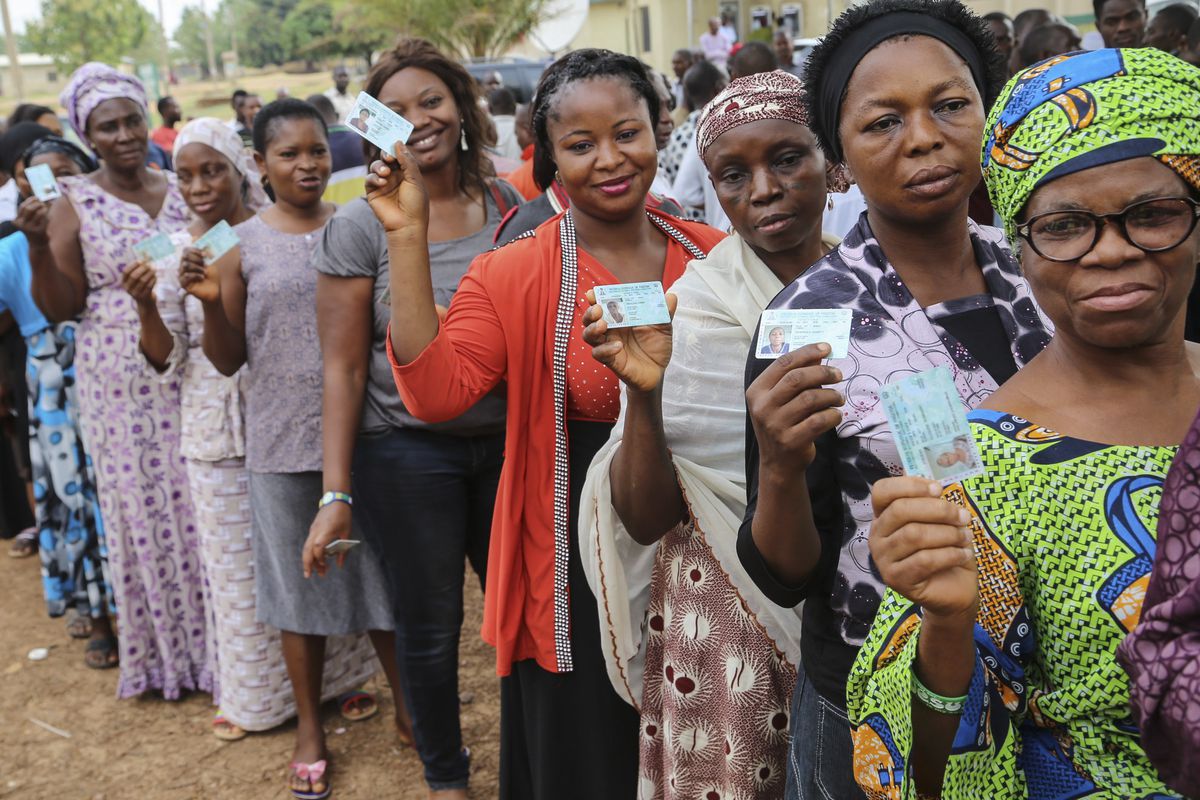
#SomberTuesday! The first set of the 2023 elections (to choose the president and members of the National Assembly) took place this past Saturday, the 25th of February. Kudos to the Nigerians who went out to vote, and did so peacefully. The INEC officials and election observers who contributed to making the process work as intended are to be commended. Yet, an honest assessment would indicate that there were troubling electoral malpractices, pockets of violence, and voters not being able to vote because INEC had logistical and technical problems.

The Bivalent Voter Accreditation System (BIVAS) machines malfunctioned in some polling units. Some of those who wanted to buy votes did not allow the currency scarcity stop them. They put the cashless economy into practice by making electronic transfers to induce voters to vote for people who may work against their interests and care nothing about them.

The currency change and the lack of physical naira it produced continues to make life unbearable for most Nigerians. Routine activities of daily life are now unbelievably difficult, even impossible. There is evident economic decline. Fears of electoral violence, vote-buying, manipulation, and rigging are now in graphic display in some locales.

Some political parties have rejected election results thus far, and have like President Olusegun Obasanjo, called for new elections.

Where are the free and fair elections that Nigerians expect and deserve? What does this situation portend for our fledgling efforts at democratization? Will those who win these elections and those scheduled for March 11 (voting for state governors and local government councilors) do anything they have pledged, promised, and sworn to do to meet the needs of Nigerians? The majority—poor masses, youths, and women, as well as people living with disabilities and ethnic minorities will bear the brunt of the failures. So will the system that we said we want—democracy.

Insecurity has become normalized. Victims and survivors and their families suffer grave financial and psychological trauma. Similarly, victims and survivors of natural disasters, ethno-religious conflict, and insurgencies, who are internally displaced suffer material, psychological, and existential trauma. Without addressing these problems and many others, such as weak political institutions, tens of millions of out-of-schoolchildren, unemployed, and underemployed youths, and overworked, underpaid workers, infrastructure decay, and poor policy implementation. How will Nigeria reach its full potential under these circumstances?

#EndSARS youth protesters are to be commended for voting in large numbers, putting muscles behind their call for good governance, as well as ending police brutality, extortion, impunity, economic inequality, marginalization and targeting of youths and other minorities, and political violence. They were subjected to state-sponsored violence and brutal suppression. Like them, most Nigerian voters want to enjoy the dividends of democracy, including deep commitment by politicians to democratic principles, a well-managed and thriving economy, personal and human security, and the ability to meet their basic needs.

Two years on, and amid the ongoing elections, #Nigeria should remember the great contradiction presented towards democracy by the massacre of peacefully demonstrating youths at #LekkiTollGate & other locations and resolve never to do anything like that again. #NigerianWomenArise #EndPoliceBrutalityinNigeriaNOW #EndSars #EndSWAT #EndImpunity.

Like the voice in the wilderness, I want all Nigerians to think about this Howard Zinn’s statement as relevant to building a democratic political system: “Civil disobedience, that’s not our problem. Our problem is that people are obedient all over the world in the face of poverty and starvation and stupidity, and war, and cruelty. Our problem is that people are obedient while the jails are full of petty thieves, and all the while, the grand thieves are running the country. That’s our problem.”

Like the voice in the wilderness, I repeat once again: Let the kleptocrats give back our stolen wealth so that we can fix our infrastructure, schools, hospitals, and also offer worthwhile social protection to our people. Let the masses enjoy the full benefits of citizenship in Nigeria. Let the leaders and political class repent and build peace with justice. This is no time for politics as usual. The people elected should be those trusted to bring justice, equity and human security to the entire country, not expedient, unethical and egocentric individuals determined to dominate for self aggrandizement or sectional gain. We don’t need oligarchs’ continued domination. We also need a government that puts the interests of majority of citizens first.

Prof. Mojúbàolú Olufúnké Okome is a professor of political science at Brooklyn College in New York.

Direct e-transmission of election results from polling units is mandatory, not directory, under Nigeria’s election laws; Non-Compliance may be considered fundamental, fatal

By Sylvester Udemezue

Before I start, and for the avoidance of doubts, may I respectfully refer to my earlier declaration, which remains my position:
“…President Buhari has obviously worked hard and spoken hard … to make the 2023 elections free, credible, peaceful, hitch-free and successful in producing a winner whose victory reflects the will of the majority of the electorate; whose victory represents the exact outcome of the votes cast, so that after all is said and done, Nigerians can say with considerable amount of certainty that we voted in an atmosphere devoid of manipulation and electoral malpractices and our votes really counted. …I believe, and if all these desires and plans come to pass as planned and as promised, my candidate Buhari would have won, and would indeed have become the actual, true and ultimate winner of the 2023 elections, being the hero of the elections and the man of the match who goes away with the golden booth. Below are [ELEVEN] of the many reasons my candidate before the during the 2023 election is Mr President Buhari, although (regarding the candidates whose names are on the ballot) whoever among them wins in a free and fair election is my candidate” [See: “Eleven Reasons Why He Is My Own Candidate For The 2023 Elections In Nigeria And Only His Victory Would Make Me The Happiest”; 24 February 2023; ThenigeriaLawyer]. Accordingly, as a work done by one who is not a politician and who therefore remains nonaligned in party political matters, the present commentary is strictly a legal opinion devoid of politics or extraneous considerations. I support whoever emerges the winner or winners through credible elections that comply with law. I say this because I know it’s very easy to be misunderstood during election seasons, especially in Nigeria. However, as I once wrote In a commentary titled, “The Place For “Kick-Backs” & “Bribes” In Our Efforts To Kick Back Corruption & Kick-Start Responsible Governance In Nigeria (A Legal Opinion By Sylvester Udemezue)” [ThenigeriaLawyer; 23 October 2018], “A major duty legal researchers and rule of law campaigners owe society in the practice of constitutional democracy for promotion and sustenance of responsible and responsive governance is to constantly offer legal opinions on issues of law to guide our leaders and institutions in the discharge of leadership responsibilities”. It is in view of this that I have decided to undertake a short investigation into whether the statutory provisions and requirements on electronic transmission of election results under the Electoral Act 2022 and the Regulations and Guidelines for Conduct of Elections, 2022 are mandatory or merely directory. A provision in a statute is said to be MANDATORY if the omission to follow it renders the proceeding to which it relates illegal and void, while a provision is said to be DIRECTORY if its observance is not necessary to the validity of the proceeding. An article by Jim Evans and published on 02 January 2018, by Cambridge University Press under the title “Mandatory And Directory Rules” has the following explanation: “Very broadly, mandatory rules are those procedural rules the breach of which necessarily invalidates the process to which they relate, while directory rules are procedural rules the breach of which does not necessarily have this effect”.

Section 60(5) of the Electoral Act 2022 provides that “The presiding officer SHALL transfer the results including total number of an accredited voters and the results of the ballot in a manner prescribed by the Commission”. The use of “shall” here, it’s respectfully submitted, implies that the presiding officer MUST transmit the results as prescribed by the INEC Guidelines. The Independent National Electoral Commission (INEC) on 3 June 2022 released the Regulations and Guidelines for the Conduct of Elections, 2022. The Regulations and Guidelines were issued pursuant to Section 149 of the Electoral Act, 2022 and the Regulations and Guidelines supersede all previous regulations and/or guidelines on the conduct of elections, issued by the INEC. The new Regulations and Guidelines cover elections and arrangements for their conduct, accreditation and voting procedure at elections, and collation of election results and making returns.They apply to the conduct of elections to offices of: “President and Vice President; Governor and Deputy Governor; National Assembly (Senate and House of Representatives); State Houses of Assembly; Chairmen and Vice-Chairmen of the Federal Capital Territory (FCT) Area Councils; and Councillors of FCT Area Councils Legislature.”

Paragraph 38 of the Regulations and Guidelines, 2023 makes Electronic Transmission of Results
and Upload of Results to IReV mandatory. The paragraph requires that when voting and announcement of results have been completed at a polling unit, the Presiding Officer “(1) must Electronically transmit the result of the polling unit to INEC’s collation system; (2) Must use the BVAs to upload a scanned copy of the EC8A result sheet to the INEC Result Viewing Portal (IReV); and (3) [must thereafter] Take the BVAS and the original copies of all forms in a tamper evident envelope to the RA/Ward Collation officer in the company of security agents. Polling Agents may accompany the PO to the RA/Ward Collation Centre”. [See: PLAC Publication: Simplified Electoral Act 2022, and INEC Guidelines. FEBRUARY 22, 2023 https://placng.org/Legist/plac-publication-simplified-electoral-act-2022-and-inec-guidelines/]. Thus, the Regulations and Guidelines require that the presiding officer must electronically transmit the results DIRECT from the polling units, after which the results would then be taken manually to the collation centres. This means that the Regulations and Guidelines prescribe TWO levels of collation:(1). Electronic Transmission (collation) which must be done direct from the polling units; and (2). Manual collation which would then follow after electronic Transmission. Note that the manual collation is the LOWER LEVEL OF COLLATION. See section 64(5) of the Electoral Act 2022

Now, what’s the legal effect of failure to comply with these provisions on DIRECT ELECTRONIC TRANSMISSION FROM THE POLLING UNITS, one may ask? Before answering this question, let’s look also at Section 64(5) of the Electoral Act, 2022 which requires that “the collation officer or returning officer shall use the accredited voters recorded and transmitted DIRECTLY FROM THE POLLING UNITS under section 47(2) of this Act and the votes or results recorded and TRANSMITTED DIRECTLY FROM POLLING UNITS under section 60(4) of this Act, to collate and annouce the results if a collated result at his or a lower level of collation is not correct”. It is respectfully submitted that the legal and practical implications of the provisions of Section 64(5) of the Electoral Act 2022, are:

1️⃣ Electronic Transmission of election results direct from the polling units is MANDATORY;
2️⃣. Collation of results manually (the lower level of collation) is still allowed;
3️⃣. Where there is a conflict between RESULTS TRANSMITTED ELECTRONICALLY DIRECT FROM THE POLLING UNITS and results as collated manually, the results as transmitted electronically DIRECT FROM THE POLLING UNITS shall prevail;
4️⃣. In order to determine whether such a conflict exists, there must have been direct electronic transmission from the polling units, before the manual transmission. Both must co-exist.
5️⃣. The results transmitted DIRECT FROM THE POLLING UNITS (higher level collation) are the yardsticks for measuring the authenticity of the results collated manually (lower level collation);
6️⃣. The collation officer at the collation centre, must be afforded the opportunity of measuring the authenticity of the manually-collated results by matching them against the electronically transmitted results. This opportunity may only exist where there has been direct electronic Transmission from the polling units before the manual collation, so that both must be present to enable the collation officer to make an informed determination.
7️⃣. Failure to transmit the results electronically DIRECT from the polling units is a fatal violation of the law, because the collation officer is then denied the mandatory opportunity to verify the authenticity of the manually collated results by matching them against the electronically transmitted results.

From all the aforesaid, it could reasonably be concluded that failure to transmit results DIRECT electronically from the polling units is more than a substantial non-compliance with extant law. From the law, it appears that the foundation of the authenticity of the entire electoral process in Nigeria, under the Electoral Act 2022, is hinged on electronic Transmission of the results direct from the polling units. Where this fails, the affected election fails because its credibility has been completely lost on account of absence or failure of DIRECT ELECTRONIC TRANSMISSION FROM THE POLLING UNITS; direct electronic transmission being the surest safeguard provided by the extant electoral laws for determining the authenticity and credibility of the results of the elections. It’s therefore a flagrant desecration of the extant electoral law to refuse/fail to transmit the results electronically DIRECT from the polling units. It’s respectfully hereby restated that there can hardly be any talk of CREDIBLE and FAIR elections under the Electoral Act 2022 without direct electronic transmission of results from the polling units.

The provisions on Direct electronic transmission of results are put in place to cure the mischief (rampant manipulation of results) which had persisted as a result of the lacuna in the previous/old law. Where electronic Transmission fails, the whole purpose of the Electoral Act 2022 is grossly defeated and the election fails for being illegal and invalid. The requirements of the Electoral Act 2022 and the Regulations and Guidelines on DIRECT ELECTRONIC TRANSMISSION OF ELECTION RESULTS FROM THE POLLING UNITS are a MANDATORY REQUIREMENT which may NOT be flouted with impunity, it seems. It is truism in law, that breach of a MANDATORY statutory provision is fatal to the act done in breach thereof. Hence, in AMALGAMATED TRUSTEES LTD V. ASSOCIATED DISCOUNT HOUSE LTD (2007) LPELR-454(SC), the Supreme Court said (Per OGBUAGU ,J.S.C ( Pp. 75-76, paras. F-A ), “It is settled that not every breach of a statutory provision, renders an act void, and that to be void, it must not be merely directory, but mandatory. See Odu’a Investment Co. Ltd. v. Talabi (1997) 10 NWLR (Pt. 523) 1; (1997) SCNJ 600 at 649 – per Ogundare, JSC (of blessed memory).” Further, where a statute prescribes that an act MUST be done in a particular way, that act can only be validly done in the prescribed manner. Also, in SANUSI V. AYOOLA & ORS (1992) LPELR-3009(SC), the Supreme Court said (Per KARIBI-WHYTE ,J.S.C pp. 19-20, paras. F-C) that: “It is well settled principle of our jurisprudence and an important requirement of our administration of justice that where the exercise of a power is statutory, such power can only be exercised within the limits prescribed by the statute. – See Bowaje v. Adediwura (1976) 6 S.C.143.”

This being the case, it is most unfortunate, embarrassing and heart-rending, that INEC had collected over N350 billion from the coffers of the Federation of Nigeria (on the condition that it would comply with the law through mandatory direct electronic transmission of results from the polling units as prescribed by law with the aim of giving Nigerianns credible elections in 2023) only to turn around to flagrantly flout the laws of the land by deliberately refusing or failing to electronically transmit directly from the polling units, more than 80 percent of the results. This is a national shame and embarassment, perpetrated in the full glare of the world. See: See: *2023: NO GOING BACK ON ELECTRONIC TRANSMISSION OF RESULTS, INEC REASSURES (Channelstv; 26 October 2022).

Meanwhile, In a release titled “ELECTRONIC TRANSMISSION & COLLATION OF RESULTS” which comes under the general heading “2023 General Election Updates” and published by INEC on its own website (https://main.inecnigeria.org/?page_id=11312 accessed on 28 February 2023 at 1.00pm), the INEC wrote as follows:
“One of the most progressive provisions of the Electoral Act 2022 is the provision for result management from the Polling Units (PUs) to various levels of collation and declaration of winners. The process, as provided by the Act, is basically still manual involving the recording of results on forms (as determined by the Commission) and their delivery to various levels of collation until declaration and return are made. However, the law also provides for electronic transmission of results. In the event of dispute arising in the course of collation, the electronically-transmitted result shall be used to resolve it. These are clearly provided for in Sec. 60 of the Act which deals with the counting of votes, their entry into specific forms endorsed by INEC officials and candidates/polling agents and their transfer to collation centres. Furthermore, Sec. 64 (4), (5) and (6) of the Act provides for the recording and transmission of accreditation data and election results directly from the PUs using the Smart Card Reader or any other electronic device determined by the Commission”..
Then, explaining the Import of the Legal provisions clearly, INEC says that “the law provides for a dual mode. The first mode is the 4-step manual procedure at PUs involving: (1) Counting of ballot papers; (2) Recording of results on specific form (EC8A); (3). Endorsement of EC8A by candidates/polling agents; and (4) physical delivery to collation centres. The second mode entails a 2-step electronic procedure from PUs involving: (1) Recording of accreditation data; and (2) Direct transmission of results”..

Finally, towards explaining the procedure for implementation to ensure compliance with the law, INEC wrote:”

“After an election and the completion of results management procedure at the PU, the The Presiding Officer should take the following action (1).Transmit a clear image of EC8A for purposes of collation. This goes to the IReV; and (2). Deliver by hand, the hard copy of EC8A and the BVAS to the Registration Area (RA) Collation Officer. 2.The Collation Officer, with the support of the RATECH, should have access to IReV. The result held temporarily as part of IReV and the number of accredited voters in the BVAs should be compared with what is recorded in the manually-delivered result to effect collation (Sec. 64[4] and [5] of the Electoral Act 2022). The IReV result or the scanned image of the EC8A from the BVAS should also be used in case any issue arises during collation and there is need to resolve any dispute regarding the results (Sec. 64[6]), following the procedure provided in the clause 93(a) of the Commission’s Regulations and Guidelines for elections, 2022. 3.The same scenario should be implemented from one level of collation to a higher one until the result is declared and a return is made 4. This approach integrates the IReV images into the collation process to satisfy the electronic (direct) transmission of results”.

Truth is, many citizens of Nigeria, home and abroad, who had never been interested in the Nigerian electoral process owing to its general lack of credibility, had shown tremendous interest in this 2023 election, and actually returned to Nigeria and went out to vote because of (1) the legal PROVISIONS for mandatory electronic transmission of results direct from the polling units; (2). the various open assurances by the INEC that the law in this respect, would be complied with, and (3).The huge sum of money released to the INEC to ensure that the law was complied with and to ensure that the 2023 presidential elections were a true reflection of what actually transpired at the various polling units across the country.

In this instance, as reports show, abs as admitted by the INEC, INEC FAILED or REFUSED TO comply with the law by withholding in most States the passwords that would enable presiding officers across Nigeria to electronically transmit the results DIRECT from the polling units as MANDATED by both the Electoral Act and the Guidelines made by INEC itself. The INEC itself has confessed that it failed to transmit the results electronically DIRECT from the polling units, contrary to the law. See: “GeneralElections: INEC admits poor access to IReV, regrets delay” [26 February 2023: TheEagleOnline]. See also: INEC OFFICIALS HAVE SUCCESSFULLY UPLOADED 37,776 OUT OF 176, 846 EXPECTED RESULTS. Source: https://www.inecelectionresults.ng.
Reports had it that by the end of 25 February 2023, the INEC official from the polling Units across the country had only successfully transmitted and uploaded 37,776, of out of 176, 846 results from the 176,846 polling units in Nigeria. [http://opr.news/s62e66661230226en_ng?link=1&client=news]. INEC later confirmed its own failure. See also: #NigeriaElections2023: INEC Speaks On Why Result Viewing Portal (IReV) Is Not Working, Blames Technical Hitches For Challenges” and assuring “These results cannot be tampered with and any discrepancy between them and the physical results used in collation will be thoroughly investigated and remediated, in line with Section 65 of the Electoral Act 2022″_ [ThenigeriaLawyer; 26 September 2023]

Are we cursed as a nation? When shall we wake up to do things right like normal human being operating in the 21st-cevtury? Shall we just continue in sin and iniquity that grace may abound? In the case of in AMAECHI V. INEC & 2 ors (2008) 1 SCNJ 1; (2008) 5 NWLR (Pt. 1080) 227), Hon Justice PIUS OLAYIWOLA ADEREMI, JSC said: “I wish to say that in all countries of the world which operate under the rule of law, politics are always adapted to the laws of the land and not the laws to politics. Let our political operators allow this time-honoured principle to sink well into their heads and hearts.” His Lordship, IBRAHIM MOHAMMED MUSA SAULAWA, JCA, reexhoed this in WHYTE V KWANDE (APPEAL NO.CA/PH/161/99), in a judgment delivered on January 4, 2007, the Court of Appeal, Port-Harcourt division) when he declared, I should have thought that fairness, even handedness and above all respect for rule of law would characterize the behaviour and standards of such men who found themselves in public offices”.

POST SCRIPTUM:

Under the Electoral Act 2022, non compliance with mandatory provisions of the law is a ground for review (which may include, but not limited to, outright cancellation) of any results even after declaration/return has been made. The proviso to section 65(1)(c) of the Electoral Act, 2022 gives the INEC the power within seven days of the declaration of any election results and the return of any candidate, to REVIEW the DECLARATION or RETURN where INEC determines that the declaration or return was not made voluntarily or was made contrary to the provisions of the law, regulations and guidelines, and manual for the election.
▪To be continued!
Respectfully,
Sylvester Udemezue (Udems).
08109024556.
[email protected].
(28 February 2023)

More knocks for INEC Chair from Senior Lawyers, Obasanjo, EU

Indeed, INEC has failed Nigerians – EU

As widespread condemnations continue to trail the conduct of Nigeria’s 2023 presidential elections, a Senior Advocate of Nigeria Aikhunegbe A Malik has described the entire process as “shambolic.”

Malik who shared his thoughts in a WhatsApp group said: “Unarguably, the organization, and conduct of the elections, going by what I witnessed in my polling unit and reports from across the country, was most shambolic. The elections depict INEC as an inept, inefficient, and irresponsible electoral body, often ill-prepared for the solitary purpose of its establishment. For God’s sake, how can a major election organized by INEC every four years, in this age and time, be affected, bedeviled, and or characterized by such rather laughable features as insufficient ballot papers, absence of ink and ink pads, late arrival of electoral materials, absence of electoral officers, omissions of party logos, etc. This election, in terms of organisation, is only second to none for uselessness, in the annals of elections in Nigeria.

“Without a doubt, the INEC boss has a lot of explanations to make to Nigerians regarding the shameful conduct of his commission. With the humongous taxpayers’ money received from the national treasury and the four years window it had to prepare for the elections, nothing justifies the mockery of our electoral process as witnessed yesterday (Saturday 25th February. 2023).

Weighing into the conversation, a former Attorney General of Rivers State, Worgu Boms began: “There was this Technology used to accredit voters in the last Election. I have forgotten the name- Card Reader or so. Before its deployment, it was boastfully touted as a Game Changer that will do away with all that we complain against Elections in Nigeria. Now there is the deployment of another Technology with a romantic name, BVAS.

“Like in the prelude to the introduction of Card Reader, BVAS was touted as another Game Changer that is fool-proof against electoral malpractice. Question: Since Card Reader through BVAS, has anything changed Electorally? ‘We are where we are because of whom we are.’ Who essentially are we?

“We are One Kain People!

And throwing more light on the Card Reader, Human Rights Expert and International Election Observer, Saka Azimazi gave some explanations. “Card reader confirms the card was issued by the authorised body and not forged. If I have 20 cards in my pocket, it can confirm they are genuine cards.  Selling of cards is, therefore, no big deal.

“BIVAS confirms that the person who presents the card is the ACTUAL person to whom the card is issued. It does this through the biodata of fingerprint and facial identifications. It then records how many people it accredited after such confirmation. It also confirms that the details on the PVC are correct as the BIVAS shows exact details on the PVC. No one can present another’s card and you cannot have overvoting in any polling unit.  Please see Osun State governorship election. Ballot box snatching or multiple thumb printing are useless ventures.”

Meanwhile, former President Olusegun Obasanjo has announced to everyone that cares to listen that the election was greatly compromised by INEC. In a statement issued on Monday, Obasanjo remonstrated that “it is no secret that INEC officials, at the operational level, have been allegedly compromised to make what should have worked not to work and to revert to manual transmission of results which is manipulated and the results doctored.

“The Chairman of INEC may claim ignorance but he cannot fold his hands and do nothing when he knows that election process has been corrupted and most of the results that are brought outside BVAS and Server are not true reflections of the will of Nigerians who have made their individual choice.

“At this stage, we do not need wittingly or unwittingly to set this country on fire with the greed, irresponsibility, and unpatriotic act of those who allegedly gave money to INEC officials for perversion and those who collected the blood money. Let me appeal to the Chairman of INEC, if his hands are clean, to save Nigeria from the looming danger and disaster which is just waiting to happen. If the Chairman can postpone elections four days to the election, he can do everything to rectify the errors of the last two days – no BVAS, no result to be acceptable; and no uploading through Server, no result to be acceptable.

“Whereas BVAS and Servers have been manipulated or rendered inactive, such results must be declared void and inadmissible for election declaration…”

Also, the European Union Election Observation Mission to Nigeria concluded that INEC failed Nigerians. EU noted that: “During the early stages of collation, presidential result forms from polling units were not displayed on the Results Viewing Portal (IReV), while Senate and House of Representative results were slowly published.

“Presidential election result forms started to be uploaded after 10 pm on election day, raising concerns and reaching only 20 percent by noon on 26 February. Later the same evening, INEC explained the delay with ‘technical hitches.’”

EU expressed concern that INEC with a larger staff and budget than most other government agencies, frequently experiences planning, logistical, and technical failures that make it easier for politicians to influence election outcomes.

Election Petition: Ten rules for filing

By Amauche Onyedum, Esq

In honour of Hon. Justice Ayobode Olujimi Lokulo-Sodipe of the Court of Appeal Akure Division.

I only met My Lord, Hon. Justice Ayobode Olujimi Lokulo-Sodipe, JCA and for the first and last time, on the zebra-crossing prints of the numerous law reports in Nigeria, while I was en route to knowledge. His looks were overpowering because of the depth of the issues he had for determination. Despite these looks, I tarried on, in my quest to learn from his wealth of knowledge.

ELECTION PETITION: TEN RULES FOR FILING

  1. Thou shall not walk and work alone. Set up your team for the Election Petition. Thou shall not have a team of like minds who will say yes to all you say, but a blend with some critics who will open the team’s thoughts to the opponent’s line of thoughts. This will grant you the room to be steps ahead and proffer a worthy solution to those areas.
  2. Thou shall file the election petition for a candidate in an election and/or a political party which participated in the election as stated in Section 133(1)(a & b) of the Electoral Act, 2022.
  3. Thou shall file the election petition within 21 days after the date of the declaration of result of the elections. The Tribunal shall deliver a judgment in writing within 180 days from the date of the filing of the petition. This is as stipulated in Section 132(7 & 8) of the Electoral Act, 2022.
  4. Thou shall not make an INEC official a party to the Petition. It will suffice to have INEC as a party, to act for itself and on behalf of its officers or such other persons, as stipulated in Section 133(3) of the Electoral Act, 2022.
  5. Thou shall question the election on the following grounds: (a)a person whose election is questioned was, at the time of the election, was not qualified to contest the election ; (b) the election was invalid by reason of corrupt practices or non-compliance with the provisions of this Act ; or(c) the respondent was not duly elected by majority of lawful votes cast at the election and as stipulated in Section 134(1)(a-c) of the Electoral Act, 2022.
  6. Thou shall endeavor to state your claims because where the reliefs that are relevant and appropriate in the light of the facts contained in the pleading of a party are not asked for, so that even if the case is tried and the plaintiff’s case is proved, no remedy will ensure to the benefit of the plaintiff, leaving his position unchanged, the trial of such a case amounts to an idle and vain exercise. Such a case is clearly incompetent for trial. If it proceeds to trial, it would be dismissed. See: NWOBASI v. OGBAGA & ORS (2015) LPELR-40669(CA)
  7. Thou shall have your assertions supported with evidence. It is elementary law that a party who makes an assertion must prove the truth of it, in order to succeed in the action. A paragraph in a pleading not proved is of no avail to the party. ADAKE & ANOR v. AKUN (2003) LPELR-72(SC).
  8. Thou shall schedule the election results you intend to work with. The scheduling will leave you more organized, strengthen your case and expose knots you need to tie up before the hearing of the petition.
  9. Thou shall not forget the documentary or verbal compliance with Section 84 of the Evidence Act on computer-generated evidence.
  10. Thou shall not forget that the address of Counsel, no matter how beautiful, brilliant and erudite it sways like the African hips, cannot take the place of evidence on record. ANDREW & ANOR v. INEC & ORS (2017) LPELR-48518(SC)

Needed: A new Nigeria by Ikeazor Akaraiwe, SAN

1: Some have posited that Nigeria is too diverse and remains the only one of the big British colonies to remain one nation. They refer to India from whence Pakistan, Bangladesh, Myanmar, Sri Lanka, etc came out from at one time or the other.

2: Some have also posited that the African does not have sufficient skills to run largely populated, multi-ethnic nations.

3: I propose in this paper to discuss the applicability of these two postulations and to suggest that Nigeria does not need to break up.

4: That rather, what Nigeria needs is structural. That is, a major turn-around by constitutional amendment to reduce the number of Federating Units from Thirty-Six to Twelve and then devolve more powers to the Federating Units along the operational lines of the 1st Republic 3 (and later 4) regional structure.

5: Indeed, the postulation that the African has deficit skills for managing largely populated, multi-ethnic nations, is answered by devolving more powers to Federating Units so that each Unit becomes a mini-republic within a commonwealth of Nigeria.

6: The devolution of powers I have in mind will transform Nigeria into a Union of States with all the trappings of independence for each state but sharing the following commonalities:
a. Common Name (proposed to be Federal Regions of Nigeria),
b. Common Defence Forces,
c. Common Monetary Policy,
d. Common Foreign Affairs,

7: Each Federating Unit retains its own preferred features while federating with other units within Nigeria. Those features may include minimum or maximum wage payable to workers within each Federating Unit, Court Systems, Educational Systems, etc.

8: To give a simple even if unimportant example; High Court Rules differ from state to state and a lawyer who goes to court in another state or jurisdiction arms himself/herself with the High Court Rules of that other jurisdiction.

The legal profession in one Federating Unit may stipulate white (or other colour) traditional robes as dressing for courtroom appearances for lawyers, while those in another Federating Unit may choose to wear the English-bequeathed wig and gown, and yet another may choose to wear the gown without the wig, etc.

The federal courts may then formulate their own dress code as precondition for lawyers’ right of audience in those courts.

9: Dress code for lawyers’ appearance in court is certainly not the major problem in Nigeria but I chose it as an example to covey the thought of quasi-independence of Federating Units. The example actually crystallised in my mind after listening to a Supreme Court Justice at the induction ceremony for new Senior Advocates in 2021 tell of the difficulties the common folk in his State have with the colour black in relation to lawyers dressing. But it is a simple, uncomplicated example to convey the idea expressed in this paper nonetheless.

10: In the New Nigeria I speak of, each Federating Unit has its own hierarchy of courts, and its own constitution regulating its internal affairs. Each Unit also has its own wage policy, so that what is minimum wage in Lagos is not necessarily the minimum wage in Yobe even for governments. What is good for the East may not be good for the West, and vice versa.

11: It is against this backdrop I wish to consider the various calls for partition of Nigeria. Attractive as these calls may seem to her proponents, many of the proposed new republics out of Nigeria will suffer the South Sudan experience of failing and falling into civil war due to inter and intra-ethnic factors.

12: For example, two Igbo States, Enugu, and Abia, have at one time or the other, expelled ‘non-indigenes’ from their respective States’ civil service even when those non-indigenes were also Igbo! To the best of my knowledge, no other ethnic nationality in Nigeria has taken this step to purge their States’ civil service from other nationalities, how much more their own homogenous tribe. Thankfully, those actions were eventually reversed, after months and years.

13: As one who is ethnically defined as Ibo or Igbo, my view is that in the light of our investments all over the federation, it is in our enlightened self-interest to pursue massive devolution of powers. No other ethnic nationality has economic investments all over Nigeria like the Igbo. It is in fact arguable that by the ease with which the Igbo make investments all over Nigeria, the Igbo are the number one believers in Nigeria. What the Igbo requires is a level playing field to invest and get returns on the investment.

14: However, this should not be taken to construe that because of economic considerations the Igbo and other ethnic nationalities should accept institutional injustices.

15: Nigeria as is, is a unitary state with federal features. Every building needs to have a good foundation or it will collapse sooner or later. The Nigerian foundation as negotiated in the days heading towards independence between the British colonial masters and the various ethnic nationalities making up Nigeria, provided for regionalism- mini-nations within a commonwealth of Nigeria sharing certain common facilities. However, military coups in Nigeria led to the command culture of the military becoming institutionalised in our politics. Under military rule, the General who emerged as Head of State appointed the Military Governors of the Federating Units, who thereafter took instructions from the centre including allocation of revenue, irrespective of what each Federating Unit produced. Worse, the military adventurists created Federating Units whimsically without regard to necessity or affinity.

16: Indeed, it would seem as if the United Kingdom handed over a Nigeria built along the lines of England, Wales. Scotland and Northern Ireland. That is, Eastern Region, Northern Region, and the Western Region. At independence, the Nigerian parliament created a 4th – MidWest Region but the military truncated this original covenant as negotiated by the people of Nigeria in the days heading to independence.

17: It is hereby proposed that Nigeria returns to the regional structure. However, Nigeria cannot return to those original three or four regions, having overgrown them in practical experience.

18: If Nigeria does not handle her structure, perceived institutionalised injustices soon enough, positive restructuring may be too late. It is morning yet on creation day. A stitch in time saves nine, and we should set forth at dawn as the title of Wole Soyinka’s biography directs.

19: CONCLUSION
I draw my conclusion from the Punch Newspaper editorial of 21 March 2016
https://punchng.com/reality-of-regional-autonomy-dawns/.

Nigeria had three regions until the parliament created the Mid-Western Region in 1963. This partly addressed the challenge posed by centrifugal forces, with the regions playing a major role in the affairs of the nation. The regions generated and kept the bulk of their revenues and contributed an agreed percentage to the centre. It worked until military intervention destroyed the structure. As a result of the progressive vitiation, there are 68 items on the Exclusive Legislative List in the 1999 Constitution. This has eroded the power of the states and made the Federal Government too powerful. Items 39 (mines and minerals), 45 (police) and 48 (prisons), and others on the exclusive list are incongruous with federalism, and fuel the persistent agitation for the creation of states.

Federalism is designed primarily to protect the minorities, take care of diversity, distribute power vertically, and give priority to the aspirations of the people at the grassroots since the federating units are closer to the people than the government at the centre. Why would universities owned by state governments and private investors admit students mainly through the Federal Government’s Joint Admissions and Matriculation Board? This is anomalous in federalism. Because of Australia’s devolution of power, Victoria was the first state to implement the law on the wearing of seatbelts, while in the United States, Nebraska is the only state out of 50 that operates a unicameral parliament.

In practice, there is really no federalism anymore in Nigeria. The central government has hijacked almost everything. One index to measure this is the upside-down allocation of resources, which are located in the states but are controlled and distributed by the Federal Government. Weirdly, the states beg to share from the revenue they generate. In the present formula, the Federal Government receives 52.68 percent; the 36 states share 26.70 percent; and the local governments take 20.60 percent. The oil-producing states are entitled to 13 percent as derivation.

Unreasonably, the constitution lists local governments as the third tier of government. In other federal climes, LGs are answerable to the federating units, which are the states. Some states have created local council development areas, which won’t receive federal funding. There is so much overlap that even the Federal Government is running the Unity Colleges and the Universal Basic Education and so-called Almajiri schools in parts of the North.

The return to regionalism may not be attractive to those who are benefitting from the present arrangement, but economic reality makes it imperative. There should be a progressive increase in the allocation and derivation to the states, while repealing the First Schedule of the constitution about LGs, and control given to the federating units.

To give a sense of belonging to all entities, devolution, and state police are non-negotiable. Germany, the US, Canada, and Australia all operate the decentralised police structure. Fortunately, the final answer is available. The present harsh economic reality, ethnic convulsions, and past national political conferences offer fresh opportunities for all patriotic stakeholders in an attempt to forge a virile, competitive union free from the shackles imposed by the current skewed structure.

Ultimately, the solution lies in creating an agreeable and limited number of regions that will effectively reduce the cost of running government, while addressing the issue of ethnicity at the same time.

May the Lord grant us the Might to do the Right.
Ikeazor Akaraiwe, February 28, 2023

Appeal Court Justice Lokulo-Sodipe is dead

Hon. Justice Ayobode Olujimi Lokulo-Sodipe of the Court of Appeal Akure Division slumped and died on Monday morning while dressing up in his Chambers for the day’s sitting.

Sadly, the 67-year-old judge reportedly passed while being rushed to the hospital.

Confirming the incident on a WhatsApp platform, the immediate past Chairman of the Akure branch of the Nigeria Bar Association, M.r Rotimi Olorunfemi, said,  “Just confirmed it (the judge’s death) it is true. He collapsed in the office at Court of Appeal, Akure this ( Monday) morning. Was rushed to the hospital but confirmed DOA (Death on Arrival)”.

An alumnus of the University of Ife (1974 – 1978), now Obafemi Awolowo University, Ile-Ife, His Lordship was born on the 18th of February, 1956, and was elevated to the Court of appeal on the 15th of February, 2008.

Justice Lokulo-Sodipe who was an old student of Government College Ibadan (1969 – 1974) hailed from Abeokuta in Ogun State.

Called to the Nigerian Bar in 1979, Hon. Justice Lokulo-Sodipe served in Abuja, Enugu, and Benin Divisions till April 2014 when he was posted to his present duty post at the Ekiti Division.

Among numerous positions held, he was a member of the Gubernatorial/ State Assembly Elections Petitions Tribunal for Anambra and Cross River States respectively in 1999 and a member of the National Assembly, Governorship and Legislative Houses Election Petitions Tribunal for Benue State in 2003.

He was the Chairman of the Law Reporting Committee of Ogun State Judiciary from December 2001 to January 2008.

On January 27, 2023, the Supreme Court in a unanimous judgement upheld his judgment which affirmed the candidature of former Deputy Governor of Ondo State, Hon. Agboola Ajayi, as the duly nominated candidate of the Peoples Democratic Party (PDP) for Ondo Central Senatorial District in the 2023 general elections.

The Appellate Court presided by Justice Olujimi Lokulo-Sodipe had dismissed the appeal filed by the Senator representing Ondo South Senatorial District, Nicholas Tofowomo against the verdict of the Federal High Court that affirmed Ajayi as the candidate of the party for failure to file within the time stipulated by the law.

His Lordship was married to Mrs. Afolake Ibironke Lokulo-Sodipe and they have two children

Nigeria Decides 2023:  This is not democracy; stop wasting public funds on crooked, compromised elections that do not respect the will of the people; let’s do selection instead — J. S. Okutepa, SAN

It will be difficult, if not impossible, to eradicate corruption and the corrupt ways of doing things in Nigeria. The ongoing [2023] selection otherwise called [2023] election is a case in point. Everyone is involved. No one can claim to be pure. Even those who have good intentions and purity of heart, still have around them, people with impurity of heart and impunity.

I have said times without number that while the introduction of Bimodal Verification Accreditation system BVAS is well-intentioned, the human elements would undermine its benefits. We can see that thugs and electoral fraudsters are at their best in these [2023] elections. Those who have public duties and responsibilities to do what is right according to law and the dictates of democracy are either afraid of doing so or they have refused to do so owing to their commercial interests.

INEC as a body has proven to not be as independent as it ought to be. Besides, INEC does not have sufficient staff (permanent and ad hoc) to manage elections and to effectively man the polling stations. Majority of the INEC Adhoc staff members are the same corrupt or heavily compromised Nigerians of Nigerian blood who are experts in the Nigerian ways of doing things. And there appears to be no consequences for this misconduct and misbehavour. How then, one may ask, can we grow and develop as a nation with this kind of attitude?

It’s obvious that the political class just does not want the will of the people to prevail. And, given the crooked manner these things are done,  plus the fact that the will of the people is not respected, one wonders whether there’s really any need to continue with organizing elections in Nigeria. Why don’t we avoid this waste of funds in the name of organizing elections?

Why don’t we just adopt a selection of leadership instead of continuing to perpetrate crookedness and corruption in the name of elections?

Further, since it has become obvious that thugs and their corrupt sponsors have made genuine democratic elections impossible in Nigeria, and the governments have not been able to think out of the box, on how to effectively nip these atrocities in the bud in order to offer Nigerians genuine democratic elections that reflect the will of the people, why not let us meet at our various villages squares, periodically, and select our representatives who will then be our leaders, to govern over our affairs? I make this suggestion because the public funds being wasted to organize these sham elections in Nigeria can be channeled to more profitable ventures, including provisions of social amenities, etc. Finally, and from all indications, there appears to be no democracy in Nigeria yet. We’d better stop pretending that there is.

@ Jibrin S. Okutepa, SAN

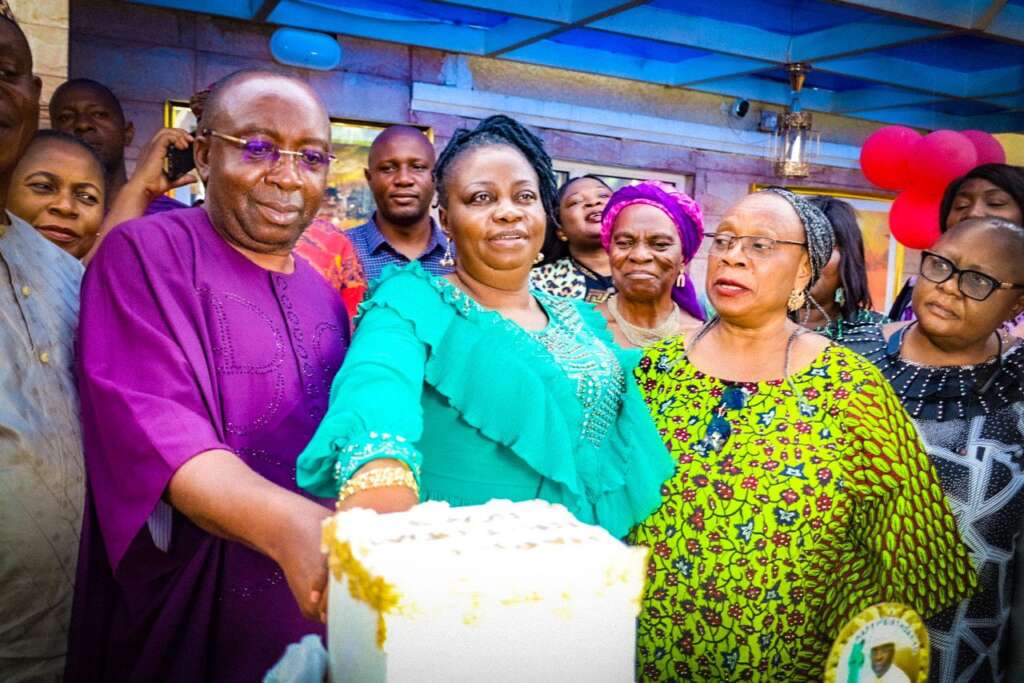
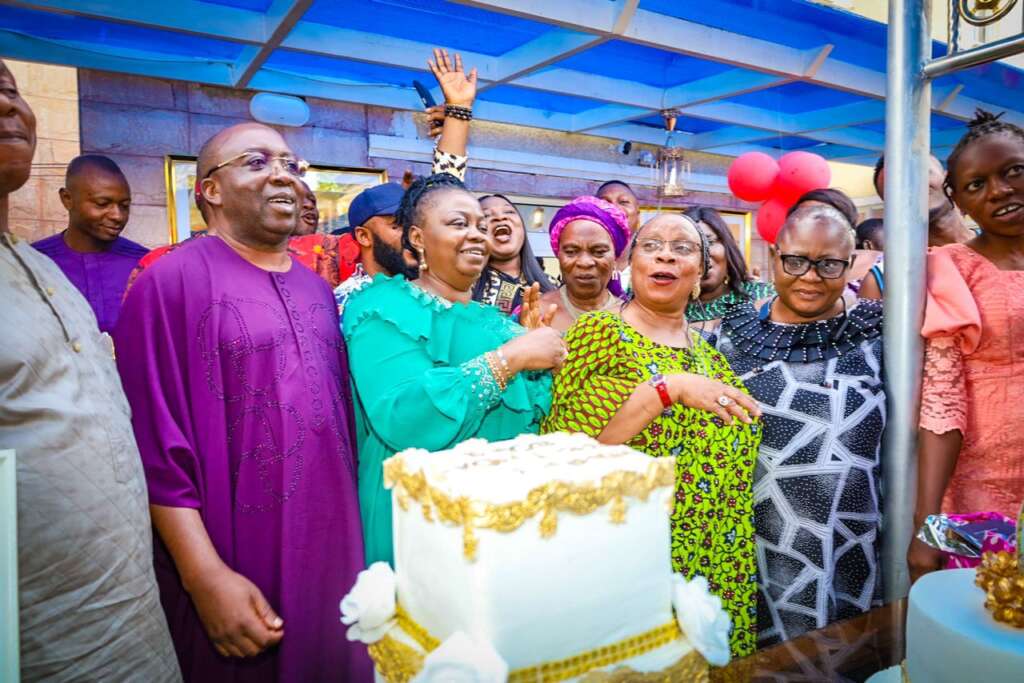
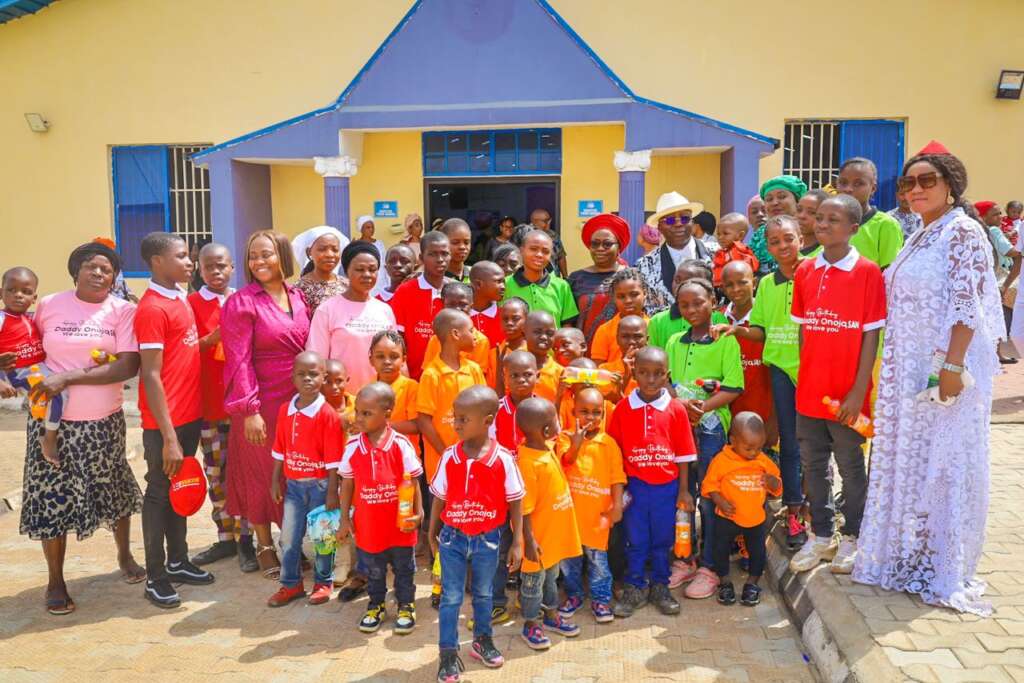
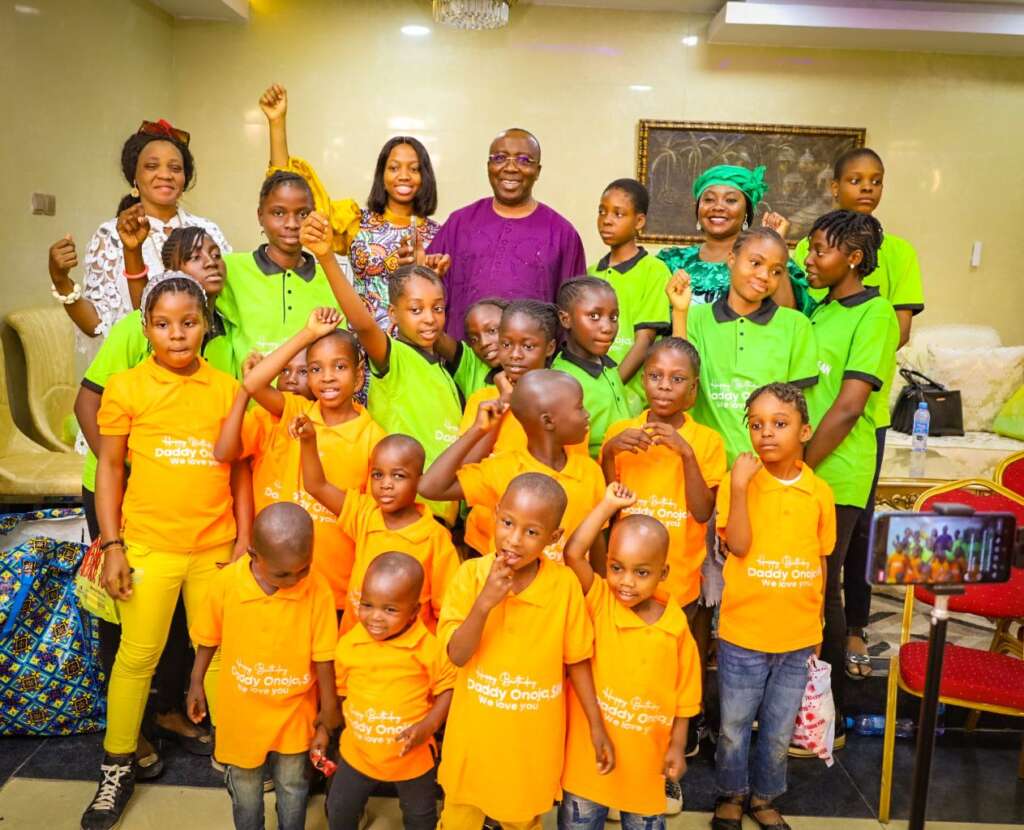
Onoja, SAN @55

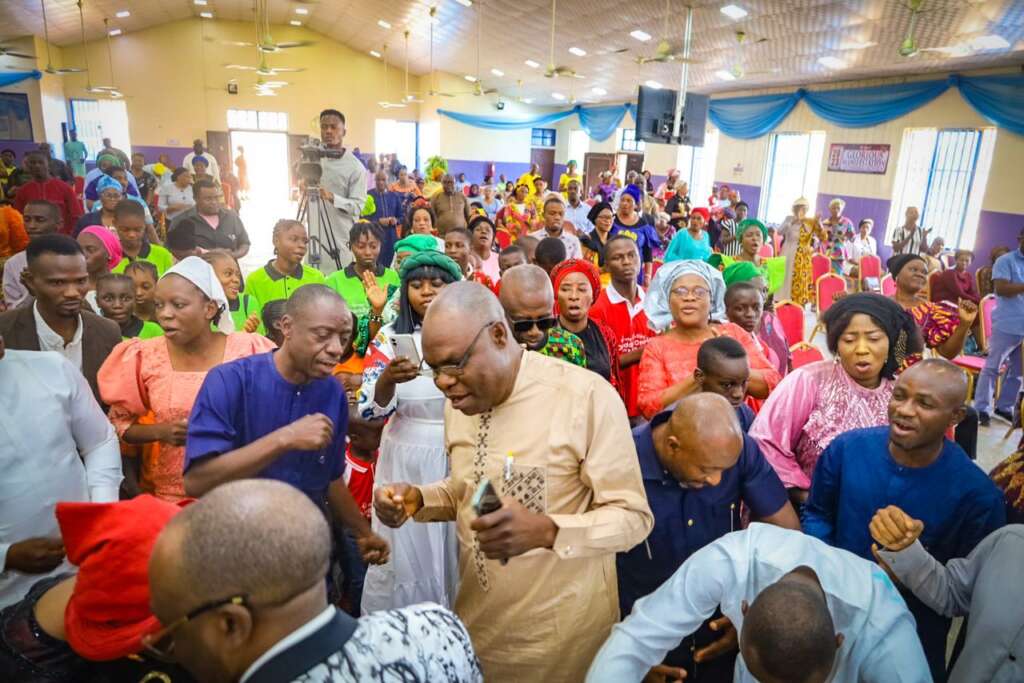
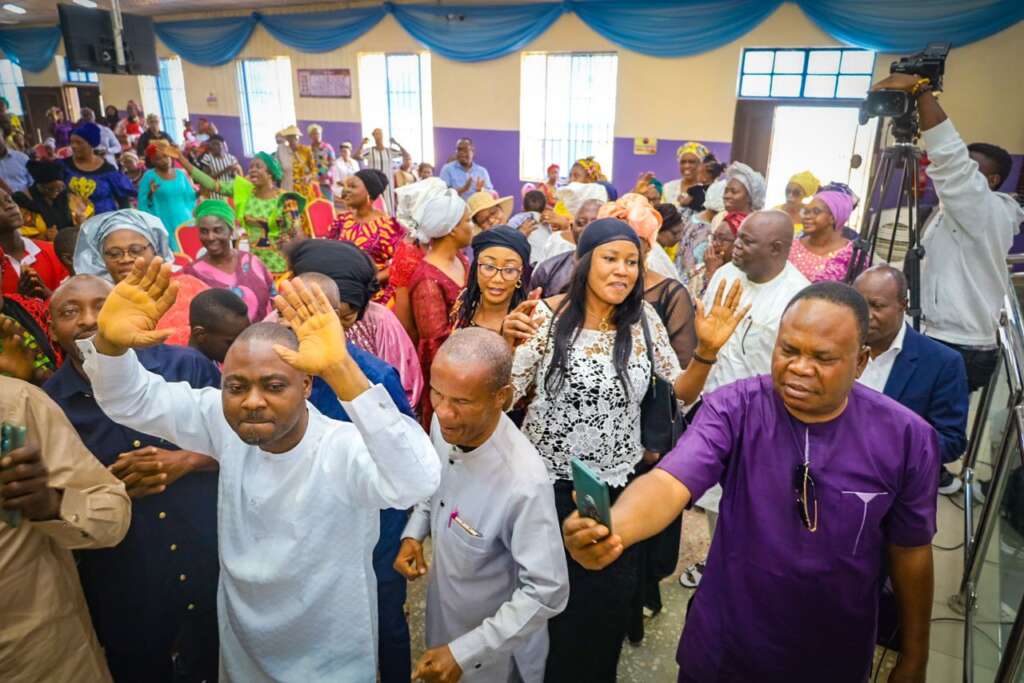
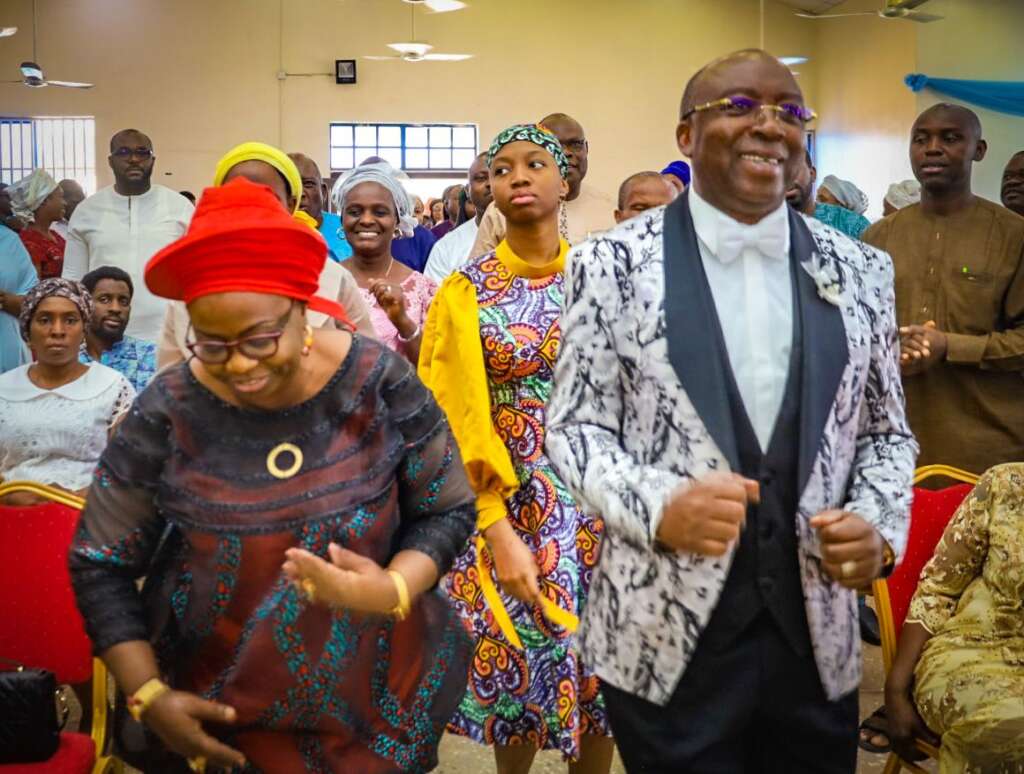
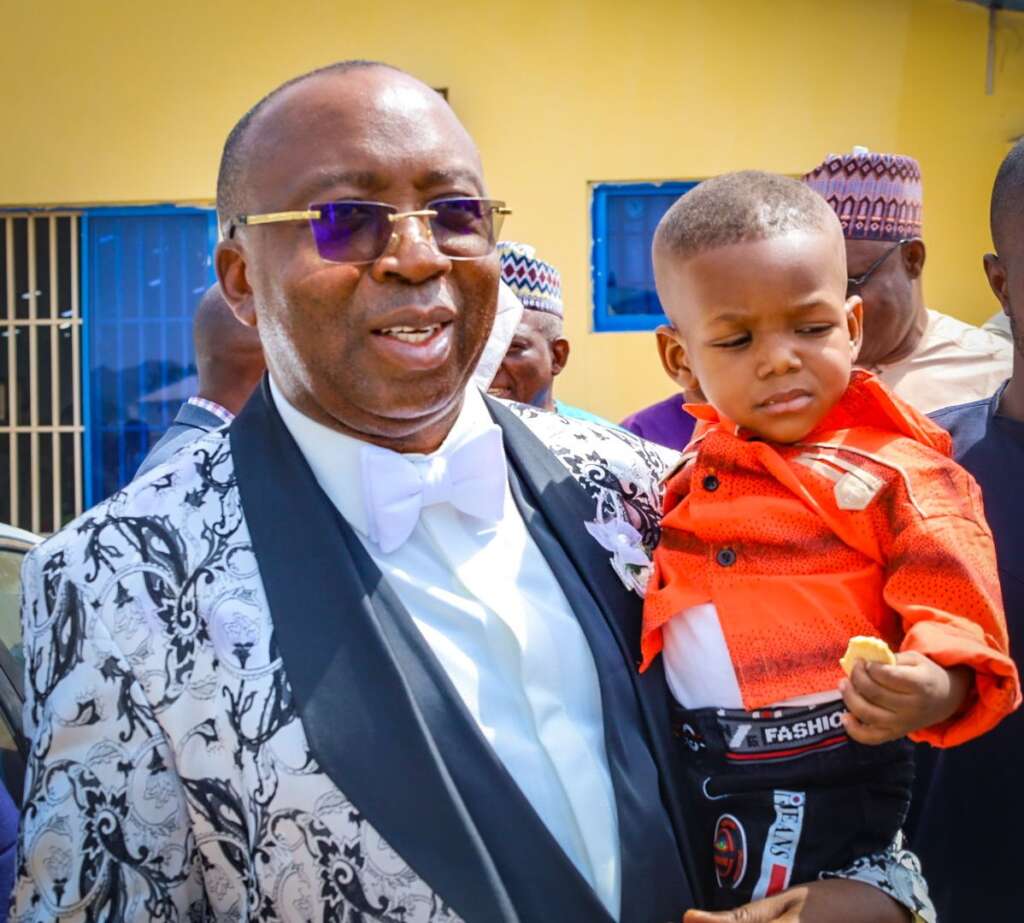
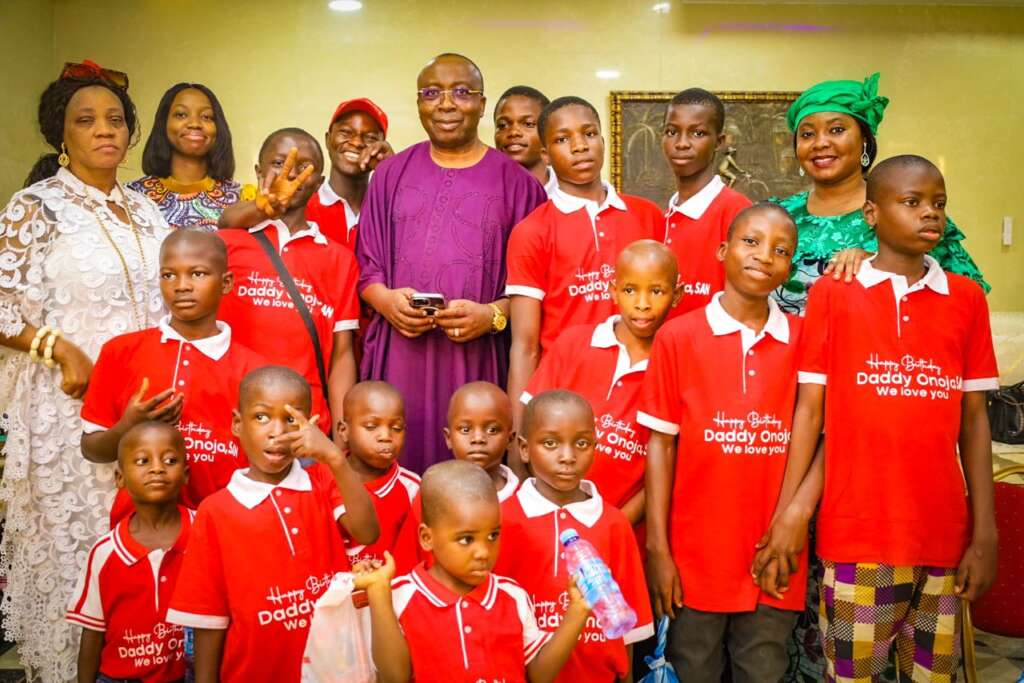
Senior Advocate of Nigeria, Chief Ogwu James Onoja, Ph.D. recently marked his 55th birthday.

Though from Ogugu, an Igala-speaking community in Olamaboro Local Government Area of Kogi State in north-central Nigeria, Onoja was born on 19th February 1968, in Idah, then under Kabba Province of Northern Nigeria and present-day Kogi state.

Chief Onoja and Mrs. Rosemary Onoja at the thanksgiving service
Chief and Master Courage Omeje
Cutting the birthday cake
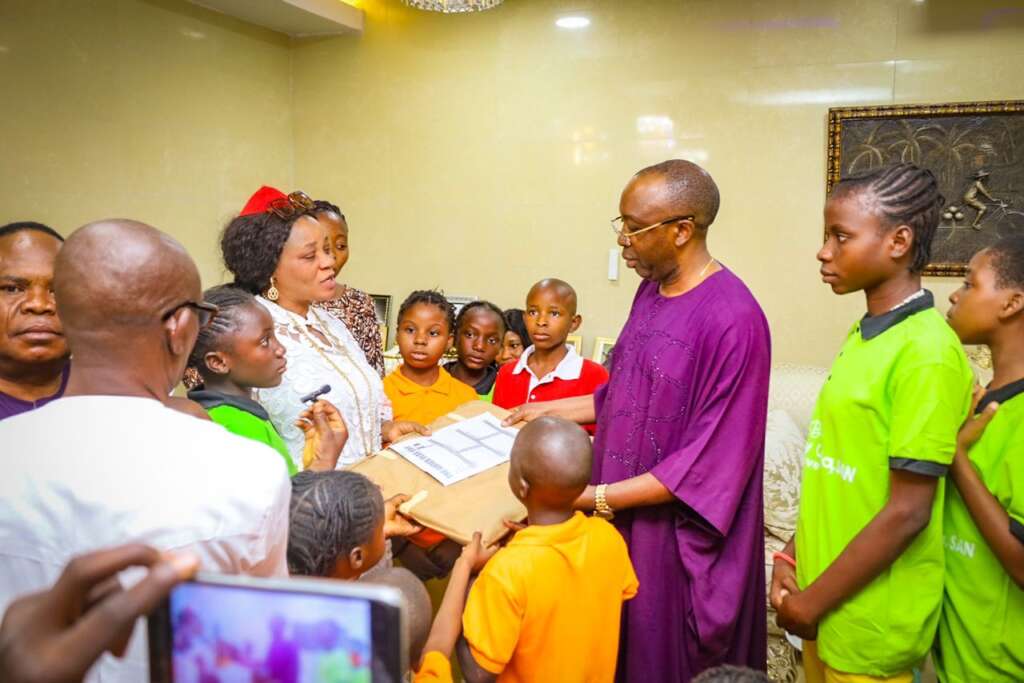
With his adopted orphans
Fun time with adopted orphans
Gift from the children

Nigeria Decides 2023: It’s impunity galore – Falana

It is impunity galore. INEC is empowered by law to issue guidelines. The CBN usurped the power and issued guidelines for the election. In fact, INEC had to beg CBN to release cash for logistics to conduct the elections!

During the Ekiti and Osun governorship elections last year, only the EFCC arrested vote buyers. Gunmen attacked EFCC officials at night and took away all the money and documents seized from vote buyers.

In Osun, vote buyers were charged before the High Court. The defence counsel challenged the charge on the ground that only INEC is competent to prosecute electoral offenders. Objection upheld. Case struck out.

If the President had ordered all security and anti-graft agencies to arrest vote buyers, the CBN should not have been allowed to subject Nigerians to such excruciating economic pains!

The President voted and revealed the candidate that he voted for contrary to Section 122 of the Electoral Act. The President cannot be prosecuted because of constitutional immunity. Gov Ortom did. Ex Gov Orji Kalu did.  The AGF committed the same offence.  The NBA will not call him to order.

Nothing will happen to the electoral officials who deliberately disenfranchised many voters yesterday.

Now, INEC portal has refused to log any results contrary to the electoral guidelines. The illegality will not be challenged!

Mr. Femi Falana is a rights lawyer and a Senior Advocate of Nigeria

TIPS