Home Blog Page 791

9 famous people and how father of Billionaire businesswoman, Folorunsho Alakija’s father stopped her from studying law

The role of parents in their children’s career choices, ensuring they are set up for a successful career, future financial security, and good quality of life is a pressing challenge for every parent. But should parents decide which career their children will pursue?

Over the years parents have been major influential factors in the career development of their children. For some, their children acquiesced to their demands. For others, it was a different story. Here are stories of some famous people and the role their parents played in their career choices.

  1. Folorunsho Alakija

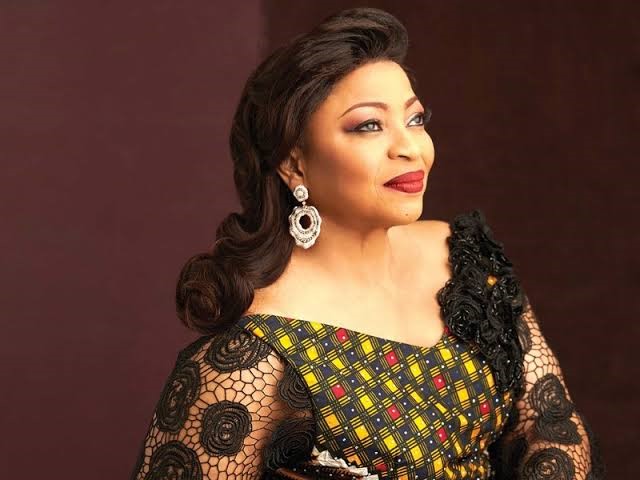
Until her father squelched the dream, Folorunsho Alakija, philanthropist, billionaire businesswoman, Vice-chair of Famfa Oil, a Nigerian oil exploration company, and one of  Africa’s 10 wealthiest women for 2022; second behind Isabel Dos Santos of Angola whose worth is $2.2 billion she wanted to study law.

Making the disclosure on her Instagram page of Friday, 17 March 17, Apostle Alakija penned: “Growing up as a girl, I dreamt of becoming a lawyer, but my father had other plans for me. He insisted that I become a secretary instead, despite having the means to support my aspirations. His reasoning was that I would eventually get married and change my last name, making any investment in my career a waste of resources.”
“Sadly, my experience is not unique. Women around the world continue to face obstacles and discrimination, depriving them of the opportunity to fulfill their potential. But this must change.

‘It is high time that society recognizes the immense value and contributions that women bring. Women are hardworking, possess the necessary skills, and have invaluable assets that can significantly benefit society. Yet, they often face unequal opportunities and discrimination compared to their male counterparts.

“As a woman who has experienced discrimination first-hand, I urge you to join me in calling for change. Let us empower ourselves and each other to break free from limiting beliefs and expectations. In my book, Folorunso Alakija Speaks, I share my thoughts on how women can shift their mindset from being part of the pack to leading it. I encourage every woman to read it and take action to make a difference in their life and the lives of others.

“As we celebrate women this month, let us acknowledge their achievements and commit to supporting and empowering them. Together, we can create a world where every woman has the opportunity to pursue their dreams and reach their full potential.”

  • Florence Nightingale

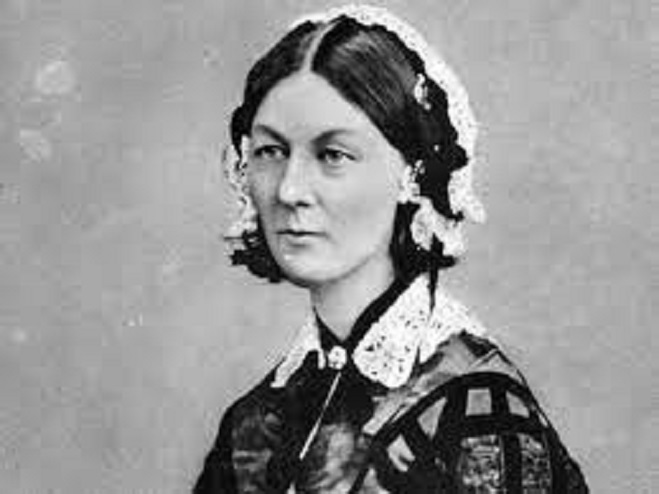
Had Florence Nightingale who immensely impacted the course of modern nursing and medicine listened to her parents’ objections, there would have been no “Lady with the Lamp. Born into a wealthy British family living in Florence, Italy, in 1820, Her father a well-to-do landowner, and mother an ambitious socialite expected her to conform to the Victorian standards of marriage and childbearing. Nightingale expressed her interest in nursing to her parents, going so far as to say she felt a Godly calling into the medical field. In those times, nurses were considered uneducated and even promiscuous, and her parents forbade her from that line of work. But after refusing a marriage proposal, Florence had the gumption to enroll in nursing school at age 30. Her parents finally conceded when they realized she valued nursing over marriage, and Nightingale’s career led her to improve sanitary conditions at hospitals, develop better nursing practices, and create educational programs and schools for other nurses.

  • Kamala Harris

During her history-making victory speech on the evening of Saturday 7 November 2020, wherein she introduced herself as America’s first woman Vice President, Kamala Devi Harris an American politician and attorney painted a picture of the huge influence of her mother, a biologist who moved to California from southern India in the Fifties to study at Berkeley, and who died in 2009, made on her life’s path.
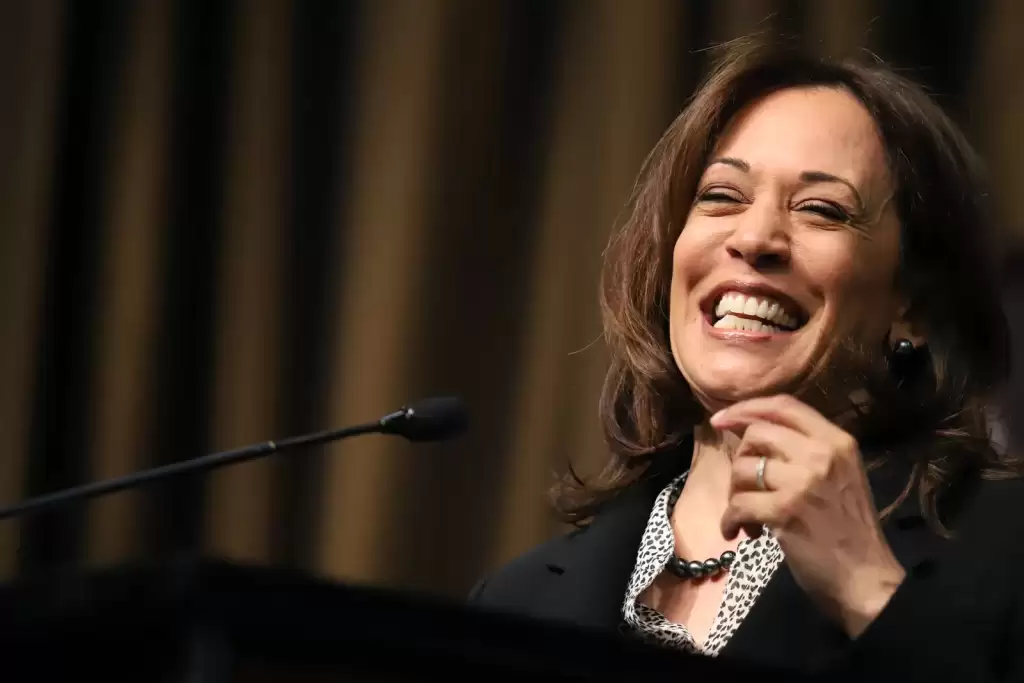
“We are so grateful to … the woman most responsible for my presence here today, my mother, Shyamala Gopalan, who’s always in our hearts…When she came here from India at the age of 19, she maybe didn’t quite imagine this moment. But she believed so deeply in an America where a moment like this is possible. So, I’m thinking about her.”

“My mother was barely five foot one, but I felt like she was six foot two. She was smart and tough and fierce and protective. She was generous, loyal, and funny. She had only two goals in life: to raise her two daughters and to end breast cancer. She pushed us hard and with high expectations as she nurtured us.”

  • Alfred Nobel

Alfred Nobel who founded the Nobel Peace Prize did not plan to be a scientist, and he kept up his passion for his original career choice— literature and poetry. Alfred’s father, Immanuel Nobel, a Swedish inventor, and engineer, however, hoped his son would follow in his footsteps. When Immanuel realized Alfred was more interested in writing and reading than science, he sent his son on an educational trip where he learned chemical engineering in four counties. Alfred would go on to create dynamite and hold over 300 patents.
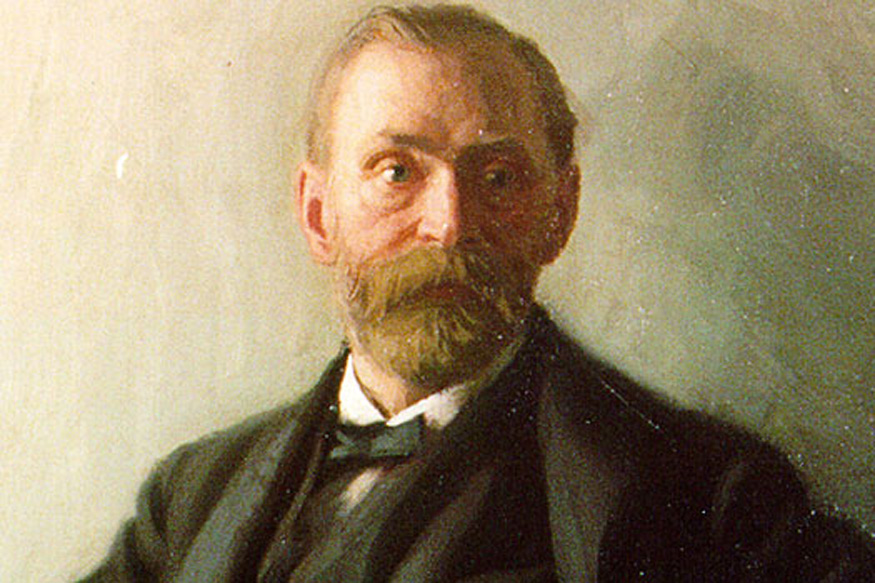
But, behind closed doors, he continued writing, creating poetry, plays, and novels that were never published. And, he ensured the Nobel Peace Prize would honor standout writers.

  • Folarin ‘Falz’ Falana

Nigerian artiste/actor, lawyer, and activist popularly known as ‘Falz’ said: “I had always wanted to emulate my parents. I saw what they had achieved together by building an empire and I wanted to follow in their footsteps. I didn’t know that someday, I was going to drop the wig and gown to become an artiste. But as I was studying for a law degree, my passion for entertainment began to grow. By the time I was done with my degree, I knew I was more passionate about entertainment.  But I still went to law school, to get the necessary qualification. I also spent about two years in active law practice. I was involved in litigation and going to court. At that time, I was juggling both. I would go to the court in the daytime and at night, I would go and perform at events. I was basically living two lives and I kept it up until it couldn’t work anymore.”

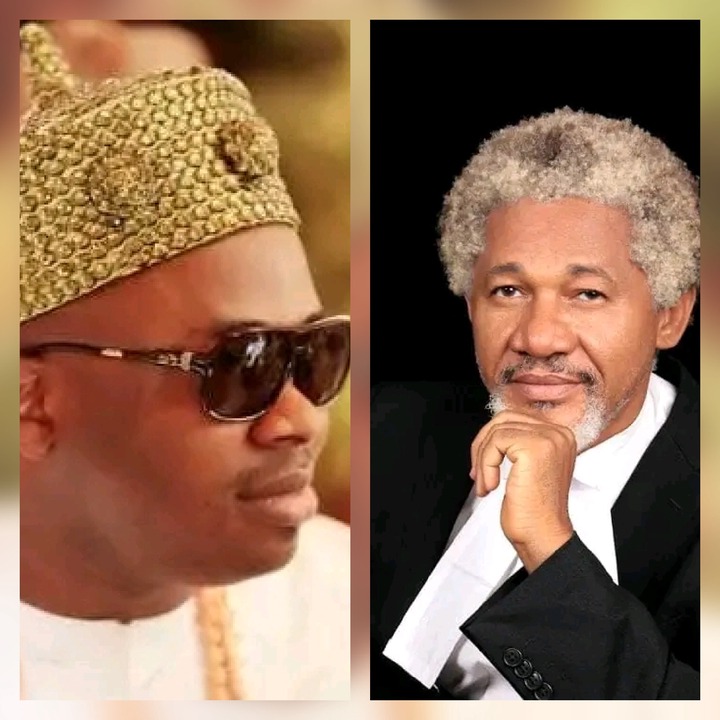
The Jenifa’s Diary actor, son of Femi Falana, a foremost activist and Senior Advocate of Nigeria said he was  always afraid of being in his father’s shadow.

“Being an upcoming artist, headlines, newspapers, magazine and online publications tagged me as Femi Falana’s son and I would say “Hello, is that my stage name?”

“My fear was that how long is this going to last? How long will people continue to refer to me as his son. But after so much effort and hard work, I arrived at a place where they now refer to my dad as Falz’s dad.”

  • Davido

Many people do not know that Davido’s father disapproved of him being a musician. Davido’s father and billionaire businessman, Adedeji Adeleke had wanted his son, to work in one of his companies.
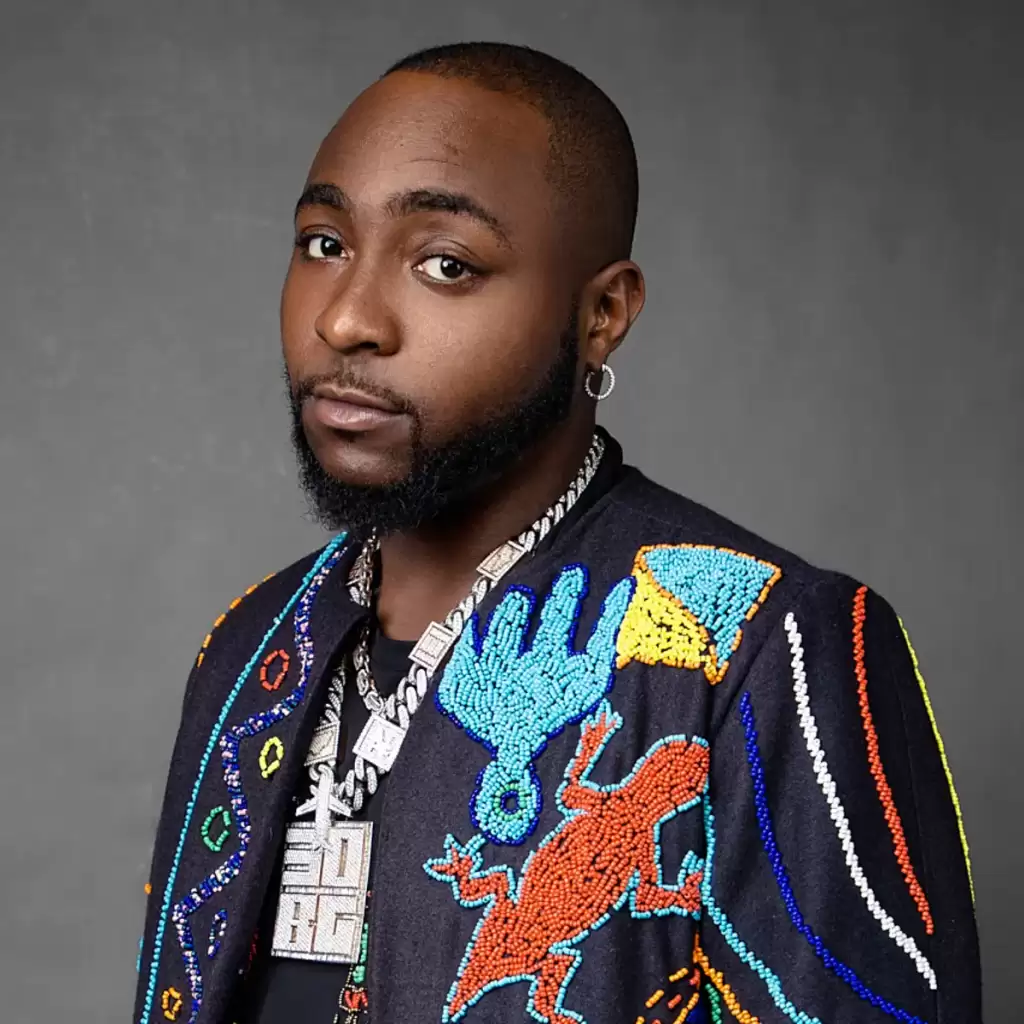
But, due to his burning passion for music, Davido once ran away from home and aligned with some big names in the music industry to learn the ropes. His dad reportedly once threatened to arrest those musicians he felt were ‘misleading his son.’

Today, Davido is one of Africa’s biggest artistes.

  • Miley Cyrus

Miley Cyrus, American singer, and actress known for the Disney Channel TV series Hannah Montana is the daughter of country music singer Billy Ray Cyrus. When she was eight, her father took her to see a 2001 Mirvish production of Mamma Mia! at the Royal Alexandra Theatre. She grabbed his arm and told him she wanted to be an actress. She then enrolled on singing and acting lessons at the Armstrong Acting Studio in Toronto

Her mother, Tish Cyrus, became her manager and defined her career from her tween roles. She contacted bestselling author Nicholas Sparks (The Notebook) and asked him to write something specifically for Miley. The meeting between Miley and Sparks led to the creation of the best-selling novel, The Last Song, and Miley starred in its movie adaptation.

  • Celia Cruz

Cuban-American singer Celia Cruz sidetracked her father’s feelings about singing salsa music to become a Latin music icon. As a teenager, Celia won a radio singing contest in Havana, Cuba, and was encouraged by her mother to attempt a music career.
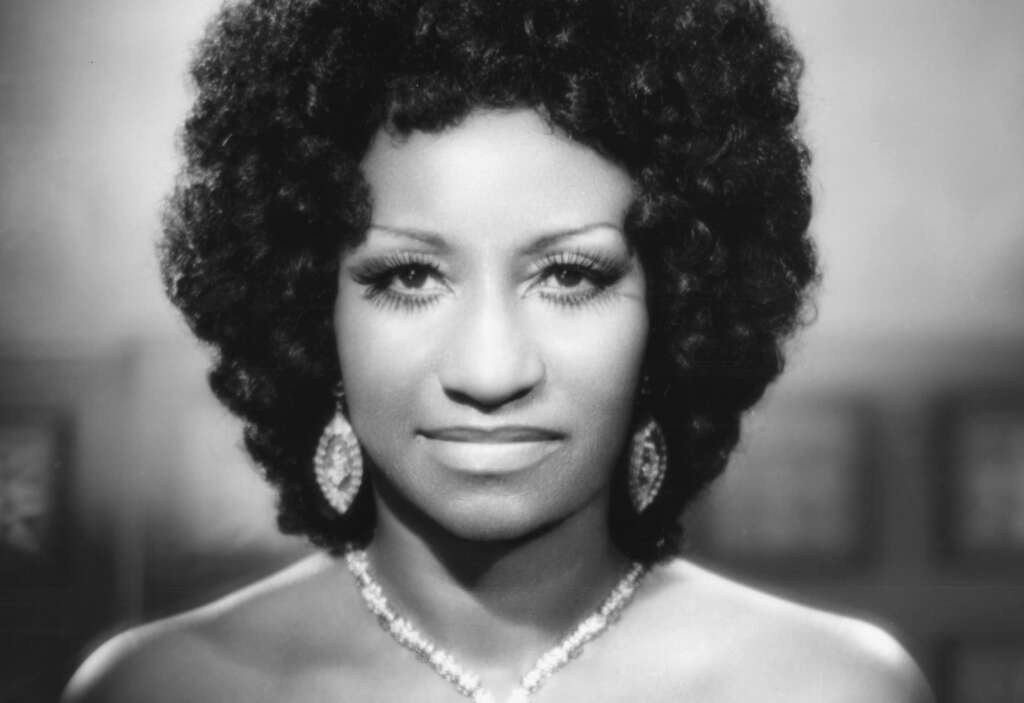
But Celia’s father pressured her to be a teacher instead, and though she did attend a nearby teachers’ college to appease her father, she chose to return to singing. “I wanted to be a mother, a teacher, and a housewife. But when I began to sing with La Sonoroa Matancera, I thought, ‘This is my chance and I’m going to do it,’” she said in 1985. Her father eventually came around.

  • 2Baba

Innocent Idibia’s mum, that is the mother of Tuface Idibia, pardon me, 2Baba, did not want him to do music.
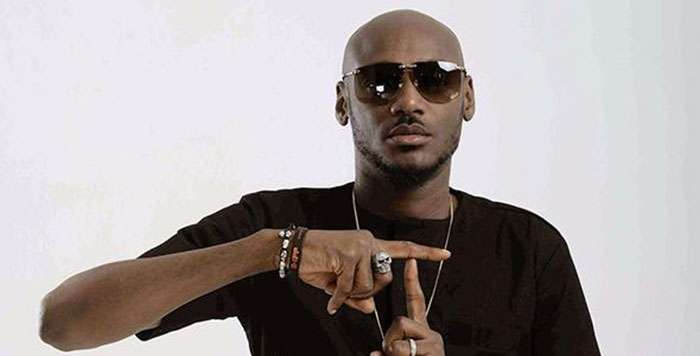
2Baba once revealed that his mother was looking at more conservative jobs like banking, medicine, law, and the like.

As Nigeria’s Judges get set to begin voting

By Chidi Anselm Odinkalu

This week, the opening salvo will be fired to signal the onset of the final round of voting in Nigeria’s electoral marathon. This is not a reference to the state-level ballots that occurred around the country on Saturday, 18 March. I refer instead to something far more consequential.

Democracy may be about choices and decisions by citizens in theory. As practised in Nigeria, however, citizens are mostly spectators. In every election, Nigeria’s judges have the final votes.

Every election cycle in Nigeria has three seasons. The campaign season belongs to the parties, the politicians, and godfathers. This is followed by the voting season, during which the security agencies, thugs, and the Independent National Electoral Commission (INEC) hold sway. Thereafter, matters shift to the courts for the dispute resolution season, which belongs to the lawyers (mostly Senior Advocates of Nigeria, SANs) and judges. All three are separate but inter-dependent.

Of 1,490 seats contested federally and in the states in 2019 (excluding the CT Area Council ballots), the courts decided 805 (54.02%). This is higher than just over 45% recorded in 2015 and 51% recorded in 2011 but lower than the high of 86.35% from the nadir of 2007. So, by 2019, Mahmood Yakubu’s INEC had bled all the confidence that Attahiru Jega, his predecessor, had built in the electoral process. In 2023, he shamelessly pulverized what was left of it.

With elections to federal offices concluded on 25 February and to state offices on 18 March, election petition season is now formally open. On 22 March, the first landmark will be reached with the expiration of the 21-day deadline for filing petitions arising from the presidential election results announced on 1 March.

Already, every evidence points to the likelihood that this will be no ordinary season. On 3 March, 48 hours after the announcement of the results, the Court of Appeal ordered the INEC to grant access to the parties to inspect the materials generated from the presidential elections. Three days later, the order was served on the INEC. Instead of complying, the Commission stone-walled.

On 13 March, INEC Chairman, the execrable Mahmood Yakubu, informed lawyers for the parties who demarched him at the INEC headquarters in Abuja, that he had nothing to hide before quickly reminding them that most of the documents that they wanted were in the states and not at the INEC Headquarters. As with all the acts of infamy to which this INEC chairman has become habituated, he said this with a straight face.

This decentralization of obfuscation is original but unlawful. Under the Constitution and the Electoral Act, Nigeria is one constituency for the presidential election and the INEC Chairman is the only returning officer. The idea that documents used in the election are in the custody of INEC states offices is quite simply nonsensical. It is his place to organize custody in such a manner that the standards of access to them is uniform and predictable. By sending the lawyers on an obstacle course through 36 States and the FCT, Mahmood makes manifest his design to frustrate election dispute resolution.

Livy Uzoukwu, the SAN leading the legal team for Labour Party’s Peter Obi, credits INEC’s stone-walling with forcing them to reduce the scope of their inspection of materials from 36 states to just nine. Even then, by 16 March, they had granted the lawyers access in only two states.  

In Nigeria, every election petition is heard by a panel of three, five or seven judges. Where they all don’t agree, the judges will decide by majority vote. To win, a party must have the votes of two judges out of three (first instance); three justices out of five (appeal) or four justices out of seven (Supreme Court). Where there is such disagreement, there will be dissents.

The heightened role of judges in elections is essentially a feature of the presidential system of government. In Nigeria, Kayode Eso handed down the first notable dissent in this field in the Supreme Court  decision in Obafemi Awolowo’s challenge to the victory of Shehu Shagari in the 1979 presidential election. Six of the seven Justices, led by Chief Justice Atanda Fatayi-Williams, ruled that the elections were in “substantial compliance” with the law, but Eso, the junior Justice on the panel, filed a memorable dissent.

Sometimes, the decisions of the courts inexplicably diverge. Following elections in September 1983, Nigeria’s Supreme Court heard two cases arising respectively from the governorship elections in Anambra and Ondo States. The issues were broadly the same: the then ruling party, the National Party of Nigeria (NPN), was credibly accused of rigging the elections in both states, enabling the Federal Electoral Commission (FEDECO) to announce NPN candidates as winners when they lost. In Anambra, the citizens mostly went back to their businesses. In Ondo State, the citizens decided to make the State ungovernable burning everything in sight. On 30 December, 1983, the Supreme Court upheld the Anambra governorship election by a majority of six to one but invalidated the Ondo Governorship result by the same margin. Hours later, on the night of the same day, soldiers sacked the government. By the time the court issued its reasons on 6 January, 1984, Maj-Gen. Muhammadu Buhari was already one week old as military ruler.

It is not only in Nigeria that election courts can announce incomprehensible outcomes. In 2006, Uganda’s Supreme Court considered a petition by opposition candidate, Kizza Besigye, against incumbent President, Yoweri Museveni. In its decision, the Court concluded that “there was non-compliance with the provisions of the Constitution, Presidential Elections Act and the Electoral Commission Act, in the conduct of the 2006 Presidential Elections”; that there was “disenfranchisement of voters by deleting their names from the voters register or denying them the right to vote” and that “the principle of free and fair elections was compromised by bribery and intimidation or violence in some areas of the country.” Nevertheless, Chief Justice Benjamin Odoki led three other judges in a majority of four to uphold the outcome in favour of Museveni.

Sometimes, the decisions in election petitions are dodgy. When it decided the election petition against the outcome of the December 2012 presidential election filed by then opposition candidate, Nana Akuffo-Addo, on 29 August 2013, Ghana’s Supreme Court announced a majority of six against three in favour of upholding the declaration of President Mahama as winner. Economist, George Ayittey, wrote that the announced decision was “bungled. There was an inexplicable 4-hour delay in announcing the verdict, fueling speculation that something fishy was going on behind the scenes. Then Justice Atuguba announced a 6-3 verdict dismissing the petition. A day later, the verdict was changed to 5-4.” In a study of the judgment published in 2014 under the title The Burdens of Democracy in Africa: How Courts Sustain Presidential Elections, late Nigerian lawyer, Bamidele Aturu, showed that five of the nine Justices who sat on that election petition in fact ordered partial or total rerun of the election. In effect, rather than the announced majority of six –three in favour of President Mahama, the verdict was in fact five-four against him.

More recently, miracles have occurred. In August 2017, Kenya’s Chief Justice, David Maraga, led the Supreme Court to strike down a presidential election in Africa for the first time. In May 2020, Malawi’s Supreme Court did the same. In Nigeria four months earlier, the Supreme Court on 13 January, 2020, declared Hope Uzodinma governor of Imo State despite his having been returned fourth in the election.

What Nigeria’s Supreme Court does in 2023 will matter. Like the major parties, all actors in Nigeria’s election petition process have learnt to build “structures”. For the parties, their structures are in the infrastructure of election rigging, or what former governor of Ekiti State, Kayode Fayemi, once famously called the criminal network of “five gods and the godfather”, including the highest levels of INEC, the security services, thugs, and the judiciary. For INEC, it is in the ruling party and the power network of incumbency at federal and state levels. For the judiciary, it is in the same mutual benefit network of incumbency in the various branches of government at various levels.

Election petitions have become a preoccupation of judges in Nigeria and around Africa and a defining process in public perception of the courts. In the past, they provided moments of high forensic and judicial drama. Increasingly, however, they have become performative rituals for sanctifying electoral burglary and celebrating judicial capture. The beneficiaries are the burglars and the judges. The best the victims can often expect to receive is a timorous Pontius Pilate mistaken as a valiant judge. In 2023, Nigeria’s judges can sculpt a different narrative.

A lawyer and a teacher, Odinkalu can be reached at [email protected]

Women groups insist INEC must deliver transparent, free, and fair election; should be accountable to the people

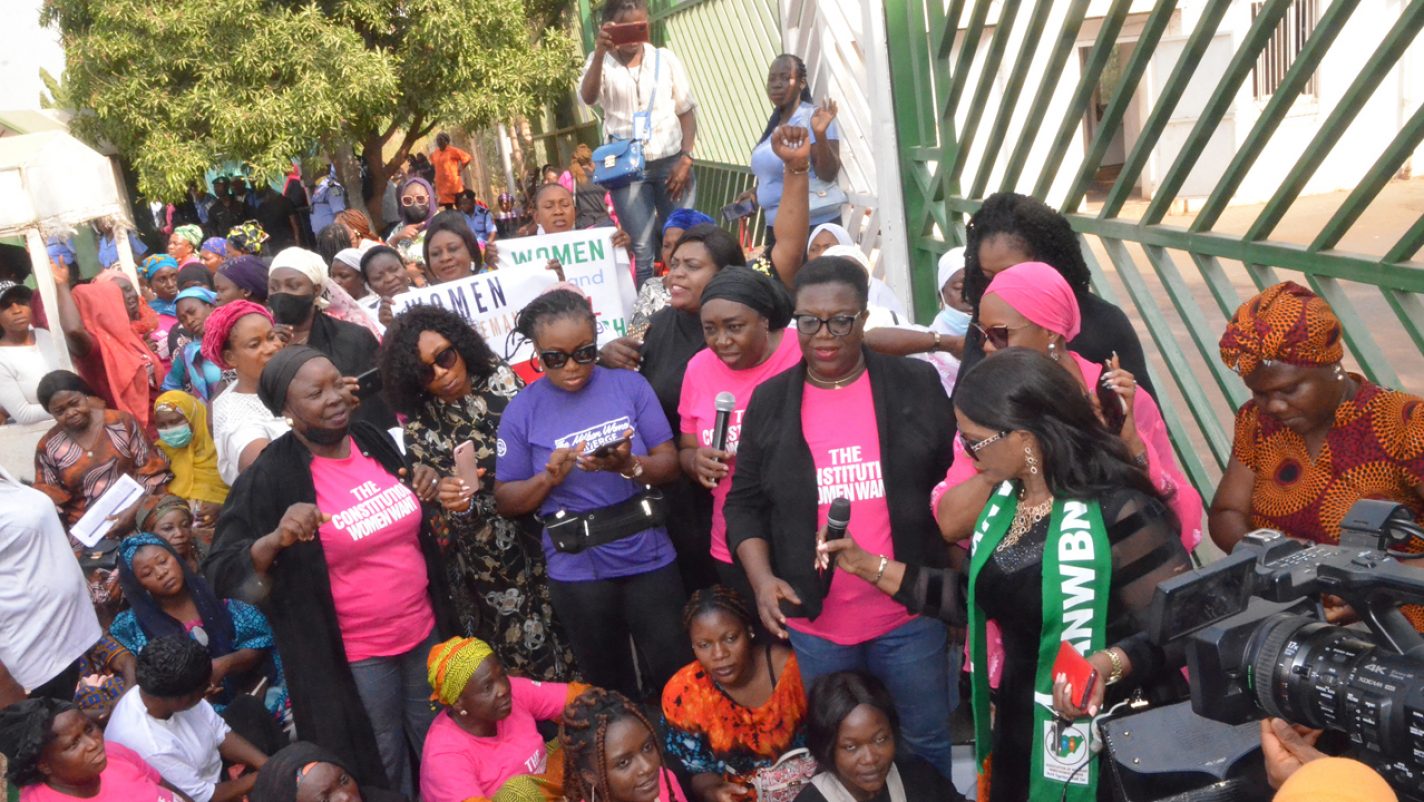
Ahead of the Saturday 2023 governorship and state assembly elections, a coalition of women groups has sent a strong warning to political parties against inducements, intimidation, and violence.

The women also urged the Independent National Electoral Commission (INEC) to be accountable to the people and ensure that they truly deliver a transparent, free, and fair election.

In a statement signed by Dr. Abiola Akiode-Afolabi on behalf of the coalition, the groups emphasized the need for an enabling civic space, public participation, fundamental freedoms, and a violence-free environment.

The statement reads:

The Independent National Electoral Commission (INEC) has set aside March 18, 2023, as the new date for the Governorship and State Assembly Elections in Nigeria. The election is slated to take place in 28 States while the governorship poll will take place in 36 States of the federation.

The Women Groups Cohort led by Women Advocates Research and Documentation Centre (WARDC) with support from Women’s Rights  Advancement and Protection  Alternative (WRAPA) ; includes the Gender and Constitution Reforms (GECORN) Gender Technical Unit (GTU) , Womanifesto and National Coalition on Affirmative Action(NCAA)  call on authorities, candidates and political parties in Nigeria to foster an enabling environment for peaceful elections and prevent election-related violence, as the country prepares to go to polls on Saturday,  March 18, 2023. 

The women groups emphasize the need for an enabling civic space, public participation, fundamental freedoms and a violence-free environment as being critical to foster inclusive engagement in the electoral process, and the exercise of political rights.

As such, we urge all stakeholders in Nigeria to respect and uphold the right to political participation, freedoms of assembly, of association, of opinion and expression, especially of women candidates and voters well before, during and after the polls.

Elections in the country have repeatedly resulted in outbreaks of violence, including gender-based and sexual violence, high prevalence of vote buying and other corrupt practices.

As lead-women coalitions, we emphasise the principle of “one woman one vote” and the importance of creating an enabling environment for peaceful and inclusive elections that will deliver upon the aspirations of Nigerians while we frown against all forms of transactional politics, either vote buying or selling.

The group under the leadership of WARDC has deployed 400 observers across the 28 states and call on INEC to be more transparent in the coming elections. INEC should be accountable to the people and therefore ensure that they truly deliver transparent, free and fair election for the people. Nigeria is at the verge of its fragility and INEC holds all of us a responsibility to ensure that laid down procedures are followed and people’s votes count.

There are over 1 500 women running for the House of Assembly elections and 24 women for gubernatorial, we wish them the best in the upcoming elections and call on Nigerians to vote women.

 Long Live the Federal Republic of Nigeria!

Signed:

 Dr. Abiola Akiyode – Afolabi

For the Women Group

08055951858

Oro rites on election day is illegal, unlawful, unconstitutional and must be stopped immediately – Malcolm Omirhobo

First Oba Nojeem Aberejo a Lagos traditional monarch denied claims that Oro festival, a patriarchal traditional rite common among Yoruba had been scheduled for 18 March, the day set by the Independent National Electoral Commission (INEC) the governorship and state legislature elections.

Oba Aberejo, the Alake of Akesan told PREMIUM TIMES on Monday that: “It is absolutely untrue, there is nothing like that, I will not be a part of illegality.”

A Twitter user, Abdulmahmud alleged that the monarch scheduled the festival on election day to prevent voters from turning up to exercise their civic rights.

Likewise, the traditional ruler of the Ikate-Elegushi Kingdom, Saheed Ademola (Kusenla III), debunked the claim of fixing the Oro cult ritual on Saturday, March 18, which is the day of governorship and state assembly elections. 

Thereafter, media aide to Kusenla III, Temitope Oyefeso, clarified that the traditional rites which has been scheduled to run from Wednesday to Saturday was not intended to frighten and keep voters away in the Ikate-Elegushi area of Lagos since the rites would end by 5 am on Saturday.

However, controversial Lagos lawyer, Chief Malcolm Emokiniovo Omirhobo has given reasons why Oba Elegushi must postpone the Oro cult rite.

“It is shocking that in the 21st century, the Oba of Ikate-Elegushi Kingdom, Saheed Ademola (Kusenla III) can with audacity and impunity declare to the residents of Ikate-Elegushi, that there would be a restriction of movement on non-indigenes and women from midnight to 5:30 a.m., including on Saturday’s governorship and state assembly election for him to perform the Oro rite in the community from Wednesday to Saturday during election.

“This move by Oba Elegushi is illegal, unlawful and unconstitutional and must be stopped immediately because it is not with the backing of any known law in Nigeria Our laws are very clear that African traditions are good as long as they do not go contrary to public policy and natural justice, equity and good conscience.

“The scheduling of Oro rites during election has failed all the above tests and must therefore be cancelled or postponed for now until after the elections on Saturday. I am calling on the civil society, the Lagos State Governor, the Lagos State Commissioner of Police, the Inspector General of Police, the Army, President Buhari and the international community to weigh into this matter before it gets out of hand.

“The Nigerian 1999 constitution Is very clear that nobody or institution has the right to violate the fundamental rights of other Nigerians to move freely, peacefully assemble and association and to freely express themselves through the ballot box except with the backings of the law. The Oro rite if allowed to go on will disenfranchise many women and many non-indigenes whose sin is to believe in one Nigeria or forced into it.

“The results of polling units in front of Oba Elegushi’s palace for the just concluded Presidential and National Assembly elections on 25/2/2023 was cancelled because members of the Elegushi family destroyed the polling units and intimidated voters They were arrested quite alright by the Army who handed them over to the police and nothing has been done about the matter since then notwithstanding that innocent law-abiding Nigerian citizens were deprived of their rights to vote.”

Meanwhile, legal practitioners under the umbrella of Lawyers for Peter Obi have called on INEC and Nigerian security agencies to immediately stop continued attacks and intimidation against supporters of the Labour Party (LP) in Lagos State.

The lawyers in a statement asked the Lagos State government led by the All Progressives Congress, to ensure that its “supporters, thugs, and candidates conduct themselves in a civil manner.”

How 18 female prison guards were caught having sizzling intimacy relations with prisoners

In March 2021 a viral video showing an alleged sexual act between a female warden and an inmate sent shock waves across KwaZulu-Natal, a former South African province, and cyberspace.

The recording reportedly hit social media on Wednesday, March 17, 2021, and thrust the country’s department of correctional services into the spotlight, negatively.

The Correctional services reportedly expressed shock at the incident at the Ncome Correctional Centre in KwaZulu-Natal.

The spokesperson for the department, Singabakho Nxumalo, said action had been taken against the inmate and the officer had been suspended.

Mr. Nxumalo assured that there would be a broad internal investigation that would not only probe the two individuals caught in the video but would include other officials to establish whether the recent incident was an isolated case.

He confirmed the warden and inmate were aware of the recording. “Correctional officials are expected to abide by a code of conduct, and despicable acts of sexual activities with inmates shall never be tolerated. We appeal to those in possession of the video to refrain from disseminating it,” Nxumalo said.

Days ago, the British national daily tabloid, The Mirror reported that about 18 female prison guards have been sacked for having illicit sexual affairs and engaging in hookups with male inmates for years.

According to The Mirror, the illegitimate relationships all occurred at HMP Berwyn, Britain’s biggest prison as the figures were revealed in Freedom of Information requests.

The scandals were uncovered after three of the women ended up in court over the illicit pitches in affairs that took place over the past six years at the privately run jail in Wrexham, North Wales.

One of the love-struck guards, Jennifer Gavan accepted £150 to smuggle a phone into a robber, Alex Coxon’s cell, and the pair were later caught exchanging offensive snaps via WhatsApp.

Gavan pleaded guilty to misconduct and was sentenced to eight months behind bars, The Mirror reported.

The 27-year-old Gavan was also caught kissing Coxon during the relationship that went on from April to July 2020.

In a similar deal, Gunn was sentenced to one year in prison after having a fling with ‘dangerous’ inmate Khuram Razaq, 29.

Gunn, a criminology and psychology graduate made numerous sexual phone calls to him while serving a 12-year sentence for conspiracy to rob, and smuggled in a pair of her knickers for the prisoner.

A search of her bedroom revealed snaps of the pair kissing and hugging while in his cell.

That same year, Emily Watson was jailed for one year for performing a sex act on prisoner John McGee.

Mold Crown Court heard she spent so much time with him staff became suspicious and launched an investigation.

They had been alone together in his cell on three occasions when she performed a sex act on him twice and had intercourse once.

The staff has since been given corruption prevention training and the prison’s security has been improved.

A Prison Service spokesman said, “The overwhelming majority of Prison Service staff are hardworking and dedicated and we will not hesitate to punish those who break the rules.

“Over 500 members of staff at HMP Berwyn have undertaken corruption prevention training in the last 18 months and our enhanced security is protecting the prison against attempts to smuggle illicit items inside.”

Since 2019, some 31 female officers in England and Wales have been dismissed for inappropriate relationships, Ministry of Justice data have shown. These included one officer who had an inmate’s baby.

HMP Berwyn has previously been labelled the UK’s “cushiest” jail after snaps emerged of hotel-standard digs.

The cells have no bars on the windows and come with en suite bathrooms. And it revealed that inmates also have televisions, laptops, and phones.

Child marriage to Kano Alhaji: Did the 11-year-old give her consent?

By Lillian Okenwa

Many are still in doubt over the authenticity of a video that has been making the rounds over cyberspace, where a senior citizen from Kano state married an 11-year-old girl.

Already, the video has garnered 2,274 retweets, 2,186 quote tweets, and 3,770 likes.

See video. https://twitter.com/Ozoadaz/status/1636090944020783106?s=20

The ‘groom’ said to be a local Kano Alhaji, has however defended his actions, maintaining that the marriage was initiated out of love and mutual consent. The question is, can an 11-year-old give legal consent to marriage? Can she even give informed consent?

In the video interestingly, loud happy voices of adults, particularly women could be heard in the background, saluting the ‘couple.’

Notwithstanding that 34 of the 36 States of the Federation have fully domesticated the Child Rights Act (CRA, 2003), a law that deals with issues of child abuse, child labour, and forced marriage, among others, Child marriage remains a contentious issue in Nigeria, where regional disparities and cultural practices have long preserved the tradition.

Kano and Zamfara are yet to domesticate the Act.

During the 10th anniversary commemoration of the International Day of the Girl-Child in Abuja on 11 October 2022, members of the Children’s Parliament raised an alarm over the betrothal of underage girls to old men for economic reasons. A young girl activist from Yobe State, Khadija Badamasi, made a revelation about the disgraceful act in her state.

“Yobe State, where I hail from, due to poverty, has the largest number of child brides in North-East Nigeria. In my community, most people are farmers, and due to poverty, parents borrow money to cultivate their farms. Hence, they end up having to give their girl-children in place of the debts.”

In due time perhaps, there might be disclosures as to whether the recent development between the child and the Alhaji has some economic undertones.

Psychologists and mental health experts however note that in order to have inhibited sexual pleasure with children, many pedophiles hide under the cloak of tradition, culture, and sometimes religion, to marry little girls.

Not a few Nigerians would recall that despite the outrage that greeted his 2009 marriage to a 13-year-old Egyptian girl, Senator Ahmed Sani Yerima on Sunday 28th July 2013, told the Sunday Trust Newspaper that ”if the vote on the child marriage issue came up in the Senate again” he and his supporters ”would win a million times over.” 

Yerima is right. He would win again and again. The indifferent attitude that has been displayed by a large number of Senators to the plight of the girl-child, pedophilia, and infant marriages in Nigeria is evident. It is noteworthy that during the Yerima brouhaha at the Senate, two female Senators, Aisha Jummai Alhassan from Taraba state and Zainab Kure from Niger state, abstained from voting against child marriage.

Roz Ben-Okagbue, lawyer, accountant, and activist shared some thoughts in her article Eradicating child marriage; is the removal of S29 the answer?

 “It is also a proven fact that early marriages lead to poorly psychologically developed women who produce infants with late physical and cognitive development…The most disturbing factor however is the health implication of early marriage and childbirth.

“The young teenage body is neither equipped for sex nor childbirth and often results in vesico vaginal fistula (VVF) which is a condition that renders the girl child incontinent. Early sex has also been known to cause cervical cancer and other ailments. One can only imagine the pain and depression that these young girls are subjected to whilst their counterparts around the country are concerned with education and other teenage preoccupations such as social media and music.

“Some argue that early marriage protects the girls from modern social ills such as promiscuity and unplanned pregnancies and therefore the practice should not be stopped. Tragically none of those advancing these arguments are willing to subject their own children to early marriage rather than education; nor have they come up with a solution to the social problems to the society caused by these early marriages…”

Rights activists have condemned the child marriage to Kano Alhaji, stressing the potential physical, psychological, and educational consequences faced by child brides. Save The Child International, a Non-Government Organisation recently noted that in northern Nigeria 78% of females marry before they turn 18.

As of January this year, over 473,565 Nigerians have signed an online petition calling for the ban and criminalisation of child marriage in the country. In the meantime, the United Nations International Children’s Emergency Fund (UNICEF) 2022 report revealed that 22 million girls between 13 and 17 years are already married in Nigeria.

As it stands, Nigeria has the highest number of child brides in West and Central Africa.

And although the Child Rights Act which prohibits marriage below the age of 18 appears to conflict with the constitutional provisions, Nigerian lawmakers do not seem to have any plans for this subject.

Tales My Patients Told Me: “Rico, oh Rico!”

By Emmanuel Fashakin

This was an unusual tale because it took place on a Monday. I don’t do tales on Mondays, my busiest day of the week, but Monica (not real name) had a tale to tell, and she could not be denied. Once she started, she could not stop; so I dropped my stethoscope and listened.

Monica came into our Brooklyn location for the Federal Government mandated biennial medical examination for commercial drivers, our office being one of the approved centers. That Monica was a commercial driver raised my eyebrows: she is only 37 years old, slim, and pretty.

What business does a petite 37-year-old have being a commercial driver? We have a few female commercial drivers, but they are usually in their fifties, burly and strong. Not like Monica, who appears to be ready to break in two at the waist at any minute. She passed the physical examination easily enough, but I could not hide my surprise. So I asked her: how the heck did you become a commercial driver? My question opened the floodgates.

Monica was brought up by a single parent, her father, who doted on her, and by her admission, gave her extremely good care. Her father would not let her keep bad companies, which are quite easy to come by in Brooklyn. At 14 years of age, she ran away from home to her cousin’s place, because she did not like her father’s strict discipline. At her cousin’s place, she ran into a 19-year-old street toughie called “Rico.”

Rico pulled her into some decrepit house and raped her. She was so terrified that she ran back to her dad’s home. As the days went by, she got better, and soon forgot all about Rico. Unfortunately for her, it was almost five months after the Rico incident that she realized that she had not seen her period. A quick visit to the Family Doctor confirmed her father’s worst fears — she was pregnant. She told her father that Rico did it, and together they went in search of Rico. It was then that they learned, to their dismay, that Rico had been killed in a gang-related fight two months earlier. She did not know Rico’s real first name, not to talk of the last name or even his home address. They had no information on Rico’s family, and it appeared that she hit a wall whenever she asked on the street because nobody was talking, apparently fearing reprisals from members of Rico’s gang. She had her baby quietly and named her Sandy.

Monica was never able to get back to school for a proper education. She drifted from job to job and ended up becoming a commercial driver. Her father took over Sandy’s care, and he said that he was determined to prevent what happened to Monica to befall Sandy.

Unfortunately, at precisely the age of 14, Sandy got pregnant for the first time. Monica said that her father was so distraught that he has vowed never to talk to her again, because according to him, Monica was responsible for Sandy’s predicament. Sandy is now 23 years old, she has had three children for three different men.

Monica said that the last Sandy pregnancy was particularly bad. They had a baby shower for Sandy, Monica’s friends and relatives were all there with presents for the baby, but the father-to-be brought only his three street friends, with sagging jeans and head bandannas, Monica said. And the guy was so rude, lambasting Monica’s aunties who complained that his people did not show up with any presents for the baby, and he and his friends were smelling of marijuana and reeking of alcohol. She said everyone was asking Sandy: why for God’s sake would you choose such a person as the father of your child?

Sandy, according to Monica, feels quite happy. She is on a mission to find her Dad, and Rico’s, people. She has not succeeded, but she is still trying. And she says that whenever she feels lonely or down, she could feel her dad’s “presence” around her, and that made her happy.

The banging on the door by my staff signaled to me that I had spent far too much time with this patient. I slowly allowed my jaw, which had been hanging open for about fifteen minutes, to swing back slowly upwards into the closed position. I could not say anything, except to mumble under my breath, “Rico oh Rico!”

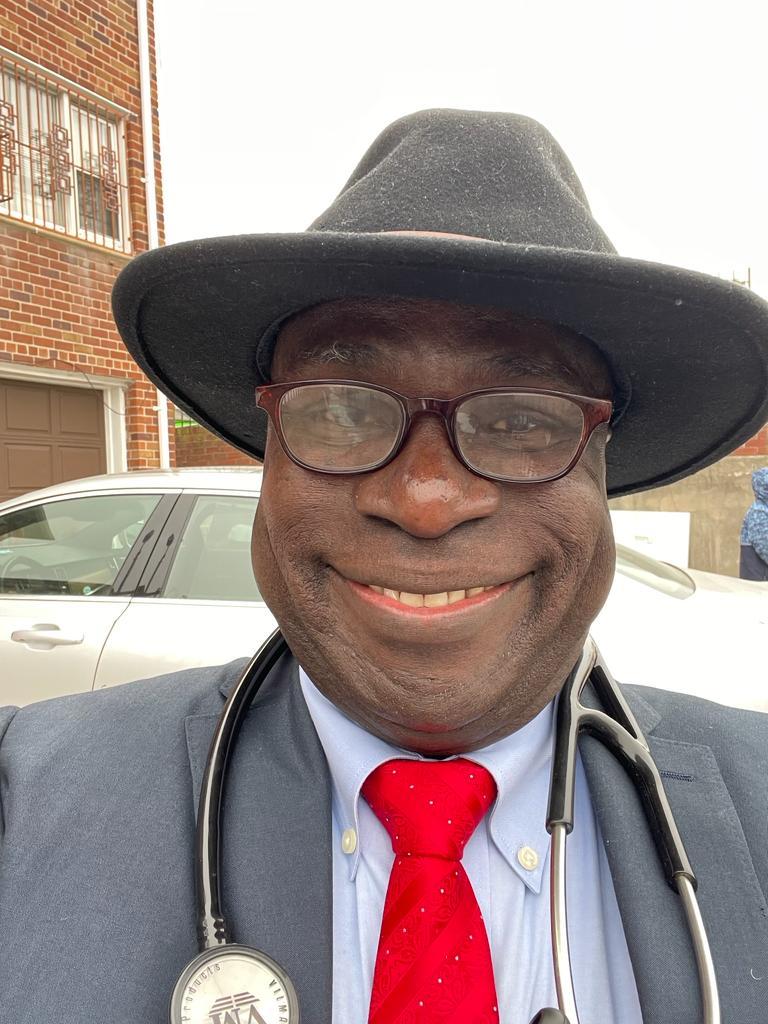
Emmanuel O. Fashakin, M.D., FMCS(Nig), FWACS, FRCS(Ed), FAAFP, Esq.
Attorney at Law & Medical Director,
Abbydek Family Medical Practice, P.C.
Web address:
http://www.abbydek.com
Cell phone: +1-347-217-6175
“Primum non nocere”

When will we learn that the brain is the primary sexual organ… By TK Orlando

1) Nigerian men seem to believe generally that a woman with a high sex drive had a man in her that “activated” that mode in her and the man still has her master key and would be able to bed her anytime he sees her.

That is the stuff of nightmares. The men end up building a myth of a perfect sexual fiend in her past; an Adonis with better love language, a bigger dick, more romantic nous and decadent sexual devilry in bed and they look at their flabby skin and small dick and feel inadequate.

They end up resenting the woman for her perfect sexual past and feel a crushing weight of inadequacy.

And this same nightmare of a decadent and memorable sexual history is also real for women. They regard their own pitiful sexual history and how they can’t bring themselves to perform skillful oral sex on their husband and can’t help but resent the perfect sexual minxes of his past who indulged him in wild sexual sprees and taught him things they can’t bear to do to with him.

So, both men and women suffer from the imagined glory of the sexual histories of their partners.

2) Men have a misguided notion that size is power when it comes to their penis and there is actually an unvoiced sense of inadequacy that trails most men with normal dick size.

The average penis size is actually not the famed 6 inches but usually 5 to 5.5 inches thereabouts. At around 5 inches you are good to go if you know what to do with it.

Women too have their own breast issues. And bum-bum issues. And plenty of other body dysphoric issues.

When will we learn that the brain is the primary sexual organ and not the body, that is just a lump of passionate clay that can only be controlled by the response and stimuli of the brain?

The Masters and Mistresses of Power

By Douglas Ogbankwa

Politics is the madness of many, for the benefit of few -Alexander Pope

The Nigeria game of thrones is a unique one that could marvel even the original creators of the game itself. It answers issues that range from the sublime to the ridiculous. It was Dr. K.O. Mbadiwe the intellectually audacious First Republic Politician and NCNC Chieftain that aptly captured the Nigerian Political Tragedy in the following aphorism:

Man is living a false lifestyle in a wrong society, a society, where morons are barons, a Society where thieves are chiefs, and a society, where monkey dey work baboon dey chop.

In situating the Nigerian Power Jigsaw, Professor Adebayo Williams who I must concede first used the title of this article posited inter alia thus :

Power in Nigeria is controlled by the 3 Bs: Bullet, Ballot, and Bottom Power

The Politician goes to a rally with some Youth and goes to the inauguration ceremony dinner with his children. How many times have you seen the child of a politician in a rally? But he or she is the major beneficiary of the process. During the election period, Youth are armed to fight for Politicians and after the elections, the politicians now run a system that put the youth in jail. That is why you see that after every major election in Nigeria, there is a major insurrection in a part of the country. Examples are the Odi Crisis, the Niger Delta Crisis, the Crisis in Benue, the Boko Haram Crisis, the IPOB Agitation, the Bandits in the North, the Kidnappings on our highways, Banditry in the North, the MEND Agitation, the ISWAP Fighters, they were all spurned up by our Political Leaders one way or the other. When you start a wildfire, sometimes you can not control it. So in Nigeria, the ballot, the bullet, and Bottom Power are the drivers of Nigerian Political Tragedy Contemporaneously.

It was Oscar Wilde that once posited thus :

Everything in the world is about sex, except sex. Sex is about power

The Bottom Power Element will surprise you. It will interest you to know that the June 12 Crisis started over an ego trip between the late Maryam Babangida and Kudirat Abiola, both wives of Ibrahim Babangida and MKO Abiola respectively. The Presidency or absence of the same was ultimately determined by passion. Every war that is worth its salt in this world, was caused by the struggle for a woman. The Struggle for a woman is an extended form of the struggle for power. If you were a young man, I would advise you to avoid women of power, or else the power of a woman consumes you. There are people that can leave their millions, cars, and houses with you, but when it comes to women: RUN FOR YOUR LIFE

Forget about the fact the corrupt persons were after Nuhu Ribadu, Nuhu made a big mistake, he choose to struggle with a woman with one of the major elements of Shehu Yar’Adua’s Government.

It was Leonardo Di Vinci that said:  Nothing strengthens authority more than silence
You do not see the real people that have power in Nigeria and you do not hear them. This Young man told Nuhu Ribadu how he will be phased out of power and his being phased out, followed every way he boasted about it. The same scenario repeats itself even now, all around the world. It was John Jesen that said:

History is past politics and politics is present history.

Be careful when some persons boast. There are those that boast but are empty, ignore those. But there are those that boast and they mean what they say and say what they mean. Ignore those at your peril. It was Renee Ahdieh that posited in The Rose & the Dagger, that :

The power behind words lies with the person

But there are those that do not boast at all but are very quiet. Their anger is depicted is in loud but gory actions. Most times when everyone has forgotten. They are those that posit that revenge is better served as an ala carte, while it is very cold . They are the Mafia Managers. An Anonymous Russian Constitutional Expert captured the Russian Dictatorship under Russian President Vladimir Putin thus :

Different Countries have their different Constitutions, but ours is absolutism moderated by assassination

Assassination is an Official Policy of many Governments of the world. In some countries of the World, those that kill, are also those who will do the investigation. They try to make it simple. It is like asking the thief to look for a missing item.

The Power Puzzle in Nigeria is a complex mix of the unimaginable. It is like Clint Eastwood’s Hollywood Blockbuster: The good, the bad and the ugly

When you engage those in power, be careful how you renege on your promise, change agreements, or squill classified information. You may never have another opportunity to do any of the above or make any amends. Also, give anything you do on the big stage your best shot, because: You do not have a second time to make a first impression.

Forget about the Razzmatazz of inaugurations: the rhetorical speeches and flamboyant parades. It is like the facade of a White Wedding looking glamorous, but far from the reality of marriage.

In summarising the Nigerian Political labyrinth, I anchor with this apt, but deeply inquisitive aphorism of Dr. K.O. Mbadiwe thus :

When the come, comes to become, what becomes of the come?

About the Author :

Douglas Ogbankwa Esq., @ Douglas [email protected]. , Lawyer Policy Affairs Analyst, and Writer is the Convener of the Intellectual Hub and the President of the Benin Writers’ Society.

As FG appeals implementation of National Gender Policy on 35% affirmative action, Nigerian Shippers’ Council surpasses 45%

Although Nigerian women continue to query the rationale behind the appeal filed by the Federal Government at the Court of Appeal, Abuja in July last year challenging a judgement of the Federal High Court, Abuja, which ordered the enforcement of the National Gender Policy by allotting 35 percent of appointments in the public sector to women, the Executive Secretary of Nigerian Shippers’ Council (NSC), Mr. Emmanuel Jime, has revealed that the Council remains gender-sensitive, adding that it has surpassed the 45 percent affirmative action of the United Nations.

In the suit filed by Women in Politics Forum (WIPF) and a coalition of nine women groups, against the Federal Republic of Nigeria and the Attorney General of the Federation and Minister of Justice, seeking the mandatory implementation of National Gender Policy, Hon. Justice Donatus Okorowo of the Federal High held that the non-implementation of the National Gender Policy on 35% affirmative action on the appointment of women into political positions was a breach of women’s fundamental rights and dismissed the position of the Respondents.

Unhappy with the verdict, the Nigerian government headed to the Abuja Division of the Court of Appeal seeking an order “setting aside the judgment; and striking out and/or dismissing the Respondents’ (women) suit in its entirety.”

The lawyers for Appellants (Federal Government and AGF; T. A. Gazali, SAN, T. D. Agbe, Suleiman Jibril, Ibukun Okoosi, Onyinye Halliday, O. D. Okoronkwo from Department of Civil Appeals Federal Ministry of Justice formulated 16 grounds of appeal for determination.

The government on one of its grounds submitted that: “The learned trial judge erred in law when he held that the Respondents’ suit was founded on enforcement of fundamental rights, and therefore disclosed a cause of action against the Appellants.

“Particulars Of Error: The Respondents’ suit was for the enforcement of the National gender policy. The National gender policy for 35% affirmative action on the appointment of women is not based on Chapter 4 of the Constitution. The National gender policy was a Federal Government policy which cannot be enforced by way of fundamental rights enforcement proceedings.

However, Jime on the occasion of the ceremony to mark this year’s International Women’s Day (IWD) organised by the Women in Logistics and Transport Nigeria (WILAT), in Lagos, disclosed that the ports economic regulator has remained gender-friendly, adding that this could be seen in the number of women who hold top positions in the Council.

The Executive Secretary who was represented by the Director of Human Resources, Mrs. Ada Okam, further stated: “Precisely, women constitute 45 percent of the high-profile cadre as well as occupy other juicy positions.

“In line with embracing equity, the council has already trained over 65 percent of its female staff locally and abroad in different capacity building programmes to properly position them in the organisation.

“Council will do more where our female members of staff demonstrate the requisite capacity. I commend our female staff for showing capacity by performing excellently in their designated offices.”

Mrs. Khadijat Sheidu-Shabi who is Chairperson of WILAT, however, said the percentage of women in the maritime industry about 15 years ago was about seven.

She disclosed that in recent times women have been occupying more administrative positions.

She added that the number of women was not enough in the technical sector of the maritime industry, such as engineering and seafaring.

The National President, Chartered Institute of Logistics and Transport (CILT), Mrs. Ufon Usoro called on the women to ensure that they create opportunities for themselves.

According to Usoro, “We should create opportunities and make the society to realise that we are hardworking, smart and ready to contribute.’

“You just need to rearrange yourself and do what the men do to get to the top,” she said.

“I am very pleased about the theme of the IWD which is equity through technology. We need to create opportunities for ourselves, encourage our girls to be good in science and mathematics because that is where you start if you want to be good at using technology.”

TIPS