Home Blog Page 790

The Faux Apologia of Seun Osewa

By Chidi Anselm Odinkalu

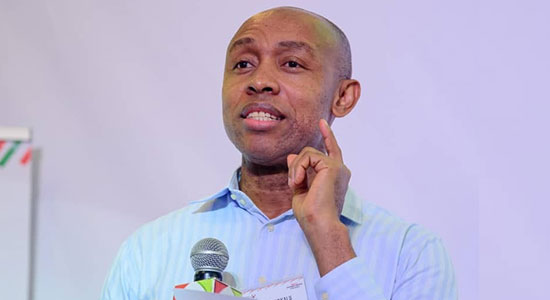
On or around 20 March 2023, two days after the ballot into the offices of state governors and state legislators which took place on 18 March, one Seun Osewa issued what he ostentatiously titled “An Apology to the Igbo People of Nigeria.” A 40-year-old graduate of one of Nigeria’s best universities, the Obafemi Awolowo University, in Ile-Ife, Osun State, Mr. Osewa is best known as the mind behind Nairaland, the rumbunctious digital bulletin board where Nigerians trade all manner of things on the ether, from the sublime to the egregious.

Addressed to “the Igbo People”, the statement claimed to “sincerely apologize for allowing a toxic political banner advert which said ‘Lagos can never be run from Anambra; go and vote’ to run on Nairaland for several hours on Wednesday, March 15, 2023.” It described the advertisement as part of “an ethnically divisive political campaign aimed at securing Lagos State for the ruling party by instilling fear in Yoruba people, making them believe that Igbo people intended to ‘take over’ Lagos State.”

Mr. Osewa ultimately blamed the advert on the absence of “clear policy against accepting negative and ethnically divisive ads on Nairaland” before generously disclosing that having made N16,000 (sixteen thousand Naira) from the advert, he will “double it and donate it to victims of political violence in Lagos.”

It is not entirely clear what Mr. Osewa hoped to achieve with his “apology”. The response he got was anything but generous. Journalist, Fisayo Soyombo, accused him of being among people who are “led by their pockets.” Techpreneur, Osaretin Asemota, dismissed the release as “performative nonsense”. Chibuzor Okoronkwo accused Mr. Osewa’s release of “putting more salt to the injury.”

Mr. Osewa’s apology hardly helped its author. First, it came from a place that hardly abjured collective punishment on grounds of immutable identity. Ethnic politics may be de rigeur but, in Nigeria, Igbos don’t have a right to vote; citizens do. Those citizens come from any number of over 389 ethnicities and over 500 language groups. No ethnic group votes as a herd in Nigeria. Dozie Ikedife Jr. campaigned for Bola Tinubu just as Rinu Oduala supported Peter Obi.

Second, Mr. Osewa clearly conflated ethnic identity with political opinion, ending up with a determinism that equates one with the other. It was immaterial the ruling APC had high level support from such people as the incumbent governors of Ebonyi and Imo States as well as past governors of Abia and Enugu States, all of them Igbo. The people who set out to suppress the votes of Igbos in Lagos did so by rejecting the political autonomy of the citizen requiring them manu militari to either renounce their ethnic identity or immolate their civic agency.

Third, Mr. Osewa appeared to assume that ethnic profiling can be attained with neat precision, which is far from the case because you sooner or later discover that many people look alike across lines of situational division. On the day of the state-level election in Lagos, Iyanuoluwa Bolarinwa, a name that is unlikely to make the bearer Igbo, reported that she was “told to go back to Anambra”, one of the Igbo States, before being “rough handled, beaten and sent out because I look Igbo? Because I was not going to vote APC?”

Popular Youtuber, Sisi Yemmie, reported that party political heavies precluded her and her husband from voting because they were said to “look like Igbo people.” Mr. Osewa’s “apology to the Igbo people of Nigeria” did not extend to people like Sisi Yemmie or Iyanuoluwa, neither of whom is Igbo but both of whom suffered violence because of the kind of poison that he sold.

As if to add the salt of mirth to the injury and hurt from his advertisement, Mr. Osewa then promised to donate N32,000 (thirty-two thousand Naira) to the “victims of political violence in Lagos.” Impressively, this part of Mr. Osewa’s release is the only one addressed to “victims”, an implicit concession that the class of the injured may have gone beyond the ethnic identity group of his target. Yet, he seems to assume that the victims are a coherent group, organized with a bank account in this season of no cash and that their injuries can be cured by unconcealed hubris from the authors of their civic liquidation.

On any of these metrics, Mr. Osewa was probably best advised not to have bothered to issue his release. Without it, many people may have been willing to overlook the advertisement on Nairaland. After this release, most people will have few doubts as to where to place him.

Mr. Osewa’s flippancy is characteristic of the people who instigated the ethnic violence and profiling or see themselves as benefiting from it. They want to turn the page as if nothing happened and quickly move on, summoning everyone along with dubious appeals to fatuous patriotism. Mr. Osewa’s “apology to Igbo People” ended with him asking his readers to “NOT give up on Nigeria”, with the promise that “TOGETHER we will overcome.” The capital letters are original to him. It is not clear, however, where he gets his collective pronoun to voice a promise he’s not in a position to make.

Like Mr. Osewa, Lagos State Governor, Babajide Sanwo-Olu, basking in the afterglow of re-election, swiftly appealed to “a spirit of solidarity and togetherness that binds us as Lagosians.” His principal, Asiwaju Bola Ahmed Tinubu, claimed to be “pained by cases of ethnic slurs, which are capable of creating needless mis-characterisation reported in some locations.”

The victims, understandably, are slow to make haste. They must bury their dead, bind their wounds, immortalize their scars, re-discover dignity, and then wonder whether they belong to the country that invites them to heal and patriotism only when it is convenient. In the cycle of Nigeria’s elections, patriotism can have a shelf life of the 90-minute duration of a football match involving the men’s national team. In any case, it must be furloughed in the year preceding elections.

The reality is no one ever moves on from this kind of violence. The perpetrators see the benefit for themselves in the humiliations and exclusions that they can inflict, which come with munificent benefits in propinquity to power thereafter. Far from being humbled, their impunity emboldens them. The victims nurse their traumas, which many of their generations will inherit from them.

This is why election violence in Nigeria is chronic. As the Report of the Sheikh Lemu Presidential Panel on post-election violence (which remains classified) of 2011 makes clear, violence and ethnic profiling have “continually featured in almost all elections in Nigeria since the first election that was conducted in 1922. The temptation is to suggest that election violence is deeply embedded in the Nigerian political culture.”

This should make it obvious that ethnic profiling and accompanying violence of the sort that characterized these elections and necessitated Mr. Osewa’s faux apologia is not a fate for Nigeria. It is a century-old choice. The divisions that sustain this pathology are so essential to the DNA of power and politics in Nigeria that those declared winners do not have any incentives to bring it to an end. The narrative of an inter-ethnic zero-sum game is profitable.

In strictly material terms, you can see their point. For Mr. Osewa, the cost is a promise to contribute N32,000 to a non-existent fund or entity. In a country in which the citizens or politicians are ready to bring this nonsense to an end, Mr. Osewa will not have the courage to rub this salt into the injury that he propagated.

A lawyer and a teacher, Odinkalu can be reached at [email protected]

Right of Reply: Re – As Nigeria’s judges get set to begin voting

From Nkereuwem Akpan

It’s with humility that I find myself unable to find any meaningful points of divergence from the views expressed by Anslem Odinkalu PhD. on all or any of the views expressed in the bulletin under review.

Dr. Anslem Odinkalu, far and above any lawyer, living or dead, I respect you, Sir.

I wish we could have at least 5 more like you in this country   Your epistles are always an interesting read because you speak to the issues, no matter whose ox is gored…and I dare say you indeed have ruffled not a few feathers.

While the rest so-called activists have since fallen by the wayside and are stricken by the lure of filthy lucre, you’ve maintained and sustained the struggle in the face of unparalleled adversity.

Unless there is an urgent and holistic recalibration of our entire justice delivery system, I’m afraid we are heading for the doldrums and even a thousand Odinkalu won’t stop the unfortunate trajectory.

This travesty that has become the bane of our justice delivery system must be tackled so as to stop or at least slow down this terrible downward spiral into bare ignominy and infantry.

A lawyer must be able to at least be able to fairly predict what the courts will do with a set of facts, maybe not with precision but enough to make a logical sequence flowing from earlier decisions of the Courts. Tragically, I find myself truly confused by the calibre of decisions churned out by our Courts. Some of these decisions have upset age-long established principles and shaken the very fabric of our Constitutionalism by nibbling at the heels of the doctrine of separation of powers. A situation long forbidden by the Supreme Court in a long line of authorities from Abraham Adesanya v President (1981); Nafiu Rabiu v The State (1980) 9-11 SC 130 and Lakanmi v AG (Western Region) (1971) 1 UI Reports 1.

Dear Dr. Odinkalu, I doff my hat for you. Your legacy is not only assured but your forthrightness and fearlessness are the stuff of legend and I’m sure even my late legend Chief Gani Fawenhimi will turn green with envy in his eternal resting place.

Trust me I’m smitten Sir.

Nkereuwem Udofia Akpan, Esq.

Principal Partner & Dean of Research, Lex Consulates & Attorneys Abuja FCT

On Twitter

@Chiefnkereuwem

email [email protected] [email protected]

Anomalous outcomes applying the felony murder rule

By Emmanuel O. Fashakin MD Esq.

LaKeith Smith was just 15 when he and his friends burglarized several homes in Millbrook, Alabama. During the crimes, police responded and fatally shot Smith’s friend, 16-year-old A’Donte Washington, who was participating in the burglaries. He was shot in the back and back of his neck as he was fleeing from the police. A grand jury exonerated the police and justified the shooting.

Under Alabama’s accomplice liability law, Smith was charged with Washington’s murder. In 2018, at the age of 19, he was sentenced to a total of 65 years in prison by Elmore County Circuit Judge Sibley Reynolds. He was convicted of felony murder, two counts of theft, and one count of burglary. An appeals court later ruled Smith’s two theft sentences should be run concurrently, changing the sentence to a total of 55 years.

That particular Alabama felony murder statute allows a person to be charged with murder if they are participating in a felony crime that results in death, whether or not that person actually pulled the trigger.

The felony murder rule is a rule that allows a defendant to be charged with first-degree murder for a killing that occurs during a dangerous felony, even if the defendant is not the killer. The felony murder rule applies only to those crimes that are considered “inherently dangerous,” as the rationale underlying the felony murder rule is that certain crimes are so dangerous that society wants to deter individuals from engaging in them altogether. Thus, when a person participates in an inherently dangerous crime, he or she may be held responsible for the fatal consequences of that crime, even if someone else caused the actual death.

The felony murder rule is an exception to the normal rules of homicide. Normally, a defendant can be convicted of murder only if a prosecutor shows that the defendant acted with the intent to kill or with reckless indifference to human life. Under the felony murder rule, however, a defendant can be convicted of murder even if the defendant did not act with intent or reckless indifference; the prosecution must show only that the defendant participated in a felony where fatalities occurred.

Some jurisdictions apply the REDLINE LIMITATION to the Felony Murder Rule. The Redline Rule, from the celebrated case of Redline v. Commonwealth, provides that although X appears to be guilty of felony murder based on the above analysis, FELONS ARE NOT LIABLE for the DEATHS OF ANY CO-FELONS that occur during the commission of the crime, so long as the death is caused BY THE VICTIM or a POLICE.

Therefore, if the State of Alabama had followed the Redline Rule of the Commonwealth of Pennsylvania, the Felony Murder Rule would not have applied to Mr. Smith. He would have been liable only for the burglaries he participated in, because, the homicide happened to a “bad guy accomplice”, at the hands of law enforcement.

People have compared the case of Mr. Lakeith Smith to that of Mr. Wesley Phelps who ironically was sentenced in the same court, by the same judge, ironically on the very same day Mr. Lakeith Smith was sentenced to a total of 65 years for the killing of his co-burglar friend by the police.

The facts of Mr. Phelps’ case were as follows:

28-year-old Phelps with prior convictions for sexual assault of a minor was high on drugs, stole a car, led the police on a high-speed chase, crashed the car, the car caught fire and the girlfriend died. The judge sentenced him to only three years in prison.

At first glance, it would appear that racism played a big part in the wide disparity in the sentencing of the two offenders by the same judge. But maybe not. The application of the Felony Murder Rule made a big difference in the two outcomes. The prosecutor has broad discretion on whether to bring a charge under the Felony Murder Rule or not. In Mr. Smith’s case, it was a slam dunk. Most jurisdictions will agree that burglary is so inherently dangerous that the Felony Murder Rule is automatically triggered if death results therefrom. The only thing that could have saved Mr. Smith was if Alabama followed the Redline Rule. They did not.

On the other hand, stealing a car while high on drugs, and leading police on a high-speed chase may be deemed not to qualify as being inherently dangerous. As a matter of fact, the drug intoxication of the defendant may provide the defense that negated the intent needed to commit a dangerously inherent crime — he was probably too intoxicated to form such intent.

People have complained that the Felony Murder Rule has disproportionately snared black defendants. Maybe so. On a happier note, on March 21, 2023, the appeal court slashed the sentence of Mr. Lakeith Smith from 55 years to 30 years.

Emmanuel O. Fashakin MD is a Fellow of the American Academy of Family Physicians and an Attorney at Law

References:

1. https://www.al.com/newmontgomery/2023/03/lakeith-smith-resentenced-to-30-years-for-friends-death-by-alabama-police.html?xxxx

2. https://www.justia.com/criminal/offenses/homicide/felony-murder/

3. 391 Pa. 486 (1958)

Commonwealth v. Redline

Days after reelection, Sanwo-Olu appeals N5 million compensation to Uber driver tortured during #EndSARS anniversary

“Lagosians are back to the regime of real Governor Sanwo-Olu that they know, and not the pretentious one who tried to project himself as a populist or respecter of human rights during the campaigns.” – Inibehe Effiong

Having secured another four-year tenure after begging Lagosians to give him another chance at governance, Lagos State Governor, Babajide Sanwo-Olu has appealed the 14 March 2023 Federal High Court judgment which ordered a 5 Million naira compensation to Adedotun Clement, an Uber driver that was brutally tortured during the first #EndSARS anniversary on 20 October 2021 at the Lekki Toll-Gate.

Recall that the governor had consistently denied complicity with the deadly military intervention at Lekki Toll Gate during the 20 October 2020 #EndSARS protest.

This is even as the Commander of 81 Military Intelligence Brigade, Victoria Island, Lagos, Brig. Gen. Ahmed Taiwo said the military was not happy that the governor denied inviting soldiers.

The army commander who appeared before the Lagos judicial panel alleged that Sanwo-Olu called on the military for support on October 20, after the #EndSARS crisis degenerated into chaos.

But still maintaining his guiltlessness during electioneering campaigns when he appeared on Arise News Channels, the governor who said he had no control of the military and police in Lagos, even though he was the chief security officer of the state added that he was pained as a leader and father to see youths brought down by bullets.

The governor equally promised to continue working closely with the youths and empower them to achieve their dreams if re-elected.

Interestingly, less than a week after his reelection, Lagos State government filed the appeal to challenge the N5 Million compensation, Clement

Clement was carrying a passenger to Lagos Mainland when he encountered a gridlock at the Lekki Toll-Gate during a protest to commemorate the first anniversary of EndSARS. He was tortured and pepper-sprayed by officers of the Lagos State Neighborhood Safety Agency and policemen.

The attack on the Uber driver was captured on video and reported by television stations and newspapers and attracted nationwide condemnation.

On account of this, a rights lawyer, Inibehe Effiong, filed a lawsuit against the State Government and the Nigeria Police to seek redress.

Notwithstanding a 16 March 2023 letter to Governor Sanwo-Olu, wherein Effiong demanded compliance with the judgment,  the Lagos State Government in a Notice of Appeal filed on Tuesday, March 21, 2023, said there was no evidence that the Uber driver was tortured.

In his response, Effiong said: “I’m not surprised by their decision not to obey a judgment that everyone knows is justifiable. Since they’ve chosen this infamous path, I will equally file a cross-appeal against the N5 Million damages and ask the Court of Appeal to increase it significantly.

“The message derivable from this action is that Lagosians are back to the regime of real Governor Sanwo-Olu that they know, and not the pretentious one who tried to project himself as a populist or respecter of human rights during the campaigns.”

Infernal fathers and how they sold their infant sons

Could poverty and desperation make a parent sell his or her child? And in the event that a parent trades a child for money, could the action be referred to as evil, wickedness, lack of care, or…?

After Abraham Olaniyan, at the time a 26-year-old resident of the Alabgado area of Lagos State sold his day-old baby for N350,000 in May 2012, he blamed it on poverty.  Olaniyan further explained that when his wife, Nkechi Olaniyan was pregnant with their fifth child, his family was going through great financial difficulties leading to his inability to cater to their financial needs.

Then in a bizarre twist to parents selling their children in the 21st century, a 30-year-old man was recently arrested for selling his 9-month-old son to three different buyers!

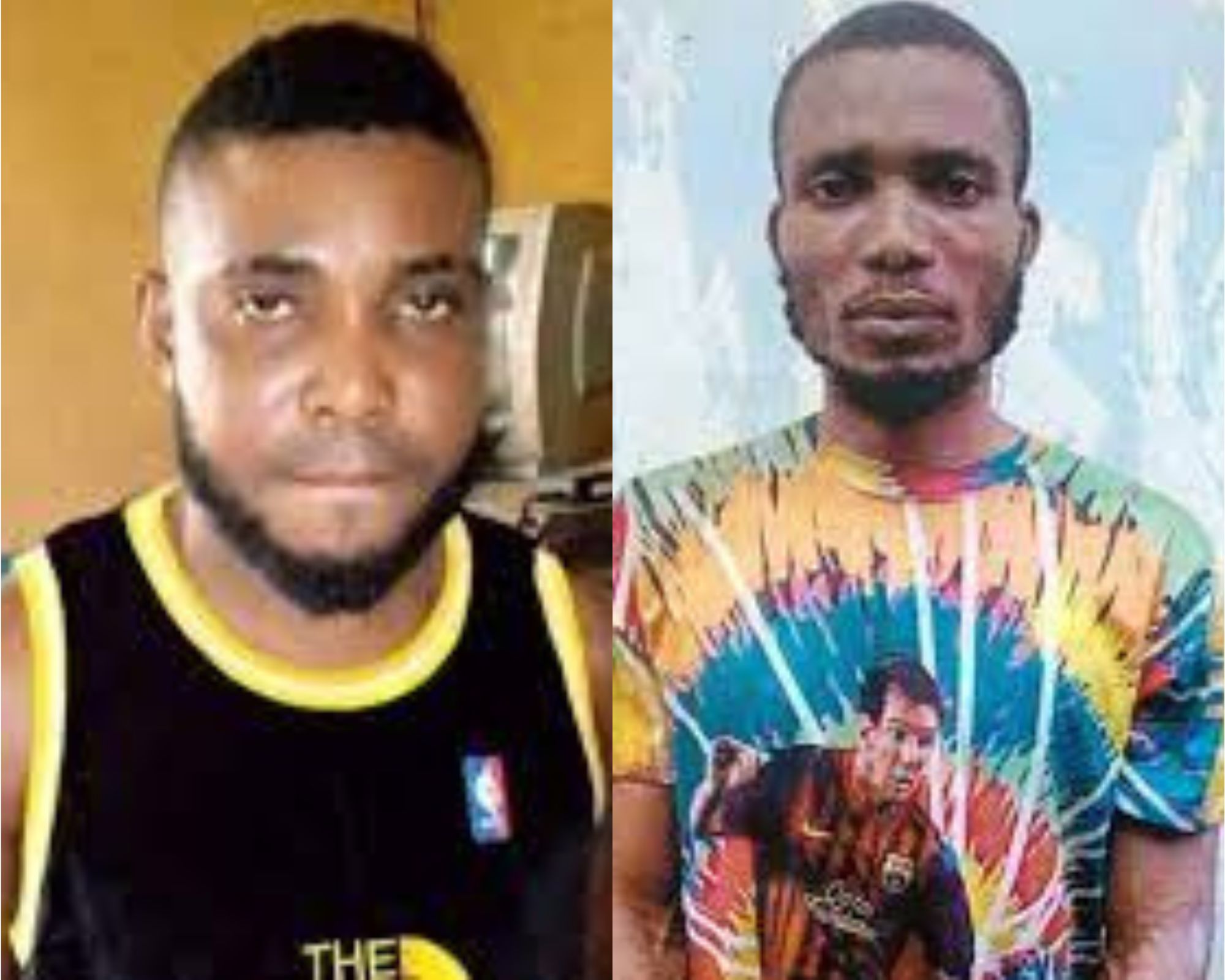
Daniel Chigozie was apprehended by operatives of the Amotekun Corps in Ogun State. The Corps Commandant, David Akinremi, said the security agency got a classified report that the father had serially merchandised his 9-month-old infant to three different buyers at various locations —Sango, Meiran, and Apapa area of Lagos.

The suspect was reportedly paid N150,000, N400,000, and N700,000 respectively by unknown buyers between August 2022 and February 2023.

Akinremi also disclosed that an investigation conducted by the corps revealed that the man, who is suspected to be working with a criminal syndicate, had devised a means through which the son was retrieved from the buyers after each sale until he sold him to the last buyer, identified as Dr. Nosa, in Apapa.

The suspect, who resides at Abela, Sango-Ota, in Ado-Odo Local Government Area of the state, confessed to the crime.

The National Agency is profiling Chigozie for the Prohibition of Trafficking in Persons (NAPTIP) for a follow-up investigation to recover the child and for prosecution.

In May 2022 the police in Ogun State confirmed the arrest of a 36-year-old man, Kingsley Essien, for allegedly trafficking his wife to Mali and selling his two-year-old son for N600,000.

The Ogun State police spokesperson in a statement said that the suspect’s wife, Bright Essien, reported the matter at the Agbara Divisional Police Headquarters

The police said Mrs. Essien reported the matter in October last year. She said her husband, Mr. Essien, informed her that he had secured a job for her in Bamako, Mali.

She said her husband said he had assisted many people in the past to travel to that country to seek greener pastures.

She added that being her husband; she did not suspect any foul play until she got to Mali. In Mali, she said she discovered that her husband had sold her to a human trafficking cartel headed by a woman for N1.4 million.

Osun State Guber Election: Appeal Court to determine Adeleke’s fate tomorrow

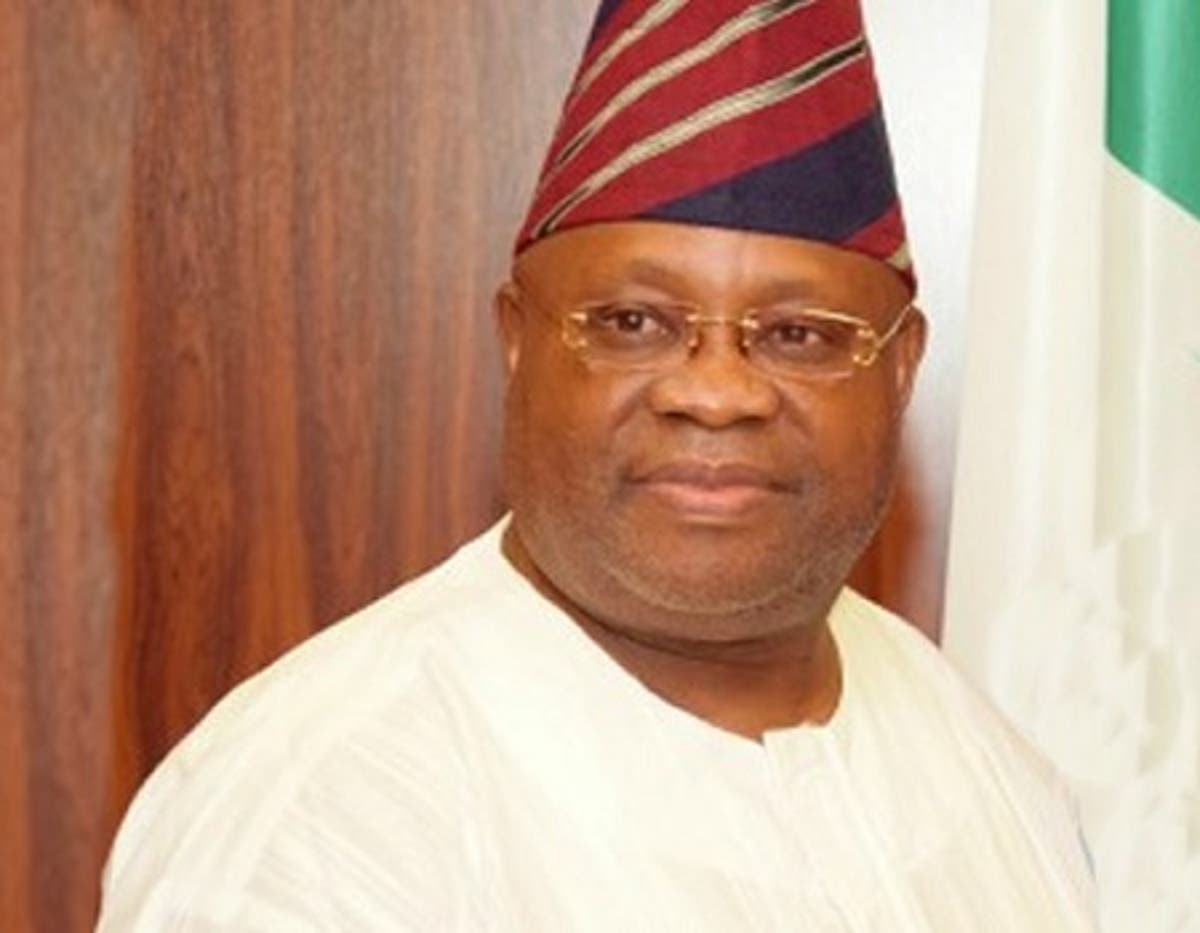
Whether Senator Ademola Adeleke will be affirmed as the duly elected governor of Osun state or that the mandate belongs to his rival and former Governor AdegboyegaOyetola will be decided at the Court of Appeal tomorrow.

On Friday the penultimate court will determine the appeal filed by Osun State Governor Ademola Adeleke over his sack by the Osun State Election Petitions Tribunal.

On March 13, 2023, the court reserved judgment in the appeal brought by Adeleke challenging the nullification of his election by the tribunal. The Independent National Electoral Commission (INEC) also filed an unparalleled 44-grounds appeal against the split 2:1 decision by the tribunal.

The tribunal had voided the July 16, 2022 election that produced Adeleke as the elected governor and ordered the Independent National Electoral Commission (INEC) to issue a Certificate of Return to the immediate past Governor Gboyega Oyetola of the All Progressives Congress (APC) as the validly elected governor. The verdict sparked widespread protests especially in Osogbo, the Osun State capital. A member of the three-man panel also disagreed, delivering a dissenting judgment.

According to the poll results announced by INEC, Adeleke had polled 403,371 votes against Oyetola’s 375,027 votes. The Peoples Democratic Party (PDP) candidate was victorious in 17 of the 30 local government areas of the state while the remaining 13 local government areas went to Oyetola.

No sooner had the dust settled on the judgment than Adeleke headed to the Court of Appeal to challenge the verdict. His legal team led by the go-to election petition trial lawyer, Dr. Onyechi Ikpeazu SAN had on February 9, 2023 filed 31 grounds of appeal against the January 27, 2023 split decision of the tribunal.

INEC also sharply disagreed with the tribunal and filed 44 grounds of appeal against the judgment. In a Notice of Appeal signed by its Lead Counsel, Prof. Paul Ananaba SAN, the commission stated that the judgment of the tribunal was riddled with “error in law” and “want of competence and jurisdiction.”

INEC urged the Appeal Court to set aside the whole judgment of the tribunal, arguing that “The judgement of the lower Tribunal is against the weight of evidence.”

It urged the appeal court to “Allow the Appeal” and sought “An Order dismissing and/or striking out the Petition for want of competence and jurisdiction” as well as “An Order dismissing the Petition of the 1 and 2nd Respondents in this Appeal as lacking in merit with substantial cost.” Oyetola and APC were the 1st and 2nd respondents while Adeleke and the PDP were joined by INEC as 3rd and 4th respondents.

On his part, Adeleke described the tribunal’s judgment as a “miscarriage of justice” and prayed for “an order setting aside the whole decision of the tribunal”. The governor also sought “an order striking out the petition for want of competence and jurisdiction or in the alternative, an order dismissing the petition on the merit”.

While the tribunal had in a statement which attracted heated public debate held that Adeleke “cannot ‘go lo lo lo lo’ and ‘buga won’ as the duly elected governor of Osun state,” the appellant stated in his Notice of Appeal that “The tribunal, in its judgment, erred in law and displayed bias against the appellant when it made reference to the appellant’s dance at his inauguration as governor of Osun State which was never an issue before the lower tribunal.

“By referring to the appellant’s personal eccentricity for dancing, the lower tribunal derided and mocked him in a manner suggesting that it was biased against him.

“The appearance of bias, manifested in the reference to the Appellant’s proclivity for dancing and particularly the Buga song, has rendered the decision of the lower Tribunal a nullity.

“The tribunal in its judgment erred in law in returning the 1st respondent as the duly elected candidate without due regard to the enormity of the voters in the units where the results were cancelled for overvoting.”

At the hearing of the appeal, Ikpeazu argued that the tribunal did not base its judgment on the data on INEC’s Bimodal Voter Accreditation System (BVAS) machines and the certified extracts which gave a clear lead to Adeleke, even if some polling unit results were cancelled. He also argued that a member of the tribunal did not read her judgment as required by Nigeria’s Constitution and the rules of court.

But Oyetola’s Lead Counsel, Prince Lateef Fagbemi SAN countered Ikpeazu, saying that the typed judgement stated the decision of the tribunal. He added that “Our position has always been that not all registered voters were accredited by BVAS.”

The Tertsea Aorga Kume-led tribunal had admitted and marked 976 BVAS machines as exhibits. Oyetola’s counsel at the tribunal, Chief Akin Olujinmi (SAN) alleged that BVAS was not used in some polling units, saying this led to irregularities in the voting process.

The tribunal agreed with Olujinmi that there was over-voting during the election. Taking this factor into consideration, the tribunal declared that Oyetola won the election, having polled 314, 921, while Adeleke’s score was pruned down to 290, 266 votes. The tribunal held that all parties agreed that the “BVAS machine is the primary source of the results which were analysed,” adding that the advent of the BVAS machine has relegated the Voters’ Register to the background.

It is instructive that the case turned on the two BVAS reports issued to the petitioner by INEC. While the tribunal held that INEC did not withdraw the incomplete BVAS report earlier issued to the petitioners, INEC insisted that the initial report was “unsynchronised and inchoate,” since it did not present a full picture of the results on Election Day.

Instructively, Justice P. Agbuli agreed with INEC and Adeleke, saying that the petitioners relied on the Biometric Voter Registration (BVR) report obtained on July 27, 2022 and paid for on July 28, 2022. He held that relying on the incomplete report (Exhibit BVR) to reach a verdict was not reasonable in the circumstances.

According to him, “It is remarkable to note that the petitioners did not controvert the exhibit RBVR series and the report of physical inspection, that is exhibit RWC; they stand unchallenged and I so hold.

“Exhibit RWC is a document made from the time resources which are the machines used on Election Day. The exhibit on RWC is in existence and was there on the machine date of the election. Section 64 sub 4,5 and 6 of the electoral act recognized BVAS machines as a key material to be used in the collation of results and in the resolution of any dispute arising therefrom.

“The petitioners are not saying that the entries on exhibit RBVM series which is the machine itself are not the same as the entries in exhibit RWC, their grouse is that since exhibit RWC came from the same first respondent, it will not be allowed to stand in view of the discrepancies of figures in them via-a-vis the entries.

“In view of the following I hold that exhibit BVR is a product of inadequacies and cannot be the best evidence for the determination of the accurate number of accredited voters on the 16th July 2022 election. The same is true of exhibit RBVR; the best evidence to that regard is RBVL, 1-119 down to RBVL 1-59 used in the polling units under contest and I so hold.” He struck out the petition and upheld the election of Adeleke as the governor.

Some analysts have argued that the tribunal’s majority decision has put BVAS, originally touted as a “game changer” in Nigeria’s troubled electoral experience, on trial.

But INEC’s former Director of Voter Education and Publicity, Mr. Oluwole Osaze-Uzzi, disagrees. He argued that the tribunal’s majority judgment was based on an incomplete report. Speaking on a live CHANNELS TV programme, Osaze-Uzzi quoted the dissenting jurist as saying: “I would rather use the primary source of this information, and the primary source of this data is actually the machine itself.

“It is basically a computer. So, rather than go to the server where it transmitted data, I would use the printout from the machine itself.”

He said: “The machines were tendered, so were the reports from the server, and there ought not to have been a discrepancy, but somewhere along the line, not all the data had been transmitted at the time the APC obtained the certified copy of the initial server report.

“It was BVAS that exposed that as it were, and the fact that the BVAS report was relied on. But we have to be careful; which of the BVAS reports was relied on? Was it what was transmitted to the server – to the backend – or was it the BVAS itself?”

He said there was a need to break the verdict of the tribunal, adding that the majority of the tribunal members relied on the initial report of the backend server.

Osaze-Uzzi observed that “It (initial report) was downloaded from the server (after it was) transmitted. But a couple of days later, INEC used the word ‘synchronised.’ I’m not too sure I like that word, but you synchronise it and say, ‘Have all the results been transmitted? Has all data been transmitted from the machine, BVAS itself, to the server?’

“The machine is a physical one and then it transmits to a physical one. It now went, checked and said, ‘There’s a problem here.’ The BVAS report now downloaded itself, (we) now brought it out and examined each BVAS machine and found that, no, some data was not transmitted to the server.” He expressed optimism on the future of BVAS.

The Peoples Democratic Party (PDP) won 25 of the 26 House of Assembly seats in the just concluded elections held on March 18, 2023. The party also won all the three senatorial seats and nine House of Representatives seats during the February 25, 2023 National Assembly elections while the state also delivered the largest number of votes to the PDP presidential flag-bearer Atiku Abubakar in the recent presidential election.

Court dismisses application to stay execution of judgment against CAC and RG Garba Abubakar

  • A successful party is entitled to reap the fruits of his victory – NICN

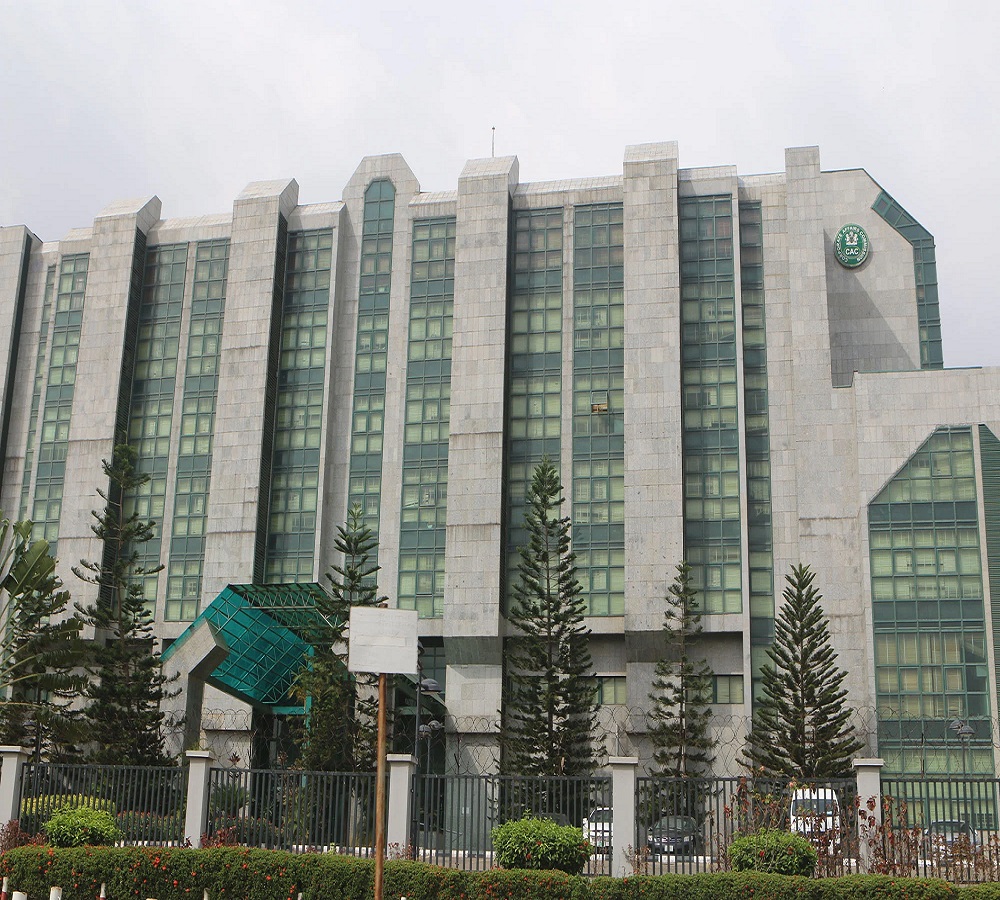
The National Industrial Court, of Nigeria sitting in Abuja and has dismissed the application filed by the Corporate Affairs Commission (CAC) and its  Registrar General  (RG) Alhaji Garba Abubakar seeking to stay the execution of the monetary judgment  obtained against the Commission and the RG by Moses Adaguusu, a Deputy Director and Head of Taraba State Office of the Commission.

Hon Justice Edith Agbakoba in the ruling held that a successful party is entitled to reap the fruits of his victory.

Following his wrongful suspension for 6 months without pay in March 2021′ Mr Moses Adaguusu  approached the National Industrial Court in July 2021 for  legal redress. On 30th September’ 2022 the trial Court declared the suspension unlawful, null and void. The Court ordered the CAC and its RG  to pay Adaguusu all his salaries and allowances during the period of the unlawful suspension.

Rather than comply, the CAC  filed  an application  to stay the  execution of the monetary judgment pending the determination of the appeal. The Court after hearing arguments for and against the application found that the CAC failed to satisfy the legal requirements for granting such an application.

The Court emphasised that an application for stay of execution which has the effect of depriving a successful party the fruits of his judgment is not granted as a matter of asking  but only in exceptional circumstances which CAC and its RG  failed to show.

Consequently, the court  dismissed the application for lacking in merit.

It will be recalled that The National Industrial Court had in its judgment  in September 2022, awarded  special damages and costs of the action in the sum of over N16million in favour of Mr Moses Adaguusu  for wrongful suspension by the Alhaji Garba Abubakar.

The illegal suspension matter which started in March 2021 has lingered  for 2  years.

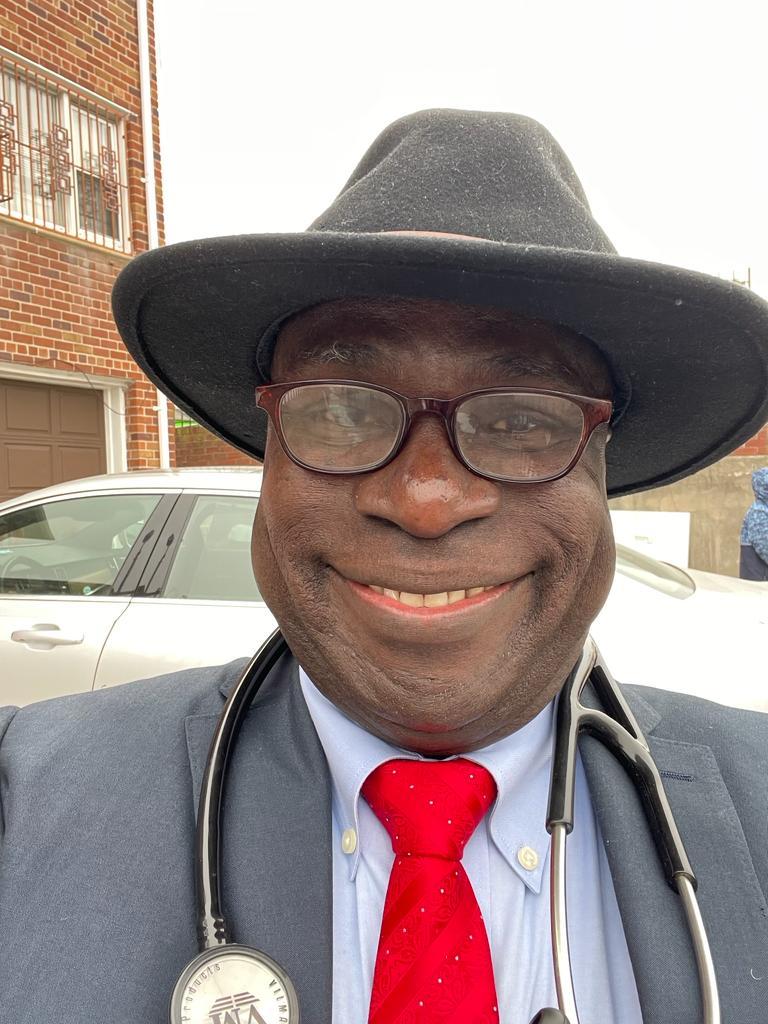
Tales My Patients Told Me: “Prophet, oh prophet!”

By Emmanuel Fashakin

The Amakis (not real name) were recent arrivals from an African country. They got their American Green Cards through filing from a family member. The wife, Gloria, was an Accountant, and she had a very good job in one of the commercial banks in a bubbling, overcrowded city in West Africa. The husband, John, was a class teacher in a high school. Gloria came to see me a few weeks after their arrival in the United States, and she enrolled in my medical practice because, as she put it, she was thrilled “to have an African Doctor as one of the participating Doctors in her HMO.” Gloria was very thrilled to be in the United States and she came to see me with their only child, a five-year-old boy, Martin.

Gloria, in her early forties, is very pretty and extremely religious. She was polite, soft-spoken, and very respectful. She would kneel or bow whenever she came to see me. She explained to me that they have only one child because her husband is not serious. “He drinks way too much, smokes like a chimney, and chases anything in skirts,” she said. She also told me that they had tried in vain to get pregnant again after they had succeeded in getting Martin after several years of marriage. She wants me to check her thoroughly for any sexually transmitted diseases she might have acquired from her husband. She also wanted my help to deter her husband from excessive consumption of alcohol and smoking, whenever he came to see me, and I promised to do my best. Gloria’s physical examination was unremarkable, and I took her blood samples for the usual tests.

The blood results started trickling into the practice computer the next morning, and I was in for a shock. HIV test repeatedly positive! Sadly, I told them to call Gloria in for consult and counseling. I explained to her that it was unfortunate but her philandering husband had contracted HIV and had infected her with the virus. Gloria wept uncontrollably, and I felt really sorry for her. I told her that it was important that she called her husband, who by now had still not shown up to see me so that we could test him and begin appropriate medical management for both of them.

John came to see me a week later, I looked at him disapprovingly, and I could barely hold myself back from slapping him in the face for causing Gloria’s infection. On the basis of my promise to Gloria, I did not inform John of Gloria’s result immediately, but simply did pre-test counseling for him and acquired his blood samples. The next morning I got the shocker: HIV test NEGATIVE. Are you kidding me? Surely, there must be some mistake somewhere? I called both the Amakis’ in again and re-tested them for HIV. The results were the same: Gloria was repeatedly POSITIVE, John HIV negative. I scratched my head — what precisely is going on here? Now it’s Gloria’s turn to give me some explanations. I called her to the room alone and asked her repeatedly whether she had sex with anyone else apart from her husband, and she denied it emphatically. She would never cheat on her husband, Gloria told me categorically. I became confused because Gloria was so believable.

I considered the possibility of passive transmission: maybe John slept with an HIV-positive woman, and then with Gloria, without proper clean-up, infecting her with the virus. John may have somehow escaped infection. I searched the literature and found no scientific backing for my weird theory, but what other explanation could there be, if Gloria did not have any extra-marital affairs?

I slept very little that night. The next morning, a Saturday, after eating Abby’s special (boiled African yams with corned beef omelet), I put a call through to the Amakis to cheer them up. I called Gloria and the phone rang and rang, and went into voice mail. I called three times, no answer, and I broke out in cold sweat. John had been as shocked as I was the previous night when he learned that the wife was HIV positive, and he HIV negative. As the phone went unanswered for the third time, I went into panic mode: Oh my God, he has thrown her out! No, he has killed her! I frantically called the husband’s number. To my relief, he answered on the first ring. “Where is your wife?”, I bellowed into the phone. “She is right here beside me,” was the cool reply. I drew in a breath of air for the first time in five minutes. Gloria’s familiar voice soon came on the line. I was too high-strung to remember what I told her, but I was relieved that she was still alive and that they were still together.

Gloria had all her viral studies done, and she was started on anti-retroviral medications. Within weeks her HIV Viral RNA levels had become undetectable. The husband told me that he wanted permission to have unprotected sex with Gloria because he wants another child. Luckily, just weeks before, the FDA had approved prophylactic anti-retroviral therapy for those at risk of HIV infection, like sexual contacts of known HIV patients. I warned him of the risk of HIV infection, but that if he insisted, he could take the prescribed medications and resume sexual activity with his wife. But the mystery remained. How on earth did Gloria get infected?

It took nine months, and relentless asking for the one-millionth time, before Gloria finally cracked, after I had earned her trust. Yes, it appeared that the prophet she had gone to for prayers to get a child had hypnotized her and had intercourse with her. She said she was not sure, but she thought that it happened because she was wet afterwards. Then I knew that Gloria was lying all along. She was having a good time with the prophet praying for her to get pregnant, and the prophet gave her more than she bargained for. I had an uncanny feeling that their only child might actually belong to the prophet.

Gloria’s case is not an isolated incident in people dealing with African “prophets”. While I was in Nigeria, there was this pretty young teenager paralyzed in the legs and taken to a native priest for healing. Nine months later, she went into labor. The native priest had impregnated her! But shouldn’t these prophets be bound by some professional oath of ethics, like Hippocratic Oath, or Oduduwa Oath, to prevent them from sexual molestation of those entrusted into their care? Prophet, oh Prophet!

Emmanuel O. Fashakin, M.D., FMCS(Nig), FWACS, FRCS(Ed), FAAFP, Esq.
Attorney at Law & Medical Director,
Abbydek Family Medical Practice, P.C.
Web address:
http://www.abbydek.com
Cell phone: +1-347-217-6175
“Primum non nocere”

Adeleke delivers 25 of 26 House of Assembly seats to PDP

  • Tells opposition to join in building a new Osun State

Following the last gubernatorial and legislative houses election, Osun State Governor Ademola Adeleke has delivered 25 of the existing 26 House of Assembly seats to his Peoples Democratic Party (PDP).

Official results from the Independent National Electoral Commission (INEC) showed that the PDP swept all but one of the 26 legislative seats in the state.

The victory, which is unmatched in the political history of the state, is a clear indication of the huge goodwill that Governor Adeleke enjoys with Osun people.

The landslide victory is also coming barely three weeks after Adeleke delivered the highest number of votes to PDP presidential candidate Atiku Abubakar. The party also showed its undiluted dominance of the political space in Osun State by winning all three senatorial seats and all nine House of Representatives seats during the February 25 presidential and National Assembly elections, leaving none for the rival All Progressives Congress (APC).

Since taking over the leadership of the state on November 27, Governor Adeleke’s impressive rating with the Osun populace has continued to soar.

Analysts believe that the back-to-back victories of the PDP in the elections held in the state is a further affirmation of the unflinching bond between Osun people and Governor Adeleke.

“The clear message that the two recent elections held in Osun conveyed was that Governor Adeleke is well accepted by the people of the state,” Yinka Sanni, a public affairs commentator noted. “Osun people have repeatedly spoken and in all, Governor Adeleke is who they stood with.”

Another public commentator, Mayowa Taiwo, said the people of Osun have spoken loud enough for all to hear, adding that it is increasingly difficult for the people’s voice to be ignored.

“In the two consecutive elections held in Osun, the people were firm in emphasizing their choice in Adeleke, because if you follow the trend well enough, you will know that the victories recorded by the PDP can be credited to him,” Taiwo noted. “The electorate voted PDP overwhelmingly in all the elections. It was like revalidating their faith in Adeleke.”

Echoing this sentiment in a “Thank You” message to Osun State voters, Governor Adeleke wrote: ”My good people of Osun state, you have honoured me and my party with another remarkable victory at the assembly elections.

“You have passed an excellent vote of confidence in my administration and my party by a series of electoral mandates in the last three elections.

 “I went round the state with my scorecard under 100 days and you responded by endorsing my party’s candidates for legislative offices.

” You listened to my request for assembly members of my party who will work with me to deliver our five-point agenda.

”Your trust in me to deliver on our election promises has been expanded and strengthened. Your verdict on my performance is loud and clear.

”You have approved of our people-focused governance and our demonstrated will to resolve all outstanding challenges inherited from the previous administration.”

Adeleke however called on members of the opposition to join him to build a new Osun state. He said: ”To my brothers and sisters in opposition, I extend hands of fellowship and brotherhood. Join me to build a new Osun state.

“Support the will of the people as repeatedly demonstrated in the last three elections, as genuine democrats have no power except what the people will. I urge all lovers of democracy to enter the Imole train.

“Osun people need all, within and outside her political class, to unite for state development.”

How grandmother from hell roasted  her son, daughter-in-law, and grandchildren in Ondo State

In May 2015 when an Alabama woman got a life sentence after running her nine-year-old granddaughter to death as punishment for lying about candy, many concluded that Joyce Hardin Garrard, described by prosecutors as the “drill sergeant from hell”, was best suited for the electric chair.

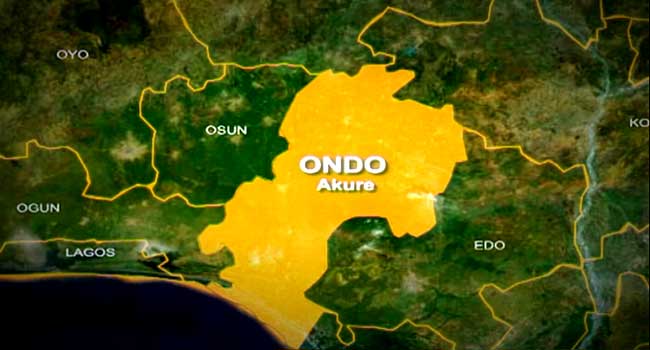
Then like one of those weird scenes in Nollywood movies, another grandmother from hell reportedly incinerated her son, daughter-in-law, and two grandchildren in the Aponmu area of Ondo State capital Akure.

75-year-old Iforiti Oloro, who is said to be resident in the same compound with her son and his family purportedly rose at midnight while the family and other regular mortals slept, and torched the house.

A resident in the community, Bayo Adegboyega, narrated that at about 2:00 am on Saturday, residents observed that the family’s house was on fire.  What made it even more bizarre was that all the family members were at home.

“I had to join other neighbours in putting off the fire by breaking the windows to gain entry. But, sadly, by the time we entered, Victor Oloro, his wife Racheal, and their two children, Blessing and Toluwani, had been affected by the fire.”

“So, we rushed them to the Federal Medical Centre in Owo after being rejected at the state hospital in Akure because of the degrees of burns suffered from the fire incident but unfortunately, we lost the last born on arrival while on Sunday night, the man and his wife died. Only the firstborn is alive but in a critical condition,”

Thereafter, the fiendish grandmother reportedly confessed to having set the building on fire on the allegation that her son and his wife were starving her of food.

The Ondo state police Public Relations Officer (PRO) Funmilayo Odunlami Omisanya who confirmed the incident, said the divisional police officer, DPO in the community, was still expecting details of the incident. “So, I would advise you to give me more time to gather the facts.”

TIPS