Home Blog Page 787

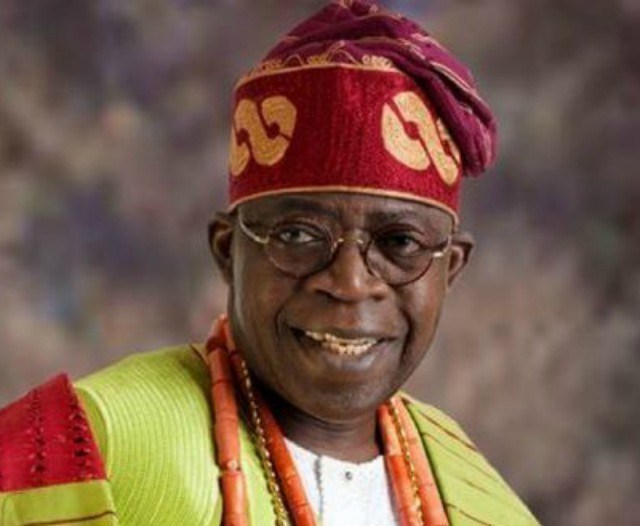
APC tells Presidential Elections Tribunal how Tinubu forfeited $460,000 in the US

Months after the Bola Tinubu Bayo Campaign Organisation described the certified US court judgment documents showing that a US District Court indicted the former Lagos State governor for drug dealings and money laundering with Bayo Onanuga, a spokesperson for the President-elect remarking that the matter “is as dead as a dodo”, the All Progressives Congress (APC) has confirmed to the Presidential Election Petitions Tribunal sitting at the Court of Appeal in Abuja that  Tinubu actually forfeited the sum of $460,000 to the United States government in 1993.

APC in processes it filed to preserve the outcome of the 25 February Presidential election however disclosed that its candidate, Bola Tinubu, only surrendered funds in 10 bank accounts that were opened in either his name or that of Compass Finance and Investment Co.

The ruling party told the Presidential Election Petition Tribunal,  that funds in the said accounts, which were domiciled in both First Heritage Bank and Citi Bank N. A, were subject to a “civil forfeiture proceeding” in Case No: 93C4483.

According to the APC, the decision of the United State District Court Northern District of Illinois, Eastern division in the said case, was not a fine but a decree of forfeiture of the amount of $460,000 to the United State pursuant to the settlement of claim by the parties to the case.

“The said decision is not against the 2nd Respondent (Tinubu) but against the funds in the various account opened in the name of Bola Tinubu with First Heritage Bank and City Bank N.A.

“The compromise terms that led to the forfeiture were preceded by express admission on record that the 2nd Respondent did not admit the commission of any drug, drug-related or illicit conduct of dishonesty or fraud that fits into any of the grounds of disqualification to contest for office of president of Nigeria at the 25th February, 2023 general election,” APC insisted.

APC further listed the 10 account numbers that contained funds that Tinubu forfeited after the settlement of claim by parties involved in the case, as: 263226700, 39483134, 39483396, 4650279566, 00400220, 39936404, 39936383, 52050-89451952, 52050-89451952 and 52050-89451953.

Also, the party through its legal team led by Prince Lateef Fagbemi, SAN, told the court that the Federal Government had as far back as 2003, through the American Consulate in Nigeria, inquired about Tinubu’s criminal record.

It said the outcome of the inquiry which FG made through the Inspector-General of Police, “yielded a clean bill of health that unequivocally and unreservedly cleared 2nd Respondent of any criminal record, interest or association in the United States of America”.

“The formal clearance report dated February 4, 2003, under the hand of Legal attaché to the United States Embassy, Nigeria in response to the inquiry by the Inspector General of Police is hereby pleaded and shall be relied upon for its full effect; particularly the portion in the second paragraph which states-

‘In relation to your letter, dated February 3, 2003, reference number SR.3000 /IGP SEC/ABJ/VOL. 24/287, regarding Governor Bola Ahmed Tinubu, a records check of the Federal Bureau of Investigation‘s (FBI) National Crime Information Center (NCIC) was conducted.

‘The results of the checks were negative for any criminal arrest records, wants, or warrants for Bola Ahmed Tinubu (DOB 29 March. 1952). For information of your department, NCIC is a centralized information center that maintains the records of every arrest and conviction within the United States and its territories.’

APC said it would apply for a subpoena to be issued again at the IGP to enable him to adduce and tender in evidence, the letter dated February 3, 2003, reference number SR.3000 /IGP SEC/ABJ/VOL. 24/287, which triggered the clearance letter of the Legal attaché of the US Embassy in Nigeria, as well as the response to same dated 4th February 2003.

It further argued that the said forfeiture Tinubu made to the US government, having lasted a period of 29 years, was no longer a valid ground to challenge his eligibility to contest the presidential election.

“The Respondent states that, in any event, the impleaded decision of the United States District Court, Northern District of Illinois Eastern Division is not a decision by a competent court of law or tribunal in Nigeria; and same has been falsely, mischievously paraded by 2nd Respondent’s political adversaries like the petitioners, detractors and haters to scandalize, demonize and de-market him to the Nigerian electorate at the 25th February 2023 general election with a view to delegitimizing his well-earned victory at the polls, despite all legitimate and fact-checked denials and rebuttals as exemplified by the official report from the United States affirming his innocence and exonerating him from the touted drug connection and criminal conviction.

“The Respondent states further that in any event, the said decree of forfeiture was made by Judge John A Nordberg in the said Case No: 93C4483 on the 4th day of October 1993, a period of 29 years before the 25th day of February 2023 when the said presidential election was duly conducted by the 1st Respondent.

“The Respondent avers that the allegations referred to in the said paragraph have been subjecting to litigation and duly litigated upon by a court of competent jurisdiction in Suit No: FHC/L/CS/1146/1999.

“The Respondent further avers that having been litigated upon by a competent court of law, this Honorable Court is estopped from retrying the same issues that have been appealed against. The Respondent shall found and rely upon the judgment in Suit No: FHC/L/CS/1146/1999.

“Without prejudice to the above, the Respondent avers that the Nigeria Police Force investigated the 2nd Respondent regarding any record of criminal arrest and/or conviction. The investigation was extensive and far-reaching.

“Consequently, the American Consulate, Lagos Nigeria revealed that there was no record whatsoever of any criminal arrest, warrants and/or conviction regarding the 2nd Respondent. The Respondent shall find and rely on the letter issued by the Embassy of the United States of America, Nigeria dated 4th February 2003.

“Furthermore, the release from forfeiture of other monies in the account the subject of the proceedings in Case No: 93C4483; in excess of one million dollars and for the benefit of the named beneficiary K.O Tinubu though not the account holder, less forfeited sum of $460,000.00 (Four Hundred and Sixty Thousand United States Dollars) is a manifest affirmation that the case was not a criminal trial and the fund forfeited was not a fine imposed as a punishment for a criminal conviction of any person- let alone the 2nd Respondent.

“The disqualification factors as stipulated by the Constitution only conceives of a conviction sentence or fine involving dishonesty or fraud or contravention of the Code of Conduct as found by a Court of the law of competent jurisdiction or Tribunal in Nigeria,” it added.

While urging the court to strike out petitions against Tinubu, the APC argued that Mr. Peter Obi of the Labour Party, who alleged that Tinubu was convicted for a drug-related case, lacked the requisite locus standi to challenge the outcome of the presidential election.

Insisting that Obi was not validly nominated by the LP, the APC, stressed that he was not a member of the party, at least 30 days before it conducted its presidential primary election.

It told the court that Obi was a member of the Peoples Democratic Party, PDP, till May 24 2022, adding that he was screened as a presidential aspirant of the party in April, 2022.

APC further averred that whereas Obi joined the LP on May 27, he was subsequently declared the winner of the presidential primary election the LP held on May 30, 2022.

“By section 77(3) of the Electoral Act, 2022, the 2nd Petitioner (LP) is mandated to have submitted its comprehensive register of members to the 1st Respondent 30 days before its presidential primary.

“That is to say the said register of members must have been submitted to the 1st Respondent on or before 30th April, 2022.

“The 1st Petitioner (Obi) as at 30th April, 2022 was still a member of the PDP and his name was not and could not have been in the register of members submitted by the 2nd Petitioner to 1st Respondent (INEC).

“The Petition herein is incompetent as the 1st Petitioner is not a member of the 2nd Petitioner since the 1st Petitioner’s name is not, and could have been listed in the list of the register made available by the 2nd Petitioner to the 1st Respondent, same having been made available before the 1st Petitioner joined the 2nd Petitioner”.

It, therefore, prayed the court to dismiss or strike out Obi’s petition “wholly or in part as may be appropriate”.

Limits of individual freedoms in a constitutional democracy in light of Datti Baba-Ahmed’s “End Democracy” asseverations

By Sylvester Udemezue

There was this report: “Swearing in Tinubu’ll end democracy in Nigeria Baba-Ahmed, LP VP candidate warns” (23 March 2023; sunnewsonline) wherein the Vice Presidential Candidate of the Labour Party in the 2023 presidential election in Nigeria, Yusuf Datti Baba-Ahmed was reported as having warned thus: “Nigeria’s democracy was under threat unless steps were taken to address the flaws that saw the Independent National Electoral Commission (INEC) declaring All Progressives Congress (APC) candidate, Bola Tinubu, as winner. He opined Nigeria has no president-elect given the irregularities and breach of the Electoral Act and Constitution of Nigeria in declaring Tinubu winner. He warned that democracy could “end” on May 29, 2023 if Tinubu, who he claimed had not met the constitutional provisions to be declared winner of the February 25 poll, is inaugurated”. Yusuf Baba-Ahmed’s own words, according to the report: _”As it is in Nigeria, there is no president-elect. An unconstitutional government must never be sworn in because that will be the end of democracy. This democracy will end on May 29 the way we are going….It is unfortunate, tragic that all promises that were made were dashed”. He predicated his argument on the premise that it was reckless, “unlawful and unconstitutional” for INEC to have declared Tinubu the winner of the 25 February 2023 election in Nigeria.

Now, varied interpretations and insinuations have trailed the declaration by Datti Baba-Ahmed. While some say it’s a call to anarchy, seditious being an incitement of some sort, some others have argued that what he’s saying is that if you swear in a leader elected through a process that subverted rule of law and democratic norms, you’ve “ended” democracy, which perhaps is merely another way of saying that such a government cannot be described as a democratic government. The declaration by an Italian writer and scholar, Pope Pius XI (1857 – 1939), that “justice requires that to lawfully constituted Authority, there must be given that respect and obedience which is its due…” raises some further question as to the place of the expression “lawfully constituted authority”. Is it not possible that what the latter group is arguing is that Mr Datti Baba-Ahmed perhaps believed that any process that failed to comply with the clear provisions of the extant laws of the land, cannot validly or truly be described as a “democratic process”; thus it might amount to “ending democracy” to swear in a candidate who emerged through such an “unlawful and unconstitutional” process, especially at a time when the process is still being challenged in court. Viewed from this angle, this group argues that it’s very wrong for anyone to describe Datti Baba-Ahmed’s statement as inciting or amounting to any support for an interim government which by the way he has no power or capacity, in any manner, to install or even plot. However, in my opinion, only Datti Baba-Ahmed can tell the exact motive behind his declaration, although the intention of a speaker is more often than not, deciphered from the actual words spoken or written.

This said, let me now go straight to the three-thronged aim/purpose of the current commentary, namely:

(1). Offering my own opinion on the legal merits of the suggestion by Datti Baba-Ahmed on the planned swearing-in of Bola Tinubu;

(2) Analysing the legal limits of Datti Baba-Ahmed’s right to make the statement in the manner he has done, under a constitutional democratic setting such as Nigeria purports to be; and

(3) Examining Datti Baba-Ahmed’s comment and the context, to determine whether the same could reasonably or objectively be said to amount to “sedition”, as some have alleged.

(1). LEGAL MERITS OF DATTI BABA-AHMED’S OPINION:

The position of the law as I see it is that, if the lawsuits pending before the Presidential Election Tribunal over the 25 February 2023 presidential election, are not resolved one way or another before 29 May 2023, Asiwaju Bola Ahmed Tinubu should be sworn in on 29 May 2023, pending resolution of the lawsuits, Tinubu having been declared the winner of the election. My reasons:

(A). Nature abhors vacuum. If Asiwaju Tinubu is not sworn in on 29 May 2023, there might be a vacuum/void in governance in Nigeria because Mr President Buhari ought to vacate the office on 29 May 2023. A country should never, at any time, be left without a leader. However, some have argued that, although section 135(2), CFRN 1999 provides that “Subject to the provisions of [section 135(1)]”, the current president “shall vacate his office at the expiration of a period of four years commencing from the date when he took oath of allegiance and oath of office” [the 4-year terminates on 29 May 2023], yet the president could lawfully be made to hold office until the next president is sworn as allowed by section 135(1)(a) of the Constitution which provides that “… a person shall hold the office of the president until when his successor in office takes the oath of that office”. This is especially so, considering that section 135(2) would ordinarily give way to section 135(1)(a) in any case of conflict between the two, because section 135(2) is stated to apply “subject to” section 135(1) meaning that section 135(1) is superior to section 135(2) of the Constitution. While I agree that by virtue of section 135(3), the National Assembly may by resolution extend for a period not exceeding “six months”, the tenure of office of the president, the thorny problem (with the argument for extension to enable resolution of pending election lawsuits) is: under what circumstances may it be lawful to make the current president to hold office beyond 4(four) years”? Luckily, section 135(3) lists out such circumstances that may justify extension of the president’s 4-year tenure, but unfortunately does not include nor envisage the current scenario (when the election process that produced the President-elect is being challenged in court). According to section 135(3) the National Assembly may invoke this power to extend the current president’s 4-year tenure only _“If the Federation is at war in which the territory of Nigeria is physically involved and the President considers that it is not practicable to hold elections”. The Constitution interpretation Rule of Exclusio unius est exclusio alterius is derived from a Latin term literally meaning “the expression of one thing is the exclusion of the other”. This is a common law principle for construing legislation which holds that a syntactical presumption may be made that an express reference to one matter excludes other matters not expressly or impliedly mentioned. I submit that this principle applies here. Besides, the the lawmakers must be held to have said what they meant and to mean what they have said as seen in the plain words of section 135(3) of the constitution. The only way to lawfully stop such swearing in pending resolution of pending election petitions is by amendment of the 1999 Constitution and the Electoral Act 2022. Unfortunately,such an amendment even if carried out this time, would not apply to Tinubu’s scenario in view of the concept of non-retroactivity of legislation. Thus, it’s reasonable to conclude on this point, that while the National Assembly is entitled to extend Mr President’s tenure of office beyond 4 years, yet where an election has already been held and a winner declared by the INEC, the National Assembly is NOT entitled to invoke the provisions of section 135(3) of the Constitution to stop inauguration of the declared winner of the election; it’s immaterial that the election is being challenged in court. This means that the current president must vacate the office on 29 May 2023, and the President-elect must be sworn in on 29 May 2023, pending resolution of pending lawsuits, unless anyone of the following happens:

(I) the President-elect (God forbid) dies before 29 May 2023 in which case the Vice President-elect must be sworn in his place on 29 May 2023 in line with section 136(1) of the Constitution;
or
(II) both the President-elect and the Vice President-elect die or are unable to for any reasons whatsoever to assume office before the inauguration of the National Assembly, in which case the INEC must conduct a fresh election in line with section 136(2) of the Constitution.

As it stands today, since (a) an election has been held, a “winner” declared by INEC, and since nothing has happened to warrant the invocation of any of the circumstances listed in section 136 of the Constitution, it’s consequently submitted that the declared winner must be sworn in on 29 May 2023, unless and until an election tribunal or court gives a contrary directive.

(B) The Candidates of the Labour Party (LP), People’s Democratic Party (PDP), among others, and their respective political parties, have already instituted lawsuits at the relevant Election Tribunal (in line with section 130 of the Electoral Act, 2022) to challenge INEC-declaration of Asiwaju Tinubu as the President-elect of the Federal Republic of Nigeria. The mere fact that these opposition/aggrieved parties have filed lawsuits challenging the INEC-declaration is a sufficient admission or acknowledgement by the Claimants/Plaintiffs (technically called Petitioners) that Asiwaju Tinubu has already been declared the winner and is accordingly the President-elect, who alone is entitled to be sworn in on 29 May 2023, to avoid a vacuum in governance pending resolution of the pending lawsuits. The Claimants are therefore under an obligation, having submitted their grievances for judicial adjudication or determination, to maintain and respect the status quo pending the determination of the cases in court (the tribunal). This does not mean that the Claimants have accepted the declared winner as the next president, nor that the Claimants have accepted the process that produced him, but that in the eyes of the law, whether the declaration and return made by the INEC was lawful or unlawful, the declard winner (Asiwaju Tinubu) is and remains the President-elect, and unless the Court says otherwise, ought to and must be sworn in on 29 May 2023 pending resolution of the disputes in court. I have earlier submitted thus:
“I think section 138 of the Electoral Act provides a reasonable guide under the circumstances. If as is provided by section 138, a candidate whose election has been declared VOID by the tribunal, could still stay in office pending resolution of the appeal arising from the tribunal decision, there appears to be no good reasons to support any view that a person whose election is being challenged at the Tribunal on grounds that the election was unlawful or that his declaration was unlawful, should not be sworn in pending resolution of pending lawsuits”. [see: “The Arise Tv Interview And Likely Holes In Agbakoba (SAN)’S Suggestions On Upshots Of Nigeria’s Presidential Election 2023”; By Sylvester Udemezue; 06 April 2023; ThenigeriaLawyer].

(2). Legal Limits Of Datti Baba-Ahmed’s Freedom To Make The Statement Credited To Him Under A Constitutional Democratic Setting:

While I disagree with Yusuf Datti Baba-Ahmed’s opinion (it’s a mere opinion) that Tinubu should not be sworn in until the determination of the cases in court, I refuse to agree that his said statement, even if considered harsh, hard or extreme, has violated any law in Nigeria or that it is outside his rights as guaranteed in section 39 of the 1999 Constitution. It’s also my opinion that the statement does not constitute any form of incitement or threat to peace and order in Nigeria. I see the statement as nothing more than Mr Yusuf Datti Baba-Ahmed’s opinion in a manner he thought necessary within the limits of his rights as guaranteed by the constitution. Thus, whether we agree with him or not, we must respect his constitutional right to freedom of speech and expression. We must learn to respect people’s right to hold their individual opinions, however good, erratic or even unfavourable we may consider such. We have a duty under our laws and our democracy, to give people the liberty to know, to utter, and to argue freely according to their conscience. This liberty ranks above all liberties; it is slavery to stop people from voicing out their thoughts and grievances in a manner permitted by law. In his work, the “Silence Dogood”/“The Busy-Body”/“Early Writings”, Benjamin Franklin warned that “Whoever would overthrow the liberty of a nation must begin by subduing the freeness of speech.” According to George Washington, “If freedom of speech is taken away, then dumb and silent we may be led, like sheep to the slaughter”.
With these in mind, those in authority and everyone else, should learn to respect the right of others to freely offer their opinion even if we think they’re talking utter nonsense. Perhaps, this is the reason Oscar Wilde would say, “I may not agree with you, but I will defend to the death your right to make an ass of yourself.” The English physicist, Professor Edward Cox, even took it to the extreme, just to illustrate why is freedom of speech is an important part of every democratic setting. Hear him:
“The problem with today’s world is that everyone believes they have the right to express their opinion AND have others listen to it.The correct statement of individual rights is that everyone has the right to an opinion, but crucially, that opinion can be roundly ignored and even made fun of, particularly if it is demonstrably nonsense!”.

Section 39 (1) of the Constitution of the Federal Republic of Nigeria, 1999, as amended provides that ”every person shall be entitled to freedom of expression, including freedom to hold opinions and to receive and impart ideas and information without interference.” As ‘Voltaire’ was stated to have declared, ”I May Disapprove of What [One] Says, But I Will Defend to the Death, [One’s] Right to Say It”. For example, you can’t after perpetrating acts that run contrary to established constitutional democratic tenets, then turn around to blame or castigate people who are merely genuinely and lawfully raising issues/concerns about the undemocratic nature of your actions. Ralph Waldo Emerson said: “What you are speaks so loudly I cannot hear what you say” (See: Lloyd Paul Stryker, The Art of Advocacy [Cornerstone Library, 1954], 147). This is the best statement to describe what happens in Nigeria’s electoral process; the corruption and impunity appear have grown so deep and intolerable that many no longer care to listen to the obviously hypocritical preachment on “let’s let go in the interest of unity and peace”, which usually comes after each round of abuse and desecration of the electoral process. And, this, more than anything else, is the reason we have found ourselves at crossroads now, with all people making all kinds of comments to express their frustrations and disenchantment with the system. I suggest we view Yusuf Datti Baba-Ahmed’s comments in this light, and allow him to be; you can’t beat a man and expect him to not cry. I think he feels injured and is only expressing his feelings. We must learn to give others the freedom to be themselves, and learn also to appreciate the differences between other people’s ways and ours, so that we would be wiser and greater. To suppress free speech is, more often than not, tantamount to committing a double wrong: it violates the rights of the hearer as well as those of the speaker.

With due respect, it is cruel, nasty, delinquent, irrational,and malicious, on account only of the said declaration, to accuse Datti Baba-Ahmed of inciting or plotting an interim government; moreso considering that Datti’s argument could even be easily be situated (even if wrongly) within section 135(1)(a) of the constitution to mean that the present president could be made to remain in office until resolution of the pending presidential election petitions ( I have offered my opinion, herein-above). Assuming but not conceding that Datti called for an interim government, how is such a call criminal? In my opinion, it’s within anyone’s right to make a call for an interim government provided that one does not take any illegal steps or make Illegal plans to install an interim government. All the government needs to do is to ignore the call or advice. For an example, a call for an interim government in Nigeria, was made in 2022 when Chief Afe Babalola, SAN, OFR, advocated an interim government in place of the 2023 elections. Afe Babalola Calls For Interim Government In Place Of 2023 Elections (Channels TV). At a media briefing held at the Afe Babalola University in Ado Ekiti, the Ekiti State capital on Monday, 19 April 2022, Chief Babalola raised fears that using the current Constitution to conduct another election in Nigeria would only reproduce the faulty leadership and system being experienced in the country. He argued that in a bid to prevent Nigeria from slipping into such a situation, the legal icon stressed that a new constitution has become an urgent need. His words, in part: “As soon as the President, the present government completes its term, do not hold a new election. Rather let us have an interim government for a short period to discuss a new Constitution. This will consist of all retired presidents, vice Presidents, governors, and some selected people. The naira, which was N199 to $1 in 2015, is now over N570 to a dollar. The external debt which was $10.7 billion in 2015 is now over $38 billion. The government is borrowing more, and spending more. Moneybags now control the lever of powers, if we allow the present Constitution beyond 2023, what we will be getting is recycling leadership who will continue the old ways”.

The Federal Government had, and rightfully in my opinion, ignored Afe Babalola’s call, and proceeded to organize and hold a presidential election on 25 February 2023. However, the poor post-ballot management of that election and INEC’s blatant exorbitance of the rule of law in respect thereof, are viewed by many as leaving much to be desired, leading to the current cunnundrums, discontent and brouhaha. Truth be told, INEC breached all promises, subverted all laws and truncated the entire Electoral Process when on 25 February 2022, it shut down the iReV which took away the integrity of the 25 February 2023 electoral process by creating room for allegations of result manipulation and perpetration of other forms of electoral fraud. Someone has thus argued that with their dance-naked-on-street outing on 25 February 2023, INEC, its chairman and his cohorts have shown that power doesn’t corrupt people, it is people that corrupt power? This is because corruption of the rule of law is much worse than any other form of corruption and crime; in all countries of the world which operate under the rule of law, it is for politics to be adapted to the laws of the land and not for the laws to be adopted to politics. So, it’s not surprising that people are seen expressing their anger, including but not limited to the calls (although I don’t agree with this one) that the declared winner shouldn’t be sworn in until the disputes are resolved in court. [See: “NIGERIA’S PRESIDENTIAL ELECTION 2023 AND LEGAL CONSEQUENCES OF AN UGLY SUBVERSION OF BEAUTIFUL LAWS [Part 2]” by Sylvester Udemezue NewsDeskNg; 12 March 2023]. How such natural expression of opinions and frustrations could now reasonably be treated or described as an incitement or a call for or a plot to install, an interim government, is difficult for a reasonable or discerning bystander to understand. From my own research and observations, I respectfully do not believe there’s any credible evidence of incitement to violence or lawlessness or plans anywhere by anyone to install an Interim Government in Nigeria. First, there is no provisions in the Nigerian Constitution for an interim government. Second, no emergency or necessity has happened to justify any such. Third, the Federal Government (the only organ that has power and the capacity to install an interim government, if it so wishes) has, happily, made its position clear against it. According to the federal government, “The Transition process is on course and all efforts are being made to ensure that it is smooth and on May 29th, there would be a peaceful formal transfer of power to the new President.“’_ [See: “Presidential Transition Committee Set For Smooth Handover Of Power”; [Voice of Nigeria]; and “President Buhari Ready To Hand Over On May 29 – SGF, Boss Mustapha” [Thenigerianvoice] wherein the federal government is reported to have assured that Buhari would hand over on 29 May 2023 to the INEC-declared winner of the 25 February 2023 Elections.

Well, as I’ve said earlier today, this reminds me of the propaganda concept/tool known as GASLIGHTING an aspect of which happens when people begin to pretend you’re the bad person so that they don’t feel guilty about or so that they escape being held accountable, for the shitty things they have done to you; when people try to paint you bad only because you’re expressing how you feel, so that they don’t have to take responsibility for their ugly behaviour. The entire hullabaloo about “incitement” or a plot to install an “interim government” could thus be reasonably be described as unfounded, an unnecessary play-to-the-gallery or grandstanding deliberately stirred up to achieve any or all of the following:

(a) create an opportunity to vilify anyone else who chooses to complain or speak out loud against a process they believe to be “illegal”;

(b) take people’s attention away from the real issues arising from the unprecedented desecration of the rule of law and subversion of the electoral process on 25 February 2023, by an umpire entrusted with the power, enough resources (over N300 billion Naira), and the responsibility, obligation of delivering to Nigeria and Nigerians transparently credible, free and fair elections in 2023, but which after promising Nigerians heaven on earth about its resolve to obey the law and ensure transparency and integrity during the elections, turned around, in connivance with a class, to subvert the entire Electoral Process to the annoyance of many well-meaning Nigerians, members of the international community and other monitors, observers and disinterested bystanders [See: INEC Knew That Direct Electronic “Transmission Of Results From The Polling Unit On Election Day (Not Thereafter) Is Legally Mandatory To Protect The Integrity Of The Electoral Process”; By Sylvester Udemezue; 09 April 2023; TheNigeriaLawyer]; and or

(3) as a scheme to try to turn into “offenders”, people who are supposed to be, and indeed are, victims in the brazen desecration and unashamed exorbitance of Nigeria’s electoral process on 25 February 2023.

This is easily understood, because as they say, “attack is the best form of defense”. By the time you have succeeded in turning the victims/aggrieved into the victimizers/aggressors, and thus making them to start scampering for safety, you’d thereby have succeeded in silencing all open expression of dissent and disenchantment, shutting down freedom of speech, and cowing majority of people into accepting to let go, so that we may, as usual continue in sin that grace may abound. This sort of strategy easily succeeds in a society as ours. And think I know why: “Many…are naive, believe everything they are told and accept everything they are giving. Only very few people, the discerning ones, ask questions. The rest is comfortable with just anything…. But this is what people get in return when their emotions supercede their power of rational reasoning. It is for this reason that, on 8 December 1822, in his letter to James Smith, Thomas Jefferson had declared: “man, once surrendering his reason, has no remaining guard against absurdities, the most monstrous, and like a ship without a rudder, in the spots of every wind. With such person, gullibility which they call faith, takes the helm from the hand of reason, and the mind becomes a reck” [See: “A Nation`s Journey To True Greatness: What Nigerians Must Copy In the Americans (A Democracy Day reflective memo to Nigerians)” By Sylvester C. Udemezue (29 May 2017; Thenigerianvoice).

(3). Examining Datti Baba-Ahmed’s comment in context, to determine whether the same amounts to “sedition”, as some have alleged:

(A). Meaning of Sedition Under Nigerian Criminal Law: Sedition often includes written or spoke words or actions inciting discontent towards, or insurrection against an established authority. According to Study.com, sedition is legally defined as ”the criminal act of revolting against an established authority, usually in the form of treason or defamation of a government”. Oxford English Dictionary: sedition means “the use of words or actions that are intended to encourage people to oppose a government”. Cornell University’s Legal Information Institute: Sedition is language intended to incite insurrection against the governing authority. Sections 50-52 of the Criminal Code and sections 416- 422 of the Penal Code provide for the offence of sedition in Nigeria. Penalty for sedition under the law constitutes; sentence to a term of imprisonment, fine and forfeiture of seditious publication. In paper titled, “Sedition under Nigerian Criminal Code: Effects on the Right to Freedom of Expression” published in the Library Research Journal, Oraegbunan et al wrote:
“Right to freedom of expression is protected and enjoyed in civilized and democratic societies. Yet, the reality is that this right is by no means absolute anywhere in the world as it is riddled with a number of restrictions and derogations. One of such derogations is provided by the law creating the offence of sedition…. Sedition is created an offence in the Criminal Code in order to preserve public order and safety of the state. Even as all crimes are in one way or the other offences against the state, sedition, just as treason and treachery, is specifically targeted against the state. Yet by its very nature, sedition is probably one offence which most seriously impinges on the liberty of the citizen to freely express himself. However, a vexed issue is how to strike a balance between an individual’s freedom of expression on the one hand, and the criminality of sedition in view of the security of the state on the other hand. The court in D.P.P v. Obi clearly painted a scenario to illustrate the limit beyond which free speech must not extend: ‘. . . a person has a right to discuss any grievance or criticize, canvass and censure the act of Government and its public policy. He may do this with a view to effecting a change in the party in power or to call attention to the weakness of a Government, so long as he keeps within the limits of fair-criticism.’… The offence of sedition is created in Nigeria pursuant to sections 50 and 51 of the Criminal Code. Section 51 provides thus: (1).Any persons who –(a) does or attempts to do, or makes any preparation to do, or conspires with any person to do, any act with a seditious intention or (b). utters any seditious words (c).prints, publishes, sells, offers for sale, distributes or reproduces any seditious publication (d).imports any seditious publication, unless he has no reason to believe that it is seditious. (e).Shall be guilty of an offence and liable on conviction for a first offence to imprisonment for two years or to a fine of N200 or to both such imprisonment and fine and for a subsequent offence to imprisonment for three years and any seditious publication shall be forfeited. (2).Any person who without lawful excuse has in his possession any seditious publication shall be guilty of an offence and liable on conviction, for a first offence to imprisonment for one year or for a subsequent offence to imprisonment for two years and such publication shall be forfeited”. (see: “https://www.google.com/url?sa=t&source=web&rct=j&url=https://journals.unizik.edu.ng/index.php/lrj/article/download/52/52…).

(2). Meaning of Insurrection: Insurrection means “a violent uprising against an authority or government” (Oxford) or “an organized and usually violent act of revolt or rebellion against an established government or governing authority of a nation-state or other political entity by a group of its citizens or subjects; also, any act of engaging in such a revolt” (Britannica). Insurrection is usually used to describe an armed uprising, revolt or revolution against the state, in the form of a mutiny or rebellion. I think the Cambridge English Dictionary brings out more clearly, the meaning of Insurrection: “an organized attempt by a group of people to defeat their government and take control of their country, usually by violence:”

In light of the above, the question could be asked: Is Datti Baba-Ahmed’s asseverative burst seditious? To determine this, these further question is necessary: DId Datti Baba-Ahmed in his outburst incite any insurrection against any government in Nigeria or otherwise counsel, urge or instigate any citizen or group to levy war or to engage in any armed uprising, revolt or revolution against the state?
MY OPINION:
With due respect, and judging by the exact words (as reproduced above) uttered by Datti Baba-Ahmed during the said ChannelsTV interview, it is my opinion that any argument/allegation linking that particular outburst (of Datti Baba-Ahmed) to the criminal offence of SEDITION is groundless, malevolent, impulsive, thoughtless and reckless. Such an irresponsible accusation against an innocent Nigerian is condemnable, and ought to be condemned, for being capable of overheating, or calculated to overheat the polity, but as I have pointed out, I think it’s just mere GASLIGHTING aimed to divert people’s attention from the real discussions, especially those expressing discontent and disenchantment about the ugly exorbitance of the rule of law and brazen subversion of the electoral process on 25 February 2023.
Respectfully submitted,
Sylvester Udemezue (Udems).
08109024556.
([email protected]).
(09 April 2023)

Association of Lawyers with Disabilities warns against admission disqualification of Precious Umoru on the basis of disability

The Association of Lawyers with Disabilities in Nigeria (ALDIN) has warned that any discriminatory practice targeted to disqualify Ms. Precious Umoru of the Edo State College of Nursing Sciences from her admission status will not be condoned.
ALDIN National President, Barr. Ikem Uchegbulam in a press stated that the Association has followed the case keenly since the news broke and has set machinery in place to seek legal redress, should the institution concerned insist on its position to deprive the candidate of admission on the basis of her disability.

 The statement signed by ALDIN’s Director of Media and Publicity Justice Christopher reads:

“Recall that late last week there was unpalatable news about a candidate (Ms. Precious Umoru) who was offered admission into the Edo State College of Nursing Sciences after she had meritoriously passed her entrance test, but upon resumption, she was told to withdraw because according to the authorities, re-assessment reveals she could not withstand the physical rigors of the midwifery training owing to her weak gait and tremors.

 “Taken aback by this unfortunate trend in a 21st century, where abundant technological advancement has obviated attendant functional limitations to the greatest extent possible, ALDIN noted that traditional perception of disability no longer hold sway in our world and therefore discrimination on the basis of disability as in this case, cannot be justified both morally and legally.

“In this light, ALDIN drew the attention of the authorities concerned and the general public to the provision of Section 1 of the “Discrimination Against Persons with Disabilities (Prohibition) Act, 2018, and the relevant provisions of the recently passed Edo State Disability Law, which prohibits discrimination of any kind on the basis of disability, and therefore cautioned that Ms. Precious Umoru is amply protected under the ambit of the disability law, and thus could not be subject to any disability or disqualification as attempted by the authority of her school.

“ALDIN commends the prompt intervention of the Edo State Governor, His Excellency, Mr. Godwin Obaseki, who appropriately ordered a re-assessment of Ms. Precious Umoru, to begin her training at the Edo State College of Nursing Sciences, Benin City, the Edo State capital.

“The provision of the Disability Act is sacrosanct on this matter, and ALDIN will not accept anything short of the subsistence of the said admission for the candidate concerned, else the court must hear the matter.

The Husband Snatcher, By Funke Egbemode

‘Whose idea was this whole ‘husband snatcher’ theory? Who started it? I asked my friend. He’s a man, street-wise one too.

‘Women.’ He said simply, and continued scrolling through the Whatsapp messages on his phone.

‘Women what?’ I asked, covering the screen of his phone with my palm.

‘Women started it, like many other theories. You people are very creative especially when it comes to intimate affairs.’ He winked and chuckled.

‘Come on, be serious.’

‘I am as serious as let-us-pray. Have you ever heard a man call a woman husband-snatcher?

Oh wow, that’s true. I said under my breath.

‘A man knows how any story that will end up with ‘husband snatcher’ is written and we know men play active roles in the snatching. It is women who turn the story upside down so they can accuse their fellow women.’

My friend has a point because I had not heard a man accuse a woman of snatching a man but I do not agree completely.  Yes, men do the snatching most of the time but some women, my people, some women are single-minded when they want a man. They go all out, meanly and evilly, after any man they want. And I am not talking about single rich babes who go shopping for husbands just like they’ll go after a new model of Range Rover. The snatching deals cut across all ages, social and religious strata. But we will get to the details later.

When is a man considered to have been snatched or better still when is it correct to say a husband has been snatched? At what point is a woman qualified to wear the infamous title of ‘husband snatcher’?

Let us say it the way it is, the way men have admitted it is. Men love to hunt. They naturally want more than one woman. Or have you not heard the special Nigerian adage ‘men are naturally polygamous’? Sure, you have. Does that not presuppose that men look and indeed go after women they can snatch? Men are the ones who see temptation and go after it. They do not need to be led into temptation. They consciously, determinedly hunt down temptation and get into bed with her. They do not flee from temptation, they flee towards her and gum themselves to her. So, how is temptation guilty? How is a woman guilty when she is the one who was chased, and hunted until she could run no more? I don’t know how they do it, men are runners. Sometimes in their pursuit of temptation, they get lucky and all that is required is a 100-meter dash. At other times, it’s a long winding marathon. For men, the end justifies the means and they do whatever they need to do to breast the tape. They lie, they pretend. Whatever gets the job done.

 Just yesterday I read of a young woman who thought she was marrying the man of her dreams, a man of God. He didn’t touch her flower for the length of their courtship. What better way is there to prove you are a pastor than to preserve your virgin until the wedding night? She could not believe her luck, I believe. On the wedding night, she gave it all up, gladly, beautifully. Pastor took her until she sweetly begged for mercy. How’s that for a romantic starter? But Oga Pastor was not really a man of God, oh no, and he didn’t deserve the flower he ravished. It turned out the man had a wife and three children hidden in his village, living with his mother, his unholy accomplice. That is the extent men will go when they want a woman. Oga Pastor held his desire in check to convince his virgin he was a holy man. I bet he went regularly during the Lagos courtship to download the tension in his loins into the village hard disk. The sad story ended with the poor virgin bride leaving the lying, thieving fake pastor. Now, imagine if the village wife had arrived Lagos one day screaming ‘husband snatcher’ in the middle of the Sunday Service! And when women want to stage such drama, they will arrive with the children for added effect. So, who snatched who here?

Let’s also look at the tale of Olamide who left his wife of four years when he discovered that she married him knowing fully well that she would not be able to give him children. Her womb was damaged. She knew but kept it to herself. When Olamide found out, he didn’t scream or threaten Temi, his wife. He simply went shopping for another woman. He was deeply hurt, shocked, and disappointed. He could not imagine that a woman he loved and was willing to stand by until ‘God answered their prayers’ could hide that kind of truth from him. Long story short, Olamide got another woman pregnant, brought her home, and proclaimed her his new wife. To spite Temi? Maybe. The new wife was, of course, accused of husband snatching but really, who snatched Olamide from Temi? Did he put one leg after the other and chase after what and who he wanted, or not?   That he did which makes him the active player and lead actor. Here’s the way my troublesome friend of many years, Ray Echebiri, would describe the scenario: Olamide is the snatcher while the new wife is the ‘snatchee’.

I know men are sorely tempted every day. Women are beautifully made and we do not apologize for our curves. We are what God made us. However, there are daughters of Eve who go beyond the curvaceous to the provocative by leaving nothing to the imagination. The slits of their dresses go all the way to their hips. The necklines of their dresses dip beyond the cleavage. Did you know the smoothest part of a woman’s body is the sides of the breasts? Well, now you know. These girls show that off too. The ones who go bra-less and pant-less worsen the cases of men who were already born with roving eyes. Everywhere they turn, they are faced with temptation and I guess they just find falling into temptation easier than dealing with the aches and trauma of resisting it.

The point here made so far: women are ever present temptation but it is men who are responsible for the rest, the hunting and snatching, and the pleasures and pains that follow.

Shall we now go to the women who take seduction all the way up to husband snatching level? These are the ones I warn wives about. You could trust your husband all you want. He may even have sworn his undying faithfulness to you. You may be the best mother, wife, and companion and still lose your territory to a woman who sees your husband as a project that must be completed, a challenge that must be won. They put everything into the project and I mean everything.  Listen to Edna’s confession.

Edna: I’m getting married.

Zizi: Finally o, my friend. I’m happy for you and I’m also happy for Mr. Moses. You can now leave him alone.

Edna: Moses is the groom. I told you he’s my husband, right?

Zizi: Edna, aaaah! The man is married with three children. How did you get him to propose?

Edna: He didn’t only propose, he has left his wife. That is why I do not want an elaborate wedding. I don’t want anybody poking their noses in my business.

Zizi: God will soon answer my own prayer too.

Edna: Keep waiting, I told you that Baba will provide fast answer and solution. You keep arguing. I told you I’ll get Moses and that this is my year but you didn’t believe me.

Zizi: You and this your Baba…hmmm….

Edna: He gave me things to put on my head, in his bath water, and a few other places. The rest is history.

Edna is your typical husband snatcher. A girl like her knows no boundaries. She goes all out to get the man she wants. She is tired of waiting and praying. She simply walks up to the man and asks him out. She is also prepared for him to say no. So, she’s not shocked when he does. Note that she said it’s her year. Going diabolical and twisting the mind of a man is just a means to her desired end. All Ednas have no qualms about making another woman weep. They don’t want wifey to move over and create space for them. They want her to move out, completely so they can take over. Until and unless God intervenes, a husband snatcher will suffocate her catch with great food, exotic sex, expensive gifts, more five-star sex, and uncommon pampering. The different evil powder from ‘Baba’ for the center of her head and in her unholy core will keep the man where she wants him.

How plans to hijack INEC might have been hatched

“Indeed, many have shown umbrage that Mrs. Lauretta Onochie, a well-known APC political attack-Doberman, was nominated for appointment to conduct elections that will feature APC and other parties from this year till the next five years. But how many have scrutinised the other people who were also appointed along with her, what are their pedigree and political affiliations in the past, what is their public and private record as it pertains to election Integrity?”

Does this article published by Sahara Reporters in November 2020 bear any semblance to what is currently playing out with regard to the 2023 elections? Why didn’t Nigerians pay any attention? The article —REVEALED: How APC Power Blocs Takeover Of INEC Endangers 2023 General Election— was first published on 16 November 2020.

Investigations showed that three influential power blocs in the APC were currently strategising for the 2023 general election, each trying to outsmart others to have their own INEC nominees’ team endorsed by President Muhammadu Buhari and thereafter to effectively seize control of the commission using their nominees.

With less than three years to the 2023 presidential election, some political power blocs within the ruling All Progressive Congress are currently in a fierce battle to choose their loyalists as chairman and commissioners of the Independent National Electoral Commission, findings by SaharaReporters has revealed.

The emerging takeover of INEC first became obvious a few weeks ago when one of the contending groups quickly secured the nod of the President for the nomination of Lauretta Onochie, a well known card-carrying member of the APC, as a national commissioner for the electoral body.

Sources close to those directly involved in the ongoing power struggle were of the view that the outlook and formation of the next INEC will be purely composed of members and sympathisers of the ruling party, who have pledged their loyalty and commitment to work for their partisan cause in all elections leading to 2023 before their nomination to the commission.

Those seeking to control the commission want to ensure that all commissioners whose tenures were coming to an end either at the national or state levels, who had exhibited independent-mindedness, as expected of a true umpire, or, who are known for integrity and are not given to rigging or manipulation of election, would not have their tenures renewed nor elevated but would be eased off from the commission, a source told SaharaReporters.

On the other hand, more partisan individuals would be appointed to take-over INEC despite the public outrage that may follow, such as that witnessed with the nomination of Onochie, it was gathered.

Sources familiar with the plan suggest that partisan nominations such as that of Onochie was just a tip of the iceberg considering what one of these groups had already set in motion.

“They insist that many more within the party who were taken unawares but now know that with President Buhari, any individual or group can get what it desires because it is a case of first come-first-serve. Hence they compared the ongoing scenario with what they experienced with the case of the Niger Delta Development Commission Board nominees, where a group compiled a list of nominees for the President and then had their list confirmed by the Senate, but the list they had confirmed was again substituted by another list of nominees for the same board, in the end none of the groups succeeded as each group continued to struggle to prevail.

“A similar struggle is now ongoing for the control of INEC and will become more intense in the days ahead as many more within the APC with various ambitions realise the stakes and how far their adversaries within the party have gone in taking control of the election management body for their partisan purposes in 2023,” one source added.

“lf those who yearn for effective and significant changes in good governance in Nigeria do not act urgently with a determination to ensure no-partisan-control of INEC and demand for a truly Independent Electoral Commission composed of individuals of proven integrity, their quest for a better Nigeria will not succeed.

“Indeed, many have shown umbrage that Mrs. Lauretta Onochie, a well-known APC political attack-Doberman, was nominated for appointment to conduct elections that will feature APC and other parties from this year till the next five years. But how many have scrutinised the other people who were also appointed along with her, what are their pedigree and political affiliations in the past, what is their public and private record as it pertains to election Integrity?

“Currently, a faction of the APC coordinated between the presidency, with a minister who has gubernatorial ambitions as well as some arrowheads in the legislature, have entered into a pact with individuals in INEC, to return them and a group of APC loyalists to take over INEC and thereby sweep out many who are currently in INEC, despite the fact that some of them have experiences in effective reforms that have improved significant aspects of elections since 2011.

“The purpose of this emerging appointments and expected purges to follow within INEC is to re-configure INEC to deliver a pre-determined election outcome by 2023,” the source added.

Credits: Sahara Reporters

The Return of the Interminable President in Africa

By Chidi Anselm Odinkalu

Macky Sall, Senegal’s president since the beginning of April 2012, has had somewhat of a charmed life. Born in December 1961, he has lived at the cutting edge of his country’s political leadership for over a quarter of a century as city mayor, cabinet minister, prime minister, president of the National Assembly, and president. Over this period, he has been a leader in the opposition Democratic Party of Senegal (PDS), protégé and later opponent to President Abdoulaye Wade, and since 2008, founder of a party political start-up, Alliance for the Republic (APR).

To become president in 2012, he defeated the incumbent, Abdoulaye Wade, precluding him from re-election to what would have been a third term.

Now approaching the sunset of his second term, which will end in 2024, Macky Sall wants to up-end his country’s constitution and do that for which he excoriated and ultimately defeated his predecessor and mentor – run for a third term. After months of ill-concealed dithering, he has all but confirmed his intention to run for what would be a constitutionally prohibited third term in a recent interview with French Magazine, L’Express.

Article 27 of Senegal’s 2016 Constitution could not be clearer: it prescribes the duration of a presidential term as five years and adds that “[n]o one may exercise more than two consecutive mandates.” If Macky were to finagle a tilt at the presidency for a third time, he would be in breach of this provision.

For the moment, it seems, his plan is more than merely to run again. To make that happen, he seems intent on dictating whom he will run against too. His strongest opponent is Mayor of Ziguinchor and founder of the “Yewwi askan wi” (Free the People) coalition, Ousmane Sonko, whom Macky has systematically sought to tarnish and exclude from the contest with a succession of desperately specious criminal charges, so he can designate a hapless paper-weight as his opponent.

Macky Sall is the latest of Africa’s president in search of an interminable presidency. If he succeeds, he will be at least the 15th African president to do so in eight years since 2015. It was not supposed to be this way.

Independence in many African countries arrived as somewhat of an anti-climax. In its wake, constitutional instability established itself as the preferred means of succession to power. In the 50 years from the beginning of 1955 to the end of 2004, West Africa alone reported 169 “military interventions of some type”, both successful and unsuccessful. There From 1952 to 1998, the continent recorded 85 successful coups. The cost to the continent was incalculable. Ironically, Macky Sall’s Senegal was one of the few countries on the continent that has so far not reported any.

The mutual assurance of non-interference on the back of which this toxic trend was established began to suffer re-examination following the onset of the wars in Liberia and Sierra Leone in 1989. In 1990, Nigeria led the launch of a regional peace-enforcement intervention in Liberia which altered the way in which the continent responded to internal instability. The following year, in African leaders in Kampala, Uganda, diagnosed the interminable presidency as central to the continent’s conflict and instability pathologies and agreed that “[t]here should be periodic renewal of the mandate of political leaders. At the same time, the tenure of elected leaders in various branches of government should be constitutionally limited to a given number of years.”

In the four years that followed 37 African countries altered their constitutions, with 37 of them introducing presidential term limits. At the continental level, regional institutions, including the Economic Community of African States, ECOWAS, and the Organisation of African Unity, OAU, which became the African Union in 2000, began to evolve rules for oversight over elections and constitutional instability.

What emerged by the turn of the millennium was a continental package deal, by which the leaders of the continent agreed on three things. First, access to political power would be based on political legitimacy conferred through credible elections, supervised by regional institutions. Second, to guarantee political competition, presidential term limits will be limited. Third, in return for respect for these two stipulations, the continent outlawed unconstitutional changes in government or coups.

By 2014, the continent went further to make the unconstitutional change in government an international crime in Africa. Those involved in it will become liable to be tried before the African Court of Justice and Human and Peoples’ Rights.  This was far-reaching.

In effect, the prohibition against unconstitutional changes of government in Africa was part of an implicit bargain to install guardrails against abuse of presidential incumbency on the understanding that those who seek power had to undertake to abide by some determinate rules for access thereto. These rules were meant to ensure that they will not seek to convert incumbency into interminable rulership.

But, far from eventuating, what has happened nearly across the continent is that incumbents and their parties, aided by the willing complicity or abdication of regional institutions, have retrenched the norms on term limits and credible elections, while simultaneously entrenching the prohibition against unconstitutional changes in government into a rule for interminable presidency.

In response, coups are making a return to the continent on an “epidemic” level. Take Guinea for instance. The country had never had a peaceful transition of power in over half a century of independence before 2010 when it installed Alpha Condé as its elected president. Under the Constitution, he was allowed two terms of five years each, which were to lapse in 2020. But, rather than quit power as stipulated, President Condé, who was born in 1938, chose at 82 to organize a rigged referendum to amend the constitution, enabling him to rule until he was at least 94 years old. To ensure this, President Condé deployed the military, killing many protesters against the referendum.

Seven months later, amidst even more violent protests and more killings, Condé got himself proclaimed winner in elections for his interminable presidency boycotted by the opposition. Neither ECOWAS nor the African Union remembered that there were continental norms against interminable presidencies and rigged ballots. In September 2021, the military overthrew President Condé, whereupon ECOWAS and the African Union quickly re-discovered their voices.

As President Condé was busy securing his interminable presidency in Guinea, the ruling party in Mali organized elections under cover of COVID-19, at the end of which they used the judiciary to steal seats won by the opposition. What followed was a mass uprising which ultimately led the military to sack an unpopular ruling party and take over power. Once again, the AU and ECOWAS, complicitly silent in the preceding manipulation and fabrications, suddenly perked up.

By the turn of the millennium, military rule in Africa had rightly passed its sell-by date. Yet since 2002, the African Union has recorded and acted against 14 successful coups, most of them the result of presidential abuse of power or against the designs of an interminable presidency.

Africa, the continent with the youngest demographic in the world now has the distinction of having the four longest-serving elective presidencies in the world. In Gabon and Togo, the Bongo and Eyadema dynasties have been in power for 55 years each. Equatorial Guinea’s Teodoro Obiang approaches his 44th year as president, while Cameroon’s Paul Biya has clocked over 40.

Across the continent, elections are in disrepute and the interminable president is back in vogue. Senegal’s Macky Sall is its latest poster boy. What happens over the next year with his effort to dismantle the constitution will be pivotal for the fate of the continent.

A lawyer and a teacher, Odinkalu can be reached at [email protected]

My simple dress saved the day- Justice Pemu on her escape from kidnappers

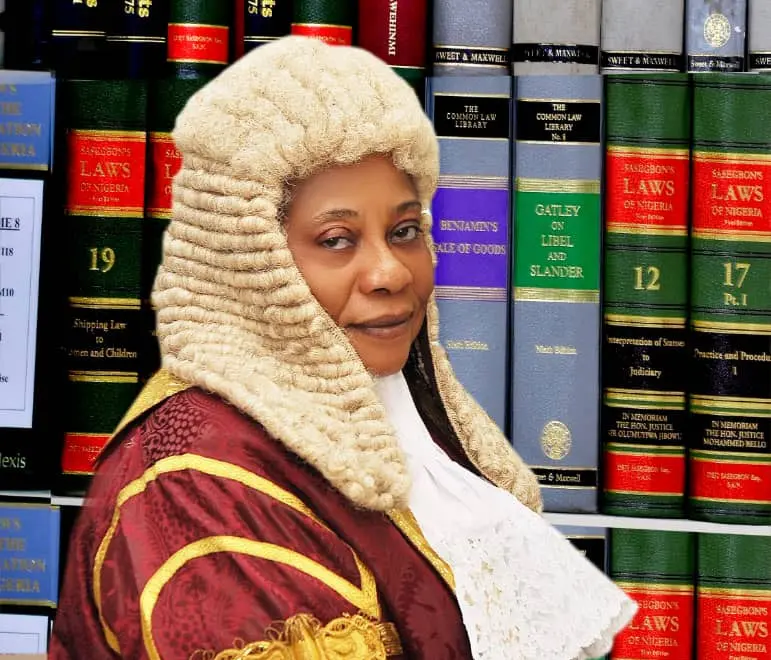
At about 11.30am on October 30, 2019 in Benin City Hon. Justice Chioma Nwosu-Iheme was, abducted by six armed men. They killed her police orderly on the spot and she spent 14 harrowing days in captivity.

By the time the news the went viral her ecstatic abductor told her: “Madam justice, you have broken the internet, we thank God for providing you for us.”

Unknown to many the recently retired Presiding Justice of the Court of Appeal, Owerri Division, Hon. Justice Rita Nosakhare Pemu fell into the hands of kidnappers in February 2022.

Her Lordship who retired on March 6, 2023 after 45 years in judicial service, shared her four-hour ordeal in kidnappers’ den and how she escaped with ENCOUNTER. She also spoke about one of the most challenging moments in her career when she had to flee the country after delivering judgement in an appeal involving the alleged killers of Kudirat Abiola; Major Hamza Al-Mustapha, Rabo Lawal and others.

Fear of road travel

 I am the kind of person that always prefers to fly because of the insecurity in the country and the nature of my job. So on that particular occasion, February 20, 2022, I flew in from Lagos to Benin and told my supporting staff to go ahead of me in two cars.

My personal assistant, a housemaid and two drivers went ahead of me on the trip to Benin. One of the drivers was driving a Hilux and the other one was driving a minibus with Court of Appeal written on it. I told them to go ahead to Benin and we met when I flew into Benin. I finished what I had to do in Benin and decided to return to Owerri, Imo State.

As we prepared for the trip, my PA was a bit rattled because ordinarily, before then, I would have told him to make my flight arrangements. But I didn’t tell him anything and he wasn’t sure what was going on. After a while, it dawned on him that I wanted to travel by road and that was exactly what I did.

Simple dress saved the day

On the day of the trip, there was this fine dress that I decided to wear but as I prepared for the trip, I just tossed the dress aside and decided to wear something simple.

So I wore a very simple dress with a facial cap and a pair of slippers. I told my staff that I want to experience how it is to travel by road. They initially refused to allow me travel with them saying that the roads were bad and that the trip would not be comfortable for me.

But of course, I had already made up my mind to go with them by road. Instead of entering the Hilux which was my official car, I decided to join my staff in the minibus.

Detour of danger

While on the trip, we got to a particular place and saw people doing a detour because there was an accident in front. So I gave the permission that we should follow other cars on the detour.

As we came out from the detour onto the expressway, suddenly a Hilux Jeep with fierce looking men all dressed in black t-shirts with AK-47 rifles cornered us. They came out of their car and said we should all come out.

They kept asking us where our boss was, but we didn’t respond. The free-flowing dress I wore obviously made me look like a maid, so they didn’t suspect that I was the boss.

Hellish gunshots

They asked the minibus driver to show his identity card which he did. Immediately they started shooting sporadically in front of the car. We laid down on the terribly hot tarred road while they were shooting.

Something in me kept me confident throughout that ordeal because every time I raised my head and looked at their faces, they would avoid my eyes. There were five of them. As the gunshots were rattling the air, I told my staff to start pleading the blood of Jesus and they obeyed me.

They kept pleading the blood of Jesus and I told myself that even if we died in this experience, it would be better dying while pleading the blood of Jesus.

So we were chorusing the blood of Jesus and waiting to be shot. After some minutes, I asked my maid, where the kidnappers were and she said they had gone away.

Marched into cave

By the time I looked up, they were no longer there. As we got up, suddenly two of them returned and demanded to know why we got up. So we lay down again. They instructed us to march into a nearby cave.

We got into the cave but surprisingly they didn’t follow us into the cave. They just left us there but we kept hearing gunshots everywhere. I took a quick decision and told my staff that we should just begin to run before stray bullets hit us inside the cave.

Race for life

So we all began to run. I was far behind while my two staff that were obviouly younger were far ahead of me. I had a lot of bruises inside the bush while running. I have never ran such a race in my life.

Eventually, we got into a small village and people who saw us were surprised that the kidnappers did not kill us. They quickly helped us and put us on two okadas.

The okada man carrying me kept warning me to sit well to avoid him falling because I was just shaking on the okada. When we got to a point, we boarded a commercial tricycle popularly known as Keke Napep to Ihiala.

Driver, Hilux still missing

When the kidnap drama was unfolding, the kidnappers told my driver to come down from the Hilux but he refused. We were all shouting that he should come down but he refused. So they shot at the Hilux.

I don’t believe that they killed him because we saw him reversing the car. But up till today, the driver and my Hilux are still missing. That was all I knew until Police from Orlu came to pick us.

Harvest of dead bodies

I saw a number of dead persons that day particularly a man I later learnt was a chief executive officer of a company located in Port Harcourt. A bus coming behind us was also shot and the driver was killed. I also learnt five persons inside the bus were killed.

We were also told that many people were killed the following day in the same area. I got so disgusted in my spirit and felt the kidnappers could not be human beings with the way they killed people at will.

Experience captured in book

I dedicated a chapter of the book I just launched, Evidence of Grace, to the experience. I titled that chapter: The efficacy of the Blood of Jesus. I had to title that chapter so because I am a beneficiary of the blood of Jesus. You can’t imagine the trauma of facing five fierce-looking men with AK-47 and still survive it.

That incident lasted from about 11:30am to 3:00pm. That was my first time of entering an okada and that ride meant a lot for me. I told my staff to take me a picture while inside the Keke Napep that took us to Orlu.

It was one of the greatest ordeals of my life and I am happy that I am alive to share the experience.

Resumes work next day

I came back to work the day after the incident and lawyers who appeared in my court were all shouting. The day after the incident, they had to use hot water to massage my body because that was my first time of running such long distance in my life.

I was literally flying like an Olympic athlete. Lawyers were shouting when I appeared in court the next day, and I continued sitting for three weeks at a stretch. When the lawyers keep demanding that I take time to rest, I told them that I preferred working so as to use it to forget the ordeal. When I am working, the experience takes backstage on my mind.

Why I fled Nigeria

When I delivered the judgment in Major Hamza Al-Mustapha and others’ appeal in 2013, there was a general outcry that I had taken bribe and that I am girlfriend to one big man. The outcry was huge but it was only Femi Fani-Kayode that said the judgment was beautiful and advised people to go and read it.

The pressure was so much that I had to run out of the country for six weeks. Luckily for me, by the time I came back, some newspapers had started serialising the judgement. It was a 75-page judgement and every day, the newspapers were serializing it.

I can tell you that by the time people read the complete judgement, the outcry stopped and not a single word was heard again on the issue. People read it and saw my reasoning. When you are aggrieved, you go upstairs but when you are aggrieved with the decision upstairs, who do you now go to?

Test of courage

We have to continue to do our job with courage and if you find that you have passed the test of courage then you will surely be regarded as virtuous.

We must continue to be courageous and do the right things despite all odds and no matter whose ox is gored.

Supreme Court in the Eye of the storm

By Sonnie Ekwowusi

I could hear the approaching thunder and the low rumblings of the thick black cloud as I lay by the mouth of a grave, in my trepidation, while the shining lights of black, white, red, and green candles danced in the wild wind amid the rising storm. The storm-tossed us up and down, and soon broke out, and then everything roared.

It was a roaring dark night. For hours, it went on, a night of storm and screaming skies, with peals of black thunder reminiscent of Anna Bontemps’ novel Black Thunder (1936). I didn’t know how, but the rumbles of thunder were clearly drawn into the politics and pragmatics of slavery and freedom, and slavery, which is the condition of the overwhelming number of Nigerians. In the end, everything was black, for the flames of the candles had now gone, leaving in its wake great sorrows that crushed and assailed us.

This is not Sonnie’s somnambulism. What is before us is nothing known to common sense: what is before us is total darkness, the eclipse of reason. What is before us is Nigerians sorrowfully writhing in pain, trying to come to terms with the flawed 2023 electoral verdicts. What pangs of excruciating pain molest us? Must we continue to dwell in slavery and servitude in our fatherland? What sorrows labor in our breasts? Far beyond our tearful feeble sight lies the Supreme Court of Nigeria. At the moment, the Supreme Court is the cynosure of all eyes.

The highest court in the land is expected to dispense justice in the petitions resulting from the flawed 2023 elections. Salvation comes from Christ alone. Justice dispensed on earth is not philosophical truth. Earthly justice is not perfect justice. Perfect justice lies in the City of God, not in the City of Man. Nevertheless, we live on earth, in the City of Man, and we need earthly justice, no matter how imperfect it is, to build the City of Man. Justice, as the raison d’être of the judiciary and one of the cardinal virtues, is that vital thread that knits human society together. Without justice, it will be impossible to promote societal aims. “Remove justice, what are kingdoms but great robberies,” said St. Augustine.

To Justice Chukwudifu Oputa (of blessed memory), “Injustice breeds intolerance, violence, and social disorder, in the same way, justice brings along with it the blessings of peace and mutual understanding. Small wonder Cicero praises justice to high heavens by stating that the brightest of virtues shines above all in justice.” The so-called Nigerian question revolves around the failure to do justice. If every Nigerian is given his or her due in the scheme of things in Nigeria, there would probably be less social discontent and social strife in Nigeria. Those urging Nigeria to “move forward” often forget that Nigeria cannot “move forward” without shared core values or communally-binding ideals such as justice.

A nation like the U.S. has been able to build a spirit and core around the core values of “life, happiness, and the pursuit of happiness.” Apart from the Super Eagles, I can hardly think of any Nigerian core values or communally-binding ideals that act as the superstructure for the building of our national ethos. Therefore, until we begin to build a nation with shared core values such as justice, Nigeria cannot “move forward.” There will be no peace in Nigeria where justice is denied or defeated because peace resides and grows in the crannies of justice. Where there is wrong, it is only justice that can right the wrong and thus restore peace and the balance of things.

Consequently, the Supreme Court is respectfully invited to exercise exceptional brilliance, a high sense of justice, and profound philosophical forensic legal enunciations in adjudicating the election petitions that would be brought before it in accordance with substantial justice (not technical justice). About seventy percent of the election petitions arising from the just-concluded flawed 2023 elections in Nigeria, especially the flawed presidential election, would end up at the Supreme Court. The Supreme Court is expected to live up to its bidding in those petitions, as the country’s highest court. You cannot steal what belongs to another person and turn around to be saying that the country should “move forward”. Move forward to where? How can the country “move forward” when it has not even started the journey? The monumental electoral frauds committed in the 2023 elections have truncated Nigeria’s journey to nationhood. The frauds have moved Nigeria back to 1964.

Four years ago, INEC and the Buhari government deceived Nigerians into believing that what would count in the 2023 election were the PVCs and the casting of votes on Election Day. Impelled by this, most Nigerians procured their PVCs and actually went out to vote on Voting Day. At every turn, the conversation centered on acquiring the PVC and nothing more. Besides, at the twilight of the Elections, President Buhari came out to swear to high heavens that his government was out to supervise the freest and fairest elections in the world, in which many Nigerians would look forward to and be grateful for his government. At that time, we thought that Buhari had repented and was poised to leave a lasting legacy for posterity, and history would judge him well. We were wrong. The INEC chairman also appeared on National TV a few days before the election to announce that there was no going back on the issue of using the BVAS to transmit election results.

Little did the Nigerian voters suspect that the PVC and the voting would not count on Election Day and that the only things that would count were bribery and corruption, intimidation, and threatening the life of electoral officers to falsify results in favor of APC [Bravo to Prof. Nnnena Otti who stood her ground and called the bluff of the Abuja pressuring her to falsify the Abia Gubernatorial election], carting away of the ballot boxes by the APC thugs, refusal to upload results with the BVAS by compromised INEC staffers, pressures from Abuja on electoral officers to manipulate the electoral process in favor of the APC. But on Election Day, February 25, the APC ruling party, in conspiracy with INEC staffers, brought out their rigging machinery to rig the presidential election in favor of the APC. Ditto for the Governorship and State Assembly Election on March 18, 2023. The regrettable aspect, however, was that despite the mounting complaints before INEC that the presidential election was massively rigged in favor of Emilokan Bola Tinubu, INEC chair Prof. Mamood Yakubu ignored the complaints and swiftly proceeded to announce Emilokan Bola Tinubu President-Elect by midnight, as well as issue him with INEC’s certificate of return.

It beats the imagination that Prof. Yakubu should, amid the mounting complaints on the monumental electoral frauds that were committed on February 25, still hurry down to announce and return Tinubu as the winner. Yakubu obviously did that to destroy the rest and foist a state of helplessness and fait accompli on the matter. Which means that INEC and President Buhari deceived Nigerians by telling them that the only tools needed for the elections were PVCs when, in fact, the tools needed for the elections were gun-wielding political thugs, guns, knives, juju, intimidation, killing and maiming, vote-buying and falsification of results by refusing to upload results via BVAS.

Therefore, we respectfully urge our Supreme Court Justices, as I mentioned earlier, to do substantial justice in the petitions that will be brought before them. Justice is an indispensable human good. “Neither the morning star nor the evening star is as glorious as justice” (Aristotle in his Nichomachean Ethics). “Men are called good because of their justice” (Cicero). It’s a good thing that our Supreme Court Justices don’t live on the moon; they live on the part of the Earth called Nigeria. They and members of their respective families witnessed the electoral fraud committed on February 25 and March 18, respectively.

If the Supreme Court Justices and their wives and members of their respective families had gone to vote on February 25 and March 18, they would have seen INEC staffers refusing to upload the results of the elections in flagrant violation of the INEC Rules and Regulations. They would have seen hired political thugs engaged in vote suppression, vote buying, and election rigging. They would have seen voters being beaten up and tortured for exercising their fundamental human rights in the full glare of the public. And if they had waited for the votes to be counted and uploaded before departing the polling unit, they would have probably noticed that the votes were not uploaded via BVAS, or, as occurred in my polling unit, they would have noticed to their greatest chagrin that the APC thugs had stormed the polling unit and carted away with the presidential election ballot box. Watching TV or listening to the news, the Supreme Justices would have taken judicial notice that the February 25 and March 18 elections were the greatest electoral fraud committed in the political history of Nigeria.

This is why the world is keeping vigil at the moment and waiting for the Nigerian Supreme Court to remedy the electoral frauds that were committed in the 2023 elections in Nigeria. The crisis of integrity afflicting the country’s Supreme Court in the last seven and a half years is quite embarrassing and regrettable. In Nigeria, the power of the Supreme Court to dispense justice has been whittled down by executive lawlessness and interference in the course of justice. Nothing destroys the public’s confidence in the judiciary more than this kind of abuse. The Supreme Court Justices should restore the eroding public confidence in the Supreme Court. The Supreme Court should be reminded that it is accountable to the people in terms of its overall performance and in meeting the justice needs of the people in a timely and efficient manner.

It must, therefore, interpret the law in a way that fulfills the needs and aspirations of the Nigerian people, as envisioned in sections 13, 14 (1) (2) (a) (b) (c) of the 1999 Constitution. Justice is rooted in public perception. Justice must not only be done but also be seen to be manifestly done. This is why Lord Hewart, the then Lord Chief Justice of England, laid down the dictum in the case of Rex v. Sussex Justices, [1924] 1 KB 256, that “it is not merely of some importance but is of fundamental importance that justice should not only be done but should manifestly and undoubtedly be seen to be done.” Therefore, the Supreme Court ought not to be surprised that its decisions, particularly in the cases of Ihedioha V Hope Uzodinma and recently Lawan V Machina and Akpabio V INEC and others, are evoking excoriating public criticism because the decisions were treacherously anti-democratic, anti-justice and clearly show that the Supreme Court is slavishly adhering to technical legalisms and formalism at the expense of substantial justice.

The essence of the need for justice to be manifestly seen to be done was observed by the Master of the Rolls, Lord Denning, in Metropolitan Properties Co (FGC) Ltd v Lannon, wherein he stated, “Justice must be rooted in confidence, and confidence is destroyed when right-minded people go away thinking: ‘The judge was biased.'” To date, the public constantly refers to Imo State Governor Hope Uzodinma, who came fourth in the last Imo State Gubernatorial Election, as the “Supreme Court governor” because they feel that the Supreme Court was wrong in imposing him on the people of Imo State.

Our Supreme Court Justices should not be men of timorous proclivity and timidity. They must not bow to public sentiments, electoral defilement, and electoral roguery in their judgments. They should not be afraid of doing what has not been done before. They should not be afraid of upturning the flawed verdict of the flawed presidential election of February 25. They should be Justices of avowed integrity and judicial activism. For example, the very height of Lord Denning’s judicial activism was demonstrated in his often-cited dictum in the case of Parker V Parker where he said: “If we never did a thing that has not been done before, we shall never get anywhere. The law shall never stand still while the rest of the world goes on, and it will be bad for both.” So, our Supreme Court Justices should be bold and courageous.

If, for example, it is proved that Emilakon Bola Tinubu should have been disqualified from contesting the last presidential election because the U.S. court had convicted him in a drug case, our Supreme Court should be courageous enough to come to that conclusion without any equivocation. If, for example, there is evidence that the presidential election was massively rigged in favor of Emilokan Tinubu or that Tinubu failed to satisfy the constitutional requirements to be declared a President of Nigeria, the Supreme Court should also be courageous enough to come to that conclusion, no matter whose ox is gored. Fiat justicia ruat coelum (Let justice be done though the heaven fail).

In 2017, the Kenyan election commission had declared incumbent Uhuru Kenyatta the winner by a margin of 1.4 million votes. But Raila Odinga, Mr. Kenyatta’s opponent, said the commission was “rotten” and demanded resignations and prosecutions. Chief Justice David Maraga, who was appointed by President Kenyatta, ruled that the election had not been “conducted in accordance with the constitution” and declared it “invalid, null, and void.” Today, the name of Kenya’s Chief Justice David Maraga, and three of his colleagues, have been inscribed in the annals of African history. Prior to 2017, it was unprecedented in Africa for an opposition to successfully challenge a presidential election result in court.

But the Chief Justice of Kenya changed that in 2017. Today, Kenyans praise Justice Maraga for having the courage to rule against President Uhuru Kenyatta, the man who appointed him as Chief Justice. So, we look forward to seeing the Nigerian Court do substantial justice in the petitions brought before it, especially the presidential election, in order to restore faith and confidence in the Supreme Court.

I argue that there should be a departure from the age-old corrupt structure of elevating only Justices of the Court of Appeal to the Supreme Court to fill the vacancy in that court. We should revert back to the old selective process. In the past, senior lawyers and academics with integrity were appointed to the Supreme Court to salvage the court from the doldrums of corruption, poor legal scholarship, and inefficiency that currently afflict the court. For example, Dr. Taslim Olawale Elias was appointed Chief Justice of Nigeria directly from the Bar. Augustine Nnamani SAN (of blessed memory) was appointed to the Supreme Court by Gen. Olusegun Obasanjo in 1979 from his position as the Attorney-General of the Federation and Minister of Justice. He was at the Supreme Court for 11 years. 

Justice Okay Achike (of blessed memory) was appointed judge of the High Court from academia and elevated to the Court of Appeal and the Supreme Court, respectively, in no distant time. There are more Dr. Eliases, Justice Nnamanis, and Justice Achikes waiting to be appointed to the Supreme Court. Indiana Supreme Court Chief Justice Loretta H. Rush has recently announced that the Indiana Judicial Nominating Commission would begin to accept applications from Indiana lawyers for appointment to fill the upcoming vacancy on the Court of Appeals of Indiana. Nigeria should imbibe the Indian practice.

Photographs from the Annual Lecture of Akaraiwe Associates

Ikeazor Akaraiwe, SAN recently hosted his annual lecture series titled: Justice as the fulcrum for a new Nigeria at Enugu. Onetime Attorney General of the Federation and Minister of Justice Senator Kanu Agabi, SAN was the guest lecturer.

Ikeazor Akaraiwe, SAN
Chair of the occasion, Hon. Justice GC Nnamani, President of the Customary Court of Appeal, Enugu State
Guest lecturer, former AGF, Kanu Agabi, SAN
Left to right – Somma Akaraiwe, Kanu Agabi SAN, AProf Nkiru Akaraiwe, Akaraiwe SAN, Eric Ogudu, Esq & Onebunne, Esq.
Hon. Justice Ada Obayi
Hon. Justice Angela Anidi
Left to right Olajide Olunubi, Chinedu Ucheagwu, Madam Elizabeth Akaraiwe, Akaraiwe, SAN, Dr Nkiru Akaraiwe, and Emmanuel Eze
Discussant, Prof. RACE Achara, millennium chair, NBA Enugu branch
Discussant at the event, Dr. Chijioke-Agbo with Mrs. Ches Obiajulu (member of the bar)
Guest lecturer, Kanu Agabi SAN and Lady Meg Nwagbo-Ojukwu (1980 call to bar)
Left-to-right-Hon.-Justice-Lynda-Okibe-AJ-Offiah-SAN-Mrs-and-Hon.-Justice-Angela-Anidi
Dr Nkiru Akaraiwe and Madam Elizabeth Akaraiwe
Akaraiwe SAN & DCR Appeal Court, Michael Nwagbegbe, Esq.
Anene Ojinta, AJ Offiah SAN, Dr. Nkiru Akaraiwe, and Madam Elizabeth Akaraiwe
Anene Ojinta, Esq, Chijioke Agbo and Hon. Justice AA Nwobodo
Akaraiwe, Oforma Agbo, Agabi and a guest
Barristers D.O. Ogbodo and Schola Offiah
Gab Oforma Agbo and Nwachukwu, OC Legal, Nigerian Police
Gozie Iwuala, Secretary, NBA Enugu branch, and Mrs Joy Nnani, Financial Secretary, NBA Enugu Branch, at the event
Rapporteur at the event Mrs Ifeoma Adaghara
Head of Chambers, Akaraiwe & Associates Mrs. Joy Nnani
Akaraiwe, SAN & Mrs. Uzoamaka Okafor
Lawyers – Anastasia Enweani and Meg Ojukwu-Nwagbo at the event
Akaraiwe-and-young-lawyers
Mr. Olajide Olunubi and other guests at the event
Mrs. Nwagbara and other members of the bar
Uchechi Abiazim, Ojiyovwi Awah and other lawyers

Rage is brewing…among young people- Chimamanda Adichie to Biden

Celebrated Nigerian writer, Chimamanda Ngozi Adichie has joined in condemning the widespread irregularities, rigging, and manipulations of the results that greeted the just concluded 2023 election in Nigeria.

Chimamanda’s open letter to President Joe Biden — Nigeria’s Hollow Democracy— published in The Atlantic on 6 April 2023 reads:

Dear President Biden,

Something remarkable happened on the morning of February 25, the day of the Nigerian presidential election. Many Nigerians went out to vote holding in their hearts a new sense of trust. Cautious trust, but still trust. Since the end of military rule in 1999, Nigerians have had little confidence in elections. To vote in a presidential election was to brace yourself for the inevitable aftermath: fraud.

Elections would be rigged because elections were always rigged; the question was how badly. Sometimes voting felt like an inconsequential gesture as predetermined “winners” were announced.

A law passed last year, the 2022 Electoral Act, changed everything. It gave legal backing to the electronic accreditation of voters and the electronic transmission of results, in a process determined by the Independent National Electoral Commission (INEC). The chair of the commission, Professor Mahmood Yakubu, assured Nigerians that votes would be counted in the presence of voters and recorded in a result sheet, and that a photo of the signed sheet would immediately be uploaded to a secure server. When rumors circulated about the commission not keeping its word, Yakubu firmly rebutted them. In a speech at Chatham House in London (a favorite influence-burnishing haunt of Nigerian politicians), he reiterated that the public would be able to view “polling-unit results as soon as they are finalized on election day.”

Nigerians applauded him. If results were uploaded right after voting was concluded, then the ruling party, the All Progressives Congress (APC), which has been in power since 2015, would have no opportunity for manipulation. Technology would redeem Nigerian democracy. Results would no longer feature more votes than voters. Nigerians would no longer have their leaders chosen for them. Elections would, finally, capture the true voice of the people. And so trust and hope were born.

By the evening of February 25, 2023, that trust had dissipated. Election workers had arrived hours late, or without basic election materials. There were reports of violence, of a shooting at a polling unit, and of political operatives stealing or destroying ballot boxes. Some law-enforcement officers seemed to have colluded in voter intimidation; in Lagos, a policeman stood idly by as an APC spokesperson threatened members of a particular ethnic group who he believed would vote for the opposition.

Most egregious of all, the electoral commission reneged on its assurance to Nigerians. The presidential results were not uploaded in real time. Voters, understandably suspicious, reacted; videos from polling stations show voters shouting that results be uploaded right away. Many took cellphone photos of the result sheets. Curiously, many polling units were able to upload the results of the House and Senate elections, but not the presidential election. A relative who voted in Lagos told me, “We refused to leave the polling unit until the INEC staff uploaded the presidential result. The poor guy kept trying and kept getting an ‘error’ message. There was no network problem. I had internet on my phone. My bank app was working. The Senate and House results were easily uploaded. So why couldn’t the presidential results be uploaded on the same system?” Some electoral workers in polling units claimed that they could not upload results because they didn’t have a password, an excuse that voters understood to be subterfuge. By the end of the day, it had become obvious that something was terribly amiss.No one was surprised when, by the morning of the 26th, social media became flooded with evidence of irregularities. Result sheets were now slowly being uploaded on the INEC portal, and could be viewed by the public. Voters compared their cellphone photos with the uploaded photos and saw alterations: numbers crossed out and rewritten; some originally written in black ink had been rewritten in blue, some blunderingly whited-out with Tipp-Ex. The election had been not only rigged, but done in such a shoddy, shabby manner that it insulted the intelligence of Nigerians.

Nigerian democracy had long been a two-party structure—power alternating between the APC and the Peoples Democratic Party—until this year, when the Labour Party, led by Peter Obi, became a third force. Obi was different; he seemed honest and accessible, and his vision of anti-corruption and self-sufficiency gave rise to a movement of supporters who called themselves “Obi-dients.” Unusually large, enthusiastic crowds turned up for his rallies. The APC considered him an upstart who could not win, because his small party lacked traditional structures. It is ironic that many images of altered result sheets showed votes overwhelmingly being transferred from the Labour Party to the APC.

As vote counting began at INEC, representatives of different political parties—except for the APC—protested. The results being counted, they said, did not reflect what they had documented at the polling units. There were too many discrepancies.

“There is no point progressing in error, Mr. Chairman. We are racing to nowhere,” one party spokesperson said to Yakubu. “Let us get it right before we proceed with the collation.” But the INEC chair, opaque-faced and lordly, refused. The counting continued swiftly until, at 4:10 a.m. on March 1, the ruling party’s candidate, Bola Tinubu, was announced as president-elect.

A subterranean silence reigned across the country. Few people celebrated. Many Nigerians were in shock. “Why,” my young cousin asked me, “did INEC not do what it said it would do?”

It seemed truly perplexing that, in the context of a closely contested election in a low-trust society, the electoral commission would ignore so many glaring red flags in its rush to announce a winner. (It had the power to pause vote counting, to investigate irregularities—as it would do in the governorship elections two weeks later.)

Rage is brewing, especially among young people. The discontent, the despair, the tension in the air have not been this palpable in years.

How surprising then to see the U.S. State Department congratulate Tinubu on March 1. “We understand that many Nigerians and some of the parties have expressed frustration about the manner in which the process was conducted and the shortcomings of technical elements that were used for the first time in a presidential election cycle,” the spokesperson said. And yet the process was described as a “competitive election” that “represents a new period for Nigerian politics and democracy.”

American intelligence surely cannot be so inept. A little homework and they would know what is manifestly obvious to me and so many others: The process was imperiled not by technical shortcomings but by deliberate manipulation.

An editorial in The Washington Post echoed the State Department in intent if not in affect. In an oddly infantilizing tone, as though intended to mollify the simpleminded, we are told that “officials have asserted that technical glitches, not sabotage, were the issue,” that “much good” came from the Nigerian elections, which are worth celebrating because, among other things, “no one has blocked highways, as happened in Brazil after Jair Bolsonaro lost his reelection bid.” We are also told that “it is encouraging, first, that the losing candidates are pursuing their claims through the courts,” though any casual observer of Nigerian politics would know that courts are the usual recourse after any election.

The editorial has the imaginative poverty so characteristic of international coverage of African issues—no reading of the country’s mood, no nuance or texture. But its intellectual laziness, unusual in such a rigorous newspaper, is astonishing. Since when does a respected paper unequivocally ascribe to benign malfunction something that may very well be malignant—just because government officials say so? There is a kind of cordial condescension in both the State Department’s and The Washington Post’s responses to the election. That the bar for what is acceptable has been so lowered can only be read as contempt.

I hope, President Biden, that you do not personally share this cordial condescension. You have spoken of the importance of a “global community for democracy,” and the need to stand up for “justice and the rule of law.” A global community for democracy cannot thrive in the face of apathy from its most powerful member. Why would the United States, which prioritizes the rule of law, endorse a president-elect who has emerged from an unlawful process?

Compromised is a ubiquitous word in Nigeria’s political landscape—it is used to mean “bribed” but also “corrupted,” more generally. “They have been compromised,” Nigerians will say, to explain so much that is wrong, from infrastructure failures to unpaid pensions. Many believe that the INEC chair has been “compromised,” but there is no evidence of the astronomical U.S.-dollar amounts he is rumored to have received from the president-elect. The extremely wealthy Tinubu is himself known to be an enthusiastic participant in the art of “compromising”; some Nigerians call him a “drug baron” because, in 1993, he forfeited to the United States government $460,000 of his income that a Chicago court determined to be proceeds from heroin trafficking. Tinubu has strongly denied all charges of corruption.

I hope it will not surprise you, President Biden, if I argue that the American response to the Nigerian election also bears the faint taint of that word, compromised, because it is so removed from the actual situation in Nigeria as to be disingenuous. Has the United States once again decided that what matters in Africa is not democracy but stability? (Perhaps you could tell British Prime Minister Rishi Sunak, who quickly congratulated Tinubu, that an illegitimate government in a country full of frustrated young people does not portend stability.) Or is it about that ever-effulgent nemesis China, as so much of U.S. foreign policy now invariably seems to be? The battle for influence in Africa will not be won by supporting the same undemocratic processes for which China is criticized.

This Nigerian election was supposed to be different, and the U.S. response cannot—must not—be business as usual. The Nigerian youth, long politically quiescent, have awoken. About 70 percent of Nigerians are under 30 and many voted for the first time in this election. Nigerian politicians exhibit a stupefying ability to tell barefaced lies, so to participate in political life has long required a suspension of conscience. But young people have had enough. They want transparency and truth; they want basic necessities, minimal corruption, competent political leaders, and an environment that can foster their generation’s potential.

This election is also about the continent. Nigeria is a symbolic crucible of Africa’s future, and a transparent election will rouse millions of other young Africans who are watching, and who long, too, for the substance and not the hollow form of democracy. If people have confidence in the democratic process, it engenders hope, and nothing is more essential to the human spirit than hope.

Today, election results are still being uploaded on the INEC server. Bizarrely, many contradict the results announced by INEC. The opposition parties are challenging the election in court. But there is reason to worry about whether they will get a fair ruling. INEC has not fully complied with court orders to release election materials. The credibility of the Nigerian Supreme Court has been strained by its recent judgments in political cases, or so-called judicial coronations, such as one in which the court declared the winner of the election for governor of Imo State a candidate who had come in fourth place.

Lawlessness has consequences. Every day Nigerians are coming out into the streets to protest the election. APC, uneasy about its soiled “victory,” is sounding shrill and desperate, as though still in campaign mode. It has accused the opposition party of treason, an unintelligent smear easily disproved but disquieting nonetheless, because false accusations are often used to justify malicious state actions.

I supported Peter Obi, the Labour Party candidate, and hoped he would win, as polls predicted, but I was prepared to accept any result, because we had been assured that technology would guard the sanctity of votes. The smoldering disillusionment felt by many Nigerians is not so much because their candidate did not win as because the election they had dared to trust was, in the end, so unacceptably and unforgivably flawed.

Congratulating its outcome, President Biden, tarnishes America’s self-proclaimed commitment to democracy. Please do not give the sheen of legitimacy to an illegitimate process. The United States should be what it says it is.

Sincerely,

Chimamanda Adichie

TIPS