Home Blog Page 786

The Odinga Standard: Guidelines to Adopt in Preparing Election Petitions 

Overview 

Raila Odinga & Another v Independent Electoral and Boundaries Commission (IEBC) & Others [2017] KESC 31  KLR 

On 1st September 2017, the Supreme Court of Kenya handed down a decision annulling the Kenyan Presidential election, by a vote of four Judges to two. The court determined that there were significant failures in the transmission of results from polling stations to constituency tallying centres and the national tallying centre, which jeopardised the election’s integrity. The court also found that, IEBC didn’t follow constitutional and statutory provisions for election administration. The court ordered that a new Presidential election be held within 60 days, in accordance with the Constitution. 

This was seen as a historic and decisive victory, for African democracy. In practical terms, it also meant that Kenyans were to have another (second) presidential election within  60 days. This was undoubtedly quite expensive in terms of money and time, but, perhaps, worth it for a clear and decisive declaration that democracy in Kenya was not only working but maturing. The ruling of the Supreme Court underscored what IEBC, international observers, and some international press wanted to write off as mere irregularities, but were in actual fact, significant procedural failures that undermined the core of Kenyan democracy.

The discontent and criticism of the election was never about winning or losing. It was about having a winner who was worthy of the title “democratically elected”, and the Supreme Court found that IEBC simply did not deliver on basic democratic principles of transparency and rule of law, that should ordinarily guide any election. Fundamentally, this ruling was also about reminding IEBC that it couldn’t pick and choose which parts of the Constitution it wanted to obey. The ruling reflected glaring errors that, on one hand, IEBC argued were not enough to alter the outcome of the election, but, on the other, critics argued, compromised the integrity of the whole process. 

For instance, IEBC conceded that they did not use the biometric electronic transmission system that they were required to use; and instead, relied on text messages and photographs of manually filled forms as sources of information. The process of tallying was also problematic because IEBC seemed to ignore much of the law regulating it. The Commission’s Lawyers also argued that the forms used for reporting results from the different regions would be available in time for the announcement of the results on 11th August 2017; yet, as late as 14th August,  IEBC was still asking the opposition to be patient while it tried to make the forms available to them for verification.

A number of the forms provided by IEBC also didn’t have serial numbers or bar codes, and some were simply lined paper with numbers scrawled on them. Although Lawyers for IEBC conceded these irregularities, they equally argued they were not significant enough to have affected the whole outcome; but, unfortunately, in court, the Chief Justice pushed back asking “If some of the forms have bar codes, then shouldn’t all of the forms have bar codes?”  It was based on all the above reasons, that the Kenyan Supreme Court nullified the Presidential election under Article 140(2) (a) of Kenya’s Redraft Constitution of 2010. 

Nigeria’s 2023 General Elections

One could easily be forgiven for believing that the Kenyan experience was déjà vu here in Nigeria and that our National elections last month were simply a rehash of the same playbook script that characterised the Kenyan elections five years ago, in that the situation, facts and allegations of irregularities on the part of our Independent National Electoral Commission (INEC) appear to be virtually the same as that of the IEBC, but with a fundamental difference. The position of the law here in Nigeria as spelled out in the 1999 Constitution (as amended) and the Electoral Act 2022, is not on the same footing as that of Kenya. It appears the Federal Government and the National Assembly conscious of the historic and landmark decision of the Kenyan Supreme Court, may have instead,  taken precautions to insulate themselves from the Kenyan experience by whittling down the effects of the Electoral Act 2022, thereby ensuring that our courts and tribunals would be incapable of ever giving such a ground-breaking decision as that of the Kenyan Supreme Court. 

Let us now look at, and analyse some of the various examples as to why this may indeed, be the case. 

Instituting Presidential Election Petitions Directly at the Supreme Court 

In Kenya, petitions relating to their Presidential elections are heard directly by the Kenyan Supreme Court; but, under our Electoral Act here in Nigeria, Presidential election petitions have to first be instituted and heard at an election tribunal, which for Presidential election petitions is the Court of Appeal. It can only be filed at the Supreme Court, upon the filing of an appeal after Court of Appeal has adjudicated upon the petition. Does this procedure serve any real or useful purpose?  I don’t think so, because all Presidential election petitions ultimately end up at the Supreme Court anyway, so why not Institute the petition there in the first place, and save much valuable time and expense? 

In Odinga & Anor v IEBC & Ors (Supra), the Kenyan Presidential election was held on the 8th of August, 2017, and the hearing of the Presidential Petition commenced as early as the 18th of August, 2017. The hearing concluded on the 29th of August, 2017, and the Kenyan Supreme Court handed down its decision on the 1st of September, 2017. The hearing of the Petition was heard timeously, in that it took less than two weeks. During this short period, the Kenyan Supreme Court was able to hear oral arguments from all the parties between 26th August and 29th August. A decision was given within three days of the conclusion of hearing.

Surely, this is the sort of standard and time frame we need to set for ourselves here in Nigeria. The present time frame of 180 days to hear and determine election petitions under our Electoral Act, assuming we consider the Court of Appeal an election tribunal, or 60 days if it’s not classed as such or for appeals, is unduly long. It defeats the long-standing principle first established in Ashby v White (1703) 92 ER 126 to the effect that, the Courts don’t want to be unduly engaged in matters of Parliament. The Courts recognised the fundamental privileges and independence of Parliament, as far back as the 1700s. 

Does the 1999 Constitution Specifically State that Elections Should be Free and Fair?

The Kenyan Supreme Court found that IEBC failed to comply with constitutional and statutory provisions on conducting elections, such as using biometric technology for voter identification; transmitting provisional results electronically; publishing scanned images of result forms online; and verifying final results using original forms. The court held that these failures violated Article 81(e) of the Kenya (Redraft) Constitution of 2010, which requires elections to be free, fair, transparent, verifiable, accountable, accurate, secure, efficient, and credible. The court also held that these failures affected Article 86(a) of the 2010 (Redraft) Constitution, which equally stipulates that elections are to be simple, accurate, verifiable, secure, accountable and transparent. The court noted that it was not necessary for it to determine whether there was any hacking or manipulation of IEBC’s servers or result forms by any party, as alleged by the opposition. The court was of the view that it was not necessary for it to determine whether the incumbent President at the time, Uhuru Kenyatta, engaged in any electoral malpractices, as was being alleged. It was sufficient to annul the Presidential election for the breaching the above constitutional provisions. 

Significantly, there is no equivalent provision under the 1999 Constitution, other than vague and indirect references to such under the non-justiciable provisions of the Fundamental Objectives and Directive Principles of State Policy. This perhaps, best explains why our Lawyers spend months trying to establish incidences of manipulation and malpractices in our general elections. The Presidential election petitions of both Alhaji Atiku Abubakar and Peter Obi, are laced with these unproven allegations. INEC is always joined as a Defendant in Election Petition cases, but the same INEC equally wants to justify before the tribunal or court that it conducted credible elections. How ironic !! In short, INEC is usually the equivalent of a hostile witness! How then can a Petitioner succeed, if they are dependent on INEC to produce such evidence, as often seems the case? Even the Electoral Act 2022, merely mentions the need to show substantial compliance with the election. On what basis can you, therefore, overturn a Presidential Election here in Nigeria, with such a vague and subjective benchmark? If our Constitution had similar provisions to those of Kenya cited above, then a Presidential Petitioner would at least stand a realistic chance of overturning a Presidential election, if the court considers that there were substantial irregularities. 

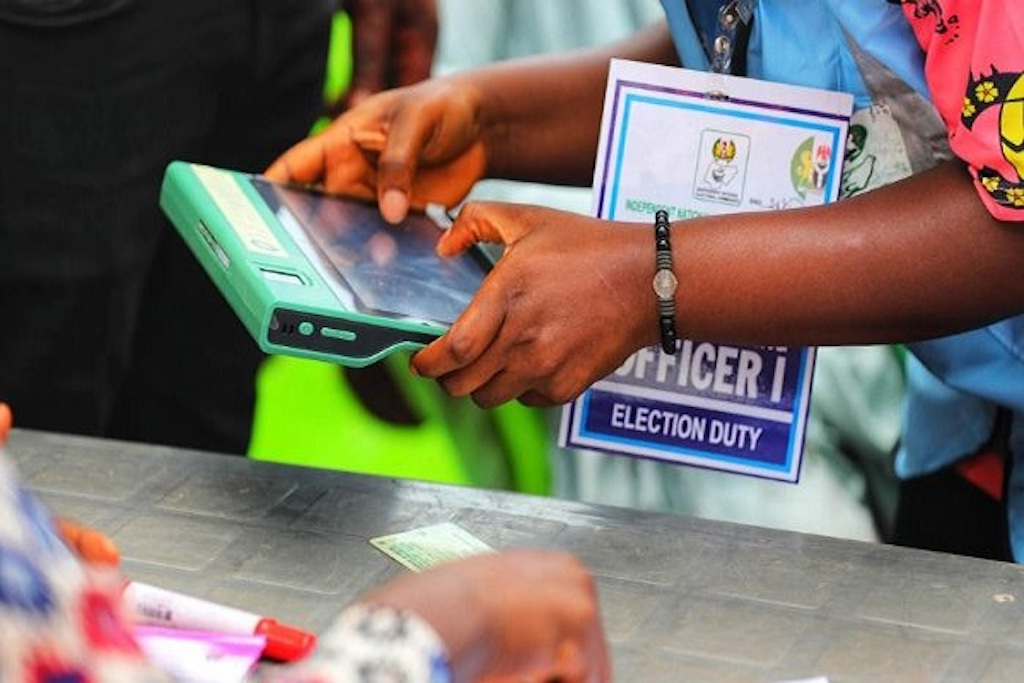
The Bimodal Verification Accreditation System (BVAS) 

Another essential difference in Nigeria’s electoral laws when compared to Kenya, is that the use of BVAS was not made compulsory under the Electoral Act 2022, or so it seems. Section 50(2) of the said Act provides as follows:

“Subject to section 63 of this Act voting at an election and transmission of results under this Act shall be in accordance with the procedure determined by the Commission”

Furthermore , Section 60(5) provides: “The presiding officer shall transfer the results including total number of  accredited voters and the results of the ballot in a manner as prescribed by the Commission”

INEC through what is at best subsidiary legislation, has introduced regulations and guidelines most of which are contained in its manual, but this does not contradict the above provisions of the Electoral Act 2022, because if INEC determines the procedure as provided under the Electoral Act, it stands to reason that it can vary its own guidelines since it has the power to determine its own procedure. As the Petitioners themselves state in their Petitions, INEC merely gave assurances; whereas, in Kenya, the biometric electronic transmission system was backed by the force of primary legislation, and could equally be tied to the 2010 Kenya Constitution with regard to election administration. Is this an oversight by our lawmakers, or perhaps, deliberate? Your guess is as good as mine. 

Bar Codes 

As the Chief Justice of Kenya queried if some of the ballot papers have bar codes, shouldn’t all of them have bar codes? Under the Electoral Act 2022, this is once again left to the  discretion of the returning officer, thereby leaving scope for the possibility of malpractice or manipulation. Section 63 (2) of the Electoral Act 2022 provides; 

“If the returning officer is satisfied that a ballot paper which does not bear the official mark was from a book of ballot papers which was furnished to the presiding officer of the polling unit in which the vote was cast for use at the election in question, he or she shall, notwithstanding the absence of the official mark, count that ballot paper.”

Conclusion 

There are in fact, four avenues via which courts can be involved in electoral matters:

(1) judicial review for constitutional validity; 

(2) criminal jurisdiction over electoral offences;

(3) a disputed return petition; 

(4) judicial review of electoral administration.

The first issue under our laws as with Kenya, at least, in so far as it relates to Presidential election petitions, is that they should ideally be instituted at the Supreme Court. The second issue is not common, but it relates to criminal jurisdiction which should begin at the High Court level. The third is already provided for under our Electoral Act, and all  disputed petitions begin at specially constituted tribunals, other than the Presidential election petition which begins at the Court of Appeal. The fourth category which is the power to grant injunctions or declarations to proactively ensure compliance with electoral administration, is perhaps, a bit more technical; but, as noted in Odinga & Anor v IEBC & Ors (Supra) the Kenyan Supreme Court was able to craft its own issues for determination as follows:

(i) Whether the 2017 Presidential Election was conducted in accordance with the principles laid down in the Constitution and the law relating to elections.

(ii) Whether there were irregularities and illegalities committed in the conduct of the 2017 Presidential Election.

iii) If there were irregularities and illegalities, what was their impact, if any, on the integrity of the election?

(iv) What consequential orders, declarations and reliefs should this court grant, if any?

This approach enabled the Kenyan Supreme Court reach a definitive and decisive decision on the Presidential election petition, within a relatively short period of time. The Presidential election petition, was virtually treated like a judicial review application. A Constitutional amendment would be necessary here in Nigeria, for us to be able to get anywhere near the Odinga standard; but, as already noted, if the National Assembly have their own agenda, it becomes a near impossibility. Realistically, it can only be achieved by redrafting our Constitution. Significantly, Kenya has already had three redrafts of their Constitution, the most recent being in 2010 and approved by about 67% of the population in a referendum.  In Nigeria we are yet to have a redraft, and instead, remain stuck with the occasional amendments; but, to whose benefit, I wonder?

This article was first published on ThisDay of 11th April 2023

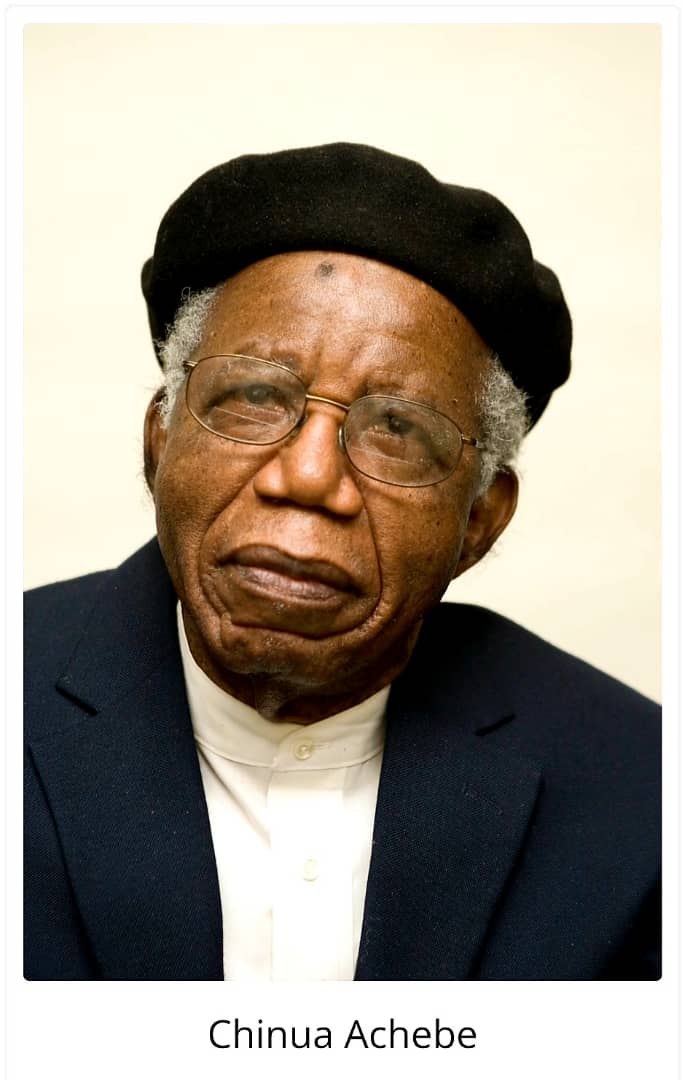
Why Chinua Achebe wouldn’t get a Nobel

By Kachi Okezie

Nigerian novelist, Chinua Achebe, is widely regarded as one of Africa’s most important writers and a key figure in the development of African literature. Many people believe that he deserved to receive the Nobel Prize in Literature during his lifetime, but he never did.
It’s difficult to know for certain why Achebe was never awarded the Nobel Prize, as the selection process is highly confidential and the Nobel Committee does not comment on individual cases. To that end, this short piece does not in any way purport to come from the true state if play, rather it is intended to aid understanding based on informed analysis and conjecture about what might have happened.

Notwithstanding, there are a few possible factors that may have played a role, and these are as follows:

Bias: Some critics have suggested that the Nobel Committee may have been biased against African writers or writers of color in general. While this is difficult to prove, it’s worth noting that relatively few non-European writers have received the Nobel Prize over the years.

Politics: The Nobel Committee has been accused of being influenced by political considerations, particularly during the Cold War era. Achebe was an outspoken critic of the Nigerian government, and his work often dealt with political and social issues. It is quite possible that this made him a less appealing candidate to some members of the Committee.

Timing: Achebe’s career peaked in the 1960s and 1970s, when he published some of his most influential works, including “Things Fall Apart” and “Arrow of God”. However, the Nobel Prize is often awarded to writers later in their careers, and Achebe may have been overlooked simply because he was still relatively young when his most famous works were published.

Despite never receiving the Nobel Prize, Achebe’s legacy as a writer and thinker has had a profound impact on African and global literature.

It is hoped that neither his legacy nor that of any of his contemporaries dead or living should be brought under undeserved scrutiny in the course of the ongoing politics-induced tiffs.

Kachi Okezie writes from London.

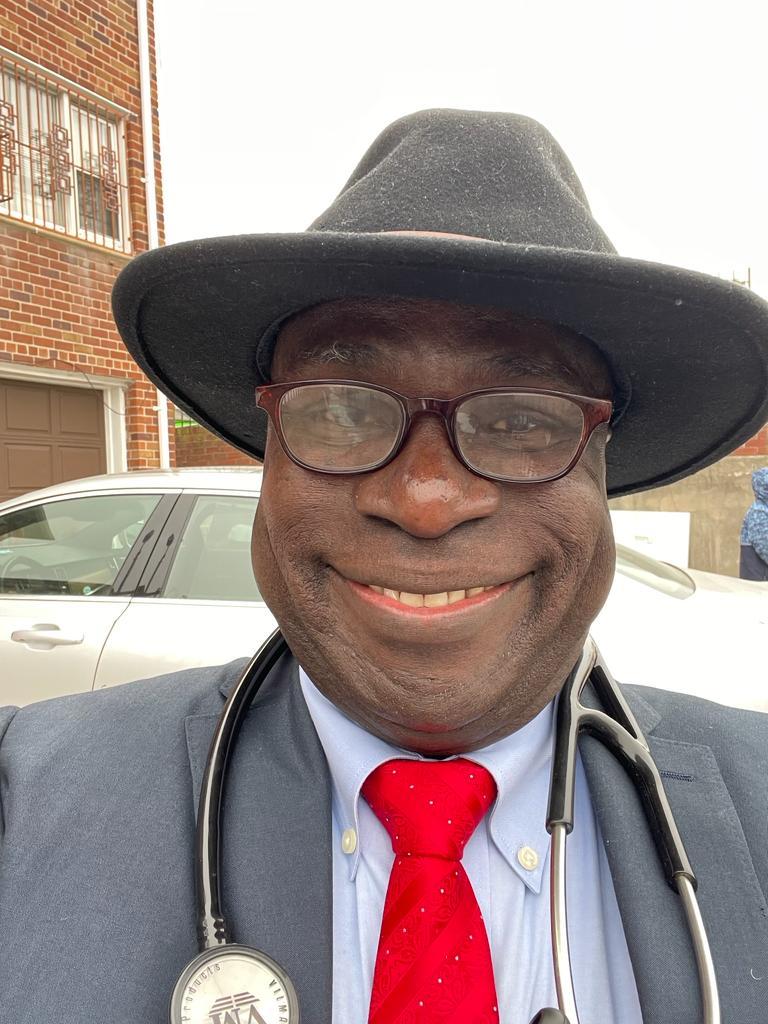
Tales My Patients Told Me: A very unusual union

By Emmanuel Fashakin

Latrice came to see me one very bright Thursday morning in January 2023, stunningly beautiful and elegant as ever. It’s been almost three years since her husband died, but I still find it awkward that Latrice would come to the doctor without her husband in the room. For almost ten years, whenever Latrice came to us for follow-up care for her Diabetes and Hypertension, the husband would come in with her. He would take a chair in the corner of the room, reading a book or magazine, or simply staring at the far wall. Saying nothing. I once joked with him that if I have a wife as pretty as Latrice, I too would follow her wherever she goes.

Latrice and Nelson were a very unusual couple. First, there was an obvious age gap between them. Latrice was around forty years old, and Nelson was in his seventies when they met. And Nelson was HIV positive, a fact I only knew many years after he started accompanying his wife to our practice after he decided to enroll himself too. I was shocked to see that Nelson was HIV positive. Latrice remains HIV-negative to this day. Why would such a young pretty lady be married to a much older HIV-positive man? I often wondered.

I got to know about Nelson after he enrolled in our practice. A very calm and well-disposed man. He told me his life story. He was a policeman back in his home country in Guyana. Then he emigrated to the United States but kept contact with his roots in Guyana. He never told me how he became HIV positive, but I had a good guess. He was a graceful, kind, and gentle six-footer. He would be any lady’s delight. He was very strict with his medications, which included treatment for Blood pressure and diabetes, in addition to the HIV medications. This explains his longevity: all his diseases were well-managed and under control.

After Nelson enrolled in our practice, and he came to see me alone, I finally asked Nelson the questions which had been nagging me for a while: “Mr. Nelson, you are HIV-positive, and your wife is HIV-negative; how did you guys manage that? How do you copulate without infecting your wife?” “There are many ways to satisfy a woman”, he calmly explained. “We explore other ways to keep her happy without any risk of infecting her.” I breathed a sigh of relief. “I told her about my HIV status and she was comfortable with it. She readily agreed to marry me.”

In early March 2020, at the outbreak of the Covid pandemic in New York, one bright Saturday morning, I arrived fearfully at my Brooklyn office for work. Fearfully because the dead bodies were beginning to pile up in the streets outside the hospitals. Most of my colleagues had closed down their offices, but I kept Abbydek Family Medical open. I gave the staff the option to work or remain at home on paid leave. It was a scary situation. It was in this bad scenario I found Nelson waiting for me outside the office at about 9 am in the morning: 82-year-old Diabetic, Hypertensive HIV positive man, a very vulnerable demographic for the Covid virus.

“What are you doing here?” I yelled at Nelson. “I want you to check me out, I am afraid of this Covid virus thing”, he said slowly. “No, no, no, Nelson. You should stay at home. Please don’t come inside the office. I will call a taxi to take you home.” I called a taxi from my own cell phone and informed them that a gentleman was waiting outside the office. I had no idea then, but that was the last time I saw Nelson.

Latrice picked up the rest of the story. A few days after Nelson’s ill-advised trip to the office, Nelson fell sick. Fever, cough, and chills. The diagnosis was obvious in view of the raging Covid 19 pandemic. When Nelson’s condition deteriorated, the wife called the ambulance and they took him away to the hospital. Barely three days later, precisely one week after his trip to the office, Nelson died. The wife never saw him again after he was taken to the hospital. To avoid the risk of spreading the scourge, virtually all the patients who died of Covid virus in the hospital were given mass burial.

Finally this day in January 2023, Latrice was free and able to tell me her side of the story. Latrice told me how they met back in her home country of Guyana. She said about thirteen years earlier, she was working as a receptionist in a five-star hotel in Guyana. Nelson was a frequent visitor to the hotel on his many visits to the country from his abode in the USA. Nelson was known to be intimate friends with one of the receptionists in the hotel. She was therefore very surprised when on one of his visits, Nelson asked her out. It appeared that things did not work out between Nelson and Latrice co-worker. She did not know why and did not bother to ask.

Latrice needed help. She had five children: three for her first husband. When the marriage broke down, she got hooked with another man and had more children for that one. That relationship also turned sour. She was seeing someone else when she was approached by American Mr. Nelson. She promptly broke off with her new man when he found that Nelson was serious. She got married to Nelson and he filed papers for her and her five children and took them to New York.

“When did you find out Nelson had HIV disease?” Latrice confirmed what Nelson told me. “He was honest. He told me right at the beginning.” “And you were not afraid to marry an HIV-positive man?” “No. I was not. He used Sex toys. He was careful not to infect me. Nelson was a very good man. He took very good care of me.”

I agree. In all the years I knew him, Nelson was a perfect gentleman. It was a very unusual union, but it worked out beautifully for both parties. Latrice works as a Nursing Care Assistant and she is always beaming with smiles and provided Nelson with very good companionship until death did them part. May his kind soul Rest in Peace.

Emmanuel O. Fashakin, M.D., FMCS(Nig), FWACS, FRCS(Ed), FAAFP, Esq.
Attorney at Law & Medical Director,
Abbydek Family Medical Practice, P.C.
Web address:
http://www.abbydek.com
Cell phone: +1-347-217-6175
“Primum non nocere”

By law, INEC has no discretion on whether to transmit election results directly from the polling unit; Transmission from the polling unit is mandatory

By Sylvester Udemezue

— See the breakdown!👇The Law Says INEC Must Transmit/Transfer Results Directly from the Polling Units but gives INEC the discretion to determine the MANNER of transmission/transfer

When you read section 64(4)&(8) , you’d completely agree that the word “transfer” as used in section 60(5) means “transmitted directly from the polling units” in a manner determined by INEC pursuant to section 60(5).

There is a huge difference between WHETHER to transmit/transfer and HOW to transfer/transmit. The law insists that INEC must transfer/transmit the results DIRECT from the polling, but in MANNER chosen by INEC. Section 60(5) directs that “The presiding officer shall transfer the result including the total number of accredited voters and the results of the ballot in a manner prescribed by the commission”. INEC in exercise of this discretion on MANNER OF TRANSMISSION/ TRANSFER, chose (1) transmission of photo or Form EC8A (2) after which all election materials, including the hardcopy of the Form EC8A, are then taken by hand to the Collation center. Section 64 (4)-(8) of the Electoral Act 2022 provides and envisages that electronically transmitted results must be in the IReV/ portal BEFORE the Collation Officer starts his work. Read the section. The words are very clear.

1️⃣. Sorry for the repetition, the Electoral Act 2022 makes itself very clear about the indispensability (mandatoriness) of electronically transmitting the polling-unit-level result immediately after voting FROM THE POLLING UNIT on election day.
2️⃣. Besides, one FHC cases in a judgement by my Lord, Nwite, J had said it’s for INEC to determine manner of Collation. INEC to determine manner of transfer but not whether to transfer.

Thus INEC is to determine “MANNER” means (🅰) “HOW” transmission/transfer to the IReV would be done, and not (🅱) “WHETHER” transmission to the iReV would be done.

The Act has answered in the POSITIVE, the question WHETHER transmission from the polling unit must be done, but left to INEC’s discretion the question HOW the e-transmission to the iReV should be done:

QUESTIONS ARISING:

✔A). Did INEC determine manner (the “HOW”) of Collation? Yes, by making the Regulations and Guidelines for Conduct of Elections which was signed into law in 24 May 2022.
In the Regulations Guidelines, INEC adopted DUAL COLLATION MODE:
(1). E-transmission of election result sheet (Form EC8A); and
(2). Manual collection of results

✔B). Did INEC make electronic transmission mandatory in the Regulations/Guidelines? Yes.

✔C). Can INEC amend the Guidelines? Yes. See Clause 106 of the Regulations/Guidelines: “These Regulations and Guidelines are made pursuant to the provisions of the Constitution of the Federal Republic of Nigeria, 1999 (as amended) and the Electoral Act 2022. The Commission may from time to time make additional regulations and guidelines for m purposes of conducting elections in the form of amendments to these Regulations and Guidelines, supplements to it or as Schedules all of which shall form part and parcel of these Regulations and Guidelines”

✔D). Did INEC amend the Regulations/ Guidelines before 25 February 2023?
No!!!!

✔E). Is INEC bound by all provisions of the Regulations/ Guidelines.
Analogy:
The Constitution gives the CJ Of The High Court powers to make Rules for practice and procedure at the State High Court. The CJ makes Rules. The question is, is the CJN’s court bound to obey the rules made by the CJ? Can the CJ sitting as a court of law, alter/change the Rules of Court in the middle of a court proceedings, without going through the procedure for amendment?

✔E). Did INEC on countless occasions expressly tell Nigerians that electronic transmission from the polling unit is mandatory, and that it (INEC) would comply with it? Sure . The occasions are countless: I shall list out all shortly. The promise was too homonguous, firm. Even the INEC Chairman PERSONALLY spoke on several occasions, saying that electronic transmission was mandatory and that INEC was not going back on electronic transmission.
◼Was there any one occasion where INEC gave any indication it would not electronically transmit election results direct from the polling units?
Nooo. On the contrary, on 22 February 2023 (three days before the presidential election in Nigeris), Speaking at a meeting with leaders of foreign election observers, the Chairman of the Independent National Electoral Commission, Prof. Mahmood Yakubu DECLARED:
“After the process is completed at the polling unit, the image of the polling unit result will be taken by the BVAS and uploaded into what we call the INEC Result Viewing Portal where citizens can see polling unit level results as the processes are completed at polling unit level”. He then assured that the BVAS would perform well on Election Day, adding “we are confident that on Saturday, the machines will work and perform optimally.”

✔E). In case of any conflict/inconsistency between the Regulations/ Guidelines 2022 and the Electoral Act 2022, which one should prevail. Sure, the Electoral Act, being an Act of Parliament. When the Electoral Act permitted INEC to exercise a discretion, the INEC has an obligation to not deviate from the Electoral Act — INEC has no power to permit what the Act forbids or to forbid what the Act permits.
Section 64 (4)-(8) of the Electoral Act leaves no one in doubt that election results ought to have been transmitted from the polling units on the election day, to enable the collation officer to use the electronically transmitted results during collation, for verification and confirmation of the manually-collated results.

✔F). Does the Electoral Act envisage mandatory e-transmission of election results direct from the polling units AFTER voting, as a mandatory result collation procedure?
Absolutely yes!
See section 64 (4)-(8) of the Act.
Hence electronic transmission is MANDATORY — INEC has no choice on this one, because electronically transmitted results are MANDATORY for verification and confirmation of manually collated results during collation). Neither INEC nor the Regulations and Guidelines made by INEC has any authority to permit non transmission of results from the polling units. The ACT has thus answered in the POSITIVE the question WHETHER the results must be transmitted to the iReV on election day. See section 64 (4)-(8). The only thing the Act left open to be decided by INEC is HOW the results would be transmitted to the iReV from the polling — ie
🅰. Is it the raw election results/votes that would be e-transmitted realtime direct from the polling units; or
🅱. Is it the final recorded results as announced at the polling units which is contained in the results sheet (Form EC8A, duly signed) that would be e-transmitted direct from the polling units.
◼And INEC, in the Regulations and Guidelines made a choice– *chose that a photo/snapshot/picture of the duly signed results sheet (Form EC8A) must be e-transmitted to the iReV immediately after the conclusion of voting at the polling unit. And INEC explained why it chose this option:
“The BVAS confirms that the cards issued by the commission and presented by the voter is genuine and the voter is authenticated using the fingerprint and where it failed, the facial. Where both fail, the voter can’t vote. That is a matter of law. After the process is completed at the polling unit, the image of the polling unit result will be taken by the BVAS and uploaded into what we call the INEC Result Viewing Portal where citizens can see polling unit level results as the processes are completed at polling unit level. The difference between what Kenya did in 2015 and what we are doing is that we are not transmitting raw figures for collation. In fact, the law does not allow for electronic collation of results. So, we don’t transmit raw figures because raw figures transmitted online are more susceptible to hacking while images of a document are not susceptible to hacking. Like every new technology, initially, it will present its own challenges. In the last elections in Osun and Ekiti, the BVAS performed well. But this is the first time that we are deploying the machine for national election, we conducted a mock accreditation exercise and the exercise had some issues we have addressed.So, we are confident that on Saturday, the machines will work and perform optimally.”
See:
“HOW ELECTION FIGURES WILL BE TRANSMITTED —INEC” (The Punch; 22 February 2023; https://www.google.com/amp/s/punchng.com/how-election-figures-will-be-transmitted-inec/%3famp).

Conclusion:
By the combined reading of the Act and the Regulations/ Guidelines, e-transmission of a snapshot/picture/photo of the duly signed Form EC8A (polling unit level result) to the iReV from the polling units on the election day, is mandatory.

INEC and some people just refused to obey the law, for fear that obeying the law might lead to unexpected outcome.
It’s unfortunate that anyone is trying to justify the brazen atrocious subversion of the law, committed by INEC in broad-daylight on 25 February 2023.
◼. I shall now refer to the explanation by my Lord, Shuaibu , JCA of the Court of Appeal on the mandatory procedure for collation of election results under the Electoral Act 2022. In the judgment delivered on 24 March 2023 in the case of ADELEKE NURUDEEN v. OYETOLA (unreported Appeal No: CA/AK/EPT/GOV/01/2023), the Nigerian Court of Appeal affirmed that electronic transmission of election results is mandatory under the Electoral Act 2022 and that also gave a clear hint about the Provisions of Electoral Act on the *material/mandatory time for e-transmission of election results. The court held (Per Shuaibu, JCA in the lead judgment delivered on 24 March 2023, at pages 35-36 of the certified true copy of the judgement) as follows:
“BVAS is a device used to to register voters. It accredits voters before voting on election day and is used for transmitting results to INEC viewing portal after voting. Thus it helps to scan the barcode or QR on the PVC or voters register before voting. Note that BVAS does not require internet connectivity during voting but it requires internet when transmitting results to the INEC portal. In the light of the foregoing, it is correct to say that there are dual mode of transmission of results under the extant Electoral Act, 2022. After close of poll at level of various units where the presiding officer would enter the scores of various political parties in Form EC8A (Polling Unit Result) in which he sign that particular result and counter signed by party agents, the result will then be scanned and uploaded to the INEC result viewing portal for public viewing. It’s also at that point the accreditation data that has arisen from that polling unit will also be uploaded, but the physical result, the BVAS result will also be taken to the Registration Area Collation Centre. At the Collation Centre, the Collation Officer will at this point have the benefit of seeing the original result and BVAS report *and the the accreditation data as transmitted and the result sheet sheet from the polling unit”.
Respectfully, submitted
Sylvester Udemezue.
08039136749.
[email protected].

See the strongest support for the argument that a presidential candidate must win 25 percent votes in the FCT, Abuja

Sylvester Udemezue

Judging strictly by the plain wording of the provisions of section 134(2)(b) of the Constitution, I hold the respectful view that 25 percent votes in Abuja IS NOT a sine-qua-non (is not indispensable). [See: “A Candidate With The Highest Number Of Votes Cast In A Presidential Election, Does Not Need Up To 25 Percent Of Abuja Votes As A Mandatory Condition Precedent To Being Declared The Winner”, By Sylvester Udemezue (28 February 2023; https://thenigerialawyer.com/a-candidate-with-the-highest-number-of-votes-cast-in-a-presidential-election-does-not-need-up-to-25-percent-of-abuja-votes-as-a-mandatory-condition-precedent-to-being-declared-the-winner/)]. Apart from the reasons I gave in this article, I have advanced more reasons in an upcoming article, which is Part 2 and in which I took time to discuss all issues, especially the argument for and against, and I reached a conclusion. To be published before 16 April 2023.

However, there is one very strong point that supports the argument of those who advocate that FCT is to be treated differently for the purpose of interpretation of section 134(2)(b) CFRN, 1999, and that 25% percent votes in the FCT is essential for victory as a Presidential Candidate. Section 301 of the Constitution of the Federal Republic of Nigeria, 1999, provides:
“Without prejudice to the generality of the provisions of Section 299 of this Constitution in its application to the Federal Capital Territory, Abuja, this Constitution shall be construed as if – (a) references to the Governor, Deputy Governor and the Executive Council of a State (howsoever called) were references to the President, Vice President and the Executive Council of the Federation (howsoever called) respectively;”

The legal and reasonable implications of the provisions of section 301(a) are that:

1️⃣. The President of the Federal Republic of Nigeria doubles as the Governor of the FCT, Abuja;

2️⃣. The Vice President of the Federal Republic of Nigeria doubles as the Deputy Governor of the FCT, Abuja;

3️⃣The Executive Council of the Federal Republic of Nigeria is the State Executive Council for the FCT, Abuja; and

4️⃣. However, the President exercise much of his powers in the FCT through his appointment representative: the Minister of the FCT, Abuja. See sections 147 and 302

Now, the argument could be made that it’s reasonably necessary for anyone who wants to be the President of Nigeria to have at least 25 percent of the votes cast in the FCT Abuja, because:
(🅰) since the Present and his Vice President are the Governor and Deputy Governor respectively of the FCT Abuja and (🅱) since the Minister specifically in Charge of the FCT Abuja is appointed by the President, then
it’s only only reasonable, fair and equitable that that FCT Abuja residents should have a good say in the election of the duo.

🟥This appears to be a very strong argument that could be put forward in support that a person who wants to be President should get at least 25 percent votes in the FCT Abuja. If you must be my Governor, and also be the one who appoints the Minister that would administer my affairs, then I should have sufficient say (that’s, play more than a passing role) in your election.

Permit me to say again, what a strong, reasonable argument.
Unfortunately, it’s respectfully submitted, the express wording of section 134(2)(b) CFRN 1999 doesn’t appear to expressly reflect this position/argument. But, one could hang onto the interpretation principle that says that all sections of the Constitution dealing with a particular subject should not be interpreted in isolation but as complementary to each other, to render this argument impregnable.[See: R. Randall Kelso, “Styles of Constitutional Interpretation and the Four Main Approaches to Consitutional Interpretation in American Legal History,” 29 Val. U. L. Rev. 121 (1994).
Available at: https://scholar.valpo.edu/vulr/vol29/iss1/2]. Besides, the decision of the Supreme Court of Nigeria in the case of SKY BANK V IWU (2017) LPELR42595(SC)* says a great deal of a lot in support this argument. In that case [SKYE BANK V. IWU (2017) LPELR-42595(SC)] Hon Justice NWEZE, J.S.C ( pp. 26-32, paras. B-F ) has this to say on
INTERPRETATION OF STATUTE – RULES OF INTERPRETATION OF CONSTITUTION- Rules governing the interpretation of Constitutional provisions:

“This Court, like other commonwealth Courts which operate a written Constitution, has admirably warehoused a robust corpus of what may be termed “the jurisprudence of constitutional interpretation.” The decisions are truly legion – they are numerous. Examples include: A-G, Bendel State v. A-G, Federation and Ors [1981] N.S.C.C. 314, 372-373. Buhari v. Obasanjo [2005] 13 NWLR (Pt. 941) 1, 281; F.R.N. v. Osahan [2006] All FWLR (Pt. 312) 1975, 2019; Savannah Bank Ltd Ajilo [1989] 1 NWLR (Pt. 97) 305, 326; A.D.H. Ltd v. A.T. Ltd (No. 2) [2007] ALL FWLR (Pt. 392) 1781; A-G, Abia State v. A-G, Federation [2005] All FWLR (Pt. 275) 414, 450; A-G, Ondo State v. Ekiti State [2001] FWLR (Pt. 79) 1431, 1472-1473, etc They include: Ndoma Egba v. Chukwuogor and Anor (2004) 2 S.C. (Pt. 1) 107; A-G, Ogun v. Aberuagba [1985] LPELR-3164 (SC); A-G, Federation v. A-G, Lagos State [2013] LPELR-SC. 340/2010; Obi v. I.N.E.C. (2007) All FWLR (Pt. 378) 1116, 1213; Ifezue v. Mbadugha & Anor. [1984] All NLR 256; Kalu v. Odili [1992] 6 SCNJ 76; Ojukwu v. Obasanjo (2004) All FWLR (Pt. 222) 1666; N.U.R.T.W. v. R.T.E.A.N. [2012] 10 NWLR (Pt. 1307) 170; Governor of Kwara State v. Dada ([2011) All FWLR (Pt. 592) 1638. Courts, elsewhere in the commonwealth, have espoused the same approaches, Martin v. Hunter 1 Wheat 304, 4 L. Ed 97; Cooper v. Telfair 4 Dal 14, 1 L. Ed; United States v Lefkowitz 285 US 452, 52 S, Ct. 420, 76 L. Ed. 877; United States v Classic 313 US 299, 61, S. Ct, 1031, 85 L. Ed. 1368; Lake County v. Rollins 130 US 662, 9 S. Ct. 651; Fairbank v. United States 181 US 283, 21 S. Ct. 648, 45 L. Ed, 862; United States v. Sharpnack 355 US 286, 78 S. Ct. 291, approvingly, cited in A-G, Bendel State v A-G, Federation and Ors (supra); A-G For North South Wales v. B.E.U.N.S.W. (1908) 6 C.L.R. 469, 611-612, approvingly, adopted in Bank of New South Wales v. The Commonwealth (1947-1948) 76 C.L.R. 1, 332. From an intimate reading of the alluring reasoning in these decisions, the following broad rules, among others, may be concreted: ?(a) there is the very fundamental prescription that, in interpreting the Constitution – which is the supreme law of the land – mere technical rules of interpretation of statutes are, to some extent, inadmissible in a way so as to defeat the principles of government enshrined therein, Nafiu Rabiu v. State [1980] N.S.C.C. 292, 300; A-G for North South Wales v. B.E.U.N.S.W. (supra), approvingly, adopted in Bank of New South Wales v. The Commonwealth (supra). Accordingly, where the question is whether the Constitution “has used an expression in the wider or in the narrower sense… this Court should, whenever possible, and in response to the demands of justice, lean to the broader interpretation, unless there is something in the text or in the rest of the Constitution to indicate that the narrower interpretation will best carry out the objects and purpose of the Constitution, Nafiu Rabiu v State (supra). (b) as a corollary, all sections are to be construed together and hence, it is impermissible to construe sections in isolation, A-G, Federation v. Abubakar (2007) All FWLR (Pt. 389) 1264, 1289-1291; Elelu-Habeeb v. A-G, Federation (2012) LPELR-SC.281/2010; I.N.E.C. v. Musa [2003] 3 NWLR (Pt. 806) 72, 102; A.T. Ltd. v. A.D.H. Ltd [2007] 15 NWLR (Pt. 1056) 118, 166-167; Marwa and Ors v. Nyako (2012) LPELR-7837 (SC). (c) where the words are clear and unambiguous, a literal interpretation will be applied, that is, they will be accorded their plain and grammatical meaning; N.E.W. Ltd v. Denap Ltd (supra); Ojokolobo v Alamu (supra); Olanrewaju v. Governor of Oyo State (supra); Egbe v. Yusuf (supra); Yarokun v. Adeleke (supra); Ahmed v. Kassim (supra). (d) however, where there is inherent ambiguity in any section, a holistic interpretation would be resorted to in order to arrive at the intention of its framers, A-G, Federation v. Abubakar (supra); Elelu-Habeeb v. A-G, Federation (supra); I.N.E.C. v. Musa (supra); A.T. Ltd. v. A.D.H. Ltd (supra); Marwa and Ors v. Nyako (supra); Obi v. I.N.E.C. (supra); Ojukwu v. Obasanjo (supra). (e) since the draftsperson is not known to extravagate words or provisions, it is anathematic to construe a section in such a manner as to render other sections redundant or superfluous, N.U.R.T.W. v. R.T.E.A.N. (supra) 212; (f) as a follow-up to the rule against “ambiguity,” if the words of a statute are ambiguous, then the Law Maker’s intention must be sought, first, in the statute itself, then in other legislation and contemporary circumstances and by resort to the mischief rule. The A-G of Ekiti State and Ors v. Adewumi and Anor [2002] 1 SC 47, 51; Ugwu v. Ararume [2007] 12 NWLR (Pt. 1048) 365; (g) in all, the proper approach to the construction of the Constitution “should be…one of liberalism; a variation on the theme of the general maxim ut res magis valeat quam pereat. As such, it would be improper to construe any of the provisions of the Constitution as to defeat the obvious ends the Constitution was designed to serve where another construction, equally, in accord and consistent with the words and sense of such provisions will serve to enforce and protect such ends, Nafiu Rabiu v. State (supra) 300-301; A-G of North South Wales v. B.E.U.N.S.W. (supra) 611-612; Bank of New South Wales v. The Commonwealth (supra) 332. Only recently, this Court summed up these prescriptions in Saraki v. F.R.N. [2016] 3 NWLR (Pt. 1500) 531, 631-632, in these words [per Nweze, JSC]: ?”…one of the guiding posts in the interpretation of the provisions of the Nigerian Constitution is that the principles upon which it [the Constitution] was established, rather than the direct operation or literal meaning of the words used, measure the purpose and scope of its provisions, Global Excellence Communication Ltd v. Duke [2007] 16 NWLR (Pt. 1059) 22; A-G, Bendel v. A-G, Federation [1982] 3 NCLR 1. Above all, the rationale of all binding authorities is that a narrow interpretation that would do violence to its provisions and fail to achieve the goal set by the Constitution must be avoided. Thus, where alternative constructions are equally open, the construction that is consistent with the smooth working of the system, which the Constitution, read as a whole, has set out to regulate, is to be preferred, Dapianlong v. Dariye [2007] 8 NWLR (Pt. 1036) 239. The principle that underlies this construction technique is that the Legislature would legislate only for the purpose of bringing about an effective result, I.M.B. v. Tinubu [2001] 15 NWLR (Pt. 740) 690; Tukur v. Government of Gongola State [1999] 4 NWLR (Pt. 117) 517, 579; Aqua Ltd v. O.S.S.C. [1985] 4 NWLR (Pt. 91) 622; Ifezue v. Mbadugha and Anor [1984] 15 NSCC 314; Nafiu Rabiu v. The State [1980] 8 -9 SC 130. This approach is consistent with the ‘living tree’ doctrine of constitutional interpretation enunciated in Edward v. Canada [1932] AC 124 which postulates that the Constitution ‘must be capable of growth to meet the future,’ N. K. Chakrabarti, Principles of Legislation and Legislative Drafting, (Third Edition) (Kolkata: R., Cambray and Co. Private Ltd, 2011) 560, citing Graham, “Unified Theory of Statutory Interpretation,” in Statute Law Review Vol. 23, No.2, July, 2002 at 91-134. I, therefore, endorse the position that the construction of any document [and this includes the construction of the precious and organic document known as the 1999 Constitution] is a holistic endeavour, United Sav. Ass’n of Tex v. Timbers of In wood Forest Assocs Ltd 484 U.S. 365, 371 (1988) (per Scalia, J), see, generally, A. Scalia and G. Garner, Reading Law: The Interpretation of Legal Texts (St, Paul, MN: Thomson/West, 2012) 167-168; also, Abegunde v. The Ondo State House of Assembly [2015] Vol. 244 LRCN 1, 374.”

Critical Question Arising:
Should Section 134(2)(b) be considered as it is, or must one have recourse to other provisions of the Constitution related to the status and governance of the FCT, Abuja. This and more are considered in details in my upcoming paper, Revisiting The Question of Whether 25% Votes In the FCT, Abuja Is Indispensable For Victory in A Presidential Election In Nigeria”
By Sylvester Udemezue (Udems)
08109024556.
[email protected].
(26/03/2023)

Electronic transmission of results and Mr. Oluwole Osaze-Uzzi’s eye-catching self-contradictions on Channels TV

By Sylvester Udemezue

Re: “Electronic Collation Of Results Not Compulsory – Ex-INEC Spokesman” (see: BarristerNG; 12 April 2023). Mr Oluwole Osaze-Uzzi is said to be and ex Spokesman of the INDEPENDENT NATIONAL ELECTORAL COMMISSION (INEC).

With due respect, during his interview with Channels TV, on 11 April 2023, Mr Oluwole Osaze-Uzzi committed what I see as one of the most striking, evident self-contradictions, so far, of the year 2023. After declaring that “The prescribed mode is the manual collation; it didn’t say you should collate electronically. There’s is nowhere in the law, guidelines you will see electronic (collation of result),” Mr Oluwole Osaze-Uzzi then proceeded to explain himself thus (his exact words):

“Go back to (Section) 64 (4). Verification and confirmation, that is what is required with the electronically transmitted. But collation is still manual.Before you start that process, you must go to the electronic ones and say ‘Are these figures consistent?’ It doesn’t say to start collating from the BVAS, transmitted results. It says to start collation. Before you start collation, look at it and if the figures are the same, you gather all the EC8As together. In that sense, it is a manual process.”

Now, in response and to show that Mr Oluwole Osaze-Uzzi’s is one hell of an obvious self-contradiction (a sort of blowing hot and cold at the same time), I shall now go on to dispassionately analyse the declaration by Mr Oluwole Osaze-Uzzi . My aim is to show my audience that Mr Oluwole Osaze-Uzzi while purporting to deny that electronic transmission of results from the polling units is mandatory, has actually expressly admitted (perhaps without knowing it) that electronic transmission or uploading of the results (Form EC8A) to the iReV is strictly mandatory for the purpose of verification and confirmation of the manually-collated results during collation.

We pick three expressions from Mr Oluwole Osaze-Uzzi’s own express declaration:

1️⃣. Mr Oluwole Osaze-Uzzi said: “Verification and confirmation, that is what is required with the electronically transmitted”. Now, what this means is that Mr Oluwole Osaze-Uzzi agrees that the Collation Officer or Returning Officer needs “the electronically transmitted” results for “verification and confirmation” of the manually-collated version of the results. Now, COLLATION, VERIFICATION AND CONFIRMATION all precede declaration and return, which means that, during collation, the collation officer MUST use “the electronically transmitted” version of the results to “confirm and verify” the manually-collated results before declaration. And this means also that “the Collation Officer must not announce the results until he has verified and confirmed the manually-collated results using the electronically transmitted results.

If this is true, and I agree with Mr Oluwole Osaze-Uzzi that it’s true, the questions arising are: can the Collation Officer be able to do such “verification and confirmation” in the absence of the electronically transmitted results, which Mr Oluwole Osaze-Uzzi himself admits is MANDATORY for the purpose of the verification and confirmation of the manually-collated results? If according to section 64(4) as quoted by Mr Oluwole Osaze-Uzzi, such verification and confirmation are impossible without the “electronically transmitted” results, does this not imply or presuppose that the results MUST have been electronically transmitted at the conclusion of voting at the polling units in order for the collation officer to be able to use “the electronically transmitted” results for the purpose of the verification and confirmation, for which it is meant? Finally, since collation begins from the polling units immediately after voting, it means, based on Mr Oluwole Osaze-Uzzi’s own admissions, that the electronically transmitted version MUST be on the IReV before Collation. Thus, Mr Oluwole Osaze-Uzzi agrees that electronic transmission of the results direct from the polling units, before collation, is mandatory, so that (as Mr Oluwole Osaze-Uzzi himself said) the collation officer could be able (during collation) to use the electronically transmitted results to verify and confirm the manually-collated results.

2️⃣. “Before you start that [collation] process, you must go to the electronic ones and say ‘Are these figures consistent?’

These were Mr Oluwole Osaze-Uzzi’s own words.

Issues Arising:
🅰. Mr Oluwole Osaze-Uzzi has thereby expressly admitted that before the Collation Officer start Collation, the Collation Officer “must go to the electronic ones [electronic results] and say ‘Are these figures consistent?’”
From Mr Oluwole Osaze-Uzzi’s own words, it’s clear that the electronically transmitted version of the results must be present BEFORE the collation officer starts the process of collation. Else, the Collation Officer wouldn’t be able to ask the question (as expressly asked by Mr Oluwole Osaze-Uzzi), “‘Are these figures consistent?’”
The electronically-transmitted version is thus MANDATORY before and for the purpose of the collation officer’s work, as correctly admitted (although without knowing it) by Mr Oluwole Osaze-Uzzi. Indeed section 64 (5) goes ahead to provide that where there is a conflict between the electronically-transmitted version and the manually-collated version, the electrically transmitted version must prevail. Section 64 (4) says electronically transmitted results is the HIGHER LEVEL Section while the manually-collated results are the LOWER level. Section 64 (5) provides: “a collation officer or returning officer shall use the number of accredited voters recorded and transmitted directly from polling units under section 47 (2) of this Act and the votes or results recorded and transmitted directly from polling units under section 60 (4) of this Act to collate and announce the result of an election if a collated result at his or a lower level of collation is not correct”

3️⃣. Finally, Mr. Oluwole Osaze-Uzzi said, referring to electronically transmitted results, “Before you start collation, look at it and if the figures are the same”.

Question for Mr. Oluwole Osaze-Uzzi: dear sir, you agree he must look at “it” (ie, the electronically transmitted result sheets) before or during collation. Now, how would the Collation Officer be able to look at it if the results had not been electronically transmitted from the polling units, before collation?
◼. Please, someone should help me pass this to Mr. Oluwole Osaze-Uzzi.
Thank you. I’m grateful.
Respectfully,
Sylvester Udemezue (Udems)
08109024556
[email protected]
(12/04/2023)

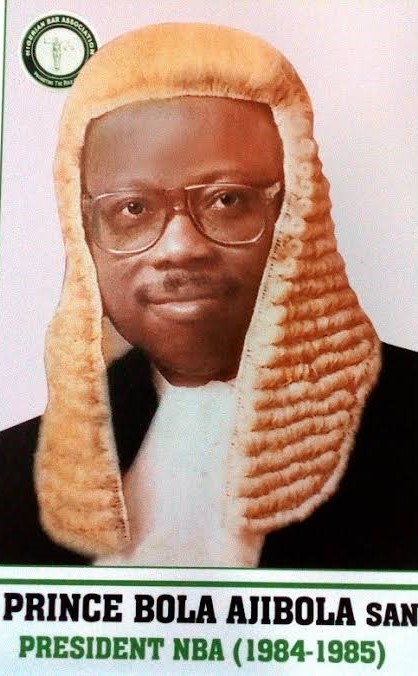
Osinbajo reveals how top Nigerian lawyer and foreign contractor tried to bribe Judge Bola Ajibola

As Nigeria mourns the passing of Prince Bola Ajibola, SAN, Vice President, Yemi Osinbajo, SAN has made disclosures about how a foreign contractor and a top Nigerian lawyer attempted to corruptly influence the late ex-Judge of the International Criminal Court.

The former Attorney General of the Federation and Minister of Justice who passed on 8 April 2023 at age of 89, appointed then 30 years old Prof. Osinbajo as a special adviser

While delivering the Centenary Lecture of Baptist Boys’ High School (BBHS) days ago, the vice president who spoke on the subject: “Values: the difference between Success and Failure,” said an ethical revolution is necessary to fast-track Nigeria’s development extolled the values of his former principal, Prince Bola Ajibola.

According to the Vice President, “a foreign contractor who had won a very lucrative contract from the federal government went to give Prince Ajibola’s son who was in the university in England, a brand new Golf car. His son then contacted his father and this made Prince Ajibola so angry to the extent that I had to calm him down physically.

“Not only was the gift returned but the conduct of the man was reported to the government of his country and that government made a special apology to our own government and to Prince Bola Ajibola. I can also remember that the man in question also came to the ministry to apologise to the Attorney-General.

“The second incident was the case of a commercial aircraft arrested in Nigeria for carrying drugs. The Office of the Attorney-General was, of course, responsible for ensuring the arrest. A very successful lawyer whose name I must not mention claimed to be acting as an intermediary for an interested party somehow connected to the aircraft and they came to Prince Bola Ajibola to offer him some bribe in foreign exchange. When I recall how Prince Ajibola shouted at the senior lawyer and ordered him out of his office, I still remember the shame and fear on the face of the man.

“Those are just two out of many that show that public service is public service and bribes or ‘thank you’ are totally unacceptable.”

Meanwhile the President of the Nigerian Bar Association (NBA), Mr. Yakubu Chonoko Maikyau, SAN, who described Judge Ajibola as “lover of education and believer in the potentials of young Nigerians” has commiserated with the family of the late Ajibola, SAN, the Owu kingdom, the management, staff and students of Crescent University, Abeokuta, the government and good people of Ogun State.

Bola Ajibola was President of the NBA between 1984 and 1985. In 1985, he became Nigeria’s Attorney-General/Minister of Justice, a position he occupied before moving to the International Court of Justice, Den Hague, Netherlands. After a three-year stint at the World Court in 1994, he further served as Judge Ad Hoc of the World Court from 1994 to 2002. He was appointed Judge of the Constitutional Court of the Federation of Bosnia and Herzegovina. He also served as the Nigeria High Commissioner to the United Kingdom between 1999 and 2002. The former NBA President was also Chairman of the Body of Benchers and Council of Legal Education.

Maikyau in a statement signed by Akorede Habeeb Lawal,  the National Publicity Secretary of NBA described him as a selfless Nigerian while noting that as Attorney-General and Minister of Justice between 1985 and 1991, Prince Ajibola was reputed to never take home a salary, asking that same should be distributed to the coffers of Federal Government, the NBA and charitable/humanitarian organisations.

“An elder statesman and an international icon, Prince Ajibola was Chairman of Nigerian delegation to the Nigerian-Cameroon Mixed Commission on the Bakassi Peninsula. He also served as Vice President and later President of the World Bank Administrative Tribunal from 1994 to 2005; President, World Association of the World Jurists and Arbitrator, Ethiopia-Eritrea Boundary Dispute Commission.

“A lover of education and believer in the potentials of young Nigerians, Prince Ajibola established Islamic Mission for Africa in 1996, which metamorphosed into the present day Crescent University in Abeokuta, Ogun State.

“The NBA President prays for the repose of the soul of late Prince Bola Ajibola, SAN, and beseeches God Almighty to forgive him and grant family and friends the fortitude to bear this huge loss”, Maikyau concluded.

Peter Obi and the Looming Tyranny

Chidi Amuta Credits: Intervention

By Chidi Amuta

The period between a general election and the swearing-in of a successor administration ought to be filled with excited anticipation. It is usually a time of pleasant speculations on the new faces that will soon grace television screens and newspaper front pages. For the masses in a polity in virtual captivity, it is time to begin getting used to new overlords and masters. For the elite, this ought to be a time to debate policy perspectives and options for the new administration.

There is so much in the present atmosphere that defies the tradition of a civilized political transition season. Instead, the incumbent All Progressives Congress (APC), which is also the incoming triumphant squad, is consumed by an overwhelming nervousness. Instead of engaging the public in sensible debates about policy options and directions, the APC appears to have retreated into a perpetual campaign mode.

Party hawks and attack hounds are still busy insulting our public sensibility. They are berating, abusing and profiling their election season opponents. It is as though the elections are not yet over. In the process, two dangerous things are happening. First, the polarization and bitter divisions in the country is being further deepened. Second, the groundwork for a new climate of tyranny and authoritarianism is being laid. Clearly, we are in the throes of an imminent administration that is likely to invest in tormenting the opposition and abridging the liberties of citizens. Otherwise, why has Mr Tinubu not disbanded his abusive and divisive campaign propaganda machinery?

After a bitterly fought election, the nation requires soothing words and healing hands to mend broken bonds and assuage wounded feelings. But unfortunately, all we are getting from APC’s front-line propagandists is an overdose of negativity and sickening ethnocentrism. They are still fighting the ghosts of Mr Bola Tinubu’s opponents in the presidential election. Consequently, in the prelude to May 29th, the nation still wears the appearance of a landscape of war with hate as the dominant language of public discourse.

By some unwritten law of tyrannical power consensus, however, all the post-election hostile barbs have now found one common target: Mr Peter Obi and his political movement. Hardly anyone in the APC and the incumbent government (one and the same) mentions Mr Atiku Abubakar who came second in the INEC presidential election vote tally. It is now all about Peter Obi, Datti Ahmed and the Obidients. This systematic narrowing down requires further investigation.

To give official stamp to the concerted targeting of Mr Obi, Buhari’s Minister of Information, the famous Lai Mohammed has gone junketing to far away Washington DC to announce that Mr. Obi could be guilty of treason. His crime? Just expressing his reservations about the credibility of the February 25th presidential elections ‘won’ by Mohammed’s party, the APC. He has followed this by getting the National Broadcasting Commission (NBC) to slam a fine of N5 million on Channels Television for hosting an interview with Obi’s running mate in which the gentleman expressed strong reservations about the conduct and outcome of the presidential elections.

Quite interestingly, the rhetoric of the APC/Tinubu campaign trumpeters has opted for the same choice of words as the government organs in characterizing Peter Obi and his followers. ‘Treason’ is the word of common choice. Insisting that the election of 25th February was not free and fair is now treasonable. Going to court to challenge the outcome of that election is now also ‘treason’. Pointing out anomalies in INEC’s procedures and processes is also ‘treason’.

They have gone several steps further. Government and APC propagandists and pro-Tinubu enthusiasts on social media have begun linking Peter Obi with IPOB and ESN, even if there is no evidence to that effect and in spite of the man’s repeated dissociations from these groups. Implicit in these mischievous associations and linkages is the assumption that Mr. Obi is just another Igbo politician. There is also an ongoing feverish attempt to use paid party jobbers in the Labour Party to destabilize the party and discredit the Obidient movement. The desperation is to disentangle the Obidient movement from the Labour Party and return the party to its previous small-time status. In Imo state, the party has been factionalised and its offices shut down by factional hoodlums supervised by the police. In Abuja, a renegade faction claims to have ousted the party chairman and forced its way into the party headquarters.

The Department of State Security (DSS) has joined this nattering choir of scaremongers by issuing a yet unsubstantiated warning against those planning to disturb the peace by plotting to emplace an interim Government in preference to the swearing in of the elected new administration on May 29th. The Defence Headquarters and the Army have sounded the same warning. All Nigerians agree that we do not need any interim arrangement. It is uncalled for.

What unites all these voices is that they are in one way or the other tied to the incumbent power setup. They are all either officials of government or affiliates of the APC in one way or the other. They are united in a strange consensus that the most consequential adversary of the Nigerian state at this point in time is the combination of Mr. Peter Obi, his running mate and of course the Labour Party respectively. This writer foretold this eventuality as the campaigns unfolded.

In the run-up to the last presidential election, I wrote in a piece in this column, “What If Macchiavelli Votes” in which I speculated on what the victory of each of the three front runners would mean for the power equation in Nigeria as we know it.

On the threat posed by the possible emergence of Mr. Peter Obi Obi of the Labour Party, here is what I wrote in January 2023, a few weeks before the presidential election:

“With Mr. Obi of the Labour Party, we come face to face with a real threat to Nigeria’s power nexus. Mr. Obi is challenging the political establishment, the traditional architecture of parties and the ethos of old politicians. He is challenging the bastions of vested interest, the organized crime syndicates of fuel subsidies and inflated state contracts. He has openly indicated a desire to run a people-oriented administration that is accountable, frugal and open. All these grate on the nerves of the deep state and the warlords of enshrined corruption. He wants to reorganize national security and thus curb the crime dividends enjoyed by the security high command.*

Peter Obi and his OBIdients movement could have been dismissed with a wave of the hand if they were not so consequential, menacing and expanding.  In a relatively short space of time, Mr. Obi has had a movement grow around him and his counter-narrative. He has become the emblematic poster “man in black” of this season with a targeted appeal mostly to the youth.

He is the convergence of moment, message and messenger. His message is simple: ‘It is time to take back our country’. That message has resonated with the youth and the disenchanted majority of urban poor and unemployed. The desire to create a new Nigeria transcends the barriers that have held Nigeria hostage. There lies Obi’s real threat to the power establishment.

The system is not going to sit idly by while Mr. Obi and his followers sweep vested interests out of power. Therefore, he will be the meeting ground of all the dark forces intent on maintaining the status quo. In quick rehearsals, financial blackmail of Mr. Obi has been tried and did not work. Ethnic profiling has not stuck. As the campaign season progresses, more sophisticated antics may be rolled out if Mr. Obi and the OBIdients sustain their appeal and gather momentum.

*But the ultimate triumph of our democracy will remain a function of the state of health of our democratic institutions: a truly independent and credible INEC, a judiciary of honest judges, a media of fair and truthful journalists and a non-partisan state structure.

In a sense, the speculative possibility of a Machiavelli vote in 2023 is another way of posing the great universal question of history: What if?*

The moment prefigured in that prophetic excerpt has arrived. We have crossed the junction of “What if?” The election has produced an outcome. INEC has pronounced Mr. Bola Tinubu as the President-elect on the basis of its best judgment of what transpired and the summation of the information and other procedural outcomes. As required by law, those who lost have since filed their objections in the form of petitions to the relevant tribunals and courts. It would therefore be a natural course for the winners to set about setting up their programmes, policies and unique governance procedures and structures so that the business of Nigeria could proceed unhindered.

The losers in that disgraceful election should be busy putting our judiciary to an ultimate test of their credibility. The pursuit of justice according to law should be the final berth of the journey of democracy. Peter Obi was not pronounced winner by INEC but somehow, his political presence and electoral feats have earned him unusual attention by the Octopus of the Nigerian power behemoth.

We must make some concessions. Admittedly, there have been a few incensed and even careless statements by both the losing PDP and the LP. Peter Obi’s running mate, Mr. Datti Ahmed, may have been a bit too emphatic and irreverent in his Channels Television interview on a matter that should be left to the judicial finality of the Supreme Court. But Mr. Dino Melaye of the PDP has been even more unguarded. Not to talk of the serial indiscretion and incendiary incitements of Mr. Fani-Kayode and Festus Keyamo of the APC. Mr. Bayo Onanuga of the Tinubu campaign has been even more vitriolic and dripping with ethnic hate in his choice of utterances.

In the heat of the campaign, some fringe elements of the Obidients movement may have overstepped the bounds of decent assembly in response to the hooliganism of the APC in places like Lagos for instance. Even then, with the Labour Party and the Obidients, we are dealing with uncharted territory. A populist movement that finds itself as the rave of the political moment has a capability to go overboard. But critics of the Obidients have hardly spared a thought for the many of them that were killed, maimed and seriously injured in parts of the country by APC professional thugs.

Nonetheless, in spite of coming third in INEC’s ranking of the presidential candidates in the last election, interest in Peter Obi and his movement has recently been on the increase. Obi is lately being demonized systematically. The Obidients are being rebranded as urban terrorists by people who should know better including, most regrettably, Mr. Wole Soyinka. The threat level has become so intense that Mr. Peter Obi recently hinted that he has come under pressure to leave the country for fear of his personal safety.

The reasons for the special interest in Peter Obi by the Nigerian power establishment are multiple.

Of all the presidential candidates, he posed the most credible threat to the Nigerian power status quo. By side-stepping the established bipartisan architecture of the political structure and stepping forward to directly seek the top power slot, he audaciously upset the tripodal ethnic architecture of Nigerian power. He threatened the existing political order by challenging the old money politics of African Big Men. By openly challenging the system to name his wrongs, if any, he was calling out the decadent moral edifice of traditional Nigerian political culture.

Perhaps most importantly, Mr. Peter Obi evolved a message that appealed to a cross-section of Nigerians across ethnic, religious, class and geo-political divides. As it turns out, what unites most Nigerians is the hunger for a better country in which the leadership presents a moral and performance example that most citizens can emulate.  Obi embodied that message and it conferred on him an automatic charisma and electrifying appeal especially among the youth.

Peter Obi thus threatened the hegemonic dominance of power fundamentalists and regional/religionist hegemonists. His electric popularity attraction came as a rude shock to those who had come to take the youth and urban detribalized Nigerians for granted. A man who joined a small party and, in less than a year transformed the Labour Party into a serious power contender, a populist magnet and an electoral threat cannot be written off casually.

Like a bolt out of the political blues, Peter Obi and the Labour Party trounced Mr. Tinubu and his thriving thuggery industry in Lagos. He swept the Federal Capital Territory like a political hurricane, leaving his rivals no room for even a miserable 25% vote score. He demonstrated the truism that every politics is first local by sweeping through the whole of the South-east and South-south as well as the bulk of the Middle Belt states of Nasarawa, Benue and Plateau.  From Nasarawa and Southern Kaduna, Obi and his rampaging political train menacingly eyed the conservative Northern bastions with the force of a powerful national message. INEC announced a Bola Tinubu win with 12 states; so also did Peter Obi win in 12 states and perhaps more.

These electoral milestones should frighten the traditional political establishment. They were achieved without a so called political structure. They were achieved without lorry loads of ‘stomach infrastructure’ or bullion vans of Naira or dollars.

However, because of his surname, Peter Obi has also become a strategic threat to both the Nigerian power machinery as well as the political elite of his home base South East. Aspirants to the trade mark ‘Igbo presidency’ slot in the big parties were thoroughly rattled and shredded.

To the political elite in the rest of the country, Peter Obi, perhaps unconsciously because of his surname, also became the unspoken voice, the uncomfortable variable and indeed the ominous face of something that at once frightens and attracts the Nigerian imagination.  All those factors that have held Nigeria hostage since 1970 have remained curious of what Nigeria could become under the leadership of the Igbo people who have been absent from the central seat of Nigerian power for 57 years.

There is in the Nigerian subconscious a certain envious curiosity and yearning about the difference that the Igbo ethnic identity could make in the way Nigeria is run. But Nigeria is also united by a baseless fear of what the Igbo could become if Nigeria were to let them add apex power the entrepreneurial and mercantile sagacity and expansive spirit. There lies their strength and also their weaknesses as a people.

But Peter Obi is a completely detribalized Nigerian. He is also above everything else an Igbo man, a quintessential one at that, one who is both a catholic, a trader, a politician and a man of Spartan discipline. Nigerian youth and the urban majority believed in the power of his example and shared his vision of a new better Nigeria.

The many pluses of the Peter Obi and Obedients phenomenon has engendered a fear in the political consciousness of both the incumbent and incoming dispensations. Fear of the man in black has replaced normal opposition allergies. Having commenced a programme of repression and harassment of Mr. Obi and his followers, we can look forward to a coming dispensation ruled by fear and that will therefore rely on authoritarian methods to silence an opposition that is already in place as an alternative power contender. Unfortunately, the incoming government can only fix the economy through unpopular policies. When trouble erupts in the streets because of hardship, the natural first recourse would be to blame it on Mr. Obi and the Obidients.

Welcome to the new APC republic!

A patriarchal oligarchic gerontocracy is determined to hold on to power in Nigeria, Somber Tuesday series by Mojúbàolú Olufúnké Okome

Prof. Mojúbàolú Olufúnké Okome

SomberTuesday! There are ongoing disputations on the results of the elections, particularly the Presidential contest. The lawsuits brought by the PDP’s Atiku Abubakar, and the Labour Party’s Peter Obi are ongoing. There are also contestations on the nature of politics and Nigeria’s burgeoning democracy. There are justifiable critiques of INEC, the election management body for botching the process so badly that the integrity of the elections are in doubt.

There are also well-deserved critiques of the excesses of ethnic jingoists who bandy around hate speech that target people perceived as undeserving of the full rights of citizenship. There are also puzzling critiques that almost seem to forbid dissent and disappointment with the way the elections were mismanaged. Nigeria is definitely democratizing but there are numerous challenges that stand in the way of deepening democracy. This election has become one more challenge.

Nigerians are still coping with currency scarcity. It continues, with no seeming end in sight. Nigeria’s economy is in decline and life is hard for most, complicated by the absurdities of a cashless economy that makes life much too difficult, particularly for the masses. Nigeria’s youths, approximately 70% of the population, remain frustrated and angry about the country’s political, economic, and social shortcomings. A patriarchal oligarchic gerontocracy is determined to hold on to power, threatening the achievement of genuine democracy.

Personal and human insecurity remain. Political institutions are weak, infrastructure remains woefully inadequate, unemployment and underemployment are unbearably high. Decent jobs are elusive dreams for most Nigerians, and social safety nets are unavailable to most.

Yet, Nigerians desire democracy and economic development, personal and human security. They want a country that cares about its citizens. They want better lives and the ability to meet their basic needs as well as hope for a brighter future. #EndSARS youth protesters were active participants in the elections. But their demand for good governance, an end to police brutality, extortion, impunity, economic inequality, marginalization, targeting of youths and other minorities, and cessation of political violence remain unfulfilled.

Two years after the Lekki massacre, Nigeria must never forget that brutal assaults on peacefully demonstrating youths at #LekkiTollGate & other locations subvert democracy. Ethnic jingoism and hate speech are unacceptable. Collectively working at achieving both democracy and development is imperative if Nigeria is to reach its full potential.

NigerianWomenArise #EndPoliceBrutalityinNigeriaNOW #EndSars #EndSWAT #EndImpunity.

I once again underline the relevance of Howard Zinn’s statement about building Nigerian democracy: “Civil disobedience, that’s not our problem. Our problem is that people are obedient all over the world in the face of poverty and starvation and stupidity, war, and cruelty. Our problem is that people are obedient while the jails are full of petty thieves, and all the while, the grand thieves are running the country. That’s our problem.”

Like the voice in the wilderness, I say once again: Let the kleptocrats give back our stolen wealth so that we can fix our infrastructure, schools, hospitals, and also offer worthwhile social protection to our people. Let the masses enjoy the full benefits of citizenship in Nigeria. Let the leaders and political class repent and build peace with justice.

This is no time for politics as usual. The people elected should be those trusted to bring justice, equity and human security to the entire country, not expedient, unethical and egocentric individuals determined to dominate for self aggrandizement or sectional gain. We don’t need oligarchs’ continued domination. We also need a government that puts the interests of majority of citizens first.

https://youtu.be/5iTC215xpX8
Prof. Mojúbàolú Olufúnké Okome is a professor of political science at Brooklyn College in New York.

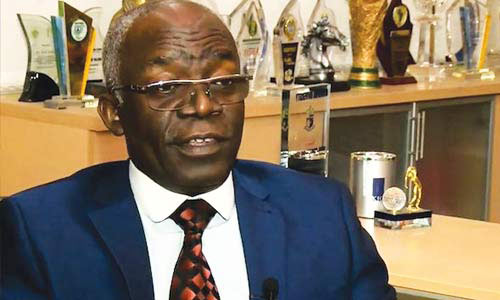
Falana, Akaraiwe, Ebobrah, others speak on institutional failure in Nigeria

Photo Credits: Business Day Nigeria

By Lillian Okenwa

“There is almost an innate bigmanism in most Nigerians that makes us refuse to defer to institutions or even allow institutions to be strong.” – Prof Solomon Ebobrah

“Every nation fails or succeeds on the quality of its institutions. But every institution is as strong as the quality of its personnel, their competence, and professionalism, their values, and norms. Unfortunately, Nigeria is a country where state institutions utterly malfunction, bereft of any sense of responsibility, and where public officials have perverse norms and values, lacking a sense of purpose to serve the national interest”, wrote Olu Fasan in an article titled: “INEC: Nigeria’s institutions act irresponsibly with impunity… Sad!”, and published in Vanguard on 12th April 2023.

Fasan maintains that: “The latest instance of institutional failure in Nigeria is the abysmal performance of the Independent National Electoral Commission, INEC, which dashed the hopes of millions of Nigerians, and the expectations of the world, by conducting a presidential election universally condemned for woefully failing the basic tests of transparency and credibility. INEC’s failure reinforced the global perception of Nigeria as a failing state.”

Also lamenting the state of the nation, Senior Advocate of Nigeria, Ikeazor Akaraiwe observed that: “Paradoxically, military rule abolished strong institutions in Nigeria because of the military command culture. Our two continuations of military rule in the persons of Generals Obasanjo and Buhari, for example, all but destroyed the judiciary by refusing to obey court orders.

“Our two civilian rulers, Yar Adua, and Jonathan obeyed court orders.  When Jonathan obeyed the judgment making Adams Oshiomhole (from the opposition party) governor of Edo State and removing his own party man Prof. Osunbor, it was a watershed moment for the rule of law.

“Then, Jonathan submitted to the electoral umpire and accepted the election results, thus strengthening the rule of law.  

“It is said, and I verily believe, that Buhari lost the 2019 elections to Atiku, but using the coercive powers of the military and state, Mai Gaskiya returned himself to power, thus undoing all that Jonathan did with respect to INEC emerging as a strong institution.

“And I add; another reason institutions are weak in Nigeria is the poor-quality appointments we make to man the institutions. For example, a judge who is weak in the knowledge of the law will undermine the strength of the institution by the porous decisions and allegations of corruption which always trail such decisions.

Likewise, Rights Lawyer, Femi Falana, SAN made some observations. “Institutions are strong in America because of sanctions for impunity. How many lawyers are interested in prosecuting the criminal elements who manipulated the 2023 general elections? Stop agonising! Organise the legal profession!!

“In 1987, the NBA boycotted courts over the disobedience of a single court order. That was under a military junta. Today, the Federal Government and State Governments are in disobedience of scores of court orders, including orders of the Supreme Court.

“The AGF publicly justifies the disobedience of court orders by the Government! And the NBA has never deemed it fit to call out the AGF. In fact, he hosted the NBA during its last NEC meeting in Kebbi State!

“I like the motto of the United States: E unum pluribus (one nation out of many). The United States recently produced a black couple in the White House for 8 years. But in Africa, the members of the political class whip up ethnicity and religion to turn away the attention of the masses from problems of poverty, unemployment, diseases, illiteracy, etc, in order to sustain the status quo.

“Nigerian professionals are not better as they run their national associations on the basis of “turn by turn” of ethnic groups!”

But Prof Solomom Ebobrah, a Professor of Law with the Niger Delta University, Wilberforce Island Bayelsa State summed it up.

“I think the challenge of institutional failure in Nigeria goes beyond the selective obedience or disobedience of Presidents to Court orders. There is almost an innate bigmanism in most Nigerians that makes us refuse to defer to institutions or even allow institutions to be strong

“Most of us secretly enjoy the power and prestige of being the ones able to pick up the phone and with a call or two, change things. Get results. It happens everywhere, every day. Private and public sector. We call it connection. It hinders institutional primacy. And we only grumble when we are not the one exercising power or connections or we are at the receiving end. How are the institutions supposed to be strong? 

“We are all stronger than the institutions and their rules, or at least, most of us want to be.”

TIPS