Home Blog Page 785

After 20 years of waiting, Adenike Adewunmi died with her pregnancy

Adenike Photo Credit: The Conclave

By Ladidi sabo

“Every woman desires to have a baby she can cuddle and call her own. The family, society, relations, friends, and acquaintances expect this of her. When the arrival of the baby is delayed or does not come at all, there is consternation; a close-knit relationship is strained and most times collapses from pressure within and from without. What with personal recriminations and attendant private tears in the closet; what with gossip and what with loss of confidence and a feeling of low esteem,” Abdu Rafiu wrote in The Guardian of 15 February 2018.

It was a total eclipse for 50-year Adenike Adewusi Adewunmi, after 20 years of trying to get pregnant and have a child.  At the brink of her miracle, Adenike passed following pregnancy complications. So much for waiting for two decades! The conception came but she died with the pregnancy.

Adenike was said to have complained of shortness of breath on Thursday morning, April 13, and died before she could get to the hospital. Her friends have since taken to social media to mourn the deceased, whom many described as a boisterous woman who was always spreading love.

On Facebook, a friend of the deceased wrote:

“I have seen her everywhere, 33 of my friends know her, and I have looked at her over and over but can’t recall meeting her at any point in my life. She waited for 20 years for a miracle child and just days to beholding the day of glory she exits.

“She was said to have developed pre-eclampsia and complained of short breath. She still posted yesterday..

“I have questions but no answers. My heart is very heavy. My prayer is that the Lord will receive her soul and make her rest in peace. To everyone grieving right now…may the Lord comfort everyone.

“Goodnight, sister Adenike Adewunmi-Adebisi”.

Another friend, Rita Egwu, wrote: “All Adenike Adewunmi Adewusi, owner of nikkiworld blog wanted was a child of her own. For 20 years, she waited. She finally got pregnant. This morning, she complained of shortness of breath and died before she could get to the hospital.”

“Her plan was to celebrate the birth of the baby with her 50th birthday later this year. May her very gentle soul rest in peace. Survived by sister, Adejoke, and Toba.”

Surely, there is a need to scale up campaigns against infertility stigmatisation against women and change that negative mindset toward childless women.

Here are more posts on Adenike:

No sane country shuts down its judiciary because of election cases – Kunle Edun

“It is an aberration that the apex court will be starved of its maximum number of Justices… [Justice should] not only be for the politicians but also for the ordinary Nigerians who also have their cases pending in the regular courts.

The Judiciary in Nigeria is presently on a sick bed. It needs urgent surgery. Every election cycle in Nigeria always brings pain and frustration to litigants in regular courts. Because of the constitutionally prescribed time limits for the hearing of both pre and post-election cases, the courts and tribunals must hear and conclude thousands of election petitions.

It has been stated that Nigeria has the highest number of both pre and election cases in the world. We must de-emphasize the involvement of the courts in election matters. Ironically, Nigeria is also one of the countries in the world where its Judiciary begs the Executive arm for its survival. This is in spite of there being enough provisions in the Constitution that guarantee the independence and financial autonomy of the Judiciary.

The Supreme Court for some time now has not been hearing both civil and criminal appeals. Because of the acute shortage of the number of Justices on the Supreme Court bench, the few Justices available now concentrate on election appeals. Even chambers’ hearing of non-contentious applications no longer takes place. It is an aberration that the apex court will be starved of its maximum number of Justices. The workload takes a huge toll on the health of the Justices. They are humans too, not machines.

The same scenario plays out at the Court of Appeal and the various High Courts. Many of the Judges/Justices have been assigned to Tribunal duties, thereby suspending regular sittings in their courts for months. No sane country shuts down its judiciary because of election cases that involve a few. Urgent steps must be taken to address this worsening situation so that justice will not only be for the politicians but also for the ordinary Nigerians who also have their cases pending in the regular courts.

I am aware that the Nigerian Bar Association has made several interventions on this issue. Past and current NBA Presidents have called for the filling up of the existing vacancies on the Supreme Court bench. The Federal Government has its own full complement of the constitutionally mandated number of Ministers. Ditto the National Assembly. Why should the case of the Supreme Court be different?

In a true democracy, all three arms of government are co-equals. The federal government should stop disrespecting the Supreme Court. Also, many of the States High Courts are crying for more Judges to be appointed and the few they have are still taken from them for election duties. This must stop.

Going forward, we may have to adopt the strategy of deploying credible and untainted retired jurists to be handling election petitions at the Tribunals. The aphorism that justice delayed is justice denied is now a reality with cases at the regular courts. Very sad but we cannot continue like this.

Chibok Girls’ Nine-Year Captivity: Was there any failure by Nigerian authorities to carry out credible investigations into security failures that left children vulnerable to atrocities of Boko Haram, gunmen?

By Lillian Okenwa

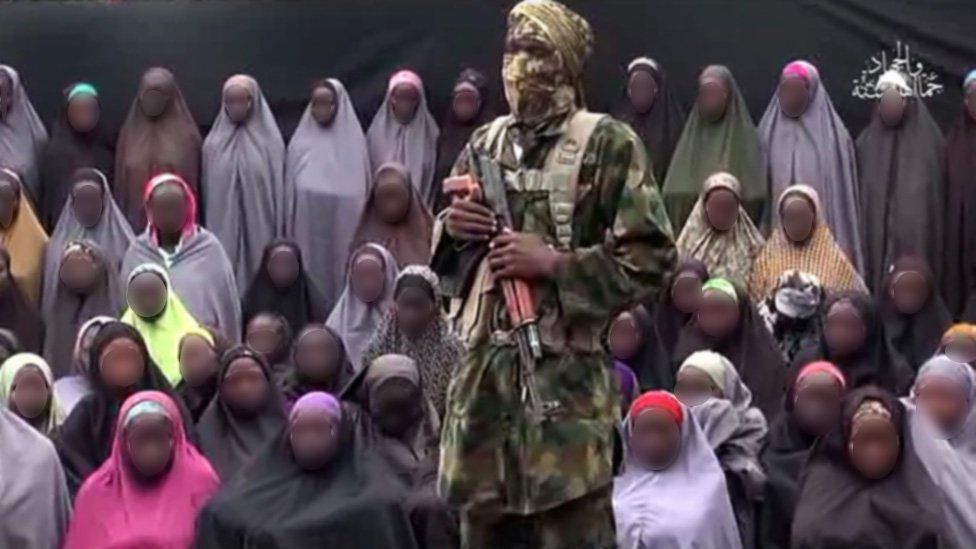
It all started like a nightmare when the news broke that 276 girls aged between 16 and 18 years had been kidnapped by the Islamic terrorist group Boko Haram from Government Girls Secondary School Chibok in a remote part of Borno State, Nigeria on the night of 14 April 2014.

And although about 108 of those girls have returned over the years, many are still in captivity.

In a blink of an eye, the abduction of Chibok school girls has entered the ninth year and the hope of these remaining girls ever returning is waning. Since their abduction, other schools have been targeted, with girls being abducted, raped, killed, or forced into marriages.

Asserting that the Nigerian authorities have not carried out a single credible investigation into the security failures that left children vulnerable to the atrocities committed by Boko Haram and gunmen, Amnesty International said the Nigerian authorities failed utterly to learn from the heartbreak of Chibok town in Borno State and, ultimately, to protect children.

As the world commemorates the anniversary of that dark night, the Bring Back Our Girls, BBOG movement has made nine demands from the departing administration of President Muhammadu Buhari.

The group in a statement demands that the government brings back the captured girls before 29 May 2023, in a “push to finally defeat Boko Haram, ISWAP, and liberate all our citizens”.

Their other demands include “Accountability from the Borno State Government”, and “A full report and debriefing for the parents on the status, academic plans, and wishes of the rescued girls, women, and children in their custody”.

They also requested that government “Provide closure for parents on the fate of their daughters who they have reason to believe are dead”; “Psycho-social support for Chibok and other conflict-affected families of abducted students to address the trauma to families; equipping and completion of their education, shelter, and empowerment to earn a living”

Again the BBOG wants the government to “Equip and motivate the police and armed forces and see to their welfare and proper care for the families of officers who have paid the ultimate sacrifice”: “Reinvest in the Victims Support Fund to care for the practical needs of all returned and rescued girls, siblings and family members of girls”; “Public statement on the Missing Persons Register and immediate reopening of a properly resourced and staffed Missing Persons Desk at the National Human Rights Commission NHRC”.

Finally, they demanded a “Report on the coordinated provision of security for schools – primary, secondary, and higher education at local, state and federal levels”; a “Status report on the Safe Schools Initiative and adequate financing to ensure its effectiveness”

Meanwhile, the case of Leah Sharibu who is still in captivity after 109 other girls who were abducted along with her by the terror group on February 19, 2018, had since been released remains unresolved.

Professor of Political Science, Brooklyn College, Mojubaolu Olufunke Okome told Law & Society that the celebration “is a bittersweet day.”

“It is a bittersweet day. This 9th anniversary of our Chibok Girls’ abduction. The sweet aspect is that so many of our girls who escaped or were rescued are picking up pieces of their lives, albeit slowly. The sad part is that some have lost their lives. In addition, 96 girls are still in captivity, and 14 are in the custody of the Borno State government.

“My heart goes out to our girls, their parents, siblings, and loved ones, and to all of our children caught up in the violent maelstrom created by the diabolical and vicious insurgents. We must also not forget that thousands of our fellow citizens, particularly women, and girls, are also in Boko Haram captivity. These include Leah Sharibu and the humanitarian workers.

In commemoration of the 9th year of our Chibok Girls’ captivity, a book edited by Aisha Muhammed-Oyebode was published. We were planning to launch this book in which I have a chapter today, but the launch is delayed to a future date. In the meantime, here’s some information on the book:
https://www.linked

Was there any subversion of law on 25 February 2023? Can the Tribunal be allowed to decide?

By Lillian Okenwa

As the debate continues on the propriety or otherwise of the Presidential Election result not being uploaded electronically and real-time on the portal of the Independent National Electoral Commission (INEC), the Federal government has announced that the INEC Chair never promised to transmit election results electronically. But was there really any subversion of the law on 25 February 2023?

On 22 November 2022, Chairman of the Independent National Electoral Commission (INEC) Yakubu Mahmoud, announced there is no going back on the decision to upload the results of the 2023 general elections on its portal to enable Nigerians to have a real-time view of the results as they are being collated.

Chair of the electoral umpire added that with Bimodal Voter Accreditation System, the results would be uploaded on the portal as they come. However, as of 7:14 pm, on 25th February 2023 no result had been uploaded on the INEC website except those posted on social media by people who witnessed and recorded from their respective polling units.

Since the conclusion of the 25 February presidential election, arguments on whether or not the election result ought to have been uploaded electronically remain unabating. And as Nigerians await the verdict of the Presidential Election Tribunal, lawyers are unrelenting in debating the issue.

Speaking in London at the close of meetings with the media organisations and policy institutions, the Minister of Information, Alhaji Lai Mohammed, said: “Our laws today say all election management system is done physically and manually. There is this misunderstanding about the INEC Result Viewing Centre (IREV). IREV is not about collation and transmission of election results. It is a platform for transparency to ensure that whatever is entered into Form EC8A is transmitted into IREV so that everyone can see it.”

Senior Advocate of Nigeria (SAN), Wahab Shittu holds a similar opinion.

“[O]pinions pursuing the stance that the only means of transmitting the election result is through the electronic means fail to lend credence to the holistic approach of interpreting the Act; as such opinion is derived from restrictively (erroneously) reading the Clause 38 of the regulation without recourse to clause 48(c) and 93 in the same regulation.

“The knowledge that Clause 38 is interconnected with Clause 48(c) and 93 will aid in the understanding that the provision of Clause 38(i) which states that “electronically transmit or transfer” does suggest other means of transferring the result of the election as the word “or” takes the position of revealing an alternative. An appreciation of the holistic approach of the Act reveals that the regulation acknowledges other means being used save the electronic means, but it only gives priority to the results sent electronically over other results.

“Therefore the idea that providing for other means of transferring result gives freedom to the mischief that the draftsman intended to curb fails in substance as the electronic result is conferred with priority in cases of conflict with other results.”

Conversely, Law Lecturer, Sylvester Udemezue in an article: By law, INEC has no discretion on whether to transmit election results directly from the polling unit; Transmission from the polling unit is mandatory, published by Law & Society of 13 April 2023 held that: “When you read section 64(4)&(8) , you’d completely agree that the word “transfer” as used in section 60(5) means “transmitted directly from the polling units” in a manner determined by INEC pursuant to section 60(5).

“There is a huge difference between WHETHER to transmit/transfer and HOW to transfer/transmit. The law insists that INEC must transfer/transmit the results DIRECT from the polling unit but in MANNER chosen by INEC. Section 60(5) directs that “The presiding officer shall transfer the result including the total number of accredited voters and the results of the ballot in a manner prescribed by the commission”. INEC in the exercise of this discretion on MANNER OF TRANSMISSION/ TRANSFER, chose (1) transmission of photo or Form EC8A (2) after which all election materials, including the hardcopy of the Form EC8A, are then taken by hand to the Collation center. Section 64 (4)-(8) of the Electoral Act 2022 provides and envisages that electronically transmitted results must be in the IReV/ portal BEFORE the Collation Officer starts his work. Read the section. The words are very clear.”

 Dr. Boluwaji Onabolu, Convener of Mothers United and Mobilized aka M.U.M also gave her views.

“Buttressing the intuitive point that the delay in transmitting the results and the manual behind the scene, hand-written collation undermined the transparency and the acceptance of the results. Even the results of a school captain election if conducted in the manner the presidential elections were, would not be accepted in a country where standards are adhered to. However, International observers lower the standards for Nigeria,  hence an election where 63% of eligible voters said no or declined to vote is being considered as possibly acceptable..

“Conclusion: By the combined reading of the Act and the Regulations/ Guidelines, e-transmission of a snapshot/picture/photo of the duly signed Form EC8A (polling unit level result) to the iReV from the polling units on the election day, is mandatory.

“Even though quoting the article —By law, INEC has no discretion on whether to transmit election results directly from the polling unit; Transmission from the polling unit is mandatory— ‘INEC and some people just refused to obey the law, for fear that obeying the law might lead to unexpected outcome. It’s unfortunate that anyone is trying to justify the brazen atrocious subversion of the law, committed by INEC in broad daylight on 25 February 2023.’”

Legal propriety of swearing in a President-Elect whose return is being challenged in court: The Bola Tinubu scenario in focus

By Sylvester Udemezue
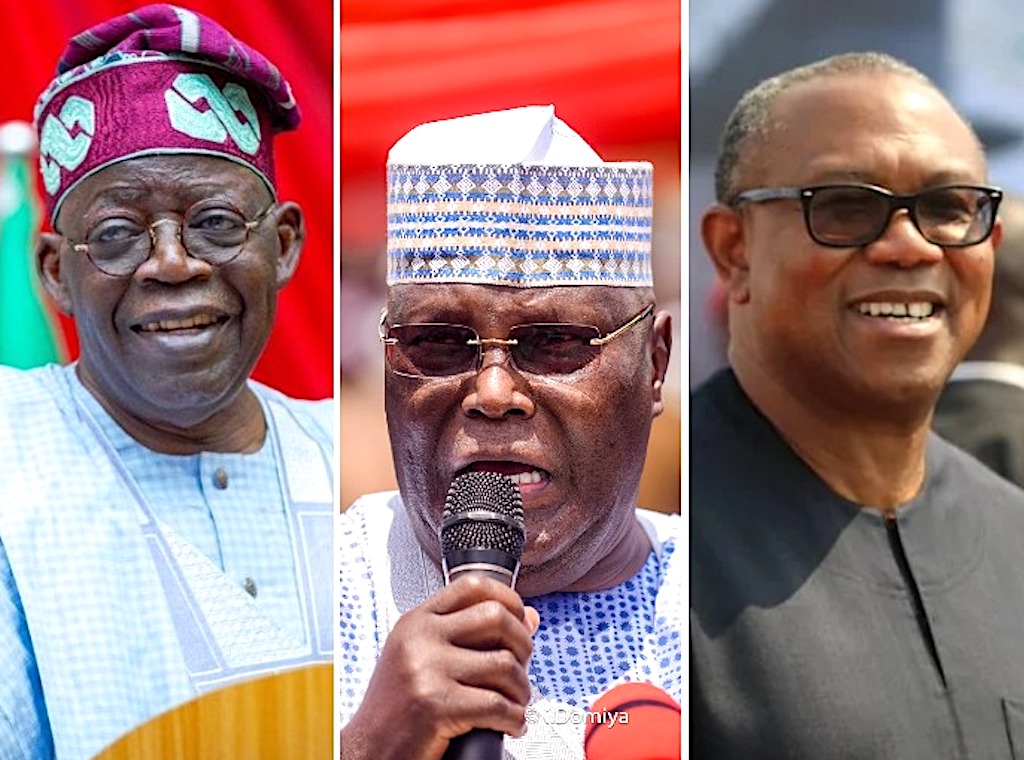
Nigeria’s presidential election held on 25 February 2023 led to Asiwaju Bola Ahmed Tunubu being declared winner by the election umpire, the Independent National Electoral Commission (INEC). Although no fewer than 4 (four) political parties and their candidates have rejected the result as declared by the INEC, and filed lawsuits (election petitions) in the Court of Appeal sitting as the Presidential Election Tribunal in the FCT, Abuja, the controversy trailing the fiercely disputed election has led to calls that planned swearing in of the President-elect be stayed pending resolution of the court cases arising from the election.

Many who support this call fear that if he’s sworn in, the judiciary could get compromised by the power of incumbency, into doing anything but justice in the cases before it, judging by the widespread negative perception (founded or unfounded) of the Nigerian judiciary. While this commentary does not propose to investigate the reasons for the poor perception of the judiciary among the public, it’s important to note that the call for Tinubu to not be sworn in until the final resolution of all pending election petitions is as thick-skinned, hardheaded and vehement, as the opposition to the call.

So, there are two directly opposing camps. But then there’s this middle-ground, conciliatory call (championed by Olisa Agbakoba SAN et al) that the Presidential Election Tribunal could, indeed should, proceed to determine all pending election cases before 29 May 2023, so that each of Mr. Tinubu and his transducers would know their fate before 29 May 2023. I’ve examined and found as remote, the possibility or practicability of resolving or determining the pending lawsuits before 29 May 2023, considering the extant law vis-a-vis the issues and facts raised or arising for determination in each or all of the pending petitions.

While the arguments and counter arguments persist, the questions herein discussed include: (1). Does the Nigerian Constitution have any room for an interim government? (2). Can the tenure of the current president be lawfully extended to allow for resolution of pending election petitions before the swearing-in of the President-elect? (3). Is there any law that supports the suggestions that Tinubu’s swearing in be paused to allow for resolution of pending election lawsuits? (4). What is the way out of the brouhaha raging among the swear-him-in-on-29-May-2023 camp, the do-not-swear-him-in-yet camp, and the resolve-these-cases-before-29-May-2023 conciliatory group?

Well, without wasting anyone’s time, and with due respect to all the camps, the position of the law, as I see it, is that if the election petitions pending before the Presidential Election Tribunal over the 25 February 2023 presidential election, are not resolved one way or another before 29 May 2023, Mr. Asiwaju Bola Ahmed Tinubu ought to be sworn in on 29 May 2023, pending resolution of the lawsuits, Tinubu having been declared the winner of the election. My reasons:

(A). Nature abhors vacuum. If Asiwaju Tinubu is not sworn in on 29 May 2023, there might be a vacuum/void in governance in Nigeria because Mr President Buhari ought to vacate the office on 29 May 2023. A country should never, at any time, be left without a leader. However, some have argued that, although section 135(2), CFRN 1999 provides that “Subject to the provisions of [section 135(1)]”, the current president “shall vacate his office at the expiration of a period of four years commencing from the date when he took oath of allegiance and oath of office” [the 4-year terminates on 29 May 2023], yet the president could lawfully be made to hold office until the next president is sworn as allowed by section 135(1)(a) of the Constitution which provides that _”… a person shall hold the office of the president until when his successor in office takes the oath of that office”. This is especially so, considering that section 135(2) would ordinarily give way to section 135(1)(a) in any case of conflict between the two, because section 135(2) is stated to apply “subject to” section 135(1) meaning that section 135(1) is superior to section 135(2) of the Constitution. While I agree that by virtue of section 135(3), the National Assembly may by resolution extend for a period not exceeding “six months”, the tenure of office of the president, the thorny problem (with the argument for extension to enable resolution of pending election lawsuits) is: under what circumstances may it be lawful to make the current president to hold office beyond 4(four) years”? Luckily, section 135(3) lists out such circumstances that may justify extension of the president’s 4-year tenure, but unfortunately does not include nor envisage the current scenario (when the election process that produced the President-elect is being challenged in court). According to section 135(3) the National Assembly may invoke this power to extend the current president’s 4-year tenure only “If the Federation is at war in which the territory of Nigeria is physically involved and the President considers that it is not practicable to hold elections”.

The Constitution interpretation Rule of Exclusio unius est exclusio alterius is derived from a Latin term literally meaning “the expression of one thing is the exclusion of the other”. This is a common law principle for construing legislation which holds that a syntactical presumption may be made that an express reference to one matter excludes other matters not expressly or impliedly mentioned. I submit that this principle applies here. Besides, the lawmakers must be held to have said what they meant and to mean what they have said as seen in the plain words of section 135(3) of the constitution.

In my opinion, the only way to lawfully stop such swearing in pending resolution of pending election petitions, is by an amendment of the 1999 Constitution and the Electoral Act 2022. Unfortunately, such an amendment appears either not being contemplated or outright impracticable at the moment. Nevertheless, even if such an amendment is undertaken at this time, it would not apply to the (current) Tinubu scenario especially in view of the concept of non-retroactivity of legislation.

It’s accordingly considered more reasonable to conclude on this point, that while the National Assembly is entitled to extend Mr President’s tenure of office beyond 4 years, yet where an election has already been held and a winner declared by the INEC, the National Assembly is NOT entitled to invoke the provisions of section 135(3) of the Constitution to stop or otherwise halt inauguration of the declared winner of the election; it’s immaterial that the election is being challenged in court. This being the case, the current president must vacate the office on 29 May 2023, and the President-elect must be sworn in on 29 May 2023, pending resolution of pending lawsuits, unless anyone of the following happens:

(I) If the President-elect dies (God forbid) before 29 May 2023 in which case the Vice President-elect must be sworn in his place on 29 May 2023 (see Section 136(1) of the Constitution);

or

(II) If both the President-elect and the Vice President-elect die or are unable, for any reasons whatsoever, to assume office before the inauguration of the National Assembly, in which case the INEC must conduct a fresh election (see Section 136(2) of the Constitution).

As it stands today, since (a) an election has been held, a “winner” declared by INEC, and since nothing has happened to warrant the invocation of any of the circumstances listed in section 136 of the Constitution, it’s respectfully submitted that the declared winner must be sworn in on 29 May 2023, unless and until an election tribunal or court gives a contrary directive.

(B) The Candidates of the Labour Party (LP), People’s Democratic Party (PDP), among others, and their respective political parties, have already instituted lawsuits at the relevant Election Tribunal (in line with section 130 of the Electoral Act, 2022) to challenge INEC-declaration of Asiwaju Tinubu as the President-elect of the Federal Republic of Nigeria. The mere fact that these opposition/aggrieved parties have filed lawsuits challenging the INEC-declaration is a sufficient admission or acknowledgement by the Claimants/Plaintiffs (technically called Petitioners) that Asiwaju Tinubu has already been declared the winner and is accordingly the President-elect, who alone is entitled to be sworn in on 29 May 2023, to avoid a vacuum in governance pending resolution of the pending lawsuits. The Claimants are therefore under an obligation, having submitted their grievances for judicial adjudication or determination, to maintain and respect the status quo pending the determination of the cases in court (the tribunal). This does not mean that the Claimants have accepted the declared winner as the next president, nor that the Claimants have accepted the process that produced him, but that in the eyes of the law, whether the declaration and return made by the INEC was lawful or unlawful, the declared winner (Asiwaju Tinubu) is and remains the President-elect, and unless the Court says otherwise, ought to and must be sworn in on 29 May 2023 pending resolution of the disputes in court. I have earlier submitted thus:
_”I think section 138 of the Electoral Act provides a reasonable guide under the circumstances. If as is provided by section 138, a candidate whose election has been declared VOID by the tribunal, could still stay in office pending resolution of the appeal arising from the tribunal decision, there appears to be no good reasons to support any view that a person whose election is being challenged at the Tribunal on grounds that the election was unlawful or that his declaration was unlawful, should not be sworn in pending resolution of pending lawsuits?* [“The Arise TV Interview and likely holes in Agbakoba (SAN)’s suggestions on upshots of Nigeria’s Presidential Election” By Sylvester Udemezue; 06 April 2023; lawandsocietymagazine]

PLEASE READ MORE:*
“Limits Of Individual Freedoms In A Constitutional Democracy In Light Of Datti Baba-Ahmed’s “End Democracy” Asseverations”
By Sylvester Udemezue
*(published on 09 April 2023 in each of BarristerNG; ThenigeriaLawyer; LawAndSocietyMagazine; Newswirelawandevents; TrippleNetMedia; NewsDeskNg, Thenigerianvoice, etc)
Respectfully submitted,
Sylvester Udemezue (Udems),
08039136749.
[email protected]
(15/04/2023)

15 critical questions towards determining whether results e-transmitted directly from polling units are not a mandatory part of the collation process under the Electoral Act 2022

By Sylvester Udemezue
Despite the clear provisions of sections 47, 50, 60, and especially 64 of Electoral Act 2022, some lawyers still try to argue that the Electoral Act 2022 does not provide for mandatory electronic transmission of election results directly from the polling units immediately upon conclusion of balloting/voting and signing of the Form EC8A and before collation starts. Some have also argued that electronic transmission is not a necessary part of the collation process under the Electoral Act, 2022. Resolving these Issues is necessary to determine whether electronic transmission of results directly from polling units on election day, is mandatory under the Electoral Act, 2022. Before we even talk about the provisions of the Regulations and Guidelines for Conduct of Elections 2022, made pursuant to the Electoral Act 2022, and which is INFERIOR to the Act, and must yield to the Act in any area of inconsistency, let us look through the Electoral Act itself and ask some questions for purposes of determining the true/correct provisions of the extant law, the Electoral Act 2022. My intention in this work is not to raise an argument but rather to establish some crucial points through raising some critical questions. Respectfully, I beseech us to graciously consider or address these questions, as a sure way towards a quicker and seamless resolution of the issues arising:

1️⃣. If the election results were not required under the Electoral Act to be electronically transmitted directly from the polling units on the election day, that is, even before WARD Collation Officer begins his job (of collation), and if the E-transmitted results are not a necessary part of the Collation process under the Electoral Act, 2022, why does section 64(4) of the Electoral Act 2022 expressly require that for purposes of “VERIFICATION AND CONFIRMATION” of the manually-collated results of the election, the Collation Officer (whether at the Ward level, LGA level, State level or the Federal level) MUST compare the manually-collated results (that is, the original hardcopy of Form EC8A) with the *votes or results transmitted directly from polling units? Please, which “transmitted results” is the Electoral Act 2022 taking about at that level of Collation? Recall that collation precedes declaration and return. For the avoidance of doubts, section 64 (4) of the Electoral Act 2022 provides: “(4) A collation officer or returning officer at an election shall collate and announce the result of an election, subject to his or her verification and confirmation that the—(a) number of accredited voters stated on the collated result are correct and consistent with the number of accredited voters recorded and transmitted directly from polling units under section 47 (2) of this Act ; and (b) the votes stated on the collated result are correct and consistent with the votes or results recorded and transmitted directly from polling units under section 60 (4) of this Act”.

2️⃣. If the results were not required under the Electoral Act to be transmitted directly from the polling units on the election day, before the Collation Officer begins his job of Collation and announcement of results, and if the E-transmitted results are not a necessary part of the collation process under the Electoral Act, 2022, why does section 64(5) of the Electoral Act 2022 EXPRESSLY DIRECT that where the manually-collated results are at variance with the votes or results transmitted transmitted directly from polling units, the Collation Officer must use the electronically transmitted version for Collation? Section 64 (5) of the Act provides: “(5) Subject to subsection (1), a collation officer or returning officer shall use the number of accredited voters recorded and transmitted directly from polling units under section 47 (2) of this Act and the votes or results recorded and transmitted directly from polling units under section 60 (4) of this Act to collate and announce the result of an election if a collated result at his or a lower level of collation is not correct”.

3️⃣. If the election results were not required under the Electoral Act to be electronically transmitted directly from the polling units on the election day, that is, even before the WARD Collation Officer begins his job (of Collation), and if the E-transmitted results are not a necessary part of the Collation process under the Electoral Act, 2022, why does section 64(6) of the Electoral Act 2022 expressly DIRECT that where the election/results are DISPUTED during collation, the Collation Officer (whether at the Ward level, LGA level, State level or the Federal level) must refer to the votes or results as recorded and transmitted directly from the affected polling units, among other items for the purpose of resolving the disputes? Section 64 (6) of the Act provides: “(6) Where during collation of results, there is a dispute regarding a collated result or the result of an election from any polling unit, the collation officer or returning officer shall use the following to determine the correctness of the disputed result—(a) the original of the disputed collated result for each polling unit where the election is disputed ; (b) the smart card reader or other technology device used for accreditation of voters in each polling unit where the election is disputed for the purpose of obtaining accreditation data directly from the smart card reader or technology device; (c) data of accreditation recorded and transmitted directly from each polling unit where the election is disputed as prescribed under section 47 (2) of this Act ; and (d) the votes and result of the election recorded and transmitted directly from each polling unit where the election is disputed, as prescribed under section 60 (4) of this Act”.
NOTE: In section 64 (6), the Electoral Act expressly listed SEPARATELY (A) the original (hard) copy of the manually-collated results and (B). the version transmitted directly from the polling units. See section 64 (6)(a)&(d) of the Act. This means that the Act expressly envisages dual collation mode (MANUAL collation and direct electronic transmission from the polling units).

4️⃣. If the election results were not required under the Electoral Act to be electronically transmitted directly from the polling units on the election day, that is, even before Collation Officer begins his job (of collating result), and if the E-transmitted results are not a necessary part of the Collation process under the Electoral Act, 2022, why does section 64(7)&(8) direct that where the election or results are DISPUTED DURING COLLATION, the Collation Officer MUST NOT announce the election results until he has resolved the disputed results/election using the materials listed in section 64 (6) which MUST include (1) The original hardcopy of the manually-collated results (Form EC8A, duly signed) transmitted DIRECT from the affected polling units [see s. 64(6)(a)]; (2). the smart card reader or other electronic device used for accreditation of voters [see s. 64(6)(b)]; ; (3). data of accreditation recorded and transmitted directly from the affected polling units [see s. 64(6)(c)]; and (4). the votes and result of the election recorded and transmitted directly from each polling unit (electronically transmitted version of the results) [see s. 64(6)(b)]. Section 64 (7)&(8) provides: “(7) If the disputed result under subsection (6) were otherwise found not to be correct, the collation officer or returning officer shall re-collate and announce a new result using the information in subsection (6)(a)-(d). (8) Where the dispute under subsection (6) arose at the level of collation and the returning officer has satisfied the provision of subsection (6) (a)-(d), the returning officer shall accordingly declare the winner of the election”.

5️⃣. Respectfully, may I crave your indulgence to inquire whether you are in alignment with the fact that, nothing in sections 47, 50(2), 60(1)-(5) and or 64(4)-(8) of the Electoral Act 2022 gives INEC any discretion to make a decision whether or not to transfer/transmit election results direct from the polling units? The Act has settled that direct transmission/transfer from the polling unit is MANDATORY. Do you agree that sections 50(2),60(5) and especially 64(4)-(8) leaves no one in doubt about this. Section 50(2): “(2)Subject to section 63 of this Act, voting at an election and TRANSMISSION of results under this Act shall be in accordance with the PROCEDURE determined by the Commission”. [Hence, transmission must be done on election day, in addition to manual collation — taking the hardcopy of the results sheet to the collation centre — which is the usual age-long collation, but INEC is left to determine the manner/procedure/style of the TRANSMISSION]. *Section 60(5) provides that “The presiding officer shall TRANSFER the results including total number of accredited voters and the results of the ballot in a MANNER as prescribed by the Commission” [transfer from the polling units by the polling units officer is mandatory, but INEC should determine the manner of transfer. If you examine section 50(2) and 64(4)-(8) of the Act, you would agree that (A) the transfer talked about is electronic Transmission; (B). The time of transfer is at the conclusion of voting/ballot, recording and signing — immediately after the procedure set out in s. 60(1)-(4) of the Act, (C) the person to do the transfer is the Presiding Officer/Polling Unit Officer; and (D) the transfer/transmission envisaged here is not done FROM THE INEC OFFICE, but from the polling unit, before hard copies of the election materials are moved physically to the INEC (collation) office]. I have already reproduced section 64 (4)-(8), which seals the afore-stated FOUR points. Hence, there is no conflict between section 50(2) and 60(5) and (65(4)-(8) of the Act; they’re very consistent with one another. Accordingly, and this what Justice Nwite of the Federal High Court said in Labour Party v. INEC when it held that _Only INEC Can Determine Mode Of Transmission”.. Thus, INEC cannot determine (a) WHETHER there should be transmission because the law already makes transmission mandatory, (b) TIME of transmission because the law already determines the transmission is done by the Presiding Officer from the polling unit on election day. [See ss. 50(2), 60(5) and 64(4)-(8) of the Act]. I must repeat: the discretion given to INEC by the Electoral Act is to determine/choose the manner/mode of transmission. For this purpose, as seen all over the world, there are many modes of transmission of results from the polling units, including the following:

◾(1). There is e-transmission of RAW results. This is the manner/mode of transmission adopted by Kenya. However, this could be manipulated if any outsider gets access to the server/IReV/Portal say by hacking;

◾(2) There is the realtime, on-the-go transmission of votes/voting (electronic voting). This is the manner/mode of transmission adopted by the Nigerian Bar Association (NBA). This is however susceptible to manipulation (ojoro/wayo) as we have witnessed over the years in the NBA elections; and

◾(3). There is a third mode, which goes thus: upon completion of voting at the polling unit, and recoding of the results in the Result Sheet provided by the Electoral Commission, and signing/endorsement of the Result Sheet by relevant persons (the Polling Unit Officer, Party agents and the Police), an electronic device (BVAS card reader or whatever) would be used to scan/snap the original result sheet and then from the polling unit (I mean, before leaving the polling unit) and to transfer/upload/transmit/send the scan copy/picture/photo (of the Result sheet, as duly signed) to the INEC server, portal or IReV. Professor Mahmood Yakubu (INEC Chairman) on 22 February 2023 explained this mode/model when he declared to the international observers, in Abuja, thus: “That is a matter of law. After the [voting] process is completed AT THE POLLING UNIT, the image of the polling unit result will be taken by the BVAS and uploaded into what we call the INEC Result Viewing Portal where citizens can see polling unit level results as the processes are completed at polling unit level”. See: “HOW ELECTION FIGURES WILL BE TRANSMITTED —INEC” [The Punch; 22 February 2023; https://www.google.com/amp/s/punchng.com/how-election-figures-will-be-transmitted-inec/%3famp].

Do you agree that by this declaration, INEC confirmed my position, that it is not for INEC to determine WHETHER OR NOT TO TRANSMIT; INEC only has the discretion to determine the model/mode/manner of the transmission of results from the polling units. Recall that INEC has the duty to ENFORCE the Electoral Act. The above declaration shows INEC understood the provisions of section 47,50(2),60(5) and 64(4)-(8) of the Act perfectly well, before the elections. I shall reproduce other public declarations by INEC, before the election.
◾I have listed at least three models/modes/manner of transmission of results from the polling units. So, the extant position is that INEC in exercise of the discretion given to it by section 50(2), 60(5) and 64(4)-(8) of the Electoral Act 2022, *chose the third mode/model/manner/style of transmission. INEC had expressed its choice/discretion in Clauses 38 and 48 (a) of the Regulations and Guidelines for Conduct of Elections made/signed into law by the INEC Chairman on 24 May 2022, and (although INEC has power to amend the Regulation/Guidelines, by virtue of Clause 106 of the Regulations and Guidelines) the Regulations and Guidelines has remained not-amended even till today.
◾ Permit me to observe further that the transmission style/procedure/mode/manner chosen by INEC is the best and the most secure anywhere in the world, because once the signed Polling Unit Result Sheet, has been scanned/snapped and the photo sent/transferred/transmitted to the INEC server/IReV/portal, TWO THINGS BECOME IMPOSSIBLE:

(A). No one can manipulate or alter the scanned copy already uploaded to the INEC IReV/portal/server (website). Before you can change the scan copy already uploaded on the IReV, you must first get the signatures of the (1) polling unit officer, (2) all the Party agents who signed it; and (3). The police officer who signed at the polling unit. Do not forget that all these people have left the polling unit and gone their various destinations. On 25 February 2023, each polling unit had 18 different party agents, plus the polling unit officer and the police officer (a total of 20 persons) signing the Result Sheet (which INEC calls Form EC8A). How can anyone be able to manipulate the scanned copy even if there’s hacking? Happily, in a Press Release titled, “INEC’S PRESS RELEASE of 26 February 2023, titled “CHALLENGES EXPERIENCED WITH THE INEC RESULTS VIEWING PORTAL (IReV)”, INEC publicly said on 26 February 2023 that the INEC server/portal was not hacked or sabotaged. Hear INEC statement while rendering apologies for its “failure” to transmit results DIRECT from the polling units on 25 February 2023:

“The Commission is aware of challenges with the INEC Results Viewing Portal (IReV)…. The Commission regrets this setback, especially because of the importance of IReV in our results management process. The problem is totally due to technical hitches related to scaling up the IReV from a platform for managing off-season State elections, to one for managing nationwide general elections. It is indeed not unusual for glitches to occur and be corrected in such situations. Consequently, the Commission wishes to assure Nigerians that the challenges are not due to any intrusion or sabotage of our systems, and that the IReV remains well-secured.Our technical team is working assiduously to solve all the outstanding problems…. We take full responsibility for the problems and regret the distress that they have caused the candidates, political parties and the electorate”.
[See: INEC’S PRESS RELEASE of 26 February 2023, titled “CHALLENGES EXPERIENCED WITH THE INEC RESULTS VIEWING PORTAL (IReV)”
[See: “INEC speaks on slow update on IReV election result portal, allays fears”;_ 26 February 2023; https://www.premiumtimesng.com/news/headlines/584674-inec-speaks-on-slow-update-on-irev-election-result-portal-allays-fears.html].

6️⃣. A very important question: why was INEC on 26 February 2023 (just a date after the presidential elections) issuing press releases to explain and APOLOGIZE to Nigerians, and to take full responsibility for the failure to upload results on election day, if electronic transmission directly from the polling units is not mandatory? 🤣😆😆. Una no go kill person for this country. Some lawyers are part of Nigeria’s problems. Please, see: “#NigeriaElections2023: INEC Speaks On Why Result Viewing Portal (IReV) Is Not Working, Blames Technical Hitches For Challenges” [ThenigeriaLawyer; 26 February 2023].

7️⃣. Having gone through the above cited and reproduced provisions of the Electoral Act 2022, do you now agree that it is not correct to argue that “the Electoral Act 2022 DOES NOT SAY ANYTHING ABOUT ELECTRONIC TRANSMISSION OF RESULTS” or that the electronically transmitted results are not a necessary part of the Collation process?

8️⃣. Do you agree that the Electoral Act 2022 does not just stop at providing for Electronic Transmission of results; the Act EXPRESSLY provides for (to quote the Act verbatim) “the votes and results of the election recorded and TRANSMITTED DIRECTLY from polling units” See section 64 (4)-(8). Thus, the Electoral Act 2022 MAKES IT MANDATORY that, upon conclusion of voting at the polling units and filling/recording and signing of Form EC8A by relevant persons, the election results (i). Must be electronically transmitted (ii). DIRECTLY from the polling units (iii). On election day (iv) before the Polling Unit Officer and his team would take the hardcopy of Form EC8A to the Collation center? Dual collation procedure! Do you not agree?

9️⃣. Are you not aware that by Section 64 (6)(a) refers to hardcopy of the results as collated while section 64 (6)(d) talks about electronically transmitted version of the results? Even section 64 (4)&(5) directs that the manual version (original hard copy of the results) must be compared with the results transmitted DIRECTLY FROM THE POLLING UNITS. Hence the Act clearly envisages a DUAL collation mode. That is why INEC assurred on 26 February 2023, after it had failed to comply with the law, that “These results cannot be tampered with and any discrepancy between THEM and the PHYSICAL RESULTS used in collation will be thoroughly investigated and remediated, in line with Section 65 of the Electoral Act 2022″. Please, see: “#NigeriaElections2023: INEC Speaks On Why Result Viewing Portal (IReV) Is Not Working, Blames Technical Hitches For Challenges” [ThenigeriaLawyer; 26 February 2023]. Do you agree that the “them” mentioned by INEC refers to the results e-transmitted directly from polling units to the iReV/portal/sever on election day, as separate from the “physical results”?

🔟. Okay, even if you don’t agree with all these, do you agree that the Court of Appeal has on 24 March 2023 EXPRESSLY ACKNOWLEDGED, AGREED, CONFIRMED AND AFFIRMED that the Electoral Act 2022 expressly and clearly envisages a MANDATORY DUAL COLLATION MODE [(a) manual collation AND (b) electronic transmission directly from the polling units, of a picture of Form EC8A as duly signed) in the 24 March 2023 Court of Appeal judgment in Adeleke Nurudeen v Oyetola (cited below), where the Court of Appeal took time in the lead judgment delivered on 24 March 2023 to explain (🅰) that there is a mandatory dual collation procedure under the Act and (🅱) THE MATERIAL TIME for e-transmission of the election results under the Act? According to the Court of Appeal (quoting the Court verbatim), “It is correct to say that there are dual mode of transmission of results under the extant Electoral Act, 2022. After close of poll at level of various units where the presiding officer would enter the scores of various political parties in Form EC8A (Polling Unit Result) in which he sign that particular result and counter signed by party agents, the result will then be scanned and uploaded to the INEC result viewing portal for public viewing”.
Permit me to reproduce what His Lordship, Hon Justice Shuaibu, JCA said on pages 35-36 of the CTC of the judgement in the case (ADELEKE NURUDEEN v. OYETOLA* (unreported Appeal No: CA/AK/EPT/GOV/01/2023)): His Lordship declared thus:

“BVAS is a device used to to register voters. It accredits voters before voting on election day and is used for transmitting results to INEC viewing portal after voting. Thus it helps to scan the barcode or QR on the PVC or voters register before voting. Note that BVAS does not require internet connectivity during voting but it requires internet when transmitting results to the INEC portal. In the light of the foregoing, it is correct to say that there are dual mode of transmission of results under the extant Electoral Act, 2022. After close of poll at level of various units where the presiding officer would enter the scores of various political parties in Form EC8A (Polling Unit Result) in which he sign that particular result and counter signed by party agents, the result will then be scanned and uploaded to the INEC result viewing portal for public viewing. It’s also at that point the accreditation data that has arisen from that polling unit will also be uploaded, but the physical result, the BVAS result will also be taken to the Registration Area Collation Centre. At the Collation Centre, the Collation Officer will at this point have the benefit of seeing the original result and BVAS report *and the the accreditation data as transmitted and the result sheet sheet from the polling unit”

1️⃣1️⃣ .Do you agree that INEC made the following public statements before 25 February 2023:*

◾1). In a Press Release titled “ELECTRONIC TRANSMISSION & COLLATION OF RESULTS” which comes under the general heading “2023 General Election Updates” and published by INEC on its own website (<https://main.inecnigeria.org/?page_id=11312), the INEC wrote as follows: _”One of the most progressive provisions of the Electoral Act 2022 is the provision for result management from the Polling Units (PUs) to various levels of collation and declaration of winners. The process, as provided by the Act, is basically still manual…. However, the law also provides for electronic transmission of results. In the event of dispute arising in the course of collation, the electronically-transmitted result shall be used to resolve it. These are clearly provided for in Sec. 60 of the Act which deals with the counting of votes, their entry into specific forms endorsed by INEC officials and candidates/polling agents and their transfer to collation centres. Furthermore, Sec. 64 (4), (5) and (6) of the Act provides for the recording and transmission of accreditation data and election results directly from the PUs using the Smart Card Reader or any other electronic device determined by the Commission…*the law provides for a dual mode. The *FIRST MODE is the 4-step manual procedure at PUs involving: (1) Counting of ballot papers; (2) Recording of results on specific form (EC8A); (3). Endorsement of EC8A by candidates/polling agents; and (4) physical delivery to collation centres. The second mode entails a 2-step electronic procedure from PUs involving: (a) Recording of accreditation data; and (b) Direct transmission of results… After an election and the completion of results management procedure at the PU, the The Presiding Officer should take the following action (i).Transmit a clear image of EC8A for purposes of collation. This goes to the IReV; and (ii). Deliver by hand, the hard copy of EC8A and the BVAS to the Registration Area (RA) Collation Officer. 2.The Collation Officer, with the support of the RATECH, should have access to IReV. The result held temporarily as part of IReV and the number of accredited voters in the BVAs should be compared with what is recorded in the manually-delivered result to effect collation (Sec. 64[4] and [5] of the Electoral Act 2022). The IReV result or the scanned image of the EC8A from the BVAS should also be used in case any issue arises during collation and there is need to resolve any dispute regarding the results (Sec. 64[6]), following the procedure provided in the clause 93(a) of the Commission’s Regulations and Guidelines for elections, 2022. 3.The same scenario should be implemented from one level of collation to a higher one until the result is declared and a return is made 4. This approach integrates the IReV images into the collation process to satisfy the electronic (direct) transmission of results”.

◾2). On February 07, 2023, on its verified Twitter handle, INEC was found to have written as follows: “The Chairman of the Commission…expressed satisfaction with the optimal performance of the BVAS in all the States of the Federation. The use of the BVAS for voter verification and authentication is a mandatory provision of section 47(2) of the Electoral Act and every registered voter must undergo the process of accreditation. The Commission will also upload polling unit-level results (Form EC8A) and the accreditation data to the INEC Result Viewing Portal. This is also a mandatory provision of sections 50, 60, and 64 of the Electoral Act 2022. For the 2023 general elections, the Commission will recruit 707,384 Presiding Officers and Assistant Presiding Officers, about 17,685 Supervisory Presiding Officers, 9,620 Collation/Returning Officers as well as 530,538 PU Security Officials, making a total of 1,265,227” [See https://twitter.com/inecnigeria/status/1622829482540146688?lang=en].

◾3). There was an allegation in early November 2022, made publicly, that INEC was conspiring with some people to jettison the e-transmission of election results in real-time. INEC had immediately come out to publicly debunk the allegation, assuring Nigerians that all results of the 25 February 2023 elections, must be e-transmitted direct from the polling units to the iReV, on the election day. See: ”2023: INEC Denies Plan To Jettison Electronic Results Transmission” The statement issued by its spokesman, Festus Okoye, on 11 November 2022, read:
“Our attention has been drawn to reports in a section of the media of alleged plans by the Commission to rig the 2023 General Election by abandoning the direct and real-time electronic upload of polling unit results to the INEC Result Viewing (IReV) portal by the Registration Area Technical Support Staff (RATECHSS). The claim is patently false. The Commission has repeatedly reassured Nigerians that it will transmit results directly from the polling units as we witnessed in Ekiti and Osun State Governorship elections and 103 more constituencies where off-cycle Governorship/FCT Area Council elections and bye-elections were held since August 2020. The results can still be viewed on the portal. The IReV is one of the innovations introduced by the Commission to ensure the integrity and credibility of election results in Nigeria. It is therefore inconceivable that the Commission will turn around and undermine its own innovations.” [See: https://thewillnews.com/2023-inec-denies-plan-to-jettison-electronic-results-transmission/]

◾4). On October 26, 2022, during INEC’s quarterly meeting with political parties for the year 2022, in Abuja, INEC Chairman, Mahmood Yakubu declared: “…let me once again reassure Nigerians that there is no going back on the deployment of the Bimodal Voter Accreditation System (BVAS) for voter accreditation. There is no going back on the transmission of results to the INEC Result Viewing Portal (IReV) in real-time on Election Day. There will be no Incident Form that enables ineligible persons to vote using other people’s Permanent Voters Cards (PVCs) during elections. We are committed to ensuring that the 2023 General Election is transparent and credible, reflecting the will of the Nigerian people.” [See: _”2023: No Going Back On Electronic Transmission Of Results, INEC Reassures”; Channels TV]

◾5). Speaking at a meeting with leaders of foreign election observers on 22 February 2023, The Chairman of the Independent National Electoral Commission, Prof. Mahmood Yakubu explained the mode of transmission chosen by INEC pursuant to sections 50(1)&(60(5) of the Electoral Act 2022, which mandated e-transmission but permits INEC to determine mode of transmission. The INEC Chairman told them that while RAW ELECTION FIGURES will not be transmitted electronically to avoid, what the presiding officers were required to do was to use the BVAS to snap the election results on the results sheet from each polling unit, and upload them on INEC Result Viewing Portal for Nigerians to see. Hear the INEC Chairman: _”The BVAS confirms that the cards issued by the commission and presented by the voter is genuine and the voter is authenticated using the fingerprint and where it failed, the facial. Where both fail, the voter can’t vote. That is a matter of law. After the process is completed at the polling unit, the image of the polling unit result will be taken by the BVAS and uploaded into what we call the INEC Result Viewing Portal where citizens can see polling unit level results as the processes are completed at polling unit level. The difference between what Kenya did in 2015 and what we are doing is that we are not transmitting raw figures for collation. In fact, the law does not allow for electronic collation of results. So, we don’t transmit raw figures because raw figures transmitted online are more susceptible to hacking while images of a document are not susceptible to hacking. Like every new technology, initially, it will present its own challenges. In the last elections in Osun and Ekiti, the BVAS performed well. But this is the first time that we are deploying the machine for national election, we conducted a mock accreditation exercise and the exercise had some issues we have addressed.So, we are confident that on Saturday, the machines will work and perform optimally.”
See: “HOW ELECTION FIGURES WILL BE TRANSMITTED —INEC” [The Punch; 22 February 2023; https://www.google.com/amp/s/punchng.com/how-election-figures-will-be-transmitted-inec/%3famp]

◾6). During the process leading to the making the Electoral Act 2022, INEC had presented to the National Assembly, suggestions to include in the then proposed Electoral Act 2022, provisions to mandate ELECTRONIC TRANSMISSION OF RESULTS DIRECT FROM POLLING UNITS ON ELECTION DAY. The National Assembly had rejected INEC’s suggestions, claiming that INEC had no capacity to electronically transmit election results direct from the polling units on the election day. However, following further deliberations and INEC’s assurance to the National Assembly, that it (INEC) had the power to electronically transmit results DIRECT from polling units on election day, the National Assembly had accepted INEC demand to include electronic transmission of results in the Electoral Act 2022. This is what gave rise to the provisions of sections 47, 50, 60, and 64 of the Act.

1️⃣2️⃣. Finally, do you now agree that INEC in having declared publicly on many occasions that it was mandatory to use the BVAS to electronically upload the results from the polling units level to the INEC server/portal/IReV, INEC was actually not making a gratuitous promise (a promise binding only in honour) but was stating the correct legal position or interpretation of the Electoral Act 2022?

1️⃣3️⃣. Do you agree that INEC’s own understanding of the Electoral Act 2022 was that electronic transmission of results (a picture of the result sheet: Form EC8A) direct from the polling units on election day, IS MANDATORY?

1️⃣4️⃣. Do you agree that INEC’s understanding/interpretation as expressly revealed in its many public declarations and press releases before the 25 February 2023 presidential election, is on all fours with the declaration/explanation given by the Court of Appeal in its 24/03/2023 judgment in Adeleke Nurudeen v Oyetola? Accordingly, INEC didn’t misunderstand the Electoral Act! Do you agree that the Independent National Electoral Commission (INEC) is the one who officially has the obligation, power and responsibility to enforce the provisions of the Electoral Act 2022 and other laws made pursuant to the Act? Do you now agree that INEC knew before 25 February 2023, that (🅰). electronic transmission from the polling units to the internet/server/IReV/Portal (by whatever name called) is mandatory under the Electoral Act and (🅱) that the electronically transmitted results are a necessary part of the result collation process/procedure under the Electoral Act, 2022?

1️⃣5️⃣. Do you agree that since the Electoral Act has made electronic transmission of results from the polling units, MANDATORY, no part of the INEC Regulations and Guidelines or other subsidiary law or laws, has/have the power/authority to make DIRECTORY OR OPTIONAL what the the Electoral Act has made mandatory? Do you agree that since the votes/results e-transmitted from the polling units on election day are a mandatory/necessary part of the verification and confirmation of the manually-collated results during the collation process [as provided by section 64 (4)-(8)] and the dispute-resolution process during collation [as provided by section 64 (4)-(8)] under the Electoral Act 2022, it would be ultra vires and void for INEC to purport to make any directive or prescription that tends to downgrade or dispense with the MANDATORY/necessary place or role reserved by the Act DURING COLLATION for the results electronically transmitted directly from the polling units on election day? Thus, any part of the Regulations and Guidelines for Conduct of Elections 2022, which is inconsistent with the Electoral Act 2022 could be considered to be void and ineffective on account of its inconsistency with sections 47,50,60, and especially 64 (4)-(8) of the Electoral Act 2022. Please see the discussion, titled “CLAUSES 48 AND 93 OF THE REGULATIONS AND GUIDELINES ON ELECTRONIC TRANSMISSION” in the learned paper/article referred to below:
Udemezue, Sylvester, “Legal Safeguards for Credible Management of Post-Ballot Processes In Nigerian Elections Under the Electoral Act 2022” (March 20, 2023). Available at SSRN: https://ssrn.com/abstract=4393989 or http://dx.doi.org/10.2139/ssrn.4393989. (SSRN-Generated Citation).

CONCLUSION:
The law is crystal clear, but the problem is, some lawyers either deliberately or inadvertently allow their political leanings, parochial interests and other petty, irrelevant and extraneous considerations to influence, dictate or interfere with their discussions about/on strict issues and matters of law such as this one. A few days ago, Femi Falana SAN, drew our attention to a declaration by Chief Justice Maraga of the Kenyan Supreme Court: “The greatness of any nation depends on its fidelity to its Constitution and adherence to the rule of law and above all, respect to God”. [See: _“The Law And You:
Electoral Justice In Kenya And Nigeria”, By Femi Falana, SAN; LawAndSocietyMagazine; 13/04/2023].

In AMAECHI V. INEC (2008) 1 SCNJ 1; (2008) 5 NWLR (Pt. 1080) 227 that the Supreme Court (per PIUS OLAYIWOLA ADEREMI, JSC) had to warn and remind us, that “In all countries of the world which operate under the rule of law, politics [is] always adapted to the laws of the land and not the laws to politics. Let our political operators allow this time-honoured principle to sink well into their heads and hearts”. However, with the rampant manner extant laws are now being desecrated with impunity, and treated with contempt in Nigeria, in favour of the arbitrary will, whims and caprices of people in authority, one has begun to ask the exact same question as was once asked by Sol Luckman in his literary work, The Angel’s Dictionary, namely: Has Nigeria become a “Banana Republic: lawless society where the monkeys rule”?_ As Tiffany Madison said, “When the Rule of Law disappears, we are ruled by the whims of men”. So, one may ask, have we not arrived in such a scenario in Nigeria? Anyway, in the book titled, You Can’t Be Neutral on a Moving Train: A Personal History of Our Times, the author Howard Zinn wrote: “Perhaps the most important thing I learned about democracy [is] that democracy is not our government, our constitution, our legal structure. Too often they are enemies of democracy”. So, applying this to our current scenario, would one not be making sense if one said that the entire government, governance and legal structure in Nigeria have gone into perpetual conspiracy against the masses of the Nigerian people, as the enemies of the people? Or, could it be, that there exists in Nigeria, some distinct set of unwritten laws which now takes precedence over the known laws of the land, and which forms the ultimate guiding formula and doctrinal foundation of actions and decisions of Nigerian leaders?
Sir Thomas Jefferson, a founding father and the third President of the United States of America had warned that “In questions of power, let no more be heard of confidence in man, but bind him down from mischief by the chains of the constitution…on every question of construction [of the Constitution] let us carry ourselves back to the time when the Constitution was adopted, recollect the spirit manifested in the debates, and instead of trying what meaning may be squeezed out of the text, or intended against it, conform to the probable one in which it was passed”. Nigeria’s INEC proved on 25 February 2023 that it cannot be trusted with too much trust and confidence. So, happily, the Electoral Act 2022, in line with Thomas Jefferson’s warning/advice had bound INEC’s hands by making it mandatory, that results must be electronically transmitted direct from the polling units on election day. INEC’s hands were bound on whether there should be electronic transmission of results. The Act only allowed INEC to work out the details of the already compelled/MANDATED e-transmission. And INEC chose the third model/mode/style (which I consider the best: transmission of scanned copy duly signed Form EC8A), which is different from the Kenyan model (transmission of raw results) and also different from the Nigerian Bar Association model (electronic voting). I think the words of A.E. Samaan is apt here: “The U.S didn’t achieve its liberty or prosperity by mistake. It was by design, and the architects were the Founding Fathers. Rights given by fad and fashion are just as easily taken away. Let no one mess with the Constitution. The Constitution matters.” Only adherence to the rule of law can fetch Nigeria genuine progress and happiness; thus, until the Rule of Law alone rules over Nigeria, Nigeria is doomed to remain stagnant and backward-moving, while the world makes rapid progress leaving us far behind. Finally, Abraham Lincoln warned, “Don’t interfere with anything in the Constitution. That must be maintained, for it is the only safeguard of our liberties.”
On a lighter note, and as per all the arguments up and down, left and right among lawyers (over clear issues), don’t mind us; it is part of the lawyer’s culture, life and business to argue and disagree. Joyce Carol Oates, an American writer captured it well: “a lawyer is basically a mouth, like a shark is a mouth attached to a long gut. The business of lawyers is to talk, to interrupt one another and to devour [one another] if possible”.
God help Nigeria
Respectfully,
Sylvester Udemezue (Udems).
08039136749.
[email protected]
(14/04/2023)

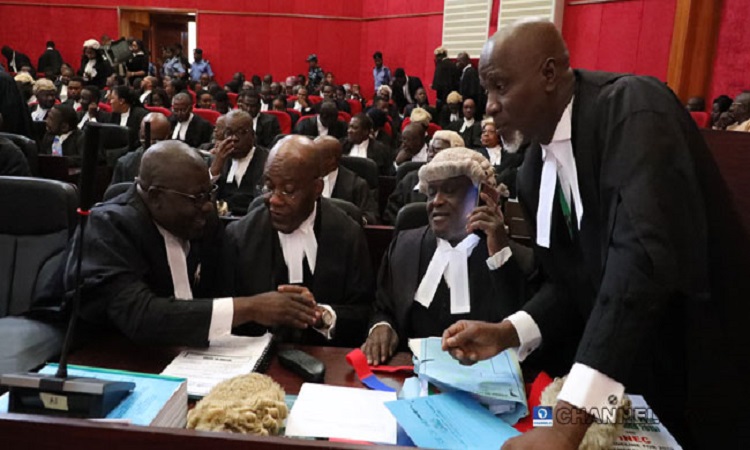
Adekoya, Falana, Achara, Ebobrah bemoan how election petitions cripple courts in Nigeria

By Lillian Okenwa

In days to come the election petitions battle will hit the Supreme Court notwithstanding that the apex bench is greatly depleted. Over the years litigants in regular matters suffer greatly during an election year in Nigeria and with fewer appellate court justices handling the 2023 elections matters, regular appellants are in for a long haul. Chief Mrs. Funke Adekoya, ace arbitrator and a Senior Advocate of Nigeria, notable rights advocate, Mr. Femi Falana, SAN, Prof. R. A. C. E. Achara, Millennial Chairman, NBA, Enugu and Bill and Melinda Gates Foundation Fellow and Prof. Solomon Ebobrah, Faculty of Law, Niger Delta University shared their thoughts on these matters and more.

“The election petitions cripple all the levels of our superior courts, not just the Supreme Court. Regular litigants already suffer from delayed court proceedings and taking judges ‘out of the system’ for three to six months to hear election petitions is a travesty of justice,” began Mrs. Funke Adekoya, SAN,

“We have more than enough retired judges at all levels who can handle election petitions if the legislation to allow them to do so is put in place. The election litigants should be made to fund the cost of hiring such judges at agreed daily rates to be stated in the empowering legislation [Electoral Act 2024?], she counselled.

“Presently ordinary litigants whose taxes fund our court system are treated as “inferior” to the election litigants who can well afford to pay the costs of special judges to be recruited only for election petitions.”

To Mr. Femi Falana, SAN: “Election petitions have adverse effects on all superior courts of record in Nigeria. It has been confirmed that no fewer than 257 judges have been deployed for election petitions across the country. The judges are going to be preoccupied with election petitions for 180 days or 6 months. Very soon,  more judges will be appointed as tribunal members after the governorship elections in Bayelsa, Kogi, and Imo States. The implication is that the other cases being handled by the affected judges will be adjourned until the next legal year.

“The Federal High Court was saddled with the responsibility of attending to pre-election matters to the detriment of other cases including criminal ones and fundamental right applications since pre-election cases are time-barred. I was made to understand that about 1,800 pre-election cases were filed in the registries of the various judicial divisions of the Federal High Court.


“Meanwhile, the Court of Appeal has just concluded about 600 appeals arising from pre-election cases in the Federal High Court. Apart from the several presidential election petitions pending in the Court of Appeal, very soon, appeals from the Election Petition Tribunals in the 36 States will congest the docket of the Court of Appeal.

“Of course, the Supreme Court has concluded over 120 appeals pertaining to pre-election matters. The apex court will soon commence hearing appeals from the Court in respect of the various presidential election petitions and governorship election petitions in all 36 States of the Federation. The pressure is going to weigh heavily on the apex court because it has only 12 Justices. Again, all other civil and criminal appeals will have to give way to election-related appeals.

“The Court of Appeal is currently constituted by 77 Justices instead of 90 Justices. From the information at my disposal, not less than 3 Justices of the Court of Appeal are going to retire during the current legal year. In order to address the shortage of Justices in the Court, the bill to increase the number of Justices from 90 to 110 ought to be speedily passed by both chambers of the National Assembly. In view of the fact that election-related appeals are also time-bound, the National Judicial Council should ensure that the vacancies in the Supreme Court and the Court of Appeal are urgently filled in the interest of the nation’s justice sector. All stakeholders hold it a duty to ensure that enough Justices are appointed to man the appellate courts.

“However, it is high time the Nigerian Bar Association led the struggle for credible elections in the country. I mean credible local government elections, pre-election, and general elections. If fair and free elections are conducted by the Independent National Electoral Commission and state independent electoral commissions, the number of election petitions will be substantially reduced.

“The NBA should also campaign for the prosecution of electoral offenders including party leaders who impose candidates in breach of the Electoral Act. The full weight of the law should be made to descend on the few anti-democratic forces that subject our country to ridicule, from time to time.”

Likewise, Prof. Solomon Ebobrah noted that “having a Supreme Court of 21 Justices is better for the delivery of justice in our polity, where delivery is already painfully slow.

“That means, of course, that as a result of the depleted Court, the regular work of the Supreme Court will suffer as the 2023 Presidential petitions move to the apex Court.

“However, it would be unwise, in my view, for the Bar to advocate for the appointment of more justices at this time because any of the parties can misinterpret any new appointments even if those new justices do not sit over the matter. That notwithstanding, advocacy for a complete court is important for sustainable access to court and protection of the constitutional right to fair hearing. As such the Bar should not shy away from that advocacy as soon as the election season is over.”

Prof. R. A. C. E. Achara had a slightly different standpoint on the matter.

“Quality of delivery from any top court is more a function of individual depth than it is a matter of the number of justices.

“Indeed, the evidence suggests that where the best thinkers are watered down by a flotilla of shallower sailing vessels, the plurality rule for the identification of the court’s position tends to thus prioritize as precedent what should rather have deferred to the minority.

“Again, a larger pool of top court justices, unless all entitled to sit over all appeals, leaves the outcome of disputes to the vagaries of the presiding adjudicator who has the final say on the composition of particular panels. In times and jurisdictions where few elite schools and traditions tend to determine recruitment and thus substantially guarantee a certain uniformity of views and standards, this somewhat capricious power might be of little moment. In jurisdictions where faith has been shaken and trust no longer taken for granted, this power of selection is potentially even more system destructive when it is joined with hasty flooding of the court merely to anticipate election appeals.

“Again, and perhaps a bit counterintuitively, a fewer member Supreme Court with the most perceptive thinkers would probably create at least 2 conditions better than when that court runs on diluted membership numbers beyond a total of, say, 7 or 9.

“In the one, the court would better appreciate its role as essentially the setter of position for lower courts and for general guidance of the legal system as a whole. So understood and with the resultantly less inconsistency of its decisions, there’ll be substantially less number of cases that would, as seems the case now, gamble their way up the judicial ladder to our top court.

“This is because people would be reasonably sure of what the courts would do in litigations and the consequences in damages and costs of wasting time on unfounded flights of fancy where the philosophy if not immediate facts have long been established in the other direction.

“On the other, for the fewer cases that will come upstairs as a result of a legally or factually well-founded need for clarification or for reform, a leaner brighter number in any top court is more likely able to deal with and agreeably dispose of more appeals than when a bloated number of less-resourced justices have been appointed to bog down the court by the additional but counterproductive weight of unnecessary numbers.”

Notorious Makurdi physical abuser of wife, other women remanded in prison custody

“Gender-based violence … destroys not just the direct victims but the watching children and the society.”

A few days ago, netizens were assaulted by the video of a man in Makurdi, Benue state violently assaulting a woman. The man named Kelvin Iorfa is said to be notorious for his violence against women and is very popular in Makurdi.

His most recent victim — his step-sister — got the benefit of his fist and other objects for telling him to stop beating his wife.

The law finally caught up with him as a Makurdi Chief Magistrate Court on Thursday remanded the 59-year-old at the Federal Correctional Centre in Makurdi over alleged assault, and attempt to commit culpable homicide, amongst other offences.

Following the wide publicity generated by the video on social media, several lawyers stormed the courtroom and announced appearances for interested parties in the matter when the matter came up for mention on Thursday.

While P.E. Ula announced appearance for the International Federation of Women Lawyers, (FIDA Nigeria), J.K Shembe represented the Section on Public Interest and Development Law, (SPIDEL), of the Nigerian Bar Association (NBA), Ushahemba Dekaa appeared for NBA HeForShe Network, Benue Chapter, and Hembafan Utange announced appearance for NBA Women Forum.

The first information report of the police which was read in court stated that, On April 11, 2023, at about 1000hrs,  one Jenkies Shande of KM 4 Gboko Road, Makurdi, reported at the Police Criminal Investigation Department, Makurdi, that, on April 10th, 2023 at about 1900hrs while on Facebook, he noticed a video of one Mrs. Nguwasen Iorfa of Clerk quarters Makurdi where she was ruthlessly beaten to coma by one Kelvin Iorfa of the same address, who was hitting her with objects on her head and other sensitive parts of her body until she became unconscious and he left her to her fate.

According to the police, the offence contravenes Sections 266 and 230 of the Penal Code Law of Benue State 2004.

Kelvin Iorfa confessed to having committed the crime when he was arrested by the police but no plea was taken at the court session for want of jurisdiction.

Although I. A Ututu who appeared for Mr. Iorfa made an oral application for his bail, the Presiding Magistrate, R.S Iyorshe told the counsel to approach the court formally for the bail of his client.

Also, the prosecutor, Inspector Ato Godwin informed the court that investigation into the matter was still on. He equally asked the court for another date to enable the prosecution to prove its case.

Thereafter, Chief Magistrate Iyorshe ordered that  Iorfa be remanded at the Federal Correctional Center in Makurdi, and adjourned the matter to June 8th, 2023, for further mention.

In his reaction, the Principal Special Assistant, (PSA), to the Governor on Legal Matters, Barr. Emmanual Agbakor advised Benue people to desist from all forms of criminal acts as Governor Samuel Ortom under whose tenure the Violence Against Persons (Prohibition) Law, 2019 of Benue State was enacted is determined to stamp out violent and other crimes from the State.

Speaking on Gender-Based Violence (GBV), an Abuja lawyer Jude Ifesemen, said: “Scientists all over the world are searching for answers and solutions for ailments and diseases like Aids, Covid19, cancer, etc. Unfortunately, there are worse things plaguing our generation that no research seems to be focused on for a cure.

“Gender-based violence is worse than cancer or the Covid-19 pandemic. It destroys not just the direct victims but the watching children and society.

“Worse is there is no antidote or vaccine against GBV especially when the victim either struck by Stockholm syndrome or any other personal reason refuses to leave.

No matter how much we talk, hold seminars and workshops, or cry and shout about the gender-based violence in our society, unless the victim is empowered enough to take action to say no, to step away from the situation, there is nothing a third party can really do.

“This is because any interference from a third party can be termed Trespass. The case of Entik v. Carrington defined Trespass as ‘any invasion of privacy no matter how minute.’

“One thing we must all agree about is that we are all affected by GBV directly or indirectly. The children from GBV homes become future perpetrators that would likely become spouses to children that have never experienced GBV and thus create a new circle of victims.

“So, we are all involved and to save the next generation we must treat this as an emergency. The world must declare it a pandemic worse than the Covid-19 pandemic and save the generations yet unborn.”

Between Prof Wole Soyinka and the Obi-Dient Movement, who is the Real Fascist?

By Wale I. Idowu

Professor Wole Soyinka had heard all the atrocities that were perpetrated during the 2023 elections —  ranging from the unprovoked xenophobic killings, attacks, maimings, and disenfranchisement in Lagos, the unprovoked ethnic jingoism and bigotry, the brigandage unleashed against our innocent Nigerian brothers and sisters of a particular ethnic background, during the elections, how INEC had brazenly subverted the rule of law to allow manipulation of election results and other electoral malpractices towards a predetermined end, and so on, the list is endless. Prof Soyinka, a “human rights activist,” had heard all these but he chose to remain mute (perhaps because he was comfortable with them) only to suddenly emerge from nowhere to start attacking Datti Baba-Ahmed for expressing his views to which he’s entitled, and attacking Obidients by describing them fascists. Unfortunately, Prof Soyinka had nothing at all to say about Femi Fani-Kayode’s, Bayo Onanuga’s, and MC OLUOMO’S inciting publications against fellow Nigerian citizens of a particular ethnic background; Prof Soyinka came out for only one assignment, self-imposed or procured: to attack and to castigate Datti Baba-Ahmed and the Obidients for daring to express their frustrations and disenchantment against the unashamed subversion of the rule of law which was unleashed against Nigeria in the name of an election on 25 February 2023.

Curiously, after describing the Obi-dients as “fascists”, Prof Soyinka immediately thereafter refused to accept or tolerate views and comments directly opposed to or critical of his. Is this not an exhibition of fascism by the same person who preaches against fascism? I wonder.

As an observer, I have been wondering, exactly what have the Obedients been doing since the 25 February 2023 presidential elections:

1).  I have not heard that OBIdients staged any form of violent protests against the 2023 selections, sorry elections.

2). I have not heard that Obedients formed or threatened to form any parallel government in Nigeria;

3).  I’ve not heard that the Obi-dients took up guns or other arms and invaded any radio or TV station to proclaim or demand that Obi be proclaimed winner of the election;

4). I’ve not heard that the Obi-dients killed anyone, destroyed any property, or carried out any form of violent attacks against any government or private property;

5). I’ve not heard that the Obi-dients invaded or destroyed any INEC office;

6). I’ve not heard that the Obidients staged a coup d’etat, aimed to overthrow the government of Nigeria;

7). Yet, I know that the Obidients are active on the internet, the social media, running their mouths by talking and talking and talking and ventilating their anger, expressing their feelings and frustrations over the events or failed events of 25 February 2023.

Please, how do these amount to fascism? Even if, as I heard also, the Obidients usually come against (in the social media) anyone who attacks, or insults or maligns Obi-Datti, how does this amount to fascism? Have the Obi-dients barred anyone else from expressing their views contrary to or critical of views held by the Obi-dients? I am aware of the main features of a fascist State or environment:

(A). The government which rules as a dictator controls the lives of the people; and

(B). The government doesn’t allow the people to disagree with the government; and

(C). Those who dare to criticize or disagree with the government are made to face sanctions by way of arrests, imprisonment, death other physical harm to their property.

Now, one may ask:

 *❕Is the Obidient movement a government capable of controlling citizens’ rights and lives?  Answer is NO!

*❕ Has the Obidient movement or have its members barred any Nigerian from holding opinions contrary to the views held by members of the movement? If yes, how and when? But if no, why see as or call them “fascists”– I mean, how do their traits illustrate those of fascists?

*❕.For those who have disagreed or have been disagreeing with the Obi-dients, please has any harm of imprisonment, arrests, death or other harm to property befallen them or any of them?

Why then does Prof Soyinka describe the Obidient as fascists?

How are they fascists?

I want an education because it’s possible there is yet something I don’t know.

Meanwhile, Prof Soyinka accused Datti Baba-Ahmed of using words too strong against the Supreme Court of Nigeria. He accused Datti Baba-Ahmed of using “threatening” words when he said, “Swear in Tinubu and end Nigeria’s democracy”.

Ironically, Prof Soyinka turned around and began using strong, harsh words in criticism of the group called OBIdients.

Dear Prof Soyinka, sir, don’t you think you’ve broken the same rule you set? Does it not occur to you that you have practiced the exact same thing you preached against — what lawyers see as Quod Approbo Non Reprobo (approbating and reprobating at the same time)?

By refusing to tolerate OBIdients’ criticisms of his obviously malignant vituperative diatribes against the Obi-dients, is Prof Soyinka himself not being fascist? Since he hates fascism, should he have exhibited conduct that are directly illustrative of the fascist tendencies — example not allowing those who don’t like his views to freely disagree with and even criticize same, however harsh those criticisms maybe?

As I await answers to these, I think the fascism accusation by Prof Wole Soyinka is a distraction meant to divert people’s attention from discussing the real issues arising from the 25 February 2023 subversion of law, reason, and the electoral process.

 @Wale I. IDOWU

Electoral Justice in Kenya and Nigeria, By Femi Falana

Although this article was first published in 2017, its content is still very relevant today.

Introduction: Both Nigeria and Kenya have been battling with electoral malpractice and political violence for over a decade. The 2007 general election in Nigeria was truly a “do or die” affair as declared by President Olusegun Obasanjo. Hundreds of people were killed by security forces for protesting the brazing manipulation of the results of the general elections. The Ahmed Lemu presidential panel set up by President Goodluck Jonathan to probe the mayhem that greeted the announcement of the result of the 2011 presidential election found that 943 people were killed while 838 others were injured.  While the Federal Government paid over N10 billion as reparation to the victims of the riots, it failed to prosecute the 626  who were arrested in connection with arson, culpable homicide and other grave offenses perpetrated due to official impunity.

In 2008, the brutal killing of over 1000 people in Kenya over post election violence led to the setting up of a panel of inquiry headed by Mr. Kofi Anan, a former Secretary-General of the United Nations. Based on the report of the inquiry Messrs Uhuru Kenyatta and William Ruto were charged with crimes against humanity at the International Criminal Court (ICC) for allegedly masterminding the politically motivated killings. Notwithstanding the election of both suspects as President and Vice President of Kenya respectively in the 2013 general elections, the cases continued and were eventually struck out due to want of diligent prosecution.

Many Nigerian commentators have commended the Supreme Court of Kenya for the revolutionary decision to annul a presidential election. Not unexpectedly, such critics have censored the Nigerian judiciary for invoking the nebulous doctrines of substantial compliance to uphold the results of fraudulent elections. Some lawyers have gone to the extent of blaming Nigerian judges for the undue delay in the hearing of election petitions. With respect, the comparison of the decisions of the Supreme Courts of Nigeria and Kenya on election petition is rather odious. Hence it has become necessary to review recent developments in the electoral jurisprudence of both countries.

Fidelity to the Kenyan Constitution: However, based on gross irregularities and violence which had marred the 2007 general elections which led to political violence in Kenya the members of the political class decided to use the instrumentality of the law to sanitize the political system. Thus, in 2010, Kenya decided to enact a new Constitution through a popular and democratic process. At the end of the day, the Kenyan people produced one of the best constitutions in Africa. To prevent a delay in the hearing of election petitions section 140 of the  Constitution stipulates that presidential election petitions shall be shall be heard and determined within 14 days. It is pertinent to recall that the Supreme Court of Kenya had dismissed the petition filed by Mr. Raila Odinga against the 2013 presidential election won by President Uhuru Kenyatta on the ground that it was conducted in accordance with the Electoral Act. See Raila Odinga & 2 others v Independent Electoral & Boundaries Commission & 3 others [2013] EKLR.

That decision was largely influenced by Nigerian cases which were relied upon by the Court. But the Kenyan Parliament decided to review the electoral system by enacting the Electoral Act 2016 to provide for electronic voting and the appointment of the chairman and members of the Independent Election and Boundary Commission through an interview conducted by a selection board as well as the Offences Act 2016 to provide for electoral offenses and penalties. It was on the basis of such progressive review of the relevant laws that the Supreme Court had no difficulty in upholding the petition of Raila Odinga against the election of President Uhuru Kenyatta held in Kenya on August 8, 2017. See Petition 1 of 2017.

Although the petition was filed on August 18, 2017, the Supreme Court delivered its judgment two weeks later. That was made possible with the aid of technology. The Court allowed a live coverage f the proceedings by the media. Instead of spending precious time on calling hundreds of witnesses to give oral evidence or adopt written depositions and be cross examined by opposing lawyers the electoral body was ordered by the Court to produce the uploaded results of the election. The registrar of the court was directed to collect the results and other election materials from the IEBC for examination by the parties and the court. In the historic judgment, the court validated electronic voting. However, the court found that the massive irregularities in the transmission of election results had compromised the integrity of the election.

In annulling the results of the presidential election the Supreme Court found held that the IEBC had “failed, neglected or refused to conduct the presidential election in a manner consistent with the dictates of the Constitution.” Although the “reasoned and considered judgment” would be made available not later than 21 days the summary has confirmed the unqualified commitment of the court to the rule of law.  Before the judgment was delivered Chief Justice Maraga had rightly set the tone for the business of the day when he noted that “the greatness of any nation depends on its fidelity to its Constitution and adherence to the rule of law and above all respect to God.”

Since it is the first time that any court has annulled the result of a presidential election in Africa the judgment has far-reaching implications for democracy and rule of law in the continent. Although the details of the judgment have not been provided the summary of the findings and orders made by the Court have sufficiently confirmed the independence of the judiciary of Kenya. It is particularly significant to note that the Court rebuffed pressures from local and foreign economic interest groups who had wanted a judicial endorsement of the malfeasance which marred the presidential election.

While reacting to the judgment the petitioner, Mr. Raila Odinga of the National Super Alliance (NASA) said that it “marked a historic day for the people of Kenya and by extension for the people of the continent of Africa.” He faulted international election observers who had attempted, in their reports, to legitimise the electoral fraud by saying that the election was credible, fair and free. One of the election monitoring groups, the Jimmy Carter centre led by former United States Secretary of State, Mr. John Kerry was particularly patronizing in its endorsement of the results of the election. While asking Mr. Odinga to move on and stop protesting the election results Mr. Kerry said the election was fair and free.

The election observers of the Commonwealth and the African Union equally claimed that the election was credible and that its results should not be challenged. But the judgment of the Supreme Court has questioned the credibility of the choreographed sanitation of the fraudulent election results by the so called representatives of the international community. Not a few interest groups called Mr. Odinga a bad loser for approaching the Supreme Court for legal redress. But it turned out that the filing of the petition doused tension in the country as angry protests had led to the killing of not less than 24 people by security forces.

President Kenyatta’s attack on Judges

In his initial reaction to the verdict, President Uhuru Kenyatta said that even though he disagreed with the decision he would respect it. But in an angry attack on the judiciary at a rally held in Nairobi later that day the President said: “Every time we do something, a judge comes out and places an injunction. It can’t go on like this…there is a problem and we must fix it. I think those they wear make them think they are more clever than the rest of Kenyans. Maraga thinks he can overturn the will of the people. We shall show you….that the will of the people cannot be overturned by a few people.” As if that was not enough, the President called Chief Justice Maraga and his colleagues “wakora” (meaning crooks or squirrels in Swahili language).

Apparently disturbed by the highly contemptuous statement of the Head of State the Kenyan Law Society has promptly criticised the official threat to subvert the independence of the judiciary and intimidate independent minded judges in the country. On its own part, the Kenyan judges have joined issues with President Kenyatta over the veiled threat credited to him. In a statement issued by the Kenyan Magistrates and Judges Association, the judges condemned what it called “assault on the decisional independence of the honorable judges.” Since politically motivated killings are rife in Kenya the Pan African Lawyers Union (PALU) should request President Kenyatta to guarantee the security of the life of each of the 4 judges who handed down the majority judgment of the court as well as other judges who might have granted injunctions against a government that believes that its actions cannot be overturned by any court, even in the face of illegality

However, in attacking the judgment of the Supreme Court Mr. Kenyatta exposed himself to serious embarrassment as both himself and the Independent Election and Boundary Commission (IEBC) as co-respondents failed woefully defend the integrity of the election when given the opportunity to do so by the Court. Apart from the refusal of the IBEC to produce all the election materials in defiance of the order of the Court the respondents’ lawyers had urged the Court to hold that the irregularities identified and proved in the petition were not sufficient to vitiate the results of the election. But after a painstaking review of the evidence and the submissions of the petitioner and respondents’ lawyers, the Court came to conclusion that “the election was not conducted in accordance with the Constitution, rendering the declared results invalid, null and void.” Consequently, the Court ordered the IBEC to conduct a fresh presidential election within 60 days.

Sequel to the annulment of his election Mr. Kenyatta ought to have been ordered by the Supreme Court to vacate office since he lacks any legitimate claim to continue to occupy the Presidency of Kenya. But fortunately for him, he was not found to have been directly involved in the electoral malpractice which led to the annulment of the presidential election. For that reason, he shall remain in office as President in an acting capacity pending the emergence and swearing of a new President produced by the fresh election pursuant to sections 134 and 142 of the Constitution. However, to ensure the success of the fresh election which has been ordered by the Supreme Court the IEBC should be reconstituted. Having been judicially indicted in the management of the general elections the IEBC Chairman, Mr. Wafula Chebukati and other members of the electoral body should be sacked and prosecuted under the Election Offences Act, 2016.

While reacting to the ruling of the Supreme Court the IEBC said that the date of the fresh election would not be fixed until it has reviewed the considered judgment of the Supreme Court. Even though the Court has not made the judgment available to the parties the IEBC has fixed October 17 for the fresh election. The IEBC has been accused of announcing the date based on alleged pressure from the government. It is, however, difficult to dismiss the allegation of official pressure since the full judgment has not been released by the court. Having not read the judgment to know the full details and extent of the contraventions of the Electoral Act the IEBC is likely to repeat the same irregularities and illegalities which led to the cancellation of the election results.

Annulment of election results by Nigerian courts

In 2007, the several questionable returns made by the Independent National Electoral Commission (INEC) were challenged in the courts. The results of the governorship elections in Ondo and Edo states were annulled by the election petition tribunals and the Court of Appeal. The seats of scores of legislators were declared vacant by the courts. In fact, in Buhari V INEC (2008) 4 NWLR (Pt 1078) 246, the Supreme Court almost quashed the result of the presidential election as only 4 out of the 7 Justices upheld it in favor of the respondent. In distancing themselves from the majority decision of the court, Adesola Oguntade and Aloma Muktar JJ.S.C. as well as Walter Onnoghen JSC (as he then was) annulled the election on the ground that it was not conducted in accordance with the Electoral Act. In the dissenting judgment, it was found that the ballot papers used by the INEC were not marked and serialized as stipulated by law.

In 2011, the results of the elections of not less 5 governors were annulled by the courts which ordered fresh elections in the affected states. Many legislators also lost their seats on grounds of electoral malfeasance. The INEC Chairman, Professor Mahmoud Yakubu has just disclosed that the courts including the Supreme Court have nullified the results of 117 elected officials who emerged in 2015 general elections due to illegal party primaries or fraudulent election results. As no democratic country in the world has ever recorded a greater number of annulments of election results it is totally misleading to give the highly erroneous impression that Nigerian judges have always upheld the results of fraudulent elections.

Electoral Injustice in Nigeria

Although the petition against his election was dismissed by the Supreme Court, President Yaradua said that the election was fraudulent and proceeded to set up the Mohammed Uwais-led panel to probe the conduct of the election and make appropriate recommendations. The panel recommended inter alia that appointment of the chairman and members of INEC should be by advertisement, setting up of electoral offenses tribunal and conclusion of all petitions before the inauguration of elected governments. The Ahmed Lemu presidential panel set up by President Jonathan in 2011 made additional recommendations to guarantee credible elections. But the Peoples Democratic Party and the All Progressive Congress have refused to implement the recommendations of both panels.

However, amendments were made to the Constitution in 2010 and 2011 while a new Electoral Act was enacted in 2010 by the national assembly. The Electoral Act has been subjected to many amendments. Pursuant to section 52 of the Electoral (Amendment) Act 2015 the effect that “voting at an election shall be in accordance with the procedure determined by the Independent National Electoral Commission” INEC introduced the use of card readers for accreditation of voters. In spite of the opposition of the then ruling party, (the Peoples Democratic Party) the Attahiru Jega-led INEC conducted the 2015 General Elections with the aid of card readers. Manual accreditation of voters was however allowed if the card reader machine malfunctioned.

Accordingly, many tribunals and judicial divisions of the Court of Appeal nullified elections where voters deliberately ignored the use of card readers for accreditation. Curiously, the Supreme Court set aside the annulment of some governorship elections on the ground that INEC acted illegally by introducing the use of the card reader. In a critique of such judgments, I was compelled to challenge the apex court for not making any reference to the relevant provision of the Electoral (Amendment) Act 2015 which had empowered INEC to determine the procedure of voting at an election. (See http://www.thisdaylive.com /index.php /2016/04/05/the-legality-of-card-reader)

But it is pertinent to point out that while election petition tribunals and the Court of Appeal have not hesitated to quash the results of elections conducted in contravention of the Electoral Act the Supreme Court has consistently upheld the results of controversial presidential elections since 1979. While conceding that such elections were not properly conducted the court has always validated them by relying on the doctrines of substantial compliance with the enabling law or failure of election petitioners to prove allegations of electoral fraud beyond reasonable doubt. At the Commonwealth Lawyers Conference held in Lagos in 1981, the late Graham Douglas SAN who was the nation’s Attorney-General during the 1979 general election revealed that the Supreme Court had no choice but to dismiss the case of Awolowo v Shagari (1979) 6-9 S.C 37 as the Obasanjo military regime had concluded the handing over of power to the President-elect, Alhaji Shehu Shagari.

But since 1999, election petitions have always been determined a year or two after a general election. Thus, at the time the judgment in an election petition is delivered the elected President would have had the first budget passed, represented the country in international fora and announced major decisions which may include the approval of the appointments of federal judges and performed other presidential functions. Therefore, election petitions which are determined in the middle of the term of sitting Presidents are usually thrown out on grounds of public policy. Indeed, if the election petition is upheld and the result is annulled on grounds of electoral malpractice the apex court is likely to be accused of deliberately promoting political instability in the country!

Unlike the Kenyan Constitution which provides that election petitions shall be determined within 14 days section 285 of the Constitution of the Federal Republic of Nigeria, 1999 as amended provides for 180 days for the trial of petitions at the election petition tribunals and 120 days at the appellate courts. Whereas presidential and legislative election petitions are determined by two courts those arising from governorship elections alone are determined by three courts. Pre-election matters have no time limit. Hence, over two years after the 2015 general elections some pre-election matters are still pending in the appellate courts!

Although high court judges are competent to hear pre-election matters filed in the courts manned by them they are disqualified from hearing election petitions filed in the same courts on the ground that they could be influenced by local political interest groups. Therefore they are posted to other states for 180 days in an election year while other cases being handled by such judges are adjourned sine die. The Electoral Act favors elected persons whose returns are being challenged in court. Having taken oaths of office the respondents usually frustrate expeditious determination of election petitions. The respondents also colluded with INEC to make it impossible for petitioners to prove electoral malpractice as they are denied access to election materials. In the circumstance, they are compelled to apply to election petition tribunals for permission to inspect election materials. Other dilatory tactics designed to prolong the hearing of election petitions are employed by the respondents’ lawyers.

Conclusion: From the foregoing, it is undoubtedly clear that the Supreme Court of Kenya has freed itself from the dangerous influence of Nigerian courts by jettisoning the doctrines of substantial compliance and proof of election petitions beyond reasonable doubt. In line with the provisions of the Electoral Act 2016, it has also embraced technology to facilitate the hearing and determination of election petitions within 14 days. Instead of blaming Nigerian judges for our outdated and unjust electoral justice system the national assembly should be prevailed upon to take advantage of the ongoing review of the Constitution and the Electoral Act to make provisions for electronic voting, speedy determination of election petitions, appointment of electoral umpires through advertisement in the media, prosecution of electoral offenders and live coverage of the hearing of election petitions by the media.

However, in the Raila Odinga’s case it was established that even though the election was properly conducted the electoral fraud was committed in the transmission of election results by the IEBC. On the basis such finding and in view of the fact two leading professional bodies in Nigeria which have adopted e-voting to elect their officers are currently in court to challenge the alleged e-rigging of elections the National Assembly should impose a duty on INEC to acquire the vital technology to prevent hacking of computers and manipulation of election results via technology.

In 2013, the Supreme Court of Ghana dismissed the election petition filed against the re-election of President John Mahama. The proceedings of the court were broadcast live by the media. In upholding the validity of the election the court placed reliance on Nigerian cases. (See Nana-Addo Akufo v John Mahama, Writ No 31/6/1). Embarrassed by the filing of the election petition the Electoral Commission (EC) decided to improve on its performance.  The EC kept its promise and conducted a credible general election in December 2016. The lesson from Ghana is that if credible elections are conducted by INEC  the filing of election petitions will be totally unnecessary. And if a few election petitions are filed in court the judges will be in a position to decide them with the aid of technology as the Kenyan Supreme Court has just done.

This article was originally published by Sahara Reporters on 10th September 2017.

TIPS