Home Blog Page 783

Some sections of CAMA 2020 infringe on citizens’ rights, Court holds

  • Read what the abrogated sections said.
  • Download the full version of CAMA 2020.

By Eke Ojim

The question of whether some sections of the Companies and Allied Matters Act (CAMA), 2020 violate the rights to freedom of association and religion of citizens has finally been determined with an Abuja Federal High Court, Abuja, holding in the affirmative.

Nullifying the contentious provisions of CAMA, 2020, Hon. Justice James Omotosho who held that some sections indeed infringe on the fundamental human rights of Nigerians and are therefore inconsistent with the country’s Constitution went ahead to strike out the troublesome sections.

The annulled sections are — 839, 842, 843, 844, 845, 846, 847, and 848 of CAMA, 2020.

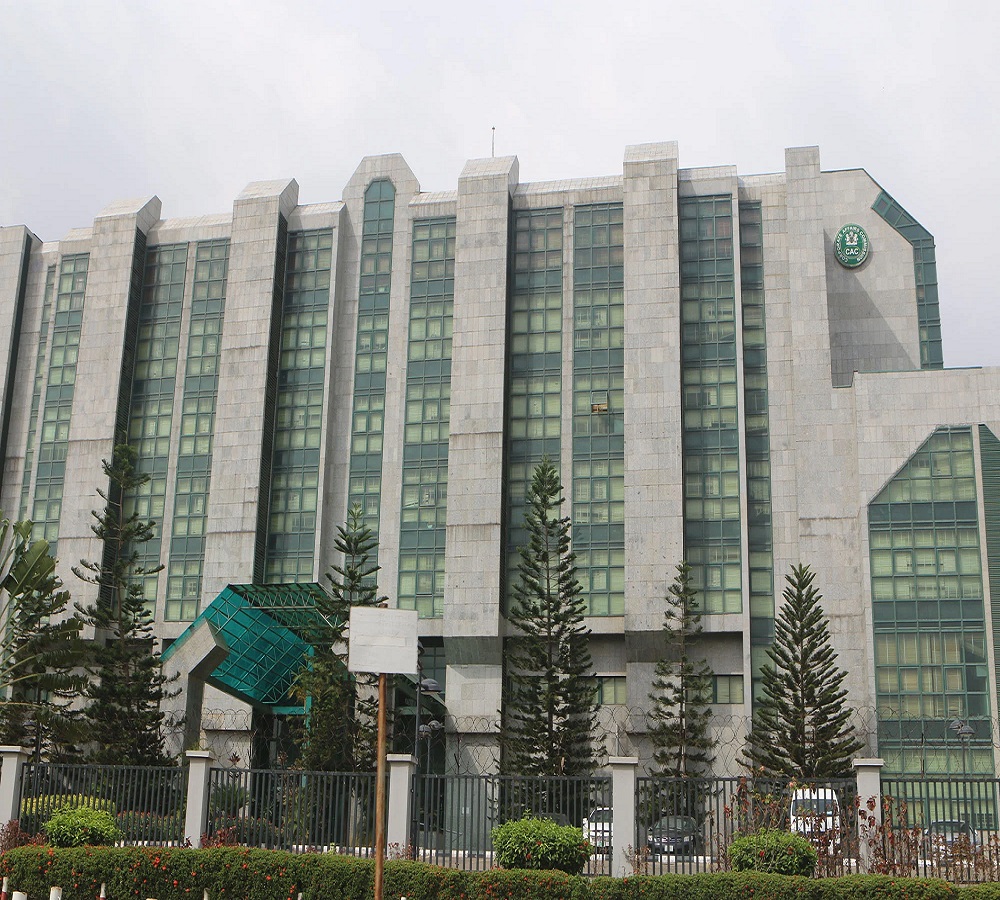
According to the News Agency of Nigeria (NAN), Emmanuel Ekpenyong, an Abuja-based lawyer, in suit no. FHC/ABJ/CS/1076/2020, sued the National Assembly, Corporate Affairs Commission (CAC), and the Attorney-General for the Federation (AGF) as 1st to 3rd defendants respectively.

In the originating summons dated and filed on 31 August 2020, the lawyer prayed the court to determine whether he had the locus standi to institute the proceeding.

“Whether the provisions of Sections 839, 842, 843, 844, 845, 846, 847, 848 and 851 of the Companies and Allied Matters Act infringes on the plaintiff’s right to thought conscience, and religion as enshrined in Section 38 of the 1999 Constitution (as amended).”

Ekpenyong urged the court to further determine whether those sections infringed on his freedom of peaceful assembly and association as enshrined in section 40 of the 1999 Constitution.

He equally prayed the court to determine whether the provisions on the Administrative Proceeding Committee in section 851 of CAMA, 2020 were inconsistent with the provisions of Section (6)(6)(b) and Sections 36(1) and 251(1) (e) of the 1999 Constitution.

Again he asked the court to determine whether it had powers to grant mandatory injunctive reliefs against the defendants and that it should void the affected sections, having infringed on his fundamental human rights if his prayers are found to have merit.

In his judgment, Justice Omotosho first held that under Article 3 (e) of the Preamble to the Fundamental Rights (Enforcement Procedure) Rules, anyone could bring fundamental human rights matters in his own interest, on behalf of another person, or even in public interest.

Omotosho in the judgment delivered on Tuesday and which was obtained on Friday by NAN said that under the new human rights regime, a court shall not dismiss a human rights action for mere want of locus standi.

Similarly, he held that the powers granted to CAC to regulate and administer Incorporated Trustees in Nigeria under Sections 839, 842, 843, 844, Section 845, Section 846, Section 847, Section 848 of the CAMA 2020 had infringed on Ekpenyong’s right to freedom of thoughts.

Moreover, His Lordship held that the sections infringed on the conscience and religion as enshrined under Section 38 of the constitution and freedom of peaceful assembly and association enshrined under Section 40 of the constitution and are therefore null and void.

Likewise, he held that the provisions of the Administrative Proceedings Committee in Section 851 of the new CAMA denied the plaintiff his constitutional rights of access to court in sections 6 (6) (b) and Section 36 (1) of the constitution and also usurped the powers of the Federal High Court under Section 251 (1) (e) of the constitution.

Consequently, Justice Omotosho struck down Sections 839, 842, 843, 844, 845, 846, 847, 848, and Section 851 of the CAMA 2020, declaring same to be null and void, having been inconsistent with the provisions of the constitution.

He, however, conceded that since the legal practitioner did not serve the National Assembly with a pre-action notice in line with Section 21 of the Legislative Houses Power and Privileges Act, the suit was incompetent against them.

In its defence, CAC in a counter affidavit filed on 20 January 2021 by its counsel, Olasoji Olowolafe described the suit as “an abuse of judicial process”, an academic exercise of no utilitarian value to the plaintiff.

The National Assembly, in its preliminary objection, also contended that the suit was incompetent because a pre-action notice was not served on them and that the plaintiff had no locus standi.

Meanwhile, the Attorney General of the Federation (AGF) maintained that the suit does not have a reasonable cause of action, while also insisting that the plaintiff lacked locus to file the matter.

NAN had, on March 21, reported that Justice Inyang Ekwo of a sister court had restrained the CAC from suspending or appointing trustees of the Christian Association of Nigeria (CAN) and the churches.

Justice Ekwo, in that judgment in a suit filed by the Registered Trustees of CAN, held that the provisions of Sections 17 (1), 839 (1) and (7) (a), 842 (1), and (2), 851 and 854 of the Companies and Allied Matters Act (CAMA), 2020 and Regulations 28, 29 and 30 of the Companies Regulations (CR), 2021 were not applicable to CAN, the churches and other religious body.

Here are details of what some of the abrogated sections said:

Section 839 (1) empowers the Commission to suspend trustees of an association and appoint interim managers to manage the affairs of the association where it reasonably believes that-

(a) There is or has been misconduct, mismanagement in the administration of the association;

(b) it is necessary or desirable for the purpose of—

 (i) protecting the property of the association,

(ii) securing a proper application for the property of the association towards achieving the objects of the association, the purposes of the association of that property or of the property coming to the association,

(iii) public interest; or

(c) the affairs of the association are being run fraudulently.

(2) The trustees shall be suspended by an order of Court upon the petition of the Commission or members consisting one-fifth of the association and the petitioners shall present all reasonable evidence or such evidence as requested by the Court in respect of the petition.

(3) Upon the hearing of the petition and the appointment of the interim manager, the Court, with the assistance of the Commission, may make provision with respect to the functions to be performed by the interim manager or managers appointed by the order—

(a) the powers and duties of the interim manager or managers which may include the powers and duties of the trustees of the association concerned; and

(b) any power or duty specified under paragraph (a) to be exercisable or discharged by the interim manager or managers to the exclusion of the trustees.

(4) The functions shall be performed by the interim manager or managers under the supervision of the Commission.

(5) The reference in subsection (1) to misconduct or mismanagement extends to the employment for—

(a) the remuneration or reward of persons acting in the affairs of the association, or

(b) other administrative purposes, of sums which are excessive in relation to the property which is or is likely to be applied or applicable for the purposes of the association.

(6) A court of competent jurisdiction may, upon the petition of the Commission or members of the association—

(a) order or suspend any person, officer, agent or employee of the association from office or employment, provided that such suspension does not exceed 12 months from the date of the order or suspension;

(b) by order appoint such number of additional trustees as it considers necessary for the proper administration of the association ;

(c) by order—

(i) vest any property held by or in trust for the association in the official custodian, who shall be a person so designated by the court from time to time;

(ii) require the persons in whom any such property is vested to transfer it to the official custodian who will be an individual as the court may, from time to time designate, or

(iii) appoint any person to transfer any such property to the official custodian ;

 (d) order any person who holds any property on behalf of the association, or of any trustee for it, not to part with the property without the approval of the Court ;

 (e) order any debtor of the association not to make any payment in or towards the discharge of the debtor’s liability directly to the association but to make such payment into an interest yielding account held by the Commission for the benefit of the association ;

(f ) by order restrict (regardless of anything in the trusts of the association) the transactions which may be entered into, or the nature or amount of the payments which may be made, in the administration of the association without the approval of the court; or

(g) by order appoint an interim manager to act as receiver and manager in respect of the property and affairs of the association.

(7) Where, at any time after the Commission has made an enquiry into the affairs of the association, it is satisfied as to the matters mentioned in subsection

(1), it may suspend or remove—

 (a) any trustee who has been responsible for or privy to the misconduct or mismanagement or whose conduct contributed to or facilitated it;

(b) by order of the Court, establish a scheme for the administration of the association.

(8) The court may by order replace a trustee removed under subsection (7).

(9) A person who contravenes an order under subsection (6) (d), (e) and (f ) commits an offence and is liable on conviction to fine as the Court deems fit or imprisonment for a term of 6 months or to both.

(10) The Commission may make regulations in respect of—

 (a) the functions, powers and remuneration of the interim manager and the manner in which the interim manager shall make reports to the Commission ; and

(b) making reports to the Commission, and such other things as may be necessary for the effective administration of the association during the period of its interim administration.

(11) The Commission shall only exercise its power under this section in respect of any association with the approval of the Minister.

842. (1) Where a bank holds one or more accounts in the name of or on behalf of the incorporated trustees of a particular association, and the account, or, if it holds two or more accounts, and each of the accounts is dormant (as defined under the relevant banking regulation), the bank shall without delay notify the Commission of these facts.

(2) Where the Commission receives a notice under subsection (1), the Commission may request that the association provide evidence of its activities, and where the association fails to respond satisfactorily within 15 days of the request, the Commission may dissolve the association in accordance with section 850, and where an association is so dissolved, the Commission may give a direction to the bank concerned to transfer—

(a) the amount, or, as the case may be, the aggregate amount, standing to the credit of the relevant association in the account or accounts in question to such other association as is specified in the direction in accordance with subsection (3) of this section to the bank; or

(b) to each of two or more other associations so specified in the direction, such part of that amount or aggregate amount as is there specified in relation to that association.

(3) The provisions of subsection (2) shall also apply where the Commission is unable, after making reasonable inquiries, to locate an association registered under this Act or any of its trustees.

(4) The Commission may specify in a direction under subsection (2) such other association or charity as it considers appropriate, having regard to the purposes of that association or charity: Provided that before any association may be so specified by the Commission, the trustees of such an association shall, by a written memorandum to the Commission, indicate its willingness to accept such amount to be transferred to it.

(5) Any amount received by an association by virtue of this section is to be received by the association on terms that—

(a) it is to be held and applied by the association for the purposes of the association;

 (b) as property of the association, it is nevertheless subject to any restrictions on expenditure to which it was subject as property of the relevant association; and

 (c) the receipt of a trustee for an association in respect of any amount received from a relevant bank by virtue of this section is a complete discharge of the bank in respect of that amount.

(6) The Commission shall only exercise its power under this section in respect of any association with the approval of the Minister.

Download a full version of CAMA 2020

CAMA-NOTE-BOOK-FULL-VERSION


Court begins hearing in the alleged murder of Akwa Ibom Attorney by his lawyer wife

William Shakespeare had since suggested in Henry VI, Part 2, Act IV, Scene 2 that: “The first thing we do, let’s kill all the lawyers.”  What is not clear, however, is whether lawyers are also meant to kill one another. And that is part of the confusion Akwa Ibom State Bar is grappling with as a 36-year-old lawyer, Abasiesebanga Ikoiwak has been fingered in the murder of her husband who is also a lawyer.

Already, an Uyo High Court has resumed hearing the trial Abasiesebanga Ikoiwak and five others, over the grisly murder of her 41-year-old husband, Barrister Godwin Ikoiwak,  a native of Eket Local Government Area, and a State Counsel at the State Ministry of Justice

During the last hearing, a prosecution witness who is a friend and classmate of the deceased at the Faculty of Law, University of Calabar, Barrister Sunny Anyanwu said the deceased told him in a phone conversation a few days before his death that he and his wife, Abasiesebanga were having problems over infidelity.

Anyanwu said the deceased told him that he reported the matter to his wife’s family who invited him to a meeting in their family compound in Nung Udoe Itak, Ikono Local Government Area of the state, but he did not return home alive.

Barr. Anyanwu who is the 7th prosecution witness in the matter, also revealed that the late Barrister Godwin Ikoiwak told him that his wife, Barrister Abasiesebanga Ikoiwak was having sexual relations with her former boss and a legal practitioner, Barrister C.I. Odoh.

He said the deceased also told him that his wife had stayed with a Catholic priest, Rev. Father Maurice Mbeke as a house help and that the Catholic priest impregnated her. The pregnancy resulted in a now 19 years old young man named after his maternal grandfather.

According to the prosecution witness, the late Barrister Ikoiwak did not know that the boy who had been living with him in his house for years, was his wife’s own, because the wife said the child was her younger brother.

Moreover, he told the court that according to the deceased each time his wife said she was pregnant, he does not set his eyes on her, until after the delivery of the baby, when she will present it to him and say “this is your child”.

The prosecution team led by the Director of Public Prosecutions, Akwa Ibom State, Barr. Joseph Umoren tendered the audio recordings which was played in the open court.

Harnessing the Use of Technology as a Way of Boosting Women’s Businesses and Closing the Gender Gap

By Mojirayo Ogunlana-Nkanga

There is no gainsaying the fact that there has been a huge and radical transformation of the global trade environment. This is due to the advancement in technology, specifically information and communications technologies (ICT). This has brought about an expansion in the market. We are no longer constrained to physical markets but are now forced to operate and engage in virtual/digital markets. Digital markets are virtual markets, internet-based arenas where demand and supply forces operate, and where sellers and buyers exchange goods and services. This type of market allows for ease of transaction through mobile technologies.  

Since the advancement in technology, there’s been an increase in e-commerce and a steady growth of online businesses. Increased technology and newer trends have forced business owners to change their marketing strategies. It is no longer business as usual, especially since the 2020 COVID-19 shutdown. Traders have learned new ways to get their products and services to end users. Smartphones and other digital devices now make it easier for companies to market themselves and their products and services to consumers. Studies have also shown that people prefer using their phones to go online. We now witness a situation where traders promote their products through digital advertisements on platforms, such as social media platforms. This involves digital marketing. Digital marketing is the use of digital channels to market products and services. This usually involves the use of social media links, such as WhatsApp, Twitter, LinkedIn, Facebook, etc; websites, mobile devices and platforms, search engines, apps, etc.

However, just like in most aspects of life, women are under-represented in the digital economy, and despite the fact that the African continent has the highest percentage of women entrepreneurs in the world- according to the African Development Bank (AFDB)  “the Global Entrepreneurship Monitor (GEM) 2016/17 Women’s   Report(link is external), “the female entrepreneurship rate in sub-Saharan Africa is 25.9% of the female adult population, meaning that one in four women starts or manages a business.”

The Human Rights Council of the UN General Assembly recognised this huge dichotomy between women’s and men’s online presence in its July 2016 resolution[1] and it expressed as follows:

“that many forms of digital divides remain between and within countries and between men and women, boys and girls, and recognizing the need to close them,

Stressing the importance of empowering all women and girls by enhancing their access to information and communications technology, promoting digital literacy and the participation of women and girls in education and training on information and communications technology, and encouraging women and girls to embark on careers in the sciences and information and communications technology,…”

The AFDB noted that “women entrepreneurs face multiple challenges to access finance, with an estimated $42 billion financing gap for African women across business value chains, including $15.6 billion in agriculture alone.

The challenges noted are:

  • Finance: lending to women is seen as riskier, so they face prohibitive interest rates. In addition, women often lack traditional collateral and guarantees.
  • Capacity: financial institutions lack the capacity to understand and respond appropriately to women entrepreneurs, who also often lack the financial and business acumen to respond to the needs of financial institutions. 
  • Business environment: in many countries, legal and regulatory frameworks hinder women’s full participation in private sector growth.

These challenges are further exacerbated by accessibility (access to the Internet) and affordability (data) challenges. Examples like access to electricity, technological gadgets, etc.

According to International Telecommunication Union (ITU) in 2022, around 46 percent of the male population in Sub-Saharan Africa used the Internet. In contrast, the internet usage rate was lower among women, as approximately 34 percent of the female population used the internet. This was further expounded by the secretary general of ITU, Doreen Bogda Martin, who stated that “there is a wider gap between women in technology in Africa compared to their male counterparts.”

In  Nigeria, the CBN recorded that women are under-represented in the financial sector and it went ahead to carry out a gender financial inclusion assessment in 2019, where it established that 60% of women struggle with economic hardship, low income, poor financial education, and low trust in financial institutions. These challenges stand out as the most significant factors contributing to the large financial gender gap in Nigeria.

Another gender gap reality for most women and girls in Nigeria is that they are usually excluded from formal decision-making processes. For example, there’s a low representation of women in politics. For instance, a new National Assembly will be inaugurated sometime in May 2023, and yet again the ratio of men to women is too poor to be considered as representation. According to the UN Women, “studies show higher numbers of women in parliament generally contribute to stronger attention to women’s issues. It facilitates women’s direct engagement in public decision-making and is a means of ensuring better accountability to women.”

Some other difficulties women experience that have increased the gender gap are discrimination and gender-based violence. Female business owners face challenges in accessing the support services they need to grow, such as access to networks, training, financing, and markets. However with digital solutions, women can easily overcome time and mobility constraints by connecting women to work from different locations and in flexible hours through emails, instant messaging, and teleconferences According to the International Finance Corporation, women could add over $300 billion to e-commerce markets alone in Africa and South-East Asia between 2025 and 2030.

In fact, the World Bank in its policy document on Leveraging ICT Technologies in Closing the Gender Gap” stated that “digital technologies have the potential to empower women socially and economically by creating new employment and entrepreneurial opportunities, removing trade barriers for women, enhancing access to finance and information and optimizing their business processes”

In recent times, the advent of emerging technologies, including automation and artificial intelligence, is redefining the future of jobs, with a particular impact on women. With this continued evolution in the digitalization of the economy, women cannot continue with the same business-as-usual mentality as before the covid-19 pandemic, otherwise, digitalization will not reduce gender gaps, it will increase them.”

How can women leverage the digitalized economic reality?

For anyone to successfully use technology it requires a combination of advertising savvy, sales, and the ability to deliver goods to end-users within the shortest period of time.  

To successfully leverage the digital economy through technology, women must be willing to take risks and be adventurous. They must understand that traditional market structures are no longer fashionable and must be ready to embrace change, especially in the face of new digital technologies such as artificial intelligence (including automation), robotics, and big data in key trade-related sectors, which stand to transform society and to revolutionize trade, business and industrial production processes.

  1. Knowledge: Women should invest in self-development. Educate themselves about the new trading models; take advantage of the internet to do research and other opportunities.
  2. By identifying and taking advantage of existing opportunities, such as grant opportunities, empowerment, networking, and career counseling initiatives. For instance, the ITU is reported to have put in place an initiative to address the gap with women in technology as the organisation mobilized over $28 billion to curb the gender divide currently experienced in Nigeria. There are also opportunities advertised by institutions like the World Bank, AFDB, CBN, UNCTAD, etc.
  3. Investments: This is women’s opportunity to invest in genuine initiatives and credible offers. For instance, MTN Nigeria reported that in its 2021 initial shareholding public offer that 85 percent of successful applicants were under the age of 40, and 76 percent of those who were accepted, were women. This shows that there’s a rise in women’s participation in investment.
  4. Increase in political participation so that women can proffer gender-sensitive governance reforms that will make all elected officials more effective at promoting gender equality in public policy and ensuring their implementation.
  5. Forming communities: collaborations and partnerships are important for women to succeed in this era. In social media business circles this exists in the form of PODS. Pods are social media groupings, usually on Instagram where subscribed members promote each other’s businesses by generating traffic to members’ posts, advertisements, and other content.
  6. Women traders must be good content creators. The reality in the digital economy is that the business owner must produce content to generate traffic and promote their goods and services.  Some women may hire content creators or take advantage of prevailing technologies such as Chat GPT.
  7. Chain-building: We have often times heard the narrative that “women don’t support women”. However, women can make a strong statement that would phase out this false narrative by being deliberate with building chains of women traders. Solidarity is very important and this involves mentorship. We need old and young women, professionals, and entrepreneurs to commit and be deliberate about mentoring at least annually, five girls from their communities, neighborhood, and old schools, to enable them add to nation-building positively. 
  8. One-on-one coaching: This model has been used for years by Igbo traders. I learnt about this system of apprenticeship and I have always admired the system, where one grows through the ranks. A trader brings on board an apprentice who learns the workings of the business and after having a full grasp, the ‘boss’ establishes a business for the once apprentice, who then becomes a boss and reactivates the cycle.
  9. Exposing our young ones to digital literacy. They get to learn and discover new technologies and begin to build their future.

Paper delivered at a virtual session of the Abuja Chamber of Commerce and Industry held in commemoration of the 2023 International Women’s Day.

REFERENCES

https://guardian.ng/technology/experts-want-women-to-bridge-digital-gap-leverage-tech-for-jobs/

https://asiapacific.unwomen.org/en/focus-areas/governance/political-participation-of-women

https://www.investopedia.com/terms/d/digital-marketing.asp

https://www.investopedia.com/terms/s/smartphone.asp


[1] See UN Resolution Supra

Unknown whereabouts of kidnapped Ex-President of the NBA amid the travails of lawyers in Criminal Justice Administration

Okay wali, SAN

By Sylvester Udemezue

See:

(A). “Again, ex-NBA president Okey Wali abducted in Rivers” [Peoples Gazette; 18 April 2023];

(B). _”NBA begs kidnappers to release ex-President, Okey Wali” [Tribune; 18 April 2023]; and

(C). “Whereabout Of Kidnapped Ex-NBA President Still Unknown” [Leadership Newspapers; 20 April 2023].

The last news item has it that “The whereabouts of the former President of the Nigerian Bar Association (NBA), Chief Okey Wali, a Senior Advocate of Nigeria (SAN) remains unknown four days after he was kidnapped by unknown persons in Port Harcourt. Wali was kidnapped last Monday on top of the Obiri Ikwerre Flyover along East-West road in Ohio/Akpor local government area of the state, when suspected kidnappers hijacked his convoy, killing one of his aides in the process. Also two policemen attached to the former NBA President were seriously injured while giving a hot chase to the kidnappers”.

My comment:

Crime should be at the lowest ebb where the government is responsible and responsive, because security of lives and properties and welfare of the people are the primary duties of government/governance. As Marcus Tullius Cicero put it, The safety of the people shall be the highest law.

 Accordingly, if we lose security, governance has failed as all else makes no sense. However, when lawyers become the main target or object of crime, it means that insecurity has gone out of hand and society finished. Why?

1️⃣. Before the actual trial in court of an alleged criminal, if anyone among members of the public begins to castigate and malign the alleged criminal, the LAWYER is the one who ON HIS OWN comes out complaining publicly against Media Trial which he says is illegal. He then caution members of the public against calling or treating anyone as, a criminal unless such a person has been tried and found guilty by a court of law. In his condemnation of Media Trial, the LAWYER, employing fine Legal English, would warn against public statements likely or capable of destroying a suspect’s reputation, prejudicing his right to a fair trial, and undermining the public’s respect for the way the criminal law is administered.

2️⃣. Now, the law and LAWYERS say you can’t try an alleged criminal in the absence of a LAWYER. Even if (like in non capital offences) the defendant voluntarily opts to defend himself by virtue of s.36(6)(c) CFRN 1999, the matter still cannot be determined save in the presence of and by a LAWYER (the judge/magistrate).

3️⃣. Where the offence carries a capital punishment, trial is outright illegal/unlawful and thus void unless the defendant is represented by a LAWYER to ensure a fair trial. Fair trial is in order to protect the rights of the alleged criminal; as the LAWYER would say, it is better to risk saving a guilty man than to condemn an innocent. Fair trials help establish the truth and are vital for everyone involved in a case. They are a cornerstone of democracy, helping to ensure fair and just societies, and limiting abuse by governments and state authorities. Protecting the right to a fair trial is not just about ensuring that the processes leading up to and following a trial protect an individual’s fundamental rights. It’s also about ensuring that our criminal legal systems, and the societies we live in, are fair, equal and just.

4️⃣. Extrajudicial killings are forbidden because the law and LAWYERS have insisted on ensuring that an alleged criminal must be brought before the LAWYER whose job (either as a member of the temple of justice and or as a minister equally with the judge, in the temple of justice) is to ensure that the alleged criminal is not tried nor punished unless strictly in line with the dictates of law and justice.

5️⃣. Then, wherever injustice is detected or suspected in the treatment meted out to alleged criminals, it’s still the LAWYER would on his own rise to the occasion, take it upon himself either as a public interest advocate or a human rights activist, to rise in defense of the alleged criminal insisting that justice must be done. The lawyer would then begin shouting for all to hear: “Fīat jūstitia ruat cælum” [a Latin legal phrase, meaning “Let justice be done though the heavens fall”].

6️⃣. In all cases and at all times, the LAWYER is there for the alleged criminal to ensure he’s not punished unless strictly in accordance with law. The LAWYER would even argue that it’s better for ten wrongdoers to go scot-free than for one innocent mam to suffer unjustly. The LAWYER would then quote Daniel Defoe:  “I hear much of people’s calling out to punish the guilty, but very few are concerned to clear the innocent”.

7️⃣. Even where the alleged criminal is thereafter tried in a Court of law, found guilty and sentenced to terms of imprisonment to suffer for his sins under “the wages of sin” concept, it’s still the LAWYER who would go out of his way to start begging the court to temper justice with mercy. Sometimes, in his plea of allocutus, ON BEHALF and IN BEHALF of the convicted criminal, you see the LAWYER quoting the Holy Books saying _*”My Lord, it’s not God’s desire that a sinner should die but that he should repent, forsake his sins and turn a new leaf”._  The LAWYER would then continue, “My  Lord, we know he has offended against the law and thus deserves to get punished. But, my Lord, sending him to prison may make him much worse than better. We want criminals to repent and become better citizens, not to become worse. Besides, my Lord, he is a father of four children all of whom are in school; sending him to jail may deprive his kids of fatherly care — and this amounts to punishing the children for their father’s sins. By the time he comes out of imprisonment, the children, having no one to care for them, might have out of frustration joined criminal activities in order to cope. You see, my Lord, if this happens, it would then be that in our efforts to correct one criminal, we have ended up making more criminals. My Lord, please don’t let this happen, we beseech thee. Look upon the convict with mercy”.

Yes, all these! This is the extent a LAWYER could go in behalf of an alleged criminal or a convicted criminal. No one else in society could go to this extent just to either save a convict or to ensure he is punished according to law!.

8️⃣ If the court sends refuses the LAWYER’s allocutus plea and sends the convict to prison, only the LAWYER still goes there with the prisoner to ensure the prison environment is safe, conducive and habitable with necessary facilities and amenities in place. Advocacy for pardon of those concerned with or convicted of crimes is championed by the LAWYER. Advocacy for release of prisoners to decongest the prison is championed by the LAWYER! Advocacy for observance of basic human rights of all detainees is championed by the LAWYER! The LAWYER it is who insists that alleged criminals must not be mistreated or subjected to inhuman or degrading treatment. Meanwhile, the LAWYER knows that inhuman and degrading treatment does not include any pain or suffering arising only from, inherent in or incidental to lawful sanctions.

9️⃣. As a result of the above, is it not reasonable for a bystander to expect that all criminals and alleged criminals should be thankful to, and appreciative of, the LAWYER for being the principal reason society doesn’t subject the alleged criminals to jungle justice and extrajudicial punishments, or to unlawful inhuman and degrading treatment.

🔟. IRONICALLY and UNFORTUNATELY, the alleged criminals and the criminals have now turned against the LAWYERS, killing LAWYERS aways and kidnapping and killing judges and LAWYERS frequently.  What an irony! The Nigerian society is finished!!* See:  (1) “Killing all the lawyers” By Chidi Anselm; 11 December 2022 Odinkalu (Premium Times) and (2). “Counting the kidnapped and the killed among Nigeria’s judges and lawyers” By Chidi Anselm Odinkalu (18 December 2022; Premium Times)

Unfortunate! What a country!

No security! No anything good but the negative.

Anyway, I hereby passionately pray the captors, kidnappers or abductors of our ex president, my ex president,  to please release him immediately, alive, unconditionally and in good health. He doesn’t deserve to be kidnapped or otherwise harmed. No one else deserves to be harmed. But it’s shocking that the captors have turned against the same LAWYER who wears and works himself out, most times free and freely, in his selfless quest for fairness and justice, and for the protection of the lawful rights of all alleged criminals. Do you know that without the LAWYER, the alleged criminal is likely to be unlawfully dealt with or unjustly punished, by the coercive powers of the State or by the waiting, angry and jungle mob. Sadly, the same LAWYER appears to have become the target, for extermination. Please, again I plead, in tears, dear captors, release to us, safe and sound, the overall head and leader (past) of all lawyers in Nigeria — the respected Chief Okey Wali, Senior Advocate of Nigeria. Hear my prayers, in the name of God. Amen!!

Respectfully,

Sylvester Udemezue (Udems)

08039136749.

[email protected].

(21 April 2023)

Should you tell your partner everything?

By Funke Egbemode
([email protected])

Should couples tell each other everything, I mean everything? Does telling the truth, the whole truth and nothing but the truth apply to couples, married or unmarried? Are there parts of your lives that should remain secrets to be kept forever? I’m going to be upfront about my view on this one matter. I do not think a woman or man should tell their partners everything. Some cats are better left in the bag. If you let them out, all hell can break loose. Some sleeping dogs must be encouraged by all means possible to continue to sleep because if you rouse them, everybody will get rabies. Of course, dozens of people reading this right now are already jumping to conclusions that Funke is anti-marriage, loose, ungodly, or something worse. Be calming down. Let us answer the following questions honestly, knowing that God is watching us on 3D.

Aunty, you have been married for five years without a child, would you choose this year as the appropriate time to tell your husband you once aborted a 16-week pregnancy and you almost died?

Babe, ten years into your marriage, your husband’s friend who had been living in Australia visits and turns out to be the man you lost your virginity to, would you tell your husband the full story, half of it or no part of it at all?

Madam, it is your 20th wedding anniversary and you are now born-again, would you tell your husband you used to sleep with your boss?

Or if you were kidnapped and raped, you will tell your husband that part too? Really?

See, I am for couples sharing confidences, and being straight with each other. It is one of the best insurances a couple can take against external invasion. If your man knows everything ‘that he needs to know’, those spindly-legged girls who think your husband should have married them instead of you would have no ammunition to bring to fight you. And if your man had a love child or a former wife, he should tell you. However, let us not deceive one another, there are tales by moonlight you should shield your man from. There are things your man does not need to know. I can say it with my full chest that men are not as emotionally strong as women. They are the weaker sex when it comes to emotional burdens. They are not wired to listen to confessions. Trust me, that is why Reverend Fathers are not married. A man who has tilled many soil, loamy and sandy does not want to hear details of those who once tilled his forever soil. Spare him. Don’t kill him. Keep your secret tales and keep the peace.

Ngozi’s husband travelled abroad five months after their wedding. Luckily for her, she was pregnant by the time Charles left in search of greener pastures. The plan was for him to send for her early enough for her to have the baby abroad but fate had other plans. Charles did not return to Nigeria until six years later and Ngozi could not visit him. I bet you have heard worse stories of ‘love across the ocean’. Some don’t even have happy endings. And Ngozi and Charles’ would have ended well if she did not say what she shouldn’t have said. You see, in those dry years of loneliness and aloneness, Ngozi fell headlong into temptation and had a hot affair. Did you say ‘even woman bodi no be wood’? Well, you said it, and Ngozi did it. She said she did not stop loving her husband but the loneliness finally got to her after some time and the side guy helped her cope. He wasn’t looking for a wife and she wasn’t looking to dump her marriage. Anyway, she told Charles the secret, and boy oh boy, did he flip? He went into a rage and even asked for a DNA test for his daughter. The pain, shame, and embarrassment were not worth the attempt by Ngozi to restart her marriage ‘on a clean slate.’ The marriage barely survived the confession.

Please, was Ngozi right and smart to have told Charles about her affair while he was away? In five sentences, explain why the tale needed to be told, mentioning names of those who benefited from the confession.

Hanatu, mother of three was abducted along with her two colleagues while on an official trip. Her driver was shot and left for dead. He was in the hospital for three months. Hanatu spent three harrowing weeks with her abductors. She was taken to the leader of the gang two days after they got to the camp. And for three weeks, she was the exclusive woman of the boss, to do as he pleased. And he was pleased with her. Hanatu was raped by her kidnapper. For naïve reasons best known to her, she told her husband in detail about her traumatic experience. At first, Tope was supportive. He told everybody he was grateful that his wife was returned to him alive but behind closed doors, their marriage was no longer what it used to be. Tope can no longer bear to touch his wife. He has not been able to make love to his wife since she told him what the gunmen did to her that fateful night. Not that he didn’t try. He did. He just could not sustain an erection in his wife’s bed. All he could see was one evil man ‘vandalizing his workshop’, his evil fingers on his wife’s body. He has since been travelling constantly, seizing every opportunity to avoid his wife.

A man can tell and retell the story of his first encounter with gonorrhea, especially if he and his friends have downed enough shots of brandy. They can laugh rancorously about the many days they were caught or almost caught pants-down ‘doing’ another man’s wife. They have no qualms about pointing out girls who had three abortions for them. The society we live in would have looked the other way if it was Charles who married a woman abroad while Ngozi was left to ‘jones’ in Nigeria. Who cares if a woman has needs for companionship because her man is outside the country? Men have immunity. Women don’t and we must never forget that when we want to be ‘honest’.

Now, that does sound like I’m preaching dishonesty or teaching women how to tell lies. No, sir. My plea is, do not destroy your carefully built home on a whim. The temptation is always there, especially when your partner has just done something thoughtful or romantic or when he’s fiddling with the right buttons and you are seeing double or nothing all, floating on a cloud of sensational ecstasy… You just may blurt out a delicate secret. Babe, bury it now. Deep final burial is what some secrets deserve.

If you tell him his childhood friend was your first love and the man who took your maidenhead, what good will that do your husband? I assure you that each time he sees you and his old friend together, the only thing that will be running around his brain is Okafor’s Law. Yeah, that is the law that states that once a man has had a woman, he can have her again at any time. It’s not a joke. Google it. Sure, I agree that it may also backfire if his friend tells him first because it would then look like Okafor’s Law is already in motion. That’s the way a man’s head works. Very territorial human beings.

Bottom line. There are secrets to be kept forever. Do not lift the lid off a can of bees, hoping to find honey. Bees also sting, sometimes to death.

Tales My Patients Told Me: Sandra had it so rough

By Emmanuel Fashakin

Sandra was only twelve years old when her problems began. She noticed that she was getting tired easily, and could not run as fast as she could. Then one morning— a few weeks after the initial weakness— Sandra woke up and found out that her eyes and urine were turning yellow. She knew immediately that it was time to pay a visit to the family doctor.

The initial test results were extremely good. Sandra’s hepatitis profile screen showed that she was free from all forms of Hepatitis, A, B, and C, the viruses causing inflammation of the liver.

However, Sandra’s condition only got worse. The yellow coloration of her eyes, and now skin as well, only got worse, and it was time to get the specialists involved in her care. A liver biopsy was arranged, but when the results came, they devastated everyone: Sandra has Auto-immune Hepatitis!

An auto-immune disease is a situation where your own immune system starts producing immune agents to attack your own organs. For a crazy reason, your own immune system starts identifying your own organ as foreign tissue and attacks it.

Sandra was put on multiple medications to suppress the immune system, but things went only downhill. Within three years, Sandra needed a Liver Transplant, because her own immune system had completely destroyed her liver cells. After the Liver transplant, Sandra got better and was well enough to return to school. The whole family was relieved and happy. Unfortunately, after five years, the transplanted Liver started failing, because her body, which had attacked her own Liver, had started attacking the transplanted liver.

The transplanted liver was being rejected and that means only one thing: Sandra needed another Liver transplant!

The second Liver transplant took place six years after the first, and it was a huge success. With the advancement in transplantation surgery and the availability of better drugs to suppress rejection, Sandra did very well. Well, enough to earn her degree and meet a charming young man. They soon got married and had two children. Life could not be better. She continued to take her immuno-suppressive medications.

That was the situation when Sandra first walked into my office seven years before this story. Sandra was very beautiful and cheerful, and until she told her story, you would have no idea that she had gone through so much. By then it had been twenty years since her ordeal began, and the problem then was that she was having pains in her joints. She said she had been told that after twenty years of steroid therapy, needed to suppress her immune system, had worn out her joints. She was having severe pains in both knees and hips and was finding it difficult to walk. She came to me for medical clearance for an arthroscopy of the knees.

Arthroscopy of the knees and radiological studies of the joints confirmed that her knee and hip joints had worn out. A year after I first met Sandra, she had to undergo Total Hip Replacement on the Left side. The right hip was replaced two years later. In all these, Sandra was always cheerful whenever she came into the office. She was taking about twenty tablets every day, and I knew despite all the strong painkillers we were giving her, she was in great discomfort.

Sandra developed severe anxiety, which was understandable in the circumstances, and she responded to treatment with Xanax (Alprazolam). She continued to see me now and then for medical clearance for dental work and other treatments. Two years before this time, sixteen years after the second transplant, bad things started to happen again.

Sandra discovered that she had started feeling tired again, and then the slight tinge of yellowness of her skin. A visit to the Hepatologist confirmed her worst fears: her body had started rejecting her second transplanted liver which had served her well for sixteen years. Sandra came to see me afterward and told me the sad news — she is going to need another liver transplant — her third!

Even in her predicament, Sandra managed to give me a smile; I never heard Sandra say anything negative, or complain about her situation. Seven months after this sad visit, and that was about fifteen months before this story, Sandra came to the office to do blood tests and get referrals for Cardiology consultation in preparation for her impending transplant. Her jaundice (yellowness of eyes) had increased and she looked very pale. She tried to be cheerful, but you can see that she was in a lot of pain, and she appeared quite anxious. I tried to cheer her up as much as I could. I never knew that it was the last time I would ever see Sandra.

I did not hear anything from anybody for fifteen months thereafter (this is the major drawback of American medicine: lack of communication between the specialists and the primary care doctors, unlike in the UK). Sandra’s sister came to my Richmond Hill office to see me. I did not know that she had any relationship with Sandra until I asked her how she knew about me. She informed me that she was introduced to me by her sister, who was now dead. She said her sister told her that I am a good doctor. And who is your Sister? “Sandra xxxxxx”!

It was as if someone had hit me with a sledgehammer. Sandra! It was then I looked at her closely, she had a striking resemblance to Sandra, and she had retained her maiden name, the same as Sandra’s, who never changed it after her own marriage, as part of her married name. Everything became clear.

Through the Sister, I learned the rest of the story. Sandra was indeed admitted to the hospital after her last visit to me, and she was prepared for surgery. But Sandra went downhill and she was never well enough to have the transplant done. She died in the hospital after holding tenaciously to life for five more months. Her husband remained steadfast to the end and remained unmarried. He is caring for their two children with the help of his mother who lives with them.

I am very grateful for the opportunity to close the chapter on Sandra, a patient who suffered so much despite not doing anything wrong (she did not catch STD from sex, cancer from smoking, or liver disease from excessive drinking), but who taught me that you can have grace and dignity, even when going through extreme suffering.

I have treated tens of thousands of patients in my over forty years of medical professional life, but only a few patients make a very deep impression on you that you could not forget. Sandra was that type of patient. May her courageous soul Rest in Peace.

Emmanuel O. Fashakin, M.D., FMCS(Nig), FWACS, FRCS(Ed), FAAFP, Esq.
Attorney at Law & Medical Director,
Abbydek Family Medical Practice, P.C.
Web address:
http://www.abbydek.com
Cell phone: +1-347-217-6175
“Primum non nocere”

Traversing men’s domain: Meet the irrepressible lady welder

The lady welder

Lilian Igwe an NCE graduate of Ebonyi State College of Education in southeast Nigeria is the only female welder in the state. Prior to her foray into welding, she learnt computer engineering and hairdressing also. Ruth Oginyi caught up with her.

With about 11 male apprentices working with her, Ms. Igwe announced in her church that any girl interested in learning to weld would be trained free of charge. A few months later, three young ladies came but they found the job too arduous and left.

She has however encouraged upcoming girls and women to avoid idleness and engage in meaningful ventures to overcome the temptation.

Excerpts.

“My male colleagues treat me well. Whenever we are doing anything as a group, they must call me first before calling other colleagues. They call me Chair Lady and I’m happy to be with them.

“The challenge I am having is this thing government is doing. They keep pursuing people here and there. The place government gave artisans at the building materials market is just 40ft by 20 which is nothing. If you watch where I am now, it is more than a plot. Then, they gave me 40ft by 20. I can’t even manage it. I have three Listers. I have my caravan. I have eleven boys. So where will I keep them and all these things here? I want the government to just look into this issue. We are interested to move but not the way they are doing it. Let them just give us time and look for a very large space for us to stay.

“Immediately you come into this workshop, I will tell you it is a lady that owns this workshop. This is in case I tell you to do something and you will not do it or want to fight me. You better go back to your place. I do tell them on time so that if they are willing to learn, they have to obey. At times, you will stay at home and tell them what to do. Immediately, they see your car coming in, you will see them touching each other ‘Madam is coming’, ‘Madam is coming o’.  That’s how they behave, then you start from morning and talk till night but we are doing it.

“I think I have done my best. My work is a dirty one according to what you people tell me. There are so many other things you can learn to keep yourself free from all forms of abuse. If there is no government job, make yourselves busy by learning some work. I was a salesgirl before but I discovered that the money I was being paid was nothing. What made me start thinking differently was the day I worked on someone’s laptop. After working on that laptop, the man just brought out N10,000 from his and gave it to me. That amount was my one-month salary and that made me discover that I was fooling myself by doing sales girl’s work. I then decided to do something on my own.

“The person I was working for as a sales girl was even owing me three months’ salary. When I told him to pay me, he said I should go and that the cashier will pay the money into my account. Till today, he hasn’t paid me that money. Today, I used to go and show him the achievements I have made. I bought this Lexus Jeep and went to show it to him. I bought the car with this my welding work and he was very happy.

“I live very comfortably. I also pay my sibling’s school fees and I don’t depend on anybody for a living. It’s a very big achievement for me. I bought my car with my hard-earned money. I desire to have a place of my own with this work and I know that it will not be long and it will come to pass.

A legal opinion on INEC’s intervention in Adamawa REC’s usurpative return of Madam Aisha Binani as Governor-Elect

By Sylvester Udemezue

There was a Punch Newspapers’ breaking news earlier on 17 April 2023, reporting that “APC Binani declared winner of Adamawa Governorship Election”. According to the Punch, “The Independent National Electoral Commission, INEC, Sunday [17 April 2023] morning declared Senator Aishatu Dahiru Binani the winner of the Adamawa Governorship Election.The Resident Electoral Commissioner for the state, Barrister Hudu Yunusa just made the declaration following the supplementary election held Saturday”.

However, shortly thereafter came another breaking news, to the effect that _”INEC Voids Declaration Of Binani As Winner, Summons REC To Abuja”. Daily Trust Newspapers reported therein that “The Independent National Electoral Commission (INEC) was reported to have voided the declaration of Senator Aisha Dahiru, aka Binani, as winner of the Adamawa State Governorship Election”. A statement by Festus Okoye, INEC’S National Commissioner, Information & Voter Education reads, according to Daily Trust:
“The attention of the Commission has been drawn to a purported declaration of winner in the Adamawa Governorship Election by the Resident Electoral Commissioner (REC) even when the process has clearly not been concluded. The attention of the Commission has been drawn to a purported declaration of winner in the Adamawa Governorship election by the Resident Electoral Commissioner (REC) even when the process has clearly not been concluded. Consequently, the collation of results of the supplementary election is hereby suspended. The REC, Returning Officer and all involved are hereby invited to the Commission’s Headquarters in Abuja immediately”

As is typical of Nigeria, a controversy immediately ensued among lawyers and members of the public as to the propriety of the actions of the Adamawa REC and the later remedial action by the INEC, with traducers of INEC arguing that by virtue of Section 149 of the Electoral Act, 2022, the action of the REC was valid until set aside by a court of law. Section 149 provides:
“Notwithstanding any other provisions of this Act, any defect or error arising from any actions taken by an official of the Commission in relation to any notice, form or document made or given or other things done by the official in pursuance of the provisions of the Constitution or of this Act, or any rules made thereunder remain valid, unless otherwise challenged and declared invalid by a competent court of law or tribunal”.

With due respect, it is hereby submitted that section 149 of the Electoral Act has no application or relevance to the legal anathema perpetrated in broad daylight by the Adamawa REC. Reasons:

1️⃣. First, only a Returning Officer could make a declaration and return. The Adamawa State Resident Electoral Commissioner, Yunusa Hudu Ari, is not the Returning Officer in the Adamawa Governorship Election and thus has no power to make a declaration and return in the election. The duly appointed Returning Officer for that election is Professor Mohammed Mele, Professor of English and Linguistics from the University of Maiduguri. Section 66 of the Electoral Act, 2022,* which assigns the job of making a declaration and return exclusively to the Returning Officer for the affected election.

2️⃣. Where a statute prescribes that an act MUST be done in a particular way, that act can only be validly done in the prescribed manner. In SANUSI V. AYOOLA & ORS (1992) LPELR-3009(SC), the Supreme Court said (Per KARIBI-WHYTE ,J.S.C pp. 19-20, paras. F-C) that: ‘It is well settled principle of our jurisprudence and an important requirement of our administration of justice that where the exercise of a power is statutory, such power can only be exercised within the limits prescribed by the statute – See Bowaje v. Adediwura (1976) 6 S.C.143.” See also
Odu’a Investment Co. Ltd. v. Talabi (1997) 10 NWLR (Pt. 523) 1; (1997) SCNJ 600 at 649 – per Ogundare, JSC (of blessed memory)

3️⃣ See also section 64(7) of the Act, which says that where after a result as announced by a Collation Officer at any level is disputed, the Collation Officer has the right to cancel the earlier collation already made and re-collate and announce a new result following the mandatory RESULT DISPUTE RESOLUTION PROCEDURE set out in section 64 (6) of the Act. In the Adamawa case, the duly appointed state Collation Officer (ie, the Returning Officer), Professor Mohammed Mele, had not even announced any results at all. So , how does section 149 become relevant? No way!

4️⃣. Even after the Returning Officer, duly appointed, has already officially made a declaration in line with sections 64(7) or (8) or section 66 of the Act, the Act still donates power to the INEC to REVIEW THE DECLARATION AND RETURN. Unlike the Electoral Act 2010, the Electoral Act 2022 affords the INEC a discretionary power to review the election/results where the results are disputed after the declaration and return of a winner has been made by the Returning Officer. The proviso to section 65(1)(c) of the Electoral Act gives INEC the power to review the results after a winner has been declared. However, such a review (which may take the form of re-collation, cross-checking, verification of the results, or even outright cancellation or suspension and rescheduling or fresh elections) must be conducted within seven (7) days of the declaration and return.Section 65(1) of the Electoral Act 2022 provides that “(1) The decision of the returning officer shall be final on any question arising from or relating to—(a) unmarked ballot paper; (b) rejected ballot paper ; and (c) declaration of scores of candidates and the return of a candidate: Provided that the Commission shall have the power within seven days to review the declaration and return where the Commission determines that the said declaration and return was not made voluntarily or was made contrary to the provisions of the law, regulations and guidelines, and manual for the election”.Where the result/election is disputed but INEC fails to conduct a review within the seven days, INEC would thereafter lose power to do anything about the declaration and return. All complaints thereafter are to be channelled to the Election Petition Tribunal. The Grounds For INEC-Review of Declaration and Return Already Made by A Returning Officer include (See the proviso to section 65(1)(c)):

(a) That the declaration and return was not made voluntarily;

(b) That the declaration and return was made contrary to the Electoral Act 2022;

(c) That the declaration and return was made contrary to the Regulations and Guidelines for
Conduct of Elections 2022; or

(d) That the declaration and return was made contrary to the Manual for the elections.

Thus, assuming without conceding that the Adamawa REC can usurp the powers of the duly appointed Returning Officer to make a declaration and return, the argument will still fall like a pack of cards in the face of the POWER given to the INEC by the proviso to section 65(1)(c) of the Electoral Act, to review a declared result. Note that if such a review is not conducted within the seven days of the return, INEC would lose power to do anything about the declaration and return.

5️⃣ If section 149 should be relevant anywhere or to any aspect of the Adamawa scenario, it is to the REVIEW action taken by the INEC pursuant to section 65 (1)(c) of the Act. Thus if anyone thinks there is any defect or error arising from the REVIEW action taken or REVIEW Notice given by INEC’S National Commissioner, Information & Voter Education (Festus Okoye) on behalf of and directly under the directive of INEC or its Chairman in pursuance of the provisions of the of this Act of the Regulations and Guidelines or Manual, remain valid, unless otherwise challenged and declared invalid by a competent court of law or tribunal. There is no law at all backing up or authorizing what the ADAMAWA REC; on the other hand, sections 64(6),(7)&(8), 66 and 65(1)(c) of the Electoral Act expressly authorizes INEC to review any result declared against law._ Therefore, it is respectfully submitted that, pursuant to section 149, INEC’s officially Release/Directive/Notice (as issued by the National Commissioner, Information & Voter Education) voiding the earlier usurpative and illegal declaration/return made by the Adamawa REC, stands unless and until “otherwise challenged and declared invalid by a competent court of law or tribunal”. This, it’s respectfully submitted, appears to be the only reasonable and way to make section 149 relevant to the scenario.

CONCLUSION:

What the Adamawa REC did gives him out as an incorrigible recidivist who unfortunately happened to have found his way, perhaps surreptitiously into INEC appointment. But God has helped us to expose his nefarious activities against the rule of law, due process, the electoral Act, the Nigerian nation and all Nigerians. In some countries, he would have been lying dead by now, waiting for interment and already receiving the usual rest-in-peace wishes. But in civilized nations, he ought to have been arrested, arraigned in court, and already undergoing trial while awaiting his conviction and jail sentence.

There are many such criminals inside INEC and other public institutions in Nigeria. They got there by anything but not on merit and competence. Please, I humbly advise, fish them out, from top to bottom, and have them out of the system forthwith, that we may breathe some fresh air which is necessary for progress. Are we not fed up with the level of brigandage and insanity going on with leadership in a country that ought ordinarily to have joined the leaders of the world? Cruel leaders are replaced only to have new leaders turn cruel, leading to a debasement, desecration and corruption of our best institutions by the very worst among us.

Some have argued that power corrupts and absolute power corrupts absolutely, or that, as Pa Awolowo put it, power enslaves and absolute power enslaves absolutely. Dear Pa Awolowo, I don’t think that this applies in the Nigerian scenario; the apposite, and applicable declaration is found in William Gaddis’: Power doesn’t corrupt people, people corrupt power. So, by way of a solution, I have found through research that there are, indeed, many options to solving Nigeria’s problems. But I think that the one that would work faster in knocking the prevailing insanity out of the heads of some of our country’s leaders, was put forward by Leo Tolstoy, “Since [it’s now obvious that] corrupt people unite among themselves to constitute a force, then honest people must do the same.”

If we allow such an impunity to stand under the now rampant, criminal-mind-inspired go-to-court mantra, and pretending to rely on whole-inapplicable section 149 of the Act, then, in the next coming round of elections, a Polling Unit Officer could from the Polling Unit, or an INEC driver could from the comfort of his car, make a declaration and return for an entire State, and considering that each and both are “INEC officials”, we would accept it based on section 149 and then tell those who don’t like to go to court, and Senator Smart Adeyemi would come out to make the following declaration:
“THOSE UPSET ABOUT 2023 ELECTION OUTCOME SHOULD WAIT FOR 2027 – SENATOR SMART ADEYEMI” Hear Smart Adeyemi on 06 April 2023:
“I speak my mind at any point in time. And let me tell you the truth, I hold the view that this election was free to a large extent and better than the previous election. Those who feel bitter can just wait for the next election” [Channels TV].
But, then, the American concept of what goes round comes around, was there soon enough, somehow, for Senator Smart Adeyemi. See:
‘RESULTS WERE READY BEFORE ELECTION’ — SMART ADEYEMI FAULTS KOGI APC GUBER PRIMARY. Hear the same Smart Adeyemi, of Kogi West, on 16 April 2023 (faulting the conduct of the APC governorship primaries in Kogi State on 14 April 2023):
“We witnessed a new phenomenon of electoral malpractices and embedded corruption in the electoral process of our country. I have heard of riggings of elections but I have not heard of the new phenomenon which we must do all we can to stop in this country. Results were prepared, even before the commencement of voting. This is the worst malpractice; the worst form of rigging and unprecedented in the history of Nigeria.The primary election in Kogi was just allocation of votes” [thecable.ng].

Now, can I hear someone saying, “Dear Distinguished Senator Smart Adeyemi, sir, why complain? *Just wait until 2027”? This is what happens when we condone brazen impunity and brigandage; they sooner than later pay us some visit. And he who has brought home ant-infested firewood should know that visits by lizards are just a matter of time; inescapable.

Accordingly, we had better come together to find a way to lawfully ditch these bitchly conducts of the bitches in public offices. Else, they would soon grow to consume all who promote and condone them. As e dey sweet us, e dey pain them is a two-way sword, waiting like a time bomb, with the assistance of Karma’s retributive justice, to strike.

Another way to end moral corruption and impunity is to work to create strong watchdog institutions and partnering or monitoring agencies. Hence, Rigoberta Menchú , a Nobel Prize laureate said: “Without strong watchdog institutions, impunity becomes the very foundation upon which systems of corruption are built. And if impunity is not demolished, all efforts to bring an end to corruption are in vain.”

On my part, I shall continue through Law discussions, to write and write, until we write this country out of its multifarious but self-imposed maladies. Like I said earlier, quoting Abraham Lincoln, in a commentary published under the heading, “Overcoming Security and other challenges: why Nigeria needs much more than “spiritual awareness” [01 October 2019; [courtroommail.com], “[Nigeria] will not be destroyed from the outside. If we falter and lose our freedom, it will be because we destroyed ourselves”.

See: “BREAKING: INEC SUSPENDS ADAMAWA REC FOR DECLARING APC’S BINANI WINNER”
4.30pm on 17 April 2023
[dailypost.ng]. INEC in a letter dated April 17, 2023 and signed by its Secretary, Rose Oriaran-Anthony has therefore directed its Administrative Secretary in the state to take charge of its affairs.Part of the letter reads; “I hereby convey the Commission’s decision that you (Barr. Hudu Yunusa Ari), Resident Electoral Commissioner, Adamawa State should stay away from the Commission’s office in Adamawa State immediately until further notice.The Administrative Secretary has been directed to take full charge of INEC, Adamawa State with immediate effect”.

Meanwhile, there is this rumour that the REC Mr Yunusa Hudu Ari, when summoned by INEC, had claimed that he had to make the declaration because the Returning Officer had “disappeared”. Issues Arising:
1️⃣Mr Hudu, please which law says that where the Returning Officer “disappears” or is made to “disappear”, the State REC could step into his shoes?

2️⃣. By the way, had collation been concluded when you announced the declaration and return?

3️⃣. Well, there is no need for further elaboration; (permit my resort to pidgin English) if you think say you get sense pass everyone, the law get sense bigger pass yours because the proviso to section 65(1)(c) of the Electoral Act 2022 had anticipated such bitchly actions as yours. So, the declaration and return UNLAWFULLY made by a bitchly Adamawa REC has now been LAWFULLY REVIEWED by the INEC. Case closes.

COMMENDATIONS:

First, I commend INEC for its timely intervention in the Adamawa scenario. A Law Teacher wrote, Ochem, PhD, “Since the electoral body discovered the mistake timeously and acted with dispatch, it was a decision in the right direction to avoid anarchy.Remember that when an act is void it is in law a nullity. It is not only bad but incurably bad….Per lord Denning”

Second, I thank God for the makers of the Electoral Act 2022, for their wisdom and foresight in having seen tomorrow that would eventually throw up Mr Yunusa Hudu Ari.

Third, I commend the innovativeness of the Electoral Act 2022. If not for the provisions of sections 64(6),(7)&(8) and 66 of the Electoral Act and the proviso to 65 (1)(c), which quicky came to citizen’s rescue, Adamawa State would have gone up in flames 🔥, by now.

Fourth, I thank the lawmakers in the National Assembly for the Electoral Act 2022; it’s a great piece of 21st-century-thinking and progress-minded legal document. Anyone who would take his time, would calm down and read the Electoral Act 2022 with an open mind, would agree that if that legislation could be honestly and religiously implemented by all stakeholders, the USA and the UK would be coming to Nigeria for Evening Lessons on on how to conduct credible, transparent elections and generally on election matters. Aristotle wrote: “It is more proper that law should govern than any one of the citizens: upon the same principle, if it is advantageous to place the supreme power in some particular persons, they should be appointed to be only guardians, and the servants of the laws”. [Aristotle, Politics 3.16]

I respectfully disagree with the insinuation in some quarters, that “The Electoral Act 2022 is a scam, a fraud”. I submit that it’s our warped implementation of the Act’s clear provisions that is fraught with fraudulent intentions. So, let’s stop blaming the law for our own deficiencies and mischieviousness. If we falter and fall, it’s entirely our own fault, not the fault of our laws. Even an imperfect law, if perfectly implemented, can yield perfect results.
My humble opinion though, respectfully submitted,
Sylvester Udemezue (Udems).
08109024556.
[email protected].

Conviction of the Ekweremadus: The lessons

The Guardian Editorial
By Editorial Board

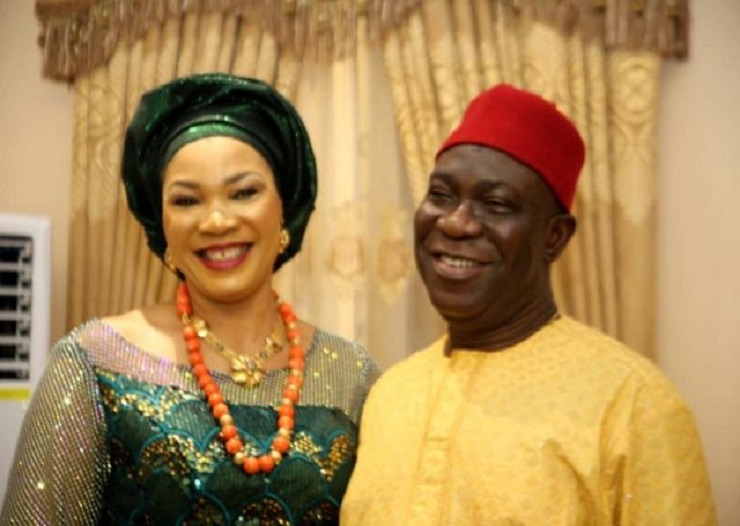
The guilty verdicts pronounced by Justice Jeremy Johnson at Bailey Court in London recently on former Deputy President of the Senate, Ike Ekweremadu, his wife, Beatrice Ekweremadu, and their medical doctor, Obinna Obeta, offer serious lessons for all Nigerians. Given the fact of the average Nigerian mentality that everything is always possible, what happened to Ekweremadu could as well happen to other Nigerians. One lesson of course, is a reminder that Nigerians are too inclined to cut corners to achieve personal objectives, and without dwelling on the aftermath of that action.

But the world is not moving in that direction, and as it happened to the Ekweremadus, there is always a rude shock waiting to happen. It is, therefore, about time Nigerians do away with the culture of impunity, and follow due process. Again, even if the former Senate Deputy President is not to blame for the abysmal condition of Nigeria’s healthcare facilities and services, an improvement in that sector can save many Nigerian souls, and prevent as many mishaps, besides saving precious foreign exchange for use in other vital areas of the country. It is also time to turn around the focus on medical tourism, and if anything, seek to establish the best medical services in the globe. Going by available world records, this is something Nigeria can attain.

Having been found guilty of human trafficking, the convicts have been remanded in custody, awaiting sentencing on May 5, 2023. Ike Ekweremadu, his wife, and Obeta were charged with human trafficking under sections 2(1)(2)(3)(4) and 5(2) of the Modern Slavery Act 2015 of the United Kingdom. Following the complaint lodged before the London authorities by a 21-year-old Nigerian potential kidney donor about an alleged plot by the Ekweremadus and Obeta to illegally harvest his kidney, the Ekweremadus and Obeta were arrested and prosecuted under the Modern Slavery Act. This act stipulates that a person commits an offence if the person arranges or facilitates the travel of another person with a view to exploiting and harvesting his organ, regardless of the victim’s age and whether consent was given or not. Specifically, section 5(2) provides that a person guilty of an offence under section 2(4) is liable “on conviction on indictment, to imprisonment for a term not exceeding 10 years.”

After the trial, the jury held that the convicts conspired to bring the 21-year-old Nigerian to London to illegally harvest his kidney. The verdict is the first of its kind under the Modern Slavery Act 2015. The Ekweremadus and Obeta now risk being jailed for a term not exceeding 10 years on May 5, 2023.

It is unfortunate that such a tragic fate should befall the Ekweremadus and Obeta. On purely parental, affectionate, and charitable grounds, the mission of the Ekweremadus to seek a potential kidney donor in order to save the life of their daughter, Sonia, could be rationalised. Parents owe their children the best they can offer them for their material, spiritual, and general well-being. No responsible father or mother would fold his/her hands and allow their sick child to die without doing their best to save his/her life. In the case of the Ekweremadus, it is on record that they had gone through many agonising moments to save the life of Sonia, their daughter.

Giving evidence in his defence on March 7, 2023, Ike Ekweremadu said he thought he was being scammed during the period of trying to get a donor for Sonia. He told the court that Sonia was studying for a Masters degree at Newcastle University when she started experiencing “swollen limbs” in December 2019. Ike Ekweremadu told the court that Sonia was later diagnosed with a “kidney issue,” which caused her “distress,” culminating in his withdrawing her from the university after she “collapsed” in class one day. Ekweremadu said his daughter’s deteriorating condition was “scary,” adding: “medicines she was getting (were) not essentially working, so her situation was getting worse,” he told the court.

The travail of the Ekweremadus elicits human sympathy. However, as a senior lawyer and a former Deputy-Senate President, with lots of parliamentary and legal experiences, Ike Ekweremadu should have acted within the confines of the rule of law. He should have known or at least sought advice from his lawyers in Nigeria about the strict liability that attaches to human trafficking in the United Kingdom before embarking on his journey to London. Alternatively, Ekweremadu could have handled his interaction with the young potential donor better and more transparently, even though his kidney, as revealed by the London hospital, could not match his daughter’s. It would appear that lack of transparency and honesty in communication were central to the proceedings and the eventual conviction. Instead of acting so charitably, Ike Ekweremadu, in the fashion of a typical Nigerian big man, apparently exercised the “entitlement mentality,” which has now landed him, his wife and Obeta in this unfortunate situation. The prosecutor, Hugh Davies KC, told the court that the Ekweremadus and Obeta had treated the potential donor as “disposable assets – spare parts for reward.” The behaviour of Ekweremadu showed “entitlement, dishonesty, and hypocrisy,” prosecutor Davies told the jury. He said that Ekweremadu “agreed to reward someone for a kidney for his daughter – somebody in circumstances of poverty and from whom he distanced himself and made no inquiries, and with whom, for his own political protection, he wanted no direct contact.” Davies also said: “What he agreed to do was not simply expedient in the clinical interests of his daughter, Sonia; it was exploitation, it was criminal. It is no defence to say he acted out of love for his daughter. Her clinical needs cannot come at the expense of the exploitation of somebody in poverty.”

The conviction of the Ekweremadus and Obeta, among other lessons, testifies that the rule of law is sacrosanct and ought to prevail at all times, no matter whose ox is gored. This conviction emphasises that nobody is above the law of the land and that both the poor and the rich are equal before the law and, as such, should be treated equally before the law. The biggest lessons Nigerians can learn from the conviction is that the same criminal justice system should apply to both the rich and the poor. In practical terms, the rich in the country are able to get away with blue murder while the poor gets heavily punished for even petty crimes, just to impress that the criminal justice system is working. Besides, the existence of adequate laws, including those on human trafficking, to curtail criminality in this country has not been matched with prosecution of offenders of those laws. The Ekweremadu’s travail has again shown that this disposition is not generally applicable elsewhere. To deem so is to fall into the Ekweremadu’s kind of travail.

It is important that the rule of law is made to triumph in Nigeria. A country not governed by law is a recipe for chaos and anarchy. The judiciary should be restored to its rightful place in the scheme of things in Nigeria. The judiciary is not just any institution; it is that indispensable arm of government charged with the dispensation of justice. “Fiat justicia ruat coelum” (Let justice be done though the heavens fall). Remove justice, said St. Augustine, and all you have are great robberies.

Finally, the conviction of the Ekweremadus and Obeta should act as a spur for the Nigerian authorities to develop the medical facilities in Nigeria to discourage medical tourism in Nigeria. If there were well-equipped hospitals with medical experts, the Ekweremadus and other rich Nigerians perhaps would not have been travelling abroad for medical tourism. The ordinary primary healthcare system for the prevention of preventable diseases such as polio, cholera, and measles is virtually non-existent in different parts of Nigeria. Nigeria is the first country in the world with the highest number of people lacking access to basic primary health care, and life expectancy in Nigeria has drastically reduced to 45. The tragedy is worsened by the fact that most Nigerian medical doctors are daily fleeing Nigeria to practise medicine abroad where they are highly remunerated and appreciated.

The incoming government should invest heavily in medical facilities. Nigerians should have unimpeded access to basic primary and secondary healthcare facilities. A state of emergency should be declared in the Nigerian health sector. Health is wealth.

The Guardian Nigeria, 19 April 2023

Is a false statement under oath (perjury) to INEC, by itself, a disqualifying factor for a Nigerian presidential candidate?

By RACE Achara

Is a false statement under oath (perjury) to INEC, by itself, a disqualifying factor for a Nigerian presidential candidate? Under what constitutional provision or law?

The constitution rather disqualifies such a candidate for a specific, different, offence, to wit: presenting a forged document (at any time) to INEC.

In Adaba Abah of 2017, the SC took the view that the trigger for disqualification was complete when this fact was established even under civil proceedings. In effect, there’s no necessity for prior proof of a conviction in a full-blown criminal trial.

We need not confuse the position under the erstwhile Electoral Act (EA) with the current situation of things.

Before the EA of 2022, virtually anybody could challenge a candidate’s false statement on oath to INEC (even when the falsity did not amount to a forgery). This challenge at a (Federal) High Court, if successful, disqualifies, and can even unseat, a candidate who has already been sworn in for legislative duties.

The current EA does not retain this. Only the preclusion as it relates to forgery in the constitution has been retained.

But this is no disclaimer regarding the trending controversy which Journalist Hundeyin has raised regarding the question of whether the president-elect is constitutionally disqualified or not as a result of his acquisition (note, not merely the retention) of a foreign citizenship. [Editorial aside: a full stop rather than a question mark is appropriate here. The contrary widespread practice in our appellate briefs and an unfortunate dictum by a learned JSC villifying what is actually the correct punctuation mark when a sentence leads with the word “whether” serves as justification for this extended clarification statement].

It is easy to be misled by the marginal note (MN) to section 28 of our 1999 constitution (which has remained unaltered these 24 years). The section crucially deals with forfeiture of citizenship, not necessarily with the right to acquire or to retain dual or multiple citizenships.

The forfeiture sanction in section 28 has no application whatsoever to a person who is a Nigerian citizen by birth (and who had not earlier effectively renounced that status under section 29).

Section 28 says that when a citizen by registration or by naturalization acquires our Nigerian citizenship, that s/he would automatically forfeit it if, within a certain stated period of months, s/he does not effectively renounce the citizenship of the other country or countries which she previously held and retained after she acquired Nigerian citizenship.

Forfeiture does not apply to a citizen of Nigeria who is so by birth (as defined under section 25). What applies is renunciation. However, to any extent that its provisions might apply to a Nigerian citizen by birth, section 28 could only possibly have that effect only in respect of such of our citizens by birth who “voluntarily acquire” such foreign citizenship or who voluntarily swear an oath of allegiance to such a foreign power of which s/he is not, under the applicable law of that country, a citizen by birth.

What this means is that section 28:

a) takes the right of dual citizenship for granted;

b) focuses on forfeiture of an already acquired Nigerian citizenship, not steps to take before acquiring one;

c) exempts Nigerian citizens by birth from the potentiality of the section 28 power of forfeiture; and

d) protects the other classes of citizens who merely acquired theirs by registration or naturalization if they effectively renounce the other citizenships within 5 months of the grant or, if without so renouncing it, they are able to show that such prior foreign citizenship was (not acquired but arose automatically and is retained as a consequence) of birth.

However, the constitution makes other provisions about the qualifications for holding office (appointive and elective) which provisions apply whether or not a Nigerian citizen (dual or not; by birth or not) had escaped the forfeiture, renunciation, or revocation of his Nigerian citizenship.

Thus, even if a citizen by registration or by naturalization had effectively renounced his previous citizenship within 5 months after the Nigerian grant, he would escape the automatic forfeiture of his newly acquired Nigerian citizenship (under section 28) but would still not be entitled (within 10 years thereafter) to stand for election to the office of President or of Governor in Nigeria! Indeed, a citizen by naturalization is, under certain conditions, precluded from even certain political appointments regardless of his compliance with conditions that exempt him from the forfeiture sanctions prescribed by section 28.

We lay the foundation above in order to demonstrate that when section 131 or 137 specifies a qualifying or disqualifying condition for the elective office of Nigerian president and goes ahead to make it subject to provisions of section 28, that it merely thereby indicates (although by inelegant drafting) that satisfaction of the requirements under section 137 for qualification are still subject to the additional qualification under section 28 (that the candidate had not earlier forfeited his or her Nigerian citizenship). The better view however is that the reference in section 137 to section 28 is otiose insofar as section 28 could never have any application to the office of President, which section 131 had already made exclusive to Nigerian citizens by birth.

Clarity seems to lie with the distinction the relevant provisions of the constitution have consistently and continuously drawn between, on the one hand, citizenships which have been retained at the point of acquiring another; and, on the other hand, citizenships, which have been acquired as an accretion on an already existing (and usually automatic or birth-based) citizenship status.

Section 28 as a forfeiture power applies automatically to forfeit Nigerian citizenship that has been acquired by a foreigner who failed or neglected to, while being a newly minted Nigerian citizen, renounce any prior citizenship except those s/he retains by birth, not by acquisition.

Semble, a Nigerian citizen by birth who is also by birth the citizen without an independent choice of a foreign country can, under section 28, retain that foreign citizenship without the consequence of forfeiture if s/he fails, neglects, or refuses, to renounce it. But what of when that or any other Nigerian citizen acquires or acquired foreign citizenship (not one merely retained by reason of birth)?

Section 28 suggests that, even here, the sanction of forfeiture that would automatically apply in the case of a formerly non-Nigerian citizen, would still not apply to forfeit the non-acquired but automatic citizenship status s/he retains by virtue of birth.

Nevertheless, this would not necessarily affect any consequences, which that conduct may attract to such a citizen of Nigeria by birth under other provisions of the constitution regarding the qualification, vel non, to stand for particular offices.

In the event, section 137 makes one aspect of its conditions of presidential disqualification fall under the heading of continued Nigerian citizenship but predicates this under two distinct categories.

In the one, a continuing citizen of Nigeria by birth is nevertheless disqualified from becoming president if he has acquired the citizenship of a foreign country (but, subject to section 28, which makes him not thereby to forfeit his retained Nigerian citizenship). Here, a Nigerian citizen by birth is protected from any additional foreign citizenship by birth, which in virtue of childhood (birth) cannot be attributed to the exercise of his voluntary will. In this case, he can, except otherwise prohibited elsewhere, disclose the position to INEC and run for the relevant office. It is a different kettle of fish (excuse the tired metaphor) if the different allegiance was not forced on him by birth but something he, at full age, voluntarily elected to acquire. This acquisition will not deprive him of his Nigerian citizenship by birth as dictated by section 28. However, although he remains a Nigerian citizen by birth, section 137 precludes him from being one of the Nigerian citizens by birth who the selfsame 1999 Constitution permits to run for office as president of Nigeria.

In the other, such a Nigerian citizen by birth is yet disqualified from the Nigerian presidency if (regardless of not forfeiting his citizenship by birth under section 28) he voluntarily swears allegiance to a foreign country (whether or not in swearing the allegiance he had also acquired the foreign citizenship).

The clear implication is that a person can, without forfeiture of his Nigerian citizenship and, even without going as far as acquiring, in addition, the citizenship status of another country, yet be disqualified from running for the elective office of Nigerian president if that person is shown to have voluntarily (usually on adulthood and not automatically by unconscious birth) acquired the citizenship of a foreign country or sworn allegiance to it.

The Hundeyin revelation can only effectively be analysed along the lines of a nuanced understanding.

Prof. R. A. C. E. Achara, Ph.D. (Nig.)

Doctoral winner of the University of Nigeria Postgraduate Prize for Law;

Bill & Melinda Gates Foundation Fellow of the Five College African Scholars Program;

Millennial Chairman, NBA Enugu Branch 2000-2002;

Principal, Prof. RACE Achara Law Chambers,

New Haven, Enugu.

5:08 hours, Wednesday,

19:04:23.

TIPS