Home Blog Page 782

Nigerians want a country that prioritizes its citizens’ well-being and welfare, Somber Tuesday series by Mojúbàolú Olufúnké Okome

#SomberTuesday! Contestations on the results of the elections continue. But there was at least one reported effort to persuade the Labour Party’s Peter Obi (made by former Governor of Enugu state, PDP’s Senator Chimaroke Nnamani) to drop his lawsuit and negotiate a deal for the Southeast. The Party has also raised an alarm alleging that Lamidi Apapa, whose chairmanship of the party is still under contention, has approached the Presidential Election Petition Tribunal, asking it to dismiss all the cases filed by the party and its presidential candidate.

Disputations over the results continue at the governorship and National Assembly levels. The most serious case is in Adamawa State, where there was a runoff between APC’s Aishatu “Binani” Dahiru and the incumbent, PDP’s Ahmadu Fintiri. The debacle that erupted involved the INEC Resident Electoral Commissioner in Adamawa, Hudu Yunusu-Ari, prematurely announcing on April 15 that Binani had won before the conclusion of collating results for the runoff election. INEC declared the announcement null and void and had the returning officer declare Finitri as the winner.

In the meantime, in a case of mistaken identity, the ex-Vice Chancellor of Usmanu Danfodiyo University, Prof. Abdullahi Zuru, who is an INEC National Commissioner, was brutally attacked, and even stripped naked by people who thought he was Hudu Yunusu-Ari, the Resident Electoral Commissioner (REC). 

Binani made a victory declaration. When INEC declared the announcement null and void, Binani brought a lawsuit against INEC. The next hearing is on April 26. Many Nigerian women have lamented the situation as Binani would have been Nigeria’s first elected female governor if elected. She has also been criticized for not following due process. Frankly, to succeed in Nigerian politics, the women have had to accommodate themselves to the practices already normalized in the system. Binani is no exception. In preemptively announcing her victory, she did what many male politicians have done in similar situations.

The deeply contested nature of Nigerian elections and politics continue. It doesn’t help that INEC is inefficient, reactive and that its haphazard management of the elections further decreased the confidence of the electorate in the integrity of both INEC and the elections. Ethnic divisiveness and hate speech are increasingly normalized, making it clear that the project of nation-building is still challenging. Nigeria is democratizing but democracy remains elusive. So is electoral integrity.

The currency scarcity combines with a weak and declining economy to make life difficult for everyone, particularly the masses due to the technological logjams and hiccups.

Majority of Nigerians are youths, and the country’s political, economic, and social conundrums cause them hardships serious enough that many have embraced japa–leaving the country by any means necessary to seek better opportunities abroad, as the only avenue to success and upward mobility. In a country with so many young people, the political leadership at the highest levels are octogenarians. Who repesents the youths? Why are patriarchy, oligarchy, and gerontocracy so entrenched in Nigeria? Where are the women in leadership? How about the people with disability? Can poor Nigerians aspire to political office? What is the essence of democracy?

Why have we allowed personal and human insecurity to become banal realities? Why are there so many abductions and kidnappings? Why are our political institutions so weak? Why is infrastructure so woefully inadequate? Why do we have such high unemployment and underemployment? Why so few decent jobs? Why is fulfilling the social contract between the people and leaders so impossible?

Nigerians need democracy and economic development, personal and human security. They want a country that prioritizes its citizens’ wellbeing and welfare. The masses need to meet basic needs as a matter of urgent  priority. They should be able to hope for a brighter future just like the elites.

#EndSARS youth protesters were active participants in the elections, who were confident that voters would be free to choose their representatives, but they were made to understand that our democracy provides no such opportunities. In their #EndSARS demonstrations, they demanded good governance, an end to police brutality, extortion, impunity, economic inequality, marginalization, targeting of youths and other minorities, and cessation of political violence but were brutally suppressed.

The 2020 Lekki massacre should be seared in our collective memory. Peacefully demonstrating youths at #LekkiTollGate & other locations faced state-sponsored violence and repression. What is the meaning of democracy if peaceful protests are so handled? There is a need for deep reflection on how to address our challenges of nation-building, democratization, and sustainable development.

#NigerianWomenArise #EndPoliceBrutalityinNigeriaNOW #EndSars #EndSWAT #EndImpunity.

Howard Zinn’s statement should be taken seriously by Nigerians interested in democracy: “Civil disobedience, that’s not our problem. Our problem is that people are obedient all over the world in the face of poverty and starvation and stupidity, and war, and cruelty. Our problem is that people are obedient while the jails are full of petty thieves, and all the while, the grand thieves are running the country. That’s our problem.”

Now to my weekly repetition: Let the kleptocrats give back our stolen wealth so that we can fix our infrastructure, schools, hospitals, and also offer worthwhile social protection to our people. Let the masses enjoy the full benefits of citizenship in Nigeria. Let the leaders and political class repent and build peace with justice.

This is no time for politics as usual. The people elected should be those trusted to bring justice, equity and human security to the entire country, not expedient, unethical and egocentric individuals determined to dominate for self aggrandizement or sectional gain. We don’t need oligarchs’ continued domination. We also need a government that puts the interests of majority of citizens first.

As Buhari comes to judgement…


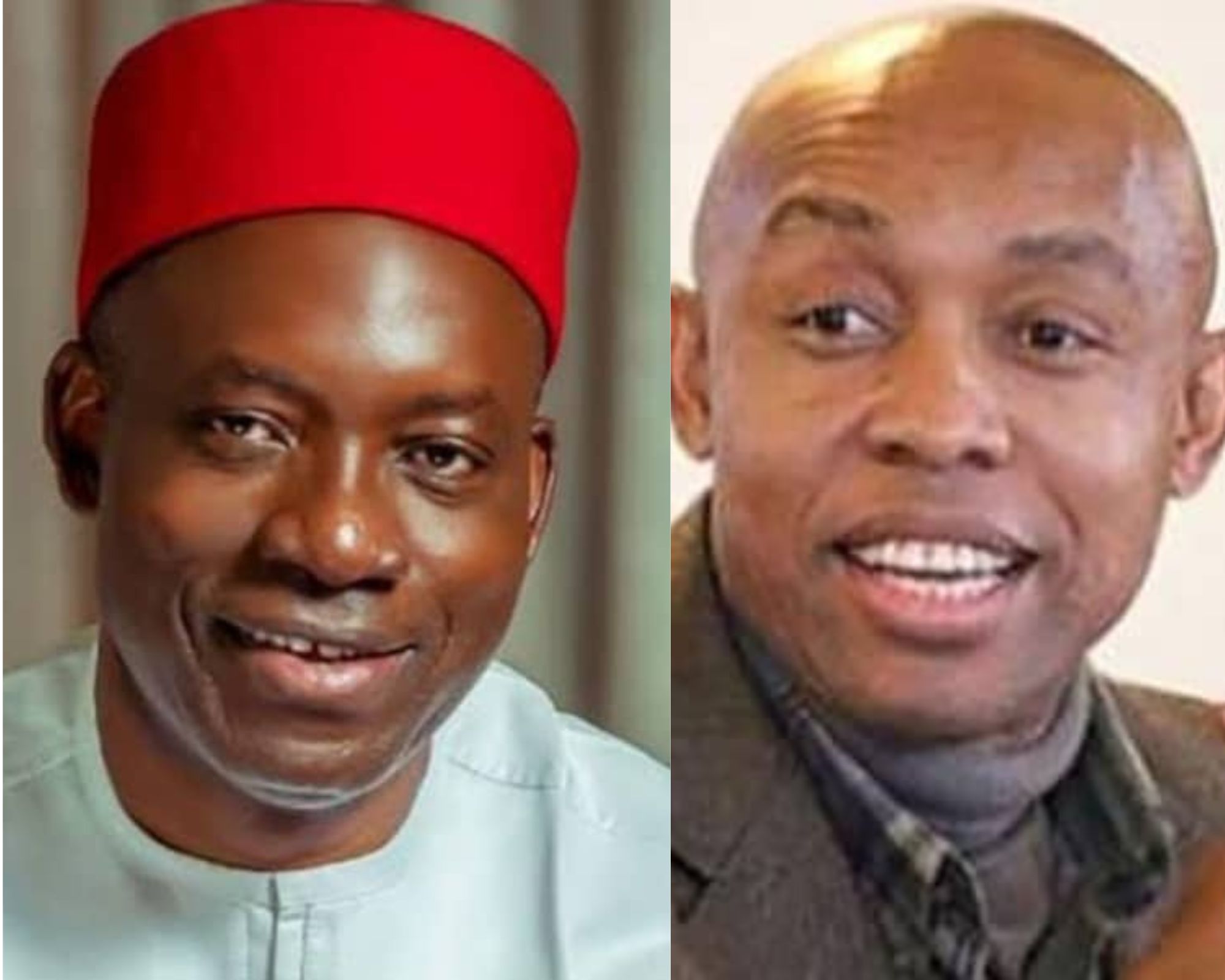
By Sonnie Ekwowusi

President Buhari has come to judgment. After exercising presidential power, judgment follows. Pricked by pangs of conscience on the last Sallah Day, Buhari realized that he committed many injustices against numerous Nigerians during his 8-year misrule. Consequently, he apologized to Nigerians and begged for their pardon. “God gave me an incredible opportunity to serve the country. We are all human, and if I have hurt some people along the line of my service to the country, I ask that they pardon me… All those whom I have hurt, I ask that they pardon me,” said a seemingly remorseful Buhari.

President Buhari has destroyed the lives of countless Nigerians during his 8-year misrule. Therefore, it is not surprising that he is now sitting in judgment with his conscience. A man reaps whatever he sows. The obligation to avoid inflicting physical or psychological harm on others is a primary ethical teaching of Prophet Mohammed (blessings and peace of Allah be upon him). “He who causes harm will be harmed by Allah, and he who acts in a hostile manner will be treated in a hostile manner by Allah” (Jami’al-Tirmidhi, No. 1306). Unfortunately, the Buhari administration has caused tremendous harm to many Nigerians. As we speak, many Nigerians, young and old, are leaving the country in search of the so-called greener pastures abroad. And if the mass exodus of Nigerian medical doctors from Nigeria to Europe and America is not arrested now, there will be fewer or no medical doctors available in Nigeria by 2030. Writhing under the pains of suffocating Buhari’s policies, many multinationals shut down their operations in Nigeria, while others simply fired their staff. From 2016-2018, for example, 9.3 million Nigerians lost their jobs. From 2015-2018, poverty in Nigeria tremendously increased. Nigeria has now taken over from India as the poverty capital of the world. According to the African Development Bank (ADB) Nigeria Economic Outlook, about 152 million Nigerians live on less than $2 a day, representing approximately 80% of the country’s estimated population of 190 million.

The United States Department of State has issued a damning assessment of Buhari’s government. In the 48-page Human Rights Violation Report, it stated that impunity remained widespread at all levels of government in Nigeria during Buhari’s reign. It notes that the Buhari government lacks transparency. The report also indicted the Buhari government for not adequately investigating or holding police or military personnel accountable for many extrajudicial killings. The Buhari government came to power on the mantra of fighting corruption. But tragically, the Buhari government is now defined by corruption. For example, the United States Human Rights Report has scored President Buhari’s government low for corruption. The Report states, among other things, “Although the law provides criminal penalties for conviction of official corruption, the government did not implement the law effectively, and officials frequently engaged in corrupt practices with impunity. Massive, widespread, and pervasive corruption affected all levels of government and the security services.”

Buhari’s currency redesign policy is still inflicting pain on Nigerians. Imagine having money in your bank account and not being able to access it because of a badly-conceived currency redesign policy. Imagine bank customers endlessly queuing up under the sun to access their own money in the bank. I gather that many hospitalized sick Nigerians have died simply because their relatives were unable to withdraw money from the banks to purchase drugs for the deceased. Is this not a sin that cries to heaven for vengeance?

At the twilight of the 2023 Election, Buhari promised Nigeria and the international community that he would leave a legacy of a free and fair 2023 election in his 8-year tenure. Now, it is no longer news that INEC organized the most rigged election in the history of elections in Nigeria. Why has President Buhari not queried or sacked the INEC chair Prof Mahmood Yakubu for organizing the most scandalous election in Nigeria?

The foregoing attests that President Buhari has failed in office. Buhari’s suffocating policies have led to the deaths of many Nigerians. This is why the man is laboring in vain to pacify his conscience, which has adjudged him a failure. A guilty person might escape human justice wrought in the court of law; they might take flight from their guilt through ingenious rationalization, but they cannot escape from the ultimate justice in the recesses of their conscience. The natural law is written in the heart of every rational person. Therefore, every rational person, whether they are Christian, Muslim, Buddhist, atheist, Marxist, internet free-thinker, juju worshipper, agnostic, animist, or otherwise, is under the judgment of the natural law written in their heart. For example, in one of the tragedies of Sophocles, the woman Antigone sought permission from the King to give her dead brother a burial befitting a human being. But the King refused because the dead brother was adjudged an enemy of the State. However, Antigone approached the King and told him that there was another law (natural law) higher than the King’s law, which obliged the King to give her brother a proper burial. Antigone was neither a Christian nor a Muslim. She had never read the Bible or the Koran, yet she recognized a higher law, the law of conscience, which obliged the King to give her brother a befitting burial. When we commit an injustice, our consciences continue to torture us until we make amends.

There is this anecdote of some Japanese ladies who had committed several abortions in their youthful days. Pricked by their consciences, they went and molded some effigies that actually looked like the babies they had murdered, placed them one by one on a platform, and started bowing before these effigies, asking them for forgiveness for the murders they had committed. This is natural law at work. In Dostoevsky’s epic work, Crime and Punishment, Raskolnikov tried to erase his crime from his heart by ingenious rationalization, but upon discovering the inescapable basis for ultimate justice in his heart, he went to Siberia and served an eight-year prison term to appease his conscience.

Therefore, if Buhari really wants to appease his conscience and have a restful and peaceful retirement in Daura or Niger Republic, he should make amends or reparations for the many injustices he committed against Nigerians. Allah will treat him the way he treats others. Allah will not have mercy on him unless he has mercy on others. Therefore, President Buhari should treat people well in the remaining days of his tenure. He should show mercy to others to enjoy mercy and peace in Daura. He should show kindness. Allah loves those who are kind. Therefore, President Buhari should order the release of all prisoners unjustly detained in Nigerian correctional centers, including Nnamdi Kanu, who, in actual fact, has been discharged and acquitted by the court but is deliberately left to languish in prison. Buhari should also ensure that his government obeys all pending court orders served on it.

Ninety percent of President Buhari’s key political appointees are from his part of the country, and he refused to alter this imbalance in conformity with the pluralistic and multi-ethnic nature of Nigerian society and the Federal Character principle as enshrined in section 14(3) of the 1999 Constitution. Now, as he is quitting office, how would Allah judge him for this act of injustice? The Golden Rule states, “Honesty is the best policy.” Allah, the Exalted and Glorious, says, “stand firm for justice…even if it be against yourselves, your parents, and your relatives.” Therefore, Buhari should stand firm for justice and correct the lopsided political appointments in his government before he leaves office to avoid his conscience torturing him when he retires to Daura. He should also order for the arrest and prosecution of INEC chair Prof Mahmoud Yakubu for squandering a gargantuan sum of N3O5 Billion in organizing the most chaotic and rigged election in Nigeria. There is no doubt that Prof. Yakubu is a big disgrace to Nigeria. Therefore, justice demands that Buhari should fire Prof. Yakubu before he (Buhari) leaves office.

Ethical conduct is the anchor of the Islamic personality of a Muslim. There is an obligation on Muslims to improve and enhance the welfare of others, including care for the sick. But President Buhari cares no hoot about the welfare of the sick. Rather than improve and re-equip the existing public hospitals in Nigeria so that many sick Nigerians could go there for medical treatment, Buhari prefers going for medical tourism in London to cater for his own health. Therefore, in his remaining days in office, Buhari should show mercy to sick Nigerians. He should visit the hospitals and console the sick patients there. If President Buhari wants peace in his retirement, he should ensure that the daughter of Zion and conscience of Nigeria, Leah Sharibu, regains her freedom. Otherwise, the bad prayer of this girl will never allow Buhari to enjoy peace in his retirement. President Buhari has not only over-borrowed money but also misused the borrowed money in inanities. In fact, Nigeria’s rising debt profile spells doom for the incoming government.

Therefore, if Buhari wants peace in his retirement, he should team up with the incoming government to rein in Nigeria’s debt. Buhari is very conscious of his place in history. He is afraid that history will judge him harshly and negatively. But he should not forget that he has repeatedly promised to end insecurity in Nigeria. Even in March 2023, the President reiterated his government’s commitment to winning the war against terrorism and other forms of insecurity. The truth of the matter however is that insecurity in Nigeria has worsened despite Buhari’s assurances that he will defeat insecurity before leaving office. As Buhari leaves office without fulfilling his aforesaid promise, it is doubtful whether he will enjoy peace in his retirement.

Sarauniyar Kumbwada: The woman king

By Lillian Okenwa

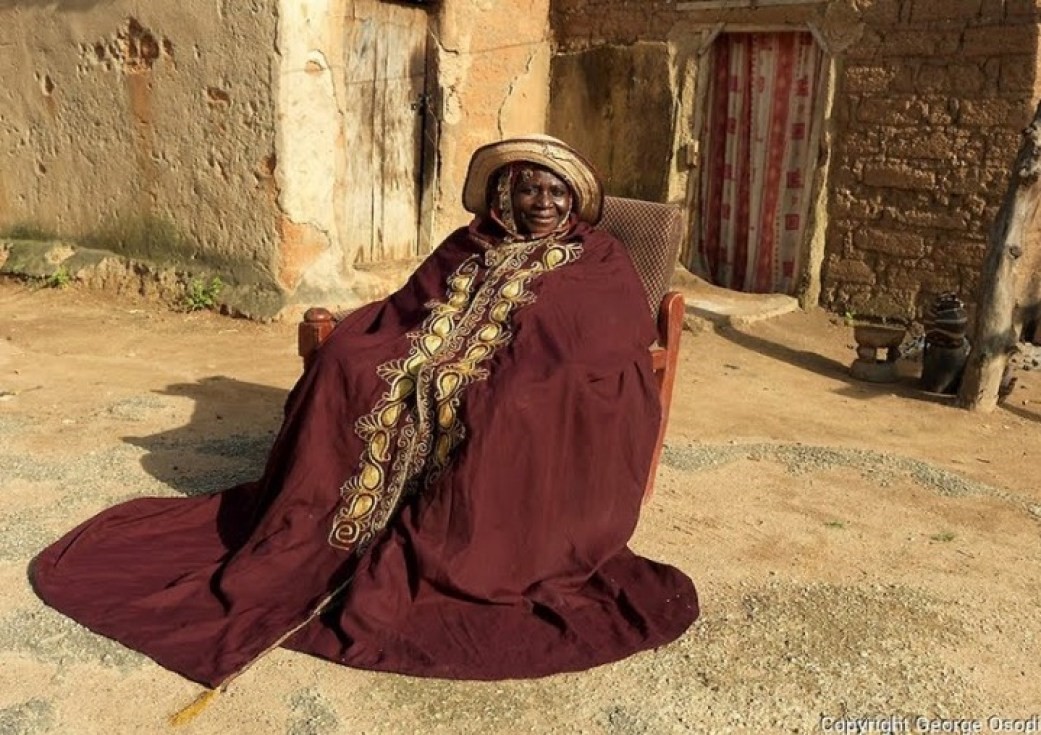
In a remote part of Niger State in Northern Nigeria lies this unique community where an ancient curse is believed to have made it impossible for men to be kings. History has it that all the men who attempted to rule in the past died mysteriously. Welcome to Kumbwada where only women reign as monarchs!

The Sarauniyar Kumbwada, Hajiya Hadija Ahmed, the only female traditional ruler in conservative Northern Nigeria in an interview with CNN revealed that “If a man insists, we will let him. And then after two or three days, he will die.” So far, no man has tried to usurp the throne.

Kumbwada is one of the many vassals of the legendary Queen Amina of Zazzau. Centuries after the demise of the warrior Queen, the area which is now a district still experiences her domineering influence as only women within her lineage rule.

Two of the Sarauniyar’s maternal uncles, Usman and Suleiman, who assumed rulership of the kingdom shortly after the area was liberated by Queen Amina and her army from an invasion, never survived two weeks on the throne.

When she’s sitting in her palace during a typical meeting, her village heads, all male, squat meters away on the carpet in front of her.

Then names of each of the community heads within the Kumbwada district in Muya local government area of the State will be called from what looked like a register to ascertain their presence, by the palace secretary, after which the agenda of the day will be read out. The Sarauniyar then takes over the proceedings.

And although her official duties include settling marriages, land disputes and generally maintaining order in the community, the Queen who has reigned for 12 years since inheriting the throne from her late mother also desires to introduce some changes.

“Women must be educated,” she said. “Education means women can be anything they want to be.”

In many remote parts of Nigeria, women have very minimal rights and little access to education and so for the women of Kumbwada and thousands of other subjects, the Queen offers hope.

Moreover, with many youths in the community moving to the city in search of work and money, there’s a fear of traditions being lost. Meanwhile, elders of the community blame foreign influences from the towns for what they see as a growing disrespect of culture and beliefs.

Mohammed Sani, who is known as “Custodian of the Shrine”, told CNN, “The West is making our tradition go back. We want our people to be enlightened, but Western values are having a bad effect.”

However, the Sarauniyar acknowledges that modernity does bring some benefits. “I have seen many changes,” she said. “Things have improved, and the new town has helped education and infrastructure.”

Kumbwada is said to be the administrative headquarters overseeing several Gbagyi speaking communities, which had come under attack by ‘foreign’ mercenaries then. Queen Amina and her conquering army were said to have been on an expedition through the territory and had to stop over to ward off the invaders.

The name Kumbwada itself emerged as a result of the happenings at that time. The natives and their warriors used to retreat into an ancient cave and mountains whenever an enemy approached before launching an attack. According to Prince Danjuma, there was a traditional rite that natives perform before a major war.

“They prepare Kunu called Kum bada in Gbagyi, laced with protective medicine. They will now call on everybody to come and drink the mixture, and that was how the community derived its name,” he explained.

There is also a myth surrounding a large stone in the area called Zagura, which always alerts the natives when enemies approach. “When an invading army approaches, the stone will make an explosive-like sound warning the natives to take cover in the cave and mountains,” he said. 

When peace returned to the area, Queen Amina rode towards the present Suleja, leaving some of her entourage, which include Usman, Sulieman, Rahamatu, and others behind. The natives then persuaded one of them to take over the reign for fear of another invasion. Usman was asked to assume the throne but he died a week later. Suleiman, his twin brother was also approached to inherit the throne, but he was reportedly reluctant. He later gave in to pressure, particularly from Rahmatu, his elder sister but also died nine days after he was turbaned.

Only then did the natives consult the oracle which decreed that only females could rule the kingdom. Rahmatu was then persuaded to assume leadership and she reportedly ruled for over 60 years as a vassal of Queen Amina.

Among the innovations she brought to the kingdom was its fortification with earthen walls, a protective barrier to ward off any intrusion.

Parts of the walls still exist in the old Kumbwada along with the ancient cave and the protective stone. She was succeeded by Queen Hadija who ruled for 55 years; Queens Maimuna, 41 years; Fati (I) –  37 years; Fati (II) who held sway for 33 years died at the age of 113. In order not to leave a vacuum after her demise, her brother, Ahmed was asked to act until a substantive ruler emerged, but he decided to remain on the throne against the advice of the elders.

A serious epidemic of chicken pox was said to have hit the kingdom, with consequent deaths. Ahmed was also said to have lost his sight to the epidemic. Consultations were made and it was discovered that his refusal to abdicate the throne for the chosen one, was responsible for the disaster.

He was banished from the kingdom to Bushi. Luckily he recovered. The current Sarauniyar, Hadija Ahmed was then turbaned as the new Queen in 2000. 

Additional reports from CNN and Daily Trust

The Courts are becoming infamous – James Ogebe, JSC

By Lillian Okenwa

In recent times a lot of controversial judgments have emanated from the hallowed chambers of the courts and the bashing of the judiciary has been unrelenting.

It gets even more interesting when a retired Justice of the Supreme Court joins in condemning some of the activities of his compatriots.

Well, Hon. Justice James Ogebe, JSC, bared his mind at the US-based ATSJC’s Courts and Society Webinar Series alongside other notable speakers on the topic “The Courts’ Role in Nigeria’s Electoral Process” recently.

Ogebe JSC, (Rtd.) was the Keynote speaker while Discussants were: Honorable Justice Adam Onum, (Rtd.), a retired Chief Judge of Benue State and a Former Election Tribunal Chairman; Mallam Yusuf Ali, (SAN), Election Expert; Nella Andem-Ewa Rabana, (SAN) a former Attorney General/Former Gubernatorial Candidate in Cross River State and Mr. Kunle Lawal, Executive Director of Electoral College Nigeria /Politician/Patriot

Dr Ari Niki-Tobi Founder/CEO of ATSJC was the Moderator.

During the question and answer/ interaction session, Justice Ogebe who was asked how he determined the historic impeachment case of the Oyo state Gov. Ladoja said: “My advise to justices is that they should be interpreting the Constitution and the law as it is, without looking at anybody’s eyes or face to do justice and pure justice.

“In the case of Ladoja, some members of the state Assembly in Oyo state had disagreement and so some of them left the house of assembly and went to a hotel room. They didn’t have the numbers to impeach and said they had impeached the governor. The speaker was not part of them, the deputy speaker was not part of them. They then suddenly chose somebody else as Governor.

“They argued at the high court that impeachment cannot be interfered with by the court. We looked at the constitution very carefully and said well, ‘Those rascals who were in the hotel who impeached the governor cannot constitute the state assembly.’ So we were able to wriggle out of it and restored the governor and that’s exactly what happened in Oyo State in Ladoja’s case. 

“It was followed in Anambra State where they hurriedly went and removed the governor (Obi). Just before we gave our own judgment, they quickly went and removed him. They were following what was happing in Oyo. And the case came before us in the court of appeal Enugu and we restored him.

“The administration then was trying to make light the issue of the removal of governors. And we said ‘no! If the governor of a state can be removed at the whim of any president, then there will be no stability in the system at all.’

“So, I advise all Judges and Lawyers should be very careful to make sure that the constitution is not breached by the politicians who are all out to find loopholes with which to breach the constitution.”

His Lordship further stated: “That is why in my paper, I tried to suggest that pre-election matters of that nature should not go beyond the High Court, if at all…

“The High Court rejected the position of Lawan, the Court of Appeal also threw out his appeal, and it got to the Supreme Court, and then we had that strange ruling.

“Quite frankly I’ve been a justice of the Supreme Court. I disagree entirely with that ruling, and I’ve had occasion to discuss it with some of the justices of the Supreme Court who don’t agree with that either. That is why I say that such matters should be dealt with very carefully. These people should not have been given any opportunity.

“The Supreme Court is a final court. And they should be careful not to give any ruling without careful observation.

“In fact, they should be careful that even if it means applying their prerogative as the Highest Court to overrule some of the technicalities, like say, ‘Oh, the originator of the suit did not file the originating summons, or this and that,’ these are technicalities.

“There was a case in Nigeria where a High Court judge was sentenced to imprisonment and fine for an offence, and eventually he appealed the matter. It went to the Supreme Court, and the Attorney General of the state was objecting on technical grounds, that the grounds were defective and all that.

“The Chief Justice said, ‘Look, whether the man came on his head or shoulders or not, the matter is before us and we’re going to decide it right now.’

“And they said, ‘Look, the High Court judge who is alleged not to have a gun license, and all that as the Attorney General alleged, can’t you go and get the license for the judge? That’s the kind of thing you bring here?’ There and then they discharged and acquitted the judge.

“So, the Supreme Court has the right, even when there’s a defective process, they look at the substance of the case and say, ‘look, we’re going to do justice in this case.’ That would have solved the problem.

“As judges, they should be careful in election matters, not to do anything that will make the court infamous. But the majority of judges are very careful. They are good. They’re not corrupt as alleged. I remember that I was accused of being bribed by billions of Naira in the Yar’Adua case. And I was compelled to go to court to sue for libel.

“I was awarded 25 million naira against a newspaper because I didn’t take a kobo from anybody. The same with my learned brother Niki Tobi of blessed memory. He’s a Christian- he didn’t take bribe but they went and publicized in Sahara and all sorts of things that we took bribes. No, we didn’t do anything like that.

“But that is the risk that we have as judges, but we should do our job with a clear conscience and with the fear of God for the benefit of the society.”

Probing the retired jurist further, the moderator and event convener, Ari Tobi asked: “You and the late Niki Tobi were accused of taking bribes, how did it make you feel sir?”

Ogebe responded: “Well I feel that was a professional hazard. There are so many people who don’t know anything about justice or anything, but they just open their mouths wide. They speak based on ignorance, it’s important that the public be educated on how judges operate.

“For instance, in the Yar’adua case, it was a notorious fact that certain things went wrong. Yar’adua himself as president did agree that there was some flaw in the process that brought him in but to prove it in court is a different matter. People did not produce enough evidence for us to overturn that election. We didn’t take bribe, nothing but based it purely on the law.”

Dr Tobi: That’s what My Lord Justice Onum was saying about evidence and proof before the court and the issue of public confidence…

Justice Ogebe: You know that for the presidential election at the court of appeal level, there must be five justices of the court of appeal, and not a single one of them can overrule the other. Everybody has his own opinion. They can disagree, but the majority judgment will prevail.

Like in my own, when I did the Yar’Adua, five of us all agreed and there was no dissenting opinion at all. But when it went to the Supreme Court, there was some dissenting opinion. I think it was four to three, but the majority prevailed. So, there’s no single judge that has the power to overrule.

“Even if you are a Chief Justice, you can be sidelined if your colleagues don’t agree with you. Judges have independent minds and there’s no way that you can force a judge to agree with you.

You have the legislature, you have the executive, these are all politicians and then you have the judiciary. If politicians have disagreements with one another, there is no way they can resolve disputes within themselves because both sides are interested, that is why they created the judiciary, which is supposed to be impartial, to be fearless, and do the right thing.

As I said earlier it is an onerous responsibility for the judges to decide on these election matters, but somebody has got to do it. That is why I enjoin that judges who are involved in election matters must be courageous, must be fearless, must be God-fearing, and do what is right.

To avoid bribery or partisanship and do what is right. I can’t see that ever changing because people are fighting each other over who to be president and then you leave it back to the politicians?

What do you do? There must be somebody to decide the case, and… that onerous duty is upon the judiciary, in this constitution. I cannot foresee any situation whereby you leave it to be a free for all fight. The judiciary is supposed to be an umpire in deciding such matters.

All In A Day’s Job: Is it ethical to testify against your own patient?

By Emmanuel Fashakin

I faced a very unusual situation in April 2019: I was asked to testify against my own patient — with the prospect of earning mega bucks!

It was a typical morning at the office in our Brooklyn location: a waiting room full of patients and all staff, from the front desk, through triage staff, to the procedure room and the biller, all working at our uttermost best to get people sorted out as soon as we could. I was seeing about my tenth patient of the morning when I heard a knock on the door: “Who is it?, come in”, I said impatiently. All my staff know that I hate being interrupted whenever I am in with a patient, because I like to focus on the task at hand, taking care of the patient, and I get very easily derailed and distracted. They are only allowed to interrupt me to show me the EKG of a patient on the table, so that the patient could be disconnected from the machine, and only for situations of life and death, like a collapse in the office. The only phone calls I take once a patient is with me is if a fellow Doctor calls regarding patient care, or from the hospital, emergency room, or Department of health. All other calls have to wait till the period in between patients.

“There is a lawyer on the phone asking to speak with you regarding a CDL patient you saw in 2017”, the medical assistant, clutching a phone in her right hand, interposed quickly, in response to my hostile glare. “A Lawyer?” “Yes, a lawyer.” That’s very unusual. A lawyer calling me for a patient seen two years earlier! If a lawyer contacts you regarding a patient you saw, that is a sign of trouble. But he would not call you. Rather he would request the patient’s medical records, go through them with a fine-toothed comb, and the next thing is you get served with the summons and complaint, which heralds the commencement of the lawsuit.

“This is Dr. Emmanuel Fashakin”, I spoke warily into the handset. “Oh Doctor, thank you for taking my call. I am an Attorney from XYZ Law Firm. I am calling you about Mr. David Simpson. We are representing a company which Mr. Simpson is suing regarding personal injuries sustained in an accident in June 2016. Mr. Simpson is suing for a significant amount of money claiming certain injuries. We are in receipt of your medical notes on Mr. Simpson when he saw you for certification as Commercial Licensed Driver in July 2017. The records show that Mr. Simpson filled out a questionnaire denying any ailments or disabilities, and your notes indicated that his examination was normal. We want you to come to court to testify that Mr. Simpson’s examination was completely normal when you examined him in July 2017. You will be well paid for coming to court to testify as an expert witness.”

My mind quickly drifted to how I could spend an extra $10,000, plus expenses and transportation, for a one-hour testimony. But I soon came to my senses. “You are asking me to come and testify against my own patient?”, I asked incredulously. I have testified many times before regarding patients I have treated, but usually on the patient’s behalf to explain their medical conditions more clearly to the court, and get cross-examined by the defense. This was the first time in my life I was being asked to testify to nail my patient — for my personal profit.

In response to my question, the female attorney asked whether Mr. Simpson had seen me before for any other medical problem and whether he was really my patient. The truth was that I saw Mr. Simpson only once, as a Commercial Driver, because I am one of the Doctors certified by the US NRCME Board to conduct medical examinations for commercial drivers in interstate commerce. However, I explained to the lawyer that even though Mr. Simpson saw me only for a specific purpose, I believed that a doctor-patient relationship existed between us.

Furthermore, I explained to the Attorney that I have caught a number of drivers telling lies on their questionnaire medical application form for CDL. Under Federal Law, a commercial driver may be certified medically fit to drive for a maximum period of two years. However, the Medical Examiner may certify the patient for One Year, Six months, Three months, or not at all, depending on the examination findings. Patients with Hypertension and Diabetes can get certified for only one year maximum, even if their conditions are well controlled. They must be on annual surveillance to ensure compliance with medical treatment. For this reason, many commercial drivers hide their medical conditions on the questionnaire so that they could be certified for the maximum two years. Unknown to the drivers, doctors are now capable of searching State pharmacy database which will reveal all the medications the patient is taking.

Ironically, just the evening before, in my Elmont office, I caught a hypertensive patient who was trying to deceive me that he had no medical condition and was not on any medications. A drug search showed that he was on treatment for high blood pressure and high cholesterol. I told him off and certified him for one year, the max time allowed for a hypertensive patient.

So, I calmly told the Attorney that the question boiled to when Mr. Simpson was lying: either to them in his lawsuit, or to me in the CDL Questionnaire and Medical examination. Even the attorney chuckled loudly at my assertion. As we said in the Law School, when learning to impeach people during trial, a novel question to ask the witness on the stand is: “Were you lying then or are you lying now in this court”? I explained that it was quite possible for Mr. Simpson to have been injured, but he lied to me so that he could be certified for two years. Patients may endure pain during their assessment. Three years ago, a man with a broken leg on crutches asked me to certify him for CDL, explaining that his fracture was almost healed! I failed him, with the explanation that he could return for re-assessment when his leg has really healed.

The attorney tried very hard to persuade me to come and testify. She said that although they have the records, it would be powerful if I could come to court and testify that the guy’s examination was normal. I considered the possibility that this guy was hurt and was just masking the pain. My testimony will destroy his case. The defender will pay me $10,000 and probably escape the $500,000 liability. I cannot do that. The attorney tried to pressurize me, even though she made clear that they could not compel me. When I disclosed to her that I am also an attorney, she was surprised and she laid off me. I told her “No, I am not coming. You can use my notes and the medical records to impeach the plaintiff at trial.” “Doctor, the medical records will not have the same effect as your testimony in court”, she pleaded with me. “No, I ain’t coming”, and with that, I thanked her for the call and hung up the phone, returning to my long-suffering patient who had sat right through the exchange.

Emmanuel O. Fashakin, M.D., FMCS(Nig), FWACS, FRCS(Ed), FAAFP, Esq.
Attorney at Law & Medical Director,
Abbydek Family Medical Practice, P.C.
Web address:
http://www.abbydek.com
Cell phone: +1-347-217-6175
“Primum non nocere”

Sugar Daddies’ Girls, By Funke Egbemode

If largeness of breasts and flatness of stomach is what floats your boat, then Floxy is right up your alley. She is cutely curvaceous, knows it and takes full advantage of it. Not that she is a bimbo whose only unique selling point is her body, no. She is actually a brilliant business executive.

Just that there is something about her that makes her unapproachable, at least by young struggling guys. She is more mature, wiser, and more focused than her age. She is north of 30 by the way but she has in the last two years accomplished a lot, plenty of thanks to her wily, single-minded new approach to life. Ask her why young single men are no longer part of her vision and she’d tell you she’d had enough of them to last half a lifetime. For now, she loves them married.

It’s either the man is married or she would not dignify him with even a breakfast date. Does she want to be a second or third wife or a mistress for life? No, she just finds the married men’s encumbrances useful to her cause and the single men’s blatant uncreative lies unattractive.

What cause? I asked.

“Dating a young, clingy, single man won’t work for me. I can’t fit all that self-entitlement and possessiveness into my plans and schedule right now or even in the next two years. Look, a single guy will want plenty of attention. He’d sulk if I cancel a date or don’t show up on time for an outing. He’d generally assume he’s God’s gift to me and I should be grateful he’s in my life. But right now, all I want to do is do something, be something for me, myself, and I. I have given enough to single men who didn’t deliver on their promises. I thought I’d be married by 25 or at worst, 30. But here I am, 35, single, and dumped close to the altar three times. My last relationship almost landed me in a psychiatric ward. A single man would expect so much because he would think I expect an engagement ring but I have no such expectations now.

“Just imagine the endless annoying insinuations if I have to work late or go to a staff retreat or conference. If I buy a new car or move to a better neighbourhood, he’d complain that it’s because I want to show off or I’m dating the boss. With a married man, the complications are at least different, easier or almost non-existent. He has a wife to go back home to, so he’s not monitoring my movement. He’d buy me a new car while a boyfriend would have a dozen questions and reasons why my car should be a particular brand or why I shouldn’t have chosen a brand without consulting him. I’ve done all that and got not what I wanted. So, if the singles are withholding marriage, I am taking another route because I’m heading somewhere different. With a man who has a family, we spend only quality time together instead of being joined at the hips. He expects good sex and I expect same. No big deal. Even the ones who promise you forever and deliver nothing ask for more sex than the married guy. All I need to do is keep him interested and satisfied for a few hours per week. The affair is not heading for the altar and we both know it. I won’t get pregnant and he won’t propose.

“It’s a safe arrangement. When I’m where I want to be on my career ladder and I meet the right guy I want to settle down with, I will move on. Right now, I don’t need any man whining that I’m too career-minded or sulking because I bought the dinner instead of cooking it.”

Did you just sigh? I feel you, but that’s what our world has come to become. As my Waffi friends would say,’ these girls don tear eye.’ Some say they are realistic and they know what they want but if you ask me, it is still ‘somehow.’ Or what do you think? Single, beautiful eligible girls going after married men.

It is not totally a new phenomenon, however. It’s just that the percentage of the occurrence is worrying. Many many years ago, it was something that used to be discussed in hushed tones. But now, it is a roadshow in all the colours of the rainbow. Some are clear-eyed girls using married men to get ahead. Many are using men to fill in the gaps between broken romance and heartbreaks. And there are the shameless runs-girls who are just difficult to differentiate from the regular ‘olosho’ prostitute.

I’m sure you have heard a dozen stories and more about the adventures of runs-girls. They are young and old, some smart, many foolish. They want free money and they don’t care how they get it as long as they get it. Some die getting it, others become mad or terminally intractably ill getting it. You can smell them a mile away if you have the right sensory antennae for it. At the airports, they are half-clad, hoping to trap a game. Cleavages all over the place, bums threatening to break loose from tight-fitting bum-shorts.

On campuses, I hear they are a-dime-a-dozen, using what they have to see themselves through school and getting the kind of life their parents couldn’t give them.

For Benny, it’s about paying the price today so she could get the prize tomorrow. With two siblings in secondary school, a retired civil servant father, and a petty trader mother, getting a first and maybe a Masters Degree aren’t up the alley of a struggling undergraduate boy.

‘I’m struggling and I won’t date a struggling guy. This is not the time to invest my emotions in men who will only use my body and throw my heart to the dogs. I need money, consistent cash flow so I won’t drop out of school and my siblings can join me next year. That is what Mark is for me. With him, I have no expectations, so he can’t disappoint me. I’m clear-eyed, clear-headed about what this is – honeymoon without a wedding. He spoils me rotten and I give him the best time he’s ever had. I don’t nag. I don’t make demands he can’t afford. He thinks I’m at his beck and call but his money is giving me peace of mind.’

What if she falls in love with Mark? “Not likely. He’s not available. He is actually devoted to his wife and children and does not pretend about it. In any case, I don’t want to be a second wife. For now, I’m having the time of my life. I have peace. Mark has rented me a nice apartment off-campus which I will leave for my brothers when they resume school. He has also got me a small car but I do not take it home so that my parents will not ask me questions that I cannot answer.”

For Laura, dating a married man has no strings attached. With a body meant for a beauty queen – flat stomach, full firm breasts, and hips that will make a holy man miss his steps – Laura said she’s making the best of her looks before “one man comes to cage her in marriage.”

Feel free to gasp. I did too when she threw that line – “I have dated an eligible bachelor before but he was obsessed, possessive and he beat me too. My last boyfriend wanted non-stop sex and his sisters were mean. With my married lover, I don’t have to worry about in-laws. Only his friends know me and they wished they were in Otunba’s shoes. I don’t have to put up with snide remarks from stupid sisters of a lousy, unprotective boyfriend.

“As for sex, Otunba is too old for a marathon, sometimes I see him once a week. Sometimes we don’t see for a whole month. Yet, he keeps the cash flowing. I’ll worry about tomorrow when it comes. For now, it’s fun time.”

I bet you thought of your daughter and little sisters as you read this. You shook the thought violently out of your head when it crossed your mind that your undergraduate 20-year-old may just be one rich lousy predator’s plaything. We all should be worried. May I also remind the men who are ‘Sugar Daddies’ that their daughters are liable to become card-carrying playthings of the rich?

It’s all a sad commentary on all of us, this fun game. We are all culpable – parents, husbands, daughters, sons. We all must start to do better before everything decent gets guzzled by greed.

*Egbemode ([email protected])

A Tale of Two Doctors, The Unrealism of a National Assembly and the Insight of a Nigerian Judge in re: Nigerian Doctors Should Not Professionally Travel Abroad! By Worgu Boms

Not a few Nigerians were outraged after the April 6, annoyance triggered by the House of Representatives. On that day, the lower house tabled for a second reading, a bill banning doctors fresh from Nigerian universities from going abroad to practice immediately after leaving school. The bill prescribes that only doctors who have practiced for five years in the country will be given licences and allowed to practice in foreign countries.

In this piece, a former Attorney General of Rivers State Worgu Boms tells an interesting story.

The Tale of Two Doctors

Kelsey Harrison, professor of G&O, is a former Vice Chancellor of the University of Port Harcourt. In his moving, scholarly Autobiography, “An Arduous Climb, from the Creeks of the Niger Delta to Leading Obstetrician and University Vice-Chancellor”, in that Book, this leading medical Doctor, at page 145 wrote, actually, revealed:

” one occasion was memorable. An abnormal hysterectomy for the treatment of uterine fibroids had just started when, with the belly opened and the uterus exposed, there was suddenly a power failure affecting the whole city.

“The illness had been so long neglected that the woman had become grossly anaemic and her uterus was the size of a full-term pregnancy.

“…The only light source in the operating theatre was from two hand torches.

” While a nurse went outside the hospital premises in search of a new set of torch batteries and hence a better light source, it was decided to make use of natural daylight.

” The operation was temporarily stopped. I covered the wound with a sterile towel and placed my hands firmly over the wound…

” The plan was to rotate and turn around the heavy operating table into a new position whereby natural light coming into the operating theatre from all three windows would do as a light source.

” Because of lack of maintenance, the roll-on and hydraulic devices in the table were all jammed. Unfortunately, having to move the heavy table into another position required more persons than were present in the theatre”.

The setting for this insufferably depressing narrative was in the 70s- the last century.

What of today, the 21st century?

The Second Tale. Remember, it is Tale of Two Doctors.

Tale 2

Aaron Ojule is a professor of Chemical  Pathology. He is a former Chief Medical Director of the University of Port Harcourt Teaching Hospital.

He delivered his Inaugural Lecture on 27 June 2019 titled “Life As a Chemical Reaction: The Clinical Laboratory and The Battle For Life.”

At pages 59/60 of that very important Lecture, this honest and important Teacher of Doctors declared:

” To make matters worse, most of our clinical laboratories do not participate in External Quality Assurance Programmes.

” EQA is a system for objectively checking…..

” The end result, therefore, is that there is no guarantee for the accuracy and reliability of laboratory tests from any Nigerian clinical laboratory. Except for the few private laboratories WITH INTERNATIONAL ACCREDITATION.

” What is the implication of this? It implies that if a NIGERIAN clinical laboratory gives you a result that says, for example, your blood sugar ( eg in Diabetes) is normal, we cannot say with any certainty that it is truly normal. You should accept the result with a pinch of salt.

“We might therefore erroneously be saying that you do not have Diabetes Mellitus ( wrong diagnosis) or that you are in good control ( wrong assessment) when, in actual fact, you truly have the disease or you are in poor control.

” IT FURTHER IMPLIES THAT WE CANNOT VOUCH THAT THE LABORATORY RESULT GIVEN TO YOU IS THE TRUTH AND NOTHING BUT THE TRUTH.”

( emphasis, not mine)

It is in this depressingly low state of our Medicare, that has negatively progressed from the last century, and persisted till date, that all our Lawmakers can do to improve the situation is to begin an academic debate of a “Bill For an Act, to amend the” Doctors Law to force them not to go overseas to practice!

That way,  according to the Law makers, there would be constant electricity, such that an eponymous surgeon-prof Harrison would not have his surgery dangerously interrupted by an outage;

that way, repairs and maintenance of equipment and facilities will be taken seriously, such that turning and moving, for example, operating tables, when needed, would be easy and not need a Super Man to move it; that way, our clinical results would be clinically accurate and much more, all because a Law had banned Doctors from going overseas to ply their trade.

Justice J. M kobani  (a member of the literati ) of the Rivers State High Court, was right, damn right, spot on.

In one Judgment in a case I did before his Lordship, that brilliant Judge, now retired, observed, quite insightfully:

“Nigerians love climbing the tree from the top.”

This is exactly what the National Assembly is doing with the Medical Doctors Law.

When passed, and signed into Law, let us see how that helps. I know it will NOT!

Is it today we started seeing Laws?

My name is WorguBoms.

I am a lawyer.

Lawyers must unite against violence and corruption – Kanu Agabi

By Lillian Okenwa

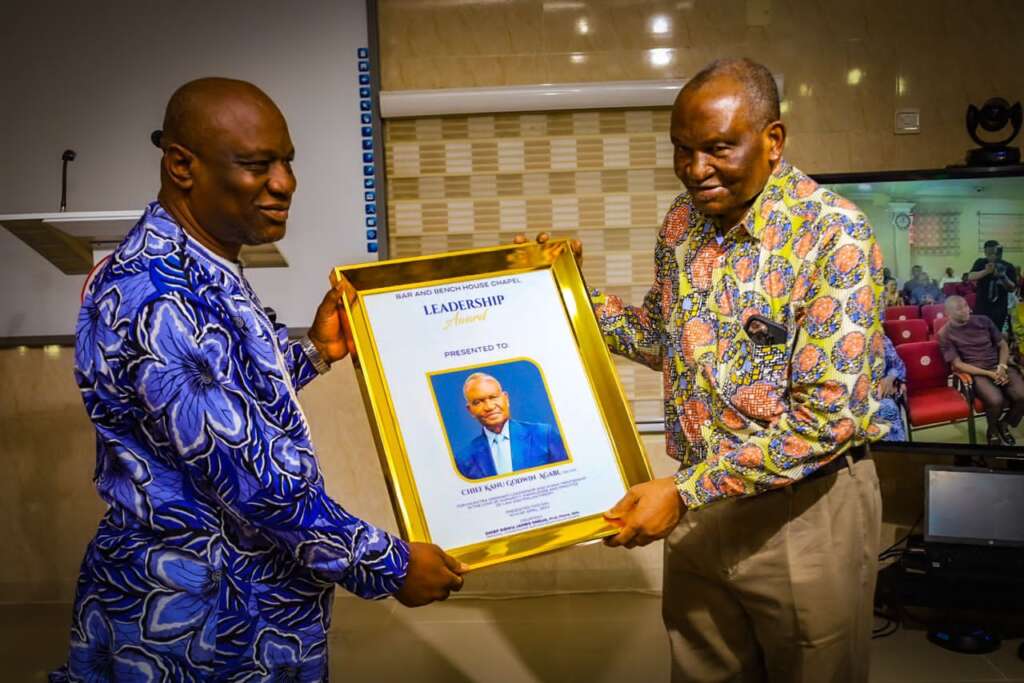
A former Attorney General of the Federation, Chief Kanu Godwin Agabi, has called on legal practitioners in Nigeria to unite against violence and corruption.

Agabi who remarked that: “If nothing else binds us, our common experience of adversity should do so,” noted “there is not a single home that is not now distressed by violence, or suffering from the effects of corruption.

Chief Agabi, SAN

The Ex-Attorney General also pointed out that: “Both the victims and the perpetrators are in distress. And so we must unite against violence, against corruption, and against all the uncertainties that now afflict us on every side.”

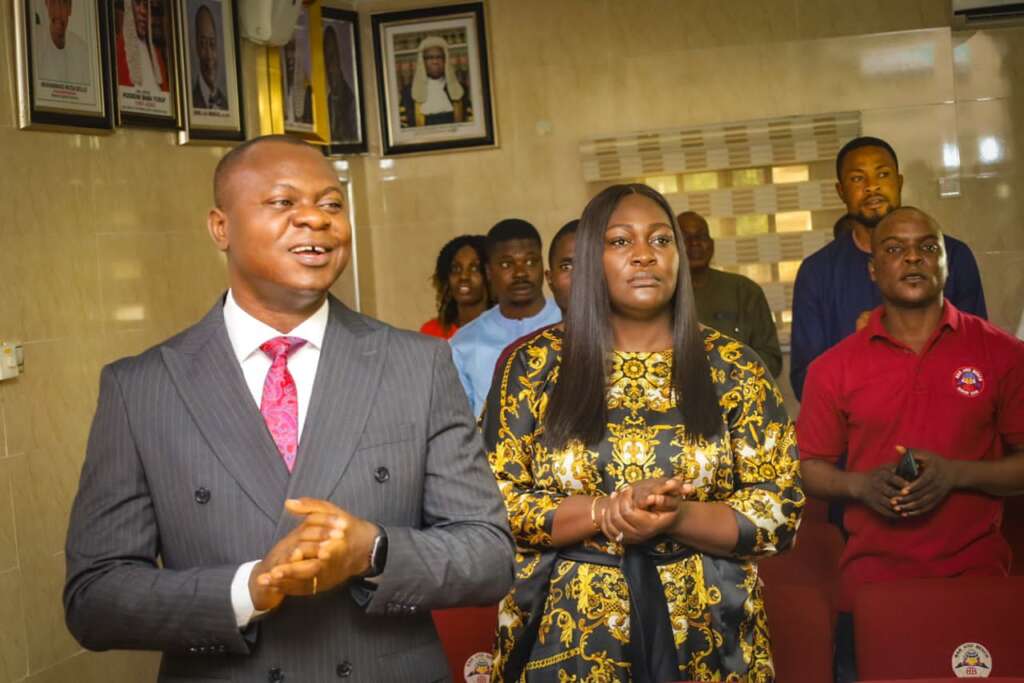
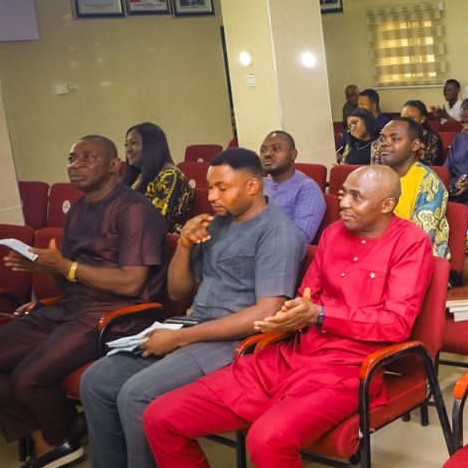
Chief Agabi who was a special guest preacher at the April Prayer meeting of O.J. Onoja, SAN & Associates held at Bar & Bench House in Wuye Abuja counselled that “the first book which the lawyer must acquaint himself with thoroughly is either the Bible or the Quran. Better still, he or she should be acquainted with both.

“Familiarity with other religions helps us better to understand ours. Familiarity with other religions enables us to appreciate that there is little difference between the religions. By whichever way we approach the Lord is acceptable to him so long as we do so with sincerity of heart and purpose. The Lord sees the heart. And once he approves a thing in the heart it is enough.”

While admonishing lawyers, the Senior Advocate advised that: “Whatever it is of material things or offices that we have acquired, we must be able to ascribe to God. And if we are not able to do so, we should give it up. Whatsoever things are true; whatsoever things are honest; whatsoever things are just; whatsoever things are pure, whatsoever things are lovely, whatsoever things are of good report, if there be any virtue and if there be any praise, think on these things.

Onoja, SAN and Chief Agabi, SAN

“As lawyers, we ought always to pray. Let no lawyer set out to do anything whatsoever without first praying for guidance. In this profession, we contend daily with the devil himself. And how can we engage such a deadly adversary without God’s help?

“We disqualify ourselves from prayer and come under condemnation when, in spite of all our learning, we prefer darkness rather than light…

Pastor Mrs. Ogwuche, Evangelist Sunday Ogwuche, Chief Ogwu James Onoja, SAN, PhD, Mrs. Rosemary Onoja, and Chief Kanu Agabi, SAN

“We cannot give up the truth in order to please our clients or in order to enrich ourselves. The spirit which thinks little of the truth is an evil spirit. As lawyers, we must be consistent and set the right example. We give the enemy encouragement and supply him with ammunition when our lives are inconsistent…  

“We are a nation in distress. Our distressed condition is not a sign that God has forsaken us. Nor is it mean that we are evil. “long. Though he slay me yet will I trust in him. We shall cling to our Father however roughly he may deal with us…

Receiving a gift from Evangelis Sunday Ogwuche

“I speak to you at a time when driven by despair, we are employing every inferior method to build empires under the sun.  The question which our Lord Jesus Christ put to man two thousand years ago remains valid: what doth it profit a man if he gains the whole world and suffers the loss of his own soul?

“We are looking to the east and the west, the north and the south, for promotion. Our occult practices will not avail us. We shall find no peace or promotion in our rituals. The ‘Greatest of all is the shepherd of that sheep.’ 

“We will never be strong as a nation until we unite in prayer… What a consolation, what an encouragement it will be to members of the public to hear that lawyers are gathered together not to argue over civil and criminal wrongs but to pray to the Lord our God…

L-R: Barr. Noah Abdul, George Ibrahim (Head of Chambers), and Moses Ebute, SAN (Partner, O.J. Onoja & Associates)

“No economic theories, no political theories, no legal theories are going to save the nation until we return to God… The political, economic, and social conditions of the world today are very much the same as they were when our Lord Jesus Christ first urged us to pray. Labour was exploited at the time just as it is exploited today. Israel was under a dictatorship then just as we are now because the presidential system is actually a dictatorship under the constitution. Religion was on the decline at that time just as it is now.

“For reasons of greed and selfishness, our leaders are taking the people back into slavery… Those who have been given leadership shall be called to account. And we have all been given leadership…”

For Africa, Why Sudan Matters

By Chidi Anselm Odinkalu

There are two countries whose well-being and stability reach into nearly every part of Africa. One is the Democratic Republic of Congo (DRC), which is nominally in the Central African region but which shares borders with nine countries extending to all of the continent’s four other regions – Angola, Burundi, the Central African Republic, the Republic of the Congo, Rwanda, South Sudan, Tanzania, Uganda, and Zambia. Unsurprisingly, the DRC is in the regional organisations of every region of Africa except those of the North and of West Africa.

The second is Sudan. With a current landmass of 1,886,068 km2 Sudan is nearly double the size of Nigeria and the third largest country in Africa behind only Algeria and the DRC. Its neighbours include Chad, Central African Republic, Egypt, Eritrea, Ethiopia, Libya, and South Sudan; and its regional reach extends to the Middle East and North Africa, Central Africa, Eastern Africa, and West Africa. Even more, Sudan’s geo-strategic significance covers nearly all of the continent’s fragilities, including the Congo Basin, Horn of Africa, the Great Lakes of Africa, the Gulf of Aden, the Maghreb, the Nile Basin, the Sahel, and the Indian Ocean. A popular land route for Muslim pilgrims and a magnet for all manner of irregular hawkers of violence, Sudan holds the key to nearly all of Africa’s significant strategic exposures from governance, through Climate Change, to international terror.

But Sudan has known little peace since independence in 1956 as a Condominium of Egypt and the United Kingdom. In 67 years of Independence, it has seen at least 17 attempted coups, six of which were successful. Two of those successful coups have occurred in the last four years, the first in April 2019 resulting in the overthrow of the 30-year long rule of General Omar Al-Bashir, and the second in October 2021 resulting in the overthrow of the power-sharing arrangement that was to return the country to civil rule in 2022.

On both occasions, Egypt, itself at once both uneasy neighbour worried about the course of the Nile (which substantially flows through Sudan before emptying in its territory) and former colonial power, was always an enthusiastic business partner with the Armed Forces of Sudan. To many people, General Burhan, who nominally heads the Sovereignty Council, as the ruling military arrangement in Sudan is called, is a client of Egypt.

These two recent coups were a joint enterprise between the two most organised and best financed entities in the country: the Sudan’s armed forces commanded by Abdel Fattah al-Burhan, a four-star General; and the Rapid Support Forces (RSF) commanded by Mohammed Hamdan Dagalo, better known by the nom de guerre, Hemedti. The RSF is the new name for an entity that used to be known as the Janjaweed, an expeditionary unit of largely lawless irregulars, to whom the government of Omar Al-Bashir outsourced the violent pacification of Darfur. In many ways, it was an internal mercenary force which fed off its crimes. This arrangement suited all sides: the Army could conserve its assets; the regime could deny direct responsibility; and the leadership of the Janjaweed could make a lot of money and political capital too.

In the decade and a half from the beginning of the Darfur campaign around 2004 to the overthrow of the regime of Omar Al-Bashir in 2019, Hemedti, who comes from one of Sudan’s most troubled regions in Darfur, built up considerable personal wealth and strategic capital, and the bandit force which he originally constituted as the Janjaweed emerged to become what Alex de Waal described as “now the real ruling power in Sudan. They are a new kind of regime: a hybrid of ethnic militia and business enterprise, a transnational mercenary force that has captured a state.”

In Darfur, the Janjaweed were responsible for a long and distinguished record of credibly attested atrocities, including crimes against humanity that have since become the subject of investigation and prosecution by the International Criminal Court, ICC. They also managed to export their skills in the deployment of indiscriminate violence to clients in the Gulf States, including Saudi Arabia, who found them useful for outsourcing atrocities in Yemen. From his early origins as a bandit and violence rustler, Hemedti managed through these kinds of arrangements to insinuate himself into respectable company in the region, becoming an almost indispensable factor in the security of arguably the most fragile region in Africa, with support from an assortment of actors including the Gulf States and renegade General Khalifa Haftar in Libya.

The threat posed by the Janjaweed was always very evident even to the uninitiated. Until 2019, they were a kind of iron fist underneath Sudan’s velvet gloves. After the overthrow of Bashir, Hemedti, as the commander of the Janjaweed-in-Government nicknamed the RSF, became effectively the power behind the throne. The marriage between him and Burhan always seemed rather convenient. It was only a matter of time before he made his bid for power.

On or around 15 April 2023, Hemedti launched what would effectively become Sudan’s 18th coup attempt by bringing the guns and heavy artillery into Khartoum which were formerly trained on Darfur. The build up to this unfolded almost in slow motion amid the ruins of the effort to integrate the RSF into Sudan’s Armed Forces. While struggling to retrieve some respectability from that, Hemedti reportedly picked up rumours that the assets of Egypt’s Air Force stationed at the Merowe Air Base in the north-west of the country, including the relatively sophisticated Egyptian MiG-29M medium weight ‘4+ generation’ fighters, were planning a strike on him. So, he made the first move and attacked.

Whether this could end up as Sudan’s seventh successful coup is presently unclear. The fact that Burhan and Hemedti, both committed Islamists, were too impatient to defer the outbreak of military hostilities until after the end of the Holy Month of Ramadhan is notable. As Muslims all over the world marked the Feast of the Sacrifice this week-end and amidst rising civilian casualties in this most urban of Africa’s recent wars, both sides proclaimed an unconvincing ceasefire, supposedly to enable the victims mark the Eid.

Anyone with even limited knowledge of Sudan may be disappointed but not in anyway surprised by this turn of events. Much of the present tragedy was both foreseeable and predictable. The most surprising thing of all is the absence of any effective plan for addressing it. While the people of Sudan are slaughtered by those supposed to protect them, the world and the region carries on in apparent resignation and confusion. Karim Khan, the Prosecutor of the ICC, appears so fixated on Ukraine, he cannot find the bandwidth to acknowledge the conflagration in Sudan, where Darfur, itself currently an active case under the watch of both the ICC and the UN, has also degenerated into warfare.

For its part, the United Nations Security Council appears to have outsourced the situation to the African Union who have in turn outsourced it to the Intergovernmental Authority on Development (IGAD), which is chaired by Sudan, whose duelling rulers each seem to believe that they have the military solution to this war. All they can muster at the moment appear to be Zoom meetings.

While regional countries try to scramble, Nigeria, Africa’s self-appointed big-brother, has barely noticed. Yet, the links between both countries are beyond geographic. In 1903, Frederick Lugard sacked Sultan Attahiru of Sokoto, who made a last stand at Burmi (now near Bajoga in Funakaye Local Government Area of Gombe State) where he and over 700 of his family and followers were slaughtered nearly 120 years ago in August 1903 in the “destruction of the town by a British force of 30 whites and 500 native rank and file”. His surviving son, Mohammed Bello, led the remainder of Attahiru’s survivors into exile in Sudan where their descendants have lived since then. Above all, the embassy in Sudan is Nigeria’s most lucrative foreign mission.

For Nigeria, the crisis in Sudan is not just a matter of security and geography, it is also inescapable history and economics.

A lawyer and a teacher, Odinkalu can be reached at [email protected]

Soludo set to create Bureau of Missing Persons in Anambra

By Eke Ojim

Consent has been given by the Anambra State Executive Council (ANSEC) for the creation of a Bureau for Missing Persons in the Ministry of Justice.

The establishment of the Bureau is part of the interim recommendation earlier made by the Truth, Justice and Peace Commission (TJPC) in its Inception Report earlier submitted to Governor Charles Chukwuma Soludo (CFR), Governor of Anambra State, on the 17th of February 2023.

The job of the Bureau is to trace cases of missing persons and come up with the needed database to support Police investigations and the eventual prosecution of suspects by the Ministry of Justice.

Recall that on the 23rd of June 2022, Governor Soludo, pursuant to the Commission of Inquiry Law of Anambra State, inaugurated the Truth, Justice, and Peace Commission which has Professor Chidi Anselm Odinkalu as the chairman, Ambassador Bianca Odumegwu Ojukwu as the secretary and Professor Sylvia Chike Ifemeje as one of its Commissioners.

According to a statement signed by the State’s Commissioner for Information, Sir Paul Nwosu, the Commission’s Inception Report also recommended the following: 1. A whole-of-government strategy that locates atrocity violence within a public health framework.

2. Professionalization and effective coordination of vigilante services in the state. 3. Institutionalizing deliverables for the Ministry of Security and Homeland Affairs. 4. Establishing an Anambra Integrated Civic Surveillance System (ANICSS) and 5.

Establishing an Anambra State Safety and Environmental Commission (ASSEC)

TJPC’s initial terms of reference are: To identify the remote and immediate causes of the agitations, restiveness, violence, and armed struggle in the Southeast since 1999; To document victims/circumstances of death, brutality, and incarceration as well as identify stakeholders and groups who have played critical roles in agitations and conflicts, their roles, capabilities, and demands.

Lastly, the Commission is expected to address any other issue(s) that may be germane to unravel the extent of the crisis and chart the roadmap for the future and make recommendations for sustainable peace and security in Anambra State/Southeast.

TIPS