Home Blog Page 779

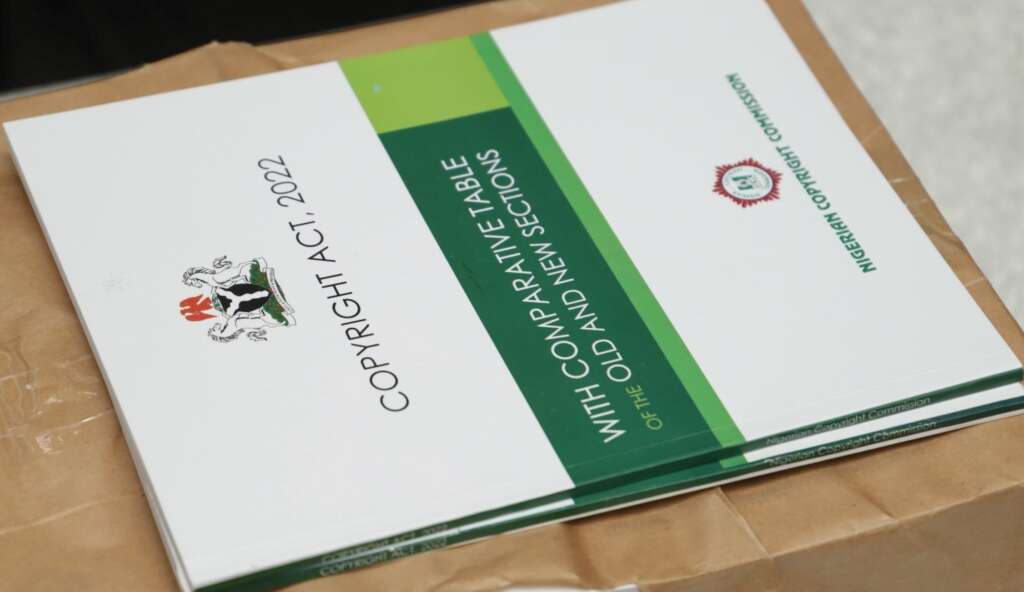
AGF Unveils Nigerian Copyright Act, 2022 at NBA Abuja meeting

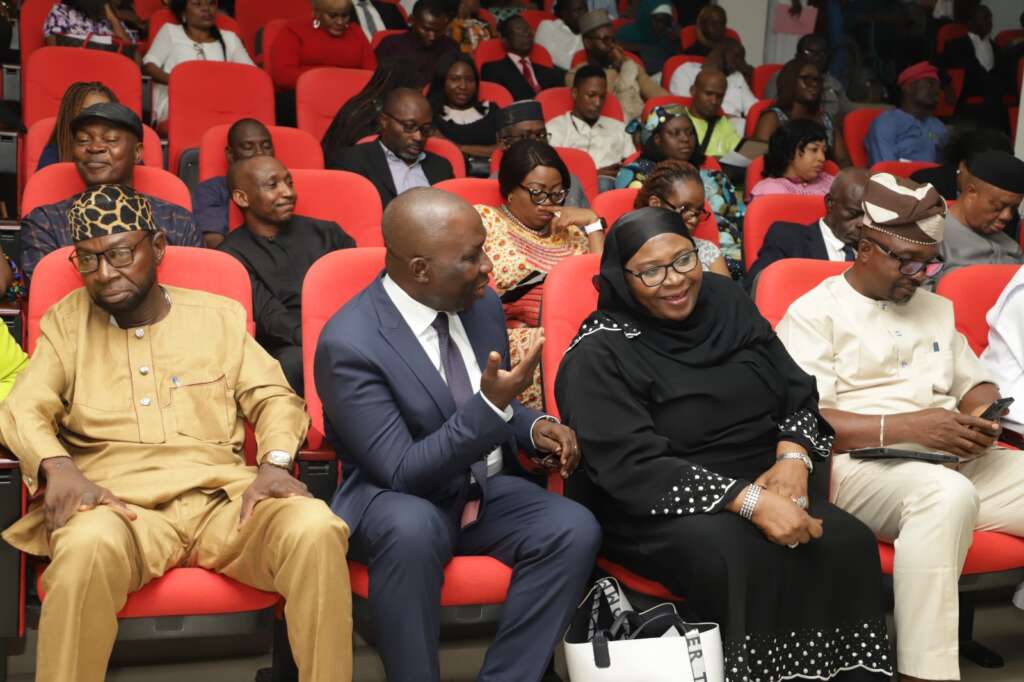
  • Unity Bar meeting in pictures

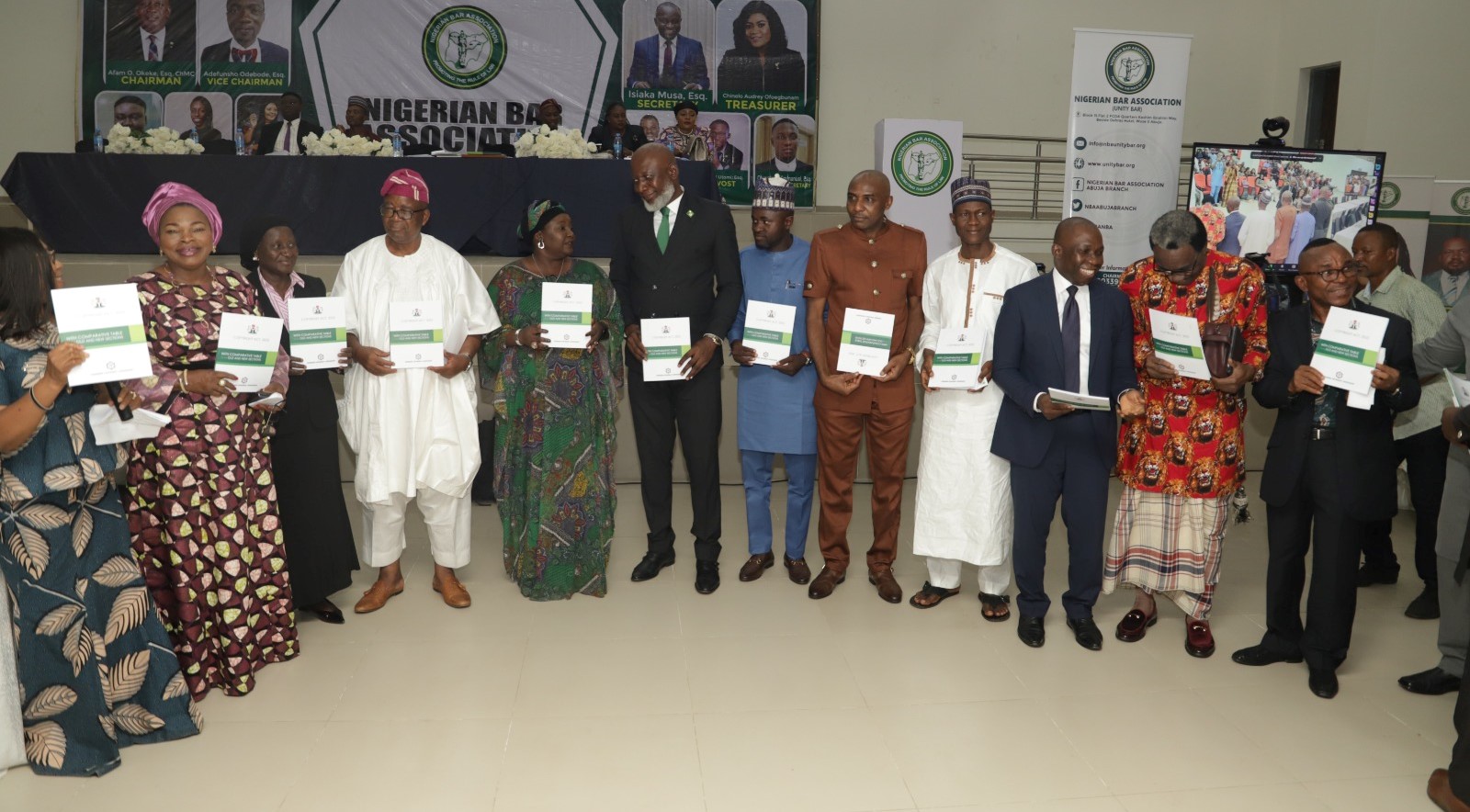
The Attorney General of the Federation and Minister of Justice, Mr. Abubakar Malami at the weekend unveiled the Nigerian Copyright Act, 2022.

The event took place on the 5th of May 2023, at the Nigerian Bar Association, Abuja Branch meeting of May, 2023.

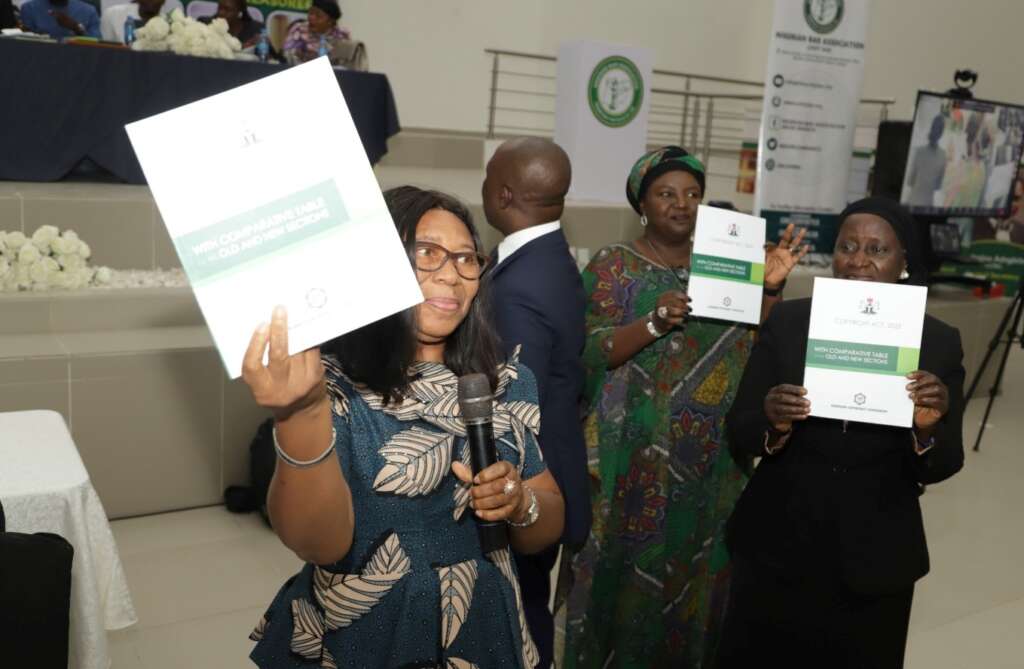
The official unveiling at NBA House in Abuja had Mrs. Ifunanya Nwajiagu, the Director of Legal Drafting at the Ministry of Justice representing the AGF.

Director General of the Nigerian Copyright Commission, Barr. John Asien who came with colleagues from other MDAs — the National Human Rights Commission, and Nigerian Law Reform Commission expressed delight that the Act is finally available for the public to access

The new Copyright Act 2022 aims to facilitate Nigeria’s compliance with international copyright treaties, effectively protect authors’ rights to ensure just rewards and recognition for their intellectual efforts, provide appropriate limitations and exceptions to ensure access to creative works, and more.

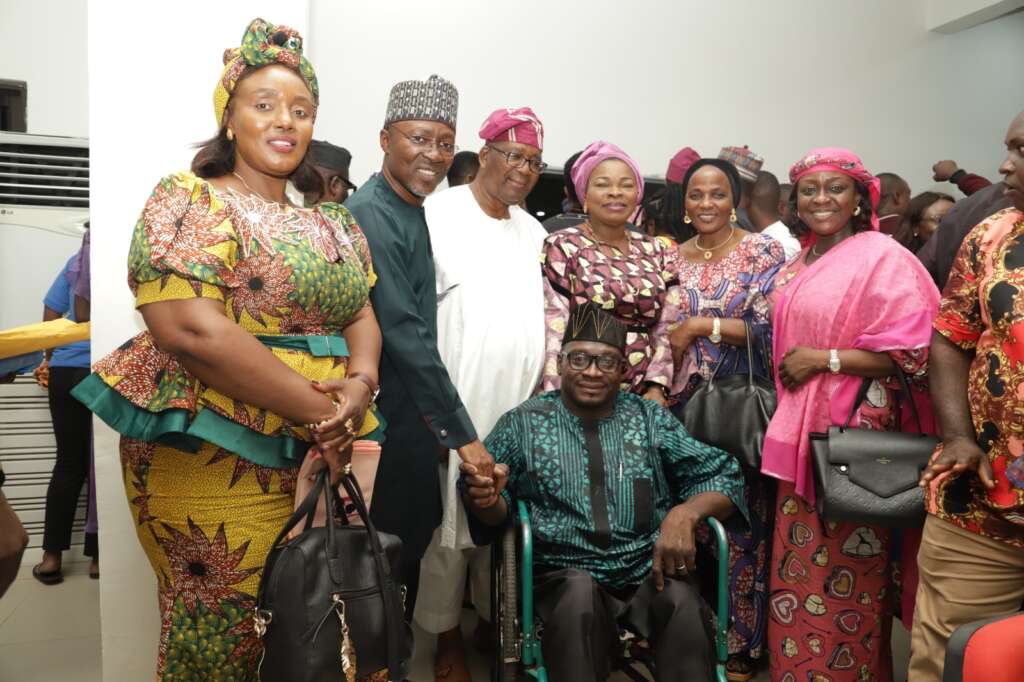
In attendance were the Vice-Chair, Body of Benchers, Ashiwaju A.S. Awomolo, SAN; ex-FIDA West/North Africa Regional Vice President, Chief Mrs. Victoria Awomolo, SAN; Chief P.H Ogbole, SAN; Chief Ernest Ojukwu, SAN, Chairman, Ethics and Disciplinary Committee of the NBA; Uche Ezechukuwu, SAN, immediate past Branch Chair, M.A. Ebute SAN,  and other senior lawyers.

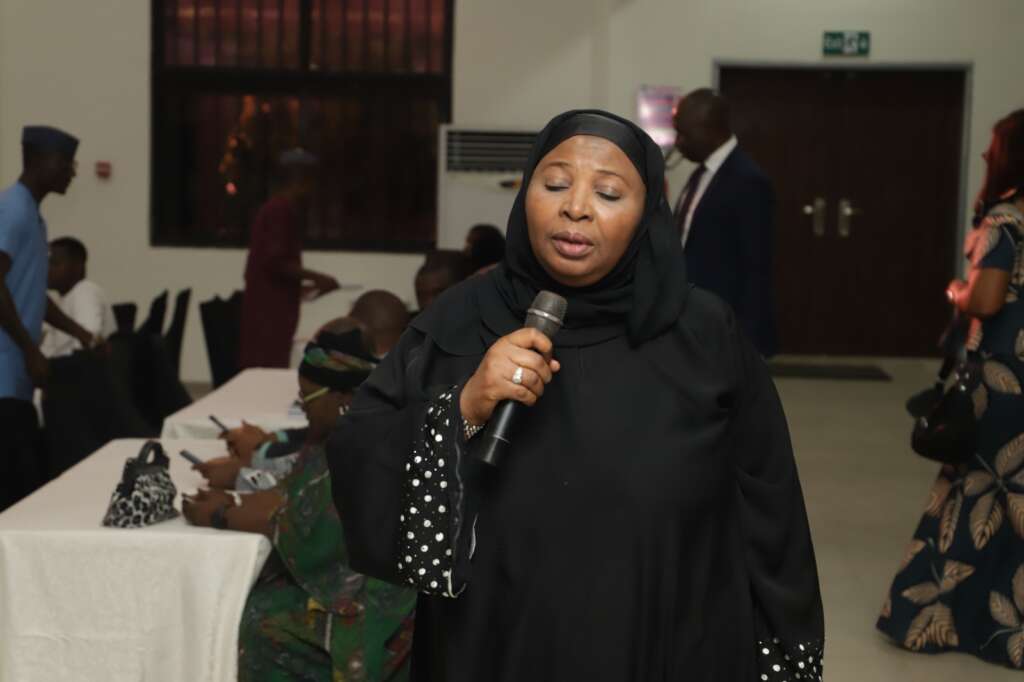
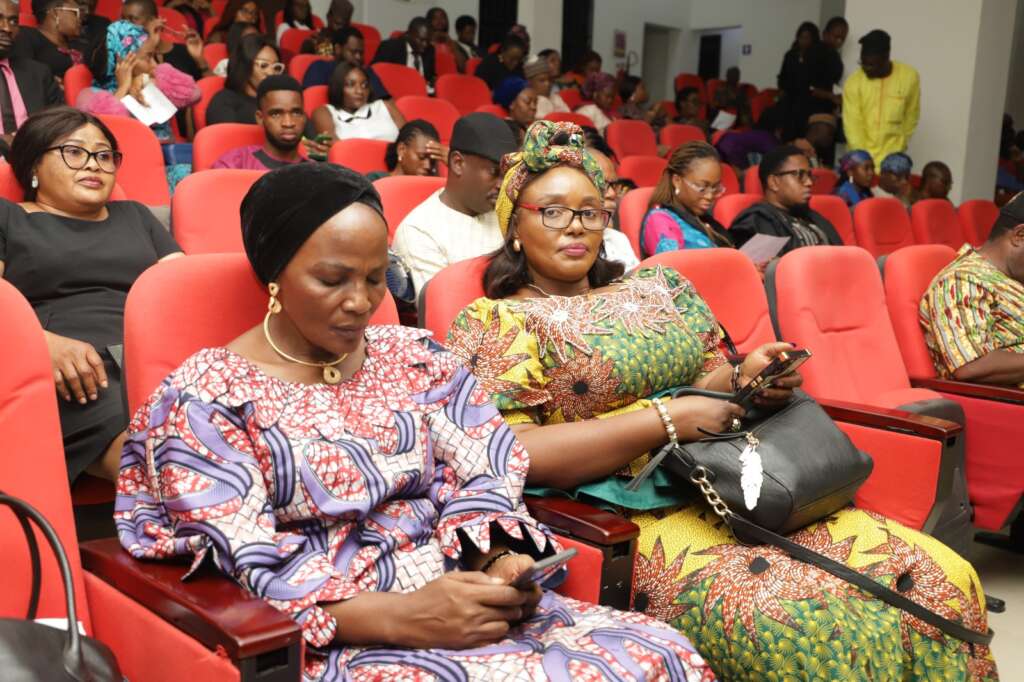
Here are the photos:

Mrs. Ifunanya Nwajiagu, Director of Legal Drafting, Federal Ministry of Justice
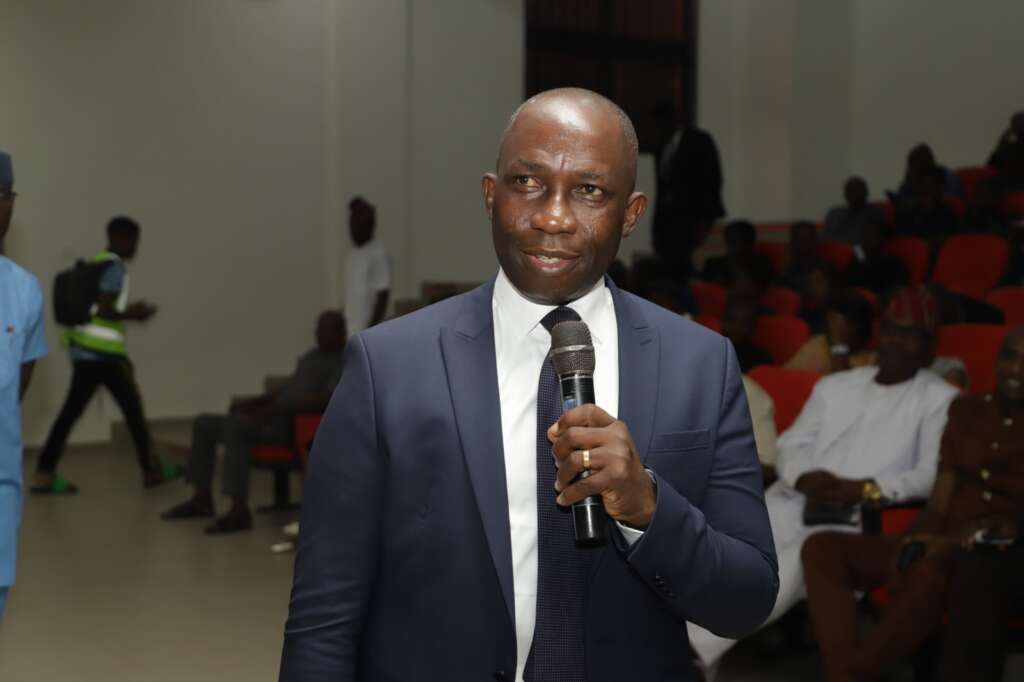
Director General of the Nigerian Copyright Commission, Barr. John Asien
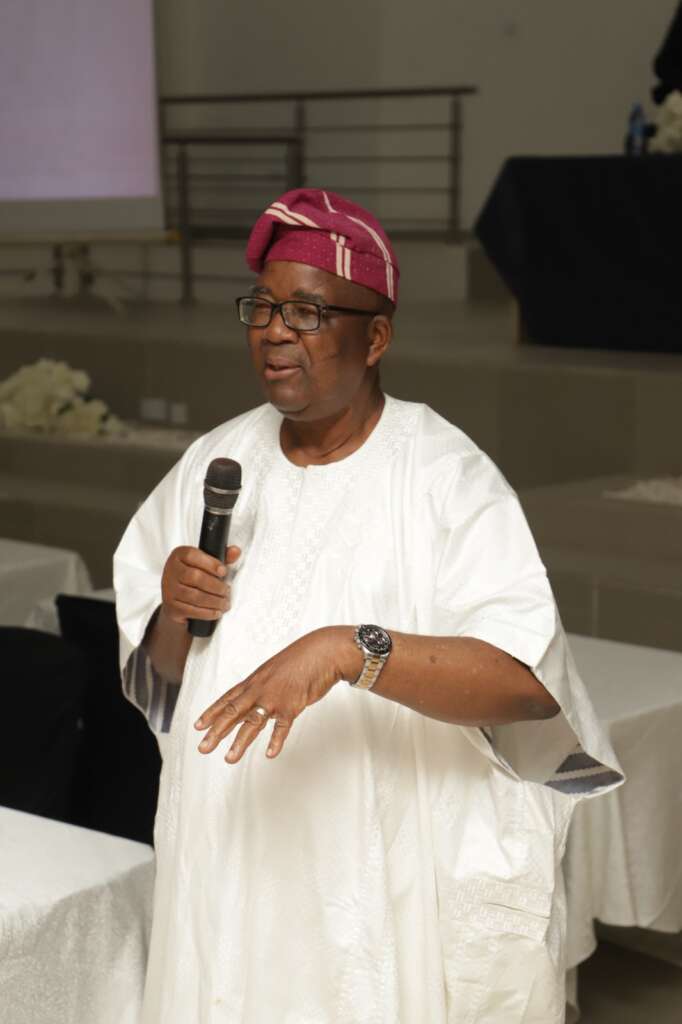
Vice-Chair, Body of Benchers, Ashiwaju A.S. Awomolo, SAN
L-R: Director General of the Nigerian Copyright Commission, Barr. John Asien, Chair NBA Abuja, Afam Okeke, Chairman, Ethics and Disciplinary Committee of the NBA; Prof. Ernest Ojukwu, SAN
Federal Competition and Consumer Protection Tribunal (FCCPT) , Hajiya Saratu Mama Shafii
L-R: Former FIDA Country Vice President, Rhoda Prevail Tyoden
Middle: Immediate Past Branch Chair, M.A. Ebute SAN

Unity Bar embarks on mountain hike

  • View photos

In total compliance with Erin Gray’s maxim that “once you are exercising regularly, the hardest thing is to stop it,” members of the Nigerian Bar Association, NBA Abuja Branch (Unity Bar) again embarked on their monthly exercise

This month’s exercise saw members of the Branch hiking through the Wuye mountains and rocks. The activities peaked at the mountain top with aerobics, fun games, and dancing.

Chairman of the Branch, Afam Okeke, Esq led the fun-packed and memorable event.

The event created room for members to mingle, relieve stress, and get fit.

Publicity Secretary of the branch, Michael Awoh-Ejeh said “We reckon that events like this foster peace and unity and should be highly encouraged across board. We are grateful to the Chairman of Branch and his EXCO for pulling this off and walking the talk.”

362 points! She aced JAMB 2023

It was the retired Supreme Court Justice Bode Rhodes-Vivour who said: “Give a girl education, she would achieve enviable heights.”

And so it was that at the just concluded Joint Admission Matriculation Board (JAMB) examination, a brilliant young lady, Joy Mmesoma Ejikeme, student of the Anglican Girls Secondary School Nnewi (AGSS) in Anambra state scored 362; likely the overall highest in 2023.

Here are Joy’s scores: English- 98; Physics- 89; Biology- 94; Chemistry- 81.

Her outstanding performance threw her school, family, and entire state into celebration. Many who have been sending congratulatory messages to the Ejikemes remark that for the very cerebral Joy, there are no limits.

Commending the exceptional feat, Anambra State Commissioner of Education, Prof Ngozi Chuma-Udeh who noted that the performance has again demonstrated the premium Chukwuma Soludo’s administration places on the education sector described it as “excellent and very outstanding.”

She added: “This outstanding performance of Ejikeme has indeed brought joy and happiness to every Ndi-Anambra. We are proud of her and we will monitor her academic progression as she pursues whatever career she desires. We are… grateful to Governor Soludo for giving top priority to education in the state.”

Another bright light, 16-year-old Jamachi Osuji scored 339 in the JAMB exams. Jamachi is a student of Government Secondary School Owerri.

The young man scored 71 in English, 88 in maths, 88 in physics, and 92 in chemistry. Celebrating Jamachi’s feat on Facebook, a former student of his school, Sammy Jay, described his alma mater as a producer of the best brains while calling on well-meaning individuals and bodies to give Jamachi a scholarship.

“Super Proud of this little Boy, Jamachi Osuji, and my Alma Mater, Government College Owerri. They produce the best Brains. 339 in Jamb!!! He deserves a Scholarship,” Sammy Jay wrote.

Similarly, 15-year-old Lotanna Chidera Azuokeke pulled a total score of 337 to study Electrical Engineering. Lotanna is from Oba in Anambra State.

Neither African, Nor a Union

By Chidi Anselm Odinkalu

On New Year’s Day in 1991, 81-year-old Siad Barre, Somalia’s third (and last) president, fled the capital city, Mogadishu, under assault from the combined forces of a prolonged insurgency. 16 days later, in a supposedly unrelated development, President George Hubert Walker Bush of the United States of America launched Operation Desert Storm against the occupation of Kuwait’s oil fields by Iraq’s President Saddam Hussein. Four months later, in May 1991, Siad Barre went into exile in Nigeria where he lived until his death in 1995.

Back home, the vacuum created by General Barre’s departure in 1991 triggered a messy contest between various warlords and militias for control of the country, which posed a grave threat to both Somalia’s neighbours in the Horn of Africa and to the strategic maritime theatre of the Gulf of Aden.

Somalis are not only found in Somalia. They are also in Djibouti, Ethiopia and Kenya. Siad Barre was initially committed to a policy of uniting all Somali populations under one territory. In pursuit of this ideology, he invaded Ethiopia’s Ogaden region in 1977, triggering a war in which Ethiopia eventually prevailed with support from the Soviet Union. Somalia, which had until then proclaimed itself Socialist, thereafter shifted its strategic orientation towards closer cooperation with the United States.

The cost of the degeneration of Somalia into a messy gang-land war was heavy. By the beginning of 1992, one year after Siad Barre’s  departure from power, “as many 350,000 people in Somalia died from starvation, with another 80,000 people having fled to neighbouring countries.” Somalia’s biggest neighbour on its western borders, Ethiopia, which hosted the headquarters of the then Organization of African Unity, OAU was itself preoccupied with a political transition after the ruinous misrule of Col. Mengistu Haile Mariam’s Dergue regime, and its main priority was to prevent a Somali contagion on its territory. Still reluctant to abandon its foundational commitment to non-interference in the affairs of member states, the OAU could not mobilise consensus on how best to respond to the Somali meltdown. Within Somalia itself, there was no leader who could invite international action with legitimacy.

In that season of the brief interregnum of the unipolar world, there was much talk of humanitarian intervention. Somalia was seen as a good case for it and the United States, fresh from what was seen as the diplomatic and military success of its campaign in Iraq, was under pressure to act. On 24 April 1992, the United Nations Security Council adopted Resolution 751 which deplored “the magnitude of the human suffering caused by the conflict” in Somalia, formally declared it a threat to international peace and security and established the United Nations Operation in Somalia (UNOSOM).

The best efforts of the limited UNOSOM team were, however, no match for the menace of the Somali Militias. So, on 3 December 1992, the Security Council adopted Resolution 794, which complained about the “continuation of conditions that impede the delivery of humanitarian supplies to destinations within Somalia, and in particular reports of looting of relief supplies destined for starving people, attacks on aircraft and ships bringing in humanitarian relief supplies” . It, therefore, authorized member states to “use all measures as may be necessary to ensure” effective humanitarian operations in Somalia. Six days later, on 9 December 1992, a contingent of US Navy SEALS landed on the coast of Mogadishu at the beginning of Operation Restore Hope under to considerable media attention.

In March 1994, Operation Restore Hope ended in disarray. One outcome of Operation Restore Hope among many was to force the OAU to urgently re-evaluate its doctrinal commitment to non-interference. At their meeting in Cairo in June 1993, the Assembly of Heads of State and the Government of the OAU agreed to establish within the organization, a Mechanism for Conflict Prevention, Resolution, and Management, effectively bringing to an end the fiction that instability in a given country was of no consequence to its neighbours. Sudan’s then ruler, General Omar Al-Bashir, and Eritrea’s Isaias Afewerki were the two voices of dissent against this decision.

From this tentative beginning, the OAU evolved rapidly in seven years to the point of its own replacement in 2000 by the African Union (AU). At its adoption in 1963, the founding Charter of the OAU complained of subversion by neighbours against one another and prohibited interference by one African country in the domestic affairs of their neighbours. It was not a very African approach to coexistence in a continent in which looking out for one another had for long been an axiom of good neighbourliness.

In a dramatic departure from this position, the African Union’s Constitutive Act, which was incidentally adopted at the turn of the Millennium, commits the continent’s rulers to “respect for the sanctity of human life” and recognizes a duty and a “right of the Union to intervene in a Member State…. in respect of grave circumstances, namely war crimes, genocide and crimes against humanity.” To supervise this new commitment, the AU, as the successor to the OAU would become known, established a Peace and Security Council to “promote peace, security and stability in Africa, in order to guarantee the protection and preservation of life and property, the well-being of the African people.” It comprises 15 African countries elected by their peers and represented at the highest levels by their Presidents, Prime Ministers, or Kings.

Underlying the mission of the AU supposedly is a commitment to a different and united way of addressing the continent’s security crises. In a contemporaneous retrospective on the failure of Operation Restore Hope in 1994, Ghanaian-born economist, George Ayittey, deplored the contest over super-power control of Africa’s destiny. Cautioning that durable solutions to the continent’s myriad problems can only come from Africans themselves, he launched the now popular mantra about “African solutions to African problems.”

With the persistence of a multiplicity of foreign stakeholders in many of the continent’s problems, however, the challenge always was with figuring out what kinds of problems could be described as African and at what point the solutions could be seen as African. In any event, this doctrine implied that African leaders had a responsibility to take initiative and provide leadership in the search for solutions to the continent’s problems. This has been missing in the three weeks since the mutual antipathies between Sudan’s implacable Generals descended into Urban Warfare in Khartoum.

The result is that the AU has abdicated both initiative and ideas. With nearly 1.2 million refugees before the onset of these hostilities, Sudan housed the second largest population of refugees in Africa behind only Uganda, and the seventh largest in the world. Setting them to pasture is not going to be cost-free to Sudan’s neighbours nor is that merely a humanitarian occurrence. It is also a profound security concern. Equally, the AU does not appear to have heard that some Western countries willfully shredded the passports of African nationals while evacuating their missions in Khartoum.

With over 400,000 internally displaced, nearly 150,000 dispersed across Sudan’s borders into neighbouring countries in Chad, Central African Republic, Egypt, Eritrea, Ethiopia, and South Sudan and the United Nations High Commissioner for Refugees (UNHCR) estimated an exodus of over 860,000 people from Khartoum and its neighbourhoods, the leaders of the African Union have not seen fit to meet at any level even for symbolic purposes other than half-hearted meetings convened on Zoom at almost risible levels. Separated by over three decades, the response of the AU to the unfolding crisis in Khartoum reprises in slow motion the self-inflicted incapacities of the OAU in Somalia.

In the face of arguably the continent’s most serious crisis since the Rwanda Genocide, the AU’s response has been inexplicably somnolent. It has no plan. Chad’s former Foreign Minister, Moussa Faki Mahamat, who heads the Commission of the African Union in Addis Ababa, appears to be slow-walking the organization to considerations determined by the imperatives of his home country (which shares borders with Sudan) rather than the collective well-being of the region and the continent. Under him, the promise of the Constitutive Act is being squandered: over two-thirds of the AU’s budget is funded by non-African countries and nearly half of the member states are unwilling or unable to pay their assessed budget contributions. Under Moussa Faki Mahamat, the AU increasingly acts neither African nor like a Union.

A lawyer and a teacher, Odinkalu can be reached at [email protected]

In the absence of Mr. Right, by Funke Egbemode

Happily ever after is what most girls set their eyes and hearts on. Right from when we know that you are still a girl without the frilly dresses and pink bows and ribbons, we begin the plan. Yeah, we know how to be coy, bat our eyelids, and try not to swoon and faint at the feet of our first crush.

The heart-melting smile comes naturally. We are born sweet, all of us girls. It is the men who ruin us.

Or why do you think pretty little things who once curtsied politely in pink become hard-faced big girls in black or worse still, red? Once you see a once nice girl become the reserved and cold bitch even her mum is afraid of, know that a man has done a number on her. The beauty of this piece is there is hardly a man reading this who can swear with a cutlass, bible, or Koran that he did not turn a pretty pink into a cold black.  Did I hear one of them say it is what it is? Hmmm, good, just know that if you’ve ruined somebody’s daughter’s pink, your daughter may be just the next on the queue. It is the way of the world. The law of harvest won’t be suspended for anybody.

As I was saying, most girls start out hoping for Mr. Right. For many, he arrives just in time. For most, he arrives late and then there are those for who Mr. Right simply does not arrive. The last group leaves one with a lot of questions. Is it that God did not create partners for some women or they did not recognize and grab him when he showed up? There are also those whose happily-ever-after dance stops midway. The dance simply just doesn’t last. One year, everything is lovey-dovey and the next, you hear incredible stories of irreconcilable differences.

There are many reasons, and stories abound on why women miss out on marriage. All kinds of reasons and stories including very conk spiritual ones. Yes, the ones about spirit husbands and 37-year-old- virgins who have never found men who find them physically attractive even though they are beautiful. Things happen, my people. It does not matter whether you believe these stories or not, those who wear the shoes feel the pinch and won’t agree with your simple ‘oyinbo’ interpretations of why some women never achieve their happily ever after.  

But what is a woman supposed to do when Mr. Right doesn’t show up? Should she just throw up her hands and surrender to a life of misery and loneliness? Does not having a husband mean that a woman should just curl up and die? Can she have children on her own, outside wedlock, as they say? Or should she continue to wait because society will crucify her for daring to take her destiny into her hands?

Let me break it down in a way that all those who are preparing to get on their high horses and look down on those who are not as lucky as they are, will understand. Madam, if your successful, beautiful 42-year-old daughter is still single but you find out she’s pregnant, will you jump for joy or drag her off to the clinic for an abortion to save your family name?  Ah, you thought things like that happen to other people? Well, all mothers pray for their girls to meet Prince Charming early but does it always happen the way we script it? Who can really script life?

So, what is a mature single, getting-on-in-years do when she can’t find Mr. Right or Mr. Right has not found her? Me, I’m not averse to this shortcut: if you cannot find a pigeon, make do with a chicken. If life does not give you a script with a happy ending, maybe you should grab a pen and do yourself a happy script. You think I’m being extreme?

The Nigerian society is not particularly kind to waiting mothers and waiting wives. It is always the fault of the woman who has not found a husband or brought forth children. She is not expected to be happy or display her happiness. Snide remarks and evil sneers are what she gets for daring to even continue to breathe the same air as her successful women.

‘How can Moyo buy a car when she is still looking for a husband?’

Note: She is the one looking for a husband. No man is looking for her.

‘Even if she is going to buy a car, she shouldn’t have bought an SUV. A small Toyota Corolla is enough.’

Note: Big cars are for women who have found husbands. It’s not as if they wouldn’t have come up with reasons why she shouldn’t have bought a car at all even if she had bought the smallest Toyota.

‘Did you see the jewelry (set) Alhaja wore to Wura’s wedding? What is her own? What’s she trying to prove?

‘That the rest of us don’t have gold now! Instead of her to be moving from prayer house to prayer house until her daughters find somewhere to ‘put their loads.’

Note again: Not even the mother of a single mature female is spared. She either did not bring her daughters up well or she is not a praying mother or she is simply a witch!

It is fine and expected for a single man to go ahead and build a house before he even gets married. He’s making money, right? Okay, what is his female colleague at work or in the same line of business supposed to do with her money when Mr. Right does not show up? Save it? For when? For after marriage? She is still going to be accused of having too much money if her husband does not have more. Head or tail, the Nigerian woman is not a winner in this money and marriage matter though there are a few unusual cases.

Okay, so the waiting wife can’t buy a new or big car. Her mother is a spiritual prime suspect. She has waited patiently and impatiently, please can she move on? Her biological clock is not just ticking nicely, it is on alarm mode. Her younger sisters, cousins, friends, and colleagues all have children in secondary school. Should she continue to hope Mr. Right will arrive before menopause?

Bimbola’s son’s name sums up her resolve to move on. She named the three-month-old adorable little man Erimipe which in Yoruba means ‘my testimony is complete’. Bimbola is 38 and successful; an engineer with one of Nigeria’s oil majors.

‘If heartbreaks are as physically fatal as cardiac arrest, I would have died a long time ago. I have loved with my whole heart, devoted time, money, and energy to my relationships but none led to the altar. I thought being successful in my career would make me a more attractive wife material but no, it didn’t. I work very hard and God has been very kind. I waited for Mr. Right but I’m not one to leave everything to chance and time. I’ve not ruled out love and marriage but trust me, my son is the best thing that ever happened to me. He’s God’s greatest gift and I have no regrets doing this without a wedding ring. Indeed when I told his father I was pregnant, he asked if I was sure he was responsible. Ten years ago, I would have given him the full length of my tongue but this time I just laughed and wished him well. Well, my little prince arrived with the birthmark behind his father’s ear in addition to his fair complexion. I sent him photos. His mum too. If they want to be in Eri’s life, they are welcome but if they think I wanted to trap someone with pregnancy, they are mistaken. I needed motherhood to feel complete and I’m complete now. Glory be to God.’

I wish I had more space because today’s woman is certainly miles ahead of her mother in the choices she makes. Her options are many. She can opt for a sperm donor. She can freeze her eggs. She has her own money and lives in her own flat so no irresponsible sex machine and human sperm bank can tell her: ‘Go and get rid of that thing in your tummy because I’m not ready to be a father. I’m not responsible for it.’ My point exactly, he’s not responsible.

Egbemode can be reached at: [email protected].

On death row for N1,705 robbery, high-profile thieves enjoy light sentences

By Lillian Okenwa

Following the Court of Appeal, Abuja’s recent sustaining of Abdulrasheed Maina’s conviction and eight-year sentence, public affairs analysts are again questioning the rationale behind a man stealing 2.1 billion naira and he is sentenced to only 8 years in prison with most of his loot left with him, while the same legal system sentences another to death for armed robbery for stealing a mere fraction of that enormous sum stolen by high-profile criminals.

As has been said, however, the first man is an executive robber and the second a common thief, who is most probably a victim of the thievery of the first!!

On October 25, 2019, the former Chairman of the Pension Reform Task Team (PRTT), Abdulrasheed Maina who was convicted of laundering about N2.1 billion was arraigned on 12-count charges alongside his son, Faisal, on three-count charges bordering on money laundering and concealment of proceeds of unlawful act.

But notwithstanding that by Section 17 of the 1999 Constitution, citizens were entitled to equal rights and opportunities, it has been different applications of the justice system for the rich and the poor.

In January this year, an Akwa Ibom State High Court in Okoita, Ibiono Ibom Local Government Area, sentenced two tricycle robbers to 28 years in prison. Nsikan Friday Tom, 28, and Augustine Gregory, 27, were sentenced for robbing a passenger while trying to board a tricycle at Okokon Etuk Street in Uyo. The duo robbed their victim of his Lenovo laptop and Gionee M5 phone on August 7, 2016.

A much more spectacular verdict was delivered by Hon. Justice Kenneth Okpe of the Enugu State High Court. He sentenced one Emmanuel Sombo, an accountant with the Federal College of Education, Eha-Amufu, to a whopping 304 years in prison for theft of N34.9 million belonging to the college.

Emmanuel Sombo was arraigned by the Economic and Financial Crimes Commission (EFCC) on a 61-count charge of fraud and other allied crimes. He was accused of forging the signatures of the institution’s principal officers on promissory notes to cash monies running into N34 million from the college’s First Bank account for his personal use.

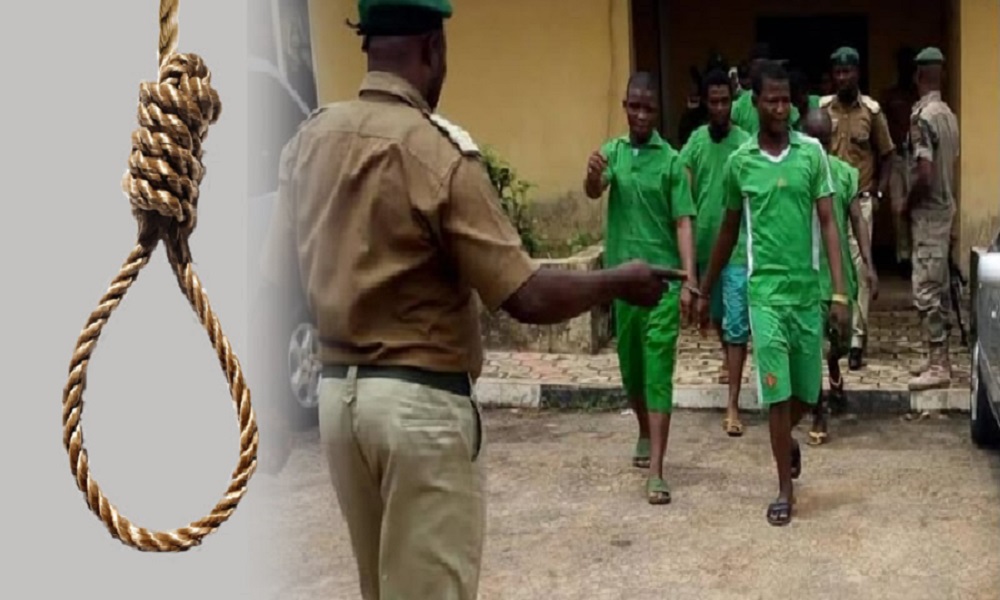
A few years ago, also, a Federal High Court in Jos, Plateau state capital sentenced a 26-year-old man, Obinna John, to death by hanging for robbing a woman of N1,705. The convict was also said to have robbed his victim, Mrs. Dorothy Olaniyi, of two rolls of sachet peak milk, valued at N400.

The prosecution counsel, Mr. G. D. Fwonyon, of Plateau State Deputy Director of Public Prosecution, told the court that John, in the company of an accomplice, also named John, now at large, on November 18, 2005, robbed the woman, in her shop, at gunpoint.

The presiding Hon. Justice Yargata Nimpa in his 60-page judgment said the evidence before the court had shown that the accused committed the offence and sentenced John to death by hanging.

Meanwhile, President Muhamamdu has since granted a state pardon to ex-Governor Joshua Dariye of the same Plateau State. The Court of Appeal in Abuja had reduced his jail term from 14 to 10 years.

After reducing the sentence of 14 years to 10 years for criminal breach of trust, the Court of Appeal reduced the ex-Governor’s conviction for diversion of N1. 62 billion ecological funds from two years to one year. The sentences were to run concurrently.

Similarly, the six-month imprisonment of Tafa Balogun, a former Inspector General of Police (IGP), for corruption and money laundering comes to mind. So does the two-year imprisonment of ex-governor Diepreye Alamieyeseigha of Bayelsa State for corruption and money laundering. Former governor of Edo State, Lucky Igbinedion was charged with stealing up to N4.4 billion. But in a ruling given by a judge at the Federal High Court, Enugu, Igbinedion was fined only a paltry N3.5 million or serve months in jail for looting the Edo State treasury for over 8 years.

The former IGP Tafa Balogun who was convicted in late 2005 had over N5 billion meant for the police in his private accounts and over ten properties across the globe worth over $20 million. All these he acquired as a serving officer. After his conviction following a 70-count charge that included theft of about N20 billion ($133 million) of police funds, he was sentenced to six months in prison. Most of it was served at the Abuja National Hospital.

Not long ago, an Upper Area Court in Gwagwalada, Abuja, sentenced a 19-year-old student, Hillary Yunana, to four months imprisonment for stealing five packs of noodles from a shop, while an Ogun State magistrate court sentenced 49-year-old Mustapha Adesina to two years in prison for stealing vegetables valued at N5,000 with an option of N10,000 fine.

A woman in Suleja prison in Niger State on awaiting trial for over two years was reportedly forced to live in prison with her six children, for stealing a goat.

A former President of the Civil Liberties Organisation, Ayo Obe once explained: “It is the armed robbery element that attracted the (mandatory) death penalty, rather than the amount stolen. Privileged thieves arm themselves with pens and computers, but oddly enough, these are not considered weapons …”

Now more than ever is time to reform the criminal justice system. Now more than ever is time for the Nigerian Law Reform Commission (NLRC) on whose shoulders rest the reform and update of obsolete laws, to rise up to its responsibility to do the needful.

The two basic legislations that deal with crime in Nigeria are the Criminal Code (applicable to the southern states in Nigeria) and the Penal Code (applicable in the 19 northern states). These two legislations promulgated in 1902 and 1960, respectively, have become very obsolete. From 1999, EFCC, and ICPC, among others, were added to criminal justice. These agencies however focus on corruption-induced matters. The time has come for our obsolete laws to be amended. It is extremely sad that the 9th National Assembly set to exit in the coming month has done very little in this area.

Tales My Patients Told Me: Thunder fire you?

By Emmanuel Fashakin

Dateline April 27, 2023. Maggie is joining another agency for work, and they are requesting new physical exams. She had come to the office for the required blood tests and drug screen three days earlier. It was left for me only to put everything together. As I worked silently, I thought about her unique and unusual last name. “Maggie, your last name is unique. Which country did that name come from?” Unknown to me at the time, that simple question would open the floodgates, and Maggie decided to tell me her tale.

“I am from Trinidad”, she began. “That name belonged to my husband. He was from Tobago”. “Wait a minute,” I interrupted. “Isn’t Trinidad and Tobago a single country?” “It is”, she admitted, “but Tobago is a different island.” “Is your husband still alive?” “No, he was struck by thunder”, Maggie explained. “Thunder?”
“Yes, thunder”. I adjusted myself in the seat and faced Maggie directly, my interest piqued.

My husband and I were married in Trinidad. After two children, his mother, who was living in the United States, filed papers for him. He came to the United States with the understanding that he would file papers for Maggie and the children to join him as soon as possible. On getting to the United States, Maggie said that her husband’s letters got less and less frequent until they stopped altogether. Through her sister-in-law, Maggie learned that her husband had acquired a girlfriend. It was this girlfriend who took a vacation with Maggie’s husband to Florida. Maggie said that as soon as her husband and girlfriend arrived at the resort, he alighted from the car and got struck by thunder immediately. He died on the spot.

The sister-in-law sent her a telegram, informing her of the husband’s death in the United States. She went to the US Embassy in Trinidad and she was given a visa to attend the funeral. Maggie said that when she got to the US, the funeral had been concluded. Maggie said that the mother-in-law got a death certificate and filed papers to the effect that Maggie’s husband died single. His mother was allowed to take all the decisions and took all his assets. Maggie was shocked. Could you believe that my mother-in-law is a Jehovah’s Witness? A Jehovah’s Witness! she lamented.

Maggie returned to Trinidad. She said her brief visit to the US showed her a new world entirely, and she was determined to return so as to provide better opportunities for her children. Her sister-in-law kindly wrote her a letter of invitation which she took to the US Embassy. On the interview day, she overheard people lamenting that the black immigration official had been denying people all day. That the white guy was kinder. She was shocked when she was assigned the black guy. But Maggie said he did not ask her any question but just took her passport, stamped it, and told her to return at 1 p.m. for the visa.

Maggie got a job as a babysitter in Long Island, NY. Her employers were so happy with her services that they filed papers for Maggie and her children. It was after her children joined her in the United States that she discovered her relatives did not take proper care of her children, and that much of the money she sent for their care was embezzled.

Maggie’s tale had some final twist. When she had settled down, she tried romance again. She had a live-in boyfriend who was nice to her and cooperated with her. Sadly, the cruel hands of fate struck again. Her man developed cancer and became terminal very quickly. Maggie said that as soon as her man went into hospice care, his relatives swooped in and took all his belongings. She explained that because they were not legally married, she had no enforceable legal rights. For the second time in her life, her man died and she took nothing.

Maggie is, however, very happy. She has a good income and was able to buy her own condo where she resides. She told her tale with a smile, giving thanks to God. “Isn’t God wonderful?” she enthused. I asked her jokingly whether she had sent thunder to her first husband because he had deserted her. “No”, she said politely, as I gave her the completed physical examination forms and she went out into the corridor.

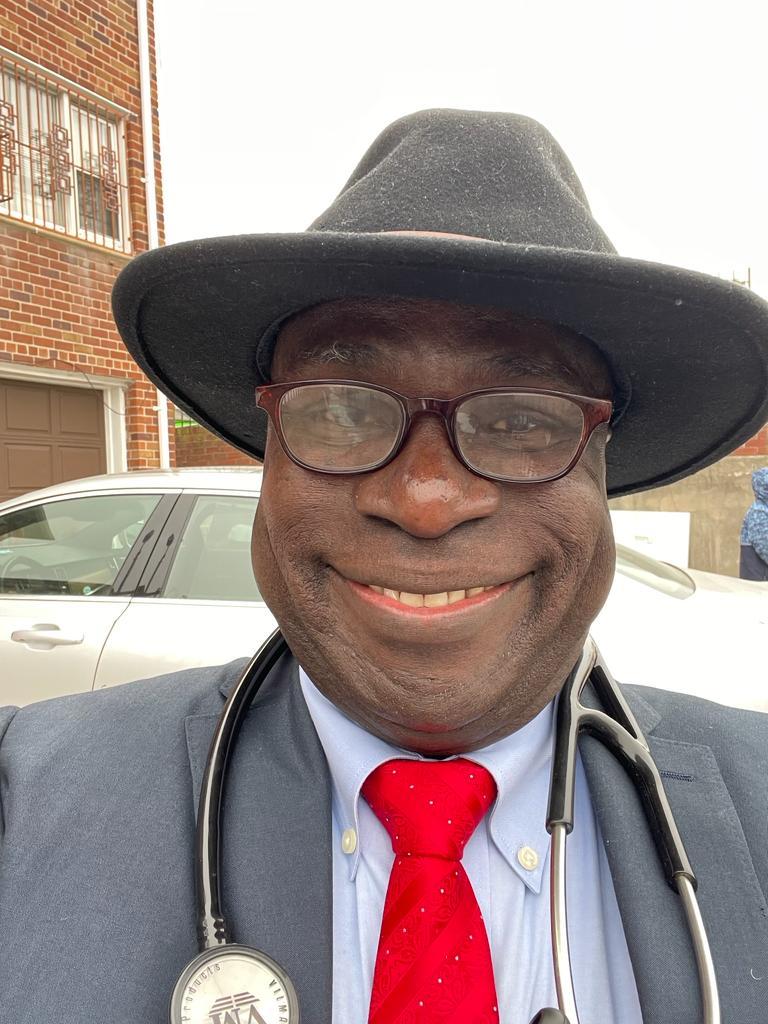
Emmanuel O. Fashakin, M.D., FMCS(Nig), FWACS, FRCS(Ed), FAAFP, Esq.
Attorney at Law & Medical Director,
Abbydek Family Medical Practice, P.C.Web address:
http://www.abbydek.com
Cell phone: +1-347-217-6175
“Primum non nocere”

Margins of freedom in Nigeria

By Okungbowa Adesina San & Co.

In Nigeria, the Constitution comprises the base of the entirety of societal superstructure, every single individual, every office, every business, and every law derives its legitimacy from the Constitution but the Constitution is not an infallible constant of the universe rather it is a created document.

The question arises that if the Constitution is created then it must also derive its authority from a valid place, whence then would the authority to govern every sphere of Nigerian existence, action and purpose, the answer is quite simple and contained in the Preamble of the Constitution itself, outside of the Index, the very first words in the Constitution “We the People of the Federal Republic of Nigeria”. The authority of this document that lays the foundation for our social infrastructure comes from we the people. The Constitution in its texts provides freedoms for the people in essence the people giving their freedoms to themselves, outside of Jurisprudential Scholars, for whom the question of whether the Constitution gives the rights or affirms existing rights is salient, ordinary consideration suffices that the reason such rights are enjoyed are the fact they are contained within the Constitution. However how free are the freedoms we have been promised?

The law firm of Okungbowa Adesina San & Co. wishes for you to join us in the coming months as we welcome each month by answering this question in every right enshrined in the Constitution. Join us in this series as we examine the margins of freedom in Nigeria.

Right To Life

Section 33 of the Constitution of the Federal Republic of Nigeria 1999 provides the very first right contained in the Constitution; the ‘Right to Life’. The section indicates that no person shall be deprived intentionally of his life, save in execution of the sentence of a court in respect of a criminal offence of which he has been found guilty in Nigeria, we can easily see that the primary exception to the right to life is as judgment for the enforcement of penalty after the commission of a crime, subsection 2 continues providing three exceptions namely, self defence and defence of property, to effect arrest or prevent escape from arrest and for the purpose of suppressing riot, insurrections or mutiny.

While the above constitute the bulk of the exceptions to the right to life, we must remember that the right to not have your life taken from you differs almost entirely from the right to be able to live. What the constitution has provided is the right for individuals to be free from violent action or external influence in the course of their death. What the Constitution has not done however is give individuals the rights over their own life or the right to live. While it would be illegal for a person to take their own life in an act of suicide or for a Doctor to euthanise a patient living in chronic pain and unable to continue going on, it is conversely very legal for a person to be rendered so poor in society that they and quite possibly their family simply starve to death.

The Constitution stops others from killing you and the laws stop you from killing yourself, but nothing is violated if you are put in a situation where life becomes untenable.

The margin of the right to life is that you can afford to live and can endure living it, but what it doesn’t do is give you ownership of your life.

Welcome to the month of May,

OKUNGBOWA ADESINA SAN & CO

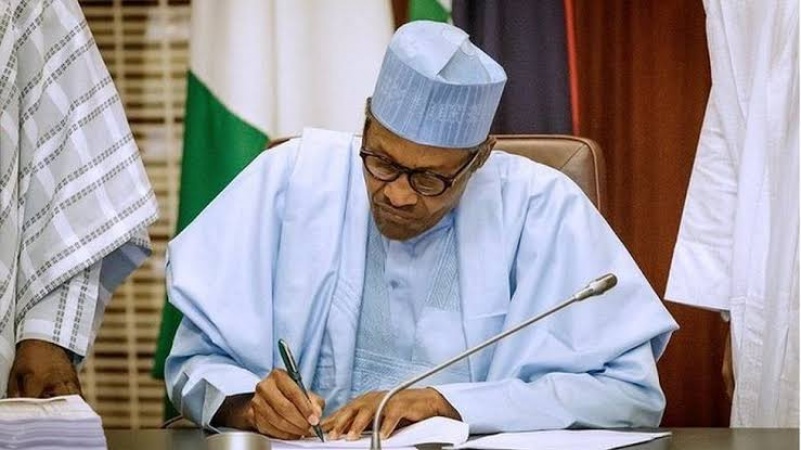
Buhari should sign sexual harassment bill into law – WARDC

•President Muhammadu Buhari
  • As women leaders call on National Assembly to reconsider 5 Gender Bills

By Lillian Okenwa

Along with other women leaders, the Executive Director of WARDC, Dr Abiola Akiyode-Afolabi and Senior Advocate of Nigeria, Law professor and former UN Special Rapporteur on trafficking in persons, especially women and children, Prof Joy Ezeilo have called on President Muhammadu Buhari to sign the sexual harassment bill before his exit on 29 May, while urging the 9th National Assembly to reconsider the 5 Gender Bills before their exit in the coming month.

On Tuesday 7 July 2020, Nigeria’s Senate passed the bill on sexual harassment in tertiary institutions after reading it for the third time. The bill titled: ‘A Bill for an Act to prevent, prohibit and redress sexual harassment of students in tertiary educational institutions and for matters concerned therewith, 2019’, was sponsored by the Deputy Senate President, Ovie Omo-Agege, and 106 other senators.

L-R: MC, Treasure Anike-Ade Funke and Keynote Speaker, Prof. Joy Ezeilo, SAN

Sadly, the bill has been lying idle on the president’s desk even after the House of Representatives gave it a nod.

Likewise, on Tuesday, March 1, 2022, the beginning of International Women’s Month, the National Assembly rejected 5 bills seeking to promote more opportunities for women in political parties, governance and society.

But during a one-day knowledge-building roundtable for Nigerian media chiefs on the said bills and the 1999 constitution on Wednesday, the women leaders noted that NASS’ rejection of the Gender Bills is a rejection of Nigerian women and further amplified the oppression that our patriarchal society imposes on women.

The meeting was hosted by Women Research and Documentation (WARDC) in collaboration with Women Radio 91.7FM and the International Press Centre (IPC) with the support of United States Agency for International Development (USAID) through Palladium SCALE Project.

L-R: Akiyode-Afolabi and others

While Dr Akiyode-Afolabi presented a paper titled, ‘Beyond the five gender bills: The Unfinished Gender Business of the Buhari Administration’, Keynote Speaker, Prof Ezeilo in her presentation — Gender Bills: One Step Forward Ten Steps Back- Where Do We Go From Here?, remarked that: “The principle of equality and nondiscrimination is a normative framework protected under international law… [It] has assumed the status of jus cogens – that is part of customary international law for which no derogation is permitted.”

The law professor further disclosed that: “Municipal or domestic enforcement of international and regional treaties protecting the principles of equality and non-discrimination, including affirmative action to redress systemic discrimination is done through constitutional and other legal measures.”

Expressing concern that the Sexual harassment bill has been on President Buhari’s table for too long Akiyode-Afolabi, also counselled that the 9th National Assembly which has been strongly berated for deliberately missing an opportunity to etch its tenure in gold reconsiders its position on the bills.

Other speakers include Toun Okewale-Sonaiya, founder of Women Radio, who charged media practitioners to deliver social justice and be deliberate about reporting news on women; President of Women in Politics Chairperson, Ebere Ifendu, and Executive Director of International Press Centre (IPC), Lanre Arogundade who spoke on: ‘Strategy for Amplifying Women’s Agenda and Increasing Women’s Voices.

The five bills are:

  1. Bill to provide special seats for women at the national assembly.
  2. Affirmative action for women in political party administration.
  3. A bill to grant citizenship to foreign-born husbands of Nigerian women. Already, a Nigerian man’s foreign-born wife is automatically a Nigerian citizen.
  4. Bill to allocate 35 percent of political positions based on appointment to women and creation of additional 111 seats in the National Assembly and at the state houses of assembly.
  5. Inclusion of at least ten percent affirmative action in favour of women in ministerial appointments.

30 things I must do to make my court work effectively, if I  were a trial judge in Nigeria

By Sylvester Udemezue

✔My court will be driven 100 PERCENT by ICT.

▪1) I would not record any proceeding in long hand. It’s an anathema in the 21st century’s 2023. It’s a shame that such is still seen in any country.

▪2). All counsel would have records of the proceedings in my court sent to them at the end of each sitting, by email.

▪3). All hearing notices would be sent by email and WhatsApp and SMS. No manual hearing notice. On the first day a lawyer appears, he would be directed to present by an affidavit, sworn to by a lawyer in his firm, communicating the phone number, WhatsApp number, and email address with which to reach his office for the purpose of the case.

▪4). (A) All motions and other applications that do not require witnesses entering the box, would be taken virtually unless the need to physically converge in court is cogent.  (B). During main trials, where a witness is too far away or unable to make it to court, my court will arrange to take the witness VIRTUALLY on the condition that his lawyers must attend court physically on that day.

▪5). Rulings and judgements, no exception, will be sent by email to all counsel within 24 hours of delivery.

▪6). All applications for any court process from my court will be made online, and attended to within 24 hours

▪7). All the monies given to me to hire domestic staff will be used to hire ICT support staff to power my court;

▪8). I will write universities and the Law School, to occasionally send law students to come for internship/externship in my court.

▪9). All processes for my court will be served online between or among counsel. After filing, scan and send to the other Party’s designated email and copy my Registrar. Any copy served in that way is sufficient service.

▪10). If my court won’t sit on any day, all affected counsel would get INFORMED (by SMS/WHATSAPP and email) not later than 48 hours before the date, with a request to agree on a date to fix the next hearing date, unless it’s an emergency, in which case a formal letter of apology, signed personally by my registrar, would be sent to each counsel who has a case in court on the day, through the designated email.

▪11). My court would diplomatically and persistently encourage out-of-court settlement. Many cases will be resolved out of court.

▪12. My court won’t rise on any day before 4 pm. And snack/lunch will be served in court, at my expense.

▪13). I would not collect bribe. And I have never in my life taken bribe to do I justice or to pervert the law or otherwise to subvert due process or to perpetrate fraud. PLEASE, I CHALLENGE ANYONE TO PROVE ME WRONG ON THIS. But when you offer me bribe, I would turn down and counsel you against it, and still go ahead to do my job fairly and impartially.

▪14). Because of the Nigerian situation and because I will be UNBENDING in favour of the rule of law, due process and human rights, I will engage PERSONAL SECURITY or make personal security arrangements, at my expense.

▪15). I won’t cite any lawyer for contempt nor abuse/insult any lawyer. I will counsel him.

▪16). If it’s a FREP case, and processes have been filed and exchanged. Hearing and judgement must happen within 30 days.

▪17). Lawyers will feel free to freely argue their cases. But where you go wrong, I will give you a case or a legal authority or article to read and come back to address me. Like I said, it’s going to be an INTELLECTUALLY- stimulating COURT — for doing cases, for learning at the same time and for promoting the profession and society.

▪ 18). Apart from FREP cases and other emergency cases which must be resolved within 30 days or not more than 60 days, no regular case will stay pending in my court beyond 24 months, I will, as I said, regulate the proceedings or hands off the case if it goes beyond two years. No counsel will be allowed to hold my court to ransom. It’s either you are ready or take your case away.

▪19. I will award costs sparingly. It serves not much purpose.

▪20). Extension of time will be sparingly allowed.

▪21). CMC or PTC won’t last beyond three months, if I am a CMC judge in any given case.

▪22). Ruling in all interlocutory proceedings will be delivered either on the same day or WITHIN ONE WEEK.

▪23). Unnecessary formalities or technicalities won’t have any place in my court.

▪24). There would be free ICT-powered computer sets in one corner of my court, for lawyers to access at least TWO DIFFERENT Law Report packages free of charge. In that way, when a case is stood down, it’s easier for lawyer to conduct research without having to go back to their offices and come back the same day.

▪25). There won’t be any day my court will not sit save on account of serious illness or general judiciary strike, but not for vacation. I won’t be part of any vacation that lasts more than 2 weeks. It’s encouragement of laziness, condonation of indolence and promoting of corruption of the system.

▪26). No lawyer would come to my court unprepared. It would be an intellectual court,no doubt.

 ▪27). Due process will be followed in everything

▪28). It would be impossible for me to deliver judgment to please my master or the master of my master. It’s an impartial arbiter. I would rather resign.

▪29). My judgements and rulings will rank among the shortest. *What some of us have refused to come to terms with is that WRITING A BRIEF OF ARGUMENT or a judgement, is different from writing a learned article for publication or a newspaper commentary. Among many differences, in a newspaper commentary, you set the outline for yourself, unlike in Brief Writing and in Judgement writing where the facts, the evidence presented, and and the issues for determination have already streamlined the proposed judgment/brief — sometimes even Rules of Court or Practice Direction has Brief -streamlining provisions.

▪30). I will buy a small generator in case NEPA/PHCN/EKEDC takes its power and the general generator is not on.

✅I know some people will ask, How are these possible in Nigeria?

▪ ANSWER:

I have assessed the Nigerian situation. It’s very possible. The reason we think things are not possible is because we just don’t want to change. It take PERSONAL SACRIFICE to do things differently. As a judge, I will devote 30 to 40 percent of my salaries and allowances towards ensuring that I realize my objectives. IF I WAIT FOR THE SYSTEM OR FOR GOVERNMENT, NO WAY! EXAMPLE: I have been a Law Teacher for almost 16 years; (A). I have never MISSED my class — not even once. My students are here. My colleagues are here . (B). I hate going on ANNUAL LEAVE or any form of leave at all. So, I can’t remember agreeing to go on leave or applying for it. If it all, perhaps not more than once in the past 16 years. What for? I am at the age of work and the age of helping to make things happen. I will LEAVE when I am satisfied I have made my own little contributions. In-between, no need for ANNUAL LEAVE.

Now, someone else will say, I just hope you won’t be discouraged by prevailing inhibiting circumstances.

✔ ANSWER:

Discouraging circumstances are a source of encouragement to me. I have found through experience that I am more effective when I am surrounded by discouraging circumstances.  It’s from/in midst of discouragement that my best encouragement comes or is easily found. Encouraging circumstances make us too relaxed and ultimately lazy and ineffective. Let me quote a Nigerian named Idowu Koyenikan: “There are certain life lessons that you can only learn in the struggle”. Then,

Writing in the literary work titled, *On Eagles Wings:Rise,*_Lailah Gifty Akita had this to say:_”Without being push[ed] to the wall, we will have remained in our comfortable zone. But [discouraging] circumstances challenge us to find the courage to move on”  Accordingly, if your work is not challenging, full of discouraging circumstances, you’d better quit because you can’t make a name there. Put differently, if it’s not giving you hard time, it’s not worth going after.  Perhaps this is why Hiral Nagda holds this view, which I think we must pay close attention to:

“It’s the difficult years that makes you ready for a phenomenal life…When you walk in the fire, you start becoming fire proof….To collide with your destiny, you first have to collide with the challenges. A little shedding is needed to bloom like never before. Don’t rush to get out of difficulties. Experience them because they have arrived to rise you higher. It’s come to redefine your entire existence. Roadblocks are pathway to your glorious destiny. Don’t push them away. Embark on them. Don’t call it difficulty or an obstacle. Declare it an ultimate blessing to rise you up to a sky high level. Be the one who is terrifically geared to rise up even in the most back breaking circumstances & radiates an luminous aure which illuminates the world around. Easy way feels good but fails to elevate you. Difficult way is overwhelming but guarantees to raise you up”

Finally, note that sometimes you would have to go through a very difficult place, all you need to know is that you have to go through as among the biggest source of power for you! This is partly of why Lailah Gifty Akita gave us this advice, to  “Live daringly. Be determined to overcome any difficulty. Your difficulties are your deliverance from spiritual deadness. May the hope of overcoming your difficulties gives you the determined strength to fulfill your dreams” Amen

So, don’t let anyone fool you; these things are achievable, just as I believe that our situation in the justice delivery sector in Nigeria is not irremediable.  We can turn things around if we are prepared to make sacrifice. Hence, I say it again,

 How I wish I were a trial judge now!

But do I want to be?

Wouldn’t it cage me and stop me from being, what I think I am:

✔A public Interest Writer (PIW); and

✔ A public Interest Speaker (PIS).

Or, would this idea and wish be just okay that I may become a Public Interest Adjudicator (PIA) also?

Imagine me as a judge sitting at the Bench to preside over a case, and trying to adhere to the demands of all and each of Access To Justice; The Rule of Law; Due Process; Human Rights; Interest of Justice; and the opinion of the reasonable bystander; Honestly, it would be a like A Town Hall Different! I am serious! But I rest my case; let’s just see how it goes. This life sha; every human being appears to already have a pre-ordained path in life. Yet, we often think hard about what lies in our future; do we have control over it or not? Sometimes confused! Are our destinies already carved out for us? Or, do we have a say in choosing them? But I am beginning to think that our intellectual ancestors have a hand in creating these controversies. For example, William Jennings believes that “Destiny is not a matter of chance; it is a matter of choice. It is not a thing to be waited for, it is a thing to be achieved”  while

Deepak Chopra Bryan would rather say that “Even when you think you have your life all mapped out, things happen that shape your destiny in ways you might never have imagined”.  Then, Carlos Ruiz Zafón introduces a new twist: “Destiny is usually just around the corner. Like a thief, a hooker, or a lottery vendor: its three most common personifications. But what it does not do is home visits. You have to go for it”.

Now, you, please what do you think because I am thinking too?

In the meantime, I propose Henry Miller’s as a Memory Verse:

” Every man has his own destiny: the only imperative is to follow it, to accept it, no matter where it leads him”.

Respectfully submitted,

Sylvester Udemezue (Udems)

08039136749.

Coordinator,

The Realist Ministry (TRM)

([email protected])

(03 May 2023)

TIPS