Home Blog Page 780

High Court Judges set to retire at 70, as Senate passes bill increasing retirement age

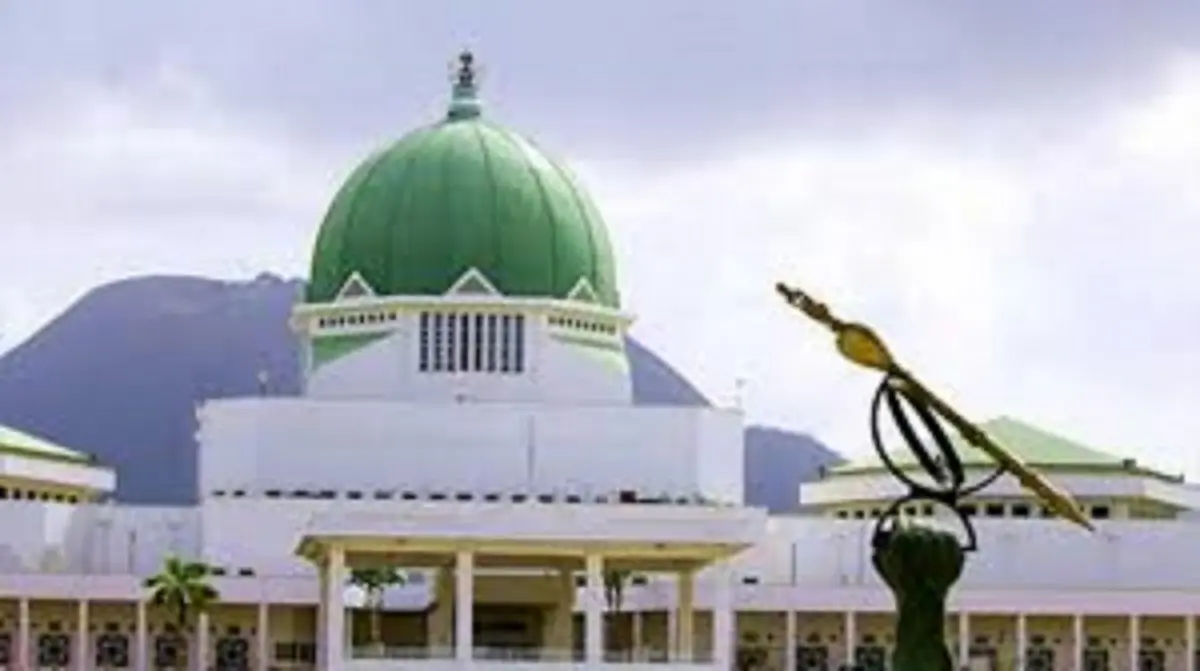
Finally, the National Assembly has passed the bill abolishing the dichotomy between the retirement age of judges in Nigeria’s High Courts and those at the Court of Appeal and Supreme Court.

The Constitution provides that justices of the Supreme Court and the Court of Appeal retire at 70 while those at the High Court retire at 65.

News Agency of Nigeria (NAN) reports that the National Assembly has directed its Clerk to transmit the Constitution Alteration Bill 20 which approves a uniform retirement age for judicial officers in Nigeria to the president for assent.

This is sequel to the adoption of a motion titled: “Passage of Constitution (Fifth) Alteration Bill No. 20 (Uniform Retirement Age for Judicial Officers), 2023” at plenary on Tuesday.

The bill which seeks to extend the retirement age of High Court judges from 65 to 70 years will make the retirement age of High Court judges same as that of the justices of the two appellate courts.

The motion which was sponsored by the Chairman of the Senate Ad hoc Committee on Constitution Review, Ovie Omo-Agege, was in line with provisions of the Authentication Act.

“Recall that on Tuesday, April 4, the Clerk to the National Assembly was directed to transmit Constitution Alteration Bill No. 47 (Establishment of State Security Council) after it met the requirement of Section 9(2) of the Constitution to Mr. President for his assent.

“Recall also that Sokoto State House of Assembly was among the State Houses of Assembly that were yet to forward their resolution. Others are Gombe, Jigawa, Kebbi, Kwara, Plateau, Sokoto, and Taraba State Houses of Assembly.

“Aware that Sokoto state House of Assembly has forwarded its resolution; and convinced that with the approval of Sokoto State House of Assembly, the Constitution (Fifth Alteration) Bill No. 20 (Uniform Retirement Age for Judicial Officers), has met the provisions of Section 9(2) of the Constitution, for passage,” Mr. Omo-Agege said.

The Deputy Chief Whip of the Senate, Aliyu Sabi Abdullahi (APC – Niger), supported the motion.

“This is one of the key elements of the Ninth Senate legislative agenda to reform the judiciary.

“Having a uniform retirement age for the Judiciary will remove the backlog of cases and ensure speedy dispensation of justice,” he said.

Senate President Ahmad Lawan expressed delight over the development.

“This is a very important amendment to the Constitution and we are happy that it is going to be part of our legacy as the 9th National Assembly,” he said,

(NAN)

Insecurity, abductions, and kidnappings have become normalized, Somber Tuesday series by Mojúbàolú Olufúnké Okome

#SomberTuesday! Presidential inauguration and transition plans are underway but lawsuits on the results of the elections continue. The percentage of Nigerian women elected into office has dwindled to minuscule proportions. Youths and people with disabilities are also few and far between. INEC is a great disappointment as an election management body. It has contributed greatly to damaging public trust in the integrity of the elections. Ethnic divisiveness and hate speech remain concerns that challenge the project of nation-building. Democracy remains ephemeral.

There is still currency scarcity although more old notes are in circulation, some so tattered and dirty that it’s a marvel that they don’t disintegrate into nothingness. Plus handling them encourages hand-washing that has the unintended consequence of contributing to positive health outcomes. The economy remains in the doldrums, although it is usually the case that even in bad times, some people make a figurative killing. It is also usual that the masses suffer most because they have few to no social safety nets.

Nigeria is blessed with numerous youths. Majority of them also suffer from the country’s political, economic, and social problems. Many are understandably invested in japa–leaving the country by any means necessary to seek better opportunities abroad. They are literally “sick and tired of being sick and tired,” as Fannie Lou Hamer, courageous African American civil rights activist famously said. Octogenarians have taken control of the reins of power in a country with the youngest population in the world. Democracy. What does it mean in the day-to-day realities of the youths? Should patriarchy, oligarchy, and gerontocracy be so ingrained in Nigeria? Should there be so few women in leadership? Do the people with disability not deserve representation? Do poor Nigerians have any hope of getting into political office? What kind of democracy do we want?

Insecurity, abductions, and kidnappings have become normalized. Nigerian political institutions, infrastructure, and social services do not perform as expected. High unemployment and underemployment remain prevalent. Decent jobs are few and far between. Is there any memory of the social contract between the people and leaders?

Democracy and economic development, personal and human security should not be impossible dreams. Citizens’ well-being and welfare, as well as the masses’ ability to meet their basic needs, should be uppermost in the minds of the leaders. The hope for a brighter future shouldn’t be lost to all but the elites.

#EndSARS youth protesters went to the polls hoping to freely choose their representatives, but the glaring mismanagement of the elections caused frustration and confusion about the utility of engaging in the political process. #EndSARS demonstrations were demands for good governance, an end to police brutality, extortion, impunity, economic inequality, marginalization, targeting of youths and other minorities, and cessation of political violence. However, violent suppression was the response.

The 2020 Lekki massacre should never be forgotten. Youths at #LekkiTollGate & other locations were subjected to state-sponsored brutality and naked force. The right to peaceful protest should be sacrosanct in a democracy. We should collectively think about how to build a nation where democracy and sustainable development are deeply rooted and experienced as realities. Kleptocracy should be eschewed. Instead, it is celebrated.

#NigerianWomenArise #EndPoliceBrutalityinNigeriaNOW #EndSars #EndSWAT #EndImpunity.

Howard Zinn’s statement remains relevant: “Civil disobedience, that’s not our problem. Our problem is that people are obedient all over the world in the face of poverty and starvation and stupidity, and war, and cruelty. Our problem is that people are obedient while the jails are full of petty thieves, and all the while, the grand thieves are running the country. That’s our problem.”

Like the voice in the wilderness I repeat: Let the kleptocrats give back our stolen wealth so that we can fix our infrastructure, schools, hospitals, and also offer worthwhile social protection to our people. Let the masses enjoy the full benefits of citizenship in Nigeria. Let the leaders and political class repent and build peace with justice.

This is no time for politics as usual. The people elected should be those trusted to bring justice, equity and human security to the entire country, not expedient, unethical and egocentric individuals determined to dominate for self aggrandizement or sectional gain. We don’t need oligarchs’ continued domination. We also need a government that puts the interests of majority of citizens first. Dare I hope that this will happen anytime soon?

Prof. Mojúbàolú Olufúnké Okome is a professor of political science at Brooklyn College in New York.

Hauwa, another Chibok school girl returns

By Lillian Okenwa

Heavily pregnant and clutching a three-year-old toddler, Hauwa Maltha another Chibok school girl has finally left captivity after nine years.

Although her rescue has brought so much joy, Nigerians continue to hope that other Chibok school girls will return home before this administration expires on 29 May.

According to Leadership, troops of 114 Task Force Battalion of the Nigerian Army in Bita, Borno State in Northeastern Nigeria, rescued the 26-year-old said to be one of the Chibok school girls abducted on the night of April 14, 2014, from their school dormitory at Government Secondary School, Chibok, Borno state.

Hauwa Maltha with serial number two on the list of the abducted Chibok schoolgirls, was said to have been rescued by the troops on April 21, 2023, along with her three-year-old baby during the troops’ operations in the Lagara area of Borno State.

While in captivity, Hauwa who hails from the Kibaku tribe in the Chibok Local Government Area of the state was reportedly married off in Gulukos to one Salman, a cameraman to the late terrorist leader, Shekau.

Salman was said to have died in Lake Chad, and after his death, the hapless girl was remarried to one Mallam Muhammad in Gobara and had two children with him.

Her second husband, Mallam Muhammad, was eventually killed in Ukuba terrorist enclave in Sambisa Forest during clashes between JAS/ISWAP rivals.

Since her rescue, Hauwa, who is about eight months and two weeks pregnant, has reportedly undergone thorough medical examination along with her baby.

After she has been certified to be medically fine, she and her baby, Fatima, will be handed over to the Borno State Government for further management.

276 female students were kidnapped by the Islamic terrorist group Boko Haram from the Government Girls Secondary School in Chibok on the night of April 14, 2014.

Barely two weeks ago two girls escaped from their captors at Sambisa Forest. The Chibok school girls’ escape that Sunday was as a result of intense military operations in the forest.

A security source said the girls were identified as Hauwa Mutah and Esther Markus. “One is from Chibok and the other one from Dzilang village,” he said. Today the number of Chibok schoolgirls in captivity has reduced from 96 to 95.

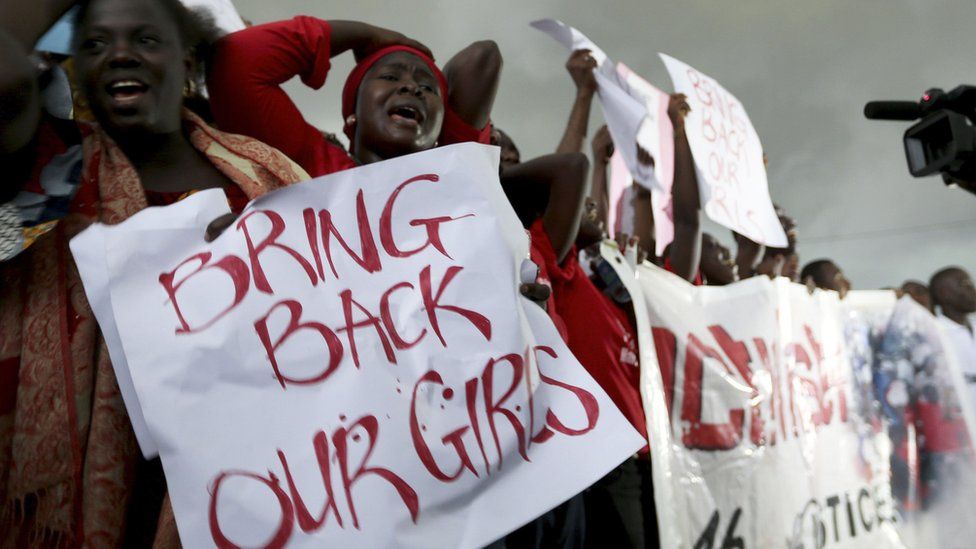
As members of the Bring Back Our Girls, BBOG movement in their nine-point demand, insist that the outgoing administration of President Muhammadu Buhari must amongst other things brings back the captured girls before 29 May 2023, in a “push to finally defeat Boko Haram, ISWAP, and liberate all our citizens”, Amnesty International maintains that the Nigerian authorities failed utterly to learn from the heartbreak of Chibok town in Borno State and, ultimately, to protect children.

Court orders man to stop siring after nearly 600 children

The biblical command for humans to – “be fruitful and multiply and fill the earth”, was taken to a whole new level with a court practically charging a man to stop making babies after he had sired almost children!

AFP reports that the 41-year-old man was ordered by a Dutch court to stop!

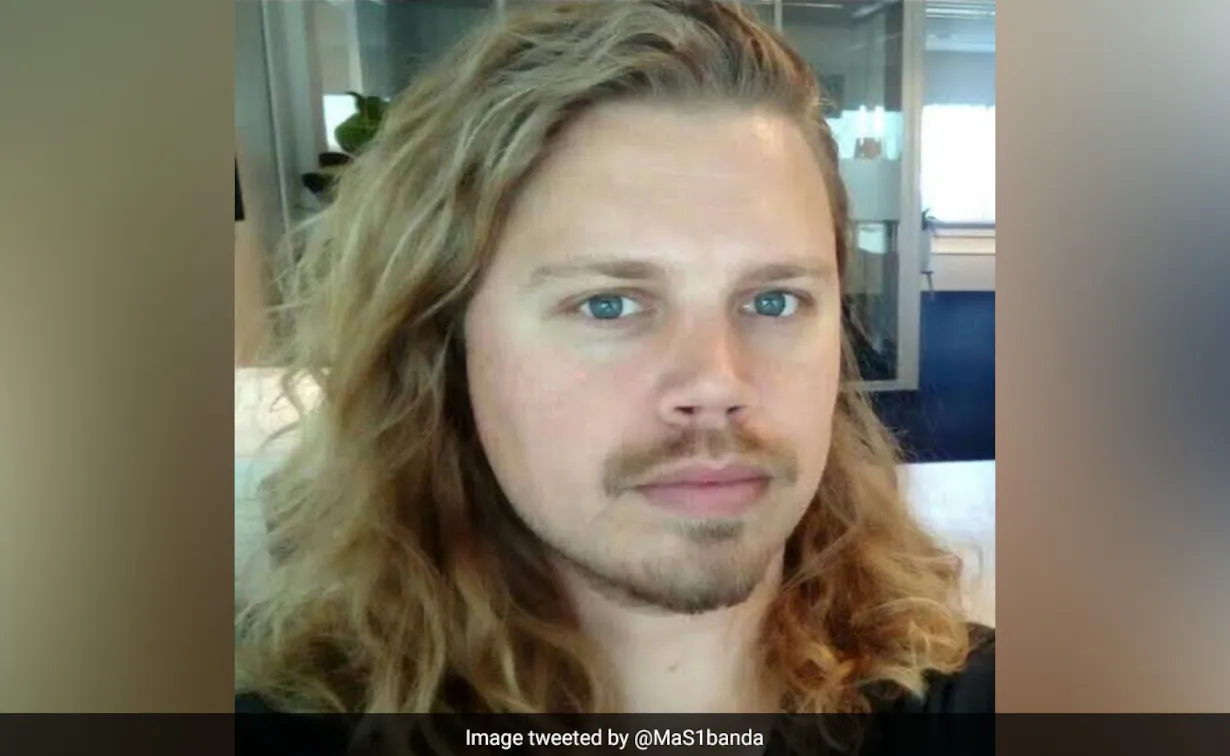
Identified in Dutch media as “Jonathan M”, the father of many reportedly fathered over 550 children through sperm donations in the latest fertility scandal to hit the Netherlands.

M was hurled to court by a foundation protecting the rights of donor children and the mother of one of the children allegedly fathered from his sperm.

Dutch clinical guidelines say a donor should not father more than 25 children in 12 families, but judges said the man had helped produce between 550 and 600 children since he started as a sperm donor in 2007.

The court, therefore, “prohibits the defendant from donating his semen to new prospective parents after the issuing of this judgement”, judge Thera Hesselink said on Friday.

Jonathan M. may also not contact any prospective parents “with the wish that he was willing to donate semen… advertise his services to prospective parents or join any organisation that establishes contact between prospective parents,” Hesselink said in a written judgement.

Should he continue with his donations, he would face a 100,000-euro ($110,000) fine for every transgression, as well as additional fines, the judge ordered.

The mother of one of the children in the court case, identified only as “Eva”, said she was grateful that the court stopped the man from “mass donations that’s spread like wildfire to other countries”.

“I’m asking the donor to respect our interests and to accept the verdict because our children deserve to be left alone,” she said in a statement.

According to AFP, more than 100 of the extremely fertile Jonathan M’s children were born in Dutch clinics and others privately, but he also donated to a Danish clinic – named Cryos in court papers – which then dispatched his semen to private addresses in various countries.

“The donor deliberately misinformed prospective parents about the number of children he had already fathered in the past,” the district court in The Hague said.

“All these parents are now confronted with the fact that the children in their family are part of a huge kinship network, with hundreds of half-siblings, which they did not choose,” it said.

The court considered it “sufficiently plausible” that this has or could have negative psychosocial consequences for the children.

This included psychological problems around identity and fears of incest.

“The point is that this kinship network with hundreds of half-brothers and half-sisters is much too large,” court spokesperson Gert-Mark Smelt told AFP.

“The interests of the children weigh too heavily and that is why it is forbidden for the gentleman to give further semen.”

Mark de Hek, one of the lawyers in the case, said: “It is the first time that a judge has ruled on such a case and it is encouraging to see this behaviour immediately dealt with.”

The case is the latest in a series of fertility scandals to hit the Netherlands.

In 2020, a deceased gynaecologist was accused of fathering at least 17 children with women who believed they were receiving sperm from anonymous donors.

The year before, a Rotterdam doctor was said to have fathered at least 49 children while inseminating women seeking fertility treatment.

In re ‘Douglas Ogbankwa’: Is It Illegal/Unprofessional for a person called to the Bar in Nigeria to practice law using a name different from name on Roll, without notifying Supreme Court of Name-Change?

By Sylvester Udemezue

I start by admitting that Douglas Ogbankwa, Esq had displayed gross negligence or ignorance when upon his completion of the process of changing his name from “Douglas Onyebuchi Aguguom” to “Douglas Onyebuchi Ogbankwa”, he failed to send the necessary notification/documents to the Supreme Court of Nigeria. This notwithstanding, the fact that he is yet to notify the Supreme Court of his successful change of name, does not in any manner detract from the fact that having successfully undergone the process of change of name, he is entitled to practice law under his new name since he, Douglas Ogbankwa, does not fall within the expression “any person other than a legal practitioner” as envisaged by section 22 of the Legal Practitioners Act.

◾THE EXTANT LAW:
Section 22 of the Legal Practitioners Act,” Cap L11, LFN, 2004, dealing with impersonation of a lawyer, provides that “…if any person other than a legal practitioner ‐ (a) practises, or holds himself out to practise, as a legal practitioner; or (b)takes or uses the title of legal practitioner; or (c) wilfully takes or uses any name, title, addition or description falsely implying, or otherwise pretends, that he is a legal practitioner or is qualified or recognised by law to act as a legal practitioner; or (d) prepares for or in expectation of reward any instrument relating to immovable property, or relating to or with a view to the grant of probate or letters of administration, or relating to or with a view to proceedings in any court of record in Nigeria, he is guilty of an offence and liable, in the case of an offence under paragraph (a) of this subsection or a second or subsequent offence under paragraph (d) of this subsection, to a fine of an amount not exceeding N200 or imprisonment for a term not exceeding two years or both such fine and imprisonment, and in any other case to a fine of an amount not exceeding N100.”

◾THE FACT’S OF THE CASE:
A guy got called to the Nigerian Bar in 2007 under the name “Douglas Onyebuchi Aguguom”. He theratfter began law practice in that name, but somewhere along the line, successfully underwent the process of change of his name to “Douglas Onyebuchi OGBANKWA”. Although by a newspaper publication he gave notice thereof to the whole world and specifically to the Nigerian Bar Association (NBA), he did not formally give notice to the Supreme Court of Nigeria. Meanwhile, he continued his law practice but thenceforth in the new name, “Douglas OGBANKWA”

◾QUESTIONS ARISING:
1️⃣. Is the PERSON bearing the name “Douglas OGBANKWA” guilty of the offence of impersonating a legal Practitioner?
✔ Answer: Not at all! Section 22 talks about the PERSON and not the name. The names ‘Douglas Onyebuchi Aguguom” and “Douglas Onyebuchi OGBANKWA” belong to and are borne by one and the same person. And the bearer, irrespective of the name he bears or calls himself, is a PERSON duly called to the Bar in Nigeria. It’s submitted that the person bearing
“Douglas OGBANKWA” has not violated the provisions of section 22 of the Legal Practitioners Act, Cap L11 LFN 2004 or of any other law in Nigeria, since he remains a PERSON duly called to the Bar irrespective of the name he answers. A crime of impersonation is said to be committed only when “any person other than a legal practitioner* holds himself as a legal practitioner or practices as a legal practitioner or exercises any of those rights that are exclusive to only legal practitioners. This is not the case in the present scenario. So, what is the noise about? Why the machination or plot to destroy or diminish Douglas Ogbankwa who is not only a lawyer but a well-known lawyer for that matter?

2️⃣. Does the fact that the person has failed or neglected to give notice of his otherwise successful name-change to the Supreme Court, render it illegal or unprofessional for him to practice law under his new name “Douglas OGBANKWA?” ◾ Answer: Not at all. Since he has successfully gone through the process of change of name, he is entitled to practice law in his new name. Practicing law in his new name is neither illegal nor unprofessional, although he’s negligent in having failed to give notice to the Supreme Court to enable the latter update its records. I repeat that giving such a notice to the Supreme Court of Nigeria is not a part/step in successful change of name in Nigeria; thus a change of name by a lawyer could be successfully concluded without recourse to the Supreme Court. This means, I submit, that a person who is duly called to the bar but who later validly changed his name, is not estopped from using his new name only on account of the fact he has not sent notice of the change to the supreme court. The change of name is complete, effective and valid whether Douglas OGBANKWA has notified the Supreme Court or not. The only reason for such a notice to the Supreme Court is for the supreme court to update its records about the person involved. Accordingly, the SUPREME COURT is not under any obligation to update Douglas Ogbankwa’s records on the Roll if Douglas Ogbankwa fails or neglects to give notice of the change to the Supreme Court. For example, Mr Douglas OGBANKWA has no right to blame the Supreme Court for the response the latter gave in this instance to the letters of enquiry from some lawyers. Recall that in its response to the letters from some petty, mischief-making Legal Practitioners and groups, the Supreme Court had stated that “We have checked our records and the name DOUGLAS OGBANKWA cannot be found on the Rolls of Legal Practitioners kept in the Supreme Court of Nigeria…. The said DOUGLAS OGBANKWA is at liberty to come forward with his call to Bar Certificate and Qualifying Certificate for enrolment. If he has changed his name, he is expected to come along with a duly stamped deed poll and all the requirements for change of name in the Supreme Court.”
See: “EXCLUSIVE: SUPREME COURT SAYS MAIKYAU’S NBA C’TE APPOINTEE IS NOT A LAWYER” (https://citylawyermag.com/exclusive-supreme-court-says-maikyaus-nba-cte-appointee-is-not-a-lawyer/).

◾IMPLICATIONS OF THE MANNER OF THE SUPREME COURT’S REPLY:
1️⃣. The Supreme Court did not say the person bearing the name Douglas OGBANKWA, is not a lawyer in Nigeria. Nooo! What the supreme court has said, as shown in its letter, is that the NAME “Douglas OGBANKWA” is not found in the Roll. The Supreme Court’s response could be described as or likened to a negative pregnant traverse/response to the question “Is Douglas Ogbankwa a lawyer in Nigeria?* This sort of response could mean, from the point of view of the Supreme Court, that “the person bearing the name may indeed be a legal Practitioner but operating under a new name about which we have not been notified”. This could be why the Supreme Court added in its response, that “If he has changed his name, he is expected to come along with a duly stamped deed poll and all the requirements for change of name in the Supreme Court”. His records at the supreme court wouldn’t be updated unless and until he gives such notice to the Supreme Court. Yet, the mere fact he is yet notify the Supreme Court, and that his records are yet to be so updated, is not a sensible or reasonable ground for anyone, especially one who is aware of such successful name-change, to go to town misrepresenting the bearer of the new name (whom one knows is one and the same person as the owner of the now changed name: “Douglas Onyebuchi Aguguom) as a person impersonating a legal Practitioner or who has committed some offense, illegality or other unprofessional conduct. This is the basis of my submission/comment (and I reiterate) that those lawyers and non lawyers who know the truth (about the name-change) but are still going about spreading the lies and falsehood, that the guy bearing the name “Douglas OGBANKWA” is not a lawyer, are a bunch of petty, shameless, unscrupulous myopists whose actions in this respect are best described as hare-brained, cock-eyed, and airheaded.

Well, in my opinion, Mr Douglas OGBANKWA could be properly accused of having displayed gross negligence or even stack ignorance in not having notified the Supreme Court of the change of name, which has brought him this unexpected embarrassment from the malevolent actions of some scatterbrained lawyers. But, with due respect, Douglas Ogbankwa cannot be validly or effectively accused of having perpetrated any act of illegality or unprofessionalism. If one looked carefully at the newspaper publication that was done as part of the process of the name-change, one would see that Douglas OGBANKWA had given notice publicly to the NBA but not to the Supreme Court. This, in my opinion, could be interpreted to mean that Douglas OGBANKWA may have acted more out of IGNORANCE than of negligence; he may have thought that the notice to the NBA was sufficient or was all that was necessary for his records as a lawyer to get updated. With due respect to Douglas, the notice to the NBA was absolutely unnecessary. The only notification that was necessary was that to the Supreme Court which was UNFORTUNATELY never done.
Membership of the NBA is guided/governed solely by the Roll kept at the Supreme Court; you’re automatically an NBA member if your name is on the Roll, and NBA is under an obligation to take notice of any updates in the Roll of legal practitioners as kept at the supreme court. For example, if one’s name is struck off the Roll, NBA has an obligation to cease treating such a person as a lawyer in Nigeria. This thus places an obligation on the NBA to ensure it’s in constant contact with the Supreme Court for purposes of getting necessary updates as they come, on the Roll. On the other hand, there is a responsibility on the Supreme Court to constantly keep the NBA posted about any updates on the contents of the Roll. The implication of this is that NBA and the Supreme Court must work together for this purpose to ensure there are no mixups and no embarrassment caused the profession or to any lawyer who has done the needful by giving notice to the Supreme Court. But notifications about name change is properly and appropriately channeled to the Supreme Court and not to the NBA, since the Supreme Court, and not the NBA, is the keeper of the Roll and upon whom lies the responsibility to effect necessary changes thereon based on genuine information at its disposal as the case may be. After each round of changes, the Supreme Court should inform the NBA. But the Supreme Court may not be obliged to effect any such changes until it has got necessary information/notice. This tells us that the responsibility is on the LAWYER who has changed his name to give notice thereof to the Supreme Court, and not on the Supreme Court to go about scouting to know whether there are lawyers who have changed their names and in need of such updates. This is where Douglas Ogbankwa’s own default lies. But it is possible that, as of then, he didn’t think he should do this — he may have acted out of ignorance! The bad news is, ignorance of the law is not a good excuse while the good news is, there is no law broken in this instance, although one can’t doubt that he has been thoroughly embarrassed as a result of his “enemies” taking advantage of his ignorance or negligence — more like giving your foes the weapons with which to fight you. But what have they achieved? Nothing, in my opinion other a temporary distraction! Anyway, if upon the name change, Douglas Ogbankwa had notified the SUPREME Court and the name Douglas Ogbankwa was documented on the Roll, the NBA would have had no choice but to recognize the same, and all this embarassment would have been averted. This is why one may be right to argue that the foundation of of Douglas Ogbankwa ‘s current travails lies almost entirely in his failure or neglect to notify the Supreme Court immediately upon the name change. This notwithstanding, I keep repeating that it’s still improper to associate him with any form of illegality or professional misconduct on account only of his default as explained above.

In the meantime, as I hope shortly to, among others things, show, some useful lessons have been learnt on all sides:

1️⃣ First, and especially by Douglas Ogbankwa himself, who has, out of his negligence or ignorance, learnt by EXPERIENCE, and the hard and harsh way;

2️⃣ By some other lawyers contemplating name-change or who have already so done but are yet to do the needful — I expect they have learnt by *OBSERVATION;

3️⃣. By those fighting Douglas Ogbankwa — they have learnt how to not engage in pettiness and childish acts in the name of or as a part of politics or “bar fight” Although they have succeeded in causing Douglas Ogbankwa some embarassment, albeit temporary, they have not succeeded in destroying or diminishing Douglas Ogbankwa. So, in effect, they have achieved almost nothing or nothing at all; and

4️⃣. All observers of the current scenario have also learnt something, one way or another, however little or huge

Finally, and for the avoidance of doubts, please take note of the following:

🅰. My comment above has nothing whatsoever to do with whatever problems or misunderstanding Mr Douglas Ogbankwa may have currently with his NBA Branch, Benin. I am neither in support of Douglas Ogbankwa nor of his branch because I do not know the root of their current problems. It’s for Douglas Ogbankwa (AND I SO ADVISE HIM) to find a way of reconciling with his Branch regarding whatever problems or differences they may have with each other. But lawyers should not in name of Bar politics engage in petty, mischievious, unjust and malignant actions such as that of misrepresenting Douglas Ogbankwa as a fake lawyer when we all know he’s not a fake lawyer. I felt the need to write because Injustice anywhere is threat to justice everywhere; I am particularly appalled by the petty, mischievous, unscrupulous and childish attempts to falsely represent a respected learned as a fake lawyer.

🅱. I am not saying that Douglas Ogbankwa is a saint. On the contrary, my comment above is specifically on the unnecessary attempts to falsely represent Douglas Ogbankwa as a fake lawyer. Nothing more. Else, I have keenly watched his recent outing as well as read some of his public statements, regarding his current differences with the leadership of NBA Benin Branch. I must confess that if I were in his shoes, I would have approached their quarrel differently. My comment above should therefore not be interpreted as supporting Douglas Ogbankwa against his Branch or the Branch against Douglas Ogbankwa. No. My point is, even if Douglas Ogbankwa has offended NBA Benin Branch or its rules, let the Branch find a mature, saner and objective way to either resolve the matter or to punish him according to extant law; he is not above his branch and has no reason to think he is above correction or otherwise above his branch or above the operating rules. However, in my opinion, falsely REPRESENTING him as a fake lawyer or as someone who has committed any illegality or unprofessional conduct in not having notified the Supreme Court of the change of his name from Douglas Onyebuchi Aguguom to Douglas Onyebuchi Ogbankwa, is not a proper, reasonable or mature way to punish him.

I shall find time to say more on this in part 2 of my commentary titled,
‘Douglas Ogbankwa’ As A Qualified Lawyer In Nigeria: Matters Arising and Recommendations”
Respectfully submitted,
Sylvester Udemezue (Udems),
Coordinator,
The Realist Ministry (TRM)
(A Realist’s Approach to Advancing Justice, Promoting Rule of Law and Protecting Human Rights).

  1. [email protected].
    (30 April 2023)

For Gen-Z Brides, By Funke Egbemode

I love watching the musical video of Asake’s Joha. There’s just something about it that makes me smile, cheers me up even. I still can’t place a finger on it. Maybe it’s the dance steps, the moves. But this is not a review of musical videos. It is actually about brides, today’s brides dancing as if they are auditioning for musical videos. As if it is not bad enough that they have their breasts in the faces of the wedding guests, they dance as if they are performing for a concert audience with the ‘family jewels’ jiggling so ferociously people like me fear they will pop out of their corsets and embarrass cringing decency. The groom’s men openly ogle their best friend’s private property. The lecherous old men leer and smack their lips while pretending to act fatherly. Is it their fault? Window shopping is free from here to Australia. The brides are providing it and everybody is enjoying it.

I’m not against social media celebrations but do not live there. Do not display what you don’t want to sell. And never forget that those who want you dead or ruined are also ‘following’ you.

Gone are the days when weddings were weddings, solemn affairs where all parties involved knew that the ceremonies are not just happy events but turning points. The brides cried because they knew it was the beginning of a long journey on paths never trodden. Mothers of the brides cried because they knew the road ahead would be rough and the weather turbulent. Not anymore. These days, weddings are about who made the loudest noise and exposed more succulence. From the moment the man pops the question, as they say, nothing is left to the imagination. No part of the path leading to the altar is sacred. It’s all a big display of entertainment. Pre-wedding photo shoots, post-wedding ones, wedding planning on credit, inflated aso-ebi, and all the hassles that lay definite landmines for a new union.

How exactly are weddings supposed to become marriages when the brides are more focused on choreographed reception dance steps than the survival kits for the journey ahead? It’s exasperating. Well, let’s look at a few things Gen-Z brides should actually expend time and resources on.

Girl, thou shall not live your life on social media. Indeed, avoid social media. Why exactly should your marriage be an ordinary content for both friends and foes to drool over, or curse? Oh, you actually thought the girls who lost that long drawn-out battle for the rings on your finger wish you well? With all the nice education you got, do you actually think the girl who had two abortions while waiting for your man to be ready is happily sitting somewhere and wishing you happy married life? If you have the sense God gave a goose you will keep your happily ever photoshoot to yourself. If you know the number of those clicking likes and gushing congratulations over your social media posts who want you dead, you will pull down those intimate moments photos this very minute. Or it has never occurred to you that effigies to ‘jazz’ your baby bump into miscarriage can be made from photos you posted? Don’t tell me you do not know that photos of wedding proposals can end up on evil altars in evil shrines where your man’s once passionate love can be twisted into deadly hate. How did you even make a first-class and land a great job when you have not the faintest idea of the elements that rule the spiritual space you live in?

Mothers, let us tell these children the truth, the whole truth. Life may have moved from iPhone6 to 14Promax but some things have not changed about the levels the scorned ex-girlfriends of their new grooms will go to ruin their unions.

Jazz’ and ‘juju apart,’ what exactly are the advantages of advertising your husband on Facebook? He buys you a Gucci bag, you post it. You are on vacation, you draw a map for us from the airport to the hotel resort. He surprises you on your birthday, you stuff the faces of your followers with it. If two or three girls decide to buy what you are selling, whose fault will that be? The whole point of advertising is to make sales, right? If you advertise your husband and he gets bought, just pat yourself on the back for a job well done, and do not insult our intelligence with that men-are-scum hogwash.

You must also know that in-laws are part of the package and they will push all your buttons. That is a fact of life. How hard and badly they will push those buttons and how many human beings will push those buttons at the same time will vary. Do not go into marriage thinking all the smiles and naira rain at the wedding reception from your in-laws will translate into automatic friendship. Be nice, courteous, and generous. Be accommodating. Do not approach them with antagonism. They love your husband. You love him too. You cannot even love your husband more than his mother. That is a fact of life. She gave him life, and nurtured him. His folks have always had a space in his life and they always will. Do not attempt to alienate them. Be nice. Be understanding but set boundaries. Do not talk too much. Avoid saying anything that could be held against you.

This brings us to control of your tongue and temper. I once did a long piece titled ‘Power of Silence.’ Any wife, any woman who has not acquired and mastered the power of silence cannot sustain her hold on the wheel of a marriage when the storm hits.

If you had half a dozen responses to every insult, every challenge, you must tuck it somewhere when you get married. Sealed lips are a virtue every bride must take along into marriage. Have you heard the story of the wife who saw her husband’s car in a hotel parking lot after the dude told her he was going to Abuja on business? Well, Oga was obviously doing business in between a woman’s thighs. Madam could have flipped her lip, blown a fuse, and maybe even dragged the other woman out into the corridor and beat her to an inch of her life. But no, she didn’t. She went back home, picked up the spare key, and drove the car back home. She did not call him. She did not report him to her mother or his. Unlike today’s bride, she also did not move out of the house.

Is the presidency afraid of public procurement council?

By Martins Oloja

This question has become inevitable because of the inexplicable failure of the presidency to inaugurate the most important institution of governance the Public Procurement Act 2007 Creates for the purpose of protecting public funds by fighting corruption in the public sector. This presidential fear of the Public Procurement Council is now 16 years old. And even the outgoing President Buhari who campaigned with this weapon of fighting corruption in the public sector in 2015 has failed to institutionalise public procurement council eight years on. This is quite disappointing. And that is why it is pertinent to sensitise the incoming presidential bureaucracy that public procurement council should be part of the first deals in the first 100 days in office. It is in public interest.

The Public Procurement Act 2007 establishes the Bureau of Public Procurement as the regulatory authority responsible for the monitoring and oversight of public procurement, harmonising the existing government policies and practices by regulating, setting standards, and developing the legal framework and professional capacity for public procurement in Nigeria.

And more important here, the ‘National Council on Public Procurement’ is the governing body on issues relating to public procurement in Nigeria. It is a high-level organ with approval powers on issues relating to the administration and management of public procurement under the Public Procurement Act of 2007.

On May 13, 2018, here I asked in this column:

‘When will the National Procurement Council be inaugurated? When will the President allow the Federal Executive Council (FEC) to share some powers with the legal Council on Public Procurement generally known as ‘contracts award’ at the federal level?

I had then assured the nation that: ‘Answers to these 11-year-old questions will no longer blow in the wind, as the Council will be inaugurated sooner than later”. I had then explained the rationale for my optimism then this way:

‘This is official, thanks to the wind of change subscription to the strategic “Open Government Partnership” is fast bringing to the way corruption is being fought in the country.

In the first week of May 2018, I was an active participant at the “Open Government Week” in Abuja where a reference to the absence of the Public Procurement Council since 2007 as part of some hindrance to an ‘open government’ led to the confirmation of government readiness to inaugurate the long-neglected Public Procurement Council. In fact, it was confirmed by the Permanent Secretary in Charge of General Services Office (GSO) in the Office of Secretary to the Government of the Federation on Day Four of the 5-day conference.

The Permanent Secretary, General Services Office, (GSO) Mr. Olusegun Adekunle then who represented the SGF, Mr. Boss Mustapha was present at the Monday opening ceremony the Vice President, Professor Yemi Osinbajo declared open.

In response to my observation and a written question by as a participant on when the Procurement Council would indeed be inaugurated since 2007 when the then President Umaru Yar’Adua signed it into law, the Permanent Secretary Adekunle said, “The Council has in fact been constituted and its inauguration will be done very soon”. And spontaneous applause followed the clear answer to an 11-year-old conundrum and anxiety then – for inauguration of the Council.

That was part of the highlights of the Open Government Week 2018, which ended at that weekend (May 10, 2018) in Abuja.

The conclusion of the whole matter then was President Muhammadu Buhari would take the glory of inaugurating the first-ever Public Procurement Council (as provided by law) to deepen public engagement and involvement in procurement processes, being the starting point of corruption in the public sector. He hasn’t till the present.

Specifically, three past presidents have failed to inaugurate the Council.

President Olusegun Obasanjo’s government actually prepared the executive bill on Public Procurement. The National Assembly then passed it but failed to sign it into law. So it was with Fiscal Responsibility Bill, he also failed to sign into law as submitted too by the Clerk National Assembly then in 2007. But Obasanjo didn’t veto the two Bills. He however refused the content of the third legislation, the Freedom of Information Bill. It was a tripartite arrangement to enhance citizens’ access to information and deepen accountability and transparency in public service.

The brass tacks: On June 4, 2007 then President Yar’Adua signed the Public Procurement and Fiscal Responsibility Bills into law. But he failed to inaugurate the Council, which would have removed contracts award from the FEC that has been acting as Tenders Board – till date.

Curiously, despite promises made during the 2015 election, President Muhammadu Buhari too has failed to inaugurate the National Council on Public Procurement, (NCPP) as required by the Public Procurement Act 2007. Instead, the Federal Executive Council, FEC, under the leadership of the president, continues to usurp the most important function of the NCPP: approval of contracts.

The Public Procurement Act provides for the establishment of the NCPP, and the Bureau of Public Procurement, BPP, as the regulatory authorities responsible for the monitoring and oversight of public procurement as well as harmonising existing government policies and practices.

The Act was put in place to allow transparency and ensure public participation in government procurement.

Although President Yar’Adua, who signed the bill into Law, failed to inaugurate the NCPP until his death in office, his successor, Goodluck Jonathan, who stayed in office for six years also failed to inaugurate the Council.

As I had noted here in 2018, that President Jonathan’s spokesperson, Dr. Rueben Abati once asked ‘The Guardian a rhetorical question in a story I did on the thorny issue for the newspaper: “What would you want the FEC to do after inauguration of the Council”, he asked. Which explained why an amendment Bill was sent to the Session of the National Assembly then.

The amendment had sought to remove the power of Tenders approval from the Procurement Council and retain it in FEC. Membership of the Council according to the Act should comprise 12 members to be appointed by the President. While six of the members are government officials, the other six are drawn from relevant professional organisations.

Those from the government side, considered permanent members, include the Minister of Finance, who serves as Chairman, and the Director General of the BPP as Secretary. Others are the Attorney General of the Federation and Minister of Justice, the Secretary to the Government of the Federation, the Head of Service, and the Economic Adviser to the President. Those representing professional bodies are drawn from the Nigerian Bar Association, the Nigerian Institute of Purchasing and Supply Management, the Nigeria Chamber of Commerce and Industry, Mines and Agriculture, the Nigeria Society of Engineers, a representative of Civil Society Organisations, and the media.

The FEC, the constitution provides as Executive Council of the Federation is made up of the president, the vice president, all the ministers, and some presidential advisers; meaning the president and his political appointees who are all less likely to question his decisions.

The failure of the government to set up the Council means that the FEC continues to approve contracts to be executed by its members. And that is why procurement processes have become a critical part of why the public sector has become a bane rather than a boon to Nigeria since 1999. Obasanjo began the process and so unfortunately, no government after him has embraced the reform of the public sector and that is why the country, the same Obasanjo cleared of debt in 2006 has returned to a debt trap, no thanks to ineptitude and unbridled corruption in the outgoing Buhari administration. If the public procurement and fiscal responsibility nurtured by access to information mechanisms have worked we would have been very close to being the African giant and strong tower of the black race we are destined to be.

It will be recalled that candidate Buhari had in a document circulated during the 2015 campaigns titled ‘My covenant with Nigerians’ promised to “inaugurate the National Council on Procurement as stipulated in the Procurement Act so that the Federal Executive Council, which has been turned to a weekly session of contract bazaar, will concentrate on its principal function of policy making”.

Although after assuming office, the president disowned the document. A fact check later showed that the procurement-policy document was produced by the policy and research directorate of the APC presidential campaign, headed by the then Minister of Solid Minerals Development and former Governor of Ekiti State, Kayode Fayemi, when the party was trying to convince Nigerians to abandon the then ruling party, PDP.

I had on September 16, 2016, written on the same issue here in an article titled: “Where is the Public Procurement Council? (https://guardian.ng/opinion/where-is-nigerias-public-procurement-council/)

Below is an excerpt from the column (article), which addresses the urgency of the public procurement council.

“…But then it is time for the president to overhaul the federal bureaucracy to prevent corruption. And here is the thing, even if the president continues ruthlessly alone as a fundamental objective without involving the civil service of the federation, even by 2019, the result will be that yes, he fought some corrupt people without really fighting corruption. And so the war would have been lost… Therefore, the president should step forward and use an existing law to begin institutionalization of the anti-graft war at the highest level…The Freedom of Information Bill, which was also ready in Obasanjo’s time was not signed into law until May 28, 2011 by the then President Goodluck Ebele Jonathan….”

The whole process would also have been enhanced in the Buhari administration by the Open Government Partnership (OGP) mechanism, a multi-stakeholder initiative focused on improving transparency, accountability, and citizen participation, which also engenders responsiveness to citizens through technology and innovation. The OGP process brings together, government and civil society champions of reforms who recognize that governments are more likely to be more effective and credible when governance is made open to public input and oversight.

The OGP was launched to provide an international platform for national activists committed to making their governments more accountable, and more responsive to citizens in their quest for transparency. At the national level, the OGP introduces a domestic policy mechanism where the Government and civil society can have continuous dialogues on effective transparency policies.

At the international level, the OGP provides a global platform to connect, empower and support domestic reformers committed to transforming governments and societies through openness. It is indeed a multilateral initiative aimed at securing solid commitments from Governments to promote transparency, empower citizens, fight corruption, and harness new technologies to strengthen governance.

In 2011, the OGP was formally launched when the governments of Brazil, the Philippines, South Africa, the United Kingdom, and the United States endorsed the Open Government Declaration and went further to announce their individual country action plans. The success of the OGP process per country, lies in the implementation of the National Action Plan, as it provides an organizing framework for international networking and incentives. In July 2016, Nigeria joined the Open Government Partnership (OGP) as the 70th country.

Nigeria’s joining of the OGP process demonstrates a strong political will to dismantle existing structures, which have assisted the long presence of corruption, including opacity, and ineffective governance caused by a lack of accountability in the country’s institutions.

This is why it is important for the incoming administration to inaugurate the National Council on Procurement (NCPP) as soon as it is sworn it to begin the process of using public institutions to rebuild our broken system that nurtures our underdevelopment.

This article was first published by Guardian Nigeria on 30 April 2023

 The Buhari Years: An era of gross economic fiasco

By Punch Editorial Board

As he bids farewell to Nigerians on May 29, an overwhelming verdict of gross failure on the economic front pockmarks the two-term tenure of the President, Major General Muhammadu Buhari (retd.). This era witnessed a relentless upsurge in human misery, rising national debt, two recessions, record unemployment, and inflation levels, and receding foreign direct investment. While so much had been expected of him, he delivered eight locust years.

He made bad choices, failed to demonstrate any real grasp of modern economic ideas, and lacked the presence of mind or leadership acumen required to turn the ailing economy around.

Inheriting a battered economy from the equally inept Goodluck Jonathan in 2015, Buhari at every opportunity blamed previous governments for not saving or building infrastructure when oil prices were high. But he appeared to forget that he rode to power precisely on the promise and perception that he would reverse the failures of his predecessors on the economy, security, corruption, and leadership. His successes were few, his failures legion.

Truly, he inherited a precarious economy. Averaging $111 per barrel in 2011 and 2012, oil prices had started nosediving by mid-2014, thus upturning Nigeria’s revenue and spending plans. By early 2016, oil had receded to $28pb. Although prices later recovered, Buhari never initiated the required ameliorating policies – drastically reducing the cost of governance, strengthening the tax system, and divestment.

Consequently, the economy fell into recession in 2016, the first time in 25 years, after successive quarters of negative growth. The economy recovered as oil prices rebounded, ending 2017 at $60pb on the average.

The second recession in 2020 was caused by the outbreak of the COVID-19 pandemic-induced global recession impacting the country’s fragile economy. In the second quarter of 2020, Nigeria’s GDP contracted by -6.1 percent, and -3.6 percent in Q3 to wipe out three years of tentative recovery.

But the resurgent oil prices from 2017 could not mask Buhari’s shallow economics, headlined by a confused foreign exchange system, uncoordinated populist schemes, faltering sectoral programmes, and a command economy that inhibits private investment. While the naira was exchanged officially at N197.8 to $1 in June 2015, it was N460.97 to $1 by April 20. At the parallel market, where most buy, it is N747.

Inflation spiked. In 2015, annualised inflation was in single digits at 9.0 percent. In December, the inflation rate hit 21.47 percent, a 17-year peak. In March, it climbed to 22.04 percent and is likely to rise higher as the government mulls removing the petrol subsidy.

Nigerians have never had it so bad. The country overtook India in 2018 as the global capital of extreme poverty with 87 million of its population adjudged to be extremely poor. Some 91.6 million Nigerians currently live in extreme poverty, second behind India, per the World Poverty Clock. The National Bureau of Statistics in 2022 assessed 133 million citizens as living in multidimensional poverty.

These figures are not surprising. On Buhari’s watch, the economy is rudderless. Unlike previous governments, he did not value an Economic Management Team, to plan and guide economic recovery.

Buhari prefers the lazy recourse to borrowing, breaking all borrowing records in eight years. The Debt Management Office put Nigeria’s debt at N12.12 trillion in June 2015, a debt-to-GDP ratio of 13.1 percent. It had climbed to N44.7 trillion by December 2022; ‘Ways and Means’ borrowing (mostly printing money) was N22.8 trillion. Accordingly, debt-to-GDP ratio has risen to 34.7 percent. With binge borrowing, servicing obligations wipe out revenue; 96 percent of revenue went for debt servicing in 2022, said the World Bank. The supine Ninth National Assembly that unthinkingly approves Buhari’s loans is complicit in the binge borrowing.

Buhari is disconnected from economic reality: while he borrows heavily and pays highly to service debt, he has just increased public workers’ salaries by 40 percent. The increment is not tied to any new source of revenue.

Investment, foreign and domestic, has atrophied. The NBS estimates unemployment rate at 33.3 percent, and youth unemployment at 42.5 percent. Insecurity is taking a huge toll on investment. Currently, international airlines cannot repatriate over $800 million because of the dollar shortage that has also restricted the importation of raw materials, machinery, and parts.

 Buhari’s failure is not for lack of policies. Indeed, multiple policies were rolled out or inherited under him. These include the Treasury Single Account, the Anchor Borrowers’ Programme, the IPPIS salary payment system, Economic Recovery and Growth Plan 2017-2020, the National Development Plan 2021-2025, and several sectoral and sub-sectoral programmes.

But they all suffered from his characteristic inattentiveness, and delegation of responsibility without supervision, feedback, or reviews. Targets are missed or abandoned, and sanctions or replacement of incompetent officials are rare.

Agencies and banks flout TSA under which public revenue is to be remitted directly and in real-time. The ABP has run into a loan repayment crisis and the “rice revolution,” an early regime success, has faltered; the ERGP’s growth targets, diversification, and export boost have not materialised, while the wasteful, ill-conceived cash disbursement schemes are massive looting conduits.

Creditably, Buhari signed a watered-down version of the Petroleum Industry Bill into law in August 2021. Bungled by previous governments, that is a major success. The opening of the Abuja-Kaduna, Warri-Itakpe, and Lagos-Abeokuta-Ibadan rail lines and extension of others are notable. The flip side is that they come with heavy loans; when the government should have allowed the private sector to undertake these capital projects.

Works and Housing Minister, Babatunde Fashola, credits the regime with the reconstruction of 400 highways and bridges. Highways like Bodo-Bonny, or Loko-Oweto Bridge that cut travel time between the South-East and North-Central by four hours are major landmarks. For eight years, the Lagos-Ibadan Expressway, the Second Niger Bridge, Abuja-Kaduna-Zaria-Kano (for which the regime received $311 million of the Abacha loot), Ibadan-Ilorin, Lagos-Abeokuta, East-West Road, and other critical highways have yet to be completed. He did nothing to rescue the Apapa Ports access roads; private sector operators are trying to remedy the grave neglect.

Buhari is leaving the energy and solid minerals sectors as he met them. With no more than 5,000 megawatts available, Nigeria is electricity-poor. Compare that to President Fatah el-Sisi, who almost tripled electricity output to 60,000MW (2014-2019), transforming Egypt to a net exporter of power.

Natural resources are idle or being appropriated by Chinese operators in collusion with corrupt Nigerians. Buhari was defeated by oil thieves: in the year to March, Nigeria lost N2.3 trillion to oil theft and pipeline vandalism. Nigeria was losing $700 million monthly to oil theft, the Nigerian National Petroleum Company claims.

Typically, the Executive Orders of his regime on the seaports, airports, and ease of doing business, are implemented in the breach.

The President failed to forge a synergy between fiscal and monetary policies. Under him, politics interfered with economic decisions, exemplified by the riotous sale of dollars for religious pilgrimage at concessionary rate when manufacturers cannot access the same.

His conspiracy with the Central Bank of Nigeria Governor, Godwin Emefiele, with the short-sighted naira redesign policy, severely knocked the economy. Nigerians are still living in hardship and businesses are incurring losses because of the policy, with the banks experiencing liquidity problems and the new banknotes still scarce.

Agriculture, still the largest contributor to GDP and employer, is besieged; the poultry, tomato, and pepper sub-sectors are groaning under the cash squeeze. Farmers are tormented by Fulani herdsmen, who spurn ranching, the global best practice, as well by bandits and terrorists.

Ultimately, his statist bent played out, virtually shutting down the long-running privatisation programme. Buhari failed to privatise the moribund refineries, the Ajaokuta Steel Complex, the airports, and the seaports or liberalise these sectors.

On balance, therefore, his tenure is an economic fiasco, leaving behind higher poverty, unemployment, inflation, and business fatality rates. He has no excuse; he simply lacks the leadership, cognitive, and administrative capacity to successfully pilot a modern economy. Ignacio Lula Da Silva, who in his first presidency pulled 20 million Brazilians out of poverty, Festus Mogae, who managed Botswana from wretchedness to become Africa’s fastest-growing economy for a while, and Paul Kagame, who is remaking Rwanda into a modern economy, demonstrate what enlightened, capable leadership can accomplish. For economically traumatised Nigerians and the business community, Buhari will not be missed. https://punchng.com/the-buhari-years-an-era-of-gross-economic-fiasco/

The first fruits of a Crooked INEC

By Chidi Anselm Odinkalu

Evidence of the scope of the mess created by Nigeria’s Independent National Electoral Commission (INEC) under the crooked leadership of Mahmood Yakubu began to emerge this past week. It all suggests network egregiousness on a monumental scale that easily rivals the elections of 2007 until now seen as the nadir in Nigeria’s journey of elective governance.

As the National Judicial Council (NJC) released the names of the 257 judges who will sit to consider and decide on elections petitions around the country beginning in May 2023, it emerged this past week that so far 1,044 petitions have been filed against results declared by the INEC in the 2023 elections. That is already more than 70% of the 1,490 seats contested and it appears that these are not the final numbers.

The relationship between election petitions and the acceptability of elections in Nigeria is one of direct proportionality. Candidates and parties who believe that the results reflect the will of the people are generally disinclined to continue the contest and more expenditure through the courts. Those who do not so believe re-litigate the contest through the courts. The numbers tell the story.

Some 1,299 petitions, representing about 86.35% of the seats contested in 2007 ended up before the courts, a fact that prompted The Economist to describe Nigeria as a “democracy by court order”. With a mere 10 months to prepare and deliver the 2011 elections, Professor Attahiru Jega whom President Goodluck Jonathan appointed in 2010 to replace the rampant Maurice Iwu at the leadership of INEC, cut the number of petitions by nearly 58% to 751 in 2011. In 2015, the last election conducted under Professor Jega, there were only 677 petitions, or 45.4% of the seats on offer.

By contrast, with four years to deliver the 2019 elections, Professor Mahmood Yakubu managed to grow the number of petitions from the 677 he inherited in 2015 to 811 petitions, or 54.4% of the contested seats. Four years later, the bottom has fallen off the system of electoral administration under his watch, with the proportion of petitions guaranteed to be much nearer where they were in 2007. Only a fool will believe that the judiciary can clean up this mess.

In many ways, the drama that accompanied the Adamawa State governorship elections embody everything wrong with the INEC under the watch of Mahmood Yakubu. In that contest, the Resident Electoral Commissioner (REC), who goes under the appellation of “Barrister” Yunusa Hudu Ari, on 16 April and with full protection from senior officers of the Nigeria Police Force and allied security services, announced fake results without numbers and without authority, forcing an INEC hierarchy steeped in electoral scandal to make song and dance of disowning the declaration.

The antecedents to this development, as well as the aftermath, should detain us.

Like the Chairman of INEC, “Barrister” Hudu Ari is from Bauchi State; and like the INEC chairman, he came from a supply pipeline that appears to bear the fingerprints of the Attorney-General of the Federation. In his home state, Bauchi, Yunusa Ari had worked as a civil servant, before retiring as a Permanent Secretary. He also previously served as secretary to the Bauchi Branch of the Nigerian Bar Association, NBA.

But these were not what qualified him to be appointed a REC. His claim to fame is that he was chummy with the Attorney-General of the Federation. According to Leadership Newspaper, “Yunusa was classmates with the minister of justice and attorney-general of the federation, Abubakar Malami”, and “the age-long relationship between Yunusa-Ari and Malami played a crucial role in his emergence as REC.”

Less than eight months before the 2023 elections, in July 2022, President Buhari transmitted Yunusa Ari’s name to the Senate for confirmation as one of a cohort of 19 REC nominees. His identification with the ruling party was well known. Far from disqualifying him as the applicable laws required, these credentials of partisan propinquity made his nomination all the more appealing, guaranteeing his confirmation. Now that the elections are over, INEC admits that many of these RECs nominated by Buhari in 2022 “were clearly partisan and, to make matters worse, some were deployed to states where they had sympathy for the ruling parties.”

After Yunusa Ari’s criminal announcement of a non-existent result, the INEC headquarters intervened purportedly to disown his conduct and summon him to Abuja. From the venue of the announcement, meanwhile, Yunusa Ari headed to the airport in Yola all the time under high-level Police protection, where he boarded a private jet. He did not turn up in Abuja to answer the summons of his employers, however. Instead, the same employers went public to claim that he had vanished and they could not find him. The Police, under whose protection he acted up to the point of vanishing, suddenly announced an investigation into what happened.

If this all sounds like coordinated institutional hyperventilation manufactured for a cover-up, it is because it probably is. The possibility that Yunusa Ari could have acted this script all by himself and without coordination with other agencies or with people higher up the political and institutional food chain is less than zero. It is equally impossible that he could have left Yola on a private jet that then vanished from the airspace. Air Traffic Control had to have cleared the flight and the manifest had to have been filed with the Civil Aviation Authority, all federal agencies. Bringing him to account would entail unmasking this command chain of complicity and conspiracy.

Hours after Yunusa Ari’s fake declaration, Aishatu Dahiru, the serving Senator whom he sought to benefit in the Adamawa governorship contest, went to the Federal High Court in far away Abuja, asking it to affirm her as winner of the election. She did this by way of an ex-parte application, essentially asking the court to decide this matter without hearing any of the other parties in the contest or the INEC whose REC purported to declare her the winner. The court invited her to show how it had jurisdiction over her claim. Rather than do that, her lawyers elected to ask the court for permission to discontinue the case. But, instead of granting her application, the court dismissed it.

While he is supposedly a fugitive, meanwhile, Yunusa Ari has apparently been busy firing off missives to the police, the security services, and suing his employers. His address is presumably undisclosed and undiscoverable. The leadership of the Nigerian Bar Association, whose membership he advertises when he ostentatiously describes himself as a “Barrister”, has studiously averted its gaze from the peregrinations of this infamous member despite the demand of many of its members for the Bar leadership to take steps to discipline him. Similarly, the Attorney-General of the Federation does not appear to have taken notice.

If they were to choose to, the leadership of the Bar as well as the Attorney-General of the Federation would have remembered that Rule 1 of the Rules of Professional Conduct in Nigeria’s Legal Profession precludes every lawyer from “any conduct which is unbecoming of a legal practitioner.”

In a country in which the richest lawyers make their billions from inventing technicalities to justify crooked election results, it is no surprise that those who lead the Bar are unwilling and unable to notice that announcing fake election results and disappearing thereafter into thin air is not something that should be associated with a lawyer, especially not one who claims to be a “barrister”. But then again, anyone who feels a need to be addressed as “barrister” is probably far from fit for purpose, anyway.

A lawyer & a teacher, Odinkalu can be reached at [email protected]

Catherine Edeh, bracing the odds as deaf female lawyer, activist

By Juliana Taiwo-Obalonye


Lawyer, founder, and Executive Director, Voice of Disability Initiative (VDI) a non-government organisation that focuses on advancing women, girls, and the rights of children with disabilities in Nigeria, Catherine Edeh, in this interview, expresses grave concern that disability inclusion is still not taken seriously in Nigeria. The activist who also spoke about other matters confessed that there were times she thought of committing suicide.

What are your thoughts on the application of disability law in Nigeria, in terms of access to public buildings in compliance with global standards?

Disability inclusion in Nigeria in terms of access to public buildings is still in a quagmire. It is so not because it is a difficult and complicated situation; everything about disability inclusion is still being treated with levity in Nigeria. We are yet to truly have a mindset shift. We have to first come out of the quagmire we are in before we can even talk about compliance with global standards.

Agreed, we have had the Discrimination Against Persons with Disabilities (Prohibition) Act since 2018. How much of the provisions are being implemented at the federal level, let alone by the state governments? Take public buildings, for instance. Before the emergence of the Act, most public buildings were inaccessible and had no consideration for citizens with disabilities when they were erected. It is past four years now since President Muhammed Buhari assented to the Disability Act, what has changed? How many public buildings have undergone accessibility modifications to capture the needs of people with disabilities?

Let’s not even focus the spotlight on access to public buildings only. I am deaf and my accessibility needs are centred on access to information and communication. How many news or media channels make their televised information accessible to people like me who are deaf by providing us with sign language interpreters? Some of them are so crass with their habits of stigmatising us that even when sign language interpreters are provided during important events, some of their reporters covering the events look for and position themselves at strategic locations that enable them to cut off the interpreters or capture them in positions that make it extremely challenging for deaf viewers to smoothly flow with the communication. And all our endless advocacies that interpreters interpreting at public events should be cropped and positioned at the lower part of the televised programme being aired in a sizeable frame good enough for deaf viewers to smoothly flow with the events have never been heeded or responded to appropriately by media channels. This, to me, is because a mindset shift is yet to take place.

In January 2019, President Buhari signed the Discrimination Against Persons with Disability Act, which should promote the rights of persons with disability. To what extent has the act protected the rights of persons with disability?

Like I explained before, implementation is always a big issue in Nigeria. It is one thing to have the law, it is another to implement its provision. We have not fared well as regards the implementation of the provisions of the Act. The provisions of the Act are grossly inadequate and do not fully capture our needs. We have raised these issues concerning our observations on the Act but we were often told that it is not static. And as such, with time and approvals, revisions and amendments would be affected.

Section 21 subsections 1 and 2 of the Act for instance provided for the right to free healthcare for people with disabilities. But there is no such thing on the ground. The 5 percent employment slots allocated to people with disabilities, we have not seen any significant implementation anywhere or reports on such. Section 30 of the Act seeks to enable people with disabilities to actively participate in politics. Notwithstanding, the practice on the ground has not been encouraging. Almost all my friends with disabilities that went for elective positions in the 2023 election cycle were all frustrated out during the primaries after spending millions on nomination forms. This is not encouraging. So, I would say the Act hasn’t been fair in protecting our rights as persons with disabilities, because it isn’t backed with effective implementation.

What’s your assessment of the National Commission for Persons with Disability?

I am not that privy to the deliverables of the commission. Notwithstanding, I would admit there are complaints from some quarters within our community on the commission not living up to expectations of persons with disabilities in Nigeria. From my own observation and experience trying to interact and flow with the commission, I hold this view as well. The commission however seems to lack adequate funding to enable it to deliver on its mandate. I understand the commission is assisting some people with disabilities to secure jobs with various public offices through negotiating with governmental bodies to implement the 5 percent employment slot. While I must commend them on this feat, it is also necessary that states benefit equally from the process. Unfortunately, this has not been the case. The commission was established to advance disability inclusion by enforcing the implementation of the provisions of the Act.

How has it been working with VDI team in protecting the rights of abused women and girls?

It has not been easy. It can be risky at times. We have been in situations where we had to slug it out with security and law enforcement officers. Some security agencies and law enforcement officers tend to view and treat issues relating to disability with levity. They sometimes say unsavoury things that can upset us. But it is our duty to sensitise them, and we have never shied away from such. They must do their work because that is what they are paid for. In any state we take projects to, we connect with the National Agency for Trafficking in Persons (NAPTIP) and National Human Rights Commission (NHRC) there, working with them to advance the cause of justice for women and girls with disability.

On more than one occasion I have been verbally abused by police officers we took cases to, with them choosing to side with the alleged oppressors/violators and dismissing us rudely. Whenever we encounter situations like this and that is when the spirit of higher courage takes greater hold of me. Because this is where my passion is, changing the narrative and pushing for a mindset shift. When it gets harder and I sense I have been rendered helpless, I head to higher authorities and lodge a complaint. If after every effort and I still see them trying to pervert the course of justice, I cry on social media and help would come because concerned stakeholders get to know and get involved. This is one of the instances where the digital space comes in handy. Technology has truly impacted our work.

Are there examples of abused women and children?

Yes. Recently, our consultant shared a newspaper publication of a 15-year-old girl in Nasarawa state that was taken advantage of by 22 and 27-year-old men respectively. This is just one out of so many. Some young girls with disabilities are turned into sex objects so early in life that they grow up not being able to control their high sexual urges, thus exposing them to so many sexually transmitted diseases, infections, and abuse. In the course of our work, I have met countless numbers of them to the extent that it has become increasingly draining because there are just so many and their experiences are usually agonising. Even the extremely old ones are not left out either.  In the course of our work, we once encountered an 87-year-old blind woman who can no longer walk or stand on her own without support. At that extreme old age, she was serially raped right inside her hut in her village by an evil intruder who came all the way from a distant town in the same state to perpetrate the act. Because she has lost her sight due to old age, he would enter, and she would think it was one of her people. He would quickly choke her from screaming and have his way, after which he would escape. It continued this way until the fourth time. This time, his intention was more sinister. After having his way, he forced sharp objects including broken bottles, sharp metallic objects, and white powdery substances into her and was strangling her to death when a young man from the village who was passing in front of her hut heard the noise and raised an alarm. The evil man who rushed out of the house to flee was given a hot chase, apprehended, and handed over to the police. He was said to have admitted that the evil act has ritual connotations as he was seeking fortifications for his political ambitions. As I am speaking with you now, the old woman reached me a few months ago crying that the culprit has been released from prison. That her life is at risk because no one knows what next move the culprit could make.

How did your disability journey start?

I became deaf when I was in primary 5. Actually, I was done with Primary 5 and was on a promotional holiday to Primary 6. I had fallen from a small guava tree used to beautify our compound, fainted, and was resuscitated naturally without medication. After the fall, I realised I was having a splitting headache but being a strong child, I thought it would go away. A day or two later, I was sent to the market and when I got to the bus stop, there was no bus in sight. It was almost closing hour, so I decided to run all the way to the market ignoring the splitting headache. After the purchase, there was no money left on me, so I ran back all the way home. This was the Harmattan period with all its attendant dust and air pollution. Obviously, I was exposed to meningitis otitis during the process, fell intensely ill, and was hospitalised for over a month. When I was discharged from the University of Nigeria Teaching Hospital UNTH Enugu, I had already gone deaf. But I was thankful that I came out alive because nobody believed I would survive. I went back to school a year after my accident and completed my Primary 6. There was no plan to train me beyond Primary 6 and as such, I was not funded to sit for the common entrance examination. However as God would have it, I was able to sail through to what I am today. God, grace, determination, hard work, and resilience did it all for me. I’m naturally a talented hair stylist, I wasn’t taught and through that I was able to see myself through school. My talent exposed me to big clients like wives of lawmakers, entrepreneurs and you know home service attracts more cost.

At the Federal College of Education (Special) Oyo, I learnt how to communicate in sign language and make use of interpreters while in the classroom. My time in Oyo was an eye-opener. I got to know that a deaf person can study medicine, law, or any course with support but first, you have to understand where your challenges are and how to overcome them. Acquire sign language as a mood of communication and this I did not joke with and so I braced up and it is that process that helped me through my LL.B and B.L programmes at the University of Ilorin. During my fellowship programmes in the United States of America, I got introduced to Cart Carrier Services (caption providers) as well and realised the process is even more comprehensive than the use of sign language which seems too abstract and rather confusing at times because of several words with varieties of meaning that can be signed same way, thus making thorough assimilation of topics being taught rather challenging.

Therefore, in my academic journey, I made and still make use of sign language interpreters, caption providers, copying notes from other colleagues and reading them alongside textbooks to scale through.

Have you appeared in court since your graduation?

I understand my limitations as a deaf person and that getting clients will be very challenging. How many of us trust people with disability? How many will engage deaf lawyers as their lawyers? All these I had at the back of my mind while at the university and that was why I made up my mind to focus on human rights under which disability rights are based. This is what is working out now through our organisation, VDI. I never planned to appear in court to defend somebody’s assets, mine is to advocate inclusion, understand the law, what it says, and how we can use it to further advance our cause. It is working out well for me.

During my court attachment and chamber attachment, I used to be regular in the court with my principal then, Chief Mike Ozekhome, who was then President Goodluck Jonathan’s lawyer. I did my court attachment with the Federal High Court headquarters in Abuja. I gained a lot of experience and that was where my goal to be a right activist was strengthened.

How can others brace the odds?

It all depends on the individual. To brace the odds as a woman or girl child with disability in a country like Nigeria is quite draining. So many things, systems, and practices are designed to crush you and what you represent. You just need to develop tough skin and a resilient spirit. In my journey to soar above deafness, I have repeatedly been pushed beyond limits. I have also made near-costly mistakes. I own my errors. They make me stronger because they say experience is the best teacher. I am not the first deaf female lawyer in Nigeria but the first deaf female student that the University of Ilorin admitted. I was admitted through the centre for supporting services for the deaf at the university. They knew I was deaf before they granted me admission. I used an interpreter throughout my days at the University of Ilorin and my call to bar and the university paid for the sign language interpreters all through. There were two male deaf lawyers before me from the south, one graduated before me from Obafemi Awolowo University and the second also from University of Ilorin, both of them relocated to the United States. Currently, there’s a 400-level deaf law student at the University of Ilorin from Kaduna State. I also met one recently, who said he recently got admission to study law at Nasarawa State University.

One remarkable thing about me is my ability to withstand and overcome. I call that grace. I have grown from accepting the things I cannot change to standing up for myself and for others in the struggle to change the things we do not accept and can no longer tolerate. To brace the odds as a woman or girl child with a disability in Nigeria, first, come out of your shell.

The theme of the 2023 International Women’s Day, ‘Innovation and technology for gender equality.’ How do women and girls with disabilities fit into this agenda?

I do not think women and girls with disabilities are the most disadvantaged within the digital space. We are gradually growing and equipping ourselves with digital skills. A lot of girls and women with disabilities do a lot of raw talent work with just the aid of mobile phones. Online marketing and networking are the most common. Those that are self-employed are using the digital space to advertise their products and services. One of them, whose service advert I saw online once came to my place and braided my hair. I spent not less than N17,000 for the attachment and service charge. She is deaf.

Credits: The Sun News

TIPS