Home Blog Page 778

It’s all in the Republic of Niger; even Nigerian President Buhari agrees

By Djamila Amer

Located in the sunnier climes of West Africa, developing nation Niger may be called one of the poorest in the world and ranked 167 out of 169 countries in the 2010 United Nations (UN) Development Index, but, if there is ever a country that has leveraged its poverty for global assistance, it is Niger.

Officially the Republic of Niger, a landlocked country sharing its southern border with Nigeria and Benin, attracts global aid and support from many countries and international Non-Governmental Organisations (NGOs). The nation is the centre of several development initiatives in the sectors of environment, agriculture, military advancement etc. USAID’s Bureau for Humanitarian Assistance provides myriad support in Niger through UN agencies and non-governmental organization partners. They prioritise humanitarian aid, particularly food assistance, to support internally displaced persons and host communities.

Strategic partnerships between the Republic of Niger and big economies such as France and the United States, as well as emerging economies, such as China and India, have had a positive impact on the country. Niger is Africa’s most important uranium ore exporter and like other African countries, Niger is benefitting from the global demand of African oil, gas and mineral resources.

After decades of political unrest and ongoing insecurity, the country is advancing and meeting its developmental goals. Triumphing over the constant risk of violence, several nations have embassies in Niger. Local and international organisations have managed to adapt their work to bring much-needed aid and opportunities to communities.

In the health sector, specialist hospitals have been established to tackle healthcare challenges. The Republic of Niger has a fairly developing real estate sector. Some housing divisions are emerging with backing from notable institutions including The African Solidarity Fund (ASF), based in Niamey, Niger, which partners with Shelter-Afrique, a Kenyan housing development organisation.

Niger may be a developing nation but its ancient heritage, and a rich cultural tradition that has stood the test of time makes it a budding travel destination. A growing number of top-rate hotels and event centres in some of its 8 regions makes Niger the new hub for many international conferences in the areas of agriculture, climate change and law, with the African Bar Association (AfBA) holding its 2021 conference in Niamey, Niger.

In all these developmental goals happening in the Republic of Niger, one must appreciate the exceptional socio-economic role played by the Nigerian government and Northern Nigerians especially the elites in the advancement of Niger. The country has greatly profited from its Hausa and Fulani history; 70 per cent of the population of Republic of Niger are Hausa-Fulaniis, many of those in the Maradi region having ancestors from Katsina state Nigeria, home of President Muhammadu Buhari.
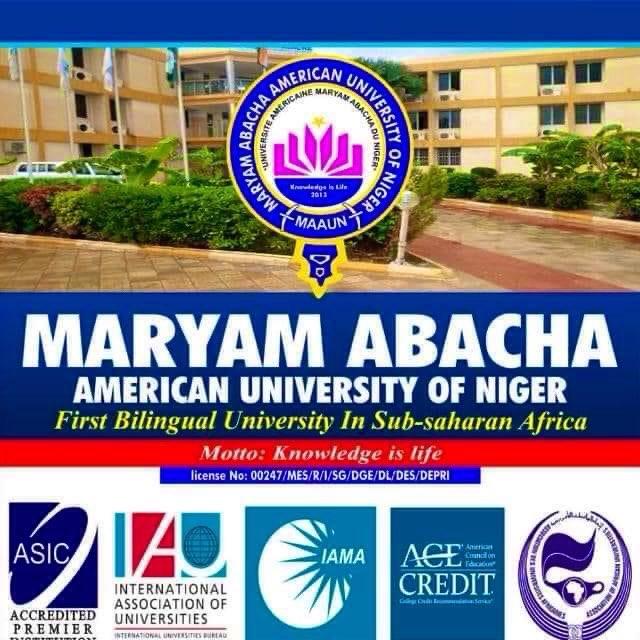
Nigerians contribute a huge part in trade and investments in Niger, especially in Maradi, the economic capital and one of Niger’s most economically prosperous cities. They own popular hotels and restaurants, construction and manufacturing companies, schools and universities like the Maryam Abacha American University of Niger (MAAUN) Maradi. Established in 2013 in honour of former First Lady of Nigeria, Hajia Maryam Abacha, MAAUN is the first English-speaking university in the Republic of Niger, and the first bilingual university in Sub-Saharan Africa. The university has a great number of Nigerian youths as students.
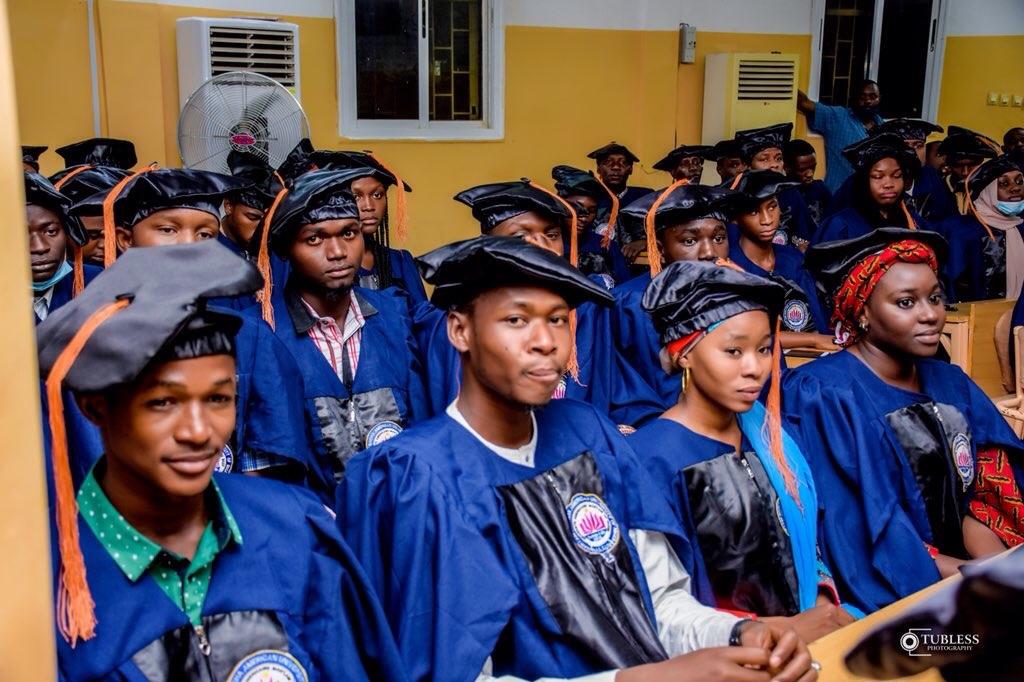
Graduating students of Maryam Abacha University

Many roads from northern Nigeria lead to Niger. From Sokoto state, Nigeria, to the capital Niamey, Niger is 7 hours by road. In Kebbi state is the border between Nigeria and Niger Republic, with the extraordinary division of the town Dole Kaina where one half of the town is in Kebbi State of Nigeria, while the other falls into Dosso State of Niger. One part of the Dole Kaina town is administered in English and the other in French!

An adventurous traveller could venture a five-hour’s road trip from Kano state, Nigeria to Maradi city Niger via the Kano-Kankia-Katsina road network. Many prefer to use the Kano-Daura border; Daura in Katsina state is the hometown of Nigeria’s outgoing President, Muhammadu Buhari. A two and half hour’s drive or less, some 260km from the town of Daura leads to the bustling city of Zinder, south-central Niger and the country’s second-largest city. Zinder, one of the eight regions of Niger also has an international airport for easy travel and cargo haulage to and fro Nigeria and other parts of the world.

Zinder was under the former Bornu empire till the mid-19th century. Today, it benefits from its neighbouring regions populated by Hausa farmers and nomadic Fulani. The region lies in the centre of an important peanut (groundnut) producing region and is a major processing centre and market, with a groundnut-processing mill, a millet-flour mill, a tannery, and a thermoelectric-power plant.

More than any other administration in the government of Nigeria, the presidency of Muhammadu Buhari, has brought enormous economic and infrastructural development to the Republic of Niger, with the vision of promoting the policy of “Africa as the centrepiece of Nigeria’s foreign policy”. Nigeria is committed to at least $4bn of projects in Niger and this has brought growing dissent from many Nigerians.

Some say President Muhammadu Buhari’s investments in Niger are that of an astute leader keen on investment opportunities; others criticise him for elevating family and ethnic ties. Buhari had said in an interview that the expansion of infrastructure to the neighbouring Republic of Niger was to ensure good neighbourliness that would halt the spread of Boko Haram insurgents in the country. He, however, admitted that he had first cousins from Niger Republic.

In March 2021, President Muhammadu Buhari was honoured in Abuja, Nigeria with Republic of Niger’s highest national award, Grand Croix Des Ordre National Du Niger, presented by former Nigerien President Mahamadou Issoufou. Speaking at the occasion, President Buhari said, “Nigeria-Niger relations are based on a long common border and shared cultural and historical roots. Relations between the two countries have, over the years, been very cordial. There is a spirit of good neighbourliness between us.”

In July 2018, Nigeria and Republic of Niger signed a $2bn deal to build an oil refinery in Niger, with connecting pipeline to bring crude oil from Niger’s oilfields in the Ténéré desert, carrying heavy crude, laden with high sulfur content. Many Nigerians who had supported Buhari’s plan to overhaul Nigeria’s poor oil refineries, wondered at this Memorandum of Understanding (MoU) signed between Nigeria and the Niger Republic on the purchase, transportation, and storage of petroleum products. Niger Republic’s Soraz Refinery in Zinder, has an installed refining capacity of 20,000 barrels per day.

In February 2021, President Muhammadu Buhari announced that Nigeria was embarking on a $1.9bn Nigeria-Niger Republic construction of 284 kilometres standard gauge railway project with 12 stations running from  Kano in the northwest Nigeria to Maradi in south-central Niger.

The Federal Executive Council of Nigeria had in February 2021 also approved contracts for the construction of two roads from Sokoto and Jigawa States, Nigeria, up to its borders with the Republic of Niger at a total cost of about N29.2 billion. In June 2021 during an interview on Nigeria’s Arise Television, President Buhari defended his decision to construct railways and roads extending into Niger Republic. “Niger has discovered oil, as you know. We hope they will be fine when we take the rail to Maradi and take all their exports through Maradi rather than through the Benin Republic,” he said in response to why he was investing so heavily in ties with Niger.

President Buhari in August 2022 was also reported to have directed Nigeria‘s Minister of Finance, Budget and National Planning, Zainab Ahmed to release the sum of N1.14billion for the purchase of 10 Land Cruiser Jeeps, to the government of Republic of Niger, as operational vehicles. This was based on the requests for support by the government of Niger.

Industry experts raised concern over what they described as strategic interest between the president and Niger, going by these key infrastructure projects. Many Nigerians feel deprived of their resources and wealth as President Buhari develops Republic of Niger, perhaps because a part of his ancestry is traceable to that country.

Nigerians took their outrage to social media asking why President Buhari’s government didn’t care to connect major industrial cities and regions in Nigeria with good road networks and a thriving rail system but keeps playing Father Christmas or Big Brother Africa to Republic of Niger while the country faces dire socio-economic challenges. “Charity begins at home; fix Nigeria’s declining educational system first,” one youth wrote on Twitter. Others called for diversification of the private sector through expanding road network, overhauling of the power sector, and better security of lives and property. 

Barely 38 days to the end of his eight-year tenure, President Muhammadu Buhari, in April 2023 declared that he will relocate to Niger Republic if he is bothered after leaving office. Speaking to a gathering at the presidential villa, Buhari said he “can’t wait to go home to Daura” and “if they make any noise to disturb me in Daura, I will leave for the Niger Republic.”  Many Nigerians took his statement as a lack of commitment to Nigeria and the reason for Buhari’s excessive investments in Republic of Niger. Some Nigerians recalled his statements in the 2021 interview he gave to local broadcaster Arise Television, “I spoke to one Frenchman and I said to him, ‘You people in 1885 sat down with a ruler and pencil, and drew the line (in reference to the Nigeria-Niger border)’. I have first cousins in Niger. There are Kanuris, Hausas, Fulanis in Niger Republic, the same way there are Yorubas in Benin,” said Buhari.

Beyond the ancestral ties, Nigeria remains a key trade partner for Republic of Niger. The cities in southern Niger and northern Nigeria have been linked in the Trans-Saharan trade dating back to medieval times. Nigerian cities like Kano and Katsina have long been the southern terminus of trade networks that support much of the Nigerien economy. Nigeria benefits from agricultural trade and sales, especially Nigerien cattle routed to Nigerian markets, while the most direct routes from Niger to foreign trade are through Nigeria.

Indeed, it’s all in the Republic of Niger; rich culture, ongoing infrastructural development, progress in the area of peace and security. Niger has numerous opportunities that, when fully utilised, would eradicate its remaining political, social, and economic difficulties.

It is no wonder Nigeria’s President Muhammadu Buhari considers Niger a splendid retirement getaway. The sixth president of the United States, John Quincy Adams once said, “There is nothing more pathetic in life than a former president,” This may be true, but President Buhari is surely making plans on living a peaceful and contented life after his presidency. When the national and global spotlight dims on Buhari, he may be found in Daura or Republic of Niger, taking rejuvenating walks, eating delicious local foods and abundant fruits, being a doting grandfather and enjoying close proximity to his extended family.

President Buhari like his predecessors, might also take up the role of adviser and elder statesman to the region and beyond. Needless to say, the Republic of Niger will always remember his presidency with gratitude.


The ‘magic’ of one WhatsApp, multiple phones; its benefits, flaw

By Sonny Aragba-Akpore

In November 2022, Meta Platforms Inc, owners of WhatsApp, Facebook, Instagram, and others announced that it was tinkering with the idea of introducing a single WhatsApp number on multiple devices.

Not many understood it. Shortly after, WhatsApp began making multidevice features available to everyone. But it didn’t support multiple phones.

It also began rolling out a new way to link devices using a one-time code.

While this was going on, Meta last week announced what appears revolutionary in this communication platform that has taken over from electronic mail and improved multimedia messaging.

WhatsApp is finally rolling out multi-device login support for more than one phone. Mark Zuckerberg announced the feature’s rollout on Facebook and Instagram.

“Starting today, (Tuesday, April 25), you can log into the same WhatsApp account on up to four phones,” he said

With the new rollout, users’ messages will be synced across devices including other phones. So even if one device is switched off, they can access the app on other devices, Zuckerberg explained.

WhatsApp said that this feature is rolling out to all users within the coming weeks.

Until now, users could only use one WhatsApp account on one phone and multiple companion desktop devices.

WhatsApp is one of the biggest messaging services around with more than two billion users. But it lacked multiphone support until now because of full end-to-end encryption support for chats and calls.

The company started testing multi-device compatibility back in 2021 with select beta users. At that time, Meta (known as Facebook at that time) said that it had developed new tech to sync messages across devices while maintaining end-to-end encryption protection.

Other competitors like Telegram and Messenger offered multidevice sync for messages, but they didn’t have support for end-to-end encryption.

Before now, users of the famous messaging and video calling app could only log into an account on a single phone with the same number.

Attempts to deploy the same on another phone will automatically deactivate the previous account created.
But this also portends danger as smart alecs could take advantage of the multiple phones to clone someone else’s number and use same for mischief. Some could easily bug such numbers for sinister motives.

Though official bugging exists in Nigeria through the Lawful Communication Interception guidelines by the Nigerian Communications Commission (NCC), the new WhatsApp rules may whittle down NCC’s powers since tech savvy individuals could do harm to individuals within their space.

WhatsApp is an internationally available freeware, cross-platform, centralised instant messaging, and voice-over-internet protocol service owned by conglomerate, Meta.

The app allows users to send text and voice messages, make voice and video calls, and share images, documents, user locations, and other content seamlessly. WhatsApp adds the option to use the same account on multiple phones is useful if you’re a business that uses WhatsApp to communicate with customers or if you use more than one phone on a regular basis for any reason.

WhatsApp users are no longer restricted to using their accounts on just a single phone. Today, the Meta-owned messaging service is opening up its multi-device feature — which previously allowed you to access and send messages from additional Android tablets, browsers, or computers alongside your primary phone — is expanding to support additional smartphones. “One WhatsApp account, now across multiple phones” is how the service describes the feature, which it says is rolling out to everyone in the coming weeks.

Setting up a secondary phone to use with your WhatsApp account happens after doing a fresh install of the app. Except, rather than entering your phone number during setup and logging in as usual, you instead tap a new “link to existing account” option. This will generate a QR code to be scanned by your primary WhatsApp phone via the “link a device” option in settings. The new feature works across both iOS and Android devices.

WhatsApp is pitching the feature as a useful tool for small businesses that might want multiple employees to be able to send and receive messages from the same business number via different phones. But it should be useful for anyone who uses multiple smartphones on a regular basis and wants them all to be associated with the same WhatsApp account.

Although the original phone that logged in to your account is considered the “primary” device, it doesn’t need to be turned on to receive messages across your other phones, Android tablets, or computers. However, if your primary device is inactive for over 14 days, WhatsApp says it’ll log out your other devices. You can also manually log out linked devices from your primary phone.

Once a secondary phone is linked to your WhatsApp account, you’ll be able to access and send messages from either phone. Up to a year of messages will sync between devices, so you’ll be able to see chat histories before sending any new messages. Messages sync across phones regardless of their operating systems, whether it’s iOS to Android or vice versa.

There have previously been workarounds to access the same WhatsApp account on multiple phones via WhatsApp Web in a browser. But the experience has never been great, and official support for the feature should be far more seamless and useful.

Personal messages remain end-to-end encrypted, regardless of whether you’re using the multi-device feature.

Users can select a primary account and use WhatsApp on the Web, Desktops, Android tablets, and other devices as companions. To link a device, open your WhatsApp account and tap on “More options” on Android or “Settings” on iPhone, go to Linked devices > Link a device. If you have biometric authentication, the phone prompts you to use this. If there is no biometric, WhatsApp prompts the user to the PIN unlock for the phone. The user is directed to point the primary phone to the screen of the intended companion device and scan the QR code.

While there might be some security concerns about the feature, it is useful for WhatsApp Business accounts, which must respond rapidly to customer inquiries. WhatsApp says the update is available to all users globally and will be available to everyone in the “coming weeks”.

Having access to the same account across two or three phones can be helpful in many situations, especially given WhatsApp’s popularity across the globe as a versatile tool for communication across many contexts and time zones. Businesses can share one account across multiple employee phones, or one user can remain available for personal-life needs or emergencies even while using their business-specific phone.

Aragba-Akpore, an analyst of telecom trends, lives in Abuja

Culled from Everyday.ng

After assenting to the gender policy, you are challenging it at the Appeal Court, Ebere Ifendu lashes FG

The Federal Government’s Janus-faced position on the National Gender Policy has been condemned by the President of Women In Politics Forum (WIPF), Ebere Ifendu.

Ifendu who was interrogating why the Muhammadu Buhari administration came up with the policy in the first place, said it is highly incongruous for an administration to make a law, go against it, and at the same time challenge it in court.

Speaking in Abuja during the recent one year in office and award ceremony of the National President of the National Council for Women Societies (NCWS), Hajia Lami Adamu Lau, the Women In Politics boss, said:

“We went to court and won on the 35 percent affirmation. It is very embarrassing for a government to appeal such a judgement that is based on its own policy. So why did you come up with the policy?

“Sadly, the gender policy was just revised and assented to by the present government and you are in court against your own policy.

“We need to do better to get the political party to give more women tickets to run for seats If we have more women as candidates, it means that more women will win elections, we have to talk about political parties being deliberate about supporting women.

“Although we did not get much women at the Senate, it goes a long way as more women are being conscious and participation is not only when one wins election but the general involvement as election observers, as party agents, women canvassing for votes for other women, that is a huge success for us.”

To the incoming administration, Ebere Ifendu that it “takes a bold step firstly, to withdraw the case in court, then ensures that as they are nominating for ministerial appointment, they are giving a minimum of 35 percent as this was part of their campaign promises as this shows they are responsible to their words because if you are not committed to your words then we cannot trust you. We are hopeful that the right thing will be done this time.”

On Wednesday 6 April 2022, the Federal High Court in Abuja ordered the federal government to enforce the National Gender Policy by allotting 35 percent of appointments in the public sector to women.

Nine civil society organisations filed a suit against the Nigerian government on 24 August 2020, seeking the implementation of the 35 percent Affirmative Action in appointments of women into public office.

The plaintiffs include the Women Empowerment & Legal Aid (WELA) Initiative, the Nigeria Women Trust Fund (NWTF), International Federation of Women Lawyers, Centre for Democracy and Development (CDD -West Africa).

The others are the Women Advocates Research and Documentation Centre (WARDC), Vision Spring Initiatives (VSI), Women In Politics Forum (WIPF), 100 Women Lobby Group, and YIAGA Africa.

In his judgement Hon. Justice Donatus Okorowo agreed with the plaintiffs that Nigerian women had been subjected to various forms of discrimination concerning appointments into key positions of government.

The judge dismissed the preliminary objection of the federal government which had argued that the plaintiff’s case did not disclose any cause of action.

Citing Section 42 of the Nigerian constitution as it relates to the suit, His Lordship upheld the plaintiffs’ contention to the effect “that of all the 44 ministries, there are only about six females in leadership position, and that the situation is worse in other MDAs and agencies.”

Okorowo noted that the defendant, by its conduct, insinuates that there are no competent and reliable women that should be appointed to “stop the apparent male dominance as witnessed in the appointments” of men into key government positions.

“I agree with their (plaintiff) contention that this cannot be possible out of 70 million women in Nigeria,” Mr Okorowo said.

The judge held that the Attorney-General of the Federation (Abubakar Malami) who was the sole defendant in the case, “failed to disprove the material allegations contained in the affidavit, and led no credible evidence to debunk material evidence of the plaintiff.”

“The plaintiff has led cogent, verifiable evidence backed by incontrovertible depositions in their affidavit evidence contrary to the objections raised by the defendant.

“These violations with impunity and reckless abandon were projected by the plaintiff… the defendant merely based their arguments on the grounds that the plaintiff’s demands are not justiceable.

“Dismantling barriers to women’s participation in public spheres has been achieved through progressive interpretation of municipal laws and international obligations and treaties.

“Formulating Policies based on sex, stereotyping, and feudal and patriarchal traditions will no longer be tolerated due to the supremacy of constitutional values…

“This court is not expected to achieve less for Nigerian women, since the constitutional obligation of this court is to apply the law.”

Dissatisfied with the verdict, the Nigerian government headed to the Abuja Division of the Court of Appeal seeking an order “setting aside the judgment; striking out and/or dismissing the Respondents’ (women) suit in its entirety.”

The lawyers for Appellants (Federal Government and AGF; T. A. Gazali, SAN, T. D. Agbe, Suleiman Jibril, Ibukun Okoosi, Onyinye Halliday, O. D. Okoronkwo from Department of Civil Appeals Federal Ministry of Justice formulated 16 grounds of appeal for determination.

The government on one of its grounds submitted that: “The learned trial judge erred in law when he held that the Respondents’ suit was founded on enforcement of fundamental rights, and therefore disclosed a cause of action against the Appellants.

“Particulars Of Error: The Respondents’ suit was for the enforcement of the National gender policy. The National gender policy for 35% affirmative action on the appointment of women is not based on Chapter 4 of the Constitution. The National gender policy was a Federal Government policy which cannot be enforced by way of fundamental rights.

Tales My Patients Told Me: Three scary brothers!

By Emmanuel Fashakin

Mid-Summer 2018, in my Brooklyn office, I met three teenage brothers, aged 15, 17, and 18. After growing up at Idumota, on the shores of the Lagos Lagoon at Ebute-Ero, often having to hold my ground in fisticuffs against much older and bigger boys, I don’t get scared easily. But these guys scared the daylights out of me. Especially the youngest, 15-year-old, Malik. Malik does not make eye contact with you, with good reason. When Malik looks at you, his piercing eyes cut right through you, his demeanor cold as ice. His stare could peel paints off a wall. As he looked up from his cell phone and stared at me, a shudder went through me and the thought came to me that I may be looking at a future mass murderer.

Malik, 15, was ushered to my examination room at exactly 9.30 a.m. He did not say a word but kept playing on his cell phone. ‘Hi, what am I doing for you today, sir?” I asked cheerfully. Barely looking up, Malik murmured: “You ask the woman who brought us here.” It happened that the woman who brought them here is their foster parent, and she was seeking to adopt them. I have no idea what happened to their natural parents. I didn’t ask.

Malik was reeking of a combination of cigarettes and marijuana, so I knew that the Social History taken by my Triage Medical Assistant, stating that Malik is a “non-smoker” is definitely incorrect.
It was either the MA, taken by Malik’s tender age, never asked, and couldn’t smell, or Malik lied. So putting on my lawyer’s cap, I engaged in direct questioning: “You smoke, don’t you?”. “Yes,” he said defiantly. I changed his profile on the computer to “Smoker”, and in the place where it asked how soon after waking up does he first smoke, I checked “31-60 minutes.”

I had no idea that Malik was watching me because he kept playing with his phone, but he snapped “Hey, you never asked me that question!” I told Malik, “It’s only 9.30 a.m, and you have cigarettes and smoke on your breath already, you traveled from your house and you have been here for more than 30 minutes already.” With that, Malik fell quiet. The rest of the morning continued the same way; Malik’s hostility was palpable. I could barely give him his intradermal PPD test for tuberculosis. I was relieved he didn’t sock me on the jaw, and I quickly despatched him to the procedure room for his blood test.

Mercifully, Malik’s brothers were less menacing. One of them was actually quite adorable, but he is making very bad choices. He was the only one of the brothers who registered with us two months prior, and his medical examination at that time showed that he had chlamydia, a sexually transmitted disease. At 16. He was treated with antibiotics.

This time we obtained samples from him again as part of the medical examination for his adoption, and now he tested positive for gonorrhea. Two days later, he was back in my office for ceftriaxone injection. As I looked at him, I felt really sorry for him and I just started talking to him. “I want you to make better choices. Right now people are housing you, feeding you, and paying your bills. That is not going to continue forever. Soon you will have to fend for yourself. This is the time to make something of your life.” Something better than having sex with multiple girls and catching different types of sexually transmitted diseases — at the tender age of 16 years.

I told the boy my personal story: “You may be living in a tough neighborhood”, I continued, “I can relate to that.” “Growing up, of all the kids on my street, only three of us made it past elementary school, and I was the only one who made it past two years after Primary School. Virtually everyone smoked; many smoked pot. I told my dad, get me out of here. I cannot read in this environment. When I entered Secondary School, straight from 5th Grade, I was 4th out of 72 students in the first exam, then 9th, 24th, then 48th in subsequent terms.”

“My dad said I want you to improve on the grades from home, then I will consider sending you to the Boarding house. I knew it was a significant sacrifice for him because Boarding School at St. Gregory’s was costly. But it took 2 hours bus ride to get home after school. And you are so exhausted after getting home that you just played cards with friends and go to bed. After discussion with my dad, after school, eating only half a loaf of bread and peanuts for lunch, I started walking to my cousin’s job at Ikoyi to read, and we came home together when the traffic became better. I went from 48th to 23rd, and dad made good on his promise, and sent me to the Boarding house”.

I continued: “At the Boarding house, I went from 23rd to 4th, then 2nd, and then to first, as the best student in School Certificate Exams. You have to do what you have to do to succeed in life. You can do better than this. I want you to turn your life around.”

“You should register to be a Motivational Speaker!”, their foster mom exclaimed. “You inspire even me.” “Thank you, I replied, “I like to talk to the young people. I have succeeded in getting many of them off the streets; many are now working. We all have it in all of us to succeed.” By now I was on cloud 9. I knew that I had gotten across to the lad; I pray that he turns his life around.

Unfortunately, Malik was the next patient. His PPD test was negative but his blood test results were not ready, therefore, I could not complete his assessment. “Do I need to bring him back to complete his forms? The foster mom asked. “Nah, I quickly replied. I don’t think Malik likes seeing my face.” “Don’t worry about it doc, Malik doesn’t like seeing anybody’s face”, she calmly replied. Malik! He is only 15 but that guy scares the daylights out of me!

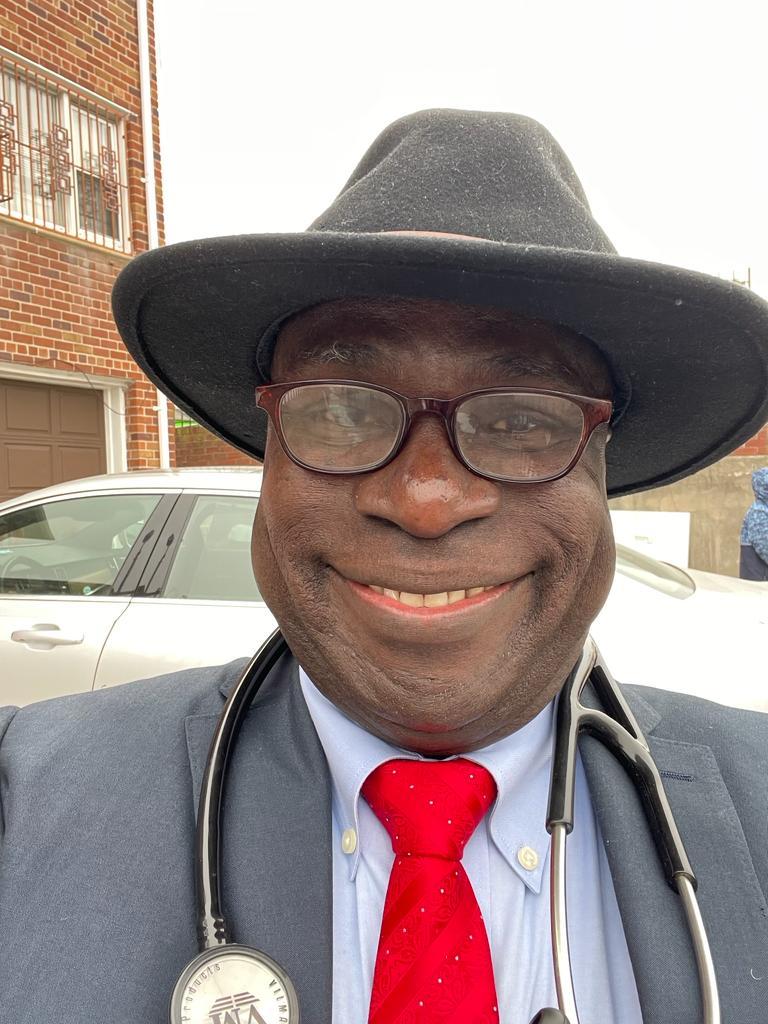
Emmanuel O. Fashakin, M.D., FMCS(Nig), FWACS, FRCS(Ed), FAAFP, Esq.
Attorney at Law & Medical Director,
Abbydek Family Medical Practice, P.C.Web address:
http://www.abbydek.com
Cell phone: +1-347-217-6175
“Primum non nocere”

Two 8 months pregnant women killed by husbands; ex-boxer knocks wife into coma over remote control

By Lillian Okenwa

Intimate partner violence was taken notches higher when two different eight months pregnant women were brutally murdered by their husbands.

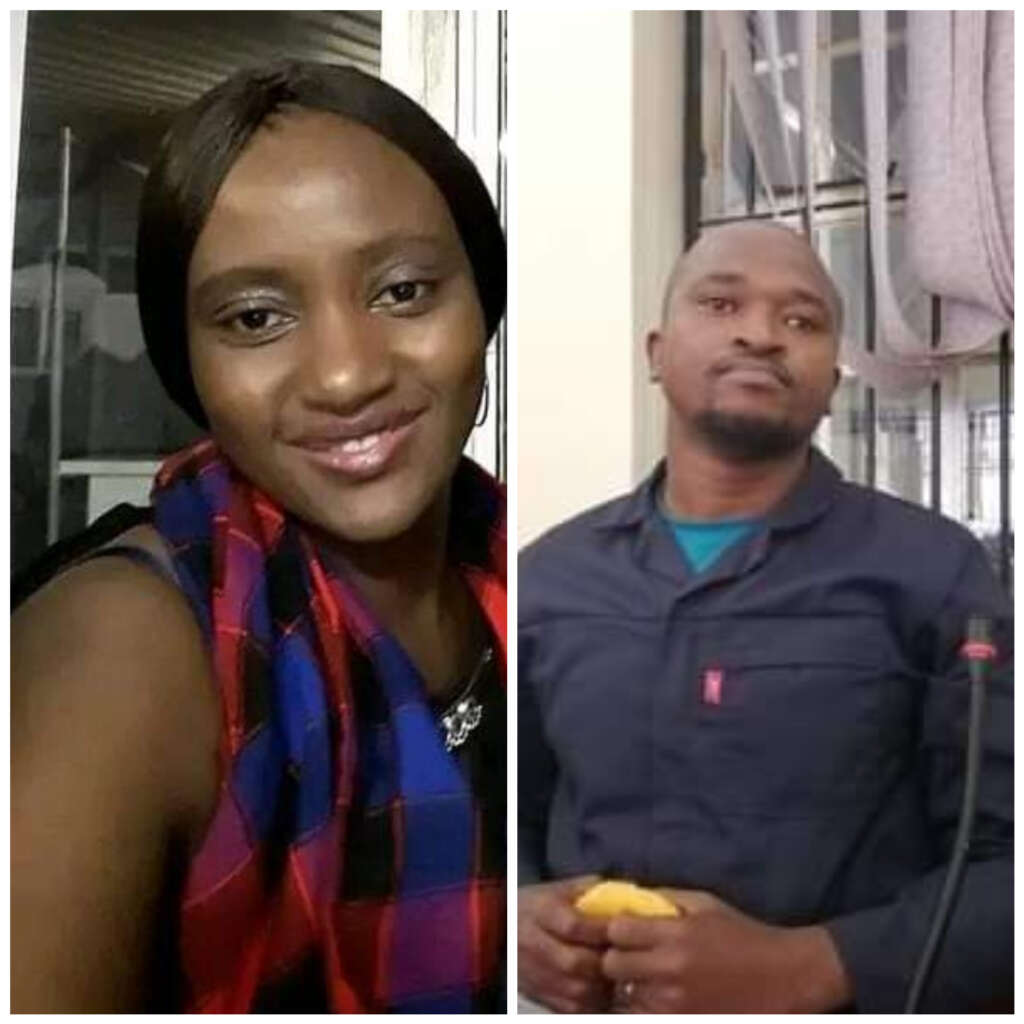
Days ago, the photo of 35-year-old Ntombizodwa Khumalo trended on social media after her ex-husband shot her in the full glare of people. She was eight months pregnant.

Earlier in the year, an Akure High Court, sitting in Ondo state, sentenced 34-year-old Oluwaseun Olabode, to death by hanging, for killing his eight-month-old, pregnant wife, Adaeze 0labode, three years ago at their Oke-Ogba Estate resident in Akure.

At about 7. 00 p.m. on 3 April 2020, Olabode, according to the prosecutors, hit his wife Adaeze Olabode, with a blunt object on the right side of her abdomen while she was heavily pregnant.  She died as a result.

The late Ntombizodwa Khumalo

In his verdict, the trial judge, Hon. Justice A. Adebusoye, said the prosecution proved its case beyond reasonable doubt and sentenced Olabode to death by hanging.

The prosecutors led by H.M Falowo Esq, a Chief Legal Officer Falowo said the case of murder was reported on May 5, 2020, through a petition written to the Commissioner of Police, Ondo State Command, by one Dr Henry Orumen Esq. on behalf of the family of the deceased, Mrs Blessing Adaeze Olabode, against Olabode Oluwaseun.

Adaeze and Olabode got married in 2014. She was pregnant with their second child, which was found dead in her womb a few days before her demise.

According to the Police report, an autopsy report conducted on the corpse of the deceased showed that irregular bruises and abrasions on the right side of the lower part of her abdomen caused a trauma that was so intense to have ruptured her uterus. The complications reportedly led to Adaeze’s death.

While the convict, denied having fought with his wife, the deceased’s family insisted in their petition and testimonies before the court that she suffered assault from her husband several times which eventually led to her death.

In the course of his testimony, the father of the deceased, Mr. Anya, said that his daughter suffered violent maltreatment from her husband and mother-in-law, Stella Olabode.

“At a point in their marriage, my daughter attempted suicide and left a suicide note but l waded into the matter and brokered peace between the couple.

“After my daughter’s death on April 14, 2020, her corpse was abandoned at the Federal Medical Center (FMC) Owo, until the intervention of my immediate younger brother,” Anya said.

Another witness, a consultant pathologist, O.E Pelemo, said that he performed an autopsy on the corpse of Adaeze Blessing Olabode.

Pelemo told the court that he noticed irregular bruises and abrasions on the right side of the lower part of the deceased’s abdomen, and found the cause of death to be a wound caused by blunt force trauma to the abdomen which resulted in an internal wound and bleeding.

The late Ntombizodwa Khumalo whose photograph was posted on Monday, May 8, 2023, by Women For Change, an NGO advocating for the protection of the constitutional rights of women in South Africa, was killed by her ex-husband, Jonnas Tebogo Mpete, at Brits Hospital in North West on 5 April 2023.

Eight months pregnant Ntombizodwa worked as a desk operator at the hospital. The suspect, a 39-year-old police officer stationed at Rapid Rail in Silverton, had allegedly threatened her for months before ultimately gunning her down in full view of the staff and patients at the hospital.

He handed himself over to the police after allegedly calling a family member, informing them that he had murdered Ntombizodwa. It is alleged that they got married in 2016, but five years into the marriage, she left him when the abuse worsened.

Her family said she often had bruises all over her body and that the family tried to intervene many times. It is alleged that the Ntombizodwa obtained a protection order against the accused in 2021. The suspect is now facing a charge of premeditated murder. 

Similarly, a 25-year-old woman identified as Eunice has been butchered by her husband for seeking a divorce after one year of marriage. The sad event took place at Nungua in the Greater Accra Region of Ghana.

Local publications reported that her husband macheted her during a scuffle and she died on the spot after the attack. The suspect was also said to have attacked his father-in-law.

Eunice had reportedly moved out of the house due to alleged emotional and physical abuse by her husband. Her father, Ebenezer Dwomoh, who confirmed her death during an interview on Adom FM’s morning show, said they are still in shock.

 Dwomoh said Eunice went to her husband’s house to present a summon letter from Domestic Violence and Victims Support Unit when the incident occurred.

 Mr. Dwomoh described his son-in-law as a serial wife beater which forced his daughter to move out of the house.  

“Eunice moved out of the house because she could no longer take the beatings so this man decided to make life a living hell for her. He will even come to our house and beat her. He follows my daughter everywhere she goes and beat her until he finally killed her that faithful day.”

Residents in the area apprehend the suspect and subjected him to severe beating when he tried to escape after committing the heinous crime.

 The deceased’s father added that but for the timely interventions of the police, the suspect would have been lynched. He appealed to the Ghana Police Service to ensure the suspect faces the full harshness of the law.

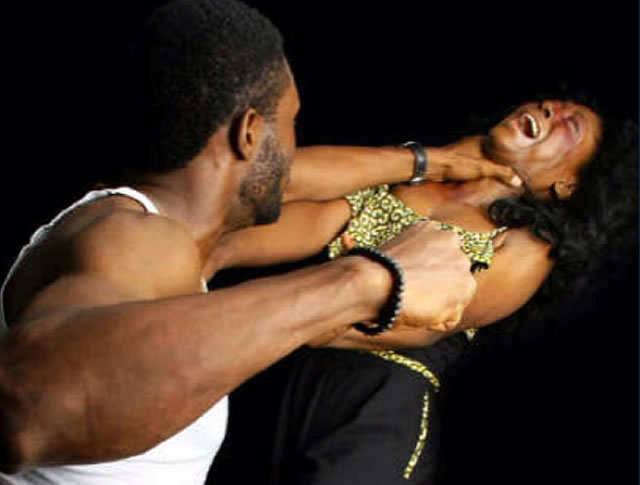
In the meantime, a 56-year-old former boxer, Moses Olapade, was said to have sent his wife, Tinuke, into a coma at their residence in Oke-Aro Community, Akure, Ondo State, following an argument over a television remote.

A source who does not want to be mentioned said Olopade returned home, from a journey that day and wanted to watch a programme on the television but his wife refused to give him the remote so he could tune in to his preferred channel.

An argument ensued and an infuriated Olopade, who is also a truck driver, reportedly rained punches on the woman and she fell down and became unconscious.

The source said it was the screaming of the children that attracted neighbours to the scene. They quickly rushed the victim to a nearby hospital, where she was resuscitated.

When contacted, the state Police Public Relations Officer, Mrs. Funmilayo Odunlami, said she was yet to be briefed on the matter.

The PPRO stated,” I have called the DPO of the Area ( B Division Police Station), but he said the matter was not reported at the police station.”

I killed my mother, slept with her corpse for money ritual – 18-year-old confesses

While the worsening unemployment and poverty in Nigeria have been attributed to bad economic policies by leaders, others maintain that the get-rich-quick syndrome among the country’s youths today is a major factor impeding economic development in Nigeria.

Days ago, 18-year-old Samuel Akpobome Emobor, confessed that he killed his mother and slept with her corpse for money ritual.

Samuel who was paraded at the Edo State Police Command said he committed the act at their rented apartment in Ologbo community in Ikpoba-Okha local government area.

The Oghara Delta State indigene said he was pushed to commit the act by a ritualist who sells drugs in the community.

Hear him: “I wanted to use my mother for ritual. I am 18 years old. My father is dead. It was one man called One Love that told me to use my mother for money ritual. He promised to give me N50,000 if I kill my mother and sleep with her. He said I should cut my mother’s ear and fingers and bring them to him.

“I wanted to cut the ears and fingers before the people came in. I slept with my mother only once. I pressed my mother’s neck to kill her while she was sleeping. The One Love sells drugs. He put something inside the drink he gave me and he told me to go and kill my mother.

“The day I went to his house with policemen, the man has ran away. I hail from Oghara. I work in a pure water factory.

“I now feel very bad because I was beaten badly by people. I did what the ritualist told me.”

The Commissioner of Police, Babatunde Kokumo, said the suspect would soon be charged to court.

Nigeria gets 4 female Chief Judges in 5 months

Hon.-Justices-Lilian-Abai-and-Hafsat-Abdulrahman

By Lillian Okenwa

Years ago, attaining leadership positions for women in Nigeria’s judiciary seemed like a mirage. Today, however, women have gathered clout; and finally, they are getting a shot at leading in the judiciary. It is noteworthy that Between February and May 2023, four states in Nigeria welcomed female Chief Judges.

On Friday 5 May 2023, Dr. Okezie Ikpeazu of Abia State, swore in Hon. Justice Lilian Abai as the substantive Chief Judge of the state. While congratulating the new CJ, the governor noted that her stint as Acting Chief Judge recorded tremendous positive changes which he described as a sign of greater things to come.

Then on Monday 8 May, 2023, Governor, Ahmadu Umaru Fintiri swore in Hon. Justice Hafsat Abdulrahman as the first female Chief Judge of Adamawa State. Justice Hafsat Abdulrahman who pledged to promote the course of justice in the state “in accordance with the dictates of the judicial oath” was first appointed Acting Chief Judge of the state in December 2022.

The elated Governor Fintiri proudly announced: “We are making history as a government by having the first female Chief Judge in the history of the state. Her emergence is, therefore, a watershed development in gender mainstreaming and a testament that the girl-child is at liberty to rise and become anything with merit, devoid of any man-made barriers in Adamawa State.

“To parents, I must say, if we are looking for a role model for our daughters, this is a perfect place to come to – merit, right, truth, hard work, dedication, fairness, and justice.”

Earlier in April, the governor of Oyo, Seyi Makinde swore in Hon. Justice Iyabo Yerima as the new chief judge of the state. She was appointed judge of the High Court of Oyo State in June 2001.

Hon. Justice Iyabo Yerima, Chief Judge of Oyo State

February 2023 saw Justice Halima Mohammed becoming the second female Chief Judge of Gombe State. Born on May 3, 1963, in Tula, Kaltungo Local Government Area of the state, Her Lordship also attended Queen Elizabeth School Ilorin, Kwara like Hon. Justice Zainab Bulkachuwa, a female and the pioneer Chief Judge of Gombe.

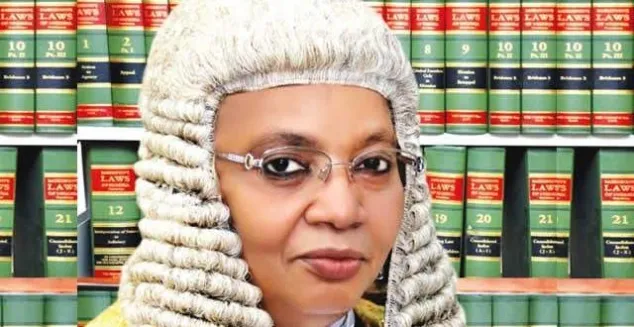
Hon. Justice Halima Mohammed, Chief Judge of Gombe State

After much controversy, Hon. Justice Akon Bassey Ikpeme was on February 8, 2021, sworn in as substantive Chief Judge of Cross-River State. At the time, she was the most senior judge in the Cross-River State judiciary, the governor elected to appoint Hon. Justice Maurice Eneji, a man next to her in the rank of seniority as Acting CJ.  

Hon. Justice Akon Bassey Ikpeme, Chief Judge of Cross River State

The quarrel was that she is a woman and from Akwa Ibom State notwithstanding that her husband is an indigene of Cross-River State. Rather than confirm her as substantive CJ when her tenure expired as Acting CJ on 2 March 2020, the governor swore in Eneji as the Acting CJ. Thankfully Civil Society Organisations, and stakeholders in the justice sector, particularly the Nigerian Bar Association (NBA) weighed in and overturned a gross violation and abuse of fundamental human rights that was playing out.

In Nasarawa state, Governor Abdullahi Sule on Monday 12 April 2021 swore in Aisha Bashir-Aliyu as the state’s first female Chief Judge. She is the fifth Chief Judge since the state was created in 1996.

Hon. Justice Aisha Bashir Aliyu, Chief Judge of Nasarawa State

Thereafter, the governor of Delta State, Ifeanyi Okowa in June of the same year, swore in two females as Chief Judge and President of the Customary Court of Appeal respectively.

Hon. Justice Theresa Diai is the Chief Judge of Delta State while Hon. Justice Patience Elumeze is the President of the Customary Court of Appeal. Acknowledging this rarity, Governor Okowa remarked: “Rarely does it happen that you have two women heading both tiers of the judiciary in the state at the same time.”

Hon. Justice Theresa Diai, Chief Judge of Delta (rtd.)

By October, Hon. Justice Ekaette Francesca Fabian Obot had been sworn in as Chief Judge of Akwa Ibom state. She is the third woman to occupy the office in the state and the 8th substantive CJ of the state.

The story gets more interesting in Lagos.

The late Hon. Justice Rosaline Omotosho was sworn in as Chief Judge of Lagos State on 12 April 1995. She is the first female CJ in the country and got succeeded by Hon. Justice Victoria Sotuminu.

Hon. Justice Rosaline Omotosho (rtd.)

Victoria Sotuminu handed over to Hon. Justice Inumidun Enitan Akande in September 2009. Akande in turn passed the baton to another female, Hon. Justice Ayotunde Phillips in 2012. Again, in August 2014, Ayotunde Phillips handed over to her younger sister, Hon. Justice Funmilayo Atilade. Chief Judge Atilade handed over to yet another female judge, Justice Opeyemi Oke, who exited the bench on 10 June 2019.

Hon. Justice Ayotunde Phillips (rtd.)

At the Federal High Court, Hon. Justice Rose Nonyem Ukeje was elevated to serve as the first female Chief Judge. She was CJ from 2001 to 2008.

Hon. Justice Rose Nonyem Ukeje (rtd.)

Moreover, on 16 July 2012, Aloma Mariam Mukhtar became the first female Chief Justice of Nigeria (CJN) and the 13th indigenous CJN.

Presently, a woman is heading Nigeria’s Court of Appeal and she is the second. Hon Justice Monica Dongban-Mensem was sworn in as the President, of the Court of Appeal, on 19th June 2020.

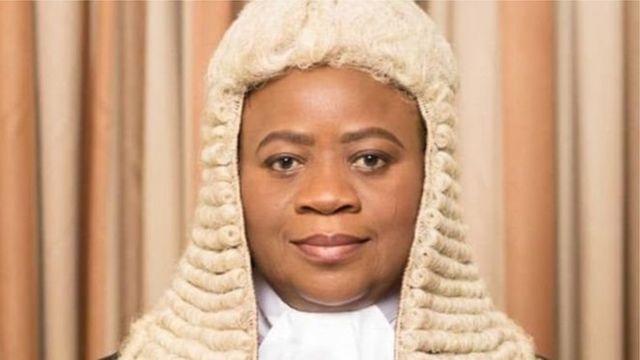
Hon Justice Monica Dongban-Mensem, President Court of Appeal
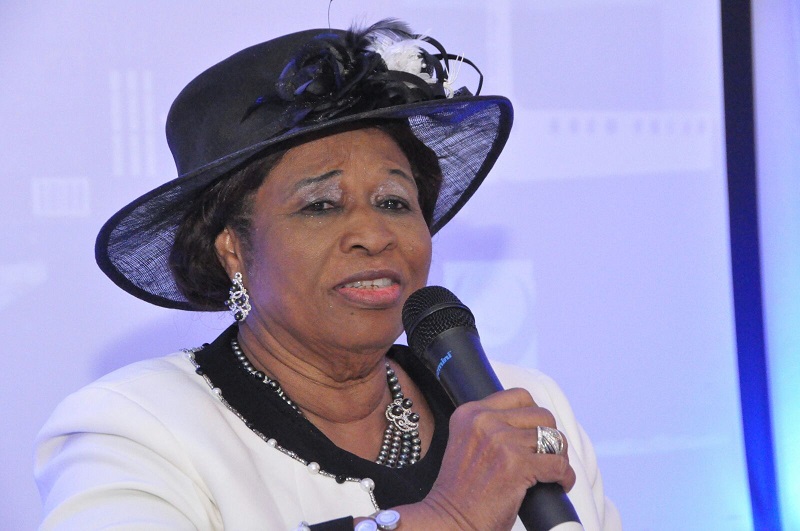
Hon. Justice Zainab Adamu Bulkachuwa (rtd.) first female President, Court of Appeal

The first is Zainab Adamu Bulkachuwa who was appointed on April 17, 2014.  Coincidentally, she was sworn in by the first female CJN, Aloma Mariam Mukhtar.

Democracy is an apparition on the horizon, Somber Tuesday series by Mojúbàolú Olufúnké Okome

Somber Tuesday! Plans to inaugurate a new President proceed apace, while transition processes are in motion, as are lawsuits challenging the election results. The abysmally low percentage of Nigerian women, youths and people with disabilities elected into office call into question, the depth and maturation of Nigerian democracy. As for INEC, it is questionable whether it is aware of its responsibilities to the Nigerian electorate as an election management body. It should have guaranteed the integrity of the elections and delivered free, fair, and credible elections.

Contestations that produce and escalate ethnic tensions and hate speech are part of the modus operandi, further complicating the nation-building agenda. Democracy is an apparition on the horizon. The currency scarcity is being managed via putting more old notes into circulation, although said notes are in extreme state of decrepitude that when people access crisp new currency, it’s like a miracle. One also wonders what it means to have a cashless economy when there are still network problems that prevent instant completion of bank transactions. The economy is still moribund, and the masses are still waiting for the breakthroughs that would transform their lives in a positive manner.

Nigerian youths have significant consequences on their lives from the country’s political, economic, and social problems. Many want to japa–leaving the country by any means necessary for what they believe are better opportunities abroad. They are frustrated by the stranglehold that octogenarians have over the political and economic systems. Even the social system is controlled by the elders. There’s no interest in mentoring and grooming the younger generation for leadership. This calls to question, the essence of democracy. How does this situation affect the daily realities of the youths and other marginalized populations?

Patriarchy, oligarchy, and gerontocracy are deeply entrenched in Nigeria The number of women in leadership is not only small, it is decreasing. People with disability do not have representation to any appreciable degree. Poor Nigerians are in the same boat. Insecurity, abductions and kidnappings are prevalent. Nigerian political institutions, infrastructure, and social services are grossly inadequate. High unemployment and underemployment are part of the status quo. There is a dearth of decent jobs. The social contract between the people and leaders seems to be nonexistent.

Democracy and economic development, personal and human security should be national priorities. The wellbeing and welfare of citizens and the masses’ ability to meet their basic needs must also be meaningfully addressed. All Nigerians deserve at least the hope for a positive transformation instead of the perpetuation of misery.

EndSARS youth protesters hoping to exercise their franchise during the 2023 elections have become disillusioned and frustrated because the political process produced sub-optimal results. #EndSARS demonstrations demanded good governance, an end to police brutality, extortion, impunity, economic inequality, marginalization, targeting of youths and other minorities, and cessation of political violence. They were violently suppressed.

We should learn “never again” lessons from the 2020 Lekki massacre. #LekkiTollGate & other locations were arena of state-sponsored brutal violence, regardless of peaceful protest being a democratic right. What kind of nation do we want? Should democracy and sustainable development not be attainable and available to all citizens? Should kleptocracy not be confined to the dustbin of history? Should we not ensure that future generations have access to the resources that they need to not only survive but thrive? Should we not reject the extreme levels of inequality and deprivation that have been the portion of the majority in our country? All of us are responsible for giving our best to create the Nigeria we want.

#NigerianWomenArise #EndPoliceBrutalityinNigeriaNOW

#EndSars

#EndSWAT

#EndImpunity.

Howard Zinn was right when he said:

“Civil disobedience, that’s not our problem. Our problem is that people are obedient all over the world in the face of poverty and starvation and stupidity, and war, and cruelty. Our problem is that people are obedient while the jails are full of petty thieves, and all the while, the grand thieves are running the country. That’s our problem.”

I repeat like a broken record:

Let the kleptocrats give back our stolen wealth so that we can fix our infrastructure, schools, hospitals, and also offer worthwhile social protection to our people. Let the masses enjoy the full benefits of citizenship in Nigeria. Let the leaders and political class repent and build peace with justice.

This is no time for politics as usual. The people elected should be those trusted to bring justice, equity and human security to the entire country, not expedient, unethical and egocentric individuals determined to dominate for self aggrandizement or sectional gain. We don’t need oligarchs’ continued domination. We also need a government that puts the interests of majority of citizens first. Dare I hope that this will happen anytime soon?

Prof. Mojúbàolú Olufúnké Okome is a professor of political science at Brooklyn College in New York.

Comparisons of the old Copyright Act, Cap C28, and the newly signed Copyright Act, 2022

Nneamaka Onyema

By Nneamaka Onyema

Copyright is a kind of intellectual property that protects creative works of invention as soon as the inventor fixes the work in a perceptible form of expression.

It is a legal term labelling ownership of control of the rights to the use and distribution of certain works of creative expression, including books, videos, motion pictures, musical compositions, and computer programs.

The Copyright Act, 2022 was signed into law on the 17th day of March 2023 by His Excellency, President Muhammadu Buhari, GCFR, to replace the old Copyright Act, Laws of the Federation of Nigeria, 2004.

Comparative Table of the Copyright Act, 2022 and the Repealed Act of 2004

Section in new ActThis, under the old Act, is “Right to claim authorship”Equivalent in old ActRemark
s.2Works eligible for copyrights.1Same but with cinematograph films now “audiovisual works”
s.5Copyright by virtue of nationality or habitual residences.2The new Act uses habitual residence as against domicile in the old Act
s.6Copyright by reference to country of origins.3 
s.7Copyright in works of government, state authorities and international bodiess.4 
s.8Copyright by reference to international agreementss.5s.44 of the old Act on reciprocal extension of protection does not exist under the new Act
s.9Nature of copyright in literary and musical workss.6(1)(a) 
s.10Nature of copyright in artistic workss.6(1)(b)Ditto
s.11Nature of copyright in audiovisual workss.6(1)(c)Ditto
s.12Nature of copyright in sound recordingss.7 
s.13Nature of copyright in broadcastss.8 
s.14Author’s moral rightss.12Special provisions for archives, libraries, museums, and galleries
s.16Broadcasting of works incorporated in an audio-visual works.9 
s.17Rights to share in proceeds of sales.13 
s.19Duration of copyrightFirst Schedule 
s.20General exceptionsSecond scheduleThe exceptions have been enlarged under the new Act
s.25Third SchedulePartially in s.15The exceptions under the new Act are more elaborate
s.27Special exceptions in respect of sound recordings of musical worksSecond Schedule 
s.28First ownership of copyrights.10 
s.30Assignment and licences.11 
s.31Compulsory licence to produce and publish translationsFourth Schedule par.2 
s.32Compulsory licence to reproduce and publish works for certain purposesFourth Schedule par.3 
s.33Licence for broadcasting organisationsFourth Schedule 
s.34Definitions for the purposes of sections 31-33The presumptions, under the new Act, are subject to the work being registered 
s.36Infringement of copyrights.15 
s.37Action for infringements.16 
s.38Order for inspection and seizures.25 
s.39Limitation to the right of actions.17 
s.40Forfeiture of infringing copiess.18The old section dealing with conversion rights has been reworded
s.41Infringement actionable as a breach of statutory dutys.19 
s.42Admissibility of affidavit evidences.42 
s.43Presumptionss.43The presumptions, under the new Act are subject to the work being registered
s.44Criminal liabilitys.20The sanctions have been significantly increased
s.46Offence by body corporates.22 
s.47Simultaneous actionss.24 
s.48Duty to keep recordss.14The old s.23 on penalties for making false entries is now s.48(2)
s.49Anti-piracy measuress.21 
s.53Restriction on importations.44The new Act gives the Commission certain powers in this respect
s.63Right of performerss.26 
s.70Duration of performer’s rights.27 
s.71Infringement of performer’s rights.28 
s.72Action for infringement of performer’s rights.29 
s.73Criminal liability in respect of infringement of performer’s rights.30 
s.74Protection of expressions of folklores.31 
s.75Infringement of expressions of folklores.32 
s.76Criminal liability in respect of infringement of expressions of folklores.33 
s.77Establishment of the Nigeria Copyright Commissions.34 
s.78Functions and powers of the Commissions.34The functions and powers of the Commission are enlarged under the new Act
s.79Establishment and membership of the Governing Boards.35The Schedule to the new Act provides for proceedings of the Board and other incidental matters
s.83Appointment of the Director-General and other staff of the Commissions.36 
s.85Appointment of other staff of the Commissions.36 
s.86Copyright Officerss.38Copyright Inspectors under the old Act have been redesignated Copyright Officers
s.88Collective Management Organisationss.39Collecting societies are now called Collective Management Organisations
s.89Levy on copyright materialss.40 
s.90Dispute Resolution Panels.37This is the copyright Licensing Panel under the old Act
s.97Regulationss.45The regulatory powers of the Commission are broader under the new Act
s.98Application of the Pensions Reform Acts.36(4) 
s.99Power of the Minister to give directivess.50 
s.100Restriction on execution against property of the Commissions.49 
s.103Jurisdictions.46 
s.104Limitation on suit against the Commissions.47 
s.105Service of documentss.48 
s.106Repeals and savings provisionss.52 
s.107Transitional provisionss.52 
s.108Interpretationss.51 
s.109Citations.53The new Act makes the year 2022 a part of the citation
Schedule(Supplementary provisions to the Board) The old Act has five schedules containing matters that are now substantive provisions in the new Act and the latter has only one schedule dealing with the proceedings of the Board

Nneamaka Onyema is a Legal Practitioner, a Chartered Mediator & Conciliator, and a Child’s Right advocate.

She is the founding Partner of LinkedLegal Attorneys; a premier law firm providing comprehensive range of legal services and solutions to domestic and international clients and has consistently played a major role involving human rights and advocacy, especially for women and children in Nigeria.

Full judgment: Did Ekweremadu’s 6 months’ wages of over £400,000, 40 houses, worsen his attempted kidney harvest case?

By Eke Ojim

Justice Jeremiah Johnson of the Central Criminal Court, Old Bailey, United Kingdom (UK), received over 50 letters seeking mitigation for Senator Ike Ekweremadu and his wife Beatrice.  

But it does appear that after reviewing the former Deputy Senate President’s economic standing, he had other views.

According to His Lordship: “You, Ike Ekweremadu are a senator in Nigeria’s National Assembly. You have held high political office. You have many staff including domestic staff, maids, chefs, and drivers.

“You have multiple properties around the globe. There is evidence that these properties are more than 40.

“Over £400,000 went into your bank account over a period of six months.”

Read full judgment:

R-v-Ekweremadu-and-ors

TIPS