Home Blog Page 777

The bill seeking to regulate Christianity lacks merit

By Sonnie Ekwowusi

The bill emanating from the Senate seeking to create a National Council to regulate the practice of Christianity in Nigeria, setting standards and modalities for the practice of Christianity in Nigeria, as well as creating curricula for the practice of Christianity in Nigeria is, with the greatest respect to the sponsors and financial backers of the bill, a violation of sections 34, 35, 37, 38, 39, 40, 41, and 42 of our 1999 Constitution and Articles 2, 8, 9, 17, 18, 27, 28, and 29 of the African Charter on Human & Peoples’ Rights (Ratification Enforcement) Act.

Titled “A Bill to Establish the National Council for Christian Education for the Purpose of Regulating and Setting Standards and for Related Matters, 2023,” the bill is sponsored by Senator Binos Dauda Yaroe, representing the Adamawa South Senatorial District, and it has already scaled Second Reading in the Senate. I pray that Senator Yaroe and the Senate announce the date for the Public Hearing of the bill to give the public the opportunity to clearly state the demerits of the bill.

A copy of the 9-page bill is right in front of me for review. Essentially, this bill seeks to establish the National Council, to be funded by the Federal Government, whose main responsibility shall be “to develop, regulate, collate data on Christian education syllabuses at all levels of education and certify Christian Religious Education instructors at all basic and secondary school levels; approve the content of all Christian Religious Education in schools across the country; accredit programs of Christian Theological Institutions of Learning and train, retain, and recertify Christian Religious Instructors in schools.”

In other words, if passed into law and signed by the President, the import and purpose of the bill is that the syllabuses of all Christian primary schools, secondary schools, and universities such as Redeemer’s University, Ede, Lagos, Covenant University, Ota, Madonna University, Okija, Babcock University, Ilishan-Remo, Ogun State, Augustine University, Epe, Lagos, Caritas University, Amorji-Nike, Enugu, and so forth shall be formulated, approved, and regulated by the Council. Similarly, the syllabuses of all Christian seminaries such as Bigard Memorial Seminary, Enugu, SS. Peter & Paul, Bodija, Ibadan, All Harrows Seminary, Onitsha, Baptist Theological Seminary Kaduna, Bethel Institute of Theology and Biblical Research, Harvesters International Theological Seminary, International Institute of Divinity and Theological Seminary, Bible Life University of Theology, and so forth shall be formulated, approved, and regulated by the Council.

More importantly, if Senator Yaroe’s bill is passed into law, the mode of Christian worship in all Christian churches in Nigeria, such as the Catholic Church, Anglican Church, Baptist Church, Methodist Church, Redeemed Christian Church of God, Christ Embassy Church, Mountain of Fire and Miracles Ministries, Winners Chapel and so forth, shall be formulated, approved, and regulated by the Council. Additionally, the training, licensing, certification, and posting of Catholic priests, Anglican priests, Methodist pastors, Protestant pastors, Pentecostal pastors, and so forth shall be the responsibility of the Council.

As I have stated earlier, this bill is a great violation of religious freedom, the right to freedom of religious worship, and the secularity (in contrast to secularism) of the Nigerian State as enshrined in our 1999 Constitution. The bill is also incompatible with cherished human values enshrined in many African and international human rights instruments subscribed to by Nigeria. Consequently, the bill lacks merit and public consideration and should therefore be dismissed by the Senate.

Apparently foreseeing that the bill would provoke national outrage, the sponsor of the bill and his backers organized a public Zoom meeting on the bill last week. Eighty percent of us who attended that Zoom meeting clearly made it known to the bill sponsor and his backers that the bill lacked merit and would neither sail in the Senate nor in the House of Representatives, let alone in the public. I imagine that by now, the bill sponsor Senator Yaroe has withdrawn the bill to avoid further embarrassment and failure, for which he would be forced to do so sooner or later.

It is preposterous that in a multi-religious and secular state such as Nigeria, a Senator of the Federal Republic of Nigeria, who ought to know better, is fanning the embers of toxic religious inflammation and religious war by sponsoring a bill that infringes on the citizens’ right to freedom of thought, conscience, and religion, as well as unjustified intrusion of the State into the practice of the Christian religion. Our Supreme Court, in the case of Medical and Dental Practitioners Disciplinary Tribunal v Dr. John Emewulu Nicholas Okonkwo (2002), held that the import of the fundamental human rights to privacy (section 37) and the right to freedom of thought, religion, and conscience (section 38) as enshrined in our 199 Constitution is that the State is forbidden from setting standards or modalities for the practice of the Christian religion, questioning or setting standards on the courses of the citizens’ religious life, or interfering with the ways in which the citizens have fashioned out to practice their religion.

It is noteworthy that Nigeria has since ratified and domesticated the African Charter on Human Rights. Consequently, the articles of the African Charter apply in Nigeria. The African Charter contains political and civil rights, as well as the right to work, freedom of association, the right to representation in public office, the right to religious education, the right to health, the right of equal access to public property, and the rights of women and children recognized in all international conventions and treaties. See the case of Attorney-General of Ondo v Attorney-General of the Federation, where the Supreme Court held that the Fundamental Objectives and Directive Principles of State policy, which include the right to religious education, apply to all organs of government, authorities, and persons exercising legislative, executive, and judicial powers, and that the Fundamental Objectives do not distinguish between federal, state, and local governments. Also, see the case of Archbishop Anthony Olubunmi Okogie [Trustee of Roman-Catholic School v. Attorney-General of Lagos State, where the government of Lagos State enacted an Education law under which it closed privately owned and religious schools, including schools owned by the Catholic Archdiocese of Lagos. Archbishop Okogie took the Lagos State government to court and successfully obtained a declaration that the action of the Lagos State government offended the constitutional right of the Lagos Catholic Archdiocese to own schools and operate them under the tenets and teachings of the Roman Catholic Church

It must be pointed out that Senator Yaroe’s Bill flagrantly violates the Christians’ right to freedom from discrimination on the grounds of religion as enshrined in section 42 of the 1999 Constitution. Nigeria is a multi-religious, multi-lingual, and multi-ethnic society with many religions. Why should Senator Yaroe and his backers single out the Christian religion for regulation, control, intimidation, manipulation, and asphyxiation? Certainly, Senator Yaroe’s Bill is an exercise in religious bigotry and religious intolerance. Life is live and let live. We are all members of the same human family. Therefore, waging an insidious war against the Christian religion for no reason is a betrayal of our humanity.

By sponsoring a bill to regulate Christianity or set standards for the practice of Christianity, Senator Yaroe failed to understand the separation of the state and church, also known as the separation of religion and government in a presidential democracy and secular state such as ours. He doesn’t understand that the functions and responsibilities of the state and the church should be kept separate and that the government should not promote or favor any particular religion or religious institution, let alone delve into prescribing syllabuses and modes of worship for any particular religion.

One of the earliest significant events in this process of separating the state from the church was the Edict of Milan, which was issued in 313 AD by the Roman Emperor Constantine I. The Edict granted tolerance to Christians throughout the Roman Empire, effectively ending the persecution of Christians and allowing them to practice their religion freely. However, prior to the Edict of Milan, Christianity had been a persecuted minority religion in the Roman Empire. The Emperor Nero had blamed Christians for the great fire of Rome in 64 AD, and subsequent emperors continued to persecute Christians for their refusal to worship the Roman gods.

However, in the early 4th century, Constantine I became the first Roman Emperor to convert to Christianity. He issued the Edict of Milan as a way to grant freedom of worship to Christians and end their persecution. While the Edict of Milan was a significant step towards religious tolerance, it did not necessarily represent a complete separation of state and church. In fact, Constantine himself continued to use his power and influence to promote Christianity and shape the Christian church. He called the Council of Nicaea in 325 AD, which was a gathering of Christian bishops that established the basic tenets of Christian doctrine and affirmed the divinity of Jesus Christ.

Over the centuries that followed, the relationship between the state and the church continued to evolve. In Europe, the Catholic Church played a significant role in the political and social order. This led to tensions between the church and the state, as well as periods of conflict such as the Investiture Controversy in the 11th and 12th centuries. Happily, in the modern era, the idea of the separation of church and state has become enshrined in many legal systems around the world. In the United States, the First Amendment to the Constitution guarantees freedom of religion and prohibits the government from establishing a state religion. The US Constitution’s First Amendment includes a clause known as the Establishment Clause, which prohibits the government from establishing an official state religion or giving preference to any particular religious group or prescribing syllabuses for Christian schools in the U.S. Similarly, many European countries have established constitutional protections for freedom of religion and the separation of church and state. India is home to a diverse range of religions, and its constitution establishes a secular state that does not promote or favor any particular religion. It guarantees freedom of religion and the right to worship for all citizens. The same applies to Nigeria. By virtue of section 10 of the 1999 Constitution, Nigeria is a secular state, and the government is forbidden from dictating to any religion in Nigeria the manner and ways in which it should be practiced or dictating to any religion the manner in which it should fashion out its religious education in its schools.

One of the regrets of the United States and other countries about the outgoing Buhari government is the continued escalating ethno-religious killings, religious conquest, killing, and persecution of Christians under the government. At one time, the United States stated that the religious persecution and human rights abuse in Nigeria amounted to nothing but genocide. Aside from the killing and persecution of Christians under the Buhari government, Christian churches, Christian places of worship, and Nigerian Christians, in general, continue to be targeted by several draconian, totalitarian, and repressive policies of the government. For example, under the pretext of getting CSOs and NGOs in Nigeria to fulfill their main objectives and become transparent and accountable in their operations, Late Hon. Umar Buba Jibril, State: APC, Kogi State, sponsored a toxic NGO regulation Bill which, in actual fact, aimed at controlling, blackmailing, intimidating, manipulating, and asphyxiating Christian NGOs, which included churches, universities, and other public institutions. The Bill made it mandatory for NGOs to seek collaboration and approval from respective government ministries in order to propose and carry out social services. These requirements would not only introduce an administrative bottleneck but stymie social sector spontaneity in project execution, with the attendant corruption associated with the public sector bureaucracy in Nigeria.

Furthermore, under the proposed bill, operations by nonprofits are premised on certification by the proposed regulatory commission, and such certification is temporary, lasting for two years at most, and subject to renewal at the expiration of the period. This entails an extraordinary administrative or bureaucratic burden for nonprofits. It also places NGOs under the unbridled control of government officials, especially by making NGOs absolutely subject to the decision of a Minister, the ministry of which is not even specified. Moreover, in cases of denial of renewal of operational licenses, the bill makes no provision for nonprofits to recourse to a court of law to seek redress against government ministries, in spite of the fact that registered nonprofits are, de facto, juridical persons. Anyway, the Bill was defeated by the people. On the day of the Public Hearing of the Bill at the National Assembly, the sponsor of the Bill, Late Hon. Umar Buba Jibril, took to his heels as he saw the battle-ready the members of civil society furiously marching to the National Assembly to stop the Bill.

The signing of the Companies and Allied Matters Act, 2020 (“CAMA, 2020”) into law by President Muhammadu Buhari on the 7th of August 2020, following the repeal of CAMA 2004, was seen as a revolutionary legislation that would change the general outlook of doing business in Nigeria. In fact, it was expected to ease the nature and way of doing business in Nigeria, particularly for micro, small, and medium-scale enterprises. Unfortunately, sections 839, 842, 843, 844, 845, 846, 847, 848, and 851 of CAMA 2020 infringed on the right to privacy (section 37 of the Constitution) and the right to freedom of thought, conscience, and religion (section 38 of the 1999 Constitution).

For instance, section 839 of CAMA 2020 authorizes the Corporate Affairs Commission (CAC), Abuja to suspend the trustees of church NGOs or any other incorporated trustees for various reasons. The CAC could interfere with the bank accounts of church NGOs or any other incorporated trustees and suspend the accounts for certain reasons, as stated in section 842 of CAMA 2020. Lawyers and the business committee have raised concerns about these offensive sections of CAMA 2020.

Fortunately, in April 2023, the Federal High Court nullified the aforementioned offensive sections of CAMA 2020 in the case of Emmanuel Ekpenyong V National Assembly, Corporate Affairs Commission (CAC), and the Attorney-General for the Federation (AGF). The court ruled that these sections infringed on the fundamental human rights of Nigerian citizens, specifically their right to privacy, right to thought, conscience, and religion, and right to freedom of peaceful assembly and association, as enshrined in Section 40 of the 1999 Constitution.

It is now evident that we are under a totalitarian democracy, where a government official can wake up any morning and issue a decree on anything without the backing of any law. For example, last year, the Honorable Minister of Interior, Ogbeni Rauf Aregbesola, flagrantly violated section 7(5) of the 1999 Constitution of Nigeria and sections 6(1)(2), 21, 24, 30, 36, 37, and 38 of the Marriage Act by issuing a directive imposing marriage taxes or licenses on Christian couples, Christian churches, and Christian worship centers.

The Minister has decreed that henceforth, married couples, worship centers, and churches would be required to pay a sum of N51,000 (N21,000 for a marriage certificate and N30,000 for the licensing of a place of worship) as taxes and licenses before performing statutory marriages in Nigeria. It was evident that the Minister was targeting Christian churches, places of worship, and couples. In contrast, Muslims conduct their marriages under Islamic Customary law, which is unregulated by the Ministry of Interior. Therefore, the discrimination against churches is unjustified.

This is why the Catholic Church, the Anglican Church, Christian Association of Nigeria (CAN), Pentecostal Fellowship of Nigeria (PFN), and other churches demanded that Ogbeni Rauf Aregbesola’s directive be rescinded. Specifically, the Primate of Nigeria (Anglican Communion), Revd. Nicholas Okoh, stated at that time that the taxation of Christian marriages by the Ministry of Interior was in bad taste. He was right. Nigeria is a secular and multi-religious society, and what is applicable to one religion should be applicable to all. If marriages conducted under Islamic law are recognized by the government without being subjected to taxation, then marriages conducted by churches should also be exempt from taxation.

We must begin to move away from the statist mentality that portrays the state as our “Lord Almighty” and “owner” of everybody. Once the state enacts laws, all our human problems will be solved. In principle, functional bureaucracies, democratic institutions, and laws are good, but not every obligation that augurs well for the proper ordering of society can be democratized, bureaucratized, let alone legislated upon or codified in positive law. Civil society, churches, and mosques predate the state. In fact, the state or the government was created to serve civil society, not to strangulate it. Civil society, churches, and mosques are not appendages to the government; rather, they have priority over the state because it is in civil society that the government finds its origin and justification. In line with the principle of subsidiarity, the government should begin to see churches, mosques, NGOs, and multiple organizations and bodies within civil society as partners in progress, not as competitors that must be crushed at all costs. In this modern era, churches, mosques, and other institutions in civil society have become veritable and viable safety nets or even mini-governments, acting as bulwarks against societal injustices, providing health services and life insurance schemes for their financial members, and tackling poverty.

The value of democracy stands or falls with the fundamental values that it embodies and promotes. A democratic government ought to conduct its activities in line with the will and aspirations of the people. Any democracy that violates the inalienable human rights of citizens is despotism par excellence, even though it externally wears the toga of democracy. If we want peace in Nigeria, we must begin to sow the seed of peace because any peace whose seed is not sown cannot germinate, let alone sprout and grow. It is paradoxical for the government to say that the unity of Nigeria is not negotiable while the same government is busy fanning the embers of religious bigotry or making policies and issuing directives capable of tearing the country apart.

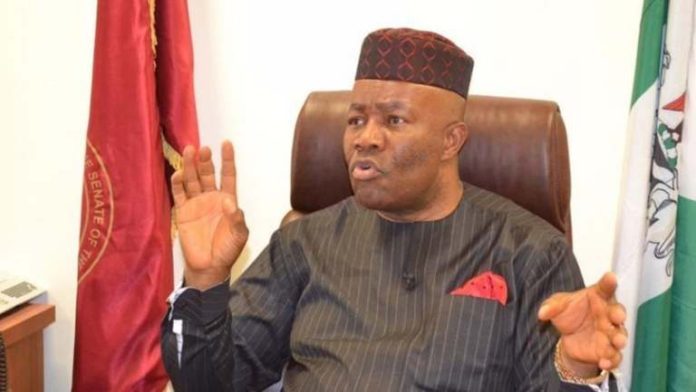
Nkpubre restates support for Akpabio’s Senate Presidency aspiration

Godswill Akpabio

A chieftain of the All Progressives Congress in Akwa Ibom state and founder of the Senator Godswill Akpabio Fans Club, Mr. Emmanuel Okon Nkpubre, has disowned a trending online report linking him to a group that is against the intention of Akpabio becoming the president of the 10th Senate.

Instead, the consultant economist restated his commitment to supporting the aspiration of Sen. Godswill Akpabio to lead the Senate of the 10th National Assembly.

In a press statement, Nkpubre who also doubles as the president of the Senator Godswill Akpabio Fans Club described the allegation as false, malicious, and unfounded and possibly the handiwork of criminal elements and mischief makers, who would stop at nothing to smear, defame, or hack down anyone they consider a threat to their interests.

“I do not know the said South-South group, talkless of being its president, Nkpubre countered, noting that nothing could be further from the truth.

“For the avoidance of doubt, I hold the distinguished Senator Godswill Akpabio in high esteem and remain his loyal supporter, especially in his quest to lead the Senate of the 10th National Assembly of the Federal Republic of Nigeria. It is an honour and a privilege to be so aligned with such a great mind,” he stated.

“As a former two-term governor of Akwa Ibom State, a former Niger Delta Affairs Minister, and an experienced lawmaker, Senator Akpabio is well equipped with the requisite experience in governance and politics to occupy the highest legislative seat in the country.

Additionally, according to Emmanuel Okon Nkpubre, Akpabio is result oriented and embodies the Renewed Hope mantra of the incoming administration of Asiwaju Ahmed Bola Tinubu. He is also very deeply committed to empowering Nigerians, especially the youths.

“Those were the considerations that informed the establishment of the Sen. Akpabio Fans Club with the intent to drum up support for the former minister’s senate presidency ambition, among other objectives,” he stated.

Nkpubre expressed appreciation to the APC for zoning the position of the Senate President to the South–South geopolitical zone and specifically to Senator Akpabio.

HURIWA says Deborah Samuel is a victim of state sponsored terrorism

  • Restates calls for prosecution of perpetrators

A year after the callous public murder of Deborah Samuel Yakubu, a female student of Shehu Shagari College of Education by her schoolmates, rights groups, public affairs analysts and the media are still wondering why nobody has been prosecuted.

Over the weekend, a Civil Rights Advocacy Group- Human Rights Writers Association of Nigeria (HURIWA) described the killing as state-sponsored terrorism.

HURIWA said the Sokoto state government, the Nigeria Police Force, Sokoto State command and the Sokoto state Directorate of the Department of State Services were acting out a well-written conspiratorial script to allow the suspected killers of this innocent Niger State-born Christian girl killed in the broad daylight, to escape the law while expressing shock and disappointment that the Christian Association of Nigeria (CAN) has forgotten about her case; showing total unconcern about the brazen injustice meted out to her family.

However, the Nigeria Police Force has dismissed claims that persons arrested in connection with the killing of Deborah, have been released.

The Force Spokesperson, CSP Olumuyiwa Adejobi, stated this on Saturday as Nigerians marked the one-year anniversary of the gruesome murder of the female student by Islamic extremists – an action which sparked national and global outrage.

But, Comrade Emmanuel Onwubiko, the National Coordinator of HURIWA said there was no known excuse why it had been one year after a female student of the Shehu Shagari College of Education, Sokoto State, Deborah (Samuel) Yakubu, was killed by some extremist Muslim students over alleged blasphemy of the Islamic religion, and yet the Nigeria Police Force had been saying that it was still on the trail of prime suspects culpable in the immolation.

HURIWA recalled that the Police Public Relations Officer, Sokoto State Police Command, Abubakar Sanusi, confirmed the development during a telephone interview with a media reporter just as the deceased, a 200-level student was set ablaze on May 12, 2022, after she reportedly advised her classmates against posting religious contents on their department’s WhatsApp group which was created for academic purposes.

The group noted that a video of Deborah being stoned, beaten with sticks and immolated by some of her Muslim colleagues, which was seen by our correspondent, was shared widely on all social media platforms. HURIWA then wondered why it is taking eternity for the so-called law enforcement agencies of the Police, the DSS, the Civil Defence, the Nigerian Customs, and the Nigerian Immigration Services, to successfully track down the killers of Deborah who did this unthinkable brutal murderous act in the daylight in full view of the relevant security institutions aforementioned whose members present at her public stoning were armed but failed to save Deborah Samuel Yakubu from the murderous crowd only because she was a Christian.

HURIWA said the Sokoto State government has deliberately delayed the prosecution of the suspects arrested and may have released them as there is no known proof that the matter is proceeding at the said Magistrate Court and yet the murderers haven’t been transferred to a state High Court that has jurisdictions over such a heinous crime of illegal and gruesome public execution of a citizen. HURIWA accused the Sokoto state government alongside all the security forces of colluding to hide this crime under the carpet of impunity but the group has vowed that nobody associated with this injustice will escape public scrutiny all their lives.

Besides, a few days after the incident, the police announced the arrest of two suspects; Bilyaminu Aliyu and Aminu Hukunci, in connection to Deborah’s murder, and they were arraigned on May 16, 2022, at the Sokoto Chief Magistrate Court for their alleged participation in the crime. However, a total number of 34 lawyers led by one Professor Mansur Ibrahim, allegedly sponsored by some public figures, stormed the court in defence of the suspected killers.

HURIWA recalled the PPRO, DSP Sanusi, as saying that the police were still on the trail of some of the prime suspects, adding that several arrests had been made in connection to Deborah’s death.

The Police spokesman in Sokoto had said: “We’re still on the trail of some of the prime suspects in connection with the murder. However, we have made arrest, and we’ve charged all the arrested suspects to court since then. The case is at the Chief Magistrate Court 1 in Sokoto, and the arraigned suspects were/are remanded at the Nigerian Correctional Service, Sokoto State Correctional Centre since 2022.”

HURIWA said the Sokoto State Police Command would be double speaking if they insists that they couldn’t arrest those killers who were clearly captured on the videos that became viral on the Internet. HURIWA also stayed that because the policing institution governed principally by Muslims backed the execution of Deborah otherwise the State Commissioner at the time the terrorist act of publicly stoning her to death could have been administratively sanctioned for failing to stop this brazen crime that took place in the market place with armed security operatives witnessing the crime without intervening

The deceased, a 200-level student was set ablaze on May 12, 2022, after she reportedly advised her classmates against posting religious contents on their department’s WhatsApp group, which was created for academic purposes.

Videos of Deborah being stoned, beaten with sticks and immolated by some of her Muslim colleagues, which was shared widely on all social media platforms.

At the weekend, a cleric, Reverend Father Kelvin Ugwu lamented the Federal Government’s inaction in bringing the perpetrators to justice. The, Rev. Fr. in an emotional message, lamented that after Deborah’s death, the Federal Government did little to seek justice for her.

He said: “Your body was burnt to ashes by them. Your killers made a video of the whole thing shouting Allahu Akbar (God is the greatest). I am not sure which God they are talking about.

“After your death, there was uproar. The government of your country did not do much to help; they just closed your school for a few weeks and charged some persons to court. One presidential candidate allegedly sponsored lawyers to defend your killers. They arrested some persons for what they called civil unrest. But no single person has been arrested for killing you. No one is in custody. Everyone seemed to have moved on.

“I would have said that you should rest in peace, but what is the use of peace without justice? May your killers and all those who support them never know peace.

“Dear friends, let us honour this lady today. Keep praying for the repose of her soul.”

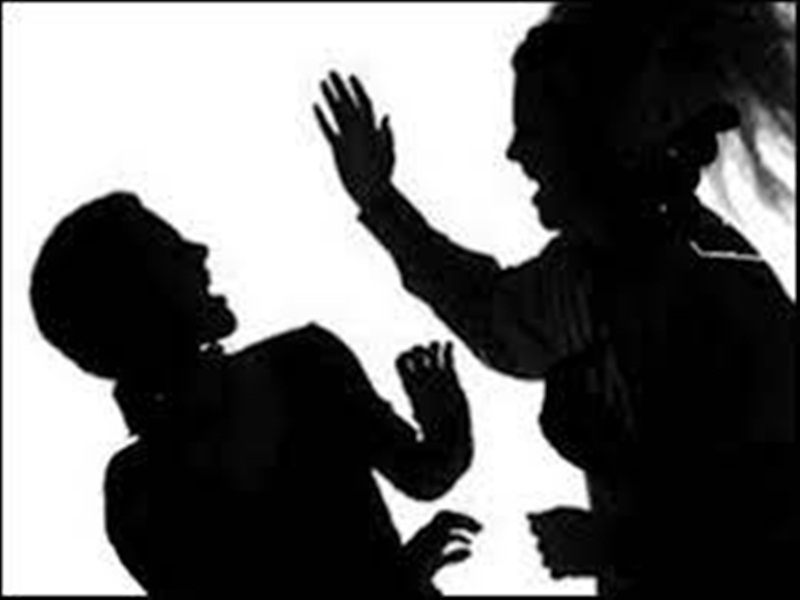
Man goes into coma after wife’s physical assault

“My wife will beat me to death one day if I continue with the marriage. I have scars all over my body as proof of her abuse,” 67-year-old Olawale Jayeola, once told an Igando Customary Court in Lagos State.

 This time, 56-year-old, Edwin Ugwu, narrated how his wife sent him into a coma after receiving a severe beating from her.

Recounting his ordeal to an Ogba Magistrate Court in Lagos,  Ugwu who told the court that his wife Ebere hits him at the slightest provocation said the frequent battery peaked recently when she beat him to a coma.

According to the prosecutor, DSP Kehinde Ajayi, the couple residents of Lambe Iluyomade Street, Ago Okota area of Lagos, had a disagreement, which degenerated into a heated argument leading to the wife physically assaulting her husband and his hospitalisation.

Ebere pleaded not guilty to the two-count charge of assault and battery.

The Magistrate, Mrs. E. Kubenije, granted the defendant bail in the sum of N100,000 with two sureties in like sum and adjourned the matter to June 6, 2023.

In mid-2022, 39-year-old Niyi Adeyemo accused his 38year old wife, Jumoke Bamgbola of beating him to a pulp during a disagreement at their residence on Love-All Street, Ikosi-Ketu, Lagos State.

Adeyemo, who was admitted to a hospital after the beating said his marriage crashed after his mother visited their home and his wife objected to it as she did not like his family members visiting.

“Bamgbola stormed my house on May 30, 2022, around 11 am and asked me why I had not been picking up her lawyer’s phone calls. I refused to respond and she said that I must talk to her because she came prepared for me.

“I tried walking away, but she dragged me back and tore my native attire specially sewn for my late mum’s burial and became violent.

“She started throwing punches at me all over my body, especially on my legs because she is aware of my health condition.

“ She tossed me around the house and kept saying that she would make sure I was admitted to a hospital.

“She also dragged my private parts and bit my hands as I tried to prevent her from biting my manhood.

“I deliberately stopped myself from hitting her like I was advised. So, I telephoned her dad and put it on the phone speaker; her dad called out her name, but she refused to respond or listen to him.

“Her dad asked me to leave the house, but I couldn’t, as she locked my neck with my torn clothes and said that I must give her a divorce. I passed out as a result of the severe pain and later found myself in a hospital.

“My wife’s demand for divorce became intense when she arrived from Dubai early this year. While she was in Dubai, we resolved our differences through video calls and made plans to relocate from where I stayed. But she suddenly changed and began comparing me with another man she met over there.

“She came back in January 2022 and requested to lodge at a hotel in the Lekki area of Lagos so as to self-isolate because of Covid-19 to avoid virus infection on our son. Apparently, she came back to Nigeria with a boyfriend with whom she had arranged to spend the night in the hotel.

“I telephoned her several times, but she refused to receive my calls and when I used other people’s mobile phones to call, she cut off the calls after she heard my voice.

“She once telephoned me and said that only our child bound us together and I would be powerless after she took away our child. She later threatened to kill me with her bare hands if I didn’t give her a divorce because her boyfriend said that he could not marry someone who was married with a child.

“The matter has been reported at the Ketu Police Station, but she is yet to be arrested as she has gone into hiding.”

Bamgbola in her response said she filed for a divorce and her husband was served, but he refused to honour the court’s invite.

She said, “I went to the court…to see the lawyer and he complained that my husband had not been picking up his calls or from my mum as well and I telephoned him, but he kept pleading with me that he did not want a divorce and that he had been suffering from anger disorder.

“He admitted that he allowed a third party in our marriage and that he was sorry. The lawyer told me that I had to see my husband and make him understand what I wanted because of our only child.

“So, I went to his place and met another lady with him in the kitchen. I asked for us to talk and asked why he refused to receive the lawyer’s calls and why he was telling people that he gave me N1.5m to rent an apartment, but he denied it.

“I actually visited to inform him that the court had fixed June 28, 2022, for our divorce case and discuss the matter with him if we could settle the dispute amicably.

“ He usually beat me, but I always tried not to hit him back because he is a sickle cell patient.

“Apparently, it resulted in a fight, as I was also admitted to a hospital at the Ijoko area because I had a swollen face and bruises all over my body and could hardly talk. I visited the same Ketu Police Station to report a missing Samsung flip Z3 phone that I lost in his house and paid N2,000 at the station for the report.

“Ketu Police Station later reached out to me that my husband filed a case of assault against me and I replied that I would visit the station on Sunday when I get better.”

“A brief should be luminous, not voluminous.”

By Chinua Asuzu

“A brief should be luminous, not voluminous.” Irvin Taylor.

It’s harder, but more profitable, to write a short brief than a long one.

Strive to write succinctly. The judicial branch of government will fall in love with you.

Don’t drown your arguments in stylistic embellishments.

“A style that steals the show from the argument does a disservice to the brief. Ornateness, languidness, verbosity, circuitousness—these do more than steal the show; they ruin it. A brief is not a pasture for the practice of literary gymnastics by frustrated journalists; indeed, it should not be a pasture of any kind but rather a cubbyhole just large enough to hold the essentials, compactly and neatly arranged, of a sound legal argument.” Mortimer Levitan, ‘Confidential Chat on the Craft of Briefing,’ 4 Journal of Appellate Practice & Process (Iss. 1, 2002), 305, 309.

And…

Judges detest verbiage.

The Supreme Court of Nigeria wasn’t impressed with the appellant’s excessively lengthy and pretentious brief in Universal Vulcanizing (Nig.) Ltd v Ijesha United Trading & Transport Co. Ltd. [1992] 9 NWLR (Part 266) 388 (SC).

Omo JSC called it “a 70-page booklet which is more of a treatise than a brief.”

Noting learned counsel’s erudition “exuded” in the brief, Omo JSC complained that the brief was far from “succinct” as required by the Supreme Court rules.

Agonizing over the brief’s verbosity, Omo JSC concluded, “It is lengthy, otiose, and not surprisingly, repetitive. … It is to be hoped that this Court will not be inflicted in the future with the tiresome task of wading through such a document.” Ouch.

A simple cough sent my wife to the grave, we were set for our 40th wedding anniversary – Prof Ralph Akinfeleye

The mood was celebratory in their home. Friends and relatives were already looking forward to D-day and why not? It was their fortieth wedding anniversary.

But that was not to be. A regular cough that appeared inconsequential marred it all.

And so it was that ahead of their much looked forward to wedding anniversary, Chief Mrs Carol Anike Akinfeleye, wife of the University of Lagos notable scholar, Prof. Ralph Akinfeleye went into transition.

Her grief-stricken husband spoke briefly on the circumstances that led to the death of his wife, Carol, in the face of preparations for their 40th wedding anniversary. He is inconsolable.

A family source who was quoted in a report by NATIONAL WAVES said she died as a result of complications arising from a cough and this was corroborated by the Prof who was quoted to have said: “I’m still in shock because cough that looked so harmless and should have been treated with simple medication landed her in an hospital and never came back home alive.”

In a grief-stricken voice, he said: “We were looking forward with excitement to our 40th wedding anniversary in September as we discussed it daily. Just too bad and painful! But the Lord is on His Throne!!!”

The deceased was the Yeye Gbekonuyi of Idanre Kingdom, former school Principal and Director of Education in Lagos State.

Her funeral ceremonies are expected to be held on June 15 and 16 at Odode, Idanre, Ondo State.

When a man’s manhood is threatened, By Funke Egbemode

Whether he is giving sperm or money, a man’s manhood feels rock solid only when he is the giver. All normal men are divinely wired to give. I hope you noticed the emphasis on normal men because not all men are normal. Forget the six-pack abdomen and rippling biceps, many of today’s men don’t mind being humped and getting paid for it. The Yoruba call them, alabodo’. Kept men. Gigolos. Men for hire. Toy boys. They are all over the place, dangling their sugar sticks, hoping to net the highest bidder. But their day will come.

Today is about the hard task of living with men who are ‘financially under the weather’ if you get my drift. Yes, broke-ass men. Don’t tell me you haven’t noticed that one of the most difficult men to live with are those without jobs or those who are broke. If you don’t, wait until your man loses out in a business deal and has to depend on what you earn to keep body and soul going; then, you‘ll see how he will start behaving like a man whose third leg has just been cut off.

You know, men generally believe that the purse strings should and must always be controlled and held by them. It is the way God created them. Giving is what validates a man’s manhood. No matter how things change or what current trends say, the natural order of things begin and ends with men giving.

Once a man is out of a job or even temporarily broke, he believes that heaven is about to cave in.
However, they should go around and see how nicely women are getting on, with or without financial support from men. These are the days when women are holding their own. But unfortunately instead of the men being proud of their women’s achievements, many think they must do something to stem the rise of the women.

They should check the number of cars, and I mean elegant cars, being driven by women. They should take statistics of the women between the ages of 24 and 35 and the kind of mouth-watering packages their jobs offer them. Let’s not even start a list of women who own and run flourishing businesses, from Automobile Workshops to Event Planning. If you compare the number of men in that same age bracket and what they earn. I guess one will be able to see that women are certainly giving them a run for their macho image.

Of course, they are ready to tell me off that all those successful women got to where they are riding on men’s shoulders. Well, they should tell me a better story because it is stale news.
How much weight can a cockroach’s shoulder carry? You can only help a woman get a job (and women help men get jobs too) but you don’t do it for her. She’s the one who proves her worth and earns her promotions and raises. So why do men get jealous when their women start climbing the success ladder? Or more importantly, why do men take their frustrations out on their women when they are broke or unemployed? It’s really a shame when a man takes your sympathy for pity or your support for handouts.

Labake, a chartered accountant found out this mean side of her husband after nine years of marriage. “I still can’t believe that he had that sort of thing in him. All this while, he supported my career and never insinuated any rubbish about how fast things were moving for me. He is, or was, a businessman and he imported all sorts of things from men’s wear to cars. Then against all my warnings, he decided to go into partnership with somebody. “I warned him that partnerships are risky and he could lose all he had worked for over the years but he was sure that any man worth this salt should be ready to take risks. So, he went into it believing he’d be a millionaire in a few months.

Then things started south. The other guy happened to be a crook and they almost came to blows before the letter of credit was even opened. He tried to keep it away from me and when eventually their ship arrived; my husband found out that all they imported were not worth what they paid for. Obviously, the guy kept some money back and paid for the low-quality cars and drugs that had almost expired. My husband had borrowed heavily for the transaction and had to sell one of his two cars to pay his creditors.

“Then he went into depression and started taking it out on me. He even went as far as accusing me of predicting the loss, you know, something quite close to calling me a witch or something like that. He started complaining about how late I worked, how I was turning him into a house-husband because he helped pick up the kids from school once in a while. He took to drinking and nothing I do these days seem to satisfy him. He’s even beginning to suspect I’m having an affair with one of my clients who is an American; and with whom I had to work extra hours because he has to go back to the States. It’s now so bad that if we are watching TV and I tell him there’s a programme I want to watch on another channel, he’ll just pick up his car keys, storm, out muttering that you can’t be a man in your own house once you don’t have money. It’s that frustrating”.

Keirah is not even married to the man who’s making her life miserable. They are just on a boyfriend-girlfriend, albeit steady level. ‘We both applied for jobs in one of these big conglomerates and I got the job while he didn’t. A few months later, he resigned from his job because of a misunderstanding and since then things have fallen apart. He became so mean, suspecting my every move, especially when I work late. Things came to a head when he came to visit me one Saturday and found one of my colleagues in the legal department and I working over a project we were supposed to send deliver the following week. He started insulting the poor guy, calling me names, and that he now understood why my weekends were no longer his. I was so pissed that I told him to get out of my life. And that was it.’

Why do men lose their cool when their fortunes take a nose-dive and they have to depend on their wives for some time? Aren’t couples supposed to help and understand each other’s plights?
Seriously, must men act like little boys whose toys were taken away by bigger boys each time they are broke?

Funke Egbemode can be reached on [email protected]

The Law of Judicial Deck Chairs

By Chidi Anselm Odinkalu

On 17 August 1980, the 6th Commonwealth Law Conference convened in Lagos, then capital of Nigeria. After the arrival courtesies were dispensed with, it fell upon Shehu Shagari, civilian president of Nigeria then in office for ten and a half months, to declare the conference open. The keynote speaker was Jeremiah Obafemi Awolowo, Senior Advocate of Nigeria (SAN) and leader of the opposition Unity Party of Nigeria (UPN), who had run President Shagari desperately close in the contest for Nigeria’s presidency only one year before.

That contest ended up being decided by the Supreme Court of Nigeria in a judgment memorably described as being “a compromise between law and political expediency.” At the head of the bench that decided the case was Atanda Fatayi-Williams, at the time the Chief Justice of Nigeria. As famous as this judgment would become, the antecedents arguably proved to be more lasting in their influence on Nigeria’s politics and institutions.

The relevant part of the story begins on 16 August 1979, when the Federal Electoral Commission, (FEDECO) headed by Michael Ani, announced Shehu Shagari of the National Party of Nigeria (NPN) as the winning candidate in the elections to return Nigeria to civil rule. Three of the five presidential candidates in the contest repudiated the result, setting up what would become an epic election dispute. Obafemi was one of the three.

The Electoral Act of 1979 under which the vote took place anticipated that there could be a dispute and conferred on the Supreme Court the jurisdiction for final decision-making on disputes concerning the presidential election. The panel to hear the disputes were to be led by the Chief Justice of Nigeria but the then incumbent, Sir Darnley Alexander, was due to retire on 24 August 1979, a mere eight days after the announcement of the result and well before the Supreme Court was due to begin hearing the presidential election dispute.

Three days before the retirement date of Chief Justice Darnley Alexander, on 21 August 1979, then military Head of State, Olusegun Obasanjo, an army general, requested to meet Atanda Fatayi-Williams, then a Justice of the Supreme Court, at the seat of power in the Dodan Barracks in Lagos. At the meeting, Obasanjo offered Fatayi-Williams the office of Chief Justice in succession to Sir Darnley.

In his memoirs, Faces, Cases, and Places published in 1983, Fatayi-Williams claimed that this offer “was totally unexpected, and, for the first time in my life, I was at a loss for words”, adding that Obasanjo “watched my discomfiture with relish and delight.”

Some of his peers on the Supreme Court were not so sure. Fatayi-Williams was admitted to the Bar of the Middle Temple in London in 1948, one year after Chukwunweike Idigbe and three years later than Dr. Egbert Udo Udoma, both of whom were his peers in the Supreme Court. Fatayi-Williams was from Lagos; Idigbe came from the then Mid-West; while Udo Udoma came from the then South Eastern State. Idigbe became a judge in 1961, before being appointed to the Supreme Court in 1964. His service on the Supreme Court was, however, fractured by the Nigerian Civil War.

Udo Udoma, who also became a judge in 1961, had enjoyed a career as a lawyer, minorities rights activist, campaigner, politician, and federal legislator before being appointed a judge in 1961. Two years later, in 1963, he became Chief Justice of Uganda with the understanding that upon the end of his tenure in Uganda, he would return to a position on Nigeria’s Supreme Court. This came to pass in 1968 when General Yakubu Gowon appointed him Justice of the Supreme Court. Atanda Fatayi-Williams arrived the Court in 1969 as a junior to Udo Udoma and, strictly speaking, to Idigbe.

In his memoirs, The Eagle in Flight, Udo Udoma recalls that upon the retirement of Chief Justice Adetokunbo Ademola in 1972, the then-ruling Supreme Military Council considered five names for appointment to replace him, namely: Professor Taslim Elias, who was then the Attorney-General of the Federation; John Idowu Conrad Taylor, then Chief Justice of Lagos (as the office was then known); Dr. George Baptist Ayodola Coker, Justice of the Supreme Court; Rotimi Frederik Alade Williams, a senior lawyer in private practice; and Udo Udoma himself. Fatayi-Williams was notably not in the running. In the event, the military preferred Taslim Elias, who had served them well as Attorney-General.

When a new military regime relieved Elias of the position in July 1975, they settled on Sir Darnley Alexander, until then a little-known Chief Judge of the South Eastern State, whom Udo Udoma had recommended for that office.

In 1979, the stakes in the appointment of Chief Justice were very high: the presidency of Nigeria could depend on it. Udo Udoma, who lived with medically induced disabilities, writes in his memoirs that “Justice Fatayi-Williams, then also a Justice of the Supreme Court, registered a solemn protest on the ground that he saw no reason why I (Udo Udoma) should be given such a high post as the Chief Justice of Nigeria despite the fact that I was an amputee. He felt strongly that the SMC under the leadership of a Yoruba man like himself would not be justified to ignore him who then had no handicap. He then contacted several Yoruba men, including Chief S.L. Edu, to contact General Olusegun Obasanjo as Head of State to plead his case.”

Continuing, Udo Udoma records that these “intrigues succeeded and he was preferred to me because, in his representation, he was able to convince General Olusegun Obasanjo that since Alhaji Shehu Shagari as a Hausa-Fulani, was contesting the office of President of Nigeria and had chosen Dr. Ekwueme, an Igbo man, as his running mate as Vice-President, both of whom were likely to win, then the office of Chief Justice of Nigeria ought to be filled by himself, a Yoruba man, especially as Chief Obafemi Awolowo was sure to lose the election.”

Udo Udoma published these lines in 2008, 28 years after Obafemi Awolowo’s keynote to the Commonwealth Law Conference in 1980. In that address, Chief Awolowo alleged that the appointment of Fatayi-Williams to the office of Chief Justice in 1979 came with an implicit bargain concerning the determination of the election petition of that year. He also claimed that days before the Supreme Court announced the decision on 26 September 1979, Chief Justice Atanda Fatayi-Williams leaked the decision of the Court to General Obasanjo who desired to be reassured that he could proceed with the inauguration date of 1 October 1979 as planned.

Nearly all the protagonists involved in this story are no longer alive and their stories are hidden away in books, whose existence most Nigerians do not know about. The only one alive, General Obasanjo, an otherwise prolific author, has not held forth on these issues. The full facts of what transpired may never be known publicly.

In 2008 and in 2019, judges who sat on controversial presidential election petitions in election years enjoyed quick judicial elevation from the parties in whose favour they decided. Also in 2019, a Chief Justice was sacked ostensibly because he could not be trusted to determine presidential election petitions in a predictable way in the manner that his would-be successor could. What seems clear is that since 1979, judicial appointments and decision-making in election petitions have always enjoyed a relationship underpinned by a whiff of quid pro quo.

Those interested in following the fate of the presidential election petitions whose consideration is ongoing in Abuja, Nigeria’s Federal Capital, may wish to remember that there are currently only thirteen serving Justices of the Supreme Court, which leaves the court with eight vacancies to be filled by a new government.

Politicians have learnt to turn election dispute resolution into auditions for the shifting of judicial deck chairs. First, they rig elections in order to get the opportunity to rig the courts with judges ready to help them to validate rigged elections. That is the legacy of the unspoken antecedents of Awolowo v. Shagari.

A lawyer and a teacher, Odinkalu can be reached at [email protected]

Ondo Pastor jailed 18 years for raping and impregnating teenager

“Beware of false prophets, who come to you in sheep’s clothing but inwardly are ravenous wolves; the Holy Bible admonished.

When the parents of Oluwatosin took the counsel of their landlord, 63-year-old pastor, Ajayi Famakinwa, to bring him their 15-year-old daughter for ‘deliverance’, they believed he was truly going to exorcise the evil spirits he claimed to have been troubling her.

As it stands, an Ondo State High Court has sentenced ‘pastor’ to 18 years imprisonment for raping and impregnating his 15-year-old tenant’s daughter.

Daily Trust Saturday reports that Famakinwa was jailed by Hon. Justice Yemi Fasanmi after he was found guilty of rape and defilement of the teenager.

In February 2022, Ajayi was hauled to court on court on two counts of rape and defilement, sexual abuse and exploitation.

He was said to have committed the offence on 13 April 2021, at Ayetoro Street, Ayede Ogbese Area, in Akure North local government area of Ondo state, in contravention of Section 31(1) of the Child’s Right Law, Laws of Ondo State, 2012.

The defendant, however, pleaded not guilty to the charges.

The State Prosecutor, H.M Falowo, told the Court that the defendant had unlawful sexual intercourse with the victim, and it resulted in pregnancy.

While proving the offence committed by the convict, Ms Falowo called four witnesses including the victim’s mother and tendered four exhibits which were admitted in evidence by the court.

The confessional statements of the convict where he admitted being responsible for the girl’s pregnancy and the photographs of the victim during pregnancy including five litres keg of water and anointing oil were parts of the exhibits tendered before the court.

According to her, the defendant who was the landlord to the victim’s parents disguised under the pretence of healing her of demonic spirit to commit the offence.

Justice Fasanmi who condemned the convict’s act of impregnating the young girl and turning her into a struggling single mother added: “The defendant’s conduct, his admission of the crime to the Divisional Police Officer at Ayede Ogbese on October 17, 2021, in his voluntary confessional statement to be responsible for the pregnancy and other evidence of the prosecution amounted to sufficient corroboration that the defendant committed the offence.

“Based on the above and in strict adherence to the provisions of the law, I have no alternative than to sentence the defendant accordingly and I so hold.

 ”Though the defendant appeared remorseful in court, he is convicted as charged and sentenced to 18 years imprisonment.”

Last year, an Ekiti State High Court sitting in Ado Ekiti sentenced one Durodola Kayode Ogundele to life imprisonment for raping an 85-year-old grandmother.

The convict was arraigned before Justice Monisola Abodunde on one count charge bordering on rape.

The charge read that ”Durodola Kayode Ogundele, on the 15th day of June 2021 at Ayetoro Ekiti in Ido/Osi Local Government Area of Ekiti State, within the jurisdiction of the honourable court, did rape an eighty-five years old woman.

”The offence is contrary to section 2 of the Ekiti State Gender-Based Violence (Prohibition) Law, 2019.

In her testimony before the court, the victim’s daughter, Opeyemi Bolaji said, I came to give my mother breakfast, on getting to her, I found her in an unsettling physical condition, after finished eating and upon further prompting to find out the reason for her restlessness, she told me that the defendant did not allow her to sleep, she said the defendant came to her room around 1:00 am, he rubbed a balm all over her body, including her anus and vagina, massaged her body, sucked her breast and forcefully has sex with her, she concluded.

When I tried to find out from the defendant, he said, my mother must have been dreaming.

The matter was first reported at Ido Ekiti Police Station before it was transferred to the State Criminal Investigation Department of the Nigerian Police Force, Ado Ekiti.

To prove his case, the prosecutor, Barrister Folasade Alli called five witnesses including the Investigating Police Officer and a Medical Doctor, she tendered the victim’s statement, the defendant’s statement, and a medical report from Federal Teaching Hospital, Ido Ekiti among others as exhibits while the defendant spoke in his own defense through his counsel, M.O. Folorunso, he called no witnesses.

In her judgment, Justice Monisola Abodunde said, I am therefore not in doubt that prosecution has finally established through circumstantial evidence, that it is cogent, compelling and most conclusively, that the defendant intentionally and calculatedly penetrated the vagina and anus of the victim with his penis after rubbing a dark balm on her body and private part.

On the whole, I find that the prosecution has discharged an evidential burden placed on them in law by circumstantial evidence, supported by the totality of the combined evidence of the witnesses, corroborated by the extra-judicial statements of the victim made at the earliest opportunity.

The defendant is found guilty as charged for Rape contrary to Section 2 of the Ekiti State Gender-Based Violence (Prohibition Law) 2019 and he is convicted, and accordingly sentenced to Life Imprisonment in line with Section 2 (2) of Ekiti State Gender-Based Violence (Prohibition Law) 2019.

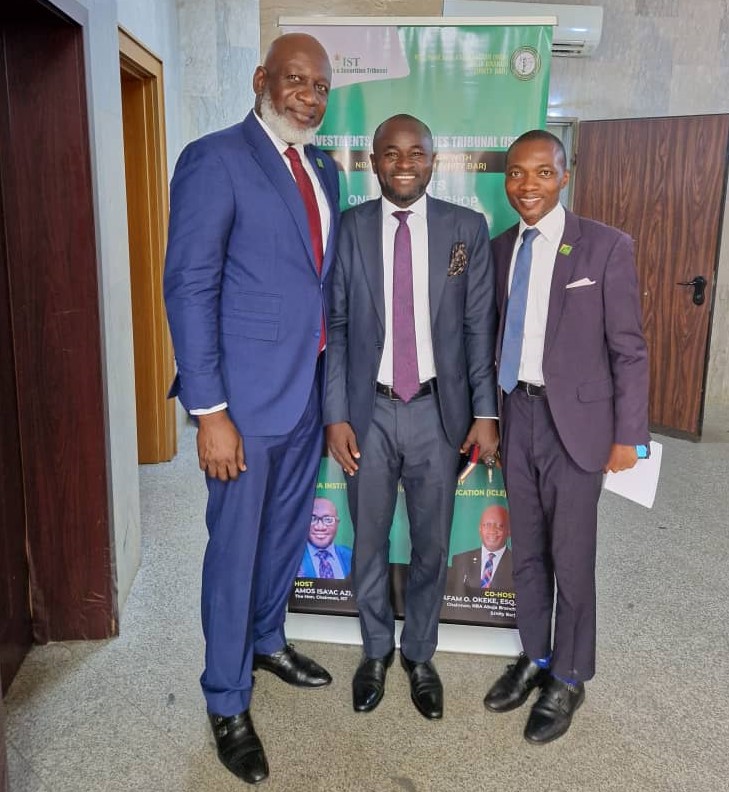
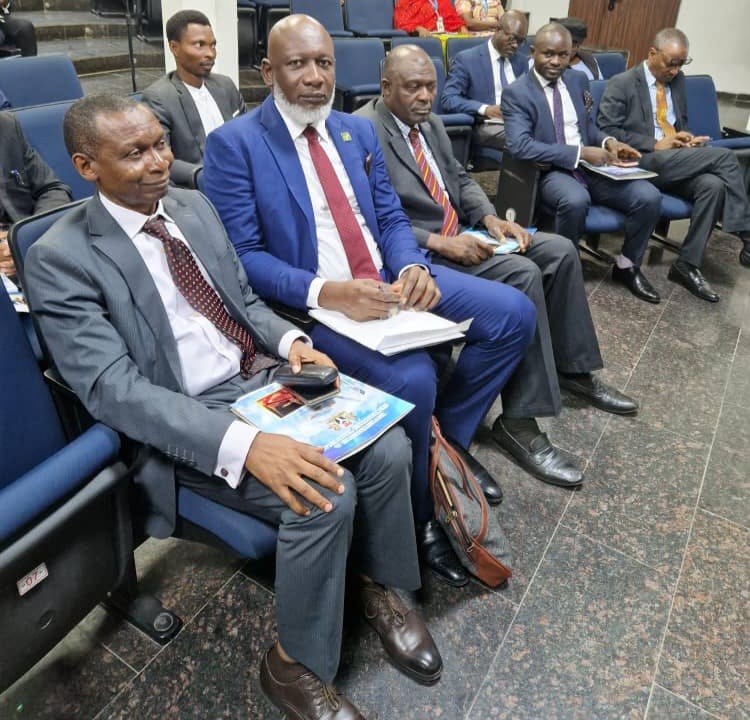
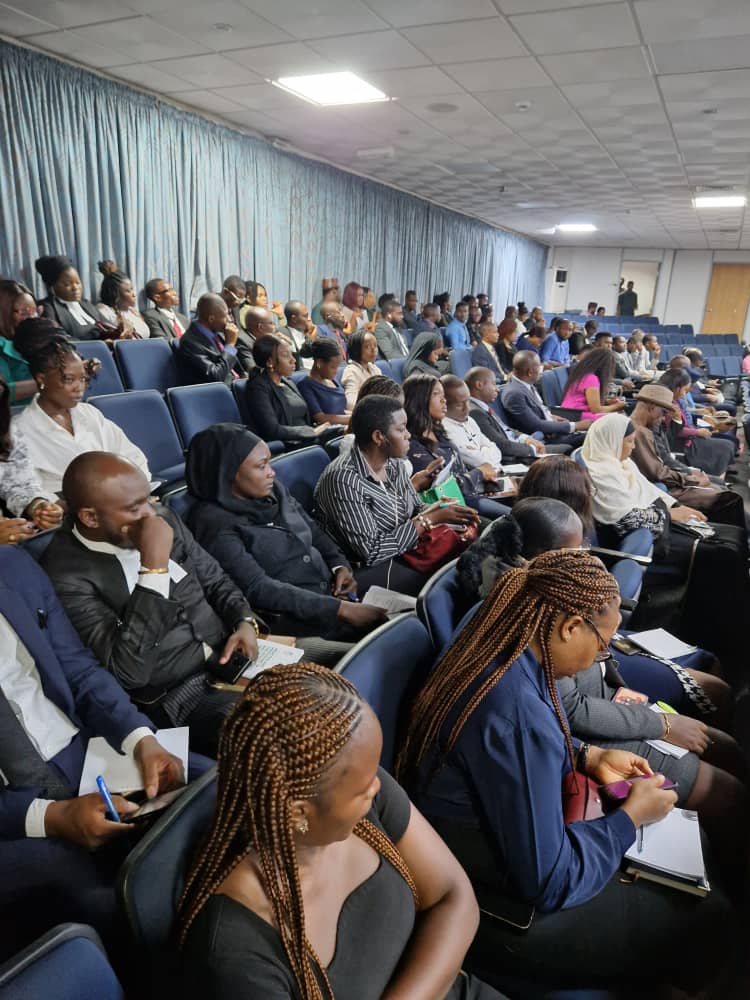
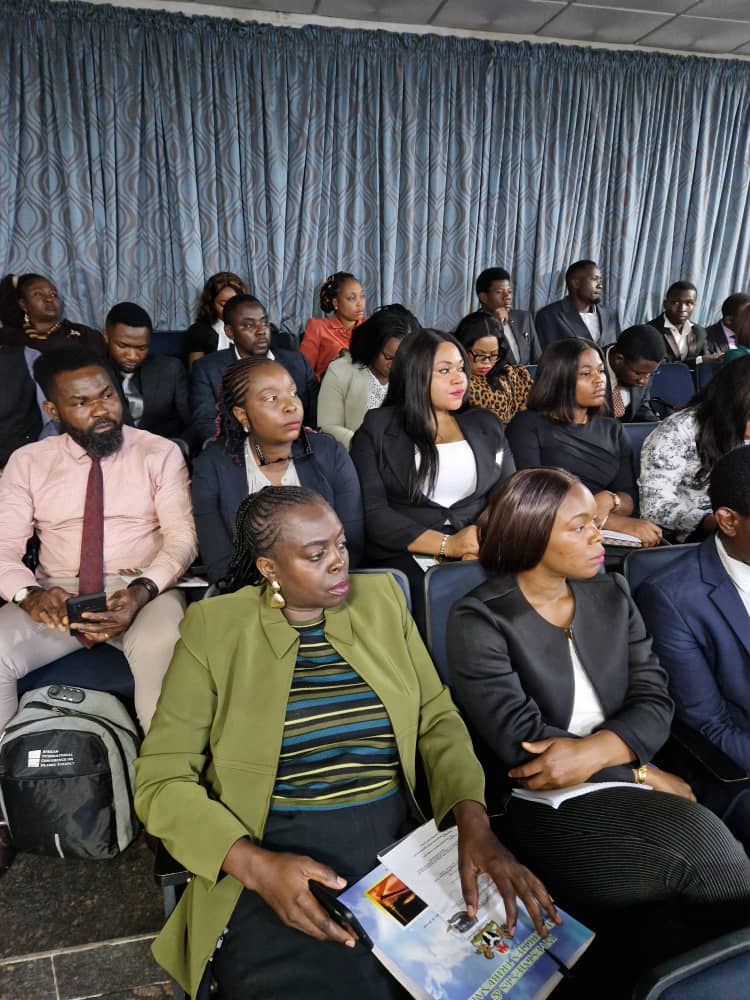
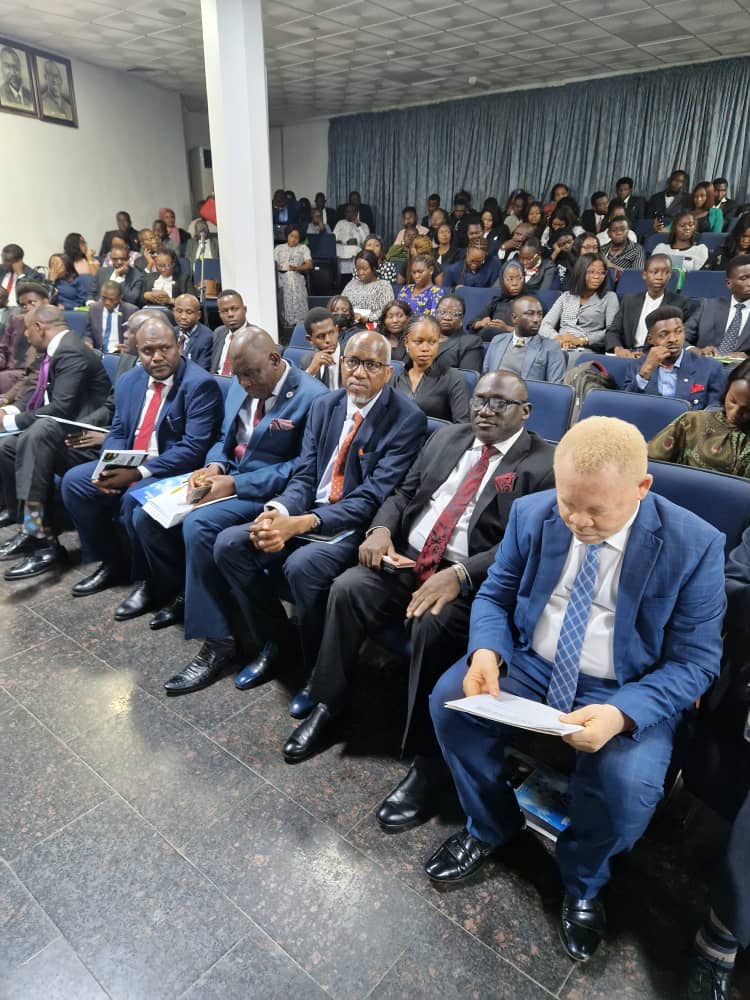
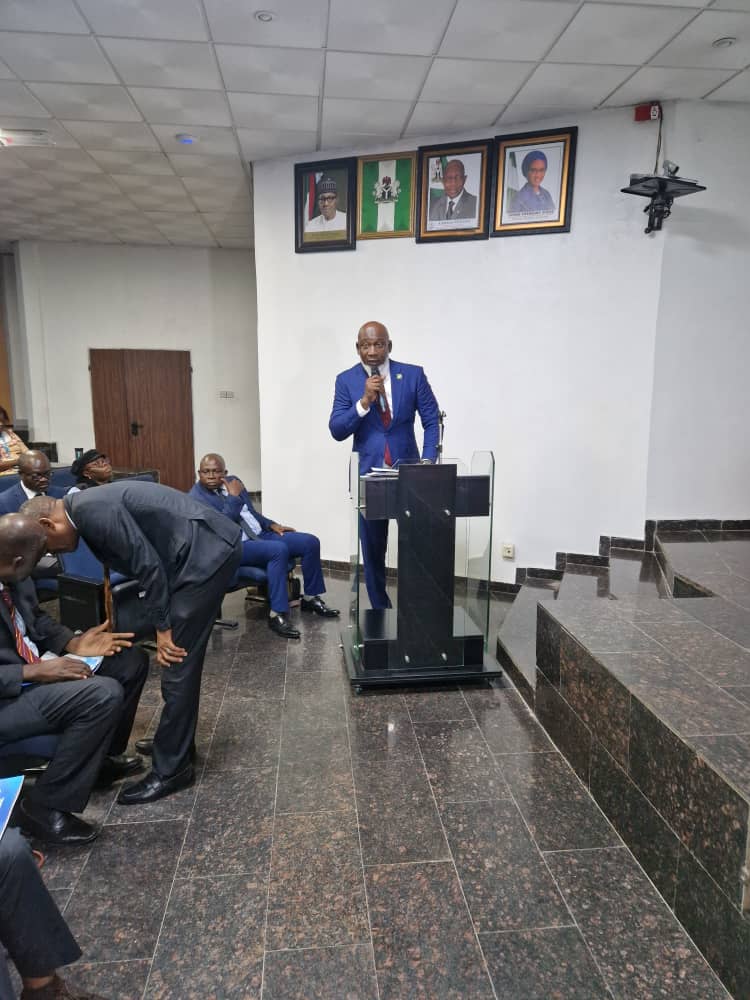
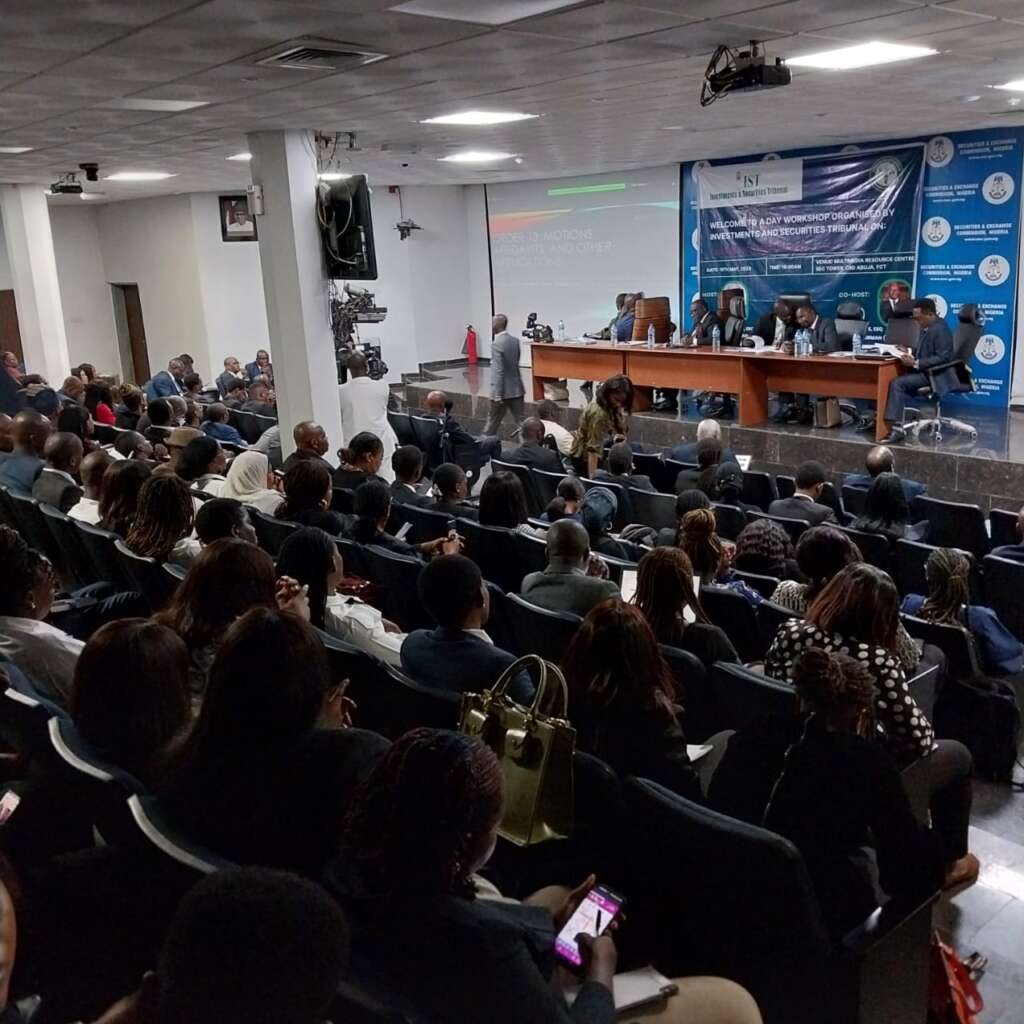
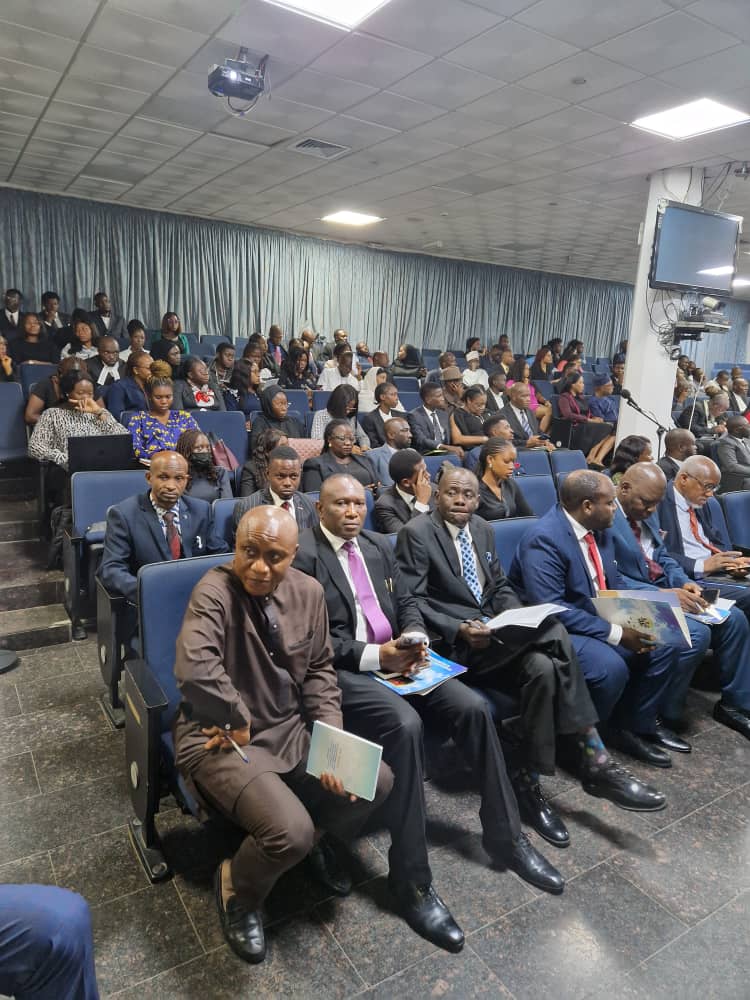
Photo News: Investments and Securities Tribunal, NBA Abuja hosts workshop

The Investments and Securities Tribunal (IST) in collaboration with the Nigerian Bar Association, Abuja (Unity Bar) recently held a one-day workshop titled: Law, Practice, and Procedure of the IST.

Below are photos of the event.

TIPS