Home Blog Page 765

Nigerian Guild of Editors: When competence trumped identity politics

By Ikechukwu Amaechi

For daring to contest the presidency of the Nigerian Guild of Editors, Eze Anaba was branded an Indigenous People of Biafra (IPOB) member. These characters, without qualms, shamelessly called to threaten and abuse fellow editors for going round with an Igbo to campaign in an election they were vying for the same position.

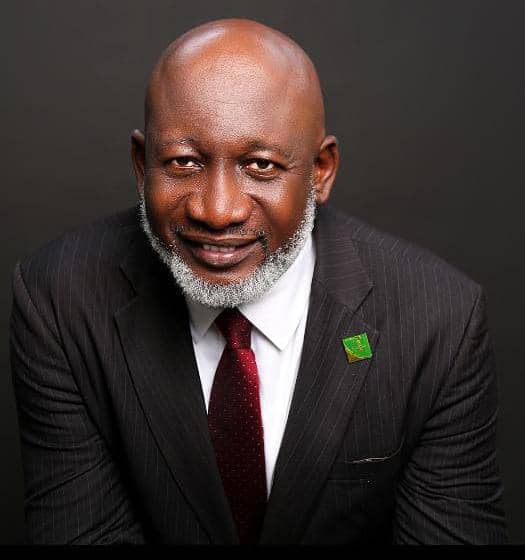
It is no longer news that the just concluded national bi-annual convention of the Nigerian Guild of Editors (NGE), which held in Owerri, Imo State capital, produced Eze Anaba, editor of the Vanguard newspaper as the new president.

In the next two years, he and 15 other officers will run the affairs of the elite club of Nigerian editors. It is not going to be an easy task but editors are confident that the Anaba-led team will deliver.

What ought to be a simple task of professionals choosing, in a convivial atmosphere and spirit of camaraderie, those who will authoritatively allocate their collective values for a very short period of 24 months turned out to be an election like no other, with difficulties more fundamental than the normal schism that characterizes every struggle for power. Since the NGE was founded on May 20, 1961, at the old National Press Club in Lagos by Alhaji Lateef Jakande, who also emerged as its first president, the 2023 election was perhaps the most toxic.

To be sure, the NGE is not immune to crisis. Though the Jakande-led executive that included other veterans such as Babatunde Jose (vice president), Abiodun Aloba (secretary) and Nelson Ottah (assistant secretary), had the vision of advancing the interests of the media profession and deepening editors’ relationships with their various publics including the government, the political crises of the 1960s became a clog in the wheel of progress.

The 1966 coups and the 30-month civil war led to the sacrificing of the journalistic principles of objectivity, credibility, and accuracy on the altar of war propaganda.

But even in the heady era of the military after the war, Nigerian editors jealously guarded the independence of the media so much so that when General Olusegun Obasanjo’s junta promulgated a Press Council Decree in 1977 to muscle free press, the NGE rejected it outright and also pushed back against civilian governments that wanted to skyjack its leadership.

Thus, at the 1982 convention in Minna, Niger State, when the Alhaji Shehu Shagari-led National Party of Nigeria (NPN) government through Alhaji Umaru Dikko, the Minister of Transportation, tried to take control of the Guild by sponsoring the campaign of Alhaji Ibrahim, the Director General of the Nigerian Television Authority (NTA), who only became a registered member at that conference, members revolted and thwarted the move.

Such pushbacks were possible because the founding fathers designed an exclusive club of professional news managers where editors as the ultimate gatekeepers on media content could interrogate issues of professionalism. Since then, it has remained true to its calling, working in collaboration with other journalistic bodies across the world to preserve the standards of journalism practice, strict adherence to ethics and advocacy for press freedom and democracy.

Nigerian editors under the NGE aegis have played their watchdog role conscious of the clear provisions of Chapter 2 Section 22 of the 1999 Constitution (as amended), that: “The press, radio, television and other agencies of the mass media shall at all times be free to … uphold the responsibility and accountability of the Government to the people.”

How then can the media hold the government accountable if the practitioners become subservient to the government like the supine ninth National Assembly headed by Senator Ahmad Lawan?

Sadly, 62 years after those great journalists founded the NGE, some editors wanted to ride on the back of the asinine 2023 identity politics to win the Guild presidency. They insisted that it would augur well if the NGE was embedded in the presidency, perhaps as a government parastatal rather than the Fourth Estate of the Realm as envisaged by the Constitution. That was a fallacy. And fortunately, Nigerian editors saw through the heresy.

Never in the history of the NGE was ethnicity considered a relevant factor in the election of its leadership. Competence and character always trumped such primordial considerations.

Since its revival in 1992 by Chief Onyema Ugochukwu, the NGE has had Biodun Oduwole, Garba Shehu, Oluremi Oyo, Baba Dantiye, Gbenga Adefaye, Femi Adesina, Garba-deen Muhammad, Funke Egbemode, and Isa Mustapha as presidents. Nobody cared where they came from. What mattered was their track record of achievements.

What changed? Nothing other than the fact that those who profiteered from the ethnic profiling of fellow Nigerians in the 2023 elections thought they could export the same retrogressive template to the Guild. If identity politics worked for them during the general election, why will it fail now, they reasoned. So, rather than selling their policies to fellow editors, they were busy flaunting their closeness to the new kids on Nigeria’s power block.

In running this nefarious and harebrained campaign, they were backed to the hilt by those who made incendiary comments against fellow Nigerians for no crime other than their electoral preferences which did not agree with theirs.

For daring to contest the presidency of the Nigerian Guild of Editors, Eze Anaba was branded an Indigenous People of Biafra (IPOB) member. These characters, without qualms, shamelessly called to threaten and abuse fellow editors for going around with an Igbo to campaign in an election they were vying for the same position.

Yet, if the expression “true Nigerian” means anything, Eze Anaba embodies that truth. The only thing Igbo about him is his name. Son of late Mr. Josiah Anaba, who hailed from Umuota, Obingwa, Abia State and mother, late Mrs. Rosaline, an Ishan (Esan) from Ubiaja in Edo State, Eze and his siblings were born and raised in Lagos. Over 70 per cent of his friends are non-Igbo, including those who suddenly realized that he is Igbo and, therefore, not qualified to aspire to lead the NGE. His wife, Itoro, one of the most hardworking Nigerian women hails from Akwa Ibom State.

Eze speaks Yoruba better than he speaks Igbo. He has worked and thrived in an organization owned by one of the doyens of journalism in Nigeria today, Uncle Sam Amuka, who is not Igbo. In his capacity as Editor of the high-flying Vanguard newspaper, he manages colleagues from all the nooks and crannies of this vast country without any iota of bigotry.

But why did they try that nonsense? Didn’t they know they were dealing with members of an elite club who know what the real issues were and what was at stake?

Impunity is the answer. It has a way of beclouding people’s senses. But what was at stake was the very soul of the Nigerian Guild of Editors. And when it mattered most, Nigerian editors, just as they did in 1982 in Minna, made a resounding statement in Owerri on June 16 by rejecting tendencies that divide rather than unite us.

At the Rockview Hotel Owerri, venue of the convention, editors who decided even before arriving Imo State that the Guild was better off with an Eze Anaba presidency voted overwhelmingly to ensure that competence and character trumped identity politics.

Money was obscenely deployed in a futile attempt to wheedle the unwary. Ethnic slurs were hauled recklessly but rather than persuade, such underhand, devious tactics dissuaded the highly discerning Nigerian editors, who contended, and rightly so, that the presidency of their Guild was not for sale to the highest bidder.

When the votes were tallied and counted, Eze Anaba polled 250 votes to defeat those who labelled him IPOB. They only managed to garner 81 votes. It was real shellacking.

In repudiating the idiocy of identity politics particularly in a professional body like the Nigerian Guild of Editors, journalists have once again demonstrated to politicians that politics could do with some decency and elections can be transparent, free, fair and credible.

The Maimuna Garba-led election/screening committee that had Isaac Ighure, a Fellow of the Nigerian Guild of Editors, Yusuf Abdulssalam, Mary Atolagbe and Felix Nwadioha as members did a job that INEC Chairman Mahmoud Yakubu proved incapable of doing.

It is not about numbers. It is all about political will to do the right thing and fidelity to the Constitution. Indeed, Nigerians have something to learn from Nigerian Editors who made a loud and unambiguous statement in Owerri on June 16 that their conscience can never be purloined. They also affirmed by their exemplary conduct that free and fair election is possible even in Nigeria.


Shelter for survivors of Domestic Violence opens in Lagos

Succor has come for victims of domestic violence in Lagos State as the state government through its Domestic and Sexual Violence Agency, (DSVA) opened the “EKO HAVEN”, a shelter for Survivors of domestic violence. This is part of the State Government’s commitment to ensuring holistic support is provided for survivors of Sexual and Gender-Based Violence.

At the opening days ago, the Executive Secretary of DSVA, Titilola Vivour-Adeniyi, revealed that the Shelter located in the Ikorodu axis of Lagos, was a 30-bed space capacity to provide immediate shelter services to high-risk survivors of domestic violence.

Vivour-Adeniyi said opening the shelter was the State government’s prompt response to the burgeoning demand to ensure the preservation of life,  safety, stability, empowerment,, and subsequently the reintegration of Survivors back into society.

According to Vivour- Adeniyi: “The establishment of Eko Haven is in keeping with the DSVA’s statutory mandate of establishing shelters across all Divisions of the State. With this intervention, it is our hope that survivors in abusive relationships would find the courage to break the culture of silence, speak up, and speak out with the assurance that help is just a CALL away”.

“Asides from providing accommodation, health, psychosocial support as well as livelihood support would also be integrated and made available for survivors through Eko Haven”.

“Our compassionate staff would offer comprehensive support to help survivors address their trauma through empowerment activities, personal and legal advocacy, and in-house psychosocial support”.

“The shelter is hosted at a confidential location with on-site security precautions”

She gave assurance that any victim or Survivor of domestic violence should realize that they are not alone and that there is help accessible. “Please reach out to us on 08000 333 333 or at our office located at Novel House, Plot A, Otunba Jobi Fele Way, Central Business District. Alausa”.

Intimate Affairs: Sex, Pastors and Pastors’ Wives, By Funke Egbemode

Today I’m worried about men of God, wet matchboxes and the fire at the base of the mountains of pastors’ wives. I’m worried about pastors who leave their wives’ needs unattended in the name of doing God’s work.

A pastor’s wife was caught pants down with her butt-naked brother-in-law defiling the clergyman’s marriage bed. The video trended for a while last week. Did you see it? The woman said she was pushed into the act by hunger, sexual hunger. Her pastor husband was focused more on fasting and prayer than fulfilling his conjugal duties. The man of God neglected the fire in between the legs of his wife. He allowed his wife to burn while he concentrated on the fire on his prayer altar. He refused to mount his wife and deliver her from the tension in her loins but instead moved from one prayer mountain to the other.

He must have convinced himself that the fire burning his wife was a fire of lower importance than the fire on his mountain. What did he know? When a woman wants her man, she wants him. She is not impressed by his spiritual exercises or excuses. She will hold on for as long as she can keep the fire under her wrapper, skirt or trousers. And women, especially wives, are good with holding that fire than men. Maybe that is why men take advantage of us. They think because we do not have evidence of a ‘morning glory’ or an angry ‘hard-on’ we do not have desperate moments. What ignorance! What carelessness! That’s why the Pastor stayed on the mountain, ignoring his wife’s cry for help. Did he think being a pastor exempted him from taking his wife to peaks of orgasmic pleasure plateau or that being Mummy G.O. excludes his wife from sexual needs?

Therefore, on Count 1, Oga Pastor was guilty. He left his primary assignment, his first call and allowed the devil to use it to taint his calling and ministry. Because, come to think of it, sex in marriage is holy, God-approved. Bible-sanctioned. So what was the Pastor thinking, that there would be no consequences for leaving his wife’s needs attended? In any case, how long does it take to quench the fire in between a woman’s legs? You can do a one-hour drill. You can also do a quickie. She’s your sheep, pastor. Lead her in the right direction, lead her to wet pasture. But you can’t ignore her. She is God’ gift to you, your helpmeet, the bone from your side. Ignoring her needs is like telling God to ‘come and carry his load’ because you have other more important loads. No sir, you can’t tell God that. The things that happen when a woman’s needs are ignored are far more costly than the little sacrifice of touching her in the right places and taking her to cloud nine twice a week. Okay, once a week. Just give a good account of your manhood when you do your weekly ministration. That’s all.

A pastor friend of mine told me that when you see a man of God prancing energetically on the altar, singing and dancing on Sunday morning, his wife had ministered to him all night. Meaning: a loving night of love puts a spring in the steps of pastors too. Now, imagine what an unhappy, frustrated pastor’s wife will mean and do to the call and commission! Her husband’s prayer will be hindered. What then is the essence of eight months of prayer and fasting if the prayer will be hindered? Imagine the sacrifice, denying yourself food, water, soft drinks for months just so the man in the wheel chair in your church can be healed, only for nothing to happen just because your wife is not being treated fairly. It’s not even as if sex is some bitter pill. It’s sweet, delicious, relaxing, therapeutic blessing from God. Why would a man of God run from a gift from God, a gift that was created before Pastor was formed? I don’t just understand some men’s interpretation on the holy books and God’s thoughts when he created the marriage institution. Is it that they know more than God or they simply don’t know anything at all? You keep your wife on ice for months and you say you love God?

We all need to read 1 Peter 3: 7.

‘Husbands, in the same way, be considerate as you live with your wives. And treat them with respect as the weaker partner and as heirs with you of the glorious gift of life, SO THAT NOTHING WILL HINDER YOUR PRAYERS.

Dear men of God, do not waste our faith, the hope of your congregation because that is what you do when you treat your wives unfairly. We come to you. You lead the service, you bless us at the end of the service. We go home waiting for a miracle but you dear pastor, go on to block our testimonies by the way you treat your wives. Today is Saturday sir, make Mummy happy tonight. It is important for tomorrow’s service. Don’t use your I-can-go-without-sex-for-12-months pride to spoil your congregants’ testimonies. Do not hold back tonight. It is not a sin to do your wife well in every style and position. Forget her big hats and flowing dresses, she is just a warm-blooded female waiting for you to quench the fire down there.

On Count 2, therefore, the pastor, whose wife confessed to adultery, in the video is also found guilty of indirectly hindering the prayers of his flock.

But wait, isn’t it suspicious, very suspicious that a man, any man will go without sex for eight months at a stretch? A friend tried to plant a bad angle in my head.

‘Are we sure he wasn’t getting some on the side, outside?’ He asked with mischief glinting brightly in his eyes.

‘He is a man of God!’ I warned him like thunder could follow his blasphemous insinuation.

‘He’s a man first.’ He insisted on his theory. Bad guy, that one.

‘What if his matchbox is wet…?’ it’s possible, right?’

‘Oh wow, that is very possible.’ He’s my friend and I know how to divert his attention from one interesting theory to even more colourfully interesting ones.

Seriously though, if a man is hiding out on prayer mountains for eight months, avoiding his wife’s bed and bosom, it is safe to assume that his matchbox is wet. A wet matchbox will have wet matchsticks. Wet matchsticks can’t produce sparks, least of all light a fire. Now, that is sad and a natural disaster that we cannot hold Pastor responsible for. But he should have taken his wife into confidence so they could have sought medical and psychological help. To just hide behind church activities, fasting and prayer is both unfair and unwise. We all know that when men’s libido starts waning, it’s like a death verdict for them. They first go into denial, then feelings of shame, anger and then self-help of all shades. You do not want to know the risks and danger they expose their livers and kidneys to just so they can raise the dead, if you get my drift. The small sachets of this and that…Ale, aleko, opa eyin, and of course, Viagra and its blue cousins. May the Lord help our men.

Ladies, when you notice or suspect that your man’s matchbox is wet, don’t let him fool you with ‘there’s an important match at 11 pm.’ Or, members of the Men’s Fellowship are starting a 30-day fasting and prayer. Don’t let him sleep on the couch. Help him get his groove back, after all you were the great beneficiary when he was doing it everywhere in the house. There are many ways to dry his matchbox but this is a family platform, we will have to take the details somewhere else. Right.

Finally, to Mummy G.O. who decided her husband’s brother was the alternative to her husband, it’s a shame, ma, you are guilty on that count and your sentence will have no option of parole. Your brother-in-law on top of you or under you was not the solution. Oh no! Even if that was a cry for help, it was a shameful cry. There are many ways, many options, many devices you could have resorted to. There are sex toys. At the very worst, you could have done what you did far away from the homestead. When you have diarrhoea, you do not defecate close to where you live but you, ma’am, you stooped and defecated in front of the family house. Now, you have stained your husband’s calling. You have called his manhood to question. You have damaged your own name, title and position. Instead of people sympathising with your eight-month dry spell in sexual wilderness, you are now the butt of jokes. It is really difficult to come back from this. But it is possible.

▪︎ Egbemode ([email protected])

Once again international rights group claims Nigeria’s rights record is worse than sub-Saharan Africa’s average

Nigeria’s human rights scoresheet is again in the spotlight with an international human rights organisation scoring it once more as “very bad” and “worse than [the] average in sub-Saharan Africa.”

Human Rights Measurement Initiative (HRMI), a New Zealand-based organisation in the report released on Thursday claims that: “Compared with other countries in Sub-Saharan Africa, Nigeria is performing worse than average,” confirming what observers and rights advocates are saying about the Nigerian state’s execrable human rights record and the increasingly dismal daily experience of Nigerians.

The negative report from HRMI initially surfaced in June 2021, when the organisation first described Nigeria’s human rights record as “very poor” and “worse than [the] average in sub-Saharan Africa.” In that report, the group said Nigeria’s score for economic and social rights falls within a ‘very bad’ range.

Again HRMI has announced that Nigeria’s quality of life scores are generally very low, all falling in the ‘very bad’ range, showing that successive governments have not met their human rights obligations to their people.

HRMI’s quality of life scores measure how well a country is converting its resources into good outcomes for its people.

“Nigeria has the financial resources to do much better,” the researchers said. “Every single one of Nigeria’s component scores is in the ‘very bad’ range, which means that many millions of people are suffering unnecessarily when the country could afford to be ensuring better living conditions.”

Nigeria scored 62.7 percent for the right to food; 47.9 percent for the right to health; 37.1 percent for the right to housing and 40.04 percent for the right to work.

The worst score is for the right to quality education, at only 5.5 percent, data shows.

The very poor score in education may not be surprising to most observers as Nigeria currently has the highest number of out-of-school children in the world, over 10 million, according to UNICEF.

For all four rights, Nigeria performed worse than most countries in Sub-Saharan Africa, the HRMI report stated.

“There is no reason for any country to score this low,” HRMI said. “Not only are countries scoring below 75 percent failing to put in place the kinds of structures and policies that help people claim the right concerned, but the structures and policies in place most likely prevent many people from claiming their rights.”

Methodology

HRMI developed two different measurement methodologies for two key sets of rights: economic and social rights, and civil and political rights.

For civil and political rights, where violations often take place in secret and reporting is inconsistent across different countries, the organisation said it uses a multilingual expert survey approach to get information directly from the human rights experts who are monitoring events in each country.

But for economic and social rights, HRMI draws on national statistics produced by governments and international agencies, and uses the Social and Economic Rights Fulfillment (SERF) Index methodology to compare countries’ human rights outcomes with their income, to capture the concept of ‘progressive realisation’.

The report’s findings convey a picture at odds with the human rights record Nigeria’s government repeatedly claimed has improved.

Eerily similar in tone to last year’s report, the 2023 data highlights the seriousness of the Nigerian situation, captured by the citizens’ and observers’ persistent concern about heightened impunity and the continued disjuncture between democratic transition and democratic norms.

The report concluded that the biggest improvement for Nigeria is in the right to child health where there have been steady improvements over the last 20 years.

Premium Times

Urban Legend and Durable Insecurity in South-East Nigeria

By Chidi Anselm Odinkalu

On 17 July 2012, Peter Obi, then governor of Anambra State, swore in five new commissioners. One of them was Chike Okoli, whom he assigned to the Ministry of Science and Technology where he would serve as commissioner until the expiration of Mr. Obi’s governorship tenure in March 2014. Two months later, around 21 May 2014, Chike set out from the state capital in Awka to Nanka, his village in Orumba South Local Government Area (LGA) of the state. He never got there.

Somewhere in Agulu, not far from Nanka, Chike’s car was reportedly intercepted by men in a sports utility vehicle (SUV), who abducted him. Despite having much of their ransom demand of N16 million met, Chike has not been seen or heard from since then. It was widely reported at the time that Chike was “abducted by unknown gunmen.”

41 days before Chike Okoli’s abduction, then Inspector-General of Police, Mohammed Abubakar, went to Awka, where he declared that the state was the safest it had been in five years. Five years before this revelation by the Inspector-General, in April 2009, a campaign of violent crime leading to the death of over 30 persons in a lethal fortnight, forced the House of Representatives to hold an urgent debate at the end of which it adopted a resolution expressing alarm at and asking for urgent measures to address the activities of “the men of the underworld in Anambra State.”

In the first six months of 2009, violent crime killed over 60 people in Anambra state alone. Abia, Anambra and Imo States in the south-east were among the top five in the kidnapping league table compiled by Nigeria’s security agencies in 2009.  A report by the Voice of America in December 2009 attributed these trends in the south-east to “criminality and violence from the proliferation of armed gangs.” One year later, in the last quarter of 2010, Aba, the commercial centre in Abia State, was reported to be “in the firm grip of kidnap militia.”

Transnational crime gangs were the suspects when unknown gunmen attacked St. Phillip’s Catholic Church in Ozubulu, in Ekwusigo LGA in Anambra State, shooting indiscriminately at worshippers in an incident that killed at least 13 persons and injured many more in the early hours of 6 August 2017.

These instances do not by any means pretend to scratch the surface of the patterns of atrocity violence in south-east Nigeria. But they illustrate some features that have been lost as the situation has become the stuff of a bifurcated, single narrative. Internally in the region, one prong to this narrative claims that the sources of insecurity in the south-east are external, caused mostly by armed herders. Externally, outside the south-east, much of the country perceives insecurity in south-east as the handiwork of the Indigenous Peoples’ of Biafra (IPOB). Both claims are blinkered.

The latter prong of this single narrative has much of its origins in two developments and one tendency. One was the designation of the group as a terrorist organization by an ex parte court order at the instance of the former Attorney-General of the Federation, Abubakar Malami, in 2017. The tactical objective, it seemed, was to isolate the group. The actual consequence was a strategic metastasis.

A second was the decision by National Security Adviser in his inaugural Annual Security Threat Assessment in 2017 to take a federal character approach to security threat analyses and boil down a resilient problem of insecurity in the south-east into an IPOB problem, putting the group on the same footing as Boko Haram.

These two developments derive from the tendency to turn every problem of insecurity in Nigeria into a revenue source for those supposed to manage them. The result is that no theatre of insecurity in Nigeria ever gets better. The Joint Task Force (JTF) in the Niger Delta, for instance, has been in existence since 1994. It was meant to be temporary.

These developments were foreseeably wrong-headed. Contrary to urban legend, atrocity violence in the south-east had been on the rise since the return to elective governance in 1999. In his 2007 book on Political Assassinations in Nigeria, Shehu Sani, the former Senator from Kaduna State, details over 50 crimes and victims of political murder which occurred in Nigeria in the first eight years following the return to elective government in Nigeria in 1999. The south-east and south-south easily out-ranked the other geo-political zones of the country with the highest number of assassinations.

As the disappearance of Chike Okoli in 2014 shows, the “unknown gunman” is not a recent moniker. When unknown assassins set upon the then chairman of the Nigerian Bar Association (NBA) in Onitsha, Barnabas Igwe and his wife, Abigail, brutally killing both around 1 September 2002, IPOB was not in existence. Three years later, the former Governor of Anambra State, the recently deceased Chinwoke Mbadinuju, walked free on charges of having procured the double murder of Mr and Mrs Igwe. Their killers remain unknown.

In his 2023 Annual Security Threat Assessment, the National Security Adviser claims that IPOB attacks “led to the death of 77 civilians” in 2022, with 54% of reported incidents credited to the group being directed, however, at security agencies. Clearly, 77 persons killed is 77 too many, yet, this statistic should put perceptions of IPOB as an insecurity proposition in perspective.

By comparison, Obosi, the ancient town in Anambra State which shares part of the commercial hub widely referred to as Onitsha, has been overtaken by an orgy of cult killings which has killed nearly one hundred young men over the same period. The Obosi killings have not merited the attention of the NSA even though they have a much longer history; are much more deadly; involve more sophisticated weapons; and are linked to organized crime. The reason is simple: Obosi killings do not fit into the single narrative of separatism.

Of course, the violence in the south-east is not exclusive to non-state actors or gangs. The month before the Ozubulu Massacre, scores of bodies of dead young men were found floating on the Ezu River in Anambra State in a mass liquidation that appeared to bear the hallmarks of the Special Armed Robbery Squad (SARS).

At the beginning of a pattern that would define the millennium for many in that part of Nigeria, in the early hours of 7 February 2001, over 150 armed men of the Police Mobile Force attacked what was believed to be the national headquarters of the Movement for the Actualisation of the Sovereign State of Biafra (MASSOB), in Okigwe, Imo State, shooting at will at hundreds of unarmed activists. It was reported that dead “casualties of the raid littered everywhere.” In May 2008, MASSOB released a list of 2,020 of its members allegedly killed by Nigerian security agencies.

A major inflection point was the prison break in Owerri in April, 2021, which freed over 1,844 prisoners, many of them violent and dangerous, from a facility not far from the office of the state governor who was reportedly not far from the vicinity of the prison as the incident occurred. Quite miraculously, no prison officers suffered any casualties in the break. The aftermath of the prison break would witness an indiscriminate escalation in the south-east on a scale suggesting the partisan weaponization of insecurity.

The Buhari regime approached insecurity in south-east Nigeria with peculiar prejudices, which did not much bother itself with knowledge or evidence. With the region excluded from strategic leadership of the security services, much of the decision-making about how to manage exposure to insecurity in that part of the country lacked the benefit of informed insights.

Far from being helpful, the interventions by the Buhari lot did much to hinder efforts to find solutions to insecurity in the region. To be fair, the south-east was not the only region mis-managed under the Buhari mis-adventure. Over eight years, Muhammadu Buhari left every part of Nigeria worse than he met them.

As the country turns the page on a toxic eight years, there is an opportunity to re-think the metrics and methods by which it manages insecurity. In Nigeria, those who should end insecurity seem committed instead to making it durable. That must end.

A lawyer and a teacher, Odinkalu can be reached at [email protected]

It is illegal for Finance Minister to make deductions from states’ statutory allocation  – Federal High Court

  • Warns against inundating  S’Court with all sorts of matters and rendering High courts redundant
  • By Lillian Okenwa

An unbridled raising and upholding of such spectres would inevitably inundate the Supreme Court with all sorts of matters and render courts such as this Court redundant.”

“Violation of law by a party is not one that is solved by resort to self-help by another party, or by a countervailing breach of the law by the activist party in a knock-for-knock or tit-for-tat formula.”

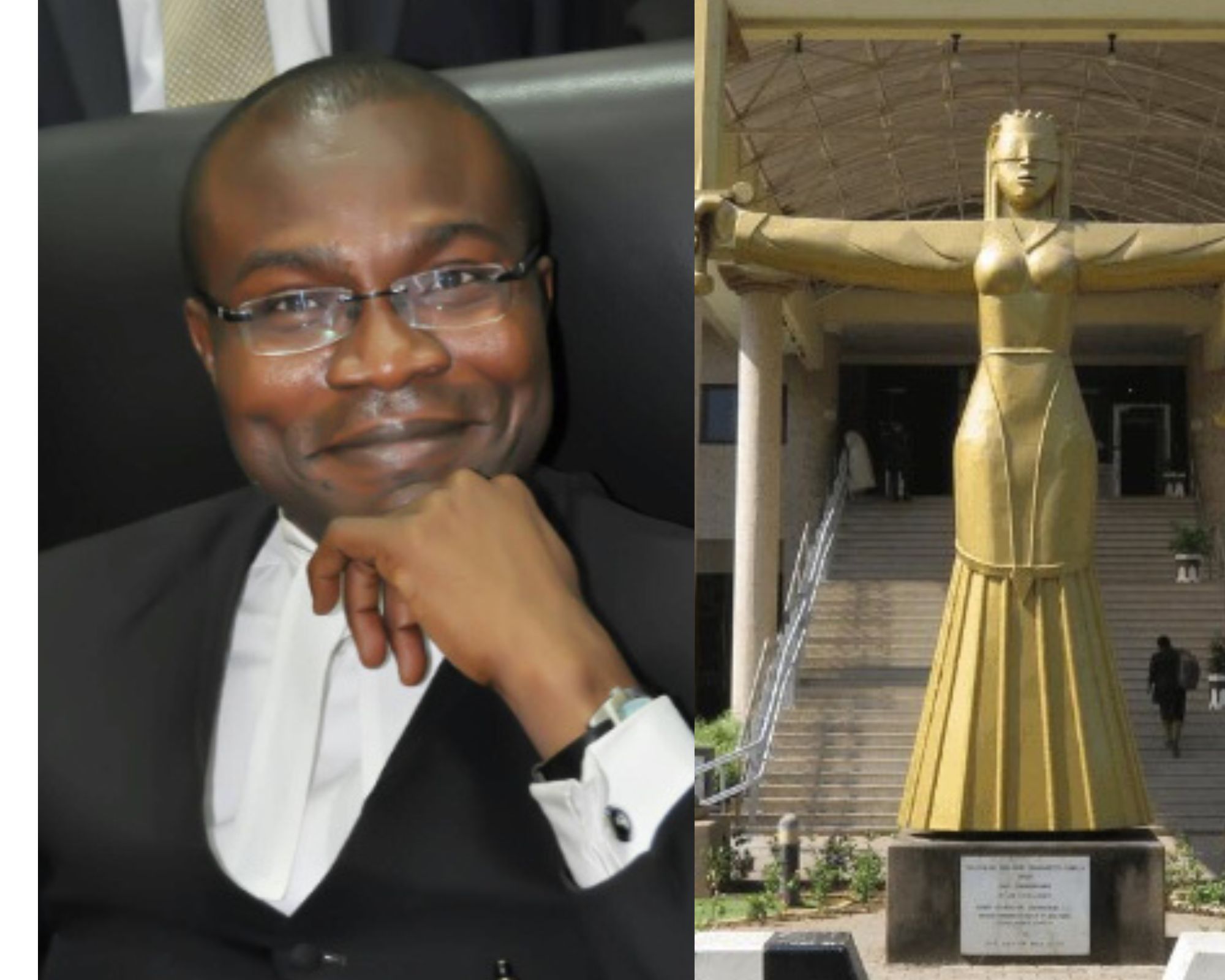
A Federal High Court, Awka, Anambra State on Wednesday held that the Minister for Finance, Budget and National Planning cannot under any circumstance make deductions from the statutory allocation due to a State from the Federation Account.

In a suit filed by the Attorney General of Anambra State against the Minister for Finance, Budget & National Planning and the Attorney General Of The Federation, Hon. Justice Nnamdi Dimgba held that “the Allocation of Revenue (Federation Account Etc) Act clearly stipulates that the portion of funds from the federation account due to States and Local Governments shall be collectively paid to the State who should then manage same for the benefit of their local governments subject to laws made by the State House of Assembly and National Assembly as the case may be.”

The Attorney General of Anambra amongst other reliefs asked the court to hold as follows:

  1. A DECLARATION that upon a proper construction of the provisions of Section 162 of the Constitution of the Federal Republic of Nigeria, 1999 (as amended), read along with Sections 2 (2) and 3 (1) of the said Constitution, the 1st Defendant cannot appropriate any money standing to the credit of the Federation for any purpose, other than, for the purpose of distribution to the three tiers of government, namely; the federal government, state governments and local governments.
  2. A DECLARATION that by virtue of the provisions of Section 162 of the Constitution of the Federal Republic of Nigeria, 1999 (as amended), read along with Sections 2 (2) and 3 (1) of the said Constitution and Sections 1 & 3 of the Allocation of Revenue (Federation Account, Etc) Act, 1982, the 1st Defendant cannot make deductions from the statutory allocation to which the Plaintiff is entitled from the Federation Account for the purpose of crediting the Local Governments of Anambra State through the State Joint Local Government Account.
  3. A DECLARATION that having regard to the provisions of Section 162 of the Constitution of the Federal Republic of Nigeria, 1999 (as amended), read along with Sections 2 (2) and 3 (1) of the said Constitution and Sections 1 & 3 of the Allocation of Revenue (Federation Account, Etc.) Act, 1982, the Defendants cannot, on behalf of the federal government, authorize the direct remittance of any funds to the Local Governments of the Plaintiff from the Federation Account.

 Delivering his verdict, Justice Dimgba held: “In my view, there is no basis for the 1st Defendant to deduct the funds and retain them transitorily; that is, in escrow.  There is even no basis even to remit same directly to the local governments.  Doing so, as I have hinted earlier, would be in clear breach both of the Constitution and of the Allocation of Revenue (Federation Account Etc) Act, none of which made any provision for a direct transfer from the 1st Defendant to local governments of their entitlements from the federation account.

“Section 162 of the Constitution and the Allocation Of Revenue (Federation Account, Etc.) Act, 1982 does not permit any bilateral interaction between the Federal Government represented by the 1st Defendant and LGCs under a State. Section 162(5)(6)(7)(8) of the Constitution make it clear that any amount standing to the credit of LGCs must be allocated to the States who will in turn remit it to the State Joint Local Government Account and distribute them in the terms and manner approved by the National Assembly and State Houses of Assembly. In the event, any direct distribution of funds including refunds from the Federation Account to the LGCs in my view will be an infraction of the Constitution. 

“And as I have held earlier, violation of law by a party is not one that is solved by resort to self-help by another party, or by a countervailing breach of the law by the activist party in a knock-for-knock or tit-for-tat formula.  Violation of law by a party, where police powers have not been provided or granted to another seeking a remediation, can only be solved through judicial intervention initiated by the activist innocent party.”

His Lordship further added that “neither the Constitution in Section 162 nor the Allocation of Revenue (Federation Account Etc) Act gave the 2nd Defendant (Attorney General of the Federation) any role in the allocation or sharing of revenues accruable to any of the tiers of Government in the federation account.  I see no reason therefore why the 2nd Defendant should pick up the cudgel and start fighting for local governments in Anambra State when none of them has invited it to do so, and also when neither the relevant statute nor the Constitution given it any role in the relevant legal field.”

Earlier the defendants had challenged the court’s jurisdiction, contending that the suit constitutes a dispute between the Federation and a State (Anambra) of which the Supreme Court has exclusive original jurisdiction by virtue of Section 232(1) of the Constitution.

While warning against swamping the Supreme Court with every matter that has an agent of the federal government as a party, Justice Dimgba held:

“By virtue of Section 251(1)(r) 1999 CFRN, the Federal Government or any of its agencies can be sued in this Court for a declaration or injunction affecting the validity of any executive or administrative action or decision by the Federal Government or any of its agencies.  And in this case, the Plaintiff is challenging the administrative action or decision of the 1st Defendant (a Minister of the Federal Government in charge of Finance) to deduct from its monthly statutory allocation and either withhold or directly remit same to the Local Government Councils (LGCs) as their share of the Paris Club Refund…

“It certainly cannot be that whenever a State has concerns in relation to the manner in which a federal official such as a minister or a federal agency such as the Economic and Financial Crimes Commission (EFCC) exercises its responsibility that affects that State adversely, then that activates a dispute between the federal government and the state in which only the Supreme Court will have original jurisdiction.  May that day never come in which the apex court gets reduced to a magistrate court entertaining all sorts of sundry original matters simply because a state and federal officials are involved…”

Read the full judgment.

CamScanner-06-23-2023-16.33

Intimate Affairs: Bad boys, soft life, and used girls, By Funke Egbemode

Remember the good old days of Finance Houses in Nigeria? Our young men achieved success overnight. One minute they were marketing officers and the next, they were on the management floor. Those places were real magic places. And you know how young men who come into money early run things. They simply remember their long-gone ancestor, the prodigal son in the Bible. Exactly.

They lived large and spent money like it was going out of fashion. The set-up of the Finance Houses didn’t help matters much either. They paid more attention to glamour than the deposits. Their buildings were chrome and glass. The new rich boys dressed in the best of the season. Or have you forgotten that that was when such expressions as ‘power dresser,’ ‘yuppies’ and ‘upwardly mobile’ joined our lexicon?

Those were the magical days when the streets were full of 26-years old green horns who became treasury managers straight after doing their NYSC year in remote farm settlements.

They drove Daewoo Racer, Daewoo Espero, Hyundai Excel, Sonata .Then, affairs were straight from best sellers, complete with expensive perfumes, chic restaurants, and weekend trips. Husbands performed their God-given roles and wives did their wifely duties. Girls milled around the glamour boys. The boys picked, chose, and discarded as they wanted. Yes, they were spoiled for choice. Shameless desperate uncivilized girls fought over them in public places. But it was fun and dance for the lucky ones. But you know how it is with things that are too good to be true. The Finance Houses soon fizzled out, collapsed like a pack of cards.

Suddenly, the big salaries and posh cars disappeared. Some of the directors of the glass and chrome offices were declared missing or wanted or both.

The fine girls left the fine boyfriends who no longer had enough money to give them. Engagement rings were returned or kept as ‘retirement benefit.’

The search for Mr Right, who dwelled in greener pastures resumed. The home girls were wary. The fast-lane ones worried about how soon the easy life would return when things would return to normal and the days would be lit again.

Their prayers soon got answered as resourceful Nigerian blokes came up with new tricks. There was advance fee fraud (419), armed robbery, Otokoto, and now Yahoo, yahoo plus, and yahoo plus plus.

The bad fast girls were back in business. All that mattered was the posh cars and bright lights. Who cares where the money came from?

With careless, greedy mothers all over the place scheming and swindling, more and more of our girls are today falling into deadly traps and becoming raw materials for diabolical concoction of desperate get-rich-or-die-trying boys. These days, you wake up to one stranger-than-fiction story or the other. A young pretty girl the other day alighted from a cab and stripped herself naked in broad daylight. Another one has been menstruating since she returned from a ‘baecation’ in South Africa with her young ‘Boo’ who has since dumped her.

The flashy guys with no defined business address are back in town and it’s so easy to fall for them. Fortunately, there are signs and characteristics that set apart this breed of men. He is 32 or thereabouts, money makes up for whatever he lacks in looks or dress sense.

He drives G-Wag, Lexus gleaming black, in the mornings and has an array of convertibles for evening swags.

He wears designer wristwatches and shoes. In fact, each fashion item from his head to toe carries mind-blowing price tags. He has all manners of call cards. The reason is he has a chain of businesses ranging from importing condoms to crocodile. There is always a bevy of bleached girls around him as he moves from nightclub to nightclub, mixing all kinds of powdery stuff with alcohol.

The way he spends money tells all his right-thinking neighbours he is either going to go broke soon, die young or end up in jail or all of the above. Unfortunately, the death of one has not diminished the zeal of more to join the evil wagon. Easy life, soft life, soft money have all become the albatross of decency. Bad parenting is making our boys into little demons who seek money in all the wrong ways and wrong places. But I am more worried about how our young women, our precious daughters are getting sucked into the destructive cauldron. For the desire of something as flimsy as bone-straight, double-drawn lace front wig, our girls are being ‘used’ to cook blood money.

To a non-African, that is a strange concept, but here, it is a sad reality.

And to worsen an already deadly trend, the girls these fast boys used no longer have to die ‘after use’. They are allowed to wear their designer wigs and false lashes but they are empty shells, according to a pastor friend. He told me this sad story.

‘One of these bad boys came to my church and gave his life to Christ. His confession was long and terrifying. He told me that most of the beautiful girls we see around have been ‘used’ for money rituals. The boys no longer need to kill them physically. They just do what they need to do on a sacred bed sheet, chant some lines of incantations, for five or seven days, and the fate of the victim is sealed. The victim is quickly dumped by the man once the ritual is complete.

‘They start by wooing the girl with expensive gifts. That is followed by a vacation where her full attention is on the man. According to my new convert, when they return, the guy starts picking quarrels over inconsequential things and then dumps her. The sad thing is even though the girl looks okay to all, she is finished. She is not likely able to have children even when all medical reports say she is fine. She may never be able to hold down a good job or make a success of any business.

‘Indeed some of them may never be able to find husbands because there is already an evil mark dedicating them to someone’s pot of wealth. In other words, many of the girls you see around are empty shells.’

Did that leave you shaken? I was covered in goosebumps when I heard the story. And this is just half of it. Occasionally these days, when I see a fine babe swinging her waist, I ask myself, is she still whole or she has been used? Imagine buying a basket of big snails and finding that they are just healthy brown on the outside but empty shells.

Dear mothers, my dear sisters, and daughters, this ugly trend is heartrending. It’s not a matter we can invite the police into or a case we can prove in court but it is a present palpable evil. The mean glamorous, fun-loving, sleek man doesn’t even look like the mean things he’s capable of but the polished look is only skin-deep, for the discerning, that is. He talks and drives like an Italian.

His money is not inherited or from a long chain of family business. His money is his. Ask yourself how he made so much at age 30. Are his decent parents also dazed at the rate at which their son ‘arrived’ suddenly?

He most likely belongs to many societies and clubs that on the surface look like social associations. But they are cults. He is too far gone to consider leaving. His blood brothers are his lifeline.

He owes them and his life is in danger if he betrays the oath.

Girls who flock around him are taking big risks and if you are involved, you need all the luck you can be wished. This dude may offer you his kind of romance and glamour. He may spoil you with money. But remember he may also be cut down in his prime.

His brains may get spilled all over your bedroom wall in the middle of the night. His offended blood brothers may send goons after him. His cult may ask for your blood for the next sacrifice.

You may end up as accessory after murder. Whichever way you look at it, greedy girls who flock around men of questionable income are not likely to end up well.

Then, what’s the worth of all the glamour dollars and pounds sterling if you can be dead or widowed at age 25 or worse still, end up an empty shell, a walking corpse designed to move from one disappointment and failed venture to another?

▪︎Egbemode ([email protected])

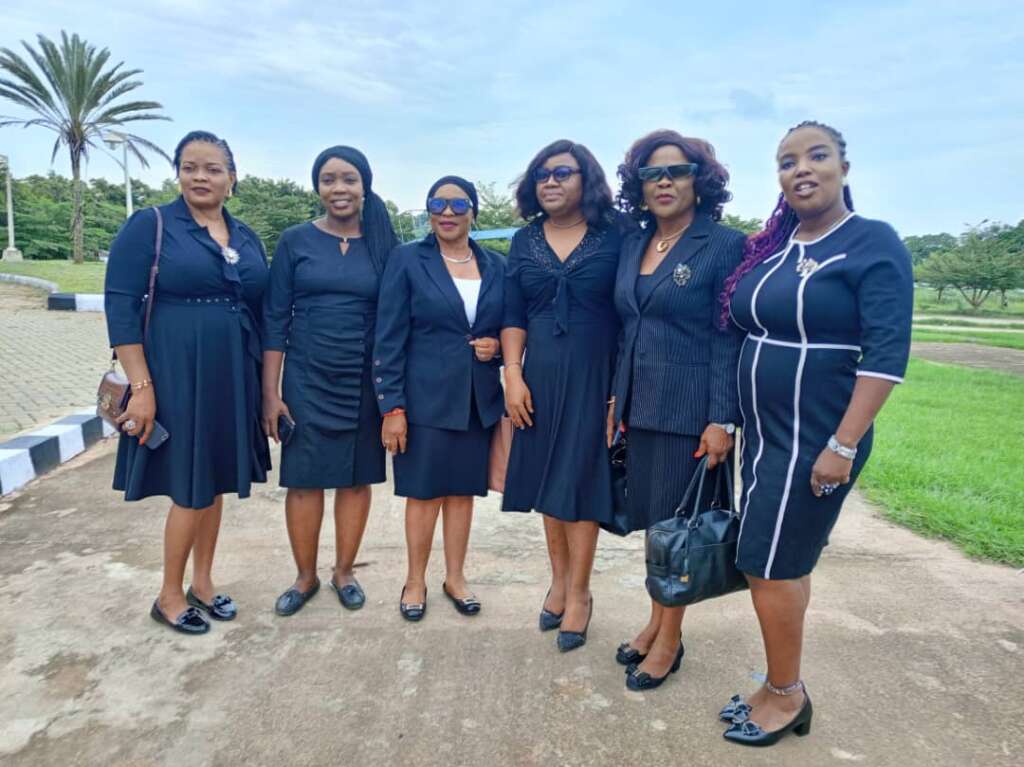
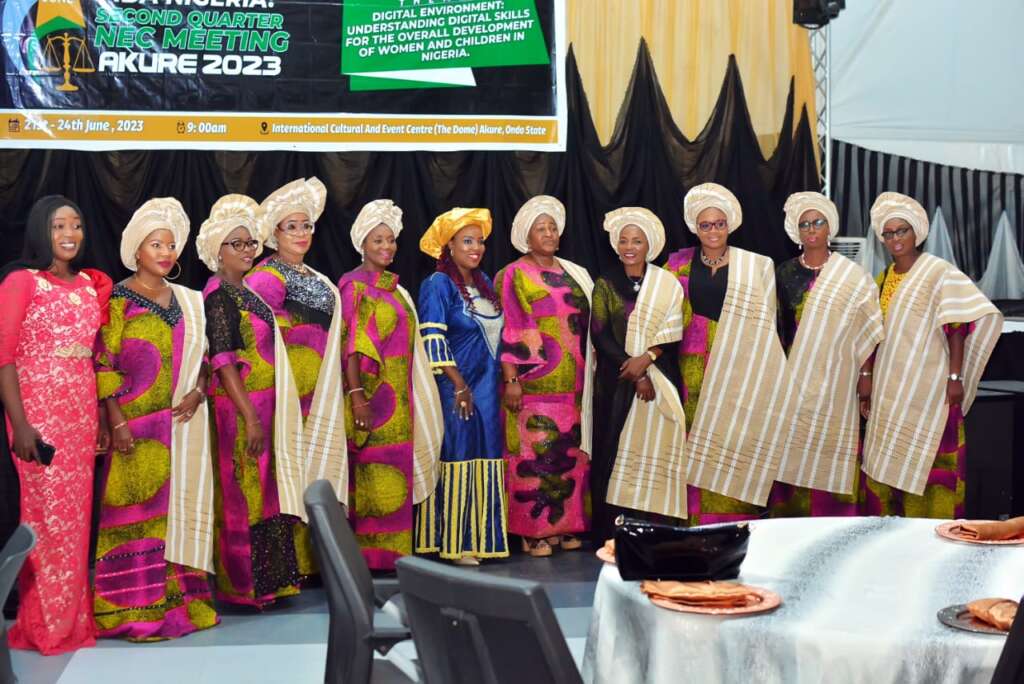
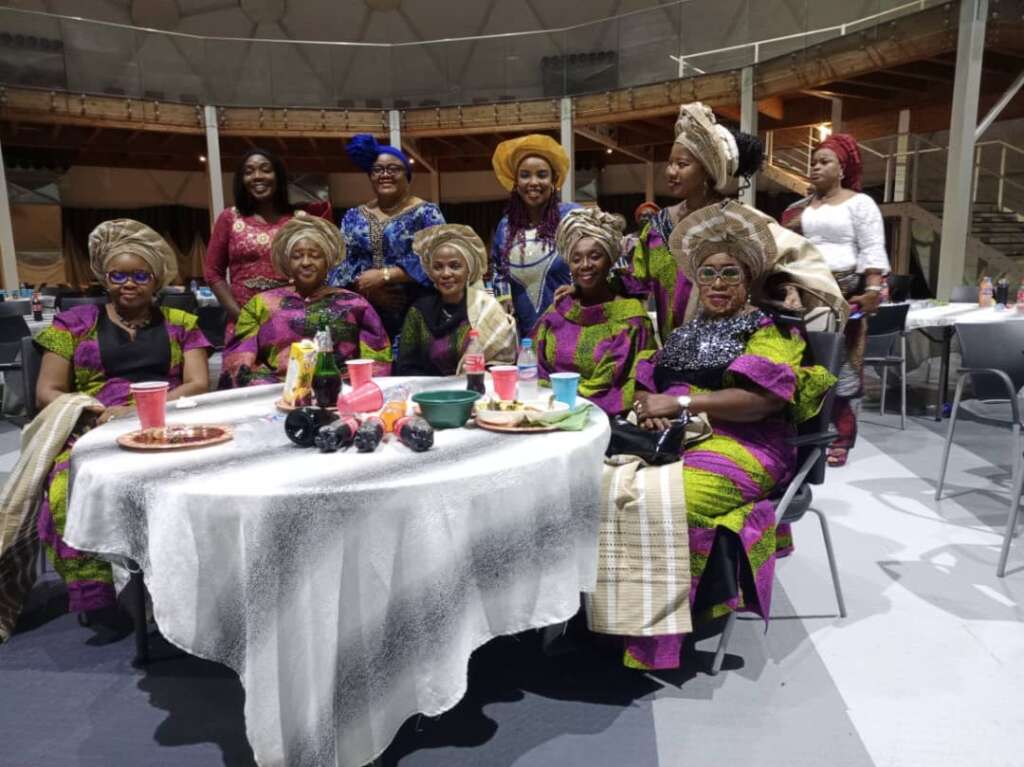
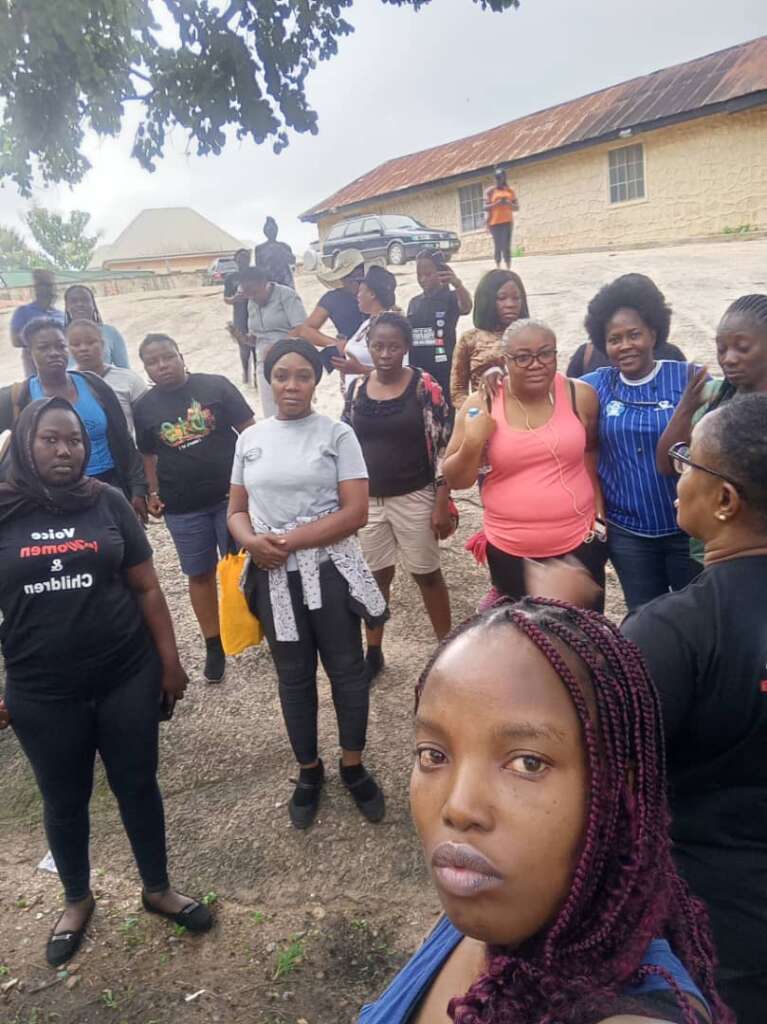
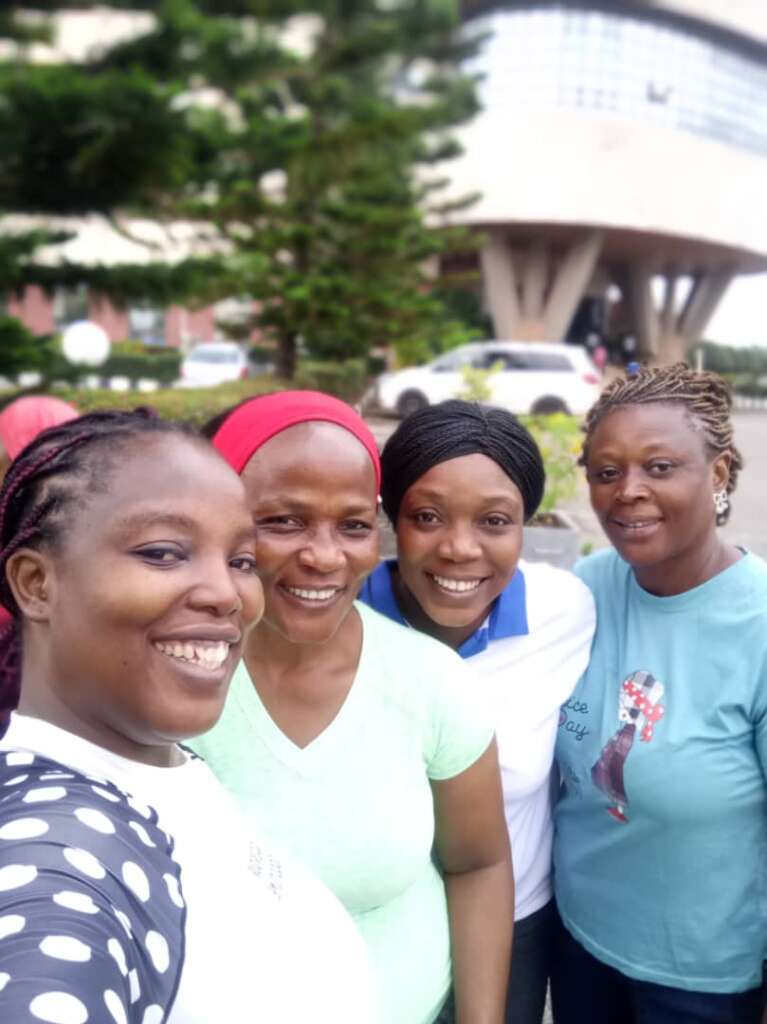
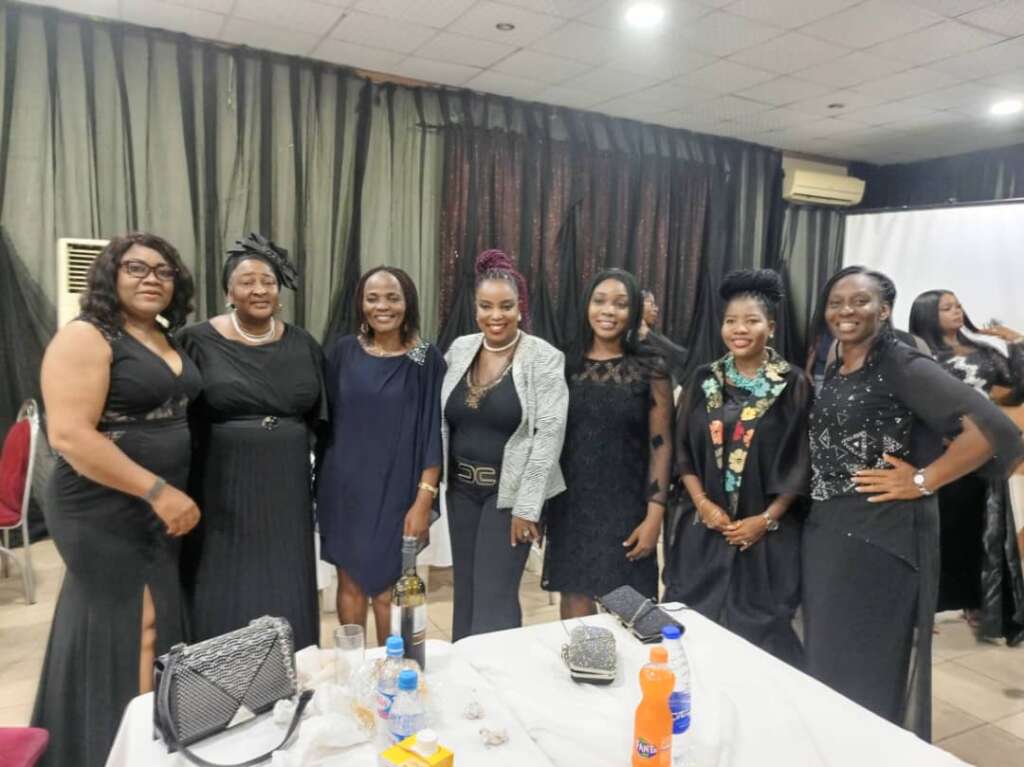
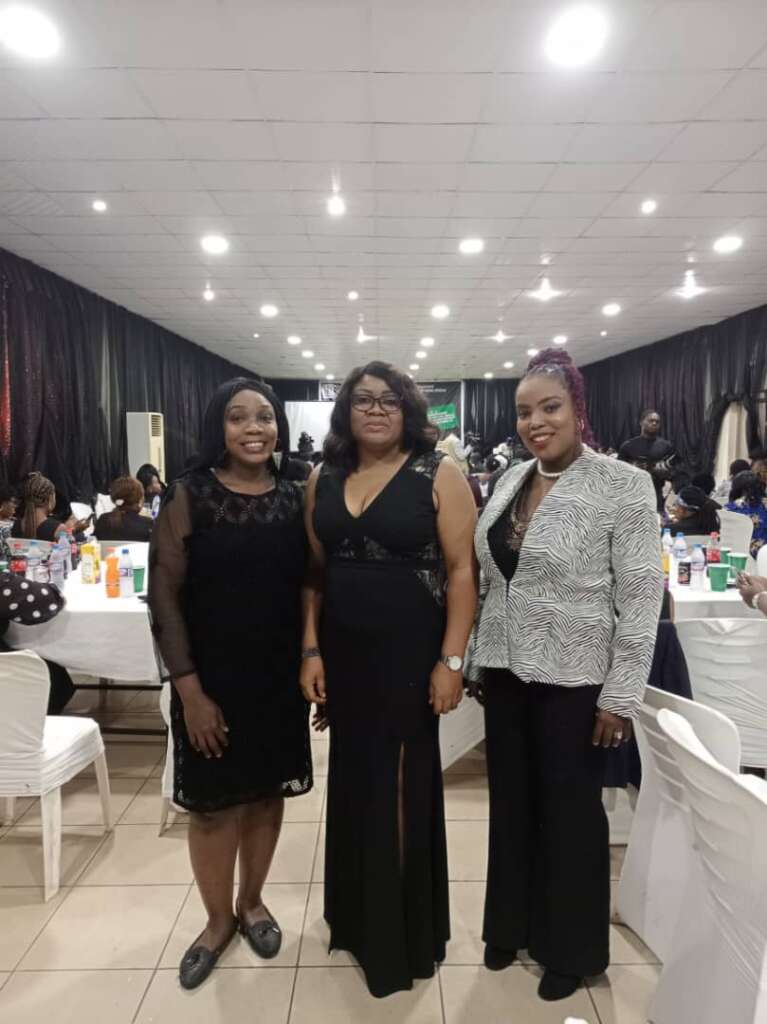
Photo News: FIDAns glo at Akure NEC

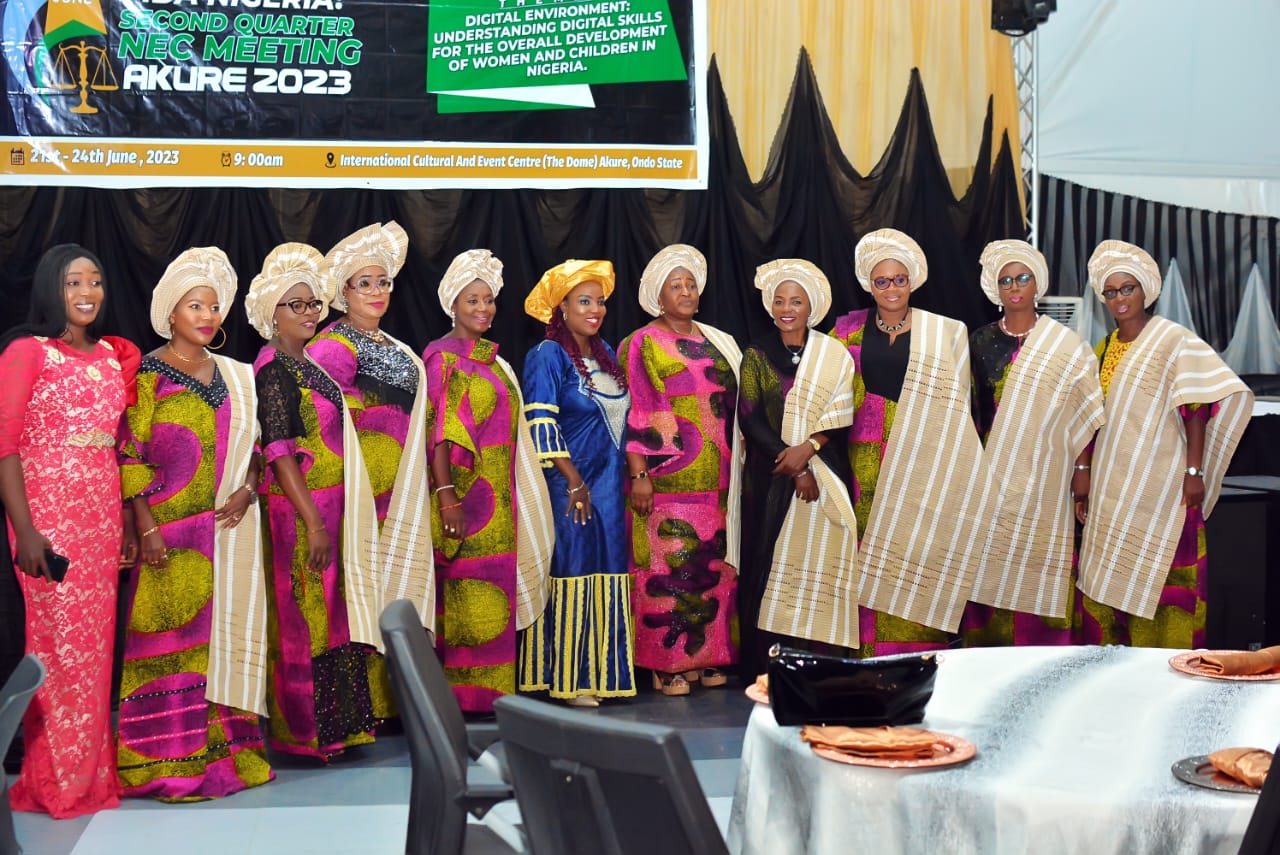
At the just concluded 2nd Quarter National Executive Council (NEC) meeting of the International Federation of Women Lawyers, FIDA Nigeria, at Akure, Ondo State, the ladies found time to unwind and let down their hair.

Aerobics Session on Thursday the 22nd June 2023
The Abuja Chairperson, General Secretary, Welfare Secretary with other FIDANs at the Opening ceremony
The National Executive Committee members with the Branch delegates at the cultural night
The National Executive Committee members with Abuja Branch delegates

Preparation for hiking up Idanre Hill. The Chairperson and other delegates were geared for the 600 steps hike

At the top of the Idanre Hill with some members of the National Executive Committee

FIDA Abuja Chairperson, Chibuzo M. Nwosu, the General Secretary, Mojirayo Ogunlana-Nkanga and the Welfare Secretary, Ifeoluwa Johnson all smiles after surmounting the hurdles to the top of Idanre Hill

The General Secretary also tried the acrobatic jump
The Welfare Secretary showing off her acrobatic skills
FIDA Nigeria Abuja members
The Chairperson, General Secretary and Welfare Secretary at the dinner

NBA Abuja Chair congratulates new SPIDEL EXCO and Council members

Chairman of the Nigerian Bar Association (NBA ) Abuja Branch Afam O. Okeke, Esq. ChMC has expressed his delight over the election of new executive council members of NBA SPIDEL and Council members. Four of the newly elected officials are members of the NBA Abuja branch.

Okeke in a statement made available to Law & Society said:

I heartily congratulate and celebrate the brand-new executive and council members of SPIDEL, particularly members of the NBA Abuja Branch:

  1. Dr. Princess Frank-Chukwuani – Vice Chair

2. Chinedu Obienu – Treasurer

3. Charity Ibezim – Assistant Secretary

4. Chinelo Audrey Ofoegbunam – Council Member

They were elected to be part of the new SPIDEL team. The branch is proud of you all; as good ambassadors of the branch, I expect you to deliver creditably on this new assignment. You can always count on the branch for support. May I, on behalf of the branch officers and members of the branch congratulate you all.

The new SPIDEL TEAM are:
John Aikpokpo Martins, Esq. – Chairman

Dr. Princess Frank-Chukwuani – Vice Chair

Funmi Adeogun – Secretary

Dr. Chinedu Obienu – Treasurer

Abdullahi Koraye- Financial Secretary

Charity Ibezim – Assistant Secretary

Prof Paul Ananaba SAN – Council Member

Kunle Adegoke SAN – Council Member

Dr. Uche Agomoh – Council Member

Kuncle Edun – Council Member

Okey Ohagba – Council Member

Yakubu Bawa – Council Member

Don Ename – Council Member

Igbaku Eguluku – Council Member

Chinelo Audrey Ofoegbunam – Council Member

Sam Ajayi- Council Member

Chisom Onuoha- Council Member

Monday Ubani- Council Member

Aikpokpo-Martins, former NBA 1st VP elected SPIDEL Chair

John Aikpokpo-Martins, the immediate past 1st Vice President of the Nigerian Bar Association (NBA) has been elected Chairman of the Bar’s Section on Public Interest and Development Law (NBA-SPIDEL)

His election on Friday, 23 June alongside five other members of the bar was announced in a report signed by the Chairman, NBA-SPIDEL 2023 Electoral Committee. Mr. Emeka Nwadioke, ESQ.

The other elected officials are:

  1. Princess Frank-Chukwuani – Vice-Chair
  2. Funmi Adeogun – Secretary
  3. Chinedu Obienu – Treasurer
  4. Abdullahi Karaye – Financial Secretary
  5. Charity Ibezim – Assistant Secreta

Here is the full report.

REPORT OF THE NBA-SPIDEL ELECTORAL COMMITTEE 2023

Distinguished Members,

  1. INTRODUCTION
    I am delighted to present this report on behalf of the 2023 Electoral Committee of the Nigerian Bar Association Section on Public Interest and Development Law (NBA-SPIDEL). On behalf of the members of the Committee, I thank NBA-SPIDEL Committee Chairman, Dr. Monday Ubani and the entire members of the NBA-SPIDEL Committee for finding us worthy to deliver this very important task.
  2. THE PROCESS
    The Committee was appointed on Friday, June 16, 2023 and saddled with the arduous task of being the Election Management Body for the election of Officers and Members of the Executive Committee. Members of the Committee included Emeka Nwadioke, Esq. (Chairman), Kola Omotinugbon, Esq. (Secretary), Abdullahi Karaye, Esq., Francis Ogunbowale, Esq. and Charity Ibezim, Esq.

It is noteworthy that two members of the Electoral Committee, namely Abdullahi Karaye, Esq. and Charity Ibezim, Esq. indicated interest to serve the Section as Officers and duly recused themselves from the Electoral Committee.

The Committee immediately swung into action by putting out requisite notices calling for Expressions of Interest and Nominations. The notices were published on NBA-SPIDEL digital platform and also delivered to members via email.

I am glad to report that several members expressed interest to serve the Section by filling out the requisite forms and paying the applicable fees.

  1. SCREENING EXERCISE
    It is noteworthy that at the end of the screening exercise, the candidates emerged successful, having been deemed as fit and proper persons to fill the vacancies.

Article XIV (a) of “THE NIGERIAN BAR ASSOCIATION UNIFORM BYE-LAWS FOR SECTIONS” AS CONTAINED IN PART II OF THE THIRD SCHEDULE TO THE NIGERIAN BAR ASSOCIATION CONSTITUTION 2021 provides that “If, in respect of any of the Officers of the Section: (i) there be no more than one person duly nominated for election to an office, that person nominated shall be deemed to have been duly elected to that office.”

Also, Article XIV (b)(i) of the “THE NIGERIAN BAR ASSOCIATION UNIFORM BYE-LAWS FOR SECTIONS” AS CONTAINED IN PART II OF THE THIRD SCHEDULE TO THE NIGERIAN BAR ASSOCIATION CONSTITUTION 2021 provides that “If, in respect of elected members of the Executive Committee of the Section: the number of persons nominated for election into the Executive Committee of the Section does not exceed the number of vacancies in the Executive Committee of the Section as stipulated in this Bye-Law, those persons shall, on declaration of their names by the Electoral Committee of the Section, be deemed to have been duly elected members of the Executive Committee of the Section.”

Accordingly, and by the combined effect of Article XIV (a)(i) and Article XIV (b)(i) of the “THE NIGERIAN BAR ASSOCIATION UNIFORM BYE-LAWS FOR SECTIONS” AS CONTAINED IN PART II OF THE THIRD SCHEDULE TO THE NIGERIAN BAR ASSOCIATION CONSTITUTION 2021, the following persons are hereby deemed as duly elected jointly and severally as Officers and Members of Committee of the Nigerian Bar Association Section on Public Interest and Development Law:

  1. John Aikpokpo-Martins – Chairman
  2. Princess Frank-Chukwuani – Vice-Chair
  3. Funmi Adeogun – Secretary
  4. Chinedu Obienu – Treasurer
  5. Abdullahi Karaye – Financial Secretary
  6. Charity Ibezim – Assistant Secretary

Members of the Executive Committee
(a) Dr. Monday Ubani
(b) Prof. Paul Ananaba SAN
(c) Kunle Adegoke, SAN
(d) Uju Agomoh, Esq.
(e) Kunle Edun, Esq.
(f) Okey Ohagba, Esq.
(g) Yakubu Bawa, Esq.
(h) Dorncklaimz Enamhe, Esq.
(i) Igbeaku Evulukwu
(j) Chinelo Ofoegbunam, Esq.
(k) Sam Ajayi Jaiye, Esq.
(l) Chisom Onuoha, Esq.

I urge the incoming administration to take the earliest opportunity to appoint Zonal Representatives for the Section as provided for in Article VIII of the “THE NIGERIAN BAR ASSOCIATION UNIFORM BYE-LAWS FOR SECTIONS,” and in order to assist the regime in delivering on its all-important mandate of safeguarding the public interest.

  1. RECOMMENDATIONS
    The electioneering process has been arduous due to the very short time within which the Committee had to deliver on the task. It is recommended that the Electoral Committee is set up in good time to ensure that the Committee has adequate time to deliver on its mandate.

For the Section to deepen its democratic process, it is also strongly recommended that the Section embraces electronic voting or at the very least, voting via email. This will enable all NBA-SPIDEL financial members (and not only those who attend the Annual Conference or the Biennial General Meeting in-person) to be a part of the voting process.

  1. CONCLUSION
    We again thank the NBA-SPIDEL leadership for finding us worthy to deliver this crucial task. We are glad that the process has thrown up a stellar cast of leading lawyers who are deeply committed to the public interest.

I especially thank members of the Electoral Committee who made uncommon sacrifices to ensure the success of the elections.

Given the unprecedented rebirth of NBA-SPIDEL following the foresighted appointment of renowned Prof. Paul Ananaba SAN as Council Chairman and the fact that Dr. Monday Ubani and his entire team have taken the Section a notch higher, I am confident that the incoming leadership under the fiery former 1st Vice President of the Nigerian Bar Association, Mr. John Aikpokpo-Martins will leave indelible footprints in the sands of time through teamwork, effective deployment of committees and consistent pursuit of public interest.

Thank you.

EMEKA NWADIOKE, ESQ.
Chairman
NBA-SPIDEL 2023 ELECTORAL COMMITTEE

TIPS