Home Blog Page 764

Rasputin, Putin and Prigozhin: Nexus, rise, fall and transition (1)

By Tiko Okoye

The common thread that connects the lives of Grigori Rasputin, Vladimir Putin and Yevgeny Prigozhin is tied to the city where they became transformed from erstwhile local champions to icons with breath-taking national and international name recognition: St. Petersburg. But let me first narrate a crucial part of Russian history that might explain why the empire-building Putin is so fixated on Ukraine.

Kiev, aka Kyiv, an ancient city on the bank of the resplendent Dnieper River, aka Dnipro River, and capital of modern-day Ukraine, was the first of three Russian capitals at a time the nation – founded on 882 – was known as Kievan Rus. Christianity is said to have been introduced into the East Slavic state of Kievan Rus with the baptism of the Rus’ Grand Prince of Kiev, Vladimir the Great, by Greek missionaries from Byzantium more than 2,000 years ago in the 9th century.

Nobody can therefore gainsay claims that Kiev is a sacred place for all Orthodox Christians in Russia and Ukraine, more significantly underscoring the fact that the Eastern Orthodox Church, of which the Russian Orthodoxy became a dominant orientation, took roots here in 988. Kiev is home to the St. Sophia CathedraI – an imposing 13-domed architectural masterpiece, one of the chef-d’oeuvres of world culture and is a UNESCO World Heritage Site – was built in 1037. The city also houses the Lievo-Pecherska Lavra (monastery) – a majestic edifice and National Historical Architectural Preserve, with architectural ensemble of 11-19th centuries – considered sacred to the Orthodoxy.

The foregoing explain why Putin was very keen on procuring the green light of the Primate of the Russian Orthodox Church – also known as the Patriarch of Moscow and all Rus (including Ukraine and other post-Soviet states and Russian diaspora), Patriarch Kirill, prior to commencing blistering raids of the city and other targets in Ukraine.

That Ukraine was part and parcel of Tsarist Russia explains why so many people, especially in Africa, who equally recognize Israel’s claims on Palestinian lands as a divine mandate, boisterously support Russia’s invasion of Ukraine. But members of this school of thought forget that it was only after the East Slavic state of Kievan Rus disintegrated in 1263 that a large chunk called the Grand Duchy of Moscow grew to become the Tsardom of Russia, and the rest has become history.

Apart from confronting the knotty Catch-22 puzzle of who first ‘owned’ who, it must also not be forgotten that Russia and Ukraine were equally occupied and ruled for over 600 years by invading Austrians, Polish-Lithuanian confederates, Mongols, Serbians and Ottoman Turks who equally built several key cities, such as Rostov-on-Don, and many more. Does this, therefore, confer on them the unquestionable right to invade and plunder these places at will?

Besides, just as the census conducted about 10 years ago indicate that 17.3% of the indigenes of Ukraine – mainly in eastern and southern regions – are Russian-speaking, a census conducted about the same time in Russia indicated that a whopping 28.3% of the Russian population are actually non-Russians. What now? Should other nations invade parts of Russia to bring their peoples under one national flag and country?    

St. Petersburg, Russia’s cultural centre and second-largest city, is an ancient city built on the bank of the river Neva – renamed Leningrad in honour of the founding father of Socialist Russia, Vladimir Lenin, for 70 years prior to reverting to its old name in 1991. It is imperial Russia’s second capital and was founded by the rebel Tsar Peter the Great. Russian tsars resided here prior to the relocation to Moscow.

Rasputin was a Siberian-born peasant who found fame in St. Petersburg by making himself indispensable to Tsar Nicholas II and Queen consort Alexandria in the treatment of their only son, Alexei, afflicted with haemophilia. A group of conservative noblemen opposed to his influence over the imperial family subsequently assassinated him, precipitating the overthrow of the House of Romanov during WWII, the nunc dimitis of imperial Russia and the ascendancy of the Bolsheviks.

Putin – is this ponderously an abridged form of Rasputin? – was born and bred in St. Petersburg. After enlisting in the KGB and serving in various theatres, such as New Zealand where authorities claim he worked undercover as a Bata shoe salesman in central Wellington, Putin became Station Manager of the KGB and its successor organisation, the Federal Security Service, FSB, prior to relocating to Moscow to join the administration of then-President Boris Yeltsin. Starting as the national director of the FSB, he rapidly moved through the ranks to being appointed prime minister by Yeltsin.

After the resignation of the latter, Putin was named acting President prior to being elected to his first term as substantive president. The fourth term he is now serving is a consequence of controversial constitutional amendments he signed that can extend his presidency to 2036. He is currently the longest-serving Russian president and second longest-serving president in Europe after his soulmate and whimpering lapdog, Alexander Lukashenko of neighbouring Belarus.        

Prigozhin was a nondescript seller of hot dog on the streets of St. Petersburg, until he saved enough money to open his first restaurant, and more restaurants thereafter. On one opportune day Putin – while serving as the KGB station manager in the city precincts – ate at one of Prigozhin’s restaurants, and it became the latter’s first giant leap on the road to fame and fortune.

It was love at first taste for Putin! As soon as he settled down in Moscow he requested Prigozhin to join him as his personal chef and he soon became known and addressed as “Putin’s chef.” But this wasn’t all. His closeness to Putin soon gifted Prigozhin the highly lucrative contract of being sole supplier of food to the Kremlin and Russian military formations.

His high-intensity involvement with the military might have enabled him to envision gaps in the international security architecture that could best be filled by a formidable mercenary military organisation, and Wagner was born, pronto! The highly commendable efforts made by Wagner to extend Russia’s influence and power across the globe shortly earned Prigozhin the highest honour of a grateful nation: Hero of Russia. His troops proved themselves to be men of valour in the fight for Bakhmut in southern Ukraine. It was the only Russian military outfit to gain territory at a time the regular Russian troops were being humiliated and chased out of the territory they previously held in eastern Ukraine.

It soon became a case of “Shoigu (long-serving Minister of Defence, Sergei) and Russian generals have killed their thousands and Prigozhin his ten thousands!” From this point onwards, there was increasingly no love lost between him and the military hierarchy. Prigozhin went on to launch an increasingly bitter diatribe against the military chiefs that didn’t augur well for unity and singleness of purpose in the war effort.

Unfortunately, Putin, who could’ve nipped the snowballing animus in the bud, took a sanguine view of the problems, believing that Prigozhin’s invectives would push the military top guns to put up a better effort in prosecuting the ‘special military operation.’ But the brickbats ultimately reached a point when the falcon could no longer hear the falconer and the centre could no longer hold, as Prigozhin withdrew his troops from Bakhmut while bitterly accusing regular Russian troops of deliberately launching a rocket attack that killed scores of his followers.

Within the hour, Wagner entered and occupied key military sites in Rostov-on-Don without firing a single shot! Were Ukraine to recapture Rostov, it won’t only mark the end of the city’s usefulness as a critical command and logistics hub for the Russian army, but it would equally set up Crimea as a plum target just waiting to be plucked. Why and how?

  • The concluding Part 2 would answer the questions of Why? and How? and further crucial and topical matters attendant and arising. Don’t miss it! 

White Florida woman who shot Nigerian-born neighbor won’t face murder charge

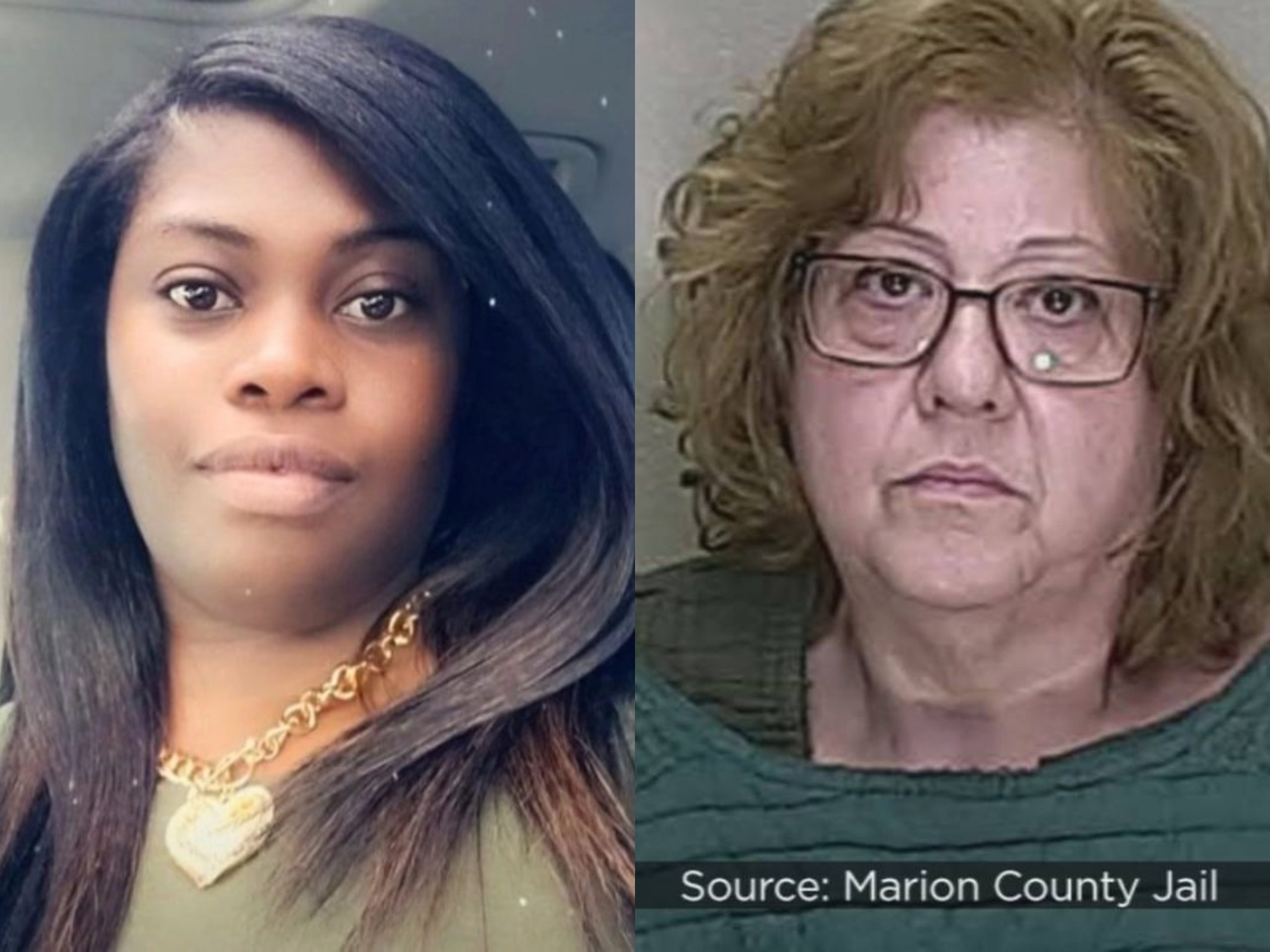
The State Attorney of Florida, William Gladson has announced that the state will not pursue murder charges against a White woman accused of fatally shooting her Nigerian-born Black neighbor through a door.

Rather, Susan Lorincz has been charged with manslaughter with a firearm and assault in the June 2 shooting death of Ajike Owens.

State Attorney Gladson on Monday said his office determined there was insufficient evidence to file a murder charge against Lorincz. Charging Lorincz with murder would require prosecutors to provide evidence of hatred, spite, ill will or evil intent toward the victim at the time of the killing.

“As deplorable as the defendant’s actions were in this case, there is insufficient evidence to prove this specific and required element of second degree murder,” Gladson said. “As is always true in criminal cases, failure to prove beyond a reasonable doubt even one element of a crime will result in a not guilty verdict. Given the facts in this case, aiming a firearm at the door, and pulling the trigger is legally insufficient to prove depraved mind.”

The Marion County Sheriff’s Office had also charged Lorincz with culpable negligence and battery, but Gladson’s office is not pursuing those charges based on testimony from witnesses in the case.

Gladson said he would not be pushed to file charges based on community pressure or public sentiment.

“Simply stated, my obligation is to follow the law. Understandably, emotions run high, particularly with senseless, violent crimes. However, I cannot allow any decision to be influenced by public sentiment, angry phone calls or further threats of violence, as I have received in this case,” he said. “To allow that to happen would also be improper and a violation of my oath as a prosecutor and as a lawyer.”

Lorincz faces up to 30 years in prison if convicted.

After Lorincz’s June 9 bond hearing, Anthony Thomas, an Owens’ family attorney, formally requested that the heaviest charge be upgraded from manslaughter to second-degree murder. He said he was deeply disappointed Gladson was nor pursuing murder charges.

“All the evidence unequivocally supports the elevation of this charge to second-degree murder,” Thomas said. “We firmly believe that justice demands nothing less. The failure of the prosecutor to charge Susan with what truly reflected her wanton, reckless behavior undermines our ability to even get real accountability. Nevertheless, our resolve remains unwavering, and we will continue to fight.”

Pamela Dias, Owens’ mother, said she didn’t know how to explain the charges to her grandchildren. “Only a living breathing AJ would be true justice, and today’s charge could not be further from that,” she said.

Many in the community quickly called for the suspect’s arrest after the shooting. Officers waited several days before arresting Lorincz as they worked to determine what role the state’s “stand your ground” laws might play in the shooting. Under Florida’s “stand your ground” law, enacted in 2005, people can use deadly force if they feel their lives are in danger.

Sheriff Billy Woods said the shooting was the culmination of a 2-and-a-half-year feud between the neighbors. Lorincz had been angry over Owens’ children playing in a field close to her apartment.

The alleged shooter told detectives that she called the victim’s children racist slurs in the months leading up to the slaying, admitting that she used “the n-word.”

Civil rights attorney Ben Crump, who is one of the lawyers representing Owens’ family, had called on the state attorney’s office to “zealously prosecute” the shooter. “This is not a difficult case,” Crump previously said.

CBS News

New Speaker House of Reps appoints 34 aides

As conversations continue the centre around reducing cost of governance and starving the poor to subsidize the rich, the new Speaker of the House of Representatives has appointed 34 aides.

A press statement from the Office of the Speaker, House of Representatives dated
June 26, 2023, reads:

FRESH APPOINTMENTS IN THE OFFICE OF THE SPEAKER, HOUSE OF REPRESENTATIVES

1. ENGR. JAMIL AHMED MUHAMMED – DEP. CHIEF OF STAFF – ADMINISTRATION

2. DR. DUNKWU CHAMBERLAIN – DEP. CHIEF OF STAFF – LEGISLATIVE

3. HON. AHMED DAYYABU SAFANA – SPECIAL ADVISER, SPECIAL DUTIES

4. DR. HAMISU IBRAHIM KUBAU – SPECIAL ADVISER, POLITICAL MATTERS

5. BARR. SAMUEL AJAYI – SPECIAL ASSISTANT, LEGAL MATTERS

6. BARR. OSAZEE MELODY OGUNDIJIE – SPECIAL ASSISTANT, LEGISLATIVE MATTERS

7. BARR. AMINU RAMALAN – SPECIAL ASSISTANT, FINANCE

8. AMB. IBRAHIM HAMIDU GUSAU – SPECIAL ASSISTANT, INTERNATIONAL AND INTERPARLIAMENTARY AFFAIRS

9. LAMIR UMAR IBRAHIM – SPECIAL ASSISTANT, YOUTH MATTERS

10. YETUNDE ADENIJI – SPECIAL – ASSISTANT, WOMEN AFFAIRS

11. HON. RAPHAEL NNANA IGBOKWE – SPECIAL ASSISTANT, INTERGOVERNMENTAL AFFAIRS

12. ZAKARI ALIYU – PRINCIPAL PRIVATE SECRETARY

13. LEKE BAYEIWU – CHIEF PRESS SECRETARY

14. NURA ADAMU – SPECIAL ASSISTANT, BROADCAST MEDIA

15. AHMED BABA MUSA – SPECIAL ASSISTANT, PRINT MEDIA

16. OLABAMIJI ENITAN JOWOSIMI – SPECIAL ASSISTANT, NEW MEDIA

17. ALIYU GARBA WAZIRI – SPECIAL ASSISTANT, EXECUTIVE RELATIONS AND JOB CREATION

18. MOHAMMED SALAME – SPECIAL ASSISTANT, INFORMATION AND COMMUNICATION TECHNOLOGY – ICT

19. HON. FRIDAY ITULAH – SPECIAL ASSISTANT, POLITICAL MATTERS (SOUTH SOUTH)

20. HON. GODFREY GAIYA – SPECIAL ASSISTANT, POLITICAL MATTERS (NORTH WEST)

21. HANMATION MARK TERSOO – SPECIAL ASSISTANT, POLITICAL MATTERS (NORTH CENTRAL)

22. HON. ZAKARI GALADIMA – SPECIAL ASSISTANT, POLITICAL MATTERS (NORTH EAST)

23. ABDULSALAM BABAKAYODE – SPECIAL ASSISTANT, POLITICAL MATTERS (SOUTH WEST)

24. HON. OKWUDILI CHRISTOPHER EZENWANKWO – SPECIAL ASSISTANT, POLITICAL MATTERS (SOUTH EAST)

25. HON. ABDULLAHI SA’AD ABDULKADIR – SPECIAL ASSISTANT, SUSTAINABLE DEVELOPMENT GOALS (SDGs)

26. LAWAL SHEHU ALIYU – SENIOR LEGISLATIVE AIDE – NEW MEDIA 1

27. MARY ANN UJU ONYEJIMBE – SENIOR LEGISLATIVE AIDE

28. NURA MUSTAPHA – SENIOR LEGISLATIVE AIDE

29. YAHAYA AMINU PATE – SENIOR LEGISLATIVE AIDE – (PERSONAL ASSISTANT)

30. AUWAL USMAN KOMBANI – SENIOR LEGISLATIVE AIDE – NEW MEDIA II

31. VICTOR NGUN – SENIOR LEGISLATIVE AIDE, VISUAL COMMUNICATION

32. ANDREW FABIAN – SENIOR LEGISLATIVE AIDE – PHOTOGRAPHY

33. DAVID ADEBAYO DOLAPO – SENIOR LEGISLATIVE AIDE – OFFICIAL VIDEOGRAPHER

Signed
Musa Abdullahi Krishi, Special Adviser on Media and Publicity to the Speaker, House of Representatives, Federal Republic of Nigeria.

The Speaker had earlier appointed Olanrewaju Smarth as his Chief of Staff. Smarth was the Chief of Staff to the immediate past Speaker, Rt. Hon. Femi Gbajabiamila who is currently Chief of Staff to President Bola Ahmed Tinubu. This brings the number of his aides to 34 at the moment.

About Speaker Tajudeen Abbas:

  1. He was born on October 1, 1963, in Kaduna State.
  2. He is a prince with the traditional title of the Iyan Zazzau in the Zazzau Emirate.
  3. Obtained both Bachelor’s and Master’s degrees in Business Administration from Ahmadu Bello University, Zaria, Kaduna, in 1988 and 1993 respectively.
  4. Completed a doctorate degree in business management at the Usman Danfodio University, Sokoto in 2010.
  5. He was a lecturer at the Kaduna State University (KASU) between 1993 to 2001.
  6. Worked as a Marketing Manager at the Nigerian Tobacco Distribution Company, now the British-American Tobacco Company from 2001 to 2005
  7. Joined politics in 2010 and contested for the House of Representatives seat in 2011 and won.
  8. Sponsored the highest number of bills in the 8th Assembly between 2015 and 2019 and also sponsored record-breaking 74 bills out of which 21 were signed into law between 2019 to 2023.
  9. He had served in more than seven committees in the House since 2015 including Commerce, Finance, Special Duties, Defence, Public Procurement, and National Planning and Economic Development Committee.
  10. Until his emergence as the Speaker, Abbas was the House Committee Chairman for Land Transport.

Starving the poor to subsidize the rich

By Daniel Onwukwe

The pay and perks of political officeholders in the country are back in the spotlight. This time, more damning and sickening. It’s raising dark clouds as ever. Right now, the Revenue Mobilization, Allocation, and Fiscal Commission, is behind the astonishing, wicked, and mindless proposal. Behind the veil, lies a tangle web of conspiracy. It amounts to high level of insensitivity to the current economic crunch and the harrowing plight of poor Nigerians who are already pushed against the wall due to previous government’s flip-flop policies. If the pay raise proposed by RMAFC is not a conspiracy of sort between it and the rampaging political elite, nothing comes closer to the harsh truth.                                                                    

Take, for instance, in 2020, when the financial health of the country was better than it’s now, RMAFC had recommended a downward review of salaries and allowances of political office holders and their aides, including that of the President, vice President, state governors and lawmakers. What has changed now? Is the economy better now than three years ago? Is the life and livelihoods of Nigerians better now than three years ago? Although the presidency has denied that the proposed increment in the emoluments of political office holders did not get presidential approval, don’t be deceived, the presidency is just testing the waters to feel public reaction. And the public reaction is unambiguously clear: this pay raise cannot stand. Let’s unpack the package as proposed by the commission. RMAFC has recommended a hefty pay rise of 114 percent in the basic salaries for political and judicial officials in the country. If the proposal is approved, this is what it entails: the review will increase the president’s monthly emolument from  N3.515 million to N8 million.  That of the vice President, governors and lawmakers will increase astronomically. According to reports, 20 of the president’s Special Advisers will gulp about N1.126 BN in four years.  Currently, a federal lawmakers  reportedly  earns over  N2 million monthly, excluding allowances. If the proposed review is approved, a federal lawmakers may have a monthly running costs in excess of N15 million, according to those familiar with the salaries and allowances of our lawmakers at the National Assembly.            

This will take the cost of governance in Nigeria to unprecedented heights. This is a situation that the International Monetary Fund (IMF) foresaw way back in 2015, and advised the federal government to stop, describing the cost of governance in Nigeria as “financial recklessness”. The Buhari government ignored the advice and has put the country in a big financial hole with unparalleled debt burden of N82 trn, the highest in the nation’s history. Let’s be clear on the issue of emoluments of political office holders and judicial officers. Section 84(1-3)  gives RMAFC the mandate to determine the remuneration, salaries, and allowances to be paid to political and judicial officials as may be prescribed by the National Assembly. Section 84 (2) says such renumeration, salaries and allowances “shall be a charge upon the Consolidated Revenue Fund of the Federation”. The commission also claimed that it arrived at its decision based on the provision of paragraph 32(d) of Part 1 of the Third Schedule of the 1999 Constitution( as amended)                                                           

The dust in the present proposal by RMAFC was raised by the commission’s Chairman Muhammadu Shehu, represented by  Hajia Rakiya Tanko Ayuba, last Tuesday during the presentation of the review of remuneration package for political and judicial officers. The commission said its recommendation was in “line with rules of equity and fairness, risk and responsibility, national order of precedence”, among other considerations. The commission further said that it considered the “consumer price index of some selected basket of commodities that have collectively grown by an average of 371 percent from 2008 to 2022”.  This is one law for some, another one for others, a different market for political leaders, and another one for the rest of Nigerians. Where is the equity and fairness that RMAFC is talking about? Is that why the federal and state governments and the National Assembly have not seen any ‘equity and fairness’  to increase the workers’ minimum wage for workers? Even though the organised Labour in the country seems almost dead now, but whatever breath that is still left in it, the proposed increment in the emoluments of political office holders should serve as a template for its ongoing negotiation with government on a new minimum wage after the removal of fuel subsidy by President Bola Tinubu, last month.                                 

The Federal Government says it has made an offer to cushion the effects of subsidy removal on income with an estimated spending pegged at N702 million. The harsh truth is that the emolument of public officials in Nigeria ranks among the highest in the world, and the highest in Africa. Yet, Nigeria is home to 133 million ‘multidimensionally poor people ‘, according to data from the National Bureau of Statistics (NBS). Any keen observer of our politics will have noticed that our politicians are the greatest enemies of the people they claim to serve. That is why, today, the citizens find it difficult to trust politicians. They also have come to believe that the legal and political systems favour only the wealthy and powerful. The complexity of ambition and the role that the greater good can play in the making of a good leader is fast disappearing.  Don’t be deceived by the initial ‘gra gra’ of ‘Baba too fast’, the accolades which Tinubu’s is currently tagged.

He’s taking his time until the conclusion of the petitions against his election before his real persona unfolds. Mark my words,  Nigeria is at a critical juncture now. It’s ‘my way- or the highway’. That’s how some leaders begin. Our political history, especially in this dispensation, does not give any crumbs for comfort. As far as the RMAFC proposal is concerned, the lawmakers will have their way, and the presidency may pretend it’s on the side of the people. It’s all political deceit. For example, in 2020, didn’t the NASS have its way when it budgeted a hefty N37bn for renovation despite public outcry during the pandemic? In the same year, didn’t the presidency spend N3.3bn on travel alone, and a princely N150bn on entertainment?                                                 

What happened to the Presidential Committee that was set up in 2020 to review the salaries and allowances of political office holders? Available data shows that between 2014 and 2018, the 36 state governments budgeted N14trn for salaries, allowances and overheads of political office holders and their aides. Last week, I argued in this column that the Tinubu presidency should be careful not to lose the trust of those who voted for him. I cautioned that a catastrophic implosion might be in the offing after the removal of fuel subsidy. I advised that the administration should seek solution providers in addressing the challenges facing the country, or we may be up with the ‘Rohoboam treatment’.    

Recall how Rohoboam, King Solomon’s son ill-advisedly adopted harsh economic policies that divided Israel down the middle, into different kingdoms. The Bible says Rohoboam took the advice of the ‘elders’, that was in conflict with the wishes of the people. His infamous quote: “My father made your yoke heavy, I will make it heavier. My father scourged you with whips, I will scourge you with scorpions”(1Kings 12:14). I don’t want to believe this government wants to unleash more hardships than the ordinary Nigerians have already. But it appears that’s the easy road the government may be headed.                                                              

The imminent 40 percent increase in electricity tariff, effective, July 1, could just be the horse whips and scorpions put together. ‘Suffer today, enjoy tomorrow’, is a metaphor that has lost its logic and reason, either now or in the near future. Governance is a human enterprise, and the welfare and security of the people should take precedence over everything else. We heard the promise of the First Lady, Remi Tinubu, on the altar of  Aso Rock Chapel few weeks ago. She said, ‘I promise you on this altar that my family does not need Nigeria’s wealth to survive. Nigeria’s wealth is the commonwealth of all’. Nigerians are groaning. The suffering is too much. They are watching. The President should strike the right balance. He should look beyond the present, transient cheering and clapping.

Will Falana’s low-hanging fruits interest Tinubu?

By Bola Bolawole

[email protected] 0807 552 5533

The allegations – or do we call them the road to prosperity – that human rights activist and legal luminary, Comrade Femi Falana, has forcefully pushed into the public domain in the past one or two weeks are too weighty to be ignored by the Bola Ahmed Tinubu administration. It is like you have a problem and someone says not just that “I have a solution” but “this is the solution!” You either try his solution or tell us why his touted solution is not the solution. Falana’s argument is that subsidy should first be withdrawn from the rich; that if and when this is done, there will be more than enough funds in the kitty to fund government activities and there would be no need to inflict more pain on the long-suffering Nigerian masses who are the ones always being called upon to tighten their belt.

Falana also posits that there is so much corruption and wastages allowed the rich and powerful; that if the leakages in the system are plugged and the low-hanging fruits, which he enumerated, are brought into the basket by the government with little or no effort – except the political will and honesty of purpose to act against the concerned members of the ruling class – then, there will be no need to multiply the misery and sorrow of hapless Nigerians. There is no denying the fact that Tinubu’s “medicine” in his first few weeks in office has monumentally increased the suffering of the mass of our people – and we are still counting!. Whether or not this is desirable in the short run as some have argued is beside the point. Are there alternatives to the excruciating pain in the land? Falana says there are! Let’s listen to him! If someone says he knows the road to our collective prosperity, we should follow in his footsteps unless someone can prove to us that his road is no road or that there is a better, faster and pothole-free road to our collective prosperity as a country.

Titled “THE REAL SUBSIDIES ARE NOT FOR THE POOR BUT FOR THE RICH”, Falana listed 22 items to justify his argument that the government has ignored low-hanging fruits to gratify the rich while inflicting avoidable hardship on the poor. Hear him:

“Globally, subsidies, whether for food, transportation, energy or housing, are part of good governance. So, the issue is not subsidies but who benefits from them. In Nigeria, subsidies are primarily of the rich, by the rich and for the rich. I will highlight a few, how they are being manipulated and how huge sums of money can be recovered not just to subsidize fuel but also provide funds for development.

  1. Additional Revenue of $1.5 billion payable to Federation Account: In July 2015, I drew the attention of the Federal Government to the fact that the 15-year fiscal incentives given to the oil and gas companies operating under the Deep Offshore and Inland Basin Production Sharing Contracts Act had expired in June 2014. When the Federal Government ignored our request, we drafted a Bill for the amendment of the law. The Bill, which was adopted and sponsored by Senator T. Orji, scaled the first reading in the Senate but was not passed before the dissolution of the 8th National Assembly. However, the same Bill was modified and passed by both houses of the 9th National Assembly and assented to by President Muhammadu Buhari on November 4, 2019. In justifying the passage of this Bill, Senate President Ahmed Lawan announced that the new law would increase the revenue of the nation by not less than $1.5 billion per annum.
  2. Outstanding royalties of $62 billion. In campaigning for the amendment of the Deep Offshore and Inland Basin Production Sharing Contracts Act, I requested the Federal Government to collect outstanding royalty payable by the International Oil Companies under the Act. The Federal Government admitted that the country had lost a whopping sum of $60 billion but my demand for the collection of the huge fund was ignored. The governments of Rivers, Akwa Ibom and Bayelsa states then approached the Supreme Court which, on October 20, 2018, ordered the Federal Government to collect the royalty for the past 18 years. The Federal Government confirmed that the outstanding royalty withheld by the IOCs is $62 billion but has not collected it.
  3. $7 billion fixed in 14 banks: Sometime in 2006, the CBN yanked off $7 billion from the nation’s foreign reserves and fixed it in 14 commercial banks in Nigeria. The deposit and the accrued interests were not recovered from the banks. When I reported the matter to one of the anti-graft agencies, the CBN claimed that it had forgiven “the forbearance”.
  4. Sale of Heritage Bank, Keystone Bank, Union Bank and Polaris Bank by CBN: The CBN took over Heritage Bank, Keystone Bank, Union Bank and Polaris Bank, spent trillions of Naira to revitalise them only to turn round to sell them under the table. For instance, CBN invested N1.3 trillion in Polaris Bank but sold it for N50 billion!
  5. Theft of Crude oil: The Nigerian Extractive Industries Transparency Initiative (NEITI) has revealed that Nigeria lost 619.7 million barrels of crude oil valued at N16.25 trillion ($46.16 billion) to crude oil theft between 2009 and 2020. Immediate past National Security Adviser, General Babagana Monguno, said that Nigeria might lose $23 billion in 2023 to crude oil theft.
  6. Theft of gold and other solid minerals: The theft of the nation’s mineral resources is not limited to crude as solid minerals are equally smuggled out of the country by highly-placed criminal elements. Former Minister of State for Mines and Steel Development, Dr Uche Ogah, recently disclosed that private jets are being used by the rich for gold smuggling in Nigeria. He stated this at an investigative hearing on $9 billion annual loss to illegal mining and smuggling of gold organised by the Senate Committee on Solid Minerals, Mines, Steel Development and Metallurgy. During his contribution at the hearing, Senator Orji Uzor Kalu disclosed that Nigeria lost close to $54b from 2012-2018 due to illegal smuggling of gold.
  7. AMCON is owed N5.4 trillion by the rich: A few years ago, commercial banks were going to collapse due to toxic loans taken by members of the ruling class. To prevent the impending economic doom, the Federal Government set up the Asset Management Corporation of Nigeria (AMCON) to buy off the loans with trillions of Naira provided by the CBN. AMCON has not been able to recover the loans of N5.4 trillion from about 370 corporate bodies.
  8. Indiscriminate import duty waivers: A few privileged members of the business community buy dollars at an official rate while they are allowed to import all manners of goods into the country. In the last five years, import duties worth N16 trillion were waived for them.
  9. N10 trillion diverted by CEOs of Government enterprises: The Buhari government revealed on December 19, 2018 that government enterprises, including the CBN, owed about N10 trillion in unremitted operating surpluses as at August 2018. The details were provided.
  10. N6 trillion unpaid ground rents by buyers of Government properties: On March 29, 2023, the Senate noted that since 1992, over two million houses across the 36 states and the FCT had been built and allocated to beneficiaries by the federal government without evidence of payment of ground rent on the properties. Consequently, the Senate set up an Ad Hoc Committee to recover over N6 trillion unpaid ground rents from property owners in the country.
  11. Stolen crude oil valued at $29.17 billion: A group of lawyers engaged by NIMASA confirmed that 60.2 million barrels of crude oil valued at $12.7 billion was stolen and illegally exported to the United States of America between January 2011 and 2014. This has not been recovered. Also, the House of Representatives investigated and confirmed that undeclared crude oil worth $17 billion was exported to global destinations during the same period. The affected companies are known but the government seems to lack the will to bring them to book and recover the sum of $29.7 billion, being the value of the stolen crude.
  12. Oil theft of N16.25 trillion: The Nigerian Extractive Industries Transparency Initiative (NEITI) revealed that between 2009 and 2020, Nigeria lost 619.7 million barrels of crude oil valued at N16.25 trillion ($46.16 billion) to oil theft. The security forces have not been able to stop the stealing and smuggling of crude oil from Nigeria. However, Tantita Security Services Nigeria Ltd (TSSNL), a private company, discovered pipelines through which crude oil was being diverted from a 40,000 barrel per day Forcados pipeline to the high seas for export. The indicted oil companies, including an IOC involved in this grand theft, are yet to be prosecuted.

Falana listed 22 items; we have picked only 12 here. Interested? The Tinubu administration should reach out to the activist. If you ask me, I will say it is better to go after low-hanging fruits than go cap-in-hand to International Finance Capital in search of more loans. Are we not indebted enough!

  • Former Editor of PUNCH newspapers, Chairman of its Editorial Board and Deputy Editor-in-chief, BOLAWOLE was also the Managing Director/ Editor-in-chief of THE WESTERNER newsmagazine. He writes the ON THE LORD’S DAY column in the Sunday Tribune and TREASURES column in New Telegraph newspaper on Wednesdays. He is also a public affairs analyst on radio and television.

Many Nigerians are in dire straits, Somber Tuesday series by Mojúbàolú Olufúnké Okome

Somber Tuesday! Democracy on my mind. Given the global erosion and backsliding observed, I wonder what matters the most. Is it the integrity of the process or the outcome and its reflection of adherence to minimalist requirements such as the right to run for elections and vote? Is it about elite consensus to follow rules that said elites produced? Not only is there a long history to the contestations on these issues, but the transitions to democracy literature in the last decades of the twentieth century also spilled much ink on them. My point: scholars of democracy know that these are not new questions. Neither are they unique to Nigeria. The “emil’okan era can in light of these contestations, be assessed using metrics that have become popularized in the era of pax Americana, one of which is Freedom House’s.

According to Freedom House, Nigeria is regarded as “partly free,” in part due to the persistence of “electoral irregularities.” For political rights, Nigeria is ranked 20/40, and for civil liberties, (http://23/60 (https://freedomhouse.org/country/nigeria/freedom-world/2023). This was before the 2023 elections, so, the ranking would probably be different now. However, I cannot imagine that there are more than minuscule changes.

Meanwhile, this just happened in Paris: “Summit For A New Global Financing Pact: Towards More Commitments To Meet The 2030 Agenda?” (https://nouveaupactefinancier.org/en.php). Some Africans who are sick and tired of having our heads of state attend such events without speaking truth to power were jubilantly circulating Kenya’s President Ruto’s pronouncements that challenge global north powers’ dominance over the institutions and rules that govern the world’s economic and political systems (https://www.youtube.com/watch?v=3umy3D_gSL0). The star of the event is PM Mia Mottley of Barbados (https://www.youtube.com/watch?v=74AnmWmtpEs), although President Cyril Ramaphosa of South Africa also made a good showing (https://www.youtube.com/watch?v=xhHBIpvyQ_A). Some Africans have even dug up Ghana’s President Akuffo-Addo’s similar pronouncements from a few years ago (https://www.youtube.com/watch?v=aPEeiFBUwM4).

They are happy that some African heads of state are letting the former colonizing countries know that they are responsible for many of the problems confronting the world today and that things must change. I’m glad too. However, these pronouncements are not new. Other African leaders whom people have forgotten have spoken up in the past. Congo’s Patrice Lumumba, Ghana’s Kwame Nkrumah, Tanzania’s Julius Nyerere, Burkina Faso’s Thomas Isidore Noël Sankara, even Nigeria’s Obafemi Awolowo and Nnamdi Azikiwe come to mind.

Some courageous African women like Kenya’s Wangari Maatha’i also criticized the global north’s domination in the past but are usually never remembered. Prior to that, there were valiant struggles against colonialism and imperialism by African women which hardly receive attention in historical and contemporary recollections (https://republic.com.ng/vol5-no3/gender-and-anticolonialism/). The Group of 77 and the non-aligned movement tried to push for a new international economic order in the 1970s, achieving the proclamation of a UN declaration to that effect (https://digitallibrary.un.org/record/218450?ln=en), but given that we are yet to see any appreciable change in the world order, I wonder how effective such efforts are. Concrete results notwithstanding, I also wonder with many Nigerians why we heard nothing from Nigeria’s new President.

More importantly, in my now out-of-print book, I considered the interplay between democratization and economic liberalization in the context of Nigeria’s political economy in my first book: A Sapped Democracy: The Political Economy of the Structural Adjustment Program and the Political Transition in Nigeria, 1983-1993 (https://a.co/d/8oYf52i).

The suspension and arrest of Godwin Emefiele, the CBN Governor, and his interrogation continues. He did not act alone, and even the suspension and arrest plus interrogation of the EFCC’s chairman, AbdulRasheed Bawa does not suffice to address the problem (https://guardian.ng/opinion/emefielisation-of-the-buhari-administration/). The NDIC matter of being prevented from fulfilling its mandate continues. Femi Falana’s “Catalogue of Looting and Brigandage in Nigeria” (A Sapped Democracy: The Political Economy of the Structural Adjustment Program and the Political Transition in Nigeria, 1983-1993 (https://247ureports.com/2023/06/catalogue-of-looting-and-brigandage-in-nigeria-as-the-real-subsidies-are-not-for-the-poor-but-for-the-rich-class-femi-falana-san/) and the matter of Nigeria subsidizing crony capitalists who benefit from the lack of institutions to check kleptocracy continues.

High inflation is still a problem. So is the problem of how to make ends meet for majority of Nigerians. Of course, the 133 million multidimensionally poor Nigerians suffer more, but nothing on the horizon shows that their plight is a priority for the powers that be. How do interest groups, including organized labor see their role as actors in a democratic system? They are expected to act in the interest of their members. Are they doing this? Are they doing it well?
I decided to recall some of what I’ve said over the years about the matters I write on weekly. Here is one written on insecurity in 2015 A Cause for Alarm: The State, Human Security and National Security in Nigeria (https://www.academia.edu/11574209/A_Cause_for_Alarm_The_State_Human_Security_and_National_Security_in_Nigeria).

It bears repetition that the emil’okan era continues Nigeria’s nonchalance about gender equity, the inclusion of people living with disabilities, the poor, and the youth. On the gender issue, 11 months ago, I presented this: (Gender, Elections Integrity & Accountability: Moving Nigeria towards corruption free elections, 2023 https://www.youtube.com/watch?v=TDTvvoAxBYk&t=43s). Nigeria seems determined to keep political power in the hands of a somewhat ableist, but definitely oligarchic gerontocracy. 70 percent of Nigeria’s population are youths (under 30 years old) Let’s not forget the 133 million Nigerians mired in multidimensional poverty, and that they are 63 percent of the population. People living with disabilities remain marginalized and excluded from power in Nigeria.

Insecurity, abductions and kidnappings are still serious problems for Nigerians. Good governance remains elusive. The political institutions remain weak and state capacity and political will are equally weak.

Nigeria Bureau of Statistics’ 33.4 percent unemployment and high underemployment statistics (https://www.nigerianstat.gov.ng/) show that many Nigerians are in dire straits. Decent jobs would solve the problem, but they are nowhere to be found for most. Entrepreneurial efforts should be deployed but statistically, more businesses fail than succeed.

Nigerians remain hopeful that the socioeconomic problems that can be solved through good governance. Through this hopefulness, people are demanding the physical manifestations of the hope promised by the current president. For everyone’s sake, I hope that the country is able to go beyond promised hope to its concreteness as lived reality for majority of Nigerians.

Given Freedom House rankings, Nigeria is backsliding in its democratization. Human development indicators also show dismal performance (https://www.theglobaleconomy.com/Nigeria/human_development/#:~:text=The%20latest%20value%20from%202021,to%20compare%20trends%20over%20time) Thus, electoral integrity and respect for democratic principles should be fast-tracked in Nigeria. INEC must be strengthened and its capacity for election management enhanced. Nigeria’s economy must also be revived and the interest of the majority should be prioritized.

One does not need to be a rocket scientist to know that nation-building remains an unfinished project in Nigeria. The constitution should be respected and the full rights of citizenship must be enjoyed by all Nigerians. All Nigerians must have equitable access to all benefits available to citizens. Justice and fairness would facilitate the evolution of unity. Peace is impossible without justice. Peace and justice contribute to the possibility of positive political, social, and economic change. However, going from potential to reality requires an end to agonizing, and steady “all hands on deck” determination to create the better Nigeria that we deserve.

Shapa (unrelenting suffering) motivates many Nigerian youths to want to japa–leaving the country by any means necessary as an avenue to upward mobility abroad. Their hopes and aspirations for better lives are legitimate, and decent jobs must be provided for them in Nigeria (International Labour Organisation’s definition of decent work: https://www.ilo.org/global/topics/decent-work/lang–en/index.htm). Octogenarians’ control over Nigerian politics must stop. Gender equity and gender equality are urgent imperatives.

Emefiele and Bawa were arrested, but the lack of fitness for purpose of economic and financial institutions and technologies continues to cost the country time, money, and energy. It would be a miracle to see ATMs dispensing cash on demand. It would be equally miraculous for internet connectivity to power mobile telephones to deliver some of the promises of the cashless economy. Wasting time and energy on electronic transactions that should be instant should be a distant memory. High inflation and the fuel subsidy removal have made things worse for the poor, who are majority of the population. True democracy and sound economic development, Guaranteed personal and human security, durable well-being and welfare of citizens, and reliable access to basic needs are all necessary.

The 2020 #EndSARS protesters hoped for a better Nigeria and that the 2023 elections would enable us to experience a new Nigeria. They were active in voting and active participants in other aspects of the electoral process but were disillusioned by the shoddy management of the elections. The #EndSARS protests were demands for good governance, for an end to police brutality, extortion, impunity, economic inequality, marginalization, profiling, and characterizing youths and other minorities as miscreants. They demanded the cessation of political violence. They believed that it is possible to achieve the deepening of democracy. The state response was ferocious, vengeful brutality, and repression. As with most protests demanding social and economic justice in Nigeria, state-sponsored disinformation and disinformation categorized the #EndSARS youth protesters as instigated by foreign sponsors. They were also characterized as unpatriotic.

The 2020 Lekki massacre at #LekkiTollGate & other locations should not happen in a democracy.

Nigerians desire unity, peace, democracy, and sustainable development, all fundamental to the demands of the #EndSARS protesters.

Kleptocracy corners and appropriates resources belonging to all Nigerians, accumulating wealth for the few oligarchs and their cronies and jeopardizing the life chances of present and future generations of Nigerians. Kleptocracy, cronyism, and their lethal consequences must end.

Nigeria is ripe for genuine, democratic economic and political transformation. Getting from imagining the desired positive and egalitarian endpoint to experiencing it in real life will be difficult, since the rot began a while back. Regardless, we embrace the agenda with determination, tenacity, and optimism. Hope is also required, as is unity if the Nigeria we want is to materialize.

#NigerianWomenArise

#EndPoliceBrutalityinNigeriaNOW

#EndSars

#EndSWAT

#EndImpunity.

Howard Zinn’s words apply to Nigeria’s situation:

“Civil disobedience, that’s not our problem. Our problem is that people are obedient all over the world in the face of poverty and starvation and stupidity, and war, and cruelty. Our problem is that people are obedient while the jails are full of petty thieves, and all the while, the grand thieves are running the country. That’s our problem.”

Like a broken record, I repeat:

Let the kleptocrats give back our stolen wealth so that we can fix our infrastructure, schools, hospitals, and also offer worthwhile social protection to our people. Let the masses enjoy the full benefits of citizenship in Nigeria. Let the leaders and political class repent and build peace with justice.

This is no time for politics as usual. The people elected should be those trusted to bring justice, equity and human security to the entire country, not expedient, unethical and egocentric individuals determined to dominate for self-aggrandizement or sectional gain. We don’t need oligarchs’ continued domination. We also need a government that puts the interests of the majority of citizens first. I am hopeful that I will see the transformation in my lifetime.

Akinseye-George lauds ICPC’s recovery of N454 Billion Naira from corrupt officials

The President, Centre for Socio-Legal Studies (CSLS) Prof. Yemi Akinseye-George, SAN has described the recent recovery of over N454 Billion Naira by the Independent Corrupt Practices and Other Related Offences Commission (ICPC) from corrupt officials as “gargantuan.”

Eulogizing the ICPC on the feat, Akinseye-George in a statement wrote:

“We note with profound delight the report in the Premium Times, June 22, 2023, the gargantuan achievement of the ICPC -recovery of over N454 Billion Naira from corrupt officials, organizations, and individuals in the last four years. This is no mean achievement.  And they have recorded this giant stride with minimal, if any violation of human rights and dignity.

“We say WELL DONE!!  to the dynamic, self-effacing, and uncompromising Chairman, Prof Bolaji Owasanoye, SAN, and his able team of dedicated and disciplined officials. More grease to your elbows.”

Tension in CAC as Registrar General, Workers Tango

By Prosper Okoye, Abuja

Amidst rising level of unemployment in the country, at least 200 staff of the Corporate Affairs Commission (CAC) may have resigned from their appointments in the last three years ahead of due retirement dates to escape possible dismissal, alleged high handedness, and other harsh policies of the Commission under the leadership of Alhaji Garba Abubakar, the Registrar  General, and Chief Executive.

DAILY ASSET investigations revealed that since the assumption of office in January 2020, Abubakar, who was hitherto a staff before his appointment has governed the frontline agency with an iron fist leading to mass resignation of the staff out of frustration.   Investigations revealed that Others were forced to resign due to the administrative measures taken by management.

“Due to high handedness, vindictive leadership style and gross incompetence, staff have been resigning from the Commission in droves” a source familiar with the situation maintained.

Obviously embarrassed by the mass resignations, the Registrar General had in June 2021 allegedly issued a circular to staff warning that the Commission would withhold for one year, the terminal benefits of any staff who voluntarily resigned.

As the resignations still continued unabated, Registrar General was said to have issued yet another circular on October 4, 2021, with the title “Notification of Exit from Service” in which he said the Commission would put on hold terminal benefits of staff to dissuade more workers from leaving.

The mass resignations were said to have shrunk the Commission’s workforce to a paltry 1,300 spread across 36 states of the Federation, where it has state offices and the Abuja headquarters.

Abubakar was said to have capitalised on the absence of a governing Board for nearly three years to operate the Commission’s activities on his whims and discretions and in some cases with impunity, it was alleged.

Investigations revealed that in order to pave way for his seemingly dictatorial style of leadership, the Registrar General unilaterally dissolved the staff Union- Amalgamated Union of Public Corporations, Civil Service Technical and Recreational Employees (AUPCTRE), soon on assumption of office.

In its place, he was said to have inspired the formation of a parallel workers union- Senior Staff Association of Statutory Corporations and Government Ownes Companies (SSASGOC) with an Executive Committee loyal to his management team, a source told DAILY ASSET.

And in order to wade off any opposition to the decision,  Abubakar is alleged to have placed about 30  executive members of the Union (AUPCTRE) and other staff perceived as antagonistic to his policies on “punitive transfers”  to 30 states of the federation, where the Commission has branch offices.

The transfers were said to have been carried out without recourse to staff needs or expertise required in the state offices.

Although the Commission was said to have expended about N50 million to settle transfer allowances for the affected the staff, the expenditure was heavily criticised as some staff considered it inappropriate in the circumstances of the Commission.

After the staff were successfully redeployed, the Registrar General was said to have directed that none of the transferred staff be allowed to proceed on annual leave, bereavement, casual or sick vacation, all in the bid to prevent any form of regrouping by the unionists.

“It is bare faced punishment” one of the affected staff, who didn’t want his name in print, told DAILY ASSET.

The obviously dissatisfied union leaders had challenged the Commission’s decision to proscribe AUPCTRE in Court and actually obtained judgment.

However, the Registrar General himself a Lawyer was said to have declined compliance with the judgment of Court and instead proceeded to the  Court of Appeal, where the matter was said to have been abandoned.

In another alleged act of impunity, a Deputy Director and Head, Department of Department (names withheld) was transferred on the orders of the Chief Executive to the Enugu zonal office, barely a week after his assumption of office.

The said staff was subsequently accused of corrupt practices and suspended for six months from office without any evidence neither was due process followed.

It was learnt that the staff had challenged his suspension in Court and obtained favourable judgment at the National Industrial Court and the Commission was ordered to pay all his entitlements and compensation of N2 million.

Rather than comply with the Court Order, the CAC Chief Executive allegedly ordered another “punitive” transfer of the staff to Jalingo office and subsequently appealed against the judgment. However, a source said the Matter too might have been abandoned at the Appeal Court since the trial Court turned down the Commission’s application for stay of execution.

Also, exploiting the absence of a governing Board, the Registrar General is alleged to have unilaterally recruited two Directors (Human Resources and Finance and Accounts) in 2020 even when there was no budgetary allocation for such high-level manpower.

In another instance, a Deputy Director, who had passed all prescribed examinations and adjudged competent to be promoted to the next rank of Director of ICT was blatantly told by the Commission’s boss that he would not be promoted.  No reasons were advanced for this supposed victimisation, it was also learnt.

The alleged impunity of the Registrar General was capped by the recent suspension of Chairman of the proscribed AUPCTRE Chairman, a Principal Manager on GL14, whose suspension according to the Commission’s rules could only be approved by a governing Board.

Abubakar was also accused of “modern slavery” with the circular of December 25, 2021, in which he directed staff of the Commission not to use mobile phones while on duty.

“By the force of the said circular, staff were mandated to switch off their mobile phones and keep in a designated box until close of work effective January 2022”, a staff said of the situation.

The staff said the “disrespect of staff” and “violation of their rights” had been extended to Directors who reduced to the personal staff of the Chief Executive in the daily operations of the Commission.

DAILY sought the response of the Registrar General through a letter dated June 20, to the RG seeking his comments on the specific allegations against him.

The letter was duly acknowledged on June 21, but there was no response from the Commission at the time of this report.

Credits: This report was originally published by Daily Asset on June 26, 2023.

Visit versus Visitation and allied matters

By Chinua Asuzu

A visitation is not necessarily synonymous with a visit.

A visitation means either (1) an authoritative, formal, legal, or official visit; or (2) a divine, supernatural, or transcendental appearance (not always benevolent—you don’t look forward to a “visitation of God,” which can be as ominous as an “act of God”).

In Catholicism, “the Visitation” refers to the Virgin Mary’s visit to her cousin Elizabeth or the 31 May annual festival commemorating this event. Luke 1:39–56.

Chinua Asuzu, Learned Writing (Partridge, 2019), 700.

Plus…

Dominique Bouhour’s last words illustrate the em dash and a magnificent obsession with grammar—the abiding concern of the noblest and purest souls.

Dominique Bouhour (1628–1702) was a French Jesuit priest, essayist, and grammarian.

Even at the point of death, Bouhour’s concern with grammar did not abate.

He said, “I am about to—or I am going to—die. Either expression is correct.”

Those are em dashes right there.

Although he spoke—rather than wrote—the words, he thought the em dashes into his last words, as all reporters of those words testify by their rendering of them, and as all snoots will instantly recognize and appreciate.

Chinua Asuzu, Learned Writing (Partridge, 2019), 356~357.

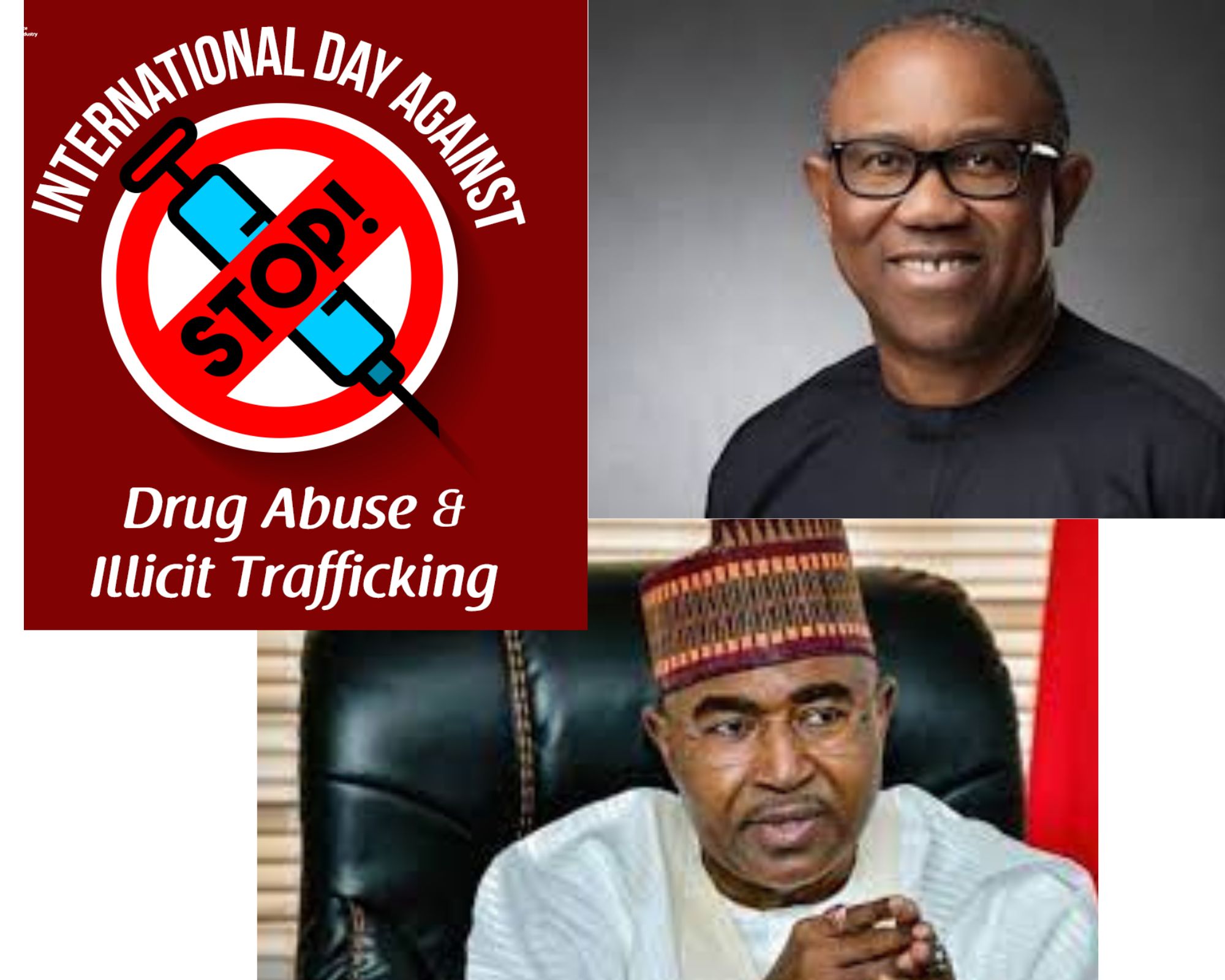
World Drug Day: Obi, others caution against stigmatizing drug addicts   

  • Expert says Addicts are not criminals

As Nigeria joined the rest of the world to mark World Drug Day, Presidential flag bearer of the Labour Party, (LP), Mr Peter Obi blamed leadership failure, high rate of poverty, unemployment and frustration, peer-group pressure and many other factors as the catalyst fuelling drugs and substance abuse among the youths.

A recent report by the United Nations Office on Drug and Crime in Nigeria indicates that 14.4% of citizens aged between 15 and 64 abuse drugs, which he said is significantly higher than the global average of 5.6%.

Not long ago, Chairman/Chief Executive Officer of the National Drug Law Enforcement Agency, NDLEA, Brig General Buba Marwa warned that the nation faces a grim future over the rate of drugs prevalence among youths wondering, “What will become of Nigeria with about 70% youth population if the future of its youths is ravaged by drugs.

For the most part of 2021, communities in South Eastern Nigeria faced the dangerous effect of Methamphetamine nicknamed by the youths as Nkpuru Mmiri which translates to seed of water. And worried by the fact that substance abuse is a major problem facing the North, the Coalition of 52 Northern Groups, CNG, announced its partnership with relevant stakeholders to unveil a community-based initiative aimed at rehabilitating youths struggling with drug abuse and addiction in the region.

On the matter of World Drug Day, Mr. Peter Obi in a statement, noted that the attendant health conditions from drug abuse are unimaginable, including an epidemic of mental health cases and incidents of suicidal behaviour among youth.

“On this International Day Against Drug Abuse and Illicit Trafficking, we are reminded of the lingering menace of drug abuse among our youths and the need to take consistent actions to defeat it…

“The leadership failure in the country, high rate of poverty and frustration, peer-group pressure among the youths, high rate of unemployment etc, are some of the main factors fuelling drugs and substance abuse among the youths.

“The attendant health conditions that result from drug abuse are unimaginable. They include an epidemic of mental health cases and incidents of suicidal behaviour among youth. While we appreciate the National Drug Law Enforcement Agency (NDLEA) for their tireless efforts in combating the drug abuse menace in the country, more needs to be done by the government in rescuing the youths – our productive workforce from a further slide into drug addiction.

“By not stigmatising our people who have fallen into drug addiction, and putting measures in place to prevent more people from getting caught in the deadly web, we will gradually stamp out this societal ill.

“I have always maintained that the New Nigeria will be anchored on our youth population and productivity. We must ensure that our youths are free from all forms of drug abuse and trafficking in illicit substances,” Obi said.

A former NDLEA Director-General, Otunba Lanre Ipinmisho once shared his experiences with Law & Society about youths struggling with substance abuse and proffered suggestions on the way forward.

“During an advocacy campaign a parent once said, ‘ah, you have not mentioned Maggi yet (food seasoning). She said: ‘I caught my security guard with six cubes of Maggi from my kitchen and insisted he must tell me what he was going to do with them. He said they put it inside malt drink and it makes them get high.’ 

“Have I told you about old newspapers? From a stack or pile, just pick the ones underneath, light and smoke; it will get you high. What about, solution, petrol, smells emanating from the soak-away pit in the north? They actually crack open soak-away pits to inhale the odour. Zakami and lizard dung? This issue requires a more holistic approach. And what is the approach? What is it that will appeal to these children to listen to counselling on drug abuse? 

“I have been to all these universities around here; because I have seen prevalence, and what you see that confronts you is that almost every student carries a bottle and more than 70 percent of those bottles are not water. They contain mixtures of all sorts of things even if it appears clear like water.  Hence, it is not something we give ceremonial attention to and expect that we are solving problems. No. It requires more serious attention than that. 

“There is an inter-governmental agency on drug abuse which hardly meets now because they are not funded, it should be resuscitated so that if the Ministry of Health’s representative is talking from the angle of health other representatives will speak from the peculiarity of their own sector. Actually, it’s a health issue. It’s not a criminal matter. That is why people accuse law enforcement agents that they arrest people with cough syrup and fail to lock them up. No, they can’t lock him up because it’s not a criminal offence. The addict is someone who needs help. So, you need to take him to a rehab centre.”

How do you then cut the demand in the instant situation?

Parents have serious roles to play. When we were growing up as children, there were children that smoked the native mat. It has holes inside like cigarettes. You light it with matches and hide to smoke. Why were we hiding in those days? Because we knew that we must not be seen.  Parents’ availability for the upbringing of their children is very key to fighting drugs. As we speak now, there are children that will never touch alcohol because they see that in their home, it is an abomination. They have never even bothered to ask why, but they know that it is a no-go-area. Whereas there are homes where each of these boys have cartons of cough syrup and codeine and no parent has entered the room, and he knows that no one is going to enter and therefore needs not to be careful. Even the type of cars these children ride has all the equipment for smoking marijuana. It is just for you to look in one day and see what your son is doing. 

How many of these children have dropped out of school for several years and they keep lying. There was a couple that went to see their child in the UK. They didn’t prepare for the shock that they got. They went with a colleague from their office to check on the boy. The school authorities said they had no student by that name. Meanwhile, he had called the preceding week telling them how well he was doing at school. Eventually, they got a Nigerian who had finished from the school about three years earlier. He said, ‘yes, this boy was with us.

He didn’t finish and he has been rusticated, though I can get somebody who knows where they smoke.’ By the time the father got there, of course, he didn’t even recognise the father. That was all they got for all the thousands of pounds sterling they have been sending to England.  Parents need to pay more attention to their children. They think that they could use money and material things to buy off the children. The moment they see the child is unhappy, they pump in more money, and his friends are already aware that he is the supplier of money. And one thing with drugs is that the more, the merrier.

You can’t stay in your room and be making the wild dances alone. It won’t make sense unless they are people who are looking at you. We used to have about 168 porous borders when I was at NDLEA. I don’t know but it must be more now. On these 168 porous routes, nobody would ask you, ‘where are you going or coming from?’ 

What is the way forward out of this problem?

We still require the Federal Government and private individuals to invest in rehabilitation centres. 

What is the role of religious and traditional institutions in the battle against drugs? 

In the north which I am more familiar with, the north has a terrible culture of silence. That has affected the religious organisations that are northern-based. When they have a problem, people in the north that constitute membership of those organisations, don’t discuss it. There is a culture of silence. In the north, they would rather gossip about a problem. And this they need to stop! You bring up children collectively so that everybody in the neighbourhood can have their peace. So, I believe the religious organisations are beginning to wake up to their own responsibilities with regard to drugs.

I have been going from one mosque to the other as well as from one traditional ruler to the other, trying to awaken them to the dangers of this problem. Luckily, the people I have spoken to have also been going through hard times with their children and wards on the issue.  You would see an Emir that is afraid of entering his own house because of the havoc drug is doing in the house. So, I believe a more holistic approach is for non-governmental agencies to wake up and for relevant government agencies to wake up to their responsibility. But how would they wake up to their responsibilities when the government is not treating it as a matter of priority? Admission into universities now should include tests for drugs.  University authorities should insist that students, who test positive to drugs, should go and clean up, and then come back. 

Why did you say earlier that drug addicts are not criminals? 

No. They are not criminals; because the law says that there must be action backed by intention. How would you convince a law court that somebody who is a drug addict has an intention to commit a crime? He cannot form an intention. Secondly, the United Nations had long come to the conclusion that it is a medical issue. Though it may be behavioural, it’s a medical challenge.

TIPS