Home Blog Page 763

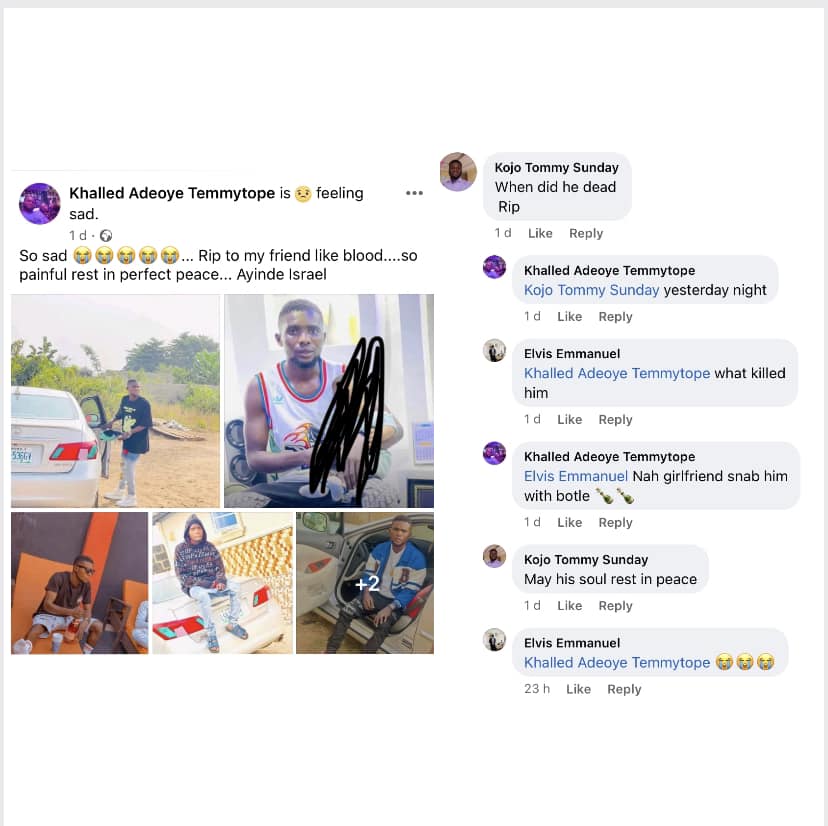
Side chic stabs married lover to death in his home

The Holy Book in Proverbs 9:17 said: “Stolen water is sweet; food eaten in secret is delicious!” But little did Israel Ayinde know that a few moments of stolen pleasure was going to send him on an early trip to the land of the immortals. If only he knew about an earlier warning in the same Holy Book wherein the wise King Solomon said: “Many are the victims she has brought down; her slain are a mighty throng.” – Proverbs 7: 26. And Solomon should know better when it comes to feminine matters.

It so happened that the woman Israel brought home when his wife travelled stabbed him to death! The sad incident occurred in Itori Ewekoro area of Ogun state.

The now late Israel Ayinde reportedly invited his side chick, Alice, to his home after his wife travelled for the Sallah holiday. Unfortunately, they got into an argument on the night of Tuesday, June 27, and Alice stabbed him in the neck with a knife. He was rushed to two hospitals where he was pronounced dead.

 Alice is presently being held at the Ifo police station.

In January this year, a woman made a huge scene in their compound when she caught her husband cheating on her with a lady in their matrimonial home. In footage seen on social media, the irate woman hurled swear words at her husband as she slammed him for being unfaithful.

“Do you know you are a big fool? “After everything I did for you ehn,” she ranted from the ground floor at her husband with the side chick on the balcony of an apartment on the first floor.

Social media reactions

Ogechukwu Offorbuike said: “The husband sef na big pig. The woman wey follow man go his matrimonial house. Na so the konji or poverty hold you reach? Any of her reasons for seeing a woman’s belongings all over the house and still removed cloth. Shameless.”

Mati Anyafulugo said: “Some men are just madddddd and very disrespectful to their Wives. Who brings a side chick to their matrimonial home and also has the temerity to have sexxxx with his side chic in their matrimonial bed? Zuzugharibanu!”

Ifesinachi Vanessa said: “I don’t have problem with the so called side chick o. “Na the mumu husband that disrespected his darling wife to bring his side okuku to the matrimonial home and use the holy matrimony bed.”

Nkechi Favour Ugochukwu said: “Side chic with audacity, you carry mind go married man house. It’s the neighbours minding their business for me.”

Ada Oliver said: “He doesn’t have money to take her to a hotel or what? Why your home? “Ndi mmadu sef.”

Watch the video here.

https://www.instagram.com/reel/CoAlADOAotF/?utm_source=ig_web_copy_link

Tribunal: Atiku and Obi are wasting their time

By Tunde Odesola

Since the dawn of time, myths represent the universal bank of human wisdom. Myths ride on stories along the superhighway of time-honoured communication. Myths affirm the supremacy of good over evil, teaching morals and preserving history, passing on traditions and knowledge; explaining the nature of man.

I believe the earliest myths came into being shortly after the dew of creation set on the first heroic deed, and the sun cast the shadow of the first villain.

The compartmentalisation of humanity into race, language, religion, technology, wealth, and power, notwithstanding, myths, like in earliest times, still beam the torch on unclear events in human existence today.

For the heads that have weathered more than 50 rainy seasons, the realities of yesteryear fast-turning into myths in the eyes of today’s youngsters are understandable.

When you say the Nigerian naira was once stronger than the American dollar, members of Generation Z will wonder whether Nigeria was the paradise that existed in the Garden of Eden. When you say Nigeria’s astronomical wealth of the early 70s blinded her leaders into confusion, Generation Alpha will think you’re on Colorado. Memories of the Biafra War and the Golden Age of Nigerian sports are gradually turning into myths as the mind dims with age.

Before the corrupt confession of the former representative, Bauchi-North senatorial district in the National Assembly, Senator Adamu Bulkachuwa, backtracks into a deafening silence and returns as a roaring, improbable myth in the future, I shall, once again, lend my voice to condemn the suspected criminal collaboration Balkachuwa engineered between the upper legislative chamber and the Nigerian judiciary.

This Sallah, as Nigerian Muslim faithful supplicate to Allah, the Most Beneficent, the Most Merciful, I’m sure the Bulkachuwa family and many money-for-judgment members of the Senate will be on prayer mats, begging God or Satan to let this cup pass over.

But Nigerians must keep the fire under the feet of the National Judicial Council, pour hot ash on the Senate, make Bulkachuwa and his wife, Justice Zenaib, who was the President, Court of Appeal, eat their corrupt excreta, accuse the Tinubu Presidency of complicity in the rot within the judiciary – if it continues to keep silent; insist on the cleansing of the Augean stable.

If Bulkachuwa had said he influenced his wife to favour the petition of the Peoples Democratic Party presidential candidate, Alhaji Atiku Abubakar, or that of Labour Party presidential candidate, Mr Peter Obi, the police, Department of State Service, and the Economic and Financial Crimes Commission would’ve printed tonnes of the Electoral Act, distributed it free and swear to defend it to the death. Bulkachuwa and his 70-year-old wife would’ve been arrested, detained and charged to court while Atiku and Obi would’ve been sufficiently ridiculed.

While Nigerians were aghast as to the sheer effrontery of Bulkachuwa and his alleged cohorts, a graveyard silence is what they got from the institutions mandated to check various forms of corruption nationwide. While a cross-section of Nigerians has risen to condemn Bulkachuwa’s speech, Nigeria’s anti-corruption institutions have not condemned Bulkachuwa, revealing a body language that suggests the incumbent government isn’t ready for a fight against the judiciary, probably because the Tinubu government is still standing on one leg.

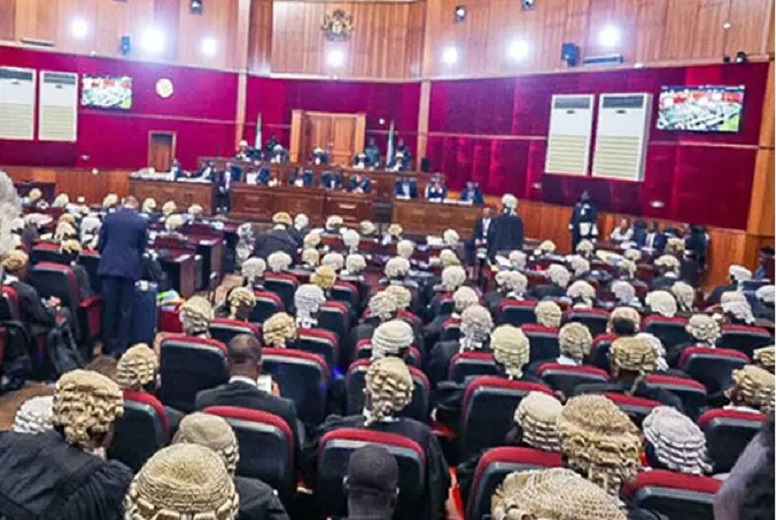
To refresh the memory, this is what 80-year-old Bulkachuwa said on the hollow floor of the Senate’s blood-red chamber while giving his valedictory speech as the ninth Senate wound down some days ago, “At my age, I don’t think I will lobby anybody under the sun. I will do the right thing, and I always do the right thing, and sincerely and honestly too.

“So, I know, I look at faces in this chamber who have come to me and sought my help when my wife was the president of the Court of Appeal. And, I’m sure…”

President of the ninth Senate, Ahmad Lawan, who presided over the session, tries to stop the horse bolting from the barn, “Em, em, eh, Distinguished Senator Adamu Bulkachuwa, I think I’ll advise that you just round up and take your seat.”

But Bulkachuwa won’t listen. He continues, “We know ourselves. I must say that ok, to roundup since that’s what you want me to do, I’ll do that, and I must thank, particularly, my wife, whose freedom and independence I encroached upon while she was in office, and she has been very tolerant and accepted my encroachment, and extended her help to my colleagues.”

Lawan surely knows when the horse has bolted, but he still closes the barn door, saying, “Ehh, Distinguished, please, I don’t think this is a good idea of going this direction, it’s not a good idea, it’s not a good idea.”

There is a universality to the didactic nature of myths, especially in relation to the proverb, “It doesn’t rain, it pours.” This was how it poured for Eris the Greek goddess of strife and discord. Eris bore Ponos (Hardship), Lethe (Forgetfulness), Limos (Starvation), Algae (Pains), Hysminai (Battles), Makhai (Wars), Phonoi (Murders), Androktasiai (Disputes), Neikea (Quarrels), Pseudea (Lies), Logoi (Stories), Amphillogiai (Disputes), Dysnomia (Anarchy), Ate (Ruin), Horkos (Oath).

Ninety-year-old former Vice Chancellor, Obafemi Awolowo University, Ile-Ife, Prof Wande Abimbola, in a telephone chat during the week, explained to me that in the Yoruba pantheon, there are 400 plus one gods who are benign to mankind while 200 plus one principalities are bad. Abimbola said the 200-plus-one principalities are led by Death, Sickness, Loss, Paralysis, Woe, Curse, Jail, and Poverty.

On the online kerfuffle about the ‘aboru boye’ term used by gospel singer, Tope Alabi, I think when you understand the intertwined relationship among language, religion and culture as a form of communication to God, you will not blame Alabi for praising God, using the imagery of sacrifice, more so when her self-acknowledged Lord and Saviour, Jesus Christ, was a sacrificial Lamb, whose blood was shed on Calvary as a sacrifice.

The challenges besetting Nigeria are as terrible as the children of Eris, the Greek goddess, and the 200-plus-one principalities that cause trouble for Man in the Yoruba worldview. However, it’s demonstrably evident that patriotism, the synonym for dedication and nationalism, will cure many of Nigeria’s ailments, but patriotism is nonexistent in Nigeria’s political lexicon – a reason why the Atiku and Obi petitions might be washed away in the encroaching Bulkachuwan Sea.

There’s no better time to redeem the image of the judiciary than now. The NJC must, first of all, publicly condemn Bulkachuwa’s show of shame on the floor of the Senate, and take an official position on the issue; the Nigerian Bar Association must raise the decibel of its voice against the monetisation of judgment in the country, the police must arrest and quiz Senator Mr and Justice Mrs Balkachuwa. Lawan must be arrested and tried for attempting to stifle the truth when he should have been outraged and given room for Bulkachuwa to spill his intestines. All the senators, judges and accomplices mentioned by Mr and Mrs Bulkachuwa should be publicly tried. Above all, President Bola Tinubu should condemn the self-encroachment confession of Bulkachuwa, his fellow party member, and call for a thorough probe of the case. This is the only way to assure Nigerians that the judiciary isn’t in the pocket of the Jagaban. It’s the only way to demonstrate that the Atiku and Obi petitions will get fair hearings.

Ha! Did I hear Atiku and Obi laugh after reading my demands? I clearly heard, “De play.” I also heard, “You dey whine me?” Did I hear right? Is all hope lost? I see a wig, a gown and a gavel floating on the Bulkachuwan Sea, going, going…

Email: [email protected]
Facebook: @Tunde Odesola
Twitter: @Tunde_Odesola

Nigeria: A New Dawn For Nigeria’s Power Sector: Highlights Of The Electricity Act, 2023

By Ibukun Konu , Osefan Anegbe and Nweze Hallel-Tobiel

Introduction

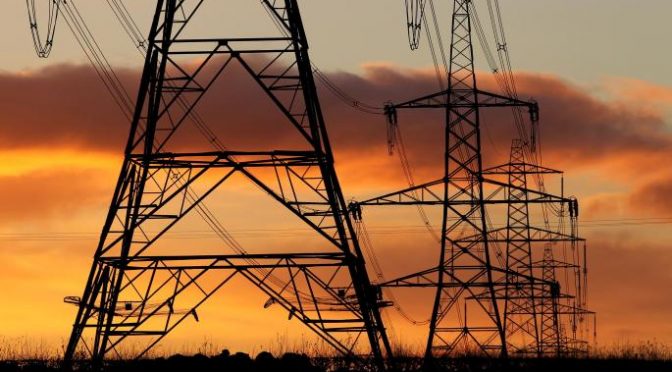
The repeal and re-enactment of the Electric Power Sector Reform Act, 2005 (the ESPRA) as the Electricity Act 2023 (the Act) is a major game changer in the Nigerian Electricity Supply Industry (NESI). On Thursday 8th June 2023, His Excellency, President Bola Tinubu GCFR, assented to the Act. The Act introduces amongst other things, a comprehensive legal and institutional framework to guide the operation of a privatised, contract, and rule-based competitive electricity market in Nigeria and attract private sector investments in the NESI through transformative policy and regulatory measures.

The Act harmonises the Senate Bill1 which sought to repeal the ESPRA and the House of Assembly Bill2 which sought to amend the ESPRA. The Act has 234 sections classified into chapters under Parts I to XXIII, and 5 Schedules.

The key modifications introduced by the Act are categorized as follows:

1. Recognition of States’ Rights

The Act explicitly recognizes States’ rights to make laws for electricity generation, transmission, distribution, system operation and establishment of power stations3 within its territory, in line with the Constitution of the Federal Republic of Nigeria 1999 as amended (the Constitution)4. This unequivocally grants State governments the authority to regulate their own electricity markets, grant licenses to private investors to build power plants, establish transmission networks, operate mini-grids, and distribute power in a state, thereby creating a State Electricity Market (SEM) independent of the Nigerian Electricity Regulatory Commission (NERC).

It is important to note that until a State has enacted its electricity legislation and established its electricity market, NERC will continue to regulate electricity businesses in such States5. Lagos6, Edo and Kaduna States are in the process of passing their electricity laws which will enable them to regulate their electricity markets through State electricity regulatory authorities or commissions.

NERC retains the power to regulate trans-national and inter-state electricity businesses to ensure coordination within the Federal Electricity Market.

2. National Integrated Electricity Policy and Strategic Implementation Plan (the Policy)

Within a year from the commencement of the Act, the Ministry of Power (the “Ministry”) to initiate the preparation and publication of the Policy in consultation with MDAs7 and other stakeholders that are relevant to the NESI’s development. Upon adoption, the Policy must be approved by the Federal Executive Council before publication in a Federal Gazette. The Policy may be reviewed as required, but not later than every five (5) years.

This Policy will cover:

  • development of the power sector by optimal utilization of coal, natural gas, nuclear and renewable sources;
  • providing rural electrification through captive generation, stand-alone system generation, non-conventional energy systems, bulk purchase of power and management of local distribution;
  • public-private partnerships for rural electricity through rural electricity infrastructure;
  • power-source specific policies including waivers and subsidies to stimulate renewable energy development; and
  • development of the electricity value chain by aligning expansion in generation, transmission, distribution, and supply infrastructure for reliable supply and to minimizes losses.

The Ministry is also responsible for recommending exemptions (such as exemption from customs, levies, and duties) and financial incentives to develop, produce and utilize renewable energy.

We believe that involving relevant MDAs and stakeholders in formulating the Policy will ensure that the Policy is comprehensive and effective in achieving its goals, and periodic reviews will ensure that it remains relevant with changes in the NESI.

Overall, the Policy is a critical document that will outline the government’s strategy for developing and maintaining a reliable and efficient electricity sector in Nigeria. It will prioritize rural electrification and promote renewable energy, thereby improving access to electricity and reducing the country’s reliance on fossil fuels.

3. Re-establishment of NERC and Continuous Role Post Privatization

The Act re-establishes NERC, but its focus is on regulating and overseeing the development of the sector except the SEM. NERC is tasked with ensuring that the market progresses from its transitional stage to the medium-term and long-term stages, in accordance with any prescribed terms, preconditions or features laid out in the market rules or amendments approved by NERC.

NERC therefore has a crucial role in guiding the progression of the Nigerian electricity market and ensuring that it operates efficiently and effectively.

Under the Act, NERC continues to ensure that the market is competitive as it evolves, benefiting both consumers and industry stakeholders.

NERC has new powers to intervene when a licensee is failing. This means that NERC can step in and take action to prevent the licensee company from collapsing, to prevent serious market problems in the NESI. This allows NERC to take a more proactive role in regulating the sector and ensuring that companies are operating effectively and sustainably. NERC has the powers to8:

  • approve amendments to the Market Rules;
  • monitor the operation of the electricity markets and sanction licensees in deserving circumstances;
  • enter and seal the premises of persons operating without a license or suspected to have committed an offence under the Act; and
  • conduct examination, inquiry and inspect all books, records, accounts, and documents required to be kept by a licensee.

4. Promotion of Renewable Energy

NERC is responsible for promoting the development and use of renewable energy from solar energy, wind, small hydro, and biomass, by issuing licenses for embedded generation, hybridised generation, co-generation, and the generation of electricity from renewable sources, thereby increasing their contribution to Nigeria’s energy mix. In addition, NERC, together with the Independent System Operator (ISO), has a continuing obligation to encourage generation, distribution, sales, and installation of electricity from renewable sources.

NERC’s measures to support the growth of renewable energy sources in Nigeria under the Act, include:

  • simplifying licensing and fees,
  • setting technical standards and certification procedures,
  • providing regulations for power purchase agreements,
  • monitoring compliance with renewable purchase obligations,
  • developing guidelines for energy storage and net metering,
  • promoting local content development,
  • supporting the Rural Electrification Agency, and
  • monitoring the installation, decommissioning, and disposal of renewable energy accessories.

The Act introduces renewable purchase obligations and renewable generation obligations, and states that NERC must consider factors such as technology, financial viability, and impact on tariffs to ensure a balanced and sustainable approach9.

The Act recognizes the importance of promoting the development and use of renewable energy sources while balancing potential costs passed on to end-users, and therefore mandates the Federal Ministry of Finance to introduce tax incentives to promote and facilitate the use of renewable energy sources.

These obligations are necessary for realising Nigeria’s sustainable energy goals, attracting investment in clean energy, and transitioning towards a low-carbon future. Furthermore, these will help ensure the long-term sustainability of the environment by reducing the country’s dependence on fossil fuels and promoting the use of renewable energy sources.

The Act highlights the importance of local content in the renewable energy subsector. It provides that licensees, contractors, sub-contractors, or any other entity executing renewable energy-related activities must ensure that they incorporate local content as a significant component in their operations.10

5. Protection of Investment in the Power Sector11

This new provision gives several guarantees related to asset protection such as the right to sell or transfer a licensee’s undertaking and compensation where there is any forceful takeover in the interest of national security. This means licensees can sell or transfer their undertakings even in the event of a revocation of their license.

In addition, anyone who suffers a forceful takeover is to be compensated. This will ensure that businesses in the electricity market continue to operate even in uncertain situations, and that their assets are protected against any adverse action or expropriation, thereby providing safeguards against arbitrary actions of the government.

Click here to continue reading . . .

Footnotes

1. Electricity Bill (SB. 511)

2. Electric Power Sector Reform Act, 2005 (Amendment) Bill (HBs. 287, 657, 681 & 1528)

3. Electricity Act 2023, s.2(2)(b)

4. Electricity Act 2023, s.13(b) and 14 (b), Second Schedule

5. Electricity Act 2023, s.230 (9)

6. Lagos State Electric Power Sector Reform Law 2018

7. Government Ministries, Departments and Agencies.

8. Electricity Act 2023, s.34(2)

9. Electricity Act 2023, s.167(1)

10. Electricity Act 2023, s.171(5)

11. Electricity Act 2023, s.228

The content of this article is intended to provide a general guide to the subject matter. Specialist advice should be sought about your specific circumstances.

Credits: Mondaq.com

Minor commits suicide after being raped by madam’s husband

Unable to bear the pain of being reportedly raped by the husband of her boss, a sixteen-year-old girl, Olayemi Agbeloba has committed suicide in Oyo state.

The husband of Olayemi’s boss, one Ajibode, a welder, allegedly defiled the young lady at their residence in the Eruwa community, in the Ibarapa Local Government Area of Oyo State and threatened to kill her if she disclosed the incident to anyone.

Until her death, Olayemi was an apprentice of Ajibode’s wife. She was learning fashion and designing from Ajibode’s wife and was said to have been living with her boss to also assist with domestic chores.

The story went sour when Ajibode entered the minor’s room in their residence on June 23, 2023 and allegedly raped her.

Deeply traumatized by the occurrence, Olayemi, reportedly drank a substance suspected to be insecticide and died from the toxic substance.

Olayemi’s father, Sunday, who had been inconsolable since he got to know of the circumstances that led to his suicide, disclosed that he reported the case at the Eruwa Police Station in a bid to get justice for his daughter.

The grieving father however said that the suspect had been boasting that justice would not prevail in the matter.

According to Sunday: “Olayemi went to Ajibode’s wife’s house early this year because my wife and I decided that she should learn handiwork. She had been staying with Ajibode and his wife for about six months and suddenly, we were told that she died.

“Later, we heard Ajibode had raped my daughter after which she drank an insecticide. This was confirmed by medical workers at the hospital she was taken to for treatment after she drank the insecticide. At the hospital, we were also told that before my daughter died, she said Ajibode raped her and that was what made her drink the insecticide.

“I reported the case at the Eruwa Police Station and he was arrested and released. Since then, Ajibode has been claiming that he knows people and that there is nothing we could do to him. He raped my daughter and pushed her to commit suicide and he’s still very confident that he would go scot-free.”

Speaking amid tears, Agbeloba’s mother, Folake, while demanding justice for her daughter, said her daughter once confessed to her that Ajibode usually disturbed her while sleeping at night.

She said, “I can’t speak now because they have taken my daughter away from me. Is it a crime for someone to go and learn a trade? Ajibode raped my daughter and he and his wife are trying to hide the crime that he committed. My daughter is gone because of what Ajibode did to her.

“She once told me that her boss’s husband usually disturbed her at night when she retired to sleep in their house. I wanted to make her come back home but also wanted her to finish her apprenticeship. Look at what they did to my child.”

“It is unconstitutional”- Catholic bishops on bill for council on Christian education

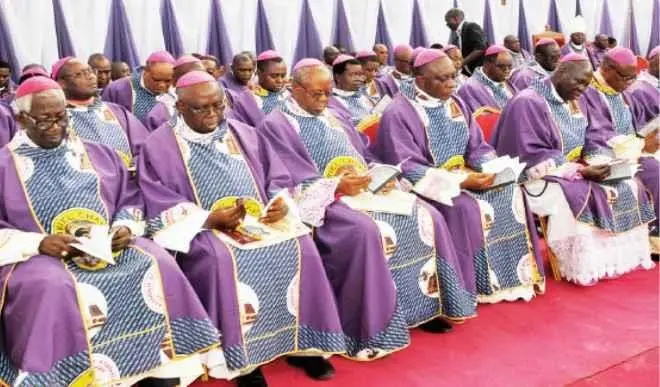
Catholic Bishops Conference of Nigeria (CBCN) has rejected a bill seeking the establishment of a National Council of Christian Education, saying the proposal violates Sections 10 and 42(3) of the Constitution of the Federal Republic of Nigeria, 1999.

Rather than promoting a bill that violates the secular character of Nigeria, the bishops asked Christian Association of Nigeria (CAN), which originally pushed for the bill at the National Assembly, to promote legislations that address unprovoked attacks on Christians in the North, among others.

CBCN rejected the bill in a statement by its President, Archbishop Lucius Ugorji, and Secretary, Bishop Donatus Ogun.

The bill, which seeks to develop, regulate and approve syllabuses/contents at all levels of Christian education, was sponsored by Rimamde Kwewum, Beni Lar, Yusuf Ayo Tajudeen, John Dyegh, Solomon Bob and Benjamin Mzondu.

The bill is also designed to certify Christian religion education instructors at basic and secondary levels; approve the content of all Christian religious education in all schools and accredit programmes of Christian theological institutions.

The bishops expressed concern that the bill made no exemption for seminaries and other religious institutes owned by various Christian denominations across the federation.

On this ground, the bishops claimed the bill infringed on the rights of these denominations to provide instructions, according to their respective doctrines, citing Section 42 (3) of the 1999 Constitution.

The section stipulates: “No religious community or denomination shall be prevented from providing religious instruction for pupils of that community or denomination in any place of education maintained wholly by that community or denomination.”

They also claimed that the bill “is incompatible with the secular character of the country as enshrined in Section 10 of the 1999 Constitution of the Federal Republic of Nigeria.

CBCN said: “In as much as government at federal or state level has not and cannot adopt any religion as its official religion, it must respect the juridical principles that govern the relationship between State and Church.”

The bishops explained that the idea of pursuing a bill “to regulate religious studies in secular schools came up during an education summit organised in 2019 by the Association of Christian Schools in Nigeria, a body of mostly Pentecostal private school owners and some Protestant denominations.”

They observed that the bill was neither intended to regulate theological concerns nor have anything to do with theological institutions as originally intended and conceived.

The bishops disclosed that CAN decided to pursue it by asking lawmakers to sponsor the bill, alleging that some elements were added, at some points, which are not in the interest of the Church.

They said the bill “is unnecessary and impracticable because of our doctrinal differences. Our juridical autonomy in matters of education is being surrendered to the government.”

They also challenged CAN to undertake “a proper needs assessment to determine the needs of Christians in Nigeria that would require the support of the government. Asking the government to establish a Council for Christian Education simply because Muslims have one is counterproductive.”

According to the bishops, it is imperative to revisit and properly examine CAN’s original purpose, as opposed to what is expressed in the bill presented at the National Assembly.

They also tasked CAN to explore the possibility of going for “a bill that addresses our concerns as Christians. For example, in most parts of the north, there have been unprovoked attacks on Christians.

They noted: “For over 40 years, well before Boko Haram’s destructions, thousands of our churches have been destroyed across northern Nigeria. No one has been charged neither has compensation been paid. Christians face serious challenges and obstacles in gaining access to land to build their places of worship in northern Nigeria.

“Christian children are hardly given admission to schools because they bear Christian names. Where they could enter higher institutions, they are denied high-profile courses, like medicine, architecture, engineering, etc. Christian Religious Education is prohibited in some parts of the north.

“If CAN determines that there is a need for a National Christian Council for Education, such a council, which must recognise the doctrinal differences of the various Christian denominations, should be under the full control of CAN, and not the government.”

CBCNS-POSITIONON-THE-NATIONAL-COUNCIL-FOR-CHRISTIAN-EDUCATION-BILL-2023

US S’Court Judgment on Affirmative Action: “A Tragedy for Us All”: Justice Ketanji Brown Jackson’s Dissent

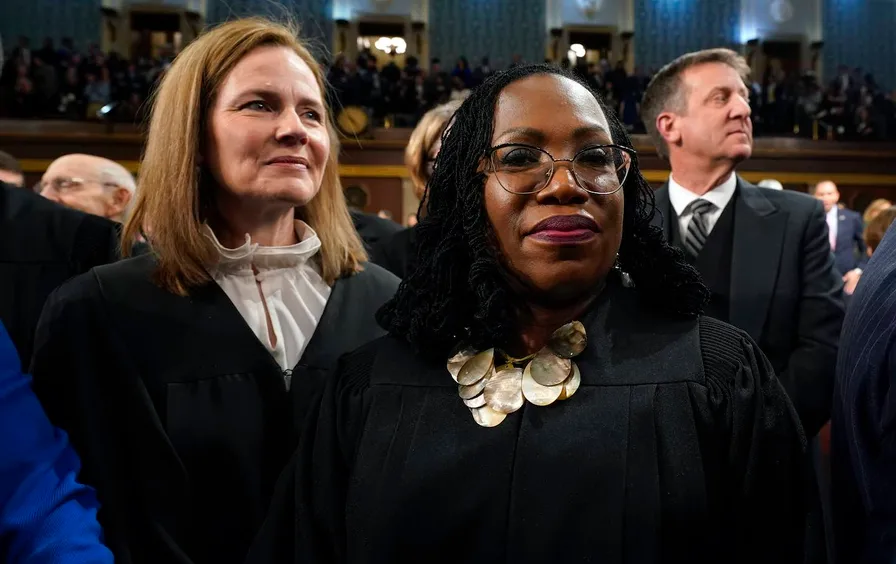
Ketanji Brown Jackson, associate justice of the US Supreme Court, following a State of the Union address at the US Capitol on Feb. 7, 2023. (Photographer: Jacquelyn Martin / Bloomberg / AP)

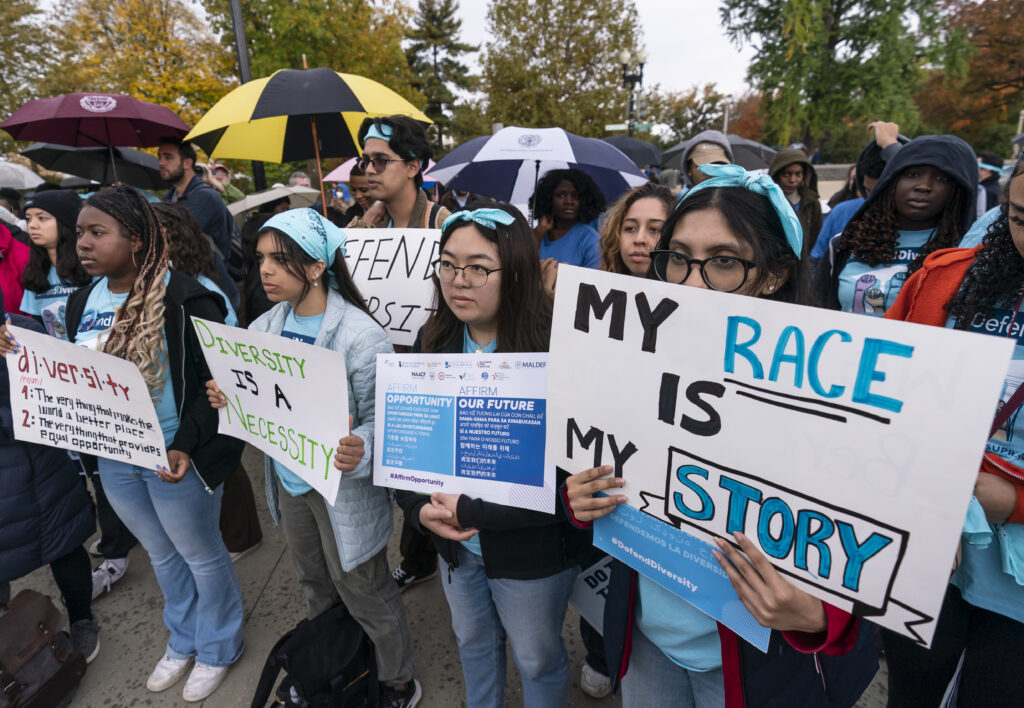
In a devastating blow to the fight for racial justice in the United States, the US Supreme Court on Friday eliminated affirmative action in higher education. In her dissenting opinion, Justice Ketanji Brown Jackson called out her conservative colleagues for “interfering with the crucial work that UNC and other institutions of higher learning are doing to solve America’s real-world problems.” Read her dissent in its entirety below.

Gulf-sized race-based gaps exist with respect to the health, wealth, and well-being of American citizens. They were created in the distant past, but have indisputably been passed down to the present day through the generations. Every moment these gaps persist is a moment in which this great country falls short of actualizing one of its foundational principles—the “self-evident” truth that all of us are created equal. Yet, today, the Court determines that holistic admissions programs like the one that the University of North Carolina (UNC) has operated, consistent with Grutter v. Bollinger, 539 U. S. 306 (2003), are a problem with respect to achievement of that aspiration, rather than a viable solution (as has long been evident to historians, sociologists, and policymakers alike).

Justice Sotomayor has persuasively established that nothing in the Constitution or Title VI prohibits institutions from taking race into account to ensure the racial diversity of admits in higher education. I join her opinion without qualification. I write separately to expound upon the universal benefits of considering race in this context, in response to a suggestion that has permeated this legal action from the start. Students for Fair Admissions (SFFA) has maintained, both subtly and overtly, that it is unfair for a college’s admissions process to consider race as one factor in a holistic review of its applicants.

This contention blinks both history and reality in ways too numerous to count. But the response is simple: Our country has never been colorblind. Given the lengthy history of state-sponsored race-based preferences in America, to say that anyone is now victimized if a college considers whether that legacy of discrimination has unequally advantaged its applicants fails to acknowledge the well-documented “intergenerational transmission of inequality” that still plagues our citizenry.

It is that inequality that admissions programs such as UNC’s help to address, to the benefit of us all. Because the majority’s judgment stunts that progress without any basis in law, history, logic, or justice, I dissent.

Imagine two college applicants from North Carolina, John and James. Both trace their family’s North Carolina roots to the year of UNC’s founding in 1789. Both love their State

and want great things for its people. Both want to honor their family’s legacy by attending the State’s flagship educational institution. John, however, would be the seventh generation to graduate from UNC. He is White. James would be the first; he is Black. Does the race of these applicants properly play a role in UNC’s holistic merits-based admissions process?

To answer that question, “a page of history is worth a volume of logic.” New York Trust Co. v. Eisner, 256 U. S. 345, 349 (1921). Many chapters of America’s history appear necessary, given the opinions that my colleagues in the majority have issued in this case.

Justice Thurgood Marshall recounted the genesis:

“Three hundred and fifty years ago, the Negro was dragged to this country in chains to be sold into slavery. Uprooted from his homeland and thrust into bondage for forced labor, the slave was deprived of all legal rights. It was unlawful to teach him to read; he could be sold away from his family and friends at the whim of his master; and killing or maiming him was not a crime. The system of slavery brutalized and dehumanized both master and slave.” Regents of Univ. of Cal. v. Bakke, 438 U. S. 265, 387–388 (1978).

Slavery should have been (and was to many) self-evidently dissonant with our avowed founding principles. When the time came to resolve that dissonance, eleven States chose slavery. With the Union’s survival at stake, Frederick Douglass noted, Black Americans in the South “were almost the only reliable friends the nation had,” and “but for their help . . . the Rebels might have succeeded in breaking up the Union.” After the war, Senator John Sherman defended the proposed Fourteenth Amendment in a manner that encapsulated our Reconstruction Framers’ highest sentiments: “We are bound by every obligation, by [Black Americans’] service on the battlefield, by their heroes who are buried in our cause, by their patriotism in the hours that tried our country, we are bound to protect them and all their natural rights.”

To uphold that promise, the Framers repudiated this Court’s holding in Dred Scott v. Sandford, 19 How. 393 (1857), by crafting Reconstruction Amendments (and associated legislation) that transformed our Constitution and society. Even after this Second Founding—when the need to right historical wrongs should have been clear beyond cavil—opponents insisted that vindicating equality in this manner slighted White Americans. So, when the Reconstruction Congress passed a bill to secure all citizens “the same [civil] right[s]” as “enjoyed by white citizens,” 14 Stat. 27, President Andrew Johnson vetoed it because it “discriminat[ed] . . . in favor of the negro.”

That attitude, and the Nation’s associated retreat from Reconstruction, made prophesy out of Congressman Thaddeus Stevens’s fear that “those States will all . . . keep up this discrimination, and crush to death the hated freedmen.” And this Court facilitated that retrenchment. Not just in Plessy v. Ferguson, 163 U. S. 537 (1896), but “in almost every instance, the Court chose to restrict the scope of the second founding.” Thus, thirteen years pre-Plessy, in the Civil Rights Cases, 109 U. S. 3 (1883), our predecessors on this Court invalidated Congress’s attempt to enforce the Reconstruction Amendments via the Civil Rights Act of 1875, lecturing that “there must be some stage . . . when [Black Americans] tak[e] the rank of a mere citizen, and ceas[e] to be the special favorite of the laws.” Id., at 25. But Justice Harlan knew better. He responded: “What the nation, through Congress, has sought to accomplish in reference to [Black people] is—what had already been done in every State of the Union for the white race—to secure and protect rights belonging to them as freemen and citizens; nothing more.” Id., at 61 (dissenting opinion).

Justice Harlan dissented alone. And the betrayal that this Court enabled had concrete effects. Enslaved Black people had built great wealth, but only for enslavers. No surprise, then, that freedmen leapt at the chance to control their own labor and to build their own financial security. Still, White southerners often “simply refused to sell land to blacks,” even when not selling was economically foolish. To bolster private exclusion, States sometimes passed laws forbidding such sales. The inability to build wealth through that most American of means forced Black people into sharecropping roles, where they somehow always tended to find themselves in debt to the landowner when the growing season closed, with no hope of recourse against the ever-present cooking of the books.

Sharecropping is but one example of race-linked obstacles that the law (and private parties) laid down to hinder the progress and prosperity of Black people. Vagrancy laws criminalized free Black men who failed to work for White landlords. Many States barred freedmen from hunting or fishing to ensure that they could not live without entering de facto re-enslavement as sharecroppers. A cornucopia of laws (e.g., banning hitchhiking, prohibiting encouraging a laborer to leave his employer, and penalizing those who prompted Black southerners to migrate northward) ensured that Black people could not freely seek better lives elsewhere. And when statutes did not ensure compliance, state-sanctioned (and private) violence did.

Thus emerged Jim Crow—a system that was, as much as anything else, a comprehensive scheme of economic exploitation to replace the Black Codes, which themselves had replaced slavery’s form of comprehensive economic exploitation. Meanwhile, as Jim Crow ossified, the Federal Government was “giving away land” on the western frontier, and with it “the opportunity for upward mobility and a more secure future,” over the 1862 Homestead Act’s three-quarter-century tenure. Black people were exceedingly unlikely to be allowed to share in those benefits, which by one calculation may have advantaged approximately 46 million Americans living today.

Despite these barriers, Black people persisted. Their so-called Great Migration northward accelerated during and after the First World War. Like clockwork, American cities responded with racially exclusionary zoning (and similar policies). As a result, Black migrants had to pay disproportionately high prices for disproportionately subpar housing. Nor did migration make it more likely for Black people to access home ownership, as banks would not lend to Black people, and in the rare cases banks would fund home loans, exorbitant interest rates were charged. With Black people still locked out of the Homestead Act giveaway, it is no surprise that, when the Great Depression arrived, race-based wealth, health, and opportunity gaps were the norm.

Federal and State Governments’ selective intervention further exacerbated the disparities. Consider, for example, the federal Home Owners’ Loan Corporation (HOLC), created in 1933. HOLC purchased mortgages threatened with foreclosure and issued new, amortized mortgages in their place. Not only did this mean that recipients of these mortgages could gain equity while paying off the loan, successful full payment would make the recipient a homeowner. Ostensibly to identify (and avoid) the riskiest recipients, the HOLC “created color-coded maps of every metropolitan area in the nation.” Green meant safe; red meant risky. And, regardless of class, every neighborhood with Black people earned the red designation.

Similarly, consider the Federal Housing Administration (FHA), created in 1934, which insured highly desirable bank mortgages. Eligibility for this insurance required an FHA appraisal of the property to ensure a low default risk. But, nationwide, it was FHA’s established policy to provide “no guarantees for mortgages to African Americans, or to whites who might lease to African Americans,” irrespective of creditworthiness. No surprise, then, that “[b]etween 1934 and 1968, 98 percent of FHA loans went to white Americans,” with whole cities (ones that had a disproportionately large number of Black people due to housing segregation) sometimes being deemed ineligible for FHA intervention on racial grounds. The Veterans Administration operated similarly.

One more example: the Federal Home Loan Bank Board “chartered, insured, and regulated savings and loan associations from the early years of the New Deal.” But it did “not oppose the denial of mortgages to African Americans until 1961” (and even then opposed discrimination ineffectively).

The upshot of all this is that, due to government policy choices, “[i]n the suburban-shaping years between 1930 and 1960, fewer than one percent of all mortgages in the nation were issued to African Americans.” Thus, based on their race, Black people were “[l]ocked out of the greatest mass-based opportunity for wealth accumulation in American history.”

For present purposes, it is significant that, in so excluding Black people, government policies affirmatively operated—one could say, affirmatively acted—to dole out preferences to those who, if nothing else, were not Black. Those past preferences carried forward and are reinforced today by (among other things) the benefits that flow to homeowners and to the holders of other forms of capital that are hard to obtain unless one already has assets.

This discussion of how the existing gaps were formed is merely illustrative, not exhaustive. I will pass over Congress’s repeated crafting of family-, worker-, and retiree-protective legislation to channel benefits to White people, thereby excluding Black Americans from what was otherwise “a revolution in the status of most working Americans.” I will also skip how the G. I. Bill’s “creation of . . . middle-class America” (by giving $95 billion to veterans and their families between 1944 and 1971) was “deliberately designed to accommodate Jim Crow.” So, too, will I bypass how Black people were prevented from partaking in the consumer credit market—a market that helped White people who could access it build and protect wealth. Nor will time and space permit my elaborating how local officials’ racial hostility meant that even those benefits that Black people could formally obtain were unequally distributed along racial lines. And I could not possibly discuss every way in which, in light of this history, facially race-blind policies still work race-based harms today (e.g., racially disparate tax-system treatment; the disproportionate location of toxic-waste facilities in Black communities; or the deliberate action of governments at all levels in designing interstate highways to bisect and segregate Black urban communities).

The point is this: Given our history, the origin of persistent race-linked gaps should be no mystery. It has never been a deficiency of Black Americans’ desire or ability to, in Frederick Douglass’s words, “stand on [their] own legs.” Rather, it was always simply what Justice Harlan recognized 140 years ago—the persistent and pernicious denial of “what had already been done in every State of the Union for the white race.” Civil Rights Cases, 109 U. S., at 61 (dissenting opinion).

B

History speaks. In some form, it can be heard forever. The race-based gaps that first developed centuries ago are echoes from the past that still exist today. By all accounts, they are still stark.

Start with wealth and income. Just four years ago, in 2019, Black families’ median wealth was approximately $24,000. For White families, that number was approximately eight times as much (about $188,000). These wealth disparities “exis[t] at every income and education level,” so, “[o]n average, white families with college degrees have over $300,000 more wealth than black families with college degrees.” This disparity has also accelerated over time—from a roughly $40,000 gap between White and Black household median net worth in 1993 to a roughly $135,000 gap in 2019. Median income numbers from 2019 tell the same story: $76,057 for White households, $98,174 for Asian households, $56,113 for Latino households, and $45,438 for Black households.

These financial gaps are unsurprising in light of the link between home ownership and wealth. Today, as was true 50 years ago, Black home ownership trails White home ownership by approximately 25 percentage points. Moreover, Black Americans’ homes (relative to White Americans’) constitute a greater percentage of household wealth, yet tend to be worth less, are subject to higher effective property taxes, and generally lost more value in the Great Recession.

From those markers of social and financial unwellness flow others. In most state flagship higher educational institutions, the percentage of Black undergraduates is lower than the percentage of Black high school graduates in that State. Black Americans in their late twenties are about half as likely as their White counterparts to have college degrees. And because lower family income and wealth force students to borrow more, those Black students who do graduate college find themselves four years out with about $50,000 in student debt—nearly twice as much as their White compatriots.

As for postsecondary professional arenas, despite being about 13% of the population, Black people make up only about 5% of lawyers. Such disparity also appears in the business realm: Of the roughly 1,800 chief executive officers to have appeared on the well-known Fortune 500 list, fewer than 25 have been Black (as of 2022, only six are Black). Furthermore, as the COVID–19 pandemic raged, Black-owned small businesses failed at dramatically higher rates than White-owned small businesses, partly due to the disproportionate denial of the forgivable loans needed to survive the economic downturn.

Health gaps track financial ones. When tested, Black children have blood lead levels that are twice the rate of White children—“irreversible” contamination working irremediable harm on developing brains. Black (and Latino) children with heart conditions are more likely to die than their White counterparts. Race-linked mortality-rate disparity has also persisted, and is highest among infants.

So, too, for adults: Black men are twice as likely to die from prostate cancer as White men and have lower 5-year cancer survival rates. Uterine cancer has spiked in recent years among all women—but has spiked highest for Black women, who die of uterine cancer at nearly twice the rate of “any other racial or ethnic group.” Black mothers are up to four times more likely than White mothers to die as a result of childbirth. And COVID killed Black Americans at higher rates than White Americans.

“Across the board, Black Americans experience the highest rates of obesity, hypertension, maternal mortality, infant mortality, stroke, and asthma.” These and other disparities—the predictable result of opportunity disparities— lead to at least 50,000 excess deaths a year for Black Americans vis-à-vis White Americans. That is 80 million excess years of life lost from just 1999 through 2020.

Amici tell us that “race-linked health inequities pervad[e] nearly every index of human health” resulting “in an overall reduced life expectancy for racial and ethnic minorities that cannot be explained by genetics.” Meanwhile—tying health and wealth together—while she lays dying, the typical Black American “pay[s] more for medical care and incur[s] more medical debt.”

C

We return to John and James now, with history in hand. It is hardly John’s fault that he is the seventh generation to graduate from UNC. UNC should permit him to honor that legacy. Neither, however, was it James’s (or his family’s) fault that he would be the first. And UNC ought to be able to consider why.

Most likely, seven generations ago, when John’s family was building its knowledge base and wealth potential on the university’s campus, James’s family was enslaved and laboring in North Carolina’s fields. Six generations ago, the North Carolina “Redeemers” aimed to nullify the results of the Civil War through terror and violence, marauding in hopes of excluding all who looked like James from equal citizenship. Five generations ago, the North Carolina Red Shirts finished the job. Four (and three) generations ago, Jim Crow was so entrenched in the State of North Carolina that UNC “enforced its own Jim Crow regulations.” Two generations ago, North Carolina’s Governor still railed against “‘integration for integration’s sake’”—and UNC Black enrollment was minuscule. So, at bare minimum, one generation ago, James’s family was six generations behind because of their race, making John’s six generations ahead.

These stories are not every student’s story. But they are many students’ stories. To demand that colleges ignore race in today’s admissions practices—and thus disregard the fact that racial disparities may have mattered for where some applicants find themselves today—is not only an affront to the dignity of those students for whom race matters. It also condemns our society to never escape the past that explains how and why race matters to the very concept of who “merits” admission.

Permitting (not requiring) colleges like UNC to assess merit fully, without blinders on, plainly advances (not thwarts) the Fourteenth Amendment’s core promise. UNC considers race as one of many factors in order to best assess the entire unique import of John’s and James’s individual lives and inheritances on an equal basis. Doing so involves acknowledging (not ignoring) the seven generations’ worth of historical privileges and disadvantages that each of these applicants was born with when his own life’s journey started a mere 18 years ago.

II

Recognizing all this, UNC has developed a holistic review process to evaluate applicants for admission. Students must submit standardized test scores and other conventional information. But applicants are not required to submit demographic information like gender and race. UNC considers whatever information each applicant submits using a non-exhaustive list of 40 criteria grouped into eight categories: “academic performance, academic program, standardized testing, extracurricular activity, special talent, essay criteria, background, and personal criteria.

Drawing on those 40 criteria, a UNC staff member evaluating John and James would consider, with respect to each, his “engagement outside the classroom; persistence of commitment; demonstrated capacity for leadership; contributions to family, school, and community; work history; [and his] unique or unusual interests.” Relevant, too, would be his “relative advantage or disadvantage, as indicated by family income level, education history of family members, impact of parents/guardians in the home, or formal education environment; experience of growing up in rural or center-city locations; [and his] status as child or stepchild of Carolina alumni.” The list goes on. The process is holistic, through and through.

So where does race come in? According to UNC’s admissions-policy document, reviewers may also consider “the race or ethnicity of any student” (if that information is provided) in light of UNC’s interest in diversity. And, yes, “the race or ethnicity of any student may—or may not—receive a ‘plus’ in the evaluation process depending on the individual circumstances revealed in the student’s application.” Stephen Farmer, the head of UNC’s Office of Undergraduate Admissions, confirmed at trial (under oath) that UNC’s admissions process operates in this fashion.

Thus, to be crystal clear: Every student who chooses to disclose his or her race is eligible for such a race-linked plus, just as any student who chooses to disclose his or her unusual interests can be credited for what those interests might add to UNC. The record supports no intimation to the contrary. Eligibility is just that; a plus is never automatically awarded, never considered in numerical terms, and never automatically results in an offer of admission. There are no race-based quotas in UNC’s holistic review process. In fact, during the admissions cycle, the school prevents anyone who knows the overall racial makeup of the admitted student pool from reading any applications.

More than that, every applicant is also eligible for a diversity-linked plus (beyond race) more generally. And, notably, UNC understands diversity broadly, including “socioeconomic status, first-generation college status . . . political beliefs, religious beliefs . . . diversity of thoughts, experiences, ideas, and talents.”

A plus, by its nature, can certainly matter to an admissions case. But make no mistake: When an applicant chooses to disclose his or her race, UNC treats that aspect of identity on par with other aspects of applicants’ identity that affect who they are (just like, say, where one grew up, or medical challenges one has faced). And race is considered alongside any other factor that sheds light on what attributes applicants will bring to the campus and whether they are likely to excel once there. A reader of today’s majority opinion could be forgiven for misunderstanding how UNC’s program really works, or for missing that, under UNC’s holistic review process, a White student could receive a diversity plus while a Black student might not.

UNC does not do all this to provide handouts to either John or James. It does this to ascertain who among its tens of thousands of applicants has the capacity to take full advantage of the opportunity to attend, and contribute to, this prestigious institution, and thus merits admission. And UNC has concluded that ferreting this out requires understanding the full person, which means taking seriously not just SAT scores or whether the applicant plays the trumpet, but also any way in which the applicant’s race-linked experience bears on his capacity and merit. In this way, UNC is able to value what it means for James, whose ancestors received no race-based advantages, to make himself competitive for admission to a flagship school nevertheless. Moreover, recognizing this aspect of James’s story does not preclude UNC from valuing John’s legacy or any obstacles that his story reflects.

So, to repeat: UNC’s program permits, but does not require, admissions officers to value both John’s and James’s love for their State, their high schools’ rigor, and whether either has overcome obstacles that are indicative of their “persistence of commitment.” It permits, but does not require, them to value John’s identity as a child of UNC alumni (or, perhaps, if things had turned out differently, as a first-generation White student from Appalachia whose family struggled to make ends meet during the Great Recession). And it permits, but does not require, them to value James’s race—not in the abstract, but as an element of who he is, no less than his love for his State, his high school courses, and the obstacles he has overcome.

Understood properly, then, what SFFA caricatures as an unfair race-based preference cashes out, in a holistic system, to a personalized assessment of the advantages and disadvantages that every applicant might have received by accident of birth plus all that has happened to them since. It ensures a full accounting of everything that bears on the individual’s resilience and likelihood of enhancing the UNC campus. It also forecasts his potential for entering the wider world upon graduation and making a meaningful contribution to the larger, collective, societal goal that the Equal Protection Clause embodies (its guarantee that the United States of America offers genuinely equal treatment to every person, regardless of race).

Furthermore, and importantly, the fact that UNC’s holistic process ensures a full accounting makes it far from clear that any particular applicant of color will finish ahead of any particular non-minority applicant. For example, as the District Court found, a higher percentage of the most academically excellent in-state Black candidates (as SFFA’s expert defined academic excellence) were denied admission than similarly qualified White and Asian American applicants. That, if nothing else, is indicative of a genuinely holistic process; it is evidence that, both in theory and in practice, UNC recognizes that race—like any other aspect of a person—may bear on where both John and James start the admissions relay, but will not fully determine whether either eventually crosses the finish line.

III

A

The majority seems to think that race blindness solves the problem of race-based disadvantage. But the irony is that requiring colleges to ignore the initial race-linked opportunity gap between applicants like John and James will inevitably widen that gap, not narrow it. It will delay the day that every American has an equal opportunity to thrive, regardless of race.

SFFA similarly asks us to consider how much longer UNC will be able to justify considering race in its admissions process. Whatever the answer to that question was yesterday, today’s decision will undoubtedly extend the duration of our country’s need for such race consciousness, because the justification for admissions programs that account for race is inseparable from the race-linked gaps in health, wealth, and well-being that still exist in our society (the closure of which today’s decision will forestall).

To be sure, while the gaps are stubborn and pernicious, Black people, and other minorities, have generally been doing better. But those improvements have only been made possible because institutions like UNC have been willing to grapple forthrightly with the burdens of history. SFFA’s complaint about the “indefinite” use of race-conscious admissions programs, then, is a non sequitur. These programs respond to deep-rooted, objectively measurable problems; their definite end will be when we succeed, together, in solving those problems.

Accordingly, while there are many perversities of today’s judgment, the majority’s failure to recognize that programs like UNC’s carry with them the seeds of their own destruction is surely one of them. The ultimate goal of recognizing James’s full story and (potentially) admitting him to UNC is to give him the necessary tools to contribute to closing the equity gaps discussed in Part I, supra, so that he, his progeny—and therefore all Americans—can compete without race mattering in the future. That intergenerational project is undeniably a worthy one.

In addition, and notably, that end is not fully achieved just because James is admitted. Schools properly care about preventing racial isolation on campus because research shows that it matters for students’ ability to learn and succeed while in college if they live and work with at least some other people who look like them and are likely to have similar experiences related to that shared characteristic. Equally critical, UNC’s program ensures that students who don’t share the same stories (like John and James) will interact in classes and on campus, and will thereby come to understand each other’s stories, which amici tell us improves cognitive abilities and critical-thinking skills, reduces prejudice, and better prepares students for postgraduate life.

Beyond campus, the diversity that UNC pursues for the betterment of its students and society is not a trendy slogan. It saves lives. For marginalized communities in North Carolina, it is critically important that UNC and other area institutions produce highly educated professionals of color. Research shows that Black physicians are more likely to accurately assess Black patients’ pain tolerance and treat them accordingly (including, for example, prescribing them appropriate amounts of pain medication). For high-risk Black newborns, having a Black physician more than doubles the likelihood that the baby will live, and not die. Studies also confirm what common sense counsels: Closing wealth disparities through programs like UNC’s—which, beyond diversifying the medical profession, open doors to every sort of opportunity—helps address the aforementioned health disparities (in the long run) as well.

Do not miss the point that ensuring a diverse student body in higher education helps everyone, not just those who, due to their race, have directly inherited distinct disadvantages with respect to their health, wealth, and wellbeing. Amici explain that students of every race will come to have a greater appreciation and understanding of civic virtue, democratic values, and our country’s commitment to equality. The larger economy benefits, too: When it comes down to the brass tacks of dollars and cents, ensuring diversity will, if permitted to work, help save hundreds of billions of dollars annually (by conservative estimates).

Thus, we should be celebrating the fact that UNC, once a stronghold of Jim Crow, has now come to understand this. The flagship educational institution of a former Confederate State has embraced its constitutional obligation to afford genuine equal protection to applicants, and, by extension, to the broader polity that its students will serve after graduation. Surely that is progress for a university that once engaged in the kind of patently offensive race-dominated admissions process that the majority decries.

With its holistic review process, UNC now treats race as merely one aspect of an applicant’s life, when race played a totalizing, all-encompassing, and singularly determinative role for applicants like James for most of this country’s history: No matter what else was true about him, being Black meant he had no shot at getting in (the ultimate race-linked uneven playing field). Holistic programs like UNC’s reflect the reality that Black students have only relatively recently been permitted to get into the admissions game at all. Such programs also reflect universities’ clear-eyed optimism that, one day, race will no longer matter.

So much upside. Universal benefits ensue from holistic admissions programs that allow consideration of all factors material to merit (including race), and that thereby facilitate diverse student populations. Once trained, those UNC students who have thrived in the university’s diverse learning environment are well equipped to make lasting contributions in a variety of realms and with a variety of colleagues, which, in turn, will steadily decrease the salience of race for future generations. Fortunately, UNC and other institutions of higher learning are already on this beneficial path. In fact, all that they have needed to continue moving this country forward (toward full achievement of our Nation’s founding promises) is for this Court to get out of the way and let them do their jobs. To our great detriment, the majority cannot bring itself to do so.

B

The overarching reason the majority gives for becoming an impediment to racial progress—that its own conception of the Fourteenth Amendment’s Equal Protection Clause leaves it no other option—has a wholly self-referential, two-dimensional flatness. The majority and concurring opinions rehearse this Court’s idealistic vision of racial equality, from Brown forward, with appropriate lament for past indiscretions. See, e.g., ante, at 11. But the race-linked gaps that the law (aided by this Court) previously founded and fostered—which indisputably define our present reality—are strangely absent and do not seem to matter.

With let-them-eat-cake obliviousness, today, the majority pulls the ripcord and announces “colorblindness for all” by legal fiat. But deeming race irrelevant in law does not make it so in life. And having so detached itself from this country’s actual past and present experiences, the Court has now been lured into interfering with the crucial work that UNC and other institutions of higher learning are doing to solve America’s real-world problems.

No one benefits from ignorance. Although formal race-linked legal barriers are gone, race still matters to the lived experiences of all Americans in innumerable ways, and today’s ruling makes things worse, not better. The best that can be said of the majority’s perspective is that it proceeds (ostrich-like) from the hope that preventing consideration of race will end racism. But if that is its motivation, the majority proceeds in vain. If the colleges of this country are required to ignore a thing that matters, it will not just go away. It will take longer for racism to leave us. And, ultimately, ignoring race just makes it matter more.

The only way out of this morass—for all of us—is to stare at racial disparity unblinkingly, and then do what evidence and experts tell us is required to level the playing field and march forward together, collectively striving to achieve true equality for all Americans. It is no small irony that the judgment the majority hands down today will forestall the end of race-based disparities in this country, making the colorblind world the majority wistfully touts much more difficult to accomplish.

* * *

As the Civil War neared its conclusion, General William T. Sherman and Secretary of War Edwin Stanton convened a meeting of Black leaders in Savannah, Georgia. During the meeting, someone asked Garrison Frazier, the group’s spokesperson, what “freedom” meant to him. He answered, “‘placing us where we could reap the fruit of our own labor, and take care of ourselves . . . to have land, and turn it and till it by our own labor.’”

Today’s gaps exist because that freedom was denied far longer than it was ever afforded. Therefore, as Justice Sotomayor correctly and amply explains, UNC’s holistic review program pursues a righteous end—legitimate “‘because it is defined by the Constitution itself. The end is the maintenance of freedom.’” Jones v. Alfred H. Mayer Co., 392 U. S. 409, 443–444 (1968) (quoting Cong. Globe, 39th Cong., 1st Sess., 1118 (1866) (Rep. Wilson)).

Viewed from this perspective, beleaguered admissions programs such as UNC’s are not pursuing a patently unfair, ends-justified ideal of a multiracial democracy at all. Instead, they are engaged in an earnest effort to secure a more functional one. The admissions rubrics they have constructed now recognize that an individual’s “merit”—his ability to succeed in an institute of higher learning and ultimately contribute something to our society—cannot be fully determined without understanding that individual in full. There are no special favorites here.

UNC has thus built a review process that more accurately assesses merit than most of the admissions programs that have existed since this country’s founding. Moreover, in so doing, universities like UNC create pathways to upward mobility for long excluded and historically disempowered racial groups. Our Nation’s history more than justifies this course of action. And our present reality indisputably establishes that such programs are still needed—for the general public good—because after centuries of state-sanctioned (and enacted) race discrimination, the aforementioned intergenerational race-based gaps in health, wealth, and well-being stubbornly persist.

Rather than leaving well enough alone, today, the majority is having none of it. Turning back the clock (to a time before the legal arguments and evidence establishing the soundness of UNC’s holistic admissions approach existed), the Court indulges those who either do not know our Nation’s history or long to repeat it. Simply put, the race-blind admissions stance the Court mandates from this day forward is unmoored from critical real-life circumstances. Thus, the Court’s meddling not only arrests the noble generational project that America’s universities are attempting, it also launches, in effect, a dismally misinformed sociological experiment.

Time will reveal the results. Yet the Court’s own missteps are now both eternally memorialized and excruciatingly plain. For one thing—based, apparently, on nothing more than Justice Powell’s initial say so—it drastically discounts the primary reason that the racial-diversity objectives it excoriates are needed, consigning race-related historical happenings to the Court’s own analytical dustbin. Also, by latching onto arbitrary timelines and professing insecurity about missing metrics, the Court sidesteps unrefuted proof of the compelling benefits of holistic admissions programs that factor in race (hard to do, for there is plenty), simply proceeding as if no such evidence exists. Then, ultimately, the Court surges to vindicate equality, but Don Quixote style—pitifully perceiving itself as the sole vanguard of legal high ground when, in reality, its perspective is not constitutionally compelled and will hamper the best judgments of our world-class educational institutions about who they need to bring onto their campuses right now to benefit every American, no matter their race.

The Court has come to rest on the bottom-line conclusion that racial diversity in higher education is only worth potentially preserving insofar as it might be needed to prepare Black Americans and other underrepresented minorities for success in the bunker, not the boardroom (a particularly awkward place to land, in light of the history the majority opts to ignore). It would be deeply unfortunate if the Equal Protection Clause actually demanded this perverse, ahistorical, and counterproductive outcome. To impose this result in that Clause’s name when it requires no such thing, and to thereby obstruct our collective progress toward the full realization of the Clause’s promise, is truly a tragedy for us all. 

Credits: https://www.thenation.com/article/society/kbj-dissent-affirmative-action/

US Supreme Court backs Christian postal worker who wanted Sundays off

The United States Supreme Court on Thursday sided with an evangelical Christian worker who was denied requests to take Sundays off from his post office job to observe his Sabbath in a narrower ruling than some religious freedom advocates sought.

While the court did not overrule a precedent that set when employers must make accommodations for religious employees, it did “explain the contours” of that decision in way that may be more beneficial to employees.

The ruling in one of the most closely watched religious cases this term and was one of two major decisions− the court struck down affirmative action policies at Harvard and the University of North Carolina − announced by the Supreme Court on Thursday as a historic term moves to its end.

Justice Samuel Alito wrote the opinion for a unanimous court. The decision sends the case back to lower courts.

At the center of the case is Gerald Groff, a former U.S. Postal Service employee who wanted to take Sundays off for church and rest. That presented a scheduling conflict – and a burden on his colleagues, the government argued – after the Postal Service started delivering Amazon packages on Sundays.

Groff’s attorneys had asked the Supreme Court to toss out a 1977 precedent that made it easier for some companies to deny such requests. The earlier case said that businesses could avoid meeting religious requests if the cost of doing so would be more than a “de minimis,” or trivial, amount.

“An employer must show that the burden of granting an accommodation would result in substantial increased costs in relation to the conduct of its particular business,” Alito wrote.

The decision could affect other situations where religion and workplace rules conflict, such as for religious dress. Some worried the case could also affect religious conduct at work, giving employees more leeway to exercise their personal views even if they were inconsistent with those held by their employers or colleagues.

Alliance Defending Freedom Senior Counsel and Vice President of Appellate Advocacy John Bursch regarding the U.S. Supreme Court’s decision Thursday in Groff v. DeJoy to uphold meaningful religious accommodations in the workplace for employees of all faiths:”Federal law protects employees’ ability to live and work according to their religious beliefs,” said John Bursch, senior counsel at Alliance Defending Freedom. “Employers must provide reasonable accommodations for employees’ religious practice unless doing so imposes undue hardships on their operations. For too long, that duty had been erased by a misguided court ruling.”

Rachel Laser, president of the Americans United for Separation of Church and State, noted the court clarified its standard rather than overturning it.

“We’re facing an aggressive movement working to weaponize religious freedom, but religious freedom must never be a license to harm others, and that remains true in the workplace,” she said.

A U.S. District Court and the Philadelphia-based U.S. Court of Appeals for the 3rd Circuit sided with the Postal Service.

Groff started at the Postal Service after years of missionary work in Africa and Asia. He wanted a career that would allow him to keep his sabbath, and since mail isn’t delivered on Sundays, the job seemed to be a safe bet. Everything changed when the USPS signed a contract with Amazon in 2013 to deliver packages on weekends.

His supervisors initially exempted Groff from working Sundays as long as he covered other shifts. But their attempts to find volunteers for those days didn’t always work, and by 2018, Groff had missed 24 Sunday shifts. Disciplinary measures began mounting.

“I lived under a cloud of thinking any day I could report to work…and then be told that I was terminated,” said Groff, a 45-year-old Pennsylvanian who resigned from the Postal Service in 2019, told USA TODAY in April. “Two years of just pretty much every day was tough.”

USA Today

Rasputin, Putin and Prigozhin: Nexus, rise, fall and transition (2)

By Tiko Okoye

According to the Institute for the Study of War, Rostov – just 100 kilometres from Ukraine’s border with Russia – houses the Command and Control Centre for the Russian Joint Group of Forces in Ukraine as a whole and serves as home base for the Russian southern military district command, whose 58th Combined Arms Army is at the forefront of checkmating Ukraine’s counter-offensive in the south. There certainly would be hell to pay should Wagner’s push to Rostov – occurring at a crucial inflection point just as Ukraine is starting its long-predicted counteroffensive – undermines the confidence and fighting morale of the Russian military.   

When rumours started circulating that Putin had fled to a safer location, the Russian president knew that it was imperative to address and reassure his fellow country men and women and supporters around the world that “there is no shaking!” Though not calling him out by name, an obviously rattled Putin accused his erstwhile confidant and bosom friend of ‘betrayal’ and leading ‘an armed rebellion,” vowing to crush everyone involved for exposing Russia to opprobrium.

This reaction rubbed Prigozhin the wrong way, most especially after taking the extra care to exclude Putin from the list of those who failed the nation and reassuring military officials in Rostov that his mercenaries only acted in pre-emptive self-defence and pledging that they won’t interfere with any ongoing military operations in Ukraine. He considered Putin’s denouncement as a betrayal and declared that the Russian had made a “wrong decision.” Determined not to be bottled up in a location where his troops could easily be picked off like sitting ducks, Prigozhin ordered his troops to march on to Moscow.

Prigozhin’s fighting words cast a pall of anxiety and fear on Moscow, culminating in the issuance of a terrorist alert and rapid deployment of soldiers and heavy armaments in the streets, particularly around the Kremlin, the Russian seat of power. It was as well that Russian authorities didn’t take the threats posed by Prigozhin very lightly. Here’s a hard-nosed man with plenty of relevant experiences of coup-making in Africa and military battles around the world.      

And then – as the old clichéd saying goes – a twist in the tale soon developed and matters started getting curiouser and curiouser. It was reported that Putin’s soulmate, Lukashenko, had brokered a deal that would see Prigozhin heading to exile in Belarus while officers and men of Wagner “who played no active role in the uprising would be reintegrated into the regular Russian army.”

Less than two hours after Putin’s stentorian address to the nation, the Kremlin announced that all investigations and charges have been dropped and that nobody, including Prigozhin, would be prosecuted. So, virtually within the blink of an eye, Prigozhin went from a hero to a scumbag and zero to something in-between!

But Putin and Russia will never be the same again. If his inability to walk his talk in Ukraine raised question marks over the battle fitness and effectiveness of Russian troops, Prigozhin’s short-lived insurgency, invoking memories of the 1991 coup d’etat attempt against then-Soviet President Mikhail Gorbachev, was the last straw that broke the camel’s back.

There’s a long list of nations and their leaders that must be consternated and flummoxed by what happened. Sino-Russian relations have significantly strengthened bilaterally and economically over the past few years with the signing of multiple treaties of ‘friendship and cooperation’ and signed contracts for the construction of crucial gargantuan projects like gas and oil pipelines.

Still, President Xi Jingpin would feel that his hand has been forced by Putin’s underwhelming performance as a reliable partner. He had been hoping that Putin would resolutely keep the goings-on in Ukraine in auto-pilot mode to keep distracting the USA and buy him enough time to crystallize a failure-proof strategy to seize Taiwan by way of a military expedition.

Israeli Prime Minister Benjamin Netanyahu would also be biting his nails. Majority of the six million Jews murdered in the gas chambers of Auschwitz were from Ukraine. Yet, Netanyahu gave Volodymyr Zelenskyy – himself a Jew – a complete runaround which, although bad enough as it runs counter to the motto of Global Zionism and raises the poser of “When is a Jew not a Jew?” got even worse with his grotesque attempts to stop the West from supplying Ukraine with much needed arms, on the grounds that they were transiting through Iran to end up at the borders of Israel!  

The constellation of nations – including China, Brazil, Iran, South Africa and some Middle East countries – that not only refused to comply with the sanctions imposed on Russia but also chose to collaborate with Putin to create a new World Order that would countermand America’s overwhelming influence, must be biting their tongues and gnashing their teeth by now as payback time is imminent – and the price of a failed coup can be very extensive and humongous.

And while it is to be expected that Ukraine would be thrilled at the sudden turn of events and hoping it would improve the odds of executing its counteroffensive, it must also be ruing not expeditiously profiting from the security lapses inside Russia that Prigozhin’s mutiny exposed – and wondering how spies on the ground and spy satellites failed on that score. For crying out loud, Prigozhin with 20,000-40,000 mercenaries went all the way from Bakhmut, on one of the highest-priority highways, M4, through Rostov on to Voronesk – halfway point between Rostov and Moscow and less than 300 kilometres to the latter – without firing a single shot or encountering any Russian military resistance! 

During a very rare public display of angst against an air vice marshal, an exasperated MKO Abiola, widely alleged to be a financier of military coups in Nigeria, declared that “Only a mad dog will bite the fingers that fed it.” Having displayed the clear symptoms of a dog ravished by rabies, Putin had no choice but to quickly act to principally save his own skin.

His position would have been more precarious if Western democracies had capitalized on the pervasive uncertainty to rapidly move in special forces and counter-intelligence agents to forment civil unrest and provoke regime change but for the fact that they, while extremely pleased with the further demystification of the much-touted Russian military might, have been unable to identify a more capable successor.

Fearful of what became of nations like Libya after their military intervention, Western powers are very wary of Russia’s awesome nuclear arsenal falling into the hands of dangerous anti-West rogue non-state actors in the absence of a leader with a strong personality.

Prigozhin’s exile to Belarus is hardly the ultimate solution as Putin can ill-afford to have him running amok and endangering his own very survival. If FSB agents could easily fly to London to poison Alexander Litvinenko – a former officer of the FSB and its predecessor, the KGB, irrepressible Russian dissident and fierce Putin critic who went AWOL and fled the country – with polonium – then doing same to Prigozhin in Russia’s satellite state of Belarus would be a walk in the park, now that five more lethal Novichok poison variants are even already in use.

Days after the uprising fizzled out, and he was last seen entering an SUV supposedly en route to Minsk, Prigozhin remains incommunicado and his whereabouts is unknown – except for a 14-minute audio recording he released in which he reiterated that he never considered Putin as a bad leader and that the aborted march to Moscow wasn’t aimed at effecting a regime change as many were saying.

My take is that Wagner would be split into two organisations. The homeland Wagner would come under the authority of the military and continue to play some form of role in the war with Ukraine given the proven prowess and fighting spirit of the battle-hardened veterans among the mercenaries. The international Wagner that would continue to superintend the business of funnelling billions of dollars into Russian coffers from foreign interventions, with majority of the mercenaries in the homeland unit opting to crossover to the international unit if given such an option. I cannot envisage Prigozhin involved in either, and he can only freely move around whenever Putin dies. It is what it is.

Meanwhile, it remains to be seen whether Putin would hearken to the voices of the displeased and vengeance-seeking generals goading him on to handle Prigozhin in a draconian manner, including an assassination, to serve as an effective deterrent to wannabe copycats in the present and future. So, would Putin aim at assassinating Prigozhin at any cost, even if he’s most likely to precipitate his own demise as became the lot of the last Tsar to rule over imperial Russia, Nicholas II, and decimation of his own legacy as happened to the House of Romanov and that former president he viscerally loathes for overseeing – “in traitorous obeisance to the West” the disintegration of the ‘glorious’ Soviet Union Mikhail Gorbachev? Only time will tell.   

Video: Defending the President’s convoy, By Ernest Ojukwu, SAN

As the furor against President Bola Ahmed Tinubu’s 120-car convoy continues to gather steam, notable law teacher and Senior Advocate of Nigeria, Professor Ernest Ojukwu has described the enormous motorcade as “an eyesore.”

Teacher as he is popularly called made a post on his Facebook page titled: DEFENDING THE PRESIDENT’S CONVOY. It reads:

“That convoy even if only 60 cars (and not 120 as estimated by opponents of the President) and all privates and friends cannot be defended. We should not just make it a point to defend everything concerning President TINUBU. That convoy is as an eyesore as that video of numbers of mobile policemen accompanying a VIP to slaughter a cow inside his own premises. That President TINUBU’s Convoy sends a wrong signal on governance- by an uncontrollable mob of palace sycophants! Good citizens will do better by sending advice to our President to take charge of the orderliness and decency around him. It is even in his and our Nation’s security interest.
Ernest Ojukwu (Teacher)”

President Bola Tinubu arrived in Lagos State on Tuesday from his private visit to London after a successful outing at the Paris Finance Summit.

The PUNCH reports that it was the first time he would be in Lagos since his inauguration as the 16th president of the Federal Republic of Nigeria and expectedly, thousands of his supporters and political dignitaries, including Governor Babajide Sanwo-Olu were on the ground to give him a state welcome.

However, what should have been a “quiet” arrival, quickly became a spectacle of some sort with the long motorcade that followed the president to his new private residence.

In a video that surfaced online, which was captured by a roadside admirer, multiple SUVs were seen speeding ahead and behind the president’s official car.

The video immediately drew reactions from Nigerians who frowned at such a show of opulence, while many masses have seen their standard of living erode as a result of the government’s newly introduced policies

First, human rights activist, Deji Adeyanju, in a tweet, questioned the rationale behind the long convoy when Nigerians are groaning under the effect of fuel subsidy removal.

He wrote, “Why does the president of the poverty capital of the world need to ride in a 120-car convoy and the same people remove subsidy, asking the poor to make sacrifices?”

In the same vein, another tweep, @OpeBee said such a display of convoy shows the insensitivity of political office holders to the hard times currently faced by Nigerians

“I feel very constrained to speak out on issues like this. Yesterday it was the speaker with 34 aides; today it’s the opulent display of convoys. You can’t ask the masses for austerity and live ostentatiously. I personally would not support any policy that further inflicts pain,” he lamented

He further declared that Nigerians will be forced to resist any further pain as a result of new policies if the government won’t cut down on waste, asking what sacrifices are they also making in this austere period.

“If the government will refuse to cut down on “these excesses”, the masses must be ready to resist any further pain that speaks insensitively to their plight. Our leaders must lead by example.

“What are the sacrifices our leaders are making or willing to make in this painful and austere period? I am listening, someone should please educate me,” he asked.

Meanwhile, in contrary reactions, some Nigerians urged others not to be hard on the president, saying not all the cars in the convoy belonged to him.

A tweep @nut_joshua argued other political dignitaries also joined in the convoy.

“Well, It’s wasteful. But I’m not sure the convoy is for him alone. The convoy of top officials that went to welcome him was probably added.

Even POTUS alone doesn’t use 120-car convoy”, he tweeted

Watch the video.

Download Full Judgment: US S’Court outlaws RACE as factor in college admissions in key affirmative action ruling: Justices vote 6-3 to rule Harvard and UNC programs unconstitutional

Harvard student, Samaga Pokharel, right, and other activists rally as the Supreme Court hears oral arguments on a pair of cases that could decide the future of affirmative action in college admissions, in Washington, Monday, Oct. 31, 2022. (AP Photo/J. Scott Applewhite)

In a landmark judgment, the United States Supreme Court has banned colleges from using race as a factor when admitting students in a landmark ruling on affirmative action Thursday.

The justices decided in a 6-3 opinion that Harvard University and the University of North Carolina at Chapel Hill (UNC)’s race-based affirmative action admissions policies are unconstitutional.

‘Because Harvard’s and UNC’s admissions programs lack sufficiently focused and measurable objectives warranting the use of race, unavoidably employ race in a negative manner, involve racial stereotyping, and lack meaningful end points, those admissions programs cannot be reconciled with the guarantees of the Equal Protection Clause,’ states the majority opinion written by Chief Justice John Roberts.

The ruling ends the use by colleges of a decades-old ‘affirmative action’ policy that was designed to boost the number of black and Hispanic students in colleges. Now colleges will have to look to new ways to better incorporate minority groups and ensure representation among student bodies.

The case, Students for Fair Admissions Inc. v. President & Fellows of Harvard College, was argued before the justices last year.

The universities were sued by Students for Fair Admissions, a nonprofit activist group, over their race-based admissions policies in 2014. The cases made their way through lower courts, which ruled on the side of Harvard and UNC before reaching the Supreme Court.

Specifically, Harvard was accused of violating Title VI of the Civil Rights Act, a landmark piece of legislation first proposed by John F. Kennedy that sought to outlaw racial discrimination. Title VI ‘prohibits discrimination on the basis of race, color, or national origin in any program or activity that receives Federal funds or other Federal financial assistance.’

The case argued that Asian American students specifically have been illegally disadvantaged by affirmative action policies because despite achieving high grades, they score lower on Harvard’s vague ‘personal rating scale,’ particularly on ‘likability’ ratings and ‘positive personality,’ compared to other applicants. 

The UNC case also looked what the university could factor into admissions practices without the use of race and how it would impact diversity on campus. Both Harvard and UNC have maintained that their use of race in admissions does not discriminate against Asian Americans. 

Democrat-appointed Justice Sotomayor wrote in dissent that the decision ‘rolls back decades of precedent and momentous progress.’ 

‘The Court cements a superficial rule of colorblindness as a constitutional principle in an endemically segregated society,’ she continued.

In a separate dissent, the nation’s first Black Justice, Ketanji Brown Jackson, said the 6-3 decision is a ‘tragedy for us all.’

‘Gulf-sized race-based gaps exist with respect to the health, wealth, and well-being of American citizens. They were created in the distant past, but have indisputably been passed down to the present day through the generations,’ she wrote.

Jackson had recused herself from the Harvard case due to her former position on the board of the university. 

A flurry of reaction started to unfold Thursday following the court’s decision. 

Former Vice President Mike Pence cheered the ruling, saying ‘There is no place for discrimination based on race in the United States, and I am pleased that the Supreme Court has put an end to this egregious violation of civil and constitutional rights in admissions processes, which only served to perpetuate racism.’

‘I am honored to have played a role in appointing three of the Justices that ensured today’s welcomed decision, and as President, I will continue to appoint judges who will strictly apply the law rather than twisting it to serve woke and progressive ends.’ 

His fellow 2024 presidential hopeful Nikki Haley added: ‘This decision will help every student—no matter their background—have a better opportunity to achieve the American Dream.’

However, Democrats struck a more somber tone, calling it a setback for racial justice.

Senate Majority Leader Chuck Schumer, D-N.Y., said Thursday: ‘The Supreme Court ruling has put a giant roadblock in our country’s march toward racial justice. The consequences of this decision will be felt immediately and across the country, as students of color will face an admission cycle next year with fewer opportunities.’ 

A group of 82 Republican lawmakers led by Sen. Ted Cruz, R-Texas, and Rep. Michelle Steel, R-Calif., submitted an amicus brief in the case. They wrote that Harvard and UNC’s admissions policies ‘intentionally divide applicants by race’ and ‘inflict a heavy toll on Asian-American students.’

Data published on the National Center for Education Statistics (NCES) shows a mixed picture when it comes to diversity in U.S. colleges nationwide.

In 2021, the last year for which figures are available, 60 percent of Asians between the ages of 18 and 24 were enrolled in college, compared to 38 percent of White people the same age. 

The figure is 37 percent for Black youths, 33 percent for Hispanics and as low as 28 percent for students who describe themselves as American Indians or Alaska Natives, according to NCES.

Nine states have already made it illegal for admissions professions to consider race in college applications.

They are Arizona, California, Florida, Idaho, Michigan, Nebraska, New Hampshire, Oklahoma, and Washington.

Read the full judgment.

Judgment

Credits: Daily Mail Uk

TIPS