Home Blog Page 762

Max Amuchie ends open defecation in Gidan Gimba, bows out as Rotary Club of Abuja CBD president

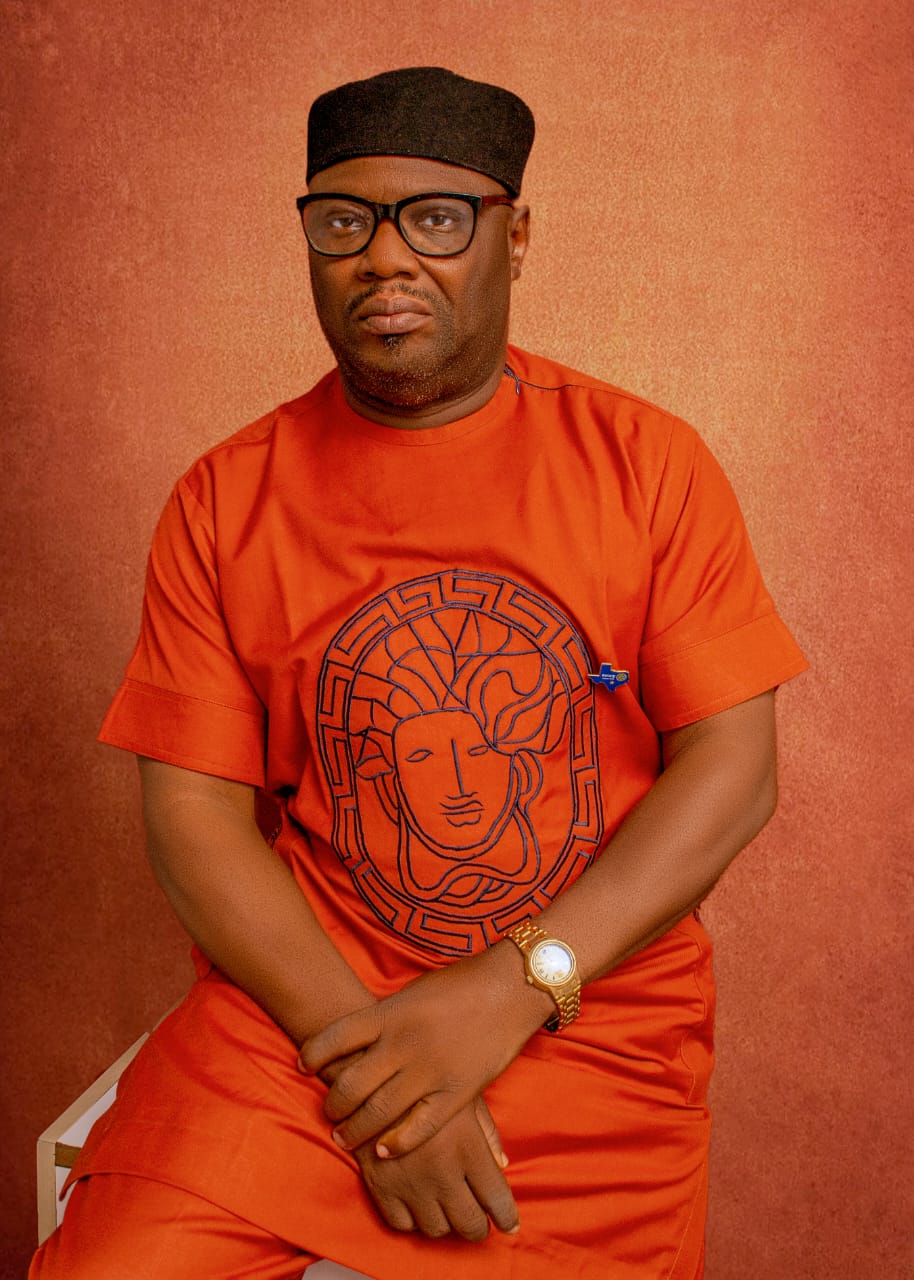
Rotarian Max Amuchie, Immediate Past President, Rotary Club of Abuja CBD

“As one got deeper in Rotary and found a connection to one’s faith the passion increased”, announced RotarianMax Amuchie who just concluded his tenure as President of Rotary Club Abuja CBD.

Having ended open defecation at a public school in Gidan Gimba a rural community in Nasarawa State close to the Federal Capital Territory (FCT) as he rounded off his tenure, Amuchie was full of gratitude to God and to those who supported him in accomplishing the project.

Making the statement on the occasion of his handover, Max Amuchie noted that passing the baton is an annual ritual in Rotary that started in 1905.

The block of three toilets built by the Rotary Club of Abuja CBD in the premises of the public primary school, Gidan Gimba Community, Kano Nasarawa State

Speaking on what inspired him to continue service to humanity after joining Rotary, Rotarian Max said:
“As a Catholic, I came to Rotary and I saw that the objectives of Rotary are in sinc with what we call Corporal work of mercy in Catholic Church. In corporal work of mercy in the Catholic Church, we talk about giving shelter to who needs it, visiting the sick, burying the dead, feeding the hungry and so on. Just as there are seven areas of focus in Rotary, there are also seven acts of charity in the Catholic Church. When I saw that there was a nexus between Rotary and my faith, I got more encouraged. So when I have a missionary disposition to Rotary it should be understood in the context of my background and for me that has also defined my engagement with our adopted community, Gidan Gimba.”

The commissioning of the toilet by traditional rulers of Gidan Gimba Community with Rotarian Max Amuchien


“The first time I went to Gidan Gimba was during the presidency of Rotn Martins Odeh when I joined the club. We went to Gidan Gima and I took part in administering the polio vaccine on the children. That was my first time and for me who is not a medical person I said oh so even as a non-medical person I have this opportunity to administer this oral polio vaccine to a child? It is an experience that was overwhelming. And I said any day I got the opportunity of being president I will do something in that community. So when the opportunity came for me to be president, I met PAG Evelyn Onyilo and I said I will like to put a health clinic in Gidan Gimba and I ask her what is next in our strategic project.

So I told her when I take over I will tell the Board this is what I have in mind. So when my predecessor, Rotn Anne Uche Obi was about to conclude her tenure and we went on a visit to Gidan Gimba and we now asked the people in the community and they said they already have a clinic that their greatest need was to have additional classrooms in their primary school. In a school that runs classes from primary 1 to primary 6, only one block of two classrooms was standing. So we felt there was an urgent need for intervention. That is the reason why we went to Gidan Gimba. For me it was a missionary disposition that I have. Fortunately, we got the classroom up to lintel level but we have completed the three toilets – one for the boys, one for the girls and the third one for the teachers.

“When we went to commission the toilet, the reporter that spoke with the headteacher told me when we were going home that the headteacher of the school, a lady, told her that anytime they went to the bush to ease themselves, the villagers would be laughing at them and that they always felt embarrassed. I was touched. When I heard that I told myself that we made the right decision. Just by our intervention, we have ended open defecation in that primary school in Nasarawa State. It is something that gives me joy. It is not that I did it alone, it was a collective responsibility and I really appreciate everyone who assisted to make it a reality.”

Ending his speech with a quote by Eleanor Roosevelt, Amuchie said: “The future belongs to those who believe in the beauty of their dreams”. Rotary is an organisation that believes in the beauty of its dreams. It just doesn’t dream, it goes further to actualise those dreams, reason why for instance polio has almost become history in the world.

“In the Rotary Club of Abuja CBD we believe in the beauty of our dreams. We dreamt that we would end open defecation in Central Primary School, Gidan Gimba and we made it happen. Our dream equally finds expression in the fact that in 2022-2023 we Imagined a World filled with possibilities and in 2023-2024 we are Creating Hope in the World.

“There is no person whom the cap fits better to take us to that world we envision than President Aisha Ali, a tested hand. She has served our club in various capacities and knows her way around the District. I have no doubt that we are leaving our club in safe hands.”

The high point of the occasion is the handing over to Aisha Ali as the seventh President of the Rotary Club of Abuja CBD.

In her remarks after taking over the mantle of leadership, Rotarian Aisha said that her sentiment has been taken away. According to her, as the 7th President of the Rotary Club of Abuja CBD, it’s a safe landing for her and that she is lucky. She said she is counting on all the past presidents of the Club to take up their first responsibility as a Rotarian to take the Rotary Club of Abuja CBD to greater heights.

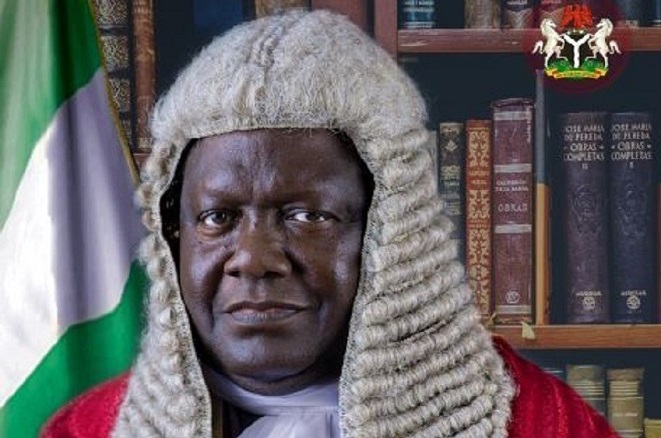
How Court of Appeal’s Justice Agbo died

Justices and staff of Nigeria’s Court of Appeal are still reeling with shock over the death of Hon. Justice Raphael Chikwe Agbo who passed away late morning on Tuesday.

Justice Agbo who is the second most senior Justice of the court was Presiding Justice of the Calabar division.

According to a Court of Appeal source, “We were told that when he woke up yesterday morning (Tuesday) he breathing hard. The driver asked if he could take him to the hospital and he said no he does not want to go to the hospital. The driver now said he was going to call his wife and notify her about what is happening but he didn’t want his wife who is in Enugu to know he was sick. He now said ok, let’s go to the hospital.

“When they got to the hospital he even asked the doctor to call his personal doctor that had been treating him to get his medical history. Thereafter, they gave him some prescriptions which he took and went home. He said he was getting better.

“Because he had sitting that day, when the driver came back to see him, he found out that he was still sweating and sweating so the guy decided to take him back to the hospital. This was now late morning. By the time they got to the hospital, before the doctor could do anything he was already gone.

“They said he had an underlying diabetic problem. He was a very great man. This is somebody that was already preparing for his retirement in October. We don’t know what God has in stock for us but his is a life well lived. He left a lot of footprints on the sand of time.

Called to the Bar in 1978, Justice Agbo was appointed a justice of the Court of Appeal in 2005.

Shortly before the conclusion of his tenure, the former Enugu State Governor Ifeanyi Ugwuanyi named the Enugu State Multi-Door Courthouse after the jurist who is a son of Enugu state, saying it is an “honour well-deserved.”

Barely a week ago, Hon. Justice Olatokunbo John Bamgbose of the Ogun State Judiciary died. He died on 30 June 2023, at the age of 63 years.

Married to Professor Oluyemisi Bamgbose, SAN, a former Chairperson of the NBA Women Forum and the Deputy Vice-Chancellor, Research, Innovation and Strategic Partnerships, University of Ibadan, the late jurist was also the author of Digest of Judgments of the Supreme Court of Nigeria.

Man locks up wife, starves her for nearly two years

The claim by various men and women about how the devil either instigated them to commit crimes or how the devil is in league with their victim appears to be unending.

While the Delta State Police Command is yet to conclude their investigation into the role of an evil spirit in the murder of Felicia Akpomeria by the former Vice Chairman of Okolor Inland community, Udu Local Government Area, Delta State, Austin Ejovwo, one Abdullahi Isa allegedly locked his wife in a room, leaving her to starve for about two years in Borno State, Northeast Nigeria said he locked because she was being disturbed by the spirits of their dead children.

The sad occurrence which was made known to the media by women and children’s rights activist Lucy Yunana, took place in the Gwange neighbourhood of Maiduguri, the capital of Borno State.

Yunana revealed that the Bulama of Gwange (the traditional ruler) took her and other activists to the room where Isa detained his wife for almost two years.

It was also gathered that the couple had seven children who are all dead.

 “The suspect by the name Isa Abdullahi of Gwange (3) in Maiduguri Metropolitan Council is the husband of the survivor (name withheld).

 “We were informed that neighbours occasionally sneaked in to provide her food while her husband was away.

“Thankfully, our staff were conducting some awareness campaign on SGBV in Gwange when the Bulama of the area took our staff to the house where she was locked in and what they saw was indeed terrible and prompted us to inform the relevant authority to save the woman’s life.

“We went there along with the Zonal Coordinator of the Human Rights Commission, Barr. Jumai Mshelia and saw her in the room, what we saw in the room was in a bad and dehumanised condition. The man was arrested by men of the Gwange Division of Police and he is currently in the police station,” Yunana said.

The activist added that the starved woman has been taken to a medical facility in Maiduguri for urgent medical attention.

Dokpesi and The Gazebo Mystique

By Prof. Mike Ozekhome, SAN, CON, OFR, FCIArb, LL.M, Ph.D., LL.D, D.Litt


Ezomo Anthony Aleogho Ayaoghena Dokpesi loved the gazebo in his beautiful Abuja residence. It is made of big rafters and roofed with thatch. A gazebo like the one in Dokpesi’s vast compound is a small building in a house that affords a wide view of the surrounding areas. He ate suya, groundnut, and roasted fish. He drank and relaxed there. He loved choice wines and champagne. The workaholic found great pleasure in unwinding at the gazebo by hosting family members, friends, associates, and loved ones there. No one was left out. He would sing and dance. Sunny Ade’s music was his favourite. He would laugh. Nay, guffaw. It was a place for us to taunt and tease each other – me jokingly calling him “my son and my boy whom I paid his school fees, trained and married for with my hard-earned money.” Him derisively, but jokingly, telling me “You baga; you bush boy who would shiver before me and could not even dare enter my lush office or room in the 80s”.

All and everyone present would laugh. We usually cracked their ribs with such nostalgic jokes. So, coming to the gazebo on that June 16, 2023, for “A Night with Ezomo @ The Gazebo”, was particularly traumatic for me. I could not dance or sing. I was completely numb. I was transfixed like an insect rendered immobile by some powerful chemicals. So, was it really true the Oghierumhoa of Weppa Wanno Kingdom and Araba of Oshoroland would not get up from somewhere to dance with us? Just anywhere from the shadows? Where was he? I looked around. Imagine for a moment, the scene of a helpless and hapless child looking around for his mother. Dokpesi was nowhere. I broke down. I cried like a baby. Uncontrollably. Publicly. I was inconsolable. I had no shame. Shame?

Ha, I conquered it there and then. Reason vacated its seat. Emotions took over. I was broken. Other attendees came to my aid. But not so fast. Some of them equally broke down and joined me in letting out pent-up emotions. Sen Kassim Oyofo, Lina Okakpu, Mina Horsfall, Barr Ter, Vera Ovhighie, and others who were consoling me joined. They themselves wept like babies. Oh death, where is thy sting? You shameless death that wears a hideous monstrous visage, why are you so cruel, so unfeeling? I wiped my tears. I left for my nearby home in distress. Like a rain-beaten chicken. I left the Gazebo Mystique. Then, this write-up was finally triggered when a friend and kinsman based in Atlanta, USA, Alily Akhigbe, sent me the Ezomo’s outing and speech during the DAAR Communications 4th Award night in December, 2021.

Just one and half years ago! I listened to it. Carefully. He was speaking as if he were still alive. Powerful. Boisterous. Effervescent. Brutally frank, as ever. Luminous. Bubbling with the “sap of life like a yam tendril in the rainy season”, as Chinua Achebe once called it in “Things Fall Apart”. He narrated how I rained blows on him physically at a meeting with a consortium of banks at Marina, Lagos, when he had broken down and cried. The government had engineered the banks to take over DAAR over its debts, many of which were not even due for payment. He had wept. He narrated how I descended on him publicly, there and then, raining blows on him, telling him he had committed no crime by borrowing money to run DAAR Communications. He looked at me like a child unto his mother, wiped his eyes and steadied himself for the remaining portion of the meeting. We won at the end of the day. Successive governments never relented in trying to kill his entrepreneurial and political spirit. They all failed. Woefully. I won virtually all his and DAAR’s cases up to the Supreme Court. Kanu Agabi, SAN, also led me to defeat the government in the criminal charges of alleged embezzlement of security funds against him. We won at the Federal High Court (Tsoho CJ) and the Court of Appeal. He was completely discharged and acquitted. So, Dokpesi died without any blemish. He was given a clean judicial and moral bill of health by all courts in Nigeria.

Dokpesi’s humility which he wore like a second skin was infectious, as he bowed for me, every and anyone at the award night, where I was given the “Legal Icon” award. So, watching this video, I again broke down. Even now, I am still crying. Ha, Ezomo, why? But, why? Adieu. Farewell, Iyokpamhe.

Compatriots, let us not mourn, but celebrate this African Octopoidal septuagenarian; this legend; this colossus. It was Calpurnia, wife of Julius Caesar, in William Shakespeare’s Julius Caesar, who, while begging her husband not to venture out on the Ides of March (the day he was later assassinated), made the following memorable speech: “when beggars die, there are no comets seen; the heavens themselves blaze forth the death of Princes”. High Chief Anthony Aleogho Dokpesi, OFR, easily fits into this narrative.

Surely, in Dokpesi’s transition, comets were seen. Because he was a Prince of peace, even the heavens blazed forth his death.

He also fits into Julius Caesar’s own reply: “cowards die many times before their deaths. The valiant never taste of death but once”.

I will end this tribute by quoting Mark Anthony in the same Williams Shakespeare’s Julius Caesar, when he said of Brutus:

“His life was gentle and the elements so mixed in him that nature might stand up and say to the world, “this was a man”.

In the words of 1 Corinthians 15:55. “O death, where is your sting? O grave, where is your victory?” Haruk Murakami (a contemporary Japanese writer) was right when he said, “Death is not the opposite of life, but a part of it”. He was probably right, for Aleogho merely transmitted from mortality to immortality.

Let me tell you how the host of heaven now see Dokpesi. They are in the words of Max Lucado (a Christian preacher and author): “We see a hearse; we think sorrow. We see a grave; we think despair. We hear of a death; we think of a loss. Not so in heaven when heaven sees a breathless body, it sees the vacated cocoon and the liberated butterfly”. Thus, Dokpesi vacated his worldly cocoon of mortality and got liberated like a butterfly into God’s bosom of immortality. Know ye today that what we owe Dokpesi is not to mourn him, but to keep his memory alive. For, as George Eliot, a famous English author most aptly put it, “our dead are never dead to us until we have forgotten them”.

Ezomo Dokpesi, we will never forget you. You will forever live in our hearts. Be happy with the Lord till we meet on resurrection day to part no more.

For his very large Ezomo Dokpesi clan that he left behind; his teeming friends, admirers, associates and loved ones across the world, may the good Lord give you the heart and fortitude to bear this irreparable demise of our dear father, brother, friend and compatriot.

Adieu Iyokpamhe. Farewell Ikuekhiamhe. Goodbye humanist. Okiakhue, Agene 1.

Coca-Cola Nigeria loses copyright infringement suit, to pay compensation

The Nigeria Bottling Company (NBC) and Coca-cola Nigeria Plc have been ordered by a Federal High Court in Lagos to pay the sum of N3 million to Abdulmumineen Onilemarun as compensation for using his work without authority or consent.

Delivering judgment in the suit filed against both Coca-Cola Plc and its bottlers, Hon. Justice Daniel Osiagor in his judgement accused the popular fizzy drink manufacturer of copyright infringement on Abdulmumineen Onilemarun’s published work.

Coca-Cola and NBC were dragged to court by Onikemarun over the use of his calendar work on fasting time for Muslims for religious purposes without his authority or consent.

Onilemarun through his counsel, Abdullahi Ibrahim had accused Coca-cola Plc of infringing on his work, by using the calendar work in the Ramadan timing for dawn meal and breaking of fasting in Kwara State, 2014 and 2015, without his consent, licence and assignment.

In view of the infringement, he had therefore prayed the court to grant him the following reliefs;
“An award of damages of N10 million against the defendants for infringement of copyright by way of unlawfully reproducing, publishing and distributing of his copyright work in the Ramadan Timing for Dawn Meal & Breaking of Fasting for Kwara State, 2014, without his consent, licence and assignment.

“An award of damages of N10 million against the defendants for breach of confidence of secret information and his secret idea for making accurate Ramadan timetable by using the said information and idea in producing Coca Cola Ilorin Ramadan Timing June/July 2015 in the course of their trade as well as for infringement of copyright by way of unlawfully reproducing and publishing of substantial similarity of the plaintiff’s particular method in the copyrighted work of the Ramadan Timing for Dawn Meal and Breaking of Fasting for Kwara State, 2015, without his consent, licence and assignment.

“An order of accounts of profits made by the defendants, in Kwara State, between 29th June 2014 and 28th July 2014 as well as between 17th June 2015 and 16th July 2015.

“An order sharing to him 40 percent of total profits made by the defendants in Kwara State, between 29th June 2014 and 28th July 2014 as well as between 17th June 2015 and 16th July 2015. And an award of costs of this action against the defendants.”

In response to the suit, Coca-cola Plc and its bottlers, NBC Limited, through their counsel, Peter Agboola, urged the court to dismiss the plaintiff’s (author) suit against them for lacking in merit.

During the trial of the suit, the defendants argued that the said author’s work did not include any literary for which copyright would attach.

They argued that for a work to be eligible for copyright, such work must be original, in that sufficient effort must have been expended on making the work have an original character.

Based on the foregoing, they told the court that, there was no evidence before the court of the original work published by the claimant which they allegedly violated.

They further told the court that they were granted a license by the plaintiff and that the claimant consented to the exploitation of the work and voluntarily assumed the risk.

In conclusion, they submitted that there was no agreement or contemplation of any agreement for compensation because the calendars were not used for any economic purpose but for the educational purpose of the Muslim community during the time of Ramadan.

Justice Osiagor held that after carefully examining all the submissions made by the parties, all the exhibits tendered and citing a plethora of authorities, raised only one issue for determination; “Whether the plaintiff’s claim of copyright has been proved to deserve protection and be entitled to the reliefs sought?”

In determining the above, the judge held that; “the plaintiff’s suit is founded on his literary work, “Ramadan Timing for dawn meal for breaking of fasting for Kwara State”. Copyright Act by Section 51 recognizes literary works to include: Novels, stories and poetical works, Letters, reports and memoranda, Lectures, addresses and sermons, and Written tables or compilations.

“From the above definition, a compilation of the “Ramadan Timing for dawn meal for breaking of fasting for Kwara State” is a literary work and I so hold.

“Defendant’s argument that the copyright certificate of the Plaintiff does not protect any literary work as non was submitted to the Nigerian Copyright Commission, tiled “Ramadan Timing for dawn meal for breaking of fasting for Kwara State” is very misconceived as Copyright does not inure in Plaintiff’s favour only upon registration.

“It is trite that, Registration of copyright is not a precondition to the protection of the copyright. See Zain Nigeria. TY XTRA Productions Ltd & Anor (2021) LPELRS3534 (CA).

“Moreso, section 1(2)(a) of the Copyright Act. 2004 requires a party to prove that he has expended efforts into the work for him to be entitled to a legal right as the exclusive owner of the work, Paragraphs 26 and 27 of the statement of claim state as follows: “Paragraph 26: the Plaintiff avers that, by mere looking at both timetables, he discovered that, the sahur times (dawn meal times) of defendants’ timetable titled “Ramadan 2014” have holistic similarities with the Plaintiff’s timetable titled, “Ramadan Timing for dawn meal for breaking of fasting for Kwara State, etc 2014.

“In response, the defendants pleaded in paragraphs 15 and 16 of the statement of defence as follows: “paragraph 15th the 2nd Defendant denies paragraphs 25, 26 and 27 of the Statement of claim and puts the Plaintiff to the strictest proof of the allegations therein. Specifically, the 2nd defendant denies giving any representation to the Plaintiff to expect any reply, recompense, or payment of any form of money or royalty or any wage, sum, salary, compensation, or any indication of any approval, consent or any form of acknowledgment in cash or in-kind for the production of the 2014 Ramadan Calendar.

“Paragraph 16: the second defendant avers, further to the above, and in denial of the relevant paragraphs of the statement of claims, that the comments to the first draft of the Ramadan Calendar sent to the plaintiff and the ones eventually published were so minimal and no labour, or sufficient efforts were expended by the plaintiff in making comments on the draft submitted by the second defendant. There was no originality in the work as what the plaintiff did was to merely compare the ones available on the internet which was to be published by the second defendant with his lunar dates as speculated by the Muslim clerics. It was in fact copied from the internet over which the plaintiff had no originality.

“From the above averments, it will appear that the very collaborative particulars of the plaintiff’s work copied by the defendant were not effectively controverted in the statement of defence were very evasive and argumentative. In Zenith Bank Plc v. Omenaka & Anor. (2016) LPELR-40327(CA) it was held that the law is well settled that specific allegation of facts contained in an affidavit must be specifically denied as general or bare or banal traverse or denial leaves such allegations of facts as deemed admitted and thus requiring no further proof…”

“Plaintiffs suit is founded on damages for Infringement of copyright, to wit: “infringement of a copyright by way of unlawful reproducing way and unlawful publishing of substantial similarity of his particular method in the copyrighted work of the Ramadan Timing for Dawn Meal & breaking of fasting for Kwara State, 2014 without his consent, license & assignment.”

“There is no singular doubt that the plaintiff’s Exhibit and the defendants produced are replicas of each other. The question the defendants have not been able to proffer an answer to is, “if the plaintiff’s timetable is accessible on websites as claimed?” Why engage the plaintiff to preview and forward the prayer calendar for 2014? Why did the defendants not continue the publication of their old Ramadan timetables allegedly faulted by Plaintiff?

“Section 6(1)(a)(i) of the Copyright Act. 2004 confers copyright in a work to have the exclusive right of doing the following: a. In the case of a literary or musical work, to do, authorize the doing of the following acts: reproduce the work in any material form; publish the work; Thus, the evidential burden is on the defendant to establish that they had the consent or authority of the plaintiff to publish his correct version of the Ramadan Timetable as only the plaintiff has the exclusive right to control the doing in Nigeria of the above acts, no other person can use his work without licence or authorization. I, therefore, find in the plaintiff’s favour and resolve the sole issue in the affirmative.

“The plaintiff is entitled to damages which will fully compensate him for his loss. See the Hebridean Coast (1960) 2 ALL E.R 85. The court awards the sum of N3 million as general damages in favour of the Plaintiff for infringement of his copyright “

Monday Lines: On El-Rufai’s axe and Nkrumah’s letter

By Lasisi Olagunju

Immediate past Kaduna State governor, Nasir El-Rufai, recently waxed proverbial and made a Facebook post which sounded like a loud complaint: “The axe forgets but the tree remembers…They are the axe. We are the trees. We have long memories. God Bless Nigeria. Amen.” El-Rufai made that sour post on June 13, 2023 – about three weeks ago. It sounded very ominous and sparked a feeling of deja vu. I read his post again, especially the two sentences: “They are the axe. We are the trees.” I felt like asking El-Rufai: who are the ‘they’ assailing innocent trees with their axes; and who are the ‘we’ – the victim-trees with ‘long memories’? But then, I could see that the message was his most popular social media post in recent times, attracting more than ten thousand likes and almost three thousand comments. Some of the commenters threw it back at the former governor. They said he was the axe and should stop acting the victim. One comment reads: “You are the axe here, Mallam. We, the citizens, are the trees. We’ll never forget.” And another: “We will remember; we will tell our children the stories when the time is right.” What stories?

El-Rufai described what he wrote as an African proverb. He may be correct. But where I come from, we say songs always presage rebellion (orin níí síwájú òtè, owó genge níí síwájú ijó). Nineteenth century American author, abolitionist and statesman, Frederick Douglass, said a variant of this: “The thing worse than rebellion is the thing that causes rebellion.” I think Nigeria should ask brilliant El-Rufai to explain what he meant and who wronged his “we”. If he says it is a harmless promise, a warning to his allies, then we may ask: what sort of man removes a fly from his friend’s forehead with a hatchet?

Beyond El-Rufai’s proverbs, I also like his choice of quotes. Take his Thomas Friedman quote of 15 October, 2022: “….sometimes the news is in the noise, in what is being said and shouted, and sometimes the news is in the silence, in what isn’t being said at all.” I would recommend that quotation to every person in government today who goes about sleeping because the traumatized hungry street is not saying anything. Think of everything that has happened in the last one month. Our government has removed fuel subsidy. The effects have been immediate in ruination and teeth gnashing. My problem here is not just petrol subsidy removal. How about where the gains will go? The gains will very likely feed the greed of the power elite or the elite will tell us there has been no gain yet; that we should, like Animal Farm’s Boxer, work harder and stop whining.

El-Rufai’s proverb says the tree does not forget what the axe does. Is that really true? If it is, why then does the tree continue to empower the axe with the comfort of wooden handles to wreak more havoc? Before our very eyes, we saw how perfect acts of acquiescence in the Orwellian Animal Farm wrecked the years from 2015 to 2023. A reenactment of same is afoot. Every squeal of disapproval from young porkers today attracts nauseating bleating from the sheep of the farm; the dogs of Napoleon, with menacing growls, tell their mates in hunger that the leader does right always. We are not complaining. We take anything our government offers; even when it offers nothing, we take and clap. “When Napoleon begins executing other animals, Boxer can only say, ‘I would not have believed that such things could happen on our farm. It must be due to some fault in ourselves. The solution, as I see it, is to work harder.’”

They are the axe, we are the tree. The people are increasingly made the fodder for the Knight’s horse, his charger. The government is celebrating a crash in demand for petrol as an achievement. They call it lifestyle change; the poor call it trekking, suffering and sweating. Where are Tinubu’s policies against the rich? Installmental death of the poor is afoot. The elite applaud appropriate pricing of petrol. But the poor wears that shoe, he feels the pain. Petrol marketers have served us another notice of misery. They said from this month, because of the realities of the new FX policy, they may start selling petrol for N700 per litre. If and whenever that happens, the people will most likely ask if this democracy is really about them. That will be very dangerous. Again, Fredrick Douglass warned: “Where justice is denied, where poverty is enforced, where ignorance prevails, and where any one class is made to feel that society is an organized conspiracy to oppress, rob and degrade them, neither persons nor property will be safe.”

International money lenders are also the axe here. They insist that there are too many trees in our forest. They cut, trim and prune life and living out of our lives. It is as if they do not care if the human ecosystem is destroyed and our forest becomes a desert. The World Bank and the International Monetary Fund (IMF) are happy and dancing that Tinubu did well by carrying out what they called bold reforms. But most developed countries subsidise energy. Indeed, there is a report that German Finance Minister, Christian Lindner, last November made plans for his country to spend €83.3 billion ($83.4 billion) on gas and electricity subsidies this year. Bloomberg, which published the report in November 2022, said it got it from a document it obtained from the ministry. Germany does that as we speak and it is not alone here. The International Energy Agency (IEA) estimated that consumption subsidies for fossil fuels doubled in 2022 to $1 trillion globally. A March 2023 report by Reuters said estimated oil subsidies in the US are as high as $50 billion per annum. No government in America has been able to stop it as part of the country’s transition to clean energy to tackle climate change. “Even with a commanding Democratic majority in the Senate in Obama’s first six years in office, he was unable to kill the subsidies. For many governments, keeping consumer energy prices affordable is the top priority. That’s why numerous countries, ranging from Japan to Brazil, last year imposed or increased subsidies to cushion consumers from skyrocketing prices,” the Reuters report said.

I have not heard the IMF and the World Bank tell those powerful countries that it was wrong to keep fuel prices low with subsidies. But at the launch of the Nigeria Development Update for June 2023 in Abuja last week, Alex Sienaert, chief economist at World Bank Nigeria, applauded Nigeria and its Tinubu. He said “the recently undertaken PMS subsidy and FX reforms are historic.” He said our country will make savings of N3.9 trillion in 2023 alone and that the action had stopped “Nigeria from going over a fiscal cliff and sets the stage for a new, upward Investment, growth, and development trajectory.” Then, he warned that “headline inflation is expected to rise…to 25 percent in 2023.” He added that if there were no buffers to cushion the impact of these reforms, over 7.1 million Nigerians would be further thrown into the poverty net. Ari Aisen, resident representative of the IMF in Nigeria, at the same event, said the reforms were long overdue. If you complain as I do about the effects, the IMF man had a response: it is natural that the policies have some side effects. “We have seen inflation already high and it is likely to increase further…” I read the IMF man and wondered if he did not know that many of the urban and rural poor have been made to believe that the spike in petrol price is just for some time. We need someone to tell the hopeful to tighten their seat belts because this láálá that has gone up isn’t going to come down to earth again.

Tinubu has been too much of a critic to fail in providing better life for the people. If he fails (we his friends say God forbid), he will be fed what he and his group regularly fed presidents who came before him. He will be introduced to the court hall where Thomas Rymer’s poetic justice is libatory wine, the undying gavel that “seeks to give to each what is owed.”

Inscrutable fate has heaved Tinubu onto power. Critics sometimes find themselves on the throne. When they do, they very often, because of their enormous street sense, get overconfident and take the people for granted; and, when they do this, they fail and fall and their enemies proceed to rejoice over them. I cite an example. Dr. Kofi Busia was one of the key opposition leaders whose criticisms provided the military the needed axe to sack Osagyefo Kwame Nkrumah, Ghana’s first president, in 1966. Busia later got elected and sworn in as Prime Minister on October 1, 1969 and hit the ground running. Within the first six weeks of his Prime ministership, he promulgated the Aliens Compliance Order of 18 November, 1969 under which he chased an estimated 191,000 Nigerians and thousands of other nationals out of Ghana. His domestic economic policies were harsh and largely ineffective in making life better for the people of Ghana. He did everything he did to please the “international community” and made sure he was a friend of America and, unlike Nkrumah, supported Big Brother “on all procedural votes.” The American Central Intelligence Agency (CIA) in a declassified November 3, 1971 memo to the White House noted with applause that Busia’s policies had “earned him the respect and support of the World Bank, the IMF, etc…” The CIA noted in particular that “Busia has followed highly moderate policies, adopted two straight austerity budgets, and refused to renege on the inherited debts. As a result, he is subject to a good deal of domestic pressure and the success of Ghana’s experiment with responsible democratic government is in doubt…” As correctly read by the CIA, Busia soon suffered a fate similar to Nkrumah’s – his ‘friends’ booted him out of office in January 1972, two months, 10 days after that memo was written. Almost immediately after the putsch, exiled Nkrumah fired what he called “a letter of consolation” to the fallen Busia, his former arch critic.

Cheeky, old Nkrumah wrote salt right into the injury of smarting Busia who had just fallen from power. A few lines from his three-page letter here: “I am sure that you realise that those who criticise other people without bothering to assign good reasons for their criticisms eventually end up as victims of their own circumstances. You will also appreciate the fact that those who sow a wind reap a whirlwind, and after you have finished spoiling other people, you will be surprised to find out that you have spoilt yourself.”

I watched President Tinubu in Ijebu Ode and Abeokuta last week. His movement suggested a sure-footed somebody. I watched him and wondered if he knew that tying the nuptial knots with one’s favourite lady is not the sole objective of marriage. He needs to be told that what makes the seas is more than seawater. Getting the presidency, complete with its power and glory, is not the end; making it work for the comfort of the people is. The eight million plus people who voted for him in February and the remaining millions on the street are dying slowly of hardship made worse by his recent policies. He withdrew petrol subsidy and is proud of it; he should be proud of enacting counter-policies that will deaden the pains. After all, when he was young and struggling, did he not join his folks to say that the one who knows how to eat isin must also know how to pluck out the death in its eyes?

Intimate Affairs: When a man’s manhood is threatened

By Funke Egbemode

Whether he is giving sperm or money, a man’s manhood feels rock solid only when he is the giver. All normal men are divinely wired to give. I hope you noticed the emphasis on normal men because not all men are normal. Forget the six-pack abdomen and rippling biceps, many of today’s men don’t mind being humped and getting paid for it. The Yoruba call them ‘alabodo’. Kept men. Gigolos. Men for hire. Toy boys. They are all over the place, dangling their sugar sticks, hoping to net the highest bidder. But their day will come. Today is about the hard task of living with men who are ‘financially under the weather’, if you get my drift. Yes, broke-ass men.

Don’t tell me you haven’t noticed that one of the most difficult men to live with are those without jobs or those who are broke. If you don’t, wait until your man loses out in a business deal and has to depend on what you earn to keep body and soul going; then, you‘ll see how he will start behaving like a man whose third leg has just been cut off.

You know, men generally believe that the purse strings should and must always be controlled and held by them. It is the way God created them. Giving is what validates a man’s manhood. No matter how things change or what current trends say, the natural order of things begins and ends with men giving.

Once a man is out of a job or even temporarily broke, he believes that heaven is about to cave in.

However, they should go around and see how nicely women are getting on, with or without financial support from men. These are the days when women are holding their own. But unfortunately instead of the men being proud of their women’s achievements, many think they must do something to stem the rise of the women.

They should check the number of cars, and I mean elegant cars, being driven by women. They should take statistics of the women between the ages of 24 and 35 and the kind of mouth-watering packages their jobs offer them. Let’s not even start a list of women who own and run flourishing businesses, from Automobile Workshops to Event Planning. If you compare the number of men in that same age bracket and what they earn. I guess one will be able to see that women are certainly giving them a run for their macho image.

Of course, they are ready to tell me off that all those successful women got to where they are riding on men’s shoulders. Well, they should tell me a better story because it is stale news.

How much weight can a cockroach’s shoulder carry? You can only help a woman get a job (and women help men get jobs too) but you don’t do it for her. She’s the one who proves her worth and earns her promotions and raises.

So why do men get jealous when their women start climbing the success ladder? Or more importantly, why do men take their frustrations out on their women when they are broke or unemployed? It’s really a shame when a man takes your sympathy for pity or your support for handouts.

Labake, a chartered accountant, found out this mean side of her husband after nine years of marriage. “I still can’t believe that he had that sort of thing in him. All this while, he supported my career and never insinuated any rubbish about how fast things were moving for me. He is, or was, a businessman and he imported all sorts of things from men’s wear to cars. Then against all my warnings, he decided to go into partnership with somebody.

“I warned him that partnerships are risky and he could lose all he had worked for over the years, but he was sure that any man worth this salt should be ready to take risks. So, he went into it believing he’d be a millionaire in a few months.

“Then things started going south. The other guy happened to be a crook and they almost came to blows before the letter of credit was even opened. He tried to keep it away from me and when eventually their ship arrived; my husband found out that all they imported were not worth what they paid for. Obviously the guy kept some money back and paid for the low-quality cars and drugs that had almost expired. My husband had borrowed heavily for the transaction and had to sell one of his two cars to pay his creditors.

“Then he went into depression and started taking it out on me. He even went as far as accusing me of predicting the loss, you know, something quite close to calling me a witch or something like that. He started complaining about how late I worked, how I was turning him into a house-husband because he helped pick the kids from school once in a while. He took to drinking and nothing I do these days seem to satisfy him.

“He’s even beginning to suspect I’m having an affair with one of my clients who is an American; and with whom I had to work extra hours because he has to go back to the States. It’s now so bad that if we are watching TV and I tell him there’s a programme I want to watch on another channel, he’ll just pick up his car keys and storm out, muttering that you can’t be a man in your own house once you don’t have money. It’s that frustrating”.

Keirah is not even married to the man who’s making her life miserable. They are just on a boyfriend-girlfriend, albeit steady level.

“We both applied for jobs in one of these big conglomerates and I got the job while he didn’t.

“A few months later, he resigned from his job because of a misunderstanding and since then things have fallen apart. He became so mean, suspecting my every move, especially when I work late. Things came to a head when he came to visit me one Saturday and found one of my colleagues in the legal department and I working over a project we were supposed to deliver the following week.

He started insulting the poor guy, calling me names and that he now understood why my weekends were no longer his. I was so pissed that I told him to get out of my life. And that was it.”

Why do men lose their cool when their fortunes take a nosedive and they have to depend on their wives for some time? Aren’t couples supposed to help and understand each other’s plights?

Seriously, must men act like little boys whose toys were taken away by bigger boys each time they are broke?

Funke Egbemode is the immediate past Commissioner for Information and Orientation in Osun state, South West, Nigeria. She is an ex-Managing Director/Editor-in-Chief of New Telegraph Newspapers and also a former Editor of Sunday Sun and Daily Telegraph Newspapers. Funke, a popular relationship columnist under her signature ‘Intimate Affairs’, was a two-term President of the Nigerian Guild of Editors (NGE).

E-mail: [email protected]

A Half Century of Banditry in Nigeria

By Chidi Anselm Odinkalu

Since well before Nigeria’s return to elective governance in 1999, the country has been overtaken by a progressive escalation of what Hannah Arendt in her classic On Violence called “a massive intrusion of criminal violence into politics.” In contemporary  Nigerianism, the word for this is “banditry”.

“Bandits” is a conveniently capacious bogeyman for insecurity in Nigeria that precludes necessary questions as to the provenance of the descent into lawlessness. It captures diverse elements that may include terrorists, cultists, herdsmen, kidnappers, criminal gangs, and militants.

Originally applied to the motorcycle gangs who perpetrate carnage in different parts of Nigeria’s north-west, bandits have now become the trope for an intolerable toll of destruction by mostly non-state entities as well as the inexplicable haplessness of Nigeria’s federal government that has never been known to cringe at the thought of exterminating significant numbers of its citizens. This lamentable situation compels a retrospective on how what the country now calls banditry evolved.

Since Independence, successive governments in Nigeria have confronted variants of banditry. The evidence over time suggests a link between governance, its failures, and what is now called banditry. As a usage, it conflates two underlying crises – government without consequences and ungoverned spaces.

In This Present Darkness, his history of organized crime in Nigeria, Stephen Ellis traces post-independence banditry in Nigeria to “shortly before the civil war, when government broke down in some parts of the Western Region and there was a blurred line between political violence, crime, and organized insurgency.” When the war ended in 1970, the military regime failed to manage demobilization.

In Southern Nigeria, which comprises a mere 29% of Nigeria’s nearly 924,000 km² of landmass, urban banditry ensued. Armed robbery in built-up areas of the country was an early manifestation. An early exponent of this was Ishola Oyenusi, a high-school dropout who chose to be called “the Doctor” and terrorized Lagos at the end of the Civil War. In response, the military government introduced mandatory death by firing squad for convicted armed robbers. The first public executions took place in front of Bar Beach, in Victoria Island, Lagos on 26 April 1971. Less than four and a half months later, on 8 September 1971, Oyenusi was executed at the same location.

The pace of public executions quickly escalated. By 1979, Nigeria had publicly executed over 500 armed robbers by firing squad. In 1984 alone, the regime of Major-General Muhammadu Buhari, shot at least 355. In 1985, it killed another 301 by firing squad. In 12 years between 1984 and 1996, over 1,200 of such executions took place.

In 1984, the response of General Muhammadu Buhari to the emergence of drug trafficking as a new dimension to outlawry in Nigeria was also the firing squad. Far from being mitigated, however, drug trafficking by Nigerians became more organized, more lucrative, and more violent.

In a little-noticed release on 21 December 2018, Nigeria’s then Defence Minister, Mansur Dan-Ali, a retired one-Star General from Zamfara State, complained: “the issue of (sic) drug abuse, unemployment and governance amongst others contributes to the deplorable security situation in Zamfara State.” In the same month the Buhari administration launched a Presidential Advisory Committee on the Elimination of Drug Abuse chaired by retired Brigadier Buba Marwa. The membership included the wives of both the President and the Vice-President. In the four decades that separated the beginning and end of Buhari’s two tours of duty as head of state, Nigeria’s response to organized drug cartels had evolved from firing squad to pillow-talk.

It appeared that each succeeding decade saw an intensification of urban outlawry in different parts of southern Nigeria. In the 1980s, the poster-boy was Lawrence Anini, another school drop-out who concatenated indiscriminate violence with a touch of Robin Hood in a peculiar form of advocacy for the downtrodden.

Anini’s reign of terror in the then Bendel and surrounding states was facilitated by the complicity of some senior police personnel who helped to provide his gang with intelligence and disappeared evidence against them. When two members of his gang were convicted in mid-1986 following effective police work, Anini turned his guns against the police in an intense rampage of mass killing, during which 10 police officers in Bendel State died between August and October 1986. That would prove to be his undoing.

Military President, Ibrahim Babangida, turned up the heat on then Inspector-General of Police, Etim Inyang, famously asking him during a meeting of the then ruling military council in October 1986: “where is Anini”? Two months later, in December 1986, the police arrested Anini and dismantled his gang, which included George Iyamu, a Police Superintendent. In March 1987, they were executed.

In the 1990s, Shina Rambo terrorised parts of south-west Nigeria with similar escapades. In south-east Nigeria, the Otokoto case in Owerri, Imo State, in 1996 revealed a netherworld of ritualized human sacrifice.

By the 2000s, political violence and assassinations would emerge as dominant forms of outlawry. With the introduction of online banking to minimize cash-in-transit, armed robbers began stealing human beings in order to get their money. Commercial kidnapping boomed. In Osisikankwu (Obioma Nwankwo) in Abia State and resource militants in the Niger Delta traded in this. In parts of south-east Nigeria, politicians and these organized crime gangs made common cause leading government to break down. In response, a bandit, vigilante horde, known as Bakassi Boys took over the streets.

Three additional factors collaborated in launching this new phase.

First, public universities incredibly became fertile breeding grounds for outlaws. The story originated in competition among university-based confraternities, which forced the Pyrates Confraternity, the oldest of these confraternities in Nigeria, to leave the universities about 1986. The Supreme Eiye Confraternity (National Association of Airlords) emerged in Lagos around 1965 as rival to the Pyrates. In Ibadan, the National Association of Sealords, better known as the Buccaneers, followed by 1972. University of Calabar produced the Klansmen Confraternity and in University of Port Harcourt, the Vikings emerged. These university cults “pursue their cause with brazen audacity and outright disregard for the laws of the country.”

The growth of these groups coincided with the emergence of articulate civic activism in the universities led by the National Union of Nigerian Students (NUNS), later known as the National Association of Nigerian students (NANS). Military rulers co-opted these cults to disrupt official student activism. Competing groups in the politics of university administration also found them useful. In the Niger Delta, Stephen Ellis recalls, they “became a factor in the region’s politics.”

Second, mismanagement of natural resources exploitation in the country energized the transition from urban to rural banditry. Southern Kaduna, for instance, had always been rich in gemstones, including diamond, sapphire, quartz, ruby, temaline, and aquamarine. In the early-to-mid 1980s, this set off a mad rush of artisanal gemstone rustlers who invaded communities in Jema’a. The rustlers came from as far as Mali, Senegal and Sudan in search of shiny gemstones that the locals called “devil stones”.

In 1986, Newswatch Magazine’s Aniete Usen reported “cases of eliminating by kidnapping, sudden disappearance of dealers and diggers and a whole range of other blood-chilling tales. The barons, agents and diggers became fanatically…. fully armed with automatic weapons.” The weapons they brought into Southern Kaduna would feature prominently in the first Kafanchan crisis in 1987. Their methods have been evident in the descent from artisanal mining to organized banditry in Birnin-Gwari and Zamfara three decades later.

Third, Babangida’s transition to civil rule programme created a mutual support network between politicians, robbers and cults. In the Niger Delta, the military regime of General Abacha introduced guns to quell civic advocacy for resource justice. In 1994, they deployed the Joint (Military) Task Force. Three decades later, the guns are everywhere and the JTF is mired in an interminable mission.

By 2008, Mujahid Asari Dokubo, asked how the armed youths in the Niger Delta who traded in violence acquired their weapons, answered the Rivers State Truth and Reconciliation Commission presided over by former Supreme Court Justice, Kayode Eso, that “the guns were purchased with money disbursed by politicians.”

Quite clearly, successive regimes in Nigeria have found pockets of banditry useful in the enterprise of taking and keeping power. Unsurprisingly, politicians are mostly half-hearted in fighting it. During elections in 2023, for instance, banditry nearly vanished remarkably. Immediately after the vote, it resumed with full force. It seems rather evident that in Nigeria now, the bandits and the politicians are in bed with one another.

A lawyer and a teacher, Odinkalu can be reached at [email protected]. A version of this article first appeared in December 2018 as “Banditry in Nigeria: A Brief History of A Long War.”

Nigeria: An unserious, unproductive, holiday-craving country

Ikechukwu Amaechi

No country desirous of productivity can afford to deliberately put her people out of work in the name of religious ceremonies as Nigeria does. The idea of unending public holidays is not only absurd but also sickening.

By Ikechukwu Amaechi

The idea of this week’s column is not original. Neither is the title. Both came from two senior citizens who are not only fans of TheNiche but also religiously comment on almost every story we publish.

Expectedly, our story on Monday, Eid-el-Kabir: FG declares Wednesday, Thursday public holidays, caught their attention. One of them, an elder stateswoman and retired Federal Permanent Secretary, exclaimed: “Very convenient! So they can take off from Tuesday to Friday. Unserious, unproductive country.”

I was still pondering over that when the elder statesman, a retired boardroom guru, sent a cryptic riposte: “Useless country.”

Then, he followed it up with another text: “12 Christians, 12 Muslims, State fights to get 12. 36 no work days. Plus 52×2 – 104 Saturdays and Sundays – almost 140 days of no work in a wretched country that is the poverty capital of the world. Idiotic!”

That may be an exaggeration but it is close to reality because when it comes to no work days, Nigeria only competes with such countries as Myanmar, Nepal, Iran, Sri Lanka, Bangladesh, and Cambodia.

That is not a good company to keep for a country with 63 percent of its population (133 million people) multi-dimensionally poor and 41 percent unemployed.

The tragi-comedy has been made worse by the supremacy battle of the two dominant religions – Christianity and Islam – none of which is indigenous. 

But as bad as this picture is, it is not even the full story. In most Muslim-dominated states, Fridays have equally been appropriated as part of the weekend work-free days. Where it is not expressly so, workers at best work half-day, leaving for home after the Jumu’ah Prayer (Friday prayer).

And true to prediction, Governor Umar Namadi of Jigawa State, on Tuesday, extended the Eid-el-Kabir holiday to Friday. A statement by his head of service, Alhaji Hussaini Ali Kila, said: “The Jigawa State Government has declared Friday, June 30, 2023 work free day in commemoration of this year’s Eid-el-Kabir celebration.”

In neighbouring Katsina, one of the most educationally backward states in Nigeria, Governor Dikko Umar Radda declared a one-week holiday for primary and secondary school students for the Sallah celebration. In Kano, the Education Ministry announced a Sallah break for all day and boarding public/private primary and post-primary schools in the state, commencing Friday, June 23.

Truth be told, even in those states where no public announcements were made, particularly in the North, the working week ended Tuesday. It will even be a struggle to drag some back to work on Monday.

When these ceremonies fall on weekends, the nearest weekday is quickly appropriated as a public holiday. Since it has become a convention that a minimum of two days must be used in celebration, if the ceremonies fall on a Saturday and Sunday, then Monday and Tuesday are sacrificed on the country’s hedonistic altar.

For instance, many of the public holidays that fell on weekends in 2022 were celebrated on weekdays. New Year’s Day, January 1, was a Saturday but January 3, was declared New Year Day holiday; May 1, a Sunday was Labour Day but May 2 – Monday – was Labour Day holiday; June 12 – Sunday –  was Democracy Day but June 13 – Monday – became Democracy Day holiday; Sunday, July 10 and Monday, July 11 were days for the 2022 Eid-el-Kabir but the holiday was extended to Tuesday, July 12; the holiday for October 1, which fell on a Saturday was celebrated on Monday, October 3;  October 8, 2022, was the date for Id el Maulud but because that was a Saturday, Monday, October 10 was declared a holiday; and Christmas Day in 2022 fell on a Sunday and Tuesday, December 27 became Christmas Day holiday.

This is ridiculous, particularly against the backdrop that on public holidays major economic activities are automatically shut down – all financial institutions, schools, and government offices go on break.

The bigger tragedy is that even as many think that we already have too many work-free days in a country where, ideally, every hour of the 365 days in a year ought to be maximally utilized in productive ventures, some are still clamouring for more.

The ultra-conservative Muslim Ummah are still agitating that the beginning of the Islamic year be declared a public holiday insisting that the Gregorian calendar is a Christian creation. Thus, July 19, 2023, which is the Gregorian date for 1445 AH, the beginning of the 2023 Islamic year should be declared a public holiday. To be sure, some states had already started observing it as a work-free day. Sooner than later, it will become a national holiday.

s

It is even worse every election year. In an era when you can hardly know that elections are being held in some countries, including here in Africa, Nigeria is entirely shut down on election days. Many state governors declared work-free days to enable residents register for the 2023 elections and to collect their Permanent Voter Cards (PVCs), in an election Prof Mahmoud Yakubu-led Independent National Election Commission (INEC) disingenuously rigged beforehand.

Then, throw into the mix the fact that non-state actors like the Mazi Nnamdi Kanu-led Indigenous People of Biafra (IPOB) in the last two years declared every Monday a work-free day in the Southeast, then the absurdity of the problem stares you in the face.

Until Nnamdi Kanu is released from prison, IPOB declared every Monday a sit-at-home day starting from August 9, 2021. A statement by the group’s Media and Publicity Secretary, Emma Powerful, announcing the harebrained policy of the self-determination group said: “We the global family of the Indigenous People of Biafra (IPOB)  wish to announce to all Biafra citizens, friends of Biafra and lovers of Biafra freedom and independence that IPOB leadership has declared every Monday ‘a ghost Monday’.

“This declaration takes effect from Monday, August 9, 2021. From that day Biafra land will be on lockdown every Monday from 6:00 am to 6:00 pm until our leader, Mazi Nnamdi Kanu, who was unlawfully abducted in Kenya and illegally detained by the federal government of Nigeria is released.

“Nobody should attempt to flout this directive as doing so may come with huge consequences. Anybody flouting this order is taking a grave risk.”

And, indeed, it came with fiendish consequences for innocent people whose only crime was daring to eke out a living for their families on Mondays. It is so bad that even when IPOB disavowed the “ghost Monday” farce, it has become a permanent feature in the Southeast calendar because many are yet to recover from their tragic experiences and even Southeast governors are observing it religiously even as they talk tough.

As if that is not bad enough, IPOB has also extended the “ghost days” to any day Nnamdi Kanu is billed to appear in court, his birthday, etc.

So, why these many work-free days? None of the two religions – Christianity and Islam – pushing that every of the 365 days be declared a public holiday is indigenous. They are foreign religions and not even in the Arabian Peninsula and Israel where they originated are so many man-hours wasted as work-free days in the name of religion.

In the developed climes of Europe and North America, no one can afford such luxury. For instance, in the United Kingdom, there are only eight bank holidays (public holidays), that the public receives as days off work, per calendar year: New Year’s Day, Good Friday, Easter Sunday, May Day, late May Bank Holiday, Summer Bank Holiday, Christmas Day and Boxing Day. The United States recognizes 12 federal holidays and in Canada, there are 10 paid general holidays every year.

These incessant work-free days in Nigeria are ill-advised. The wasted man-hours are unquantifiable and the economy is worse for it. The public holidays are too many and unconscionable, needless and counter-productive and must be reduced if Nigerian leaders are serious about jumpstarting the economy and revving the engine of production and development. Holidays that fall on weekends should be celebrated on such days. No country desirous of productivity can afford to deliberately put her people out of work in the name of religious ceremonies as Nigeria does. The idea of unending public holidays is not only absurd but also sickening.

Side chic stabs married lover to death in his home

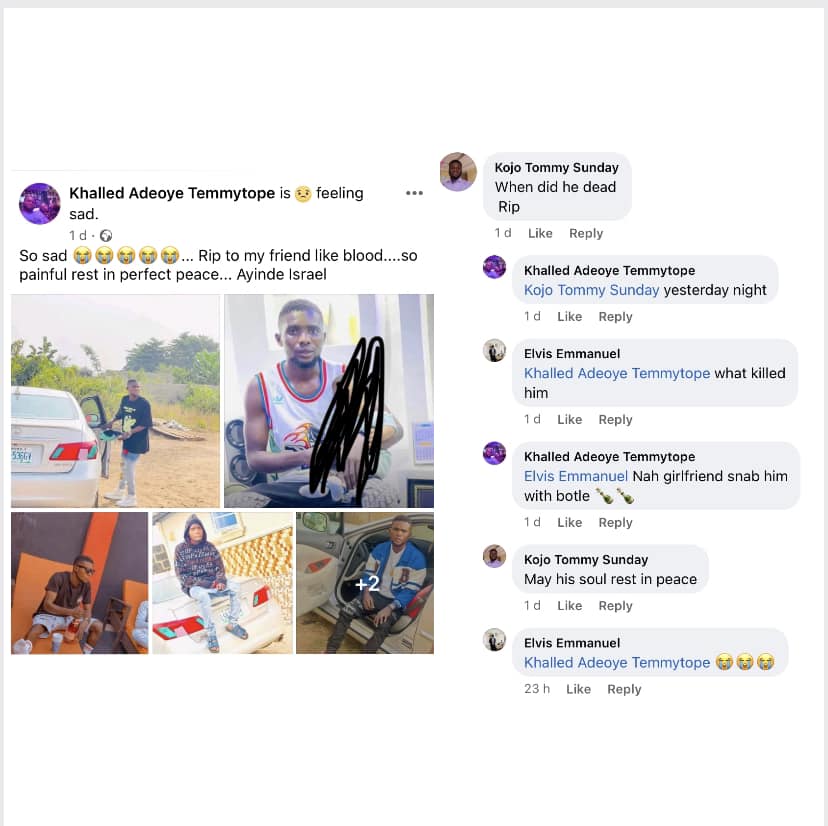
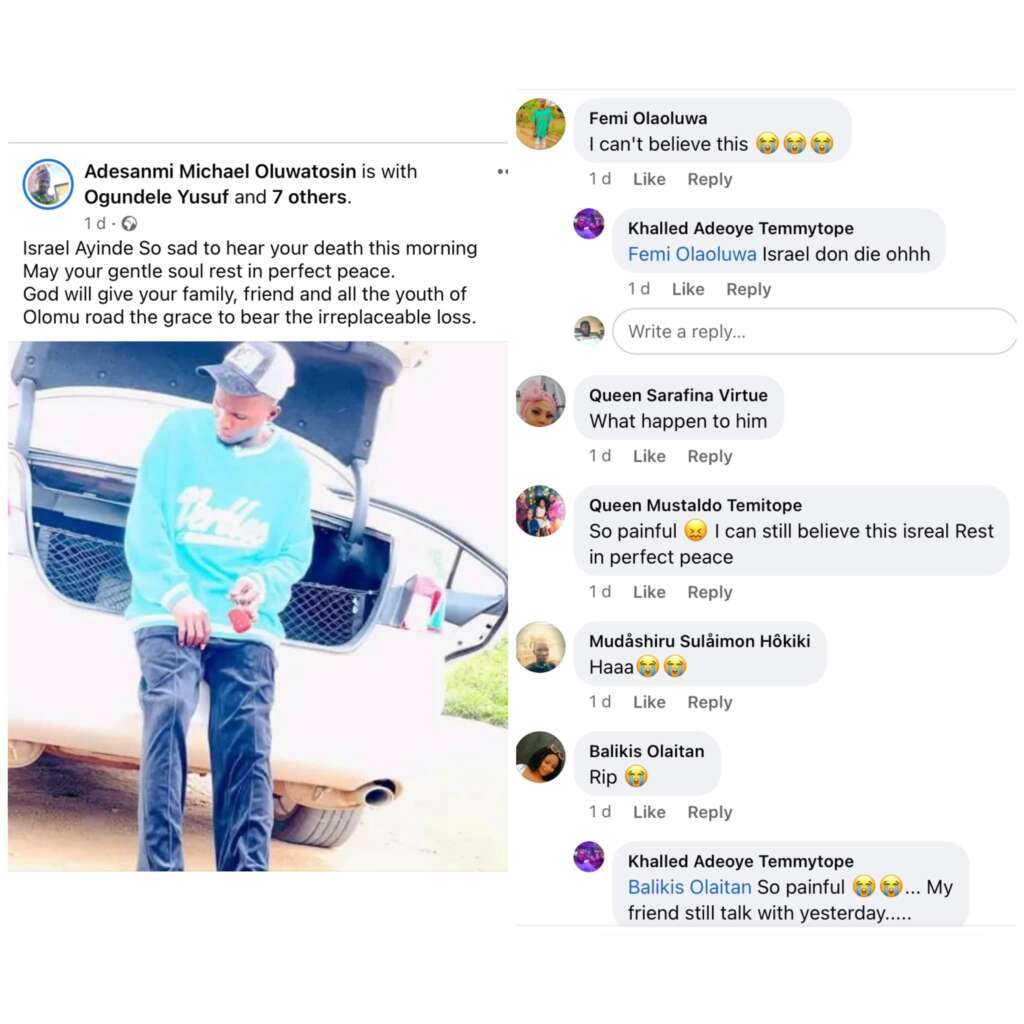
The Holy Book in Proverbs 9:17 said: “Stolen water is sweet; food eaten in secret is delicious!” But little did Israel Ayinde know that a few moments of stolen pleasure was going to send him on an early trip to the land of the immortals. If only he knew about an earlier warning in the same Holy Book wherein the wise King Solomon said: “Many are the victims she has brought down; her slain are a mighty throng.” – Proverbs 7: 26. And Solomon should know better when it comes to feminine matters.

It so happened that the woman Israel brought home when his wife travelled stabbed him to death! The sad incident occurred in Itori Ewekoro area of Ogun state.

The now late Israel Ayinde reportedly invited his side chick, Alice, to his home after his wife travelled for the Sallah holiday. Unfortunately, they got into an argument on the night of Tuesday, June 27, and Alice stabbed him in the neck with a knife. He was rushed to two hospitals where he was pronounced dead.

 Alice is presently being held at the Ifo police station.

In January this year, a woman made a huge scene in their compound when she caught her husband cheating on her with a lady in their matrimonial home. In footage seen on social media, the irate woman hurled swear words at her husband as she slammed him for being unfaithful.

“Do you know you are a big fool? “After everything I did for you ehn,” she ranted from the ground floor at her husband with the side chick on the balcony of an apartment on the first floor.

Social media reactions

Ogechukwu Offorbuike said: “The husband sef na big pig. The woman wey follow man go his matrimonial house. Na so the konji or poverty hold you reach? Any of her reasons for seeing a woman’s belongings all over the house and still removed cloth. Shameless.”

Mati Anyafulugo said: “Some men are just madddddd and very disrespectful to their Wives. Who brings a side chick to their matrimonial home and also has the temerity to have sexxxx with his side chic in their matrimonial bed? Zuzugharibanu!”

Ifesinachi Vanessa said: “I don’t have problem with the so called side chick o. “Na the mumu husband that disrespected his darling wife to bring his side okuku to the matrimonial home and use the holy matrimony bed.”

Nkechi Favour Ugochukwu said: “Side chic with audacity, you carry mind go married man house. It’s the neighbours minding their business for me.”

Ada Oliver said: “He doesn’t have money to take her to a hotel or what? Why your home? “Ndi mmadu sef.”

Watch the video here.

https://www.instagram.com/reel/CoAlADOAotF/?utm_source=ig_web_copy_link

TIPS