Home Blog Page 761

How many more lives are enough?

By Hassan Olalekan Sherif, Esq[1]

“There is no grievance that is a fit object of redress by mob law” – Abraham Lincoln

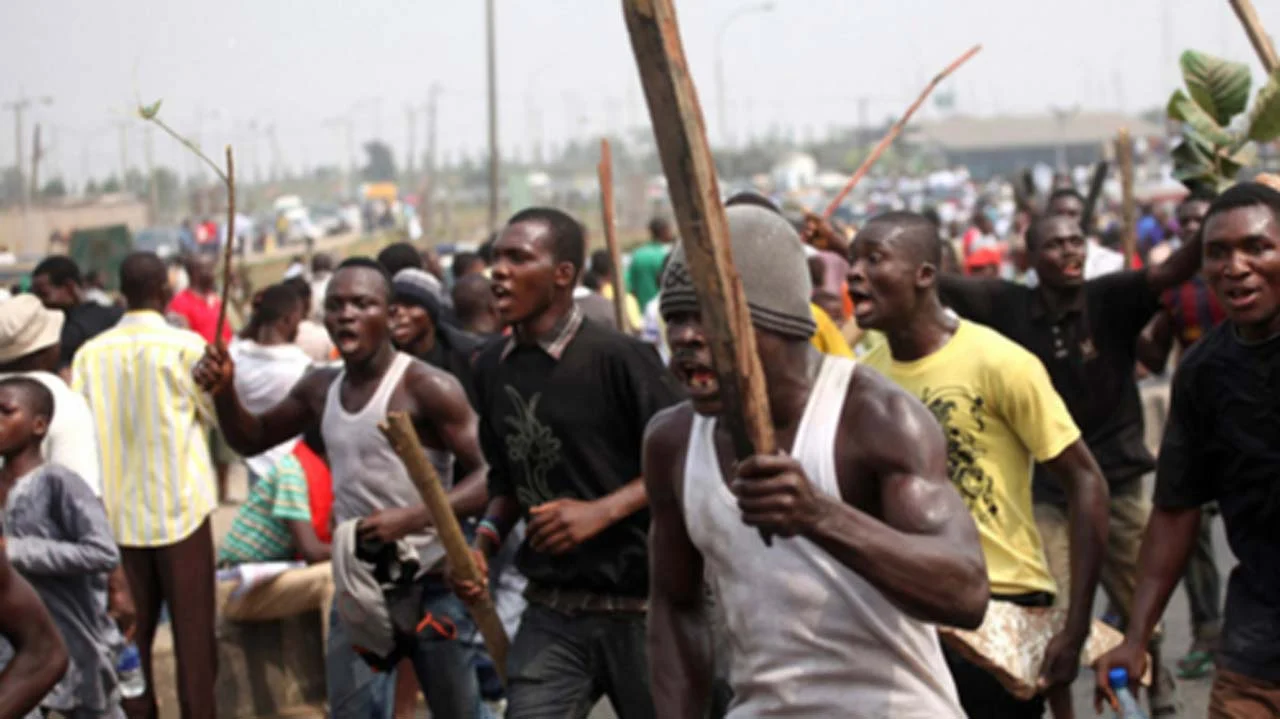
Today, I read a report which made me shudder with real fear. It was the work of a risk assessment and intelligence-gathering platform called SBM Intelligence. The report, deeply concerning and unsettling, released sometime in May 2022, graphically depicted what the numbers say about the rate of mob action in Nigeria, circa 2019 to 2022. To say that what I read was alarming is to put it quite mildly. It depicted horror, bloodletting, and most definitely, what any serious country that values the lives of its citizens, should not be.

According to the SBM Intel report, between January 2019 and May 2022, there were a staggering 279 incidences of mob violence in Nigeria which claimed the lives of 391 people. I was just alarmed and dumbfounded. 391 people gone and in less than 4 years!

The SBM Intel report also claimed that out of the 391 deaths within the period under review, the Southern region had the majority, with 223 deaths. Additionally, the report identified two of the bloodiest incidences of mob action in the Northern region. The first occurred in Majifa, Kankara Local Government Area of Katsina State, where residents were reported to have lynched bandits who had previously attacked them in 2021, resulting in the death of 33 individuals. The second incident took place in Tangaza Local Government Area of Sokoto State in September 2021, where 13 people were killed after residents tracked down and killed bandits.

The SBM Intel report further identified that the southern region of Nigeria had a higher frequency of mob actions, with 197 out of the 279 reported incidences within the period under review. The northern region, on the other hand, recorded only 82 incidences during the same period. The report stipulated that the southern region, where lynching was more likely to occur and more likely to be motivated by economic reasons, was more dangerous than the northern region in terms of mob violence.

But that is not all! Just recently in April 2023, Okolie Arinze, a 500-level Civil Engineering student of Obafemi Awolowo University was reportedly mobbed by some students resident inside Awo Hall over an alleged phone theft. He was sadly, and as with most cases of mob violence, pronounced dead on getting to the hospital. Additionally, and even more recently, on Sunday, June 25, 2023, a man, identified as Usman Buda Mai Hanji, was reportedly killed in Sokoto State over an alleged blasphemous comment against the holy Prophet Muhammad (SAW).

I find these statistics and realities, to say the least, very shocking, shattering, upsetting, and disheartening. I am particularly not concerned with keeping score of which regions had more incidents. For me, it was simply deeply saddening that lives have been lost through extra-judicial and unconstitutional means and no end seems to be in sight.

I know, in a bid to rationalize and make the illogical seem logical, many will probably say, “Haven’t the bandits killed? Haven’t they maimed, plundered, and brought immense grief and sorrow to numerous families?”. I know others will probably say, “Are they, not thieves, pickpockets, and kidnappers?”. While I do question the validity of these claims and assertions for most victims of mob violence, I consider it more important to state that caution must be exercised and the constituted authorities allowed to carry out their duties within the confines of the law. We cannot afford to become a society driven by savagery, as two wrongs can never make a right.

It is undeniably a dangerous trend for individuals to determine, without the benefits of a fair trial, who should live and who should die, and all these, in a fit of rage. There is a profound reason why the doctrine ascribed to William Blackstone, as far as 1769, states that “the law holds that it is better that 10 guilty persons escape than that one innocent suffer.” This principle underscores the fundamental value placed on protecting the rights of individuals and preserving and protecting the innocence of the same within a legal system. It emphasizes the importance of ensuring that justice is served fairly and that the risk of punishing an innocent person is minimized, even if it means some guilty individuals may go unpunished. This principle serves as a reminder of the critical balance between upholding the rule of law and safeguarding the rights and freedoms of all individuals. The grandiose reason d’etre for this must not be lost on us.

The dangers of an uncurbed scourge of mob action stare us in the face. While sometimes born out of frustration or a desire for immediate justice, it can, and if unchecked will, perpetuate a cycle of violence and more violence. It will butcher and undermine the principles of justice, and fairness, and eventually erode rule of law. It will undermine social cohesion, threaten peace and stability, and hamper the development and progress of a nation. Indeed, every life lost should be a tragedy!

Truly, in any functioning legal system, the determination of guilt and punishment for same, should only be left to the appropriate authorities such as law enforcement agencies and the judiciary. While I know our law enforcement agencies are not exactly the best examples of how law enforcement should be run, I know of no better alternative. It is either them or the risk of outright anarchy and I choose the former while hoping for improvements. As Mark Twain said in one of my favorite quotes, “Continuous improvement is better than delayed perfection”.

It is important to recognize that this is a wake-up call. The government must do more, and intentionally so. We must invest in effective law enforcement, intelligence gathering, and swift prosecution of persons suspected to have partaken in acts of mob violence. We must also, and very urgently at that, address the underlying causes that lead to such incidents of mob action. We must address socioeconomic disparities. We must strengthen community-police relations, and ensure the concept of justice is not alien, or only for the privileged select few. Public awareness campaigns, community engagement, and education can play a significant role in promoting peaceful conflict resolution and non-violent alternatives. We must foster a culture of dialogue, tolerance, and respect for the rule of law. By raising awareness, supporting initiatives, and demanding accountability, we can collectively work towards a safer and more just society.

Ultimately, the preservation of human life and the protection of individual rights should be paramount. Striving for a society where the rule of law is upheld and where justice is served through proper legal channels is crucial.  There must be an end to this mad cycle of killings and deaths.

How many more lives are enough for us to recognize and act upon these imperatives?


[1] Hassan Olalekan Sherif is a lawyer based in Abuja, currently practicing at J-K Gadzama LLP. He is a public affairs commentator and advocate for the rule of law and justice amongst other considerations. Contact him via his personal email address: [email protected].

In Senegal, the people have foiled a constitutional coup

By Chidi Anselm Odinkalu

 On 3 July, 2023, Senegal’s president, Macky Sall, in power since 2012, publicly renounced his aspiration for a constitutionally prohibited third term, sparking a synchronized outbreak of ostentatious back-slapping. Nigeria’s former president, Goodluck Jonathan, convener of the impressively-named, West African Elders Forum (WAEF), fired off a letter describing Macky Sall as a paragon of “sacrificial leadership.” Chairperson of the Commission of the African Union, Moussa Faki Mahamat, was full of “admiration for statesmanship which privileged Senegal’s interests.”

Describing President Sall’s announcement as an act of “courage, humility, and deep faith in Senegalese democracy”, Executive Director of UNAIDS, Winnie Byanyima, claimed that he had told her in confidence two years ago that “he was not going to run for a third term but that he would announce this towards the end of his term.”

Ms. Byanyima did not say whether President Sall had also told her that he would wait for enough Senegalese to die on the altar of his presidential vanities before renouncing them. Her testimony had a tiresomely Pentecostal whiff to it.

In announcing the renunciation of his ambitions, Macky Sall claimed that Senegal’s constitution, whose text is explicit to the contrary, would have permitted his violation of it. He sounded deflated and he was. President Sall’s hitherto undisguised ambitions had already killed “dozens” in popular resistance and protests. The latest, at the beginning of June 2023, led to the killing of between 16 to 30 protesters.

In the end, the people forced him to blink. In his campaign to succeed himself, Macky Sall’s party had procured paid demonstrations in support of his ill-fated ambition. But, ahead of his announcement, opposition leader, Ousmane Sonko, whom Sall seeks to preclude from next year’s ballot, had called out the country to mass action.

Senegal’s citizens were determined to make the price of Sall’s self-succession ambition impermissibly prohibitive. The Council on Foreign Relations rightly described Sall’s disavowal of his ambition as rather “belated”.

Macky Sall’s self-succession put Senegal’s proud record of democratic exceptionalism in West Africa to test and is a rare instance of failure in Africa’s new brand of constitutional coups. In retrospect, events in Dakar this past week show that while the optics of the region’s democratic landscape may appear different, the narcissism of political power remains durable.

On 28 May 1975, the rulers of 15 countries in West Africa concluded a summit in Lagos, then capital of Nigeria, with the adoption of the Treaty of the Economic Community of West African States, ECOWAS. It established a regional economic community among the 15 countries, with an undertaking to shrink the zone of sovereign prerogative that they could claim at a time when relations among Africa’s rulers were defined by mutual suspicion and a mutual trade in accusations of interference or subversion.

For proof of this then existing trend, you only had to look at the composition of the rulers who established ECOWAS. Their host was a Yakubu Gowon, Nigeria’s then Head of State, a dashing four-star General since the age of 34, who was barely 40. Basking in the after-glow of the accomplishment that the establishment of ECOWAS clearly was, General Gowon traveled to Kampala, Uganda, two months later in July 1975 for the 12th Summit of the Organization of African Unity (OAU). It was his last. Gowon’s host in Kampala was Idi Amin Dada, another soldier and Uganda’s then ruler, who had chosen to go one better than Gowon by gratifying his vanities with the epaulettes of a Field Marshall.

While he was in Kampala, soldiers back home in Nigeria, led by Murtala Mohammed, then a Brigadier-General in the Nigerian Army, decided to relieve Gowon of his command and overthrow him. Nanven Joseph Garba, the army colonel who announced the coup, was Gowon’s kinsman who also commanded the Brigade of Guards responsible for the protection of the Head of State.

Yakubu Gowon was not the only soldier at the creation of ECOWAS in 1975 nor was he the only one overthrown by them. Six others among the 15 original signatories to the treaty were soldiers, including: Lt-Col Mathieu Kérékou (Benin); Gen. Ignatius Acheampong (Ghana, represented by Lt-Col RJA Falli, Minister for Economic Planning); Col. Moussa Traoré (Mali, represented by Major Baba Diarra, Vice-Chairman of the Military Committee of National Liberation); Lt-Col. Seyni Kountché (Niger); Gen. Gnassingbe Eyadema (Togo), and Gen. Aboubakar Sangoulé Lamizana (Upper Volta, now Burkina Faso)

Of the remaining eight, Presidents Dawda Jawara (Gambia); Sekou Toure (Guinea); Luiz Cabral (Guinea Bissau); William Tolbert (Liberia); Moktar Ould Daddah (Mauritania); and Siaka Stevens (Sierra Leone) were all succeeded by soldiers. President Felix Houphöuet-Boigny of Côte d’Ivoire was the only president as such among the original signatories who was neither a soldier nor directly succeeded by one. Abdou Diouf who represented Senegal at the adoption of the treaty was then Prime Minister to President Leopold Senghor, whom he later succeeded as president on 1 April, 1981.

Looking back at that era from the vantage of nearly five decades later, the appearance of progress in the optics of government in West Africa looks assured. Mauritania is no longer part of ECOWAS but Cape Verde, which joined in 1976, ensures that the regional bloc remains comprised of 15 members.

In the half century to 2004, West African countries witnessed “169 military interventions of some sort”. The only countries spared this scourge were Cape Verde and Senegal.

Today, in 12 countries out of 15 among the member states of ECOWAS, the head of state by whatever name called, enjoys democratic legitimacy. The only countries presently exempt from this trend are Burkina Faso, Guinea, and Mali, where the military installed themselves in power in coups organized within the past three years.

Impressive as this picture may look, it flatters the region in many ways. First, soldiers in military fatigues may no longer be fashionable in seats of power, but soldiers in many countries in the region are not far from power. Umaro Sissoco Embaló, the current president of Guinea Bissau and Julius Maada Bio, his peer in Sierra Leone, are both former army Generals. Muhammadu Buhari, another General who led the military to overthrow Nigeria’s elected government on 31 December, 1983, only recently completed another tour of duty on 29 May 2023 as head of state of his country. They may have shed their fatigues, but soldiers continue in many African countries to enjoy historical advantages in the contest for political and economic power.

Second, coups are no longer the monopoly of soldiers. Civilians or incumbents with appearance of electoral legitimacy now also implement what have been called constitutional coups by manipulating constitutions, courts, and election management bodies to destroy constitutional guardrails and keep themselves in power for as long as they please. In West Africa, the rulers of Côte d’Ivoire and Togo, for instance, have changed their constitutions in this way. In Guinea, soldiers found their excuse to launch a bid for power in fatigues after Alpha Conde, a civilian president, overthrew the constitution in a bloody exercise in 2021 to extend his tenure as president.

Third, these efforts to subvert constitutional rule in the region, whether by the military or civilians, are often accompanied by foreign support. Around Africa, Russia is a rising new force for autocracy and coups. In West Africa, Russia’s footprint has been active in the overthrow of constitutional government in Burkina Faso, Guinea, and Mali. Beyond the region, its friendly presence has also been reported in Burundi, Central African Republic, Comoros, Sudan, Zimbabwe, among others.

In Senegal, Macky Sall’s ambitions stalled in the face of many factors. He could not rely on the army, he had no overwhelming foreign backers and Senegal’s fragility was becoming evident in the face of stout popular resistance. In the end, the people forced him to back down. The plaudits here clearly belong to the people of Senegal. For Macky Sall, he will spend the remainder of his presidency seeking post-presidential immunity. He will need it. 

A lawyer and a teacher, Odinkalu can be reached at [email protected]  

FCT Judiciary Small Claims Court debuts

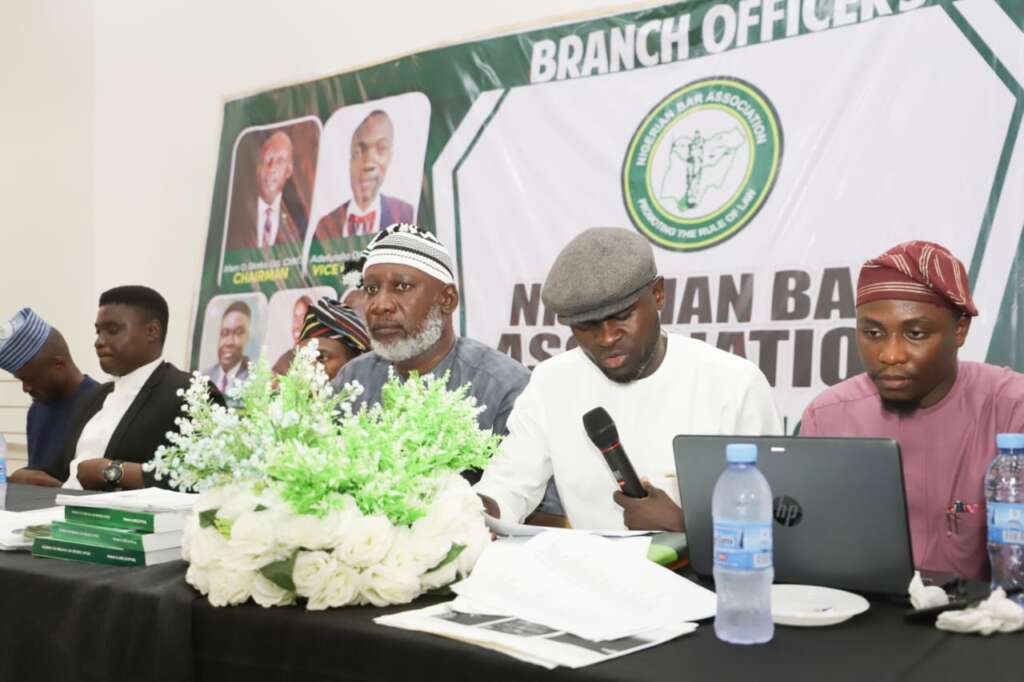
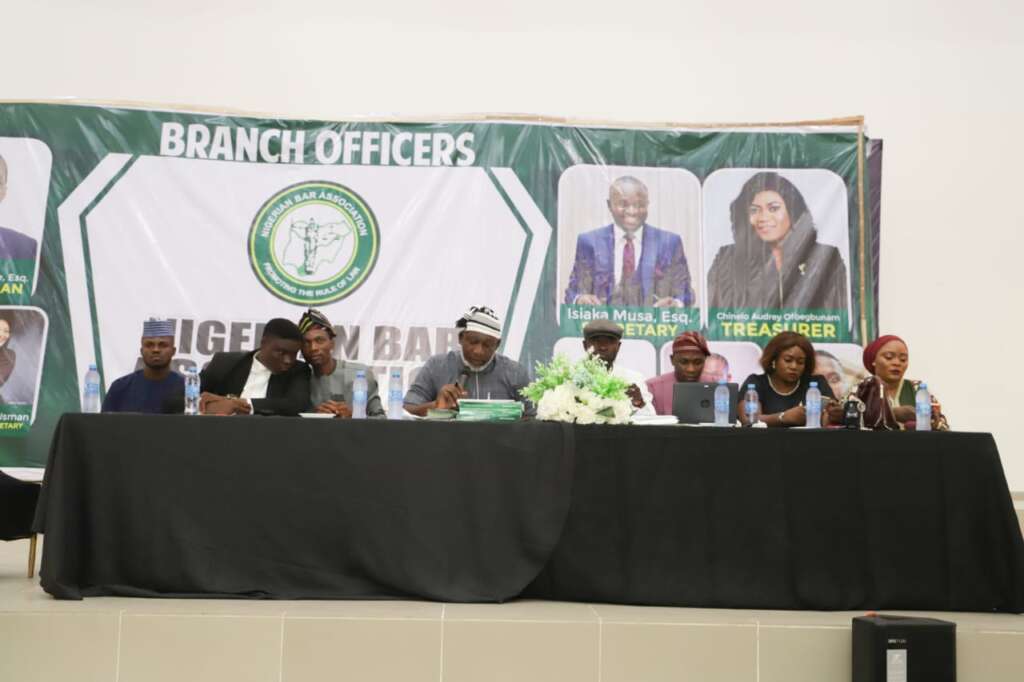
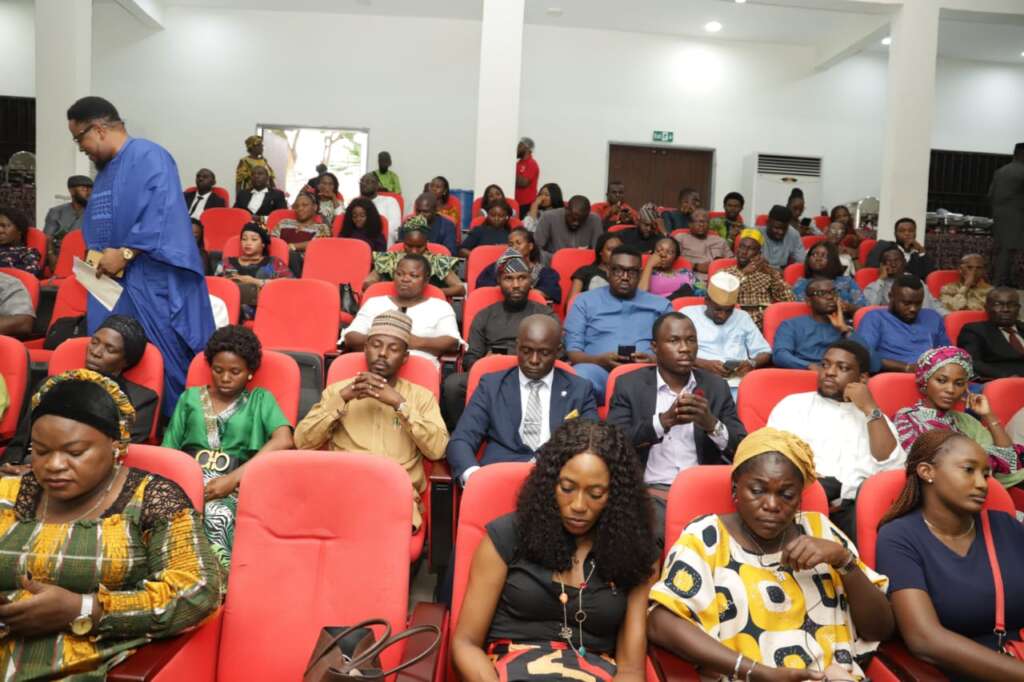
  • NBA Abuja July 2023 meeting in pictures

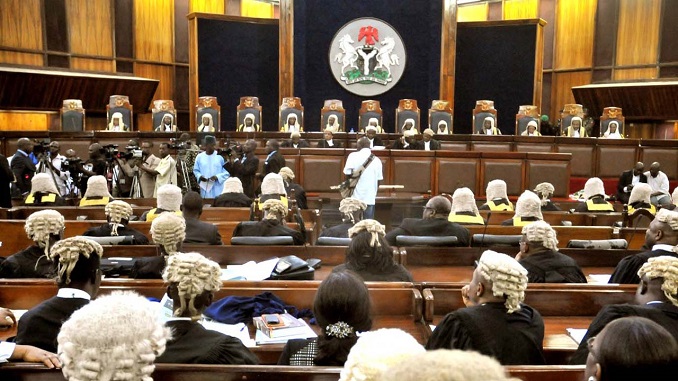
The Chief Judge of the Federal Capital Territory, Justice Husseini Baba-Yusuf has inuagurated a Small Claims Court.

Chief Magistrate Ibrahim Vera Ene who made the disclosure at the July meeting of the NBA Abuja (Unity Bar) revealed that the court which was launched on the 6th of July 2023 is modelled after the Small Claims Court in England.

The Chief Magistrate who gave a talk on the practice and procedures of the Small Claims Court said the court is for liquidated monetary demand which does not exceed 4 Million Naira.

The court according her accommodates counter claims not exceeding 7 Million Naira, while the entire proceedings last for only 60 days from start to finish. Also parties have a right of appeal after 14 days of Judgement.

In the course of the meeting, Dr Chukwuemeka Eze, the Chairman of the Tax Appeal Tribunal, South East Zone, gave a talk on the practice and procedures of the Tax Appeal Tribunal. He x-rayed the decisions of the Tribunal over the years.

Dr Eze urged Lawyers to comply with tax regulations and regimes in the country because as tax offences are strict liability offences which do not admit of the strict rules of evidence. He further said that taxation is global and sui generic. No technicalities are allowed and that cases are decided between 3 to 6 months. He said that there are 50 Tax Appeal Commissioners in Nigeria and sit in the 8 zones of the Tax Appeal Tribunal in Nigeria.

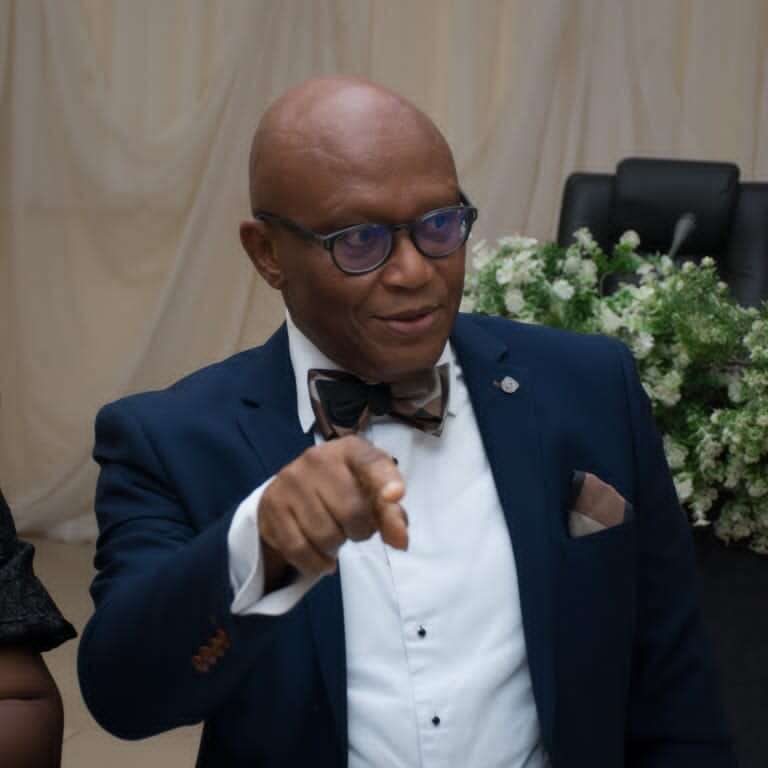
The Chairman of the Branch, Afam O. Okeke,Esq thanked Tax Appeal Tribunal for partnering with the branch. He also thanked Chief Magistrate Ibrahim Vera Ene for sensitising members on practice and procedure of the newly introduced Small Claims Court.

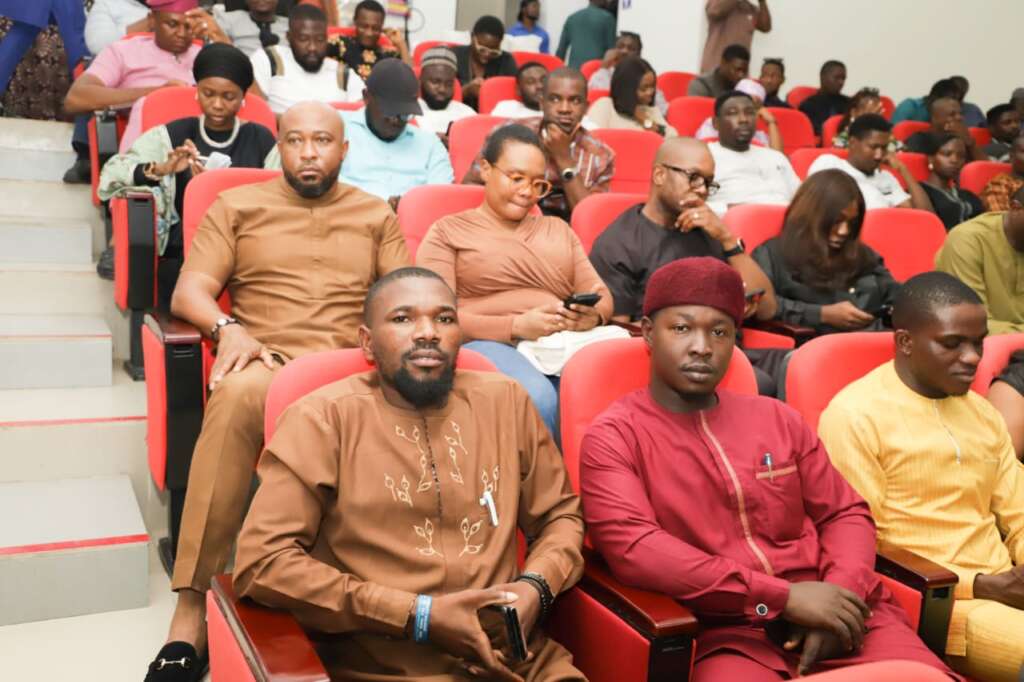
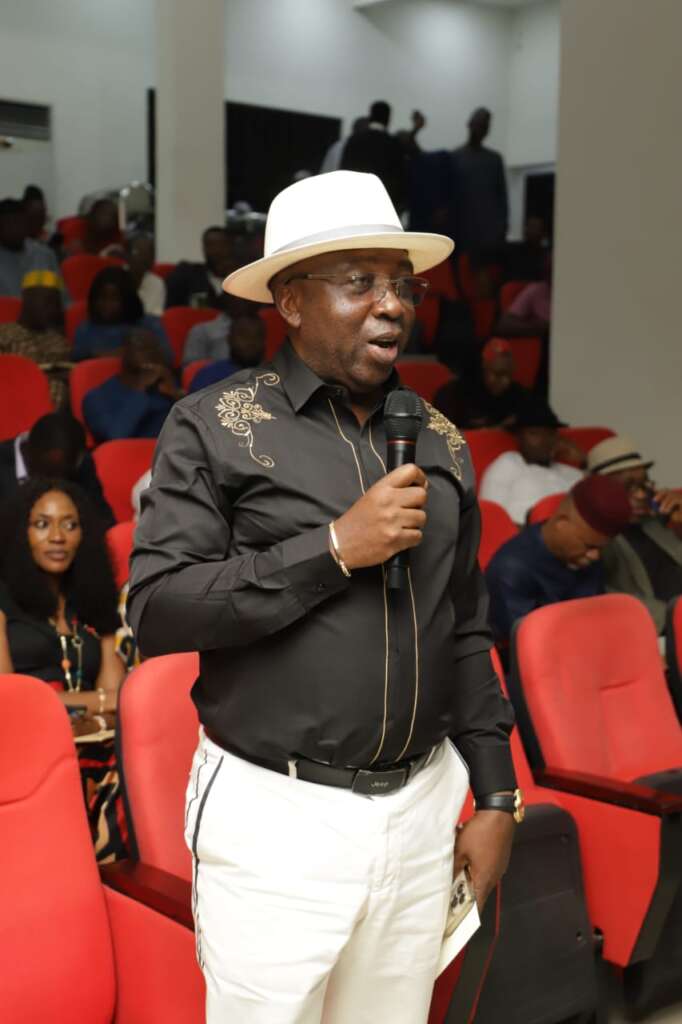
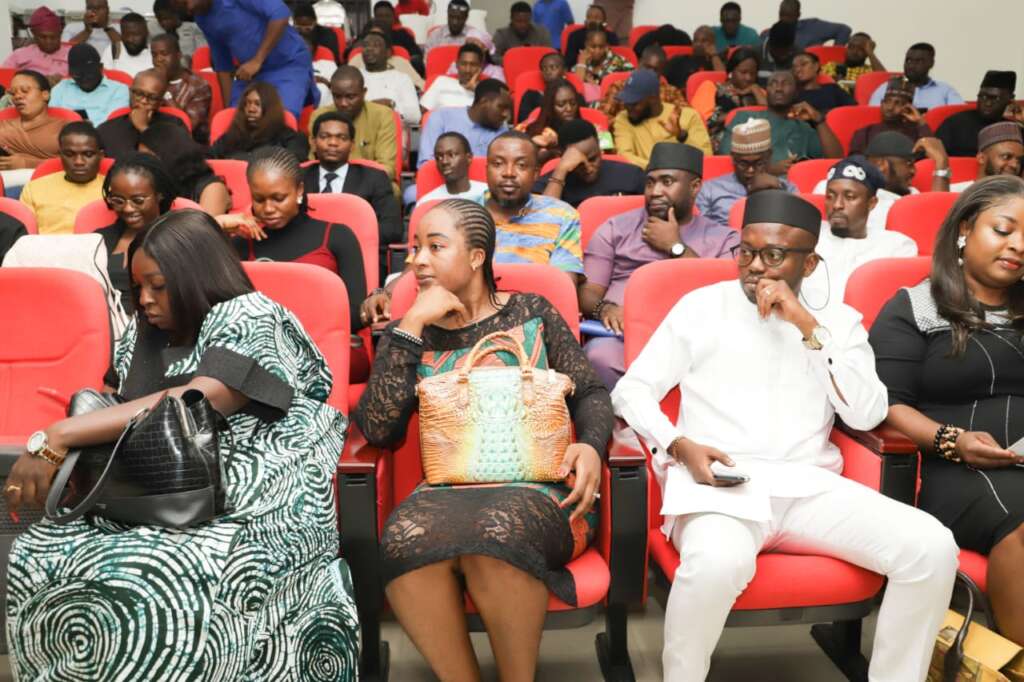
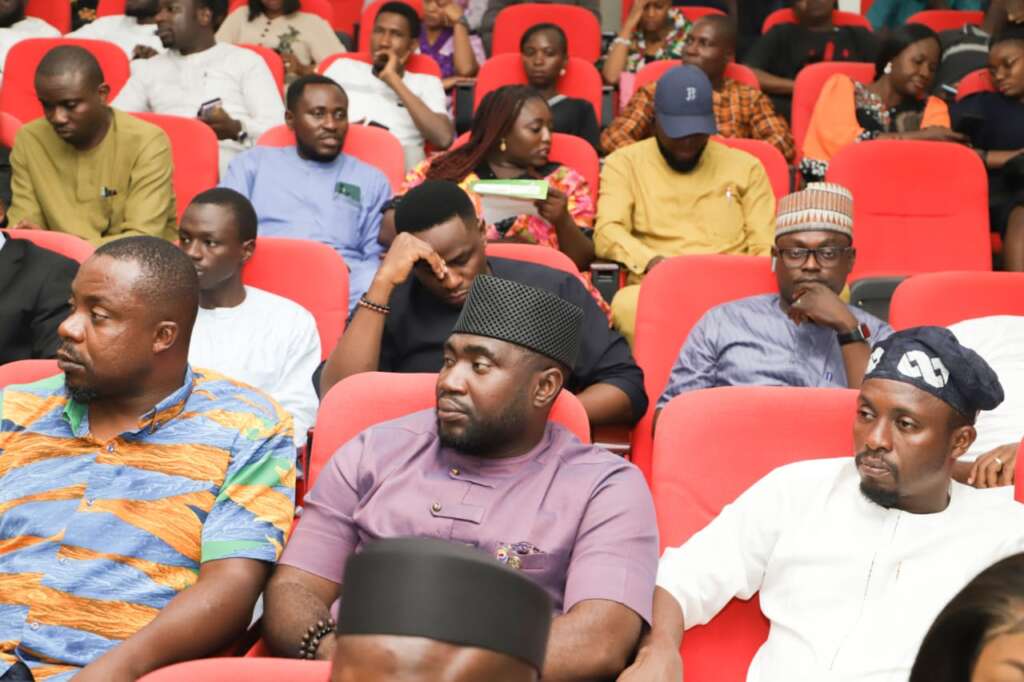
The branch meeting was well attended (onsite and virtual) by members of the bar. Chief Dr Ogwu James Onoja SAN appreciated the branch officers for the good job they are doing, he also appreciated members of the branch for their support for the branch. Prof Paul Idornigie SAN gave vote of thanks to the host (TAT) of the meeting. Chief A. A. Malik SAN , Adekola Mustapha SAN and a host others were in attendance.

Chief Dr. Ogwu James Onoja, SAN
July birthday celebrants
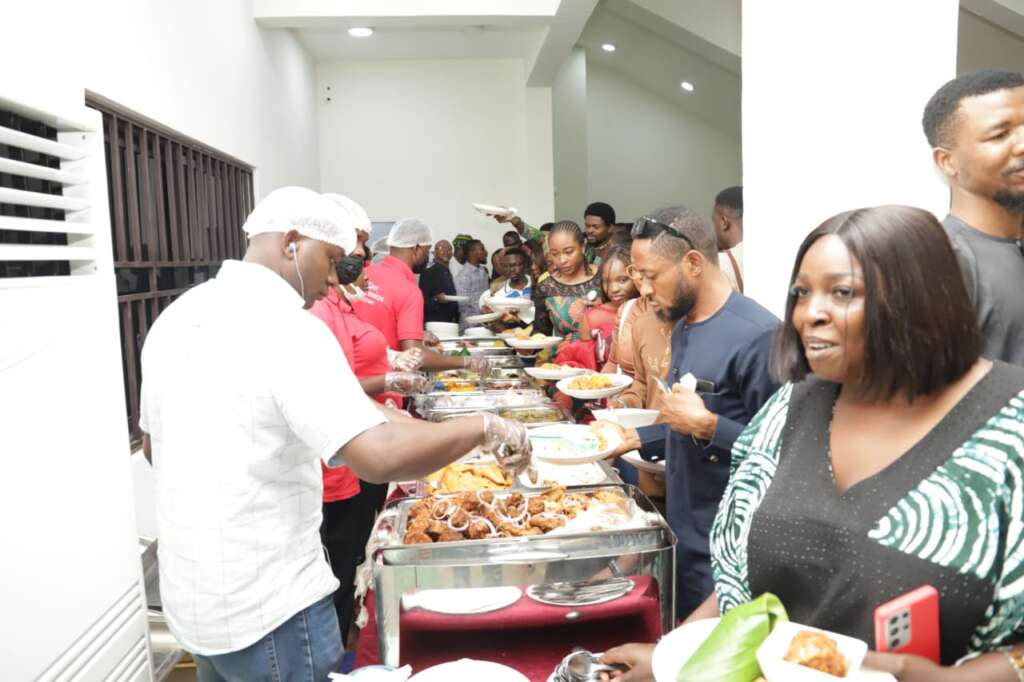
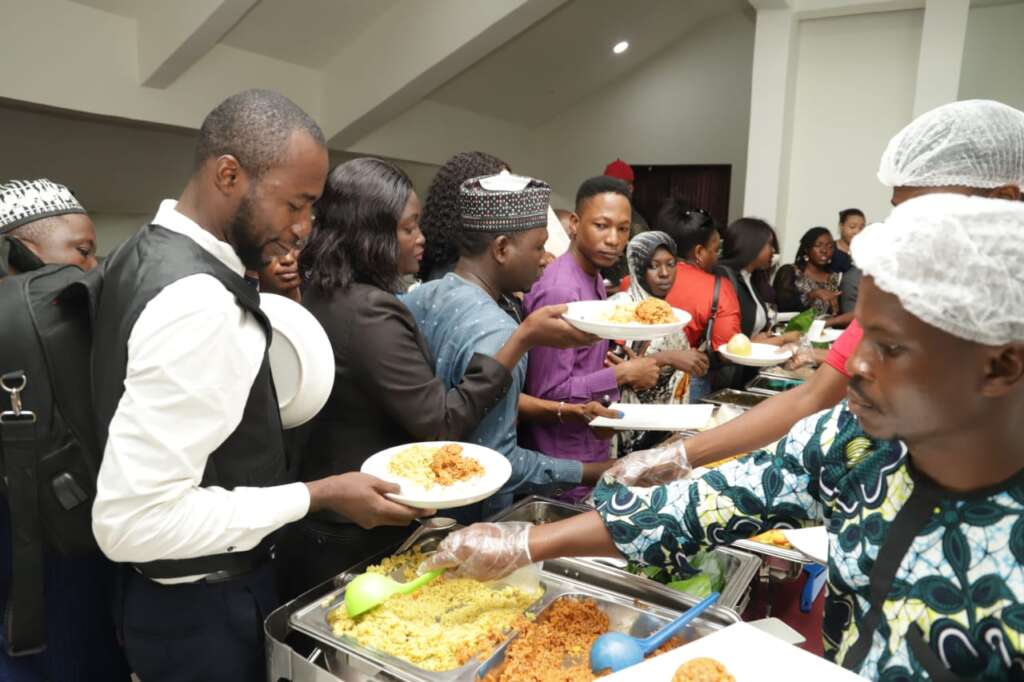
Food is served

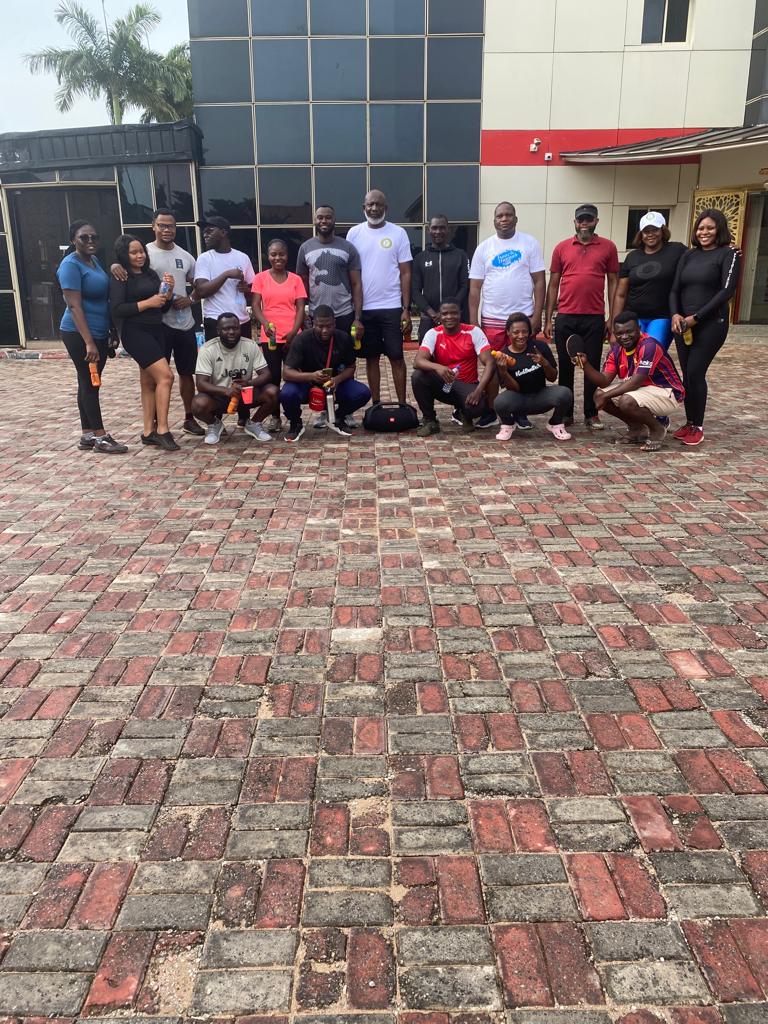
Photo News: NBA Abuja members shake off stress at monthly aerobics

Members of the Nigerian Bar Association (NBA) Abuja Branch at the weekend took time off to shake off stress at this month’s edition of their aerobics session.

The session was held at Bar and Bench House, in Wuye district, Abuja.

Chairman of the Branch, Mr. Afam Okeke while responding to questions from the newsmen, stated that this month’s Aerobics is important because it coming up a few days before the Law Week of the Branch.

Thanking Deacon James O. Onoja, SAN, Ph.D., for giving the branch the space for the exercise at no cost to the branch, Okeke said keeping fit is important for all Lawyers and that the need to exercise cannot be overemphasised especially given the strenuous work schedules of Lawyers.

Police arrest man who killed and ate wife’s brain

Holding on may look like you are brave, patient, and long-suffering but please, must you suffer in a relationship that is going nowhere fast? There is a time to let go, time to walk away. – Funke Egbemode

A man who was recently arrested by the police for allegedly killing, eating his wife’s brain in tacos, and using her skull as an ashtray, told law enforcement officers that the devil ordered him to commit the crime.

Indeed, the devil is at it again.

Identified merely as Alvaro, the 32-year-old “devil worshipper” who was arrested in Mexico, was seized at the couple’s home in Puebla, on July 2, and is accused of murdering his wife – a mum of five – on June 29 while under the influence of a prohibited substance.

During questioning, he allegedly told officers that Santa Muerte (Our Lady of Holy Death) and the devil had ordered him to commit the crime.

In view of the murder, Alvaro nicknamed the “Cannibal of Puebla” reportedly dismembered Maria Montserrat Animas Montiel’s body and placed her remains in plastic bags.

He allegedly threw some of them into a ravine behind the home and kept the rest inside the property.

Sources close to the case said he confessed to eating part of his wife’s brain in tacos and using part of her shattered skull as an ashtray.

Two days after the killing, he is believed to have called one of his stepdaughters to confess his crime.

Speaking to the local media, the victim’s mother, Maria Alicia Montiel Serran said: “He told one of her daughters to come and collect her mum because ‘I already killed her and put her in bags’.”

Grieving Maria Alicia added that Alvaro chopped up the 38-year-old victim’s body “with a machete, a chisel, and a hammer.”

She went on: “I called him crying, asking why he did that to her if she wasn’t a bad person.”

According to Maria Alicia, the suspect confessed: “I killed her, I cut her into pieces, and I threw her into the ravine in bags.”

She added that he claimed: “She didn’t suffer.”

Maria Montserrat married Alvaro less than a year ago. She had five daughters, aged from 12 to 23.

The youngest two lived with the couple and, according to their grandmother, were subjected to violence and sexual harassment from their stepfather.

Maria Alicia said: “He would spy on them while they showered, and my daughter, well, you know that out of love, she always sided with him.”

The victim’s family claimed Alvaro – a builder – was a drink and drug addict and was often violent towards his wife.

The family says the couple often posted about their worship of Santa Muerte on social media. The police reportedly found a black magic altar in their home.

Maria Alicia said: “Drugs, he used them, and he snorted cocaine and everything. Well, I think he had mental problems because to do something like that… He adored the one down below, well, I know because she had Santa Muerte tattooed on one of her colourful legs.”

The victim’s family has not yet been able to lay Maria Montserrat to rest because the police are still searching for some of her remains, which also need to be DNA-tested.

Her mother demanded: “Give her to me so that I can bury her and give her a proper send-off. That’s what I want, and don’t let him go free because I believe no mother would want her daughter to be sent to her in pieces. I demand justice.”

The Puebla Prosecutor’s Office is investigating the case.

Credits: mirror.co.uk

Intimate Affairs: When it’s time to walk away, By Funke Egbemode

‘Forever’ and ‘till death do us part’ are not for every relationship. Some are destined to last. Many end even before they start. Others just get wobbly at some point. The going gets painful. Both parties know in their hearts of hearts that they are not going to go the whole nine yards but they continue to make the efforts anyway, patching and stitching. Sometimes, it is one of them carrying the two of them, which makes the trip more tedious until they both get to the point of no return. Whichever way the parting of ways happens in a relationship, the bottom line is that walking away is never easy.

There is that temptation to make more efforts to make it work, to wait for another couple of months and see if the unserious guy would realise the errors of his ways and turn a new leaf, to see if he would stop being a leech and make something of his life. Shouldn’t he just bear with her, even pray for her and see if she would stop cheating on him? But too often too late, you find out that a player is always a player, cheaters hardly ever stop and that a leech will always be a leech.

If you have invested in an unprofitable business, the only sensible thing to do is to divest and move on to a more profitable venture. Holding on may look like you are brave, patient and long-suffering but please, must you suffer in a relationship that is going nowhere fast? There is a time to let go, time to walk away. My darling, take a good look at that relationship and ask yourself the hard questions. Are you happy, fulfilled? Do you wish you were somewhere else, with someone else most of the time? Does he make you cry so often you have forgotten how to laugh? Does that woman in your life make you feel less and less a man every day? Let go, dear, walk away. If it’s not working, it is not working. You can’t force a limp ‘third leg’ walk.

You can’t force anyone to love you. If you need to beg him or her to stay with you, what you feel is not love and it is time to stop fooling yourself. A man you blackmail not to leave you or you are considering trapping with pregnancy, real or fake, is not your man. Even if he stays, he’s only there in body, not in spirit. If you are grabbing at straws to stay afloat while dating, how will you cope when the high waves of marriage arrive in a stormy weather?

Although it feels like it, but the end of a relationship is not the end of life. Love leaves you sometimes. It does not mean you are cursed or jinxed. Just learn the lesson and move on. The right person will come. It may take a while but the right person is always worth the wait. As the saying goes, you must kiss a few frogs before your prince charming comes along.

If you are in a relationship where you are constantly having to sacrifice your happiness to please your partner, you are not on to a good thing. For instance, you have to pretend to be a teacher because his mum doesn’t want him to marry a lawyer. You have to hide all evidence that you have enrolled for your PhD because his ego is fragile and he’s thin skinned. You have to pretend your brand new car is ‘tokunbo’ because it would make him ‘feel somehow’. You are in the wrong place. You may be managing it now but a few years down the road, you will resent him and what he has turned you into.

A woman who demands but supplies no value to your life is only good for a short ride. If you allow a girl to make more withdrawals than deposits in your life, you will be out of balance and in the red before you know it. You must know when to close the account and take stock. It’s always better to be alone with dignity than in a relationship that constantly requires you to sacrifice your happiness and self-respect.

Is your relationship giving you more pain than joy? Do you wonder more why you are in it than wishing you had met your partner earlier? If all your relationship offers is great sex, something is wrong. If the only time you are not bickering is when he’s on top of or under you, you are in a dry pasture. Don’t be so blinded by the wild orgasms as to forget the real deal, the morning after. If that relationship leaves you frustrated, upset, unhappy, miserable more often than not; if it leaves you in tears every so often, perhaps this might not be the right person for you. The relationship you are in now should be one which brings you happiness now. It is simple enough, in business the aim and objective is to make profit. In a relationship it is happiness, and it has no substitute.

Any kind of abuse, physical or verbal, are definite no-nos. If he hits you, slaps you around, punches you to drive his point home, it is time to let him go. Forget the beautiful gifts and nice words he says after, there is clearly something wrong with him and you too for staying in there for this long. If her way of expressing anger is throwing the intercom at the flat-screen television, please start walking and keep walking. What those crazy moments show is something deep that needs addressing.

Perception is reality. Emotional abuse is even trickier because only the victim feels it. You have told yourself long enough that things will get better. It hasn’t. It won’t. Time to walk away is now.

Aunty, if he believes in God and you believe in science, the two of you aren’t heading in the same direction, so boarding the same plane will be a mistake. For any friendship or relationship to work out, the parties involved must share certain fundamental beliefs and values. The values you share are the big rocks which will hold the relationship in place and help you weather through even the toughest storms. Of course, you know there are storms ahead, don’t you?

On the other hand, if your core values are fundamentally different, love or no love, when the storm comes, holding your union together will be like jogging uphill or trying to hold the ground together in a mud slide.

Are you both growing or this relationship is holding one of you down? Indeed if you will be true to yourself, this relationship has altered your plan and desire for your life. You have God’s calling on your life. You know you have special gifts for pastoral work but she has issued an ultimatum that the day you become a pastor is the day she leaves you but you are hanging in there hoping she will change her mind, praying on seven prayer mountains that God changes her. Bro, you are not married yet. If she’s God’s will for your life, why is she opposing God’s will in your life?

Sisi, you know your ultimate ambition is to become the first female Senior Advocate of Nigeria (SAN) in your village but the man in your life has made it clear that no wife of his will ‘answer sir’ to any man because he makes enough to take care of his family. He told you his woman will not go out to work which is why you are learning cake-making. Take a step back and see the road ahead. Are you where you want to be and do you see a future where you will be happy making cakes? If the only reason you are doing what you are doing is to make him happy and keep him, then you need to think again.

He is mean and abusive. He is lazy and unambitious. But he has proposed and his nice ring is on your bruised finger. So you decide to wait it out expecting a better future. Wake up girl. You don’t live in the past, and the future is not yet here. Are you happy now? You need to make it to tomorrow. It is okay to hope for better days ahead but not in this situation. Take a good look at what you have, at him. He is what he is. She is fully formed. A one-day wedding ceremony will not change him or her. Wedding ceremonies are not designed to change fully-formed adults, trust me.

In all, when you give yourself to someone who doesn’t add value to you, you surrender pieces of your soul, pieces that you’ll never get back.

Funke Egbemode is the immediate past Commissioner for Information and Orientation in Osun state, South West, Nigeria. She is an ex-Managing Director/Editor-in-Chief of New Telegraph Newspapers and also a former Editor of Sunday Sun and Daily Telegraph Newspapers. Funke, a popular relationship columnist under her signature ‘Intimate Affairs’, was a two-term President of the Nigerian Guild of Editors (NGE).

Email: Egbemode ([email protected])

5

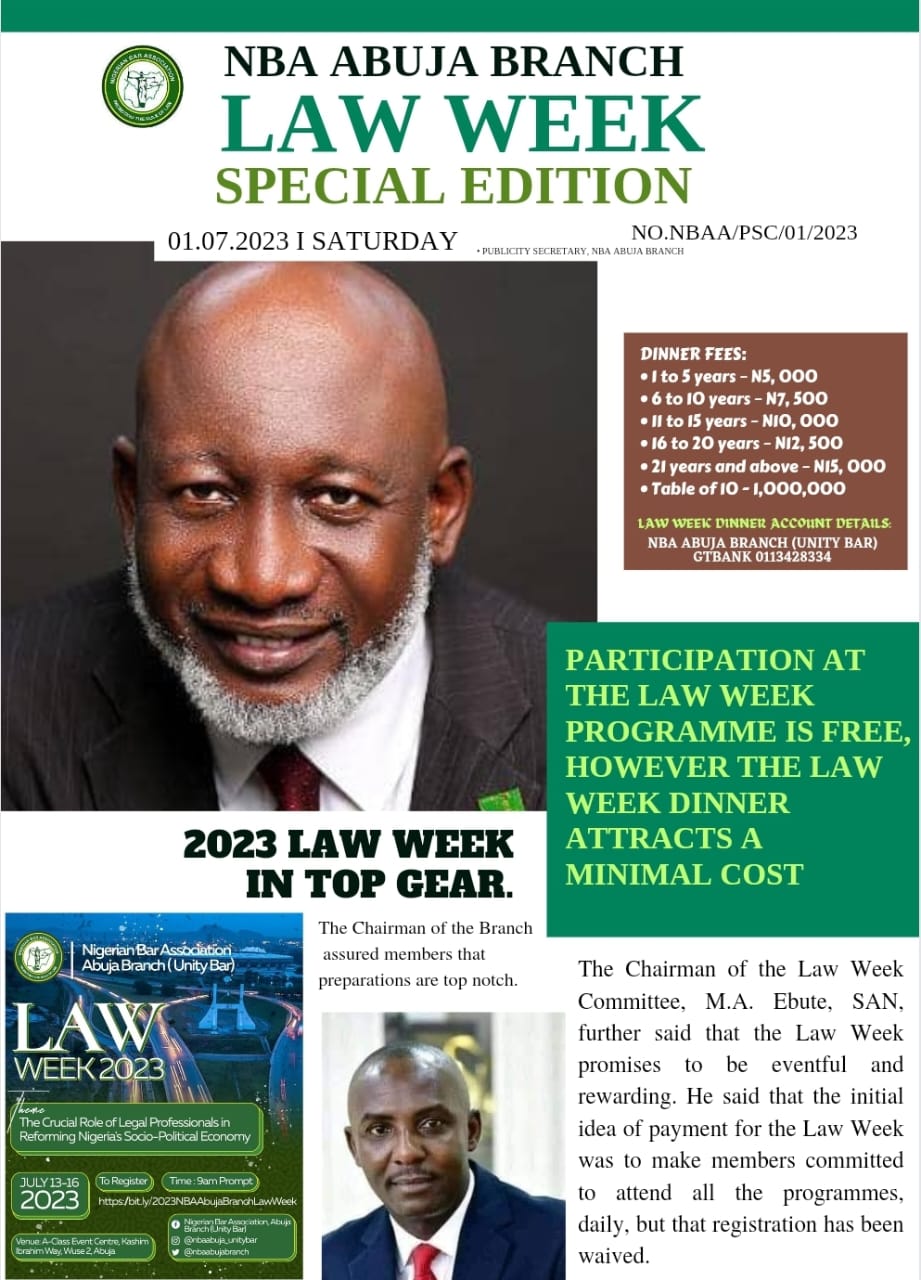
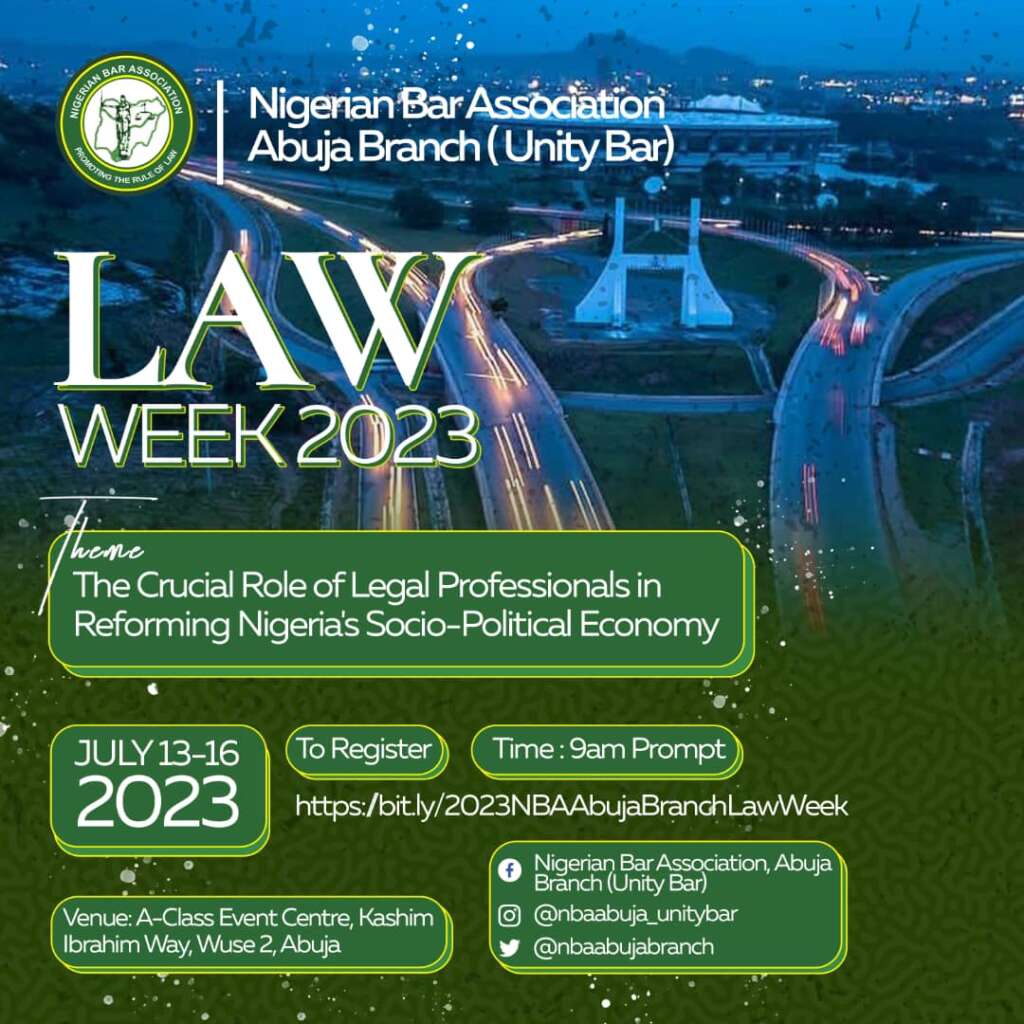
NIGERIAN BAR ASSOCIATION ABUJA BRANCH (UNITY BAR) LAW WEEK

Theme: The Crucial Role Of Legal Professionals In Reforming Nigeria Socio-Political Economy.

We have organised activities to make the 2023 Law Week Programme memorable.

The Nigerian Bar Association, NBA Abuja branch (Unity Bar) has scheduled the 2023 annual Law Week of the branch to commence on the 13th of July and end 16th of the same month.

Announcing the dates of the law week, the branch Secretary, Isiaka Musa, was quoted as saying;

“We are poised to serve you well. Hence this year’s Law Week promises an experience like no other.”

SAVE THE DATE

Kindly click here to Register

Thank you.

Isiaka Musa
Secretary, NBA Abuja Branch

There can be fair hearing without oral hearing

By Onyekachi Umah, Esq., LL.M, ACIArb(UK)

At several times, both judicial and non-judicial bodies/committees are set up to investigate and determine the rights and obligations of persons. It may be by employers, schools, professional bodies, religious groups, unions, associations or government. The members of such administrative bodies or committees may not be educated or lawyers but they have a duty to uphold fair hearing. In investigations, hearings and deliberations of such committees, there may be oral hearing or exchange of documents or even both. This work examines whether investigations and hearings by administrative bodies (committees/commissions/panels/groups) must be done orally or by exchange of documents or both and the implications.
Continue reading at: https://sabilaw.org/there-can-be-fair-hearing-without-oral-hearing/

In the South-East, the Horse may have bolted from the stable

By Ikeazor Ajovi Akaraiwe, SAN

The high-handed call for a one-week sit-at-home in the South-East by the Simon Ekpa wing of Independent People of Biafra (IPOB) is being brutally implemented through this week of Monday, 3rd July 2023.

The sit-at-home order is purported to be in aid of the release of Mazi Nnamdi Kanu, the leader of IPOB, who is in detention and undergoing charges for treasonable felony. Kanu, it will be recalled, was granted bail by the Federal High Court but jumped bail.

By the way, the mainstream IPOB, which comprises Kalunta, Nnamdi Kanu’s brother and Emma Powerful, the spokesperson, do not agree with the sit-at-home.

Whatever else, sit-at-home (hereinafter referred to as SAH) achieves, it destroys the Igbo economy, while doing no harm to the rest of Nigeria. And this is the reason it should be subjected to rigorous rethinking. Igbo chel’uche. (Igbo! Think!!)

SAH mandates all who live in the southeast geopolitical zone of Nigeria not to go to work on Mondays, and this week, Simon Ekpa who lives in Finland, and has Finnish citizenship decided that the entire South-East should be shut down for one week less one day.

SAH denies the Okpa and Akara ball seller and Keke rider their daily income with which to feed their family and pay school fees.

If Igbo land were the source of some mainstay of the Nigerian economy, like oil and gas, or the ports, a local strike, which really SAH is, would have had nationwide and global impact.

BUT SAH only peripherally and marginally affects those outside Igboland, perhaps, transporters only who must drive through the southeast while egressing and ingressing other geopolitical zones.

In view of what SAH does to the Igbo nation, Ohaneze and well-meaning Nigerians have put out calls to the Federal Government to release IPOB leader Nnamdi Kanu from detention during trial.

The call does not take into cognisance the possibility that the destruction of the Igbo economy is probably the delight of those who dislike the Igbo, and enemies the Igbo have aplenty. So why expect them to take any steps to prevent the apparent self-immolation of the Igbo?

Permit me to observe that even if the Federal Government acceded to the request for Nnamdi Kanu’s release, it is extremely doubtful that the violence will stop. The guns will still be in private hands, or will they be taken away?

By the way, the IPOB faction led by Simon Ekpa, is also known as “auto pilot.” “Autopilot” is “a device that steers a ship, plane or spacecraft, without a person.” (Source: The Brittanica Dictionary).

The name ‘AutoPilot’ thus suggests, rather ominously that this wing of IPOB are under no one’s control, not even their leader, Simon Ekpa.

It does not seem to me from the way things are going, that anybody may be able to call them to order if they decide after Nnamdi Kanu is released, if the FG accedes to their requests and releases him, to make further demands and keep the South-East under logjam.

Criminality may yet escalate irrespective. These young men have arms. New political demands may be made as a condition for laying down arms, which government may not be able to grant.

Worse, IPOB may further splinter; each group, lord unto itself. The horse has bolted out of the stable, I am afraid, and although not immediately apparent, the South-East, if allowed to go down, may, because of the resilience, ebullience and ubiquity of her people drag the entire nation down with it.

The matter in the South-East, nay the entire nation needs great dexterity, nay, political brinkmanship, and statesmanship.

This brinkmanship requires the egalitarian restructure of Nigeria, following the principle by which the federating units of the First Republic operated.

Lest I be misunderstood, I am not calling for a return to four regions but a return to the principle of federalism around which those regions federated some 60 years ago.

Having said the above, I also join the call for the release of Nnamdi Kanu, in the forlorn hope that it will deescalate the violence. But if the government will not take that step, they better call out the police in droves to guard business districts, offices and schools in the affected region.

It is shocking that the police appear to be complying with the SAH issued by ‘Autopilot.’ Nobody sees the police on those days, but we do see some military presence at major junctions not far from military formations.

If the Federal Police is unable or unwilling to act, We The People hereby renew our demand for State Police.

By my hand this 6th Day of July 2023.

Ikeazor Ajovi Akaraiwe, SAN

Man bags 3 months jail sentence for stealing body lotion

For stealing two tubes of body lotion from a shop, a Jos Magistrates’ Court on Friday sentenced 19-year-old Zakari Saleh, a tailor, to three months imprisonment.

After he pleaded guilty, the Magistrate, Shawomi Bokkos, summarily sentenced Saleh to 3 months imprisonment.

His Worship who said the punishment would serve as a deterrent to other would-be offenders, however, gave the convict an option to pay a fine of N20,000.

Earlier, the Prosecuting Counsel, Inspector Ibrahim Gokwat told the court that the case was reported on June 6, 2023, at the Laranto Police Station Jos by one Aminu Wakili, the complainant.

The convict according to the prosecutor entered into the complainant’s shop, pretended to be buying something, and then stole two body creams valued at N43,000. During a search, the two tubes of lotion were found on him.

The offence, according to the prosecutor, is punishable under the Plateau state Penal Code Law. (NAN)

TIPS