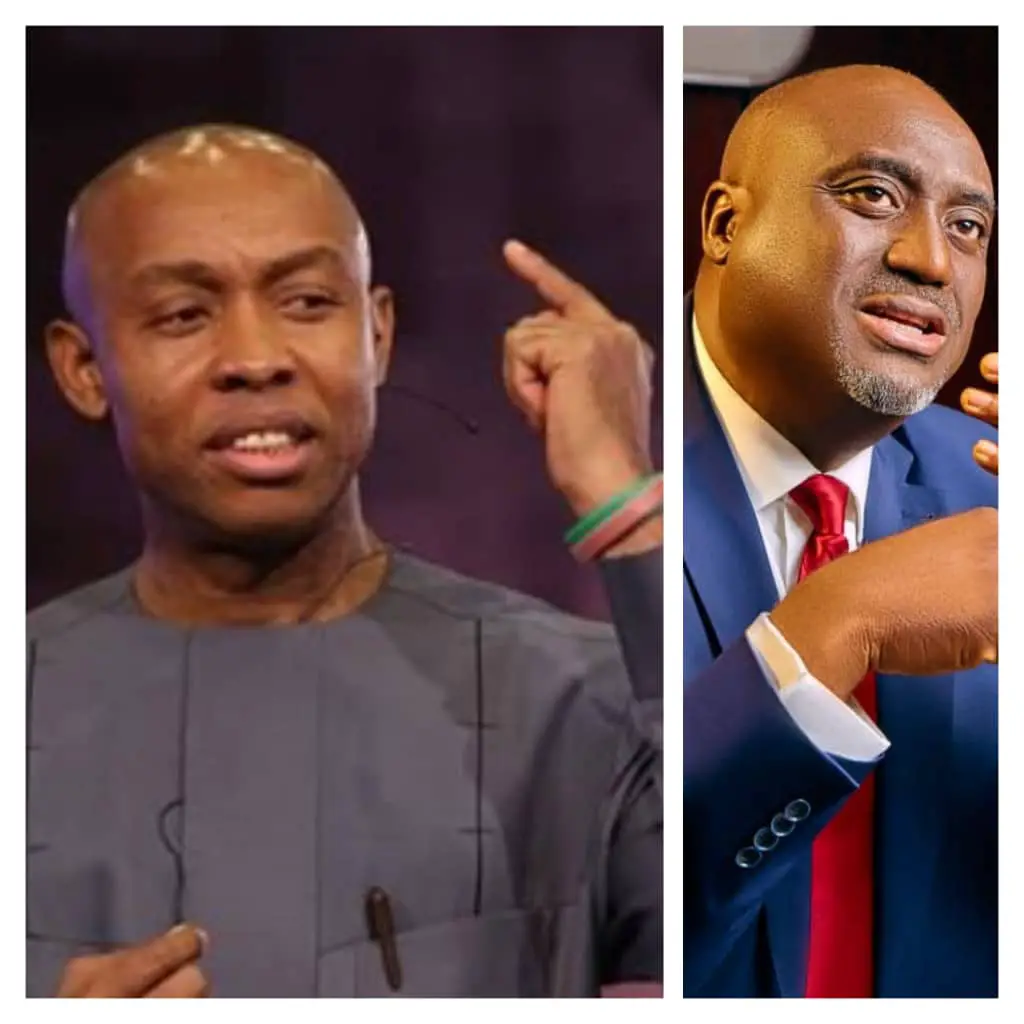
The battle continues to rage at the Presidential Election Petitions Tribunal. In this illuminating conversation WhatsApp conversation, Prof. R. A. C. E. Achara, Ph.D. (Nig.), 2001-2002 University of Nigeria Postgraduate Prize man for Law, Bill and Melinda Gates Foundation Fellow of the Five College African Scholars Program, University of Massachusetts, Amherst, Millennial Chairman, NBA, Enugu Branch 2000-2002 and Mr. Chukwudi Ani, an Abuja based Legal Practitioner present differing opinions on the Supreme Court’s decision in Oyetola v. INEC & 2ors. The question is, did the apex court hold that results from Polling Units transmitted/uploaded in real-time to IREV on election day should not be reckoned with, in the collation process? Here are excerpts published with their permission.
ChukwudiAni
How does one apply the doctrine of estoppel or legitimate expectation, in an election petition which is sui generis? Under which Section of the Electoral Act or Paragraph of the INEC Manual and Regulations would one find those principles stated, so that they be used against INEC? Let’s not forget that the Supreme Court has already rendered a decision on the only legally prescribed mode of collation of election results in Oyetola v. INEC & 2ors. And that is manual collation and not electronic transmission to IREV. Interesting times ahead, though.
R. A. C. EAchara
This is a widely circulated if not substantiated report of my Lord Justice Agim, JSC’s, decision in that case. The appeal rejected any claim for electronic transmission of accreditation details, which was the subject matter of the dispute; not the transmission of the polling unit results.
Indeed, as an aside relating to the matter of electronic transmission of results from polling units online and real-time, His Lordship in his usual illuminating style, drew a distinction between 3 categories of results transmission data. He held the first two as operational and that the Regulations and Guidelines of 2022 required these to be electronically transmitted by scanning the result sheets (Ec8a) at each polling station. The second is what His Lordship described in the words of the applicable legislation as the collation system at the wards or registration areas collation level to which these electronically transmitted results from the polling units must go for use in an overriding authentication of the physical result sheets, which serve as primary collation materials at each of the collation levels up the line to the LG, state, and national levels.
His Lordship then distinguishes the 3rd category. He calls this the INEC ‘ database’. And, in the language of the applicable legislation, he identifies this 3rd category as the (Neroer) National Electronic Register of Election Results. This database is a repository or library of all INEC results of elections now or in the future and has nothing to do with collation or the evidence needed in order to prove particular election petitions. People are entitled to seek and acquire CTCs of results from this database but it is not in the scheme of requirements which INEC officials must statutorily consult in the lead-up to the announcement of results at the polling units or at any stage of the collation process for these polling results before final declaration and return of the winning candidate.
It is this comment about the 3rd category, Neroer, which His Lordship referred to as the database that some people who have read page 24 of that Judgment have inadvertently promoted as rejection by his Lordship of the very paragraphs of the Guidelines which His Lordship had indeed quoted with approval as mandating electronic transmission of results.
It is possible that there was some ambiguity regarding the IReV, which His Lordship seemed to categorize as part of the 2nd category of operational electronically transmitted materials but also seemed to suggest too that IReV as a public confirmatory tool is both a collation operational tool and at the same time a device to aid the national electronic register of election results (and when deployed only for that purpose, is thereby not a results collation operational device).
I’m sure I’m missing a detail or two but, that, my learned friend, seems to be the position of the SC as expressed in the leading decision of The Hon. Prof. Justice Agim, JSC, in Oyetola v. INEC and 2 ors. of 9/5/2023.
Ani
Dear Prof. Thank you for your intervention. Forgive me if I misunderstood your position, but what do we make of what the apex court said at the beginning of page 24 of its judgement? Let me just reproduce it.
“The Collation System and INEC Result Viewing Portal are part of the election process and play particular roles in that process.”
The court did go ahead to state the respective roles that the Collation System and IREV play in the election process. It does appear from the judgment that the apex court’s reference to the Collation System connotes the manual collation of results, done with physical result sheets at various levels of collation. I say so because, the court on the same page, referred to the Collation System as being made up of centres where results are collated at various stages of the election.
This appears to be the particular role played by the collation system in the election process, as the court had earlier mentioned. That is to say, the Collation System consists of centres where results are collated at various stages of the election. Again, we must pay attention to the crucial point, that the court mentioned both the Collation System and the IREV in the same breadth but then went ahead to state that they play particular roles in the election process. However, when it came to the collation process, the court carefully divorced the Collation System from the PU results transmitted to IREV. So, the vital question now is, what is the role of IREV in the election process?
In the same page, the court states as follows: “The result transmitted to the Result Viewing Portal is to give the public at large the opportunity to view the polling units results on the election day.”
Thus, after separating the Collation System from IREV in stating their particular roles in the election process, the court merged them again and then jointly drew a distinction between them on the one hand and the National Electronic Register of Results on the other hand.
What I deduce from the decision of the apex court, as the only common ground between the Collation System and IREV, is that they are both operational on the election day and nothing more, as against the National Electronic Register of Results which is operational after elections.
However, it is significant, that the court did not mention results transmitted to IREV as part of the collation process on the election day. This is my humble point and again, I stand to be corrected.
Achara
I tend to agree with most of your reading of the report and they don’t seem to be much in conflict with my original observations. I did call attention to what appear to be slight ambiguities or even ambivalence in the part of the judgment relating to the status of the IReV as at once operational in the collation process and at the same time as merely a collateral measure of public reassurance in the integrity of the process.
Our few areas of departure principally lie in how each of us has evaluated the language deployed by His Lordship. While from it, you deduce a rejection of the notion that electronic transmission of results is part of the operational safeguards embedded as part of the collation system under the new Electoral Act regime with its subsidiary legislations, for me, I deduce especially from My Lord Agim, JSC’s, repeated quotation of almost whole paragraphs of the Act and the RaG on electronic transmission mandates, that Their Lordships of the Supreme Court recognized the revolutionary nature of the new provisions on electronic scanning and transmission of polling unit results real-time and online towards stemming the distrust in collation that has been the bane of elections in our country and consequently the trigger for the entirely unsustainable waste and corruption that sees perhaps 30% of judicial time and resources applied for the benefit of possibly less than 1% of 0.001% of the litigating public.
And, worse, creating a result in which jet-purchasing fees are routinely handed to the few of us that break into the secret-society-like closed group that handles and routinely distorts the coherence, consistency, and reliability of hitherto settled judicial principles that benefit the general population and lawyers that normally serve them.
We don’t need hundreds of thousands of photostat pages, nor hundreds of pages of pleadings and tens of witnesses if our courts insist, as did rigging-weary politicians who imposed these electronic authentication safeguards, that no result would be enforced unless supported by these online, real-time, electronic protocols of substantial protection of voter choice.
Let the view of voters start to control the outcome and immediately see how politicians will change their attitudes in order to please us, the public.
But, anyway, shaa, this only remaining point of departure is an area in which two lawyers can honestly and reasonably differ.
I thank you, sir, for your kind language and gracious willingness to engage.🙏🏾👍🏾
And, yes, the collation system means the physical centres where the primary physical results are aggregated but with the access of the collation officer to the original results scanned in situ in the presence of the voters and transmitted immediately thereafter with the BVAS to the collation system at the relevant ward.
His Lordship appeared to think that the transmission to the computer server, which is material to the collation, is the one to which the ward collation officer has some sort of special access; and that it is not necessarily the same as the computer server with open access permissions to the general public (known as the IReV).
However, at other times, he seems to conflate the two. But whatever the case, the unique thesis of my Lord Agim JSC in that judgment appears to be the sharp analytic distinction into 3 categories (even if the collation system and IReV draw their data from the same source in category number 2).
Ani
Maybe I was a bit over the top with my language in the original post you had earlier responded to. But, the conclusion I clearly reached, on the basis of my understanding of the judgment of the Supreme Court, is that PU results transmitted/uploaded in real-time to IREV on election day, are not reckoned with, in the collation process. I honestly did not see in any part of the judgment, where the SC gave results uploaded to IREV that status apart from providing a platform for the public to view the election results on election day.
In any event, what is the utilitarian value of the IREV innovation/revolution, when results transmitted/uploaded thereon, cannot be reckoned with in the collation process, particularly in resolving conflicts between collated results and those in the possession of party agents or even outright disputes on the figures entered in the collation result sheets?
This can only fuel frustration and discontent, (as we have clearly seen), where the public clearly sees that there is a numerical difference/gap between the manually collated results and those transmitted to IREV, but they can do nothing about it to rectify or remedy the situation since PU results transmitted to IReV cannot be reckoned with in the collation process.
Law teacher, ex-Chair of the National Human Rights Commission, and member of the Electoral Committee of the Nigerian Bar Association, ECNBA has tendered his resignation.
Citing integrity issues, NBA’s alleged indebtedness and refusal to pay service providers notwithstanding its solvency and the several representations the ECNBA made to the Bar President, Mr. Yakubu Chonoko Maikyau, SAN, particularly with regard to the outstanding N5.4 million being owed the company which provided the voting platform (interface) in the 2022 bar elections, Odinkalu in his letter to the NBA President titled: “NOTICE OF RESIGNATION FROM THE ECNBA“, said the credibility of the bar is at risk.
Part of the letter reads;
The integrity of the NBA’s elections is fundamentally dependent on the credibility of two things: the voting platform (interface) and the membership data. The former is outsourced, while the NBA provides the latter to the ECNBA. For the 2022 elections, ECNBA contracted the voting service provision for the sum of N18 million. The organs of the NBA approved this sum as part of the budget for the election.
As I write, N12.6 million of this sum has so far been paid. One year after the elections took place, we still owe the provider N5.4 million, representing 30% of the agreed sum. The Association has not complained about service standards by the provider nor has it declared a contractual dispute. It is not the case that the NBA is insolvent. Yet, despite the best and repeated efforts of the ECNBA, our Association has chosen to not honour this lawful obligation.
Following the failure of any breakthrough in efforts to address this matter with you, my colleague(s) on the ECNBA brought this matter to your attention at the last (virtual) NEC meeting on or about 26 June. But rather than address it in the spirit in which it was raised, you shut it down, complaining that you regretted giving my colleague(s) the floor. That was hardly a vote of confidence on the Committee.
This lingering debt damages the commercial and organizational credibility of the ECNBA and of its membership. The voting platform providers who administered the 2022 elections cannot now be enthusiastic about further dealings with a chronic debtor. The reputation of the NBA as a chronic debtor or as reluctant to comply with contractual obligations will be well known within the small community of providers of such services in Nigeria. This surely raises the bar of difficulty for the next election, which is a mere one year from now.
This difficulty may not be fatal if it were to be the only issue that the ECNBA could confront with regard to the next election, but it is not. As you are aware, on 1 July, 2022, the NBA entered into a contract with a company to, among other things, provide “innovative technology service and work process automation to the NBA.” The deliverables under this contract included “clean up (of) the database of the NBA for accuracy”. This contractor designed and managed the Bar Practising Fee (BPF) payment portal for 2023 which, however, ran into difficulties over allegations of non-fulfilment of contractual obligations by the NBA with regard to fees owed to the contractor. It is my understanding that relations with this contractor may now have broken down irretrievably, that the portal has been deactivated and that the data collected from this portal are not accessible to the NBA because, being indebted to the contractor, it has been denied access to the encryption keys which the contractor can only release after the debts owed to it have been reconciled and cleared.
These facts have multi-dimensional consequences for all streams of work on which our Association’s next elections depend. First, the credibility of underlying data for the next cycle of elections is at best in question with this situation of breakdown in the relationship with the data management contractor. Second, with its commercial credit shot and goodwill damaged, the capacity of the ECNBA to have access to a credible election service provider for the next election is now questionable. Third, these matters of data credibility and commercial credibility cannot be bridged by the ECNBA alone. But fourth, the manner in which you treated the ECNBA’s good-faith inquiry on this and related matters at the last NEC meeting leaves me with genuine doubts as to whether the Committee in fact enjoys your confidence.
Fifth, I must make clear that I do not wish to be mis-interpreted as saying that these developments are compatible with a design to compromise the 2024 election in our Association. Absent urgent course correction, however, that outcome is foreseeable. All that I am willing to say, therefore, is that with one year to go to our next elections, these deficits cannot be bridged by hope or prayer and I just don’t see any plan in place to address these seriously. If anything, the contrary is the case at this time.
I continue to believe that the credibility of elections in the NBA must be sacrosanct. This is the spirit and service compact that persuaded me to agree to serve on this ECNBA. In the light of all the facts at my disposal, however, my only option, Mr. President, is reconsider my position. This is a matter of conscience. I have come to the reluctant conclusion that I can best advance these goals outside the ECNBA and I hereby resign. Kindly accept, Mr. President, assurances of my fraternal esteem. I wish you well.
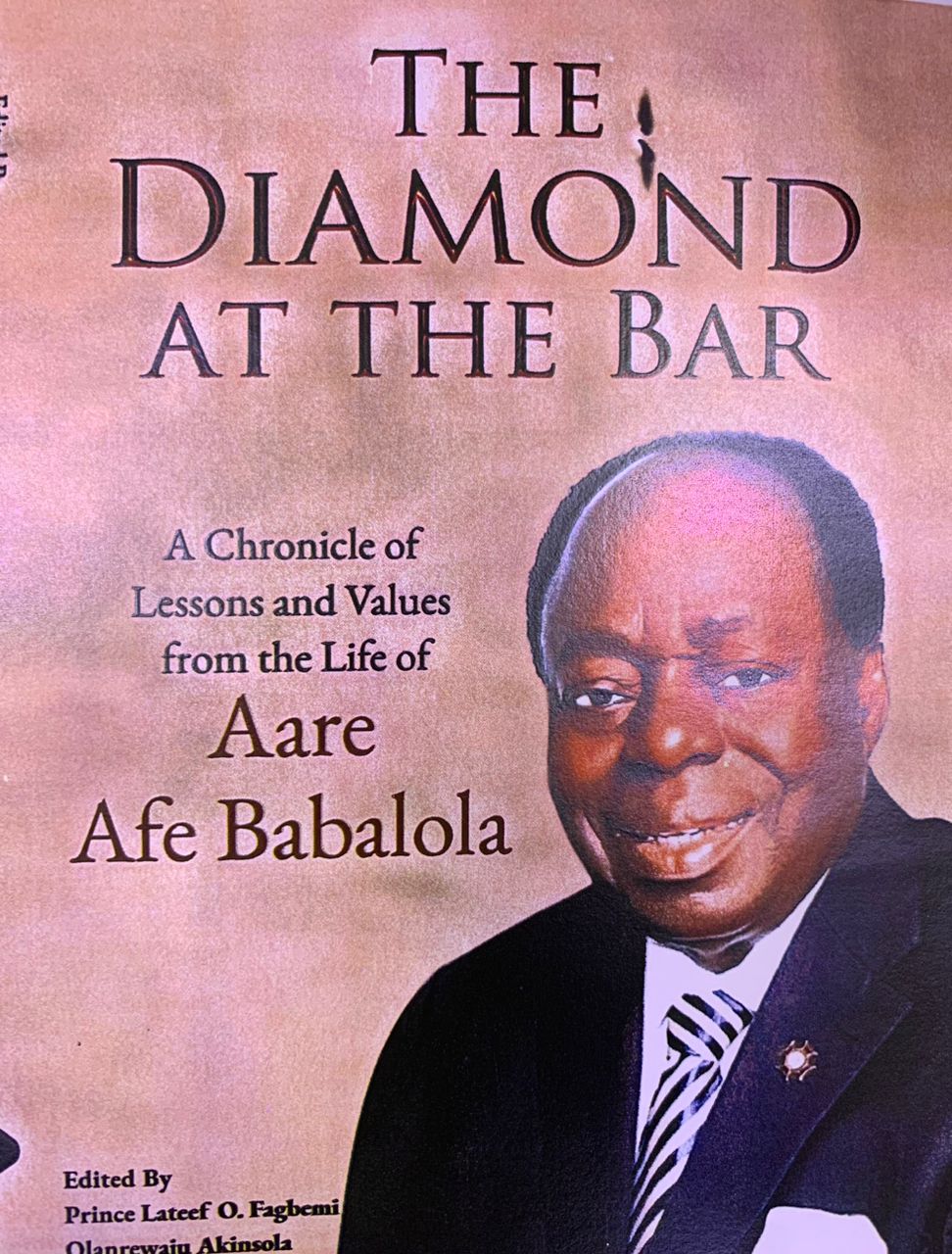
1. I am supremely delighted to be saddled with the responsibility of reviewing this seminal book. This is not an assignment I take lightly, for two fundamental reasons. To start with, the subject of the book is a Legend and a Giant in every sense of the two words. Irrespective of the perspective one chooses to look at him, Aare Afe Babalola, the Aare Bamofin of Yorubaland, is a Giant with gigantic accomplishments. With his stupendous achievements, he has succeeded in dwarfing even the most accomplished amongst us.
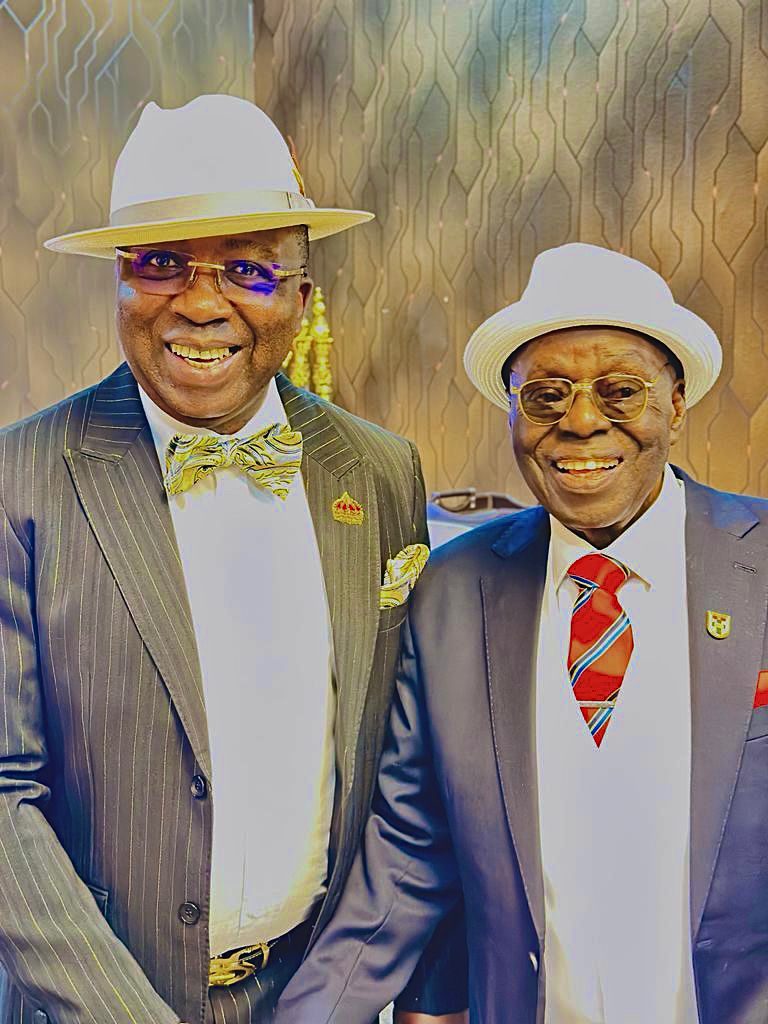
Book Reviewer, Chief Ogwu James Onoja, SAN, Ph.D. and Aare Afe Babalola, SAN at the book launch
2. The second reason is the sheer number of the eminent contributors who have put pen to paper to produce this masterpiece of a book in honour of the Aare. Looking at the Table of Contents, I was more than awed by the number and the calibre of the writers. It is a roll call of high-achievers who are by themselves giants in their own rights. If I might be permitted to paraphrase the biblical phrase, I believe that this is one book that can be described as “only the deep that can call to the deep.” From Royalty, to the Clergy, to the highest echelon of the Bar, to the peak of powerbrokers, and to the topmost of the Ivory Tower, the list of contributors is intimidating and awe-inspiring.
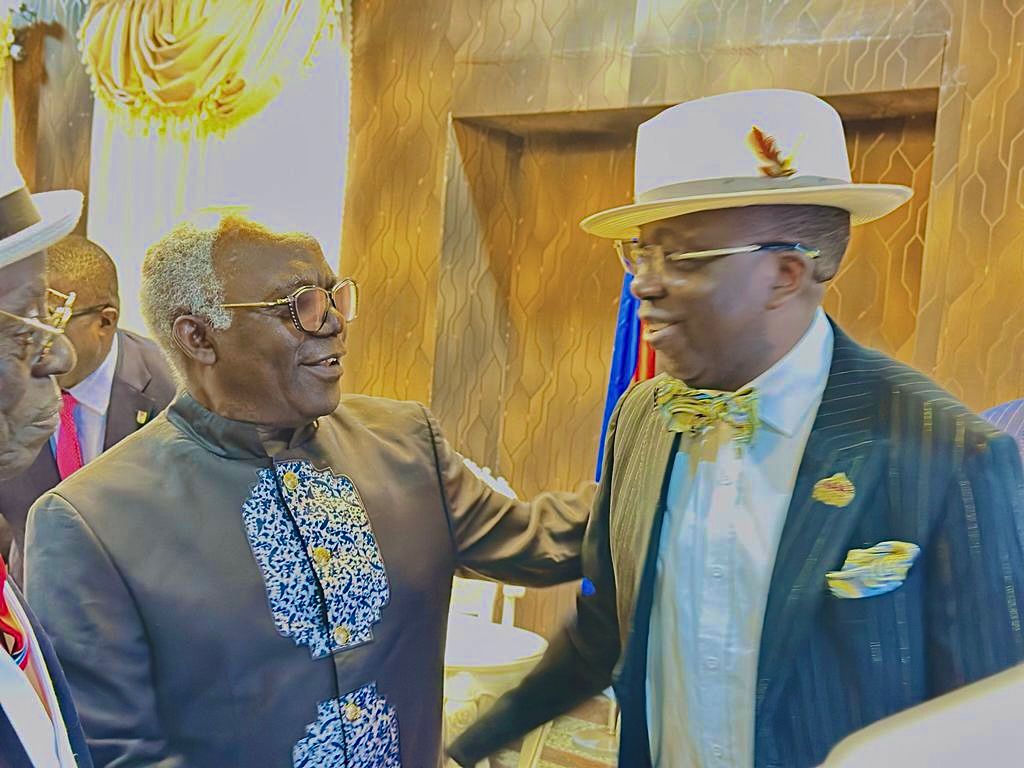
Femi Falana, SAN and Onoja at the event
3. It is against the backdrop of the foregoing that I must be permitted to join the legion of the contributors to pay my homage to the Legend of our Time on this Diamond Milestone as a legal practitioner. Although I have not been told by Prince Lateef Fagbemi, Senior Advocate of Nigeria, the reason the book is titled: The Diamond at the Bar: A Chronicle of Lessons and Values from the Life of Aare Afe Babalola, it is my humble opinion that the operative word in the title is DIAMOND.
4. Aare is, without controversy, the Diamond of the Bar. According to the Encyclopaedia Britannica, Diamond is the hardest naturally occurring substance known and the most popular gemstone. The Encyclopaedia goes further to say that: “The hardness, brilliance, and sparkle of diamonds makes them unsurpassed as gems.” Like the Diamond, Aare Afe Babalola as a legal practitioner is known for his hardness in the prosecution of his client’s case. As an advocate, he is celebrated for his brilliance. And as a gentleman, he sparkles with humanity which attracts people to him. For sixty years, Aare has continued to be an illumination and a shining light to the Bar. It is therefore no wonder that the Editors have been inspired to title the book, The Diamond at the Bar.
5. However, that’s not all. Diamond also has a subliminal meaning in the context of our gathering here today. What we are celebrating is in effect the Diamond Jubilee of Aare Afe Babalola’s Call to the Bar of England and Wales. The book is therefore, in my opinion, appropriately titled having regard to the subject and the occasion.
The Book
6. The Diamond at the Bar: A Chronicle of Lessons and Values from the Life of Aare Afe Babalola is a-416 page book with Fifty-Three Chapters. In terms of appearance and aesthetics, I must state that this is a well-produced book. As an author and publisher myself, I must commend the Editors and the Publishers for this feat. The book is easy to read and well-printed. The font used in printing the book is friendly to the eye and one does not need to strain the eyes before reading the wordings.
7. The starting point in my review is a unique feature of this book which, I must admit, does not appear in many books. In my years as an academic, publisher, author, and legal practitioner of the Inner Bar, this is my first time of coming across what I am about to reveal. Whilst it is customary to have Foreword, Preface, and Acknowledgment in books of this nature, this particular book goes further to have a special chapter titled: In the Beginning. And who else could have appropriately written about Aare Afe Bablola’s humble beginning as a legal practitioner than my Noble Lord Honourable Justice Emmanuel Ayoola, CON? We are grateful to His Lordship for the opportunity his piece gives us to have an insight into the fact that Aare’s industry did not start overnight. According to my Noble Lord, Aare would always work by himself from evening till morning! That was Aare as a young lawyer! Is therefore any wonder that Aare became one of the most successful legal practitioners this country has ever produced.
8. My Learned Brother Silk, Professor Mike Ozekhome authored the Foreword to the book. If you know the Akpakpa Vighi Vighi of Edo Land, you already know that he is a prolific wordsmith and someone who is passionate about Aare Afe Babalola. In the Foreword which spans five pages, Prof. Ozekhome presents us with a panoramic view of what the whole book is about. You recall that I had stated above that for sixty years, Aare has continued to be an illumination at the Bar. Prof Ozekhome echoes the same sentiments when he observed that Aare has, by sheer force of personality “taught us that a candle does not lose its light by lighting other candles.” If the list of contributors to the book is an index of the people Aare has impacted, and if the list of those of us who are assembled here is to be a yardstick, the consensus in my view is that Aare’s candle is indeed shining brighter because of the so many other candles he has given light to.
9. His Excellency, Governor Biodun Oyebanji’s detailed and engaging piece is an eye-opener for me. His Excellency like an expert weaver succeeded in weaving a beautiful attire in his narration of his multi-faceted encounters with the Aare. One striking thing I found in the course of reading the Governor’s chapter is the narration of how Aare indirectly contributed to the Governor’s academic success at the University of Ibadan through the instrumentality of my Learned Brother Silk, Gboyega Oyewole SAN. It appears that Aare has a positive way of influencing his proteges to imbibe his virtues of generosity and humanity. A case of like father, like son!
10. All of us are gathered in Ekiti State today. We are thankful for His Excellency for the insight his piece provided about the epic nationalistic struggle for the creation of the State and the role that our Aare and other leaders played to actualize the dream. The title of the Governor’s chapter itself is both a tribute and a testimonial. It is a tribute to Aare’s unparalleled commitment to the cause of Ekiti. It is also a testimonial to Aare’s patriotism and sense of duty. For Aare to consistently be ranked as the highest taxpayer in the State is humbling for me. This is a lesson for me and I believe for all of us that charity must indeed start from home.
11. It was with a bit of trepidation that I turned to Chapter II of the book, and you will soon find out the reason. The Chapter was authored by no other than the Matriarch of the Bar, the first female Senior Advocate of Nigeria. Chief Folake Solanke, was elevated to the Inner Bar exactly ten years before I was called to the Outer Bar! When you are looking for felicity of diction and beautiful use of language, I enjoin you to open the book to Chapter II. In very captivating prose of nine pages, from page 23 to page 32, the Matriarch regaled us with tales upon tales of her professional relationship with the Aare. Interestingly, the two Leaders of the Bar were called to the Bar of England and Wales in the same year; 1963! I must admit that I thoroughly enjoyed reading what happened on Ife-Ibadan Road when the two Leaders were appearing as adversaries in the Ife-Modakeke case. You will need to read the book to find out about the interesting encounter.
12. In Chapter III, our Leader of the Bar, Chief Wole Olanipekun, Commander of the Federal Republic revealed many hitherto unknown facts about his relationship with the Aare, a relationship that has lasted more than four decades. One of the things I found intriguing is the confidence Aare demonstrated in giving a bulky file to an unknown young lawyer to study and review on the first day they met. Did Aare have the gift of clairvoyance? Or how else was he able to discern that the young Wole Olanipekun would also become a star in the profession? I am going to use the metaphor of candle and its light again. Aare’s candle did not dim after giving light to other candles. The other candles also began to give light to other candles with the effect that the whole world is becoming brighter as a result of Aare’s candle. This is my takeaway from Chief Wole Olanipekun’s account of how he was inspired to build the Bar Centre for the Ikere Branch of the Nigerian Bar Association after being inspired by the Bar Centres Aare built in Ibadan and Ado-Ekiti!
13. The unique thing you are going to discover in the piece contributed by His Excellency Babatunde Fashola, SAN, in Chapter IV is that it is one of the few chapters that celebrated Aare’s contribution to the pole position Arbitration has attained in the country today. When we talk of Aare Bamofin of Yorubaland, it is his towering image as a legal practitioner that always looms large. Yet, for decades, Aare has been a foremost arbitrator and a trainer of Arbitrators. The former Governor of Lagos State credited Aare with the inspiration for the passage of the Lagos State Arbitration Law! The candle continues to give light.
14. Distinguished Ladies and Gentlemen, if you want to discover an intimate portrait of Aare at home as a father and in the office as a boss, you should look no further than Prince Lateef Fagbemi, SAN’s contribution which runs from page 47 to page 55. In his characteristic flowing prose which has endeared his briefs of argument to judges of superior Courts, Prince Fagbemi gave us a window into the personality of Aare as a doting father and a disciplined boss. It is only when you have read the book that you will discover the reason Prince Fagbemi referred to Aare Babalola as the Greatest of All Times.
15. Earlier today, we all listened with rapt attention to the beautiful lecture delivered by Bishop Matthew Kukah on The Future of Constitutional Democracy in Nigeria: Imperative of a New Constitutional Order. That was vintage Bishop Kukah! You need however to read the Bishop’s account of How A Tree Made a Forest in this book. As His Lordship did in the just delivered lecture, Bishop Kukah called on all of us to interrogate certain assumptions about life. One of these assumptions is the common saying that a tree does not make a forest. It is the convincing position of the Bishop that Aare has demystified the saying having regard to his stupendous achievements in turning a virgin tropical forest into a bustling university community.
16. Bishop Kukah is not the only clergy who contributed to the book. My Lord, Most Rev Felix Femi Ajakaye’s chapter is the visa we needed to see the spiritual side of the Fiwajoye of Ado-Ekiti. I am in total agreement with the Bishop of the Catholic Diocese of Ekiti that although Aare is not a Catholic, he embodies the virtues of being a Catholic. Aare does not discriminate. Aare embraces all. He welcomes everyone and he accepts all. If any evidence of this is required, a quick glance around this hall will convince all of us that Aare is indeed someone who loves God and humanity. Strangely and by what I could call a divine telepathy, this theme of non-discrimination also featured in Mallam Yusuf Ali’s contribution. According to Mallam Ali SAN: “For you to be like Aare, you must learn to be blind to discriminatory traits like sect, religion and ethnicity.” [page 180]
17. The truism of Bishop Ajakaye and Mallam Yusuf Ali’s submission about Aare’s virtue of embracing all is exemplified by the contributions from our royal fathers. The Ooni of Ile-Ife, His Imperial Majesty Oba Adeyeye Enitan Ogunwusi is categorial when Kabiyesi asserts that Aare Afe Babalola is a lesson to the rich and influential ones amongst us. I have no hesitation in agreeing with the Arole Oduduwa. I doubt if there is anyone who would visit this expansive and massive complex and would not be inspired to go back to his community and make it better. It is simply impossible not to be overwhelmed by the grandeur of this stupendous accomplishment – to borrow the expression of Chief Folake Solanke.
18. Our Royal Host for today, the Ewi of Ado-Ekiti, Oba Rufus Adejugbe is categorical that Aare Afe is 50 years ahead of Nigeria in thinking. From what we have all seen and from what we have witnessed, I am convinced that all of us can swear under the Oaths Act that Kabiyesi is hundred percent correct. It is only someone with exceptional vision that could have built the Bar Centres in Ado-Ekiti, Akure and Ibadan. It is a gifted clairvoyant that could have turned this massive forest into a cosmopolitan campus that hosts international university.
19. The same sentiment was echoed by Oba Dr. Adesanya Aladejare, the Alaaye Obalufon Alayemore of Efon Alaaye. On your way to ABUAD, I believe you noticed the campus of the Federal Polytechnic on your right. Do you know the history behind its establishment and the role Aare Afe Babalola played in its actualization? We are grateful to Kabiyesi for revealing the untold story about the federal institution. I will come back to the school presently.
20. It appeared to me that the Royal Fathers must have had a royal meeting before putting pen to paper to write about their contributions. Oba Sir Michael Ademolaju, the Oloye of Oye-Ekiti was on the same page with his brother Obas when Kabiyesi asserted that “Another Afe Babalola may take about two centuries to arrive.” Having studied Aare closely, it is Kabiyesi’s conclusion that “Aare is nothing but an Oracle – a person who can see tomorrow and who plans adequately for the future.” See page 172 of the book.
21. The judiciary is not left out in detailing how Aare Babalola has been a person of value. I am particularly impressed by the account given by His Lordship Justice Ayodeji Daramola of his encounter with Aare when he [Justice Daramola] was a young counsel in the Ministry of Justice. For him, Aare is not the proverbial cock who does not want other young cocks to crow. Not at all, rather Aare deliberately goes out of his way to cultivate and groom youngsters into become stars. This is evident in the contribution of Justice Akintayo Aluko, my Noble Lord of the Federal High Court. I have mentioned above that Aare is a spiritual person. Credence was further lent to this submission with the spectacular account of what happened when some elderly clients of Aare for whom Aare had just secured a major litigation victory came to give him a gift of ‘African Juju’ for fortification. You want to know what happened to the bouquet of Juju they brought? You will have to turn to page 206 of the book for the interesting tale.
22. In his Foreword to the book, Prof Ozekhome observed, and rightly in my view, that: “…one of the best ways to learn about the quality of a legal practitioner is to look at the quality of clientele he attracts.” See page 2 of the book. One of Aare foremost clients who contributed to the book is no other than our father, His Excellency, Chief Olusegun Obasanjo. According to Baba Obasanjo: “…all the cases he handled for me are extremely important cases…This is only natural because it is only when a case is important and complicated that I call upon him.” This underscores Aare’s quality of hardness as a thoroughbred diamond advocate. For anyone in public service, Chief Obasanjo has a word of advice: “One of the indispensable tools one needs in in public office is the services of a very competent legal practitioner. One needs a good lawyer to advise and guide one’s actions in office. I believe I have had the privilege of having two of the best lawyers that Nigeria has ever produced.” I know that you are itching to know the two lawyers. Right? Well, I am going to disappoint you. You need to turn to page 72 to read the engaging account of our former President and former Head of State.
23. I have mentioned above that the contributors to the book are stars in their own right. It is a parade of the best of the best. Or how else do we describe a book that has as contributors like Chief Adegboyega Awomolo, the Vice-Chairman of the Body of Benchers; Mr. Joseph Bodunrin Daodu, former President of the Nigerian Bar Association; and Chief Akin Olujinmi, former Attorney General of the Federation and Minister for Justice, amongst others. One striking element in all the accounts of the contributors is Aare’s innate ability to make friendship and sustain relationship across generations.
24. Distinguished Ladies and Gentlemen, how many people can boast of a friendship that has lasted for close to seven decades? Chief Deji Fasuan and Aare met in 1954 and have remained friends ever since. Yes, that is a fact! Many of us seated here this afternoon were not born at the time. Yet the two elder statemen are still bosom friends. In the 60s, Aare’s paths crossed that of Justice Emmanuel Ayoola and Chief Folake Solanke. The relationship has endured the passage of time. Aare met Chiefs Wole Olanipekun and Adegboyega Awomolo in the 70s. Till today, they have remained together like two peas in a pod. In the early eighties, Aare became mentors to Chief Olujinmi, Mr. JB Daodu, Prince Lateef Fagbemi and others. They are still together till today. In the nineties, Messrs Adebayo Adenipekun, Gboyega Oyewole, Olu Daramola joined the team of the Man with the Midas Touch. They are still together till today. In the millennium, my younger brothers, Kehinde Ogunwumiju, Shina Ogungbade teamed up with the Fiwajoye Ado-Ekiti, and of course, they are still with him till tomorrow.
25. I do not think I have come across any other person who could boast of such vast networks across generations, across decades, and across centuries. I have not. I believe that Aare is a Special Creation of God in all ramifications. I am certain that this must be one of the reasons why Kabiyesi Oloye of Oye Ekiti rightly predicted that it might take another two centuries for another Afe Babalola to come again. Yet, I also believe that his life is an intentional lesson for those of us who can discern beyond the ordinary. Could this be the reason why Mr. Gbenga Oyebode, MFR observed that: “Aare Afe Babalola is a constant inspiration and motivation to do more.” Page 121.
26. One person who rightly assesses Aare’s penchant for grooming people and assisting them to exceed their potentials is Dr. Ann Coxon, Aare’s London-based physician. Again, the relationship between Dr. Coxon and Aare is another veritable testimonial about Aare’s ability to cultivate friendship across continents. In her very passionate analysis of Aare’s personality, Dr. Coxon concluded that: “Aare Afe Babalola is a man who did not draw up the bridge after him.” (Page 62) To me, this is a poignant statement and it tallies with Asiwaju Adegboyega Awomolo’s assessment that Aare “has successfully impacted these values and virtues into the lives of the very many whose paths crossed his either professionally or through family and social interactions.” page 89
27. Of course, it is clear that the Aare is a man of values and virtues who would not draw up the bridge after he himself has successfully crossed the river. Or how else can we explain what motivated Aare to dream of establishing an international university when he was in his 80s? At that age, he had no child of his to send to the university. Did he want to make money? Was it to get fame and recognition? I believe the answer to these questions have been provided by the scion of Afe Babalola, my learned brother Silk, Tunde Babalola when he opines at page 331 that Aare “is very sacrificial. He will rather sacrifice so that humanity can be blessed rather than use his resources for himself or his family. Thus, most of his hard-earned money he invested into building a private university in his old age to benefit mankind instead of using it for himself and his family.”
28. The academia is also another of Aare’s constituency that is well-represented in the book. As he did at the Bar, Aare in his relationship with the academia, demonstrates his ability to cultivate and retain relationship across generations. Whilst Professor Tunde Adeniran and Prof. Israel Owolabi represent the older generation, we have Prof. Yemi Akinseye-George, SAN, Prof. Koyinsola Ajayi, SAN, and Prof. Ibe Kachikwu coming up on their heels. Of course, Aare is not one to leave out the younger eggheads, amongst whom we have Prof. Damilola Olawuyi SAN, Prof. Olaposi Omotuyi, and Professor Akintunde Akinade. In their respective submissions, they all highlighted vital lessons they were privileged to learn from Aare Afe Babalola.
29. The constancy of Aare’s principled life was again brought to the fore by Prof. Tunde Adeniran’s exposition of what happened when Aare appeared as a Counsel before the Justice Ibidapo-Obe Commission of Inquiry into Ife-Modakeke Crisis of 1981 of which Prof Adeniran was a Commissioner. According to Professor Adeniran: “A lawyer in a faded colonial suit stood up to make what I considered to be the most unprofessional statement anchored by very pedestrian reasoning. I became so impatientnot just because logic, the essential tool of thought, had taken flight but also because I found his spoken English with the intonation of his dialect rather embarrassing.” Professor Adeniran then wanted to cross-examine the lawyer but Aare stood up to object to the cross-examination of a learned friend by a Commissioner who was not learned in law. If you want to know what happened when Aare stood up, please turn to page 86 of the book.
30. This review will not be complete if I fail to briefly highlight the contributions of four Amazons whose chapter contributions give us fresh insight into the enigmatic personality of the Legend. Mrs. Funke Adekoya, SAN’s piece titled: “The Unknowing Teacher” is instructive in that people learn more from our conduct than by our words. The learned Senior Advocate detailed two of her encounters with the Aare – one in Ibadan, the other on the streets of London – and the lessons she took away from those encounters. Yeye Asiwaju Victoria Awomolo SAN’s contribution is another piece which established Aare’s firm reputation as a clairvoyant. How could Aare have predicted that she was going to become a member of the prestigious Inner Bar whilst still an undergraduate!
31. Mrs. Folashade Alli and Ms Ann Babalola must be given the credit for the beautiful and frank portrait of their father they painted in their separate contributions. Through them, we got rare glimpses of Aare as a doting, caring but firm father who was always there for his children. I was excited to read Mrs. Alli’s account of the day her father paid a surprise visit to her school during their inter-house sport event and how she ran so fast in excitement and won the race. My take away from Ann’s contribution is the lesson in gratitude that Aare inculcated in his children, the practice of saying ‘thank you’ for every favour received.
32. It is not possible, having regard to time constraint, to examine and review in details individual chapter contributions of all the eminent contributors. It suffices for me to submit that every single chapter of the book contains unforgettable lessons that are unique to the Legend. Take the case of the Obasuyi of Benin, Dr. Charles Uwensuyi-Edosomwan SAN, who was initially scared that Aare who was briefed to lead him would snatch the brief from him. To his pleasant surprise, Aare allayed the fear of the former Edo State Commissioner for Justice and also took him under his wing. Or is it the case of Chief Adeniyi Akintola SAN who was so enamoured with Aare’s mentorship and generosity that he named his law library after the Giant of the Bar?
33. Distinguished Ladies and Gentlemen, if I may be allowed to parody the popular definition of democracy in the context of this book, I will say that this book, The Diamond at the Bar: A Chronicle of Lessons and Values from the Life of Aare Afe Babalola, is a book about the Legend, authored by Legends, and written for those who aspire to become Legends. This is not your regular book of Tributes. It is not even a book of Tributes at all. As the title implies, it is a book that documents the human and leadership principles Aare Afe Babalola has lived his life by as recorded by selected illustrious people who have been privileged to interact with him.
34. There is however another side to this very important book. We have been gifted two bonus chapters of extremely engaging stories about Aare Afe Babalola authored by our own Onigegewura Olanrewaju Akinsola, the co-editor of this book. One case that almost everyone who contributed to this book singled out as being a locus classicus is the case of how Aare Afe used his legal wizardry to ensure that Bashorun MKO Abiola was installed as the Aare Ona Kakanfo of Yorubaland. It is the case that Onigegewura turned into the beautiful story you are going to read in Chapter 52 of the book.
35. Earlier on, I told you briefly about the establishment of the Federal Polytechnic Ado-Ekiti which is just across the road from ABUAD. There is however a deeper story behind the establishment. Onigegewura has once again excelled himself in documenting the events that led to the establishment of that institution. The reality is that without the instrumentality, intervention and contributions of Aare Afe Babalola, that sprawling institution to your left as you approach ABUAD would have never existed. It is a story you will enjoy reading over and over.
34. Your Excellencies, is it possible to have a perfect book? I do not think so. Like every human effort, this book does not lay claim to perfection. My first observation is that as a book celebrating Diamond Jubilee, I believe that it would have been fantastically symbolic to have sixty contributors instead of the fifty-one that we have in this volume. My second observation has to do with the arrangements of the chapters. I believe that the editors could have arranged them according to the sectors the contributors belong to. For instances, the royal fathers, the clergy, the Bar, the Academia, friend and family, could have been grouped together. These observations, I must add, are my personal views, and they do not detract from the beauty, the glamour and of course, the essence of the seminal publication.
35. Before I conclude this brief intervention of mine, I must ask a question from Prince Lateef Fagbemi SAN the reason for my exclusion from the roll of eminent people who contributed to this book. With respect, I am of the humble view that having regard to the fact that Aare Afe Babalola is my mentor and leader, I ought to have been invited as a contributor. Well, whilst the Learned Silk is preparing his defence, I must specially and specifically thank the Fiwajoye of Ado-Ekiti for the singular privilege given to me to be the Book Reviewer at this auspicious event. I want to believe that is the divine compensation I got for not being a chapter contributor. I thank God for your life, Sir. I thank God for all the great things HE has done and HE is still doing in your life. Your life is full of grace and favour. I pray that you will continue to live long for us in good health. [Amen]
36. My task is done. However before I leave the podium, permit to me say one more thing. For those who have visited this expansive campus before, and for those who are visiting ABUAD the first time, I want you to take a leisurely roll around this centre of tourist attraction after this programme. I want you to visit the Afe Babalola Muti-System Hospitals. I want you to visit the ABUAD Farms. I want you to visit ABUAD Industrial Park. And I want you to come back to the campus to start reading this book which we are about to unveil.
37. In peroration, Your Excellencies, Distinguished Ladies and Gentlemen, for anyone interested in contemporary history, leadership principles and values, nationalism and patriotism, self-development, legacies and generational success, inspirational and motivational stories, and above all, divine grace, I recommend this book to all.
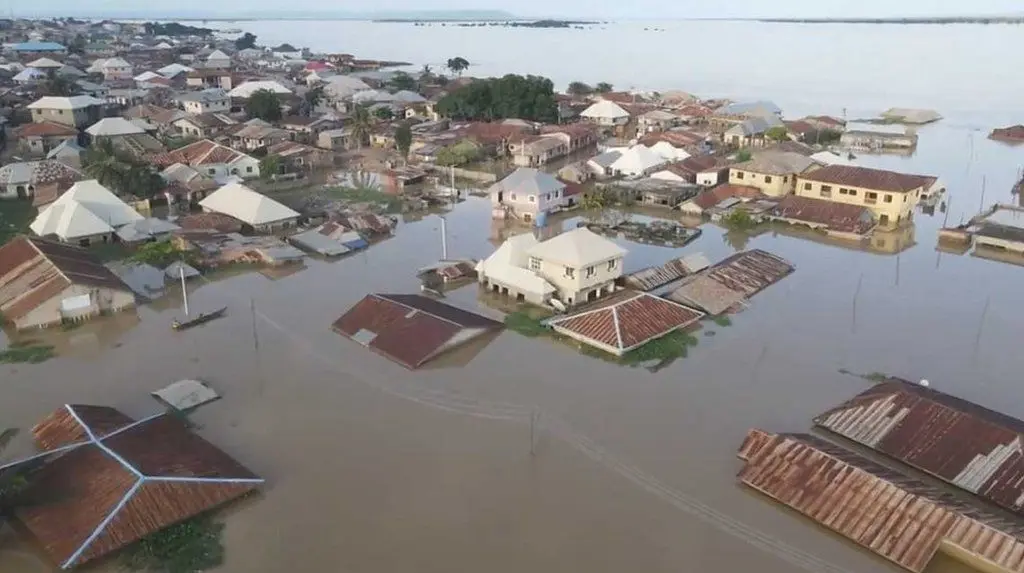
Although the Federal Capital Territory Administration has declared the Trademore Estate, located along the Lugbe-Airport Expressway, a disaster zone with plans to have some of its structures demolished, reports reaching Law & Society Magazine reveal that the source of the calamitous flooding is from outside the estate.
After the rains that fell on Friday 7 July 2023, the videos below reveal the source of the flooding and an impending disaster unless the authorities act swiftly.
A resident of the area who does not want his name in print explained that these are videos of the road leading from Ketti through Pyakasa to Airport Road (Yar’Adua expressway).
“The road is dilapidated, with several potholes, though the distance between Ketti and the expressway is about 10km, the journey usually takes about 30 minutes, now that the rains have started, it takes more time, and if the rain is heavy, people from that axis will have to go back home or wait for the water to recede.
“Alternatively, commuters will have to go back and take the road to Kabusa which is even worse,. The distance is about 6 kilometers, but the journey takes about 25 minutes and hoodlums abound in large numbers, snatching bags, motorbikes, and all such crimes.
“You may wish to know that the water from the flood flows downwards to Trademore Estate where there was a serious flood case recently. More estates are springing up along the banks of the stream and what we call bridges there are actually culverts, which are neither wide nor high enough for the free flow of water from both sides of the stream.”
Billionaire businessman, Femi Otedola, must be excreting bricks. In recent weeks, the often-ebullient businessman has told anyone who cares to listen that he is about to emerge Chairman of FBN Holdings Plc (FBN Holdco) – one of Africa’s largest diversified financial services groups and parent of First Bank of Nigeria Limited, the country’s oldest lender. Otedola, from all indications, was recently nominated as a Non-executive Director of FBN Holdco, subject to the approval of the Central Bank of Nigeria (CBN), as is always the case with all financial institutions regulated by the banking system regulator. His hope was that after his nomination is approved by the CBN, at the next annual general meeting of FBN Holdco slated for August 15, 2023, other shareholders/directors of the group will elect him chairman. It remains uncertain how Otedola intends to be elected chairman, given that the current holdco chairman, Adamu Abdullahi, is an appointee of the Central Bank, albeit on an interim basis.
However, by letting more than a few people know of his heart’s desire to become the next chairman of FBN Holdco, Otedola inadvertently stirred up the hornet’s nest. Suddenly, Otedola finds himself in direct confrontation with the former Chairman of FBN Holdco and industry titan, Oba Otudeko, who two years ago was sacked from the group’s board by the now suspended Governor of the CBN, Godwin Emefiele. The impending head-on collision was triggered last Thursday when Otudeko, in a move that left the capital market gasping at the magnitude of the transaction, acquired 4,770,269,843 shares of the company’s issued share capital of 35,895,292,791. The record trades valued at N87.8 billion were moved from 26 nominee and trustee accounts to Barbican Capital Limited, an affiliate of the Otudeko-owned Honeywell Group, translating to 13.3% of the share capital of FBN Holdco. If we are to add the 13.3% to the previously disclosed interests held by Honeywell Group Limited’s affiliates, amounting to about 1.5%, this will bring Otudeko’s aggregate shareholding in the financial services group to about 15%, making him the undisputed single largest shareholder of the group. It further raises the question as to if there are other shares that are held by nominee or trustee accounts that are yet to be declared by the Honeywell Group or its affiliates.
What was even more telling about the share acquisition was that the shares held by Barbican Capital may have been shielded from any claim against a company formerly owned by Otudeko, Honeywell Flour Mills Plc and two other sister companies, which have been in a protracted dispute with EcoBank Plc over a N5.5 billion loan. On January 27, 2023, the Supreme Court upheld an earlier judgment of the Court of Appeal against Honeywell Flour and the two companies in dispute with Ecobank over the said loan. Since the Supreme Court ruling, lawyers acting on behalf of Ecobank have filed bankruptcy proceedings against Otudeko at a Federal High Court, Lagos. Barely two weeks ago, the same court granted leave to Ecobank to join Otudeko, Honeywell Group and Flour Mills of Nigeria Plc which acquired Honeywell Flour Plc in an N82 billion deal last year, as additional defendants to the counterclaim filed by the bank, seeking to recover monies based on the judgment delivered by the Supreme Court last January.
However, Barbican Capital, which was incorporated on March 9, 2023, listed two of Otudeko’s children, Foluke Oyeleye and Obafemi Adedamola Otudeko (Jr.) as having controlling interests in Barbican, rendering it difficult for Ecobank to go after the company and/or its assets. In any case, Honeywell’s lawyers may very well argue that the disputed Ecobank transaction with Honeywell Flour Mills and two other companies, is an unrelated transaction to Barbican Capital’s acquisition of FBN Holdco shares.
But let’s dial back a bit. Prior to the Supreme Court judgment against Honeywell Flour and Barbican Capital’s 13.3% acquisition of FBN Holco, not much had been heard of Otudeko, save for the sale of Honeywell Group’s 71.69% stake in Honeywell Flour Mills and First Bank’s 5.06% stake also held in Honeywell Flour Mills. As many market analysts put it, he was in hibernation for over two years. Before his stewardship at the helm of the holdco, he had sat on several other corporate boards, including that of First Bank of Nigeria Plc for 12 years and retired as its chairman in 2010. At the end of his stint, Otudeko was appointed pioneer chairman of FBN Holdco after First Bank and its subsidiaries adopted a holding company structure. He held sway at FBN Holdco until he was ousted by Emefiele in April 2021.
Emefiele was forced to remove him after Otudeko and the Chairman of First Bank at the time, Mrs Ibukun Awosika, refused to heed his directive that Mr Adesola Adeduntan be reinstated as Managing Director/CEO of First Bank. About three days before Otudeko and Awosika were sacked, FBN Holdco had held its annual general meeting in Lagos, during which Adeduntan was re-elected as a director of the holding company, a position reserved for the MD/CEO of the bank. But barely 24 hours after his re-election at the AGM, at a board meeting of First Bank, Adeduntan, with eight months left to the end of his tenure, was retired as MD/CEO of First Bank and his deputy, Gbenga Shobo, announced as his replacement.
Awosika with the backing of Otudeko was believed to have terminated Adedutan’s appointment because of a letter she received from the CBN stating that First Bank had not complied with regulatory directives to divest of its interest in Honeywell Flour Mills, despite several reminders by the Central Bank. The CBN also stated in the letter that it was giving the bank 48 hours to ensure Honeywell repays its obligation to it, failing which the CBN will take appropriate regulatory measures against the insider borrower and the bank. It further instructed the bank to divest of its holdings in Bharti Airtel Nigeria Ltd and Honeywell Flour Mills within 90 days. These unsecured insider loans to the tune of N75 billion were all related to Otudeko. It is not understood why the 48 ultimatum was issued by the CBN, as sources within First Bank later revealed that the loans were performing and had been restructured with a repayment plan till 2026.
In addition to the letter from CBN, it was later revealed that the once convivial relationship that had existed between Adeduntan and Otudeko, who was instrumental to the former’s appoint as MD/CEO five years earlier, had gotten frosty over certain disagreements between the then Holdco chairman and bank MD. There were also mounting concerns among non-executive directors of the group over the liquidity backstop that First Bank had been providing since 2016 to Heritage Bank due to the latter’s liquidity constraints, impaired shareholders’ funds and high loan impairment. A liquidity backstop provides insurance, usually by way of cash, against liquidity risks and helps stabilise financial markets and institutions by mitigating runs.
Without going into further details why Heritage was in dire straits, it is understood that the backstop was sanctioned by the CBN. However, the position taken by some non-executive directors including Otudeko at the Holdco level that First Bank should reduce its credit exposure to Heritage Bank in the unlikely event of a default, did not sit down well with Central Bank officials. As of December 31, 2022, First Bank’s backstop to Heritage was put at N451 billion. If Heritage is unable to repay the amount, it will erode almost half of FBN Group’s reported shareholders’ funds of about N1 trillion in Q1 2023 and completely wipe out its retained earnings of N430 billion.
Yet, even as Otudeko and Awosika moved against Adeduntan, some shareholders/directors of the holding company and bank, led by Oye Hassan-Odukale, pleaded with Otudeko to rescind the retirement of the bank MD, arguing that it was not in the best interest of the bank and the financial services group. However, Otudeko was said to have remained adamant on the grounds that a company had a right to hire and fire its employee before the contracted date if it is done based on the contract terms. Otudeko, a bank source said, was also of the view that even if FBN Holdco was under forbearance, it had not been taken over by the CBN, its financial accounts, like other banks, were still signed by the Central Bank and by April 2021 was already on the mend, so its shareholders and directors still had a say on who to employ and fire.
When Emefiele heard of the sacking, nonetheless, he tried repeatedly to reach out to Otudeko and Awosika to reverse their decision. However, the CBN governor was later to explain that they made themselves unavailable. Subsequently, an angry Emefiele, with the consent of former President Muhammadu Buhari, struck. On Friday, April 30, 2021, he sacked the Boards of Directors of FBN Holdings and First Bank and announced new directors to both boards. The CBN governor also reinstated Adeduntan and reversed Shobo’s promotion to the position of MD/CEO. Effectively, in one fell swoop, Emefiele ended Otudeko’s stint as a director of First Bank and the holding company for over two decades.
Giving reasons for the decision, the CBN governor said Adeduntan’s removal was done without due consultations with the regulator, especially given the systemic importance of First Bank. Among other reasons, Emefiele added that the decision to sack both boards was premised on the fact that the bank had been under regulatory forbearance since 2016, arising from bad credit decisions, inadequate corporate governance, as well as a high non-performing loan (NPL) ratio and capital adequacy ratio that had breached acceptable prudential standards for a bank its size. Between 2016 and 2020, First Bank had recorded a total loan impairment of over N565 billion. As of financial year ending December 31, 2022, total loan impairment charges had risen to N1.2 trillion – an amount considered by market analysts as a massive erosion of wealth.
To be fair, whilst Otudeko as chairman cannot completely absolve himself of First Bank’s woes, questionable credit risk management pre-2016, and the insider loans he had taken from the bank which exceeded regulatory limits for shareholders and directors, anyone with a knowledge of the bank knows that much of the blame should be placed mainly on Bisi Onasanya, MD/CEO of First Bank between June 2009 and December 2015. At the end of Onasanya’s tenure, First Bank had been so badly mismanaged that a former executive director of the bank and later Minister of State for Finance, Remi Babalola, sent a stinker via WhatsApp to the departing chief executive and copied other directors, accusing him of mismanaging First Bank and concealing several infractions under his watch from the board. However, it must be added that a major non-performing loan of N99 billion, later sold to the Asset Management Corporation of Nigeria, was granted by First Bank when it was led by Sanusi Lamido Sanusi who later became CBN governor and Emir of Kano. But I digress.
With Otudeko’s ouster, this paved the way for Otedola, an unapologetic corporate raider, to swoop down on the shares of FBN Holdings, increasing his stake first to 5.07%, then to 7.57%, and to about 9% as of last Friday. With his emergence as the single largest shareholder in the Holdco by December 2021, Otedola was able to nominate proxies as directors to the boards of the Holdco, First Bank and one or two other subsidiaries of the group to represent his interest. Now, there is no certainty when he decided to stamp his imprimatur on his interest in the Holdco by emerging its chairman, but it is bemusing how Otedola, a self-styled prophet who claims he can see tomorrow and predict business and political outcomes, did not see Otudeko coming. Indeed, I may be right in thinking that Otudeko would not have come in from the cold if he did not have the tacit support of some higher ups in government and if he was not certain that Emefiele was no longer in the picture.
But that is not to say that Otedola should ever be underestimated. By all measures, he hardly ever loses out in anything that he sets out to achieve. Unlike other business moguls of his standing, he has considerable time on his hands to plot and be very calculating in everything that he does, even when sending out something as seemingly flippant as recorded felicitations from his friends to all his WhatsApp contacts, a whole seven months after his 60th birthday. Anyone who wants to bet against Femi, should be ready to part with the shirt on his back. Nor should anyone be surprised if the share price of FBN Holdings continue to rise as he attempts to regain the bragging rights of single largest shareholder of the group. If he can help it, he’s not one to play second fiddle.
Already, with Otudeko’s disclosure indicating that he has the highest stake in FBN Holdco, Otedola has gone into overdrive to consolidate his control of the group, which he had taken for granted was just within his grasp. At the weekend, an online business news website claimed in an obviously planted story that some significant shareholders with a combined interest of 28% in the Holdco, intend to join forces to block Otudeko from regaining control of the company in whatever capacity. Furthermore, a news report in THISDAY on Sunday, quoted multiple sources as stating that some shareholders of FBN Holdco were slated to meet yesterday to decide on a quick resolution of all the issues thrown up by the slew of share acquisitions and Otudeko’s comeback bid.
But if all the parties were to set aside needless emotions and keep their egos in check, there is really no need to enter panic mode. For one, one of the reasons given by Emefiele for Otudeko’s removal from the board of the Holdco has been discharged, as the former chairman’s outstanding loans of N75 billion were repaid in full shortly after the completion of the sale of Honeywell Flour Mills to Flour Mills of Nigeria. This is a fact both First Bank and CBN are acutely aware of.
Two, it is doubtful if Otudeko, a seasoned boardroom player, is under any illusion that he can be reappointed a director of the Holdco or any of its subsidiaries. However, he is within his rights to have representation on the Holdco and on any of its subsidiaries and ensure that his proxies can speak for his investment in the group, just as is the case with other significant shareholders. When the CBN appointed new directors to FBN Holdco and First Bank after it sacked the previous boards in 2021, it appointed Remi Lasaki as a proxy for Mike Adenuga’s interest in the group, likewise Tunde Hassan-Odukale was appointed to represent Leadway Assurance and Leadway Pensure’s interest in the Holdco. It can only be assumed that Otudeko who remained a significant shareholder at the time was not allowed representation on any of the boards, either due to his insider loans or Emefiele’s anger over the manner Adeduntan was removed as chief executive.
Three, the reason(s) for the regulatory forbearance granted FBN Holdco no longer exists, as its NPL and capital adequacy ratios have met stipulated prudential requirements, so there is no clarity on why the Central Bank has not recalled its interim directors that are not representing shareholders’ interests but continue to sit on the boards of the group and First Bank. If the shareholders presently girding their loins for a high stakes game of thrones have any sense, that should be their foremost priority: how to recover FBN Holdco from the overreach of the CBN.
Another priority of theirs should be for the shareholders to come together and work in the interest of the financial services group, retail and institutional investors, as well as other stakeholders, rather than tearing each other apart and eroding confidence in the company that they all have a stake in. A public spectacle right now will only reinforce speculation that the group’s significant shareholders are more interested in their pecuniary interests and how they can use the holdco as a personal piggy bank, rather than an institution that creates value for them and the society at large.
Besides, there is nothing that cannot be resolved among a group of shareholders such as Otudeko, Adenuga, Otedola, Saheed Arisekola and the Odukales whose relationships, some familial, stretch back to 30 years and longer. Right now, their collective goal should be targeted at growing FBN Holdco which in recent years has been a laggard among its Tier 1 competitors. Of uppermost consideration, the shareholders should never lose sight of the fact that their banking subsidiary alone accounted for 82% of the group’s earnings in 2022. At a time when it appears to have turned the corner, it must not be derailed from its transformation journey to become truly the First!
Ms. Nwogwugwu, former Editor of THISDAY newspaper and former Managing Director Of Arise News Television, wrote in from Lagos
Over the years her photographs graced magazine covers. Known for her chic elegance, the top fashionista who was never missing on the social scene won numerous style awards and suddenly, all went quiet.
Then news filtered in that death almost swallowed her up but mercy found her.
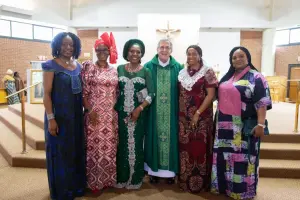
On Sunday, July 2, 2023, during her Thanksgiving service, Barrister Grace Egbagbe whose career at the Nigerian Television Authority (NTA) spaned 27 years, culminating in her role as Executive Director, Marketing, told a fully packed Our Lady of Grace Catholic Church, Norbeck Blvd, Silver Spring, MD, in the United States the incredible story of how she died and came back to life.
Egbagbe revealed that she lost consciousness at home and was rushed to the hospital. When no pulse was found after oxygen was administered to resuscitate her, the nurses were convinced that they had lost her. While they were waiting for the doctor to arrive and confirm her dead, they suddenly heard her shout, Jesus!.. Jesus! and came back to life.
The incident reportedly stunned the hospital staff, who had never witnessed such an occurrence. They were said to have insisted that they found no pulse when she was checked several times while on oxygen.
Barr. Egbagbe took time out to appreciate those who stood by her during that period, particularly her son, Nkemka, and her daughter, Zemayé.
The Edo state-born lawyer obtained a degree in English from the University of Ibadan, another in Theatre Arts, Film and Television Production at the University of California, Los Angeles (UCLA), and a Law degree from the University of Buckingham, England.
She had a successful career in the media spanning 27 years at the Nigerian Television Authority (NTA) and culminating in her role as Executive Director, Marketing.
“When anger rises, think of the consequences.” – Confucius
“Anger, if not restrained, is frequently more hurtful to us than the injury that provokes it.” ―Seneca
“If you spend your time hoping someone will suffer the consequences for what they did to your heart, then you’re allowing them to hurt you a second time in your mind.” ― Shannon L. Alder
“Anger is an acid that can do more harm to the vessel in which it is stored than to anything on which it is poured.”― Mark Twain
In a moment of rage that changed her life forever, 21-year-old Maimuna Suleiman of Kofar Dumi Area in Bauchi Metropolis allegedly stabbed her husband to death following some misunderstanding they had.
She has been arrested by the Bauchi State Police command. The Bauchi State Police Command in a statement said detectives attached to the Township Divisional Police Headquarters made the arrest following an information they received on the 5th of July 2023
Acting Public Relations Officer, Bauchi State Command, Aminu Ahmed who signed the statement disclosed that: “While receiving the information from their end, the detectives led by the Divisional Police Officer immediately rushed to the crime scene at the address and took both the victim and the suspect to the Abubakar Tafawa Balewa Teaching Hospital (ATBUTH), Bauchi for medical attention.
“Consequently, reports obtained from medical doctors confirmed that the victim died as a result of an injury sustained on his chest, while the suspect sustained minor bruises on her stomach.”
According to the statement, Maimuna has confessed to having committed the crime. The police added that: “Preliminary investigation revealed that the suspect (Maimuna Suleiman) stabbed her husband Aliyu Mohammad ‘m’ of the same address as a result of an altercation ensued between them on the 5th of July, 20223 at about 1800hrs in their matrimonial home.
During interrogation, the suspect confessed to having committed the crime.”
Meanwhile, the Commissioner of Police, CP Auwal Mohammed has directed the State Criminal Investigation Department to take over the case for further investigation and charge the suspects to court upon completion of the investigation.
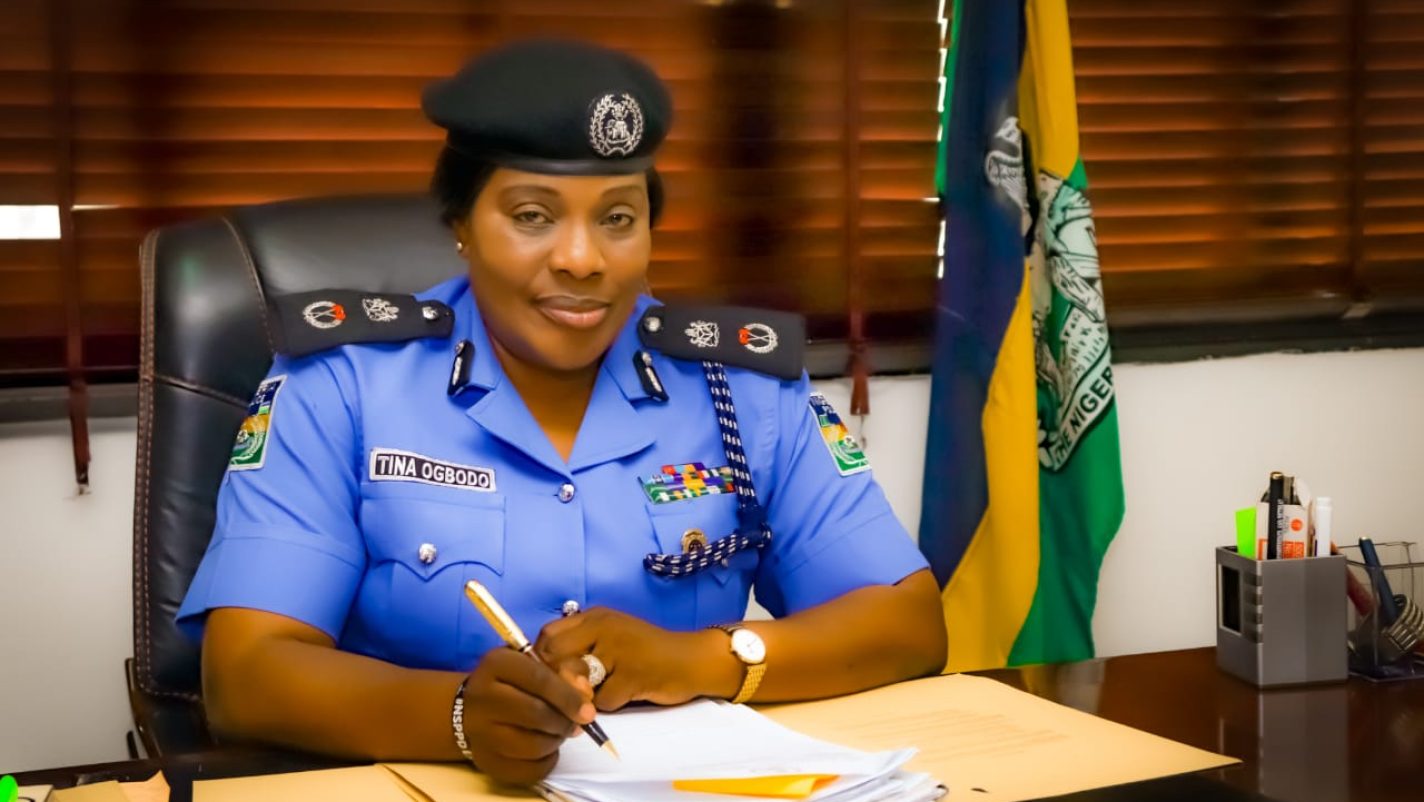
The new Commissioner of Police (CP) in Ebonyi State, Mrs. Augustina Nwuka Ogbodo has announced that insecurity, crime, and criminality must end in Ebonyi State.
Nwuka Ogbodo whose appointment as CP was announced last Friday is the third female Commissioner of Police in Ebonyi state. She took over from Mr. Faleye Olayele, who retired from service on July 7.
CP Augustina Nwuka Ogbodo hails from Enugu South Local Government Area of Enugu State.
Augustina Ogbodo holds a Bachelor of Arts degree in History from the University of Nigeria, Nsukka, and a Diploma in Police Science from the Police Staff College in Jos.
She enlisted into the Nigeria Police Force on the 3rd of March 1990 as Cadet Assistant Superintendent of Police and was subsequently trained at the police academy annex, Kaduna.
She has served in various capacities in different geo-political zones of the Country.
She has served as Divisional Traffic Officer, Divisional Crime Officer, Divisional Police Officer, and Assistant Commissioner of Police in charge criminal investigation department in Abakaliki, Ebonyi State.
On her elevation to the rank of Deputy Commissioner Of Police, she served in Administration, Department of Logistics and Supply, Force Headquarters Abuja, Department of Administration, FCT Command Abuja, and also as Deputy Commissioner of Police, Homicide Section, Force Criminal Investigation and Intelligence Department Abuja.
Following her promotion to the rank of Commissioner of Police, she served as Commissioner of Police in charge of Welfare, Force Headquarters Abuja, and currently, she is the 26th and 3rd woman Commissioner of Police Ebonyi State Police Command.
Mrs. Ogbodo has attended several courses such as Advanced Detective Course, Police Staff College Jos (2002), Intermediate Command Course, Police Staff College Jos (2006), Strategic Planning and Intelligence-led Policing (2009) as well as Strategic Leadership and Command Course (2017).
CP Augustina Nwuka Ogbodo is believed to be a thorough-bred Police Officer and one of the finest of our time.
While addressing Journalists in Abakaliki, the new CP, said she has come to Ebonyi to serve and safeguard the lives and property of the people.
She pleaded for support and cooperation from residents, especially in sharing useful information and intelligence on crime with the command.
CP Ogbodo assured that she would work in collaboration with all the stakeholders in the state to eliminate security challenges.
The powerful feed ideology to the masses like fast food while they dine on that most rarefied delicacy: impunity (Naomi Klein) Nothing’s as dangerous as power with impunity (Isabel Allende)
But if the laws are to be so trampled upon with impunity, and a minority is to dictate to the majority, there is an end put at one stroke to republican government, and nothing but anarchy and confusion is to be expected thereafter (George Washington)
Terrorism doesn’t just blow up buildings; it blasts every other issue off the political map. The spectre of terrorism – real and exaggerated – has become a shield of impunity, protecting governments around the world from scrutiny for their human rights abuses (Naomi Klein)
The main challenge is what to do in the face of double standards. Those who should be rendered accountable under international criminal law, the Kissingers of this world, enjoy de facto impunity, while those who come from countries that have long been targets of hegemonic abuse are used as poster children of accountability (Richard A. Falk)
The ultimate enemy of Democracy is not the drug dealer or the crooked politician or the crazed skinhead. The ultimate enemy is the New King that has become so powerful that it can murder its own citizens with impunity (Gerry Spence)
There are two things. There was the moral responsibility, and that, first, is creating an atmosphere where the security forces can kill with impunity, where they can turn up at a place, shoot seven people – really at point-blank fashions – and then get away with it and be, in fact, promoted. And then there is the actual responsibility, the governmental responsibility. My aunt’s government forbade us, initially, from filing a police report – which is every Pakistani citizen’s right under the law (Fatima Bhutto)
What I fear most is power with impunity. I fear abuse of power, and the power to abuse. (Isabel Allende)
Once the law is broken with impunity, each man regains the right to any means he deems proper or necessary in order to defend himself against the new tyrant, the one who can break the law. (Allan Bloom)
In a well-governed state, there are few punishments, not because there are many pardons, but because criminals are rare; it is when a state is in decay that the multitude of crimes is a guarantee of impunity (Jean Jacques Rousseau).
The hope of impunity is the greatest inducement to do wrong (Marcus Tullius Cicero)
No nation is permitted to live in ignorance with impunity (Thomas Jefferson)
Impunity should be condemned in any corner of the world (Rigoberta Menchu)
In an Inside Stuff article on “impunity and apologies” published in The Guardian, Sunday, May 24, 2020, P.13, https://guardian.ng/opinion/buharis-5th-anniversary-apologies-and-impunity-culture/, I quoted the same words on marble above to simplify the purpose of the article then, which was to kill two birds with a stone: to mark the 5th anniversary of the Buhari administration (which came up on Friday, May 29, 2020) and to advise the official managers of Covid-19 under the aegis of Presidential Task Force (PTF) on the danger condoning lawlessness at that time too.
I had reminded Nigeria’s leader then Muhammadu Buhari who marked the fifth anniversary of his second coming into power in Nigeria that week that there was one critical factor that could prevent him from making history. And the factor I identified then was the administration’s celebration of impunity culture that was emerging then.
I had then dealt with the low hanging fruits in the culture of impunity that was becoming the signature of the Buhari administration at that time in 2020. The origin as it was written then: The head of the presidential bureaucracy, the Secretary to the Government (SGF), Mr. Boss Mustapha who headed the Presidential Task Force on Covid-19, was constantly apologising then since April 20, 2020 for some serious lapses in handling the Covid-19 pandemic. First, he apologised for the shoddy and dangerous handling of the burial of then Chief of Staff, Mallam Abba Kyari who joined his ancestors on April 17, 2020. The burial arrangement was a classic case of celebration of impunity: The then Information Minister, (a member of the PTF on Covid -19) Alhaji Lai Mohammed had earlier told the nation that those who fell to Covid-19 power would not be buried anyhow and the remains would not be released to the family members. That rule was flagrantly flouted as Kyari’s body was flown from Lagos to his residence in Abuja where the other rule on physical (social) distancing was curiously violated up to the burial ground where undertakers and health workers were also observed to be very careless and endangered. So many senior public officers including many from the president’s office were at the burial site and they failed to observe physical distancing rule. It was quite remarkable then that the SGF indeed did the unthinkable: apologised. This was strange but noble. That calmed frayed nerves about that exhibition of impunity. But I had then asked the following rhetorical questions: “where were the queries to duty bearers whose irresponsible attitude caused the apology? Who was suspended for the mediocrity displayed on that Black Saturday?”
Again within that same week, the same SGF had to apologise on behalf of the Task Force for police authorities’ brutality on Covid-19 frontline workers including medical personnel, journalists who were detained for allegedly flouting the Covid-19 curfew (order). The illegal detention of essential workers took place a day after the same SGF (on behalf of the president) paid tribute to the frontline workers and reiterated adequate protection for them.
Specifically, on Monday, May 18, the SGF and PTF Chairman said, “…specific directives had been issued to security agencies to strictly enforce the measures…I, therefore, admonish Nigerians to observe the restrictions in full. I however wish to assure our essential workers such as the frontline medical personnel, the media, the environmental health workers, farmers and agro-allied service providers, oil and gas services, aviation, the power sector, and a host of others that they will be adequately protected. Your obligation is to always carry your valid means of identification…”
There was no ambiguity in this reiteration of an extant protocol. So, where did the police get their directive for “stricter enforcement of the curfew without exemption”, which the IGP had to reverse that same night after more than 50 essential workers were detained in Alausa, Lagos police station for allegedly violating the order? The SGF again apologised for this police strange overzealousness and gross violation of a presidential order. Yet no one was queried. No one was punished after a series of apologies. Are the police too big to be queried? Who authorised the unlawful order that SGF had to apologise for? Those acts appeared then as part of low-hanging fruits at issue. Yes, they are but they are fruits. The SGF’s remarkable apologies would have been more meaningful if there had been concomitant suspension of some top officials in the presidency and some senior police officers as I was saying. After all, once upon a time, President Olusegun Obasanjo (1999-2007) one day showed that the law must rule even the Inspector General of Police when an IGP, Tafa Balogun was arrested by an officer of the law who was an Assistant Commissioner of Police and Chairman of the anti-graft commission, the EFCC then, Malam Nuhu Ribadu (now National Security Adviser), IGP Balogun was promptly prosecuted and jailed. This happened in this same Abuja.
As the question continued then: “Why has the controversial role of the police, specifically in this Covid-19 warfare not attracted the attention of authorities in Abuja? Haven’t they read reports across platforms that the police have been compromising all the rules of lockdown in the cities and along inter-state routes? Who allowed the Almajirai curious migration from the core North to even the remote parts of the Niger Delta? Who has been permitting night bus travels (daily) from even Lagos to different parts of the country during/since the so-called lockdown? Why have the police become so lawless and uncontrollable in this dispensation?”
And so I had then noted: “So, as Mr. President is warming up to cross over to his sixth year in office, he should note that a culture of impunity, which has given rise to mediocrity everywhere we go, should be deftly dealt with – beyond rhetoric. Our leader should not celebrate the fact that all the professional bodies and civil society organisations and the vibrant media that fought for this democracy that he and his people are enjoying have since dozed off. Curiously, the Nigerian Bar Association (NBA) could not even bark in early 2019 when Abuja powers through an Administrative Tribunal (Code of Conduct Tribunal), went on a rampage, set aside constitutional provisions for removing the then Chief Justice of Nigeria, Hon Justice Walter Onnoghen. They removed Nigeria’s CJN in a twinkling of an eye without allowing even one judicial pronouncement. To me, this was the greatest celebration of impunity culture since we returned to democracy in 1999. What was worse, even a section of the media published blatant lies against Justice Onnoghen. That section of the media published fake news items in support of ‘state terror’ that the then CJN allegedly kept $3 million dollars in a foreign account and registered 55 houses in Nigeria – all in a bid to remove him before the last election (2019). They did. Till the present, nobody has sued the media that published that damaging lead story even the Tribunal discovered was indeed fake. How can the powers that be and even the NBA and the complicit media organs seek or find peace after unleashing this jungle justice on Nigeria’s Chief Justice? Some day, when we have a nation, one hopes there will be genuine remorse and then an apology to Justice Onnoghen who is still not free to travel to even Ghana.”
Now that Ejikeme, Joy Mmesoma, the 19-year-old student of Anglican Girls Secondary School, Uruagu Nnewi, Anambra State, has confirmed the Joint Admission and Matriculation Board’s (JAMB’s) allegation and confessed that she actually manipulated her 2023 Unified Tertiary Matriculation Examination (UTME result, it is a time for another introspection on our growing culture of impunity. Will she and others who committed these grievous offences be punished? Impunity means freedom from punishment or from the unpleasant results of something that has been done… It denotes exemption from punishment or loss. It means exemption, freedom – immunity from an obligation or duty.
The new administration in Nigeria needs to deal with this emerging culture that has made us to forget the fact that even the Chairman of an anti-graft agency in our country is on suspension over allegations that the institution he presides over is corrupt and so he too may not be above board. What is worse, the predecessor of the suspended EFCC Chairman too was curiously retired from office after serious allegations that he too was corrupt, and a Judicial Commission of Enquiry’s report on the Acting Chairman was never made public.
***We will continue with more examples of this terrible culture next week
Tope, my trophy-wife friend, ended in hospital and in trouble. No, she’s not ill. Her husband, Otunba, was rushed to the hospital about 2 am a few days ago, panting and gasping. He lost consciousness on the way to the hospital but was luckily resuscitated. He, however, still ended in the intensive care unit where he spent four days with one leg on earth and the other in the land of his ancestors. It was a trying time for not just Tope but her co-wives. Oh yes, Tope is Otunba’s third wife, his young sweet potato, in whose arms he almost died. Of course, the older two wives were agitated, scared that they were going to become widows, though their utterances sounded more like gloating than fear.
What then shall it profit a man if he returns to his maker the same way he came, in between a woman’s legs?
‘This is what you came to do, abi, to kill him so you can inherit his money.’
‘You have failed. You will not achieve your aim. The ‘chi’ of our children will not allow one childless witch to bring sorrow to this home.’
‘It is Magun. She went to sleep with her young, young boyfriends and one of them must have laced her with Magun to kill our husband.’
‘You must confess, you gold-digger!’
‘If he dies, we will show you hell.’
‘If he dies, you will know that God does not have tribal marks.’
Well, Tope was already in hell, watching her husband fighting for his life. She prayed all night, fasted all day. She regretted not cautioning him enough about his desperate, bad habits that led them all to the sorry bus stop. She knew if he died, the Magun and gold-digger story would have ended her. You know how the social media is. Google does not forget. Luckily, God answered her prayers, Otunba survived and now Tope can tell her side of the story and redirect her co-wives’ angry, gloaters’ narrative.
Otunba is in his late 60s. He is hypertensive but was determined to be a stallion in bed to impress his young wife. Bad decision, all the time, the kind that men who should retire take against sane advice. I’ll restate the advice anyway. You cannot be a former stallion and still be today’s champion. A former champion is a former champion. All he can and is allowed to be is an elder statesman. Any other ambition will lead him to death in the ring. But men, they want to be all-time champion in bed. They don’t want to admit that there is a time for everything under the sun, including the male libido.
That is why an astute businessman like Otunba didn’t know when his third leg should accept it had reached retirement age behind closed doors. And that is why we have seen and discovered too often, sadly, that a boardroom guru can turn out to be a bedroom dummy. I’m sorry to repeat it here, again, today that too often when a man’s zipper is opened, his brain falls out. Or why would a 65-year-old man think he is still the champion that he was at 35? I hear it’s got to do with a need for revalidation and trying to feel young again. Well, somebody needs to tell these grandpas that it’s a bad feeling, indeed a deadly, dangerous one.
No matter how much firebrand a man starts out as, the fire gradually goes down with the passing of each year. A man who starts out as one who could cruise through three women in one day will eventually need help to start his engine. It is a given. The ones doing threesomes today will one day need more than one hour to persuade their ‘wetincall’ to rise up to the occasion. When men know this, there will be lasting peace in the kingdom. But it is a difficult subject to teach a certain class of men. There is this class of men who are determined to live twice. This is the class of men who want to give command performance more than once on one show. They marry at 32 after thoroughly playing the field and sowing wildly. Then they go on to use their wives deeply and so badly that the poor women are left with no second-hand value. You understand that kind of sole-proprietor usage, right? Now, you’ll think men like that would look forward to retirement after a meritorious service, that they would take their pension and enjoy their twilight years in peace, sipping red wine. But no, they want to live again, all over again. What do they do? They go hunting again, this time for younger women, many times, a lot younger women whose needs they can’t match or meet. Like a 65-year-old man and a 25 –year-old woman. Like a 70-year-old man and a 30-year-old bride. The young woman’s juices are raging hot, while Baba’s libido is in retirement mode. Totally unequal yokes. What is worse, the man is determined to bring back his youth. He actually believes he can repeat the miracle of resurrection by waking his once-upon-a-time sleeping giant. Of course, nature and age are there waiting for him and when he finds out that ‘Make the Dead Walk’ is merely the title of a novel by James Hardly Chase, he resorts to self-help. Sex self-help can be very mean, one with a tendency to end badly for older men. Like Tope said, Otunba’s determination to remain the ‘current champion’ in his old age was what led him to death’s door.
‘While our short courtship lasted, I didn’t know Otunba was using performance-enhancement drugs. You know we were not living together and sex was not a daily thing. All I knew was he always gave an impressive account of himself. For a man his age, he didn’t give me any reason to worry about the physical side of our relationship. It was when I moved in as his wife that I noticed that he ‘prepped’ himself before getting into bed. It worried me because I had heard many stories of how those performance enhancers can lead to heart attack or even death. I begged him to stop. He did but I noticed there was a world of difference between when he ‘prepped’ himself and when he didn’t. It left him frustrated and me unsatisfied. So, I looked the other way occasionally to keep both of us happy. There was always a spring in my husband’s step each time he was able to wear me out or I had to beg him to stop. I can’t really find words to describe how happy it made him. Until that fateful day. He had just given me one of the best times of my life when I noticed he was sweating too profusely. Before I could get him a glass of water, his breathing changed as he clutched his chest. I threw on a kaftan, called the doctor and screamed for the driver and his P.A. It was the scariest night of my life. The long wait before the doctors came out to tell me he would be fine, his other wives’ threats and insults, the fear of him dying because he wanted to satisfy me in bed…’
Now imagine if Tope was a runs-girl, an ‘olosho’ who simply took to her heels at the first sight of Otunba in distress. Imagine the man dying alone, his body unfound for hours, even days. His family, to cover the shame, would have told the world he died in his sleep, or peacefully passed on in his sleep. Chai. He probably would have had to explain to his angry ancestors how he ‘arrived 20 years earlier than scheduled.’ Avoidable death. Death by greed. Departing via the same route you arrived. Why do some men not mind returning to their maker in between a woman’s legs? Why do men like to die in active service?
A man who starts out as one who could cruise through three women in one day will eventually need help to start his engine. It is a given.
Those who should know say unbridled use of performance-enhancement drugs, whether herbal concoctions (those bottled mixtures with interesting names) or Viagra and its little blue siblings can lead to a stroke or heart failure. When all the blood meant for the whole body is forced to relocate to a man’s penis, his other organs will shut down one by one. The saddest conclusion of such stories is the woman he died trying to impress will be inherited by another man, most likely a younger, stronger performer. What then shall it profit a man if he returns to his maker the same way he came, in between a woman’s legs? My sincere advice? When a man reaches a certain age, he should just be satisfied with his yam boiled or fried because old men who insist on ‘pounded yam’ are liable to die in the kitchen.
Our site uses cookies. By clicking “Accept All Cookies”, you direct Law and Society Magazine to store cookies on your device and disclose information in accordance with our Cookie Statement: cookie policyACCEPTREJECT
Privacy & Cookies Policy
Privacy Overview
This website uses cookies to improve your experience while you navigate through the website. Out of these cookies, the cookies that are categorized as necessary are stored on your browser as they are essential for the working of basic functionalities of the website. We also use third-party cookies that help us analyze and understand how you use this website. These cookies will be stored in your browser only with your consent. You also have the option to opt-out of these cookies. But opting out of some of these cookies may have an effect on your browsing experience.
Necessary cookies are absolutely essential for the website to function properly. This category only includes cookies that ensures basic functionalities and security features of the website. These cookies do not store any personal information.
Any cookies that may not be particularly necessary for the website to function and is used specifically to collect user personal data via analytics, ads, other embedded contents are termed as non-necessary cookies. It is mandatory to procure user consent prior to running these cookies on your website.