Home Blog Page 76

“I Will Fight You With Everything”: Odinkalu slams Akinboro, alleges judicial plot in NBA election row

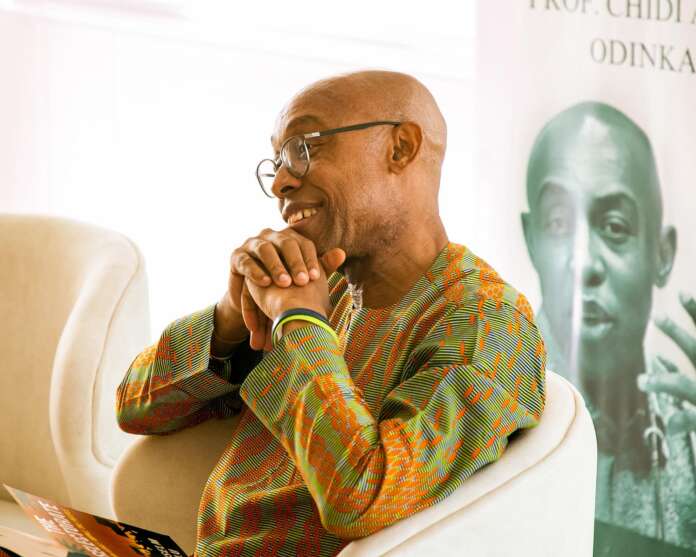
A fierce war of words has erupted within the Nigerian Bar Association (NBA) ahead of its 2026 national elections, with former Chairman of the National Human Rights Commission, Chidi Odinkalu, accusing a Senior Advocate of Nigeria and ex- General Secretary of the NBA Muyiwa Akinboro of attempting to manipulate the electoral process and disenfranchise members of the legal profession.

In a blistering message posted on his verified X (formerly Twitter) account, Odinkalu dismissed Akinboro’s recent statement on the ongoing debate around the consultation process involving Egbe Amofin Oodua, describing it as a narrative that “verges on an insult to our collective intellect.”

“My brother, I will not disappoint you,” Odinkalu wrote in the sharply worded post. “So I will not allow you to get away so easily with this long statement that verges on an insult to our collective intellect.”

The human rights scholar said Akinboro’s defence centred heavily on Egbe Amofin, a socio-professional association of Yoruba lawyers, arguing that the majority of lawyers eligible to vote in the NBA elections are not members of the group.

“I am not a member of Egbe. Like me, a clear majority of lawyers with a vote in the NBA are ineligible to belong to the Egbe,” Odinkalu wrote. “So your statement is directed at the wrong crowd.”

But the former NHRC chair’s most explosive allegation was that Akinboro and his allies were allegedly attempting to influence judicial processes to impose a leadership outcome on the association.

“The fact that you and your supporters are going around busily working to arrange judges in Ibadan (wherever else) to impose you on us and to disenfranchise me is my business,” Odinkalu said.

He vowed to resist any attempt to undermine the voting rights of lawyers within the association.

“On your design to disenfranchise us all based on your side deals in an entity in which most of us have no business, I will fight you on that with everything and everyone I can muster.”

Akinboro Defends Democratic Credentials

The sharp rebuke followed a detailed statement issued earlier by Akinboro, a Senior Advocate of Nigeria and former Secretary-General of the NBA, in which he denied claims that he intended to rely on judicial intervention rather than votes to emerge as the next president of the association.

In the address titled “Democracy, Fairness and the Future of the Bar”, Akinboro said he remained committed to the democratic traditions of the legal body.

“Nothing could be further from the truth,” he said, responding to claims that he planned to use court orders to secure victory.

“I have always believed that the leadership of the Nigerian Bar Association must emerge from the freely expressed will of its members through a transparent, credible and constitutionally compliant electoral process.”

Akinboro, who has previously served as chairman of the NBA Abuja Branch and as the association’s general secretary, insisted that his commitment to democratic principles within the Bar was “unwavering.”

He also rejected allegations that he supported any move to reverse universal suffrage in the NBA’s electoral system.

“My position has consistently been that the electoral process of the Nigerian Bar Association must operate strictly within the provisions of the NBA Constitution,” he said.

Egbe Amofin Controversy

Central to the controversy is the role of Egbe Amofin Oodua, which recently hosted consultations with aspirants for the NBA presidency.

Akinboro pointed out that all contenders for the office appeared before the group during its consultation process.

“It is a matter of public knowledge that all aspirants for the presidency appeared before Egbe Amofin,” he said.

He questioned why those now criticising the process participated in it.

“If there were concerns that Egbe Amofin would be partial, why did we voluntarily participate in that process?” he asked.

Petition Against NBA President

The dispute comes amid fresh tension within the association following a petition submitted to the NBA Board of Trustees by Akinboro and another Senior Advocate of Nigeria, Lateef Omoyemi Akangbe.

In the petition dated February 15, 2026, the two senior lawyers accused NBA President Afam Osigwe of what they described as persistent partisan conduct ahead of the elections.

According to the petitioners, the NBA president openly declared during a National Executive Council meeting in Maiduguri that he could not remain neutral in the upcoming election because he intended to exercise his right to vote.

The statement, they argued, had created a serious crisis of confidence within the association.

The petition also alleged that institutional platforms under the authority of the NBA president were used during the 2025 Annual General Conference in Enugu in a manner that favoured a particular presidential aspirant.

Among other accusations, the SANs claimed that campaign materials such as umbrellas and face caps bearing the insignia of a preferred aspirant were distributed across branches using staff of the NBA National Secretariat.

They described the alleged use of institutional resources as a “grave abuse” funded by members of the association.

Growing Tensions Ahead of NBA 2026 Elections

The escalating exchanges underscore deepening divisions within Nigeria’s legal community as the race for the NBA presidency gathers momentum.

With allegations of judicial manipulation, petitions against the sitting president, and a fierce public confrontation among leading members of the Bar, observers warn that the coming months could test the credibility of the association’s electoral process.

The NBA, often regarded as one of Nigeria’s most influential professional bodies and a major voice on rule-of-law issues, now finds itself grappling with an internal political storm that could shape its leadership and institutional reputation for years to come.

The police and our crisis of failed institutions 

By feanyiChukwu Afuba 

Late last year, the Nigeria Police began the process of recruiting 50,000 constables into the Force. The move came as one of the counter measures by the federal government in response to rising insecurity threats in the country. It marks a recognition of the depleted strength of the Force, logically a major factor in recent underperformance.

At a time of acute unemployment, it’s no surprise that application figures were high, except for the southeast with perhaps, understandable ambivalence toward national allocations. Not just the federal government, every concerned Nigerian looks forward to a successful and timely conclusion of the exercise for obvious reasons. No legitimate effort toward containing the siege on Nigerians by sadistic gangs is to be trifled with. 

The concern however is with the operative environment under which the Police works. The Force, like  almost all institutions of our national life, is troubled by malfunction and underperformance.

The Nigerian crisis does not stop at the poverty of leadership.  It’s not merely the failure of the political elite to stand up for basic values of governance. And it’s not just about public office corruption screaming to the heavens for vengeance. Beyond irresponsibility of the political class, the Nigerian condition is compounded by  societal surrender to the ruling order. By abdicating it’s natural primacy, Nigerian civic society lost its voice, it’s mores, sense of self duty. There long ceased to be an affirmation of the common good, the sense of collective responsibility for the public estate. In both the west and the east (China, Japan), economic growth is more about productive manhours than popularity or benevolence of leadership. Nigerian society lacking this discipline, we bring near to zero work ethics into public service, with the result that state/national institutions hardly thrive.

In the first few months of deployment,  successful candidates from this latest recruitment will be a beautiful sight to behold. Grateful for the selection from a rigorous and competitive process, the new intakes will be raring to go to work.

Their dutiful comportment will precede them in the early morning of service. With age on their side, you will spot them by their youthfulness and fresh look. There is the added influence of hard times of the past and a difficult, new beginning. And not least the impact of months of physical training. Many of the new officers then are certain to look trim and athletic in physique.

 They would be agile, yet, restrained in executing their brief. From experience, we know that the courteous, friendlier sets of police officers are the younger ones or those who recently joined the Force. A mix of nature and psychology affords them cheerful disposition. Policing takes on a humane tone, a felt sense of responsibility. The officers even smile, laugh.

That is until the prevailing work environment infects and overpowers them. Acclamatisation to the climate of corruption is fast and strong. To stay aloof and unsullied is comparable to swimming against a gushing tide. Only the heroic, an odd few, are able to stand ‘far from the madding crowd.’ It’s a sad reign of the Nigerian lie that if you can’t beat them, you join them. For the most part, however, the calmness and discipline of the beginning gives way to aggressiveness and greed.

The days of innocence are finally over, to be replaced with a mission of personal service. In the new milieu thrown up by institutional nurture, socialisation and resignation, policing takes on commercialised meaning. Now, it’s no longer repulsive to round up innocent citizens with illegal patrols and have them pay to secure their freedom. It becomes normal that commercial and private vehicle drivers have to drop pass money at road blocks. And there’s nothing strange sitting before bail – is – free posters to demand release fee from suspects!

It’s to be conceded though that there have been responses  by police authorities to officers’ excesses on some occasions. Viral visual reports of condemnable conduct by some personnel commendably, in some instances were investigated, followed by disciplinary action on wanting operatives. These efforts, though few and far between, offer mild hope that the Force can be sanitised. Nigeria’s Police can rise to function within the ambit of the law in the public interest. But an effective Police Force is dependent on both societal work ethic and institutional reform. The former is a national question  beyond the competence of any one constituency. It would suffice for the Force’s leadership to strive toward the creed that the Police is the citizen’s friend. But internal order in the organisation is a value any committed leadership can actualise.

Who was the Police created to serve? Privileged Nigerians or all Nigerians? A consistent trend at different times of national priority reset suggests an attachment problem in Police operation. There have been many announcements on withdrawing of police men on special duty over the years. By special duty is meant personnel on VIP posting, private protection and other non – essential police services. Previous efforts at this repositioning were unsuccessful necessitating subsequent attempts at intervals.

Beneficiaries of the special escorts as well as managers of the scheme were unwilling to let go of their privileges. Not surprisingly, protests greeted the November 2025 presidential directive for redeployment of this group of police officers. Politicians enjoying the services of these security men were at the forefront of the opposition. According to immediate past Inspector General of Police, Kayode Egbetokun, 11, 566 police operatives had been recalled from VIP duties by December 2025. The execution this time around is on a positive note but the staggering number involved (other special duties figure not included) underscores policing misfocus.  

The Police can also do much better in the area of capital projects, maintenance of infrastructure and facilities. Residential quarters for it’s personnel are grossly inadequate. With many servicemen and women living among civilians in town, the purposes of security and community behind barracks is defeated. At every turn, we find police barracks in terrible state of dilapidation. The multi billion naira police communication network built by the Goodluck Jonathan presidency reportedly went into disuse few years later.

In Anambra State, the Federal Road Safety Corps built it’s headquarters over seventeen years ago; the federal secretariat complex was completed 2021 but the State Police headquarters is still housed at the police station site from which the Command took off on creation of the State, August 1991. Where functional, many a police operations vehicle looks derelict. Legal or not, junior police officers have gone on strike severally to protest poor working condition, including non provision of basic staff kits. The level of lack associated with Police formations nationwide is hard to understand. And state governors regularly assist the Police under the burden of chief security officers.

President Bola Tinubu has consistently pledged to work for the realisation of State Police. If he delivers on the promise, that would be a defining moment of his presidency; a historical legacy that will resound through generations. The overstretched federal Police is in need of operational delimitation. State Police is a desideratum for more effective security architecture in the country. It promises to give the stability critical for States’ development. 

State authority over the Police will conduce towards jurisdictional control unattainable under the current unwieldy structure. Still, the importance of training cannot be over – emphasised. Recurring cases of abuse of power by Police officers suggests insufficient education on rule of law. Emphasis on democratic norms and civic pedagogy in the training curriculum is likely to deter superiority complex and brutality. Think is the orientation both old and new officers need.

The views expressed by contributors are strictly personal and not of Law & Society Magazine.

Rights. Justice. Action. Why awareness is only the starting line

By L0rdofthyweb

Every year as March 8 approaches, the world turns purple. There are tributes, breakfast meetings, and powerful social media posts celebrating women’s resilience and achievements. These moments matter. Awareness has always played an important role in advancing gender equality. But awareness alone is not the destination. It is only the starting line. If we stop at awareness, we risk admiring the problem rather than confronting it.

The theme for International Women’s Day 2026, “Rights. Justice. Action. For ALL Women and Girls,” reflects a reality advocates see every day. There is often a wide distance between a right that exists in law and a right that is experienced in real life. For many survivors of violence and injustice, that distance can feel like a chasm they must cross alone.

Globally, women still do not enjoy the same legal protections as men. According to the United Nations Secretary General’s report Ensuring and Strengthening Access to Justice for All Women and Girls, women hold about 64 percent of the legal rights that men do worldwide. This means that even where protections exist on paper, they are often incomplete or poorly enforced.

A right to safety means little if a survivor is dismissed or shamed when she reports violence. A right to dignity becomes hollow if the reporting process itself is retraumatizing. Rights require systems that make them real. Courts that function. Police units that respond appropriately. Medical services that treat survivors with care. Community structures that support those who speak up rather than silence them. Without justice, a right becomes a promise the system is failing to keep.

Across many countries, justice systems sometimes appear strong on paper but weak in practice. Policies are announced. Committees are formed. Guidelines are launched. Yet survivors still face long delays, financial barriers, and institutional indifference. When justice is discussed but not implemented, it risks becoming performance rather than protection.

Real justice is rarely dramatic. It is found in the everyday work of strengthening systems that protect people. It means stronger laws that close the loopholes allowing perpetrators to escape accountability. It means adequate public funding so that Gender Based Violence response units, shelters, and survivor support services are not only announced but properly resourced. It means accessible justice systems that reduce years long delays and remove the financial barriers that keep justice out of reach for the most vulnerable. Justice does not live in press releases. It lives in systems that work.

International Women’s Day has always been an important moment for visibility. But visibility must lead somewhere. Recognition of injustice should lead to accountability. Acknowledgement of harm should lead to reform. For many women and girls, the issue is no longer whether society understands that violence and discrimination exist. The issue is whether institutions will act decisively to stop them.

This year the conversation must move beyond recognition and toward implementation. For every survivor who has been told that safety is a privilege rather than a right. For every woman waiting months or years for a case to be heard. For every girl who deserves to grow up in a world where protection is the default rather than the exception.

Awareness has already done its job. What the moment now demands is simple. Rights. Justice. Action.

Reference
United Nations. Ensuring and Strengthening Access to Justice for All Women and Girls. The report notes that women hold approximately 64 percent of the legal rights that men do globally.

https://herstoryourstory.ng/rights-justice-action-why-awareness-is-only-the-starting-line/?fbclid=IwT01FWAQeDvFleHRuA2FlbQIxMABzcnRjBmFwcF9pZAwzNTA2ODU1MzE3MjgAAR6jCSEcCaoYydSAKHd0JyBqbe62jSGEtd45QWL_ChfMub5gjrvKDWkzkp7Tlw_aem_LjNu1TjpEe2ODXskQiNAgg#comment-208

Echoes of Trauma: Why Nigeria must confront the trauma of its women, By Lillian Okenwa

As the world marks another International Women’s Day, millions celebrate the resilience, strength and achievements of women.

But across large parts of Nigeria, particularly in the north, many women are marking the day not with celebration, but with memories of terror.

For them, trauma has become a silent companion.

From communities in Benue State to the troubled villages of Southern Kaduna, and across the bandit-ravaged territories of Zamfara State, Katsina State, Niger State, Kwara State, Kebbi State, Borno State—where Nigeria’s insurgency first erupted and other northern states, countless women are living through a nightmare that seems to have no end.

Armed groups storm villages with chilling impunity.

Women are abducted like commodities. Many are raped, brutalised or killed. Others are forced to watch helplessly as their sons, husbands, brothers and neighbours are slaughtered before their eyes.

For survivors, the violence does not end when the gunmen leave.

It lingers in the mind.

And trauma, left untreated, does not simply fade away.

In recent months, the spread of terror has widened. Communities in Ondo State in Nigeria’s southwest, once considered relatively safe, have begun experiencing the same horror long endured in the north. Farmers now fear going to their fields. Travellers fear the roads. Gunmen strike with alarming ease.

What this creates is not only a security crisis.

It creates a psychological emergency.

Trauma has a vicious cycle. A deeply traumatised person can become a danger not only to themselves but also to society. Those who feel abandoned, unprotected or forgotten by the state may become vulnerable to manipulation, radicalisation or violence.

A nation that ignores the trauma of its citizens risks reproducing the very instability it seeks to defeat.

This is why Nigeria must confront not only the security dimension of terrorism, but also its psychological aftermath.

For every rescued victim, healing must go beyond ransom payments, family reunions or temporary shelter in internally displaced persons camps.

Survivors need structured psychological care.

Professional trauma counselling, long-term therapy, and community reintegration support are essential if these women and girls are to reclaim their lives.

The world still remembers the tragedy of the Chibok schoolgirls kidnapping.

It remembers girls like Leah Sharibu—whose story became a symbol of resilience and suffering.

But beyond these global headlines are thousands of unnamed women whose pain remains invisible.

Unknown mothers.

Unknown daughters.

Unknown survivors.

For them, justice means more than rescue.

It means closure.

And it means healing.

As Nigeria reflects during this historic month dedicated to women, the question facing the nation is simple yet urgent:

Will these women be remembered only as victims of terror, or will the country finally commit to helping them heal?

Because without healing the invisible wounds of trauma, Nigeria risks carrying the scars of this violence for generations to come.

A lawyer and equity advocate, Lillian can be reached at [email protected]

Protests intensify in Ondo as Oyo residents demand action on kidnappings

  • Two dead, three abducted as Ondo protesters shun police commissioner
  • DPO queried, Inspector detained over Oyo protest
  • Aiyedatiwa vows crackdown on kidnappers, says sponsors will not be spared
  • Police arrest two Nigerien, 30 other suspected bandits in Kwara
  • Afenifere worried over rising cases of kidnapping, banditry in South-West

The Akure/Owo road was, on Tuesday morning, blocked with the corpses of kidnap victims by residents of communities, including Ilu Abo, Kajola and Owode in Akure North Local Government Area of the state, following a fresh kidnapping attack where two persons were shot dead and three others abducted by gunmen.

Angry residents of the communities barricaded the road along Akure airport road, protesting what they termed the insensitivity of the authorities to attend to the incessant abduction and killing of people of the area.

The protesters explained that the gunmen again struck in the early hours of Tuesday, killing two of the victims, while three members of the community were kidnapped.

The protesters, who vowed to occupy the road until the state governor, Lucky Aiyedatiwa, visited the area, turned back the state Commissioner of Police, Adebowale Lawal, who visited the community.

They explained that the incidents occurred less than 24 hours after three persons were abducted from their farms to an unknown destination.

They were armed with placards of various inscriptions, including “We Are Dying, Save Our Soul” “Mr. Governor, Please Assist Us” “Our Children Are in Danger and” We Cannot Go to Farms Again.”

The protesters were also seen carrying the corpses of victims, chanting songs and demanding urgent government intervention to address the persistent insecurity around the airport road and adjoining communities.

The residents prevented free flow of traffic, leading to gridlock on the expressway connecting the southern parts of the country with the North, just as they insisted that they would not allow any vehicular movement on the road until the government addressed the situation.

A resident, who spoke with journalists during the protest, said kidnapping incidents had become frequent in the area, accusing the government of failing to take decisive action to protect lives and property.

“We are tired of this situation. Almost every day now, we hear about kidnapping around the airport road. Yesterday [Monday], a council secretary was kidnapped, and today [Tuesday], one person has been killed while three others have been taken away by gunmen.

“The government is not doing anything to protect us. People are living in fear, and many farmers can no longer go to their farms. We cannot continue like this.

“Kidnappers operate freely here, and nobody is safe again. We have reported several times, but nothing has changed. That is why we blocked the road so the government will hear us,” the resident said.

Despite the intervention of the commissioner of police, who persuaded the residents to allow free flow of traffic, the protesters insisted that they would not vacate the road as their lives are in danger every time.

Lawal pleaded with the residents that the security agencies, including the Amotekun Corps and police would ensure the safety of lives and properties, as well as beef up security in the communities.

The police boss also visited the monarch of Ilu-Abo, Oba Olu Falae, and told him that efforts had been made to curb insecurity in the community.

READ ALSO: Ondo govt orders security agencies to crack down on kidnapping syndicates

He said he would deploy additional policemen and tactical units to check the insecurity.

Aiyedatiwa reads Riot Act to abductors, sponsors

Meanwhile, the state governor has vowed to deal decisively with kidnappers and their collaborators in the state, warning that sponsors and godfathers behind criminal activities would not be spared.

The governor stated this during a meeting with stakeholders and leaders of the Miyetti Allah Cattle Breeders Association of Nigeria (MACBAN) in his office, where security concerns, particularly the rising cases of kidnapping, were discussed.

Aiyedatiwa, who expressed concern over the resurgence of abductions, noted that one community had been recording kidnapping incidents within the last two months.

He disclosed that security agencies had arrested about 90 suspects in connection with kidnapping and related crimes, adding that some had begun making confessional statements.

“Crime is usually carried out by syndicates, some Fulani, some locals. Some provide information about movements, while others take victims into the forest.

“If investigations trace any criminal activity to anyone, whether they have legitimate business or not, they will be treated like criminals. No godfather, sponsor or collaborator will be spared,” the governor said.

Aiyedatiwa also urged traditional rulers, community leaders and parents to caution youths against engaging in criminal activities.

While speaking on the protest in Ilu-Abo over insecurity, the governor noted that representatives of the landlords’ association earlier met with him and agreements were reached to strengthen security in the area, including the deployment of two police patrol vehicles.

He acknowledged residents’ frustrations, but warned that protests could easily be hijacked by hoodlums, adding: “That is why we always say protest should not be the first line of action. When it is hijacked, other crimes can follow.”

The governor explained that the meeting formed part of ongoing consultations aimed at preventing security threats, revealing that intelligence reports indicated that some criminals displaced from neighbouring states such as Kwara and Kogi might be attempting to move into Ondo State.

He said some suspects reportedly move along cattle routes at night using cattle as cover, but assured that legitimate cattle rearing would not be disrupted, urging herders’ leaders to help identify criminal elements hiding among them.

“We know many of you are doing legitimate business, but you are also in the best position to identify bad elements among your people,” he said.

Speaking on behalf of the Fulani leaders, the state chairman of MACBAN, Ali Abubakar Maunde, said insecurity was a concern to all stakeholders and stressed that criminal activities should not be blamed solely on Fulani herders.

He said: “There are many people behind these crimes, not just Fulani alone. But we are working day and night to eradicate bad elements among us,”

He added that the association planned to collaborate with security agencies and also proposed the establishment of Fulani vigilante groups to help identify criminals in forests and grazing routes.

Residents storm Ibadan/Oyo road over kidnapping

In a related development, human and vehicular movements were, on Tuesday, disrupted at Jobele end of the Ibadan/Oyo road in Afijio Local Government Area of Oyo State as people protested over reported cases of kidnapping, banditry and other vices in the area.

The protesters called for the swift intervention of the relevant security agencies.

One of the protesters who did not give his name said: “On Monday, suspected kidnappers invaded one of the communities along the axis and an attempt was made to kidnap a lady, but she narrowly escaped by scaling the fence.

“Even though she narrowly escaped, she received a deep machete cut on one of her hands.

“This was not the first time that such incident would happen in the area.

‘We are not going to leave the road until residents’ safety is guaranteed by relevant security agencies.

Another resident, Dolapo Awotunde, disclosed that Afijio local government, in the recent times, has recorded not less than seven kidnapping incidents.

He said: ‘It is no longer news that kidnapping has become rampant in Afijio Local Government Area, particularly in Jobele. The community has recorded not less than seven kidnapping-related incidents in recent times, and sadly, another disturbing attack occurred between Saturday night and Sunday morning.

“During the attack, a victim was brutally wounded by the perpetrators. The victim was rushed to the General Hospital and later referred to Ogbomoso for advanced treatment. Unfortunately, one of his hands has been amputated due to the severity of the injuries sustained.

“Following this disturbing development, concerned residents of Jobele decided to take responsibility for the safety of their community by keeping vigil throughout Sunday night into Monday morning.

“At about 1 am. today [Tuesday], community members apprehended an individual allegedly found with a gun, cutlass, and other dangerous weapons. In good faith and as law-abiding citizens, the suspect the people handed over to the police at the Jobele Police Station for proper investigation and prosecution.

“However, in a shocking twist, when community members visited the police station this morning {Tuesday] to inquire about the suspect, they discovered that the suspect had been released without any explanation and without involving members of the community who apprehended him.

“This development caused serious outrage and concern among residents. In response, community members, including students, blocked the Old Oyo-Ibadan Road and the Ibadan-Oyo-Ogbomoso road, demanding why the suspect was released and who ordered the release.”

The police have, however, queried the Divisional Police Officer (DPO), as well detained an Inspector over alleged professional conduct in the handling of a reported kidnapping case.

The state commissioner of police has deployed the Area Commander in the area to probe the incident.

The PPRO, Olayinka Ayanlade in a statement, said CP Haruna immediately ordered thorough investigation into the allegation of unprofessional conduct by operatives of the Jobele Division, which reportedly resulted in the protest.

He disclosed that the Assistant Superintendent of Police, who led patrol team involved and the DPO have been issued queries respectively, while the Inspector concerned has been detained pending the outcome of the investigation.

Operatives arrest 32 suspects in Kwara

Meanwhile, 32 suspected bandits linked to kidnapping, cattle rustling, and other violent crimes have been arrested by operatives in Kwara State Police Command and Intelligence Response Team (IRT), eliciting commendation from the Inspector-General of Police, Olatunji Rilwan Disu, who was on an operational visit to Kaiama Town in the state.

The arrests were made during sustained intelligence-led operations targeting criminal networks operating within forest corridors and rural communities across the state.

Among the suspects were two foreign nationals from the Niger Republic, said to have been collaborating with local bandit groups in cross-border criminal activities.

The PPRO in the command, SP Adetoun Ejire-Adeyemi, made it known in a statement on Tuesday, that the suspects were apprehended during coordinated raids on criminal hideouts in a joint operation by the Kwara Police and the IRT operatives.

Recovered from the suspects were four AK-47 rifles, 38 rounds of live ammunition, five walkie-talkie communication devices, and a camouflage hydration backpack suspected to have been used by the criminal groups to coordinate attacks and evade security patrols.

The police spokesperson said investigations revealed that the suspects belong to different gangs using forests around Awi, Kaiama, Patigi, Gbugbu, Tsaraji, and Babanla as operational hideouts.

Further investigations also led to the arrest of Umar Mohammed, a suspect from Jos in Plateau State, alleged to have supplied communication devices to bandits, alongside other individuals suspected of providing logistics and support to the criminal network.

Speaking during the visit, the IGP noted that the arrests were the outcome of coordinated operations by the Nigeria Police Force and other security agencies aimed at dismantling criminal networks operating within forest locations across the region.

He commended the officers for their professionalism and urged residents to continue providing credible information to security agencies.

On his part, the Command’s Commissioner of Police, Adekimi Ojo, reaffirmed his commitment to intensifying operations against banditry and restoring safety to affected communities.

Afenifere laments worsening insecurity in S’West

Afenifere, the pan-Yoruba socio-political group, has expressed concern over rising cases of kidnapping and banditry across South-West states.

It noted that the fear of governors abusing the proposed state police structure should not be entertained in any form, and that such thinking should not be a yardstick preventing its establishment.

The national publicity secretary of Afenifere, Comrade Jare Ajayi, said this while featuring on a public affairs programme on Eagle 102.5 FM, Ilese- Ijebu, on Tuesday.

Ajayi noted that the frequency and spread of the attacks have heightened fears among residents of the region.

Source: Tribune

Are today’s sons prepared for today’s daughters? By Funke Egbemode

Kunle was raised in a house where the rules were clear and neatly folded like ‘bottom-box’ Sunday church clothes.

His father woke up at 5 a.m. and rang the bell for morning prayers every day. It was a compulsory morning service that everybody must attend, groggy or half awake. Daddy ironed his own trousers, polished his shoes in silence, and left for work while Mummy supervised morning chores and breakfast like a field marshal.

Kunle’s mother was a good woman by the standards of her generation. She cooked, cleaned, raised four children and called her husband “Daddy” even when she was angry with him. She washed clothes with her hands, not washing machine.

Kunle grew up watching a familiar script: Men lead. Women support. Men provide. Women made babies. The lines of duties were finely marked. Women didn’t want to behave like men. When a woman was praised and called ‘obinrin bi okunrin’, that is a woman strong like a man, she smiled, accepted the praise but like a good woman, returned to her place in the society.

Life was simple.

Then Kunle met Zara.

Zara had started her fashion and beauty accessories business at 18. While other girls were learning contouring and concealing tricks on Instagram, Zara was learning how to negotiate with wholesalers in Balogun Market, Lagos.

By the time she was 25, she had three stores, a thriving online business, and workers who called her Madam Zara. Yes.

By the time she married Kunle, Zara had climbed halfway up a ladder and she had no intention of slowing down for marriage. Kunle thought he knew everything about ‘today’s woman’ that he married but the expectations he came into marriage with were traditional, solidly so.

He wanted dinner at seven, freshly made, not microwave-warmed.

Zara sometimes didn’t get home at nine. She made her soups and neatly packed and tagged fried rice, yam porridge, beans, etc. in the freezer.

Kunle expected his wife to slow down once the baby arrived.

Zara expanded the business instead.

He expected to be the “head of the house.”

Zara expected to be a partner.

Kunle wasn’t a bad man. He was not violent, lazy or irresponsible.

He was simply raised for a world that no longer exists, our parents’ season.

Zara , on the other hand, was built for the world we are already living in, one where women are allowed to have as much as they want.

Gradually, their marriage became a long but tense negotiation table. Who drops the baby at daycare? Who attends the PTA meeting? Why must a man cook?

Why must a man eat pounded yam done with food processor?

Why can’t Kunle get freshly made soup?

Why must a woman always be in the kitchen?

What is wrong with a man operating the washing machine and microwave?

Kunle wasn’t wicked and Zara wasn’t rebellious.

They were simply products of two different trainings. The tension and collision that followed were inevitable.

Then, there was Bose, the Female Boss.

In an office somewhere in Lagos, the managing director is a 38-year-old woman named Bose.

She studied civil engineering, got an MBA, and swiftly climbed the corporate ladder with the determination of someone who refuses to apologise for being excellent. Or being a female boss. When she was a site supervisor, she worked as hard and long like her male colleagues.

As MD, she leads a management team of twelve men, most of them older and raised in homes where their mothers asked permission to buy pepper.

Every Monday morning when Bose walks into the conference room, there is a silent discomfort floating in the air like invisible perfume.

Some of the men call her “our daughter.”

Some call her “this small girl.”

A few simply refuse to look her in the eye when she gives instructions.

One senior manager insists on bypassing her and reporting to the chairman directly.

Another once joked during a meeting:

“Madam, don’t be too hard on us. We are old enough to be your uncles.”

The room laughed.

Bose did not. It was not funny, really.

It was already lonely at the top long before Asake made a blockbuster song of the theme. The weight of leadership was heavy enough without also the traditional men adding the invisible battle of legitimacy.

One day, after one of the older managers had ignored her directives, Bose asked him if he knew the consequences of insubordination.

The man smiled and said something that was not meant to be insulting.

He said, “My daughter, it is not that I disrespect you. But you must understand that where I come from, women do not tell men what to do.” That summed his attitude up.

Bose replied quietly with a smile that did not reach her eyes;

“If you want to keep your job, you will do what I asked or go back to that other place where men do what they please.”

She went home that evening and asked a question many young Nigerian women are asking quietly.

Are Nigerian men ready for the women Nigerian girls are becoming?

Today’s women are not like the mothers who raised today’s men.

Let us state the obvious. Nigerian daughters have changed.

Not a little. A lot.

Girls who used to be told to “learn how to cook so your husband will not chase you away” are now learning coding, digital marketing, aviation, robotics, law, politics and entrepreneurship.

The girl who once waited for a man to “settle her” is now settling herself, everywhere. She is not waiting to get married to drive her husband’s car. She goes into marriage a car-owner, some with Ph.D and many already confidently striding the management floors of blue-chip companies.

Gone are the days when women wanted to be secretaries, nurses and teachers. These days, they want to be Senators and Group Managing Directors. They want to be Chief Justices and Senior Advocates of Nigeria. They fill Medicine and Surgery, Architecture, Nuclear Physics and Climate Science and Agriculture as first choices for University admissions.

They are building companies, buying houses, making tough decisions and leading teams. A lot of women are earning more money than the men around them. This is not feminist agenda. It is simply the reality, the uncomfortable truth.

The shocking truth is while we started preparing our daughters for the future, our sons are still being prepared for the past. We are not telling them that if they had 50 female course mates in the university, they are going to battle, compete for positions through life with 500 or more women.

There is a yawning training gap.

If you go to many Nigerian homes today and listen to how children are raised, you are likely to hear something like this.

A girl is told:

“Be hardworking.”

“Stand on your feet.”

“Have your own money.”

“Don’t depend on any man.”

But the boy is told something different.

“You are the man of the house.”

“Your wife must respect you.”

“A real man must control his home.”

Control. Respect.

Authority. Leadership. All good values. But are we teaching the boy reality lessons?

That the woman beside him may not need controlling. She may only need partnership. He is not prepared for a wife who earns more, travels more, has stronger opinions.

His woman will not shrink herself to protect his ego. So when he finally meets such a woman, confusion begins. For centuries, masculinity was built around providing and leading. But what happens when the woman can provide too? Or sometimes even provide more? When that happens, won’t the old masculine compass begin to spin wildly?

Many Nigerian men interpret equality as disrespect, independence as rebellion, ambition as competition or even arrogance.

So instead of partnership, marriage becomes a tug of war and workplaces battlefields.

There is also the angle of silent fear in the heart of many parents.

Many parents secretly admire ambitious daughters.

But they are quietly worried.

“Will a man marry her?”

“Will she submit?”

“Will she not scare men away?”

So they try to soften the girl’s ambition while still encouraging it.

But very few parents ask the more urgent question;

are we raising sons who can handle strong women?

Today and tomorrow will demand a different kind of man. Not a weaker or softer man. Just a wiser, hands-on one who understands that leadership is not threatened by partnership.

A man who can cook dinner without feeling demoted, clap when his wife wins an award without feeling smaller.

We are in a season where a man who can change his own child’s diapers without calling it “helping his wife.”

A real man who knows that masculinity is not measured by how small his woman becomes but by how strong both of them grow and how far they do life together.

Back to Kunle and Zara

One evening, Kunle came home early.

Zara was still at work.

The baby was crying.

The nanny had left.

For the first time in his life, Kunle found himself doing three things his father never did. He warmed milk, change diaper, and rocked his son to sleep.

Something strange happened.

He did not die.

His manhood did not shrink.

The roof did not collapse.

When Zara came home tired that night, she saw something she had never seen before.

Her husband asleep on the couch with their baby on his chest.

That was the beginning of peace in their home. Not because Kunle surrendered authority. But because he discovered partnership.

Bose the Boss eventually called a leadership retreat for her team.

where she told them something simple.

“I am not here to compete with you. I am here to lead the company. The sooner we work together, the sooner we all win.”

Slowly, performance replaced ego.

And one of the older managers later told her something that sounded like an apology.

“You remind me of my daughter. She is also stubborn like you. Maybe the world is changing.”

Yes sir.

The world has changed.

So here is the question sitting quietly on the dining table in many homes.

While we teach our daughters confidence, ambition, and independence, are we teaching our sons emotional intelligence, partnership, and adaptability?

Or are we still raising them for a version of womanhood that is disappearing?

Because today’s daughters are not in the kitchen satisfied with being heard and not seen.

They are in boardrooms. They are at the airports as pilots and co-pilots, not just cabin crew. They are in courtrooms as justices, not clerks. They are in campaign offices as candidates and not just cheerleaders. They are leaders in tech hubs, studios. They are at the head of the table.

A society where daughters grow faster than sons will always produce friction.

Not because the women are wrong or the men are wicked but because the training was incomplete.

So perhaps it is time we update the curriculum. Let’s teach the girls to soar and the boys how to fly beside them without feeling threatened.

Because the future Nigerian woman is already here.

Happy International Women’s Day, again.

Cross River legislator arrested for wife beating

Officers of the Cross River state Police command have arrested the lawmaker representing Obubra I in the Cross River State House of Assembly, Ovat Agbor, for allegedly beating his wife.

The Cross River State Police Public Relations Officer, ASP Sunday Eitokpah, confirmed the lawmaker’s arrest on Monday, March 9, 2026.

Eitokpah said Agbor was arrested on Monday morning, adding that the lawmaker is with the State Criminal Investigation Department (SCID) undergoing interrogation on the allegation of domestic violence.

The beating elicited negative reactions from many residents across the state. Sources claim this might have led to his suspension by the Cross River State House of Assembly last Thursday.

In the motion, the House condemned the alleged violent behaviour involving Agbor, describing it as conduct unbecoming of a lawmaker and contrary to the ethical standards expected of members of the legislative arm of government.

After deliberations, the House resolved that Agbor be placed on indefinite suspension from all legislative activities.

The House also approved the constitution of a committee to investigate the matter and report its findings back to the lawmakers for further legislative action.

Meanwhile, Agbor on Monday tendered an apology over the domestic violence.

Agbor apology letter was directed at the State Governor, Assembly, his constituents, and Cross River State in general.

The Conclave

Tales My Patients Told Me: Sandra had it so rough, By Emmanuel Fashakin

Sandra was only twelve years old when her problems began. She noticed that she was getting tired easily, and could not run as fast as she could. Then one morning— a few weeks after the initial weakness— Sandra woke up and found out that her eyes and urine were turning yellow. She knew immediately that it was time to pay a visit to the family doctor.

The initial test results were extremely good. Sandra’s hepatitis profile screen showed that she was free from all forms of Hepatitis, A, B, and C, the viruses causing inflammation of the liver.

However, Sandra’s condition only got worse. The yellow coloration of her eyes, and now skin as well, only got worse, and it was time to get the specialists involved in her care. A liver biopsy was arranged, but when the results came, they devastated everyone: Sandra has Auto-immune Hepatitis!

An auto-immune disease is a situation where your own immune system starts producing immune agents to attack your own organs. For a crazy reason, your own immune system starts identifying your own organ as foreign tissue and attacks it.

Sandra was put on multiple medications to suppress the immune system, but things went only downhill. Within three years, Sandra needed a Liver Transplant, because her own immune system had completely destroyed her liver cells. After the Liver transplant, Sandra got better and was well enough to return to school. The whole family was relieved and happy. Unfortunately, after five years, the transplanted Liver started failing, because her body, which had attacked her own Liver, had started attacking the transplanted liver.

The transplanted liver was being rejected and that means only one thing: Sandra needed another Liver transplant!

The second Liver transplant took place six years after the first, and it was a huge success. With the advancement in transplantation surgery and the availability of better drugs to suppress rejection, Sandra did very well. Well, enough to earn her degree and meet a charming young man. They soon got married and had two children. Life could not be better. She continued to take her immuno-suppressive medications.

That was the situation when Sandra first walked into my office seven years before this story. Sandra was very beautiful and cheerful, and until she told her story, you would have no idea that she had gone through so much. By then it had been twenty years since her ordeal began, and the problem then was that she was having pains in her joints. She said she had been told that after twenty years of steroid therapy, needed to suppress her immune system, had worn out her joints. She was having severe pains in both knees and hips and was finding it difficult to walk. She came to me for medical clearance for an arthroscopy of the knees.

Arthroscopy of the knees and radiological studies of the joints confirmed that her knee and hip joints had worn out. A year after I first met Sandra, she had to undergo Total Hip Replacement on the Left side. The right hip was replaced two years later. In all these, Sandra was always cheerful whenever she came into the office. She was taking about twenty tablets every day, and I knew despite all the strong painkillers we were giving her, she was in great discomfort.

Sandra developed severe anxiety, which was understandable in the circumstances, and she responded to treatment with Xanax (Alprazolam). She continued to see me now and then for medical clearance for dental work and other treatments. Two years before this time, sixteen years after the second transplant, bad things started to happen again.

Sandra discovered that she had started feeling tired again, and then the slight tinge of yellowness of her skin. A visit to the Hepatologist confirmed her worst fears: her body had started rejecting her second transplanted liver which had served her well for sixteen years. Sandra came to see me afterward and told me the sad news — she is going to need another liver transplant — her third!

Even in her predicament, Sandra managed to give me a smile; I never heard Sandra say anything negative, or complain about her situation. Seven months after this sad visit, and that was about fifteen months before this story, Sandra came to the office to do blood tests and get referrals for Cardiology consultation in preparation for her impending transplant. Her jaundice (yellowness of eyes) had increased and she looked very pale. She tried to be cheerful, but you can see that she was in a lot of pain, and she appeared quite anxious. I tried to cheer her up as much as I could. I never knew that it was the last time I would ever see Sandra.

I did not hear anything from anybody for fifteen months thereafter (this is the major drawback of American medicine: lack of communication between the specialists and the primary care doctors, unlike in the UK). Sandra’s sister came to my Richmond Hill office to see me. I did not know that she had any relationship with Sandra until I asked her how she knew about me. She informed me that she was introduced to me by her sister, who was now dead. She said her sister told her that I am a good doctor. And who is your Sister? “Sandra xxxxxx”!

It was as if someone had hit me with a sledgehammer. Sandra! It was then I looked at her closely, she had a striking resemblance to Sandra, and she had retained her maiden name, the same as Sandra’s, who never changed it after her own marriage, as part of her married name. Everything became clear.

Through her Sister, I learned the rest of the story. Sandra was indeed admitted to the hospital after her last visit to me, and she was prepared for surgery. But Sandra went downhill and she was never well enough to have the transplant done. She died in the hospital after holding tenaciously to life for five more months. Her husband remained steadfast to the end and remained unmarried. He is caring for their two children with the help of his mother who lives with them.

I am very grateful for the opportunity to close the chapter on Sandra, a patient who suffered so much despite not doing anything wrong (she did not catch STD from sex, cancer from smoking, or liver disease from excessive drinking), but who taught me that you can have grace and dignity, even when going through extreme suffering.

I have treated tens of thousands of patients in my over forty years of medical professional life, but only a few patients make a very deep impression on you that you could not forget. Sandra was that type of patient. May her courageous soul Rest in Peace.

Emmanuel O. Fashakin, M.D., FMCS(Nig), FWACS, FRCS(Ed), FAAFP, Esq.
Attorney at Law & Medical Director,
Abbydek Family Medical Practice, P.C.
Web address: 
http://www.abbydek.com
Cell phone: +1-347-217-6175
“Primum non nocere”

Our Akpidi: A life that sang heaven into our home, By Pius A. Akubo, SAN

Where do we begin? Well, to all intents and purposes, Victoria Akpidi Okwori (Nee Okai) was like the first fruit of our loins. With genial fondness, we called her “Akpidi”. Actually, that nomenclature was deeply steeped in nativity. Yes, back home, that was the given name. Close family members were acquainted with it. The bond between us was strong. That was why on her part, she called us Mummy and Daddy.

Going back in time, it all started on 1st January, 1983 when Daddy spent a night in the family house in Lagos while a student at the University of Ibadan. Then, Akpidi was a toddler. The relationship blossomed when Daddy later returned to Lagos in 1985/86 for his studies in the Nigerian Law School. While staying with the Okais in the course of the Nigerian Law School, Daddy found in Akpidi a child of destiny, a paragon of beauty and brain. Daddy will carry Akpidi on his shoulders/back and thereby created enabling atmosphere of care, love, protection with resultant air of joy and fulfillment.

Guests at the book launch

Subsequently, in the year 1997 to be precise, Akpidi secured admission to read Pharmacy at the University of Jos. That turned out to be the climax of the bond. She had a home waiting for her. The home of the Akubos. Deliberately and intentionally, Akpidi made herself a daughter in whom we were well pleased. In domestic chores, she needed no prompting as it was her pleasure to take the initiative. In cooking, she was a chef par excellence. With ingenuity, she seemlessly handled local and continental dishes with amiable finesse. Interestingly, it was from her that Mummy learnt how to prepare fried rice, mayonnaise, yoghurt, bottled tomatoes and what have you.

Being the adopted first born of the family, she became a role model to our children. She taught the children how to make table mats, headrest for chairs, etc. For good measure, she equally taught the children how to cook. What is more, through her, the children learnt new songs, memory verses and loved to be in her company as their “Big Aunty”. The children were endeared to her and fondly called her “Aunty Akpidi”. What the children missed in Tales by Moonlight in a typical village setting as a nocturnal past time, they gained through spiritual nuggets from Akpidi in the similitude of “Children Sunday School”. Under her watch, birthdays were golden moments to treasure and cherish in our home. The memories still linger. Birthday photos remain enduring testaments of collective ecstasy.

As for her faith, we bear witness that her encounter with Daughters of Sarah became a defining moment, nay, a remarkable turning point in the life of Akpidi. That encounter opened a floodgate of personal, intimate and experiential relationship with Christ Jesus. Her destiny, love and passion for the Kingdom changed forever thereafter. Her involvement with the Youth Fellowship, ECWA Goodnews Church, Jos and other Fellowships consolidated her faith in Christ Jesus. She grew in the faith in leaps and bounds and became a valuable daughter of Zion. She became rooted and grounded in the Word of God. She turned out to be a dependable disciple and an ambassador of the LORD Jesus. She was an epitome of wisdom and excellence. An extrovert of the first order. There was no dull moment with her.

Uniquely, she was at her best when coordinating Igala Traditional Marriage. Her sense of humour was unparalleled. She had a way of electrifying the crowd at such occasion by keeping people’s ribs cracking with spontaneous laughter. She could diffuse tension with anecdotes, humour, powerful jokes and improvisation. She had a way of bringing in-laws on their knees in obeisance to cultural virtuosity. Her Igala diction and understanding of the culture transcended her age.

The righteous is as bold as a Lion. So, Akpidi was bold, courageous and articulate. She was not given to presumptuous affirmation of popular concepts. Instead, she was assertive, interrogative and ventured to exercise the courage of her conviction when it mattered most. She doubled down as a stellar homemaker, counselor, singer, designer, artist, actress. Like Florence Nightingale, her voice was melodious. She made her mark in singing which climaxed in an album entitled “Face to Face” in 2014. She had uncanny capacity to bring out the nuances of scripts on the stage as an actress thereby animating Drama in practical reality.

Her Marriage to Arome Moses Okwori Esq as he then was on 13th August, 2005 was  the climax of an eventful courtship studded with boundless love and sacrifices underpinned by the Finger of God. When she first introduced Arome Moses Okwori Esq to us, we prayed about it, counseled her/them and trusted God that if it was His will, He will  bring it to pass to the glory of His Name. Lo and behold, it came to pass. Hence, it was with all pleasure, joy and excitement that we sent her forth from our house in July, 2005 preparatory to her wedding in Lagos on 13th August, 2005. Members of ECWA Goodnews Church, Jos were there in their numbers in our house to celebrate with us. Thankfully, her marriage to Arome Moses Okwori turned out to be a huge success. Their home became an epicenter of hospitality, marriage counseling and reparation.

What else can one say? In terms of vicissitudes, she had it rough and tough! Her life was characterized by different buffetings. But like Job of old, she remained steadfast, resilient and determined to navigate through troubling moments with heroic faith. In this wise, the words of Job resonates: “Even if He slay me, yet will I trust  in Him.” Job 13:15.

She was in and out of Hospital. Even on her Hospital bed, in seemingly hopeless moments, her sense of humour was not lost. In her pain, she would sing and encourage visiting brethren to their amazement! Indeed, she held unto her Maker till the very end. Her passing on 15th February, 2025 at the age of 45 was a time of devastating pain and grief. A personal loss for that matter.

Nevertheless, we are comforted that her life counted for time and eternity. It is not how long one lives that matters, but the impact of life on humanity. Surely, meaningful life is not measured by duration but donation. Happily enough, her life was purpose-driven. She accomplished twice her age. She left behind a monumental legacy of life dedicated and committed to Kingdom principles. A Christ-centered life that reproduced her own kind. She will be remembered as as examplary homemaker, true daughter of Sarah, counselor with positive and contagious influence on others. She was an epitome of the Biblical woman of noble character. In every respect, her life was a song of infectious joy. She will sorely be missed.

Farewell our beloved first born.

Click here for more details on Amazon.

Pius A. Akubo, SAN, FCArb, MICArb (UK) and Dr (Mrs) Esther A. Akubo

How gunmen attacked Abuja community for 1 hour; took children, nursing mother before police arrived

Before Tuesday’s kidnapping incident at Paze in Kubwa, Abuja, the last time kidnappers stormed the community was January 4. Then, they kidnapped a man from his house and only released him after his family had paid a ransom.

FIJ learnt that the kidnappers who operated on Tuesday — two months after the last incident — invaded four houses with guns and kidnapped 16 residents. Itu Amuda (real name withheld), a resident, told FIJ on Friday that the kidnappers would have taken 17 residents, but one managed to escape.

Click here to continue reading.

TIPS