Home Blog Page 757

Intimate Affairs: Accidental second wives

By Funke Egbemode

Are there really women whose main and original ambition was to become second wives? 

I mean, are there women who never once had a goal of meeting a fine young man whose first wife they want to be? 

Do some women consciously set out to be second or third wives? Take a look at your young daughter, your sister, look back at your teenage years, your female teenage friends, your classmates in the university, did you actually hear any of them talking about playing second fiddles in marriage? Yet, I’m sure some of them are today second, third, and even fifth wives. So, do you also wonder, like me, if all second wives are willing second wives or accidental second wives? Of course, I admit that in some cultures in Nigeria, being or becoming a second wife is not seen as a major evil phenomenon, and second wives are not treated like monsters. But in the South, among my people who have gone to many “oyinbo schools” and imbibed deep “oyinbo ways”, the concept of a second wife most times is regarded as one not too far from that of a blood-sucking demon. Or am I exaggerating?

Come on, second wives are regarded as homewreckers, home-breakers, greedy women who come from nowhere to destroy good things between a man and the wife of his youth. Or how many second wives do you know that are welcomed with open arms, in this south side of Nigeria? Second wives are bad news, people to be looked at with “corner eye”, generally. There could be a sprinkle of exceptions, perhaps.

However, we also know that when we remove our rose-tinted lenses of romance, relationships are hardly really ever what they seem. That man and the presumed wife of his youth are sometimes, at best just neighbours under the same roof and the presumed good marriage is just a façade where the woman hides her slapped face under impeccable make-up and designer eye-glasses to deceive everybody. The gentle husband is sometimes a harassed and depressed male whose wife has nagged into mental submission because he “cannot do what his mates are doing”.

On another lane is the accidental second wife who might just turn out to be a tired but well-brought-up child, defeated by fate, trying to make do with what is available. Complicated, right? Yes, second wives are complicated women with complicated lives sometimes seeking to “un-complicate” things. Yet, marriage itself is one complicated institution. So it is mightily difficult to make it even look or sound easy, whichever angle you approach it from. It’s hard work already being a first and only wife, so you can imagine the life of a second or third, or fourth wife. I’m sure you are following my train of thought. Yes, there are accidental second wives, women who thought they had their lives all figured out but then life happened, throwing spanner in their works. Nothing fitted in the spaces they’d provided. Their beautiful lives’ dreams simply disintegrate before their eyes and they end up accepting the hand life dealt them.

I admit there are women who simply love dangerous adventures, those ones who perhaps never really outgrew the hide-and-seek and catch-me-if-you-can pranks of their youth. There are also fast-lane girls with turbo-charged needs and ambitions. They do not see the reason to use the staircase when there is an elevator. Why build a home with a struggling man when you can find a man who has finished struggling and has built a home you can just move into? These ones want meals that are not just already cooked but served and waiting for ‘little madam’ to simply sit and enjoy. Made men are most often married.

Joyce, my mischievous younger friend once said: “Well, that he is married and made does not mean he’s unlovable, after all, his wife loves him, so why can’t I?”

How do you deal with such bling-bling logic of let’s-both-love-him? It’s even worse for the guy if he’s made, married, and loaded downstairs. He’s totally endangered. The Joyces of this world and age will spin all kinds of webs in his path. They’ll ensure he falls.

However, never ever forget that men are usually willing parties in these matters, never raped, never forced to kiss. They just get gummed or glued in their own deception and “private practice.”

But there are actually many women who find themselves in the valley of polygamy by accident or circumstance. There are women who after many unfortunate relationships that never led anywhere simply settle for second place because all the first slots have been filled and the single men taken. Faced with the option of being single mums or second wives, they jump at the latter. Better a second wife than being no wife at all. I do not agree with that last part but it is what it is. Not all women can stand alone.

For this set of women, every other thing is in place except marriage. They are fine and fixed in the corporate world, their careers moving in leaps and bounds. The only gaps in their lives are created by the single men who just race past them. Or is it the successful girls who race past the men? Whatever. Finding Mr. Right simply ended up being too hard a nut to crack than juggling two MBAs in the same academic year. So, they settle for Mr. Available, in the absence of Mr Right. Like Mimi.

‘It hit me like a blow between the eyes when on the morning of my 40th birthday, my younger sister’s children, my three handsome nephews, raced into my room to wish me happy birthday. As they sang their off-key “We wish you many happy returns,” I knew I had reached a point of a tough decision. I was 40 and single. Successful businesswoman but not married. I did not have a child! My biological clock was not ticking. It was banging, very loudly. Men in my age bracket and those slightly older are all married with children. It wasn’t that I had not made any effort. I had prayed and fasted. You’d be shocked at the number of Prayer Mountains there are in Nigeria. I had even been to one in Jos. Yes, Plateau State. I decided it was time to take my destiny in my hands. I mean, my secretary was 37 and her first child just got admitted into secondary school. It was like I was just folding my arms and waiting for the arrival of menopause. That was how I felt that morning of my 40th birthday.

“I resolved to do what I needed to do as swiftly as I take my business decisions. I resolved to go off any and every form of contraceptive. I was going to seize the very first opportunity to become a mum, then I would think of the consequences later.”

And that was exactly what Mimi did. Her relationship with Otunba was supposed to be for companionship.

“Otunba has a great sense of humour. He spoils me with gifts. I can run to him for advice and counsel on virtually every subject. We were great friends but because he was married, I tried to rein in my feelings. I insisted on him using protection whenever we got intimate, which he protested each time too. But after my 40th birthday, I got warmer and allowed him have his way. I spent more time with him and told myself what a few of my daring friends had told me: Otunba is a good man.”

As if the firmament was just waiting for Mimi to make up her mind, she found out she was pregnant four months after her birthday. She was shocked, happy, apprehensive, excited, all at the same time. It was too good to be true, pregnant just like that at 40 without having to even see a gynaecologist, run tests, or do any of the assisted fertility runs. But what of Otunba? They had not had the marriage or even baby talk seriously. Would he feel she was trying to trap him? Long story short, Mimi told Otunba. He had his reservations, naturally, but he wasn’t going to let his child be born without his name. He rented Mimi a bigger apartment, started picking her bills. Six months after her baby was born, Mimi found she was pregnant again. Now she has two boys. Otunba has gone and paid her dowry and all.

“I didn’t plan to be a second wife, the same way I didn’t think I’d be having my first child at 41. But here am I, making lemonade from the lemons life threw at me.” 

I know this is a sensitive subject but do you still think all second wives are usurpers, interlopers or some of them are victims of the hands fate dealt them? Do share your thoughts.

Egbemode can be reached at [email protected].

Re: Nigerians keep shinning beyond our shores, as Justice Tunde Ademola Bakre goes to Eastern Caribbean Supreme Court       

By Emman Ozoemena

Interesting news about how Nigerians are making history outside Nigeria. This makes me wonder why the fuss and how Nigerians seeking to run for political offices outside of their home state of origin are usually hounded by political opponents who see their non-indigenousness as a ‘political weapon.’

In the United States of America during the mid-term elections in November 2022, there were 11 candidates of Nigerian descent that won elections into the U.S. Congress, and State Congresses. The Washington DC Shadow Representative in the Congress was won by a Nigerian American, Dr. Oye Owolewa, who was re-elected for another term.

The Nigerian political class and their supporters need to learn from the United States, where candidates in elections are judged on competence, capacity, and capability not on the basis of state of origin or ethnic descent or religious affiliations.

Congratulations to Hon. Justice Bakre of the Eastern Caribbean Supreme Court. May citizens of countries covered by the jurisdiction of the Court benefit from his wealth of knowledge and experience in the dispensation of Justice. 👏🏻👏🏻👏🏻

https://lawandsocietymagazine.com/nigerians-keep-shinning-beyond-our-shores-as-justice-tunde-ademola-bakre-goes-to-eastern-caribbean-supreme-court/

Emman Ozoemena is an Abuja-based policy analyst. He can be reached on [email protected]

Not for the Faint of Heart: Policing the Nigeria Police

By Chidi Anselm Odinkalu

On 13 January 1970, Olusegun Obasanjo, army colonel and General Officer Commanding (GOC) the Third Marine Commando Division of the Nigerian Army, arrived Amichi in the old Nnewi Division of what was then known as East Central State to accept the capitulation of Biafra from Phillip Effiong, interim leader of the enclave. The encounter occurred in the house of Chief Ben Atuchukwu, one of a pioneer generation of trading magnets whose exploits bestowed on Nnewi its reputation as the home of Nigerian enterprise.

Present in the room was Simon Nsobundu Okeke, a pioneer estate surveyor and valuer with his origins from Amichi, who was a senior official in the Biafra’s security services. Ben Atuchukwu, the man in whose house the war ended, was his paternal uncle. In the nature of the occasion, Okeke and Obasanjo were not introduced to one another on the day.

After the war, Obasanjo continued in the military, becoming in succession a cabinet minister, second-in-command to the head of state, military head of state, civilian president, and international statesman. For his part, Okeke returned to his vocation of estate management, rising to become an acknowledged leader among estate surveyors and valuers in the country.

Nearly 32 years after they first met, the destinies of both men would be joined in the most unpredictable fashion. Obasanjo was sworn in on 29 May 1999 for his second tour of duty as Nigeria’s leader. Two and a half years later, on 28 November 2001, he presided as Chief Okeke took the oath of office as Chairman of the Police Service Commission (PSC), along with six other commissioners. In assuming this office, Chief Okeke became the first Chair of the Commission in 22 years, dating back to October 1979.

Published by MayFive Media Limited, Policing the Nigeria Police is Chief Okeke’s timely and thoughtful retrospective on policing and the Nigeria Police Force (NPF). It is part memoir and part policy memo in a book that combines racy narrative with deliberative analysis, juxtaposing recall of the worst of bureaucratic and political skullduggery with high-minded invocations of the public interest.

The book unfolds in 15 chapters that address different aspects of the institutional evolution, bureaucratic machinations, relational episodes, and, reform proposals in policing and police oversight viewed from the vintage of Chief Okeke’s tenure and experience with the PSC. Some of the major themes addressed include the histories of the NPF and PSC and of presidential and political instrumentalization of both; abuses of the roles and powers of the IGP and of the president; the role of the PSC in election monitoring; the role of the president in a transitional democracy; the travails of civilian oversight of the security services; and issues of police reform, including state police and community policing.

 By way of context, the Metropolitan Police in England was a mere 32 years old when the British began the experiment that evolved into the NPF. Until the departure of the British in 1960, the NPF was under the political authority of the head of the colonial government, for the most part, known as the Governor, who directed the Force at his whim.

As they retreated in 1960, the British bequeathed to the country a PSC as a civilian oversight body over the NPF. This was problematic because for a century until then, the NPF had known no such oversight nor imbibed any bureaucratic traditions that would prepare it for such. Yet they gave this oversight body extensive powers of appointment, promotion, and discipline over the NPF.            

For 19 years, until 1979, the PSC persevered with some difficulty, coexisting uneasily with the regimental mentality of military rule for about 13½ years of those. Upon the transition to the presidential system of government, from 1 October, 1979, the constitution made the President ex-officio chairman and chief executive of the PSC. 39 months later, General Muhammadu Buhari abrogated that Constitution.

The return of military rule had a profound impact on the PSC and on the idea of police oversight. For the duration of the Buhari regime, Tunde Idiagbon, the Brigadier-General who was second-in-command, served as the nominal chair of the PSC. Ibrahim Babangida, who overthrew Buhari in August promulgated the Police (Miscellaneous Provisions) Decree, No. 5 of 6 February, 1989, which abrogated the PSC, making this retrospective to the beginning of his regime on August 27, 1985. In its place, he established a Police Council, whose membership comprised the military president, all state governors, and the Inspector-General of Police. At the time, the military president appointed all state governors. As such, the Police Council comprised the president and his appointees, all of whom came from regimental traditions.

In the 41 years since its creation in 1960 until 2001, therefore, the PSC was not in existence for 14 years; notionally existed under military rule for another 13½ years; and only functioned under civil rule for nine and a half (9½) years. For four of those nine and a half years, the president also chaired the Commission. This chequered history did not equip the Commission with any institutional memory. At its inauguration in 2001, it had no office or staff. The 1999 Constitution had also re-designed the Commission in one fundamental way: unlike the period until 1985, it placed the Inspector-General of Police (IGP) outside the powers and purview of the PSC.

Under the Constitution, the president appoints the IGP, controls and instructs him, and can also fire him at will. The IGP commands the NPF. The Police Council, whose membership comprises the president, state governors, and the Chairman of the PSC, coexists with the Commission. Its role is confined to the declared purpose of advising the president in the appointment of the IGP. Chief Okeke recalls no such process as having taken place in his five years on the Council, which he describes as “next to moribund.”

The result was two-fold. First, in 2001, both the presidency and the IGP were unused to the idea of independent civilian oversight. Second, when he assumed office in 2001 as the Chair of the PSC, Chief Okeke was in a unique pickle: he had no predecessor from whose experience he could draw but he was up against an institution and officers with fond memories of the days when the NPF brooked no oversight and was the plaything of the president.

Over five years in the role of PSC Chairman, Chief Okeke worked with one president and three IGPs: the first was fired, the second was convicted for fraud and  embezzlement, and the third, as Chief Okeke writes, “practically shoved aside the Police Service Commission and took directives only from the President.” With few allies, the job of the PSC Chairman verged on impossible. It was just not for the faint of heart.

At the end of his tenure in 2006, Chief Okeke chose wisely not to seek reappointment. Unknown to him, the Inspector-General of Police, Sunday Ehindero, had advocated with and advised the president that it was better to have the PSC headed by a retired police officer. In February, 2023, President Obasanjo, who implemented this advice, admitted it was mistaken, saying: “When you make a retired police officer the head of the PSC, it is like asking a thief to catch a thief.’’

But this mistake birthed a Nigerian tradition: since 2006, the PSC has been retirement home to a succession of former IGPs. Far from making the relationship better, this deepened antipathy between the PSC and the NPF, introducing the added complication of interpersonal psycho-drama between incumbent IGPs on the one hand, and former IGPs who were their superiors on the other. The case between the IGP and the PSC over the question of primacy in the matter of recruitment of police personnel is pending at the Supreme Court.

This then is the narrative of interlocked and overlapping destinies and mutating machinations that makes Policing the Nigeria Police such a compelling read. The book offers thoughtful insights policing for the country and argues a persuasive case for decentralization of the NPF, dispassionately examining proposals for state police, community policing, and even vigilantes. Anyone interested in making policing both effective and accountable in Nigeria has a duty to read it.

A lawyer and a teacher, Odinkalu can be reached at [email protected]

Dealing with loneliness (1)

‘I…am like a sparrow alone on the housetop.’

Psalm 102:7 NKJV

Loneliness comes in various forms and can be disheartening. Wolfgang Dircks, a divorced, disabled loner, was found deceased in his apartment in Bonn, Germany, in December 1998 – five years after he died. He was forty-three and died watching television. Neighbours didn’t notice his absence. His landlord came by after the bank account from which his rent was paid dried up. A TV schedule was still sitting on the lap of Dircks’s skeleton and was open to the page of 5 December 1993 – the apparent date of his death. The television had long since stopped in the on position, but the lights on his 1993 Christmas tree were still glowing.

When God created us, He said, ‘It is not good that man should be alone; I will make him a helper comparable to him’ (Genesis 2:18 NKJV). You were created to be in relationship. You don’t have to accept loneliness as your destiny. Instead:

1) Find a need and meet it. Often loneliness is not the absence of people, but purpose. Show a true interest in the difficulties of others. Resist making your own issues and worries the aim of every conversation. ‘Do nothing out of selfish ambition or vain conceit. Rather, in humility value others above yourselves, not looking to your own interests but each of you to the interests of the others (Philippians 2:3-4 NIV).

2) Be generous to others with your time, talents, and treasure. Not everyone will accept what you offer, but someone will. Pray for guidance and keep reaching out. God says, ‘To me, you are very dear, and I love you…’ (Isaiah 43:4 CEV).

Ezra 6-8, Romans 5

The Word for Today is authored by Bob and Debby Gass and published under licence from UCB International Copyright 2023

Nigerians keep shinning beyond our shores, as Justice Tunde Ademola Bakre goes to Eastern Caribbean Supreme Court

Hon. Justice Tunde Ademola Bakre has just been appointed a judge of the Eastern Caribbean Supreme Court; comprising Anguilla, Antigua and Barbuda, St. Kitts and Nevis, St Lucia, St Vincent and Granada, Barbados, Dominica, and more.

Announcing the appointment of our own Justice Bakre, the Secretary to the Judicial and legal services Commission of ECSC stated:

“The Commission was impressed with your skills and accomplishments and deems your background and experience to be a good match for the judiciary.”

Justice Bakre a hitherto successful legal practitioner and one-time member of the Nigerian Bar Association Abuja, Unity Bar, was called to the bar in 1993.

He was appointed a judge of the Ogun State High Court in 2013 and was seconded by the National Judicial Council of Nigeria on Technical Assistance to the Judiciary of the Gambia in 2018.

He performed meritoriously and was retained for another term of 3 years which was supposed to end in 2024 before he was found worthy.

An alumnus of Ogun State University, he is married with sons.

Election Petitions: Judiciary urged to reinvent itself as litigants are suffering

By Lillian Okenwa

The judiciary has again been urged to urgently look into the matter of regular cases being abandoned on account of election petitions.

At the ongoing law week of the Nigerian Bar Association (NBA) Abuja branch, the pains of litigants and the attendant danger that unresolved litigations pose to society as election petitions have taken centre stage came to the fore.

FIDA Abuja members at the event

Making a contribution in one of the sessions at the Law Week tagged: The Crucial Role of Legal Professionals in Reforming Nigeria’s Socio-Political Economy, Chairman, of NBA Ethics and Disciplinary Committee, Prof.  Ernest Ojukwu, SAN who chaired the panel disclosed that out of the 20 judges in Abia State Judiciary, 12 are on election tribunal leaving only 10 to grapple with regular matters in the courts.

“Abia has about 20 judges. 12 are on election tribunal. Everything is at a standstill.”

L-R: Dayo, Esq. Prof. Agbo .I. Madaki, Dean, Faculty of Law, Baze University, Mojirayo Ogunlana-Nkanga, General Secretary FIDA Abuja and Rep. of Law & Society Magazine

Acknowledging that it is a grave error for regular cases to lie prostrate on account of election tribunals, he recounted the case of near bloodshed between two communities involved in a land matter he is handling.

Stressing the dangers of unresolved festering real-life issues that affect regular Nigerians beyond the elites that are concerned about winning elections and election tribunal, Ojukwu said it took his getting across to the Inspector General of the Police who in turn reached out to the Commissioner of Police Abia state for a bloodbath between the communities to be averted that nightmarish night.

The Law teacher also pointed out that trial in the matter was to commerce after Easter but that as it stands, dates are not available until around October.

In the meantime, one of the Panelists Prof. Agbo I. Madaki, Dean, Faculty of Law, Baze University suggested that the INEC Act should be amended to allow for NBA nominees on the board.

Madaki however added that the challenge is lawyers get appointed into statutory board positions but become silent rather than make positive contributions.

“They occupy statutory positions in a lot of cases but do not behave like lawyers. Some have even engaged in unethical conduct and should be sanctioned. The disciplinary machinery should be invoked to bring people who bring the legal profession to disrepute to book.”

On his part, Felix Ashimole, Abuja lawyer and Publisher of Kubwa Express alleged that in the various elections across NBA branches and the National, most of the contestants have corruption issues.

He also questioned the rationale behind the high score awarded to INEC after the 2023 elections by NBA President Y. C. Maikyau, despite the credibility issues the organization is facing.

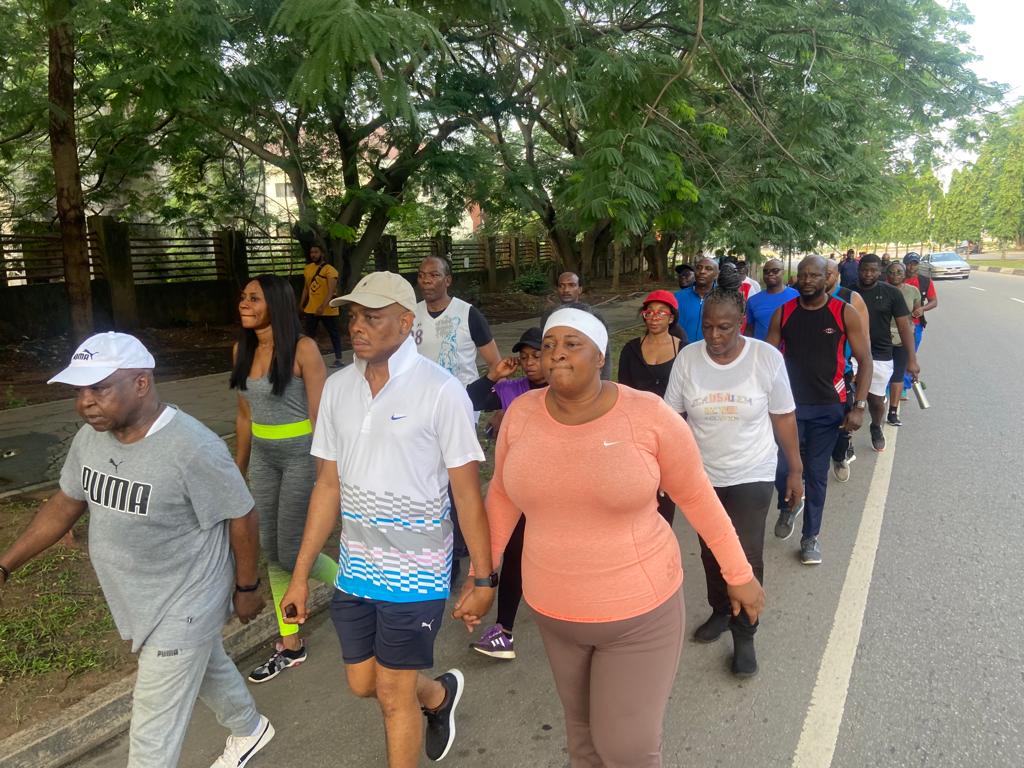
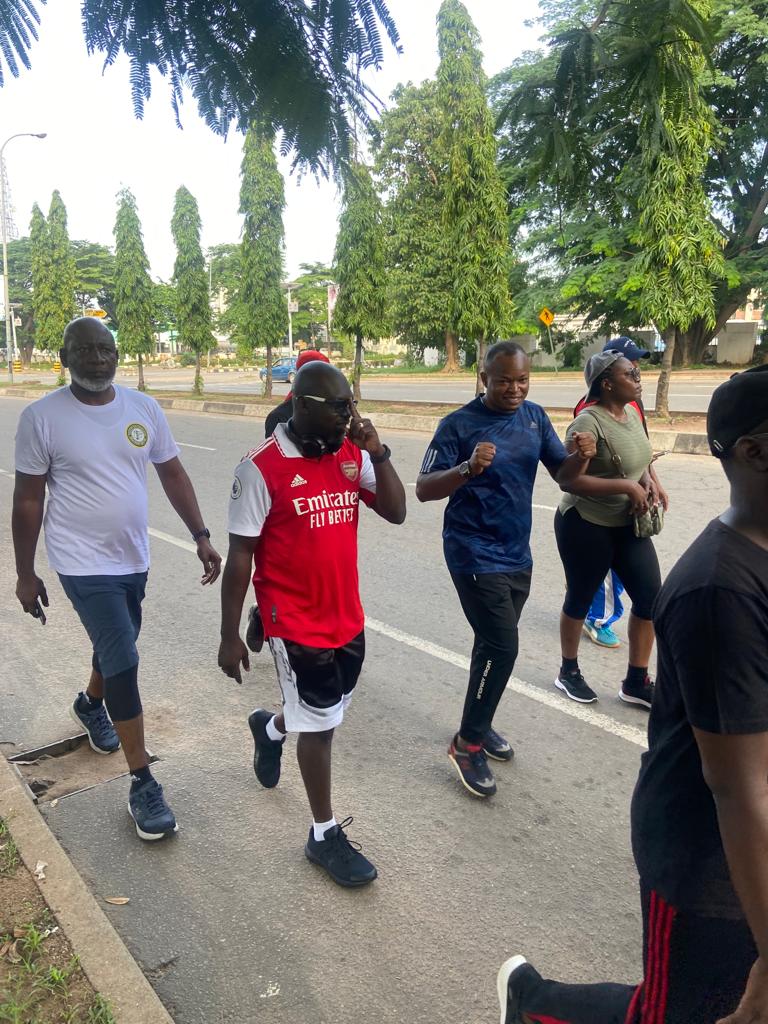
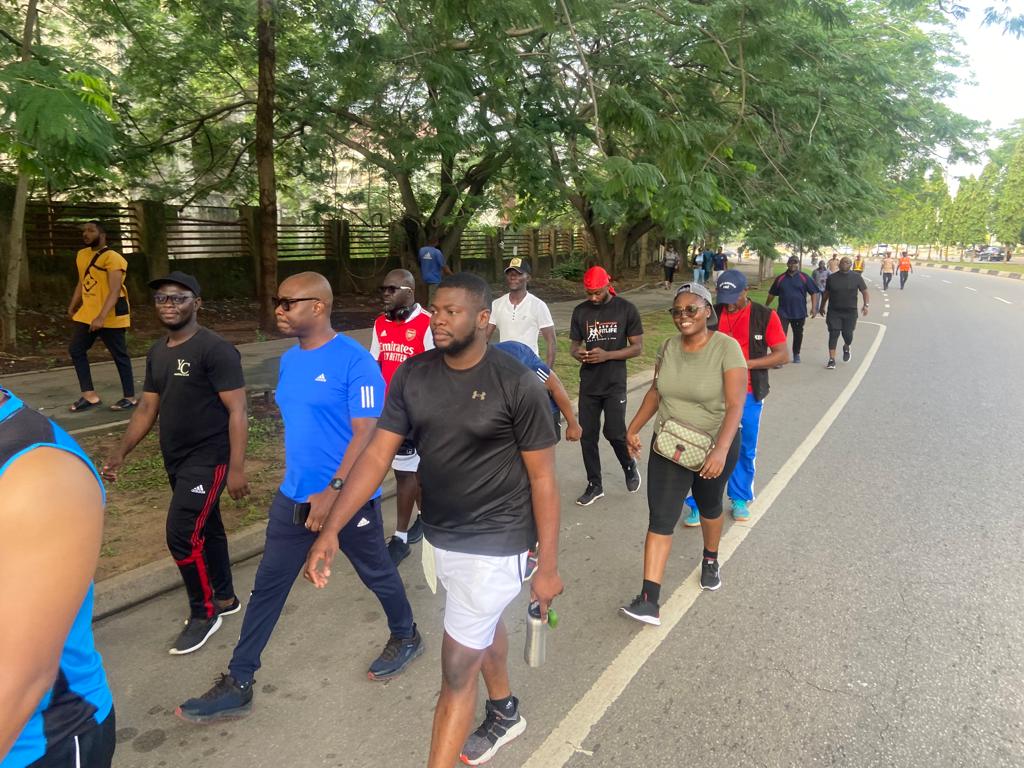
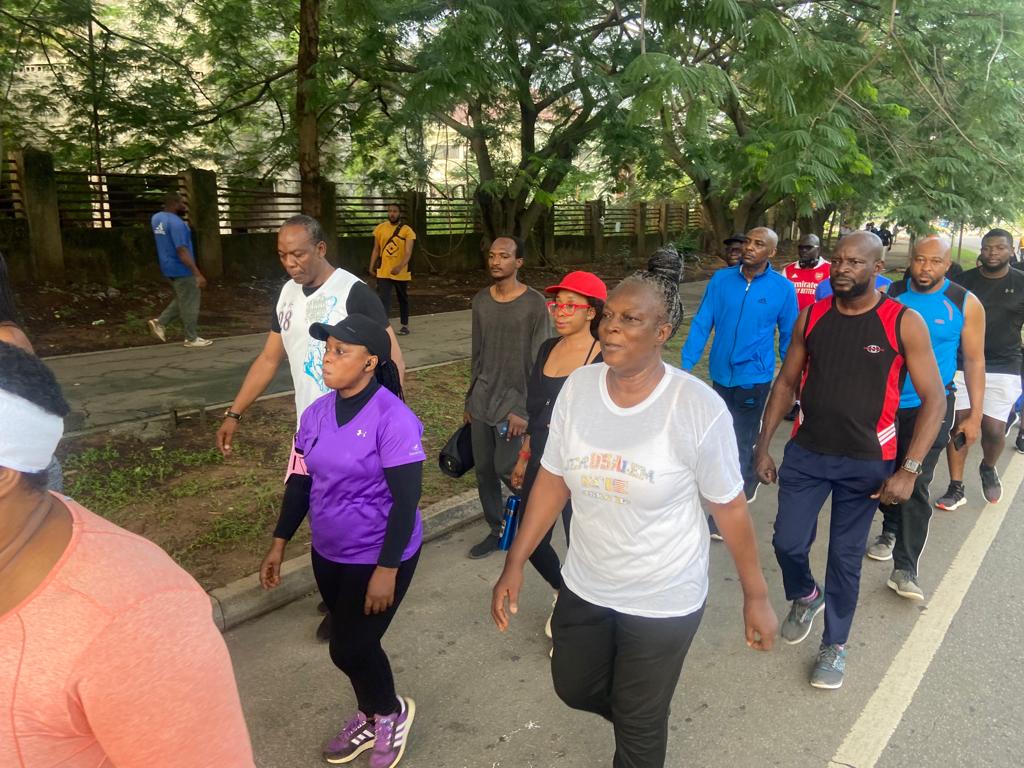
Photo News: NBA Abuja Law Week Day 3, Lawyers walk towards good Health

The ongoing Law Week of the Nigerian Bar Association (NBA), Abuja Unity Bar continued Saturday morning with aerobics, a health walk, and free health check at FCT High Court premises in Maitama Abuja.

Sending The Military To The South-East To Combat The Growing Terrorism: Why not intelligence and investigation?

By Ikeazor Akaraiwe, SAN

Respectfully submitted: It is a very bad idea to send the military to the South East or anywhere else as the primary problem solver. As Abraham Maslow famously said, “When your only tool is a hammer, you see every problem as a nail.”

Militaries worldwide see every problem as a nail to be hammered into place by the major tool they have, the hammer. What the problem in the South East needs is intelligence, investigation, and arrests, and not boots on the ground.

The DSS and DMI should be able to have telephone eavesdroppers to locate conspirators and terrorists PLANNING to disrupt the South East.

Years ago, when I visited Maiduguri to deliver a paper on PreTrial to the bar and bench, the complaint was that the military had decimated the population of young men, arresting at will any young man within the vicinity of a bomb blast (in the days of regular bomb blasts within Maiduguri), and killing many.

It was then quipped to me that the decimation was so bad that there might be no husbands for the young girls in the next generation!

Truth be told, the growing terrorism in the South-East must be nipped in the bud, but the solution in my respectful view, may not be more boots on the ground but enhanced intelligence gathering, which the military by orientation may not be equipped to do.

For example, how do the sit-at-home enforcers communicate? By telepathy, by runners, or by telephone?

Ikeazor Akaraiwe, SAN

Guinness World Records cry out – We have over 1,500 applications from Nigerians!

  • As Ondo State Chef Deo completes 150-hour cooking time

Ever since Hilda Baci’s record-breaking cook-a-thon, the promoters of Guinness World Records have known no rest from Nigerians.

Days after Baci concluded her enterprise monitored by Guinness World Records in 100 hours., a chef identified as Damilola Adeparusi announced that she has begun 120 hours cooking marathon in Oye Local Government Area in Ekiti State.

Strangely, nothing has been heard about Chef Dammy who many thought was going to up Baci’s feat.

But with the rash of potential record breakers bombarding The Guinness World Records from Nigeria, the organisation has cried out that they have received approximately 1,500 applications from Nigerians alone

The organisation in a chit-chat with Legit NG, said: “The attention and excitement that Hilda Baci’s cooking marathon gained was certainly an incentive for many Nigerians to consider attempting a Guinness World Records title.

“Since her record attempt, there has been a spike in applications from Nigeria, particularly for marathon records. We have received over 1,500 record applications from Nigeria since the start of May.”

Hilda Baci in May hit the spotlight after setting a new Guinness World Record (GWR) for the longest cooking marathon (cook-a-thon) by an individual.

The Akwa-Ibom native who cooked for 100 hours to beat the 87 hours 45 minutes record previously set by Lata Tondon, the Indian chef, in 2019 was certified by the British reference book in June but with a time of 93 hours 11 minutes having critically found some loopholes during the attempt.

Baci’s feat opened the floodgates of desires by some Nigerians to break her cooking record while others from neighbouring Cameroon sought to set world records in various fields.

Presently, attempts ranging from Kiss-a-thon, finishing huge mounds of eba, massaging, lecturing, praise, and worship, crying marathon to sex-a-thon, attempts were made to break world records, prompting the GWR to issue a warning, which reads: “Please enough with the record-a-thons”.

However, Daily Post reports that an Ondo State-based chef, Adeola Adeyeye, aka Chef Deo, who embarked on a culinary challenge in an attempt to displace the current cook-a-thon Guinness World Records (GWR) holder, Hilda Baci, has completed the 150-hour target set for the competition.

Chef Deo, 26, achieved the feat in the early hours of Friday. 7 July 2023. Chef Deo, who announced the cooking marathon a few days ago, said that she had alerted GWR of her intentions and received the go-ahead before beginning the cook-a-thon in an effort to beat Baci’s record of 93 hours and 11 minutes.

According to her manager, Ayotunde Fagbamiye, “Chef Deo’s indomitable spirit and continuous desire to challenge herself made her finish strong.”

Fagbamiye added that the strength of the chef can be attributed to the overwhelming support and encouragement from everyone and the culinary community.

The graduate of Esae University, Cotonou, Benin Republic, began the competition on June 30, 2023, in Ile-Oluji, the headquarters of Ile-Oluji/Oke-Igbo Local Government Area of the state.

In the course of the competition, she has prepared an extensive menu featuring a wide range of dishes and various delicacies.

Meanwhile, Chef Deo’s attempt to break the GWR has begun to generate significant interest and support from her community and beyond.

Food enthusiasts, fellow cooks, and media outlets have flocked to the community to witness the record-breaking endeavour firsthand.


TIPS