Home Blog Page 756

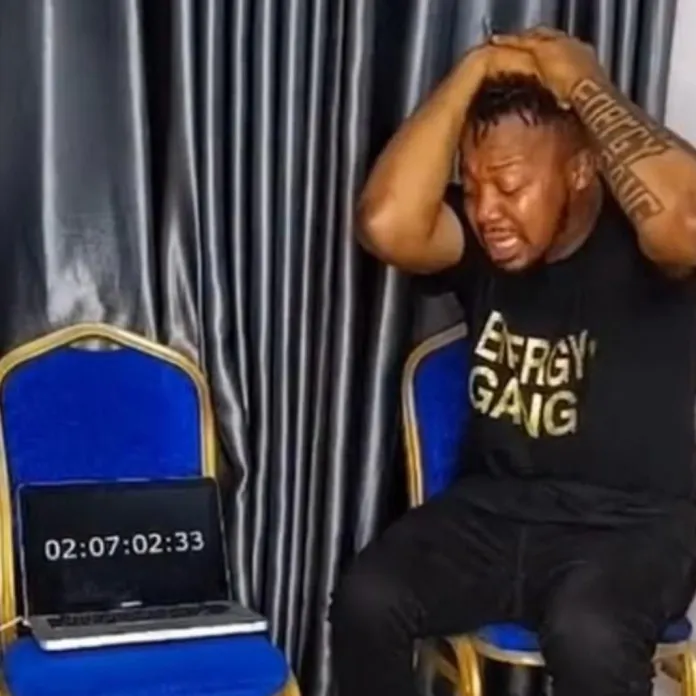
How Nigerian man went partially blind while crying to set a Guinness World Record

One Tembu Ebere, a Nigerian man has confirmed that he actually became partially blind while attempting to cry for seven days to set a record in the Guinness World Records.

Ebere had a few days ago, in a viral post accompanied by a flyer on social media, declared his interest to embark on seven days of non-stop cry-a-thon.

The Guinness World Records recently cried out, complaining that they have been bombarded by Nigerians seeking to break records. According to the organisation, approximately 1,500 applications came from Nigerians alone.

However, some public affairs commentators have suggested that Nigeria may well be on the verge of breaking a record as the country with the highest number of applications.

Ebere, who confirmed his health issues to BBC, said that he forced himself to cry for seven days for the record but along the line, he went temporarily blind.

Ebere, who had attempted to cry non-stop for seven days, said that he experienced headaches, puffy eyes, and a swollen face and went partially blind for 45 minutes amid his efforts.

He told BBC, “I had to re-strategise and reduce my wailing,” adding that he was determined to cry for one week as he planned despite the difficulties he encountered.

Guinness World Records has seen a surge in record-breaking attempts from Nigeria in recent months after Baci’s cooking marathon, which attracted public attention.

Unable to contain the crazed surge, Guinness World Records put out a warning saying, “Please enough of the record-a-thons,” after someone reportedly broached the idea of not one, but two separate attempts – an “idea-a-thon” and a “puff-puff-a-thon”

Two weeks ago, a Nigerian lady, Joyce Ijeoma, collapsed during a 72-hour longest body massage attempt in the Lekki area of Lagos State.

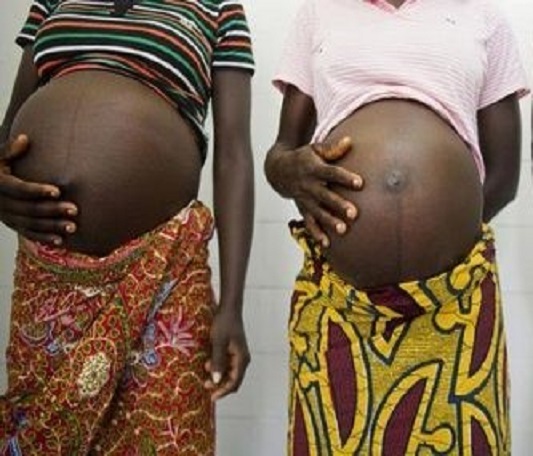
Alleged randy dad impregnates his two daughters in Abuja

An alleged uninhibited 46-year-old man, identified as Jude, has been arrested by the police for reportedly impregnating his two daughters in Ikwa community, Zuba Chiefdom, in Gwagwalada Area Council of Abuja.

A neighbour identified as Idris, told Voice of Naija that the incident came to the public domain after one of the daughters reported the matter to her fiancé who was a police officer in Minna, Niger State.

The neigbour added: “In fact, when the man who is a father of four, two females and two males, was taken to the police station, his wife was trying to cover up the matter, but her daughters opened up and told them how their father had been sleeping with them and how they aborted their pregnancies.’’

Although the Divisional Police Officer (DPO), DSP Osor Moses, did not pick calls put across to him, an officer at the division confirmed the incident, saying the suspect would soon be charged to court.

Also, the spokesperson of the FCT Police Command, DSP Adeh Josephine, neither responded to calls nor replied to a text sent to her phone about the incident.

Voice of Naija

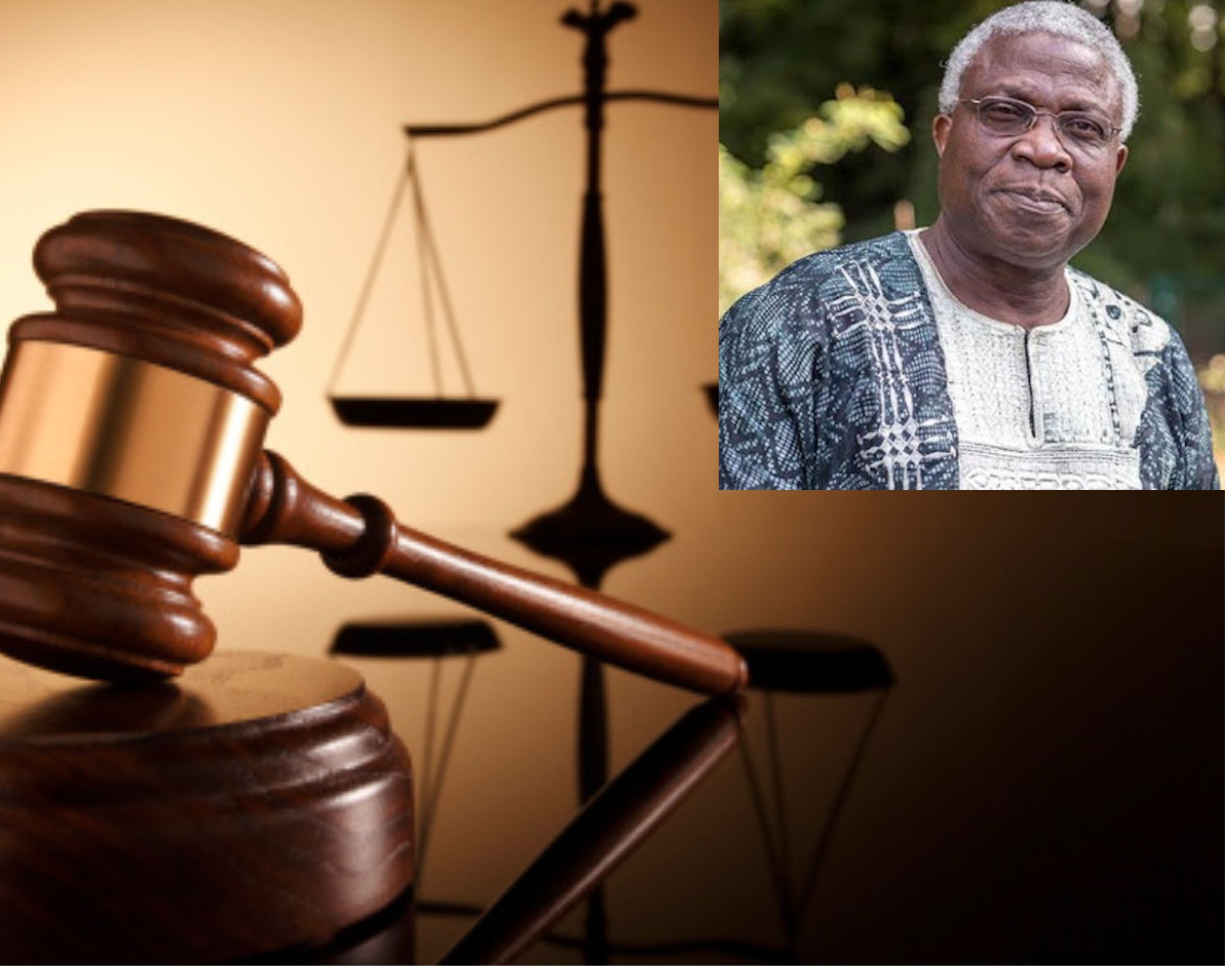
Where should the line be drawn on artistic licence?

By Lillian Okenwa

It was Abuja lawyer, Kachi Okezie who first asked the question— “Where should the line be drawn on artistic licence?”

Then followed JustSociety in a tweet.

And ever since that 2016 early October night raid of some Supreme Court Justices’ residences in Abuja which inspired Prof. Niyi Osundare’s now famous poem, which surfaces every election year and whenever the courts or judges are in the news for the wrong reasons, the Nigerian judiciary has been under the intense scrutiny.

Although Niyi Osundare has written many other poems including ‘Nigerian subsidy and the Real Subsidizers’, gone further to explain in an interview that: “We the people of Nigeria, are the ones subsidising the corruption and the incompetence of our government, the incompetence of our rulers…”, Okezie’s question: “Where should the line be drawn on artistic licence” with regards to Osundare’s poem for ‘Their Lordships’, still begs for answers.

The Poem

My Lord

   Please tell me where to keep your bribe?

Do I drop it in your venerable chambers

   Or carry the heavy booty to your immaculate mansion

Shall I bury it in the capacious water tank

    In your well laundered backyard

Or will it breathe better in the septic tank

     Since money can deodorize the smelliest crime

Shall I haul it up the attic

    Between the ceiling and your lofty roof

Or shall I conjure the walls to open up

    And swallow this sudden bounty from your honest labour

Shall I give a billion to each of your paramours

    The black, the light, the Fanta-yellow

They will surely know how to keep the loot

     In places too remote for the sniffing dog

Or shall I use the particulars

     Of your anonymous maidservants and manservants

With their names on overflowing bank accounts

     While they famish like ownerless dogs

Shall I haul it all to your village

     In the valley behind seven mountains

Where potholes swallow up the hugest jeep

     And Penury leaves a scar on every house

My Lord

     It will take the fastest machine

Many, many days to count this booty; and lucky bank bosses  

     May help themselves to a fraction of the loot

My Lord

     Tell me where to keep your bribe?

 My Lord

     Tell me where to keep your bribe?

The “last hope of the common man”

     Has become the last bastion of the criminally rich

A terrible plague bestrides the land

     Besieged by rapacious judges and venal lawyers

Behind the antiquated wig

     And the slavish glove

The penguin gown and the obfuscating jargon

     Is a rot and riot whose stench is choking the land

Behind the rituals and roted rigmaroles

     Old antics connive with new tricks

Behind the prim-and-proper costumes of masquerades

      Corruption stands, naked, in its insolent impunity

For sale to the highest bidder

    Interlocutory and perpetual injunctions

Opulent criminals shop for pliant judges

     Protect the criminal, enshrine the crime

And Election Petition Tribunals

     Ah, bless those goldmines and bottomless booties!

Scoundrel vote-riggers romp to electoral victory

     All hail our buyable Bench and conniving Bar 

A million dollars in Their Lordship’s bedroom

     A million euros in the parlor closet

Countless naira beneath the kitchen sink

     Our courts are fast running out of Ghana-must-go’s*

The “Temple of Justice”

     Is broken in every brick

The roof is roundly perforated

     By termites of graft

My Lord

     Tell me where to keep your bribe?

Judges doze in the courtroom

     Having spent all night, counting money and various “gifts”

And the Chief Justice looks on with tired eyes

     As Corruption usurps his gavel.  

Crime pays in this country

     Corruption has its handsome rewards

Just one judgement sold to the richest bidder

     Will catapult Judge & Lawyer to the Billionaires’ Club

The Law, they say, is an ass

     Sometimes fast, sometimes slow

But the Law in Nigeria is a vulture

     Fat on the cash-and-carry carrion of murdered Conscience

Won gb’ebi f’alare

     Won gb’are f’elebi**

They kill our trust in the common good

     These Monsters of Mammon in their garish gowns

Unhappy the land

     Where jobbers are judges

Where Impunity walks the streets

     Like a large, invincible Demon

Come Sunday, they troop to the church

     Friday, they mouth their mantra in pious mosques

But they pervert Justice all week long

     And dig us deeper into the hellish hole

Nigeria is a huge corpse

     With milling maggots on its wretched hulk

They prey every day, they prey every night

     For the endless decomposition of our common soul

My Most Honourable Lord

     Just tell me where to keep your bribe.

*   Large, extremely tough bags used for carrying heavy cash in Nigeria

** They declare the innocent guilty

   They pronounce the guilty innocent  

Challenge unity schools and your child will be sent home – FG to parents

The Federal Government of Nigeria has issued a directive to the management of Federal Government Colleges (FGCs), also known as unity colleges, to ‘send home’ students whose parents sued the schools.

The federal government through its education ministry in a 17 July circular to principals of all unity colleges, warned that any child or ward of a person who sued the school “will be sent home until there is a court decision on the said litigation”.

Also, the ministry is set to impose heavy sanctions against parents who post their grievances with the schools or the schools’ activities on social media.

The decision as contained in the circular was to ensure “the stability of our colleges for a smooth and peaceful academic environment”.

However, one-time Chair of the National Human Rights Commission, Law Teacher, and a former President-General of the Unity Schools Old Students Association (USOSA), Chidi Odinkalu, said the circular is akin to shutting parents’ efforts to hold the schools accountable.

Insisting that directive violates the Child Rights Act, Prof. Odinkalu in a tweet on Tuesday said:

“This circular issued by @NigEducation seeks to shut down efforts by parents to hold accountable rogue school management in the #UnitySchools. “Even worse, it violates the #ChildRightsAct & the UBEC Act: u cannot exclude children from school for the actions of their parents!”

Meanwhile, the circular signed by the Director of Senior Secondary Education, Binta Abdulkadir, disclosed that the decision was in response to the actions of parents with regard to certain challenges in the unity colleges.

It accused parents of publishing false and negative information about the activities of the schools on social media.

It also accused them of not following proper, peaceful communication and resolution channels.

The ministry added that some parents “sow seeds of disunity to distract the management of the schools in cases where the Parents Teachers Association (PTA) and the School-Based Management Committee (SBMC) have cordial working relationships with the schools.”

The ministry, therefore, asked principals to invoke the content of a 20th September 2021 circular on the “indiscriminate use of media platforms to tarnish the image” of the colleges.

“Principals are directed henceforth to send home wards of parents who take the FUCs/Principals/stakeholders like PTA/SBMC to court. Their wards will remain with them until the court case is decided,” it said.

In 2016, the ministry issued a similar circular, threatening to expel students if their parents used social media to “spread false and negative information” against the schools

Prof. Odinkalu, who at the time was the president of Unity Schools Old Students Association, said the directive implied the ministry was moving against “free expression”.

Premium Times

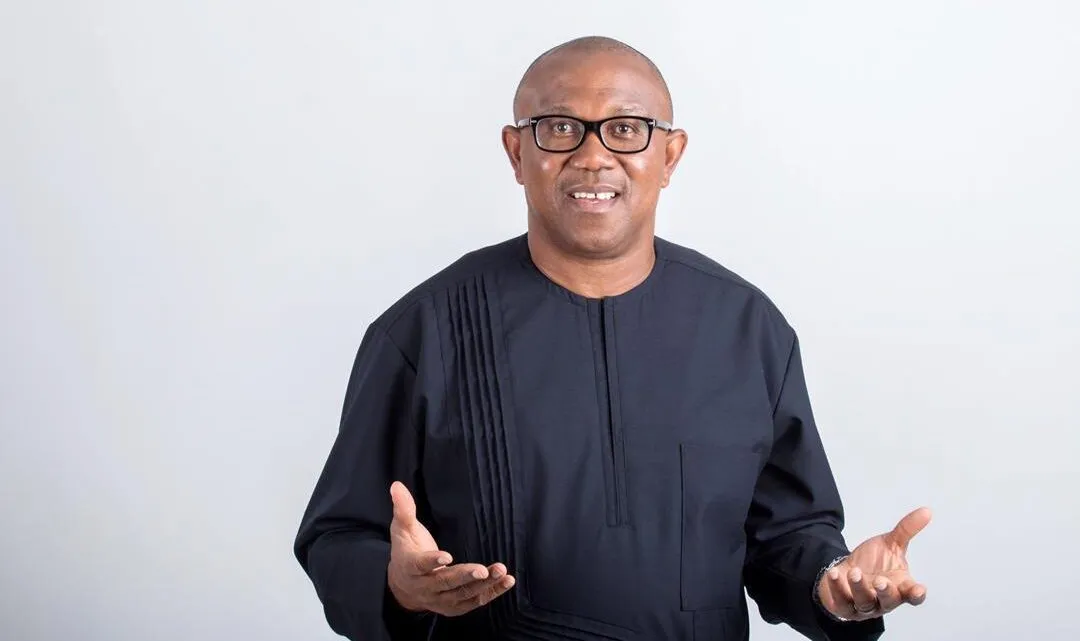
Peter Obi is not a god

Peter Obi is not a god … Iloegbunam uses the birthday of the Labour Party’s presidential candidate today, July 19, to celebrate him and the Obidient Movement

By Chuks Iloegbunam

Yes! There’s nothing they haven’t said of Peter Obi. They have charged that he is not a god. They have said he is no more than a political opportunist. They have ridiculed his promise to change Nigeria from consumer to producer. They pooh-poohed as unfounded the statistics the man churned out on successes abroad that could be replicated back home. But the traducers wouldn’t reckon with reality. The subject of their insistent lambasting never ascribed divinity to himself. He did not circle his head with sanctity’s hallo. In the league of politicians, he didn’t claim to be more human. He only asked for the chance to lift a comatose country.

Those who alternate between reading newspapers and staring into the skies understand that, like other humans, Peter Obi possesses a bag of foibles. All told, he sculpted in the granite of national consciousness an enduring self-definition: “I am a trader,” he often asserts, without the novelty ever wearing off. Well, here is a gem from the trader-politician: “Who among us would lose their car and, on discovering who made away with it, allow them to keep the vehicle because it was scrupulously maintained?”

Any reader who would rather the illegal confiscation of his property stays unchallenged because it is forever kept tidy may discontinue reading because this article is themed on halting looters and worsting impunity.

Now, the stolen automobile and seized mansion are understated anecdotes for estopping wantonness. Here is a newspaper’s May 5, 2023, story: “A total of 137 persons were killed, and 57 abducted during the 2023 general elections, a report by the Incident Centre for Election Atrocities (ICEA) has shown. The report entitled: “Ethnic Profiling, Hate Speech, and Endemic Violence: A Preliminary Post-Election Statement on the 2023 General Elections in Nigeria,” obtained by Saturday Vanguard in Abuja, said the most prominent forms of atrocities noted through the electioneering process were the weaponisation of voter suppression through violence, hate speech, fake news, and ethnic bigotry.”

To recraft the understated anecdotes. A princess would be betrothed to a community’s crown prince. Once the ceremony is underway, a bandit storms the public square with sword and bludgeon-wielding mercenaries. The king’s head is separated from his torso. The crown prince’s bloody entrails are flung and scattered in all directions. The bandit abducts the would-be spouse. A reign of agony and bedlam ensues. A season later, the bandit returns with his abductee and their son, claiming entitlement to the community’s throne. Except inflicted by bastardy, which Nigerian community will heartily crown the murderous criminal because, straight from their violation, a bouncing baby boy was born?

This is the atrocity that impelled Peter Obi to step into the breach. And, like the tree by the footpath, what he represents is the subject of much buffeting and battering. He has been viscerally bathed in malignity and curses. One social media profaner even called him an infidel. Yet, he is neither bloodied nor bowed. Having long banished the fear of fear, he is proceeding with the breastplate of truth and the belt of righteousness. If a sane society decided on an ”infidel’s” leadership, why should interlopers discountenance their democratic choice? Wasn’t a similar outrage what threw up the June 12 imbroglio that almost sundered Nigeria?

Doesn’t it strike as significant that a man much maligned for championing the people’s cause has not for once served his adversaries with a dose of their own medicine? Peter Obi was a teenager when First and Second Republic politician, Alhaji Waziri Ibrahim, espoused the philosophy of Politics Without Bitterness. He is today that creed’s prime exemplar. He has demonstrated an abiding faith in the ballot box as the democratic instrument for elective office. He has invariably turned to the judiciary each time the need arose to redress political waywardness. He acts in boldness, knowing that he will never walk alone.

Some theoretical formulation is apposite. The sum of Nigeria’s intractable challenges was always known. Chinua Achebe placed a finger on it. In The Trouble With Nigeria (Fourth Dimension Publishing Company, Enugu, 1983), he said: “The trouble with Nigeria is simply and squarely a failure of leadership. There is nothing wrong with the Nigerian land or climate or water or air or anything else. The Nigerian problem is the unwillingness or inability of its leaders to rise to the responsibility, to the challenge of personal example, which are the hallmarks of true leadership.”

Reacting to Achebe’s thesis a year or so before he perished in a mystifying 1996 plane crash, Professor Claude Ake, the eminent political scientist, submitted that national failure was equally blamable on followership. If docility informed followership, he argued, there was little point in expecting or envisaging altruistic and visionary leadership.

On the surface, Achebe and Ake had argued from antipodal zones. But examined critically, their postulations are, in fact, in tandem. The confusion only rears its ugly head when leadership is seen from the opaque prism of political authority. Except impliedly, Achebe didn’t blame Nigeria’s trouble on political leadership per se. And when Ake lanced followership, he didn’t articulate a chasm in the bonds of responsibilities devolving on the leader and the led. Therefore, it boils down to this: Leadership cannot be sentenced to the political and the apicular. Of course, leadership is pyramidal. But it exists and thrives at the levels of political distinction, economic potentialities, geographic demarcations, religious stratification, domestic particularities, etc.

In effect, a school principal is, in comparison, a follower of the education minister. But inside his college, the principal is the leader. A carpenter on a building site follows a foreman. But back home, where he is the breadwinner, his leadership position ought not to be in doubt. The class prefect and her classmates are subject to the headmaster’s authority. Yet, she leads her cohorts. It is in this classification of diverse and varying leadership levels that the postulations of Professors Achebe and Ake should be inserted.  This, then, is the critical question: What is the quality of your leadership at your own level?

That’s the juncture at which the Obidient Movement manifests because it represents an uncompromising affirmation of political morality that abjures class, ethnic, or religious parochialism. Obidients show leadership at whatever level circumstances place them. In apt apprehension of their civic responsibilities, they not only participated in voter registration but also encouraged broad swathes of the population to follow suit. They disdained violence. On election days, they trooped out to vote, even in the face of harassment, intimidation, violence, and INEC’s perversity. When election results were called that raised eyebrows, they disdained the template for “the dog and the baboon (to) all be soaked in blood.” They hearkened to the invitation to “go to court.” That is the new Nigeria.

Such is the nature of life that the man after whom Nigeria’s redemptive movement took a name is not the issue. Had Peter Obi gone into the presidential ballot flying other than the Labour Party flag, it is unlikely that the movement now symbolically coalesced around his personality would have come to be. What transpired was straightforward. The downtrodden majority compared him to the fare repeatedly served to Nigeria’s detriment and discerned the dichotomy between cosy and dank. Wisely, they opted for the former. Unsurprisingly, Peter Obi has not disappointed.

INEC registered a most successful record of crippling failures. The “independent” electoral body demonstrated palpable pliability at the hands of a whimsical puppeteer. Claiming the deployment of BVAS and IREV for unimpeachable polls, it shut down the hi-tech machines and blamed phantom “glitches” for election day travesties. INEC declared a president-elect on the computation of only 33 percent of the cast votes. INEC, to this day, has refused all entreaties to publicise the comprehensive figures on which it indexed the presidential ballot. INEC incongruously declared someone the president-elect who failed to attain the constitutionally mandatory 25 percent of Abuja votes.

Well, if a lame-duck President of animus, bigotry, and hypocrisy decreed a successor by the dishonesty of executive fiat, the Obidient Movement is neither obliged nor obligated to accept the effrontery. Peter Obi led the Obidients to mount a legal challenge to the outrage. Inside the courtroom, gale-force winds exposed the chicken’s off-putting rear. Yet, deep doubts remain because the face of the Judiciary – the Third Estate of the Realm and the so-called final hope of the common man – is screened by a demonic mask. The Bench sports a garment muddied by scandalous verdicts.

A man ditched the Senate for the presidency. When the presidency shunted his nuisance, he turned to his vomit and grabbed the gold medal of a senatorial race for whose primary ballot he was not a participant. The Supreme Court asked him to keep it! Before then, another fellow came a dismal fourth in a gubernatorial race, which meant that not even a brass medal was due to him. The Supreme Court pronounced him the first to breast the tape! To expose utter judicial rottenness, an 83-year-old Senator professed inside the legislative chamber a fondness for manipulating his 73-year-old wife and Appeal Court president into perverting verdicts to favour his legislative cohorts. In this day and age! These affronts are antithetical to the Obidient psychology. That is why those hoarsely screaming that Deceit hit the ground running are tilling on undesignated farmland. Even if Dishonesty pounded the ground with spellbinding callisthenics to shame Olympic veterans, their debt to society is unambiguous: To clear out of a stage not justifiably theirs. 

Thankfully, Obidients are comforted that the denial of American visas is the least retribution due to those who wield the Bench as a sledgehammer for battering 200 million lives. Payback will sear their bones to seep through to their posterity in the form of white-hot pincers yanking tonsils. Gone are the days of impunity when the Bench, incited by shenanigans, called white, black, and black, white.  Their hubris, the Obidient Movement, is not a political party. It is implacably partial to Nigeria. Its uncompromising partisanship is in the nation’s best interest. It is the country’s brand-new momentum.

The argument returns to its starting point. Peter Obi is not a god. If he were divine, devotees would people his altar. He is not perfect. But the Obidient Movement will not abide deliberate missteps by him. Unlike “graduates” without registrable certificates, Peter Obi has a verifiable Philosophy degree from the University of Nigeria, Nsukka, an acclaimed trader that could become a philosopher-king. Because of his presence in the national consciousness, Nigeria’s political terrain will never be the same again. Peter Gregory Onwubuasi Obi (CON) is a verifiable 62 years old today. Many happy returns of the day to him. The One with the Yam and the Knife of Existence, the High and the Lofty, the Eternal and Omnipotent Excellency, should be supplicated to bless him and heal the land.

  • Iloegbunam is the author of The Promise of a New Era, the biography of Mr. Peter Obi.

Like Caesar’s wife a lawyer must remain above board, Alubo, SAN on female lawyer nabbed for allegedly making hard drug cocktails

By Alphonsus Okoh Alubo, SAN

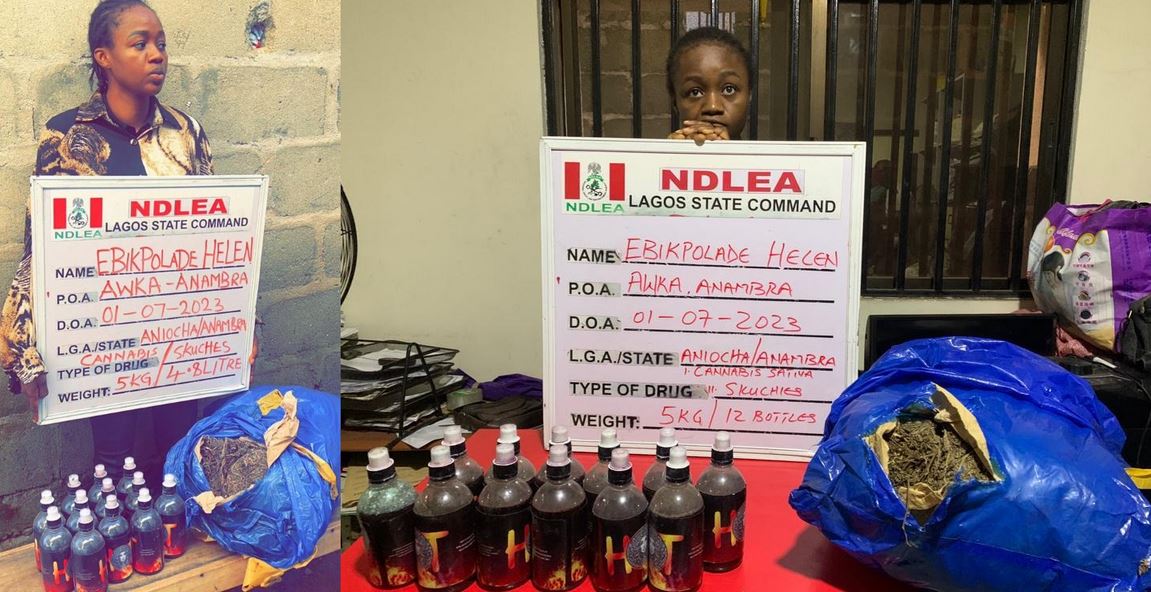
I would say that the arrest yesterday of some Nigerians and the lawyer, Ebikpolade Helen, following the seizures of cannabis and other mixtures prohibited by law in her apartment in Lekki- Lagos and Awka, is unfortunate and is bad for the image of the profession.

All may not be right or well in the country, but a lawyer, like Caesar’s wife, must remain above board. It is worse for the lawyer who knows the comeuppance of the NDLEA Act.

I worry that the importation of Drugs and other illicit substances, and the arrest of Nigerians for drugs and other illicit substances, appears to be metastasized. The Nigerian Bar Association, after some time, must look into this. I pray that going forward, there would be no such cases

I should state that I am surprised at the porosity and fluidity of our borders. With the gumbo of security agencies: Customs, NDLEA, Immigration, NSCDC, etc., it is mind-boggling that these drugs are brought in and in some cases, taken out with ease. I recommend that some heads should roll if only to act as deterrence to other would-be criminals
Professor Alphonsus Okoh Alubo, SAN

NDLEA investigates official’s stray bullet that killed two-year-old in Delta

A family in Delta State, South-South Nigeria has been thrown into grief following the stray bullet from the gun of an officer of the National Drug Law Enforcement Agency (NDLEA) that killed their two-year-old son in Asaba, the Delta State capital.

However, the National Drug Law Enforcement Agency, NDLEA, has said that it is investigating the shooting incident which involved its officers during the raid of a drug joint in Okpanam area of Asaba, Delta state.

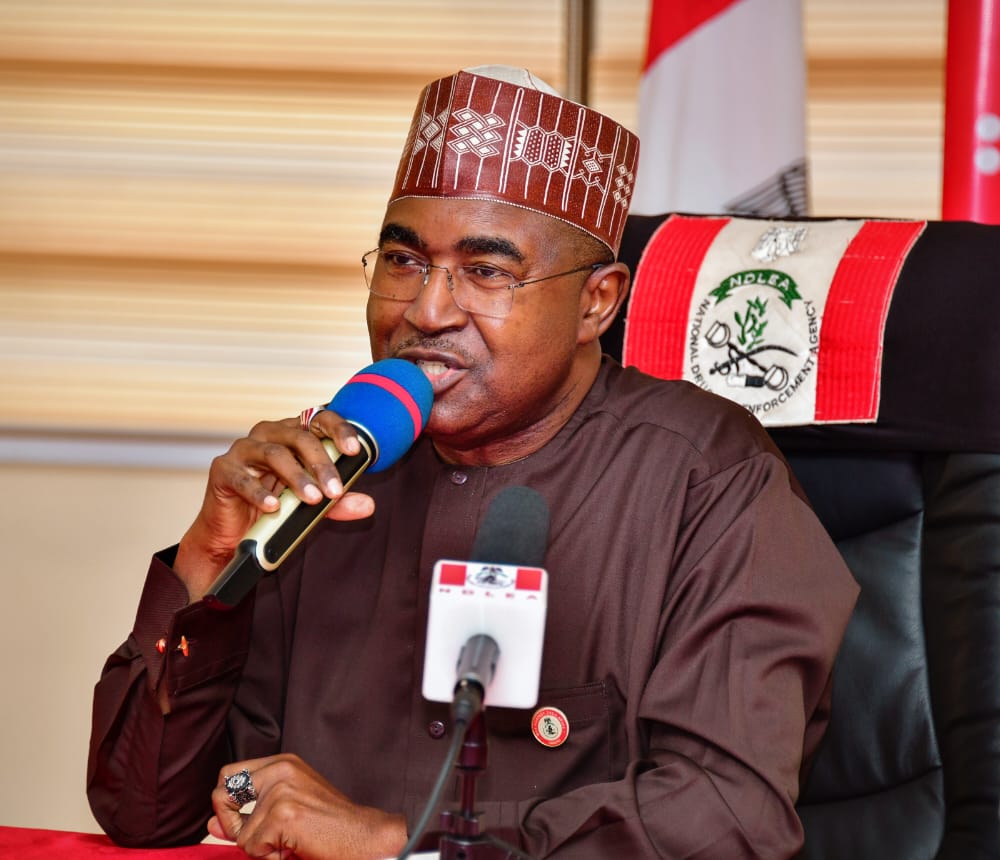
Acknowledging that a young person was hit by a stray bullet during the raid, resulting in death while undergoing treatment in the hospital, the agency, in a statement on Saturday, signed by its spokesperson, Femi Babafemi, said the Chairman/Chief Executive, Brig. Gen. Buba Marwa (Retd) had, after receiving initial briefings from the Delta state command of NDLEA, set up a panel of top officials from the national headquarters in Abuja to immediately proceed to Asaba for an on-the-spot investigation of the unfortunate incident with a view to establishing the actual facts of the case.

He said that this followed an initial incident report, which showed the following:

“A team of NDLEA operatives carried out an intelligence-based raid of the joint of a notorious drug dealer located at Okpanam area of Asaba about 1600 hours on Thursday, 13th July and in the process of the operation, a Toyota Camry 2008 model, light blue colour at the scene suddenly zoomed off and knocked down one of our officers who is currently in critical condition, undergoing treatment in a hospital.

“In a bid to demobilize the car and prevent it from escaping, another officer fired a shot aimed at the tyre of the car, which eventually escaped. While the injured Officer was rushed for treatment, the officers got reports of a stray bullet hitting a young person and immediately located the father of the victim, followed him to the hospital and supported in facilitating his treatment but unfortunately died in the process.

“We’re in touch with the family to provide necessary assistance while we conclude our investigation of the incident. We will like to assure the family and members of the public that we’ll get to the root of the case and take necessary action(s).”

It was gathered that the boy was hit by a stray bullet following a shooting incident during a raid on a drug joint in the Okpanam area of Asaba on Thursday, July 13, 2023.

It was learned that an officer of the anti-drug agency was also injured during the incident.

Confirming the incident on Saturday, July 15, the NDLEA Director, Media and Advocacy (NDLEA) Femi Babafemi, said the two-year-old boy died while undergoing treatment in a hospital.

He stated that the chairman of the anti-drug agency, Brig. Gen. Buba Marwa (Retd), has set up the investigation panel consisting top officials from the national headquarters, after receiving initial briefings on the incident from the Delta State Command.

Babafemi noted that Marwa has directed the investigators to immediately proceed to Asaba to establish the actual facts of the case, adding that the NDLEA has been in touch with the family of the deceased.

The NDLEA spokesman, while reporting the initial brief on the incident given to Marawa by the Delta State Command, stated: “Team of NDLEA operatives carried out an intelligence-based raid of the joint of a notorious drug dealer located at Okpanam area of Asaba at about 1600 hours on Thursday, July 13.

“And in the process of the operation, a Toyota Camry 2008 model, light blue colour at the scene suddenly zoomed off and knocked down one of our officers who is currently in critical condition, undergoing treatment in a hospital.

“In a bid demobilise the car and prevent it from escaping, another officer fired a shot aimed at the tyre of the car, which eventually escaped.

“While the injured officer was rushed for treatment, the officers got reports of a stray bullet hitting a young person and immediately located the father of the victim, followed him to the hospital, and supported in facilitating his treatment but unfortunately died in the process.

“We’re in touch with the family to provide necessary assistance while we conclude our investigation of the incident.

“We will like to assure the family and members of the public that we’ll get to the root of the case and take necessary action.”

Female lawyer who allegedly produces hard drug cocktails nabbed

“Lawyers have a way of seeing that sets them apart from the rest of us. In some way this special vision makes them invaluable, and in other ways, repulsive. Lawyers are much more focused on rational, logical, and objective criteria to the exclusion of the emotional, subjective, and sometimes irrational responses to the world. Moreover, lawyers like to show no emotion, and possess a particular disdain for the emotions that are found in others, which has the quality of making them seem inhuman.” – Thane Rosenbaum

And so when Helen Ebikpolade set out to commence the alleged business of producing and distributing skuchies, a mixture of cannabis, opioids and black currant, she probably sought to distinguish herself in some sort of way.

Well, she is currently explaining all that to the National Drug Law Enforcement Agency (NDLEA).

A statement issued by the NDLEA spokesman, Femi Babafemi, on Sunday in Abuja said the lawyer lives in the Lekki area of Lagos.

Mr Babafemi said the suspect was arrested in a follow-up operation in Awka, Anambra, following a seizure of 5kg cannabis and 12 bottles of prepared skuchies in her apartment at Lekki.

He also said another suspect, Abubakar Shuaibu, was arrested on July 13 at Cappa, Mushin-Oshodi road, with 86 bottles of codeine-based cough syrup.

Mr Babafemi said the drugs weighing 8.6 litres were in his Toyota bus marked FFA 241YB.

The NDLEA spokesman said two suspects, Razak Ogunbo and Adeola Idowu, were nabbed on July 11 at Ikorodu with 51 litres of skuchies.

He added that 372kg cannabis sativa and 48 bottles of skuchies measuring 48 litres were recovered from the home of a fleeing drug dealer at Akala, Mushin Lagos, on July 12.

“In Ondo state, operatives stormed a building at Ehin-Ala, Akure South LGA, where they arrested one Abubakar Zayanu Gyambar, 28, with 162 jumbo bags of skunk weighing 1,944 kilogrammes.

“Another suspect, Henry Wilson, 50, was nabbed at Ogume town, Ndokwa West LGA, Delta, with the same substance weighing 216.5kg,” he said.

Your operations must not go beyond Federal Roads – Appeal Court to FRSC

An Asaba Delta State division of the Court of Appeal on Monday upheld the judgment of the Federal High Court, in Warri which had given a judgment to the effect that the Federal Road Safety Commission, (FRSC) can only operate on federal roads.

Appeal No. CA/AS/276/2019: FRSC v. Darlington Ehikim which the Court of Appeal dismissed was filed by FRSC challenging the judgment of Justice E. Nwite of the Federal High Court, Warri.

The Federal High Court had on January 25, 2019 entered judgement in favour of the Plaintiff, who is a member of the NBA Warri and granted all the reliefs sought, which includes a declaration that the FRSC has no right to operate and/or carry any activity on State and Local governments roads.

The trial court also issued restraining orders against the Commission from operating on roads other than federal highways and also awarded cost of N10m against the FRSC

Plaintiff’s lawyer, Mr. Kunle Edun commended both the trial and appellate court for standing by the proper interpretation of the law.

He said that by virtue of the Court of Appeal judgment, FRSC personnel who are on roads inside cities and towns except Federal highways, have no right to be there, as their operations on such roads which are mainly to extort road users are illegal.

Edun further stated that the Judgment is a re-emphasization of the federal structure of the country because the FRSC being a federal agency should only concern itself with federal roads.

The extent of Statutory involvement of incumbent CJN Olukayode Ariwoola in the process to appoint Mr. Olukayode Ariwoola (Jnr.) a Judge of the Federal High Court of Nigeria

A breaking news report on 14 July 2023 in Nigeria: “NJC RECOMMENDS INCUMBENT CJN’S SON, OLUKAYODE ARIWOOLA, JNR FOR APPOINTMENT AS FHC JUDGE”. “According to information gathered by TheNigeriaLawyer, before his appointment, Ariwoola Jnr was the Principal Partner of OLUKAYODE ARIWOOLA & CO, a law firm based in Abuja..
[14 July 2023; TheNigeriaLawyer].

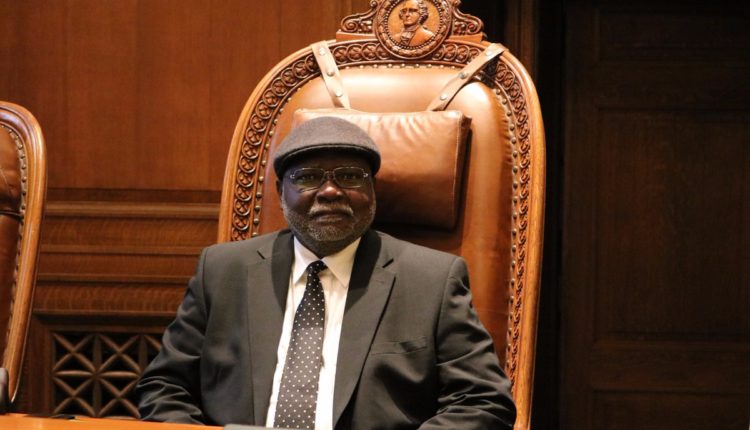
1️⃣. His Lordship, the Hon. Justice OLUKAYODE ARIWOOLA is the incumbent Chief Justice of the Federal Republic of Nigeria; was sworn in on 12 October 2022.

2️⃣. Hon Justice KAYODE ARIWOOLA as the incumbent Chief Justice of the Federal Republic of Nigeria (CJN) is the Chairman of the Federal Judicial Service Commission (FJSC). Section 12(A) Of Item E In Part I Of The 3rd Schedule To The Constitution Of The Federal Republic Of Nigeria, 1999 provides that “The Federal Judicial Service Commission shall comprise the following members – (a) the Chief Justice or Nigeria who shall be the Chairman”. Section 13(A) Of Item E In Part I Of The 3rd Schedule To The Constitution Of The Federal Republic Of Nigeria, 1999 provides that “The [Federal Judicial Service] Commission shall have power to advise the National Judicial Council in nominating persons for appointment, as respects appointments to the office of (vi) a judge of the Federal High Court,”

3️⃣. Hon Justice OLUKAYODE ARIWOOLA as the incumbent Chief Justice of the Federal Republic of Nigeria, is the Chairman of the National Judicial Council (NJC). Section 20(A) Of Item I In Part I Of The 3rd Schedule provides that “The National Judicial Council shall comprise the following members – (a) the Chief Justice of Nigeria who shall be the Chairman”

4️⃣. Mr Olukayode Ariwoola, Jnr is a biological son of my Lord, Hon Justice Olukayode ARIWOOLA, CJN.

5️⃣. The National Judicial Council (NJC), headed by CJN OLUKAYODE ARIWOOLA, has just recommended Mr. Olukayode Ariwoola, Jnr for appointment as a Judge of the Federal High Court of Nigeria. See: “NJC Recommends Incumbent CJN’s Son, Olukayode Ariwoola, Jnr For Appointment As FHC Judge” [14 June 2023; TheNigeriaLawyer]. Section 21(A)(I) Of Item I In Part I Of The 3rd Schedule provides that “The National Judicial Council shall have power to -(a) recommend to the President from among the list of persons submitted to it by – (i) the Federal Judicial Service Commission, persons for appointment to the offices of the Chief Justice of Nigeria, the Justices of the Supreme Court, the President and Justices of the Court of Appeal, the Chief Judge and Judges of the Federal High Court”

6️⃣. It was the Federal Judicial Service Commission (FJSC) (headed by CJN OLUKAYODE ARIWOOLA) that had, by way of a public notice, called for expression of interest by suitable candidates for appointment as Federal High Court judges — See: RULE 3(1)(a)(i) of the REVISED NATIONAL JUDICIAL COUNCIL GUIDELINES & PROCEDURAL RULES

7️⃣. It was CJN Olukayode Ariwoola (unless he recused himself) as the Chairman of the NJC who had determined the number of judges of the Federal High Court to be appointed this time. See: Rule 2(1) of the Revised National Judicial Council Guidelines & Procedural Rules which provides that “Whenever the Head of a Federal Court proposes to embark on the process for appointment of candidates or a candidate to the office of Judicial Officer of a Federal Court of which he/she is the head, notice shall be given to the Chief Justice/Chairman of the Federal Judicial Service Commission stating the number of Judicial Officers intended to be proposed for appointment. The said Chairman must forward a copy of the Notice and the Governor`s response, to the NJC. Upon receipt of the Notice from the State JSC, the Secretary of the NJC shall advise the CJN/Chairman of the NJC, on the number of judges than can be appointed, having regard to the budgetary provision of the NJC for the year. The CJN/Chairman of the NJC shall consider the NJC Secretary’s advice and by a notice in writing (addressed to the Chairman of the State JSC) direct (and this direction/decision is final) that the exercise (a) may proceed or (b) should not proceed or (c) may proceed with reduction in the number of judges proposed to be appointed”.

8️⃣. It was My Lord, the Hon. Justice Olukayode ARIWOOLA CJN in his capacity as the Chairman of the FJSC (unless he recused himself), who had shortlisted his own son, Mr Olukayode Ariwoola, Jnr, for comments preparatory for recommendation for appointment as a judge of the Federal High Court. “Soon after the closing date for the receipt of applications and or nominations, the Chairman of the Judicial Service Commission/Committee concerned shall make a provisional shortlist on the merits consisting of not less than twice the number of Judicial Officers intended to be appointed at the particular time and circulate the provisional shortlist together with a request for comments on the suitability or otherwise of any of the shortlisted candidates” See: Rule 4(4) Revised National Judicial Council Guidelines & Procedural Rules

9️⃣. Note also that my Lord, CJN Olukayode ARIWOOLA (unless he recused himself) as “The Chairman of the [Federal] Judicial Service Commission…shall place the provisional shortlist before the Judicial Service Commission/Committee for approval and upon such approval, with or without modification; the provisional shortlist shall become the final list”
SEE Rule 4(5) Revised National Judicial Council Guidelines & Procedural Rules. However, “In carrying out the provisional shortlisting exercise, the Chairman of the [Federal] Judicial Service Commission…shall take into consideration as much as possible, (i) professional expertise and competence, including in the case of appointment of Judges from the High Court to the Court of Appeal and Justices of the Court of Appeal/Chief Judges/Legal Practitioners/academicians to the Supreme Court, the quality of judgments and performance and demonstration of judicial skills of the Judge; and in the case of appointment from the Bar, evidence of 6 contested cases in the last”. See: (Rule 4(6) Revised National Judicial Council Guidelines & Procedural Rules. See also Rule 4(7))

🔟. The Hon. CJN OLUKAYODE ARIWOOLA as the Chairman of the Federal Judicial Service Commission (unless he recused himself) then had a duty to forward or direct the Secretary of the Federal Judicial Service Commission to forward to every shortlisted candidate “NJC Form ‘A’, which shall be completed and returned to the Chairman (CJN OLUKAYODE ARIWOOLA) by the candidate, together with all necessary attachments specified”. (Rule 4(1))

1️⃣1️⃣. “The Chairman [CJN Olukayode ARIWOOLA, unless he recused himself] shall then table before the Judicial Service Commission/Committee for its consideration a memorandum on each of the short-listed candidates”, [see Rule 4(2)] although _”The Judicial Service Commission [headed by CJN OLUKAYODE ARIWOOLA, unless he recused himself] may make such further enquiries about the candidate from reputable sources as to the suitability of the candidate as it deems fit”. (see Rule 4(3); see also Rule 4(4)].

1️⃣2️⃣. By virtue of Rule 4(4), _”The decision of the [Federal] Judicial Service Commission [headed by CJN OLUKAYODE ARIWOOLA] in respect of nomination and advice for appointment of a Judicial Officer shall be authenticated by the Minutes of the [Federal Judicial Service] Commission Meeting, duly adopted and signed by the Chairman [CJN OLUKAYODE ARIWOOLA] and Secretary of the [Federal Judicial Service] Commission.

1️⃣3️⃣. Upon compliance with Rules 1-4 of the Guidelines, “the Chairman of the [Federal] Judicial Service Commission shall advise, or as the case may be, recommend to, the National Judicial Council by a memorandum… ” [See Rule 5(1)]. By Rule 5(2), “The memorandum shall be addressed to the Chief Justice/Chairman of the National Judicial Council or Secretary and delivered to the Headquarters of the Council in Abuja”.
◾NOTE THE PRACTICAL IMPLICATIONS OF THE PROVISIONS OF RULES 5(1) &(2) OF THE RULES (unless the CJN recused himself):
CJN Olukayode Ariwoola As the Chairman of the FJSC (unless he recused himself) signed the Memorandum submitting the name of his son, Mr. Olukayode Ariwoola, Jnr to himself the Hon CJN Olukayode Ariwoola as the Chairman of the NJC, for recommendation to the President of the FRN for appointment as a judge of the Federal High Court.😂

. 1️⃣4️⃣. The National Judicial Council (NJC) headed by CJN OLUKAYODE ARIWOOLA (unless he recused himself) then considered and conducted interviews for Mr. Olukayode ARIWOOLA, Jnr and other candidates whose names were submitted to it. It was after this process (see Rules 5(5) and Rule 6) that the NJC headed by CJN OLUKAYODE ARIWOOLA then recommended Mr. Olukayode ARIWOOLA, Jnr to Mr President Asiwaju Bola Ahmed Tinubu, for appointment as a judge of the Federal High Court of Nigeria. By section 21(a)(i) of Item I in Part 1 of the 3rd Schedule to the Constitution, “The National Judicial Council shall have power to – (a) recommend to the President from among the list of persons submitted to it by – (i) the Federal Judicial Service Commission, persons for appointment to the offices of the Chief Justice of Nigeria, the Justices of the Supreme Court, the President and Justices of the Court of Appeal, the Chief Judge and Judges of the Federal High Court”. I recommend the following papers for further reading:

(🅰) Sylvester C. Udemezue and T. Hameed, “Circumscribing Powers of Stakeholders as a Panacea to Recurring Tension in the Process of Appointing Chief Judges for States in Nigeria” (2022) 5 (III), Redeemer’s University Law Journal (Redeemer’s University) 84. https://www.researchgate.net/publication/370225303_Circumscribing_Powers_of_Stakeholders_as_a_Panacea_to_Recurring_Tension_in_the_Process_of_Appointing_Chief_Judges_for_States_in_Nigeria or https://ssrn.com/abstract=3889087 or http://dx.doi.org/10.2139/ssrn.3889087]

(🅱). Sylvester C. Udemezue and Vivien C. Anukanti, “The Convention-Constitution Standoff: Resolving the Most-Senior-Judge Conundrum in Appointment of Substantive Chief Judges for States in Nigeria” (2021) 3, Calabar Journal Of Public And International Law, (University Of Calabar) 237 https://ssrn.com/abstract=3873567 or http://dx.doi.org/10.2139/ssrn.3873567

1️⃣5️⃣. As things stand as of today, 16 July 2023, the next stage is for Mr President Asiwaju Bola Ahmed Tinubu to exercise his powers under Section 250(2) of the Constitution of the Federal Republic of Nigeria, 1999: “The appointment of a person to the office of a Judge of the Federal High Court shall be made by the President on the recommendation of the National Judicial Council”.

Meanwhile, note:
1️⃣6️⃣. The “Judicial Oath ” contained in the 7th Schedule to the Constitution provides in part: “that I will abide by the Code of Conduct contained in the Fifth Schedule to the Constitution of the Federal Republic of Nigeria; that I will not allow my personal interest to influence my official conduct or my official decisions; that I will preserve, protect and defend the Constitution of the Federal Republic of Nigeria. So help me God”. See: “Buhari Swears In Justice Ariwoola As CJN” [12 October 2022; Channels TV]. Justice Ariwoola Olukayode is sworn in as the Chief Justice Of Nigeria at the Presidential Villa on October 12, 2022.

1️⃣7️⃣. REVISED CODE OF CONDUCT FOR JUDICIAL OFFICERS OF THE FEDERAL REPUBLIC OF NIGERIA:

(A). Preamble: “It is the duty of every Judicial Officer to actively participate in establishing, maintaining, enforcing, and himself observing a high standard of conduct that will ensure and preserve transparently, the integrity and respect for the independence of the Judiciary…. The Preamble to this code shall be construed as an integral part of the Code and its provisions shall be as enforceable as the provision of the specific rules in the Code.”

(B). Rule 1.2 and 1.3:
“Judge shall avoid impropriety and the appearance of impropriety in all of the Judge’s activities both in his professional and private life.1.3 A Judicial Officer should…conduct himself at all times in a manner that promotes public confidence in the integrity and impartiality of the Judiciary”

(C). Rule 2.10: “A Judge shall not participate in the determination of a case in which any member of the Judge’s family represents a litigant or is associated in any manner with the case”

(D). Rule 7.1 and 7.2: “A Judge shall inform himself or herself about his or her personal and fiduciary financial interests and shall make reasonable efforts to be informed about the financial interests of members of the Judge’s family in respect of matters for adjudication before him.7.2 If it appears in respect of a matter before him or her, that the Judge, or a member of the Judge’s family or other person in respect of which the Judge is in a fiduciary relationship, is likely to benefit financially, the Judge has no alternative but to withdraw from the case”

(E) JUDGE AND MEMBERS OF HIS FAMILY (RULES 8.1): “8.1 A Judge shall not allow the Judge’s family, social or other political relationships improperly to influence the Judge’s judicial conduct and judgment as a Judge”.

(F). DUTY TO AVOID BEING IMPROPERLY INFLUENCED (Rule 8.2): “The Judge’s family, friends, and social, civic and professional colleagues with whom he or she associates regularly, communicates on matters of mutual interest or concern, and shares trust and confidence, are in a position to improperly influence, or to appear to influence, the Judge in the performance of his or her judicial functions. They may seek to do so on their own account or as peddlers of influence to litigants and counsel. A Judge will need to take special care to ensure that his or her judicial conduct or judgment is not even subconsciously influenced by these relationships”.

(G). DUTY TO AVOID PURSUING SELF-INTEREST. (RULE 8.3) : “A Judge who takes advantage of the judicial office for personal gain or for gain by his or her relative or relation abuses power. A Judge must avoid all activity that suggests that his or her decisions are affected by self-interest or favoritism, since such abuse of power profoundly violates the public’s trust in the judiciary.8.4 A Judge shall not use or lend the prestige of the judicial office to advance the private interest of the Judge, a member of the Judge’s family, or of anyone else, nor shall a Judge convey or permit others to convey the impression that anyone is in a special position improperly to influence the Judge in the performance of judicial duties”
See: “REVISED CODE OF CONDUCT FOR JUDICIAL OFFICERS OF THE FEDERAL REPUBLIC OF NIGERIA” (https://njc.gov.ng/code-of-conduct)

1️⃣8️⃣. SECTION 1 OF PART 1 OF THE 5TH SCHEDULE TO THE CONSTITUTION: “A public officer shall not put himself in a position where his personal interest conflicts with his duties and responsibilities”

1️⃣9️⃣.Generally speaking, doing justice (reality) is one thing. Doing it in such a manner as to leave a clear reasonable impression that justice has been done (appearance) is a different, more important, question. If the procedure you have adopted in doing justice leaves reasonable bystanders with the impression, however minute, that justice has not been done, then there is a problem with your style and of course with your brand of justice. Judges should abstain from any action and behavior that could infringe upon the trust in their impartiality. Sometimes, our intentions don’t matter if people reasonably perceive us the wrong way. This is more pronounced especially with administration of justice. Such perceptions are formed from our actions, utterances and body language. Let’s forget whether or not such a judicial officer will in fact do justice, perhaps because he’s a man of integrity. This is not the important question! A few years ago, in Enugu State, the NJC removed a sitting CJ/JUDGE because, among other reasons, the CJ was found to have accepted (during the public launch of the CJ’s book) a donation of N10 million by a party to a case pending before his court. The fact he accepted such a gift knowing that the donor was a party to a case before him,left a reasonable, likelihood that he’d be biased. In such an instance, whether he’s in fact actually biased is of no moment. Perhaps the insight given by Lord Denning (MR) in R. v. Amber Valley DC, ex parte Jackson [1985] 1 WLR 298, [1984] 3 All ER 50, gives a clearer view of the determining factor: “The court looks at the impression which would be given to other people. Even if he [the judex] was as impartial as could be, nevertheless if right-minded persons would think that, in the circumstances, there was a real likelihood of bias on his part…”, there’s a problem. This was upheld in several cases including Nigerian cases: see R. v. Bow Street Magistrate ex parte Pinochet (No. 2) [2000] 1 AC 119 , [1999] 1 All ER 577; R. v. Secretary of State ex parte Kirkstall [1996] 3 All ER 304; ZAMAN v. STATE (2015) LPELR-24595(CA);
Olve & Ors. vs. Enenwali & Ors. (1976) 1 NMLR; Obadara v The President, Ibadan West District Grade “B” Court (1964) 1 All NLR 336), among countless others. To use the words of
Lord Hewart, the then Lord Chief Justice of England in the case of Rex v. Sussex Justices , [1924] 1 KB 256, “justice must not only be done, but must also be seen to be done”. It is in doing justice that the ordering of society is centered. This could be why George Washington once said that “administration of justice is the firmest pillar of government”. Members of the judiciary must be both cautious and cagey in their public actions and utterances, especially on such occasions as the CJN had found himself. In ZAMAN v. STATE (2015) LPELR-24595(CA), the court said: “Justice must be rooted in confidence; and confidence is destroyed when right-minded people go away thinking: ‘the judge was biased.’…. As Lush, J., said in Serjeant vs. Dale (1877) 2 Q.B.D. 558, 567 ‘….One important object, at all events, is to clear away everything which might engender suspicion and distrust of tribunal, and so to promote the feeling of confidence in the administration of justice which is so essential to social order and security.’

2️⃣0️⃣.The following observation made on a WhatsApp platform on 16 July 2023, by a former Attorney-General of Rivers State, Sir WORGU BOMS, may be looked at as apt/relevant:
_”I think it is important we make clear the issue. In Law of bias, you do not need to prove bias. All the law and its practitioners are concerned, is that we avoid all its appearances and factors that may tend to promote it… When those factors are present- relationships, profit- percuniary or proprietary- etc, people who want to avoid unfair, even lying, accusations, steer clear…. It is a tricky issue and the person in authority, suffers it.I have this morning, been reading Prof Guilfoyle D, in the Melbourne Journal of International Law. In course of his discourse of the issue he was tackling, the learned Prof said this: “Judges should avoid being placed in a situation which might reasonably be perceived as giving rise any conflict of interest”…. Many persons we know, are capable of deciding even against their sons or daughters, even lovers, in matters of Justice. Yes. But the law says,.don’t bother. Just stay clear. And it makes sense because, if allowed that you preside and decide over your own son and daughter etc, when they lose, some will argue- and they may be right- that they ought to win but that the Judex just wanted to make the point that he is impartial”.

2️⃣1️⃣. CRITICAL QUESTIONS ARISING:
(A). What if there’s evidence that my Lord, the Hon CJN OLUKAYODE ARIWOOLA had completely extricated/recused himself from all the processes aforesaid, which required the involvement or participation of his offices, and indeed had asked his deputy in the FJSC and his deputy in the NJC to act in his stead, on account of the involvement of his own son as a candidate/applicant?
(B). Would that not clear all doubts, especially if his son is seen to be eminently qualified for the appointment?
(C). Finally, it might also be cogent to ask these further questions: what if the son, Olukayode Ariwoola, Jnr, is actually qualified to be a Judge at this time, and had indeed of his own volition, applied for it, just like others candidates? Would it be fair if he’s denied the opportunity/appointment simply because of his father’s position as the CJN, as the FJSC Chairman and the NJC Chairman?

Please, we would appreciate your views on these. Send your opinion to [email protected].
2️⃣2️⃣. Meanwhile, congratulations to Mr Olukayode ARIWOOLA, Jnr on and his colleagues on their recommendation for appointment as judicial officers in Nigeria. May we use this opportunity to advise that when you finally get appointed as Judges, you all, each and all, should consider using the guidelines and suggestions contained in the Code for Judicial Effectiveness, proposed to by used by Udems if ever he becomes a judge anywhere. See: ‘Thirty (30) Things I Must Do To Make My Court Work Effectively, If I Were A Trial Judge In Nigeria” [04 May 2023; BarristerNG. https://barristerng.com/thirty-30-things-i-must-do-to-make-my-court-work-effectively-if-i-were-a-trial-judge-in-nigeria/]
We face reality!
God bless Nigeria 🇳🇬!
Amen🙏
Respectfully,
Sylvester Udemezue (Udems).
Convener,
The Realist Ministry of Justice (RMJ) Nigeria.
08109024556.
[email protected]
(16 July 2023)

TIPS