Home Blog Page 755

ILA chair calls for dissolution of Women Affairs Ministry, NBA women forum, others

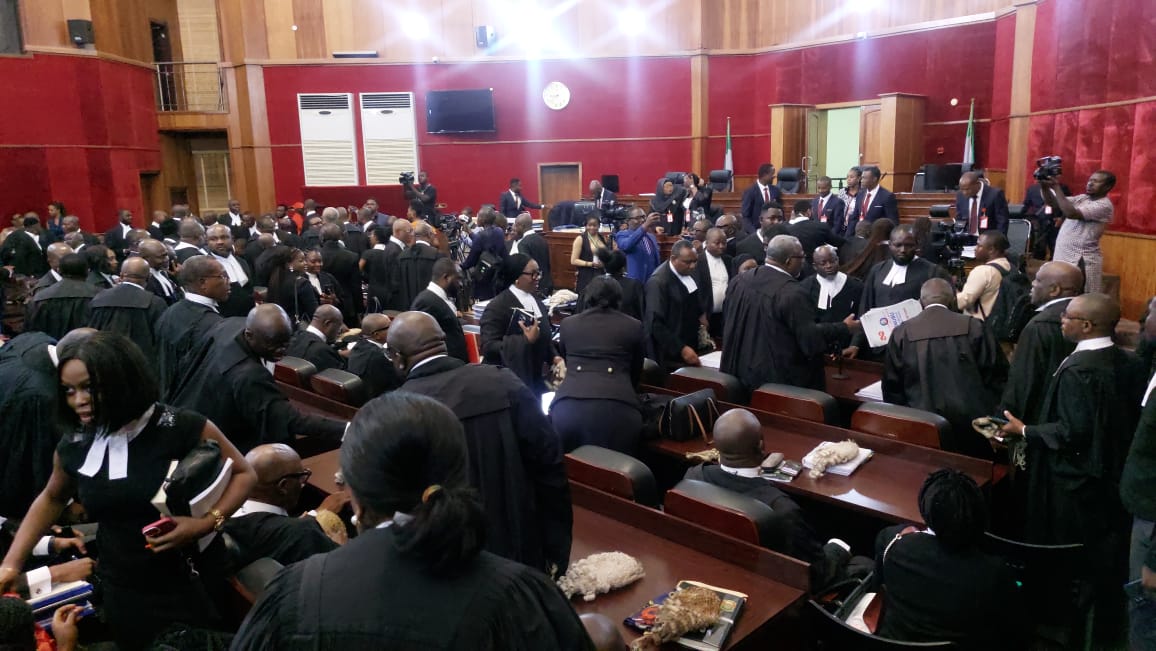
While Nigerian women are still smarting over the rejection of gender bills by the 9th National Assembly (NASS) on Tuesday, 1 March 2022, Chairman of the Arbitration Commission of the International Law Association (ILA), Tolu Aderemi has called for the dissolution of the Nigerian Bar Association (NBA) Women Forum, Ministry of Women Affairs and Social Development, as well as other associations established to advocate for women empowerment.

Aderemi said the dissolution of the  NBA, Women Forum (NBAWF)  in particular is necessary to promote gender diversity in every facet of legal practice.

He made the call during a session at the Nigerian Bar Association Women Forum (NBAWF) Lagos State Chapter webinar, titled ‘Work-Life balance and the legal profession: A social responsibility or a competitive advantage”

Explaining that there is no NBA Men’s Forum, Aderemi said it is worrisome that out of 732 Senior Advocates of Nigeria, only a fraction of about 4% are women adding that out of the 37 Attorneys General in Nigeria, only 4 were female.

He then called for the dissolution of the NBA Women’s Forum to ensure gender equality in the legal profession.

Aderemi who noted that since 1960, there has been only 1 female president of the Nigerian Bar Association and only two female presidents of the Court of Appeal so far curiously advised that since there is no NBA Men’s Forum, female lawyers should demonstrate that are prepared for gender equality by promoting the dissolution of the NBA Women’s Forum.

The dissolution he advised should also extend to the Ministry of Women Affairs and Social Development, Nigeria For Women Project, and those other Associations established solely for women ostensibly to advocate for women’s empowerment.

“It is disconcerting that of the 732 Senior Advocates of Nigeria, only a 4% fraction are ladies. Out of the 37 Attorneys General in Nigeria, only 4 are female. There has been only 1 female Chief Justice of Nigeria whilst, there have been only 6 Justices of the Supreme Court so far”.

Likewise, the former Attorney General of Ogun State, Abimbola Akeredolu, advocated the dissolution of women-focused empowerment associations.

In addition, Consultant Gynecologist at the Federal Medical Center, Abeokuta, Ogun State, Dr. Amina Ahmed, charged female lawyers to always conduct health checks periodically to live a cancer-free life.

She added that early detection of any cancerous cell(s) in the cervical goes a long way to determining the success of treatment of cervical cancer.

Ahmed charged women lawyers of the Nigerian Bar Association to take the lead in the advocacy of early detection.

Court Orders Police to vacate Osborne Towers

The Federal High Court sitting in Lagos has ordered the Inspector-General of Police and his officers to immediately vacate the premises of popular Foreshore Towers in Ikoyi, Lagos.

In a ruling issued today by Justice Daniel Osiagor, the court frowned at the “flagrant disobedience of its order to maintain status quo given on the 23rd of May, 2023,” and ordered, “That the Inspector General of Police and his subordinates should hereby vacate the premises immediately and revert possession to the earlier possessee – the Plaintiff.”

The court also ordered the Bureau of Public Enterprise and Otunba Olusola Adekanola to within 7 days file in the court affidavit of facts “signifying their withdrawal from the premises in complying with the Court Order and undertaking not to enter the premises during the pendency of this case.”

Justice Osiagor adjourned the substantive suit to October 30, 2023 “for Defence of the 1st and 6th Defendants.”

The order followed an application brought by the law firm of Rickey Tarfa & Co. on behalf of the Plaintiff, Associated Property Development Company Limited, praying the court to order the police to vacate the premises which were forcefully sealed about a fortnight ago.

The Plaintiff had in 2008 sued the Federal Ministry of Communication & Technology and six other defendants over a development lease granted the company by the ministry.

Joined in the lawsuit are Otunba Olusola Adekanola; Nigerian Telecommunication Limited; Federal Ministry of Environment, Housing and Urban Development; Implementation Committee on Alienation of Federal Government Property; Attorney General of the Federation, and Persons Unknown. The suit is marked Suit No. FHC/L/CS/4767/2008.

While the plaintiff was represented by Abubakar Shamsudeen who led Ngozi Ngonadi and I. S. Matesun, the 2nd (Adekanola) and 3rd (NITEL) defendants were represented by Dr. Roland Otaru SAN who led J. A. Oladapo. The 4th (Federal Ministry of Lands, Housing & Urban Development) and 5th (Implementation Committee on Alienation of Federal Government Property) defendants were represented by I. Eigbe.

The forceful take-over of the prime property by a detachment of police operatives came against the backdrop of a ruling by the Federal High Court refusing an application by BPE to join in the ownership tussle over the property.

The fierce-looking police operatives had invaded the property penultimate Sunday and forced out all tenants before sealing it, saying they were acting on ‘order from The Presidency (Bureau of Public Enterprises).’

Though the police officers did not show any court order directing sealing of the property, they pasted several notices around the property which read, “NOTICE! NOTICE!! NOTICE!!! THIS IS TO NOTIFY THE GENERAL PUBLIC THAT THIS PROPERTY HAS BEEN TAKEN OVER BY THE PRESIDENCY (BUREAU OF PUBLIC ENTERPRISES). FOR MORE INFORMATION AND INQUIRIES, KINDLY CALL 08054771463.”

Another notice read: “NOTICE TO ALL TENANTS: THIS IS TO ADVISE LEGITIMATE WITH PROVEN UP TO DATE RENTAL PAYMENT TO CALL 08023175000 TO VET YOUR DOCUMENTARY EVIDENCE OF PAYMENT FOR ACCESS TO YOUR OFFICES AND SHOPS.”

Justice Osiagor had last year rejected an application brought by BPE to join in the 15-year-old legal tussle over Foreshore Towers.

Dismissing BPE’s application, the court held that the “Applicant is the agency that liquidated NITEL the 3rd Defendant in the suit. It intends raising jurisdictional issues which am informed is already subject of an interlocutory appeal at the Supreme Court.”

The court held that BPE’s proposed statement of defence and exhibits “rely primarily on documents and actions of parties already defending the suit,” adding that “From the avalanche of proposed documentary Exhibits, the Applicant intends to rely on documentary hearsay to make itself interested in this suit.”

Said Justice Osiagor: “I must add finally that Applicant’s proposed defence will eventually dovetail to relying on the defence Justertii which has no relevance in our property jurisprudence.”

The property development company had sought “A declaration that by the combined effect of the Lease Agreement dated 29th September, 1983 between the Plaintiff and the 1st Defendant and as novated by the special clauses contained in the certificate of occupancy number 90/90/37, the lease agreement between the Plaintiff and the 1st Defendant is still valid, legal and subsisting.”

The company also sought “AN ORDER of perpetual injunction restraining the Defendants, their agents, officers or anybody acting through them from tampering with, alienating, or disturbing the lease agreement between the Plaintiff and the 1st Defendant.”

Tinubu moves to quash Atiku’s petition at Circuit Court of Cook County, Illinois

  • Download the applications

By Lillian Okenwa

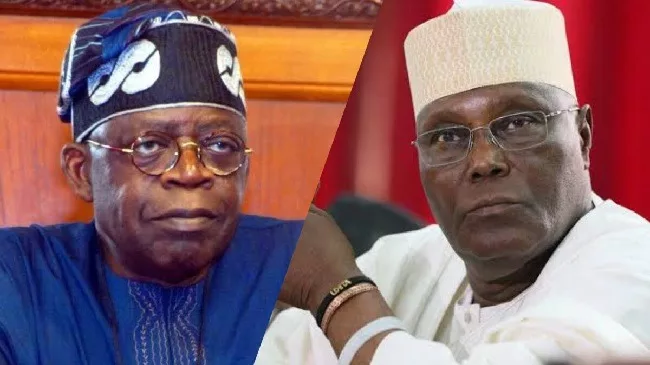
Former Vice President Atiku Abubakar and the Presidential Candidate of the Peoples Democratic Party (PDP) has filed a “Petition to Issue a Subpoena” at the Circuit Court of Cook County of Illinois, United States seeking to obtain records about the President of Nigeria’s educational history from Chicago State University.

The application filed at 3:01 PM on 11 July 2023 through his attorneys is “requesting the Court to issue a subpoena commanding a corporate representative of Respondent Chicago State University (“Respondent”) to appear for deposition upon oral examination on the topics” including:

  1. Tinubu’s application for admission to the University.
  2. The University’s acceptance of Tinubu as a student at the University.
  3. Dates of attendance by Tinubu at the University as a student of the University.
  4. Degrees, including awards and honors, attained by Tinubu from the University.
  5. Courses taken by Tinubu at the University.
  6. Location of University files relating to Tinubu.
  7. Communications between the University and Tinubu or his representative inquiring about his attendance at the University, and more.

However, in a “Motion To Quash Subpoena, Petition, & For Sanction” filed at 2:20 PM on 19 July 2023, by one of President Bola Tinubu’s attorneys, Victor P. Henderson pointed out that “the subpoena is presumptively invalid for providing less than 14 days for compliance”, and that the “Petitioner is engaged in an improper fishing expedition about a foreign public official utilizing the Illinois Court’s subpoena power.”

He also urged the court to impose heavy sanctions on Atiku’s lawyer.

“Counsel should be sanctioned in an amount sufficient to deter such conduct and compensate for the costs incurred to respond to the petition and subpoena.”

Atiku’s prayers through his lawyer Angela M. Liu are:

l. That nonparty Bola Ahmed Tinubu is currently the President of Nigeria and is facing various court proceedings concerning his election and the authenticity of documents relating to his attendance at Chicago State University.

  • That Mr. Tinubu has previously asserted that he attended various educational institutions located in the Chicago area, including but not limited to Chicago State University.
  • To test the truth and veracity of Mr. Tinubu’s assertions, Petitioner must depose a corporate representative of Respondent Chicago State University (“Respondent”) regarding educational records, or lack thereof, from Respondent.
  • Respondent has taken the position that pursuant to federal statute 20 U.S.C. § 12329 and 34 C.F.R. § 99.31(a)(9)(i), educational institutions cannot release personal identifying information from education records to the Petitioner without issuance of a subpoena.
  • To identify and determine if Mr. Tinubu attended the above-mentioned institution, Petitioner needs deposition testimony regarding the following information, as outlined in Exhibit A, including but not limited to admissions information pertaining to Mr. Tinubu, proof of enrollment and attendance of Mr. Tinubu, and any degrees Mr. Tinubu attained from the Respondent

Download the court documents

2023-07-19_-_Exhibits-to-Tinubu-Motion-to-Quash-Abubakar-v.-Chicago-State-University-23-L-6854_Redacted

Motion-to-Quash-and-Strike

A time to be careful

‘If you think you are standing firm, be careful that you don’t fall!’

1 Corinthians 10:12 NIV

The time to be careful is after you have reached your goals and you’re celebrating your victories. There are three crucial points in every battle, and believe it or not, the easiest one is sometimes the fight itself. The most difficult point is the period of indecision right before the conflict – whether to stand and fight or run away – the battle between faith and fear. But by far the most dangerous period is the aftermath. With your resources spent and your guard down, you need to watch for things like overconfidence, dulled reactions, and faulty judgment.

Remember King David’s story? ‘In the spring of the year, at the time when kings go out to battle…David remained at Jerusalem. Then it happened…he saw a woman bathing…Then David sent messengers, and took her’ (2 Samuel 11:1-2, 4 NKJV). Pay particular attention to the phrase, ‘Then it happened.’ David chose to stay home rather than go to battle. Who knows why? Maybe his impressive record of successes made him soft, or he got careless, or arrogant? It was only a brief affair, but it changed everything. His peace vanished, his character was ruined, and his family life destroyed.

Don’t fall prey to the perils of past victories! Remember your H.A.L.T. sign. When you’re Hungry, Angry, Lonely, or Tired, you’re in a vulnerable place and need to be extra careful. Resting on your laurels is synonymous with flirting with disaster. Trouble awaits the man or woman who dwells in the comfortable land of accomplished dreams. So, the word for today is – ‘If you think you’re standing firm, be careful that you don’t fall!’🙏🏽

Nehemiah12-13, Romans 9:16-33

Become a no-limits person!

‘All things are possible to him who believes.’

Mark 9:23 NKJV

No-limits people refuse to accept things as they are because they see them as they can be. Instead of saying, ‘It can’t be done,’ they rise up in faith and say, ‘All things are possible to him who believes.’ No-limits people have faults and failures like everybody else. The difference is, they walk by faith to the cliff’s edge knowing that one of two things will happen when they get there. Either God will put solid rock under their feet, or He will teach them to fly. In other words, they plug into God’s unlimited power supply.

The author of the book of Hebrews describes no-limits people like this: ‘ Who through faith conquered kingdoms, administered justice, and gained what was promised; who shut the mouths of lions, quenched the fury of the flames, and escaped the edge of the sword; whose weakness was turned to strength; and who became powerful in battle’ (Hebrew s 11:33-34 NIV). Notice, these people started out weak, but they became strong. How? ‘Through faith.’ They possessed the kind of faith that disregards the odds, the obstacles, and the opposition, and declares, ‘I am what God says I am, I have what God says I have, and I can do what God says I can.’
The story is told of an old foreman who worked hard on the job and expected the same from his workers. One day one of them said, ‘Don’t you know Rome wasn’t built in a day?’ Smiling, he replied, ‘Aye, but I wasn’t the foreman on that job.’ Today ask God to help you rise above your fears and make you a no-limits person.

Luke 12:32-59, Psalms 72-73

The Word for Today is authored by Bob and Debby Gass and published under licence from UCB International Copyright 2023

SSS faults NYSC, says Enugu governor did not forge discharge certificate

The State Services (SSS) has faulted the claims repeatedly made by the National Youth Service Corps (NYSC) to the effect that Governor Peter Mbah of Enugu State forged his National Youth Service Corps (NYSC) discharge certificate.

The SSS presented its findings to the Enugu Election Petition Tribunal while lampooning the NYSC for conducting a hasty and inadequate investigation, leading to the false claim that Mbah’s certificate was fake.

The governor who contested in the 2023 general election under the Peoples Democratic Party (PDP) has been embroiled in controversy over his NYSC discharge certificate.

Repeatedly denying possessing a fake NYSC certificate, Dr. Mbah has maintained that he completed his national service in Lagos State and was issued with a discharge certificate by the NYSC authorities.

The certificate is usually issued to Nigerian graduates under 30 years of age who have successfully completed a mandatory one-year national service organised by the NYSC.

The SSS told the Tribunal that during their investigation, they discovered that the series of certificates in Mbah’s possession were genuinely issued to corps members in Lagos, contrary to the NYSC’s initial assertion. The Labour Party disputed the DSS report, asserting that it lacked official DSS letterhead and stamps, suggesting it may not be an official statement from the agency.

A representative of the Secret Police, Mr. Yahaya Isa Mohammed, disclosed during his testimony at the Enugu State Governorship Election Petition Tribunal that the NYSC had misplaced Mbah’s original file, and instead, a temporary file was used for reference after he returned from Law School to complete his NYSC service. Additionally, the NYSC was unable to trace the recipients of twelve other certificates, A808297 to A808308. The DSS commenced the investigation in response to a petition by Dr. Mbah on February 8, 2023.

The issue with Mbah’s NYSC certificate arose due to the NYSC’s flawed record-keeping system, as stated in the DSS findings. It was revealed that Mbah served for six months, attended Law School, and then completed his youth service, following the proper procedures through the Lagos State NYSC office to the national headquarters. However, due to the missing original file, the temporary one became the primary reference, causing confusion and controversy surrounding his NYSC certificate.

Meanwhile, INEC failed to present any witness to defend the allegation of malpractice in the election that produced Mr. Mbah as the governor of the state.INEC had, through its team of lawyers led by Humphrey Okoli, told the court that the commission had decided not to bring any witness.

“The first respondent (INEC) is mandated to open the case. My Lord, after a thorough review of the case, we have decided not to bring in any witness,” Mr Okoli said, without giving the reason for the decision.

Is there an exam malpractice syndicate at Nigerian Law School?

  • Ex Law School official appears to suggest in the affirmative
  • How Council of Legal Education dismissed 3 Principal staff over examination misconduct in 2022

A former Law School Academic director identified Chinaso, on Monday, inadvertently admitted in court that there is an examination malpractice syndicate at the Nigerian Law School in Abuja.

Chinaso made this known during the ongoing trial of journalist and human rights activist, Agba Jalingo.

Chinaso was in court as a witness for Elizabeth Ayade, the wife of Frank Ayade, a brother of former Cross River State Governor Ben Ayade in the case of Commissioner of Police vs Agba Jalingo.

The witness admitted under cross-examination that the law school routinely prosecutes students and staff involved in examination malpractices.

The police had charged Agba Jalingo under the Cybercrime Act over his publication that someone sat for the law school examination for the wife of former Governor Ayade’s brother.

SaharaReporters had reported that a frivolous petition bordering on defamation which was filed by Mrs. Elizabeth Ayade led to the arrest of Agba Jalingo in August 2022 in Lagos.

According to Cross River Watch where Jalingo is publisher, Mrs. Elizabeth Alami Ayade, through her lawyers in Abuja – Uyi Frank Obayagbona & Co. had written to Jalingo, claiming he wrote a defamatory article about her.

She, therefore, demanded N500 million as compensation.

But the letter was served on August 14 with Jalingo given two weeks to delete the article and comply, or redress would be sought in court.

Jalingo had alleged that Mr. Paschal Aboh, who is currently being tried by a court in Abuja for alleged examination malpractice, took the examination in place of a prominent Obudu woman.

He further took to social media to state that Mrs. Ayade had denied reports linking her to the trial of Paschal, a law lecturer at the University of Calabar.

In April, SaharaReporters reported that Jalingo was freed one week after being remanded at the Medium Security Custodial Center Kuje, Abuja by Justice Zainab Abubakar of the Abuja division of the Federal High Court for alleged acts of cybercrime.

Earlier, the court granted bail to Jalingo in the defamatory trial filed against him by the Federal Capital Territory Police Command.

According to a court document obtained by SaharaReporters and filed before the Federal High Court in Abuja on December 6, 2022, the police claimed the publication by the journalist against Elizabeth was false and was released for the purpose of causing her annoyance, ill will, and insult.

He was accused of committing offences punishable by Section 24 (1)b of the Cybercrimes (Prohibition, Prevention, Etc) Act 2015, Court documents in suit number FHC/ABJ/CR/565/2022 show.

In November 2022, the Council of Legal Education approved the immediate dismissal of three staff of the Nigerian Law School over their involvement in examination misconduct in the May 2022 Bar final (resit) examination which is contrary to para 5.04.9 of the Condition of Service guiding staff members of the Law School.

According to confirmed sources, the Council adopted the recommendation for dismissal at its last Council meeting held on November 16, 2022, following months of investigation and probing conducted by the Staff Disciplinary Committee of the Law School.

The trio of Mr. Idoko Odeh, Mrs. Precious Chika Nwachukwu, and Mr. Gibson Uzodinma were accused of various degrees of exam misconduct.

While Odeh, a principal data processing officer with the Nigerian Law School, alleged to have reproduced a student identity card for one Mr. Pascal Bekongfe Aboh, a lawyer, to enable him take the resit exam for Benjamin Kayode Orekoya; the duo of Nwachukwu and Uzodinma were alleged to have facilitated, and received gratification for, the exchange of a student passport belonging to a candidate – Wobo Prince Adele-Owhor, to enable one Mr. Godknows Aliegbulam Wodo, to take the test for the said resit candidate.

The Source further confirmed that the actions of the three staff contravened various regulations governing the code of conduct for staff members of the law school, including penalties of “serious misconduct”, “acts unbecoming of a public officer”, and “undivided loyalty (to the Council of legal education)” as defined under para 5.04 of the Condition of Service of Council of Legal Education.

The Nigeria Lawyer also learned that those present at the Council meeting included the NBA President, Y.C.Maikyau; Dean of Law, Usman Danfodiyo University, Prof. Rufai Muftau; Attorney General of Kogi State, Ibrahim Sani Muhammed, SAN; the Attorney General of Kastina State, Mrs. Asmau Mukhtar; the Secretary of the Council, Mrs. E.O. Max-Uba, among others.

Sahara Reporters. Additional reports from PressPay.ng

PEPC, Please do Substantial justice

By Sonnie Ekwowusi

Scathing public criticisms have continued to trail the written address presented by the APC lawyers at the Presidential Election Petition Court (PEPC). It is common knowledge that President Bola Tinubu failed to score 25 percent of the votes cast in the Federal Capital Territory (FCT), Abuja, in the last February 25 Presidential election, as required by section 134 of the Electoral Act 2022.

Despite the failure to satisfy this requirement, the INEC Chairman, Prof. Mahmoud Yakubu (who allegedly is currently under investigation for how he spent over $50 million in donations from the U.S. and the European Union in organizing the most fraudulent election in Nigerian political history), rushed out in the night while Nigerians were still asleep to announce Tinubu as the purported winner of the February 25 Presidential election.

However, in their written address rounding off their entire defense before the PEPC, learned counsel for President Tinubu submitted that any interpretation of section 134 to the effect that Tinubu must score 25 per cent of the votes cast in the FCT to become President is, inter alia, a recipe for chaos and anarchy in Nigeria. In summary, President Tinubu’s lawyers argued that any interpretation of section 134 requiring Tinubu to score 25 per cent in the FCT would “lead to absurdity, chaos, anarchy, and an alteration of the very intention of the legislature.”

In denouncing the statement as cheap judicial blackmail and a threat to the rule of law, some Nigerians argue that it is a pre-emptive move by the APC to intimidate the PEPC to deliver judgment in its favor. In their reaction, the PDP stated among other things: “The statement by the lawyers in the said written address, threatening crisis and anarchy in the country in the event of the court ruling that their clients did not meet the Constitutionally required 25% votes in the Federal Capital Territory (FCT), is subversive, an affront to democratic order, and an assault on the corporate existence of the nation…the threats, either through counsel or officials of the APC, are calculated to intimidate and harass the judiciary and indeed Nigerians…The APC must, therefore, respect the provisions of the law and allow the judiciary to discharge its duties independently, without threats, intimidation, and coercion.”

Without delving into the merits or demerits of Peter Obi & others V INEC & others and Atiku & others V INEC & others, since these cases are still sub-judice, may I respectfully say that it is very unfortunate that Tinubu’s lawyers should utter such contemptuous, disrespectful, and derogatory statements capable of bringing the entire judiciary into public odium. It is sad that the Nigerian judiciary has been constituted into an object of derision by some learned Senior Advocates of Nigeria (SANs) who ought to labor to maintain the prestige of the judiciary.

For example, not long ago, a lawyer in the law firm of a very respectable Senior Advocate of Nigeria (SAN) telephoned their would-be client, telling them that their law firm never loses any law case in court and that most Nigerian judges are more or less in the bidding of their law firm. Imagine the arrogance. Sadly enough, till date, no disciplinary action has been brought against the SAN or his law firm. Where is the much-vaunted ethics guiding the practice of law? Where is the ingrained tradition of the Bar dictating that lawyers should be singled out from the rot by their candor, decency, gentility, and ethics?

No lawyer or group of lawyers representing their client in court should give the impression that they are omnipotent and omniscient and that everything that falls off their mouth is the correct position of the law. Only God is omnipotent and omniscient. Like all mortals, lawyers also have their feet of clay. In the temple of justice, no lawyer is infallible, in the same way, it could be said that no judge is infallible. This was why Justice Chukwudifu Akunne Oputa (of blessed memory) reiterated the famous quotation in the landmark case of Adegoke Motors vs. Adesanya, “We are final not because we are infallible; rather, we are infallible because we are final.” So, lawyers appearing before the court should live in self-effacement in representing their clients in court.

As officers in the temple of justice, they should refrain from prosecuting their clients’ cases with misplaced over-zealousness to the detriment or scuttling of justice. Their duty to the court is to assist the court in presenting facts and adducing the necessary evidence, which could aid the court in arriving at substantial justice.

Consequently, I respectfully urge the PEPC to ignore the aforesaid offensive portion of the written address of APC lawyers. To begin with, the Supreme Court has held that a written address does not take the place of evidence. Curiously, during the trial, the APC lawyers kept on saying that they would adduce legal reasons why they objected to the numerous documents tendered in court. Paradoxically, rather than adduce such reasons in their written address, they were making conjectural ad hominem arguments that appealed to sentiments and emotions. Anyway, cases are not even won in court on the brilliance of a written address but the brilliance of evidence. In other words, no matter how brilliant a written address is, it cannot take the place of evidence.

Therefore, the PEPC should not be deterred by any open or veiled threat contained in any written address. The essence of the legal system is justice. Justice denied is judiciary aborted. Therefore, the PEPC should not be afraid of doing substantial justice in the election petitions before it. “Fiat justicia ruat coelum” (Let justice be done though the heaven fail).

Judges are called good because of their justice. Without justice, it will be impossible to promote societal aims. “Remove Justice,” said Saint Augustine, “what are kingdoms but great robberies.” For Justice Chukwudifu Oputa (of blessed memory): “Injustice breeds intolerance, violence, and social disorder; in the same way, justice brings along with it the blessings of peace and mutual understanding.” Small wonder Cicero praises justice to high heavens by stating that “the brightest of virtues shines above all in justice.” So, contrary to the threats of Tinubu’s lawyers, justice does not lead to chaos and anarchy in society. Rather, justice, as Justice Oputa stated, breeds blessings and peace.

The so-called Nigerian question revolves around the failure to do justice. If every Nigerian is given his or her due in the scheme of things in Nigeria, there would probably be fewer social discontent and social strife in Nigeria. So, the PEPC should do substantial justice in the cases currently before it. It should not be afraid to do what has not been before in Nigeria. The law is an ass. If, for example, the Petitioners have proved that President Tinubu did not meet the requirements of the Constitution and the Electoral Act, the PEPC should courageously come to that conclusion without any equivocation, no matter whose ox is gored. Nobody is above the law of the land.

The PEPC should be reminded that it is the cynosure of all eyes at the moment. The whole world is looking at the PEPC to do substantial justice in the election petitions before it. Therefore, the PEPC cannot afford to disappoint the whole world. The PEPC should remember that it is accountable to the Nigerian people, not to any political party, let alone any presidential candidate, in terms of its overall performance and in meeting the justice needs of the people in a timely and efficient manner. It must, therefore, interpret the law in a way that fulfills the needs and aspirations of the Nigerian people, as envisioned in sections 13, 14 (1)(2)(a)(b)(c) of the 1999 Constitution. It must not only dispense justice but must also be seen by the anxious public to manifestly dispense justice. This is why Lord Hewart, the then Lord Chief Justice of England, laid down the dictum in the case of Rex v. Sussex Justices, [1924] 1 KB 256, that “it is not merely of some importance but is of fundamental importance that justice should not only be done, but should manifestly and undoubtedly be seen to be done.” The essence of the need for justice to be manifestly seen to be done was observed by Master of the Rolls, Lord Denning, in Metropolitan Properties Co (FGC) Ltd v Lannon when he stated: “Justice must be rooted in confidence, and confidence is destroyed when right-minded people go away thinking: ‘The judge was biased.'” To date, the public constantly refers to Imo State Governor Hope Uzodinma, who came fourth in the last Imo State Gubernatorial Election, as the “Supreme Court governor” because they feel that the Supreme Court was wrong in imposing him on the people of Imo State.

Therefore, the PEPC must brave all odds and endeavor to do substantial justice in the election petitions before it. Until now, the judgments of the Supreme Court, especially its recent ruling in the high-profile political cases of Ihedioha V Hope Uzodinma, Lawan V Machina, and Godswill Agbabio V Independent National Electoral Commission (INEC) and others, are understandably attracting strong, passionate, and scathing public criticisms. Members of the public are holding their heads in shame and stating that justice has departed from the Supreme Court, and all that is left in that Court are open robberies. Their hope in the Supreme Court as the bulwark of justice and an unbiased arbiter in the causes of the citizenry, amid the balkanizing influence of corrupt politicians and public figures, rightly or wrongly, seems to be shattered. In a nutshell, the confidence of the public in the Supreme Court as the last hope of the common man has considerably and regrettably waned.

The international community is disappointed that the Nigerian Supreme Court Justices is slavishly adhering to technical legalisms and formalism at the expense of substantial justice. This is why seven members of Nigeria’s Supreme Court, including Chief Justice Olukayode, have been issued a visa ban by the United States government following their judgments in the aforementioned cases. While not rationalizing the visa ban because the U.S has no right to dictate to our Supreme Court the manner in which to deliver their judgments, the visa ban speaks volumes about the social stigma and public opprobrium in which judges (and, in fact, members of their respective families) suffer when they deliver unjust and inequitable judgments.

Therefore, the PEPC judges should save themselves and their respective families from excoriating public criticisms and social stigmas associated with delivering unjust and iniquitous court judgments. They should adorn the breastplate of integrity, transparency, discipline, impartiality, and honor in the discharge of their duty to enhance judicial efficacy and efficiency and to bolster public confidence in the Nigerian judiciary.


“Election Tribunal” or “Election Petition Tribunal”?

By Sylvester Udemezue

Please, which one is more appropriate/suitable, speaking legally/constitutionally and grammatically: (A) ELECTION TRIBUNAL (ET)? or (B).ELECTION PETITION TRIBUNAL? Well, during a survey, recently conducted by me, many held the view it’s the latter. This comment has become necessary to show, with due respect, that legally and grammatically, “Election Tribunal”, not “Election Petition Tribunal”, appears to be the more appropriate terminology.

REASONS

(1). The word “petition” In “Election Petition Tribunal” serves no purpose; it’s unnecessary to insert the “Petition” because the term “Election Tribunal” already adequately explains the purpose of the tribunal. Election tribunal is a special court that resolves election disputes; “dispute resolution” is already an inherent element in the definition of tribunal. Those who use “election petition tribunal” ignore this aspect of the meaning and function of “tribunal”; if they considered the meaning and function of tribunals, they wouldn’t have any difficulty in seeing that the “petition” In “election petition tribunal”, is redundant, even tautological, reason being that one doesn’t need the appearance of the ” Petition ” to appreciate the particular work of election tribunals; presence of the word “election” has provided sufficient particulars to distinguish it from all other fields!

(2). Meaning of “TRIBUNAL”: “a body established to settle certain types of disputes” (Oxford Languages); “special court or committee that is appointed to deal with particular problems” (Collins Dictionary) ; “special court chosen, esp. by a government or governments, to examine a particular … disagreement” (Cambridge Dictionary); “any person or institution with authority to judge, adjudicate on, or determine claims or disputes” (Wikipedia); “kind of court that has authority [to resolve disputes] in a specific area” (Britannica). Thus,its seen that, as I said earlier, the term “DISPUTE RESOLUTION/SETTLEMENT” is a necessary element in the definition of “TRIBUNAL”. The english word petition is a form of dispute. Accordingly,

(a) . Saying “ELECTION PETITION TRIBUNAL” gives the false impression that election tribunal is “a body set up to settle disputes arising from election disputes ” (THIS APPEARS ABSURD).

(b). On the other hand, “ELECTION TRIBUNAL” means: “a special body set up to resolve disputes arising from conduct of elections” (This is ACCURATE/APT).

(3) The definition of “TRIBUNAL” as offered by the UK Judiciary shows it’s unnecessary to add “Petition:” “tribunals are specialist judicial bodies which decide disputes in a particular area of law”. See:
https://www.judiciary.uk/courts-and-tribunals/tribunals/about-the-tribunals/fee-paid-judiciary-page-1/

(4).Further, let’s take a cue from regular Courts; they sit over “LAW-SUITS” just as Election tribunals sit over “election petitions”. This notwithstanding, instead of using “LAW-SUIT COURTS” (so as to show they sit over lawsuits) , we use “LAW COURTS “. So it’s with election tribunals; although they sit over election petitions, it is tautological, redundant, to use “Election Petition Tribunals”, instead of “Election Tribunals”, to describe courts that sit over, resolve, election cases/disputes.

(5). Finally, our laws support that it’s wrong to use petition to describe tribunals that sit over election disputes. The “MARGINAL NOTE” of Section 285 in Part III of the Constitution of the Federal Republic of Nigeria, 1999, is “Election Tribunals”. Specifically, Section 285(1) &(2) establishes two types of tribunals, namely (1) Governorship Election Tribunals and (2). National and State Houses of Assembly Election Tribunals. Indeed, throughout the Constitution, the term used is “ELECTION TRIBUNAL ” OR “ELECTION TRIBUNALS”. No where in the Constitution is the term, “Election Petition Tribunal” used! Not even one!

(6). In like manner, throughout the Electoral Act 2022, the term used is “Election Tribunal”, not “election petition tribunal”. Please see Sections 130(3), 131(1)-(6), 131(1) (d), 132, 135, 136(2), 138(2), 140(2) (b), 146, to name just a few.

(7). “PRESIDENTIAL ELECTION TRIBUNAL” OR “PRESIDENTIAL ELECTION COURT”: Meanwhile, it’s submitted that, in the case of presidential election petitions, any of the following terms could be used to describe or refer to the Court of Appeal when Court of Appeal sits as a court of first instance to resolve presidential lection petitions, pursuant to Section 239(1)(a) of the Constitution of the Federal Republic of Nigeria, 1999, which provides that “Subject to the provisions of this Constitution, the Court of Appeal shall, to the exclusion of any other court of Law in Nigeria, have original jurisdiction to hear and determine any question as to whether -(a) any person has been validly elected to the office of President or Vice-President under this Constitution”: (a) PRESIDENTIAL ELECTION TRIBUNAL (PET) OR (b) PRESIDENTIAL ELECTION COURT (PEC) or (c) COURT OF APPEAL. Under Section 130(1)&(2) of the Electoral Act, 2022, either “Court” or “Tribunal” Could be used to describe the Court of Appeal when the Court sits up on presidential petitions, although under the Act, Tribunal means “Election Tribunal established under this Act or the Court of Appeal “, of course while discharging its jurisdiction pursuant to Section 239(1)(a) of the Constitution. See Paragraph 1 of the 1st Schedule to the Electoral Act, 2022. Section 140(2)(a)&(b) of the Electoral Act, 2022, appears to support that use of Presidential Election Tribunal is more appropriate than use of “Presidential Election Court”, because paragraph (b) is unequivocal that the Court of Appeal when sitting at first upon an election petition is a tribunal. Yet, from Sections 130(1) -(2), 135, 136,138, and 139 of the Act, it could be concluded that both terms could be used interchangeably. In the final analysis, since the Constitution supersedes the Electoral Act in the case of conflicts (although I am not saying there’re), the Court of Appeal has two different types of jurisdictions: (a) appellate jurisdiction and (b) original jurisdiction. Sitting to resolve disputes arising from presidential elections, is an aspect of the ORIGINAL JURISDICTION of the Court of Appeal. The question is, does the name of a court change depending on whether it’s exercising APPELLATE or ORIGINAL jurisdiction? The answer is absolute NO. This settles it: when the Court of Appeal exercises its original jurisdiction under section 239(1)(a), whether you refer to it as (1) The Presidential Election Tribunal, or (2) the Presidential Election Court or (3) the Court of Appeal, you’re right. However, use of Presidential Election Petition Court or Presidential Election Petition Tribunal, is a no-no, because each and both are legally and grammatically inapt.

Please, graciously share your views: (by email) [email protected] or (by WhatsApp) 08109024556.

Respectfully,
Sylvester Udemezue (udems)
Coordinator,
English for Lawyers (EFL), Nigeria

Tales My Patients Told Me: “Doctor, I want you to certify that I am fit to work!”

June 2023. Richmond Hill, NY. Monday morning. I pressed the bell for the next patient and a pretty young lady breezed in. As soon as we finished exchanging greetings, and she had hardly taken her seat, my cell phone went off, as if on cue. I hated it. But a quick glance at the Caller ID convinced me that this is a call I had to take: “Electronic Medical Records Support”.

I apologized to my patient and picked the call. Our Electronic Medical Records were upgraded a week earlier, with more enhanced features. It was a lot more complex than what we had and we got lost easily navigating our way. We did not know where to access the functions we were used to, everything was different. I called for support the prior week.

I hated the idea that they called me back on Monday morning, my busiest day of the week, but I had no choice. We had worked under a restraining handicap with the new system for a few days. I gave the remote connection on my computer to the technician and he worked me through, on my shared desktop screen, showing me many of the new features, and where to find our old familiar functions.

The support exercise took forever. Now and then I would cast a glance at the patient, seated to the left of my desk. She sat calmly, well composed, not displaying any signs of impatience typical of many of our patients in similar circumstances. She gently surfed the web on her cell phone.

About fifteen minutes later, the technician was done. A few problems remained but most of the big ones have been resolved. I broke off the support connection and faced the patient with a smile, apologizing profusely. I thanked her for her grace and patience. “What can I do for you today?”, I asked her finally.

“Doctor, I want you to certify that I am fit to work”, she calmly explained. I quickly scanned her from head to toe — no sign of any injuries. That was puzzling. Certification of fitness to work is usually required after an injury or an accident, especially on the job. I did not see any of those with this patient. So I asked her: “Who said you cannot work?”

“The Medical Examiner at my job said I am unfit to work unless I bring a note from my doctor stating otherwise”, she explained. By this time I have had the opportunity to peruse her medical records with us. It showed that her last visit was in March 2022. At that visit, I had diagnosed her with Dysthymic disorder, with both anxiety and depression. I started her on sertraline and asked her to follow up with me in one month. She never showed up. I am not sure if she ever took the medication.

I asked to see the Medical Examiner’s report from her job. She brought out a long folder with typed sheets of paper. The medical examiner outlined the background complaints from the patient’s coworkers, and his own interview with her. He concluded that she was unfit to continue on the job, a very drastic conclusion.

She was very eager for me to issue her clearance there and then, because, in her opinion, there was nothing wrong with her. Confronted with the weighty complaints of her aggressive and confrontational behavior at work, and the conclusions of the ME who had investigated the matter, I felt that it was inappropriate for me to issue her a clearance after a cursory interview and assessment for only a few minutes.

I faced her directly, and in a low voice explained to her that I considered the morning’s assessment inadequate and that I felt that we needed more information, before we issue a clearance of fitness to work. Therefore, since I was unable to complete the assessment, I would be referring her to a psychiatrist. I told her that the psychiatrist could issue the clearance, or she could bring me a report from the psychiatrist, stating that she was ok to work, on which I could depend to issue the clearance myself.

All hell broke loose. The woman who had calmly interacted with me all morning suddenly became volatile and aggressive. She wondered why I needed a psychiatrist. Was I not a trained medical doctor? Was I not competent to issue such a report?

I tried to reason with her. Yes, I am a trained doctor. Yes, I am competent to write such reports. However, there is something about this case that makes me pause, err on the side of caution, and get a proper assessment and evaluation before drawing a conclusion. It is a matter of discretion, but I felt uncomfortable drawing a conclusion that she was fit to work just yet: I needed more information!

The tigress bared her claws and went after me. By this time she was yelling. “What do you mean that you are not a psychiatrist? Did you not prescribe psychiatrist drugs for me last year? That means that you were engaged in medical malpractice last year! You are not a psychiatrist but prescribing psychiatrist medication!” She went on and on.

By this time I was fed up with this case. First, there was a delay caused by our technical support. Then this strange woman insisting that I declare that she was normal and fit to report to work, despite all indications pointing to the contrary.

“Madam, I need to go. I need to attend to other patients waiting. I have prepared your referral to the psychiatrist. They will print it for you at the desk”. At this, she exploded and lost it completely. “What type of doctor is this? Cannot issue simple certification for work? And engaging in the practice of psychiatry”. Blah blah blah.

I finally lost my patience with her. I told her there was no way that I was going to certify her that she was fit to work. That as a matter of fact, based on her conduct that morning, it was my considered opinion that SHE WAS NOT FIT TO WORK. She stormed out of my office seething with rage. I don’t even recall whether she picked up the psychiatrist referral or not.

A very strange woman. Usually when people insist that they are “normal”, it usually means that they are not. She obviously needed the psychiatrist in the worst possible way. Not for certification for return to work, but for proper assessment, diagnosis, and treatment. If you ask my opinion, this lady has schizoaffective disorder and needs to have treatment with an atypical antipsychotic medication, psychotherapy, or preferably, both!

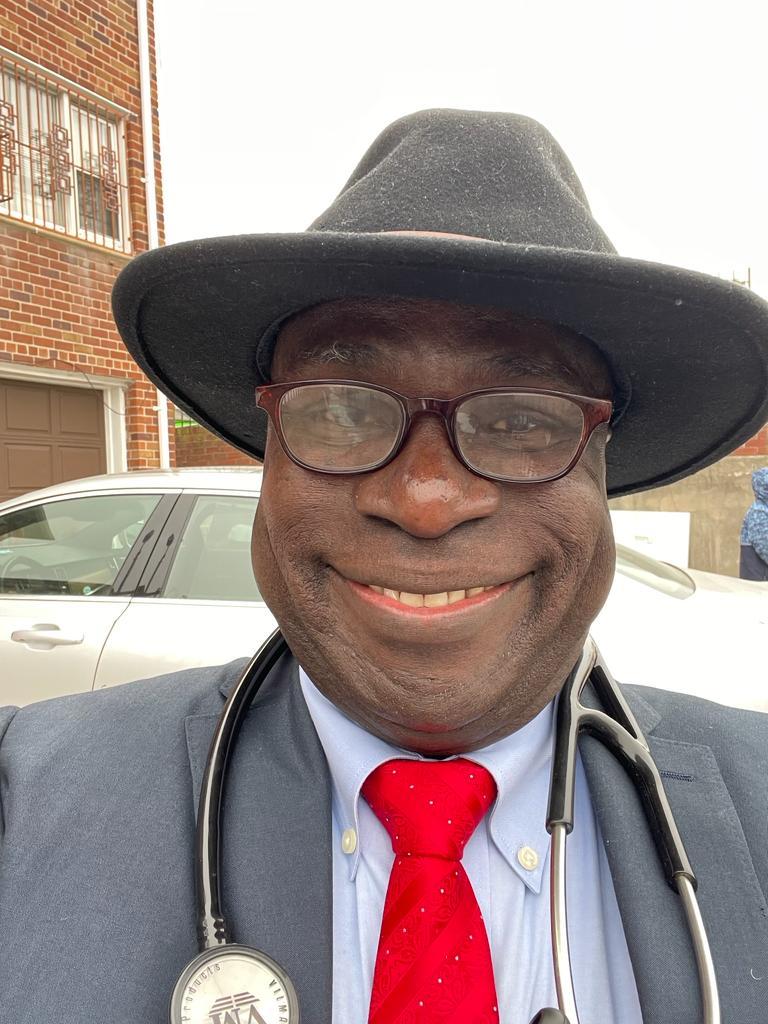
Emmanuel O. Fashakin, M.D., FMCS(Nig), FWACS, FRCS(Ed), FAAFP, Esq.
Attorney at Law & Medical Director,
Abbydek Family Medical Practice, P.C.
Web address:
http://www.abbydek.com
Cell phone: +1-347-217-6175
“Primum non nocere”

TIPS