Home Blog Page 754

Death of a Hero: Dermot Doran, Priest Who Rallied Aid for Biafran Airlift, Dies at 88

By Clay Risen

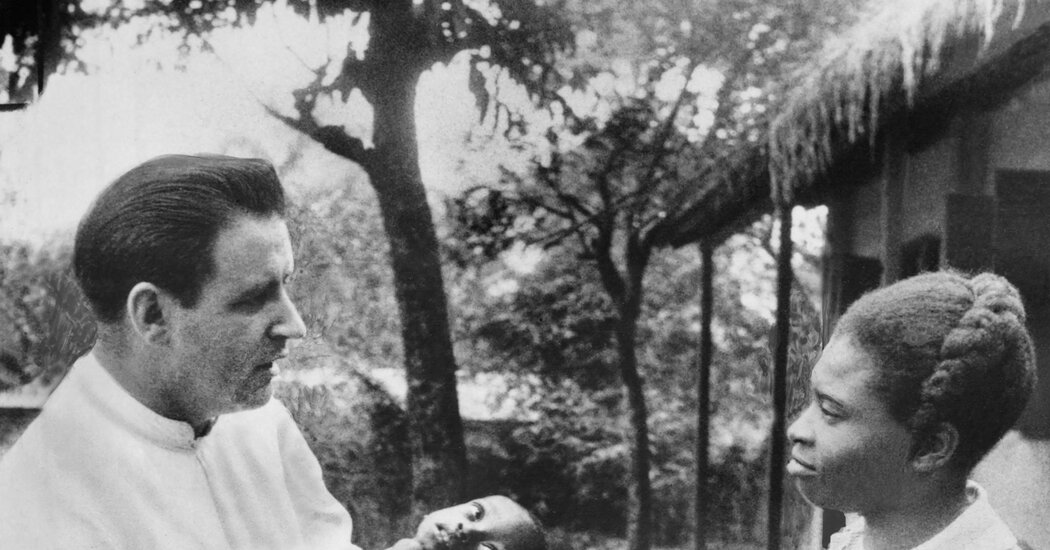
In 1968, Father Doran, who had been in Nigeria as an educator, became the linchpin of one of the largest civilian humanitarian efforts in history.

The cargo plane flew in low over southeastern Nigeria, its lights out, its radio off, its pilot navigating by the glow of refinery flares along the coast. The runway, somewhere below, was dark. The pilot dropped his wheels and nosed the plane downward, seemingly into the void.

On the ground, a team of boys suddenly ran out of the bush to light rows of kerosene lamps to guide the craft toward the tiny airstrip, just 75 feet wide and 1,200 feet long. Aboard were 26 tons of antibiotics, flour and salted fish, as well as a 34-year-old Irish priest named Dermot Doran.

It was December 1968, and Nigeria was in the midst of a civil war. After nearly a decade of pogroms against them, the Igbo people of the country’s southeastern states had seceded to form the independent republic of Biafra. The Nigerian Army almost immediately attacked, and it soon had a blockade around the region, leaving 14 million residents to starve.

Father Doran was one of 1,000 priests and nuns, mostly from Ireland, who had been working in the area when the fighting broke out. Overnight, they pivoted from their peacetime roles as educators — Father Doran had been a high school principal — to aid workers during one of the 20th century’s worst humanitarian crises.
Overall, the Biafran airlift brought 60,000 tons of aid to the region, at the time the largest mobilization of aid by civilians in history. Between 500,000 and two million noncombatants died because of the blockade — but an estimated one million more survived because of the airlift.

Father Doran was its linchpin. Sneaking in and out of Biafra, he located the first planes and hired the first pilots. He went to New York City to arrange the first aid shipments. He mapped out the logistics of moving thousands of tons of supplies from Europe and North America to airfields in Gabon and Sao Tome, an island south of Nigeria that was then under Portuguese rule.

He accompanied many of the flights from there into Biafra, coordinated supply distribution, caught up with locals and other priests, then left to tell the world what he had learned. He had a way with the news media, befriending, among others, Harry Reasoner of CBS and the BBC correspondent Frederick Forsyth, whose experience in Biafra helped inspire his conversion to writing political thrillers.

Father Doran testified before the United States Senate, leaving a lasting impression on Senator Edward M. Kennedy, who became a leading advocate for Biafra in Congress.
“He never did anything halfway,” Frank Carlin, a retired overseas director for Catholic Relief Services, said in a phone interview. “He was always programming and planning, then he went back and told the story.”

Father Doran died on May 19 in Dublin. He was 88. His niece Cathy Doran said the cause was myelodysplastic syndromes, a rare form of blood cancer.

His death, in a hospital, was not widely reported at the time.
Father Doran arrived in Nigeria in 1961, not long after being ordained as a member of the Holy Ghost Fathers, a Roman Catholic congregation also known as the Spiritans. The congregation had long had a strong presence in Nigeria, especially in the southeast, where the Igbo population is mostly Christian.

He had worked in developing countries before — he spent several years as a teacher in Trinidad — but he fell in love with Nigeria, and especially the Igbo culture, which, with its rich storytelling traditions and its history of intense suffering under English rule, seemed of a piece with the Irish experience.
“I was sent there, and they became my people,” he said in an interview for “Biafra: Forgotten Mission,” a 2018 documentary directed by Brendan Culleton and Irina Maldea.

The effects of the blockade were immediate and devastating, especially after Nigeria captured Biafra’s oil-rich coast in early 1968. Residents of Biafra got most of their protein from dried fish; without it, children quickly developed kwashiorkor, a protein deficiency that caused their bellies to swell. At the worst part of the crisis, in late 1968, some 10,000 people a day were dying, according to Red Cross estimates.

“It’s something you don’t expect to meet in your life,” Father Doran said in the documentary.

Nigeria was supported in the war by Britain, which had once ruled it as a colony, and the two countries tried to maintain a news blackout. But by the end of 1967 Father Doran had made several trips to Lisbon and New York, and he and others managed to smuggle journalists into the region to report on the unfolding crisis.
Biafra became an international rallying cry. Thousands took part in protest marches in London and Paris. In June 1969, a Columbia University student named Bruce Mayrock set himself on fire in front of the United Nations; he died the next day. In Britain, John Lennon returned his M.B.E. medal to Queen Elizabeth II, partly in protest over his country’s role in the blockade.
More aid organizations arrived. Roman Catholic, Protestant and Jewish groups, including Catholic Relief Services, gathered under an umbrella effort called Joint Church Aid, which collected supplies for transit through the airlift. Father Doran was its relief organizer. The pilots nicknamed it Jesus Christ Airlines.
“It’s a fantastic example of ecumenism,” Father Doran told United Press International in 1969. “We mightn’t be agreed on theology — but we are agreed on bread.”

The Biafran airlift is widely considered a watershed moment in international humanitarianism. It was the first time nonprofits and private citizens led the response to a crisis.

Though several countries quietly supported the airlift, including the United States and Israel, it received no official government approval. In New York, Ireland’s ambassador to the United Nations told Father Doran to stay out of Nigeria’s business.

And the world stood by while the Nigerian air force attacked the airlift, bombing the airfield and destroying several planes, killing 25 crew members.

In a debate with Father Dermot on the CBS program “The World of Religion,” the Nigerian ambassador to the United Nations, Edwin Ogebe Ogbu, claimed that the airlift was supporting the rebels and, by prolonging the war, driving up the death toll.

Father Doran said in response, “If you call innocent children and babies a few days old, and babies a week old or a month old who are dying of starvation — they have no milk, no food — if they are rebels, I don’t know what.”

Michael Dermot Doran was born on Sept. 22, 1934, in Athboy, a town 35 miles northwest of Dublin. His parents, Thomas and Mary Anne (Guinan) Doran, ran a pub; years later one of Dermot’s brothers, Eamonn, founded one of New York City’s most popular Irish bars. He died in 1997.

Along with his niece Cathy Doran, Father Doran is survived by his sister, Mary Mosely; three other nieces, Annemarie Wylie, Jenn Mosely and Rosalynd Mosely; and five nephews, Hans, Dermot, Eddie, Alan and Paul Doran.

Father Doran entered the Spiritan novitiate in 1952 and graduated with a degree in philosophy from University College Dublin in 1955. He spent three years as a prefect at St. Mary’s College in Port of Spain, Trinidad, before returning to Ireland to complete his religious studies. He was ordained in 1961.
The Biafran war ended in 1970, when Nigeria reconquered the breakaway region and expelled most of the European missionaries.

Father Doran was then assigned to work as a communications officer with Catholic Relief Services in New York, from which he was dispatched to disaster zones worldwide. In the early 1970s, when he was sent to Bangladesh and India, he became close with Mother Teresa, who invited him to deliver mass to her sisters in Calcutta (now Kolkata).

In 1975 he moved to Toronto, where he became director of Volunteer International Christian Service, another aid organization. He also served as the director of Brottier Refugee Services, a resettlement agency, before retiring in Ireland in 2008.

“Dermot was everywhere,” Mr. Carlin of Catholic Relief Services said. “He got more out of a day than anyone I knew.”

Clay Risen is an obituaries reporter for The Times. Previously, he was a senior editor on the Politics desk and a deputy op-ed editor on the Opinion desk. He is the author, most recently, of “American Rye: A Guide to the Nation’s Original Spirit.”

This article written by Clay Risen was originally published by New York Times on
July 19, 2023
.

The gradual death of the Local Government system

By Eric Teniola

On May 4 this year, the Edo Deputy Governor, Philip Shaibu (54) lambasted the 18 Local Government Chairmen in the state over their Internally Generated Revenue (IGR). At a meeting with the council leaders, Shaibu said it was disappointing that they generate only N3 million (combined) every month.

“Between now and the end of May, I will personally do a letter to the Governor (Godwin Obaseki) to sack you people. “Before sacking, we will get the EFCC to check all your books…and you’ll be fired. We cannot continue like this.“How can 18 local governments (generate) million in a month as revenue 18 local governments, N3 million!” Shaibu fumed.

I don’t know whether or not any of the Chairmen of the local government in Edo State has been prosecuted if we are to go by the threat of Comrade Shaibu. I think Comrade Shaibu is just being pharisaical or rather hypocritical. He knows why the local governments are not performing. He cannot claim ignorance.

Being the son of late Pastor Francis Osikpomobo Shaibu, Comrade Shaibu grew up in a family where issues are discussed at breakfast, devoid of emotions and sentiments. And as a former President of the National Association of Nigerians Students between 2000 and 2001, he is well enlightened on the provisions of the Constitution.

He even represented Etsako in the Edo State House of Assembly in 2010 and in the House of Representatives later. He knows that governors have abused the provisions of the Constitution as regards the Local Government. That is not to say that I am blaming Comrade Shaibu, an ex-Senior officer of the Nigerian Prison Service for the defect in the constitution.

The third tier of government is dying in Nigeria. That is not the way it is supposed to be. And what is happening in Edo state, is happening in the remaining 35 states in the country.
Each of us who grew up in the fifties and the sixties saw the smooth running of the local government system; it was perfect at that time.

According to Mr. U.D. Anyanwu in a book titled “FOUNDATIONS OF NIGERIAN FEDERALISM—1900-1960, edited by J. Isawa Elaigwu and G.N. Uzoigwe, Local government administration in colonial Nigeria contributed to the evolution of federalism in Nigeria largely because of two sets of actors: the internal and the external. The internal had to do with the plurality of cultures, people, and even geography which made it necessary for the colonial authorities to adopt the indirect rule system which to some degree preserved the respective identities of Nigerian peoples. That is, it was the local government system which was used to make each Nigerian group feel that despite colonial rule as well as the evolving colonial state of Nigeria, their respective aspirations and values were to be preserved.

This internal aspect affected not only the British political officers and officials who were in charge of the component units that made Nigeria but also the emerging nationalist and political leaders whose activities contributed to the successful decolonization of Nigeria. In fact, throughout the colonial period, the dominant opinion among the leaders and people was that the local government system should keep to the principle of separate development espoused by the colonial authorities. By the time of independence, this internal consideration had also involved the aspect of the value the local government system had to serve in the power struggle among the regional political parties.

The external dimension had first to do with the way Nigeria was acquired separately (in parts), phases, and instalmentally by different units of the colonizing power. Thus, though the invaders and colonizers belonged to the same country, Britain, yet they initially settled in different geographical and cultural areas as independent rulers. Some vested interest developed in the process and so even when amalgamation came up, there were significant variations in their views on how local government and indeed the entire colonial administration should be organized.

Largely, because of this, the respective colonial administrative regimes of the British in Nigeria found it plausible to insist on a local government system whose cardinal common feature was the achievement of separate development for a colonial state of divergent cultures. Since these positions espoused by both the internal and external agents were also translated to arrangements at the higher tiers of government (namely the central and the regional), the result was that local government administration became essentially the concern of regional governments. The other related result was that the regional governments gave their respective local governments the character considered appropriate to the region. This was how local government administration played crucial roles in the forging of federalism in Nigeria.

A number of conclusions are derivable from all these. Local government administration in colonial Nigeria in theory and practice was designed to promote federalism. In the process, it also became a promoter of regional thinking often at the expense of the country. In fact, it was not organized to promote the sense or thought of one country among the component citizenry. Therefore as at independence in 1960, local government administration was a sort of mixed blessing for Nigerian federalism. At one level it enabled the policy of separate development to prosper and thus fostered federalist impulses.

At another, it became the captive of regional governments and forces, championing essentially regional aspirations and interest with little or no care for federal ones. It can also be seen that the “accidental foundations of federalism and its corollary, local government (native administration) in Nigeria under Lugard had become consciously pursued foundation by the end of colonial rule, leaving the country with the dilemma posed by the legacy of this mixed blessing since then. The unwavered dimensions of this dilemma include intergovernmental relations, the status of local government, and its role in the federal set-up.

Of all the tragedies that have struck governance in Nigeria, the gradual death of the local government system is the worst. Whether we like it or not, the local government system is dying. Today, if I may ask, which of the local governments is functioning? The central government must save the local government from total collapse. And the best way is to reform the system. I quite agree with the Clement Ebri’s committee report that the preponderant position of all the Local Government Councils in the Federation is that Local Governments should merge as creations of the Constitution in order to give them full-fledged autonomy.

The provision in Section 7 (1) of the Constitution which guarantees a system of democratically elected councils is seen as achieving that objective. But a continuation of the same subsection (1) went further to empower the State Houses of Assembly to make laws to ensure their existence by providing for their establishment, structure, composition, finance, and functions of such councils. This is seen as detracting from the desired constitutionally guaranteed autonomy. By the existing provision, it is argued; Local Governments have been reduced to mere administrative appendages of State Governments with unpleasant consequences as current experience has shown even as they are funded from the Federation Account.

There certainly are inherent contradictions in the demand for the restructuring of Nigeria into a true Federation as the accepted political structure. In one view, there is an overwhelming demand for the adoption of true federalism with all its trappings, namely and essentially—the recognition of the integrity of the federating states within the union with local government remaining an internal affair of the states; the centre (Federal Government) derives its donated powers and authority from the people constituted in the States; accordingly the centre cannot takeover or interfere in the internal management of the affairs of the federating states such as dealing directly with local governments.

By implication, therefore, the federating states in an undiluted Federal System reserve the power to create or establish a system of Local Government which takes account of their internal diversity or recognizes the plural character of the nation. In that case, it was strongly canvassed that local governments should be relatively autonomous as provided in the Constitution but subject to direct funding and minimal supervision by the State Governments in specific matters.
Viewed in this context, the demand for a Local Government System with a Constitutional leeway to deal directly with the Federal Government invariably amounts to a violation of the Constitutional sovereignty of states and in the extreme situation renders the states completely irrelevant as federating units.

There is need to be cautious in considering the issues canvassed for an acceptable Local Government system to take account of the development needs of the vast majority of Nigerians to whom Local Government is closest. In dealing with this matter, it has explored a reconciliation or resolution of the inherent contradictions to ensure that the advancement of one institutional interest today does not, in future, render completely worthless the essence of the present Constitution Review Exercise which is the search for a restructured Nigerian Federation founded on internal cohesion.

There is need to maintain the peculiarities of the Nigerian situation largely require a high degree of certainty in the nature of institutions, which the Constitution establishes, and the regulatory framework for such institutions. To do otherwise is to leave too much room for speculation, manipulation, and possible chaos. I believe that the safeguards which have been built into the system will guarantee that the development of the States and Local Government Areas will remain a joint undertaking by the two tiers.

It should be considered the need to establish a system of Local Governments which recognizes the internal diversity of the nation within a true federal structure in which only the states are the federating units. I believe also that the safeguards which have been built into the system will guarantee that the development of the states and local government areas will remain a joint undertaking by the two tiers with adequate autonomy reasonably satisfactory to each level.

Having thoroughly analysed the situation, I am convinced that only states can be, the federating units in our circumstances. In reality, what Nigerians are asking for is not a federation of Local Governments with the federation of States, but a true federation in which states are the federating entities. There are some ambiguities in the current 1999 Constitution which must be amended so as to save the local government from total collapse.

Section 7(1) states that ”The system of local government by democratically elected local government councils is under this constitution guaranteed; and accordingly, the government of every state shall subject to section 8 of this constitution, ensure their existence under a Law which provides for the establishment, structure, composition, finance, and function of such councils”.

Yet, section 7(6a) submits, “the National Assembly shall make provisions for statutory allocation of public revenue to Local Government councils in the federation. But the confusion is extended further by section 7(6b) which states that” the House of Assembly of a state shall make provisions for statutory allocation of public revenue to local government councils within the state”. This confusion also resurfaced in section 162(6) where it established the State Joint Local Government Account for the purpose of payment of “all allocations to the Local Government councils of the State from the Federal account and from the Government of the State”.

In Section 162(7) it directs State Government to pay Local Government councils its total revenue on the terms prescribed by the National Assembly. At the same time, it gives the same power and functions to the State House of Assembly in section 162(8). Further, section 8 (subsections 5 and 6) saddles the National Assembly with some functions before the creation of a local government can become legal. The implication of all the identified contradictions and ambiguities is that it is very difficult to locate constitutionally the locus of power on local government creation. That is the tragic situation we are now. The need to reform the local government has been on the table for some time.

Since 1976, the central government has been most concerned about the fate of local government in Nigeria. On August 19, 1976, General Olusegun Obasanjo GCFR as the military ruler by then, set up a 10-man panel under the leadership of the late Sultan of Sokoto, Alhaji Ibrahim Dasuki (31 December 1923- 14 November 2016), to look into the affairs of the local government with the sole aim of improving the local government system in the country.

On May 7, 1984, Major General Muhammadu Buhari GCFR set up another committee on local government, headed by the same Alhaji Ibrahim Dasuki. All his life, Alhaji Dasuki has been involved in the local government system.

Alhaji Ibrahim Dasuki had his education at the Dogondaji Elementary School, Sokoto Middle School, Kaduna College, University of Oxford, England; member, Sokoto Native Authority, 1943-1945, cashier and clerk, Gaskiya Corporation, 1945-1953, administrative assistant , Northern Nigerian Government, 1953-1956, assistant administrative officer, Pankshin, Plateau Province, 1956-1957, deputy secretary, Northern Nigeria Executive Council, 1957-1958, diplomatic officer, Nigerian Embassy, Bonn, 1958-1960, head of Chancery and first secretary, Nigerian Embassy, Khartoum, 1960-1961, justice of the peace, Plateau Province, 1962, permanent secretary, Northern Nigerian Ministry of ;Local Government, 1962-1965, Permanent Secretary, Northern Nigerian Ministry of Trade and Industry, 1965-1968, chairman, Northern Nigerian Marketing Board, 1966-1969, chairman, Nigeria Railway Corporation, 1969-1977, appointed director, United Arewa Stores, 1969, also director, Gusau Oil Mills Ltd. 1969, secretary general , Jama’atau Nasril Islam, 1971, director, Zamfara Textiles Industries, 1971 and chairman, North-West Trade Development Company, 1972 chairman (also co-founder), Bank of Credit and Commerce International (BCCI), 1979-1989; chairman, Northern Nigerian Society for the Blind, member, Board of Governors, Institute of Administration, Ahmadu Bello University; traditional title: Baraden Sokoto, also Sultan of Sokoto, November 1988 enthroned as the 18th Sultan of Sokoto.


The report was submitted in September 1984 but the white paper was not issued until General Buhari was overthrown in 1985. On May 11, 1986, General Ibrahim Babangida(81) GCFR approved the local government reforms as recommended by the Ibrahim Dasuki panel on local government councils. Those recommendations were far-reaching I must confess. That was the situation until Justice Nikki Tobi-led Constitution Debate Co-ordinating Committee’s recommendations on the ambiguity on local governments formed part of Decree No 24 of May 5, 1999, which was promulgated as the 1999 constitution of the Federal Republic of Nigeria by General Abdusalam Abubakar (81) GCFR.

President Olusegun Obasanjo GCFR on June 23, 2003, set up another panel to review the Local Government system. The committee was headed by the then Etsu Nupe, Alhaji Umaru Sanda Ndayako (1937-2003), a competent administrator and chairman of the Niger state council of traditional rulers and former member of the Constituent Assembly. Other members of the committee were Alhaji Liman Chiroma, Barrister John Ochoga, Professor Godwin Odenigwe, Mr. Augustine Udoh-Ekong, Professor Akin Mabogunje, Senator Tunde Ogbeha, Hon. Austin Okpara, Mrs. Abieyuwa Garba, Mr. Venatius Ikem and Alhaji I.B. Sali as the Secretary.

All these committees including the Ahmed Talib Committee, the Oyeyipo Committee, and the Dasuki Committee reports, advocated for one thing—direct funding for the local governments. To me, the 1999 constitution has been unfair to the local governments.

It is very urgent that President Bola Ahmed Tinubu GCFR act in order to save the local government system from total collapse. Expectedly, he is to convene his maiden meeting of the National Council of States where he will discuss urgent national issues. The local government system should be part of the issues to be discussed at the meeting.
In the interim, Section 7 (1) and (2) of the Constitution should be retained so that State Houses of Assembly have powers to legislate on the creation and other necessary powers of the Local Government Councils in the spirit of true federalism.

Section 7 of the Constitution should be expanded to take care of the provisions made in this review to ensure the existence and proper functioning of Local Government Councils.
In line with the call for the security of tenure for elected Local Government functionaries, a new provision for qualifications and removal of the Chairman, Vice Chairman, and Councillors is hereby recommended as a separate tier of Government within the States.

In order to strike a balance between the demand by the Local Governments for financial autonomy through direct funding from the Federation Account and the need to ensure financial probity on the part of both the Local Governments and the State Governments, it is recommended that Section 162 (5) be amended so that all disbursements to the Local Government go to the State Local Government Joint Account as provided in Section 162(6).
The gradual death of the Local Government System in Nigeria must be halted.


Emoji  👍Counts as a Contract Agreement -Canadian Court Rules

Be careful before you casually dash off another thumbs-up emoji: A Canadian court has found that the ubiquitous symbol can affirm that a person is officially entering into a contract.

The ruling pointed to what a judge called the “new reality in Canadian society” that courts would have to confront as more people express themselves with hearts, smiley faces and fire emojis — even in serious business dealings or personal disputes.

The case questioned whether a farmer in Saskatchewan had agreed to sell 87 metric tons of flax to a grain buyer in 2021. The buyer had signed the contract and texted a photo of it to the farmer, who had responded by texting back a “thumbs-up” emoji.

The farmer, Chris Achter, contended that the “thumbs-up emoji simply confirmed that I received the flax contract” and that it was not confirmation that he had agreed to the terms of the deal, according to the ruling. He said he had understood the text to mean that the “complete contract would follow by fax or email for me to review and sign.”

The grain buyer, Kent Mickleborough, pointed out that when he had texted the photo of the contract to Mr. Achter’s cellphone, he had written, “Please confirm flax contract.” So when Mr. Achter replied with a thumbs-up emoji, Mr. Mickleborough said he had understood that Mr. Achter “was agreeing to the contract” and that it had been “his way” of signaling that agreement.

The judge noted that Mr. Achter and Mr. Mickleborough had had a longstanding business relationship and that, in the past, when Mr. Mr. Mickleborough had texted Mr. Achter contracts for durum wheat, Mr. Achter had responded by succinctly texting “looks good,” “ok” or “yup.”

Both parties clearly understood these terse responses were meant to be confirmation of the contract and “not a mere acknowledgment of the receipt of the contract” by Mr. Achter, wrote Justice T.J. Keene of the Court of King’s Bench for Saskatchewan. And each time, Mr. Achter had delivered the grain as contracted and had been paid.

As such, Justice Keene ruled last month that there had been a valid contract between the parties and that Mr. Achter had breached it by failing to deliver the flax. The judge ordered Mr. Achter to pay damages of 82,200 Canadian dollars, or about $61,000.

“This court readily acknowledges that a 👍 emoji is a nontraditional means to ‘sign’ a document but nevertheless under these circumstances this was a valid way to convey the two purposes of a ‘signature’ — to identify the signator” as Mr. Achter because he was texting from his cellphone number and “to convey Achter’s acceptance of the flax contract,” Justice Keene wrote.

In coming to his decision, Justice Keene cited the dictionary.com definition of the thumbs-up emoji: “used to express assent, approval or encouragement in digital communications, especially in Western cultures.”

“I am not sure how authoritative that is but this seems to comport with my understanding from my everyday use — even as a late comer to the world of technology,” Justice Keene wrote.

In an interview on Thursday, Mr. Achter said he “obviously” disagreed with the decision and declined to comment further. His lawyer, Jean-Pierre Jordaan, did not immediately respond to an emailed request for comment.

According to the ruling, Mr. Jordaan had warned that allowing a thumbs-up emoji to signify agreement to a contract would “open up the flood gates” to all sorts of cases asking courts to define the meaning of other emojis, such as a handshake or a fist.

Josh Morrison, a partner at the law firm that represented Mr. Mickleborough, declined to comment on the decision, but told Canadian Lawyer magazine that it was a “really interesting case — a classic law school question.”

Laura E. Little, a professor at Temple University Beasley School of Law, called the decision “a remarkable sign of the new world of communication when an emoji can work to snap the trap of creating a contract.”

Julian Nyarko, an associate professor at Stanford Law School, said the legal test for agreement to a contract centers on how a reasonable person would interpret the signs that both parties gave. In some cases, a verbal agreement is sufficient, he said.

“For most intents and purposes, a reasonable person, if they see a thumbs-up emoji, would think that the person who is giving the thumbs-up wants the contract,” Professor Nyarko said. “It fits quite neatly into the legal doctrine that the courts have established.”

Even so, the precise meanings of emojis will remain an open question in the United States and Canada, depending on the facts of each case, said Eric Goldman, a law professor and co-director of the High Tech Law Institute at Santa Clara University School of Law.

Professor Goldman, who has tallied 45 court opinions in the United States that have referenced the thumbs-up emoji, noted that some young people use the emoji sarcastically or disingenuously. Others use it merely to acknowledge receipt of a message like a verbal “uh-huh.” In some Middle Eastern countries, he said, the gesture is offensive.

“This case won’t definitively resolve what a thumbs-up emoji means,” Professor Goldman said, “but it does remind people that using the thumbs-up emoji can have serious legal consequences.”

Credits: Michael Levenson, New York Times

I always want to make a difference in any way I can – Justice Dije Aboki, First Female CJ of Kano

By Lillian Okenwa

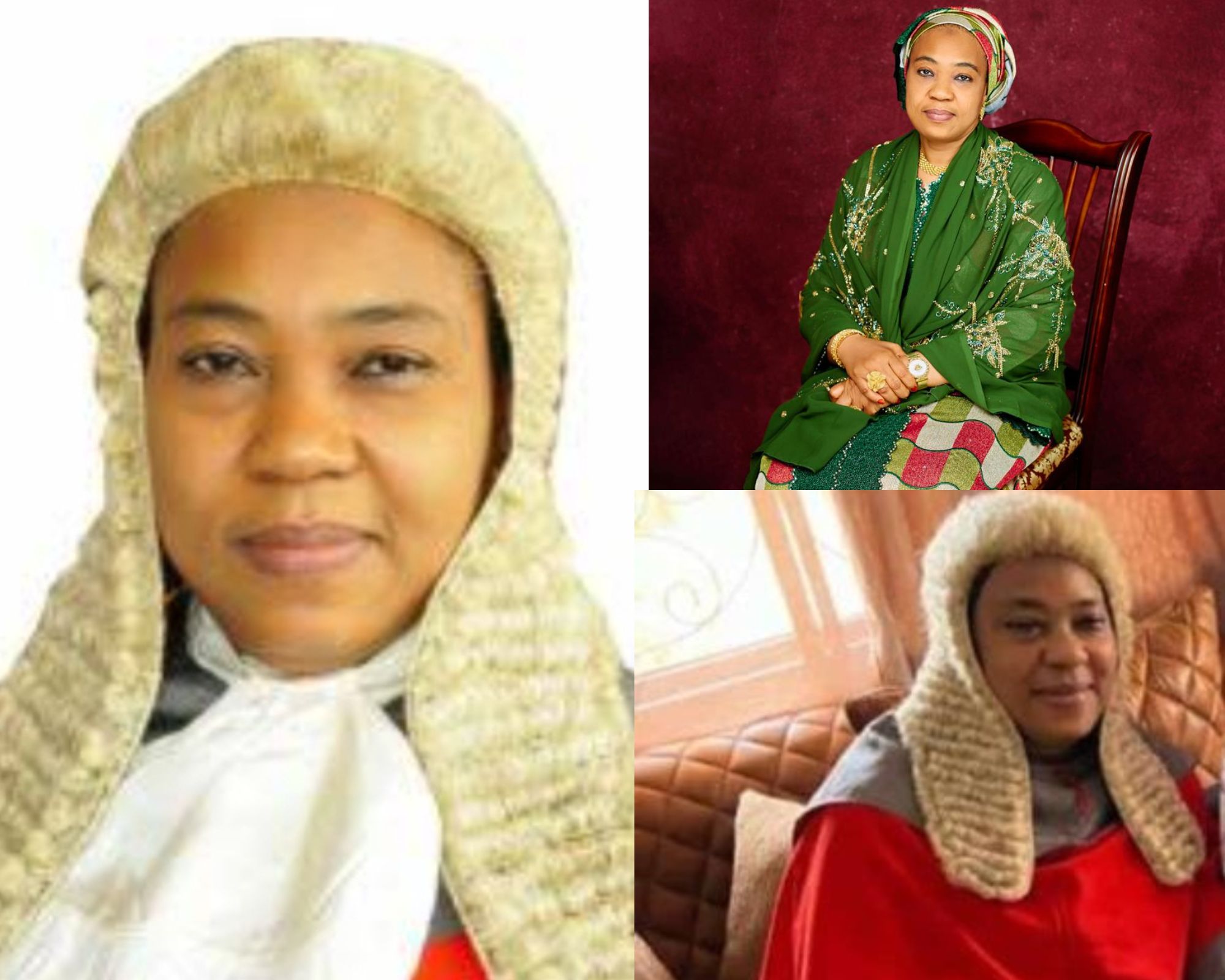
Forty-four years after the most senior judge in Kano State Judiciary was skipped for the position of Chief Judge on the basis of her sex, Hon. Justice Dije Abdu Aboki broke the jinx.

In 1979 when Hon. Justice Dahiru Musdapher who later became a Chief Justice of Nigeria, was appointed Chief Judge of Kano State, Hon. Aloma Mariam Mukhtar was the most senior judge in the state. It turned out however that the state was not yet ready for a female Chief Judge.

And even when Musdapher was elevated to the Court of Appeal in 1985, Aloma Mariam Mukhtar again had to serve under another male junior until her appointment to the Court of Appeal in 1987. She would eventually become the first female Chief Justice of Nigeria.

Then in 2015, Hon. Justice Patricia Mahmoud served briefly as Acting Chief Judge of the state from January to July of the same year. She later went up to the Court of Appeal.

But did Justice Dije Abdu Aboki ever imagine she would get to the position where she is today? Not exactly maybe. But as a young girl, she envisioned herself making an impressive impact on society. In a chat with Law & Society Magazine, Her Lordship shared some thoughts.

“As a child while in secondary school I always believed that I will be in a position where I can impact positively on society. My real reason for pursuing my education is to be able to make a difference in any way I can. I studied law because I’ve had a passion for justice from my secondary school days. I always feel that justice and fairness should prevail in all spheres of life. Again, there was a TV drama in the mid-70s that had to do with court which caught my interest.”

Born 10th July, 1964 in Kano, Dije Abdu Aboki is the mother of three lawyers and wife of Hon. Justice Abdu Aboki a retired Justice of the Supreme Court of Nigeria.

“Three of my children are lawyers. The first one works with Federal Ministry of Justice Abuja but now on leave of absence as her husband is a defense attaché in Angola. The male is a senior Magistrate in kano while the third one a female is a Magistrate in FCT, Abuja,” she told Law & Society Magazine.

Justice Dije Aboki
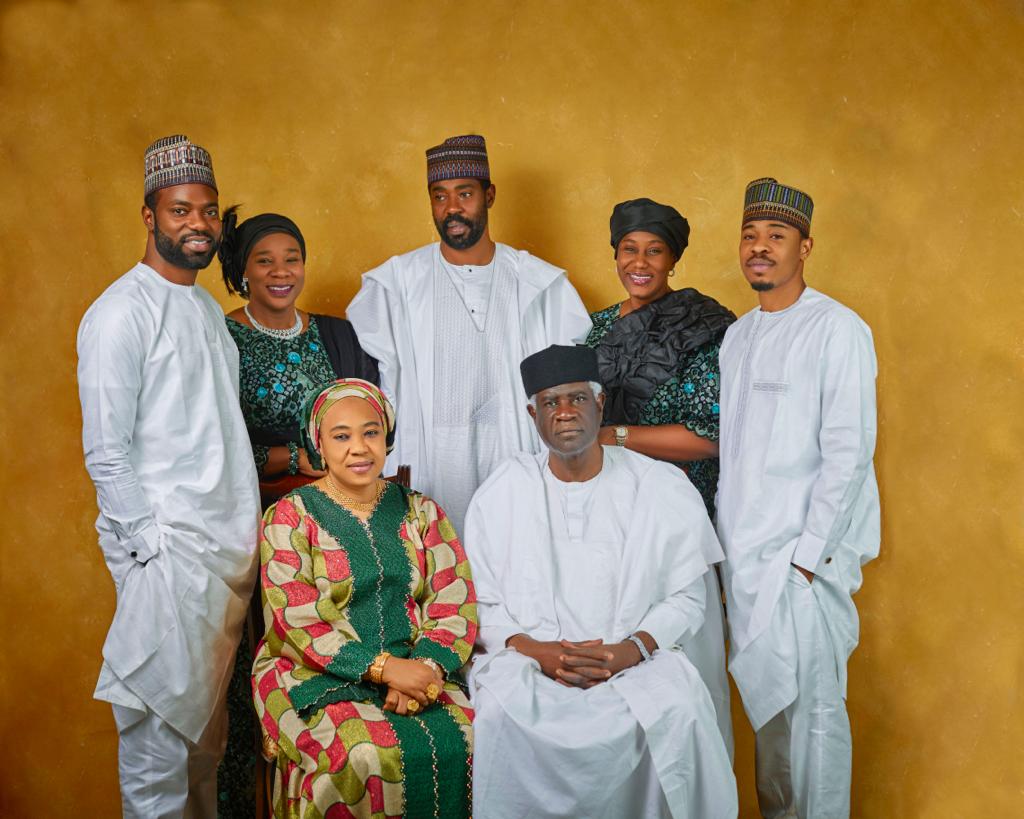
Hon. Justice Dije Aboki and husband, Hon. Justice Abdu Aboki, JSC (rtd.) flanked by their children

Her Lordship attended Tudun Wada Primary School, Kano between 1969 and 1973, Government Girls College Minna, Niger State, 1973 to 1978, School of Preliminary Studies, Airport Road, Kano, 1978 to 1980 (IJMB), Ahmadu Bello University (ABU) Zaria, 1980 to 1983 (LLB. Hons), Nigerian Law School, Lagos, 1983 to 1984 (BL), Institute of Advanced Legal Studies, University of Lagos, 1990 (Certificate In Advanced Practice And Procedure) and Centre For Effective Dispute Resolution (C.E.D.R) where she obtained a certificate in Medication and Conflict Resolution.

After her NYSC at Bayero University Kano (1984 – 1985), she was appointed as a State Counsel at the Ministry of Justice Kano. Justice Aboki was there from 1985 to 1986. Thereafter she became a Magistrate and then a Senior Magistrate; all between 1986 and 1992.

In 1992 Dije Aboki became a Chief Magistrate in Kano. She held that position untill 2006 when she was appointed a High Court Judge.

The CJ has also served in a number of committees including — Member, Local Government Election Petition Tribunal (1991). She attended the U.S International Visitors Program (IVP) on Judicial Reform and Rule of Law in 2004 and served as a Member of Edo State National Assembly Tribunal 2011.

Chief Judge Aboki is a member of several associations including:

 – Magistrate Association of Nigeria

 – Nigerian Bar Association

– International Bar Association

–  International Federation of Women Lawyers (FIDA) Chairperson, Kano Chapter 1990 – 1992

  • International Treasurer, International federation of women lawyers. (FIDA). 2003 – 2006
  • International Association of Women Judges (IAWJ) Assistant Secretary, Nigerian Chapter

On 6 July 2023, the kano State House of Assembly confirmed her appointment as the first female Chief Judge of the state. The appointment was approved following a letter sent to the House of Assembly by the State Governor Abba Yusuf.

Prior to her confirmation as the substantive Chief Judge, Aboki was appointed in March this year as Acting Chief Judge by the immediate past governor, Alhaji Abdullahi Ganduje.

London court orders seizure of $130 million from Nigerian ex-governor Ibori

  • Ibori vows to appeal order

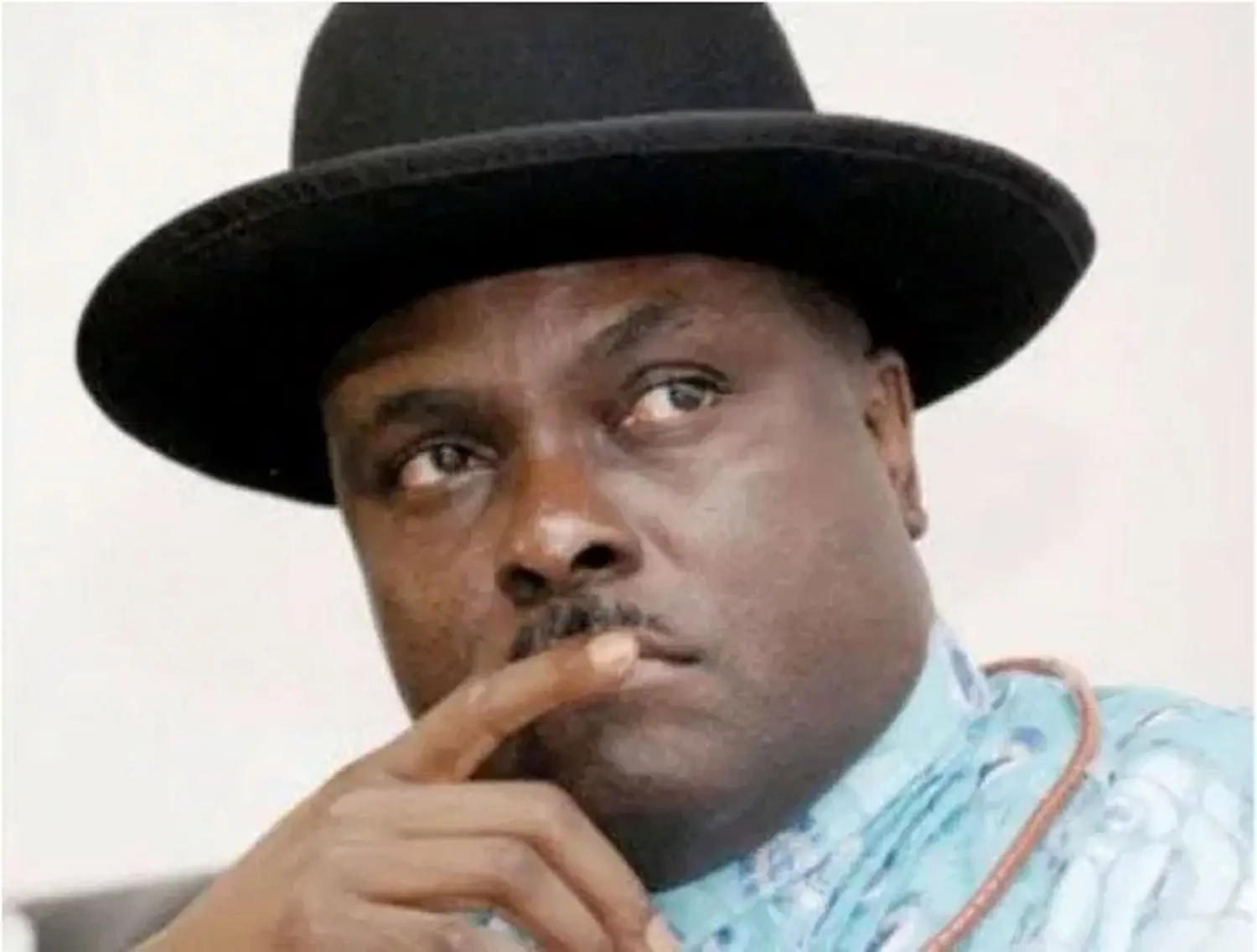
The Southwark Crown Court in London on Friday made an order for the confiscation of 101.5 million pounds ($130 million) from Chief James Onanefe Ibori, a former Nigerian state governor.

In February 2012  the former governor of Delta state pleaded guilty to 10 offences relating to conspiracy to launder funds from the state, substantive counts of money laundering and one count of obtaining money transfer by deception and fraud.

The sum sum in question is about N105,300,000,000 (one hundred and five billion, three hundred million naira).

He was eventually sentenced to 13 years in prison but released on December 21, 2016, upon a court order.

Judge David Tomlinson of Southwark Crown Court said Ibori should pay the sum immediately or face an eight-year jail sentence.

Ibori is in Nigeria and has said he would appeal against the confiscation order, one of the biggest issued against an individual in recent British legal history.

Chief Ibori in a post on his Facebook wall said: “The Judge in this case appears to have cast aside any pretence of impartiality and has made an order which is both wholly unrealistic and unrealisable.”

Judge Tomlinson formally declared that Ibori had benefited from criminal conduct in the sum of 101.5 million pounds.

“I make a confiscation order in that sum because Mr Ibori has not satisfied me nor really has he tried to satisfy me that he is incapable of paying the full amount,” the judge said.

“There is no reason to allow time for the sum to be paid. I set a term of eight years’ imprisonment in default of payment.”

Ibori was governor of oil-producing Delta State from 1999 to 2007 and was extradited from Dubai to Britain in 2011. He pleaded guilty in 2012 to 10 counts of fraud and money-laundering and received a 13-year jail sentence of which he served half, as is standard.

The case was hailed as a landmark in the fight against corruption in Britain, a global money-laundering hub, and in Nigeria, where self-enrichment by the ruling elite has been one of the main factors holding back development for decades.

Ibori’s Reaction on Friday to London court’s confiscation order as appears on his Facebook wall. 👇🏾👇🏾👇🏾

Albert Einstein is quoted as saying that the “definition of madness is doing the same thing over and over again and expecting a different result”.

If that is true then I must be going mad because in over a decade since the British Courts have been persecuting myself and those close to me – I kept believing that justice and fairness would eventually triumph.

In hearing after hearing through the years, despite some of the most logic defying rulings against me- I still believed. Despite clear evidence of police corruption against the main officer in my case (evidence so strong that it caused the lead prosecutor to resign from my case) I still believed. Despite a clear victory in my 2013 Confiscation hearing which left the Judge unable to make an order against me, only to have him rule that the prosecution should start the trial afresh some years later – I still believed.

However, today’s ruling from Judge Tomlinson is difficult to comprehend and even harder to accept. I have to move past the fact that the British Courts found themselves competent to sit in Judgment over contracts awarded in Delta State for contracts that were legitimately awarded and completed. I have come to accept my fate despite the inability of the British prosecutors to show any evidence whatsoever of monies defrauded or indeed missing from Delta State.

Since 2005 the British Prosecutors have investigated my assets worldwide, they have had a restraint order in place on most of those assets and they are well aware that the total monetary value of those assets is nowhere close to the sums that were the subject of today’s Order. Notwithstanding the fact that many of the assets are not and have never been owned by me – it seems that if you are my friend and you allowed me to spend some holiday time in your house, then by this order I now own your home and must ask you to sell it to satisfy the Order.

The Order made today was to be paid immediately, this was made in the full knowledge that it could take many months to actually realise the sale of many of these assets. There is an 8year default sentence, which means that if I do not co-operate and pay nothing at all, then the prosecution can apply for the imposition of the default sentence. However, as the prosecution already has a Restraint Order over the assets – the situation of my not co-operating or paying will not arise.

However, an issue arises if my Restrained Assets are sold, and the total realised from the sale does not equal the amount in the Order, then the Prosecution can still apply for part of the default sentence to be applied, but they could only ask for a sliding scale reduction of the 8 years default sentence based on the amounts

that remain outstanding. If such an application were to be made it would be vigorously contested. In the normal course of events any talk of a default sentence would normally be stayed until any outstanding Appeal has been concluded.

The Judge in this case has appears to have cast aside any pretence of impartiality and has made an Order which is both wholly unrealistic and unrealisable. He has completely disregarded any arguments, evidence or expert witnesses in my favour. It was apparent during these last 2 days that he has forgotten many of the important elements of the case which is unsurprising as it almost 2 years since the case concluded. It has taken him 2 years to write this Judgment and in the interim he has presided over hundreds of cases, but I refuse to make excuses for him.

At this point in time words fail me and so the question for me as I take my case to the Court of Appeal, is, if I continue to believe that I may finally get some Justice is this the definition of madness? I know one thing for sure, that if I do not go to the Court of Appeal to contest this outrageous Order then my people will definitely say that I am a madman!

($1 = 0.7788 pounds)

Credits: Swissinfo.ch, Reporting by Estelle Shirbon; editing by Sarah Young, additional reports by Lillian Okenwa

An unforgettable visit

By Nkechi Asogwa

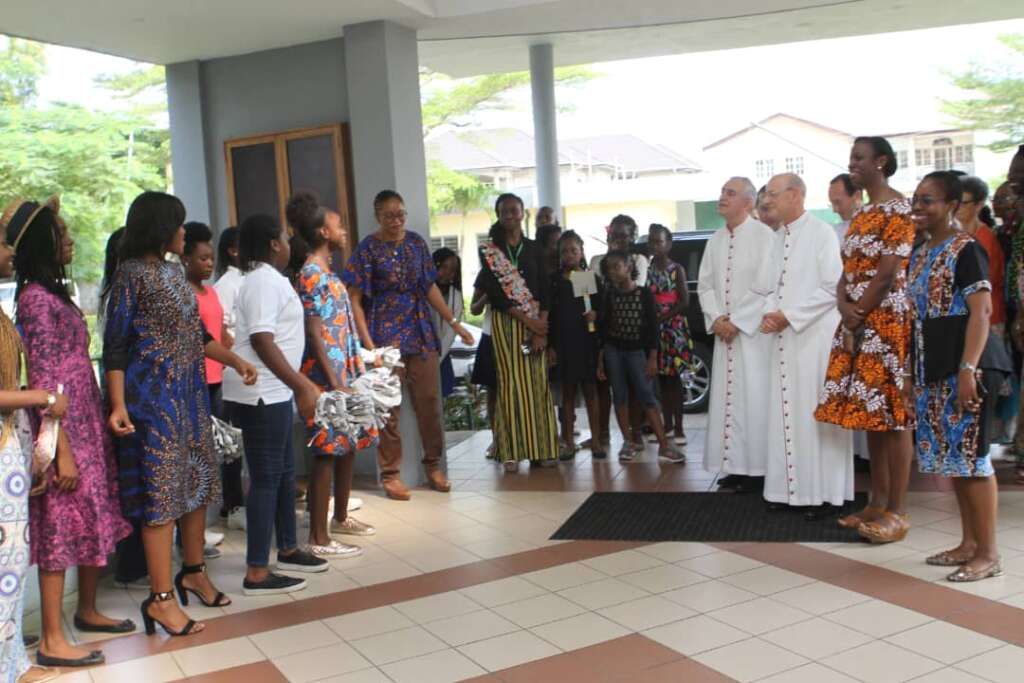
How time flies! I can’t believe that five years have already passed since the Prelate of Opus Dei, Monsignor Fernando Ocariz, visited Nigeria on Thursday, July 19th, 2018. I can vividly remember that fateful day when Father Monsignor Ocariz arrived in Nigeria in the evening. Some of us were so excited to go to the airport and welcome him affectionately. The father was coming to Nigeria for the first time to be with his Nigerian sons and daughters. The excitement of spending an entire week with him in Lagos and Enugu was great. For many of us, it would be the first time we would be with him.

Some families were on hand at the airport to welcome him. From the airport, he was driven to an Opus Dei residence in Victoria Island where he would be lodging. From the following day, Friday, his goal was to meet and greet as many people as possible, both individuals and families. In the first meetings, he had with separate groups of women and then with men on July 20th, he was able to hear many lively stories. These initial meetings helped him rest and prepare for the many activities of the intense and historical week.

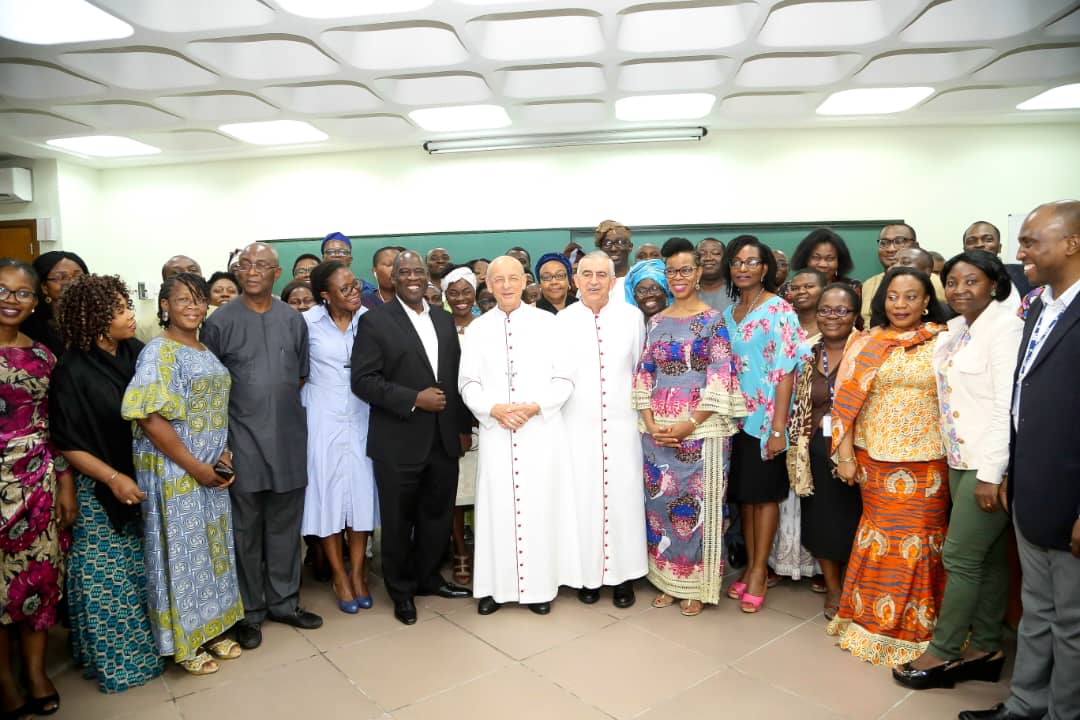
A group of ladies who attended the father’s get-together in Lagos

Throughout his stay in Nigeria, the father reiterated the message at the heart of the spirit of Opus Dei, which is to turn ordinary realities into a place of encounter with God and service to others. It is the aspiration of mature people, professionally competent and sensitive to others, seeking to make the world a more just and fraternal place. “Passionately loving the world” means knowing it, caring for it, and serving it.

The founder of Opus Dei, St. Josemaría Escrivá, summarized the approach to social needs in a letter published in the 1950s: “Christians cannot be individualists who forget about the needs of others. Nor can Christians live selfishly and turn their backs on the world; they are essentially social, responsible members of Christ’s Mystical Body.”

Monsignor Ocariz further stated, “We know that it is Jesus who bears the burden of human pain. The wounds on his side, on his hands, and on his feet are reminders of the wounds of the world. And Jesus has told us: ‘Whatever you did for one of these, you did for me.'”

“The path of identification with Christ transforms the human heart and opens it to charity. Union with the Lord, in the sacraments and in prayer, leads us to discover our neighbour and his needs and to pay less attention to ourselves. Charity changes our gaze. The charity of Christ is not merely a benevolent sentiment for our neighbour; it is not limited to a penchant for philanthropy. Poured out in our souls by God, charity transforms from within our minds and will. It provides the supernatural foundation for friendship and the joy of doing what is right. Identification with Jesus opens us to others’ needs. At the same time, contact with those in need leads us to Jesus. For this reason, St. Josemaría wrote: “A friend of ours used to say: ‘The poor are my best spiritual book and the main motive of my prayers. It pains me to see them, and in each one of them, Christ. And because it hurts, I realize I love him and love them.’” ,

Jesus had a predilection for the poor and suffering, but he also wanted to suffer need and to be a victim himself. In the suffering, we glimpse Jesus who speaks to us, as Pope Francis reminded us: “The poor, always and everywhere, evangelize us because they enable us to discover in new ways the true face of the Father.” From the time of the early Church, it has been understood that the Gospel message is based on concern for the poor and that it is a recognizable sign of Christian identity and an element in its credibility, he said.

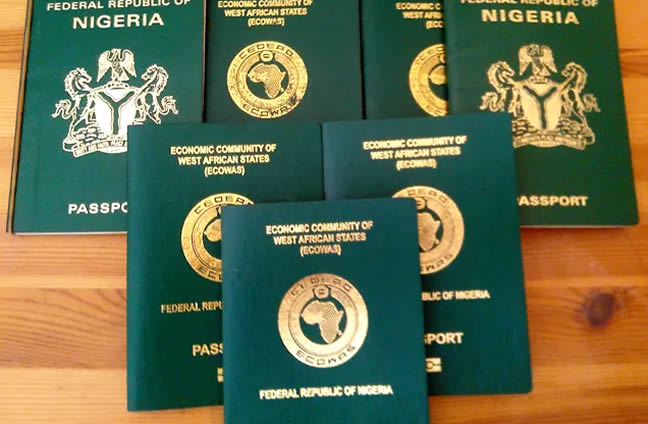
Henley Index 2023: Nigerian passport becomes fifth-worst in Africa

The Nigerian passport has remained one of the least world’s most powerful passports, ranking fifth-worst in Africa, a new report by the Henley Passport Index shows.

This implies that Nigeria, which boasts as Africa’s largest economy, is ranked 90th on a worldwide rating that only enables holders visa-free admission to 46 of the world’s 227 destinations.

The global passport ranking for 2023 was created using data from the International Air Transport Authority, or IATA, which rates the world’s passports based on the number of destinations their holders can visit without a visa. According to the methodology, a country’s passport is scored higher if a passport holder from a country or territory can travel to each destination without a visa.

Nigeria and South Sudan were ranked 90th, and Congo ranked 91st. Eritrea and Sudan were ranked 92nd. Libya was ranked 95th. Somalia came last, ranking 99th.

A July 2021 report by the body ranked the Nigerian passport 101 out of 199 countries, dropping six places from its 2020 position. Later that year, Nigerian passport integrity fell even lower, per Henley & Partners report.

Last May, then interior minister Rauf Aregbesola claimed that only a few countries could boast of the type of Nigerian passport, asserting it “is one of the best in the world.”
In January, the Nigerian passport ranked the 20th worst-performing travel document in the world for the third time in a row, according to the Henley Passport Index.

Nigeria has had a string of poor rankings since 2006.

Nigeria also ranked fifth lowest on the list of African countries with visa-free travel access, only above the Democratic Republic of Congo (DRC), Eritrea, Sudan, and Libya — all countries experiencing extreme violence.

Seychelles is in 24th position with access to 155 countries and the highest-ranked African country. Mauritius ranked 29th with access to 148 countries while South Africans can visit 106 countries without a prior visa, holding down the 51st spot.

Singapore topped the list, knocking off Japan for the first time in five years into third place. Citizens of Singapore, according to the report, can visit 192 travel destinations out of 227 around the world visa-free.

Germany, Italy, and Spain all moved up into the second place with visa-free access to 190 destinations, while Japanese passport holders alongside those from Austria, Finland, France, Luxembourg, South Korea, and Sweden — all in third place – have access to189 destinations without a prior visa.

Both the United Kingdom and the United States jointly held first place on the index nearly 10 years ago in 2014 but have been on a downward trajectory ever since, now holding fourth and eighth places, respectively.

Afghanistan remains at the bottom of the index, with a visa-free access score of just 27 countries, followed by Iraq with 29, and Syria with 30 — the three weakest passports in the world.

The general trend over the history of the 18-year-old ranking has been towards greater travel freedom, with the average number of destinations travelers are able to access visa-free nearly doubling from 58 in 2006 to 109 in 2023. However, the global mobility gap between those at the top and bottom of the index is now wider than it has ever been, with top-ranked Singapore able to access 165 more destinations visa-free than Afghanistan.

Chairman of Henley & Partners and inventor of the passport index concept, Dr. Christian H. Kaelin, said only eight countries worldwide have less visa-free access today than they did a decade ago while others have been more successful in securing greater travel freedom for their citizens.

“The UAE has added an impressive 107 destinations to its visa-free score since 2013, resulting in a massive leap of 44 places in the ranking over the past 10 years from 56th to 12th position. This is almost double the next biggest climber, Colombia, which has enjoyed a jump of 28 places in the ranking to sit in the 37th spot.

“Far more than just a travel document that defines our freedom of movement, a strong passport also provides significant financial freedoms in terms of international investment and business opportunities. Global connectivity and access have become indispensable features of wealth creation and preservation, and its value will only grow as geopolitical volatility and regional instability increase

Peoples Gazette, The Guardian Nigeria

When you’re the cement mixer, My Friday Story!!

Concrete mixer truck on the construction of a local road in the suburbs, Szczecin, Poland

By Steve Goodie

Did you ever have a day like this? A man, cleaning one of those big cement trucks, got caught in the mixer. He climbed into the back of the truck with a hose to flush out remaining cement when his hose caught on a lever and pulled it to the “on” position. Suddenly, he found himself going round and round in the mixer with no way to escape. Slipping, sliding, and banging around inside, all he could do was shout for help.

Fortunately, another worker came over and shut it off. In moments a bruised man, covered with wet concrete, emerged from the mixer. It reminds me of some days I’ve had. You know what I mean.

If you ever feel as if you are being knocked about by life, think about the amazing bird called the Water Ouzel. I can’t imagine this water bird knows what it is to have a bad day. The little creature is often found living next to violent waterfalls and fast-rushing rivers. And however threatening the weather, however cold the water, in snow and rain and even blazing summer sun, the tough and cheerful Water Ouzel can be heard chirping and singing. What’s more, while the voices of most songbirds, however melodious in warm weather, fall silent over long winter months, the hearty Water Ouzel sings on through all seasons and every kind of storm. I have to wonder: does this little creature know something I don’t?

It’s as if the bird knows that every violent storm will eventually give way to sunshine; every dark night will finally fade into dawn. And isn’t it true? Even our bleakest and stormiest times do not last forever. Like the poor man buffeted about in the cement mixer, there is almost always an end to the turmoil.

As the incredible humanitarian novelist Harriet Beecher Stowe said, “When you get in a tight place and everything goes against you, until it seems as if you could not hold on a minute longer, never give up then, for that is just the place and time when the tide will turn.” I have had that experience more times than I can remember.

Maybe this is one of those days you feel as if you are in the cement mixer, or in Nigeria with all that’s going on at the moment. If so, do you need to hold on a little longer?

Pupillage for Lawyers

By TAO Tugbiyele Esq.

Lord Alfred Denning advised that whoever wants to be a Barrister should go through pupillage. I can write a book on pupillage.

On the need for pupilage Lord Denning said:
“In order to understand what the law is all about, you must see it working in practice. You must see what a writ looks like; what the pleadings look like; in what way counsel gives his opinion, and how he conducts a case in court. That is learnt by pupilage”.
(The Family Story Lord Denning at page 93).

I will share my experience and the experience of others. I was called to the Nigerian bar on 18th July 1980. I did my National service at the Ministry of Justice Bauchi State. There were about five Lawyers in the Ministry. Mr. Ozor who later became a High Court Judge was the Director of Public Prosecution. The Attorney General was Malam Wakili if I remember very well. I was attached to the Ministry of Justice. I concluded a murder case, and the accused was sentenced to death.

I had the option of joining the Ministry of Justice either in Lagos or Oyo State my state of origin. I could join the legal department of a bank or company. There were job openings then. I chose to do pupillage in a law chamber or law firm. I believe I will learn faster in a private law firm. I wanted a litigation law office, I believed it will be easier to catch up with Solicitor practice. I saw some Solicitor practice when I did my internship in the law firm of Olajide Oyewole and Co in Lagos. I was prepared for private legal practice.

I was prepared to earn the low salary and the hardship it entails. I was prepared to go to court without a car. I bought a “disguise ” bag where I will keep my Barristers wear when going to court and leaving the courtroom. I chose not to join a comfortable Bank or company, I believed I will not learn much there. I chose not to go “solo” with my own practice. I was young and had no connection. I did not want to start my practice doing “dock briefs” or “charge and bail” briefs at the Magistrate Court. There was a law then that newly qualified Lawyers must do compulsory pupillage for five years. Some circumvented or disobeyed the law. I chose private legal practice. My fears to the glory of God ……

TAO Tugbiyele, Esq. was called to the bar 40 years ago this week. He is an ex-law school lecturer.

The bicycle boy who built an empire

By Dare Babarinsa

A sea of humanity bid Otunba Michael Olasubomi Balogun, founder of First City Monument Bank (FCMB), farewell last week in Ijebu-Ode. It was grand, the kind of occasion that befitted his sense of grandeur and his love of drama.

The high priests of the Church of Nigeria (Anglican Communion) were there in large numbers for Balogun was an influential and much valued member. He was also the leader of Ijebu Christians and he cherished his church title, Asiwaju Onigbagbo greatly.

Balogun made money, tons of it, but his focus was humanity. When he had made money, he built and equipped the paediatric ward for the University College Hospital (UCH), Ibadan. He built another one for the General Hospital, Ijebu-Ode.

In later years, he built the National Paediatric Hospital in Ijebu Ode, on several acres of land with modern equipment and well-trained personnel. He donated the hospital to the UCH.

Central to Balogun’s relentless philanthropy was his Christian belief. He was born into a staunch Muslim family and both his parents were well-known Muslim leaders.

His father, Pa Ashiru Odutola Balogun, was man of modest Western education and he, like many Ijebus of that generation, had sought education for their children.

He sent the young Subomi to Igbobi College, Lagos. It was there that Subomi encountered a charismatic teacher, Festus Segun, who later rose to become the Bishop of Lagos. It was Segun who led him to his new Christian faith and he never looked back.

In his younger days, he was a member of the Guild of Stewards at the Cathedral Church of Christ, Marina, Lagos, once the Episcopal seat of the legendary Bishop Ajayi Crowther, the man who translated the Bible into Yoruba, Igbo and several other African languages.

As a young lawyer and accountant in the 1960s, he had made good money and good friends. He built his house in Apapa where he was living with his young family.

One of his neighbours was a prosperous Igbo architect who was also raising his family. When the Nigerian crisis broke out and the Civil War eventually came in 1967, the young Igbo man fled. When he returned after the war in 1970, he was surprised to see that his house was intact and well-kept. A tenant was living there. Like other parts of Yorubaland, the Igboman was able to repossess his house without any hassle.

Balogun had put a tenant there and he returned the full rent paid by the tenant to the Igbo architect. That was the genesis of the life-long friendship between Otunba Balogun and Dr. Alex Ekwueme, the first elected Vice-President of Nigeria.

Balogun’s career had been truly colourful and rewarding. After his return from the United Kingdom in 1960, he was employed by the government of the defunct Western Region as a legal draftsman in the Ministry of Justice, Ibadan.

Balogun moved from Ibadan to Lagos and got employed by the Nigerian Industrial Development Bank, NIDB where he rose to become the Company Secretary.

When NIDB brokered the establishment of ICON Merchant Bank, Balogun thought he should be the Managing Director of the new outfit. He approached his friend, Olorogun Michael Ibru, an industrialist who owned a brewery.

Balogun wanted to be a beer distributor, however, his friend had a different idea.

“Anyone can sell beer,” Ibru told him. “You are a trained lawyer and accountant, why don’t you start something along the line of your expertise?”

It was a challenge that Balogun took up seriously. He started an issuing house, City Securities and plunged into stockbrokerage and other financial services.

In 1979, his friend, Alex Ekwueme, became the Vice-President. Balogun too was thinking of starting his own bank. It was a tall dream. Only few Nigerians had dared to think that way; notably Chief Adekoya Okupe, who started the Agbonmagbe Bank, which eventually morphed into Wema Bank when the government of the defunct Western Region bought controlling shares of Agbomagbe Bank.

Wema Bank, after so many transformations and plastic surgeries, has survived till today.
Now it was the Second Republic and Balogun wanted to set up a financial institution and needed licence from the Central Bank of Nigeria (CBN). He had submitted all necessary documents to the Apex Bank.

One Sunday, he was at the Christ Church Cathedral, Marina, when Vice-President Ekwueme also came to worship.
He accosted the powerful man after the service and the latter gave him an appointment for the next day.

That was the beginning of the First City Group, including the phenomenal First City Merchant Bank, which later became First City Monument Bank (FCMB).

I got to know Otunba Balogun through Chief Bola Ige, the first elected Governor of old Oyo State (including the present Osun State).

Chief Ige had special regards for both Balogun and his life-long friend, Chief Kola Daisi, both of whom were successful lawyers and money-makers.

We became closer during the crisis that rocked the FCMB over the accusation that the bank was involved in round-tripping with foreign currencies.

The CBN stepped in and it almost led to a run on the bank. Balogun rode the storm and when the Tsunami came during the Charles Soludo era at the CBN, the FCMB was fully prepared.

Despite his stupendous wealth and vast influence, Otunba Balogun was an engaging and accessible fellow. He was at my 50th birthday thanksgiving service, which was held on a Monday morning at the Archbishop Vining Memorial Church Cathedral, Ikeja.

This brought me closer to him. I visited him in his office on Lagos Island, where I was always well received by Mrs. Busola Adekusibe, Balogun’s long time office manager.

I also visited him in his Victoria Island home (which is now a branch of the FCMB called the Founder’s Place) and his new palace in Ikoyi.

But it was in Ijebu-Ode, his country home that Balogun truly love to hold court. There he lived like a real royal with his personal chef, Kofi, always at his beck and call. There, his beloved wife, Olori Abimbola Adetutu, has turned into a real haven.

It was in this sprawling palace that Balogun use to hold his annual New Year thanksgiving service every January. This year was no exception.

Resplendent in a white agbada, with an embroidered walking stick to match, he danced before his creator during the Thanksgiving service this January. Someone recorded this happy moment and posted it on the social media. It soon went viral with different captions and narrations. I called to congratulate him.

“It was not my birthday,” he said. “I was dancing and giving thanks to almighty God for his benevolence towards me.”

He said his 90th birthday would be coming up next year and it would be good if we update the book Gaskia Media Ltd did to celebrate his 80th birthday. He said we have to work on it, but he would have to travel first. He had been having problems with his health lately. He knew the darkness of mortality was beckoning to him when he would be admitted into the marvellous and eternal light of Christ. He has led a good life.

When you enter his palace at Milverton Street, Ikoyi, you will see a giant picture on the wall. I think it was taken when Baba celebrated his 80th birthday.

In that picture, you will see Balogun, Olori, their four boys and their wives and grandchildren. That picture summarises the life and times of Michael Olasubomi Balogun, the great patriarch.

My condolences to Mama, Olori Abimbola Balogun and the family, especially Balogun’s only surviving sister, Olaronke. In truth, he lived a good and fruitful life. He started as a bicycle-riding schoolboy and ended up as an empire builder. He was larger than life.

TIPS