Home Blog Page 753

Where do we go from here?

By Lasisi Olagunju

Given today’s state of the nation, it is likely that both Alhaji Atiku Abubakar and Mr. Peter Obi are thanking their stars that they were not the ones declared as our elected president on March 1, 2023. If they were, each of them would have done what Bola Tinubu did with petrol subsidy with consequences beyond their capacity. They would have done it – they all promised to do it. But, if it was Obi in particular who withdrew fuel subsidy, the North and the West would have exploded in flames of protests. His ethnic base would have defended him with very solid silence. That is the character and structure of protests in Nigeria. Today, everyone is in pain but there is calm everywhere, and that is because the traditional protesters are the ones in government – officially and unofficially.

You notice that your neighbourhood is very quiet throughout the night. NEPA keeps doing its best, transmitting darkness. Super-expensive petrol has choked generators into a coma; noise pollution is gone. The roads are free too. The street offers a free-of-charge gym; trek and sweat away your hunger. Aye ti dara de – life has become so good and cool. Grand old Juju musician, Ebenezer Obey, warned the world years ago: Eda to mo’se okunkun, ko dakun ma ma d’osupa loro…(man who knows the way of darkness should please not be heartless to the moon…). But the heart of darkness would hear that song and sneer. Darkness has a distinctive taste of goodness which only killers of light can explain. Promoters of the night over the day would insist it is therapeutic. They push us to health experts to hear the counsel that if you want to sleep in peace, kill the light around you. It is not part of their knowledge that life and light predate death and darkness. They profess that we must enter the darkness of the night for the day to break; we must die in order to live. That is their logic; morbid.

Defenders of all government actions, I call them phlegm eaters; they existed in Old Oyo as Aj’ito oba. With their mouths, they collected the king’s excess saliva and phlegm and swallowed everything with uncommon relish. Yoruba storyteller and author, T.A.A. Ladele, in ‘Igbi Aye Nyi’ salutes them as ‘aj’ito oba ma p’ofolo’ (men who eat the king’s saliva/phlegm without getting nauseous). A friend calls them the king’s horsemen (awon olokun esin). They do more than tending the king’s stallions; they are ab’obaku, they drink and die with the king. Because they dine, or hope to dine with the state, they hawk the regime’s bitter, poisonous pills from street to street, online and offline. They ignore 21st century’s strides in medical practice with its noninvasive painless procedures and keep pushing the narrative of compulsory pain as a cure: “The times are hard but there can’t be a cure without pain.” I hear that very often now from tribal sour sayers and I wonder if all medicines must have the super-bitter chemical compound of denatonium benzoate to work. It is not as if regime defenders are not in pain too; they are, but they grumble under their wives’ hungry beds; they parallel the pain in town with that of childbirth. Yet, every woman who has been in and out of the labour room knows that unduly prolonged childbirth pain kills. I hope the regime and those who excuse its errors know, and agree in time, that interminable labour pangs incubate stillbirths and mortality of mothers. If you are close to the president and his men, please tell them the sky is blood-red; they should come outside and see for themselves. Unless something positive is done very quickly, businesses will die in thousands, jobs will be lost in millions, life will enter fully the final phase of anomie. It is nasty now, it will be brutish soon.

I have a book by my side here; its title is ‘Democracy Kills.’ Our infirmary appears to have carelessly placed a life-and-death scalpel in the hands of a medical fetus. A man whose manifesto spoke about “phased subsidy withdrawal” and whose inaugural speech text was in concord with what was promised, went off the cuff and plunged the bus into Majidun waters. He was to later tell a bemused world: “When I got to the podium, I was possessed with courage, and I said subsidy is gone.” Just like that! Even Tortoise who took that plunge from the skies is forever nursing the wounds, and that was despite having enough presence of mind to arrange a soft landing for himself. Tinubu’s seventeen ‘words of courage’ represent the very meaning of whim and fancy. No captain does that without crashing his craft. These hardships will define his entire presidency just as the 2012 subsidy crisis mortally wounded Goodluck Jonathan. If a doctor did what Tinubu did, the patient would be in trouble, his own practice would be in trouble too. Whimsically, the man said “subsidy is gone” and it was gone. I hope the president knows that what went down with petrol subsidy was more than the unwanted tree branch: poor, nestling birds also lost their homes and all their toil; their kids are in the rains wondering like Ken Saro Wiwa did at the gallows: “Why are you people treating (us) like this? What kind of country is this?”

The governing of men should not be a deadly trial-and-error farce. What we suffer today is a doctor’s administration of IMF/World Bank poison as medicine. As indigenous people, we are told from infancy never to take kola nuts from strange people. Leopard and dog cannot be friends in equity. Ilorin bard, Odolaye Aremu, tells of Hen that dances to Kite’s friendly beats: Adiye opipi ko tete mo, o nba Awodi s’ore, o ro wipe eye tii ba nii wo’mo ni (beautiful Hen befriends Kite, she does not know in time that Kite is not a bird that assists in nurturing one’s child). I am not sure the president has not realized his error. If he has, congratulations to all of us; if he hasn’t, God save our soul. Unfortunately, he still lacks a team of knowledgeable pro-people economists that can help him pilot the plane out of this turbulence. The labour room of our economy is, at this moment, a bedlam of confusion and rank incompetence; it has a full complement of deceit and guile too. What is the difference between what the 36 state governors offered last week and Bola Tinubu’s offering a week earlier? Distinction without a difference. Tinubu offered to distribute N8,000 each to twelve million households across the country. There was an uproar; he recoiled and announced a “review.” While we scanned his dictionary for the meaning of his “review”, state governors met as the National Economic Council (NEC) and resolved to transfer money to households using their own list. Tinubu was even more open; he told us the value of his offering, the governors withheld their own figure; it is safer for them. Naked traps catch no game. American novelist, Alice Sebold, in ‘The Almost Moon’ notes that “poison and medicine are often the same thing given in different proportions.” She was right.

The more things change, the more they remain the same. Tinubu last week approved what he called Infrastructure Support Fund for the 36 states “to cushion the effect of subsidy removal.” How is Tinubu’s ‘Infrastructure Support Fund’ different from Buhari’s ‘Infrastructure Loans and Refunds Progranmme’ and the General’s various Budget Support Programmes? There is nothing Tinubu has offered as palliative for what he did that Buhari (who did not withdraw subsidy) did not give in his eight years, yet the field was as barren as the Sahara. What I am saying here is that Buhari’s medicine for the eczema of his absent leadership is exactly what hyper-active Tinubu is applying to the self-inflicted leprosy of subsidy withdrawal.

But if the grass becomes wise, what shall the grasscutter eat? Canadian author of many ‘dirty’ books, Stefan Molyneux, is a skeptic. He distrusts politicians and governments. He tells us to know that the state “fails at everything except at increasing its power”; that the state “survives only on propaganda which relies on unquestioning faith.” Applying what he said to Nigeria, I would say the writer is right. He wrote about the paradox of having “an agency that defends your property which also has the right to violate your property rights at will.” He likened having a bumbling government to the scenario of “hiring a bodyguard that you pay to beat you up randomly.” That is the oxymoron in what every hopeful person who voted in the last presidential election did. There was also the Yoruba sultry vote-massing catchphrase: Omo eni ko se’di bebere. I wonder how many waist beads have been lost to the strains of trekking in today’s harsh weather. The cynical argument of Molyneux against putting trust in politicians and expecting them to eradicate poverty, and create wealth for the poor, appears directed at this place – this country: “When poverty declines, the need for government declines, which is why expecting government to solve poverty is like expecting a tobacco company to mount an aggressive anti-smoking campaign.”

A president on a learning curve shouldn’t have used his first act to sink an unsteady needle into the jugular, the ‘terra incognita’ of a country of two hundred million people. Spur-of-the-moment decisions, trial-and-error experimentation with the spine of the economy was too much a plunge. Now, copying and pasting what ruined the past undermines the present and whatever promise it has. Buhari funded his fancies by printing mountains of money- almost N25 trillion. With Tinubu’s Infrastructure Support Fund, how much will be involved and where will the funding come from? Will it come from where Buhari got his, from Ways and Means, a euphemism for currency printing? Buhari printed N25 trillion; Idi Amin Dada of Uganda who pioneered that dark practice in Africa did not do up to that amount. Idi Amin’s was a miserable three million Ugandan Shillings. Will Tinubu go that way or is he there already? We cannot know because even now, we do not have a central bank governor; the president has not been “possessed with courage” to name one.

Ninety-three million, four hundred and sixty thousand Nigerians registered to vote in the last elections; only twenty-five million, two hundred and eighty six thousand, six hundred and sixteen came out to vote. People who voted in the last presidential election all voted to escape Buhari and whatever he represented. They did not vote for pain. Whatever wisdom informed the choice they made, the underlying goal was that they wanted life lived well in abundance of peace. So, why would the man who got the throne throw everyone under the bus in order to get a fishing right in the shark-infested seas of Bretton Woods? The man is even now rolling out Buhari’s ineffectual, expired medicine as placebo – a regimen of dummy drugs. So, where do we go from here? Like characters in Caryl Philip’s novel, ‘The Final Passage’, it should be clear to us now that we can’t escape Nigeria. We are in a turbulence. The sensible thing to do is to keep our belts fastened and ensure that the pilot stops getting high on hubris for our collective safety. More importantly, if you are a phlegm eater in the palace, stop sucking the king’s viscous throat. Stop putting your trust in princes and principalities. Can’t you see that for every plea that they “lighten the burdensome service” of their fathers, their response has been acts that add to the yoke? They withdraw whips and chastise with scorpions. They feast, you yawn. You have no inheritance in the house of their Jesse. Your interest is not their interest. Stop.

Appeal Court voids order on e-transmission of poll results

The court of appeal has set aside the ruling of a federal high court in Lagos, which ordered the Independent National Electoral Commission (INEC) to electronically transmit election results in the state.

Delivering judgment on Friday, a three-member panel of the court of appeal led by Abubakar Umar agreed with the submissions of the APC that INEC had discretionary powers to determine the mode of transmitting election results.

In March, the Labour Party (LP), its governorship candidate in Lagos, Gbadebo Rhodes-Vivour, and 42 other house of assembly candidates filed a suit marked FHC/L/CS/370/2023, seeking an order of mandamus compelling INEC to comply with its regulations and guidelines which made provision for electronic transmission of results.

Peter Lifu, a Lagos federal high court judge, granted the reliefs sought.

The judge further compelled INEC to hire impartial, qualified, and dependable logistic companies that are not partisan in the distribution of election materials.

Aggrieved by the high court’s decision, the All Progressives Congress (APC) sought leave to appeal the ruling.

In its appeal, the APC submitted that INEC had discretionary powers to determine the mode of transmitting election results.

The party also submitted that the judge wrongly assumed jurisdiction to hear the matter as the suit ought to have been filed before the federal high court in Abuja.

They also argued that the court was wrong to have refused an application for joinder filed by the Social Democratic Party (SDP, adding that the matter before the lower court had far-reaching consequences that affected all registered political parties involved in the 2023 general election.

The court held that Section 50(2) and Section 60(5) gave INEC “very wide discretionary powers” to determine how it transmits or transfers election results.”

“As I had demonstrated earlier in this judgment, the Electoral Act gives the 43rd respondent (INEC) discretion on how it carries out its assignment including how it transmits or transfers the result of election from polling units,” Umar stated.

“With due respect to the learned judge, an order of mandamus cannot be granted to fetter a discretion.”

The appellate court held that although the lower court premised its decision on the provisions of Clauses 37 and 38 of INEC Regulation and Guidelines, the Electoral Act gave the commission flexibility to “amend or vary” its regulations.

“It is my considered view that the power to make a regulation or guideline necessarily entails the power to amend or vary it,” Umar said.

The judge held that not even the allegation that INEC breached its regulations during the conduct of the presidential poll could justify the order of mandamus issued by the lower court “because that is an issue for the election tribunal”

The appellate court also described the suit as an abuse of the court process.

The justices said they took cognisance of a judgment in a suit marked FHC/ABJ/CS/1454/2022, delivered in January by Emeka Nwite, a federal high court judge in Abuja.

In the suit, Nwite, while delivering judgment, held that INEC was at liberty to specify or pick the method of transmitting election results.

Having previously filed a suit and obtained judgment at the Abuja federal high court, the appellate court held that the party ought not to have filed a similar suit bordering on the same issues in Lagos.

“It is difficult for Suit No: FHC/L/CS/370/2023, which gave to this appeal, to escape the label of abuse of court process,” the judge said.

“I said so because the objective of the suit is to compel the 43rd respondent (INEC) to adopt a particular way of transmitting or transferring the result of election in Lagos state.

“This objective is not in any way different from what the objective the 1st respondent wanted to achieve in Suit No: FHC/A133/CS/1454/2022.”

Consequently, the appellate court resolved the issues in favour of the APC.

“I hereby make an order setting aside the judgment of P.O. Lifu delivered on the 8th March 2023 in Suit No: FHC/L/CS/370/2023,” Umar held.

“In its place, I make an order dismissing the suit i.e. Suit No: FHC/L/CS/370/2023 in its entirety for being an abuse of court process. Parties shall bear their respective costs.”

Meanwhile, the appellate court noted that the respondents did not file any brief or joint issues in the appeal despite proof that they were served with the appellant’s brief.

Credits: The Conclave

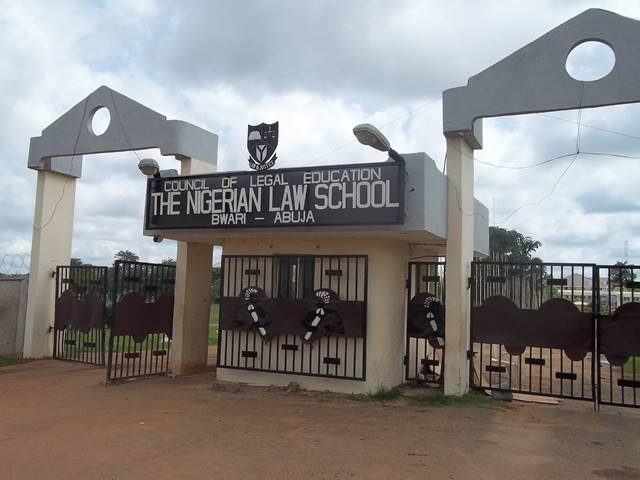
Updated: Nigerian Law School set to admit first set of NOUN Law graduates for Bar Part 11

The management of the Nigerian Law School is set to admit law graduates of the National Open University of Nigeria (NOUN) for Bar Part 11 training by the Council of Legal Education (CLE).

This followed years of rejection of law graduates from the university by CLE, which stated that NOUN was not accredited to offer Bachelors Degree in Law, a prerequisite to admitting their graduates for the Bar Final training and examinations.

However, following interventions by senior lawyers and members of the bench spanning several years and discussions at several fora, the NOUN law graduates were in 2020 given the opportunity to embark on a special remedial programme to test if actually, they are who they claim to be.

During the interventions, the Council of Legal Education (CLE) told NOUN that its students would be admitted to commence their journey towards becoming lawyers on the condition that it closes its law faculty and send a letter indicating that compliance has been effected to the Council.

It is not clear whether NOUN has closed its law faculty but Law & Society gathered that until the Council was recently dissolved by the federal government along with other statutory bodies, no letter of compliance was submitted.

This perhaps explains the stalemate after the completion of the Bar Part I programme in 2021 by students of NOUN.

However, the deadlock is finally over as the Nigerian Law School has now given the intending lawyers an opportunity for admission to the Bar Part 11 programme.

The average age of the NOUN Law graduates is about 55 years, indicating that all of them have come of age and maturity.

Investigations have revealed that several of them are Permanent Secretaries, Commissioners of Police or top-ranking military personnel, Directors, former members of the legislature, captains of industry, University professors, medical directors, and senior journalists, among others.

With a recent call for applications for admission into the Bar Part II Programme for the 2023/2024 Academic Session, it was gathered that the NOUN law graduates who possess requisite pre-Bar Part 11 training at the NLS have been cleared to apply for admission, thus, putting paid to over 15 years of frustration faced by some of them after obtaining the LLB and even LLM.

They will join law graduates from other Nigerian universities and those from Commonwealth countries who have successfully completed the mandatory Bar Part 1 for the vocational training.

A memo to that effect stated that the Bar Part 11 Programme “would be conducted simultaneously at the Nigerian Law School’s Headquarters in Bwari, FCT, and the various campuses across Nigeria, including Lagos, Enugu, Kano, Yenagoa, Yola, and Port Harcourt, starting from November 27, 2023.”

The memo states that:

“The programme is open to law graduates from Nigerian universities and foreign-trained law graduates who had successfully completed and passed the Bar Part I Course at the Nigerian Law School.

“Intending applicants have been requested to go to the Nigerian Law School website, www.nigerianlawschool.edu.ng, for instructions on procedure for application.

“All applicants are required to adhere to the guidelines provided to ensure a smooth application process.

“The application window will open on Monday, July 24, 2023. Prospective candidates are urged to submit their downloaded application forms, along with references, to the Nigerian Law School via their respective Faculties of Law on or before Friday, August 25, 2023.

“Applications received after this date will not be considered.

“For further inquiries, please contact: Nigerian Law School Headquarters, Bwari, FCT P.M.B. 170, Garki, Abuja Website: www.nigerianlawschool.edu.ng Email: [email protected] Phone: +234 (0) 123456789.”

Council of Legal Education set to admit first set of NOUN Law graduates for Bar Part 11

Law graduates of the National Open University of Nigeria (NOUN) as set to be admitted for Bar Part 11 training by the Council of Legal Education (CLE).

This followed years of rejection of law graduates from the university by CLE, which stated that NOUN was not accredited to offer Bachelors Degree in Law, a prerequisite to admitting their graduates for the Bar Final training and examinations.

On account of interventions by senior lawyers and members of the bench spanning several years and discussions at several fora, the NOUN law graduates were in 2020 given the opportunity to embark on a special remedial programme to test if actually, they are who they claim to be.

And after successful completion of the programme in 2021, the CLE, Body of Benchers, Nigeria Bar Association, and other relevant stakeholders decided to give the NOUN graduates who successfully passed the SRP programme of the Nigeria Law School (2020/2021 session) the opportunity for admission for Bar Part 11 programme.

Law & Society however gathered that this is a one-time admission to clear the backlog of the students. The Council of Legal Education had warned NOUN to stop admitting students for law programmes in the University as they have no accredited faculty to run Law programmes.

The average age of the NOUN Law graduates is about 55 years, indicating that all of them have come of age and maturity.

Investigations have revealed that several of them are Permanent Secretaries, Commissioners of Police or top-ranking military personnel, Directors, former members of the legislature, captains of industry, University professors, medical directors, and senior journalists, among others.

With a recent publication of the CLE calling for applications for admission into the Bar Part II Programme for the 2023/2024 Academic Session, it was gathered that the NOUN law graduates who possess requisite pre-Bar Part 11 training at the NLS have been cleared to apply for admission, thus, putting paid to over 15 years of frustration faced by some of them after obtaining the LLB and even LLM.

They will join law graduates from other Nigerian universities and those from Commonwealth countries who have successfully completed the mandatory Bar Part 1 for the vocational training.

A memo to that effect stated that the Bar Part 11 Programme “would be conducted simultaneously at the Nigerian Law School’s Headquarters in Bwari, FCT, and the various campuses across Nigeria, including Lagos, Enugu, Kano, Yenagoa, Yola, and Port Harcourt, starting from November 27, 2023.”

The memo states that:

“The programme is open to law graduates from Nigerian universities and foreign-trained law graduates who had successfully completed and passed the Bar Part I Course at the Nigerian Law School.

“Intending applicants have been requested to go to the Nigerian Law School website, www.nigerianlawschool.edu.ng, for instructions on procedure for application.

“All applicants are required to adhere to the guidelines provided to ensure a smooth application process.

“The application window will open on Monday, July 24, 2023. Prospective candidates are urged to submit their downloaded application forms, along with references, to the Nigerian Law School via their respective Faculties of Law on or before Friday, August 25, 2023.

“Applications received after this date will not be considered.

“For further inquiries, please contact: Nigerian Law School Headquarters, Bwari, FCT P.M.B. 170, Garki, Abuja Website: www.nigerianlawschool.edu.ng Email: [email protected] Phone: +234 (0) 123456789.”

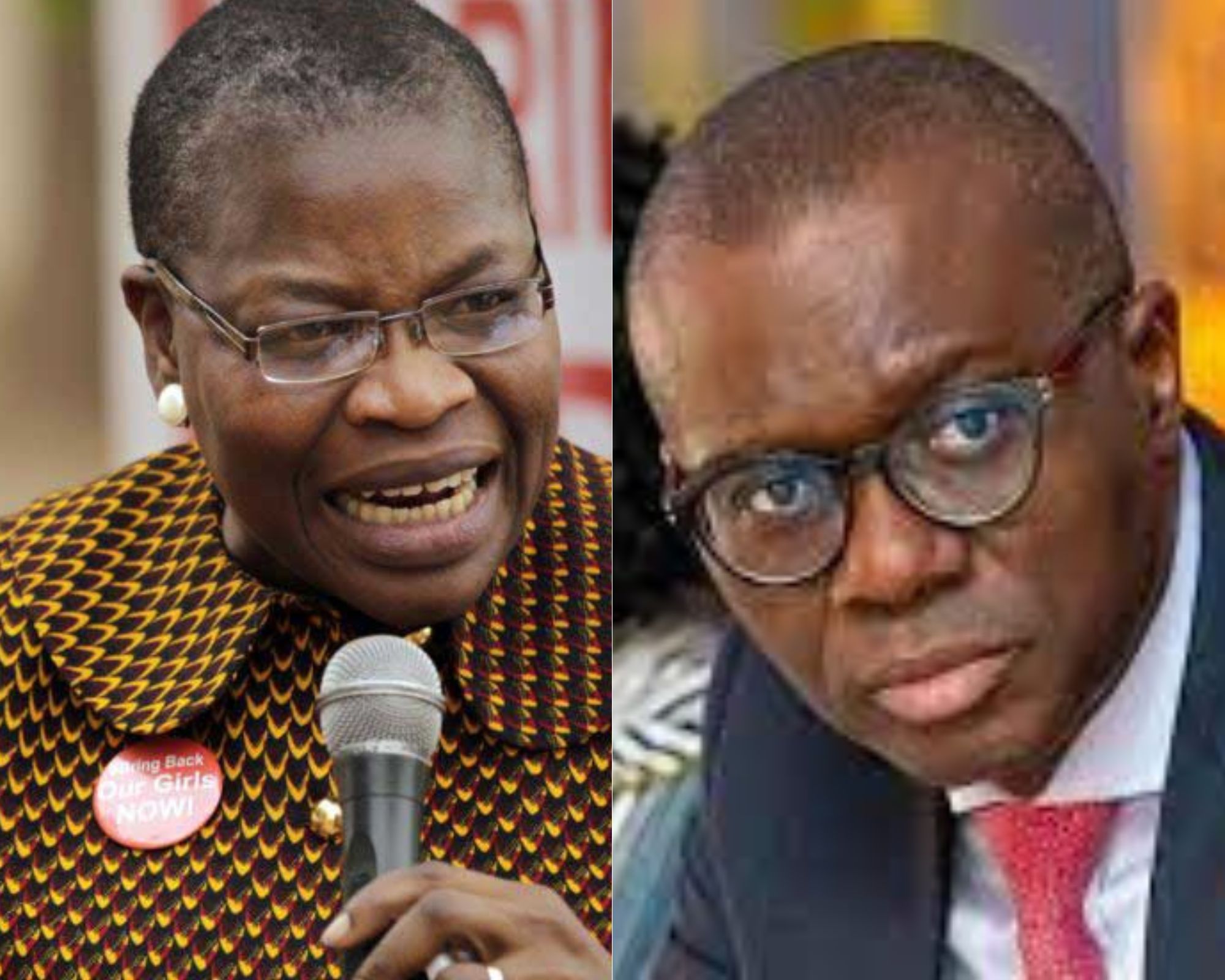
EndSARS Mass Burial: Mr. Governor actually knew about 103 dead bodies? Ezekwesili asks

A former Minister of Education, Obiageli Ezekwesili has demanded an urgent response from the Lagos State Governor, Babajide Sanwo-Olu over a document circulating online concerning the controversial EndSARS protest.

The document had alleged that Sanwo-Olu approved the mass burial of 103 protesters who were claimed to have been massacred by joint forces of the Nigerian Army and the police during the October 2020 mass protest against police brutality tagged #EndSARS.

The document, which has gone viral online, surfaced almost three years after the government had denied there was brutal killing of unarmed protesters who were waving the Nigerian flag and chanting the national anthem when the military allegedly opened fire on them at the Lekki toll gate.

In a series of tweets on Sunday via her verified Twitter handle, the former Minister questioned if the Governor actually knew the State had a record of 103 dead bodies from the EndSARS shootings, demanding for an urgent response.

Ezekwesili, in a separate statement, also claimed that the nation’s public leaders have reduced the dignity of human life to zero, describing it as the most wickedest thing they have done to the citizen.

She added that she trembles at the number of investigations that the citizens would expect sensible governments to launch at all levels of governments in the near future.

She wrote, “Mr Governor of @followlasg , @jidesanwoolu , here is a document that has gone viral on social media, stating that your government procured services for mass burial of 103 corpses killed during the #EndSARS protest?

“Is this so?

“Mr Governor actually knew the State had a record of 103 dead bodies from the #EndSARS shootings?

“We need your urgent response.”

“I often shudder at the sheer number of inquisitions that Citizens would in the good future expect sensible governments at Federal and State levels to launch all over this country.

“The wickedest thing Nigeria’s variant of public leaders have done to citizens is to reduce the dignity of human life to ZERO. They shall someday surely account… if not on earth… in heaven before the Creator of Life”.

Channels Television had reported that tShe Lagos State Government has responded to a leaked memo revealing its approval of N61,285,000 for the mass burial of 103 persons identified as 2020 EndSARS victims, maintaining that the victims to be buried are not from the controversial Lekki Tollgate shooting.

The memo, dated July 19, 2023, capturing steps for the processing of funds after approval by the governor, surfaced on social media Sunday morning, sparking outrage.

The Permanent Secretary, Ministry of Health, Dr Olusegun Ogboye, confirmed the letter in a statement on Sunday evening, but insisted that details were being misconstrued.

The government official argued that the victims were from incidents of violence that occurred in the aftermath of the EndSARS protests.

Ogboye said the Lagos State Environmental Health Unit (SEHMU) picked up bodies in the aftermath of #EndSARS violence and community clashes.

The areas cited included Fagba, Ketu, Ikorodu, Orile, Ajegunle, Abule-Egba, Ikeja, Ojota, Ekoro, Ogba, Isolo and Ajah areas of Lagos State. Ogboye added that there was also a jailbreak at Ikoyi Prison.

“The 103 casualties mentioned in the document were from these incidents and NOT from Lekki Toll-gate as being alleged. For the avoidance of doubt, no body was retrieved from the Lekki Toll Gate incident,” the statement read.

See the full statement below:

LAGOS STATE GOVERNMENT

MINISTRY OF HEALTH

PRESS STATEMENT

RE: MASS BURIAL OF ENDSARS VICTIMS (MISCHIEF MAKERS AT WORK).

The attention of the Lagos State Government has been drawn to some social media publications about a purported mass burial plan for casualties of the 2020 #EndSARS incident. Peddlers of the news are deliberately misinterpreting and sensationalizing a letter from the Lagos State Government Public Procurement Agency titled: Letter of No Objection – Mass Burial for the 103, the Year 2020 ENDSARS victims, to misinform the public, stir public sentiment and cause public disaffection against the Lagos State Government.

It is public knowledge that the year 2020 #EndSARS crisis that snowballed into violence in many parts of Lagos recorded casualties in different areas of the State and NOT from the Lekki Toll Gate as being inferred in the mischievous publications.

For the records, the Lagos State Environmental Health Unit (SEHMU) picked up bodies in the aftermath of #EndSARS violence and community clashes at Fagba, Ketu, Ikorodu, Orile, Ajegunle, Abule-Egba, Ikeja, Ojota, Ekoro, Ogba, Isolo and Ajah areas of Lagos State. There was also a jailbreak at Ikoyi Prison. The 103 casualties mentioned in the document were from these incidents and NOT from Lekki Toll-gate as being alleged. For the avoidance of doubt, no body was retrieved from the Lekki Toll Gate incident.

Contrary to disingenuous narrative weaved around the recently approved mass burial , the #EndSARs Panel subpoenaed the Lagos State chief pathologist to produce full records of unclaimed bodies of dead deposited with state central morgue during the days immediately preceding and following the event at Lekki tollgate on 20/10/20 . The list with their autopsies of provable cause and circumstances of death were duly submitted and testified to before the panel . This subpoena was at the request of lawyers who represented #EndSARS protesters and the chief pathologist complied . There was not a single finding in the report or ensuing white paper attributing the death of any named citizen listed in the autopsy to the Lekki incident.
In the aftermath of the #EndSARS violence, the office of the Chief Coroner invited members of the public through public adverts and announcement (November 18,2020, Punch and November 19,2020 THISDAY) who had lost loved ones or whose relatives had been declared missing between 19th and 27th October 2020 from various clashes as mentioned above, to contact the department of Pathology and Forensic Medicine of the Lagos State University Teaching Hospital (LASUTH) to help with identification of these casualties deposited in State-owned morgues. Relatives were to undergo DNA tests for identification purposes. It is important to state categorically that nobody responded to claim any of the bodies.

However, after almost three years, the bodies remain unclaimed, adding to the congestion of the morgues. This spurred the need to decongest the morgues – a procedure that follows very careful medical and legal guidelines in the event that a relative may still turn up to claim a lost relative years after the incident.

The Government,therefore, appeals to social media rumour mongers to please allow the hapless families of the unclaimed loved ones a deserved closure.

Dr Olusegun Ogboye
Permanent Secretary
Ministry of Health
July 23, 2023.

See the leaked memo below:

Man flogs wife to death over alleged infidelity

A 31-year-old woman has been allegedly thrashed to death by her 32-year-old husband who accused her of dating his nephew.

Ackim Sibanda reportedly assaulted Similo Moyo with a leather belt and an electric cable. The incident occurred on 21 July 2023 at Sasedza line, Tsholotsho in Zimbabwe.

The Zimbabwe Chronicle reports that taking to Twitter, police said: “The ZRP confirms the arrest of Ackim Sibanda (32) in connection with a case of murder in which his wife, Similo Moyo(31), died after she was assaulted with a leather belt and an electric cable indiscriminately on 21/07/23 at a homestead in Sasedza line, Tsholotsho. The suspect accused the victim for having an affair with his nephew,” read the tweet.

In December 2022 Delta State Police Command arrested one Godsgift Uweghwerhen for whipping his daughter to death.

Uweghwerhen on seeing his three-year-old step out from their neighbour’s apartment reportedly grabbed a whip, began to flog the child, and inflicted bodily injuries on her body before she died.

On realizing what he had done, Uweghwerhen a native of Aladja Community in Udu Local Government Area of Delta State, Nigeria where the incident took place fled but was eventually arrested by the Aladja Community Vigilante at Ubogo Community who handed him over to the Police in Ovwian/Aladja Division.

From marathon glory to jail: Nigeria’s ‘great race fiasco’

A new book about marathon champion Gideon Hagack tells a strange and little-known story of sporting injustice.

By Oluwashina Okeleji

A murmur of excitement went up from the crowd inside the National Stadium in Lagos as an implausible rumour began to filter through.

The blast of the siren signifying the imminent arrival of the marathon leader only served to heighten the anticipation, and when the two runners at the top of the pack entered the bowl, the murmur rose to a roar.

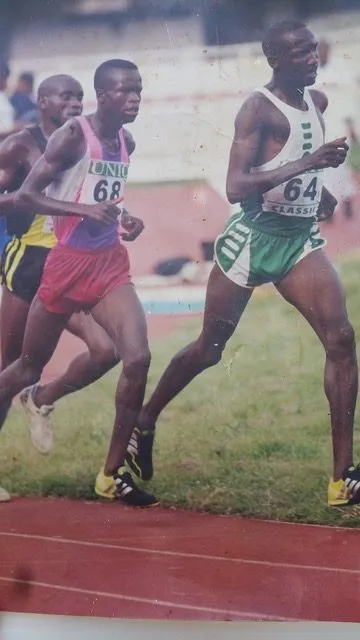
Out in front by mere metres was local man Gideon Hagack, locked in a sprint finish with Kenyan Benson Muriuki with 300 metres left to run. Hagack just held on to come first.

His victory at the Milo International Marathon in Lagos on October 9, 1994, set off jubilation in the stands. But while still dressed in his running gear, he was arrested for cheating, held in jail and had his career irreparably damaged.

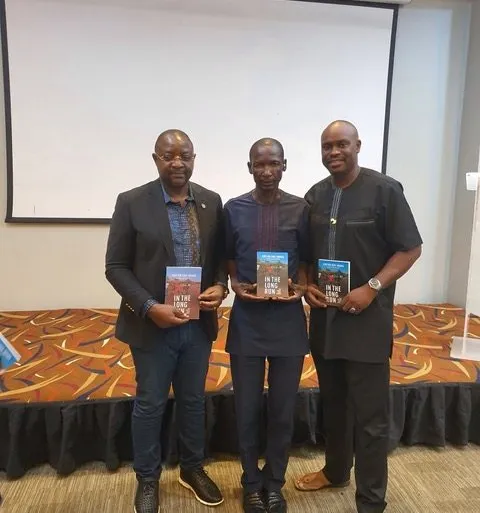
This episode is the subject of, In The Long Run – The Great Race Fiasco, a recently published book by former Nigerian quarter-miler Enefiok Udo-Obong.

The 2000 Olympic gold medallist interviewed key players and witnesses and followed a trail of newspaper reports and legal documentation to tell what he says is a remarkable but little-known story of sporting injustice.

Hagack in the middle flanked by Nigerian Sports Minister Sunday Dare, left, and ex-sprinter and author Enefiok Udo-Obong [Oluwashina Okeleji/Al Jazeera]

“He was an icon and a shining star, but that episode dimmed his glow,” Udo-Obong told Al Jazeera.

“It didn’t just [destroy] Gideon, it killed the future of a lot of young ones who were looking up to him. They all saw what happened to someone who they saw as a hero, who they saw as a champion; how he ended up.”

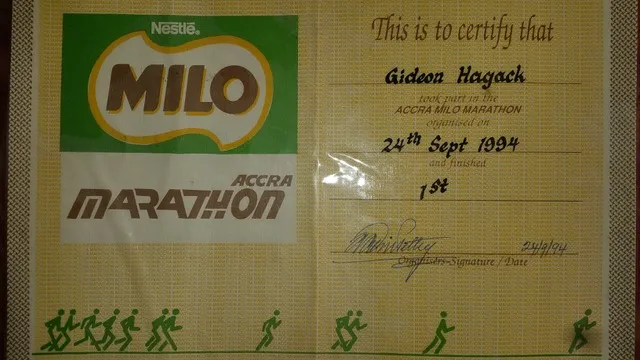
Certificate of success in Accra in 1994 [Courtesy of Hagack]

‘Joy turned to sadness’

Hagack was born in 1971 in Tuwan Kabwir in Pankshin, part of the mountainous Plateau State in central Nigeria.

His athletic potential was already obvious in primary school. It was only after completing vocational skills training in 1991 that Haggak began to run full-time on the national stage, recording impressive finishes in various competitions across the country over distances between five kilometres and 30km, and later representing his country abroad.

He was selected to represent Nigeria at the International Milo Marathon in Ghana on September 24, 1994. He won, prompting great fanfare back home and igniting dreams of winning the world’s major marathons.

Competing in the Lagos event so soon after was a stretch physically, but with a record $4,500 prize money on the line, and buoyed by the confidence of his exploits in Accra, Haggak decided to race.But his unexpected victory may have presented an unwanted headache for the race’s organisers.

Hagack, number 64, during a race [Courtesy of Hagack]

Nigeria does not have a rich history in distance running; much of its athletic pedigree is in sprinting, while East African nations, such as Kenya and Ethiopia, have tended to dominate in marathons.

In a bid to make the Lagos race as prestigious as possible, the organisers had incurred significant expense to invite top international marathoners, many from East Africa.

It is Udo-Obong’s theory, outlined in the book, that a local winner may have led the sponsors to question the credibility of the race. Amid Hagack’s celebrations and a media scrum, the theory that he must have cheated took hold and reached the ear of the special guest of honour, Lagos State’s military governor, Olagunsoye Oyinlola.

Hagack was whisked away to what he initially assumed was a private reception at Government House. After waiting there for six hours, shivering and famished in his drenched running garb, he was accused of cheating and his immediate detention was ordered by the governor.

“It was a very sad and horrible experience,” Hagack told Al Jazeera.

“The joy of winning quickly turned to sadness. I went from a successful athlete to one locked up with criminals because some people couldn’t believe it was possible to win an international marathon. Imagine sleeping next to criminals in prison, going to court for something I knew nothing about and being treated like a criminal for being successful.”

After being held in jail for five days and denied access to a meeting with a lawyer, Hagack was pressured to admit guilt on threat of a lengthy incarceration, but was told that a guilty plea and apology in court might see him set free. At the magistrate’s court, he nevertheless pleaded “not guilty” and was granted bail for being a first-time “offender”.

Yet, despite the AFN’s insistence of malfeasance, not only was there no formal complaint made by Muriuki against the outcome but there was no consensus over how Hagack was supposed to have cheated.

In his report following the race, the technical director of the Athletics Federation of Nigeria (AFN), Rotimi Obajimi, claimed that Hagack “unexpectedly joined” the leading runner Muriuki, who he insisted had established an insurmountable 500-metre lead over the rest of the field, in the National Stadium.

“I remember this incident vividly, because within the stadium complex, Hagack emerged from nowhere to join the race and we had video evidence from NTA [Nigerian state TV] to back it up,” Obajimi told Al Jazeera.

“This was an international marathon and athletics’ global body IAAF concurred with our findings. It’s sad that some of the top AFN officials are no more because we did the right thing.” In fact, at five random checkpoints along the race route, bands were handed out to the contestants, and Hagack had collected all five of them.

Following the formation of an independent panel of sport administrators that placed the burden of proof on the accusers, the AFN were subsequently unable to prove their case and Hagack was officially exonerated by the panel in early November 1994.

The court case against him was subsequently withdrawn and an out-of-court settlement was reached.

Asked about the saga and his decision to order the arrest of Hagack, Oyinlola, now 72, told Al Jazeera, “It’s almost 30 years now and I honestly have no recollection of this particular incident.”

However, Hagack has still not received his prize money nor the agreed compensation. His state-appointed lawyer, Danjuma Tyoden, did however receive the sum of 370,000 naira (about $16,600 at the time) – 100,000 ($4,500) as prize money, and 270,000 ($12,100) as compensation – from the sport ministry in late 1996.

Tyoden told Al Jazeera that he has never actually met Hagack in person to this day, despite repeated attempts to do so on his part.

He claimed that, when it came to getting the compensation to Hagack, he reached out to the Plateau State director of sports, who “brought out a paper and started listing how the money was going to be shared to the commissioner, the permanent secretary at the ministry, the director overseeing sports matters, the chairman of the sports council, etc. He didn’t even mention Gideon Hagack”.

As a result, he decided to hold on to the received sum, but maintains he is willing to hand it over at the earliest opportunity.

But Hagack has denied Tyoden has made an effort to give him the money.

“I was also hoping to meet him at the book launch, but he did not show up. For honesty, decency and sincerity, at least I deserved the prize money he is holding,” he said.

‘The truth gets to be heard’
Although he had been exonerated, with a cloud hanging over him and his loss of trust in the system, the marathoner’s career was effectively over and the Lagos marathon was his last competitive race.

“Mentally and physically, I never recovered from that horrible experience,” he said. “My biggest satisfaction was to finally be cleared [by the panel] but the damage stays forever. My family name will not be connected to cheating: that is the most important thing for me.”

Now married with six children, Hagack works for the Plateau State sports council, training young athletes and leading an existence away from the public eye.

“I couldn’t let what stopped me blocked others from fulfilling their own dreams,” he explained.

Udo-Obong said there is no telling what Hagack could have gone on to achieve and that he was driven to write his book because he identified strongly with the injustice Hagack suffered: The 2000 Olympics gold medal in the 4×400-metre relay was awarded to Nigeria retrospectively in 2012 after a member of the USA quartet admitted to using performance-enhancing drugs.

“[I] was denied the elation and the once-in-a-lifetime experience of having my national anthem sung to me in front of millions of people,” Udo-Obong said.

While the sheer callousness of the treatment Hagack received startled Udo-Obong, most regrettable for him was the death of a champion’s aspirations.

“[Hagack] was imprisoned for winning,” he said. “He tried to climb up the ladder and they killed his career.”

Yet, Hagack was grinning from ear to ear at the book launch in April this year.

“I am happy to see this book because, finally, the truth gets the chance to be heard,” he said.

“[The book] serves as a significant reminder of how the people who should lift you up could end up taking you down.”

Originally published in Aljazeera 22 Jul 2023

Nigeria to pay Chinese firm $70m over treaty violation

  • Court dismisses immunity plea by Nigeria

A court of appeal in the United Kingdom has ruled that Nigeria is liable for a $70 million arbitration award in favour of Zhongshan Fucheng Industrial Investment Co. Ltd, a Chinese investor.

Julian Flaux, the presiding judge, made the ruling on Thursday in reaction to claims of state immunity made by Nigeria to avoid paying the fine.

ZHONGSHAN FUCHENG VS NIGERIA 

In 2010, Zhongshan, through Zhuhai Zhongfu Industrial Group Co Ltd (Zhuhai), its Chinese parent company, acquired rights to develop a free trade zone in Ogun state.

A year later, Zhongshan set up Zhongfu International Investment (NIG) FZE (Zhongfu), a Nigerian entity, to manage the project under the permission of the Ogun state government. 

Things took a different turn in July 2016 when the investor accused the state government of abruptly moving to terminate its appointment while attempting to install a new manager for the free trade zone. 

Subsequently, Zhongfu initiated an investment treaty arbitration against Nigeria under the bilateral investment treaty between the People’s Republic of China and Nigeria (the China-Nigeria BIT).

The arbitrators had ruled that Nigeria was in breach of its obligations under the China-Nigeria BIT and awarded Zhongshan compensation of around $70 million.

In January 2022, the Chinese company initiated a case to seek enforcement of the arbitration award.

Nigeria pleaded state immunity but was turned away by Sara Cockerill, a high court judge, who said the country abused the time frame for appealing arbitral awards.

‘NIGERIA HAS NO GROUNDS OF APPEAL’

Affirming Cockerill’s judgement, Flaux said Nigeria had failed to comply with the “generous” time limit of two-and-a-half months to raise the issue of state immunity.

The presiding judge said Nigeria failed to do the needful until three months after the deadline expired.

He said Nigeria was seeking to re-run the same arguments on state immunity that it had raised — and then abandoned — in front of the arbitration panel.

The panel also dismissed Nigeria’s ground of appeal that there is a “point of general public importance” requiring guidance from the court.

“There is no question of it being necessary to reopen the appeal to avoid real injustice, and Nigeria cannot show that it has suffered any injustice from its application for permission to appeal being refused,” Flaux wrote.

The judge held that the court did not need to determine whether Nigeria was entitled to state immunity before making an enforcement order.

The Cable

HIV-positive man bags life jail for defiling 4-year-old

“There is poison in the fang of the serpent, in the mouth of the fly and in the sting of a scorpion; but the wicked man is saturated with it.” – Chanakya

“The heart is deceitful above all things, and desperately sick; who can understand it?” – Jeremiah 17:9, Holy Bible

“I have seen wicked men and fools, a great many of both; and I believe they both get paid in the end; but the fools first.” – Robert Louis Stevenson

Not only did he defile the innocence of a four-year-old, Chiemela Victor Ekeke did it knowing he was HIV positive! But it is doubtful that Chiemela Victor Ekeke has a soul.

Although he has been jailed for life by a Magistrates’ Court in Umuahia, Abia State, his deed is still reverberating.

The 37 years old Ekeke had after being apprehended by relatives of the little girl, confessed that he was HIV-positive but that his doctor told him the virus has been “flushed” out of his system.

In her judgment, the Presiding Magistrate, N. Lekwa said that the Court had in the last sitting found the accused person guilty of defilement.

The prosecuting counsel, Okezuonu Obioma applauded the decision of the Court, saying that it was in tandem with the position of the law in defilement of a minor.

The convict had confessed to having carnal knowledge of the minor but pleaded for leniency, claiming that he only used his fingers to touch the toddler’s private part while holding her on his lap.

Like many others, Ekeke blamed the devil for confusing him.

Three Lessons about Insecurity in Nigeria

By Chidi Anselm Odinkalu

Nigeria’s return to civil rule has proved to be far more trying than many had hoped. Of the challenges that emerged in its wake, few have proved to be as durable or chronic as that of guaranteeing public safety and security for the country. From the onset of the return to elective rule, the country has battled insecurity.

Following the retreat of the military to the barracks on 29 May 1999, the security situation in the country ran amok. The contest for money, power, and influence among politicians degenerated into a spree of political assassinations. Different people and interest groups freely traded blames, assigning presumptive responsibility for the killings.

Predictably, a major focus of the competing claims was the government of President Olusegun Obasanjo. Following the December 2001 assassination of then Attorney-General of the Federation, Bola Ige, Charles Mafua, then Chair of the Nigerian Bar Association (NBA) in Kaduna declaimed that “encouraged by the government’s inability to track down the killers of its law officer and other Nigerians, assassinations, political or otherwise, have assumed (the level) of a national pastime, a very attractive and lucrative business for the teeming jobless youths and adults of our country.”

Many people also blamed the Nigeria Police Force (NPF), describing its handling of these killings as “lethargic” at best. In response, many states established vigilantes, formal or informal, which ultimately seemed to create more problems than they could solve. The official security services, including the NPF, were hardly fit for purpose. Institutionally, they were undermanned and their personnel suffered from low morale.

In January 2002, a group identifying itself as “Warrant Officers in the Nigerian Army and their Equivalents in the Navy, Air Force and Inspectors of Police and the Rank and File of the Armed Forces and Police of Nigeria” went public with a letter to three leading figures in civic advocacy, including Chief Gani Fawehinmi, SAN, in which they complained about lingering problems of morale in the joint services inherited in the transition from the military regime of General Abdulsalami Abubakar. Among the highlights of these pathologies they complained that:

  • there was no security in the country not necessarily because there were few army and policemen but because many soldiers and policemen were used to guard senior serving and retired officers, their relations and friends, and also the well-to-do in the society, leaving the larger society of ordinary Nigerians unprotected;
  • the crime wave in the country continued to rise alarmingly because many policemen and soldiers who should be used to protect Nigerians were attached to crime barons and other dubious persons who freely gave big money to senior officers or those connected to those in the corridors of power; and
  • soldiers and Policemen with good records stagnated on one rank, in some cases for over 15 years without promotion while a few among the personnel who had godfathers enjoyed an overdose of rapid promotions.

The publication of this letter in the New Year roiled the Joint Services, creating a rapid cascade of consequences which forced an angry President Obasanjo to summarily fire then Inspector-General of Police, Musiliu Smith.

If there was one thing these developments demonstrated to the country, it was the overwhelming role of the president in ensuring security or undermining it. Chief Simon Okeke, who served as the pioneer chair of the Police Service Commission (PSC) under President Obasanjo from 2001 to 2006, dramatizes this point in his recent memoir, Policing the Nigeria Police, in a narration of events that took place in Anambra State, south-east Nigeria, in 2003-2004.

Chief Okeke recalls what transpired in 2004, when the then president instructed the Commissioner of Police in Anambra State to withdraw police protection from the sitting state governor, Dr. Chris Ngige, at a time when the state government was under violent attack from forces unleashed by close political associates of the president in Anambra State whom acclaimed author, Chinua Achebe, famously described as “a small clique of renegades, openly boasting its connections in high places.” As PSC Chair, Chief Okeke responded by requiring the state Commissioner of Police to ensure that the Governor had police protection, in effect countermanding the order of the President, a retired four-star General who did not take kindly to having his orders treated in that manner.

An affronted president summoned Chief Okeke, who was away in the hinterland, to the presidential villa to explain himself. On arrival back in Abuja, President Obasanjo’s Chief of Staff, Abdullahi Mohammed, himself also a retired General whose era in active service coincided with Obasanjo’s, ushered Chief Okeke into the cauldron of a seething president who would not initially be assuaged. When eventually he got the opportunity to explain himself, Chief Okeke pleaded his case as resolutely as he could.

Shorn of the diplomatese necessitated by the moment, his explanation was that it was not the place of a president to substitute his whim for the clear stipulations of the constitution as to how to terminate the tenure of a sitting governor. When the president appeared to insist on his view of the matter, Chief Okeke offered that he could not as Chair of the PSC do the job in good standing if the governor of his state was going to be put at the mercy of death by violence at the hands of acolytes of the president. It was a two-fer of a brutal push-back and an offer of resignation which President Obasanjo, unused to such, uncharacteristically declined.

Like a cat with nine lives though, this was not the first time that Dr. Ngige’s fate would be foundational in shaping insecurity in (south-east) Nigeria. On or about 10 July 2003, Assistant Inspector-General of Police, Raphael Ige, (who was due for retirement three weeks thereafter on 1 August, 2003) arrived Awka, the Anambra State capital, where he subsequently attempted to abduct the state governor, Dr. Ngige. According to Chief Okeke, “the governor very narrowly escaped abduction by a chance phone call made possible by a ‘good Samaritan’ who suspected some foul play.”

Four days later, on 14 July, President Obasanjo requested the PSC to investigate the circumstances of Dr. Ngige’s attempted abduction. The Commission completed its investigation and delivered a report to the president on 22 July, concluding rather incredulously that “AIG Raphael Ige acted on his own and did not have the authority or consent of anybody in the whole saga.” The Commission recommended the dismissal from the NPF of AIG Ige, who had only 10 more days to go in service. Ige did eventually retire in August 2003. Five months later, on 13 January 2004, he conveniently expired at the Federal Medical Centre (FMC) in Lokoja, the capital of his home state, Kogi, in north-central Nigeria.

Over two decades later, this vignette offers many lessons in why the pathologies that define coexistence and insecurity in Nigeria are stubborn. First, insecurity will never be solved under the watch of any president who prefers hearing what he wants to hearing what he needs to know. Second, when presidents play fast and loose with public safety and security, the effects can be very durable. Third, public officers charged with protecting the country are unfit for purpose if they choose to be presidential courtiers preoccupied with preserving intimate relationships between their derriere and the glue that holds it to office.

A lawyer & a teacher, Odinkalu can be reached at [email protected]

TIPS