Home Blog Page 745

Lawyer writes visiting World Bank President re Bagudu nomination: Suspend $2B Niger rail, $800M subsidy loans

By Emmanuel Ogebe

Dear President Ajaybanga,

ISSUES OF CONCERN DURING YOUR VISIT TO NIGERIA

Welcome to Nigeria. I hope your visit has been productive. Like you, I am currently visiting from Washington and am thus reaching out regarding current issues arising in Nigeria.

Issue one: Appointment of Abacha looter into Nigeria’s cabinet

You’re no doubt aware of the infamous Abacha Looted funds, whose recovery was facilitated by the World Bank and in respect of which your STAR program was established.

As a concerned Nigerian citizen, and a victim of General Abacha’s misrule, I believe it is crucial to inform you that during your visit to Nigeria, Atiku Bagudu who was responsible for laundering the looted funds abroad was confirmed a Federal Minister by the senate.

Mr Atiku Bagudu who is currently embroiled in money laundering forfeiture  litigation in the US District court of DC, over his involvement in the grand larceny, has spent millions of dollars fighting the US government’s efforts to return the money back to Nigeria.

At this time, the Bagudus have reached a settlement agreement to share Nigeria’s stolen €200 million between themselves and the US government without the Nigerian Federal, state and local governments who are joint owners of said funds under the constitution.

This negates the principle of integrity in governance as it clearly rewards criminal behavior. Political office holders should be of impeccable record to ensure that the welfare of the state is not jeopardized for personal interests. The current government by its actions have shown that it does not prioritize transparency and accountability by political office holders and this portends danger for us as a nation.

It is also a slap on the face of the world bank and other countries and entities who have worked assiduously to reclaim these funds for Nigeria and to stem illicit financial flows over the past decades.

It is clear that the Tinubu administration is not interested in having people of integrity in office.

More so he has nominated 48 ministers, a dozen more than the constitution requires, making for bloated overheads for political appointees.

Issue two: War Threat

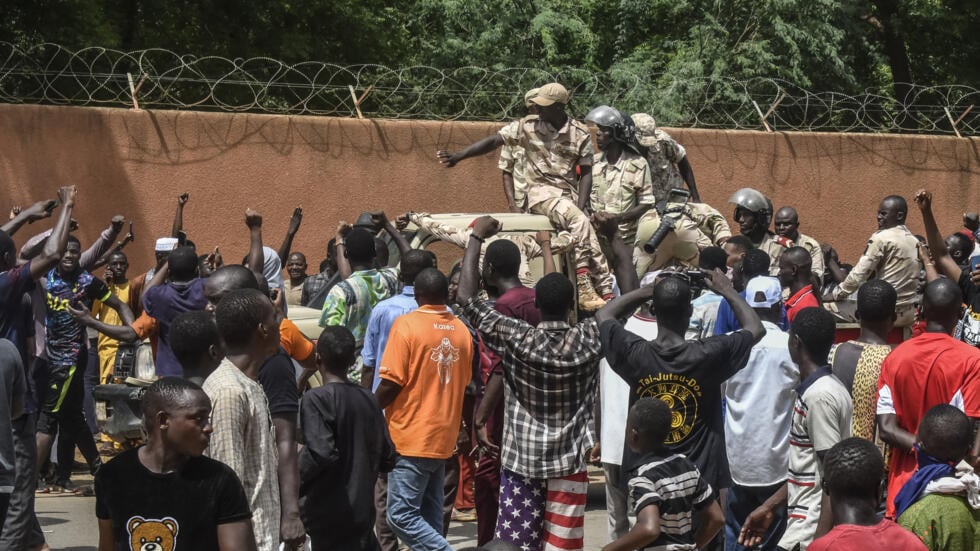
Secondly, the President’s letter, also while you were here, seeking parliamentary war approval for engaging the Niger Republic, is disturbing.

The outgone Buhari administration undertook the construction of a  284-kilometre railway line linking Kano with Maradi, in Niger, part of whose $2Billion funding was borrowed from the World Bank.

This debt is a systemic economic atrocity inflicted on the nation.

The southeast cannot use PortHarcourt to import their goods though they’re the biggest entrepreneurs in Nigeria but the north that imports and distributes beggars and terrorism is getting a $2 Billion railway to Niger at our children’s expense.

Boko Haram used to hire mercenaries from Niger to come into Nigeria to kill and go back. Arms proliferation from Qaddafi’s armories permeated Nigeria through the Niger border (the Killer foreign Fulanis militia as well.)

The deadliest border front in Nigeria is Niger. Instead of securing it with a wall, we’re rendering it even more porous with a train.

Yet the most valuable economic road in Nigeria, the Apapa Wharf road is impassable. The value of cargo that traverses Apapa road makes it the highest economic value road!

Even the British colonialists had envisioned a railway from the port inland but it was sabotaged. No wonder the cost of moving goods from the port inland is higher than the cost of shipping a container from China to Nigeria!

Every delayed cargo incurs costs. The importers transfer these costs to the end user so the total landed cost in the supermarket includes the trailers languishing on Apapa road.

However, Buhari borrowed $2Billion for a railroad to Niger for the benefit of Niger not Nigerians. Niger itself is not the one borrowing the money. We borrowed to build in someone else’s country and our children’s children will be paying for it even when that country did not approve the project!

Furthermore, rice is being smuggled in broad daylight on bikes from the landlocked nation of Niger.

Yet as nations are building border walls Nigeria is building cross border rail. While the borders were purportedly closed some years ago, kidnappers brought an American hostage from Niger to Nigeria. US Navy Seals had to rescue him from Nigeria. Nigeria now unofficially has a transnational crime corridor that will escalate via this railway line.

But more importantly, rather than import underage voters from Niger by trailer, they can now be brought in en mass by train. This is the grand strategy to consolidate the hold of power by one region over and above all others by demographic gerrymandering and electorate re-engineering. Rather than use campaign funds to truck in non-citizen voters like before he has shrewdly utilized borrowed public resources to fund his hegemonic designs.

These ulterior agenda undermine the contributions of the World Bank in this project prior to even this present crisis in which Niger has cut ties with Nigeria. How could the World Bank have approved this loan knowing that Niger had not given approval for it?

Any attempt at aggression in Niger lays waste the financial efforts of the World Bank.

Issue Three: Post Fuel Subsidy palliative loan

The Tinubu government obtained approval of an $800 million loan from the World Bank to distribute to 12Million families although you reported that over half Nigeria’s population is multidimensionally poor. While each family would receive only $10 (N10,000) monthly for six months, new members of parliament would get N70 Billion.

Sen. Tinubu had declared, the week you arrived that he has saved N1 Trillion. If that is the case, why does he need to borrow $800 million from you for mere consumption?

Sadly a former governor declared on national TV that a subsidy fraud beneficiary advised them to stop the subsidy because they were “tired of making money”. Instead of arresting this fraudster, the ex-governor was proudly bragging about his friendship with him. What this tells us is that the real problem in Nigeria is failure of governance and the rule of law. Why should the majority of Nigerians be punished for the crimes of a few instead of the known criminals?

This much was illustrated by breaking news that occurred while you were in country that a ship with stolen crude oil being escorted by the Navy was captured by local boys. This  is the stark reality that while institutions of government have become organized crime syndicates, citizens have become private and personal governments.

I urge you, as the President of the World Bank, to take immediate action to thoroughly investigate the rationale and activities regarding the use of these loans.

I suggest you suspend the $800 million loan to be frittered away on false palliatives; suspend the $2 Billion loan for a terror transit and smuggling train and require an audit of all Abacha loot repatriated to Nigeria in light of the above (as recently also ordered by a Nigerian court.)

By doing so, the World Bank can demonstrate its commitment to transparency, integrity, and good governance, which are fundamental principles for achieving sustainable development.

Furthermore, I kindly request that the World Bank strengthens its monitoring and evaluation mechanisms to ensure the effective utilization of funds throughout the project lifecycle. By implementing robust oversight measures, the Bank can proactively identify and address any potential misuse of funds, thereby safeguarding the interests of all concerned.

Lastly, I would like to emphasize the importance of transparency and public awareness in this matter. In a World Bank report in July, 4 million Nigerians were said to have been pushed into the poverty trap in the first six months of this year, with an estimated 7.1 million to join if the subsidy removal is not managed properly.

These are tough times for Nigerians and the government should be discouraged from making political decisions that worsen the plight of the citizens. The funds from the Abacha Loot, belong to Nigerians thus, any direct or indirect attempt to divert same, should be met with stiff penalties.

The World Bank should proactively communicate its actions and progress in addressing the misuse of funds to its stakeholders, including recipient nations, civil society organizations, and the general public. By doing so, the Bank can rebuild trust and reinforce its commitment to achieving sustainable development goals.

I am confident that, under your leadership, the World Bank will take swift and decisive action to prevent the misuse of funds and ensure that every dollar given out, is utilized effectively for the betterment of communities worldwide.

Thank you for your attention to this matter. I look forward to hearing about the steps taken by the World Bank to address these concerns and restore confidence in its operations.

Emmanuel Ogebe

US NIGERIA LAW GROUP

Washington DC

FOI: Group petitions FCT Perm Sec over revenue harmonisation, land allocation

A group, under the umbrella of the FCT Youth Stakeholders Forum, has petitioned the Permanent Secretary of the Federal Capital Territory (FCTA), Mr Olusade Adesola, over harmonisation of revenues generated by the six area councils in the FCT.

In the petition dated August 2, with the caption “RE: Application for Information/Records/Documents Under the Freedom of Information Act”, the group demanded for details of land allocation in the FCT.

The petition was signed by Suleiman Ango, Zakari Babale, Zaka Nehemiah, Yusuf Nadabo, Opeyemi Ismail and Ahmed Sanni.

The group said that the letter is a follow up to a previous letter dated July 20, 2023, which was received the same day, but with no official response, which prompted the forum to invoke the Freedom of Information Act 2011 to request for the aforementioned information.

The letter read: “Warm Greetings to you on behalf of the leadership and entire membership of the FCT Youth Stakeholders’ Forum.

“Recall our earlier correspondence dated 20th July 2023 and received the same day on the above subject. Kindly accept this letter as a reminder of the earlier correspondence as no official response has been received from your office.

“To ensure transparency and accountability in governance, the forum had invoked the Freedom of Information Act 2011 to request for information on the following:

“1. Comprehensive Information on Harmonization of Revenue Generation: We request detailed information on the harmonization of revenue generation between the Federal Capital Territory Administration (FCTA) and the Area Council as being proposed. Specifically, we seek comprehensive data on the steps taken to harmonize revenue generation, the funds allocated for this purpose, and the progress made in achieving the objectives of harmonization. As it has come to public attention that revenue generation of the FCTA has not been properly harmonized and accounted for, we request detailed records on the measures taken by the FCTA to address this issue.

“2. Details of Land Allocation in the Past 1 Year: We request the names and details of all land allocations that have been made within the past one year by the Federal Capital Territory Administration (FCTA). This should include information on the beneficiaries, the size and location of the allocated land, and any associated documentation related to the allocations.

“3. Names and State of Origin of Recent VIO Recruitment Beneficiaries: We request the names and state of origin of all recently recruited beneficiaries into the Vehicle Inspection Officer (VIO) positions within the Federal Capital Territory.

“Additionally, we seek any relevant information on the recruitment process, including the criteria used for selection and any available documentation related to the recruitment exercise.”

They added: “We understand that under the Act, we are entitled to a response within 7 working days of your receipt of the application, it is imperative to note that by our calendar the 7 working days lapsed on 31st of July 2023.

“Against this background, we wish to state categorically that in case the cause of the delay in compliance is the cost of printing and duplication, we are willing to pay any fees that would be incurred as a result of complying with this application, but we remind you of the provision of section 8 of the Act, which clearly states that fees ‘…shall be limited to Standard charges for document duplication and Fees transcription where necessary’ .

“If upon review of this application, the decision is taken to transfer the request to another agency or a higher authority, we request that you provide us with written notice of this in the manner as prescribed by the Act, and within the prescribed timeframe.

“If our request is denied in whole or in part, we request that you justify such denial or all deletions by reference to specific exemptions of the Act.

“We reserve the right to appeal your decision as guaranteed by the Act and remind you of the provisions of the Act which state that any request not actioned within the prescribed timeframe will be deemed as a denial of the request.

“We look forward to receiving this information as soon as possible,” the petition read.

SERAP sues Tinubu over failure to publish spending details of N400bn fuel subsidy savings

SERAP

Socio-Economic Rights and Accountability Project (SERAP) has filed a lawsuit against President Bola Ahmed Tinubu over “the failure to publish spending details of about N400bn so far saved as a result of the removal of subsidy on Premium Motor Spirit (PMS) popularly called petrol.”


The suit followed reports that the Federal Government has saved N400bn within the four weeks following the implementation of the removal of subsidy on petrol policy.”

In the suit number FHC/L/CS/1514/2023 filed last week at the Federal High Court in Lagos, SERAP is seeking: “an order of mandamus to direct and compel President Tinubu to publish details of spending of about N400 billion saved as a result of the removal of subsidy on petrol on 29 May, 2023.”

SERAP is also seeking: “an order of mandamus to direct and compel President Tinubu to provide details of the plans on how the savings from the removal of subsidy on petrol, including specific projects on which the funds would be spent.”

 
SERAP is also seeking: “an order of mandamus to compel President Tinubu to provide details of the mechanisms that have been put in place to ensure that the savings from the removal of subsidy on petrol are not diverted into private pockets.”

 In the suit, SERAP is arguing that: “Nigerians have the right to know how the savings are spent. Disclosing the spending details of the savings would reduce the risks of corruption in the spending of the funds.”

SERAP is arguing that, “The Tinubu government has a legal obligation to ensure that the savings from the removal of subsidy on petrol are spent solely for the benefit of the 137 million poor Nigerians who are bearing the brunt of the removal.”

SERAP is also arguing that, “Opacity in the spending of the savings from subsidy removal would have negative impacts on the fundamental interests of the citizens and the public interest.”

According to SERAP, “the savings from subsidy removal may be embezzled, misappropriated or diverted into private pockets.”

The suit filed on behalf of SERAP by its lawyers, Kolawole Oluwadare, Ms Adelanke Aremo, and Ms Valentina Adegoke, read in part: “Transparency would increase public trust and confidence that these savings would be used to benefit Nigerians.”

“The Nigerian Constitution, 1999 [as amended], Freedom of Information Act, and the country’s anti-corruption and human rights obligations rest on the principle that citizens should have access to information regarding their government’s activities.”

“Prevention of corruption in the spending of savings from the removal of subsidy on petrol and preventing and addressing the challenges caused by the removal are serious and legitimate public interests.”

“The Tinubu government has a legal obligation to protect individuals against the threat posed to human rights by the removal of subsidy on petrol, and to effectively address the aftermath of subsidy removal.”

“Unless the government is compelled and directed to publish the spending details of the savings from the removal of subsidy on petrol, the removal will continue to undermine the rights of Nigerians, and increase their vulnerability to poverty.”

“The implementation of the National Social Safety Net Programme (NASSP) and spending on the programme have been mostly shrouded in secrecy.”

“Publishing the details of the spending of the N400bn and other savings from the removal of subsidy would also ensure that persons with public responsibilities are answerable to the people for the performance of their duties.”

“Transparency and accountability in the spending details of the N400bn saved as a result of the removal of subsidy on petrol, and on the spending of subsequent savings from the removal would mean that the savings can help poor Nigerians to overcome the effects of such removal.”

 
“It would also help to avoid a morally repugnant result of double jeopardy on poor and socially and economically vulnerable Nigerians.”

 
“The lack of transparency and accountability in the spending of savings from the removal of subsidy on petrol and the resulting human costs would directly threaten fundamental human rights that the government has an obligation to protect.”

“The Tinubu government has the legal obligations to address the effects of subsidy removal on the human rights of 137 million poor Nigerians, and to prevent and address some of the direst consequences that the removal may reap on human rights, especially given the disproportionate impact on these Nigerians.”

“The removal of subsidy on petrol continues to negatively and disproportionately affect poor Nigerians, undermining their right to adequate standard of living.”

“Many years of allegations of corruption and mismanagement in the spending of public funds and entrenched impunity of perpetrators have undermined public trust and confidence in governments at all levels.”

 
“The Freedom of Information Act, Section 39 of the Nigerian Constitution, article 9 of the African Charter on Human and Peoples’ Rights and article 19 of the International Covenant on Civil and Political Rights guarantee to everyone the right to information, including the details of how the N400bn and other savings from the removal of subsidy on petrol would be spent.”

“By the combined reading of the provisions of the Nigerian Constitution, the Freedom of Information Act, and the African Charter on Human and Peoples’ Rights, there are transparency obligations imposed on the government to widely publish the details of how the N400bn and other savings from the removal of subsidy on petrol are spent.”

“Section 13 of the Nigerian Constitution imposes clear responsibility on the government to conform to, observe and apply the provisions of Chapter 2 of the constitution. Section 15(5) imposes the responsibility on the government to ‘abolish all corrupt practices and abuse of power’ in the country.”

Proxy Wars: Why does the US need Nigeria to fight Niger?

  • Why Nigeria shouldn’t let the US push it to war in Niger: Part 2

By Emmanuel Ogebe

The story is told that a new journalist at an American newspaper asked his Editor, “How does our paper spell IRAN? Is it ending with a Q or with an N? This joke was meant to illustrate that some people mistake them for one country though different (One invaded America’s embassy and one was invaded by America.)

Niger and Nigeria may well be mixed up but they’re quite different being francophone and anglophone countries. An informed American may recall Niger for three reasons

1. The false story about Niger uranium used to justify Iraq’s WMD invasion and expose a CIA agent (for which White House official Scooter Libby was jailed.)

2. The death of four US Green berets in a terror ambush (over which President Trump and Congresswoman Frederica Wilson clashed)

3. The Terror kidnap of American Philip Walton who was successfully rescued by Navy Seals in neighboring Nigeria on Trump’s orders.

Yesterday, Nigeria’s senate failed to give war authorization to newly-installed, legitimacy-bereft Nigerian ruler Bola Tinubu in his first defeat from a parliament he controls.

Why exactly did the US push him towards a war in Niger that virtually the entire senate rejected?

The answer requires lots of context.

Last week, I was watching a special report on the news in DC about USA training troops in Niger on counter terrorism. The very next day, there was a coup in Niger by the army the US was training in CT!

It’s a very awkward situation for America’s almost 2000 troops plus a drone base to be in a country where the government was toppled. Niger’s coup leader’s cutting off ties with Nigeria, France and USA means a loss of the latter’s strategic military foothold in the Sahel high terror threat theater.

American troops cannot help defeat the military to restore the president like Russian Wagner forces otherwise it would spell doom to their ever being hosted by any country again. So they need another proxy fighter and Nigeria is it. Again.

In 1885, at the Berlin conference, European countries carved out territories for themselves in what was the “scramble for Africa.” France got Niger and England got Nigeria in a nutshell.

Even after independence for many African countries in the sixties, a new ideological scramble for Africa broke out during the Cold War with the west and the Soviet communist world jousting for acolytes.

Then there is this. President Biden hosted a U.S. Africa Summit in Washington in December and Putin hosted Africa’s heads of state in Russia eight months later. China had built the African Union a Headquarters in Ethiopia long before and Israeli Prime Minister had traveled to meet with African presidents at a sub regional summit on the continent some years ago. Even terror group ISIS has opened its African franchise ISWAP. Why? There’s a new scramble for Africa – the “Warm War” – with different regions warming up to Africa in a renewed dig for resources and bid for alliances (which I also call a “charm offensive.”)

But while UK and France had strong historical ties and alliances in Africa (Anglophone and Francophone countries) non-colonial powers like Russia, China and USA didn’t – except of course for Liberia.

A nation born with the help of freed enslaved African Americans, Liberia is essentially America’s only longstanding historical tie to Africa. Yet when it was embroiled in a horrific civil war, who helped Liberia out and brought peace? Nigeria!

The question arises – if Nigeria spent $12Billion and hundreds of military lives to protect by proxy America’s lone African child, why would it locate its troops in an adjacent French-speaking country that was susceptible to a coup rather than a military ally and top trade partner that was no longer vulnerable to coups?

It’s a very complicated situation but it originates with policy ambivalence and the Niger debacle is just the latest manifestation of America’s aforesaid schizophrenic Nigeria policy.

In May 2023, the first known deadly US embassy convoy ambush, following years of US cover up of attacks on American diplomats and citizens like Special Agent in Charge Jennifer Dent amongst others, occurred in south east Nigeria.

While mass killings continued in intensity with triple digit fatalities in Benue, Plateau, Niger and Kaduna states in a couple of months since the elections, the US has continued to paper over islamist genocide by unlawfully delisting Nigeria from review and citation for egregious religious persecution since President Biden assumed the presidency.

As stated in my letter to President Biden, “Nigeria had been subject to derogatory designation since the inception of the International Religious Freedom Act over two decades ago, including ironically under your Obama/Biden administration, until you came and illegally and surreptitiously dropped Nigeria’s designation as a Country of Particular Concern – even as a Christian schoolgirl was burnt alive on video in a government school by Muslims and no one convicted since last year.

The US is not just cuddling transnational terrorism by both the Fulani militia and ISIS West Africa but

glossing over a religious apartheid and genocide in Nigeria, both politically and terroristically, while continuing to endanger American lives.

Ironically, Secretary of State Blinken’s latest blackout of Nigeria’s religious freedom crises came weeks after ordering the unprecedented evacuation of most American diplomats and their families out of Abuja due to islamists‘ bombing attempt on American diplomats’ homes in Nigeria in October – and Gen. Buhari’s inability to secure them!

Buhari’s delegation to your US Africa Presidential Summit last December stayed in DC hotels alongside hundreds of US diplomats displaced from Abuja for weeks. The US denial of the ongoing religious genocide at the expense of refugee American diplomatic families was an unspeakable travesty and slight of their service.

As such the State Department’s State of Denial continues to claim the lives of Nigerians needlessly and threaten the lives of Americans as well. As Dr King said, “injustice anywhere is a threat to Justice everywhere!” “

For years, the US had denied the global jihadist links and aspirations of Boko Haram and other terrorist groups, falsely claiming that the killings in Nigeria were local, not religious and about poverty.

This denial served two purposes: firstly to avoid the optics of USA being involved in an “anti-Muslim” conflict in Nigeria (which I called the “see no jihad, say “no jihad” policy”) but it also unfortunately helped the Boko Haram insurgency spiral out of control and metastasize into a sub regional terror group holding multi-territorial swathes with global affiliations.

Therefore to avoid dealing with reality, the US set itself up because reality wouldn’t avoid dealing with it!

When in 2014, Boko Haram abducted almost 300 schoolgirls sparking the global #Bringbackourgirls campaign, President Obama’s response was to send US troops NOT to Nigeria but to Chad – a French-speaking country ruled by a military autocrat!

In fairness, Obama also helped Nigeria establish a counter terrorism intelligence fusion center and a multidisciplinary investigation team to help locate the abducted Chibok schoolgirls but my interaction with the team didn’t inspire much confidence.

However in anonymous remarks to a newspaper, a U.S. military source claimed that after they planned a raid of Boko Haram’s camp with demobilizing gas to safely rescue the girls, the attack team arrived only to find the terrorists wearing gas masks!

The stark fact is that America did not trust the Nigerian military but also secretly knew that terrorism posed a threat to Americans in Nigeria despite its public claims that Boko Haram was just a local affair!

Twenty years ago, this year, I arrived Jigawa state on my first tour of duty as Country Representative of a U.S. government donor agency to Nigeria. What I saw alarmed me. I was welcomed to a village where we had built 400 houses by children wearing Osama  Bin Laden hats – apparently the most popular name the year after the 911 terror attacks on the US.

Although dismissed by my HQ in DC as just the norm, nine years later when a U.S. consulate was proposed to be built in the northwest Kano state, I opposed it knowing that Americans would not be safe there.

In 2012, I wrote, “terror group Boko Haram has made the government itself and Christians in particular its declared target, but in a remarkable twist, the US has managed to point disapproving fingers at Nigeria’s mild-mannered accidental president  former zoology professor Goodluck Jonathan.  According to the US,  Nigeria’s Muslim north feel uncared for by Jonathan and must get more federal checks…

The disingenuous US policy on the situation is disturbing on several levels. It borders on being a “ransom demand” on behalf of a region that has not hidden its disdain for all things western – most especially the  US itself – for decades and is now using violent extremism to political advantage. Alternatively it hovers on the verge of being a “re-victimization of the victim.” The US is either negotiating for the terrorists or blaming the victim or both!

Incidentally, just the day before the State Department’s top diplomat on Africa unfolded its key policy thoughts, Boko Haram attempted two signature AlQaeda-style church bombings on Easter Sunday. Ambassador Johnnie Carson did not so much as use his speech to condemn the attacks. Instead he maintained that the attacks were “not religious” and claimed that both churches and mosques had been targeted by Boko Haram. However when I pointed out to him that there is no single account of a mosque being bombed, he simply had no response.

Instead the Assistant Secretary of State for Africa went to extremes to paint a picture of a pervasively poor northern region in need of more money as an antidote to terror. It was an unspeakable US apologetic for terror that would gall even the most jaded cynic of US foreign policy intentions.

(Re) Carson’s remarks at the Center for Strategic International Studies..

Not only is the US interpretation of the realities in Nigeria patently false, its resulting position seems to justify terrorism and vilify the victims…

Carson did not give credit to the Christians whose restraint in the midst of extreme provocation is singularly responsible for the postponement – thus far – of a religious war in Africa’s biggest country.

Worse still rather than proffer aid or assistance to the thousands of internally displaced persons from the northern crisis (hundreds of Christians were killed and over 500 churches destroyed in a 48-hour window last year unrelated to the terror ) US is urging aid to the people responsible for this violence!

The absurdity of the US position is best illustrated by its own response to the 911 terror attacks. Using exaggerated intelligence the US invaded Iraq and Afghanistan to capture and contain terrorists. It set up a Department of Homeland security. But instead of helping Nigeria to set up a similar Department of Homeland Security to deal with this lethal emerging threat, the US criticizes Nigeria and says it should create a Ministry for northern affairs – not to care for victims of the violence but for the aggressors!

This is just as ludicrous as if the US government sided with a dissident Osama Bin Laden against the oil-rich Saudi king insisting he give more money to Bin Laden sympathizers to make them less extremist!

(Nigeria has the highest single day casualty of 2012 with 200 killed on Jan 20) or the thousands killed in the last dozen years.  In a nutshell the US says the violence is not religious, the terrorists are not terrorists, the victims are guilty of making the aggressors poor and the aggressors should be rewarded with more resources from more peaceful regions.” https://justiceforjos.wordpress.com/2012/06/15/nigerias-persecuted-christians-deserve-better-than-current-us-foreign-policy/

There are two important things to note here. One is that Carson’s remarks that the US would build a consulate in Kano in April 2012 came three months after Boko Haram attacked all military, police and intelligence sites in the city, mounted killing checkpoints and killed over 200 people including 40 policemen and women.

My flight from Abuja to Amsterdam via Kano was diverted because of the ongoing attack and KLM, the only western airline flying to Kano, stopped after decades. Later intel said BH had planned to seize the Kano airport that day (and possibly our flight the target) for a 911-style attack.

If you think this was bad enough that the US was still planning to put Americans in this hotbed, wait for this.

Just eight months earlier, a colleague, Vernice an American attorney who worked as a diplomat at the United Nations building in Abuja, survived its suicide bombing by Boko Haram the very same August day we were scheduled to meet.

I was later to find that the bomb attacks on her (and before her) Jennifer Dent, an FBI agent also serving as a diplomat at the US embassy in Abuja, in 2011 were covered up by the U.S. government till this day (a dozen years later.)

Why? All because the US didn’t want to aid Nigeria in fighting islamist terrorists for the optics. Rather the US sent troops to Muslim majority Chad to help fight Boko Haram in Nigeria and then sent troops and a drone site to Muslim majority Niger as well.

The US then tacitly supported Gen. Mohammed Buhari, an Islamist, against Dr Jonathan Goodluck a Christian. Senator Tinubu hired a top ex-Obama official as election consultant and their All Progressives Congress opposition party APC (essentially a north/south Muslim coalition) won the election.

Within weeks of coming to power, Gen. Buhari was feted in Washington with White House directives to all cabinet ministers to facilitate his visit – the fastest US visit of any Nigerian leader ever.

At a public event, Gen. Buhari made a startling indictment of his hosts saying starkly that the US government had “aided and abetted” Boko Haram by refusing arms sales to his predecessor Dr Jonathan Goodluck.

With Niger now ruled by Buhari, a Muslim, the US finally agreed to arms sales to Nigeria. Ironically the US also got Buhari to expel South African mercenaries who Jonathan had hired to achieve decisive victories against the terrorists late in his tenure. Why would the US not give significant help to Jonathan but rather place troops in neighboring Muslim countries of Chad and Niger but then turn around when a Muslim took over Nigeria to have South African mercenaries kicked out?

The endangered American base in Niger today would have been located in Nigeria if:

-If the US trusted the Nigerian army

– If the US was truthful about global jihadi terrorism ties to Nigeria

– If the president of Nigeria was a Muslim previously

The US needs Nigeria’s army again now to fight Niger’s army so that their bases, infrastructure and troops are secure, by proxy as Nigeria did for them in Liberia three decades ago.

And who better to war against a Muslim west African country on behalf of America than old pal Nigeria headed by a Muslim president dogged by illegitimacy on whom the US has derogatory records?

And what better opportunity would a president-elect from a flawed election denounced by the European and US observers have to curry favor with the west and cure his birth defects than to sacrifice a few good men?

In politics, there is no greater love than this, but to sacrifice your friends for your career.

Yesterday, Nigeria’s senator reportedly rejected the president’s war authorization by over 90% in a closed door session meant to save him public humiliation, although he had already mobilized the troops.

Sadly it is another US policy push heading for disaster. The US had tried to pressure President Jonathan to legalize gay marriage and it backfired resulting in an over 90% endorsement of the criminalization of homosexuality instead. Apparently the US did not learn from recent history…

The bigger irony is that in trying to push Nigeria to reverse the Niger coup militarily, the US risks triggering a coup in Nigeria.

The army is overstretched on deployment in 30 out of 36 states while fighting two wars – against ISIS and the Fulani militia both ranked 1st and 4th deadliest terror groups at one point by the Global Terrorism Index. The coupists in Niger have given the same complaints that Nigerian troops have and there is just so much the military can take (in fact conditions in Nigeria are worse.)

Will Tinubu really go the way of US president Bush who invaded Iraq on a false basis, some think, to distract from his election legitimacy or will he like Qatar bribe the US with host facilities to relocate their Niger base to? After all, America is in Niger largely because of Nigeria but instead of Nigeria.

Section 5 (4) of the Nigerian constitution, provides thus;

Notwithstanding the foregoing provisions of this section:-

(a) the President shall not declare a state of war between the Federation and another country except with the sanction of a resolution of both Houses of the National Assembly, sitting in a joint session; and

(b) except with the prior approval of the Senate, no member of the armed forces of the Federation shall be deployed on combat duty outside Nigeria.

Now section sub section 5 of the same section adds this;

Notwithstanding the provisions of subsection (4) of this section, the President, in consultation with the National Defence Council, may deploy members of the armed forces of the Federation on a limited combat duty outside Nigeria if he is satisfied that the national security is under imminent threat or danger:

Provided that the President shall, within seven days of actual combat engagement, seek the consent of the Senate and the Senate shall thereafter give or refuse the said consent within 14 days.

Section 217 of the Constitution of the Federal Republic of Nigeria allows military action defending Nigeria from external aggression; and maintaining its territorial integrity and securing its borders from violation on land, sea, or air; or perform such other functions as may be prescribed by an Act of the National Assembly.

Regardless of what horse trading is going on today with the senators planned meeting with the president, the senate cannot pass an act for war authorization this week because the House of Representatives has already gone on recess. Mr. Tinubu does not even have a cabinet or a defense council. Any declaration of war now would be illegal.

The seven-day deadline to the coupists ended hours ago.

More in our next installment.

Emmanuel Ogebe

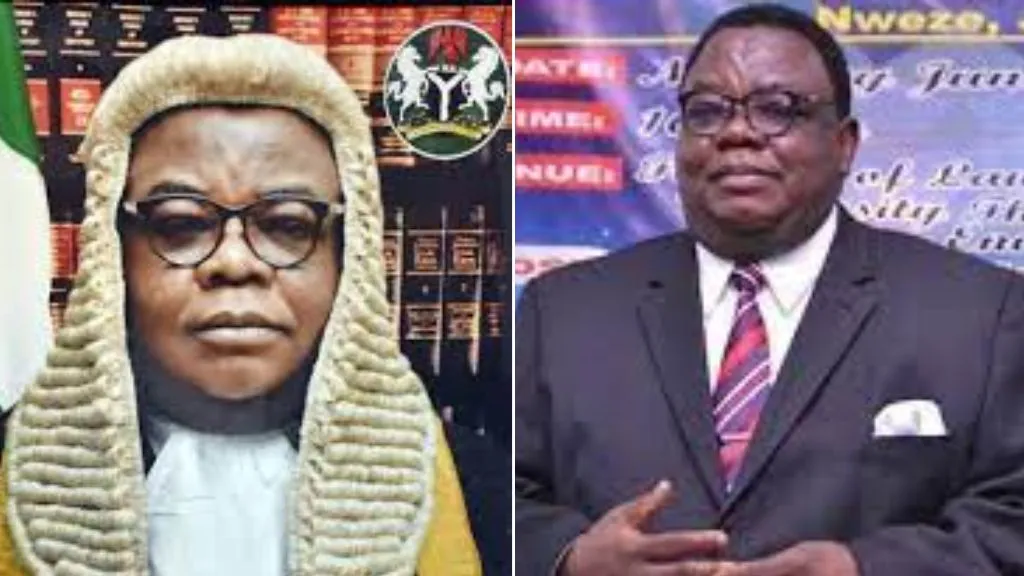
How a former CJN preferred Nweze to other Supreme Court nominees from S’ East

By Lillian Okenwa

He has been described by many as a jurist par excellence and an accomplished intellectual of no mean standing. Others see him as one who had a sterling career, one of the most fearless judges in recent Nigerian history whose reputation by a single judgment suffered a mortal blow.

What many do not know is that at the time nominations were sent in for appointments to the Supreme Court in 2014, he was preferred above other more senior justices from the South East zone by the then Chief Justice of Nigeria (CJN) Aloma Muktar. Justice Mukhtar reportedly said that in all her years in the Court of Appeal and the Supreme Court, she had never been able to upturn Nweze’s judgement. She reportedly concluded that Nweze could not remain in the Court of Appeal while he is writing Supreme Court judgements.

Indeed, law teacher and ex-Chair, National Human Rights Commission (NHRC) Prof. Chidi Odinkalu, had this to say about Justice Nweze: “Chima Centus Nweze was an extraordinarily bright man to whom Providence was very kind.

“When the Supreme Court vacancy filled by him fell open, many thought Justice Raphael Agbo, who was his senior to the Bench and on the Court of Appeal, would get it. There was a lot of bench pressing on Agbo’s behalf by powerful people. It was thought that he would be recompensed for his being by-passed for the office of Enugu State Chief Judge in favour of a much more junior person. But the then Chief Justice was impressed by Nweze on very objective grounds and he got the nod ahead of everyone else.

“In the nature of these matters, both Justice Nweze and Justice Agbo have passed on in the same month. Sadly, at the peak of a benighted career, he blotted his judicial copybook with some infamous judgments such as those in the Kunle Kalejaiye and Nwobike cases.

“Tragically, posterity’s conclusions are not done in footnotes. So, most are more likely remember him for the infamy of the Lawan judgment in 2023 rather than the righteous foresight of his forceful dissent in 2020 in the Imo State Governorship case.  May the Heavens do their thing, be merciful in judgement and grant him eternal peace.”

One time Chair of Nigerian Bar Association (NBA) Abakaliki, Tony Okah said: “A brilliant man and great jurist. A Professor, Ph.D. holder able to speak six languages (self-taught). Unfortunately, history won’t be kind to him. He saw Nigeria on the move and put a wedge on its wheels. The damage of his last judgement has cost our nation greatly.

“His bold dissenting judgment in the Emeka Ihedioha’s application for review of the unfortunate judgment of the Supreme Court now pales into insignificance in the light of his leading judgment in the Machina appeal.”

But many have also wondered if there is more to Justice Nweze’s decision in the Manchina v Lawan judgment. An editorial published by Whirlwindnews on 2 August 2023 reads:

 “Not a few Nigerians saw the outing of the erudite jurist and scholar as completely direct opposite to that of his firm stance in the Uzodimma case. For emphasis, Nweze had cautioned his colleagues to reconsider their position after Ihedioha had returned to urge the apex court justices to reverse themselves. In the dissenting judgement, Nweze, who had held that Uzodinma misled the court by crediting unverified votes in 388 polling units to himself, had warned: “This decision of the Supreme Court will continue to hunt our electoral jurisprudence for a long time to come. This court has a duty of redeeming its image, it is against this background that the finality of the court cannot extinguish the right of any person.

“‘I am of the view that this application should succeed. I hereby make an order repealing the decision of this court made on January 14 and that the certificate of return issued to the appellant (Uzodinma) returned to INEC. I also make an order restoring the respondents (Ihedioha) as the winner of the March 9, 2019 governorship election.’

“So, what happened that he could switch in such a manner so soon after? For one, going by the doctrine of justice must not only be done, but seen to have been done, many saw and still see the case of Uzodimma carrying the same weight as that of Lawan, in terms of misapplication of justice. They could not be bothered about the technicality upon which the late jurist and his two other colleagues relied on.

“All what a completely stunned public could see was the meat of the case. Lawan had contested the presidential ticket of the APC held in June of 2022 and by virtue of the Electoral Act of that year, was clearly not qualified as the amended act, had barred anybody from contesting for two positions in an election circle. So, what happened that Nweze, a known advocate could jettison this clear provision, in preference to mere technicality?

“How could such a character with steely mindset on delivering justice at whatever cost be associated with such an obvious judicial heist? That has become the basic question, which has been accentuated with his death. There are fears that the late jurist did not act out of self-will. There is a version that claimed that he was forced to deliver the judgement.

“In fact, one account stretches the issue further, informing that, that singular outing that became a serious blemish on his otherwise blistering career quickened his death and sent him to his early grave, metaphorically and literally. First, it was said that he could not live with the consequences. Second, he was said to have been denied visa to travel to the US to attend to his health.

“Unverified as it appears, what if that narrative is the true picture? What does it portend for the Nigerian judiciary? The answer is obvious. If someone as hard-willed as Nweze could capitulate under pressure, as it was alleged, who then could survive? Indeed, right from time immemorial, the case of the independence of the judiciary or lack of it, has always come to the fore in justice systems across the world.

“While there is the belief that no judiciary is completely free anywhere in the world as judges are prone to external influence, the case of Africa is considered worse, with Nigeria being no different. In fact, the 1962 comments of George Sodeinde Sowemimo, in the celebrated treason trial of the late Obafemi Awolowo against the Federal Government, remains one of the most historic examples. Before the late judge sent the former Leader of Action Group (AG) to jail, he had prefixed his pronouncements with the expression – my hands are tied. Tied by what, whom? The answer has not been provided till date.”

Tinubu versus Buhari war started earlier than expected, By Dele Sobowale

“It is quite impossible for those who want to gain power to avoid getting rid of those who are most likely to form the opposition” – Critias, 404 BC, VANGUARD BOOK OF QUOTATIONS, VBQ, p 196.

In addition to those in opposition, power-grabbers abhor those likely to form a rival source of allegiance by the people. Tinubu is President; but, he knows very well that the allegiance of the northern masses and elite remains with Buhari. So, the ex-President remains a rival who must be deleted as soon as possible. That idea was at the back of my mind when, a few weeks ago, I got published an article titled, CBN: TINUBU VERSUS BUHARI CLASH INEVITABLE. Below, I reproduce, as usual, the prophetic first two paragraphs of the article. The war is on!! And, only Almighty God knows what will follow.

When evil men must seek to perpetuate an unjust status quo; good men must try and bring into being real order of justice” – Reverend Martin Luther, Jr. 1929-1968.

The suspension and subsequent arrest of the Governor of the Central Bank of Nigeria, CBN, has brought the inevitable collision between President Tinubu and ex-President Buhari closer than the two of them realise. Buhari, who hoped to have a peaceful retirement in Daura or Niger Republic, will soon discover that he had murdered sleep. Short of killing Emefiele, in order to silence him, the probe of the CBN ordered by Tinubu will reveal to what extent Buhari and his cabal, including Ministers and Advisers, privatised the bank. Since this is only a short article, and it is not my intention to reveal all the facts of violations of the Constitution, in which Buhari and Emefiele were involved, partly, this is designed to warn Tinubu that if, indeed he wants to fight corruption, he could not have started in a better place. This one will test his sincerity of purpose to the limit. To put it bluntly, the CBN was more recklessly looted, “on orders from above”, from 2015 to 2023, than even under the draconian regime of General Sani Abacha. Therefore, the first question to ask is whether or not Tinubu has the guts to step on all the toes and damn the consequences. We shall soon see”.

NO MORE NIGER FOR BUHARI

“Men make history; but, not just as they please” – Karl Marx, 1818-1883, VBQ.

Towards the end of his disastrous eight years in office, Buhari, half-mockingly, told Nigerians that if we disturbed his peace, he would move to Niger. I wrote a rejoinder asking him to go immediately – because it would be good riddance…

Now I dare him to go to Niger. Most probably, he will end up in the same black hole where the deposed President is now kept. So, Buhari is stuck in Nigeria and his successor, and leader of the All Progressives Congress, APC, Tinubu, had just made a pronouncement about how the CBN was managed under Buhari’s presidency. Even Bishop Hassan Kukah, who, a few weeks ago, declared the Buhari government the most corrupt in our history, did not go so far as Tinubu did in de-mystifying Buhari.  This is strange politics and its ramifications are still unknown to us. This is the new President of the ruling party, not the opposition, telling Nigerians that we have been mercilessly robbed by Buhari.

Read Also: http://Falana, Akaraiwe, Ebobrah, others speak on institutional failure in Nigeria

Tinubu, in his address on Monday, summarised the situation under Buhari as one in which fuel subsidy payments were “being funneled into the deep pockets and lavish bank accounts of a selected group of individuals. This group had amassed so much wealth and power that they became a serious threat to the fairness of our economy and the integrity of our democratic governance… To be blunt, Nigeria could never become the society it was intended to be as long as such small, powerful yet unelected groups hold enormous influence over our political economy and the institutions that govern it.” He went further to allege that there is “the elites of the elites, who have stolen so much from Nigeria that they have become so powerful as to constitute a threat to democratic governance.”

Tinubu was, of course, referring to the immediate past government of Buhari – who spent most of his eight years in office pointing accusing fingers at Jonathan and the PDP. Tinubu has merely confirmed what I have written so many times before. Buhari is a hypocrite; and he has used hypocrisy to mask the worst corruption in Nigerian history by any government. Truth is out.

WHAT CAN OR SHOULD BUHARI AND CO DO?

“Silence is not an option when things are ill-done” – Lord Denning, 1899-1999

Denning’s observation, coupled with the fact that silence, in the face of serious and open allegation, implies consent, means that Buhari cannot ignore the accusations bordering on aggravated economic sabotage and, perhaps treason. Unless, Buhari and his cabal can offer a convincing rebuttal, the man’s life-long image has been totally destroyed. Tinubu might not realise it; he might not even intend it; but, he has “murdered” Buhari. It is now left to the old and tired ex-General to lay dead or to rise up and fight for his reputation, now in shreds, as well as his place in history. Either way, he will never be the same again. Of the two options, ignoring Tinubu would be the worse one; because, the probes which had been ordered will most probably provide sufficient evidence to nail him and his cabal members.

Fighting back also carries with it a lot of risks. To redeem his lost esteem, Buhari must prove Tinubu wrong on a lot of the allegations. Meanwhile, Tinubu only needs to prove a few things to be true for Buhari “Mr Clean” to become “Mr Dirty”. Instincts tell me that Buhari is beaten before the fight starts.

That leaves the proud General with only one option left – BEG FOR MERCY.

BUHARI SHOULD FORGET PRIDE; JUST BEG

“Pride, the never failing pride of fools” – Alexander Pope, 1688-1744, VBQ, p 200

The reader should permit me to bring in part the article published just a few weeks ago, to demonstrate the extent of Buhari’s complicity in the illegal raid on the CBN without the knowledge of the National Assembly.

“ISSUE 14: IRREGULAR WITHDRAWALS FROM PUBLIC FUNDS (=N60,832,040,370.72).

Section 80(4) of the Constitution of the Federal Republic of Nigeria (as amended) states: No moneys shall be withdrawn from the Consolidated Revenue Fund or any other public fund of the Federation, except in the manner prescribed by the National Assembly.” Also paragraph 417 of the Financial Regulation states: Expenditure shall be strictly classified in accordance with the estimates, and votes must be applied only to the purpose on which the money is provided. Expenditure incorrectly charged to a vote shall be disallowed.

Read Also http://36-year-old female medical doctor makes Tinubu’s ministerial list

“The sum of N13,775,687,264.39 was withdrawn from the Consolidated Revenue Pool Account, while N47,056,353,106.33 was withdrawn from 15% Wheat Grain Levy…for purposes outside the aim of the establishment of the respective funds, contrary to the provisions of the Constitution and Financial Regulation…”

Despite his low educational qualification, even Buhari would be expected to understand those simple constitutional and financial regulatory provisions. At any rate, his Vice President is a Senior Advocate and a Professor of Law; he also has an Attorney General and Minister of Justice, also, sadly, a SAN. In addition, at least three SANs are members of his under-performing cabinet. So, Buhari cannot plead ignorance when he ordered the Governor of the CBN to release funds from the Wheat Levy Pool Account to pay for “the payment of earned allowance to non-teaching staff of Nigerian universities (N8,000,000,000); to finance 2019 recruitment of Police Officers approved by Mr President (N9,056,353,106.33) and funds borrowed from special account for eventual release to MOD [Ministry of Defence] procurement of Military Equipment (N30,000,000,000).” Source: AUDITOR-GENERAL FOR THE FEDERATION’S ANNUAL REPORT ON THE FEDERAL GOVERNMENT OF NIGERIA CONSOLIDATED FINANCIAL STATEMENTS FOR THE YEAR ENDED 31ST DECEMBER 2019).

Read Also http://Friendly advice to Tinubu stumbling as President, By Dele Sobowale

I have gone to great lengths to reveal how, since a fish rots from the head, the massive corruption in the Federal Government from 2015 to 2023 had its origin, specifically, in the President’s office. Buhari, contrary to the lies told by his spokesmen, was an incorrigible serial law breaker. The Wheat Levy was established to promote our self-sufficiency in wheat production and to reduce our food import bill. As we have seen, with evidence beyond reasonable doubt, Buhari illegally forced Emefiele to release funds from that account for other purposes. Abuse of power. He made the request without approval from the NASS. Breach of a financial regulation. And, he deliberately kept all the transactions hidden from the NASS, which did not ask questions. Nobody can now account for how the N30 billion released to the MOD was spent.

To cover up this and thousands of other shady conspiracies, queries by the Auditor General were ignored. Summons by the NASS were treated with well-deserved contempt; the leaders of the NASS were primed to “see no evil, hear no evil, speak no evil” about Buhari – despite the unpleasant odour of monstrous corruption.”

To be continued…

Intimate Affairs: Unforgivable sins, by Funke Egbemode

Between couples, married couples, are there sins that can undo the ‘I do’ or do them apart long before death arrives? Can you forgive your husband anything or everything? Are there things your wife will do and you’ll spit in the air and collect it with your face? Meaning: you are ready to go for broke and break everything. 

Are there things a wife should not do for love no matter how sane they may sound in a moment of passion and sacrifice? 

Sacrifice, what are the limits of sacrifice in a marriage? If your husband gives you ‘gonorrhoea, will you forgive him? If he ‘mistakenly’ sleeps with your friend or sister, will you end the marriage or kick the intruders to the curb and take your husband back?

If your wife sleeps with your landlord to stop him from kicking the family into the street when you were down on your luck, will you ‘accept her sacrifice’ or see her as a tramp who slept with an old dirty goat and send her back to her parents?

Right now, I can’t really remember all the unforgivable sins in the world. It’s just six in the morning and my brain is still booting, after all. But I have just finished watching a movie that really got me thinking. See, each time I get an opportunity to counsel an about-to-marry couple, I always ask the question: Is there anything he/she will do that you cannot forgive? And I always get that frightened, shocked look that tells me I just asked a question they had no answer to, a bump on the road on this journey they were embarking on that they had not considered. Young love these days worry more about how romantic the proposal is, the photo-shoots and other shiny stuff. They hardly ever give serious thoughts to the marriage itself, which starts right after all the dazzling fireworks and dancing competition at the wedding reception.

Read Also: Tales my patients told me: Confessions of a Retired Bank Robber

But bumps, and hard times are part of the journey called marriage. The rose-tinted glasses must come off at one point or many points in every marriage when the storms or confusing moments show up. That is when the couple gets to know the strength of their bond, the depth of their vows, and the length they’ll go to stay together.

Take the case of Toyin and Gabe, whose marriage ran into uncommon turbulence after about 12 years.

The bills had been piling up for a while, and steadily too. The electricity, gas, rent, and school fees, had all been unpaid for months. The only possession the family had that was fully paid for was the family car. Gabe was out of a job because of a downsizing wind that blew through the banking sector. They lived on their savings for a while but Toyin had been a full-time housewife for a long time, perhaps for too long, really. She was a trained masseuse who had become rusty. That Monday morning, to worsen an already bad financial state of things, the children had to stay home because the fees for two previous school terms were outstanding. The third term usually is when school owners pull the rug from under parents who are owing, especially as the children approach promotion examination.

The children were unable to go to school. There was no food at home. The landlord had started bringing in prospective renters and buyers to inspect the house. The food cabinets were empty. They were owing every ‘omo Ibo’ selling foodstuff in the neighbourhood. And Bolu, the four-year-old baby of the family, was running temperature.

You know what they say, when it rains, it pours. Toyin knew it was time to get up and do something, anything. Her husband was incapacitated, financially. Gabe’s mood had become a permanent pendulum swinging between anger and prolonged deep, silent sadness. Toyin knew depression wasn’t far away and she was not going to watch her son die of malaria, was she?

As a trained masseuse, she went job-hunting. And she got one, the very first day of the hunt. She could not believe her luck. It was a well-equipped spa, demure but sophisticated. It had no massive signage and until you left the reception area, you would not feel the massive investment behind the small exterior. Toyin could not believe she got in that easy. There was no strenuous interview. No rigorous questions about references from her previous employers and all those stuff people who have not worked for years are subjected to when they return to the grind.

Nervous but excited, Toyin resumed a week later. And that was when she found out that her real job description was beyond the contract letter she was issued. The first thing she noticed was the five-star clientele: bankers, politicians, top police officers, people whose names she had only read in newspapers and whose faces she’d seen only on television. They all came for the ‘happy endings.’ Yeah, the spa treatment that ended with pleasurable sex, uninhibited sex. Did you gasp? Toyin wept.

Toyin was married. She had never been unfaithful to her vows but her family was on the verge of losing their accommodation and faced with a ‘return-to-the village’ option. Her children had been sent home from school. She found herself between the devil and the deep blue sea. She decided to grab a life jacket and swim. It was a tough call and she told herself she would stop as soon as the overhanging bills were paid. She consoled herself that what Gabe didn’t see or know would not hurt him. The money was too good.

The gifts from her clients were irresistible. Her first client was a member of the judiciary and he tipped her in dollars. Toyin sent her conscience on sabbatical and eased into the quick easy flow of cash. For two years, she deployed all manners of lies to cover her tracks. She bottled up her shame and paid the bills until the quicksand of karma consumed her. Happy endings do not always end happily, trust me.

Read Also: Tales My Patients Told Me: A very unusual union

One tragic Saturday, one of the masseuses gave one of the clients a happy ending that was too happy and the client joined his ancestors, right there on a VIP massage table. The place was raided and all the worms crawled out of the can. Toyin got caught in the melee, of course, and her marriage now hangs in the balance. Gabe could not believe his wife was nothing more than a ‘glorified prostitute’, an ‘olosho’ masquerading as a masseuse. He was angry, livid. He wept. He moved out of the house. Then he moved back and told Toyin to leave. The children were distraught. Everything indeed fell apart.

Did anybody remember the circumstances that led to Toyin looking for a job, in the first place? Did Gabe remember the days strangers walked through their home with the landlord showing their bedrooms and wardrobes to them as prospective tenants? Did Toyin’s husband realise how his children got to stay in school in spite of his joblessness?

Maybe Toyin should not have taken the job? Maybe she should not have allowed herself to be sucked in by the easy cash. Maybe she should have convinced her husband to let them move back to the village, or at least out of the city. Maybe she should have bought a herbal concoction instead of taking Bolu to the hospital. Maybe Toyin should have pressured her husband to do ‘whatever his mates were doing’ to take care of their families instead of taking on the burden of the family breadwinner. Plenty of ‘ifs’ and ‘maybes’.

Who would have thought that that normal job-hunting day would end in tears, premium tears? But there she was, with the short end of the stick, a bewildered family and a furious, confused husband.

Read Also: Tales My Patients Told Me: Thunder fire you?

Let me state clearly here that Toyin is guilty of an offence. Adultery is adultery, irrespective of the reason or reasons behind the sin. She had a choice and she must own up to her failure to uphold her marital vows, with her full chest.

The issue here is forgiveness in marriage. Does she deserve forgiveness, a second chance, another chance? If you were in Toyin’s husband’s shoes, would you forgive her or tell her to pack both her light and heavy bags and return to her father’s house?

What sins will you consider unforgivable between a husband and wife? Why can’t you forgive your spouse? Should there even be unforgivable sins in marriage?

Funke Egbemode can be reached on [email protected].

10 unusual sexual practices from around the world

By Ntianu Obiora

The world is a huge place and what is considered normal somewhere might not be elsewhere so let’s take a look at the sexual practices that raise a brow.

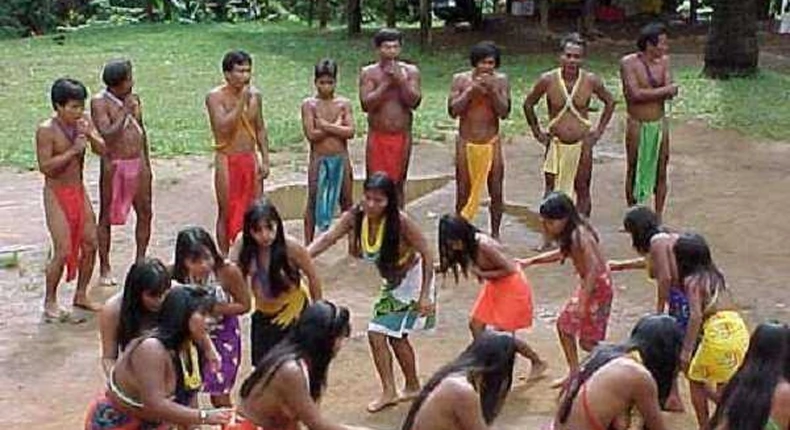
From a tribe in Cambodia which allows women to receive various men in their love huts to a tribe in the South Pacific Oceans that encourages older women to have sexual relations with young boys to teach them the ways of the world.

There are a variety of seemingly odd sexual practices that go on around the world and we have put together a list of some of the best.

1. Boys and girls of the Sambian tribe have to drink semen

The Sambian Tribe of New Guinea have a tradition of separating their boys from the girls at the age of 7 and 10 years. During this period, they undergo piercings, nose bleeds, and have to drink the semen of the tribes mightiest warriors.

2. Girls of the Trobriander tribe engage in sexual acts from age 6

The Trobriander Tribe from Papua, New Guinea embraces sexuality from an astonishingly young age. Boys start engaging in sexual activity from the age of 10-12, while girls start from 6 years! The legalities of such a practice is unclear by their law but it would certainly be considered illegal by most countries.

Read Also: How torture, deception and inaction underpin the UAE’s thriving sex trafficking industry

3. In Mangaia, older women have sex with young boys

In Mangaia, an island in the South Pacific Ocean, boys around the age of 13 have sex with older women who teach them the intricacies of the act and how best to please their partners. These rituals are supposed to turn a boy into a man through sexual exploration.

4. The Kreung Tribe builds love huts where teenage girls can have sex with different men till they find the one

With the Kreung Tribe in Cambodia, the elders build a love-hut for their teenage daughters. Different boys spend the night here day after day until she finds a suitable partner, who is then with her for life.

Read Also: Intimate Affairs: Sex, Pastors and Pastors’ Wives, By Funke Egbemode

5. In Ancient Greece, men took young boys as lovers

For Ancient Greeks, sexual identity didn’t depend on gender and preference but on who was the active penetrator and who was on the receiving end. The active role was associated with higher social status, while the passive role meant youth and femininity, or ‘boy love’ in other words.

Read Also: When will we learn that the brain is the primary sexual organ… By TK Orlando

6. In certain Nepali tribes, brothers share one woman

Some Nepali tribes in the Himalayas practise polyandry. Basically, all the brothers share one woman, so that they don’t have too many children for their limited farmland.

7. The Wodaabe tribe holds a wife-stealing festival every year

In the Wodaabe Tribe of Niger in West Africa, children are married in their infancy. However, at the yearly Gerewol Festival, Wodaabe men wear elaborate makeup and costumes and try to covertly steal another’s wife. If they go undetected, their union becomes recognised.

8. Adolescents of the Muria tribe, Chattisgarh, can ‘practise’ sex without emotional attachment

The Muria Tribe from Chattisgarh in India has a very sexually liberated culture. They have mixed-sex dormitories where adolescents are sent to practice premarital sex, sometimes with a single partner and sometimes serially. They are discouraged from becoming emotionally attached to their partners.

9. Women of the Guajiro tribe must make a man ‘fall’ to make love

Colombia’s Guajiro people have a ceremonial dance. If a woman trips a man during the dance, they must have sex.

10. In Indonesia, you can have sex outside marriage during Pon celebration

During the celebration of Pon in Indonesia, participants have to spend the night and have intercourse with someone other than their wife or husband. It is said that their wishes of good luck will only come true if they have sex with the same person at all seven celebrations throughout the year.

Credits: Pulse.ng.

Why contraceptive use is low among sexually active unmarried women – UNIJOS Gynaecologist

Says Yoruba ranks highest in twin births worldwide
●Cigarette smoking quickens menopause among women
●10-20% of pregnancies end in “miscarriages”

A research among postmenopausal women has indicated that cigarette smoking is one of the factors responsible for their attainment of menopause at 45 years, a Professor of Obstetrics and Gynaecology at the University of Jos (UNIJOS), Amaka Ngozi Ocheke, has said.

Also, contrary to beliefs that trace infertility to only one gender, she said both males and females contribute to infertility among couples.

“Infertility affects 10-15 percent of couples, but in Nigeria, it affects 20-30 percent… About 30 percent of infertility is due to female problems, 30 percent due to male problems, and 30 percent due to combined male/female problems, while in 10 percent, there is no recognisable cause”, the UNIJOS don said.

She also said that Yoruba ethnic nationality has the highest rate of twin pregnancies which is the commonest type of multiple pregnancies, especially among blacks, while in Nigeria, about 10-20 percent of all pregnancies end as ‘miscarriages.’

“Twin pregnancy is the commonest type of multiple pregnancies occuring more commonly in blacks with the highest rate among the Yoruba.

“Spontaneous abortion (miscarriage) is a pregnancy that ends spontaneously before the fetus has reached 28 weeks in Nigeria. About 10-20 percent of all pregnancies end as miscarriages, “Ocheke stated.

According to her, while modern contraceptives use is higher among sexually active unmarried women (28 percent) than currently married women (12 percent), the Caesarean Section delivery rate has remained low at three percent, according to the National Demographic Health Survey (2018) due to factors including fear of operation, lack of finance, fear of stigmatization, poor availability of and/or accessibility to health services.

Ocheke, who teaches O & G in the Faculty of Health Sciences in UNIJOS, stated these while delivering the 106th inaugural lecture of the institution titled, “The Odyssey of the Nigerian Uterus: Bumps, Potholes, and Accidents.”

She said, “In Nigeria, reported symptoms of menopause include hot flushes, loss of libido, fatigue, fatigue, joint and muscle discomfort, depressive feelings, sweating, and physical and mental exhaustion as is the case with women in other parts of the world.

“Our research among postmenopausal women revealed that women attained menopause at 45 years and that HIV infection, cigarette smoking, quality of life, and stage of the menopause transition to be associated with severe symptoms.”

A special report by Premium Times on “ How poor sex education exposes Nigerian teenage girls to pregnancy, STDs” gave some illuminating insights.

Seventeen-year-old Rakiya Rabiu, 17, sells groundnut at Bwari, a satellite community in Abuja where she and her her nine months old baby boy live with her aunt.  Speaking with PREMIUM TIMES in Abuja, Rakiya said she got pregnant at the age of 15 for her water vendor boyfriend, who she started dating a year earlier.

“I got pregnant for Shittu, the father of my son, in 2015. I started dating him when I was 14 years old.

“I live with my aunt here in Bwari and I met Shittu when he came to sell water to my aunt,” she said.

Rakiya said she has never been to school although she had considered enrolling in one. She got pregnant instead, out of ignorance, a factor that, she said, put a dent to her chances of going to school.

Rakiya’s lack of formal education, and indeed of sex education may have contributed largely to her pregnancy. Her case typifies findings of the Nigerian government as it relates to teenage pregnancy.

The Nigerian Demographic and Health Surveys, NDHS, in its latest report in 2013 revealed that 23 per cent of Nigerian teenage girls were already mothers or pregnant with their first child.

The findings of the 2013 survey are similar to that of 2008, with the next survey due in 2018.

The 2013 report stated that one in six (17 per cent) Nigerian girls between the age of 15 and 19 already have a child with another five per cent pregnant with their first child.

THE LOCATION, EDUCATION FACTOR

One of the findings of the survey was that young girls in rural areas were more likely to get pregnant than their counterparts in urban areas.

The proportion of teenage girls who had begun child bearing in rural areas, according to the report, was 32 per cent as compared to 10 per cent in urban areas.

The report also showed variations across Nigeria’s six geopolitical zones. The north-west has 36 per cent prevalence of teenage pregnancy, while the south-east and south-west have the lowest prevalence rate with eight per cent each.

Education, including sex education, also plays a major role in preventing teenage pregnancy, the study found.

The survey found that teenagers with no education represent about half of those who had begun childbearing, while only two per cent of teenagers with more than a secondary education have begun childbearing.

Family income was also a major factor with the report finding that teenagers from poorer homes are more likely to be pregnant. Teenagers in the lowest wealth quintile are more than twice as likely to have started childbearing as those in the middle wealth quintile (43 percent and 21 percent, respectively), and almost 10 times as likely as those in the highest quintile.

Rakiya’s ordeal typifies several of the factors identified in the survey.

“Shittu had said he loved me and would marry me after making some money from his water business, so I allowed him to have sex with me and that was the first time,” she told PREMIUM TIMES.

“He lives in my area so we see each other every day and we had sex sometimes if my aunt is not at home. When I became pregnant, it was my aunt that first discovered that I was pregnant. Then I told Shittu that I was pregnant.

“My aunt said he should marry me, he said we would get married after I gave birth.

“However, since the birth of my child, he hasn’t talked about the marriage. I have not even seen Shittu for four months now. People are saying he travelled and I don’t know if he will come back.

“I regret having sex with Shittu because I cannot take care of this child alone. Now he left, without telling me,” she said.

When asked if she was ever taught sex education informally since she never went to school, Rakiya’s response was negative.

“I have never been educated or talked to about sex. I don’t know what condom was or used for until Shittu brought it one day and used it when we were having sex.

“I don’t also know what sexually transmitted diseases are.

“But I have heard my neighbours talk about HIV, that it’s a disease that kills. I regret my action but I pity my aunt most because she cannot chase me out of her house because I don’t have mother again. So, she is taking care of me and the baby.

“I started selling groundnut and sometimes pure water to take care of my son. I love my son and I will take care of him. He will soon start walking well now and he will keep growing,” she said at an interview in March.

SEX EDUCATION HELPS

Like Rakiya, Roselyn Joseph, 16, said she has been in a sexual relationship.

The SS 3 student of a government school in Kubwa, another satellite town of Abuja, however said though she is sexually active, she has never engaged in unprotected sex.

“Yes, I am sexually active. I know a lot about sex because we have a teacher for sex education. I started having sex at age 15 with my boyfriend and we use condom always.

“My boyfriend loves me a lot and I love him too, that is why I agreed to allow him to have sex with me. He is older than me, so I believe anything he tells me. The only reason I feel bad now is because I realized most of my friends are still virgins.

“Our sex education teacher has taught us a lot about the consequences of having sex before marriage. She said we can get pregnant or contact sexually transmitted diseases, which includes HIV,” Roselyn said.

Another teenager, Bolutife Akindele, 15, said she has never engaged in sexual activity mainly because of her sexual education.

“We have been taught a lot about sex in school,” the SS2 student of a government school in Kurudu, an Abuja suburb, said.

“Our teacher said if we have sex when we are not legally married, we can contact diseases like AIDS and also we can get pregnant. And I don’t want to get pregnant because I don’t want my mates to leave me behind.

“I have a future and I am concentrating on that. We are also taught to dress well to avoid harassment from men because you are addressed the way you are dressed.

“Also, apart from the knowledge I received from my teacher, my religion frowns against sex before marriage, so I won’t engage in it.”

Like Bolutife, Grace Onwukwe, a 15-year-old student of a government school in Dutse, also in Abuja, said she is not sexually active but has knowledge about it.

“I know sex is the intimate relationship between a man and a woman. I was taught in school and even among my friends that sex is meant for only married couples.

“So, I will wait till I get married before having sex with my husband. Another reason is because I don’t want to contact HIV. My teacher said it can be contacted through sexual relationships”.

AN AGENCY’S DUTY

One agency responsible for ensuring sexual education among Nigerian youth and adults is the National Agency for the Control of Aids, NACA.

A senior programme officer for NACA, Hafsatu Aboki, said the agency was concerned by the reports on teenage pregnancy.

Mrs. Aboki, whose agency took part in the survey, said the reports are evidence that young people are still engaged in unprotected sex despite the agency’s effort to stop the practice.

“As it is widely known, HIV can be transmitted through unprotected sex where one partner is already infected. This is one of the issues we are trying to address in our programming. We have a programme that focuses on adolescents and young people.”

The official said the agency has stepped up its efforts to educate teenagers about unprotected sex so as to reduce teenage pregnancy and sexually transmitted diseases.

“Exactly a year ago, we launched the National HIV Strategy for adolescent and young people,” she said.

“The strategy focuses on all adolescents and young people in Nigeria, both those in the rural and urban settings, whether they are in school or out of school, whether they are what we termed high-risk population or otherwise, they are all covered by this strategy.

“We also have prevention interventions that are supposed to bring about positive behaviour change, like engagement in low risk sex, reduction of sexual partners, reducing early sex; that is, young people should abstain from sex till they are older. All these are part of the interventions that as a programme, we have designed for young people (with the involvement of young people).”

Mrs. Aboki said her agency has a “minimum prevention package” that uses three approaches.

“First, we are trying to address behaviour by giving information to young people, telling them about HIV and how it can be transmitted and how it can prevented.

“Also, giving them biomedical interventions, such as HIV Testing Services (HTS), condoms and treating sexual transmitted infections which predispose a person to HIV infection. The third approach is to provide structural interventions meant to address vulnerability.”

She said the intervention would address social and cultural norms in the society such as “stigma, discrimination, as well as empower young people”.

She also identified early marriage as a problem, making reference to a finding in the survey that about 40 per cent of young girls are married by the time they are 18 years of age.

The official acknowledged that in order to reduce the percentage of young people engaging in unprotected sex, information and education must improve.

She said the survey also found that while awareness about HIV is high, most young people don’t have comprehensive knowledge about the virus.

“It goes from HIV awareness at about 90 per cent to comprehensive knowledge at less than 30 per cent among young women. Risk perception is low. So if you ask adolescents age between 15-19 how they place their own HIV risk, most say that they are at either very low or no risk of acquiring HIV.

“Surprisingly, even those that are engaging in high-risk behaviours consider themselves to be at low risk of HIV.

“That is something that needs to be addressed by targeted communication to young people. It should be targeted in its content, so that what we are saying is something that is addressing the information needs of the population”, she said.

The Conclave/Premium Times

How the U.S. fumbled Niger’s Coup and gave Russia an opening

By Drew HinshawFollowBenoit FauconFollow, and Joe Parkinson

How the U.S. Fumbled Niger’s Coup and Gave Russia an Opening
A week of missteps and communication breakdowns pushed an important American ally toward the Kremlin
Niger’s president hid behind a bulletproof door of his official residence and talked over a phone he assumed was monitored. To anxious French and American allies, he repeated assurances that the army would soon rescue him from an unfolding coup. 
Outside the ground floor safe room Mohamed Bazoum had recently renovated to protect himself from such an event, mutineers from his presidential guard fanned out across the presidency compound, furious about a proposal to replace their longstanding commander, according to Nigerien, U.S. and European officials. Hunkered over the phone beside his wife and son, Bazoum delicately encouraged advisers to send the army’s regular units.
At around noon, his cellphone rang with a call from a former U.S. ambassador, who was about to board a flight on his vacation. The ambassador was worried one of Washington’s closest allies in Africa could become the latest in a string of regional states to fall into the hands of coup leaders sympathetic to Russia.
Everything is fine, the imprisoned president carefully intoned. 
A week later, Bazoum is still imprisoned in his palace, junta leaders are seeking aid from Vladimir Putin’s regional partners and America is on the verge of losing its most important ally in a crucial and unstable part of Africa. An obscure personnel dispute within Niger’s presidential guard has now become what appears to be a geopolitical win for Russia and its Wagner Group paramilitary company in their bid to flip Western allies.
The situation could yet turn into open military conflict. Eleven West African countries, led by Nigeria, have threatened to use force to restore Bazoum to power if the coup isn’t reversed by Sunday. In return, the pro-Russian leaders of Mali and Burkina Faso have vowed to defend Niger. Officials in the U.S. and Europe are scrambling for ways to return Bazoum to power but concede the window is closing.
The Kremlin on Friday warned against any intervention.
The coup, if successful, could lead Russia to pick up some of America’s most important drone bases, used to fly missions across the Sahara between Libya and Nigeria. Wagner’s mercenaries have previously taken over former U.S. and French outposts in Syria and Mali.
This outcome wasn’t predestined. A week of missteps and communication breakdowns pushed the vast nation of Niger toward Russia. Nigerien, American, European and other West African security officials, as well as Nigerien soldiers, described a series of unexpected blunders that now threatens to turn West Africa into a theater for regional war. 
Washington, caught without key personnel in its Africa posts, failed to anticipate what is now the seventh coup in the region since 2020—not including a failed attempt in Niger two years ago. While Bazoum sat in his safe room calling for help, America and its allies struggled to react as the conflict escalated into threats of war between Russian-backed countries and West Africa’s biggest military, Nigeria. 
The U.S. has spent more than $500 million arming and equipping Niger’s military. Yet the country’s special forces, trained for nearly every counterterrorism eventuality, had no answer for Sunday’s coup—West Africa’s most enduring security threat. The forces were left chatting over WhatsApp groups over whether to intervene.
The U.S. and Europe have made Niger the centerpiece of their fight against the spread of Islamic State and al Qaeda in Africa’s Sahel, a 3,000-mile semiarid territory on the southern shore of the Sahara that also includes Burkina Faso, Mali and Chad. They are some of the world’s poorest and fastest-growing populations, in failing states. Nearly half of Niger’s budget comes from foreign aid.
“This is your strong ally, your reliable ally, you have invested a lot and then there is a coup without any reason,” said Kiari Liman Tinguiri, Niger’s ambassador to Washington, who was fired by the junta overnight. “It’s very nice to be friends of the West, but it may not be helpful when hard times come.”
U.S. State and White House officials have said they still think there’s a narrow opportunity for a peaceful resolution that would retain Niger’s democracy.  
“While we are giving diplomacy a chance and have ongoing diplomatic engagements at the highest levels, we are continuing to review all options around our cooperation with the Nigerien government,” a spokeswoman for the White House National Security Council said. “Our focus is to help the people of Niger preserve their hard-earned democracy.”
Saharan citadel
The coup began with an idea for a personnel change, mulled over months by Bazoum and his aides, to replace the leader of the presidential guard that held watch over the country’s 63-year-old commander-in-chief.
U.S. and French intelligence officers had long known about the president’s plan to reshuffle his security detail and the risks it entailed. The presidential guard felt marginalized after vast sums of military assistance poured into the country’s counterterrorism units, two people familiar with the situation said. 
The French intelligence service DGSE warned Paris of the risk, but neither France nor the U.S. took significant action to defend their ally in Niamey, according to French and West African intelligence officials. 
Bazoum, elected in 2021 in Niger’s first democratic transfer of power, had been feted in Washington as a reliable partner against the twin threats of jihadist attacks and Russia’s growing influence.
In sonorous French, the former interior and foreign minister would hit some of Washington’s favorite notes. He rattled off gender-inequality statistics at events hosted by the State Department and the Gates Foundation, and regaled audiences with his efforts to educate girls in a country whose birthrate is the world’s highest, at seven children for every woman. 
After coup leaders in neighboring Mali and Burkina Faso shifted toward Russia, Bazoum made clear he stood with America. 
Niger registered just 114 attacks from jihadist groups last year, while Burkina Faso and Mali combined registered some 2,000, according to data collected by the nonprofit Armed Conflict Location & Event Data Project and analyzed by the Pentagon-funded Africa Center for Strategic Studies.
“More bases? We don’t need them,” he said in an interview with The Wall Street Journal shortly after he was elected.
Some of Niger’s military leaders saw him as an interloper with an Arab background. Niger’s majority Hausa ethnic group predominates the military. 
In April, Bazoum replaced the army chief of staff and the head of the national gendarmerie, hoping to place more trusted officers in their ranks, according to European and West African security officials. That stirred suspicion within his presidential guard. On July 24, Bazoum directed an aide to draft a decree to dismiss the guard’s leader.
Gen. Omar Tchiani had protected Niger’s leaders for 12 years, with a unit of some 700 elite soldiers backed by armored cars. Tchiani’s unit had stopped a coup attempt against Bazoum days ahead of his inauguration. As Bazoum built up the country’s counterterrorism forces, Tchiani’s guard lost out on resources and stature. The president had been weighing for months whether to fire the 57-year-old general, according to people familiar with the matter. 
At 3 a.m. on July 26, the general’s men drove up to the presidential palace, a white stucco arabesque estate overlooking the Niger River. Inside, gazelles and goats slept in the manicured gardens, animals Bazoum and his wife brought with them when he took office. 
Tchiani’s men, carrying heavy weaponry, disarmed security officers equipped only with handguns and walked past the presidential garden to Bazoum’s residence. 
Bazoum fled into the safe room across the hall from his office and phoned aides to say he was confident that U.S.-trained elements of his army would rally to his rescue. 
In a twist, some of the best U.S.-trained special forces among Niger’s regular army units were on counterterrorism missions in the distant desert regions of a country twice the size of Texas, with few roads.
The lightly armed units in the capital weren’t in a position to assault the palace and the chain of command broke down. Rank-and-file soldiers said they debated over WhatsApp groups what to do. They received no formal instructions from their commanders, who appeared to be waiting to see which faction had the momentum. Bazoum, who still had full control of his communications in the safe room, phoned international allies and ambassadors in Niger’s embassies in the West. He stressed over phone and video calls that the coup had no basis—it was a personnel dispute and could easily be reversed. His U.S. envoy rushed to let the State Department know what was happening.
Though the U.S. had spent hundreds of millions of dollars transforming Niger into its top military outpost in the Sahara, it didn’t have an ambassador in the country.
The Biden administration didn’t formally nominate one until eight months after the previous ambassador left, only to face opposition from Sen. Rand Paul (R., Ky.), who has put holds on State Department appointees until the White House releases intelligence he believes could show Covid-19 leaked from a Chinese lab. 
Washington also has no ambassador at the African Union or in neighboring Nigeria—or anybody in a special envoy post that it had created to deal with the region’s deterioration. The relevant Africa desk at the National Security Council was in flux, held by a short-term temporary post that was due to hand off to another temporary caretaker within days.
“This is extremely frustrating. This was not a widely supported coup—it was one unit that had its grievance for years and we should have done more to act,” said J. Peter Pham, former U.S. special envoy to the Sahel under President Trump. In the early hours, he added, “his exfiltration could have been organized relatively easily…. The golden hour has passed.”
Bazoum contacted allies in France, which had about 1,500 troops in the country. A decision would have to come from President Emmanuel Macron, who was traveling in the South Pacific, 12 time zones ahead. France’s government declined to comment.
Junta leaders headed to a state TV station and stood around a table where a stone-faced spokesman said the military could no longer “witness the gradual and inevitable demise of our country.” 
If Bazoum was going to be freed, it would have to come from outside.
Guns of August
Macron had just landed in the South Pacific island of New Caledonia when he spoke to his top defense and diplomatic officials, who laid out options to free Bazoum. 
For years, the French president had been briefed on a growing protest movement against France in the cities of its former West African colonies.
Young men jam-packed into those cities had come to see France’s military presence as an unwelcome imposition after years of al Qaeda attacks. Viral social-media posts and videos accused the French army of pursuing ulterior aims on Africa’s natural resources. 
In Mali, then Burkina Faso, coup leaders seized power and justified their takeovers as an act of liberation from France, before turning to Russia as their protector and benefactor.
The French president ruled out sending a unilateral force to usher a democratically elected president to power—as France did in 2011 in Ivory Coast. Instead, he wanted to assist Nigerien armed forces that remained loyal to Bazoum, an option that vanished as the country’s military command acquiesced to the coup.
U.S. Secretary of State Antony Blinken was in the South Pacific as well, warning the people of the island country of Tonga that China was practicing economic coercion. By the time he and Bazoum connected, the coup was complete. 
Russia was in an excellent position to step into the vacuum. 
Vladimir Putin was already receiving African leaders invited to a Russia-Africa summit in St. Petersburg due to start the following day. 
Bazoum had refused the invitation, but the Kremlin-backed leaders of Mali and Burkina Faso, Assimi Goita and Ibrahim Traore, gathered for meetings in the halls of the Constantine Palace. As news of the coup trickled in, their intelligence chiefs met under Russian auspices to agree on a coordinated response. 
Officials in Mali and Burkina Faso didn’t respond to requests for comment.
In another room, Traore, the world’s youngest head of government, at 34 years old, told Putin that the people of his country supported Russia’s invasion of Ukraine.
“The question that my generation poses to itself, if I can summarize it, is how can Africa, with so many resources under our soil, with such a natural abundance of sun and water, still today remain the poorest continent?” he told a St. Petersburg panel. “We haven’t had any answer until today. But now, we have an opportunity to form new relations.” 
The junta, which included recipients of U.S. training and largess, hadn’t shown particular interest in pivoting toward Russia. The military itself let U.S. counterparts know they wanted to keep the American aid flowing, military officers said. But the Kremlin eyed an opportunity. 
Yevgeny Prigozhin, whose Wagner mercenaries are protecting the leaders of Mali and the Central African Republic, offered to help the putschists in Niger, hailing their overthrow of a pro-American government.
“What happened in Niger is nothing other than the struggle of the people of Niger with their colonizers,” he said in a voice-mail message posted in a Telegram account.
Protests, organized by an opposition movement, thronged France’s embassy in Niger. Several in the crowd waved Russian flags. France sent military planes to evacuate its citizens. The U.S. moved its 1,100 troops, sent there to fight Islamist insurgents, inside American-built drone and special-forces bases. The State Department held off on calling the upheaval a coup, a designation that could, under U.S. law, sharply restrict America’s ability to keep funding, training and equipping Niger’s military.
The stakes were becoming more serious for the African giant to Niger’s south. Nigeria was once the world’s 33rd richest country per capita, until decades of military coups and misrule left it among the poorest. Its leaders feared a domino of coups would topple more civilian governments. 
On Sunday, July 30, Nigeria’s new president, Bola Tinubu, gathered with presidents and foreign ministers from 11 West African states, along with a representative from Bazoum’s government, in a glass-paneled building in the Nigerian capital of Abuja. Tinubu, who had risen to prominence campaigning against military rule in Nigeria, said that after coups in Mali and Burkina Faso—both supported by Russia—as well as in Guinea and Chad, the one in Niger was the last straw. If they accepted this coup, more would come.
After their meeting ended, the West African leaders issued an ultimatum: Tchiani had one week to return power to the democratically elected president or face the possible use of military force.
The State Department wasn’t sure it backed the idea, senior U.S. officials said. But Washington also wanted to show support for the West African governments. Blinken issued statements of general support for the Nigerian-led idea. A Nigerian government spokesperson declined to comment.
On Wednesday, Tchiani sent one of his junta leaders on a secret flight to Mali to meet the country’s pro-Russian leader. 
Defense chiefs from the West African states that oppose the coup met in Nigeria. Deputy National Security Advisor Jonathan Finer flew to Abuja to meet Tinubu, Nigeria’s president, who said the coup should not stand.
The Biden administration favored diplomacy but worried the junta intended to force Nigeria to make good on its threat of military force, concerns that came up in the meeting. Few in Washington felt confident Nigeria’s military had the capacity to pull off an intervention. But at this point, the U.S. conceded, there were few options left. 
On Thursday the junta announced on state TV it had terminated military cooperation agreements with France. 
From his palace, Bazoum phoned his ambassador to the U.S. to dictate an op-ed that appeared in the Washington Post calling for international intervention. 
“My country is under attack and I’ve been taken hostage,” he said. “In our hour of need, I call on the U.S. government and the entire international community to help us restore our constitutional order.”
By the time it published, parts of the country were in the dark. Nigeria, which provides some 75% of Niger’s electricity, had cut off one of its main transmission lines, plunging villages and towns into blackouts. The presidential residence lost power as well. 
Bazoum’s phone remains charged, his aides said Friday. If it goes out, the U.S. could lose its ability to reach the president. “I hope he has a lot of lithium batteries,” one former official said.

WALLSTREET JOURNAL
Friday 4th August 2023 

— Vivian Salama and Noemie Bisserbe contributed to this article.
Write to Drew Hinshaw at [email protected], Benoit Faucon at [email protected], and Joe Parkinson at [email protected]

TIPS