Home Blog Page 744

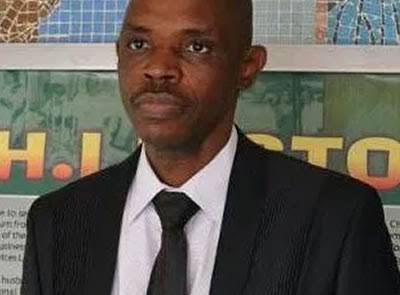
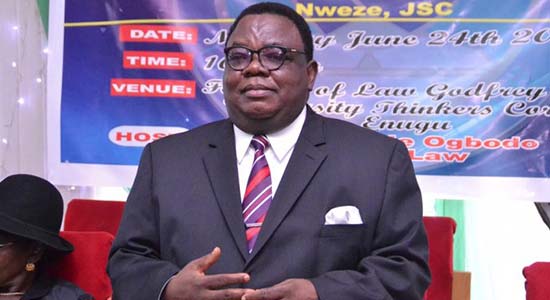
Hon. Justice Chima Centus Nweze: How the society kills its best

By Prof. Mike A. A. Ozekhome, SAN, CON, OFR, FCIArb, LL.M, Ph.D, LL.D, D.Litt.

INTRODUCTION

A HARVEST OF DEATHS

It has been a harvest of deaths in the judiciary. Justice Raphael Chikwe Agbo, a ranking Justice of the Court of Appeal, died on July 3, 2023. Then Justice Chima Centus Nweze died on Sunday, July 30 2023. The Hon. Justice Kate Abiri, erstwhile Chief Judge of Bayelsa State, who retired only on 13th January 2023, died on 3rd August, 2023. To say I am heart-broken by this harvest of premature deaths is an understatement. More so for Justice Abiri, who only at 6. 51am on the 3rd, August, 2023, had sent whatsapp messages to me, which was her usual daily morning devotional prayers. She had done this for years. The title of this particular prayer that she posted obviously few hours before the Lord’s call was, “How lovely is your Dwelling place, Lord”. (Thursday, 3rd August, 2023). Did the beautiful and ageless late Justice Abiri foresee her death coming and yearned for my “Lord’s lovely Dwelling place”? I do not know. Or, do you?

DEATH, THE ULTIMATE END OF MORTALS

Given the human nature of our frail bodies, everyone must experience death. God almighty, from whom every living being and thing springs forth, determines when we must experience death. Death is therefore like the second skin we wear. It follows us everywhere like a shadow in the morning, afternoon and night. Yes, at home, in the market, farm, work place, school, road, river, air- just any and everywhere. It is the surest thing about a man’s sojourn on earth: we must all die. What we do not know is when, where, why and how. And what happens thereafter still lies with God only. This is one of the reasons I do not discredit the dead no matter the occasion. They should be honoured, with their sins forgiven; rendered clean like a tabula rasa; as white as snow.

WHO WAS JUSTICE CHIMA CENTUS NWEZE?

Late Justice Centus Nweze was a prominent figure in the Nigerian legal system, better known for his deep commitment to justice, impeccable integrity and a brilliant legal mind. Throughout his illustrious career as a Justice of the Supreme Court of Nigeria, he left an indelible mark on the country’s jurisprudence and stood tall as a beacon of hope for the rule of law. His demise, though a very painful one, is something we have to accept as one of the vicissitudes of life. This piece seeks to extol the virtues of this remarkable Jurist, while also shedding light on the challenges he faced in his pursuit of justice, like his peers.

FROM TENDER FEET TO ADULTHOOD

Born on the 25th of September, 1958, in Obollo, Udenu Local Government Area of Enugu State, Nigeria, Hon. Justice Chima Centus Nweze’s early life was driven by a passion for knowledge and justice. He was very determined in his pursuit of excellence. He bagged all his degrees – from Bachelors and Masters, to Ph.D – from the same University of Nigeria, Nsukka. He was called to the Bar in 1984 (39 years ago).

Justice Nweze engaged in private legal practice for ten solid years (1985 – 1995), where he quickly gained reputation for his brilliance, erudition and integrity.

HERE COMES THE CEREBRAL JUDEX

Justice Nweze’s dedication to the legal profession earned him recognition and respect, leading to his appointment as a Judge in the Enugu State Judiciary in 1995. He served variously as Chairman, Robbery and Firearms Tribunal, Nsukka (1998 and 1999); Member, Ondo State Local Government Election Petition Tribunal (1999); Chairman, Ogun State Governorship and Legislative Houses Election Petition Tribunal (1999); and Administrative Judge, Nsukka Judicial Division, Enugu State, 2001. His Lordship also served in various other capacities in extra-judicial vocational activities. A cerebral Author, Nweze wrote many books on advocacy, human rights, Sociology of Law, Judicial Sustainability of Constitutional Democracy in Nigeria, etc. He was very well-read. A deep researcher, Nweze had authorities to support all his verdicts. His scholarly depth and breadth in legal matters were simply ineffable.

CLIMBING THE JUDICIAL LADDER

On the 15th of February, 2008, His Lordship was elevated to the Court of Appeal, where he continued to distinguish himself as a conscientious Jurist. Nweze reached the pinnacle of his legal and judicial career when he was appointed a Justice of the Supreme Court of Nigeria on the 29th day of October, 2014. From this esteemed position, he contributed significantly to the development and interpretation of Nigerian laws, ensuring justice for all and upholding the principles of the Constitution and constitutional democracy. Nweze broadened the scope, plenitude, amplitude and landscape of Nigerian legal jurisprudence.

              NWEZE’S UNWAVERING COMMITMENT TO JUSTICE

Late Justice Nweze was widely admired for his boldness and unwavering commitment to justice and the rule of law. He firmly believed that justice should be blind and applied equally to all, regardless of their station in life, background, wealth, or influence. Throughout his career, he consistently demonstrated fairness and impartiality in his judgments, earning him the respect of both legal minds and the general public. He is popularly known as the “dissenter” in the Supreme Court, for his many telling dissenting judgements that open up new vistas of law.

ONE CASE THAT EXEMPLIFIED HIS STRENGTH

In his dissenting judgment in the application for review filed by Emeka Ihedioha and the Peoples Democratic Party (PDP) (Uzodima & Anor v. Ihedioha & Ors (2020) LPELR-50260(SC)), one of the most popular of them all, Nweze held that the apex court had the power to revisit or review its decisions. He noted that the bad decision of the Supreme Court in the matter which made a number four candidate to become number one and Governor, will “sooner or later, hunt our electoral jurisprudence”. Though this resonating verdict could not overturn the majority decision of his learned brothers who insisted on the finality of their decisions, history and posterity will continue to remember and judge him fairly for his boldness, passion and courage in taking on all his colleagues, notwithstanding that he was in the minority.

Nweze did not believe that the finality of the Supreme Court should necessarily amount to its infalibility; contrary to the earlier opinion expressed by the apex court in the celebrated case of Adegoke Motors Nig Ltd v. Adesanya (1989) LPELR-94(SC).

NOT ROSY ALL THE TIME

It was not all the decisions in every case in which he participated that however went down well with the Nigerian people. In the Ahmad Lawan v. Bashir Machina case (the decision of which I have sine approached the apex court for a kind calm review), some people felt that the learned Justice sacrificed justice on the altar of mere form and technicality. His lead judgment in that 3-2 split decision case, has been widely criticized as a very unfortunate one. Many Nigerians believe that the then Senate President, Lawan, never participated in the APC Senatorial primary for the Yobe North Senatorial District, held on 28th May, 2022, as he had voluntarily withdrawn to participate in the Presidential Primary held on 8th June, 2022, in clear breach of section 82(5) of the Electoral Act, 2022. It is widely believed that Machina had duly and lawfully emerged as the unopposed winner of the primary; while Lawan contested and lost the presidential ticket to Asiwaju Bola Ahmed Tinubu. Indeed, INEC had never supported Lawan on this. Both the Federal High Court and the Court of Appeal affirmed Machina’s victory. The apex court in a verdict led by Nweze upturned the two lower courts’ decisions on the ground that Machina ought not to have commenced the suit by Originating Summons without leading oral evidence to prove allegations of fraud. Yet, there were no averments bordering on allegations of fraud in the entire affidavit deposed to by Machina. More significantly, the very Pre-Election Practice Direction had prescribed Originating Summons as the only mode to approach the court on matter concerning party primaries. Many could not understand (I am one of them), why a party should be penalized for obeying the law. Many felt the decision was too technical as it dwelt more on form, rather than on substance and justice. See the case of Bello v. Attorney-General of Oyo State 1986) LPELR-SC.104/1985; (1986) 5 NWLR 820.

DEALING WITH COMPLEX LEGAL ISSUES

Justice Nweze left his huge indelible imprints in many other cases.

In the case of Bio v The State (2020) 7 NWLR (Pt. 1723) 218, an appeal that the Supreme Court unanimously dismissed, Justice Nweze elucidated:

‘“Fair hearing”’, in essence, means giving equal opportunity to the parties to be heard in the litigation before the court. Where parties are given opportunity to be heard, any of them that abuse such opportunity, for example, by not presenting his case or by absenting himself, cannot complain of denial of fair hearing.”

On probative value of an unsigned document, Nweze waxed lyrical thus:

“Documents which do not bear the signatures of their makers should attract little or no weight. An unsigned document is lacking in value and is worthless. An instrument that is unsigned is inadmissible”. Per Nweze, JSC, in the case of APGA v Al- Makura [2016] 5 NWLR  (pt 1505).

On the legal effect of not complying with statutory procedure for the commencement of an action, Nweze enlightened and dissented in the recent case of Riok Nig. Ltd v. Incorporated Trustees NGE (2022) 16 NWLR (Pt 1857) 725, as follows:

“Where a procedure for carrying out a matter is clearly spelt out in a law, a party has no choice but to comply fully with the procedure. Failure on the part of a plaintiff shows that he has not fulfilled the condition precedents for commencement of such action”.

As a ranking member of the Supreme Court, Justice Nweze often faced many complex legal issues that required careful analysis and interpretation. Some cases involved intricate constitutional matters. Striking a balance between different legal principles and competing interests which demanded exceptional legal acumen and judgment, always reared their heads. One of such was the Machina case. The negative reactions generated from this case, appeared to have elicited some coldness towards Justice Nweze, given that Ahmad Lawan never participated in the primary election organized by his party and duly supervised by INEC in that appeal.

Even then, notwithstanding the negative reactions that greeted the judgment in Machina’s case, Justice Nweze’s integrity, brilliance and legal acumen were palpably evident in the eloquence and depth of his judgment. That was how he saw the issues. Nweze simply possessed a keen understanding of the law, which he artfully applied to unravel many complex legal issues. His judgments were often characterized by well-reasoned arguments, meticulous research and a profound knowledge of legal precedents, making them valuable guides for future cases. Nweze’s oratorial prowess and the admissible way and manner with which he simplified complicated legal concepts will be missed by all, especially the legal profession.

That Justice Nweze committed human errors like all of us mortals is to be expected. Afterall, can a man ever attain infallibility? Are we God? No. His lead judgement in the Machina case, I humbly submit therefore, should be seen as one of such mere human mistakes of the head, and not of the heart. May God, forgive him for this only one misstep. Amen.

NWEZE’S INTEGRITY AND MORAL COMPASS.

Thus, integrity remained the cornerstone of Justice Nweze’s entire being. His personal and professional conduct was guided by a strong high moral compass, earning him the trust and admiration of his peers and members of the public alike. His numerous writings and judgements are clear attestation of this inclination. Nweze had a high reputation for honesty and incorruptibility; and served as examples for others in the legal profession and beyond to follow.

CHALLENGES FACED BY JUSTICE CENTUS NWEZE AND OTHER JUDGES

CASE OVERLOAD AND JUDICIAL BACKLOG

One of the most significant challenges faced by Justice Nweze and his colleagues on the Supreme Court Bench is the overwhelming case backlog. Nigeria’s judicial system has long been plagued by inordinate delays, with a backlog of cases piling up over the years. This situation limited the Court’s ability to deliver timely justice. This has led to frustration for litigants seeking timeous resolution of their cases. The Nigerian Supreme Court is unarguably the busiest in the whole wide world, with inconsequential matters from villages meandering and snaking their labyrithine ways to a whole apex court, in Abuja. A decentralization of the court system as operates in America is what we desire. In the USA, each of the 50 states has its own court hierarchy from the lowest court up to the Supreme Court; with the Federal Supreme Court situate in Washington DC reserved for more important national and constitutional issues.

CORRUPTION AND INFLUENCE-PEDDLING.

The Nigerian judiciary has, at times, grappled with numerous allegations of corruption and influence-peddling. While Justice Nweze maintained an impeccable reputation for integrity, these issues within the broader legal spectrum pose a major threat to the administration of justice. The presence of corruption could undermine public perception and trust in the Judiciary; and ultimately erode confidence in the rule of law. Justice, says the Supreme Court, is rooted in confidence. See the case of Imam v. FRN (2019) LPELR-49468(SC). It is obvious that Justice Nweze was not corrupt. His Spartan-like life exemplified this. When I visited the bereaved larger family, including his very wife and children at his Maitama home, Abuja, after his demise, I beheld a surprisingly sparsely furnished nondescript duplex, bereft of any sign of opulence, luxury, gravitas or panache. It is just like any other ordinary duplex built by some low income workers; or at best, middle level Civil Servants. Is this accommodation for a whole Justice of the Supreme Court (the highest court of the land)? Is that what other Justices of the apex court go through? I shuddered and wondered! Haba! I was and I am still dazed and pained as to why the Judiciary is so marginalized, neglected, ignored and despised. Yet, everyone runs there for succor. Perhaps, Alexander Hamilton was right afterall in his Federalist paper No. 78 that the Judiciary is the weakest arm of government, for it has neither purse nor sword. Imagine a whole Chief Justice of Nigeria, being ranked number 5 in the official order of precedence, after the President, Vice President, Senate President and Speaker of the House of Representatives. Yet, he is the head of one of the three arms of government. This is absurd and shameful. The proper order should simply and commonsensically be President, (Executive, section 5); Senate President (Legislature, section 4); and Chief Justice of Nigeria (Judiciary, section 6), all of the 1999 Constitution, as altered. That was the tripartite division of government functions that Baron de Montesquieu taught us as far back as 1748, in his doctrine of the separation of powers. Imagine the news that Justice Nweze was said to have died after a brief illness occasioned by a surgery in a Nigerian hospital. Such a surgery is usually taken for granted in more advanced countries of the world. Was it due to paucity of funds and impercuniosity that prevented him from seeking better medical attention abroad? I do not know. Or, do you? Justice Nweze’s sad case shows how the Nigerian society kills its best. A great pity indeed. 

CONCLUSION

Late Justice Chima Centus Nweze was an exceptionally outstanding Jurist of impeccable credentials. His legacy continues to inspire the Nigerian legal and non-legal community. His resolute, unflunctuating and untrammeled erudition, deep commitment to justice, exceptional legal acumen, penetrating lucidity and fecundity of mind and thought, and his unwavering integrity and character, have all combined to set a very high standard and benchmark for his peers and future generations yet unborn. Despite the challenges he faced, Justice Nweze remained steadfast in his pursuit of justice, equity, egalitarianism, rule of law, respect for human rights and nation-building. He dutifully upheld the values, virtues and ethos that form the very foundation of a just society. As Nigeria’s legal system continues to evolve, the probity and uprightness exemplified by Justice Nweze will serve as a guiding light for the Judiciary and those who strive for justice in the nation. This is why he will never be forgotten. His noble deeds and pro-masses judgements, driven by his perception of issues from justice to law, rather than from law to justice, has inducted the Honourable Justice Chima Centus Nwezw into the pantheon of Nigerian juristic icons and heroes.

Adieu, milord. Good bye sir. Farewell, cerebral mind who never called me by my name, but by my popular traditional title of “Akpakpa Vighi vighi Edoland) (Generalissimo). May God Almighty forgive you your earthly sins and eternally rest your kind soul in His warm bosom. Amen, amen and amen.

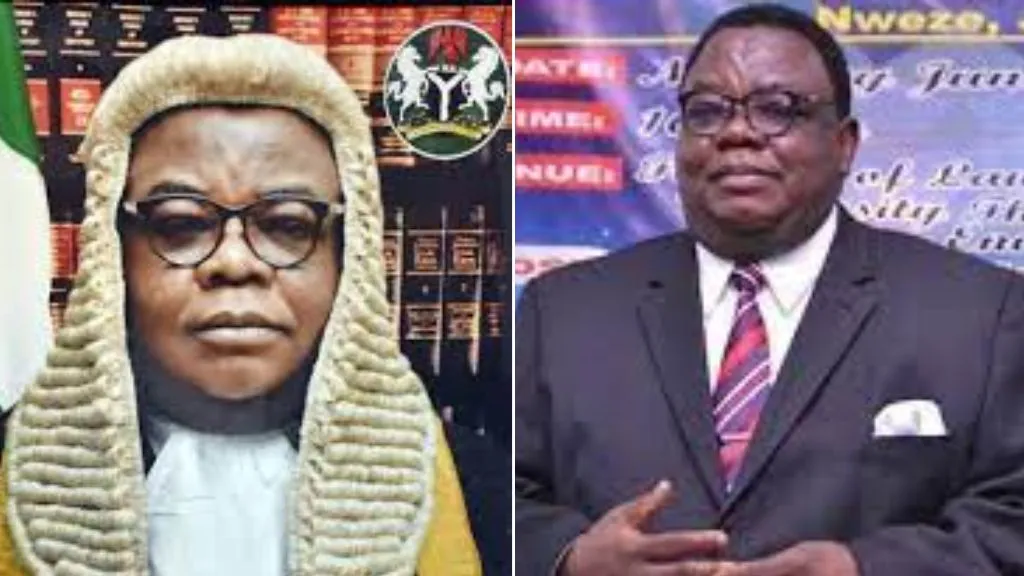
Late Justice Chima Nweze: Through the cases

By Folabi Kuti

Until his passing on Saturday, July 28, 2023, at the age of 64, the eminent jurist, Nweze JSC led such a momentous judicial career that he often enjoyed the rare privilege of quoting himself in many of his own Supreme Court judgments. Drawing from the rich body of illuminating decisions he participated in throughout the appellate courts, his Lordship was indeed eminently qualified to quote himself.

A thoroughbred scholar-Judge, his Lordship was possessed of a keen and robust intellect, allowing him to pen many seminal judgments, either in the lead or in concurrence as a participating Justice in a collegial court. In no particular order, a few decisions from a broad range of subject areas will suffice to illustrate my Lord’s most illustrious career on the nation’s appellate bench.

As a Justice of the Court of Appeal, the Hon. Justice Nweze likened the threshold issue of a court’s jurisdiction to the poignant analogy of a gatekeeper jealously prescribing access to those seeking thoroughfare. Years later at the Supreme Court, my Lord (in Ufomba v INEC & Ors (2017) LPELR-42079(SC) (Pp. 43-44 paras. A-A) ‘reclaimed the authorship’ of that apt description thus:

“In University of llorin and Ors v Oluwadare (2009) All FWLR (Pt 452) 1175, 1204; B-D, the Court of Appeal [per Nweze, JCA, as he then was] opined that: Jurisdiction is to a Court, what a gate or door is to a house. That is why the question of a Court’s jurisdiction is called a threshold issue. It is at the threshold (that is, at the gate) of the temple of justice (the Court). To be able to gain access to the temple (that is, the Court), a prospective litigant must satisfy the gate keeper that it has a genuine cause to be allowed ingress. Where he fails to convince the gate keeper, he will be denied access to the inns of the temple. The gate keeper, as vigilant as he is always, will readily intercept and query all persons who intrude into his domain. To be able to ventilate a grievance, a prospective litigant has to ensure that he addresses his complaint to the competent Court. That is so for an incompetent Court will have no jurisdiction to attend to his entreaty… Exactly a year later, in its decision in Oloruntoba-Oju and Ors v Abdul-Raheem and Ors (2009) LPELR -2596 (SC) 22; B-E, this Apex Court adopted my above views wholesale, although, without attributing its authorship to me. Be that as it may, I now take liberty to re-assert the above views of mine. I adopt them as part of my reasoning in this contribution.”

In Alfa v Attai & Ors (2017) LPELR-42579 (SC) his Lordship, as Nweze JSC, trenchantly called in aid the invaluable historical insights into invoking the originating summons procedure which, as Nweze JCA, his Lordship had provided in Biodun Olujimi v. Ekiti House of Assembly (2009) 33 WRN 44.

The raison d’etre behind courts’ insistence that a notice of appeal in a criminal appeal must be personally signed by the appellant (that is, the convict) and not his solicitor, came to a most perceptive illuminating light in Justice Nweze’s leading opinion in Okey Ikechukwu v Federal Republic of Nigeria (2015) LPELR – 24445 (SC). The eminent jurist felt able to reference this case law citation again when the opportunity presented itself to reiterate the proposition in Umezinne v FRN (2018) LPELR-46334 (SC) – Nweze JSC, in the lead.

Still citing with approval, his Lordship’s eloquent clarifications in earlier decisions, the Supreme Court, in Ilori & ors v Ishola & Anor (2018) LPELR-44063 (SC) examined, inter alia, the public policy consideration holding as unconscionable, a party who had benefited from a contract turning around to declare that same was unlawful or contending that, as was the issue in the case under reference, Governor’s consent was not lawfully obtained. Nweze JSC was on that panel and wrote a concurring opinion in which his Lordship revisited his own opinion on the narrow issue, as well as the more wide-ranging issues relating to consent provisions under the Land Use Act. His Lordship also referenced his leading opinion in the Court of Appeal, in Pharmatek Industrial Projects Ltd v. Trade Bank Nig Plc (2009) 13 NWLR (Pt1159) 577.

In closing, his Lordship modestly ‘recalled’ thus (at Pp. 44-48, para. E-E): “Although, according to an illustrious scholar: ‘Without a doubt, the most penetrating analysis of the decisions on the consent provisions of the Land Use Act was delivered by Nweze JCA (as he then was) in Pharmatek Industrial Projects Ltd v. Trade Bank Nig Plc (2009) 5 NWLR 28) … Nweze JCA, (as he then was), in a prolific and voluminous judgement, exhaustively, discussed almost all the decisions of the Court of Appeal and Supreme Court on the point, expressed preference for Onnoghen JSC’s dissent in Ayodare (supra)… ‘Emeka Chianu, Law of Securities for Bank Advances (Mortgage of Land), (Benin City: Ambik Press, 2017) 132. I shall refrain from volunteering further opinions on these issues since my said decision, Pharmatek Industrial Projects Ltd v. Trade Bank Nig. Plc. (supra) is already on appeal before this Court.”

As a Justice with an academic background, who had written leading treatises like the two-volume ‘Contentious Issues and Responses in Contemporary Evidence Law in Nigeria’ (Enugu: IDS, UNN,2006), his Lordship’s scholarly disposition, depth of research and readiness to interrogate settled assumptions often came to the fore in his judgments; wherein he copiously referenced and cited tertiary sources and opinions of text writers.

Not too long ago, the Supreme court in its full complement of seven Justices, handed down a landmark decision in the reported case of Centre of Oil Pollution v NNPC (2019) 5 NWLR (Pt.1666) 518. More than anything, this represents a significant step (forward) in unravelling the exact scope of the doctrine of standing to sue, and its source. Nweze’s leading opinion rightly called attention to the mistaken notion in previous decisions of the Court (Adesanya v FRN, Owodunni v Reg Trustees CCC etc) that locus standi was traceable to section 6(6)(b) of the Constitution.

The judgment is significant and had the well-garnished briefs of counsel on both sides of the divide, as well as the vast learning of the amici curiae called to assist the Court in this all-important judicial endeavour.

Recognizing the contributions of the learned amici curiae who wrote illuminating briefs pro and against opening the gate(s) a little wider, there was also a very significant contribution, in the form of a well-researched paper credited to Dr Tunde Ogowewo, Lecturer in the School of Law, King’s College, University of London. Nweze JSC made copious reference to this tertiary source in his keen examination of all previous decisions of the Court on the subject matter, before concluding that locus standi, in any event, did not enjoy any statutory backing but was a mere common law/judge-made rule.

The leading judgment of Nweze JSC, after reviewing all the submissions made to the Court, next endeavoured on what the learned jurist admirably called ‘a tour d’horizon’ to demonstrate how the Court may have in one or two previous decisions incorrectly applied its holding from the leading authority of Adesanya v FRN. In concluding on the correct position, the Court rightly credited the position proferred in Ogowewo’s piece. (para. E, pg. 567 of the Report).

Uncommon industry and learning were the hallmarks of an Nweze’s judgment! The affecting erudition seamlessly flowing through his Lordship’s research laden, and well-written judgments may also explain the unintended semantic ‘ambiguity’ or obscurity that was sometimes employed in delivering some of these otherwise seminal decisions. On a lighter note, the uninitiated; not given to painstaking legal study, may be left trying to unravel the contextual meaning(s) of such highfalutin statements as: ‘My Lords, the proximate impulsion to this matter was an order of the Court of Appeal’ (opening lines in the cause celebre Skye Bank v Iwu (2017) LPELR – 42595 (SC) 26 – 32); or, the opening lines in Ihedioha v Nwosu (2019) LPELR-52790 (SC): ‘My Lords, notwithstanding, all the forensic peroration in this appeal, it (the appeal), actually falls within a very narrow compass. True, indeed, in the good old days, it should have been determined brevi manu on the Bench’; or when His Lordship, drawing from scholarly works noted in Ibrahim v Fulani and Ors (2009) LPELR-4279 (CA) 35 that the search for the meaning of ‘ratio decidendi’: ‘pokes into an aspect of a long-drawn debate in the epistemology of Jurisprudence and Legal Theory: Somewhat, beneficially, the search has produced very robust and engaging disquisitions which are remarkable not only for the acuity of their premises and rigour of their logic, but also for the allurement of their syllogisms’.

It bears reiterating here that flowery and sometimes Shakespearean prose did nothing at all to affect the quality of his Lordship’s judgments. Rather, my Lord’s quotable quotes from the bench are indeed a beauty to behold. And, beauty, we are told, is in the eyes of the beholder. One of the most well-known statements of the apex court decrying as old order the free rein of technical justice is contained in this passage from the leading judgment of Nweze JSC in Omisore v Aregbesola (2015) All FWLR (Pt 813) 1673 at 1712 paragraphs B – C where His Lordship held as follows: “Now, it is no longer in doubt that this Court and indeed all Courts have made a clean sweep of “the picture of the law and its technical rules triumphant” Aliu Bello & Ors v Attorney General, Oyo State (1986) 5 NWLR (pt 45) 828, 866. Let me explain. By its current mood, it is safe to assert that this Court has firmly and irreversibly spurned the old practice where the temple of Justice was converted into a forensic abattoir where legal practitioners, employing such tools of their trade like “the whirling of technicalities”, daily butchered substantive issues in Court in their “fencing game in which parties engage themselves in an exercise of outsmarting each other…” Afolabi v Adekunle (1983) 2 SCNLR 14,150. Those days are gone; gone for good.”

As Justice of the Court of Appeal, His Lordship waxed poignantly in Standard Chartered Bank Nigeria Ltd v Dr. Tunji Braithwaite (2013) LPELR-20814 (CA) at p. 39: on the virtues of untainted equity “…Equity, like an immaculate garment, abhors the company of those who are either likely to contaminate its Majesty: taint its purity or dampen its allure! Above all, since she does not trade in detergents, those who approach her hallowed portals are forewarned to denude their hands of all dirt and appear with unimpeachable allegations!”

The prodigious intellect and deep insights of this judicial colossus shone through and through in many more judgments for which his Lordship is credited. He consciously molded the development of the law. Jamari & ors v Yaga (2012) LPELR-15188 (CA) in which His Lordship, Nweze JCA (as he then was) delivered the leading judgment is high authority for the proposition that before a litigant would be allowed to rely on or call in aid what is commonly touted as ‘error of counsel’, there must be an affidavit from counsel admitting the fault.

His Lordship’s thorough and thoughtful analysis of constitutional provisions: (i) on fair hearing as it relates to the composition of a court/tribunal, being the same from hearing to determination – Kalejaiye v. LPDC & Anor (2019) LPELR-47035(SC)); and (ii) on availing a purposive interpretation of the Constitution so as not to defeat the ends of justice – Saraki v FRN [2016] 3 NWLR (pt. 1500) 531, FRN V. Nganjiwa (2022) LPELR-58066(SC) – are amongst countless important judgments, and abiding legacies of his Lordship. The Honourable Justice C.C Nweze JSC has now gone the way of all mortals; to join the company of the saints. May his soul rest in peace!

Kuti (SAN) is a Partner in the law offices of Perchstone & Graeys, LP.

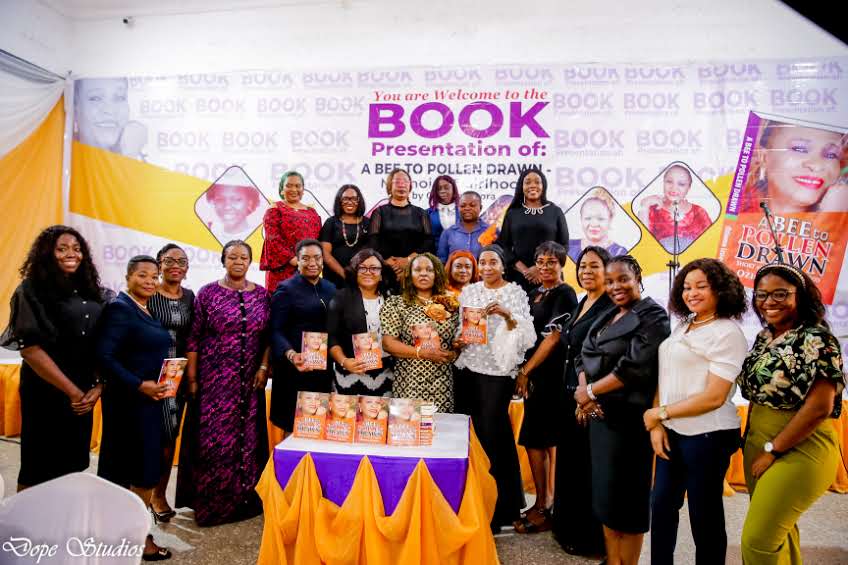
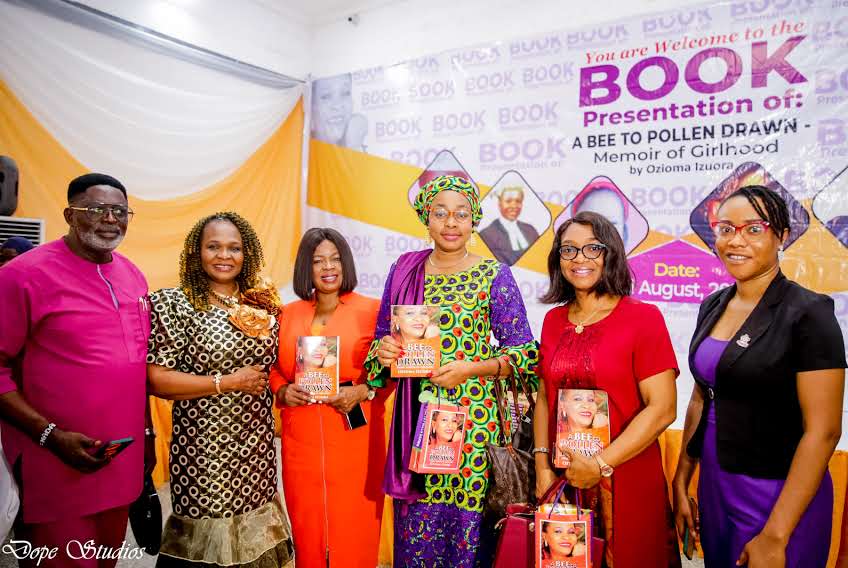
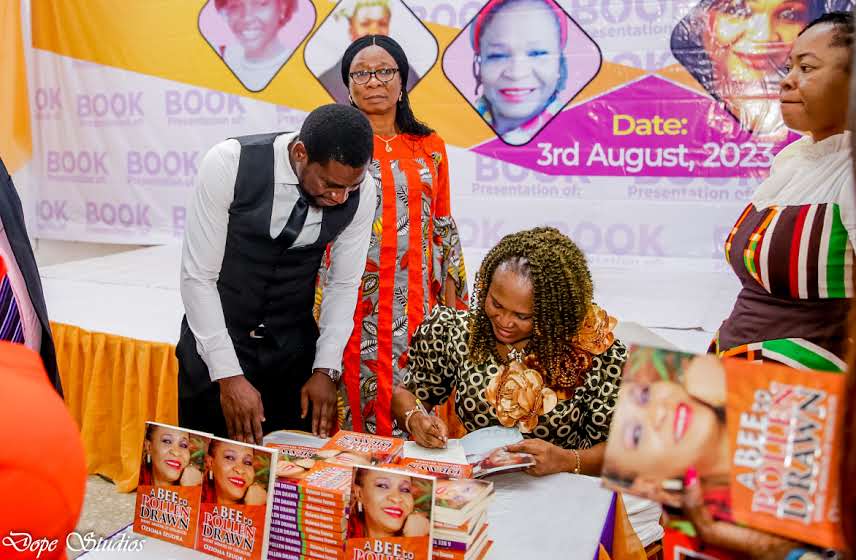
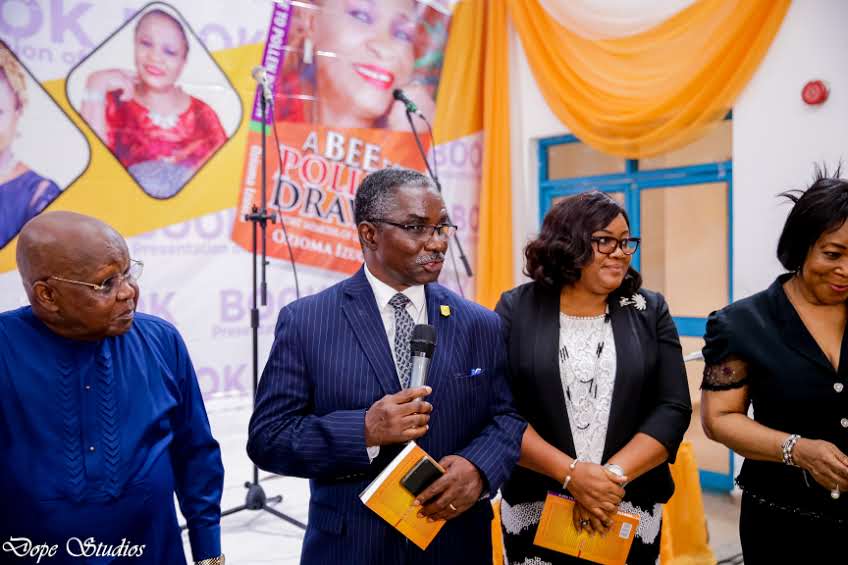
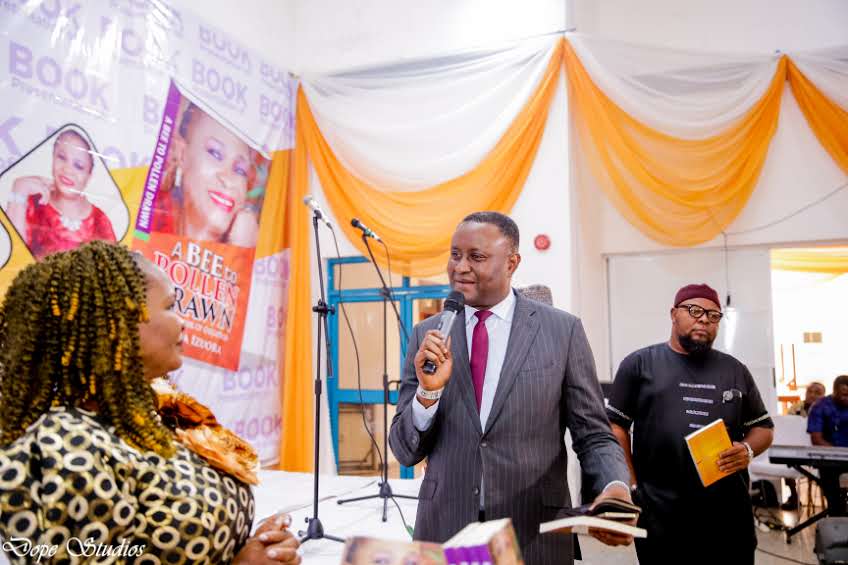
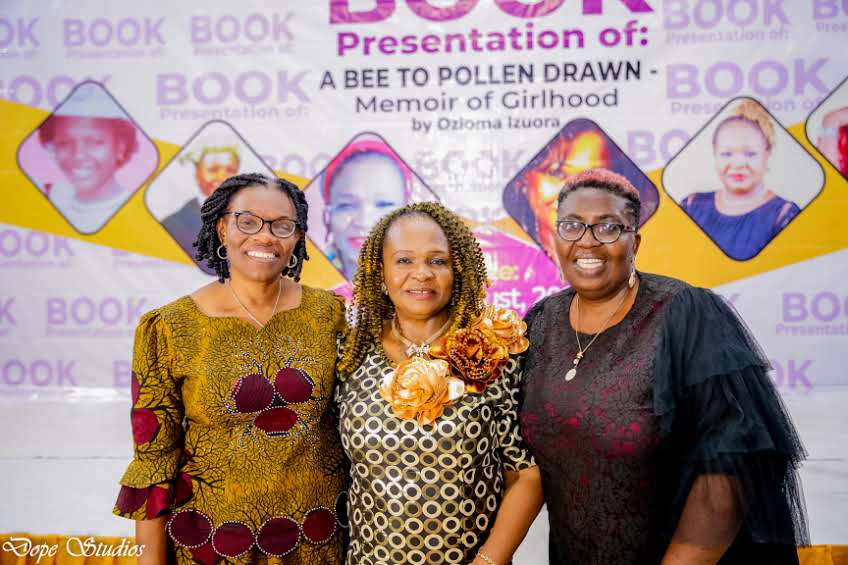
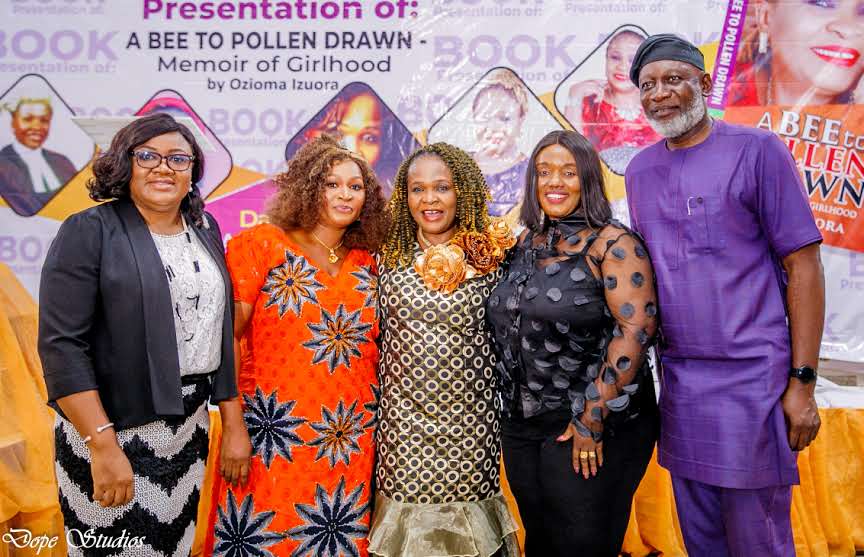
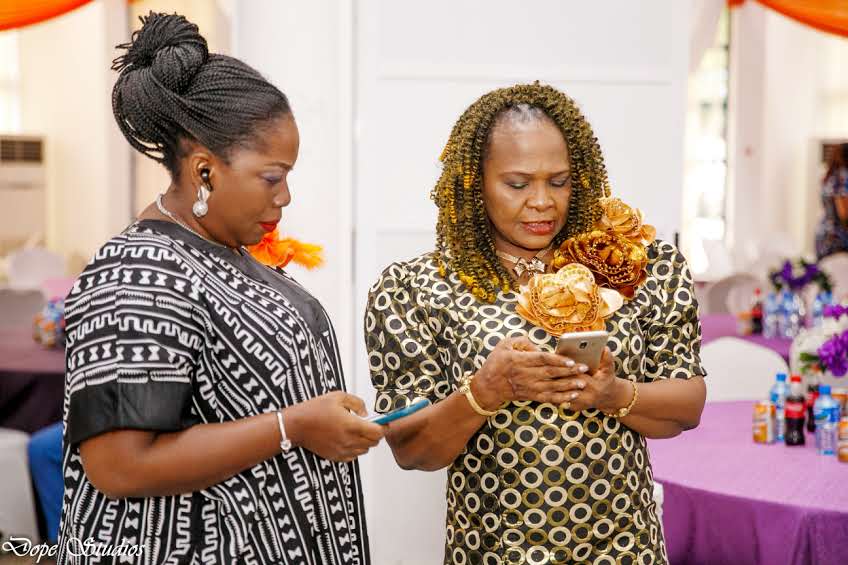
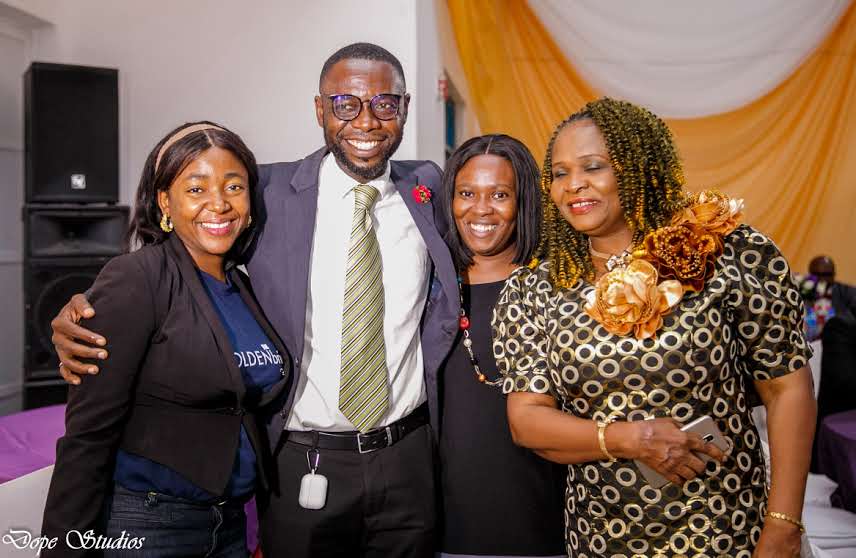
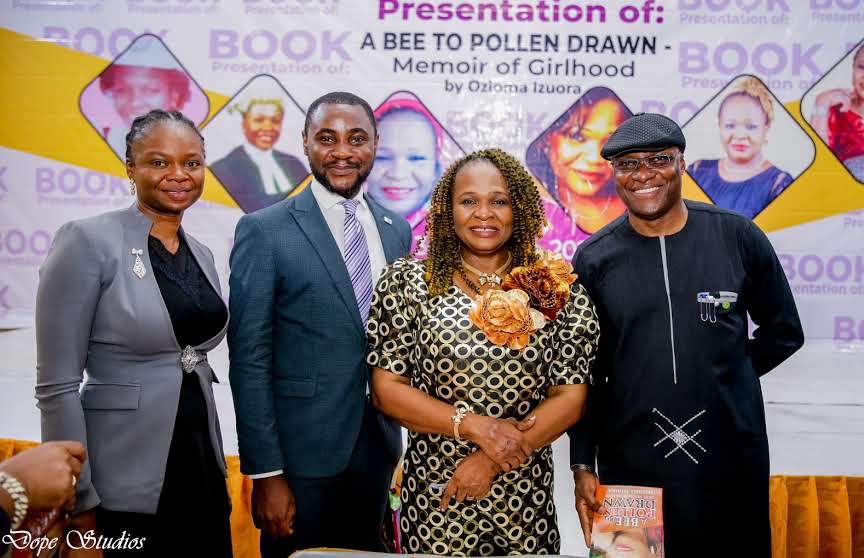
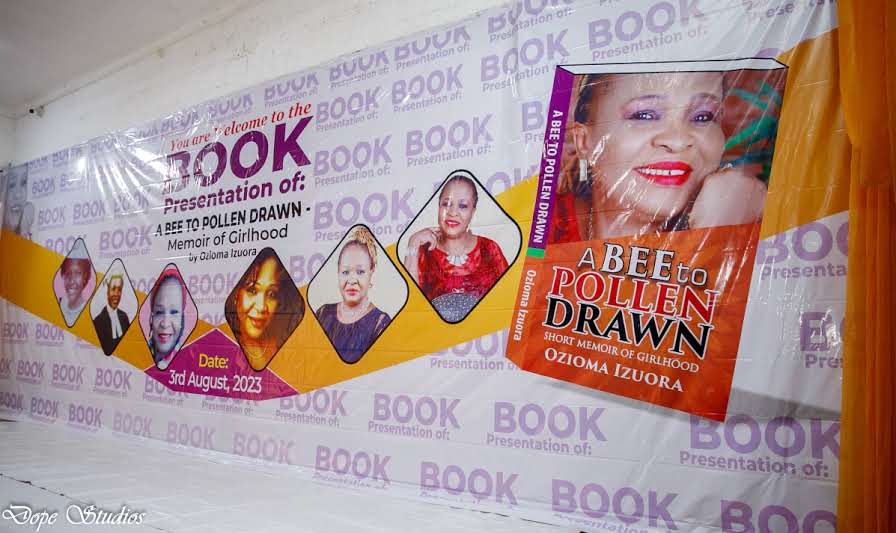
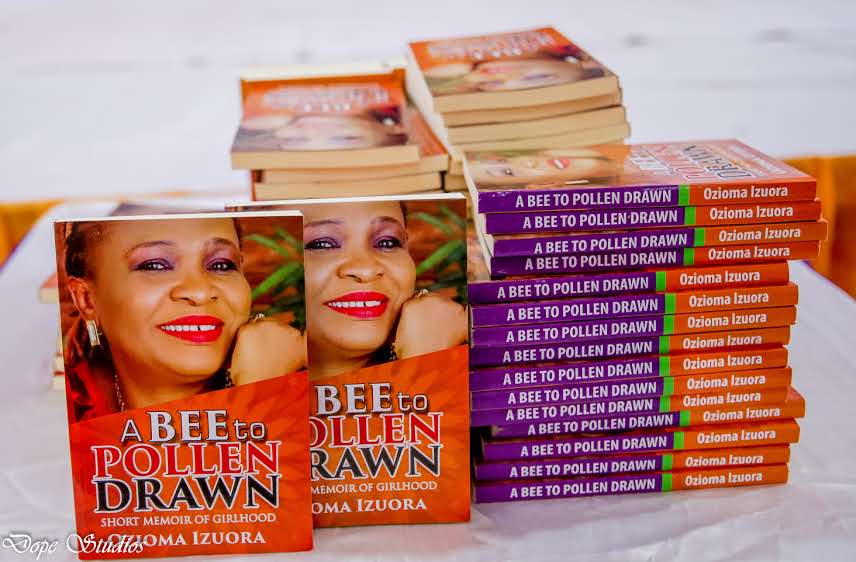
Photos from Ozioma Izuora’s book launch – A Bee to Pollen Drawn

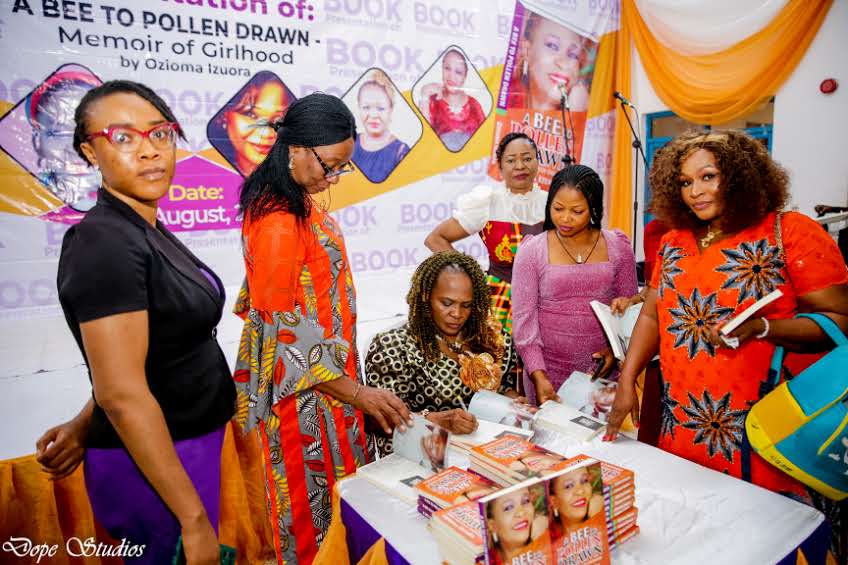
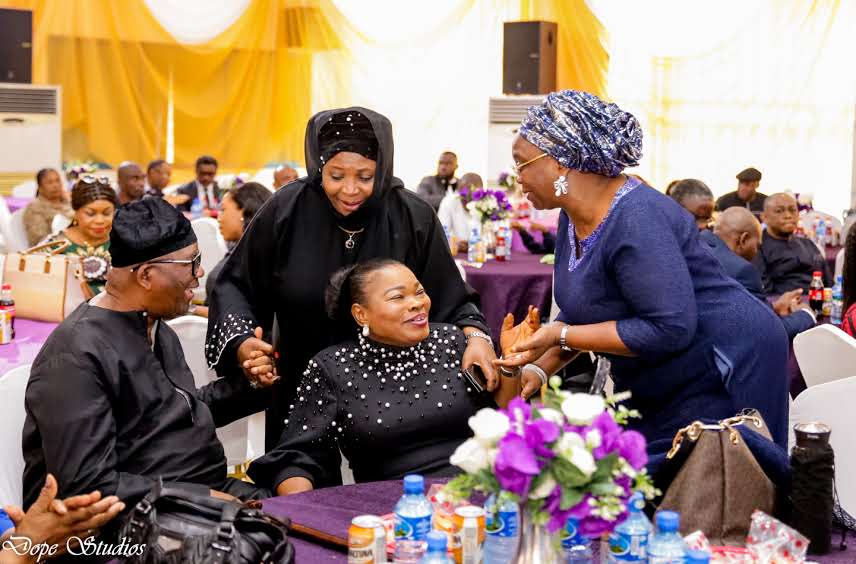
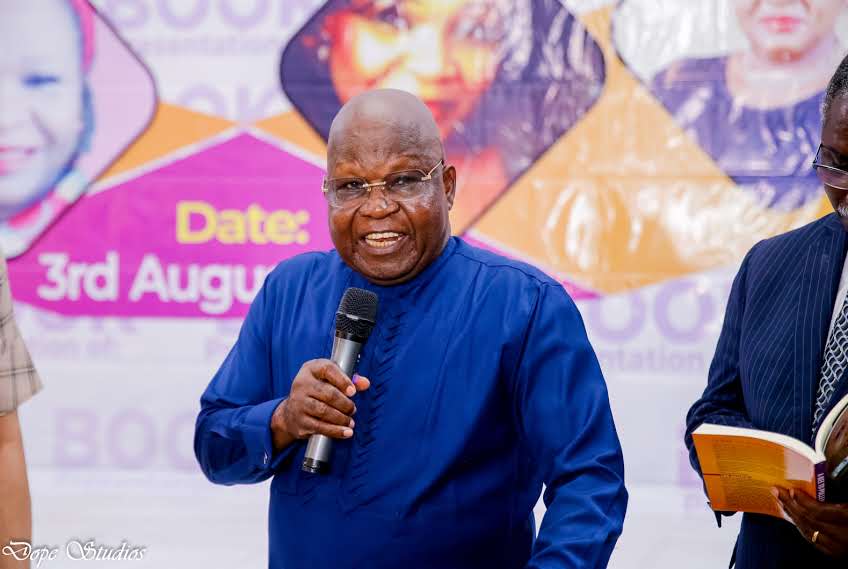
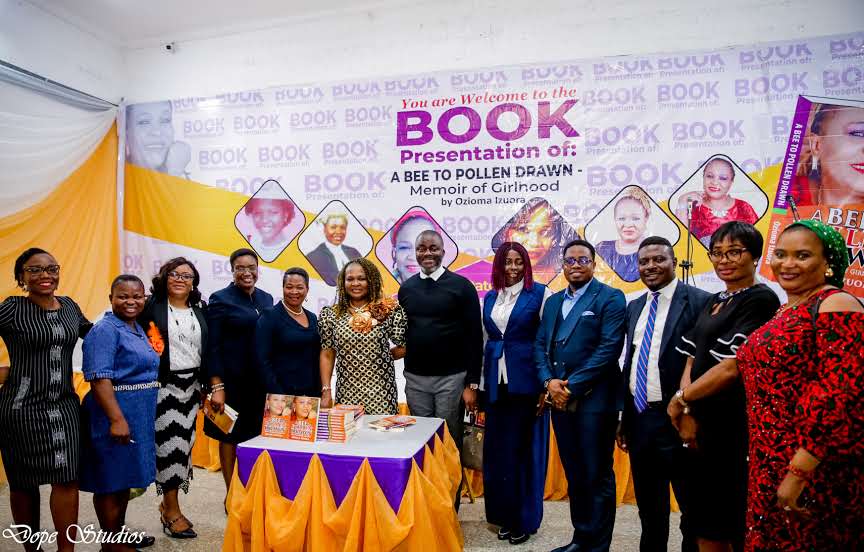
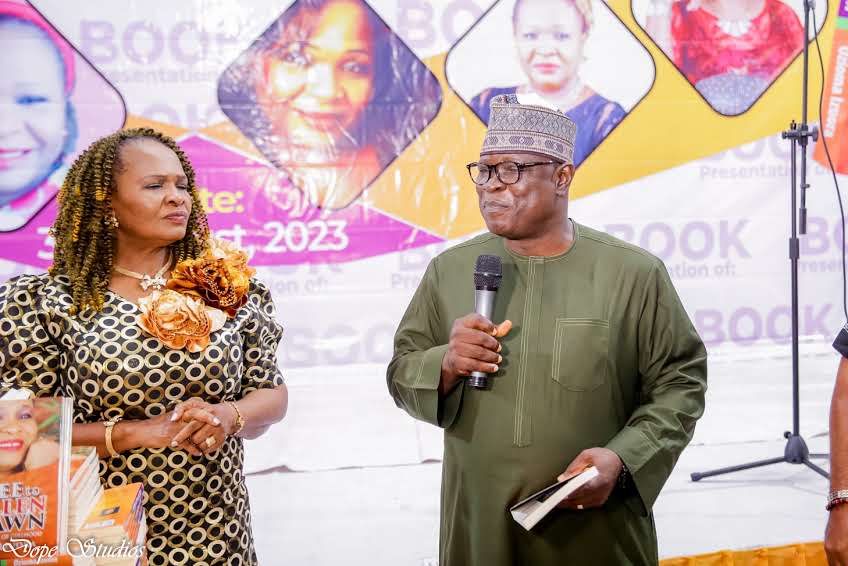
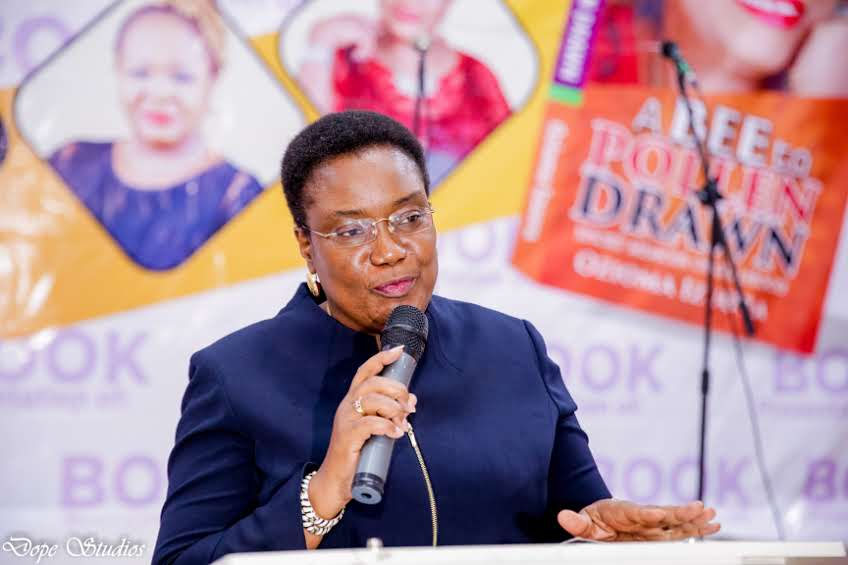
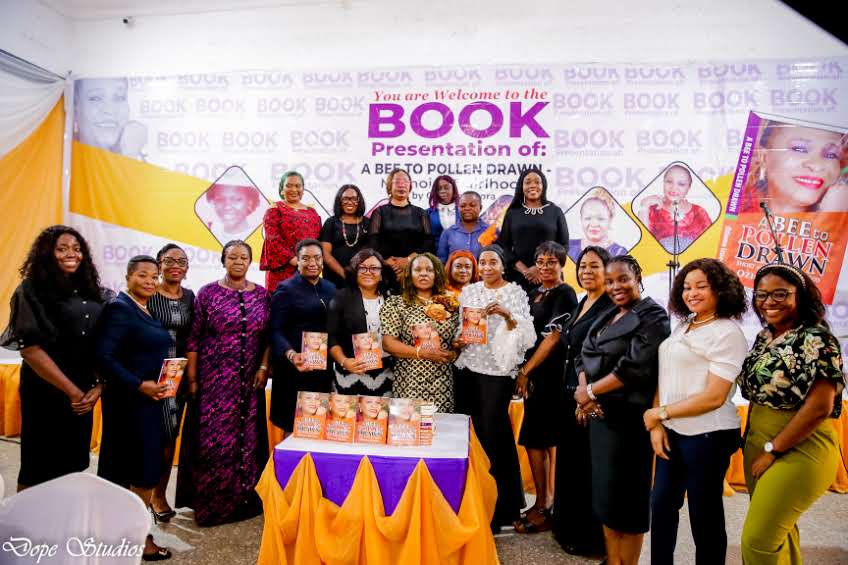
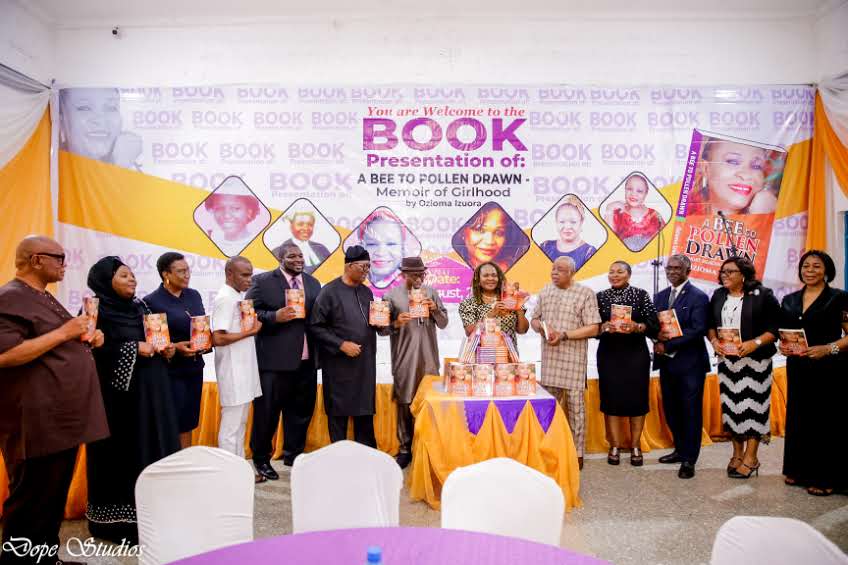
On the 3rd of August 2023, Ozioma Izuora, a former Vice Chair of the Nigerian Bar Association (NBA) Abuja (Unity Bar), onetime Vice Chair of International Federation of Women Lawyers (FIDA) Abuja, and a law teacher at Baze University, Abuja launched her memoir —A Bee to Pollen Drawn – Short Memoir of Girlhood. an occasion she used to mark her 60th birthday.

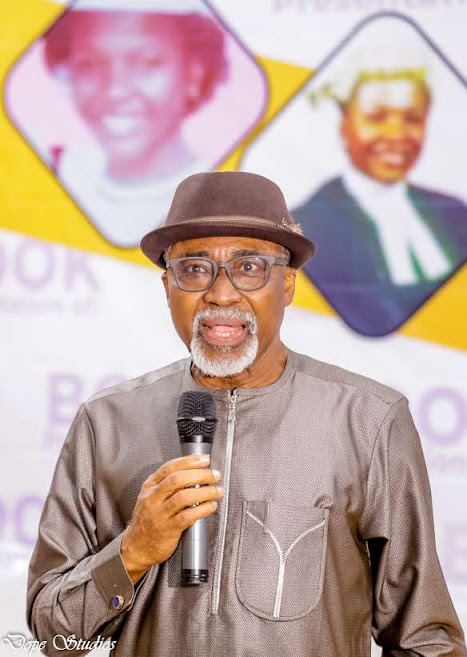
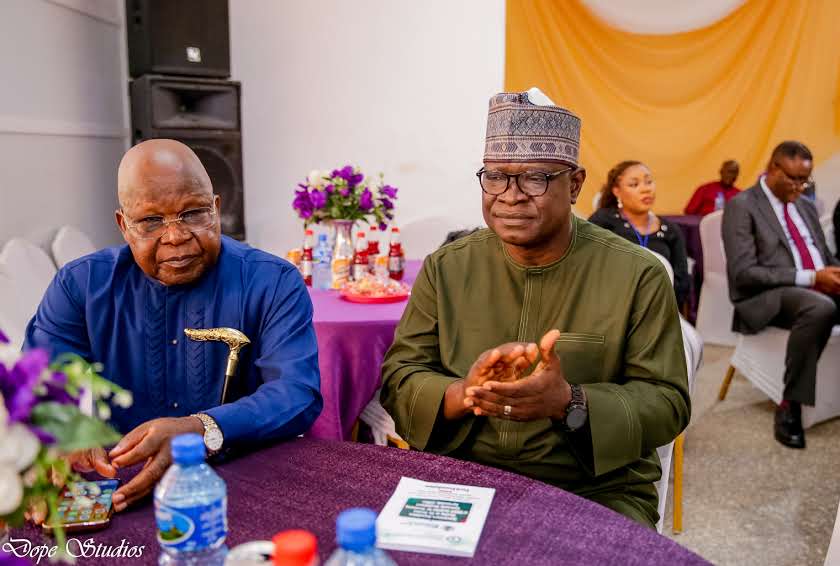
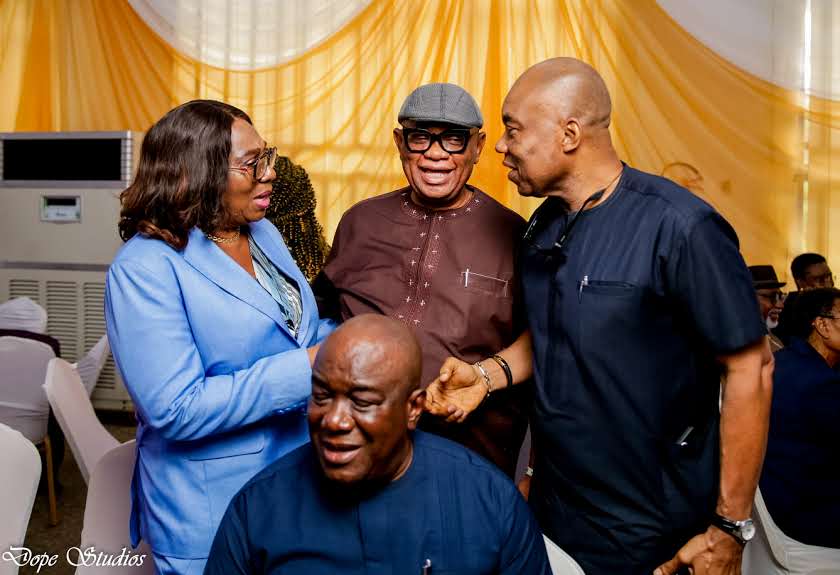
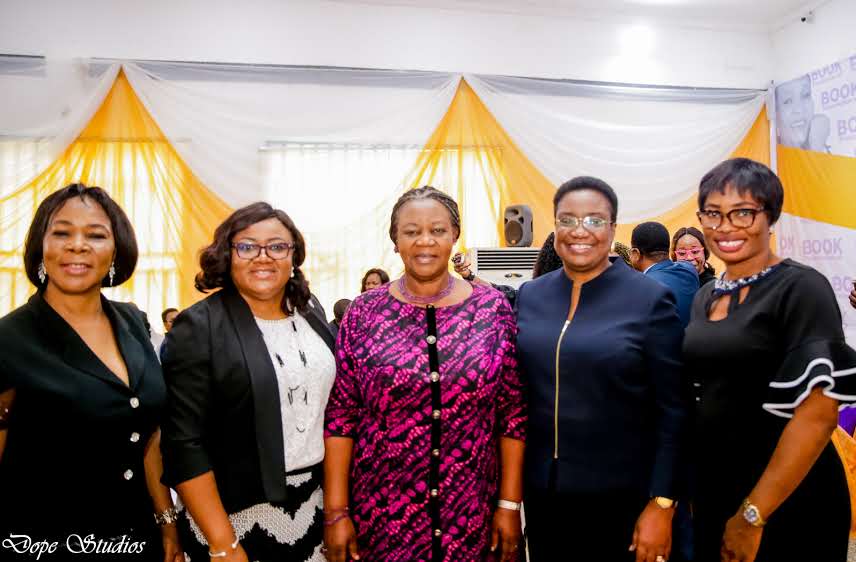
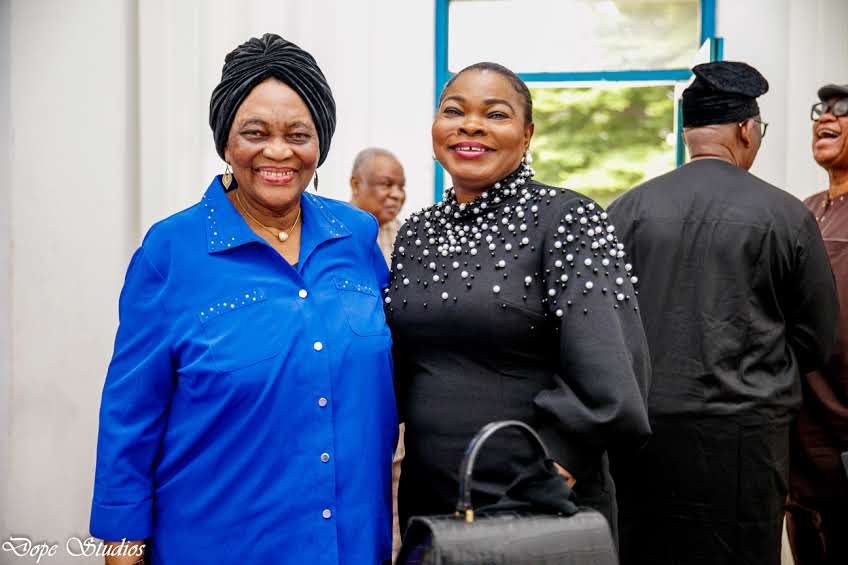
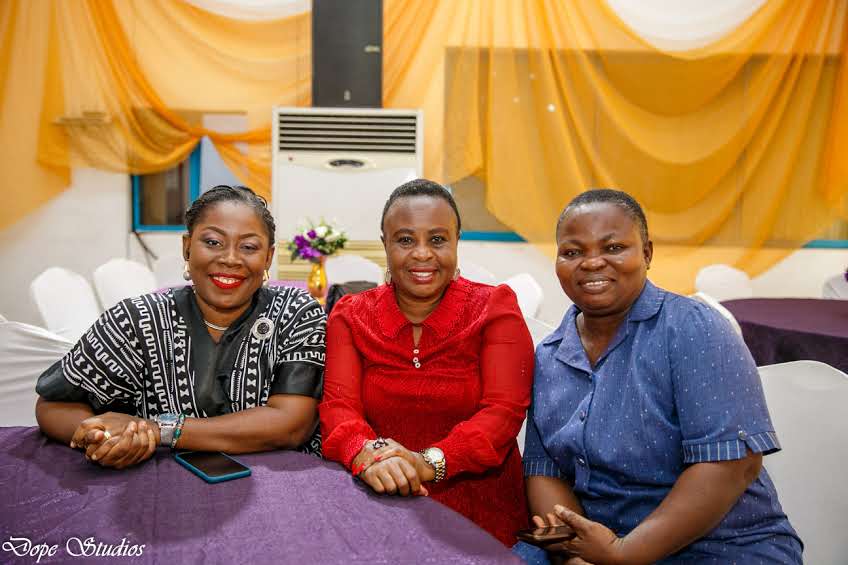
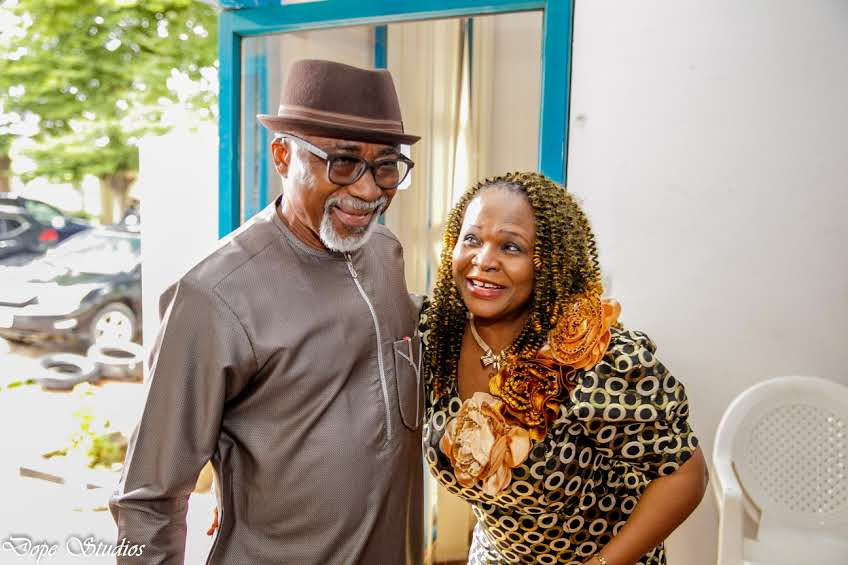
The event which was Chaired by Senator Eyinnaya Abaribe attracted dignitaries from all walks of life but the Bar and FIDA particularly made a strong showing.

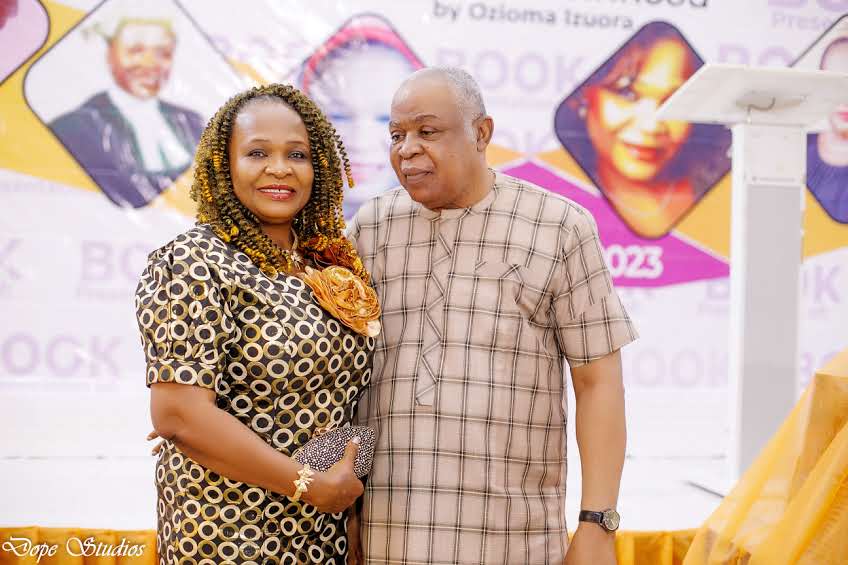
Below are photos of the event.

Ozioma Izuora

Click here to purchase a copy.

Book Review – A Bee to Pollen Drawn – Short Memoir of Girlhood by Ozioma Izuora

Book Reviewer: Ezinwa Okoroafor – International Director (International Federation of Women Lawyers (FIDA)

Introduction

A Bee to Pollen Drawn – Short Memoir of Girlhood is a 238-page autobiography by Ozioma Izuora – an author, playwright, lawyer, law lecturer, mediator, wife, mother, daughter, sister, a “Lioness” on so many fronts, and so much more!

The short memoir is a collection of Ozioma’s recollections of her childhood and growing up days, truths, experiences and life’s happenings. It opens, in a manner of speaking, with the story of her paternal Grandmother – Atusiaka Anastasia (nee Nwajiuba), Lolo Ojiyi Abraham Ezeakonobi (Ezeifedi) fondly known as Nne Aaka or Ahudie.

Ozioma Izuora and husband, Dr. Kodilinye Izuora

In the compelling rendition of Nne Aaka’s story, Ozioma situates herself. She then proceeds to tell the Ozioma story as she takes us through her earliest memories as a precocious child, with rich experiences in the years between. As she regales us with stories of these years, she also makes insightful observations about life and its realities, drawn from her truths and challenges. She consciously and generously acknowledges God as well as a host of people who have played one role or the other in contributing to who she has become today – a full-grown woman who has come into her own, unfazed, unbowed, and still open to new ideas and experiences, even at 60 when she has officially become a senior citizen.

Book Reviewer, Ezinwa Okoroafor

The book is a delight to read. Her writing style is easy and conversational and fosters a quick appreciation of the ideas she seeks to pass on to the reader within the context of her stories. It is also laced with humour and wit. Ozioma has the endearing courage, ability and confidence to laugh at herself and leave the world nothing to smirk about.

The interplay of translation of Igbo expressions into English language gives an endearing authenticity to the stories for the Igbo speaking and reading audience; whilst ensuring a greater appreciation by others.

Celebrant and Chairman of the ocassion, Senator Eyinnaya Abaribe

The book is an affirmation of the strength of character, wisdom, and essence of Nne Aaka. We learn to appreciate and I daresay admire, if not love, this woman who, clearly ahead of her time, exudes strength and is a model of industry. Even way back then, she insisted on the recognition of the rights and place of her first daughter and also saw nothing wrong in women wearing trousers! Nne Aaka carried a fire which warmed many but also scarred a few. Of Nne Aaka, Ozioma writes “… She had battled the elements around her to become a reference point for strength and exemplary womanhood. Her voice came through loud and clear on many subjects affecting society. Men often gathered, ostensibly to forge ways forward whenever decisions needed to be taken, but Nne Aaka’s views were often on the agenda. She was fearless and respected by all. She was mother to both her children and those of the entire Ezeifedi household in Odoagbara, Akohia, in Umudim, Imenyi-Ihitenansa.”

She says further …

Nne was formidable in many ways. She set her own standards in many areas too. For instance, when she converted to Christianity, she stated clearly to the priest who gave her the sacrament of baptism as follows: ‘I have given up everything that has anything to do with pagan worship. But see these my oduenyi eh?  They are not amulets nor anything to shield my life. They are my staff of office. They tell the world that I have earned a high place in society. They are not easy to come by. Ask anyone. I intend to retain them even as a Christian.’

Nne had her faults, but the Aaka factor remains my battle song!

Celebrant and FIDA Members

Ozioma acknowledges Nne Aaka’s profound influence on her. Just like her grandmother, she is unapologetic about owning her space, holding an opinion and speaking her mind, and we can see where this comes from! She is also an unrepentant gender advocate. In her own words, Suddenly, I realise why, even though my relationship with fellow women is often testy, my psyche is wired towards challenging every aspect of societal relegation against the female gender.

A recurring pain for her was gender discrimination and the inability of those who took upon themselves the role of arbiter to look beyond age and gender and show fairness or indeed critical thinking. She says …

Their mode of dispute resolution was always to shut me down with: ‘Inaha ekwe ekwe! Imakwa na ibu nwanyi! Ah-ah! Mechigodu onu, Imaha na Augustine toro gi – ‘You never ever let up! Don’t you know you are a woman? Shut up for goodness sake! Don’t you know Augustine is older than you? Why can’t you ever give in!’

I never was given any reason, convincing or otherwise, why being the female in the equation, or being the younger one, should make me the loser to any of the many arguments we had. No one showed much interest in the logic of my thoughts on any issue. If I was slapped because I would not budge from my position; if I was hurting whether physically or mentally, I was told I deserved it. All I was required to do was to shut up and know my place! I never learnt that lesson. I have never settled into any place that society has sought to force me into. I would choke to death if I had to. Even as a full grown woman running for the position of vice chair of the Abuja Branch of the Nigerian Bar Association, in 2012, the notion that no woman had ever been elected into that position, more than fuelled my resolve to run the race successfully to break the jinx.

For all her experiences and from all her pain, she acquires a distinct kind of wisdom. She says …

As a daughter of Aaka, I live by her forward-looking precepts. I refuse to glance back in pain. I mention the fact here so that my unrelenting fight on discrimination against women can be better appreciated. Moreover, it was not always about the treatment meted to me personally. There was an avalanche of evidence of discrimination against the women in my life, long before I met women from anywhere else. My soul has matured; quietly rebelling against discrimination of any sort. That the tale is the same from all corners of the globe has only strengthened my voice.

She goes further to say…

Both at family level and in the world generally, I had to learn – I am still learning – not to insist on my rights… I may let the adverse party win, but by making the person a present of the undeserved right I have conceded to him or her. My irreducible minimum is never to condone violence in any form, whether physical or economic; psychological; legal; or political; especially in relation to those for whose rights I advocate.

Ozioma’s recollections resonate as they reflect the thoughts and experiences which many do not have the boldness, courage or platform to express. The memoirs stir pleasant memories of how things were done in times past such as – meat sharing according to age  “ichi oke” and “egwu onwa”, among others. Through her eyes we see much more…

We are transported into a world where we share her joys – leading the block rosary, admission to Federal Government Girls’ College Benin – a defining moment in her life, among others.

We feel her pain, as she bares her heart on family break up, the hard choices between education and her father’s remarrying as well as the frustrations of being shut down and not allowed to speak her mind because she is female. Also, her early awareness of and heartache at the concept of injustice.

We chuckle at her early attempts at venturing into the world of business as she tries her hand at frying and selling groundnuts, but ends up giving most of it away; We are alarmed at her audacity when she parrots to an older relative, the newly learnt but barely understood words – “your problem is illiteracy”, and the tales of sexual harassment.

We cheer her on as she blossoms into womanhood, marrying the love of her life – Dr. Kodilinye Izuora, bearing and raising her children and becoming a grandmother. We applaud loudly as she goes on to not only aspire, but also acquire higher laurels in education and professional accomplishments and completes the circle in the return to the classroom, albeit from a totally different perch.

In all, Ozioma encourages all, but especially, the girl child, to be all she can be and refuse to be held down by the shackles of societal expectations, culture, tradition and gender. Her message is simple – to you, all things are possible.

Errors

For all the accolades I am pleased to pour on the book and its writer, I must point out a few typographical and punctuation errors, as well as the misalignment of the table of contents and a malapropism, which ever so slightly detracted from the masterpiece that the book is, especially for someone who insists on excellence. These can be corrected when the opportunity for a reprint and revision of the first edition arises.

Rating

Having read through the fascinating stories put together in this book, beyond the errors highlighted above, I would give it a 5-star rating for language, content, and writing style which make for easy readability. I would give full stars for subject, candidness, and authenticity. It is Ozioma’s story and she tells it well. I also award full stars also for relevance and entertainment quotient. The issue of the place and voice of the girl child as well as other experiences which Ozioma highlights in the book are deserving of our full attention.

Recommendation

I heartily and without hesitation, recommend this book to everyone.

For each young person and especially the girl child out there, it offers the encouragement to dream their dreams and be themselves, secure in the knowledge that they have the capacity to excel in spite of all difficulties.

To the gender advocates and male champions, a confirmation of the need to empower the girl child first with a sense of self, then  through enlightenment which will give her the wings to fly.

To fathers and mothers, the need to instill in all children, a sense of self-worth and an appreciation of justice, open mindedness and fairness irrespective of gender, and especially respect for the place and rights of the girl child. Societal challenges of gender violence are often a reflection of a faulty base. This can be cured by setting the right examples from the very beginning.

To everyone, the encouragement to live your dreams! At 60, Ozioma is working towards acquiring a doctoral degree and has become a law lecturer. All things are possible to them that believe and persevere.

To Ozioma, the encouragement to write some more. You did warn that it was a short memoir, but it is way too short and leaves the reader wanting more, as there is clearly more where this has come from. Your work is therefore cut out for you as you must finish what you started. In your concluding line, you quote Alfred Lord Tennyson when he says in Ulysses, “Some work of noble note may yet be done” and you assure us that “I am still here!” We hold you to those words.

Congratulations Ozioma on this excellent work and I thank you immensely, for the privilege and pleasure of reviewing it.

Ezinwa Okoroafor.

Abuja, Nigeria

Click here to purchase your copy.

Words, Phrases, Clauses, and Expressions You Mightn’t Know Are Wrong

By Chinua Asuzu

The following are wrong.

“FCT Abuja” (The correct expression is “Abuja FCT”, because Abuja is inside FCT, not FCT inside Abuja. It’s like “Washington DC”: Washington is inside the District of Columbia, not the other way round. Ditto for “Ikeja Lagos,” not “Lagos Ikeja”.)

“afraid of his life”/“afraid of his health”/”afraid of his safety” (The correct expression is “afraid for …”.)

“bother on” (The correct expression is “border on”.)

“convenant” (The correct spelling is “covenant”.)

“Tunde denied that he did not beat her” (The correct rendition is “Tunde denied that he beat her.” The negation is already inside the verb deny.)

“electorates” (in reference to individual voters) (The singular “electorate” refers to the community or constituency of voters, not an individual voter. “Electorates” never means individual voters, but whole constituencies or even countries, as in the “Nigerian electorate”.)

“elites” (in reference to individuals of a certain class) (The singular “elite” refers to the class of supposedly superior or privileged people in a society. The word “elite” never refers to an individual.)

“expantiate” (The correct spelling is “expatiate”.)

“junior brother”, “junior sister” (The correct adjective is “younger”.)

“senior brother”, “senior sister” (The correct adjective is “elder” or “older”.)

“I look forward to see you” (The correct phrasing is “I look forward to seeing you.”)

“take something personal” (The correct phrase is “πtake something personally”.)

“take somebody/something serious” (The correct phrase is “take somebody/something seriously”.)

“be rest assured” (The correct clause is “rest assured”.)

“restauranteur” (The correct spelling is “restaurateur”—never mind what you read elsewhere, even in some descriptivist dictionaries.)

“severally” (in the sense of “several times”) (The correct expression is “several times”.)

“staffs” (in reference to individual employees) (“Staff” refers to employees as a group or team, not as an individual. “Staff” never refers to an individual employee.)

“stuffs” (in reference to individual items) (“Stuff” refers to a collection or assemblage of items, not an individual item. If I invite you to stay the weekend at my home [not likely], I could say, “Bring your stuff over before midday”, referring to your bags, toiletries, and whatnot.)

“suppose” to (The correct expression is “supposed to”.)

“work ethics” (The correct term is “work ethic”.)

It’s caselaw, not “case laws,” no matter how many cases you’re discussing

By Chinua Asuzu

Caselaw (case law is permissible) is a mass noun and shouldn’t be pluralized.

It’s not a count noun.

Caselaw means the “law to be found in the collection of reported cases that form all or part of the body of law within a jurisdiction.” Black’s Law Dictionary, 11th ed. (Thompson Reuters, 2019), 267.

The word “caselaws” and the phrase “case laws” are not only bad English but also bad law.

Even Microsoft Word winces at “caselaws.”

Conceivably, the plural form might pass muster when speaking of several jurisdictions.

After red card, FIFA bans Lauren James for rest of tournament

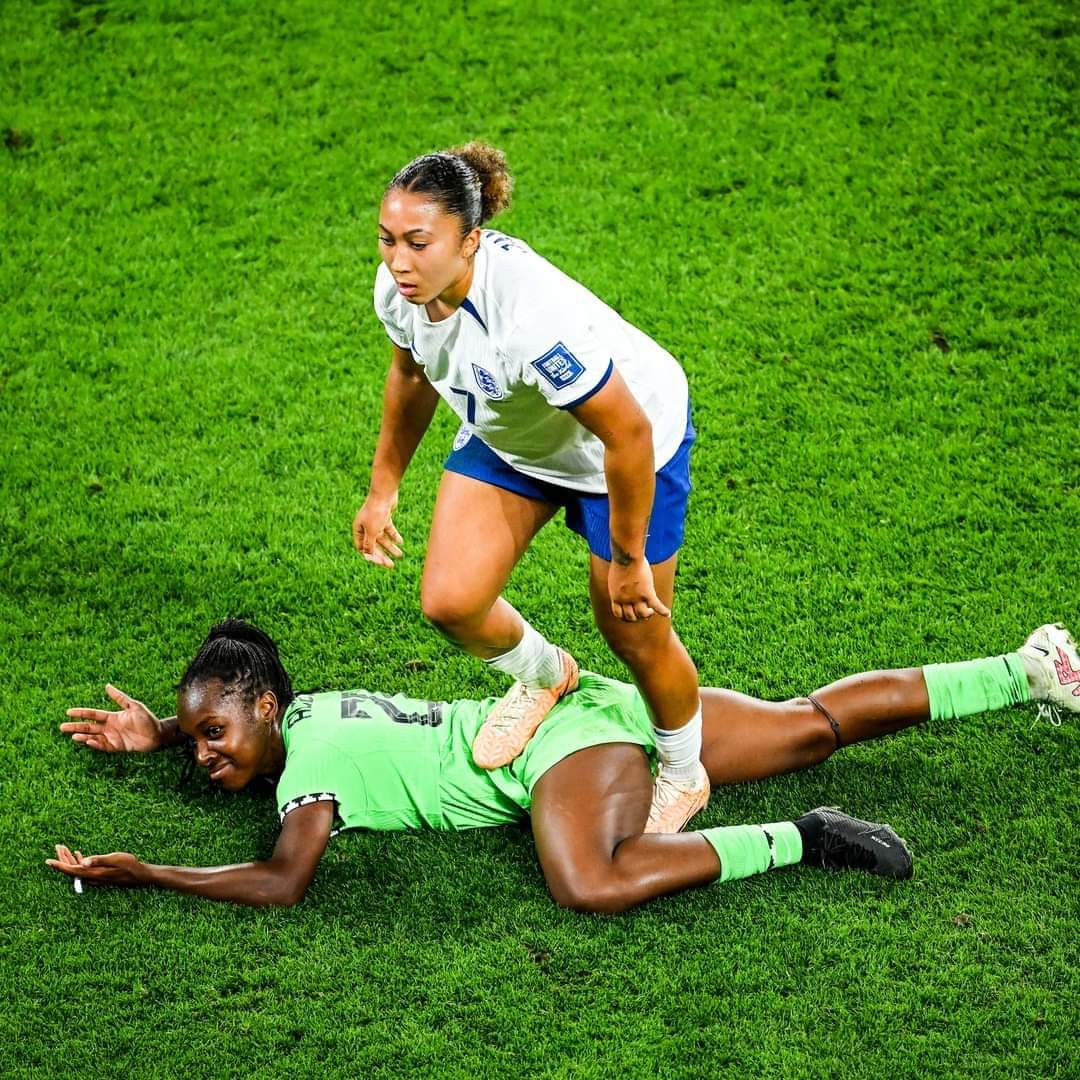
England midfielder, Lauren James, will play no further part in the 2023 Women’s World Cup, following her red card against Nigeria.

With the scores still at 0-0, James was sent off for stamping on Michelle Alozie in the 70th minute.

The referee had initially brandished a yellow before she was advised to consult the VAR on-pitch monitor.

England played on with 10 players for the entirety of the extra time but went on to win 4-2 during the eventual penalty shoot-out.

The unnecessary stamp, however, means James has played her last game of the World Cup as dismissals for violent conduct come with a three-match suspension.

England rules state: “A player will be suspended for at least three matches for violent conduct; at least three matches or an appropriate period of time for assault, including elbowing, punching, kicking, biting, spitting or hitting an opponent or a person other than a match official.”

England has a maximum of three fixtures to play as they only qualified for the quarter-finals.

Dokubo and Oluomo will be useful in Niger

By Casmir Igbokwe

I felt insulted when I saw the video of how the people of Niger Republic denigrated our President, Bola Tinubu. The insolent crowd displayed a banner with pictures of our President on a car, poking fun at him. Even his first name, Bola, was changed to Ebola.

Nigeria should not tolerate this insult. We desperately need the services of the former Niger Delta agitator, Alhaji Asari Dokubo, and the Lagos State Parks Management Committee Chairman, Mr. Musiliu Akinsanya also known as MC Oluomo. President Tinubu should contract them to send their boys to Niger to teach this tiny country a lesson. This has become more necessary now that the Senate has denied the President the support to deploy troops in Niger. Obviously, Dokubo has shown that he has the capacity to engage in any fight, no matter how tough. After all, it is not a crime to engage mercenaries to fight your enemies. That is what the Wagner Group in Russia does for a living. Niger military rulers have even asked for help from this group against the Economic Community of West African States (ECOWAS) planned intervention.

No doubt, many Nigeriens are angry over the role of Nigeria in the planned invasion of their country by ECOWAS forces. Tinubu is the current Chairman of ECOWAS. Following the coup that toppled President Mohamed Bazoum of Niger on July 26, 2023, ECOWAS leaders met in Abuja and resolved to impose sanctions on Niger. They gave the military regime led by Abdourahmane Tchiani up to Sunday, August 6, to restore the ousted President or face military action. Nigerien soldiers have turned a deaf ear to this warning. They dared ECOWAS forces to do their worst. And they are emboldened by the support of fellow military regimes in Burkina Faso, Guinea and Mali.

These Niger soldiers have failed to realize that Tinubu is a dogged fighter. That is why, despite warnings by well meaning individuals and groups against military intervention in Niger, the President wrote to the Senate, seeking support for “military buildup and deployment of personnel for military intervention to enforce compliance of the military junta in Niger should they remain recalcitrant.” He said his government would embark on sensitization of Nigerians and Nigeriens on the imperative of his planned actions, particularly through the social media.

Unfortunately, the majority of Nigerians are against this military action. They believe our soldiers are stretched and have been fighting on different fronts. The insurgency in the North is there. Hundreds of thousands of people have been killed. Millions of others have been displaced from their homes. The menace of known and unknown gunmen has not abated in the South-East. The evil exploits of bandits and kidnappers in different parts of the country are still a source of worry.

There are other existential problems that have brought our country to its knees. Chief among them is poverty and hunger. Over 133 million Nigerians are multi-dimensionally poor. Unemployment is a serious problem. Many of those who have jobs cannot afford the basic necessities of life because their take-home pay hardly takes them home. These people need food more than war. They need better jobs. They need adequate palliatives, as the sudden removal of fuel subsidy has catapulted the cost of living to an unbearable level. Our debt profile has ballooned to over N70 trillion. The Nigeria Labour Congress (NLC) embarked on protests last week. It has threatened to go on strike soon if its demand for better welfare for workers, among others, is not met. Simply put, Nigeria cannot afford to engage in any type of war now.

This is where people like Dokubo and Oluomo come in. Dokubo, for those who do not know him, is an Ijaw warlord. He is also a close friend of our President. I got to know him in the late 90s when I was a correspondent of TheNews magazine in Port Harcourt, the Rivers State capital. Then, he and some other Niger Delta militants were fighting for resource control. At some point, they went underground and started destroying oil pipelines. Many soldiers sent to engage them met their Waterloo.

What the militants had going for them was their perceived extraordinary spiritual powers anchored on Egbesu, a deity of the Ijaw people. The belief is that bullets don’t kill Egbesu adherents. It was not until the late President Umaru Yar’Adua set up amnesty programme for militants that some sanity prevailed in the Niger Delta. They surrendered their weapons and embraced peace.

Today, Asari Dokubo is engaged in war of a different hue. He is ready to defend Tinubu and his legacies at all costs. Last June, the President invited him to the seat of power in Abuja. At a press conference he later addressed in Aso Rock, Dokubo denigrated our military and accused them of being behind 99 per cent of oil theft in the country. He also boasted of his capabilities and volunteered to use his boys to assist in halting the menace of oil theft.

When rumours to truncate the inauguration of Tinubu as President on May 29, 2023, were rife, the Ijaw warlord sent his boys to Abuja to confront whoever dared to stop the inauguration. Even the last NLC protest in Abuja was distasteful to him. His boys reportedly moved in to do counter protest. The governor of Rivers State, Siminalaye Fubara, is not spared. Dokubo threatened him the other day, saying a clash between him and Fubara would make Boko Haram attacks in the North-East a child’s play. How can we have this type of superman in Nigeria and a tiny Niger will be insulting our President anyhow?

Was it not former President Olusegun Obasanjo who once advocated using our juju to deal with South Africa in the heyday of apartheid? Since we have a man who has supernatural powers like Dokubo, we should not waste time to deploy him and his men.
The Ijaw warlord can be assisted by Oluomo, another good friend of our President. During the last general election, Oluomo did a good job for the ruling All Progressives Congress (APC). He threatened Igbo in Lagos who would not vote for the APC, to stay at home and not venture coming out to vote. With the help of his own boys, he succeeded in isolating some of the strongholds of the opposition Labour Party and stopped many of its supporters from voting. Some were attacked and seriously wounded. Until date, nothing has happened to MC Oluomo. Such a man has the capacity to deal with these Niger people.

Tinubu must send a clear message to our Senate that failed to approve his letter for the invasion of Niger through Dokubo and Oluomo. The Senators must be told in clear terms that lily-livered people don’t win war or political power. None of these two things is served à la carte, as our President would say. The soldiers in Niger snatched power from Bazoum and ran with it. We must snatch it back from them and return it to Bazoum. What is sauce for the goose is sauce for the gander. Those who claim that Tinubu also snatched power in the February 25 presidential election are just being mischievous!

•Also published in the Daily Sun of Monday, August 7, 2023

Footballer in police custody for slaying ex-lover, ripping stomach open

The Ondo State Police Command has announced the arrest of a 45-year-old man for allegedly killing his ex-lover and cutting her stomach open.
Bankole Oginni who claimed to be a footballer reportedly committed the crime in his residence at the Oke Aro area of Akure, the Ondo State capital.

The deceased’s daughter who reported the matter to the police said her mother’s mobile phone was switched off and that she went to Oginni’s residence after her mother failed to return home.

Police said she found her mother dead in Oginni’s room with her legs and hands tied while her belly was ripped open and the intestines removed.

The name of the deceased was yet to be released as of press time. The Ondo police spokesman, SP Fumilayo Odunlami-Omisanya, confirmed the suspect’s arrest.

According to the Police Spokesperson: “A lady reported at the station that her mother’s ex-lover Bankole Oginni called and invited her over to his place at Oke Aro area of Akure and after she left for his house, she did not return.
“Her phone was switched off. She traced her mother to the house, only to find her lifeless body in the room of the ex-lover. Her legs and hands were tied and her body opened with intestines removed. Suspect in custody while the body of the deceased has been deposited at the morgue,” she added.
Monday Lines: Niger’s war of blood and water, By Lasisi Olagunju

One of the bitter lessons Bola Tinubu may have learnt in his abortive war against Niger Republic’s military junta is that with northern Nigeria, blood will always be thicker than water. In this matter, Niger Republic is blood; Nigeria, especially the part of it outside the Muslim north, is water. Northern Nigerians will not sacrifice their brothers and sisters in Niger for anything, not for a nebulous concept called ‘democracy’ and definitely not in defence of Western interests.

Last week, I looked at the geography of West Africa, its map and where Niger stands. I queried the rigour (or, even the wisdom) in ECOWAS slapping border closure on Niger when it should be clear to the leaders there that you cannot close a door you do not control: Benin Republic and Nigeria which are in Niger’s southern borders have frontier populations that would do anything to protect their brothers and sisters in Niger. Niger’s northern borders are shared with non-ECOWAS members, Libya and Algeria, who share very strong Muslim brotherhood ties with Niger. The other borders are with Burkina Faso in the southeast, with Mali in the west, and with Chad in the east – all under military rule, like Niger.

The last five days have been very testing for Nigeria. Tinubu last Thursday sent Sultan Muhammad Sa’ad Abubakar (a retired Brigadier General) and General Abdulsalami Abubakar to Niamey to negotiate with the coup leaders. They came back empty-handed. That very day, northern Nigeria issued a carefully worded warning to Tinubu’s government to back off the course of attacking Niger. The north spoke through its umbrella group, Arewa Consultative Forum (ACF), which described a military action against Niger as “certainly not an adventure to be led by Nigeria.” The people on the other side, the north said, are “our brothers and sisters.” It reminded Tinubu that Nigeria and Niger “share a long historical border of more than one thousand five hundred kilometers with families and communities sharing common facilities including farmlands, markets, cultural bonds, and languages for many centuries predating the Trans Saharan Trade and colonial times.” Still, the president did not appear to have read the North. On Friday morning, Tinubu sent a letter to the Senate asking for approval to carry out ECOWAS resolutions on the Niger crisis. Military intervention is one of those resolutions. On Friday night, northern senators released a statement urging their colleagues from other parts of the country to join them to reject that call for war. The Senate on Saturday afternoon voted against the war plans of ECOWAS. Its chair and our president, Tinubu, can now smile away from the odious shame of defeat.

Because of Niger Republic, the North was restive throughout Friday and for much of Saturday its volcano was humming. Northern Nigeria was saying that it wouldn’t have Nigeria fight Niger, a country with which it had been one family before the British created Nigeria. Uthman dan Fodio was born in Maratta in the Tahoua region, present-day Niger; he died in 1817 in Sokoto, present-day Nigeria. Read Oxford Research Encyclopedia of African History. Nothing, not Nigeria, not democracy, neither coup nor pressure from any patron abroad would make northern Nigeria cut its family tie with Niger. What clever leader walks so headily into a trap as Tinubu has done? He is, however, lucky; he has a Senate of night soil men that has helped him to clear the mess. But why did he think he could pull off a military campaign against Niger by Nigerian forces? Who would have helped him pull the trigger and fire the tanks? Why did he write the Senate? Why did he not look carefully at the ethno-religious demography of the Senate before unleashing his war whim on that chamber? He should have weighed the options he had.

Talking about weighing options before actions are taken. Reports say our North was/is not just against military action against Niger; it is also against plunging the neighbouring country into darkness by the Nigerian government. Watching your brother’s back is what family means. We supply about 75 percent of Niger’s electricity. This was disconnected some days ago on the orders of Tinubu. How wise was that option?

Long after this coup flood would have dried off, its tributaries will continue to ravage Nigeria-Niger relations. How right (or righteous) was that act of disconnection of electricity from Niger? Or how legal or illegal was it? The use of international waters is governed by international law moderated by bilateral/multilateral treaties, agreements and Acts. For River Niger (post-colonial), there are about six of such, starting with the Act of Niamey of 1963, the Agreement of November 1964, the Niamey Agreement of 1973, the 1980 Convention, the Protocol of December 1982 and the Water Charter of 2008, among others. These laws lay out “general principles for equitable and reasonable participation and use of the water of River Niger” and obligated parties “not to cause harm to other states” in accordance with the laws. A key agreement here was the decision not to have River Niger dammed by any of the upper-course states so as not to injure downstream Nigeria’s hydroelectric dams while Nigeria undertook to supply electricity to the upper riparian countries. Until last week, Nigeria kept to that agreement; but Niger Republic has long violated the pact. Our neighbour is building an ambitious dam,
Kandadji Dam, with a height of 280m, a length of 8,780m and a reservoir covering an area of 282 hectares. The dam, 489km away from Nigeria, should be ready by 2024 – next year- or 2025, but the injury envisaged in 1963 is already taking its toll.

The Niger Basin Authority manages River Niger for all its riparian states. Its National Focal Structure (NBA-NFS) meeting of 14 July, 2017 discussed what it described as “the dwindling flow of the River Niger, the development of Kandadji Dam project upstream of River Niger and other related issues.” Whatever that meeting decided did not stop Niger from going ahead with the project. In September 2021, the now deposed President Bazoum visited the construction site, he sounded upbeat and said that “all the obstacles have been lifted..in a few months you will see the project taking shape.” He explained that the dam was aimed at addressing dependence on Nigeria for electricity supply. Bazoum’s predecessor, Mahamadou Issoufou, who started the project, was also quoted as explaining the dam’s objectives: “It is not only a question of producing electricity, but also of regenerating the river’s ecosystem, while creating the conditions for local development.” What has happened to the treaties and their implications? Article 17 of the 1964 Agreement says “The Act of Niamey together with this Agreement may be denounced by any one of the riparian states after the expiration of a period of ten years from the date of its coming into force.” The Agreement goes further to prescribe the procedure for the denunciation. Did Niger Republic follow that process before starting the project in 2017? If it did, what did our government do? Because blood is thicker than water, Niger’s negative activities and their ‘injurious effects’ went on under the watch of President Muhammadu Buhari without a word of protest from our leader. He, instead, feted Issoufou and his successor, Bazoum; they feted him so much also that he publicly announced that he would relocate to Niger if Nigeria became unliveable for him.

If northern Nigeria needs to throw the south of Nigeria into the Atlantic to save Niger Republic, it will. This should not rile us. A former US Ambassador to Nigeria, John Campbell, once noted that “the Niger-Nigeria border is artificial.” He said “it was drawn in the colonial period by London and Paris…to check German expansion in West Africa rather than recognition of ethnicities or other indigenous factors.” Niger’s population is 25.25 million. The Hausa share of that figure is 13.07 million – more than half of the total. We have Fulani, Kanuri, Tuareg Arabs in our northern population; Niger has them too. So, the people along that axis share much more than geography; they see no border, what they see is family. An American political scientist, Williams Miles, about 18 years ago looked at what he called “local versus external perceptions of Niger-Nigeria boundary” and submitted that “for the border-line Hausa, identity is not zero-sum: feeling more and more Nigérien/Nigerian does not result in diminution of their ‘Hausa-ness'”(see Williams F. S. Miles, 2005: 297). Their ethnicity and religion are their country, not Nigeria, not Niger. In that corridor, you can’t define the concepts of citizenship and nationality and get them right. Each person there belongs, daily, to the country where dawn meets them. Miles (2005:307) says that in 1998, the Nigeria-Niger Border Commission identified eight ‘Nigerian’ villages in Nigerien territory and nine ‘Nigerien’ villages on Nigerian soil. He adds that there are tens of villages halved between the two countries and that there are “inhabitants with farmland straddling the boundary (who) had to choose one colonial side or the other. French subjects were not supposed to farm on ‘English’ territory, and vice versa. As a result of ‘intermarriage’ (e.g., a ‘French’ Hausa man marrying an ‘English’ Hausa woman) and ensuing inheritance
complexities, it has become quite possible for a son to claim his family and heritage in Niger, even if he himself grew up in Nigeria and is a citizen thereof.”

If Tinubu did not appreciate these facts before he started his Niger misadventure, he should now. His teacher is the torrent of negative vibes from northern Nigeria because of its twin brother- Niger Republic.

Can we leave Niger alone to decide what it wants? It is not the first (and won’t be the last) to suffer a military coup. My people say that it is with one’s mouth that one rejects what one does not want to eat. When Nigerians wanted democracy, we were in the trenches for almost two decades fighting for it. We’ve not heard a word of condemnation of the coup from inside Niger. Al’ára ní ara ò ro òun; why are we taking analgesic on behalf of neighbours who insist they feel no pain? Nigerians are hungry, they are talking food; their president is talking war. Should it be like that? Why the undue interest in Niger’s affairs by Nigeria and its ECOWAS? We can understand the superpowers and the unease around them that almost threatens a world war. There is something in Niger for them. Canadian news agency, Reuters, last Friday gave a further hint. It wrote that Niger Republic has strategic significance for the United States, for China, Europe and Russia given its uranium and oil riches and pivotal role in the war with Islamist rebels in the Sahel region. Niger has one of the largest uranium deposits in the world. It, in fact, accounts for about five percent of global uranium supplies. United States Energy Information Administration (EIA) statistics shows that France, with 56 operable nuclear reactors, has one of the largest nuclear power programmes in the world. Its nuclear reactors generated 361 billion kilowatt-hours of electricity in 2021 – 68 percent of the country’s annual electricity generation. That feat is from Niger’s high-grade uranium. Niger gives electricity to rich France, but because Africa has leaders who sleep on their brains, uranium-rich Niger has no reactor – and cannot have a reactor; over 80 percent of Niger is in darkness and the country itself is one of the world’s poorest.

So, why is the world in turmoil because of a tiny, poverty-ridden country in backwater Africa? The drivers of global politics do not get serious to benefit others. In international relations and politics, national interest is an instrument of political action; it justifies anything and everything. And, because Africa’s husbands’ national interest must prevail at all times, sometimes without their footfalls being heard, they use, misuse and misgovern our leaders; they send them on slave errands. That is very manifest in the current Niger debacle. Tinubu and his brother West African presidents should reread 17th-century poet, Jean de La Fontaine’s tale of The Monkey and the Cat: “shrewd, wily monkey convinces unwitting (or downright stupid) Cat to pull chestnuts from a hot fire. Cat scoops chestnuts from the fire one by one, burning his paw as he does so; Monkey eagerly gobbles them up, leaving none for the Cat.” They should also read about Vladmir Lenin’s “useful idiots”, a ‘simple’ people routinely used cynically by their lords and masters to push a cause they know little or nothing about and is of no benefit to them.

What will Tinubu look like after this time out? Studies upon studies have shown that leaders who drag their nations into unnecessary war expose themselves to a condition that threatens their retention of political power. Luckily for our president, his puny Senate has saved his face for him with a soft landing. But let him stop acting Reagan without the depth of Ronald Reagan. As Emeritus Professor Toyin Falola said in a private group discussion yesterday, Tinubu’s friends should tell him to recalibrate: “His handling of the coup in Niger is terrible: he forgets the large Hausa population; he forgets the Yoruba-Sabarumo alliance in Niger which can cause genocide to his Yoruba people…he forgets refugees; he forgets the pipeline passing through Niger to Morocco; he even forgets the rams needed for Ileya. His friends should tell him to recalibrate. As Mr. Macaroni would ask: “Are you normal?” Is Tinubu normal? In my only public piece on him, Adán, I explained the danger he represents, using the bat as a metaphor: a shifting character that feeds on its environment, destroys it, and moves away.”

Because Tinubu is famed to be smart and wise, this final word should be enough counsel for him.

TIPS