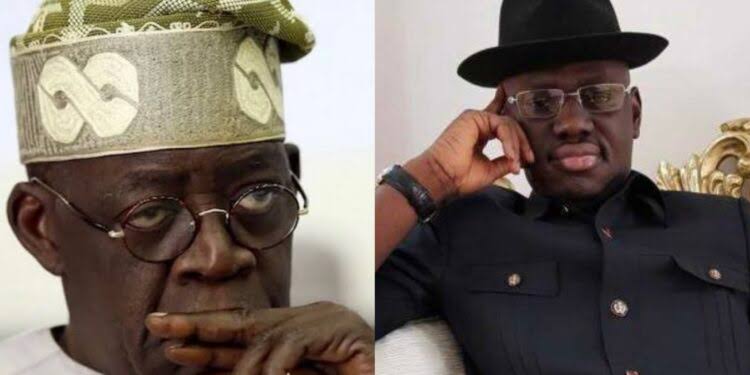
A political activist and former Deputy National Publicity Secretary of the All Progressives Congress (APC), Timi Frank, on Wednesday, accused the United States of playing double standards concerning the Chicago State University academic records of President Bola Tinubu.
According to him, while actions and requests are taken seriously in the US, it becomes the reverse when it concerns an African country like Nigeria.
He therefore called on Tinubu to allow the US Varsity to release his academic records to a court in Nigeria if he has nothing to hide.
The activist also challenged the US government and its institutions to cause Tinubu’s certificates in Chicago State university to be released to a court in Nigeria in the spirit of reciprocity and freedom of information obtainable in that country.
Frank in a statement in Abuja, also insisted that Tinubu, as a public servant ought not to seek to stop his academic records from being made public in a law Court.
Tinubu had filed a motion seeking to prevent a United States Federal Court from releasing his University academic records tas requested by former Vice President Atiku Abubakar.
Frank said, “Barely two days after former Vice President and Presidential candidate of the Peoples Democracy Party (PDP) approached the State District Court for the Northern District of Illinois subpoenaed the Chicago State University to release the records of Tinubu, it is rather shocking that the President has countered the request by filling a counter motion to restrain the Court from releasing his academic records to the petitioner.
“What seems to be more worrisome is the idea that a sitting President who had sworn to uphold the integrity and sanctity of the Presidential office, would attempt to muzzle an independent judiciary of the United States through acts of coercion or frivolous motions unknown to the Justice department.
“However, it is noteworthy to reiterate that the Justice system of the United States isn’t one that is amenable to coercion, intimidation, subjugation or any other form of compromise as demonstrated clearly from recent events concerning the former President of the US (Donald Trump) who is being made to answer various charges concerning his conduct while in office.
“What are you hiding in the Chicago University? If you are proud of your credentials, tell the University you claimed to have attended to release your academic information to Nigeria as requested by Atiku.
“This is simply the right thing to do because when a subpoena has been issued, it’s meant to be honoured anywhere. For anybody who wants to lead Nigeria, you should be able to surrender yourself to Nigerians for scrutiny as that is the minimum standard expected and I’m aware Alh.Atiku is not doing anything extraordinary against the law.
“This is the very reason we believe the US court must throw out your (Tinubu’s) appeal and give your academic information to Nigeria.” The US must not be seen to protect any high profile Nigerian or any Nigerian that is holding public office. That is their duty, to do the right thing the same way they are doing the right thing in America.
“Today, the world and everybody is watching how Trump is being treated and investigated from one court to another.
“Trump’s information is being released by the CIA and the FBI in America for people to see what he has done.
“So if they can do that in America to Trump who is a former president, then why is the United States today aiding and abetting criminality in Nigeria by refusing to release unclassified documents petmitted by its freedom of information law? Whatever is good for America must also good for Nigeria.
“it is because of acts of complacency and deliberate connivance with individuals who have run fowl of the system and taken advantage of compromised individuals that Nigeria and indeed majority Africa countries are turning to China and Russia who are believed to be strict and non-compromising.
“The United States is playing politics with the destiny of Nigeria because of their interest, but if they are not careful they will do untold damage to their image in Africa.
“The United States is losing its credibility in Nigeria and in Africa because of issues like this because when it has to do with Africans, they will know something is wrong, but because of their personal interests, they will underplay it the way it cannot be done in their own country,
“Is it not too much for Nigeria to demand from the authorities of the United States that we need the academic credentials of our president that they know is illegally occupying the office? This is the same man that has been fingered in several criminal cases in America.
“In America, can you do this to your taxpayers? When taxpayers in America demand for any information, including that of a sitting president, it will be provided because they know that a public officer in America, is answerable to the citizens.
“But why are they promoting and supporting public office holders in Nigeria like the incumbent president who’s unwilling to be answerable to the Nigerian people as if the interest of Tinubu is greater than the interest of Nigerian people?”
“Therefore, the argument in his motion that the records should not be released because they fall under a 1974 privacy law for American students has shown clearly that there’s more to the identity of the individual who’s currently the President of the Federal Republic of Nigeria and all must be done by the US in ensuring that the real identity of the President is revealed with the demand for his academic credentials whilst in Illinois.
“We hold the US in good faith and will expect that everything concerning this matter is finally put to rest when the University is finally subpoenaed. We’re glad that a Federal judge has been assigned to the case, and we expect a full dispensation of justice under the US Justice system in this regard.”
Nigerian doctors, under the umbrella of the National Association of Resident Doctors, NARD, have been on strike following the failure of the Federal Government to meet their demands. Resident doctors make up the bulk of the doctors in Nigeria’s tertiary hospitals, and when the NARD goes on strike, activities are crippled in such hospitals.
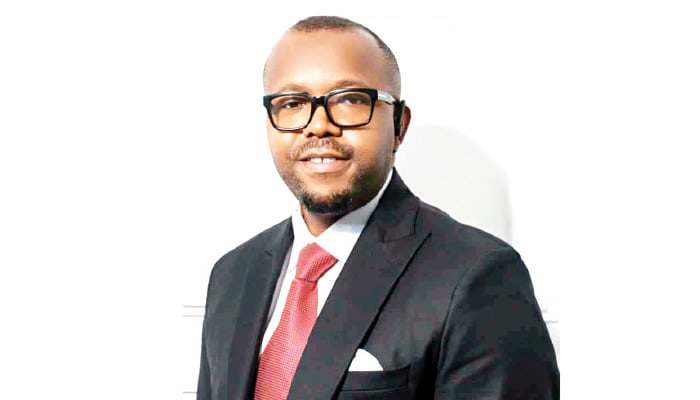
The doctors, amongst other issues, are demanding the immediate payment of the 2023 Medical Residency Training Fund, MRTF, tangible steps on the “upward review” of the Consolidated Medical Salary Structure (CONMESS) and payment of all salary arrears owed its members from 2015. The National President of the association, Dr Emeka Orji spoke to DAILY POST in an interview on several issues bordering on NARD negotiations with the government. Excerpts!
Dr. Emeka Orji
The Federal Ministry of Health says it has commenced the implementation of the ‘no work no pay’ policy. How did your Association react to it?
The truth is that our members reacted to it negatively, and I did not know why or how a government ministry that is saddled with the responsibility of resolving issues in the health sector would enter into an agreement with an association like NARD with time lines to many of the demands and renege on that agreement. And when the association now reacts, after consultations, when we now react by way of a strike, the same ministry that reneged on the agreement that caused the strike will come and punish us for going on strike. I am not sure that is what the Trade Dispute Act envisaged, that the government will have an agreement with an association, renege on the agreement, and the association reacts, you punish them for reacting; that is against the principle of natural justice. Because he who must come to equity must come in clean hands, and so, we are hoping that they will look at it again and do the needful because that is not going to help anybody. If anything, it will eventually aggravate the situation we have on our hands because they are not willing to resolve the issues.
If you look at the memo critically, you will see that they even enumerated the issues without telling us one after the other which one they have resolved and how they have resolved it, which means that they know the issues, but they are yet to attend to them.
The implementation of the ‘no work no pay’ policy implies that striking doctors may face financial consequences. What is the way forward?
Our members have already envisaged this, and you need to realise that we are professionals. The government should do well to address the issues; that is our major focus. Our focus is on the demand we are making; the medical residency training fund 2023, the keeping arrears, and a host of other things, which we believe the government can quickly address. So if they are able to address it, then we will begin to talk about coming back to work, but if they refuse to address those things and they are talking about no work, no pay, it is actually not going to help anybody.
The circular suggests that the government is holding striking doctors responsible for any likely escalation of the situation. How do you respond to this accusation, and what message would you like to convey to the government regarding the doctors’ grievances?
I don’t know the circular you are referring to where the government is holding us responsible for the escalation of the crisis. We are the ones actually holding them responsible. In some of our previous releases following the issuance of that memo, we felt that it was going to anger our members all the more, and that was actually what happened because you can see now that on Saturday, we had National Executive Council, NEC, meeting, and our members directed that we proceed on a daily nationwide protest with effect from Wednesday.
But ever since that notice came out, we are aware that even the government is reaching out to resolve the issues. We hope that that happens before Wednesday. The government has invited us to a meeting again tomorrow. We are hoping that the meeting will be fruitful because, essentially, everybody wants a solution to this. The essence of the association raising the alarm or even going on strike is to resolve issues. And in this case, many of those issues don’t necessarily have to do with us per se. It has to do with the system. We want the system to work. That is why we are calling for any form of avenue that the government can use to recruit and replace doctors and nurses that left the system. Because we believe that it is only when that happens that the system can function effectively, so that is what we are agitating for, in addition to other important things.
If the government addresses them, of course the urgent one can quickly be addressed, and they give us hope as to when the other ones will be done, we will come back. What our members simply don’t want is a situation whereby we keep working. You see a doctor doing the work of 30 people; there is no way the person will cope.
The ongoing strike has raised concerns about the impact on patient care and public health. How is NARD addressing these concerns?
Even during the time we were working, patient care has been affected by this inadequacy of numbers; we are talking about the inappropriate number of doctors and nurses in the hospital. Patients come there, and they spend the whole day in the hospital, and they don’t get to see their doctors. They come to the emergency department with trauma in emergency cases, and we don’t have enough doctors to treat them, and many of them die. This has been the case for some time now.
Already the patients are suffering because of these issues that we are demanding the government to resolve. Secondly, we have said this repeatedly, doctors are human beings; we are Nigerians. We also have needs. We have families to take care of. And so if the government is not giving us what we believe is our entitlement in terms of remuneration and training funds, of course, we are going to make demands of the government to do those things. Essentially you journalists use to refer us to our Hippocratic oath. If you read that oath critically now, you will see that provision was made and stated clearly that we have to be able to take care of our own health and needs in order to be able to deliver health services of the highest standard to our patients. And so, if doctors are not well taken care of, how exactly will they be in a good frame of mind to treat their patients? A hungry doctor is a dangerous doctor. And so we don’t want to have an army of hungry doctors in Nigeria treating patients; things will definitely go wrong. That is why we are clamouring for all these changes to be made.
Some people argue that strikes by medical professionals could harm the doctor-patient relationship and erode public trust in the healthcare system. How does NARD plan to maintain a positive doctor-patient relationship while advocating for its members’ rights?
Well, we do that a lot, but what we see is that it looks as if nobody cares. And you see, the problem is that even when we are engaging the government on so many issues, Nigerians don’t get to know. It is only when we keep engaging, and nothing is coming out that we will now start agitation. That is the only time people begin to know. If we tell you what we have done to prevent this strike, you will not believe it; people leave with their families and come over to Abuja and move from one office to another.
We are also trying to engage the public to let them know exactly what the issues are and how they can help us.
Assuming the general public decides to be fighting for us and for the survival of the health sector, I can tell you that the Nigerian Association of Resident Doctors, NARD, won’t have any need to be engaging in all these agitations because we see the public fight for us while remaining in the hospitals and work for them. But nobody does that, of course, we don’t have an option but to fight for ourselves and for the survival of the health sector.
NARD has been engaged in negotiations with the government to address various issues. Can you provide an update on the progress of these negotiations? What are the key points?
The major issues remain the 2023 medical residency training fund that has not been paid, which we are hoping that the government will be able to pay so that we can resolve these issues. Then there is this keeping arrears that have lingered for a long time that have not been paid upon several promises. Then, of course, with these biting economic conditions, our members expect that the government will be able to settle all these arrears of salary so that it could help us cushion the effect of the removal of fuel subsidy and the consequent inflation.
Apart from these arrears, there are others, but those ones are being owed to a few of our members who were not paid alongside others. And then, the issue of massive manpower shortage in the hospitals; we want the government to think outside the box and bring up this circular of one-for-one replacement that they have promised us for a long time ago so that the hospitals can have enough manpower to take care of health needs of Nigerians; this will make our members heave a sigh of relief when they have people coming to join the system, and then the current work overload in the system can be addressed. Those are the major issues.
How soon is the strike going to end?
You know, whenever we are going for such meetings, we always have hope, just that many times after you go there, you see the body language, you will know that from the beginning that there may not be any plan to even resolve issues. But this time around, we believe and hope earnestly that because of well-meaning Nigerians that have intervened so far, we believe this meeting will be able to yield something that will help us with these issues that we have on our hands.
Some critics argue that strikes are not the most effective way to resolve disputes with the government and may lead to more harm than good. How does NARD justify its decision to resort to a strike, and what alternative approaches have been explored to address your concerns?
As I said before, the general public only gets to know when we go on strike. If they know the events that happened before the strike, they will pity us; believe me, it is not easy. You keep moving from one ministry to the other, trying to resolve issues, and some government functionaries will deliberately scuttle whatever efforts you are making. And when it looked like we had no headway at all, that was only when we first issued an ultimatum. And when we issued this ultimatum, we were ignored. Of course, we had no option but to escalate, and it is quite unfortunate.
Going forward, we want the government to try and listen. You see, most of these issues can be resolved on the negotiation table if people come to the table with good faith, hoping to resolve issues and not to throw blames or throw tantrums in the meeting or even start looking at you as if you are overbearing without critically analysing the demand that we are making. It is like these demands we are making now. When people go through them one by one, they see reason in what we are asking for. So, there is no reason they would not be addressed.
What can you say about the death of Lagos doctor, Diaso Vwaere due to a faulty elevator?
It is unfortunate; it still boils down to what we keep talking about. If you look at the scenario, it is actually why, in God’s name, young doctors will be quartered in a 10 storey-building with a faulty elevator. When you begin to think about some of these things, you wonder what is really going on in this country. To start with, why would you have only one lifter in that place? Why would you allow it to be faulty when you know it is a 10 storey-building? Do you envisage that someone will come from the topmost floor to the ground without using a lift? And to even think that this complaint was made a long time ago and that it was not adequately addressed shows you the decay in the system that we are all complaining about. It still boils down to the fact that it is not only the federal government that we are even talking about; most state governments have completely abandoned the health care system in their states.
Unfortunately, Lagos State used to be one of those States that expect some level of excellence in terms of their health care delivery system because of the resources available to them. So we are ashamed, appalled, and we are annoyed that this doctor will lose her life needlessly for something that could be avoided. We are still calling, and we join our voices with the zonal Nigeria Medical Association of Lagos State, their medical guild, to demand that all the people who, in one way or the other, exhibited incompetence and negligence that has now led to the death of this doctor should be brought to book, so that it will serve as a deterrent to others.
Somber Day! As though Nigeria did not have enough problems, the coup in the Republic of Niger created even more worries. In large part, this is due to the coup’s implications for not just Nigeria, but the West African region.
The Sahelian countries’ efforts at democratization have failed. ECOWAS, chaired by the President of Nigeria, threw down the gauntlet and declared an ultimatum, calling for the restoration of Mohammed Bazoum, the overthrown President, imposing sanctions, and threatening invasion Niger if the restoration was not done. The coup makers refused.
Other Sahelian countries, Mali, Burkina Faso, and Guinea, also led by coup makers vowed to support Niger if ECOWAS invaded. The deadline has passed. ECOWAS did not invade, diplomatic measures are still underway, and Nigeria’s Senate did not approve the President’s request to invade Niger (https://www.premiumtimesng.com/news/top-news/614650-analysis-niger-coup-tinubu-ecowas-in-dilemma-on-deadline-day.html). If the situation in Niger is not resolved soon, there would be grave social, economic and political ramifications for Nigeria. We should also expect refugees from Niger, and the entire region would be similarly affected.
Amid the stormy gale, some promising developments include the maturation of some elements of democracy. Predominantly, the success of the checks and balances—the legislature playing its constitutional role of checking the executive from declaring war. However, it is not yet uhuru. Nigeria’s democratization is still evolving. The country needs stronger institutions and better dedication to democratic principles.
Isn’t it curious that Nigeria is making a big deal over respect for the outcome of elections, given the shaky foundations of democracy in our dear country? We are yet to be successful with electoral integrity. Our election management body, INEC is by no means fit for purpose. Our Presidential election results are still being contested in the courts. These too are signs that we are experiencing a maturation of democracy. Those who lost the elections chose to bring lawsuits—in essence, following the rules instead of disrupting the system.
Besides the serious problems caused by the Nigerien coup, majority of Nigerians are still being buffeted by the harsh aftereffects of the removal of the petrol subsidy and the new naira exchange rate policy. Both measures have increased the precarity in the lives of already overstretched people who are straining under the pressures of making ends meet.
The 2020 #EndSARS youth protesters also showed a belief in democracy in their call for good governance, an end to police brutality, extortion, impunity, economic inequality, marginalization and political violence, as well as the targeting of youths and other minorities. #EndSARS peaceful protests were harshly suppressed in violation of democratic principles.
Two years on, Nigerians must commit to strengthening our fledgling democracy. An essential part of what is needed is that it is unacceptable that peacefully demonstrating youths at #LekkiTollGate & other locations were massacred by government forces. The right to peacefully protest, freedom of speech and freedom of association should all be sacrosanct in a well-functioning democracy.
#NigerianWomenArise
#EndPoliceBrutalityinNigeriaNOW
#EndSars
#EndSWAT
#EndImpunity.
Howard Zinn’s words are applicable to Nigeria’s efforts at democratization: “Civil disobedience, that’s not our problem. Our problem is that people are obedient all over the world in the face of poverty and starvation and stupidity, and war, and cruelty. Our problem is that people are obedient while the jails are full of petty thieves, and all the while, the grand thieves are running the country. That’s our problem.” Democracy cannot thrive amid deep and rising poverty, war, and cruelty. Hardship should not be allowed to dehumanize the poor and drive them to desperation. Further precarity does not only inflict hardship and precarity on the poor, it challenges the essence of democracy.
Now for my voice in the wilderness moment:
Let the kleptocrats give back our stolen wealth so that we can fix our infrastructure, schools, hospitals, and also offer worthwhile social protection to our people. Let the masses enjoy the full benefits of citizenship in Nigeria. Let the leaders and political class repent and build peace with justice. This is no time for politics as usual. The people elected should be those trusted to bring justice, equity, and human security to the entire country, not expedient, unethical, and egocentric individuals determined to dominate for self aggrandizement or sectional gain. We don’t need oligarchs’ continued domination. We also need a government that puts the interests of majority of citizens first.
Two of the reasons for the stunted growth of privacy and data protection in Nigeria are (1) a lack of awareness of the data protection obligations of businesses and the rights of customers; and (2) the lethargy of Nigerian citizens towards seeking legal or administrative redress for privacy violations. Little wonder Privacy International, in their Stakeholder Report, decries that the right to privacy is the least litigated fundamental right in Nigeria. This narrative needs to change!
Last week, one of the largest retail stores in Nigeria – Prince Ebeano Supermarket, unassumingly published a notice of data breach at its outlets in Lekki. According to them, the incident has ‘affected’ the database of customers and prevented access to loyalty points.
I am one of their customers, hence, when this incident was brought to my notice, I immediately did a quick search to ascertain the supermarket’s level of minimum compliance with their data protection obligations as a controller of thousands of customers’ personal data. My first shock was the absence of any privacy notice on their website, at the very least. This is a red flag for lack of transparency and unfair data processing activities. My second search revealed that the supermarket has neither filed a data protection compliance audit since 2019 nor designated an officer to relate with the public on data protection, hence I did not know to whom my enquiries on their privacy practices could be directed.
Consequently, on the 9th day of August 2023, I approached the High Court of Lagos State, for some reliefs, to wit:
A DECLARATION that the Respondents’ collection and storage of the Applicant’s personal data in a database with (undisclosed) software without his consent or due information on data security interferes and/or is likely to further interfere with the Applicant’s right to privacy guaranteed under section 37 of the Constitution of the Federal Republic of Nigeria, 1999.
A DECLARATION that the Respondents’ processing of Applicant’s personal data without compliance with the provisions of the Nigeria Data Protection Act, 2023 and Nigeria Data Protection Regulation 2019 constitute an interference with the Applicant’s right to privacy guaranteed by section 37 of the Constitution of the Federal Republic of Nigeria, 1999.
A DECLARATION that the Respondents have admitted a personal data breach by virtue of the notice pasted at the Respondents’ business premises thus:
“Dear Esteemed Customers, Kindly note that due to a system error during software upgrade which affected our client database. We are currently not able to add points, all accumulated points will be redeemable once we are able to resolve the issue.”
A DECLARATION that the Respondents’ collection and storage of the Applicant’s personal data in a database with an (undisclosed) software violates the principle of transparency provided under section 24(1)(a) of the Nigeria Data Protection Act, 2023.
A DECLARATION that the Respondents’ collection and storage of the Applicant’s personal data in a database with an (undisclosed) software breaches the Respondents’ obligations to provide adequate information to the Applicant at the time of collection of his personal data in contravention of section 27(1) of the Nigeria Data Protection Act, 2023.
A DECLARATION that the omission or lack of a privacy policy on the Respondents’ website – https://princeebeano.comviolates the express provision of section 27(3) of the Nigeria Data Protection Act, 2023.
A DECLARATION that the Respondents’ omission to inform its customers of the personal data breach suffered by its database software through national dailies or social media constitutes a violation of its duty under section 40(3) of the Nigeria Data Protection Act, 2023.
A DECLARATION that the Respondents’ omission to inform the Nigeria Data Protection Commission of the personal data breach suffered by its database software within 72 hours of its discovery constitutes a violation of its duty under section 40(2) of the Nigeria Data Protection Act, 2023.
A DECLARATION that the Respondents’ omission to file a data protection compliance audit since 2020 is a violation of the provision of article 4.1(7) of the Nigeria Data Protection Regulation 2019.
A DECLARATION that by virtue of section 53(2) of the Nigeria Data Protection Act, 2023, the Respondents and their business entity are vicariously liable for the data breach suffered by Prince Ebeano Supermarket.
PERPETUAL INJUNCTION restraining the Respondent from further processing (storing and using) the Applicant’s personal data without compliance with the provisions of the Nigeria Data Protection Act, 2023 and Nigeria Data Protection Regulation 2019”
While the new suit awaits assignment to a Judge in the jurisdiction, it is hoped that, as many Nigerian businesses continue to integrate technology into their processes, they will not only prioritize citizens’ privacy and data protection concerns but will not further treat personal data breaches with kids’ gloves.
As netizens and civil rights activists condemn the blanket call for the regulation of social media platforms, DiGiCiViC Initiative has added its voice to that of the Netrights Coalition.
Addressing the situation, DiGiCiViC Initiative and Netrights Coalition in a joint statement said: “The state of the civic space in Nigeria is already strangulated despite the absence of specific social media laws. Why is that?
“First, there is a state of impunity that leaves public officials unaccountable.
“Secondly, the government has proven to be unaccountable especially as it relates to the three horns of the civic space- Freedom of Assembly, Association and Expression.
“Thirdly, there are several instances of the use of state security and apparatus to hound, repress and oppress government critics, human rights advocates, members of the media, bloggers, etc. Some of these were arrested, detained, ill-treated, and subjected to different forms of harassment and intimidation.
“Lastly, the government of Nigeria is largely unaccountable to the judiciary as there are several judgments on the enforcement of fundamental rights that have not been enforced due to the refusal of the government. The immediate past government was notorious in this department. Several applications for the enforcement of judgement remain pending before the Attorney General and Minister of Justice.
“In addition, Nigeria do not comply with its obligations under the ECOWAS treaty as it continues to disobey the judgements of the ECOWAS Court.
“In respect of social media, there are sufficient laws in Nigeria addressing online offences. Thus, there isn’t even a problem of protecting the rights of citizens online. There are provisions in the Constitution, Criminal Code, Penal Code, Cybercrimes Act, Electoral Act, Child Rights Act, Violence Against Persons Prohibition Act, and laws within the 36 States of the federation.
“The problem is not that there are no laws. The problem is the failure of implementation on one hand, & the general disrespect for the rule of law by law enforcement agencies and the government on the other hand.
“Therefore, such a bold statement by the Ministerial nominee and President Bola Ahmed Tinubu’s Special Adviser on Special Duties, Communications and Strategy, Mr. Dele Alake, shouldn’t be taken for granted as it obviously communicated the mind of the government.
“We relate this to the case of Amnesty International Togo Vs. The Republic of Togo where a Minister had approved the shutting down of the internet without consideration for the cumulative Three-part test outlined in Article 19(3) of the International Covenant on Civil and Political Rights- (legal instrument to which most of these West African states are signatories & ratified).
“DiGiCiViC Initiative will continue to collaborate and join efforts with other civil society organizations to advocate against a social media regulation law, and recommend to the government alternative measures that align with its human rights obligations.”
Across the world, agriculture is the mainstay of many economies. Apart from ensuring food security for populations, it provides jobs in huge numbers and accounts for a significant proportion the GDP of most countries.
Investment in agriculture is, therefore, a prerequisite for any country that wants to make social progress and achieve economic development.
In Nigeria and in some other African countries, the Mastercard Foundation has, in the last few years, been involved in facilitating agricultural ventures across the continent.
Set up in 2006 by Mastercard International but it operates independently under the governance of its own Board of Directors, the foundation arrived Nigeria in 2019 with a team from Canada.
The focus was to create 10million work opportunities in Agriculture, Digital and Creatives as focus areas.
In Nigeria, Mastercard Foundation’s financial inclusion programme has found expression in agricultural projects in different parts of the country and in this area it has recorded resounding success over the years using the Young Africa Works strategy. Its goal is quite ambitious – to enable 30 million young people in Nigeria secure dignifying employment by 2030.
The success it has achieved in agriculture can be ascribed to the painstaking process of selecting reputable non-governmental organisations as partners and setting ambitious goals.
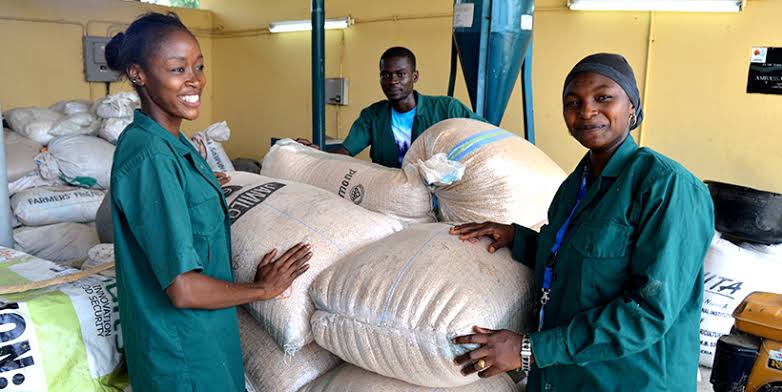
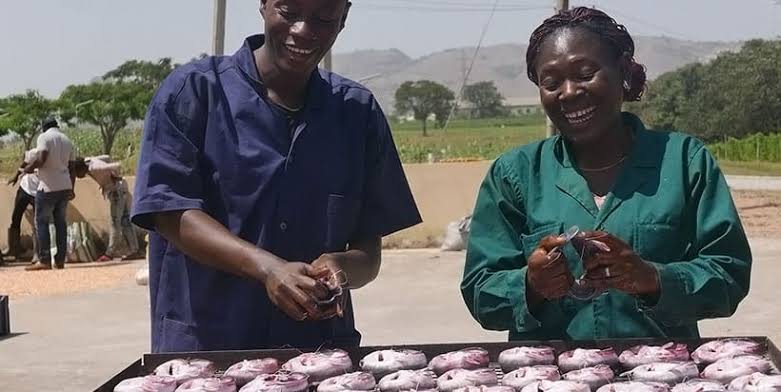
A look at some of the programmes will reveal the impact Mastercard Foundation has made in Nigeria. In May 2020 the International Institute of Tropical Agriculture (IITA) partnered with the foundation to start the Young Africa Works-IITA Project.
Young Africa Works IITA-project was designed to advance agribusiness opportunities to over 40,000 Nigerian young women and men with special focus on skills development, decent employment, and entrepreneurship opportunities to secure work in agri-food value chains for the next five years.
“Agriculture is among the most viable potential source of employment for young people in Africa,” said Chidinma Lawanson, then Country Head for Nigeria, Mastercard Foundation. “We are excited to see how our Young Africa Works partnership with IITA will make the agricultural sector more attractive to young people, particularly women by providing skills training in the agriculture value chain for employment and entrepreneurship opportunities.”
The IITA project is for young people between the ages of 18 and 35 years living in Lagos, Kano, and Kaduna. This training focuses on agribusiness development that will provide young people an opportunity to grow their businesses through coaching and mentoring while they learn modern farming and value addition techniques. They are also being exposed to agriculture product marketing skills, market linkages, and career orientation through job placements and internship opportunities.
It affords participants the opportunity to acquire business and soft skills that will facilitate their integration into the professional field. The training covers the following value chains: maize, soybean, rice, horticulture, orange fleshed sweet potato, groundnut, aquaculture, and poultry.
“There will be no development in Nigeria without the youth. The best way to end poverty is to create opportunities, and this is what this project is all about. By creating career opportunities and youth-led enterprises, we are planting a seed of change for the next generation. It is in this line that the Young Africa Works-IITA project was developed by the youth, for the youth, and with the youth,” said Aline Mugisho, Executive Manager, Young Africa Works-IITA project.
In August 2021 Mastercard Foundation partnered with Value Seeds Limited, an indigenous crop seed production, solution, and development company, to empower 10,000 smallholder farmers in Nigeria with the distribution of farm supplements.
Women made up 70% of the programme’s participants and they were selected from 22 local government areas in five states, namely Kaduna, Kano, Niger, Benue, and Katsina. The agricultural supplements distributed included fertilizers, herbicides, insecticides, agrochemicals, Knapsack sprayers, and sachet tomato seeds. In addition to the provision of farm inputs for maize and rice seedlings, the programme promotes financial inclusion, supports the improvement of yield, provides access to best agronomical practices, and creates linkages to premium markets.
In 2021, 4,000 women and youth were provided with farm inputs and training for agronomical practices, especially in maize and rice farming and an additional 6,000 women and youth were impacted in 2022. Between May and July 2021, Value Seeds was able to complete the first and second distribution of inputs to participants.
A female participant in the programme, Amina Marcus, noted that the interventions provided by the company through the provision of quality farm inputs and training had contributed to improving both her farm yield and financial standing.
“Before 2020, we had challenges accessing quality inputs, especially fertilizers and high yielding seeds. My highest yield, on average, did not exceed six bags of maize production. But last year, I participated in the programme and had access to quality smart seeds, fertilizers, and agrochemicals. Now, I can harvest 11 bags at a time. I would say the impact has been quite phenomenal in the last season with a better yield. I have been able to support my family financially and save up some money in the process,” she said.
Value Seeds Limited Managing Director, George Zangir, says he is excited to see a large number of Nigerian youth and women participating in the programme given how far-reaching the impact will be on the economy. “It is good to know that women in these locations are showing great interest in agriculture and especially farming. They are now fully involved in the entire agricultural value chain, which will directly impact our economy. As they say, when you empower a woman, you empower a nation,” he added.
Mastercard Foundation is also partnering with Nourishing Africa and US Africa Development Organisation to train 20,000 young Nigerians to become agripreneurs and provide grants to Nigerian MSMEs.
The programme called Entrepreneur Support Programme (ESP) was launched in Lagos in March 2021 and was designed to support grassroot MSMES across the Nigerian agriculture and food landscapes to rebuild and strengthen their businesses.
Leveraging ICT, data and innovation, Nourishing Africa, with Mastercard Foundation’s support, developed a four-step programme to directly back these MSMEs with training, financing, and support to ensure the scaling of resilient businesses that can withstand future shocks.
The Entrepreneur Support Programme (ESP) targets micro and small-scale enterprises run by young people between the ages of 20 and 40 engaged in critical food and cash crops and livestock value chains from the provision of inputs and primary production to processing, logistics, storage, and distribution in 11 states in Nigeria: Abia Anambra, Delta, Edo, FCT, Kaduna, Kano, Lagos, Ogun, Osun, and Oyo.
Through a rigorous application process that attracted more than 30,500 entries, 2,000 agripreneurs were selected to participate in ESP, which formally kickstarted in February 2021.
ESP has also partnered with faith-based associations, community, and women’s organisations to identify grassroots and women-led agribusinesses across Nigeria. These organisations include Whispering Hope Africa Initiative, AgriCayalyst Innovation, African Women in Leadership Organisation, Young Farmers Association of Nigeria, Senator Adeyemo Women Empowerment Cooperative, Lagos State Employment Trust Fund (LSETF), and Ogun State Ministry of Agriculture.
“The Entrepreneur Support Programme will impact the lives of Nigerian youths across the country, especially women, and create further opportunities for them to contribute to achieving our goal of national food security. Our aim is to empower and equip these agripreneurs with the tools and resources needed to create impact in the agri-food industry, not just in Nigeria, but across Africa,” said Nourishing Africa Programme Lead, Ify Umunna.
Another innovative programme that the Mastercard Foundation is supporting in Nigeria is a 100% youth focused hydroponics farming in Ogun State in partnership with a young wizard farmer called Samson Ogbole, the promoter of Eupepsia soiless farm. This programme will support about 15,000 young people under the age of 30 to learn and set up soiless farms together as a business thereby gaining enterprise from it and live in the growing farm city community. This type of farming requires very little space, is not dependent on rain, and multiple cycles of cropping can be done thereby enabling year-round farming. The Mastercard Foundation again is the leader in enabling this new sector and participants are drawn from all over the country via an online application platform. This will also provide a model that can be replicated across multiple states in the country with modifications. It is another approach to engaging young people gainfully in agriculture.
Another organisation has partnered with Mastercard Foundation is Women Farmers Advancement Network (WOFAN).
In July 2023, just last month, WOFAN, assisted by Mastercard Foundation, concluded the capacity building and distribution of labour-saving equipment to farmers across 10 states in Nigeria. The training and demonstration sessions were conducted in Adamawa, Nasarawa, Benue, Kaduna, Gombe, Jigawa, Kano, and Bauchi, culminating in the Federal Capital Territory (FCT) where the final distribution of equipment took place.
The distribution event was attended by village heads, group leaders, extension workers, farmers, and WOFAN project partners. The atmosphere was filled with energy and excitement as participants and beneficiaries expressed their heartfelt appreciation to WOFAN and The Mastercard Foundation for the innovative initiative. They recognised its potential to significantly transform the agricultural sector in Nigeria.
During the exercise, the participants refreshed their knowledge on Good Agronomy Practices (GAP), with specific focus on rice farming. The session also included trainings on farm visits and familiarisation with the CommCare App. The facilitators emphasised the importance of safe pesticide use and provided Personal Protective Equipment (PPE) suits to the participants, highlighting best practices in handling chemicals.
Throughout the exercise, more than 450 mechanised farming equipment, such as treadle pumps, power tillers, fertilizer broadcasters, multi-crop harvesters, irrigation pumps, and solar-powered sprayers, were distributed to the farmers. The beneficiaries were overjoyed to receive these tools at no cost, describing it as a life-changing intervention. They expressed their gratitude, acknowledging these resources would not only enhance productivity but also reduce physical stress.
According to Mr Attahiru Musa, The Village Head of Gawu, Abaji Area Council, FCT, “This is the first time I’ve seen a solar sprayer compared to the manual ones we used before, the solar sprayer will save farmers a lot of time, stress, and money”.
Hajia Maryam Lawal, Team Lead of WOFAN-FCT expressed gratitude to the Mastercard Foundation: “We are grateful for the outstanding work of the Foundation. Their support has enabled us to reach many women, whose lives have been transformed as a result. Our smallholder farmers are now armed with the knowledge and resources needed to thrive, and this positive change is evident in the smiles on their faces”. She added, “Our activities have gained credibility in the community, and we are proud to report significant positive impact across all our engagements”.
The ICON 2 funded by the Mastercard Foundation, aims to empower 675,000 youths, in 10 Nigerian states over a span of five years. The project’s primary objective is to help young people develop and sustain livelihoods that lead to an improved quality of life.
Mastercard Foundation is also involved in regenerative agriculture. Regenerative agriculture institute, Regeneration International, describes regenerative agriculture as a set of farming practices “that, among other things, reverse climate change by restoring soil organic matter and rebuilding weakened soil biodiversity – resulting in both a carbon sink and improved water cycle.
“The basic idea, however, is to not only farm sustainably, but to farm in a way that increases humus. Practices are used which are adapted to the respective local conditions and take the people with them.”
In Nigeria, Mastercard Foundation has pioneered this with the Saianwara-Iju Regenarative Agriculture in five states targeting 200,000 beneficiaries. This work aligns with the current drive to showcase the role of regenerative agriculture in creating sustainable agro economies in Nigeria and in Africa as a means to resolving food security and nutrition at the rural agrarian communities. This work will significantly provide a model that can be scaled across all states of the federation with slight modification for the rain forest and mangroves in Nigeria.
Some of the earlier programmes of the foundation were Babangona Agriculture corn production groups, EDC MSME strenghtening, Jobberman linkage to work, DSN/Malezi radio education during covid, Agrolog- ginger production (Covid relief), WOFAN-rice, corn and groundnut (Covid relief), My World of Bags production of PPE for Covid relief), YPO- Covid protective gear production and Covid emergency response in Lagos. More recently new programmes have been commissioned across the thematic areas.
Mastercard projects typically have a five-year lifespan each except the Young Africa Works initiative, which is a decade-long programme. For its agricultural projects Mastercard Foundation has achieved remarkable success since coming into the country in 2019.
•Johnson Olaniyi is an agribusiness consultant and writes from Lagos
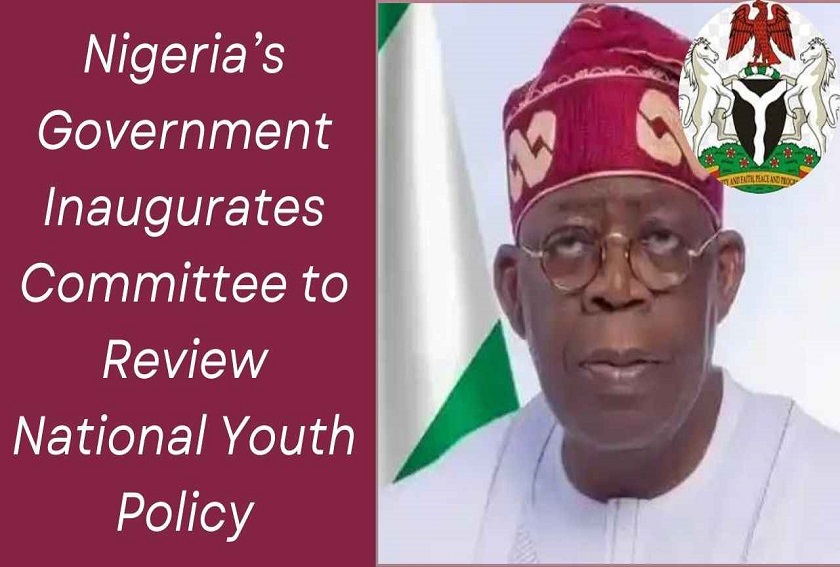
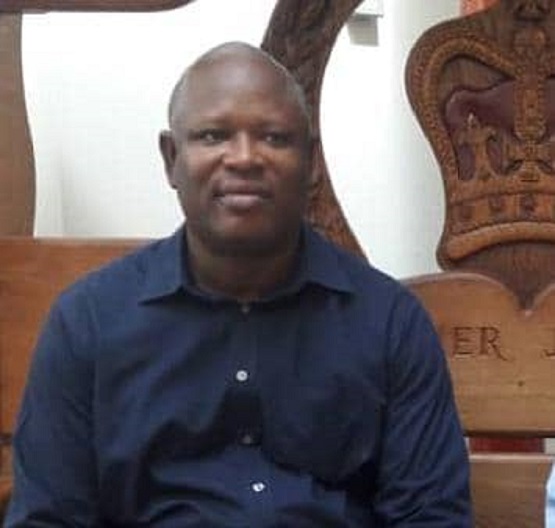
Sometime in July 2023, the Federal Government of Nigeria inaugurated a 27- Member Committee to review the 2019 – 2023 National Youth Policy. In the words of Alh. Ismaila Abubakar, the Permanent Secretary of the Federal Ministry of Sports and Youth Development, the review became necessary in order to come up with a befitting policy document to serve as a guide for development of the nation’s teeming youth.
Francis Ogunbowale
The statement of the Perm Sec, probably suggests that the current National Youth Policy does not serve as a veritable guide for youth development, that it is inadequate to meet the desired expectations, that there is need for a review and that a 27-Member Committee is such that will do the magic.
But a cursory look at the policy document will reveal that this is far from the truth. The National Youth Policy 2019 to 2023 is of world class, all encompassing, conforms with international standard and consists of very robust provisions and practical support mechanism for youth development, which any credible government may want to give its youth.
The policy of the United Nations does not advocate for anything different other than promotion of peace, security, human rights and sustainable development of the youths. Similarly, like the Nigerian Youth Policy, the USAID Youth Development Policy 2022 seeks to promote rights, influence and opportunities for the youth to pursue their life goals and contribute to the development of their communities. The ECOWAS Commission Youth policy also accepts the youth as a basis of overall development.
The argument here is that there is no problem or deficit in the existing youth policy in Nigeria. The main challenge is lack of implementation resulting from bad leadership, misplaced priority, corruption, disobedience to the rule of law and nepotism. The National Youth Policy 2019 to 2023 contains provisions which adequately addressed youth education, employment opportunities, access to supportive services, affordable health care, civic engagement, political inclusion, human rights, peace and security, agriculture and sports development.
Regrettably, bad leadership has hindered an impressive implementation of youth programs that are capable of bringing youth development such as employment opportunities, realization of full potentials and social, economic and political inclusion.
Unemployment is the most troubling problem in the country today, with no end in sight. From the projection of The Nigerian Economic Summit Group (NESG), the country’s unemployment rate hit 37% in 2023. Although, there is job vacancy in Industries, the school curriculum is not designed in such a way that graduates will fit into job specifications at work places.
Rather than provide synergies, leaders usually pursue misplaced priorities and proliferate educational institutions without any goal that is relevant to youth advancement. This is compounded with corruption at all levels and everywhere, including the church and the mosque, coupled with institutional coups and tenor elongation in order to remain perpetually in power. Where few opportunities emerge, rather than pursue an even share, leaders usually prefer to harvest all the available space to their kinsmen.
We really do not need to review the National Youth Policy. What we need is to examine the character of government and the mindset of its officials. We need an ethical rebirth. The problem of Nigeria is not that of lack of effective youth policy, but that of non-implementation or poor implementation resulting from elitism, selfishness and lack of political will.
Youth development is a global phenomenon. While the African Youth Charter encourages full participation of the youth in the life of the society, the Commonwealth Youth Charter seeks to create a society where young people are empowered to fully develop their potentials. The United Nations charter and the United Nations World Program of action for the youth are not different. They both quest for protection of fundamental human rights of the youths.
Government needs to develop the academic, social and vocational competence of the youth through mentorship programs and establishment of youth centres across the country; enhance youth confidence through positive self-concept; encourage community, family and personal connection of the youth; expose them to good character by rewarding positive moral value and integrity; and encourage them to participate and be fully involved in decision making, at all levels.
In every jurisdiction, the youth is usually at the centre of any meaningful development. The object of any Youth Policy anywhere in the world is to promote fundamental human rights of the youth, protect their socio economic and political well-being, enhance optimum participation in the overall development process and quality of life. Nigeria should not be an exception.
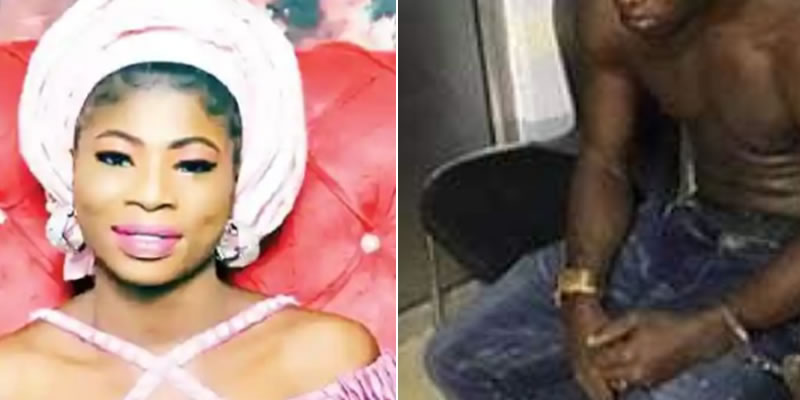
Relatives of a 30-year-old woman, Rafiat Okewole, are currently grieving over the sudden death of the lady allegedly in the hands of her husband, Wole.
PUNCH Metro gathered that Okewole, though married to the businessman, was living separately on Odelusi Street, in the Ijoko area of Ota, Ogun State.
She was said to have lost her life during a disagreement that ensued when she visited her husband in the Gas Line area of Ijoko on Sunday to collect money for her children’s upkeep.
The deceased was said to have been having a running battle with her husband over his alleged failure to cater for her children.
The issue, however, reached its climax when Wole allegedly smashed Okewole’s head against the wall during her Sunday visit.
Our correspondent learnt that efforts made by neighbours to save Okewole’s life after the incident failed as she was confirmed dead in the hospital where she was rushed to for medical attention.
It was further learnt that her 41-year-old husband was arrested after the case was reported at a police station by one of the deceased’s siblings.
One of the deceased’s brothers, Akinola Shittu, in an interview with PUNCH Metro, said he was devastated by the news of his sister’s death.
He said, “My elder brother called me on Sunday evening to inform me that Rafiat died. I asked what happened and he told me that it was reported to him that Wole smashed her head against the wall of his house when she went to ask for money for the upkeep of their kids.
“This happened at Wole’s Gas Line, Ijoko residence on Sunday around 3pm.
“Immediately, I rushed to the house and I saw that neighbours had already gathered and my sister was taken to a nearby hospital where she was pronounced dead. I am devastated.
“I later learnt that one of my brothers who lives nearby reported the case at Sango Police Station which led to Wole’s arrest.”
The deceased’s sister, Basirat Liasu, told our correspondent that the incident happened in the presence of Okewole’s daughter who accompanied her to Wole’s house.
Liasu said, “I learnt on Sunday from one of our elder sisters that Rafiat died due to injuries inflicted on her by her husband, Wole, who hit her head against the wall in his house.
“Rafiat was not living with Wole as of the time of the incident because she was Wole’s second wife. Though, his first wife also packed out earlier in the year.
“She went there to ask for money for the children’s upkeep. One of her children who accompanied her to the house told neighbours that her father hit her mother’s head on the wall.”
The deceased’s elder brother, Yusuf, told PUNCH Metro that he was the one who reported the matter at the Sango Divisional Police Headquarters.
He said, “My wife was the one that called me on the telephone and informed me that she heard that my sister died after her husband hit her head against the wall of his house.
“I rushed to the hospital at Ijoko but she was already dead and I learnt that Wole was still boasting that nothing would happen to him after killing my sister.”
Contacted, the state Police Public Relations Officer, Omolola Odutola, confirmed the incident.
She said Wole was already in police custody.
The PPRO said, “The Sango Ota Police Division arrested a murder suspect on August 6, 2023, around 4pm. It was one Segun Osho who reported that his sister, Rafiat Okewole, who lived at Odelusi Street, Ijoko, Ota had an argument with her husband, Oluwole Okewole, and he hit her head on the wall and she became unconscious.
“She was rushed to a hospital in Ota where she was confirmed dead by the doctor on duty.
“Detectives visited the scene, arrested the suspect for interrogation and took photographs while the corpse was evacuated to the mortuary for autopsy.”
Nigeria’s Nollywood could not have done better in this bizarre movie like tale but this is for real.
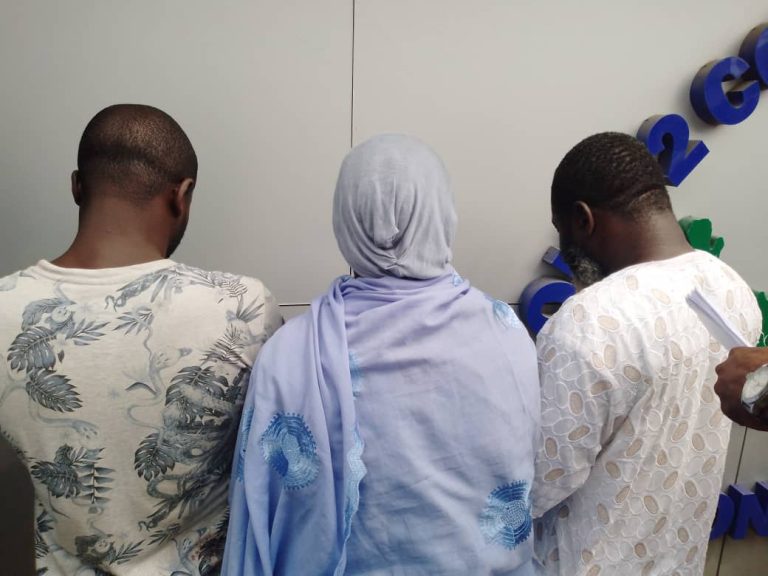
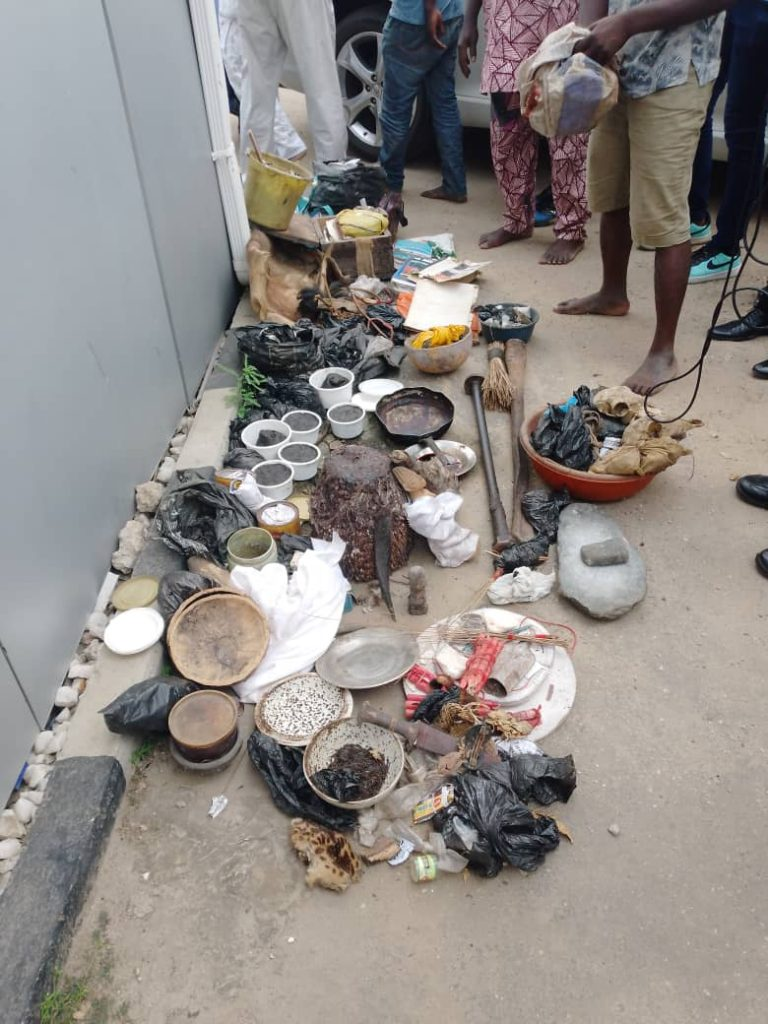
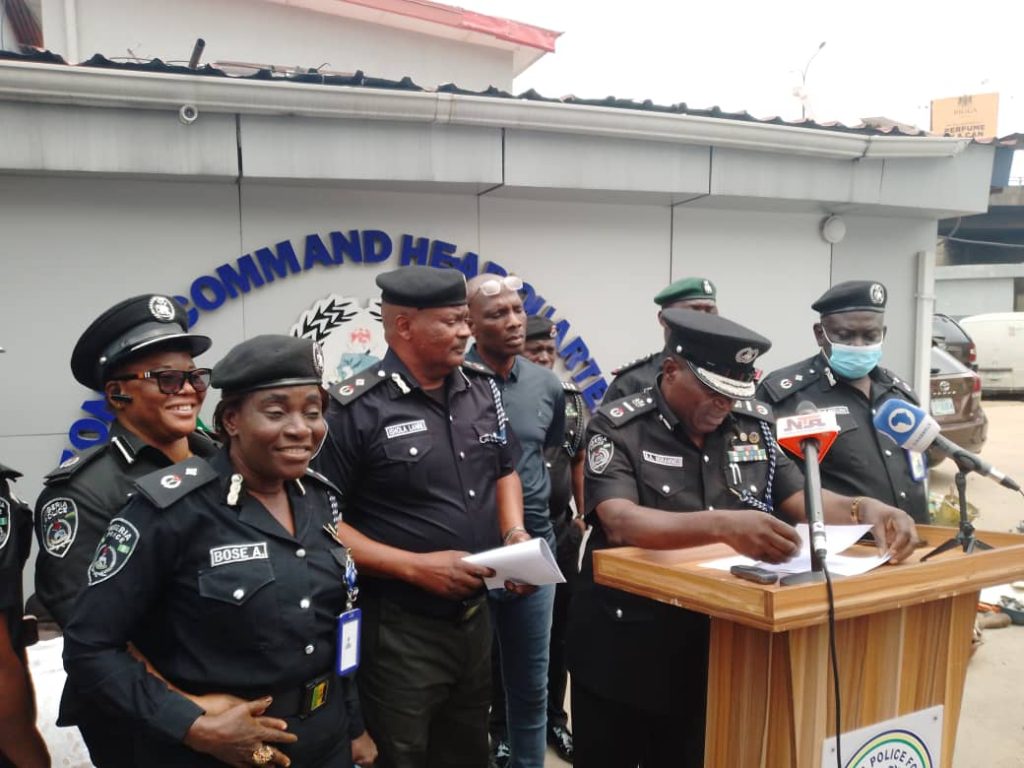
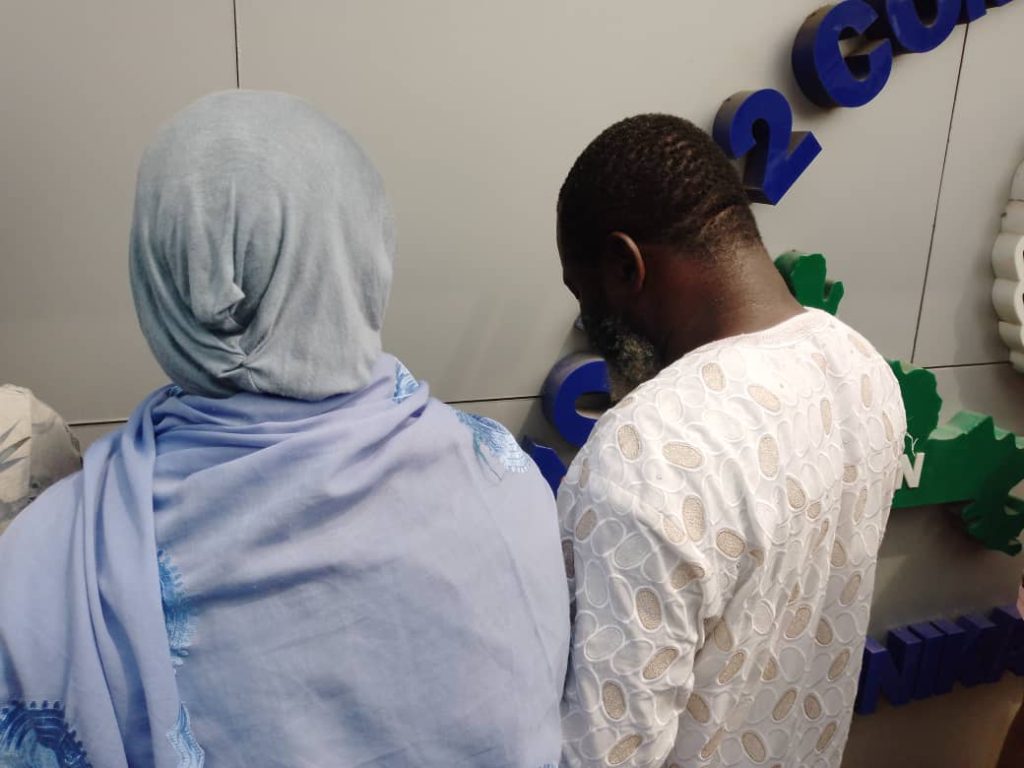
Police Operatives attached to Zone 2 Command, Onikan, Lagos State, under the watch of Assistant Inspector General Of Police, AIG Muhammad Ali Ari, has blown open and arrested five con-men and members of a voodoo cum ritual Syndicate, led by a self styled Islamic Cleric, known as Alfa Alhaji Afeez Uthman Imoleayo.
Alfa Alhaji Afeez Uthman Imoleayo allegedly hypnotized an American Based Nigerian man, Mr. Animashaun Oluwasegun, also known as Afeez Uthman, abducted his wife and children, after manipulating the victims to drop their original names to bear his own.
The lead suspect also converted a 2004 Model Chevrolet Rain Blazer SUV valued $9,700 USD equivalent to Five Million, Six Hundred Thousand Naira (N5,600,000.00) belonging to his victim.
Besides duping him, the Cleric was also said to have borrowed some bank loans for himself, which the victim was made to pay back with the interest accrued.
The suspects was arrested following a petition received by AIG Ali. According to the AIG, “on the 17th of July, 2023 a petition was received on criminals who deal on compelling action by way of intimidating, obtaining money by false pretence, stealing, threatening to kill by written words, suspected ritualist, and conduct likely to cause breach of public peace by one Mr. Animashaun Oluwasegun , who changed his name to Afeez Uthman by way of documentation.
“Based on the petition, the Assistant Inspector General of Police detailed detectives from Zonal Anti- Piracy Unit who immediately swung into action and got the suspects arrested namely; Alh. Afeez Uthman Imoleayo, Mr. Ramon Temidayo Uthman and Saidi Ajayi.
“Others are; Alhaja Monsurat Salami, Kikelomo and others who are still at large, who conspired, abducted the complainant’s wife and children through which the total sum of One Hundred and Five Million Naira (105,000,000.00) was obtained with a written threat to kill the complainant and his family members.
“The principal suspects Alh. Afeez Uthman Imoleayo and his gang also falsified the complainant’s children birth certificates and also compelled the complainant to relinquish all his properties to him.
“Consequently, when the principal suspect Alh. Afeez Uthman Imoleayo was interrogated, he admitted the allegations against him for obtaining the alleged sum of One Hundred and Five Million Naira (N105,000,000.00).
“He also converted Model 2004 Chevrolet Rain Blazer SUV valued $9,700 USD equivalent to Five Million, Six Hundred Thousand Naira (N5,600,000.00) and abducted the complainant’s wife and three children for twelve years, changed their vital documents such as birth certificates etcetera belonging to the complainant in connivance with his wife Alhaja Kikelomo and one Saidi Ajayi his driver.“
The modus operandi of the suspect is by pretending to be a prayer partner with his victims as he is a strong member of an Islamic society called “Ansarullai Youth at Ikorodu, Lagos State”.
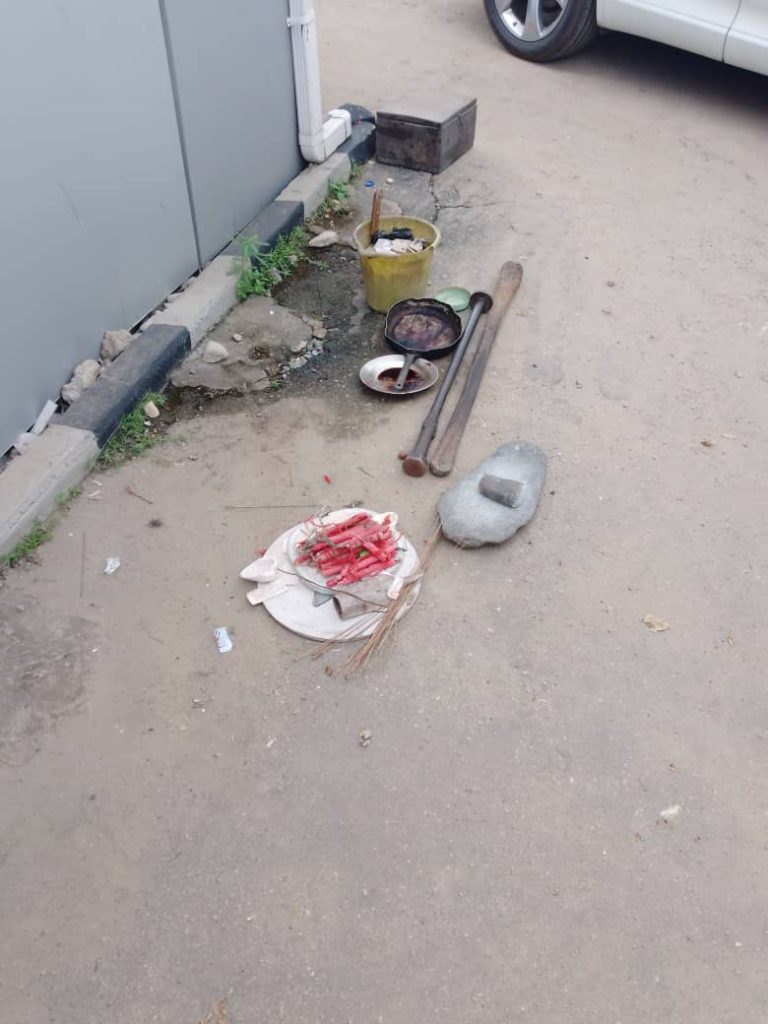
He uses spiritual concoction to bath and drink with the pretence that it will pave way for his victims, and also make them to take an oath that they should not disclose to anyone.
“In the interim, investigation is still on-going, suspects will be charged to court of competent jurisdiction, at the end of investigation, please.”
The 43 years old Islamic cleric who is the founder of Amaaniyat – UR- Rahman Global Congregation with his wife allegedly arranged with a native doctor to swindle the US-based Nigerian couple over purported deliverance prayer in the Ikorodu area of Lagos State.
The 43 years old Islamic cleric who is the founder of Amaaniyat – UR- Rahman Global Congregation with his wife allegedly arranged with a native doctor to swindle the US-based Nigerian couple over purported deliverance prayer in the Ikorodu area of Lagos State.
He allegedly conspired with his 59-year old wife, Alhaja Mushirafat Kikelomo, and the native doctor, Ramon Temidayo Uthman with others at large and allegedly hypnotized the victim and duped him to the tune of the said sum over the past 13 years.
Apart from duping him of the said money, the led suspect also falsified the complainant’s children’s birth certificates and also compelled the complainant to relinquish all his properties to him and took custody of his wife for those years.
This was disclosed by the Assistant Inspector General of Police in charge of the zone, Muhammed Ali, who paraded the suspects and confirmed that they were in Police custody undergoing interrogation over their alleged criminal conduct.
“Consequently, when the principal suspect Alh. Afeez Uthman Imoleayo was interrogated, he admitted the allegations against him for obtaining the alleged sum of One Hundred and Five Million Naira (N105,000,000.00).”
“He uses spiritual concoction for bathing and drinking with the pretence that it will pave the way for his victims, and also make them take an oath that they should not disclose to anyone.”
The Islamic cleric however, denied the allegation levied against him saying “I did not force him (the complainant) to give me the money”.
He also admitted that the victim changed the name on all his family’s vital documents to his but denied forcing the US-based man to do so.
“I was not happy when he changed the names on his property as well as the surname of his children and wife to my name,” he said.
Meanwhile, the Police recovered Toyota Corolla, Venza and two buses said to have been obtained from the victim under false pretence and they were kept as exhibits at Zone 2 Command.
Parading the suspects, Monday, AIG Muhammed Ari Ali, said the complainant’s eye opened 13 years after spending his life serving on the cleric.
One white Toyota Venza 2009 model, one Ashuk Leyland bus with registration number JJJ933YD and various landed properties were recovered.
“He confessed to have received N105 million from the petitioner, Animashaun Oluwasegun. He equally compelled the petitioner to change his name on his American International Passport and social security number from his original name to the suspect’s own.
“Furthermore, the suspect abducted the petitioner’s wife and children for more than 10 years, and subsequently changed the complainant’s wife and children’s names to his personal name through the help of his wife, Alhaja Mushirafat Kikelomo Salaam, for extortion purposes.
“He then converted all the petitioner’s properties to his own personal use, claiming that God directed him to do so.”
The AIG added:
“It was God that opened the petitioner’s eyes 10 years after, when he realised what he was doing and got himself together, relocated from the United States of America where he was based and put up the petition.
“It is my humble advice to both Muslim and Christian faithful to be careful with whoever is called Pastor and Alfa because all that glitters is not gold.
The suspect’s wife confessed to the falsification and alteration of the birth documents papers of the complainant’s children by changing the children’s birth identities to Alhaji Afeez Uthman’s name without the complainants’ consent.
She also admitted to have received over $17,000, equivalent to N11.817 million.“The native doctor, Oyedokun Amos 65, who usually assists the suspect to prepare charms for his customer, confessed that he knew the suspect for over 15 years ago and that they became friends and business partners.
He admitted preparing charms with which the Islamic cleric used to ‘reset the memory’ of the complainant.”
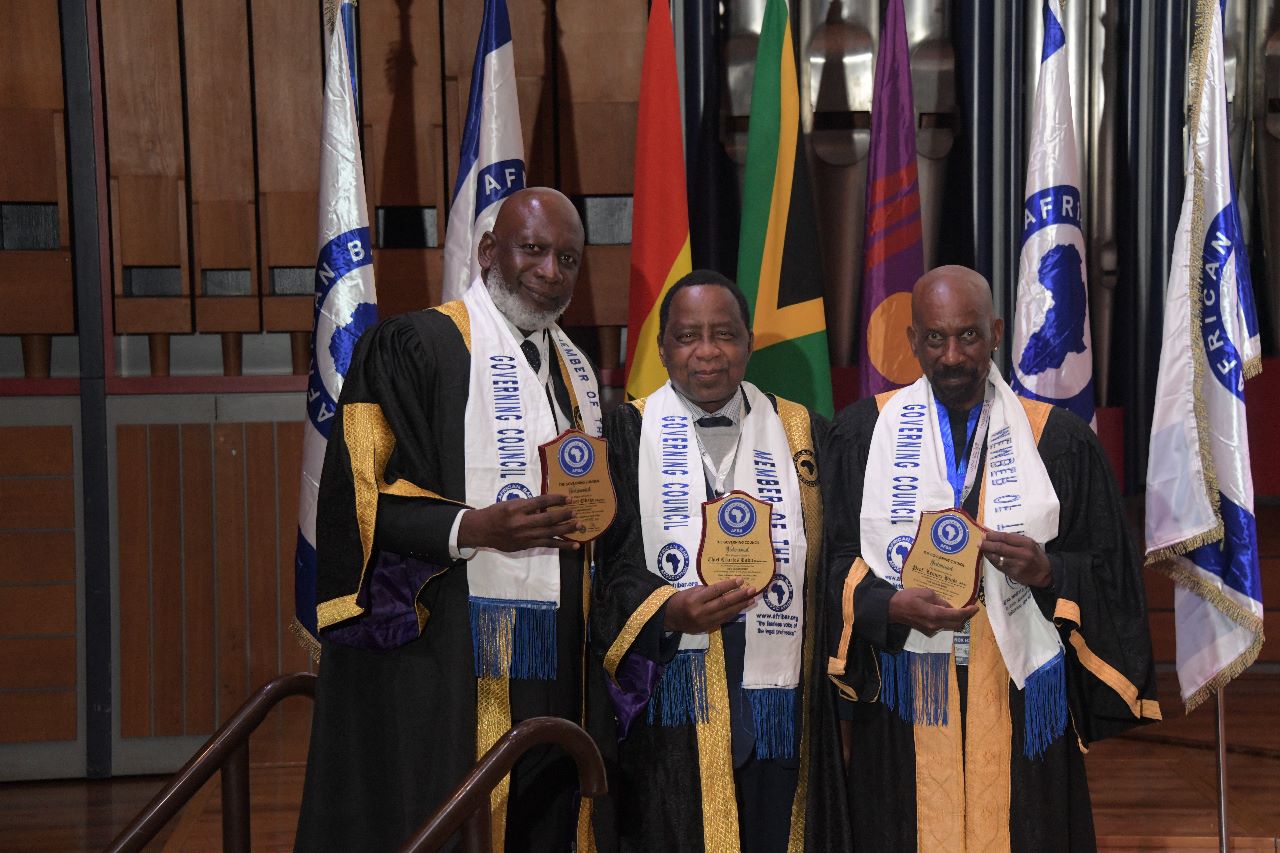
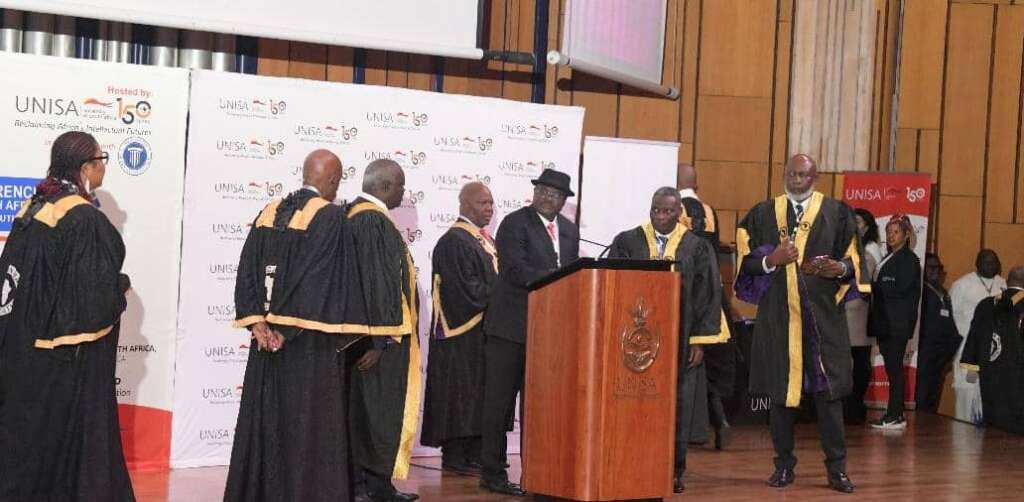
The African Bar Association commenced its 2023 Annual Conference in the City of Pretoria, South Africa. The conference which is being hosted by the 150-year-old University of South Africa (UNISA) in collaboration with the South African Bar saw an array of dignitaries in attendance.
His Excellency Dr Cyril Ramaphosa President of the Republic of South Africa was the Special Guest of Honour, represented by the Minister of Justice of South Africa.
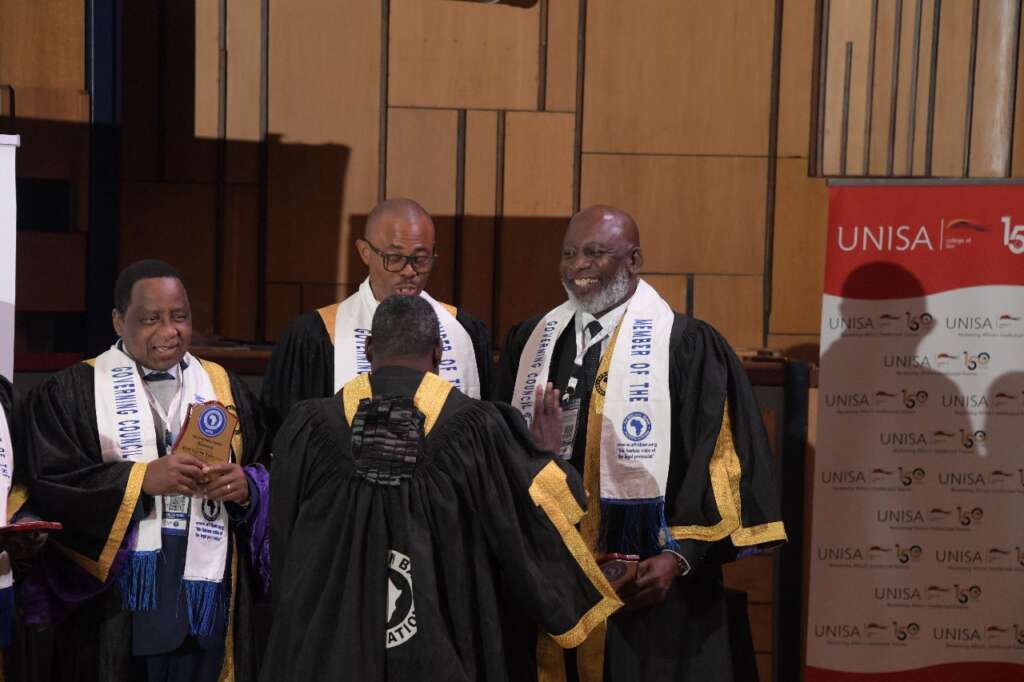
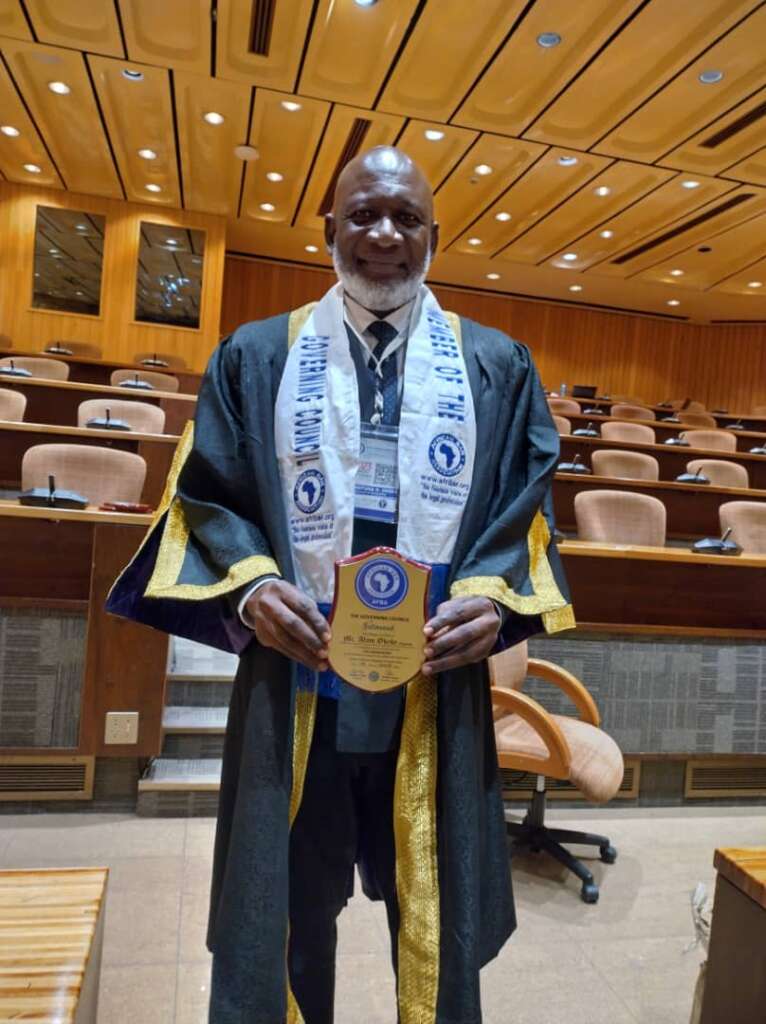
Afam O. Okeke receiving Life Membership Award from the Chief Justice of Malawi
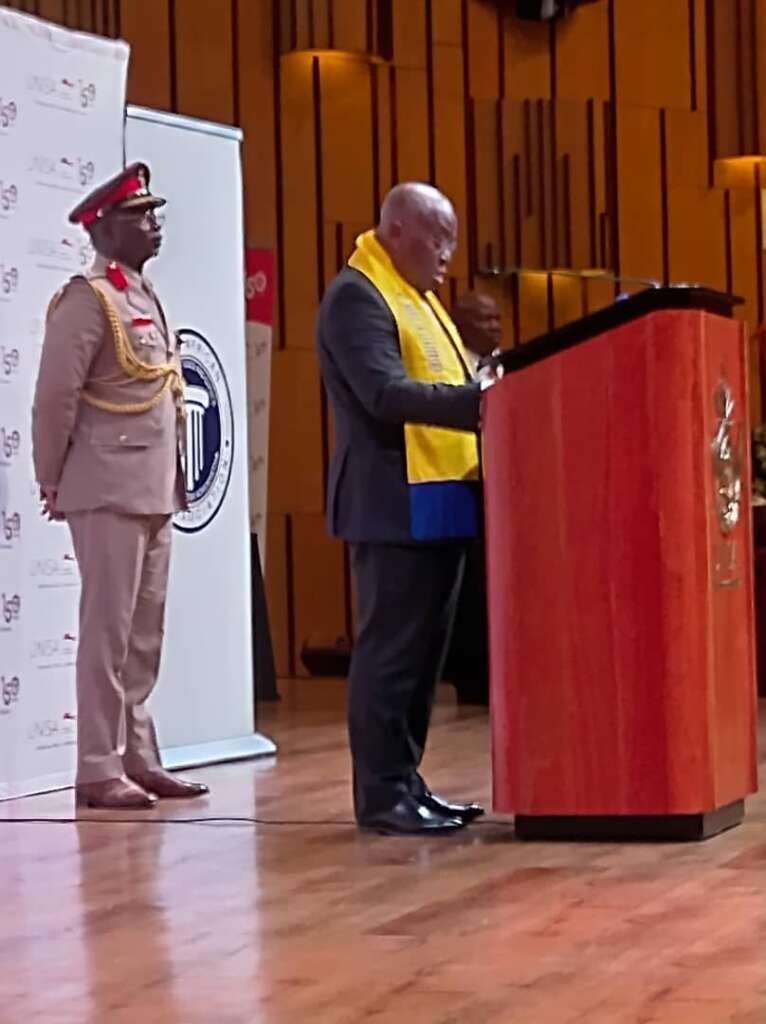
His Excellency, Nana Addo Dankwa Akufo-Addo President of the Republic of Ghana was physically present, and so were Hon Justice Raymond Zondo, a Justice of the Republic of South Africa, His Excellency, Advocate Joseph Kokou Koffigoh (Former Prime Minister of Togo, His Lordship, Hon. Justice Desmond B. Edwards, JSC, Chief Justice of the Republic of Sierra Leone (2023 AfBA Keynote Speaker), Hon Justice Rizine R. Mzikamanda SC, Chief Justice of the Supreme Court of the Republic of Malawi, Hon Justice John Inyang Okoro, JSC, Justice of the Supreme Court of Nigeria, Justice Mogoeng Mogoeng, Former Chief Justice of the Republic of South Africa, Prof Emmanuel Ibe Kachikwu, Former Minister of State, Petroleum Resources.
His Excellency Nana Addo Dankwa Akufo-Addo, President of Ghana and a past Secretary General of AfBA responding on behalf of all the Awardees
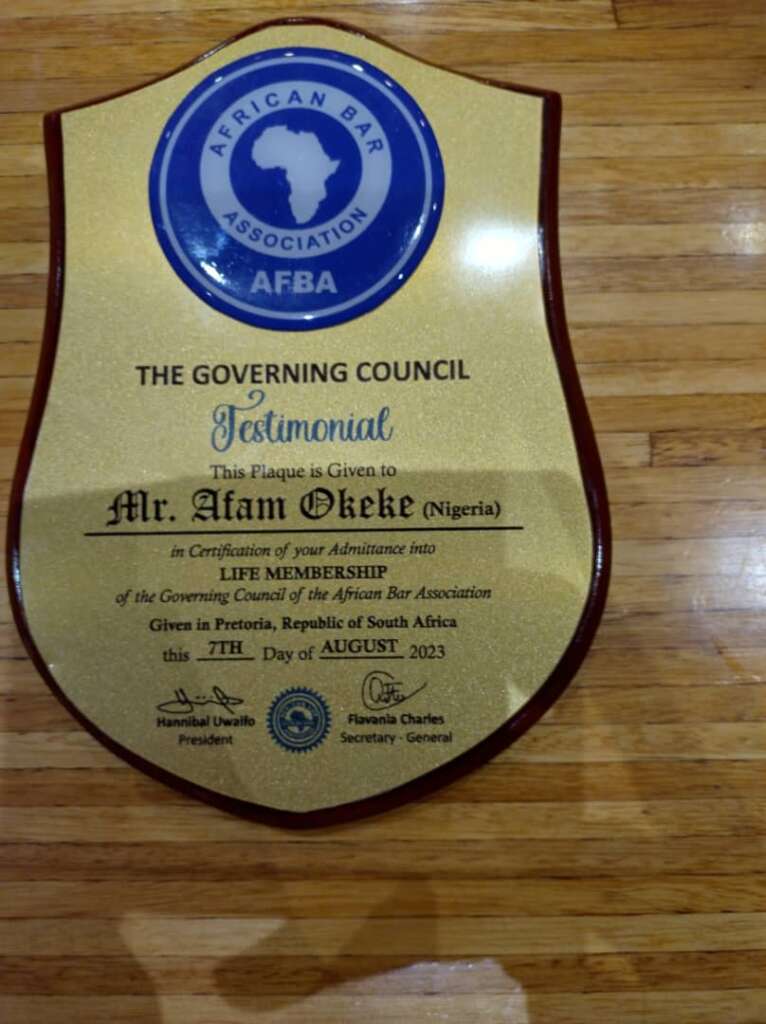
The auspicious event saw Afam O. Okeke, Esq. Chairman of the Nigerian Bar Association Abuja Branch presented with the Life Membership Award of the prestigious Governing Council of the African Bar Association.
Our site uses cookies. By clicking “Accept All Cookies”, you direct Law and Society Magazine to store cookies on your device and disclose information in accordance with our Cookie Statement: cookie policyACCEPTREJECT
Privacy & Cookies Policy
Privacy Overview
This website uses cookies to improve your experience while you navigate through the website. Out of these cookies, the cookies that are categorized as necessary are stored on your browser as they are essential for the working of basic functionalities of the website. We also use third-party cookies that help us analyze and understand how you use this website. These cookies will be stored in your browser only with your consent. You also have the option to opt-out of these cookies. But opting out of some of these cookies may have an effect on your browsing experience.
Necessary cookies are absolutely essential for the website to function properly. This category only includes cookies that ensures basic functionalities and security features of the website. These cookies do not store any personal information.
Any cookies that may not be particularly necessary for the website to function and is used specifically to collect user personal data via analytics, ads, other embedded contents are termed as non-necessary cookies. It is mandatory to procure user consent prior to running these cookies on your website.