Home Blog Page 730

Blackmail, threats, fears hand coupists unfettered incursions

By Ehichioya Ezomon

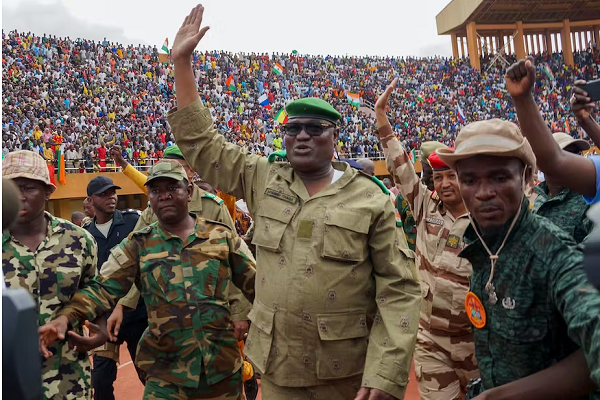
The import of the August 19 pledge by the military junta in Niger Republic to transition for three years before returning the country to civil rule wasn’t lost on observers of the July 26 coup d’etat in the country.  The coupists’ message was twofold: Consolidate their forceful hold on power in Niger, and subtly invite militaries in fragile countries across Africa to take over the reins.  And 11 days later (August 30) – and one month of the coup in Niger – military officers overthrew Gabonese President Ali Bongo Ondimba, and “dissolved all institutions of State,” citing serious institutional, political, economic and social crises as factors responsible for the incursion that they tagged, “necessary” for the progress of the Central African country. 

This makes the eighth military takeover in Africa since 2020, thus uncannily confirming prediction of more coups in the continent by the Leader of INRI Evangelical Spiritual Church, Nigeria, Primate Elijah Ayodele.  The forecaster of mainly political events around the globe said both “military and political coups” would follow the Niger example unless African rulers changed their governing behaviours. 

In a chilling statement released by the pastor’s media aide, Osho Oluwatosin, at close of July, the Primate warned that, “there will be a military coup(s) and a political coup(s) in many countries on the continent.” 

Ayodele declared: “There is no way anyone can stop a coup in Africa. As long as leaders in the continent are not doing the right thing, there will be a coup (coups).  

“The following countries: Uganda, Togo, Benin Republic, Equatorial Guinea, Guinea Bissau and Congo Brazzaville must tidy up and do the needful because a coup (coups) will soon happen in these countries.  “The following countries will experience political coups: South Africa, Central Africa Republic, Sao Tome & Principe, Gambia, and Senegal. They must do what is needful against political coups.”  Noting that, “African leaders are corrupt and power-intoxicated,” Primate Ayodele said: “Coup is a fresh revolution in Africa against bad leaders.

Any African leader that isn’t doing well should prepare for a coup.”  Though Gabon wasn’t listed in the prediction – nor Cameroon and Rwanda that’ve reshuffled the hierarchy of their militaries in the wake of the Gabonese putsch – but here we’re with the eighth military coup in three years, which’s expanded the “coup belt” beyond its rather straight line from the West to East coast of Africa. 

Countries affected by the coup contagion are: Mali (August 2020 and May 2021); Chad (April 2021, after death of President Idriss Derby in the war front against rebels); Guinea (September 2021); Burkina Faso (January 2022 and September 30, 2022); Niger (July 26, 2023); and Gabon (August 30, 2023). 

Besides leaders “doing the right things” to stave off coups, the other antidote is what Economic Community of West African States (ECOWAS) has initiated in Niger: Forcely rein in any coupists, and return to constitutional order.  But the ECOWAS is hamstrung by the very people, whose interests it fights to uphold by wanting to intervene militarily in Niger!   Save those who stand to gain from a disruption of existing order, nobody in their right senses pray for war whose end is unpredictable.  

Yet, certain fundamentals push the war-shy to action, such as the July coup in Niger could force the ECOWAS to engage in.  For once, the 15-member countries have decided to go beyond demurring, to taking concrete actions to reverse incessant military coups in the sub-region. 

But the coupists and their civilian collaborators have exploited the faultlines in neighbouring countries to consolidate their occupation of Niger.  The’ve deftly deployed blackmail, threats, fears, and linguistic, cultural and religious affinity to sow discord, and preach armagedon in those countries should ECOWAS’ standby force intervene to restore to power President Mohamed Bazoum, who has been under house arrest. 

The coupists are particularly emboldened by supports from Nigerians, whose President Bola Tinubu – though endorses the ECOWAS initiative – can’t bypass approval of the Senate, which’s turned down his request for military action in Niger.  Now, the junta, playing for time under pretext of seeking amicable solution to the self-created crisis, has declared a three-year transition to return Niger to civil rule.  It wasn’t difficult for the junta, headed by former Presidential Guards’ commander, Gen. Abdourahmane Tchiani, to tell an ECOWAS peace mission in Niamey on August 19 that it’d transition to constitutional order in three years.  Interpretation! Despite threats by ECOWAS to march its standby force into Niger if peace moves failed, the military henchmen can’t be intimidated by external forces to relinquish power to Bazoum. 

At a meeting in the Ghanaian capital city, Accra, a day earlier on August 18, the ECOWAS military chiefs of 11 of 15 countries, proclaimed their readiness to intervene in Niger “anytime the order is given” by the subregional governments.  This follows an August 10 confirmation of an “ECOWAS standing force” by the leaders, who met in Abuja, to review their failed seven-day ultimatum to the Niger junta to release, and reinstate Bazoum to power. 

The Niger military rulers have continued to shun peace overtures from ECOWAS, the African Union (AU), United Nations and Western countries, including the United States and France, which have insisted the intransigent soldiers must return Bazoum to power. 

The junta have denied audience to these international bodies and countries – or allowed only low-level contacts with them – and established a modicum of civilian government under a Prime Minister.  The regime even adds to its list of absurdities the threats to kill Bazoum and his family members (if ECOWAS’ soldiers invaded Niger), and/or prosecute him for “high treason,” for speaking with outside powers. 

When ECOWAS’ military chiefs renewed their commitment to intervene in Niger any time the order was given, the military clique did two things in quick succession:  It rallied support of its co-coup rulers in Mali and Burkina Faso (who’ve reportedly sent fighter jets to Niger’s borders with ECOWAS’ countries, to prevent their troops from moving into Niger), and gave clearance to meet the ECOWAS peace mission in Niamey. 

But a day after meeting with the ECOWAS delegation – led by Nigeria’s former Head of State, retired Gen. Abdulsalami Abubakar – the junta revealed its intention to remain in power for three years.  In another pullout from their bag of tricks, Gen. Tchiani said that within one month, the regime would form a committee, to study and form a new constitution for Niger.  Even as he said the door for further negotiations was open, and that “Niger doesn’t want to go to war,” Tchiani vowed it’d defend itself “if the need arises.”   And preparations for such an eventuality kicked off same day, with reports of thousands of volunteers turning out in central Niamey, “answering a call to register as civilian auxiliaries, to be mobilised to support the army” against an invading ECOWAS force.  With another coup in Gabon becoming too many in Africa, can ECOWAS forcefully return the Niger coupists to the barracks, as President Tinubu says is inevitable as a last resort?  But what about Tinubu’s reported gamble with a shorter transition timeframe of one year in Niger? Isn’t that giving up on the initiative of the ECOWAS, AU, UN and Western countries to return Niger to constitutional order pronto? 

That maybe more wins for the “Military Boys,” and perhaps the beginning of the death knell for democracy in Africa!

MoneyReport

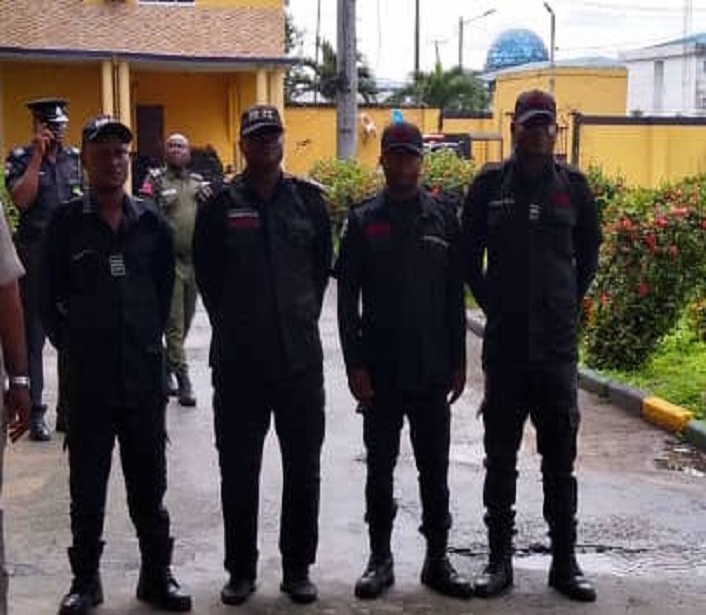
Policemen arrest colleagues for abduction, extortion in Rivers

By Obinna Nwaoku

Policemen in Rivers State have arrested and detained four of their colleagues, who allegedly extorted N6.5 million from three persons along Sani Abacha road in the Government Reserved Area (GRA) axis of the state.

The Guardian learnt that the officers picked the three victims from Port Harcourt and conveyed them to Delta State where they allegedly extorted the sum of N6.5 million after detaining them for two days.

It was also learnt that the police officers arrested the men on July 31, and released them on August 1, after successfully collecting the said money.
Briefing newsmen, yesterday, at the Police headquarters, Moscow Road, Port Harcourt, the Commissioner of Police (CP), Nwonyi Emeka, said the police in the state were working seriously to rid the command of bad eggs.

He assured that he would stop at nothing to bring crime to a standstill in record time, while calling on members of the public to join the police in ridding the state of crimes and criminality.

He said: “You can see some police officers, they have been in detention for more than two weeks now for an offence. They are not from this command, but we arrested them to show that we are here to purge ourselves. I don’t think any organisation has been more purgative than the police in cleaning up the bad eggs in their system.

“Once again, I want to assure you that we will fight crime to a standstill to the best of our ability.” The CP also disclosed that the arrested officers allegedly assaulted a lady around Arcania junction, Ada George road on Sunday, while on a stop and search operation.

He said upon receipt of a complaint of the assault, his men swung into action and rounded up the accused officers, adding that an investigation had been launched to unravel what transpired. He, however, called on the lady that was allegedly assaulted to come forward and furnish the police her side of the story.

“On Sunday, September 3, at about 10.20 a.m., based on complaint of unprofessional conduct and incivility to members of the public on social media by officers of the Nigerian Police force, Rivers State Command, where a woman was allegedly assaulted by officers on stop and search duty at Arcania junction on Ada George, Port Harcourt.

“Upon receipt of the complain, the commander of the CP monitoring unit swung into action, and identified the officers as men of an anti-cultism unit on stop and search led by inspector Ahbar Emmanuel and three others, namely: Inspector Abgani Peter, Inspector Ozenewa Amadi and Sergeant Akuigbo Batholomeow. They have all been arrested and in custody, undergoing interrogation.

“Also, I am appealing to the lady that was assaulted to come to the command and give us her own side of the incident for proper investigation to be carried out, security is everyone’s business, curbing crime in our society is everybody’s responsibility,” he added.

The Guardian

Technology, Law and Dis(ability): Moving from isolation to inclusion in Nigeria

By Goodness Eseme Ibangah Esq.
BACKGROUND
In 2022, The World Health Organization(WHO) stated that persons with disabilities
die up to 20 years earlier than those without disabilities considering that they are at
twice the risk of developing certain health conditions. A survey by the Nigeria
Demographic And Health Survey Program in 2018 showed an estimated 7% of
persons above the age of five (as well as 9%of those 60 or older) experience some
level of difficulty in at least one functional domain—seeing, hearing, communication,
cognition, walking, or self-care.

The situation of people with disabilities in Nigeria is horrifying because they
experience double vulnerability. They are marginalised and treated unfairly without
any regard for their human rights. In fact, their rights are largely disregarded from
birth when they are name-called, shamed, mocked and even abandoned by primary
caregiver (s). Terrible cases also abound of them being hunted, persecuted, and killed
on account of superstitious beliefs. Notwithstanding these gross human rights abuses
and violations, persons with disabilities continue to strive to exist in an environment
that ordinarily excludes them.

CHALLENGES
Indubitably, persons with disabilities in Nigeria face compounding multi-systemic
barriers and challenges ranging from:
1. Access to Education, Jobs, Health Care, Buildings and Transportation
Structural and systemic limitations and setbacks pose a huge barrier for persons with
disabilities in Nigeria, it is almost impossible for them to access basic services. They
are unable to get quality education due to low accessibility to schools with provisions
for their special needs, inadequate learning materials, lack of teachers/ tutors with
inclusive education training, and nonfunctional special needs schools.

In cases where these can be found, it is extremely expensive and reserved for the elite,
leaving people with disabilities with little or no valuable education. Also, it is rare to
see most people with disabilities in Nigeria owning inclusive digital design and tools.
In the healthcare sector, people with disabilities also have to deal with untrained
health workers, unfavourable facilities and low coverage insurance system. It is
normal to see people with disabilities on the streets begging and soliciting for support
to enable them to access basic healthcare. Most structures/facilities in Nigeria both
public and private are not disability friendly and makes it extremely difficult for
people with disabilities to access. These systemic and cultural barriers contribute to
the isolation of people with disabilities and by extension their non-participation in
different spheres of life. Unarguably, their ability to show up is first tied to their accessibility of these spaces.

II. Socio-Cultural, Political and Economic Discrimination/Stigma.
Disabled persons in Nigeria experience varying forms of discrimination, it is often
attributed to religious,cultural and traditional norms/beliefs. Even as minors, they are
seen as unclean, incomplete, and evil, subject of deliverance, cleansing and
purification. They are made to undergo rituals/rites with demeaning and dehumanising
process emboldened by silence of the victims. Overtime, these abhorrent
discriminatory practices have strengthened misconceptions about disability and
reinforced conscious and unconscious biases about people with disability.

III. Poor Political Will
Lack of political will by the Nigerian Government to adopt and implement laws that exclusively protect the rights of persons with disabilities remains an impediment to the full enjoyment of the rights of persons with disabilities. Inadvertently, affecting their quality of life, performance and meaningful contribution to the society. It was not until 2018, Following years of resilient effort by national and international human rights groups and bodies, the National Assembly passed into law “The Discrimination Against Persons with Disabilities (Prohibition) Act”. This act provides for the absolute integration of persons with disabilities into the society, the act also prohibits and penalises discrimination against them.

Additionally, the Act establishes a National Commission of People with Disabilities and charges the Commission with the responsibilities for their education, health care, social, economic and civil rights; and for related matters. Indeed, the passing of this Act is a step in the right direction.
However, only 9 of the 36 states in Nigeria have domesticated this law and even the celebrated states struggle with implementation. Proactive measures must be taken if Nigeria is to fulfill her obligation under the Convention on the Rights of Persons with Disabilities (CRPD).

RECOMMENDATION
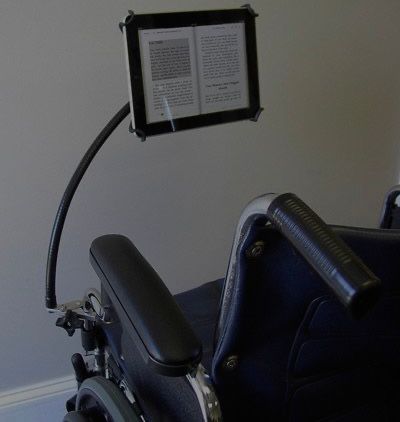
While it is important for actors to sustain advocacy for the implementation of existing laws, deliberate innovative measures should be explored using technology and assistive technology (devices, software and equipment like mobility aids, walkers and wheelchairs) to solve some of the challenges persons with disabilities face in the society.

  1. Access To Technology Tools

Technology has proved to be a useful tool to promote social inclusion, global development and equality. The technology space is founded on innovations, that allow people to access skills, education, and employment. Through technology and assistive technology like screen leaders, braille displays, braille note takers, electronic magnifiers, optical character recognition software (OCR), screen readout software, text-to-speech software and alternative input devices persons with disabilities can be empowered to attain their full potential thereby activating their ABILITY to compete favorably in the mainstream society. It is also important that developers and designers understand assistive technologies and ensure the creation of apps, websites and platforms that are disability friendly. Hence, the need for institutions to adopt disability inclusive models/facilities, unique learning programs, safe ICT spaces, and investment into research on the intersecting areas of technology and disability.

Truly, technology as a leveller requires effort to create access for already marginalized groups, if not the digital divide will persistently widen and this will impact on existing inequalities. There is a need to close up these gaps by providing access to technology and technology tools, including relevant training to enhance proper usage. It is imperative that people with disability are part of the global digital transformation, so their potential and unique abilities are tapped into and they are not left behind. There must be deliberate promotion of accessibility and inclusivity in the technology space. An example is the lack of screen reader features on some mobile applications
and sites. On iPhone, the feature is called “VoiceOver”, a commendable addition but only a minority of people with disabilities in Nigeria have the means to acquire this brand. When digital tools and assistive technologies are accessible for education and empowerment of persons with disability, it becomes possible for them to contribute to national growth and advancement.

2. Digital Space Inclusion
It is crucial for people with disabilities to lead actions and champion interventions that affect them in the digital space. Programmes must reflect their contributions, lived experiences and realities, solutions must be with and for them. This way inclusion and ownership is built into the project design process. There is need for more work to be done in Nigeria to make digital spaces inclusive for people with disabilities, design tools including user interface design box ought to be improved. Digital transformation offers new opportunities for people with disabilities especially in developing countries. Online jobs can help people with disabilities to have a sense
of work and be empowered to contribute creatively to societal issues. E-commerce opens up great entrepreneurship possibilities for people with disabilities in Nigeria, they can access income and raise their financial status that would have been limited due to their disabilities.
Online learning platforms can help people with disabilities especially young people to learn new skills and gain insight on areas of interest, including obtaining certification from recognized local and global institutions to boost their portfolio, apply for jobs and explore opportunities.

3. Stakeholders Engagement
Technology constantly offers youths, women and children with disabilities new opportunities to explore their talents and potentials. There is a need for stakeholders to challenge existing stereotypes and spoken/unspoken biases that inherently set people with disabilities backward. Issues of accessibility and affordability of digital tools must be acknowledged and addressed, as well as the provision of adequate social protection measures and human rights violation reportage pathways to encourage both offline and online reporting.

CONCLUSION
The interplay between technology and law to advance the rights of people with disabilities is very promising. It is not enough to enact laws and policies to address the issues they face. Government and other stakeholders should embrace strategic collaboration to campaign and raise awareness on the dangers of non-inclusion of people with disabilities and the potential of technology to overcome existing setbacks they face. Importantly, investments must echo global standards for the protection and promotion of their rights. Finally, it is possible to maximize the benefits of technology and law to create a dynamic attitudinal shift in societal perception of DIS(ABILITY) from isolation to inclusion for the complete integration of people with disabilities into society.

Where is the criminal suit ex-AGF Adoke filed against Tinubu over FBI letter that he was never a Chicago State University student?

A Global Peace Ambassador and an investigative journalist, Mr. Jackson Ude, has questioned what became of the criminal suit filed by a former Attorney-General of the Federation and Minister of Justice, Mohammed Bello Adoke, SAN, against President Bola Ahmed Tinubu, who was then the Governor of Lagos State.

The suit was filed following a letter from the Federal Bureau of Investigation (FBI) where the agency categorically stated that Tinubu was never a student of Chicago State University (CSU).

Mr. Ude expressed the concern after posting the FBI letter on his social media “X” (formerly Twitter) handle, @jacksonpbn, on Thursday.

See a copy of the letter below:

Former AGF Adoke had charged Tinubu to a Federal High Court for lying about his academic records.

In the suit with file no: FH/Abj/RC/o4/2011, Tinubu was charged on two counts of perjury and declaration of false statement in 1999 and 2003 respectively.

Count one reads:

“That you, Bola Ahmed Tinubu (M) on or about the 20th day of December, 1999 at Ikeja, Lagos State on the occasion of making a statement on the Independent National Electoral Commission (INEC) Form CF 001 which you submitted at the INEC headquarters in Abuja touching on your educational background a statement required by law to be made on oath did knowingly make a false statement on oath to wit: you stated on the said Form CF 001 that you attended Government College, Ibadan between 1965 and 1968 both dates inclusive whereas in truth you did not attend the said school within the stated period and you thereby committed an offence contrary to and punishable under Section 191 of the Criminal Code Cap 77 laws of the Federation of Nigeria 1990 as retained in Section 191 Cap C38 of the Laws of the Federation of Nigeria 2004.”

Count two reads:

“That you, Bola Ahmed Tinubu (M) on or about the 13th day of January, 2003 at Ikeja, Lagos State on the occasion of making a statement on the Independent National Electoral Commission (INEC) Form CF 001 which you submitted at the INEC he3dquarters in Abuja touching on your educational background a statement required by law to be made on oath, did knowingly make a false statement on oath to wit: you stated on the said Form CF 001 that you attended Government College, Ibadan between 1965 and 1968 both dates inclusive whereas in truth you did not attend the said school within the stated period and you thereby committed an offence contrary to and punishable under Section 191 of the Criminal Code Cap 77 Laws of the Federation of Nigeria 1990 as retained in Section 191 Cap C38 of the Laws of the Federation of Nigeria 2004.

See a copy of the suit attached below:

Taking into consideration the FBI letter that Tinubu was never a student of the Chicago State University and the criminal suit against Tinubu filed by Adoke, Ude recalled:

“In 2011 after the FBI had confirmed that Bola Tinubu was never a student of the Chicago State University, the Federal Government through the Attorney General and Minister of Justice, Mohammed Bello Adoke, charged Bola Tinubu to a Federal High Court for lying about his academic records.”

He concluded with the resignation: “Only God knows why the case was discontinued.”

Tinubu and the Chicago State University are currently under fire following a suit filed at the United States District Court for the Northern District of Illinois, Eastern Division, by the Peoples Democratic Party (PDP) presidential candidate, Alhaji Atiku Abubakar, against the University, demanding details of his purported enrolment as a student at the school.

Following the backlash on social media by angry Nigerians over the manner it has been handling the certificate saga of President Bola Tinubu, the University, locked its official “X” handle from the general public.

Sunak appoints 31-year-old Jamie Njoku, son of APGA National Chairman, as Director of Strategy

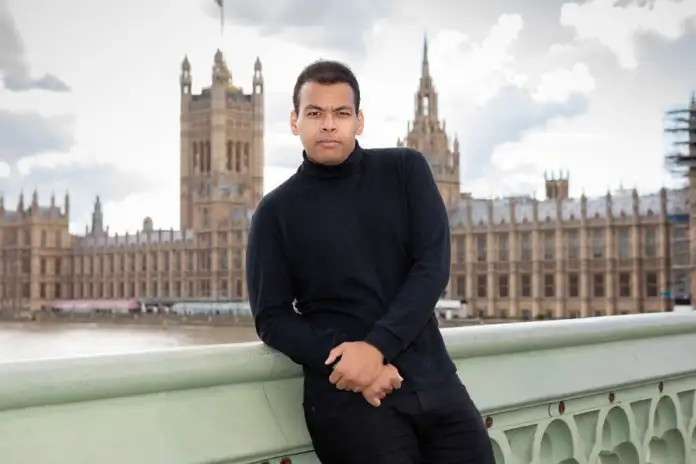
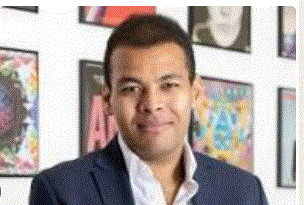
Jamie Njoku, the 31-year-old son of the National Chairman of the All Progressives Grand Alliance, Chief Edozie Njoku has been nominated as the Director of Strategy by British Prime Minister, Rishi Sunak For Conservative Party.

His appointment followed a mini-reshuffle by Sunak after. the departure of Defence Secretary Ben Wallace from frontline politics.

Mr Njoku-Goodwin has previously held a number of roles within government, including acting as an adviser to former minister Matt Hancock and at the Department for Digital, Culture, Media and Sport.

Until his appointment, Njoku was the UK Music chief executive. A position he held for three years.

Meanwhile, a socio-cultural organization of young Igbo professionals, Odinala Cultural Heritage Foundation (OCHIE Igbo), has commended the British Prime Minister, Rishi Sunak, over the appointment of Jamie, son of the National Chairman of the All Progressives Grand Alliance (APGA), Chief Edozie Njoku, as Director of Strategy for the Conservative Party.

He joined UK Music – the collective voice of the UK music industry – in September 2020 as Chief Executive and helped steer the sector through the Covid-19 pandemic.

In a statement on Sunday, Okoro Chinedum Benedict, Chairman Board of Trustees of OCHIE Igbo stated that going by the commentaries from the various heads of the various components/units that make up the UK Music Industry, “one could decipher why the UK Prime Minister and the Conservative Party settled for the young man”.

“That the Prime Minister and the entire Conservative Party of the United Kingdom reposes such confidence and responsibility on a young man of 31 years old man is awesome.

“Pathetically, the question we all should be asking ourselves is, if Jamie were to be in Nigeria, given his age and intellectual disposition, what position would have naturally come to him, the group queried.

“Simply put, the young Jamie Njoku would have been struggling to find a space in the endless queues of the army of potential thugs undergoing training under one politician. That is the way our politics is structured” OCHIE Igbo stated.

Jamie’s appointment, the group said, “reveals how the UK society and politics function as against ours’.

“Apparently, it is this preference for doing things wrongly and our dedication to promoting impunity that is responsible for Nigeria’s dysfunctionality.

“As Jamie prepares to lead the strategic team of his party in the King’s country, having washed his hands clean, we pray fervently to the Triune God to be with him so that in no distant time, he would join the likes of; Jakov Milatovic who at 36 is the President of Montenagro.
Gabriel Boric who at 37 is the President of Chile. Dritan Abazovic who at 37 is the Prime Minster of Montenegro. Mohammed Bin Salman who at 37 is the Prime Minister of Saudi Arabia. Alessandro Scarano who at 39 is the Regent of San Marino. Irakli Garibashvili who at 41 is the Prime Minister of Georgia” Okoro stated.

Journalist101/Independent.ng

Gov Mbah to unveil $2.1bn project pipeline as Enugu holds inaugural investment round-table

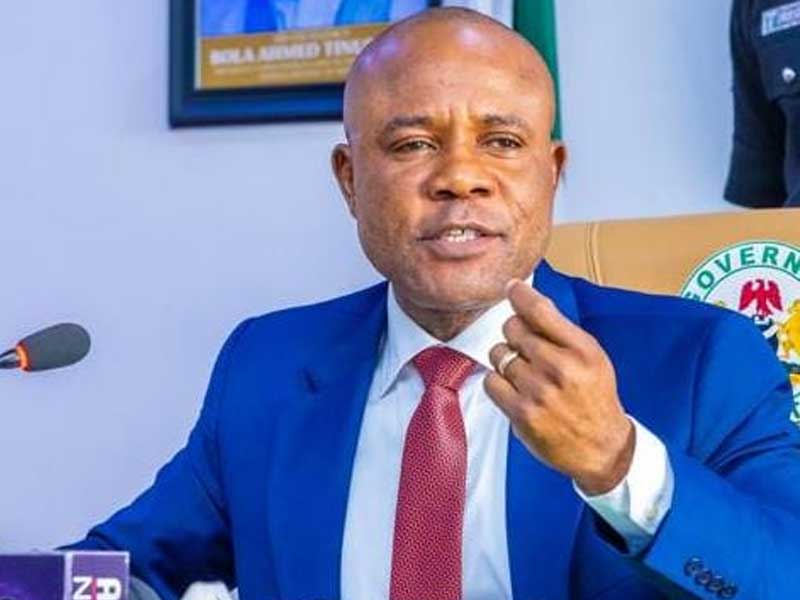
Governor of Enugu State, Dr. Peter Mbah, will on Friday, September 1, unveil a ₦1.6 trillion ($2.1 billion) pipeline of 30 projects at the first Enugu State Investment and Economic Growth Stakeholder Round-table.

The governor is also scheduled to launch the Enugu State Integrated Sector-Based Productivity Growth Strategy.

This was made known in a statement released by the Secretary of the State Government (SSG), Prof. Chidiebere Onyia, in Enugu on Monday.

He said the Investment and Economic Growth Round table, which is a precursor to the launch of the maiden multi-stakeholder and fully transactional Diaspora and Investment Forum scheduled for the second quarter of 2024, would hold in Enugu and also draw investors from across various industries locally and internationally.

“The ₦1.6 trillion Naira ($2.1 billion) project pipeline spans several industries, including transportation and healthcare infrastructure, as well as energy, power, and agro-allied industrialization.

“Senior executives from the World Bank Group, the African Development Bank Group, the International Finance Corporation, the African Export-Import Bank, the United Kingdom Department for Trade and Business, the Africa Finance Corporation (AFC), as well as the Nigerian Sovereign Wealth Fund, commercial banks, corporate pension funds, private equity funds, infrastructure funds, and other domestic financial institutions will convene in Enugu to chart a course for effectively mobilising private capital for large-scale infrastructure projects, including net-zero aligned projects that can unlock Enugu State’s and South-Eastern Nigeria’s economic potential.

“The Round-table discussion will cover a range of topics, including addressing barriers to investment and economic growth in Enugu State; improving investor confidence in the State understanding investor’s risk and return preferences; and identifying partnership opportunities for project preparation and co‑investments” he stated.

According to Prof. Onyia, this is in line with Governor Mbah’s determination to grow the Enugu State economy from $4.4 billion to $30 billion.

“Implementation of the State’s Integrated Sector-Based Productivity Growth Strategy will ensure that those sectors with the greatest potential for growth are supported through measures to reduce unnecessary regulation and boost innovation and growth.

“The new administration recognises private investment as a key driver of long-term economic growth and prosperity, and the round-table discussion will lay the groundwork for long-term partnerships and cooperation that can catalyse Enugu’s accelerated economic growth.

“Part of this administration’s agenda is the development of an Investment Plan for the Integrated Sector-Based Productivity Growth Agenda with a credible pipeline of projects that will advance transformative change in key sectors. When it is released, the Plan is expected to incentivise and encourage private sector investors, as well as other stakeholders, to participate in the financing and delivery of critical infrastructure investment projects.

“We are optimistic about the future of PPPs and investments in Enugu as we build a clear legal, institutional and policy framework that should provide the business-friendly environment that can enhance private sector participation and catalyse the scale of financing required to deliver these essential public infrastructure services.

“This investment round-table is therefore the first step towards generating investment interest in these critical areas, and charting a clear path to bankability for these projects”, he concluded. 

Summit News

Re: “Right of Reply: On the Portable & Ifunanya row” published on 04 September 2023

Dear Nkereuwem Udofia Akpan, Esq, sir, with due respect, please try and calm down to understand what is in issue, before you begin to write ✍ so that you don’t focus on complete irrelevancies as is seen in your article under reference.

The issue in the Baddest lawyer trending discussion is whether a lawyer who is not in law practice is at liberty to engage in conduct unbecoming of a lawyer, conduct incompatible with the status of a lawyer.

In your article, you’re busy discussing whether a lawyer can engage in other trades or businesses — with due respect, such is completely irrelevant, having absolutely nothing to do with the issue being discussed in re Ifunanya, the Baddest lawyer.

For your information, sir, neither NBA nor any Nigerian lawyer has argued that Ifunanya does not have the right to engage in other trade or business other than law practice. Indeed, no one is interested in whether she is a model, musician or anything. All that the NBA and lawyers are concerned about is, whatever trade or business she’s engaged in, because she’s a lawyer, she must not engage in conduct unbecoming of a lawyer or conduct incompatible with her status as a lawyer.

I have a question for you, learned friend: is going stark naked and advertising it to the world part of modelling or singing or other businesses?
In the case of Ifunanya the Baddest Lawyer, she is alleged to have posted online photos and videos of herself naked/nude without any clothes at all — not even pants or bra. Absolutely naked!!!! And you’re comparing her to Kenneth Okonkwo, Falz, etc.

Please, my humble advice is, go back and read the NBA’s allegations against the baddest lawyer, and thereafter re-write your article to focus your opinion on the issues at stake, and not on the irrelevant issues you’re discussing.
Thank you🙏
Respectfully,
Sylvester Udemezue (udems)
([email protected]).
(04 September 2023)

Eight communities in Niger surrender to bandits warlord, Dogo Gede, address him Governor

Scarcely two weeks after a bandit group led by Dogo Gede shot down a Military Helicopter on an evacuation mission in Kusasu Village in Shriroro local government area of Niger state, not less than eight communities in the area have submitted themselves to the leadership of the bandits warlord, pledging their loyalty and allegiance to the group.

Dogo Gede and his group has continued to operate with impunity for the past years in the locality particularly in Kusasu, Kwaki, Chukuba, Gulana, Apai, Nakuna, Yanka and Kurebe where the locals have surrendered to their leadership.

A source close to these Communities disclosed that over 1,000 inhabitants of these communities contributed food items last week to celebrate with the warlord the successful shutting down of the helicopter without any major reaction from the authorities.

The source further revealed that “they now address him as Governor.”

Noting that the decision of the people to accept Dogo Gede as their leader was informed by the fact that despite the killing of the soldiers and shutting down of the helicopter by the Bandits, the government did not take any decisive step towards the bandits, the source also remarked that “the only way for them is to submit themselves and the group because it appears that there is nothing anybody can do about the situation”.

The Sun further gathered that the recent pronouncement by the state governor, Rt. Hon. Umar Mohammed Bago that he was contemplating dialogue with the Bandits instead of sticking to his campaign promise of going all out against the criminals further demoralized the people who then concluded that the only way for them to have peace and go about with their farming is to submit to Dogo Gede and his group.

“As I speak with you, the people are planning to give a title and made Dogo Gede their king in these communities. At the moment they refer to him as their governor because since the Bandits have been operating in the area for the past eight years and killing the people, no governor of the state or any political leader has visited them.

“These people have lost hope in their leaders and they believe that nobody can rescue them from the hands of these Bandits and restore peace in these communities. So you don’t blame them for pledging loyalty and allegiance to the warlord and his group if that is the only way they can have peace and embark on their farm business”, our source added.

It was also learnt that following this development, some members of these communities have volunteered to serve as intermediaries between the people and Dogo Gede led group for ease of communication and harmonious relationship.

According to our source, in Nakuna community, one Mallam Yohanna who was sometimes arrested by special hunters operating in the area on suspicious of being an informant to the Bandits is now serving as the intermediary between the Bandits and his community, while in Apai community, a man popularly refers to as Alhaji is the intermediary between the Bandits and his community.

Meanwhile Bandits group loyal to Dogo Gede and members of Boko Haram sect have shared territories within which to operate among themselves to any further clash.

The demarcation of Territories by these Terrorists is coming barely seven months after the last bloody clash between the two groups, leading to heavy casualties on both sides in February this year.

Our correspondent gathered that in the new boundary adjustment by the two group shows that the Boko Haram Sects will now operate in communities within Hudawa and Kurebe while Bandits warlord, Dogo Gede and his group will now hold on to communities between Kurebe and Iburo.

It could be recalled that the Chairman of Shiroro local government Council, Hon. Akilu Isyaku Kuta in an interview with a private radio station which was monitored in Minna last week confirmed that the Boko Haram Sects have hoisted their flag at Angwar Madaki, saying that “this is the reports that I have received from the people in the area”.

The Sun

Gender-Based Violence: Nigerian man kills wife in USA

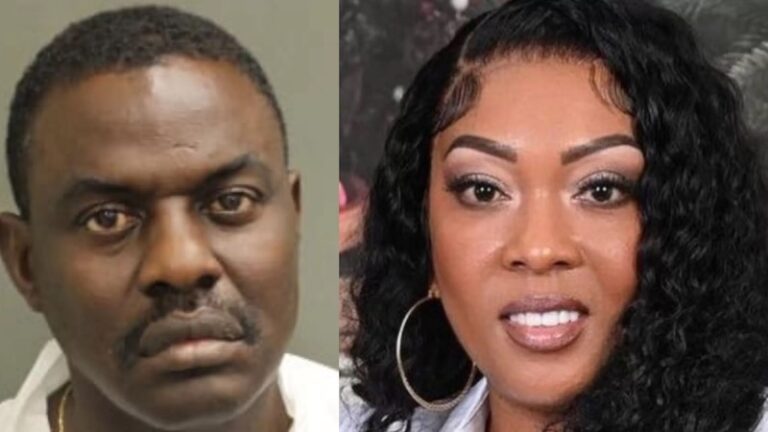
A Nigerian man identified as Hassan Teddy Adeyemo, has been arrested on a first-degree murder charge after he allegedly shot and killed his wife in east Orange County, Florida, the Sheriff’s Office said.

The County Police in a statement, said the police said deputies responded to Taxiway Circle, which is in a residential area near the Conway neighborhood, at about 7:20 p.m. Saturday, August 27, 2023.

They arrived to find 43-year-old Nanchin Hassan Adeyemo, who had been shot. She was taken to an area hospital where she died.

Detectives identified Adeyemo’s husband, 46-year-old Hassan Teddy Adeyemo, as a suspect in the killing.

He was jailed on a first-degree murder charge.

The Sheriff’s Office didn’t release any additional details on the killing beyond saying it was “domestic in nature.”

Hassan Adeyemo is being held without bail at the Orange County Jail.

In June 2021, a 34-year-old Nigerian man who was at the time recently separated from his wife attacked her parents’ home in Douglasville, Georgia, United States, killing her and his mother-in-law before taking his own life.

Udoamaka Nwamu, of East Point, Fulton County, took a handgun to his in-laws’ home in Douglasville on Sunday, June 6, where his estranged wife, Kaliyah Nwamu, was staying, and fired shots into the front and back of the house on Long Lake Drive.

According to the police at Douglas County, Sheriff Tim Pounds, on Tuesday, June 8, the gunshots on Sunday, June 6, resulted in multiple 911 calls and deputies were dispatched to the house. Before they arrived, Nwamu had forced his way inside the home. 

Deputies were met with gunfire from the house and were forced to take cover, while an emergency response team and hostage negotiator were sent to the scene.

“During the course of the negotiations with Udoamaka, a single gunshot was heard,” Pounds said.

The response team then entered the house and found Nwamu dead from what Pounds described as a self-inflicted gunshot wound.

Deputies also found the bodies of Nwamu’s estranged wife, 24-year-old Kaliyah Nwamu, and her mother, 46-year-old Nikita Green.

Sex Toy Scandal: Court of Appeal awards N50m damages against Senator Abbo

The Court of Appeal in Abuja has slammed N50 million in damages against Senator Elisha Abbo following his appeal in the 2019 sex toy scandal.

A High Court of Federal Capital Territory had ordered the lawmaker who represents Adamawa North, to pay damages over the incident that occurred in 2019.

Unhappy with the decision, the Senator approached the appellate court to set aside the judgment.

However, the appellate court, in a unanimous decision by a three-member panel led by Justice Jamilu Tukur, dismissed the appeal.

The panel said it found no reason to dislodge the verdict the high court delivered on September 29, 2020, following a fundamental rights enforcement suit that was lodged by Ms. Warmate.

The appellate court held that trial Justice Samira Bature was right in upholding Ms. Warmate’s case and awarding damages against the lawmaker.

It dismissed the appellant’s argument that the suit that led to the damages that was awarded against him, was not properly commenced.

While also dismissing Senator Abbo’s contention that he was denied fair hearing, the appellate court faulted his argument that Ms. Warmate’s claim that he slapped her, pulled her hair, and dragged her out of the s3x toy shop, was only a case of simple assault and not a rights violation.

In its lead judgement delivered by Hon. Justice Danlami Senchi, the appellate court held that Senator Abbo’s appeal marked: CA/ABJ/945/2020, was bereft of any merit.

“The decision of the trial court in the award of N50m against the Appellant and in favour of the Respondent was proper,” Justice Senchi held, adding that going by the quality of evidence that was presented by Ms Warmate, including a medical report and video recordings of the incident, the decision of the trial court could not be tampered with.

“The conduct of the Appellant is sufficiently outrageous to merit the punishment as the facts of the case disclosed flagrant disobedience of the law, especially that the Appellant is an elected Senator of the Federal Republic of Nigeria,” the court held.

Naija Blitz

TIPS