Home Blog Page 729

How $50b FOREX fraud under Buhari, Emefiele by Indians blew open

By Ikenna Emewu

The Department of State Security (DSS) is investigating a mega economic fraud involving Olam Nigeria Limited, Olam International, and their nine subsidiaries to the tune of over $ 50 billion.

In a chain of round-tripping foreign exchange deals since 2015, the company, through its Special Purpose Vehicles, SPVs, had booked about $34 billion with the Central Bank of Nigeria, CBN, as capital importation at official rates.

But instead of investing the money into the Nigerian economy, sources said the company round-tripped the forex and sold to businessmen, especially oil and gas marketers and industries such Indorama and Fouani, at parallel market rates.

Investigation revealed that Olam usually directed the forex buyers to lodge the naira equivalent into the account of one or many of its SPVs during the period under review.
Although some of the companies have fictitious Nigerians as directors, the accounts are solely managed by the Indian expatriates, some of whom are based in Europe and Asia.

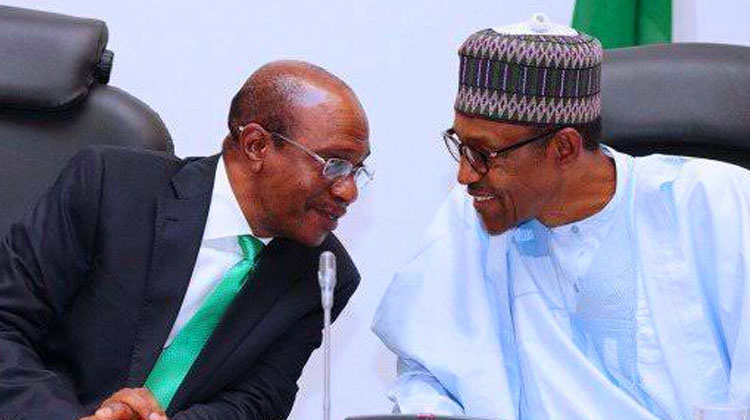
As the SSS opens a probe into the FX fraud and anchor-borrower scheme deals that took place under the suspended governor of CBN, Godwin Emefiele, the country’s secret police has uncovered a chain of shell companies linked to Olam.

sources said security agents uncovered traces of transfers into accounts controlled by Aminu Yaro, one of the ‘fronts’ of the embattled CBN governor.

Mr Yaro, who was previously investigated by the Economic and Financial Crimes Commission, EFCC, has been in SSS detention since July 12.

Findings revealed that the SSS had invited some expatriates, including the MD/CEO of Olam Nigeria Limited Ashish Pande, and some top officers of the company, namely Prakash Kanth, Sudhir Goenka, Niraj Shah, Chandrasekran Balaji, and Venkataramani Srivathshan.

The SSS also invited the Chief Financial Officer of Crown Flour Mill Limited, Rajeesh Damodaram Valagulam. According to sources, Crown Flour Mill Limited is one of the major Olam subsidiaries in Nigeria.
According to insiders, Olam Nigeria Limited and its subsidiaries are the key FX speculators that contributed to the declining value of the Nigerian currency, naira.

Credits: Africa China PressCcentre

Intimate Affairs: Hurting and lonely hearts, by Funke Egbemode

Efe and Dayo dated for three years and we all thought they were headed for the altar. The introduction ceremony had already taken place and we were already picking out colours of the day, at least in our heads. Then out of the blue, things fell apart. Dayo dumped her in the meanest way. He took her money, her pride, and her love and jetted out to Canada with another woman. After three years of romance and scented candles. Efe tried to be strong, putting a fake smile on, like everything was going on well. We all thought she was strong and doing fine until tragedy came calling. She wrapped her Toyota Camry around an electric pole and almost died.

For four hours, we sat outside the theatre in the hospital, holding hands and hoping she would be wheeled out alive. 

Our prayers were answered, Efe survived but with injuries inside, deep emotional cuts. In three months she was back on her feet, with a physical limp but she was totally crippled inside. She’s healing gradually and has even gone on a few dates.

Are you like Efe, trying to recover from a broken heart and deep emotional cuts? Are you healing the right way or just pretending to be healing? Have you rushed into another relationship just to kill loneliness?

For most people who are hurting and feeling lonely, blaming everything and everybody including fate is what they do. But wait, while you’re trying to sort out who really hurt who and why, you need to face your demons before diving into another relationship. When you are desperately lonely is not the time to make serious commitments. Wait, feel, heal.

Here are a few antidotes to get you through a lonely season.

Feel.

Don’t pretend that you are not hurting. She made a fool of you. He broke your heart. You feel like putting one in between his eyes. All the signs were there that she was up to no good but you were a ‘happy mumu’. You loved him too much to let go and so he bullied and bashed you for three long years or more and then dumped you like rotten potatoes, so you’ve every right to be sad and disappointed in yourself. I mean, how could you have let a man do that to you? Own up, you messed up big time. He was an SOB and you curse the day you met him. It’s all good to let it all hang out. You gotta feel it to heal it. Now you know. So. Go on, feel it, and start healing. Bawl, cry, pound your pillows, bring it on. Face your fears no matter the time of the day, even if the demons of loneliness hit at 1 a.m. Wait patiently, let the tears flow, and heal from the inside out. That way you will not rush into another relationship out of desperation, trying to kill loneliness from outside in.

Move.

Physical activities help the mind. Lift the lid and release what’s inside.  Let it out. If you bottle it all in, you will explode. The good thing is you will know when you are nearing boiling point because you will feel all the hurt welling up to the surface. That is when to do something before you crack wide open. Running, hiking, swimming, dancing classes—anything. Play your favourite artiste and dance. I like Joha and Lonely at the Top by Asake, Ladies and Gentlemen by Reekado Banks, Ojuelegba by Wizkid and Everything by Yinka Ayefele when I need a quick fix. Just keep moving!!

Read.

This one is easy. No book is too small or too big as long as it helps you escape into another world because when you come back from that world, you’d feel better. You may opt for inspirational books, the “if I can do it, you can, too” stories. I love fiction, racy stories told in fluid short sentences. Try them out.

Write.

Get all those dark feelings bottled up inside on paper. It lightens the burden you carry. There are people who write themselves love letters but I prefer you document where you slipped up and how you’d like your next relationship to feel like. Whatever you are and have in there, pour it out. Write letters to God, to yourself. Anything to prevent the dark thoughts from poisoning your inside.

Who knows, maybe you’ve got the next bestseller in there somewhere!

Collage.

Start collecting stuff you love and you have strewn all over the house. Pull pictures out of fashion magazines, well-made-up faces you can try to replicate when you need to fill the time-space. You will be surprised by what you will discover about yourself and what lies right beneath the surface of your mind.

Talk.

You have friends and siblings. Talk to them in the wee hours of the morning. There are always folks like that who are devoted to your well-being and understand what you are passing through. When you get really lonely sometimes, talking would take the edge off. Just hearing someone’s voice is comforting and will get you moving.

Play.

Be playful. Don’t wear your inner turmoil like designer cufflinks. I dance alone in my bedroom in front of the mirror and laugh at myself. Do whatever brings healthy fun and has positive consequences. Take salsa lessons. Learn how to play chess, scrabble, or get into golf or tennis. You do not need too much time on your hands when you are trying to heal.

Retail therapy also helps. Go and do some shopping in the open-air market or push your grocery shopping till when you feel the walls of loneliness are closing in again.

Get a pet.

I love dogs, not the ferocious baby-eating ones. I like them pretty and furry, the kind I can put in a basket and go on a drive with. I used to have one I occasionally went to the office with, she would sit on my sofa, pink ribbon on her head, and watch television while I worked. Yours may be a cat, pigeon, parrot, or even ducks. It’s therapeutic watching them. Cats and dogs also cuddle up to you because they are sensitive like that. Feeding them, washing and blow-drying them, and getting them to the vet help.

Laugh.

Find something that makes you laugh. It takes your mind away from why he left you or why you had to leave him. It helps you refocus your lenses on life. The doctor once told me to create one hour daily for something apart from work. That was when I began to look in the direction of comedy. Just imagine watching a movie that’ll make you laugh for one hour daily. Ah ah, trust me, it puts you in a better mood. It gets the laughter hormones running. Everybody needs that genuine, regular indulgence in gigantic belly laughter.

S

And it is inexpensive entertainment. Your favourite comedians are now on Youtube, Netflix. See? It’s easy. You can listen to them in the shower while fixing your makeup or even in traffic. You can also get comedy movies. Build a library and, girl, they are way less expensive than a one-night stand or bad relationship choice just because you are lonely.

Pray.

Didn’t the pastor not tell you that prayer is a master key? Oh yes, never underestimate the power of prayer. It works wonders. Ask your Imam. There is God up there who has seen your struggle, your pain and knows that you need a man in your life. He knows because he created you and that need. He created us male and female because he knows we will need each other. So, go on, talk to him. He never tires of listening. Pour out your heart and get divinely connected. Everyone who has passed through this lonely path knows that talking to the one who formed you works better than talking to anyone else because nobody understands your loneliness like him. Yours sincerely recommends it.

Now, wind up the pity party and start living again. How can you let one bad relationship define you and the rest of your life?

“Teacher, don’t teach me nonsense:” What is democracy, please?

By Ambassador Lilian Onoh

In 1970, shortly after the Civil War, my sister’s secondary school had a temporary English teacher who taught them the immortal nonsense: “I threw the ball and caught it,” being the past tense of the verb “to catch.” 

My eleven-year-old sister promptly walked out of the class and ran home to report that the teacher was teaching nonsense, long before Fela’s iconic song.

To cut a long story short, the Principal – a Reverend Sister – investigated, found this to be true and the teacher found that her temporary position had been “catched” by the wind and she could no longer teach eleven-year-olds nonsense. 

Let us juxtapose this with the hasty threat by ECOWAS to invade Niger and set the heads of the Military “KOREKT” for daring to remove Bazoum, who Nigeriens generally accepted was not performing, because ECOWAS has still not withdrawn the threat.

But first, let all Nigerians thank God that the Niger Military waited for Bazoum’s cousin to vacate Aso Villa before removing him because the Daura settler would likely not have waited for ECOWAS before running to save his cousin from his military colleagues who copied his December 1983 actions, but with more dignity than he accorded Shagari.  Oga Retroactive Death Sentences and international kidnapping and crating humans also thinks he is a “democrat” and wants to teach us about “democracy” for his cousin in Niger.

Meanwhile, for Gabon, France, the AU, the EU and others likewise demanded the immediate restoration of “democracy” to the Bongo family – leaders since 1967; much like the Eyadema family in Togo (1967 to present) and Paul Biya in Cameroun (1975 to present). 

So let us ask these teachers of “Democratic Korektness” a few questions.

If Gabon’s “democracy” must be restored, what are the grounds for reviling the Al-Assad Government in Syria?  Or Kim Jong Un’s Government in the DEMOCRATIC People’s Republic of Korea, better known as North Korea, which we all agree gives new meaning to the word “Democratic”.

We have to admit that the Kim family’s version of democracy in North Korea has made much more progress under international sanctions since the 1950s than the Bongo’s family democracy in Gabon since 1967.  At least the North Koreans have their own nuclear weapons and routinely terrify their enemies with missile launches that keep the wolves at bay.  Gabon’s Bongo family’s Dynastic “democracy” cannot boast of any technological or infrastructural achievements to compete with North Korea. Nor can Nigeria’s democracy, either.

As for the Al-Assad family democracy, which started in 1971, it is indisputable that had it not been for external powers turning Syria into a testing ground for their war games since the Arab Spring, Syria, under the Assad family’s version of democracy, was much more developed than Gabon, Niger, Nigeria, Togo, Cameroun, etc.

If it’s a matter of “human rights”, I daresay that the End-SARs protesters still languishing in jail without trial since October 2020 might argue that Nigeria is behind North Korea.

To the EU, AU, ECOWAS, France and Nigeria in particular, I ask a simple question – would a single country in Europe accept the version of “Democracy” that they have been vocally championing on the African continent?  Methinks not.

Didn’t France behead their King and Queen for excesses not close to the unbelievable lavishness of the Bongos?  So why does Macron want to enthrone what they gruesomely guillotined on the African Continent?

Read Also: UNILAG lecturer to be arraigned for allegedly raping student

Africans are lesser human beings deserving an inferior form of democracy?

And by the way, why did all of them not vocally condemn American Democracy when Hilary Clinton won the popular vote but the Electoral College gave victory to Trump? Or do the same during the Gore/Bush Saga? 

They gave America the respect of accepting its own constitutional definition of “Democracy” even if the mathematics didn’t fit our understanding of who should win.  It hass worked for them for over 200 years.

Members of the British House of Lords are not elected and the peerage system in no way matches any definition of “democracy”.  Their national anthem, which is a prayer to God to save their monarch and for the monarch to “long reign over” them, is not any different (democratically speaking) from the North Koreans singing praise for their Supreme Leader, either. But at least they could throw out four Prime Ministers since 2015 either for poor performance, legal infractions or improper conduct. Oh for that day in Nigeria! 

Surely we need to redefine this word called Democracy, which seems to shift depending on which country is under scrutiny. 

As Nigeria grapples with the fallout from the very opaque 2023 elections, a word of advice to the hasty:

Before we go to war in Niger to restore a democracy we can’t actually claim to have, perhaps we should first try to see if our soldiers can win our internal war with terrorists who control large swathes of our country; or at least secure the release of Leah Sharibu, the Chibok girls and others held by vile deviants instead rescuing cows from rustlers.

Sending our soldiers to Niger is like sending all your Panadol to a neighbour who lost a fake fingernail when you suffer from chronic blinding migraines. And the neighbour is telling you clearly that they are not in pain and don’t want you or your Panadol.  

It may be best for the wannabe democracy teachers to be very quiet so as not to draw attention to their deficiencies and inconsistencies, lest the wind blows and “catched” away their positions too.  

  • Lilian Onoh was Nigeria’s Ambassador to Namibia and former Chargé d’Affaires to Jamaica 

Internal memo warning Nigerian prison officers against leaking documents leaked

By Umar Audu

A signal warning men and officers of the Nigerian Correctional Service, NCS, against leaking official documents has been leaked to the press.

DAILY NIGERIAN gathered that the service’s memo might not be unconnected with the recent grumbling by the service personnel in a Whatsapp group, where they accused their superiors of hijacking their welfare packages.

Insiders said the service decided to go the whole hog by ordering the officers to shut all their Whatsapp groups.

According to the leaked signal sighted by DAILY NIGERIAN, the service warned the prison officers against “indiscriminate” use of social media or sharing the service logo, name, buildings, word, phrase, or trademark related to it on any social media handle without permission.

The signal, dated September 7, 2023 with reference number NCS115/S.38/VOL.Tvl/47, and signed by the deputy controller general in charge of human resources, Ahmadu Adamu, on behalf of controller general, said the actions violate the provisions of Section 25[1] [2] [a] [b] of the Cybercrime Act 2015.

Mr Adamu said the service would begin close monitoring of the social media handles of its members of staff and prosecute anyone found wanting.

“All officers/men are to stop, forthwith, the publication of any service circular, instructions, or policies not meant for the general public on Facebook, WhatsApp, or other social media handles.

“Only officers designated by law shall have the mandate to do such publication. Any other officer/men who publish, forward, or transmit any document, memo, circular, and others without prior instructions violate the provisions of Sections 1(a)(b) and 2 of the Official Secret Act and shall be punished accordingly.

“No personnel of the service should propagate, transmit, spread, or cause the publication, spreading, or circulation of such information that is false, unfounded, or without facts, and any acts of rumour mongering which contravenes the provisions in Sections 24 [1] [b] [2] [a] [c] and 27 [a] [b] of the Cybercrimes Act 2015 and Rule 030301 [a] [f], 030402 [1] [h] [o] [t] [w] of the PSR.

“No personnel should use the logo, name, buildings, word or phrase, or trademark related to the service on any social media handle without permission on Facebook groups/pages, WhatsApp groups, Telegram, X (Twitter) or any other social media handles. These acts violet the provisions of Section 25(1)(2)(a)(b) of the Cybercrime Act 2015.

“No personnel should, by any means whatever, cause or attempt to cause or do any act calculated to cause disaffection by way of spreading malicious falsehoods, unsubstantiated stories, or baseless petitions. This act contravenes and is punishable under the provisions of Section 46(a) of the Criminal Code Act.

“Henceforth, social media handles will be closely monitored. For the avoidance of doubt, the writers of such stories, the Admins of such group[s], and whosoever forwarded same will be tracked, identified, and dealt with severely in accordance with extant rules and laws.

“The service will not hesitate in making an example of anyone found culpable,” the signal said.

It explained that the directive became necessary following observations of “continuous acts of gross indiscipline” being displayed by officers and men through indiscriminate use of social media to propagate false information, rumour-mongering, false accusations, and baseless petitions.

“Furthermore, some officers and men are in the habit of sharing official documents, especially those concerning service and government policies, with friends and associates on social media platforms such as Facebook and other online media outlets. These acts by a few unscrupulous elements have continued to bring a negative image to the service.

While emphasising that these acts contravene the ethics of the profession and extant laws of the country, the CG warned that no officer is immune to criminal charges.

“For the avoidance of doubt, officers and men should know and keep in mind that they are bound by the laws of the Service and those of the Federal Republic of Nigeria, and the full extent of those laws shall come to bear when violated.

“No staff is IMMUNE to CRIMINAL CHARGES and prosecution. It should be noted that Official Secret Act, Data Privacy Act, Cybercrime Act, and Criminal Code Act all address the issue of libel, sedition, fake news, rumour mongering, false accusation, and defamation of character, prescribing punishments accordingly,” the signal added.

Credits: Daily Nigerian

The law of judicial back to the future

By Chidi Anselm Odinkalu

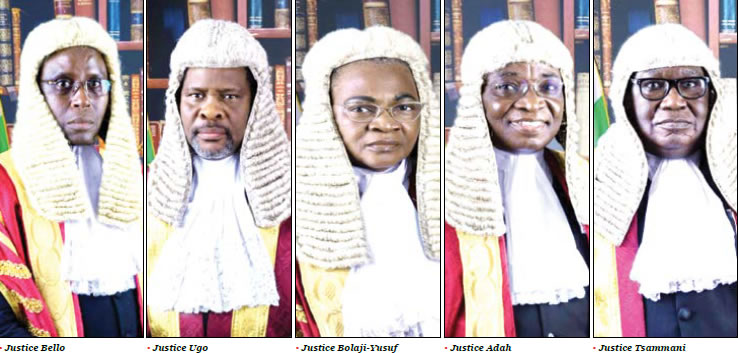
When the presidential election petition process began in March 2023, Nigeria’s Supreme Court comprised 13 Justices. The court had received a bumper injection of seven new Justices in November 2020, after the conclusion of the disputes arising from the presidential election of the previous year. That was the last set of appointments to the Supreme Court.

Since then, six Justices have retired; another three have died. Indeed, in the period since the commencement of the presidential election petition in March, one Justice of the Supreme Court has died. Another retired three days before the judgment of the Presidential Election Petition Tribunal (PEPT), bringing the complement down to 11. The court’s second senior-most member, Musa Dattijo Muhammad, is due to retire next month on 27 October. If there is an appeal from the judgment of the PEPT, the Supreme Court will notionally have 10 eligible Justices, and that is before recusals or other potential conflicts, not to mention ill-health.

Election petitions have become a huge drain on judicial bandwidth and well-being since 1979. In that year, the contest between Shehu Shagari of the National Party of Nigeria (NPN) and Obafemi Awolowo of the Unity Party of Nigeria (UPN) ended up before the Supreme Court of Nigeria, resulting in a judgment memorably described as “a compromise between law and political expediency.” At the head of the bench that decided the case was Atanda Fatayi-Williams, at the time the Chief Justice of Nigeria. As famous as this judgment would become, the antecedents arguably proved to be more lasting in their influence on Nigeria’s politics and institutions.

The relevant part of the story begins on 16 August, 1979, when the Federal Electoral Commission, (FEDECO) headed by Michael Ani, Alhaji Shagari as the winning candidate in the elections to return Nigeria to civil rule. Three of the five presidential candidates in the contest repudiated the result, setting up what would become an epic election dispute. Obafemi was one of the three.

The Electoral Act of 1979, under which the vote took place, anticipated that there could be a dispute and conferred on the Supreme Court the jurisdiction for resolving disputes from the presidential election. The panel to hear the disputes were to be led by the Chief Justice of Nigeria (CJN) but the then incumbent, Sir Darnley Alexander, was due to retire on 24 August 1979, a mere eight days after the announcement of the result and well before the Supreme Court was due to sit on the petition.

Three days before the retirement of Chief Justice Darnley Alexander, on 21 August 1979, then military Head of State, Olusegun Obasanjo, an army general, invited Atanda Fatayi-Williams, then a Justice of the Supreme Court, to a meeting at the seat of power in Dodan Barracks, Lagos. At the meeting, Obasanjo offered Fatayi-Williams the office of CJN in succession to Sir Darnley.

In his memoirs, Faces, Cases, and Places published in 1983, Fatayi-Williams claimed that this offer “was totally unexpected, and, for the first time in my life, I was at a loss for words”, adding that Obasanjo “watched my discomfiture with relish and delight.”

 Some of his peers on the Supreme Court were not so sure. Fatayi-Williams was admitted to the Bar of the Middle Temple in London in 1948, one year after Chukwunweike Idigbe and three years later than Dr. Egbert Udo Udoma, both of whom were his peers in the Supreme Court. Fatayi-Williams was from Lagos; Idigbe came from the then Mid-West; while Udo Udoma came from the then South Eastern State. Idigbe became a judge in 1961, before being appointed to the Supreme Court in 1964. His service on the Supreme Court was, however, fractured by the Nigerian Civil War.

Udo Udoma, who also became a judge in 1961, had enjoyed a career as a lawyer, minorities rights activist, campaigner, politician, and federal legislator before being appointed a judge in 1961. Two years later, in 1963, he became Chief Justice of Uganda with the understanding that upon the end of his tenure in Uganda, he would return to a position on Nigeria’s Supreme Court. This came to pass in 1968, when General Yakubu Gowon appointed him Justice of the Supreme Court. Atanda Fatayi-Williams arrived the Court in 1969 as junior to Udo Udoma and, strictly speaking, to Idigbe.

In his memoirs, The Eagle in Flight, Udo Udoma recalls that upon the retirement of Chief Justice Adetokunbo Ademola in 1972, the then-ruling Supreme Military Council considered five names for appointment to replace him, namely: Professor Taslim Elias, who was then the Attorney-General of the Federation; John Idowu Conrad Taylor, then Chief Justice of Lagos (as the office was then known); Dr. George Baptist Ayodola Coker, Justice of the Supreme Court; Rotimi Frederik Alade Williams, a senior lawyer in private practice; and Udo Udoma himself. Fatayi-Williams was notably not in the running. In the event, the military preferred Taslim Elias, who had served them well as Attorney-General.

When a new military regime relieved Elias of the position in July 1975, they settled on Sir Darnley, until then a little-known Chief Judge of the South Eastern State, whom Udo Udoma had recommended for that office.

In 1979, the stakes in the appointment of Chief Justice were very high: the presidency of Nigeria could depend on it. Udo Udoma, who had mobility disabilities, writes in his memoirs that “Justice Fatayi-Williams, then also a Justice of the Supreme Court, registered a solemn protest on the ground that he saw no reason why I (Udo Udoma) should be given such a high post as the Chief Justice of Nigeria despite the fact that I was an amputee. He felt strongly that the SMC under the leadership of a Yoruba man like himself would not be justified to ignore him who then had no handicap. He then contacted several Yoruba men, including Chief S.L. Edu, to contact General Olusegun Obasanjo as Head of State to plead his case.”

Continuing, Udo Udoma records that these “intrigues succeeded and he was preferred to me because, in his representation, he was able to convince General Olusegun Obasanjo that since Alhaji Shehu Shagari as a Hausa-Fulani, was contesting the office of President of Nigeria and had chosen Dr. Ekwueme, an Igbo man, as his running mate as Vice-President, both of whom were likely to win, then the office of Chief Justice of Nigeria ought to be filled by himself, a Yoruba man, especially as Chief Obafemi Awolowo was sure to lose the election.”

Chief Awolowo and Olusegun Obasanjo exchanged some testy epistles reproduced in Musikilu Mojeed’s The Letterman, in which Awolowo effectively alleged that the appointment of Fatayi-Williams as CJN in 1979 came with an implicit bargain concerning the determination of the election petition of that year. He also suggested that days before the Supreme Court announced the decision on 26 September 1979, Chief Justice Atanda Fatayi-Williams leaked the decision of the Court to General Obasanjo who desired to be reassured that he could proceed with the inauguration date of 1 October 1979 as planned. 44 years later, the current incumbent traveled to India with the assurance of a man who knew that the imminent announcement of the PEPT judgment did not threaten his position.

In 2008 and in 2019, judges who sat on controversial presidential election petitions in election years enjoyed quick judicial elevation from the parties in whose favour they decided. Also in 2019, a Chief Justice was guillotined ostensibly because he could not be trusted to determine presidential election petitions in a predictable way in the manner that his would-be successor could. What seems clear is that since 1979, judicial appointments and decision-making in election petitions have enjoyed a relationship underpinned by a whiff of implicit quid pro quo.

With 10 serving Justices, the Supreme Court has 11 vacancies waiting to be filled. Politicians have learnt to turn election dispute resolution into auditions for shifting judicial deck chairs. First, they rig elections in order to get the opportunity to rig the courts with judges ready to help them to validate rigged elections. That is the legacy of the unspoken antecedents of Awolowo v. Shagari.

A lawyer and a teacher, Odinkalu can be reached at [email protected]. This is an updated version of an article first published on 14 May 2023.

Mechanical versus dynamic justice: The beatification of “snatch and grab-itocracy”

By Emmanuel Ogebe

The story is told about a judge questioning Nigeria’s parties in court:

Judge to APC: What was the name of the big Titanic boat that was named titanic before it sank?

APC: Titanic

Judge to PDP: In what month and year did it sink and how many survived?

PDP: It sank in April 1912, there were 706 survivors

Judge to LP: NAME EACH SURVIVOR!

It is an adaptation of an old joke about questions German soldiers asked Jewish prisoners to answer to regain their freedom but now used to illustrate the Herculean task before the petitioners in the election trial.

Below are just a few observations on a mechanical justice that failed to deliver in a dynamic situation.

Non-evidence backed pleadings

My blood ran cold when I heard Justice Stephen Adah declare that the evidence of 80% of the Labour Party’s witnesses was inadmissible and expunged for late filing.

I agree that the onus placed on a petitioner filing within 21 days evidence from 176,000 polling units is near insurmountable. But the IREV upload of PU results was a revolutionary game changer that would have mitigated this challenge. It was a monumental mistake for the court to discount IREV uploads which would aid the petitioners and country validate voting veracity.

However even in the 2007 election where evidence front loading was first introduced in the Nigerian legal system, Petitioners Ojukwu, Atiku and Buhari all front loaded their evidence along with their petition on time so how come, 15 years later, lawyers could make the same elementary error?

As a lawyer of over 30 years, when I first saw the Labour Party petition was only 100 pages, my immediate reaction was “where is the evidence?” Just from the number of pages, I knew there could not possibly be any evidence contained therein. I will not gloss over glaring mistakes simply because I dislike the outcome. This is why we keep repeating mistakes in Nigeria.

That the court pointed out that LP’s lead counsel Ikpeazu SAN had successfully argued against the same failure to timely file evidence in a prior case which he himself now fell foul of, is telling. Nigerian lawyers tend to argue opposite sides of the same issue depending on the client and not on the settled law and this has complicated issues greatly. A judge once rebuked late legendary lawyer Rotimi Williams because he had argued the opposite point of view in a different case before the same court the previous day!

That the court said PDP’s lead counsel Chris Uche SAN had written a glowing foreword to a book which canvassed that procedure goes to no issue because that does not mean he endorses everything contained in the book. I think the Bible is a great book and heartily recommend to all but I do not know all its precepts and thus run afoul of it from time to time.

To my mind, the court should have allowed the testimony of the witnesses given in court and the cross examination even if it disallowed their late-filed witness statements for the sake of equity and in the interest of Justice.

In my defamation lawsuit against the Buhari administration over the Chibok girls I sponsored to school in US, the Attorney General did not file FGN’s pleadings or statement of defense till I came from US testified and was cross examined by them.

After I closed my case as Plaintiff, they then rushed to the court seeking leave to file their defense. We opposed it because having discovered the entirety of my case, they were only now going to file their Defense one and a half years after the case began when it should have been filed within a month.

Yet Abuja High Court Judge Abba Mohammed, now a member of the presidential election court, granted the FGN leave to file the pleadings late even after noting that they lied about not being aware of the case when in fact they had been participating for over a year. This was extremely prejudicial to my case.

However he said he did so “in the interest of justice.” Why couldn’t the petitioners’ benefit from such magnanimity or mercy in the interest of Justice too?

Rather, Justice Mohammed said the petitioner failed by not serving spreadsheets of election irregularities with the petition on Respondents.

Yet if he had similarly denied FGN’s late filing of its statement of defense after I had presented my evidence, I would have won and my case would not still be dragging in the high court six years later!

I also submit that the subpoenaed witnesses should not be affected by the time-limiting requirement to file evidence with the petition.

Per a social media post, “In ABBA YUSUF v APC, an unreported case of the Court of Appeal, Kano in Appeal NO CA/KN/EP/Gov/KAN/05/2023 of 24 August 2023, it was decided thus: “Flowing from the catalogued statutory position of a subpoenaed witness, as a witness of a court, it will be incongruous and preposterous to hold that his statement on oath must willy-nilly accompany a petition. As a matter of fact, it will evince natural and human impossibility for such a court witness to file his deposition alongside a petition. The reason is simple. A subpoenaed witness appears in court on the invitation of a court on the application of a party. A subpoenaed witness cannot suo motu present himself before a court.” The beneficiary of the judgment was APC!”

The court should have aimed to mitigate the situation. In my defamation case, Justice Abba Mohammed awarded costs against the FGN and allowed them to file late. I and the other parties have paid penalties to the court for late filing as is standard practice. There are less drastic sanctions than expungement of the evidence for late filing more so in a sensitive matter like this of national and international significance.

This unfortunately is one drawback to the reservation of objections till the end of the case because if these had been ventilated earlier, petitioners would have had an opportunity to rectify the infractions by a motion for enlargement of time and to deem as timely filed.

Selective Judicial Notice

It is important to note that the conclusion of the case is not that the allegations against Tinubu were not true. In summary – Tinubu had a Guinean passport and a fake university certificate but they were not tendered on time and had a drug forfeiture issue, which though it was tendered on time, wasn’t a conviction.

While it is unfortunate and inexplicable why the foreign citizenship and forged certificate were not filed timely, the court itself should have noted the gravity of the weighty allegations in light of national interest.

Curiously, the court said they took judicial notice of the fact that Peter Obi had Anambra State indigeneship, even though it wasn’t an issue before them, but the court didn’t take judicial notice of the fact that Tinubu has a Guinean citizenship even though the issue was before them.

A responsible court concerned for the integrity and security of the nation would not shut its eyes to sensitive evidence or explosive allegations of this nature.

If they felt that the Guinean passport issue was smuggled in after the settlement of pleadings, they could have authorized extra time for the petitioners to respond to it. Note that the trial ended earlier than scheduled as the respondents didn’t utilize all the time allotted to them. In fact, with the numerous SANs and lawyers in their retinue, taking them by surprise was not a serious capacity concern. After all, over a dozen SANs combined presented only one defense witness.  The respondents’ lawyers outnumbered the petitioners three to one. There were three sets of respondents’ lawyers to only one set of petitioners’ lawyers!

Indeed, the manner in which Olanipeku SAN, counsel to Tinubu, deconstructed LP’s Amazon Witness PW7 during cross examination one day after her bombshell testimony is the stuff of legends.

Therefore the court’s failure to inquire into the gravity of allegations that a man who seeks to be president of Nigeria not only has a Guinean passport but lied about it on oath is a failure to protect national security and integrity.

Sitting US President Bill Clinton lost his law license over the Monica Lewinsky Scandal not because he slept with the intern in the White House but because he lied to the investigators on oath about it. The sanction was to send the signal that a president should not set a bad example by lying to the government.

This is the problem with mechanical justice versus dynamic justice. At no point did the court show a concern for the safety of Nigeria from corrupt predators, fraudsters or charlatans which was the clear intent of the constitution and ancillary laws.

There was scant effort to explore the mischief rule of what the drafters were trying to cure. All one saw was a mechanical and slavish adherence to the letter and not the spirit of the law thereby resulting in a catastrophic conclusion that criminality trumps constitutionality.

It is worrisome that criminal-minded elements are more creative than adjudicators and so exploit this to their advantage.

On March 10, 2017, the Supreme Court sacked a Benue State Rep member for submitting a 𝙛𝙤𝙧𝙜𝙚𝙙 𝙘𝙚𝙧𝙩𝙞𝙛𝙞𝙘𝙖𝙩𝙚 to INEC.

Delivering the lead judgment, Sidi Bage, JSC held, “This court… must take the lead, righting the wrong in our society…

“Allowing criminality and certificate forgery to continue to percolate into the streams, waters, and oceans of our national polity will only mean that our waters are and will remain dangerously contaminated.

“The purification efforts must start now and be sustained as we seek, as a nation, to now change from our old culture of reckless impunity.

“The Nigerian Constitution is supreme. It desires that no one who has ever presented a forged certificate to INEC should contest election into the Nigerian National Assembly. This is clear and sacrosanct.”

His Lordship’s statement reveals a lucid understanding of the role of the court as the conscience of the nation, the guardian of its morals and the defender of its values as expressed and intended in its laws.

Judicial mechanics is operating the law narrowly without the big picture perspective while judicial dynamics is operating the law in light of the past, present and future of the society. A mechanic fixes the brake pads of a car but an engineer addresses the kinetic dynamics of the car in toto.

Nigeria’s analogue judiciary is not ready for the present much less the future. It is out of sync with the nation and the commoners whom it must serve. It has become an unwitting tool of state capture by a corrupt and conscienceless elite that is rapidly hurtling towards class suicide and anarchy.

It is tragic that justices whose American colleagues looked at a man 30 years ago and seized his money from narcotic trafficking would look at the same man and see presidential material.

The court did not protect national security, defend the constitution and uphold Nigeria’s values but rather compromised national security, offended the constitution and overturned Nigeria’s values.

Now a man with a fake primary and secondary school, fake university certificate abroad, fake name and identity but real drug money laundering forfeiture is Nigeria’s ruler thanks to a court who missed their date with history and duty to posterity.

The message of the 800-page judgment is loud and clear – rules, regulations, law and constitutions don’t matter. The court paradoxically threw out the petitioners’ case because they did not follow the court’s rules then upheld Tinubu’s election despite his not following election rules. This is nothing short of an invitation to anarchy and lawlessness in all facets of life from primary school to university and the highest office in the land. Ironically, by discountenancing all the violations of law, the court undermined its very self both now and in the future – an existential stab of the sword of justice into its own heart.

  • Emmanuel Ogebe, Esq, is a prominent US-based international human rights lawyer and Nigerian pro-democracy advocate with the US NIGERIA LAW GROUP in Washington. Last month, he marked the 27th anniversary of his abduction and torture by Gen. Abacha for demanding an investigation of the assassination of pro-democracy icon over an election annulment. Over the summer, he traveled to Nigeria to monitor the election trials.

UNILAG lecturer to be arraigned for allegedly raping student

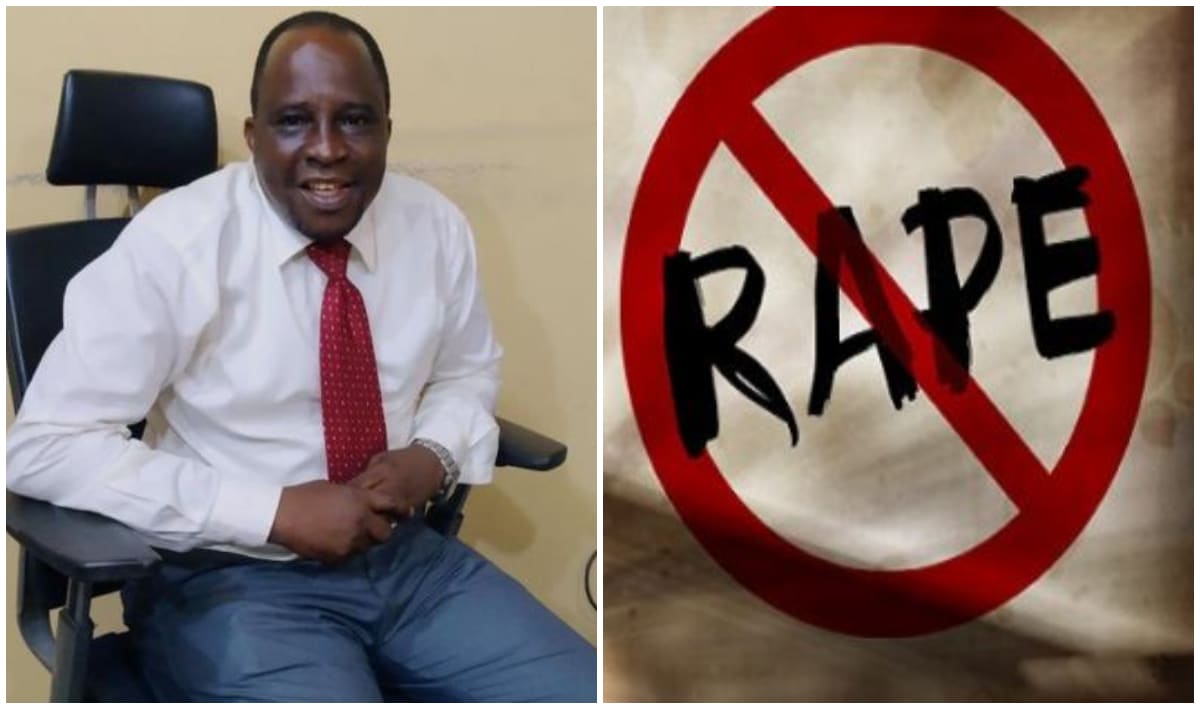
One Dr. Kadiri a lecturer at the University of Lagos (UniLag), has been arrested for allegedly raping a 20-year-old female undergraduate student in his office.

This is coming on the heels of the numerous rape allegations against the recently suspended Prof. Cyril Osim Ndifon, former Dean Faculty of Law, University of Calabar.

According to the student who has requested to remain anonymous, the vile incident reportedly occurred on Wednesday, August 16, when she went to the lecturer’s office to iron out issues concerning her result.

However, the Police in Lagos has arrested the alleged randy don. The arrest warrant was issued by the Commissioner of Police, Idowu Owohunmi through the State High Court.

Rather than attend to the undergraduate’s result issues said a non-governmental organisation, Inclusive Social Welfare and Empowerment Foundation, where the victim reported the case, the lecturer allegedly raped her on August 16, 2023.

Confirming the incident, the Lagos State Police Public Relations Officer, Benjamin Hundeyin said, “He is to appear in court in the coming days.”

Also the UNILAG spokesperson, Adejoke Alaga-Ibraheem, confirmed that the university was aware of an investigation involving an employee of the university.

“UNILAG Management, on August 28, received a letter from the Nigeria Police Force, inviting an employee of the university for questioning. The employee was immediately informed of the development and advised to comply.

“On August 29, the employee complied. While we are not yet privy to the full details of the incident that led to the arrest of the employee, we are fully aware that the investigation is ongoing and we are cooperating with security agencies to ensure that the matter is resolved in the interest of justice,” she said.

On August 14, 2023 angry female law students of the faculty of law at the University of Calabar, Cross River State were seen in a video displaying placards with various inscriptions demanding the immediate removal of the Dean of the faculty, Prof. Cyril Ndifon for allegedly sexually harassing them.

Predatory Professors, By Michael Jimoh

An erect penis, so the saying goes, has no conscience. In the wild, rival males of several species sometimes fight to the death for mating rights to females. Fortunately, men do not kill themselves (at least in the open though some may secretly wish spouses of more fetching partners dead so as to take possession) for such sexual privileges because there is an existing code of behaviour (code of honour if you like) when it comes to mating with the opposite sex. Even so, they sometimes lose it once the urge to mate overwhelms them thus throwing up their baser nature. Last week, female law undergraduates of University of Calabar protested over a professor’s proclivity for blowjobs, butt-palming, boob-fondling and even non-consensual sex. “Enough is enough,” they declared with placards in the first-ever recorded public demo over sexual harassment by university students in Nigeria. THEWILL considers some celebrated cases of lecturers caught pants down. Michael Jimoh reports…

Sometime in 2005, a team of sleuths from Lagos State University Ojo laid out a sting operation in a hotel room in Ketu Lagos. The target was a lecturer in the Department of English, Mr. Stanley Adebodun Oriola. The teacher had set his eyes on a 200-level student in his class, pestering her for sex. She always politely brushed off his requests. Next, he invited her to his office and tried to rape her in June of that year. He failed.

Without fail, the subject of Oriola’s amorous advances told her fiancée of her teacher’s unwarranted attention. The husband-to-be reported the matter to the school authorities. So, when the lecturer invited her to the hotel in Ketu for a tryst, she also alerted her man and the school. Briefed, Vice chancellor Professor Abisogun Leigh approved a plan for the young woman to play along. He also instructed the school’s security team to follow her to the rendezvous.

Glo

Oriola’s book-lined office at LASU main campus Ojo where he made the first attempt is 34km to the hotel in Ketu. The assumption is that far from the school premises, he might just breach the female student’s defence at last. Having failed initially, Oriola threatened to fail the student if she did not cooperate. To make his threat real, he went along with examination scripts for two courses ENG 122 and ENG 125 which the student was to rewrite right there in the hotel.

The lecturer’s game plan failed but it was a scoop for a tabloid newspaper at that time. Founded by the pair of Michael Awoyinfa and now deceased Dimgba Igwe, The Sun newspaper did not pretend to be like mainstream publications of that era. It had a peculiar nose for sensational stuff. Woven around sex-for-marks, the story not only literally fell on the tabloid’s laps, it was just the kind of lewd report they knew readers would gobble up.

Giving a blow-by-blow account of the scandal after it blew, the newspaper’s Education Correspondent Gabriel Dike delighted readers with salacious details of Oriola’s misadventure with the unnamed and unidentified female student. In a publication of July 8 2005 headlined “LASU Fires Oriola, sex-for-marks lecturer,” Dike wrote that because of the lecturer’s incessant pressure for sex, the student “cried to her fiancée who in turn reported the matter to the office of the Vice Chancellor on June 6, 2005.

“Before then, Oriola had given the girl a date at a rendezvous in Ketu…mobilised her with transport fare to go wait for him. Disturbed by the development, which also challenged the authorities on their anti-harassment crusade, the VC sent security personnel to accompany the girl to Oriola’s love nest. There, he was caught on June 7 in his underpants…Part of the exhibits recovered from him in the hotel room were two examination scripts of ENG 122 and ENG 125.”

Rather than satisfy his lust in the hotel, Oriola became a subject of public ridicule from that moment on, like a man watching himself incredulously starring in a surreal film of which he was playing an unwilling villain. In his undershorts, the mortified lecturer was brought to the main campus where, according to Dike, “Oriola had made spirited attempts to escape but was given a hot chase by the security personnel who re-arrested him. He was brought to the main campus where the VC, staff and students came to watch him.”

It was just the beginning of Oriola’s ordeal. The VC wasted no time in setting up a Senior Staff Disciplinary Committee. They found the lecturer guilty resulting in his dismissal, with the VC insisting that Oriola was dismissed “over examination malpractice.”

“It is a clear case of sexual harassment but the senate committee felt otherwise,” Leigh told Dike. “Even some of his colleagues are saying it was not sexual harassment and that it was a set up.” Leigh also pointedly noted that he “would not be deterred in implementing the senate declaration on sexual harassment and to rid the system of the rot that had been giving the institution a bad image outside.”

The bad image VC Leigh feared would sully LASU’s reputation enveloped it once again. By then Leigh had completed his tenure as VC. It was in 2018 and Professor Olanrewaju Fagbohun was then the executive head of administration in the school. The obnoxious acts came via three lecturers of the institution facing the same charge as Oriola years before: Sex-for-marks for female students.

The teachers in question were two associate professors Ayoola Sunkanmi Odubunmi of the Department of Economics and Isiaka Ajani Ogunwande of the Department of Chemistry respectively. The third don was Dr. Emmanuel Orilade Gbeleyi Lecturer II at the Department of Anatomy, Lagos State University College of Medicine (LASUCOM)).

Odubunmi’s case was as humiliating as Oriola’s unmasking. The unnamed female student had reported him to the school authorities and an NGO. Instead of the privacy of a hotel room, the Economics teacher chose his office. The student was not only instructed to play along but also wired with a device connected to a laptop where some of the school’s security officials and representatives of the NGO watched “to help track the lecturer so as to have genuine evidence against him…to monitor what would happen between the lecturer and the student.”

Like Oriola, Odubunmi fell for the trap. Once the student got to his office and without much ado, Odubunmi “removed his shirt and started cuddling the student from behind after giving her papers to rewrite the exam he invited her for. He was in the act when the university security officials and the NGO representatives moved in and effected his arrest.” It was game over.

So it was for two of his colleagues Ogunwade and Gbeleyi after investigations by the school authorities. Spokesman for the institution then, Mr. Ademola Adekoya said the lecturers were dismissed “following due investigations into the allegation of sexual misconduct levelled against them as well as testimonies of their respective accusers.”

The Governing Board of LASU approved the lecturers’ sack.

Also recommended for dismissal over sexual harassment of a female student was another professor but this time in faraway Edo state in an institution named after Professor Ambrose Alli former civilian governor of Bendel state. If anything has distinguished Ambrose Alli University Ekpoma from other state or federal institutions in Nigeria from inception till date, it is the student’s predilection for cult activities with warring factions redefining the word savagery.

Where rival cults in other institutions threw punches and, at worst, cracked open some skulls with bottles, those in Ekpoma took savagery to another level. In one infamous incident, a student plunged a Mathematical Set compass into the eyeballs of another; acid bathes were frequent not to mention the direct shootings in the face of opponents. Till date, AAU has the highest number of rusticated and expelled students because of cult-related activities. No wonder it has since earned the moniker – War College.

And to that Dr. Peter Otubu contributed passages in a story aptly called a school for scandal, specifically sex-for-marks. In his own case with a certain female student Judith Ivie Okosun of the Department of Electrical and Electronic Faculty of Engineering, Otubu plainly stepped into a trap set not by the school authorities but by the very woman he was so besotted with. With the promise of a ‘good time,’ Otubu bee-lined it to the girl’s room in a female hostel outside the school premises. But his hope for some dalliance evaporated like a puff of smoke right before his eyes. What subsequently transpired between the prof, his student and some of her accomplices was nothing short of a primitive exercise in humiliation.

A clear set up, Otubu was emasculated bit by painful bit both as a teacher and as a human being. He was in the buff for most of the interrogation, blubber jiggling from his upper arms and midriff and a shriveled penis which Judith made fun of. A sorry picture of remorse, the randy professor, as Otubu came to be known in social media, saw himself like Oriola, his counterpart in LASU taking a leading role in a bizarre drama he wouldn’t have wished for his enemies. Worse still, Otubu was compelled to sign over a cheque of N100, 000 for his troubles.

It was not until eight years after that Otubu was vindicated, that the student in question had been less than saintly in her actions. The girl and her sister, Juliet Obehi Okosun were both sanctioned by a court in Ekpoma and the professor cleared of all accusations. By then it was too late because, as they say, the deed had already been done.

With cases of philandering lecturers caught out in an effort to bed their students in exchange for marks or whatever available inducements, anyone would reasonably assume that some of them would have learnt from the awful experiences of their colleagues, of becoming more circumspect with female students or never making propositions that would get them in trouble. Wrong!

“An erect penis has no conscience.” It was exactly so for another don whose libido seemed to count for more and higher than self-restraint. In early August and on their urgings, female law undergraduates of University of Calabar took to the streets in protest against the Dean of Faculty of Law Professor Cyril Osim Ndifon. What was their grouse?

The don had for long requested various acts of sexual gratification from his students using the same stratagems as his counterparts in LASU: threatening to fail the students during exams if they fail to cooperate. Some actually did – a blowjob here, a private rubdown there and even sex which some of them did not consent to. But the lecturer always asked for more and more frequently, too. Soon, the female students got tired of it all, which was why they went public.

Before this time, according to knowledgeable sources, Prof Ndifon had jumped a female student in his office in 2015. The victim is the daughter of Professor Sinem Abasi Ekong of University of Uyo who narrated how Prof. Ndifon allegedly raped her 20-year-old child in his office. In her words, Ndifon tore her daughter’s examination script and then ordered that she rewrite the same exam in his office privately. While at it, Ndifon jumped the poor student from behind, “tore her clothes and then raped her twice.”

Of course, Professor Ekong duly wrote to University of Calabar authorities. They did nothing. A civil society organisation Sacred Hearts Gender Protective Initiative followed up the protest against Ndifon last December by questioning his reinstatement and promotion to deanship.

Executive Director of SHGPI Rosemary Nwafor wrote inter alia: “On behalf of the above-named Civil Society Organization, I write to bring to your attention a hidden injustice, which your academic institution has refused to take action on…Madam Vice Chancellor, you will recall that on August 29, 2015, one Prof. Cyril Osim Ndifon, (who is currently the Dean of your Law Faculty) was accused of raping, in his office, a female law student of your university. After a preliminary investigation by the University Management, the said Ndifon was indicted and suspended as staff of the university. An attempt by Ndifon to set aside his suspension by the university was dismissed by a well-delivered judgment by the National Industrial Court on the 21st of September 2016 (vide suit NICN/CAI01/2016). Apart from the foregoing, the Independent Corrupt Practices and Other Related Offences Commission (ICPC) took over the investigation of the criminal part of the sexual harassment case against Ndifon.”

Prof Ndifon, Nwafor stated in the letter, did all he could to prevent ICPC from investigating and prosecuting him for the allegations but the case was struck out and dismissed by Justice I.E Ekwo of Federal High Court Calabar on March 2 2007. Somehow, while under investigation, Ndifon got reinstated in the university.

It is just very possible all would have been quiet on the campus front of the university in the South-south if the randy prof had controlled his apparently high libido which may now be his undoing. Where his colleagues in other institutions made attempts and got punished, Ndifon seemed to have always gotten away with his indulgences. Yes, there have been no recorded evidence – audio or video – against him so far. But a number of female students young enough to be his granddaughters holding aloft banners with these damning inscriptions “We are tired of sucking big **”, “Professor Ndifon, let the girls with big breasts breathe. Stop suffocating us,” and “Enough of law school list manipulation” is enough grounds for investigation.

With the backing of Vice Chancellor Professor Florence Obi, University of Calabar has just done that. Ndifon has also been suspended. An investigation is on. In a suspension letter dated August 17, Registrar of the school Gabriel Egbe communicated the same to the beleaguered former dean.

“The Vice-Chancellor has gone through your written representations and is not satisfied with your explanations,” Egbe wrote Ndifon. “She has therefore directed that you should be relieved of your position as Dean, Faculty of Law and placed on suspension while the matter is referred to a panel that will be set-up to investigate these allegations.”

What the panel of investigation will come up with against Ndifon is hard to say for now. But what is more than certain is that in no distant time, Nigerians will read once again about a failed assignation in a hotel room of a lecturer with his female student – especially now with the limitless possibilities of social media.

Originally published by The WILL on August 27, 2023

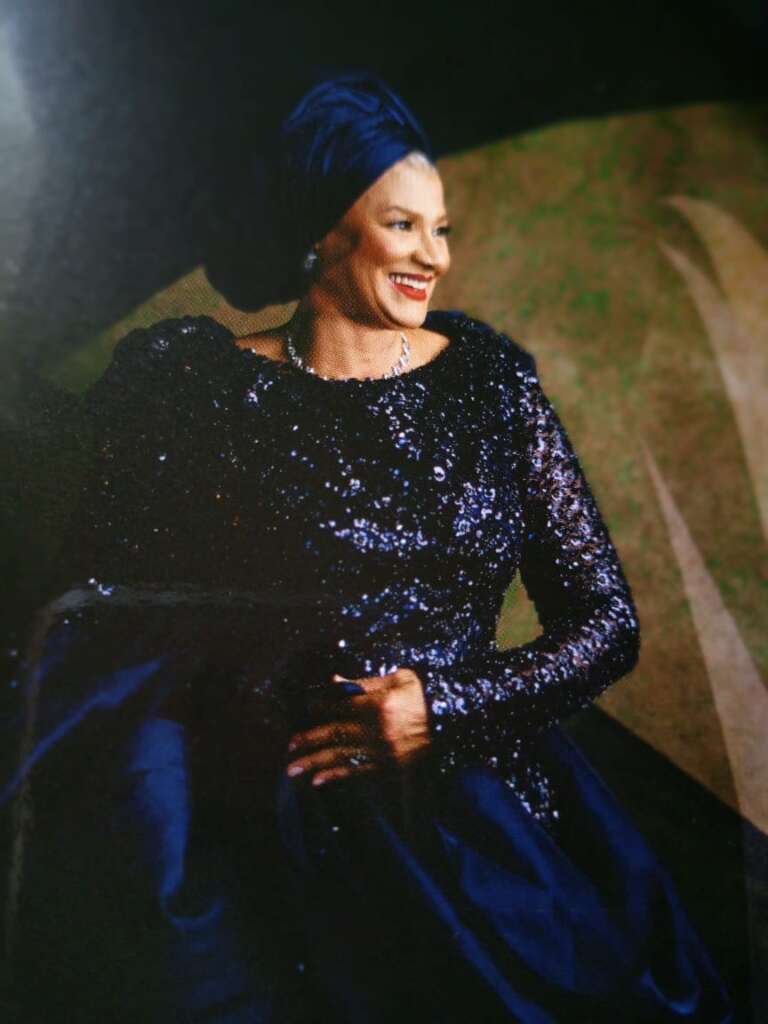
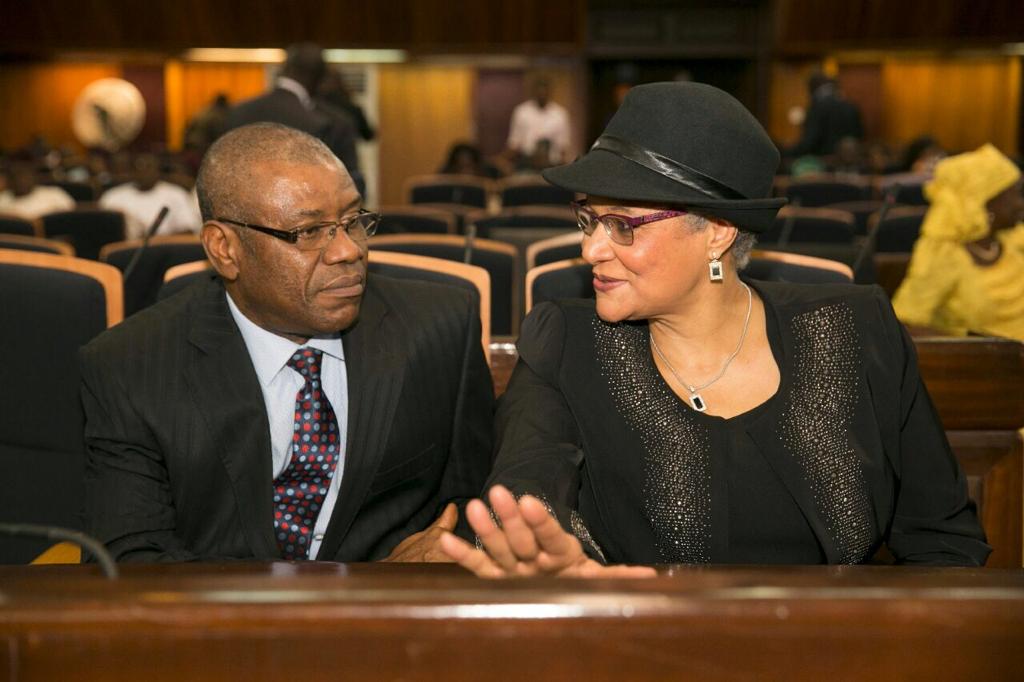
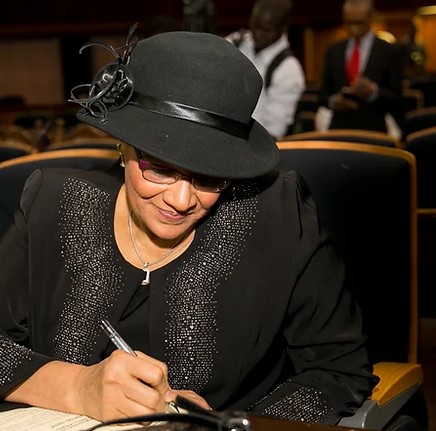
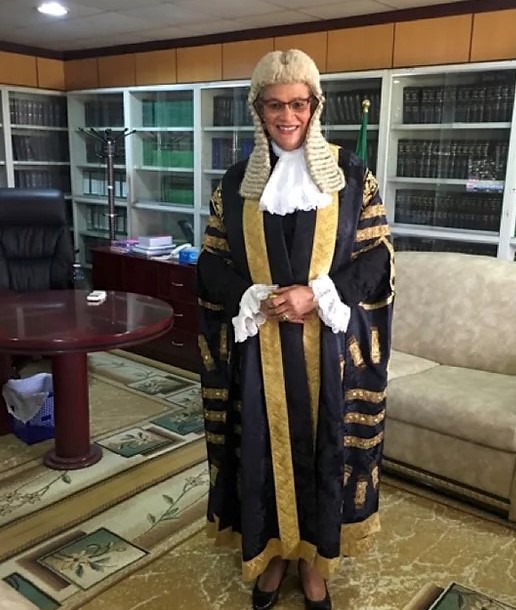
Photo Speaks: Glitz and glamour at Justice Amina Augie’s 70th birthday party

By Lillian Okenwa

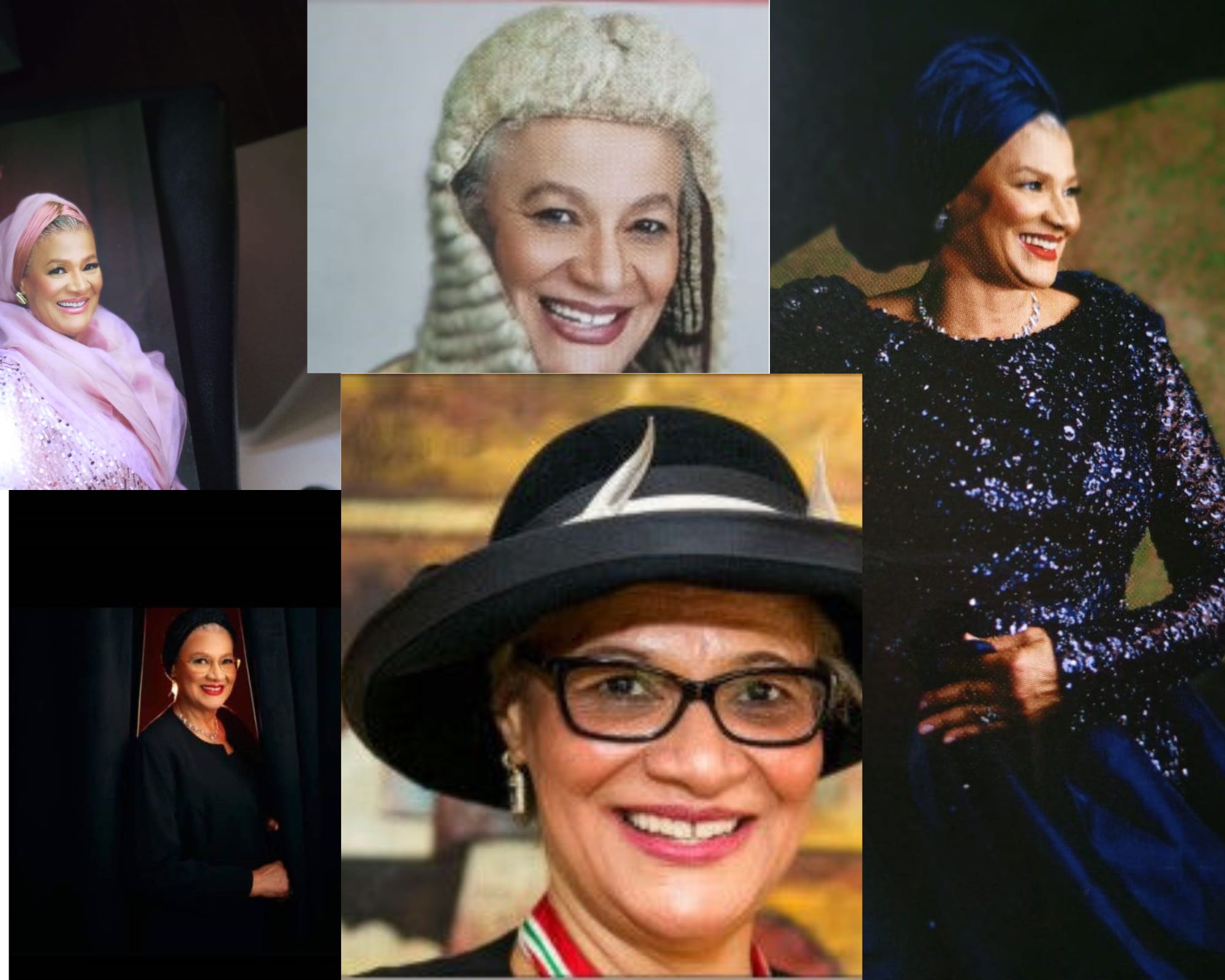
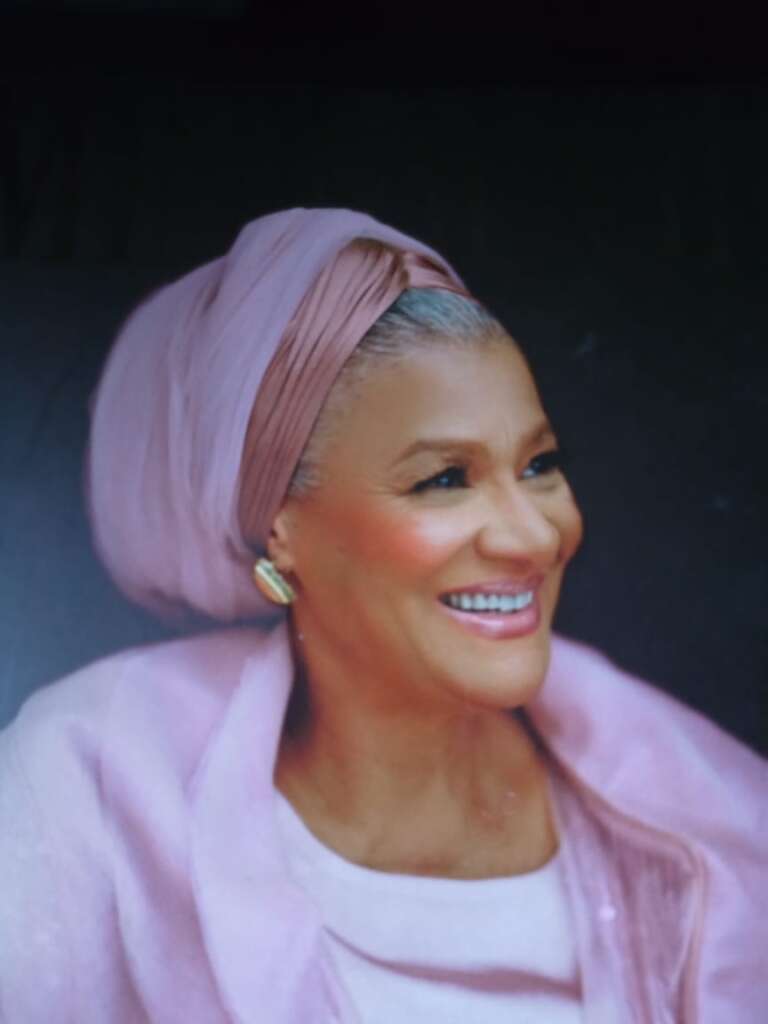
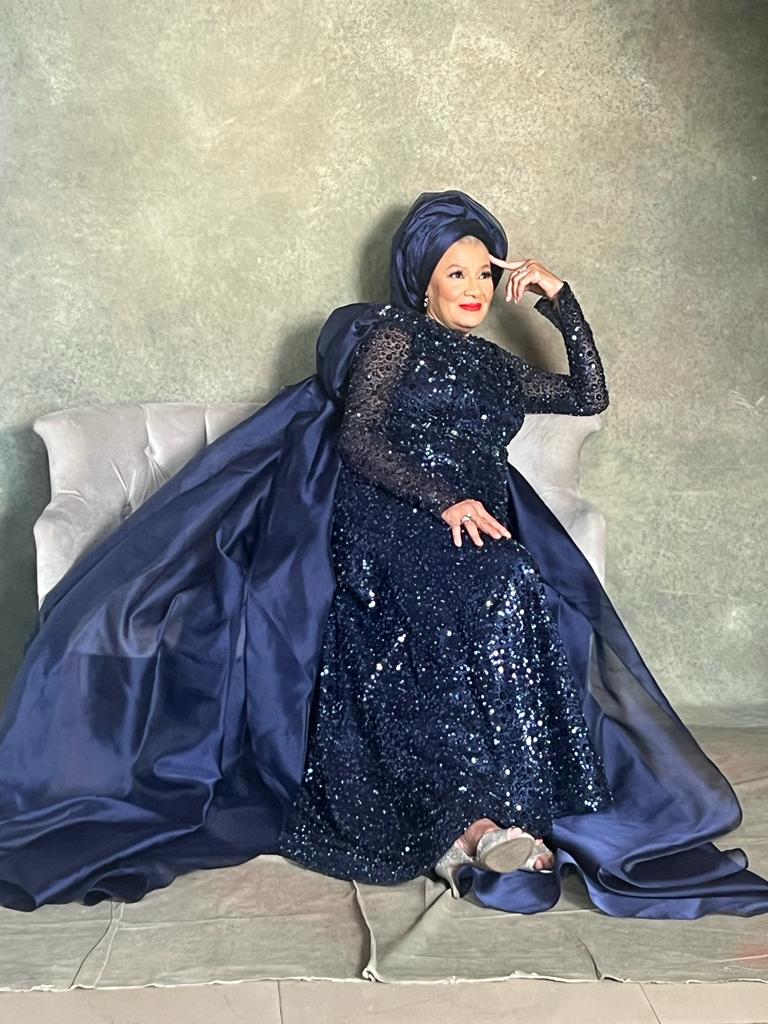
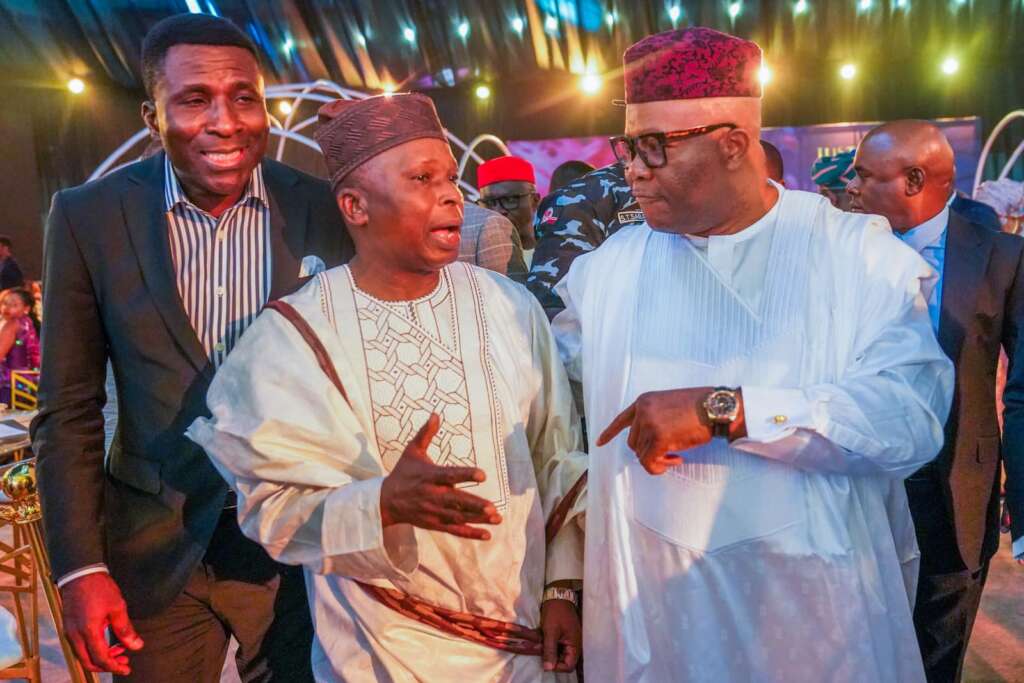
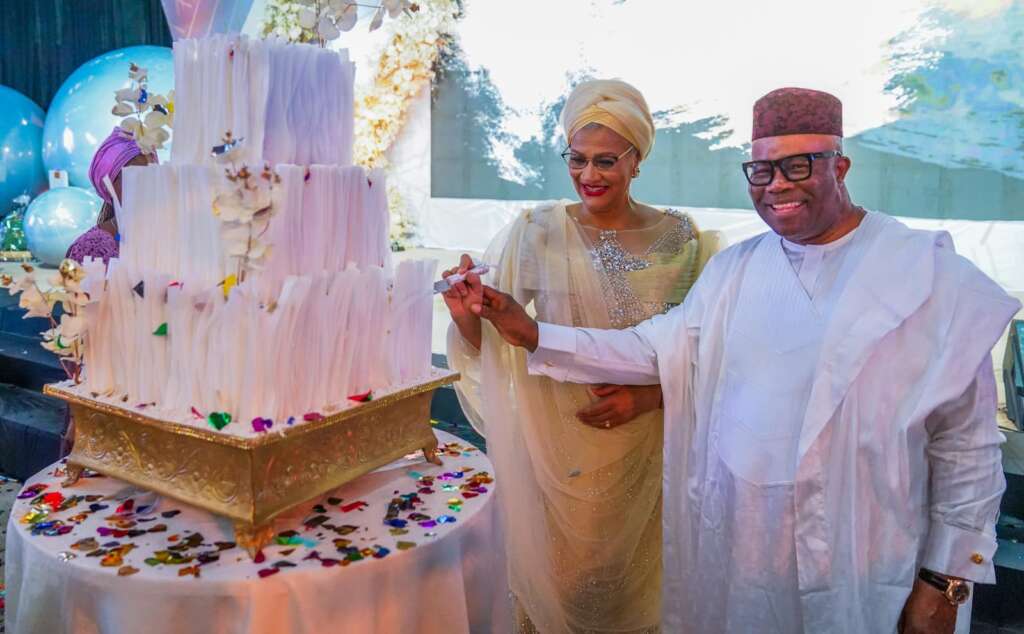
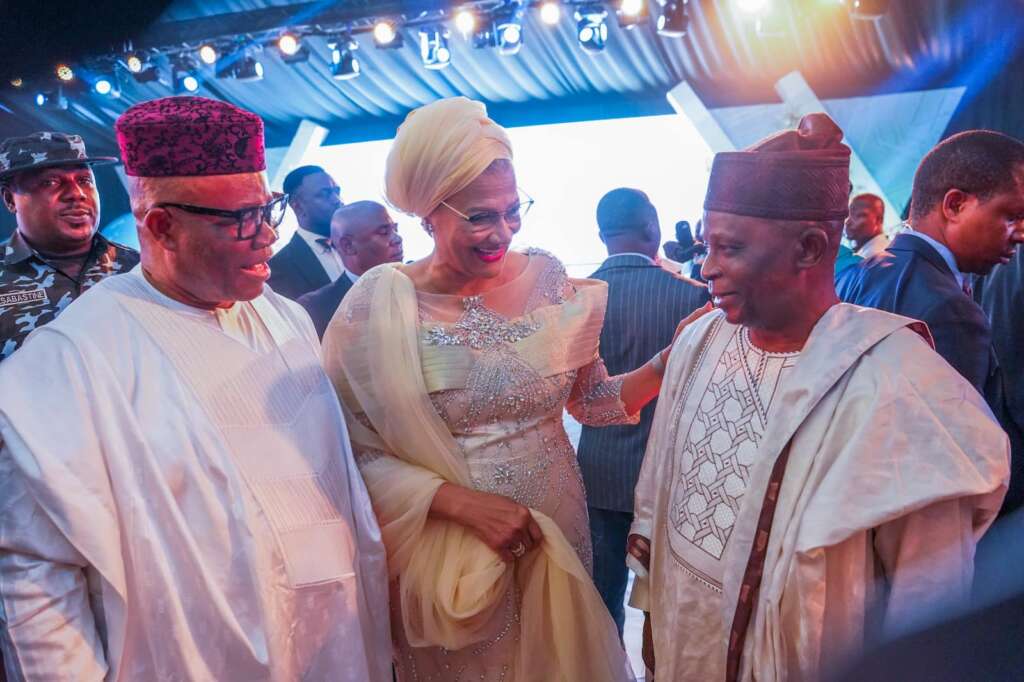
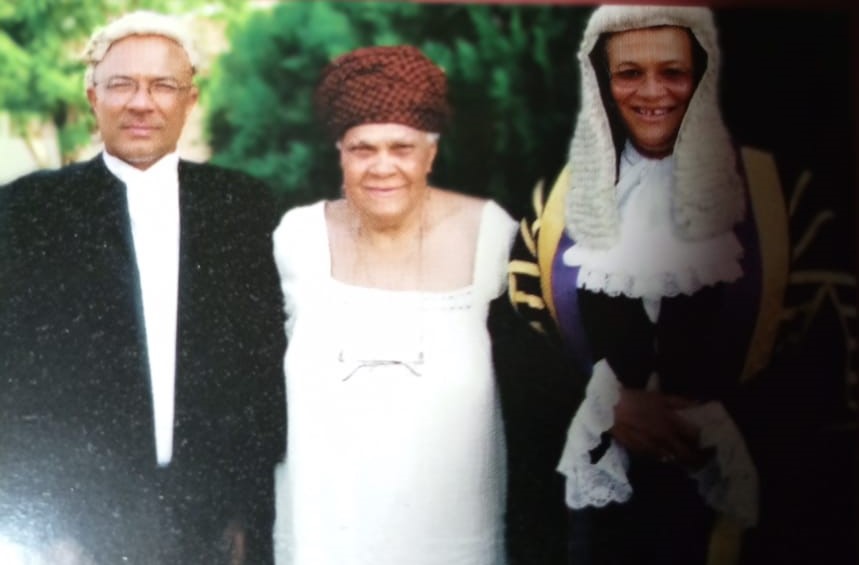
Filled to capacity with dignitaries from all walks of life, the ambiance at the International Conference Center, Abuja on the evening of Sunday 3 September 2023 was light, celebratory, and full of gaiety. Some guests sat around tables chatting away as others mingled and exchanged banters while awaiting the arrival of the celebrant. It was the birthday/retirement celebration of Her Lordship, Hon. Justice Amina A Augie.
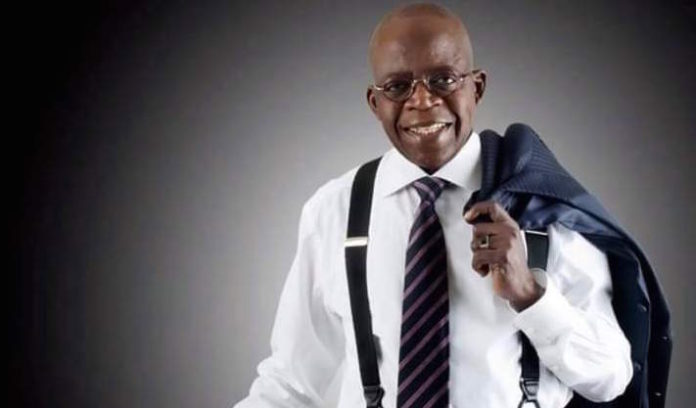
When it was just a few minutes past 8 pm the rousing tunes of Flavour’s Game Changer announced the arrival of Her Lordship who accompanied by her 90-year-old mother and a large entourage sashayed into the hall as the speakers bellowed out:

“The Emperor, the conqueror

The champion, the Lion is here…”

Indeed after 45 years as a judicial officer and being in excellent health to celebrate the Platinum year of 70, Amina Augie deserved that special ọjà (flute) in Flavour’s Game Changer.

But she was full of gratitude to God who has preserved and crowed her life with many blessings. And to her guests, she had a few words: “As I look back on my career, I am filled with a sense of fulfillment and pride. It has been a long and rewarding 45-year journey, and I am grateful for every moment. I am also filled with hope, and excitement for the future. While my time on the bench may be over, I look forward to continuing to contribute to society in new ways…”

Attorney General of the Federation, Lateef Fagbemi, SAN, and Senate President Godswill Akpabio at the event
The Celebrant and Senator Akpabio

One other takeaway from the evening was the call by Dr. Ifeyinwa Nwankwesi for the government to revamp the educational sector. Pointing out that the grooming, discipline, and spirit of excellence instilled in them at Queens is behind the several milestones of Justice Augie and the many resplendently turned out Old-Girls that joined her on the stage, Ify Nwankwesi who spoke on behalf of Queen’s School Enugu Old Girls urged the Nigerian government to invest more in education. The Health Coach urged that particular attention be paid to ethics and morals in the molding of these future leaders.

Fourth of nine children, Justice Amina Augie was born on the 3rd of September, 1953 in Lagos. Then known as Anne Eva Graham, she attended primary, and secondary schools in Ibadan, Calabar, Enugu, and Kaduna between 1958 and 1971.

She was at the University of Ife, Ile-Ife from 1972 – 1977 and made a 2nd Class Upper, received several awards, including the Faculty Prize for Best Overall Student, Phoebe Chiadikobi Ajayi Prize for Best Female Student, Ife, (1977), and Amicable Assurance Prize for Best Student (Ife), (1977).

Justice Augie was called to the Nigerian Bar on 8 July 1978 after completing her National Youth Service in Sokoto State and one year of training at the Nigerian Law School, Lagos. In 1987 she obtained an LLM in Criminology from the University of Lagos.

Steadily, Her Lordship rose through the ranks in the judiciary beginning with her appointment as a Judge of the High Court, Sokoto State Judiciary in 1992. Elevated to the Court of Appeal in 2002, she served in various Divisions, including, as Presiding Justice of the Court of Appeal in Benin Division (2009-2010), Enugu Division (2010-2011), Kaduna Division (2011-2012) and Lagos Division (2012-2016).

Justice Augie has also served as the Chair of many tribunals. Some of them are: the Recovery of Public Properties Tribunal in Sokoto State (1995-1996), Failed Banks (Recovery of Debts) and Financial Malpractices in Banks Tribunal, Lagos Zone V (1996-1999), National Assembly, Governorship and Legislative Houses Election Tribunal (2000-2002), and, Judicial Commission of Inquiry into Niger Dock (2001-2002) and more.

Blessed with four children, she was married to the late Senator Adamu Augie a veteran broadcaster turned politician who died in a car crash in March 2001. He was from Kebbi State.

Amina Augie, a recipient of numerous awards, was conferred with the prestigious National Honour of Commander of the Order of the Niger (CON) in September 2014, and later with Commander of the Order of the Federal Republic (CFR). Augie is also a Fellow of the Chartered Institute of Arbitration as well as a recipient of the honour Fellowship of the Institute of Advanced Legal Studies.

On 7 November 2016 when she was sworn in as a Justice of the Supreme Court of Nigeria, she became the sixth woman out of about 104 past and present judges of the court to serve on the Supreme Court Bench.

Despair, frustrations characterise Tinubu’s 100 days in office

By Nik Ogbulie

Nigerians are in love with numbers. Every activity is tied to numbers. This has continued to resonate over the years because they have so much been taken for granted by their various leaders, past and present. Nigerians feel that it is easy to track the performance of their political leaders with numbers instead of waiting for the whole period their mandate lasts. With this, they are promptly reminded of their fits and starts so that they can easily adjust and apply the reverse if it becomes expedient. This is why you can always see a celebration and a knock at every 100 days, 200 days, one year etc, etc. But whether this adoption has changed or changes anything leaves much to be desired. As a matter of fact, this numbering calculation has offered Nigerians a more critical dimension in measuring performance, even as it imposes on leaders the opportunities to deny and blame their predecessors or policies and even the constitutions for their roles over that very short period. This feature has come to stay as a forced or imposed new format for public accountability to leaders who would naturally not tell Nigerians anything. This trend has also been a message to those leaders with very poor governance issues that Nigerians can no longer be taken for a ride.

In his 100 days in office, Nigerians saw flickers of optimism and courage to take decisions but submerged in an execution jam that snowballs into multiplicities of gruelling economic consequences.

There are today three major dragons in the house that must be taken away if any reasonable progress would be made. Attempts have been made since the first 100 days to eliminate the dragons but the strategies for the removal have returned most Nigerians to the various campaign debates which emphasised capacity, capability, willpower, and commitment. The major issue, which was Subsidy, was dealt with but in the most uncouth approach, which dignifies grandstanding as against positive market impact. Subsidy was the main
dragon which came with three offspring capable of ruining any economy. Inside the subsidy question lies the ravaging forex instability, spiralling fuel price, and excruciating food and commodity inflation. Nigerians believe that their situations in the last 100 days could be said to have been more difficult than in the past mainly due to some policy changes in the economic management processes which have implementation gaps. These gaps may not have been premeditated but became obvious due to attempts to impress many Nigerians who had raised so many doubts about the capacity of the leadership during the electoral campaigns.

A look into the various economic indices and the body movement of most operators in the informal segment of the Nigerian market can see that a lot of holes are therein to torment them. Some of them include the rising transport cost, increasing tuition cost in schools, growing tax demands, rise in tariffs of all kinds, expanded insecurity across the regions, increased level in infrastructure deficit in many critical sectors of the economy etc.

There are strong indications that the Tinubu administration is extending its nets across the globe for more positive performance, but this may obviously not come so soon based on the existing ways and means of their implementation.

What has made the Tinubu administration look like a non-performer in its 100 days is the fact that it is like a carryover of the Buhari administration which Tinubu, as National leader of the party, was a major player. Again Nigerians are still taking his subsidy removal “gift” with a pinch of salt considering his role in 2012 when the same party vehemently opposed subsidy removal mutted by past administrations.

There are strong indications that the economic situation may not be better in due course based on the fact that the price of oil at the international market will continue to rise to the extent that the price of fuel in the country will continue rising if the government is sincere with deregulation. Unless someone quickly does something to the existing refineries or does something about refineries. And as long as Nigeria continues to be a major fuel importer even from non-oil producing economies, all these perceived difficulties will persist. What it implies is forex availability will get worse and inflation will be higher, government revenue from companies will fall because of closure and unemployment will rise more and more, while infrastructure will continue to decay for lack of maintenance.

What Nigerians may not want to hear is that Subsidy has really not gone. The government has brought it from the back door by the directive that the pump price of fuel must no longer be increased because of the entire effect on the economy, especially to transportation and food inflation. What this also means is that the government will continue to fill the price gap of fuel imported by NNPCL. Government has not explained what the independent operators will do in the case of the continued rise in price of fuel at the international market.

What happens now is that after 100 days, subsidy is still indirectly around, as government still wonders what to do with the dragons it met in its party-house and the new offspring that have become the consequences of its action or inaction.

The fact remains that Nigerians are very resilient people and would continue to manage themselves even at breaking point.
This country has really done anything and avoided many things to survive.

TIPS