Home Blog Page 731

No to another Republic of Nigerian Army!

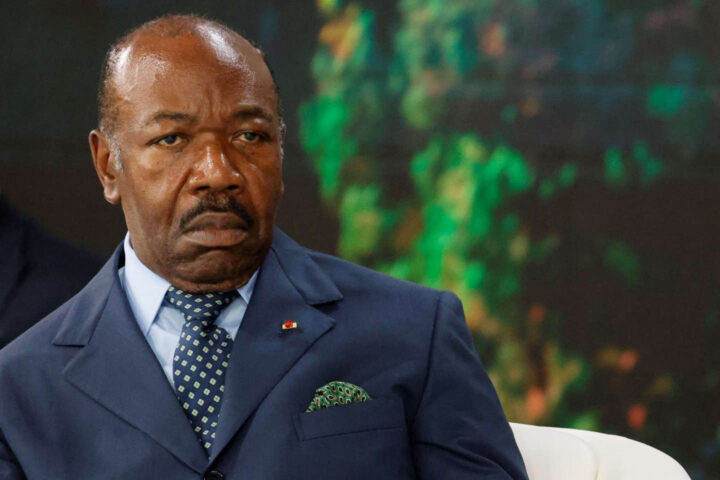
Gabon's President Ali Bongo looks on during the One Forest Summit at the Presidential Palace in Libreville on March 2, 2023. (Photo by LUDOVIC MARIN / AFP)

By Martins Oloja

I have been deeply saddened by some comments and inquiries by some younger elements who never experienced the consequences of military rule in Nigeria and so are being carried away by the current wave of military coup detat in Africa because of perceived failure of democracy and irresponsibility of some African leaders who continue to demonise democratic governance on the continent.

It is therefore expedient for some of us who are older and have experienced the grave consequences of even long years of military in Nigeria to sensitise the younger ones to manage their enthusiasm about prospects of return of military rule in Nigeria. Let’s quickly add that even some elders who may have been disappointed by our leaders  and are so excited by what is happening in parts of Africa and would like to pray for military intervention in our country should manage their expectations too about the bane of returning to Egypt.

Is it trite to claim at the moment that Nigeria isn’t Gabon?  Should we be afraid of speaking some truths to our own power that Nigeria isn’t Niger and so can’t be run down like Mali, Burkina Faso, Sudan, Chad and Guinea? Can a family or even a cabal of witches and wizards hold Nigeria down for 56 years as they have done in Gabon?

As I was writing this I received a social media platform notification for this tragicomic comment: ‘O Lord how can we be praying in Nigeria and you’re  answering prayers in Gabon, Niger, Burkina Faso and Mali?’.  Before I could mutter ‘Oh My God’, I received another one thus: ‘Military coups in Sub-Saharan region have been bloodless so far…it is democratic elections that have been violent with loss of lives…tells a story…’ There have been so many diverse and quixotic social media comments that can be painfully interpreted to mean that God should answer the prayers of the ‘wretched of the earth’ that soldiers should return to their ‘Federal Republic of The Nigerian Army’.

This should really be frightening. I do hope that our political leaders who have been behaving so irresponsibly even at this time should know the implications of this perception index at the moment. I hope they know that if the men in uniform return today with their dubious correcting fluids, there will be jubilation by the poor and the many who are currently fascinated by the bloody nature of elections and bloodless colour of coups. I hope our leaders most of whom just returned from Rwanda where the UNDP made them to study ‘good governance’ are reading all these writings on the walls.

But then let’s face the brass tacks, there is still no reason to compare the political condition in Gabon, Cameroon, Uganda, Togo with Nigeria’s where a strong man, a General elected into power once rose to amend the constitution to enjoy a third term in office but failed. Doubtless, Nigeria’s isn’t where it ought to be in the new world order but it isn’t as bad to the extent of calling back ‘soldiers of fortune’ who actually set the tone for institutionalisation of corruption that has taken us down this reproachful valley.

We need to tell the younger ones who keep comparing and contrasting Nigeria with some of the countries where military juntas are being hailed and celebrated that we actually lost our country to the military’s misadventures in power. There was a country that would have been a world power earlier than Singapore, Malaysia, India and even South Korea if the soldiers hadn’t struck in 1966, barely six years after independence from the British rule. Let’s begin to dip up how those who struck down democracy in 1966, raped and underdeveloped the most populous black nation on earth.

The economic effects of military rule have been disastrous. The traditional agricultural based economy was abandoned and they became extremely dependent on exports of oil which due to frequent fluctuations in oil prices led to an unstable economy.

You who are young, blessed are you if you can go down some memory lane with me to drink from some fountain of knowledge that history has given us. Since Nigeria’s independence in 1960, there have been five military coup d’etats in Nigeria. Between 1966 and 1999, Nigeria was ruled by a military government without interruption, apart from a short-lived return to democracy under the Second Republic of 1979 to 1983. However, the most recent coup occurred in 1993, and there have been no significant further attempts under the Fourth Republic, which restored multi-party democracy in 1999.

Trouble began for democracy on January 15, 1966 when a group of young military officers overthrew Nigeria’s government, ending the short-lived First Republic. The officers who staged the coup were mostly southern Christians led by Kaduna Nzeogwu and they assassinated several northern leaders including Prime Minister Tafawa Balewa, Northern Region Premier Ahmadu Bello, Western Region Premier, Ladoke Akintola, finance minister Festus Okotie-Eboh, and the four highest-ranking northern military officers.

The coup leaders publicly pledged to eliminate corruption, suppress violence, and hold new elections. Major General Johnson Aguiyi Ironsi, an Igbo but not party to the original conspiracy, intervened to impose discipline on the military and became head of state. He suspended the constitution, dissolved all legislative parties, banned political parties, and formed an interim federal military government, though without specifying the date on which civilian rule would be restored. That was the time unitary system was foisted on Nigeria and federalism was overthrown.

On 29 July 1966, a counter-coup was staged and Ironsi’s regime had fallen by August 1. Lieutenant Colonel Yakubu Gowon became head of state. Ironsi and the governor of the Western Region, Lieutenant Colonel Francis Adekunle Fajuyi, were among the casualties. Muhammadu Buhari, who was installed as head of state in the 1983 coup, was one of the officers involved. Both the coup and the counter-coup assumed an “ethnic colouration and they fuelled ethnic violence contributing to events, which ultimately led to the Nigerian Civil War.

After the end of the war, in October 1970, Gowon reiterated an earlier pledge to ensure that military rule would be terminated on 1 October 1976. In 1974, however, he postponed democratisation, explaining that Nigerians had not yet demonstrated “moderation and self-control in pursuing sectional ends.”

On 29 July 1975, Colonel Joseph Nanyen Garba, a close friend of Gowon’s, announced on Radio Nigeria that he and other officers had decided to remove Gowon as head of state and commander-in-chief. The coup was bloodless: Gowon was abroad, attending a meeting of the Organisation of African Unity, in Kampala, Uganda. He was replaced by Brigadier Murtala Muhammed with Brigadier Olusegun Obasanjo installed as deputy head of state. The New York Times reported then that General Hassan Katsina, a former Chief of Army Staff who had been demoted by Gowon, was said to be “the real author of the coup”. On October 1, Muhammed, like Gowon, pledged a return to civilian rule: following the drafting of a new constitution and various institutional changes, elections would be held, allowing for a transfer of power on 1 October 1979.

But on February 13, 1976, darkness fell again on Nigeria as the Hurricane Muhammed was assassinated at the outset of an abortive coup attempt. His driver and aide were also killed; as was Ibrahim Taiwo the military governor of Kwara state.

The coup was led by a group of officers who called themselves “young revolutionaries” in a radio broadcast. However, they lacked both civilian and military support. The coup was denounced by division commanders and government leaders outside Lagos and was quickly suppressed. Obasanjo became head of state.

Dimka(Inset) Pix:alchetron.com

The Nigerian government reported that the coup had been led by Lieutenant Colonel Bukar Suka Dimka and had aimed at restoring Gowon’s regime. In the end, 125 people were arrested in connection with the coup attempt and, in March, 32 people received death sentences, among them Dimka and the defence minister, Major General Illiya D. Bisalla.

On December 31, 1983, a group of senior military officers led a coup which ended the Second Republic’s democracy. The coup deposed the democratically elected government of President Shehu Shagari, which, in the first military broadcast after the coup, Brigadier Sani Abacha called “inept and corrupt”. Abacha, who was appointed head of state a decade later, was said to have played “a key role” in the coup. The sole reported casualty occurred when Brigadier Ibrahim Bako was killed in a fire fight during Shagari’s arrest in Abuja. Major General Muhammadu Buhari was installed as head of state.

On 27 August 1985, officers led by Major General Ibrahim Babangida, the army chief of staff, usurped Buhari’s government in a palace coup while Buhari was away from Lagos and his deputy, Major General Tunde Idiagbon was on a pilgrimage to Saudi Arabia. The coup was announced on the radio in the morning by Major General Joshua Dogonyaro and Babangida later addressed the country, saying that Buhari’s regime had been “rigid and uncompromising” and had demonstrated “inconsistency and incompetence.”

On April 22, 1990, military officers led by Major Gideon Orkar attacked Dodan Barracks in an attempt to overthrow Babangida’s administration. Babangida escaped successfully, and fighting stopped ten hours later, when senior military commanders elsewhere in the country announced their support for Babangida. 42 men eventually convicted of involvement in the coup attempt were executed by firing squad in July 1990. That wasn’t the end of coup d’etat, after all.

Facing pressure to shift towards a democratic government after annulling an election result, which was considered free and fair,  Babangida resigned and appointed a multinational business executive, Ernest Shonekan as interim president on 26 August 1993. Shonekan’s transitional administration lasted only three months: on 17 November 1993, it was overthrown in a palace coup led by General Sani Abacha, Shonekan’s defence minister. This followed the annulment of the presidential elections, which had been advertised as the beginning of a Third Republic.

In September 1994, although he had pledged to restore democracy, Abacha issued a decree that placed his government above the jurisdiction of the courts, effectively giving him absolute power. The rest is history as we began a democratic journey since May 1999.

So far, more than $5 billion has been recovered from one of the past heads of state, General Sani Abacha who helped in overthrowing so many governments. General Obasanjo spent another eight years as an elected leader in addition to 1976-1979 as head of state. The same Obasanjo was said to have secretly recovered some undisclosed amount of loot from the last of the Generals who actually handed over to him in May 1999. Buhari too was elected and just left office on May 29, 2023, yet Nigeria is still not a member of G-20 economies in the world. Nor is the largest economy in Africa qualified to be a member of the BRICS block.

Why should we pray for another military intervention when there is a sense in which we can claim that they (the soldiers in power) were the organic architects of our misfortune in Nigeria? They have nothing to offer us in Nigeria again.

Let crisis merchants and businessmen who sponsor them beware. Nigeria isn’t a candidate for another military rule. Democracy can endure. I believe that we are witnessing the beginning of the end of an era of economic growth without development. The military people should continue to berate those who are calling on them to step forward with another stratagem to overthrow democracy. That would be terrible for Africa if Nigeria’s democracy cannot be made safe by its brand ambassadors in power.

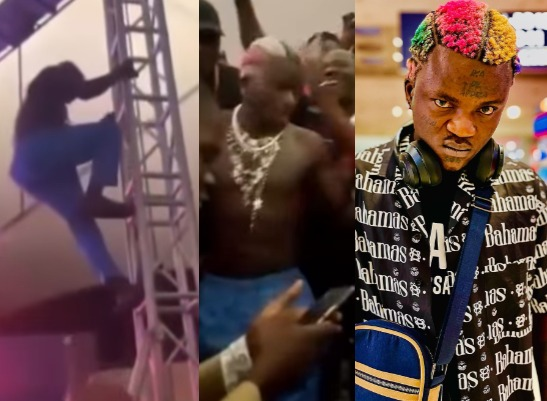
Right of Reply: On the Portable & Ifunanya Row

By Nkereuwem Udofia Akpan Esq

When I read the argument proffered by the organizers I found myself unable to disagree in principle with the analysis proffered by the AGC Chair Mazi Afam Osigwe SAN on the controversy over whether Portable should have been invited to perform or not. That he took responsibility for the melee itself shows leadership and it is commendable

Now I’m unable to see why any artiste or such number of them should not perform no matter the “weirdness” or otherwise of their antics on the stage. I believe the show was advertised and anyone who disliked his genre of music so much should have stayed away or walked out as some did. I wouldn’t attend his show for free.

Nkereuwem Udofia Akpan Esq

With regards to the female fashion model Ifunanaya who although called to the Bar has decided to pursue her livelihood elsewhere, I hold a completely different opinion.

Having a law degree or being called to the bar is not a bar to venture into other areas or professions. At least 6 of my classmates in law school are today bankers and 2 Others are into entertainment and shows. I have 2 other lawyers at UTC area 10 who are trading in stationary and are also printers.

I believe former presidential spokesman and ex-Aviation Minister Chief Femi Fani Kayode, Kenneth Okonkwo, Ace Journalist Ruben Abati, Popular Afro beat crooner, Falz the Bahd Guy, and a number of ex-BBnaija Housemates are all lawyers who were duly called to the Nigerian Bar.

Let’s take someone like Kenneth Okonkwo who has been engaged in movie production and petition for decades In fact he’s been in movies since LIVING IN BONDAGE and a chunk of his roles in and out of the movie set could be termed incompatible with legal practice. He is equally a promoter and till date an active member of the Actors Guild of Nigeria. Recently Mr Okonkwo has once again partially abandoned acting, has dusted his wig and gown, and is back in active legal practice at the highest level.

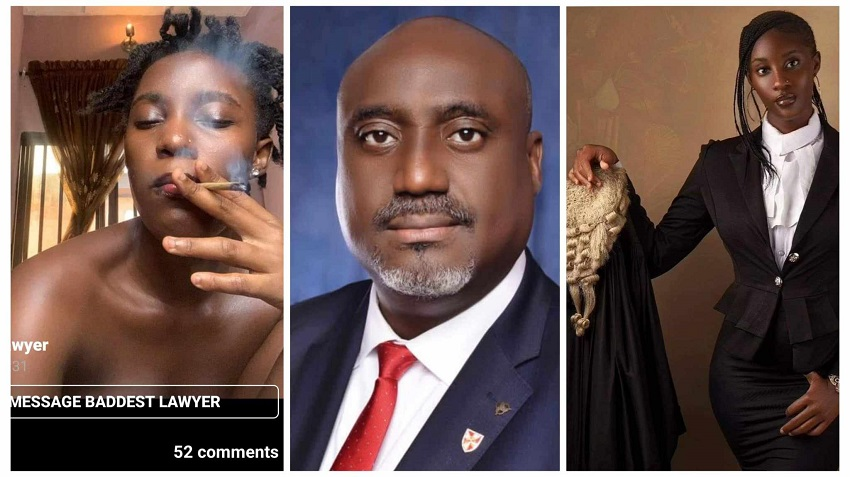
Falz the “Bahd Guy” is the son of foremost Hunan Rights Activist Femi Falana SAN.Ms Ifunanaya the so-called “Baddest Lawyer ” is a swimsuit model, fashionista, and entrepreneur. She’s not practicing law and I was surprised when I read in the papers that she’s been hauled before the LPDC by the NBA.

Let’s be clear about this, I believe that so long as someone is not in active legal practice, it won’t be infamous conduct to engage in trade other than legal practice even if the person is braiding his hair and putting on ragamuffin attire to perform like Falz the Bahd Guy, preaching in the church or Chris Okotie, running wild and engaging in sex on national TV during the BBnaija show as a housemate, engaging himself as a movie promoter, movie actor or owning shops at 51 Iweka Road Onitsha. I do not think we should go about chasing everyone who’s been called to the bar but should only be concerned with those in active legal practice. For instance of our colleague Kenneth Okonkwo continues to be involved in movie production, promotion, and sales side-by-side active legal practice then it will be legitimate to call him to Order. Or if Falz the Bahd Guy picks up his wig and gown the morning after a show and heads to court, we can also raise eyebrows.

This distinction is necessary so that the NBA is not wasting precious time and scarce resources chasing shadow. The extant statutory duties of the NBA must be streamlined so that we do not go chasing shadows

BICKERING AND INFIGHTING OF NATIONAL OFFICERS On the unfortunate issue of bickering between the Financial Secretary and our President Y. C. Makyau SAN, I share the view that such housekeeping issues ought to have been addressed long before the conference rather than allowing same rear its ugly head at the conference. I’m even surprised that the Mazi Osigwe-led committee was blindsided by the refusal of the financial secretary to sign off the Report. I’m unable to speculate whether it was for lack of trying or the committee was blindsided at the
eleventh hour.

I dare say that for the NBA to enjoy its pride of place and remain a voice to be reckoned with, we must ensure that greed, avarice, and primordial interests, with their attendant effects, like dwarfism must not be allowed to stunt the growth of our beloved association.

Nkereuwem Udofia Akpan Constitutional Lawyer and Human Rights Activist writes from Abuja
X: @chiefnkereuwem

Anambra Abortion Law: Time to bring out this law and quash it

By Sonnie Ekwowusi

Unknown to many, including numerous citizens from Anambra State, abortion is legalized in Anambra State. Both you and your pregnant wife hail from Anambra State. If one day your pregnant wife woke up on the wrong side of the bed and informed you that she had unilaterally decided to undergo an abortion to terminate your fifth child in the womb, citing the argument and pseudo-rationalization that her body belonged to her and she could do anything she liked with it, and you attempted to stop her from procuring an abortion, she could refer you to the Anambra State abortion law or even take you to court for trying to prevent her from exercising her “right to choose.” This is one consequence of the Anambra abortion law. Of course, there are other undesirable consequences.

Can you believe that abortion is legalized in Anambra State, a state that has produced figures like Blessed Cyprian Iwene Tansi, Cardinal Francis Arinze, intellectuals, prominent politicians, academics, and business tycoons, among others? Yes, the Anambra State abortion law is officially titled “Women’s Reproductive Right.” I still have a copy of the law in my possession. This law came into effect on March 17, 2005, during the administration of Chris Ngige. Professor Brian Adinma, who was the Commissioner for Health in Anambra State at that time, and is, in fact, a Knight of the Catholic Church, was the driving force behind the legalization of abortion in Anambra.

The same Professor Adinma succeeded in converting six public health institutions in Anambra State at that time into abortion centers equipped with Manual Vacuum Aspirators (MVA) for performing abortions. Isn’t it a significant scandal? Why do Nigerian abortion advocates and international organizations like the International Planned Parenthood Federation (IPPF), the United Nations Population Fund (UNFPA), Ipas, the United States Agency for International Development (USAID), the Ford Foundation, the MacArthur Foundation, UNIFEM, and DFID employ euphemisms and ambiguous language when promoting abortion in Africa and Nigeria? It’s because the term “abortion” is considered repugnant in our socio-cultural and religious context. Additionally, previous attempts to legalize abortion and contraceptives in Nigeria have consistently faced strong opposition. When the idea of legalizing abortion was initially proposed during the Shehu Shagari government or thereabouts, a group of women and mothers from Imo State threatened to stage a nude protest in Abuja. Following that threat, the idea was abandoned. During Babangida’s military regime, there was another attempt to legalize abortion, but it was thwarted at the last moment. In 1991, the campaign by some medical doctors in Lagos to legalize abortion led to the conduct of an opinion poll on the matter. When the poll results were revealed, nearly half of every 10 Lagos residents (47%) were opposed to it.

1 ABORTION IS ILLEGAL IN NIGERIA

By virtue of the combined effects of Sections 228, 229, 230, and 328 of the Criminal Code, as well as some sections of the Penal Code, abortion is illegal in Nigeria. In fact, Section 328 of the Criminal Code specifically states that: “Any person who, when a woman is about to be delivered of a child, prevents the child from being born alive by any act or omission of such a nature that if the child had been born alive and had then died, he would have been deemed to have unlawfully killed the child, is guilty of a felony and liable to imprisonment for life.”

The 1999 Constitution is the grundnorm of Nigeria. Section 33 of the constitution guarantees the right to life, stating that no person shall be deprived of their life except in execution of a sentence of a court in respect of a criminal offense of which they have been found guilty in Nigeria. Section 17 of the Fundamental Objectives and Directive Principles of State Policy in our Constitution stipulates that the Nigerian social order is founded, among other things, on the sacredness of human life. Similarly, Section 38 of the constitution guarantees the right to freedom of thought, conscience, and religion. It stipulates that every person in Nigeria is entitled to propagate their religion or belief in worship, teaching, practice, and observance. Therefore, before the National Assembly can pass a bill on such a sensitive and volatile subject matter as abortion, a constitutional amendment to the aforementioned provisions of the 1999 constitution will be required. Even prior to the amendment, there will be a need for a referendum on the matter to afford the stakeholders and the public the opportunity to express their opinions.

So, abortion is illegal in Nigeria. This is not speculation; it is the law. Can the law be enforced? Yes, the police can do so if citizens lodge complaints and petitions. Our law firm has successfully compelled the Nigerian police to shut down and charge some abortion clinics in Nigeria to court. The most recent operation by our law firm involved petitioning the police to shut down the notorious abortion clinic, Marie Stopes, located in Lagos. I accompanied the police in that operation. The abortion doctor, Dr. Bernard, was handcuffed as the police searched the abortion clinic for abortion-related evidence

2 WHAT IS REPRODUCTIVE HEALTH OR RIGHTS?

Considering that abortion is illegal in Nigeria, coupled with the vehement systematic opposition to the attempts to legalize abortion in Nigeria, abortionists and radical feminists promoting abortion in Nigeria have resorted to using euphemisms and coded phrases like “Reproductive Rights or Health,” “Family Planning,” women’s health, women’s rights, “Maternal Mortality,” and “Safe Motherhood” to promote abortion in Nigeria, so that nobody will suspect what they are doing. With the term “women’s rights,” they mean the right of women to procure abortion; “family planning” or “family planning services” is another euphemism of theirs. It means giving women access to abortion clinics to procure abortion, while “Safe Motherhood” means abortion and contraceptives on demand.

The concept of reproductive health and rights is one of the most abused concepts used by the United Nations Population Funds (UNFPA), Planned Parenthood Associations, pro-choicers, some NGOs, etc. The phrase might sound palatable to the ears of the unwary, human rights activists, and women’s NGOs who least suspect the sinister motives behind the concept. First, the word “reproductive” in the context in which it is commonly used by its proponents is inappropriate because a human person doesn’t reproduce; a human being procreates. Procreation carries much more exalted meanings than the biological process of reproduction.

The World Health Organization (WHO) unfortunately promotes abortion, especially in African countries. This is not a conspiracy theory, nor is it hearsay. I have witnessed it. The WHO has produced an official definition of the concept of Reproductive Health during its preparation for the United Nations International Conference on Population and Development in Cairo in 1994. It defined it as: “Reproductive health implies that people are able to have responsible, satisfying, and safe sex (underline mine), and they have the capability to reproduce and the freedom to decide if, when, and how often to do so. Implicit in this last condition are the rights of men and women to be informed of and to have access to safe and effective, affordable, and acceptable methods of fertility regulation (underline mine) of their choice, and the right of access to appropriate healthcare services (underline mine) that will enable a woman to go safely through pregnancy and childbirth and provide couples with the best chance of having a healthy infant.”

The same WHO defined fertility regulation as: “the process by which individuals and couples regulate their fertility. Methods that can be used for this purpose include, among others, delaying childbearing, using contraception, seeking treatment for infertility, interrupting unwanted pregnancies (underline mine), and breastfeeding.”

he above definition, as luminous as it may seem, is simply a great euphemism for promoting illicit sex and abortion, or what Professor Steven Pinker has dubbed neonaticide (the killing of a child on the day of its birth) or filicide (the killing of a child at some later stage).

So, let us decode the hidden time bombs in the above definition under the following subheadings: (a) “Safe Sex” or “condom sex” means indulging in immoral casual sex and relishing in its pleasure while avoiding its consequences. (b) “Fertility regulation” and “interrupting unwanted pregnancies” mean abortion on demand. (c) “Access to appropriate health care services” means access to abortion clinics.

3 ADOLESCENT SEXUAL REPRODUCTIVE HEALTH: CORRUPTION OF INTEGRATED SCIENCE SYLLABUS, AND TEACHING OF IMMORALITY IN SCHOOLS

“Adolescent Sexual Reproductive Health” is another coded phrase or euphemism for the promotion of abortion, illicit sex, and contraceptives among students in Anambra State schools, Lagos State schools, and other states. Can you imagine teaching a ten-year-old boy/girl in JSS1 the techniques of masturbation, dating, putting on condoms, sexual communication and negotiation, how to do abortion in secret, how to practice “safe sex” in secret without getting pregnant by using contraceptives like IUCD, injectables, vaginal foams and jellies, diaphragms, hormonal implants, oral contraceptive pills, touching and examination of male and female reproductive organs, naked body images, erection, ejaculation, kissing, caressing, sterilization procedures for males by making an incision in the scrotum and by cutting and tying the Vas deferens, sterilization procedures for females by cutting and tying the Fallopian tube, infertility under the guise of sex education?

About 17 years ago, some concerned mothers in Lagos went to the Federal High Court, Lagos, to challenge the teaching of the above immoralities in secondary schools in Lagos State under the corrupted Integrated Science Schemes of Work in junior secondary school and Sexuality Education Scheme of Work for students in senior secondary school. Sylva Shinaba SAN (may her soul rest in peace) led us in that matter at the Federal High Court, Lagos. Happily, the Lagos State government opted for an amicable settlement on the grounds that it would withdraw the corrupted Integrated Science Curriculum.

Prior to the corruption of this new Integrated Science Scheme, the old Scheme of Work for 1999/2000-2001/2002 Sessions for junior secondary school in Lagos State did not contain any of the aforementioned immoralities. What is happening in Nigerian schools? Find out what they are teaching your children in school. Inspect the Integrated Science and Social Science notebooks of your son/daughter.

4 DANJUMA’S ABORTION BILL

You will recall that Senator Daisy Ehanire-Danjuma (representing Edo-South at the Senate at that time) sponsored an Abortion Bill at the National Assembly in 2006 under the euphemism: the National Institute of Reproductive Health bill. The Public Hearing of the Bill took place in the Senate on the 13th of February 2006. The Bill faced stiff opposition, with the strongest opposition coming from many mothers and women who arrived at the Senate early in the morning of that fateful day in two buses. I was one of the lawyers who argued the case for about 15 Nigerian NGOs and organizations at the National Assembly in opposition to the Bill. In their defense, the abortionists argued that the Bill was not an abortion bill since the word “abortion” was not specifically mentioned in the Bill. In response, we argued that even though the word “abortion” was not explicitly mentioned in the Bill, the concepts of reproductive health and adolescent sexual reproductive health mentioned in the Bill are all well-known euphemisms or soft language for promoting abortion, contraceptives among school children, teaching children the techniques of dating, masturbation, “safe sex” with condoms, etc., in Nigeria and all over the world.

Faced with opposition, Senator Danjuma elected to withdraw the Bill for possible amendment. However, we opposed the amendment. Between Thursday, April 27, and Sunday, April 30, 2006, the Senate Health Committee organized a 3-day retreat at the Presidential Hotel in Port Harcourt for a select group of 18 individuals to reconsider the Bill. After further consideration, the Abortion Bill was finally dismissed for lack of merit and for being incompatible with public morality and public interest.

5 ANAMBRA ABORTION LAW: THE WAY FORWARD.

The Anambra State “Women’s Reproductive Right” law consists of twelve paragraphs of legislation. Deceptively enough, the word “abortion” is not specifically mentioned in the law, which is understandable because the term “abortion” is considered repugnant in Nigeria’s socio-cultural and religious setting. Previous attempts to legalize abortion in Nigeria have faced stiff opposition. Organizations like UNFPA, UNIFEM, DFID, and other pro-abortion United Nations Agencies in Africa have been urged to use euphemisms and dodgy language to promote abortion in Africa and Nigeria. I attended the Reproductive Right Conference (Abortion Conference) in Abuja in 2003, where the idea of legalizing abortion in Anambra was first discussed. (In fact, that was where I first met Professor Adinma). During that Conference, the organizers instructed attending journalists (myself included) to use deceptive language in reporting on abortion to ensure that the public remained unaware of what was happening.

The controversial section of the Anambra abortion law is section 6(a)(b), which states:

“The woman’s viewpoint shall be considered in decisions: a. Regarding the number, timing, and spacing of children, and b. Concerning their shared responsibility in sexual relationships and reproduction, free from forms of violence. However, the best interest of the woman shall be paramount in situations where her health is at risk…”

To the uninformed, section 6(a) of the law might seem commendable, but trained lawyers familiar with the history and implications of Reproductive Rights will educate you that this phrase is a euphemism for abortion rights. The fact is that section 6(a) has consistently been interpreted globally as granting women the right to abortion and access to contraceptives. Section 6(a) was first acknowledged as an abortion right by the international community at the International Conference on Human Rights in Teheran. Subsequently, it has been consistently reaffirmed as an abortion right at various sub-international conferences, such as the International Conference on People and Development (ICPD) in 1994 and the Beijing Platform for Action in 1995.

Section 6(a) grants any pregnant woman in Anambra State the right to procure an abortion throughout all nine months of pregnancy. The wording of this section is substantially similar to Article 16(e) of the controversial Convention on the Elimination of all Forms of Discrimination against Women (CEDAW), which also states that women are allowed to “decide freely and responsibly on the number and spacing of their children.” Consequently, both section 6(a) of the Anambra law and Article 16(e) of CEDAW guarantee any woman access to abortion throughout all nine months of pregnancy. It’s worth noting that the United States has refused to ratify CEDAW due to Article 16(e), which promotes abortion. So, if the United States rejects CEDAW because of the offensive Article 16, why is Anambra State adopting and embracing it as its abortion law?

To really understand the meaning of Section 6(a) of the Anambra abortion law, one must read the publications of the Center for Reproductive Law and Policy at 120 Wall Street, New York, United States, from which the Anambra law was borrowed. The phrase “on the number, timing, and spacing of the children,” according to the publications, requires the government to make abortion services legal, safe, and accessible to all women. According to the publications: “Abortion is a woman’s choice,” “Women are entitled to have access to all safe, effective means of controlling their family size, including abortion,” “A woman has a right to make decisions regarding her own body.” Denying women access to abortion is a form of gender discrimination. “Safe abortion services protect women’s right to health.”

So, Section 6(a) of the Anambra abortion law gives Anambra women autonomy to decide the number of children to have, with or without the consent of their husbands. It gives an Anambra woman the right to determine the number of children she should have, with or without the consent of her husband. This may sound nice to the unwary, but for married women to procure abortion in their matrimonial home, with or without the consent of their husbands, is terrible. She is free to tell her husband that she doesn’t want to have babies at all for the rest of their marital life. She has the sole right to decide whether or not to have children, including the right to decide whether to carry or abort a pregnancy she does not want. We should be careful about adopting these Western lifestyles hook, line, and sinker. In Africa, a child does not only belong to the married woman; the child also belongs to her husband and, in fact, to the whole family and even the extended family. I think it is simply absurd for a pregnant married woman to proceed to abort her baby without the consent of her husband, who is, in fact, responsible for the pregnancy.

Let me briefly narrate to you one event from my life that I still find unbelievable. In 2003, I attended a Reproductive Health Conference in Abuja. One of the conference speakers was Professor Rebecca Cook from the Faculty of Law at the University of Toronto, Canada. When this lady got the nod to present her paper, she unbelievably started canvassing the idea that a married woman can choose to make herself impotent or take her husband to court for making her pregnant. After her presentation, I got up and told her that Africa is different from Europe or America, where all sorts of aberrations are allowed in the name of “equality between men and women” or in the name of “women’s sexual rights.” Her face turned red. She whispered to the moderator that I was intimidating her. In response, I told her that I was not intimidating her; rather, I was reminding her that she was in Africa, where infertility in marriage is often regarded as a curse, not a blessing.

Another dangerous section of the Anambra law is Section 7(1), which guarantees Anambra women free medical services, including free prenatal and postnatal care. Again, in principle, this is praiseworthy, but in practice, the section gives Anambra State women the right to solicit free prenatal and postnatal services in many government hospitals. And in the course of this solicitation, the women would be talked into procuring abortion and using contraceptives by government doctors and nurses on duty. In most cases, pregnant women who have had five children are scolded by government nurses not to have more babies. They are brainwashed by telling them that having more children is hazardous to their health.

6 THE WAY FORWARD

The way forward is to repeal the Anambra State Reproductive Right Law. We must put a stop to the teaching of techniques for secret abortions, the practice of “safe-sex” without the risk of pregnancy through the use of contraceptives like IUCD, injectables, vaginal foams and jellies, diaphragms, hormonal implants, and oral contraceptive pills. We must prevent the teaching of intimate examinations of male and female reproductive organs, naked body images, techniques of erection, ejaculation, kissing, and caressing, as well as sterilization procedures for males by making an incision in the scrotum and tying the vas deferens and sterilization procedures for females by cutting and tying the fallopian tubes, etc. Children are our future, and if we destroy their future, we are finished as a people.

Unfortunately, abortionists have infiltrated some Christian institutions in Nigeria. According to the Happy Home Foundation, a women’s NGO based in Enugu, abortionists have succeeded in penetrating Holy Rosary College, Enugu. Some Catholic Health Institutions in Enugu are now being used to promote abortion. In May 2006, IPAS, a notorious abortion agency, organized a seminar at Mother of Christ Hospital, Enugu, where a Manual Vacuum Aspirator (MVA) used for abortion was displayed for grabs. Recently, the Happy Home Foundation lamented that an award was given by the CMO to a well-known woman abortionist in Enugu. This is another scandal. Therefore, we must engage the Church hierarchy to address these Anambra Catholics who are being used by abortionists to promote abortion in Anambra.

We MUST speak up. We must take action earnestly. We must persuade the Anambra State House of Assembly to repeal the Anambra State abortion law. We must also urge the government to stop IPAS from distributing MVAs in our hospitals. Chigbo Nnagbo Esq. and I had tried in the past but failed. Why did we fail? Because the then-members of the Anambra State House of Assembly demanded a sum of N1.5 million from us as extortion in order to quash the Bill. We did not have that kind of money. I am a poor lawyer with no funds. My learned friend, Chigbo, I am certain, cannot come up with that kind of money from his pocket.

7 CONCLUSION

Nigeria must stop blindly adopting Western ideas without first assessing their suitability and relevance to our unique circumstances and culture. I appeal to you to stand up and be counted. Don’t remain on the fringe any longer. A world unfit for children is teetering on the brink of collapse. Natural law, from which our values spring, is inscribed in everyone’s heart. We cannot erase it from our hearts. Although our world is under the tyranny of vice, our strength lies in our primordial values. These values continue to be the foundation for building our national ethos. If we allow this ethos to be destroyed, a significant void will be left behind. And, as you well know, nature abhors a vacuum. To fill this void, we must return to our pristine values.

I challenge you to stand up and be counted. The future of Anambra rests in our hands. I invite you to lay the foundation for the creation of a new culture of love where human life is respected. We must learn to love because love surpasses instincts. “The greatest destroyer of love is abortion” (Mother Teresa). If we make the wrong choice by allowing our children to be aborted, if we heed the voice of the West and end the lives of our unborn children, our country will become a place of evil, and strangers will inherit our lands. Posterity will never forgive us. A word is enough for the wise.

Concluded

The Staged Walkout on “Portable,” The “Jagaban” Cheer and The “Chichidod-ic” Tendency of Nigerian Lawyers -By Chinedu Agu

The Ghanaian writer, Ayi Kwei Armah, while condemning the double standard inclination of politicians in his classic work, “The Beautiful Ones Are Not Yet Born,” made reference to a bird, “Chichidodo.” He said that Chichidodo is a bird who hates excreta but feeds on maggots that feed on excreta. To put it in perspective, it is like an old man who does not eat snake but shares the meat to his children using his teeth.

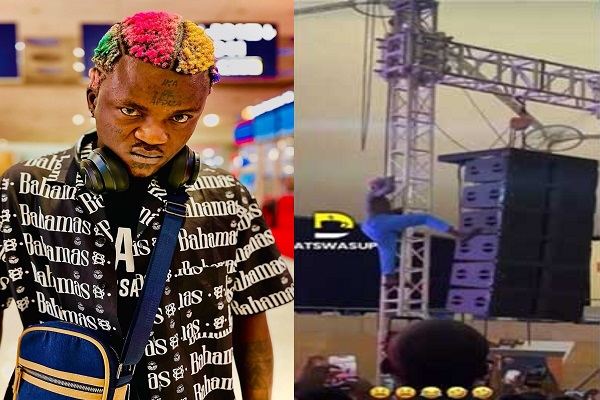
At the unbarred concert on Thursday, marking the end of the NBA Annual General Conference in Abuja, Nigerian lawyers staged a walkout on the artist more popularly known by his sobriquet, “Portable” [Habeeb Okikiola]. Reactions have trailed this action by Nigerian lawyers. The organisers of the event have been vilified for inviting an unfit person to perform for fit and proper persons.

Regardless that “unbarred” is a social and very informal event, and regardless that portable is but an artist and performer, I agree that his choice as a performer for lawyers was very wayward, especially in the light of what the musician represents and in the light of what the legal profession represents. How correct the latter is — especially in the light of recent infamous conducts of very senior legal practitioners and embarrassing judicial pronouncements — is a topic for another day.

Many who were not pleased with the choice of Portable, among so many other genuine reasons, wondered how a man who is given to heroin-smoking, a tout with tattoo-riddled body, was deemed fit to be the performer. Few others still say, “but is he not just an artist?”

F

But you can not hate excreta while you enjoy the putrid smell of fart.

At the opening ceremony of the AGC on Sunday [a very formal event], lawyers were giddy with excitement, cheering, “jagaban, jagaban,” while the President teetered and tottered his way to the event, consciously sandwiched by his barrel-chested men who constantly perform same role as a bicycle stand. Just like in Portable’s scenario, some will argue, “is he not the President.” Lawyers did not stage a walkout, perhaps because the sponge of presidency has blotted out the kindred attribute he shares with portable: unfitness!

When you recall that this guest was same person who spurned the Association’s invitation for the AGC last year but chose to send his running mate, who donned running sneakers inexplicably and awkwardly with a suit, you wonder how very chichidodod-ic lawyers’ actions were; both the invitation, the cheering and the walkout on Portable. It is more hurtful when you recall that the distance from his house to the conference centre last year was less than 4 Kilometres. Not just lawyers’ invitation, he also rebuffed every invitation for any public debate or discourse. Alas, we did not stage a walkout.

How fit was a man to declare the AGC open, who is a certified drug baron, and whose only eligibility for that event [presidency] is an unfitting nomenclature he bears very controversially. You are contending that a man stole a pair of shoes, and you turn somersault to admit him to a sacred event where owning same shoes was the reason he was admitted, and where the owner of the shoes was in attendance. And what does the owner do on sighting the shoe stealer and his shoes, he cheers him, “Jagaban, Jagaban!”

How fit was a man for the opening ceremony, whose identity, certificates, education, source of wealth, ancestry, are still mired in astonishing controversy.

It beggars belief especially because the theme of the conference was, “getting it right.” The person who was invited to declare open the process of getting things right was same man who got electioneering process wrong by buying his way into an office. But we did not stage a walkout.

On this evidence, I will be very surprised if the man who marred the collective mood of our country [Mahmood] is not invited next year as a Keynote Speaker. On that day, as on Sunday, we shall cheer him, “Mahood, thank you that you marred our mood,” and will not stage a walkout.

Chinedu Agu
2 September, 2023.

Sextortion: Any legal implication?

By M. O. Idam, Esq

It’s no longer news that people make and keep intimate videos in their phones, and sometimes send them to their loved ones or to their partners in coitus. I have no problem with what people do to keep their relationships. What I am most concerned with is what the recipients of the videos do with them when the butterflies in their relationships die. Yes! I mean after ‘breakfast’ is served what happens to the intimate videos?

I have a case of a lady who sought legal help against her ex-boyfriend who threatened to leak her intimate (sex) videos if she failed to meet his financial demands. The lady had sent those videos to her then-boyfriend, when their relationship was lovey-dovey. Sadly, Romeo had become rival to Juliet.  

The hazard is that individuals who are victims of sextortion either lack the confidence to seek professional help, or they are poorly informed to do so. Hence, they yield to the demands of their blackmailers in a bid to avert the consequences of their threats which oftentimes are never averted. 

I have also read and heard how victims of sextortion dejectedly opt for suicide when they are unable to handle or meet the demands of their blackmailers. This is because the human mind is psychologically weak and gullible to pressure and anxiety. The reason suicide becomes an option when set on a crown of thorns.

Interestingly, the Nigerian justice system has made sufficient provisions to protect victims of sextortion or sexual blackmail whether alive or dead. Sections 373  of the Criminal Code Act, provides that:

“Defamatory matter is matter likely to injure the reputation of any person by exposing him to hatred, contempt, or ridicule, or likely to damage any person in his profession or trade by any injury to his, reputation. Such matter may be expressed in spoken words or in any audible sounds, or in words legibly marked on any substance whatever, or by any sign or object signifying such matter otherwise than by words, and may be expressed either directly or by insinuation or irony.  

It is immaterial whether at the time of the publication of the defamatory matter, the person concerning, whom such matter is published is living or dead: Provided that no prosecution for the publication of defamatory matter concerning a dead person shall be instituted without the consent of the Attorney‐General of the Federation.”

Consequently, Section 376 of the Criminal Code, provides for the punishment of the offence thus: “Any person who publishes, or threatens to publish, or offers to abstain from publishing, or offers to prevent the publication of defamatory matter, with intent to extort money or other property, or with intent to induce any person to give, confer, procure, or attempt to procure, to, upon, or for, any person, any property or benefit of any kind, is guilty of a felony and is liable to imprisonment for seven years.”

Nevertheless, if the offence were committed in the North, the punishment extend to fourteen (14) years imprisonment upon conviction of the offender. Under the Penal Code, section 138 provides thus: 

“No person shall, with intent to extort or gain anything from any person –

(a) threaten expressly or impliedly to make about any person, living or dead, any accusation or disclosure of any offence, or moral misconduct, whether the accusation or disclosure is true or 

not;

(b) threaten expressly or impliedly that any person shall make any such accusation or disclosure 

about any person living or dead;

(c) threaten to publish, or offer to abstain from publishing, any defamatory words within the 

meaning of section 120;

(d) send or cause to be sent to any person any document containing any such threat;

(e) by any such means compel or attempt to compel any person to sign, execute, make, accept; endorse, alter, or destroy the whole or part of any valuable security, or to write, impress, or affix any name or seal upon any document in order that it may afterwards be used as a valuable security;

(f) by any such means induce or compel or attempt to induce or compel any person to do any act against his will, other than an act which it is his legal duty to do, or not to do any lawful act.”

Penalty: Imprisonment for 14 years.

Aside from the criminal consequences of the act, a victim of sex blackmail also reserves the right to pursue a civil claim for damages against the blackmailer for defamation of character. This is supported by the decision of the Supreme Court Per- Nweze, JSC (of blessed memory) in Chilkied Security Services & Dog Farms Limited Vs. Schlumberger Nig. LTD & Anor (2018) LPELR SC 85/2007 where defamation was defined as the injury occasioned to another person’s reputation by either written or spoken words. See also the cases of Ashiek Vs. MT Nigeria LTD (2010) 15 NWLR (1215) @ 114. Guardian News Paper Vs. Ajeh (2011) 10 NWLR 1256 @574 the Court of Appeal per Mohammed Lawal Garba, JCA held that “the assessment of damages for libel is in the realm of general damages, that are presumed by law, factors to be considered would be the peculiar facts and circumstances of the defamation as shown in the evidence placed before the court.” See also Isikwenu Vs. Iroh (2012) LPELR 17982 (CA). 

The law is trite that once a Claimant can prove that a publication was made to a third party other than the Claimant by the Defendant and that the said publication has lowered the reputation of the Claimant in the estimation of the right-thinking members of the public, such can be construed as defamation. See Guaranty Trust Bank Plc vs. Mr Hussein Fadlallah (2009) LPELR – 8355 (CA), where the Honourable Court held that a defamatory imputation consists of the publication of the alleged defamatory statement to a third person (s) of any words or matter which tend to lower the person defamed in the estimation of right-thinking members of the community. Furthermore, to constitute publication, all that is required is the making known of the defamatory matter to some persons other than the person to whom it is written. See also, Ayo Fayose vs. Independent Communications Network & ors (2012) LPELR 9833 (CA), Okafor vs. Ifeanyi (1979) 384 SC 99, Ufua vs. Eborieme (1993) LPELR- 23674 (CA).

CONCLUSION

Without further ado, the publication of intimate contents of persons to third parties without their consent and with the intention to bring their image to ridicule, mockery and scorn, apart from the criminal consequences, also qualifies as defamation and the remedy will be damaged in favour of the victim.

M. O. Idam, Esq.,

PP. M. O. IDAM ATTORNEYS.

[email protected] 

Public Interest Advocate.

Human Rights Lawyer.

Public Enlightenment Lawyer.

Intimate Affairs: Food For The gods, By Funke Egbemode

Kudi, fine-girl-no-pimples, was one of those undergraduates who lived their lives on their own terms on campus.  Kay-girl, as she was fondly called, was an ‘aristo’ girl. Small-small boys were not her thing. She liked them known and rich, politicians and business tycoons. The age or size of their bellies did not matter. They just needed to be loaded in their pockets but if they were loaded ‘downstairs’ too, ah, that was an added advantage. Once, according to Kay-girl, she had ended up with a rich, fat ‘sugar daddy’ whose only load was in his pocket. You know those guys who God just blessed with deep pockets because they are neither good-looking nor finely shaped. Their pot-bellies also rob their third legs of length and strength. But they have money and they spend it like it’s from a river that cannot dry. So, their girls ignore their deficiencies and focus on their bulging pockets.

Kudi lived the life and upon graduation, she used her ‘contacts’ to get a good job, nice digs and a fine ride. Then she met the most generous, good-looking, hot ‘sugar daddy’ of her life. Yes, he was hot everywhere, all over. Then came the warnings from everyone about the other part of Big Daddy (BD) that Kudi did not know.

The warnings threw Kudi. She was scared even, but she convinced herself that BD was her last bus stop. He loved her and he loved him. In any case, what woman wants to share her man? Which wife wants to be promoted to ‘first wife’? No woman will willingly shift for another, including this Kudi. But she wanted the soft, baby life. She assured her close friends that she knew what she was doing and she would show the madam of the house that she was there to stay.

Kudi soon moved into the beautiful home BD bought for her, in her name too. She got pregnant soon after. Indeed, she got pregnant four times and had spectacular miscarriages. Her friends became really worried because the fourth miscarriage almost took her life. Kudi bravely assured them she would give BD children and laugh last.

True to her word, Kudi became pregnant again. When she made it to 36 weeks without miscarriage, her friends threw a big baby shower for her. Everybody thought the worst was over. Then, she woke up feeling feverish one morning, went to her doctor and all the tests showed that she was no longer pregnant! Whaaat? Her tummy was still as huge as it was the day before. Kudi swore she could still feel the baby’s movement. All tests and scans insisted she was not pregnant after 36 weeks, after she had bought all baby things, set up the nursery. Long story shortened, Kudi is still carrying around her ‘load’, four months beyond her EDD (Expected Delivery Date).

Methinks, BD’s wife is responsible for Kudi’s endless pregnancy. Superstitious much? Yes, but if you have another explanation for how Kudi landed this hard on a hard surface, I’m willing to give you space to propound your theory. For now, my conclusion is Kudi ate food meant for the gods and now, she is stuck.

There are different types of meat but not all meat is meant for all. Some are meant for the elders and are so not for ‘children’. Some are food for the gods and are therefore not for ordinary humans. Am I speaking in tongues? Let me explain.

Not all fine girls are available for all men. Not all dark, handsome and rich men are for every Tinu, Toke and Titi. Some girls are food for the gods. Some men are food for the gods. Those are the ones the Yoruba call ‘ounje agba’. If a young man decides in his exuberant, nothing-go-do-me wisdom to eat food cooked, reserved and already served for the elders, he may lose his teeth or may not live to tell the story of the taste of the dish.

We girls say it more frequently than men especially when we want to scare off a poor or unserious suitor or toaster. We tell him what he’s salivating after is beyond his budding palate, that he is still ‘too young’ to dine at the table of elders.

‘This is food for your elders. Wait until you are fully grown.’

However, food for the elders, ‘ounje agba’ is very different from food for the gods. Food for the elders can lead you to the dispensary but food for the gods will drag you to the mortuary. Note the word ‘drag’. Painful journey to Golgotha, that is what any ‘thief’ of sacred food can look forward to.

Take the case of the University of Calabar lecturer who was the toast of the internet recently for sexually molesting his students. A teacher of law who made it his mission to break the law. He deregulated his manhood and put his pen on the inkpot market, dipping, force-dipping and blackmailing other people’s children to open their legs for his maggoty third leg. For years, according to reports, he was Satan’s representative in the Faculty of Law, a law unto himself. Tales of heartrending proportions about what he subjected those young girls to poured in from different platforms. And for what? His third leg must be a pygmy, his self-esteem non-existent if he needed to force himself on girls to feel good. Only sick men use their offices to force women to have sex with them.

Only little men with no other gifts or attractive appeal use their positions to get girls to have sex with them. Since the story broke, I have swung from disgust to anger to revulsion and then vengeful anger. I know some people are talking about getting justice for the young women our dense dicky don traumatized, harassed and assaulted. I hope they succeed. For me, I don’t want him to go to jail. Sentencing the little dick of Calabar or putting him in a psychiatric ward would be doing him a favour. I do not believe in such 21st Century justice arrangement for men who sexually assault women. No. For instance, I am an advocate of ‘third leg amputation’ for rapists and child molesters. All that long drawn-out process and proceedings of lawyers using the same law book to both prosecute and defend rapists do not float my boat at all. For me, justice against a paedophile is taking away his weapon of terror. Totally and irreversibly!

Women, we can be mean, seriously. May the Lord forgive us for all the times we have shot men in the knee on the field of ‘toasting’. Amen? Amen.

For years, the sick dicky don of Unical ate every meat in sight. Indeed he forcefully snatched and ate every food. It didn’t matter to him if the owner wanted to give him the meal or not. Indeed, the more force he had to deploy, the more delicious the game. Until he ate the one meant for the gods. When he unwrapped that meal and devoured it like a possessed demon, little did he know it would be his last supper.

He must have smacked his lips as he wiped the sinful sweat off his brow. Perhaps he even threatened the traumatised poor girl. Maybe he actually inflicted himself on more female undergraduates after eating the forbidden dish. But one thing was certain for the evil don. His career was over.

When you Google his name 20 years from now, his messy sexual escapades will pop, not his academic prowess, not his intellectual contribution to human development. His name will now be synonymous with sexual harassment. I don’t even want to imagine the pains of all the folks who share his surname. That is what should happen to every lecturer who forgets how he laboured to achieve a PhD just because he has an erection.

But here is the real punishment I would have preferred for that randy lecturer. Just imagine that after the first time he forced himself on his victim, he loses his manhood. Close your eyes and picture it. He simply could no longer get it up, not even in the morning, not even with the missus. All he could do with his third leg was pee urine, only urine. Do you think if he ever recovered his virility he would harass his students, or any girl again? That is one of the ruinous things that happen to men when they eat food meant for the gods.

A Comment on the “portable” brouhaha, NBA political aspirants as Committee Chairmen, and the rampant bickering among national exco members

By Sylvester Udemezue

(1) NEEDLESS CONTROVERSY OVER PORTABLE’S APPEARANCE AT NBA-AGC 2023’S UNBARRED SHOW:

Reacting to the controversy that had trailed the performance of controversial singer, Habeeb Okikiola, popularly known as Portable, at a night event tagged ‘Unbarred’, which the NBA had organised as part of activities lined up for the NBA-AGC 2023, which held at the Velodrome, M.K.O. Abiola Stadium, Abuja, the Chairman of NBA-AGC 2023 Planning Committee, Mazi Afam Osigwe, SAN, is reported to have said on 01 September 2023 as follows:

“I am the Chairman of the conference planning committee and I take responsibility for everything. When I hear comments about Portable, I ask myself, did we bring him to be an ambassador of the NBA or to entertain guests.We brought Portable to entertain lawyers, not to set a moral standard. It was for entertainment. We may not agree on his choice. You may not like him. He may not be my idea of a best friend. But, saying because NBA invited him, then we have committed an atrocity will be an unfair comment on creativity and what entertainment should be all about. Many entertainers may not represent our best idea of moral compass or best friends to keep or recommend for our children. Some of the lyrics and some of the songs we also play in public places may not be to our taste. But to tell me that we should sound offensive because it is Portable or because he climbed something, people do worse in entertainment. I do not want us to fall for those who are trying to politicise everything that happened in the conference”.

I agree entirely with this opinion/clarification by the NBA-AGC 2023 Planning Committee Chairman, Mazi Afam Osigwe, SAN; the learned silk is right. When the (now deceased) accomplished Afro-beat singer Fela Anikolapo Kuti was still alive, his conduct was much more weird than Portable’s; my opinion though. Yet, Fela was always invited/engaged to perform at some of the highest public events in Nigeria and beyond. I agree that Portable’s invitation to the NBA-AGC 2023’s unbarred show, was not for Portable to educate Nigerian lawyers on professional legal conduct or etiquette, but solely to perform to ENTERTAIN his audience. Accordingly, however weird one thinks Portable’s display was, I think what Portable did was nothing more than Portable’s own way/idea of trying to do what he believed he had been paid to do: entertain his audience. QED!

(2). “PORTABLE” VERSUS THE “BADDEST LAWYER”

To “Sam Amadi”‘s earlier published comment that “I heard that NBA chose Portable to sing for it….. Meanwhile, they are chasing after Ifunanya for dishonouring the profession. It seems NBA is almost a derailing organization,” I had on 31 August 2023 reacted to Sam Amadi, as follows: “Portable is not a lawyer, please. Stop unnecessary comparison”. This accords with the 01/September/2023 statement by the NBA as contained in the NBA-AGC 2023 Planning Committee Chairman’s clarification, that Portable was at the NBA-AGC Unbarred only to perform and entertain, and not to set any moral or professional ethical standards for the legal profession and its members. Besides, one may even ask, When has it become the norm to measure, assess or judge the standard of Nigerian lawyers or of the legal profession in Nigeria, by the conduct of a non-lawyer (a layman) who happened to have found himself (by chance or design) among lawyers, and whose conduct was not directed or influenced by lawyers? In my humble opinion, there’s absolutely no basis for comparing Ifunanya Grant, the Baddest Lawyer’s scenario/case with Mr. Portable’s. My Reasons:

(A). Miss Ifunanya Grant is a lawyer, called to the Bar in Nigeria and having her name on the Roll of Legal Practitioners; consequently (and it is immaterial whether the Baddest Lawyer is or is not in active law practice in Nigeria), the Baddest Lawyer, and indeed all lawyers in Nigeria, practicing or non-practicing, are strictly required by extant law and Legal Professional Ethics in Nigeria (RPC, 2007 and LPA) to not engage in any conduct incompatible with the status of a lawyer (see Section 12(2) LPA, Cap L11, LFN, 2004) or in any conduct reasonably unbecoming of a lawyer in Nigeria (see Rule 1, Rules of Professional Conduct (RPC), 2007). On the other hand, singer Portable is not a lawyer in Nigeria, and as such is not subject to the regulation and application of Legal Professional Ethics.

(b). When Portable was invited to an NBA event, it was not for the NBA to teach Portable what/how to perform before the audience, although Portable ought himself to have studied his audience ahead, to know his audience before coming to the event; the controversial singer ought to have known that he needed not be or perform too weird before such an audience as a gathering of legal practitioners in Nigeria. Even Fela who, while alive, could easily go stark naked or put up all manner of unbelievable conducts, while performing on stage at his Kalakuta Republic, still saw the need when invited to perform at any event outside the Republic, to tune down the level or tone of his weird appearance and conduct. Now, since Portable, out of sheer unpragmatism or outright ignorance or recklessmess, failed to understudy and understand his audience and thus remained his weird/awkward self even while performing before lawyers (presumed honorable and noble men and women), I respectfully don’t think the NBA or the NBA-AGC planners are to be held blameful. I think it’s Probable who should be blamed for having caused bad market for himself; in future, NBA or any arm of it would think twice before considering any suggestions to have Portable perform at any NBA event. Blaming NBA for Portable’s weird performance and conduct is an unnecessary apportionment of blame. Further, even if Portable was a lawyer and had acted weird during his performance before a gathering of lawyers, NBA or NBA-AGC would still hardly share in the blame, because it was not the NBA or NBA-AGC that caused or forced or tutored him to go weird in conduct before lawyers. In conclusion, I have no doubt in my mind that while Mazi Afam Osigwe has been busy trying to use his position as the NBA-AGC 2023 Planning Committee Chairman to showcase his leadership potentials, so as to convince Nigerian lawyers to entrust him with leadership of the organisation in the period 2024-2026, detractors and opponents of Mazi Afam Osigwe have been busy picking holes, cashing in on any little mishap (however infinitesimal), and even creating mishaps where none exists, all in a bid to try to convince Nigerian lawyers to the contrary. On all sides, it is all about the NBA politics of 2024 — we are mature enough to know. However, in my humble opinion, the Portable incident should reasonably be regarded as having little or nothing to do with the leadership capacity or otherwise of Mazi Afam Osigwe; it is therefore unfair and unjust to blame the NBA-AGC 2023 Planning Committee over the Portable incident. Speaking generally, Nigerian lawyers should learn to separate the seed from the chaff, at all times, in all circumstances, no matter whose ox is gored.

(3) . STOP APPOINTING INTO NBA COMMITTEES, LAWYERS WITH IMMEDIATE POLITICAL ASPIRATIONS:

To stop the now notoriously rampant politicisation of NBA Committee assignments, it is respectfully suggested that NBA national and branch leaderships should fortwith desist from appointing as heads or chairmen of NBA Committees, anyone who is known to be aspiring to any elective position in the NBA in the immediate-next election. Mazi Afam Osigwe, SAN, Mr. Chuka Ikwuazom, SAN, and Mr Tobnna Erojikwe, all three are respected learned colleagues already known to be aspiring to contest the NBA Presidential Election in 2024. Yet, Mazi Afam Osigwe got appointed the Chairman of the Planning Committee for the NBA-AGC 2023; Mr Chuka Ikwuazom was appointed the Chairman of NBA-SARC (NBA-Security Agencies Relations Committee) while Mr Tobenna Erojikwe is retained as the Chairman of the Governing Council of NBA’s ICLE (NBA-Institute of Continuing Legal Education). Any reasonable bystander who has closely, carefully and disinterestedly followed how each and all the named lawyers, have so far conducted the affairs of their respective Committees, would notice that their respective political aspirations are, to a considerable extent, at the foundation of their respective modus operandi; great level of unnecessary grandstanding and, sometimes play-to-the-crowd, in an attempt to impress watching NBA members. Besides, it’s easy to see that opponents of the Chairman of each of these three Committees are prepared to leave no stone unturned towards ensuring that they rubbish efforts (however sterling or genuinely altruistic) of each of these Committees. Further, even fair-minded assessments or disinterested constructive criticisms of the activities of each of these Committees are, more often than not, mischievously twisted or ignorantly misunderstood by political supporters of the Chairman of the affected group as “sponsored attacks” by political opponents. Viewed as such by the Chairman’s men and women, one finds that even very useful suggestions made by way of objective criticisms, may not go down well with the affected Chairman her/his political acolytes and supporters who may ignore or even attack such criticisms, quite often to the detriment of effective operations of the group towards benefiting lawyers generally. This is why it is here-suggested that the best way to forestall such unnecessary shenanigans, distractions, gaslighting, and controversies, on/by all sides, is while setting up NBA Committees, to completely leave out anyone (lawyer) with known political aspirations in the next dispensation. Now, regarding any fear or worry, that NBA leadership might not have known or might not be in a position to have known, of such political aspirations as of the time of constituting the various Committees, it is respectfully suggested that the Chairman of each Committee, while accepting his or her appointment, should be made to depose to an affidavit stating that (s)he has and nurses no political aspirations/ambition in the immediate-next NBA election — that is, in the next dispensation — and breach of this oath should be regarded as both a professional misconduct and a disqualifying factor in the next round of NBA elections. In this way, the Chairmen of the various NBA Committees would be free to function without engaging in any unnecessary grandstanding to prove that he’s capable of leading the NBA in the next dispensation. On the other hand, Chairmen all such Committees, having no strings attached, would be so open-minded and broadminded as to accommodate and objectively consider, fair-minded public assessments and constructive criticisms of his performances or actions, without on each occasion, suspecting political undertones or political fanny embers. Moreover, this would in turn enable/cause affected Chairmen to function more effectively and altruistically, in the best interest of the generality of NBA members, instead of using their present assignments for promoting or advertising their political aspirations in the next election. Over all, leadership and performance of NBA Committees would be the better for it, having been divorced from the politics of, and politicking towards, the next NBA elections.

(4) RAMPANT CRISES AND BICKERING AMONG NATIONAL EXCO MEMEBRS:

Permit me to humbly use this opportunity to express my dissatisfaction with, and condemnation of the allegations and counter allegations between some NBA-NECommittee members on the one hand, and the NBA President on the other, which allegations and their aftermaths ended up truncating the NBA-AGM of 01 September 2023. It appears that such internal squabbles, wrangling and bickering have now become a habit in the leadership of the NBA in recent years. Recall that in the 2018-2020 period, internal squables between Mr. Jonathan Taidi (then General Secretary) and NBA President Paul Usoro, SAN, as well as another between Dr Foluke Dada (then 2nd Vice President) and NBA President Paul Usoro, SAN, had nearly marred or rubbished the performance in office of that administration. Again, in the 2020-2022 period, it was NBA the General Secretary (Joyce Oduah) versus NBA President Olumide Akpata, on the one hand, as well as another bickering between the entire NBA-NECommittee (EXCO) and NBA-GS Joyce Oduah, on the other; both crises ultimately led to purported suspension of Mrs Joyce Oduah whereupon Mrs Oduah dragged to court, the NBA and the entire EXCO (then EXCO) membership. The lawsuit is still pending in court. Now, yet again, 2022-2024, here we are, witnessing a similar ugly scenario. It’s unfortunate that some people elected to run the NBA have found it difficult, of late, to imbibe the team spirit necessary to work harmoniously with one another for effective performance and successful outing. However, while it’s appalling that NBA has had to once again find itself in this avoidable messy situation, one must, in order to get at the root of the current crisis, be careful to not reach conclusions based solely on any one person or national officer’s version/account. After listening to the Treasurer’s (and reading the 3rd Vice President’s) versions, as well as the NBA President’s response, I think there is need for an Independent Inquiry, on the one hand, GENERALLY to unravel and nip in the bud the remote and immediate cause or causes of these frequent rancorous squabbles between successive NBA presidents and some of their EXCO members, and, on the other hand, SPECIFICALLY to unearth the immediate and remote causes of the latest/current crisis in the NBA-NECommittee. The present administration still has one year to wrap up its leadership. It’s too early for these kind of crises. Besides, without unity of purpose among members of the NBA-NECommittee, it would be hard for the NBA National Executive Committee to make any meaningful achievements in the next one year. Hence, the need for an urgent Committee of Inquiry or Reconciliation Committee, to look into these crises and resolve them, so that the current EXCO can unite to work together in the interest of the Bar in the next one year. For emphasis, my call for some committee, among other reasons, to (a) look into the immediate and remote causes of the current crisis, by considering existing allegations and counter-allegations, to see which is right or wrong, (b), apportion blames where necessary, and (c) make recommendations on way out of such internal crises which have become rampant within the NBA-NECommittee on recent years.

(5) AN EMERGENCY GENERAL MEETING (NBA-EGM) IS NECESSARY AT THIS JUNCTURE:

However bad anyone feels at this juncture, and until there is an independent assessment to make informed conclusions, I suggest it is premature for anyone to reach conclusive determinations about who in particular is to blame for the current crises in the NBA-NECommittee. I therefore respectfully recommend that the NBA President should urgently consider convening an Emergency General Meeting of the NBA (NBA-EGM) to be held within the next 2-3 months, to discuss and set up a committee to generally reassess NBA leadership’s modus operandi over the years, and to proffer suggestions for radical reforms on the following:

(a) . How best to constitute and run the NBA National Executive Committee (NBA-NECommittee) and the NBA National Executive Council (NBA-NECouncil) to be of benefit to lawyers in Nigeria. It has become obvious that successive NBA leaderships have hardly run NBA affairs in the best interest of NBA members; and

(b) . How to ensure a harmonious, smooth and fruitful working relationship among members of the NBA National EXCO (known as NBA-NECommittee) in order to avert frequent internal bickering and wranglings that have now become a habit, and the bane of NBA.

(6) . In the meantime, three things appear clear, regarding the NBA: (a) NBA is getting worse by the passage of each blessed day. This is not about the NBA-AGC 2024; we all know that the NBA-AGM has nothing to do with the Annual General Conference known as NBA-AGC. The leadership of the NBA generally has not been getting it right; (b ) NBA is not yet a strong institution that can curb excesses, or withstand influences, of individual, individuals or personalities, however high, low, strong or weak, or which can panel-beat erring EXCO members (however powerful or weak) into complying with universal demands of good governance and of running NBA in the best interest of NBA members; and (c). Generally, noticed failures of the NBA over the years have presented clear evidence to justify one objective conclusion, namely: the legal profession in Nigeria, is yet to take its pride of place as a leader of the Nigerian society. Truth is, considering NBA’s position, and the place of the legal profession, until the legal profession is able to stand on its own feet, stable and prosperous, to show the way to the rest of society, our society will remain held down by stagnancy arising directly from visionlessness, directionlessness and focuslessness. On several occasions, I have said that it’s the duty of the legal profession to provide proper direction for society’s redemption and progress. Sadly, the one-eyed man that the Nigerian legal profession has become cannot effectively play any such a leadership role. You and I know a one-eyed man cannot provide any effective leadership anywhere. NBA and the legal profession cannot be of help to the wider society unless and until NBA and the legal profession have helped themselves to stand firm, stable and successful. It is even hypocritical to purport to be of help to others when you have not been able to help yourself. A Holy Book’s Matthew 7:5 whose original words went thus: “Thou hypocrite, first cast out the beam out of thine own eye; and then shalt thou see clearly to cast out the mote out of thy brother’s eye”, Jesus (regarded by Christians the world over as The Christ) argues that one must first remove the plank in one’s own eyes, before going on to try to remove the speck in another’s. This verse warns us against the hypocrisy of rushing to see and try to cure the flaw (sin) in others while ignoring the obvious flaws/sins in our own lives. In a commentary titled, “ABDICATION OF DUTY! HOW NBA LEADERSHIPS CHASE AFTER SHADOWS TO THE DETRIMENT OF THE SECURITY, WELFARE AND ECONOMIC ADVANCEMENT OF THE LEGAL PROFESSION AND ITS MEMBERS”
[published on April 7, 2021 by TheNigeriaLawyer], I had written as follows:

“You can’t help other people unless you’ve helped yourself….You can not manage other people, unless you manage yourself first…You always have to remember to take care of you first and foremost, because when you stop taking care of yourself, you get out of balance and you really forget how to take care of others…. If you want to have enough to give to others, you will need to take care of yourself first. A tree that refuses water and sunlight for itself can’t bear fruit for others…you cannot serve from an empty vessel…. Loving yourself first is the best way to spread love to others…. Besides… [p]utting yourself first allows you to meet your needs in the most skillful way. This, in turn, increases your happiness, joy, and capacity to love, so you can give freely to others”.

(7) . CONCLUSION:
My usual counsel: all those who feel disenchanted, disillusioned or disappointed by NBA’s continued wobbling and fumbling, should please know that the only/best way to fight to restore things to order, in order that progress may come, is to fight from within. In my humble opinion, attempting to balkanize the NBA is not any wise or reasonable solution to curbing the ills of the NBA. However, while insisting that we can best fight from within, to reform and reposition the NBA for greater focus and progress in the interest of its members, I still respectfully maintain that something needs to be done urgently to rescue this drowning ship of the legal profession, generally. For how long shall we remain a sinful profession/organization waiting for grace to work wonders for us? Does God help one who helps oneself not? We all must arise now and place all hands on the deck, to rescue the legal profession and the NBA from the current doldrums of intractable, rampant leadership crises which have made unity elusive, progress difficult, and success a pipe-dream
Respectfully,
Sylvester Udemezue (Udems),
Proctor,
Realist Ministry of Justice (RMJ)
08109024556.
([email protected]).
(02 September 2023)

Ali May be Gone but the Bongo system survives in Gabon

By Chidi Anselm Odinkalu

Citizens of Gabon, the small Central African country and former bastion of French colonialism in the Congo Basin, broke out in spontaneous celebration at the news of the ouster of President Ali Bongo Ondimba, on 30 August 2023. This is the 22nd coup attempt in Africa since 2013, and the 11th successful coup across eight countries since Zimbabwe’s soldiers sacked President Robert Mugabe in 2017.

This is also the third coup attempt in Gabon’s history and the first to succeed. The coup began on the fourth day of a nationwide curfew accompanied by a shutdown of the airspace, borders, and the internet and shortly after Gabon’s electoral Commission announced under cover of darkness that President Bongo had won another seven-year term in elections in which he allowed no observers.

Rather than celebrate Bongo’s supposed election victory or resist his overthrow, the citizens broke out in revelry over his ouster. The only explanation was that Bongo lost the election by a significant margin but, rather than respect the will of the people, he chose to toy with it and manipulate the results. After 56 years of running the country like a private estate, he was not short of willing enablers.

Nearly 59 years before this latest coup, on 17 August 1964, a group of Gabonese and French soldiers led a coup which momentarily toppled Gabon’s founding President, Léon M’ba, replacing him with his former foreign minister and supreme court president, Jean-Hillaire Aubame. The new regime lasted a mere three days before France assisted in restoring President M’ba to office.

Shortly after surviving the coup, it became evident that President M’ba was quite unwell with what was later diagnosed to be terminal cancer. While hospitalized in Paris in November 1966, the president issued a decree designating 30-year-old, Albert-Bernard Bongo as his Vice-President, replacing Paul-Marie Yembit in that role. The month after President M’ba died at the end of November 1967, Bongo – who took the name Omar, after his conversion to Islam – was installed as president, ruling until his death in June 2009.

Omar Bongo’s son, Ali Bongo, took over from his father in 2009 for a full term of seven years but Gabon had always struggled to fall in love with him. Claims that he was a displaced child of the Nigerian civil war adopted by Omar Bongo had significant following among many segments of Gabon when people treasured their relationship with metropolitan France. Upon taking power in 2009, his court marginalized his elder sister, Pascaline, who had mastered the networks of power in the country as her father’s long-standing Chief of Staff during a period when Ali was busy enjoying the life of a playboy.

Pascaline was married to Jean Ping, the son of a Chinese entrepreneur and a Gabonese mother who had wormed his way into Omar Bongo’s court. The day after Gabon’s presidential election of 27 August 2016, Mr. Ping who had become the opposition candidate, claimed victory, calling on his opponent, Ali Bongo, to congratulate him. Bongo’s response was an African proverb: “You must not sell the skin of the bear before you’ve killed him.”

Ping had served Bongo’s father, Omar, in various ministerial capacities before becoming Gabon’s longest-serving foreign minister in 1999. In 2008, Africa’s leaders installed him as the Chairperson of the Commission of the African Union in Addis Ababa. In that capacity, Ping had responsibility for implementing the continent’s standards concerning elections and governance. At the end of his tenure in Addis Ababa, Mr. Ping returned home to Gabon, emerging ultimately in 2016 at the head of a united opposition front to wrest power from the Bongos.

On 31 August 2016, Gabon’s electoral Commission awarded the election to Ali Bongo, giving him a margin of 5,594 votes over Jean Ping, who won in six of the country’s nine provinces as well as the overseas votes. Bongo’s winning margin came from his native Haut-Ogooué region which recorded an impossible 99.93% turnout, 95.46% of which was allocated to him. While the European Union questioned the deep flaws in the election, the African Union ignored those, directing its attention instead to the violence that followed the declaration of results in which some persons were killed and Gabon’s national assembly burnt.

Mr. Ping reluctantly heeded the appeal of the African Union to take the matter to the constitutional court, which curiously issued its decision around midnight on 23 September 2016, affirming Bongo’s victory. Marie-Madeleine Mborantsuo, who headed the court, owed her appointment to her role as a “long-time mistress of Omar Bongo”, Ali’s late dad and predecessor in the presidency. Everything was in the family. The Bongo system was not a democracy.

Ali Bongo used the crisis of post-election violence in 2016 to consolidate power with generous assistance from Gabon’s neighbours, but while visiting Saudi Arabia in October 2018, he was hospitalized for a prolonged period. It later emerged that he had suffered a stroke, surviving with significantly diminished cognitive and motor capabilities. The Ali Bongo who survived the stroke would have been unfit for work in any other sphere of life. But what politics cannot do does not exist. So, despite much diminished capabilities, Bongo clung on to the presidency.

While he was recuperating in Morocco, soldiers back in Gabon unsuccessfully attempted to unseat him at the beginning of January 2019. In surviving the 2019 coup attempt, however, the Bongo dynasty also arguably used up its spare political lives.

News of the ouster of the Bongo clan sent Gabon’s citizens into wild celebrations but a disoriented Ali Bongo, supposedly under arrest, managed to cut a video clip, asking his supporters to “make noise.” Brice Oligui Nguema, the recently promoted Brigadier-General, who has been named as the head of Gabon’s military-led transition, is a former aide-de-camp to Omar Bongo, who returned in 2019 as head of the presidential guards. He is also a cousin to Ali Bongo.

The focus on what appears to be a contagion theory of coups in Africa misses the clear dimensions in which Gabon differs from other recent coups on the continent. First, there was no democracy left in Gabon to overthrow. What was overthrown – if any – was the head of a family business. The family’s business model is not endangered. Thus, despite the appearance of a coup in Gabon, political power remains in the Bongo Clan.

Second, General Oligui Nguema is not some anti-colonial or anti-French ideologue. On the contrary, he is a regime insider who has been named in credible investigations of corruption and can be trusted to protect the family.

Third, this coup clearly prevents the opposition from taking political power, which they won in the election. Gabon’s long-term stability may depend on persuading the Bongo clan to retire itself voluntarily.

By the end of the week, an extraordinary summit of heads of state of the Economic Community of Central African States (ECCAS) rising from a meeting in Malabo, Equatorial Guinea, had dutifully issued a customary condemnation of the Gabon coup accompanied by a call on the transitional rulers to respect the physical safety of Ali Bongo and ensure a rapid return to constitutional order, although it is unclear what that means in Gabon. Shamefully, these same rulers had all been eloquently silent in the worst excesses of over half a century of the Bongo system.

In 2016, Ali Bongo warned that you must not sell the skin of the bear before you have killed it but stopped short of offering any advice as to how to verify that the bear has been truly killed. In Gabon, it may be a few more weeks before we fully find out.

A lawyer and a teacher, Odinkalu can be reached at [email protected]

UniLag collects N25,000 from students as “Faculty Damages”, issues receipts for only N9,000

Some students and ex-students of the University of Lagos (UNILAG) under the aegis of the Students Solidarity Group Against Fee Hike have condemned the new method of extortion in the university where students paid N25,000 cash and issued receipts for only N9,000.

The student group, in a statement issued on Thursday, said the new extortion of new students which is going on at the Faculty of Arts, was tagged: “Faculty Registration and Damages”.

In the statement entitled: “25,000 Cash, 9,000 Receipt,” Students Solidarity Group Against Fee Hike, wondered when education became where students would be charged for “caution fee or damages.”

“Our attention at the Students’ Solidarity Group Against Fee Hike has been drawn to an ongoing extortion in the University of Lagos and this particular case, at the Faculty of Arts.

“In addition to the over N200,000 obligatory fees, freshers at UNILAG are now forced to cough out N25,000 as a fee to be paid during Faculty registration, even though the amount written on the receipt is N9,000.

“What’s happening in our ivory towers?” The group queried, adding “How desperate are the Authorities to milk poor students and their parents?”

It added, “In one of the receipts obtained by the Secretariat, N9000 was written on paper, though N25,000 cash was received. We also learned that transfers were rejected, only cash was allowed.

“Also on the receipt is the caption- “Faculty Registration and Damages”. This sounds strange to anyone who has gone to school and the University Authorities must step in, if it is not involved in this to save the school from further embarrassment.

“Damages for what exactly? When did education become an AirBnB where you pay caution fee or damages?”

The students’ group, however, demanded that the fee and the collection of same should be probed immediately by relevant stakeholders, promising that it would not allow the extortion to continue.

A report by SaharaReporters quoted the student group to have said: “We want to assure everyone involved in this extortion that this won’t be allowed to slide and that this just like other criminal fee hikes will be resisted.

“September 6th, 2023 will be the beginning of several protests against fee hikes and we ask that all Nigerian students take to the streets to fight against the commercialization and privatisation of public education. Dare to struggle! Dare to win.”

Another Nigerian, Tonye Solomon sets new Guinness World Record

A young Nigerian, Tonye Solomon, in Yenagoa, Bayelsa State, has set another Guinness World Record.

Mr Solomon, on 10 August, set the record for the most steps (150) climbed on a ladder while balancing a football (soccer ball) on the head, according to the Guinness World Records.

“Tonye attempted this record to challenge himself and to inspire others to do great things. He spent two months training for the attempt until he was confident he could achieve the record,” the global body stated on its website.

The Deputy Governor of Bayelsa State, Lawrence Ewhrudjakpo, congratulated Mr. Solomon on the “feat”.

“Such a great feat is inspiring, and it’s worth celebrating. We are proud of you Champ!” Mr Ewhrudjakpo said on Twitter, on Thursday.

Inspired by the Nigerian chef Hilda Baci’s new world record for the longest cooking marathon, many Nigerian youths have been making attempts at setting or breaking world records in different spheres of life.

Guinness World Records at some point said they had received some 1,500 applications from Nigerians in just two months.

Before Ms. Baci, there was 15-year-old Vincent Okezie, a secondary school student, who had set four Guinness World Records in 2022.

The teenager told PREMIUM TIMES that he felt rejected because Nigerians did not celebrate his achievements the way they did when Ms Baci set her world record.

“I feel like my country has rejected me. Also, I feel not recognised. I asked myself if it were only women that are usually recognised in Nigeria because even though other boys won Guinness World Records in my academy, nobody celebrated them or recognised them,” he said.

The Conclave

TIPS