Home Blog Page 724

Former Nigerian gov’t official set to share in $11bn gas scandal damages

Grace Taiga, who received money from P&ID before the signing, is one of three Nigerians who will get a share of the landmark award if the court orders Nigeria to pay.

By Olivier Holmey

An ex-Nigerian civil servant could receive a portion of an enormous sum of damages if a British court rules against the West African nation, in a landmark case centred on a multi-billion dollar gas deal.

As part of an arrangement that Nigeria’s government calls “extraordinary” and “corrupt”, Grace Taiga, the petroleum ministry’s former head lawyer, hopes to share in the record-breaking $11.4bn awarded to the offshore company Process & Industrial Developments (P&ID) before England’s High Court.

Court filings and testimonies seen by Al Jazeera show that Taiga is one of three Nigerians who stand to make money if the court orders Nigeria to pay the award – an outcome that could severely damage the country’s economy. The other two are the businessmen Adetunji Adebayo and Mohammed Kuchazi.

In January 2017, a London-based arbitration panel ruled that Nigeria pay $6.6bn to P&ID as compensation for breaching the contract awarded in 2010. That amount has since ballooned to $11.4bn with interest. But Nigeria has refused to pay, claiming P&ID bribed officials including Taiga to secure the gas contract.

In an eight-week trial that ended in March this year, the government petitioned the High Court to invalidate the arbitration award. The court’s decision is expected within weeks.

Analysts say if Nigeria is ordered to pay the damages, its economy could be severely damaged.

“The negative shock would be monumental,” Olusegun Vincent, associate professor of finance at Pan-Atlantic University in Lagos State, told Al Jazeera. “It may take us back to the pre-1999 military era, when Nigeria wasn’t creditworthy,” he said, pointing to the risk that the government would be unable to pay its debt.

‘The P&ID scam’

This scandal began in the late 2000s when the administration of then-President Umaru Musa Yar’Adua planned to address Nigeria’s energy supply crisis by exploiting vast untapped gas reserves in its mineral-rich Niger Delta region.

Seizing the opportunity, P&ID pitched an ambitious project to the petroleum ministry, to build and operate a gas-processing plant near the southern city of Calabar despite having never undertaken a project like that before.

Taiga was at the centre of negotiations: She worked on the contract wording, recommended to the late Rilwanu Lukman, the petroleum minister then, that he sign a memorandum of understanding with P&ID in 2009, and witnessed his signing of the gas contract the following year.

Under the terms of the agreement, the government would provide wet gas to P&ID for free over 20 years. The two parties would then split the processed resource, with the government using its share to help power the country’s energy grid.

But the project never got off the ground. P&ID never built the plant and Nigeria never provided the company with any gas. P&ID blamed the government for the failure and convinced an arbitration panel it had been wronged.

The panel awarded the company damages equivalent to the total hypothetical profit the company would have made over the lifespan of the contract – $ 6.6bn plus interest of $1.3m per day from the time the contract was breached.

Evidence later emerged that Taiga had received close to $10,000 from individuals and companies linked to P&ID ahead of the contract signing. Before the High Court, Taiga acknowledged having received money but said that these payments were merely gifts from a family friend, P&ID co-founder Michael Quinn.

P&ID said it had done everything in its power to make the project work. However, its inexperience and Taiga’s receipt of undisclosed funds eventually led the Nigerian government to believe that it had been the victim of an elaborate fraud.

Addressing the United Nations General Assembly in 2019, then-President Muhammadu Buhari vowed to confront “the P&ID scam”, which he said was “attempting to cheat Nigeria of billions of dollars”.

Anticorruption campaigners seem to agree with him.

“The story of how a small offshore company with no meaningful track record, no website, and only a handful of employees managed to win a multibillion-dollar gas contract raises red flags for corruption that call for careful scrutiny,” Helen Taylor, senior legal researcher at the British NGO Spotlight on Corruption, told Al Jazeera.

The High Court will adjudicate these points. If Nigeria loses the case, the country would be legally bound to pay P&ID what amounts to eight times its 2023 federal health budget.

‘Part of the family’

How the proceeds would be divided, meanwhile, has long remained confidential. Taiga, who had previously denied in affidavits that she would receive any money from the award, finally told the High Court under oath on February 16: “I do have expectations.” Asked by Nigeria’s lawyer how much she expected P&ID co-founder Brendan Cahill to share with her, she said: “I did not put my mind on a particular ceiling.”

In one document dated October 2017, Cahill recorded a “commitment” of $200,000 to Taiga; in another, dated May 2019, the figure was put at $500,000. Al Jazeera has seen both documents, which form part of the evidence before the High Court. Cahill, an Irish businessman who founded P&ID alongside the now-deceased Michael Quinn, said that these were not firm commitments. “I sought to reassure her that she would be looked after to some degree,” he told the court. “I didn’t specify how or when.”

In court, Taiga denied having secretly helped Quinn and Cahill when she handled the gas contract at the petroleum ministry. But she added that she now saw herself as “part of the family” that is P&ID.

“It’s remarkable that this Nigerian government official who helped broker the controversial gas deal with P&ID now belongs to the close-knit beneficiaries of this opaque offshore company,” said Taylor. “Far from clearing up this conflict of interest, the obscure arrangements for paying her a cut of P&ID’s profits are deeply compromising to her credibility as a former public official.”

A billion-dollar promise and ‘lots of uncertainty’

For his part, Adetunji Adebayo, executive chairman of Nigerian gas company GFD Energy and middleman for P&ID during settlement negotiations with the government, could be entitled to $1.4bn. In an affidavit dated May 2022, Cahill wrote that “Mr Adebayo was promised 10 percent of the income from the arbitration” but added that there was still “a lot of uncertainty around the amount, if any, that will be paid out.”

Adebayo did not appear before the High Court.

Mohammed Kuchazi, who as P&ID’s commercial director assisted the firm in its relationship with the petroleum ministry, told the court that he believes himself to be entitled to 3 percent of the award – some $340m – as per an agreement he said he reached with Quinn. Cahill confirmed the existence of that deal in his affidavit.

In his own affidavit, Kuchazi wrote that he had been friends with Lukman, the minister, since the 1960s. Before entering business, Kuchazi had been a Nigerian politician.

Asked for further comment, Kuchazi’s lawyer Eric Ifere told Al Jazeera that his client’s entitlement to “a 3 percent commission” was supported by a written agreement with P&ID. He declined to share that document.

The Nigerian government has accused Adebayo and Kuchazi of having bribed Nigerian officials on P&ID’s behalf. The company and Kuchazi denied the accusations before the High Court.

Adebayo, Taiga, and P&ID did not respond to Al Jazeera’s requests for comment.

Credits: Aljazeera

Bandits abduct varsity students, invade Zamfara community

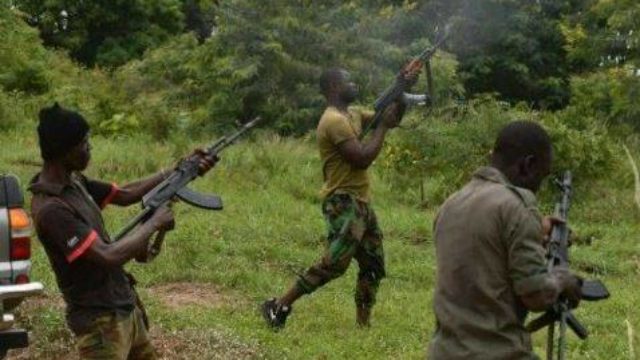
No fewer than 24 students of the Federal University of Gusau were abducted in the early hours of Friday after bandits invaded the Sabon-Gida community of the Bungudu Local Government Area of Zamfara State.

A student of the school, who asked to be anonymous for security reasons, told Channels Television that over 24 schoolmates, mostly ladies, were abducted during the attack.

A resident of Sabon-Gida identified as Nazeer Sabon-Gida confirmed that the gunmen invaded the community around 3 am and started shooting indiscriminately.

According to him, three students’ hostels were attacked and all the students in the hostels were taken away by the bandits.

“They entered the town around 3 am and started shooting indiscriminately,” he said.

“We have yet to confirm the number of students kidnapped because the bandits entered three hostels and kidnapped all the students there. It is difficult to ascertain their numbers now.”

Another source told Channels Television that the bandits were engaged with troops of the Nigerian Army in a fierce gun battle but that did not stop the bandits from escaping with the kidnapped victims.

“They were seriously engaged with the army troops but the way these bandits operate, they will divide themselves into two, one group will move with the kidnapped victims while the other will stay behind to protect the first group,” he said.

“The first group had left with the students while the second group engaged the army in a gun duel.”

In June, some students of the university protested the spate of abductions involving their schoolmates in Sabon-Gida and Damba.

Sabon-Gida village is a community opposite the main campus of the Federal University of Gusau that is about 20 km to the state capital, Gusau.

Efforts to reach the school authorities were not successful as the spokesperson for the school, Umar Usman, did not respond to several phone calls to him by our correspondent.

Similarly, the police command in the state has yet to comment on the latest attack.

Source: CHANNELS TV

Cardoso, Herbert Macaulay’s scion assumes duty as CBN governor

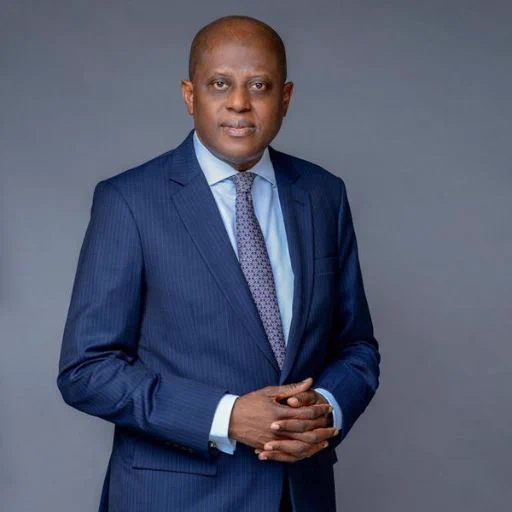
Dr. Olayemi Michael Cardoso, the great grandson of Herbert Macaulay whose photo is on One Naira note on Friday, September 22, 2023, formally assumed duty, in an acting capacity, as the Governor of the Central Bank of Nigeria (CBN), pending his confirmation by the Senate.

This followed the resignation of Mr. Godwin Emefiele as Governor of the Central Bank of Nigeria (CBN).

It is interesting to note that Dr. Cardoso’ father is the 1st Accountant-General of Nigeria. He was appointed in 1963.

Another interesting fact about Cardoso is that he is also the great, great grand son of Bishop Samuel Ajayi Crowther, the first African Anglican bishop. Macaulay’s mother, Abigail Crowther was the daughter of Bishop Samuel Ajayi Crowther.

Olayemi Cardoso was recently nominated by President Bola Ahmed Tinubu, This was contained in a statement by Dr Isa AbdulMumin, Director of Corporate Communications.

Likewise, the Deputy-Governors-Designate have also resumed duty in acting capacities, sequel to the formal resignation of Mr. Folashodun Shonubi, Mrs. Aishah Ahmad, Mr. Edward Lametek Adamu, and Dr. Kingsley Obiora as Deputy Governors of the CBN.

Cardoso and his colleagues subscribed to the relevant oaths of office at a brief ceremony held at the Bank’s Head Office in Abuja, on Friday, September 2023, and have since settled down to the task of administering monetary and financial sector policies of the Federal Government.

An Economic and Development Policy Advisor, Financial Sector Leader, former Chairman Citi Nigeria and Commissioner for Economic Planning and Budget in Lagos, Cardoso brings over three decades of managerial experience on board.

He is an alumnus of Aston University, Birmingham, United Kingdom, where he studied managerial and administrative studies.

He also holds a Master’s degree in Public Administration from the Harvard Kennedy School, United States of America.

Dr. Cardoso and his colleagues were appointed to their respective positions at the Bank on September 15, 2023, subject to their confirmation by the Senate.

Nurse who ‘injected’ Mohbad before death arrested

The death of Mohbad has caused outrage across the nation, with many pointing fingers at his former boss, Naira Marley.

  • As Mohbad’s wife implores Falana to intervene

Police in Lagos has arrested the nurse who reportedly injected the late singer, Oladimeji Aloba, popularly known as Mohbad, before his death.

Spokesman of the Lagos State Police Command, Benjamin Hundeyin, confirmed this on Thursday.

He also said the singer’s corpse has been exhumed for autopsy after a hurried burial.

There have been claims that Mohbad died shortly after a nurse gave him an injection.

“Mohbad’s corpse has been exhumed today, and an autopsy will begin as soon as possible,” Hundeyin told PUNCH.

On the nurse, he added, “I can’t answer questions on the arrests yet, because I don’t have that update. However, the nurse is in our custody; I can confirm that.”

The identity of the nurse had yet to be confirmed as of press time.

Mohbad’s death has caused outrage across the nation, with many pointing fingers at his former boss, Naira Marley, and an associate Sam Larry.

Last weekend, the Inspector-General of Police, Kayode Egbetokun, issued a directive to the Lagos State Commissioner of Police, Idowu Owohynwa, instructing him to initiate a swift and comprehensive investigation into the tragic passing of Mohbad.

Adejobi said, “The acting Inspector-General of Police, Olukayode Egbetokun, has issued a direct and urgent directive to the Lagos State Commissioner of Police, instructing him to initiate a swift and comprehensive investigation into the tragic passing of Ilerioluwa Oladimeji Aloba, widely known as Mohbad.

“This directive was conveyed during a brief but crucial discussion at the Police Airwing Hangar, Murtala Muhammed Airport, Ikeja, Lagos, on Saturday, September 16, 2023. He tasked the CP to quickly and effectively unravel the truth behind the tragedy as there have been understandable concerns and speculations surrounding the circumstances of his untimely demise.

“The Nigeria Police Force hereby earnestly urges any family members or close associates possessing valuable information pertaining to this case to come forward and cooperate with the Lagos State Police Command to ensure that justice is served and the circumstances surrounding Mohbad’s demise are thoroughly examined.”

Human rights lawyer and Senior Advocate of Nigeria, Femi Falana, said on Wednesday that Omowunmi, wife of deceased musician, Ilerioluwa Aloba, popularly known as Mohbad, visited him to demand justice for her late husband.

The PUNCH reports that the late musician, who passed away on September 12, 2023, was buried a day later.

Following his death, there have been calls for investigations to unravel the circumstances behind the musician’s death.

Speaking with PUNCH Metro in Abuja, Falana noted that he visited the Commissioner of Police in Lagos State, Idowu Owohunwa, adding that he (Owohunwa) had been assured that investigation had been launched.

“The young widow of Ilerioluwa Oladimeji Aloba, also known as Mohbad, visited our office yesterday (Tuesday) to seek support in pursuing justice for her late husband.

“While sympathising with her and the entire Aloba family, we assured her of our unalloyed commitment to ensure that the circumstances of the unfortunate death of the Nigerian rapper, singer and songwriter were unearthed.

“Thereafter, we held a meeting with the Lagos State Commissioner of Police, Mr Idowu Owohunwa, in respect of the investigation being conducted by the police in respect of the matter. The CP furnished me with the progress made so far in the investigation.

“We commend Nigerian youths for protesting peacefully and demanding justice. I assure them and other concerned citizens that we shall collaborate with the coroner to expose those who are remotely and directly responsible for the suspicious death of Mohbad.”

Meanwhile, the Ekiti House of Assembly has called for a thorough investigation into Mohbad’s death.

The assembly made the call on Wednesday while deliberating on a motion by the lawmaker representing Ikere Constituency I, Babatunde Oke,.

Oke, who moved the motion under matter of urgent public importance, said it was important to unravel the circumstances behind Mohbad’s death.

“There is the need for a thorough investigation on this issue. We hear different stories, we need to know what happened,” he said.

Supporting the motion, Babatunde Odowu, representing Ikere Constituency 2, described Mohbad’s death as not only untimely but a huge loss.

In his speech, the Speaker, Adeoye Aribasoye, said that the Assembly was hugely pained by the death of the musician.

In another development, Kabiru Shotobi, a community leader in Ikorodu area of Lagos State, where Mohbad’s remains was buried, had narrated how the father of the late artist allegedly wanted to bury him at midnight on the day of his death.

The video, which went viral on Tuesday, showed an elderly man speaking about the incident.

Shotobi, who spoke in Yoruba, said, “I did not accept for them to bury him. They wanted to bring his corpse at night. I told them they cannot bury him at night. They brought shovel to the compound already.”

Mohbad died on September 12 at age 27.

Sources: The Niche/PUNCH

Video: Tinubu filling key positions with people who worked him in Lagos – Odinkalu

Law teacher and ex-Chair of the National Human Rights Commision (NHRC), Prof. Chidi Odinkalu has accused President Bola Tinubu of filling key positions with people who worked him while he was the governor of Lagos state.

Reminding reminded Tinubu that Lagos is not Nigeria, Odinkalu in an interview with @90minutesafrica54 noted the similarities of his appointment with that of his predecessor, Gen. Muhammadu Buhari whose footsteps he promised to follow.

Watch the video below.

Meanwhile, while Nigeria is grappling with tribalism, ethnicity and the like, the 2022 photo and story of UK’s Trade Secretary Kemi Badenoch’s meeting with the US Secretary for Trade Wally Adeyemo to discuss ways of boosting trade between their two countries is still trending.

Badenoch and Wally are Nigerians appointed into Cabinet positions in two of the most advanced countries of the world. In Nigeria, Godfatherism, nepotism, favouritism and more reign supreme.

Justice Augie narrates how Supreme Court heard the appeal about 12 burnt goats

By Lillian Okenwa

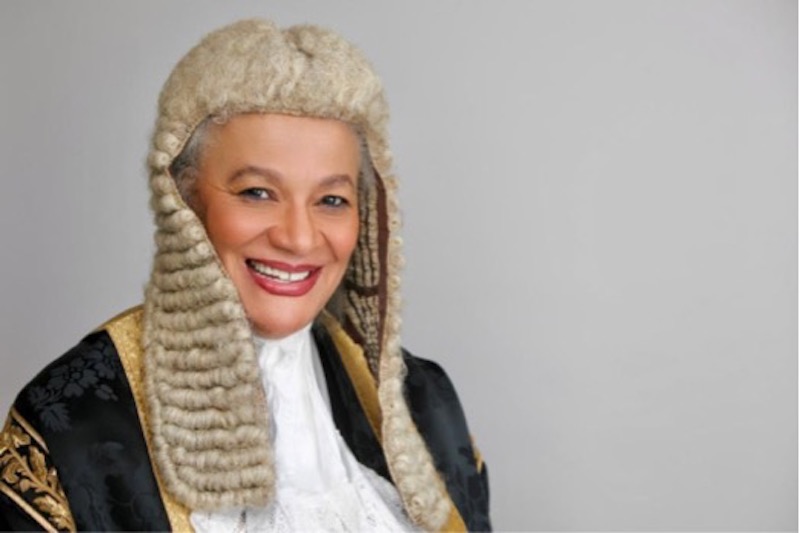
The question of how overworked justices of Nigeria’s Supreme Court are and how the most ridiculous of cases come to the apex court again took the spotlight with Hon. Justice Amina Augie recounting the case of 12 burnt goats that came on appeal.

Justice Augie whose formal valedictory ceremony held at the Supreme Court on Thursday, called for an urgent amendment of the 1999 Constitution to restrict the circumstances under which appeals can reach the Supreme Court.

Speaking about their workload and the case of the burnt goats, Her Lordship said: “I even turned to an online thesaurus for words to capture the essence of this workload; ‘burdensome, difficult, grievous, hash, intolerable, laborious, onerous, oppressive, hard. Severe, tedious, vexatious, wearisome…’

“Allow me to share a perplexing example. One remarkable day, we found ourselves entertaining an appeal in an unusual criminal case.

“Surprisingly, it was not the accused or convict that had filed the appeal; it was the State. The case involved an incident of arson where 12 goats were set ablaze.

“As we grappled with the load of pending judgments and the stack of files awaiting review for our upcoming conference — a sacred ritual in this Court — l could not help but voice my astonishment.

“I leaned over to my brother Justice and whispered, ‘with all that is on our plate, why would such a case come before us? Our primary role here is to be a policy-making Court’.

“Something must change. This Court is the apex court, and its final decisions shape society’s social order. Justices should be able to focus on what truly matters.

“They could issue directives for formulating specific policies or amend existing ones to better serve their intended purposes.

“But how can they do that when they are drowning in an overwhelming caseload?”

Her Lordship however expressed confidence that Senate President, Godswill Akpabio, who was her former student at the Nigerian Law School, would initiate the constitutional  amendment process to ameliorate the onerous burden on the court.

“I had the privilege of teaching him evidence. And I trust that he learned it well. Hence, it should be evident to him that swift action is needed from the 10th National Assembly to accomplish what others could not — amending the Constitution to enhance the functioning of our courts in Nigeria.

“It is said that a teacher’s reward is in Heaven. I cannot wait to reach Heaven to receive my reward for teaching him because it is my sincere wish that the justices coming behind me do not go through what those before them went through.

“Thus, I implore the National Assembly to undertake the necessary constitutional amendments. By doing so, this Court and its Justices can be freed from the constraints that impede their ability to fulfill their mandate of upholding the rule of law, justice, and democracy,” she said.

Augie whose term at the court expired on attaining the statutory retirement age of 70 years on 3rd September, is the sixth woman to be elevated to the Supreme Court bench in over 60 years of the court’s existence.

Eulogising the retired justice, Chief Justice Olukayode Ariwoola said she “diligently and meticulously offered unquantifiable services to her fatherland and the generality of humanity in different capacities for several decades.”

“We are all here to felicitate with an accomplished judicial colossus that has offered the best of her intellect to the advancement of the legal profession through her several years of inimitable adjudications and unprecedented judicial prowess,” Ariwoola said.

Meanwhile, the Attorney-General of the Federation and Minister of Justice, Prince Lateef Fagbemi, SAN, announced that the Federal Government will soon be elevating more judicial officers to the Supreme Court which currently has only 11 justices against the constitutional requirement of 21.

In his address at the event, the AGF said the President Bola Tinubu-led administration is prioritising the welfare and working condition of judicial officers in the country.

Adding that the government would support critical reforms that would enhance greater access to justice, facilitate speedy trials and build confidence in the country’s judicial and legal systems, he described Justice Augie as an embodiment of patriotism, acknowledging that she made several far-reaching legal and judicial pronouncements that have continued to generate reviews from legal commentators.

Likewise, the President of the Nigerian Bar Association, (NBA), Mr. Yakubu Maikyau, SAN, who called on the federal government to speedily improve the remuneration of judicial officers in the country, expressed concern that Nigeria’s Supreme Court is the most over-worked in world.

Meanwhile, though Justice Augie clocked 70 years on September 3 but the valedictory ceremony in her honour was delayed till Thursday to enable the court to resume after its annual vacation.

Justice Augie maintained that swift action was needed from the National Assembly to limit the type of appeals that would be allowed at the apex court.

She decried that justices of the apex court sometimes “sit all day and have to deal with appeals that do not align with the Court’s role as a policy-making court.”

On his part, Prof Yemi Akinseye-George, SAN, said: “Hon. Justice Amina Augie, JSC, CON, deserves all the accolades. She is truly a jurist per excellence. Her judgements are always detailed, comprehensive and consistent with jurisprudence.

“The Bar will miss her smiles and considerate attitude as well as her erudition and Incisive dissection of complex legal issues. We wish our former Evidence Teacher at the Law School and erudite judex a blissful retirement and greater service to humanity.”

Nigeria: Which Way Forward?

By Ikeazor Akaraiwe[1]

“There are many other issues plaguing Nigeria, notably corruption. But corruption is watered by the fact that Nigeria is not yet a nation and corruption is tolerated when the corrupt belongs to our own region or religion.”

1.0. Introduction: The fulcrum of this paper, an executive summary if you like, revolves around the following three main thoughts, in no particular order, as the way forward for Nigeria:

  1. Introduction

The fulcrum of this paper, an executive summary if you like, revolves around the following three main thoughts, in no particular order, as the way forward for Nigeria:

A. Statesmen and Stateswomen Redeemers of which there is a remarkable lack in Nigeria.

B. Proportional Representation (In replacement of the current winner-takes-all electoral system in an ethnically diverse nation of no less than 450 distinct ethnic nationalities).

C. Return to the 1st Republic principle of devolution of powers from the centre to the Federating Units.

2.0. Peculiarities and Idiosyncrasies

Nigeria may be the only nation in the entire world with three culturally and linguistically different ethnic nationalities having populations of between forty and seventy million each; and “minority” ethnic nationalities of between two and fifteen million each!

Hausa in Nigeria – 69.2m (13.4m in Niger Republic)

Yoruba in Nigeria – 48.8m (1.6m in Benin and 425,600 in Ghana)

Igbo – 42m

Fulani – 20m

Ijaw – 15m

Tiv – 5m

Edo – 4.7m

Igala – 2m

Ebirra – 2m;

to mention but a few.

In other words, Nigeria has ethnic groups, same size with the entire populations of Zambia (19.45m), Gambia (2.64m), Liberia (5.193m), and Sierra Leone (8.421m) and almost all nations of Europe. Some of these ethnic groups are classified as minority ethnic groups in Nigeria.

With very few exceptions, Europe’s ethnic nationalities all occupy a different country.  If Nigeria were in Europe, arguably, many of her ethnic nationalities would be different countries! However, this observation is not to canvas a partition of Nigeria but to chart a way forward.

For example:

  • Finland, more than 80% comprised of the Finnish ethnic nationality, has a population of 5.5m.
  • Sweden, more than 80% comprised of the Swedish ethnic nationality, has a population of 10.6m.
  • Norway, more than 80% comprised of the Norwegian ethnic nationality has a population of 5.4m.
  • France with a population of 67.75m is more than 80% comprised of the French.
  • Germany with a population of 83.2m  

both have similar characteristics of being comprised overwhelmingly by the French and German ‘tribes’, with microscopic minorities of other ethnic nationalities.

Even the United Kingdom of Great Britain with a population of 67m and the following ethnic nationalities: Wales (3.2m), Scotland (5.4m), Northern Ireland (1.9m) and England (56.5m) opted for confederation in her unwritten constitution.

Rather than agitations for partition, African countries of similar peculiarities could confederate as Great Britain did. Those who no longer wish to confederate could do the civilised thing by challenging their continued stay in the confederation through the ballot box like Scotland.

I deem this background necessary for a lucid understanding of the way forward for Nigeria.

3.0. Statesmen and Stateswomen Redeemers of which there is a remarkable lack in Nigeria.

The progress of Nigeria has been about as swift as a house divided against itself can be. Almost every well-conceived policy appears implemented to give a disproportionate advantage to one section of the country depending on who the rulers are. Physical infrastructure which may bring progress to the entire nation may be implemented in breach of best location for maximum economic output for geopolitical reasons!

Worse, Nigeria suffers a remarkable absence of statesmen who could have fashioned a nation out of the so many different ethnic nationalities. Nigeria is thus yet to attain to E pluribus unumOut of Many, One. While it is arguable that no nation has ever attained fully to this, on a scale of 1 – 10, Nigeria is very possibly at the lowest possible scale on the road towards attainment of this goal! I disagree with those who suggest that the fate of Yugoslavia is evidence that this venture is impossible.

A Statesman (Stateswoman) is a wise, skillful, and respected figure or political leader.[2] While Nigeria abounds with tribal and religious statespersons, there is a scarcity of such persons with a pan-Nigerian outlook across the regions and religions.

It was Barack Obama who said, while on a state visit to Ghana in 2009, that Africa needed stronger institutions and not more strong men. We will only add that while systems and institutions are necessary, Nigeria needs able men and women to handle the systems and institutions to guarantee stable and profitable nationhood.

It is the current abject scarcity of such men and women in the public space in Nigeria that is the biggest threat to Nigeria’s future as a successful nation. How this came to be, may be the subject of another discussion. It is this abject scarcity in the civil space that has in fact thrown up former military rulers as Presidents of Nigeria, with the effect that two out of four democratically elected leaders who have completed their terms of office have been ex-Generals.

Fix this, and you fix Nigeria. The other two thoughts in this paper may come to fruition only if there are statesmen and stateswomen; selfless believers in a Nigeria of equal opportunity for all regions and religions.

4.0. Proportional Representation

In a country of such diversity as Nigeria, the winner-takes-all electoral system in an ethnically and religiously diverse and conscious nation of no less than 450 distinct ethnic nationalities, is a recipe for disaster.

Proportional Representation[3].[4] as you know, is an electoral system in which the distribution of seats corresponds closely with the proportion of the total votes cast for each party. For example, if a party gained 40% of the total votes, a perfectly proportional system would allow them to gain 40% of the seats.

Proportional Representation ensures minority groups a measure of representation proportionate to their electoral support quite unlike majority or plurality systems which effectively reward strong parties and penalise weak ones by providing the representation of a whole constituency to a single candidate who may have received fewer than half of the votes cast (as is the case, for example, in the United States).

Systems of proportional representation have been adopted in many countries, including Belgium, Denmark, Finland, Greece, Hungary, Israel, Italy, Luxembourg, Norway, Russia, Spain, Sweden, and Switzerland.

Taking the just concluded presidential elections in Nigeria for example, out of ninety-three million registered voters, the four frontrunners scored, in disputed results still undergoing litigation at the time of this writing, a total of 21, 883, 672 (Twenty-One Million Eight Hundred and Eighty-Three Thousand, Six Hundred and Seventy-Two) votes as follows:

Bola Tinubu (All Progressive Congress) = stated to have scored – 8,805,420 (eight million eight hundred and five thousand four hundred and twenty) votes or 40% of total votes cast;

Atiku Abubakar (Peoples Democratic Party) = stated to have scored – 6,984,290 (six million nine hundred and eighty-four thousand two hundred and ninety) votes or about 30% of total votes cast;

Peter Obi (Labour Party) = stated to have scored – 6,093, 962 (six million and ninety-three thousand nine hundred and sixty-six) votes or about 27% of total votes cast;

                                              and

Rabiu Kwankwaso (New Nigeria Peoples Party) = stated to have scored – 1,496,671 (one million four hundred and ninety-six thousand six hundred and seventy-one) votes or 6% of total votes cast, with a plethora of other smaller parties taking up the balance.

However, under the winner-takes-all presidential system adopted by Nigeria, Mr. Tinubu and his APC takes the entire government and controls parliament in a manner quite disproportionate with his 40% showing of votes cast. The 60% voters who did not vote for him but splintered their votes among other parties do not matter.

When you consider that region and religion play a role in the choices by voters, you will understand that absence of proportional representation in a multi-ethnic, multi-religious and multi-ideological country like Nigeria is a recipe for disillusionment and subversive activity.

Tinubu and the APC are not the cause, of course. Rather, it is the military-inherited Constitution of the “Federal Republic of Nigeria” (and civilian acquiescence) whose decision makers were not elected and final outcome not subjected to a referendum, yet containing the fiction “WE THE PEOPLE” suggesting rather fraudulently that the people of Nigeria agreed to that constitution, that is to blame.

By the way, the Constitution of the Federal Republic of Nigeria, 1999 (as amended) has been amended several times with cosmetic changes rather than the required Root Cause Analysis-based amendments. How does a nation make progress without leaders willing and able to tackle these self-evident challenges of nationalism? It was for this reason I started this discussion with the need for Statesmen Redeemers.  

5.0. The 1st Republic principle of devolution of powers from the centre to the federating units.

In 2010, the Open Society Justice Initiative sponsored us to the United Nations at New York pursuant to the question of whether the yearly bloody riots in Jos, Plateau State were genocidal or fallout of elections. My view was that the riots had evolved from reactions to the capricious creation of sub-federating units (Jos-North LGA in particular) by the Babangida military junta to outright genocide. This capriciousness by several military rulers was also evident in the creation of States, federating units being created in turn according to the benevolence or malevolence of military dictators.  

One of the four outstanding memories for me on this trip to the United Nations were the comments on Federalism in Africa by Dr. Francis Deng, the UN Under-Secretary-General for the Prevention of Genocide. Under-S-G Deng, a Sudanese, expressed his frustration that the hope that Federalism was panacea for the numerous problems experienced by Africa’s multi-ethnic nations, seemed to be disappointed in Nigeria. 

Pivotal Problem with Nigeria’s Federalism

I recall telling the Under Secretary-General that the problem with Nigeria’s federalism was

  • that it was more in name than in reality; and
  • that military rule had recreated Nigeria into a mostly unitary state fashioned after the command culture of the military. 

I told him further, that the military command culture, of necessity, abrogated the federal principle in order to control the Federating Units from the centre, and that this control included appointments, removals and transfers of military governors of the federating units, expropriation of the resources of the federating units and even the creation of federating units. 

The Religious Element

Nigeria is probably the only country in the world with two major religions, Christianity, and Islam, almost evenly divided (no less than one hundred million adherents apiece). Before India’s partition in the last half century into about eight nations including Pakistan, Bangladesh, Sri Lanka, Burma, Bhutan, Nepal, Maldives, and India, she was another with Hindu and Islam. That Nigeria has not gone the way of early India is remarkable, but the internal contradictions fostered thereby have kept the nation in a state of motion without movement.

What Is The Way Forward For Nigeria?

The way forward for Nigeria, of necessity, must examine the problems associated with hundreds of sometimes mutually suspicious ethnic nationalities jostling for space as one nation.

The way forward is not partition or secession. It is a return to the pre-independent principle of federalism [rooted in regionalism, as typified by England, Wales, Scotland, and Northern Ireland] and as compacted by the founding fathers and the British colonialists who all took the disparate differences of the ethnic nationalities making up Nigeria into cognisance.

I do not advocate a return to the three regions at independence in 1960 but a return to the principle, wherein the Federating Units controlled their resources and paid taxes of fifty percent (50%) revenues to the Central Government. Income from mineral resources have been reduced to about 13% by the military and was once as low as 3% from the independence 50%.

In Nigeria, there is hardly any Federating Unit without some form of resource, many of which are privately and illegally mined. The illegal mining of these solid minerals and general privatization of the commonwealth of the people will greatly reduce if Federating Units were required to generate their own income and pay taxes rather the current hand me down free meal predicated upon oil wealth.

Federating Units will be required to think outside the box to earn income if Nigeria went back to the fiscal federalism of the First Republic. And Federating Units which cannot or do not have resources of their own can be constitutionally required to merge with other Federating Units to aggregate resources, because there is no longer any free meal.

These thoughts require statesmanship to implement.

The all-pervasive January 1966 Military Coup

Although it failed in its objective of taking-over power, the January 1966 Military Coup (organised by officers of the ranks of Captain and Major whose average ages were between 25 and 30) continues to haunt Nigeria. Not only did that coup snowball into the July 1966 countercoup and the civil war, it also effectively birthed suspicion by many ethnic groups against the Igbo people, which suspicion and discrimination may be responsible for today’s secessionist agitation by some Igbo.

The January 1966 coup was hijacked by senior officers who, after putting down the coup failed to return power to the political class but took over governance and promulgated the Unification Decree, which effectively converted Federal Nigeria into a unitary, military-command top-down State ignoring the compact by the founding fathers and the fact that the hundreds of competing ethnic nationalities, disparate cultures, and idiosyncrasies could only feel safe and unleash their latent capabilities in a federal commonwealth. The military adventurists retained the nomenclature, Federal Republic of Nigeria. 

Nigeria has since then regained several federal features so that today she is a hybrid-unitary-federalist system still at variance with what the founding fathers compacted among themselves and wholly unsuited for the unbundling of the individual energies of her constituent peoples.

The Buhari administration, for instance, while purporting to devolve further centralised powers in, for example, Railways and Electricity generation and distribution to Federating Units did not bother to change the revenue allocation formula by which it disproportionately and un-federally corners a humongous proportion of the nation’s resources. Thus, it is arguable if any Federating Unit save Lagos may have the resources to implement this cynical devolution of powers.

The command culture of the military may have been okay for a brief period but alas, unwittingly became a permanent feature for approximately 30 years, and has today ossified and crystalised into the constitution and the consciousness of a people most of whom were born during military rule.

The effect of this command culture-cum arbitrary and unilateral unitarisation of Nigeria was to give the people group with the highest demographics in terms of a common indigenous lingua franca and oftentimes, a common cultural and religious sociology effective control over the rest of the country.

Fiscal Federalism:

Whereas all Federating Units in the 1st Republic controlled their own destinies, certainly their own mineral and other resources and paid a tax of about 50% to the Central Government, military rule commandeered the resources of every part of Nigeria, and allocated revenues to the now many more-often-than-not arbitrarily created Federating Units, without recourse to fiscal federalism. In effect, the country had become largely unitary.

This is the main underbelly of the agitations across the Federation. Nigeria has become a house divided against itself which, as you know, cannot stand. The dissolving of the quasi-independent federating units by military fiat and gradual replacement over about 30 years with 36 States, which by their going cap in hand to Abuja monthly to collect their share of federation resources show that they are provinces of the Central Government, and that the Federal Republic is in name only.

Hundreds of ethnic nationalities and their disparate cultures and resources have effectively been brought under the control of whoever controlled the Central Government. How does this foster nationhood? How does a nation move steadily forward this way?

6.0. Conclusion

There are many other issues plaguing Nigeria, notably corruption. But corruption is watered by the fact that Nigeria is not yet a nation and corruption is tolerated when the corrupt belongs to our own region or religion. Resolving these questions will set us well on the path to resolving the corruption conundrum.

Another question to be answered in the case of exploring the way forward for Nigeria is whether a single term in office for Presidents, Governors and Local Council Chairs is not in fact the better ideal for multi-ethnic, multi-religious nascent democracies like Nigeria.  

                 Thank you.

  Ikeazor Akaraiwe, Senior Advocate of Nigeria. [email protected].                             www.akaraiweandassociates.com, Twitter: @akaraiwelegal


[1] Ikeazor Akaraiwe is a Senior Advocate of Nigeria. Convener of We The People and Moderator of the Rule of Law – Nigeria Collective, he was 1st Vice-President of the Nigerian Bar Association between 2008 and 2010.

[2] Merriam-Webster

[3] www.parliament.uk

[4] www.brittanica.com

Nigeria is world’s 7th largest exporter of Crude but will not sell to Dangote refinery

  • Any hope for artisanal refining in Nigeria?

By Lillian Okenwa

Although Nigeria is the 7th largest exporter of Crude Petroleum in the world, Dangote Petroleum Refinery in Ibeju-Lekki, Lagos which was inaugurated in May this year and described as the game changer for Nigeria’s economy is currently importing crude oil from outside the country.

The Executive Director, of Dangote Group, Devakumar Edwin revealed in a recent interview with S&P Global Commodity Insights that although the Nigerian National Petroleum Company Limited (NNPCL) trades crude oil on behalf of Nigeria, it had committed its crude to other entities.

Although the Dangote refinery boss did not disclose the other entities receiving the oil company’s crude but NNPC disclosed last month it had entered into a $3bn crude oil-for-loan deal with African Export-Import Bank.  The deal allowed the company to pledge future oil production to the bank as repayments for the loan.

The refinery is yet to commence production despite a promise by its promoter, Alhaji Aliko Dangote that petrol from the facility would start flowing into the Nigerian market latest in August.

Despite being a major producer of oil, Nigeria has suffered from corrupt practices in the petroleum industry, ineffective refineries, and fuel imports. 

But if the domestic production of crude oil and refined petroleum is not meeting the expected output, should alternatives not be explored? Daily, Nigerians are inundated with news of airstrikes destroying illegal refineries. If these makeshift refineries can actually refine crude, why has Nigeria been unable to set up modular refineries?

“Modular refineries require significantly less capital investment than traditional full-scale refinery facilities. The initial processing allows for simple distillation of crude oil into low-octane naphtha, diesel, kerosene, and residual fuel oil,” said Momoh Oyarekhua, chairman of the Crude Oil Refineries Association of Nigeria (CORAN) in a recent televised interview.

Oyarekhua further stated: “It will eliminate all middle costs, it will provide a lot of employment, and it will eliminate petroleum product -theft and pipeline breakage challenges. Nigeria could benefit from the modular refinery by eliminating those costs and making the products affordable.”

Only days ago, air strikes from the air component of Operation Delta Safe destroyed no fewer than 30 active illegal oil refining sites in Cawthorne Channel and Bille, in Degema Local Government Area of Rivers State.

In 2021, former Vice President Yemi Osinbajo announced that the integration of artisanal and modular refinery operators into the mainstream oil and gas sector would boost local content in the industry. Osinbajo’s who spoke virtually at the National Summit on the Integration of Artisanal and Modular Refinery Operations in Nigeria said such integration would advance the use of home-grown technology in the refining of petroleum products.

“We are confident that the integration of artisanal and modular refinery operations into the oil and gas sector will not only promote the inclusion of more local content in the industry; it will advance the use of home-grown technology in the refining of petroleum products. “It will also curtail illegal oil activities in the Niger Delta regions.’’

Artisanal and modular refinery operations are still being awaited.

In his 21st August 2023 article — On legalising illegal oil refineries, published by PUNCH newspaper, Sheriffdeen Tella made some insightful recommendations.

“The illegal refineries have been subjected to destruction many times and for many years. Yet, they continue to spring up because that is the source of living for the owners and there is a demand for their products. They are better than those who lift crude oil illegally for sale outside the country causing great losses and pains to the Nigerian economy. They are even better than the Nigerian government who sell crude oil, make money, and steal the fund for personal and family use at the expense of the citizens and the economy generally. Their activities may be illegal but they also want to live and need help. If the government had helped them, it would have also helped the country…

“The government should legalise the so-called illegal refinery operators and get them registered as petroleum product cooperative producers. Their activities can be integrated into the curriculum of the petroleum institute to give them free training on how to improve on different stages of crude oil refining on a small scale. The recognition will immediately stop bunkering and the attendant environmental pollution in their areas of operation…”

Sadly, after years of sinking billions of dollars into turnaround maintenance (TAM) of moribund refineries, President Bola Tinubu appears to be gearing up to spend more. Last month he assured that the petroleum refinery in Port Harcourt would start working by December 2023.

However, responding to a question from The Cable Online Newspaper on the state of Nigeria’s refineries former President Olusegun Obasanjo said: “They will not work as long as the government is keeping hold of them. When I was president, I invited Shell to a meeting. I told them I wanted to hand over the refineries for them to help us run. They bluntly told me they would not. I was shocked.

“I repeated the request and they stood their ground. When the meeting was over, I asked their big man (MD) to wait behind for a little chat. Then I asked him why they were so hesitant on not taking over the refineries. He said did I want to hear the truth? I said yes. He listed four reasons. One, he said Shell makes its money from upstream and that is where its interest lies. Two, he said they only do downstream or retail as a matter of service. Three, he said our refineries would be bad business for them, that globally, companies are going for bigger refineries because of the economics of refineries. Four, he said there is too much corruption in refineries.

“I thanked him for his honesty. I knew we had a big problem in our hands. I had virtually given up hope on the refineries when God did a miracle. Aliko Dangote and Femi Otedola approached me and said they would be interested in buying two of the four refineries. They said they would buy 51 percent stake in Port Harcourt and Kaduna. I was over the moon. I said, finally, this burden would be taken off the neck of the government. They offered $761 million and paid in two installments. Unfortunately, Umaru (President Yar’Adua) cancelled the sale and returned the refineries to NNPC. Today, we are still where we were. Someone told me Tinubu said refineries would work by December. I told the person the refineries would not work. This is based on the information I received from Shell when I was the president.”

No justice for man whose penis got chopped off in botched circumcision

A 22-year-old man had his penis chopped off in a botched circumcision at age 10. He has had a compensation award of £500,000 reduced to just £20,000 after the Malay government appealed against his claim.

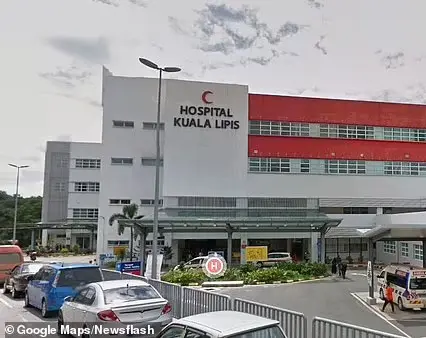
The unnamed victim reportedly lost roughly 90 percent of his penis during the operation. It took place at the local hospital in his hometown of Kuala Lipis, Malaysia. The incident occurred on December 13, 2010.

The medics, who reportedly severed his privates, were not qualified in microsurgeries. The decision was made to transfer the boy to Selayang Hospital where better qualified surgeons could rectify the situation.

However, the delay meant he was only operated on 10 hours later. At this point, all hope for reattaching his penis was lost.

Afterwards, he remained hospitalised for over a month amid an agonising and desperate recovery process after which he filed a lawsuit against the government and hospital directors with the help of his mother.

Courts

On April 7, 2022, Justice Datuk Akhtar Tahir ruled in his favour and awarded him MYR 3.1 million (£532,409) in damages.

Judge Akhtar said in June of last year: “The delay in attending to the plaintiff’s injury extinguished hopes of a successful surgery in saving the penis.

“The Selayang Hospital had been informed about the transfer of the plaintiff. Yet the medical personnel did not take steps to prepare for a possible surgery.

“It is clear that no amount of financial award given by the court will compensate the loss suffered by the plaintiff.

“All the shame and humiliation the plaintiff suffers comes as a result of this terrible loss.

“His mother had testified that since the age of 10, the plaintiff has entered into a shell. He finds it hard to interact with others, let alone develop the courage ever to marry.”

The amount sought by the plaintiff was north of £500,000, including a litany of general, special and severe damages collectively owed by all the defendants.

But the payout was greatly reduced after the government filed an appeal that the Putrajaya Court of Appeal accepted.

 DailyMail

Hypertension: WHO Indicts Nigerian Health System

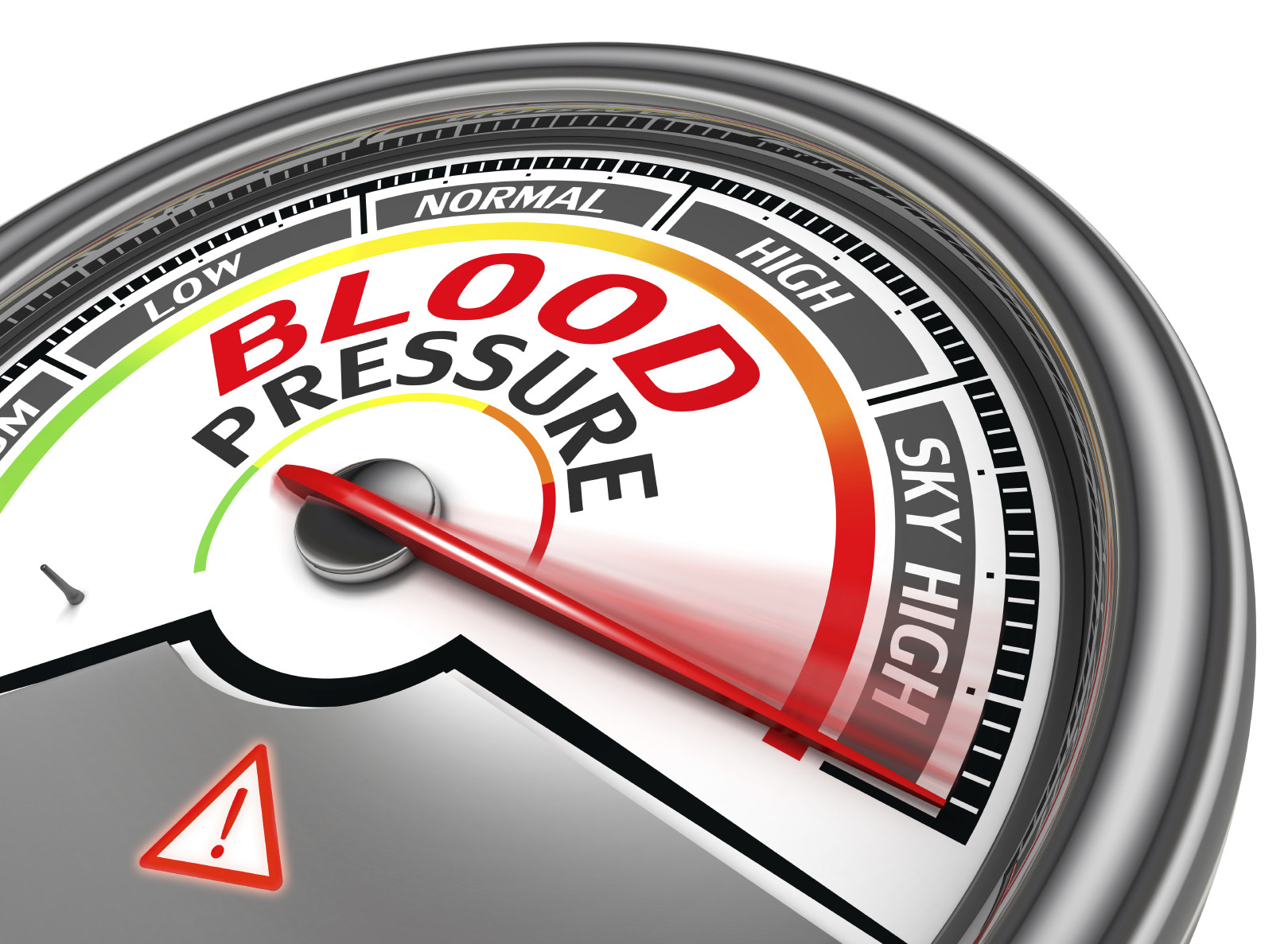
The World Health Organisation (WHO) on Tuesday released its first report on the devastating global impact of high blood pressure, along with recommendations on the ways to win the race against the silent killer, stating that, half of people with hypertension are not aware of their condition.

The report also revealed that approximately four out of every five people with hypertension are not adequately treated.

The very terse report on the devastating rate of hypertension across the globe has further exposed the decadent health system in Nigeria as medical practitioners in the country told Moneyreport magazine that the report gives a fair picture of the level of the sickness in Nigeria today.

On the sidelines of the ongoing United Nations General Assembly (UNGA), the global health body published the hypertension alert in an effort to wake up the various countries, especially those of poor economies like Nigeria where awareness and health facilities have remained at the lowest ebb, prompting a very high mortality as the consequence.

Primary health officers in the country’s health system have indicated that much as the incidence of the sickness is high in the country today, there has not been any deliberate effort by the Nigerian government to address the scourge which has been discovered to have constituted about 45% of deaths in the country.

Our sources noted that apart from the direct impact of the sickness which has resulted in so many sudden deaths, drastic impacts such as stroke, organ damage, infirmity, inactivity and very high financial costs have been associated to the poor level of productivity in the country.

Our sources further noted that the continued increase has caused a corresponding decrease in wealth creation as the victims are forced to embark on certain therapies that do not encourage active work lifestyle. This is said to have become even more serious with the state of the global economy.

They have noted that the sickness is now affecting younger Nigerians of about 50 years old, even as older citizens above 50 years have largely started show greater symptoms of the disease above the normal global frequency as captured by the bank.

The report made available on Tuesday showed approximately four out of every five people with hypertension are not adequately treated. It said that if countries could scale up coverage, 76 million deaths could be averted between 2023 and 2050.

According to the report, “hypertension affects one in three adults worldwide, as the deadly condition leads to stroke, heart attack, heart failure, kidney damage and many other health problems.

The number of people living with hypertension (blood pressure of 140/90 mmHg or higher or taking medication for hypertension) doubled between 1990 and 2019, from 650 million to 1.3 billion.

“Nearly half of the people with hypertension globally are currently unaware of their condition. More than three-quarters of adults with hypertension live in low and middle-income countries.

“Older age and genetics can increase the risk of having high blood pressure, but modifiable risk factors such as eating high-salt diet, not being physically active and drinking too much alcohol can also increase the risk of hypertension.

“Lifestyle changes like eating a healthier diet, quitting tobacco and being more active can help lower blood pressure.

“Some people may need medicines that can control hypertension effectively and prevent related complications,” it said.

The report said that prevention, early detection and effective management of hypertension are among the most cost-effective interventions in health care and should be prioritised by countries as part of their national health benefit package offered at a primary care level.

According to the report, the economic benefits of improved hypertension treat­ment programmes outweigh the costs by about 18 to one.

Dr Tedros Ghebreyesus, WHO Director-General, says “Hypertension can be controlled effectively with simple, low-cost medication regimens, and yet only about one in five people with hypertension have controlled it.

“Hypertension control programmes remain neglected, under-prioritised and vastly underfunded.”

“Strengthening hypertension control must be part of every country’s journey towards universal health coverage, based on well-functioning, equitable and resilient health systems, built on a foundation of primary health care.”

Ghebreyesus said that the report was launched during the 78th Session of the United Nations General Assembly.

According to him, “the assembly addresses progress for the Sustainable Development Goals including health goals on pandemic preparedness and response, ending tuberculosis and attaining Universal Health Coverage.

“Better prevention and control of hypertension will be essential to progress in all of these.

“An increase in the number of patients effectively treated for hypertension to levels observed in high-performing countries could prevent 76 million deaths, 120 million strokes, 79 million heart attacks, and 17 million cases of heart failure between now and 2050,” he said.

Mr Michael Bloomberg, WHO Global Ambassador for Noncommunicable Diseases and Injuries,. said that most heart attacks and strokes in the world today can be prevented with affordable, safe, accessible medicines.“

Treating hypertension through primary health care will save lives, while also saving billions of dollars a year,” Bloomberg said.

TIPS