Home Blog Page 725

National Hospital’s Ex-Pharmacist jailed for life over sodomy, defilement of minor

A high court of the Federal Capital Territory (FCT) has sentenced the one-time Chief Pharmacist of National Hospital, Abuja, and Senior Special Adviser (Technical) to the Director of the National Institute for Pharmaceutical Research and Development to life jail for defiling a minor and for sodomy.

Dr. Abubakar Mustapha Danraka, reportedly lured the victim to his apartment and had anal intercourse with him after knocking him out with a drink.

Speaking about the landmark ruling in the implementation of the Violence Against Persons (Prohibition) Act, 2015, the National Agency for Prohibition of Trafficking in Persons (NAPTIP) in a statement on Tuesday, by its spokesman, Vincent Adekoye, disclosed that the High Court sitting in Kubwa, Abuja and presided over by Hon. Justice Asmau Akanbi-Yusuf, on Monday convicted and sentenced Danraka, Ph.D. to life imprisonment for rape (Sodomy) under Section 1 of the VAPP Act of 2015.

Adekoye noted that the ruling ended the three-year-old controversy surrounding this celebrated case which had attracted much attention from stakeholders across the country.

He further revealed that the convict was arrested on March 27th, 2020, for defiling a minor (name withheld), who happened to be his neighbour, in the estate where he lives in Abuja.

The former Chief Pharmacist was charged to court through a charge dated 9th August 2021. He was arraigned on 5th April 2022 where he pleaded “not guilty.”

Justice Asmau Akanbi-Yusuf in her verdict said the prosecution team from NAPTIP sufficiently proved the charge beyond a reasonable doubt.

Reacting to the judgment, the Director General of NAPTIP, Prof. Fatima Waziri–Azi, hailed the judiciary for its doggedness in ensuring that justice is served under the VAPP Act.

She said, “I want to specially commend the Judiciary for its sustained collaboration, and support in the implementation of the VAPP/Law in the Country which has culminated in this landmark judgment. This is a victory for us as a country.

“In our bid to make Nigeria a violence–free nation, in collaboration with all our esteemed partners and stakeholders, we will continue to scale our efforts in ensuring more convictions and less impunity,” the NAPTIP Director General stated.

This is the third rape conviction in 2023 secured by NAPTIP in the FCT.

For failing to cater for pregnant mistress, Ekiti CMD nearly strangles wife

For refusing to take care of his pregnant mistress, the Chief Medical Director of Ekiti State Specialist Hospital, Ikere – Ekiti, Dr. Olubiyi Olaolu Abidemi ( Consultant Family Physician) has reportedly beaten his wife to a pulp.

A relative of the wife, revealed the CMD instructed his wife to taken care of one of his staff members that he impregnated. However, all hell broke loose when the wife turned down the order.

Infuriated by his wife’s temerity to flout his instructions, he threatened to kill her, in the process allegedly grabbed her neck and attempted to strangle her at their residence, St.David Hospital Compound, Ifaki-Ekiti on Thursday, 14th September, 2023

Dr. (Mrs) Olubiyi Adenike, a lecturer at Ekiti State University, Ado-Ekiti reportedly sustained serious injuries on her neck and was admitted into the accident and emergency unit of Ekiti State University Teaching Hospital, Ado-Ekiti.

CMD Olubiyi is said to have claimed that his wife was pretending despite being attended to at the hospital.

The victim’s family has however called on relevant authorities to come to their daughter’s aid.

59-year-old artisan bags life for defiling two daughters

A 59-year-old artisan has been sentenced to life imprisonment by a Sexual Offences and Domestic Violence Court, Lagos, for defiling his two daughters. Chukwuma violated his young daughters for a period of nine years.

In her verdict, Hon. Justice Abiola Soladoye who found Chukwuma guilty as charged by the Lagos State government, held that the prosecution has sufficiently proved the allegations of defilement against him.

The state had arraigned the defendant on a two-count charge bordering on defilement.

According to the prosecution, the defendant committed the offences between 2008 and 2017, at 2, Agbeke Street, Iyana-Era Bus Stop, Ijanikin area of Lagos State.

During the trial, the prosecution counsel, Mrs Olufunke Adegoke, called five witnesses, while Chukwuma testified alone.

Justice Soladoye in her judgment, held that the testimonies of prosecution witnesses were corroborated.

“The defendant’s incestuous relationship with his two daughters, following the death of his wife in 2008, was senseless. The evidence was laced, and documented, while the admission of the convict to have had carnal knowledge of his two daughters during cross-examination was crucial,” she said.

The court further upheld the victims’ testimonies that their biological father had been having sex with them since their mother’s death during childbirth.

“The oldest was nine years old at the time. The children were taken to their village, and even after reporting to their kinsmen about their father’s acts, nothing was done.

“The second child reported to the school after her older sister ran away from home, as she could no longer endure the assault. The school invited the Lagos State Ministry of Education and social workers, which led to the convict’s arrest, while the survivors were taken to an orphanage.

“The defendant admitted the act and stated that he was sorry. This is also in his statement, which was admitted and marked exhibit A. He is a dirty father, who should be locked up for life as his conduct is disgraceful,” the judge held.

Consequently, the court found the defendant guilty as charged and sentenced him to life imprisonment on each of the two counts.

The judge also ordered that the convict’s name be registered in the Sexual Offences Register of Lagos State.

She thanked the survivors and their school authorities for speaking up and reporting to the necessary authorities.

Dad and son become co-pilots 29 years after taking photo in a cockpit

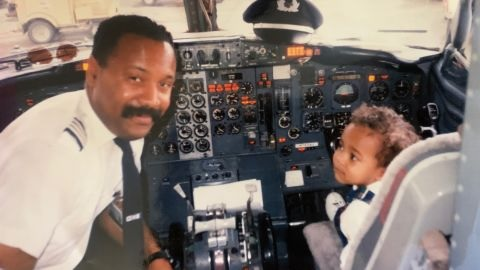
A man has recreated a photo of himself in a cockpit with his dad, 29 years after he posed as a child for a photo with his father in the cock pit.

The man, Ruben Flowers, said in early 2023 he was thumbing through photo albums at his grandmother’s house when he found a photo from 1994, taken in an airplane flight deck, depicting him as a toddler, sitting next to his pilot dad, Captain Ruben Flowers.

In the picture, Flowers is looking at his dad in admiration. His father smiles at the camera, ready to fly the plane. Flowers had forgotten the photo existed, but seeing it again, he was flooded with memories of growing up, inspired by his father.

The timing of when he discovered the photo was perfect according to Flowers who is now 30, and about to follow in his father’s footsteps and begin flying as a First Officer for Southwest Airlines.

Meanwhile, Flowers’ father also called Ruben Flowers – is close to retirement and preparing for his final Southwest flight as Captain.

The two men were excited to briefly overlap at Southwest and hoped they’d get an opportunity to fly together.“It was a dream of mine to make it to this point to fly with my dad, it was probably my number one aviation goal,” the younger Flowers told CNN Travel.

After rediscovering the old photo, the two men had a new goal, not only did they want to fly together, they also wanted to recreate the 1990s flight deck photo, over two decades later. Not just as father and son, but as colleagues and co-pilots.

Read also: Three sisters, two mothers, and daughters who stunned the blue skies

In March 2023, the older Flowers was flying his final Southwest flight, piloting an aircraft from Omaha, Nebraska to his home city of Chicago, Illinois. His son was by his side, as his first officer.

And, naturally, they recreated the 1994 photo, both grinning happily in the 2023 version. “It was just great to be able to recreate that moment,” says the younger Flowers. “It was a dream come true moment.”

Also on board the older Flowers’ retirement flight were his brother and his cousin, who both work for Southwest too.“ That was an awesome feeling,” says the older Flowers. “To look over there and see my son, next to me, for my last landing.”

“It just worked out smooth and naturally, and it went great,” he says, although he adds he was definitely trying to “impress” his dad with his skills and competency.

The older Flowers says he was aware the flight was a one-off opportunity for him to pass on flying intel to his son in situ.

“It went really well, it was nice and smooth,” he says of the experience. “And it was an awesome feeling – making a PA to the passengers, and they find out there’s a father and son up there in the cockpit. Everybody clapping…”

Stunned Reps uncover sale of 82 vehicles for N5.8m by NIMASA

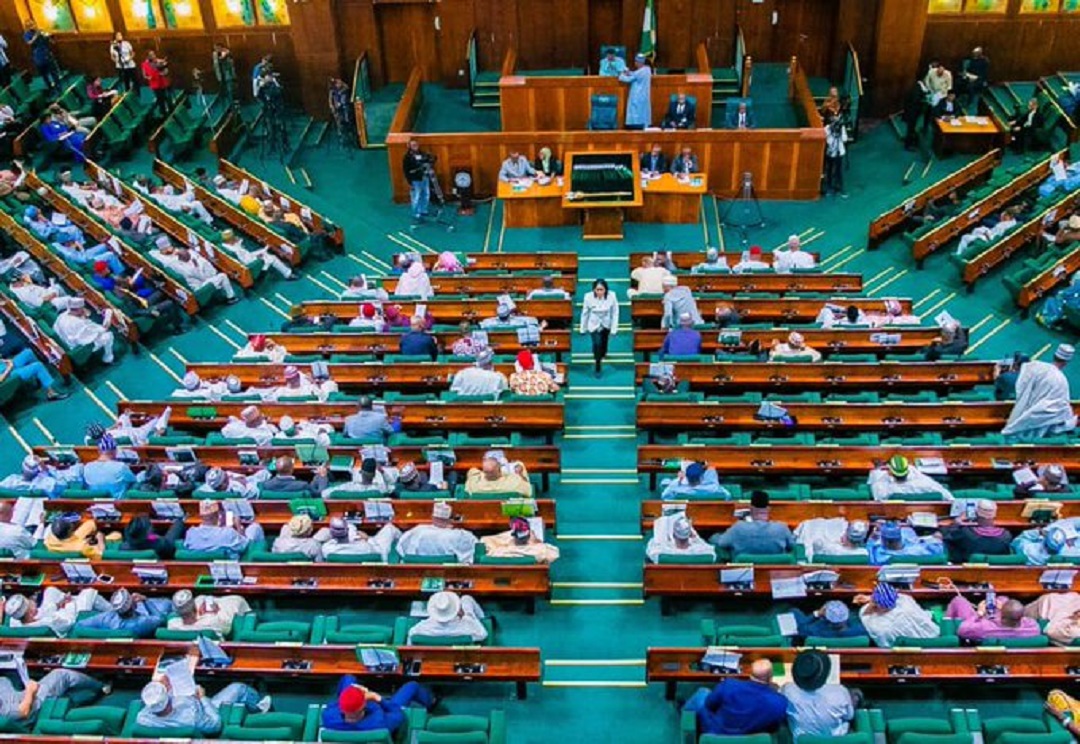
Shock and disbelief gripped members of the House of Nigeria’s Representatives over the weekend following the admission of the Nigerian Maritime Administration and Safety Agency (NIMASA) that 82 vehicles were sold for N5.8million within 12 years.

The Executive Director of NIMASA, Chudi Offodile, who made the revelation at the resumed hearing of the House Committee investigating the disposal of public property by MDAs between 2010 and 2022, chaired by Hon. Julius Ihonvbere, said due process was followed in the sale of the vehicles.

Documents presented by the agency obtained by LEADERSHIP showed that Peugeot Expert Ambulance with market value of N200,000 was sold at forced liquidation/auction value of N95,000; Honda Civic Saloon Car with market value of N170,000 was sold at N76,500; Toyota Hilux (Grounded) with market value of N300,000 was sold at N140,000; another Toyota Hilux (Accidental) with market value of N200,000 was sold at N96,000 while another Toyota Hilux (Grounded) with market value of N250,000 was sold at N115,000.

Also, two units of Toyota Hilux which were at the time of inspection in the custody of Carbotage Consultant in Lagos put at N1 million market value, were sold at N470,000 each forced liquidation/auction value; Honda Civic put at N210,000 was sold at N95,000; Honda City put at N190,000 market value was sold at N80,000; among others.

Furthermore, at NIMASA office in Abuja, a Toyota Hilux put at N500,000 market value was sold at N245,000; Toyota Avensis put at N300,000 market value was sold at N145,000; a Toyota Corolla put at N300,000 market value was sold at N147,000; two units of Honda Civic put at N90,000 market value were sold at N30,000 each; among others.

Some lawmakers who spoke during the investigative hearing demanded documentary evidence of funds remitted into the CRF account as provided by extant provisions of the Procurement Act, Proceed of Crimes Act, and other known legislations or financial regulations.

Source: Leadership

Igba Boyi: A Panacea for mentorship growth and development in the legal profession

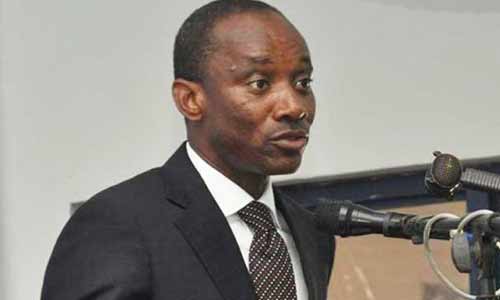
A Text of Keynote Lecture by Dr. Sam Amadi, Director Abuja School of Social and Political Thought to the 2023 Endowment Launch of the Otu Oka-Iwu (Igbo Lawyers Association) Abuja on Thursday, September 14, 2023 at the NBA Auditorium, Abuja

Preliminary Comments:

First, let me express my delight and gratitude to the leadership of the Out Oka-Iwu Abuja for the honor of being asked to make this presentation at such an important and high-profile event. I am delighted as a lawyer who is also igbo to share my thoughts about ‘Igba Boyi’, an important aspect of our social capital that has received significant international acclaim, even from such reputable places like the Harvard University. It is reported that the concept has made an entry into the reputable Harvard Business Review on a discussion about enterprise and entrepreneurship. We should all be justly proud that an idea which our father conceived and practiced has become something to be emulated for business success across the world. This should not be only a matter of delightful reminiscences. It should also be a matter for deeper analysis as we seek to capture lost glory as a people and surpass the greatness of yesteryears.

We live in changing times. We live in a world much different from the one our forebears lived. But some things remain the same. There is wealth. There is poverty. There is wisdom. There is foolishness. There are destructive norms and conventions. And there are constructive ones. These things rarely change because they relate to what Plato called ‘the essence’ and not ‘the accidents’ of existence. Our parents dealt with a changing world with the changeless necessity of solving problems by thinking out ideas and implementing them in a way that can overcome the challenges they faced. Problems change their character. In the same vein, we also change the solution. It may be a radical change. It could be an adaptation of an existing solution. The key point is an awareness of the changing nature of the world we live in and a commitment to apply intelligence to deal with it.                                                                                                                      

We should start this discussion from the premise that our forebears must have thought about how to survive and flourish in a difficult world of scarcity and limitation when they conceived ‘Igba Boyi’. I do not know the origin of the idea of ‘Igba Boyi’. It may be as old as Igbo people, as part of their system of wealt creation through knowledge production and transfer. One thing is clear, after the civil war, when Igbos became poor and dispossessed, Igba Boyi was one of the instruments they used to create wealth by producing and diffusing knowledge. To me, the pursuit of the creation of wealth through enhancement of human capabilities is the most noble objective of social cooperation in a society. We must continuously invest time and resources in creating better ideas to solve the problems arising from scarcity and incommensurability in society.

In this discussion, I will explain what the concept of ‘Igba Boyi’ means, how it helped in wealth creation in the past, what we can learn from this solution, and how feasible we can apply these lessons to the current practice of the law profession. I will reflect on where we are today in the law profession, and offer my insights on what we can do to make things better.

The Concept of ‘Igba Boyi” in Igbo Sociology:

‘Igba Boyi’ has many phrases and words that resemble it. Such phrases as ‘Imu Olu’, ‘Imu Ahia’, and ‘Igba Odibo’ are closely related to it. First, let us start with the etymological meaning of the phrase. ‘Igba’ would simply means ‘to play’. ‘Boyi’ will be a corruption of the eord ‘boy’. This will suggest that the origin of the phrase itself, maybe not the concept as such, dates to colonial period when the practice of being a ‘boy’ to another in terms of houseboys who served colonial officials became rampant. This is merely a conjecture. But one that has some persuasive force. And, I must add, has some scholarly support.

What is the difference between ‘Igba Boyi’ and these other related phrases? Let me start by quoting the views of Iwara. Amechi and Netshandama thus:

“This approach is known as Igba-boi. It is important to differentiate this framework from other Igbo schemes such as Imu-ahia (to learn a trade) or Imu-oru (to learn a craft), which are also common within the Igbo communities. However, unlike Igba-boi where mentees arrange a contract to have a complete training circle for free, imu-oru or imu-ahia is not done for free. In this, apprentice is expected to pay a ransom to their master to acquire skills. The contract is for a short period, often two years or less unlike the former which takes more years. This is significantly different from Igba-boi, which often lasts for many years. The term ‘Igba-boi’ in this context does not literarily mean “to serve another” in the literal sense of the word, whereby the only purpose is total servitude to the master. The Igbo Igba-boi model is a process whereby someone is being trained in the act of entrepreneurship (Agozino & Anyanike, 2007). Here, the family gives out their children to learn skills and startup their enterprises, having identified their talents.” (see Igba-Boi Apprenticeship Approach: arsenal behind growing success of Igbo entrepreneurship in Nigeria Igba-boiarticle.pdf)

This passage provides clarity about the difference between Igba Boyi and such other related concepts. Igba Boyi is not slavery. It is not just mentoring. And it is not just learning a trade (Imu Aka-Oru). Igba Boyi brings together several of these elements into one unique socio-cultural phenomenon. At the heart of Igba Boyi is a contractual relationship between one family and another to engage in knowledge and wealth transfer. The two key words are knowledge and wealth. The scheme is deeply rooted in Igbo Metaphysics and anthropology. It is part of how the Igbos see the world. First, Igbos believe that wealth has to be created. ‘Ikpata Ego’ disapproves the notion of sudden wealth. You do not just become wealthy by a sudden twist in fate or by the happenstance of luck. Yes, Igbos believe in destiny and the role of luck and unknowable divinity. But ultimately, they believe it is actually what you make of these uncertainties and divine unknowns that determines your fate in the world. Hence, they say ‘Onye kwe chi ya ekwe’. So, it is all about what we do. We are the architect of wealth and poverty.

For the Igbos, wealth comes from production. At the heart of production is knowledge- ideas and meta-ideas. It might be said that long before the second-generation economic growth theories on endogenous factor of growth by Nobel Economist, Paul Romer, the Igbos had cracked the code of economic growth. Economic growth comes from the explosion of knowledge, especially technological knowledge. Wealth-generating production requires great skills and techniques. It requires practical knowledge. There are two types of knowledge- general and specialized knowledge. You cannot create wealth in a sustained manner if you do not generate these two types of wealth. You need general knowledge about the universe, about the moral landscape of human life, about the natural laws that sustain harmonious social existence. But you also need specialized knowledge about how to bring down rain and stop it from falling when you do not need it, about how to reset bones, about how to make medicines from herbs and how to make people buy what you produce. This sort of knowledge is hidden and needs to be carefully extracted. They could make the difference between poverty and prosperity.

The poverty and wealth of a nation may depend largely on how it treats knowledge, what incentives it provides for continuous production of better and better ideas, and how it ensures that such ideas are utilized. The igbo society has prospered in all seasons because of the high premium it has placed on knowledge production and its utilization. In his book celebrating what he calls ‘The Jewish Phenomenon’, Steven Silbiger argues that “the real wealth is portable, it is knowledge.” In his view, the greatness of the Jewish people is tied to their love of education. “The Jewish secret is how they have come to fully embrace the idea of good education and execute it. As just one example, after World War 11 Jewish veterans took advantage of the GI Bill’s educational benefits at a rate twice that of the general population.” (Steven Silbiger, The Jewish Phenomenon: 7 Keys to the Enduring Wealth of a People (2009)). Igbos claims some kind of cultural and historical affinities with Jews. No matter how absurd this may sound to some people, at least we can point to some similar worldviews for Igbos who claim to be Jews of Africa.

So, the first important point about the ‘Igba Boyi’ scheme is that it is a knowledge production and transfer system. By it, the neophyte is yoked to a master who transfers the special technique for enterprise to him. Do not forget that it is usually boys who are involved in ‘Igba Boyi’. Another important point to emphasize is that the essence of acquiring knowledge is to produce something, namely wealth, to be wealthy. This is important to unlock the value of the whole scheme. Imagine if igbo society had accepted that wealth is reserved for the few bluebloods or for those destined for it. Imagine if there is a stigma to being rich as we have in some ancient cultures. How then would anyone engage in Igba Boyi? So, the heart of Igba Boyi is the democracy of wealth creation. Everyone can be wealthy; everyone should be wealthy. This democratic spirit is the foundation of the scheme. To understand it better let us do a thought experiment. Mazi Uka has made it big in Onitsha as a rich trader. He comes home for the Christmas celebration. Everyone in the village honors him for his accomplishment. There is great admiration for him. Maxi Ude and his wife has two grown-up boys. Mazi Ude is not rich even as he works hard to provide barely enough for his household. In the night after the big party by Mazi Uka for his kinsmen, Maxi Ude confers with his wife on what they should do with Uchenna, the younger grown-up who looks smarter than his brother. They want him to be as rich as Maxi Uka. So, they decide to meet Mazi Uka to take Uchenna as his boy, live with him, and teach how to be as successful as himself. That is the origin of Igba Boyi. It originates in admiration of wealth and a belief that there is a process and a technology for wealth creation. It is a social mimetic, a positive one that enables multiplication of wealth.

Now, this is the point. Societies that will be economically successful must accept the morality of wealth and the necessity of wealth creation. This is how Deng Xiaoping reset China. After the end of Mao Zedong’s (alias Chairman Mao) disastrous Cultural Revolution and the terror of the reign of the Gang of Four. He started with an ideological shift by emphasizing the value of making money. He captured it in a memorable phrase “Wealth is Good”. He replaced the bad ideological mindset with a pragmatic mindset by emphasizing that ‘it does not matter whether the cat is black or white as long as it catches mouse”. He believed that the path to escaping poverty will be through a scientific mind that focuses on material reality. He counseled Chinese to ‘seek truth through facts”. All these constitute what he summed up as ‘Socialism with Chinese characteristics”.

This simple shift in moral valuation unleashed entrepreneurial energy that gave China outstanding average growth rate of more than 6% for more than three decades from 1978-2000. The first black (and perhaps the only) Nobel winner in economics, Arthur W. Lewis, who is reputed as the father of development economics, made this point clear in his classic text on development economics when he argued that when people place an intrinsic value on being rich, they are more likely to experience sustained economic growth. He makes the important point that ‘economizing’, which is the behavior of trying to produce more with less, occurs when people actually desire to be rich. If people do not accept that wealth is good, and good for them, they may not make the extra effort to create wealth.

Now, we know that it takes a special cultural soil to think out the innovative scheme of ‘Igba Boyi’. The Igbo who sends his son to serve a wealthy entrepreneur in a such system of reciprocity and the entrepreneur who accepts to lead a new lad towards the secrets of wealth creation  both inhabit a socio-cultural system that has its fundamental values. We often talk of the individualism and egalitarianism of igbo society that make it always ahead in material advancement. The typical igbo is an individual who believes that he or she is the equal of any other person. ‘Igbo eweghi eze’ is a popular political war-cry. Yes, in Igbo society, everyone is king. Everyone can make it. But Igbos are also communitarians. They believe that the essence and the source of their personhood is the community. ‘Onye aghala nwa nne ya’ is not just a rhetoric. It is deeply rooted in an ontology and a metaphysics that construct personhood as an important element in an integrated whole. The radical liberalism that defines a person in extreme singularity is strange to Igbos. We are a person. But each of us is also a person. We achieve our personhood collectively. But each of us must also fight to be a successful part of the whole. The best illustration of the Igbo worldview is a concentric circle. Each circle is in another circle, encircled by another circle ad infinitum. I exist as a whole inside another whole- the Umunna, which is in another whole- the kindred etc.

This is the second point. Wealth creation is not a solitary, individualistic pursuit. Wealth creation is communal. The reason the Oga accepts the apprentice is because he wants to spread the knowledge of wealth creation to the community. There is no hoarding of knowledge. There is just good husbandry for the common good. Now, you do not need to have a community of saints to have such social altruism. All you need is a worldview, a comprehensive moral doctrine that informs social practices, what you may call ‘Omenala’: the people’s way of life. The Oga has been socialized to believe he has a responsibility to assist the deserving in the community to find the path to wealth. The poor parent of the deserving student wants their ward to be rich. They enlist him in the school of entrepreneurship to learn the secrets of wealth.

What is evident from the above is that it is insufficient to describe Igbo as individualistic and republican. They are also communitarian and solidarist. As Ndidi Nnoli Edozien argues “The Igbo attitude to the ownership and management of wealth and property exposes a deeply spiritual, yet secular understanding of the interconnectedness of the ‘universal destination of the created good’. The traditional igbo interplay of the secular and the sacred ensured that ethical considerations were an intrinsic part of the economic life for the Igbo” (see Ndidi Nnoli Edozien, Ownership and Management Structures in the Economy: African Traditional Values Applied to Modern issues of Sustainability and the Corporate Governance Function (CIDJAP, 2007). One of those ethical considerations is that “an individual exists in a community and being its member, is indissolubly linked to the destiny of the community and society (public interest)”. This is the concept of solidarity which finds expression in our slogan, “Onye aghala nwa nee ya’ or the Swahili word, ‘Ubuntu’, or as expressed in motto of the United States ‘e pluribus unum’, out of many one.

The anchor of ‘Igba Boyi’ is a shared understanding in the pursuit of wealth. It is the cultural commitment to the pursuit of the common good which passes through individual commitment to hard work, integrity, compassion, intelligence, and wisdom. The Igbo speak of ‘ako na uche’, which translates to ‘knowledge and wisdom’, as the most important resource a person must have. It is ‘onye- ako na uche’ who would accept to serve another for a fairly long period in order to discover the secret of wealth creation. The ethical considerations of wealth creation immanent in the ‘Igba Boyi scheme include the humility to endure and suffer several indignities for the later pleasure of escaping ‘ogbenye’- poverty. It is said in the classic novel by Chinua Achbe, Things Fall Apart, that Okonkwo, the son of a poor lazy man, Unoko, was obsessed by the urge to escape poverty that he became a tragic hero. It is common amongst Igbos for one to work hard to escape the poverty trap by sojourning with a wealthy entrepreneur, even to the point of near servitude.

What is the Igbo business worldview that created and sustained Igba Boyi? This is what Prof Aluko said about it: “The Igbo culture is receptive to change and is achievement-oriented. The work those idealizes egalitarian, individualistic and anarchic pursuits with respect to age and tradition. The struggle for survival is characterized by fierce individualistic struggles and ruthless determination to succeed. A certain boisterous aggressiveness is expected at work. The energetic and industrious person who achieves greatness and fame in his choice of vocation is admired” (M.A.O Aluko, Impact of Culture on Organizational Performance on Selected Tertile Firms in Nigeria). This is largely true except that it omits the cooperative, solidaristic nature of Igbo entrepreneurship.

Let us reiterate the nature of ‘Igba Boyi’ as an entrepreneurial scheme and its core function in Igbo business culture. Igba Boyi is a process of multiplying wealth through knowledge transfer. The heart of it is the willingness of the igbo youth to travel the path of hard work, patience, and resilience in search of community transforming wealth, coupled with the social altruism of the successful Igbo entrepreneur to spread the secret of wealth creation. The journey begins with the recognition that wealth is created through enterprise; and enterprise is built through specialized skills that can be transferred through apprenticeship. The apprentice lives with the master so he can observe at close quarters some of the unspeakable moments of genius in how the master handles complexities and chaos, two elements of the world of business. The period of apprenticeship is not just a time to learn hard skills. It is also a time to learn soft skills which are the bedrock of enterprise. The apprentice faces severe difficulties and temptations in the house of his master, just like Joseph, in order to test his patience and wisdom in making sacrifice and placing value on the long term rather than the short term. This sort of knowledge, which the Yale Anthropologist, James Scot, called ‘Metis’ are not readily mass produced. They are retailed through a sort of ‘master-apprentice relationship’.

Now that we understand the nature and virtues of ‘Igba Boyi’, what are its social functions in the business environment? The most important social function of Igba Boyi is that it helps to create new wealth. but in doing so, it helps to overcome some critical constraints to business development and economic growth. Across the world there have been many unsuccessful efforts to grow the economy by enhancing the success of small and business enterprises. This has resulted in many capacity-building trainings for individuals who want to start new businesses. In times of severe economic crisis when there is massive job loss in the formal sectors, governments usually resort to retraining persons who have lost their job to be employed in the booming industry. If the banking sector fails and a new sector emerges, we usually feel the need to retrain dislocated workers to learn new skills to fit into the booming sector. These programs fail largely because they are not attuned to the true need of industry. Experts advise that the best way to implement capacity building programs for entrepreneurship is to annex them to industry. Allow the industries to train because they understand the need of industry. By asking the man in the business arena to train the young aspirant to entrepreneurship, Igba Boyil ensures that the knowledge being transferred is relevant and effective in creating and sustaining wealth.

Another problem of start-ups is getting the finance to start. Without access to capital through angel investors or hedge fund or public funding mechanisms, the smart entrepreneur may be hindered. It is not enough to be smart and determined. You must have access to a start-up fund to create wealth. Igba Boyi solves the problem of lack of funding through the generous provisions of the master. Igba Boyi is anchored on the expectation that the obligation of the master is to transfer knowledge and capital to the apprentice. As the apprentice learns the secret of business success, he is also accumulating start-up capital that will enable him to execute what he has learnt from the master. Allied to this is that by his service to the master he acquires access to important networks for supply of goods, credit, and customers to his business. This is one of the most important benefits of the scheme. It enables the intending entrepreneur to inherit important networks from his master.

There is yet another important social function of Igba Boyi to business and entrepreneurship. It is an incubator of business ethics, of virtue. The apprentice does not just learn trade secrets, he also learns virtue. That is why he lives with the master, to be monitored and disciplined to be virtuous. It was Aristotle who first gave us the concept of virtuous life as the excellence that is human flourishing. The good life is the virtuous life. Virtue is not just beautiful. It is effective. It leads to business success. The trustworthy entrepreneur is the one that will retain the trust of clients. What the Oracle of Omaha, Warren Buffet teaches is what the Igbos long recognized and incorporated in Igba Boyi scheme. Without virtue you will not succeed in creating wealth in a sustainable way.

Application of the Virtues of Igba Boyi to the Legal Profession:

How do we apply the concept of Igba Boyi to the legal profession. First, we note that the legal profession is a knowledge-based profession. Lawyers are knowledge workers. Lawyering is a craft. A craft is based on specialized skills and techniques that are not readily open to outsiders. Generally, crafts are like esoteric societies, societies for those initiated through acquisition of special knowledge. Lawyers are supposed to be skilled. The process of acquiring such skills and techniques requires something close to Igba Boyi. In the past, before legal education became formalized, lawyers were educated through a form of apprenticeship called ‘pupillage’ in the Inns of court.

Today, Nigerian lawyers first attain general knowledge in universities and proceed to the Nigerian Law School for what looks like special (technical) training. By definition, it is at the Law School that Nigerian lawyers are trained to become professional lawyers. This will suggest that the sort of practical legal training that is assorted with Metis and prudence is attained at the Nigerian Law School. But this is a plain fallacy. Nothing in the curriculum of the Nigerian Law School and its management looks anywhere close to what you get in the Igba Boyi scheme. In the Igba Boyi scheme, the novice lives with the master, serves the master, and has practical exposure to the business of the master. That proximity creates an opportunity for close monitoring and effective coaching. Effective coaching requires what Phil Rosenzweig calls ‘deliberate practice’. In his book, Left Brain Right Stuff: How Leaders Make Winning Decision, he argues that mastery requires deliberate practice which creates a process to identity shortcomings and overcome them through continuous and focussed training. Such training cannot take place in conventional law schools. it can only happen in a form of pupilage in a law firm or corporate offices or such other places of real work.

The point is that the proper setting for the kind of technical mastery expected in the legal profession cannot come from the law school. It can only come in the form of Igba Boyi where the new entrant into the legal profession gets an opportunity to serve the master who undertakes to guide him through the labyrinth of practical knowledge. This is the reason it is often said that law is practiced in the chambers. The law chamber is the foundry of the great lawyer. But to create the ideal setting for the transfer of useful skills and techniques for legal practice the setting has to resemble the elements of Igba Boyi to achieve the kind of result Igba Boyi achieves for entrepreneurship in Igbo land.

The first condition for a successful transfer of knowledge is a commitment to pursue knowledge. This is based on an understanding of the importance of knowledge in becoming a successful lawyer. The family of the novice approaches the accomplished business leader in the community for an opportunity for their son to commence the journey of Igba Boyi because it acknowledges that the only path to wealth and success is through acquiring practical knowledge. If they do not believe in the knowledge economy, they would not subject their ward to such sacrifice and service to the master. Another condition for the Igba Boyi scheme is the generosity of the master entrepreneur. If the master does not believe in shared prosperity and does not feel a responsibility to support knowledge transfer through structured learning, there will be no opportunity to replicate the success of the Igba Boyi scheme in the legal practice.

There are obvious challenges to the Igba Boyi scheme that needs to be addressed in any effort to transplant it to legal practice. First, because it is embedded in Omenala, it is supported by a network of norms and relationships which is difficult to recreate in legal practice. Igba Boyi applies within the network of Umunna, which means it is nourished by trust founded on consanguinity. We don’t have that in the legal profession. Even with consanguinity we have seen instances of breach of trust where the malevolent master refuses to settle the young apprentice after the end of his learning. This destroys a cardinal value of Igba Boyi, which is that it provides easy access to start-up capital. This sort of breach has led to call for institutionalization of the scheme in such a way that government can police the boundaries of the agreement. But such institutionalization risks destroying the scheme since it is a social capital that thrives on voluntariness and self-enforcement through norms. The times have changed. The bonds that hold the communities together have been weakened by secularization and urbanization. So, Igba Boyi has come under inclement social weather.  

There is a need to adapt to change. We do not have the same world where Igba Boyi thrived. But its elements can be incorporated into the management of legal practice. That is the essence of the program by the Otu Oka-Iwu Abuja in launching an endowment for training of young lawyers. It borrows from the ideas and practices of Igba Boyi but adapts it to suit the different contexts of law practice in Nigeria. But in spite of many differences between Igbo entrepreneurship and Nigerian legal practice, the fundamentals remain the same. We cannot have a sustained knowledge production and transfer when people do not believe in knowledge production as the gateway to wealth. Today, law practice has lost its nobility and dignity. Many lawyers are now very rich for very corrupt and oftentimes criminal actions on behalf of clients, oftentimes persons in political positions. Many Nigerians believe that senior lawyers are mostly responsible for the high criminality and corruption in the Nigerian society. Lawyers with little or no pedigree of excellence and hard work are becoming super rich because of association with criminals and corrupt leaders in Nigeria. In this circumstance, there is little incentive for the young lawyer to seek that kind of rigorous and long internship under a seasoned and respected senior lawyer. Young lawyers have lost the idealism of the law. All they see is the brutal reality of crony capitalism that thrives on audacious hustle, not on practical knowledge and prudence.  

This is not restricted to Nigeria. The globalized new capitalism of financialization and financial engineering has created a bubble economy that has encouraged the death of professionalism as virtuousness. The former Dean of Yale Law School, Anthony Kronman made a similar point in his book, The Lost Lawyer: Failing Ideals of the Legal Profession. He lamented the fact that the American legal profession has abandoned the ideal of lawyer-statesman founded on a set of values that prides good judgment over technical competence and focused on the common good instead of personal material wellbeing. This can be said about Nigeria. Lawyering is now conceived mostly as deployment of technical skills ungrounded in any social commitment. This is contradictory to the ideals of the legal profession enunciated by Nigeria’s first lawyer, Sapara William, wo argued that the lawyer lives for the good of his society.

We must admit that the socioeconomic factors are harsh today. Without good financial support it will be difficult for young people to undergo pupilage for a long period of time. We have to financially support them to mitigate the financial crisis of contemporary Nigerian society if we really expect commitment to legal education post-university. Seniors have to be as generous and committed to community good like the famed Igbo entrepreneurs to help their apprentice with finances and networks. The level of greed and parsimoniousness of Nigerian senior lawyers in recompensing young lawyers does not encourage long pupilage. This is detrimental to the quest for excellence in legal education.

Conclusion:

Rescuing Nigeria’s legal profession from its fallen state will require in the minimum revitalization of pupilage system in something resembling Ikpa Boyi. We cannot transplant Ikpa Boyi from its native soil of Igbo business culture to the legal profession without first taking cognizance of the different sociocultural contexts and the changing value landscape of Nigerian society and its practice of law. Selfishness, corruption, and rush for easy money are the characteristics of today’s Nigeria. Fraud and criminality have received the highest approval even by the leadership of the legal profession. It is doubtful if there is any appetite for pursuit of knowledge as a pathway to wealth creation that is at the heart of Ikpa Boyi.

Nevertheless, I will recommend that Nigerian leaders, that is those who still care about the future of Nigeria, should engraft elements of Ikpa Boyi into a revived and revitalized pupilage system. They should make professional ethics and prudence the heart of new legal education which purpose would be to produce more of the lawyer-stateman than the lawyer-technician. This may suggest an end to the concept of the Nigerian Law School because it produces neither enough general education nor enough special education.  

Nothing legally wrong in filing joint application for enforcement of fundamental human rights actions —Onyemenam, JCA

OGHENEGUEKE & ORS v. IGP & ORS, (2023) LPELR-60233(CA)

Issue
CONSTITUTIONAL LAW – ENFORCEMENT OF FUNDAMENTAL HUMAN RIGHT(S) –

Position of the law on whether multiple applicants can jointly commence one action for the enforcement of their fundamental rights

Principle
“Herein, the application was brought by 12 Applicants. The exigent question is whether the phrase any person as used in Section 46 (1) of the 1999 Constitution of the Federal Republic of Nigeria (as amended) can be construed to include more than one person or whether it is limited to only one person. Where it is wide enough to include more than one person, then it necessarily follows that joint Applicants can bring an application; but where it cannot be so construed, then an application by the joint Applicants will be incompetent.

By virtue of Section 14 of the Interpretation Act, even though the phrase “any person” denotes singular, in construing enactments, words in the singular include the plural and words in the plural include the singular. See: EFCC & ORS V. AFOLABI & ORS (2022) LPELR-(CA); Section 14 of the Interpretation Act. ?Additionally, the adjective employed in the provisions of Section 46 (1) of the 1999 Constitution and Order 2 Rule 1 of the Fundamental Rights (Enforcement Procedure) Rules, 2009 is “any”. It qualifies the noun, “person”. The word “any” has been defined as an adjective which could be one or more, an undetermined number and when used as a pronoun, the word any can be singular or plural in construction. See: Merriam-Webster Online Dictionary.

Consequently, the word ‘any’ and the phrase ‘any person’ cannot be interpreted as restricted to an individual. Also, there are no express provisions in the Fundamental Rights (Enforcement Procedure) Rules, 2009 barring persons who have common or the same cause of action like the instant Respondents from bringing a joint application. See: OKAFOR & ORS V. NWORA & ANOR (2022) LPELR- (CA); EFCC & ORS V. AFOLABI & ORS (2022) LPELR (CA). I shall reiterate Order XV Rule 4 of the said Fundamental Rights (Enforcement Procedure) Rules, 2009; which provides: “where in the course of any Human Right proceeding, any situation arises for which there appears to be no adequate provision in the said Rules, the civil procedure rules of the Court for the time being in force still apply”.

The Rules of the Court in the instant case is the High Court of Delta State Civil Procedure Rules which permits a joint suit where the cause of action is the same. In the instant case, the cause of action is the same, to wit, that the 1st – 12th Appellants were jointly intimidated, harassed, humiliated, and threatened to be arrested and detained by the Respondents over the purely civil matter of the administration and leadership of Out-Jeremi Community of Ughelli South Local Government Area of Delta State. The essence of joinder of parties is majorly to avoid duplicity of actions, which leads to conflicting judgments and unnecessary waste of scarce judicial time; thus, whenever different persons have the same cause of action against a particular person or group of persons, as in the instant case, they may jointly institute a single action against that person or group of persons.

Moreover, Section 1 of the Interpretation Act allows several persons to bring an action to enforce fundamental rights in a representative capacity. Flowing from the above, it is my view that so long as the Applicants have a common complaint and the same interest, and it is on the same actual situation that the alleged breach of their fundamental rights is grounded, they can bring a joint application for redress. This position has been strategically firmed by the Supreme Court in the cases of DIAMOND BANK PLC V. OPARA (2018) 7 NWLR (Pt. 1617) 92 (SC); FIRST BANK OF NIG. PLC V. A-G FEDERATION (2018) 7 NWLR (PT 1617) 121 (SC); wherein they were joint Applicants. Although the competence of joint application for enforcement of fundamental rights was never a live issue in the appeal before the Supreme Court and thus it never made any pronouncement on that point of law; yet the Apex Court did not frown at joint and/or class action in matters of enforcement of fundamental rights in the above-referred cases.

I am of the firm view that since the question whether joint Applicants can maintain an action for the enforcement of their fundamental rights, is a question which goes to the competence of the action and a fortiori, the competence of the Court to entertain the action, being a question of initiation of an action without due process of law; consequently, if joint application of this nature was wrong in law, the Supreme Court would have made a pronouncement on the competence of the joint application instead of proceeding to award compensation in favour of the joint Applicants as it did in the said cases. In fact, the Rules do not only allow joint application, it also encourages public interest litigations in the human rights field. See: Ogheneovo V. Gov., Delta State (2023) 2 NWLR (Pt. 1868) 275 (SC); Rule 3 of the Preamble to the Fundamental Rights (Enforcement Procedure) Rules, 2009.

In conclusion, there is absolutely nothing legally wrong in filing a joint application for the enforcement of fundamental human rights actions. There is nothing abhorrent procedurally in several persons filing and maintaining a Fundamental Human Rights action as has been done by the Appellants herein at the Court below. I therefore hold that the Appellants rightly filed a joint action for the enforcement of their fundamental rights.”

Per UCHECHUKWU ONYEMENAM, JCA (Pp 24 – 28 Paras A – D)

✍ C.K. ANYANWU ESQ
(Lawyer of Promise)
C.C. ELELE & ASSOCIATES.
3c Pound Road Extension, Aba,
Abia State.
08039298435.

Watch Video: CSO Condemn Ward Chair’s attack on Ondo Women Affairs’ Commissioner

Sustainable Gender Action Initiative has condemned the physical attack carried out on the Honorable Commissioner for Women Affairs Ondo State, Dr. (Mrs.) Olubunmi Osadahun, by a ward Chairman of the All Progressive Congress (APC) in Arigidi, in Akoko North West, Olumide Awolumate.

The Ondo Commissioner was weekend, attacked in Arigidi Akoko area of the state, during the distribution of palliatives to cushion the effect of the removal of fuel subsidy by government.

Sustainable Gender Action Initiative in a press statement signed by its Executive Director, Mufuliat Fijabi said: “This act of violence perpetrated by a ward Chairman, Olumide Awolumate, of the All Progressive Congress in Arigidi, in Akoko North West, over palliatives, further reiterates the negative impact of patriarchy and absolute lack of respect for her person and the office she holds.”

Watch the video below.

Asserting that the act is totally unacceptable, Fijabi further said this “is no doubt a reflection of gender-based violence that is prevalent across the country which calls for an absolute condemnation by all. Women and girls deserve respect and dignity.

“This is despite all the international and regional commitments that Nigeria has made as well as the adoption of the Violence Against Persons Prohibition, (VAPP) Act in 2015. The Ondo State Government has also domesticated the VAPP Act in 2021.

“While the video clip displaying the violent attack on the Honorable Commissioner has gone
viral, SGAI wishes to state categorically, that expedited action on investigation and prosecution will contribute significantly to setting a good precedence that will deter others who are currently engaged in acts of violence against persons publicly and privately.”

A video circulating on social media showed a man, who used a blue chair to attack the commissioner. The commissioner was injured during the attack and was reportedly rushed to the hospital for medical attention.

An eyewitness account said: ” We don’t know what had transpired between him and the commissioner, we just saw when he took one of the chairs and landed it on the head of the commissioner.

” A deep wound was inflicted on the head of the commissioner. Immediately this happened, some young boys loyal to the commissioner, also descended on the attacker and dealt with him.

In an interview, a lady who said she’s the commissioner’s daughter, Dr (Mrs) Jumoke Bakare, told Vanguard that her mother has since been hospitalized after the attack.

According to her” My mother is in the hospital, she can’t talk with you now. She’s now resting.

Recall that the state government commenced the distribution of the palliatives.

Governor Rotimi Akeredolu, who was represented by his information and Orientation commissioner, Mrs Bamidele Ademola-Olateju, said in Isua, headquarters of Akoko South East Local Government area of the state, that 1,200 bags of rice will be distributed to 6,000 households in the council area.

He said that the initiative was meant for all residents of the state regardless of their political affiliations.

“Today, we are kicking off the distribution of palliatives to Ondo State residents and it happens that the four local government areas in Akoko are the first to be distributed to.

“There will be five people to a bag of rice and here, we have trucks coming in to take the palliatives to various towns in Akoko South East comprising Ipesi, Sosan, Ifira, Epinmi , Isua among others. We have 1,200 bags of rice for Akoko South East and we are targeting 6,000 households in the local government.

Recall also that after the commencement of the exercise, the coalition of Civil Society Organizations CSOs in the state, cried out over alleged scam in the distribution of palliatives across the state.

They alleged that the exercise was shrouded in secrecy and uncertainty.

This was contained in a statement by the CSOs and signed by Franklin Oloniju, High Chief Pius Akomolafe, Alo Martins, Stella Ikeokwu, Emmanuel Daramola and Bola Fasuyi and made available to newsmen in Akure, the state capital.

According to them “The coalition of Civil Society Organizations in Ondo State strongly expresses its displeasure with the way and manner Ondo State Government is going about the distribution of Palliatives in the state.

” The process seems to be shrouded in secrecy and uncertainty.

“Following an emergency extraordinary meeting held on September 11, 2023, on the palliative distribution in the office of the Chairman Coalition of Civil Society in Akure, it was noticed that partiality and rent-seeking attitude pervades the entire process.

“We are shocked that the absence of the Executive Governor who was on medical leave, showed that the people he left were unable to effectively manage the process of the palliative distribution in a transparent and inclusive manner.

” However, we are happy that with the Governor’s return, he will bring saneness back into the process immediately.

“It is instructive to note that Ondo State Government initiated different groups and committees on the palliative issue in the state.

“One group was led by Chief Security Officer to the Governor Mr. Gbenga Ale and another group led by Commissioner of Finance Mr. Akinterinwa promised the people of Ondo State that they would start receiving palliative as from the first week of September 2023.

“Also, on the 5th of September, another group was inaugurated by the Acting Governor to manage the palliative up to the Local Government Level in a bid to ensure equitable distribution, however, none of the groups mentioned has shown any appreciable headway in the palliative distribution to date.

“The CSO Coalition in Ondo State by this Press Release implores the Government of Ondo State to be transparent and accountable to the people of the state in this regard as we are yet to know how the list of beneficiaries was generated, the amount to be paid as well as the commodities received from Federal Government for the people of the state.

“CSO Coalition which also has spread across the 18 LGA in the state seem to be in the dark on this palliative distribution as was the case during the COVID-19 palliative distribution.

” We ask for inclusion, equity and fair play in the interest of the poor masses who are languishing in abject poverty owing to the effect of subsidy removal.

They have therefore “appealed to the governor to step into this issue, our earnest prayer is that our amiable Governor enjoys long life in good health.

“We hope these government officials have not forgotten the impact of the EndSARS protest in the State during which time the storehouse for COVID-19 palliative was broken into and items stored, looted by angry youths.

The CSOs said that “We do not want a repeat of that incident.

15-year-old boy on death row writes Borno governor, requests swift execution over sexual abuse by warders, older inmates

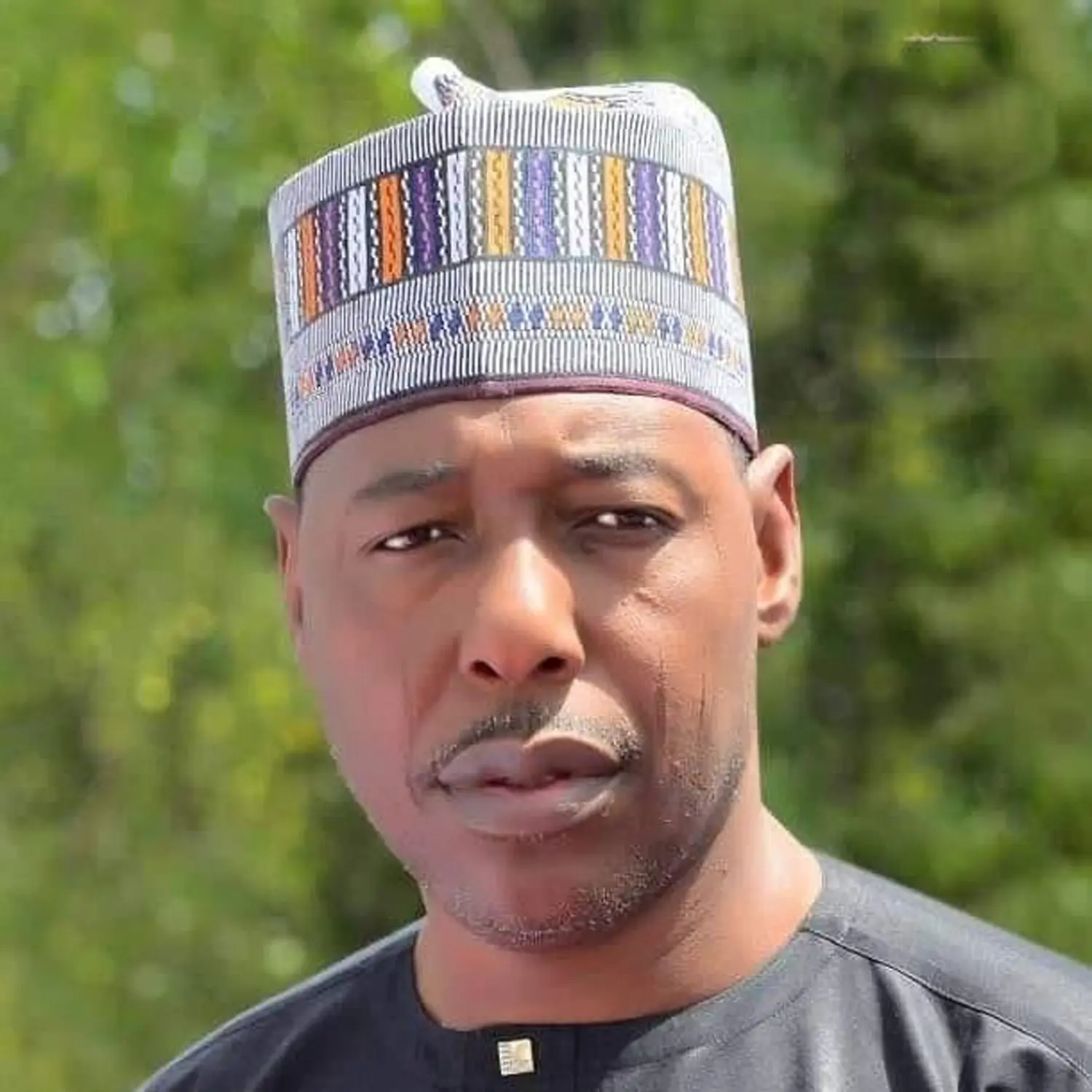
A teenage boy sentenced to death by hanging has written to the Borno State Governor, Prof. Babagana Zulum, pleading for speedy execution of the judgement.

Fifteen-year-old Mustapha Abubakar of Cell 6, Unit 1, Cluster 2 at the Maiduguri Maximum Security Custodial Centre in Borno State, northeast Nigeria, urged the governor to sign his death warrant quickly if his appeal for clemency would not materialise “within a reasonable time frame”.

Abubakar was sentenced to death by hanging at age 14 after he was reportedly lured into a get-rich scheme through kidnapping for ransom led to the death of the hostage.

The teenage boy who is the youngest inmate at the facility is on death row awaiting execution at the facility along with 81 men and two women.

In his letter, he lamented being “prostituted, subjected to physical, mental and unprotected sexual abuse from the older inmates and perverted warders”.

According to him, he would have committed suicide if not that his religion forbids it.

In his letter dated September 1, 2023, addressed to Zulum, copied to Vice President Kashim Shettima (former Borno Governor) and titled ‘A Plea For Clemency Or Death, Abubakar wrote, “My name is Mustapha Abubakar. I am a fifteen-year-old boy who was sentenced to death by hanging when I was fourteen. Currently, I am awaiting execution as an inmate on death row in Maiduguri Maximum Security Custodial Centre (MMSCC) Borno State, along with 81 men and 2 women. I am the youngest.

“In my youthful exuberance, I allowed greed, and sheer stupidity on my part, to be lured into a get-rich-quick scheme of kidnapping for ransom in order to buy a power bike. Unfortunately, not only did the plan backfire, it led to the untimely death of the hostage, a fellow human being who had medical complications without our knowledge at the time.

“I am remorseful. Oftentimes in my quiet time, I reflect over the trajectory my life has taken. While my mates in secondary schools are preparing for exams toward a meaningful future, I am here languishing in prison at the outset of my life, waiting for the hangman’s noose.

“I feel ashamed of what I have done and sad to have let my family, friends, relatives and country down. Had I followed the right part, perhaps I would have turned out to be a surgeon; a dream I had once nurtured.

“But I also sense that if given another chance, my deteriorating health permitting, I will turn out to be a wiser and productive citizen. With one stroke of your pen, my derailed life can be back on track.

“Your Excellency, I use this medium to plead for clemency within a reasonable time frame. I also plead on behalf of the other inmates on death row who had sent you a letter through the authorities of this centre which was never acknowledged because it probably was not delivered to you in the first place.

“Your Excellency, if clemency for me within a reasonable time frame is an absolute impossibility, then I will request your Excellency to please be kind enough to sign my death warrant expeditiously instead of the current trend of a perpetual wait for execution day, coupled with the stress and abuses from the prison warders who still operate with a punitive and repressive mindset.

“My judgement was rendered in simple and unequivocal language which I understood clearly. Nothing was stated throughout the reading by the honourable judge that while waiting on death row indefinitely in Maiduguri Maximum Security Custodial Centre, I should be prostituted, and subjected to physical, mental and unprotected sexual abuse from the older inmates and perverted warders.

“It is only because my religion forbids it, that I have not yet taken my life with my own hands.”

SaharaReporters

UniCal Sex Abuse Scandal: How Prof Ndifon shunned probe panel’s invitation 4 times

Again the embattled Dean, Faculty of Law, University of Calabar (UNiCal), Cross River State, Prof. Cyril Ndifon, accused of sexual harassment by female students of the faculty failed to appear before the panel constituted by the university to investigate the allegations.

On account of his failure to appear before the panel on Tuesday 12th of September, UniCal attempted to serve him a fresh invitation notice but allegedly threatened to unleash his dogs on the personnel sent to serve him the invitation.

Following his refusal to honour the panel’s invitation on the 12th, the hearing was extended to Thursday 14, September.

However, a source at the school on Sunday told SaharaReporters that Ndifon refused to appear before the panel after four consecutive invitations were extended to him. 

“He did not appear before the panel. He was given four chances and he didn’t appear. His arrogance will not allow him to appear. He knows there is no way out for him in this case. I just heard from the lawyer representing both current and past students of the faculty that the public sitting has closed,” the source said.

Ndifon had claimed that the allegation of sexual harassment was plotted against him because he won the faculty election.

Eyewitnesses reported that when the new invite which was extended to Thursday 14, was taken to his residence, his security guard refused to allow the messengers in. On insisting that it was urgent, the guards made to unleash their dogs.

Sources close to the Professor claim that the former Dean who is smarting badly over the sexual abuse allegations instructed his guards to release his dogs should any attempt be made to enter his compound and serve any document on him from the university.

Consequently, the university decided to substitute service through the university radio.

The announcement captured by Law & Society said:

“Unical 103.5.  A Public Announcement from the University of Calabar Panel to Investigate Alleged Misconduct and Abuse of Office.

“Prof Osim Ndifon of the Faculty of Law of the UniCal. Invitation to interact with the above panel

“Following your refusal to appear before the above panel today the 12th of September 2023, you are hereby invited again for interaction with the above panel to give your response to the issues related to the allegations of misconduct, sexual harassment, and abuse of office leveled against you.

“The sitting of the panel has been scheduled as follows:

“Date Thursday 14 September 2023. Time 10 am prompt. Venue University of Calabar Council Chambers.

“This invitation offers you the opportunity to make your submission, case, before the fact-finding panel which is in consonance with the standard administrative practice and in keeping with the extant rules and regulations of the University of Calabar.

“This is signed by Barr. Gabriel O. Oriok. Secretary.”

The media has been inundated with unending revelations from the probe panel where the embattled Dean of the Faculty of Law is being investigated.

Below are reports of some of the proceedings.

Day 1: 5TH SEPTEMBER 2023

LAWSAN President Obi Benedict Confirmed that all his claims against the Suspended Dean of the Faculty of Law, Professor Cyril Osim Ndifon are true. He further affirmed that he led the protest “We met as and agreed to protest, nobody was cajoled or forced to protest. If the Dean alleges that students were cajoled or forced, let him come out and prove it.”

Benedict said a student— Victor Bissong, who earlier did a disclaimer against the protest by the law students, has withdrawn the apology saying he was under threat by the Suspended Dean to write the disclaimer. He said LLB 2A and B students paid N500 each to get Matriculation number. He also said the Suspended Dean collected monies from students for Law Journals that were never distributed to law students in the faculty.

2. Tabor Patricia, Speaker of Lawsan parliament UNICAL, alleged that students from the faculty were forced to pay various levies to the faculty leadership under the suspended Dean Professor Cyril Osim Ndifon for 3 years; journals were not given, neither does the money refunded to law students.

3. Victim A also testified against the Suspended Dean Professor Cyril Osim Ndifon. She also testified that the Defendant had harassed her sexually at his office in UNICAL.

4. Victim B, a 300-level law student Testified that the Defendant, Cyril Osim Ndifon harassed her also sexually in his office twice after voluntarily offering to help them get higher grades.

5. Victim C, a 400 level student testified that students from the faculty of law were defrauded via the payment of illegal dues like N500 for Lawsan Students Union Dues, N1000 for matriculation numbers and for Fee Clearance to the faculty leadership under the watch of the suspended Dean, Prof. Cyril Osim Ndifon.

6. Victim D testified also that, he paid N500 for matriculation numbers.

7. Victim E testified that, she is a victim of illegal levies like N2,00, for clearance, N1,700 for Law Journal which she has paid on three occasions (3 years) for the faculty law journal without being given the said journal.

8. Victim F, a student of the faculty also testified that, she and her friend were enticed to give their registration numbers and names with a promise to be awarded higher grades, by the suspended Dean of faculty.

9. Barr. Mrs. Antonia Kalu (female) based in Canada formerly (Ukra Umukoro Anthonia) admitted into the Faculty of Law University of Calabar in 2001, was supposed to graduate in 2006 but was delayed by the suspended Dean, Prof. Cyril Osim Ndifon. She said she was made to spend two extra years in school before graduating.

10 Another victim, testified that the suspended Dean, Prof. Cyril Osim attempted to force her into Oral Sex in his office and also several other sexual attempts but she was fortunate to escape.

11. Barr. Jama Owubuariri graduated from UNICAL in 2006. He said the suspended Dean of faculty, Prof. Cyril Osim Ndifon robbed him of his scores during his undergraduate days in 2002 at the University of Calabar.

Day 2, THURSDAY SEPTEMBER 7, 2023.

The panel continued with a focus on the Academic and non-academic Staff in the faculty of law. From the facts obtained from the interrogations hereunder in the UNICAL panel of Investigation, some Staff of the faculty of law and its management are seen to be complicit in this whole issue. However, those interrogated include the following:

1. Prof. Mike Okorm, Former Dean of the Faculty of Law Affirmed the allegations against the former or Suspended Dean of the Faculty of law. He affirmed the allegations against the faculty about students’ payment for the faculty law journal. He said that there have been several complaints from the survivors.

2. Another Victim, aged 23, a female student, is a prime witness against professor Cyril Osim Ndifon, she testified that she was molested, threatened, raped, forced into oral sex, and cheated by the Defendant, Cyril Osim Ndifon, inside the defendants’s office.

3. Dr. Rose Ugbe, Acting Dean of the faculty of law, Testified that the suspended Dean ran the faculty based on loyalty… “If you are not his loyalist, he will have nothing to do with you.” The acting Dean also said, 148 Law students were transmitted into the law school without due process, under the leadership of Prof. Cyril Osim Ndifon.

4. Prof. Dada, a member of the University Senate Business Committee, a former Dean, and a senior member of the academic Staff in the faculty of law. He said he has noted over time several complaints and anomalies in the faculty of law including harassment. Prof. Dada is indifferent due to according to him “threats by some persons in the institution, and false accusations”. He said people threatened to “deal with him”, so he decided to mind his business and his job, he told the panel that he “refused to complain about any issues in the faculty”, due to these issues despite several complaints.

5. Prof. Ibanga is a professor who has been with the faculty for 33 years. He is the Chairman of the committee set up by the school to enquire into the mobilization of students into the Law school. He is indifferent. He said some students sent by the faculty management were qualified and they did so without due process. He said Staff had been complaining of poor handling of results in the faculty by the management severally. He said his indifference is due to the attitude of staff members in the faculty.

6. Dr. Mike Otu, is a senior staff and former Head of department in law faculty. He admitted to complaints from staff and students in the faculty under the leadership of the suspected dean. He said he had warned the faculty members and management over the complaints but, there weren’t any solutions. He said most of the indifferent staff members are guilty of allegations made against the faculty and the management.

7. Associate Professor Edem Essien, Chairman of the Post Graduate Committee in the faculty. He explained that the Committee’s account was kept from the committee and was held by the suspended dean Professor Osim Ndifon, at the expense of the Post Graduate Committee. He said that the staff had been quarreling over certain issues or abnormalities in the faculty of law.

8. Barrister Amarachi is a lecturer in the faculty of law. She testified that she too is a victim of attempted oral sex, virginal sex, and general sexual harassment and assault from the suspended Dean of that faculty, Professor Cyril Osim Ndifon. She affirmed that the defendant is guilty of the allegations.

9. Mr. Robert Omang, is the the former faculty officer, who served during the administration of the Suspended Dean Professor Cyril Osim Ndifon. He called that the Dean permitted him to collect unapproved monies from students (numbering over 1,000 students) and that the faculty has not distributed any journals to the students for 3 years and the students have paid (N1,700) each.

10. Ann Agi, a lecturer in the faculty testified that Prof. Cyril Osim Ndifon denied her an opportunity to defend her Post Graduate Program after spending 5 years. She also alleged intimidation by the defendant on her and her colleagues.

11. Dr Alex Abang Ebu, a Head of department in the faculty. He said the dean is guilty of abuse of office; he said he divided the faculty, between junior and senior lecturers. He said the suspended dean did not recognize Heads of Department as HODs had no schedule or offices.

12. Barrister Linda Iheanacho, is a lecturer in the department. She said she was asked by the Suspended Dean to co-supervise students with him, but she declined, as against the various allegations that she made. She said she is not a member of any of the factions in the faculty. She accused female students of playing around with lecturers in the faculty of law; however, she said she was warned by some female students to mind her business in an attempt to caution them against going too close to male lecturers.

13. Dr Lawrence Edu, is a lecturer in the faculty of law. He is one of those who were close to the suspended Dean. He said the dean did not seek his consent before adding him as an assistant editor to the faculty Law Journal. He said he hasn’t received any complaints from students.

14. Ncha Ogbeche, a lecturer in the faculty. Denied allegations of harassing any student in the faculty of law. Ncha who broke into tears said he is wrongly accused. He admitted that two students wrote exams in his office but that it wasn’t a hidden affair, as he shares an office with other colleague lecturers, who were present during the exams.

15. Mr Njong Cleverty. He introduced himself as a tutorial lecturer in the faculty. He alleged that he is uncomfortable the way female students visit male lecturers after 4pm on working days. He spoke in dismissal of his alleged involvement in the numerous allegations against him by students and some members of staff.

16. Comfort Jumbo, she is a recent graduate from the faculty but she can’t proceed to law school due to refusal of the management of the faculty of law to upload her results, after her refusal to meet with Prof. Cyril Ndifon at an undisclosed Hotel in Calabar by 4 o’clock during the period .

The panel closed sitting at about 6:55 pm on Thursday. The chairman Professor Dorathy Oluwagbemi Jacob, thanked the members and observers for their patience and efforts. She said the Panel will continue Tuesday, September 12, 2023; on the said date, the suspended dean (defendant) shall appear before the panel to defend all the allegations leveled against him, after which the panel will analyze its findings and make recommendations in accordance with relevant law.

Additional report from Sahara Reporters

TIPS