Home Blog Page 723

Nigerian states should be compensated from latest Abacha loot – Rights advocate tells US Court

  • Files additional amicus brief in $ 200 million Atiku Bagudu money laundering case in Washington

International human rights lawyer, Emmanuel Ogebe has filed an additional amicus brief in the ongoing $ 200 million Atiku Bagudu money laundering case in Washington.

Ogebe said the additional filing was to alert the court how President Bola Tinubu who forfeited $460,000 appointed a more massive forfeiter of $460 million as his budget minister,

Abubakar Atiku Bagudu the current Nigerian minister of budget and national planning.

The rights advocate also added Nigerian states to the list of proposed victims to be compensated from the latest Abacha loot.

Below are the court papers,

IN THE UNITED STATES DISTRICT COURT
FOR THE DISTRICT OF COLUMBIA

UNITED STATES OF AMERICA,
Plaintiff,

VS. Civil Action No. 13-1832 (JDB)

ALL ASSETS HELD IN ACCOUNT NUMBER
80020796, IN THE NAME OF
DORAVILLE PROPERTIES CORPORATION,
AT DEUTSCHE BANK INTERNATIONAL,
LIMITED IN JERSEY, CHANNEL ISLANDS,
AND ALL INTEREST, BENEFITS, OR ASSETS
TRACEABLE THERETO, et al.,
Defendants.

FURTHER SUPPLEMENTARY AMICUS BRIEF ADDENDUM(2nd)

Now comes Amicus/Movant with a further supplementary brief (hereinafter known as the Second Supplementary Addendum) as addendum to the initial Amicus brief dated January 20, 2023 in order to furnish the court with vital information which is crucial to the proceedings. Since the matters addressed herein, relate specifically to emergent events, findings and developments referenced in the main Amicus Brief and the First Supplementary Addendum, Amicus respectfully seeks to submit same as a further addendum without requiring leave of court, other than that originally prayed the court in the other original motion.

Now therefore, Movant Amicus adds further as follows:

  1. CABINET APPOINTMENT OF ATIKU BAGUDU

On 4th August 2023, impacted non-party Mr. Atiku Bagudu was confirmed as a federal minister nominated by President Tinubu whose election is currently being litigated in court over US money laundering forfeiture (amongst other grounds.)

  1. THE NECESSITY OF THIS SECOND SUPPLEMENTARY BRIEF

2.1 Amicus had warned in First Supplementary Addendum that, considering their close antecedents, US money laundering, senatorial and gubernatorial career paths and joint membership of the ruling party, Nigeria’s newly installed president Tinubu was more than likely going to continue a pattern of support for Bagudu versus Nigeria’s interest in recovery of the defendant funds.

2.2 Further, Amicus predicted that Bagudu would probably vie to succeed him subsequently and thus have access to more federal funds. However, last week, Tinubu appointed Bagudu Minister of the multi-billion Budget of the nation – fully vindicating and validating aforesaid concerns much earlier than expected.

2.3 Given the nature of the case and the potential impact it may have on the rights and interests of all parties involved (inclusive of impacted non-parties) Amicus firmly believes that it is critical for the court to be made aware of this significant development.

2.4 Given the current state of the case, it may be unlikely that either of the parties would necessarily bring this relevant information to the fore immediately.

2.5 Amicus is of the opinion that the newfound position of authority of Bagudu as Federal Budget and Planning Minister, not only compromises the ability of the new Nigerian administration to seek the best interest of Nigeria in this matter but, arguably, even any future further settlements or repatriations involving Nigeria as they would be subject to Bagudu’s office.

2.6 The very fact that Nigeria’s national budget, which Bagudu now controls, will be denied the entirety of the defendant funds in this case, whether this case resolves in judgment or settlement, reveals how deeply strategic and conflicted his current position is. Indeed, short of being appointed Attorney General (for which he is also not qualified not being a lawyer or having requisite character) Tinubu has placed him in the most crucial position to influence any future repatriated funds issuing from this court or other jurisdictions abroad.

  1. THE DISTURBING NEXUS BETWEEN THE EVENTS OF 1990s AND GOVERNANCE IN PRESENT DAY NIGERIA

3.1 The 2013 complaint by the Justice Department stated thus;
“Bagudu played an instrumental role in setting up and executing the complicated financial transactions used to launder the proceeds of the conspiracy” that took place under Gen. Abacha.

3.2 As this court narrated previously, “The process of using security votes letters “to take [funds] from the [Central Bank of Nigeria] violated what the [Central Bank of Nigeria] has described as ‘accepted government procedures.’” Id. ¶ 27. “The proper procedure required the Minister of Finance and the Accountant-General to each approve disbursements in accordance with Nigeria’s budget.” Id. The security votes letters at issue were not properly approved “and were also not included in Nigeria’s budget for the relevant fiscal years.” Id. After General Abacha’s death, Nigeria established a Special Investigation Panel, “which found that General Abacha and his co- conspirators had used the false security votes letters to steal and defraud more than $2 billion in public funds, including: (1) at least $1.1 billion and £413 million pounds sterling (GBP) in cash; (2) at least $50,456,450 and £3,500,000 GBP in traveler’s checks; and (3) at least $386,290,169 through wire transfers.” Id. ¶ 29.
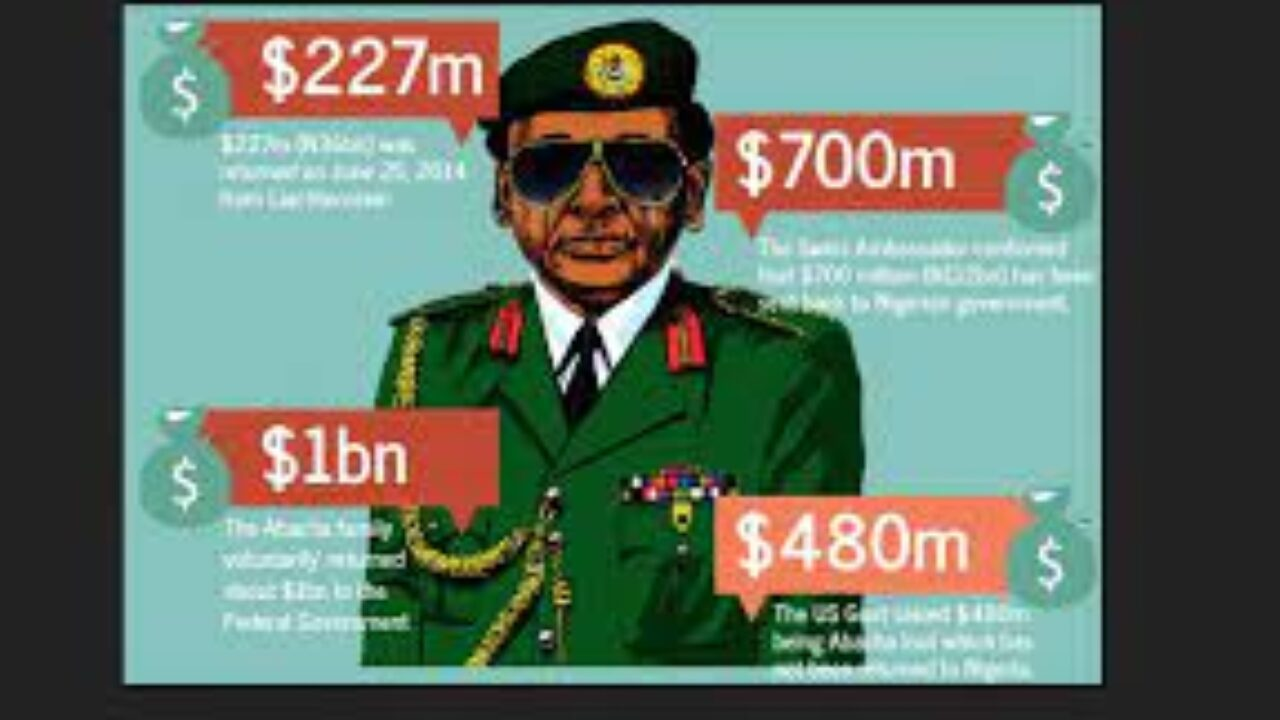
After the funds were disbursed from the Central Bank of Nigeria, bank staff and “other individuals known and unknown to the United States” would deliver the funds to National Security Advisor Gwarzo at his residence. Id. ¶ 31. “Gwarzo and others acting at his direction would [then] repackage the currency in secure bags and…deliver it to General Abacha at his residence.” Id. “General Abacha, or those acting at his direction, [then] delivered more than $700 million of these funds to [General Abacha’s son] Mohammed Abacha in bags or boxes full of cash.” Id. ¶ 32. Mohammed Abacha, in turn, gave that cash to Bagudu, who “arranged for the money to be transferred to accounts controlled by Bagudu and Mohammed Abacha in foreign countries.” Id. ¶ 33. “In order to move the money overseas,” Bagudu deposited the money, which he referred to as his “‘cash swaps,’” in two local Nigerian banks, and then he “and/or Mohammed Abacha” instructed those banks to transfer the funds to accounts overseas owned by Mohammed Abacha and Bagudu. Id. ¶ 34. “Transfers included deposits into accounts in the
name of [defendant corporations]” under the control of Bagudu and Mohammed Abacha. Id. ¶¶ 33–34. “[A]t least $137 million” of these funds were “transported into and out of the United States.” Id. ¶ 35. The complaint describes various specific transactions in support of these allegations. Id. ¶ 35(a)–(f). And as discussed below, the funds were later pooled with funds from the second scheme and then laundered and transferred to defendant investment portfolios. See id. ¶¶ 52–93.
The second scheme, referred to as the “Debt Buy-Back Fraud,” began in 1996, when Bagudu and others arranged for the Nigerian government, with General Abacha’s approval, to repurchase its own debt from Mecosta—a company owned by Bagudu and Mohammed Abacha—at a price significantly higher than what Nigeria would have paid on the open market. Id. ¶¶ 36–44.” https://cases.justia.com/federal/district-courts/district-of-columbia/dcdce/1:2013cv01832/163245/79/0.pdf?ts=1426843689

3.3 Perhaps there is no more apt descriptor of Mr. Bagudu’s qualification to be Budget Minister than the August 23rd Bloomberg headline “US Targeted His Assets; Nigeria’s Made Him Budget Minister.”
https://www.bloomberg.com/news/articles/2023-08-23/us-targeted-his-assets-nigeria-s-made-him-budget-minister

3.4 The story above is just the latest shocking installment a step up in incremental impunity from Bloomberg’s prior headline referenced in First Supplementary Addendum “Nigeria Targeted a UK Mansion; Its Next Leader’s Son Now Owns It” https://www.bloomberg.com/news/articles/2023-05-02/a-1-8-billion-oil-probe-a-london-mansion-and-nigeria-s-next-president

For illustrative purposes, the following massive malfeasance, in uncanny similitude to Gen. Abacha’s Central Bank seen in this case, occurred under Gen. Buhari’s Central Bank recently:

E-Nigeria Newspaper reports that “at the expense of impoverished Nigerians, the embattled CBN Governor opened a forex credit line for Rabiu which enables him to borrow at the official rate of N199 at the time, resell at a black-market rate of N495, and rake in billions of naira in turnover in quick succession.

For instance, Emefiele allegedly ordered the transfer of N1,382,500,000 being a forex purchase to BUA on 8th January 2016.

On 18th January, BUA International purchased the dollar equivalent of N386,799,033.70 using the official rate of N199 while the black-market rate at the time was N495.

On the same day, Emefiele was said to have ordered another disbursement of forex worth N520,217,528 to BUA.

Another N1,382,500,000 was also sent on the same day as well as on 22nd Januaryrespectively.

On 22nd January, another N386,799.033 and N520,217,528 was again wired from CBN account in forex to BUA.

On 15th February, similar disbursements of N386,799.033, N1,382,500,000, and N520,217,528 left the nation’s account to BUA.

Similarly, on 23rd February, N386,799.033 and N520,217,528 made BUA International smile on the order of Emefiele.

In like manner, again on 2nd March the company got another lodgment of N386,799.033 and N520,217,528.

On 11th March, BUA further purchased $12,282,002 in double tranches from CBN while on 23rd March, $29,625,000 was also moved from CBN to the government-fed billionaire to its BUA Sugar Refinery account to Ecobank account number 9992021618.

On 31st March, the country’s foreign reserve depleted with $49,375,000 from CBN to BUA into its Ecobank account number 9992023306.

Via its GTB account 214161839, USD sale of forex at the official rate of N197.5 worth N2 billion was again given to the company by CBN.

Via CBN intervention fund when the company was financially viable, the sum of N392,034,060 in three tranches was paid to BUA Sugar Refinery using the official rate of N198 to its Stanbic IBTC account number 11889618.

Troves of these financial documents saw over N40 billion in returns to Abdul Samad Rabiu-led BUA alone, in the year 2016 with the active connivance of Godwin Emefiele.” https://e-nigeriang.com/buas-abdul-samad-rabiu-emefieles-multi-billion-dollar-racketeering-deals-exposed/

3.5 That Nigeria’s Tinubu appointed a fellow US money laundering forfeiter as Budget Minister, having forfeited at least 1000 times more money than him in the US alone – $458,000,000 to $460,000 – one could reasonably infer that this is to facilitate a grander scale national larceny from within government than he did from outside government decades ago.

  1. FUTILITY OF ACTION OR DOMESTIC REMEDIES IN NIGERIA

4.1 On the 4th of August, 2023, Amicus went to submit a petition to Nigeria’s senate opposing Mr Bagudu’s nomination, on the grounds of:
•Financial malfeasance
•Ongoing litigation

4.2 However senators informed him that President Tinubu had warned that the nomination was not to be opposed in any way thus forestalling legitimate legislative checks and balance oversight and stultifying separation of powers.

4.3 In a case decided by the Supreme Court this year, (Mohammed Abacha v A.G Federation SC/641/2013) “A five-man panel of the Supreme Court yesterday refused to grant a request by members of the family of the late General Sani Abacha, for the stoppage of fresh criminal forfeiture proceedings against the ex-Head of State and some members of his family.”
https://www.thisdaylive.com/index.php/2023/01/14/scourt-paves-way-for-fresh-criminal-forfeiture-actions-against-abacha-family

The court ruled that the Abachas did not have an immunity deal with the Nigerian government for crimes related to the defendant funds in these proceedings amongst others and are still liable to prosecution.

Despite the decision of the Nigerian Supreme Court this year, permitting prosecution of crimes in which Bagudu was involved, rather than face prosecution by the government, he received an appointment into the government.

4.4 From the foregoing, neither legislative, judicial or executive action has succeeded in holding Bagudu fully accountable within Nigeria for serious fraud against his country and countrymen. This court presents a fair forum for justice to find its course than Nigeria has.

  1. AMICUS’ PROPOSAL ON EQUITABLE RESOLUTION OF THE SITUATION

5.1 Following Mr Bagudu’s ministerial appointment, Plaintiff United States may well recommend the Bagudus’ relinquishment of this litigation in view of the overcompensation with a prime cabinet office.

5.2 It may also ask that the Federal Government of Nigeria remediate this unsavoury situation in an acceptable manner that could be considered “cooperation” that would reentitle it to reclaim the funds, for example remove Bagudu as Minister, change his ministerial portfolio and obtain his termination of all claims to these funds.

5.3 The following are updated and expanded Proposed Beneficiary Classes for the defendant funds, regardless of whether the funds are reclaimed by Nigeria via the process above or are subject to settlement:

i. Victims of Abacha and other human rights abuses. These can be found in the report of Nigeria’s Federal post-dictatorship Truth and Reconciliation
Commission known as the Justice Oputa Panel. This would provide relief to historical recorded victims nationwide prior to year 2000 and Victims exiled abroad who were unable to participate in that hearing by that account.

ii. Victims of State brutality. These can be found in the reports of over 30 Nigerian States’ judicial commissions of inquiry into police brutality following the famous #endSARS protests of 2020. This would provide relief to recent victims across the states and could be administered in concert with human rights organizations and the Commission. Victims holding judgments against FGN for rights abuses could also be satisfied from these funds thus extirpating FGN’s legal liabilities. An excerpt of the report of an ad hoc state Judicial Panel of Inquiry is attached here as Appendix JPI1 for indicative purposes.

iii. Victims of Terrorism. These can be found in recent reports of organizations providing humanitarian assistance across Nigeria and reach victims across the nation. It could be administered in partnership with these.

iv. Uncompensated documented 2011 Victims of Election violence as captured by the PEV Presidential Commission and victims of 2023 election violence.

v. Judicial technological upgrades for electronic case filing and court recording.
Last month a Justice of Nigeria’s Court of Appeal died and this month, a Justice of the Supreme Court also died largely due to horrific working conditions. Amicus’ father who retired from the Supreme Court says even at the apex court, Justices still take notes in long hand.
By its resumption next month, the Supreme Court will have less than 40% of its justices and is currently backlogged by 10 years. Urgent upgrades and investments in court technology and infrastructure would literally save the lives of justices and the legal system.

vi. Rebuilding of Nigerian communities destroyed by flooding and conflict other than terrorism aforestated.

vii. Nigerian states who are constitutional co-owners of corporate funds who approach this forum to state a claim

  1. CONCLUSION: RECOMMENDATIONS

6.1 Upon the strength of the facts in this second supplementary brief, Amicus maintains that it is necessary for the court to withhold approval of any proposed settlement based on the ministerial appointment of Mr Bagudu into Nigeria’s federal government, which is a material change in circumstances, that threatens or impacts every future action taken by this court and others with respect to the Abacha loot.

6.2 Amicus believes that in this light, as the court previously did in directing the parties to brief it on the implications of the $300 million repatriation in 2020, it should similarly order parties to brief it on the impact of this appoint and allow Amicus to reply to said briefs.

6.3 Amicus believes that a status conference should be held by the court to review this matter.

6.4 Amicus believes that a mandatory referral to mediation for the parties and impacted non-party (Abacha victims) should then be considered as this case is already in its 11th year.

Wherefore, Amicus once again respectfully urges the inclusion of this Second Supplementary Addendum into his Amicus Brief and for said leave to be granted for filing as prayed.

Emmanuel Ogebe
Amicus Curiae

It is now available open source on the court’s website per details below.

NOTE TO PUBLIC ACCESS USERS Judicial Conference of the United States policy permits attorneys of record and parties in a case (including pro se litigants) to receive one free electronic copy of all documents filed electronically, if receipt is required by law or directed by the filer. PACER access fees apply to all other users. To avoid later charges, download a copy of each document during this first viewing. However, if the referenced document is a transcript, the free copy and 30 page limit do not apply.
U.S. District Court

District of Columbia

Notice of Electronic Filing

The following transaction was entered on 9/5/2023 at 3:02 PM and filed on 8/31/2023
Case Name: UNITED STATES OF AMERICA v. ALL ASSETS HELD IN ACCOUNT NUMBER 80020796, IN THE NAME OF DORAVILLE PROPERTIES CORPORATION, AT DEUTSCHE BANK INTERNATIONAL, LIMITED IN JERSEY, CHANNEL ISLANDS, AND ALL INTEREST, BENEFITS OR ASSETS TR et al
Case Number: 1:13-cv-01832-JDB
Filer: EMMANUEL OGEBE
Document Number: 400
Docket Text:
SUPPLEMENTAL MEMORANDUM to re [384] MOTION for Leave to File filed by EMMANUEL OGEBE. (Attachment: # (1) Appendix)(zjm)

1:13-cv-01832-JDB Notice has been electronically mailed

https://www.facebook.com/100066841516904/posts/pfbid02gAFRFGHdiedVAPexgRuuiAZSYVRNad6n2HR6RM9u5sTGiNDmHXjjkKvMMBZ4ejUhl/?d=w&mibextid=qC1gEa

Nigeria: Holding in Trust: A Smart and prudent way to bequeath property to a minor

By Yvonne Ezekiel and Gukongozi Ugwuez

Protecting your assets and at the same time providing for your loved ones is a top priority for any parent. You may be an old-school businessman or an up-and-coming entrepreneur, but when it comes to your family no matter your status or social class, you want them to have the best possible future.

Passing on your assets to your family through a trust is one of the best ways to support them in the future. For many parents, their children’s welfare and working to ensure they are always safe, protected, and cared for is often the most important thing in their lives. How their children would fare if they do not live to old age, especially when they are minors, causes concern for these parents.

Many parents in a bid to address some of the above concerns, execute a deed of gift, donate power of attorney to their minors or make their children beneficiaries in their Will. Bequeathing property and assets to minor children using the above-stated means can create many legal complications. For example, a power of attorney can’t be donated to a minor. Also, a revocable power of attorney loses its validity after the death of the donor and an irrevocable power of attorney which remains valid after the death of the donor must be given for valuable consideration. Until a child attains the age of legal capacity, they are considered to be minors and will not be able to control any property or assets that were left to them in a Will or gifted to them in a deed of gift. This is in line with the Child Rights Laws of various States in Nigeria and the Child Rights Act1, which provides that the statutory age for an individual to attain legal capacity is 18 years. Section 29(4) of the 1999 constitution2 corroborated this by stipulating that the age of legal capacity is 18 years and above. Moreover, a person can only validly acquire landed property when such a person is 21 years old according to the Land Use Act3. The only exception to this rule as conveyed by Section 7b of the Land Use Act4 is that a minor can own land or property in Nigeria where such a person who is below 21 years old inherits such property upon the death of his parent who died intestate. When a person dies intestate, the distribution of his property will be according to the customary law of inheritance and succession practised by such a person. Under customary law, minors can own land and properties provided the same properties are inherited from a parent whose properties are governed by the customary law of inheritance and succession. Section 7 (b) of the Land Use Act5 stipulates as follows:

Trending

Lawyers/Law Firms are Taxable Persons Liable to Pay VAT — Conclusions from Al-Masser vs. FIRS

“a person under the age of twenty-one years upon whom a statutory right of occupancy devolves on the death of the holder shall have the same liabilities and obligations under and in respect of his right of occupancy as if he were of full age notwithstanding the fact that no guardian or trustee has been appointed for him.”

Devolution of a statutory right of occupancy upon death is regulated by the customary law of the deceased parent. The customary system of inheritance and succession however is not a good option for bequeathing property to minors because it is fraught with a lot of discriminatory practices. For instance, there are the principles of primogeniture in which the eldest son inherits the property of his deceased father exclusively and of ultimogeniture in which the youngest son inherits the property of the deceased father to the exclusion of all others. Primogeniture is practised in Bini society, Nupe society and some others in the North. Under Igbo customary law, male children inherit land to the exclusion of female children in the family.6

Leaving your property in accordance with customary law does not guarantee you control over what will happen to it after your demise. You are not able to ensure your children inherit your property and are in charge of managing and distributing your property. All these decisions are left to family members and mischievous relatives. To circumvent this problem, aside from making Minors beneficiaries in a will, a parent can take a step further to protect their minors by using the method of Holding in trust. A trust can provide many benefits, like financial security, peace of mind, and guidance for the future. Furthermore, I will discuss the meaning of holding in trust and who may be an ideal trustee.

What does Holding in Trust Mean?

Holding in trust is a legally recognised structure where assets are held by a person or group of people (the trustees), for the benefit of another person or people (the beneficiaries). In a trust, a party known as a trustor gives another party, the trustee, the right to hold title to and manage property or assets for the benefit of a third party, the beneficiary. Trusts can be established to provide legal protection for the trustor’s assets to ensure they are distributed according to their wishes.

A Trustee is a person who acts as a custodian for the assets held within a Trust. He or she is responsible for managing and administering the finances of a Trust per the instructions given. The parent to the minor while making the will can expressly state how the funds should be invested or used for the benefit of the minor whilst held in trust.

You would be surprised at how many trust funds have been established for children. It has nothing to do with providing an excessive amount of cash so that the young person can buy whatever they want. Instead, a trust fund is established so that if the parents are not around to provide for the child, the child has a source of income and assets necessary to survive.

If you have life insurance, this probably sounds familiar. In fact, if you have life insurance, and your underage children are beneficiaries, they will have a trust fund established for them if you happen to pass away.

Most often, the person who creates the Trust(the parent) is the Trustee until he or she is incapacitated or passes away. At that time, the Successor Trustee steps in. A Successor Trustee is named second in line to serve as Trustee. If the Successor Trustee is either unable or unwilling to serve the role required, it can be a good idea to name an alternate just in case anything happens to the originally named person.

Who can be a trustee:

Ideal choices for a trustee can vary depending on the specific circumstances, but generally, trustees should be trustworthy, responsible, and impartial. It is very important to choose the right trustee and they should also have good financial and legal knowledge as they will be responsible for carrying out the wishes of the trust, managing the trust assets and protecting the interests of the beneficiaries. If you’re setting up a trust, it’s always a good idea to seek legal advice to make sure you’re making the best decisions for your family. The following are often considered as trustees:

  • Friends/Family– A friend or family member who you trust can be a trustee for your minor. Someone who knows and understands your family dynamics and is willing to take up the risk. With the right person, the peace of mind this route offers is worth it. However, it also comes with the potential for family drama and even resentment.
  • Lawyer/Attorney– This is a wonderful option if you don’t have a close family member or friend to assume the role. A neutral third party, such as a lawyer, can be appointed if you just can’t decide and are concerned about hurt feelings or arguments among your loved ones. Another advantage is that your lawyer will understand your family if you have a close and long-standing relationship with your lawyer.

Conclusion:

There are so many benefits to setting up a trust for a minor, including protecting the assets for their future and providing guidance and structure. Unfortunately, there are a number of mistakes that parents make when creating trust funds for their children. Many are the result of not knowing how these funds are supposed to work. Some of the likely mistakes that can occur and need to be avoided when creating a Trust Fund for your child are:

  • Not setting clear instructions for how the trust fund should be managed. This can lead to confusion and conflict among the trustee, the child, and other family members. When the instructions are not clear, the trustee may make decisions that the child disagrees with, leading to tension and frustration for everyone involved.
  • Not ensuring that the trustee has the necessary skills and experience to manage the trust fund. The trustee is responsible for managing the trust fund and making sure it is used for the child’s benefit. If the trustee does not have the necessary skills or experience, the trust fund may not be managed properly, which could negatively affect the child’s future. It is very important that a parent seeks legal advice before creating or setting up a trust.
  • Assuming family members are the best choice for trustees. Sometimes, family members or close friends can make good trustees, but in other cases, it may be better to choose a professional trustee, like a lawyer, bank or trust company.
  • Not having the appropriate party draft the trust document

Footnotes

1 Child Rights Act

2 Section 29(4) of the 1999 constitution of the Federal Republic of Nigeria

3 Section 7 of the Land Use Act

4 Section 7b of the Land Use Act

5 Ibid

6 Cases and Materials on Nigerian Land Law by Niki Tobi

The content of this article is intended to provide a general guide to the subject matter. Specialist advice should be sought about your specific circumstances.

AUTHOR(S)

Yvonne Ezekiel

Olisa Agbakoba Legal (OAL)

Gukongozi Ugwuez

Olisa Agbakoba Legal (OAL)

Mondaq

2023/2024 Legal Year: Nigerians are not expecting anything better

  • Lawyers and judges are a reflection of the society they live in

Bayo Akinlade Reflects on # alleyesontheJUDICIARY And The Misconceptions of Expectations

Another new legal year is upon us as we all ceremoniously visit our worship places calling on God to use us to do justice. While some believe these prayers are essential, many are disillusioned by the very concept of expecting a selected few Nigerians within the Judiciary to fix all our nation’s problems.

I chuckle in disbelief when I hear my colleagues accept the failures of our judiciary and note that judges are a reflection of our society since Judges live amongst us, we can’t surely expect them to do any better or can we? As far as I am concerned if there was ever a lame excuse for incompetency, this was the worst of it.

The Judiciary and even the legal profession has its pride in being populated by exceptional individuals (Honourable and most learned) so why would anyone amongst our ranks ever note that we cannot expect anything better from the custodians of Justice because they are part of an unjust society?

AlleyesontheJudiciary is a wonderful buzzword but for all the wrong reasons. What justice are the people who echo these words expecting? What are they demanding from the judiciary that they have condemned and vilified?

What are they expecting from a judiciary that has been systematically compromised to its very core by the same set of people that now seeks it’s independence and impartial pronouncements? What kind of Justice do they expect from a judiciary that has been impoverished and abused by the other arms of government?

What are Nigerians really expecting from a judiciary they do not respect? Nigerians will rather take their disputes to an illiterate policeman, local chief or even a bystander than seek justice where it is most likely to be found and dispensed.

There are NO EYES ON THE JUDICIARY! We are simply blind to anything moral and good. If we had eyes on our judiciary we would seek to support that institution and ensure it was well protected and insulated from all the vices that has swallowed up the Executive and Legislative Arms of Government.

The Judiciary in this new legal year cannot do anything for Nigerians. ONLY Nigerians can rise up to insist that the Judiciary is independent. ONLY then can we begin to find our way to having the judiciary we hope and pray for.

P. S
JUDGES (at all cadres) ARE EXCEPTIONAL INDIVIDUALS who are appointed to do only what God has the power to do! They are the BEST and the WISEST of us!

Bayo Akinlade Esq.
Publicity Secretary,
Nigerian Law Society &
Convener, Fight Against Corruption in the Judiciary

Supreme Court Fire Update: Justice Saulawa’s chambers razed

Following the fire outbreak at the Supreme Court of Nigeria this morning (Monday), Law & Society has confirmed that the fire which has since been put off affected only a part of the Justices’ chambers. No other section of the court was affected,

In the meantime, sources close to the court told Law & Society that the chambers of Hon. Justice Ibrahim M.M. Saulawa was particularly torched.

According to the source: “only Justice Saulawa’s chambers was affected. Everything in the chambers got burnt. Not even a pin was left.”

Justice Saulawa who is presiding over some political cases was billed to sit this morning. However, given the unfortunate incident, lawyers in the matter who were already seated in the court were informed that the court would no longer sit.

The cause of the fire which fortunately did not spread to other Justices’ chambers is yet to be ascertained.

Earlier today Blueprint Newspaper announced that the building housing Nigeria’s Supreme Court at the Three Arms  Zone in Abuja was on fire,

At the time of the report, staff members of the court were seen around the court complex evacuating documents and property from the Justices’ chambers.

VIDEO: Happening NOW! Supreme Court building on FIRE!!!

The building housing Nigeria’s Supreme Court at the Three Arms  Zone in Abuja is currently on fire,

Blueprint correspondent reports that the cause of the fire incident is still unknown as at the time of filling this report. However, some persons were seen around the apex court complex evacuating some documents and property from Justice’s chambers.

More details shortly.

Blueprint.

Intimate Affairs: Unwise sacrifices, By Funke Egbemode

Patty was in pain, deep searing pain. She was not supposed to be in this place, end up at this sorry pass. She gave Alhaji her all; the relationship her everything. Relationship? Was what they had even worth calling a relationship? Because looking back from her balcony of grief, all she could see now was a one-winged flight that eventually crashed spectacularly. The pain wracking her body and soul was made worse by the feeling of foolishness. You know how you feel when you finally realised you’ve been used, had been taken advantage of and you allowed it all to happen, with your eyes wide open.

Patty wept and howled. She cursed and screamed but unless an uncommon miracle happens tomorrow, Alhaji was lost forever, her heart shattered into smithereens, her self-esteem in the mud.

What really happened?

Patty and Alhaji were an item for four solid years. Alhaji’s two wives and children knew Patty as the ‘latest sisi’ in Alhaji’s life. He’d set her up in a posh apartment in Abuja and spoilt her in every way possible. Indeed, everyone thought Patty was the third wife-in-waiting. But last Saturday, out of the blues, Alhaji took a third wife and it wasn’t Patty. No, Patty heard of the event just like the rest of us. How’s that for violence in romance, heartless blindsiding? How do you not tell a woman you’ve been with for four years that she is not good enough, not wife material? How does a woman miss all the signs that she’s not going to make wife cadre? Is it possible for a woman not to know the man she’s dating doesn’t think she’s nothing more than a plaything?

Okay, disappointments on the way to the altar happens all the time, as often as the wedding ceremonies themselves. But considering the sacrifices that Patty made, the things she gave up to be with and keep Alhaji, that cut was deep, very deep.

‘I almost died getting a BBL.’ BBL is Brazilian Butt Lift. Yeah, the rave cosmetic surgery girls are all doing to get bigger backsides, bigger breasts, slimmer waists. And yes, Patty had a surgery to look more sumptuous and voluptuous for Alhaji. Don’t gasp. Here’s the rest of the story, according to pained Patty.

‘Yes, Alhaji paid for the surgery but it was me under the knife, immobile and in scary pain because I had complications after the operation. He wanted me to have bigger butts and constantly made jest of me for wearing butt pads. I eventually went for the surgery. I changed virtually everything about my life for him. I resigned from my job so I could have more time for him. Whatever he wanted I did. I loved him, still do but I didn’t see this coming. How could he do this to me, take another wife, pass me over for another woman? What else didn’t I do? How did I not see this coming? He spent the weekend before the wedding with me for God’s sake!’

Mean, Alhaji was mean and cold but I still can’t find the right words to describe how Patty fell and stayed with a man like that. You must have ice where your heart should be to do what Alhaji did, right?

However, don’t you think there should be limits to the sacrifice a woman, or even a man should make in a relationship? How much should you give up? How much of yourself should you lose to please your partner? Should you even lose yourself at all? Yours sincerely can’t even get a tattoo to impress a man because from videos that I’ve watched, it is not a painless process and you can’t remove a tattoo painlessly. My take is: do not do what you cannot undo. Do not give what you can’t take back.

More and more women are making foolish sacrifices in relationships that are not guaranteed to lead to happy endings. And I ask, when you take out one of your ribs to achieve a slimmer waist, are you doing it for yourself or to please a man? Have you thought seriously about what the man you are getting cosmetic surgery to please thinks of you? A lot of men encourage their side chicks to do things they’d never ask their wives or daughters to do. If a man thinks your butt lift or tummy tuck will create medical or health challenges for you later in life, does he not reserve the right to ease out of your life so he doesn’t get sucked into avoidable future medical expenses? If you are vain enough to go beyond henna to please a man’s physical need, be brave enough to own the consequences.

I still do not understand why women do dumb things to keep men interested. Is it that we are just plain dumb or shamelessly desperate? Why do we bleach our skin, risk our kidneys and livers just so men can look in our direction? Is it that we skipped biology classes when we were being taught Excretion in secondary school or we just don’t care whether we live or die? You see women who sell roasted corn by the roadside bleaching until they turn dirty pink right before your eyes and I wonder if they do it for their husbands or concubines. A husband who can’t set you up in a shop is not the one you should risk or give up your skin or kidney for. The men are at this point going to scream “Not all men will be rich”. Fine, and I scream right back, “No woman should give up her kidney for any man, poor or rich”. But do my sisters listen? Do they learn? Do they care what happens to them beyond the few naira notes thrown at them for a few years men are interested? 

He wants you to bleach or tone or you decide to ‘whiten’ your skin because you think a fair skin will keep him interested, ask yourself for how long will you bleach and for how long will he be interested? A new phone, a few aso-ebi and ‘woroworo’ jewellery? Maybe he even pays your rent for a year or two. Is that why you are assaulting your skin and kidney? A session of dialysis per session cost about N30,000 and kidney transplant can cost as high as N20 million. That is what you are risking for a foolish phone and cheap rent? Lady, if you have the sense God gave a goose, you will reassess your life, that relationship and draw up a table of pros and cons of what you are doing to yourself just so one man will not look at another woman. His mother did not have only you in mind when she took him for circumcision, so ‘borrow yourself some brain’ as they say on the streets.

You may even get lucky and never get to the road junction of compromised kidneys but have you not seen women whose skin look like rotting shaki (tripe)? Today is Saturday, every woman’s damaged skin will be covered with layers and layers of makeup. Wait till Tuesday when they are not covered in ‘foundations’ ‘concealers’ and bronzer and see gbege. Years and years of chemically processed skin on display. Burnt skin all over the place. Burnt face, peeling back of the neck, discoloured faces and elbows that make you want to puke. Why do we do these things to ourselves? The men eventually leave, look further afield or generally lose interest eventually, don’t they?

And the heartbreaking part? Men hardly ever marry or make life-long commitments or have children with dumb women who make these desperate half-thought out or outright have-brained sacrifices. You don’t agree? Send me a list of Nigerians you know who have proposed to or married their girlfriends who got Brazilian Butt Lift (BBL)? Why are the men not all over these ‘new models’ with flowers, rings and marriage proposals? Does it mean BBL and bleaching are strictly for runs girls, aristo babes, and hook-up business? Ah, I do not want to even think that the answer is yes. It will be a sad day indeed if it turns out that women are going under the knife, risking their lives just to be playthings, side-chicks. Aluu, God forbid. Let me console myself with the few men who have appreciated the BBL investments of our girls and have proposed. I can’t imagine a city filled with busty bumper chicks who are all single because the young men can’t take them home to mama and the married rich guys think they are good only as snacks.

*Egbemode ([email protected])

F

How Nigeria’s courts became “The lost hope of the common man”

By Chidi Anselm Odinkalu

When Ogbonnaya Ukeje died in Lagos two days after Christmas Day in 1981, Bode Rhodes-Vivour was a 30-year-old lawyer making his way up the rungs of public service in the Ministry of Justice in Lagos State. Mr. Rhodes-Vivour had been called to the Nigerian Bar a mere six years earlier, in 1975.

In 1989, when Mr. Rhodes-Vivour succeeded Nureini Abiodun Kessington as the Director of Public Prosecutions in Lagos State, the case concerning the estate of Ogbonnaya Ukeje was already in its sixth year in the High Court of Lagos. Mr. Ukeje’s daughter, Gladys, had filed the case in 1983 to challenge her exclusion from a share in her father’s estate merely on the ground that she was female.

In January 1992, Justice Moni Fafiade, who became a judge of the Lagos High Court in 1983, the same year the case originated, delivered judgment in Gladys Ukeje’s case. The case lasted nine years in the High Court alone. Bode Rhodes-Vivour was still a Director in the Lagos State Ministry of Justice.

Two years later, in 1994, when Bode Rhodes-Vivour was appointed a judge of the High Court of Lagos, the appeal by Gladys Ukeje’s family against the decision of the High Court of Lagos in her favour had been pending in the Court of Appeal for two years.

In 2005, five years after the first brief of argument was filed in the Supreme Court appeal in Gladys Ukeje’s case, Justice Bode Rhodes-Vivour was elevated from the High Court of Lagos to the Court of Appeal. By the following year, in 2006, all the parties had filed their briefs of argument.

Four years later, when Justice Bode Rhodes-Vivour arrived the Supreme Court, after a five-year sojourn on the bench of the Court of Appeal, the Supreme Court appeal in Gladys Ukeje’s case had been pending for over a decade.

On 11 April 2014, 31 years after the case was filed in the High Court of Lagos, 20 years after he was first appointed a judge, and four years after his elevation to the court, Justice Bode Rhodes-Vivour delivered the judgment of the Supreme Court upholding the right of Gladys Ukeje to a share in her father’s estate.

By this time in 2014, Ahmed Lawan was already something of a phenomenon in Nigerian politics. In 1999, Lawan arrived the National Assembly as the member representing the proud people of Bade/Jakusko constituency of Yobe State in the House of Representatives. He was a member of the All Nigerian Peoples’ Party (ANPP). In 2007, after two terms in the House, Lawan was elected to the Senate by the people of Yobe North Senatorial Zone. In 2019, 20 years after his arrival at the National Assembly and having logged the record for the most durable parliamentary career in Nigeria’s history, Ahmed Lawan became the 14th president of Nigeria’s Senate.

In this capacity, Ahmed Lawan was officially, the third most powerful man in the country. If he desired to extend the duration of his improbable political longevity, Lawan had few realistic options. As the 2023 election season approached, he made his bid for a ticket to the presidency on the platform of the ruling All Progressives Congress (APC), of which he was a founding member. When the final tally was announced on 8 June 2022, Lawan lost out in the contest, coming a distant fourth.

11 days earlier, on 28 May, the APC had organized the primaries for the Senate. In Yobe North, the seat that Lawan occupied in the Senate, the winner of the primaries was Bashir Machina, a rich businessman, and politician, who had also served in the cabinet at the state level. However, as soon as the presidential primaries concluded, a concerted effort began to deny Machina the ticket in favour of Lawan.

To forestall this, Machina sued on 22 June 2022 in the Federal High Court in Damaturu, the capital of Yobe State, asking the court to affirm the outcome of the senatorial primaries that he won. Three months later, on 28 September, the High Court rendered judgment. By the beginning of December, the Court of Appeal had also issued judgment, and on World Anti-Corruption Day, 9 December 2022, the case arrived the Supreme Court. In less than two months, on 6 February 2022, the Supreme Court issued judgment, implausibly declaring Lawan the winner of senatorial primaries that he did not participate in.

This kind of status-indexed shunt granted to political higher-ups like Ahmed Lawan by Nigerian courts is mostly manufactured or enabled by the judiciary. It is now crippling Nigeria’s courts and the irony is that the only people in the position to end it are the ones complaining.

When he inaugurated a cohort of 72 new Senior Advocates of Nigeria (SANs) on 8 December 2021, then Chief Justice of Nigeria (CJN), Tanko Muhammad, reported that 33 or nearly five percent of the 681 cases considered by the Nigerian Supreme Court during the year were “political cases”. This was a rather a curious category to maintain or report on. Judicial doctrine ordinarily views political cases with reluctance. Nigerian law knows nothing of the sort. It knows of election petitions as are contests over the outcomes of elections, mostly governed by the Electoral Act, which prescribes strict time limits for their disposal. Most likely, this is a category of cases instituted by Nigeria’s politicians seeking to judicialize intra-party squabbles over the spoils of political plunder. Increasingly, it seems, these have become the mainstay of judicial enterprise in the country.

Last week, as he swore-in nine newly appointed Justices of the Court of Appeal, current CJN, Olukayode Ariwoola, reinforced the complaint from the judges that “political cases are taking a monumental toll on our dockets.”

Gladys Ukeje and Ahmed Lawan are both Nigerians. One is female, the other is male. The former is from the south, while the latter is from the north. They both journeyed memorably through Nigeria’s courts, ending up in the Supreme Court with remarkably different experiences. For Gladys, the journey began in Lagos; for Lawan, it began in Damaturu, Yobe State. For Gladys, the journey from the High Court to the Supreme Court took over three decades. For Ahmed Lawan, it was less than eight months.

By assigning priority to “political cases” in a manner that grants swift access to courts for politicians like Ahmed Lawan but no exit from courts to ordinary citizens like Gladys Ukeje, Nigeria’s judiciary sustains a two-track judicial system by which it puts the interests of politicians above those of the citizens whom they are meant to serve. It also encourages the twin evils of undue judicialisation of politics and the politicization of the judiciary. It is little wonder that some have resorted to describing Nigeria’s courts as the “lost hope of the common man”.

By consecrating an Ahmed Lawan into an indispensable citizen while at the same time making a Gladys Ukeje into the expendable citizen, Nigeria’s judges have turned citizens into manure to feed the whims of politicians as a matter of law.

This juxtaposition is everything that is wrong not merely with Nigeria’s courts but with the country and its governance. The country has been judicially rendered in hock to big men. When courts become captured for the purpose exclusively of enabling the whims of big men, they lose the authority of judicial office.

The solution to this is in plain sight. If Nigeria’s judges were to insist on politicians taking their place on the queue of judicial dysfunction, like every other citizen, they will be forced to either find a way to fix the judiciary or else fix their internal party dysfunctions and spare the judiciary from being captured by and for “political cases”.

A lawyer and a teacher, Odinkalu can be reached at [email protected]  

Judge to court, evil people should stop searching for my photographs!

The presiding judge of the Kwara State Upper Area Court, Mr Sunday Adeniyi, who is hearing the case of Abdulazeez Adegbola, alias Tani Olorun, has warned both Muslim adherents and Isese worshipers to desist from searching for his photographs which he alleged would be used for evil purpose.

The judge, who Is hearing the criminal defamation case brought against Tani Olorun and the Oluwo Nla of Tede, Chief Ademola Olawoore, gave the warning in Ilorin on Wednesday while hearing the bail applications of the two defendants.

Tani Olorun and Oluwo Nla are facing five counts bordering on criminal conspiracy, inciting public disturbance, disturbance of public peace, criminal defamation of character, and intentional insult brought against them by the police on the complaint of the Emir of Ilorin.

The judge, while speaking in Yoruba before a short stand-down of the case, said, “I want to warn the parties in the case and their followers to stop searching for my photographs. I’m not the one that brought you to court. I’m only the judge and I will do my duty as required by the law. I have sworn to an oath that I will perform my duties as provided by the Constitution. If you want to be a fetish and practise your black power, you should direct it to yourselves or to your counsel, but not to me.

“Leave me alone to do my job. I will be fair to all the parties. If I do it and you feel that it is short of expectations, leave God to do the final judgment,” Adeniyi said.

Later when the court resumed to deliver the ruling on the bail application, Adeniyi displayed a camera, which he said was seized from one of the people in the court.

“This is the spectacle camera that was being used to take our photographs,” he said.

He later granted bail to Olawoorein the sum of N500,000 with two sureties in like sum.

“One of the sureties must own a landed property within the jurisdiction of the court”, he said.

He however deferred ruling on bail Tani Olorun’s bail application till Monday, September 25.

The PUNCH

Video: Lucky 10-Yr-Old Abia girl escapes from abductor who took her to Abuja

After she was kidnapped from Abia state, a very fortunate 10-year-old girl who escaped from her captor was found wandering on the streets of Abuja.

The preteen who gave her name as Blessing Felix, said she was running errands for her grandmother in Abia State when a woman grabbed her and threw her into the trunk of a car before she was taken to Abuja.

Good fortune, however, smiled on Blessing when her kidnapper slept off.

She was then found wandering the streets of an Abuja estate. When questioned, she said she just wanted to go back to her village.

A video has been shared online to help locate her family in Abia State.
Watch her speak in the video below.

Man faces death penalty for murdering niece after impregnating her

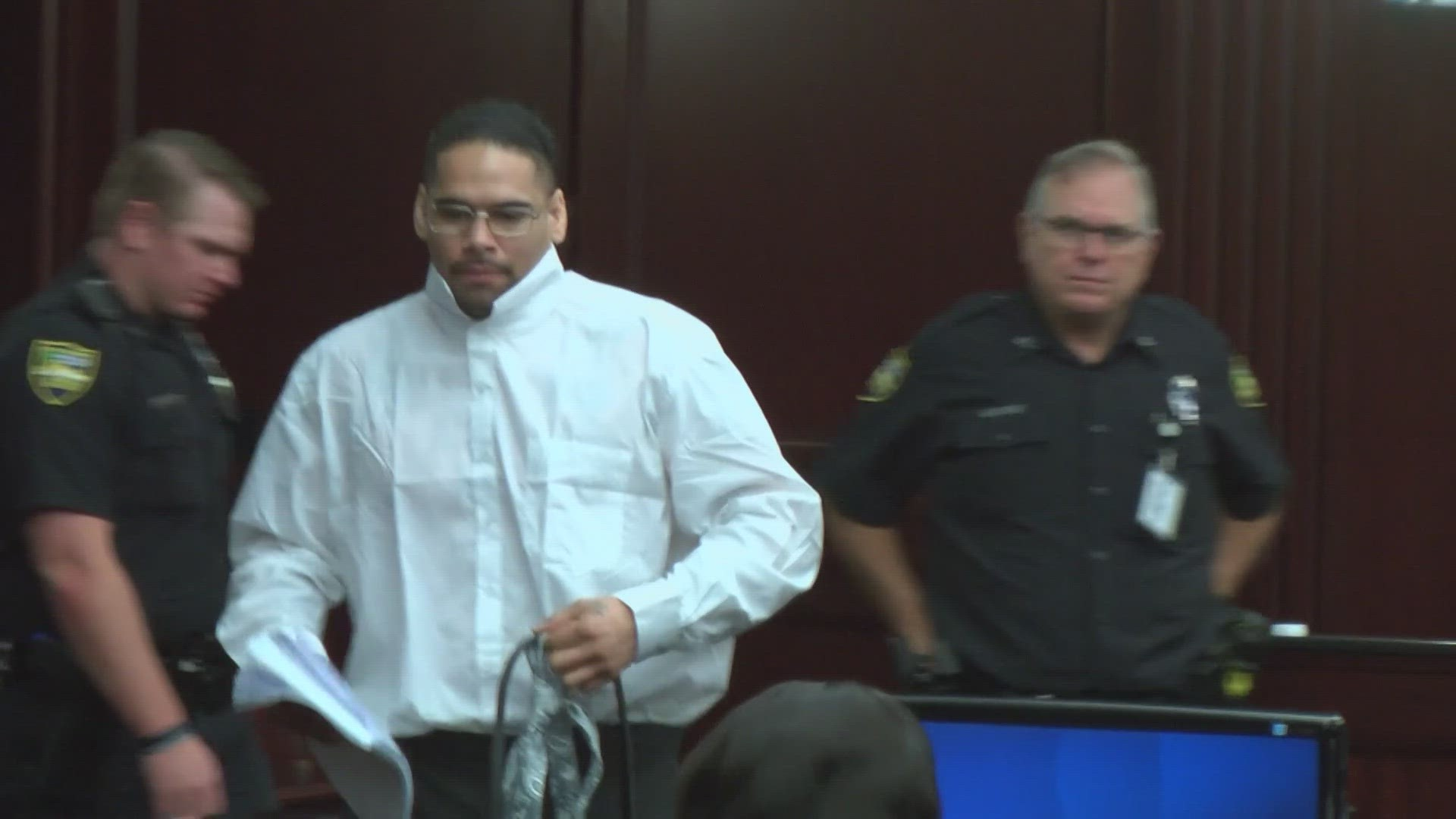
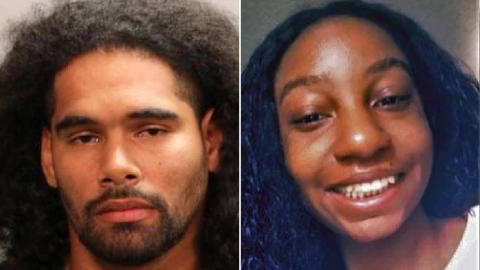
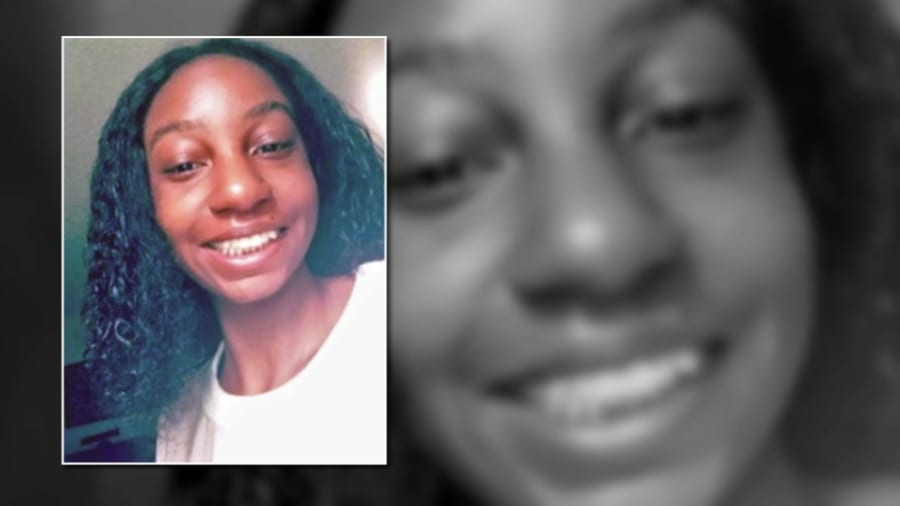
A jury found Johnathan Quiles guilty Thursday of first-degree murder in the death of his pregnant 16-year-old niece, Iyana Sawyer, following about an hour of deliberations.

Quiles was also found guilty of sexual battery and the first-degree murder of her unborn child.

The verdict came on the sixth day of the trial that included emotional testimony and an avalanche of evidence against Quiles, who was accused of murdering his niece by marriage who was five months pregnant when she disappeared in December 2018. The prosecution alleged the child Sawyer was carrying was Quiles’, and he was also charged with having sex with a minor because Sawyer was only a teenager at the time.

The state is seeking the death penalty and the jury will reconvene on Monday to begin the penalty phase.

Attorney John Phillips, who is representing the Sawyer family in the wrongful death lawsuit against Quiles, issued a statement following the verdict.

“Today, a nearly 5-year nightmare ends with another measure of justice. We thank the jury, law enforcement and judge, as well as all of our friends and family who reached out when we needed it most. Johnathan Quiles has now been found guilty of murder and will go back before a jury to determine his fate on earth, but he chose to end Iyana’s young life. He was a predator and the jury saw that with ease. We are grateful. Please keep our family in your prayers. Thank you from the family of Iyana Sawyer,” Phillips said.

Closing arguments in the trial started Thursday with the state attorney using the defendant’s own words: “She just went into a bag, several bags, just folded her. Her body went into a dumpster. I’m hoping the holiday and the rain will help at the landfill.”

The defense attorney told the jury to question everything, saying there were conflicts and things didn’t make sense. The defense attorney also questioned Snapchat messages the prosecution presented between Quiles and Sawyer and whether Quiles actually wrote them.

After five days of prosecution testimony, the defense called three witnesses Thursday.

Quiles’ defense asked twice for an acquittal, saying prosecutors didn’t have enough evidence to prove beyond a reasonable doubt that Quiles murdered his niece, or that she is dead at all — because her body has never been found and there is no blood or crime scene. The judge denied the motions for acquittal.

Iyana Sawyer
Iyana Sawyer (WJXT)

The defense said that DNA evidence presented by prosecutors did not prove Quiles was the killer and that the state couldn’t prove that Quiles was the father of Sawyer’s unborn child.

During defense testimony, Quiles’ attorneys tried to establish three things through their witnesses:

  1. Sawyer is still alive because a witness testified to seeing her walking down Philips Highway on Dec. 26.
  2. They called the man who runs the jail Bible study to try to cancel out the state’s witness who said Quiles admitted the crime to him at the Bible study.
  3. Quiles wasn’t the only one in a sexual relationship with Sawyer. Kamar Humphrey admitted on the stand that he was also having sex with Sawyer and was accused of her rape in early 2018.

The state countered the defense witnesses, saying the witness who said she saw Sawyer got the dates wrong, the man who ran the Bible study couldn’t remember his own felony charges and that travel records show Humphrey was not in Jacksonville when Sawyer disappeared.

Quiles did not testify in his own defense.

State’s star witnesses

Before the state rested on Wednesday, prosecutors called two of their star witnesses to the stand: a jail informant and Quiles’ brother, Joseph Quiles.

On the stand, Joseph Quiles detailed conversations he had with his brother in which he said Johnathan described how he murdered his niece and disposed of her body.

Sawyer was last seen on Dec. 19, 2018, and Joseph Quiles said that his brother contacted him four times the next day.

Joseph Quiles said that, according to Johnathan, Sawyer met Johnathan at Ace Pick-A-Part, where he worked, because he’d told her they were going to run away together.

Joseph said he was told Sawyer was sitting in a car in the back of Ace Pick-A-Part, where no one goes, and that’s where Johnathan said he killed her because he would lose his entire family if Sawyer had the baby.

“He said he took the young lady and had her sitting in a vehicle, waiting. He tried to strangle her. It didn’t work out. He couldn’t stomach it. So he shot her in the chest and he put the body… in a dumpster (and then destroyed) the vehicle,” Joseph testified.

Joseph said Johnathan told him he used a carpet to wrap the body and put it in a dumpster, knowing the dumpster would be emptied that day because it was full.

Joseph said Johnathan had planned Sawyer’s murder for months.

A Bay County inmate, who was previously at the Duval County Jail with Quiles, shared a similar story on the stand, saying that Quiles told him he’d gotten his niece pregnant and met her at his work because he wanted to get rid of the baby.

The inmate said Quiles told him that he started choking Sawyer and then pulled out his gun and shot her. According to the inmate, Quiles told him he called his brother right after he did it.

Joseph said when Johnathan first told him what happened, he wasn’t sure if Johnathan was telling the truth, but he called the police in January when he learned Sawyer was missing.

A message from Joseph to Johnathan read in court on Tuesday said: “I can’t talk to you right now. I have to stay firm on my decision. What you told me isn’t a joke or something. So yeah I told the police because they need to know. If you was lyin’, then you will be cleared and free, but if you wasn’t, then you won’t. I’m sorry I have to do the right thing for that girl and her family. Not the right thing for you and your selfishness. I hate to lose you, but I’d rather that girl’s family have some peace. If you’re innocent, then you don’t have anything to worry about. They won’t find her body. But if you are not, they are going to find her. And in that case, I’ve already lost my brother. I’m sorry.”

Before Joseph testified, another witness took the stand Wednesday afternoon and testified about a conversation he and his cousin had with Johnathan Quiles in jail. The cousin, who has since died, was wearing a wire provided by police.

Prosecutors played a nearly two-hour recording of their conversation in court and provided the jury with transcripts. In the recording, the three can be heard talking about the landfill where trucks from Quiles’ work would dump their containers, about Quiles’ brother calling the police and about the sexual relationship Quiles had with Sawyer.

In the recording, Quiles described using a 9mm gun, one he said he shot at a gun range the same day Sawyer disappeared.

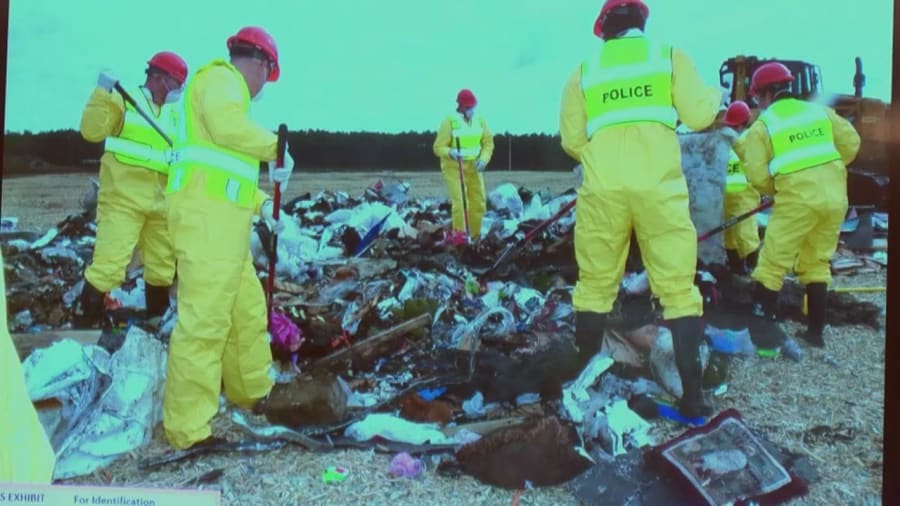
Landfill search for Iyana Sawyer's remains
Landfill search for Iyana Sawyer’s remains (WJXT)

When they asked about the timeline from when Sawyer was dumped until her family and police started to look for her, Quiles indicated there would be a lot of garbage to go through in the landfill and they probably wouldn’t find her.

On the recording, Quiles also indicated he dumped Sawyer and her backpack separately and then described knowing about human decomposition because his mom used to work in a morgue.

After the recording was played, the defense questioned one of the informants, indicating that Quiles might have been threatened before the recording started. The defense attorney also questioned him about whether the informant started and stopped the recording at any time. The informant said he wouldn’t know how to do that.

Ex-wife testifies

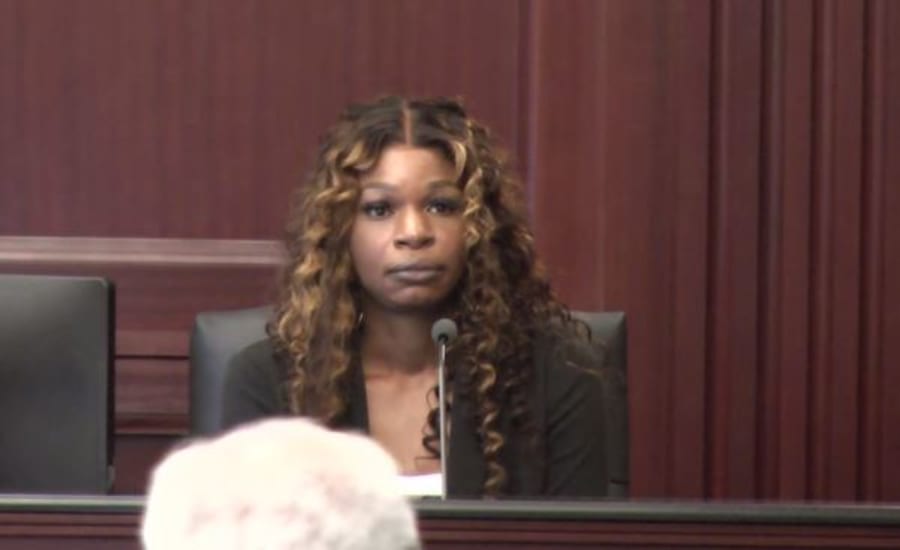
Earlier Wednesday, the state called Johnathan Quiles’ ex-wife, Naomi Mobley, to the stand. Mobley, who is Sawyer’s aunt, testified that in early 2018, she asked her nieces if anything inappropriate happened between them and Quiles and they told her no. She said she never suspected anything was going on.

She also testified she found out she was pregnant in June 2018, and then found out about her niece’s pregnancy on Dec. 3, 2018.

Mobley said her sister alleged that Quiles was the father of Sawyer’s baby. She said she didn’t believe it until Quiles was arrested and said to her, “I want to tell you the truth, but the people listening will take it the wrong way.” Mobley said after that point, she no longer believed Quiles.

Detective reads messages

During his testimony this week, Jacksonville Sheriff’s Office detective Billy Abbott read disturbing text messages and Snapchat messages between Quiles and Sawyer, including:

  • “Just making it so easy for me to leave you alone…goodbye yana.”
  • “I’m just so in love with you. I’ll kill you and cry.”
  • “You’re stuck with me until you die. I love you way to much to let you go.”

Abbott said it was the info in their text messages that led him to believe Sawyer and Quiles were in a relationship.

Abbott said that on Snapchat Quiles wrote about how they were to be together when she turned 18, but also how he was heartbroken and angry with her.

Abbott also read text messages between Quiles and his brother, Joe.

“This is Jan. 8, 2019, to Joe, ‘You can’t even talk to me really? I never did anything to that girl and now you put me through this and you call me your brother? After this is over I’m all the way done with you. You’re a real piece of (expletive) for what you’ve done,’” Abbott read.

Text message between Johnathan Quiles and brother shown in court Sept 19, 2023
Text message between Johnathan Quiles and brother shown in court Sept 19, 2023 (Copyright 2023 by WJXT News4Jax – All rights reserved.)

Abbott, who said the missing persons unit exhausted all leads and thought Sawyer might be dead or “fell off the face of the earth,” testified that he went to Quiles’ house the day he was assigned the case and talked with Quiles and his then-wife.

Abbott said Quiles told him the 16-year-old missing girl only packed Victoria’s Secret underwear and bras. Abbott said that was a red flag and he asked for Quiles’ DNA.

Abbott also testified that Quiles told him he was at work all day on Dec. 19, 2018, the day Sawyer disappeared, and that he never left the property. Abbott said the case turned from a missing persons case to a homicide case after JSO got the call from Joseph Quiles.

Sister testifies about abuse

Sawyer’s sister, referred to in court as S.S., took the stand this week and quietly recounted inappropriate contact and sexual abuse by Quiles when she was 13 years old.

S.S. testified she didn’t tell anyone because she was embarrassed and didn’t want to upset her sister or make Quiles mad.

The defense questioned the timing of the allegations and reminded S.S. that she told police and her family that Quiles never did anything to her. S.S. admitted not telling anyone and said it was something she didn’t want to keep thinking about.

She said her mother found out about the sexual abuse while her sister was missing.

Iyana Sawyer missing poster
Iyana Sawyer missing poster (WJXT)

Earlier, Sawyer’s sister testified that Sawyer was in love with Quiles and that he was the father of Sawyer’s baby.

She described the inappropriate touching, kissing and sexual encounters she said she witnessed between Quiles and Sawyer and said she kept the secret about her sister and Quiles for at least two years to keep a good relationship with her sister.

She said she wanted to protect her and got emotional talking about her last interactions with her sister.

Sawyer’s sister also testified about Sawyer and her aunt both being pregnant by Quiles at the same time and said that Quiles wanted Sawyer to get an abortion. Sawyer refused, her sister said.

Surveillance video timeline

Ace Pick-A-Part General Manager Gary Lindros, Quiles’ former boss, testified this week that on Dec. 19, 2018, the day Sawyer was reported missing, Quiles clocked in at 8:08 a.m. and out at 5:09 p.m. On Dec. 20, 2018, he clocked in at 8:02 a.m. and out at 2:48 p.m. His time card shows he did not leave the premises on those days.

But the jury was shown surveillance video from the business and Lindros confirmed a red minivan left the lot around 11:17 a.m. on Dec. 19, 2018, and came back around 12:30 p.m. Quiles drives a red minivan.

Survaillance video shows accused murder’s movements at junk yard where he worked the day teen went missingPlay Video

Lindros said he did not give Quiles permission to leave, and Quiles did not clock out. Sawyer was last seen leaving Terry Parker High School on Dec. 19, 2018, around 11 a.m.

Lindros also testified that Quiles had access to unrestricted areas of the company property and to a large commercial dumpster.

During opening statements last week, prosecutors said Quiles made these statements related to the murder:

  • “I have to get rid of the body.”
  • “The dumpster is at my job. I control what gets dumped.”

The general manager also testified that on Dec. 19 or Dec. 20 of 2018, he saw Quiles carrying duct tape, even though there is no typical duty on the company property that would require duct tape.

Quiles’ attorneys questioned Lindros, making the argument that Quiles’ actions on Dec. 19 and 20 of 2018 were not anything out of the ordinary.

Teen’s family testifies

Last week, several of Sawyer’s family members took the stand, including her mother, her grandmother, her aunt and her sister.

Sawyer’s mother, Kimberly Mobley, testified about her daughter’s pregnancy, Sawyer’s relationship with her uncle and her disappearance.

Mobley said the unborn child was a girl and her name was going to be “Hazel Michelle Mobley.” She said she found out Sawyer was pregnant just 16 days before she was reported missing.

Kimberly Mobley, mother of Iyana Saywer, testifies on the stand during the murder trial of Johnathan Quiles who is accused of killing her daughter and her unborn granddaughter.
Kimberly Mobley, mother of Iyana Saywer, testifies on the stand during the murder trial of Johnathan Quiles who is accused of killing her daughter and her unborn granddaughter. (Copyright 2023 by WJXT News4Jax – All rights reserved.)

During cross-examination, the defense had witnesses admit Sawyer never told anyone Quiles was the father. But Mobley said her daughter told her someone named “Jose” was the father, and Sawyer’s sister testified that “Jose” was Quiles.

Sawyer’s grandmother testified to what she described as an inappropriate hug she witnessed during Thanksgiving 2018, and one of Sawyer’s close friends said the day Sawyer went missing, she told them she’d be going to stay with Quiles for two weeks.

Disappearance and investigation

It has been almost five years since Sawyer disappeared. On Dec. 19, 2018, Sawyer was seen on surveillance video at Terry Parker High School. She was never seen again, and no trace of her has been found.

Police believe Sawyer, who was five months pregnant at the time, was shot and killed, then placed into a dumpster and taken to the Otis Road Landfill. Investigators looked through more than 5,000 tons of trash but never found her remains

A former CSI detective and former K-9 officer testified last week about the 16-day search at the Otis Road Landfill that turned up items related to the case, but no human remains.

Quiles now faces the death penalty and a new 2023 ruling now allows a death sentence with only an 8 to 4 recommendation by the jury.

This article written by Marilyn Parker and Francine Frazier was originally published on 21.9.2023 by News4jax.com

TIPS