Home Blog Page 688

Rape: What Femi Olaleye’s life sentence means for fight against SGBV in Lagos

By Mariam Ileyemi

The 24 October conviction of Femi Olaleye, the managing director of Optimal Cancer Care Foundation, for raping his wife’s niece, has been described as a significant development in the fight against gender-based violence (GBV) in Lagos State.

The high-profile case was heard at the Special Offences and Domestic Violence Court in Lagos, where the senior medical doctor was sentenced to life imprisonment on two counts charge of defilement of a child and sexual assault by penetration.

As part of his punishment, Mr Olaleye, who has been held at the Nigerian correctional facility in Ikoyi since his arraignment in 2022, will also have his name listed in the Lagos State sexual offenders register.
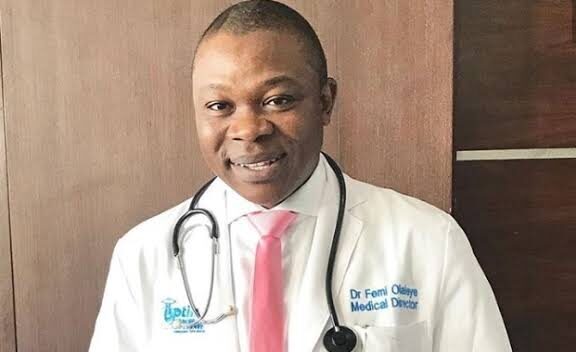
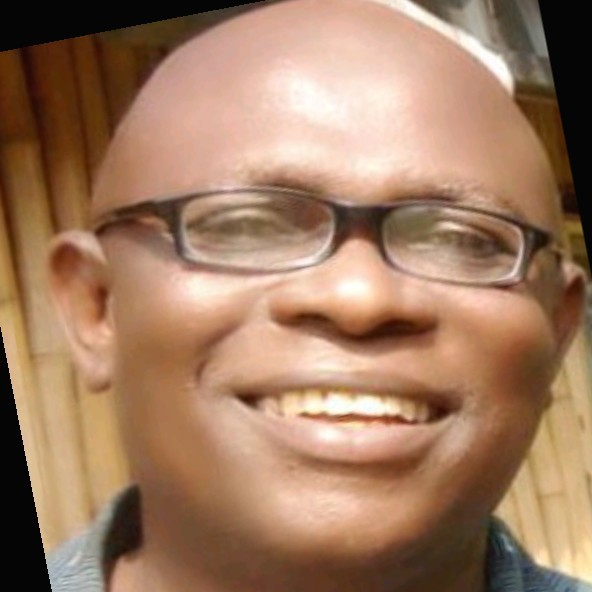
Femi Olaleye
Femi Olaleye

The convict, a connected medical doctor, tried all he could to escape justice, but the evidence placed before the court was overwhelming.

Mr Olaleye was one of the SGBV suspects the Lagos State Government was prosecuting through its Domestic and Sexual Violence Agency (DSVA).

Recently, the DSVA revealed that 5,624 cases, ranging from domestic violence, sexual assault, rape, child abuse, and physical assault, among other vices, were recorded in the state between August 2022 and July 2023 via the Virtual Referral and Response Service (VRRS) and physical report.

According to the agency, the youngest victim of sexual violence was an 18-month-old baby, while the oldest who experienced domestic violence was a 79-year-old woman.

Journey to Justice

During his arraignment, the 56-year-old Mr Olaleye pleaded not guilty to the rape of his wife’s 15-year-old niece before the Ikeja Sexual Offences and Domestic Violence Court on 30 November 2022.

His crime came to the public domain following a public outcry by popular Nollywood actresses, Kate Henshaw and Damilola Adekoya, against him on social media in 2022.

In its reaction, the DSVA referred the case to the Gender Desk Department of the Lagos State Police Command for investigation, reiterating the state government’s zero tolerance for SGBV.

During the trial, the judge, Ramon Oshodi, admitted Mr Olaleye to N50 million bail with two sureties and remanded him in Ikoyi prison pending the perfection of the bail conditions.

In March 2023, the court dismissed a no-case submission filed by Mr Olaleye, after his lawyer, Olusegun Fabunmi, argued that the prosecution – the Lagos government – had not provided sufficient evidence against him.

The prosecution subsequently called six witnesses. The minor, the defendant’s wife, a medical doctor and another child care expert, both of whom examined the minor, as well as two police officers involved in the investigations, testified in the trial.

Mr Olaleye testified in his defence alongside his friend of over 40 years as well as his forensic physician who faulted the medical evidence presented by the prosecution.

In his judgement, Mr Oshodi held that the Lagos State Government had proved the charge against the defendant and that the evidence against him was compelling, hence the life sentence.

His offences contravened sections 137 and 261 of the Criminal Laws of Lagos State, 2015 which provide that the rape of a child and sexual assault by penetration is punishable by life imprisonment.

Many other cases

Earlier in 2022, the Ikeja Special Offences Court had convicted popular Nollywood actor, Olanrewaju James, alias Baba Ijesha, for sexually assaulting a 14-year-old minor, a foster daughter of actress and comedienne Damilola Adekoya (alias Princess).

Convicted Actor, Olanrewaju James, alias Baba Ijesha

The case attracted public attention from the time of his arraignment on 24 June 2021, until 14 July 2022, when the judge, Oluwatoyin Taiwo, convicted Baba Ijesha of indecent treatment of a child, sexual assault and attempted sexual assault.

The judge subsequently sentenced him to 16 years in jail. He was found guilty of four of the six alleged offences; two of the charges attracted five years while the remaining two attracted three years.

He will, however, only spend five years in jail as the sentences will run concurrently.

In September, the Lagos State Sexual Offences and Domestic Violence Court sentenced to life imprisonment a 42-year-old security officer, Daniel Okon, for raping a four-year-old girl. The court also sentenced a 59-year-old artisan, Eze Chukwuma, for raping his two daughters.

Earlier in July, Emeka Orisakwe, a 45-year-old businessman, was sentenced to triple life imprisonment for raping his three underaged daughters, while a 56-year-old driver, Folarin Raufu, also got life imprisonment for raping his employer’s five-year-old granddaughter.

In its relentless war against SGBV, the Lagos State Government has made tremendous progress through the DSVA.

As of July, the spokesperson for the police in Lagos State, Benjamin Hundeyin, reported that 111 rape cases were recorded between April and June in the state.

Attempt to tamper with justice

According to the founder of Tonia Bruised But Not Broken Foundation, Anthonia Ojenagbon, who has been at the forefront of the pursuit of justice in the case, Mr Olaleye’s camp attempted to manipulate the victim.

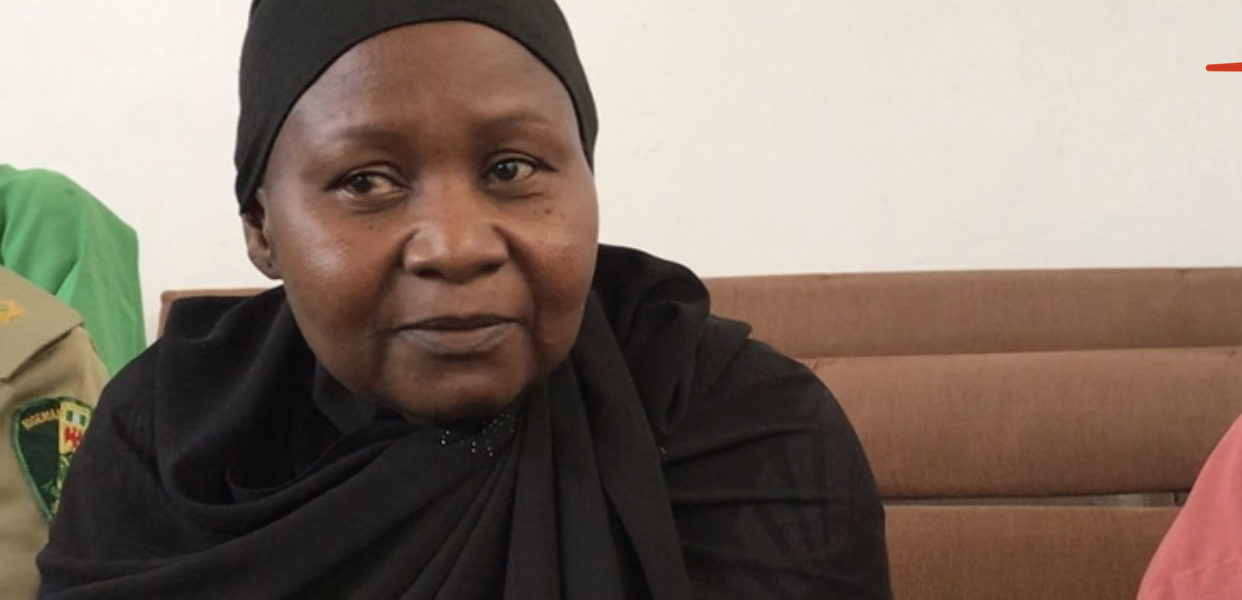
Anthonia Ojenagbon, the founder of Tonia Bruised But Not Broken Foundation

“They tried to bribe the survivor so that she would change her story. N400,000 was sent to her mother trying to convince them to do a video changing the story to say he didn’t rape her,” she said.

“They promised to give them a balance of N2.1 million but the girl and her family stood their ground.

“So he deserved what he got for turning a young girl into a sex slave. Every sexual fetish you could think of, he did it to her, including oral sex.”

Mrs Ojenagbon, who is also a rape survivor, described the judgement as a big victory for all survivors of sexual and gender-based violence.

“We’re very happy and grateful to the judiciary. We thank the Lagos State Ministry of Justice and the Director of Public Prosecution, Babajide Martins, who provided legal representation for this poor girl,” she said.

“Her family would not have been able to employ the services of a reputable lawyer because the accused got himself a Senior Advocate of Nigeria and this girl would never have been able to afford that.”

Speaking further, Mrs Ojenagbon said Mr Olaleye’s case further enlightened her about court processes and the importance of evidence gathering for rape cases.

Fight against SGBV

Describing the whole experience from Mr Olaleye’s arrest by the police to the court hearing, Bisi Ajayi-Kayode, the Legal Lead for Cece Yera Foundation who was present at the court and participated in the investigation of the case, said: “It was a difficult and dangerous terrain riddled with a lot of pushbacks, reprisal attacks, threats, coercion and stigma to frustrate justice.”

However, Mrs Ajayi-Kayode said the Cece Yara Foundation deployed its “strong inter-agency collaboration with the police and other criminal justice system actors to support the case’s investigation and prosecution through its forensic interview process.”

Bisi Ajayi-Kayode, the Legal Lead for Cece Yera Foundation

According to her, fighting SGBV means actualising the fundamental human rights of survivors to justice and safety.

“It means fighting against crime against humanity. Sexual violence has been globally acclaimed to be a weapon of war and we are glad to be at the forefront of holding perpetrators accountable and ensuring a safe environment for children,” she said.

She added that victims should note that “SGBV is a heinous crime that violates fundamental human rights. Do not suffer in silence. There is hope for you. Speak up, report it.”

In recent years, the Lagos State government has also enacted laws which prohibit violence against women and girls, including the Child Rights Law and the Protection against Domestic Violence Law.

In a 2023 report by Stand to End Rape Initiative (STER), a non-governmental organisation (NGO), Lagos, Adamawa, Ekiti, Kogi and Kwara states topped the list of states with the highest rate of prosecuting SGBV perpetrators in Nigeria.

This article was originally published by Premium Times

Upholding the Integrity of the Nigerian Judiciary: A response to allegations of corruption

The Nigerian Judiciary has faced its fair share of scrutiny, with allegations of corruption casting a shadow over its reputation. However, it is crucial to approach these accusations with nuance, considering the complex dynamics within the judicial system.

One key factor that demands acknowledgment is the relatively small number of judicial officers in the country. With barely 1,500 judicial officers presiding over a nation of over 200 million people, the workload and responsibilities on each individual are substantial. This understaffing can contribute to delays and procedural challenges, but it doesn’t necessarily imply widespread corruption.

The recent appointment of 265 judicial officers to serve during various election tribunals underscores the immense pressure on the existing judiciary. While this number might seem significant, it is important to note that it represents a response to specific demands during election periods rather than a reflection of systemic corruption. These appointments are aimed at ensuring a fair and expedited resolution of election-related disputes, a crucial aspect of maintaining a democratic and just society.

The hypothesis of alleging corruption in the entire Nigerian Judiciary based on less than 300 judges who sat in panels during the last election tribunals lacks a sound basis. Using such a limited sample size to make sweeping generalizations about the entire judicial system is statistically unsound and ignores the broader context.

To accurately assess the prevalence of corruption within the judiciary, a comprehensive and representative sample should be analyzed. The number of judges involved in election tribunals is specific to a certain context and does not provide a holistic view of the entire judiciary, which consists of about 1,500 judicial officers — it is probably less than this figure.

Drawing conclusions about the entire judicial system based on a fraction of judges involved in election-related cases oversimplifies the issue and fails to consider the diversity of cases and judges within the system. Corruption allegations should be thoroughly investigated on a case-by-case basis, and systemic reforms should be implemented to address any identified issues.

Definitely, using less than 300 judges from election tribunals as a yardstick for labeling the entire Nigerian Judiciary as corrupt lacks statistical validity and ignores the need for a nuanced, evidence-based approach to evaluating the integrity of the judiciary.

Accusations of corruption within the judiciary should be scrutinized on a case-by-case basis. It is unfair to paint the entire system with a broad brush based on the actions of a few individuals. The overwhelming majority of judicial officers are dedicated professionals committed to upholding the rule of law and dispensing justice impartially.

Moreover, the Nigerian judiciary has taken steps to address concerns about corruption. Initiatives such as the National Judicial Council (NJC) play a vital role in overseeing the conduct of judicial officers, ensuring accountability, and promoting transparency. The judiciary’s internal mechanisms are essential in maintaining public trust and addressing any allegations of impropriety.

It is also crucial to recognize that the judiciary operates within a larger societal context. Addressing corruption requires a multifaceted approach that involves not only internal reforms but also societal changes, political will, and support for the rule of law. Efforts to strengthen the judiciary should be part of a broader strategy aimed at enhancing the overall governance and integrity of the nation.

Therefore, while challenges exist within the Nigerian Judiciary, it is essential to resist generalizations and acknowledge the complexities at play. The dedication of the majority of judicial officers, combined with ongoing reforms and oversight mechanisms, demonstrates a commitment to upholding justice. By addressing issues on a case-by-case basis and supporting systemic improvements, Nigeria can foster a judiciary that truly reflects the principles of fairness, transparency, and accountability.

On the allegations that the Nigerian judiciary primarily admits individuals with familial or personal connections to judges (serving or retired) and politicians, this lacks substantial evidence when considering the overall number of appointed judges in the system.

While it’s true that some individuals within the judiciary may have connections to judges and politicians, it is misleading to assert that nepotism, cronyism, or favoritism are widespread practices within the entire judiciary.

No appointments are done without involving the Bar as far as the history of Judicial appointments in Nigeria narrates. If a few were screened-out of the processes for being unsuitable, it is precisely because of this that such allegations are made publicly. The others who complain about the appointment methods were never even applicants or candidates in any of the appointment stages and so one wonders the yardstick used in making baseless and sweeping allegations of nepotism, cronyism and favouritism when they apparently lack any locus standi. Incredibly, no scintilla of evidence has ever been adduced to discredit any appointee or to establish that they are unqualified for appointments as judges simply because of a person’s affinity or consanguinity to any judge or politician. These are merely hollow and conjectural criticisms based on unrealistic sentiments only.

Out of the approximately 1,500 judges — again, a fair estimation, a significant majority rise through the ranks based on merit, professional competence, and adherence to established criteria for judicial appointments. The judiciary typically follows transparent and merit-based processes to select and appoint judges, with stringent requirements such as legal qualifications, experience, and ethical standards unlike other institutions in Nigeria.

While isolated cases of nepotism or favoritism may exist, generalizing these instances to the entire judiciary overlooks the many judges who have earned their positions through their legal expertise and dedication to the profession. It is essential to approach such allegations with a discerning eye, considering the vast diversity within the judiciary and acknowledging the majority who have achieved their positions on merit.

To accurately assess the extent of nepotism or cronyism, a thorough and impartial investigation would be necessary, examining individual cases rather than making sweeping assumptions about the entire judiciary. Without concrete evidence and specific examples, broad allegations risk unfairly tarnishing the reputation of the majority of judges who have earned their positions through legitimate means.

It would be unfair to label the entire Nigerian Judiciary as corrupt based on the actions or allegations involving a small fraction of the population who have interacted with the legal system. The fact that less than 2 million out of 200 million Nigerians have been involved in legal matters demonstrates that the vast majority of the population does not engage with the judiciary in a direct, adversarial manner.

Generalizing the entire judiciary as corrupt overlooks the dedicated and principled judges who uphold the rule of law with integrity. Transparency and accountability are essential in addressing corruption allegations, and it’s crucial to distinguish isolated cases from the overall conduct of the judiciary.

Those claiming corruption within the judiciary should provide specific cases, name the judges involved, and share details of their encounters. This not only ensures transparency but also allows for a fair and thorough investigation of individual cases. Blanket generalizations without concrete evidence risk damaging the reputation of the judiciary as a whole.

It’s essential to approach discussions about corruption in the judiciary with a nuanced perspective, recognizing that the actions of a few should not define the entire institution. Addressing corruption requires targeted efforts, such as investigations into specific cases, rather than making sweeping generalizations that may undermine public trust in the legal system.

— Anonymous writer.

FIDA Abuja Law week formally opens today!

LAW WEEK DAY FOUR

The Law Week Opening Ceremony holds as follows:

Date: Monday, 4th December 2023

Time: 12 noon

Dresscode: Regulation wear with a touch of orange

Venue: NBA House

Who Will Tell the Chief Justice?

By Chidi Anselm Odinkalu

Nigeria’s Supreme Court held a special session on 27 November 2023 to formally usher in a new legal year. It provided an occasion for a retrospective on the performance of Nigeria’s judiciary by its leaders in a season of unprecedented levels of public angst over the political weaponization of judges and a set piece moment to compare notes on the dysfunctions that afflict the judicial system. The outcome was interesting to the point of anti-climactic.

At that occasion, the Chief Justice of Nigeria (CJN), Olukayode Ariwoola, also administered the oath on 57 new entrants into the coven of Senior Advocates of Nigeria (SAN). One of the new SANs was born in 1981. Two years later, in 1983, his dad, a lawyer, began proceedings against Shell Petroleum Development Company (SPDC) Ltd, a multinational in the hydrocarbons sector, in Warri. At the time, Warri was part of Bendel State, created by the military a mere seven years earlier in 1976.

After 14 years, the High Court delivered judgment in 1997. By this time, Bendel State had ceased to exist. In its place, the military had on 27 August 1991 created two successors in Delta and Edo States and what used to be the High Court of Bendel State sitting in Warri (Division) had become the Warri Division of the High Court of Delta State. The Court of Appeal dismissed SPDC’s appeal in 2000. The company then proceeded up to the Supreme Court which took 15 years to reach a judgment in 2015, 32 years after the case began. By this time, the boy who was two years old when the case began had become a man and a lawyer, even accompanying his dad to the proceedings at the Supreme Court.

Ebun Sofunde, the Senior Advocate who related this story addressed the special session on behalf of the Body of Senior Advocates of Nigeria (BOSAN). He also told the story of another case filed by Lagos State against the National Sports Lottery (NSL), which began on 5 February 2005. A little over 18 years later, on 31 March 2023, the Supreme Court decided the appeal on the jurisdictional objection of the NSL to the original proceedings and remitted the substantive case back to the High Court of Lagos State for trial. Naturally, Mr. Sofunde wondered aloud about the fate of ordinary litigants if a powerful state like Lagos has no sensible pathway to a timely exit from the courts.

Mr. Sofunde is characteristically parsimonious with words and is not given to hyperbole or oratorical flourish. So, when he says – as he did in his address to the Supreme Court – that public confidence in the judicial system “is at an all-time low… to a point where it may no longer be redeemable”, you would think that those with the responsibility to run the legal and judicial systems of the country would pay heed. He also warned the Supreme Court, rather charitably, that its judgments were becoming mostly “perfunctory.”

The Attorney-General of the Federation, Lateef Fagbemi, a prince and a Senior Advocate, chose to take the Fifth Amendment. Treating the occasion mostly as a social call, he congratulated the new SANs; told them how elevated and special they had suddenly become; warned them to avoid speaking to the media, and wished everyone “good health in body, spirit, and soul.” If he had continued, he may even have found time to tell the new SANs that they have become a new species that have no need for urinals or toilets!

We digress though because everyone waited to listen to the CJN. Born on 22 August 1954, Olukayode Ariwoola will retire from office when he turns 70 in August 2024. As he acknowledged in his address, this was his last opportunity to report as the leader of the judicial system. It was also an opportunity to begin framing his legacy in the public imagination. He grappled valiantly with the former task but appeared to have missed the memo on the latter. In particular, his address needlessly concatenated contradictions, defensiveness, and avoidance. It read like an ode to an institution incapable of introspection or too immersed in impunity to understand the vice in arrogance.

The CJN claimed that the Nigerian judiciary had “fared well in the outgone legal year” and is now “more deserving of public trust and confidence than ever before.” But he immediately followed this up with the promise that “we are poised to reposition it (the judiciary) for effective justice delivery”, which begs the question of why anyone would want to reposition an institution that is faring so well as to be deserving of public trust and confidence.

In a rallying cry to judges everywhere in Nigeria, the CJN invited them to “never be overwhelmed by the actions or loud voices of the mob or crowd.” The paragraph before this contained the telling admission that “the true touch-stone for measuring the success of a judicial institution is the degree of confidence reposed in it by the public”, even going as far as warning judges that they “are definitely going to work more assiduously and tirelessly to make our country earn for itself the fullest respect and confidence of both the citizens and the international community.”

The CJN, it seemed, could not quite make up his mind about the state or public standing of the institution he leads. Even worse, his use of the word “mob” in the address was a piece of inspired own goal because it appeared to fit much better as a description of an organized crime ring, which is what a mention of the judiciary reminds many people in Nigeria of these days.

Evidence in support of this perception lay in the numbers he reeled out. First, the CJN delivered a report on judicial vacancies, congratulating himself for appointing nine new Justices of Appeal in September and 23 new judges of the Federal High Court in October 2023. He failed to disclose that among the new appointments, one of the 23 new judges was his own son (appointed with the most scandalously scanty credentials) or that among the new Justices one was his nephew and another was the son-in-law of the President of the Court of Appeal. He also had “the cherry (sic) news”, that soon the Supreme Court will recruit 10 more Justices to bring it up to the full complement of 22. If he brings to that process the kind of blinkers that ruled the filling of the vacancies in the Federal High Court and the Court of Appeal, then most people have a right to be worried.

Departing from judicial vacancies, the CJN proceeded to report that from 12 September 2022 to 11 July 2023, his Supreme Court registered 1,271 motions and appeals out of which it “heard 388 political appeals, 215 criminal appeals and 464 civil appeals.” At a similar occasion only two years ago, Ariwoola’s predecessor, Tanko Muhammad, reported that the court’s portfolio of 269 appeals disposed of included 139 civil appeals, 102 criminal appeals, and 28 “political cases”. So, two years ago, “political cases” were 10.67% of the appeals heard by the Supreme Court.

According to CJN Ariwoola’s report, the same court in the past year “delivered a total number of 251 judgments, of which 125 were political appeals, 81 were civil appeals, and 45 were criminal appeals.” In just two years, the output of the court had fallen by 6.69% and political cases have risen from 10.67% to 50% (49.8% to be exact). Meanwhile, in the law faculties, professors still teach students that there is a “Political Questions Doctrine” which is a rule for denial rather than acceptance of cases.

These numbers dramatize the extent to which the Supreme Court has become captured by politicians and explain the crisis of lack of exit from courts that Ebun Sofunde complained bitterly about. It is little wonder that the only people who can dispense any form of kindness towards the CJN and his “mob” of exponents in the jurisprudence of the Italian Job are exclusively politicians. The misfortune is that rather than see an opportunity, this CJN can only see enemies. Who will tell the Chief Justice?

A lawyer and a teacher, Odinkalu can be reached at [email protected]

His tears were personal, private, yet public, By Ikeddy ISIGUZO

It was just a day, if ever there was such a day, for people in the city. Something was strange about the young taxi driver. His troubles were ahead of him. One could feel them. The long sighs, the endless ringing of his phone. He never took the calls. He seemed to have exhausted solutions to whatever bothered him.

A conversation began. What could be the matter with him? Why the accompanying sighs which were getting longer? Shouldn’t he take his calls?

More sighs before he blurted this chilling message: “My son died this morning”. I felt as if I had been smacked across the face. In the seconds it took to adjust to the weight of what he threw at me, I thought the death weighed more because it was a son, an heir to imagined thrones as fathers are wont to think of the continuation of their lineage, on the patrilineal side.

Don’t we always judge too soon? “He was my only child. He was 10 years old.” He barely took my condolences before he continued.

The boy had complained of chest pain the previous day, the father said. He was examined at a hospital that said the only child was fine. The boy did not wake up the next day.

Hospitals have had their services dented by poor services from other areas. Poor equipment, poorer evaluation of patients by those who are not overseas maybe because they did not qualify or they are on the queue, have left us with hospitals, only by name.

Could the boy have been saved? It was death that came, and not illness, as my folks back home would say?

The phone still rang. Did it have a more urgent matter than the death at hand? He ignored the phone after each glance at it. Some mourners, he said, would not let him be. Instead of condoling his wife and going away, they wanted to see him as if they bore the solution to the situation. Their calls saddened him more.

One caller drew longer sighs from him, almost tears. His father-in-law wanted him to come to Gwagwalada, an 80km-journey to pick him so he could join in the mourning. “I cannot do that,” he protested.

A ride that I thought would be normal had jangled my sensitivities with the management of the passage rites of a boy I am knowing through his grieving father. The bereaved mother was home. She had fainted twice by the time the husband left home. Kind neighbours had surrounded her.

“I paid his school fees only last week,” the man in his lamentations underlined his struggles through life. “Who will wear the Christmas clothes I have bought for him?” I had no answers to his plentiful pains. These were not mere questions. He knew there were no answers.

His decision to escalate the matter to the Almighty, sudden as it came, did not surprise me. He interrogated death. He sought explanations for a day like this. He would not besmirch the Almighty.

Why was he driving in such state? Should he not be at home mourning his son, consoling his wife, accepting condolences from those “who have heard”?

“I want to bury him today,” the driver continued. “I am driving to get some money so that I could buy a coffin. The least price I got for a coffin was N25,000.”

He borrowed the N5,000 with which he fetched eight litres of fuel that morning to “hustle” for the burial expenses of his son. His fuel indicator read red. He had promised the lender that he would return the money by 11am.

One of the persistent callers was the lender. It was well past the agreed time. He obviously wanted his money. Among creditors lined up is the owner of the car which the driver had on hire purchase. He was completing the payment yet a miss of the dates on the agreement could mean a loss of everything he has paid. The pressure was on, always.

Father-in-law calling from Gwagwalada still lived in the days son-in-law made journeys to bring him to the family. Fuel of N5,000 would fill the tank with some change left.

Everything has changed. Death in its harshness hands us subtle messages we miss in the mix. Sorrow was incapable of inducing sobriety in a man who had to claw every inch of the way to meet the expectations for the dead, for the living.

I remembered a feature article that the News Agency of Nigeria, NA, published about 36 years ago. Titled, “The Rising Cost Of Dying”, it depicted the expenses of mourning the dead. While we often lament rises in the cost of living, it is easy to forget that death was expensive.

The hospital bills, medications that their costs now touch the skies, hosting mourners, who could consider themselves blessed to get a meal, a drink, and perhaps, some nuggets about the fleetingness of life, are some of the expenses of death. Mourners who refuse to leave raise new bills for the bereaved – that too is the lot of the driver.

When adjustments are made for inflation and more spiraling economic hazards of living through Nigeria, the costs of dying hit home more cruelly and lastingly.
Emotional drains from deaths are not measurable in figures. They are a different social study that befuddles scholars. There are hardly agreements in the categories of pains the departed deposit, depth of the pains, and their unique circumstances.

Mourning has its private and public sides. When the dead is rested, the crowds disperse, the noises of death depart with them, the hollowness of what had happened hits harder.
The taxi driver was not at that stage yet.

Had he thought of asking a carpenter to knock some planks together for a coffin? It could cost less than N15,000 I estimated. He was grateful for the advice.
His phone was still ringing when our journey ended. I offered multiple prayers for him as he left, chiefly that no security agents, prise what he had made from his hands as he battles to bury his son, and meet his obligations to the lender.

I spent the rest of the day wondering how a family that is pulling through survival would lift the added burden of losing its 10-year-old, its only child. The next day we spoke, he was barely managing the passing of the son. He was in a worse position since the next opportunities had been suspended to honour the dead.

May the Almighty who gives life console the family, and rest the boy.

Finally…

FCT Minister Nyesom did not let a public slight side when a clergy failed to recognise his eminent presence in church in Port Harcourt. He told the presiding bishop that if he was still Governor, the panegyrics would have filled the church. It is great that Wike is realising he was no longer Governor.

A COUNTRY of errors? Not Nigeria, definitely. Few people have access to a court judgement and the processes that result in its certificate. Whoever certified another copy of the Kano governorship should be charged to court. It is a crime. It is not an error. When our laws are in a lull, we refuse to name crimes aptly. The crime in Kano is serious.

Isiguzo is a major commentator on minor issues.

The Nigerian Air Space, by David Hundeyin

When that fully loaded airliner eventually falls out of the sky, which is basically inevitable at this point, nobody should invite me on TV or radio to talk about what I’ve been writing about since May.

My work on Nigerian aviation over the past 6 months has won me the Special Investigative Reporting prize at the PwC Media Excellence Awards and a podium finish at the ABSA African Investigative Journalist of the Year award a few days ago.

Literally everyone has acknowledged the importance of what I have spent months doing – everyone except the Nigerian aviation industry itself, which is completely convinced that playing kalo-kalo with people’s lives is its divine right.

Max Air – probably the most dangerous airline in current operation on Planet Earth is still flying. Its planes with untraceable parts serviced by unlicensed technicians are STILL in the air as you are reading this.

United Airlines is still flying with its wet leased everything and cost-cutting practises that have just sent an Abuja flight to Asaba by mistake, just weeks after a runway excursion by one of its aircraft.

Aero Contractors is still flying, barely 4 months after trying to lift 100 passengers in a 737 with a broken tail wing. Those 100 people still don’t know how guaranteed they were to have died that night if that pilot hadn’t aborted the flight. Till now, no investigation, no sanction, nothing. They also just had a runway excursion just last week.

Green Africa, with its multiple boardroom issues and question marks over its maintenance habits, is also still flying.

The NCAA is still continuing the legacy left behind by Hadi Sirika. Everybody, from the regulators to the airlines – even the pilots whose lives are also at risk – everybody is DETERMINED that nothing must change.

To kill Nigerians in a kerosene fireball is their divine right and who the fuck does that journalist guy think he is for trying to stop it from happening.

Who indeed.

Tinubu, Please listen to Akpabio on this!

By Mon-Charles Egbo

Nigerians are desperately yearning for a legislature that embodies the wishes and aspirations of the people as well as the ideals of democracy. The majority have even concluded that an effective legislature remains a mirage in Nigeria, lamenting that all the investments in institutionalizing democracy since independence have amounted to a wasted venture. And then interestingly, this view found an apt expression in the recent observation by former president Olusegun Obasanjo to the effect that democracy cannot work in Nigeria because it is alien to the African culture and tradition.

Though this opinion is incompletely validated, the legislature has largely failed in its roles and responsibilities, as the shield for the citizenry, particularly in holding the executive accountable. Corruption, insecurity, poverty and poor leadership are geometrically growing sequel to the absence of diligent legislative oversights. Consequently, there is a high sense of frustration fuelling the already poor perception of the legislature. In other words, public trust today favours the other arms more than the legislature. Yes, the legislators are not trusted due to accumulated failed expectations from them in addition to limited public knowledge about the legislature’s mandates.

However, on the flipside, democracy is still the best form of governance the world over while the primary cause of Nigeria’s under-development lies squarely with the constitution. In the place of pragmatic laws and policies to drive the system optimally, a weak and shallow document that was hurriedly packaged by the military and foisted on the people as a constitution is in force. These pseudo-laws do not substantially reflect the wishes of the people. Rather than strong institutions, this obsolete constitution created and sustains strong individuals who dominate the democratic landscape thus exposing Nigeria’s democracy to stunted growth.

Yet ironically, all those at the vanguard of criticizing the legislature for underperformance are well-versed in this fundamental error. They are fully abreast of the numerous flaws inherent in the constitution and as such, agree that amendment or outright replacement is the panacea. But typical of the elites whose sense of hypocrisy has since become legendary, they are rather selective in their clamours. They only champion alterations in the aspects that serve their self-seeking interests. For instance, they are vociferous in calling for devolution of powers, creation of additional states, local government autonomy, state police, and funding of political parties. Despite how popular and germane these thematic areas are, the elites are only driven by the latent opportunities to advance their perennial agenda of self-preservation.

And of course, restructuring and true federalism mean different things to different elites, depending on what suits their expectations. Furthermore, whereas this issue of faulty constitution has been receiving the attention of the legislature, no one is raising a voice for the strengthening of the legislative framework. None seemingly is concerned that all the powers and influence of the national assembly are merely theoretical. All feign ignorance that the legislature is being mercilessly dominated and controlled by the executive and also, that there is no practical protection for the legislature to independently exercise effective supervision over the executive. We pretend not to know that the legislature wholly depends on the executive for existence notably in the areas of operational funding and logistics.

As just one insight into the fragile situation of the federal legislature, the immediate past president of the senate, Ahmad Lawan, penultimate week, reminded his colleagues that “while it is true that on paper, lawmakers have the power of the purse, the execution of the project lies in the hands of the executive arm of government through various ministries, departments and agencies that should be lobbied”. That was during a debate on the need for the legislature to have greater control over the funding of constituency projects.

Lawan has only reiterated that the powers of the legislature, particularly in supervising the executive, begin and end on paper, but with collaboration, there could be a difference. Apart from becoming a presiding officer, he has been in the national assembly since 1999. So he knows enough having seen it all.

Expectedly, that proposed legislation was jettisoned by the Senate.

Understandably, the lawmakers acknowledged that they lack both the constitutional and political wherewithal to engage the executive in any form of governance battle. They might have also recalled several incidents where certain individuals openly disparaged the legislators in the course of their duties, even right inside the national assembly and nothing happened. Similarly, representatives of government and private organizations have serially shunned legislative summons with no repercussions. No doubt, the Senate is conscious that the executive determines the pace and direction of oversight duties using funding and logistics as baits. Then above all, they reasoned that what becomes of legislative resolutions has always been at the discretion of the executive in the same manner that the presidency chooses the bills to accept, despite the concerted efforts of the legislature in playing its roles.

Regrettably, all these democratic misnomers have become entrenched in the polity because the laws have not adequately empowered the legislature to perform. And this is why every sensitive legislature settles for collaboration with the other arms in the discharge of its functions being aware that whatever a legislature can deliver is a function of what the executive is willing to offer.

Guided by these facts, the president of the senate, Godswill Akpabio, was careful in reading a riot act to the executive, recently. Speaking at a public hearing on the 2024-2026 Medium Term Expenditure Framework and Fiscal Strategy Paper, he noted that “any serious appointee or any head of any agency that is interested in the success of President Bola Tinubu’s administration ought to be here. Chairman (of the event) should give me the list of all the heads of agencies that you invited who have failed to show up in this session. This is the beginning of their failure in their various offices”. Continuing he stressed that “any head of agency that sends representation here is not a serious person and therefore the president must take a second look at such a person’s appointment. It is not a threat but the truth”. And to further underscore the critical importance of that function, he announced that “I shelved even my appointment to appear in Owerri today for our final rally of my party and other schedules that I have, to make sure that I appear so that we can strategize on how we can succeed”.

Instructively, in an enlightened democracy, no concerned stakeholder could have been absent on such a critical occasion. Yes, in the face of a strong and truly independent legislature, it is an offence with grave consequences for the executive to treat governance issues with levity. But sadly, this is the Nigeria of today!

Therefore interpretatively, there are veiled but direct messages for President Bola Tinubu in those Akpabio’s remarks. To begin with and by the records, Akpabio has yet to hide his sense of dedication to the success of Tinubu’s presidency. He has made it so profound that it was the major thrust of his legislative agenda while campaigning to become the Senate president. He reiterated it at his inaugural address and has been consistent with such a mindset. So it was not strange that he utilized this recent outing to reaffirm it. Tinubu am sure understands this first message.

Again, Akpabio recognized that the legislature lacks the veritable instruments to achieve compliance from the executive. He was convinced that even if the legislators decide to bite the finger that feeds them, they neither have the energy to move the jaws nor strong teeth to act. He as well communicated clearly.

Also, Akpabio reminded Tinubu that the Senate merely confirmed the appointees as required by the law but the hire-and-fire prerogative resides with the presidency. Put differently, Tinubu could have bypassed the legislature and seamlessly appointed anyone, given the weakness and shallowness that define the Constitution. This was the third message.

So in all, Akpabio passionately appealed to Tinubu to deliberately make his appointees’ level of commitment to honouring legislative summons a major part of his assessment of them among other key performance indicators. It is equally safe to add that Tinubu should lead by example, particularly by treating legislative resolutions with the deserved respect and urgency. This is very important in fairly rating the legislature because a cursory look at the resolutions so far passed by the 10th National Assembly is reassuring. Certainly, if they receive commensurate attention, there would be overwhelming developmental tangible across the country.

Hence, if only President Tinubu could ponder these underlying requests and favourably consider them, Nigerians, especially the poor, would indeed breathe. And then of strategic importance, if only he could use his power and influence to give Nigeria a people-oriented constitution, prepared through an all-inclusive process, the masses would be convinced that democracy indeed can work in Africa and Nigeria, particularly. Mr President should be persuaded that there is no better challenge now than creating functional democratic systems that work for the people. He should see the need to free the masses from the suffocating grips of the elites, through robust leadership, especially now that it has mattered the most. Otherwise, it amounts to hypocrisy and unfairness expecting the legislature to deliver within the prevailing configuration. So Tinubu, the ball is in your court if you wish to receive a generous mention whenever our history is rewritten. But in the interim, please Your Excellency, listen to Akpabio on this, for he has spoken the minds of well-meaning Nigerians.

Egbo is a parliamentary affairs analyst.

16 Days of Activism: Did you know that a mother of 5 has been in custody for condemning the murder of Deborah Yakubu?

As Nigeria and the rest of the world mark the global 16 Days of Activism against Gender-Based Violence, the case of to Rhoda Jatau, a mother of 5, who has been in prison custody since May 2022 for forwarding a WhatsApp message condemning the murder of Deborah Yakubu comes to the fore.

Rhoda Jatau has been charged for “inciting public disturbance; exciting contempt of religious creed; and cyber stalking” under Sections 114, 210 of the Penal Code Law and Section 24 subsection 1b(i) of Cybercrime Prohibition Prevention Act 2015 Laws.

Deborah Yakubu was stoned to death and then burnt in May 2022 by her classmates and other students for alleged blasphemy and although videos of the mob action are everywhere online, the case has died, and everyone involved in the murder has walked free.

On Monday 27 November 2023, the High Court in Bauchi dismissed the call to have the blasphemy charges against Jatau thrown out.

How is it that justice has not been delivered for Deborah Yakubu’s family, and the only person in custody is one who spoke against the murder?

On 16 October, Jatau’s defence lawyers filed a “No-Case Submission” hoping to have all charges against her dismissed. Rhoda’s husband Ya’u Adamu (50), who has been caring for their five children alone since his wife’s arrest, also attended the hearing; human rights lawyer Solomon Mwantiri, who reported from the court for Christian Solidarity International (CSI), said: “It was a moving sight as the couple set eyes on each other again after many months.”

Rhoda a healthcare worker who was arrested on 20 May 2022 after she allegedly forwarded a blasphemous video clip to a closed WhatsApp group for staff at the Primary Healthcare Board where she worked, the Warji Local Government Health Management.

Deborah Yakubu

The two-minute 26-second video clip contained content in which an individual condemned the lynching of Christian student Deborah Emmanuel in Sokoto state on 12 May 2022. Deborah (pictured) was attacked by a mob, including her fellow students, following accusations that she had blasphemed the Prophet Mohammed in a WhatsApp group chat. She was stoned, beaten and burned to death.

Rhoda was charged with inciting public disturbance, exciting the contempt of a religious creed and cyberstalking. Since her arrest, judges overseeing the case have repeatedly denied bail on the grounds that her release would cause public disturbances. She has had limited access to legal counsel and family members, mainly during court appearances, and CSI reports that her “safety is not guaranteed, amid reports that extremists intend to intercept and kill her enroute to or from court”.

Letter of Allegation

On 4 August 2023, four UN Special Rapporteurs plus the Vice-Chair on communications of the Working Group on Arbitrary Detention wrote a joint letter to the Nigerian government expressing concern about the killing of Deborah Emmanuel and the arrest and detention of Rhoda Jatau. The letter was made public in early October after the sixty-day confidentiality period expired with no response from the government.

The signatories are Nazila Ghanea (Special Rapporteur on freedom of religion or belief), Matthew Gillett (Vice-Chair on communications of the Working Group on Arbitrary Detention), Morris Tidball-Binz (Special Rapporteur on extrajudicial, summary or arbitrary executions), Irene Khan (Special Rapporteur on the promotion and protection of the right to freedom of opinion and expression) and Fernand de Varennes (Special Rapporteur on minority issues).

In their letter, the five Special Procedure mandate holders write, “We wish to express our utter concern at the lynching and burning alive of Ms. Emmanuel; the apparent negligence of the police prosecution and the lack of accountability for the perpetrators of her murder; we are also concerned at the arrest and detention of Ms. Jatau, accused of ‘blasphemy’, who has been imprisoned for over a year for what appears to be her mere peaceful exercise of her right to freedom of expression and freedom of religion or belief.  

“More broadly, we express concern over the criminalisation of blasphemy in Nigeria contrary to international human rights law and standards and the rising episodes of violence relating to accusations of blasphemy targeting religious minorities in Nigeria by mob attacks and killings. In the present case, both victims were women and members of the Christian religious minority in Nigeria.  

“It is a matter of serious concern that the legal and judicial criminalisation of blasphemy, and justice decisions in this regard, may legitimise negative and violent social attitudes towards members of religious minorities, and encourage and lead to acts of violence against them by individuals holding extreme religious and political views.

“Should they be confirmed, these allegations would contravene articles 3 (non- discrimination), 6 (right to life), 7 (prohibition of torture and ill-treatment), 9 (liberty and security of person), 14 (right to a fair trial), 19 (right to freedom of opinion and expression), 26 (equality before the law) and 27 (rights of minorities) of the ICCPR [the International Covenant on Civil and Political Rights, ratified by Nigeria in 1993]…

“As it is our responsibility, under the mandates provided to us by the Human Rights Council, to seek to clarify all cases brought to our attention, we would be grateful for your observations on the following matters… We would appreciate receiving a response within 60 days. Past this delay, this communication and any response received from your Excellency’s Government will be made public.”

Man earns 14 years imprisonment for gang-raping physically challenged woman in Edo State

After a thirty-four-month fight for justice with a total of 30 court sessions, one Dele Eric has been sentenced to 14 years imprisonment for leading the gang-raping a physically challenged woman.

Sometime in 2020, a young woman living with a disability was physically assaulted and sexually violated by four young men in Ikpeshi Community, Akoko-Edo LGA of Edo State, Nigeria. The perpetrators did not stop at inflicting machete wounds on her body when she resisted their sexual violation; one of them, Dele Eric went on to masturbate and ejaculate on her face and mouth while she was being forcibly restrained by the others.

Justice came for her on 24th November 2023 when Nosa Musoe – Chief Magistrate (Special Grade) of the Magistrate Court, Igarra, Akoko Edo LGA, Edo State pronounced a guilty verdict on Dele Eric.

After being found guilty on multiple counts charge of rape, assault, and conspiracy as applicable in the Criminal Code Law of Edo state, he was sentenced to 14 years imprisonment without an option of fine.

A statement signed by Ms. Priscilla Usiobaifo, Executive Director,  BraveHeart Initiative for Youth & Women (BHI) revealed that with funding support from Open Society Foundations-Africa (OSIWA-OSF) and the MacArthur Foundation, BraveHeart Initiative for Youth & Women represented the victim and secured a victory.

Usiobaifo in the statement said: “The conviction brings to rest a thirty-four-month struggle for justice by The Brave Heart Initiative’sTeam. BraveHeart Initiative (BHI) began intervention in the case on January 4, 2020, at the onset of the COVID 19 pandemic; facilitated case transfer to SCIID-Benin City on July 24, 2020, and also facilitated Case Arraignment on August 12, 2020.  Commissioner of Police vs Momodu Fatai, Dele Eric case with Charge No MIG/23c /2020 was prosecuted by Inspector Obeze Samuel of the Igarra Area Command. 

“A total of thirty (30) court sittings were held at the Magistrate Court, Igarra – four sittings (4) in year 2020; fourteen (14) in year 2021; eight (8) in year 2022; and four (4) in year 2023. The prosecution timeline was significantly elongated as a result of the COVID crisis.

“Despite the slow pace, our team remained fiercely spirited, resilient, and hopeful in the judicial process to deliver justice. We are grateful to the BraveHeart Initiative SGBV case workers for their determination for justice and support to the survivor to access essential services in the face of the several limitations from the rigid COVID-19 protocols in Edo State.

“Despite the health risks and security anxieties during the pandemic, our team of dedicated caseworkers showed remarkable solidarity to survivors of Sexual and Gender Based Violence in rural communities of Edo State.

“Our profound gratitude to the Open Society Foundation (OSIWA-OSF) for the funds used for case investigation and court prosecution, as well as the MacArthur Foundation, whose financial support ensured the continuation and finalization of this case. 

“The BraveHeart Initiative’s team welcomes the verdict and remains resolute, steadfast and unwavering in our commitment to facilitating justice for survivors of sexual and gender-based violence in Nigeria.   BraveHeart Initiative for Youth & Women (BHI) is a youth-led, feminist non-governmental organization promoting young people’s sexual reproductive health and advancing women’s rights in Nigeria. BHI is one of Nigeria’s leading non-profits dedicated to responding to sexual and gender-based violence (SGBV) and advocating for SGBV reforms. As of November 2023, BHI has facilitated court conviction of twenty-nine (29) Sex Offenders in Twenty-Six(26)cases.

“As we commemorate 16 Days of Activism for Violence Against Women this year 2023, I envision a strong, inclusive, resilient justice system that ensures survivor-centered litigation. BraveHeart Initiative’s efforts in justice systems strengthening has been proven to be impactful as we have successfully facilitated court conviction of twenty-nine (29) sex offenders in Edo State, Nigeria thereby reducing the urge for jungle justice in SGBV matters.

Commending their doggedness, a BraveHeart Initiative (BHI) supporter, Mrs. Josephine Anenih said: “Kudos… Congratulations BHI for the renewed hope in our justice system to dispense justice for SGBV survivors. Thank you to everyone involved in this case and contributed to bringing justice to the victim. Thank you to OSIWA and MacArthur Foundation for the financial support. Thank you Priscilla for your leadership and passion.”

Another supporter, Godwin E. Morka) said: “Kudos to the BraveHeart Initiative team for uncommon courage, sacrifices, and resilience in the prosecution of this case. Ms Usiobaifo is a testament that on young person can change our society with sufficient passion, discipline, and patriotism.”

The judicial adultery in Kano

By Lasisi Olagunju

A commercial flight landed in Asaba on Sunday but its cabin crew welcomed  passengers to Nnamdi Azikiwe Airport, Abuja. A certified true copy of an Appeal Court judgment last week gave victory to both the respondents and the appellants. Nigeria of today is the textbook definition of confusion.

I seek to describe what the Court of Appeal did with the Kano governorship case as judicial adultery. I also seek to call it an adulteration of justice. I write with the help of my dictionary which has pointed it out to me that ‘adulterate’ and ‘adultery’ come from the same Latin root, adulterare, meaning “to falsify, corrupt.” Rodents of karma peed into the soup pot of the absolute monarchs in our court halls last week. A court that chops knuckles with parties before it is sure to deliver hybrid judgments – a little to the right, a little to the left; a salad of poisonous confusion. Fuji megastar, Kollington Ayinla, sang decades ago about indecorous mating in music-sphere. The product, he says, will have the face of the lead singer; the arms and legs of the child will belong to the drummer; the head will go to the gong man (Oju l’oju Kola/Apa l’apa Social/Ese l’ese Aromire/Ori l’ori Jimoh Agogo/Eti l’eti Marcus…).

Scholars after scholars have stressed, repeatedly, that the role of a judge in a case is to “transform the uncertainty about the facts into the certainty of the verdict.” A judge that leaves parties before it uncertain and confused after judgement has failed at doing his work. He deserves neither his pay nor a pat nor the usual allowances of reverence. Like the hybrid child in Kollington Ayinla’s ‘Ta ni o jo’ song, the Kano governorship judgement birthed a shapeshifter; a certified true copy that carved the verdict’s trunk in the image of the APC respondents while the gavel head of the bull goes to the NNPP appellants. It is the first hybrid judgment in the history of the world and the court system.

Every reasonable Nigerian was shocked to know of this case. The Court of Appeal sitting in Abuja heard and decided an appeal on the governorship of Kano State. It read its judgement in the open court sacking the incumbent governor who was the appellant in the case. Five days later, the party that lost got a certified true copy (CTC) of the judgement but saw that the decision and orders of the court on the document actually gave them the crown of victory. On the face of the CTC of the judgment signed by the chairman of the panel, the court resolved “live issues” in the case in favour of the respondents (APC) and dismissed the Appeal. It then scandalously proceeded to resolve “all issues” in favour of the appellants (NNPP) – the party it had earlier pronounced losers. The court went further on that route of confusion setting aside the judgement of the tribunal that had earlier sacked the governor and which it had earlier affirmed. It went farther further awarding costs against the APC, the party it had earlier pronounced winners: “The sum of N1,000,000.00 (one million naira only) is hereby awarded as costs in favour of the appellant and against the 1st respondent,” the CTC read. Was that an error or two parallel judgements of the same case, one grafted onto the other by karma?

Judges are traditionally like eagles – they are not expected to flock and join the crowd to make silly mistakes. That is perhaps the reason why the Romans said an Eagle does not catch flies. When a court judgement has the type of ‘mistakes’ you find in exam scripts of below-average pupils, know that the Eagle of the nation now flies down to hunt flies. The poet is a prophet. William Butler Yeats (1865 – 1939) saw this Kano conundrum over 100 years ago. His poet-persona speaks in ‘The Second Coming’ of “a shape with lion body and the head of a man…” That is a monster – the image of a judgement that says both parties have won.

Cynthia Gray was the director of the Centre for Judicial Ethics of the American Judicature Society. In 2004, she published in the Hofstra Law Review an article on ‘The line between legal error and judicial misconduct: balancing judicial independence and accountability.’ A Nigerian judge reading the piece would be happy to cite it as a proof that misbehaviour in the temple of justice is not copyrighted for Nigeria. There are cases cited there that leaves mouths unclosed – like more than one judge caught deciding cases by lot in the open court. One judge decided a child custody case by flipping a coin; another asked the courtroom to vote on the guilt or otherwise of a man charged with battery: “If you think I ought to find him not guilty, will you stand up?” When that judge was charged with misconduct, his defence was that he called for an audience vote to “involve the public in the judicial process.” Some of those errant judges argued that they were right; some said they did not know it was wrong to be wrong. If a judge has no clue as to which is the way between the bush and the road, we should know that the society is in trouble. As Gray argues “it would be incongruous if the principle: ‘ignorance of the law is no excuse’ applies to everyone but those charged with interpreting and applying the law to others.”

The day the Kano CTC scandal broke, I sat down with my Nigerian-American friend for a sad chat on the Kano fiasco. What is this? The court explained it as a “clerical error” but my friend said: “That’s neither a faux pas nor a slip of judgement. That’s a revelation!” A revelation?! I thought that was deep. W.B. Yeats probably saw this too and also told us how it may end: “Surely some revelation is at hand; Surely, the Second Coming is at hand.” Even non-Christians know the implication of the ‘second coming’. It signposts, first, the coming of the “rough beast” slouching “towards Bethlehem”, then the end of the world.

A convulsing world denies its terminal illness. It is not true that if you find yourself in a hole you should stop digging. If you dig horizontally you may escape the enemy’s snare at the end of your tunnel. The appeal court appeared to have done exactly that. It doubled down, boring a tunnel of explanations on how its cock turned to a bull within five days. It said the sin it committed was a mere “clerical error.” Could three whole paragraphs carefully written with words correctly spelt be called a ‘clerical error’. The World Law Dictionary defines ‘clerical error’ as “a small mistake (eg a spelling mistake) made by accident in a document.” No one, apart from the judges who sat in that court, knows exactly what happened. We can only guess. The court should just go quietly into the night. It is a very bad, low moment for Nigeria itself.

Where else can this “clerical error” be found in the history of court judgements? I spent the weekend doing some searches for similar errors in history and around the world. The nearest I could find was the 1941 Bastajian v Brown case decided by the United States Supreme Court. On May 14, 1936, a trial judge made a decision entry in the court records. It was his conclusion on a real estate case. He wrote: “395524. Blanche H. Comstock v. James E. Brown, et al. Cause heretofore tried and submitted, the court now orders judgement for defendants.” Court records showed that “a year expired during which time no findings of fact and conclusions of law were submitted to the court. On about May 11, 1937, findings of fact and conclusions of law and a judgment prepared by C. P. Von Herzen, one of plaintiff’s attorneys, were filed by him with the clerk to be presented to the judge; they were signed by the judge and filed on June 4, 1937.” It turned out that what the judge signed was the direct opposite of his May 1936 decision and entry. The cheated side read what was signed and complained to the judge. They called his attention to what the decision truly was. On September 29, 1937, the judge issued a corrective order agreeing with the complainant/defendants that the said judgment was signed by his court “inadvertently and by mistake, and did not express the intent of this court nor the true judgment rendered herein, and that the signing of the same by said court constituted a clerical mistake.” The judge further held that the plaintiffs’ “presentation of said Findings of Fact and Conclusions of Law and said Judgment to this Court for signature constituted a fraud and deception practiced upon this Court in misrepresenting and misstating the true decision of the court after the lapse of a long period of time…” The case became a very controversial one that went up to the Supreme Court. On December 19, 1941, the Supreme Court ruled that the judge properly exercised his powers by “vacating the judgement and the finding of fact and conclusions of law upon which the judgement was rested.” Friends and beneficiaries of the Nigerian Appeal Court would read this case and say: “you see, there is no new thing under the sun.” They would refer us to the author of the book of Ecclesiastes: “The thing that hath been, it is that which shall be; and that which is done is that which shall be done: and there is no new thing under the sun.”

But I think they should wait: A layman like me will easily see that the contentious judgement in the US case was drafted by the counsel of the plaintiffs for the judge to sign. And he signed. Anyone in Nigeria who would seek to benefit from that case should prepare to explain how judges of the second highest court in the land wrote ‘yes’ when they meant to write ‘no’. The Court of Appeal has not disowned the authorship of the judgement; it wrote and signed it. It even, after its delivery, dotted the i’s and crossed the t’s for more than four days before releasing the CTC The court has not told us how the “error” crept into its spick and span work.

It is so nice that this case has moved up to the Supreme Court. We should all look forward to reading how the apex court will “transform the uncertainty” of the case to the certainty of untainted reasoning. One thing, however, appears true here: The poet is a prophet. Chinua Achebe’s ‘Things Fall Apart’ derives its title from the poetic prescience of W. B. Yeats. It foretells the horrific “error” that was certified by the Court of Appeal last week. I will be surprised if anyone says things are alright with the Nigerian system. With every passing day, sheets of darkness unfurl. The innocent have long lost their innocence; an epidemic of guilt without shame distresses the land. That is why you would hear the unclad Court of Appeal, while sacking Bauchi State Speaker on Friday accusing INEC of “dancing naked in the market”. Before “the Second Coming”, Yeats says the falcon will no longer hear the falconer. Where succour used to be, what you see is anarchy. The poet foretells all that. As the gyre widens, we feel the silence of philosophers and the ignorant chatter of promoters of vile excuses. The best in Nigeria today “lack all conviction”; the worst is “full of passionate intensity.”

TIPS