
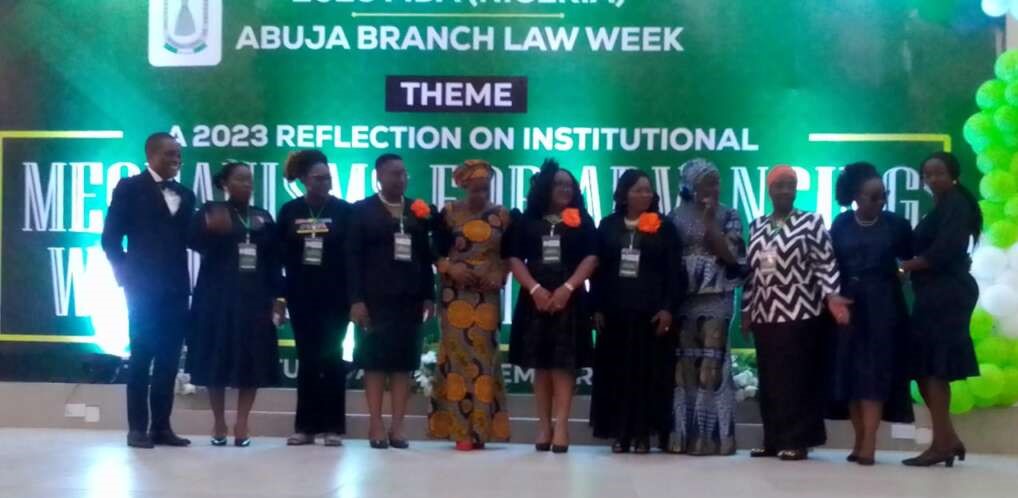
On Monday, the International Federation of Women Lawyers, FIDA Nigeria Abuja formally commenced its law week with the theme —A 2023 Reflection on Institutional Mechanisms for Advancing Women’s Right in Nigeria.
Below are the event’s photos.
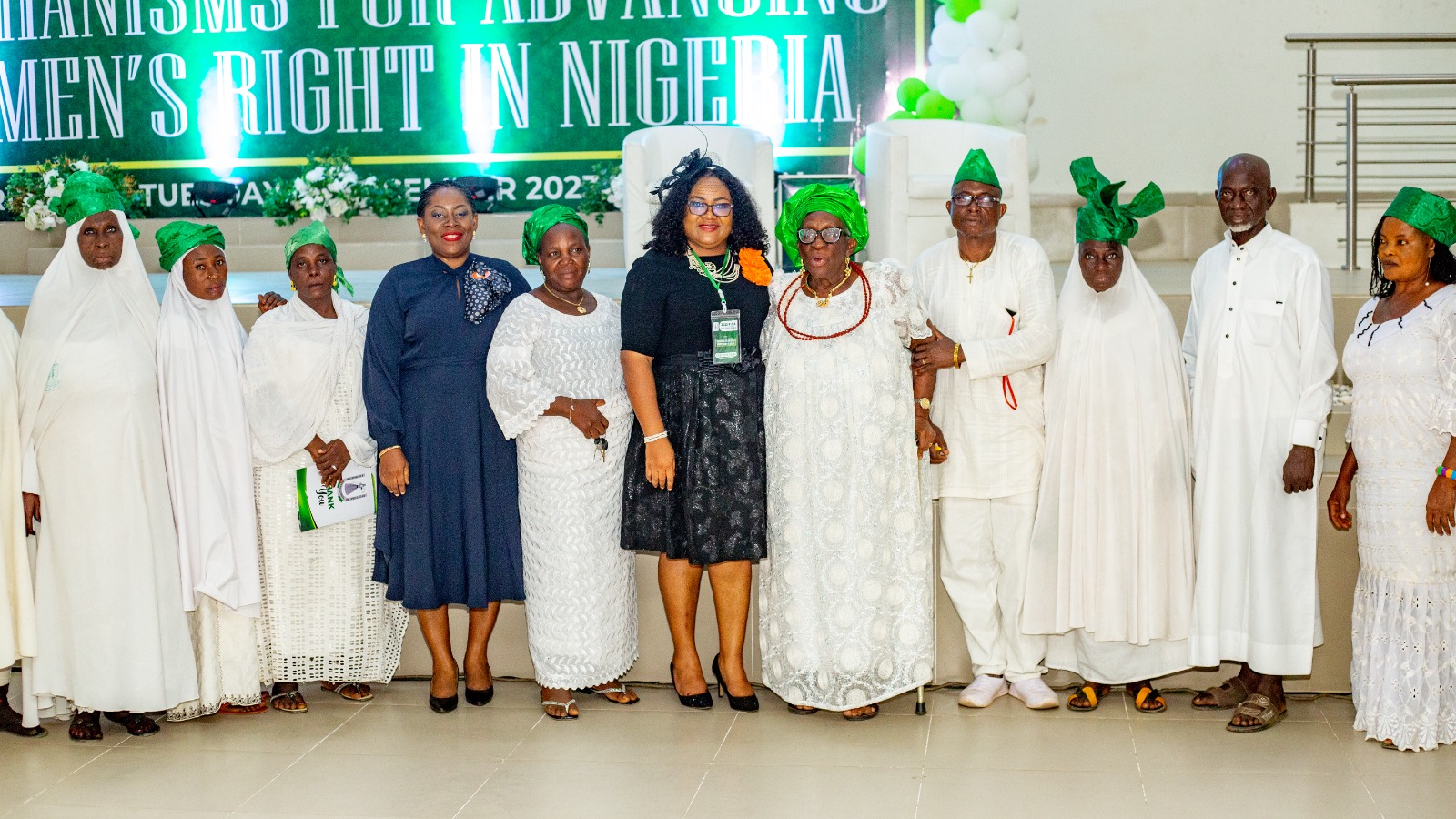
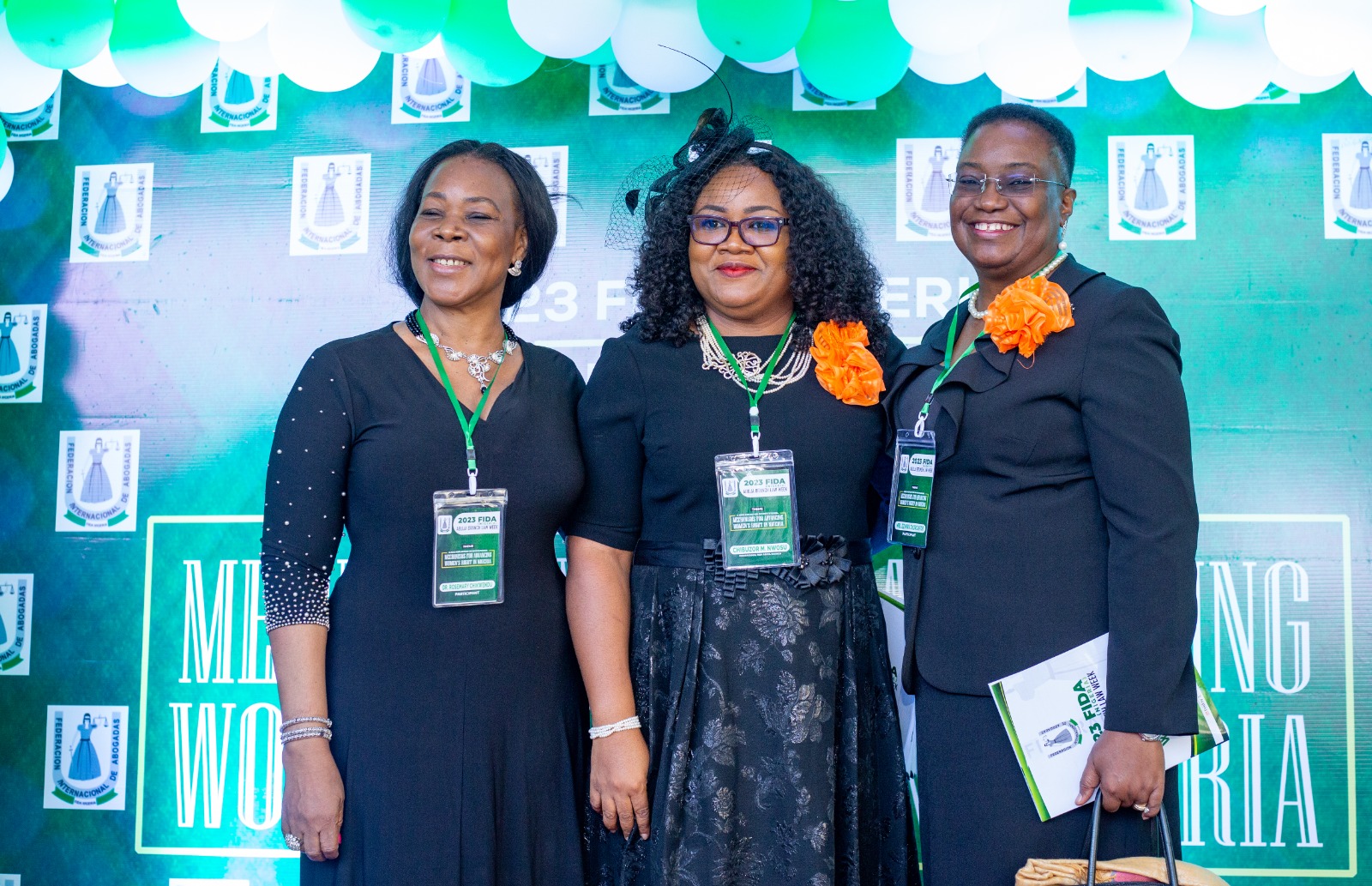
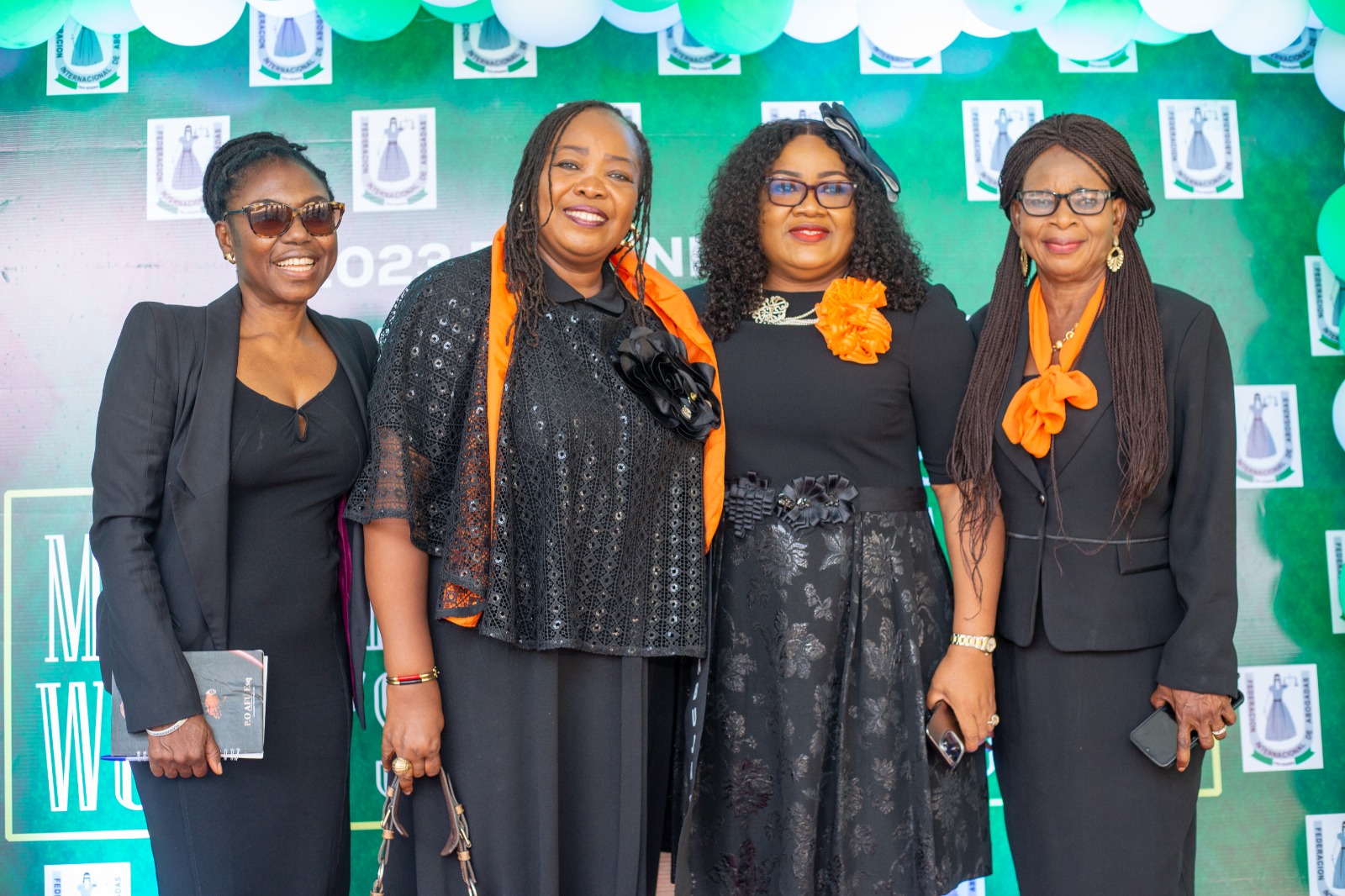
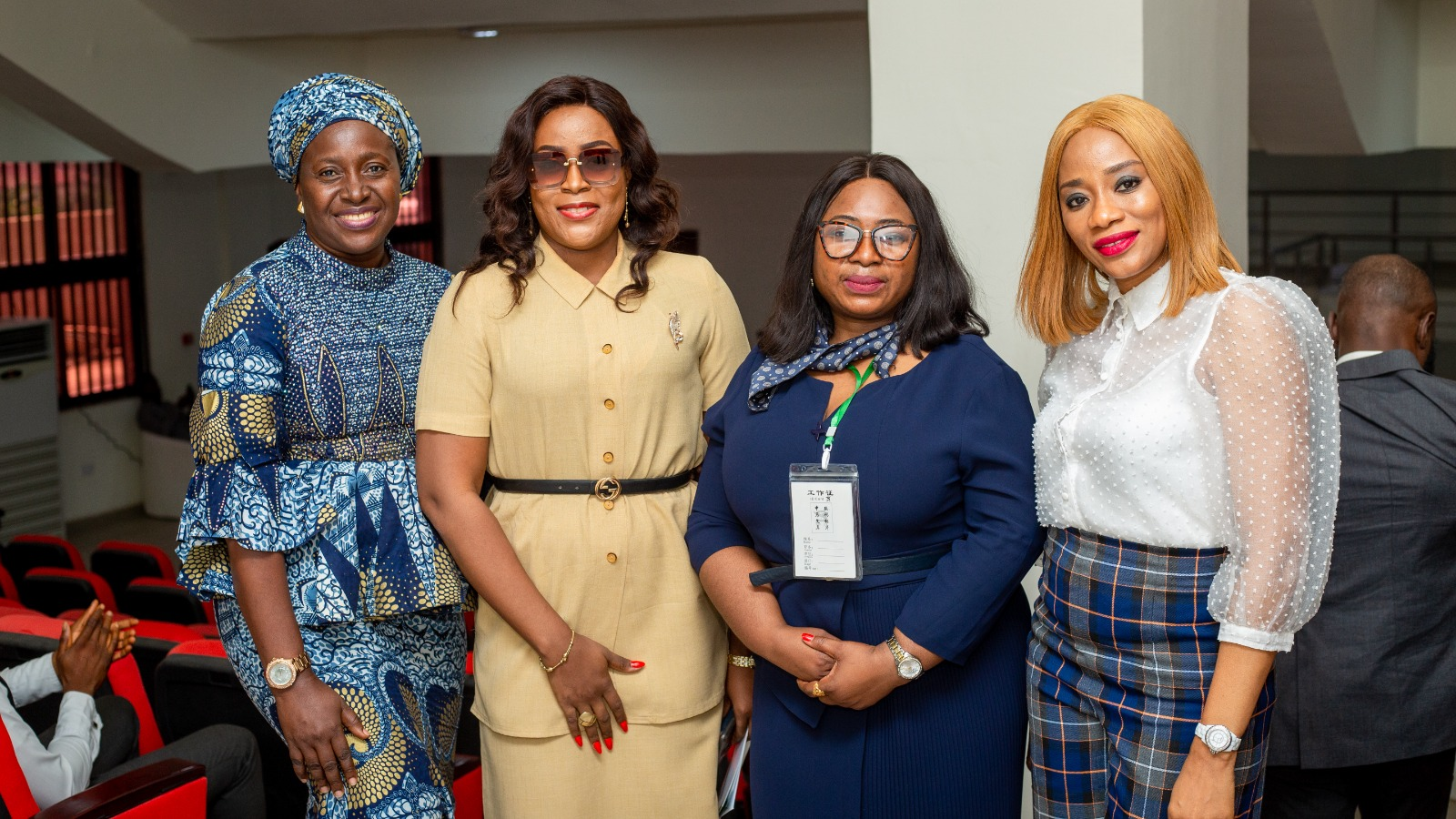
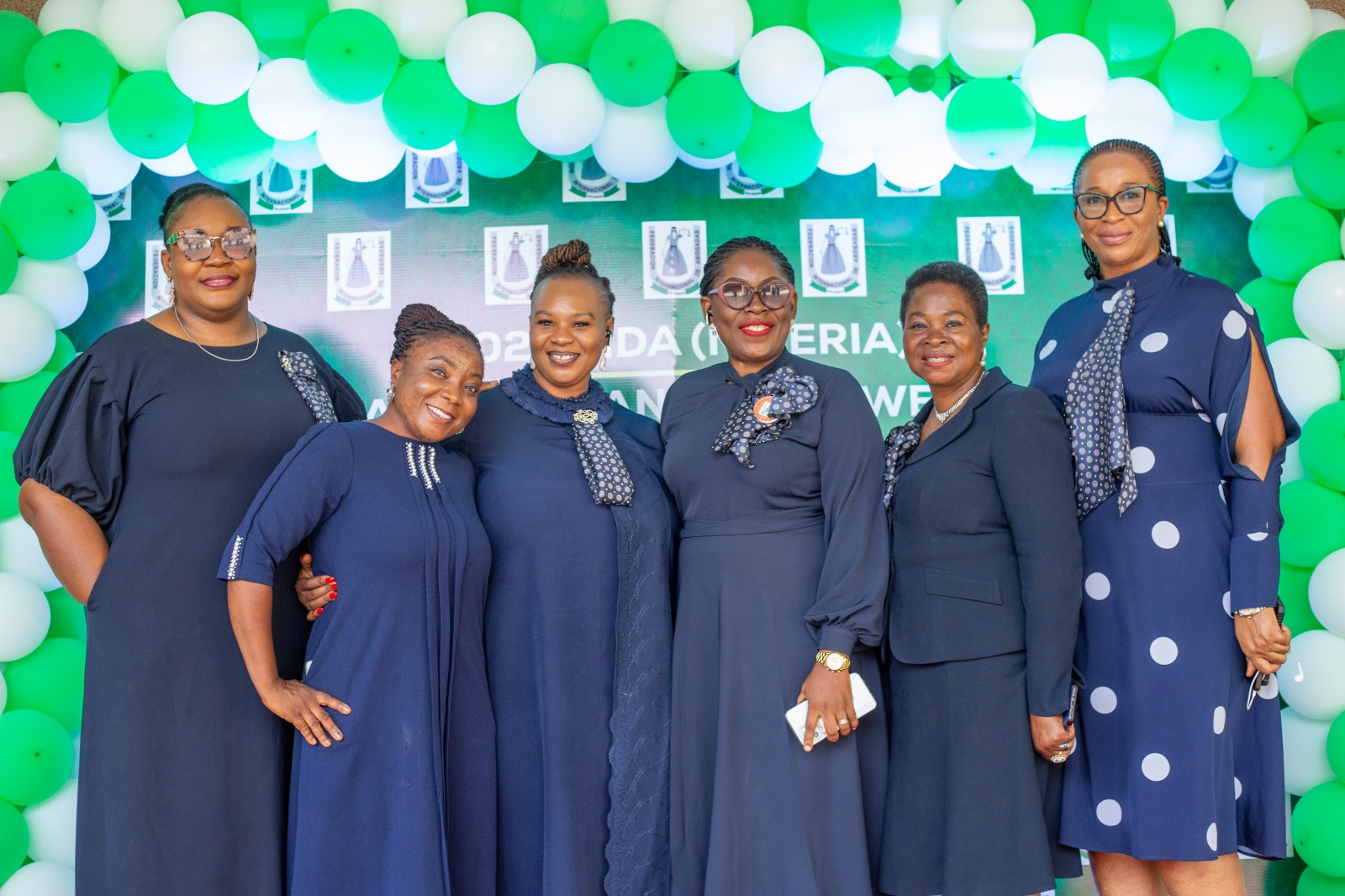
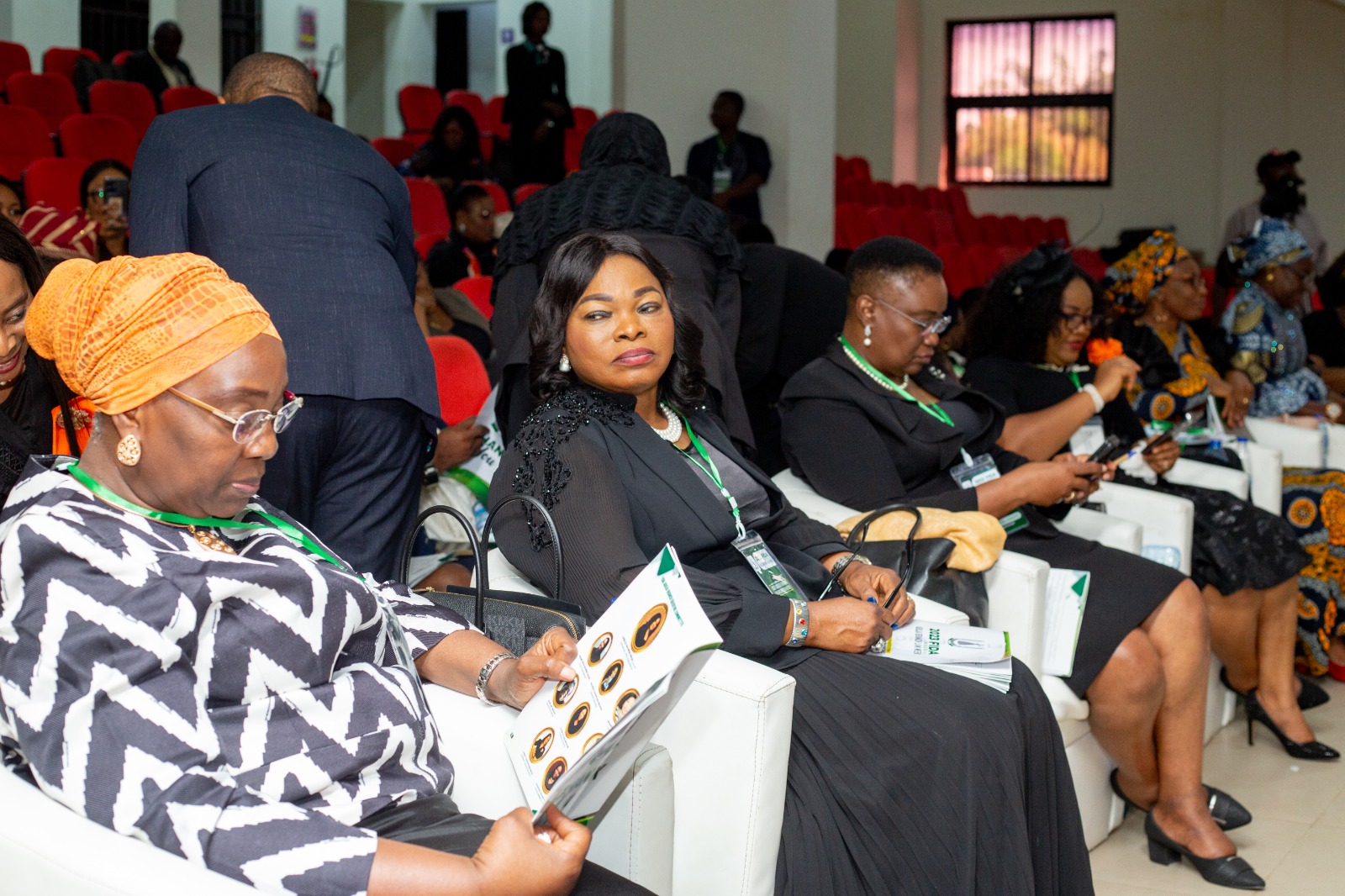
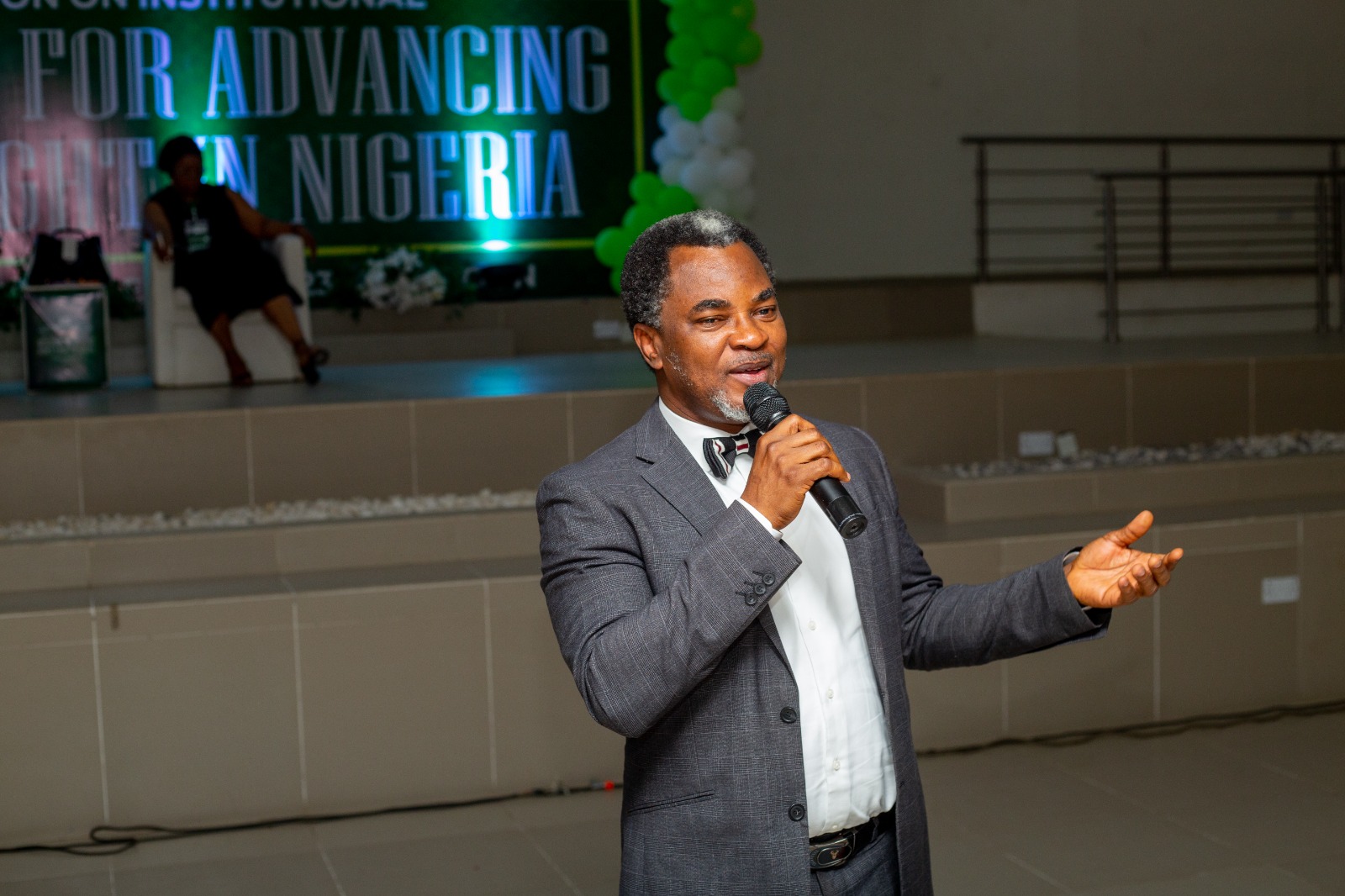
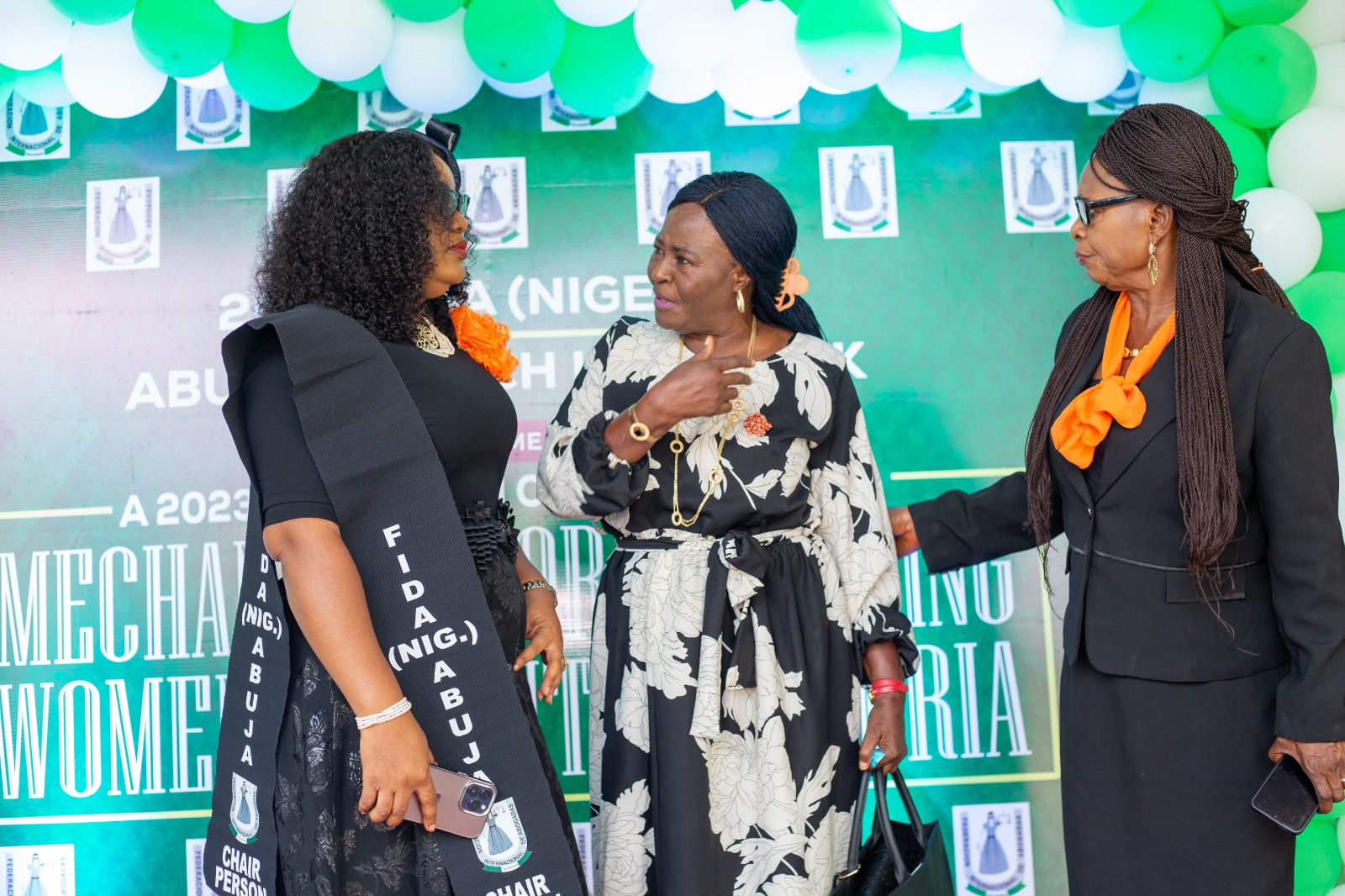
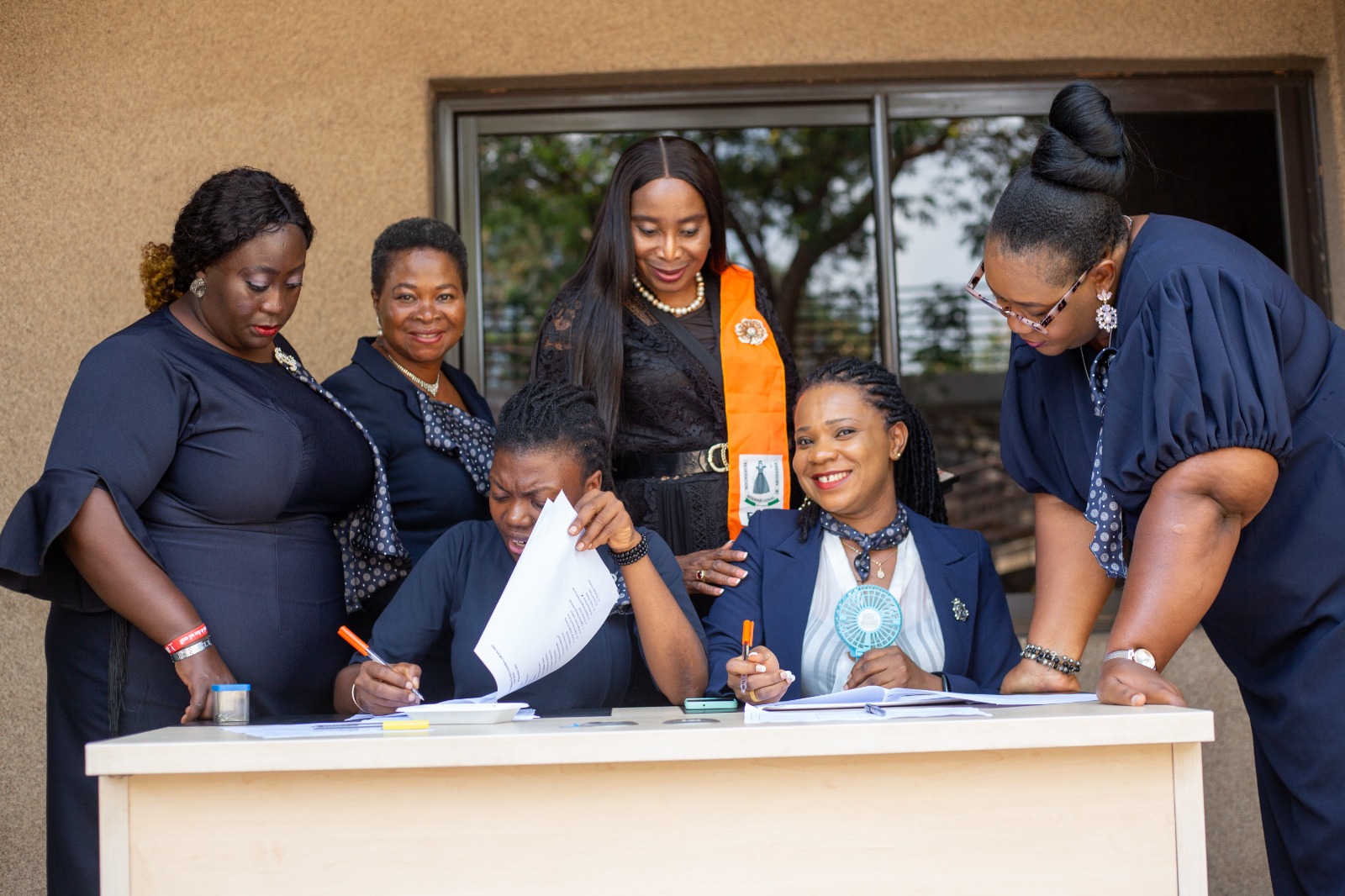
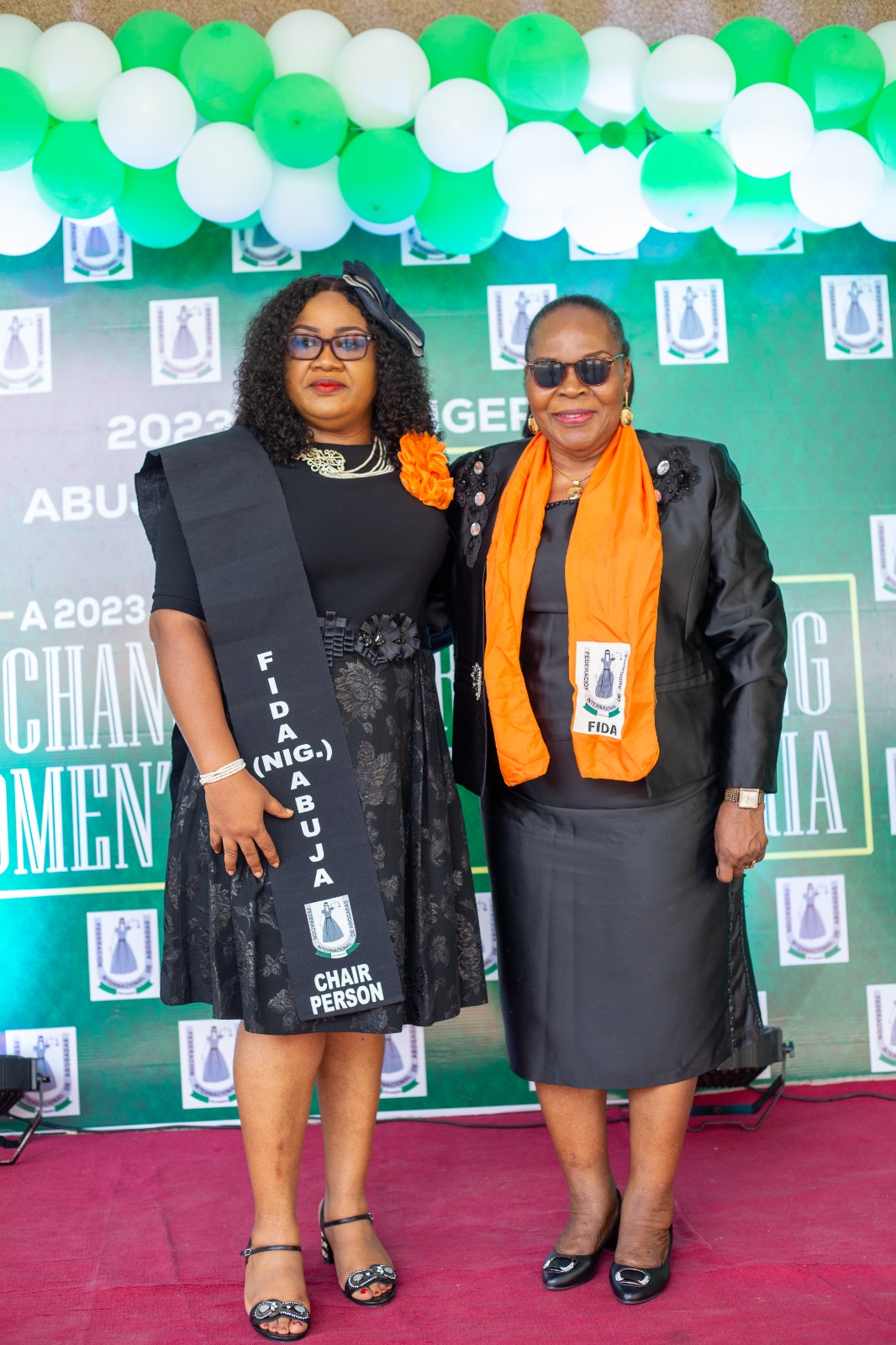
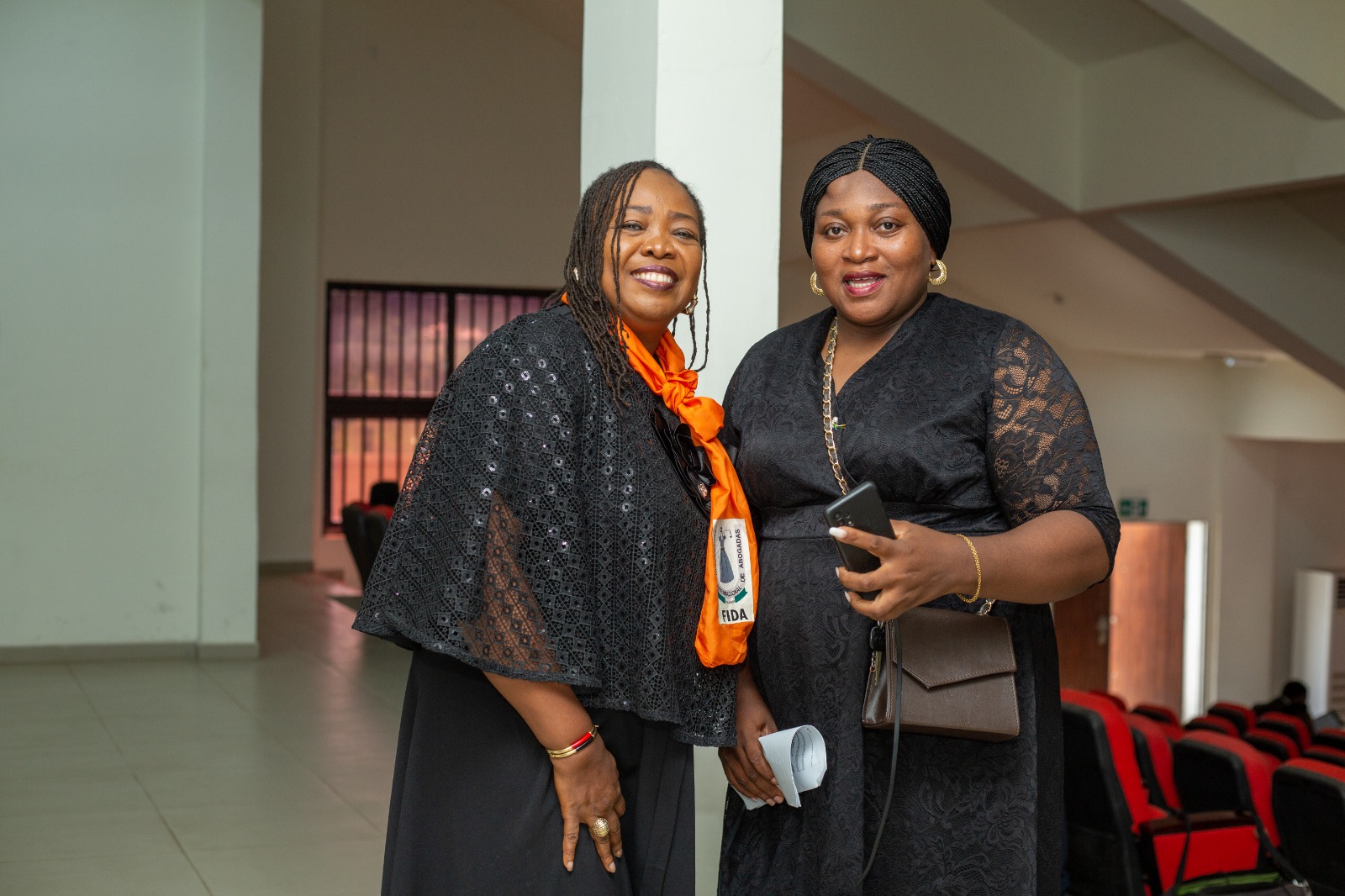
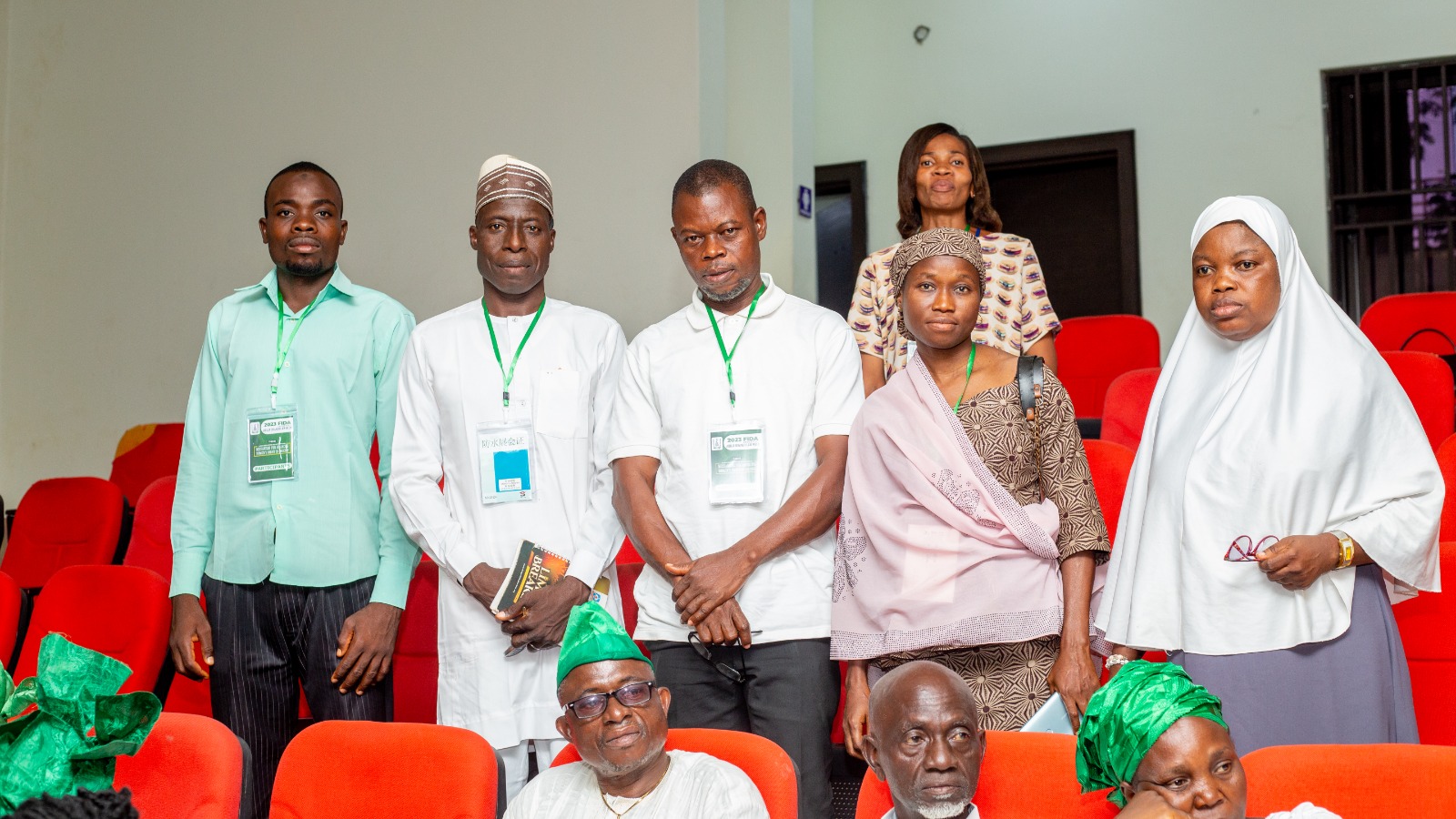
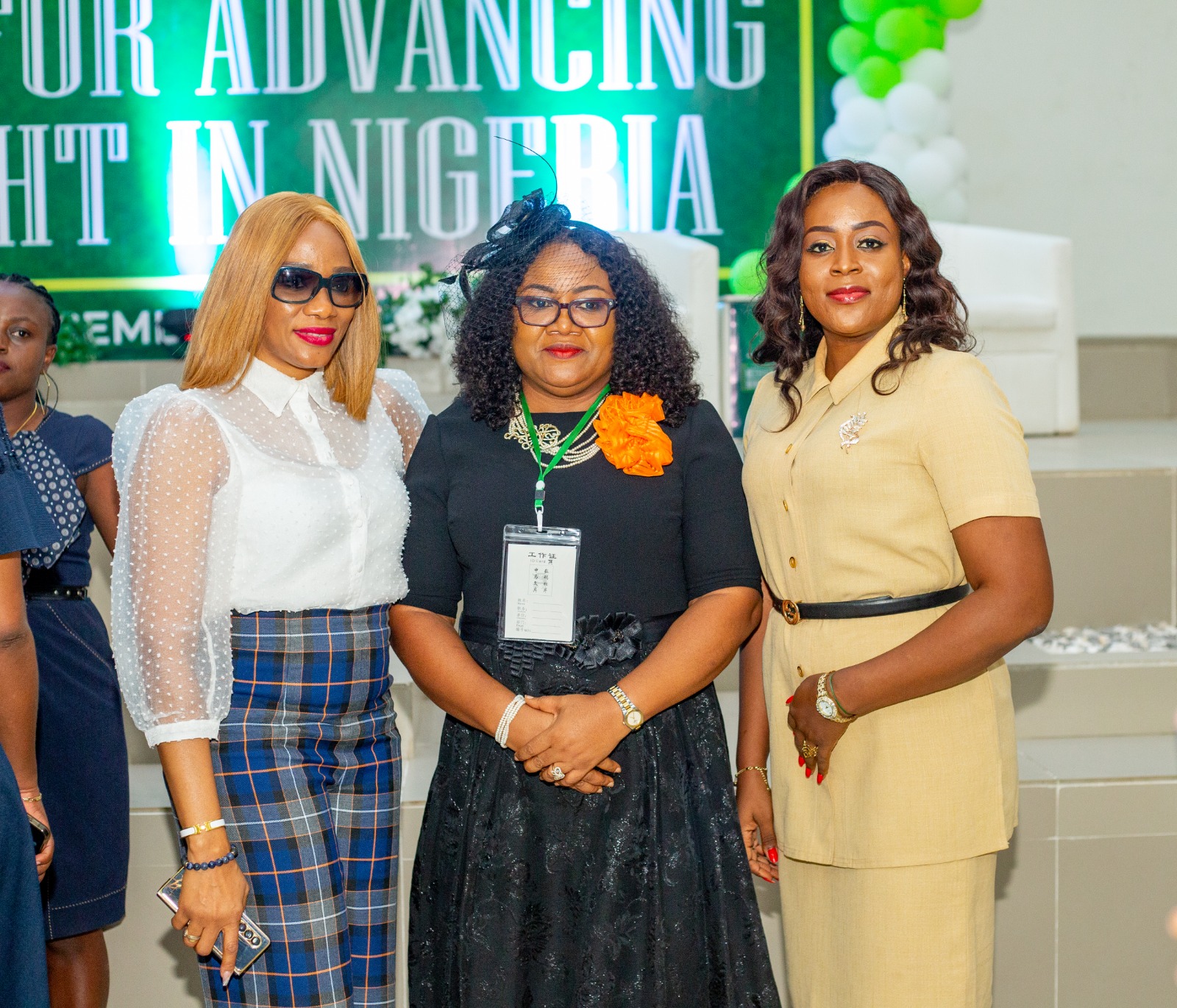

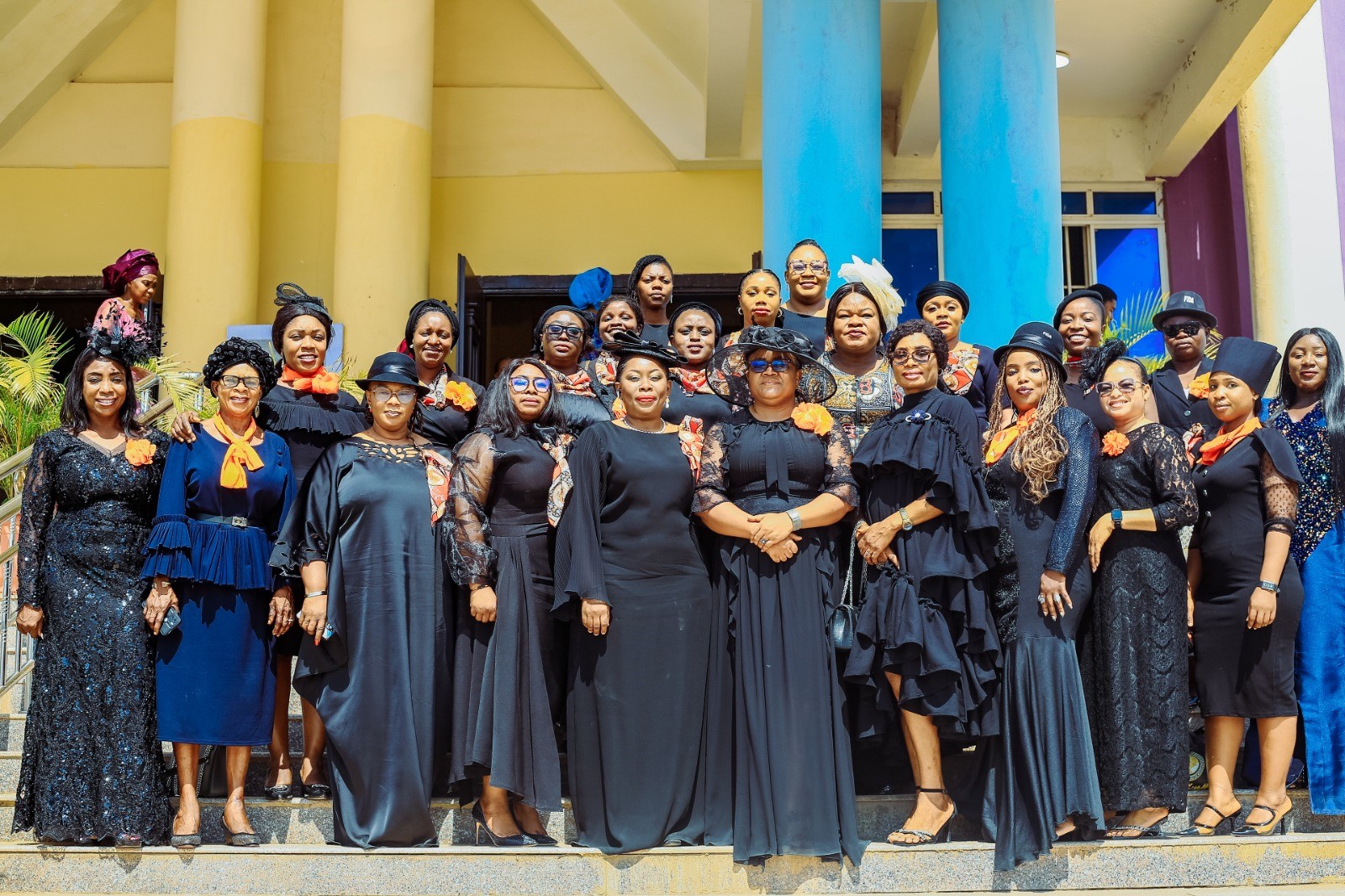
On Monday, the International Federation of Women Lawyers, FIDA Nigeria Abuja formally commenced its law week with the theme —A 2023 Reflection on Institutional Mechanisms for Advancing Women’s Right in Nigeria.
Below are the event’s photos.
The Rivers State Police Command said it has arrested one Eyinnaya Iheukwumere popularly known as Doctor Hagi for allegedly killing a 20-year-old woman identified as Rachael Samson and selling her baby.
Iheukwumere, who allegedly owns the ‘Hagi Medical Centre’ in Igwuruta in Ikwere Local Government Area of the state, allegedly killed Rachael during a surgery in his facility.
The sister of the deceased in an Instagram post alleged that Doctor Hagi asked a nurse in his facility to inform the family that she died in a car accident.
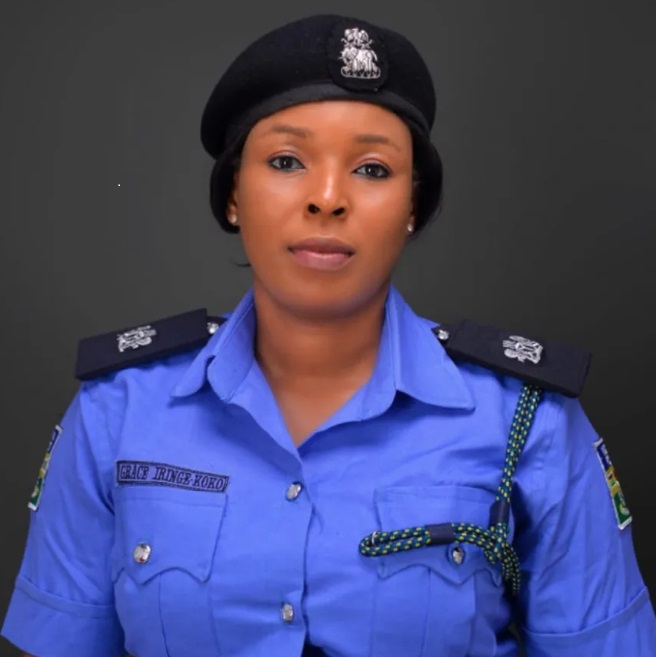
But speaking with our correspondent on Tuesday, the spokesperson for the state police command, Grace Iringe-Koko, said Doctor Hagi has been arrested.
Inringe-Koko, a Superintendent of Police, further said the matter has been transferred to the State Criminal and Intelligence Department for investigations.
She stated that, “Yes I can confirm that Doctor Hagi has been arrested in a case of murder and the matter has been transferred to the State CID for discreet investigation. The details of the investigation will be made known to the public soonest.”
The suspect had been reportedly paraded in October by the police command for alleged child trafficking.
The Advocate
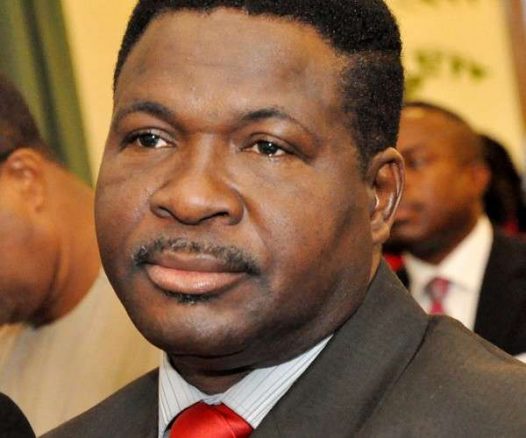
Some senior lawyers have brought different perspectives to the Supreme Court’s imposition of a N40 million fine on rights advocate and constitutional lawyer, Mike Ozekhome, SAN on Tuesday, for filing a “frivolous” motion before the court regarding the Imo governorship tussle, which was decided in 2019.
A detailed record of proceedings obtained by Barristerng revealed that prior to the Tuesday hearing, the Ozekhome team had written seven separate letters to the former CJN and the current CJN to fix a hearing date on the matter since 2020.
“…let us not forget, sirs, the fact that we were compelled to write 7 separate letters to the former CJN and the current CJN to set this matter down for hearing since 2020 – until today’s hearing.What is in issue here is the illegality that was in the conduct of the Appellant. And it has no time limit; it cannot be affected by time limitation. That was what you held in this very appeal (CV/1348/2019: UGWUMBA UCHE NWOSU V. APP (2020) 16 NWLR (Pt. 1749) 28).”
A senior lawyer who did not want his name in print indicted the apex court and brought another angle to the controversy.
“The Supreme Court is the problem. How can a Supreme Court make two inconsistent orders on the case? How can the Supreme Court keep a case on its dockets for 3 years unassigned and later assign it and later move it to after election? This supreme does not have the character of a judicial body. It reeks of a gang of ill-educated and unconstrained dictators. Sorry to say.”
Prior to the fine imposition, Ozekhome told the justices why he was before them.
“We are here to urge this Honourable court to give effect to its judgement delivered on 20th December, 2019 and for enforcement of same. It is predicated on our process dated 23rd November, 2023, and filed on 24th November, 2023. It is a motion on notice seeking consequential orders. We are not asking that the court revise or review its judgment; rather, that the court enforces and give effect to it. We are not appealing or saying that this court should revise itself but. Far be it. Even if we were, the court has the powers to do so as decided by this apex court in the case of ADEGOKE MOTORS V. ADESANYA (1989) 3 NWLR (Pt. 109). In the lead judgement delivered by Oputa, JSC (of blessed memory), which is often not fully quoted by many, he said as follows and I quote:
‘We are final not because we are infallible, rather we are infallible because we are final. Justices of this court are human beings, capable of erring. It will certainly be short-sighted arrogance not to accept this obvious truth. It is also true that this court can do inestimable good through its wise decisions. Similarly, the court can do incalculable harm through its mistakes. When therefore it appears to learned counsel that any decision of this court has been given per incuriam, such counsel should have the boldness and courage to ask that such a decision be over-ruled. This court has the power to over-rule itself (and has done so in the past) for it gladly accepts that it is far better to admit an error than to persevere in error. Learned counsel has not asked us to over-rule either Skenconsult or Ezomo supra. If that was what was wanted, the briefs should have said so specifically and the Chief Justice of the Federation would have gladly empanelled a Full Court’
“My Lord, this is precisely the case here. We ,like in the above scenario, are not asking this court to overrule itself. If we wanted, we would have humbly requested the CJN to empanel a full constitutional court of 7 Justices.”
Prof. R.A.C.E Achara in a statement shared his thoughts.
“From the abbreviated report, it was, in the circumstances, a frivolous motion; and, in my respectful submission, abusive of the processes of the court.
“My worry is on the growing penchant of the respected Supreme Court to not only impose excessive costs, but to place the weight on counsel.
“The problem with this often transcends the particular lawyer involved, but subverts the entire judicial system by creating a general chilling effect both for malicious as well as merely mistaken advocates.
“Any capricious power is dangerous.
“The constitution frowns more on this sort of in terrorem power where it is assumed by a final court and in circumstances where opportunity has not been shown of the charge and an opportunity to the mulcted lawyer to offer a defence, one way or another, to it.
“Even for the litigant, the severity, even if not the sanction, ought to conform to some verifiable standards of scale and logic.
“We must never descend to a position where justice in our courts can’t easily be distinguished from local vigilante justice.
“The knee-jerk vigilante reaction to petty theft is death by wheel tyre incineration; however, the justice we expect in a normal court of law may find guilt but nevertheless constrains its sentencing against graduated guidelines imposed by our civilized notions for the rule of law.”
Please watch the address of South Africa’s Chief Justice Ray Zondo at the opening of their Judges Conference on Tuesday below.
Prof. Achara also added: “”As we … know, abuse of process transcends, and even sometimes is aliunde, the merits of the underlying case. And focuses rather on surrounding circumstances of timing, intent, prudence, enforceability and generally the supervening nature of the facts of each case.
“The court and counsel can’t here pretend innocence of the judicially noticeable supervening events here:
“The thrust of this motion is to enforce a Supreme Court judgment made 4 years ago in December 2019.
“The nature of the relief is for the court, which to the knowledge of all parties had ruled (rightly or wrongly) to the contrary in January 2020, that the person returned as Imo State Governor under the 2019 electoral cycle, should be ousted for another candidate, whom the SC (again, rightly or wrongly) had rejected as such over 3 years ago.
“This request for replacement is founded on the different SC decision in which the party the SC eventually returned as winner, had conspicuously not been made a party.
“In a prior attempt at reversal of the (clearly questionable) 2020 return by the SC, that top court of our land, by a 6 to 1 margin, angrily rebuffed the motion. And imposed cumulative costs in the region of 30 million in Naira.
“The person the Supreme Court returned as governor has completed that 4-year term. He has stood a completely fresh election where there is a serious contention by his rivals that the majority of the Imo State electorate had cast their votes for this totally fresh new electoral cycle to them. There is a possibility that the electoral tribunal and courts might agree with them. Yet this motion requests the SC to ignore the entirety of the will of Imo State voters (especially those who became eligible after 2019 and those who might have changed their minds from how they might have voted in 2019)… right there, is the abuse…”
Below is the executive summary of the case leading to Ozekhome’s application.
EXECUTIVE SUMMARY OF THE APPLICATION FILED BY THE PEOPLES DEMOCRATIC PARTY [PDP] AND ACTION PEOPLES PARTY [APP] TO EXECUTE OR ENFORCE THE JUDGMENT DELIVERED BY THE SUPREME COURT IN SC/1384/2019 – UGWUMBA UCHE NWOSU Vs APP & ORS ON 20th DECEMBER, 2019
1.0 INTRODUCTION
1.1 Sometime last year, in the run up to the general elections, the Action Peoples Party [APP],its Imo State Governorship candidate Mr. Uche Nnadi and the Peoples Democratic Party [PDP] approached the Federal High Court, Abuja; seeking, amongst other reliefs, the disqualification of Ugwumba Uche Nwosu from contesting the Imo State Governorship election on the ground that he [Ugwumba Uche Nwosu] was nominated as Governorship candidate by two [2] political parties namely: Action Alliance [AA] and All Progressives Congress [APC] contrary to Section 37 of the Electoral Act 2010 [as amended] which forbids double-nomination.
1.2 Upon being served with the originating processes, the Defendants in that suit: Ugwumba Uche Nwosu, Independent National Electoral Commission [INEC] and Action Alliance [AA] filed their various counter-affidavits to the originating summons including preliminary objections to the jurisdiction of the Honourable Court to entertain the suit. After hearing parties, the Court delivered a well-considered judgment on the 19th August, 2019; wherein it dismissed the preliminary objection and proceeded to
grant all reliefs claimed by the Plaintiffs including an order disqualifying Ugwumba Uche Nwosu from contesting the Imo State Governorship election on the platform of any party for double nomination contrary to Section 37 of the Electoral Act [supra].
1.3 An appeal by Ugwumba Uche Nwosu to the Court of Appeal, Abuja Division against the judgment was dismissed for lacking in merit on the 28th October, 2019. A further appeal by Ugwumba Uche Nwosu to the Supreme Court was also dismissed for being without substance in the judgment delivered by the apex court on 20th December, 2019. In the said judgment, the Supreme Court, in the lead judgment delivered by Honourable Justice Amina Augie, upheld the findings of both the trial court and the Court of Appeal with respect to the fact that Ugwumba Uche Nwosu was the Imo State Governorship Candidate of the Action Alliance [AA] and the All Progressives Congress [APC] contrary to Section 37 of the Electoral Act [supra] and sustained his [Ugwumba Uche Nwosu] disqualification from contesting the Imo State Governorship election.
1.4 It is this judgment of the Supreme Court delivered on 20th December, 2019 that the motion on notice currently pending before the Supreme Court intends to enforce.
2.0 MOTION ON NOTICE FOR ENFORCEMENT OF THE JUDGMENT DELIVERED BY THE SUPREME COURT ON 19th DECEMBER, 2019 IN SC/1384/2019 – UGWUMBA UCHE NWOSU Vs APP & ORS
2.1 The motion on notice currently pending before the Supreme Court seeks the enforcement of the judgment delivered by the Court and is brought pursuant to the provisions of Section 66 and Section 287[1] of the Constitution of the Federal Republic of Nigeria 1999 [as amended], Section 22 of Supreme Court Act 2004 and Order 8 Rule 17 of the Supreme Court [Amendment] Rules 2014. The motion is premised on the following grounds:
a. The candidature of Ugwumba Uche Nwosu was nullified for being invalid for reason of his double-nomination by two [2] political parties: Action Alliance [AA] and All Progressives Congress [APC] contrary to Section 37 of the Electoral Act [supra].
b. By reason of the above, the All Progressives Congress [All Progressives Congress] did not field any Governorship candidate in the Imo State Governorship election and as such cannot be returned as the winner of the Imo State Governorship election.
c. The Peoples Democratic Party [PDP] Governorship candidate, Rt. Hon Emeka Ihedioha, having polled the highest number of votes cast at the Imo State Governorship election, ought to be declared winner of the said election as the acclaimed winner [All Progressives Congress] did not field any candidate following the disqualification of its duly nominated candidate, Ugwumba Uche Nwosu.
2.2 In support of the motion is a twenty [20] paragraph affidavit deposed to by Adedamola Farokun Esq, a Legal Practitioner working with the Peoples Democratic Party [PDP] to which four [4] exhibits: Exhibits “PDP1” [Judgment delivered on by the Federal High Court coram Honourable Justice Inyang Ekwo on 19th August, 2019], “PDP2” [Judgment delivered by the Court of Appeal, Abuja Division on 28th October, 2019], “PDP3” [Judgment delivered by the Supreme Court in SC/1384/2019 on 20th December, 2019] and “PDP 4” [Judgment delivered by the Supreme Court on 14th January, 2020 returning Senator Hope Uzodinma as the Governor of Imo State] were annexed.
2.3 The prayers sought in the motion on notice in a nutshell are:
a. An order enforcing the judgment delivered in SC/1384/2019 by holding that Ugwumba Uche Nwosu was the Imo State Governorship candidate of both the Action Alliance [AA] and the All Progressives Congress [APC] and was disqualified for double nomination. And consequential orders to the following
effect:
b. An Order to the effect that the All Progressives Congress [APC] did not field any Governorship candidate in the Imo State Governorship election following the disqualification of its duly nominated Governorship candidate in the person of Ugwumba Uche Nwosu for double nomination and as such cannot be returned as the winner of the Imo State Governorship election.
c. An order directing the swearing in of the Governorship candidate of the Peoples Democratic Party [PDP] Rt. Hon. Emeka Ihedioha as the Governor of Imo State.
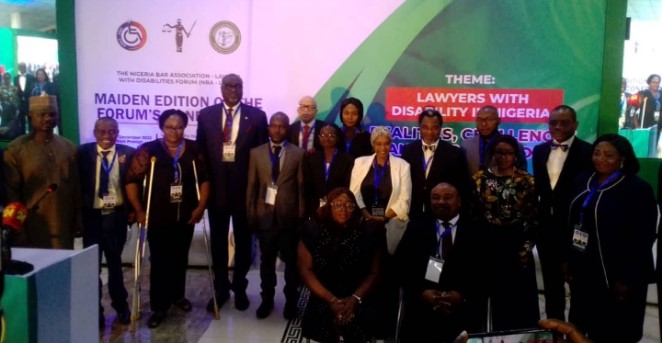
Lending a helping hand shatters the glass ceiling. Nothing makes disabled people lesser humans. Nothing.
The journey towards inclusivity and equality for disabled individuals is more pertinent than we can ever imagine.
Currently, over 1.3 billion people, constituting 16% of the global population, live with significant disabilities. However, these individuals often face numerous challenges that hinder their access to a high standard of life, filled with respect and dignity.
he existing health inequities experienced by persons with disabilities are not only stark but largely avoidable. These disparities, encompassing higher mortality rates, increased health risks, and limitations in daily functioning, are fueled by unjust factors within and beyond the health sector.
Providing Access
Discrimination, inequitable policies, social determinants of health, limited access to quality care, and negative attitudes from health workers contribute to a system where persons with disabilities are frequently left behind.
Recognizing the urgency of addressing these challenges, the United Nations Secretary-General António Guterres launched the Disability Inclusion Strategy (UNDIS) in 2019.
The Disability Inclusion Strategy (UNDIS) has given us the tools to initiate a bold systemic transformation, and is driving unprecedented progress for, with, and by persons with disabilities around the world
This groundbreaking initiative aims to embed disability inclusion into every facet of the UN system’s work and core functions.
UNDIS provides the tools for a bold systemic transformation, fostering unprecedented progress for, with, and by persons with disabilities globally.
Ending Workplace Discrimination
One critical arena where inclusion must be championed is the workplace.
Disabled individuals often encounter a lack of role models, inaccessible work environments, and pervasive discrimination.
Media, as a powerful agent of change, plays a crucial role in shaping perceptions.
Also, responsible representation of disability in the media becomes imperative in contributing to a more inclusive and equitable society.
On the occasion of the International Day of Persons with Disabilities, observed annually on December 3, the world is reminded of the collective responsibility to break down barriers and promote inclusivity.

This day serves as a poignant reminder to reassess our commitment to the well-being and equal opportunities for disabled individuals.
It is equally essential to recognize that meaningful participation and empowerment of persons with disabilities are integral to this journey. With the Disability Inclusion Strategy paving the way, global unity becomes the driving force for a more inclusive future.

Today provides another opportunity to renew our commitment to creating a world where every individual, regardless of ability, is afforded the respect, dignity, and opportunities they rightfully deserve.
Culled from Jollofmash.com
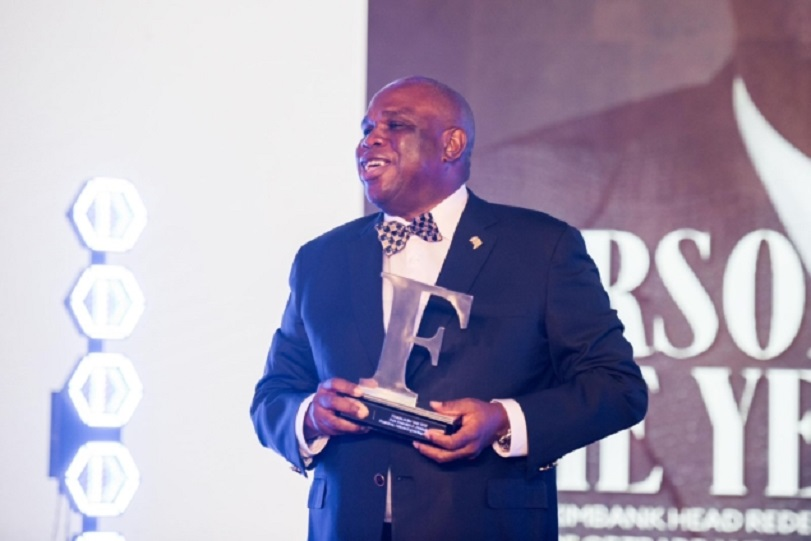
Afreximbank President and Chairman of Board, Professor Benedict Oramah, has been awarded Forbes Person of The Year in recognition of his numerous contributions to African Development. This award is coming on the heels of Oramah’s epic performance at the third IATF in Cairo.
The bank has been largely considered as many things for the African economy. His Intra-African Trade Initiative, which is driven by Kanayo Awani, has been considered the biggest innovation by any development finance institution in the world. Oramah has really demonstrated very sharp leadership qualities now considered quite innovative.
At a well-attended award ceremony in Cairo, which also included the unveiling of the cover for Forbes Africa’s December 2023/January 2024 edition featuring Mr Oramah as cover personality, Mr Rakesh Wahi, Forbes Africa Founder and Publisher, and Ms Roberta Naicker, Managing Director, said that the award recognised the stellar accomplishments of leading Africans contributing to the development of the continent.
“With a career spanning three decades at Afreximbank, Prof. Benedict Oramah is a true pan-Africanist,” said Ms Renuka Methil, Managing Editor of Forbes Africa, “In our almost hour-long interview Prof. Oramah’s stellar track record, coupled with his unbridled enthusiasm, passion, and contribution to the economic development of Africa shone through.”
“Amongst many initiatives under his visionary leadership, Afreximbank launched the Pan-African Payment and Settlement System (PAPSS) which will be a historic project for cross-border payments in local African currencies. He is a resilient risk-taker and articulated so well what a new united Africa should, and would, look like,” added Ms Renuka Methil.
Nominations for Forbes Africa Person of The Year are submitted by members of the magazine’s editorial and research teams, including journalists from its bureaus across Africa, and a winner is selected after an Africa-wide review of the prominent contributors to the continent.
Mr Oramah’s name was shortlisted and unanimously adjudged the winner for 2023.
With the award, Mr Oramah joins a prestigious list of high achievers who had previously received the award, including Mr Sanusi Lamido Sanusi, former Governor of the Central Bank of Nigeria; Mr James Mwangi, CEO, Equity Group; Mr Akinwumi Adesina, President, African Development Bank (AfDB); Mr Aliko Dangote, CEO, Dangote Group; Mr Mohammed Dewji, President, MeTL Group; and Mr Thuli Madonsela, former Public Protector of South Africa.
On November 18, Mr Oramah also received the Zik Prize in Professional Leadership at an event in Lagos, Nigeria. He is also the recipient of numerous other awards for his contributions to the development and promotion of trade in Africa, and for the many initiatives he has championed to drive intra-African trade.

“It’s your reaction to adversity, not adversity itself that determines how your life’s story will develop.” – Dieter F. Uchtdorf
“Do not judge me by my success, judge me by how many times I fell down and got back up again.” – Nelson Mandela
And that is the story of Faith Oreoluwa Bello whose determination to succeed against all odds led her to taking on the herculean task of acquiring a law degree, maintaining a tailoring business and excelling exceedingly in both!
Days ago, Faith Oreoluwa Bello stood out among hundreds of students who recently graduated from the University of Ibadan armed with a first-class degree in law. She also graduated from the faculty as the best student in the private and property law department as well as Labour Law.

But the crux of her feat is that she aced law, while managing a thriving fashion design and tailoring brand called Telobrand.
In an interview with FIJ, she shared her journey through the university, shedding light on her desire to study law and the decision to also venture into the tailoring business.
One thing stood out from Bello’s story — her decision to be different despite facing many stumbling blocks and challenges.
Bello’s decision to study law contrasted with everything and everyone from her background. Every other member of her family, including her twin sister, works in the medical space. For context, Bello is from a family of seven and the only lawyer among five daughters.
“My dad is a medical doctor. He is retired but runs a private practice. My mum is also retired. She was a school principal before she retired. My eldest sister is a medical doctor, and my second eldest sister is a pharmacist,” Bello told FIJ.
“My third sister is a medical laboratory scientist. My fourth sister, who is also my twin, is a student of dentistry. So, I am the only member of the family who chose a different path.
“My break from the norm within the family started while I was in SS1. My twin and I were in the same science class. I, however, soon decided to leave for the arts because I was just not interested in the sciences. I wanted to become a lawyer. I did not let my parents know at the time.
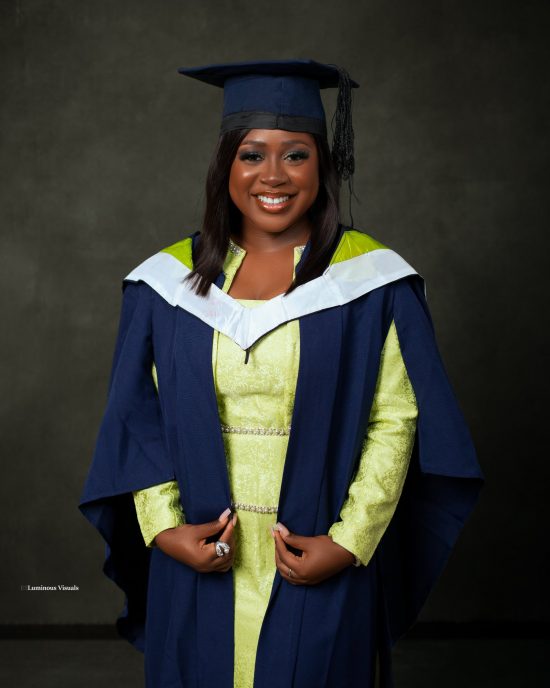
“It took a while for my parents to realise. By the time they found out, it was almost too late for them to tell me to go back to the sciences. My dad was always very worried.
“In the sciences, you have formulas, methods and all that, but in the arts, you just have to spread. Fortunately for me, I wrote my JAMB once. I also wrote my WAEC once.
Bello said her parents and other family members were very supportive even when she chose a different path.
“To be honest, my dad wanted the family to be a family of medics, but they were as supportive as they could be. He was very scared; he did not know who could put me through as he did for my siblings,” said Bello.
“I think it reflected in my aggregate JAMB score. I didn’t have any precedent like my twin or my sisters. There was no one to guide me. He was very scared because of that. My aggregate score was somehow low, but I am grateful that it all worked out in the end.”
‘LAW IS A SELFISH INTEREST‘

It’s a common belief, and often rightly so, that juggling a full-time job alongside academics is an almost impossible feat. Some even argue that the same holds true for side hustles or vocations.
Consolidating her defiance of circumstances however, Bello managed to achieve this and succeed on both ends. The most obvious indicator on the business front is the size of her brand on social media.
As of the time of this report, her brand’s business page had an active audience of more than seven thousand people. Speaking on how she was able to accomplish both feats, Bello attributed her success to her ability to schedule her activities properly and stick strictly to them.
“Law is a very selfish mistress, and so is sewing. What I did was that after classes, I would resume sewing, and I always limited myself to taking just two orders per week,” Bello said.
“During weekends, I would spend both days in the library, from 8 to 6 pm. I cannot deny the fact that hard work really helped me. I also took tutorials in classes and taught some of my mates. It gave me the chance to read from cover to cover. I knew some things off my head because of that. It was an opportunity to read over and over again, iteratively.
“I did not exceed my two orders a week at any point. I needed to meet my customers’ expectations, and I wanted to study at the same time.
“I never went for more than two orders, just to make extra cash as a student. It was just me trying to discipline myself. Whenever I had free time, I took my books and read them.
“Most of the time, I didn’t necessarily know everything from the first read. But I read as many times as I could. There is a law I follow. It says that you have to read a thing about three to five times to get familiar. So, I do just that. By the time I carry the book again, it’s not always strange. Assimilation becomes easier.
“And oh! I usually never read at night. I believe the night is for sleeping. I sleep all night. I read only during the day. It’s usually from morning to evening. By 8:30 pm or 9 pm, I had gone to bed.
“Whenever we were close to the exams, I wouldn’t take orders. I would read from morning to evening, almost every day. That was even what helped me during my exams, I think. I just could not let go of the habit.
“It was hard, but I struggled still. I really wanted to be an example, a student of a tough course with a business that could still come out with a first class.”
Bello also gave credit to her faith while talking about her academic and business success. She said her partner, friends, mentor and family members form a huge part of her success story.
“I also had a mentor. She is in law school already. She always encouraged me. She taught me. I am practically just following her lifestyle,” said Bello.
“My success story is not complete without God. There are a lot of cases and instances I cannot explain. Say for instance, when I wrote my UTME that year, my aggregate score was low: I didn’t expect that I would get an admission.
“I don’t know what would have happened if the lecturer that called me then didn’t call me. I would have missed my admission. I would have missed my clearance and would have not known that I had got an admission.
“All of the instances where I was sick during exams could have cost me. What if I had a resit, you know? I emerged the best graduating student in Labour Law.
“If someone had told me that this would be it, I’d have argued. I never even thought of Labour Law in any way. It was a shock to me. Every time I think about it, it’s just God’s grace.
“I also have a man who was very supportive. He gave me a lot of emotional support and stability.”
THE CHALLENGES AND THE SACRIFICES

In a back-stadium interview after the World Cup Final in 2022, Lionel Messi once alluded to the struggles and suffering he faced on the road to winning the World Cup. According to the player, winning is a cumulation of little efforts, challenges and even failures.
Bello also shared the same sentiment. The law graduate believes her story should inspire people to recognise challenges and set out to achieve their dreams regardless of these challenges.
She believes that a success story is only half told when the sacrifices that accompany it are not emphasised.
“I developed my interest in tailoring when I was younger. I would always take the pieces from my mum’s remaining clothes and cut them into different things. Creating clothes was always fascinating to me,” said Bello.
“When my dad noticed this, he decided to enrol me in a fashion school during the holidays. I started sewing my own clothes then. But it’s not always been easy.
“In my first year, for instance, my result was terrible and I almost got depressed. I think that was what spurred me into being intentional about my successes.
“I have also lost friends; there’s nothing as painful as that. I have lost so many close and tight friends. I have been talked about, cheated on and bullied.
“There were times I believed my friends left me because I never appeared to have time for their friendship. I always liked to use my free time to make up for grounds I needed to cover in my academics and brand. I count all these as some of my sad experiences.
“My schedule never took anything away from my social life. I also had less time for my other interests. These interests include poetry and public speaking.
“During my 200 and 300 level years, I did a lot of spoken word poetry because I like arts. Anything art in any form was just simply fascinating to me. I also participated in the Poets in Nigeria competition that took place in UI in my 200 level.
“I came fourth in the 2018 edition of the competition. There were so many participants at the event, so, it was still a win for me. I also participated in my faculty debate competitions.
“I came second in one of the competitions. I had so many of my poems back then, but it’s been a while since I wrote because like I said, law is a selfish mistress.
“I am also a sickly girl. I fall ill pretty easily. This affected me a lot throughout school. But with God, my parents, people and discipline, I was able to push through to a success story.”
I HOPE I AM ABLE TO INSPIRE OTHER YOUNG PEOPLE
Bello hopes that her story influences other young people to strive for success and excellence even when ambitions and plans appear impossible.
“I really want to be an example of a student studying a taxing course with a demanding business that could still come out with a first-class degree. I want my story to encourage youths who are entrepreneurs. I want them to know the sky would turn out to be a stepping stone for them once they put in the effort required.
“Having a solid certificate pays. At the same time, you never can tell which would pave the way for you in life. We are young and agile, so, I believe we all have the capacity to do things. Why then would I want to limit myself?”
She is very optimistic about her future. She hopes to still actively participate and excel at being a lawyer and a business owner.
“As it stands right now, I am still hopeful that I would be able to manage being a lawyer and a fashion brand owner,” said Bello.
“I don’t necessarily have to be the one managing the brand fully. I hope I am able to employ other young people. I want to keep it because it’s my dream. I also want to be a full-fledged lawyer because it is also my dream.”
Credits: Foundation for Investigative Journalism (FIJ)
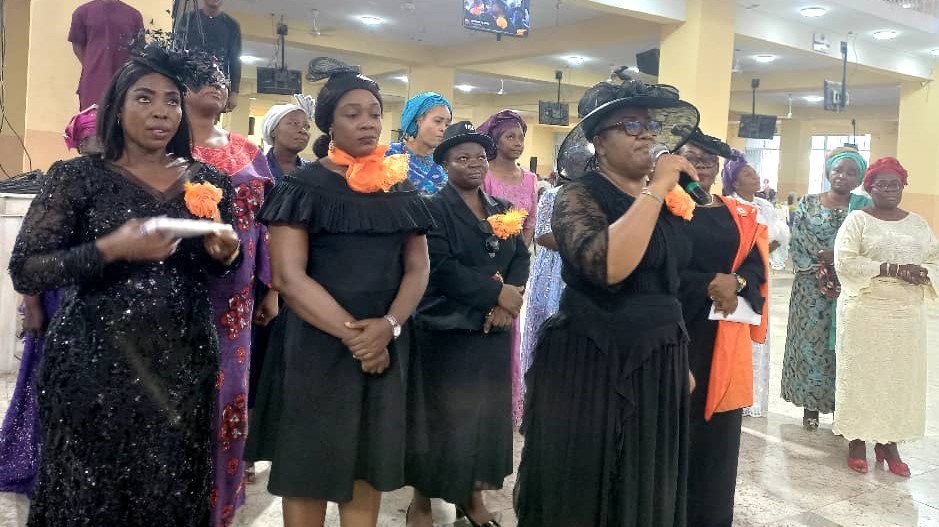
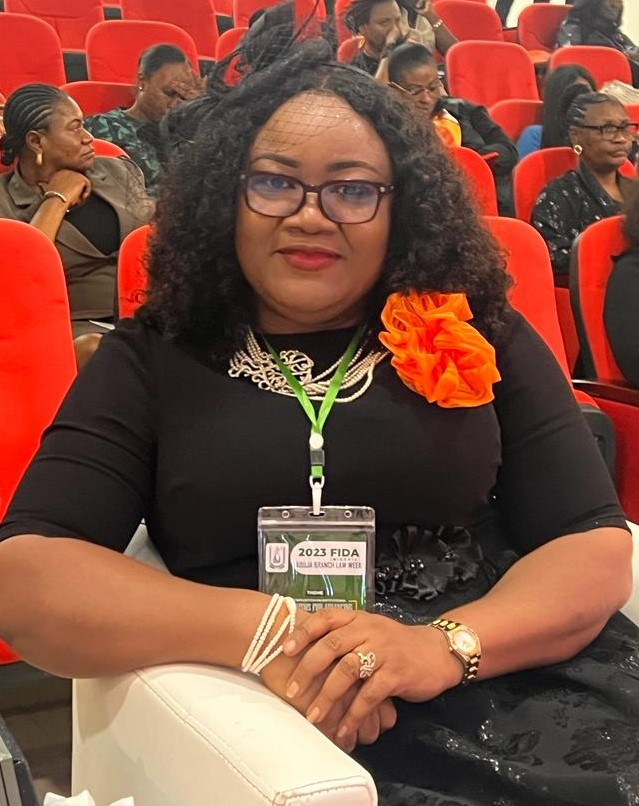
The call for strengthening the enforcement mechanisms for existing gender equality laws took centre stage on Monday at the ongoing Law Week of the International Federation of Women Lawyers, FIDA Nigeria Abuja.
The theme of the Law Week is —A 2023 Reflection on Institutional Mechanisms for Advancing Women’s Right in Nigeria.
Listing a plethora of legal instruments that cover various aspects of women’s lives and the advancement of their rights in Nigeria, the event’s Keynote Speaker, child rights advocate, human trafficking expert and mental health specialist, Mrs. Imaobong ‘Ladipo-Sanusi pointed out that while these laws exist, challenges often arise in implementation and enforcement.
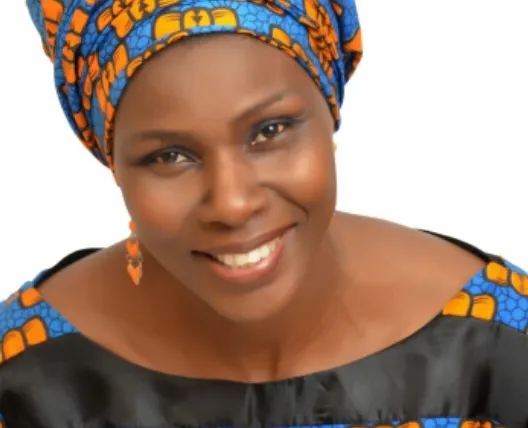
Ladipo-Sanusi, who is also the Executive Director, Women Trafficking and Child Labour Eradication Foundation (WOTCLEF) expressed concern that: “In Nigeria, Women’s Rights appear to be protected. The country is a signatory to a number of international conventions and norms such as the Convention on the Elimination of all forms of Discrimination Against Women and the Solemn Declaration on Gender Equality in Africa. Yet this protection is mostly on paper.”
She however counselled that: “Continuous advocacy, public awareness, and collaboration among governmental and non-governmental entities are crucial for effective realization of women’s rights in Nigeria…
“I also make bold to say that no law is a silver bullet to solve all the problems. You have gotten a platform; the platform strong enough to address the problem. Whether you’re talking to your friends and family, or engaging with an advocacy organization, the most important way to be an advocate is speaking up. I have worked with a good number of your members concerning human trafficking, and I use this opportunity to salute their commitment and positive energy, deployed to the cause of the vulnerable in our society. But as a group, you can do more. You have the capacity, competence and resources to make your impact felt more especially on this issue bordering on women’s rights. By raising your voice for women’s rights and gender equality, you can spread awareness and break down barriers.

“You can also protect and promote women’s rights by supporting one another; share the workload; get involved; educate the next generation; stand on your right as you already know your rights; join the online conversation; direct and change the conversation where necessary; and give to the cause.”

Dear Colleagues,
With great joy and anticipation, we invite you to join us at the 24th Annual Carols from the Court on December 10, 2023! As we gather in the spirit of unity and festive cheer, we extend a warm invitation for you to be our honoured guest at this cherished holiday tradition.
Come and Be Our Guest: Step into the enchanting world of Carols from the Court and immerse yourself in the season’s magic. Join us for an evening of heartwarming carols, joyful fellowship, and the spirit of Christmas that transcends the courtroom. It’s an event that promises to create lasting memories for you and your loved ones.
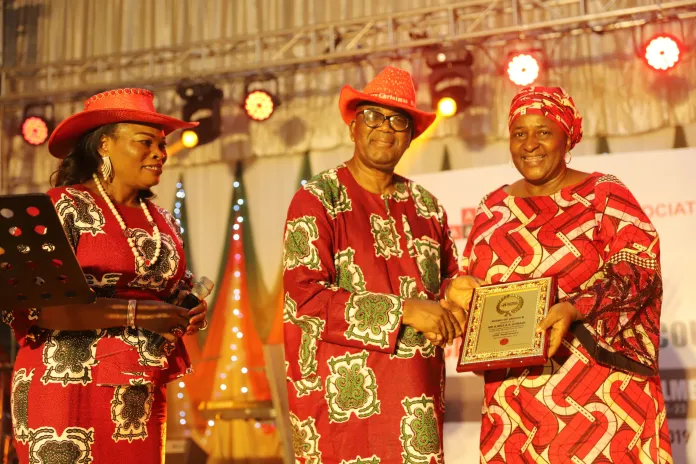
Host Spotlight: Asiwaju Adegboyega S. Awomolo, SAN Our esteemed host, Asiwaju Adegboyega S. Awomolo, SAN, brings legal expertise and a passion for fostering community and celebration.
As a Senior Advocate of Nigeria (SAN), Asiwaju Awomolo has exemplified leadership and dedication in the legal profession. Beyond the courtroom, he is known for his commitment to philanthropy and community engagement.
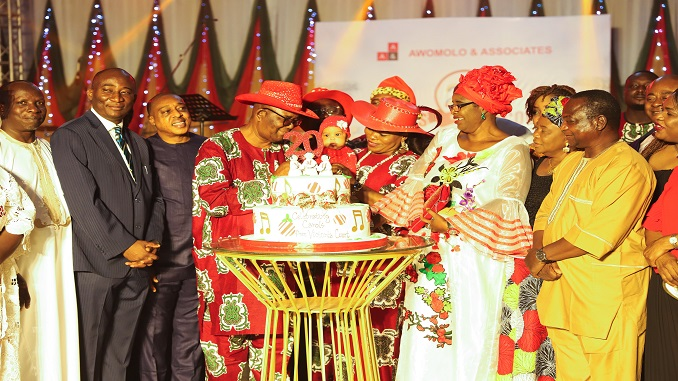
His role as the host of the Carols from the Court showcases his commitment to creating an inclusive space where the season’s joy is shared among colleagues, friends, and the wider community. Asiwaju Awomolo’s influence extends beyond the legal realm, touching the hearts of those who have had the privilege of experiencing this annual celebration.
Watch video of 21st Carols from the Court here.
In the spirit of the season, we extend our warmest wishes for a merry Christmas and a joyful New Year! May the coming year bring you prosperity, good health, and countless moments of happiness.
For More Details: Refer to the flier above for additional event details. For inquiries, please contact the event announcer, Veronica Awomolo, SAN.
We look forward to celebrating the season’s magic with you at the 24th Annual Carols from the Court!
Warm regards,
Announcer: Veronica Awomolo, SAN
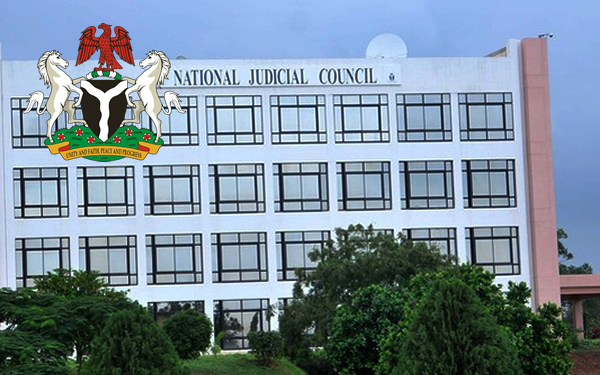
After what was beginning to look like eternity, the National Judicial Council (NJC) has finally set Friday as the D-Day to reveal names of the long awaited justices who would fill the vacant seats at Nigeria’s Supreme Court.
Sunday PUNCH gathered exclusively that the NJC would meet on Wednesday and Thursday in Abuja to ratify the list of justices to be appointed to the benches of the Supreme Court and the Appeal Court.
Members will also consider and recommend judges for appointment into Federal High Courts, the National Industrial Court and heads of courts, as well as judges at the state level. Names of new judges for state High Courts, Customary Courts of Appeal and Sharia Courts will also be forwarded to state governors for ratification.
By the provision of Paragraph 20 of Part One of the Third Schedule to the 1999 Constitution as amended, the NJC comprises the CJN, who is the chairman; the next most senior Justice of the Supreme Court as the deputy chairman; the President of the Court of Appeal; five retired justices selected by the CJN from the Supreme Court or Court of Appeal; the Chief Judge of the Federal High Court; the President, National Industrial Court of Nigeria; and five chief judges of States to be appointed by the CJN from among the chief judges of the states and of the High Court of the Federal Capital Territory, Abuja in rotation to serve for two years.
Others are one Grand Kadi to be appointed by the CJN from among Grand Kadis of the Sharia Courts of Appeal to serve in rotation for two years; one President of the Customary Court of Appeal to be appointed by the CJN from among the presidents of the Customary Courts of Appeal to serve in rotation for two years; five members of the Nigerian Bar Association, who have been qualified to practice for not less than 15 years, at least one of whom shall be a Senior Advocate of Nigeria, appointed by the CJN on the recommendation of the National Executive Committee of the NBA to serve for two years and subject to re-appointment provided that the five members shall sit in the Council only to consider the names of persons for appointment to the superior courts of record; and two persons not being legal practitioners, who in the opinion of the CJN, are of unquestionable integrity.
A member of the NJC told our correspondent exclusively that Wednesday and Thursday’s meeting would be the last for the year, adding that the council normally meets every quarter except in cases of emergencies.
It was gathered that 22 nominees had been screened by the appointment panel of the council headed by Justice Kudirat Kekere-Ekun and 11 were shortlisted for appointment. After the selection process, the nominees’ names will be sent President Bola Tinubu for confirmation.
The NJC member told Sunday PUNCH, “The council will ratify the chosen and recommend them to Tinubu as the federal appointing authority.
“Some heads of courts and judges for state judicial divisions are also listed for appointment by the Kekere-Ekun committee. They will also be announced during the meeting.”
According to the source, who spoke on condition of anonymity because he was not authorised to talk to the media, the council members will exhaustively consider each candidate for appointment and study petitions against them, if any, and if found to be credible and capable of affecting their appointment, reject the candidates, or ratify their appointment if found to be frivolous.
The NJC member said, “All the nominees, including those being elevated from the Court of Appeal to the Supreme Court, have been screened and cleared by the EFCC, ICPC and DSS. The clearance is an age-long practice of the council.
“The council has never and will never process anyone for appointment into the bench of any court, without clearance by the listed bodies.
“The meeting will take place in Abuja on Wednesday and Thursday, December 6 and 7, 2023. The main agenda is to consider the names pencilled in for appointment as justices of the Supreme Court and the Court of Appeal.
“You know the controversies trailing the non-appointment of a new set of justices to the bench of the apex court and the depletion of the justices. The meeting is the last for the year as the NJC meets every quarter except when there are emergencies.
“The council will also consider those for appointment as judges of the Federal High Court and state High Courts, as well as the National Industrial Court, Customary Court of Appeal and Sharia Courts. Recommendations on candidates for state High Courts, Customary Court of Appeal and Sharia Courts will be forwarded to state governors, whose duty it is to ratify and announce their appointments.”
The source, however, expressed frustration that Governor Godwin Obaseki of Edo State had not sworn in judges approved by the NJC since July.
“Edo has refused to swear in the approved judges since July when the council met and recommended their appointment. The NJC unfortunately cannot enforce the decision,” he said.
Asked why the governor was stalling the inauguration of the judges, the NJC member said the judges were probably not the candidates of the authorities.
On the criticism trailing the appointment of justices and judges, who were considered not to be up to the task, the council member said, “If anyone who should not be a judicial officer gets to the bench, it is never the fault of the council.”
On how to sanitise appointments to the bench, the source said, “Since there is room for improvement, the council is working on improved modalities for entry into the system.
“Names of applicants to the bench may start appearing in newspapers for members of the public to make their observations and complaints known.
“Currently, such names are only advertised on the council’s website and the NBA notice board. For deeper public engagement, newspapers are likely to be involved going forward.
“For the first time in decades, the apex court will have the full complement of justices – the 21 envisaged by the constitution – which is a major milestone for the council and Justice Ariwoola as the Chairman of the NJC and CJN.”
NJC backs Osun CJ
On the controversial suspension of the Chief Judge of Osun State, Adepele Ojo, by Governor Ademola Adeleke following the recommendation of the state House of Assembly, the NJC top member said the council retained its recognition of the CJ as the head of the judicial division.
He, however, said the complaint against the CJ by the governor was being looked into.
S’Court nominees
On Thursday, November 16, 2023, the Federal Judicial Service Commission forwarded a list of 22 nominees to the NJC for 11 openings on the Supreme Court bench.
The NJC is expected to pick 11 deserving candidates from the list and forward their names to the President for appointment as justices of the apex court, subject to confirmation by the Senate.
The CJN, Justice Olukayode Ariwoola, had in June declared openings on the Supreme Court bench, with only 10 justices currently at the apex court instead of the full complement of 21 justices.
Only four of the six geo-political zones in the country are currently represented on the Supreme Court bench, with the South-West and North-East having three each, while the South-South and North-West have two each.
Both the South-East and North-Central have no representatives on the Supreme Court bench following the death of Justice Centus Nweze from Enugu State in July and the retirement of Justice Dattijo Muhammad from Niger State in October.
Representing the South-East on the list for consideration by the NJC are Justice Nwaoma Uwa from Abia State (priority); Justice Onyekachi Otisi (Abia State) (reserve); Justice Obande Ogbuinya (Ebonyi State) (priority); Justice Theresa Orji-Abadua (Imo State) (reserve); Justice Anthony Ogakwu (Enugu State) (priority); and Justice Chioma Nwosu-lheme (Imo State) (reserve).
The South-South has Justice Moore Adumein (Bayelsa State) (priority); and Justice Biobele Georgewill (Rivers State) (reserve).
For the South-West, Justice Adewale Abiru (Lagos State) was listed as priority, while Justice Olubunmi Oyewole (Osun State) was put on reserve.
The North-Central has Jummai Sankey (Plateau State) (priority); Justice Muhammad Ibrahim Sirajo (Plateau) (reserve); Justice Stephen Adah (Kogi State) (priority); Justice Ridman Maiwada Abdullahi (Nasarawa State) (reserve); Justice Baba Idris (Niger State) (priority); and Justice Joseph Ikyegh (Benue State) (reserve).
The North-East is represented by Justice Haruna Simon Tsammani (Bauchi State) (priority); and Justice Abubakar Talba (Adamawa State) (reserve).
The North-West has Justice Muhammad Lawal Shuaibu (Jigawa State) (priority); Justice Bello Aliyu (Zamfara State) (reserve); Justice Abubakar Sadiq Umar (Kebbi State) (priority); and Justice Abdullahi Mahmud Bayero (Kano State) (reserve).
The NJC member, however, told our correspondent that it was not automatic that all those listed as priority would be appointed as Supreme Court justices, explaining that any of them who failed the interview would be dropped for those put on the reserve list, adding that there had been a precedent for such an action.
Justice Dattijo’s bombshell
Justice Dattijo had lamented during a valedictory service held in his honour on October 27, 2023, that the power vested in the CJN was too much and alleged that the refusal to fill the vacant slot of the South-East on the apex court bench was deliberate.
Dattijo said, “As presently structured, the CJN is Chairman of the National Judicial Commission, which oversees both the appointment and discipline of judges. He is equally the chair of the Federal Judicial Service Commission, the National Judicial Institute, and the Legal Practitioners Privileges Committee that appoints Senior Advocates of Nigeria.
“My considered opinion: the oversight functions of these bodies should not rest on an individual alone. A person with absolute powers, it is said, corrupts easily and absolutely.
“As chair of the NJC, FJSC, NJI, and LPPC, appointments as council, board, and commitment members are at his pleasure. He neither confers with fellow justices nor seeks their counsel or input on any matter related to these bodies; he has both the final and the only say.
“The CJN has the power to appoint 80 per cent of members of the council and 60 per cent of members of FJSC. The same applies to NJI and LPPC.”
Speaking further, he said such enormous powers “are effortlessly abused.”
The now-retired Supreme Court justice added, “This needs to change. Continued denial of the existence of this threatening anomaly weakens effective judicial oversight in the country. Appropriate steps could have been taken earlier to fill outstanding vacancies in the apex court.
“Why have these steps not been timeously taken? It is evident that the decision not to fill the vacancies in the court is deliberate. It is all about the absolute powers vested in the office of the CJN and the responsible exercise of the same.”
Justice Dattijo further decried the exclusion of justices from two geo-political zones of the country from the seven-man panel that heard the appeals by the presidential candidate of the Peoples Democratic Party, Atiku Abubakar, and Peter Obi of the Labour Party.
He said it was dangerous for the nation’s democracy to have left out justices from the South-East and North-Central regions.
He stated, “To ensure justice and transparency in presidential appeals from the lower court, all geo-political zones are required to participate in the hearing. It is therefore dangerous for democracy and equity for two entire regions to be left out in the decisions that will affect the generality of Nigerians.
“With the passing of my lord, Justice Chima Nweze, on July 29, 2023, the South-East no longer has any presence at the Supreme Court. My lord, Justice Sylvester Ngwuta, died on March 7, 2021. There has not been any appointment in his stead for the South-East.
“As it stands, only four geo-political regions – the South-West, South-South, North-West and North-East – are represented in the Supreme Court. While the South-South and North-East have two serving justices, the North-West and South-West are fully represented with three each.”
He said with his retirement, the North-Central zone, which he represented, would no longer have a justice on the bench.
Justice Ariwoola had lamented that the Supreme Court was left with just 10 justices on the bench.
According to the CJN, this is the lowest number of justices the court has ever known in contemporary Nigerian history.
In 2022, a total of 23 lawyers, including eight SANs applied to fill six Supreme Court vacancies at the time.
Reacting to Justice Dattijo’s criticism, the NJC member said the retired jurist was the most senior judicial officer after the CJN and was the chair of the council’s appointment, finance and constitution review committees.
Kano gov judgment
On the controversy surrounding the judgment of the Appeal Court on the Kano State governorship tussle, the NJC member said the version, which affirmed Governor Abba Yusuf, contrary to that read in court, “was a product of error by the secretary who typed it and Justice Moore not supervising the final copy well.”
He added, “Petitions have been written and the council is reaching out to the petitioners because the petitions didn’t follow the standard procedure of filing.
“The council is challenging critics to first read judgments they are criticising before going on air to slam the system without justification, particularly lawyers, who are also social critics.”
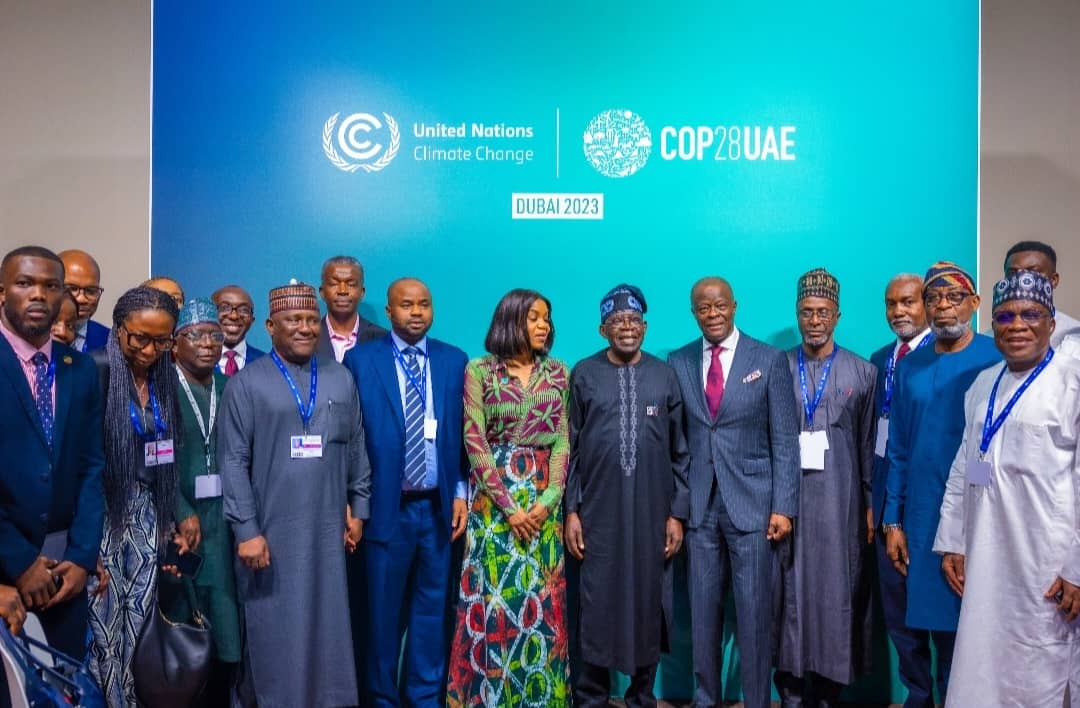
Although knocks have been trailing the Federal Government’s large delegation to COP 28 and alleged waste of resources, the Presidency insists that contrary to social media claims, it did not sponsor all Nigerian delegates at the ongoing 28th Convention of Parties on Climate Summit (COP28) in Dubai, United Arab Emirates (UAE).
The Guardian expressed concern that for a nation groaning under huge debt burden, inflation, rising poverty, reactions continued to trail Nigeria’s large delegation at the United Nations Climate Change Conference (COP28), yesterday, as some Nigerians, including the presidential candidate of Labour Party in the 2023 elections, Peter Obi, urged President Bola Tinubu to make Nigeria great by competing with China in production; not in the size of contingents to events.
No fewer than 1,411 Nigerian delegates registered to participate at the 28th Climate Change Summit in Dubai, the United Arab Emirates. That is, the meeting of the Conference of the Parties to the United Nations Framework Convention on Climate Change (UNFCCC).
Obi, in a series of tweets on his X handle, said: “In a twist of sad irony, let me congratulate the giant of Africa, Nigeria, for matching the great China, with the same number of contingents at the ongoing COP28 in Dubai, United Arab Emirates. Nigeria’s contingent to COP28 totaled 1,411, the same number as the Chinese contingents.”
“While China’s budget for 2024 is about $4 trillion, about $2,860 per head; Nigeria’s budget is about $33 billion, about $165 per head. China has a high Human Development Index (HDI), with a ranking of 79 out of 191 countries measured, and Nigeria has a low HDI, with a ranking of 163 out of 191 countries measured. Nigeria has more people living in ‘multi-dimensional’ poverty than China, despite China having seven times our population.
“Most importantly, the vast majority of those in the Nigerian delegation to COP28 are either non-relevant civil servants or relations, friends and hangers-on of high government officials. Most of them hardly understand or have anything to do with climate change.”
He added: “This huge contingent is out at public expense at a time when most Nigerians can hardly afford food and basic needs as a result of economic hardship. I pray earnestly that a day will come soon enough when we can focus on competing with China on productivity and the miracle of migrating the highest number of its citizens out of poverty over a relatively short time.
“As we have kept emphasising, we must stop waste as a tradition of our government and nation. We urgently need to cut the cost of governance and invest in production. We need to de-emphasise unnecessary ceremony and showmanship as a mode of government behaviour. We need to tie spending to necessity and national priority. A new Nigeria is possible. We only need to do the reasonable and the necessary.”
On its part, Human Rights Writers Association of Nigeria (HURIWA) said: “It’s a big shame that Nigeria is attending the international event around the strategic issues of consequences of climate change with such a massive team, thus increasing the impact of fossil fuel on the environment.”
National Coordinator, Emmanuel Onwubiko, told The Guardian: “Tinubu’s government continues to show that it cannot curb wasteful spending. Of the 1,411 delegates, 590 were sponsored to attend the conference by the Nigerian government, which is currently battling with record inflation, an out-of-control exchange rate, a ballooning debt profile, and millions of its citizens sliding into poverty. The total to-and-fro flight ticket for the 590 delegates is thought to be N885 million, as estimated by a reputable expert.
“This is a big shame! This is an unmitigated scam and it deserves to be absolutely condemned. Nigeria’s official delegation shouldn’t be more than 10, since Nigeria runs an embassy in the UAE or nearby.”
THE Presidency, however, explained that the 1,411 delegates at COP28 in Dubai are not all government-funded, and include sundry groups such as business persons, civil society actors, among others who have different roles to play at the conference.
However, Senior Special Assistant to the president on media and publicity, Temitope Ajayi in an article written on Sunday also disclosed that President Bola Tinubu and other senior officials of his administration were at the global event for serious business, not mere jamboree.
Over 97,000 people from more than 100 countries across the world are participating at the summit.
Data from the organisers showed that 1,411 Nigerians registered to participate in the event.
But in his piece, Ajayi said: “In Nigeria like so many other countries, interested parties comprising government officials from both the federal and sub-national governments, business leaders, environmentalists, climate activists, and journalists are present in Dubai.
“Also participating are agencies of government such as the NNPC and its subsidiaries, Ministry of Niger Delta Affairs, NIMASA, and NDDC. Many youth organisations from Nigeria especially from the Northern and Niger Delta regions whose lives and livelihoods are most impacted by desert encroachment and hydrocarbon activities are also represented.
“The President of Ijaw Youth Council, Jonathan Lokpobiri, leads a pan-Ijaw delegation of more than 15 people who registered as parties from Nigeria. Among delegates from Nigeria are also over 20 journalists from various media houses.
“Their participation is very important. It is not for jamboree as it is being mischievously represented on social media. It is important to state here that delegates from all countries whether from government, private sector, media, and civil society groups attend COP summits and conferences as parties and the number of attendees is registered against their countries of origin.
“This does not mean that they are sponsored or funded by the government. It must be said also that the fact that people registered to attend a conference does not mean everyone that registered is physically present.”
He added that Tinubu had also taken the opportunity to broker deals and attract new commitments.
In a statement by its national publicity secretary, Debo Ologunagba, the PDP stated that “this incident is a further validation that the Tinubu-led APC administration is wasteful, frivolous and reckless in the application of the scarce resources of the nation, especially at a time Nigerians are yearning for prudent management of resources to achieve the desired infrastructural regeneration, job creation and revamping of the economy”.
Meanwhile, Nigeria and two other African countries will pilot the first phase of a new partnership between United Nations Office for Project Services (UNOPS) and Sustainable Energy for All (SEforALL) that supports governments, donors, and other stakeholders to accelerate energy transition in Africa.
The Africa Energy Transition Partnership (AETP) finds a sustainable way to meet its growing energy needs, which is one of the core development challenges for the continent. AETP will have a pan-continental view; however, as an initial step lasts until 2028, while other African countries are identified to be incorporated as the programme rolls out.
The agreement announced at a COP28 side event in Dubai will deliver joint action and improved coordination, by addressing issues that impede access to renewable energy, energy efficiency, and sustainable infrastructures. UNOPS will be responsible for managing the funds and providing operational and administrative support, while SEforALL will provide access to finance and technical assistance.

President Bola Tinubu (left); Chinese Special Envoy on Climate, Xei Zhen Hue; President, United Arab Emirates, Sheikh Mohamed bin Zayed Al Nahyan and former United States Secretary of State, John Kerry, at the 28th United Nations Climate Change Conference in Dubai…yesterday.
It builds on lessons learned from the ongoing Southeast Asia Energy Transition Partnership, which since 2020 supports Indonesia, Vietnam and the Philippines to accelerate transition towards a sustainable energy system.
Over 40 per cent of the population in Africa lives without access to electricity, and 70 per cent without access to clean cooking fuels. Africa enjoys immense energy potential, particularly in renewable energy, yet only a fraction of this is currently being used. Against this context, the partnership represents a unique opportunity to support the region’s energy development and climate goals.
Mobilising technical and financial resources in energy projects remains a key challenge. The partnership will bring funders together with African governments, and other stakeholders to develop a shared vision to ensure the right energy mix for the continent.
UNOPS Executive Director, Jorge Moreira da Silva, said: “Access to reliable and clean energy is key to the achievement of the Sustainable Development Goals. Africa’s rapid economic expansion calls for sustainable solutions to meet growing energy needs, and this is one of the core development challenges for the continent. UNOPS is committed to supporting Africa in its efforts to provide access to energy for all, and to ensure that the clean energy transition delivers for Africa’s economic and social development.”
Chief Executive Officer and Special Representative of the UN Secretary-General for SEforALL, Damilola Ogunbiyi, said: “The energy transition in Africa presents an unparalleled opportunity to address climate change and promote sustainable development. It is extremely vital that we think of how people access and consume energy, especially in regions where energy infrastructure does not adequately meet demand.
“This is why at Sustainable Energy for All we work with African governments to develop whole-of-economy energy transition and investment plans that help build energy systems to support economic and social development and achieve net-zero emissions. We are excited to be deepening our relationship with UNOPS through this new partnership to deliver support to implement these energy transition and investment plans.”
Also, Nigerian National Petroleum Company (NNPC) Limited has joined a global Oil and Gas Decarbonisation Charter (OGDC) dedicated to speeding up climate action and achieving high-scale impact across the oil and gas sectors.
To date, 50 companies, representing more than 40 per cent of global oil production have signed on to the OGDC, with National Oil Companies (NOCs) representing over 60 per cent of signatories – the largest-ever number of NOCs to commit to a decarbonisation initiative.
Signatories have committed to net-zero operations by 2050 at the latest, and ending routine flaring by 2030, and near-zero upstream methane emissions. They agree to continue to work towards industry best practices in emission reductions and a number of key actions: investing in the energy system of the future including renewables, low-carbon fuels, and negative emissions technologies.
The group would also be increasing transparency, including enhancing measurement, monitoring, reporting and independent verification of greenhouse gas emissions and their performance and progress in reducing emissions.
They will be increasing alignment with broader industry best practices to accelerate decarbonisation of operations and aspire to implement current best practices by 2030, to collectively reduce emission intensity, reduce energy poverty and provide secure and affordable energy to support the development of all economies.
The OGDC recognises that climate change is “a collective challenge that requires strong and focused action from producers and consumers of energy, fundamental changes across society and the energy sector, as well as international collaboration, to advance energy transition and reduce greenhouse gas emissions from oil and gas”.
Beyond decarbonisation, signatories recognise it is essential for the oil and gas industry to increase actions, including engaging with customers, investing in the energy system of the future, and increasing transparency in measurement, reporting and independent verification.

Law & Society Magazine is a general interest magazine with a bias for law and its effects on the society
Contact us: [email protected]
© 2025 Copyright - Law & Society Magazine

